Archive for dairy cattle breeding

The Royal’s Empty Chair: Where Six Dreams Meet One Legacy

Six operations. Three generations. One empty chair. The 2025 Royal Winter Fair just became about more than banners.

A ringside moment from the 2014 Royal: Paul Ekstein and Ari Ekstein. For decades, this was their post—sharing the focus, the details, and the passion that built Quality Holsteins. This November, Ari carries forward the 70-year legacy his father began.

Standing in the Quality Holsteins barn earlier this week, watching Ari Ekstein prepare for the 2025 Royal Winter Fair, I felt the weight of what wasn’t there. For over 70 years, Paul Ekstein attended The Royal Winter Fair. This November will be the first without him.

Ari doesn’t talk about it directly. But you can see it in how he runs his hand over the leather lead that’s been in the family for decades, the same one his father used. Paul passed away earlier this year at 91—that unbreakable soul who escaped Nazi-occupied Czechoslovakia as a boy and built one of Canada’s most respected breeding programs from absolutely nothing. Now it’s Ari carrying forward that vision, maintaining the 95% homebred genetics, those 200 Excellent cows they’ve bred together over the years. (Read more: From Czechoslovakia to Quality Holsteins: Paul Ekstein’s Unbreakable Legacy)

“He taught me that attention to every minor detail can lead to major success,” Ari mentioned quietly as he adjusted a show box that’s seen five decades of Royals.

One of the ‘fading prints’ from a 70-year legacy: Paul Ekstein (second from right) stands with fellow industry legends (L-R) Peter Heffering, Connie Heffering, and Bert Stewart, presenting the 1963 Royal Sale of Stars high-seller, Greenview Citation Nettie. It’s images like this, capturing decades of Royal triumphs, that his son Ari now carries forward.

What happened next changed my perspective on this entire show. Ari was sorting through old photographs for the collage we’re creating—decades of Royal Winter Fairs captured in fading prints and yellowed edges. Paul with young champions that would go on to become foundation cows. Moments of triumph caught mid-celebration. Quiet conversations between classes. Each image tells part of a story that spans 70 years. The kind of legacy you can’t download or buy. Just earn, year after year, Royal after Royal.

The Dreams That Drive Them Forward

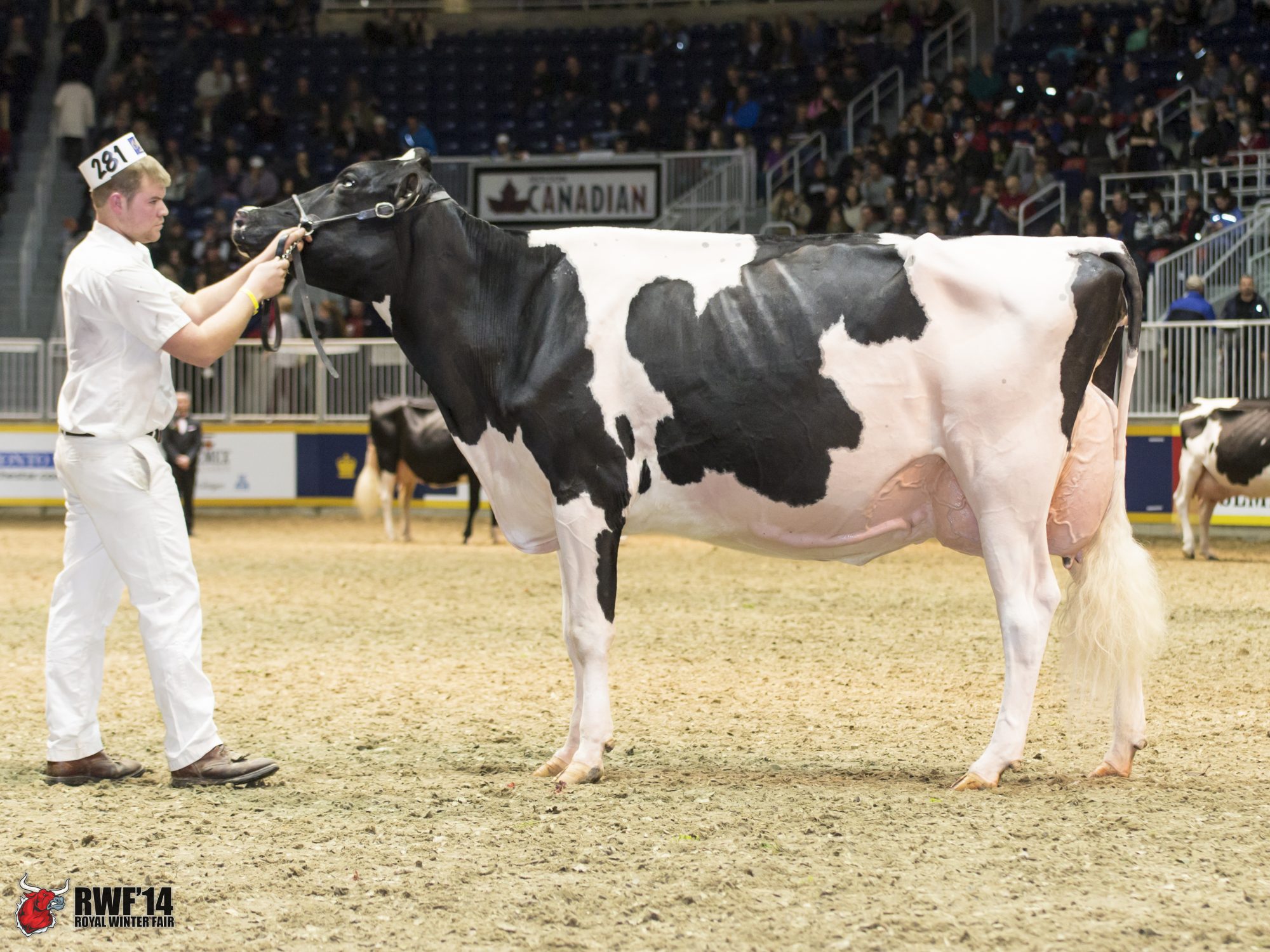
Knonaudale Jasmine EX-96 dazzles at the Royal Winter Fair, showcasing her exceptional type and presence as one of Kingsway Holsteins’ most iconic cows.
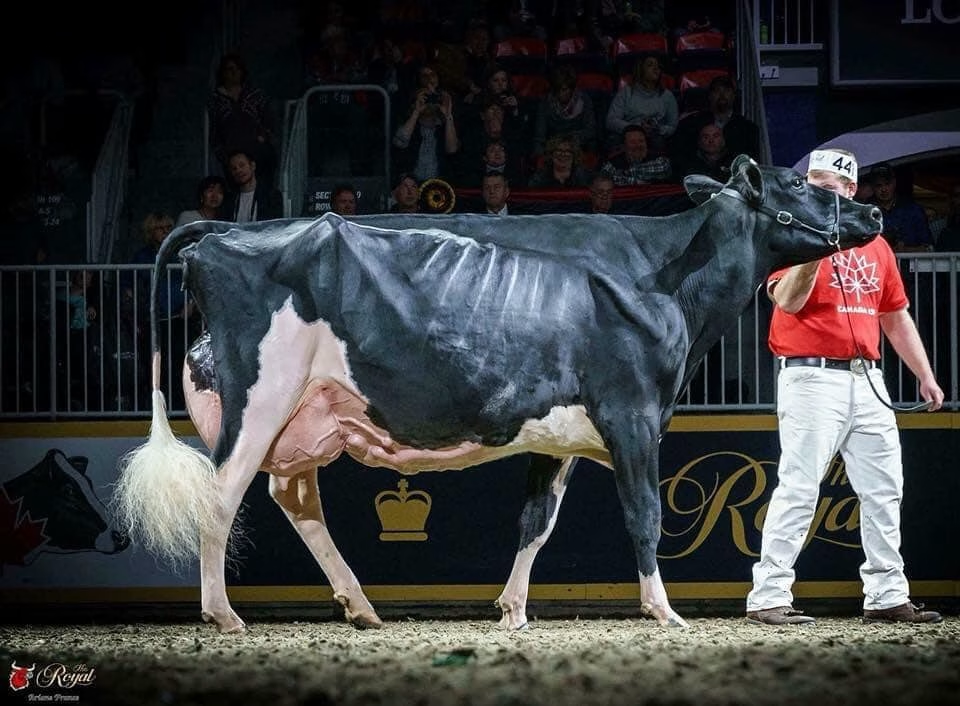
Kingsway’s iconic Knonaudale Jasmine (EX-96) on the Royal’s ring. Jasmine represents the world-class type and decades of work the McMillans have poured into chasing the one “empty space” on their wall—the Grand Champion banner.

Ethan, Morgon and Gord McMillan from Kingsway Holsteins are preparing for The Royal next week, carrying their own weight of expectation. In their barn, photos spanning four decades of Royal Winter Fairs cover the walls. Champions from years past. Near-misses that still sting. And somewhere, that one empty space—reserved for a Grand Champion banner that hasn’t come home yet.

Gord has been chasing this dream for longer than Ethan and Morgon’s been alive. The weight of that—inheriting someone else’s dream while building your own—stays with you.

What’s remarkable about their ranking as Canada’s number two breeder of all time for Excellent cows is their surprise when they learned about it. They had no idea. Kingsway markets a lot of heifers and cows every year—animals scoring excellent in other herds, adding to a total they never tracked. That kind of humility, that focus on the work rather than the recognition, tells you everything about who they are. (Read more: The Heart of Excellence: Getting to Know the Family Behind Kingsway Holsteins)

Their foundation cow, Kingsway Sanchez Arangatang, died earlier this year at nearly 15 after producing 18 Excellent daughters. Her genetics now thrive in robotic dairies in Saskatchewan, grazing operations in the UK, and show herds across North America. Her influence keeps spreading, even after she’s gone.

A moment that defined a legacy – Ethan McMillan with Kingsway Sanchez Arangatang at the 2014 Royal Winter Fair. This remarkable cow would produce 18 Excellent daughters, her genetics now thriving in robotic dairies in Saskatchewan, grazing operations in the UK, and show herds across North America. Though Arangatang passed this year, her granddaughters will enter the ring next Thursday, carrying forward a bloodline that changed Kingsway Holsteins forever.

As Arangatang’s granddaughters are prepped for next Thursday’s heifer show, there’s something profound happening. Both Kingsway and Quality are entering The Royal, carrying forward the work of those who can’t be there to see it. That changes everything about what winning means.

The Ferme Jacobs Legacy

The moment that proved their philosophy: Jacobs Windbrook Aimo gets the slap for Grand Champion at the 2018 Royal Winter Fair. This win, part of an unprecedented homebred Grand and Reserve sweep, was a thundering validation of the Jacobs family’s “cow families first” breeding wisdom.

Nobody expected what happened at the 2018 Royal Winter Fair.

Ferme Jacobs didn’t just win—they swept both Grand Champion with Jacobs Windbrook Aimo and Reserve Grand Champion with Jacobs Lauthority Loana. Both homebred, both extrodinary in there own ways. The first time any Canadian breeder had swept Grand and Reserve with homebred animals since 1969—a historic achievement that complements their record 11 Premier Breeder banners.(Read more: Ferme Jacobs – “Dreams without goals are just….dreams”)

Jacobs Windbrook Aimo: Grand Champion
Jacobs Lauthority Loana: Reserve Grand
Both homebred. NOT sisters. Two different cow families.
First time since 1969.

The moment that changed everything wasn’t the winning, though. It was what happened after. In an industry increasingly obsessed with genomic testing and data analytics, here was old-school proof that traditional breeding wisdom—cow families first, genomics last—still mattered. The Jacobs family refuses to use any bull that’s minus for milk. They never flush cows during show season, believing it compromises the natural bloom judges reward.

Teaching the next generation matters to them. Not just about cattle, but about character. How to win with grace. How to lose with dignity. How to keep going when neither happens.

Their preparations reveal something extraordinary—three generations working together, each with specific roles, nobody needing to be told what to do. This is knowledge passed hand to hand, season to season. The kind you feel in your bones after enough cold mornings and late nights.

Passion as a Business Model

Passion personified: Simon Lalande (left) with his sons and Dann Brady, celebrating Supreme Champion Blondin RD Unstopabull Maple Red at the 2022 Royal. For Ferme Blondin, the show ring isn’t just competition—it’s the engine that drives a thriving global business, proving that passion can be the ultimate competitive advantage.

Simon Lalande walks differently than other breeders. There’s an energy, an urgency that makes sense when you understand Ferme Blondin’s reality.

For Simon, the show ring isn’t just competition—it’s the engine that drives his entire operation. With cattle and embryo sales forming the core of his business model, every Royal appearance creates ripples that reach buyers worldwide. His Premier Exhibitor titles at major shows didn’t come from having the deepest pockets. They came from understanding that passion, properly channeled, becomes its own competitive advantage. (Read more: FERME BLONDIN “Passion with a Purpose Builds Success”)

“Success is built on three things,” Simon explained. “Passion, hard work, and perseverance. But passion comes first. Without that, the other two don’t matter.”

That same marriage of passion and business acumen defines Pierre Boulet, who has achieved something extraordinary—more EX-97 cows than anyone in the industry. EX-97 represents near perfection, and he’s done it repeatedly. Like Simon, Pierre has built his operation around cattle sales, understanding that the show ring creates market demand. That’s not luck. That’s a lifetime of recognizing excellence early and systematically developing it. (Read more: FERME PIERRE BOULET: First Comes Love Then Comes Genetics)

Pierre Boulet, who has achieved more EX-97 cows than anyone, at the halter of Loyalyn Goldwyn June, the 2015 Royal Grand Champion.

Both men have turned their eye for exceptional cattle into thriving businesses where passion and profit reinforce each other. These aren’t just breeding operations. They’re places where dreams take physical form, where excellence becomes tangible in the arch of a topline, the depth of a rib, the walk of a champion.

The Scale of Dreams

The numbers from Westcoast Holsteins sound impossible at first: operations spanning multiple farms across provinces, thousands of milking cows, thousands more young stock.

Excellence could easily get lost in those numbers. Instead, they’ve created systems that identify individual brilliance within an industrial scale. Their elite show prospects live in group housing specifically designed to maintain competitive appetites. It takes a team of dozens, each trained to spot that one-in-a-thousand spark that separates good from great. Even with thousands of animals, they understand that champions need individual attention.

Proof that the Westcoast Holsteins system works: Jacobs Gold Liann, their 2016 Royal Grand Champion. In an operation with thousands of cows, it takes a dedicated team to spot that “one-in-a-thousand spark” and develop it into a champion. This is systematic excellence at a scale that shouldn’t be possible.

Their past Royal successes prove the model works. What’s remarkable is imagining the logistics—the moment someone in that vast operation noticed one special heifer, pulled her out, and invested months of preparation. That is systematic excellence at a scale that shouldn’t be possible, yet somehow is.

The Moments That Define Everything

Right now, these operations are deep in final preparation. What started eight to twelve weeks ago with strategic feeding programs has evolved into something approaching devotion. As anyone who has aspired to success at The Royal, you know its a 24 hour a day, 365 days a year task.

Earlier this week, a young woman spent 45 minutes working on a single heifer’s topline. Not because anyone told her to, but because she could still see room for improvement. Her grandmother stood nearby, occasionally offering suggestions drawn from decades of fitting cattle. Three generations of knowledge concentrated in one moment of preparation.

At Quality Holsteins, this preparation carries extraordinary weight. These are the same routines Paul perfected over 70 years. Now Ari executes them with matching precision. “Dad always said superior care allows cows with great genetics to look amazing day in and day out,” Ari mentioned while checking water buckets for the third time.

Paul Ekstein in the ring at the Royal—a single moment representing over 70 years of “showing up.” This is the legacy Ari’s tribute poster will honor: the boy who fled Czechoslovakia, built excellence from nothing, and inspired generations with his relentless dedication.

But preparation goes beyond the physical. These families have spent months building trust with their animals. Loading them on practice trailer rides. Inviting visitors to desensitize them to crowds. Teaching them that the chaos of the show ring is just another day with people who care about them.

Last year at The Royal, a young handler sat quietly in the straw beside her heifer, just being present. No agenda. No training. Just companionship. She reminded me of the kids who’ll be competing in the TD 4-H Classic starting Monday, where the next generation learns these same lessons. Having competed in that event myself for over a decade, when it was the Scotiabank Hays Classic, I know firsthand what those quiet moments of connection mean. That’s the preparation you don’t see in the ring—the relationship that makes an animal trust you enough to show at their best when everything matters most.

When Different Roads Lead Home

What’s amazing is that, after covering dairy breeding for years, these six operations couldn’t be more different in approach yet consistently produce champions.

Ferme Jacobs prioritizes cow families over genomics. Kingsway favors proven sires whose names stay in the marketplace long enough to build real pedigrees. Quality, under Ari’s careful hand, pursues uncompromising type while maintaining production—honoring Paul’s vision while adapting to current realities. Simon Lalande and Pierre Boulet have built their businesses on show ring excellence and cattle sales. Westcoast leverages massive scale to accelerate genetic progress.

Next Thursday’s heifer show and next Friday’s cow classes won’t care about philosophy. Judge Joel Lepage and his associate JP Proulx will evaluate what’s in front of them—structural soundness, mammary quality, dairy strength, that hard-to-define presence that separates good from great. Yet somehow, all these different approaches converge on the same fundamental truth: excellence is excellence, regardless of how you achieve it.

Standing in these barns, what’s clear is that they’re all optimizing for permanence. Building something that lasts. Whether through cow families or genomics, passion or scale, they’re creating genetics that will influence the breed long after the banners are forgotten.

The moment a champion is made: 2013 Grand Champion Robrook Goldwyn Cameron gets the winning slap. This cow, co-owned by Budjon Farms, is a perfect example of the elite US operations that cross the border to compete. This is the “shared dedication to excellence” that brings two nations’ worth of dreams into one ring.

The competition intensifies with elite US operations crossing the border. Budjon, Triple-T, Currie, Ackley, Milksource, and Butlerview, among others, bring their own decades of excellence to the ring. These American powerhouses remind everyone that excellence knows no borders—and that next Thursday and Friday, Judge Joel Lepage and JP Proulx will evaluate cattle from two nations’ worth of dreams. Yet somehow, with Paul’s empty chair and these families’ intertwined stories, this year feels less about international rivalry and more about shared dedication to excellence. (Read more: Making Dreams Come True: The Journey of Tom & Kelli Cull)

The Ripples That Reach Worldwide

Last year, Canada exported $201.2 million in dairy genetic material to over 70 countries. Behind every shipment is a story like these—families who’ve sacrificed, persevered, refused to compromise even when easier paths beckoned.

When Kingsway genetics influence herds across the United Kingdom, when Arangatang’s daughters thrive in places she never saw, that’s an impact transcending individual achievement. These aren’t just genetics being exported—they’re decades of decisions, generations of selection, countless moments when someone chose the harder path because it was the right one.

Kingsway Solomon Gorgeous, the 2017 Royal Junior Champion. This is a perfect example of the “ripples that reach worldwide”—a champion representing the very genetics born from Kingsway’s decades of decisions, which are now exported to influence herds across the globe.

This year feels different, though. With Paul Ekstein’s passing, we’re witnessing a transition. The giants who built the foundation are passing the torch. What matters now is how brightly that torch continues to burn.

The Lesson for Every Farm

This Breeder’s Herd victory represents everything Paul Ekstein taught us: Excellence isn’t inherited, it’s earned—Royal after Royal, generation after generation. Paul started with nothing after fleeing Nazi-occupied Czechoslovakia. Seventy years later, this is what refusing to quit looks like. Thursday, Ari walks these same bloodlines into the ring, proving that true legacies aren’t about resources—they’re about showing up when it’s hard, especially when your heart is breaking.

Standing in the packed stands at The Royal next week—or reading about it afterward—you might wonder what these elite operations mean for your own farm.

These aren’t stories about unlimited resources. Kingsway started with a grade herd. Quality began when Paul Ekstein arrived in Canada with nothing except determination. Simon Lalande and Pierre Boulet built their operations on passion and an eye for excellence, not deep pockets. They share something more valuable than money: the conviction that excellence is possible.

The transformative lesson here is that excellence takes decades, not years. Paul Ekstein attended The Royal for over 70 years. Ari worked alongside him for twenty years before taking the lead. There’s no app for that. No shortcut. No genomic test that replaces time and dedication.

Whether you trust data or intuition, whether you’re breeding for your own herd or building a business around genetics, what matters is consistency. Showing up. Keeping going when progress feels invisible. In an age where technology promises quick fixes, these operations remind us that some things can’t be rushed.

The Quality Holsteins exhibit at a Royal decades ago. This is the very ‘lesson for every farm’ put into practice: excellence is built on consistency. The professionalism of this display is the same “attention to every minor detail” that Paul taught Ari—the ‘showing up’ that takes decades to build a legacy.

The Moment Everything Converges

Next Thursday’s the heifer show. Next Friday’s cow classes. Minutes in the ring that represent decades of decisions.

For Ari Ekstein, it’s his first Royal without his father—but with Paul’s spirit in every animal they present. He’s created a poster tribute to his father that will be displayed at the show, a visual reminder of the legacy being carried forward. For Gord McMillan, it might finally bring the Grand Champion banner that completes Kingsway’s journey. For Simon Lalande and Pierre Boulet, it’s another chance to prove that passion drives profit.

What gives me chills is knowing that young breeders walking past that tribute will see Paul’s story captured there. A boy who fled Czechoslovakia. Who built excellence from nothing. Who showed up for over 70 straight years, always willing to share what he’d learned. Somewhere in those barn aisles, a young person will decide: this is what I want to do with my life.

That’s how legacies work. Not through genetics alone, but through inspiration passed person to person, generation to generation.

The Victory That’s Already Won

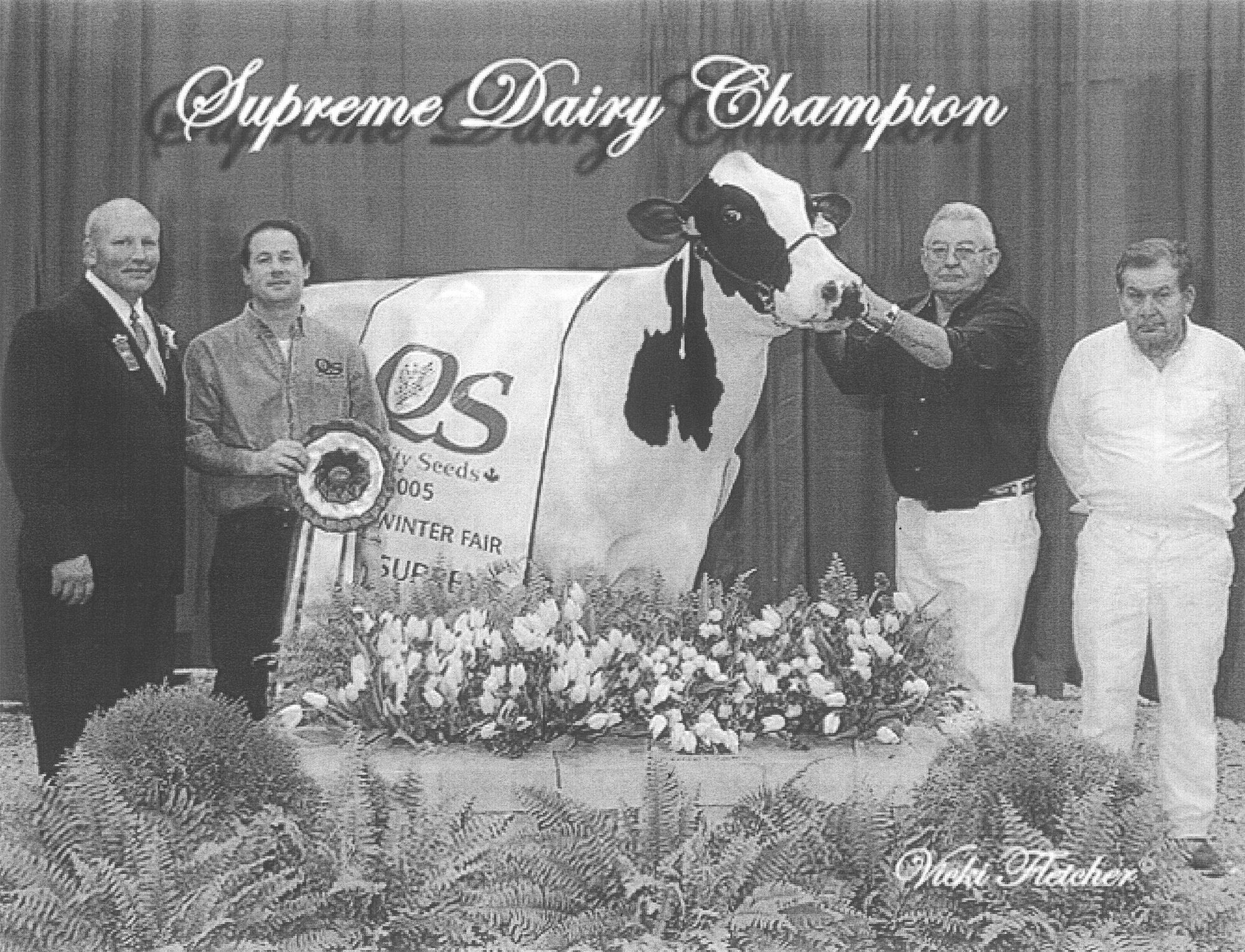
Paul and Ari Ekstein with their 2005 Supreme Champion, Quality BC Frantisco. This photo is the very definition of “The Victory That’s Already Won.” It’s a moment that validates decades of pre-dawn decisions and proves that legacies don’t die with their founders—they are simply carried forward by the next generation.

When Joel Lepage points to Grand Champions next Friday, when people pause at Ari’s tribute poster to remember Paul, when these six operations walk their cattle into the ring, those gestures will represent more than one day’s achievement. They’ll validate decades of decisions made before dawn, sacrifices nobody saw, and the courage to keep pursuing excellence even when your heart is breaking.

But here’s what covering The Royal all these years has taught me: every one of these operations has already won. They’ve proven that legacies don’t die with their founders. They’ve shown that passion can build sustainable businesses. They’ve demonstrated that in an industry of increasing scale and technology, there’s still room for operations driven by conviction and love.

Next Thursday and Friday at The Royal Winter Fair, we won’t just watch cattle being judged. We’ll witness what happens when dreams collide with reality, when preparation meets opportunity, when the next generation carries forward what the previous generation built.

The banners will be awarded. Champions will be crowned. But this year, with Paul’s spirit present in his absence, with multiple generations showing together, with dreams both fulfilled and still pursued, The Royal means something more.

It’s proof that some things can’t be stopped. Not by loss. Not by markets. Not by time itself.

Just farmers, their families, their cattle, and dreams that refuse to die.

That’s already victory enough.

KEY TAKEAWAYS: 

  • The empty chair that fills the barn: After 70 consecutive Royals, Paul Ekstein’s absence makes his legacy more present than ever—proving that true excellence transcends loss
  • Six operations, zero excuses: From Kingsway’s grade herd beginnings to Westcoast’s thousands of cows, these operations prove that excellence isn’t about resources—it’s about refusing to quit
  • Decades beat data every time: While others chase genomic shortcuts, operations like Ferme Jacobs (cow families first) and Quality (95% homebred) prove that time and consistency create lasting genetics
  • Dreams outlive dreamers: With foundation cows like Arangatang gone but granddaughters competing, The 2025 Royal shows how excellence passes through generations—in cattle and families alike
  • Your farm’s lesson: Whether you’re breeding for your herd or building a business, what matters isn’t your starting point but your staying power—excellence takes showing up, not showing off

EXECUTIVE SUMMARY: 

Paul Ekstein attended The Royal Winter Fair for 70 consecutive years—this November, his empty chair transforms the show from competition into a testament. As his son Ari prepares Quality Holsteins’ cattle with routines his father perfected, five other elite operations bring their own dreams and losses to the ring: Kingsway pursuing their first Grand Champion after four decades, Ferme Jacobs proving cow families still trump genomics, Lalande and Boulet showing passion drives profit, and Westcoast achieving excellence at industrial scale. What unites these diverse operations isn’t philosophy but persistence—Kingsway started with grades, Quality with nothing —and both built dynasties by showing up decade after decade. This year carries extra weight as foundation animals like Kingsway’s Arangatang have passed, but their granddaughters compete, while US operations like Budjon and Triple-T remind everyone excellence knows no borders. When Judge Joel Lepage and JP Proulx evaluate cattle next Thursday and Friday, they’ll judge more than conformation—they’ll validate lifetimes of pre-dawn decisions by families who chose the harder path. The 2025 Royal proves that legacies don’t die with their founders but live on through genetics, families, and dreams that refuse to quit.

Join the Revolution!

Join over 30,000 successful dairy professionals who rely on Bullvine Weekly for their competitive edge. Delivered directly to your inbox each week, our exclusive industry insights help you make smarter decisions while saving precious hours every week. Never miss critical updates on milk production trends, breakthrough technologies, and profit-boosting strategies that top producers are already implementing. Subscribe now to transform your dairy operation’s efficiency and profitability—your future success is just one click away.
NewsSubscribe
First
Last
Consent

Tirsvad Genetics: Breeding for Today, Betting on Tomorrow

From the barn’s unforgettable sounds to championship triumphs, discover the passion and pedigree driving Tirsvad Genetics.

You ever notice how some farm sounds just get stuck in your head? For Søren Madsen, dehorning calves—that raw, unforgettable racket—was one of those sounds. And if you’re old enough to remember doing it without any tranquilizers, you probably flinch a little even now. At Tirsvad Genetics, that gut memory became the seed for a whole way of breeding: tough, practical, never losing sight of animal welfare, and, these days, not half bad for the balance sheet either.

Out on a Limb—Before the Market Cared

The thing about polled genetics? It’s trendy now, but back in the early 2000s, bringing in the polled gene felt a bit like fixing the barn roof “just in case.” Søren and Elisabeth made the call—every flush, every round, always try for polled if they could. For years, that meant slower progress, genetically speaking. Balancing Pp donors with horned outcrosses, sweating bullets about inbreeding before it was cool (or required). Folks asked if they were wasting time. But as of today, Tirsvad’s polled two-year-olds average over 44kg/day —and their component percentages are side by side with the best horned rivals in the barn. Producers all over Scandinavia have taken notice. Sometimes stubbornness is just another word for getting ahead of the next curve.

Claire EX-92: Foundation of a Dynasty

Tirsvad Sauna Claudia P, dam to Tirsvad Keane Klas PP Red, exemplifies the lasting impact of strong female lines in the Tirsvad Genetics program.

Every herd has a foundation cow, right? For Tirsvad, one of the foundation cows is Tirsvad Luke Classic, imported as a US embryo from the Vir-Clar de Classy family. One of her most important daughters, Tirsvad Patron Claire EX-92, was close to never being born. Luke Classic was twice pregnant with twins that were aborted because of those awkward one bull and one heifer ultrasound-scanned calves. But as Søren likes to recall, the third time? “I pulled Claire out myself—knew the minute I saw her, she was going to change our luck.” Not only did she, but over 40 embryos later, her influence reaches into Cogent sires like Supershot. Take a look at today’s best Danish, German, and Dutch lines—odds are, you’re spotting some of that black-legged, “never-quit” Claire signature. What strikes me about this? Not just her numbers or EX-92 (that helps!), but that you see her attitude echoing in tenth-generation daughters.

Partnership That Actually Works

Søren and Elisabeth Madsen at their Tirsvad Genetics operation in Braedstrup, Denmark. Together, they’ve built one of Europe’s most innovative dairy breeding programs, combining practical expertise with cutting-edge reproductive technologies.

Here’s what’s worth talking about over coffee—real partnerships are rare. Elisabeth is Norwegian, Hannover-trained vet, put in time with horses, then cattle, then marriage, and now runs Trans Embryo alongside Søren. You know the rhythm: Tuesday to Thursday at Viking Genetics, splitting time between MOET (multiple ovulation embryo transfer) and IVP (lab-side in vitro production—it’s cropping up everywhere now, isn’t it?). Then at Tirsvad’s own station or client barns, running flushes the rest of the week. If you ask Elisabeth, it works because every night ends the same: a late barn walk, hands on hides, “what if we bred her to…?” And in the morning, they’re back at it, arguing matings with their hands wrapped around coffee mugs. It’s breed, debate, repeat.

The Value of Slowing Down

Fast flushes, short generation intervals—sure, that’s what all the buzzy consultants are hammering away at. Flush heifers at 10-12 months, rush for that next NTM (Nordic Total Merit—think TPI, but with a very Scandinavian twist). But here’s the thing: Tirsvad keeps swimming upstream. They want more siblings per flush, more shots at the right mix, less risk—because one star gene means very little if her mates fall off a cliff type-wise.

Let’s look at the Mona-Lisa P Peak Mechanico flush: ten embryos at just a year old, all transferred out—eight calves came, four heifers, four bulls; but in the end, only Mads P stood tall enough for the bull barn. These numbers—consistently eight embryos and five calves per flush—aren’t magic. It’s feeding high-milk, lots of concentrate before puberty, swapping for hay/silage after, and pulling out OPU (ovum pick-up) when MOET doesn’t cut it. More siblings, fewer wasted chances, less chasing a mirage of progress. Industry folks have seen the pendulum swing—it always does.

Mojito-P: Family Names, Not Just Index Rockets

Tirsvad Simon Mojito P, from the influential Mojito family, exemplifies the functional type and genetic strength that define the Tirsvad Genetics breeding philosophy

Now, about Mojito-P. There are plenty of genomic “alphabet soups” out there, but Mojito-P is actually starting to build a legacy. Sired by Simon-P and anchored by Pen-Col Superhero Mistral on the dam side, she checks boxes for both “number-chasers” and the cowside crowd. What’s particularly noteworthy: her daughters are now the backbone of Tirsvad’s newest flushes, and her sons—VH Fawkes-PVH FaunaVH Mulan-PVH Fatuma-P—are already moving into the “sons of sons” AI role for Viking Genetics.

The first born Persuit full sisters, daughters of Mistral, representing the next generation of the successful Mojito family line at Tirsvad Genetics

Why’s this matter? These are mid-frame, foot-sound, milking system-flexible animals. You don’t want a tank in the robot box; you want Mojito-P type. When roughage prices bounce, or parlors switch to robots, it’s cows like these that keep you in the game. It’s one thing to talk “functional type.” It’s another to see it lead both the Excel sheet and your heifer group.

Tirsvad 3STAR Mars Aros PP Red – A promising example of Tirsvad’s polled breeding success. This Mars P Red daughter of foundation donor Amber PP Red VG-86 was sold as a heifer calf in 2022 and has since achieved VG classification, demonstrating the lasting impact of proven cow families

Tight Contracts, Tighter Herds

Let’s cut to what everyone gossiped about at the last Herning show: contracts locking you out of your own genetics. Søren will tell you, “It’s like peeing in a headwind.” Like, who wants to sign away all female rights for a shot at elite semen? Not him. Not most of Denmark, as the legalese around major AI deals just keeps tightening. Word is, more breeders are drawing the line—even if it means coughing up more for uncontracted doses.

The tension isn’t just Danish—EU-wide, folks are grumbling. Less freedom for innovative crosses? Fewer fresh ideas? The whole market edge Denmark built for 30 years—fast, co-op-based, open—gets dull quick if contracts wall off half the alleys.

Nioniche: A Ringside Triumph

Sometimes dairy is just…banal. And then you get the moments. Picture Søren, muddy boots, jacket borrowed (or was that the year he lost his?), watching Nioniche take the National Champion ring. “Honestly, I just leaned on the rail a minute—my hands were actually shaking. You think about every 3am calving, and then one day she glides past everyone else.”

Tirsvad Battlecry Nioniche EX-95 claims the National Championship at Denmark’s premier Holstein show in 2025, representing the culmination of Tirsvad’s balanced breeding philosophy.

Now picture the other best feeling: a flush in progress, eggs in the dish, phones simultaneously buzzing. “Mads P is the world’s highest NTM polled bull, +47.” They held steady; the OPU came first, shock and pride came later, alone in the quiet of the barn. It’s this—the heart-thumping near-misses and little triumphs—that actually linger longer than the certificates on the office wall.

Learning Abroad, Bringing It Home

Now, about travel. It’d be easy to say, “we’re Danish, we don’t need to look elsewhere”—but that’s just not the case at Tirsvad. The real magic happens at breed discussions in Wisconsin barns, at North American auctions, in warm kitchens at Sandy-Valley, or out on barn tours at Larcrest. Those conversations about investing in the Gold-N-Oaks S Marbella family? They don’t happen unless you’re chatting with someone who just saw the same kind of “fire in the belly” on a different continent. Mojito-P’s American dam, all that drive for “high TPI”—sometimes you see the future clearer after a jetlagged barn walk.

What’s fascinating is how open Tirsvad is to bringing back not just genetics, but mindsets. Listening to stories about Cosmopolitan wandering loose in the barn? That’s the stuff you can’t learn from proofs alone.

Advice Worth Sharing

So what should the next crop of breeders really take away? Don’t work in silos. Get partners—challenge each other on every mating choice and sale. Invest in the cows that do weird, exceptional things in their first lactation. And don’t babysit your best ones forever; let them go, let the ring decide. Søren swears by luck, but it’s the luck that’s met by years of small, unglamorous preparation—barn walks, not seminars.

When you hit a wall, remember: every top herd out there is a story half-made of missteps and do-overs. Most of the real wins start after a tough night. That’s just how it goes.

The Bottom Line: Old Sounds, New Lessons

So—the next time you run into Søren or Elisabeth at a tally table or a show, don’t ask about just stats. Ask what they argued about this month, or which heifer nearly made them lose their cool. Odds are, you’ll walk away with a story—a blend of hard facts and the kind of barn anecdotes you hear only on the night check. That’s the DNA of this business, and, funny enough, it’s usually what puts the best breeders a step ahead of the rest.

If your boots are muddy and your eyes are tired, you’re already halfway to where the story starts.

KEY TAKEAWAYS:

  • Tirsvad Genetics’ early and consistent focus on polled genetics has yielded performance on par with horned cattle, demonstrating that patient, welfare-focused breeding decisions can achieve both ethical and economic success.
  • Matriarchs like Claire EX-92 demonstrate the lasting power of deep, well-managed genetic lines through generations, with her influence still visible in elite animals decades later, proving that foundational cow families remain more valuable than individual standouts.
  • Strong collaboration between breeders and technologists, embodied by Søren and Elisabeth, fuses practical breeding expertise with cutting-edge reproductive technologies like MOET and IVP to maximize genetic progress while maintaining herd health.
  • A breeding philosophy that values larger embryo harvests over rapid generation turnover supports genetic diversity and herd resilience, offering an alternative to the industry’s rush toward shorter generation intervals that may compromise long-term sustainability.
  • Growing concerns over restrictive AI contracts highlight the critical need for breeders to safeguard control over female genetics to maintain program autonomy and avoid being locked out of their own genetic development for multiple generations.

EXECUTIVE SUMMARY:

Tirsvad Genetics, a pioneering Danish dairy operation that has successfully advanced polled genetics to achieve performance parity with horned animals, demonstrating that patient, welfare-focused breeding decisions can deliver both ethical and economic success. The story highlights the enduring impact of foundational cows like Claire EX-92, whose genetics continue to influence generations of elite animals and international breeding programs decades after her birth. At the heart of Tirsvad’s success is the dynamic partnership between Søren and Elisabeth, who seamlessly blend hands-on breeding expertise with cutting-edge reproductive technologies such as embryo transfer and IVF. Their distinctive breeding philosophy prioritizes larger embryo harvests with multiple siblings over aggressive generation turnover, fostering genetic diversity and long-term herd resilience in an industry increasingly focused on speed. The article addresses growing industry challenges, particularly restrictive AI contracts that threaten individual breeder autonomy by locking up female genetics for multiple generations. Through personal anecdotes, technical insights, and industry analysis, the piece offers readers a comprehensive look at how combining tradition with innovation creates a sustainable path forward in modern dairy breeding. Overall, Tirsvad Genetics stands as a model for maintaining breeder independence while achieving world-class genetic progress through strategic patience and technological adoption.

Learn More:

  • IVF: Is It Worth The Hype? – This article provides a tactical deep-dive into the In-Vitro Production (IVP) technology mentioned in the Tirsvad profile. It breaks down the costs versus benefits, helping you decide if this advanced reproductive strategy is right for accelerating your herd’s genetic progress.
  • The Polled Factor: The Tipping Point is Here – For a strategic market perspective, this piece validates Tirsvad’s early bet on polled genetics. It analyzes the consumer trends, processor demands, and economic tailwinds that are making polled a non-negotiable trait for future-focused, profitable dairy operations worldwide.
  • Breeding for Feed Efficiency – The Trait of the Future – Looking at the next innovative frontier, this article explores breeding for feed efficiency. It reveals practical methods for selecting animals that lower input costs and boost sustainability, echoing Tirsvad’s philosophy of adopting forward-thinking traits long before they become mainstream.

Join the Revolution!

Join over 30,000 successful dairy professionals who rely on Bullvine Weekly for their competitive edge. Delivered directly to your inbox each week, our exclusive industry insights help you make smarter decisions while saving precious hours every week. Never miss critical updates on milk production trends, breakthrough technologies, and profit-boosting strategies that top producers are already implementing. Subscribe now to transform your dairy operation’s efficiency and profitability—your future success is just one click away.
NewsSubscribe
First
Last
Consent

August 2025 US Proofs: A Guide to the Real Winners and Winning Strategies

The August proofs are out. Don’t just chase the #1 bull. Discover the winning strategies that will actually drive your profitability.

Executive Summary: The August 2025 sire proofs reveal a key strategic crossroads for dairy producers, contrasting the high-potential genomics of the new #1 GTPI® sire, BEYOND HI-LEVEL-ET, with the data-backed reliability of proven powerhouses like SDG CAP GARZA-ET. This analysis delves deeper than the headline rankings, questioning the industry’s focus on TPI points versus true on-farm profitability. It highlights the dominance of Genosource in the Net Merit category, led by GENOSOURCE RETROSPECT-ET, as a case study in breeding for economic success. Ultimately, the article argues that the “real winners” are sires that deliver balanced traits, such as health and longevity, urging producers to build resilient, profitable herds rather than simply chasing the highest-ranking genomic bull.

sire selection guide, dairy cattle breeding, dairy farm profitability, Holstein genetics, genomic sires

The August 2025 sire proofs are out, and they paint a clear picture of the two paths available to dairy producers: the high-risk, high-reward world of elite genomics, and the reliable, data-backed foundation of proven sires. Understanding the leaders in each category—and the larger trends they represent—is crucial for building a profitable breeding strategy in today’s demanding market.

Genomic Leaders: A Glimpse into the Future

The top of the young sire list is where we see the absolute cutting edge of genetic potential.

  • The New #1: BEYOND HI-LEVEL-ET has claimed the top spot at +3539 TPI (Over 1 year of age). His well-rounded profile features a +1048 NM$, solid production, and a strong +7.0 Health Index, making him a complete package on paper.
  • The Contenders: Right behind him, OCD RADICAL JOSH ALLEN-ET (+3534 TPI) offers a higher Net Merit at +1097 NM$ and massive milk (+1765 lbs). However, for many producers focused on trouble-free cows, PROGENESIS WATCHMAN is a standout. His elite 8.6 Health Index offers a powerful defense against costly vet bills and labor challenges.

Proven Sires: The Gold Standard of Reliability

While the genomic list offers potential, the proven sire list delivers confidence backed by thousands of real-world milking daughters.

  • The Proven Powerhouse: SDG CAP GARZA-ET leads this list at +3488 TPI with an exceptional 98% reliability. His combination of high-volume components (+146 lbs fat, +53 lbs protein) and solid longevity (+3.7 PL) makes him a go-to sire for predictable results.
  • The Veterans: OCD TROOPER SHEEPSTER-ET (+3458 TPI) and GENOSOURCE CAPTAIN-ET (+3429 TPI) are titans of the industry. Sheepster built his reputation on massive production validated across diverse environments, while Captain is a cornerstone sire known for building lasting, profitable cow families with his 99% reliability.

The Genosource Phenomenon: Cracking the Profitability Code

Across the rankings, one trend is undeniable: Genosource’s dominance in delivering profitable genetics.

  • Net Merit Leaders: GENOSOURCE RETROSPECT-ET is crushing the competition at +1317 NM, driven by elite fat production (+144lbs) and longevity (+6.0PL, +7.2 Health Index). He is followed by a stable of herd mates like GENOSOURCE ENDURANCE-ET (+1233NM) and GENOSOURCE PURDY-ET (+1222 NM$).
  • The Strategy: This isn’t just about genetic concentration. Genosource has clearly developed a winning formula for identifying sires that excel in traits directly driving profit. Their laser focus on the Net Merit formula is a strategy the entire industry can learn from.

The Color Advantage: Grounded Genetics in a Volatile Market

For breeders looking for solid performance without the volatility of chasing the #1 genomic bull, the Red & White and Red Carrier lists offer compelling opportunities.

  • Red & White (R&W): While SIEMERS RLE PAPAYA-RED-ET leads at +3245 TPI, the bull to watch for commercial durability is APRILDAY ORPHS AESOP-RED-ET (+3195 TPI). His +5.3 PL and 8.2 Health Index are exactly what’s needed to lower involuntary culling when replacement heifers are at a premium.
  • Red Carrier (RC): S-S-I SIEMERS FALCIFORM-ET (+3305 TPI) and OCD DOMINANCE SUNDAY-ET (+3304 TPI) both offer elite production packages, though Sunday’s 3.02 SCS warrants careful mating to maintain udder health.

Type Specialists: Precision Tools for Conformation

The top of the PTAT list is reserved for specialists. These bulls fill a specific niche in breeding programs—think of them as surgical tools, not everyday workhorses.

  • The Extreme Tier: SHG LEGO (+3.89 PTAT) and REDCARPET STORY ARC-ET (+3.88 PTAT) remain the clear leaders for extreme type.
  • The Balanced Option: SIEMERS HULU PALDWYN-ET deserves special attention. At +3.18 PTAT combined with a strong +3069 TPI, he represents one of the best options for improving conformation without sacrificing significant overall genetic merit.

The Bottom Line: Breeding for Profit, Not Just Points

When making breeding decisions, consider these key takeaways from the August proofs:

  1. Study the Winners: Genosource’s Net Merit dominance isn’t an accident. Analyze their approach to selecting for the traits that drive economic success.
  2. Prioritize Health: With soaring costs, the high Health Index scores on bulls like Watchman and Aesop are becoming non-negotiable for building a resilient and profitable herd.
  3. Use Type Strategically: Leverage extreme PTAT sires as corrective tools for your worst-conformed animals, but build your herd’s foundation on profitable production and health genetics.

The smart money isn’t just chasing the latest #1 genomic bull. It’s about learning from proven programs and building a balanced herd that can thrive, no matter what the market throws at you.

The Genetic Gut Lottery: Why Some Herds Are Born Winners (And What You Can Do About It)

Two identical twins. Same feed. Same environment. One produces 15% more milk with 20% less mastitis. The difference? It’s written in their DNA.

Two identical twins. Same feed. Same environment. One produces 15% more milk with 20% less mastitis. The difference isn’t management—it’s written in their DNA. And now we can read the code.

But here’s the uncomfortable truth: While you’ve been obsessing over the latest parlor technology and fine-tuning your TMR formulations down to the last gram, you’ve been completely ignoring the most powerful biological engine determining your cows’ success or failure. That engine? The trillions of microbes living in their rumens—and, more importantly, the genetic blueprint that controls them like a master cheesemaker controls his starter cultures.

Ask yourself this: If someone told you there was a way to identify cows genetically programmed to convert your feed 20% more efficiently, resist disease naturally, and maintain production during heat stress, would you be interested? Of course, you would. So why are 90% of dairy operations still breeding like it’s 1995?

The dairy industry stands at the threshold of a revolution that will make genomic selection look like switching from hand-milking to machine milking. We’re talking about microbiome-informed breeding—the ability to select for cows whose DNA programs them to cultivate internal microbial ecosystems that drive superior milk production, bulletproof udder health, and feed conversion ratios that would make your nutritionist weep with joy.

The question isn’t whether this technology will transform dairy farming. It’s whether you’ll be among the early adopters who capitalize on it or wonder why your neighbor’s cows suddenly started outperforming yours by margins that separate profit from breaking even.

The $2 Billion Secret You’ve Been Ignoring

Every cow in your herd carries around a hidden organ that weighs more than her liver and works harder than her heart during peak lactation. Yet, I bet you’ve never once considered it in your breeding decisions. It’s not listed on any veterinary anatomy chart, but her gut microbiome is arguably the most important organ for converting your expensive feed into profitable milk.

Here’s what should make you uncomfortable: You spend thousands of dollars on genomic testing for traits like milk yield and protein percentage, but you’re completely blind to the biological machinery that actually drives those traits. It’s like buying a Ferrari based on its paint job while ignoring the engine specifications.

Research tracking 750 dairy cows found that host genetics explained up to 24% of the variation in enteric methane production, with some microbial populations showing heritability estimates reaching 41%. Translation? Nearly half of whether a cow harbors beneficial fiber-digesting bacteria or problematic methane-producing archaea is written in her genetic code—just like her ability to produce milk protein or resist ketosis.

Think about this: You’ve probably noticed that some cow families just seem to “milk easier” than others in your herd. They convert your ration better, rarely show up on your treatment sheets, and bounce back from calving stress faster than a fresh heifer finding the feed bunk. You attributed this to “good genetics” or management, but what if I told you, it’s actually their genes programming superior microbial communities?

The rumen alone houses trillions of microbes that convert your forage into volatile fatty acids (VFAs), providing 60-70% of a cow’s energy requirements. But here’s the kicker that should keep you awake at night: Not all rumens are created equal. Some are genetic Ferrari engines optimized for peak VFA production and maximum dry matter intake. Others are genetic pickup trucks built for basic function but never destined for the top of your production sheets.

And you’ve been breeding them exactly the same way.

The Economic Reality: What This Costs You Every Day

Let me put this in terms of your profit margins that will grab your attention. A comprehensive study using 454 genotyped Holstein cows in the U.S. and Canada with individually measured feed efficiency found that specific microbial genes in the rumen explained 86% of the variation in feed conversion efficiency across different cows.

Here’s the uncomfortable math: With feed representing 50-60% of your total production costs, even a 5% improvement in feed conversion efficiency translates to substantial savings. For a 1,000-cow herd producing 70 pounds per cow per day at current feed costs:

  • 5% efficiency improvement = $87,500-$131,250 annually in feed savings alone
  • 10% improvement = $175,000-$262,500 annually
  • 15% improvement = $262,500-$393,750 annually

These aren’t theoretical numbers but are based on documented genetic-microbiome variations already present in commercial dairy herds.

The Mastitis Connection That’s Costing You Millions

Let me challenge everything you think you know about mastitis prevention. You spend thousands on teat dips, post-milking protocols, and dry cow therapy. But what if the most effective mastitis prevention strategy was selecting bulls whose daughters are genetically programmed with superior gut-mammary connections?

Emerging research has identified an “entero-mammary pathway” where gut microbes or their metabolites can influence mammary gland health. This isn’t just correlation—it’s a biological highway connecting rumen health to udder health. When mastitis costs the U.S. dairy industry an estimated $2 billion annually through reduced milk yield, discarded milk, treatment expenses, and premature culling, genetic selection for healthier gut-mammary connections represents a massive opportunity that you’re completely ignoring.

Feed Efficiency: The Hidden Gold Mine

Studies have demonstrated that different microbial genes control methane emissions versus feed conversion efficiency, suggesting you can improve both simultaneously without trade-offs. This means genetic selection could deliver cows that milk better while reducing your carbon footprint—critical as processors increasingly demand sustainability metrics from suppliers.

The research identified 49 distinct microbial genes that collectively explained approximately 86% of the variation in feed conversion efficiency, while a separate set of 20 microbial genes accounted for about 81% of the variation in methane emissions. The host animal’s genetics were shown to play a role in determining the relative abundance of these crucial microbial genes.

The Inconvenient Truth About Your Breeding Program

Let me ask you something uncomfortable: How much of your breeding strategy focuses on what happens inside your cows versus what comes out of them?

Traditional breeding—the approach 90% of you are still using—focuses on observable outcomes: milk yield, component percentages, and linear scores. But what if I told you that’s like judging a manufacturing plant by its output while completely ignoring the efficiency of its machinery?

Studies using calves with varying genetic backgrounds from 100% Bos taurus (like your Holsteins) to 100% Bos indicus found distinct microbial profiles that correlated directly with pedigree, even when feed, housing, and management were identical. It’s like having different starter cultures in your cheese vats—same milk, different genetics, completely different end products.

Here’s where it gets really uncomfortable for your current AI program: Research has shown that the gut microbiota of preweaning calves, as young as 3 months old, is significantly affected by host genetics, with a particularly strong influence noted from the paternal genome. This means bull selection doesn’t just determine what your replacement heifers will look like—it programs the internal biological machinery that will drive their lifetime milk checks and veterinary bills.

Scientists have identified specific genetic mechanisms driving these differences. Single nucleotide polymorphisms (SNPs)—the same genetic markers used in your genomic evaluations—in genes controlling mucin production directly influence which bacteria can thrive in each cow’s digestive tract. Consider mucins as the protective coating on your rumen wall, like the biofilm in your bulk tank that can harbor beneficial or harmful bacteria, depending on its composition.

Microbiome-Informed Breeding: The Revolution You’re Not Ready For

Let me be blunt: Traditional breeding got us this far by selecting for what we could measure in the parlor and show ring. But what if I told you that approach is like buying a car based only on its speedometer reading?

Microbiome-informed breeding integrates information about an animal’s genetic predisposition to establish beneficial gut microbiome characteristics into breeding decisions—similar to how genomic selection revolutionized dairy breeding by using SNP markers to predict genetic merit without waiting for daughter performance.

The technology pipeline already exists and plugs into your current AI program. Genome-wide association studies (GWAS) have identified numerous SNPs associated with microbiome composition and function—the same type of genetic markers already used in genomic evaluations from major AI companies. If these SNPs can reliably predict genetic predisposition for desirable microbiome characteristics, then existing genomic selection pipelines can be enhanced with this new layer of information.

Real-World Applications That Will Transform Your Bottom Line

Research has identified specific, heritable microbial components that correlate directly with performance:

Superior Milk Production: Bacteria such as Fibrobacter sp900143055, known for degrading complex plant polysaccharides, and Pseudoruminococcus massiliensis, a butyrate producer, show significant positive associations with both milk yield and milk fat percentage. Studies have shown that individual heritable bacterial taxa can disproportionately affect milk production compared to non-heritable microbes.

Enhanced Disease Resistance: Host genetic markers associated with mastitis resistance—including genes like SPP1, CXCR1, NOD2, and LF—may work partly through their influence on gut microbiome composition, suggesting that breeding for genetic gut health could be one of the most effective strategies for reducing mastitis incidence.

Heat Stress Resilience: Heat-tolerant breeds and individuals maintain more stable gut microbiomes under stress, experiencing 25-30% less production decline compared to heat-susceptible animals. The gut microbiome appears to be a key physiological system mediating genetic predispositions to heat tolerance.

Your Action Plan: Time to Stop Ignoring the Obvious

The early adopters will set the pace, just like the producers who embraced genomic testing in the early 2000s. The cautious observers will catch up eventually. However, the producers who dismiss this opportunity as “too complex” or “too futuristic” may find themselves wondering why their neighbors’ cows suddenly started dramatically outperforming their own.

Implementation Timeline and ROI Projections

Short-term (1-2 years):

  • Begin tracking microbiome-related genetic markers in your breeding program
  • Expected ROI: 2-5% improvement in feed efficiency through better sire selection
  • Investment: Minimal additional cost to existing genomic testing programs

Medium-term (3-5 years):

  • Full integration of microbiome-informed breeding values
  • Expected ROI: 8-12% improvement in combined feed efficiency and health outcomes
  • Potential annual savings: $150,000-$400,000 for a 1,000-cow operation

Long-term (5-10 years):

  • Complete microbiome-optimized herd replacement
  • Expected ROI: 15-25% improvement across multiple performance metrics
  • Potential annual benefits: $500,000-$1,000,000 for a 1,000-cow operation

For Progressive Producers Ready to Lead:

  1. Audit your current breeding strategy: Are you considering gut health indicators in sire selection from your AI company?
  2. Challenge your genetics supplier: Ask your ABS, CRV, or Zoetis representatives about microbiome-related research and when markers might become available
  3. Start paying attention: Track which cow families consistently outperform in health traits, feed efficiency, and stress resilience
  4. Get involved: Participate in university or industry research initiatives building reference populations

Questions You Should Be Asking Your AI Company Today:

  • When will microbiome-related genetic evaluations be available?
  • How are you incorporating gut health genetics into your breeding programs?
  • What research are you funding to identify genetic markers for beneficial microbiome traits?

Implementation Checklist

Baseline Assessment: Document current feed conversion ratios, health costs, and production metrics
Genetics Evaluation: Review current bull lineup for families showing superior gut health indicators
Technology Readiness: Ensure genomic testing infrastructure can accommodate new markers
Economic Planning: Budget for potential technology adoption costs and expected returns
Education Investment: Train staff on microbiome-breeding concepts and implementation

The Bottom Line: Your Competitive Advantage Is Waiting

The future of dairy breeding involves managing not just the cow but the trillions of microbes that determine her success. The genetic gut lottery is about to become much less random and more strategic—like moving from guessing which bulls will work to knowing their genetic merit before their daughters even calve.

Studies demonstrating rumen content exchanges between high and low milk production efficiency cows reversed efficiency status for approximately 10 days, proving the microbiome’s direct impact on performance. This proves that microbiome composition directly drives productivity—and genetics control that composition.

Here’s what should keep you awake at night: The cows being born today with superior genetic gut lottery tickets will be your competition in tomorrow’s marketplace. Make sure some of them are in your herd—because standing still means falling behind in dairy farming.

The revolution in dairy breeding is underway. The question isn’t whether genetics control the gut microbiome—the science is already proven. The question is whether you’ll be among the producers who benefit from this knowledge or whether you’ll be left wondering why you’re still breeding like it’s 1995.

Your Call to Action

Stop for a moment and honestly evaluate your current breeding program. Are you inadvertently selecting against beneficial microbiome traits with your current sire selection? Are you ignoring genetic factors that could transform your operation’s profitability and sustainability?

The genetic gut lottery is real. The winners are already being identified in research herds. The only question left is: Will you be playing to win?

What conventional breeding practice will you challenge first? The future of dairy genetics is being written now—make sure you’re holding the pen.

Key Takeaways

  • Host genetics are heritable microbiome controllers: Up to 41% of gut microbial composition is determined by DNA, making beneficial microbiome traits as selectable as milk yield or udder conformation
  • Massive economic opportunity exists: Feed efficiency improvements of 5-15% through genetic selection could generate $87,500-$393,750 in annual savings for 1,000-cow operations, while reducing mastitis costs from the industry’s $2 billion annual burden
  • Technology integration is ready now: Existing genomic selection infrastructure can incorporate microbiome-related genetic markers, allowing breeding companies to enhance current programs without rebuilding systems
  • Multiple performance benefits converge: Genetic selection for optimal gut microbiomes simultaneously improves milk production, feed conversion, disease resistance, heat stress tolerance, and environmental sustainability through reduced methane emissions
  • Early adoption creates competitive advantage: Progressive producers who embrace microbiome-informed breeding today will gain significant performance advantages over operations still using traditional breeding approaches, similar to the genomic selection revolution of the early 2000s

Executive Summary

The dairy industry stands on the brink of a revolutionary breakthrough: host genetics significantly control the gut microbiome composition in cattle, which directly impacts milk production, feed efficiency, disease resistance, and environmental sustainability. Research demonstrates that genetic factors explain up to 24% of variation in gut microbiome function, with some microbial populations showing heritability estimates reaching 41%. This genetic influence on internal microbial ecosystems creates unprecedented opportunities for “microbiome-informed breeding”—selecting cattle based on their genetic predisposition to harbor beneficial gut bacteria rather than just observable traits. The technology pipeline already exists through current genomic selection infrastructure, potentially revolutionizing breeding programs by targeting the biological mechanisms that drive performance. Early applications could deliver substantial economic benefits, including improved feed conversion efficiency worth $87,500-$393,750 annually for a 1,000-cow operation, reduced mastitis incidence, and lower methane emissions. While challenges remain in data complexity and cost scalability, the science is clear: the genetic gut lottery isn’t random chance—it’s a code that progressive dairy operations can learn to read and manipulate for competitive advantage.

Learn more:

Join the Revolution!

Join over 30,000 successful dairy professionals who rely on Bullvine Weekly for their competitive edge. Delivered directly to your inbox each week, our exclusive industry insights help you make smarter decisions while saving precious hours every week. Never miss critical updates on milk production trends, breakthrough technologies, and profit-boosting strategies that top producers are already implementing. Subscribe now to transform your dairy operation’s efficiency and profitability—your future success is just one click away.

NewsSubscribe
First
Last
Consent

Breeding for the Win: From Kentucky Derby Champions to World Dairy Expo Grand Champions

Kentucky Derby champs hold genetic secrets for breeding World Dairy Expo royalty. Outpace competitors with track-tested breeding strategies.

The pursuit of championship excellence isn’t limited to one species. The genetic principles that create Kentucky Derby winners hold powerful lessons for dairy breeders aiming to produce the next World Dairy Expo Grand Champion. Those who master these cross-species strategies will be milking champions while the competition struggles with mediocrity. It’s the difference between filling your barn with cows that command attention or settling for a herd that barely pays the bills.

Secretariat, the legendary 1973 Triple Crown winner, represents the pinnacle of Thoroughbred genetic selection. His record-setting performances at the Kentucky Derby, Preakness, and Belmont Stakes demonstrate how elite <a href='https://www.thebullvine.com/mating-recomendations/16-sires-dairy-breeder-accelerate-genetic-gain-herd/' data-lazy-src=

Breeding Champions: A Tale of Two Species

Let’s be honest – what dairy breeder hasn’t dreamed of leading the Supreme Champion across the colored shavings at the World Dairy Expo? That moment when Judge Brian Carscadden or Pat Conroy raises their hand in your direction represents the pinnacle of breeding achievement, just as the Kentucky Derby winner’s circle does for Thoroughbred breeders. While these animals couldn’t appear more different, the genetic principles behind creating champions share striking similarities.

Pursuing genetic excellence in both arenas represent mankind’s highest achievement in selective breeding. It’s about identifying, selecting, and combining elite genetics with precision and purpose. But here’s the wake-up call: Thoroughbred breeders have been refining their craft since the 1700s and some of their strategies could revolutionize your dairy breeding program faster than a fresh heifer lets down her milk.

What’s fascinating is how these seemingly different worlds – dirt tracks and box stalls – follow parallel paths in the quest for genetic superiority. By examining what makes Kentucky Derby winners and applying these insights to dairy cattle, you gain a competitive advantage that most breeders overlook, like having access to sexed semen when everyone else is still using conventional.

Brookview Tony Charity-widely hailed as the greatest show cow of all time-claims the Supreme Champion title at World Dairy Expo, setting a standard for genetic excellence and show ring dominance that breeders still chase today.

From Foundation Sires to Genomic Revolutions

Thoroughbreds and dairy cattle traced their excellence to foundational breeding decisions centuries ago. The Thoroughbred originated from three foundation stallions that forever transformed horse racing – the Byerley Turk, Darley Arabian, and Godolphin Arabian. These three sires established the genetic building blocks for all modern Thoroughbreds, with approximately 95% of today’s racehorses tracing back to the Darley Arabian through the male line.

Similarly, the dairy industry evolved from famous herds like Round Oak Rag Apple Elevation’s breeding program or the famed Hanover Hill prefix. The progression moved from visual selection to the data-driven breeding programs we know today – from eyeballing udders on the Guernsey farm road to studying genomic predictions on your smartphone during morning milking.

The real game-changer for both industries? Genomics.

Since sequencing the horse genome around 2006, Thoroughbred breeders have transitioned from traditional pedigree methods to more targeted approaches using genetic markers. The dairy industry, however, has embraced genomic technology with unprecedented enthusiasm and coordination, becoming to genetics what the rotary parlor was to milk efficiency.

Why This Matters for Your Operation: Implemented in 2009, genomic selection has revolutionized dairy breeding by doubling genetic gain. “From 2005 to 2010, the average gain in Net Merit $ was $40.33 per year. That annual gain doubled to $79.20 per year from 2016 to 2020 as the benefits of genomic selection were realized.” This doubling represents one of the most significant advancements in agricultural breeding history – and yet many breeders still haven’t fully leveraged its potential, like having a TMR mixer but still throwing silage over the fence.

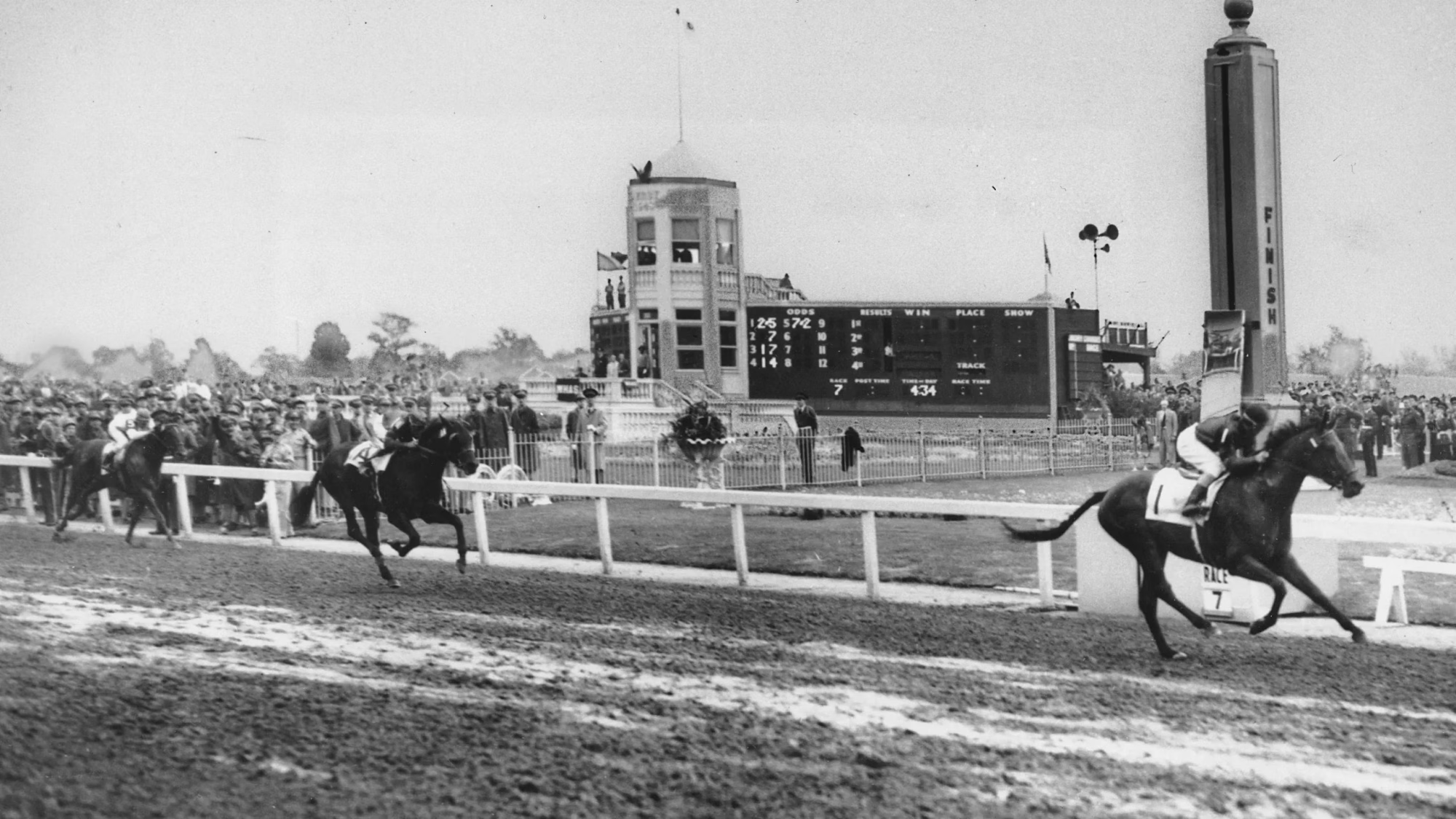
Citation storms home to win the 1948 Kentucky Derby by a commanding margin-an iconic moment in racing history and a testament to the power of elite genetics.

Elite Sires: The Game-Changers

Certain standout sires have transformed their respective breeds in both industries through exceptional genetic contributions. These genetic titans don’t just produce champions – they establish dynasties that dominate for generations, like the difference between a farm with a consistent 30,000-pound herd average and one struggling to break 20,000.

Thoroughbred racing has Tapit, a true genetic powerhouse. “Tapit broke the single-season progeny earnings record for a North American sire in three consecutive years (2014-2016).” As a “great patriarch,” Tapit has sired over 100 graded stakes and 32 Grade I winners, with progeny earnings exceeding $210 million.

In the dairy world, elite bulls like Farnear Delta-Lambda represent similar genetic goldmines for breeders seeking show ring dominance. As the Premier Sire of the International Holstein Show at the 2024 World Dairy Expo, Farnear Delta-Lambda has established himself as the go-to bull for producing champions on the colored shavings – the bovine equivalent of striking oil on your back forty. His daughters dominated the competition, leading to this prestigious title recognizing the bull whose progeny performed most successfully in the show ring.

But here’s the inconvenient truth: too many dairy breeders chase the hottest new genomic young sire without understanding how to build a genetic program with staying power. It’s like buying fancy sexed semen for your heifers but neglecting your transition cow program. The Thoroughbred industry teaches us that creating a genetic dynasty requires strategic thinking beyond single-generation success.

"🌟 Throwback to Legendary Genetics 🌟 Meet Wind Drift Countess Nora – the blueprint for modern dairy greatness. As the first-ever World Dairy Expo Supreme Champion (1970 and 1972), this icon proved elite genetics + flawless type = immortality on the colored shavings. One of only 37 cows to ever claim Expo’s highest honor, Nora’s legacy lives on in every heifer’s DNA test today. 🔥 Who’s your all-time Supreme Champion? Drop her name below ⬇️ for a chance to win our 50th-anniversary prize pack <a href='https://www.thebullvine.com/a-i-industry/celebrating-50-years-of-semex-a-symbol-of-genetic-progress-and-technological-innovation/' data-lazy-src=

The Speed Gene: What We Can Learn from Single-Gene Discoveries

While dairy breeders focus on complex indices balancing dozens of traits, Thoroughbred breeders received a genetic gift in 2010 that transformed their industry: the discovery of the “Speed Gene.”

Research led by Dr. Emmeline Hill identified a specific genetic variation near the MSTN (Myostatin) gene that strongly predicts a Thoroughbred’s optimal racing distance. This single-nucleotide polymorphism results in three possible genotypes, each with distinct performance profiles:

  • C: C Genotype: Horses develop muscle mass earlier and excel at shorter, faster races (sprints)
  • C: T Genotype: The most versatile type, performing well across a range of distances
  • T: T Genotype: These horses possess greater stamina and are best suited for longer races

This breakthrough was immediately commercialized as the “Equinome Speed Gene Test,” allowing breeders to decide precisely which horses to breed and how to train them.

Why This Matters for Your Herd: While many genes influence most dairy traits, the Speed Gene example reminds us to stay alert for major genetic discoveries that could transform breeding decisions. Think of it like the A2A2 beta-casein gene – a single genetic trait that suddenly created premium milk markets and breeding strategies virtually overnight. Similar markers for crucial dairy traits like metritis resistance or feed efficiency may be identified as genomic research continues. The breeders who quickly adopt these tools will gain substantial advantages in the market, just like early adopters of robotic milking systems or activity monitors for heat detection.

Seattle Slew thunders down the homestretch at Churchill Downs in the 1977 Kentucky Derby, the start of his historic Triple Crown campaign. As one of racing's most influential genetic powerhouses, Seattle Slew exemplifies the "foundation sire" concept discussed in the article - his bloodlines continue to influence champion Thoroughbreds nearly five decades later, similar to how elite dairy bulls can transform entire breeding programs for generations. Photo courtesy of the Kentucky Derby.
Seattle Slew thunders down the homestretch at Churchill Downs in the 1977 Kentucky Derby, the start of his historic Triple Crown campaign. As one of racing’s most influential genetic powerhouses, Seattle Slew exemplifies the “foundation sire” concept discussed in the article – his bloodlines continue to influence champion Thoroughbreds nearly five decades later, similar to how elite dairy bulls can transform entire breeding programs for generations. Photo courtesy of the Kentucky Derby.

Market-Driven Breeding Strategies: Know What Wins

Successful breeders in both industries recognize the importance of aligning breeding goals with market demands. For Thoroughbred breeders, this means understanding what characteristics buyers value.

“To profit in this industry, you need a clear strategy aligned with what buyers want. If you want to create foals that command high prices at auctions, you’ve got to think like a buyer and build a plan around that.” This market awareness extends to studying recent auction results, tracking bloodline preferences, and identifying emerging trends.

In the dairy show ring, similar market awareness is critical. Breeding for World Dairy Expo success requires understanding what judges reward and what traits create a lasting impression. The ideal champion combines structure, style, and the capacity for high production – the kind of balanced cow that looks as good on the colored shavings as she does on her DHIA records.

Here’s where many dairy breeders go wrong: they focus exclusively on either production metrics or show ring appeal without understanding how to balance both. It’s like having stellar component percentages or trouble-free calvings when you should be demanding both. The most successful breeders develop strategies aligned with specific market goals – commanding premium prices for show-quality genetics or maximizing lifetime production and component values in a commercial setting where PPDs (Predicted Producer Differentials) and component premiums drive your milk check.

Championship Genetics in Action: Erbacres Snapple Shakira-ET receives her second Supreme Champion banner at World Dairy Expo. This exceptional Holstein demonstrates the perfect fusion of elite breeding and meticulous preparation that creates a multi-year champion. Like the Kentucky Derby winners described in our article, Shakira represents generations of strategic genetic decisions culminating in show ring dominance on the colored shavings.

Genomics: Speed of Progress vs. Balanced Improvement

One significant difference between the two industries is their approach to generation intervals – the average age of parents when their offspring are born. Genomic selection has dramatically shortened generation intervals in dairy cattle breeding.

Research shows that generation intervals reduced significantly between 2009 and 2016, allowing for much faster genetic progress as elite animals are identified earlier and used for breeding at younger ages. This principle applies equally to both industries, though the dairy sector has leveraged it more aggressively through reproductive technologies like artificial insemination, embryo transfer, and in vitro fertilization.

Every dairy breeder should ask: Are you effectively utilizing these tools to accelerate genetic gain in your herd, or are you falling behind competitors who understand this fundamental principle? It’s like watching your neighbors install precision ag technology while you’re still using dead reckoning to apply fertilizer. The genetic gap widens every breeding season – measured in TPI, NM$, or LPI points directly affecting your bottom line.

Affirmed with jockey Steve Cauthen after winning the 1978 Kentucky Derby, the first leg of his legendary Triple Crown victory. Like elite dairy champions, Affirmed exemplified exceptional genetic merit combined with proper development and handling. His bloodlines through his sire Exclusive Native continue to influence Thoroughbred breeding, demonstrating how champion genetics create lasting dynasties - a principle equally valuable in dairy cattle breeding programs.
Affirmed with jockey Steve Cauthen after winning the 1978 Kentucky Derby, the first leg of his legendary Triple Crown victory. Like elite dairy champions, Affirmed exemplified exceptional genetic merit combined with proper development and handling. His bloodlines through his sire Exclusive Native continue to influence Thoroughbred breeding, demonstrating how champion genetics create lasting dynasties – a principle equally valuable in dairy cattle breeding programs.

The Strategic Mating Advantage

Creating champions in either arena requires more than selecting elite genetics- it demands strategic mating decisions that complement strengths and address weaknesses. Successful Thoroughbred breeding involves matching stallions and mares with complementary characteristics.

“Choose stallions based on pedigree compatibility, not marketing or stud fees,” advises one bloodstock expert. This philosophy emphasizes analyzing how specific crosses might combine strengths and offset weaknesses rather than simply pursuing the most fashionable or expensive sires.

In dairy breeding, a similar approach applies. When aiming for World Dairy Expo success, breeders must evaluate their females honestly and select bulls that complement their strengths while correcting weaknesses. This might mean using a bull strong in mammary traits on cows with average udders or selecting for improved feet and legs when that’s a family weakness.

Why This Matters for Your Breeding Program: Many dairy breeders make the critical mistake of using the highest-ranked bull on all their cows, regardless of individual strengths and weaknesses. It’s like treating all your mastitis cases with the same antibiotic without culturing first. Inspired by Thoroughbred approaches, strategic mate selection involves analyzing how specific crosses might combine strengths and offset weaknesses. This method produces animals with the optimal traits needed for show ring success and profitable production.

For example, if your Goldwyn daughters have tremendous mammary systems but tend to lack power and substance through their front ends, mating them to bulls like Impression or Jabir that add strength and chest width could produce much more balanced offspring than simply using the current #1 TPI bull. This thoughtful approach beats random mating like protein premiums beat fluid milk markets.

RF Goldwyn Hailey showcased on the iconic colored shavings at World Dairy Expo. This legendary Holstein exemplifies the 'dairy Ferrari' described in our article - combining breathtaking type with production power. Like a Kentucky Derby champion, she represents generations of strategic breeding decisions, demonstrating how exceptional conformation and balanced genetic selection create show ring royalty. When judges assess structure, style, and dairy strength, this is what championship excellence looks like."
RF Goldwyn Hailey showcased on the iconic colored shavings at World Dairy Expo. Like a Kentucky Derby champion, she represents generations of strategic breeding decisions, demonstrating how exceptional conformation and balanced genetic selection create show ring royalty. When judges assess structure, style, and dairy strength, this is what championship excellence looks like.

Beyond Genetics: Preparing Champions for the Spotlight

Even with perfect genetics, neither a Kentucky Derby winner nor a World Dairy Expo champion is created by DNA alone. Creating a champion extends beyond genetic selection to include proper development and management.

In Thoroughbreds, this encompasses specialized nutrition, meticulously planned exercise regimens, and handling that builds confidence and athletic ability. Similarly, World Dairy Expo champions require extraordinary preparation beyond their genetic potential.

The development of young animals, proper nutrition during growth stages, expert fitting, and professional presentation all contribute to championship success. This means paying as much attention to your dry cow TMR formulation as you do to your lactating ration. It means perfecting heifer-raising programs that develop frames without overconditioning. For show animals, it means mastering the art of hair training, udder edema management, feed program timing, and professional clipping and fitting that makes good cows look great.

One veteran dairy breeder noted, “Even with elite genetics, there’s no substitute for hard work, keen cow sense, and a passion for perfection.” The best-bred animal in the world won’t reach its potential without proper development – just like the best robotic milking system won’t perform without appropriate maintenance and management.

American Pharoah surges ahead to victory in the 2015 Kentucky Derby-showcasing the elite genetics, athleticism, and preparation that ended a 37-year Triple Crown drought and set a new standard for breeding champions.

Balancing Show Ring Excellence with Functional Performance

While a Kentucky Derby winner needs one perfect two-minute performance, the World Dairy Expo champion represents years of productive life in the milking string. This fundamental difference highlights the importance of balancing extreme type with functional traits in dairy breeding.

The most successful dairy breeders recognize that true champions must possess exceptional conformation and the genetic foundation for production, health, and longevity. The ideal World Dairy Expo champion combines structure, style, and the capacity for high production – a cow that not only pins the blue ribbon but also fills the bulk tank.

Here’s a provocative question: Has pursuing extreme dairy character and show ring style gone too far in some breeding programs? When cows are so sharp, they look like they’ve been on a starvation diet, so something’s wrong with our selection criteria. The Thoroughbred industry’s relentless focus on performance rather than appearance offers a valuable lesson in breeding for function first. After all, a Ferrari might look impressive in the driveway, but a well-built pickup truck gets the farm work done every day.

Cutting Edge T Delilah, 2018 World Dairy Expo Supreme Champion, represents the pinnacle of strategic genetic selection. Like Kentucky Derby winners, World Dairy Expo champions embody generations of careful breeding decisions, combining elite bloodlines with balanced traits for both show ring appeal and functional performance. This moment on the colored shavings-draped in the prestigious Supreme Champion blanket-symbolizes what dairy breeders strive for: genetic excellence expressed in its most magnificent form.

Traditional Selection vs. Genomic Revolution: A Comparison

AspectTraditional Breeding ApproachGenomic-Enhanced Approach
Age at SelectionBulls: 5+ years (after progeny testing)
Cows: Multiple lactations
Bulls: Birth
Cows: Birth
Selection AccuracyBased on performance data and pedigreeDNA analysis plus all available data
Generation Interval5-7 years2-3 years
Rate of Genetic GainApproximately 40/year (NM$)Approximately 80/year NM$)
Inbreeding ManagementPedigree-basedMore precise DNA-based
Trait SelectionLimited to easily measured traitsExpanded to include health, feed efficiency
Mystik Dan (rail) surges to a dramatic nose victory over Sierra Leone (outside) and Forever Young (middle) in the 150th Kentucky Derby’s unforgettable photo finish.

Lessons from Both Worlds: What We Can Apply Now

Let’s distill the key strategies from Thoroughbred breeding that can transform your dairy breeding program:

  1. Data-Driven Decisions: Like the Thoroughbred’s unwavering focus on race results, base your breeding decisions on comprehensive data rather than trends or marketing hype. A pretty picture in a sire catalog is worth less than solid proofs across multiple traits.
  2. Strategic Mate Selection: Don’t just use high-ranking sires – select bulls that specifically complement each cow’s strengths and weaknesses. Mating a cow with excellent production but poor feet and legs to a bull that excels in mobility makes more sense than using the same “corrective” bull across your entire herd.
  3. Elite Genetic Lines: Identify and intensify the influence of exceptional genetic lines, like how Tapit established a dynasty in Thoroughbred racing. When you find a cow family that consistently produces trouble-free, high-producing animals, double down on those genetics like you’d double down on your most profitable crop rotation.
  4. Market Awareness: Align your breeding goals with specific market demands, whether show ring success, component production, or feed efficiency. If your milk processor pays substantial premiums for butterfat, your breeding program should reflect that economic reality – just as you’d adjust your cropping program based on commodity prices.
  5. Generation Interval: Leverage genomics and reproductive technologies to accelerate genetic progress through shorter generation intervals. Using sexed semen on genomically tested heifers lets you turn generations faster than waiting to breed older cows – like harvesting a fast-growing crop three times versus a single cutting of a slower variety.
  6. Balance Function and Form: Remember that even the most beautiful cow needs to be productive and healthy – performance must accompany appearance. The cow that wins Grand Champion at your county fair should be able to walk back to the barn, eat aggressively, and milk with the best of them, not just stand pretty for the camera.
  7. Development Focus: Invest in your animals’ proper development and presentation, recognizing that genetic potential must be nurtured appropriately. The best genomic predictions won’t help if your calves face respiratory challenges from poor ventilation or your heifers are overweight at breeding – just as the best corn hybrid won’t perform in poorly drained soil.
Old Mill E Snickerdoodle stands proudly on the iconic blue shavings after being crowned Grand Champion at World Dairy Expo. This elite Holstein represents the pinnacle of strategic genetic selection and meticulous preparation discussed in our article – a living testament to what happens when breeders apply championship principles across generations. Note the perfect balance of dairy strength and style that judges reward, embodying the ideal combination of show ring excellence and functional performance that distinguishes true champions.
Old Mill E Snickerdoodle stands proudly on the iconic blue shavings after being crowned Grand Champion at World Dairy Expo. This elite Brown Swiss cow represents the pinnacle of strategic genetic selection and meticulous preparation discussed in our article – a living testament to what happens when breeders apply championship principles across generations.

What World Dairy Expo Can Learn from the Kentucky Derby’s Mainstream Magic

Let’s face the uncomfortable truth – the Kentucky Derby captures America’s imagination while the World Dairy Expo barely registers outside our industry bubble. Churchill Downs draws nearly 400,000 spectators annually (SIX Super Bowls’ worth of fans) and 16.7 million TV viewers who couldn’t tell you the difference between a yearling and a gelding. Meanwhile, the Expo remains our industry’s best-kept secret despite showcasing the world’s most elite dairy genetics. The difference? The Derby isn’t just marketing horses – they’re selling an experience that “transcends demographics” with equal appeal to bourbon-sipping traditionalists and TikTok influencers like Alix Earle.

World Dairy Expo openly admits they actively avoid marketing to the general consumer market – this event is all about dairy farming. There are many lessons we could learn from the Kentucky Derby. While Churchill Downs creates “cultural moments” with celebrity announcers like Simone Biles, non-alcoholic “Pony” mocktails for Gen Z, and fashion that dominates social media, we’re debating whether to let high schoolers take free pencils from our trade show booths.

World Dairy Expo has everything needed to captivate mainstream audiences. The colored shavings, legendary champions, multi-million-dollar cattle, cutting-edge genetics, and generational family stories are marketing gold – if we’d stop hiding them behind industry jargon and closed doors. One industry observer noted, “I’ve never seen such a sense of community as when I walked through the barns… It’s something you want to bottle up.” That’s the point – we must stop hoarding these experiences and start bottling them for larger consumption. Kentucky Derby organizers understand that “turning on the TV to see your favorite celebrity” drives curiosity about attending the event. If we want dairy farming to remain economically and culturally relevant, it’s time to steal their playbook before our industry becomes as obsolete as yesterday’s classification score.

Justify powers through the mud to victory at the 2018 Kentucky Derby, showcasing the elite genetics that made him the 13th Triple Crown winner in history. Like World Dairy Expo champions, his superior physical attributes and genetic excellence demonstrate how selective breeding creates exceptional athletes across species.

The Bottom Line

Whether at Churchill Downs or the World Dairy Expo, pursuing championship excellence relies on similar genetic principles applied in different contexts. By understanding how Thoroughbred breeders have created Kentucky Derby champions, dairy producers can refine their breeding programs for show ring success and profitability.

The genomic revolution has given dairy breeders unprecedented tools for genetic advancement – tools many in the Thoroughbred industry would envy. The question isn’t whether these technologies work; it’s whether you’re maximizing their potential in your breeding program. Are you still using conventional semen when your competitors are employing strategic combinations of genomic testing, sexed semen, and targeted embryo transfer?

For dairy breeders dreaming of leading the Grand Champion on the colored shavings at the World Dairy Expo, the lessons from Kentucky Derby breeding success provide a valuable roadmap. That championship dream can become a reality by leveraging genomic technologies, focusing on market-relevant traits, utilizing elite bloodlines, and implementing complementary mating strategies.

The path to breeding excellence may differ in detail between horses and cows, but the fundamental genetic principles that create champions remain remarkably consistent across species. With the right genetics, unwavering dedication, and a little show ring magic, that dream of standing in the spotlight on the colored shavings isn’t just possible – it’s practically inevitable.

Are you ready to rethink your breeding strategy and apply these cross-species lessons to create your next champion? The colored shavings await, and so does the profitable future of your dairy operation.

The Crowning Moment: Judge Pat Conroy signals his championship selection of Oakfield Solom Footloose at World Dairy Expo. Like Kentucky Derby champions, elite dairy winners combine perfect genetics with meticulous preparation - the difference is these bovine athletes must perform not just for two minutes but for years in the milking parlor. Footloose exemplifies the balanced breeding approach discussed in the article, where show ring excellence meets functional performance.
The Crowning Moment: Judge Pierre Boulet signals his championship selection of Oakfield Solom Footloose at World Dairy Expo. Like Kentucky Derby champions, elite dairy winners combine perfect genetics with meticulous preparation – the difference is these bovine athletes must perform not just for two minutes but for years in the milking parlor.

Key Takeaways

  • Genomic selection has doubled dairy genetic gains by slashing generation intervals
  • Adopt Thoroughbred-style strategic mate selection – pair cows’ weaknesses with bulls’ strengths, not just top indexes
  • Market-awareness matters: Breed show cows that milk like Ferraris but work like pickup trucks
  • 70% of genetic potential is wasted without proper heifer development and show prep rigor
  • Kentucky Derby’s mainstream appeal tactics could revolutionize how Expo markets elite genetics to consumers

Executive Summary

This provocative analysis reveals how dairy breeders can harness Thoroughbred racing’s elite genetics playbook to dominate the show ring and bulk tank. By decoding genomic selection breakthroughs, strategic mating tactics from Triple Crown bloodlines, and market-driven breeding philosophies, producers can accelerate genetic gains while balancing show-stopping type with commercial viability. The article challenges conventional dairy breeding wisdom through cross-species insights, demonstrating how genomic tools have doubled genetic progress rates and why preparation matters as much as pedigree. For breeders eyeing colored shavings glory, these track-proven strategies offer a blueprint for creating the next generation of balanced, profitable champions.

Learn more:

Join the Revolution!

Join over 30,000 successful dairy professionals who rely on Bullvine Weekly for their competitive edge. Delivered directly to your inbox each week, our exclusive industry insights help you make smarter decisions while saving precious hours every week. Never miss critical updates on milk production trends, breakthrough technologies, and profit-boosting strategies that top producers are already implementing. Subscribe now to transform your dairy operation’s efficiency and profitability—your future success is just one click away.
NewsSubscribe
First
Last
Consent

CDCB’s 2025 Genetic Base and Merit Indices Update: Everything You Need To Know

See how CDCB’s 2025 updates can boost your dairy herd’s profits. Are you ready to improve feed efficiency and fertility?

Summary:

Prepare for significant changes in dairy farming! The Council on Dairy Cattle Breeding (CDCB) is set to update genetic evaluations in April 2025, with revisions to lifetime merit indices like Net Merit $, Cheese Merit $, Fluid Merit $, and Grazing Merit $, and a new genetic base focusing on cows born in 2020. These upgrades aim to improve feed efficiency, milk pricing, and fertility, boosting profitability and efficiency for dairy farmers. With genetic diversity monitored for sustainable growth, these changes reflect current economic environments and promise a bright future for herd management and farm earnings.

dairy cattle breeding, genetic tools, feed efficiency, lifetime merit indices, genomic selection

The Council on Dairy Cattle Breeding (CDCB) is preparing for significant changes in April 2025. They will Two significant updates will be implemented in the April 2025 dairy genetic evaluations published by the Council on Dairy Cattle Breeding (CDCB) – a revision to the lifetime merit indices and a genetic base change. The CDCB Board of Directors approved these revisions at their December 18, 2024 meeting.

On April 1, 2025, dairy producers will receive genetic evaluations for Lifetime Net Merit $ (NM$), Lifetime Cheese Merit $ (CM$), Lifetime Fluid Merit $ (FM$), and Lifetime Grazing Merit $ (GM$) built on new economic weights and an updated genetic base. The lifetime merit indices promote a balance of traits to maximize dairy cow profitability. These CDCB indices – produced in partnership with USDA-ARS Animal Genomics and Improvement Laboratory – estimate the difference in lifetime profit that each animal is expected to transmit to its progeny, expressed in U.S. dollars.

As the primary genetic selection index in the U.S., Net Merit $ ranks dairy animals on their combined genetic merit for nearly 40 economically important traits. All animals who receive a genetic evaluation from CDCB, the national genetic evaluation center in the U.S., receive merit index values alongside genetic evaluations for 49 individual selection traits and composites based on tens of millions of records stored in the National Cooperator Database.

The lifetime merit indices are updated periodically to reflect new traits, new research and current dairy market data. The April 2025 revision includes adjustments to the weights placed on individual traits and composite indices due to changes in the economic values of traits. Most notable is the enhanced commitment to dairy cattle genetic improvement and profitability through feed efficiency, component-based milk pricing, and fertility. The following table shows the expected relative value of economically rooted weights of traits in the revised April 2025 Net Merit $ formula, compared to weights in the current formula. Calculations show a 0.992 correlation, indicating little reranking expected of most animals.

Trait NameCurrent (August 2021)April 2025Change
Milk0.33.2­ 2.9
Fat28.631.8­ 3.2
Protein19.613¯ 6.6
Somatic Cell Score-2.8-2.6¯ 0.2
Productive Life15.913¯ 2.9
Livability4.45.9­ 1.5
Heifer Livability0.50.8­ 0.3
Health $1.41.5­ 0.1
Udder Composite $3.41.3¯ 2.1
Body Weight Composite $-9.4-11­ 1.6
Foot and Leg Composite $0.40.4¾
Calving Ability $2.93.3­ 1.4
Daughter Pregnancy Rate4.12.1¯ 2.0
Cow Conception Rate1.01.8­ 0.8
Heifer Conception Rate0.40.5­ 0.1
Early First Calving1.21¯ 0.2
Residual Feed Intake-4.8-6.8­ 2.0

Additional information on the lifetime merit indices update will be shared with industry organizations and dairy producers in early 2025 at uscdcb.com and through the CDCB Connection e-newsletter. A technical document from USDA-AGIL will be available in early January.

Genetic Base Change in April

These merit index values, along with the 49 individual selection traits and composites produced by CDCB, will be expressed on an updated genetic base relative to dairy cows born in 2020. In the U.S., this update occurs every five years to best align selection tools with the current dairy herd. Final base change values will be shared with the April 2025 evaluation release. As producers define breeding strategies for 2025, they can expect changes in predicted transmitting ability (PTA) values similar to these preliminary estimations.

Trait NameUnitsBrown SwissHolsteinJersey
MilkPounds350750400
FatPounds104520
ProteinPounds153015
Somatic Cell ScoreLog base 2 units0-0.10
Productive LifeMonths12.51.5
Livability%0.50.50.5
Mastitis%-0.20.75-1
Daughter Pregnancy Rate%-0.6-0.2-0.4
Cow Conception Rate%-0.50.50
Heifer Conception Rate%0.111.5
Early First CalvingDays0.522
Residual Feed IntakePounds-40
Final Score 0.20.6*0.6

*Holstein type traits are calculated by Holstein Association USA. This estimation was provided by HAUSA. Holstein Final Score was updated in this table on 1/3/2024, as the number in the original post was inverted.

Since 2013, the Council on Dairy Cattle Breeding has been responsible for publishing genetic evaluations, stewarding the National Cooperator Database, and providing national dairy performance benchmarks. CDCB works in conjunction with the USDA-ARS Animal Genomics and Improvement Laboratory to research new genetic methodologies, selection traits, and tools for reporting genetic conditions.

Learn more:

Join the Revolution!

Bullvine Daily is your essential e-zine for staying ahead in the dairy industry. With over 30,000 subscribers, we bring you the week’s top news, helping you manage tasks efficiently. Stay informed about milk production, tech adoption, and more, so you can concentrate on your dairy operations. 

NewsSubscribe
First
Last
Consent

Rethinking Balanced Breeding for 2028 and Beyond

Unlock the future of dairy farming. Ready to redefine breeding for 2028 and beyond? Discover strategies to enhance your herd’s potential.

In the dynamic world of dairy farming, where tradition intertwines with innovation, balanced breeding emerges as a harmonious blend of artistry and scientific precision, forming the industry’s foundation.

In the early 1900s, pedigree balancing was the mainstay, much like a fabled chess game in which breeders strategically matched lineage and heritage, weaving the threads of future generations. Fast-forward to today and the landscape has transformed—it is not just about balance. It involves ensuring survival and achieving excellence in a rapidly changing global dairy industry, highlighting its evolution and the urgent necessity for modern breeding practices. Despite the advancements in current systems, many dairy farmers and industry professionals continue to rely on balanced breeding.

All this demands that dairy farmers and industry professionals question whether the notions of the past are sturdy enough to support tomorrow’s ambitions. By challenging historical breeding beliefs, they are urged to evaluate the efficiency of their present approaches. Are we breeding with future goals, or are traditional methods hindering our progress? Is it time to unravel the intricacies of balance in breeding as the industry confronts the silent revolution pushing dairy cattle breeding toward new horizons?

The Evolution of Dairy Cattle Breeding: A Century’s Journey from Pedigree to Precision 

Time PeriodBreeding FocusKey InnovationsChallenges
1900s – 1930sPedigree BalancingLineage DocumentationLack of Data
1940s – 1965Phenotypic Data UtilizationProgeny TestingAvoidance of Production-Type Mix
1965 – 1990Production and Type BalancingTrait Performance AnalysisBalancing 50:50 Production:Type
1995 – 2020Total Merit Index (TMI) RankingGenomic SelectionOver-reliance on Historical Data
2020 – PresentPrecision GeneticsGenomic IndexesNeed for Strategic Focus

The development of balanced breeding in dairy cattle has changed a lot over the past century.

Forging Foundations: The Art of Pedigree Balancing in Early 20th Century Dairy Breeding

In the early 20th century, North American dairy cattle breeders faced formidable challenges that shaped the beginnings of balanced breeding. From the 1900s to the 1930s, breeders relied on pedigrees and family lines, as they did not have organized farm data systems to help them make decisions. This emphasis on pedigrees paved the way for a breeding approach where intuition and historical wisdom were the cornerstones of decision-making.

Early breeders’ unwavering commitment was to maintain a balance among successful cattle families, ensuring the preservation of good traits by selecting proper lineages. Although this approach could have been more precise, it did help improve Holstein breed quality. By aligning family strengths and balancing bloodlines like Posch and Abbekerk, early breeders set the stage for what would later become more scientific breeding methods, underscoring the crucial role of experience in the field. 

Deciphering Data: The Mid-20th Century Shift Towards Phenotypic Precision in Dairy Breeding

During the mid-20th century, dairy cattle breeding considerably changed using official phenotypic data. This shift happened when breeders started using accurate data to address common issues in Holsteins, like deep udders and low butterfat percentages. This data helped breeders make more accurate choices, moving beyond just using pedigrees to focus on measurable traits. 

Still, there was a gap even with the focus on phenotypic data. Breeding often kept production traits, like milk yield and butterfat, separate from type traits, such as udder depth and overall structure. Breeders could fix specific problems but still missed connecting a cow’s production abilities and physical features. As a result, breeding could improve one area while ignoring another, highlighting the need for balance in these practices.

Striking the Right Chord: The 1960-1990 Era of Balanced Breeding in Dairy Cattle

During the lively period between 1960 and 1990, dairy breeding focused on balancing production and type. This emphasis on balancing production and type highlights the industry’s focus on creating productive and structurally sound cattle. 

One example was Master Breeder Cliff McNeil (Heather Holme), who practiced a unique method that left a lasting impact. His approach involved alternating breeding goals for each generation, focusing on milk production in one generation and physical traits in the next. This method prevented any single trait from becoming too neglected. McNeil’s technique not only made selecting sires simpler but also helped create balanced herds and set an example for the balanced concept of modern genetic strategies.

Reassessing the Metrics: The Paradox of Progress in the Late 20th Century Dairy Breeding

In the late 20th century, dairy cattle breeding changed dramatically. Breeders started using Total Merit Indexes (TMIs) to select sires. These indexes relied on past performance data. They made choosing sires easier and set clear goals for breeders. However, a closer look shows that while this was a step forward in some ways, there were also problems. 

TMIs used past performance data but could often neglect to address future breeding goals. Breeders immediately focused on improving yields and sometimes did not include some traits important for long-term success. This was clear when herds experienced declining reproductive efficiency and shorter lifespans. High-production breeding overshadowed other key traits, like fertility and health, vital for successful dairy farms

The rise of TMIs also meant breeders used their instincts less. Before, breeders had relied on their knowledge to make careful decisions. Now, they often follow ranking lists instead of using a deeper understanding of genetics, their herd’s genetic merit, and sire matching. This led to more uniform breeding practices but less creativity and personalization. 

As the industry kept using TMIs, which placed as much as eighty percent emphasis on the combination of milk production and conformation, the problems with this approach became clearer. Breeders realized that relying too much on past data limited their ability to face new challenges and changing market conditions. The idea that combining instinct with science was the way forward began spreading across dairy farms, leading to the need to breed and select the ideal animal.

The Mirage of Balance: When Mediocrity Masquerades as Mastery in Modern Breeding 

In today’s world, ‘balanced breeding’ often means something different from what was once expected. Animals marketed as ‘TMI Balanced’ can often be average or below the current breed average instead of exceptional for one or more critical heritable traits. This means they might not have noticeable problems but also lack standout traits that could significantly improve a herd. The real issue is that genetic progress slows down; it might also go backward while seeming okay because performance is only average. 

Also, selecting too many traits at a time can spread efforts too thin, making it hard to see any real improvement in a farm’s productivity. Focusing on a few essential traits that make a financial difference is recommended. 

Knowing where an animal stands in the population is very important. This is often shown as a percentage rank (%RK) of an index value and helps people understand the genetic value of a sire or female’s contemporaries. Breeders can use these rankings to make smarter decisions, focusing on improving their animals and herd instead of just maintaining it. This means moving past old ways and embracing data-driven methods, which are not just a key but the key to success in the future of dairy breeding.

Sculpting the Future: A Precision Revolution in Dairy Breeding

The future of dairy cattle breeding needs a shift towards precision and focus. For example, breeders should concentrate on traits like kappa casein content, feed efficiency, and animal welfare to improve profitability and product quality. Instead of trying to improve too many traits, breeders should concentrate on three or four key traits that are heritable and economically important. This approach can lead to greater genetic progress and more efficient farming. 

Trait heritability plays a vital role in the success of breeding programs. If a trait, as measured, is not heritable, it will not help with genetic improvement. Breeders must understand genetic indexing and how to use advanced technology to make real progress. The future of dairy breeding is about measurable genetic changes rather than simple phenotypic observations. 

Planning for the future of dairy breeding requires an innovative approach. Instead of relying on past methods like reactionary culling and mating choices, breeders should use modern genetic knowledge to meet current and future market needs. This forward-thinking approach will help create cattle that match today’s and tomorrow’s demands. 

Future-focused breeding should aim for practical results, such as better human digestion of milk products with a trait like A2A2 beta-casein, improved efficiency through better feed conversion and less labor for animal care, and improved animal health and reproduction. These improvements should also consider animal welfare, environmental sustainability, and alignment with global goals. 

This new way of selective breeding is like creating a symphony, where each chosen trait plays a vital role in forming a productive herd. The future of breeding in 2028 and beyond is about finding this balance to drive significant improvements in the dairy industry.

Still today, some breeders focus too much on pedigree and physical appearance, ignoring the powerful insights genetic data can provide. So, livestock breeding continues as historical methods meet new genetic technology. 

Breeding for a New Dawn: Harnessing Strategic Traits to Innovate Dairy’s Next Chapter

As the dairy industry enters a new era, choosing breeding traits is challenging and full of opportunities.

Kappa casein content is about to become essential. Kappa casein is the protein needed for cheese production, as it is key to the amount and quality of cheese. This change shows a shift towards breeding decisions that improve profits and product quality

Feed efficiency is also an important trait that will be included in future breeding plans. With rising feed costs and environmental issues, optimizing feed conversion is crucial for saving money and being environmentally friendly.

Animal welfare and health is more than just doing what is ethically correct or giving lip service to genetically improving animal health. They are central to breeding programs focusing on sustainability and consumers’ wants. Cows that are healthier and well-suited to their environment produce more and live longer, reducing the need to replace them often and increasing farm profits. So, health, adaptability, and overall welfare traits are becoming more critical. 

It is paramount to use DNA and factual data in breeding decisions. Genomic testing offers accurate details about inheritable traits, assisting breeders in making data-driven choices rather than relying solely on historical patterns. DNA accuracy allows breeders to predict breeding results more reliably, ensuring that chosen traits enhance the herd’s performance. Genetic indexes help identify and select animals that excel in important traits, avoiding a general phenotypic approach that can lead to, at best, average results. Thus, DNA and detailed data guide a superior and more forward-thinking dairy breeding strategy.

Navigating the Lifecycle of Dairy Excellence: Mastering Heifer and Cow Milestones for Optimal Breeding Success

In the complex world of dairy cattle breeding and management, understanding the key stages in the life of a heifer and a cow is crucial for success. A heifer’s journey begins with a trouble-free birth and a strong start, and her early days must be carefully managed to keep her disease-free and healthy. This heifer phase sets the path for a productive future; growth and fertility are essential milestones in deciding whether she can join the breeding herd. 

As a heifer becomes a cow, the focus shifts slightly to include her performance high across lactations. Cows need smooth calving processes, reducing any issues during and after calving that could harm their health and productivity. During this stage, efficient feed conversion is key, as it affects the yield of milk solids and the economic efficiency of dairy operations. Achieving high feed conversion rates boosts milk solids production while lowering the environmental impact of dairy farming, aligning with modern sustainability goals. 

Building environmental adaptability into heifers and cows can significantly improve their resilience to climate and management challenges. With industry advancements, the capacity of dairy animals to flourish in diverse environments will be crucial. Breeders and dairy operators should concentrate on crucial stages, investing in genetics and management practices that enhance health, reproduction, and adaptability. This ensures that each life cycle phase contributes to overall farm success.

In Pursuit of Greatness: Crafting the Elite Class in Dairy Farming Through Strategic Focus and Precision Breeding

Just like champions in sports or visionaries in business, the elite in dairy farming distinguishes themselves through unwavering focus and relentless dedication. In sports, top athletes, like Olympic champions, succeed through intense training and innovative coaching that builds on their strengths. Successful companies do well in business because they focus on the latest ideas, help their teams grow, and use their strengths wisely. 

Prioritizing top-performing animals is a fundamental element in achieving success in dairy farming. These animals have the best genes, high production ability, and will be functional and healthy. Just like in sports and business, investing in elite dairy females can change herd breeding practices and improve the quality and efficiency of the farm. Farmers can ensure their herds do well in challenging and demanding markets by investing in elite genetic females. 

But breeding top animals is not about luck. A careful selection process using the latest genetic studies and top indexing reports is needed to find those with the best potential. For example, in business, where data and research guide decisions, precision and forward-thinking are key to choosing breeding stock in dairy farming. So, recognizing and developing the best in the herd is not just a tactic—it is a powerful strategy, much like winning in sports or achieving top success in business.

Precision at the Crossroads: Mastering the Genetic Symbiosis in Dairy Breeding

Balancing the genetic potential in dairy cattle is a complex task, and this balance needs to happen precisely when mating is being considered. Instead of focusing only on choosing the right herd sire, the focus should be making wise choices during mating. 

The moment of mating is crucial, as genetic traits can be matched to maximize the results. Choosing the best sire for each cow based on genetics can boost the development of desired traits. This approach allows breeders to plan for the offspring’s genetic makeup, enhances strengths, and minimizes limitations. 

Smart mating choices use detailed data, such as genomics, functional traits, production performance, and herd goals. This helps breeders align their breeding goals with each cow’s unique features. This precision improves the chances of producing offspring that meet current market needs and future challenges. With strong decision-making practices, each generation can be better than the last, leading to an adaptable and forward-thinking breeding plan. 

Prioritizing strategic mating over conventional sire selection positions dairy farmers as pioneers of innovation, aiding them in remaining competitive in a shifting landscape. Mastering the art of breeding at the moment of mating is the key to unlocking the potential for dairy excellence.

The Bottom Line

The dairy farming world is changing fast. The future belongs to those who look beyond old traditions. Breeders must now focus on precision genetic advancement instead of the old balanced breeding approach. It is time to aim for traits that make the industry more sustainable, efficient, and profitable. The breeders who embrace this change will lead the way, turning potential into success and setting a new standard for dairy cattle breeding.

So, ask yourself: Will you step forward with courage and vision or stay stuck in the past? Your decision will shape the future success of your dairy business.

Key Takeaways:

  • Balanced breeding has evolved over the past century, shifting from focusing on pedigrees to incorporating phenotypic and genetic data.
  • The middle of the 20th century saw a move towards using official phenotypic data to address challenges within the Holstein breed.
  • Balanced breeding through the late 20th century often meant striking a balance between production and type, though this approach had limitations.
  • Modern breeding practices sometimes prioritize “balanced” sires, potentially leading to average results rather than exceptional advancements.
  • Dairy farmers must focus on future needs rather than historical frameworks to enhance breed qualities for tomorrow.
  • Genetic indexes should be crucial in sire selection to ensure innovative breeding solutions.
  • The dairy industry’s future includes prioritizing traits like casein profiles, efficiency, health, adaptability, and sustainability.
  • Precision and a focused strategic approach to breeding can create an elite class of dairy cattle aligned with contemporary and future market demands.

 Summary:

The landscape of dairy cattle breeding has dramatically evolved, initially relying on pedigree balancing in the early 1900s, shifting to phenotypic precision by the mid-20th century, and further transitioning to Total Merit Indexes (TMIs) by the late 20th century. Each era offered unique contributions yet often struggled to balance production and important traits like fertility and health. Today’s breeders are called to adopt precision and strategic trait selection in response to evolving market demands and animal welfare concerns. Emphasizing true mastery through strategic simplicity, the path forward lies in data-driven decisions and focusing on heritable, economically essential traits that will forge an elite class of dairy cattle.

Learn more:

Join the Revolution!

Bullvine Daily is your essential e-zine for staying ahead in the dairy industry. With over 30,000 subscribers, we bring you the week’s top news, helping you manage tasks efficiently. Stay informed about milk production, tech adoption, and more, so you can concentrate on your dairy operations. 

NewsSubscribe
First
Last
Consent

Who Holds the Reins? Navigating the Future of Dairy Breeding Programs and Selection Decisions

Who gets to decide the future of dairy breeding? Understand the challenges and opportunities in shaping tomorrow’s selection programs.

Envision a future where dairy farming is revolutionized by precision and efficiency, with every cow’s genetic makeup optimized for maximum yield and health. This future, driven by the powerful genetic selection tool, has already begun to transform dairy breeding. It has doubled the rate of genetic improvements and refined valuable livestock traits. As we step into this scientific era, we must ponder: ‘What are we breeding for, and who truly makes these decisions?’ The answers to these questions hold the key to the future of dairy farming, influencing economic viability and ethical responsibility.

From Cows to Code: The Genetic Revolution in Dairy Breeding 

Significant scientific breakthroughs and practical advancements have marked the evolution of dairy breeding programs, each contributing to the enhanced genetic potential of livestock populations. Initially, genetic selection laid the groundwork for these developments. Farmers and breeders relied heavily on observable traits such as milk production, fat content, and pedigree records to make informed breeding decisions. This form of traditional selective breeding focused on optimizing certain economic traits, primarily targeting yield improvements. 

However, as scientific understanding evolved, so did the techniques used in breeding programs. The mid-to-late 20th century witnessed a pivotal shift with the introduction of computed selection indices. These indices allowed for a more refined approach by integrating multiple traits into a singular measure of breeding value. Yet, progress during this period was still relatively slow, constrained by the time-intensive nature of gathering and interpreting phenotypic data. 

The transition to genomic selection marked a revolutionary phase in dairy breeding. By focusing on an animal’s DNA, breeders began to predict breeding values with greater precision and much faster. This leap was facilitated by advancements in genomic technologies, which allowed for the high-throughput sequencing of cattle genomes. Genomic selection bypassed many limitations of the traditional methods, significantly shortening the generation interval and doubling the rate of genetic gain in some livestock populations. As a result, dairy herds saw improvements not only in productivity but also in traits related to health, fertility, and longevity. 

These advancements underscore the significant role that genetic and genomic selections have played in enhancing the quality and efficiency of dairy livestock. They have transformed breeding programs from artful practice to sophisticated science, propelling the industry forward and setting the stage for future innovations that promise even more significant gains. 

The Power Players Behind Dairy Genetics: Steering the Future of American Dairy Farming

The intricate world of dairy farming in the United States is guided by several key participants who influence selection decisions and breeding objectives. At the forefront is the United States Department of Agriculture (USDA), with its Animal Genomics and Improvement Laboratory playing a pivotal role in crafting the indices that shape the future of dairy breeding. This laboratory collaborates with the Council on Dairy Cattle Breeding (CDCB), an essential body that operates the national genetic evaluation system and maintains a comprehensive cooperator database. 

The CDCB’s board is a coalition of representatives from pivotal industry organizations, including the National Dairy Herd Information Association (NDHIA), Dairy Records Processing Centers, the National Association of Animal Breeders, and the Purebred Dairy Cattle Associations (PDCA). These institutions act as conduits for innovation and development in dairy cattle breeding through their valuable input in developing selection criteria and objectives. 

Breeding companies, notably ST, GENEX, and Zoetis, bring a competitive spirit. They publish their indices incorporating standard CDCB evaluations and proprietary traits. Their role extends beyond mere evaluation to actively shaping market demand with innovative selection tools that sometimes lack transparent review, raising questions about their added value or potential marketing motives. 

Dairy farmers, the end-users of these breeding advancements, wield significant influence over these indices through their adoption—or rejection—of the tools. Their perception of the indices’ value, informed by their unique economic and operational environments, can drive the evolution of these tools. While some may adhere to national indices like the net merit dollars (NM$), others might opt for customized solutions that align with their specific production goals, reflecting the diversity within the dairy farming community and their crucial role in shaping the future of dairy breeding. 

Together, these stakeholders form a dynamic network that drives the continual advancement of breeding programs, adapting them to meet modern demands and improving the genetic quality of dairy herds nationwide. Their collaboration ensures that long-standing traditions and innovative advancements shape the future of dairy genetics, making each stakeholder an integral part of this dynamic process. 

The Tug of War in Dairy Genetic Selection: Balancing Economics, Environment, and Innovation

Updating selection indices, like the Net Merit Dollars (NM$) index, involves complexities beyond simple calculations. Each trait within an index holds a specific weight, reflecting its importance based on economic returns and genetic potential. Deciding which traits to include or exclude is a hotbed of debate. Stakeholders ranging from geneticists to dairy farmers must reach a consensus, a task that is far from straightforward. This process involves diverse objectives and perspectives, leading to a challenging consensus-building exercise. 

The economic environment, which can shift abruptly due to fluctuations in market demand or feed costs, directly influences these decisions. Such economic changes can alter the perceived value of traits overnight. For instance, a sudden rise in feed costs might elevate the importance of feed efficiency traits, prompting a reevaluation of their weights in the index. Similarly, environmental factors, including climate-related challenges, dictate the emergence of traits like heat stress tolerance, pressing stakeholders to reconsider their traditional standings in the selection hierarchy. 

The dynamism of genetic advancement and external pressures necessitates frequent reevaluation of indices. Yet, every update involves complex predictions about future conditions and requires balancing between immediate industry needs and long-term genetic improvement goals. As these factors interplay, the task remains a deliberate dance of negotiation, scientific inquiry, and prediction that continuously tests the resilience and adaptability of dairy breeding programs.

Tech-Driven Transformation: From Traditional Farms to Smart Dairies

In the ever-evolving landscape of dairy farming, integrating new technologies holds immense potential to revolutionize data collection and utilization in selection decisions. Sensor-based systems and high-throughput phenotyping are two frontrunners in this technological race. They promise enhanced accuracy and real-time insights that could significantly improve breeding programs, sparking excitement about the future of dairy farming. 

Sensor-based systems are beginning to permeate dairy operations, continuously monitoring farm environments and individual animal health metrics. These technologies enable farmers to gather rich datasets on parameters such as feed intake, movement patterns, and milk composition without constant human supervision. Such detailed information provides a clearer picture of each cow’s performance, which is invaluable for making informed selection and breeding decisions. Real-time data collection means potential issues can be identified and addressed swiftly, potentially reducing health costs and improving overall herd productivity. 

High-throughput phenotyping, on the other hand, expands on traditional methods by allowing the measurement of multiple traits via automated systems. This technology can swiftly and efficiently capture phenotypic data, offering scientists and breeders a broader set of traits to evaluate genetic merit. The scale at which data can be collected through high-throughput phenotyping allows for a more comprehensive understanding of genetic influences on various performance traits, supporting the development of more robust selection indices. 

However, these technologies’ promise comes with challenges. A significant hurdle is the need for more standardization. With numerous proprietary data systems, standardized protocols are urgently needed to ensure data consistency across different systems and farms. Without standardization, data reliability for genetic evaluations remains questionable, potentially undermining the precision of selection decisions. 

Validation is another critical challenge that must be addressed. As innovations continue to emerge, the assumptions upon which they operate need rigorous scientific validation. This ensures that the data collected genuinely reflects biological realities and provides a solid foundation for decision-making. The risk of basing selections on inaccurate or misleading data remains high without validation. 

Furthermore, seamless data integration into existing genetic evaluation systems is not enough. The current infrastructure must evolve to accommodate new data streams effectively. This might involve developing new software tools or altering existing frameworks to handle data’s increased volume and complexity. Ensuring seamless integration requires collaboration across sectors, from tech developers to dairy farmers. It fosters an environment where data can flow unimpeded and be put to its best use. 

Embracing these technologies with careful attention to their associated challenges can lead to significant advancements in dairy breeding programs. By harnessing the power of cutting-edge technology while addressing standardization, validation, and integration issues, the industry can move towards more precise, efficient, and sustainable selection decisions.

Preserving Genetic Diversity: The Unsung Hero in Sustainable Dairy Breeding

One of the critical concerns surrounding dairy cattle breeding today is the potential reduction in genetic diversity that can arise from intense selection pressures and the widespread use of selection indices. The drive to optimize specific traits, such as milk production efficiency or disease resistance, through these indices can inadvertently narrow the genetic pool. This is mainly due to the focus on a limited number of high-performing genotypes, often resulting in the overuse of popular sires with optimal index scores. 

The genetic narrowing risks compromising the long-term resilience and adaptability of cattle populations. When selection is heavily concentrated on specific traits, it may inadvertently cause a decline in genetic variability, reducing the breed’s ability to adapt to changing environments or emerging health threats. Such a focus can lead to inbreeding, where genetic diversity diminishes, leading to potential increases in health issues or reduced fertility, further complicating breeding programs. 

Despite these concerns, strategies can be employed to maintain genetic diversity while still achieving genetic gains. These strategies involve a balanced approach to selection: 

  • Diverse Breeding Strategies: Breeders can implement selection methods emphasizing a broader set of traits rather than just a few high-value characteristics, thus ensuring a diverse gene pool.
  • Use of Genetic Tools: Tools such as genomic selection can be optimized to assess the genetic diversity of potential breeding candidates, discouraging over-reliance on a narrow genetic group.
  • Rotational Breeding Programs: Introducing rotational or cross-breeding programs can enhance genetic diversity by utilizing diverse genetic lines in the breeding process.
  • Conservation Initiatives: Establishing gene banks and conducting regular assessments of genetic diversity within breeding populations can help conserve genetic material that may be useful in the future.
  • Regulatory Oversight: National breeding programs could enforce guidelines that limit the genetic concentration from a few sires, promoting a more even distribution of genetic material.

By implementing these strategies, dairy breeders can work towards a robust genetic framework that supports the immediate economic needs and future adaptability of dairy cattle. This careful management ensures the industry’s sustainability and resilience, safeguarding against the risks posed by genetic uniformity.

The New Frontiers of Dairy Genetics: Embracing Complexity for a Sustainable Future

The landscape of genetic selection in the U.S. dairy sector is poised for significant transformation, steered by technological advancements and evolving farm needs. The future promises an expanded repertoire of traits in selection indices, acknowledging both the economic and environmental challenges of modern dairy farming. The potential inclusion of traits like feed efficiency, resilience to environmental stresses, and even novel health traits will cater to the increasing need for sustainable production practices. While these additions enhance the genetic toolbox, they complicate decision-making due to potential trade-offs between trait reliability and economic impact. 

Moreover, the possibility of breed-specific indices looms large on the horizon. A one-size-fits-all approach becomes increasingly untenable, with varying traits prioritized differently across breeds. Breed-specific indices could provide a more refined picture, allowing for optimized selection that respects each breed’s unique strengths and production environments. While technically challenging, this shift could catalyze more precise breeding strategies, maximizing genetic gains across diverse farming operations. 

Concurrently, the emergence of customized indices tailored to individual farm demands offers a promising avenue for personalized breeding decisions. As farms vary in size, management style, and market focus, a bespoke approach to selection indices would allow producers to align genetic goals with their specific operational and economic contexts. This customization empowers farmers by integrating their unique priorities—whether enhanced milk production, improved animal health, or efficiency gains—within a genetic framework that reflects their singular needs. 

In sum, the future of U.S. selection indices in the dairy industry will likely include a blend of broader trait inclusion, breed-specific customization, and farm-tailored solutions. These adaptations promise to enhance genetic selection’s precision, relevance, and impact, supporting a robust and sustainable dairy sector that meets tomorrow’s dynamic challenges.

Melding Milk and Mother Nature: The Crucial Role of Environment in Dairy Genetics

The landscape of dairy breeding is shifting as the need to incorporate environmental effects into genetic evaluations becomes increasingly apparent. In a rapidly evolving agricultural world, factors affecting performance are not solely genetic. The environment is crucial in shaping breeding programs’ potential and outcomes. This understanding opens new avenues for enhancing selection accuracy and ensuring sustainable dairy farming

By considering environmental effects, farmers can gain a more holistic view of how their cows might perform under specific farm conditions. These effects, divided into permanent aspects like geographic location and variable ones such as seasonal changes in feed, help build a comprehensive picture of dairy cow potential. Recognizing that genotype-by-environment interactions can influence traits as much as genetic merit alone allows farmers to tailor breeding strategies to their unique settings. 

The quest to decode these interactions holds promise. As sensors and data collection technologies develop, capturing detailed environmental data becomes feasible. Feeding regimens, housing conditions, and health interventions can be factored into genetic predictions. Such precision in understanding the cow’s interactions with its environment enhances selection accuracy. It can lead to meaningful improvements in health, productivity, and efficiency. 

Moreover, acknowledging these interactions fosters a breeding philosophy sensitive to productivity and sustainability. It supports resilience against climate challenges and encourages practices that align with environmental goals. Ultimately, incorporating this dual focus of genetics and environment in dairy breeding could be the key to a future where dairy farming meets both economic demands and ecological responsibilities.

Data: The Lifeblood of Dairy Genetic Progress 

The flow and integrity of data play a pivotal role in shaping the future of genetic evaluations in the intricate tapestry of dairy breeding. Managing and integrating diverse data sources to create a unified, reliable system offers immense opportunities. 

Firstly, with the advent of sensor-based and innovative farming technologies, data influx has increased exponentially. These technologies promise to harness real-time data, providing an unprecedented view of animal genetics and farm operations. The potential to improve breeding precision, optimize feed efficiency, and enhance animal health through this data is vast. By tapping into this reservoir of information, farmers and researchers can develop more effective breeding strategies that account for genetic potential and environmental variables. 

However, with these opportunities come significant challenges. Key among these is data ownership. Many modern systems store data in proprietary formats, creating data silos and raising questions about who truly owns the data generated on farms. This lack of clarity can lead to data access and use restrictions, which inhibits collaborative research and development efforts. Ensuring farmers have autonomy over their data while respecting the proprietary technologies in use is a delicate balancing act. 

Quality certification also poses a substantial challenge. Unlike traditional data sources with established protocols, many newer technologies operate without standardized validation. This lack of certification can lead to consistency in data quality, making it difficult to ensure accuracy across large, integrated datasets. Organizations like the NDHIA in the United States serve as gatekeepers, ensuring lab measurements are precise and calculations correct, but expanding such oversight to new technologies remains a hurdle. 

National databases are indispensable in supporting genetic evaluations. They act as centralized repositories of validated data, facilitating comprehensive analyses that underpin genetic improvement programs. These databases must be continually updated to incorporate new data types and technologies. They also need robust governance structures to manage data contributions from multiple sources while ensuring privacy and security. 

In conclusion, while considerable opportunities exist to leverage diverse data sources for dairy breeding advancements, addressing ownership dilemmas, achieving data certification, and reinforcing national databases are crucial. These efforts will ensure that genetic evaluations remain reliable, actionable, and beneficial to all stakeholders in the dairy industry.

The Bottom Line

The future of dairy breeding hinges on integrating complex genetic advancements with traditional agricultural wisdom while balancing the economic, environmental, and technological facets that define modern farming. Throughout this examination, we have delved into the mechanisms and challenges underscoring today’s breeding programs—from the evolving role of selection indices to the adoption of technology-driven phenotyping and the delicate dance of maintaining genetic diversity. At the core of these endeavors lies a critical need for a cohesive strategy—one where dairy farmers, scientists, commercial entities, and regulatory bodies work hand in hand to forge paths that benefit the entire industry. 

As we reflect on the pressing themes of accountability, innovation, and sustainability, it becomes evident that genetic evaluations should support individual farms and act as a shared resource, accessible and beneficial to all. Readers are encouraged to ponder the far-reaching consequences of breeding choices, recognizing that while genetics offers unprecedented tools for enhancement, it also demands responsible stewardship. Ultimately, our collective success will be determined by our ability to harmonize data, technology, and practical farming experience, ensuring a prosperous and sustainable future for dairy farming worldwide.

Summary:

The dairy industry is on the brink of a technological revolution, with genetic advancements and technological integration becoming pivotal in shaping the future of selection decisions and breeding programs. These changes are driven by complex factors such as economics, genetic diversity, and environmental impacts. Key players, like the USDA and companies such as Zoetis, are steering these advancements, with breeding companies like ST and Zoetis publishing indices that dairy farmers influence through their adoption or rejection. The process involves updating indices to reflect traits’ economic returns and genetic potential, influenced by market demands, feed costs, and environmental challenges like heat stress. As genetic advancements accelerate, frequently reevaluating these indices becomes necessary, balancing short-term needs with long-term genetic goals. Innovative technologies, such as sensor-based systems, offer transformative potential for data collection, enhancing decision-making in dairy genetics.

Key Takeaways:

  • The evolution of selection indices in the dairy industry highlights a shift from focusing solely on yield traits to incorporating health, fertility, and sustainability.
  • Technological advancements like sensor-based systems enable continuous data collection on farm environments and animal performance.
  • There is an ongoing debate about the role of commercial indices and proprietary tools versus traditional selection indices, emphasizing transparency and validation.
  • Increased trait complexity requires indices to potentially break down into subindices, allowing farmers to focus on particular areas of interest like health or productivity.
  • Breeders face pressures related to maintaining genetic diversity within the Holstein breed amidst rapid gains in genetic selection.
  • Future indices must adapt to account for differing needs across breeds and individual farm operations, moving towards customized, farm-specific solutions.
  • The dairy industry’s success hinges on treating genetic evaluations as a collective resource while accommodating individual farmer choices.
  • Expansion in data sources poses challenges regarding standardization, certification, and ownership, necessitating robust frameworks for data integration and use.

Learn more:

Join the Revolution!

Bullvine Daily is your essential e-zine for staying ahead in the dairy industry. With over 30,000 subscribers, we bring you the week’s top news, helping you manage tasks efficiently. Stay informed about milk production, tech adoption, and more, so you can concentrate on your dairy operations. 

NewsSubscribe
First
Last
Consent

The Evolution of Dairy Cattle Breeding: From Famous Herds to Genomic Giants

Dive into the history of dairy cattle breeding. How have renowned herds influenced today’s genetics? Uncover their role in modern dairy operations.

Have you ever considered how dairy cow breeding has evolved over the years? It has been an enthralling voyage from the renowned arenas of famous registered herds to the current ‘Genomic Index Age, a pivotal era where genetic giants now rule supreme. In the first part of the twentieth century, renowned herds supported by investor money supplied bulls from high-yielding dams, making them a desirable asset to small dairy producers seeking genetic improvement. Fast forward to today, when genetic evaluations (G.E.) and DNA-based indexing have redefined what it means to have excellent breeding stock. The days of commanding high prices only based on the name of the herd are over. Today, it is all about the science behind genetics for over fifty heritable traits.

Pre-WWII: The Golden Age of Elite Dairy Herds

This was a pivotal period that laid the foundation for the modern dairy breeding industry during this pivotal period. Before World War II, widely recognized dairy herds dominated the dairy breeding business. A herd’s prefix often defines its popularity, not the animals’ genetic merit. Significant investor funds often supported these herds, allowing them to retain high-quality buildings, personnel, and resources. Consequently, they became the preferred supplier for smaller dairy producers looking for high-quality herd bulls.

While these herds were lauded for individual cow’s exceptional milk and butterfat outputs, it is essential to note that their success was not simply due to any genetic improvement. Rigorous management procedures and enhanced nutritional strategies were critical in setting high production records. As a result, these herds made a relatively small genetic contribution to the larger dairy farming community. Their true advantage resided in their operational competence, which smaller farms aspired to replicate by purchasing bulls from these well-known herds. 

Not all animals in these herds were evaluated for performance during this era, and animal marketing trumped genetic improvement. However, the number of purebred registered animals grew in the market share of all dairy cattle.

1945-1960: The Era of Aesthetic Excellence Over Performance 

Between 1945 and 1960, many well-known dairy farms strongly emphasized ‘type’ over productivity. In this context, ‘Type’ refers to the physical appearance of dairy cattle, including body parts, stature/size, and show appeal. The objective was to improve these physical qualities, which often led to cows from these herds receiving showring rewards for their remarkable conformation.

While the emphasis on type resulted in cosmetically improved cows, it did not translate into any significant genetic advancement in milk output. Small dairy producers who depended on bulls from these prominent herds may have produced more attractive cows, but milk yield progress was flat. The need for beauty trumped the necessity for improved functional and yield traits.

New standards were set for ideal type (pictures and models) and yield (M.E.’s and BCA’s) traits during this era. For herds on official milk recording, it was required that all cows in the herd be recorded – a very positive step for genetic comparison procedures and accuracy.  Animal genetic merit started to gain on animal marketing as the primary focus in owning purebreds. Milk producers increased their participation in breed and milk recording programs.

Mid-1960s to 1980: The Great Divide Between Type and Production 

The mid-1960s to 1980 marked a watershed moment in dairy cow breeding, as genetic evaluation information (G.E. became available, especially for productivity traits such as milk output and fat content.

The refusal by the previously dominant display herds to include G.E.’s in their breeding efforts had implications. Their steadfast commitment to type while ensuring animals looked great in the showring resulted in these herds losing significance in genetic progress. And they also lost influence with breed organizations.

Meanwhile, some farmer-breeders saw the promise of accurate young sire sampling programs and accurate genetic indexes and experienced significant increases in herd production. These progressive farmer-breeders’ herds outperformed their type-focused competitors because they utilized production genetic information extensively.

As the breeding business shifted to a more science-driven approach, the gap between show-type herds and those focused on production efficiency grew. Farmer-breeders began to see the importance of using daughter-proven A.I. sires with robust genetic indexes, leaving conventional display herds needing help to retain their prior leadership role. This transition from type to production efficiency marked a significant shift in the industry’s approach to breeding.

During this time, extensive industry-supported research into genetic evaluation procedures and breeding strategies revolutionized the dairy cattle breeding industry. Leadership in genetic improvement started to shift from breeds and prominent herds to artificial insemination organizations. Purebred registered herds on milk recording and type classification programs made moderate genetic progress during this period.

Post-1980: The Revolutionary Impact of Genetic Evaluations

Post-1980, the dairy industry witnessed a revolutionary impact of genetic evaluations. Dairy farmers saw significant advances in the genetic merit of their herds by using assessment tools, including milk recording, type classification, young sire sampling, and elite proven sires. These tools transformed dairy cattle breeding on a monumental scale, leading to profound changes and advancements in the industry, especially for yield traits and mammary systems.

With the advent of genetic research, an expansion in data for new heritable traits, and enhanced genomic evaluation procedures, the dairy cattle breeding industry entered a new era. By the 1990s, the accuracy of genetic assessments had significantly improved, and total merit indexing (TPI, NM$. LPI, JPI, …) became widely used. A.I. sire selectors began to rely heavily on data-driven criteria to find bulls with significant genetic potential. These developments significantly departed from the earlier twentieth-century emphasis on phenotypic features, including type and showring characteristics. The gap in cow productivity widened between show-type herds and production-oriented farms, highlighting the importance of these new tools in driving genetic progress.

The disparity in breeding practices became even more pronounced when farmer-breeders using (post-2008) genomic assessments for total animal merit outperformed those depending on the 1970s breeding philosophy of 50% type and 50% milk yield. This shift in the industry landscape was a wake-up call, as it demonstrated the competitive advantage of genetic indexes in predicting future production performance. The mold had been broken, and this new approach gave farmer-breeders a clear edge in production efficiency and total genetic quality.

Have you seen a change in your breeding practices?

Focusing on genetic indexes rather than pedigrees from well-known prefixes has dramatically changed the breeding business. Many of today’s top-performing herds were among the first to use genomic testing. In today’s competitive dairy breeding market, it is apparent that post-1980 innovations considerably changed dairy animal breeding techniques.

The Era of Genomic Giants: The Modern Landscape of Dairy Cattle Breeding 

Fast-forward to the present time. DNA indexes have become the starting point in animal selection decisions for breeders regardless of their trait priority: type, production, fertility, health, or functionality. For many traits, the age of genomic giants has firmly established itself. Seventy percent of dairy breed pregnancies are the result of using high total merit index genomic indexed bulls. This change demonstrates the decreased value farmer-breeders place on established superior daughter-proven sires 30-40 years ago. Acceptance and wide use of DNA information have replaced the questioning and skepticism of 2008 regarding genomic indexing. Breeding decisions today balance traits of most importance, as well as the accuracy of indexes and plans for future farm viability and sustainability.

The commercial paradigm for flourishing breeding herds has shifted dramatically. The days of high-income returns based only on a renowned prefix in a pedigree are over. Also, there is a selection for just one or two traits and long generation intervals. It is now all about high DNA-determined genetic merit for both males and females. Herd breeding strategies aim to produce high-indexing heifers. Dairy-sexed semen is increasingly utilized to control the size of the heifer herd, and there is a new revenue source from crossbred, half-beef calves. Lower-indexing cows and heifers are often implanted with elite embryos, guaranteeing maximum genetic improvement. The business of dairy cattle breeding is increasingly dynamic and financially based.

Lessons from Sheffield Farms: When Show Wins Don’t Translate to Genetic Legacy 

In May 1960, my family bought my grandfather’s dairy farm, a watershed point in our lives. At the same time, Sheffield Farms from St George Ontario, a well-known display herd, held their dispersal auction. Despite my developing interest in Holstein breeding, I did not attend the sale 50 miles away due to our pressing need to complete a new milk house. Sheffield Farms, known for its multiple show victories, sold cows for an average of CA$3,152 (equivalent to CA$33,506 in 2024) and one for an astonishing $22,000. At the time, the typical milk cow sold for just $325.

Twenty years later, curiosity prompted me to investigate the progeny of Sheffield Farms’ show-winning herd. To my astonishment, none of the top sellers at that auction had significantly affected the Canadian Holstein breed. The sole exception was a heifer calf sold for $4,500, which produced several show-winning daughters before fading into oblivion.

This analysis was eye-opening. It proved that the perceived value of a well-known display herd only sometimes converts into long-term genetic influence. What was genuinely important was not the herd’s show success but the herdsman’s skill to offer animals for competition. This insight highlighted a fundamental point – genetic examinations are significantly more critical than showring awards when planning for long-term genetic advancement.

The Sheffield Farms’ Sale significantly impacted my views. As the dairy cattle industry entered the age of comprehensive genetic studies, it became evident that young bulls with high-performance indexes had a much more significant influence on the breed than older, established bulls bred for show success.

Have prominent registered Holstein herds made a meaningful contribution to genetic improvement? This issue is worth considering, particularly recent advances in dairy cow breeding. Historically, renowned herds enjoyed status, were shown in glossy ads, won contests, and sold for high prices. However, their contribution to genetic improvement becomes less evident as we look deeper. Genetic evaluations (G.E.) and genomic testing have transformed the sector in recent decades. Young bulls with high-performance trait indexes have significantly influenced genetic progress and will result in enhanced milk output, improved efficiencies, increased overall herd health, improved female reproduction, and improved functionality of animals. While traditionally bred registered herds still exist, their leadership role has been replaced by high-merit genomic bulls, now the trend leaders.

Comparative Analysis: Canada, USA, and the World 

In Canada today, the method of breeding dairy cows has heavily embraced genomic studies, with most breed advancements based on DNA indexes. Canadian breeders have swiftly embraced high LPI genomic bulls, resulting in a contemporary marketplace dominated by performance-based selection measures. This forward-thinking mindset guarantees that the genetic merit in Canadian herds continues to flourish, with a growing split from once famous show-type herds.

Across the border in the United States, the scenario is quite similar, with minor regional variances. American dairy producers depend heavily on genetics, with many solely favoring productivity attributes. The presence of proven cow families and high-performance genomic sires in marketing reflects a delicate balance of history and modernity. Nonetheless, using modern genetic data is critical for making considerable genetic advancements. Individual breeders have a significant impact, especially those who can capitalize on high-index progeny and cutting-edge genetic research. Breeding herds often have groups of females with high genetic merit for milk solids yield, ideal breed type, or animal functionality to serve the industry’s evolving goals.

Looking at the worldwide scene, the trend toward genetic-based selection is consistent, while the amount of acceptance differs. Countries like Denmark and the Netherlands have pioneered genomics, quickly incorporating it into breeding efforts. This shift has yielded herds with excellent genetic value and impressive performance measures. In contrast, despite increased interest in genomics due to its promising results, conventional breeding procedures continue to be used in some regions worldwide.

So, how does this impact your personal breeding decisions? The evident message is the importance of genomic assessments and the high total genetic merit genomic bulls are rapidly advancing genetic improvement. If your breeding program continues to emphasize single or two-trait-focused selection, you should reconsider your approach. Consider how incorporating genomic information can improve your herd’s output, health, and overall performance. By matching your strategy with global trends, you can keep your herd competitive and profitable in a constantly changing dairy cattle breeding business. Setting your breeding goals is paramount to your dairy enterprise’s future.

The Bottom Line

The evolution of dairy cow breeding has moved to the tools of herd performance recording, data analysis, benchmarking, genetic research, identification of top females, and extensive use of elite genomic sires from the prior dominance of renowned registered herds. Historical patterns reveal that, although show-winning herds historically dominated, their genetic contributions fell short of their aesthetic attractiveness.

Genetic progress has always depended on progressive breeders capturing increasing data and providing it for industry analysis and use.

With the introduction of genomic assessments and the rising precision of genomic data, dairy producers today have unrivaled tools for driving genetic innovation and improving profit. As DNA indexing grows, breeders will make improved breeding decisions, resulting in calves with higher genetic values. However, this is about more than just cutting-edge technology. It is about incorporating these improvements into practical breeding tactics.

So, where are we going from here? Every dairy farmer and breeder must carefully evaluate their breeding practices. Are you using the most recent genetic data? Do you prioritize traits that will sustain your herd in the long term? The answers to these issues will influence individual enterprises’ success and the future of dairy farming.

As the industry continues to evolve, one thing is sure – a combination of careful research and practical breeding will drive the next age of dairy cow greatness. Preserving profit-focused traditions and embracing developments that provide actual, long-term advantages is essential. Dairy cow breeding’s future depends on all dairy industry stakeholders’ capacity to adapt, develop, and strive for genetic perfection.

Key Takeaways:

  • Pre-WWII, elite herds dominated with investor-backed ventures that set the standard for breeding quality.
  • In the mid-20th century, aesthetics often precede genetic productivity in herd priorities.
  • The advancement of genetic evaluations (GEs) marked a turning point, particularly from the mid-1960s to 1980.
  • Post-1980, the focus shifted decisively towards production enhancement using sophisticated GE methodologies.
  • Today’s breeding practices are dominated by genomic giants, with 70% of pregnancies resulting from high TMI genomic bulls.
  • “Famous” herds now rely less on legacy and more on proven performance metrics and DNA indexes.
  • The story of Sheffield Farms illustrates how historical show successes may not ensure lasting genetic impact.
  • The comparative landscape of dairy cattle breeding reflects differing influences between geography and breeder philosophy.

Summary:

This article tracks the transformation of Dairy cattle breeding from the pre-WWII era to contemporary practices, highlighting the changing influence of famous registered herds. Initially, elite herds were valued for breeding stock provision, yet post-WWII, they prioritized aesthetic traits at the expense of production improvements. As genetic insights solidified by the 1980s, the prominence of show herds waned, paving the way for genomic evaluations that reshaped modern breeding strategies. Presently, high-index genomic bulls surpass the historical impact of these herds. The article critiques the actual genetic influence of these renowned herds, drawing comparisons between practices in Canada, the USA, and globally. Examples like Sheffield Farms demonstrate that achieving show success does not necessarily correlate with long-term genetic legacy, critically examining past and present breeding paradigms.

Learn more:

Join the Revolution!

Bullvine Daily is your essential e-zine for staying ahead in the dairy industry. With over 30,000 subscribers, we bring you the week’s top news, helping you manage tasks efficiently. Stay informed about milk production, tech adoption, and more, so you can concentrate on your dairy operations. 

NewsSubscribe
First
Last
Consent

Delta’s Legacy: The Bull That Changed Dairy Farming Forever

Uncover Mr. Mogul Delta’s groundbreaking impact on the global dairy industry through his unparalleled genetics and advanced technologies. What was it about this bull that reshaped dairy farming around the world? Continue reading to explore.

Mr. Mogul Delta, a bull whose distinct genetic makeup, a perfect blend of the best traits from his parents, has made a lasting impression on dairy cattle breeding worldwide. Delta’s well-balanced genetics and his pioneering role in advancing sexed semen technology have set new standards for producers. Delta was not just a bull but a creator and pioneer, serving as a flagship bull for years.  Let’s explore Delta’s journey to genetic prominence, his role in integrating sexed semen into conventional breeding, and the developments that have sprung from his progeny. 

The Perfect Union: Harnessing the Best of Delicious and Mogul

Two icons in the dairy breeding world, Delicious and Mogul, had an extraordinary mating that was not a mere coincidence but a deliberate strategy to produce Delta. Delicious, outstanding, yet lacking in several aspects, combined with Mogul. Famous for his robust health and exceptional type, Mogul countered Delicious’s shortcomings. Delta resulted from the deliberate matching meant to maximize and balance the genetic qualities of both parents. His genetic profile showed a perfect mix of both parents, which gave him competitiveness and balance. Delta thus had a significant influence on the dairy sector when he first entered it.

Robust daughter Miss OCD Delicious VG-87, with roots in Windsor-Manor Zip EX-95, was ahead of her time regarding health and fitness. Among Delicious’s many successful progeny was MS Delicious Nightout VG-85, whose clones provided several sires for AI studs. Notable among her top-classified daughters at Wet Holsteins are MS Delicious Mojo EX-90 and MS Delicious 73358 EX-90, a Mogul daughter. These grandchildren serve as a testament to Delicious’s extraordinary breeding ability, securing her dairy business legacy.

Delta’s father, Mogul, has considerably changed the Holstein breed. Following giants like Round Oak Rag Apple Elevation and Pawnee Farm Arlinda Chief, Mogul ranked sixth on the list of significant foundation sires in the US Holstein breed, earning 9.97% impact. Renowned for fantastic udders, low height, and excellent productivity. Former Select Sires consultant Charlie Will called Mogul “the new Elevation.”

Delta’s Meteoric Rise in the Dairy Industry 

Delta’s entry into the dairy sector was nothing short of transformative. He immediately showcased his genetic brilliance by ranking first for net merit and Total Performance Index (TPI). Breeders worldwide hold him in high regard for his unique mix of traits, which he consistently delivered. Delta’s profile combined outstanding type qualities, robust health, and excellent productivity, inspiring a new wave of excellence in the industry.

Delta is a unique bull, embodying well-rounded qualities that set high standards in the dairy industry. He consistently produced yields that met contemporary dairy criteria, making him a reliable option for sustainable farming. His health qualities, including longevity and disease resistance, further solidified his leadership. Delta’s type features, such as solid feet and legs and well-attached udders, enhanced his appeal and motivated others to strive for excellence.

Delta’s Role in Pioneering Gender-Sorted Semen: A Technological Breakthrough 

Delta’s introduction as one of the first bulls with gender-sorted semen revolutionized the dairy sector. Gender-sorted semen changed this landscape, significantly increasing the likelihood of female offspring—a significant boon for dairy businesses aiming to maximize milk output and herd control. As we know, this changed the future of dairy farming, leading to worldwide Beef on Dairy programs. These programs, which involve breeding dairy cows with beef bulls to produce calves for the beef market, have significantly increased dairy farmers’ profitability.

Given the industry’s devotion to tradition, this invention faced resistance. However, Delta was the ideal ambassador for this new technique because of his remarkable genetic profile: robust health features, essential production, and storage type attributes. Delta provided the comfort breeders needed to welcome gender-sorted semen.

Delta changed industry attitudes, not just with outstanding statistics. His constant output of viable semen-producing, dependable, high-quality female progeny eliminated questions about the dependability and effectiveness of the method. This increased Delta’s appeal as well as helped to open the path for further acceptance of gender-sorted semen.

Delta was essentially a significant player in demonstrating its worth, not just a recipient of gender-sorted semen. His general popularity and outstanding performance records underlined the valuable advantages of this invention, thereby motivating other studs to use these advanced breeding techniques. Delta’s part in this technical change highlighted his importance as a productive sire and driver of improving dairy industry operations.

Delta’s Resilience: Overcoming EHD and Geographical Limitations 

Delta’s journey wasn’t without hurdles. Contracting EHD as a young calf in Quincy, Illinois, restricted his semen distribution in major markets like Europe, Russia, and China, potentially limiting his impact.   Still, Delta’s unique DNA helped him to go above these limitations. Crucially, his capacity to generate high-quality semen—even if it was sexed female semen—was vital. Delta’s fertility and genetic qualities maintained demand strong even if just 50% of sexed semen could be marketed as female; this resulted in over 700,000 doses sold. ST Genetics’ approach helped Delta keep a significant foothold in the dairy sector, proving that great genes can overcome considerable challenges and leaving the audience in awe of his resilience.

An Endorsement in Every Corner: Dairy Producers Celebrate Delta’s Progeny 

Delta has a fantastic worldwide influence. His legacy echoes many dairy farms from North America to South America, and his qualities have significantly impacted the dairy.

Dairy farmers all across praise Delta’s progeny for consistency and fertility. With over a hundred milking Delta daughters, Glenn Mormann of San-Dan Holsteins says, “The most excellent thing about the Deltas is that they are problem-free. Strong cows with lovely bodies, not too tall, and with excellent legs and feet abound here.

Many dairy producers agree, stressing Delta’s daughters’ consistency and outstanding udders. “Delta’s daughters are reliable and balanced,” one farmer said, “a rare find.”

Beyond appearances, Delta’s children’s fecundity is also well regarded. “Delta’s semen quality is exceptional, so breeding seasons are more predictable and productive,” one producer stated.

Delta’s continuing relevance emphasizes its remarkable dependability and stability even with many base alterations. In the dairy industry, base alterations refer to changes in the genetic evaluation system, which can lead to significant rating changes for bulls. However, Delta has maintained his high standing over several genetic examinations, demonstrating his stability and reliability. This is a lighthouse of confidence for breeders who boldly make genetic investments.

Delta’s broad impact and acceptability on the international scene confirm his reputation as a transforming agent in contemporary dairy breeding. His combination of innovative technologies and constant genetic perfection guarantees his influence will be felt in the sector for years.

Delta’s Genetic Influence Continues to Permeate the Dairy Industry Through Successive Generations 

Delta’s genetic impact in the dairy sector will remain substantial over the next generations. His daughters are much sought after in commercial and breeding environments for their outstanding udders, moderate frames, and robust health features. These qualities improve their output and provide an excellent benchmark for future generations.

Delta’s legacy is further strengthened by his sons, who show exceptional type and manufacturing quality—Delta-Lambda, for example. Many stud catalogs highlight Delta-Lambda, which also continues to produce outstanding progeny, thereby increasing Delta’s influence on the breed.

Delta’s great-grandsons and grandsons have his revered traits, which helps to explain their unusual pedigrees. These descendants guarantee Delta’s balance of excellent productivity, health, and type characteristics, therefore assuring his genetic contributions remain relevant in contemporary breeding schemes. The great-granddaughters also show the tremendous constancy and dependability that define Delta’s family.

Delta’s capacity to pass desired features across generations finally emphasizes his enormous impact on dairy cow breeding. His legacy lives via his immediate progeny, which benefits from the genetic basis he created, underscoring the worldwide relevance of his efforts to the dairy business. 

Accolades and Achievements

  • Ranked among the top charts for TPI and net merit upon debut.
  • One of the first bulls to be released with gender-sorted semen, significantly influencing industry practices.
  • Consistently produced high-quality semen with high fertility rates, earning exceptional breeder satisfaction.
  • He accumulated a TPI of 2692, based on 25,329 milking daughters, making him Mountfield Mogul’s second-highest son.
  • Maintained a stable TPI ranking close to his debut score of 2709 gTPI, marking a long and sustained impact in the industry.
  • He became the world’s number one proven TPI bull during his career.
  • He achieved significant success in multiple countries, contributing to the global dairy industry with high milk production and outstanding physical traits in his progeny.
  • Remarkably high total production with over 700,000 doses of sexed semen sold, even in the presence of geographical and health-related restrictions.
  • He produced numerous elite daughters, leading to multiple successful sons and grandsons, extending his genetic influence.
  • It is recognized for exceptional consistency in transmitting desirable traits such as balanced proportions, moderate frame size, and high-quality udders.

The Bottom Line

It is indisputable that Delta has helped shape the dairy sector. His genetic perfection and innovative utilization of gender-sorted semen have changed contemporary dairy breeding. Delta’s diverse heritage has significantly affected dairy operations, from outstanding TPI rankings to consistently high-performance offspring. Despite geographic and health-related obstacles, Delta’s strong genetic impact endures via his many sons and daughters. Delta’s narrative emphasizes the potential of modern genetics and technologies in the dairy sector. We must keep stretching the envelope of genetic science and technology to guarantee a bright future for dairy producers.

Key Takeaways:

  • Delta, born from the union of Delicious and Mogul, emerged as a top-ranking, well-balanced bull, excelling in production, health, and type traits.
  • He was among the first bulls introduced with gender-sorted semen, overcoming initial industry skepticism and proving the technology’s efficacy.
  • Despite geographical limitations due to an EHD infection, Delta’s semen sales reached impressive numbers, particularly in North and South America.
  • Dairy producers worldwide praised Delta’s progeny for their uniformity, robustness, and problem-free characteristics, making him a valuable asset in various breeding programs.
  • Delta’s genetic legacy continues through his successful sons and grandsons, notably Delta Lambda, influencing the industry through successive generations.
  • Accolades for Delta include ranking as a top TPI bull and maintaining stability in his performance metrics over his career.
  • Despite not surpassing the ‘millionaire’ mark in conventional semen units sold, Delta’s overall impact and significance in the AI industry remain unparalleled.

Summary:

Mr. Mogul Delta, a bull with a unique genetic heritage, has significantly impacted dairy cattle breeding worldwide. His well-balanced genetics and pioneering role in advancing sexed semen technology have set new standards for producers. Delta’s daughter, Miss OCD Delicious VG-87, was ahead of her time in health and fitness, and her top-classified daughters at Wet Holsteins are MS Delicious Mojo EX-90 and MS Delicious 73358 EX-90, a Mogul daughter. Delta’s father, Mogul, has significantly changed the Holstein breed, ranking sixth on the list of significant foundation sires in the US Holstein breed. His unique mix of traits, including fantastic udders, low height, and excellent productivity, has made him a highly respected breeder. Delta’s introduction as one of the first bulls with gender-sorted semen revolutionized the dairy sector, increasing the likelihood of female offspring. His remarkable genetic profile, including robust health features, essential production, and storage type attributes, has opened the path for further acceptance of gender-sorted semen. Delta’s daughters are sought after for their outstanding udders, moderate frames, and robust health features, providing an excellent benchmark for future generations.

Learn More:

Genomics Meets Artificial Intelligence: Transforming Dairy Cattle Breeding Strategies

Explore the transformative power of AI, robotics, and genomics in dairy cattle breeding. How can these innovative technologies and scientific breakthroughs redefine breeding strategies for the future?

Imagine a world where dairy cattle breeding is no longer an art form but a reliable science. Genomics has revolutionized dairy farming, allowing farmers to make informed decisions by identifying desirable traits at a genetic level. However, the complexities of large datasets often hinder the full potential of these insights.  Enter Artificial Intelligence (AI), a transformative technology set to redefine dairy cattle breeding. By integrating AI with genomics, farmers can optimize breeding strategies to enhance productivity and ensure cattle health and well-being. This data-driven approach replaces intuition with precision and predictive analytics. 

The fusion of AI and genomics unlocks the unseen genetic potential of herds, driving efficiency like never before. In this evolving landscape, machine learning, deep learning, robotics, and fuzzy logic become essential tools, revolutionizing genetic strategies in dairy farming. Dairy farmers who adopt these technologies can achieve greater production efficiency and breed healthier, more resilient cattle suited to changing environmental conditions.

The Genomic Revolution in Dairy Cattle Breeding 

Genomics has revolutionized dairy cattle breeding by making the process more efficient and predictable. Breeders can accurately identify and select desirable traits such as increased milk production and better disease resistance through genomic selection. 

By analyzing genomes, researchers pinpoint genetic markers linked to desired traits, enabling early predictions of an animal’s potential. For instance, markers for higher milk yields help breeders choose cattle likely to produce more milk, while markers for disease resistance lead to healthier livestock, reducing veterinary costs

This genomic revolution surpasses traditional methods that rely on observable traits and pedigrees. Leveraging vast genetic data, breeders directly link genotype to phenotype, enhancing breeding precision and accelerating genetic progress by reducing generation intervals. 

The implementation of genomic selection has significantly increased the rate of genetic gain in dairy cattle. Traits such as milk production, fertility, and health have seen doubled or even tripled annual genetic gains, attributable to identifying superior animals at a younger age. 

Genomic selection also enhances the accuracy of breeding values. By integrating genomic information, breeders make more precise predictions of genetic merit, leading to reliable selection decisions and quicker dissemination of desirable traits. 

Economically, increased genetic gain translates to improved productivity, better animal health, and higher profitability for dairy farmers. Enhanced genetic potential contributes to efficient milk production, reduced veterinary costs, and sustainability. 

However, challenges persist, such as limited genomic datasets and initial costs for genomic technologies, which can be prohibitive for smaller operations. Continuous data collection and analysis improvements are essential to overcome these limitations, fostering a more sustainable and productive dairy industry.

Harnessing AI: A New Horizon for Dairy Farming 

Artificial intelligence (AI) simulates human intelligence in machines, enabling them to recognize patterns, make decisions, and predict outcomes. AI includes multiple subfields, such as machine learning, deep learning, and natural language processing, each driving the progress of intelligent systems. 

AI significantly benefits dairy farmers by enhancing productivity, efficiency, and animal welfare. Farmers gain deeper insights into their herds, optimize breeding programs, and improve overall farm management through AI. This technology quickly processes enormous data sets, manually delivering actionable, unachievable insights. 

A key AI advantage in dairy farming is its ability to predict and monitor cattle health. Machine learning algorithms process data from sensors and wearables to detect early signs of illness or stress, allowing timely intervention to prevent disease outbreaks. This proactive approach improves animal welfare, reduces veterinary costs, and boosts milk production. 

AI also streamlines farm operations by automating routine tasks. AI-driven robotics handle milking, feeding, and cleaning, cutting labor costs and freeing farmers for strategic activities. These systems operate with high precision and consistency, ensuring optimal milking and feeding times, increasing milk production, and enhancing animal health. 

AI is transformative for dairy farming, offering benefits like improved herd management, enhanced breeding programs, and automation of labor-intensive tasks. This technological advancement boosts productivity, profitability, and sustainability while promoting animal welfare in the dairy industry.

AI-Powered Genetic Evaluations: The Future of Dairy Cattle Breeding 

Artificial Intelligence (AI) is poised to transform dairy cattle genetic evaluations. It leverages machine learning to analyze extensive datasets that include genetic information, phenotypic traits, and environmental variables. These advanced models reveal intricate patterns within the data, resulting in significantly more accurate predictions of genetic merit and breeding values, refining selection decisions and strategies. 

Deep learning, a specialized branch of machine learning, substantially enhances genetic evaluations. With algorithms like neural networks, deep learning processes enormous volumes of data and detects nuanced, non-linear relationships that traditional methods frequently miss. These sophisticated models incorporate various data types, including genomic sequences, to accurately forecast traits such as milk yield, disease resistance, and fertility. 

Furthermore, AI fosters the integration of genomic data into breeding programs. AI identifies genes and genetic markers associated with desirable traits by concurrently analyzing genomic and phenotypic data. This genomic selection accelerates genetic progress by enabling earlier selection of animals, thus reducing the generation interval. 

AI systems are robust and adaptive, continuously learning from new data to ensure that genetic evaluations remain precise over time. This continuous learning capacity contributes to sustainable and efficient breeding programs. Incorporating environmental and management factors through AI further refines the accuracy of genetic evaluations. By considering aspects such as diet, housing, and health management, AI effectively isolates the genetic components of traits, leading to more precise breeding value estimates. 

Fuzzy logic, another facet of AI, addresses the inherent uncertainty and variability in genetic evaluations. It models complex biological processes to make informed decisions based on incomplete information. This is crucial in dairy cattle breeding, where multiple genetic and environmental interactions influence trait expression. 

AI-driven evaluations also enable the development of customized breeding strategies tailored to specific herd goals and conditions. By analyzing herds’ genetic and phenotypic profiles, AI recommends optimal breeding plans that consider factors such as inbreeding, genetic diversity, and economic returns

In conclusion, the application of AI in genetic evaluations is set to revolutionize dairy cattle breeding strategies. By harnessing machine learning, deep learning, and fuzzy logic, breeders can achieve more accurate, efficient, and sustainable genetic improvements, enhancing the productivity and health of dairy cattle.

AI-Driven Dairy Cattle Type Classification: The Confluence of Machine Learning, Robotics, and Fuzzy Logic

Implementing artificial intelligence (AI) in dairy cattle classification aims to revolutionize the industry by deploying machine learning algorithms to decipher vast datasets. AI can identify intricate patterns that differentiate types with remarkable precision by training models on both visual inputs and physical attributes of cattle. 

Regarding deep learning, Convolutional Neural Networks (CNNs) represent a pinnacle of technological advancement in this domain. These networks detect and analyze visual features in cattle images, such as body conformation and udder development, thereby enabling precise classification based on these characteristics. 

Integrating diverse data sources, including genomic information and milk yield records, further enriches the AI’s classification capabilities. By combining phenotypic and genotypic data, AI offers a holistic view of genetic potential and health, paving the way for well-informed breeding decisions. 

Robotic technology can significantly enhance the accuracy and efficiency of cattle classification processes. Automated systems equipped with cameras and sensors gather real-time data, enabling AI models to perform immediate classifications, thereby minimizing reliance on manual inspections and reducing human error. 

Fuzzy logic adds another layer of sophistication by managing the inherent uncertainties within biological data. This technology allows AI to make more nuanced decisions by catering to natural animal trait variations, resulting in more flexible and accurate classifications. 

The confluence of AI, deep learning, robotics, and fuzzy logic in dairy cattle classification heralds a new era of precision, efficiency, and data-driven breeding strategies. This synergistic approach not only boosts productivity but also enhances the sustainability of dairy farming.

Augmenting Genetic Advancement through Robotics: Automating Precision and Elevating Genomic Accuracy 

Robotics is pivotal in genetic advancement, automating and optimizing phenotypic data collection. High-precision robots can monitor and record real-time health and productivity metrics like milk yield and behavior. This is crucial for accurate genomic predictions and training AI models to identify desirable traits. 

When combined with AI, robotics can enhance the speed and accuracy of genetic selection. AI algorithms analyze data collected by robots, identifying patterns and correlations often missed by humans. This enables a more precise selection of breeding pairs and accelerates the development of superior dairy cattle. 

Robotics ensures consistent and reliable data collection, which is vital for genomic studies. While human error can skew results, robots perform repetitive tasks with high precision, ensuring data accuracy and consistency. 

Incorporating robotics improves animal welfare, a critical factor in genetic advancement. Robots more accurately monitor cattle health, allowing early detection of issues and ensuring only healthy animals are selected for breeding, thereby enhancing overall genetic quality. 

The integration of robotics with genomics and AI supports precision farming techniques. Robots with advanced sensors gather detailed environmental and physiological data, enabling more effective breeding strategies and ensuring genetic advancements are viable in real-world conditions. 

Robotics also streamlines genetic testing and manipulation. Automated systems handle DNA tasks with incredible speed and accuracy, reducing time and cost and making advanced genomic techniques feasible on a larger scale. 

Using robotics, AI, and genomics fosters sustainable dairy farming. Optimized breeding strategies produce cattle that are efficient in feed conversion and milk production, reducing the environmental footprint and aligning with global sustainability efforts.

The Horizon for Dairy Cattle Breeding Gleams with Promise 

The horizon for dairy cattle breeding gleams with promise, as integrating advanced technologies like machine learning and robotics offers unmatched opportunities for genetic enhancement. AI-powered genetic evaluations predict a future where precision breeding programs focus on efficiency, disease resistance, animal welfare, and adaptability. This melding of tech and biology marks a new era where each cow’s genetic potential is mapped and harnessed for optimized output and sustainability. 

However, this path isn’t without challenges. Ethical issues, especially concerning genetic manipulation and animal welfare, demand robust frameworks for responsible implementation. The vast data from advanced breeding programs pose privacy risks, necessitating stringent cybersecurity measures and regulations. 

Additionally, the complexity of modern breeding technology highlights the need for farmer education and training. Farmers must navigate a landscape filled with new terms and machinery. Structured educational and hands-on training programs are crucial to bridge this knowledge gap and ensure all stakeholders benefit from these innovations. 

While AI, genomics, and robotics promise to transform dairy cattle breeding, their proper potential hinges on conscientious implementation. Addressing ethical concerns, safeguarding data, and equipping farmers with the right skills will drive a productive, moral, and resilient dairy industry forward.

The Bottom Line

The emergence of machine learning, deep learning, robotics, and fuzzy logic, coupled with the groundbreaking advancements in genomics, promises to reshape dairy cattle breeding strategies fundamentally. Throughout this article, we have examined how the integration of cutting-edge technologies, such as AI-powered genetic evaluations and robotics, is heralding a new era in dairy farming. We’ve discussed how AI significantly enhances genetic predictions, delivering unprecedented precision and efficiency. Furthermore, the synergy of robotics and precision farming facilitates the automation of pivotal breeding tasks, thereby improving the accuracy of genomic evaluations. Synthesizing this information, it becomes evident that the fusion of AI and genomics represents a revolutionary shift in dairy cattle breeding. These advancements elevate our capabilities, from boosting genetic quality to optimizing animal welfare and farm productivity. Looking ahead, the potential of these innovations is vast, foreshadowing a future where dairy farming is more efficient, sustainable, and responsive to cattle’s genetic and health requisites. The convergence of artificial intelligence with genomic science is not just the future of dairy breeding—it is a transformative stride towards a more sophisticated, responsible, and prosperous dairy industry.

Key Takeaways:

  • Artificial Intelligence and genomics are transforming dairy cattle breeding strategies, ushering in a new era of precision and efficiency.
  • Machine learning and deep learning algorithms enhance the accuracy of genetic evaluations, empowering farmers to make data-driven decisions.
  • Integration of robotics in dairy farming automates complex tasks, thereby increasing productivity and improving the well-being of the cattle.
  • Fuzzy logic systems contribute to better decision-making processes by handling uncertainties and providing adaptable solutions in variable conditions.
  • The intersection of AI, robotics, and genomic research promises to elevate genetic gains and bolster the sustainability of dairy farming.
  • Continuous innovation and refinement in technology and breeding programs are crucial for adapting to industry changes and maintaining competitive advantage.
  • A comprehensive understanding of consumer perceptions and effective communication strategies is vital for the successful implementation of advanced technologies in dairy systems.
  • Investing in precision livestock farming (PLF) systems necessitates thorough consideration of the types of technologies, data management methods, and AI-driven data interpretation mechanisms.
  • The rapid growth of genomic evaluation programs, as evidenced by advancements in the United States, highlights the potential for global improvements in dairy cattle breeding.

Summary:

Dairy cattle breeding has evolved significantly with genomics, enabling farmers to make informed decisions by identifying desirable traits at a genetic level. However, the complexities of large datasets often hinder the full potential of these insights. Artificial Intelligence (AI) is set to redefine dairy cattle breeding by integrating AI with genomics, allowing farmers to optimize breeding strategies to enhance productivity and ensure cattle health and well-being. This data-driven approach replaces intuition with precision and predictive analytics. Machine learning, deep learning, robotics, and fuzzy logic are essential tools in this evolving landscape, revolutionizing genetic strategies in dairy farming. Genetic revolution surpasses traditional methods by enabling accurate identification and selection of desirable traits, such as increased milk production and better disease resistance. However, challenges persist, such as limited genomic datasets and initial costs for genomic technologies. Continuous data collection and analysis improvements are essential for a more sustainable and productive dairy industry.

Learn More:

Wham! Bam! Thank You, Ma’am…Why breeding decisions require more thought and consideration

Unlock the secrets to successful dairy cattle breeding. Are your decisions thoughtful enough to ensure optimal results? Discover why careful planning is essential.

Understanding the intricacies of dairy cattle breeding is not a task to be taken lightly. It’s a complex art that requires thoughtful decisions, which serve as the bedrock of a sustainable farm. These decisions, whether immediate or long-term, have a profound impact on your herd’s vitality and the economic success of your dairy farming. 

Today’s decisions will affect your herd’s sustainability, health, and output for future generations. Breeding dairy cattle means choosing animals that enhance the genetic pool, guaranteeing better and more plentiful progeny. The variety of elements involved in these choices, from illness resistance to genetic diversity, cannot be overestimated.

This article is designed to empower you to make informed breeding choices. It emphasizes the importance of balancing short-term needs with long-term goals and the role of technology in modern breeding methods. 

The Critical Role of Thoughtful Decisions in Dairy Cattle Breeding

Think about how closely environment, managerial techniques, and genetics interact. Your herd’s future is shaped via deliberate breeding aims. It’s not just about selecting the best-yielding bull; it’s also about matching selections with long-term goals like improving features like milk production, fertility, and health while appreciating genetic links impacting temperament and other characteristics.

Genetic enhancement in dairy breeding is a blend of science and art. It requires a deep understanding of your business’s beneficial traits. This involves a continuous commitment to change, particularly in understanding the genetic links between variables like milk production or health and temperament. The choice of sire must be intelligent and comprehensive, considering all these factors.

Including temperamental qualities in breeding plans highlights the difficulty of these choices. Environmental factors across different production systems affect trait expression, so precise data collection is essential. Informed judgments, well-defined breeding goals, and coordinated efforts toward particular goals depend on milk yield data, health records, and pedigrees.

Decisions on thoughtful breeding are vital. They call for strategy, knowledge, and awareness. By concentrating on controllable variables and employing thorough herd data, dairy farmers may guide their operations toward sustainable, lucrative results, ensuring future success.

Understanding Genetic Selection for Optimal Dairy Cattle Breeding

Choosing bulls for certain features shows the mix of science and art in dairy cow breeding. Apart from increasing output, the objectives include guaranteeing sustainability, health, and behavior and focusing on excellent productivity, health, and good behavior. Positive assortative mating, which is breeding individuals with similar traits, helps raise milk output and herd quality.

A well-organized breeding program must include explicit selection criteria and control of genetic variety to avoid inbreeding. Crucially, genomic testing finds animals with excellent genetic potential for milk output, illness resistance, and temperament. Friedrich et al.’s 2016 work underlines the relevance of genetic variations influencing milk production and behavior.

Genomic discoveries in Canada have improved milking temperament and shown the genetic linkages between temperament and other essential characteristics. Breeders must provide sires with proven genetic value as the priority, confirmed by thorough assessments so that genetic advancement fits production targets and sustainable health.

The Long-Term Benefits of Strategic Breeding Decisions

Strategic breeding decisions are not just about immediate gains; they shape your herd’s future resilience and output. By emphasizing the long-term benefits, we aim to foster a sense of foresight and future planning, ensuring sustainability and enhancing genetic development. Choosing sires with high health qualities helps save veterinary expenses and boost overall herd vitality, enabling the herd to withstand environmental challenges and diseases. This forward-thinking strategy prepares your dairy business for a prosperous future.

Genetic variety also lessens vulnerability to genetic illnesses. It improves a breeding program’s flexibility to market needs, climatic change, or newly developing diseases. While preserving conformation and fertility, setting breeding objectives such as increasing milk supply calls for careful balance but produces consistent genetic progress.

The evolution of genetic testing is revolutionizing dairy cow breeding. This method allows for precisely identifying superior animals, empowering farmers to make informed breeding choices and accelerate genetic gains. The assurance of resource optimization ensures that only the most significant genetic material is utilized, guaranteeing the best herd health and production outcome. This reassurance about the effectiveness of modern techniques aims to inspire confidence and trust in these methods.

Performance-based evaluation of breeding programs guarantees they change with the herd’s demands and industry changes. This means that your breeding program should be flexible and adaptable, responding to the needs of your herd and industry changes. Using sexed semen and implanted embryos gives more control over genetic results, enabling strategic herd growth.

Well-considered breeding choices produce a high-producing, well-rounded herd in health, fertility, and lifespan. Balancing production, sustainability, and animal welfare, this all-encompassing strategy prepares dairy farms for long-term success.

Tools and Techniques for Making Informed Breeding Decisions

Although running a successful dairy cow breeding program is a diverse task, you are not alone. Genetic testing is a method for identifying early animals with excellent illness resistance and milk output. This scientific breeding method improves genetic potential, promoting profitability and sustainability. Having such instruments helps you know that you have the means to make wise breeding selections. This section will delve into the various tools and techniques available as a breeder or dairy farmer and how they can help you make informed breeding decisions.

One cannot stress the importance of herd statistics in guiding wise breeding choices. Correct data on milk output, health, and pedigree let breeders make wise decisions. This data-centric strategy lowers negative traits by spotting and enhancing desired genetic features, producing a more robust and healthy herd.

Retaining genetic variety is also vital. Strictly concentrating on top achievers might cause inbreeding, compromising herd health. A balanced breeding program with well-defined requirements and variety guarantees a solid and efficient herd.

For guiding the gender ratio towards female calves, sexed semen technology is becoming more and more common, hence improving milk production capacities. Similarly, intentionally improving herd genetics by implanting embryos from elite donors utilizing top indexing sires enhances.

Fundamentals are regular examinations and changes in breeding strategies. Examining historical results, present performance, and new scientific discoveries helps to keep the breeding program in line.

Avoiding Common Pitfalls in Dairy Cattle Breeding 

None of even the most incredible instruments can prevent all breeding hazards. One often-common error is depending too much on pedigree data without current performance records. Although pedigrees provide background, they need to be matched with current statistics.

Another problem is ignoring concerns about inbreeding. While this may draw attention to positive qualities, it can also cause genetic problems and lower fertility. Tracking inbreeding and promoting genetic variety is crucial.

Ignoring health in favor of more than simply production characteristics like milk output costs money. A balanced strategy values udder health and disease resistance and guarantees long-term herd sustainability.

Ignoring animal temperament is as troublesome. Choosing excellent temperaments helps handler safety and herd well-being as stress lowers output.

Adaptation and ongoing education are very vital. As welfare standards and genetics improve, the dairy sector changes. Maintaining the success of breeding programs depends on being informed by studies and professional assistance.

Avoiding these traps calls for coordinated approaches overall. Maintaining genetic variety, prioritizing health features, and pledging continuous learning help dairy herds be long-term successful and healthy using historical and modern data.

The Economics of Thoughtful Breeding: Cost vs. Benefit

CostBenefit
Initial Investment in High-Quality GeneticsHigher Lifetime Milk Production
Use of Genomic TestingImproved Disease Resistance and Longevity
Training and Education for Breeding TechniquesEnhanced Breeding Efficiency and Reduced Errors
Advanced Reproductive TechnologiesAccelerated Genetic Gains and Shortened Generation Intervals
Regular Health Monitoring and Veterinary CareDecreased Mortality and Morbidity Rates
Optimized Nutritional ProgramsImproved Milk Yield and Reproductive Performance

Although the first expenses of starting a strategic breeding program might appear overwhelming, the long-term financial gains often exceed these outlay. Modern methods like genetic testing, which, while expensive initially, may significantly minimize the time needed to choose the finest animals for breeding, are included in a well-considered breeding strategy. This guarantees that only the best indexing sires help produce future generations and simplifies choosing.

Furthermore, employing sexed semen and implanted embryos helps regulate the herd’s genetic direction more precisely, thus maybe increasing milk output, enhancing general productivity, and improving health. Such improvements immediately result in lower expenses on veterinarian treatments and other health-related costs and more milk production income.

One must also consider the financial consequences of juggling lifespan and health with production characteristics. Although sound milk output is crucial, neglecting elements like temperament and general health might result in more expenses for handling complex animals. Including a comprehensive breeding strategy guarantees a more resilient and productive herd, providing superior returns over time.

Furthermore, ongoing assessment and program modification of breeding initiatives enables the best use of resources. By carefully documenting economically important characteristics, dairy producers may maximize efficiency and production and make wise judgments. This data-driven strategy also helps identify areas for development, guaranteeing that the breeding program develops in line with the herd’s and the market’s requirements.

Ultimately, knowledge and use of these long-term advantages determine the financial success of a deliberate breeding plan. Although the initial outlay might be significant, the benefits—shown in a better, more efficient herd—may guarantee and even improve the financial sustainability of a dairy running for years to come.

The Future of Dairy Cattle Breeding: Trends and Innovations

YearExpected Improvement in Milk Yield (liters/year)Expected Increase in Longevity (months)Projected Genetic Gains in Health Traits
2025200310%
2030350515%
2035500720%

As the dairy sector develops, new trends and ideas change cow breeding. Genomic technology has transformed genetic selection, making it possible to identify desired features such as milk production and disease resistance. This speeds up genetic advancement and increases the precision of breeding choices.

Furthermore, data analytics and machine learning are increasing, which enable breeders to examine vast performance and genetic data. These instruments allow individualized breeding techniques to fit particular herd objectives and environmental variables and, more precisely, estimate breeding results. This data-driven strategy guarantees that every choice is measured toward long-term sustainability and output.

Additionally, holistic breeding goals, including environmental sustainability and animal welfare, are increasingly stressed. These days, breeders prioritize milking temperament, lifespan, and feed efficiency. Studies like Friedrich et al. (2016) show the genetic connections between specific characteristics and general agricultural profitability.

Reproductive technologies like in vitro fertilization (IVF) and embryo transfer (ET) powerfully shape dairy cow breeding. These techniques improve herd quality via the fast multiplication of superior genetics. Combined with genetic selection, these technologies provide unheard-of possibilities to fulfill farmers’ particular needs, from increasing milk output to enhancing disease resistance.

The sector is nevertheless driven forward by combining biotechnology with sophisticated breeding techniques. Precision genetic changes made possible by gene editing technologies such as CRISpen introduce desired phenotypes. From improving efficiency to reducing the environmental effects of cattle production, these developments solve essential problems in dairy farming.

Finally, the complex interaction of genetics, data analytics, reproductive technologies, and biotech developments defines the direction of dairy cow breeding. Using these instruments helps dairy farmers make wise, strategic breeding choices that guarantee their herds flourish in a changing agricultural environment.

The Bottom Line

In essence, wise decision-making determines the success of your dairy cattle production program. Understanding genetic selection, matching production features with health, and using modern methods can help you improve herd performance. A sustained business depends on avoiding typical mistakes and prioritizing economic issues.

Investing in careful breeding plans can help you turn your attention from transient profits to long-term rewards. Give characteristics that increase income priority and reduce costs. One benefits greatly from a comprehensive strategy involving efficient feed cost control and consideration of herd wellbeing.

Thinking about the long-term consequences of your breeding decisions results in a solid and profitable herd. Maintaining knowledge and initiative in breeding choices is crucial as the sector changes with fresh ideas and trends. Commit to deliberate, strategic breeding today and see how your herd performs and how your bottom line changes.

Key Takeaways:

  • Thoughtful breeding decisions are vital for the long-term health and productivity of dairy herds.
  • The selection of genetic traits should be backed by comprehensive data and rigorous analysis.
  • Strategic breeding can enhance milk production, disease resistance, and herd quality over generations.
  • Investing in high-quality genetics upfront leads to significant economic benefits over time.
  • Modern tools and technologies, such as genomic testing, play a crucial role in informed breeding decisions.

Summary

Dairy cattle breeding is a complex process that requires strategic decision-making and careful selection of animals to ensure healthier and more productive offspring. Genetic improvement in dairy breeding is both science and art, requiring a deep understanding of beneficial traits. Sire selection must be comprehensive and strategic, involving accurate data collection from milk yield, health records, and pedigrees. Positive assortative mating, which focuses on high productivity, health, and favorable behaviors, significantly improves milk production and herd quality. A well-structured breeding program requires clear selection criteria and genetic diversity management to prevent inbreeding. Genomic testing is critical for identifying animals with top genetic potential for milk yield, disease resistance, and temperament. Breeders must prioritize sires with proven genetic merit, validated through rigorous evaluations, to align genetic progress with sustainable health and productivity goals. The economics of thoughtful breeding include cost vs. benefit, with initial investment in high-quality genetics leading to higher lifetime milk production, improved disease resistance, enhanced breeding efficiency, reduced errors, advanced reproductive technologies, regular health monitoring, veterinary care, and optimized nutritional programs.

Learn More

In the realm of dairy cattle breeding, knowledge is power. To make informed decisions that will lead to healthier, more productive herds, it’s essential to stay updated on the latest strategies and techniques. Here are some valuable resources to deepen your understanding: 

How Genetic Variants Impact Reproduction and Disease Traits: Unlocking the Secrets of Holstein Cattle

Explore the pivotal role of genetic variants in Holstein cattle’s reproduction and disease traits. Could these insights pave the way for groundbreaking advancements in dairy farming and cattle health management?

Envision a future where the dairy industry, a pillar of global agriculture, is transformed by the intricate understanding of genetic blueprints. Step into the world of Holstein cattle, the unrivaled champions of dairy production, whose genetic composition holds the promise of elevating yield and health. These iconic black-and-white bovines symbolize milk and the unyielding pursuit of genetic advancement that could propel dairy farming to unprecedented heights. 

At the heart of this genetic endeavor lies the concept of genetic variants, specifically copy number variants (CNVs). These structural changes in the genome, where sections of DNA are duplicated or deleted, can profoundly influence traits such as reproduction and disease resistance in cattle. By meticulously decoding these genomic puzzles, scientists aim to unlock actionable insights that could significantly enhance the robustness and productivity of Holstein cattle.

Understanding CNVs in Holstein cattle is not just about increasing milk production; it’s about ensuring healthier and more resilient herds. This could be a game-changer for farmers worldwide.

Unraveling the Genetic Blueprint: The Surprising Significance of CNVs in Cattle

In recent decades, cattle genetic research has made significant strides in unraveling the intricate fabric of the bovine genome, underscoring its pivotal role in breeding and disease management. Of particular interest are copy number variants (CNVs), which involve duplications or deletions of DNA segments, leading to variations in gene copy numbers. Unlike single nucleotide polymorphisms (SNPs) that alter a single base, CNVs affect more substantial genomic regions, thereby significantly impacting gene function and phenotype. 

CNVs are vital in animal breeding and genetics, influencing traits from growth and milk production to disease resistance and reproduction. Understanding CNVs enables researchers to identify genetic markers for selecting animals with desirable characteristics, improving cattle health and productivity. Thus, CNVs offer a valuable toolkit for animal breeding, paving the way for more efficient and sustainable cattle farming.

Decoding the Genomic Puzzles of Holstein Cattle: A Deep Dive into CNVs and Their Impact on Vital Traits

The study embarked on a fascinating journey into the genetic complexities of Canadian Holstein cattle, with a specific focus on the impact of Copy Number Variants (CNVs) on reproduction and disease traits. The research team meticulously analyzed extensive genomic data, using a substantial sample size of 13,730 cattle genotyped with a 95K SNP panel and 8,467 cattle genotyped with a 50K SNP panel. To ensure accuracy, genome sequence data from 126 animals was also incorporated, leading to the identification and validation of CNVs. This concerted effort mapped 870 high-confidence CNV regions across 12,131 cattle, providing a comprehensive basis for linking CNVRs to critical reproductive and disease traits. 

Advanced genomic techniques were employed to detect and confirm CNVs in Holstein cattle. Intensity signal files with Log R ratio (LRR) and B allele frequency (BAF) data were analyzed. LRR indicates duplications or deletions in the genome. At the same time, BAF distinguishes between heterozygous and homozygous states, which is essential for accurate CNV detection. 

CNV regions frequent in at least 1% of the population were meticulously selected, ensuring only significant CNVs were included. This stringent process led to identifying 870 high-confidence CNVRs, paving the way for associating these CNVs with critical reproduction and disease traits.

Mapping the Genetic Terrain: Exploring 870 High-Confidence CNV Regions in Holstein Cattle

The study unveiled an intricate genetic landscape in Holstein cattle by identifying 870 high-confidence CNV regions (CNVRs) using whole-genome sequence data. Among them, 54 CNVRs with 1% or higher frequencies were selected for in-depth genome-wide association analyses. This targeted approach enhanced the robustness of the findings. 

This analysis revealed four CNVRs significantly associated with key reproductive and disease traits. Notably, two CNVRs were linked to critical reproductive traits: calf survival, first service to conception, and non-return rate. These traits are crucial for dairy farming efficiency and animal welfare

Additionally, two CNVRs were associated with metritis and retained placenta, highlighting their role in disease susceptibility. These CNVRs contain genes linked to immune response, cellular signaling, and neuronal development, pointing to a complex interplay of genetic factors. This identification opens doors for future studies, promising genetic improvements and better cattle health.

The Dual Impact of CNVRs: Revolutionizing Reproduction and Disease Resistance in Holstein Cattle

The identified CNVRs significantly impact reproduction and disease traits in Holstein cattle. By targeting specific genomic regions tied to calf survival, first service to conception, non-return rate, metritis, and retained placenta, this study opens doors for targeted genetic improvements. These CNVRs contain genes crucial for various biological processes. For example, immune response genes are vital for developing disease resistance, potentially reducing infections like metritis. Likewise, genes involved in cellular signaling are essential for regulating reproductive efficiency and embryo development. 

Notably, genes associated with neuronal development hint at the involvement of neurological factors in fertility and disease resistance. This underscores the intricate interplay between various biological systems in cattle health and productivity, a fascinating aspect of this research. 

The tangible advantages of these discoveries are significant. Incorporating these CNV-associated genetic markers into breeding programs can enhance selection precision for desirable traits, boosting herd performance. This progress amplifies reproductive success and fortifies disease resilience, leading to robust, high-yielding cattle populations. These insights represent a significant stride in genomics-assisted breeding, promising substantial improvements in the efficiency and sustainability of dairy farming.

The Bottom Line

This study highlights the critical role of CNVRs in shaping essential reproduction and disease traits in Holstein cattle. By examining the genetic details of these CNVRs in a large sample, the research reveals significant links that can enhance calf survival, fertility, and disease resistance. These findings support earlier studies and emphasize the importance of genetic variants in boosting dairy cattle’s health and productivity. 

Understanding these genetic markers offers researchers and breeders key insights for more effective selection strategies, promoting a more substantial, productive Holstein population. As we advance genetic research, the potential to transform dairy cattle breeding becomes clearer, paving the way for healthier herds, improved reproduction, and better disease management.

Key Takeaways:

  • The study analyzed genomic data from 13,730 cattle genotyped with a 95K SNP panel and 8,467 cattle genotyped with a 50K SNP panel.
  • Researchers identified and validated 870 high-confidence CNV regions across 12,131 cattle using whole genome sequence data from 126 animals.
  • A total of 54 CNV regions with significant frequencies (≥1%) were utilized for genome-wide association analysis.
  • Four CNV regions were significantly associated with reproduction and disease traits, highlighting their potential role in these critical areas.
  • Two CNVRs were linked to three key reproductive traits: calf survival, first service to conception, and non-return rate.
  • The remaining two CNVRs were associated with disease traits such as metritis and retained placenta.
  • Genes implicated within these CNVRs are involved in immune response, cellular signaling, and neuronal development, suggesting their importance in disease resistance and reproductive efficiency.
  • Identifying these genetic markers paves the way for improving selection precision, boosting herd performance, and enhancing disease resilience in Holstein cattle.

Summary: A study on the genetic complexities of Canadian Holstein cattle has identified Copy Number Variants (CNVs) that impact reproduction and disease traits. The research team analyzed genomic data from 13,730 cattle genotyped with a 95K SNP panel and 8,467 cattle genotyped with a 50K SNP panel. They identified and validated 870 high-confidence CNV regions across 12,131 cattle. Two CNVRs were linked to critical reproductive traits, such as calf survival, first service to conception, non-return rate, metritis, and retained placenta, which are crucial for dairy farming efficiency and animal welfare. These CNVRs contain genes crucial for biological processes, such as immune response genes for disease resistance, cellular signaling genes for reproductive efficiency and embryo development, and genes associated with neuronal development. Incorporating these CNV-associated genetic markers into breeding programs can enhance selection precision, boost herd performance, and fortify disease resilience, leading to robust, high-yielding cattle populations.

How Resilient Are Our Cows? New Research Reveals Key Traits in German Dairy Breeds

Unveiling the resilience of German dairy cows: Breaking new ground in understanding Holstein, Fleckvieh, and Brown Swiss breeds. Where does your preferred breed stand in terms of resilience?

In the ever-evolving world of dairy farming, the quest for resilient dairy cows has never been more critical. Resilient cows are not just about producing milk; they represent the backbone of a sustainable agricultural future. Maintaining stable production despite challenges is essential for efficient and healthy dairy operations

The recent research on German Holstein, German Fleckvieh, and German Brown Swiss cows not only highlights the importance of resilience but also provides crucial insights into the traits that allow cows to withstand stress while continuing to produce quality milk. Key traits like variance and autocorrelation of daily milk yields provide insight into the genetic and environmental factors affecting cow resilience.  These findings are not just important for developing breeding programs to enhance resilience, but they also underscore the significance of resilience in ensuring the dairy industry remains robust against future challenges.

Understanding Dairy Cow Resilience: A New Frontier in Breeding

The importance of resilience in dairy cattle is immense, especially as farms grapple with economic and environmental pressures. Resilience traits are essential for consistent milk yield despite illness and climate change challenges. Researchers who focused on breeds in Baden-Württemberg—German Holstein, German Fleckvieh, and German Brown Swiss—revealed data likely to influence future breeding programs. 

Resilience was assessed using time series analysis of daily milk yields, using variance and autocorrelation to measure stability. High variance indicates lower resilience, reflecting more significant fluctuations in milk output. For example, high variance suggests a cow struggles to maintain consistent performance under varying conditions. 

Heritability estimates for autocorrelation were 0.047, with variance-based traits ranging from 0.026 to 0.183, highlighting the genetic potential for improving resilience. The German Brown Swiss breed showed better resilience, suggesting breeders might prioritize these genetics for more robust dairy cattle. Breed differences underscore the complex interplay of genetics and environment on resilience. 

The study uncovered a dichotomy in performance traits. Variance-based indicators from absolute daily yields had a positive correlation with performance. In contrast, those from relative daily yields showed a negative correlation. This suggests that high-performing cows may have more daily yield fluctuations. Still, their resilience can vary based on the context of lactation performance. 

Indicators based on relative daily yields, showing higher heritabilities and less performance influence, seem promising for practical use. This focus could enhance genetic selection, favoring traits that better capture resilience. This could revolutionize dairy cattle breeding, producing high-yielding and robust animals. 

Further research is needed to fully explore the links between resilience indicators, functional traits, and health as agriculture continues to evolve.

Meet the Breeds: German Holstein, German Fleckvieh, and German Brown Swiss

The German Holstein is a powerhouse in milk production, forming the backbone of many dairy farms in Baden-Württemberg. Celebrated for its high milk yield, this breed often faces challenges in health and fertility, particularly under suboptimal conditions. 

In contrast, German Fleckvieh, or Simmental, offers a dual-purpose advantage, excelling in both milk and meat. Known for its robust build and versatility, Fleckvieh strikes a balance, delivering moderate milk yields and superior adaptability and health, making it ideal for diversified operations. 

German Brown Swiss is resilient, especially under heat stress and changing environments. While their milk yield isn’t as high as Holsteins, they excel in longevity, calving ease, and disease resistance, which are crucial for sustainable dairy farming. 

Each breed’s unique attributes provide vital insights into resilience. Our analysis underscores the importance of tailored breeding strategies to optimize productivity and robustness, ensuring a sustainable future for dairy farming in Baden-Württemberg.

Critical Traits of Resilient Cows

In dairy cattle breeding, pinpointing traits that signal resilience is essential for developing robust and high-yielding herds. A key indicator of resilience is adaptability to different environments and changing management practices. This adaptability allows cows to thrive despite varying conditions, from climate changes to feeding shifts. 

Another critical trait is a robust immune system and disease resistance. Resilient cows are better at fighting off infections and recovering from illnesses, reducing the need for medical interventions and keeping veterinary costs low. 

Lastly, sustaining milk production during stress or challenges is not just a trait, but a responsibility. Resilient cows maintain stable milk yields when faced with environmental stress or physiological challenges like calving. This consistency ensures a steady milk supply and underscores the animal’s robustness. These traits collectively define resilience in dairy cattle, and it’s our collective responsibility to ensure their well-being. By prioritizing cow health and stress management, we can pave the way for a sustainable and productive dairy industry.

Research Findings on German Dairy Breeds

In recent years, research within the German dairy cow population has unveiled crucial insights into the resilience traits of three essential breeds: German Holstein, German Fleckvieh, and German Brown Swiss. A study involving 13,949 lactations from 36 Baden-Württemberg farms using automatic milking systems applied advanced time-series analyses to calculate resilience traits, focusing on daily milk yield variance and autocorrelation. 

This methodology calculated daily milk yields, deviations between observed and expected yields, and their relative proportions. Variance and autocorrelation were pivotal indicators, revealing significant heritabilities and breed-specific resilience traits. 

“We estimated heritability of 0.047 for autocorrelation and heritabilities ranging from 0.026 to 0.183 for variance-based indicator traits. Significant breed differences were observed, with German Brown Swiss demonstrating superior resilience.” – Research Study Findings.

When resilience traits were compared, the study found German Brown Swiss to exhibit better resilience due to both genetic and environmental factors. High variance-based indicator values indicated lower resilience. Performance traits showed a complex interaction, positively correlating with absolute milk yield indicators and negatively with relative daily yields. 

The findings highlight the need for further research to refine resilience indicators based on relative daily yields, which correct for performance levels and show higher heritability. Integrating these indicators with functional and health traits will be crucial for breeding robust and productive dairy cattle.

Practical Applications for Farmers

For dairy farmers, the resilience research we present here is not just theoretical knowledge, but a powerful tool for enhancing herd productivity and sustainability. We provide practical tips for selecting resilient cows and strategies for improving resilience on the farm. Farmers can take proactive steps toward a more resilient and productive herd by monitoring and managing cow health and stress levels. 

Tips for Selecting Resilient Cows for Breeding 

When selecting cows for breeding, focus on those with stable milk yields under varying environmental conditions, as these are critical indicators of resilience. Genetic markers identified through time series analysis of milk yield data can guide your choices. Lower variance and autocorrelation values suggest higher resilience, so prioritize these traits. Recent studies indicate that Brown Swiss cattle have shown a tendency for better resilience. They could be a favorable breed for selection. 

Strategies for Improving Cow Resilience on the Farm 

Improving resilience at the farm level includes several vital strategies: 

  • Nutritional Management: Provide balanced diets that meet cows’ dietary needs, especially during environmental stress.
  • Environmental Control: Minimize stress by ensuring adequate shelter, ventilation, and cooling systems to combat heat stress.
  • Regular Monitoring: Use tools like automatic milking systems to monitor milk yield and health, addressing issues promptly and continually.
  • Selective Breeding: Use data-driven decisions to select animals with strong resilience traits.

Importance of Monitoring and Managing Cow Health and Stress Levels 

Monitoring and managing cow health and stress levels are crucial for maintaining herd resilience. Variations in milk yield can indicate health issues or stress, making timely intervention critical. Automated systems provide valuable data, enhancing informed decision-making. Maintaining a low-stress environment and ensuring prompt medical care can prevent productivity losses and promote long-term herd resilience. 

Integrating these practices helps farmers enhance herd resilience, ensuring higher yields and better animal welfare.

The Bottom Line

Advancements in animal breeding highlight the crucial role of resilience in dairy cows. Key indicators include traits such as variance and autocorrelation in daily milk yield. German Brown Swiss cattle, for example, show promise with lower variance-based indicators, suggesting greater resilience. Identifying cows that maintain consistent production despite environmental challenges is vital. 

Further research is essential to understand the relationships between resilience indicators, functional traits, and cow health and fertility. Adopting resilience-focused practices can boost productivity and animal welfare, ensuring long-term sustainability and profitability in dairy farming. 

In essence, breeding for resilience isn’t just about higher yields and building a sustainable agricultural future. By pursuing research and innovative breeding strategies, we can develop dairy herds that are both productive and robust, supporting a more resilient and sustainable farming industry.

Key Takeaways:

  • Resilience traits like variance and autocorrelation of daily milk yield are crucial for understanding and improving cow resilience.
  • The study analyzed 13,949 lactations across German Holstein, German Fleckvieh, and German Brown Swiss breeds.
  • Heritability estimates for resilience traits varied, indicating a genetic basis for these traits.
  • Brown Swiss cows showed a tendency towards better resilience compared to other breeds.
  • Variance-based indicators from absolute daily milk yields relate positively to performance traits, while those from relative daily yields relate negatively.
  • Indicators based on relative daily yields are less influenced by performance levels and show higher heritabilities, making them more suitable for practical use.
  • Further research is necessary to explore the correlations between resilience indicators, functional traits, and health traits.
  • The findings emphasize the need for breeding programs focused on resilience to sustain dairy farming amidst environmental and health challenges.

Summary: Recent research on German Holstein, German Fleckvieh, and German Brown Swiss cows has highlighted the importance of resilience in dairy cattle breeding. Key traits like variance and autocorrelation of daily milk yields provide insights into genetic and environmental factors affecting cow resilience. These findings are crucial for developing breeding programs to enhance resilience and ensure the dairy industry remains robust against future challenges. Resilience traits are essential for consistent milk yield despite illness and climate change challenges. Variance-based indicators from absolute daily yields showed a positive correlation with performance, while those from relative daily yields showed a negative correlation. Indicators based on relative daily yields, showing higher heritabilities and less performance influence, seem promising for practical use. Further research is needed to fully explore the links between resilience indicators, functional traits, and health as agriculture continues to evolve. Treatment strategies to optimize productivity and robustness are essential for developing robust and high-yielding herds. Key traits of resilient cows include adaptability to different environments, a robust immune system, and disease resistance. Resilience research is not just theoretical knowledge but a powerful tool for enhancing herd productivity and sustainability.

The Surprising Link Between Cow Comfort and Boosted Fertility in Dairy Cattle Breeding

Learn more about the transformative link between improved cow comfort and heightened fertility rates in dairy cattle breeding. Intrigued by this compelling interplay? Continue reading to uncover the details.

As the Dairy Science Journal states, “Farmers who prioritize cow comfort witness a ripple effect that extends to fertility rates, leading to healthier, more productive herds.” This quote underscores the importance of cow comfort in dairy farming and the significant impact it can have on fertility rates. 

Enhancing cow comfort provides benefits that can revolutionize dairy farming. Improved fertility translates to higher milk production, which in turn leads to increased profitability. Additionally, comfortable cows are more likely to give birth to healthier calves, further enhancing the overall health and productivity of the herd. 

For more on optimizing breeding schedules and behaviors, check out our articles on when to get a cow pregnant for maximum milk production and profitability and maximizing dairy farm profitability through enhanced cow laying behavior. Let us explore how ensuring optimal cow comfort can bolster fertility, transforming dairy cattle breeding.

The Connection Between Cow Comfort and Fertility

The saying “a comfortable cow is a productive cow” rings particularly true in fertility. Reduced stress levels in dairy cows enhance their physiological processes, benefiting their reproductive systems. Overcrowding, inadequate resting areas, and heat stress disrupt hormonal balance, leading to poor fertility outcomes. Thus, alleviating these stressors is crucial. 

Improved cow comfort also boosts overall health and well-being. Cows that are well-rested, well-nourished, and free from ailments like lameness are more capable of reproducing. They can allocate resources to reproduction rather than merely surviving under poor conditions. This comprehensive health improvement includes physical and emotional well-being, which recent studies indicate is critical to reproductive efficiency. This means that by prioritizing cow comfort, farmers are not only improving fertility but also the overall health of their herd. 

Enhanced cow comfort leads to better reproductive performance. Comfortable cows have more regular estrous cycles, higher conception rates, and shorter calving intervals. These factors are vital for the sustainability of dairy operations and have significant economic benefits. Investing in cow comfort yields higher fertility rates and increased milk production, proving that better comfort fosters reproductive success and underscores the importance of comprehensive cow comfort strategies in dairy farming. In other words, by investing in cow comfort, farmers are not only improving the well-being of their cows but also their bottom line.

Studies have consistently shown a direct correlation between cow comfort and fertility rates. For instance, research indicates that dairy cows housed in environments with optimal comfort levels exhibit up to a 30% increase in conception rates compared to those kept in suboptimal conditions. This significant statistic underscores the importance of prioritizing cow comfort in dairy operations. 

Understanding Cow Comfort: What Every Breeder Needs to Know

Ensuring optimal housing conditions and cleanliness is critical. Well-designed resting areas and clean bedding reduce stress and injury, improving milk quality and production. Clean environments also lower the risk of mastitis and lameness, enhancing cow welfare and farm economics. 

Temperature regulation is crucial for cow comfort. Heat stress severely impacts fertility and health. Effective measures like proper ventilation, fans, and misters are vital. Adequate shelter from weather extremes ensures cows remain comfortable year-round. 

Access to fresh water and nutritious feed is fundamental. Clean water is essential for hydration, especially with high milk production. Nutritious feed supports health and reproductive efficiency, boosting milk yield and fertility.

FactorDescriptionImpact on Fertility
NutritionA balanced diet provides the necessary nutrients for reproductive health.High
Housing ConditionsComfortable and spacious housing reduces stress and enhances overall health.Moderate to High
HygieneMaintaining a clean environment helps prevent infections that can impact fertility.High
Heat Detection and ManagementAccurate heat detection methods ensure timely and effective breeding.Critical
Genetic SelectionChoosing high-fertility breeds and individuals can enhance reproductive success.High
Veterinary CareRegular health checks and prompt treatment of ailments contribute to healthier reproductive systems.Moderate
Social FactorsMinimizing disruptions and stressful social interactions among cattle.Moderate

The Science Behind Cow Comfort and Increased Fertility

Empirical evidence strongly links cow comfort with improved fertility metrics. Discomfort from inadequate resting space or poor environmental conditions increases stress, elevating cortisol levels and disrupting hormonal balance, affecting ovulation and conception. This disruption in hormonal balance is a key scientific explanation for the correlation between cow comfort and fertility. 

Studies in Israel show that cooling systems during hot months improve milk yield and pregnancy rates. This highlights the necessity of heat abatement strategies like proper ventilation and shading to mitigate heat stress effects on reproduction. 

Cow comfort encompasses more than physical well-being; it includes proper nutrition and easy access to water and feed. High-quality nutrition is crucial for efficient reproduction and reduces metabolic disorders that delay estrous cycles. 

Comfortable resting spaces with proper bedding and ample room for lying down are essential. Research shows cows need 10-12 hours of lying time daily for optimal health and productivity. Reduced lying time due to heat stress correlates with lower reproductive success, showing how vital comfort is to fertility outcomes.

Practical Tips for Enhancing Cow Comfort

Empower yourself as a dairy farmer by prioritizing cow comfort. Key strategies include providing adequate bedding and resting areas. Well-designed stalls with ample space, cushioned surfaces, and clean, dry bedding materials reduce lameness and promote more extended rest periods, directly enhancing health and productivity. By implementing these practical tips, you can significantly improve your dairy production and fertility rates. 

Proper ventilation and cooling systems are equally crucial. High temperatures and poor air circulation cause heat stress, which impairs reproductive efficiency and milk production. Advanced ventilation, strategically placed fans, and misting technologies significantly lower heat stress. Continuous monitoring of temperature and humidity levels ensures these systems operate optimally. 

Managing herd behavior and social dynamics is also essential. Social disruptions cause stress, affecting well-being and fertility. Regular observation can identify and mitigate issues related to overcrowding or aggression. Implementing a well-designed cow flow system that reduces handling stress and ensures smooth transitions between feeding, resting, and milking areas fosters a harmonious, productive environment.

When it comes to improving cow comfort in dairy farming, some methods are more effective and economical than others. The following table breaks down various strategies by their relative expenses, helping breeders make informed decisions that balance cost and benefits. 

MethodExpense LevelExpected Return on Investment
Improved Bedding (e.g., Sand or Mats)ModerateHigh
Ventilation SystemsHighVery High
Regular Hoof TrimmingLowModerate
Optimized Feed and Water AccessModerateHigh
Comfort Stalls with Proper TetheringHighHigh
Pasture AccessLowModerate
Consistent Cow Brush UsageLowHigh
Lighting AdjustmentsLowModerate

Real-life Success Stories: Farms That Improved Fertility Through Comfort

Consider a dairy farm in Wisconsin that witnessed declining fertility due to cattle discomfort. By implementing specific cow comfort practices such as soft rubber mats, enhancing ventilation, and providing ample, clean bedding, they saw a 15% increase in milk production and a substantial boost in fertility rates, proving the connection between comfort and productivity. These practices can be easily implemented in other dairy farms, demonstrating the practicality and effectiveness of cow comfort strategies. 

In Denmark, a cutting-edge farm employed advanced cooling systems to tackle summer heat stress. This strategic investment significantly improved pregnancy rates during the hotter months, showcasing technological interventions’ vital role in optimizing cow comfort and reproductive performance. 

Similarly, a medium-sized dairy farm in New Zealand addressed lameness—a significant barrier to reproductive health—by improving stall design, introducing a rigorous hoof care routine, and maintaining clean, dry resting areas. Within a year, they saw a notable decline in lameness and an increase in conception rates, demonstrating how targeted comfort measures enhance fertility. 

These success stories from Wisconsin, Denmark, and New Zealand highlight the essential role of cow comfort in boosting fertility and promoting sustainable, profitable dairy farming practices.

The Bottom Line

As we conclude, let’s reiterate the undeniable link between cow comfort and fertility. Studies and practical experiences have consistently shown that ensuring cow comfort directly enhances fertility rates. Healthier, more comfortable cows are more productive and have higher reproductive success, which is vital for the long-term sustainability and profitability of dairy farms. So, remember, prioritizing cow comfort is not just about animal welfare, it’s about enhancing your breeding success and the future of your dairy farm. 

Dairy farmers play a crucial role in ensuring cow comfort by improving bedding and barn conditions and optimizing feeding and milking routines. Each effort to reduce stress and create a supportive environment translates to more reliable and increased fertility. This not only boosts animal welfare but also enhances breeding success. By prioritizing cow comfort, farmers are taking a proactive step towards improving the health and productivity of their cows, and ultimately, the success of their farm. 

We urge dairy industry employees to integrate cow comfort into their practices. Success stories prove that the benefits are clear: healthier herds, higher fertility rates, and more profitable dairy operations.

Key Takeaways:

Below are the key takeaways that encapsulate the core insights of this symbiotic relationship: 

  • Cow comfort is essential for optimal fertility rates. Comfortable cows experience reduced stress and are more likely to exhibit regular estrous cycles, leading to higher pregnancy success rates.
  • Improved cow comfort leads to increased milk production. Comfortable cows are healthier and more productive, resulting in an overall boost to milk yield and quality.
  • Investing in cow comfort is economically beneficial. The initial cost of improving cow facilities pays off through enhanced productivity, lower healthcare costs, and higher-quality offspring.
  • Environmental factors play a crucial role. Factors like adequate resting areas, proper ventilation, and access to clean water and nutritious feed are indispensable in maintaining cow comfort.
  • Successful farms provide practical examples. Real-life case studies demonstrate that farms prioritizing cow comfort see marked improvements in both fertility and overall herd health.

Investing in cow comfort is a strategic decision with tangible benefits. By prioritizing herd well-being, you enhance fertility rates, milk production, and overall livestock health. Scientific research and real-world examples make it clear: comfortable cows are more productive and cost-effective. 

Assess your facilities, identify areas for improvement, and implement changes to boost cow comfort. A healthier, stress-free cow is essential for a profitable dairy operation. 

Summary: Cow comfort is a key factor in dairy cattle breeding, as it directly impacts fertility rates and profitability. Farmers who prioritize cow comfort see a ripple effect, leading to healthier, more productive herds. Improved cow comfort can revolutionize dairy farming, resulting in higher milk production, increased profitability, and healthier calves. Reduced stress levels in dairy cows improve their reproductive systems, while overcrowding, inadequate resting areas, and heat stress disrupt hormonal balance. Investing in cow comfort yields higher fertility rates and increased milk production. Optimal housing conditions and cleanliness are essential for cow comfort, as well-designed resting areas and clean bedding reduce stress and injury, improve milk quality and production, and lower the risk of mastitis and lameness. Access to fresh water and nutritious feed is crucial for hydration.

The Seven Deadly Sins of the Dairy Breeding Industry

No matter what industry you look at there are always going to be those people who are immoral, shiftless, self-gratifying and good-for-nothing.  Throughout the Middle Ages, the Catholic Church hierarchy emphasized teaching all lay people the Deadly Sins.  We here at the Bullvine decided to take a look at the Seven Deadly Sins in the context of the dairy breeding industry.  The following is what we found:

Lust

Who hasn’t lusted for money, food, fame, power or sex? Come on. We are not monks.  So we are all guilty of this at some point or another.  In the dairy breeding industry there are those who lust for money, fame and power.  Lust for these three desires has led many dairy breeders to their downfall.  Instead of just making their breeding and farm decisions based on sound judgment, they let the desire for money, fame or power influence them and, in the end, make investments or decisions that make no rational sense.  Funny that the animal associated with lust is the dairy cow.

Gluttony

Gluttony is an inordinate desire to consume more than that which one requires. This is often interpreted as selfishness. Essentially it is placing concern with one’s own interests above the well-being or interests of others.  This is one area that I can say very confidently that most members of the dairy community are actually not as guilty of.  (Read more:  Why the Dairy Community is the Greatest in the World….).  However, there are those that have a tendency to overindulge in show ring results.  While I am as big a fan as anyone of the tanbark trail, I often have to remind myself that it is just a passion and remember where it fits relative to the rest of the dairy industry.

Greed

Greed is the desire for material wealth or gain, ignoring the realm of the spiritual. It is, like lust and gluttony, a sin of excess. However, greed (as seen by the church) is applied to a very excessive or rapacious desire and pursuit of material possessions.   “Greed is a sin directly against one’s neighbor, since one man cannot over-abound in external riches, without another man lacking them.”  Lately, I see the dairy breeding industry getting “greedy” with their genetics.  Empire building A.I. companies are not sharing their early release semen, and breeders are now not willing to sell embryos from their top females.  Greed has undoubtedly infected the dairy breeding industry.

Sloth

Sloth is the avoidance of physical or spiritual work.  It certainly would be really hard to accuse most dairy farmers of avoiding physical work. However, there are definitely some areas where sloth is starting to creep in.  No, I am not talking about the skyrocketing number of breeders who are switching to robotic milking systems. These breeders are changing the type of work they are doing as opposed to the amount of work they do.  What I am talking about here are the breeders who are looking to take the easy way out.  On the tanbark trail, it is the breeders who expect to win at the big shows, but don’t realize how much work it takes and fail to do the work 365 days a year that it takes to achieve success.  For the average dairy breeder, I notice sloth tendencies when they make their breeding decisions.  Instead of taking the time to carefully do effective research on the best mate for their cows (Programs like GPS) they look for a quick and easy answer for their breeding programs. (Read more: gPs– Genetic Profile Systems – Dairy Cattle Breeding Made Simple).  Another example of sloth in the dairy breeding industry, is livestock photography.  Many professional photographers have gotten lazy and have let their ethics slide to a point where it is now downright sinful.  (Read more: Dairy Marketing Code of Conduct)

Wrath

Wrath, also known as “rage,” may be described as inordinate and uncontrolled feelings of hatred and anger.  Feelings of anger can manifest in different ways including impatience, revenge, and self-destructive behavior. In the dairy breeding industry, I notice this vice in many breeders choice of which A.I. unit to purchase their semen from.   Instead of purchasing semen from the A.I. company that has the best sire for their animal, some breeders let their anger for a certain organization cloud their judgment and lead to diminished returns in their breeding program.  There are also those who have turned their wrath on us here at the Bullvine (Read more: The Bullvine: Wanted Dead or Alive and  Why I Don’t Care If You Like Me)

Envy

Envy is the desire for others’ traits, status, abilities, or situation. There are many (yes I say many) dairy breeders that are guilty of this.  From those whose envy is relatively mild, such as case of envy over ownership of a certain animal, or breeding success to those that turn almost green with envy over the success of their fellow breeders.

Pride

In almost every list, pride is considered the original and most serious of the seven deadly sins and the source of the others. It is identified as believing that one is fundamentally better than others, failing to acknowledge the accomplishments of others and excessive admiration of the personal self.  In the dairy breeding industry, I notice this in many old school breeders who fail to recognize new tools such as genomics.  They believe that their “breeding strategy” is far superior to that of others and let pride get in the way of achieving even greater success.

The Bullvine Bottom Line

Remember – no one is perfect. Sin, like death, is an unassailable fact of life. It is also one of the last great taboos for public debate. We here at the Bullvine feel that it is possible and necessary to talk about sin in ways that enrich our industry, as well as our personal lives.     These sins have been the downfall of some. However, others find success through overcoming them. It is important to recognize the vices you’re susceptible to and to manage them. Otherwise, these seven deadly sins will be the downfall of your dairy breeding program.


Get original “Bullvine” content sent straight to your email inbox for free.


[related-posts-thumbnails]

Forget Genomics – Epigenomics & Nutrigenomics are the Future

Two months ago I had one of those conversations. A friend said to me “you know Murray I am moving on from just simple genomics”. That perked my ears up and I listened more intently. “Yep I am now thinking about epigenomics”, he said. Well that was enough to set me off investigating what is out there that is beyond what our industry is currently considering and using when it comes to genomic.  Relax a little, this may seem like rocket science today, but it is in tune with what our industry has always done in the past.  We look to find more accurate ways of indentifying the elite animals. Then we figure out how knowing that information gives us ways to make dairy breeders and dairy farming more profitable.

Already Many Steps Too Far?

So now ‘epigenomics’ was pinned to my clipboard. But I didn’t get any further before I had a Master Breeder husband and wife corner me for half an hour and ‘inform’ me that “The Bullvine was leading the industry astray”. They stated to me that “they were from Missouri” and perhaps we should “still only be using the actually officially authenticated information – DHIR records and breed classification results – when it comes to selecting bulls and marketing females.  They asked how can we know that the hair pulled and submitted for DNA testing actually came from said animal.” I have known this couple for almost forty years so I took the discussion on to a review great cows of the past and how they would not compare to the great show and brood cows of today. As we started to conclude our conversation the lady, who had been somewhat quiet during our sharing, commented “You (Murray) have a good point about how the genetic evaluation results over our lifetimes have resulted in the fact that we have far superior cows for both conformation and production, but our herd’s current biggest genetic problem is cows not getting back in calf. We just do not now get to have very many ten year old and older cows in our herd, liked we used to.” That gave me the opportunity to talk to them about genomics and having fairly reliable information, early in an animal’s life, on its genetic merit for reproductive traits.

The husband’s concluding comment warmed my heart. “Our grandson plans to come home to our family farm and he tells us that at university his professors are saying the information we have today on genomics is just the start. So don’t give up on us old guys. You folks at The Bullvine just keep giving us the facts and helping the industry do an even better job of breeding dairy cattle. We don’t own a computer but our family keep us quite up-to-date on what The Bullvine is writing about.”  Obviously this couple are not as set in their ways as they led me to understand at the start of the conversation.

So if we have just scratched the surface, let’s delve a little deeper.

Epigenomics – What’s That?

By definition, epigenomics is the study of modification of the expression of the genetic material in a cell. Sounds rather out of the norm. Something can alter what the DNA says is the genetic merit of an animal? Let’s think that through a bit more.

As cattle breeders we can all think of times when three full sisters all had very similar performance. And I expect many of us can also remember situations where two of the sisters were very similar but the third sister just did not measure up to the other two.  The question that breeders always ask is did the third one not get the good genes, or did she get the good genes but something inhibited her from being able to express them.  I have even heard very knowledgeable breeders say that the third one will breed just a good as the other two.  How they arrived at that conclusion I am not really certain. But I have seen it happen as they predicted.

Research in mice has shown that the diet of a sire can influence the gene expression of their progeny. So that fits under the definition of epigenomics. Dr. Jacques Chesnais of Semex feels that “there is a definite possibility that epigenomics plays as important role in adaption to the environment. In particular, in our industry, the way we feed and treat a cow in the early stage of pregnancy could affect the calf for a lifetime and therefore affect the future productivity of the herd.” Hearing that made me wonder if the recipient dams of ET calves may have an influence on how those calves pass on their genetics.

Leaders in the study of epigenomics in livestock Dr Marc-Andre Sirard and Dr Claude Robert, Laval University, are currently  investigating how epigenomics applies to the bovine and in particular to female reproduction and embryo development. It will be interesting to follow their reports.

There is obviously much to be studied and learned about epigenomics in the bovine. Definitely traits like reproduction, health and immunity are ones that dairy breeders wish to know more about as they relates to inheritance.

So then – What is Nutrigenomics?

The second new kid-on-the-block, so to speak, is nutrigenomics. The study of the effects of foods and food constituents on gene expression. By definition “Nutrigenomics can be described as the influence of genetic variation on nutrition, by correlating gene expression or SNPs with a nutrient’s absorption, metabolism, elimination or biological effects.” Think about it. If we know the genetic make-up of our dairy cows we would be able to design their diets accordingly. Are there cows out there that can make better use of lower quality forages? Wouldn’t that be a boon for the economics of dairy farming. Especially given that feed costs are 52-58% of total dairy enterprise costs and low quality forages are less costly.

I asked two nutritional consultants about this. I got two very different responses. The first one said – “don’t bring that on too quickly I still have another ten to fifteen years in my working career”. The other consultant said “Well it would change my job but if it means dairy farming can be profitable and sustainable and if we can feed the hungry world – well bring it on”.

Expect Genetics to Play an Even Bigger Role in the Future

Investigation by Canadian Dairy Network (CDN) has predicted that, in stable milk pricing times and on milk production focused farms, half of the increased on-farm profits comes from increasing the genetic merit of sires and cows used to produce the next generation of females.  With a better understanding and more definitive knowledge of epigenomics and nutrigenomics it could possibly be that 60+% of on-farm profits could be as a result of the genetics used.

From the DNA analysis using hair follicles, breeders now know with 50-70% accuracy the genetic merit of their animals for a host of important traits. Think what might be possible if by including epigenomics and nutrigenomics information. The accuracy levels could rise to 70-80%.

The Bullvine Bottom Line

The research phase of studying how epigenomics and nutrigenomics relate to the dairy cow is well underway. We can expect refinements to our genetic evaluation procedures based on what the research tells us.  And in time breeders will have information so they can better breed, feed and manage their herds. Stay tuned to the Bullvine for more great insight into these two future changing technologies.


The Dairy Breeders No BS Guide to Genomics


Not sure what all this hype about genomics is all about?

Want to learn what it is and what it means to your breeding program?

Download this free guide.


[related-posts-thumbnails]

CATTLE BREEDING: If we don’t change we don’t grow

The Art of Livestock Breeding: It starts with a need

The breeding of domesticated livestock has long been considered to be an art practiced by food producers of the world. It is has definitely not been static. It started with observant farmers seeing an opportunity to improve the attributes of their stock. Initially this meant fixing the characteristics of their stock and establishing breeds. Breed purity was the primary focus which often meant coat colour in cattle or ability to pull heavy loads in horses; reproduction rates in pigs’, egg production volume in chickens; ability to find their way home in carrier pigeons and so on as the need or goal was established.

Dairy Cattle Breeding: The cream rises to the top

Over the centuries species and breeds have evolved. In cattle it meant animals that were developed for draught, meat and milk production. Milk has achieved special designation and has been recognized as nature’s most perfect food. Over time, there have been hundreds of attempts at developing breeds of cattle for their milk producing ability. That progressed to the point where there were only a few. Today Holstein and Jersey are the major survivors. These breeds were developed in temperate regions of Europe each with their own characteristics.

Advancement of North American Breeding: No decade stands still

Over the twentieth century dairy farmers in North America have molded their dairy cattle into what they are today by taking many steps. A brief and not all inclusive synopsis of some of those changes by decade are:

Early 1900’s Milk recording groups formed to authenticate volumes and milk quality
1920’s Type Classification programs started
1930’s With electricity came the start of machine milking, larger herds and the need for teats to point to ground and be close together
1940’s Artificial insemination, the painting of breed True Type pictures and the need for milk not to carry diseases humans could contact
1950’s Mechanization of field work resulted in farms specialization, improved forage quality, off farm processing of milk and sire daughter raw averages
1960’s Sire proving coops were formed, milk recording started to be used for more than just animal authentication purposes and farmer marketing coops were established
1970’s Greatly expanded numbers of young sires being sampled, BLUP analysis technique and genetic indexes for both bulls and cows
1980’s Significant changes in genetic indexing methodologies, breeds and breeding companies with specified breeding strategies, the practise of on-farm preventive medicine programs by veterinary practices and amalgamation of farmer coops for recording, breeding and milk marketing
1990’s Dairy cattle breeding adopted more finely tuned breeding formula’s (TPI, LPI and Net Merit), total mixed rations, on-farm least cost feeding, increased on-farm management practises including computer software programs, data analysis to better predict genetic merit, and in Canada governments , due to budgetary constraints removed themselves from the provision of milk recording and genetic indexing services
2000’s Greatly enhanced rates of genetic advancement, capture of data for auxiliary and functional traits, refinements in breeding strategies to consider more than milk and conformation, routine use computerized farm management for both production and economics, greatly expanded herd sizes,management took on greater importance on all farms and researchers started to consider if the DNA make-up of an animal could be used for genetic advancement

Finding a New Path: Adding Genomics

Very definitely the move about five years ago by a few AI companies and the USDA to compare the DNA snips results with the genetic evaluations for dairy bulls proven in the USA and Canada was significant. However the decision not only to study but to make the results openly available to breeders was a gigantic step. Breeders could know the genomic results for bulls and cows. This meant that breeders were central to the genetic future of their animals and their industry. Compare that to the swine and poultry industries where relatively few breeding companies own the genetics of the world. Now in 2012 all dairy cattle breeding regions of the world are using, or are about to use, genomics to evaluate their animals’ genetic composition.

The Bullvine Bottom Line

I have always noticed that people who make a difference are the ones who, not only don’t resist change, but welcome it. It is important that producers through their breed societies and breeding coops continue to have open minds and collectively research and develop the genetics of their dairy cattle. If breeders are to govern their destinies, they need to make sure that their elected and organization officials are objective and dynamic in how they approach changes to cattle breeding such as genomics. Many changes are yet to be thought of. We always need to remember that, “When you are through changing, you are through.”

[related-posts-thumbnails]

The Genomic Advancement Race – The Battle for Genetic Supremacy

In the race to have the next great sire, there comes a point where you have to ask have we taken it too far.  Analysis performed by Holstein International of the 33 popular genomics bulls of 2009 showed that only one has managed to maintain his breeding value: O-Style.  Even with those facts, why are so many A.I. companies now basing 70%, 80%, and 100% of their genetic programs on genomic sires?

Partly due to the “shortage” of new daughter proven sires of sons, and partly due to the increased confidence in genomics since it started in 2009 the percentage of breeding programs that are using genomic sires has increased from 40% to 50% on a global basis.  Moreover, just like a great outlier sire, the difference between the AI’s is substantial.  With Accelerated Genetics, Genex-CRI and Alta Genetics all sampling over 90% genomics sires.

So why are these studs putting so much weight in genomics?  Do they know something the rest of us don’t?  Have they just gone cuckoo?

In reality is actual goes back to the genetic advancement formula that has been around for many years.

Let’s take a close look at each piece of this equation and the effect genomics has.

Accuracy

The effect that genomics has on accuracy is very significant.  According to CDN the average gain in accuracy in LPI due to Genomics is as follows:

Sub-Group for Holstein Breed

Average LPI Reliability (%)

Traditional

Genomics

Gain

Direct Genomic Value (DGV) Weight

50K Young Bulls and Heifers
(Born 2008-2011)

37

66

29

64%

3K Heifers
(Born 2008-2011)

35

61

26

64%

Younger Cows in 1st or 2nd Lactation
(50k)

54

70

16

56%

Foreign Cows with MACE in Canada

43

68

25

61%

1st Crop Proven Sires in Canada

85

89

11

54%

Foreign Sires with MACE in Canada

70

81

11

54%

Selection Intensity

In the past AI companies would have sample multiple sires from the same cross, and try multiple crosses to find out which one was the genetically gifted.  That does not even take into account the need to sample from a larger portion of the top females to discover which ones where genetically gifted and which ones where “artificial” in their breeding values.  With genomics, they can pre-screen these sires and crosses to see which ones will have the highest chance of producing the next top-selling sire and which ones did not get the best their parents had to offer.

By eliminating the need to sample such a large number of sires, allows the AI companies to focus on a more intense core group of sires, and push the limits on genetics advancement

Genetic Variability

This is one area than many breeders do not pay enough attention to.  Certain traits, such as Milk Yield, Protein Yield, and stature are much more heritable than others (i.e. Rump and Feet & Legs).  What this means is, if you spent all your time breeding for feet and legs, you will see less overall genetic gain than say focusing on production traits.  That is why production sires will typically offer the greatest genetic gain, since most type traits have a much lower heritability.  It’s also why breeders always need to be conscious of production when building your breeding program and don’t mate for low heritability traits.

The following is Holstein heritability estimates used for genetic evaluations in Canada

  • Production Traits
    • Milk Yield 43%
    • Fat Yield  34%
    • Protein Yield 40%
    • Fat Percentage 50%
    • Protein Percentage  50%
  • Functional Traits
    • Somatic Cell Score  27%
    • Lactation Persistency 40%
    • Herd Life  10%
    • Calving Ability 6%
    • Daughter Calving Ability 6%
    • Milking Speed  21%
    • Milking Temperament 13%
    • Daughter Fertility 7%
  • Major Type Traits
    • Conformation 26%
    • Rump 15%
    • Mammary System 25%
    • Dairy Strength 36%

Time

In order to cut down the genetic intervals many AI companies are now using genomic sires themselves as sires of sons.  This means that there are sires of sons that don’t have any daughter information yet.  The company taking this to the extreme is Alta Genetics.  Their breeding program is made up by no less than 70% of genomic bulls that are sired by genomic bulls.  The greater you can cut down the interval from the birth of the parent to the birth of the progeny the greater the average genetic gain per year.Yes, you will run the risk of sires that drop, but overall on a large breeding program you will come out ahead.

The Bullvine Bottom Line

Many AI companies, especially in North America, are pushing the edge with genomics to maximize annual genetic gain.  While they will run the risk of a sire not turning out, or dropping significantly from his pre-proven prediction, when you look at the net result over the generations of their whole breeding program they will come out way ahead.  By leveraging the effect Genomics has on accuracy, selection intensity, focusing on highly heritable traits, and making the interval between generations as low as possible, these studs stand the greatest chance of consistently producing the best genetics available.
The Dairy Breeders No BS Guide to Genomics


Not sure what all this hype about genomics is all about?

Want to learn what it is and what it means to your breeding program?

Download this free guide.

[related-posts-thumbnails]

Send this to a friend