




Archive for dairy cattle biosecurity

Screwworm Just Hit a Texas Calf — And the Plant Built to Fight It Won’t Make a Single Fly Until 2027

The first U.S. New World screwworm case turned up in a 3-week-old calf in Zavala County. For dairies near the border, the real problem isn’t the parasite — it’s the 18-month gap before the eradication engine is even built.

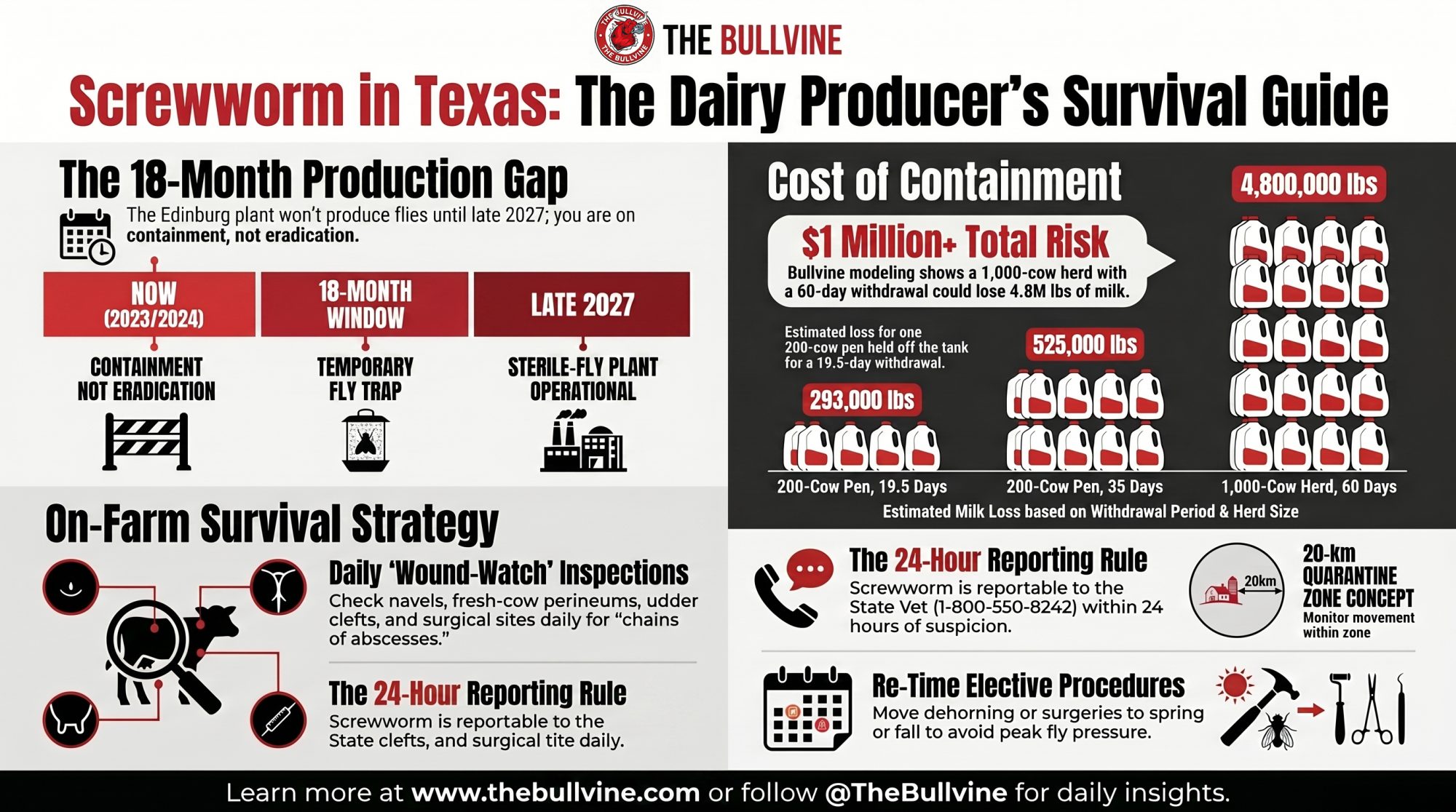
Executive Summary: New World screwworm just turned up in a 3-week-old calf near La Pryor, Texas — — and a 20-km quarantine zone now locks down every warm-blooded animal in Zavala County until it’s inspected. For dairies, this lands harder than for cow-calf operations: you can hold beef cattle on pasture and wait out a quarantine, but the parlor runs twice a day and you can’t hold back milk. The cash-flow hit comes from the withdrawal clock, and the paperwork doesn’t agree — 19.5 days in some conditional-approval documents, “not established” on Zoetis’ EUA fact sheet for milking cows — so pin the number down with your vet before you treat. Run it yourself: one 200-cow pen shipping 75 lbs/day, held off the tank 19.5 days, dumps roughly 293,000 lbs of milk before you’ve paid a vet bill. Here’s the part that should worry you most — the $750M sterile-fly production plant at Moore Air Base in Edinburg won’t make a single fly until late 2027, so for about 18 months you’re on containment, not eradication. The work that protects your herd is yours: daily checks on navels, fresh-cow perineums, and any dehorning or surgical site, plus a same-day report to your state vet (NWS is reportable within 24 hours). Read the full piece if you want the milk-dump math by herd size and a straight read on whether the federal response is built for 2026.
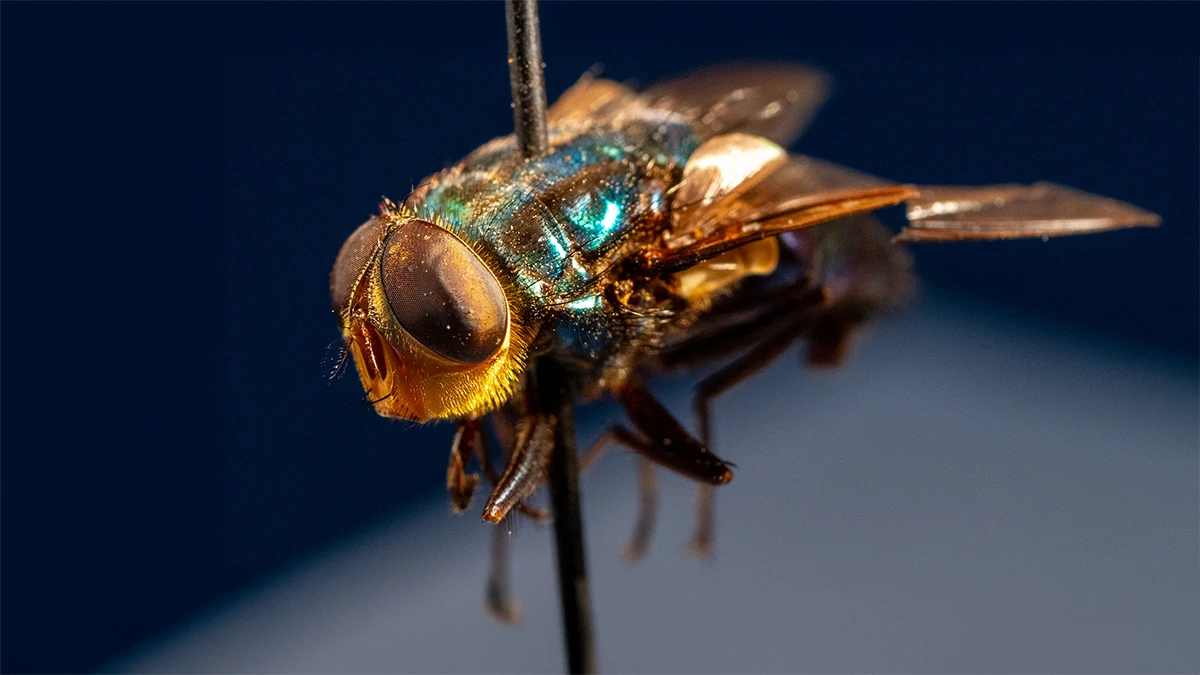
New World screwworm dairy

It started with a navel. A three-week-old calf on a ranch near La Pryor, Texas, had larvae burrowing into its umbilical area — the kind of wound that, on any dairy, can read at first like a stubborn infection. On June 3, 2026, USDA Secretary Brooke Rollins confirmed what the National Veterinary Services Laboratories in Ames, Iowa had found: New World screwworm. A 20-kilometer quarantine zone went up around Zavala County, and every warm-blooded animal inside it — cattle, horses, even the family dog — now needs an inspection before it can move. 
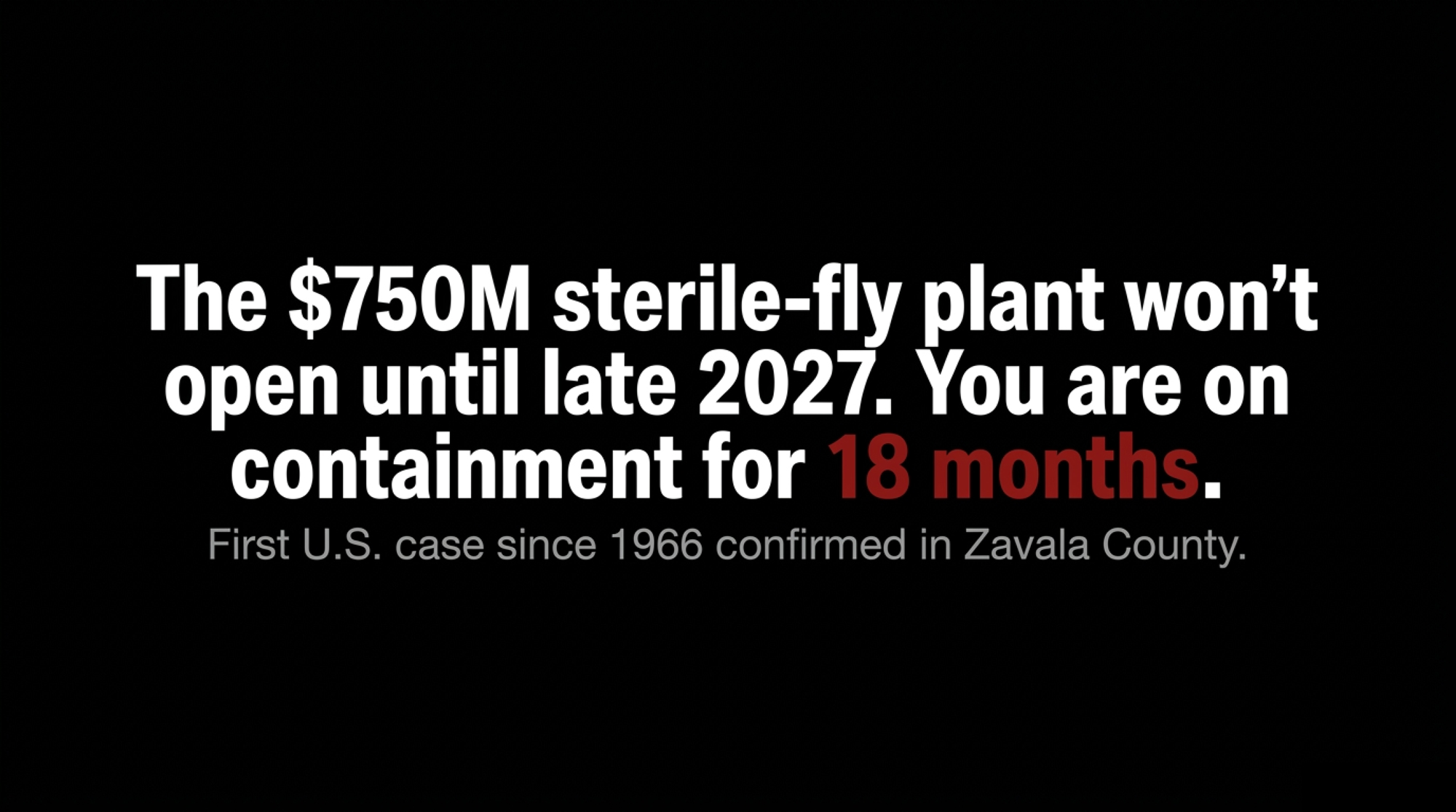
That’s the official posture, and the Texas Animal Health Commission has been clear about it: all warm-blooded animals in the zone face movement restrictions, and NWS must be reported within 24 hours of suspicion. Dr. Lewis “Bud” Dinges — the state veterinarian and TAHC’s executive director — has led the state’s response since the threat was still south of the river. Here’s the part that should keep a South Texas dairy operator up at night. The plant built to actually beat this thing back isn’t finished. USDA’s sterile-fly production facility at Moore Air Base in Edinburg — backed by roughly $750 million in federal funding — won’t produce its first flies until late 2027. So for roughly 18 months, dairies near the border are working with a containment system — not an eradication one. And they’re carrying the risk in between. 

What Changed, and Why It Landed on a Tuesday

USDA slammed the border shut to live Mexican cattle in May 2025. That one move disrupted roughly $119 million in annual trade and about 1.25 million head, according to USDA figures. Governor Greg Abbott issued a statewide disaster declaration and Texas stood up its NWS response. The detections kept marching north — then, as Rollins recounted, a goat turned up in Coahuila about 25 miles south of the border on June 2, the closest case yet. A day later, it was in a Texas calf. 
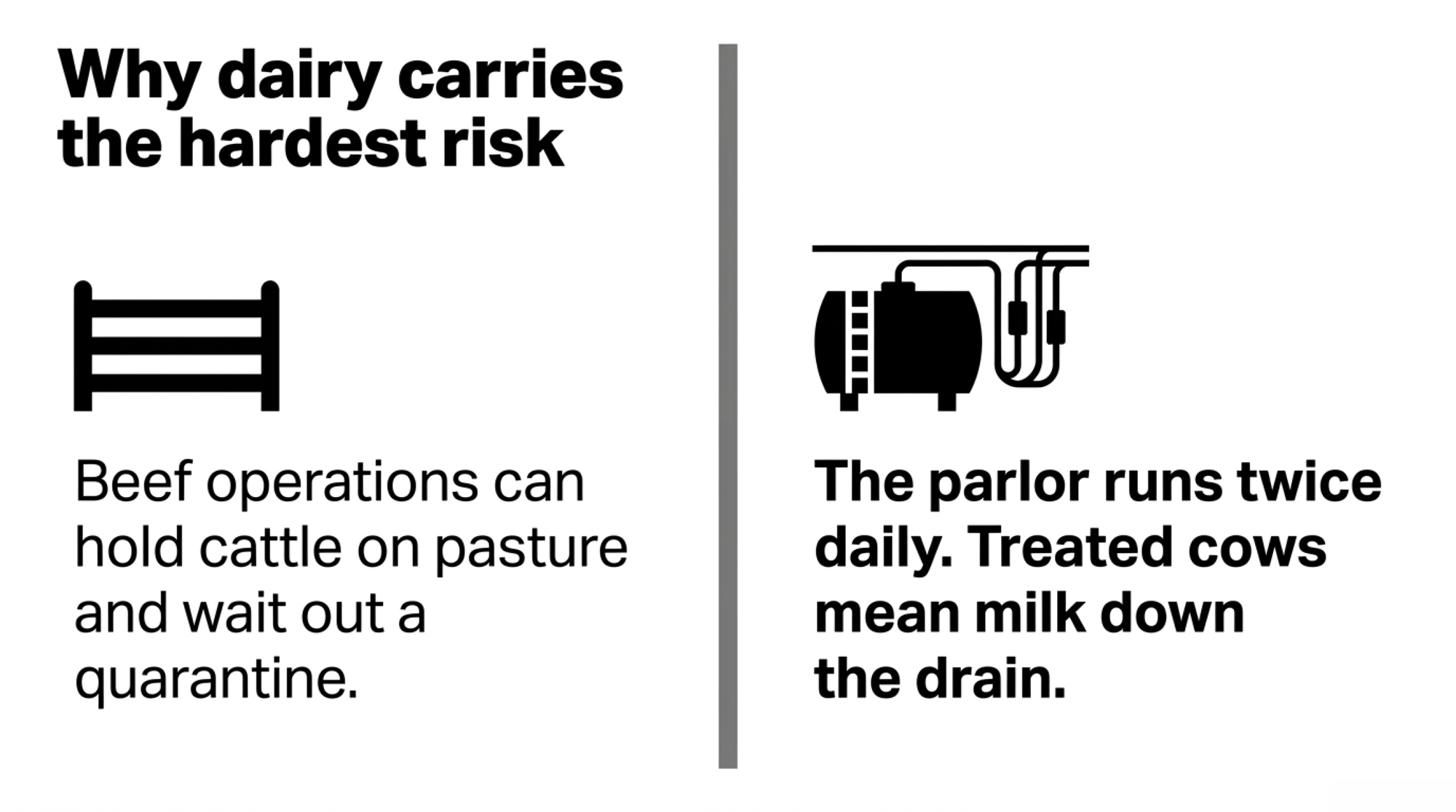
Here’s why this hits a dairy differently than a cow-calf outfit. You can hold beef cattle back on pasture during a quarantine and wait it out. You can’t hold back milk. The parlor runs twice a day, quarantine or not — so the financial pressure point for dairy isn’t dead animals so much as milk you can’t ship. And Texas is the nation’s third-largest milk state, which means a South Texas problem doesn’t stay in South Texas. 

How Screwworm Actually Gets Into Your Herd

Screwworm doesn’t behave like the horn flies and stable flies you fight all summer. The female lays her eggs at the edge of a wound, and when they hatch, the larvae burrow into living tissue — feeding and tearing as they go, not just cleaning up dead flesh like a common blowfly. One untreated wound can host hundreds of larvae and turn septic fast. 

On a dairy, the open doors are everywhere. Fresh navels on newborn calves. The vulva and perineum on a fresh cow, raw 24 to 72 hours after calving. Teat injuries, mastitis lesions, dehorning sites, tag holes. The La Pryor calf was infested through its navel — the most common entry point in young calves, and exactly the spot a dairy crew handles by the dozen during a busy calving stretch. 

There’s a tell that separates this from ordinary fly strike. Veterinary diagnosticians describe a “chain of abscesses” — clusters of lesions, often anywhere from blueberry- to golf-ball-sized, rather than one clean wound. TAHC tells producers to watch body openings — nose, ears, umbilicus, genitalia — for drainage or enlargement, and to report suspect cases even when they’re not sure. Add a foul, rotting smell and an animal that’s isolating or off feed, and you’re likely looking at something a herdsman can’t afford to shrug off. 

How This Plays Out on Real Farms — in Milk, Not Theory

The damage that hurts most isn’t the vet bill. It’s the milk you have to dump. Once you’re treating, that milk goes down the drain, not into the tank — and the withdrawal clock decides how long.

The Texas Association of Dairymen has called the spread a serious threat to both livestock health and dairy farmer livelihood, and built out a resource hub aimed at safeguarding herds, the milk supply, and the long-term sustainability of the state’s dairy industry. Producers across the state are landing on the same answer: get ahead of it now. As Texas stocker Wayne Cockrell put it back in February, ramping up animal-health practices is the crucial piece of the fight — “you’ve got to put” the work in on management before the parasite arrives, not after. That logic hits a dairy harder than a stocker operation, because a dairy’s wounds come on a calendar. 

ScenarioWithdrawal (days)Milk lost (lb)Milk revenue lost ($)
Single pen, short course10150,00033,000
Single pen, conditional 19.5‑day window19.5292,50064,350
Single pen, 35‑day withdrawal assumption35525,000115,500
Single pen, 60‑day worst‑case parasiticide60900,000198,000

This is where you need to read the label carefully, because the numbers don’t all agree. Zoetis’ Dectomax-CA1 (doramectin) earned conditional approval for the prevention and treatment of NWS in cattle, including newborn calves and certain classes of dairy cattle. On May 19, 2026, FDA issued a separate Emergency Use Authorization extending its use to the milking string — we broke down the May 19 EUA math here, and it’s worth your time before you reach for the bottle. And the withdrawal figures don’t line up neatly across the paperwork: industry briefings cite a 468-hour (19.5-day) milk-withdrawal window in some conditional-approval documentation, an FDA FOI document assigns a 35-day withdrawal for certain labeled uses of doramectin in deer, and Zoetis’ EUA fact sheet for milking cows states a milk withdrawal period “has not been established”. The point isn’t the spread itself — it’s that you cannot eyeball this. Confirm the exact withdrawal with your veterinarian for your specific use before you treat a single cow. Older or extra-label parasiticides can stretch withdrawal as far as 60 days, per NMPF guidance. 
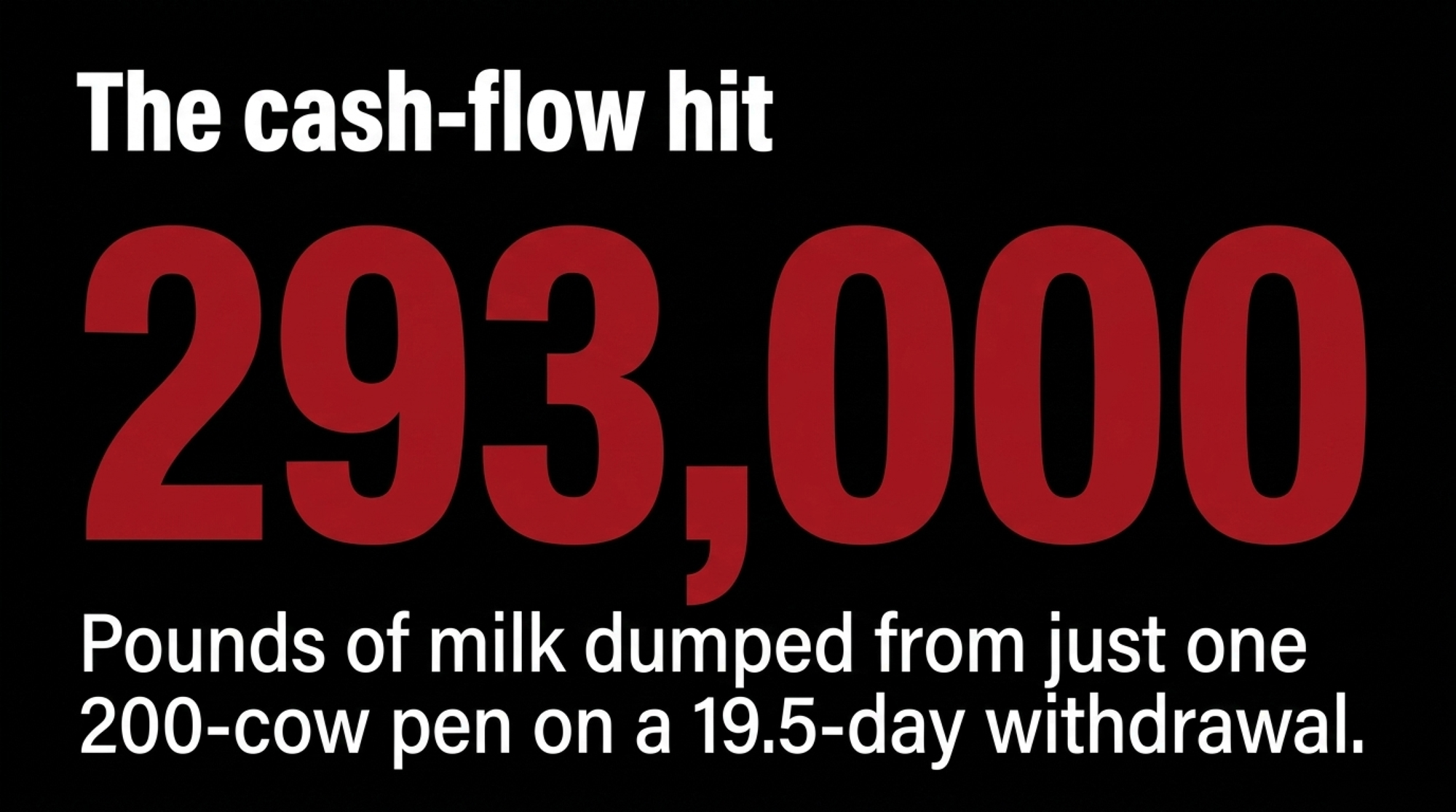
Run the math on a single pen and it gets real. Take a 200-cow group shipping 75 pounds a day. Hold that group off the tank for a 19.5-day withdrawal and that’s roughly 293,000 pounds of milk gone — just one pen, before vet costs or retreats. Push the window to 35 days and you’re past 525,000 pounds. The withdrawal number you land on isn’t a footnote. It’s the whole ballgame. 

Scale it up and you hit the number that makes people quiet. In a worst case — a full 1,000-cow herd treated and held off the tank for 60 days at roughly 80 pounds a cow — Bullvine modeling puts the loss near 4.8 million pounds of milk, over $1 million down the drain at recent pricing. That’s a ceiling, not an expectation; real outbreak responses are usually targeted, not whole-herd. But even a treated fraction of your cows, times a withdrawal measured in weeks, turns “a pest we’re watching” into a cash-flow event you have to fund. 

The Mechanics Behind the 18-Month Gap

The entire eradication strategy rests on one number: how many sterile flies you can put in the air. Release enough sterilized males and wild females mate but produce nothing. The wild population collapses. It’s proven science — it’s how the U.S. won in 1966 — but only at saturation scale. 
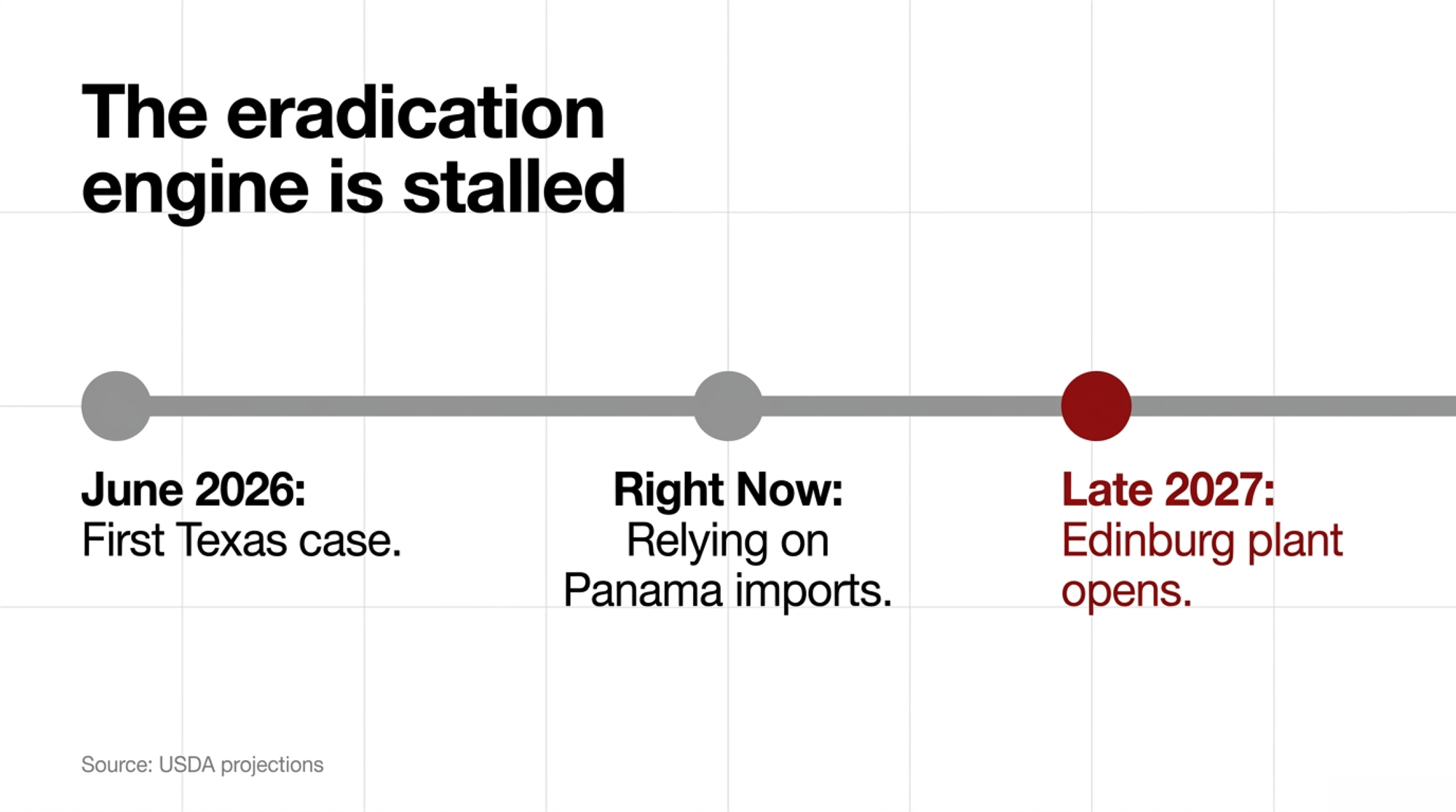
Right now, the COPEG plant in Panama is the only sterile-fly production facility operating in the region, turning out about 100 million sterile flies a week as it works to hold the line in Mexico. A sterile-fly dispersal facility at Moore Air Base is already up and running and can release up to 100 million flies a week — but it relies entirely on sterile pupae shipped in from COPEG and other sites. It doesn’t make its own flies. The big domestic production plant in Edinburg — the one that takes the U.S. from borrowing flies to making its own — is still under construction, with first output of about 100 million flies a week targeted for late 2027 and a phased build to 300 million a week by 2028. 

So the system can ring-fence a known detection and flood one corridor. What it can’t do yet is blanket a wide region the moment a case pops in a new county. There’s promising work on a “male-only” fly strain that would roughly double usable output without new buildings, but it’s pending EPA review, not in the field. Until capacity catches up, more of the load falls on the part you control — your daily inspections and your willingness to report. Your calf barn is part of the eradication machinery now, whether anyone told you so. 

How Much Screwworm Risk Can Your Cash Flow Actually Handle?

Most operators haven’t run this number, and it’s the one that should drive every other call. That 293,000-pound figure on a single 200-cow pen isn’t an abstraction once a confirmed case forces your hand. It’s the difference between a manageable vet event and an awkward phone call with your lender. We ran a version of this against a typical milking schedule last September and landed near an $800K liability — and that was before the parasite crossed the river. 

Herd size (milking cows)60‑day milk lost (lb)Milk revenue lost ($)Risk signal
200960,000211,200Manageable but painful
5002,400,000528,000Lender conversation zone
1,0004,800,0001,056,000Red‑line for many operators
4,00019,200,0004,224,000System‑level stress test

So the most useful step here isn’t on any government poster. It’s a three-way conversation — you, your veterinarian, and your lender, in the same room. Decide on paper, before the parasite shows up, how much milk you can afford notto ship and still service your debt. Set that ceiling and everything downstream gets clearer: which animals you’d treat, when you’d pull a pen, whether you delay a dehorning round. Where does your milk-dump ceiling actually sit right now? If you can’t answer it in dollars, that’s the gap to close this week.

Is Your Calving Routine Built for This?

The operational reality is simpler and harder than the economics. Screwworm finds wounds, and a dairy manufactures wounds on a schedule — calving, dehorning, tagging, the odd surgery. The fix isn’t exotic. It’s tightening what you already do.

Walk your calving and fresh-cow pens daily with screwworm in mind: navels on the newborns, the perineum on fresh cows, udder cleft, any recent surgical site. Texas A&M AgriLife is telling producers to get elective wounding done early in spring or late in fall — outside peak fly pressure — and to watch animals after any procedure until they’re fully healed. None of that needs new equipment. It needs a trained set of eyes that knows a chain of abscesses from an ordinary scrape — and the discipline to look every day, not just when something already seems off. The emergency-fund and inspection playbook we ran in August lays out exactly how to build that routine without burning out your crew. 

Options and Trade-Offs for Farmers

Here’s where the rubber meets the road: every response is a trade between labor, cash, and risk. Lay it out that way and the choices get clearer.

OptionWhen it makes senseWhat it demands mostBiggest risk or limit
Tighten daily inspection of high-risk sites — start this within 30 daysAny herd within a few counties of a detection, and really any Southern dairy this summer Labor: trained people walking calves and fresh cows every day, checking navels, perineum, udder cleft, surgical sitesYou pay in hours. A half-trained program that still misses cases is worse than honest vigilance.
Re-time elective wound proceduresHigh-risk regions during warm months, when fly pressure peaks Planning: breaking your usual calendar on dehorning, castration, some surgeriesYou can’t postpone everything; some procedures are time-sensitive for calf welfare.
Pre-plan treatment and withdrawal economics with your vetAny dairy that could face a case — so, all of themCash-flow clarity: agreeing on which product, on which animals, with which milk-withdrawal assumption Approvals and emergency-use rules are still shifting; this plan needs revisiting every few weeks.
Map your quarantine-zone status and movement optionsAnyone shipping heifers, calves, or culls out of South Texas.Logistics: live contacts with your state vet and APHIS, inspection booked before you book the truckZone lines move with each new case; this isn’t set-and-forget.

You don’t have to do all of this at once. But you can’t afford to do none of it and hope that polygon never lands on your milk shed.
Key Takeaways

  • If you’re within a few counties of the Zavala detection, confirm your exact position relative to the 20-km zone this week — and don’t move a single animal without knowing the inspection rule first. 
  • If your calving program runs without a daily wound-inspection routine, treat that as a training or hiring decision to make now, not after a confirmed case forces it. 
  • If you haven’t pinned down the exact milk withdrawal for the product and animal class you’d use, do that before you treat — the figures vary widely across the paperwork, and your vet has to make the call for your situation. 
  • If you’ve never put a dollar figure on milk-dump tolerance, run the math on one pen at both a short and a multi-week withdrawal window. If that number threatens your debt service, start the financing conversation. 
  • If your dehorning or surgery round is scheduled for peak fly season, ask your vet whether it can shift. 
  • Program the TAHC veterinarian-on-call line, 1-800-550-8242, your APHIS contact, and screwworm.gov into your phone today. NWS is reportable within 24 hours of suspicion — there’s no wait-and-see. 
So here’s the question to carry into your next vet visit: if a calf in your barn turned up like that La Pryor calf did, do you know — to the dollar and to the day — what it would cost you to do the right thing? Most operators can’t answer that yet. The ones who work it out before the polygon drifts their way are the ones who’ll make decisions from a plan instead of from panic.

We’re building out the full milk-withdrawal cost model by herd size — across short and multi-week withdrawal windows — plus a zone-by-zone movement playbook in an upcoming Bullvine Weekly. That’s where the real numbers live, and where a 200-cow dairy and a 4,000-cow dairy will find very different answers.

Run Your Numbers

Health ROI Calculator — Before a screwworm case forces your hand, run the Health ROI Calculator to put a real-dollar figure on milk withdrawal, culling, and treatment losses for your herd size and milk price. Its “Cost of Inaction” view turns “a pest we’re watching” into the number you take to your vet and lender.

Complete references and supporting documentation are available upon request by contacting the editorial team at editor@thebullvine.com.

Learn More

The Sunday Read Dairy Professionals Don’t Skip.

Every week, thousands of producers, breeders, and industry insiders open Bullvine Weekly for genetics insights, market shifts, and profit strategies they won’t find anywhere else. One email. Five minutes. Smarter decisions all week.

NewsSubscribe
First
Last
Consent

Heat Kills Bird Flu: Are You Doing Enough to Protect Your Dairy Operation?

Raw milk hides H5N1 for 8 weeks! Cornell study proves heat kills it. Essential dairy safety insights inside.

EXECUTIVE SUMMARY: Cornell University researchers discovered that H5N1 avian influenza survives in raw milk for up to 8 weeks under refrigeration but is rapidly neutralized by heat treatments like pasteurization (63°C/145°F for 30 min) or even lower-temperature thermization (54°C/129°F for 15 min). The virus’s persistence challenges raw milk safety and renders the 60-day aging rule for cheeses ineffective, though pH control (≤5.0) inactivates it. Public health risks remain low for pasteurized products but spike with raw milk consumption, especially for farm workers and animals. The dairy industry must adopt precise heat protocols, enhanced biosecurity, and rethink raw milk cheese production. This crisis underscores the critical role of science in balancing tradition and safety.

KEY TAKEAWAYS:

  • H5N1 survives 8 weeks in refrigerated raw milk, posing risks for unpasteurized products and cross-contamination.
  • Heat kills it fast: Standard pasteurization (63°C/145°F) and sub-pasteurization (54°C/129°F for 15 min) fully inactivate the virus.
  • 60-day cheese aging fails against H5N1, but pH ≤5.0 during production eliminates the threat.
  • Raw milk consumers and farm workers face highest risk; pasteurized dairy remains safe.
  • Dairy industry must prioritize heat-treated milk handling and rethink biosecurity to curb outbreaks.
H5N1 avian influenza, raw milk safety, pasteurization effectiveness, dairy cattle biosecurity, thermal inactivation virus

Cornell University’s groundbreaking research reveals that while the H5N1 avian influenza virus can survive in refrigerated raw milk for eight weeks, even moderate heat treatments destroy it. This game-changing discovery offers dairy producers’ practical solutions beyond standard pasteurization. Are you implementing them on your farm?

When H5N1 avian influenza first jumped to dairy cattle last year, it caught our entire industry flat-footed. Most of us never imagined that the “bird flu” would become a bovine problem, much less one that specifically targets the mammary system and sheds directly into milk. Yet here we are, facing the largest outbreak of a highly pathogenic virus in domestic mammals in U.S. history, with over 1,000 affected herds across 17 states.

While government agencies scrambled to understand this unprecedented cross-species leap, Cornell University researchers rolled their sleeves and delivered the answers producers desperately needed about this virus’s behavior in milk. Their findings aren’t just reassuring- they’re revolutionary for our thoughts on on-farm milk safety.

The Harsh Reality: Your Bulk Tank Could Harbor Live Virus for Months

Let’s cut right to the chase: H5N1-positive milk sitting in your bulk tank at standard refrigeration temperatures isn’t becoming safer with time. Cornell researchers demonstrated that viable, infectious H5N1 virus can persist in raw milk for a staggering eight weeks when stored at 4°C (39.2°F). This finding emerged from careful decay studies involving milk from naturally infected cows and experimental models using spiked samples.

Think about that timeline. While most dairy pathogens we worry about are bacterial and get knocked back by refrigeration, this virus thumbs its nose at your plate cooler. Cornell’s research team found that H5N1 has a half-life of approximately 2.1 days at refrigeration temperatures, with complete viral inactivation requiring about 69 days. This persistence creates extended risk windows throughout your entire operation:

  • For your milking crew handling raw milk daily
  • For calves fed unpasteurized waste milk
  • For equipment that could cross-contaminate between milkings
  • For your on-farm store customers, if you sell raw milk products

Is your operation still treating milk safety like it’s 2019? The H5N1 era demands a complete rethinking of raw milk handling protocols, whether you’re a 3,000-cow dairy or a small family operation selling directly to consumers.

This extended viability should particularly concern operations that pool milk from multiple sources, as just one infected cow could contaminate entire batches. Remember how quickly mycoplasma spread through commingled heifer-raising facilities in the early 2000s? The same principle applies here, but with potentially greater public health implications.

The Heat Treatment Revolution: Your New Biosecurity Weapon

The good news should have every dairy farmer breathing a sigh of relief: H5N1 virus is remarkably heat-sensitive. Cornell’s research confirmed what many hoped would be true, even moderate heat treatments rapidly inactivate this pathogen.

Pasteurization: Bulletproof Protection

Let’s start with the gold standard: traditional pasteurization completely obliterates the H5N1 virus. Cornell scientists found that both standard methods deliver 100% protection:

  • Vat Pasteurization (LTLT): 63°C (145°F) for 30 minutes
  • HTST Flash Pasteurization: 72°C (162°F) for 15 seconds

But what’s truly revolutionary about Cornell’s findings is that you don’t need industrial pasteurization equipment to eliminate H5N1 from milk on your farm effectively.

Beyond Pasteurization: Game-Changing Options for Every Operation

The Cornell team’s identification of effective sub-pasteurization treatments has excited progressive producers. Their research pinpointed several accessible options that inactivate the virus entirely:

  • 60°C (140°F) for just 5 seconds achieves complete inactivation
  • 54°C (129°F) for 10-15 minutes delivers complete inactivation

Let that sink in. You don’t need an expensive HTST system to protect your operation from H5N1. Even basic on-farm equipment can achieve these parameters.

But a word of caution: Cornell researchers found that treatment at 50°C (122°F) for 10 minutes was insufficient. This narrow margin between effective and ineffective treatments means precision matters. Are your thermometers calibrated, and your heating systems monitored? Because being off by just a few degrees could mean the difference between safety and continued risk.

These findings should prompt immediate action for those feeding waste milk to calves, a common practice on many dairy operations. If you’ve been feeding raw waste milk to your replacement heifers, you’re potentially creating a reservoir for H5N1 in your youngstock. Several on-farm pasteurizers designed specifically for calf milk can easily achieve the parameters needed to inactivate the virus.

The Raw Milk Cheese Bombshell: Your 60-Day Aging Rule Is Worthless Against H5N1

For artisanal cheesemakers who’ve built their businesses around raw milk products, Cornell’s findings deliver a particularly sobering wake-up call: the federally mandated 60-day aging period for raw milk cheese does absolutely nothing to protect against the H5N1 virus.

This revelation shatters a foundational assumption underpinning raw milk cheese safety protocols for decades. For context, the 60-day aging rule (21 CFR Part 133) was established primarily to control bacterial pathogens like Listeria, E. coli, and Salmonella, which typically decline during aging as cheese pH drops, moisture decreases and competing cultures flourish. The Cornell team’s research emphatically demonstrated that the H5N1 virus doesn’t play by these rules, surviving the entire 60-day aging period in standard raw milk cheeses.

The researchers calculated specific decimal reduction times (D-values) for H5N1 in raw milk cheeses: 25.5 days for cheese at pH 6.6 and 32.2 days for cheese at pH 5.8. This means it would take approximately 76-96 days (3 D-values) to achieve even a 99.9% reduction in viral load, well beyond the standard 60-day aging requirement.

Are you still relying on that 60-day aging period to keep your artisanal cheese customers safe? If so, it’s time to rethink your approach.

Interestingly, the research did uncover a potential solution in the form of pH control. When milk was acidified to pH 5.0 before cheesemaking, Cornell scientists found the virus was rapidly inactivated. This presents both challenges and opportunities for artisan producers:

  • Some traditional cheese varieties naturally achieve this pH rapidly
  • Others maintain higher pH values throughout production and aging
  • Selecting starter cultures that quickly acidify milk could provide a critical safety intervention

For farmstead cheesemakers already monitoring pH curves during production, this represents an accessible control point within existing protocols. But are you monitoring pH with H5N1 control in mind, or just for flavor development? The difference could determine whether your aged raw milk cheese remains a premium product or becomes a public health concern.

Worker Protection: Is Your Team Really Protected?

Let’s talk about the elephant in the parlor and worker safety. With approximately 70 human cases of H5N1 reported in the U.S. since the outbreak began, including 41 individuals with confirmed occupational exposure to infected dairy cows, this isn’t just an animal health issue anymore.

Cornell and CDC research confirms that most human cases have occurred among dairy farm workers with direct animal contact. This pattern suggests key risk factors include exposure to raw milk during collection and handling, contact with aerosols generated during milking, and inadequate personal protective equipment.

Most operations upgraded their worker health protocols during COVID, but are those measures sufficient for protecting your team from a virus shed directly into milk? The concentration of human cases among milkers and other dairy personnel suggests this is not true.

When was the last time you evaluated your parlor’s ventilation system? Research suggests aerosols generated during milking could be a transmission route. While many operations installed improved ventilation systems years ago for heat abatement and cow comfort, few designed these systems with zoonotic disease prevention in mind.

Progressive operations are implementing enhanced protection measures that go well beyond standard dairy PPE:

  • N95 respirators during the milking of suspect animals
  • Face shields during high-pressure washing of milking equipment
  • Impermeable gloves with extended cuffs for milk sampling
  • Footbaths with virucidal disinfectants at transition points

Does your safety program still treat PPE as a recommendation rather than a requirement? The data suggests this approach is leaving your workforce unnecessarily exposed.

Biosecurity Reality Check: Time to Raise the Bar

Let’s get brutally honest: the biosecurity practices that many dairy operations consider “good enough” pre-H5N1 don’t cut it anymore. The FARM Program’s Everyday Biosecurity guidelines offer a solid foundation, but forward-thinking producers are going several steps further.

When did we decide that “good enough” biosecurity was actually good enough? In reality, many operations have implemented the bare minimum needed to satisfy co-op requirements rather than what’s truly required to protect their herds and businesses.

Essential upgraded practices now include:

  • Implementing true line-of-separation practices with dedicated footwear and clothing between production areas
  • Isolating newly-introduced cattle in dedicated fresh cow pens for at least 30 days
  • Establishing clean/dirty zones in milk houses with appropriate disinfection protocols
  • Installing heat treatment systems for raw milk fed to calves
  • Implementing proper post-milking sanitization of inflations and milking units between cows

Cornell researchers have established that infected milking equipment likely represents the primary route of cow-to-cow transmission, spreading the virus directly to the mammary tissue during milking. If your operation still treats liner sanitization as optional, you’re playing Russian roulette with your herd health.

H5N1 Heat Treatment Quick Guide

Cornell-Verified Thermal Inactivation Options:

Complete Viral Inactivation:

  • 60°C (140°F) for 5 seconds
  • 54°C (129°F) for 10-15 minutes
  • Standard Pasteurization (LTLT/HTST): Fully Effective

CAUTION: 50°C (122°F) for 10 minutes INSUFFICIENT

Application Points:

  • Waste milk for calf feeding
  • On-farm milk processing
  • Milk disposal protocols
  • Artisanal cheese production

Implementation Note: Ensure accurate temperature measurement and monitoring throughout treatment.

The Bottom Line: What Smart Producers Are Doing Now

The emergence of H5N1 in dairy cattle represents one of the most significant animal health challenges our industry has faced in decades. But unlike some threats that offer no clear solution, Cornell’s research provides a specific, actionable roadmap for protecting your operation:

  1. H5N1 virus shows remarkable persistence in raw milk: Cornell researchers demonstrated it survives up to 8 weeks at bulk tank temperatures, creating extended risk windows throughout milk handling operations.
  2. Cornell studies confirmed that standard pasteurization completely inactivates the virus, providing reassurance for properly heat-treated dairy products and conventional processing channels.
  3. Alternative heat treatments (54°C for 10-15 minutes or 60°C for 5 seconds) effectively inactivate H5N1, Cornell scientists verified, providing accessible options even for operations without commercial pasteurization equipment.
  4. The 60-day aging requirement for raw milk cheese is insufficient to eliminate H5N1, Cornell researchers calculated specific D-values proving this, though lower pH values (5.0) can rapidly inactivate the virus, offering potential intervention points in cheese-making procedures.
  5. Worker safety demands renewed attention, with appropriate protective equipment and protocols for those handling raw milk or working with potentially infected animals during milking and treatment.

Your Call to Action

It’s time to critically reassess your operation’s approach to milk safety and biosecurity in light of this research. Ask yourself:

  1. Have you implemented appropriate heat treatment for all raw milk on-farm, including waste milk fed to calves?
  2. Are your worker protection protocols adequate, or are they the bare minimum required by your milk buyer?
  3. If you produce raw milk products, have you validated your safety interventions against this new threat, or are you relying on outdated assumptions?
  4. Have you established relationships with your veterinarian and cooperative field representative to stay ahead of emerging information about this evolving situation?

Our industry has always been defined by its resilience and ability to adapt to new challenges. The ones who’ll weather this storm best are those who acknowledge reality and implement evidence-based solutions quickly, rather than hoping this outbreak simply blows over.

The H5N1 outbreak isn’t just another dairy health challenge: it’s a wake-up call to modernize our approach to biosecurity, worker safety, and milk handling. The good news? The science gives us clear, effective tools to manage this threat. The only question is whether you’ll use them.

Learn more:

The Sunday Read Dairy Professionals Don’t Skip.

Every week, thousands of producers, breeders, and industry insiders open Bullvine Weekly for genetics insights, market shifts, and profit strategies they won’t find anywhere else. One email. Five minutes. Smarter decisions all week.

NewsSubscribe
First
Last
Consent

FMD JUMPS CONTAINMENT LINES: New Hungarian Outbreak Signals Dangerous Phase for Dairy Industry

FMD outbreak leaps containment in Hungary, threatening EU dairy trade. 30km viral jump stuns experts—what it means for your farm.

EXECUTIVE SUMMARY: Hungary’s first Foot-and-Mouth Disease outbreak in 50 years erupted in March 2025, spreading rapidly to Slovakia and defying containment with a shocking 30km leap to Rábapordány by mid-April. The Serotype O strain—linked to Pakistan—triggered mass culling, $4M+ farm losses, and global trade bans on dairy/meat exports. Despite aggressive EU-led measures (3km quarantine zones, suppressive vaccination, border closures), the virus exploited human/vehicle movements, revealing critical biosecurity gaps. With pigs acting as potential “virus amplifiers” and 17+ countries blocking imports, the crisis underscores how one outbreak can weaken markets overnight. Dairy producers worldwide face renewed urgency to audit biosecurity protocols.

KEY TAKEAWAYS:

  • Containment Failure: Virus jumped 30km despite lockdowns—human/vehicle movement likely bypassed controls
  • Trade Collapse: Hungary/Slovakia lost WOAH-free status; 17+ nations banned dairy/meat exports instantly
  • Economic Dominoes: $4M+ direct losses per farm + milk yield drops up to 17kg/day/cow
  • Pig Time Bomb: The uninfected swine sector remains at extreme risk due to the airborne spread potential
  • Biosecurity Wake-Up Call: 4-day pre-symptomatic shedding means farms need daily protocol audits
Foot-and-Mouth Disease Hungary, FMD outbreak 2025, dairy cattle biosecurity, EU livestock trade, FMD containment strategies

Hungary’s battle against Foot-and-Mouth Disease took a concerning turn as officials confirmed a new outbreak at a cattle farm near Rábapordány on April 17-18, 2025. This marks the fifth FMD case in Hungary since early March and represents a significant geographical leap, with the virus jumping approximately 30 kilometers south of the initial outbreak cluster along the Slovakia border. The development threatens dairy operations across Central Europe and raises urgent questions about containment strategies as thousands of animals face culling.

The Rábapordány outbreak affects between 600 to 874 cattle and signals that despite weeks of intensive control measures, the highly contagious virus has outmaneuvered containment efforts. Hungarian Agriculture Minister István Nagy announced the case via social media, triggering immediate quarantine protocols and preparations for culling the entire herd.

“This geographical jump is a game-changer,” explains dairy biosecurity specialist Marta Kovács. “When a virus leaps 30 kilometers beyond established control zones, it tells us we’re dealing with a much more complex transmission scenario than initially thought.”

Why This Matters to Your Operation

Let’s face it – the virus’s ability to bypass containment zones proves that geographical distance alone won’t protect your herd. Even farms outside official restriction zones could be vulnerable through indirect transmission pathways.

This development is a stark reminder for dairy producers worldwide that FMD remains one of the industry’s most economically devastating threats. The virus typically causes dramatic milk yield drops ranging from 0.7 to 17.4 kg per cow daily, with effects often persisting long after clinical recovery.

The economic stakes are massive. One affected Hungarian farm owner estimated direct losses potentially reaching $4.09 million. The true impact multiplies significantly when you factor in trade restrictions, market access loss, and long-term recovery costs. Have you calculated what an FMD outbreak would cost your operation? Would your business survive such a financial hit?

How We Got Here: The FMD Timeline

Hungary’s FMD crisis began on March 7, 2025, when officials confirmed the country’s first case since 1973 at a dairy farm in Kisbajcs, northwestern Hungary. The farm housed approximately 1,400 cattle and sat just 1-2 kilometers from the Slovak border.

The situation rapidly escalated with new confirmations:

  • March 26: Second outbreak at Lével dairy farm (3,000+ cattle)
  • April 2: Two additional outbreaks at Darnózseli (~1,000 animals) and Dunakiliti (~2,500 animals)
  • March 21-April 4: Slovakia reported six outbreaks, primarily in border regions

These initial cases formed a tight geographical cluster spanning the Hungary-Slovakia border. The virus was identified as FMD Serotype O, genetically linked to a strain previously detected in Pakistan in 2018 and distinct from the strain found in Germany earlier in 2025.

Sound familiar? It should. We’ve seen this pattern before – a single case quickly multiplies into a regional crisis. But here’s the million-dollar question: How did a virus strain from Pakistan in 2018 suddenly appear in Central Europe in 2025? And why couldn’t authorities contain it within the initial cluster?

The Containment Battle

Hungarian authorities have implemented aggressive control measures around the Rábapordány farm, establishing a 3-kilometer protection zone and a 10-kilometer surveillance zone. These measures build upon comprehensive response protocols already in place, including:

  • Farm sequestration (immediate closure and official control)
  • Extensive zoning with movement restrictions
  • Culling of affected and contact herds
  • Disinfection protocols for vehicles, equipment, and personnel
  • Enhanced surveillance and testing

Neighboring countries haven’t wasted time implementing their protective measures. Austria closed 24 small border crossings with Hungary and Slovakia, while the UK prohibited imports of animal products from all three countries.

But here’s the kicker – if these measures were so comprehensive, how did the virus jump 30 kilometers south? What’s slipping through the cracks in our biosecurity net? And more importantly, what does this tell us about the effectiveness of our current containment strategies?

Vaccination Strategy Deployed

While culling remains the primary control approach, authorities strategically use suppressive vaccination in some affected areas. Germany provided vaccine doses from its reserves, and the EU activated its FMD Serotype O vaccine bank to support the response.

“Suppressive vaccination helps rapidly reduce viral shedding before culling,” explains veterinary epidemiologist Dr. Thomas Weber. “It’s a tactical tool to limit environmental contamination while the stamping-out policy proceeds.”

However, under current protocols aimed at regaining FMD-free status without vaccination, even vaccinated animals are eventually culled. This highlights the complex trade-offs between immediate disease control and long-term trade status considerations.

Doesn’t this seem counterintuitive? We vaccinate animals only to cull them to maintain a specific trade status designation. Is this policy truly serving farmers’ interests, or is it time to reconsider our approach to disease management in the global trade context?

Wildlife Risk Factors

One critical aspect of the Hungarian FMD situation receiving increased attention is the potential for the virus to establish itself in wildlife populations. FMD can infect numerous wild species, including wild boar and deer, abundant in the affected regions.

Hungarian authorities have prohibited hunting within restricted zones to minimize human-wildlife interactions that could spread the virus. Should FMD establish itself in these wildlife reservoirs, eradication becomes exponentially more difficult, potentially creating a persistent source of reinfection for domestic livestock.

You’ve secured your farm buildings and controlled human traffic, but what about those wild boar roaming your property boundaries? Have you considered how wildlife might interact with your operation? It’s a vulnerability many farmers overlook until it’s too late.

Why Pigs Are a Major Concern

While all confirmed FMD outbreaks in Hungary and Slovakia have occurred in cattle farms, the potential threat to the pig industry remains significant. Pigs are highly susceptible to FMD and can act as potent viral amplifiers, shedding up to 3,000 times more virus than cattle if infected.

A single outbreak in a pig farm could dramatically escalate the situation, as pigs exhale enormous quantities of virus particles that can infect animals at considerable distances. The Rábapordány outbreak’s location, 30 kilometers from the initial cluster, demonstrates how easily the virus can bypass control zones.

Think about it – a single infected pig can shed 3,000 times more virus than a cow. That’s not just a fire; that’s a potential wildfire waiting to happen. If you’re in a mixed farming region with dairy and swine operations, shouldn’t you be doubling down on biosecurity right now?

International Trade Impact

The economic fallout extends far beyond the affected farms. Both Hungary and Slovakia have lost their WOAH-recognized FMD-free status, triggering widespread import bans on:

  • Live cattle
  • Fresh meat
  • Milk and dairy products
  • Germinal products (semen, embryos)
  • Other products of animal origin

Countries implementing restrictions include the UK, Australia, Canada, USA, Mexico, Brazil, Russia, China, Japan, and South Korea. For dairy exporters in the region, markets have essentially evaporated overnight.

Let’s not sugarcoat this – we’re discussing a complete market collapse for affected regions. Even if your farm never sees a single case of FMD, you’ll feel the economic shockwaves if it hits your area. How diversified are your market channels? Could your operation weather a sudden export ban?

Biosecurity Lessons for Your Farm

The Rábapordány case offers critical lessons for dairy operations globally:

  1. Human and vehicle movement represent major risk pathways. The most likely explanation for the Rábapordány case is that the virus spread via contaminated vehicles, equipment, or personnel. Review your farm’s protocols for visitors, feed deliveries, milk collection, and staff movement.
  2. Early detection is crucial. FMD virus shedding begins up to four days before clinical signs appear, allowing silent spread. Regular herd inspection and immediate reporting of suspicious symptoms must be priorities.
  3. Prepare for multilayered impacts. Beyond direct animal health effects, FMD outbreaks trigger cascading economic consequences through market access loss and price effects. Even farms thousands of miles from an outbreak can feel these ripples.

You might think your biosecurity is solid, but when did you last test it? Have you run a mock disease outbreak scenario with your team? Do your employees truly understand why seemingly minor lapses – like skipping the boot wash or allowing an unauthorized visitor – could devastate your entire operation?

The Bottom Line

The jump of FMD to Rábapordány represents a significant setback in Central Europe’s battle against this economically devastating disease. It demonstrates that this highly contagious virus can outwit containment efforts even with modern control measures.

For dairy farmers worldwide, this development reinforces the critical importance of biosecurity at every level. As the situation evolves, producers should stay informed about control measures, trade implications, and emerging scientific insights that could help protect their operations.

The battle against FMD in Hungary is far from over. With each new outbreak, valuable lessons emerge that can strengthen our collective defenses against this persistent threat to global dairy production.

Here’s the hard truth: FMD doesn’t care about your plans, breeding program, or financial situation. It’s an equal opportunity destroyer that can wipe out generations of genetic progress in a single outbreak. If you’re not treating biosecurity as your operation’s top priority right now, you’re gambling with your farm’s future.

Learn more:

Join the Revolution!

Join over 30,000 successful dairy professionals who rely on Bullvine Daily for their competitive edge. Delivered directly to your inbox each week, our exclusive industry insights help you make smarter decisions while saving precious hours every week. Never miss critical updates on milk production trends, breakthrough technologies, and profit-boosting strategies that top producers are already implementing. Subscribe now to transform your dairy operation’s efficiency and profitability—your future success is just one click away.

NewsSubscribe
First
Last
Consent

BREAKING: FMD CRISIS HITS EUROPE – Hungary Reports First Outbreak in 50 Years, Dairy Industry on High Alert

Hungary’s first foot-and-mouth disease outbreak in 50 years sparks alarm across Europe. Learn how this crisis could impact global dairy and livestock industries.

Executive Summary

Hungary has reported its first foot-and-mouth disease (FMD) outbreak since 1973, detected at a 1,400-head cattle farm near the Slovak border. This follows Germany’s January FMD outbreak, marking the second European case in two months and raising serious concerns about biosecurity vulnerabilities. FMD, a highly contagious viral disease affecting cloven-hoofed animals, has led to strict containment measures, including farm closures, culling, and movement bans in Hungary. The outbreak threatens milk production, trade restrictions, and regional livestock industries. With FMD spreading rapidly, dairy producers worldwide must reassess biosecurity protocols to prevent devastating economic losses and ensure herd health.

Key Takeaways

  • Hungary’s Outbreak: First FMD case in over 50 years reported at a large cattle farm near Slovakia; strict containment measures implemented.
  • European Trend: Hungary’s outbreak follows Germany’s January case, highlighting emerging biosecurity challenges across Europe.
  • Economic Impact: Infected farms face milk production losses of up to 17.4 kg per cow daily and trade restrictions that could cost millions.
  • Global Lessons: Dairy producers must strengthen biosecurity protocols, including visitor controls, feed sourcing scrutiny, and emergency response drills.
  • Cross-Border Complexity: Restriction zones extend into Slovakia, creating international coordination challenges for disease containment.
foot-and-mouth disease, Hungary FMD outbreak, dairy cattle biosecurity, European livestock crisis, dairy industry economic impact

Hungary has confirmed its first case of foot-and-mouth disease since 1973, sending an urgent wake-up call to dairy producers worldwide. The outbreak, detected at a substantial 1,400-head dairy operation in Kisbajcs, was officially reported to the World Organisation for Animal Health (WOAH) on March 7, 2025.

This bombshell development marks the second European FMD emergency in just two months, creating a dangerous pattern that demands immediate attention from dairy producers everywhere.

What makes this situation particularly alarming isn’t just the outbreak itself but its strategic location—it is just 2 kilometers from the Slovak border, creating an immediate cross-border crisis that threatens to undermine decades of disease-free status across Europe’s dairy heartland.

EUROPE’S BIOSECURITY SHIELD SHATTERS: Two Major FMD Outbreaks in Just 60 Days

Let’s not sugarcoat this: something deeply concerning is happening in Europe. On January 10, 2025, after nearly four decades without FMD, Germany confirmed an outbreak of water buffalo in Brandenburg.

Less than 60 days later, Hungary reports its first case in half a century. This isn’t a coincidence – it’s a warning sign that Europe’s biosecurity systems face challenges from somewhere.

The last previous European outbreak occurred in Bulgaria in 2011. Now, suddenly, we have two major dairy-producing nations losing their disease-free status within weeks of each other.

ParameterHungary OutbreakGermany Outbreak
Date ReportedMarch 7, 2025January 10, 2025
LocationKisbajcs, northern HungaryBrandenburg
Animal TypeDairy cattleWater buffalo
Herd Size1,400 animals14 animals
First FMD Case Since1973 (52 years)1988 (37 years)
Proximity to BordersWithin 2km of Slovak borderNot specified
FMD SerotypeUnder investigationType O (linked to Turkey)
Detection MethodClinical symptoms followed by laboratory confirmationNot specified

The pattern becomes even more troubling when we examine the German case closely. Friedrich Loeffler Institute identified the German virus as serotype O, a strain commonly found throughout the Middle East and Asia.

While investigations into the Hungarian outbreak’s viral strain remain ongoing, the proximity of these events raises serious questions about new transmission pathways potentially threatening dairy operations worldwide.

Hungary’s Chief Veterinary Officer, Dr. Szabolcs Pásztor, didn’t wait for lengthy bureaucratic processes – he immediately ordered farm closure and launched aggressive epidemiological investigations to trace the outbreak’s origin. The swift response demonstrates how seriously agricultural authorities take this disease, even after decades without seeing it in their herds.

TIMELINE OF DISASTER: How Hungary’s FMD Crisis Unfolded in Just 72 Hours

The timeline of this outbreak reveals the lightning-fast progression from suspicion to confirmed crisis. Characteristic FMD symptoms first appeared in the Kisbajcs herd on March 3, 2025.

Within three days, by March 6, laboratory confirmatory testing verified officials’ worst fears. The rapid progression from initial symptoms to confirmed diagnosis demonstrates how quickly an FMD situation can escalate from a routine health concern to a full-blown agricultural emergency.

The Hungarian National Food Chain Safety Office (Nébih) immediately implemented textbook emergency response protocols, establishing a 3km protection zone and 10km surveillance zone around the affected operation.

But here’s where things get complicated: these restriction zones don’t stop at the Hungarian border – they extend into neighboring Slovakia, creating extraordinary coordination challenges between national veterinary services.

This transboundary dimension adds complexity to containment efforts, as two national authorities must synchronize response activities while operating under different administrative systems.

THE FINANCIAL BLOODBATH: What FMD Costs Your Dairy Operation

Let’s talk dollars and cents – because that ultimately matters to your bottom line. Research examining FMD outbreaks shows dairy operations take a devastating economic hit, with average losses of USD 56 per animal, but potentially reaching a staggering 7 per head in severe cases.

For a 1,400-cow operation like the one affected in Hungary, that translates to potential losses between $78,400 and $527,800 – and that’s just direct costs.

The most significant financial bloodletting comes from milk production crashes. Infected cows typically lose between 0.7 and 17.4 kg of milk production per day, a range that reflects how dramatically different the impact can be depending on herd management and disease severity.

For perspective, if half the Hungarian farm’s 1,400 cows were lactating and experienced even moderate production losses of 8 kg per day for just two weeks, that represents 78,400 kg of milk never making it to market.

These aren’t just abstract numbers—they represent farm families watching their livelihoods evaporate. Average milk losses per farm during FMD outbreaks have been calculated at $1,063 USD, but they can skyrocket to $14,688 in severe cases.

And these figures don’t even account for the crippling impact of export bans and market access restrictions that inevitably follow FMD confirmation.

BORDER BATTLE: When Veterinary Authorities Clash While Disease Spreads

Here’s where this outbreak gets particularly messy: the restriction zones around the Hungarian farm cross into Slovak territory, creating a diplomatic and regulatory tangle.

Disease control suddenly becomes an international negotiation, with two different veterinary authorities needing to coordinate testing protocols, movement controls, and information sharing – all while racing against a pathogen that couldn’t care less about national borders.

This cross-border dimension highlights a critical vulnerability in our disease control systems. While the virus moves freely across landscapes, regulatory responses fragment along political boundaries.

Hungarian authorities can’t directly implement control measures on Slovak soil, and information sharing between national systems inevitably introduces delays and potential gaps in containment strategy.

FIVE DEADLY ASSUMPTIONS: Why Your Farm Is More Vulnerable Than You Think

Let’s challenge some dangerous assumptions. Many dairy producers believe their geographic distance from Hungary provides sufficient protection, but this overlooks how rapidly FMD can travel through modern agricultural supply chains.

Hungary maintained FMD-free status for over 50 years before this introduction shattered that security. The same could happen anywhere – including your operation.

The most concerning blind spots in on-farm biosecurity include:

First, international feed ingredient sourcing. Even if you’ve never imported an animal from Hungary or Germany, have you scrutinized where every feed component originated? Many ingredients travel globally before reaching your farm, potentially carrying viral particles.

Second, equipment and vehicle contamination. The FMD virus survives well on surfaces, meaning everything from shared equipment to feed delivery trucks represents potential transmission vectors if they’ve contacted infected premises.

Third, visitor protocols with dangerous exceptions. Many farms maintain theoretical visitor restrictions but make casual exceptions for milk haulers, feed deliverers, veterinarians, and other service providers who might visit multiple farms daily. Each exception creates potential pathways for viral introduction.

Fourth, there is inadequate staff training on symptom recognition. Early detection means earlier containment. Your employees should be able to immediately recognize the classical signs of FMD: fever, excessive drooling, characteristic blisters on the mouth, tongue, feet, and teats, alongside dramatic production drops.

Fifth, overconfidence in geographic isolation. The virus’s rapid spread from Germany to Hungary within two months demonstrates how quickly disease status can change. No farm is an island in today’s interconnected agricultural systems.

PROTECTION PLAYBOOK: 6 Critical Actions Smart Dairy Producers Are Taking TODAY

Don’t wait for FMD to appear in your region before taking action. Forward-thinking dairy producers are already implementing these immediate protective measures:

Control MeasureDetailsImplementation
Vehicle DisinfectionAll vehicles entering premises disinfected with approved virucidal agentsDedicated wash station at farm entrance
Visitor Restrictions48-hour “cooling off” period for anyone visiting other livestock operationsVisitor log and screening questionnaire
Sourcing ProtocolsEnhanced scrutiny of animals/genetics from or transiting through affected regionsExtended quarantine (21+ days) for new animals
Staff TrainingRegular drills on symptom identification and emergency responseMonthly review sessions with updated photos
Feed SecurityVerification of ingredient origins, particularly those from FMD-endemic regionsSupplier certification requirements
Personal Protective EquipmentDedicated boots/coveralls for on-farm use onlyBoot disinfection stations between farm areas

Institute strict cleaning protocols for all vehicles entering your property, with particular attention to milk trucks, feed deliveries, and livestock transporters that visit multiple farms. A properly mixed disinfectant footbath and tire wash station costs a fraction of what a disease introduction would.

Implement a 48-hour “cooling off” period for anyone who’s visited other livestock operations before entering your facility. This simple timing adjustment eliminates a significant transmission pathway.

Review your cattle sourcing practices immediately. With Europe experiencing multiple outbreaks, animals or genetics originating from or transiting through affected regions deserve heightened scrutiny and extended quarantine procedures.

Conduct emergency response drills with your team to ensure everyone knows exactly what to do if suspicious symptoms appear. Speed matters – the Hungarian authorities moved from symptom identification to laboratory confirmation in three days.

Engage with industry associations to pressure regulatory authorities to enhance border inspections of agricultural imports, mainly animal feed ingredients and biologics from regions where FMD remains endemic.

CONTAINMENT BLUEPRINT: What Happens When FMD Hits Your Region

Understanding Hungary’s emergency response provides valuable insights into what producers might face if FMD reaches their region:

Control MeasureDetailsDuration
Protection Zone3km radius around affected farmUntil further notice
Surveillance Zone10km radius (extends into Slovakia)Until further notice
National Standstill72-hour halt on all susceptible animal movementsMarch 7-10, 2025
Regional RestrictionsOnly direct-to-slaughter movement permitted in affected regionUntil at least March 17, 2025
Border ControlsEnhanced inspection of animal transports at all entry pointsIndefinite
Culling ProtocolAll susceptible animals on affected premisesImmediate
Public AccessZoos and attractions with susceptible animals closedUntil further notice

YOUR FARM COULD BE NEXT: Why This European Crisis Matters to Every Dairy Producer

The re-emergence of foot-and-mouth disease in Hungary after more than five decades should set off alarm bells for dairy producers worldwide. The pattern of two European outbreaks within two months suggests changing dynamics in disease transmission that demand immediate attention from every dairy operation, regardless of location.

The economic devastation FMD wreaks – from production losses averaging per animal to potential farm-level milk losses exceeding ,000 – makes preventive investment a financial no-brainer.

The cross-border nature of the Hungarian outbreak, with restriction zones extending into Slovakia, highlights how modern disease management transcends national boundaries. This complexity demands a coordinated international approach but also places responsibility on individual producers to strengthen their biosecurity shields.

Don’t dismiss this as a distant European problem. Hungary maintained disease-free status for half a century before this introduction shattered that security.

No dairy operation is immune to these risks, but those who respond with urgency and commitment to enhanced biosecurity will position themselves to weather this emerging threat. The time for action isn’t next week or month – it’s today before the next outbreak appears even closer to home.

Learn More

Join the Revolution!

Join over 30,000 successful dairy professionals who rely on Bullvine Daily for their competitive edge. Delivered directly to your inbox each week, our exclusive industry insights help you make smarter decisions while saving precious hours every week. Never miss critical updates on milk production trends, breakthrough technologies, and profit-boosting strategies that top producers are already implementing. Subscribe now to transform your dairy operation’s efficiency and profitability—your future success is just one click away.

NewsSubscribe
First
Last
Consent

Send this to a friend





