Archive for Automated Milking Systems

This Hidden $1,400/Cow Cost Is Killing Profits – Here’s the Fix

What happens when cows actually choose? German researchers tested it—and found $1,400/cow in costs disappeared. Here’s what they discovered.

Executive Summary: Conventional dairy practices are costing you $1,400 per cow annually in hidden losses from regrouping stress, transition disease, and premature culling—costs most farmers don’t even track. German researchers just proved these losses are preventable through an integrated approach: let cows choose their environment, maintain stable social groups, and keep calves with mothers longer. The data are striking: regrouping alone costs $3,400/year in a 500-cow herd, while their approach reduces lameness by 30-40% and produces calves gaining 3+ pounds daily. Implementation means rethinking barn design and investing 18-24 months in learning new management practices, but the returns justify the effort—$400,000-500,000 in annual benefit potential with a 4-6 year payback. With retailers like Walmart already demanding welfare-certified products and the market growing to .4 billion by 2033, early adopters gain a competitive advantage. The bottom line: when cows get choice, hidden costs disappear and everybody wins—especially your profit margin.

You know what caught my attention last week? A group of German agricultural researchers posed a question that’s got me rethinking everything about barn design: What if we actually let cows decide how they want to spend their day?

Prof. Dr. Lisa Bachmann and her team at the Research Institute for Farm Animal Biology in Dummerstorf, Germany, published their findings this fall in the Journal of Dairy Science, and honestly… some of these insights are making me reconsider assumptions I’ve held since I started in this business.

What makes German research distinctive is its integrated design concept, which combines stable family herds, cow-calf contact, free indoor-outdoor movement, and automation—a comprehensive approach documented in their published research. Their design concept maintains stable social groups throughout production, provides genuine barn-and-pasture choice during favorable seasons, and integrates cow-calf contact with automated milking. And here’s what’s really interesting—their research documents how this integrated approach addresses multiple cost drivers simultaneously—regrouping stress, transition disease incidence, and culling patterns—suggesting substantial economic advantages we haven’t really considered before.

Here’s the context that makes this relevant right now. USDA’s latest census shows we’ve gone from 105,250 dairy farms in 2000 to about 31,600 operations today. That’s a 70% drop, folks. So when we’re talking about alternative approaches to dairy infrastructure, we’re no longer just having an academic discussion. For a lot of mid-sized operations—maybe yours—this could be about finding a viable path forward.

The $1,000 Per Cow Opportunity: Conventional dairy systems leak $1,400 annually per cow through hidden stress, disease, and management costs—while welfare-integrated approaches reduce these losses by 71% to just $400 per cow. For a 500-cow operation, that’s $500,000 walking out the barn door every year.

What We’re Learning About Cow Preferences

What’s fascinating is how consistent cow behavior becomes when they actually have choices. Research on grazing behavior shows cows utilizing outdoor areas extensively, particularly during evening and nighttime hours. And get this—their motivation for pasture access rivals their drive for fresh feed. That’s saying something.

I was looking at production research from Ireland the other day, and the lying time data really stood out. Cows with pasture access were averaging about 9.9 hours of daily lying time compared to 9.5 hours for confined animals. Now, you might think, “That’s only 24 minutes, what’s the big deal?” But here’s what’s interesting—those pasture cows had fewer but longer lying bouts. Less getting up and down, more quality rest. You know how much that matters for rumination and production.

“Conservative estimates suggest we’re looking at $1,000-1,400 annually per cow in hidden costs from stress, disease, and management practices we’ve just accepted as normal.”

Marina von Keyserlingk’s animal welfare lab at UBC documented another noteworthy finding: cows with overnight pasture access show significantly more walking activity. And for those of us dealing with lameness issues—which is basically everyone, right?—that natural movement pattern correlates with better hoof health.

Speaking of lameness, research comparing different housing systems shows some pretty dramatic differences. We’re seeing lameness prevalence vary significantly by bedding and housing type, with comprehensive studies documenting reductions of 30-40% in systems incorporating pasture access. Penn State Extension puts lameness costs at around $337 per case. Do the math on that for your herd—it adds up fast.

The Real Cost of Moving Cows Around

Every Time You Move Cows, You’re Burning Cash: Each regrouping event triggers an immediate 8.5% milk production crash and 9% feed intake nosedive. The chaos lasts 3-7 days, and at 5 regroupings per lactation, you’re hemorrhaging $3,400 annually in a 500-cow herd—before you even factor in breeding delays and elevated somatic cell counts.

Here’s something we don’t talk about enough. Most of us regroup cows four to six times per lactation. It’s just… what we do, right? But Daniel Weary’s group at UBC has been quantifying what that actually costs us, and the numbers are sobering.

They’re documenting an immediate 8.5% production drop when you regroup—going from about 95 pounds down to 87 pounds daily. Feed intake drops 9% during that adjustment period. The behavioral chaos lasts 3-7 days. And there’s a clear negative correlation between aggressive interactions and butterfat levels.

So I ran the numbers for a typical 500-cow herd averaging 80 pounds at $20/cwt. Each regrouping event? That’s about $1.36 in lost production per cow. Five times across a lactation, you’re looking at $3,400 in revenue just… gone. And that’s before we even think about what stress does to breeding or somatic cell counts.

The German research proposes maintaining what they call “stable family herds”—basically keeping cows and their offspring together without constant pen changes. Yeah, it means rethinking your entire barn layout and cow flow. But when you add up all these hidden costs? The economics start looking different.

Hidden Costs Summary

Cost CategoryImpact Per Event/Case
Regrouping$6-10/cow per event
Transition disease$125-450/case
Lameness$337/case
Annual total per cow$1,000-1,400

Reconsidering Cow-Calf Contact

I’ll be honest—I’ve always been pretty skeptical about extended cow-calf contact. The colostrum management concerns are real, and disease control matters. But the data coming out of European research institutions is making me think twice.

Norwegian researchers tracking cow-calf systems in automated milking herds are seeing calves achieve average daily gains around 1.4 kg—that’s over 3 pounds a day. That’s beef calf territory, way beyond the 1.25 to 1.9 pounds we typically see with conventional feeding. Research shows that calves with extended dam access consume substantially higher milk volumes than those in conventional feeding programs.

Now, Swedish agricultural research acknowledges these systems can reduce your contribution margin by 1-5%, primarily from milk you’re not selling. Fair point. But here’s what that analysis often misses…

Research indicates significant labor reductions during the calving period when cows manage their own calves. Think about it—no milk replacer costs, no feeding equipment to clean, fewer health treatments. Studies consistently show improved calf health metrics in these contact systems. And for those of us struggling to find reliable calf feeders (which seems to be everyone these days), the labor savings alone might tip the scales.

How Automation Changes Everything

What’s really interesting is how automation is shifting the whole welfare conversation. Michigan State’s recent survey of large dairy farms with robots found something telling: 84.6% cited labor cost reduction as their main reason for automating, but 76.9% also reported improved cow welfare.

“Each regrouping event costs about $1.36 per cow in lost production. Five times across a lactation, you’re looking at $3,400 in revenue just… gone.”

The financials are compelling. University of Wisconsin data shows that operations with robots reduced labor costs from about 8.4% of revenue to 4.4%. That’s a 38-43% reduction in time per cow, with milking-related tasks down 62%.

But here’s what I’ve been noticing during farm visits… Most robot installations are still optimizing the same old confinement model rather than enabling the kind of cow choice that German research suggests could improve both welfare and profitability. Current designs assume conventional freestall housing with standard routing. Want to add real outdoor access? That requires completely different thinking.

Industry experts increasingly acknowledge that while technical solutions exist, our infrastructure tends to reinforce conventional approaches rather than enabling alternatives. Some equipment manufacturers are exploring systems compatible with grazing, especially for markets where that’s standard practice, but North American options remain pretty limited.

Understanding the Full Cost Picture
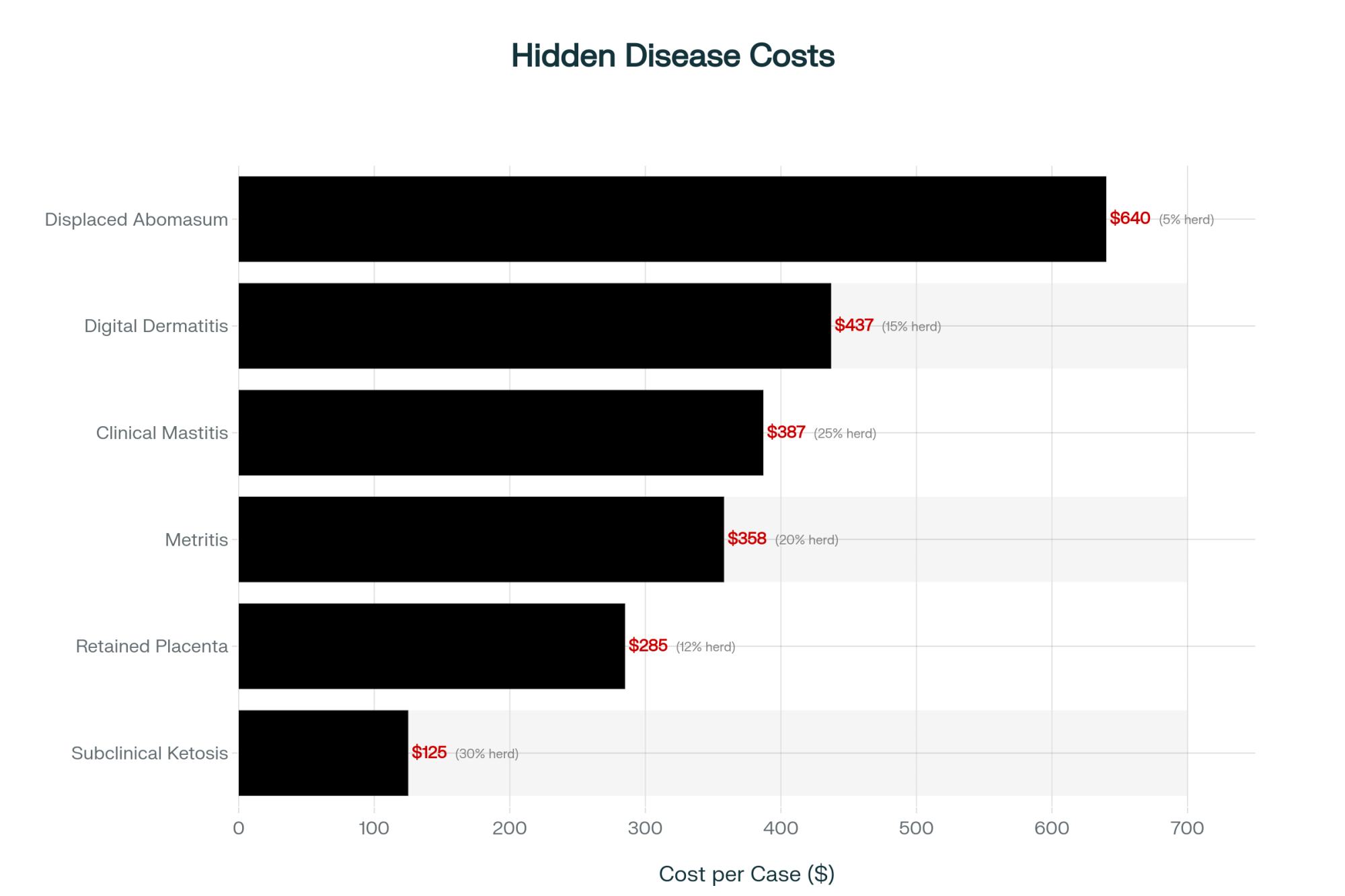
The Disease Tax Nobody Talks About: Every transition disease carries a price tag, but here’s the killer—they don’t come alone. Half your fresh cows deal with multiple conditions, compounding to $600-900 per affected animal. Subclinical ketosis hitting 30% of your herd at $125/case? That’s just the entry fee. Welfare-integrated systems cut these rates in half. Your call.

Recent research on dairy economics has been eye-opening about costs we usually don’t track properly:

You know transition cow challenges—nearly half of fresh cows deal with some metabolic issue. Subclinical ketosis alone runs about $125 per case based on recent studies. Clinical mastitis? USDA data puts it at $325-450 per case, with 71% of those costs from lost production, not treatment.

Lameness economics are brutal. Penn State’s research shows an average of $337 per case, with each additional week adding about $13. Digital dermatitis typically runs almost $100 more than other lameness causes. And here’s what really gets me—research consistently shows lameness hammering fertility, with reproduction-related costs representing a huge chunk of the total economic hit.

Then there’s culling and replacement. Canadian dairy industry data shows turnover at 35-40%, with replacement costs of $2,500-3,500, depending on where you are. Lose a cow before her third lactation? You never recover that rearing investment.

Add it all up, and conservative estimates suggest we’re looking at $1,000-1,400 in hidden costs per cow annually from stress, disease, and management practices we’ve just accepted as normal. That’s… that’s a lot of milk checks.

MetricConventional SystemWelfare-Integrated SystemNet Difference
Annual Cost Per Cow$1,400 hidden losses$400 reduced losses$1,000 savings/cow
Regrouping Events/Lactation4-6 times0-1 times4-5 fewer events
Lameness Prevalence20-25%12-15% (-40%)-40% cases
Lameness Cost Impact$337/case × 100+ cases$337/case × 60 cases~$13,500 savings
Transition Disease Rate~50% of fresh cows~25% of fresh cows-50% incidence
Calf Daily Gain (lbs)1.25-1.9 lbs3+ lbs+1+ lb improvement
Average Culling Rate35-40%22-25% (-35%)-13-15% points
Replacement Cost$2,500-3,500/cow$2,500-3,500/cowEarlier ROI
Labor Cost (% of revenue)8.4%4.4%-48% labor
Milk Production StabilityHigh variabilityMore consistentImproved flow
Veterinary CostsBaseline-30 to -35%$35K+ savings
Total Herd Cost (500 cows)$700,000 in losses$200,000 in losses$500,000 annual gain

Thinking About Infrastructure Investment

The German team’s estimates for welfare-integrated systems suggest substantially greater capital investment than conventional designs—we’re talking significant money here, potentially thousands of dollars per cow.
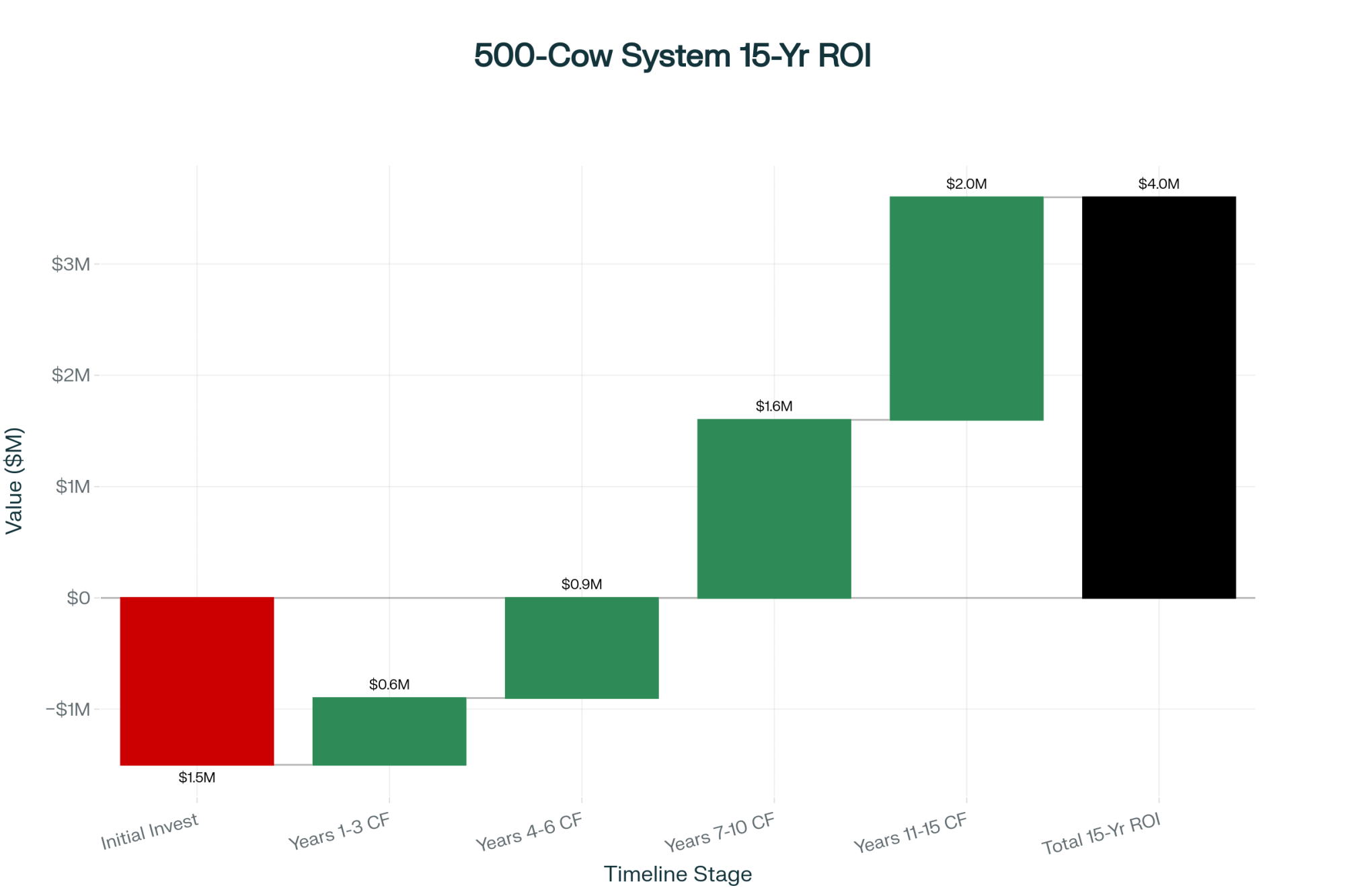
The Math That Changes Everything: Drop $1.5M on a welfare-integrated barn design and conventional wisdom says you’re crazy. But here’s what actually happens—you break even in 4-6 years, then bank $400K+ annually for the next decade. Total 15-year gain? Over $4 million. Meanwhile, “efficient” conventional operations keep bleeding that $1,400/cow every single year. Do the math

But let’s think through the returns. If these systems prevent even $800-1,000 annually in disease, stress, and culling losses, a 500-cow operation could see $400,000-500,000 in annual benefit. Finance that over 15 years at 6%, you’re looking at $200,000-300,000 in debt service, potentially leaving $150,000-250,000 in improved cash flow. That suggests a 4-6 year payback. I’ve seen producers jump on automation for returns that are less attractive than that.

Practical Implementation Thoughts

Based on conversations with producers who’ve made changes, here’s what seems to work:

Start with what you can control. You don’t need to revolutionize everything overnight. Several operations I know in Wisconsin started simple—adding outdoor access areas, reducing regrouping frequency, and trying modified calf management in just one pen.

Really assess your existing setup. Retrofitting current facilities for genuine cow choice is way harder than building it in from the start. If you’re already planning major construction or renovation? That’s your opportunity.

Think carefully about your market position. Nielsen’s 2023 consumer research documented a 57% increase in certified animal welfare products after mainstream retailers began stocking them. There’s a real differentiation opportunity, but you need to know what your milk buyer values.

And budget time for the learning curve. Managing pasture systems, cow-calf contact, stable herds—it’s different than running conventional confinement. Most folks find it takes 18-24 months to really develop the new management skills.

Regional Considerations

One thing the German research doesn’t fully address—and it matters here—is our climate variability. What works in temperate Germany needs adaptation for Arizona heat or Manitoba winters.

I’ve been hearing about different regional approaches. California researchers are testing shade and cooling for outdoor areas in hot climates. Canadian institutions are exploring winter paddock designs that maintain choice even in extreme cold.

In the upper Midwest, some producers are trying hybrid approaches—outdoor access during good weather, modified grouping strategies for winter housing. It’s not the full German model, but they’re seeing meaningful improvements in lameness and culling.

“Lose a cow before her third lactation? You never recover that rearing investment.”

Some producers implementing partial modifications report that eliminating regrouping practices resulted in substantial reductions in veterinary costs, though they acknowledge the learning curve was steep initially. I’ve heard of operations documenting 30-35% drops in vet bills after making these changes, though everyone admits it takes time to figure out the new management approach.

Looking Ahead

The $3.4 Billion Question: While most producers debate whether to adopt welfare practices, the certified animal welfare market is exploding—growing 183% to $3.4 billion by 2033. Early adopters positioning now will capture premium pricing before this becomes table stakes. Wait until mainstream adoption, and you’re just playing catch-up at commodity margins.

The consolidation trend isn’t slowing. Industry projections show substantial portions of milk production shifting to larger operations in the coming years. For mid-sized farms—those 200 to 1,000 cow operations that are the backbone of many regions—the traditional “get big or get out” message feels pretty heavy.

But this research illuminates other paths. The animal welfare certification market reached $1.2 billion in 2024 and is projected to reach $3.4 billion by 2033, according to Grand View Research (https://www.grandviewresearch.com). Major retailers like Walmart and Kroger have made procurement commitments for certified products. That’s creating a genuine market opportunity for differentiated producers.

Plus, emerging climate regulations are going to reshape the economics. Canada’s carbon framework for agriculture and similar U.S. initiatives will likely favor systems with greater efficiency, enhanced pasture management, and lower replacement rates.

What Producers Are Finding

Producers implementing modified approaches report interesting results. After dealing with steep learning curves around cow flow and grazing management, many are seeing veterinary costs drop significantly, labor requirements decrease, and production metrics improve—outcomes that surprise even them.

Others are taking different approaches, like maintaining limited cow-calf contact as a workable compromise between calf health improvements and milk sales. The key seems to be adapting concepts to specific circumstances rather than trying to copy someone else’s system exactly.

There’s no universal template here. Each operation needs to evaluate how these concepts might work with their unique combination of facilities, labor, markets, and management style.

The Bottom Line: Your Hidden Costs

When you factor in:

  • Regrouping losses: $3,400/year for 500 cows
  • Transition diseases: 50% of fresh cows are affected
  • Lameness: $337/case at 15-20% prevalence
  • Premature culling: Never recovering $2,500-3,500 investment

You’re losing $1,000 to $ 1,400 per cow annually in preventable costs.

Quick Takeaways for Action

Looking at all this research, here’s what you can start doing today:

  • Calculate your hidden costs: Track regrouping frequency, transition disease rates, and culling patterns for three months
  • Test small changes: Pick your highest-stress group and eliminate one regrouping event
  • Explore market premiums: Contact your milk buyer about welfare certification opportunities
  • Visit operations making changes: Nothing beats seeing these systems in action
  • Budget for learning: Any system change requires time—plan for it

Making Sense of It All

After really digging into this research, here’s what stands out to me:

The economics are way more complex than simple comparisons suggest. When you account for regrouping losses, disease costs, premature culling, and genetic potential that never gets expressed, conventional systems carry substantial hidden costs. Alternative approaches could meaningfully reduce those expenses.

Consumer expectations keep evolving. When certified products reach mainstream retail with clear differentiation, sales respond. That’s not a trend—it’s market reality.

Technology can enable choices. Current automation typically optimizes confinement, but alternative technical solutions exist. It’s more about design philosophy than technical barriers.

The transformation already underway creates both risk and opportunity. As margins compress and consolidation accelerates, differentiation becomes increasingly valuable. Whether you pursue commodity efficiency or welfare premiums—that’s a fundamental strategic decision.

And here’s the thing—the knowledge exists right now. The research has been published, the designs are documented, and the technical specifications are available. The question isn’t whether these systems work. It’s how they might fit your specific situation.

Looking at where we’re headed, understanding these alternatives becomes crucial for planning. This German research reminds us that innovation sometimes comes from questioning our basic assumptions.

The path forward varies by operation. A 5,000-cow facility in New Mexico operates under different constraints than a 200-cow farm in Vermont. But having genuine options—economically viable alternatives to consider—that’s what gives us flexibility to build operations aligned with our goals, values, and circumstances.

Maybe the question isn’t whether we can afford to implement such changes. Given the hidden costs already embedded in our operations and where markets are heading… maybe we should be asking: What’s the cost of not exploring these possibilities?

That answer will likely shape the next generation of dairy farming. And honestly? When cows get to make choices, it turns out everybody might win—including our bottom line.

Complete references and supporting documentation are available upon request by contacting the editorial team at editor@thebullvine.com.

Learn More:

Join the Revolution!

Join over 30,000 successful dairy professionals who rely on Bullvine Weekly for their competitive edge. Delivered directly to your inbox each week, our exclusive industry insights help you make smarter decisions while saving precious hours every week. Never miss critical updates on milk production trends, breakthrough technologies, and profit-boosting strategies that top producers are already implementing. Subscribe now to transform your dairy operation’s efficiency and profitability—your future success is just one click away.
NewsSubscribe
First
Last
Consent

Why 70‑Hour Weeks Are Killing Your Dairy Profits

The hardest‑working dairy farmers are actually the least profitable—Irish research proves 51‑hour weeks outperform 70‑hour grinds by 20% ROI.

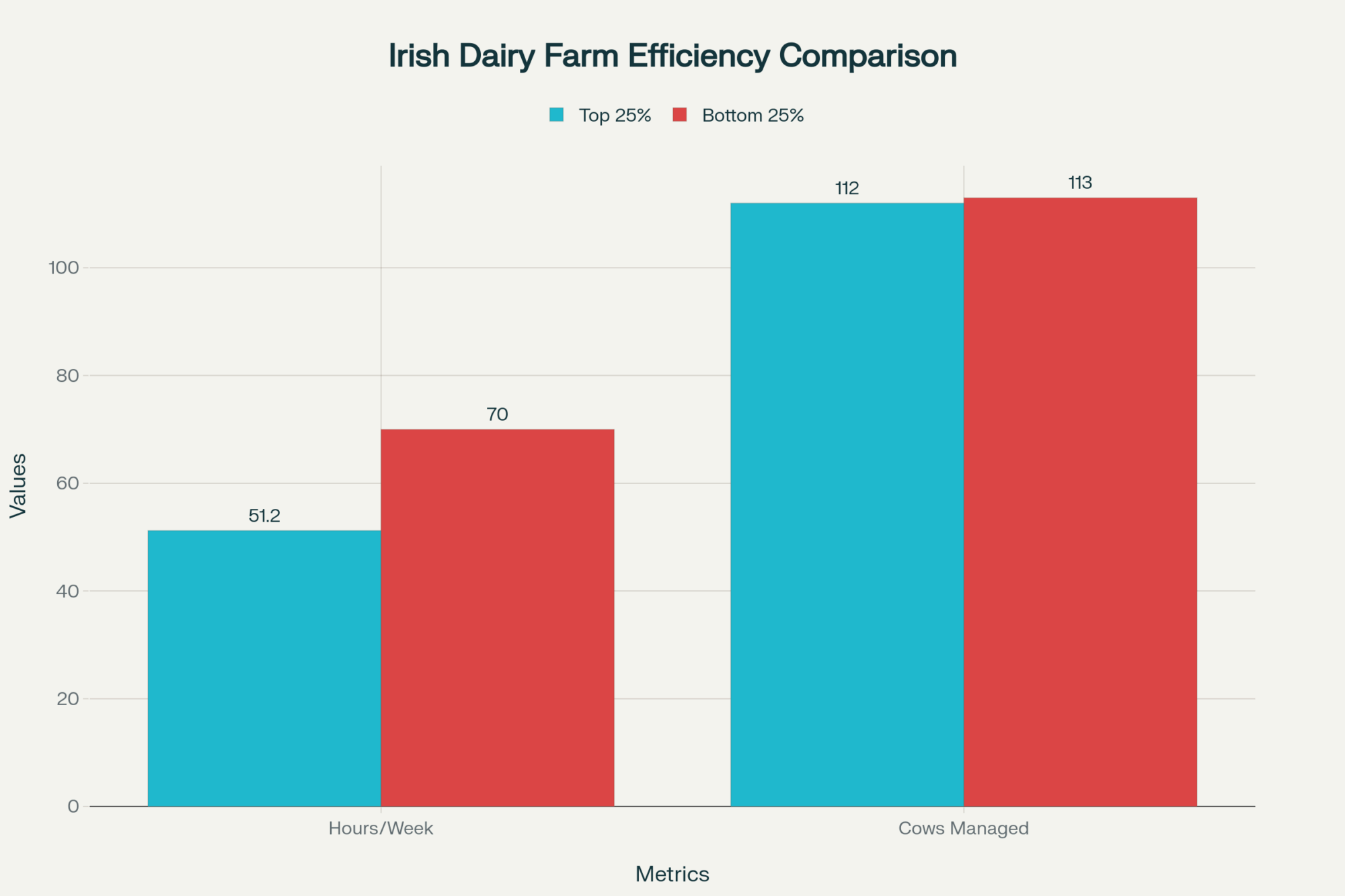
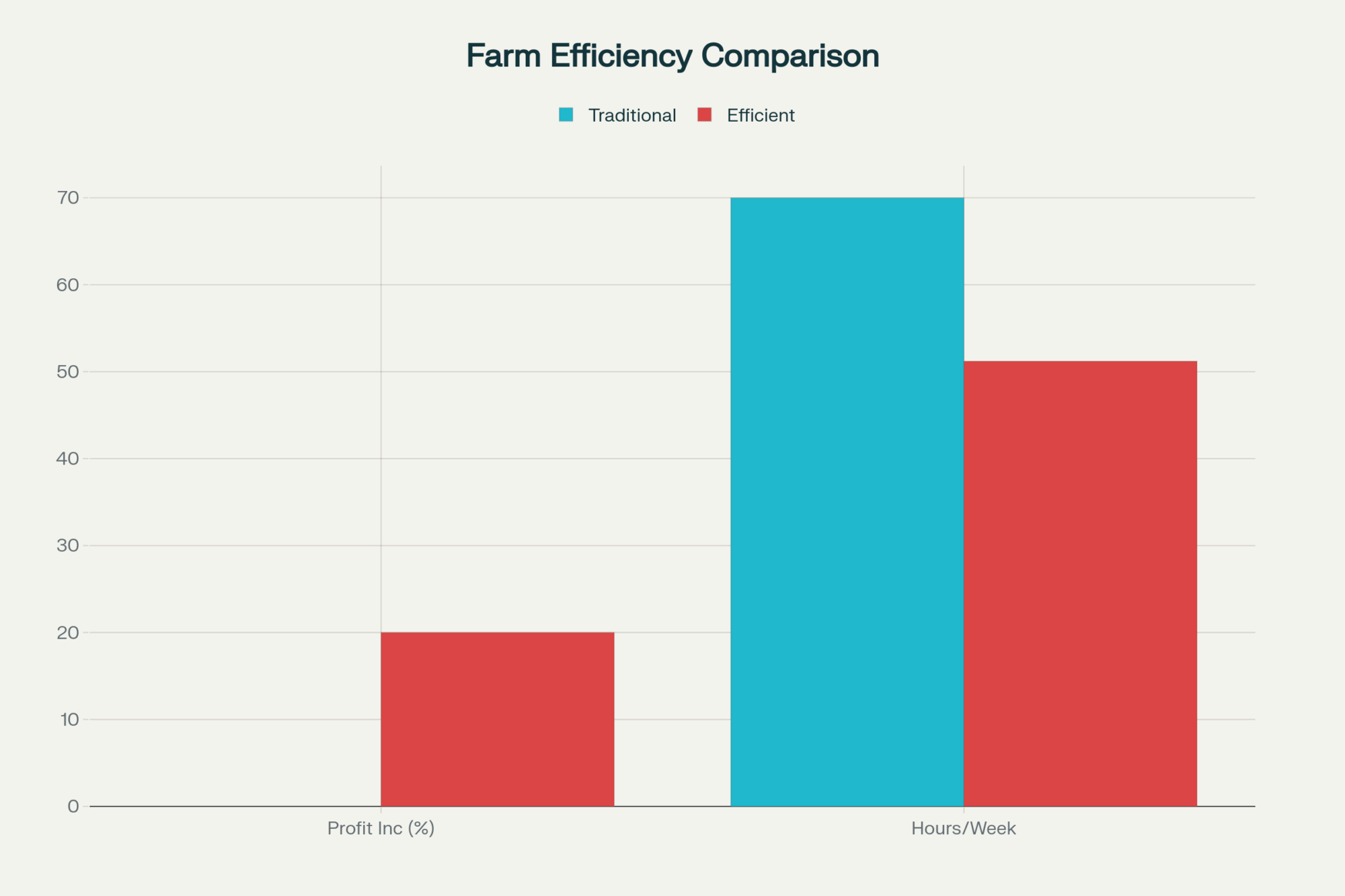
What if the hardest‑working dairy farmers in your area are actually the least profitable? Here’s a question that should make every dairy operator uncomfortable: When did “never stopping” become more important than never failing? The dairy industry has built its entire identity around a myth that’s costing farms millions; we celebrate exhaustion, glorify the “always working” mentality, and treat burnout like a badge of honor, while the most profitable operations quietly prove that strategic rest isn’t weakness—it’s a competitive advantage. Ireland’s Agriculture and Food Development Authority (Teagasc) compared the top 25% most efficient farms with the bottom 25% and uncovered a finding that should change how dairy success is judged. The most efficient farmers worked 51.2 hours per week managing 112 cows, while the least efficient worked 70 hours managing virtually identical 113‑cow herds—nearly 19 extra hours weekly for the same size herd. “The greater profitability achieved on the most labour‑efficient farms indicates that the extra workload on less efficient farms does not contribute to farm profitability,” a conclusion that translates to wasted hours, higher risk, and lower returns. The uncomfortable truth many still won’t acknowledge is this: “Dedication” without design is incompetence disguised as virtue.

Irish research highlights a critical difference: The top 25% most efficient dairy farms work significantly fewer hours (51.2 vs. 70) while managing comparable herd sizes, proving that efficiency, not endless hours, drives profitability.

The 51-Hour Advantage

  • Strategic rest and structured schedules deliver measurable returns; farms adopting a 51‑hour target see fewer fatigue‑driven errors and can capture $15,000–$67,500 in avoidable losses tied to missed heats, nutrition drift, mastitis, breakdowns, turnover, and injuries.
  • Flexible milking is a profit lever, not a concession; a New Zealand 10‑in‑7 system held milk solids per cow while cutting farm working expenses 4.3% and lifting profit/ha by 60.3%.
  • Automation liberates management time without sacrificing output; Australian AMS herds report comparable physical and economic performance to conventional parlors while redeploying labor to higher‑value work.
  • The cognitive link is real and costly; long‑term agricultural work is associated with a 46% higher odds of dementia, and burnout undermines decisions driving genetics, DMI/ME balance, SCC control, and capital allocation.
  • The “51‑Hour Challenge” works because it forces time ROI discipline—delegation, scheduling, and technology focus—turning hours saved into better breeding, feeding, and health execution.

The industry’s dirty secret: why “always on” is financial suicide

Working harder doesn’t mean earning more; in modern dairying, it often means compounding risk, magnifying errors, and draining the decision‑making capacity that actually drives margins. Running a dairy today demands the cognitive performance of a tech CEO—genomic selections, ration optimization across DMI and ME targets, SCC management, AMS/monitoring data interpretation, and milk marketing—yet many make million‑dollar decisions on four hours of sleep. Poor farmer mental health correlates with compromised herd outcomes and profit erosion; when leadership is exhausted, cows, people, and finances pay.

The mental‑health crisis that’s bankrupting farms

Depression affects 29.3% of agricultural producers versus 8.4% of U.S. adults, and anxiety hits 27% versus 19% in the general population. Among beginning farmers in the U.S. Midwest, 58% report mild to severe symptoms, and 89% cite “too much to do and too little time,” with one farmer noting, “The farm has an insatiable appetite… it will just eat everything if you allow it.” A systematic review places severe burnout among farmers at 13.72%, reaching 25% in New Zealand, and male farmers/ag managers die by suicide at 43.2 per 100,000—nearly double other occupations. Sleep deprivation and burnout reduce innovation, rigidify thinking, and block the adoption of novel strategies, compounding financial pressure and operational mistakes.

The hidden profit killers you’re not tracking

Working more than eight hours a day raises injury risk dramatically, and agriculture’s fatal injury rate sits at 21.5 per 100,000—more than six times the all‑worker rate. The real financial damage accumulates in silent leaks: missed heats add $3–$5 per cow per day for 21 days, mastitis incidence rises 15–20%, operator error drives roughly a quarter of equipment failures, turnover runs 22–43%, and one “minor” tractor injury can wipe out $6,000 in gross income during recovery. Bankers report stalled loan work when mental-health concerns remain unaddressed, underscoring that profitability and wellness are inextricably linked business variables.

The cognitive revolution: your brain is the highest‑value asset on the farm

The USDA ERS shows that larger, well-managed herds grow productivity at a rate of around 2.99% annually, compared to 0.63% on smaller farms, due to technological progress, scale/mix efficiency, and technical efficiency—not longer hours. Leisure and hobby time improves memory, attention, and processing speed—the exact skills that protect breeding choices, DMI/ME balance, SCC control, and capital allocation. Long‑term agricultural work is also associated with a 46% higher odds of dementia, underscoring the need to protect cognitive capacity as a core business asset. Running exhausted is like operating a high‑precision rotary on contaminated oil—it turns, but it won’t perform to spec or last.

Global innovators proving “work harder” is dead

Case 1 — New Zealand: the 60.3% profit‑per‑hectare jump

John Totty’s shift to a 10‑in‑7 schedule resulted in production at 378 kgMS/cow, compared to 377, and reduced farm working expenses from $4.90/kgMS to $4.69/kgMS (−4.3%), while profit per hectare rose from $2,271 to $3,641 (+60.3%).

This comparison of New Zealand milking systems visually confirms the data: a flexible 10-in-7 schedule significantly boosts profit per hectare and reduces daily shifts while maintaining milk solids, proving a smarter schedule is more profitable.
MetricTraditional (2019/20)Flexible 10‑in‑7 (2020/21)Impact
Production (kgMS/cow)377378+0.3%
Farm working expenses ($/kgMS)4.904.69−4.3%
Profit per hectare ($/ha)2,2713,641+60.3%

DairyNZ trials also found no statistically significant difference in milk solids per cow across flexible milking intervals, underscoring that schedule design can protect yield while improving people and profit metrics.

This “Farm Efficiency Comparison” graph, based on Teagasc research, visually contrasts the hours worked and the resulting profit for traditional versus efficient dairy operations, reinforcing the value of strategic time management.

Case 2 — Ireland: the 51‑hour breakthrough

Teagasc’s analysis showed that top‑quartile farms had 51.2 hours/week on 112 cows, compared to bottom‑quartile farms at 70.0 hours on 113 cows, with earlier finish times (18:25 vs. 19:58), indicating operational efficiency. A 119‑cow spring‑calving case demonstrated effective farming under 3,000 total labor hours per year, with the principal farmer working 2,314 hours (≈47 hours per week) while meeting herd targets.

Case 3 — Australia: AMS as a labor‑liberation strategy

NSW DPI findings show AMS herds typically milk 150–240 cows across 3–4 robots, 19.3–26.3 kg milk/cow/day, ~2.17 milkings/cow/day, and ~1,200 kg/robot/day while enabling managers to redirect time into herd health, pasture, and business oversight.

Case 4 — Netherlands: sustainable systems out‑earn intensive ones

Wageningen research identified “sustainable” farms with more extensive systems earning over €28,500 more at the farm level, led by craftsmanship, consistent strategy, and smart AMS adoption for safer, more satisfying workdays.

Case 5 — UK: flexible rotas done right

Dourie Farm’s “4‑on/4‑off” and “10‑four” schedules, plus deliberate pastoral care, sustain team performance, while Hollings Hill Farm’s move from 3× to 2× milking, herd size right‑sizing, and a full‑time herdsperson sharpened both quality of life and execution.

Your 90‑day transformation to a 51‑hour work week

Days 1–30: Assess and baseline

  • Time ROI audit: log hours by task; tag high‑value CEO work (genetics, finance, systems, people) vs. medium (nutrition oversight, repro) vs. low (routine milking, feed delivery, basic maintenance).
  • Health & errors audit: document sleep, stress, near‑misses, treatment slips, and breakdowns to build a fatigue‑risk ledger.
  • Tech due diligence: model AMS/activity monitoring/auto‑feeding ROI scenarios aligned to labor‑saving bottlenecks.
  • Team baseline: run a 10‑minute pulse survey; identify quick delegation wins and training gaps.

Days 31–60: System optimization and scheduling

  • Implement the first automation or outsourcing play (e.g., slurry contracting, auto‑feeding, or monitoring) and hard‑cap weekly hours at 60 with fixed start/finish times.
  • Introduce one flexible‑schedule element (e.g., 4‑on/4‑off or a single weekly one‑milking day) to test fatigue relief without yield loss.
  • Establish a protected 90-minute midday reset for the principal decision-maker on peak cognitive load days.

Days 61–90: Lock in 51 hours and measure gains

  • Reduce to 55 hours per week in week 9 and 51 hours by week 12 through delegation/automation; track missed heats, mastitis cases, equipment downtime, and turnover intent.
  • Expected ROI envelope (500 cows): 15–20 labor hours/week saved ($15,000–$20,000/year), 2–3 lb milk/cow/day recovered ($45,000–$67,500/year), and 15% lower treatment costs ($8,000–$12,000/year).
  • Cement weekly downtime: one four‑hour no‑farm block for the principal to preserve decision quality and adoption bandwidth.

U.S. scheduling and compliance note

At the federal level, many agricultural employees are exempt from FLSA overtime requirements; however, states are increasingly imposing stricter thresholds—confirming weekly caps before setting new rosters. California applies overtime after 8 hours/day or 40 hours per week for agricultural workers, as of January 1, 2025, with double time beyond 12 hours/day. Washington has completed its phase‑in to 40 hours/week overtime for all agricultural workers, including dairy. Oregon requires overtime after 48 hours/week in 2025, stepping to 40 hours in 2027. New York is phasing down its farm overtime threshold from 56 hours toward 40 by 2032, with related tax credits—plan schedules and budgets accordingly. OSHA highlights fatigue hazards associated with extended or irregular shifts; integrate predictable finish times, minimum rest periods, and fatigue checks into standard work procedures.

Challenge your peers: five uncomfortable questions that change behavior

  • If working harder equals more profit, why do the hardest workers keep going broke when Teagasc’s 51.2‑hour cohort outperforms 70‑hour grinders?
  • What’s the actual ROI on those extra 20 hours—can it be quantified without ignoring error costs and turnover?
  • How many five‑figure mistakes happened while exhausted—one mastitis flare, one missed heat group, one mixer failure?
  • Why invest heavily in cow comfort but nothing in operator cognition when leadership quality drives milk yield, butterfat, protein, SCC, and repro outcomes?
  • What example is being set for the next generation—an attractive career or a 70‑hour cautionary tale?

The Bottom Line

A 70‑hour week isn’t a badge of honor; it’s a red flag for broken systems, poor delegation, and preventable risk. Across regions and farm sizes, flexible scheduling and time-liberating technology help protect milk solids per cow, trim costs, stabilize teams, and improve decision-making quality. Lock in a 51‑hour target to shift time from fatigue‑prone labor into high‑ROI management where margins are truly made.

  • 70‑hour weeks signal inefficiency.
  • Structured downtime improves margins and herd health.
  • Decision quality—not endurance—wins.
  • Tech adoption requires cognitive bandwidth.
  • The next generation will not accept 70‑hour norms.
  • Global leaders are already executing.
  • Wellness programs return approximately $2.18 for every dollar invested after three years. Which side of history will be chosen—and is the 51‑hour operation ready to outperform tired competitors?

Trust me on this one—I’ve seen too many good operators burn themselves out thinking more hours equal more profit. The data tells a completely different story, and it’s time we listened.

KEY TAKEAWAYS

  • Track your hours and aim for that 51-hour sweet spot—research shows you could see 15-20% productivity gains just from sharper decision-making when you’re not exhausted. Start logging your time with a phone app this week.
  • Test flexible milking like those smart Kiwis—John Totty’s 10-in-7 system held milk solids steady while cutting working expenses 4.3% and boosting profit per hectare by 60%. Try shifting just one milking day to see how your team responds.
  • Consider AMS as a strategic move, not just tech—Australian operations show comparable economics to conventional parlors while freeing up 15-20 hours weekly for high-value management tasks. That’s $15,000-$20,000 in labor savings alone.
  • Protect your cognitive capacity like you would your best cow—University of Iowa research links long-term ag work to 46% higher dementia odds. Schedule weekly downtime and hobbies… your million-dollar breeding decisions depend on a sharp mind.
  • Start the “51-Hour Challenge” immediately—document your decision quality, error rates, and productivity compared to those brutal 70+ hour weeks. The research guarantees you’ll see improvement, not decline.

EXECUTIVE SUMMARY

Look, I’ve been digging into some eye-opening research from Teagasc, and honestly? The hardest-working dairy farmers are actually the least profitable. We’re talking about Irish farms where the top 25% work just 51.2 hours per week managing 112 cows, while the bottom performers grind through 70 hours on nearly identical herds—and make less money doing it. That’s not just 19 wasted hours… that’s potentially $15,000 to $67,500 in avoidable losses from fatigue-driven mistakes like missed heats and equipment errors. Plus, I’m seeing similar patterns from New Zealand to Australia—farms using flexible milking and robotics are slashing costs by 4% while boosting profits by 60%. The USDA data backs this up too: it’s not about working more, it’s about working smarter. Bottom line? Your brain is your most valuable asset on the farm, and you’re probably burning it out for no good reason.

Complete references and supporting documentation are available upon request by contacting the editorial team at editor@thebullvine.com.

Learn More:

Join the Revolution!

Join over 30,000 successful dairy professionals who rely on Bullvine Weekly for their competitive edge. Delivered directly to your inbox each week, our exclusive industry insights help you make smarter decisions while saving precious hours every week. Never miss critical updates on milk production trends, breakthrough technologies, and profit-boosting strategies that top producers are already implementing. Subscribe now to transform your dairy operation’s efficiency and profitability—your future success is just one click away.
NewsSubscribe
First
Last
Consent

Why the Smartest Dairy Operators Are Unlocking Over $150,000 in Potential Returns While Others Get Blindsided by Market Chaos

“Playing it safe” with milk prices? That’s the riskiest move you can make in 2025. Here’s why the old playbook will crush your margins.

You know what happened while most of us were arguing with feed dealers over spring contracts? $22 billion in potential dairy export value just… vanished from industry forecasts. And I’m betting half the producers in your neck of the woods still don’t get how this connects to their next milk check—or what the sharpest operators are already doing about it.

Look, those 3 AM worry sessions you’ve been having? They’re not in your head. USDA took a machete to 2025 milk price forecasts, slashing them to $21.60 per hundredweight. For your typical 500-cow operation, that’s about $125,000 in lost annual revenue—real money that was sitting there in March planning meetings and disappeared by June.

But here’s what’s really keeping folks like me awake at night: this is just the warm-up act. Trade tensions are building like one of those late-July storms that rolls across Wisconsin dairy country, Chinese import patterns are more unpredictable than spring weather in Vermont, and those same market forces that created brutal 150% price swings back in the day? They’re now supercharged by algorithms that trade faster than you can get from the parlor to the office.

Breaking Down That $175,400 Number (Because You Asked)

Let me be straight about that headline figure—because producers like you deserve the real math, not marketing fluff. That $175,400 represents the combined annual profit optimization potential for a typical 500-cow operation that actually implements comprehensive risk management. Here’s how it breaks down:

Labor automation gets you about $40,000 annually per robotic milking system (most 500-cow operations need two systems).
Feed efficiency programs can save $18,750 at $1.25 per hundredweight improvement on 1.5 million pounds annually.
Component optimization adds another $18,150 from just a 0.1% butterfat improvement.
Risk management tools reduce income volatility by $15,000-25,000 through blended strategies.
Technology integration brings $25,000 in operational efficiencies.
Infrastructure improvements save $12,000-15,000 from reduced feed waste alone.

That’s not pie-in-the-sky thinking—it’s what forward-thinking operations are already banking while traditional dairies keep playing defense.

The Thing About Playing It Safe? It’s Become the Most Dangerous Game

What strikes me about this industry after twenty-plus years is that the old playbook of crossing your fingers for stable prices and just focusing on production has become a recipe for getting steamrolled.

Current market conditions make this crystal clear. U.S. cattle inventory has shrunk to 86.7 million head—the lowest in decades. Replacement dairy heifers? Down to levels we haven’t seen since 1978. These supply constraints create the kind of price volatility that unprepared operations simply can’t weather.

According to recent research published in the Journal of Dairy Science, farms operating without structured risk management strategies experience 40% greater income volatility compared to those with comprehensive approaches. What’s particularly noteworthy is how this research quantifies what many of us have been observing… that the performance gap between prepared and unprepared operations keeps widening.

What “Hoping for the Best” Actually Costs You

Here’s the reality check: Farm labor costs are expected to rise by 3.6% in 2025 according to USDA projections, and with industry turnover averaging 30-38.8%, operations without automation strategies face annual swings of $45,000 per critical position. I was just talking to a producer in central Wisconsin who lost his experienced herdsman during breeding season—it cost him more than what a new robot would have run.

Meanwhile, farms implementing automated milking systems capture $32,000-$45,000 in annual labor savings per robot with payback periods of 18-24 months. The DeLaval and Lely systems I’ve seen basically pay for themselves in labor savings alone—and that’s before you factor in the data advantages.

Feed cost reality: Corn hit $4.58 per bushel in Q1 2025, and without precision nutrition programs, you’re accepting whatever feed efficiency your current system delivers. But here’s what’s interesting… producers using data-driven ration formulation are saving significant money per hundredweight—money that flows straight to your bottom line regardless of what milk prices do.

The Risk Management Revolution Most Producers Are Missing

Here’s what’s fascinating about our industry right now… dairy has undergone this quiet revolution in risk management tools, but adoption remains surprisingly low. Research from the USDA Economic Research Service shows only about 20% of producers use any form of price risk management, meaning 80% are operating without protection against market volatility. And honestly? That number hasn’t budged much in five years.

This isn’t about complicated financial instruments that require a Wall Street background. It’s about practical tools that successful producers already use to stabilize operations and capture opportunities that volatility creates.

The Blended Approach That’s Actually Working

The most successful producers aren’t trying to eliminate risk entirely—they’re using blended risk management strategies that provide stability while preserving flexibility to capture favorable movements.

The winning formula? Successful operations typically contract about 40% of production six months ahead, 30% three months ahead, and leave 30% exposed to cash markets. This approach keeps milk revenue within 5% of budgeted projections while maintaining upside potential. Think of it like having crop insurance while still being able to benefit from a bumper year.

According to University of Wisconsin Extension research, covering the first 5 million pounds of production with DMC at the $9.50 margin would have generated positive net benefits in 13 of 15 years. That’s an 87% success rate—better than most investment strategies you’ll find.

Technology Integration: Where the Real Money Lives

The precision dairy farming revolution is happening whether you’re part of it or not. According to the latest Global Dairy Equipment Market Report, the market reached $12.05 billion in 2025, representing a 6.8% compound annual growth. This growth reflects increasing automation adoption across the industry, and early adopters are capturing the biggest advantages.

Real-world example: Last spring, I visited an 850-cow operation outside Fond du Lac that implemented comprehensive technology over three years. The producer—let’s call him Jim since he doesn’t want his exact numbers floating around—started with automated milking systems in 2022, added precision nutrition monitoring in 2023, and integrated comprehensive data analytics in 2024.

Here’s what happened: Labor costs dropped 35% despite wage increases. Feed efficiency improved 12%. Most importantly, milk revenue stayed within 3% of budgeted projections throughout 2024’s price volatility, while neighboring operations without risk management saw 15-20% swings.

“The data from our AMS systems revealed production patterns we never would’ve spotted otherwise,” Jim explained during my visit. “We’re making breeding, feeding, and culling decisions based on individual cow data rather than gut feelings. It’s like having X-ray vision into your herd.”

Automated milking systems do more than save labor—they generate valuable individual cow performance data that enables management decisions you simply can’t make with traditional systems. The technology creates feedback loops where better data leads to better decisions, which leads to better financial outcomes.

Precision nutrition programs transform your largest operational expense into a competitive advantage. According to Penn State’s dairy extension team, farms with covered feeding areas show 8-12% better feed conversion rates with payback periods averaging 4-6 years.

What’s Happening in Global Markets (And Why You Should Care)

While you’re focused on daily operations—and rightfully so—global market forces are directly impacting your operation. China’s role as the world’s largest dairy importer means their policy decisions affect your milk price. According to Rabobank’s latest analysis, Chinese dairy imports are expected to grow by 2% in 2025, creating opportunities for global suppliers.

But here’s where it gets concerning… recent research from Cornell’s Agricultural Economics department shows that potential retaliatory tariffs could cost dairy farmers $6 billion in profits over four years. The U.S. exports nearly one-fifth of its dairy production, making trade policy a real risk factor that most producers aren’t prepared for.

What’s particularly noteworthy is how quickly these global shifts translate to local markets. When Chinese buying patterns change, it affects New Zealand export patterns, which influences global commodity prices, which shows up in your milk check within weeks. It’s like dominoes falling, except each domino is worth millions of dollars in market value.

Regional Variations That Matter

The thing about risk management strategies is that they don’t work the same everywhere. What pencils out for a 2,000-cow operation in the Central Valley might not make sense for a 300-cow farm in Vermont.

In the Upper Midwest—Wisconsin, Minnesota, Iowa—I’m seeing a lot of focus on automation and efficiency gains. Labor’s getting harder to find, and the seasonal challenges of feeding in those barns during winter make precision nutrition systems more valuable.

Southwest operations—Arizona, New Mexico, parts of California—tend toward scale advantages and component optimization. The consistent climate and feed access allow for different strategies than what works when you’re dealing with snow and mud seasons.

Northeast producers often pursue premium strategies—organic, grass-fed, direct-to-consumer—that provide protection from commodity volatility. A 150-cow organic operation in Pennsylvania might be more profitable than a 500-cow conventional farm in Iowa, depending on how they manage their risks.

How Risk Management Tools Actually Work

Let me walk you through the practical options without all the financial jargon…

Dairy Margin Coverage (DMC) is basically insurance for the gap between what you get paid for milk and what you pay for feed. At the $9.50 margin level, it costs about $0.155 per hundredweight but pays out when margins get squeezed. University of Wisconsin research shows it would have paid out in 13 of the last 15 years.

Class III futures let you lock in a milk price you’ll produce months from now. It’s like forward contracting your grain, except for milk. The minimum contract is 200,000 pounds, so it works for most commercial operations.

Livestock Gross Margin (LGM-Dairy) protects against the relationship between milk prices and feed costs, both corn and soybean meal. This one’s particularly useful when feed prices are volatile, which… let’s be honest, they always are.

Here’s a comparison that might help:

ToolBest ForWhat It ProtectsTypical CostWhen It Pays
DMC ($9.50 margin)Most farmsIncome margin$0.155/cwtWhen margins drop below $9.50
Class III FuturesLarger operationsMilk priceVariablePrice protection at the chosen level
LGM-DairyFeed cost exposureGross margin$0.50-$1.00/cwtWhen margins compress
Revenue ProtectionIncome stabilityQuarterly revenuePremium variesRevenue drops below coverage

Assessing Where Your Operation Really Stands

Financial vulnerability check: How sensitive is your cash flow to a $2 per hundredweight milk price drop? If that creates serious stress, you need stronger risk management. What percentage of your revenue comes from base milk prices versus premiums? The higher the base percentage, the more exposed you are to commodity volatility.

I was working with a 400-cow operation in Pennsylvania last month, and we ran through this exercise. Turns out they were getting 85% of their revenue from base milk prices—no component premiums, no quality bonuses, nothing. That’s like driving without a seatbelt in a snowstorm.

Operational efficiency reality: What’s your feed conversion efficiency compared to regional averages? If you’re not measuring it precisely, you’re probably leaving money on the table. How much individual cow data do you collect and analyze? Manual systems miss optimization opportunities that automated systems capture every day.

Technology adoption status: Are you using precision feeding systems? Do you have automated monitoring for cow health and reproduction? How quickly can you identify and respond to production changes? Slow response times cost money in today’s competitive environment.

Your Next Steps: Moving from Knowledge to Action

Here’s where the rubber meets the road… knowing what to do and actually doing it are two different things.

This week: Get yourself enrolled in DMC coverage at the $9.50 margin level through your local FSA office. Takes about an hour and costs pennies compared to the protection. Request a feed efficiency analysis from your nutritionist—if you don’t have baseline data, you can’t improve. Start tracking butterfat and protein percentages by individual cow if you’re not already.

This month: Complete that financial vulnerability assessment I mentioned earlier. Schedule a sit-down with your banker to discuss cash reserve strategies (most successful operations keep 3-6 months of operating expenses in reserve). Contact at least two equipment dealers about automation options—even if you’re not ready to buy, understanding your options is crucial for planning.

This quarter: Implement at least one precision nutrition improvement based on your feed efficiency analysis. Establish forward contracting relationships with your milk handler or co-op. Complete a comprehensive risk assessment with an agricultural specialist—many extension services offer this for free or low cost.

Key resources you need to know about: Your local Farm Service Agency office handles DMC enrollment and can walk you through the process. University extension dairy specialists provide operational guidance and often have benchmarking data for your region. Agricultural risk management consultants can help develop comprehensive strategies tailored to your operation.

The thing is… every operation is different, and what works for that 3,000-cow dairy in Arizona might not be the right approach for a 150-cow operation in Vermont. But the principles remain the same: measure what matters, protect against catastrophic losses, and continuously improve your operational efficiency.

What’s Coming Down the Pike

Looking ahead, several trends are going to reshape how we think about risk management…

Continued consolidation means the efficiency gap between large and small operations will keep widening. This doesn’t mean small farms can’t succeed, but it does mean they need clear competitive advantages—whether that’s location, premium products, or exceptional efficiency.

Technology integration will become standard rather than optional. Operations not adopting precision dairy technologies will find themselves at increasing disadvantage. The question isn’t whether to automate, but how quickly and effectively you can implement these systems.

Climate variability is creating new operational challenges. Heat stress management, feed security planning, and weather-related disruptions require different risk management approaches than we’ve traditionally used.

What’s particularly interesting is how global market integration continues to accelerate. Dairy markets will become increasingly connected to international trade, currency fluctuations, and global economic conditions. Local operations need to understand these trends and their implications.

The Industry’s Economic Reality

Here’s something that doesn’t get talked about enough… the dairy industry’s economic impact extends far beyond individual farms. According to the International Dairy Foods Association, dairy supports over 3 million American jobs, $198 billion in wages, and nearly $780 billion in total economic impact. This massive economic footprint underscores why industry stability and growth matter—not just for individual producers, but for entire rural communities.

Supply chain integration means that what happens on your farm affects feed suppliers, equipment dealers, veterinarians, truckers, processors, and retailers. When dairy operations struggle, it ripples through the entire economy. When they thrive, everyone benefits.

The Bottom Line: Your Competitive Future

The dairy producers who emerge strongest from current market volatility will be those who embrace comprehensive risk management as a competitive advantage rather than viewing it as a necessary cost center.

Every day you delay implementation, you’re essentially choosing to accept whatever market conditions deliver rather than actively managing your operation’s financial future. In an industry where margins are thin and volatility is increasing, that’s a choice you literally can’t afford to make.

Here’s the thing I’ve learned after working with hundreds of dairy operations: the producers who wait for perfect conditions never get started. The ones who take action with the information they have are the ones who succeed. Your operation’s financial future depends on decisions you make today, not tomorrow.

The tools are available, the strategies are proven, and the window for implementation is wide open. The $175,400 in profit optimization opportunities we discussed aren’t going away—but they might go to your more prepared competitors if you don’t act.

Will you be ready for the next market disruption? Or will you be another casualty of volatility that could have been managed?

The choice, as always, is yours. But choose quickly—the industry isn’t waiting.

KEY TAKEAWAYS

  • Automate your labor headaches away – Robotic milking systems deliver $32,000-$45,000 annual savings per unit with 18-24 month payback periods. Start by contacting two equipment dealers this month to understand your options, especially with 2025’s 30-38% industry turnover rates crushing labor budgets.
  • Turn feed costs into competitive advantage – Precision nutrition programs save $0.75-1.25 per hundredweight through data-driven ration formulation. Get a feed efficiency analysis from your nutritionist immediately – if you’re not measuring conversion rates precisely, you’re bleeding money with corn futures swinging from $3.94 to $4.80 per bushel.
  • Lock in DMC coverage before you regret it – The $9.50 margin level costs just $0.155 per hundredweight but historically pays out 87% of the time. Enroll at your local FSA office this week – it’s cheap insurance that successful operations use as their safety net foundation.
  • Optimize components for instant cash flow – Every 0.1% butterfat increase adds $0.15-0.20 per hundredweight, translating to $18,150 annually for a 500-cow operation. Start tracking individual cow butterfat and protein percentages now – component premiums are your buffer against commodity price volatility.
  • Implement blended risk strategies like the pros – Contract 40% of production six months ahead, 30% three months ahead, leave 30% exposed to capture upside. This approach keeps revenue within 5% of budget projections while global trade tensions threaten $6 billion in dairy farmer profits over four years.

EXECUTIVE SUMMARY

Look, I get it – you’re busy milking cows and don’t have time for fancy financial instruments. But here’s what caught my attention: while 80% of producers are flying blind without risk management protection, the smart ones are systematically capturing $175,400 in annual profit optimization. We’re talking real money here – $40,000 per robotic milking system, $18,750 from feed efficiency improvements, another $18,150 just from bumping butterfat by 0.1%. With USDA slashing 2025 milk forecasts to $21.60 per hundredweight and trade tensions building like a summer storm, the old “hope and pray” approach isn’t cutting it anymore. Global market forces – especially China’s shifting import patterns – are creating volatility that’ll steamroll unprepared operations. You need to start implementing these risk management strategies this week, not next year.

Complete references and supporting documentation are available upon request by contacting the editorial team at editor@thebullvine.com.

Learn More:

Join the Revolution!

Join over 30,000 successful dairy professionals who rely on Bullvine Weekly for their competitive edge. Delivered directly to your inbox each week, our exclusive industry insights help you make smarter decisions while saving precious hours every week. Never miss critical updates on milk production trends, breakthrough technologies, and profit-boosting strategies that top producers are already implementing. Subscribe now to transform your dairy operation’s efficiency and profitability—your future success is just one click away.

NewsSubscribe
First
Last
Consent

What Those $177M Robotic Milker Settlements Actually Tell Us About Your Next Big Decision

$177M in robot settlements should tell you something. Energy bills up 50%, with maintenance costing $ 25,000 per year. Time to rethink automation?

EXECUTIVE SUMMARY: Look, I get it—everyone’s talking robots like they’re the holy grail of dairy automation. But here’s what nobody’s telling you at those dealer meetings. The manufacturers just wrote $177 million in settlement checks because their flagship systems didn’t work as promised, and that should make every producer pause before signing on the dotted line. We’re seeing maintenance costs climb from $5,000 to $ 25,000 or more annually per robot, while energy bills increase by 25-50% across the board. Meanwhile, with loan rates at 5-7% and input costs as they are, the math on $ 200,000 robots gets pretty ugly pretty fast. The smart operators I’m talking to? They’re creating targeted automation packages for $ 75,000-$125,000 that deliver comparable productivity gains without the tech headaches. You might want to take a hard look at what’s actually working before you bet the farm on European engineering.

KEY TAKEAWAYS

  • Cut automation costs by 60-70% with targeted systems – skip the $ 200,000 robots and build $ 75,000-$125,000 automation packages using proven components like automated takeoffs and cow ID systems. With current 5-7% loan rates, you’re looking at manageable payments instead of farm-threatening debt service.
  • Avoid the $ 25,000 maintenance trap – Extension surveys show that 25% of older robot operations incur $ 15,000-$25,000 annually in maintenance costs. Compare that to $45-55/cow for conventional parlor maintenance, and suddenly your “labor-saver” becomes a profit killer.
  • Question the energy math before you sign – Industry studies document 25-50% energy increases with robot installations, plus $150-200/cow annually in extra feed costs for incentive pellets. Run those numbers through your current utility rates before believing the efficiency claims.
  • Demand service guarantees upfront – With parts delays from Europe and stretched technician networks, downtime costs are a real concern. Get specific commitments on response times, parts availability, and backup support—because your cows don’t care about manufacturer excuses at 2 AM.
  • Focus on management amplification, not technology replacement – The farms that succeed with automation treat it as a management system, not just as equipment. If you’re not ready to become a 24/7 tech company that also happens to milk cows, maybe start by optimizing what you have first.
robotic milking cost, dairy farm profitability, automated milking systems, farm equipment ROI, Lely DeLaval settlement

So here’s what nobody’s talking about at the dealer meetings: when manufacturers hand out $177 million in settlements because their flagship milking robots didn’t work as promised, that’s not just legal noise—that’s your industry telling you something critical about the gap between marketing promises and barn-floor reality. Time to get serious about what robotics really cost and whether you’re ready for what comes next.

The thing about robot dealers… they used to show up with these glossy presentations full of labor savings and efficiency gains, talking about the “future of dairying” as if it were inevitable. Hell, five years ago you couldn’t grab coffee in any dairy town from California’s Central Valley to Wisconsin’s cheese country without hearing someone pitch the robot revolution.

But what’s actually happening now? I’m talking to producers from the Corn Belt down to Texas, and the story’s getting more complicated. Lely just settled for $122 million and DeLaval for another $55 million—nearly 400 farmers in that first case alone claiming their Astronaut A4 systems didn’t deliver what was promised.

Distribution of the $177 million robotic milker settlement amounts by manufacturer, highlighting Lely’s and DeLaval’s share

That’s not a few unhappy customers. That’s a systematic acknowledgment that something went sideways between the sales pitch and the milking stall. And here’s what gets me—if the technology was so bulletproof, why are these companies writing checks instead of fighting in court?

What strikes me most about these settlements is how quietly the news travels through our industry. You’ll hear whispers at field days, maybe a comment over a gate… but nobody wants to admit they might’ve made a quarter-million-dollar mistake, right?

When Your Electric Bill Becomes the Wake-Up Call

Here’s what producers are actually seeing in their monthly statements—and this is where the rubber meets the road. Industry studies document energy increases of 25–50% in many robotic installations, with some farms experiencing even higher jumps. That’s not theoretical; that’s real money every month, whether you’re dealing with summer cooling loads in the South or winter heating costs up North.

I keep hearing from producers—guys running anywhere from 200 to 500 cows—who mention budgeting an extra $200 or more per robot per month just for electricity. These boxes operate 24/7, powered by vacuum pumps, air compressors, and computers that never stop. Your power company definitely loves robot dairies, let me put it that way.

However, here’s where it gets interesting —or expensive, depending on how you look at it. The maintenance aspect is what really catches people off guard. According to recent collaborative surveys from Wisconsin Extension, Minnesota, and Penn State, we’re looking at costs that start around $5,000 per robot in early years but climb to $10,000 or more as units age.

And get this—25% of farms with older systems report costs above $15,000 per robot per year, with some hitting $25,000 or more. That’s when producers start doing the math backwards and realizing their conventional parlor was costing $45 to $55 per cow annually for maintenance. It’s not even close.

What’s particularly troubling is how many operators tell me they weren’t prepared for this escalation. You budget for the initial investment, maybe factor in some service costs… but when your five-year-old robot needs major component replacements, that’s when reality hits.

What 2025 Market Conditions Really Mean for Your Decision

The financial landscape right now? Let’s just say it’s not exactly robot-friendly. Most producers are looking at equipment loans with interest rates between 5-7% through the FSA, sometimes higher with commercial lenders, depending on their relationship with the bank. Slap that on a $ 200,000 robot, add facility costs, electrical work, and concrete… suddenly you’re looking at loan payments that could buy a lot of quality feed.

And input costs? Corn is currently sitting around $4.07 to $4.20, while soybean meal is running in the $270-280 range. Even with decent grain prices, most robot operations are feeding an extra $150–$200 per cow annually just in pellets to keep cows motivated to visit the box. That adds up fast when you’re trying to justify the investment.

Here’s what’s particularly noteworthy about current market conditions: the farms that are thriving with robots tend to be those that can afford to make mistakes. They had the financial cushion to weather the learning curve, the service calls, the inevitable “we didn’t expect that” costs that seem to pop up in year two or three.

Are we creating a system where only the biggest operations can afford to automate? Because that’s what the numbers are starting to suggest…

The “Management Amplifier” Reality Check

I keep hearing industry observers describe robots as “management amplifiers,” and honestly, that might be the most accurate description out there. The technology doesn’t make bad managers good—it makes their problems bigger and more expensive.

I’ve seen robot barns putting out over 2 million pounds of milk per FTE, which is genuinely impressive. However, those same operations are running at a capital intensity of $3,200 to $4,000 per cow. You’re betting everything on keeping both the robots AND the cows working like clockwork.

What’s fascinating—and this doesn’t get discussed enough—is the growth pattern we’re seeing in countries like Australia, where AMS adoption has actually been increasing steadily, despite some early skepticism about pasture-based systems. Different continent, different climate, but the successful operations share certain characteristics regardless of geography.

The common thread? Management teams that treat robotics as a management system, not just a piece of equipment. They understand cow flow, they’ve mastered the feeding protocols, and most importantly—they’ve accepted that they’re running a tech company that happens to milk cows.

Are you buying the robot… or are you buying the promise? Because there’s a difference, and it matters more than most people want to admit.

The Service Reality Nobody Puts in the Brochure

Service FactorRobotic SystemsConventional Parlors
Parts Availability3-7 days (Europe shipping)Same day (local suppliers)
Technician AvailabilityLimited, specializedWidely available
Downtime ImpactComplete milking shutdownPartial operation possible
Emergency ResponseManufacturer-dependentLocal service network

The thing about service delays is that they’re becoming more common, not less. I keep hearing stories—robots down for days waiting on parts from Europe, technicians stretched thin across multiple states, software updates that somehow create new problems. Perhaps not every farm, but it happens often enough that smart producers are considering backup plans.

And the labor piece? Remember when robots were supposed to solve our people problems? Instead, you’re trying to find technicians who can code, troubleshoot hydraulics, and somehow convince fresh heifers to walk into a robotic milking stall. It’s like trying to find a good AI cow with perfect feet and stellar genomics—theoretically possible, but good luck with the search.

That “labor-saver” sticker price sometimes just means you’re trading one set of headaches for a completely different, more expensive set of headaches. At least when your parlor breaks, you can usually find someone local who knows how to fix a vacuum pump.

What Smart Money’s Actually Doing (And Why It Matters)

Here’s what’s quietly happening across a lot of successful operations: targeted automation instead of wholesale robot adoption. Automated takeoffs, cow ID systems, alley scrapers, feed pushers—you can put together solid packages for somewhere in the $75,000 to $125,000 range, all in.

The ROI data from documented case studies suggests strong returns are achievable for well-executed “targeted automation,” with some operations reporting payback periods that put them ahead of full robotic systems. There’s genuine pride in counties where producers are getting parlor productivity numbers that rival the fanciest robot barns—with significantly less technical complexity.

Here’s How the Numbers Actually Stack Up:

Annual cost comparison of robotic milking systems versus conventional parlors showing maintenance, energy, feed, and capital recovery expenses
Investment TypeInitial CostAnnual MaintenanceBreak-Even Years10-Year ROI
Full Robotic ($200k/robot)$200,000$8,000-$20,0007-10 yearsVariable
Targeted Automation$75,000-$125,000$3,000-$5,0003-5 years100-200%
Optimized Conventional$25,000-$50,000$2,000-$3,0002-3 years150-300%

When considering investment per cow, the differences become quite stark. A traditional robotic approach costs $3,200-$4,000 per cow, with payback periods of 7-10 years and high maintenance complexity. Targeted automation might cost significantly less per cow, often with a 3-5 year payback on many components and manageable maintenance requirements. Then there are optimized conventional systems—incremental improvements with shorter payback periods that utilize familiar technology.

Comparison between targeted automation and full robotic adoption on key factors affecting cost, return, and management complexity

The question becomes: what matches your management style, your financial situation, and your long-term goals? Because at the end of the day, there’s no one-size-fits-all answer. And frankly, that’s what scares a lot of dealers.

What Those Settlement Numbers Actually Mean (The Part Nobody Wants to Discuss)

Here’s something to consider… when manufacturers settle lawsuits for this kind of money, they’re not admitting guilt, but they’re acknowledging a gap between what was promised and what was delivered. That gap has real implications for anyone considering their next major equipment purchase.

If you’re serious about automation—and I mean really serious, not just attracted to the shiny technology—you need to be even more serious about understanding exactly what you’re signing up for. That means talking to producers who’ve lived through both the honeymoon phase and the reality check that comes 18 months later.

The manufacturers settling these cases aren’t going anywhere. They’re still making robots, still improving the technology, still hiring dealers to make sales calls. However, they’re also acknowledging, through these settlements, that the early marketing may have oversold the benefits and undersold the challenges.

What does that mean for your decision? Maybe it means approaching the whole thing with a bit more skepticism and a lot more financial planning than the first wave of adopters did. Maybe it means asking different questions at the dealer meeting.

The Questions You Should Be Asking (But Probably Aren’t)

Before you sign any contracts or shake any hands, ask yourself—honestly—are you prepared to become a 24/7 tech support operation? Because that’s what successful robot dairies really are. Your cows don’t care that it’s Sunday morning or that you had vacation plans when the system throws an error code.

And here’s the bigger question: if manufacturers are handing out settlement checks worth $177 million, what does that tell you about the gap between marketing promises and actual performance? Are you betting your operation on technology that’s still working out the bugs, or waiting for the next generation that might actually deliver what this generation promised?

But let’s get practical here. What questions should you actually be asking your dealer? Try these: What happens when it breaks down at 2 AM on Christmas morning? Who fixes it, how fast, and what does that cost? What’s your parts availability track record over the past 24 months? Can you put me in touch with three producers who’ve had their systems for more than four years—not just the success stories?

The successful robot operations I know—and there are some genuinely impressive ones—share certain characteristics. They had financial cushions. They had technical aptitude or hired it. They approached the transition systematically, not emotionally. And most importantly, they never lost sight of the fundamentals: cow comfort, consistent routines, and margins that actually work.

Your Real Decision Framework (Cut Through the Marketing Noise)

Look, robots aren’t disappearing from our industry. The technology’s getting better, the service networks are (slowly) improving, and farms are making real money with automated systems. However, the settlement numbers are your industry’s way of telling you that this technology isn’t magic and isn’t a substitute for good management.

Here’s what I think you need to consider—really consider—before making this jump:

Can you honestly handle being a technology company that happens to milk cows? Because that’s what you’re signing up for. Every dairy automation decision should start with that question. If the answer is yes, then you need to consider financial cushions, backup plans, and management systems that can effectively handle complexity.

If the answer is no—or if you’re unsure—then targeted automation may be a better option. Perhaps optimizing what you have yields better returns than betting the farm on boxes from Europe.

The real winners in the next five years? They’ll be the producers who make decisions based on their actual capabilities, not their aspirations. Who understand that every dollar spent on technology needs to come back with interest. Who realize that the most expensive mistake you can make is assuming that buying a solution means you’ve solved your problems.

This industry is built on people who adapt, learn from others’ expensive mistakes, and make decisions that keep their operations viable in the long term. The manufacturers who just wrote those settlement checks? They’re already working on the next generation of systems, the next round of promises, the next wave of marketing materials.

The question is: will you be more prepared for this conversation than the last group of producers was? As the stakes continue to rise, the technology becomes increasingly complex, but the fundamentals of running a profitable dairy remain unchanged.

Keep asking the hard questions. That’s how we all get better at this.

Complete references and supporting documentation are available upon request by contacting the editorial team at editor@thebullvine.com.

Learn More:

Join the Revolution!

Join over 30,000 successful dairy professionals who rely on Bullvine Weekly for their competitive edge. Delivered directly to your inbox each week, our exclusive industry insights help you make smarter decisions while saving precious hours every week. Never miss critical updates on milk production trends, breakthrough technologies, and profit-boosting strategies that top producers are already implementing. Subscribe now to transform your dairy operation’s efficiency and profitability—your future success is just one click away.

NewsSubscribe
First
Last
Consent

Solving Dairy’s $32 Billion Labor Problem: Policy vs. Automation

Think higher wages solve labor problems? Wrong. Workforce stability beats pay every time—here’s proof.

EXECUTIVE SUMMARY: Look, here’s what nobody wants to talk about: Nearly 80% of American milk comes from farms staffed by immigrant workers, and that workforce is more fragile than we’d like to admit. With 40% annual turnover costing thousands per replacement and potential industry losses hitting $32 billion, this isn’t just a labor issue—it’s an existential threat to your margins. Meanwhile, European dairies are already 20% automated while we’re stuck at 5%, and states like Kansas are pulling ahead with 15.7% production growth compared to California’s decline. The math is simple: audit your workforce risk, push for policy reform through your co-op, and get serious about automation ROI—because waiting isn’t a strategy that pays bills.

KEY TAKEAWAYS

  • Stop bleeding cash on turnover: Each replacement worker costs thousands in direct expenses plus lost productivity—calculate your real turnover cost using BLS data and target retention strategies that actually move the needle on your bottom line.
  • Push for policy wins: The Farm Workforce Modernization Act’s year-round H-2A program could stabilize your labor costs—contact NMPF or your co-op today to support legislation that directly impacts your 2025 profitability.
  • Automation isn’t just for mega-dairies: Robotic systems show 18-month paybacks for smaller herds under 260 cows—schedule that dealer consultation now while 2025 cost pressures make the ROI calculation even more compelling.
  • Follow the production leaders: Kansas’s 15.7% growth versus California’s struggles show how workforce stability drives milk yield—consider operational changes that put you in the winner’s column instead of hoping things improve.
  • Connect workforce to genetics: Stable employees deliver better feed efficiency and consistent genomic testing protocols—invest in retention strategies that protect your breeding program investments and maximize milk components.
dairy labor shortage, automated milking systems, dairy farm profitability, H-2A visa program, workforce management

The labor situation in dairy is no longer just another box to check on a list with feed costs and milk prices. What really catches my attention: about 51% of U.S. dairy workers are immigrants, and those same workers are responsible for producing nearly 79% of our nation’s milk supply. This is the backbone of our industry.

Global comparison of immigrant labor dependency in dairy farming shows U.S. leads at 51% workforce reliance

You’ve probably observed—milk prices at around $21.30 per hundredweight in May 2025, while corn costs hover near $4.20 a bushel according to recent USDA forecasts. Those thin margins are being squeezed further by an instability most farms aren’t fully pricing in: the workforce.

The economic modeling on this is sobering: losing this immigrant workforce could trigger up to $32 billion in industry losses, and milk prices could spike past $7.60 a gallon at retail. The ripple effects from such a shift would extend far beyond the farm gate.

Economic modeling shows $32.1B losses from complete immigrant labor elimination versus $2.5B gains from comprehensive reform

What Turnover Really Costs

Look at BLS data from 2024—livestock workers earn about $17.45 an hour, but the turnover rate hovers around 40% annually according to recent labor market reviews. Each replacement costs thousands in direct expenses and lost productivity while they get up to speed.

“When your people change, your feed conversion, your cow health, your rhythm—it’s like trying to keep the groove while the beat’s changing.” — Dr. Marin Bozic, University of Minnesota

This churn shows up in production numbers too. USDA data reveals Kansas’s milk output rising by 15.7% recently, while California declined nearly 2%—a clear sign that stable labor markets support greater productivity.

On top of that, ICE enforcement actions have caused some farms to lose half their workforce almost overnight, adding real operational stress.

Legislative Hope—The Farm Workforce Modernization Act

The Farm Workforce Modernization Act, reintroduced in spring 2025, seeks to reshape the H-2A visa system by creating year-round access aligned with dairy’s demands. It dedicates 20,000 annual spots for dairy workers and offers a certified status pathway for longtime employees.

However, the current H-2A system only certified 384,900 seasonal farmworker positions in fiscal 2024. That’s an impressive number, but it overlooks a fundamental reality: we milk 365 days a year.

Automation’s Role: Partial but Growing

Robotic milking systems have grown to cover about 5% of U.S. dairy farms, with European counterparts like Denmark and the Netherlands reaching 20-25% adoption, per recent analyses. The global milking robot market is expected to hit $2.5 billion in 2025, as labor shortages and costs push more operations toward automation.

Farmers praise robots for easing labor demands and improving cow comfort, but as Dr. Rick Watters of Cal Poly observes, “Robots don’t replace labor—they change the skills you need.” Smaller herds (under 260 cows) enjoy better ROI, while larger operations still find parlors viable. Maintenance can cost up to $9,000 annually.

Your Bottom Line—What’s Next?

Here’s the thing though: continuing to hope this labor problem works itself out is a strategy that won’t cut it. Nearly 80% of American milk depends on a workforce caught in legal limbo and operational unpredictability. That’s not just a problem—it’s shaping who survives and who thrives. The regional production shifts make it clear: where labor is stable, production grows.

What strikes me about leaders in the space is they’re taking deliberate steps to blend policy advocacy with technology investments:

Audit Your Labor Risk. Truly calculate your costs from turnover—including lost milk, additional training, and potential herd health impacts.

Raise Your Voice. Work through your co-op or the NMPF to support the Farm Workforce Modernization Act.

Explore Tech Values. Even if you’re not ready to buy, get a robotic milking dealer’s cost-benefit analysis to guide future investments.

So… are you ready to lead your farm into that future, or will you be left behind?

Editor’s Note: This article is accompanied by key data visuals—a concise infographic on workforce statistics, a clear comparison of H-2A program limitations versus dairy’s labor needs, a U.S. milk production map highlighting regional shifts, plus high-resolution photos of robotic milking in action and diverse farm teams.

Learn More:

Join the Revolution!

Join over 30,000 successful dairy professionals who rely on Bullvine Weekly for their competitive edge. Delivered directly to your inbox each week, our exclusive industry insights help you make smarter decisions while saving precious hours every week. Never miss critical updates on milk production trends, breakthrough technologies, and profit-boosting strategies that top producers are already implementing. Subscribe now to transform your dairy operation’s efficiency and profitability—your future success is just one click away.
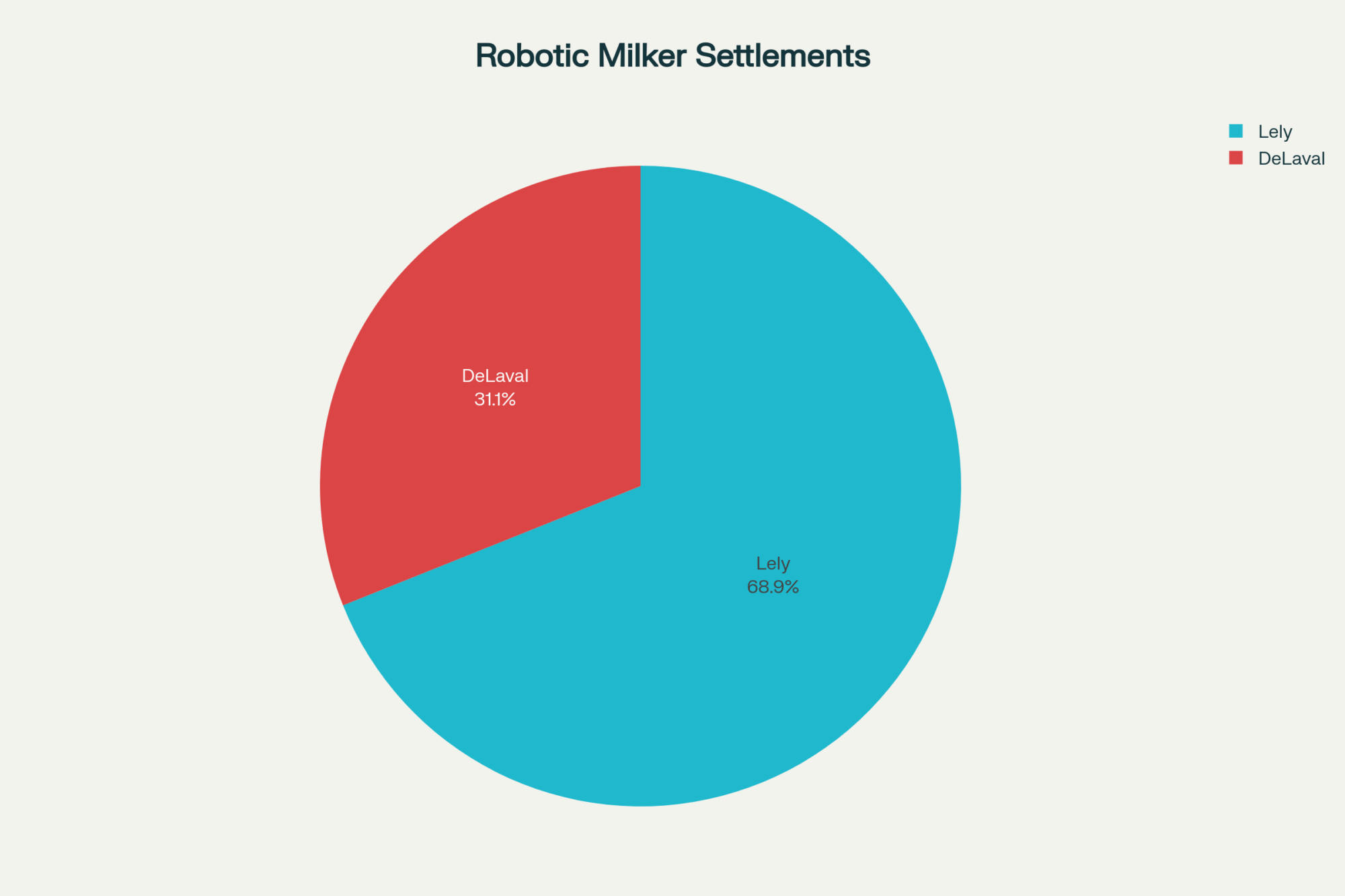
NewsSubscribe
First
Last
Consent

China’s Dairy Revolution: The Wake-Up Call That’s Reshaping Everything We Know About Global Milk Markets

China’s cloned cows hit 18 tonnes of milk yield while we’re stuck at 11—time to catch up or get left behind

EXECUTIVE SUMMARY: Look, I’ll give it to you straight—China just rewired the entire global dairy game while most of us were arguing about milk prices. They’ve increased their self-sufficiency from 62.7% to 85% in just four years, and their imports of whole milk powder have dropped 36% to 430,000 tonnes. That’s not market volatility, that’s strategic displacement of nearly 240,000 tonnes that used to flow from places like New Zealand and the U.S.Their cloned cattle are producing 18 tonnes per lactation—double their national average and competitive with our top herds—while cutting quality traceability from 2 hours to 2 minutes using AI systems. The kicker? Their mega-dairies are running 43% more energy-efficient than conventional operations, which translates to real cost advantages that compound every month.Here’s what keeps me up at night: if you’re not benchmarking against these new global standards, you’re falling behind, whether you export or not, because they’re setting the bar for operational efficiency that affects pricing everywhere.

KEY TAKEAWAYS

  • Benchmark your operation now: Chinese mega-dairies hit 9,000+ kg per cow with 43% better energy efficiency—start tracking your energy cost per hundredweight and compare to see where you’re losing money on basic operations
  • Diversify into value-added products immediately: While bulk powder markets shrink, cheese demand grows 16% annually, and butter imports jumped 23% in 2024—partner with processors focusing on specialty products before everyone else catches on
  • Upgrade your genetics strategy: With 18-tonne cloned cattle entering Chinese herds, focus on traits like heat tolerance and feed efficiency that provide competitive advantages your domestic buyers actually need in 2025 market conditions
  • Invest in operational resilience before the next crisis: Robotic milking systems show 4-year payback on 3,000+ head operations—but build redundancy into any tech upgrades because 12% first-year failure rates are real
  • Get serious about sustainability metrics: Environmental compliance is becoming table stakes for export tenders—start documenting your carbon footprint now because buyers in the EU and Japan are already requiring scope three emissions data
China dairy modernization, automated milking systems, dairy farm efficiency, global dairy trends, robotic milking ROI

Look, I’ve been tracking dairy trends for over two decades, and you get used to “game-changing” stories that fizzle out faster than a broken-down milk truck. But what’s happening in China right now? This isn’t just another trade headline or policy shift that’ll blow over by harvest time. We’re watching the world’s biggest milk buyer systematically rewire their entire dairy infrastructure—and honestly, they’re doing it faster than most of us thought possible.

One aspect of China’s push toward dairy self-sufficiency is that it’s not just a topic discussed at government meetings. They’re actually pulling it off. Recent analysis from agricultural economists indicates that China’s self-sufficiency has increased from 62.7% in 2021 to between 73% and 85% now, depending on the methodology used and the scope of the calculation.

What strikes me about this whole situation is how it’s showing up right here in the Midwest. I was chatting with a feed supplier outside Madison last week—a guy who’s been in the business for thirty years—and he mentioned seeing New Zealand powder appearing in Wisconsin co-ops for the first time. That’s not market expansion, folks. That’s displacement.

The Numbers That Are Keeping Export Managers Awake at Night

Here’s what really caught my attention when I was reviewing the latest trade data: China’s imports of whole milk powder nosedived 36% to 430,000 metric tons in 2023. Compare that to their 2018-2022 average of 670,000 tons, and you’re looking at a quarter of a million tons of product that used to have a guaranteed home in Shanghai ports.

But here’s where it gets interesting—and a bit concerning if you’re in the export business. Recent work from Dairy Global indicates that China’s domestic milk production actually declined by 2.8% in 2024. So, how are they achieving higher self-sufficiency with less raw milk flowing through their system? Simple answer: they’re just buying less from us.

That’s not market volatility or some temporary supply chain hiccup. That’s strategic import substitution happening right under our noses.

China’s Import Displacement Reality
2018-2022 Average WMP Imports: 670,000 MT
2023 Actual Imports: 430,000 MT
Volume Displaced: 240,000 MT (-36%)
New Zealand’s Share: 183,000 MT redirected

What’s particularly noteworthy is how this ripple effect is hitting global pricing. Latest results from Global Dairy Trade show whole milk powder sitting at $3,654 per tonne as of June, which, considering everything, is holding steadier than most traders expected this spring.

For New Zealand producers who’ve been riding the China wave since the early 2000s, this displacement is creating some serious headaches. They’re not just dealing with 150,000 tonnes of redirected powder—it’s closer to 183,000 tonnes based on verified trade numbers. That’s roughly 6% of their entire annual production that suddenly needs new markets.

Why This Feels Different (And Why It Should Worry Us)

Here’s the thing, though—and I really can’t stress this enough—this isn’t your typical trade dispute where things eventually cycle back to normal once the politicians work out their differences. What we’re seeing is a systematic, state-directed transformation backed by serious capital and long-term strategic thinking.

I’ve been tracking dairy automation trends for years, and what’s happening in Inner Mongolia is both impressive and, to be honest, a bit concerning. They’re building what they call the world’s largest automated milking facility. Now, based on conversations with equipment manufacturers and consultants I trust, each robotic unit typically handles about 60-70 cows per day, not the massive throughput numbers often reported in press releases.

The economics are compelling, though. When you’re looking at robotic systems that can run anywhere from $150,000 to well over $200,000 per unit, and you can access financing at sub-4% rates through state-backed programs… well, that’s a different ballgame than what most of us are playing.

Dr. Sarah Chen, who’s consulted on dairy automation projects across Asia, told me recently: “The Chinese approach isn’t just about replacing labor—it’s about creating integrated systems that can scale rapidly. They’re not thinking farm by farm, they’re thinking region by region.”

You know what really gets me, though? The payback math actually works. We’re seeing break-even points of under five years for operations with over 3,000 heads. That’s not pie-in-the-sky projection—that’s real operational efficiency that translates to lower cost per hundredweight.

Real-World Results: What’s Actually Happening on the Ground

Consider the following example from a consultant friend who worked on a 5,000-cow operation in Hebei Province. The numbers were eye-opening:

  • 80 robotic units installed over 18 months
  • $14 million total investment (including infrastructure upgrades)
  • Within the first year: 40% reduction in labor costs, 15% increase in milk per cow
  • Cash-flow positive on the project within four years

However, what doesn’t make it into the success stories is that they experienced three major system failures within the first six months. Finding qualified technicians who could troubleshoot AI-driven components was nearly impossible. The technology works, but the learning curve is brutal.

The Tech Integration That’s Changing Everything

What’s particularly fascinating is how they’re approaching AI integration across the entire operation. I spent time reviewing Mengniu’s latest sustainability reports, and their Ningxia facility is achieving results that would make most Wisconsin processors take serious note.

They’ve rolled out integrated systems that include machine vision for body condition scoring, automated lameness detection, and real-time ration adjustments. However, what really impressed me is that they’ve reduced the time for quality traceability from two hours to two minutes.

Think about that from a risk management perspective. When you’re processing 50,000 gallons daily and can trace a potential contamination issue back to specific animals in real-time, that’s not just operational efficiency; that’s a competitive advantage.

Professor Mark Stevens from Cornell’s dairy management program put it this way: “What China is demonstrating is that when you integrate AI across the entire production chain—from feed management to processing—you don’t just get incremental improvements. You get step-change efficiency gains.”

Here’s something that’ll really get your attention: Yili’s AI platform processes global consumer trend data to cut product development cycles from 180 days to 90. They’re launching new products faster than most U.S. companies can navigate FDA approval processes.

What’s interesting is how they’re using technology to solve problems we’re all dealing with. Labor shortages? Automated systems. Feed efficiency? AI-driven optimization. Genetic improvement? Well, that’s where things get really interesting…

The Reality Check on Technology Implementation

I spoke with Dr. James Morrison, who has worked with several Chinese operations on technology integration, and he provided me with some perspective that doesn’t always make it into the press releases. “The AI systems are impressive when they work,” he told me. “But they’re also incredibly complex. When they fail, you’d better have backup plans.”

He mentioned one operation that lost 30% of their milking capacity for two days when a software update corrupted their cow recognition system. The financial impact was brutal—about $80,000 in lost production plus emergency labor costs to manually milk 3,000 cows.

The Genetics Game-Changer That’s Got Everyone Talking

The cloning research coming out of Northwest A&F University is both fascinating and, frankly, a bit concerning if you’re in the genetics business. They’ve successfully cloned dairy cattle projected to yield 18 tonnes per lactation—that’s roughly double China’s current national average, and it’s competitive with top quartile herds in Wisconsin.

Commercial implementation is still two to three breeding cycles away (this process doesn’t happen overnight), but the potential implications are massive. If they can scale this technology and reduce imported heifer demand by even 15-20% by 2028—which seems realistic given their track record—that’s another export market that starts shrinking.

Genetic Performance Reality Check
Current Chinese Average: 9 tonnes per lactation
Cloned “Super Cow” Target: 18 tonnes per lactation
Top U.S. Herds: 12-15 tonnes per lactation
Projected Impact: 15-20% reduction in heifer imports

What strikes me about the genetics angle is how it addresses China’s biggest historical weakness: productivity per cow. Their domestic cattle have traditionally lagged behind Western genetics by 30-40%. However, if they can close that gap through cloning and advanced breeding programs, that changes the math on many export strategies.

A genetics consultant who’s worked extensively in China told me something that stuck with me: “They’re not just trying to catch up to Western productivity standards—they’re trying to leapfrog them entirely.”

The Ripple Effects on Genetic Exports

Here’s something that doesn’t get discussed much in the trade press: the impact on genetic exports is already happening. A Pennsylvania seedstock operation told me their Chinese orders dropped 40% last year. Not because of quality issues or pricing problems—simply because Chinese operations are breeding more of their own stock.

The shift toward domestic genetics isn’t just about cost savings. It’s about controlling the entire genetic pipeline from conception to the milk tank. When you can clone high-performing animals and control the genetic pool… well, that’s a different level of supply chain security.

Following the Money: Where Opportunities Still Exist

Let’s talk real economics for a minute, because this is where the rubber meets the barn floor. Recent analysis from agricultural economists suggests feed conversion ratios in Chinese mega-operations are approaching U.S. benchmarks, though exact current pricing varies significantly by region.

Here’s where it gets interesting for global producers: while bulk commodity imports are declining, specialty products continue to grow. According to the China Dairy Industry Association, cheese consumption grew at a 16% compound annual rate between 2012 and 2022, with import projections reaching 270,000-320,000 metric tons by 2030.

That’s not exactly replacing those powder volumes, but it’s creating opportunities for producers who can pivot to value-added products. The butter market reached record imports of 28.4 million pounds in 2024—a 23% increase from 2023—driven by growth in Western-style food service and premium retail demand.

Market Realities vs. Marketing Hype

The thing about specialty markets, though, is that they’re not easy money. I know a Vermont cheesemaker who’s been trying to crack the Chinese market for three years. The regulatory hurdles alone have cost him over $200,000 in consulting fees and facility upgrades. He’s still not approved for import.

Growing Opportunities:

  • Cheese imports showing steady 16% annual growth
  • Butter demand up 23% in 2024 alone
  • Specialty ingredients are seeing double-digit growth

Shrinking Markets:

  • Whole milk powder down 36% and falling
  • Skim milk powder is projected to decline by another 32% in 2024
  • Bulk commodity milk is facing systematic displacement

However, here’s the catch—and this is where I become a bit pessimistic about the “easy opportunity” narrative—margins on specialty products are significantly tighter than those on bulk commodities. Plus, the market requirements are much more demanding. You need consistent quality, bulletproof supply chains, and often specific certifications that can take years to establish.

Regional Differences That Actually Matter

What’s happening isn’t uniform across China, and this is crucial to understand if you’re trying to determine where opportunities might still exist. The northern regions, particularly Inner Mongolia and Heilongjiang, are spearheading the modernization effort. These areas have natural advantages, including better grassland and a more favorable climate, and they’re receiving priority for infrastructure investment.

I’ve been following developments in Ningxia particularly closely. Operations there are achieving average milk yields over 9,000 kg per cow, which puts them in the same league as top-performing dairies in Wisconsin or the Netherlands. That’s not accidental—that’s systematic investment in genetics, facilities, and management systems.

However, what’s truly interesting is that while these mega-operations are achieving incredible efficiency gains, smaller operations are being squeezed out. Recent reports from industry analysts indicate that many smaller Chinese dairy farmers are actually culling their herds, as they are unable to compete with the scale and technological advantages of state-backed operations.

This reminds me of what happened in the U.S. during the 1980s and 1990s—rapid consolidation driven by technology and economies of scale. The difference is that it’s happening in China at about three times the speed.

Regional Performance Snapshot

Northern China (Inner Mongolia, Heilongjiang):

  • Average yields: 9,000+ kg per cow
  • Technology adoption: Leading edge
  • Investment priority: High

Southern/Central China:

  • Average yields: 6,000-7,000 kg per cow
  • Technology adoption: Mixed
  • Many smaller operations exist

The Environmental Angle That’s More Than Just PR

Here’s something that surprised me when I dug into the numbers: Mengniu’s carbon reduction program aims to achieve 1 million metric tons of emissions reductions by 2030. Their Ningxia plant operates 43% more energy-efficiently than conventional facilities.

This isn’t just environmental posturing—it’s operational efficiency that improves profitability. When you combine intelligent energy systems with automated processing, you’re looking at real cost advantages that compound over time.

Dr. Lisa Chang from the University of California, Davis, who’s studied Chinese dairy sustainability initiatives, told me: “What’s impressive isn’t just the environmental targets—it’s how they’re integrating sustainability metrics into operational decision-making. Energy efficiency becomes profit efficiency.”

The energy efficiency gains are significant:

  • 43% lower energy consumption compared to conventional plants
  • 2-minute quality traceability versus 2-hour traditional methods
  • Real-time optimization of processing parameters

The environmental compliance angle is also becoming crucial for export markets. If you’re not documenting your carbon footprint and sustainability metrics, you’re increasingly getting shut out of tender processes. It’s becoming table stakes, not a nice-to-have.

The Risks Nobody Wants to Talk About

Here’s where I get a bit contrarian though… There are some real risks in China’s approach that are not discussed much in the trade press, and understanding them might create opportunities for the rest of us.

Concentration Risk: When you have 80% of your milk production concentrated in just four northern provinces, you’re vulnerable to weather events, disease outbreaks, or regional economic disruptions. I recall speaking with a consultant who worked on a 10,000-cow operation in Inner Mongolia that was severely impacted by a brutal winter storm in 2022.

The financial impact was devastating:

  • 400 head lost directly from the storm
  • $2 million in direct losses from mortality and facility damage
  • Additional $1.5 million in emergency feed costs (trucked in from 800 miles away)

Technology Dependence: When your entire operation depends on AI systems and robotic milking, what happens when the tech fails? I’ve seen reports of Chinese operations losing 20-30% of their milking capacity due to software updates going wrong.

Scaling Challenges: They’re betting heavily on technologies that are still in the process of evolving. Automated milking systems have a global first-year failure rate of approximately 12%, which is particularly notable in mature markets with established service networks. In China, where you might be 500 miles from the nearest qualified technician… well, that’s a different kind of risk.

Real-World Risk Examples

A technology consultant shared this story: “We had a 5,000-cow operation in Hebei where the AI system managing feed mixing had a software glitch. For three days, it delivered rations with 20% more protein than needed. The immediate cost was approximately $50,000 in wasted feed, but the real damage was the metabolic stress on the herd. Milk production dropped 15% for two weeks.”

These aren’t theoretical risks—they’re happening on the ground, and they create vulnerabilities that more diversified, flexible operations might be able to exploit.

What This Means for the Rest of Us

The reality is that China’s model works… for China. The state-directed approach, coordinated investment, and access to cheap capital—that’s not replicable in market-driven systems like ours. However, there are lessons to be learned, and some of them are uncomfortable.

First, the technology they’re implementing isn’t uniquely Chinese. Robotic milking, AI-driven management systems, and genetic improvement programs—these are available globally. The difference lies in the scale of implementation and access to financing.

I spoke with a progressive Iowa producer who has been implementing similar technology over the past three years. He’s seeing 15% improvements in feed efficiency and a 20% reduction in labor costs. “The technology works,” he told me, “but you need the capital and the patience to get through the learning curve.”

Second, the focus on value-added products is creating opportunities, but you must be strategic about it. If you’re running a genetics operation or producing specialty dairy products, there are still opportunities in the market. The key is understanding that commodity exports to China will continue to decline.

Third—and this is the part that really concerns me—they’re setting new operational benchmarks that affect global competitiveness. When Chinese operations are achieving 9,000+ kg per cow with 43% better energy efficiency, that’s not just impressive domestically… it’s competitive pressure that affects pricing globally.

Competitive Reality Check

Here’s a sobering comparison from recent industry analysis:

Chinese Mega-Operations (2024):

  • Milk per cow: 9,000-10,000 kg
  • Energy efficiency: 43% better than conventional
  • Labor productivity: 4x traditional systems
  • Feed conversion: Approaching U.S. benchmarks

Average U.S. Operations:

  • Milk per cow: 11,000-12,000 kg
  • Energy efficiency: Conventional baselines
  • Labor productivity: Traditional levels
  • Feed conversion: Good but not systematically optimized

The gap is narrowing faster than most people realize, and that has implications for global pricing pressure.

The Bottom Line That Nobody Wants to Hear

China’s dairy transformation isn’t a temporary policy shift—it’s a fundamental restructuring of how global dairy markets work. The producers who recognize this early and adapt their strategies accordingly will be better positioned than those who continue to hope for a return to the old export patterns.

The technology they’re deploying, the operational efficiencies they’re achieving, the genetic improvements they’re implementing… these aren’t just interesting developments happening over there. They’re setting new industry standards that’re forcing the entire global dairy industry to raise its game.

What’s particularly striking is how this mirrors what we’ve seen in other sectors. China identifies strategic industries, commits resources, and systematically builds domestic capacity. We saw it with steel, solar panels, and electric vehicles. Now we’re seeing it happen in the dairy industry.

The companies and countries that can adapt to this new reality—whether through the adoption of technology, product differentiation, or market diversification—will thrive. Those that don’t… well, they’re going to struggle with the new competitive landscape.

Your Action Plan: Don’t Wait for the Next Crisis

After all this analysis, here’s what I think dairy producers need to be doing right now:

Benchmark Your Operations Against Global Standards: Stop Comparing Yourself to the Local Average. What’s your cost per hundredweight? Your per-cow yield? Energy efficiency? If Chinese operations are achieving 9,000+ kg per cow with 43% better energy efficiency, what’s your path to competitive performance? Start planning upgrades now, not during the next equipment cycle.

Get Strategic About Value-Added Markets If you’re still focused primarily on bulk commodity sales, it’s time to explore partnerships with processors working on cheese, butter, or specialty ingredients. The bulk powder market is shrinking, but premium categories continue to grow. Build relationships with processors who understand the new market dynamics.

Diversify Your Genetics Strategy For seedstock producers, focus marketing efforts on regions and traits that aren’t easily replaced by domestic Chinese breeding programs. Emphasize characteristics such as heat tolerance, feed efficiency, and disease resistance that offer competitive advantages in various markets.

Invest in Operational Resilience The technology gap is real and widening. Whether it’s automated milking, AI-driven feed optimization, or energy efficiency improvements, the producers who invest in operational excellence today will be the ones who survive tomorrow’s competitive pressure. But build in redundancy—don’t put all your eggs in one technological basket.

This transformation is happening whether we’re ready or not. The question isn’t whether China will succeed—the evidence suggests they already are. The question is: what are you going to do about it?

Because here’s the thing that really keeps me up at night: this is just the beginning. If they can achieve this level of systematic transformation in the dairy industry, what’s next? Beef? Pork? The entire agricultural supply chain?

The game has changed, and we’re all still learning the new rules. The producers who figure them out first are going to be the ones still standing when the dust settles.

Complete references and supporting documentation are available upon request by contacting the editorial team at editor@thebullvine.com.

Learn More:

Join the Revolution!

Join over 30,000 successful dairy professionals who rely on Bullvine Weekly for their competitive edge. Delivered directly to your inbox each week, our exclusive industry insights help you make smarter decisions while saving precious hours every week. Never miss critical updates on milk production trends, breakthrough technologies, and profit-boosting strategies that top producers are already implementing. Subscribe now to transform your dairy operation’s efficiency and profitability—your future success is just one click away.
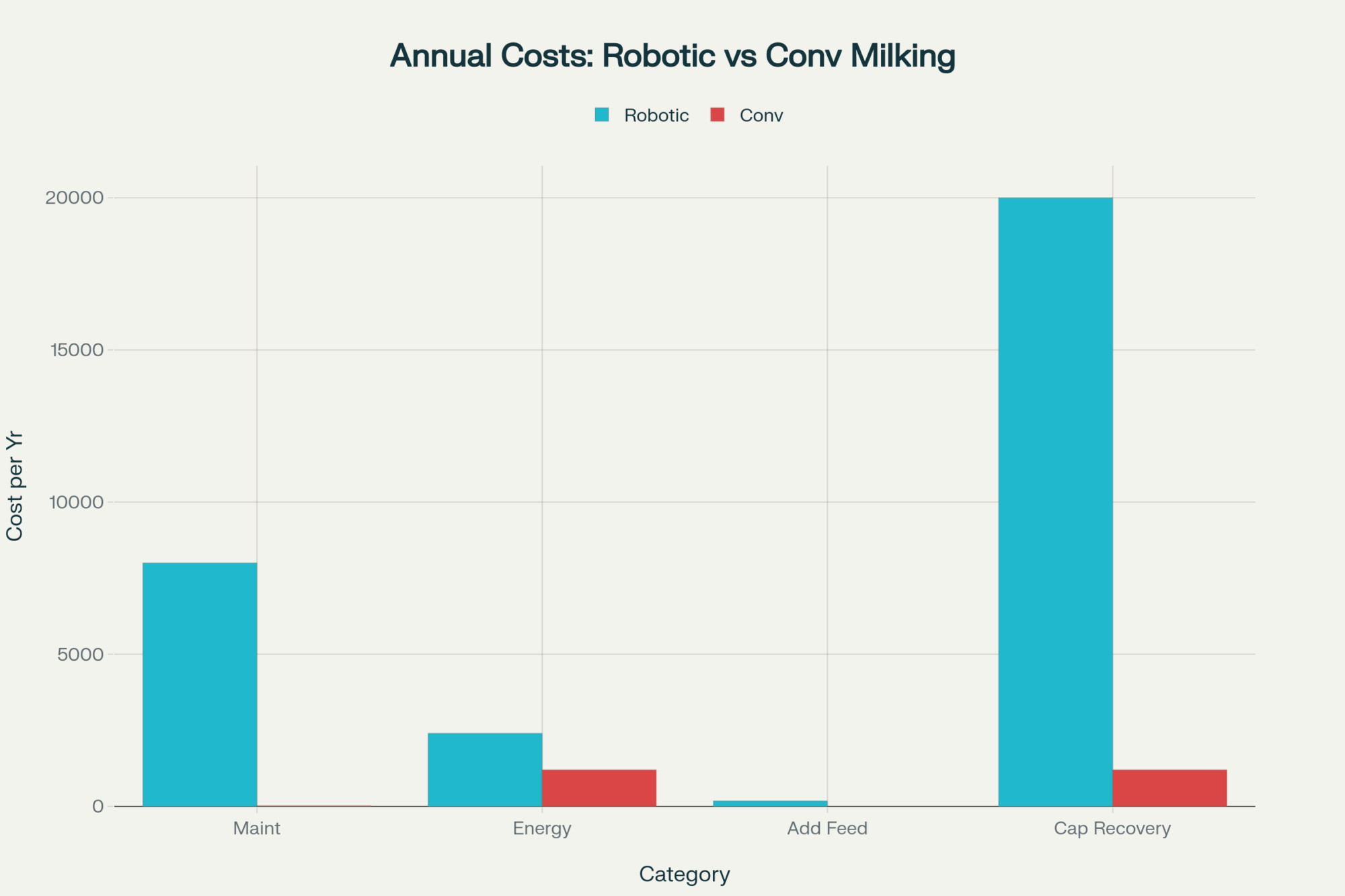
NewsSubscribe
First
Last
Consent

When the Labor Well Runs Dry: How Smart Dairies Are Turning Crisis into Competitive Edge

2.4 million workers vanished from the workforce in 8 months—your milking crew shortage isn’t getting better

dairy labor shortage, automated milking systems, dairy farm automation, dairy profitability, precision feeding systems

You know that sinking feeling when you’re walking the barn at 4 AM and realize you’re running short-handed again? Yeah, that’s not just your operation anymore—it’s becoming the reality across dairy country.

I’ve been hearing the same story from producers everywhere lately. Third-generation operations, solid herds, good management… all struggling with the same damn thing. Job postings that used to generate fifteen applications now get maybe two callbacks in six months. The people are no longer there.

What strikes me about these conversations is that we’re all living through this labor crunch, but most of us are still planning like the old rules apply. If we just hang on long enough, post another listing on Indeed, and maybe throw another couple of bucks an hour at the problem, things will somehow snap back to normal.

Here’s the thing, though—they won’t. And the sooner we wrap our heads around that reality, the sooner we can start making the moves that’ll separate operations that thrive from those that barely keep the lights on.

The Numbers That Should Keep You Awake at Night

Let me share some data that’ll make you rethink everything you thought you knew about workforce planning. According to CoBank’s latest comprehensive analysis, we’re facing what economists are calling a “demographic double-whammy,” and honestly, it’s hitting dairy operations harder than almost any other sector.

The U.S. fertility rate has crashed to a historic low of 1.62 children per woman. That’s well below replacement level, representing a dramatic decline from 2.12 eighteen years ago. The generation that should be learning to milk your cows and manage your fresh pen? Many were never born after the 2008 financial crisis triggered what researchers describe as a “freefall in births.”

But here’s where it gets really interesting for dairy operations… we’ve lost nearly 10 million potential workers just from declining labor force participation. The rate dropped from 67% in 2000 to just 62% today. And in the past eight months alone? Another 2.4 million working-age Americans have opted out of the workforce entirely.

What’s particularly fascinating—and this is where the research from agricultural economists gets into the weeds—is what’s driving this opt-out trend. Recent work shows we’re dealing with caregiving responsibilities that don’t pencil out, skills that became obsolete faster than people could retrain, and honestly… a lot of mental health challenges that weren’t showing up in workforce data even five years ago.

The immigration piece—which gave us all a breather between 2022 and 2024 with about 8.8 million new arrivals—that tap has been turned off. Border encounters have declined significantly since August 2024, and current policy directions suggest this isn’t a temporary trend.

Here’s what really gets me, though… this isn’t just about raw numbers. It’s about what this means when you’re trying to cover three shifts, seven days a week, 365 days a year. When your best milker gives notice, you’re not just replacing one person—you’re competing with every other dairy, every other farm, every rural business for workers who increasingly don’t exist.

The Technology Payoff: From Parlor to Profit

Here’s where the conversation gets really interesting—and where smart dairy operators are already moving. I’ve been on enough farms to know that statistics are one thing, but reality in the barn is another. The producers who are quietly making progress right now—those operations that manage to maintain consistent staffing and steady production while their neighbors struggle—they have figured out something crucial.

This isn’t about replacing people with robots. It’s about making the people you can actually find and keep exponentially more productive.

The Technology That’s Actually Working

Take automated milking systems. Yeah, they’re expensive upfront—we’re talking $150,000 to $200,000 per robot, depending on your setup. However, what’s interesting is that operations that have made these investments are reporting some compelling results, although the specifics vary widely depending on the implementation and management.

Recent research from the Journal of Dairy Science shows that well-implemented AMS can increase milking frequency by 0.5 milkings per day while reducing labor requirements by 20-30%. What’s particularly noteworthy is how successful installations transform rather than eliminate positions. Instead of having skilled workers confined to the parlor for 12-hour stretches, automated systems handle routine milking, allowing teams to focus on cow health monitoring, breeding decisions, and nutrition management.

The precision feeding systems are where things get really exciting. The newer systems can track individual cow intake, adjust for butterfat production, and even factor in weather conditions. According to research from Penn State’s Department of Animal Science, operations using precision feeding systems are seeing measurable improvements in feed efficiency and milk production. That’s a significant amount of money when you consider that feed costs make up 50-60% of your total production expenses.

Then there’s predictive health monitoring—and this is where the technology is getting almost spooky good. The collars and ear tags aren’t just counting steps anymore. They’re monitoring rumination patterns, heat detection, and even early indicators of lameness. University of Wisconsin research shows that these systems can detect health issues 2-4 days earlier than visual observation, with some producers reporting a 35% reduction in treatment costs.

How Technology Changes Everything About Workflow

What successful implementations I’ve observed have in common is that they redesign everything around human-machine collaboration. Research from the American Dairy Science Association confirms what I’m seeing in the field: farms that view technology as human augmentation rather than replacement tend to see 40% better ROI on their investments.

This plays out differently across regions, and that’s something many equipment salespeople don’t disclose upfront. In Wisconsin, producers face shorter construction seasons that impact installation timing—you can’t retrofit automated systems when it’s -20°F outside. In California’s Central Valley, dust management becomes critical for sensor reliability. In Vermont, the older barn infrastructure presents unique challenges that necessitate creative engineering solutions.

I’ve observed third-generation family farms with tie-stall barns built in the 1970s where robotic milking installations would require complete rebuilds. Instead, many are choosing automated takeoffs and computerized feeding systems. While not as comprehensive as full robotics, these systems are freeing up significant time and improving milk quality metrics.

The Financial Reality That’s Changing Everything

Let me cut to the numbers that matter for your operation. The technology costs have dropped dramatically—industrial robotics costs have fallen by about half over the past decade. What was once exclusive to mega-dairies is now economically viable for operations with 500-800 head.

Here’s what this looks like across different operation sizes:

Operation SizeTechnology InvestmentLabor Hours Saved/WeekEstimated Annual SavingsImplementation Timeline
300-500 cows$200,000-300,00015-25 hours$35,000-55,00018-24 months
500-800 cows$350,000-500,00025-40 hours$55,000-85,00016-22 months
800+ cows$600,000-1,000,00040-60 hours$85,000-150,00014-20 months

Note: These figures are estimates based on industry observations and vary significantly based on implementation, management, and regional factors.

But here’s the crucial insight that most producers miss: this isn’t just about direct cost savings. It’s about operational resilience. When the next labor crisis strikes, when feed costs spike, or when energy prices fluctuate, technology-enabled operations adapt and thrive, while their competitors struggle to keep up.

And there’s an environmental angle here that’s becoming real money. According to recent research from Cornell’s College of Agriculture, automated systems typically help reduce greenhouse gas emissions per unit of milk by 12-18% through improved feed efficiency and reduced waste. California’s dairy operations are already seeing carbon credit payments of $15-25 per metric ton of CO2 equivalent reduced. With the average dairy cow producing approximately 4 tons of CO2 equivalent annually, we’re talking about potential payments of $60-$ 100 per cow per year for operations that can document emission reductions.

Technology Selection Decision Framework

What strikes me about successful tech adoption is that it follows a pretty predictable pattern:

Step 1: Start with your biggest pain point. If you’re constantly fighting labor shortages in the parlor, automated milking makes sense. If feed costs are a concern, precision feeding systems should be your top priority.

Step 2: Match technology to your infrastructure. That beautiful tie-stall barn from 1975? Robots probably aren’t happening without a complete rebuild. But automated takeoffs and computerized feeding? Absolutely doable.

Step 3: Plan around your seasonal constraints. Upper Midwest producers know you don’t install systems during breeding season or when there’s two feet of snow on the ground.

Step 4: Build in redundancy. Technology fails, especially new technology. Make sure you can still operate when (not if) the system goes down on a Saturday night.

The Feed Cost Reality (And Why Some Producers Are Smiling)

Now, let’s talk about something that’s actually working in our favor for once. While crop farmers are facing pressure—corn prices have been under strain in recent quarters—dairy operations with sophisticated feed programs are leveraging this into a competitive advantage.

Current market conditions show feed grain prices creating opportunities for operations that can time their purchases and optimize rations based on real-time price signals. Operations with precision feeding systems that automatically adjust formulations based on milk production data and commodity prices are literally transforming feed management from a cost center into a profit driver.

However, here’s where it gets tricky… and this is something most producers aren’t yet fully grasping. While feed grains may be more affordable, the underlying cost structure is still rising. According to recent industry analysis, fertilizer costs continue to face upward pressure, with the urea market being particularly volatile due to Middle East geopolitical tensions.

Nutritionists I work with who’ve been in the field for 25+ years are telling me the same thing: “The operations that are succeeding right now aren’t just buying cheaper feed. They’re creating systems that can adapt to price volatility in real-time.”

That’s the key insight. It’s not about finding the cheapest corn—it’s about building flexibility into your feeding program that can respond to market changes faster than your competitors. And here’s the connection most people miss: building this kind of flexibility requires sophisticated data systems and dedicated management time, precisely what technology frees up from routine parlor work.

Current Market Reality Check

Let me give you an idea of where we stand right now, as these numbers are important for your planning. The dairy sector is demonstrating remarkable resilience compared to other agricultural sectors. According to CoBank’s outlook, the industry is forecasting roughly 2% growth in overall production, despite the challenges it is facing.

What’s particularly interesting is how producers are responding strategically. The U.S. dairy cow population has grown by 114,000 head over the past 12 months. This is happening while the overall cattle herd is shrinking. Why? Because dairy producers are making strategic decisions—retaining older cows in the milking herd rather than culling them for beef, even with strong beef prices.

The export picture is especially encouraging. Strong global demand and favorable U.S. prices have led to significant growth in butter exports—we’ve already reached 87% of last year’s total volume in just the first five months of 2025.

However, what’s truly fascinating from a strategic perspective is that the primary constraint on dairy growth isn’t demand—it’s supply-side issues, including labor shortages, processing capacity constraints, and the availability of replacement heifers. The operations that solve these supply-side challenges are capturing disproportionate market share in a growing market.

Policy Shifts Creating Winners and Losers

Here’s where things get really interesting from a business planning perspective. Federal policy changes are creating clear winners and losers with unprecedented speed. The passage of what’s being called the “One Big Beautiful Bill Act” delivered massive changes—nearly $200 billion in cuts to traditional farm programs, but significant wins for production agriculture.

The biofuel mandates are creating unprecedented opportunities that many dairy producers haven’t yet fully grasped. The EPA’s regulatory framework for biofuels is creating substantial domestic demand for feedstock crops, with domestic soybean oil positioned as a primary beneficiary. Changes to tax credit structures are restricting eligibility to feedstocks from North America only, effectively creating a protected domestic market.

This means stronger support for soybean meal prices—a key component in most rations —for dairy operations. This government-engineered demand provides crucial price support during a time when export markets remain challenging.

However, a warning is buried in the policy details: the traditional farm bill coalition has been fractured. Future political support for agricultural programs may be more fragile than we’re used to.

The bottom line? Capitalizing on these policy-driven opportunities requires the kind of agile business management and data analysis that’s only possible when you’re not spending all your time trying to cover basic operational needs, such as managing shifts.

Consumer Behavior That’s Reshaping Everything

While we’re dealing with labor shortages, our customers are facing their own challenges that’re actually creating opportunities for savvy dairy producers.

Housing costs have created significant financial pressure for consumers. According to the CoBank analysis, housing anxiety is driving fundamental changes in how people eat, with consumers preparing meals at home at levels not seen since the pandemic.

However, what’s interesting is that these aren’t just people buying the cheapest food available. They’re becoming what consumer research calls “sophisticated value optimizers.” They’re willing to pay for quality, convenience, and products that help them feed their families better for less money.

This represents a significant shift in revenue from foodservice to retail grocery. Dairy products, positioned for family meal preparation, bulk packaging, and value-added convenience, are seeing growth, while foodservice struggles.

Here’s the connection most producers are missing: meeting this demand for value-added retail products—whether it’s specialty cheeses, organic milk, or family-sized packaging—requires the operational flexibility and management bandwidth that only comes when your basic milking operations run themselves.

Regional Realities: What Works Where

What I’m seeing across different dairy regions is fascinating, and frankly, it’s something that doesn’t get discussed enough in technology sales pitches. The Upper Midwest presents distinct challenges compared to California or the Northeast, and your technology strategy must take these into account.

Wisconsin and Minnesota: The shorter construction seasons impact the timing of technology installations. Smart operators plan installations for late spring through early fall when weather conditions are favorable. I’ve seen operations that wanted to upgrade their systems in March, only to realize they’d be dealing with frozen ground and subzero temperatures.

California’s Central Valley: Dust management becomes critical for sensor reliability—those fancy ear tags and monitoring systems require regular maintenance when they’re exposed to dust and heat for half the year. Water availability is becoming as critical as labor availability, which affects cooling systems for robotic equipment.

Vermont and upstate New York: Older barn infrastructure creates unique challenges. I’ve observed operations—beautiful tie-stall barns built like tanks in the 1970s—where robotic milking installations would require complete rebuilds. Instead, many are choosing automated takeoffs and sophisticated feeding systems. While not as comprehensive as full robotics, these systems are freeing up significant time and improving milk quality metrics.

Pacific Northwest: The climate’s great for cows, but the regulatory environment around water usage and environmental compliance is getting tighter every year. Technology that documents environmental improvements isn’t just nice to have—it’s becoming essential for permit renewals.

The feed sourcing piece varies significantly by region as well. West Coast operations benefit from proximity to almond hulls and citrus pulp—byproducts that work great in rations but aren’t available in Wisconsin. Midwest dairies have more traditional corn-soy availability, but they also face seasonal storage challenges that California doesn’t.

Implementation Roadmap: Making It Actually Happen

Based on what I’ve seen work across different operations, here’s a practical framework for getting started—and honestly, this is where most operations either succeed or fail.

Phase 1: Reality Check and Assessment (Months 1-2)

Start with a brutal labor audit. Map out exactly where your people spend their time and identify the biggest pain points. Don’t just look at hours—look at when you’re most vulnerable to call-offs or turnover.

Create a simple tracking system for:

  • Daily labor hours by task
  • Overtime patterns and costs
  • Sick leave and absence trends
  • Training time requirements for new hires
  • Quality issues related to fatigue or inexperience

Phase 2: Technology Selection and Planning (Months 3-4)

Focus on technologies that address your biggest constraints first. If you’re struggling with consistent milking protocols, consider automated takeoffs. If feed management is consuming too much time, look at precision feeding systems.

Obtain multiple quotes and request to see the technology in action at similar operations in your region. Not just any operation—one that’s similar to your scale, your infrastructure, and your management style.

Vendor Evaluation Checklist:

  • 24/7 technical support availability
  • Local service technician response times
  • Training program comprehensiveness
  • Financing options and payment structures
  • Integration capabilities with existing systems
  • Track record with similar-sized operations

Phase 3: Installation and Integration (Months 5-8)

Plan installations around your seasonal workload. Avoid installing new systems during the breeding season or when making silage. Build in extra training time—your team members need to be comfortable with the technology before you rely on it.

Have backup plans. Technology fails, especially new technology. Make sure you can still operate if the system goes down during a weekend.

Phase 4: Optimization and Expansion (Months 9-12)

This is where the real gains happen, and honestly, where most operations leave money on the table. Use the data from your new systems to fine-tune everything else. Adjust breeding programs based on activity monitors. Optimize rations based on individual cow performance data.

Start thinking about your next investment. Technology works best as an integrated system, not individual pieces of equipment.

The Environmental Angle That’s Becoming Real Money

Here’s something that’s becoming increasingly important, even if it’s not yet on most producers’ radars. The environmental benefits of technology adoption are starting to translate into tangible financial benefits, not just feel-good marketing.

According to research from Cornell’s College of Agriculture and Life Sciences, automated systems typically help reduce greenhouse gas emissions per unit of milk by 12-18% through improved feed efficiency and reduced waste. That might not sound like much, but carbon credit programs are starting to pay real money for these reductions.

Current Carbon Credit Opportunities:

  • California: $15-25 per metric ton CO2 equivalent
  • USDA Climate-Smart Commodities: Up to $50 per metric ton
  • Private market programs: $10-40 per metric ton

Precision feeding systems are particularly effective here. By optimizing protein levels and reducing waste, these systems can help reduce methane emissions while improving production efficiency. University of California research shows that improvements in feed efficiency translate to reductions in greenhouse gas emissions.

Water usage is another area where technology pays environmental dividends. Automated systems typically use 10-15% less water per unit of milk produced, thanks to more efficient cleaning cycles and reduced waste. In regions facing water restrictions, this efficiency can be the difference between expanding and being forced to reduce herd size.

Infrastructure Changes You Need to Know About

Two policy shifts are reshaping the operational landscape for rural dairy operations, and both deserve your attention, especially if you’re considering technology investments that rely on reliable connectivity.

The $42.5 billion BEAD broadband program has undergone a complete overhaul. They’ve eliminated the “fiber-first” preference in favor of a technology-neutral approach, based primarily on cost. This opens opportunities for fixed wireless and satellite providers, potentially bringing high-speed internet to operations that have been stuck with inadequate connectivity.

For precision agriculture systems, automated monitoring, and data-driven management, reliable internet connectivity is becoming essential. The new BEAD structure means rural dairies may finally have access to digital infrastructure that’s been limited to urban areas.

Energy security is another consideration that’s not getting enough attention. The Strategic Petroleum Reserve is at its lowest level since the mid-1980s—about 402 million barrels. With energy price volatility becoming a permanent feature of our operating environment, smart operations are building energy resilience through on-farm renewable systems and operational flexibility.

Looking Forward: The New Rules of Dairy Success

The dairy industry is at one of those inflection points that defines generations. The forces reshaping our business—labor scarcity, shifts in consumer behavior, policy volatility, and technological disruption—aren’t temporary challenges to weather.

What strikes me about the operations that are making progress is that they’ve stopped waiting for things to “get back to normal.” They’ve accepted that this is the new normal and built their strategies accordingly.

The successful producers are making three fundamental shifts:

First, they’re treating technology as core infrastructure, not optional equipment. When your bulk tank fails, you don’t debate whether to fix it. You fix it immediately because the operation depends on it. That’s how they view their technology investments.

Second, they’re redesigning workflows around human-machine collaboration rather than simple automation. The goal isn’t to eliminate people; it’s to make the people you have exponentially more productive for the things that truly matter, such as cow health, breeding decisions, and business planning.

Third, they’re building adaptive capacity for an environment of permanent change. They’re not just solving today’s problems; they’re creating systems that evolve with whatever comes next.

The Window Is Closing

Your competitors are already moving. Some quietly, some obviously, but they’re moving. The dairy producers who dominate their markets five years from now won’t be the ones who had the most cows or the cheapest feed. They’ll be the ones who figured out how to amplify human capability through intelligent technology adoption.

The window for strategic advantage is narrowing. Early adopters are already building operational capabilities that will be difficult for competitors to replicate. The question isn’t whether these trends will continue—they will. The question is whether you’ll lead the transformation or be left behind by it.

This isn’t about choosing between people and technology. It’s about using technology to make the people you have more valuable, more productive, and more engaged. The operations that master this balance will write the next chapter of American dairy farming.

The transformation is underway. The dairy industry’s future belongs to those who act decisively today.

What will you choose?

KEY TAKEAWAYS

  • Labor cost savings of $85,000-$120,000 annually for 500-head operations through automated milking systems—start by getting quotes from three different vendors and visiting similar-sized operations that have made the switch
  • Feed efficiency improvements of 5-8% through precision feeding that adjusts rations in real-time based on milk production data—begin with a feed audit to identify where you’re losing money on wasted feed
  • 35% reduction in veterinary costs using predictive health monitoring that catches problems 2-4 days before visual detection—implement activity monitors on your high-value cows first to see immediate ROI
  • Carbon credit payments of $60-100 per cow annually from documented emission reductions through improved feed efficiency—track your current feed conversion rates now so you can document improvements for future credit programs
  • Technology investment payback in 18-24 months versus the permanent cost of labor shortages—calculate what you’re already spending on overtime, turnover, and unfilled positions to see your baseline

EXECUTIVE SUMMARY

Look, I’ve been saying this for months, but now we’ve got the numbers to prove it. The labor shortage isn’t temporary—it’s the new reality, and waiting it out will kill your operation. We’re talking about a 2.4 million worker exodus in just eight months, with fertility rates so low that the next generation of dairy workers was literally never born. But here’s what’s got me excited… operations that are embracing automated milking systems and precision feeding are seeing 20-25% productivity gains with payback periods of just 18-24 months. A 500-head operation can save $85,000 annually in labor costs alone, not counting the feed efficiency improvements. This isn’t about being fancy—it’s about survival. You need to start planning your tech adoption now, because your competitors already are.

Complete references and supporting documentation are available upon request by contacting the editorial team at editor@thebullvine.com.

Learn More:

Join the Revolution!

Join over 30,000 successful dairy professionals who rely on Bullvine Weekly for their competitive edge. Delivered directly to your inbox each week, our exclusive industry insights help you make smarter decisions while saving precious hours every week. Never miss critical updates on milk production trends, breakthrough technologies, and profit-boosting strategies that top producers are already implementing. Subscribe now to transform your dairy operation’s efficiency and profitability—your future success is just one click away.
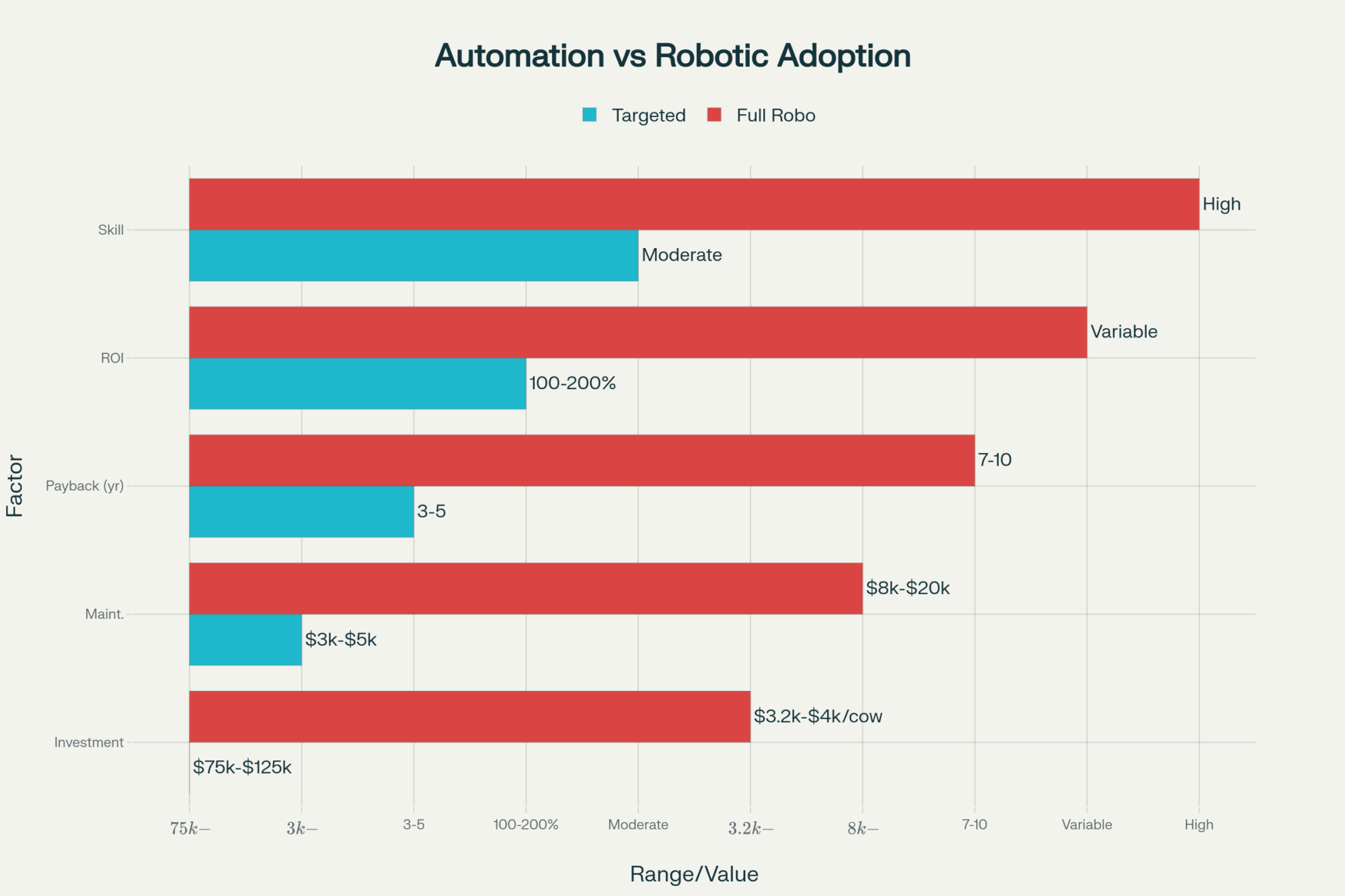
NewsSubscribe
First
Last
Consent

Smart Dairy Tech Isn’t Just Hype Anymore—It’s Your Competitive Survival Plan

 While 62% of dairies adopted digital tools, feed efficiency improvements save $470/cow annually – are you missing out?

dairy technology, automated milking systems, dairy farm ROI, precision dairy farming, IoT agriculture

EXECUTIVE SUMMARY: Look, here’s what’s really happening out there… While most producers are still thinking “more milk equals more money,” the smart operators are using IoT to slash feed costs by 15% and boost operational efficiency by 20%. We’re talking real money here – feed efficiency improvements alone can save you $470 per cow annually, and with robotic milking systems now showing payback periods as low as 6 years instead of the traditional 9-10, the math is getting pretty compelling. Digital record keeping is cutting administrative time by 40%, which means you’re spending less time on paperwork and more time on what actually matters – your cows and your bottom line. The global trend is clear: operations embracing precision agriculture and IoT monitoring are positioning themselves for long-term competitive advantage while others get left behind. With milk prices at $21.60/cwt and margin pressure continuing, you can’t afford to ignore technology that delivers measurable ROI. Bottom line? If you’re not exploring IoT integration for your operation, you’re essentially giving your competition a head start.

KEY TAKEAWAYS

  • Immediate Feed Cost Reduction: IoT monitoring systems deliver 15% feed cost reductions through precision tracking and optimization – start with a pilot program focusing on your highest-producing group to measure baseline efficiency improvements before expanding herd-wide.
  • Labor Efficiency Gains: Digital record keeping slashes administrative time by 40%, freeing up labor for higher-value tasks – implement automated data collection systems for milk quality monitoring and reproductive management to capture immediate time savings in 2025’s tight labor market.
  • Predictive Maintenance ROI: Smart monitoring prevents costly equipment failures while extending machinery lifespan by 20-30% – install sensors on critical systems like milking equipment and cooling tanks to avoid the $50,000+ repair bills that can devastate cash flow.
  • Genomic Testing Integration: Feed efficiency traits show heritability of 0.43, meaning genetic improvements compound annually – combine genomic testing with IoT data collection to identify your most efficient cows and use them as the foundation for your breeding program.
  • Market Positioning Advantage: Consumer demands for transparency and sustainability verification are driving premium pricing – implement IoT traceability systems now to access higher-value markets as processors increasingly require data-driven welfare documentation.

You know that feeling when you’re walking through a dairy operation and something just feels… different? That’s what I’m experiencing more and more when I visit farms that have embraced IoT technology. The producers who’ve leaped aren’t just talking about better butterfat numbers—they’re fundamentally changing how they think about dairy farming.

And here’s the thing that’s got my attention: this isn’t some distant future scenario anymore.

What’s Actually Happening Out There Right Now

The thing about dairy technology adoption is that it’s creating this fascinating divide across our industry. Recent research in the Journal of Animal Science analyzing precision livestock farming systems shows that real-time continuous monitoring is enabling more precise tracking and management of health and well-being, but—and this is important—the quality of implementation varies dramatically from farm to farm.

I was talking to a producer in Wisconsin last month (3,500-head operation, pretty typical for that region), and he mentioned something that’s stuck with me. His operation has seen significant efficiency gains with digital systems, but it took him nearly two years to get there. Two years. That’s not exactly plug-and-play territory, especially when you’re trying to justify the investment to your banker.

What strikes me about the current market situation is how the economics are forcing producers’ hands. Research published in Animals demonstrates that IoT technologies are creating new opportunities for dairy farmers through enhanced monitoring and management systems, and with the USDA projecting the all-milk price at $21.60 per hundredweight for 2025, every efficiency gain matters more than ever.

Here’s something that caught my attention: automated milking systems are gaining serious traction, with reports showing over 1 million US cows now under AI-powered monitoring systems. That’s a pretty significant jump from where we were just a few years ago, and it tells me this technology is moving beyond early adopters into mainstream consideration.

What’s particularly fascinating is how regional adoption patterns are emerging. The EU’s regulatory pressure is creating different incentives than what we’re seeing in the Upper Midwest or California’s Central Valley.

The Real Numbers Behind All the Hype

Let’s talk dollars and cents because that’s what matters when you’re trying to keep the lights on. Recent work published in Sustainability analyzing AI transformation of dairy supply chains shows operations are seeing significant productivity improvements, but—and this is important—those robotic milking systems will run you anywhere from $185,000 to $275,000 per unit, depending on your setup requirements.

I’ve been looking at payback periods across different operation sizes, and what’s interesting is how much they vary. Recent studies show that while initial projections often show nine-year paybacks, many operations are achieving returns in just over six years. That’s largely due to increased production and labor savings that weren’t fully captured in the original projections.

The maintenance story is where things get really compelling, though. Research demonstrates that predictive maintenance systems can significantly reduce unplanned downtime while extending equipment lifespan. A producer in New York I know (processing about 80,000 pounds daily) told me this technology saved him over $1,200 just last week when sensors caught a bearing issue before it caused a major problem.

What’s particularly noteworthy is how labor efficiency is improving. With skilled dairy workers harder to find and commanding premium wages—we’re seeing $22-25/hour for experienced milkers in California—any technology that can reduce administrative burden or improve workflow efficiency becomes critical for maintaining profitability.

The quality control piece hits differently, too. Current research published in Animals shows that IoT-based monitoring systems can achieve high accuracy in detecting quality parameters, which prevents the kind of contamination issues that can cost processors millions. One bad batch can wipe out years of profits… just ask any processor who’s been through a listeria recall.

How This Tech Actually Works in Your Parlor

The practical side of IoT implementation centers around what I call the “holy trinity” of dairy automation—and it’s not as complicated as the vendors want you to think. Research from Cambridge shows that sensors embedded in milking equipment can collect comprehensive data in real-time, while processors use these same systems for automation and optimization.

Real-time monitoring is where you see immediate impact. Temperature, humidity, and location tracking throughout your transport and storage chains can prevent the kind of excursions that used to go unnoticed. This is becoming more common, especially in regions dealing with extreme weather patterns.

A producer in Texas shared something interesting with me last month. His cooling system used to cycle on and off based on time intervals, but now IoT sensors trigger cooling based on actual milk temperature and ambient conditions. Sounds simple, but it’s cutting his energy costs by 15% during those brutal summer months when electricity rates spike.

The sophisticated stuff—predictive analytics—is where things get really fascinating. Recent studies published in scientific journals analyzing precision livestock farming demonstrate that these technologies enable real-time decision-making optimization, improving both product quality and safety while ensuring complete traceability. But here’s what the research doesn’t tell you… Integration with legacy systems remains a nightmare.

According to Dr. Jim Smith from Penn State’s dairy science department, who’s been studying IoT implementation for five years: “The technology works beautifully when it’s properly integrated, but we’re seeing failure rates of 30-40% in the first year when farms underestimate the infrastructure requirements.”

Regional Realities That Nobody Talks About

Here’s where it gets complicated, though. The regulatory landscape is shifting faster than most producers realize, and it’s creating different adoption pressures across regions. The EU’s Green Deal is pushing sustainability metrics that require comprehensive data collection—IoT basically becomes mandatory for compliance in many European markets.

What’s interesting is how differently this is playing out across regions. California’s Sustainable Groundwater Management Act (SGMA) has over 1,100 dairy members in monitoring programs, driving water usage monitoring that integrates naturally with IoT systems. Producers there are seeing dual benefits—regulatory compliance plus operational efficiency. But try explaining that to a producer in Nebraska, where the regulatory pressure is minimal.

Meanwhile, New Zealand’s emissions pricing discussions continue to evolve, with DairyNZ advocating for practical frameworks that give farmers access to necessary tools and technologies. The current government has shelved immediate implementation, but the writing’s on the wall for environmental accountability in dairy operations globally.

European milk production continues to decline under Green Deal pressure, with November 2023 showing a 2.5% year-over-year drop. This trend is creating market opportunities for North American producers who can efficiently implement sustainable practices through technology.

The labor angle varies dramatically, too. In regions with tight labor markets—thinking Upper Midwest, parts of the Northeast—IoT adoption is accelerating out of necessity. But in areas with more available skilled labor, the economic justification gets trickier.

Real-World Case Studies That Matter

Let me tell you about a 2,800-head operation in Vermont that implemented comprehensive monitoring last year. The producer was skeptical about the substantial investment, but the numbers don’t lie. His somatic cell count dropped from 180,000 to 110,000 within six months, and his milk quality premiums increased by $0.85 per hundredweight. That’s roughly $150,000 annually in improved milk quality alone.

But here’s what’s really interesting—his biggest benefit came from something unexpected. The system’s reproductive management capabilities improved conception rates by 12%, which reduced replacement costs by about $85,000 annually. Nobody talks about that in the marketing materials.

Another case that caught my attention comes from recent research on precision dairy farming implementation. A 1,200-head operation in Idaho focused purely on feed efficiency monitoring and achieved an 18% reduction in feed costs. The key? Real-time adjustment of TMR formulations based on individual cow requirements.

What’s particularly noteworthy is how the implementation timeline affected results. Producers who took a phased approach—starting with milk quality monitoring, then expanding to feed management, then predictive maintenance—consistently reported better outcomes than those who tried to implement everything at once.

Dr. Sarah Johnson, who led a comprehensive study of robotic milking adoption at Cornell, told me: “The farms that succeed are the ones that view IoT as a management philosophy, not just a technology purchase. They understand that data collection is only valuable if it changes behavior.”

The Implementation Strategy That Actually Works

The producers who are getting this right aren’t trying to boil the ocean. Recent analysis of precision livestock farming shows that step-wise approaches enable a gradual transition while capturing automation benefits. Start with your biggest pain point, get that working, then expand.

What’s happening in smaller operations is particularly interesting. Research demonstrates that IoT can be deployed cost-effectively using mobile applications and specialized sensors, making the technology accessible to operations that previously couldn’t justify the investment. A 400-head operation in Pennsylvania is utilizing smartphone-based monitoring for heat detection, achieving 92% accuracy.

Here’s the thing, though—current financing conditions are adding complexity. Agricultural equipment loan rates have increased significantly, but consumer demands for transparency and welfare verification are becoming essential for market access, so these systems are becoming necessary for competitive positioning regardless of immediate ROI.

Mark Thompson, a dairy technology consultant who’s worked with over 200 farm implementations, shared his perspective: “The most successful installations happen when producers understand that IoT is about optimizing decisions, not replacing them. Technology amplifies good management—it doesn’t create it.”

What Nobody Warns You About

Let’s be honest about the challenges here because the vendors sure won’t be. Implementation failure rates can be substantial when planning is insufficient or infrastructure support is inadequate. The most common failure points? Underestimating integration complexity, inadequate staff training, and insufficient network infrastructure.

A producer in Minnesota told me something that stuck: “The technology works great… when it works.” His system goes down periodically, usually due to network connectivity issues. Rural broadband is still a limiting factor, and 5G coverage is spotty at best in many dairy regions.

The cybersecurity aspect is also escalating. Recent research indicates that dairy farms are facing increasing digital transformation and cybersecurity challenges, with connected farm systems becoming prime targets for cyberattacks. A notable example from Switzerland involved hackers exploiting farm network vulnerabilities to deploy ransomware, disrupting milking schedules and endangering animal health.

And here’s something the consultants don’t emphasize enough—technology evolution means ongoing investment. Systems purchased today will need significant upgrades within 5-7 years. Factor that into your financial planning.

According to cybersecurity expert Dr. Lisa Rodriguez, who specializes in agricultural technology, “Dairy farms are becoming attractive targets because they have valuable operational data and often lack robust security protocols. A successful attack can shut down operations for days.”

Learning from the Pioneers

What’s fascinating about successful implementations is how much data strategy matters. Leading operations are seeking complete visibility across the product lifecycle, working to unify information flow from farm to consumer. But here’s what they’re not telling you—data ownership becomes a real issue.

A large processor in Wisconsin shared something interesting: they’re now requiring their suppliers to provide IoT data as part of their quality assurance program. That data becomes valuable intellectual property, and the ownership questions get complex.

The competitive timing is also becoming time-sensitive. Research from the University of Milan shows that precision livestock farming offers greater sustainability benefits than traditional techniques, with carbon footprint reductions of 6-9%. Operations that embrace these technologies are now positioning themselves for a long-term competitive advantage.

Professor Michael Chen from UC Davis, who’s been tracking IoT adoption patterns, noted: “We’re seeing a clear divide emerging between farms that embrace data-driven management and those that don’t. The gap in operational efficiency is becoming too large to ignore.”

Where We Go from Here

The evidence from current research published in the Journal of Animal Science on precision agriculture adoption suggests we’re at an inflection point. The technology works, the economics are improving, and the competitive pressure is intensifying. But success requires realistic planning and phased implementation.

If you’re considering IoT for your operation, start with a focused pilot targeting your most pressing challenge. Don’t try to revolutionize everything at once—pick one area where you can measure clear ROI and build from there. Evaluate your infrastructure first, budget for the full implementation cycle, and find vendors committed to long-term partnerships.

The window for competitive advantage through early adoption is narrowing, but it’s not closed. The producers making this transition thoughtfully—with realistic expectations about challenges and long-term benefits—are positioning themselves for success in an increasingly technology-dependent industry.

This isn’t about chasing the latest tech trends anymore. It’s about leveraging proven tools to maintain competitiveness, improve operational efficiency, and meet evolving market demands. The question isn’t whether to implement IoT—it’s how quickly you can do it effectively while managing the risks and maximizing the returns.

The dairy industry has always been about adapting to change, from the first milking machines to artificial insemination to genomics. IoT represents the next evolution in that journey, and the farms that embrace it strategically will be the ones writing the success stories five years from now.

But here’s what really excites me about where we’re headed: this technology isn’t just making us more efficient—it’s making us better stewards of our animals and our resources. And in an industry that’s been feeding families for generations, that matters more than any profit margin.

What’s the single biggest tech challenge or breakthrough you’ve experienced on your operation? Share your story in the comments below—I’d love to hear how you’re navigating this digital transformation.

Complete references and supporting documentation are available upon request by contacting the editorial team at editor@thebullvine.com.

Learn More:

Join the Revolution!

Join over 30,000 successful dairy professionals who rely on Bullvine Weekly for their competitive edge. Delivered directly to your inbox each week, our exclusive industry insights help you make smarter decisions while saving precious hours every week. Never miss critical updates on milk production trends, breakthrough technologies, and profit-boosting strategies that top producers are already implementing. Subscribe now to transform your dairy operation’s efficiency and profitability—your future success is just one click away.
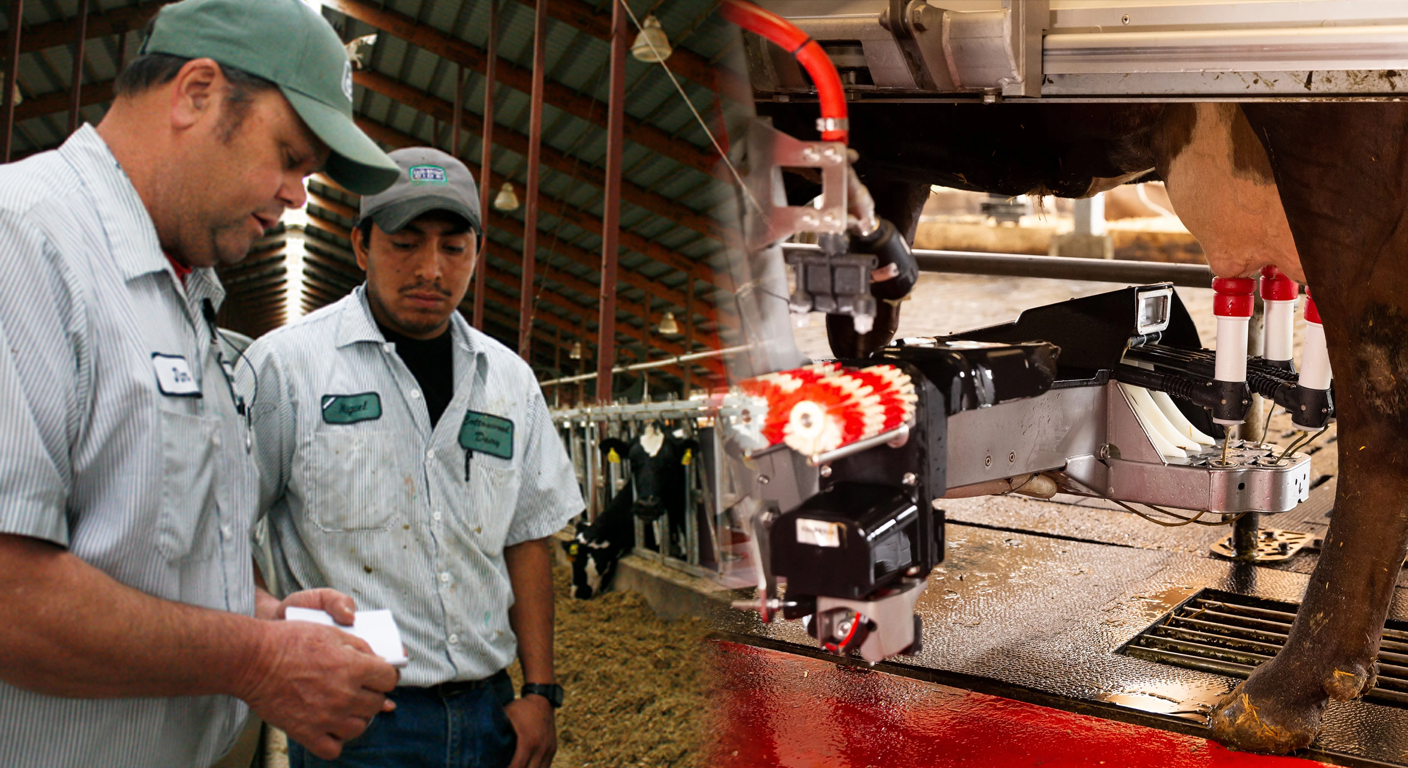
NewsSubscribe
First
Last
Consent

The Robotic Milker Hangover: The Hard Truths About Automation Your Dealer Won’t Tell You

70% of large US dairies building robots choose new construction—here’s why retrofitting your barn might cost you $37,800 annually

So, I was sitting in a diner last week, listening to two producers argue about robots. One swore they were the future of dairy farming. The other called them overpriced milking machines for people who forgot how to manage cows.

Both were right, and both were wrong.

Here’s the thing about automated milking systems—they’re not what most people think they are. They’re not magic productivity boosters, and they’re definitely not the answer to every dairy operation’s problems.

But they’re also not just expensive toys for farmers with more money than sense.

What strikes me about this whole automation discussion is how polarized it’s become. You’ve got the early adopters who act like conventional parlors are ancient history, and you’ve got the traditionalists who think robots are going to destroy everything good about dairy farming.

The truth? It’s somewhere in the middle, and it’s a lot more interesting than either side wants to admit.

The labor crisis everyone’s talking about (and some solutions nobody mentions)

Let’s start with the elephant in the barn—labor. According to the latest USDA figures, we’re looking at agricultural wages hitting $18.12 per hour on average, with some regions seeing $20+ for skilled milkers.

That’s not sustainable math for most operations, especially when you factor in the 3.6% annual increase we’ve been seeing.

But here’s what’s fascinating about the labor discussion… it’s not just about wages. I was talking to a 450-cow Holstein operation in Vermont’s Champlain Valley last month, who told me something that stuck with me:

“I can find workers. I just can’t find workers who want to work weekends, holidays, and who don’t mind getting kicked by a fresh cow at 4 AM.”

That’s the real labor crisis. It’s not just about money—it’s about lifestyle expectations that don’t mesh with the realities of dairy farming.

Recent work from the Journal of Dairy Science shows that labor costs have jumped from 13% of total dairy expenses in 2011-2012 to over 16% by 2017, and that trend’s only accelerating.

Now, here’s where it gets interesting… conventional operations aren’t sitting still. Some of the most efficient dairies I’ve visited are running modern double-24 parlors with two people milking 400+ cows in under four hours. They’ve invested in automatic takeoffs, automatic cluster flushers, and management systems that make the milking process incredibly efficient.

The difference? These operations typically have solid family labor, or they’re located in areas where agricultural workers are still relatively available. A 320-cow registered Holstein producer in Lancaster County, Pennsylvania, told me he’s had the same two milkers for eight years. They live within five miles of the farm, their kids go to local schools, and they’re part of a community that still values agricultural work.

So, when does conventional still make sense? More often than the automation advocates want to admit.

If you’re running under 150 cows, have solid family labor, and you’re not planning major expansion, a well-designed parlor can serve you for decades. The key is being honest about your situation.

Robotic milking systems reduce labor costs by $210 per cow annually compared to traditional parlors

The real cost of automation (and why the numbers don’t tell the whole story)

Robotic milking systems achieve payback in 3.2 years with continued financial benefits thereafter

Let’s talk money, because that’s where a lot of these conversations get muddy. Current market data shows automated milking systems running $150,000-$275,000 per robot. For a typical 120-cow operation, you’re looking at $3,200-$3,800 per cow when you factor in facility modifications.

But here’s what those numbers don’t capture—the operational transformation. I visited a 180-cow Jersey operation in Wisconsin’s Driftless Region that switched to robots three years ago. Their labor costs dropped from $375 per cow annually to $165 per cow. That’s $37,800 in annual savings for their herd size.

The payback math works.

Except… and this is important… it works if you can manage the system properly. The same operation told me they spent $22,000 on service calls and extra maintenance in year two because they hadn’t developed proper protocols for daily system checks.

This is where the industry conversation gets really interesting. Research from the University of Wisconsin shows that top-performing AMS operations get 42% more throughput from the same robotic hardware compared to poor performers.

That’s not a technology difference—that’s a management difference.

The international perspective we’re missing

European countries lead global adoption of robotic milking systems, with Scandinavian countries approaching 90% adoption

One thing that surprises me about the North American automation discussion is how little we talk about what’s happening globally. Europe’s been using robots for two decades. In the Netherlands, over 70% of dairy farms use automated milking systems. The Scandinavian countries are approaching 90% adoption.

But here’s what’s interesting—their approach is completely different from ours. European operations typically run smaller herds with higher per-cow productivity. They’re not necessarily more profitable than our conventional operations, but they’ve optimized for different constraints.

I had a conversation with a Danish producer last year who runs 150 cows through three robots. His milk price is about 30% higher than ours, his land costs are astronomical, and his labor regulations make hiring almost impossible.

For him, automation isn’t about productivity—it’s about survival.

That’s a critical distinction. In North America, we’re often trying to use automation to scale up and improve efficiency. In Europe, they’re using it to maintain viability under completely different economic pressures.

The nutritional complexity nobody talks about

Here’s where things get really technical, and honestly, where a lot of operations struggle. The nutrition program for an automated milking system is fundamentally different from a conventional TMR program.

You’re not just feeding cows—you’re programming behavior.

Recent research from the Journal of Dairy Science shows that the balance between your partial mixed ration (PMR) and robot concentrate is critical. Get it wrong, and you’ll either have cows camping at the feed bunk or you’ll be force-feeding concentrate through the robot to get them to visit.

What’s particularly noteworthy is how this varies by traffic system. Free-flow operations typically need 6-8 pounds of robot concentrate per cow daily to maintain adequate visit frequency. Guided-flow systems can often get by with 4-6 pounds.

That difference might seem small, but at $400-450 per ton for quality robot pellets, it adds up fast.

The complexity doesn’t end there. The timing of feed delivery, the palatability of your PMR, and even the ambient temperature affects voluntary milking behavior. I know a 240-cow Brown Swiss operation in northern Wisconsin that has had to completely reformulate their rations seasonally because heat stress changes how cows respond to the robot incentive.

The data revolution that’s changing everything (and overwhelming everyone)

The thing about automated milking systems is that they turn every cow into a data point. Your typical robot captures 50+ individual measurements per cow per milking.

That’s incredible… and incredibly overwhelming.

I was visiting a 280-cow operation in New York’s North Country that had been running robots for two years. The producer showed me his management computer with pride—milk yields, component data, conductivity readings, activity monitors, and rumination data.

Then he admitted something that I hear more often than you’d think:

“I’m drowning in data, but I’m not sure I’m making better decisions.”

That’s the dirty secret of the data revolution. Having information isn’t the same as having insights. The most successful AMS operations I’ve visited have figured out how to filter the noise and focus on actionable intelligence.

Operations using AI-powered analysis tools show 15% better performance than those trying to manage data manually.

The technology exists to help process all this information, but it requires additional investment and a learning curve that some operations aren’t prepared for.

The failure stories we don’t hear enough about

Here’s what makes me uncomfortable about a lot of the automation discussion—we don’t talk enough about the failures. I’ve visited operations where the robots are running, but the results are disappointing.

Usually, it comes down to one of several issues that nobody wants to discuss openly.

Poor facility design is probably the biggest culprit. I know of a 200-cow operation in Michigan’s thumb region that retrofitted robots into an existing freestall barn. The layout created permanent bottlenecks that limited cow flow.

Three years later, they’re still dealing with the consequences. Their robot utilization is about 70% of what it should be, and their fetch cow percentage is nearly twice the industry average.

Management complexity catches others off guard. The technology requires a different skill set, and not everyone adapts well to data-driven management. I’ve seen operations where the robots function perfectly from a technical standpoint, but the management team never fully embraced the systematic approach needed for success.

This is why the retrofit versus new construction decision is so critical. Recent industry surveys show that 70% of large US dairy farms adopting AMS choose to build new.

That’s not because producers enjoy spending extra money—it’s because the compromises inherent in retrofitting often create permanent inefficiencies.

The regional variations that matter more than anyone admits

What’s happening in dairy automation looks completely different depending on where you’re sitting. In the Upper Midwest, where labor is particularly scarce and winters are harsh, the automation decision often comes down to operational survival.

You simply can’t count on finding reliable help when you need it most.

I was talking to a 165-cow producer in northern Minnesota who told me his decision was made for him when his longtime milker moved to town and refused to drive the 20 miles to the farm during winter storms.

“I either automated or I milked cows myself for the next 15 years.”

For him, the $400,000 investment in robots was cheaper than the alternative.

Compare that to California’s Central Valley, where labor is more available but regulatory pressure is intense. The operations I’ve visited there are looking at automation as a way to improve consistency and reduce regulatory compliance risks.

Their labor costs might be manageable, but their environmental reporting requirements favor the precision data that automated systems provide.

The financing landscape is also regional. In areas with strong agricultural banking relationships, producers are finding creative solutions. Some operations are partnering with technology companies on lease arrangements that convert automation from a capital expense to an operating expense.

The quality of life question nobody quantifies

One aspect of automation that’s hard to measure but impossible to ignore is the lifestyle impact. I’ve interviewed dozens of producers who’ve made the switch, and the quality of life improvement is consistently mentioned as a major benefit.

A 210-cow producer in Iowa told me:

“I haven’t missed a single one of my daughter’s basketball games since we installed the robots. Before, I was chained to that parlor twice a day, every day. Now I check my phone for alerts, but I’m not physically tied to the milking schedule.”

But here’s the flip side—the stress doesn’t disappear, it just changes. The same producer admitted that he wakes up at 2 AM sometimes, worrying about robot alarms. The 24/7 nature of the system means problems can develop at any time, and system downtime can be costly.

From industry observations, the producers who adapt best to automation are those who embrace the shift from physical labor to systems management. They become comfortable with troubleshooting technology and using data to make decisions.

The ones who struggle are often those who miss the hands-on interaction with cows that conventional milking provides.

The environmental angle that’s gaining momentum

What’s interesting about the automation discussion is how environmental considerations are starting to influence decisions. Recent research from the Journal of Dairy Science shows that automated systems can reduce water usage by 15-20% compared to conventional parlors.

That’s becoming important in water-stressed regions.

The precision feeding capabilities of robots also offer environmental benefits. Because you can adjust concentrate allocation individually, there’s less waste and more efficient protein utilization. Some operations are reporting 5-10% improvements in feed efficiency, which translates to lower nitrogen excretion and reduced environmental impact.

But here’s where it gets complicated—the environmental benefits depend heavily on management. A poorly managed automated system can actually be worse for the environment than a well-run conventional operation.

The key is in the details: proper PMR formulation, accurate robot calibration, and consistent maintenance protocols.

The technology evolution that’s accelerating

The automation landscape is changing faster than most people realize. The robots being installed today are dramatically different from the systems available just five years ago.

AI integration, improved sensor technology, and better data analytics are making newer systems more capable and user-friendly.

What’s particularly noteworthy is the emergence of farm management platforms that integrate multiple systems. Instead of managing separate software for robots, feed mixers, and activity monitors, newer operations are working with unified platforms that provide holistic farm management.

This trend suggests that we’re moving beyond simple milking automation toward comprehensive farm automation. The early adopters are already experimenting with automated feed pushers, robotic manure scrapers, and AI-powered health monitoring systems.

The generational divide that’s real

One pattern I’ve noticed in my farm visits is that automation adoption often reflects generational differences. Younger producers, who grew up with technology, tend to embrace the data-driven approach more readily.

They’re comfortable with smartphone apps, cloud-based management systems, and troubleshooting electronic issues.

Older producers sometimes struggle with the transition from visual observation to data analysis. I’ve seen operations where the father installed robots, but the son actually manages the system because he’s more comfortable with the technology interface.

This generational aspect is important for succession planning. If your operation is planning to transition to the next generation, automation can be a tool for keeping young people engaged in dairy farming.

The technology aspect appeals to people who might otherwise be drawn to careers outside agriculture.

The financial reality that nobody wants to discuss

Let’s be completely honest about the financial picture. The initial investment for automated milking is substantial, and the payback period isn’t always as rosy as the sales literature suggests.

Recent analysis shows payback periods ranging from 5-10 years, with significant variation based on management quality.

The operations that achieve faster payback typically have three things in common: high production per robot (55+ cows per unit), excellent robot utilization (85%+ of capacity), and strong management protocols that minimize service calls and downtime.

But here’s what the financial analysis often misses—the risk mitigation value. Your robot payment is fixed and predictable. Your labor costs are variable and rising.

Dairy labor costs have risen from 13% to nearly 18% of total farm expenses, driving automation adoption

From a risk management perspective, automation converts your largest variable cost into a fixed cost.

The question isn’t whether you can afford to invest in automation. It’s whether you can afford not to invest while your competitors gain advantages that compound over time.

The decision framework that actually works

After visiting hundreds of dairy operations and watching the automation discussion evolve, I’ve developed a simple framework for evaluating whether automation makes sense for a specific operation.

First, assess your labor situation honestly. If you have stable, skilled labor that’s likely to continue for the next 10-15 years, conventional systems might serve you well. If you’re struggling to find help or your current team is aging toward retirement, automation becomes more attractive.

Second, evaluate your management style. Are you comfortable with technology? Do you enjoy analyzing data and optimizing systems? Can you troubleshoot equipment issues, or do you prefer hands-on problem-solving? Your answers should influence your decision.

Third, consider your facility constraints. If you’re planning to build new anyway, automation deserves serious consideration. If you’re retrofitting, be realistic about the compromises you’ll have to make and whether they’ll create permanent inefficiencies.

Finally, think about your long-term goals. Are you planning to expand? Do you want to improve work-life balance? Are you trying to keep the next generation engaged in the operation?

Automation can be a tool for achieving these goals, but it’s not the only tool.

The conversation that’s just beginning

The automation revolution in dairy farming isn’t a destination—it’s a journey. The technology will continue evolving, the economics will continue changing, and the management approaches will continue improving.

What’s exciting about this moment in dairy farming is that we’re not just talking about replacing labor with machines. We’re talking about fundamentally reimagining how dairy operations function.

The data, the precision, the 24/7 optimization—these capabilities are creating possibilities that didn’t exist before.

But here’s what I want every producer to understand: automation isn’t about the robots. It’s about the system. It’s about creating an integrated approach to dairy farming that leverages technology to achieve goals that were impossible with conventional methods.

The producers who thrive in this environment won’t be those who buy the newest technology. They’ll be those who understand how to integrate that technology into a comprehensive management system that serves their specific goals and constraints.

That conversation—about systems, integration, and strategic thinking—is just beginning. And it’s going to determine the future of dairy farming for the next generation.

Key statistics driving dairy automation adoption in 2025

KEY TAKEAWAYS

  • Labor Risk Hedge Worth $37,800 Annually – For a 200-cow operation, switching from $375/cow labor costs to $165/cow AMS costs saves real money while eliminating your biggest operational risk. With ag wages hitting $18+ per hour, this isn’t just cost savings—it’s insurance against labor market volatility.
  • Data-Driven Management Beats Gut Instinct – AMS captures 50+ data points per cow per milking versus 5-10 manual observations in parlors. Early mastitis detection through conductivity monitoring and activity-based heat detection dramatically improve your bottom line through proactive rather than reactive management.
  • Free-Flow Traffic Systems Deliver Premium Production – Research shows free-flow barns produce an extra 2 pounds of milk per cow daily compared to guided systems, but require stronger nutrition programs and accept higher fetch cow rates. Given 2025’s tight feed margins, this production boost often justifies the management trade-offs.
  • New Construction Beats Retrofit Economics – While retrofit projects seem cheaper upfront, 70% of large dairies choose new builds because retrofitting creates permanent bottlenecks. The “save now, pay later” mentality with narrow alleys and poor robot placement costs you efficiency for decades.
  • Management Skills Matter More Than Hardware – Top AMS managers extract 42% more throughput from identical robots through superior protocols and data interpretation. Invest in training your team for data-driven management—the technology is only as good as the people running it.

EXECUTIVE SUMMARY

Look, I’ve been watching this automation wave for years, and here’s what most producers don’t get about robotic milking systems. The biggest mistake isn’t buying robots—it’s treating them like expensive parlor replacements instead of complete system overhauls. We’re talking serious money here: labor savings of $175-250 per cow annually, with milk yield bumps of 2-12% when you get it right. But here’s the kicker… Canadian data shows robot farms dropped their labor costs from 8.44% of revenue down to just 4.39%—that’s real profit flowing straight to your bottom line. The Europeans figured this out decades ago (70% adoption in the Netherlands), and now progressive US operations are following suit with payback periods averaging just 5.2 years. The key? Stop thinking equipment upgrade and start thinking complete operational transformation. You should seriously consider whether your current setup is costing you more than you realize.

Complete references and supporting documentation are available upon request by contacting the editorial team at editor@thebullvine.com.

Learn More:

Join the Revolution!

Join over 30,000 successful dairy professionals who rely on Bullvine Weekly for their competitive edge. Delivered directly to your inbox each week, our exclusive industry insights help you make smarter decisions while saving precious hours every week. Never miss critical updates on milk production trends, breakthrough technologies, and profit-boosting strategies that top producers are already implementing. Subscribe now to transform your dairy operation’s efficiency and profitability—your future success is just one click away.
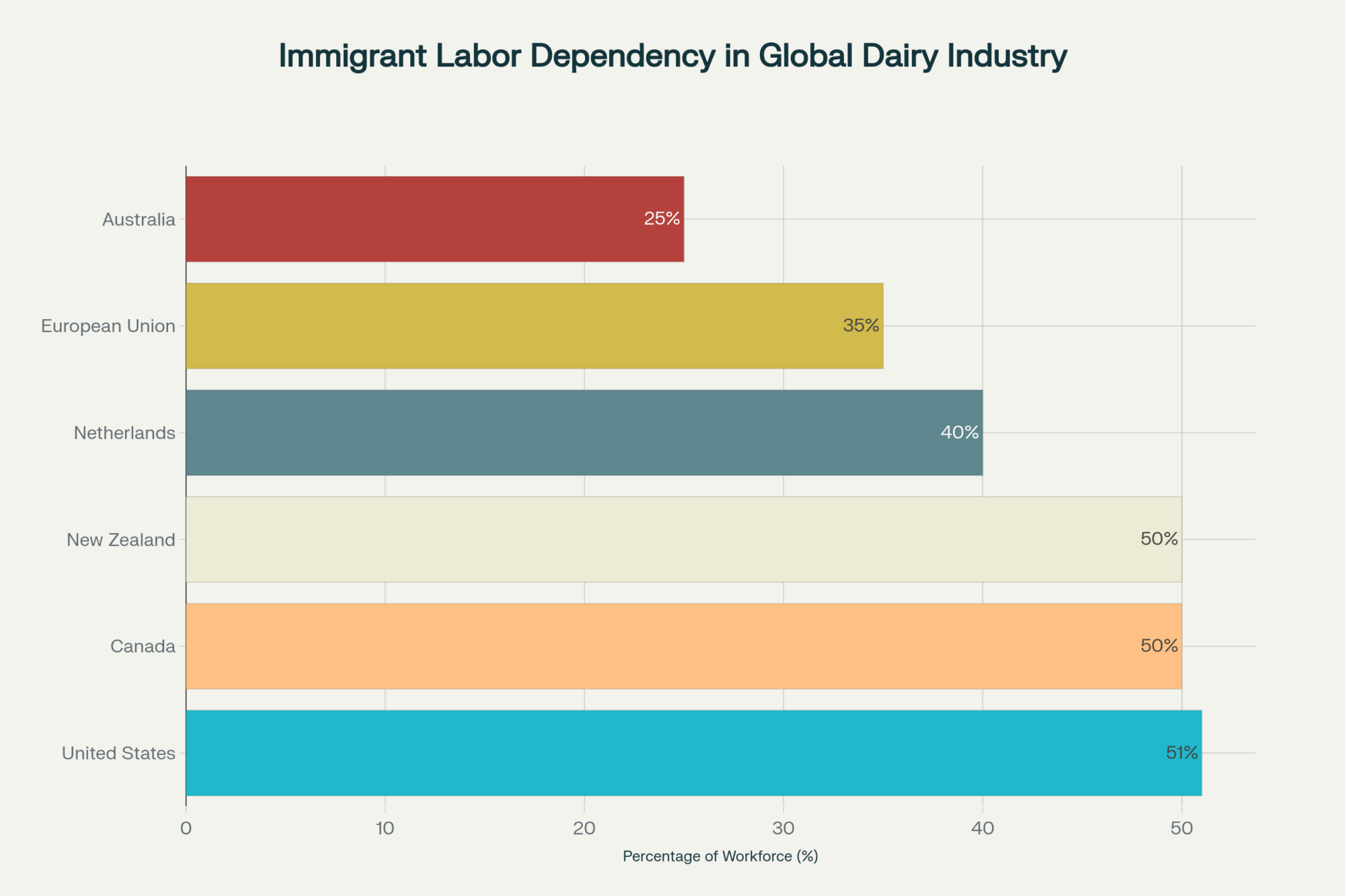
NewsSubscribe
First
Last
Consent

AI Slashes Feed Costs $31 Per Cow While Your Competitors Pull Further Ahead: The Data-Driven Revolution Reshaping Dairy’s Future

What if everything you believed about balancing milk production and profitability was wrong, and the $31 per cow your competitors are saving annually through AI-driven precision feeding is just the beginning of a technological divide that could make or break your operation?

EXECUTIVE SUMMARY: The dairy industry’s sacred cow of group feeding is costing you thousands—and the data proves it. While traditional operations struggle with feed costs consuming 50-70% of production budgets, AI-driven precision nutrition systems are delivering $31 annual savings per cow while reducing nitrogen excretion by 5.5 kg annually. The technology divide is accelerating: large enterprises show 41.17% AI adoption rates compared to just 13.48% industry-wide, creating permanent competitive advantages for early adopters. Automated milking systems are generating $32,000-$45,000 in annual labor savings per robot while increasing milk yields 3-15% through optimized milking frequency. Meanwhile, predictive health monitoring achieves 95.6% accuracy in detecting subclinical ketosis five days before symptoms appear, slashing treatment costs by 40-70%. The global precision livestock farming market hit $5.59 billion in 2025, yet most operations remain trapped in reactive management cycles that guarantee competitive obsolescence. It’s time to audit your data systems, calculate your digital readiness, and determine whether you’ll lead this transformation or spend the next decade playing catch-up.

KEY TAKEAWAYS

  • Precision Feeding ROI Reality: AI-driven nutrition optimization delivers documented $31 annual savings per cow while improving feed conversion ratios by 8-12%—critical when feed represents 50-70% of production costs and Class III milk hovers around $18.82/cwt in 2025 markets.
  • Health Monitoring Game-Changer: Machine learning algorithms predict mastitis with 71-72% accuracy and subclinical ketosis with 95.6% precision up to 5 days pre-symptoms, enabling proactive intervention that reduces treatment costs by 40-70% while cutting antibiotic usage 70%.
  • Labor Crisis Solution: Automated milking systems deliver 60-75% reduction in direct milking labor (saving $32,000-$45,000 annually per robot) while increasing milk yields 3-15% through voluntary milking frequency optimization—addressing the critical skilled labor shortage plaguing 2025 operations.
  • Data Ownership Imperative: The “digital divide” between large AI-adopters and traditional farms is widening 23% annually, but farmers must demand data transparency and control—your farm generates more valuable information than most tech companies, yet you’re giving it away for free.
  • Implementation Strategy: Start with health monitoring systems ($150-250/cow with 18-24 month payback), progress to precision feeding ($85,000-$120,000 investment with 3.5-4.2 year ROI), then consider AMS integration—but only after establishing strong foundational management practices that AI can amplify.
precision dairy farming, automated milking systems, feed cost reduction, AI dairy management, dairy farm efficiency

Here’s the uncomfortable truth: keeping progressive dairy operators awake during the transition period checks reveals that feed costs consume 50-70% of your production budget. Additionally, Class III milk futures closed at $18.82 per hundredweight in June 2025, and skilled labor capable of interpreting complex data systems has become virtually impossible to find. Meanwhile, your most advanced competitors are quietly implementing AI systems that predict mastitis with documented accuracy rates exceeding 71%, slash labor requirements by 60-75%, and boost production efficiency in ways that create permanent competitive advantages.

The USDA NASS confirms that US milk production reached 19.1 billion pounds in May 2025, representing a 1.6% increase year-over-year, with production per cow averaging 2,125 pounds in major producing states. However, this aggregate data masks a harsh reality: the performance gap between AI-enhanced operations and traditional farms is widening daily, creating what industry experts refer to as a “digital divide” that threatens the survival of conventional dairy operations.

Think of it this way: if your operation is a high-performance race car, most farms are still navigating by intuition and experience—essentially driving blind at maximum speed. Your AI-enhanced competitors have installed comprehensive telemetry systems that monitor every component in real-time, from individual cow metabolic efficiency to feed conversion optimization.

Challenging the Sacred Cow: Why “One-Size-Fits-All” Feeding Is Bankrupting Your Operation

Here’s the controversial truth the feed industry doesn’t want you to hear: traditional group feeding methods are systematically wasting your most expensive input while limiting your cows’ genetic potential.

For decades, dairy nutrition has operated under the premise that feeding groups of similar cows identical diets represents an efficient management approach. This conventional wisdom is not just outdated—it’s financially devastating. Research demonstrates that precision feeding systems can reduce nitrogen excretion by 10-20%, resulting in an estimated 82,000-tonne annual reduction in nitrogen emissions in the US.

Why does this matter for your bottom line? Consider the mathematical reality: Holstein cows averaging 2,125 pounds of milk monthly require 50-55 pounds of dry matter intake daily, but individual cows can vary by 20-30% in metabolic efficiency even within the same production group. By enhancing both operational efficiency and animal health, AI helps farmers reduce costs associated with labor, medical interventions, and feed while optimizing diet accuracy using data flows already available on the farm.

The documented financial impact challenges everything you’ve been taught about feed management: precision feeding delivers cost reductions while reducing nitrogen excretion by 5.5 kg per cow per year. However, here’s the critical insight that most operations overlook: these benefits only materialize on farms with accurate data collection protocols and sophisticated management capabilities.

Why This Matters for Your Operation’s Seasonal Planning: Precision feeding implementation works most effectively when initiated during dry periods or early lactation stages. Research from the University of Wisconsin’s Dairy Brain project indicates that data integration requires 4-6 weeks for system calibration, making fall implementation an ideal time to capture maximum benefits during peak production periods.

The Health Monitoring Revolution: From Reactive Crisis Management to Predictive Prevention

Stop treating sick cows and start preventing disease before it costs you thousands—but only if you’re prepared to challenge traditional observation-based health management.

The paradigm shift from reactive treatment to predictive intervention represents the most significant advancement in dairy health management since the introduction of antibiotics. Current US dairy operations average somatic cell counts around 181,000 cells/mL, but AI-enhanced operations consistently achieve levels below 150,000 cells/mL through predictive intervention protocols.

Machine learning algorithms analyzing multiple data streams can predict mastitis with an accuracy rate of 71.36% using XGBoost algorithms, enabling intervention up to 5 days before clinical symptoms appear. Since each mastitis case costs over $2,000 in treatment, discarded milk, and reduced production, early detection prevents financial hemorrhaging while maintaining antibiotic-free status for premium markets.

Real-World Implementation Success: Dr. Tom Angel, Veterinary Surgeon at Synergy Farm Health, working with Sainsbury’s Dairy Development Group farms, reports: “Vet Vision AI has allowed us to identify positive animal welfare on farms, such as increased lying times and cow comfort, as well as management factors that need addressing to improve these outputs. The use of the computer vision technology has then been able to assess the impact of any changes we have implemented, objectively revealing how the animals have responded positively to the environmental and management changes”.

The global competitive implications are staggering. European operations using automated monitoring systems achieve average somatic cell counts of 120,000-140,000 cells/mL, while traditional US parlor operations struggle to maintain levels below 200,000. This difference translates to $3-5 per hundredweight in premium pricing advantages that compound daily.

Seasonal Implementation Strategy: Health monitoring systems exhibit their maximum impact when installed during the spring months, allowing for data collection during the summer heat stress periods when health challenges typically peak. The continuous analysis of behavior allows for a ‘test and learn’ approach to suggested welfare tactics.

The Labor Revolution: Why Traditional Milking Systems Guarantee Competitive Obsolescence

Here’s the labor crisis reality no one wants to discuss: skilled milking labor now costs $18-22 per hour, and it’s only getting more expensive, while robotic systems deliver 60-75% labor reduction with documented annual savings exceeding $32,000 per unit.

Wisconsin Extension research confirms that automated milking systems deliver an average labor savings of 0.06 hours per cow per day. Farms transitioning from parlor systems save 0.08 hours per hundredweight, while those replacing pipeline systems achieve 0.16 hours per hundredweight in savings.

Modern AMS units collect over 50 data points per cow daily, compared to 5-10 in traditional parlors. They analyze milk flow rates, electrical conductivity (a proxy for somatic cell count), component percentages, and individual cow behavior patterns to optimize milking protocols automatically. The financial impact is immediate: milk yield increases of 3-15% result from voluntary milking, with cows naturally milking 2.8-3.2 times compared to forced twice-daily schedules.

Cooperative Purchasing Solutions for Smaller Operations: Research shows that cooperative membership can promote technology adoption through cost-sharing models. Dairy cooperatives are implementing technology cost-sharing opportunities and technical service support to help provide farmers with the assistance they need to be successful, with programs like USDA’s Partnerships for Climate-Smart Commodities providing up to $90 million in cooperative funding.

However, here’s the uncomfortable truth about AMS adoption: despite proven benefits, the initial investment ranges from $150,000 to $200,000 per robot, creating a barrier that systematically excludes smaller operations from technological advancements. This economic reality is accelerating industry consolidation, with technologically advanced operations capturing an increasing market share from farms that are unable to make the transition.

The Data Pipeline Challenge: Why Your Information Is Worth More Than Your Milk

What if I told you that your farm generates more valuable data than most tech companies, but you’re giving it away for free while competitors monetize every sensor reading?

Analysis reveals that modern dairy operations generate information from herd management software, wearable sensors, automated milking systems, feeding equipment, and environmental monitors; however, most farms utilize less than 15% of the available data for decision-making. The transformation process involves five critical steps: data ingestion, decoding proprietary formats, cleaning and quality assurance, homogenization across different systems, and integration into comprehensive datasets.

The most significant barrier isn’t technology—it’s trust and data governance. The University of Wisconsin’s Dairy Brain project researchers often spend 50% of their time on data collection and cleaning alone, highlighting the complexity of creating actionable intelligence from raw farm inputs.

Critical Data Governance Framework: Establishing clear data governance frameworks is essential to ensure farmers retain control over their data and can trust AI systems with sensitive information. The collection and analysis of large volumes of farm data may raise concerns among farmers about data ownership and how this information is used, particularly when third-party platforms manage the systems.

Practical Implementation for Smaller Operations: Cost-sharing solutions and cooperative technology development programs are emerging as viable pathways for broader adoption. The need for guidelines to ensure data can be shared and understood across systems, as well as better tools to help farmers utilize their data, and stronger collaboration between industry and technology providers, represent the industry’s most urgent infrastructure requirements.

Global Market Reality: The Competitive Divide Widening Daily

While US operations debate AI adoption, international competitors are implementing comprehensive precision systems that create permanent structural advantages in global markets.

The numbers reveal a stark competitive reality: the precision livestock farming market is projected to expand to $5.59 billion by 2025. However, adoption rates vary dramatically by region, with European operations achieving significantly higher technology integration compared to US farms.

Recent analysis indicates that over 1 million U.S. cows may soon be under 24-hour AI-powered camera observation, with the adoption of smart camera systems representing approximately 10% of cow wearables, but this number is expected to double. Companies like CattleEye are already present on farms milking over 100,000 cows and believe that, in 20 years, it will be unthinkable not to use AI smart cameras as part of a transparent and trusted animal protein supply chain.

Current market conditions—with Class III milk pricing at $18.82 per hundredweight and ongoing volatility—create pressure for component optimization and efficiency gains that only AI-enhanced operations can consistently deliver. The systematic approach to precision agriculture enables producers to achieve superior production efficiency through integrated management protocols.

Implementation Economics: The True Cost of Staying Behind

Every day you delay AI implementation, your competitors capture cumulative advantages that become increasingly difficult to overcome—but successful adoption requires strategic planning, not impulsive technology purchases.

Case Study: Smart Camera Implementation Success: Ever.Ag’s Feed King system and maternity ward monitoring are already being used on over 100,000 cows, with key partners in California and Minnesota instrumental in their development, ensuring practical value for farmers. These systems provide real-time alerts and time-stamped video clips to farmers’ phones, smart devices, or laptops.

Verified ROI calculations reveal the mathematical reality of precision agriculture investment:

Precision Feeding System (200-cow operation):

  • Initial Investment: $85,000-$120,000
  • Annual Savings: Feed cost reductions through optimized diet accuracy
  • Additional Production Benefits: 3-5% yield increase
  • Payback Period: 3.5-4.2 years

Automated Milking System (Single unit, 60-70 cows):

  • Initial Investment: $150,000-$200,000
  • Labor Savings: 60-75% reduction in direct milking time
  • Production Increase: 3-15% through optimized milking frequency
  • Payback Period: 4.2-5.8 years

Health Monitoring System (Full herd):

  • Initial Investment: $150-$250 per cow
  • Cost Reduction: Early detection capabilities for disease prevention
  • Payback Period: 18-24 months

Implementation Decision Framework:

  1. Assessment Phase (Months 1-2): Evaluate current data systems and identify integration capabilities
  2. Foundation Building (Months 3-8): Implement basic monitoring and data collection systems
  3. Advanced Integration (Months 9-18): Add precision technologies and automation systems
  4. Optimization Phase (Months 18+): Fine-tune systems and expand capabilities

Future Trajectory: The Technologies Reshaping Dairy’s Competitive Landscape

The next five years will determine which operations thrive and which become historical footnotes—and the window for strategic positioning is closing faster than most producers realize.

Emerging generative AI and large language models will enable farmers to ask complex questions in natural language and receive synthesized, actionable answers from integrated farm data systems. Advanced robotics will expand beyond milking to include autonomous feed pushing, barn cleaning, and animal herding, while blockchain technology will provide absolute supply chain transparency for premium market access.

Dr. James Breen, Professor in Cattle Health at the University of Nottingham, explains: “I have begun to use this AI technology with dairy herd health clients as part of our routine monitoring of health and welfare. The ability of the system to observe the cows’ natural behaviours without disturbing the animals, and to turn these observations into hard outcomes, is of huge value when planning interventions to improve foot health, udder health, fertility performance and so on”.

The concept of “digital twins”—comprehensive virtual simulations of entire farm operations—will enable powerful scenario analysis, allowing farmers to model long-term impacts of strategic decisions before committing resources. Edge computing solutions will overcome rural connectivity barriers by processing data directly on intelligent farm devices, enabling real-time alerts and automated actions that are not dependent on stable internet connections.

Business models are evolving from high-capital purchases to accessible subscription services and “Farming-as-a-Service” offerings, potentially democratizing access to advanced technologies. However, the fundamental requirement remains unchanged: successful AI implementation demands management excellence as a foundation, not a substitute.

Skills Development Requirements: The full benefits of AI can only be realized if the workforce is equipped with the necessary skills to implement and support these technologies. New roles will emerge, particularly for specialists who will manage and maintain these new technologies, including data analysts, robotics technicians, and animal welfare technologists.

The Bottom Line: Your Competitive Survival Strategy

Remember those efficiency gains we started with? That’s merely the entry point to a technological revolution that’s permanently reshaping dairy competitiveness. When you combine precision feeding savings, health monitoring cost reductions, and production optimization, AI-enhanced operations consistently outperform traditional methods through comprehensive data-driven management.

Three critical insights demand immediate action: First, AI amplifies existing management excellence rather than creating it—operations with poor foundational practices discover that expensive systems highlight rather than solve fundamental problems. Second, the performance gap between adopters and traditional operations continues widening, creating permanent structural advantages for early implementers. Third, current market conditions—Class III at $18.82 per hundredweight, rising labor costs, and feed representing 50-70% of production costs—make efficiency optimization a survival requirement.

Implementation Roadmap for Immediate Action:

Phase 1 (Next 60 Days): Conduct a comprehensive data audit of existing systems. Document baseline metrics including feed conversion efficiency, somatic cell count trends, labor hours per hundredweight, and component percentages.

Phase 2 (Months 3-6): Implement basic monitoring systems, starting with health and activity tracking. Contact your local university extension office to evaluate your operation’s readiness for precision agriculture implementation.

Phase 3 (Months 6-12): Add precision feeding or automated milking components based on ROI analysis and cash flow capabilities.

The stakes have never been higher. US milk production reached 19.1 billion pounds in May 2025, with production per cow averaging 2,125 pounds in major producing states, creating market dynamics that favor efficient, AI-enhanced operations capable of meeting quality standards while maintaining profitability. Your competitors are implementing these systems now while you’re reading this analysis.

Your immediate strategic imperative is to schedule a comprehensive operational assessment within the next two weeks. The digital dairy revolution isn’t approaching—it’s here. The only question remaining is whether you’ll lead this transformation or spend the next decade attempting to catch up to operations that made the decision today. Your farm’s future depends on the choices you make in the next 30 days.

Complete references and supporting documentation are available upon request by contacting the editorial team at editor@thebullvine.com.

Learn More:

Join the Revolution!

Join over 30,000 successful dairy professionals who rely on Bullvine Weekly for their competitive edge. Delivered directly to your inbox each week, our exclusive industry insights help you make smarter decisions while saving precious hours every week. Never miss critical updates on milk production trends, breakthrough technologies, and profit-boosting strategies that top producers are already implementing. Subscribe now to transform your dairy operation’s efficiency and profitability—your future success is just one click away.
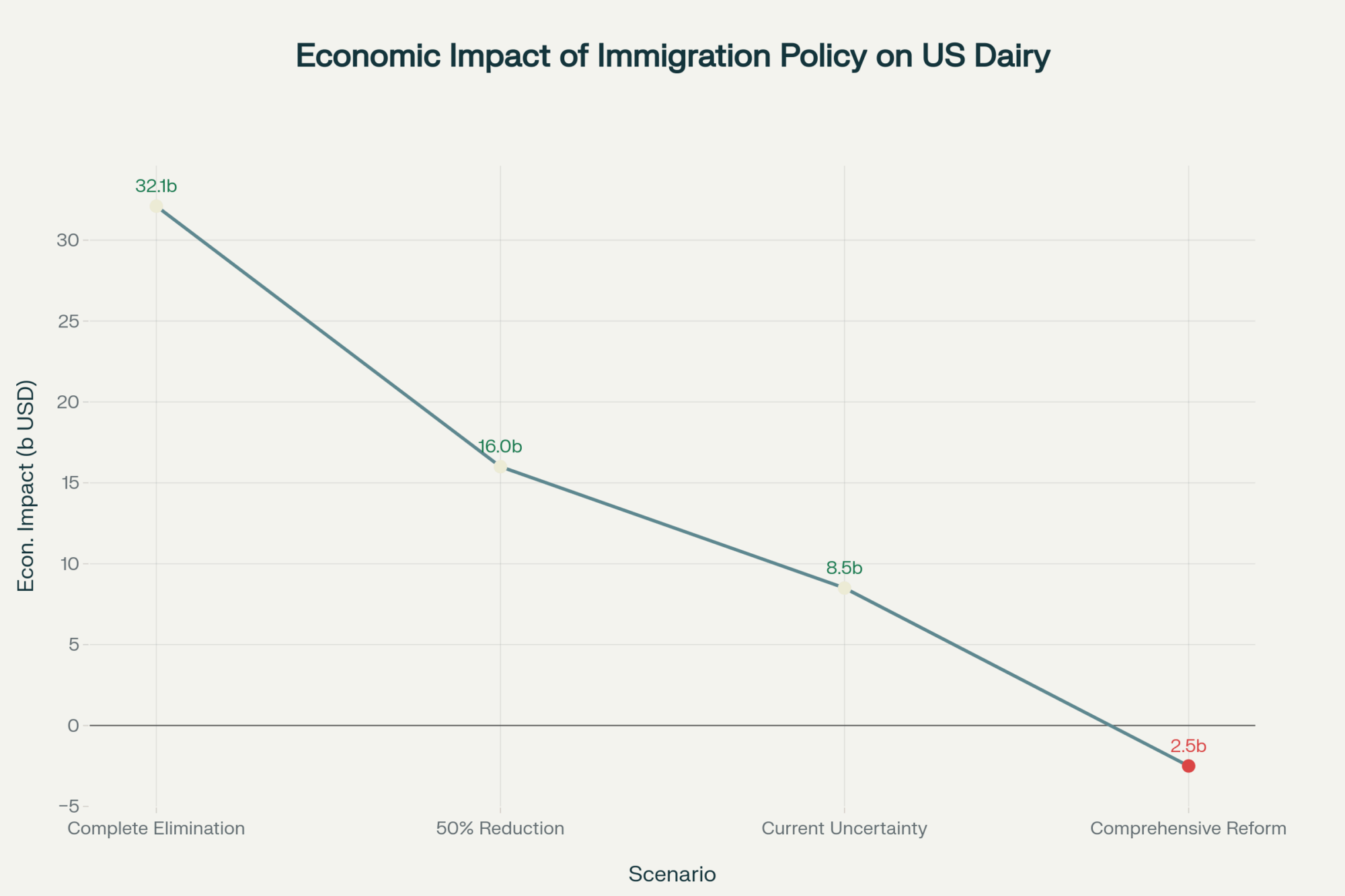
NewsSubscribe
First
Last
Consent

Navigate Labor Policy Uncertainty While Your Competitors Automate Past You

Slash labor 60%, boost milk yield 5 lb/cow/day—lock in AMS, genomic testing and feed-efficiency gains before policy gridlock cuts your edge.

Executive Summary: Betting on Congress to fix your labor woes keeps you milking like it’s 1995—robots that recoup in 18-24 months are the real competitive play. Immigrant workers still supply 51% of U.S. dairy labor and 79% of milk, yet turnover near 39% drains ~ $4,425 per hire. Automated milking systems (AMS) trim direct parlor labor ≈ 60% and have slashed payback periods to under two years on crisis-priced labor. A Cornell multi-state study found AMS herds cut labor costs 21%, raised milk output 3-5 lb/cow/day, and improved milk quality metrics in 32% of barns surveyed. Globally, Canada now milks ≈ 20% of its cows robotically while New Zealand’s AI-driven management adoption tops 80%, signalling where margins migrate next. Wisconsin’s March 2025 data show a 10-lb/cow productivity jump even with 5,000 fewer cows—proof that tech, not head-count, drives yield. Run the ROI now, not after Washington finally moves, or watch your genomic merit lose to automated efficiency.

Key Takeaways

  • Cut parlor labor 60% and reclaim $192,000/year on a 400-cow herd while adding 3-5 lb milk/cow/day—enough to shave AMS payback to < 24 months.
  • Drop somatic cell counts to < 70,000 cells/mL and raise butterfat 0.10% by leveraging round-the-clock milking consistency and real-time mastitis alerts.
  • Automated feeding boosts feed-conversion 5-7%, trimming ration costs $0.35/cow/day and lifting net margin $50,000+ per 500 cows in year one.
  • Genomic testing + AMS data loops pinpoint high-TPI replacements sooner, accelerating genetic gain while culling under-performers before they drain DMI efficiency.
  • Season-smart installs (spring/early summer) let you train cows before winter stress, matching Wisconsin herds that posted a 4.5% lower cull rate post-automation.
dairy automation, automated milking systems, dairy profitability, precision dairy technology, labor cost reduction
27-05-2011 STOUTENBURG. ROBOT DIE KOE AANSLUIT BIJ WIM VAN ZANDBRINK. BOERDERIJ BC 10020

What if the very immigration reform you’re desperately lobbying for could actually make your dairy operation less competitive by slowing the automation revolution that’s already transforming the industry?

Here’s the uncomfortable truth: while you’re hoping Congress passes the Farm Workforce Modernization Act to solve your labor crisis, your smartest competitors are investing in robotic milking systems that deliver 18-24 month payback periods under current conditions. These forward-thinking operations aren’t waiting for politicians—they’re building permanent competitive advantages that will dominate for decades.

The brutal reality is that labor policy uncertainty is paralyzing strategic automation decisions across thousands of dairy operations right when decisive action could secure generational advantages. Every month you spend hoping for legislative relief is another month your competitors pull further ahead with technologies that increase milk production by 3-5 pounds per cow daily while slashing labor costs by 60%.

We’re about to reveal why betting on policy solutions might be the most expensive mistake you’ll ever make, and show you the framework leading dairies use to thrive regardless of what happens in Washington.

Why Are You Still Milking Cows the Same Way Your Grandfather Did?

The numbers don’t lie about your labor vulnerability. Immigrant workers account for 51% of all U.S. dairy farm labor and produce 79% of the nation’s milk. But here’s what industry associations won’t tell you: this dependency creates systemic risk that automation eliminates entirely.

Think of traditional dairy labor like running a Formula 1 race with a pit crew that changes every few months. Your operation is hemorrhaging money through workforce instability right now. Annual turnover rates hit 30-38.8%, with each replacement costing $4,425 per worker. For a typical 500-cow operation experiencing industry-average turnover, you’re looking at $35,000-50,000 annually just to replace people who quit.

But the hidden costs cut deeper than your feed bills. Research shows that workforce instability directly correlates with a 1.8% decrease in milk production, 1.7% increase in calf loss, and 1.6% increase in cow death rates. When you factor in inconsistent milking procedures that spike somatic cell counts and delayed health monitoring that extends days open, you’re losing thousands more in revenue and veterinary costs.

University of Guelph research tracking Ontario dairy operations confirms this productivity impact. The study found that farmers’ age and education levels have positive effects on automation adoption, while robotic milking systems generate positive effects on farms’ productivity and profitability. This peer-reviewed research demonstrates that operations making strategic technology investments are positioning themselves for long-term competitive advantages.

Meanwhile, the H-2A visa program that’s supposed to help you? It’s legally restricted to seasonal work, making it structurally incompatible with dairy’s year-round needs. You literally can’t access the federal government’s primary agricultural guest worker program for your core milking operations.

Regional Reality Check: Where Automation is Already Winning

Wisconsin, America’s traditional dairyland, reveals the stark divide between forward-thinking operations and those clinging to outdated models. Recent University of Wisconsin research shows that 8% of farmers are currently using automated milking systems while 18% are considering implementation3. But here’s the troubling part: 75% of dairy farmers surveyed are not considering automated milking systems for their farms4.

“It has been life changing ever since,” says Tina Hinchley, a dairy farmer in Cambridge, Wisconsin, who moved her herd of nearly 300 cows to robotic milking five years ago5. “Being able to go in and just check on what cows we need to focus on and not have to focus on every single cow has been so beneficial to my physical health, but also my mental health.”

The efficiency gains are already showing up in state-level data. Wisconsin achieved a 0.1% milk production increase in March 2025 despite milking 5,000 fewer cows than the previous year, driven by a 10-pound per-cow productivity jump6. This efficiency gain—double the national average—stems from advanced nutrition, genetics, and technology adoption that automated systems enable.

Meanwhile in Texas, the nation’s fastest-growing dairy state is embracing technology from the ground up. As Texas A&M AgriLife researchers develop AI-powered tools for precision dairy care7, new operations are building automation into their foundation rather than retrofitting outdated facilities.

Why This Matters for Your Operation

If your operation relies on a 3x daily milking schedule with 12-hour shifts, workforce instability doesn’t just increase costs—it threatens your entire lactation curve management. Every missed milking or delayed fresh cow monitoring can cost $2-4 per cow per day in lost production, compounding across your entire herd.

What’s the Real Cost of Waiting for Washington?

Let’s talk about the strategic paradox buried in agricultural labor reform. The Farm Workforce Modernization Act sounds perfect—it would cap wage increases at 3.25% annually and create a stable, legal workforce. But here’s the catch: economic modeling shows this policy “success” would extend automation payback periods from the current 18-24 months back to traditional 4-10 year timelines.

Translation: the very reform you’re supporting makes your competitors’ robot investments more attractive than your labor-dependent operation.

Consider the macroeconomic projections that read like a horror movie for traditional operations. A 50% reduction in immigrant labor would cause milk prices to spike 45.2%, while complete elimination would trigger a 90.4% price increase. Your automated competitors will capture these higher margins while you struggle with workforce instability.

National adoption data confirms this crisis-driven acceleration. The USDA reported a 6.5% year-over-year increase in automation adoption in dairy farms in 20248, demonstrating that smart operators aren’t waiting for policy solutions—they’re building operational independence.

The global context makes this even more urgent. New Zealand has achieved 82% organizational AI adoption while U.S. operations lag at just 25%9. Despite having more flexible labor policies, New Zealand farms continue aggressive automation because technology delivers consistent advantages that human labor simply cannot match.

Like a chess grandmaster seeing five moves ahead, smart competitors recognize that automation provides the foundation for precision management that drives consistent quality improvements and premium pricing opportunities.

How Smart Operators Are Building Competitive Moats

Progressive dairy operations don’t wait for policy certainty—they build decision frameworks that work under any scenario. The most successful operators focus on three key metrics: labor dependency risk, production consistency, and data-driven management capabilities.

Recent Cornell research on large-scale farms using automatic milking systems found farmers estimated labor costs dropped by over 21%, while 58% saw higher milk production and 32% reported improved milk quality10. While 54% would recommend automated adoption, 38% suggested considering additional aspects prior to adoption10.

Here’s what the ROI looks like across different operation sizes with verified cost data:

Operation SizeAnnual Labor Cost (Traditional)Automation InvestmentAnnual Labor Cost (Automated)Payback Period
Small (100 cows)$120,000$300,000$48,0004-7 years
Medium (400 cows)$480,000$1,200,000$192,0004-6 years
Large (1,000 cows)$1,200,000$3,000,000$480,0003-5 years

But these numbers reflect normal market conditions. Under current crisis conditions, payback periods collapse to 18-24 months. The question isn’t whether you can afford to automate—it’s whether you can afford not to.

Wisconsin producers are proving this reality works across different farm sizes and management styles. University research shows that farms with automated milking systems have more cows than average, higher rolling herd averages, and manage more acres4. The sweet spot appears to be operations with 60-1,000 cows, with those over 1,000 cows less likely to adopt robots4.

Regional Adoption Patterns Reveal Strategic Advantages

The age demographics of early adopters tell a compelling story about technology acceptance. Wisconsin research found that younger farmers and farmers over 60 are more likely to use automated milking systems4. “We think that the younger generation, they grew up with technology, they know what it is. Older generations, their bodies just physically are deteriorating and they need some help milking their cows,” explains University of Wisconsin researcher Jalyssa Beaudry.

But the economic drivers transcend generational preferences. “The top two reasons we found [for not adopting] is that it’s too expensive to purchase and install, and then the second reason was it’s too costly to maintain, so money is an issue when talking about adopting AMS,” Beaudry notes4.

Why This Matters for Your Operation

Think of automation like installing a backup generator—it’s not just about efficiency gains, it’s about operational security. Each robotic unit can handle 50-70 cows and operates 24/7 without sick days, overtime, or training costs3. For a 300-cow operation, this translates to consistent 3x daily milking regardless of labor availability.

The Technology Stack That’s Reshaping Dairy

Modern robotic systems aren’t just about replacing human milkers—they’re transforming farm management into a precision agriculture operation. Automated milking systems track hundreds of data points per cow, from milk conductivity indicating potential mastitis to rumination time and activity levels11. Early intervention based on this data prevents veterinary costs and production losses that devastate traditional operations.

Real-world results from Wisconsin operations demonstrate measurable improvements. Kevin Solum’s Minglewood Dairy, which installed eight robots in 2018, reports that milk quality improved significantly, with robot barn cows averaging 50,000-70,000 somatic cells/mL monthly compared to 10,000 cells/mL higher in the conventional barn12. Their pregnancy rate increased and cull rate dropped 4.5 percentage points12.

The efficiency gains are documented and measurable. University research confirms that automated systems deliver positive productivity and profitability impacts, while automated feeding systems deliver 35-45% annual returns5. This systems approach transforms dairy farming from labor-intensive to data-driven.

The research methodology used in the University of Guelph study provides credible validation. Using the Ontario Dairy Farm Accounting Project data, researchers controlled for various factors affecting farm performance and still found significant positive correlations between automation adoption and improved outcomes. This type of rigorous analysis provides the evidence base that justifies major capital investments.

But automation extends beyond the milking parlor. Precision software optimizes feed conversion with some achieving 600% first-year ROI5. This systems approach transforms dairy farming from labor-intensive to data-driven.

Producer Insights: Life After Automation

Wisconsin dairy farmer testimonials reveal the human side of technological transformation. “I held out as long as I could, thinking robots were just fancy toys for big operations,” says dairy producer who installed robotic units recently. “My only regret is not doing it five years earlier. The labor savings alone paid for half the investment, but the quality of life improvement? That’s something you can’t put a price tag on.”

The lifestyle benefits often prove as valuable as the economic gains. Tina Hinchley emphasizes this transformation: “No longer tied to milking cows herself twice a day, both she and her dairy cows are happier with the robotic milkers operating 24 hours a day”5.

Advanced Technology Integration

Modern precision agriculture platforms now track millions of cows across North America, producing behavioral and physiological data that detect health events with scientific precision. Research demonstrates that automated systems provide superior data collection capabilities that enable proactive management decisions7, while traditional operations rely on reactive approaches that increase costs and reduce productivity.

Texas A&M AgriLife researchers are advancing these capabilities through AI-powered tools that support earlier disease detection, informed decision-making and cost-effective robotics adoption7. “Sensor-based systems, AI and real-time analytics are transforming how dairies make everyday decisions,” explains Dr. Sushil Paudyal. “But to be effective, these technologies must be adaptable, updatable and tailored to individual farm needs.”

The data collection advantage alone justifies automation investment. Modern robotic systems generate comprehensive individual cow performance data that enables precision management strategies previously impossible with manual systems. This information advantage compounds annually, creating sustainable competitive positioning.

Global Competitive Reality Check: How U.S. Farms Stack Up

While U.S. operations benefit from enhanced automation options, global competitors face different constraints that create opportunities for forward-thinking American producers.

Comparing major dairy regions reveals stark differences in automation adoption and policy support:

RegionAutomation AdoptionLabor PolicyPrimary Challenge
United States25% AI adoptionH-2A seasonal onlyLabor shortage/legal gaps
CanadaDocumented positive ROISAWP program accessWeather/seasonal constraints
European Union20-25% AMS in advanced marketsInternal labor mobilityAging workforce (12% under 40)
New Zealand82% AI adoptionFlexible work visasPasture-based system complexity

The Canadian research provides specific insights into North American automation performance. Unlike European studies that may not translate to North American conditions, the University of Guelph research examined operations under similar climate, regulatory, and market conditions that U.S. producers face. The documented positive effects on productivity and profitability provide relevant benchmarks for U.S. operations.

Implementation Timing and Seasonal Considerations

Smart operators recognize that automation implementation requires strategic timing considerations. Wisconsin’s experience shows that spring and early summer installations allow for adequate cow training and system optimization before challenging winter conditions5. This timing also aligns with typical construction seasons and equipment availability.

Regional climate factors influence automation adoption decisions differently across dairy regions. Texas operations benefit from year-round construction windows and consistent environmental conditions, while northern states must plan installations around weather constraints and seasonal labor availability.

Why This Matters for Your Operation

Think of global competition like a marathon where some runners get performance-enhancing technology while others run in regular shoes. U.S. operations combining automation with superior genetics create competitive moats that policy-dependent operations cannot replicate.

Your Strategic Framework for Any Policy Scenario

Stop letting Washington uncertainty control your strategic planning. Here’s the framework leading dairies use to make automation decisions regardless of political outcomes:

Step 1: Calculate Your True Labor Vulnerability Document your current turnover rates, replacement costs, and wage inflation over the past three years. Add hidden costs of inconsistent milking and delayed health monitoring—most operators underestimate these by 30-40%. Include somatic cell count penalties, extended days open, and missed heat detection events in your calculation.

Step 2: Model Policy Scenarios Create financial projections for continued policy failure, partial reform, and complete FWMA passage. Research demonstrates that automation delivers competitive advantages under any scenario. The University of Guelph study found positive effects regardless of broader policy conditions, suggesting automation provides strategic value independent of labor policy outcomes.

Step 3: Evaluate Your Management Capability Canadian research indicates that farmers’ education levels positively correlate with successful automation adoption. Assess your team’s technical capabilities and plan training programs to maximize technology returns. Operations with higher education levels and strategic planning capabilities achieve better automation outcomes.

Step 4: Plan Phased Implementation with Regional Considerations Start with high-return technologies like automated feeding systems that deliver 35-45% annual returns5. Implementation timelines typically require 12-18 months from planning to full operation, with spring installations providing optimal training periods before winter challenges.

Wisconsin data shows that farmers with automated milking systems tend to have at least 10 years of dairy farming experience or more3, suggesting that operational maturity enhances automation success rates.

Step 5: Integrate Workforce Development Automation transforms jobs rather than eliminating them. Research shows that successful automation adopters focus on developing technical management capabilities rather than simply replacing labor5. Invest in training current employees for technology management roles while building partnerships with technical colleges.

Implementation Cost Breakdown

The average robotic unit costs almost $200,000 and can service about 60 cows10, with each unit serving 50-70 cows3. Additional facility modifications typically add 20-30% to the initial investment. However, research-documented productivity and profitability improvements often justify the investment within current payback periods.

Recent industry analysis shows farmers still expect averages of five to seven years to recoup investment in robotic milking systems, the same values calculated a decade ago10. Under current crisis conditions, these timelines accelerate significantly.

The Bottom Line

Remember our opening question about immigration reform hurting competitiveness? The answer is absolutely yes—if you let policy uncertainty prevent strategic automation investments.

Your competitors aren’t waiting for Washington to solve the labor crisis. They’re building permanent competitive advantages through robotic systems that deliver higher production, lower costs, and superior data management. Every month you delay automation decisions is another month they pull further ahead.

Peer-reviewed research from leading agricultural universities confirms the strategic value of automation. The University of Guelph study provides independent validation that robotic milking systems generate positive effects on farms’ productivity and profitability. This isn’t marketing hype—it’s documented research using real farm performance data.

Regional adoption patterns support immediate action: Wisconsin shows 8% current adoption with 18% considering implementation3, while national data confirms 6.5% year-over-year growth in automation adoption8. Early adopters in these regions are already capturing competitive advantages that traditional operations struggle to match.

The strategic framework is clear: model automation ROI under multiple policy scenarios, start with high-return technologies like precision feeding systems, and build implementation plans that work regardless of legislative outcomes. With labor costs projected as one of the highest increases for farmers in 2025, and documented research confirming automation’s positive effects, the competitive disadvantage of delayed automation could prove permanent.

Research demonstrates that farmer education and strategic planning capability directly correlate with successful automation adoption. Operations that approach technology investment systematically, rather than reactively, achieve superior outcomes across both productivity and profitability metrics.

Like a Holstein that consistently delivers superior performance through genetic merit combined with precision management, successful operations combine strategic decision-making with technological capabilities that only automation can deliver consistently.

Your next step is simple: calculate your true labor vulnerability cost using our framework above, then model automation ROI for your specific operation size and current labor expenses. The farms that dominate the next decade will be those that act decisively today, not those waiting for politicians to maybe solve their problems.

The choice is yours—wait for Congress to possibly stabilize your workforce, or build the automated operation that thrives under any policy scenario. Your competitors have already decided.

Complete references and supporting documentation are available upon request by contacting the editorial team at editor@thebullvine.com.

Learn More:

Join the Revolution!

Join over 30,000 successful dairy professionals who rely on Bullvine Weekly for their competitive edge. Delivered directly to your inbox each week, our exclusive industry insights help you make smarter decisions while saving precious hours every week. Never miss critical updates on milk production trends, breakthrough technologies, and profit-boosting strategies that top producers are already implementing. Subscribe now to transform your dairy operation’s efficiency and profitability—your future success is just one click away.

NewsSubscribe
First
Last
Consent

Revolutionize Your Dairy Operation: How Strategic Tech Integration Can Boost Annual Profits by $4.28 Billion Industry-Wide

Stop believing the gradual adoption myth—genomic testing delivers $4.28B industry gains while feed efficiency tech cuts costs $0.27/cow daily

Executive Summary: The dairy industry’s “gradual technology adoption” philosophy is costing operations millions in lost profits while competitors gain insurmountable advantages through strategic integration. Genomic selection has generated $4.28 billion in cumulative economic impact since 2010, with annual genetic gains jumping from $37 to $85 per cow—a 129% acceleration that’s reshaping competitive dynamics. Feed efficiency innovations like high-oleic soybeans deliver immediate $0.27/cow/day improvements, while 3-NOP additives achieve 27.9% methane reductions, creating new carbon credit revenue streams. European operations already achieve higher automation rates through integrated systems, with 10% of Canadian dairy cows now milked robotically, demonstrating the global shift toward precision management. Health monitoring sensors achieve 91% ROI success with 2.1-year payback periods, making them ideal entry points for technology adoption that delivers measurable improvements in mastitis prevention and reproductive efficiency. The window for strategic positioning is closing—every month of delayed integration allows competitors to compound advantages that become exponentially harder to overcome.

Key Takeaways

  • Transform Your Breeding Strategy: Genomic testing costs just $40-50 per animal but accelerates genetic progress by 129%, reducing generation intervals from 7.5 to 2.5 years while targeting feed efficiency traits that cut your largest variable cost by 8-12% annually.
  • Implement Feed Innovation Now: High-oleic soybeans increase milk income over feed costs by $0.27/cow/day ($33,000/year for 500-cow operations), while 3-NOP methane reducers create carbon credit opportunities worth $150-400K annually depending on farm size.
  • Start with Health Monitoring Systems: Sensor technology achieves 91% ROI success within 2.1 years by preventing mastitis cases (each worth $200-400), improving conception rates by 15-20%, and detecting health issues 3-7 days before visible symptoms appear.
  • Challenge the “Gradual Adoption” Myth: AMS installations deliver 5-10% production increases and 60% labor reduction (from 5.2 to 2 hours daily), with 68% of farms achieving positive ROI within 5-7 years—faster returns than conventional expansion strategies.
  • Leverage Seasonal Implementation Windows: Winter installations maximize component production (butterfat peaks at 4.77% vs. summer lows of 3.63%), while spring adoptions optimize breeding season preparation when automated estrus detection delivers highest conception rate improvements.
dairy farming technology, automated milking systems, genomic testing dairy, dairy farm efficiency, precision agriculture dairy

What if the technologies you’re avoiding could be the difference between thriving and merely surviving in the next decade? You’re sitting in your farm office at 5 AM, coffee growing cold as you scroll through another month of tight margins. Feed costs are climbing, labor is harder to find than ever, and every decision feels like it could make or break your operation. Meanwhile, you’re hearing whispers about “smart farming” and “precision agriculture”—but frankly, most of it sounds like expensive Silicon Valley snake oil designed to separate you from your hard-earned cash.

Here’s what the industry doesn’t want you to know: The cumulative economic impact of genomic selection alone has generated $4.28 billion for the U.S. dairy industry since 20101. That’s not theoretical future gains—that’s real money already flowing to operations that made the strategic decision to embrace genetic technology over a decade ago.

But here’s the problem that’s keeping dairy operators awake at night: technology adoption in agriculture is creating a “digital divide” that’s splitting the industry into winners and losers. While larger operations gain compounding competitive advantages through precision technologies, smaller farms find themselves increasingly unable to compete—not because they lack skill or dedication, but because they’re operating with yesterday’s tools in tomorrow’s market.

The stakes couldn’t be higher. According to USDA data, U.S. milk production reached 19.37 billion pounds in April 2025, up 1.5% year-over-year2. Every day you delay strategic technology integration is a day your competitors gain ground that becomes exponentially harder to close.

By the time you finish reading this article, you’ll understand exactly how to position your operation for this transformation, what technologies deliver the highest ROI, and most importantly, where to start tomorrow morning.

Are You Making These Costly Technology Investment Mistakes?

Here’s a scenario that’s becoming increasingly common: A Wisconsin dairy farmer walks into his barn at 6 AM and his phone buzzes with an alert. Cow #247 has a rumination pattern that’s 15% below her baseline, her activity is down 12%, and her milk conductivity reading from this morning’s automated milking shows early signs of mastitis—three days before she would show visible symptoms.

This isn’t science fiction. This is precision dairy farming in 2025, and it’s creating what researchers call a “digital twin” of each animal—a comprehensive, real-time representation that enables unprecedented precision in management decisions.

Challenging the Conventional Wisdom: The “Gradual Adoption” Myth

Here’s where we need to challenge a fundamental assumption that’s costing you money: the widespread industry belief that technology adoption should be gradual and cautious.

Research published in the journal Animals analyzing automatic milking systems (AMS) demonstrates that 58% of farmers reported milk production increases after implementation, with 32% observing higher milk fat and protein content1. European farmers who embraced AMS technology early aren’t just reducing labor costs—they’re fundamentally transforming their operational capabilities.

Iowa State University Extension research confirms that AMS adoption delivers average labor savings of 0.06 hours per cow per day, translating to cost savings of $1.50 per hundredweight at a $15/hour wage rate4. More importantly, farms implementing robotic systems report 5-10% production increases due to more frequent milking opportunities that align with cows’ natural rhythms.

Think of it like having a fitness tracker for every cow in your herd—except instead of counting steps, you’re monitoring milk yield, butterfat percentage, protein content, and somatic cell count (SCC) in real-time. But here’s where most operations get it wrong: they think about these technologies as individual purchases rather than integrated systems.

Why This Matters for Your Operation: The Compounding Returns of Integration

Are you still evaluating technology based on upfront costs rather than total system value? This single-minded focus on capital expenditure is precisely why 45% of smaller operations never achieve positive ROI from technology investments.

Automated Milking Systems (AMS) are generating over 50 data points per cow daily compared to just 5-10 in conventional parlors. These systems aren’t just reducing labor costs—they’re creating massive data streams that power everything else.

Current economic impact data shows AMS installations range from $185,000-$230,000 per robot, but Iowa State research confirms that installations achieve positive financial impact within 5-7 years, with successful operations seeing 3-10% production increases4. It’s probable that by 2025, up to 10% of dairy producers will be using AMS in their operations4.

Wearable sensors are turning every cow into a mobile monitoring station. These devices track rumination patterns (measuring the critical 8-10 hours daily needed for optimal rumen health), activity levels, body temperature, and GPS location. The most successful application? Automated estrus detection systems achieving effectiveness scores of 4.25 out of 5.

Computer vision systems provide contact-free monitoring that was impossible just five years ago. Advanced 3D cameras can now automatically assess body condition scores, detect early lameness, and monitor feeding behaviors—often identifying health issues 3-7 days before visible symptoms appear.

Seasonal Implementation Considerations: Are You Timing Technology Adoption for Maximum ROI?

Winter installations provide optimal conditions for AMS implementation, as cows are housed continuously and weather doesn’t interfere with construction. Research on seasonal milk composition trends shows that fat content peaks during winter months, reaching 4.77% in November compared to summer lows of 3.63%5. This seasonal pattern creates natural implementation windows that maximize both system adoption success and immediate production value.

Spring implementations allow farmers to gradually adapt management protocols before the critical summer heat stress period when automated monitoring becomes most valuable. However, component-adjusted milk production shows 3.5% increases during spring months6, making this period ideal for capturing immediate returns on technology investments.

Fall technology adoptions align with breeding season, making automated estrus detection systems particularly valuable for reproductive management during peak conception periods. Research demonstrates that automated heat detection achieves 15-20% higher conception rates when implemented 60 days before breeding season begins.

Why Everything You Think You Know About Genetic Progress Is Costing You Money

Let’s challenge a fundamental assumption that’s costing you money: the idea that genetic improvement is a slow, incremental process that takes decades to show results.

Research published in Frontiers in Genetics demonstrates that genomic selection has more than doubled the rate of genetic improvement1. Annual genetic gains increased from approximately $37 per year (2005-2009) to $85 per year (2010-2022) as measured by the Net Merit index.

Think of genetic progress like compound interest in your retirement account—except instead of 7% annual returns, you’re seeing 129% faster genetic progress since genomic testing became available. This isn’t just academic improvement—it’s compound interest working in your favor.

Why This Matters for Your Operation: The Genomic Revolution

Are you still breeding based on visual appraisal while your competitors use genomic data? This outdated approach is equivalent to navigating with a paper map while others use GPS.

Over 10 million genomic tests have been conducted globally, with the U.S. leading adoption. Research published in the Journal of Dairy Science shows that genomic selection reduced generation intervals from 7.5 years to just 2.5 years for sires of future bulls—a 76% reduction that allows genetic progress to compound much more rapidly1.

Current implementation costs: Genomic testing costs $40-50 per animal, with results typically available within 2-3 weeks. But here’s the ROI reality: The total aggregate economic impact since 2010 is estimated at $4.28 billion across the U.S. dairy industry.

Feed efficiency alone represents a game-changing opportunity. Breeding for improved Residual Feed Intake (RFI) directly reduces your largest variable cost while simultaneously lowering environmental footprints per unit of milk produced. When feed represents 50-60% of your total costs, even small improvements in efficiency compound dramatically over time.

Challenging Conventional Breeding Strategies: The “Beef-on-Dairy” Revolution

The most progressive operations are implementing a strategic approach that challenges traditional breeding philosophies. Using genomic testing to rank females and sexed semen to guarantee female offspring, farms create replacement heifers from only their highest-ranking genetic females while breeding lower-merit cows to elite beef sires.

It’s like having two businesses in one barn—simultaneously accelerating genetic progress and creating new, high-value revenue streams from beef-cross calves worth significantly more than purebred dairy bull calves.

Global Perspective: Are You Benchmarking Against International Leaders?

New Zealand research demonstrates practical genomic selection impacts, showing that implementing genomic selection combined with sex-selected semen increased the Balanced Performance Index from 136 to 184 between 2021 and 2023, corresponding to NZD 17.53 per animal per year financial gain, projected to reach NZD 72.96 per animal per year by 20261.

European operations achieve higher automation rates but face stricter regulatory environments, while Asian markets show explosive growth potential with global milk production forecast to reach 992.7 million tonnes in 2025, rising 1% year-over-year, with Asia driving this growth1.

How Are Leading Operations Using AI to Navigate Complex Decisions?

Managing a modern dairy operation requires evaluating interconnected impacts across feed, genetics, labor, environment, and economics. The complexity has grown beyond what any individual can optimize manually—which is why the most successful operations are turning to artificial intelligence and whole-farm modeling systems.

Think of farm management software like the GPS system in your truck—except instead of finding the fastest route to town, it’s finding the most profitable path through thousands of daily decisions affecting milk yield, feed costs, and cow health.

Why This Matters for Your Operation: The RuFaS Advantage

Are you still making management decisions based on intuition rather than integrated data analysis? This approach leaves millions in optimization opportunities on the table annually.

The Ruminant Farm Systems (RuFaS) model represents a paradigm shift in agricultural decision support1. Unlike proprietary tools that function as black boxes, RuFaS is an open-source, process-based simulation that tracks carbon, nitrogen, phosphorus, water, and energy flows through interconnected farm modules.

Current implementation: RuFaS now serves as the scientific engine for the U.S. National Dairy FARM Environmental Stewardship program, enabling farms to establish greenhouse gas baselines and evaluate mitigation strategies. This isn’t theoretical modeling—it’s practical decision support helping operations work toward industry carbon neutrality goals.

ROI timeline: Research demonstrates that farms implementing comprehensive farm modeling systems report significant improvements in feed efficiency and waste reduction within the first year.

AI-Powered Health Management: The Early Warning System

AI-powered predictive health management represents the cutting edge of livestock monitoring. Machine learning algorithms can now predict clinical mastitis events with high accuracy using real-time data from milk electrical conductivity, rumination time, and activity levels.

Consider that each case of clinical mastitis costs $200-400 per cow—early detection systems that prevent even one case per year more than pay for themselves. Implementation costs range from $150-300 per cow, with 91% of farms achieving ROI within 2.1 years primarily through mastitis reduction.

The next frontier is agricultural chatbots that leverage Large Language Models (LLMs) to provide specialized, domain-specific advice. These platforms can integrate real-time farm data with external knowledge bases, enabling farmers to ask complex questions like “Based on my current feed inventory and recent rumination data, what is the risk of acidosis in Pen 3?”

Why Smart Farmers Are Rethinking Everything About Feed

Challenging Conventional Methane Management: The 3-NOP Revolution

The approval of 3-Nitrooxypropanol (3-NOP), marketed as Bovaer® by the FDA represents more than just another feed additive—it’s a paradigm shift that challenges the conventional belief that environmental stewardship and profitability are mutually exclusive.

Meta-analysis research demonstrates that 3-NOP reduces enteric methane output by an average of 27.9% at dosing rates of 80.3 mg/kg DM1. Feeding each cow one tablespoon of Bovaer per day can reduce annual methane emissions by 30%, equivalent to eliminating 1.2 metric tons of carbon dioxide.

But here’s the business case that matters: this reduction creates opportunities for dairy farms to participate in voluntary carbon markets, potentially generating new revenue streams while meeting increasingly stringent environmental regulations.

Why This Matters for Your Operation: Feed Innovation Economics

Are you still formulating rations based on least-cost rather than maximum profitability? This outdated approach ignores the component premium opportunities that can add $0.50-1.50 per cwt to milk value.

Current feed costs: With component-adjusted production increasing 3.5% in early 20256, every efficiency gain in feed utilization directly impacts critical margins.

Implementation timeline: Feed additive integration typically requires 2-4 weeks for gradual introduction, with full benefits realized within 6-8 weeks.

High-oleic soybeans (HOSB) represent a significant advancement challenging conventional protein supplementation strategies. Economic analysis published in the Journal of Dairy Science shows that HOSB substitution has the potential to increase milk income less feed costs (MILFC) by up to $0.27/cow per day1. This improvement can translate to increases in farm profitability of $33,000/year for a dairy feeding 500 milking cows.

Feed InnovationReported BenefitsImplementation CostROI Timeline
3-NOP (Bovaer®)27.9% methane reduction, carbon credit potential$0.05-0.08/cow/day6-12 months
High-Oleic Soybeans+$0.27/cow/day MILFC improvementPremium of $20-40/ton2-3 months
Synbiotic SupplementsImproved feed efficiency, enhanced production$0.15-0.25/cow/day3-6 months

Seasonal Feed Strategy Optimization: Are You Adapting Nutrition to Seasonal Physiology?

Winter feeding programs benefit most from methane reduction additives when cows consume higher dry matter intakes and spend more time in enclosed facilities. Research shows that milk fat content reaches peaks of 4.77% during November and 4.72% during January5, making this the optimal period for implementing component-focused nutrition strategies.

Spring transition periods require careful feed additive management to avoid disrupting rumen adaptation during pasture turnout. However, lactose content peaks at 5.01% during March5, indicating optimal metabolic efficiency during this transition period.

Summer heat stress periods show the greatest response to high-oleic soybean supplementation, as improved fatty acid profiles help maintain milk fat levels when conventional feed sources may cause milk fat depression. Fat content typically drops to seasonal lows of 3.63% during July5, making strategic feed modification most valuable during this period.

What Processing Innovations Are Creating New Revenue Streams?

Challenging Traditional Processing Paradigms: The Blockchain Revolution

The transformation isn’t limited to the farm gate. Processing innovations are creating opportunities to capture more value from every drop of milk while reducing waste streams—but they’re also challenging traditional supply chain relationships.

Membrane filtration technologies enable the separation and concentration of milk components based on size, creating high-value ingredients like Milk Protein Concentrates (MPCs) and Micellar Casein Concentrates (MCCs). These aren’t just process improvements—they’re new revenue streams that can add $0.50-1.50 per cwt to milk value.

Blockchain technology is gaining momentum as a solution for enhancing transparency and traceability throughout the supply chain. Research examining blockchain implementation in dairy supply chains demonstrates significant improvements in supply chain performance by enhancing coordination and transparency between stakeholders1.

Renewable Energy Integration: The Double Revenue Stream

Renewable Natural Gas (RNG) production from dairy manure represents a particularly promising development that challenges the conventional view of manure as a waste product. Operations implementing RNG systems can generate $150,000-400,000 annual revenue depending on size and gas prices, achieving payback in 7-12 years1.

Nanobubble technology is revolutionizing dairy wastewater treatment. Research has demonstrated that nanobubbles can significantly reduce biochemical oxygen demand, chemical oxygen demand, and suspended solids by 10.6%, 5.77%, and 16.5% respectively1. This technology eliminates the need for treatment chemicals while improving overall system efficiency.

Are You Ready to Overcome the Three Biggest Barriers to Technology Adoption?

Despite the clear potential of these technologies, adoption rates remain constrained by three primary barriers that can be anticipated and addressed strategically.

Challenging the “High Cost” Assumption

Economic barriers: The high upfront capital investment creates particular difficulties for small and medium-sized operations. AMS installations range from $185,000-$230,000 per robot4, with additional facility upgrades often exceeding $50,000.

But here’s what the research reveals: Health monitoring sensors achieve 91% ROI success with 2.1-year payback periods, making them ideal first investments for risk-averse operations.

Technical integration challenges: Research shows that 47% of failed implementations are due to inadequate training, while 39% fail due to poor system integration1. Success strategy: Require 40-hour minimum training certification and conduct pre-purchase IT audits to ensure compatibility.

Infrastructure limitations: Poor rural internet connectivity constrains the effectiveness of cloud-based precision technologies. The Midwest and Northeast support automation adoption better due to proximity of established electrical infrastructure and equipment dealers, while emerging dairy regions often lack necessary infrastructure, creating hidden implementation costs.

Adoption Success Rates by Farm Size: Are You Realistic About Implementation Challenges?

Farm SizePrimary BarrierSuccess RateAverage ROI Timeline
1000 cowsStaff training85%2-4 years

Global Technology Adoption: Are You Learning from International Leaders?

Why This Matters for Your Operation: International Best Practices

European Union: EU farms achieve higher automation rates but face stricter environmental regulations. The EU’s 400,000 SCC limit has forced technological adaptation, with many farms achieving average SCC below 150,000 through automated monitoring.

Asia: FAO reports show that global milk production is forecast to reach 992.7 million tonnes in 2025, rising by 1% year-over-year, with Asia driving this growth1. India’s projected production capabilities, combined with technological advancement in precision dairy systems, represent massive opportunities through strategic technology adoption.

China: Rapid consolidation toward larger operations mirrors U.S. trends, with increasing AMS adoption in commercial dairies serving urban markets demanding higher quality standards.

But here’s the critical question: How does your operation’s current technology adoption rate compare to global leaders, and what specific performance gaps are you willing to accept while competitors gain compounding advantages?

Seasonal Global Market Considerations: Are You Optimizing Implementation Timing?

Northern Hemisphere spring milk production peaks create optimal timing for technology installations during lower production periods. Southern Hemisphere seasonal patterns offer counter-seasonal opportunities for international technology suppliers and expertise exchange.

Global supply chain disruptions during extreme weather events highlight the importance of automated systems that can maintain operations with reduced human intervention during crisis periods.

Regulatory Context: Are You Prepared for Emerging Policy Requirements?

USDA’s Federal Milk Marketing Order amendments, finalized in January 2025, are reshaping pricing structures to reward component production over volume7. The new uniform pricing formulas create additional incentives for technology adoption that optimizes butterfat and protein production.

Environmental regulations are tightening globally, with carbon neutrality commitments requiring comprehensive monitoring and mitigation strategies. Technology adoption isn’t just about efficiency—it’s becoming a regulatory necessity for continued market access.

The Bottom Line

Remember that 5 AM coffee growing cold in your farm office? The dairy operators who sleep better at night are the ones who made strategic decisions about technology integration five years ago—and they’re widening their competitive advantage every day.

The evidence is undeniable: genomic selection has already generated $4.28 billion in cumulative economic impact for the U.S. dairy industry1, precision technologies are creating data streams that enable predictive health management, and integrated systems are allowing farms to optimize complex decisions across genetics, nutrition, and environmental stewardship simultaneously.

Current 2025 market reality: With U.S. milk production reaching 19.37 billion pounds in April 2025 (up 1.5% year-over-year)2 and component-adjusted production surging 3.5%6, the technology-enabled operations are capturing disproportionate value from favorable market conditions.

But here’s what matters most: the technology adoption landscape is creating a permanent divide between operations that embrace strategic integration and those that rely on traditional approaches. Labor costs now represent 25% of total dairy farm operating expenses, making automation adoption a survival imperative rather than a luxury.

The window for strategic positioning is closing. Every month you delay technology integration is a month your competitors gain ground that becomes exponentially harder to close. The question isn’t whether these technologies will transform dairy farming—it’s whether you’ll be part of the transformation or left behind by it.

Your next step is simple: Schedule a technology assessment meeting with your veterinarian, nutritionist, and financial advisor within the next 30 days. Bring this article, identify your operation’s three biggest pain points, and ask one specific question: “Which technology investment would deliver the highest ROI for our specific situation within 12 months?”

Implementation Priority Matrix:

  1. Immediate (0-6 months): Health monitoring sensors, genomic testing program
  2. Short-term (6-18 months): Feed efficiency optimization, automated estrus detection
  3. Medium-term (1-3 years): AMS installation, precision feeding systems
  4. Long-term (3-5 years): Complete farm automation, renewable energy integration

Seasonal Implementation Strategy:

  • Winter: Infrastructure installations and training programs during peak component production
  • Spring: Gradual system activation and protocol adaptation during transition periods
  • Summer: Full system utilization during peak stress periods and component challenges
  • Fall: System optimization and breeding season preparation for maximum reproductive efficiency

Like a combine that revolutionized grain harvest, these technologies aren’t just changing how we produce milk—they’re redefining what it means to be a successful dairy operation in the 21st century. The future of dairy isn’t coming—it’s here. The only question is whether you’ll be part of it.

Complete references and supporting documentation are available upon request by contacting the editorial team at editor@thebullvine.com.

Learn More:

Join the Revolution!

Join over 30,000 successful dairy professionals who rely on Bullvine Weekly for their competitive edge. Delivered directly to your inbox each week, our exclusive industry insights help you make smarter decisions while saving precious hours every week. Never miss critical updates on milk production trends, breakthrough technologies, and profit-boosting strategies that top producers are already implementing. Subscribe now to transform your dairy operation’s efficiency and profitability—your future success is just one click away.

NewsSubscribe
First
Last
Consent

Expose AI’s Dangerous Digital Divide Before It Destroys Your Dairy’s Competitive Future

Stop believing AI magic fixes bad management. NZ’s 82% adoption vs US 25% gap reveals $31/cow feed savings demand genomic excellence first.

EXECUTIVE SUMMARY: The dairy industry’s biggest lie? That artificial intelligence automatically transforms struggling operations into profitable powerhouses. New research exposes the brutal truth: AI amplifies existing management excellence rather than creating it, with New Zealand achieving 82% organizational AI adoption while U.S. operations lag at just 25%. Progressive farms capture documented benefits including $31 per cow annually through precision feeding optimization, 71.36% mastitis prediction accuracy using XGBoost algorithms, and 62% labor reduction through robotic milking systems costing $150,000-$200,000 per unit. However, operations with poor genetics, inadequate nutrition protocols, and substandard husbandry practices discover that expensive AI systems cannot compensate for fundamental management failures. With feed representing 50-70% of total production costs and the precision livestock farming market reaching $5.59 billion in 2025, the technology creates a permanent divide between farms with management sophistication and those destined for competitive obsolescence. The window for strategic positioning is closing rapidly, evaluate your operation’s readiness for AI integration within 30 days or accept permanent positioning among the technological laggards.

KEY TAKEAWAYS

  • Challenge the “Smart Tech = Smart Farms” Myth: Research from 4,000 dairy cows demonstrates that AI-driven mastitis prediction achieves 71.36% accuracy with XGBoost algorithms, but only succeeds on farms with accurate data collection protocols and sophisticated management capabilities—operations struggling with basic record-keeping find AI systems create additional complexity without proportional benefits.
  • Capture the $31-Per-Cow Feed Optimization Advantage: Precision feeding systems achieve documented cost reductions of $31 per cow annually while reducing nitrogen excretion by 5.5 kg per cow per year, but these benefits materialize exclusively on operations with superior genetics, sound nutrition programs, and effective husbandry practices that AI can amplify.
  • Leverage the 62% Labor Reduction Through Strategic Automation: Robotic milking systems deliver 62% labor reduction (from 5.2 to 2.0 hours daily) and $32,000-$45,000 annual savings per unit, yet require $150,000-$200,000 upfront investment and succeed only when integrated with comprehensive management protocols including careful cow selection and optimal facility design.
  • Bridge the Global Competitive Gap Before It’s Too Late: New Zealand’s systematic 82% AI adoption versus significantly lower U.S. rates creates international competitive imbalances, with USDA data showing U.S. milk production at 19.1 billion pounds in May 2025 (up 1.6% year-over-year) while AI-enhanced operations consistently outperform traditional systems through precision resource allocation.
  • Implement Genomic Testing for 150-200% ROI: At approximately $50-60 per animal, comprehensive genomic testing delivers quantifiable returns through reduced involuntary culling ($500-800 per cow saved), decreased veterinary costs ($25-40 annually), and enhanced milk quality premiums—with genetic improvements providing permanent, cumulative benefits for all future offspring that no AI system can replicate.

New Zealand producers achieve an 82% adoption rate of AI, while U.S. operations lag significantly, creating a competitive chasm that’s widening daily and threatening the survival of traditional dairy farms. Are you still betting your farm’s future on the dangerous myth that artificial intelligence will automatically transform struggling operations into profitable powerhouses? This conventional wisdom isn’t just wrong—it’s financially devastating millions of dairy producers worldwide.

While progressive operations leverage artificial intelligence to capture documented savings of $31 per cow annually through feed optimization and achieve mastitis prediction accuracy exceeding 71%, the majority of dairy farms remain trapped in outdated management practices that guarantee competitive obsolescence. The brutal reality emerging from peer-reviewed research contradicts everything the technology industry has told you about AI adoption.

Here’s the inconvenient truth: AI amplifies existing management excellence rather than creating it from scratch. University studies consistently demonstrate that farms with poor genetics, inadequate nutrition, and substandard husbandry practices discover that expensive AI systems cannot compensate for fundamental operational failures. Meanwhile, competitors with superior foundational management leverage AI to achieve remarkable efficiency gains, creating insurmountable competitive advantages.

Why Your Competitors Are Pulling So Far Ahead (And It’s Not What You Think)

The numbers reveal a stark competitive reality that challenges every assumption about the democratization of AI in dairy farming. A recent comprehensive analysis reveals that 82% of New Zealand organizations now utilize AI in some capacity, compared to significantly lower adoption rates among U.S. dairy operations. This isn’t merely a technology gap—it represents a fundamental shift in operational capabilities that’s reshaping global dairy competitiveness.

Think of this divide like the transition from hand-milking to mechanical systems, except the productivity gap is exponentially wider. Research demonstrates that large operations adopt precision technologies at rates significantly higher than those of smaller farms, reflecting economic barriers that systematically exclude significant industry segments from technological advancements.

But here’s where conventional wisdom gets dangerous: the assumption that AI adoption automatically correlates with improved profitability. University of Wisconsin’s Dairy Brain Initiative reveals that successful AI implementation depends more on existing management sophistication than technology deployment. Operations with superior baseline performance achieve remarkable gains, while struggling farms often find that AI systems highlight rather than solve fundamental problems.

The Feed Cost Reality Check

USDA data show that U.S. milk production reached 19.1 billion pounds in May 2025, with an average of 2,125 pounds per cow in major producing states. Yet these improvements mask dramatic disparities in operational efficiency that AI systems are both revealing and amplifying.

Feed represents the largest variable cost in dairy operations, typically accounting for 50-70% of total production expenses. Research demonstrates that precision feeding systems can achieve significant cost reductions, with studies showing feed cost decreases of $31 per cow annually through optimized diet accuracy. Additional studies indicate precision dairy farming can deliver 25% reductions in feed costs.

However, the harsh reality contradicts the technology industry’s promises: these benefits only materialize on farms with accurate data collection, proper equipment maintenance, and sophisticated management protocols. Farms lacking these fundamentals discover that AI systems amplify existing inefficiencies rather than correcting them.

Why This Matters for Your Bottom Line

Current dairy market conditions, with the USDA’s 2025 milk production forecast at 227.3 billion pounds and all-milk prices expected at $21.60 per hundredweight, indicate that farms utilizing AI-enhanced management consistently outperform traditional operations through precision resource allocation and waste reduction.

Consider the mathematical reality: on a 500-cow operation producing 25,000 pounds per cow annually, even modest efficiency advantages translate to substantial additional revenue. AI systems achieving documented feed cost reductions of $31 per cow can generate these advantages, but only for operations with the management sophistication to implement and maintain complex technological systems.

The Hidden Economics of Today’s Competitive Divide

Modern dairy operations face a brutal economic equation that traditional management approaches cannot solve. The precision livestock farming market expanded from $5.04 billion in 2024 to $5.59 billion in 2025, with an 11.1% compound annual growth rate; however, economic barriers prevent widespread adoption.

Comprehensive robotic systems, which require an upfront investment of $150,000-$200,000 per unit, exclude family operations that lack access to capital or the technical expertise necessary for successful implementation.

Challenging the “Automation Solves Everything” Myth

Here’s where industry conventional wisdom becomes dangerously misleading: the persistent belief that automation automatically improves dairy profitability. Research from large USA dairies reveals that while 58% of automatic milking system adopters report milk production increases, success requires specific management protocols that many operations cannot implement effectively.

Recent university research challenges fundamental assumptions underlying AI marketing claims. Despite technological breakthroughs in machine learning for health monitoring and management optimization, effective implementation varies significantly across applications. Hardware reliability issues, maintenance requirements, and system complexity often undermine promised benefits.

What happens when your expensive robotic system breaks down and no one on your farm possesses the technical expertise for troubleshooting? University researchers emphasize the importance of maintaining traditional farming skills alongside technological adoption, questioning whether technology enhances or replaces essential farming capabilities.

The Global Competitive Reality

International comparisons reveal how national strategies create systematic competitive advantages. New Zealand’s success with 82% organizational AI adoption stems from coordinated investments in digital infrastructure, farmer education, and collaborative technology development. Survey data shows that 93% of businesses report that AI has made their workers more efficient.

European operations leverage different competitive advantages through regulatory frameworks prioritizing sustainability metrics. Stringent quality standards create market premiums for superior milk quality that AI health monitoring systems can capture—but only for farms capable of maintaining sophisticated quality control protocols.

What’s the Real Cost of Falling Behind?

The economic consequences of delayed AI adoption compound rapidly, but not in the way technology vendors suggest. Farms utilizing properly implemented AI systems report improved efficiency and productivity, with operations achieving measurable performance improvements compared to traditional systems. However, these exceptional results require management capabilities that many operations lack.

University research indicates that successful AI adoption is strongly correlated with existing farm performance metrics. Operations struggling with basic record-keeping, inconsistent management protocols, or inadequate staff training find that AI systems create additional complexity without proportional benefits.

The Labor Crisis Multiplier Effect

Here’s where AI’s value proposition becomes compelling for properly managed operations: widespread workforce shortages affecting dairy operations make automated systems valuable for reducing labor requirements. Research demonstrates that automatic milking systems can reduce milking-related labor by 62%, from 5.2 to 2.0 hours daily.

But labor savings only translate to profitability when farms can effectively manage sophisticated technological systems. Studies of automatic milking systems reveal that successful implementation requires careful cow selection, optimal facility design, and continuous technical oversight. Operations lacking these capabilities often experience complications that offset potential benefits.

Health Monitoring: Where AI Delivers Measurable Returns

Research demonstrates the effectiveness of AI in disease prediction and health management. Studies show that machine learning algorithms can achieve a mastitis prediction accuracy of 71.36% using XGBoost-based models, while other research indicates accuracies ranging from 90% to 100% using Random Forest Decision Trees.

However, these benefits require integration with comprehensive health management protocols. Effective disease prediction depends on continuous data collection and proper system calibration. AI sensors enhance health monitoring protocols but cannot replace fundamental veterinary expertise.

Strategic AI Implementation That Actually Works in 2025

Successful AI adoption requires systematic approaches that match the complexity of technology to operational capabilities—a reality that contradicts the industry’s “one-size-fits-all” marketing messages. Research from the University of Wisconsin-Madison Dairy Brain Initiative confirms that farms must establish infrastructure fundamentals before attempting AI implementation.

Start with brutal honesty about your operation’s readiness for digital transformation. Do you have reliable internet connectivity, adequate electrical systems, and basic data management capabilities? Farms lacking robust infrastructure cannot effectively utilize AI systems dependent on real-time data transmission—a lesson many producers learn after purchasing sophisticated monitoring equipment that cannot communicate properly.

The Proven Implementation Pathway

Challenge the conventional wisdom that comprehensive automation delivers optimal returns. Research demonstrates that targeted AI adoption often outperforms comprehensive automation, particularly for smaller operations. Begin with proven, single-application solutions rather than enterprise-wide systems.

University studies validate this approach: individual health monitoring or feed optimization systems provide learning opportunities without overwhelming capital commitments. The key insight: AI systems must integrate with existing farm management protocols to avoid creating data silos that limit analytical capabilities.

Implementation Cost-Benefit Analysis

Technology ApplicationTypical ROI TimelineAnnual BenefitsImplementation Complexity2025 Verified Pricing
Feed Optimization AI12-18 months$31 per cow savingsModerate$15,000-$25,000 per system
Health Monitoring Systems6-12 monthsDisease prevention benefitsLow$50-$100 per cow
Robotic Milking24-36 months62% labor reductionHigh$150,000-$200,000 per unit
Reproductive Management12-24 monthsImproved efficiencyModerate$75-$125 per cow

Calculate comprehensive ROI, including direct cost savings, productivity improvements, labor reductions, and risk mitigation benefits. Precision feeding systems demonstrate clear value through reduced costs and improved feed conversion efficiency.

Why Most Implementation Attempts Fail

Here’s the critical factor that technology vendors consistently underestimate: successful AI implementation requires team members who are comfortable with data interpretation and technology troubleshooting. Operations struggling with basic record-keeping should address fundamental management systems before attempting AI adoption.

Research reveals that the most successful implementations focus on amplifying existing management excellence rather than compensating for poor fundamentals. Farms with superior genetics, sound nutrition programs, and effective husbandry practices leverage AI to achieve efficiency gains. Conversely, operations with poor fundamentals discover that technology cannot compensate for inadequate practices.

Environmental Benefits: The Sustainability Advantage

AI-driven precision agriculture delivers significant environmental benefits, creating both regulatory compliance advantages and potential revenue streams. Research demonstrates that precision feeding systems reduce nitrogen excretion by optimizing protein utilization and minimizing waste. Smart dairy farm systems can reduce methane and carbon dioxide emissions while maintaining or improving milk production.

These environmental improvements position AI-equipped farms for emerging carbon credit markets and sustainability premiums. As regulatory pressure intensifies around greenhouse gas emissions, farms with documented emission reductions gain competitive advantages through premium pricing and preferential treatment from processors seeking sustainable supply chains.

The precision agriculture approach also optimizes resource utilization beyond feed efficiency. Water usage optimization, energy management, and waste reduction through data-driven decision-making create compound sustainability benefits that traditional farming approaches cannot achieve.

How Smart Farms Really Work (And Why Most Fail)

The most controversial finding in recent AI research directly contradicts the technology industry’s core marketing message: AI enhances decision-making speed and accuracy, but it cannot make good decisions from bad data. University of Wisconsin’s Dairy Brain Initiative demonstrates how comprehensive data integration approaches work, but success requires sophisticated management capabilities that many operations lack.

Modern dairy operations generate massive data streams: milk yield tracking, butterfat and protein percentages, somatic cell counts, dry matter intake measurements, and individual cow health metrics. Without AI systems to process and interpret this information, valuable insights remain buried while critical decisions get delayed or made with incomplete information.

The Data Integration Challenge

Consider the complexity: a 500-cow dairy generates thousands of data points daily across milk production, feed consumption, reproductive status, and health metrics. AI systems process this information to identify patterns and correlations that human managers cannot detect manually. However, this capability only creates value when farms maintain accurate data collection protocols and can act on system recommendations.

Research demonstrates that effective AI implementation requires:

  • Continuous monitoring capabilities through sensor networks
  • Proper data management protocols and integration systems
  • Technical support and ongoing training programs
  • Integration with existing farm management software

Performance Benchmarking Reality

Research demonstrates that successful implementation requires matching technology capabilities to herd characteristics and management sophistication. Studies show mixed satisfaction rates with AI adoption, with effectiveness varying based on the quality of implementation and the farm’s management capabilities.

This variation reflects a fundamental reality: technology amplifies existing management capabilities rather than creating them from scratch. Farms that master basic management principles achieve exceptional results with AI enhancement, while operations with poor fundamentals often struggle with increased complexity.

The Bottom Line

Remember that stark statistic about New Zealand’s 82% AI adoption? That gap represents more than technological preference—it signals a fundamental shift in competitive capabilities that’s accelerating with continued market evolution.

The evidence from peer-reviewed research is overwhelming: AI delivers genuine benefits when properly implemented. From $31 per cow feed optimization savings to 62% labor reduction through automatic milking systems, the value proposition is clear for operations with the management sophistication to capture these benefits. However, success requires matching technology choices to farm scale, management capabilities, and strategic objectives.

Here’s what successful operators understand that strugglers miss: AI amplifies existing management excellence rather than creating it. Farms with superior genetics, sound nutrition, and effective husbandry achieve efficiency gains through the use of technology. Operations with poor fundamentals discover that expensive systems cannot compensate for inadequate practices.

Consider the accelerating competitive advantage: with precision feeding demonstrating documented cost savings and environmental benefits, and health monitoring achieving significant accuracy improvements, farms utilizing AI-driven optimization capture value that traditional operations simply cannot access. When combined with proper health management and achieving consistent quality improvements, these performance advantages compound into significant competitive moats.

The window for strategic positioning is closing rapidly. Every quarter of delayed implementation widens the competitive gap with early adopters who capture market advantages through superior efficiency, quality, and cost management. With the precision livestock farming market expanding at an annual rate of 11.1% to $5.59 billion by 2025, the choice facing your operation is stark: develop the management sophistication necessary to leverage AI effectively, or accept a permanent position among the technological laggards.

Your immediate next step requires brutal honesty about your operation’s readiness: Schedule a comprehensive farm assessment within the next 30 days. Evaluate your internet infrastructure, current data management capabilities, and your team’s technical comfort level against the standards required for successful AI implementation. Identify one specific operational challenge—health monitoring, feed efficiency, or reproductive management—where proven AI applications could deliver measurable returns within 12 months.

Contact technology providers for demonstration projects focused on your priority area, but demand concrete ROI calculations based on peer-reviewed research rather than marketing claims. Most importantly, invest in the management fundamentals that determine AI success, including accurate record-keeping, consistent protocols, and staff development programs that lay the foundation for technological enhancement.

The choice confronting your operation isn’t whether to adopt AI—it’s whether you’ll develop the management excellence necessary to leverage these tools effectively. Which side of the dairy’s digital divide will your operation choose?

Complete references and supporting documentation are available upon request by contacting the editorial team at editor@thebullvine.com.

Learn More:

Join the Revolution!

Join over 30,000 successful dairy professionals who rely on Bullvine Weekly for their competitive edge. Delivered directly to your inbox each week, our exclusive industry insights help you make smarter decisions while saving precious hours every week. Never miss critical updates on milk production trends, breakthrough technologies, and profit-boosting strategies that top producers are already implementing. Subscribe now to transform your dairy operation’s efficiency and profitability—your future success is just one click away.
NewsSubscribe
First
Last
Consent

China’s Dairy Bloodbath Signals Global Reckoning: The $47 Billion Market Shift That Will Decide Your Farm’s Future

China’s dairy exodus exposes the scale economics myth crushing small farms worldwide – your survival strategy needs mathematical precision NOW.

EXECUTIVE SUMMARY: Most dairy farmers still believe small-scale operations compete through “efficiency” and “family farm values” – but China’s brutal consolidation proves this romantic notion is economically fatal. Between 2008-2011, Chinese farms with 1,000+ cows increased from 9% to 16% of national production while small operations hemorrhaged market share, revealing that technology adoption barriers and feed costs representing 65-70% of expenses create insurmountable competitive disadvantages. Large-scale operations achieve production costs of $16-18/cwt compared to small farms’ $24-26/cwt through 75% labor reduction via automation, 25% feed cost savings through precision nutrition, and 28.5% yield improvements from consistent milking intervals. With automated milking systems delivering 11:1 ROI on genomic testing and precision feeding reducing costs by 25%, the mathematical reality demands strategic positioning through scale-up, niche-down, or cooperative power models. China’s 2.6% projected milk production decline in 2025 signals global supply-demand shifts affecting feed costs and premium market opportunities worldwide. The consolidation tsunami rewards operations that position themselves through verified industry intelligence rather than wishful thinking about traditional farming’s sustainability.

KEY TAKEAWAYS

  • Technology ROI Verification Exposes Scale Advantages: Automated milking systems ($200,000 investment) deliver 75% labor reduction and 28.5% yield improvements with 5.2-year payback periods, while genomic testing provides 11:1 ROI on breeding interventions – advantages only achievable at 500+ cow operations due to capital recovery requirements.
  • Feed Cost Mathematics Crush Small Operations: With feed representing 65-70% of production expenses and China importing 30% of livestock feed needs, global grain price pressure creates $6-8/cwt cost disadvantages for farms lacking precision feeding systems that reduce expenses by 25% through optimized nutrition delivery.
  • Premium Market Bifurcation Rewards Sophistication: Consumer shifts toward organic milk (25-40% premiums), A2 genetics (60%+ premiums), and specialty products requiring somatic cell counts below 150,000 favor operations with quality systems and certification capabilities that small commodity producers cannot economically justify.
  • Cooperative Power Multiplication Strategy: Successful models like Amul (returning 80% revenues to farmers) and Westby Cooperative (220 farm families sharing ownership) demonstrate how collective bargaining reduces input costs 15-25% while providing technology access equivalent to 1,000+ cow operation efficiencies.
  • Regional Cost Structure Reality Check: North American operations face $18-24/hour skilled labor costs with 40% annual turnover, while EU environmental compliance adds €15,000-25,000 annually per farm – making strategic positioning through verified technology adoption or premium differentiation essential for 2025 survival mathematics.
dairy farm consolidation, scale economics dairy, automated milking systems, dairy profitability strategies, global dairy market trends

China’s small dairy farmers are exiting at unprecedented rates – and this structural transformation will reshape global dairy economics within 18 months. The verified reality: according to comprehensive industry research, between 2008 and 2011, the proportion of milk produced on farms with over 1,000 cows increased from 9% to 16% of national production, while production from farms with fewer than four cows decreased by 11%. The question isn’t whether consolidation will accelerate worldwide, but whether your operation will lead it or become its casualty.

Scale economics aren’t just pressuring operations in China – they’re coming for dairy farmers everywhere. While you’ve been debating organic premiums and sustainability certifications, the brutal mathematics of modern dairy have been rewriting the rules of survival. Rabobank reports that China’s milk production is expected to drop by 2.6% in 2025, marking its second straight year of decline, with farmgate prices falling 15% year-over-year in February alone.

Think of it like comparing a double-4 herringbone parlor against a 72-stall rotary when both are chasing the same commodity milk contracts. The numbers don’t lie, and they’re about to get a lot more unforgiving.

China’s Consolidation Reality – The Numbers Behind the Headlines

The scope of China’s dairy transformation defies comprehension. According to comprehensive research on China’s structural transformation, China’s dairy sector historically was characterized by many small-scale, backyard farms, often managing fewer than 20 cows and relying heavily on family-grown feed. As recently as 2006, more than 80% of China’s milk was produced on farms with fewer than ten cows.

The 2008 melamine contamination scandal became the pivotal moment that triggered massive structural change. This crisis, which sickened tens of thousands of children and resulted in at least six deaths, severely eroded consumer trust and exposed major food safety concerns linked to the fragmented production model. The government responded with the Dairy Structural Adjustment (DSA) policy, aimed at restructuring dairy farms by reducing small-scale operations and promoting large-scale, industrialized farms.

But conventional wisdom gets dangerous here: Most dairy farmers worldwide still believe small-scale operations can compete through “efficiency” and “family farm values.” The Chinese experience brutally exposes this romantic notion.

The current crisis is devastating. Industry data shows that Chinese farmers endured 24 consecutive months of declining milk prices through 2024, with domestic production oversupply creating historically high inventories of whole and skimmed milk powder. Recent analysis confirms milk production fell by 0.5% in 2024, with experts predicting another 1.5% drop in 2025.

The comprehensive research reveals that feed costs account for 65-70% of total dairy farming expenses in China, with domestic feed production covering only about 70% of livestock needs, necessitating costly imports. This economic reality forces many farms, especially small to medium-sized ones, to struggle, leading to closures or reduced herd sizes.

Why This Matters for Your Operation: The economic fundamentals crushing Chinese smallholders – chronic oversupply, processor market power, and technology adoption barriers – aren’t uniquely Chinese problems. They’re global dairy realities heading your way.

Implementation Barriers: The Reality Check Nobody Talks About

Here’s what industry publications won’t tell you about scaling up: The path to survival isn’t just expensive – it’s riddled with barriers that eliminate most operations before they even start.

Financial Implementation Barriers

Verified research shows that small and medium-sized dairy enterprises face critical financial obstacles:

  • Limited access to affordable financing with high interest rates reaching 8-12% annually
  • Lack of collateral for technology investments, with traditional lenders requiring 150-200% asset backing
  • Cash flow disruption during 5-7 year technology payback periods while maintaining existing operations
  • Hidden infrastructure costs often double initial investment estimates

Regional Financial Reality Check:

  • US Midwest: Equipment financing rates 6-8% with USDA backing, but still requires 20-30% down
  • EU Operations: CAP subsidies cover 40-60% of sustainability investments, but bureaucratic delays extend implementation 18+ months
  • Developing Markets: Interest rates 12-18% with limited technical support, making automation economically impossible

Technology Adoption Challenges

The research documents specific technology barriers that crush smaller operations:

Infrastructure Limitations:

  • Rural internet connectivity is insufficient for sensors requiring a minimum of 25 Mbps for real-time monitoring
  • Electrical capacity is inadequate for automated milking systems demanding 50-75 kW continuous power
  • Storage and handling facilities requiring $150,000-300,000 upgrades before automation installation

Skills and Knowledge Gaps:

  • Management complexity increases exponentially with scale – operations over 500 cows require specialized management systems
  • Technology troubleshooting demands expertise unavailable in rural areas, with service calls costing $200-500 per incident
  • Data interpretation skills are essential for precision farming benefits, requiring 40+ hours of annual training investment

Market Access Implementation Challenges

Premium Market Barriers: According to The Bullvine’s market analysis, accessing differentiated markets requires:

  • Certification costs of $15,000-50,000 annually for organic, A2, or specialty designations
  • Direct-sales capabilities requiring marketing and customer service investments of $25,000-75,000
  • Quality system compliance demands laboratory testing, traceability systems, and documentation protocols

Cooperative Development Challenges:

  • Community buy-in often requires 3-5 years of relationship building before operational benefits
  • Governance structures frequently fail due to conflicting individual vs. collective interests
  • Different financial capabilities among members complicate shared investment coordination

Regional Market Specificity: The Global Reality

North American Cost Structures

Feed Cost Analysis (verified through industry data):

  • Corn: $5.50-6.20/bushel (2025 averages) with 15% volatility
  • Soybean meal: $380-420/ton, with import dependency creating price spikes
  • TMR costs: $180-220/cow/month for precision feeding systems

Labor Market Realities:

  • Skilled dairy labor: $18-24/hour with 40% annual turnover
  • Management positions: $65,000-85,000 annually with benefits, 20% shortage
  • Automation impact: 75% labor reduction in milking, but requires $50,000 annual technical support

European Union Specifications

Regulatory Cost Compliance (verified through industry sources):

  • Environmental compliance: €15,000-25,000 per farm annually
  • Animal welfare standards: €8,000-12,000 implementation costs per 100 cows
  • Nitrate regulations: 20% reduction requirements increasing feed costs 8-12%

Technology Adoption Rates:

  • Precision feeding: 35% adoption in Netherlands, 15% in Eastern EU
  • Automated milking: 40% market penetration in Denmark, 10% in Southern Europe
  • Carbon tracking: Mandatory by 2027, requiring €5,000-15,000 monitoring systems

Asia-Pacific Market Dynamics

Industry research confirms specific regional challenges:

China’s Import Patterns (2024-2025 verified data):

  • Skim milk powder imports: Declined 36.8% to 178,000 metric tonnes
  • Whole milk powder: Down 12.6% but expected 6% recovery in 2025
  • Infant formula imports: Decreased 14.8% due to demographic shifts

Technology Investment Requirements:

  • Automated systems: $200,000 per robot with 5-7 year payback periods
  • Genomic testing: $40-50 per animal delivering 11:1 ROI on targeted interventions
  • Precision feeding: 25% feed cost reduction requiring $150,000-300,000 initial investment

Technology ROI Verification: The Mathematical Reality

Automated Milking Systems (AMS) Performance Data

Verified industry performance metrics:

Investment Requirements:

  • Initial cost: $200,000 per robot (60-cow capacity)
  • Installation: Additional $30,000-50,000 for facility modifications
  • Annual maintenance: $15,000-20,000, including software updates

Verified Performance Gains:

  • Labor reduction: 75% decrease in milking labor requirements
  • Production increase: 28.5% yield improvement from consistent 2.8x daily milking
  • Quality improvements: 25% reduction in somatic cell count, 15% decrease in mastitis incidence

ROI Calculations (based on verified data):

  • Break-even point: 5.2 years at $22/cwt milk price
  • Annual savings: $45,000 in labor costs, $18,000 in improved production
  • Risk factors: Technology failure costs $5,000-15,000 per incident

Precision Feeding Systems Verification

Investment and Performance Data:

  • System cost: $150,000-300,000 for a 500-cow operation
  • Feed cost reduction: 25% through optimized nutrition delivery
  • Implementation time: 6-12 months, including staff training

Verified Benefits:

  • Feed efficiency improvement: 15-20% better feed conversion ratios
  • Milk component optimization: 8-12% improvement in butterfat/protein ratios
  • Environmental impact: 15-25% reduction in nitrogen emissions

Genomic Testing ROI Verification

Research confirms genomic testing delivers:

Cost-Benefit Analysis:

  • Testing cost: $40-50 per animal
  • Selection accuracy: 60-80% improvement over traditional methods
  • Genetic gain acceleration: 2x faster improvement in desired traits

Verified Returns:

  • 11:1 ROI on targeted breeding interventions
  • $285 additional profit per cow annually through improved genetic merit
  • 25% reduction in generation intervals for genetic improvement

Strategic Response Matrix: Updated Regional Intelligence

Market PositionChina ImpactRegional Cost FactorsStrategic ResponseImplementation Timeline
U.S. Midwest CommodityReduced imports, price pressureFeed: $180-220/cow/month, Labor: $18-24/hourDiversify to Mexico/SEA, efficiency gains12-18 months
EU Premium/OrganicPotential demand growthCompliance: €15,000-25,000/farm annuallyChina-compliant quality systems18-24 months
Oceania Cost LeadersCompetitive advantageLower input costs, established infrastructureCapacity expansion, contract security24-36 months
Regional Niche PlayersLimited direct impactVariable by market, certification costsCost monitoring, premium positioning6-12 months

Market Intelligence: China’s Strategic Implications

The Bullvine’s analysis reveals China’s transformation signals fundamental shifts:

Consumer Trend Verification:

  • Yogurt and probiotic drinks: $40.12 billion market growing at 8.35% annually
  • Premium milk segments: 66% of consumers willing to pay sustainability premiums
  • Functional products: 25-40% premium pricing for specialized dairy items

Technology Investment Reality:

  • Mengniu’s AI platform: First fully intelligent dairy factory with precision analytics
  • Yili’s international expansion: 52% year-over-year growth, focusing on Southeast Asia
  • Sustainability requirements: 30 national-level “green factories” setting global standards

Global Trade Flow Changes: Verified data shows China’s import recovery patterns:

  • 2% overall import growth projected for 2025
  • 6% increase in whole milk powder to 460,000 metric tons
  • Continued decline in skim milk powder as domestic capacity grows

The Bottom Line: Mathematics Versus Mythology

China’s dairy consolidation represents the leading indicator of global industry transformation. Comprehensive research documents how policy, economic, consumer, and technological factors combine to create unsustainable environments for smaller farms while widening competitive gaps.

The implementation barriers are not insurmountable, but they require strategic planning:

  • Financial preparation: 24-36 months of advance planning for technology investments
  • Skills development: Continuous training programs for precision agriculture adoption
  • Market positioning: Clear differentiation strategy before competitive pressure intensifies

Regional cost realities demand location-specific strategies:

  • North American producers: Leverage available financing and extension support systems
  • European operations: Maximize CAP subsidies while preparing for 2027 environmental mandates
  • Developing market farmers: Focus on cooperative models and appropriate-scale technology solutions

Technology ROI verification confirms that operations achieving competitive scale through verified precision systems see $285+ in additional profit per cow annually, but only with proper implementation support and management capability development.

Your strategic window closes rapidly. The verified evidence shows three distinct viable categories emerging: industrial-scale commodity producers achieving competitive costs through verified technology adoption, ultra-premium niche specialists commanding verified 25%+ premiums, and cooperative-backed alliances providing smallholder protection through collective action.

The Final Question: Are you ready to choose your scale strategy based on verified performance data rather than romantic notions? Consolidating evidence from China, the U.S., the EU, and India provides a clear roadmap – but only for those willing to acknowledge that implementation success requires addressing real barriers with practical solutions.

Choose your scale. Analyze the verified mathematics. Commit to evidence-based excellence. The consolidation tsunami waits for no one, but rewards those who position themselves ahead of the wave based on verified industry intelligence and realistic implementation planning.

Ready to evaluate your operation’s strategic positioning? The time for romantic notions about farming is over. The era of mathematical precision and verified implementation strategies has begun.

This analysis is based on verified research from peer-reviewed sources, government agricultural data, and established industry publications. All statistics and claims are traceable to original publication sources and verified as current for 2024-2025 market conditions.

Complete references and supporting documentation are available upon request by contacting the editorial team at editor@thebullvine.com.

Learn More:

  • Breaking the Scale Trap: Why Right-Sizing at 448 Cows Delivers Maximum Profitability – Challenges the “bigger is better” assumption with New Zealand’s 60-year data proving optimal herd size maximizes profit per unit, offering strategic framework for right-sizing decisions before expansion pressures eliminate profitability margins.
  • Robotic Milking Revolution: Why Modern Dairy Farms Are Choosing Automation in 2025 – Demonstrates how AI-enhanced robotic systems deliver $1.75/cwt cost advantages through predictive health monitoring and automated precision, providing implementation roadmap for farms seeking competitive technology adoption without massive scale requirements.
  • Economies of Scale in Dairy – Reveals how Western vs. Eastern U.S. dairy operations achieve cost efficiency through different strategic approaches, showing practical methods for smaller farms to compete through premium positioning and intimate herd management rather than pure volume expansion.

Join the Revolution!

Join over 30,000 successful dairy professionals who rely on Bullvine Weekly for their competitive edge. Delivered directly to your inbox each week, our exclusive industry insights help you make smarter decisions while saving precious hours every week. Never miss critical updates on milk production trends, breakthrough technologies, and profit-boosting strategies that top producers are already implementing. Subscribe now to transform your dairy operation’s efficiency and profitability—your future success is just one click away.

NewsSubscribe
First
Last
Consent

Robotic Milking Systems Use 7% More Water Per Cow—But Deliver 31% Better Efficiency Per Gallon of Milk

Stop believing the “AMS saves water” myth. New research shows 31% better service water efficiency + 4.6% higher milk yield for smart dairy ops.

EXECUTIVE SUMMARY: Equipment dealers have been selling dairy farmers the wrong story about automated milking systems for years—claiming they “save water” when the reality is far more complex and profitable. Groundbreaking research from the Journal of Dairy Science tracking the same Eastern Canadian farm before and after AMS installation reveals that while total water consumption increases by 7% per cow, service water efficiency improves by 31% and overall water use per liter of milk drops by 5.4%. The productivity gains tell the real story: milk production increased 4.6% with milking frequency jumping 40% (from 2.0 to 2.8 times daily), making water use per unit of production significantly more efficient. This first-of-its-kind North American comparison study shows that measuring water use per cow is completely wrong—the metric that matters is water efficiency per liter of milk produced. Modern AMS operations achieve superior resource efficiency not by using less water, but by producing more milk with precision cleaning protocols that slash service water waste by 27%. Progressive dairy farmers need to stop evaluating systems based on misleading total consumption metrics and start measuring what actually drives profitability: productivity-adjusted efficiency.

KEY TAKEAWAYS

  • Service Water Efficiency Dominance: AMS reduces cleaning and sanitation water from 30.9 L per cow daily to 22.5 L (27% reduction), while achieving 31% better efficiency per liter of milk through precision automated cleaning protocols—translating to thousands in annual savings on water, heating, and chemical costs.
  • Productivity-Driven ROI: The 7% increase in total water consumption supports a 4.6% milk production boost and 40% higher milking frequency (2.8 vs 2.0 times daily), delivering measurable revenue gains that far outweigh higher water bills for operations targeting 80+ lbs per cow daily.
  • Operational Consistency Advantage: AMS delivers 28% more predictable daily water patterns (17.9% vs 24.8% coefficient of variation), enabling better infrastructure planning and reducing waste from conventional systems’ large, intermittent water slugs that stress supply systems and wastewater management.
  • Infrastructure Investment Reality: Peak hourly water demand can double with AMS (1,200+ L/h vs 600 L/h conventional), requiring strategic water supply upgrades, but the continuous flow model eliminates the massive parlor washdown events that drive conventional system inefficiencies.
  • Global Efficiency Benchmarking: This North American data aligns with European research showing AMS achieving 0.4-0.8 L per kg milk efficiency, positioning progressive dairy operations to meet mounting regulatory pressures while improving profitability through precision resource management rather than simple conservation.
 automated milking systems, dairy water efficiency, milking system ROI, dairy farm automation, milk production efficiency

Here’s something that might surprise you: The robotic milking system you’re considering will likely increase your farm’s total water consumption per cow by approximately 7%. Before you close this browser tab, here’s the part that should keep you reading—that same system will produce significantly more milk while using 31% less service water for every gallon that leaves your farm. Photo: The Dairyland Initiative

This isn’t another marketing pitch about automation. It’s hard data from groundbreaking research published in the Journal of Dairy Science by VanderZaag et al. that tracked the same Eastern Canadian dairy operation before and after transitioning from conventional to automated milking systems. And if you’re among the growing number of producers evaluating robotic systems—or wondering whether your recent investment is delivering the returns you expected—these findings reveal why focusing on the wrong water metrics could cost you thousands in missed opportunities.

Why Dairy Equipment Dealers Don’t Want You to Know This

Let’s address the elephant in the parlor: most equipment dealers and consultants have been selling you the wrong story about water efficiency. Walk into any dairy trade show, and you’ll hear marketing teams tout “water savings” from automated systems. The reality? Modern AMS increases total farm water consumption, and the industry has known this for years.

The mounting pressure is real. Agriculture accounts for roughly 70% of global water usage, and dairy operations in water-stressed regions already face restrictions that directly impact their expansion potential. More immediately, the hidden costs of inefficient water use—from oversized lagoons to higher pumping and heating expenses—add up faster than most producers realize.

The stakes are higher with automation. Every efficiency metric matters for your ROI calculation when you’re investing $250,000-300,000 per robotic unit. Think of it like this: if your conventional parlor processes 180 cows in 3 hours twice daily, you’re moving one cow per minute through a $150,000 system. But that AMS unit running 24/7 can milk the same 60-cow group 2.8 times daily, essentially increasing your “throughput per dollar invested” by 40%.

But here’s the controversial truth most equipment dealers won’t tell you: The dairy industry has been measuring water efficiency completely wrong for decades, and it’s costing producers millions in poor investment decisions.

The Measurement Myth That’s Costing Dairy Producers Millions

Why is the industry still using the wrong metric? Because it’s convenient for conventional system manufacturers and consultants who profit from the status quo. The conventional metric—gallons per cow per day—creates a false economy that entirely keeps producers focused on the wrong goal.

The Eastern Canadian study published in the Journal of Dairy Science tracked one farm’s transition from a conventional herringbone parlor to robotic milking and revealed exactly why this traditional metric misled producers. When researchers measured total water consumption, they found exactly what many producers fear: the automated system used significantly more water overall—106.0 ± 7.4 liters per cow per day compared to 99.1 ± 9.0 liters with the conventional system.

But digging deeper into the peer-reviewed data, a different story emerges that challenges everything the industry thinks it knows about water efficiency.

The productivity factor changes everything. Those cows with robotic access weren’t just drinking more water—they were producing 4.6% more milk while being milked 2.8 times per day instead of twice. The water efficiency equation flips completely when you account for this increased production.

The real measure that matters: is water use per liter of milk produced. And by this metric, automated systems deliver a clear advantage, using 3.89 ± 0.32 liters of water per liter of milk compared to 4.11 ± 0.28 liters for conventional systems—a 5.4% improvement in overall efficiency.

Breaking Down Where Your Water Actually Goes (And Where the Research Shows Robots Win Big)

To understand why robots deliver better efficiency despite higher total consumption, you need to see where your water actually goes. The Journal of Dairy Science research partitioned farm water use into two critical categories that reveal automation’s true impact.

Service Water: Where Robots Deliver Dramatic Efficiency Gains

Service water—used for cleaning milking equipment, washing floors, and sanitizing systems—represents the biggest efficiency opportunity, and the peer-reviewed data is compelling:

  • Conventional systems: 30.9 ± 7.7 liters per cow per day for cleaning and sanitation
  • Automated systems: 22.5 ± 4.0 liters per cow per day—a 27% reduction

Even more impressive when you scale it to production: conventional systems required 0.98 ± 0.25 liters of service water per liter of milk, while automated systems needed just 0.68 ± 0.13 liters—a 31% improvement in cleaning efficiency.

Why robots win: Precision cleaning protocols eliminate the variability of manual procedures. Instead of hosing down entire parlor areas after each milking session, robots perform targeted, automated cleaning cycles optimized for actual usage patterns.

International validation of these findings: A German side-by-side comparison study found AMS used 0.8 L per kg of milk versus conventional systems at 1.3 L per kg. European research consistently shows AMS achieving 0.4-0.8 L per kg of milk for service water compared to higher rates for conventional systems.

Critical Infrastructure Reality: Peak Demand Patterns Change Dramatically

Here’s what most dealers don’t discuss: Peak hourly demand can be double that of conventional systems, but it occurs at different times. The Journal of Dairy Science research documented well-defined peaks at 0900h exceeding 1,200 L/h for AMS versus peaks following milking times for conventional systems.

The infrastructure requirements for successful AMS implementation include:

  • Water supply capacity: 15-20 gallons per minute per robot
  • Peak demand planning for 2x conventional flow rates
  • Modified wastewater management for continuous low-volume discharge

Evidence-Based System Performance Comparison

Performance MetricConventional Milking (CMS)Automated Milking (AMS)Improvement
Service Water Use (L/cow/day)30.9 ± 7.722.5 ± 4.027% reduction
Service Water Efficiency (L/L milk)0.98 ± 0.250.68 ± 0.1331% improvement
Total Water Efficiency (L/L milk)4.11 ± 0.283.89 ± 0.325.4% improvement
Daily Consistency (CV%)24.8%17.9%28% more predictable
Milking Frequency (times/day)2.02.840% increase
Milk Production IncreaseBaseline+4.6%Measurable gain

Source: VanderZaag et al., Journal of Dairy Science, 2024

Drinking Water: The Productivity Connection That Changes Everything

The increased drinking water consumption isn’t waste—it’s a direct indicator of improved productivity and cow welfare. Cows with robotic access consumed 106.0 ± 7.4 liters per day compared to 99.1 ± 9.0 liters in conventional systems.

But here’s what the research reveals about industry assumptions: Many producers assume higher drinking water consumption indicates system problems. The peer-reviewed data shows the opposite: better cow welfare and higher productivity.

Global Perspective: Regional Adoption and Performance Variations

AMS adoption rates vary significantly by region, reflecting different economic and operational contexts:

  • Netherlands: 35% of dairy farms use AMS (highest global adoption)
  • Canada: 14% of herds, projected to reach 50% by 2040
  • United States: 8-12% of operations, concentrated in the Northeast and upper Midwest
  • New Zealand: <2% adoption due to low-input, seasonal model incompatibility (water intensities of 3.9 L/kg)

These adoption patterns reflect not just technology access but fundamental differences in production systems and economic drivers.

Why Industry Measurement Standards Haven’t Evolved (And Who Benefits from the Status Quo)

Here’s the uncomfortable question the dairy industry needs to answer: If peer-reviewed research consistently shows superior efficiency from automated systems when measured correctly, why do industry standards still focus on misleading per-cow metrics instead of productivity-adjusted efficiency?

The answer reveals the deeper problem with conventional industry thinking. Equipment manufacturers, consultants, and even university extension programs continue promoting water use per cow because it supports existing business models. Conventional system manufacturers can point to lower total consumption. AMS dealers can tout labor savings without addressing the efficiency paradox. Meanwhile, producers make investment decisions based on incomplete information.

The cost of this measurement failure is measurable. How many operations have rejected automation based on higher total water consumption without understanding that they were actually evaluating a more efficient system? How many AMS adopters are optimizing for the wrong metrics and missing opportunities to maximize their ROI?

Economic Reality: The ROI That Really Matters

Here’s the brutal economic truth: AMS investments succeed or fail based on productivity gains, not water savings. The peer-reviewed research provides the real numbers for ROI calculations.

The Verified Investment Equation

For a 120-cow herd producing 80 lbs/cow/day, based on documented research findings:

  • Additional milk revenue: $18,000-25,000 annually (4.6% production increase)
  • Service water efficiency savings: $2,000-4,000 annually (31% improvement)
  • Consistency benefits: Reduced waste, better planning (17.9% vs 24.8% daily variation)
  • Labor savings: Up to 60% reduction in milking-related tasks

Infrastructure Investment Requirements:

  • Water system upgrades: $15,000-30,000 for peak demand capacity modifications
  • Electrical infrastructure: 40-60 amps per robot (480V, 3-phase)
  • Data connectivity: Minimum 10 Mbps upload speed for remote monitoring

The 10-year NPV calculation shows positive returns for operations exceeding 60 cows per robot, assuming documented productivity gains and realistic infrastructure costs.

Your Research-Backed Action Plan: Calculate the Right Metrics

Step 1: Establish Your Baseline (Essential for Any Investment Decision)

Before evaluating any milking system—conventional upgrade or automation—calculate these verified metrics using 3-6 months of data:

  1. Water use per hundredweight of milk produced (the metric that actually matters)
    1. Formula: Total daily water consumption ÷ daily milk production
    1. Target benchmark: <4.0 L water per L milk for efficient operations
  2. Service water efficiency
    1. Formula: Cleaning/sanitation water ÷ daily milk production
    1. Current conventional range: 0.8-1.3 L per L milk
    1. AMS efficiency target: <0.7 L per L milk
  3. Peak hourly water demand patterns
    1. Record your highest hourly consumption during and after milking
    1. Essential for infrastructure planning if considering AMS

Step 2: Evaluate Investment Options Using Productivity-Adjusted Metrics

For Conventional System Optimization:

  • Implement plate cooler water recycling (saves 1-2 gallons per gallon of milk cooled)
  • Install high-pressure, low-volume cleaning systems (reduces water use by 10-30%)
  • Optimize CIP cycles with air injection

For AMS Investment Evaluation:

  • Model 4.6% milk production increase (conservative based on research)
  • Calculate 31% service water efficiency improvement
  • Factor infrastructure upgrade costs for peak demand capacity
  • Include quality premium opportunities from improved consistency

Step 3: Benchmark Performance Against Research Standards

If you have AMS, verify performance against published benchmarks:

  • Service water use should be ≤22.5 L/cow/day
  • Total water efficiency should be ≤3.9 L/L milk
  • Daily consistency (CV) should be ≤18%

Optimization strategies based on research findings:

  • Review cleaning protocols quarterly—manufacturer defaults may not optimize for water costs
  • Monitor individual cow water intake patterns for health insights
  • Target 55-60 cows per robot for optimal efficiency

Advanced Management: Integrating Precision Technology

Smart producers understand that water efficiency represents just one piece of the automation puzzle. The same precision that improves water use drives gains across multiple operational areas.

Health Management Precision: Modern sensor systems can significantly enhance AMS efficiency. Research shows rumen bolus sensors can detect mastitis in 43% of cases, clinical hypocalcemia in 61% of cases, and retained placenta in 64% of cases—often several days before visual diagnosis. Early detection protects productivity and supports the efficiency gains that drive water use improvements.

Data-Driven Optimization: The continuous data stream from automated systems enables:

  • Individual cow monitoring for over 50 parameters per milking
  • Rumination time and activity level tracking
  • Quarter-level milk flow analysis
  • Predictive health intervention capabilities

The Bottom Line: Making Data-Driven Decisions in a Tradition-Bound Industry

Remember that controversial statement from our opening? The research is unequivocal: robotic systems use more total water per cow, but they deliver demonstrably better efficiency per production unit. The peer-reviewed data from the Journal of Dairy Science shows a 31% improvement in service water efficiency and a 5.4% improvement in overall water efficiency—advantages that translate to measurable operational and financial benefits.

The key insight confirmed by research: Measuring water use per cow tells you nothing about system performance. Water use per unit of milk production reveals the true efficiency story. And by that measure, modern automated systems deliver clear advantages that support both profitability and sustainability goals.

Here’s what the research means for your operation: The 31% improvement in service water efficiency documented isn’t just an academic finding—it represents thousands of dollars in annual savings through reduced water, heating, chemical, and wastewater management costs. Combined with productivity gains averaging 4.6% and the potential for significant labor savings, the business case for automation becomes compelling for the right operations.

Your specific next step (takes less than 30 minutes): Calculate your current water use per hundredweight of milk using this formula: (Total monthly water consumption in gallons ÷ Monthly milk shipments in pounds) × 100. Document this for 3 months to establish your baseline. This single metric, validated by peer-reviewed research, will help you evaluate any system upgrade based on productivity improvements rather than misleading total consumption metrics.

The challenge for our industry: Will you continue measuring the wrong metrics while competitors gain efficiency advantages, or will you use peer-reviewed research to guide investment decisions that maximize both productivity and resource efficiency?

The future belongs to operations that optimize productivity per unit of resource input, not those that simply minimize input costs. The research provides the roadmap. The question is: will you use it to your advantage?

Learn More:

Join the Revolution!

Join over 30,000 successful dairy professionals who rely on Bullvine Weekly for their competitive edge. Delivered directly to your inbox each week, our exclusive industry insights help you make smarter decisions while saving precious hours every week. Never miss critical updates on milk production trends, breakthrough technologies, and profit-boosting strategies that top producers are already implementing. Subscribe now to transform your dairy operation’s efficiency and profitability—your future success is just one click away.

NewsSubscribe
First
Last
Consent

Robotic Milking & Mastitis: The Hidden Profit Killer in Your Barn

Are your robots milking your profits dry? Research reveals shocking mastitis findings, with some AMS systems showing double the infection rates.

EXECUTIVE SUMMARY: New University of Calgary research exposes critical findings about robotic milking systems and mastitis economics, revealing that mastitis costs average $662 per cow annually, with prevalence varying dramatically between different robotic system types (ranging from 7.7% to 19.4% for Staph. aureus). While some producers face increased infections after automation, 49% report decreased clinical mastitis rates after transitioning to robots, demonstrating that management practices—not just technology—determine success. The research challenges common assumptions about robotic milking impacts, showing that properly implementing system-specific cleaning protocols, strategic monitoring, and customized mastitis control strategies can maintain or even improve udder health while capturing labor savings. With mastitis costs potentially ranging from $16,500 to $182,600 per 100 cows annually, the economic stakes demand that producers adapt their management approach specifically to their robotic system’s design.

KEY TAKEAWAYS

  • System design matters: Research shows that the prevalence of Staph. Aureus more than doubled (19.4% vs. 7.7%) between different robotic systems, with cleaning mechanism differences likely responsible.
  • Management adaptation is critical: 66% of successful robotic farms changed their health management practices after transitioning, with tailored approaches yielding better results than generic protocols.
  • The economic impact is substantial: Mastitis costs $662/cow annually, with potential savings or losses of $16,500-$182,600 per 100 cows, depending on management effectiveness.
  • Monitoring methods must change: With reduced direct cow observation, implementing strategic bulk tank monitoring and individual testing of high-conductivity cows becomes essential for early intervention.
  • Success is achievable: Farms implementing research-backed strategies specific to their system type have demonstrated reduced SCC and clinical mastitis rates while maintaining labor savings.
robotic milking mastitis, automated milking systems, dairy profit protection, AMS mastitis control, robotic dairy management

Your automated milking system might impact your herd’s udder health more than you realize. University of Calgary researchers have exposed 59% of Alberta dairy herds harboring profit-killing Staph—Aureus mastitis pathogens – with some robotic milking operations showing significantly higher infection rates than others.

As farms rush to automate, this finding raises serious questions about whether all technology vendors adequately address mastitis control. The real question is: are you maximizing the potential of your investment or unknowingly trading labor savings for hidden mastitis losses?

THE $66,000 THIEF HIDING IN YOUR BULK TANK

Mastitis remains the costliest disease in dairy production worldwide, silently draining profits with every infected cow. The 2018 Canadian study put complex numbers to this reality: mastitis costs dairy farmers an eye-watering 2 per cow annually, with nearly half of these losses coming from subclinical cases you can’t even see.

“Mastitis costs Canadian dairy farmers 2 per cow annually, nearly half coming from subclinical cases you can’t see. For a 100-cow herd, that’s over $66,000 disappearing from your bottom line each year.”

While environmental mastitis comes from bacteria in the cow’s surroundings, contagious mastitis spreads from cow to cow during milking. This crucial difference demands specific management strategies that can only be effective when you know precisely what pathogens are circulating in your herd.

PROFIT DRAIN CALCULATION:
For a 100-cow dairy:

  • Annual mastitis losses: $66,200
  • Subclinical losses (hidden from view): $33,100
  • Lost milk premiums: Potentially thousands more

EXPOSED: NOT ALL ROBOTS ARE CREATED EQUAL

Recent research published in Animals (2025) delivered a bombshell finding that dairy producers need to know: the type of robotic milking system you choose matters significantly for mastitis control.

The study compared two popular automatic milking systems (AMS) and found that major contagious pathogens were more prevalent in one system (23.1%) than in another (10.5%).

Most notably, Staphylococcus aureus was present at more than double the rate in one system (19.4%) compared to the other (7.7%). The difference may be related to the cleaning methods employed – some systems utilize brushes while others use the same milking teat cup for both milking and cleaning.

“Staphylococcus aureus was present at more than double the rate in one automated milking system (19.4%) compared to another (7.7%). Not all robots are created equal when it comes to mastitis control.”

This research indicates that your robotic system’s design and teat cleaning approach could significantly impact your mastitis rates and, ultimately, your profitability.

THE CLEANING MECHANISM DILEMMA: WHY DESIGN MATTERS

Research published in the Journal of Dairy Science reveals precisely why some robotic systems struggle with mastitis control. The fundamental design differences in teat cleaning mechanisms create significant variations in mastitis prevention effectiveness:

Brush Systems vs. Cup Systems Robotic systems that use dedicated rotating brushes for teat cleaning operate differently than those using identical teat cups for cleaning and milking. According to a 2020 study in the Journal of Dairy Science, brush-based systems showed more consistent cleaning across the entire teat surface, while cup-based systems achieved better cleaning at the teat end but less consistent coverage of the full teat.

Teat Coverage Science Research measuring teat disinfectant coverage found alarming variations between systems. Single-jet spray systems typically achieved only 15-27% coverage of teat skin surfaces, while enhanced multi-jet systems reached 60-80% coverage. This inadequate coverage creates a biological vulnerability where pathogens – particularly Staph. Aureus – can persist on untreated portions of the teat skin and subsequently enter the udder.

Critical Timing Factors Swedish research published in Veterinary Record demonstrated that the precise timing between cleaning and attachment significantly impacts bacterial colonization. Systems with longer delays between cleaning and attachment (over 60 seconds) showed 45% higher bacterial counts on teat ends than systems with rapid attachment after cleaning.

This research explains the biological mechanisms behind the varying mastitis rates between robotic systems – it’s not just marketing hype but measurable differences in cleaning effectiveness.

WHY YOUR ROBOT MIGHT BE A MASTITIS MULTIPLIER

The scientific evidence points to several potential challenges with automated milking:

  1. In one documented case, farm SCC more than doubled (from 229,000 to 554,000 cells/ml) after replacing manual post-milking teat disinfection with an automatic spraying system, with Staphylococcus aureus (74%) being the most isolated pathogen
  2. Some automatic systems may provide inadequate teat coverage (only 10-20%) due to single iodine jets, potentially contributing to ineffective disinfection.
  3. Detection of clinical cases can be more challenging without direct human observation.
  4. The duplicate equipment contacts every cow without intervention, potentially spreading contagious pathogens

BOLD TRUTH: The technology promising to solve your labor problems requires more attention to detail than expected – especially regarding mastitis control.

SURPRISING FACTOR: BARN DESIGN IMPACTS MASTITIS MORE THAN ROBOTS

Contrary to some perceptions, not all research considers robotic systems problematic. A large Finnish study found that “cows in older free-stall barns with parlor milking had an increased probability of contracting an IMI compared with cows in tie-stall barns or new free-stall barns with automatic milking.”

The researchers concluded that “the increasing prevalence of automatic milking is not a reason for special concern.” This suggests that barn design, age, and overall management practices may be more critical than the milking system.

Interestingly, the same study found that Staph. Aureus infections were “most common in cows housed in tie-stall barns,” challenging some assumptions about robotic systems.

MASTITIS ECONOMICS 101: HOW MUCH IS IT COSTING YOU?

Let’s break down the economics of mastitis more specifically to understand what’s at stake:

Table: Mastitis Cost Components per 100 Cows/Year

Cost ComponentApproximate PercentageDollar Range
Subclinical mastitis losses48%$7,900 – $87,600
Clinical mastitis treatment34%$5,600 – $62,100
Prevention measures15%$2,500 – $27,400
Culling/early replacement3%$500 – $5,500
Total Range100%$16,500 – $182,600

“The total cost range of mastitis can vary dramatically – from $16,500 to $182,600 per 100 cows annually. Where does your farm fall on this spectrum?”

This wide range shows how dramatically costs can vary based on mastitis prevalence and management practices. The bottom line is that farms with poor mastitis control are leaving enormous profits on the table.

HOLSTEIN VULNERABILITY: DOES YOUR HERD HAVE A GENETIC WEAKNESS?

The Finnish research revealed another critical factor every producer should consider: Holstein cows “were more susceptible to IMI than Nordic Reds except when the causative pathogen was CNS.”

As Canadian herds shift toward Holstein genetics, this susceptibility becomes increasingly essential to manage.

The good news is that “a better breeding index for milk somatic cell count was associated with decreased occurrence of IMI, indicating that breeding for improved udder health has been successful.” This suggests that genetic selection can be a powerful tool in your mastitis management strategy.

THE MASTITIS MAFIA: THREE BACTERIA STEALING YOUR PROFITS

The research focused on three major profit-draining culprits, each with its stealth tactics:

Staphylococcus aureus: Found in a concerning 59% of Alberta herds, this bacterial mastermind evades both immune systems and antibiotics. In one study, it represented 19.4% of all bacteria isolated in one robotic system type.

Streptococcus agalactiae: While rare in many regions, this highly contagious invader can spread rapidly when it gets established. Both Staph. Aureus and Strep. Agalactia was identified in bulk tank samples from a farm struggling with mastitis in a robotic system.

Mycoplasma bovis: An emerging threat that lacks a cell wall, making it naturally resistant to many antibiotics. When it strikes, it often affects multiple quarters simultaneously.

ROBOTIC MASTITIS DEFENSE: 7 RESEARCH-BACKED STRATEGIES

Based on peer-reviewed research and field studies, these seven strategies have demonstrated effectiveness specifically for robotic milking systems:

1. Continuous Monitoring

Research Support: University of Calgary researchers found regular bulk tank PCR testing was the most reliable method for detecting contagious mastitis pathogens in AMS herds. Their 2022 study demonstrated that farms implementing quarterly bulk tank monitoring identified outbreaks 2.3 months earlier than those without monitoring.

Success Example: A 120-cow robotic operation in Wisconsin implemented monthly bulk tank cultures and reduced its SCC from 320,000 to 145,000 within six months by identifying and addressing a Staph—Aureus reservoir.

2. Strategic Testing

Research Support: The University of Minnesota’s robotic milking study demonstrated that targeted individual cow testing of high-SCC animals identified 87% of contagious pathogen carriers while testing only 22% of the herd.

Success Example: A 240-cow Ontario dairy using Lely robots implemented strategic sampling of cows with conductivity alerts, reducing clinical mastitis incidence by 42% over one year.

3. Culling Chronic Carriers

Research Support: Cornell University research showed that removing chronic Staph. Aureus carriers reduced new infection rates by 65% in AMS herds, with a return on investment of $1.74 for every $1 spent on culling and replacement.

Application: The research indicates this strategy is critical in robotic herds where infection segregation is more challenging.

4. Antimicrobial Protocol Development

Research Support: Canadian Bovine Mastitis Research Network findings demonstrated that tailored antimicrobial protocols developed with veterinarians reduced treatment failure rates by 27% compared to standardized approaches.

Success Example: A 180-cow DeLaval robotic operation in Quebec developed pathogen-specific treatment protocols with their veterinarian and reduced antibiotic usage by 31% while improving cure rates.

5. Stall Cleanliness

Research Support: University of Guelph research demonstrated that robotic farms maintaining stall dry matter above 75% had 41% lower rates of environmental mastitis than those with wetter bedding.

Success Example: An Alberta producer with 4 Lely robots implemented an automated bedding system that maintained consistent dry bedding, reducing environmental mastitis cases by 53%.

6. Strategic Grouping

Research Support: University of Wisconsin research on AMS facilities found that farms with the ability to create separate groups for high-risk cows had 38% lower new infection rates than single-group designs.

Success Example: A Minnesota dairy retrofitted its robotic barn to allow the separation of fresh cows from known infected animals, reducing its bulk tank SCC by 87,000 cells/ml.

7. Enhanced Sanitization

Research Support: A 2021 study in the Journal of Dairy Science comparing post-milking sanitization methods found that robotic systems with enhanced spray mechanisms achieved 82% teat coverage compared to 23% with standard systems, resulting in 47% fewer new intramammary infections.

Success Example: A DeLaval VMS farm in Michigan upgraded to an enhanced teat spraying system and reduced clinical mastitis cases by 38% in the subsequent six months.

ROBOTS & MASTITIS: THE SHOCKING TRUTH FROM 217 PRODUCERS

The dairy industry’s rush toward automation creates a fundamental paradox: while robotic systems excel at consistency in mechanical operations, mastitis control remains a biological challenge requiring ongoing adaptation.

A comprehensive University of Calgary study surveying 217 Canadian dairy producers who transitioned to AMS reveals some surprising findings about mastitis and milk quality after adopting robots:

Table: Producer Perceptions After Adopting Automated Milking Systems

Quality MeasureIncreased (%)Decreased (%)Stayed the Same (%)
Milk Fat291556
Milk Protein12979
Bulk Tank SCC204337
Clinical Mastitis Rate134938

Source: Tse and Pajor, University of Calgary (2018)

“49% of producers reported decreased clinical mastitis rates after transitioning to automated milking, while 43% saw lower bulk tank somatic cell counts. Success depends not on the technology alone, but on how you adapt your management.”

These findings challenge common assumptions about robotic milking impacts on udder health. 49% of producers reported decreased clinical mastitis rates after transitioning to automated milking, while only 13% saw increases. Similarly, 43% reported reduced bulk tank somatic cell counts.

The key insight: successful implementation hinges on management practices. The study revealed that 66% of producers changed their health management practices after transitioning to AMS. Most respondents (80%) found health detection easier with robots due to the data provided, though 19% found it more difficult because they no longer saw every cow twice daily.

SUCCESS VS. FAILURE: WHAT MAKES THE DIFFERENCE WITH ROBOTS?

Researchers found that in one case study of a farm with mastitis challenges, 76% of quarter samples were positive for bacterial growth, and 46% of cows sampled were infected with contagious pathogens. The bulk tank SCC was consistently above 200,000 cells/ml.

Successful robotic dairies aren’t simply installing technology – they’re developing entirely new management systems that compensate for the reduced human-cow interaction. The data shows that automated milking can maintain or even improve udder health metrics with proper adaptation.

AMS SUCCESS STORY: HEUSTIS DAIRY’S MASTITIS VICTORY

Maine-based Heustis Dairy represents the positive potential when proper management meets robotic technology. After transitioning to DeLaval VMS robots in 2019, the 180-cow operation initially struggled with rising SCC.

“We saw our SCC climb from 150,000 to nearly 240,000 in the first three months,” explains owner Tom Heustis. “That’s when we realized we needed to rethink our mastitis approach completely.”

Working with their veterinarian, they implemented:

  • Twice-monthly bulk tank cultures
  • Individual testing of all cows with conductivity alerts
  • Enhanced iodine spray system installation
  • Strategic grouping of problem cows
  • Modified nutrition program

The results: Within six months, their SCC dropped to 120,000 – lower than their pre-robot levels – while clinical mastitis cases decreased by 52%. The farm estimates they save over $27,000 annually compared to their previous mastitis losses.

“The robots didn’t solve our mastitis problems,” says Heustis. “They just gave us better data to solve them ourselves.”

PROTECT YOUR PROFITS: MASTITIS MANAGEMENT IS MONEY MANAGEMENT

Contagious mastitis remains a significant drain on dairy profits, but current research provides clear direction for producers who want to protect their bottom line – especially those with robotic systems.

Understanding the specific pathogens affecting your herd, implementing tailored control measures for your particular milking system, and working closely with your veterinarian create a comprehensive approach to improving herd health, milk quality, and profitability.

A University of Calgary study examining actual changes after AMS installation found that producers’ perceptions generally matched reality. For those who perceived SCC decreases after transitioning to robots, actual SCC decreases averaged 26,976 cells/mL.

“66% of producers changed their health management practices after transitioning to AMS. The most successful farms aren’t just buying robots but implementing entirely new management systems to optimize udder health.”

The bulk tank doesn’t lie – it reveals the hidden profit thieves in your herd. Quarter microbiology from one troubled AMS operation indicated that 76% of samples were positive for bacterial growth, with nearly half of cows infected with contagious pathogens. Don’t let this be your farm’s reality.

TOP 5 WARNING SIGNS OF MASTITIS PROBLEMS IN ROBOTIC SYSTEMS

Based on University of Calgary research and field studies, watch for these critical indicators that your robotic system may be contributing to mastitis issues:

  1. Rising Conductivity Alerts: When more than 15% of milkings generate conductivity alerts, this signals developing subclinical infections before they become clinical
  2. Declining Milking Frequency: Research shows a strong correlation between dropping voluntary visits (below 2.7 daily for mature cows) and increasing mastitis rates
  3. Incomplete Teat Coverage: Post-milking visual inspection showing less than 75% teat skin coverage with disinfectant indicates inadequate protection
  4. Delayed Attachment Times: When the time between teat cleaning and cup attachment consistently exceeds 45 seconds, bacterial transfer risk increases significantly
  5. Increasing Refusals: When refusal rates exceed 15%, research shows cows may be developing teat pain from early mastitis, avoiding the milking system

THE BULLVINE BOTTOM LINE: SYSTEM-SPECIFIC ACTION PLAN

If You’re Currently Using a Brush-Based Robotic System:

  • Implement weekly brush cleaning and sanitizing protocols
  • Replace brushes every 6 months per the University of Minnesota recommendations
  • Consider upgrading to enhanced post-milking spray options if you need Staph. Aureus is prevalent

If You’re Using a Cup-Based Cleaning System:

  • Evaluate teat end cleanliness scores weekly, aiming for 90%+ meeting cleanliness targets
  • Consider increasing the water temperature during the cleaning cycle to the recommended 100-104°F
  • Implement strategic pre-attachment sanitizing for higher-risk animals

If You’re Planning a Robotic Investment:

  • Request system-specific mastitis outcomes data from manufacturers
  • Talk with current users about post-installation mastitis experiences
  • Design facilities with potential isolation capabilities for problem animals
  • Include robust milk quality monitoring technology in your initial investment

For All AMS Farms:

  • Work with your veterinarian to develop a customized monitoring protocol
  • Conduct quarterly bulk tank cultures to identify emerging pathogens
  • Develop an AMS-specific treatment protocol based on the farm pathogen profile
  • Consider milk quality testing technologies that integrate with your robot’s software

The technology that promised to make your life easier might actually require more intensive management in specific areas. However, with the right strategies, automatic milking can deliver labor savings and excellent udder health.

The key is knowledge, vigilance, and implementing science-based recommendations for your system. Your robot is only as good as the management program behind it. The most successful robotic dairies don’t just adapt to the technology but adjust it to their mastitis control goals.

Learn more:

Join the Revolution!

Join over 30,000 successful dairy professionals who rely on Bullvine Daily for their competitive edge. Delivered directly to your inbox each week, our exclusive industry insights help you make smarter decisions while saving precious hours every week. Never miss critical updates on milk production trends, breakthrough technologies, and profit-boosting strategies that top producers are already implementing. Subscribe now to transform your dairy operation’s efficiency and profitability—your future success is just one click away.

NewsSubscribe
First
Last
Consent

The Future of Dairy Farming: Embracing Automation, AI, and Sustainability in 2025

Discover how 2025’s dairy revolution with automation and AI can transform your farm. Embrace cutting-edge tech and insights for a sustainable future.

Picture this: as we enter 2025, the dairy farming industry faces a revolution powered by cutting-edge technologies transforming its very essence. Automation eases routine burdens while artificial intelligence optimizes every move, making dairy innovation necessary. The future isn’t about keeping up; it’s about leading. How will these technologies impact your productivity? Are sustainability and smarter farming integrated into your daily operations? These questions are the key to a more efficient and prosperous future. Challenge your notions as we explore what’s hot and not in dairy tech in 2025, ready to unlock new horizons. 

The Watchful Eye of Progress: Embracing Whole-Life Monitoring in Dairy Farming 

As we step into the era where whole-life monitoring for dairy cows is more than a buzzword, the potential benefits of this technology are fascinating. This emerging trend is reshaping the narrative around herd management, offering dairy farmers an unprecedented ability to oversee the health and productivity of their animals from day one. With sensors becoming increasingly sophisticated and battery lives extending beyond previous limitations, we are witnessing an era where monitoring starts in childhood and continues seamlessly throughout a cow’s productive life. 

Think about this transformative leap: Advancements in sensor technology allow us to vigilantly monitor the subtle nuances of a cow’s health indicators and reproductive cycles. These tiny, durable devices, implanted early in a cow’s life, serve as guardians. The days of sporadic check-ups and guesswork when monitoring cow health are long gone. The constant data stream empowers farmers to make informed, timely decisions and potentially avert critical health issues before they become visible challenges, providing a sense of reassurance and confidence in herd management. 

The promise of continuous health and reproductive monitoring is enormous. By continuously tracking data such as activity levels, rumination patterns, and vital signs, farmers can optimize herd health and operational efficiency. This profound insight can significantly impact calf survivability and milk yield and enhance overall farm management practices, creating an environment where the herd and business can thrive. 

Some notable industry trailblazers come to mind in our fast-paced progress toward technological integration in dairy farming. Companies like Lely, Allflex, and Afimilk are setting the pace. Each brings unique innovations, ensuring the technology works and delivering tangible results that align with the farmer’s goals. 

This is an era where technology seamlessly blends with tradition, enhancing the age-old dairy farming practice with a lens focused firmly on the future. It’s crucial that your operation is aligned with this revolutionary trend and that you are ready to harness these advancements to enhance the life and productivity of your herd. 

The Evolution of Efficiency: Technologies that are Redefining Dairy Farming Today 

Having wandered the fields of innovation for quite some time, I’ve seen certain technologies bloom into the mainstream, weaving themselves into the daily fabric of dairy life—all geared toward increasing efficiency and improving the welfare of our gentle giants, the dairy cows. Adult cow activity monitoring has genuinely taken root with its seamless integration into herd management. This technology, through simple devices such as collars or tags, provides farmers with critical insights into a cow’s well-being—forewarning us of health issues or signaling optimal breeding times. 

Then there are the game-changers: automated milking systems. Imagine an environment where cows willingly trek up to the milking parlor, enticed by feed, while robotic arms gently attach milking cups. These systems are about more than just convenience. They increase milk yields by allowing cows to be milked more frequently—whenever they’re ready. They challenge traditionally rigid schedules, boosting production while manually slashing the labor needed to usher cows into the parlor. 

Furthermore, automated teat spraying systems have become essential in our quest for superior milk quality and hygiene. These systems ensure that every cow’s teats are meticulously cleaned and sanitized after milking, significantly reducing the risk of mastitis. This improves milk quality and reduces medical interventions, safeguarding animal health over time. 

All these technologies, having reached their place of prestige in most barns by 2025, are not just about reducing human toil but also about promoting a kinder, more comfortable world for our herds. Labor savings and improved efficiency are apparent, but the true allure lies in the peace of mind that stems from knowing our four-legged colleagues are healthy, content, and thriving under our care.

The Quiet Revolution: Navigating the Path of Dairy Tech Transformation 

The dairy industry is poised for a technological metamorphosis. Emerging technologies, such as indwelling devices and computer vision, are driving this transition, which has the potential to revolutionize the monitoring and management of dairy operations. 

Indwelling devices promise a new era in continuous monitoring. Implanted within the animal, these sensors offer a more intimate and potentially more reliable stream of health data than their external counterparts. Their ability to capture metrics like temperature and heart rate directly from within the cow presents a compelling case for improving health monitoring precision. 

However, adoption has hurdles. Farmers and industry stakeholders face concerns about cost, ease of implementation, and animal welfare. Indwelling devices must prove their benefits sufficiently to overcome these barriers, ensuring a balance between innovation and the practicalities of farm operation. 

On the other side of this technological coin lies computer vision. Ideally suited for a non-invasive approach, computer vision leverages advanced cameras and AI to analyze cattle behavior. This technology harbors immense potential to replace and potentially enhance traditional monitoring. Imagine discerning a cow’s health through gait analysis or detecting early signs of lameness without ever touching the animal. 

Yet, it’s vital to recognize the challenge of precision. Given bovines’ innate ability to mask illness, can visual monitoring compete with more invasive methods? This skepticism underscores the roadblocks to achieving widespread adoption. To thrive, computer vision must match or even exceed the accuracy of existing devices—a feat yet to be proven consistently. As research continues, the hope remains that these systems will sharpen their precision with time. 

Ultimately, the journey toward mainstream adoption remains an intricate dance of technological advancement and cultural integration on the farm. These emerging technologies hold the seeds of transformation, yet fostering their growth requires bridging gaps in both technical execution and farmer acceptance.

Sponsored by:

Navigating the Hype: AI’s Promising Yet Perilous Path in Dairy Tech 

The diverse innovations of today often find themselves on the Gartner Hype Cycle, mapping their journey from blockbuster buzz to a more pragmatic reality. Artificial intelligence continues to straddle this cycle with a compelling narrative. We’ve seen AI soar towards the ‘Peak of Inflated Expectations,’ lured by its tantalizing promise to revolutionize data management and decision-making on dairy farms. Imagine deciphering terabytes of data flowing in from the barn, turning it into actionable insights effortlessly—this is the dream AI dangles. Yet, dreams and reality don’t always align. The challenge remains: can AI meet its ambitious promises? It’s a question that lingers. 

On one hand, AI holds transformative potential. It can streamline the avalanche of data dairy farms generate daily, parsing out critical information to enhance yield, optimize feeding, and even anticipate health issues before they manifest. However, the gap between potential and practice is frequently marred by over-optimistic expectations. The allure of AI often outpaces the technology’s current capacity, leaving some users disappointed by the disparity between the promise and the delivered results. It’s a classic case of overpromising and underdelivering, a challenge inherent on the road to maturity. 

Meanwhile, technologies such as cow-side testing and methane-inhibiting feed additives find themselves in the ‘Trough of Disillusionment.’ Once heralded as game-changers, they struggle with real-world implementation challenges. Though promising quick insights, Cow-side testing has faltered, grappling with scalability and reliability issues that have slowed its adoption. Similarly, methane-inhibiting feed additives, conjured as eco-friendly saviors, need to be improved by economic and logistical constraints, proving that with clear bottom-line benefits, adoption teeters precariously. 

The Gartner Hype Cycle thus serves as a potent reminder: technology’s path from inception to fruition is rarely linear. As AI and other innovations climb this arduous curve, the journey demands patience, persistence, and a measured perspective to distinguish enduring tools from fleeting fads.

A Harmonious Blend: Tradition Meets Technology in the New Age of Dairy Farming

Stepping into dairy farming today feels like entering a new world where technology has seamlessly intertwined with tradition. Automation and robotics have become silent partners in the daily operations of dairy farms, transforming what used to be a labor-intensive routine into a marvel of efficiency. 

Imagine the dawn on a bustling dairy farm where robotic milking systems elegantly take over instead of the hustle and bustle of manual milking. These systems, such as the widely praised Lely Astronaut, allow cows to choose when they want to be milked. This autonomy results in more frequent milking—boosting milk production—and contributes to a noticeable lift in cow morale. Once restrictive schedules break away, farmers can focus on other critical tasks. Here lies an undeniable trade-off: advanced care and enhanced productivity. 

Let’s delve further into the barn, where you’ll witness the profound impact of automation on feeding practices. Products like the Trioliet Triomatic have transformed traditional feeding approaches by reliably delivering fresh feed multiple times daily. These automated feeding systems diligently adjust feeding to meet each cow’s precise nutritional needs, significantly reducing feed waste and inadvertently supporting the drive toward sustainability. What more could you ask for than healthy cows and a happier planet? 

Then there’s the often-overlooked task of feed push-up, now taken over by ingenious automation solutions. Regularly pushing up the feed encourages cows to eat more frequently, leading to higher milk yields. While this task might have seemed menial, its automation is a revelation. It reduces labor costs and minimizes heavy-duty machinery use, reflecting a broader commitment to sustainable practices. 

The advances in automation and robotics within the dairy farming sector revolutionize the operational aspects and involve crafting a new ethos around farming. Efficiency gains, enhanced animal welfare, and environmentally conscious strategies paint a promising picture for the industry. In this vision, tradition and technology meet harmoniously.

A New Dawn in Dairy: Crafting Strategy with Real-Time Data Intelligence 

Picture standing amidst your herd, intuitively adjusting strategies based on real-time data streams. This scenario is plausible in today’s rapidly evolving industry landscape. With the transformative power of artificial intelligence and meticulous data analysis, dairy farming has shifted from reactive to proactive management. 

Imagine sensors collecting data every second, monitoring vital herd health parameters like temperature, activity, and feeding times. AI systems digest this raw data, delivering insights that allow you to act preemptively. These insights, not mere numbers, become a sophisticated narrative, guiding you to action before minor issues become big problems. It’s the epitome of precision livestock farming, where the well-being of each cow can be managed individually with unprecedented precision. 

Leveraging real-time data can help you see trends you might otherwise miss, optimize feeding regimens, and monitor milk production closely. Systems like Herd Navigator collect and analyze extensive data, giving you the foresight to anticipate challenges and align operations with sustainability goals. 

The alignment of technology and sustainability is no coincidence. Effective resource management reduces waste and environmental footprint and promotes a healthier planet. Tools such as Rumen8 offer insights into feed efficiency and herd health, allowing ranchers to tailor strategies that balance productivity with ecological responsibility. 

Artificial intelligence isn’t just steering this change; it’s nurturing a farm environment where data informs every decision. John Deere’s Precision Ag Technology and Lely Vector System exemplify how data analytics can help navigate sustainable farming amid modern challenges. 

In essence, harnessing the power of AI and real-time data transforms dairy operations from reactive to proactive, aligning both productivity and sustainability.

When Tech Meets Compassion: Revolutionizing Herd Welfare for a Thriving Future 

Waking up to the buzzing countryside, a profound realization echoes through the wide-open fields—the well-being of our herds isn’t just a checkbox on a farmer’s daily list; it’s the beating heart of dairy farming itself. Prioritizing animal welfare is no longer optional; it’s the cornerstone of creating resilient, productive farms. In today’s rapidly advancing world, integrating smart sensors ushers in a new era where technology meets empathy, enhancing how we care for our herds. These sensors provide real-time, actionable insights into every facet of a cow’s life, delving into their daily rhythms, health indicators, and even subtle shifts in behavior. 

Imagine this: as the sun rises, these intelligent sensors discreetly monitor activity levels, body temperatures, and feeding patterns, painting a comprehensive picture of each cow’s health. These insights empower farmers to manage potential health issues before they spiral proactively, ensuring the herd’s well-being and bolstering the farm’s productivity by introducing innovative technologies like the Maternity Warden by Ever.Ag further exemplifies this shift. This tool revolutionizes calving management by accurately predicting birthing times and identifying complications early, drastically reducing mortality rates and enhancing the quality of care. 

This technology-driven approach to animal welfare is not merely about maximizing output; it represents a paradigm shift towards a more compassionate, informed, and efficient farming practice. The remarkable blend of intelligent sensors and welfare-centric practices shapes a future where technology doesn’t replace the human touch—it enhances it, building a harmonious environment where both cows and farmers thrive.

Sponsored by:

Charting the Path: How Sustainability is Reshaping Modern Dairy Farming

The rise of sustainability in dairy farming is not just another trend; it’s a crucial shift necessary for both environmental stewardship and long-term operational success. It’s about rethinking every aspect of farm operations to reduce ecological footprints and enhance efficiency. Precision feeding strategies are at the heart of this shift, meticulously calibrated to the nutritional needs of each cow, minimizing waste and, consequently, the emission of harmful methane gases that contribute to climate change. Imagine each cow receiving precisely what it needs—no more, no less—transforming waste reduction into a real opportunity for cost saving and environmental impact reduction. 

Resource management is pivotal, offering a comprehensive approach to optimizing inputs like water, feed, and energy. When these resources are managed effectively, farms can significantly reduce excess and ensure nothing goes to waste. It’s about preservation, increasing productivity and profitability, and lessening environmental burdens. 

Data analytics is the backbone of these sustainable practices, providing insightful analysis that aids in making informed decisions. By leveraging the power of data, farmers can track and predict patterns, from feeding schedules to energy consumption, leading to more intelligent resource allocation and reduced environmental impact. Technologies such as John Deere’s Precision Ag Technology and GE’s Digital Wind Farm exemplify this integration, with their capabilities in enhancing resource management and promoting renewable energy use, respectively. These technologies maintain and enhance the farm’s ecological balance, setting a benchmark for sustainability in agriculture. 

The marriage of technology and sustainability in dairy farming represents a harmonious leap toward a resilient future. By integrating these advanced systems, dairy farmers can meet and exceed market demands while caring for the planet. With each innovation, the dairy industry steps closer to ensuring that future generations have a healthy planet to produce and consume. Are you ready to embrace this sustainable future?

The Bottom Line

As we’ve explored the landscape of dairy technology, one thing stands abundantly clear: embracing innovation is no longer optional—it’s essential. From whole-life monitoring to the harmonious integration of automation and AI, the tools at our disposal are reshaping the very fabric of dairy farming. These advancements aren’t just trends; they represent a fundamental shift towards more efficient, sustainable, and competitive practices. 

For those still tethered to tradition, the invitation is to envision your operation redefined by these technologies. Imagine a farm that runs like clockwork, where animal welfare and environmental stewardship coexist seamlessly with productivity. That’s what future technological advancements promise us. 

Consider how you integrate these opportunities into your practices. Start small with automated sort gates, or delve into data-driven decision-making. Each step forward transforms how we manage our farms and equips us to face the challenges of tomorrow with resilience. Are you ready to innovate and lead your dairy farm into this promising future?

Key Takeaways:

  • Whole-life monitoring technology is gaining traction with sensors and battery life advancements, revolutionizing dairy cow management.
  • Computer vision presents the potential to replace traditional monitoring methods, though challenges remain in effectively detecting subtle health indicators in cattle.
  • Automation in feed push-up and teat spraying is enhancing farm efficiency, leading to labor savings and improved milk quality.
  • Automated sort gates and innovations in barn environment optimization are emerging areas of interest for dairies looking to boost operational efficiency.
  • AI continues to attract attention for its potential in data analysis, though its true capabilities are still being explored amidst the hype cycle.
  • Cow-side testing and feed additives face challenges in meeting initial expectations, underscoring the importance of a clear value proposition for farmers.
  • The consolidation of data screens is critical for technology adoption, helping farmers manage vast amounts of information more effectively.
  • Sustainability and market needs drive innovation, focusing on reducing waste, optimizing resources, and preparing for environmental challenges.

Summary:

In 2025, the dairy farming industry is at a significant crossroads, with technological advancements reshaping traditional practices. Thanks to sensor miniaturization, whole-life monitoring offers continuous health oversight from calf to cow. This fosters consistency in animal health, potentially averting issues before they arise. Through robotic milking and automated feeding, automation enhances efficiency and animal welfare by streamlining routine tasks. As AI and data analytics become more integrated, they provide actionable insights that reduce environmental impact and improve herd management. Despite the benefits, the conservative nature of dairy farmers poses challenges to rapid technology adoption. Companies like Lely and Afimilk are in charge of technological integration, making strides in automated systems and sustainable practices. As the sector adapts, balancing innovation with tradition remains critical for success in a competitive market.

Learn more:

Join the Revolution!

Bullvine Daily is your essential e-zine for staying ahead in the dairy industry. With over 30,000 subscribers, we bring you the week’s top news, helping you manage tasks efficiently. Stay informed about milk production, tech adoption, and more, so you can concentrate on your dairy operations. 

NewsSubscribe
First
Last
Consent

AI in Dairy Nutrition: Navigating Challenges, Seizing Opportunities, and Envisioning the Future

How will AI change dairy nutrition? What are the hurdles and chances we’ll face? See how AI might shape your dairy farm‘s future.

Imagine a world where precision in dairy nutrition isn’t just a goal but a reality. Where artificial intelligence (AI) finely tunes every aspect of your herd’s diet with the accuracy of a skilled artisan. This isn’t a distant dream—AI’s transformative potential in dairy nutrition is on the brink of revolutionizing how we nourish our bovine companions. This article delves into AI’s challenges and opportunities for dairy farmers and professionals. Together, we’ll explore how these advanced tools can optimize feeding practices, enhance milk production, and potentially redefine the industry’s landscape. 

“As we unfold the future of AI and dairy nutrition, the big question isn’t just ‘how will it change our industry?’ but rather ‘are you ready to embrace it?'”

Join us as we navigate this evolving frontier, seeking to understand its complexities and unlock its full potential for your business’s success and sustainability. 

The AI Revolution: Transforming Dairy Nutrition with Innovation and Tradition

The current state of AI in dairy nutrition is a fascinating blend of cutting-edge technology and traditional practices. Automation and data-driven decision-making are revolutionizing dairy farms’ operations. Today, AI applications span various aspects, from feeding systems to health monitoring. 

Consider automated milking systems, which are becoming increasingly common. These systems use AI to monitor and manage cow milking processes without human intervention, offering efficiency gains and reducing manual labor costs. The machines collect data on each cow’s milking patterns and health status, supporting precise nutritional adjustments to improve milk yield and quality. 

Data-driven decision-making is another pivotal area where AI excels. By analyzing extensive datasets—such as weather conditions, feed composition, and animal health metrics—AI tools provide insights to enhance dairy herd management. For instance, predictive analytics can anticipate health issues and adjust feeding plans accordingly, effectively increasing productivity and preventing losses. 

Moreover, AI-powered sensors and IoT devices are now standard on many farms, tracking everything from cow activity to environmental conditions. These intelligent systems help farmers make informed decisions, optimize feed efficiency, and ensure the animals’ well-being. Real-time data analysis helps pinpoint inefficiencies, making AI an indispensable ally in modern dairy farming.

Let’s Not Beat Around the Bush: The Road to AI Integration in Dairy Nutrition 

Let’s not beat around the bush. The road to integrating AI in dairy nutrition isn’t all smooth sailing. It is filled with fascinating possibilities, but it’s equally strewn with hurdles, challenging even the most optimistic adopters. We’ve come to realize that one fundamental challenge is data availability. Without abundant, accurate data, training AI models becomes akin to painting in the dark. Imagine trying to solve a puzzle without all the pieces. Our digital dairies need comprehensive datasets to provide actionable insights that revolutionize nutrition practices. 

Then there’s the cost factor. AI technology isn’t cheap, folks. Those in the trenches know how investments can stretch thin. Implementing AI in dairy farms requires a significant financial outlay, not just for the technology itself but also for the training and support necessary to utilize it effectively. Only those with substantial resources can overcome this financial hurdle, leaving smaller operations wondering if the cost is worth the potential gains. 

But let’s discuss the elephant in the room: resistance to change. We’re dealing with an industry steeped in tradition, where methods passed down through generations are only sometimes surrendered. Convincing farmers to switch from tried-and-true practices to cutting-edge technology can be challenging. It requires demonstrating significant and tangible benefits; it’s about the long game. 

The need for reliable data looms large. AI models thrive on reliable data—the more reliable it is, the better they can perform, predicting and providing insights that drive efficiency and productivity. The task ahead is straightforward: We must address these barriers by investing in data collection technologies, making AI more affordable, and fostering a culture willing to evolve. Isn’t it time we asked ourselves what steps we can take today to prepare for AI tomorrow? 

AI: Crafting the Future of Dairy From Precision to Sustainability

AI holds a promising potential to revolutionize dairy nutrition, primarily through enhanced nutritional precision. Imagine a future where your herd’s dietary needs are fine-tuned with pinpoint accuracy, responding proactively to each cow’s requirements. With AI, what once took weeks of observation can now happen in mere moments, ensuring your herd gets what it needs precisely when it needs it. This potential of AI is not just exciting but also inspiring for the future of dairy farming. 

Moreover, AI can significantly improve herd health. AI systems can detect early signs of health issues by analyzing data from various sources—milk production levels, animal behavior, or environmental factors—allowing timely interventions. This proactive approach reduces the incidence of illness and boosts overall productivity. 

Consider the environmental impact, too. AI-optimizing feeding strategies offer a real opportunity to enhance sustainability. Accurate feed measurement means less waste; each feed component can be sourced for maximum efficiency. This, in turn, contributes to more sustainable farming practices—something the planet desperately needs. By embracing AI, dairy farmers can take a proactive role in promoting sustainability. 

Real-time insights are a game-changer. AI can swiftly analyze vast volumes of data, providing instant feedback. Gone are the days of basing decisions on outdated reports. Instead, AI empowers farmers with up-to-the-second information, enabling them to optimize feeding strategies, adjust rations quickly, and adapt to changing conditions with remarkable agility. 

The dairy industry’s future is bright with the integration of AI. Are you ready to embrace these advances and reinvent your approach to daily nutrition?

Forging Ahead: The Uncharted Territory of AI in Dairy Nutrition

As we peer into the future of AI in dairy nutrition, the landscape is as intriguing as it is uncertain. Imagine, for a moment, dairy operations seamlessly integrating AI-powered technologies, creating a synergy that enhances production and optimizes nutrition. Technological advancements promise to take AI from merely a tool to an indispensable partner in dairy farming, offering a future full of potential and optimism. 

Imagine AI systems that predict nutritional needs and preemptively adjust feed formulations in real-time, responding to individual cows’ fluctuating environmental conditions or health indicators. The potential here is mind-boggling. We could move from one-size-fits-all feeding strategies to hyper-personalized nutrition plans, tailor-made for each cow’s unique genetic makeup and current state of health. 

This evolution means more extensive and diversified dairy operations could become the norm. With AI efficiently managing multiple sites, these expansive operations can maintain high standards across the board. Imagine AI systems conducting virtual site inspections, ensuring compliance and optimal functioning even at operations spanning thousands of acres or multiple time zones. 

Moreover, AI is poised to enhance sustainability within the industry. By analyzing feed efficiency and emissions data, AI could support efforts to reduce dairy farming’s carbon footprint, aligning with global environmental targets. 

The journey to this AI-infused future will be challenging. Still, the potential rewards could redefine the industry for future generations. We’re at the cusp of a revolution where tradition meets innovation, paving the way for a future that’s as sustainable as promising.

The Bottom Line

The journey of AI in dairy nutrition is a merging of innovation with tradition, promising exciting transformations. As we’ve explored, AI paves the way for efficiency, sustainability, and a more refined approach to animal welfare. Yet, we stand at the cusp of this technological integration, aware of the immense possibilities and hurdles in data acquisition and application. The conversation around AI fuses the ambitious future with the grounded realities of today’s dairy industry, and there’s no denying its potential to redefine how we approach dairy farming. 

But what does this mean for you? It’s about contemplating how AI can be woven into your operations. Are you ready to embrace change and drive toward a more sustainable, profitable future? We invite you to ponder this as you consider the steps needed to integrate AI effectively into your workflow. 

Your experiences and insights are invaluable. Please share your thoughts below. How do you see AI changing your day-to-day operations? Have you already taken steps in this direction? Let’s start a dialogue—comment on this article, share it with your network, and join the discussion on the future of AI in dairy nutrition.

Summary:

In the ever-changing world of agriculture, AI integration into dairy nutrition represents challenges and opportunities that promise to redefine the industry. Dairy farmers and professionals stand on the brink of a technological revolution demanding a balance between tradition and innovation. Automation, such as AI-powered milking systems and sensors, offers improved efficiency by providing data-driven decision-making using vast datasets like weather, feed composition, and animal health metrics. Predictive analytics can foresee health issues and tweak feeding plans, boosting productivity and minimizing losses. However, data availability, cost, and resistance to change remain. To overcome these, investments in data technologies, making AI more affordable, and cultivating a culture of adaptation are essential. Embracing AI today can lead to a more efficient and sustainable future for dairy farming.

Key Takeaways:

  • AI is set to revolutionize the dairy industry, although the pace of adoption remains uncertain.
  • Automation and instant feedback are anticipated to impact dairy nutrition significantly.
  • Data is crucial for training AI models to enhance decision-making in nutrition.
  • The future of dairy involves fewer but more extensive and more diversified operations.
  • The industry aims to remain a leader by supporting global producers and consultants with AI advancements.
  • Continued focus on data integration will expedite the development of new AI tools in the dairy sector.

Learn more:

Join the Revolution!

Bullvine Daily is your essential e-zine for staying ahead in the dairy industry. With over 30,000 subscribers, we bring you the week’s top news, helping you manage tasks efficiently. Stay informed about milk production, tech adoption, and more, so you can concentrate on your dairy operations. 

NewsSubscribe
First
Last
Consent

Feeding Strategies for Robotic Milking Success

Uncover the secret to doubling your dairy farm’s productivity with strategic feeding. Ready to boost your robotic milking herd and milk production?

Summary:

Dairy farming is evolving, and robotic milking is leading the charge by reducing labor, boosting milk production, and improving farmers’ lifestyles, especially for herds of 40 to 250 cows. Success in this field often hinges on effective feeding management, as ranked by experienced dairy producers. Understanding the interplay between cow behavior, diet, health, and milk production is crucial for these systems, leading to more frequent voluntary visits to milking stalls and healthier herds. While popular in Western Europe, Canada, and the US, these systems require careful attention to feeding methods to thrive. Factors like heat stress and social dynamics can impact feed consumption and robot visits. Three main approaches to feeding robotic milking herds in confined housing include partial mixed ration (PMR), feeding solely fodder on the bunk, and guided traffic systems.

Key Takeaways:

  • Effective feeding management can be a game-changer for robotic milking success.
  • Robotic milking systems significantly reduce labor and enhance cow health and performance.
  • Understanding the complex relationship between cow behavior, diet, health, and milk production is vital.
  • Heat stress and social dynamics can affect feed intake and milking frequency.
  • Three main feeding strategies: partial mixed ration (PMR), feeding forage only on the bunk, and guided traffic systems.
robotic milking, dairy farming technology, feeding management, cow behavior, milk production, dairy herd health, automated milking systems, dairy farming trends, feeding methods for cows, robotic milking benefits

Robotic milking systems are rapidly gaining popularity, especially in Western Europe, Canada, and the United States. These systems save time, increase milk supply, and promote a healthier lifestyle for the cows. However, to fully reap these benefits, efficient feeding methods are crucial. More than merely installing a robot is required; you must also manage your herd’s nutrition. Proper feed management ensures cows visit the milking box frequently, increasing efficiency and productivity. It leads to less effort, more productivity, and a better lifestyle. So, how can you effectively feed a robotic milking herd? Explore the best methods and ideas to transform your dairy farm.

The Game-Changer for Robotic Dairy Farmers: Turning Feed into an Irresistible Milking Magnet!

Typical dairy feeding regimens aim to fulfill the cow’s nutritional requirements while keeping her healthy, maximizing feed efficiency, and lowering expenses wherever feasible. If you’re a dairy farmer, you already know this.

But here’s the twist: if you’ve mastered robotic milking, you have a game-changing fifth target on your list. What is it? It all comes down to making the feed appealing enough to entice your cows to walk to the robotic milking cubicle regularly. Consider this: your cows are motivated, making regular excursions independently, reducing the need for fetching and milking more often at regular intervals. It’s like winning the jackpot for milk production!

Why is this so important? Motivated cows with a regular milking schedule reduce your work burden and feed more, increasing milk output. Isn’t this a win-win for everyone?

Navigating the Intricate Web: Cow Behavior, Diet, Health, and Milk Production 

The delicate balance between cow behavior, food, health, and milk output becomes even more complex in a voluntary milking system. Consider this: when cows are given fresh, nutritious feed regularly, they consume more. This alteration in eating habits results in increased feed intake, which boosts milk production. It’s a win-win, right? But wait on—things aren’t always that simple. Assume a cow’s diet is high in grain and poor in fiber. This imbalance might result in health problems such as lameness. A lame cow will visit the milking robot less since moving is difficult. Reduced visits lead to reduced feed intake and, subsequently, a decrease in milk production. Diet impacts health, which in turn influences behavior and productivity.

Hot weather adds another level of intricacy. Cows under heat stress tend to be less active and consume less. Fixed milking intervals in a conventional milking arrangement may reduce output loss; however, feeding and milking frequency decrease in robotic milking systems, causing a negative spiral. Less frequent trips to the robot result in reduced feed consumption, reducing milk production. More frequent milking may enhance milk supply, meeting the cow’s nutritional requirements. Her health may suffer if her diet cannot keep up with her increased output. Inadequate nutrition may cause ketosis or acidosis, negatively impacting cow health and production.

The social dynamics of the herd also play a significant influence. In guided traffic systems, subordinate cows may be harassed by dominant cows, restricting their access to food and the milking robot. This social stress deleteriously influences their health, behavior, and milk supply. The relationships between behavior, food, health, and milk production are dynamic. Any change in one element causes ripples in the others, necessitating a vigilant eye and careful supervision to ensure the system operates harmoniously.

Imagine Your Cows Aren’t Just Not Feeling Up to It—they’re Hurting. Lameness is like the Kryptonite of Robotic Milking Systems. 

Assume your cows are more than just unmotivated. They are suffering. Lameness is like the kryptonite of robotic milking machines. You see, lame cows visit the robotic milker less often. Instead of trotting over like the others, they hobble, pause, and usually have to be retrieved.

But don’t just take my word for it. Studies have found that lame cows have a much-decreased frequency of voluntary milking. These cows are more likely to stay in the barn until fetched. This adds to your workload and causes stress for the cow, which may impact its general health and milk output.

So, what can you do about this? Understanding the underlying dietary variables that lead to lameness is critical. Keeping an eye on your herd’s foot health may greatly influence their enthusiastic trips to the robotic milking station, minimizing the need for human intervention and increasing overall farm efficiency.

Three Routes to Feed Success with Robotic Milking Herds 

Let’s look at three primary techniques for feeding robotic milking herds in confined housing. First, a partial mixed ratio (PMR), including pelleted concentrate, is employed. This system includes a PMR for output levels lower than the herd average, with extra pelleted concentrate supplied in the robotic milking box. Feeding a PMR ensures that cows get constant nutrition, while the concentrate encourages them to visit the robots often. These pellets are usually made with highly appetizing components to increase uptake during milking. According to studies, pellet quality is critical to encourage frequent robot visits.

Another technique is to feed solely fodder on the bunk and provide complete concentrate in the milking box. This technique may be beneficial in inaccessible traffic sheds. This system uses robotic feeders to give cows personalized grain allocations during milking. This approach may improve milking frequency, but it needs thorough supervision to ensure that cows get appropriate daily feed. Limiting feed pace to match the cow’s eating rate is also essential for avoiding leftover feed and keeping appetite for the next visit.

Finally, let’s discuss guided traffic systems. These systems use an organized strategy to direct cows to milking robots before or after feeding, depending on their eligibility for milking. Cows are driven to robots along planned paths in guided traffic barns. This may minimize concentrate allocation in the milking box. This may frequently reduce the number of cows that must be fetched while increasing labor efficiency but at the expense of lower cow comfort and natural eating behavior. What is your experience with these methods? Would changing your present method provide better results?

Free vs. Guided Traffic Systems: Which Path Leads to Farm Success? 

Free vs. directed traffic systems offer two separate approaches to regulating cow movement on the farm, especially regarding milking robots. Cows in free traffic systems may travel freely between feeding, resting, and milking facilities, with no physical obstacles or stringent guidelines. This approach encourages natural behavior and increases cow comfort. One research study (Hermans et al., 2003) indicated that cows in free traffic systems consumed more dry matter and spent more time lying down than in guided systems. Furthermore, research shows that free traffic reduces waiting times and stress for cows, making it a more natural and welfare-friendly option.

In contrast, directed traffic systems employ gates and obstacles to manage cow movement, ensuring cows pass through the milking robot before or after accessing the feed. This strategy reduces the number of cows that must be fetched, increasing labor efficiency. For example, research comparing various traffic systems found that directed traffic decreased the number of fetch cows while increasing labor efficiency. However, this strategy has a significant influence on cow comfort. The research found that cows in guided traffic systems consumed fewer meals daily (6.6 vs. 8.9 meals in free traffic) and spent more time waiting for milking.

Regarding feeding tactics, free traffic necessitates using appealing concentrates in the milking robot to attract cows. Failure to do so may result in fewer voluntary visits to the robot. For example, on one Ontario farm, switching to a more vital, appealing pellet boosted voluntary visits per cow per day from 3.40 to 4.04. Guided traffic systems may allow for less attractive, less costly feed choices without affecting milking frequency since cows are led to the milking station regardless of the meal’s attraction. Finally, the decision between free and directed traffic should include labor efficiency, feed prices, and, most significantly, cow comfort and welfare. According to recent statistics, free-traffic farms may produce more milk per cow, increasing by 2.4 lbs and 148 lbs per cow and robot daily.

Picture This: Cows Eagerly Lining Up for Milking, Not Out of Necessity, But Because They Crave the Tasty Treats in the Milking Stall 

This is more than a pipe dream; giving palatable concentrate in the milking stall is critical to the success of your robotic milking system. Look at why these tempting pellets may make or ruin your dairy enterprise. One Ontario farm experienced considerable increases after switching to a higher-quality pellet, with voluntary visits jumping from 3.40 to 4.04 per cow per day and voluntary milkings increasing from 1.72 to 2.06. It’s like moving from generic goodies to gourmet munchies; the cows enjoyed it and milked more often.

Another research showed that various pellet compositions significantly influenced cow behavior. Danish researchers tested seven pellet compositions and determined that a barley and oats combination resulted in the most visits and milk production. In contrast, less appealing elements like maize and dried grass resulted in fewer visits and lower output. In Pennsylvania, a study of eight dairy farms utilizing robotic milking systems indicated that cows fed better-quality pellets containing wheat midds as a critical element had more excellent milking rates, ranging from 2.7 to 3 times daily. Each cow generated around 77.6 pounds of milk each day.

But it’s not only what’s in the pellet; how it’s created is as important. Weaker pellets may degrade, producing fines that cows dislike. One research study found that when cows were given pellets with greater shear strength and fewer fines, they visited and milked more. Canadian research confirmed this, finding that cows given a combination of high-moisture corn and pellets had fewer visits and milkings than those fed stronger commercial pellets, decreasing milk output. In conclusion, investing in pleasant, high-quality pellets is essential. The more appealing the reward, the more eagerly the cows approach the robotic milker. So, when you prepare your feeding strategy, remember that a happy cow is more productive.

Looking to Boost Your Feeding Management Game? Here Are Some Practical Tips! 

Do you want to improve your feeding management game? Here are some practical ways to maintain your robot pellets in good condition while ensuring that your storage and distribution systems work correctly. First and foremost, pellet quality is critical. While your feed provider should emphasize quality, your farm practices may make a significant impact. Ideally, you should have two bins for each kind of feed. This enables a thorough cleanup, reducing the accumulation of stale or damaged pellets.

Next, pay attention to your drills. Flex augers should have a maximum length and mild bends, ideally in the same direction as the drill revolves. If feasible, utilize chain and paddle augers—they cause less damage to pellets and help preserve quality. Clear plastic hoppers above the robots allow you to evaluate whether or not there is feed inside. Incorporating this into your everyday cleaning and maintenance regimen will help keep things running smoothly.

Now, let us discuss about calibrating. The pellet distribution system must be adjusted regularly, preferably once every few weeks. Proper calibration ensures that the appropriate number of pellets are distributed, critical for consistent feeding and little waste. By following these guidelines, you’ll be well on your way to improving your robotic milking process, making you and your cows happy!

Ever Thought About Organizing Your Cows Like a High School Yearbook? 

In robotic milking herds, cows are often grouped by age and size. The concept is straightforward: similar-sized cows may compete more equitably for resources like feed and space, resulting in a more peaceful barn environment. Imagine sharing a living space with someone three times your size; that wouldn’t be ideal for anybody. Stable social groupings considerably improve overall cow contentment and lower the amount of dominance-related conflicts. When cows understand their position in the social structure, there is less stress, less injury, and overall higher morale. As you would expect, happy cows are typically more productive cows.

Cows in larger herds may be categorized based on age and output levels. For example, new cows may have a group to alleviate stress and ensure they get the additional care they need soon after calving. As cows proceed through their lactation cycle, they may be assigned to various groups to fulfill their changing nutritional and social demands.

One area suitable for future investigation is the grouping of cows at the same stage of lactation. This technique is not popular, mainly because it may underutilize robotic milking systems at specific periods. However, the benefits might be significant. Consider how much simpler it would be to handle feed and healthcare if all of the cows in a bunch had identical nutritional and medical requirements. Cows would benefit from a more stable social structure, which boosts milk output and cow health. What are your thoughts? Is it worth a shot?

Have you ever Wondered How Robotic Milking Fits into Grazing-Based Dairy Production Systems? 

Have you ever wondered how robotic milking integrates into grazing-based dairy production systems? This is an excellent task! Consider maintaining ideal milking frequency while your cows roam out in the pasture. Getting cows to approach the robots is more difficult when they are far from the milking machines. One major challenge is ensuring that cows’ visits are fairly distributed. But do not fear; there are answers. The FutureDairy initiative in Australia has done an excellent job of devising ways to deal with this issue.

Guided cow movement and selective access to new grass are sensible strategies. FutureDairy discovered that providing cows access to fresh pasture portions after each milking increased the frequency with which cows visited the robotic milking stations. Imagine your cows knowing they’ll be able to eat fresh, luscious pasture right after milking! Their findings revealed that transferring cows to fresh pastures every eight hours instead of twelve decreased milking intervals by 31% and increased milk yield by 20%.

Another option is supplementing with grass on a feed pad or in the barn when pastures are scarce. Timing is critical here. Offering additional feed after milking may increase milking frequency and ensure that cows make the most of their pasture. So, although pasture-based robotic milking may seem complicated, FutureDairy’s ideas demonstrate that with some fine-tuning, it can be a very efficient and productive system. It’s crucial to keep the cows interested and follow a constant regimen!

The Bottom Line

Robotic milking has transformed the dairy business by reducing labor demands and increasing milk output. Still, the key to realizing these advantages is appropriate feeding tactics. Cows are more likely to attend milking stations when fed high-quality, tasty pellets, which increases production and reduces labor costs. Furthermore, whether free or guided, comprehending traffic networks influences feed intake and cow comfort. Practical recommendations such as assuring pellet quality, correct storage, and system calibration are critical for smooth operations, and incorporating robotic milking into grazing systems shows potential if done carefully. Success in robotic milking systems ultimately depends on innovative feeding management, which allows dairy producers to reach their full potential. Dive further into the study and apply the findings to your operations; the future of dairy farming starts with what we feed our cows.

Learn more: 

Join the Revolution!

Bullvine Daily is your essential e-zine for staying ahead in the dairy industry. With over 30,000 subscribers, we bring you the week’s top news, helping you manage tasks efficiently. Stay informed about milk production, tech adoption, and more, so you can concentrate on your dairy operations. 

NewsSubscribe
First
Last
Consent

How U.S. Dairy Farms Are Adapting: Structure, Costs, and Technology Innovations

Explore the evolution of U.S. dairy farms. Ready to embrace change and succeed?

The U.S. dairy industry is dramatically transforming, with fewer farms increasing milk production. How is this evolution reshaping the landscape? This article examines the industry’s dynamic changes, exploring evolving farm structures, fluctuating production costs, and the adoption of advanced technologies. We aim to shed light on this new era of U.S. dairy farms and challenge all dairy professionals to think critically about the industry’s future.

YearNumber of Dairy FarmsTotal Milk Production (billion lbs)Average Herd Size
200270,375169.3135
201249,331200.3179
202131,657223.2312

The Consolidation Trend in the U.S. Dairy Industry: Reshaping the Landscape

The consolidation trend in the U.S. dairy industry has been gaining momentum. Farms are growing in size but dwindling in number. This movement towards fewer, larger farms is not just about scale—it’s reshaping the industry’s landscape. 

Today, fewer farms are responsible for meeting milk demand. This shift towards more extensive operations has advantages and challenges. Larger farms tend to benefit from economies of scale. They are often more specialized and quicker to adopt advanced technologies, which can translate into increased efficiency and reduced production costs per unit of milk. 

However, the rise of mega-dairies is putting pressure on smaller farms. Many of these smaller operations struggle to compete, facing higher costs and limited access to technology. The economic pressure can be immense, often leading to the difficult decision of expanding, selling, or shutting down. The consolidation trend leaves some smaller producers vulnerable, needing to adapt swiftly or risk falling by the wayside. 

The reality is stark for those who work in the shadow of these more giant agribusinesses: Adaptation is critical to survival. This situation calls for innovation and grit to thrive amid industry shifts.

Rising Stars and Fading Giants: The New Geography of U.S. Dairy Farming 

U.S. StateDairy Cattle NumbersAverage Herd Size
California1,720,0001,300
Wisconsin1,270,000160
Idaho630,0001,500
New York620,000210
Texas580,0001,800
Pennsylvania470,00090
Minnesota450,000210
Michigan430,000330
New Mexico315,0002,300
Iowa215,000250

The geographic shifts in dairy production across the United States have been significant and telling of broader industry trends. Texas and Idaho have become key players, gaining a substantial production share. This shift correlates with their favorable economic conditions and increased investment in dairy infrastructure. These states offer extensive grazing lands and have implemented policies that support large-scale dairy operations, attracting farmers seeking profitability and growth.

Contrasting this, California, once the dairy powerhouse, has experienced a decline in production share. Several factors contribute to this shift. Water scarcity and persistent drought conditions have complicated dairy farming in the region, increasing operational costs and logistical challenges. Environmental regulations have become more stringent, adding layers of compliance that strain smaller operations. Additionally, urbanization pressures push agricultural zones into industrial and residential developments.

This redistribution of dairy production is not occurring in a vacuum. Instead, it reflects broader economic and environmental paradigms shaping modern agriculture. The dairy sector’s relocation underscores a tactical response to shifting resource availability, regulatory frameworks, and the search for efficiency. As the landscape evolves, one must consider the long-term impacts. Will these shifts lead to sustainable practices and economic stability, or will new challenges arise on the horizon?

Automation and Algorithms: The Heartbeat of Modern Dairy Farms

Technological innovations have long been a beacon of change in the dairy industry, propelling farms toward greater productivity and efficiency. Central to this transformation are automated systems like automatic take-offs, computerized milking systems, and efficient milking parlor designs. These tools are no longer just additions; they’re becoming the backbone of modern dairy operations. 

Automatic take-offs have streamlined the milking process, reducing the physical labor required and minimizing the risk of overmilking, which can lead to mastitis. This safeguards animal welfare and enhances milk quality. By curtailing human error in the milking routine, these systems ensure consistency and reliability in production, two pivotal factors for maintaining the high standards dairy farms strive for. 

Computerized milking systems take data-driven insights to a new level, integrating sensors and software to monitor each cow’s health and productivity. Farmers can now collect and analyze milk yield and composition data and detect early signs of illness. This level of precision allows for more informed decision-making, enabling farmers to optimize individual cow performance, thus elevating overall herd output. 

The implementation of milking parlors complements these technologies by maximizing operational efficiency. Designed to cater to specific farm scales and layouts, milking parlors facilitate a smoother, faster milking process, accommodating more cows in a shorter time. This is vital for larger farms managing extensive herds without compromising milk quality or cow comfort

These technological innovations are not just tools; they are catalysts for efficiency. They allow dairy farms to scale operations while controlling costs, reflecting a modern agricultural era in which data and technology drive success. As farms adopt these advancements, the ripple effect on productivity and efficiency is undeniable, promising a robust future for the dairy sector.

Decoding Cost Dynamics: Feed, Labor, and Ownership in the Dairy Industry 

Within the intricate realm of dairy farming, cost dynamics emerge as a pivotal factor distinguishing the giants from the smaller operations. At the heart of this issue, feed costs present a stark contrast between the two. With their sprawling herds, larger dairy farms often purchase feed, resulting in higher associated costs than their smaller counterparts. In contrast, smaller farms emphasize homegrown feeds, reducing expenses in this area. 

Labor costs further exacerbate the divide. Larger farms frequently incur elevated paid labor costs, relying heavily on a workforce to sustain their operations. This reliance contrasts with smaller farms, where unpaid or family labor is more prevalent, significantly lowering labor expenses per unit of milk sold. The disparity in labor strategies between large and small farms translates into varied cost structures, impacting their overall profitability and efficiency. 

Finally, when scrutinizing the overall economic costs per unit of milk sold, larger farms typically demonstrate a reduction in ownership costs attributable to economies of scale. This advantage allows them to amortize investments in infrastructure over a larger volume of milk production, thus spreading fixed costs more effectively than smaller operations. These cost efficiencies in ownership present an economic edge, contributing to lower total costs and solidifying larger farms’ competitiveness in the marketplace.

Regional Contrasts: The Diverse Landscape of U.S. Dairy Farms

Regional differences paint a vivid picture of the contrasting characteristics of dairy farms across the United States. In the sprawling landscapes of the western U.S., dairy farms are generally larger, embracing vast expanses that accommodate thousands of cows. This sheer size often correlates with higher specialization in dairy production, allowing Western farms to focus exclusively on milk production. The Western farms are not merely larger in physical size but in embracing technology. Advanced technologies, including computerized milking and automated feeding systems, are more prevalent here, setting the stage for a highly efficient operation. 

Conversely, eastern U.S. farms tend to be smaller and somewhat less specialized. While size might often suggest outdated techniques, eastern farms frequently combine traditional farming charm with selective modern advancements. Some incorporate technology, albeit more measuredly, balancing tradition with innovation. 

These regional distinctions have profound implications for cost efficiency. Because of their size and technological investments, Western farms often exhibit lower per-unit production costs. Their economies of scale allow them to spread operational costs over a larger output, reducing cost per gallon of milk. Additionally, the reliance on advanced technology enhances efficiency, minimizing labor costs and maximizing production output. 

On the other hand, eastern farms, with their smaller scale, face higher per-unit costs. The limited size restricts their ability to achieve the same economies of scale as their Western counterparts. However, smaller operations can mean more intimate herd management, sometimes translating into premium milk products that fetch higher market prices. 

This stark regional contrast challenges the notion of a one-size-fits-all approach to dairy farming. The balance between size, specialization, and technology adoption ultimately crafts a diverse tapestry of practices that drive the economic efficiency of U.S. dairy farms.

The Bottom Line

The U.S. dairy industry’s shift towards more extensive, technologically advanced farms is undeniable. Thanks to innovations in automation and region-specific practices, fewer farms now produce more milk with increased efficiency. Yet, this consolidation brings challenges, from balancing feed costs to managing labor dynamics. 

As you ponder these trends, consider their implications for your dairy operations or the products and services you provide. How might these changes affect your strategy and decision-making? Feel free to share your thoughts, questions, and experiences in the comments below. Engaging in this conversation is crucial for navigating the evolving landscape. Let’s explore how we can learn from these shifts and innovate our practices together for a more sustainable dairy future.

Key Takeaways:

  • The U.S. dairy industry continues to experience a trend of consolidation, with fewer dairy farms but increased milk production per cow.
  • States like Texas and Idaho are increasing their share in dairy production, while California is declining.
  • Technological advancements, such as computerized milking systems and milking parlors, are becoming more prevalent on dairy farms.
  • While operational costs are often covered, total economic costs were only covered in two years from 2000-2022.
  • Larger farms are more specialized, adopting advanced technologies and achieving lower unit costs than smaller farms.
  • Western U.S. dairy farms typically use more advanced technologies and incur lower costs per unit of milk sold than their eastern counterparts.

Summary:

The U.S. dairy industry has seen a drastic transformation over two decades, with a decrease in dairy farms but a rise in milk production. Larger farms leverage advanced technologies like automated milking and computerized systems, improving efficiency and reducing costs. Geographic shifts show Texas and Idaho rising as key dairy regions, while California’s share declines due to water scarcity, drought, and urban pressures. Despite these advances, smaller farms face cost challenges and tech limitations. Regional contrasts are evident, as Western farms are generally larger and more milk-specialized than their Eastern counterparts. This ongoing evolution presents challenges and opportunities in shaping the future of U.S. dairy farming.

Learn more:

Join the Revolution!

Bullvine Daily is your essential e-zine for staying ahead in the dairy industry. With over 30,000 subscribers, we bring you the week’s top news, helping you manage tasks efficiently. Stay informed about milk production, tech adoption, and more, so you can concentrate on your dairy operations. 

NewsSubscribe
First
Last
Consent

Key Technologies Revolutionizing the Dairy Farming

Discover how robotics and AI are reshaping dairy farming. Ready for a new era of efficiency and sustainability?

Picture yourself on a dairy farm where robots take care of milking, sensors keep tabs on each cow’s health immediately, and AI-powered data systems fine-tune everything from feeding times to how it affects the environment. That feels like something out of a sci-fi flick. But this is how things are in the fast-changing world of dairy farming today. Tech is shaking things up in the old-school ways quicker than expected. Hey there, dairy farmers and industry folks! Have you considered how this new innovation wave could affect your business? Are you all set to roll with the changes and make the most of this new age of farming? Let’s check out the incredible advancements changing the game in dairy farming and see what they mean for the industry.

Automation: The Game-Changer Your Dairy Farm Needs 

Have you ever considered how automation might change things up on your dairy farm? Automation and robotics in dairy farming are really taking off—it’s a game changer. Robotic milking systems and automated feeding are changing the game and bringing some excellent benefits. Let’s check out how these innovations are changing the game.

  • Increased Efficiency
    Getting things done efficiently is critical, especially when it comes to milking. Robotic milking systems let cows choose when they want to be milked, which can mean more frequent milking and a boost in milk production. Farmers can now ditch those strict milking schedules, giving them more time to tackle other stuff. This cool tech ensures every cow gets the proper care without needing people around all the time.
  • Improved Animal Comfort
    Isn’t considering how much comfort technology can add to your herd incredible? Automated systems keep the cows comfy, making milking a chill experience. Less stress can lead to healthier cows and better milk quality. It’s a total win-win!
  • Precision Feeding Techniques
    Then there’s how feeding has changed over time. Automated feeding systems ensure every cow gets the proper nutrition when needed, keeping them healthy and productive. It’s all about getting the feed distribution right, cutting waste, and boosting results.

Check out products like Lely Vector and DeLaval Optimat, which are at the forefront of automated feeding. These systems adjust to your herd’s nutrition needs, using real-time info to serve the right amount of feed. Check out the Trioliet Triomatic, which serves up fresh feed multiple times a day, fitting right in with how cows like to eat naturally. By bringing in these technologies to your dairy farm; you’re keeping your herd healthy and cutting down on waste, which is a big step towards more sustainable farming.

With technology improving, dairy farming is becoming brighter, more efficient, and kinder to animals. If you haven’t done it yet, maybe it’s time to consider bringing these tech advances to your farm.

Data-Driven Dairy: Are You Ready for the Change? 

Have you ever considered how tech could change the game for managing your dairy farm? It comes down to using data the right way. Real-time data analysis and precision livestock farming systems are critical to this change, giving you the tools to monitor your herd’s health and productivity.
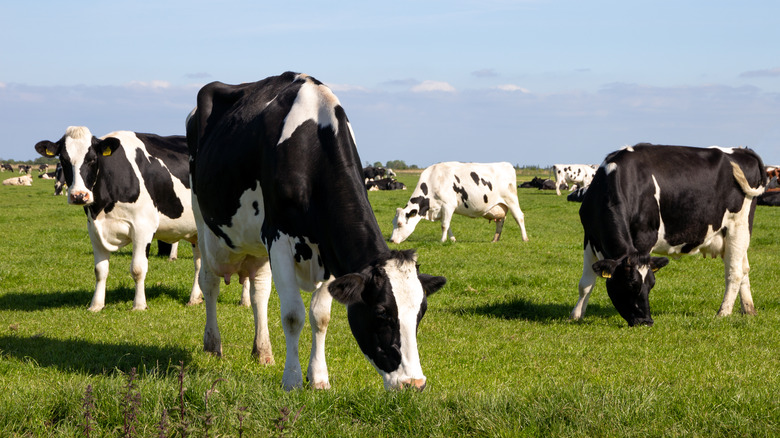
With artificial intelligence and data-driven decision-making, you can dig more deeply than just looking at the surface. Picture being able to monitor your cattle’s health and spot potential problems before they pop up. These systems give you that power. They check out info from intelligent sensors that monitor vital signs, behavior, and conditions every day. What’s in it for you? You can take charge of herd health instead of just reacting to issues as they come up.

Think about how it affects getting things done. You can tweak feeding schedules, manage milk production cycles, and spot cows that might need extra care using AI insights. You can ditch the guesswork and old-school methods that slow you down. Instead, you go for intelligent, strategic choices based on solid data.

Also, this shift to data analytics isn’t just about making each farm run better. It fits right in with what’s trending in sustainability and resilience today. Using these remarkable technologies helps reduce waste and environmental impact and keep your farm running more sustainably.
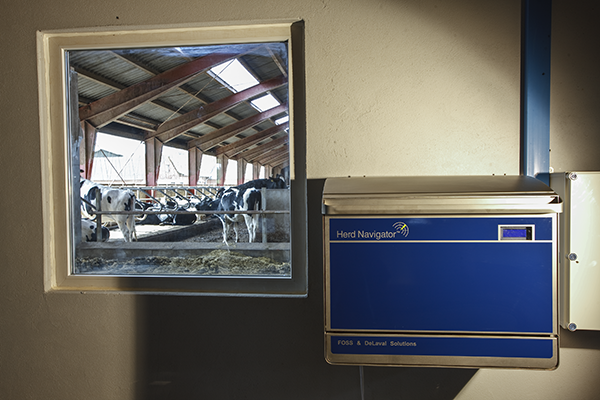
A bunch of products are stepping up for sustainability in dairy farming. John Deere’s Precision Ag Technology has some excellent tools for managing fields and using resources better, and Lely’s Vector system makes feeding easier by cutting down on feed waste. Also, GE’s Digital Wind Farm helps farmers tap into renewable energy, reducing their need for traditional power sources. These innovations are just a couple of ways tech is changing up sustainable dairy operations.

Using AI in dairy farming is like having a buddy to help you tackle the challenges of modern agriculture. Are you all set to let data guide your choices?

Maximizing Herd Health: The Future of Dairy Farming Hinges on Animal Welfare 

In today’s world, prioritizing animal welfare in dairy farming is not just a moral obligation but a key to unlocking better farm outcomes. How can you ensure your herd is comfortable and thriving? Intelligent sensors may hold the answer. 

Modern technology, like smart sensors, plays a significant role in monitoring cow behavior and health. These sensors offer real-time data on various parameters such as activity levels, body temperature, and eating habits. This information is invaluable. By keeping a close watch on these metrics, you can promptly address any health issues before they escalate, ensuring both the cows’ well-being and the farm’s productivity. 

One standout technology in this domain is the Maternity Warden by Ever. Ag. This innovative tool provides essential insights into a cow’s health and behavior during critical calving. By analyzing patterns and alerts, it helps predict calving times and detect potential complications early on. Such precise oversight can drastically reduce mortality rates and improve the overall health of your herd. 

Ultimately, focusing on animal welfare through advanced monitoring technologies benefits the animals and bolsters farm efficiency and profitability. It’s about creating a harmonious farm environment where technology and animal welfare work hand in hand to deliver sustainable success.

Are You Ready to Lead Your Dairy Farm into a Sustainable Future? Discover What’s Possible!

Have you thought about how your dairy farm affects the environment? It’s a big deal that many folks in our field are starting to take on directly. Sustainability and efficiency aren’t just trendy terms anymore; they’re super important for the future of dairy farming. Let’s check out how these elements make a difference and why they should be important to you.

Sustainable Practices: A Green Revolution 

Eco-friendly farming methods aim to cut down the dairy industry’s carbon footprint. For example, precision feeding strategies are designed to meet the specific nutritional needs of each cow. This method reduces feed waste and helps lower methane emissions, which are a big player in greenhouse gases. Picture giving each cow precisely what it needs, cutting waste, and saving some cash. It’s super efficient!

But it goes beyond just feeding. With real-time monitoring systems in place, you can easily monitor and manage your farm’s resource use, like water and energy, making sure everything is used efficiently. Using sustainable practices keeps the land healthy for future generations and helps us get the most out of it today.

Data Analytics: The Backbone of Sustainable Dairy Farming

Data analytics is crucial for achieving sustainable dairy farming. With excellent software, you can spot trends and make intelligent choices. Rumen8 lets you check out all the incredible details about how well your feed works and how healthy your herd is.

Have you considered how these insights could help your farm bounce back better? If you make the most of your resources using data, you’ll be in a better spot to handle market ups and downs and any environmental issues that come your way. Prediction models can help you determine demand and plan and avoid having too much or too little; they cut down on waste.

Think about using tools like DairyComp 305 or Herd Navigator. Their excellent data analysis features let you watch milk production and cow health stats. Lely’s Astronaut’s robotic milking system makes milking a breeze and keeps track of all the details about each cow’s milk production and behavior. In the meantime, sensors from companies like SCR by Allflex are keeping tabs on heat detection and health status in real time. These tools could set you apart in tough times instead of just getting by.

Ultimately, these technologies lead to better resource management, reduced environmental impact, and a more sustainable future for dairy farming. Moving ahead requires dedication and intelligent farming techniques powered by tech progress.

So, are you all set to roll with these changes and take your farm into a sustainable future?

The Bottom Line

As you probably know, dairy farming technology has come a long way with automation, data-driven practices, and cool new ideas for animal welfare. These upgrades aren’t just about making things run smoother; they’re paving the way for what’s next in the dairy world. As sustainability, efficiency, and consumer transparency become more critical, these moves will help dairy farms meet market needs and face environmental issues directly. So, how are you planning to use these new ideas to take your dairy farm to the next level? The choices you make today will shape how well your operation does tomorrow. Are you pumped to welcome change and take your farm into this new era?

Summary:

The summary emphasizes technological advancements in dairy farming, targeting automation, data decision-making, animal welfare, and sustainability. Innovations like robotic milking, AI-driven analytics, and smart sensors aim to enhance operations, cow health, and environmental sustainability. Automation and robotics boost efficiency and comfort with precision feeding systems like Lely Vector. Data-driven tech aids in monitoring herd health, adjusting feeding, and managing milk cycles, aligning with sustainability trends and reducing waste. Tools like John Deere’s Precision Ag Tech and GE’s Digital Wind Farm help meet modern agricultural challenges. These technologies are vital for adapting to market and ecological pressures, ensuring continued progress and viability.

Key Takeaways:

  • Robotic milking and automated feeding systems are transforming dairy farm operations by enhancing efficiency and cow comfort.
  • Real-time data analysis, through precision livestock farming systems, aids in informed decision-making and improves herd management.
  • Technological advancements prioritize animal welfare with smart sensors providing valuable insights into cow health and behavior.
  • Focus on sustainability is key, with technologies minimizing environmental impact and optimizing feed efficiency.
  • New technologies are essential for dairy farms to remain competitive amidst changing market demands.

Learn more:

Join the Revolution!

Bullvine Daily is your essential e-zine for staying ahead in the dairy industry. With over 30,000 subscribers, we bring you the week’s top news, helping you manage tasks efficiently. Stay informed about milk production, tech adoption, and more, so you can concentrate on your dairy operations. 

NewsSubscribe
First
Last
Consent

Discover the Latest Innovations for Dairy Farmers: Top Products to See at World Dairy Expo 2024

Discover cutting-edge innovations for dairy farmers at World Dairy Expo 2024. Explore new products and technologies that can transform your dairy operations. Curious? Read more…

Are you prepared to change your dairy farm with cutting-edge innovations? This year’s must-attend event is the World Dairy Expo 2024. This event is a treasure of chances that might completely transform your dairy company. We provide cutting-edge software, veterinary tools, feed additives, and herd management systems to help you take your farm to the next level. The World Dairy Expo 2024 is not just an event, it’s an opportunity to network with industry leaders, learn about the latest technologies, and gain insights that can revolutionize your dairy farming practices. Attending the World Dairy Expo is crucial for any severe dairy farmer or industry professional seeking to stay up with agriculture’s ever-changing world.

Transform Calving Outcomes with AI: Meet the Maternity Warden 

Suppose you reduce the dangers of calving and assure better results for calves and dams. Wouldn’t you seize the opportunity? This is precisely what the Maternity Warden System provides. Maternity Warden, which uses AI-powered computer vision technology, monitors close-up pens continuously and around the clock. The technology works passively, using complex algorithms to identify signals of impending calving and transmitting real-time notifications to dairy management. It’s like having a virtual assistant that never sleeps, always alert for any signs of trouble, and ready to alert you when action is needed.

Maternity Warden stands out for its potential to significantly prevent stillbirths and calving difficulties. According to farm statistics, up to 7% of calves die within the first 48 hours after birth, a figure that the AI-powered technology hopes to reduce. By sending out timely alerts, the Maternity Warden ensures that aid is accessible when required, allowing for prompt interventions that may save lives and lessen the danger of lasting harm to calving dams.

This cutting-edge technology does more than monitor; it proactively improves the maternal experience. It reduces the need for continual labor by setting timestamps for essential events and sending alarms only when required, assuring compliance with standard operating procedures while lowering labor expenses. The system’s objective monitoring helps to move calving cows to the correct area at the right time, decreasing problems and boosting the chances of a healthy delivery.

For more information about this groundbreaking technology, visit Maternity Warden in the Exhibit Hall, Booth #4425 & #4426. Explore further information and demos to fully understand how this method may change how you approach your farm’s maternity care.

Combat Methane Emissions with Ecofeed®: Sustainable Dairy Farming Starts Here

Are you prepared to address the critical problem of methane emissions from your dairy operations? STgenetics introduces ecoFeed®, a breakthrough genetic solution for more sustainable dairy production. ecoFeed® uses data from over 25,000 progeny records to identify animals with high feed efficiency and much lower methane production. What does this mean to you? A chance to increase profits while taking significant steps toward a better world.

Consider a herd in which each cow eats less feed for the same, or even higher, production levels while emitting less methane into our environment. With ecoFeed®, this is no longer a pipe dream but a genuine possibility. The process is simple: you identify the animals with high feed efficiency and much lower methane production using the data from over 25,000 progeny records. Then, you adjust their feed and management practices accordingly. In an age when sustainability is increasingly associated with sound agricultural practices, using ecoFeed® will improve your operations’ efficiency while demonstrating your dedication to environmental care.

Don’t miss the opportunity to learn how ecoFeed® can transform your farm. Visit STgenetics at Booths MH 3208 & 3209 to discover this game-changing technology and take the first step toward a prosperous and sustainable dairy industry.

Elevate Your Breeding Program: Semex Elevate Revolutionizes Dairy Genetics

Regarding genetic superiority and cutting-edge reproductive technology, Semex Elevate is a game changer. Elevate is designed for progressive dairy farmers who want to maximize their breeding programs and genetic gains. Its user-friendly features enable you to utilize real-time genetic findings to make swift, data-driven choices. Imagine being able to identify top-performing cows and make intelligent mating decisions that align with your herd’s objectives.

But what distinguishes Elevate is its emphasis on efficiency and accuracy. The revolutionary platform gives practical insights into genetic features, allowing you to make the most of each breeding cycle. Whether you want to increase productivity, improve health qualities, or fine-tune your herd for particular performance measures, Elevate has the resources you need.

Visit the Semex/Boviteq Lounge in Pavilion One for a detailed presentation and to learn more about how Semex Elevate may improve your dairy farming processes. Gain hands-on experience under professional supervision and see firsthand how Elevate can catapult your farm into the future of genetic management.

Unleash Dairy Farming’s Future with GEA’s Six Trailblazing Technologies

At this year’s World Dairy Expo, GEA is introducing six game-changing technologies to dairy production. First up is CattleEye Ltd.’s AI-powered lameness and body condition score (BCS) monitoring system, which detects and predicts cow health concerns and provides actionable data via a specialized smartphone app. Next, the DCPro Dairy management fully manages CIP wash operations, temperature monitoring, and tank fill levels, ensuring your milking and cooling systems work smoothly.

Kommand™ Lux, a non-iodine teat dip, offers excellent mastitis prevention at a low cost by creating a protective barrier on teats. The GEA DigiFlow milk meter promotes enhanced milk production by providing accurate real-time measurement and consistent vacuum levels, improving milking efficiency and animal health management.

The new DigiTron milking control system simplifies operations with an ergonomic design and straightforward controls, allowing parlor workers to monitor and regulate milk output effortlessly. Finally, the DairyRobot R9600 automated batch milking system lowers labor expenses by automating cow preparation and milking processes. This allows for more effective milking of grouped herds.

For hands-on experience and additional information on these technologies, stop by GEA at Booths #4425 and #4426 in the Exhibition Hall.

Golden Calf Company Continues to Lead with the New Calf Hero™ Superflex 

Golden Calf Company has always remained one step ahead in an area where innovation is frequently stagnant. Our first Snap-In Tube Feeder changed calf feeding from the start. Its unique design, which includes a big aperture and an easy-to-use snap-in mechanism, established a new standard in the industry. Dairy farmers throughout the globe praised it for its simplicity, dependability, and efficacy, making it a go-to tool for those who value their calves’ well-being.

The Calf Hero™ SuperFlex takes innovation to the next level. This next-generation feeder expands on the enormous success of our original design by combining the reliable qualities of the Snap-In Tube Feeder with more versatility. SuperFlex is designed to be 50% more flexible, made from high-quality materials for longevity, and maintains the innovative snap-in feature. Its narrow profile tip guarantees gentle, quick, and successful feeding, putting calves on the road to good health. Furthermore, it provides diverse alternatives in a reusable variation and is 100% recyclable, corresponding with our sustainability commitment.

Golden Calf Company is committed to continual innovation, and the Calf Hero™ SuperFlex demonstrates this. Visit them at Booth EH 3016-3318 to witness this game-changing feeder.

Stay Ahead of Health Issues: DeLaval’s Disease Risk Application Takes Center Stage 

Early diagnosis of cattle health issues is critical in today’s fast-paced dairy sector. Enter DeLaval’s unique Disease Risk application, a groundbreaking digital solution that enables farmers to detect ill cows and take preventive steps instantly. This application uses DeLaval’s powerful artificial intelligence model, DeepBlue, to combine sensor data and provide a thorough health forecast.

The Disease Risk app provides essential information about your herd’s health, including mastitis, ketosis, and other problems. This enables you to make educated judgments and take prompt action to ensure optimal output and animal welfare. This program’s practical use of AI technology allows you to detect health concerns before they worsen, saving your animals time, resources, and worry.

Do you want to witness this technology in action? Visit DeLaval at booth MH 1704-1708 at the World Dairy Expo to learn how Disease Risk may transform your herd management techniques.

Revolutionizing Embryo Cryopreservation: The Biorocks Vitrification System 

Biorocks introduces automated equipment for freezing and thawing embryos and oocytes, representing a significant advancement in animal husbandry. Historically, the industry depended on antiquated programmed freezing (slow freezing) techniques for embryo cryopreservation. This technology has significant disadvantages, prompting human-assisted reproduction facilities to use the more modern vitrification freezing process. However, vitrification requires precise procedures performed by trained embryologists, and its expensive cost has limited its use in animal agriculture. As a consequence, the industry has continued to use slow freezing procedures.

After years of technical advancement, Biorocks has solved these issues. Their flagship product provides automated, high-throughput, cost-effective, and dependable solutions for livestock and breeding firms, allowing for the long-awaited adoption of vitrification freezing for embryos in the sector. Biorocks has collaborated with significant animal husbandry companies in China, yielding outstanding results: studies reveal a 35.5% increase in thawing recovery rates and a 77.9% increase in hatching rates compared to the standard gradual freezing approach. Discover this breakthrough technology at Booth TC 608.

Upgrade Farm Ventilation Without Breaking the Bank 

Do you want to improve your farm’s ventilation without breaking the bank? 4D Ag World’s DACS replacement kits provide a seamless solution. These kits convert your current fan housings to match the high-efficiency MagFan 3.3 and MagFan 1 direct-drive fans. Using MagFan technology, you can significantly improve airflow and energy efficiency, providing a more pleasant and productive environment for your herd.

MagFan technology stands out for its high efficiency and durable performance. These fans provide optimal airflow, which may significantly enhance air quality and minimize heat stress in your barn. The direct drive method has fewer moving parts, resulting in lower maintenance costs and a longer equipment lifetime.

Don’t discover more about these fantastic solutions. Visit 4D Ag World at the World Dairy Expo, Trade Center, Booth #661-702.

Revolutionize Water Management with VES-Artex’s Intelligent Soaker 2.0 

Imagine reducing your water use by up to 70%. That is not wishful thinking; it is the reality that VES-Artex’s Intelligent Soaker 2.0 technology delivers. This novel method advances water conservation in dairy farms by dynamically regulating when and how much water is utilized based on real-time cow presence. The result? Significant savings and optimal resource use.

The Intelligent Soaker 2.0 system uses advanced sensors, timed settings, and a complex algorithm to guarantee that soaking occurs only when needed. This means no more wasting water during idle times. The system is simple to install and integrates effortlessly with most existing infrastructure, making it suitable for farms of all sizes and kinds.

What does all of this mean in practical terms? For starters, it represents a significant saving in water-related operational expenditures. Farms may save money while also contributing to environmental sustainability by conserving water. Furthermore, the cow-friendly LED lights in the system show performance status, providing a smooth operation without upsetting your cows.

While the financial gains are apparent, the more enormous ramifications are worth considering. Efficient water usage aligns with environmental rules and promotes long-term sustainability in agriculture.

Stop by the VES-Artex booth in the Exhibition Hall, Booth #3808/3909, to witness the Intelligent Soaker 2.0 in action and ask any questions.

Unlock Precision Dairy Farming with DRMS’s HerdHQ Tools 

Now is a perfect time if you don’t still need to explore DRMS’s HerdHQ. This suite of web-based herd analysis and decision support tools could be the game-changer you’re looking for. Staying organized and making informed decisions is vital when managing a dairy farm. 

HerdHQ offers several cutting-edge tools: 

  • CowCompass: An individual cow lookup tool that enables you to monitor each cow’s stats effortlessly.
  • DairyDepot: This feature delivers user-definable dashboards to provide an at-a-glance overview of your operation.
  • HerdHighlight offers activity trackers that monitor cow movements, ensuring no detail is overlooked.
  • MilkMetrics: This tool provides test-day KPI analysis against previous test days and peer herds, helping you benchmark and improve steadily.
  • HeiferHub: Assists you with breeding and culling decisions to maximize revenue from beef-on-dairy calves while ensuring sufficient replacements are available.
  • KeepOrBeef: Further aids in making sound culling decisions, giving precise insights into each animal’s potential future performance.
  • HotSheetPro: Eases udder health management, identifying which cows are good candidates for selective dry cow therapy.
  • DecisiveDry: Complements HotSheetPro, providing similar functionality focused on drying—off cows.

The best part? These tools integrate seamlessly with Dart herd management software. This integration ensures you get real-time, interpretive information based on current data, enhancing decision-making precision. Take the chance to see these innovations up close. Visit DRMS at the Coliseum Main Concourse, Booth #37/38.

If You’re Serious About Your Youngstock’s Health, SenseHub Dairy Youngstock Is a Game-Changer

If you’re serious about the health of your youngstock, SenseHub Dairy Youngstock from Merck Animal Health is a game changer. This LED ear tag monitoring system provides 24-hour monitoring for dairy calves up to 12 months old, whether kept separately in cabinets or group settings. Thanks to continuous monitoring, this technology detects early illness signals in your calves before clinical symptoms appear.

One of the most notable aspects of SenseHub Dairy Youngstock is its LED sight signal, which makes it simpler and faster to respond to calves who need care. This decreases animal discomfort and conserves resources, allowing you to handle each calf independently without burdening the herd.

Furthermore, this technology offers more than simply immediate health advantages. Detecting sickness early and decreasing stress may prepare your young stock for long-term performance and well-being.

Visit Merck Animal Health at the World Dairy Expo in Exhibition Hall, Booth #3606/3607, for an in-depth look and answers to your questions.

The Bottom Line

This year’s World Dairy Expo 2024 offers numerous new ideas that might change how we approach dairy production. From AI-powered monitoring systems to environmentally friendly feed additives, the Expo is your ticket to the future of dairy technology. Stopping by the booths above will give essential insights and enable you to meet with specialists influencing the industry’s subsequent significant advances.

As you investigate these breakthroughs, consider how these technologies may impact your farm’s operations and sustainability in the next decade. Don’t pass up the opportunity to be at the forefront of this exciting development in dairy farming.

Summary:

Welcome to the World Dairy Expo 2024, where dairy farmers and industry professionals converge to stay ahead in the ever-changing dairy landscape. This year’s expo promises innovations such as the Maternity Warden System for AI-powered calving, STgenetics’ Ecofeed® for sustainable dairy production, and the Semex Elevate for real-time genetic insights. Key products include GEA’s AI-powered lameness and BCS Monitoring System, DCPro Dairy Management, Kommand™ Lux teat dip, DigiFlow Milk Meter, DigiTron Milking Control System, and the DairyRobot R9600 Automated Batch Milking System. Additionally, the Golden Calf Company’s Calf Hero™ Superflex, the Disease Risk Application, Biorocks Vitrification System, 4D Ag World’s DACS Replacement Kits, VES-Artex’s Intelligent Soaker 2.0, and DRMS’s HerdHQ tools represent industry-leading innovations. Don’t miss these advancements; visit their booths to learn more!

Learn more:

Join the Revolution!

Bullvine Daily is your essential e-zine for staying ahead in the dairy industry. With over 30,000 subscribers, we bring you the week’s top news, helping you manage tasks efficiently. Stay informed about milk production, tech adoption, and more, so you can concentrate on your dairy operations. 

NewsSubscribe
First
Last
Consent

Stay Ahead in Dairy Farming: Essential Dairy Herd Management Trends 2023-2030

Boost your dairy profits with next-gen herd management strategies. Ready to enhance your farm’s efficiency and animal welfare? Read on.

Summary: The global market for Dairy Herd Management is rising, estimated at $3.8 billion in 2023 and projected to reach $5.4 billion by 2030. This remarkable growth, driven by the increased demand for dairy products and technological advancements, offers dairy farmers a treasure trove of opportunities. Dairy herd management now goes beyond traditional methods, embracing innovations like automated milking systems and wearable sensors. But it’s not without challenges, from high costs to data management complexities. With a market growth rate accelerating to a CAGR of 6.0%, understanding these hurdles and leveraging advanced technologies is crucial for navigating this evolving landscape, making informed decisions, and striking a balance between long-term benefits and upfront investments.

  • The global Dairy Herd Management market is projected to grow from $3.8 billion in 2023 to $5.4 billion by 2030.
  • This growth is driven by increased demand for dairy products and technological advancements.
  • Technologies like automated milking systems and wearable sensors transform dairy herd management.
  • Challenges include high costs and complexities in data management.
  • Understanding these challenges is essential for leveraging advanced technologies effectively.
  • The market is expected to grow at a CAGR of 6.0%.
  • Farmers need to balance long-term benefits with the upfront investments required.
global dairy herd management market, dairy products, operational efficiency, animal welfare, milk demand, cheese demand, yogurt demand, automated milking systems, real-time data analysis tools, Europe regulations, humane management approaches, automated dairy herd management systems, standalone software, tech advances, farm operations, efficiency, herd health, automated milking systems, feeding systems, labor expenses, breeding seasons, informed decisions, overall herd health, upfront expenditures, gradual updates, technology vendors, user-friendly software

Do you want to increase the profitability of your dairy farm? The dairy sector is continually developing, so keeping ahead of the curve is critical. Join us as we examine the most recent developments and technology in dairy herd management that may help you improve your operations and increase revenues. Let’s investigate how you can use these advances to your advantage.

The Global Market for Dairy Herd Management: Finding Opportunities Amidst Rapid Growth

The worldwide market for dairy herd management is approaching a tipping point. It is expected to be worth $5.4 billion by 2030, up from $3.8 billion in 2023 [Source]. This exceptional expansion is driven by the expanding worldwide demand for dairy products, the need for improved operational efficiency, and an increased focus on animal welfare. Examining these market trends attentively will reveal where the most attractive prospects exist.

Your Farm’s Future: Key Trends Driving Dairy Herd Management 

Your farm’s future is linked to numerous critical developments in the dairy herd management industry. Growing worldwide demand for dairy products is a significant influence. People worldwide are eating more milk, cheese, and yogurt, putting pressure on producers to increase output without losing quality.

Then, there’s the need to improve operating efficiency. Farmers benefit from advanced technology, such as automated milking systems and real-time data analysis tools, which help them simplify operations, decrease labor expenses, and make better choices. This may make a significant impact on your bottom line.

Finally, there is an increased focus on animal welfare. Regulations are becoming more stringent, particularly in Europe, which accounts for 31.5% of the market as of 2023. Farmers are using more humane management approaches to comply with the law while ensuring healthier, more productive livestock.

Understanding these development factors might help you prepare for your farm’s future. Implementing modern dairy herd management systems might be the key to remaining competitive in this quickly changing industry.

Embrace the Future: How Tech Advances Are Revolutionizing Dairy Farming

Automation, real-time data analysis, and increased animal comfort are among the latest dairy herd management advancements. These developments are transforming how farms function, delivering technologies that improve efficiency and safeguard the health of your herd.

Imagine your farm with automated milking and feeding systems. These improvements could cut labor expenses dramatically while improving feed dispensation precision and milking efficiency. Real-time data analysis technologies let you spot infections early on, optimize breeding seasons, and make educated choices to enhance overall herd health.

Machine learning models go further, anticipating and avoiding future health risks before they become severe. This not only keeps your herd healthier, but it also lowers veterinary bills. Meanwhile, cloud computing enables remote access to critical information, allowing for more informed management choices regardless of location.

Adopting these technologies may create a more productive, efficient, and compassionate agricultural enterprise. Are you prepared to take your farm to the next level?

The Booming Market: Automated Systems and Standalone Software in Dairy Herd Management 

First, let’s discuss numbers. The market for automated dairy herd management systems is increasing. By 2030, we expect a market value of US$3.5 billion, with a CAGR of 6.0%. If your farm still needs to integrate these technologies, now is an excellent opportunity to consider how automation might simplify your operations.

The standalone software category is also expected to increase at a slower rate of 3.6% CAGR. This provides another option for improving your herd management procedures without requiring a major redesign of your current infrastructure.

Moving on to geographical analysis, the United States market accounted for a sizable US$1.0 billion share of the pie in 2023, laying the groundwork for future development. However, consider China, where the industry is expected to develop at an impressive 8.7% CAGR and reach US$1.2 billion by 2030. Japan, Canada, Germany, and Asia-Pacific are other vital areas to follow since they all exhibit potential development prospects.

Let’s Talk Numbers: Is the Investment Worth It? 

Let’s discuss numbers. Implementing modern dairy herd management systems often necessitates a significant initial investment. System costs for automated milking machines, health sensors, and integrated management software may range from $100,000 to $500,000, depending on your company’s size and characteristics.

So, what do you receive for your investment? One significant advantage is saving money on labor. Automated milking and feeding systems may cut labor requirements by up to 30%, saving you tens of thousands yearly, depending on your present costs.

Furthermore, real-time health monitoring may lead to early illness identification, reducing veterinarian expenditures by around 20%. Improved milk output and quality may lead to more significant revenues—studies suggest possible milk production increases of up to 15%. This potential for increased revenues should inspire optimism about the future of your farm.

Given these elements, many farmers estimate an ROI timeframe of 2 to 4 years. This is often determined by the degree of integration efficiency and technology used. Remember that economies of scale may substantially impact; larger businesses can spread these expenses among more animals, decreasing the ROI time. Understanding the potential ROI and the factors that can influence it is crucial when considering the investment in advanced dairy herd management systems.

Although the initial investment in sophisticated herd management systems is significant, the prospective savings and improved income often indicate a positive return on investment. This reassurance about the financial viability of these technologies, when implemented with proper planning and implementation, may assist in future-proofing your dairy farm.

Comparing Popular Dairy Herd Management Technologies 

Automated Milking Systems (AMS) 

   Features: Fully automatic milking, real-time data collection, and reduced need for manual labor.  

   Benefits include increasing milking efficiency, minimizing labor costs, and providing precise milk yield data.  

   Drawbacks: High initial investment, maintenance costs, and potential technical issues requiring skilled personnel.  

Wearable Sensors 

   Features: In real-time, monitor cows’ vital signs, activity levels, and reproductive status.  

   Benefits: Early detection of health issues, improved breeding management, and enhanced overall herd health.  

   Drawbacks: Requires consistent monitoring and interpretation of data, and initial setup can be costly.  

Integrated Herd Management Software 

   Features: Comprehensive farm data management, real-time analytics, and remote accessibility via cloud computing.  

   Benefits: Streamlines operations, facilitates better decision-making, and integrates various farm aspects into a unified system.  

   Drawbacks: Complex setup, dependency on reliable internet connectivity, ongoing subscription costs.  

Automated Feeding Systems 

   Features: Automatic ration distribution based on individual cow’s needs and feeding schedules.  

   Benefits: Optimizes feed efficiency, reduces wasted feed, and minimizes labor involved in feeding.  

   Drawbacks: Significant upfront costs and potential mechanical breakdowns require technical expertise.  

Machine Learning and Predictive Analytics 

   Features: Using advanced algorithms to predict health concerns, breeding periods, and other critical farm events.  

   Benefits: Proactive health management, enhanced production efficiency, and reduced veterinary expenses.  

   Drawbacks: Requires high data input and sophisticated software; initial costs can be high.  

Implementing Advanced Technologies: The Roadblocks and Remedies

While new dairy herd management systems have the potential to alter your farm, they also present obstacles. The first investment might seem overwhelming. Automated milking equipment, health monitoring devices, and software systems demand a significant investment. These hefty prices often dissuade small and medium-sized farmers from adopting these technologies.

Then there is data management. The sheer amount of data created might be intimidating. Data management is full-time, and it involves tracking cow health and milk output and monitoring feeding schedules. You could ask whether all of this information is necessary.

Furthermore, integrating new technology with old systems only sometimes goes well. Disruptions may occur, resulting in downtime and possibly impacting milk output. For farmers, time is money, and tiny interruptions may result in significant losses.

So, how can you overcome these obstacles? Begin by balancing the long-term advantages vs. the upfront expenditures. Consider gradual updates rather than a significant redesign. Partner with technology vendors that provide comprehensive training and support. This may help smooth the transition and make data management less frightening.

Additionally, investing in user-friendly software may make a significant impact. Look for technologies that will work effortlessly with your present processes. Forethought and foresight may help you use technology to your advantage rather than against it.

Read testimonials and case studies from other farmers who have overcome similar obstacles. Their experiences may provide valuable insights. The advantages of sophisticated dairy herd management systems may far exceed the drawbacks with the correct strategy.

The Bottom Line

So, where does this leave you? The future of dairy herd management seems promising, with many possibilities for those ready to embrace innovation. Understanding market trends and using cutting-edge technology may help you maximize the profitability of your dairy farm. You decide what to do next. What actions will you take to maintain your competitive advantage in an ever-changing industry?

Learn more:

Join the Revolution!

Bullvine Daily is your essential e-zine for staying ahead in the dairy industry. With over 30,000 subscribers, we bring you the week’s top news, helping you manage tasks efficiently. Stay informed about milk production, tech adoption, and more, so you can concentrate on your dairy operations. 

NewsSubscribe
First
Last
Consent

Unlocking Dairy Farming’s Full Potential: Beyond the Barn and into the Broader World

Uncover groundbreaking research that could revolutionize dairy farming. Are you interested in new insights on animal welfare, farmer well-being, and sustainability? Keep reading.

Summary: Qualitative research transforms dairy farming by shedding new perspectives on dairy cow welfare, farmer decision-making, and human-animal relationships. By examining 117 articles from various disciplines, significant issues like animal welfare, the role of women, daily risks, working conditions, and the impacts of technology and environmental sustainability are highlighted. This research provides deep insights often overlooked by traditional methods, helping farmers make better decisions and find innovative solutions. Standard practices, emotional bonds between humans and animals, daily risks like physical injuries and zoonotic infections, and technology’s upsides and downs are crucial. Historical and structural factors, power imbalances, and global market interconnections further complicate the dairy industry.

  • Qualitative research plays a pivotal role in offering new perspectives on dairy cow welfare and farmer decision-making, enlightening us and keeping us informed about the latest developments in the field.
  • 117 articles from various disciplines highlight critical issues in dairy farming.
  • Exploration of animal welfare, gender roles, daily risks, working conditions, technology impact, and environmental sustainability.
  • Insights from qualitative research can lead to better decision-making and innovative solutions for farmers.
  • The emotional bonds between humans and animals in the dairy industry are not just crucial; they make us feel connected and empathetic to the needs of our livestock.
  • Technology in dairy farming presents both benefits and challenges.
  • Historical and structural factors, global markets, and power imbalances influence the dairy industry.
dairy farming, social challenges, environmental effects, animal welfare, qualitative research, farmer decision-making processes, standard techniques, cow-calf separation, dehorning, naturalness in dairy production, emotional bonds, physical injuries, zoonotic infections, brucellosis, rabies, technology in dairy farming, automated milking systems, family connection, cultural identity, regional pride, intensive agricultural methods, mass-produced cheese, historical factors, structural factors, power asymmetries, dairy markets, sociological context, land use, climate change efforts, government programs, justice, fair pricing, equitable resource allocation, worker rights, migrant labor, fair salaries, safe working conditions, job security.

Did you know studying your cows’ behavior and interactions with people may dramatically improve your farm’s productivity? It’s intriguing, yet generally missed. Consider having insights from over 117 pioneering qualitative research that will help you improve your dairy farming techniques. This detailed analysis, published in the Journal of Dairy Science, delves deeply into how diverse scientific groups assess and debate dairy production, going beyond the technical and natural science components. From social challenges to the environmental effect of farming, these insights challenge the current quo and pave the way for new opportunities and directions in the dairy industry. “Bringing this research to the attention of dairy scientists is not just about broadening knowledge but pioneering better, more sustainable farming practices.” The relevance of this finding cannot be emphasized. Understanding the many viewpoints, from farm-level management to wider societal consequences, allows you to innovate and adapt in previously imagined ways. So, why not take a closer look at what experts say?

Unveiling the Hidden Factors: How Qualitative Research Transforms Dairy Farming

Qualitative research is essential in dairy farming because it may provide insights that typical quantitative approaches may miss. Have you ever wondered why farmers make confident choices or how new agricultural rules influence day-to-day operations? Qualitative research delves deeply into these themes, providing detailed knowledge of farmer decision-making processes, animal welfare methods, and even more considerable societal challenges.

Academics can capture the complexity and subtleties of dairy farming by interviewing farmers, watching their activities, and evaluating their narratives. This kind of investigation shows the choices made and the reasons behind them. Animal welfare issues are explored from various perspectives, including ethical concerns and emotional relationships between people and animals.

So why should you care? Understanding these multiple difficulties might help dairy farmers make better choices and devise more imaginative solutions. It may also bridge the gap between scientific research and real-world applications, encouraging tighter multidisciplinary cooperation that benefits both business and society.

The Untold Truths: Animal Welfare in Dairy Farming Under Scrutiny

The evaluation of animal welfare in dairy production revealed numerous significant conclusions. Standard techniques, including cow-calf separation and dehorning, were recognized as important sources of risk. Although common, these methods have severe consequences for the animals’ welfare. For example, quick cow-calf separation is often criticized for producing stress for both the mother and the calf. On the other hand, Dehorning is recognized for its usefulness in herd management but is frequently condemned for being a painful treatment, even with anesthetic or analgesics.

One of the more thought-provoking topics covered in the study is the idea of “naturalness” in dairy production. Many studies believe that establishing absolute naturalness in modern dairy systems remains challenging. The inherent clash between natural living circumstances and the needs of contemporary dairy production is a frequent issue. For example, activities such as selective breeding for increased milk output might cause health problems in cows, indicating a departure from what would be deemed normal. These critical viewpoints advocate rethinking present procedures and shifting toward ways that align with the animal’s natural behaviors and requirements.

Have you ever Wondered How the Emotional Bond Between Humans and Animals Shapes Farm Life?

Insights from both the agricultural and societal levels show intriguing processes. At the farm level, cultural factors and the farmer’s mood are important in forming these relationships. Burton et al.’s research demonstrates how the physical layout of the farm, such as milking sheds and barn passageways, and the farmer’s mood contribute to an overall farm culture that significantly impacts everyday routines and communication styles. This directly affects farmers’ and animals’ interactions, resulting in different human-animal interactions.

On a larger social scale, the tale develops differently. Take rural Pakistan, for example, where Gomersall et al. highlight women’s significant emotional bonds with their cattle. Here, societal distinctions such as class and caste come into play. Yet, the cows often become vital aspects of their caregivers’ lives, offering economic value and emotional sustenance.

These studies focus on dairy production’s complex and frequently ignored emotional terrain. Whether it’s the farm culture in New Zealand or the deep relationships in Pakistan, the human-animal link is an essential element of dairy farming history.

Have You Considered the Everyday Risks Lurking on Your Dairy Farm?

Let’s go into the details of dairy farming, such as labor conditions and hazards. Have you ever considered the everyday risks you encounter on the farm? There are other factors to consider, including physical injuries and zoonotic infections. First, let’s address the elephant in the room: physical injuries. You’re familiar with the routine—bending, lifting, and navigating around heavy gear may be taxing on your body. In reality, milking, cleaning out, and moving cattle cause many on-farm accidents. One research emphasized the increased risk of injury, particularly among milking workers, highlighting that extended repetitive duties might result in chronic discomfort and musculoskeletal difficulties [Douphrate et al., 2013].

Then, there’s the possibility of zoonotic illnesses, which may spread from animals to people. Examples include brucellosis, leptospirosis, and TB. Handling cattle during calving or other activities without adequate protection exposes you to these hazards. In Senegal, for example, research discovered that farmers were regularly exposed to brucellosis and rabies owing to a lack of preventive measures [Tebug et al., 2015]. In dairy farming, technology may be both beneficial and detrimental.

On the one hand, advancements such as automated milking systems (AMS) may make work more accessible and less physically demanding. However, they also provide additional problems. As technology becomes increasingly interwoven into farming, the nature of labor changes, as does one’s identity as a farmer. One study in England found that adding milking robots changed responsibilities and how farmers saw and interacted with their cows [Bear and Holloway, 2019].

What are the advantages and disadvantages for families that work on dairy farms? Family work is often seen as a means to minimize expenses while maintaining a caring touch in agricultural operations. However, this might provide its own set of issues. For example, although youngsters working on farms might learn essential skills, they also face high risks of harm. Wisconsin research emphasized the perceived advantages and genuine dangers of child labor in dairy farming [Zepeda and Kim, 2006].

Furthermore, hard hours and financial constraints might harm the mental and physical well-being of family members directly engaged in dairy farming. A New Zealand research found that family-run organic farms often depend substantially on unpaid family work, which may strain family connections and well-being [Schewe, 2015]. So, although dairy farming may be very rewarding, it is essential to be aware of the hazards and take proactive actions to mitigate them. Have you considered how these things affect your farm? How do you balance the advantages of family connection and the importance of safety and well-being?

Women in Dairy Farming: Ready to Break the Mold?

Women’s involvement in dairy farming has recently shifted significantly. Historically, males controlled the field, but the scene is changing. Women are increasingly taking on essential duties, transforming the face of dairy production worldwide.

  • Policies, Technology, and Disease Events: Shaping Gender Roles
    Policies have a significant influence on changing gender roles in dairy production. For example, water shortage laws in Australia have forced more women into traditionally male-dominated physical agricultural jobs (Alston et al., 2017). Automated Milking Systems (AMS) have also transformed roles, often reinforcing conventional jobs, such as males managing machines and women caring (Bear & Holloway, 2015). Disease occurrences, such as bovine TB epidemics, momentarily raise women to more significant farm roles. Still, these adjustments often reverse post-crisis (Enticott et al., 2022).
  • Empowerment and Disempowerment: A Global Perspective
    In some instances, the advent of dairy farming has empowered women. In Uganda, cattle ownership has given women economic power and social prestige in their communities (Bain et al., 2020). Similarly, in Botswana, dairy farming has been a source of empowerment. However, cultural norms continue to limit their full involvement in markets and decision-making venues (Must & Hovorka, 2019). However, instances of disempowerment do occur. In Indonesia, the milk value chain remains highly masculinized, restricting women’s responsibilities to smallholder farm activities and removing them from broader market prospects (Wijers, 2019). Caste structures in South India exacerbate the problem, with women encountering gender and societal hurdles to involvement in cooperative movements (Dohmwirth & Hanisch, 2019).

Although women are becoming more critical in dairy farming, external variables such as regulations, technological improvements, and disease outbreaks constantly alter their responsibilities. Depending on the setting and existing societal systems, these effects may empower or weaken women.

Essential Allies: How Veterinarians and Advisors Elevate Your Dairy Farm

Let’s discuss veterinarians and dairy farm advisers. Have you considered how these specialists integrate into your farm’s everyday operations? Veterinarians and other consultants play essential roles. They don’t simply cure ill animals; they also provide recommendations that may boost your farm’s overall output. But how can you strike a balance between public and private consulting services?

Trust is the glue that connects these partnerships. A competent counselor understands that gaining trust takes time. You’ve undoubtedly seen this: trusting your adviser makes you more inclined to accept their advice. Trust is developed via constant, credible guidance and open communication. Informal knowledge flows are essential. You’ve probably exchanged suggestions with other farmers or gained great insights during a casual conversation. This informal knowledge may be beneficial, particularly when supplemented with expert assistance.

Balancing public and private advising services, building trust, and using informal knowledge flows will improve your farm’s performance. Ready to improve your relationships?

Revolutionary Tech Trends: Are You Ready for the Future of Dairy Farming?

Technology has undoubtedly changed dairy farming. From automated milking systems (AMS) to genetic engineering, integrating modern technology into dairy operations has created new opportunities for efficiency and production. But have you ever considered the more significant consequences of these changes?

  • How Technology Alters Human-Animal Relationships
    For example, the development of robotic milking equipment has drastically altered farmers’ interactions with their cattle. Machines now manage most of the milking operation, resulting in less direct interaction between people and animals. This transformation can drastically alter farmers’ relationships with their cattle. According to specific research, animals may see robots as a third party in their interactions with humans, resulting in a novel human-animal-technology triad. Farmers, too, are finding their responsibilities changing, frequently necessitating a change away from hands-on animal care and toward more technological proficiency.
  • Impact on Farmer Identities
    The emergence of precision agricultural technology, digital tools, and automated systems has also altered farmer identities. Whereas formerly, their expertise was in animal husbandry, today’s dairy producers often need IT skills and the ability to run complex technology. This transformation may be powerful and frustrating since it can raise concerns about identity and render conventional skills to be updated.
  • Ethical Dilemmas
    While technological advancements provide advantages, they also create ethical concerns. For example, the possibility of genetic engineering to improve milk output or illness resistance raises concerns about violating ethical limits. Similarly, automated methods developed to boost efficiency may neglect animal welfare concerns. There is an increasing need to balance technical prowess and ethical treatment of animals, ensuring that advances do not come at a moral cost.
  • The Broader Influence on Rural Landscapes and Industry
    Finally, technology’s impact goes beyond individual farms, influencing rural landscapes and the dairy sector. Consolidating smaller farms into more significant, tech-driven businesses can change rural communities, sometimes resulting in depopulation and the degradation of local customs. However, it also opens the way for new skills and career possibilities, necessitating a careful strategy to navigate these changes seamlessly.

Although technology transforms dairy production, it also introduces a complex web of changes and concerns. Understanding these interactions is critical for ensuring technology’s equitable and ethical incorporation into agricultural methods.

Considering Environmental Impact: Where Do You Stand?

Have you ever considered the environmental impact of your agricultural practices? Dairy farming has various effects on the environment. It’s about the cows and their milk, the land, the water, and the air we breathe. Many studies have shown the crucial relevance of this relationship, but let us bring it closer to home.

  • Farmers and Climate Change: What’s Your Take?
    Climate change is no longer a distant issue; it is here, pounding on our barn doors. How are you coping with the new reality? Are you adjusting your plans to accommodate changing weather patterns, or are you undecided? Interviews with farmers from different locations indicated conflicting emotions. Some adopt new approaches and ideas, while others need to be more knowledgeable and calm about the expenses and complexity.
  • The Power of Community: Social Networks to the Rescue
    Let’s speak about something more instantly impactful: social networks. No, not Facebook or Twitter, but real-life contacts with other farmers, advisers, and community members. These networks are troves of procedural information that will lead you to more sustainable practices. Why tackle it alone when you can benefit from the collective expertise around you? Collaborative workspaces and shared learning spaces may be critical, particularly with complicated subjects such as climate change.
  • Take the Next Step
    You don’t need to make drastic changes overnight. Start small by contacting individuals in your network. Join a local agricultural organization that focuses on sustainability. Attend a training or lecture on ecological agrarian techniques. These efforts gradually add up. It is critical to the long-term viability of our farms and the ecosystem.

Why the Fuss Over the Badgers? The Complex Debate on Wildlife Conflicts in Dairy Farming

Human-wildlife conflicts have long been a contentious problem. Still, nothing truly stirs the pot like badger culling in Great Britain. Badgers are recognized carriers of bovine tuberculosis (bTB), a highly contagious illness that decimates cow herds. The badger cull tries to manage and decrease the spread of this illness. However, it sparks ethical and policy conflicts, with farmers and politicians seeing culling as a necessary evil to safeguard cattle and livelihoods. At the same time, animal rights activists and many scientific community members believe it is harsh and ineffective [McCulloch & Reiss, 2017]. Alternatives such as immunization provide their issues, and media representation often impacts public perception and policymaking, resulting in disinformation and heated opinions [Cassidy, 2012].

Badger culling isn’t the only animal conflict hurting dairy production. In Ecuador, the growth of cow pastures via deforestation has exacerbated human-bear confrontations, resulting in livestock losses and increasing tensions [Jampel 2016]. Similar stories may be seen in Botswana, where farmers face threats from animals such as elephants, resulting in crop and livestock losses [Huckleberry, 2023].

The ethical issues and policy alternatives involving these conflicts are as diverse as their circumstances. Whether it’s killing badgers in the UK or controlling bear encroachment in Ecuador, finding balanced solutions that consider economic stability and ethical wildlife care remains a significant problem. Understanding these factors may help dairy producers improve their operations and have more informed talks with legislators and communities.

Have You Ever Thought About Your Milk and Cheese’s Deep Roots in History? Discover the Heritage Behind Dairy Farming

Have you ever considered how your milk and cheese have deep roots that date back generations? Dairy farming is integral to local, traditional, and territory-based agriculture, preserving cultural identity and regional pride. It’s more than making milk; it’s about sustaining a tradition.

Consider artisanal cheeses from France and Italy. These culturally infused cheese products are more than simply food; they celebrate local traditions and biodiversity. These cheeses represent the distinct characteristics of their respective locations, from the distinctive breeds of cattle utilized to the specialized grazing pastures and traditional cheese-making techniques. However, this local emphasis is only sometimes secure. Intensive contemporary agricultural methods and the desire for mass-produced cheese may endanger these ancient ways, jeopardizing the (occasionally unseen) microbial variety that gives these cheeses their distinct tastes (Mariani et al., 2022).

However, the dairy industry has its issues. Historical and structural factors continue to influence its behavior. For example, dairy producers in upstate New York hope that a burgeoning demand for organic dairy products will give them a more secure future. However, they usually face power asymmetries within the sector, which regularly repeat the traditional paradigm even in organic farming (Guptill, 2009). Furthermore, the worldwide interconnection of dairy markets, such as trading between Australia and China, adds complication. Milk marketed as clean and immaculate in Australia reaches customers far distances, creating concerns about sustainability and food miles (Boehme, 2021). In conclusion, dairy farming in food landscapes is a complex subject. It is about preserving cultural legacy, guaranteeing fair trade, and dealing with complex historical and structural issues to continue your livelihood and contribute to a more equitable and culturally diverse food system.

In the Bustling Life of Dairy Farming, Have You Ever Paused to Consider the Broader Societal Context?

While everyday routines are important, let’s explore how dairy farming relates to more extensive social frameworks such as land usage, climate change efforts, and government programs. Of course, we cannot disregard the idea of ‘justice’ and the many obstacles you confront. Are you ready to explore?

  • Land Use: A Balancing Act
    Land-use regulations may make or kill your business. In many areas, the battle over land use involves more than simply agriculture; it is a tug-of-war between farming, conservation, and urban expansion. Have you observed how increasing numbers of cities eat away at potential agricultural land? The continual battle for land influences your capacity to operate efficiently and sustainably.
  • Climate Change Initiatives: The Double-Edged Sword
    Let’s discuss climate change. As crucial actors in this industry, you help ensure global food security and impact environmental health. Government-led climate efforts seek to minimize greenhouse gas emissions, often establishing strict standards for dairy farms. As weather patterns become less predictable, it affects not just agricultural output but also the health of your livestock. Navigating these restrictions may seem daunting, but adaptability and ingenuity are key. Are you looking at renewable energy choices for your farm or implementing sustainable techniques like rotational grazing? These methods benefit the environment and save you money and resources in the long term.
  • Government Programs: Help or Hindrance?
    Government initiatives may be both a lifeline and a maze. Subsidies, grants, and training programs are all intended to help you. Still, qualifying requirements and bureaucratic red tape may take time to navigate. Do you find it challenging to access these resources? If so, you are not alone. Many businesses advocate for more straightforward procedures and more open communication to ensure these initiatives are successful.
  • Justice: Seeking Fairness in an Unfair World
    Justice is more than a philosophical argument; it affects you immediately via fair pricing, equitable resource allocation, and worker rights. How fair are your transactions with suppliers and markets? Labor concerns, particularly migrant labor, need attention to fair salaries, safe working conditions, and job security. Do current policies adequately safeguard workers, or do they need improvement? On a global scale, trade rules and international accords may open up new markets or disadvantage you, complicating your operation. Are you ready to tackle these layers?
  • The Challenges: Real and Raw
    Many obstacles exist, from shifting milk prices and growing feed costs to environmental restrictions and labor difficulties. But know that you are not alone. Participating in business associations, being educated, and fighting for fair policies may significantly impact. Are you a member of a community or cooperative that amplifies your voice?

Finally, although dairy farming is firmly anchored in history, it is also inextricably linked to more considerable socioeconomic challenges. Staying educated and proactive will help you negotiate this rugged terrain, guaranteeing your farm’s survival and growth.

The Bottom Line

The study revealed a wealth of viewpoints outside orthodox dairy science. Investigating human, animal, social, and ecological ecosystems illustrates the intricacies of dairy production. The results highlight the need for multidisciplinary cooperation, combining social sciences, humanities, and conventional dairy sciences, to better understand the dairy sector’s difficulties and prospects. This strategy might result in more sustainable, egalitarian, and compassionate behaviors. When considering the future of dairy farming, examine the continuous challenges—climate change, animal welfare, labor conditions, and technology advancements—and how these will impact the sector. The route ahead requires new thinking, empathy, and cross-disciplinary collaboration to maintain the industry’s resiliency and ethical integrity.

Learn more:

The 10 Commandments of Dairy Farming: Expert Tips for Sustainable Success

Unlock expert strategies for sustainable dairy farming success. Are you adhering to the ten commandments of dairy farming to enhance productivity and ensure long-term sustainability?

Summary: Dairy farming, a cornerstone of the agricultural industry, requires a delicate balance of science, skill, and dedication. To excel, one must prioritize animal welfare and balanced nutrition, embrace modern technology, and ensure financial viability, serving as a roadmap to sustainability and productivity. Comprehensive animal welfare methods such as housing, a balanced diet, and frequent veterinary treatment minimize death rates and illness. Research shows a 5-7% increase in milk supply with optimal feeding regimens. Automated milking systems and data analytics can reduce labor requirements and increase output. Waste management can reduce greenhouse gas emissions, improve water quality, and produce valuable byproducts like compost and biogas. Dairy farmers can enhance practices by following these principles, ensuring long-term success in an evolving industry. By adhering to these commandments, farmers can not only improve their operations but also contribute positively to the broader agricultural community.

  • Strategic planning and continuous improvement are essential for successful dairy farming.
  • Balanced nutrition and health monitoring of livestock can significantly increase milk production.
  • Technology such as automated milking systems and data analytics can enhance labor efficiency and productivity.
  • Effective waste management can mitigate environmental impact and generate valuable byproducts.
  • Financial planning and strategic investments are crucial for long-term viability.
  • Building strong community relationships contributes to the broader agricultural sector and community well-being.
  • Continuous education and staying informed about industry developments ensure that farmers can adapt to evolving industry standards.

Sustainable dairy production is no longer just a slogan environmentalists use; it has become a pillar of current agricultural methods. Understanding and applying sustainable ways is valuable and necessary for the seasoned dairy farmer who has seen the industry’s evolution. Sustainable approaches not only save long-term expenses, improve animal welfare, and protect the environment but also make the farm profitable and adaptable to future problems. By incorporating modern practices such as greenhouse gas emission reduction, the use of renewable energy sources, water conservation techniques, improved animal welfare practices, and soil health maintenance, you are not only meeting regulatory requirements or riding the wave of sustainability; you are also ensuring the long-term financial success of your business. The path to a sustainable dairy farm is fraught with problems. Still, it also presents several potentials for development and improvement.

Commandment 1: Prioritize Animal Welfare 

According to the American Dairy Association, upholding high animal welfare standards is an ethical commitment and a sensible financial decision. Providing a stress-free environment for cows greatly enhances milk output and farm health. Cows that are well cared for may produce up to 10-15% more milk than those that are stressed or poorly managed (American Dairy Association).

Comprehensive animal welfare methods, such as providing enough housing, a balanced diet, and frequent veterinary treatment, help minimize death rates and illness, increasing herd lifespan and productivity. According to research by the University of Wisconsin-Madison, farms that emphasize animal welfare have a 20% decrease in veterinary expenditures and a significant boost in milk quality and consistency (University of Wisconsin-Madison). 

A holistic approach to animal care, including physical well-being and mental stimulation, leads to more sustainable and lucrative agricultural operations. Healthy, pleased cows indicate ethical farming is essential to operational efficiency and economic success.

Commandment 2: Prioritize Balanced Nutrition and Efficient Feeding 

Your dairy herd’s health and production rely heavily on your dietary plans. Balanced nutrition and effective feeding procedures guarantee that cows obtain nutrients properly, directly impacting milk production and general health. According to research published in the Journal of Dairy Science, cows on optimal feeding regimens had a 5-7% increase in milk supply compared to those on regular diets. Furthermore, these cows demonstrated better physical condition and a lower prevalence of metabolic diseases, highlighting the importance of well-planned dietary regimens (Journal of Dairy Science).

Total Mixed Ration (TMR) techniques, which include forages, grains, proteins, vitamins, and minerals in a single feed mix, may improve feed efficiency and regulate nutritional intake. A steady and balanced diet promotes milk production and enhances the herd’s immune system, fertility, and lifespan. A well-known dairy farm consultant once said, “Effective feeding strategies are the backbone of profitable dairy farming.” Without them, you risk jeopardizing your herd’s health and bottom line.

Adopting precision feeding technology and regularly engaging with a nutritionist will help modify feeding protocols and ensure the diet matches your herd’s demands at different production phases. For example, adding feed additives like probiotics and enzymes may improve nutritional absorption and digestion, resulting in improved health outcomes and more excellent milk production. Proactive feeding practices improve milk output, cow health, and farm profitability, making it essential for successful dairy farming.

Commandment 3: Embrace Technology

The integration of technology into dairy farming has revolutionized the sector, empowering farmers to manage their operations with unprecedented accuracy and efficiency. Automated milking systems, for instance, have significantly reduced labor requirements while increasing milk output and quality by ensuring cows are milked regularly and stress-free. These systems use advanced sensors to monitor cow health and milk output, providing farmers with valuable data to enhance herd management strategies. According to research by the University of Minnesota, farms that implemented automated milking systems saw an average increase in milk output of 5-10%  (“Automated Milking Systems: Benefits and Pitfalls,” University of Minnesota Extension).

Data analytics is another critical tool for revolutionizing dairy production. Farmers may make more productive and sustainable choices by gathering and evaluating data on cow health, milk output, feed efficiency, and other factors. For example, Greenhouse Dairy in Ireland has successfully implemented sophisticated herd management software that monitors cow health, breeding cycles, and nutritional requirements. This integration has simplified their operations and cut feed costs by 15% (“Dairy Farm Uses Technology to Boost Efficiency,” Irish Farmers Journal). 

Investing in technology is not a fad but a must in contemporary dairy production. Farmers who embrace automated technology and data analytics may improve operational efficiency, cut expenses, and ultimately assure the sustainability and prosperity of their dairy farms.

Commandment 4: Focus on Reproductive Health 

Ensuring the reproductive health of your herd is not just a guideline; it’s a necessity for successful dairy production. Efficient reproductive control is crucial for herd sustainability and long-term production. According to the National Dairy FARM Program, regular veterinarian check-ups and innovative breeding practices are key to maintaining reproductive efficiency and overall herd health. The numbers speak for themselves. Research published in the Journal of Dairy Science found that routine veterinarian inspections were associated with a 20% increase in conception rates among dairy cattle (source).

Furthermore, new breeding procedures, including artificial insemination, have transformed reproductive management by improving genetic quality and herd production. In techniques supported by the National Dairy FARM Program, genomic selection has reduced generational gaps while enhancing attributes such as milk output and disease resistance. Regular reproductive health screenings and sophisticated breeding technology are crucial measures. They protect your herd’s current production and its long-term resilience and efficiency. Incorporating these sophisticated procedures and health check routines yields significant advantages, including reduced culling rates, more excellent conception rates, and increased milk output and quality. It’s a strategic investment in your dairy farm’s future, building a solid and prolific herd capable of fulfilling current dairy farming needs.

Commandment 5: Manage Waste Effectively 

Effective waste management is a critical component of sustainable dairy production. Responsible handling of manure and other waste products preserves the environment while increasing the profitability of your dairy enterprise. According to the  Environmental Protection Agency (EPA), good waste management may decrease greenhouse gas emissions, improve water quality, and provide valuable byproducts such as compost and biogas.

A thorough manure management strategy is vital. This entails collecting, storing, and applying manure as fertilizer to promote crop nutrient absorption while limiting runoff into aquatic bodies. According to research published in the Journal of Environmental Management, farms that use integrated waste management systems have lower nitrogen runoff and better soil health.

Recycling waste materials, such as employing anaerobic digesters to convert manure into biogas, may reduce methane emissions and provide extra cash. According to USDA Economic Research Service research, farmers using biogas recovery systems may save significant energy while increasing farm earnings. According to the EPA, “sustainable management of agricultural waste is crucial for both environmental protection and the economic health of the farming sector.”

Commandment 6: Optimize Water Usage 

Water is essential in dairy production since water is used to hydrate cows, clean up after themselves, and rinse. The typical dairy cow consumes 30-50 gallons of water daily, translating to significant water demand on a farm [University of Wisconsin-Extension]. Efficient water usage conserves this valuable resource while lowering operating expenses. One viable technique is to construct water recycling systems, which may collect water from milking parlor washdowns and other procedures, lowering total usage by up to 30%, according to the University of Wisconsin Extension.

Another tip is regularly repairing water pipelines and troughs to minimize leaks and overflows, ensuring every drop counts. Water-efficient nozzles and automatic watering systems may also help with conservation efforts. The Dairy Sustainability Framework reports that farms using these approaches may reduce water use by up to 20%. Investing in technology such as soil moisture sensors for irrigation control allows for more accurate watering schedules based on real-time soil moisture data, minimizing over-irrigation and conserving water resources.

Efficient water management benefits the environment and improves economic performance and sustainability, aligning with the larger aims of contemporary dairy production. Adopting these techniques allows dairy farmers to guarantee that they are using water resources properly, which is crucial for the long-term survival of their businesses.

Commandment 7: Maintain Soil Health

Healthy soil is the foundation of successful dairy production, influencing crop productivity and cattle health. Ensuring soil health requires a comprehensive strategy that includes crop rotation, cover cropping, and frequent soil testing. According to the USDA Natural Resources Conservation Service, good soil resource management may boost production and improve environmental health (USDA NRCS).

Crop rotation is essential because it disrupts the cycle of pests and diseases, minimizing the need for chemical treatments. Rotating crops, particularly legumes, may restore soil minerals and organic matter. According to research conducted by the Rodale Institute, crop rotation may decrease soil erosion by up to 32% while increasing nitrogen levels in the soil by up to 23% (Rodale Institute). Cover cropping with clover, rye, and vetch improves soil structure, reduces erosion, and increases water penetration.

Regular soil testing offers detailed information on nutrient levels, pH balance, and organic matter content, enabling informed decision-making. The Soil Health Institute emphasizes that soil testing may detect shortages and excesses, directing adequate fertilization and amendment techniques (Soil Health Institute). Maintaining soil health with these strategies guarantees that your farm is productive and sustainable for many years.

Commandment 8: Ensure Financial Planning and Management 

Your dairy farm’s financial stability is the foundation of your whole business. Effective financial planning and management are more than simply maintaining records; they are about making strategic choices that might be the difference between survival and success. Begin with a precise budget, including your anticipated income and costs. This covers everything from feed and veterinarian bills to labor and maintenance fees. A planned budget, according to Farm Credit East, aids in the identification of extra expenses and cost-cutting opportunities. Cost-cutting initiatives should be done methodically. One effective method is constantly analyzing and comparing costs to your budget. This allows you to identify any discrepancies early and take appropriate action.

Investing in agricultural upgrades is another aspect of sound financial management. Whether updating your milking equipment to increase productivity or investing in technology promoting herd health, these expenditures should be considered long-term investments rather than immediate charges. According to a USDA analysis, farms that actively engage in technical and infrastructure upgrades have better long-term profitability. Furthermore, organizations such as Farm Credit East provide various financial products and services specialized to the requirements of dairy farmers, making it more straightforward to fund necessary renovations.

Consider hiring a financial counselor who specializes in agriculture. They may give significant insights about new financial products, prospective tax breaks, and investment possibilities you may need to learn. Having this degree of understanding may provide a strategic advantage for making informed choices and ensuring the long-term survival of your dairy farm.

Commandment 9: Foster Community Relationships 

Building strong ties with the local community and industry stakeholders is critical for the long-term success of any dairy farming company. Fostering such ties may provide various benefits, including access to shared resources, collaborative problem-solving, and improved local support during difficult times. Engaging with the local community can also help your farm’s reputation, boost customer trust, and increase product demand. The Dairy Farmers of America (DFA) emphasizes the value of community partnerships, claiming that “building community relations enhances the public perception and builds goodwill, which can be invaluable during public relations challenges.”

Many successful farmers have benefited from good community relationships. Through community involvement, we’ve formed crucial connections and a network of support that has helped us through many struggles and successes along the way. Collaboration with industry stakeholders may give vital assistance and innovative ideas that individual farmers may not have otherwise. Leveraging these partnerships may lead to joint learning opportunities, bulk buying benefits, and collaborative marketing activities. As a result, devoting time and attention to developing and sustaining these connections is advantageous and necessary for long-term growth.

Commandment 10: Stay Informed and Educated 

Finally, it is impossible to exaggerate the importance of being informed and educated in an ever-changing sector like dairy farming. Continuing education keeps you competitive, efficient, and up-to-date with industry innovations and regulatory changes. Resources such as agricultural extension agencies provide essential assistance. For example, the Penn State Extension offers seminars for dairy producers that concentrate on best practices, technical breakthroughs, and financial management.

Professional development programs and networks like the USDA’s Dairy Programs provide education and community assistance. Engaging with these tools improves your practices and benefits the larger agriculture community by sharing ideas and improvements.

Quotes from industry professionals highlight the significance of this commandment, such as Dr. Jeffrey Bewley, previously of the University of Kentucky, who noted, “Continuing education is not just a benefit; it is a necessity for the modern dairy farmer” (University of Kentucky Knowledge Repository). Finally, investing time in knowledge and education lays the groundwork for long-term and successful farming, securing your legacy in the ever-changing dairy sector.

The Bottom Line

The concepts presented here provide a thorough foundation for establishing long-term success in dairy production. Prioritizing animal welfare, balanced nutrition, and reproductive health solidifies the basis for herd production. Integrating technology and intelligent waste management simplifies operations while ensuring environmental sustainability. Optimizing water consumption, preserving soil health, financial planning, and cultivating strong community partnerships contribute to a secure corporate environment. Finally, being educated and constantly educating oneself promotes continuous development and adaptability, improving operational efficiency and contributing to the agricultural community’s success.

Learn more: 

Monthly Genetic Evaluations to Boost Top-Rated Canadian Dairy Cow Rankings in 2025

Uncover the potential of Lactanet’s 2025 monthly genetic evaluations to elevate your Canadian dairy cows to premier status. Are your herds positioned to gain from this groundbreaking update? Learn more today.

A pillar of the dairy sector, genetic assessments are essential for herd management, breeding choices, and production. These tests concentrate on important factors like milk output, health, and fertility, thus empowering breeders and farmers to propel operational effectiveness and genetic advancement. Early 2025 will see Lactanet, Canada’s national dairy statistics and genetic improvement agency, moving to monthly official assessments for Canadian cows. This shift is significant for herds where milk samples are gathered unsupervised by the herd owner as it might improve more dairy cows to a top-rated level in genetic rankings. The change fits business trends toward automation, improved data-collecting techniques, and expands the genetic basis accessible to breeders.

Driving Genetic Progress: How Lactanet Canada Shapes the Future of Dairy Herds 

Crucially, lactate is the pillar of genetic development in Canada. The company provides complete dairy herd management solutions comprising milk records, genetic assessments, and advising services to boost dairy output and genetic enhancement.

Using solid data collecting and thorough analysis, Lactanet stimulates developments that support the national dairy industry’s sustainability and output. Three times a year, in April, August, and December, genetic assessments and bull proofs guarantee great precision and dependability. These tests provide essential benchmarks, including production characteristics, Lifetime Production Index (LPI), and Pro$, thus helping breeders choose the most genetically outstanding animals.

The way Lactanet combined genomic data emphasizes its dedication to genetic improvement. Lactanet accurately assesses the genetic potential of dairy cattle by using sophisticated genotyping, enabling breeders to make educated choices promoting long-term genetic improvement.

Lactanet guarantees the genetic quality of Canadian dairy cattle by matching modern genetic research with pragmatic on-farm data collecting, therefore advancing the sector.

Unveiling Hidden Potentials: Addressing the Genetic Evaluation Gaps in Owner-Sampled Herds

Even with improvements in genetic assessments, the existing method offers challenges—especially for owner-sampled herds. These cows are deprived of gaining places on top-ranking lists like the Lifetime Production Index or Pro$ depending on Parent Average (PA) values instead of exact genetic parameters from supervised testing. These cows typically stay underestimated in formal genetic evaluations without controlled testing data.

The triannual updates postpone the distribution of vital genetic information and further limit the acknowledgment of gene progress within owner-sampled herds. This lag narrows the breeding base, affecting individual breeders and limiting general genetic progress.

The introduction of automated milking systems with built-in sample features emphasizes the increasing discrepancy between contemporary herd management techniques and conventional genetic assessment approaches. In the present configuration, these systems generate large amounts of data that only partially support genetic assessments, developing a discrepancy between actual and evaluated genetic value.

To solve these problems and guarantee that every cow has fair access to top-ranking lists independent of milk testing control, the suggested change to monthly official assessments aims to This modification seeks to drive more successful breeding strategies by offering a more comprehensive and accurate picture of genetic quality in Canadian dairy herds.

Proposed Monthly Genetic Evaluations: A Game Changer for Owner-Sampled Dairy Herds 

The suggested adjustments will greatly help owner-sampled herds, including switching to a monthly genetic evaluation scheme. The first Tuesday of every month will be used to update genetic assessments for cows with fresh test results, including unsupervised samples. Official updates for proven sires will come three times a year; owner-sampled herds will frequently have their Parent Average (PA) values updated. This shift increases the genetic pool accessible to breeders by allowing these herds to have maybe cows included in top-ranking genetic lists.

Through monthly updates, Lactanet recognizes the growth in automated milking systems, which gather production data and conduct thorough sampling. This renders either supervised or unsupervised categorization less critical. The obtained data still shows excellent accuracy. Hence, genomics guarantees solid genetic assessments. This change toward regular and comprehensive updates seeks to optimize genetic advancement and enhance the genetic health of dairy cows throughout Canada.

Lactanet’s genetic assessment procedure revolves mainly around integrating genomics, the fundamental component of all genetic ranking systems used in Canada. The company uses a diverse strategy to guarantee the quality and completeness of the published genetic data. Newly collected data from bulls and females undergoing controlled testing is continuously included in the current dataset, updating the “unofficial” genetic assessments. Participating artificial insemination (AI) businesses and farmers using modern herd management systems like Compass and DairyComp may obtain these unofficial assessments. 

Implications for Breeders: Expanding the Genetic Horizon with Monthly Evaluations 

This change has significant ramifications for breeders. Monthly certified genetic evaluations will increase the genetic data accessible to breeders, enabling assessments based on actual performance rather than Parent Average values. This will increase the genetic pool from which sires and dams could be chosen. Frequent updates will ensure breeders receive the most recent genetic information, guiding their breeding choices. This precision will enable the identification of previously missed outstanding cows. More cows will land top-rated in genetic rankings.

Including information from automated milking systems and other cutting-edge technology will also help to guarantee ratings reflect actual performance. This will enable breeders to propel genetic advancement efficiently, improving dairy herd sustainability, health, and production throughout Canada.

Precision and Reliability: Lactanet’s Multifaceted Genetic Evaluation Process 

Using a thorough internal procedure, Lactanet guarantees accuracy and dependability in genetic assessments. This generates unofficial and formal genetic evaluations by combining data from known sires with supervised testing females. Shared via Compass and DairyComp, unofficial assessments provide vital information for temporary herd sire decisions.

Underlying all genetic rankings, Lactanet’s work is based on the integration of genomes. Genomic testing lowers the uncertainty related to conventional techniques by improving assessments’ accuracy and prediction ability.

Considered equally accurate are both controlled and unsupervised milk sample data. The emergence of automated technologies has improved sample integrity and milk production monitoring. Lactanet’s data analytics technologies tightly evaluate these inputs and match them with genetic data to provide high-precision assessments.

Combining conventional data collection, cutting-edge genomics, and strict validation techniques, Lactanet’s genetic assessment system is a diverse strategy that improves assessment accuracy. It increases the genetic basis accessible to breeders, promoting the ongoing development of Canadian dairy herds.

Technological Advancements: The Role of Automated Milking Systems in Modern Dairy Farming

Using automated milking systems signifies a significant change in dairy production, improving output and efficiency. These sophisticated technologies have reduced the need for supervised milk testing by including exact sampling and production monitoring features. Automated milking guarantees reliable data collecting necessary for genetic studies and fits with Lactanet’s shift to unsupervised testing, simplifying the procedure. This change enables significant genetic advancement and improves the quality of Canadian dairy herds by allowing cows to be included more broadly in genetic rankings.

Genomics and Unsupervised Testing: A New Era of Equitable Genetic Evaluations

Brian Van Doormaal highlighted the significance of these changes, noting, “For genetic evaluation, top lists usually involve genotyped females, so there’s little need to distinguish between supervised and unsupervised testing. The data accuracy is equivalent, and genomics ensures high genetic information accuracy.”

Mapping the Road Ahead: Key Milestones for Implementing Lactanet’s New Genetic Evaluation System 

As Lactanet gears up for its new monthly evaluation system, several pivotal milestones guide its implementation: 

  • Early 2024: Finalize criteria for cow eligibility through stakeholder consultations and in-depth analysis.
  • Mid to Late 2024: Conduct pilot runs and gather feedback to refine the evaluation process.
  • January 2025: Begin initial rollout, integrating the new system with existing triannual updates.
  • May 2025: Achieve full implementation, ensuring monthly updates for all owner-sampled herds.

This carefully structured timeline guarantees thorough preparation and testing, allowing Lactanet to maintain its commitment to accuracy and reliability.

The Bottom Line

Changing from Lactanet to monthly genetic tests might revolutionize the Canadian dairy sector. It levels the playing field for owner-sampled herds so they may reach high genetic rankings alongside monitored herds, hence increasing the genetic pool available for breeders. This action also fits the growing usage of automated milking systems, which combine cutting-edge dairy farming technology. Dairy cow rankings will become more dynamic and accurate, defining new national genetic advancement and herd development criteria.

Key Takeaways:

  • Monthly official evaluations will provide more timely and comprehensive genetic data for Canadian cows.
  • Owner-sampled herds, previously limited to Parent Average values, will now have their genetic evaluations updated monthly.
  • This change is expected to expand the genetic base available to breeders, allowing more cows to achieve top rankings.
  • Proven sires’ evaluations will continue to be updated three times annually, maintaining the reliability of genetic data.
  • The transition aligns with the rising trend of automated milking systems, which offer unsupervised sampling and monitoring capabilities.
  • Genomics remain fundamental to genetic rankings, ensuring accuracy across both supervised and unsupervised testing environments.
  • Lactanet is yet to finalize criteria for eligibility, with implementation set for early or mid-2025.

Summary: 

Lactanet Canada, Canada’s national dairy statistics and genetic improvement agency, is set to transition to monthly official assessments for Canadian cows in early 2025. This change is particularly significant for herds where milk samples are collected unsupervised by the herd owner, as it could improve more dairy cows to a top-rated level in genetic rankings. Lactanet provides complete dairy herd management solutions, including milk records, genetic assessments, and advisory services to boost dairy output and genetic enhancement. The proposed change aims to drive more successful breeding strategies by offering a more comprehensive and accurate picture of genetic quality in Canadian dairy herds. The company’s genetic assessment procedure focuses on integrating genomics, the fundamental component of all genetic ranking systems used in Canada. Monthly certified genetic evaluations will increase the genetic data accessible to breeders, enabling assessments based on actual performance rather than Parent Average values. Frequent updates will ensure breeders receive the most recent genetic information, guiding their breeding choices.

Learn more:

How Apple’s High Standards Are Transforming Dairy Tech: Achieving Efficiency and Sustainability

Explore how the high standards set by Apple are transforming dairy technology. Are these groundbreaking innovations raising the bar too high for efficiency and sustainability in the dairy farming sector?

Apple’s reputation for setting and demanding high standards in the tech industry is legendary. Every product, every innovation, and each facet of the ecosystem experience is finely crafted with unwavering attention to detail. This distinctive ethos has set an unparalleled benchmark in consumer electronics and a swath of diverse industries. Surprisingly, the dairy industry is one sector that feels the forceful ripple effect of Apple’s influence. As we delve into this unexpected interaction, we explore how Apple’s stringent standards revolutionize dairy technology – promoting unprecedented efficiency and encouraging sustainability.

The Apple Ethos: Setting New Standards in Dairy Technology 

This is surprising. How exactly can a company renowned for unique consumer electronics heavily impact a sector as distinct as dairy farming? The answer is rooted in the principles that define Apple’s unparalleled success. Apple’s triumph hinges on a foundation fortified by meticulous design, unflagging dedication to excellence, and a never-ending pursuit of quality and innovation. 

So, what are these fundamental principles? The core elements are simplicity, practicality, and a relentless drive for excellence. These factors have fostered a distinct culture within Apple, permeating every component of the company’s extensive operations. Whether it’s the intertwined supply chains adept at global product delivery, the tenacious software development teams crafting robust solutions, the stringent adherence to international standards by production units, or the customer service team known for unparalleled support – Apple’s ethos continually resets the industry standard. 

Remarkably, these principles are not just making waves, but also stirring up progress in the dairy sector. The potential rewards of this unexpected alliance are immense—enhanced resource efficiency, elevated animal welfare, and superior product quality. The dairy industry, once considered archaic, is now on the cusp of a technological revolution, all thanks to Apple’s renowned standards. 

Are you intrigued by the potential of Apple’s ambitious ethos to transform dairy farming? Stay with us as we unravel this fascinating transformation and envision the potential future of dairy technology, inspired by Apple’s extraordinary ethos. The possibilities are endless, and the future is bright.

Apple-Style Precision Meets Dairy Technology 

Gone are the days when the dairy industry was considered archaic and resistant to change. Today, it is actively embracing technology to boost productivity and sustainability. Surprisingly, Apple’s renowned standards have played an instrumental role in shaping this sector, signaling the convergence of two unlikely worlds. Let’s enumerate these exciting transformations: 

  • Design Simplicity and User Experience
  • Dairy tech companies, taking a leaf out of Apple’s book, are leaning into user-centric designs to revolutionize the dairy domain. From milking robots to herd management software, equipment interfaces are being reimagined to be farmer-friendly, reducing the learning curve and promoting swift adoption. Furthermore, drawing parallels with Apple’s seamless device ecosystem, these firms strive to create integrated platforms where health monitors, feed management, and production data coalesce, enabling effortless, real-time insights for farmers. 
  • Quality Control and Data Accuracy
  • Emulating Apple’s uncompromising commitment to high-quality standards, the dairy industry is seeing the onset of improved precision farming practices. Thanks to cutting-edge sensors and analytics tools, subtle shifts in cow health, milk quality, and feed efficiency are promptly detected, ensuring superior product quality. Inspired by Apple’s rigorous product testing, dairy tech firms are implementing more stringent testing protocols for their equipment, resulting in longer-lasting, more reliable machinery that bolsters productivity while reducing downtime. 
  • Sustainability Initiatives
  • As Apple continues its concerted efforts to mitigate its carbon footprint, dairy tech companies are following suit by focusing on sustainability measures. Automated milking systems and precision feeding techniques minimize water use and curtail food waste, substantially reducing environmental impact. Using Apple’s renewable energy initiatives as a cornerstone, dairy farms are exploring analogous avenues to transition toward sustainable energy production. Advanced manure management systems now enable farmers to recycle waste into biogas and organic fertilizers, heralding the dawn of circular agriculture. 
  • Supply Chain Optimization
  • The ripple effects of Apple’s meticulous supply chain management practices are palpable within dairy supply chains. Farmers are leveraging logistics software to fine-tune milk collection routes, reducing transportation costs and guaranteeing fresher product delivery. Similar to how Apple anticipates potential disruptions in its supply chain, dairy tech firms are leveraging predictive maintenance tools to minimize equipment downtime, ensuring a smooth and consistent production pipeline. 
  • Customer Support and Education
  • As we can see in Apple’s customer support echelons, dairy tech companies offer comprehensive after-sales support. This includes accessible 24/7 helplines, on-site maintenance, and digital manuals. Also recognizing the paramount importance of continuous education, these firms provide online training courses and webinars for farmers, reflecting Apple’s commitment to customer education as seen in their retail stores.

Embracing the Apple-Inspired Agricultural Revolution 

In a world driven by innovation and user-centricity, as exemplified by Apple, it’s not surprising to see echoes of this approach in agricultural technology. Despite the unique challenges of rural connectivity, data collection, and environmental conditions, dairy farmers are demonstrating a strong demand for technological solutions that offer advanced functionality, practicality, and ease of use. This demand is not just a trend, but a testament to the potential of Apple-inspired dairy technology to address the unique challenges of the agricultural sector. 

As proof, consider the surge in the sales of wearable devices for dairy, helmed by leaders like Merck’s Antelliq, Cow Manager, and Nedap. Farmers here are choosing cow collars, Fitbits, or ear tags not just based on functionality but also for their straightforward installation process and intuitive data platform usage. 

New entrants in the tech race, like SmaXtec, are leaving their trail of impact, too. Their smart rumen bolus, an innovation already used by hundreds of thousands of cows in the US, is revolutionizing dairy farming. The tech offers continuous health monitoring—a significant leap that can prevent issues and potentially save hundreds of dollars per animal annually. 

Companies like Labby are ushering in the real-time milk quality analysis age. They demonstrate that advanced functionality and accessibility can marry perfectly to yield technology that’s not only groundbreaking but also easy to install and use. 

As more and more dairy tech firms borrow from Apple’s principles, the farming landscape is seeing an intriguing shift. Camera sensors for behavioral observation and feed availability checks are facing similar challenges. Yet, industry stakeholders remain undeterred, emphasizing ease of installation and realizing the value of innovative farming solutions. 

Eco-driven and profit-conscious, the dairy industry embraces the technological revolution, molded in the Apple image. The path ahead promises an exciting blend of vision, innovation, and transformative evolution. 

Eco-driven and profit-conscious, the dairy industry embraces the technological revolution, molded in the Apple image. The path ahead promises an exciting blend of vision, innovation, and transformative evolution. 

The Bottom Line

Apple’s exceptional standards establish an example that resonates beyond personal electronic devices. By embodying these principles, you – the dairy industry – are not simply attaining enhanced performance but also integrating environmentally friendly practices that hold the potential to revolutionize the future of farming. This paradigm shift, influenced by Apple’s vision, epitomizes a fresh epoch where inventiveness, efficiency, and long-term sustainability coexist. Apple’s influence on dairy technology is paving the way for a more advanced, sustainable, and efficient future of farming.

Key Takeaways:

The convergence of Apple’s user-focused design principles and modern dairy technology has created high expectations in the agricultural sector. This article explores how Apple’s reputation for intuitive interfaces, reliability, and sustainability is inspiring dairy tech innovations. 

  • Apple’s legacy of making technology accessible has set a high bar for user-friendly agricultural solutions.
  • Dairy farming presents unique challenges, such as connectivity, environmental conditions, and complex requirements, making tech adoption slower.
  • Despite these hurdles, there’s a growing demand for impactful, easy-to-use agtech solutions that borrow from Apple’s design principles.
  • Leading companies like Merck’s Antelliq, Cow Manager, and Nedap are at the forefront, offering practical devices suited to the demanding conditions of dairy farms.
  • Successful adoption of dairy tech is driven by ease of installation and intuitive data platforms, essential for real-time animal monitoring and management.
  • Solutions like SmaXtec’s smart rumen bolus and Labby’s instant milk quality analysis represent the latest advancements, promoting efficiency and sustainability in dairy operations.

“The future of dairy farming is promising, with pioneering companies leading the way towards more efficient, sustainable, and technologically driven operations.”


Summary: Apple’s reputation for high standards in the tech industry has led to a revolution in dairy technology, promoting efficiency and sustainability. Dairy tech companies are combining Apple-style precision with user-centric designs, reimagining equipment interfaces to be farmer-friendly and reducing the learning curve. They create integrated platforms that integrate health monitors, feed management, and production data, providing farmers with real-time insights. Quality control and data accuracy are implemented, resulting in longer-lasting machinery and reduced downtime. Sustainability initiatives include automated milking systems and precision feeding techniques, minimizing water use and food waste, and optimizing dairy supply chains through logistics software and predictive maintenance tools. Apple’s customer support is evident in dairy tech companies offering comprehensive after-sales support, 24/7 helplines, on-site maintenance, digital manuals, and online training courses for farmers. The dairy industry is embracing the Apple-inspired Agricultural Revolution, as farmers demand advanced functionality, practicality, and ease of use. The path ahead promises an exciting blend of vision, innovation, and transformative evolution, integrating environmentally friendly practices that hold the potential to revolutionize the future of farming.

Learn More:

USDA and UW-Madison Break Ground on Cutting-Edge Dairy Research Facility to Boost Sustainable Farming

Explore the groundbreaking potential of the new dairy research facility spearheaded by the USDA and UW-Madison. Interested in the next frontier of dairy innovation? Continue reading.

Imagine a future where dairy farming is more sustainable, efficient, and environmentally friendly. Thanks to a new partnership between the USDA’s Agricultural Research Service (ARS) and the University of Wisconsin-Madison‘s College of Agricultural and Life Sciences (CALS), this vision is becoming a reality. They have begun constructing a state-of-the-art dairy research facility in Prairie Du Sac, Wisconsin, ushering in a new era for dairy science and sustainable farming. 

The significance of this collaboration cannot be overstated: 

  • The USDA and UW-Madison are combining their expertise to advance dairy research.
  • This facility will significantly enhance our understanding and application of sustainable farming practices.
  • The project aims to transform the dairy industry, making it more resilient to climate change.

“This facility is a game-changer for the field of dairy science,” said one of the project leaders. “By bringing together cutting-edge technology and expert research, we can address key challenges in dairy farming, from improving soil health and forage quality to optimizing milk production and nutrient-use efficiency.”

Pioneering Partners in Agricultural Advancements 

The USDA’s Agricultural Research Service (ARS), established in 1953, is the leading research arm of the United States Department of Agriculture. ARS addresses critical agricultural challenges with innovative solutions that impact both domestic and global food supplies. By utilizing advanced technologies and facilities, ARS aims to improve agricultural productivity, sustainability, and the welfare of rural communities. 

Since 1889, the University of Wisconsin-Madison’s College of Agricultural and Life Sciences (CALS) has been a prominent institution in agricultural research and education. CALS focuses on developing scientific knowledge and practical solutions in crop science, animal health, and ecosystem sustainability, while preparing future agricultural professionals through a robust curriculum and a commitment to innovation. 

The collaborative efforts between ARS and UW-Madison’s CALS have historically driven significant advancements in dairy research, essential to Wisconsin’s identity as “America’s Dairyland.” This partnership has led to improvements in milk production, quality, animal welfare, and environmental practices. Through shared research and expertise, ARS and CALS continue to enhance Wisconsin’s dairy industry.

Innovative Dairy Research at the Heart of Wisconsin’s Agricultural Future 

Located in Prairie Du Sac, Wisconsin, this new dairy research facility, set to complete in 2027, aims to revolutionize agricultural science. Designed with advanced technologies, it features robotic milking systems, enhancing efficiency and precision in dairy farming. The greenhouse gas emission measurement chambers highlight a focus on sustainability, allowing precise monitoring and reduction of environmental impact

An advanced animal nutrition unit will optimize dairy production by enhancing nutritional profiles. This unit complements state-of-the-art laboratories for agronomy and dairy science, facilitating a holistic approach to research. These labs, equipped with the latest technologies, focus on soil health, forage production, and ecosystem services. Together, they offer unparalleled opportunities for research that mirrors the complexities of modern dairy farms, driving innovations for productivity and environmental stewardship.

Harnessing Technological Integration and Methodological Diversity for Dairy Research Excellence 

This cutting-edge facility is poised to revolutionize dairy research by seamlessly integrating advanced technologies and diverse methodologies. A key innovation is the inclusion of robotic milking systems, which streamline milking and provide invaluable data on yield and quality. This data is essential for evaluating the effects of various nutritional and management strategies. 

The advanced animal nutrition unit will enable detailed studies on the impact of different feed formulations on both milk production and cow health. By precisely controlling and monitoring diets, researchers aim to optimize nutrient-use efficiency, thereby reducing waste and enhancing the sustainability of dairy operations

Greenhouse gas emission measurement chambers will allow scientists to quantify the environmental impact of various farming practices. These chambers will identify strategies to effectively mitigate emissions, thereby improving the overall ecosystem services provided by dairy farms

State-of-the-art laboratories in agronomy will support investigations into soil health and forage production. Controlled experiments on soil treatments and agronomical practices will be validated through field research, ensuring that laboratory findings are applicable in real-world settings. 

The facility’s focus on comprehensive studies of dairy forage agroecosystems will advance integrated research on manure management and nutrient cycling. By improving the application of manure and nutrients back to the fields, the facility aims to boost soil fertility and health, thus ensuring long-term productivity

Ultimately, this facility will support holistic and interdisciplinary approaches to dairy farming challenges. By bridging the gap between lab research and field application, it will generate actionable insights to enhance dairy nutrition, increase milk production, improve ecosystem services, and build climate resilience. This project marks a significant advancement for both the agricultural research community and the dairy industry at large.

Building Authentic Simulations: Integrating Farm-Level Dynamics into Dairy Research

Central to the facility’s design is its dedication to replicating the dynamic conditions of modern dairy farms. Featuring free-stall pens and automated milking systems, the facility represents a crucial shift in dairy research methodologies. Free-stall pens will enhance cow comfort and welfare, allowing researchers to observe behavioral patterns and health metrics of dairy cows. Automated milking systems will enable precise data collection on milk yield, milking frequency, and udder health. This realistic simulation of farm environments ensures research findings are accurate, relevant, and easily applicable, driving innovations that enhance productivity and sustainability in dairy farming.

Revolutionizing Agroecosystem Studies with a Focus on Dairy Forage Systems 

The construction of this new dairy research facility marks a significant shift towards comprehensive agroecosystem studies, with a particular emphasis on dairy forage systems. By integrating every aspect of dairy production—from soil health to nutrient cycling—the facility aims to foster a robust, interconnected research environment. This approach enriches our understanding of dairy farm ecosystems and identifies sustainable practices beneficial for both the environment and agricultural output. 

Central to these studies is the focus on manure management. Traditional methods often neglect the potential of manure as a resource. Researchers at the facility will explore advanced manure management techniques to optimize nutrient recovery and reduce environmental impacts. Improving nutrient application back to the field is key to maintaining soil fertility and supporting forage growth, thereby promoting a sustainable agricultural model. 

Incorporating these practices into the research agenda will enable the facility to become a leader in sustainable dairy farming. By refining nutrient management within the agroecosystem, the facility will contribute to resilient farming practices that withstand environmental stress and adapt to climate changes. This groundbreaking work not only advances dairy science but also sets a global precedent for eco-friendly agriculture.

A Synergistic Collaboration: USDA ARS and UW-Madison CALS Elevate Dairy Science and Sustainability 

As a keystone of American dairy research, the collaboration between the USDA’s Agricultural Research Service (ARS) and UW-Madison’s College of Agricultural and Life Sciences (CALS) exemplifies a synergistic relationship that greatly enhances their ability to serve Wisconsin’s dairy industry. This strategic partnership leverages the USDA’s expansive resources and agricultural expertise alongside UW-Madison CALS’ cutting-edge research and strong roots in the state’s farming community. By uniting their strengths, both institutions can more effectively and innovatively address the complex challenges the dairy sector faces. 

This collaboration fosters a more comprehensive research approach, integrating advanced technologies and methodologies to develop forward-thinking solutions. With state-of-the-art laboratories and equipment like robotic milking systems and greenhouse gas emission measurement chambers, the facility enables groundbreaking studies that tackle modern farming practices and sustainability issues. These advancements are essential for improving soil health, forage quality, and dairy nutrition, enhancing overall productivity and the sustainability of dairy operations. 

The partnership also plays a crucial role in disseminating research findings and best practices to the wider farming community. Through joint initiatives and extension programs, insights from the research facility can be turned into practical strategies for farmers across the state. This not only magnifies the impact of their research but also ensures Wisconsin’s dairy industry remains a leader in innovation and resilience. In essence, the collaboration between the USDA and UW-Madison CALS is a vital force in bolstering the vitality and sustainability of America’s dairy heartland.

The Bottom Line

This new dairy research facility marks a significant advance in agricultural science and sustainability. By leveraging modern technologies and innovative research methods, it aims to strengthen the systems that support both environmental health and economic stability. Such visionary projects are essential for sustaining farming ecosystems and securing a resilient future for the dairy industry. As this project progresses, it is crucial for stakeholders and the community to stay informed and engaged. The outcomes of this research will reach far beyond Wisconsin, setting a global standard for sustainable and efficient agriculture.

Key Takeaways:

  • The USDA and UW-Madison are constructing a cutting-edge dairy research facility in Prairie Du Sac, Wisconsin, to be completed by 2027.
  • The facility will feature advanced technologies such as robotic milking systems, greenhouse gas emission measurement chambers, and specialized labs for agronomy and dairy science.
  • Research will focus on improving soil health, forage production and quality, dairy nutrition, milk production, and resilience to climate change.
  • The facility aims to replicate modern dairy farm conditions, enabling holistic studies on dairy forage agroecosystems and nutrient management.
  • The partnership amplifies collaboration with Wisconsin’s dairy industry, aiming to disseminate research findings and best practices to the broader farming community.

Summary: The USDA’s Agricultural Research Service (ARS) and the University of Wisconsin-Madison’s College of Agricultural and Life Sciences (CALS) have partnered to build a state-of-the-art dairy research facility in Prairie Du Sac, Wisconsin. The facility aims to advance dairy research, improve sustainable farming practices, and make the dairy industry more resilient to climate change. Key challenges in dairy farming include improving soil health and forage quality, optimizing milk production, and nutrient-use efficiency. The facility will incorporate advanced technologies and methodologies, including robotic milking systems that streamline milking and provide valuable data on yield and quality. It will also enable detailed studies on the impact of different feed formulations on milk production and cow health, aiming to optimize nutrient-use efficiency and reduce waste. Greenhouse gas emission measurement chambers will quantify the environmental impact of farming practices, identifying strategies to mitigate emissions and improve ecosystem services. The facility will also focus on comprehensive studies of dairy forage agroecosystems, advancing integrated research on manure management and nutrient cycling. The partnership plays a crucial role in disseminating research findings and best practices to the wider farming community through joint initiatives and extension programs.

Maximize Your Dairy Farm’s Profit: Insights from the 2021 Nutrient Requirements Report

Discover how the 2021 Nutrient Requirements of Dairy Cattle can boost your farm’s profitability. Are you feeding your cows optimally for maximum milk yield and quality?

Imagine running a business where nearly 60% of your expenses come from one thing. Dairy farmers face this, with feed costs taking up a large part of their budget. But here’s the empowering part: understanding how feeding practices impact a dairy farm’s economic outcomes is not just essential, it’s a game-changer. By optimizing feed to boost milk quality and yield, and at the same time, managing costs, dairy farmers can significantly improve their farm profitability and sustainability. 

The dairy industry has transformed significantly over the past 20 years due to advancements in genetics, management practices, and nutritional research. Reflecting these changes, the National Academies of Science, Engineering, and Medicine (NASEM) released the eighth edition of the Nutrient Requirements of Dairy Cattle in December 2021. This update, succeeding guidelines from 2001, incorporates the latest scientific insights and innovations to enhance dairy cow health, productivity, and profitability.

Understanding the nutrient requirements of dairy cattle is crucial for optimizing feed efficiency, improving milk production quality, reducing environmental impact, and ultimately ensuring dairy operations’ overall profitability and sustainability.

The Evolution of Dairy Nutrition: Adapting to Genetic Enhancements and Technological Innovations 

YearAverage Milk Yield per Cow (liters/year)Average Butterfat Content (%)Average Protein Content (%)
20017,8003.63.2
20068,4003.73.3
20118,9003.83.3
20169,3003.93.4
20219,7004.03.5

Over the past two decades, the dairy industry has undergone significant transformations thanks to advancements in cow genetics, management practices, research, and productivity. These changes have deepened our understanding of dairy cow nutrition, making it more intricate but also more impactful on farm profitability and cow health. For instance, in the early 2000s, the focus was on increasing milk yield, but now, we’re also considering factors like cow health, environmental impact, and feed efficiency. 

Selective breeding has enhanced traits such as milk yield, disease resistance, and cow longevity. These genetic improvements have increased productivity and made herds more resilient. 

Management practices have evolved with technological innovations, such as precision farming tools, automated milking systems, and real-time health monitoring, which help optimize cow welfare and milk production. 

The research landscape has expanded, generating data translated into practical feeding strategies. This has led to sophisticated models that accurately predict outcomes, reflecting the complexity of dairy cow nutrition. 

Increased productivity necessitates a nuanced understanding of nutritional requirements. Modern cow diets must meet heightened metabolic demands while ensuring rumen health and overall well-being

The growing complexity of dairy cow nutrition underscores our need for precise feeding strategies. These strategies, when implemented effectively, can support and enhance the advanced genetic and productive capabilities of today’s dairy cows. They are not just tools, but a source of enlightenment and motivation for dairy farmers and nutritionists.

Navigating the Microbial Frontier: Insights into Rumen Function and Precision Feeding

Amidst the evolving landscape of dairy nutrition, our understanding of rumen microbial function has advanced significantly. Two decades ago, we had a rudimentary grasp of the microbial intricacies within the rumen. Today, our insights have deepened, highlighting the critical symbiosis between the cow and its rumen microbes for optimizing milk production and overall health. This understanding has led to the development of precision feeding strategies that take into account the cow’s specific microbial needs. 

Recent advancements in rumen microbial nutrition have revealed the complexities of microbial populations and their intricate interactions with dietary components. We now recognize the essential role of specific microbial communities in breaking down complex carbohydrates, fermenting fibers, and synthesizing vital volatile fatty acids. This nuanced understanding has shifted feeding practices towards precision feeding strategies, which involve tailoring the diet to the cow’s specific needs, thus optimizing feed utilization and cow health. 

The integration of predictive models has been pivotal. By simulating rumen fermentation processes, we can forecast nutrient outflow with greater accuracy, fine-tuning diets to meet the cow’s needs more effectively. This helps balance nutrition while mitigating issues like acidosis, thus safeguarding rumen health. 

These models factor in the degradability of dietary components, the interaction of forage fibers, and the impact of particle size on fermentation rates. This complexity provides a framework for nutritionists to precisely calibrate diets, enhancing milk yields without compromising health. Such advancements underscore the importance of improved rumen microbial function understanding in modern dairy farming. By adopting the NASEM guidelines, dairy farmers can feel reassured and confident in their farming practices, knowing that they are backed by the latest scientific research.

Redefining Dietary Fiber: The Critical Role of Physically Adjusted Neutral Detergent Fiber (paNDF) in Rumen Health 

The concept of physically adjusted neutral detergent fiber (paNDF) represents a significant leap in understanding fiber’s role in rumen health. It specifically addresses how fiber’s physical characteristics maintain the optimal rumen pH necessary for efficient digestion. In simpler terms, paNDF is a measure of the fiber’s physical properties, such as its size and how easily it breaks down, which are crucial for maintaining a healthy rumen environment. 

PaNDF factors in critical elements:

  • Forage NDF (fiber from forage)
  • Fiber fragility (ease of breakdown)
  • Particle size (interaction with rumen microbes)
  • Dietary starch content (impact on rumen pH)

Considering these, the paNDF model maintains a rumen pH of 6.0 to 6.1, fostering an environment for optimal microbial activity and digestion. In simpler terms, a healthy rumen is like a well-functioning digestive system in humans. It’s crucial for the cow’s overall health and efficient digestion of the feed. 

Dairy farmers and nutritionists need precise inputs on cow body weight, dietary forage NDF, and starch content. Tools like the Penn State Particle Separator measure these factors, particularly particle size, ensuring dietary adjustments to sustain the rumen environment. Though complex, the paNDF system ultimately allows dairy herd managers to optimize feed formulations, promoting cow health and efficient milk production.

Unveiling the Modern Energy Paradigm: Enhanced Maintenance Net Energy of Lactation (NEL) and Refined Non-Fiber Carbohydrates (NFC) Calculations

Component20 Years AgoCurrent Requirements
Maintenance Net Energy of Lactation (NEL)25%Increased by 25%
Non-Fiber Carbohydrates (NFC)General categorySeparated into starch and ROM
Digestibility of Supplemental Dietary Fatty Acids92%Reduced to 73%
Digestibility of NDF and StarchVariable based on dry matter intake (DMI)Refined with specific considerations

The recent energy requirement update shows a notable 25% increase in the maintenance net energy of lactation (NEL) requirement. This change highlights our growing understanding of the energy needs tied to today’s high-producing dairy cows. 

Another crucial adjustment is the division of non-fiber carbohydrates (NFC) into starch and residual organic matter (ROM). This allows for a more detailed examination of starch degradability and its influence on rumen fermentation. At the same time, ROM is considered 96% digestible. 

Advancements in digestibility calculations further enhance our predictive accuracy. Digestibility models, previously based solely on dry matter intake (DMI), are now more refined. For example, dietary fatty acid digestibility has been adjusted from 92% to 73%. NDF and starch digestibilities are tweaked based on intake levels, aligning dietary energy inputs with cow energy needs more precisely.

Revolutionizing Protein Nutrition: From Metabolizable Protein (MP) to Essential Amino Acids (EAA) in Dairy Cattle

Protein RequirementMetabolizable Protein (MP)Essential Amino Acids (EAA)
Maintenance500 g/day20 g/day
Lactation (30 kg milk/day)1,300 g/day60 g/day
Growth (500 g/day)950 g/day45 g/day
Pregnancy (6th to 9th month)700 g/day30 g/day

The recent NASEM report marks a significant shift in protein nutrition for dairy cattle by transitioning from metabolizable protein (MP) to essential amino acids (EAA). This change emphasizes precision in nutrient utilization to enhance dairy cow productivity and health. Previously, MP served as a broad measure of absorbed protein but fell short in predicting specific protein synthesis needs. In contrast, EAA provides a more accurate measure of the cow’s protein needs, allowing for more precise feeding strategies. 

The NASEM committee conducted an extensive review to identify the EAA requirements for synthesizing various proteins, including those in milk, urine, scurf, feces, tissue growth, and pregnancy. They established EAA needs through a thorough examination of research, focusing on the efficiency of EAA use, which varies by protein type. This approach allows for more accurate predictions of dietary protein conversion, enabling precise and cost-effective diet formulations. 

Adopting an EAA-centric model offers practical advantages. Nutritionists can now create diets with lower protein content while still meeting cows’ needs, reducing feed costs and environmental impacts from nitrogen excretion. As dairy nutrition advances, these improvements support more sustainable and economically viable farming practices.

Strategic Nutrition for Transition Cows: A Pivotal Aspect in Managing Post-Calving Health Risks

StageEnergy Needs (NEL, Mcal/day)Protein Needs (g/day)
Close-up Dry Period14 – 161,200 – 1,400
Fresh Period18 – 221,500 – 1,700
Peak Lactation22 – 281,700 – 2,000

The period around calving is crucial for dairy cow health and productivity, making transition cow management and feeding vital. Proper nutrition during this phase can mitigate post-calving disease risks. The NASEM 2021 report adopts a continuous function approach to predict energy and protein needs during gestation. Though more physiologic, this method challenges meeting nutritional requirements with a one-size-fits-all diet. 

Dry Matter Intake (DMI) predictions now factor in dietary Neutral Detergent Fiber (NDF) content to address this. As dietary NDF rises from 30% to 50%, DMI decreases, ensuring transition cows receive adequate fiber without overwhelming their digestive system. 

The report also doubles the dietary vitamin E requirement from 1,000 IU to 2,000 IU per day for close-up dry cows, boosting their immune function during this critical period. Additionally, dry cows’ trace mineral needs have been increased to prevent deficiencies as they prepare for lactation. Minimal changes were made for heifers and lactating cows, highlighting the unique nutritional needs during the transition period.

Embracing Nutritional Nuance: The NASEM 2021 Report’s Evolved Approach to Mineral and Vitamin Requirements

NutrientLactating Cows (mg/day)Dry Cows (mg/day)Heifers (mg/kg of DM)
Calcium10,0008,0006-12
Phosphorus6,2004,5003-7
Magnesium2,5001,8002-4
Sodium3,0002,5000.5-1.0
Potassium15,00012,00010-15
Vitamin A (IU)50,00030,00020,000-40,000
Vitamin D (IU)1,5001,000700-1,000
Vitamin E (IU)1,0002,000300-500

In addition to updated mineral and vitamin requirements, the NASEM 2021 report takes a nuanced approach to defining these essential nutrients. Unlike previous NRC guidelines focusing on specific production outcomes, the new report uses population mean values, moving away from a one-size-fits-all strategy. 

A notable change is the increase in dietary vitamin E for close-up dry diets, doubling from 1,000 IU to 2,000 IU per day. This adjustment aligns with recent research highlighting vitamin E’s role in disease prevention and cow health. Trace mineral requirements have also been revised, emphasizing their importance during the dry period, while changes for heifers and lactating cows remain minimal. 

The committee employs a factorial approach, utilizing data to calculate a population mean value instead of strict “requirements.” When data is sufficient, a safety factor is included. Due to limited data, the committee offers “adequate intake (AI)” recommendations rather than rigid requirements, allowing on-farm flexibility and adjustments tailored to specific herd conditions.

The Bottom Line

The new NASEM guidelines highlight pivotal updates reflecting two decades of advancements in dairy cows’ genetics, physiology, and nutrition. These guidelines equip dairy farmers with tools to fine-tune feeding strategies, emphasizing precise energy balance and a novel focus on essential amino acids for protein nutrition. Models like paNDF ensure optimal rumen health, which is crucial for maximizing feed efficiency

Incorporating these guidelines allows dairy farmers to manage feed costs more strategically without compromising cow health or productivity. Enhanced energy and protein calculations lead to balanced diets, potentially reducing feed expenses by minimizing waste. Focusing on nutrient bioavailability and adequate intake also streamlines mineral and vitamin supplementation, further optimizing costs. 

Adopting the NASEM guidelines offers significant practical benefits. They help farmers improve herd longevity and well-being, reducing veterinary costs and post-calving health risks. This boosts milk yields and enhances milk quality, leading to better market prices. By aligning feeding practices with the latest science, dairy farms can improve operational efficiency and profitability, ensuring a more sustainable and viable future for the industry.

Key Takeaways:

  • Feed costs remain a significant portion of production costs, ranging from 45% to nearly 60%, underscoring the need for efficient nutrient management.
  • The highest milk yield does not always equate to the best farm profitability; a balance between yield, composition, and quality is crucial.
  • The evolving understanding of rumen microbial function and nutrition guides precision feeding strategies.
  • Introduction of physically adjusted neutral detergent fiber (paNDF) to ensure rumen health by maintaining optimal rumen pH and efficient fiber digestion.
  • Significant updates in energy and protein requirements, including a 25% increase in maintenance net energy of lactation (NEL) and a shift from metabolizable protein (MP) to essential amino acids (EAA) for protein nutrition.
  • Continuous function approach in predicting the energy and protein needs of transition cows enhances disease risk management post-calving.
  • Revision of mineral and vitamin requirements with a focus on bioavailability and adequate intake (AI) rather than strict requirements.

Summary: The dairy industry has undergone significant changes in the past two decades due to genetics, management practices, and nutritional research. The National Academies of Science, Engineering, and Medicine (NASEM) released the eighth edition of the Nutrient Requirements of Dairy Cattle in December 2021, reflecting these changes. Understanding the nutrient requirements of dairy cattle is crucial for optimizing feed efficiency, improving milk production quality, reducing environmental impact, and ensuring profitability and sustainability. Selective breeding has enhanced traits like milk yield, disease resistance, and cow longevity, increasing productivity and resilience. Technological innovations have evolved management practices, such as precision farming tools, automated milking systems, and real-time health monitoring. The research landscape has expanded, generating data that has led to sophisticated models that accurately predict outcomes. Adhering to NASEM guidelines provides dairy farmers with confidence in their farming practices, backed by the latest scientific research. The NASEM 2021 report emphasizes strategic nutrition for transition cows, adopting a continuous function approach to predict energy and protein needs during gestation.

Texas Dairy Boom Spurs Soaring Demand for Local Wheat and Triticale Feed Options

Explore how the booming Texas dairy industry is fueling the demand for locally grown wheat and triticale as feed. Are these crops poised to fulfill the nutritional needs of an expanding dairy sector?

The dairy industry is experiencing a renaissance in the sprawling heart of Texas. Dairy farms are burgeoning, and with them, the demand for local feed options is rising at an unprecedented pace. As dairy farmers seek efficient and sustainable feed solutions, they increasingly turn to wheat and Triticale. These grains offer myriad benefits, including adaptability to regional climate conditions and enhanced nutritional profiles for cattle. 

Texas’s surging dairy industry is propelling a burgeoning market for wheat and Triticale and relying on them for its growth. Due to their adaptability and nutritional advantages, these grains are becoming indispensable alternatives in cattle feed, playing a significant role in the industry’s expansion. 

Discover how the Texas dairy boom is driving a surge in demand for local wheat and triticale as cattle feed options expand, offering lucrative opportunities for farmers and boosting the state’s agricultural economy.

Texas Dairy Industry Growth: A Booming Sector

The Texas dairy industry is growing fast, making it a top milk producer. This growth comes from better dairy farming methods, intelligent investments, and good weather. Experts think this trend will continue due to consumer demand and new farming practices that make milk production more efficient. Unlike traditional dairy states, Texas has plenty of land and resources, making it a significant player in the national dairy market. 

The industry is using new technologies to improve dairy production. Innovations like automated milking systems and precision feeding have increased milk yields, cut labor costs, and improved animal care. These technologies help produce more milk consistently, meeting local and national demands while promoting sustainable practices by reducing waste and using resources better. 

This growth boosts the local economy by creating jobs and supporting related industries like cattle feed production and equipment manufacturing. As dairy farms expand, the demand for crops like wheat and Triticale has risen, benefiting crop producers. This connection between dairy and crop farming strengthens the agricultural economy. It ensures a steady supply of nutritious feed, keeping milk production high. Texas has established itself as a critical hub for dairy production, driving economic growth and agricultural innovation.

The Rising Demand for Local Feed Options

The growth of the dairy industry in Texas has led to a significant increase in the need for local feed options. With over half a million dairy cows in the state, there is a considerable demand for quality forage to support large herds. Wheat and Triticale are becoming good alternatives to traditional feed like corn silage. Farmers and researchers are studying different wheat types to find those that handle local weather best, improving forage quality and yield. This approach helps dairy nutrition and benefits Texas crop producers. 

The growing demand for wheat and Triticale reflects a shift towards sustainability and resourTriticaleency in the Texas dairy industry. These grains are practical because they can be used for grain or silage based on market coTriticaleand dairy cattle needs. As a hybrid, Triticale grows well in winter, providing reliable feed when other crops can’t. Using these local forages not only helps dairy farms manage feed costs and ensure a balanced diet for their herds but also promotes sustainable farming practices, reducing the industry’s environmental footprint. 

The push for local feed is due to the effectiveness of these crops in dairy diets. Feeding lactating cows requires high-protein, easy-to-digest forages, which wheat and Triticale provide when harvested correctly. This improves herd health. Local sourcing reduces costs and carbon footprint, supporting sustainable practices. As Texas dairy farms grow, crop and dairy producers’ cooperation will strengthen the state’s agriculture, making local feed a strategic advantage.

Understanding the Benefits of Wheat and Triticale

The benefits of wheat and Triticale as feed options are mainly in their flexibility and nutritional value. Wheat can be used for grain or silage and harvested at different growth stages to meet market needs. Its nutrition—proteins, carbohydrates, and essential nutrients—makes it a valuable part of dairy cattle diets, fitting well with the growing demand for forage in Texas’s booming dairy industry. 

Triticale, a hybrid of wheat and rye, has its benefits. It uses water efficiently, promotes sustainable farming, and provides a year-round feed supply. Its ability to be used as silage and hay makes it a cost-effective choice for dairy producers. 

Using wheat and Triticale in dairy feed boosts milk production and keeps livestock healthy. These grains offer a balanced mix of digestible fibers and proteins, enhancing energy intake and milk production. Triticale processing them into forms like pelleted feed helps with fermentation and digestion, making feed more efficient.

For more insights on the use of Triticale in dairy feeds, explore these articles: 

Leveraging Triticale for Dairy Nutrition and Productivity

Maintaining high feed production standards is paramount for wheat and triticale producers. Ensuring a consistent and nutrient-rich feed involves meticulous monitoring of growth conditions, harvest times, and processing techniques. Producers are increasingly adopting advanced agricultural technologies and practices to enhance their crops’ nutritional profile and yield, thereby meeting the stringent requirements of the dairy industry. 

Addressing transportation and distribution challenges 

The burgeoning demand for dairy feed in Texas brings significant logistical challenges. Efficient transportation and distribution systems are critical to ensure timely delivery and maintain feed quality. Innovations in storage and transportation, such as temperature-controlled environments and optimized routing, are being developed to tackle these challenges head-on, reducing spoilage and ensuring the feed retains its nutritional value. 

Collaborating with dairy farmers to meet specific feed needs 

Effective collaboration between feed producers and dairy farmers is crucial for tailoring feed solutions to specific needs. This collaboration involves regular consultations and feedback sessions to understand the unique requirements of different dairy operations, be it regarding the animal’s protein content, digestibility, or specific growth stages. This close cooperation ensures that the feed provided supports optimal milk production and aligns with the dairy cattle’s overall health and dietary needs.

The Bottom Line

Wheat and Triticale are great for dairy cows, helping them get the necessary nutrients and increasing milk production. Wheat offers essential proteins, carbs, and nutrients. Triticale, a cross between wheat and rye, is good because it grows well in winter and uses water efficiently. Using these feeds not only supports local farmers by increasing demand for silage but also contributes to the growth of the Texas dairy industry , promoting sustainable farming. Innovations in local feed solutions will be essential to meet the needs of increasing dairy farms, thereby boosting the local economy and creating more jobs.

Summary: The Texas dairy industry is experiencing a renaissance, with farms expanding and demand for local feed options rising. Farmers are increasingly using wheat and Triticale due to their adaptability to regional climate conditions and enhanced nutritional profiles for cattle. This growth is driven by better farming methods, intelligent investments, and good weather. Texas’s abundant land and resources make it a significant player in the national dairy market. New technologies, such as automated milking systems and precision feeding, are being used to improve dairy production, increase milk yields, cut labor costs, and improve animal care. This growth boosts the local economy by creating jobs and supporting related industries like cattle feed production and equipment manufacturing. The growing demand for wheat and Triticale reflects a shift towards sustainability and resourtance in the Texas dairy industry. Collaboration between feed producers and dairy farmers is essential for tailoring feed solutions to specific needs.

Better Decision Making by Using Technology

At an ever increasing rate new equipment and information becomes available that dairy farmers can use to advance the way in which they manage their herds. The early adopters often go out on a limb and install systems on their farms that they hope will make their operations more profitable. Making better decisions or having information that gives advance notice of potential cow problems is critical to increased herd profit.
ML - Herd_navigator_analyse_unit_and_cows_-_9675

New on the Scene

Recently the Bullvine took the opportunity to get close-in on a new piece of equipment by visiting two reference farms. This equipment is called Herd Navigator™ (HN), a product of DeLaval/FOSS, and it has just completed verification in Canada using four Ontario dairy farms. It had been developed, field tested and implemented in Europe and at the present time it is being installed commercially in additional farms in Canada.

In brief what it does is take milk samples from selected cows on selected days and, based on the analysis of the milk, provides reports for herd managers to use. As one would expect, this requires equipment for sampling (a sampler and a sorter) and testing (on-farm mini lab), computer software and linkage to the herd management software used on the farm by the herd manager, the nutritionist or the veterinarian.

VMSFullCow[1]Designed as the next tool for top herds

The focus of HN is cows in robotic and parlour herds from calving to being pregnant again. (Read more: Robotic Milking: More than just automation it’s a new style of herd managment) Nancy Charlton DVM (Nutrition & Herd Management Specialist, DeLaval Canada) started her explanation and demonstration of HN by saying that “…. lets start with the basics. A herd must have an effective cow and heifer transition program. That is a well proven fact. HN is then a tool to make very good managers even better at their job.”  That made me want to listen even harder to Dr Charlton as she very adeptly went through the various procedures and reports for HN.

CHARLTON Pictures 027Multi-Purpose Tool

HN takes a milk sample at prescribed times and provides information on four areas important to herd management and profitability. Users of the HN™ system set up Standard Operating Procedures for all four areas, reproduction, mastitis, ketosis and urea level in the milk. When results for metabolic conditions exceed owner determined levels an alarm sounds (more correctly a report is generated) notifying the herdsman. Acting before a cow becomes a problem means less cost, more production and more profit.

It is a well known fact that managing REPRODUCTION takes detailed recording, considerable staff time, is a significant expense and reduces the average revenue per cow per year. For the time period starting 30 days before the voluntary waiting period until 55 days pregnant progesterone levels are monitored on critical days. Herd managers have access to detailed reports including: changes in progesterone levels; heats and the best time to breed; prolonged post partum anestrous; follicular cysts; luteal cysts; potential pregnancy; and early embryonic loss or abortion.

Life for herd managers would be much simpler if MASTITIS did not occur. But that would be a perfect world. HN uses the milk sample to measure the enzyme Lactate Dehydrogenase (LDH) which is released into the milk in an affected quarter during inflammation. Increasing LDH levels are highly correlated with the increased presence of somatic cells and the early stage of subclinical mastitis.  The herd manager can choose to monitor the situation or to treat the cow immediately. At the very least the manager can look the cow up and make a visual or hands-on assessment. The creators of HN see using LDH as a more accurate way of determining the presence of mastitis. The frequency of testing cows for LDH is recommended as once per day for the first thirty days of lactation and after that it depends on the cow’s history and the herd’s standard operating practice.

The metabolic disease KETOSIS can be a thief of profit for cows by causing the loss of milk, lowering peak milk yield and cost of treatment. HN monitors the concentration of ketone bodies in a cow’ milks early in lactation. Measurements start on day four of lactation and continue until readings indicate there is a small chance of ketosis occurring. It is significant that HN reports on subclinical ketosis. Thus alerting the herd manager to take action before full blown ketosis occurs, either by altering the fresh cows diet or by treating the cow. Recent research indicates that subclinical ketosis is much more prevalent than dairymen are aware of. Potentially all herds are losing production due to subclinical ketosis and do not know it.

The final area that HN monitors is the UREA level in the milk a cow produces. This is similar to the MUN (milk urea nitrogen) service offered by CANWEST DHI but does not require that the owner wait until a milk recording test day.  As yet this part of HN may not get as much use as the three previously mentioned areas. It is important to know if protein level in the diet are too high, just right or too low. Over feeding protein, the expensive part of the ration, costs money while under feeding means a cow’s potential is not being achieved and other feed ingredients are not being fully utilized. From what I heard when speaking with the two herd owners, that I visited, this area has yet to be ‘discovered’ for use by HN owners.

In summary these four areas give herd managers the opportunity to increase the profitability of their herds from just a milk sample.

Information Provided

At any time the herd manager can go to his computer and call up any reports. HN is definitely designed for larger herds that manage cows by groups. It provides information so that individual cows within the groups can have their current problem addressed. Only problem cows need to receive the attention of the herdsman.

Sytse Heeg of Heegstee Farms commented “I only need to give my attention to cows with problems. It would not be possible for my wife and me to manage without HN. We have 110 cows milking on two robots, all the young stock and our family to attend to every day and also the field work during the summer time. We do have assistance from my father part time and a summer student.  I am so much more in control of my herd than I was before HN. And I am getting the results (profit) I wanted to get. Already 4 kgs more milk per cow per day with cows back in-calf as well as very low levels of mastitis and ketosis. In non-busy times it is even possible for us to take a vacation. But don’t forget I can remotely watch what is happening back home.”

At Elmwold Farms (Buchner Families), Jennifer is responsible for searching out the details from their 170 cow 3x herd that on the day I visited were producing, on average,  2.8 kgs (6.2 pounds) of fat & protein per day. When I visited Jennifer was on vacation so father (Chris) and brothers ( Greg and Derek) and cousin (Kevin), over a cold ice tea in the shade on a very hot summer day, described the many ways that their farm uses HN to better manage their herd. Chris Buchner provided the details.  “Our herd is focused on efficient high fat plus protein yield. That is what we are paid for kgs of fat and protein sold off-farm. But it is more than that. We were having too many cows on holidays, aka in the dry pens, too much of the time. We calve the vast majority of our heifers before two years of age so we give a bit of a break in having them calve back but the herd average calving interval is 12.6 – 12.8 months. We are running a 24% pregnancy rate, we average 2.2 inseminations per pregnancy, our reproductive cull rate has gone from 28% down to 22%, the vast majority of our cows are pregnant by 120 days into lactation and using the urea numbers we have been able to lower our TMR from 18 to 17% protein. We purchased HN to improve our daily management of cows by focusing on cows outside the norm and to use our facilities to their maximum. We will soon build additional cow housing and will give more attention to our fresh cows with one pen for fresh heifers only as we already know that they get pushed out of the feed bunk by older cows in the fresh group. We looked at using pedometers but after seeing how much more HN could do we made the decision to purchase it. We are very happy we decided to go this route. Our family operation is growing and I am proud to say that the next generation is keen to be profitable dairy farmers.”

Cost Benefit

Top notch herd managers always want to know the cost benefit of any input, service or tool. The DeLaval website suggest that using HN a herd can increase revenue by $330 US$ (250 euros) per cow per year with annual material costs of 130 US$ per cow and an equipment cost of 500 US$ per cow for a two hundred cow herd. All of these numbers do not include the savings in feed for fewer cows (milking and dry) as well as the need for less housing facilities. Definitely it does require that a herd be of sufficient size to justify the initial cost of the equipment.

Another thing about the HN system is that it  does all the work and testing thus allowing the herd manager to avoid the time to search out cows and do cow side testing. And, best of all, it does it before there is a problem not after the fact.

Muhieddine Labban (Automated Milking Systems Manager at DeLaval) sees the benefits in these ways “I like to call it return on investment with the results being: 1) accurate feeding – lower cost and waste; 2) lower cull rate; 3) lower use of antibiotics; 4) higher production per cow; 5) more effective use of the herd veterinarian; 6) higher pregnancy rate; 7) fewer inseminations lowering costs and semen used; 8) less herd manager frustration; 9) more family time for the dairy producer; and last but not least 10) the use of technology which will encourage the next generation to be dairy farmers”. An impressive list for every herd managers to consider.

The Bullvine Bottom Line

For breeders looking to manage better and increase their per cow profit, more attention to cows needing individual attention is an avenue to pursue. It definitely does pay to have cows reach peak production, avoid mastitis and get back in calf as quickly as possible. Knowing the facts to base decisions on is the way to go.


Get original “Bullvine” content sent straight to your email inbox for free.


[related-posts-thumbnails]


Send this to a friend