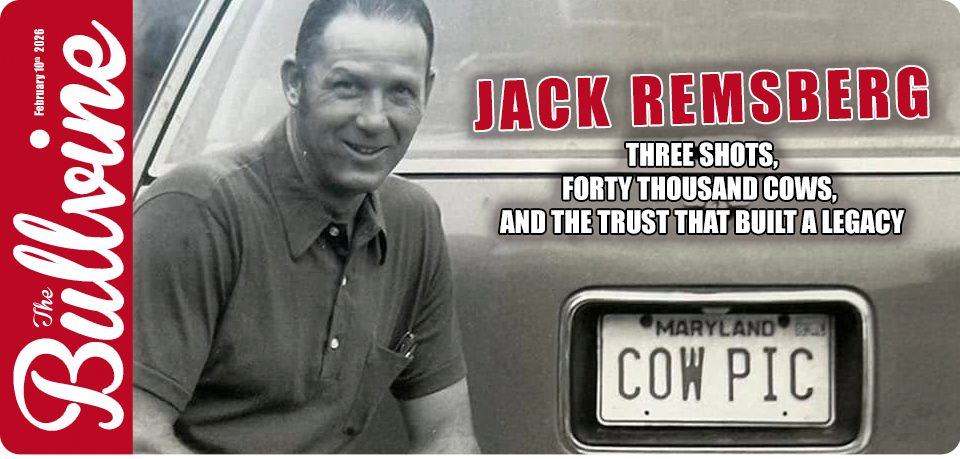




Before genomics, one photo could make or break a young sire. Jack Remsberg only needed three shots when the bull was Round Oak Rag Apple Elevation.
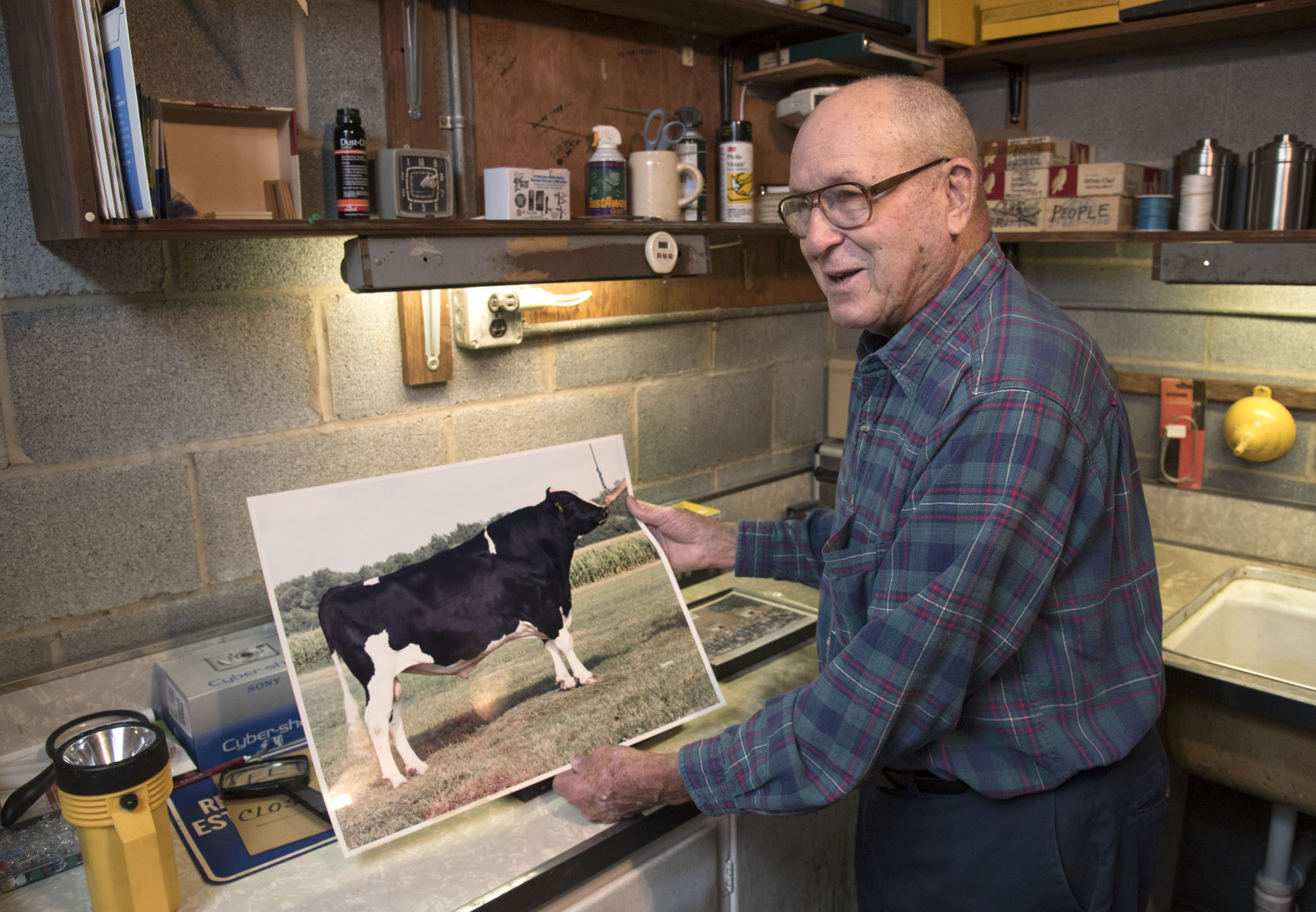
The bull didn’t want his picture taken.
If you’ve ever been inside one of those old AI stud barns, you know the atmosphere—concrete and chain-link, the heavy smell of silage and sawdust, fans pushing air that doesn’t want to move. Somewhere outside Plain City, Ohio, a 3,000-pound Holstein named Round Oak Rag Apple Elevation was on the day’s shoot list. The photographer, a wiry Maryland dairyman named Jack Remsberg, had handled hundreds of bulls that size. “Some of them you have to talk to them nice,” he’d say later, “and others you got to backhand them a little bit”. Elevation, he recalled, was “a little bit tough”.
Three shots. That’s all it took.
Jack wouldn’t know whether he’d nailed it until he was back in his basement darkroom in Middletown, Maryland—negatives strung from the ceiling, the image slowly surfacing under dim red light. That photograph would help build an empire. But not yet. That day, it was just another roll of film drying on the line.
To understand what happened next—and why it still matters to your operation—you have to start with a 150-acre dairy in Frederick County, a kid milking cows by hand, and the kind of trust that takes a lifetime to build.
A Horse-Drawn Plow and a Heifer Named Responsibility
John Homer Remsberg Jr.—Jack to everybody who ever met him—was born on October 5, 1926, in Middletown, Maryland, to John Homer Remsberg and Abby McCardell Remsberg. The family ran a 150-acre dairy farm, and his father had a rule that’ll sound familiar to a lot of you: when you’re old enough to go to school, you’re old enough to milk cows.
So when Jack started school, he started milking. By hand. And he worked the fields behind a horse-drawn plow—this was the 1930s, and that’s what you had.
His father gave him a heifer when he was eight years old. His own animal, his own project, his own responsibility. Jack raised her, then raised her offspring, and the money from selling those calves is what eventually paid for college. Think about that for a second. An eight-year-old kid gets a heifer, and by the time he’s eighteen, that animal’s descendants have funded a university education.
But J. Homer gave his son something else—something that would matter more than the heifer, more than the farm, more than anything Jack could have recognised at the time. He taught the boy to judge cattle. How to read a cow’s frame and feet, how to see correct mammary structure, how to tell the difference between an honest animal and a pretty one. Years later, the old-time dairy photographer Harry Strohmeyer would write Jack a letter that captured the parallel exactly: “My father taught me photography; your father taught you how to judge cattle”. Two different paths. Same destination.
Between high school and college, Jack had ten of their pedigree cows as his personal string. Three times a day. Seven in the morning. Three in the afternoon. Eleven at night. As he put it, the schedule “does cut down on your social activities”. He was active in Middletown 4-H and FFA—somebody wired from the start to show up, learn, and pull the next kid along.
After high school, he enrolled at the University of Maryland, joined the ROTC program, and met a girl named Marcia Ellis. He always joked that he married her because she had a camera. They married in 1951, and following in his father’s military footsteps, Jack served in the U.S. Air Force as a first lieutenant, stationed at Elmendorf Air Force Base in Anchorage, Alaska, during the Korean War.
A Darkroom in Anchorage, a Career Nobody Planned
Away from the demands of twice-a-day milking for the first time in his life, Jack channelled his extra energy into fooling around with his neighbour’s camera equipment. The neighbour knew how to process film and offered to teach him. In a makeshift darkroom far from the Holstein meetings in Frederick County, Jack learned patience under a dim red light, watching images slowly appear on paper.
He was self-taught from there. And what “self-taught” actually meant in dairy photography before digital is worth sitting with for a minute. Every roll of film Jack ever shot went back to the basement darkroom in their Middletown home. Negatives strung from the ceiling. Every image was enlarged with an enlarger, cropped and positioned by hand, and printed on drum dryers that are long gone from most people’s memories. No Photoshop. No second monitor. No “undo.” If the shot wasn’t right, you either rescued it in the darkroom or you went back and tried again with a live, unpredictable, occasionally furious animal.
When demand for colour started coming in, Jack didn’t switch over—he strapped two cameras to the same tripod and shot both at once, black-and-white and colour on a single click, until colour printing got cheap enough to stand on its own. Then he threw the black-and-white camera away and never looked back.
When Jack and Marcia came home to Middletown after the service, they settled on a parcel divided off his father’s farm—Jack went back to milking. He took a picture of a cow they’d consigned to a sale because somebody needed to, and he knew his way around a camera. Next year, a neighbour wanted one. Then sales managers like Harold Barker and Dodie Renburg started calling, looking for shots for their sales promotions.
Five dollars a picture, developed between the evening milking and bed.
He never placed an ad. Not once, not in fifty years. “Everything was by word of mouth,” he said. His schedule was full by January every year.
“My career was never planned,” he said later. “It just evolved”.
Papers on the Kitchen Table
I keep coming back to 1973 because it’s the part of Jack’s story that most producers will feel in their chest.
The 150-acre dairy had hit a wall. Either they invested to expand, or they stopped. J. Homer Remsberg, with decades of early mornings behind him and a lifetime of knowing what debt can do to a family, didn’t want to borrow at his stage of life. Jack had this photography business that was quietly producing real income and opening real doors.
“I got enough business, I can do this full time,” Jack told his father.
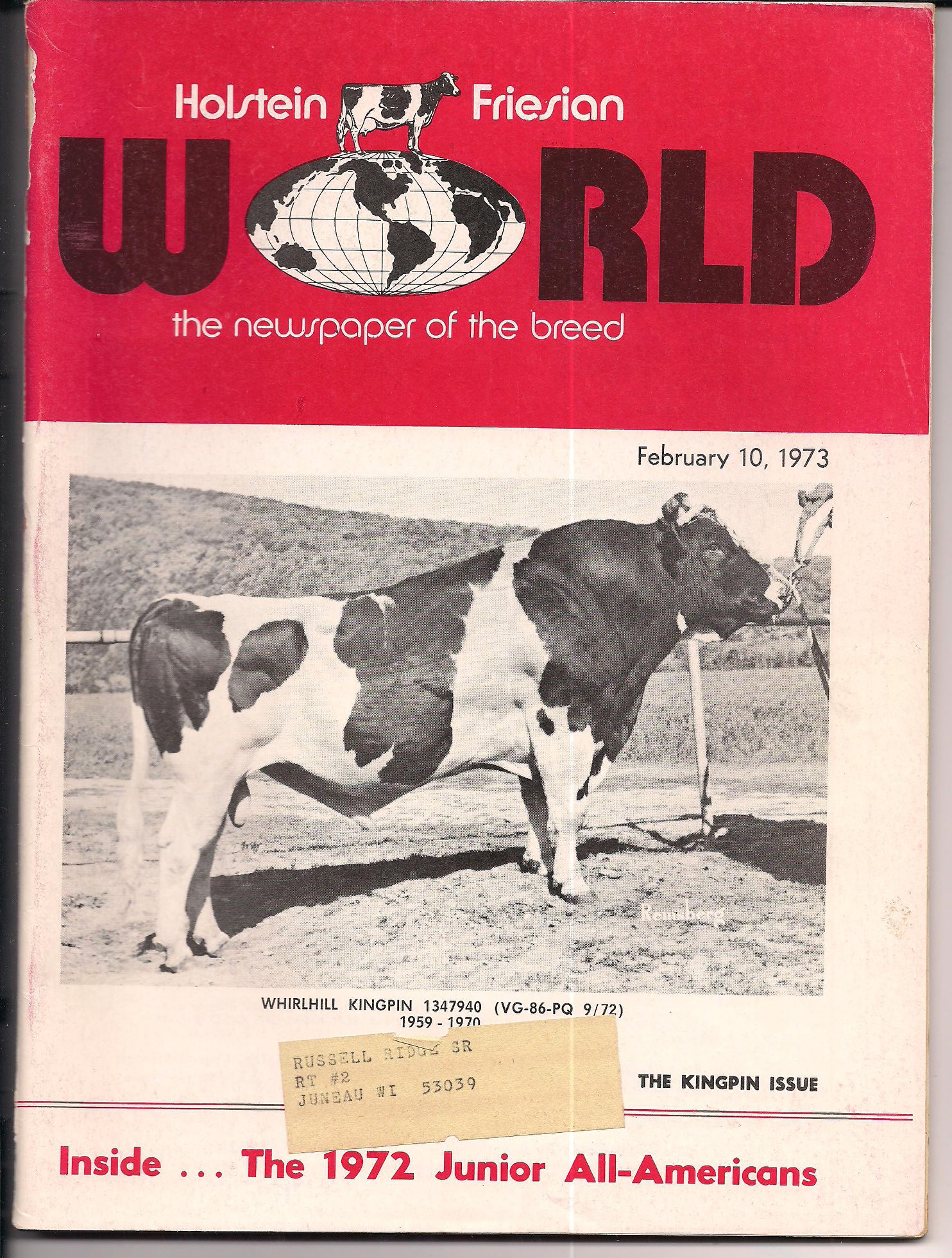
So they dispersed the herd. J. Homer made the call. Jack once joked about the dairy’s other problem: “I always said that’s what got us out of the dairy business—we got all bulls at the barn and heifers at the house, and that didn’t work out. You needed heifers at the barn”.
If you’ve been through a dispersal—or watched your neighbours go through one—you know what it looks like. Every dairy family’s version is different, and every one is the same.
What outsiders don’t see is what doesn’t get sold.
Jack’s cows left. His relationships didn’t. The breeders, neighbours, and sale managers who’d known him as a dairyman became the network that kept his camera booked for the next four decades. At the time he went full-time, there were only six people in the entire country professionally doing dairy cattle photography. Six. And Jack was one of them—not because he’d planned it, but because he’d spent fifteen years doing $5 jobs between milkings, never cutting corners, never making anyone regret recommending him.
Marcia, Four Daughters, and the Weight of Home
While Jack logged weeks on the road—stud barns in Ohio, sale alleys in Pennsylvania, show rings wherever the circuit ran—Marcia held everything together at home.
She’d grown up in town—a city girl, Jack said—and married into the dairy life. She raised four daughters on that Middletown parcel, got all of them through school, and handled the thousand invisible jobs that never show up on an income statement. As Jack put it: “She kept the home fires burning and did a great job with their girls. They’re all college educated”. They became the proud grandparents of thirteen grandchildren and fourteen great-grandchildren.
“They married good guys,” Jack said of his daughters. “We were lucky in that respect”.
Then life did what it sometimes does to good families. They lost one of those daughters to cancer at forty-three. She left three young daughters of her own—girls who, Jack is proud to note, “have since become very successful”.
Anyone who’s worked on a farm through grief—and most of you reading this have—knows the shape of it. The morning chores don’t wait.
Marcia herself passed away on December 21, 2024, at the age of ninety-four, at Somerford Place Memory Care in Frederick, Maryland. She and Jack had been married for over seventy-three years. The dairy world knew Jack’s name. But as Jack made plain, she was the one who kept the home fires burning.
“We Competed a Bit; We Didn’t Hate Each Other”
By the time Jack went full-time, he’d built a reputation for being especially good with bulls. Big bulls. He photographed for three of the major siring organisations on the East Coast—Select Sires of Ohio, Sire Power of Pennsylvania, and Atlantic Breeders of Pennsylvania—and shot over 40,000 cows across his career. He was even invited to South America to photograph at the National Show of Colombia.
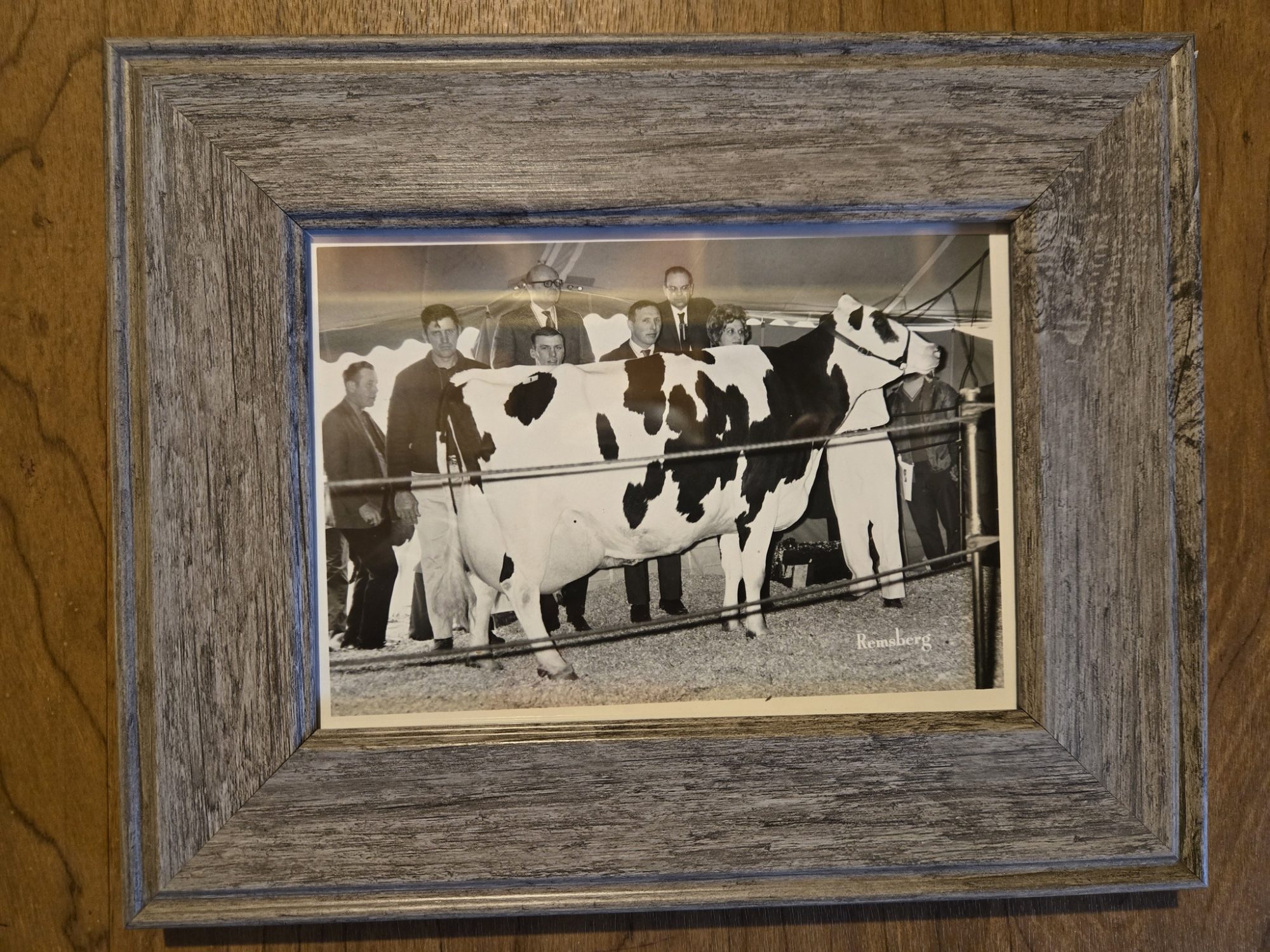
And then there were the days that didn’t go smoothly. One particular bull took three days to photograph. On day one, the bull charged the back of the truck where the handler was lying and blew the shavings twenty feet into the air. Day two, he ripped his own nose ring out. Day three, Jack brought ropes and finally got the shot.
You don’t last fifty years in a job like that without learning people as well as you learn cattle.
He respected old-time photographer Harry Strohmeyer enough to write him a congratulatory letter—and Strohmeyer wrote back with that line connecting their fathers. As Jack told it, Strohmeyer “used to cuss up a blue streak, but he never cussed the help—he cussed the animal”. Jack remembered that. “I figured nobody did anything wrong on purpose,” he said. “They did things wrong that maybe they didn’t think things out, but they really weren’t doing it on purpose. Consequently, I never had any trouble getting the help to take pictures”.
At shows like Harrisburg, he worked alongside other photographers chasing the same cows, the same catalog covers. They’d shoot all day, then go to supper together once the cows were bedded and the lights were off.
“We competed a bit; we didn’t hate each other,” Jack said.
He lived that with the next generation. When a younger photographer named Bill needed a camera to keep working, Jack loaned him one. When sale manager Johnny Marman sent young photographer Maggie Murphy to work alongside Jack at a show in northern Pennsylvania, she was new, and Jack held back on the heavy work because, as he recalled, she “was a skinny thing and didn’t look too strong”. Turned out she was more than capable. From then on, he treated her as a colleague—and kept after her about one thing: her group shots had too much slant. When she finally nailed it, he sent her a note to say so.
That’s not social media mentorship. That’s a guy in his seventies watching a kid’s work, quietly correcting it, specific enough to acknowledge when it clicks.
But the thing that would define Jack’s career more than any single cow photo, any show, any mentorship moment—that was waiting in a stud barn outside Plain City, Ohio.
The Photograph That Changed Everything
When Dick Chichester took over as general manager of Select Sires—back when they were still working out of the old COBA building, the Central Ohio Breeding Association facility where the cooperative had been headquartered since 1946—he asked Jack to come out to Ohio to shoot the bulls. On that first trip, Elevation was on the list.
Now, what most people don’t realise about that era is how much rode on a single photograph.
This was the age of progeny testing. A young bull entered AI service, and his semen went out to cooperating herds across the country. Then you waited. Two years, sometimes three, for enough daughters to freshen, complete lactations, get classified, and generate the data that would tell you whether you had a good bull or a wasted slot. “Only a fraction of Holstein progeny‑test bulls ever earned their way back to widespread AI service. The rest disappeared.” In that gap—between semen release and daughter proof—breeders made their decisions based on pedigree, a linear description, and a photograph. That was it. No genomic predictions. No online bull search. No social media buzz. If you were a dairyman in the early 1970s flipping through the Select Sires catalog, deciding which young sire to trust with your best cows, Jack Remsberg’s photograph might be the most important piece of information you had.
Select Sires itself was barely a decade old. COBA had been born in the late 1940s from a merger of the Northeast and Western Ohio Breeding Associations, one of the first artificial breeding cooperatives in the state. Then, on October 12, 1965, COBA joined forces with the Kentucky Artificial Breeding Association, the Northern Illinois Breeding Cooperative, and the Southern Illinois Breeding Association to sign the charter of incorporation for Select Sires Inc. By one of those coincidences that makes you wonder about fate, Elevation had been born on August 30 of that same year—six weeks before the organisation that would market him even existed.
In the late 1960s, Select Sires was still struggling to establish itself as a newly formed federation. Then Elevation’s daughters started freshening.
As Jack remembered it, after that first shoot, Dick drove him out into the countryside and pointed at a cornfield. That, he told Jack, was where they were going to build Select Sires. Nothing but dirt and corn rows.
Jack came back twice a year after that—spring and fall—for close to twenty-nine years. He watched that cornfield become pens, then barns, then offices, then a global headquarters. Some seasons, they’d shoot forty bulls in a run. And that Elevation photograph—the one that took three shots—turned out to be the most important frame Jack ever captured. He didn’t know it at the time. Nobody did. The negatives went on the basement line with everything else.
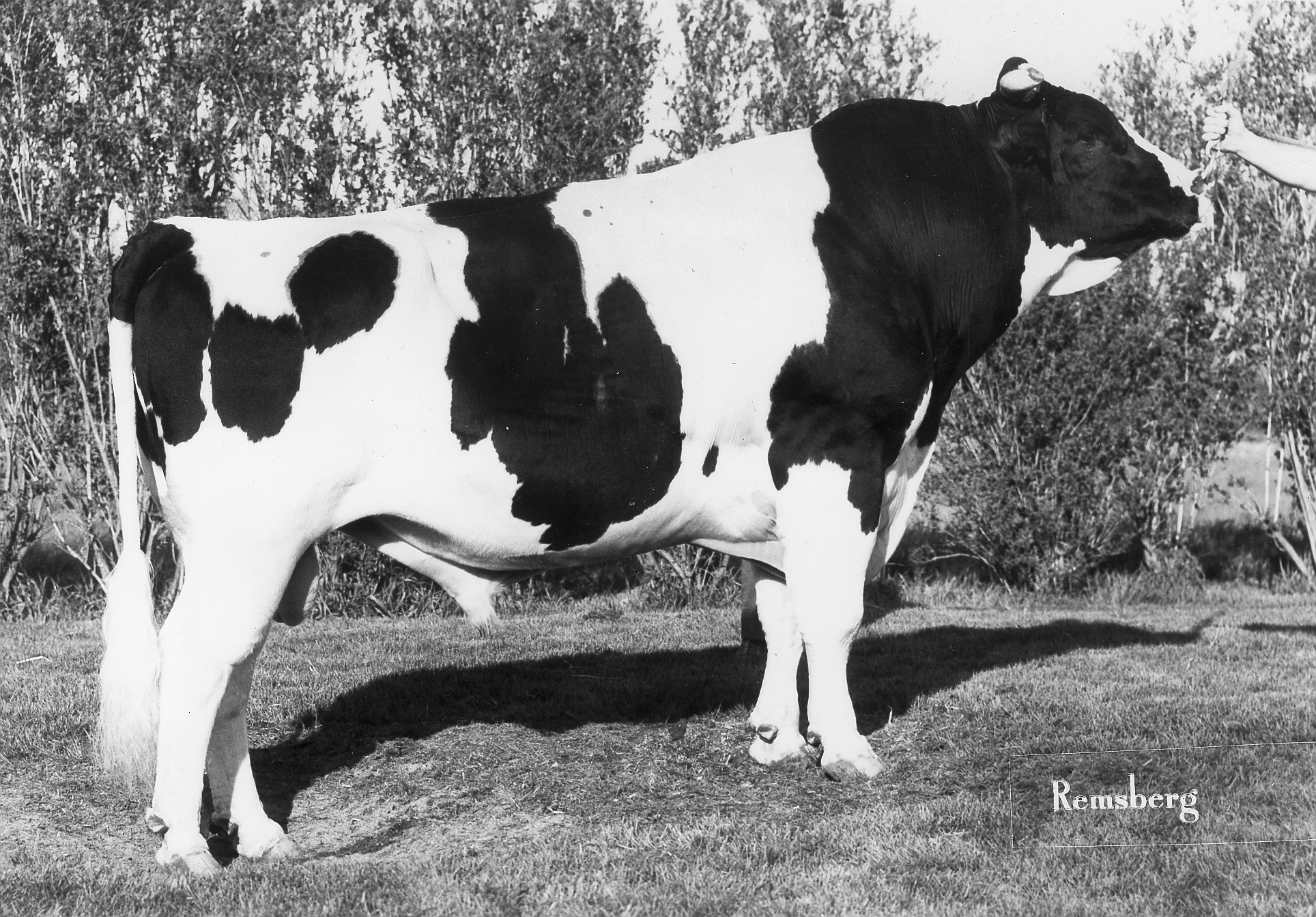
Elevation’s semen had entered the market at less than $1.50 a unit, the standard price for an unproven bull in Select’s young sire program. But once those daughters were on the ground, the price climbed. $20. Then $50 or more. He became the first of only five sires in Select Sires’ first twenty-five years to sell more than 500,000 units of semen in his lifetime, and in some years, moved over 100,000 units. His daughters averaged 29,500 pounds of milk in their first lactations—15% above their contemporaries—with udder quality that held up across multiple lactations. In an era when the industry average was 2.8 lactations per cow, Elevation daughters stuck around for 4.2.
Think about those numbers. Fifteen percent more milk and fifty percent longer productive life, and the structure to support both. In the 1970s, that combination was almost unheard of.
The revenue transformed Select Sires. According to the organisation’s own archives, Elevation’s semen sales “financially pulled the entire family together” at a time when member cooperatives were pointing fingers at each other over razor-thin budgets. George Miller, one of the breeders behind Elevation, put it plainly: “It’s been said that Elevation built the barns at Sire Power and Select Sires”. His semen was shipped to forty-five countries. CBS sent a New York television crew, which produced a 10-minute segment for an hour-long documentary called The Baby Makers, which aired in the fall of 1979. In Canada, Elevation’s son Hanoverhill Starbuck—born April 26, 1979, just one day after Elevation died—became the cornerstone of that country’s breeding program, siring over 200,000 daughters across forty-five countries of his own and earning CIAQ nearly $25 million in semen sales.
Elevation himself died on April 25, 1979, four months shy of his fourteenth birthday. His grave, marked by a headstone etched with his image, sits in front of the reflecting pond at Select Sires’ main entrance in Plain City.
Jack’s photograph was part of the engine that moved all of that semen. Not the only part—Elevation’s daughters spoke for themselves once they freshened. But in those critical years before daughters were on the ground, when a dairyman had nothing but a catalog and his own judgment, the photograph was the handshake between the stud and the farmer’s wallet. And Jack, who’d spent two decades judging cattle with his hands before he ever picked them up with a lens, made sure the bull in the picture was the bull you’d get.
I’ll be honest—I’ve gone back and forth on how much weight to put on one photograph. Elevation would have been Elevation with or without Jack’s camera. The daughters would have freshened the same. But in the progeny-testing era, before anyone could pull up a genomic profile on their phone, when the only thing standing between a cooperative’s solvency and its collapse was whether enough dairymen trusted the catalog enough to open their wallets, having a man behind the camera who wouldn’t embellish wasn’t a luxury. It was the foundation on which the whole system ran.
“To be a dairy cattle photographer,” Jack said, “you’ve got to be a good dairy cattle judge”.
Today, six decades later, Elevation’s DNA still runs through 14.5% of active proven Holstein sires. Up to 99% of AI bulls born after 2010 trace back to him. An estimated 8.8 million descendants worldwide carry his genes.
“It Was a Challenge to Be the Best”
There’s a black-and-white print Jack kept for decades: a Holstein cow and her bull calf. The team tried for ages to get that calf to stand still. Failed attempt after failed attempt. Finally, they pulled the halter off entirely—and in that one unguarded moment, with the calf standing free, Jack snapped the shot before the bull ran off across the field.
That bull calf later sold for $600,000 at a California auction in 1983.
Six hundred thousand dollars. And the photo that helped set the stage was a single frame grabbed in the half-second between taking the halter off and the calf bolting. Jack wouldn’t have known he had it until he was back in Middletown, negatives on the line, watching it emerge.
“It was a challenge to be the best,” he said. “I’d been described as a ‘patient perfectionist,’ but that challenge was out there”.
When he retired around eighty’s, he was charging $50 a picture—up from that original $5—and he had proudly never printed a single photograph from a digital camera. Not because he was afraid of the technology. Because he’d built his working life on a principle: get it right in the moment.
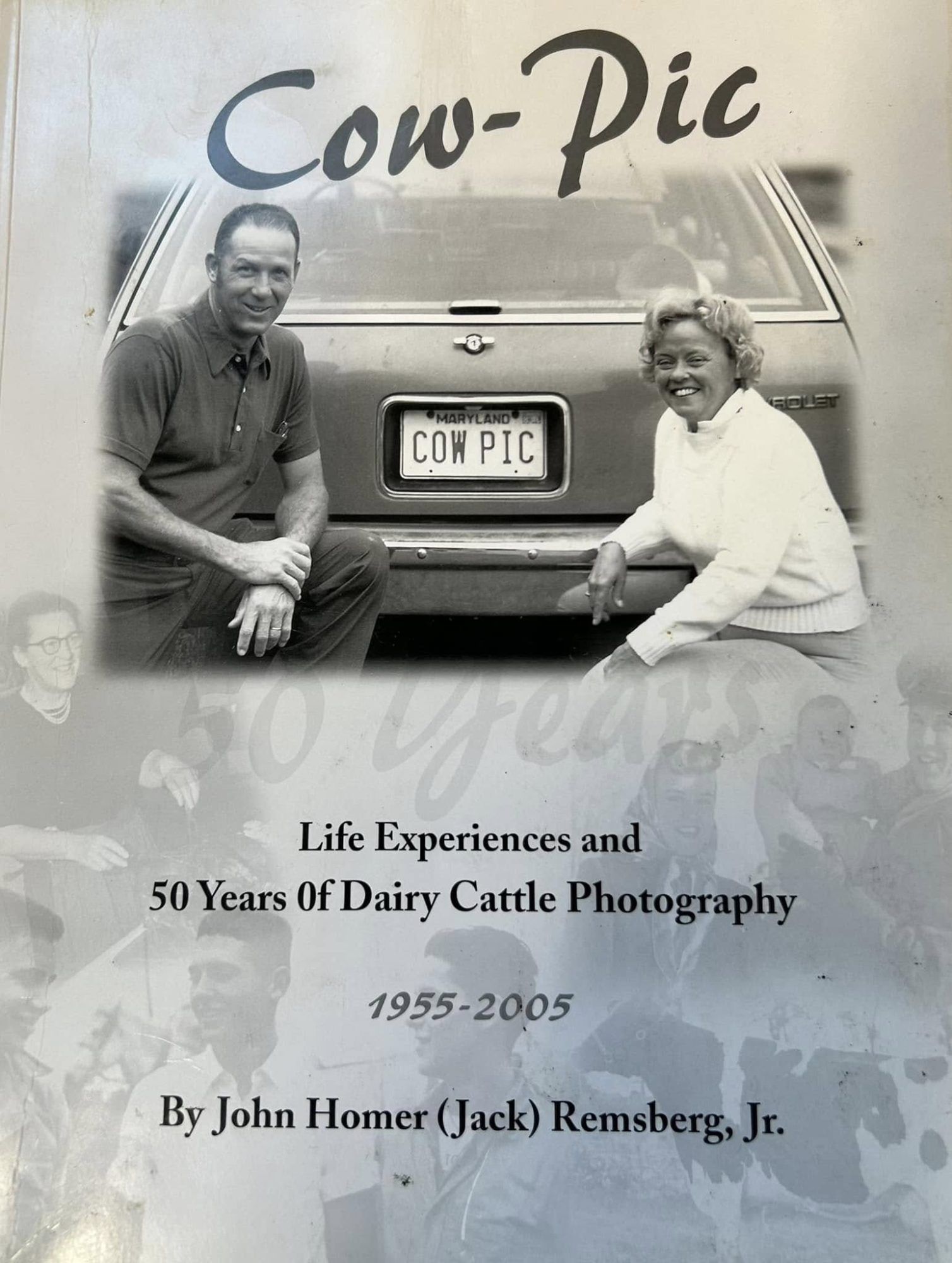
A 91st Birthday and a Ride Down Main Street
On October 5, 2017—his ninety-first birthday—Jack Remsberg sat at a banquet table at World Dairy Expo in Madison, Wisconsin, and heard his name announced as a National Dairy Shrine Pioneer Award winner, inducted into the National Dairy Hall of Fame.
For a man who’d spent his entire career behind the camera instead of in front of it, that moment must have been something.
Three of his four daughters were there with their husbands. A granddaughter flew in from Dallas just for the night. It wasn’t his first recognition—the University of Maryland had given him their Meritorious Service Award, the Maryland Holstein Association had honoured him with their Distinguished Service Award, and he’d been inducted into the Maryland Dairy Hall of Fame through the Maryland Dairy Shrine —but this one, at Expo, on his birthday, surrounded by family, was different.
“This honor is one of the greatest honors I could ever expect to receive,” Jack said that night. “I will cherish it for as long as I live”.
His portrait hangs at the National Dairy Shrine Museum in Fort Atkinson, Wisconsin.

Then, in September 2025, his hometown of Middletown named Jack the Grand Marshal of their Heritage Festival parade. Ninety-eight years old, riding down Main Street in the town where he’d milked cows by hand as a boy, worked fields behind a horse, raised a family, and built a career from a basement darkroom.
As of this writing, Jack Remsberg is ninety-nine years old.
What One Maryland Photographer Means for Your Herd
Most of us can talk for hours about sire stacks—Net Merit, PTAT, DPR, robot suitability, beef-on-dairy margins. We spend a lot less time asking ourselves whether we trust the people behind those numbers.
Jack didn’t build his network by planning it. He built it by doing $5 jobs between milkings and never making anyone sorry they’d recommended him. Then, when 1973 came, and the cows were gone, that network caught him.
So ask yourself: which reps, advisors, and organisations in your network will tell you where a bull works and where he doesn’t—the warts along with the pitch? And what are you doing, right now, before the next crisis, to build the relationships that’ll catch you when you need catching?
Check the barn lights down the road. If they’ve been on late three nights running, send a text. And pull one young person closer to the real decisions. Jack started in Middletown 4-H and FFA. Those programmes gave him a foundation that held for ninety years. When you bring a kid along to a classification, a sale, a vet visit—when you let them hear how the questions get asked and how the answers get weighed—you’re doing what somebody once did for Jack, and what Jack spent a career doing for the next photographer, the next breeder, the next handler who turned out to be capable of more than anyone expected.
The Headstone by the Reflecting Pond
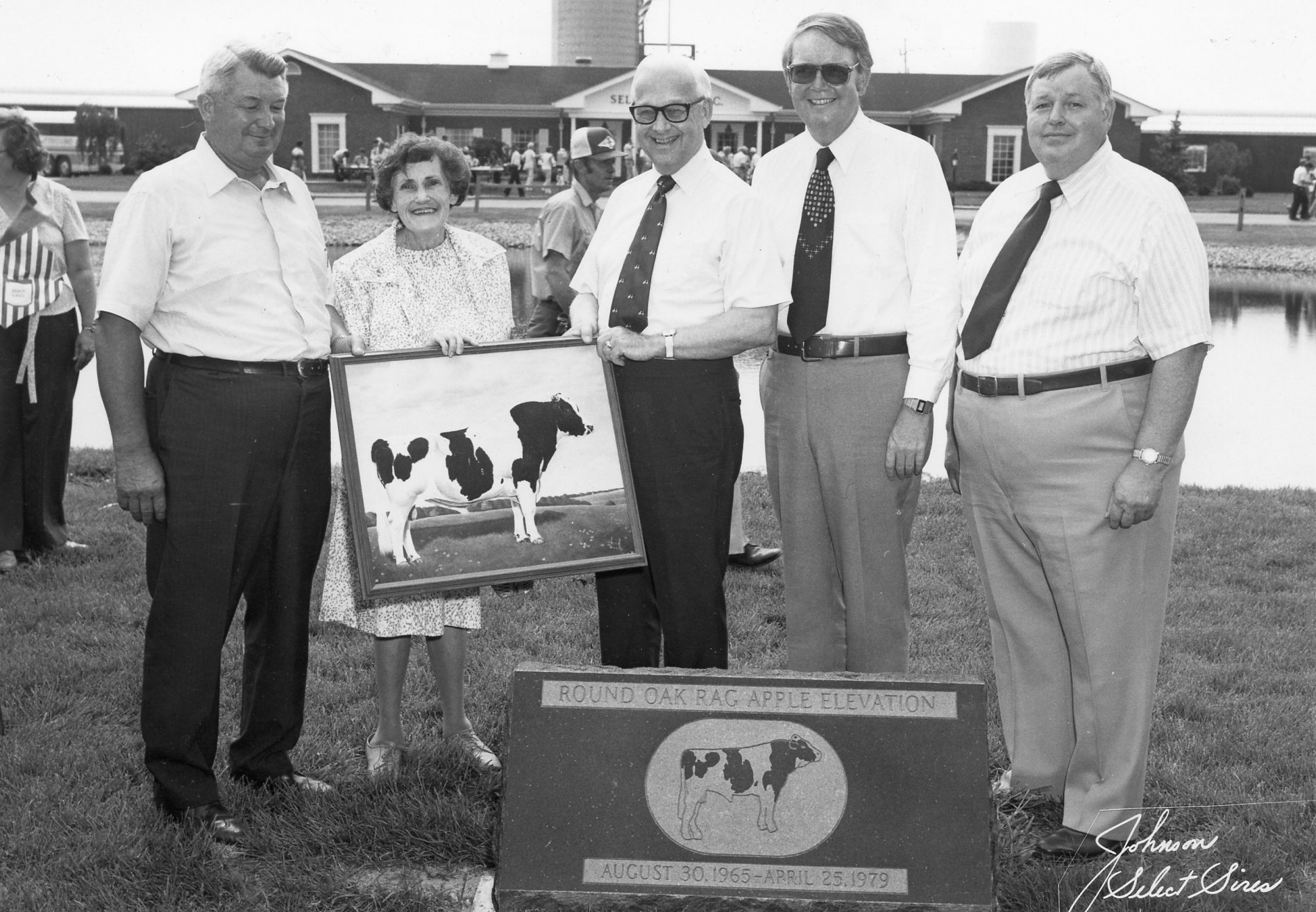
Elevation’s grave sits in front of the reflecting pond at Select Sires’ main entrance in Plain City, Ohio, marked by a headstone etched with his image. In Middletown, Maryland, there are negatives—forty thousand of them—that represent fifty years of early mornings, difficult bulls, and patient waiting.
Jack Remsberg started with a heifer at eight and a milking schedule that didn’t leave room for much else. His father taught him to judge cattle; a neighbour in Alaska taught him to process film. He told his father in 1973 that the photography business could carry him, watched the cows leave, and built a second career on the relationships the first one had earned. He photographed a bull in three shots that helped fund an empire. He mentored younger photographers with the kind of direct, specific correction that meant something because he’d earned the right to give it. He retired at eighty without ever going digital. He lost a daughter and carried that weight. He sat at Expo on his ninety-first birthday and heard his name called. He rode down Main Street as Grand Marshal at ninety-eight.
And through every bit of it, the standard never changed: show the animal honestly, treat the people straight.
The darkroom is quiet now. The bulls Jack photographed have been dead for decades. But their genetics run through 14.5% of every proven Holstein sire alive today, and the photograph that introduced the most influential of them to the world was taken by a man who said it plainly: “To be a dairy cattle photographer, you’ve got to be a good dairy cattle judge”.
At ninety-nine, that’s still the whole philosophy. Know what’s correct. Show it honestly. Let the work speak.
Key Takeaways
- A Maryland farm kid who hand‑milked 10 pedigree cows grew into one of the very few full‑time dairy cattle photographers in America.
- Jack’s honest catalog photo of Round Oak Rag Apple Elevation helped market semen from a bull whose genetics now run through almost every modern Holstein AI sire.
- He built a 50‑year career on word‑of‑mouth work, a judge’s eye for correctness, and a refusal to “fix it later” with digital tools.
- As a mentor and family man—loaning cameras, coaching young photographers, and leaning on Marcia’s steady hand at home—he showed that character matters as much as craft.
- In the progeny‑testing era before genomics, his kind of integrity behind the camera was a crucial link between AI studs and the farm gate.
Continue the Story
- Harborcrest Rose Milly: From Pig Money to Holstein Royalty – Milly’s story walks a similar path to Jack’s, beginning with a modest project funded by literal “pig money” and ending in royalty. It proves that whether you’re behind the camera or the halter, the greatest legacies are built on grit.
- The S-W-D Valiant Story – This journey into the life of S-W-D Valiant offers the deeper context needed to understand the high-stakes world Jack was navigating. It’s a study of the genetic giants that shared the stage during those legendary progeny-testing years.
- When Lightning Strikes: The Goldwyn Story That Changed Everything – While Jack captured the peak of the progeny-testing age, the Goldwyn story carries forward that legacy of industry-changing genetics. It’s the perfect next chapter for anyone wondering how a single bull can still spark a global revolution.
The Sunday Read Dairy Professionals Don’t Skip.

Every week, thousands of producers, breeders, and industry insiders open Bullvine Weekly for genetics insights, market shifts, and profit strategies they won’t find anywhere else. One email. Five minutes. Smarter decisions all week.