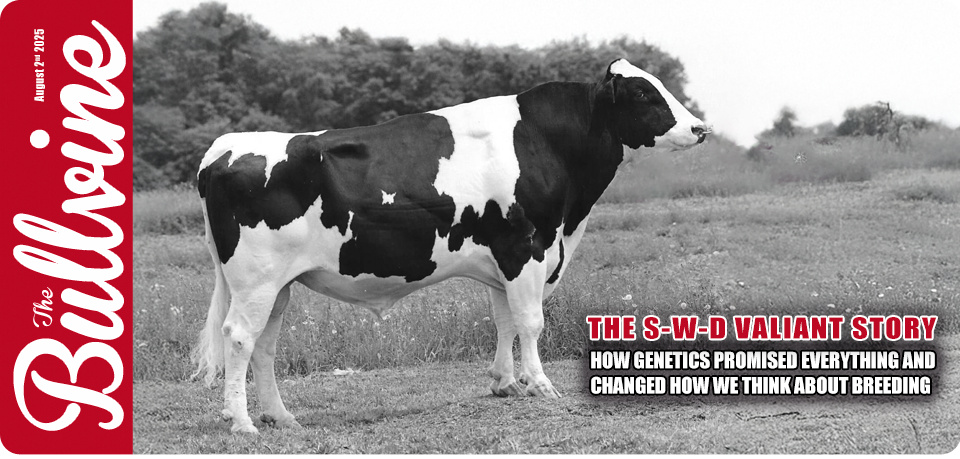





Think one superstar bull can carry your whole herd? Think again. The risks are greater than you realize.
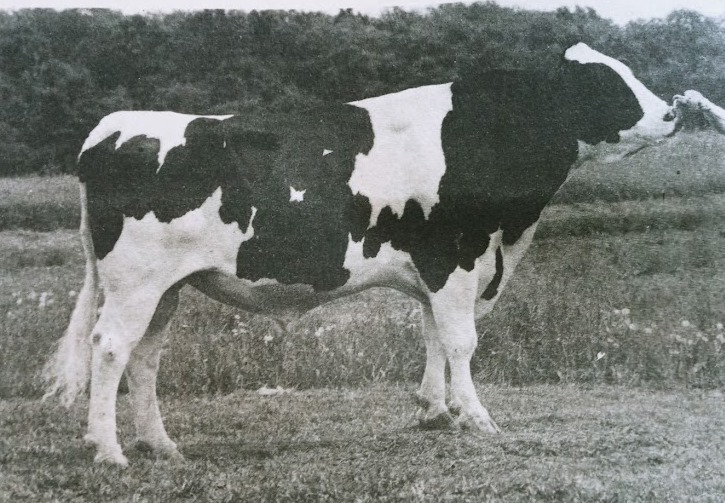
You know how some breeding decisions just… stick with you? I was having coffee with a producer from Wisconsin last month, steam rising from our mugs in the crisp morning air, and he brought up something that’s been nagging at the back of my mind for years. His grandfather used to tell stories about that famous mating back in ’73—how Mike Bystry, the herd manager at S-W-D, looked at this big, rangy cow with a questionable udder and said, “Chief’s still an easy choice for her.”
That single decision—Chief on Allied Admiral Rose Vivian—would create S-W-D Valiant and fundamentally change how we think about breeding. Not just because of what it gave us… but because of what it taught us about the hidden costs of putting all your genetic eggs in one basket.
When Lightning Struck Twice
The Valiant story perfectly captures this industry’s eternal struggle between what looks good in the show ring and what actually works long-term in the milking parlor. According to sources from that era, ABS sire analyst Steve Mawer wasn’t exactly thrilled about the mating. “We preferred not to use Chief on daughters of Irvington Pride Admiral,” he admitted years later. “Most of the time, you ended up with too much udder.”
And Vivian? She was exactly that problem waiting to happen. Pride Admiral daughter, VG-85 overall but only “Good Plus” for her mammary system. A classic case of a cow that looked the part but had functional challenges that we didn’t fully understand back then.
But here’s where genetics gets interesting… sometimes the stars just align in ways you can’t predict. When Valiant’s first proof dropped in July 1978, those numbers stopped conversations in co-ops from Wisconsin to California. +1541 pounds of milk, +44 pounds of fat, and a Type score of +1.99.
Picture the scene: The humid summer air hung heavy in the ABS barn as geneticists gathered around those first proof sheets, realizing they had something special on their hands. You could feel the electricity in that room—this was the kind of breakthrough that changes everything.
In those days, bulls either gave you production or Type. Never both. Valiant delivered everything we thought we wanted.
The excitement was infectious. Here was a bull who could milk AND win shows. However, what we didn’t know then—and this is where the story becomes complicated—was that he also carried the seeds of a lesson that would eventually reshape our understanding of genetic diversity and breeding responsibility.
The Dynasty Years: From Excitement to Empire

What happened next unfolded like a breeding fairy tale, written in semen straws and show ring banners. The anticipation was palpable as word spread through the dairy community. I recall speaking with producers from that era who Had heavily utilized Valiant in the early ’80s; their voices still carried that unmistakable note of pride mixed with something else—a harder-won wisdom.
“Those daughters,” one Ontario producer told me, his weathered hands wrapped around his coffee mug, “they milked like machines and looked like movie stars. You’d walk into any barn from here to Alberta and spot a Valiant daughter instantly—they had this presence, this… authority about them.”
The financial reality hit fast. Breeders who had hesitated at $25 suddenly found themselves in bidding wars, watching his semen price climb to $150, then $225 after his death in 1984. The demand was unlike anything the industry had seen.

Du-Ma-Ti Valiant Boots Jewel was winning the Royal Winter Fair, her deep udder gleaming under the show lights. Farlows Valiant Rosie was taking All-American honors. These weren’t just good cows—they were setting the standard for what Holsteins should look like.
But here’s what’s really fascinating about Valiant’s impact… he wasn’t just siring great daughters. He was creating this network of sons that would dominate AI studs for decades. The numbers tell the story: by January 1987, industry data shows that 31 of the top 100 TPI bulls were Valiant sons, and 98 of the top 400 carried his genetics.
Fisher-Place Mandingo became the first bull in history to sell a million doses of semen. Think about that for a minute. A million doses. Hanover-Hill Inspiration evolved into what we started calling a “millionaire sire,” and his genetic line eventually produced legends like Goldwyn, Shottle, and Storm.
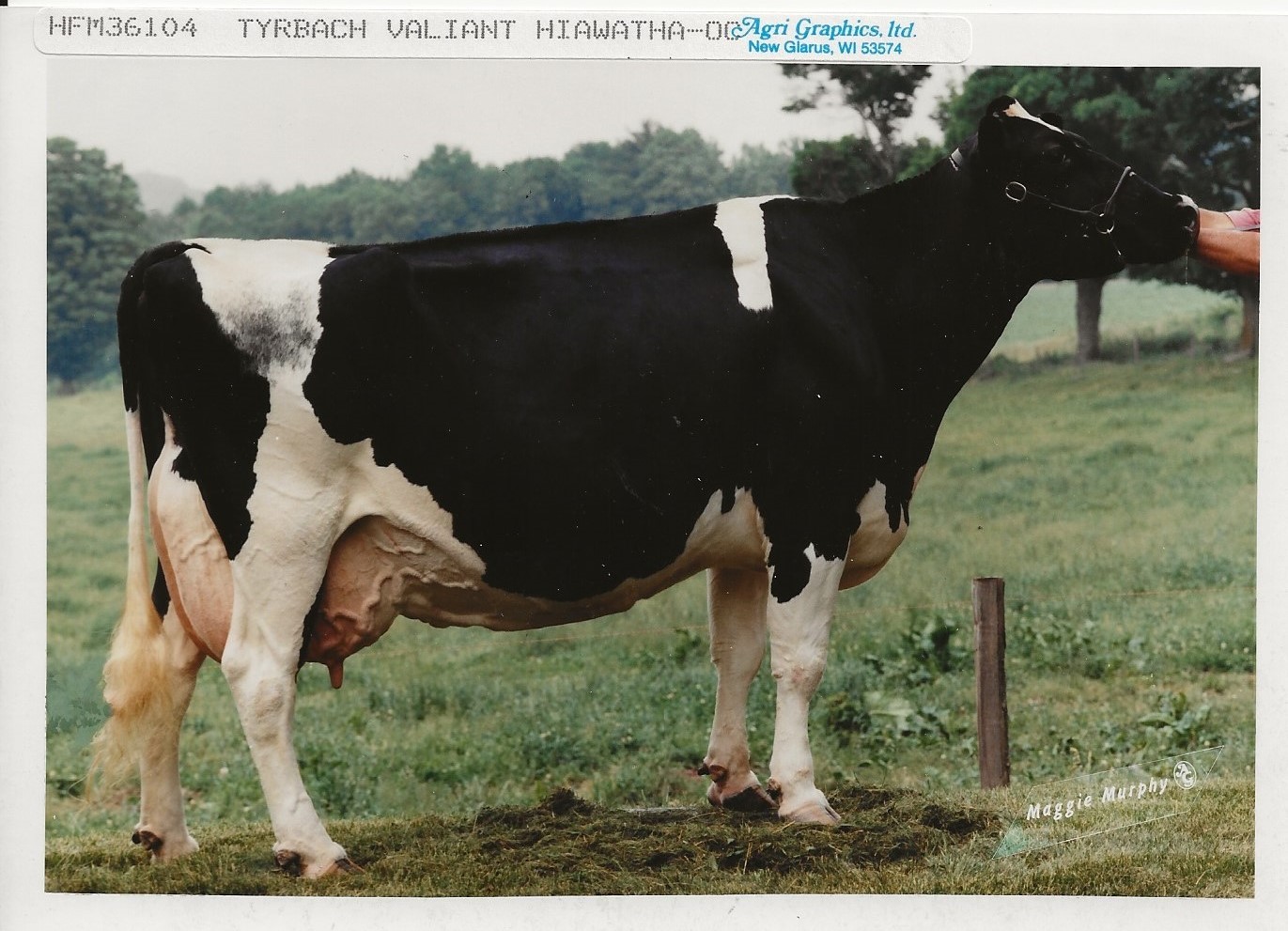
This is where the story takes its first dark turn. I was talking to a Minnesota producer last spring who still gets a distant look on his face when he talks about those days. “We had thirty-some Valiant daughters fresh at the same time,” he told me, pointing to the old barn where it all happened. “Best milking group we’d ever had—averaging 85 pounds a day when most herds were pushing to hit 70. But here’s the thing we learned the hard way… when you walk into that barn and realize every single cow traces back to the same bull, you start understanding what genetic risk really means.”
That’s the thing about success in this business… it can be its own trap.
The Wake-Up Call: When Reality Hit
For years, there was this accepted story in our industry that tied Valiant directly to a specific hidden problem: the lethal HH1 gene carried by his famous sire, Chief. However, something truly interesting emerged from modern DNA analysis, which changes how we understand this story.
Here’s where things get fascinating from a breeding perspective. What we didn’t know back then was that Valiant’s sire, Chief, was carrying what we now call Holstein Haplotype 1 (HH1)—a genetic defect that causes pregnancy loss when calves inherit copies of this haplotype from both parents.
The disappointment was crushing for many producers. I can picture those conversations in farm kitchens across the Midwest, as the realization dawns that this genetic goldmine comes with hidden costs.
Now, here’s the twist that recent DNA research revealed—while Chief was indeed an HH1 carrier, studies have shown that Valiant himself was not found to carry this specific genetic marker. However, that doesn’t diminish the broader lesson about what happens when too much influence is concentrated in too few bloodlines.
The real issue wasn’t about one genetic defect—it was about the pattern of defects. When you have that level of concentration, with nearly 100 of the top 400 bulls tracing back to one sire, you’re creating genetic bottlenecks that can amplify both positive and negative traits.
I’ve talked to veterinarians who worked through those years, and they describe a gradual realization… “We started seeing patterns we couldn’t explain,” one veteran practitioner told me last year. “It wasn’t just about HH1—it was about what happens when you narrow the genetic base too much. Conception rates that should have been higher, as well as udder problems that seemed to cluster in certain family lines. The pieces didn’t fit together until we got DNA testing.”
This was the industry’s harsh lesson about the double-edged nature of genetic selection. We were making rational decisions based on the best information available, but we were essentially flying blind when it came to understanding the complete genetic picture.
When the Numbers Tell a Different Story
What really gets me when I look at Valiant’s modern genetic evaluations is how they completely flip the script on his historical reputation. Today’s numbers from ABS Global show -699 kilograms for milk, -3.17 for Type, and -2.84 for Mammary System.
A young producer looking at these figures would think, “Why are we even talking about this bull?”
But here’s the thing—and this is crucial for understanding genetic evaluation today—those negative numbers don’t mean Valiant was genetically inferior. They mean the average Holstein cow born in 2020 is genetically superior to him by that amount. His proof has become a measuring stick for how far we’ve come.
It’s like comparing a 1980s computer to your smartphone. The old technology wasn’t bad for its time—it was revolutionary. But progress moved on, and that’s actually a good thing.
The shift in type evaluation tells an even more interesting story. The show-ring aesthetic of the 1980s, which Valiant embodied—tall, sharp, and stylish—is no longer what we’re selecting for.
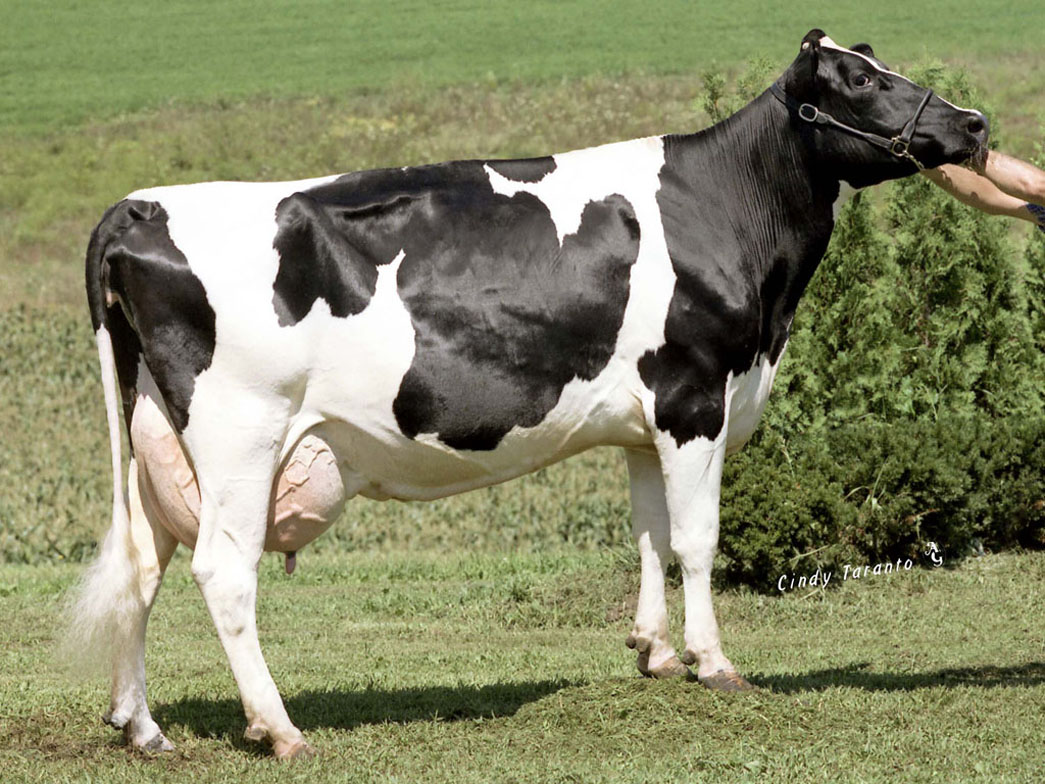
Today’s “functional type” rewards different traits entirely:
- Strong, shallow udders that can handle multiple lactations
- Moderate size for efficiency
- Durability over flash
Those deep, impressive udders that made Valiant daughters champions? They’re now understood to be functional challenges. Higher somatic cell counts, shorter productive life, and more injury risk. The very traits that won ribbons back then can be economic liabilities today.
What This Means for Modern Breeding
From what I’m seeing on farms today—and this is really the heart of why the Valiant story matters—we’re dealing with the same fundamental challenge, just with better tools.
DNA Testing Changed Everything
Today’s DNA testing has completely transformed our approach. We can identify genetic issues before they spread. Tools like genetic scores help us avoid the concentration we saw with the Valiant era.
We’re not just looking at what genes do—we’re looking at what they might do in combination with other genes. According to recent work from Cornell, what we’re seeing now is unprecedented visibility into genetic relationships.
The difference today is that we can see the genetic connections before they become problems. We’re not just hoping that a mating will work—we’re calculating the probability.
Genetic Diversity Isn’t Optional Anymore
Current industry observations suggest we’re seeing more emphasis on cow families that can:
- Produce efficiently across multiple lactations
- Handle varying feed qualities
- Adapt to different management systems
That’s sustainability—not just environmental, but also genetic sustainability.
What we consider “ideal” today might look completely different in 20 years. The key is maintaining animals that can adapt and perform across changing conditions. Feed costs, labor challenges, environmental regulations… these all influence what we need from our cattle.
The Lasting Impact: Lessons for Today
Walking through Holstein herds today, Valiant’s influence is everywhere. According to recent research from Holstein International, his name appears 55 times in the pedigree of popular sires like Farnear Delta-Lambda. His genetic fingerprint runs through countless contemporary bloodlines.
But his real legacy isn’t in the pedigrees—it’s in how we think about breeding. A Pennsylvania producer I know put it best when we were discussing this at a meeting last spring: “The Valiant story taught us that genetic progress isn’t always linear. That today’s solution can become tomorrow’s challenge if we’re not careful about diversity.”
I recall visiting a 400-cow operation in Lancaster County last year, where the morning mist still hangs over the pastures, just as it did decades ago. The producer showed me this cow chart he keeps on his office wall, tracking the genetic diversity in his breeding program.
“Every time I’m tempted to use the hot young sire on half my herd,” he said, tapping the chart with his finger, “I look at that and remember what happened with Valiant. Good genetics are important, but genetic balance is everything.”
The Bottom Line
Here’s what I take away from the Valiant story, as someone who has spent decades in this industry: genetic power comes with genetic responsibility.
The tools we have now are game-changers:
- DNA testing for genetic defect screening
- Breeding indexes that balance production with health and longevity
- Real-time genetic diversity monitoring
- Risk assessment tools that predict genetic bottlenecks
But the fundamental questions remain the same: How do we balance immediate genetic improvement with long-term breed health? How do we maintain the genetic diversity that gives us resilience?
What’s happening across the industry now is a much more balanced approach to genetic selection. We’re emphasizing sustainability and long-term functionality alongside production gains.
The interesting thing is, we’re seeing this play out in real time with DNA-based selection—young bulls can now achieve widespread use much faster than in Valiant’s day, making the diversity question even more critical.
I think about this every time I see a new genomic young sire shooting up the rankings. The technology is incredible, the genetic gains are real, but we need to be conscious about not repeating the concentration patterns of the past, just with better tools.
That mating decision made back in ’73 taught us that extraordinary genetic potential must be balanced with wisdom, caution, and a deep understanding of consequences. Because in the end, every mating decision we make is a vote for the future of the breed.
The lesson for today’s producers is clear: Use DNA testing to screen for genetic markers like HH1. Work with your AI provider to maintain genetic diversity in your breeding program. Monitor genetic scores to balance production with health traits. Don’t put more than 30% of your matings to any single bull, no matter how good he looks.
We’re not just talking about genetic theory here. This is about real money—the kind that shows up in your monthly milk check and your feed bills. The Valiant story teaches us that even the best genetics can carry hidden costs, but with today’s tools, we no longer have to fly blind.
After what we learned from the Valiant era, managing genetic risk isn’t just smart breeding—it’s essential for your farm’s future profitability and sustainability.
KEY TAKEAWAYS:
- Avoid genetic bottlenecks causing up to $1M annual losses in feed and reproduction — start using genomic Estimated Breeding Values (gEBVs) in your selective mating today, critical amid rising inbreeding in 2025 dairy herds.
- Boost lifetime milk yield 10% by selecting for production and health traits together — combine pedigree analysis with genomic insights for balanced sire choice, aligning with growing sustainability demands in dairy farming.
- Cut reproductive failures 15% by early detection of harmful haplotypes — partner with your AI to screen bulls for defects like HH1, key to maintaining fertility in labor-constrained operations.
- Save up to 200kg of dry matter per lactation through improved feed efficiency — leverage genomic testing that provides 65-80% breeding value reliability compared to just 20-25% from traditional parent averages, especially important when feed represents 80% of variable costs.
EXECUTIVE SUMMARY:
Sires like S-W-D Valiant shaped 1 in 10 Holsteins — that’s a big genetic footprint impacting milk checks everywhere. Though he boosted milk and protein early on, his legacy spread the costly HH1 defect, causing worldwide losses worth hundreds of millions. Today’s genomic tools let you spot these hidden risks early and protect your feed efficiency and profitability. Valiant’s proof today shows a 1,541 lb drop versus modern cows—proof of tremendous genetic progress we’ve made since. According to recent Journal of Dairy Science research, farms blending genetics with diversity and functionality are leading in 2025 — those are your peers who’ll thrive. If you want to keep up on milk and margins, smarter mating decisions are non-negotiable.
Complete references and supporting documentation are available upon request by contacting the editorial team at editor@thebullvine.com.
Learn More:
- The Silent Genetic Squeeze: Is Holstein Breeding Painting Itself into a Corner? – This article provides a strategic look at the accelerating rise in genomic inbreeding in the Holstein breed. It reveals the long-term, tangible economic impacts on herd performance and profitability, offering a powerful, data-driven perspective on the risks of genetic concentration.
- Genetic Correlations Upended: Why Sticking with Old Breeding Indices Could Cost Your Dairy $486 Per Cow – This piece offers a tactical, profitability-focused analysis of the 2025 genetic base change. It demonstrates how modern breeding indexes like Net Merit can drive tangible gains in feed efficiency and component premiums, showing how to move beyond outdated metrics.
- The Next Frontier: What’s Really Coming for Dairy Cattle Breeding (2025-2030) – This forward-looking article explores the innovative technologies—from CRISPR to AI—that will shape the future of dairy genetics. It provides a roadmap for how producers can implement these tools to achieve a minimum 15% higher milk yield and cut labor costs by 70%.
 The Sunday Read Dairy Professionals Don’t Skip.
 The Sunday Read Dairy Professionals Don’t Skip.
Every week, thousands of producers, breeders, and industry insiders open Bullvine Weekly for genetics insights, market shifts, and profit strategies they won’t find anywhere else. One email. Five minutes. Smarter decisions all week.