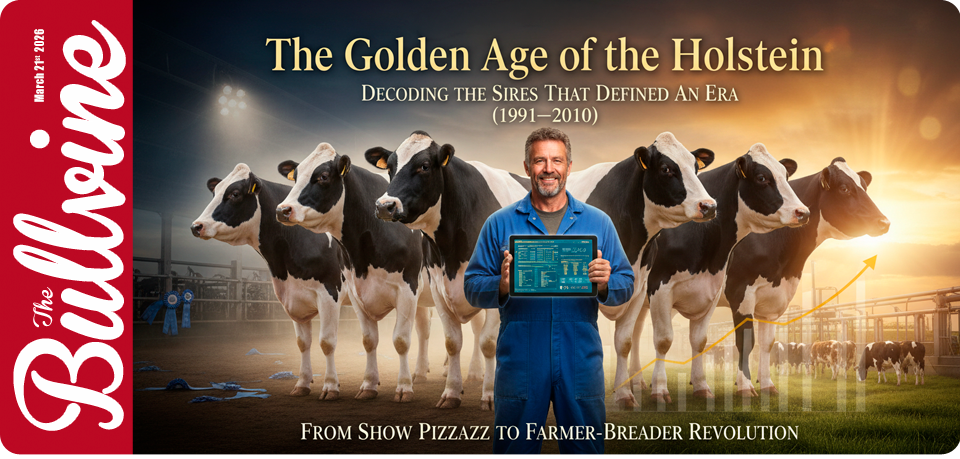





They started with grade cows and manure on their trousers. They built every genomic proof you chase today.
The year was somewhere in the mid‑2000s, and if you were lucky enough to lean on the rail at World Dairy Expo with a coffee in your hand, you felt it. The big banners and spotlights still belonged to the cow show—the Goldwyns, the Durhams, the glossy strings from famous prefixes—but when the sire lists went up on the bulletin boards outside the Coliseum, a different set of names rose to the top in black and white: Durham. Goldwyn. O‑Man. Rudolph. Shottle. Marshall. Mountain.
Now, the thing about that era is this: if you judged the future by those glossy ads and center‑spread photos, you’d have sworn the next great sires would all come out of investor barns with brass nameplates and full‑time fitters. But what a lot of people didn’t realize was that the real engine of change was turning miles away—in grade‑started herds where the breeder’s trousers were more likely streaked with manure than show sheen, and where the biggest “promotion” was a good proof and a paid‑off feed bill. Between roughly 1991 and 2010, a handful of farmer‑bred bulls, show‑ring architects, and fitness warriors quietly built the cow population that genomics would later “discover.”
Most of those bulls and cows are long gone now, except in the pedigrees. This is the story of how they earned their place there.
Act I – Hillsides, Sale Rings, and the Bulls Nobody Expected
If you want to understand how this Golden Age began, you don’t start in Madison or Toronto. You start on a Vermont hillside in 1946.
Everett’s Hills and the Mathematics of Manure
Bis‑May Farm sat in the rolling hills around Moretown, Vermont, about 17 miles west of Montpelier. It wasn’t a show palace. Everett and his father, Ralph, started with a grade herd; a few cows had papers, but most just had to earn their keep in a tie‑stall barn where every empty stanchion hurt. In 1950, they bought Kearsarge Governor Jean from C. Leland Slayton in New Hampshire, and a few years later, Everett’s fascination with the old Mount Victoria Rag Apple cattle pushed him to buy nine Canadian cows rich in Rag Apple blood, including Marie Pabst Lochinvar.
Through his college years, Everett had pored over Holstein‑Friesian World, thumbing through pictures of Montvic Rag Apple Gladiator and the rest of Thomas Macaulay’s great cattle. The Mount Victoria dispersal had already happened in 1942. The sale was over. But in his mind, those cows still had something to say.
Here’s the thing—Everett believed the math. There are thousands of farmer‑breeder herds. There are only a handful of Pabsts, Skokies, and Carnations. If great sires come from good cows, and there are vastly more good cows in ordinary barns than in famous ones, where do you think most of the real genetic power is hiding?
When he became chairman of the little Central Vermont Breeding Association, whose entire A.I. battery was Jersey bulls, he pushed the group to buy a Holstein: Walker Homestead Dawn, proven at Howacres in Vermont for high butterfat test and “exceptionally good type.” They did. Everett used him so heavily that when Dawn died, he bought 100 extra doses and kept right on breeding Dawn daughters.
Out of that web of grade cows, Rag Apple immigrants, and Dawn blood came three bulls no one would have picked out of a show catalog: Bis‑May Astro Jupiter, Bis‑May Tradition Cleitus, and Bis‑May S‑E‑L Mountain.
Mathematical probability, with manure on its boots.
Jupiter: Astronaut’s “Second Son” and the Brood Cow Maker
In the Paclamar Astronaut era, the headlines went to Bridon Astro Jet, and rightly so. But at Eastern A.I. in Ithaca, New York, there was another Astronaut son quietly doing the heavy lifting: Bis‑May Astro Jupiter, born in 1972. He was out of Bis‑May P Admiral Jana VG‑88‑GMD, a high‑lifetime Irvington Pride Admiral daughter backed by Bis‑May Homestead June, one of Everett’s precious Walker Homestead Dawn cows.
Jupiter’s daughters had that farmer’s wish‑list look—usually only medium for stature, but wide in the muzzle and chest, deep in the rib, and carrying big, capacious rear udders that could hold up to full meters of milk. The New York cow Welcome Jupiter Gala VG‑GMD‑DOM put up 31,360 pounds of milk at 4.1 fat as a 2‑11 365‑day record—a state record when she made it. When you asked her breeder, Bill Peck of Welcome Stock Farm, what kind of cow he wanted to breed, he’d tell you: “wide in the muzzle, wide in the chest, and wide in the udder.” When you asked which family did that best, he pointed straight at the Jupiter Galas.
Gala’s daughter, Welcome Valiant Gingersnap VG‑GMD‑DOM, produced Mark CJ Gilbrook Grand VG‑GM by Walkway Chief Mark, and Grand, in turn, became the double grandsire in the pedigree of Braedale Goldwyn—siring both Shoremar James (Goldwyn’s sire) and Braedale Gypsy Grand (Goldwyn’s maternal granddam).
So every time you see a Goldwyn daughter step into the ring at Madison, there’s a little strand of Bis‑May Astro Jupiter and Walker Homestead Dawn hiding in the fine print of that pedigree.
On the home farm, another Jupiter daughter, Bis‑May Jupiter Mabel VG, made a top record of 31,159 milk, 3.6 fat, and 3.3 protein—but she only classified Good Plus for udder. Her dam line, back through Zion‑View Amys Prince and U.N.H. Burke Ideal Graduate, was all about body capacity and power. The Maynards bred Mabel to the udder specialist Cal‑Clark Board Chairman, and the resulting daughter, Bis‑May Chairman Merri VG‑87‑DOM, made two heifer records, both over 28,600 pounds, with 3.3 protein.
Midway through Merri’s second lactation, they flushed her to Lekker Valiant Royalty. When they consigned Merri and her five Royalty pregnancies to the North‑East Kingdom Sale, Steve Smith and Chet Crosby of Shade‑E‑Lane bought the package for $14,500. One of those Royalty calves would make the whole thing look cheap.
Mountain: The “Poor‑50” Bull Whose Daughters Didn’t Read His Proof
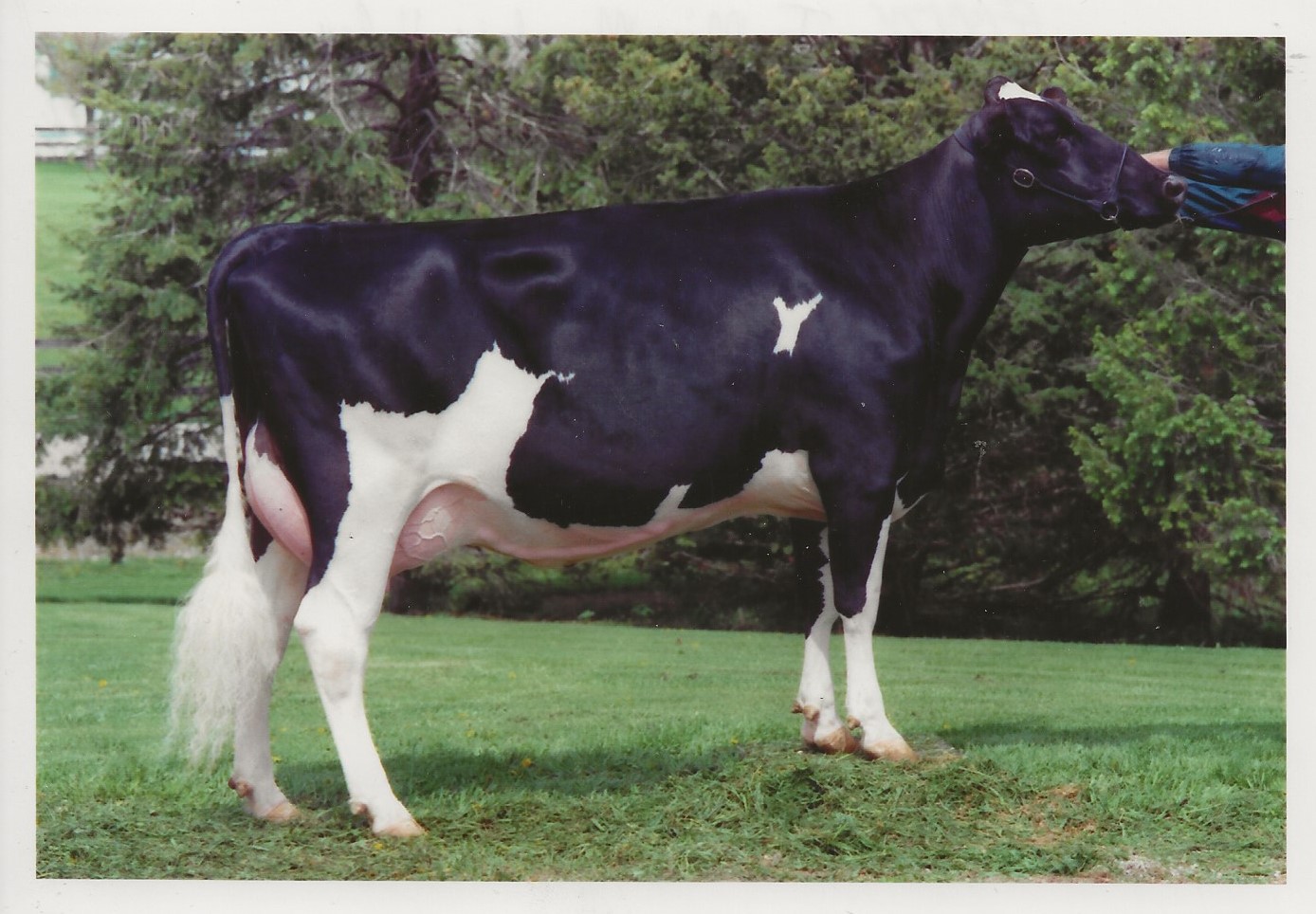
Under the Shade‑E‑Lane roof, one of those Royalty calves grew into Bis‑May S‑E‑L Mountain. He was proven at Sire Power in Pennsylvania. He had two flush brothers. When Sire Power analyst Steve Neeley had to choose between them, he did what sire analysts do: he looked at type, frame, legs, and testicles—because bigger testicles meant earlier and heavier semen production. Mountain got the nod.
Then the classifier came.
The classification report on Mountain is one of those documents you’d frame if you like irony: “Poor. Fifty points. Straight legs and almost no middle.” That’s almost comical in an era when Good still meant something—back when a 50‑point score really meant “don’t bother taking his picture.” For a moment, you can imagine folks at the stud wondering if they’d backed the wrong brother.
But the classification sheet didn’t tell the whole story. As Mountain daughters freshened, their proofs started rolling in, and they were “pumping out the protein like nobody’s business,” as one contemporary account put it. They weren’t all pretty, but they were resilient producers with better‑than‑average type and solid milk.
When A.I. centers started using Mountain sons because of those daughters, the people rose in protest. Holstein‑Friesian World and the Holstein Association were flooded with cranky letters about a 50‑point bull being used as a sire of sons. The cows didn’t care. They just milked.
From that “homely anti‑hero” came an elite trio of 100% U.S. blood bulls scattered around the globe: Jesther CV in France, Etazon Addison in the Netherlands, and Elite Mountain Donor in Australia. Another daughter, Emerald‑Acr‑SA Tannice VG, produced Emerald‑Acr‑SA Dawson, a popular protein sire in the early 2000s.
Think about that for a second. In a time when breeders still slapped bull pictures on the fridge, one of the defining protein sires of his era was a 50‑point bull whose best “photo” might have been his proof sheet.
Cleitus: The Milk Bull That Slipped in the Side Door
If Mountain taught the industry not to judge a bull by his picture, his herdmate Bis‑May Tradition Cleitus EX‑GM taught it not to judge a bull by his dam’s index.
When Bis‑May Conductor Coral VG‑88‑GMD‑DOM, a tall, deep‑bodied Wapa Arlinda Conductor daughter out of Bis‑May Bold C Coconut VG‑87 (by Nicolk Sunshine Bold Chief), dropped an early Sweet‑Haven Tradition son in 1987, his numbers were low enough that the first A.I. stud the Maynards approached turned him down. Tradition semen was hard to get, and Coral’s index didn’t look like bull‑mother material on paper.
Eastern A.I. remembered what Jupiter had done for them and decided to roll the dice. The young bull they took was named Bis‑May Tradition Cleitus.
Cleitus grew into one of the key production sires of his time and one of the best Elevation grandsons in the books. His best son, Norrielake Cleitus Luke EX‑GM, stood at Alta Genetics in Alberta and sired Dixie‑Lee Aaron EX‑GM and Lexvold Luke Hershel GM, both out of Mascot daughters. Aaron daughters clicked beautifully with O‑Bee Manfred Justice to produce bulls like Long‑Langs Oman Oman VG‑GM, while Hershel’s sons included Sandy‑Valley Bolton EX‑GM, a big milk and protein bull that earned a reputation as a serious freestall sire.
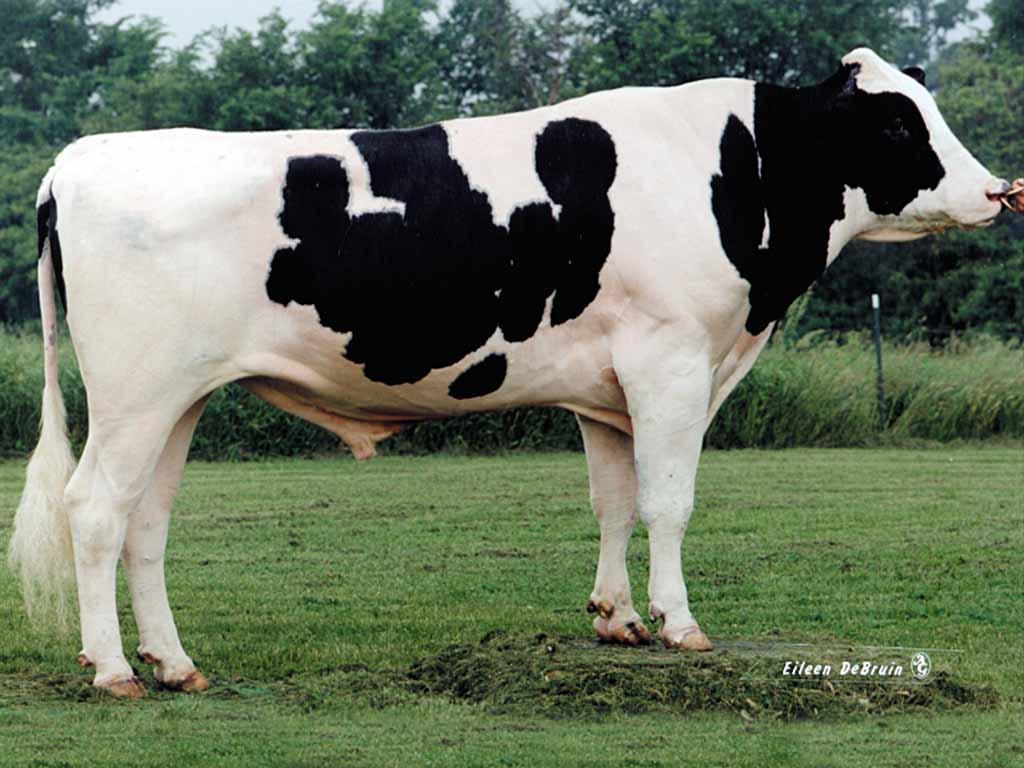
Another Cleitus son, Paradise‑R Cleitus Mathie EX‑GM, was selected by Charlie Will for Select Sires and sold upwards of two million doses, making him the highest semen seller in Holstein history at the time.
By the late 1990s and early 2000s, you could hardly scan a top TPI or Net Merit list without bumping into Cleitus, Luke, Aaron, or Hershel in the pedigree. Everett’s Hill Farm in Vermont had done exactly what his probability instincts predicted: stock the A.I. shelves from farmer‑bred cows.
Act II – Madison Architects and Fitness Warriors
All that milk, type, and protein needed a frame to live on—and a body that would last long enough to pay for itself. That’s where the second act of this Golden Age really takes hold.
Dellia, Durham, and Five Years at the Top of Madison
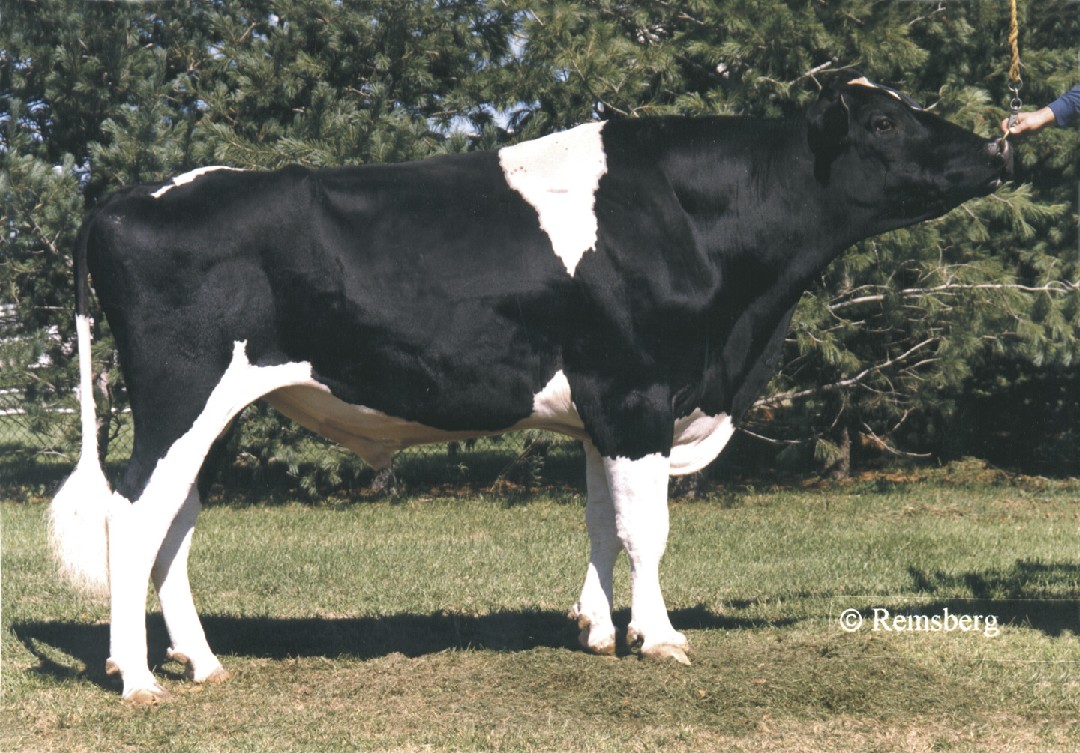
To get to Regancrest Elton Durham EX‑90‑GM, you start in a Wisconsin creek bottom.
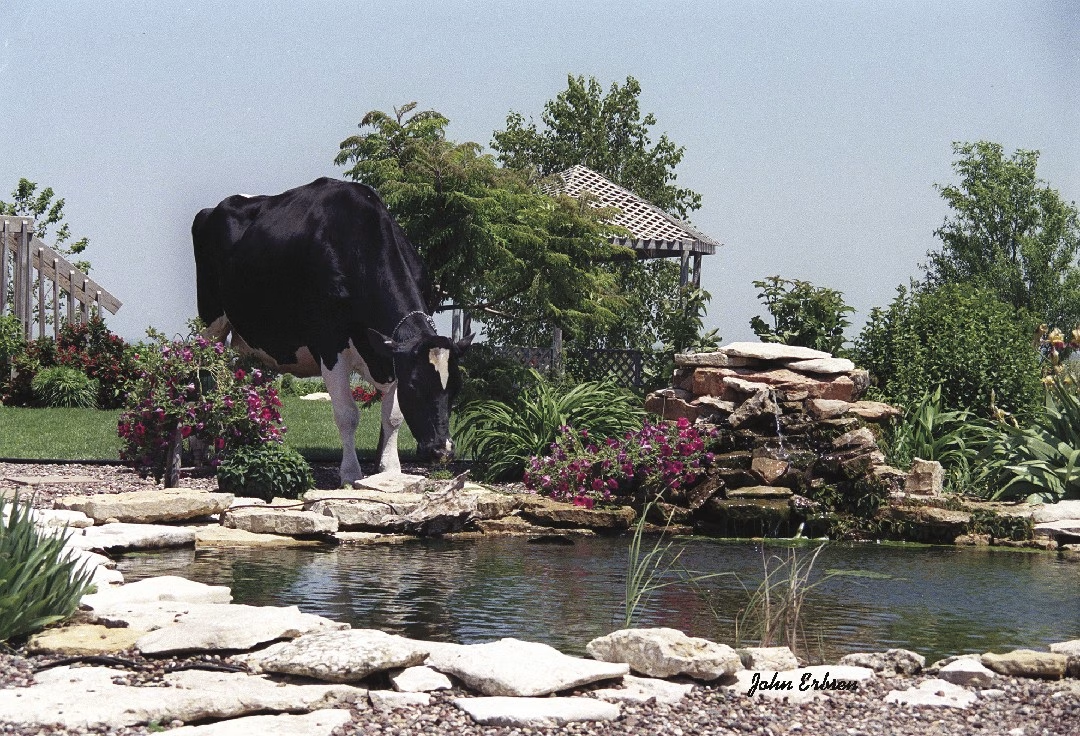
Snow‑N Denises Dellia EX‑95‑2E‑GMD‑DOM wasn’t bred as a glamour cow. She was a Bell x Mark granddaughter developed by Bob Snow and young herdsman John Steinhoff out of a hard‑doing family that had to travel down a pasture, cross a creek, and walk back up to the barn every day. By all accounts, there were nights when she walked into the parlor carrying three gallons of sand in her udder.
Frank Regan saw Dellia and couldn’t shake her from his mind. He came back. Looked again. Eventually, he bought her, on the condition that she show one more time at the Wisconsin Spring Show in 1991 before heading to Regancrest in Iowa.
The night before the show, Dellia looked a little drawn. So the crew did what cow people do: they fed her four bales of hay, warmed up her beet pulp—Dellia liked it that way—and let her settle down. The next day, judge Niles Wendorf walked her out first in the four‑year‑old class, gave her the best udder, and slapped her grand champion of the show. That creek‑bottom cow had just crossed a completely different kind of river.
Back at Regancrest, Frank called Select Sires’ Charlie Will. “What should I use on her?” he asked. The answer came back: Emprise Bell Elton, a Bell son whose daughters were building a reputation for udders, feet, and legs, and longevity. The Dellia x Elton flush produced four sons. First choice went to Japanese buyers for $20,000. The second choice went to Alta Genetics for similar money. Select Sires took the third bull, Regancrest Elton Durham. The Regans used the fourth.
Nobody in that semen office knew they’d just picked up the bull who’d become Premier Sire at World Dairy Expo five years in a row, 2003 through 2007—a run that, as the Durham profile notes, may stand for a very long time.
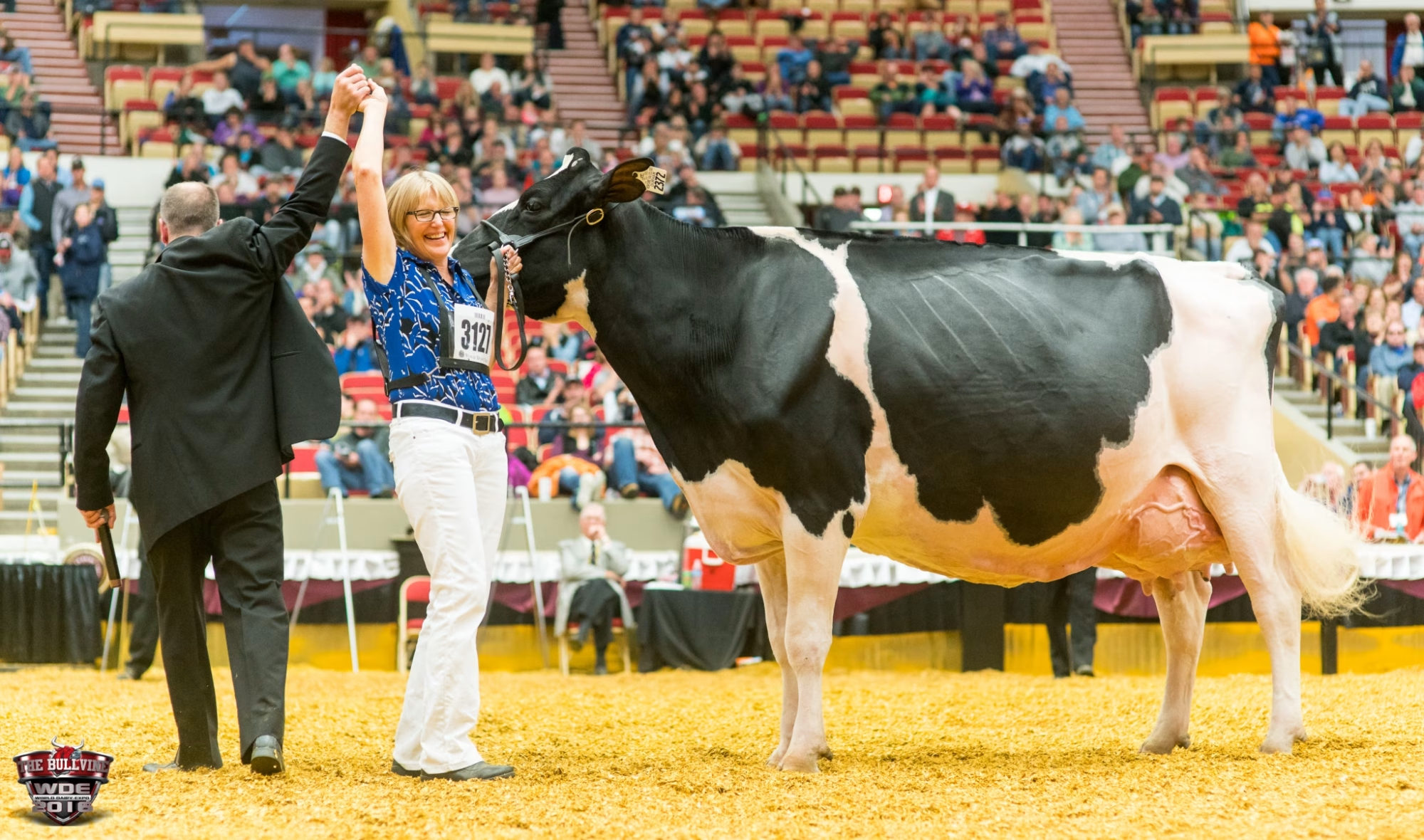
The thing about Durham daughters is that you could pick them out from the stands: long bodies, flat and wide rumps, and udders that looked like they’d been hung with a level—high rear udders, smooth fore udders, clean teat placement. More than one dairyman has said his Durhams weren’t always the highest milk cows on the test sheet—but they were some of the most trouble‑free cows he ever milked. They bred back, they walked well, and they often looked their best at four and five—exactly when the milk check really starts to count.
Durham sons—Mr. Sam, Duplex, Damion, Modest, Drake, D‑Fortune, Primetime—filled type lists from Canada to Europe. His daughters—Kamps‑Hollow Altitude, Lylehaven Lila Z, MD‑Delight Durham Atlee, Regancrest‑PR Barbie, Scientific Debutante Rae—founded families that still show up behind modern genomic stars.
Looking back, the signs were there: Durham gave the breed a blueprint for “classic” dairy cow architecture exactly when the industry was learning to care about cell counts, fertility, and productive life as much as it cared about banners.
Goldwyn: When Line‑Breeding and Madison Met
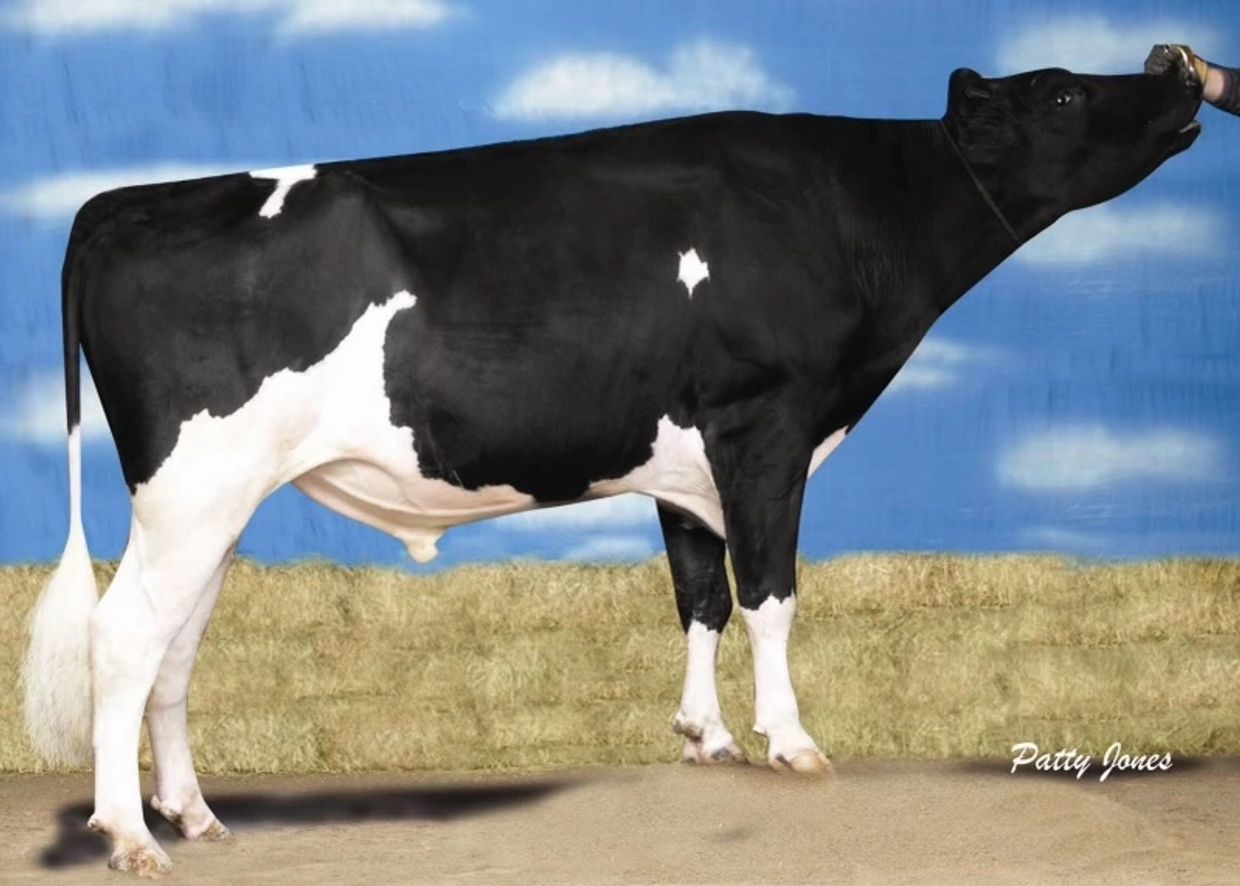
If Durham was the architect of style, Braedale Goldwyn GP‑Extra was the finisher who wouldn’t leave a seam out of place.
Goldwyn was born January 3, 2000, a Semex young sire out of Braedale Baler Twine VG‑86, the Maughlin Storm daughter of Braedale Gypsy Grand VG‑88, both cows deeply rooted in Sunnylodge breeding. His sire was Shoremar James GP‑Extra, a Mark CJ Gilbrook grandson out of an Aerostar daughter.
His pedigree is a masterclass in line breeding. Goldwyn carries three close crosses to Madawaska Aerostar (through James, Storm, and Moonriver), and three to Walkway Chief Mark (through James, Gypsy Grand, and Sunnylodge Chief Vick). There’s also a tight knot in the ninth, tenth, and eleventh dams involving Hays Inspiration and Ajax Sovereign B, both tied to Montvic Rag Apple Sovereign and the anchor Dutch cow Vrouka 9198 H.H.B.—the same foundation that produced Osborndale Ivanhoe.
Put simply, Goldwyn didn’t just pop out of nowhere. Canadian breeders deliberately stacked old Sovereign and Rag Apple blood, via Aerostar and Chief Mark, because they believed those cows still had something to say—if you lined them up just right.
On diets and bedding that looked a lot more modern than Dellia’s creek‑bottom pasture, Goldwyn daughters made people rethink what “mammary perfection” meant. Their udders were high, silky, and veiny, with square teat placement and rear udders that looked welded onto the pelvis. They carried long, stylish dairy frames and near‑perfect feet and legs.

In 2008, Goldwyn ended Durham’s run and became Premier Sire at World Dairy Expo—the youngest sire in 25 years to win it and the first bull at the top of Canada’s LPI list to do so. You could feel the shift in the Coliseum that night. The banners still said “Madison,” but the cow families and sire stacks behind those udders were starting to look a lot like the pedigrees that would soon feed into genomic flush programs.
When Eastside Lewisdale Gold Missy EX‑95 sold for roughly $1.2 million in 2009 and then went on to be grand at Madison and the Royal, it wasn’t just a big number. It was proof that deep Canadian cow families, carefully line‑bred back to Vrouka and Sovereign, could still ring the cash register in an era about to be dominated by SNP chips.
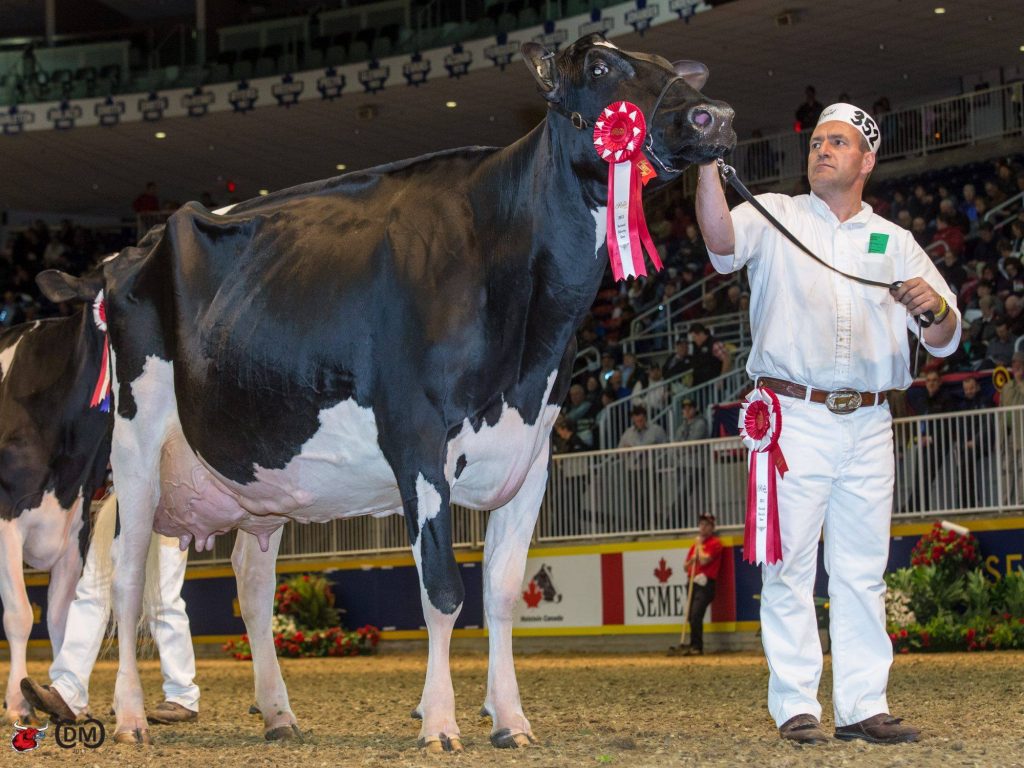
And if you trace a Goldwyn pedigree far enough, you still find Welcome Jupiter Gala, Mark CJ Gilbrook Grand, Walker Homestead Dawn tucked into the background—the same farmer‑bred math that was quietly powering Mountain cows in commercial parlors.
If there’s a single moment where you can say “everything changed,” it’s probably that 2008 Premier Sire banner. Durham had ruled Madison for five straight years. Goldwyn took his place while sitting at or near the top of LPI for conformation, and the genomic era was just around the corner. The old show‑ring order had just shaken hands with the future.
O‑Man and Formation: The Fitness Wars
Now, while all that was happening under the Madison lights, another battle was raging in the proofs—a battle over fitness. Cows were getting taller and fancier, but fertility was slipping, and cows weren’t lasting like they used to. The industry needed bulls that could keep daughters in the herd.
O‑Bee Manfred Justice (O‑Man): The Fitness Turning Point
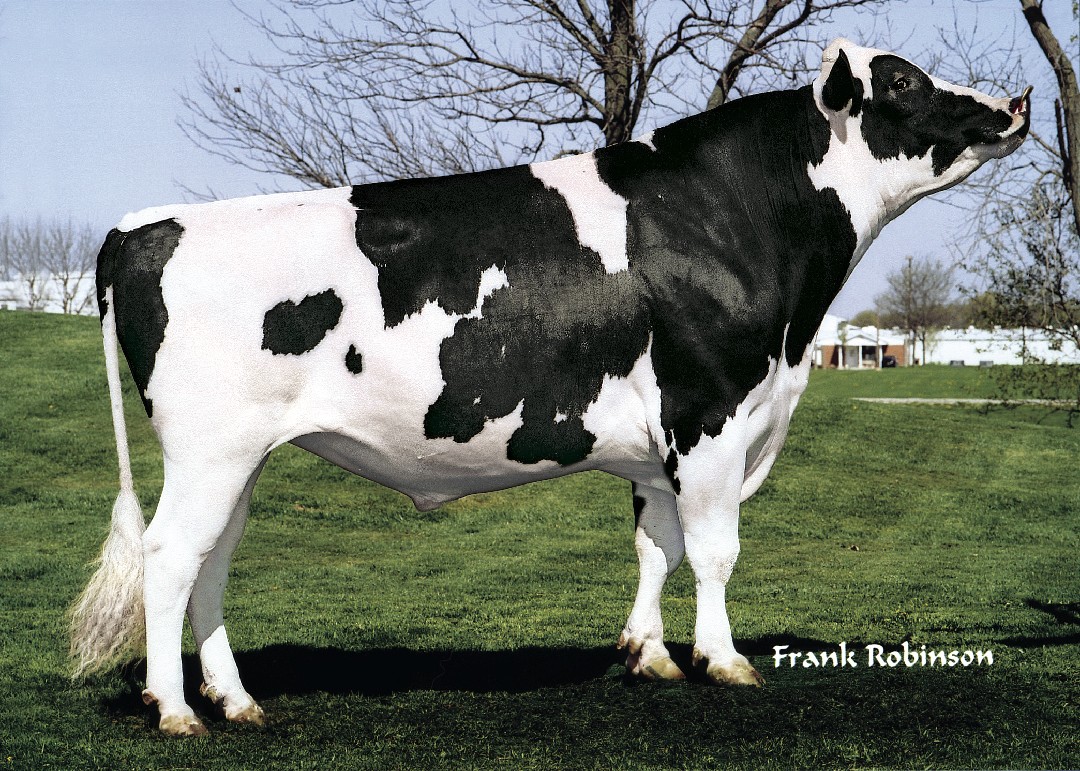
The fitness story starts with a cow called Rynd‑Home Valiant Cutie EX‑91, who earned the “Mama Protein” nickname by producing two sons, Cubby and Curious, who topped protein lists in 1992. Her son Osdel‑Endeavor Bova Cubby EX‑94‑GM sired Ha‑Ho Cubby Manfred GP‑GM, bred by the Grose family in North Carolina.
Manfred’s proof at Accelerated Genetics was a strange mix: high production, deep udders, plain type—but with outstanding fertility and longevity numbers. As Net Merit shifted to reward health traits, Manfred suddenly looked like “America’s answer” to the longevity and fertility concerns of the early 2000s.
His best son was O‑Bee Manfred Justice, EX‑GM, known everywhere as O‑Man. Bred by Obert Bros. of Illinois, O‑Man was a Manfred son out of Meier‑Meadows El Jezebel EX‑92‑GMD, an Emprise Bell Elton from an Arlinda Melwood daughter, backed by Chief Mark and Rockalli Son of Bova.
When O‑Man’s proof hit in 2002, it landed like a rock in a pond. At a time when the whole world was suddenly worried about fertility, he scored positive for all the major health traits—productive life, daughter fertility, somatic cell score—with enough milk and type to keep most programs comfortable. Holstein International even called his appearance a “turning point in global Holstein breeding.”
By August 2009, O‑Man sons held five of the top ten spots in high‑ranking sire reports. Long‑Langs Oman Oman VG‑GM (from a Dixie‑Lee Aaron dam) and Schillview Garrett GM (from a Carol Prelude Mtoto dam) were near the very top. Schillview Oman Gerard EX‑GM, out of Schillview Marsh Glash VG‑89‑DOM, tied Marshall’s production to O‑Man’s health.
And then came Flevo Genetics Snowman 388965513, O‑Man’s high‑type son from Broeks MBM Elsa EX‑90, the Mara‑Thon BW Marshall daughter named Global Cow of the Year 2009, and later recognized again in 2010 by World Wide Sires Germany. Snowman’s genomic numbers were so strong that he became a worldwide sensation before his daughter’s proofs were even in; he died during the waiting period, but not before his genetics were widely used.
Looking back, it’s hard not to see O‑Man as the hinge where health traits stopped being an afterthought and started driving breeding decisions.
Formation: Burke Lad 33 Times Over
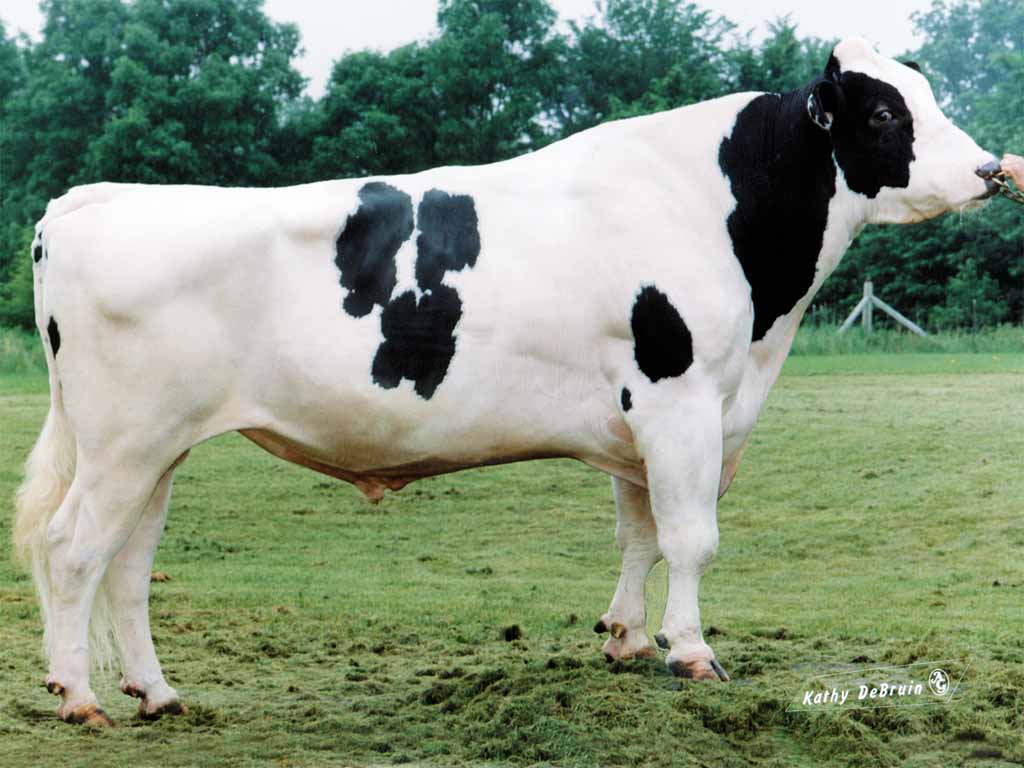
Running alongside the O‑Man wave was a quieter bull: Shen‑Val NV LM Formation, a Leadman son whose pedigree carried 33 crosses to Wisconsin Admiral Burke Lad.
Formation daughters weren’t extreme—they were correct. Good udders, strong ligaments, enough strength, and cows that just kept coming back through the parlor doors. His biggest contribution to this era came through Lylehaven Form Laura EX, who produced Lylehaven Lila Z EX‑94, the million‑dollar Durham daughter that anchored a host of Goldwyn and genomic descendants.
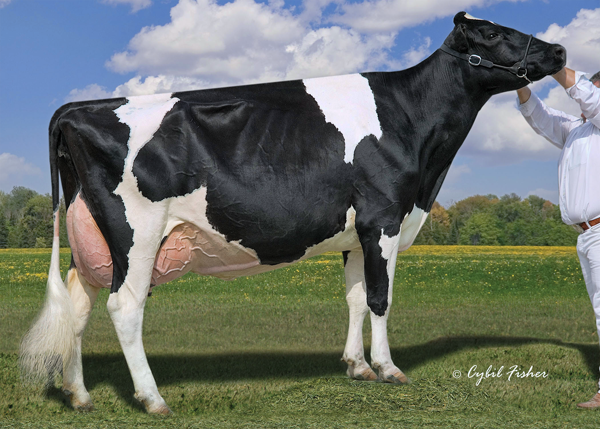
At the time, most folks saw Formation as “one of those good Leadman sons.” Decades later, breeders would recognize that he’d helped pipe Burke Lad’s balanced, long‑lasting daughters straight into some of the most intensively used cow families in the world.
Act III – Shottle, Rudolph, Marshall, and the Hand‑Off to Genomics
By the early 2000s, A.I. had truly gone global. British cows were shaping American proofs, Canadian cow families were being flushed to Italian and German bulls, and American fitness sires were showing up in Dutch programs. As the genomic era dawned, three bulls sat right at the intersection of all those threads: Picston Shottle, Startmore Rudolph, and Mara‑Thon BW Marshall.
Picston Shottle: Sharon’s Son and the Bull No One Could Knock Off
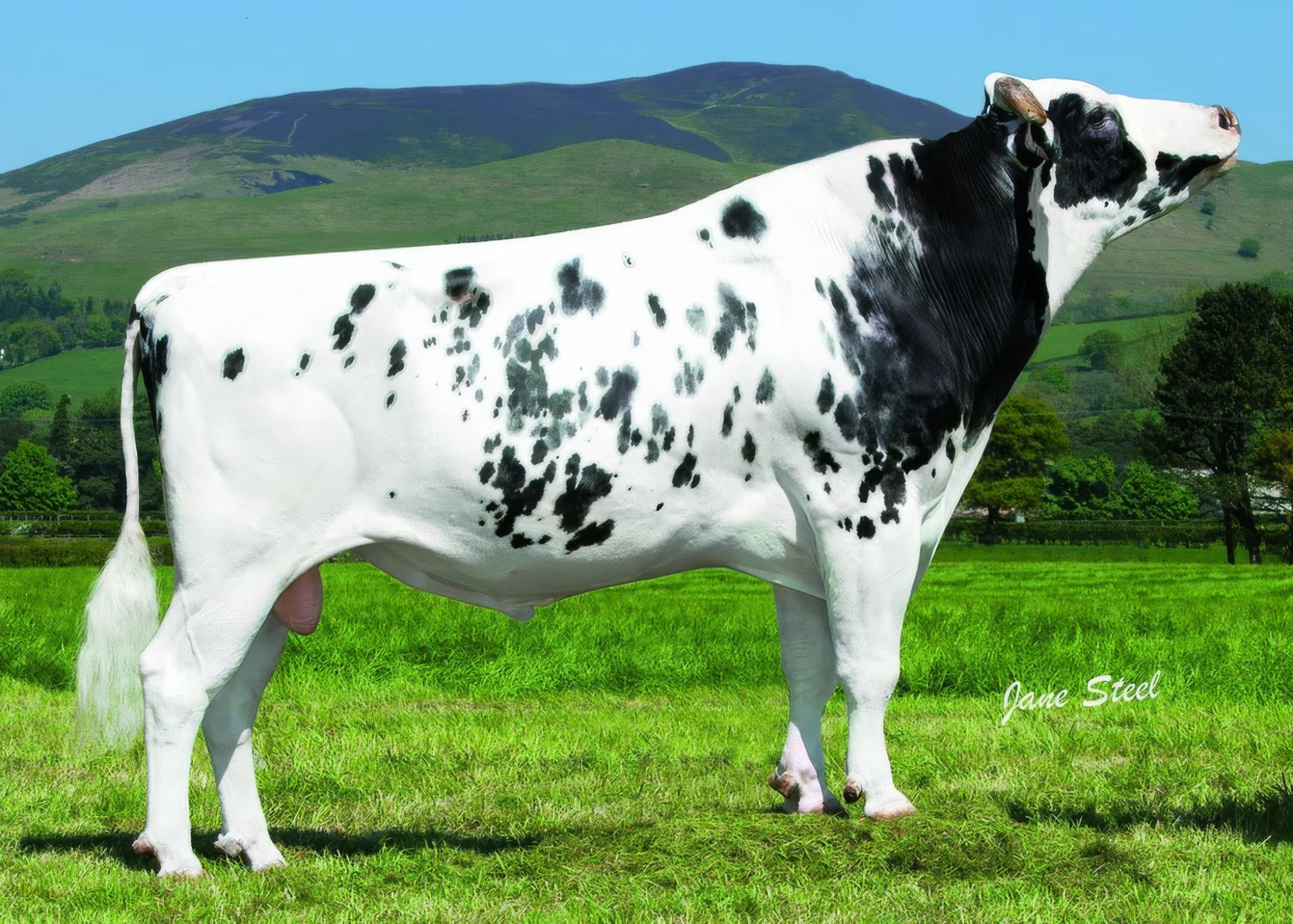
The Shottle story starts at Don McLean’s Condon dispersal in Ontario.
At that 1991 sale, Condon Inspiration Sally VG‑87, a Hanover‑Hill Inspiration daughter from the Cranford Sovereign Marjorie family, walked through the ring with a nine‑month‑old Madawaska Aerostar heifer at her side named Condon Aero Sharon. Sharon sold for $4,400 to an English buyer who eventually moved her to joint ownership between John and Helen Pickford (Picston) and Anthony Brough (Tallent).
Under their care, Sharon became a force. By the time the smoke cleared, Condon Aero Sharon EX‑91‑60* had earned 60 brood cow points based on 37 daughters averaging 87 points and seven sons with a median score of 91. She was, as the Shottle profile says outright, one of the most powerful brood cows in U.K. history.
When the Pickfords and Brough sat down to pick a mating, they chose Carol Prelude Mtoto EX‑SP, a bull known for strong, functional type and low somatic cells whose sire stack—Prelude, Blackstar, Chief Mark, Bell, Elevation, Bootmaker—and maternal Holtex Peggy line were full of respected Canadian and U.S. names.
The calf from that mating, born July 23, 1999, was registered as Picston Shottle. According to pedigree expert Douglas Blair, Shottle had “the best proof in the world” at the time, and Blair noted he’d never seen a modern pedigree with so many respected Canadian bulls and prefixes lined up in a row. Helen Pickford later admitted they still had to “pinch themselves” when they thought about the impact he’d made—the kind of remark that tells you how surreal it felt even to the people who bred him.
On the ground, Shottle’s daughters weren’t prima donnas. You could park a Shottle daughter in a 400‑cow freestall or in a county fair front row, and she’d look like she belonged in both places—quiet, correct, with an udder that didn’t need excuses. They milked, they bred back, they walked well, and they did it in barns from Staffordshire to Wisconsin to northern Italy.
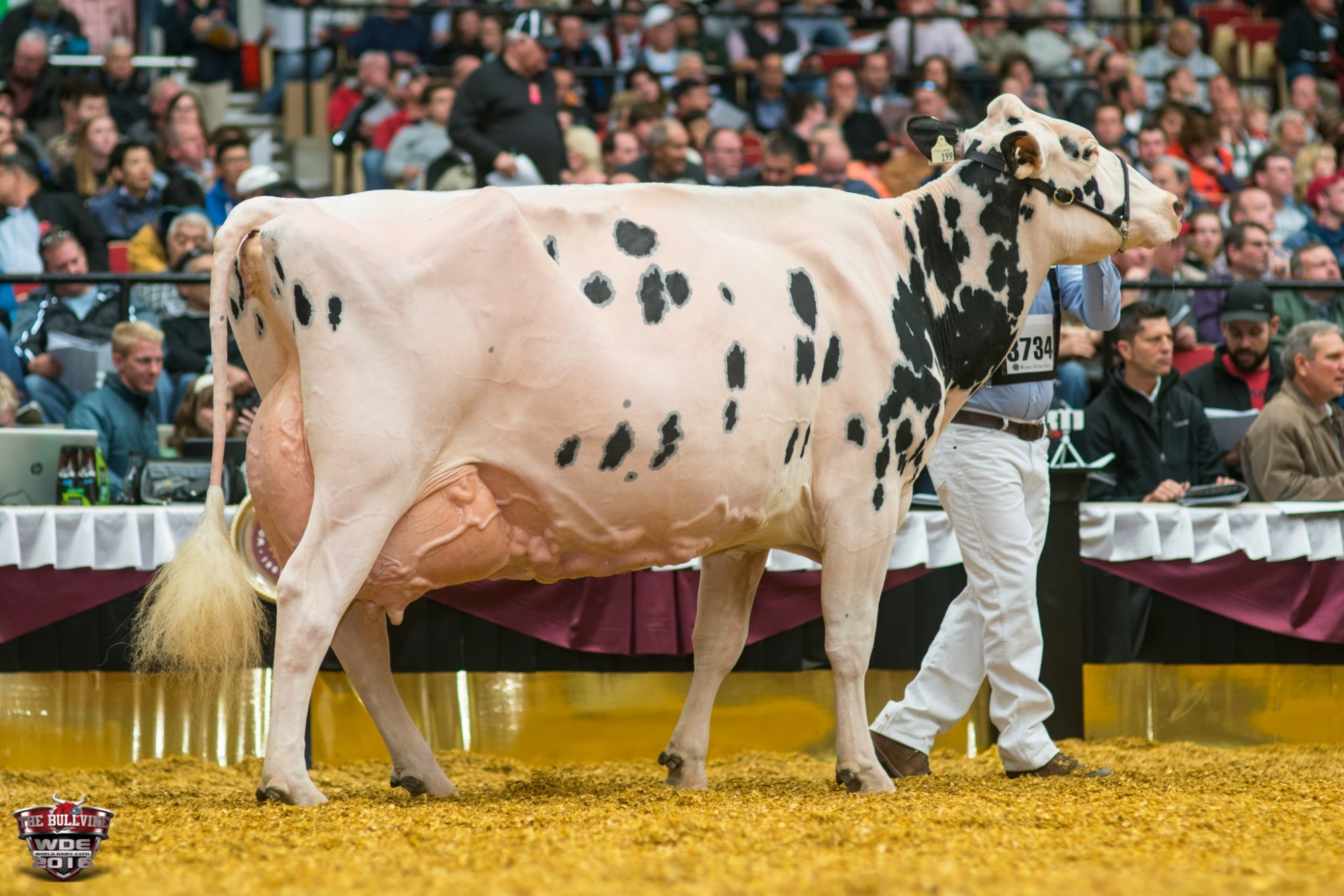
For a stretch in the mid‑2000s, Shottle sat at or near the top of type and production lists in the U.S., Canada, and Italy at the same time. In late 2010, ABS sire summaries still showed him at +1334 milk, +63 fat, +36 protein, and +2.95 on overall type, on 30,049 daughters in 7,276 herds, with semen at $100 a dose. Round after round, new proofs came and went, but breeders kept finding one constant at the top of the page: Old Shottle, still sitting there.
If Durham gave the blueprint and Goldwyn fine‑tuned the udder, Shottle was the bull you used when you wanted a cow that would work anywhere on the planet.
Startmore Rudolph: The Brood Cow Fountain
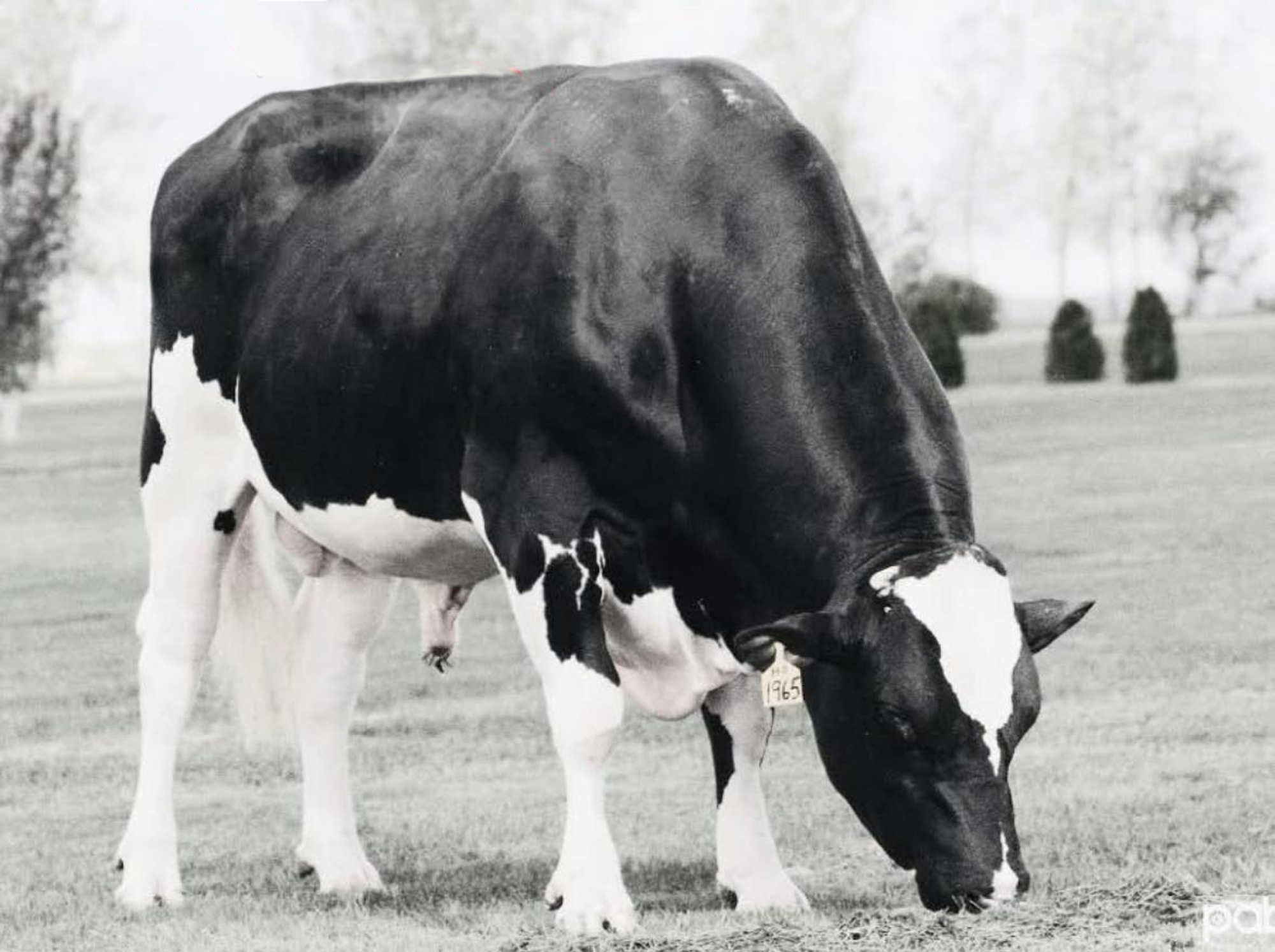
Then there’s Startmore Rudolph VG‑Extra, born July 17, 1991, on Earl Start’s farm near Woodstock, Ontario.
Rudolph’s story really begins at the Reflections of Milly Sale in May 1976 in Henrietta, New York. Earl had been a Guernsey man all his life—official judge, major shows, the whole bit. But by the mid‑’70s, he’d decided to move into Holsteins. That wasn’t easy emotionally; his family had gotten their first Guernsey for doing a neighbor’s fall plowing back in 1931, one of the worst years of the Depression.
He and his neighbor, Gerry Row, drove down to the sale with their wives. As they walked up to the Monroe County Fairgrounds sheds, they saw a big black cow being led to water. That was it. They could hardly think of anything else. The cow was Jim‑Mar‑D Astronaut Gail EX‑11, Honorable Mention All‑American 3‑year‑old the year before, an Astronaut from a 30,000‑pound Rosafe Shamrock Perseus granddaughter.
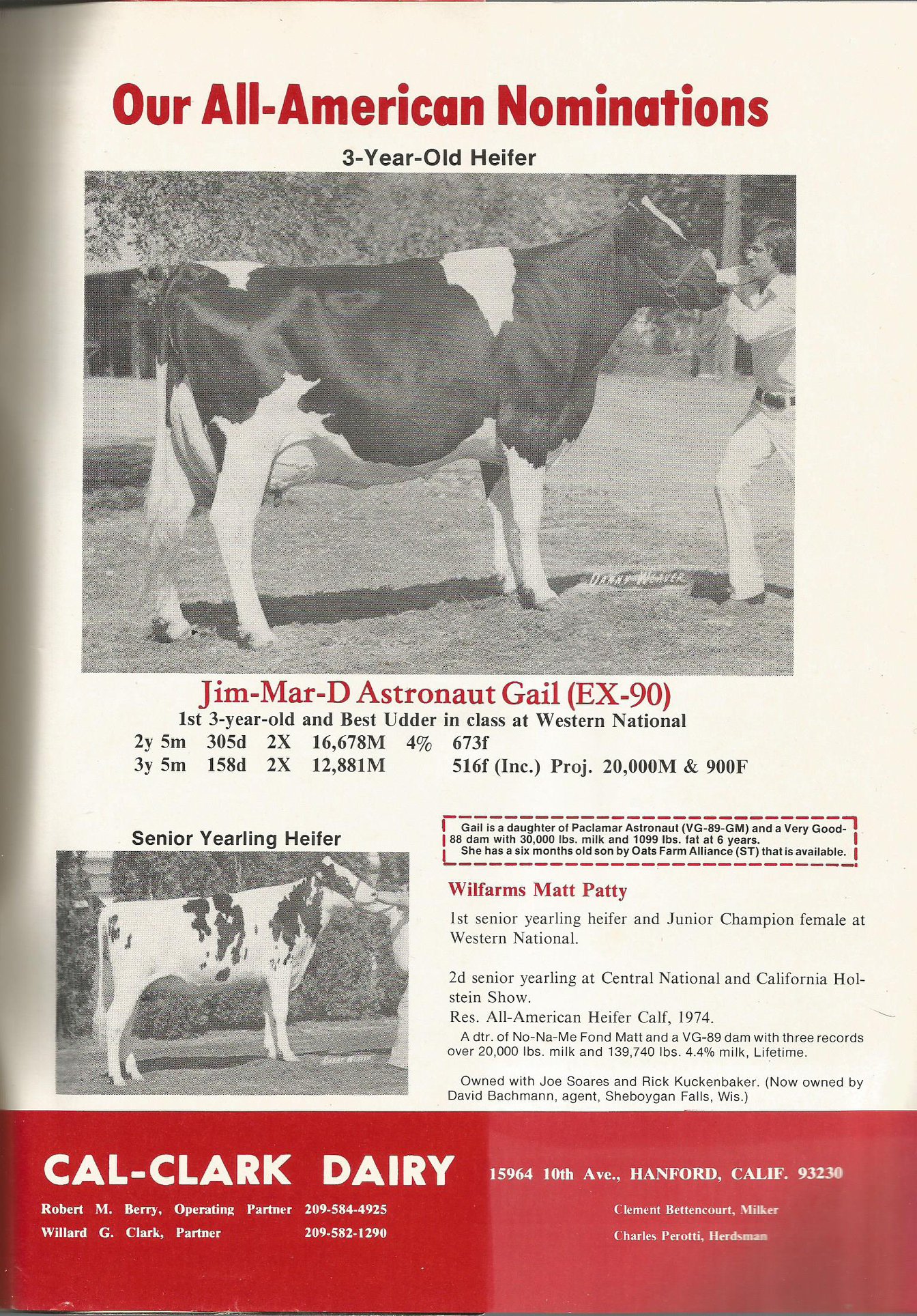
“The more we looked at her, the more we liked her,” Earl recalled some 35 years later, although he didn’t think they could touch the price. Gerry finally said, “Well, Earl, I’d like to buy half,” even though either man could have bought her alone. They bought them together for $15,500.
Back home, when an investor group came sniffing around, Earl did some mental math on ten flushes and quoted what he figured she was worth. “I didn’t say I’d sell her for that,” he told them. “I’m just giving you an idea of what she’s worth.” He and Row started flushing her, taking turns picking bulls. Earl leaned on S‑W‑D Valiant, Row favored Nelacres Johanna Senator, and later Earl added Butlerview Mattador after seeing a group of Mattador daughters at an Eastern Breeders display.
Gail’s daughters and granddaughters—Startmore Chanel (by Valiant), Startmore Rachelle (by Mattador), and others—built a family of cows that were, as one account put it, “virtually royal,” packed with brood cow power. Out of Rachelle by Madawaska Aerostar came Rudolph.
As a young proven bull, Rudolph debuted at the top of Canada’s LPI list in August 1996 and sat there for four consecutive years. His young sire semen allotment sold out so quickly in 1992 that Canadian breeders nearly cleaned him out before any daughters calved. By the end of his career, he’d sold 1,495,000 doses, just shy of the “super‑millionaire” status (1M+ units) only nine bulls in the breed had ever achieved.
At first, he was used for high type and production. Later, as fitness traits entered the indexes, people realized his real gift was late maturity, longevity, and low cell count—a gift traced back through his maternal grandsire, Butlerview Mattador EX‑ST, one of the top longevity and fertility bulls of his day.
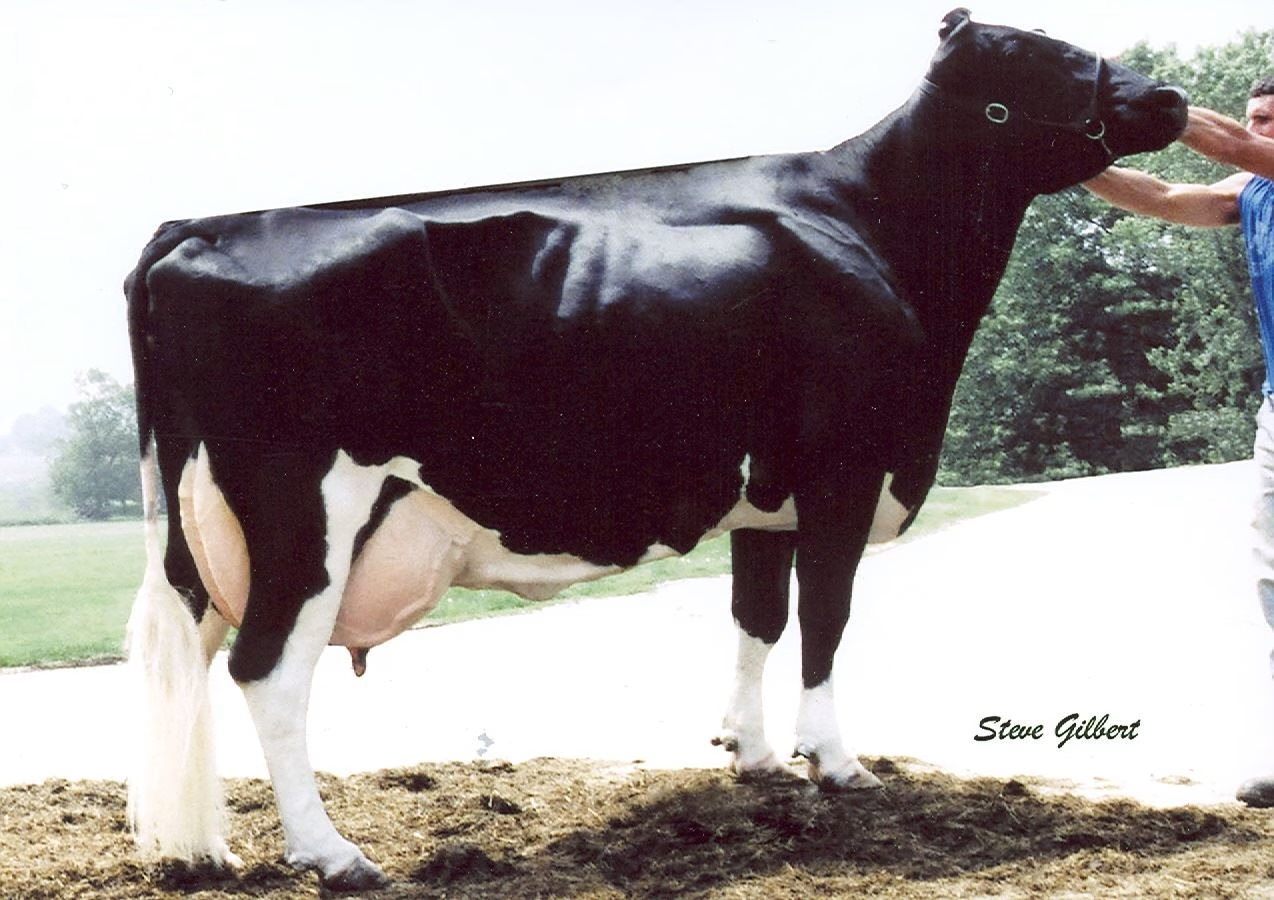
Rudolph’s daughters turned into a who ’s-who of brood cows. By the mid‑2000s, sale catalogs read like a roll call of Rudolph daughters—Wesswood‑HC Rudy Missy, Windsor‑Manor Rud Zip, Ladys‑Manor Ruby Jen, Gloryland Lana Rae—anchoring the footnotes on bulls that would dominate the TPI lists for a decade. Rudy Missy sits behind Mogul, Supersire, Silver, Balisto; Rudy Zip behind Miss OCD Robst Delicious and sons like Delta and Denver; Ruby Jen behind Ruby D and Ladys‑Manor PL Shamrock; Lana Rae behind a string of Excellent daughters, including Gloryland Liberty Rae EX‑95.
The 2025 Rudolph feature spells out just how deep that influence goes: modern superstar Genosource Captain carries Rudolph 11 times in his pedigree, and Global Cow winner Siemers Lambda Paris traces to Rudolph nine times. Permanently and intensely interwoven, as the article put it.
If you want one bull story that sums up the quiet side of this Golden Age, Rudolph is it: a bull whose sons did fine, but whose daughters changed the breed.
Mara‑Thon BW Marshall: The Needle in a Haystack from Hemingway Country
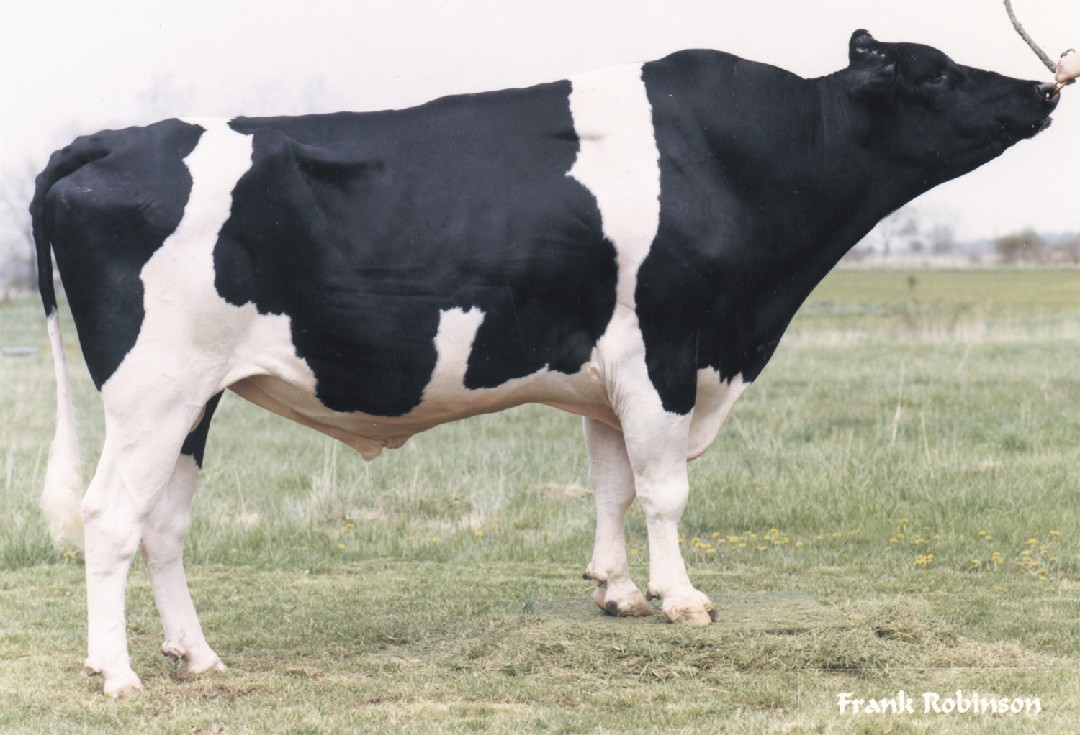
Finally, we come to Mara‑Thon BW Marshall VG‑GM, a bull from a place almost no one associates with global Holstein influence: the Upper Peninsula of Michigan, the same country where Ernest Hemingway wrote “Big Two‑Hearted River.”
Marshall was bred by Mara‑Thon Associates—a partnership of Brad Morgan of Sears, Michigan, and the Brunink family of McBain. His sire was Maizefield Bellwood, and his dam, Morgan‑Valley Elton Mara VG‑87‑GMD‑DOM, was an Emprise Bell Elton daughter out of a tall, strong, wide Mel‑Est Valiant Irose Melvin EX‑GM cow whose structure clearly stamped Marshall’s daughters.
Marshall’s sire stack reads like a who ’s-who of high‑production sires: Pawnee Farm Arlinda Chief, Glendell Arlinda Chief, Arlinda Rotate, Arlinda Melwood, Maizefield Bellwood. Many of his best sons came from Brabant Star Patron and Startmore Rudolph daughters: Jenny‑Lou Mrshl Toystory GM and his full brother Jenny‑Lou Marshall P149 VG‑Extra out of Jenny‑Lou Patron Toyane VG‑89‑GMD; Regancrest‑HHF Mac EX‑GM and Regancrest‑HHF Marcus EX‑GM out of Rudolph daughter Regancrest Rudolph Dena VG‑89; England‑Ammon Million EX‑GM out of Regancrest‑HHF Maya VG.
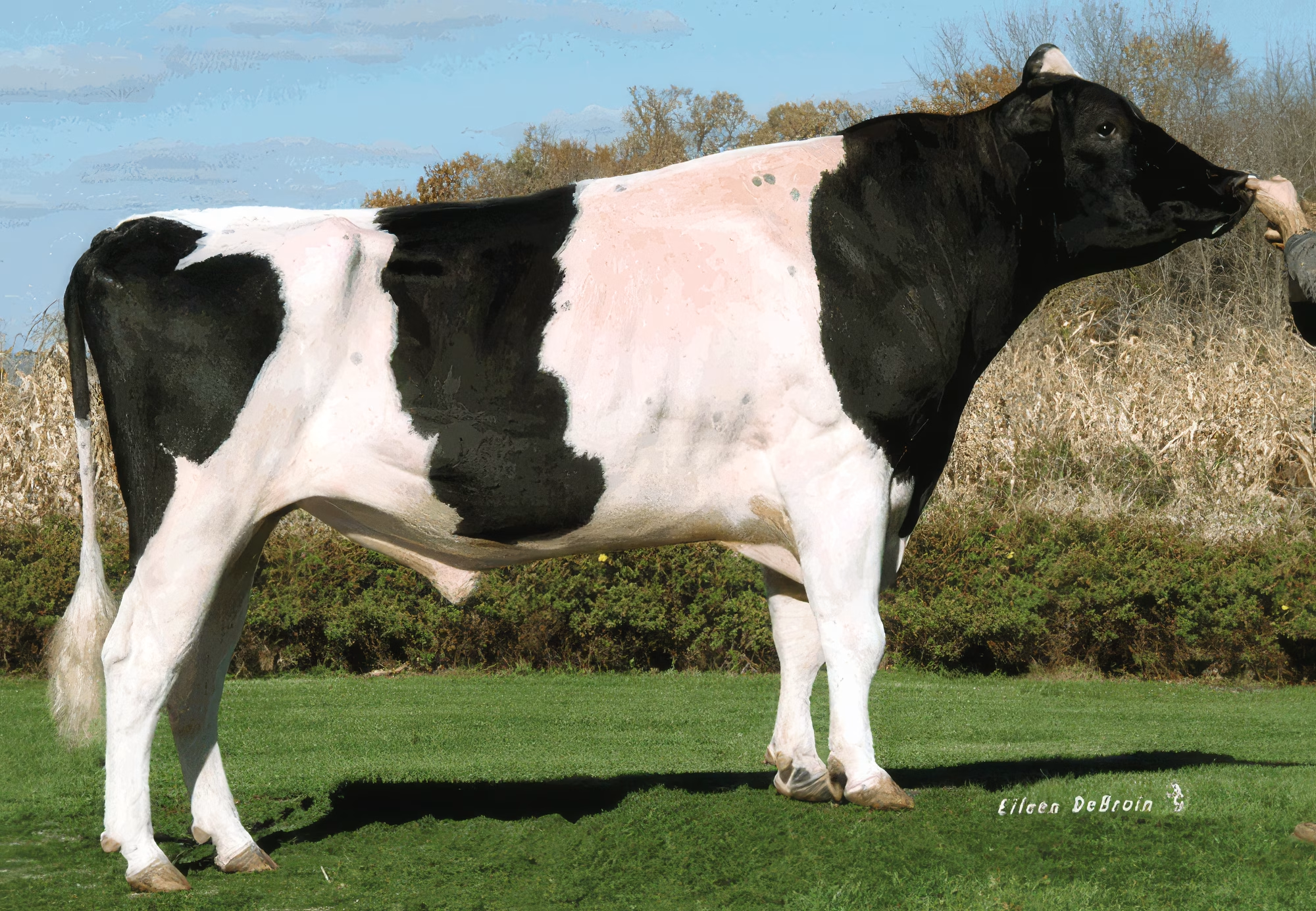
His daughter, Broeks MBM Elsa EX‑90‑5Y, out of Ever‑Green‑View Elsa VG‑89 (by Dixie‑Lee Aaron), was named Global Cow of the Year 2009 and later recognized again in 2010 by World Wide Sires Germany. Elsa became the dam of Flevo Genetics Snowman, O‑Man’s high‑type son. Elsa’s own maternal line, bred at Tom and Gin Kestell’s Ever‑Green‑View herd in Wisconsin, stacked Ever‑Green‑View Elsie EX‑92 by Emprise Bell Elton, then Excellent daughters by Drendel Melvin Grant and Stardell Valiant Winken.
In 2009, another family member, Ever‑Green‑View My 1326 EX‑92, set a world milk record at 72,036 pounds of milk in 365 days, sharing the same granddam, Elsie, with Broeks MBM Elsa. That’s the kind of tribe Marshall walked into.
Charlie Will, who bought Marshall for Select Sires, later called him proof that not all good sires come from elite cow families. “Just like in the days of Blackstar,” he said, “I view Marshall as a needle that was found in a haystack.”
By the time Shottle and Rudolph proved out, and Marshall’s daughters hit the big lists, it was clear the Golden Age had done its job. The genomics era was putting numbers to what cow people had already built.
Key Takeaways
- The Holstein’s Golden Age was driven by farmer‑breeders, not investor show strings—people like the Maynards, Starts, and Kestells quietly breeding great cows in everyday barns.
- Durham and Goldwyn defined a new “classic” cow: Madison‑winning style on udders, feet, and legs that still hold up in big freestall herds.
- O‑Man, Formation, and their kin dragged fertility, longevity, and low SCC onto the front page of breeding goals and baked fitness into modern Holsteins.
- Shottle and Rudolph knit North American and European cow families together, flooding proofs with daughters that became brood‑cow factories.
- Today’s genomic headliners—Captain, Paris, Snowman, Oman Oman, Bolton, and more—stack multiple lines to these sires, so every “hot” proof still sits on Golden Age foundations.
The Bottom Line – Names in the Small Print, Foundations Under Genomics
Today, when you pull up a proof sheet for a hot young bull, your eyes go straight to the genomic numbers. That’s just how the business works now. But scroll down into the pedigree, and those same old names keep peeking out of the fine print: Jupiter. Cleitus. Mountain. Durham. Goldwyn. O‑Man. Formation. Shottle. Rudolph. Marshall.
Every time you admire a Goldwyn udder, you’re seeing the echo of Walker Homestead Dawn and a New York cow family that Bill Peck insisted be “wide in the muzzle, wide in the chest, and wide in the udder.” Every trouble‑free Durham daughter in your freestall pen carries a little bit of Dellia’s creek‑bottom toughness and the Elton flush that almost went somewhere else.
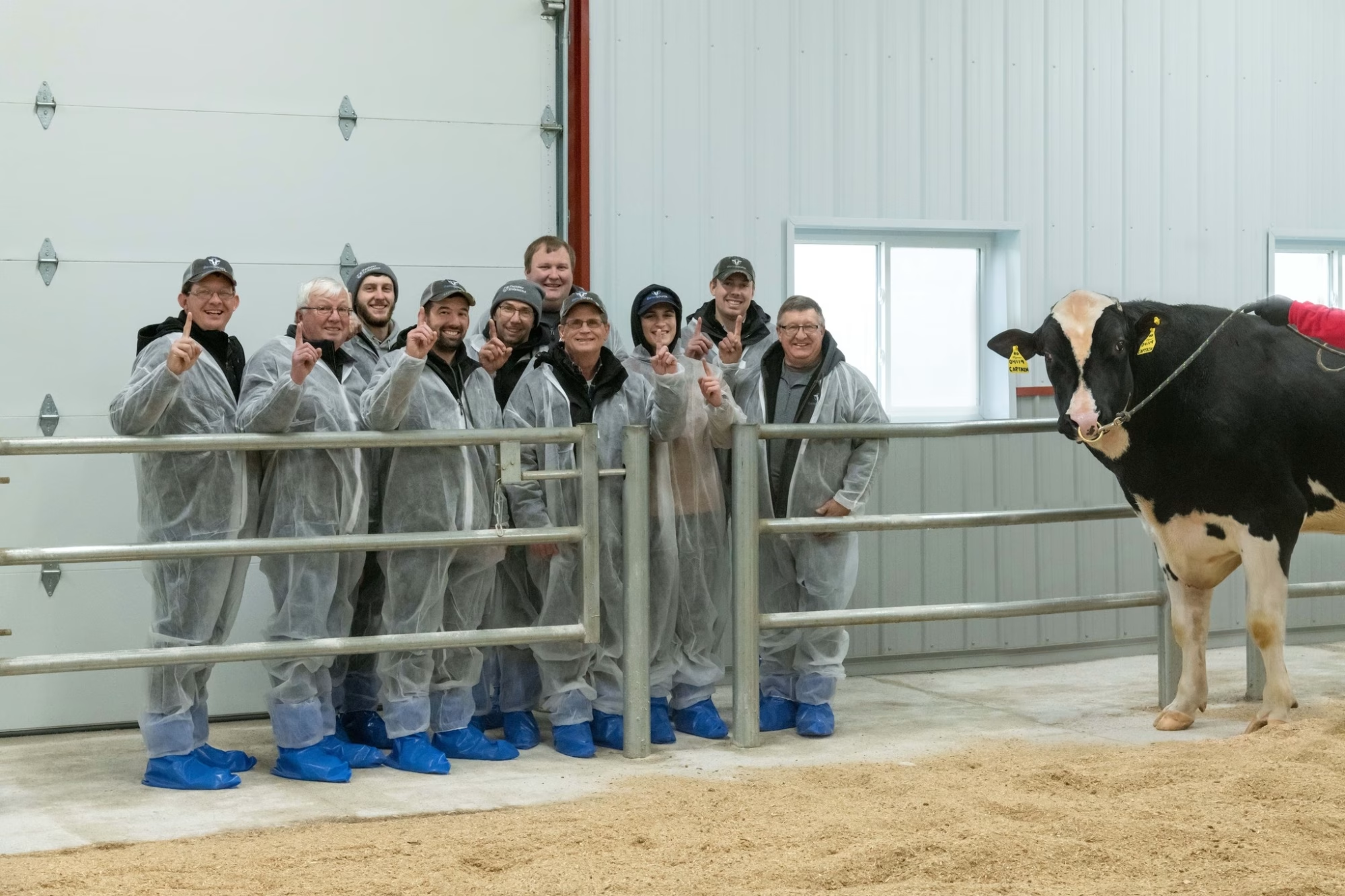
Every time your herd’s somatic cell count runs lower, and cows stick around for one more lactation because of O‑Man, Rudolph, or Marshall blood, that’s the fitness revolution those bulls kicked off in the early 2000s, finally paying out in your own bulk tank. And when you see a modern sire like Genosource Captain with eleven lines back to Rudolph stacked on top of O‑Man, Goldwyn, Marshall, and Shottle, you’re not just looking at a clever genomic mating—you’re looking at three decades’ worth of cow people betting on the right kind of cows long before a computer told them they were right.
If there’s one equation that sums up this Golden Age, it might be the one borrowed from the Durham story: Classic = Quality + Time. Durham and Goldwyn gave the breed quality you could see from the stands at Madison. O‑Man, Formation, Rudolph, Marshall, and the Bis‑May bulls made sure that quality would still be there in ten years by hard‑wiring fitness, protein, and durability into the bones of the cow population.
So the next time you lean on the rail at Expo or flip through a proof list in the pickup with the radio low and the windows fogged, pause when you see those names in the small print. Remember the Vermont hills and the creek in Wisconsin, the Milly sale ring in New York, the Upper Peninsula snow, the British sale barns, and all those kitchen tables spread with bull pictures. These aren’t just sires. They’re the architects of the most quietly revolutionary era our breed has ever seen—and the foundation under every genomic number we chase today.
Continue the Story
- From Depression-Era Auction to Global Dominance: The Picston Shottle Legacy – Explore another parallel journey of a farmer-bred legend built in the same era. This narrative honors the patient builders at Condon Farm who developed the maternal line that eventually produced the global icon, Picston Shottle.
- Sire Spotlight: The Backup Bulls Who Created Holstein History – Deepen your understanding of the historical world these bulls were navigating. This retrospective examines the industry forces and “backup” status of legends like O-Man and Elevation, proving that the foundation held even when the experts looked elsewhere.
- When Lightning Strikes: The Braedale Goldwyn Story That Changed Everything – Connect the line from then to now by tracing how Goldwyn carried forward the genetic engine of his predecessors. This piece highlights his lasting influence on conformation and how his impact is still visible in today’s genomic headliners.
 The Sunday Read Dairy Professionals Don’t Skip.
 The Sunday Read Dairy Professionals Don’t Skip.
Every week, thousands of producers, breeders, and industry insiders open Bullvine Weekly for genetics insights, market shifts, and profit strategies they won’t find anywhere else. One email. Five minutes. Smarter decisions all week.