He was the first voice many dairy farmers heard each morning. On March 16, 2026, that voice went quiet for good.
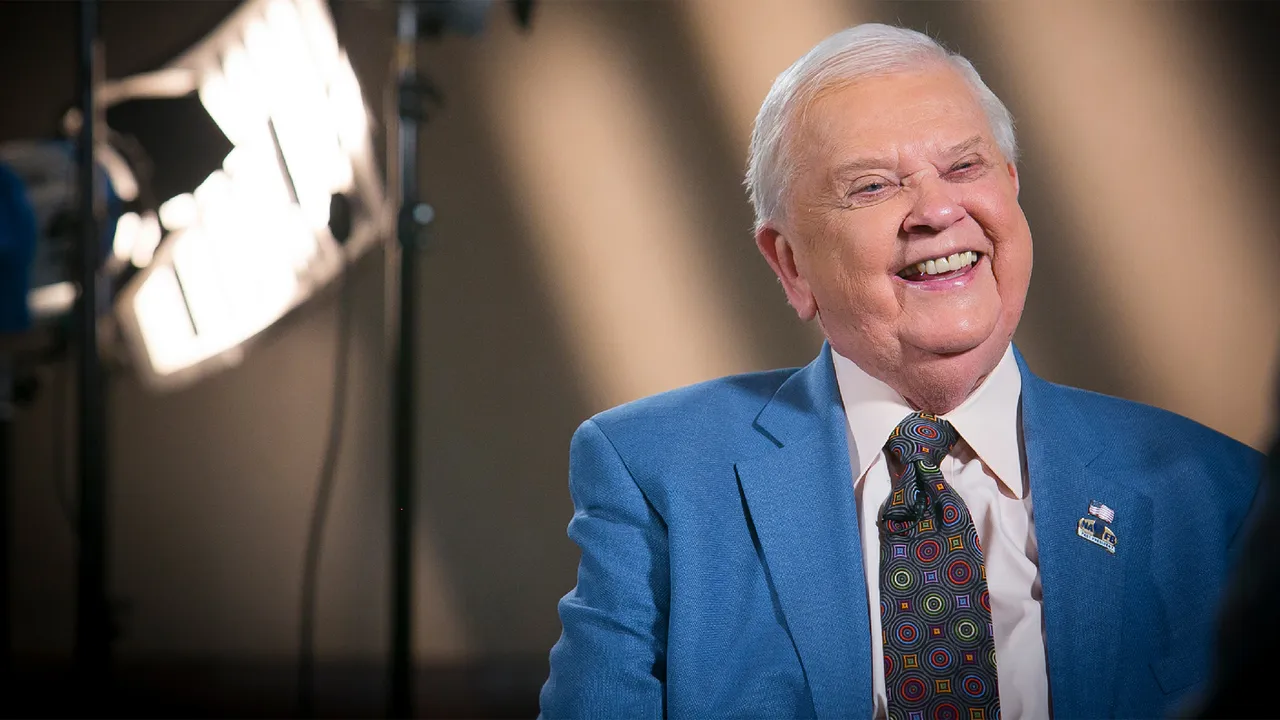
Orion Samuelson — the Wisconsin dairy kid who became agriculture’s most trusted broadcaster — died of natural causes at his home in Huntley, Illinois, with his wife Gloria at his side. He was 91.
For sixty years, Samuelson didn’t just report on agriculture. He was agriculture’s voice in a world that increasingly didn’t want to listen.
A Dairy Farm Built This Man
Before the Radio Hall of Fame. Before the White House dinners. Before 260 radio stations carried his voice into kitchens and tractor cabs across America — there was a boy doing morning chores on a dairy farm near Ontario, Wisconsin.
Born March 31, 1934, Orion Samuelson grew up knowing what 4:30 a.m. smells like. He knew the weight of a milk pail. He knew what it meant when commodity prices dropped and the dinner table got quieter. That farm never left him. It lived in every broadcast, every interview, every handshake at a county fair. When Samuelson talked about agriculture, he wasn’t translating — he was remembering.
A childhood illness confined him to bed in 1948. Most kids would have seen that as an ending. Samuelson found a beginning. His vocational agriculture teacher, Robert Gehring, pushed him toward broadcasting. He dropped out of the University of Wisconsin after three months — they weren’t teaching him to be a radio man — and enrolled at the American Institute of the Air in Minneapolis.
His first gig? Polka disc jockey at WKLJ in Sparta, Wisconsin. Summer of 1952. You can’t make that up.
Sixty Years Behind the WGN Mic
In 1960, a 27-year-old Samuelson walked into WGN Radio in Chicago. He wouldn’t leave for six decades.
Let that sink in. Sixty years. Same station. Same mission. The only broadcaster with a longer single-position tenure was Vin Scully. He delivered 16 agricultural updates every single day. His National Farm Report reached 260 stations. Samuelson Sez hit 110 more. He hosted the National Barn Dance, Top O’ The Morning, and in 1975 launched U.S. Farm Report — a television program that reached 150 markets and ran for three decades. yahoo
His partnership with Max Armstrong became the gold standard of farm broadcasting. For 42 years, they were agriculture’s Huntley and Brinkley — the voices farmers trusted with their livelihoods.
Samuelson didn’t just broadcast from a studio. He bought a plane — dubbed “Air Orion” — and once gave 400 speeches in a single year. He reported from all 50 states and 44 countries. He broadcast live from the Royal Agricultural Show in England, shook hands with Fidel Castro in Cuba, and sat across from Gorbachev in Moscow.
He interviewed every U.S. president from Eisenhower to Trump. Twelve presidents served during his career. Let that number breathe.
Scotch With Kennedy, Then the Bulletin
In 1960, then-Senator John F. Kennedy made a campaign stop in Green Bay. Samuelson asked two questions about dairy policy. Afterward, a Kennedy aide pulled him aside — the Senator wanted to talk more. So a young farm broadcaster sat at a hotel bar with the future president, sipping scotch and explaining dairy farming, “because they did little of that in Massachusetts”.
Three years later, on November 22, 1963, Samuelson was doing his noon show on WGN when the wire came through. He was the voice that told Chicago — told the farmers, the traders, the families around their radios — that President Kennedy had been shot in Dallas.
That’s the kind of life Orion Samuelson lived. History didn’t happen around him. It happened through him.
The Awards Were Almost an Afterthought
The accolades stacked up because the work demanded recognition:
- Only broadcaster to earn two NAFB Oscars in Agriculture
- First agribusiness broadcaster inducted into the National Radio Hall of Fame, 2003
- NAFB Hall of Fame, 1999; youngest-ever NAFB President, 1965
- Chicago named a street corner “Orion Samuelson Way” in 2010
But here’s what mattered more than any plaque: farmers listened. They planned their planting around his reports. They decided when to sell grain based on his analysis. They trusted him with decisions that determined whether their operations survived another year.
That’s not fame. That’s responsibility. And he carried it for sixty years without ever setting it down.
What Agriculture Lost This Week
The dairy industry has changed beyond recognition since a Wisconsin farm boy first stepped behind a WGN microphone. Herds are bigger. Technology is faster. The distance between farm and consumer has never been wider.
Orion Samuelson spent his career fighting that distance. He stood in downtown Chicago — the heart of urban America — and made millions of people understand what happened on a dairy farm, in a grain field, at a livestock auction. Someone once called him “the James Earl Jones of farm broadcasting”. Honestly, that comparison sells him short. James Earl Jones never had to explain milk pricing to a senator.
When Samuelson retired on December 31, 2020, then-USDA Secretary Sonny Perdue put it plainly: “Orion Samuelson’s decades of reporting have helped farmers understand the latest policies from Washington and allowed all audiences to recognize agriculture’s vital role in our communities and economy”.
The Voice We’ll Hear Anyway
Orion Samuelson died on March 16, 2026. But for every dairy farmer who grew up with that voice on the radio — the one that understood the life because he’d lived it first — the broadcast never really ends.
He proved something that matters now more than ever: agriculture deserves its own voice. Not a segment. Not a sidebar. Not a 30-second clip between weather and sports. A voice.
He was ours. And he was the best we ever had.
Rest easy, Orion. The morning chores are done.
 The Sunday Read Dairy Professionals Don’t Skip.
 The Sunday Read Dairy Professionals Don’t Skip.
Every week, thousands of producers, breeders, and industry insiders open Bullvine Weekly for genetics insights, market shifts, and profit strategies they won’t find anywhere else. One email. Five minutes. Smarter decisions all week.