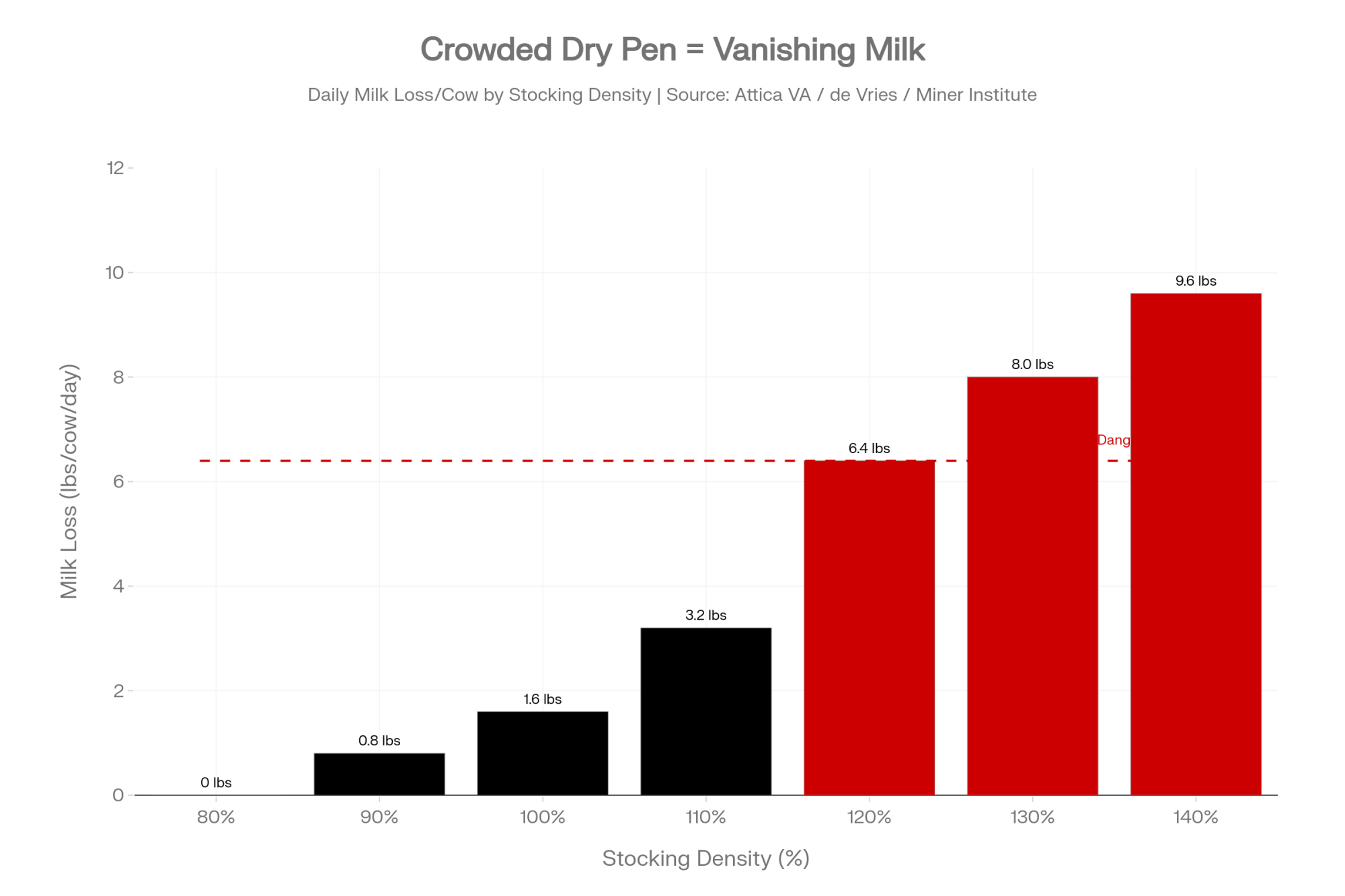
Oetzel’s data: 80% stocking vs. 120% stocking. A 548‑lb milk gap over 85 DIM. Same ration. Same cows. Different pen.
Executive Summary: A single overcrowded dry pen cost this 400‑cow Holstein herd 548 lb of milk per fresh heifer over 85 DIM — same ration, just too many bodies at the bunk. The article walks through how one “fresh‑pen ER” herd realized the real problem wasn’t their close‑up mix or additives, but a homeorhetic biology that keeps driving cows into lactation whether facilities and BCS are ready or not. Using Oetzel’s stocking data, Dahl’s short‑day photoperiod work, and Cornell NEFA/BHBA thresholds, it shows how density, lighting, and mid‑lactation BCS quietly set up — or sabotage — transition health and milk yield. You’ll see four concrete changes this herd made: locking in 3.0–3.25 BCS at dry‑off, keeping close‑up under ~85% of stalls, putting the dry pen on a true 8/16 light program, and using NEFA/BHBA as management triggers instead of lab trivia. A simple 50‑calving notebook test then tells you, in your own herd, how many fresh cows actually “needed help” in the first 21 DIM. If that number dropped by even a quarter, what would move first on your place — sick‑pen traffic, repro, or your milk cheque?
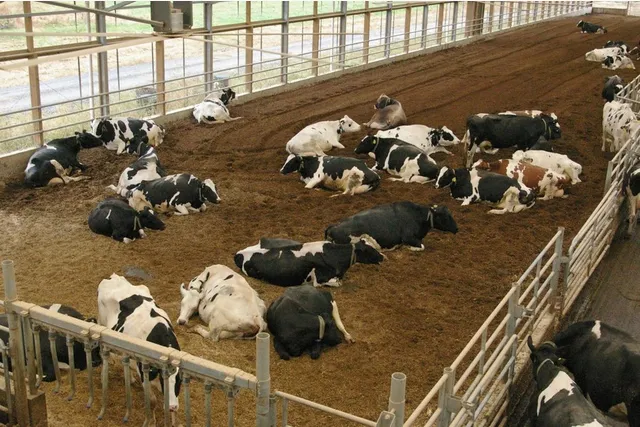
She was a fat third‑calver in a 400‑cow Holstein herd — the kind of cow who kept following the same ugly script. Crowded dry pen. Rough start fresh. Ketosis. A brush with a DA. A long, expensive slog back to “okay.” The owner had seen it enough times that it felt like weather. Just something that happens.
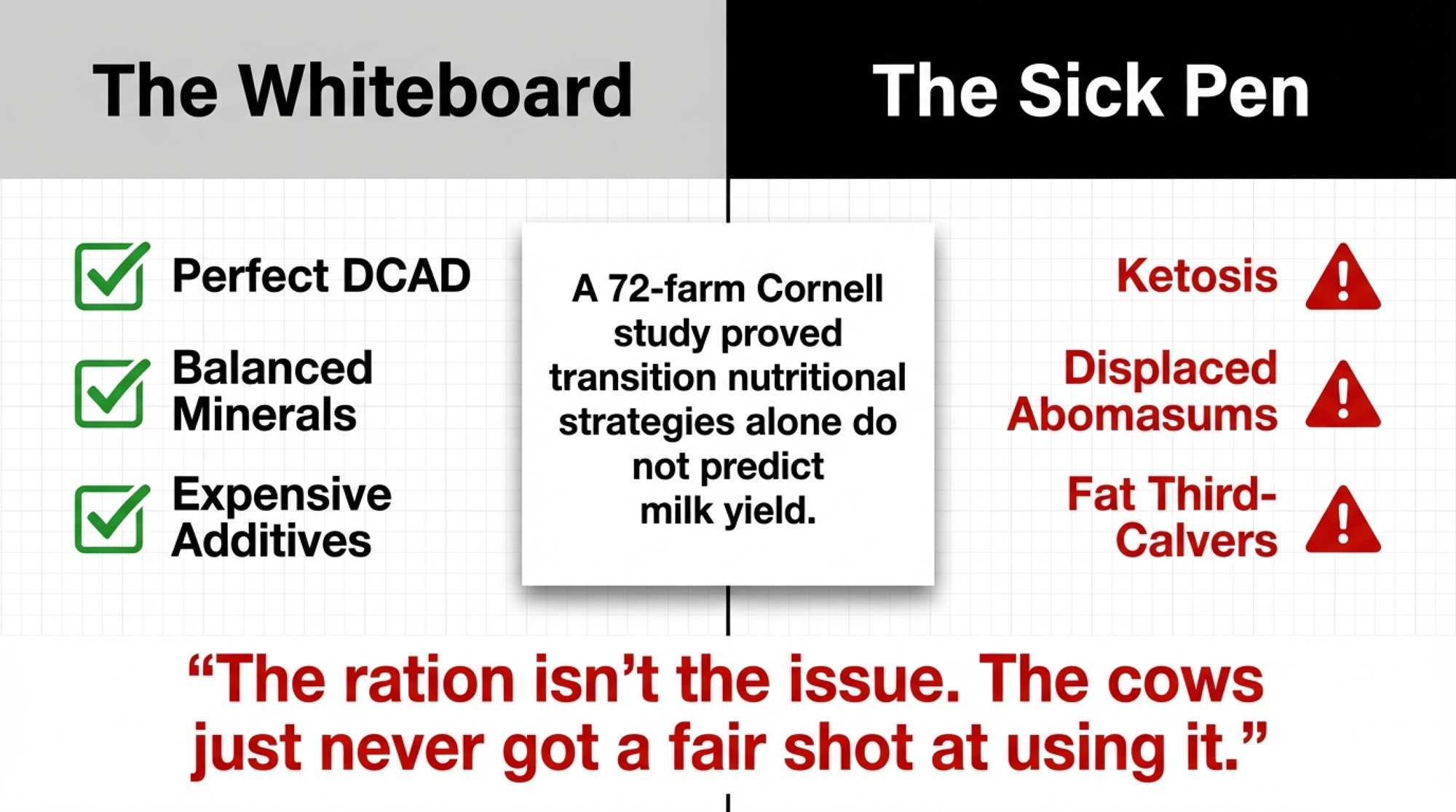
It wasn’t the weather. It was transition cow management — or more accurately, a dry‑cow program that didn’t understand what it was actually managing. The ration balanced fine. The close‑up group had a decent DCAD, the right minerals, and the expected additives. And yet the fresh pen felt more like triage than anyone was comfortable with. The Holstein metabolic health picture looked right on the whiteboard but wrong in the sick pen.
| Metric | Overcrowded (>120% SD) | Optimized (≤80–100% SD) | Change |
|---|---|---|---|
| Stall stocking density | 130–145% | 80–100% | ▼ 30–45% |
| Bunk space/cow | <24 in | 30+ in | ▲ 25%+ |
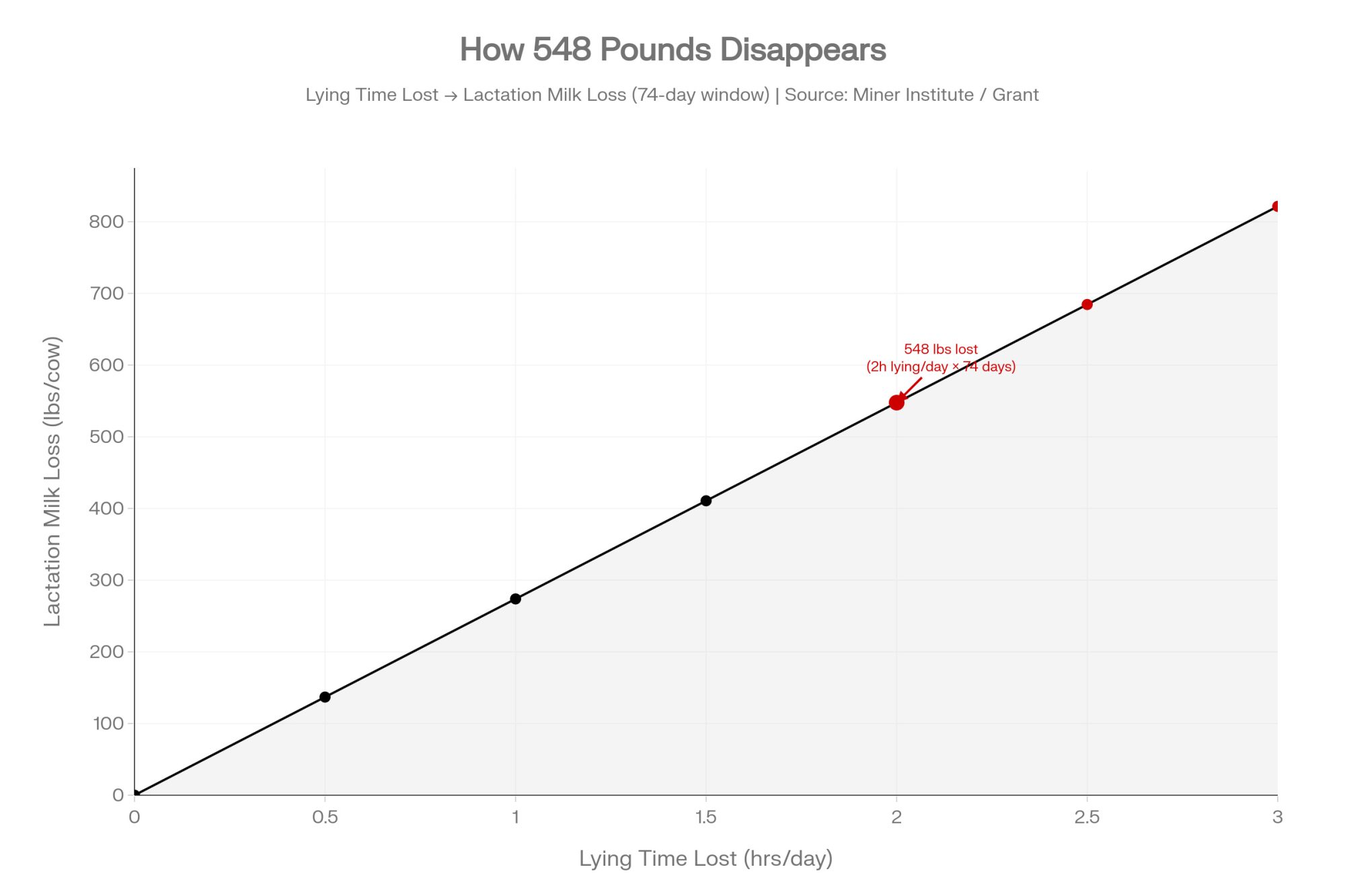
| Daily lying time | ~11 hrs | ~13 hrs | ▲ 2 hrs |
| Daily milk loss/cow | 6.4–8.0 lbs | 0 | ✅ Recovered |
| 74-day lactation milk loss | 473–592 lbs | 0 | ✅ Recovered |
| Ketosis risk (subclinical) | Elevated | Baseline | ▼ |
| LDA risk | Elevated | Baseline | ▼ |
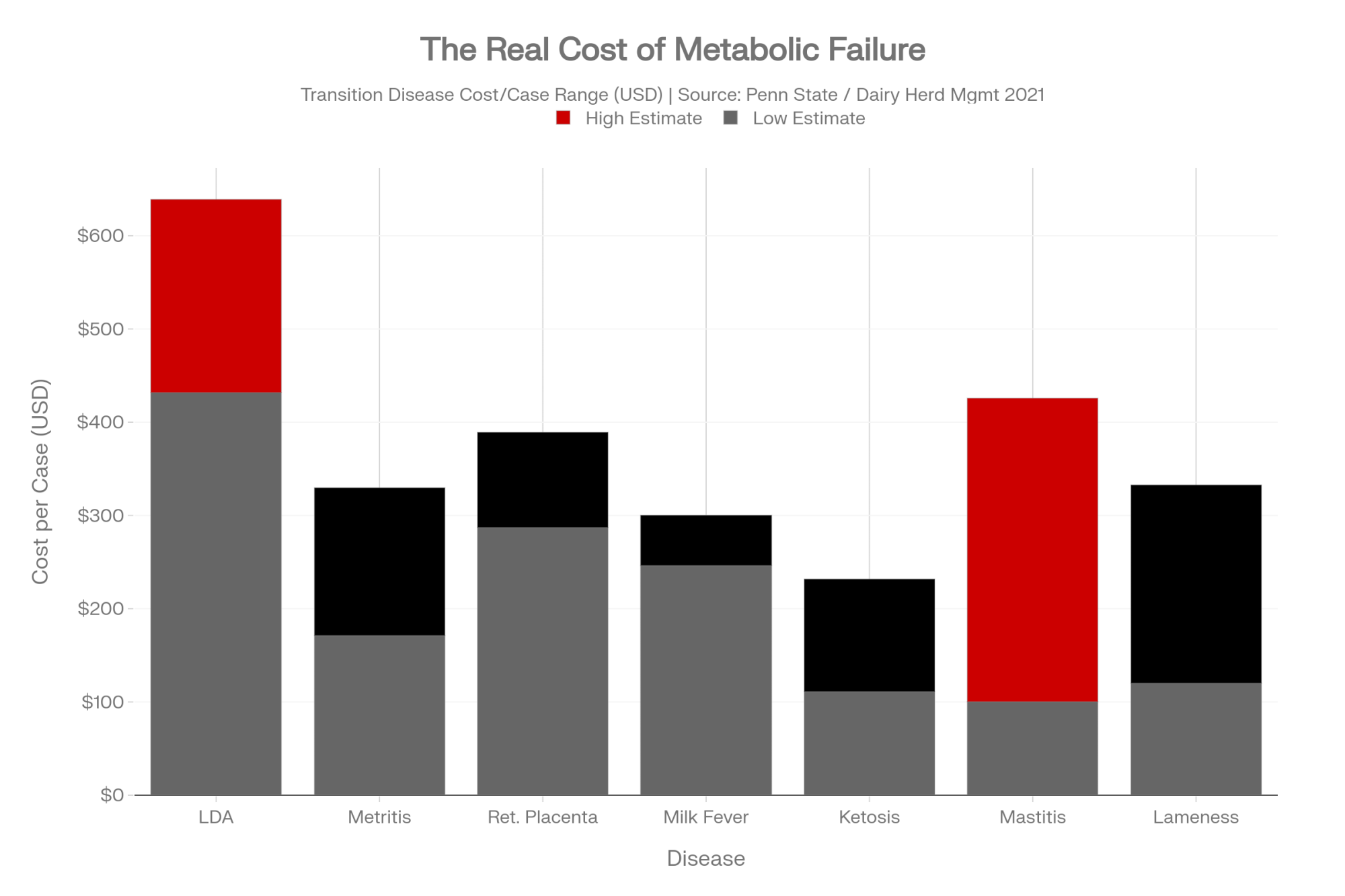
| Est. metabolic disease cost/cow | $300–$639 | $80–$120 | ▼ $200–$500 |
| Recommended DCAD (close-up) | Often ignored | Neg. DCAD, urine pH 6–7 | ✅ In spec |
That fat third‑calver? Repeat customer.
Here’s the uncomfortable biology behind what was really going on — and why dry cow bunk space, lighting, and body condition matter more than your close‑up ration.
Homeostasis vs. Homeorhesis: The Switch Nobody Votes On
Every dairy producer understands homeostasis intuitively. Blood sugar drifts too high, insulin brings it down. Drops too low, counter‑regulatory hormones bring it back up. Tight range. Quick corrections. Negative feedback loops keep the cow in balance.
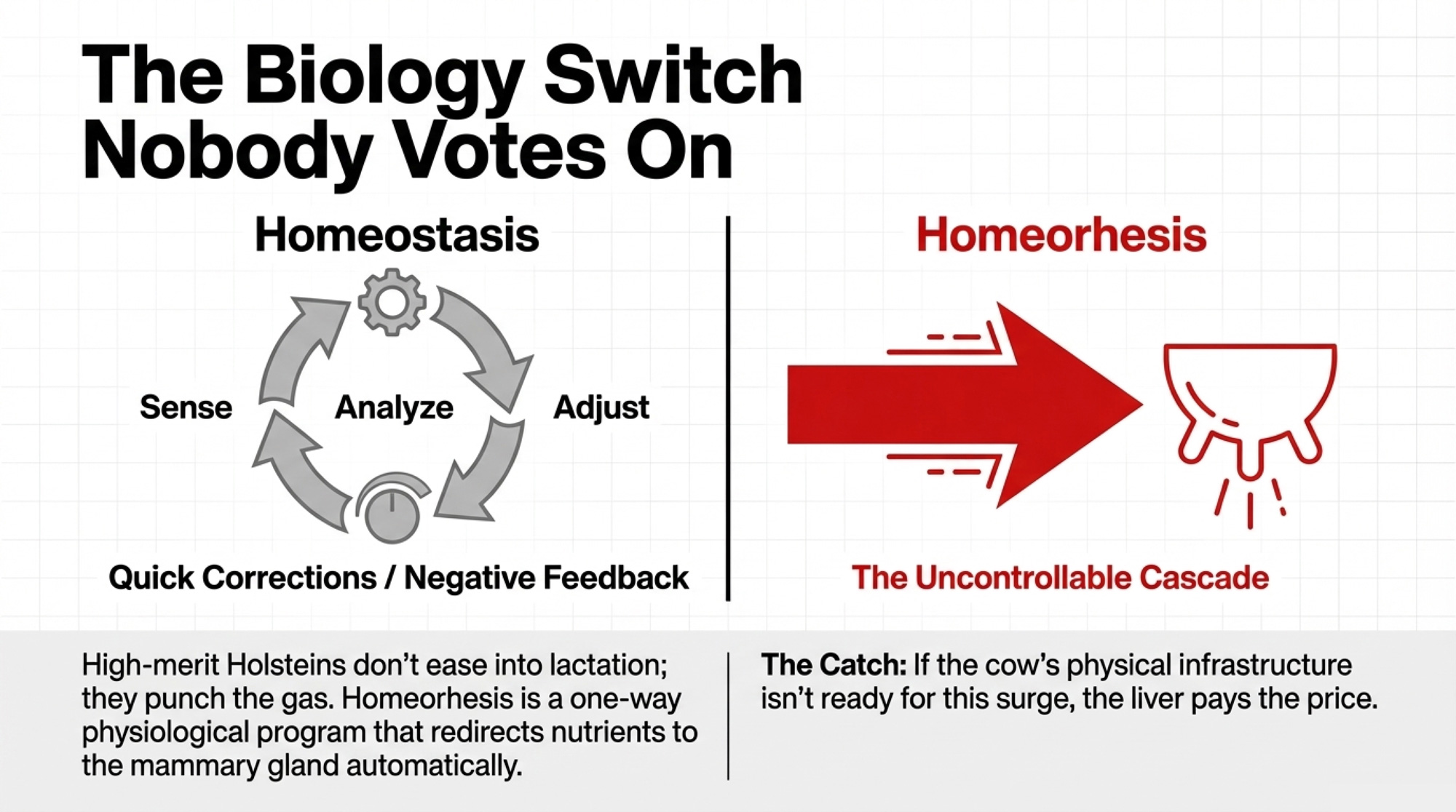
Homeorhesis is different. Dale Bauman and W.B. Currie defined it in their landmark 1980 Journal of Dairy Sciencepaper as the “orchestrated or coordinated changes in metabolism of body tissues necessary to support a dominant physiological state” — in this case, lactation. It’s not a thermostat. It’s a one‑way program. The cow’s biology doesn’t ask permission before redirecting nutrients toward the udder and the calf. It just does it.
During late pregnancy and early lactation, that homeorhetic program drives a cascade that looks alarming if you measure it the wrong way.
Peripheral tissues become more insulin‑resistant — on purpose — so glucose gets shunted to the mammary gland. Circulating lipids spike as the cow mobilizes body fat to fuel a mammary system ramping up faster than her feed intake can cover. The liver gets hit with a NEFA surge that, in a well‑prepared cow, it handles. In an over‑conditioned, overcrowded, stressed cow? That’s where ketosis, fatty liver, and DAs start.
None of this is pathology. It’s physiology. The question is whether the cow’s environment and body reserves were ready for it.
The Genetic Amplification Problem
Here’s where it gets uncomfortable for anyone who breeds Holsteins.
Decades of selection for higher milk yield haven’t invented a new metabolic pathway. They’ve turned the volume up on the one that already existed. High‑merit Holsteins don’t ease into lactation; their biology punches the gas and trusts that management will keep the tank from running dry.
A beef cow runs this same homeorhetic program at low volume — enough to feed a calf, which is what evolution intended. A modern Holstein runs it at full blast, producing 40‑plus kg of milk per day within weeks of calving, mobilizing body reserves at a rate that would alarm a physician if a human patient did it.
The European Food Safety Authority has reported that high milk yield is associated with increased risk of metabolic and reproductive disorders in dairy cows. That’s not a design flaw in the cow. It’s a design flaw in how the industry manages the gap between genetic capacity and physical infrastructure.
On this 400‑cow herd, the “gas” was fully pressed. The “tank” — BCS, liver health, dry cow bunk space, lighting environment — wasn’t ready. So the biology did what it was built to do, and the fresh pen paid the price.
One Dry‑Pen Walk That Changed Everything
The fix didn’t start with a product. It started with a two‑hour walk.
The owner, vet, and nutritionist spent a morning looking at nothing but preparation. No laptop. No ration software. They walked in order: mid‑lactation pens (where the body condition story actually starts), far‑off dry, close‑up, maternity, and fresh pen. They counted headlocks and cows. They watched a feed delivery to see who got knocked off the bunk. They timed how long cows rested and how often they were disturbed.
What they saw wasn’t dramatic. It was worse than that — it was normal.
Mid‑lactation cows were quietly drifting above 3.25 BCS before dry‑off. Far‑off dry cows sat on a diet that was more “polite” than truly controlled‑energy. Close‑up pens were routinely overstocked whenever calvings bunched. The dry barn had no short‑day photoperiod — just whatever daylight leaked in and a few yard lights that stayed on all night.
The advisor’s comment that stuck: “The ration isn’t the issue. The cows just never got a fair shot at using it.”
That comment lines up with what a 72‑farm prospective cohort study led by Kerwin, Overton, and colleagues at Cornell found: across all those northeastern U.S. Holstein herds, there was no evidence that transition cow nutritional strategies alone were associated with milk yield outcomes. Controlled‑energy far‑off, high‑forage NDF close‑up, high‑starch fresh — the diets mattered for metabolic health markers and disorder incidence, but they didn’t move the needle on milk when examined in isolation from everything else happening on those farms (Animals 13(17):2701, 2023).
The ration is one lever. It’s not the whole machine.
Can You Really Fix Anything After She Calves?
Fair pushback. You’ve got cows calving tomorrow.
You still have tools — they can’t undo months of missed preparation.
What works post‑calving: IV and oral calcium save cows and prevent some DAs and retained placentas. Targeted propylene glycol in the first week can bring BHBA down, bump appetite, and head off some DAs and metritis. Aggressive treatment of metritis, mastitis, calving trauma, and lameness keeps cows eating — every extra kilo of DMI is less NEFA the liver has to mop up.
Where you’re mostly paying for your own lack of prep: Blanket “transition cocktails” for every fresh cow, whether she needs them or not. Pulling NEFA and BHBA to document how bad things are without ever touching BCS, density, or dry‑pen management. Pouring multiple rounds of treatment into clearly wrecked livers because no one wants to have the harder conversation about what happened upstream.
With feed costs still a major line on the P&L, every litre of early‑lactation milk matters more than it used to. A couple fewer DAs and chronic ketotics per 50 calvings moves the milk cheque more than a lot of herds want to admit.
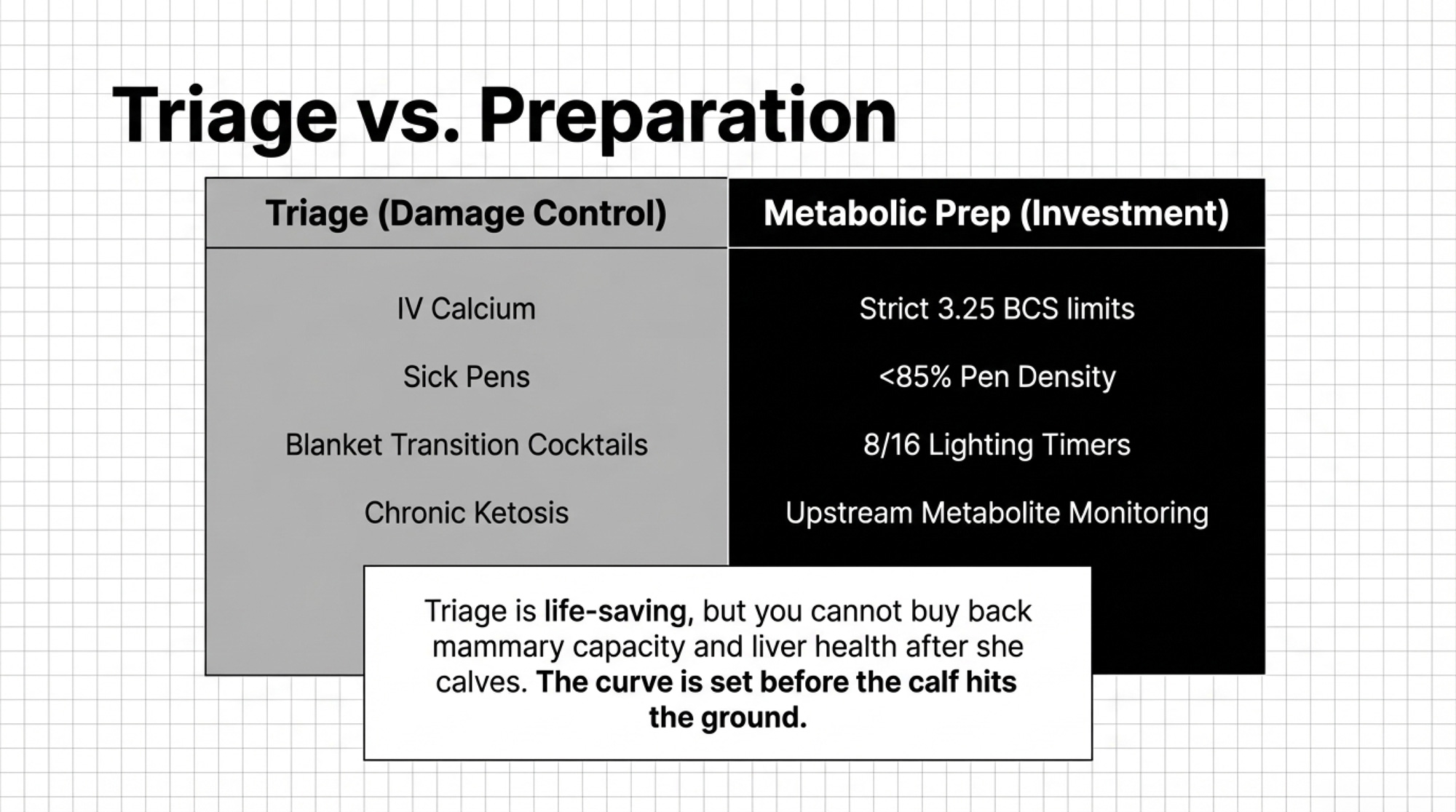
Triage is damage control. Necessary. Sometimes life‑saving. But it can’t buy back the mammary capacity, liver health, and early‑lactation curve that mid‑lactation BCS and dry‑pen conditions have already decided.
The Four Moves That Turned This Herd Around
Here’s what changed once this team committed to treating transition as metabolic prep, not disease control.
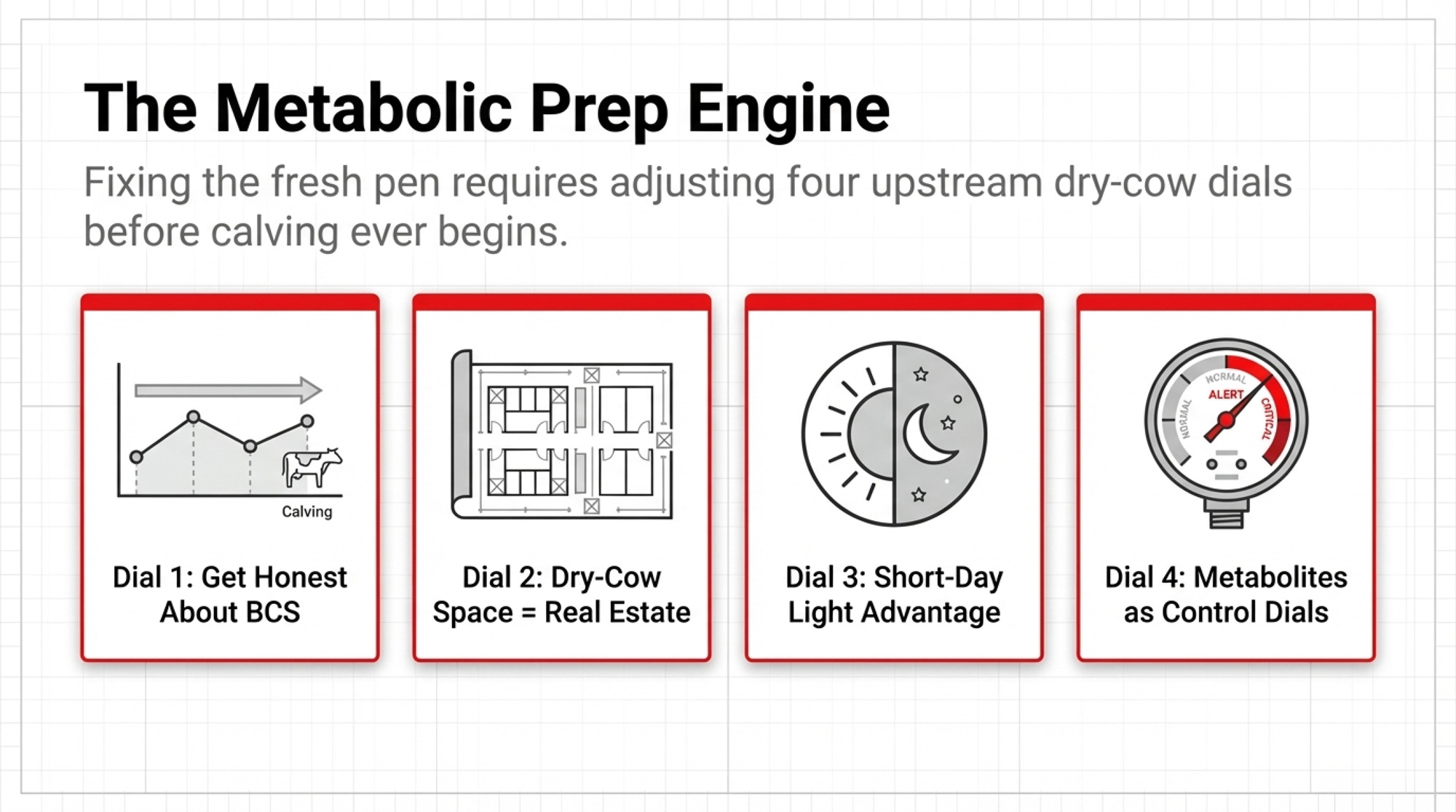
Move 1: Get Honest About BCS — Starting in Mid‑Lactation
They made 3.0–3.25 BCS at dry‑off non‑negotiable.
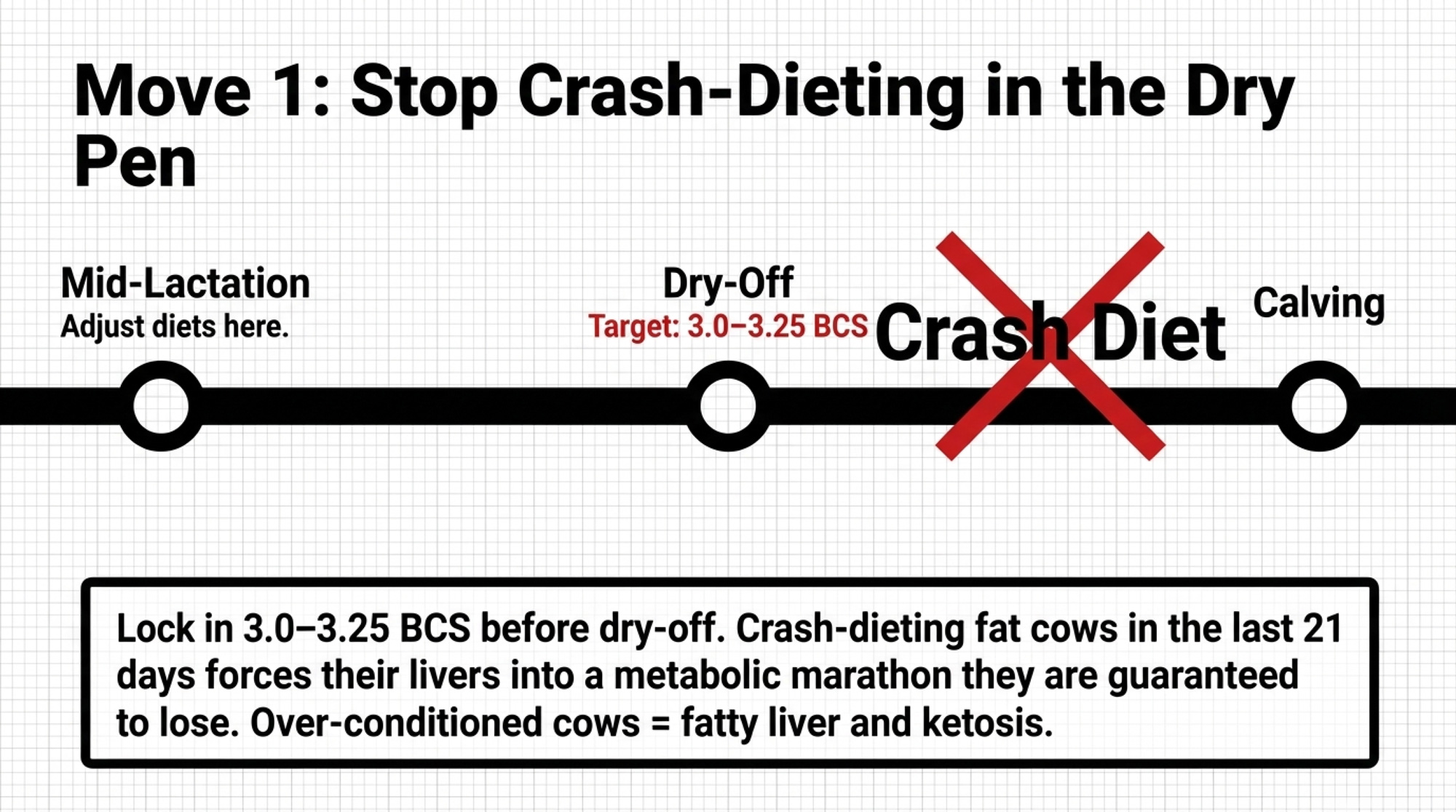
Instead of trying to crash‑diet cows during the dry period, they adjusted mid‑lactation diets and grouping so cows stopped quietly creeping past that range. Research consistently shows that over‑conditioned cows face a higher risk of fatty liver, ketosis, and reproductive failure after calving. Every 0.25‑unit increase in BCS above 3.25 at dry‑off compounds the NEFA surge her liver will face when the homeorhetic program kicks in.
They stopped shrugging and drying off obviously, 3.75 cows “just this time.”
Trade‑off: Uncomfortable conversations about overfeeding “nice” cows in mid‑lactation. More sorting work. But it stopped sending already over‑fat livers into a metabolic marathon they weren’t trained for.
Move 2: Treat Dry‑Cow Bunk Space Like High‑Value Real Estate
Crowded close‑up cows used to be normal. Now, comfortable stocking is the target, not a suggestion.
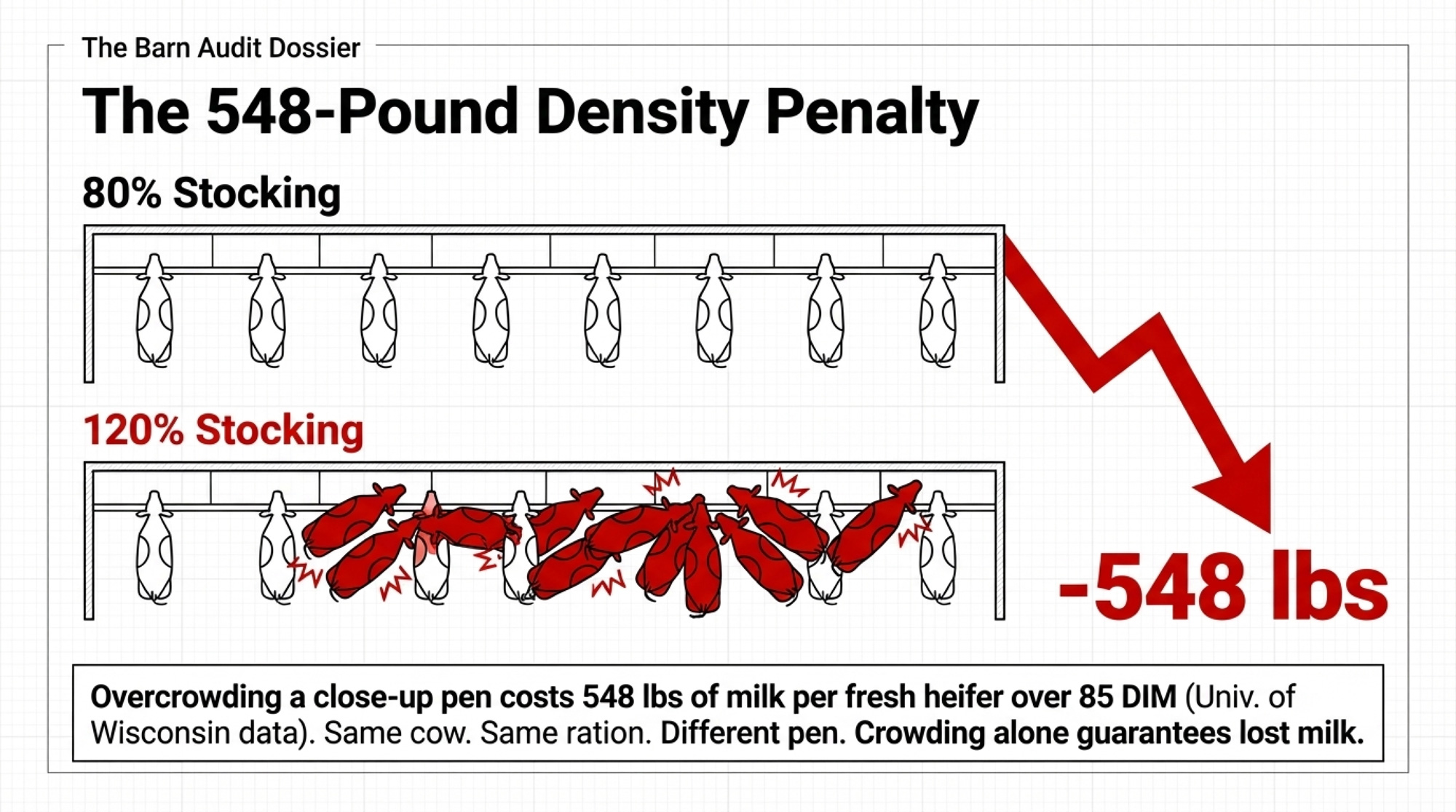
Gary Oetzel’s data from the University of Wisconsin showed that first‑lactation animals stocked at 80% of stalls pre‑fresh produced 6.5 lb more milk per day over the first 80 days of lactation compared with those stocked at 120% — a 548‑lb cumulative deficit over 85 DIM from nothing but pen crowding. Nordlund and Cook argued in their transition cow facility design papers that the critical nutritional issue isn’t just how much cows eat, but how much their DMI drops around calving, which is heavily influenced by stocking density and pen moves.
A 2024 Journal of Dairy Science study by Cook, Pepler, Viora, and Hill reinforced this across 2,780 cows in two UK herds: the odds of disease in the first 30 DIM increased with prepartum stocking density, and stocking density at 8 to 2 days before calving showed a direct relationship with both early‑lactation and 305‑day milk production in multiparous cows (JDS 107(12):11381–11397). The social disruption of pen‑filling events mattered too.
When calvings bunched on this herd, they started flexing other groups, not the close‑up pen. (For a deeper dive on what the best transition operations do differently, see Your Fresh Cow Problems Started 6 Weeks Ago.)
Trade‑off: Cow‑flow got inconvenient some weeks. But the fresh‑pen drama dropped enough that nobody wanted to go back.
Move 3: Put the Dry Barn on a Real Short‑Day Lighting Program
Instead of “whatever daylight and yard lights we get,” the dry barn got timers and a genuine dark period.

Geoffrey Dahl’s research at the University of Florida established that cows exposed to a short‑day photoperiod (8 hours of light, 16 hours of dark) during the dry period produce significantly more milk in the next lactation. In a controlled study with a 42‑day dry period, multiparous Holsteins on SDPP produced 40.4 kg/day through 120 DIM compared with 36.8 kg/day for cows on long‑day lighting — a 3.6 kg/day advantage. The mechanism works through prolactin signaling: short days during the dry period decrease circulating prolactin but upregulate prolactin receptor expression in the mammary gland, priming the tissue to respond more aggressively once lactation begins.
Staff routines adjusted so they weren’t flicking on bright lights for every nighttime check. The test: if you can comfortably read a newspaper in the dry‑pen alley after hours, you don’t have a short‑day photoperiod, no matter what your SOP says.
(For more on how lighting programs affect both lactating and dry cows, see How to Increase Milk Production and Herd Health with Better Lighting.)
Trade‑off: A bit of fuss with wiring and habits. But the herd saw smoother early‑lactation curves and fewer immune train wrecks in the first 10 DIM.
Move 4: Treat NEFA and BHBA as Control Dials, Not Trivia
Instead of pulling blood “because the vet wanted data,” they used metabolite monitoring as a management trigger.
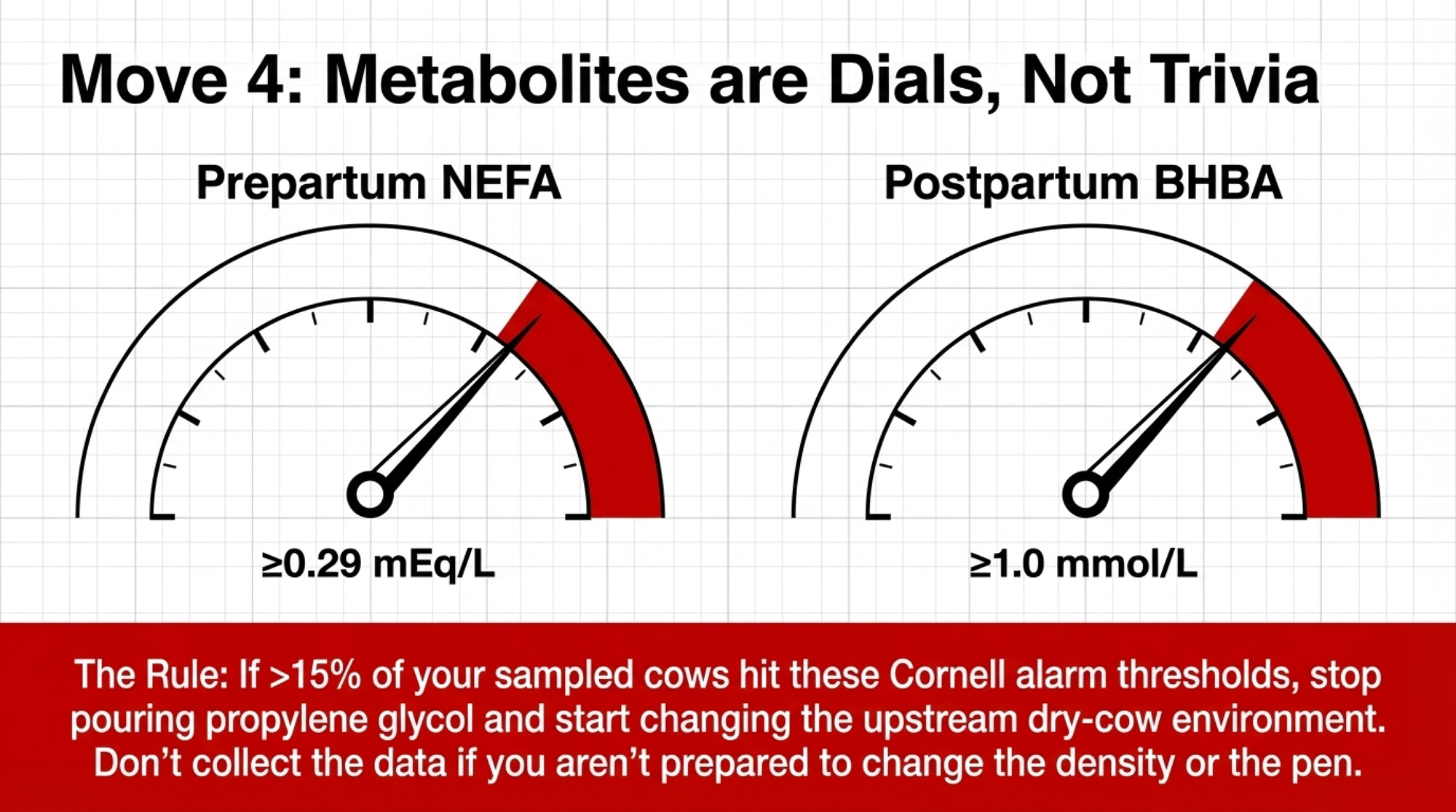
Ospina, Nydam, and colleagues at Cornell established the critical thresholds in a 100‑herd prospective study: prepartum NEFA at or above 0.29 mEq/L and postpartum NEFA at or above 0.57 mEq/L predicted DA, clinical ketosis, metritis, and retained placenta. The postpartum BHBA threshold of 10 mg/dL (~1.0 mmol/L) predicted the same diseases, with risk ratios above 2.3 for all outcomes and as high as 9.7 for DA when postpartum NEFA was the predictor.
At the herd level, the same Cornell group found that when more than 15% of sampled transition cows exceeded these thresholds, consequences were measurable: a 3.6% increase in DA and clinical ketosis incidence, a 1.2% decrease in pregnancy rate, and a 282 kg decrease in average 305‑day ME milk for herds above the prepartum NEFA alarm level.
This herd’s protocol: sample a small group of close‑up cows for NEFA about a week before calving and fresh cows for BHBA between 3 and 10 DIM. If too many cows cross the lines, change one upstream factor — BCS management, density, or dry‑cow environment — not just pour more propylene glycol. (For more on putting BHBA to work, see 46% Subclinical Ketosis in “Good” Herds — Are Your Transition Cows Any Different?)
Trade‑off: Added lab cost and a firm commitment — no collecting numbers unless you’re prepared to act on them.
Can 50 Calvings Tell You If Your Dry Cow Program Works?
This herd didn’t build a fancy spreadsheet. They grabbed a notebook and looked at the last 50 calvings. For each cow, one question: did she need any significant intervention in the first 21 days in milk?
The first tally was uncomfortable. Too many names on the list.
After they committed to treating the dry period as metabolic prep — tightening BCS in mid‑lactation, dropping density in close‑up, installing real short‑day lighting, and acting on NEFA/BHBA data — that same notebook started looking different. Fewer fresh cows on the “needed help” list, week after week.
Your 30‑day action: Pull the last 50 calvings. Count how many of those cows had any significant intervention in the first 21 DIM — ketosis, DA, retained placenta, metritis, or milk fever needing more than one treatment. Write that number down. Then ask yourself: if that number dropped by even a quarter, what would you notice first — less time in the sick pen, a calmer fresh group, or a cleaner repro chart?
| Milk Price ($/cwt) | % Cows Affected (transition) | Lbs Lost/Affected Cow | Cows Affected (400-herd) | Annual Revenue Lost |
|---|---|---|---|---|
| $18.00 | 20% | 548 lbs | 80 cows | $7,891 |
| $20.00 | 20% | 548 lbs | 80 cows | $8,768 |
| $22.00 | 20% | 548 lbs | 80 cows | $9,645 |
| $18.00 | 30% | 548 lbs | 120 cows | $11,837 |
| $20.00 | 30% | 548 lbs | 120 cows | $13,152 |
| $22.00 | 30% | 548 lbs | 120 cows | $14,467 |
What This Means for Your Operation
- Are your cows actually hitting dry‑off at 3.0–3.25 BCS, or are you hoping to crash‑diet them in the last 21 days? If you’re routinely drying off 3.75 cows and then blaming “transition disorders,” the problem started months before calving.
- Do you know how crowded your close‑up pen really gets at peak calving weeks? Count headlocks and cows. Don’t guess from the yard gate. Oetzel’s Wisconsin data showed first‑lactation animals lost 548 lb of milk over 85 DIM just from being overstocked pre‑fresh — no ration change required to create that loss. Cook et al.’s 2024 data from two UK herds confirmed prepartum stocking density increased disease odds across 2,780 cows.
- When was the last time you walked your dry barn after dark? If you can read a newspaper by the lights left on, you don’t have a short‑day photoperiod.
- If you pulled NEFA and BHBA on a small group next month and didn’t like the numbers, what’s the first upstream change you’d be willing to make? If the only answer is “treat more cows,” you’re not really using those tests.
- Who owns transition results on your farm — not just the ration, or the shots, or the repro chart, but the whole package? The Kerwin et al. Cornell study across 72 northeastern U.S. farms found that nutrition strategy alone didn’t predict milk yield. It’s everything around the ration that makes or breaks the outcome.
Key Takeaways
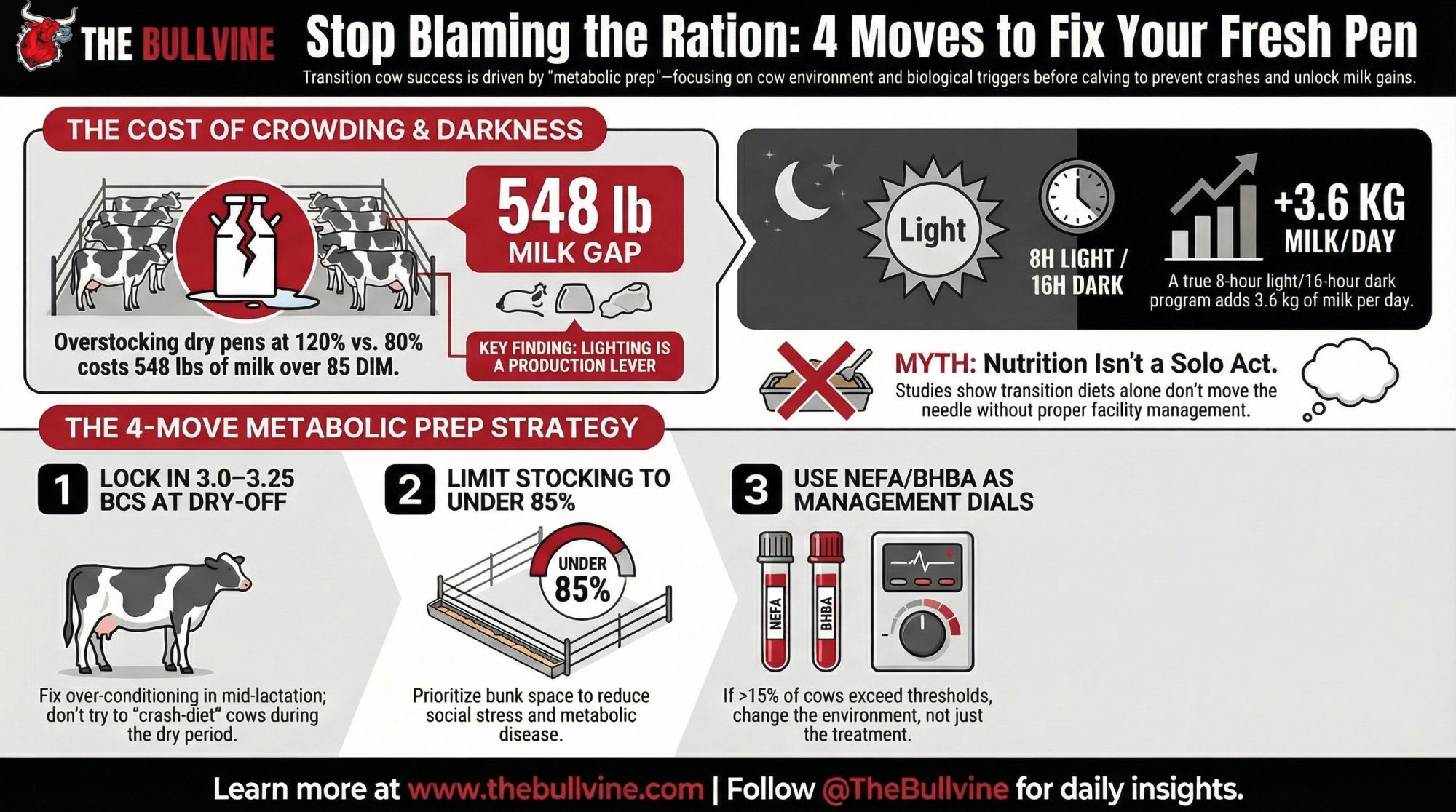
- If your close‑up pen routinely runs over 85% stocking, expect to give away milk. Oetzel’s data and Cook’s 2024 work show that crowding alone can cost hundreds of pounds per cow in early lactation, even with a good ration.
- If more than 15% of sampled cows beat NEFA or BHBA alarm thresholds, change management, not just treatments. Use those numbers as dials on density, BCS, and dry‑cow environment, not just as lab curiosities.
- Suppose cows are drying off above 3.25 BCS, fix mid‑lactation, not the last 21 days. Crash‑dieting fat cows in the dry pen is trying to undo months of overfeeding while their biology is already ramping up for lactation.
- If your dry barn never really goes dark, you’re leaving 3–4 kg/day of milk on the table. A true short‑day photoperiod is one of the few management levers with a controlled 3.6 kg/day advantage behind it.
The Bottom Line
Walk your dry pens this week. Not the fresh pen. The dry pen. That’s where your next month of fresh‑cow outcomes is being written right now.
Complete references and supporting documentation are available upon request by contacting the editorial team at editor@thebullvine.com.
Learn More
- The 90-Day Dairy Pivot: Converting Beef Windfalls into Next Year’s Survival – Reveals how to leverage record-high beef-on-dairy premiums to fund the management upgrades your transition program needs. This field-tested strategy arms you with the cash flow to lock in 2026 component bonuses and offset relentlessly flat milk prices.
- More Milk, Fewer Farms, $250K at Risk: The 2026 Numbers Every Dairy Needs to Run – Exposes the brutal “biological trap” where high-production cows meet shrinking margins and aging infrastructure. It delivers a 3-year survival framework for positioning your herd’s genetics and facilities before the next wave of industry consolidation hits.
- Dairy Tech ROI: The Questions That Separate $50K Wins from $200K Mistakes – Breaks down which “innovation” actually pays when managing cow behavior at scale. This analysis exposes why high-tech individual robot units often fail 400-cow herds and delivers the math on automated parlor systems that actually stabilize transition health.
 The Sunday Read Dairy Professionals Don’t Skip.
 The Sunday Read Dairy Professionals Don’t Skip.
Every week, thousands of producers, breeders, and industry insiders open Bullvine Weekly for genetics insights, market shifts, and profit strategies they won’t find anywhere else. One email. Five minutes. Smarter decisions all week.