







 If you are like most breeders and members of the dairy community, time for vacations is very limited. But, like most, you are also probably very passionate about this great industry we are all a part of and have often wondered just what it’s like in other countries. Enter SHOWCATION®, a vacation to a dairy show somewhere around the world. The first stop in our SHOWCATION® series is Italy for the European Open Holstein Show held in Verona Italy every year in the first week of February.
Verona is famous as it is the place where William Shakespeare set his play, Romeo, and Juliet. It is situated an hour away from Venice, which is hosting its annual Carnival at the same time, but more on that later. First let’s take a look at Verona.
How to get in
Verona-Villafranca Airport is the closest airport to Verona. It is located 12 km southwest of the city. National carriers fly from Frankfurt, Munich, London-Gatwick, Paris Charles de Gaulle, Rome-Fiumicino (‘Leonard da Vinci’) and Moscow.
Getting around
Upon arrival at Verona Porta Nuova station, it is a 15-minute walk down a long boulevard to reach the center of town, the Verona Arena (Arena di Verona). Just leave the train station, walk through the bus station and past a triumphant arch and follow the boulevard Corso Porta Nuova till the end. Also, Fieragricola, host of the European Open Holstein Show is held at the Veronafiere Is about a 10-minute taxi ride from downtown. Due to the relatively small size of the city and the proximity of everything, there is no need for a taxi but rather public transport will work great, as is the case in most European countries.
Let’s Talk
Well, naturally, Italian is spoken by everyone. However, you will find a decent number of people who speak or, at least, understand English. While there may be the odd challenge with the communicating, it’s nothing that non-Italian speaking dairy enthusiasts from around the world can’t deal with.
Sights to see
European Open Holstein Show
Some of the best cattle, not only from Italy but also from neighboring Spain make the trip each year to Fieragricola. The show environment is fantastic. The ring is not huge but provides excellent sightlines for those attending the show. Herds such as Ponderosa, and Al Be Del Rio as well as up and coming herds like BEL Holsteins, are regular exhibitors at this show. Of course, in true Italian Style, there are plenty of places to get wine and purchase panini sandwiches. (See more at The 15th European Open Holstein Show)
National Brown Swiss Show
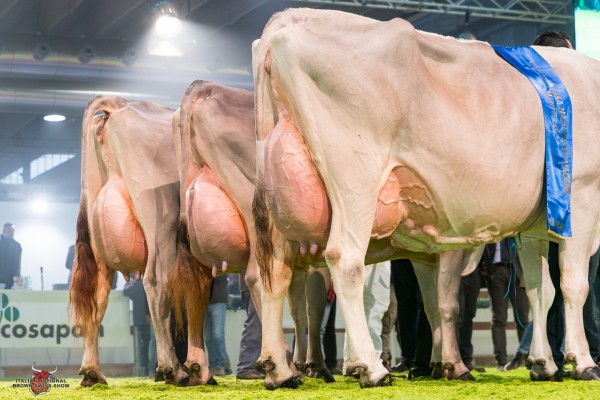
Due to the proximity of Switzerland, there is a high-quality population of Brown Swiss cows in Italy, lending itself to a great Brown Swiss Show. The show would almost rival that of the Holstein show for numbers and quality. Also, Fieagricla is the largest trade show in Europe and the trade show sections would be greater than those at say World Dairy Expo. As a North American attending this show, I found there to be some very different implements and equipment. (Read more: The 48th National Show of Italian Brown Cattle Herdbook)
The Arena
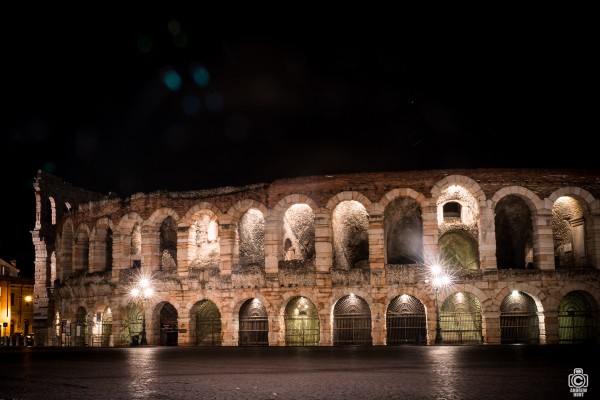
The Arena is an enormous, spectacular Roman amphitheater, crumbling on the outside but it’s still functioning today. It was erected in the 1st Century AD in an elliptical shape and is the world’s third-largest amphitheater to survive from antiquity. Much of the outer ring was damaged during the earthquake of 1117, but the inner part is still intact. The Opera is closed at the time of the show. There are also many great cafés to eat an excellent meal and appreciate the Arena and its spectacular nighttime images. After a day at the cattle shows, this can be a great way to enjoy some fine Italian wine and authentic cuisine. Be sure to try horse-meat (Cavallo), a local specialty.
Juliet’s House (Casa di Giulietta)
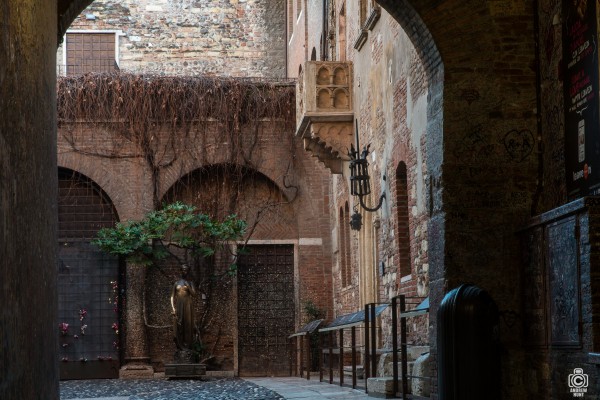
Just off the Piazza del Erbe and about 3 minutes walk North of the Arena, through some great shopping, is Juliet’s house. This is supposedly the location of the famous balcony love scene from Shakespeare’s Romeo and Juliet. The tiny courtyard is normally packed with lovestruck teenagers photographing each other on the famous balcony. In fact, the house has no connection with Shakespeare’s fictional characters – although the house is old, the balcony was added in 1936 and declared to be “Juliet’s House.” This also makes this a great trip for you and your special someone, just before Valentines, especially combined with a trip to nearby Venice.
Castelvecchio
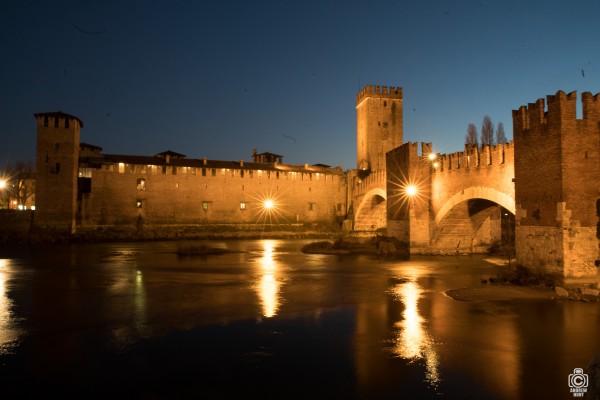
A 14th-century, red brick, fortified castle on the banks of the river Aldige. The main castle buildings house the city art museum which is packed with a rich collection of medieval sculpture and Renaissance paintings. As well as the museum, the extensive castle ramparts are great for exploring – ideal for families with children who enjoy running around castle fortifications. The Castelvecchio has an adjoining bridge over the river which is open all the time. Walk over the bridge for some fantastic views of the castle on the river.
Castell San Pietro (St Peter’s Castle)
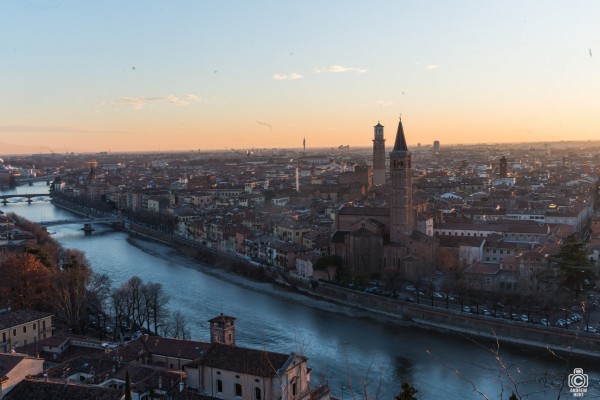
Climb the steps up the hill above the Roman Amphitheatre to the Castell San Pietro. This former Austrian barracks dates back to the Austrian occupation of the left bank, and while the building is not open to the public, the views from the hill over Verona are spectacular. Go up in the early evening and enjoy a romantic sunset for free!
See more photos from Verona here
What to eat
 Horse-meat (Cavallo), a local specialty. Pastissada de caval, is a dish of braised horse meat, as is Picula de Caval.
- Pizza is not as traditionally eaten locally, but pasta dishes feature widely on restaurant menus. Try Pizzocheri (buckwheat pasta with cheese and sage), casoncelli (a type of ravioli) or bigoli (thick spaghetti).
- Casoela is a pork casserole, and a bollito misto is a mixture of boiled meats, usually served with pearà, a local sauce which you can find only in Verona.
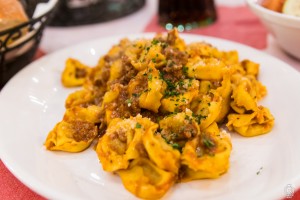 Horse-meat (Cavallo), a local specialty. Pastissada de caval, is a dish of braised horse meat, as is Picula de Caval.
Where to stay
Verona is frequented annually by millions of tourists, so you’ll be able to choose among a lot of different accommodation options. Turn up on spec or late and it is possible to find every bed in the city taken.
Don’t forget to visit Venice for Carnival
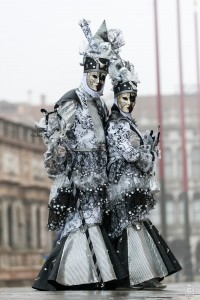 Located about 1 hour and 10 minutes’ train ride from Verona, this is the perfect time to visit Venice for it’s annual carnival. Venice is one of the most interesting and lovely places in the world, especially during carnival when the city comes to life. This sanctuary on a lagoon is virtually the same as it was six hundred years ago, which adds to the fascinating character. Carnival of Venice is one of the most famous carnivals in the world. First organized in 1926 this carnival is particularly appreciated because of the masks that are exhibited by its participants. During the carnival period, the inhabitants of Venice are allowed to carry out unusual behaviors. If you have brought that special someone with you, take a Vaporetto (Water Bus) down the Grand Canal right before sunset. The sights are priceless: amazing architecture, soft seaside sunlight, and a fascinating parade of Venetian watercraft. For an, even more, romantic experience take a Gondola. It’s expensive, but it may be one of the most romantic experiences of your life. While most of the Carnival events are centered around San Marco square, there are certainly sites to see all around this city that is built on the water. There are no cars in the city and many narrow streets, so best to get a good map and be ready to enjoy the sights. (See more photos of Carnival here and Venice here)
The Bullvine Bottom Line
A trip to Verona and Venice in early February will certainly be a SHOWCATION® you will never forget. In true Italian style you will see great cattle, fantastic food and, if you are fortunate to make it to Carnival, you will see some of the most fabulous costumes in the world.

Get original “Bullvine” content sent straight to your email inbox for free.
[related-posts-thumbnails]








Leave a Reply
You must be logged in to post a comment.