







While the world sleeps on Christmas Eve, farmers walk to the barn. One dairyman turned that walk into a children’s book.
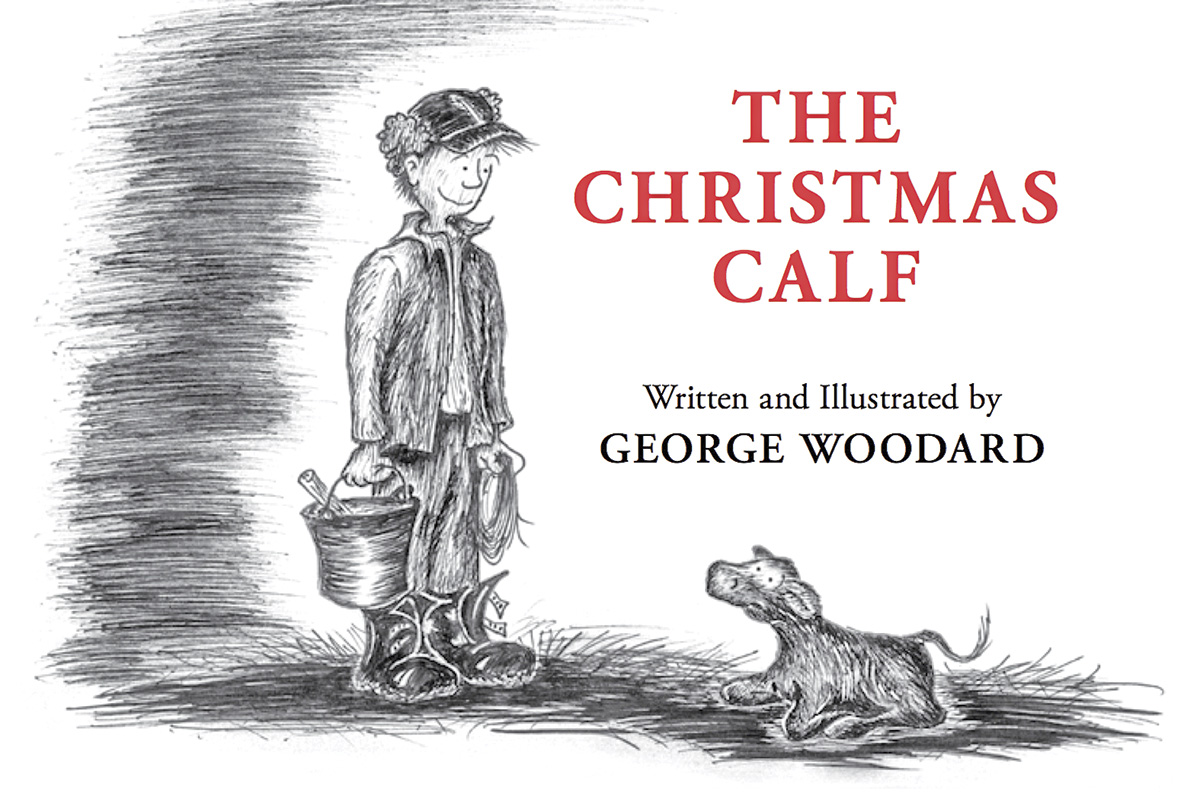
There is a specific kind of silence that only exists in a dairy barn on Christmas Eve. It’s not empty silence—it’s the warm, rhythmic quiet of cows chewing cud, the hum of the bulk tank, and the crisp bite of winter air waiting just outside the door. For most of the world, Christmas magic happens under a tree. For us, it often happens in the straw pack at 2:00 a.m.
George Woodard, a retired third-generation dairy farmer from Waterbury Center, Vermont, has captured that exact magic in a bottle—or rather, in a book. His new release, The Christmas Calf, is more than just a children’s story; it is a love letter to the industry, wrapped in festive nostalgia and illustrated with the kind of authenticity only a lifelong dairyman could provide.
This holiday season, Woodard isn’t just offering a story; he’s offering a bridge between the hard work we do and the wonder the rest of the world is searching for.
The Magic of the Midnight Check
We all know the drill. The guests have gone, the house is dark, but there’s a cow close to freshening, and sleep isn’t an option until you know she’s okay.
In The Christmas Calf, Woodard transports readers to that universal moment through the eyes of a 9-year-old farm boy. The story follows the boy on a cold Christmas Eve as his curiosity leads him out of the warm house and into the snowy night. Inside the barn, he witnesses the birth of a calf—the kind of quiet, everyday miracle that farmers can sometimes take for granted, but which Woodard re-frames as the ultimate Christmas gift.
Woodard, who milked 25 Holsteins for 48 years, knows this scene by heart. “Every farmer who milks cows has to go to the barn at some point in the middle of the night to check on a cow to see if she’s all right,” Woodard says. “It’s just one of those things you don’t mind doing because it’s all part of it. That’s how this story came about”.
It’s a powerful reminder that while the rest of the world sleeps, the dairy world is busy welcoming new life.
From the Milking Parlor to the Author’s Desk
The journey of The Christmas Calf is as organic as farming itself. It didn’t start in a boardroom; it started in a meadow on a sunny afternoon in the early 2000s. Woodard was sitting with his then 8-year-old son, Henry, admiring their herd.
“I said, ‘Henry, I got a story to tell you.’ So, I started telling the story, and it was off the top of my head,” recalls Woodard. It stuck with him for 12 years before he wrote it down, and then sat on a shelf for another 12 years because he couldn’t quite nail the ending.
It wasn’t until last December—perhaps feeling the pull of the season—that Woodard woke up at 4:00 a.m. (a time his internal farmer clock surely knows well) and finished the text. The next day, he started drawing.
What makes Woodard’s transition from farmer to author so compelling is that he never stopped being a farmer first. “It’s the most important thing I’ve done,” he says of his 48 years milking cows. “None of the stories or pictures I’ve made would have happened if I hadn’t been a dairy farmer.
Black-and-White Winter Wonder
In a world of technicolor screens and flashy cartoons, Woodard made a bold choice: The Christmas Calf is illustrated entirely in black and white.
This isn’t just a stylistic quirk; it’s a masterclass in atmosphere. Woodard, who is also an acclaimed filmmaker of period-piece movies like The Summer of Walter Hacks, understands that stripping away color can sometimes reveal more emotion. The black-and-white drawings capture the stark, cozy beauty of a Vermont winter. You can practically feel the cold biting at your nose and the warmth radiating from the cows in the barn.
“The drawings and the outdoor winter scenes feel cold, and I think partly the black and white images help with those feelings,” Woodard notes.
He treated the book like a film set, using his director’s eye to create a “shot list” for the illustrations. He included reaction shots and point-of-view angles to pace the story perfectly. “I had a book designer friend help him lay the pages out a certain way so that page-turner images were on the right-hand side,” he explains. The result is a visual experience that pulls you forward, deeper into the barn and the story.
A Gift for Farm Kids—and City Kids, Too
Perhaps the most beautiful aspect of The Christmas Calf is its dual nature.
For farm kids, it is a mirror. It validates their lives. It tells them that their chores, their frozen fingers, and their bond with animals are worthy of being the center of a Christmas story. When Woodard shows the book to locals, he hears, “Oh boy, I remember doing that. That recognition is precious.
For city kids, it is a window. It strips away the commercialized fluff of the holidays and introduces them to the raw, cozy reality of rural life. It shows them that food (and milk) comes from families who care deeply about their animals, staying up all night in the cold to ensure a safe birth.
Preserving the Legacy
As the industry consolidates and the number of small family farms dwindles, stories like The Christmas Calf become critical historical records. Woodard is adamant about historical accuracy. “The cartoon characters in the book are like a real-life slice of a small farm in that time period,” he says.
This book preserves the texture of our heritage. It ensures that the memory of the small herd, the stanchion barn, and the intimate connection between a farmer and his cows is not lost to time. It’s a way for grandfathers to show their grandchildren, “This. This is what we did. This is who we are.”
The Perfect Stocking Stuffer
George Woodard self-published this gem, and the reception has been nothing short of heartwarming. “I show them the cover, and everybody goes, ‘Oh my word.’ It’s not anything flashy… So, it makes me feel good to hear that people like it,” he says.
If you are looking for a gift that captures the soul of dairy farming—something that feels less like a product and more like a memory—The Christmas Calf is it. It’s a reminder that the best gifts aren’t bought in a mall; they are born in a barn, raised with care, and passed down through stories.
To order a copy, visit georgewoodard.com. This Christmas, let’s share the magic of the barn with the next generation.




