




Archive for milk fever prevention

Parity Beats Your Ration 52-to-1, and Nothing You Buy Changes a Cow’s Age

Three companies, four levers, four failure points. The €16,950 figure your rep quotes was published by a company selling one of them. Seven things to measure before you buy.

Executive Summary: The €16,950 milk fever cost figure your nutritionist quotes was published in February 2021 by Phibro Animal Health’s Business Manager Europe — a company that sells anionic minerals for the problem the model prices. That’s not a reason to discard it, because the per-case costs underneath it trace to Guard (1996) and Oetzel (2011), and Oetzel’s own worked example holds up cleanly: a 2,000-cow dairy loses about $12,000 a year to clinical cases it treats and roughly $48,750 to subclinical cases it never sees. Four approaches are on the table and every one has a real failure point. Before any of them, three measurements cost almost nothing and decide which lever could even work on your farm — read on if your transition numbers have been stuck for three years and you can’t say for certain whether the last thing you changed actually worked.
milk fever prevention

Sabrina Caron doesn’t soften what her Quebec herd went through. “For a long time we had a lot of problems with calvings and with cows not having a good start to the lactation. It was a horror,” she in a recent interview. She’d tried plenty. The one that stuck was X-Zelit, and she credits it with lifting her herd average from 40 to 48kg per cow per day inside a year.

Caron and Danny Giguère run 105 Holstein milking cows at Ferme Roland Caron in Laurierville, Quebec — third-generation ground, and named Agropur’s 2024 Grand Champion for animal welfare. Her account is a real producer describing a real result. Whether it’s a result you can copy is a different question, and the research on transition failure explains why.
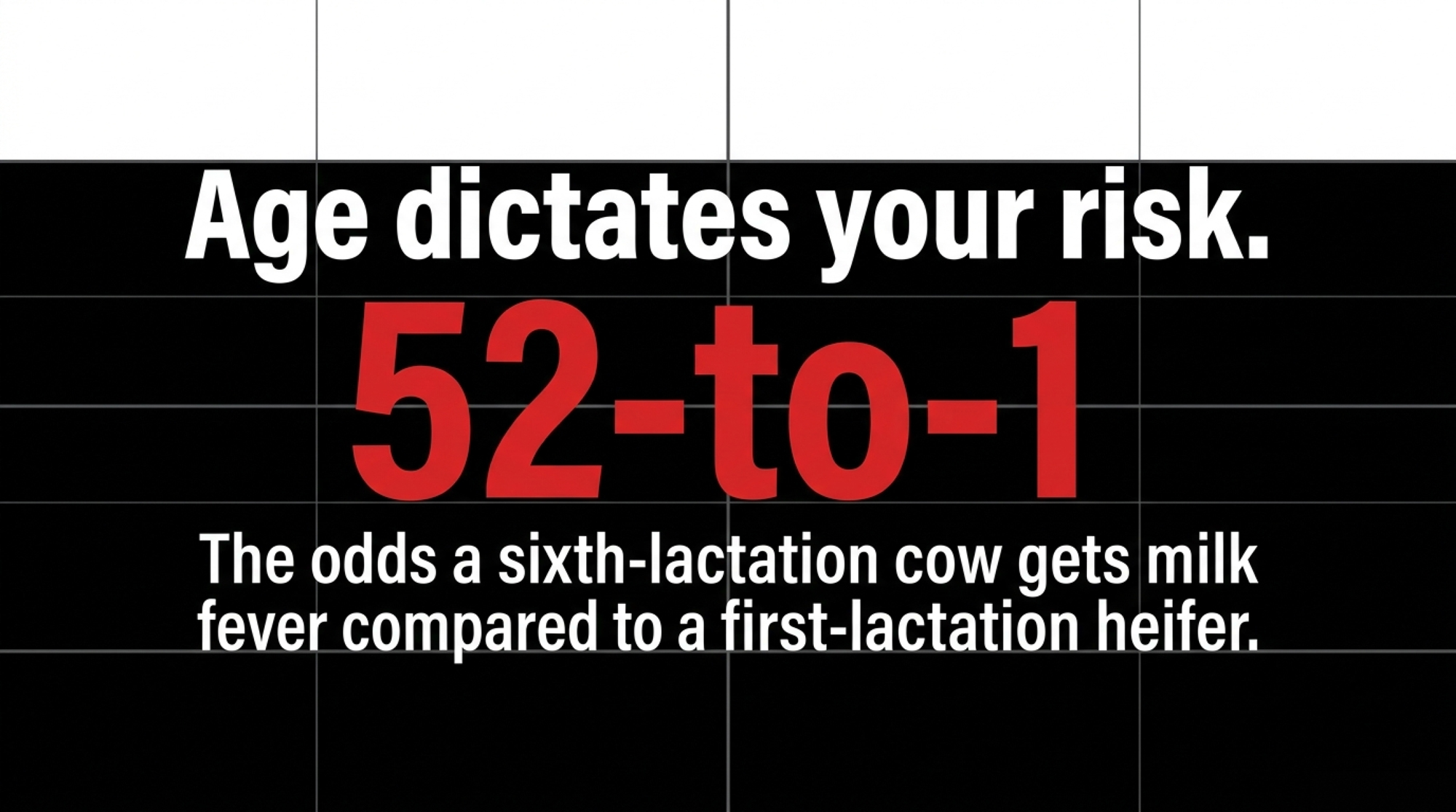
A 2017 Journal of Dairy Science study of Costa Rican grazing herds found parity dominated every other risk factor for milk fever, at an odds ratio of 52.59 for cows in their sixth lactation or later. That figure comes from the study’s base model; the same paper’s full model, which adjusts for more herd-level variables, puts the same group at OR 12.84. Both models found parity was by far the largest factor. We quote the base-model figure because it’s the one the literature circulates — which is exactly the kind of choice this article is about. A producer weighing it should know the range, and know these were grazing herds in Costa Rica, not confinement herds in Wisconsin or Ontario.
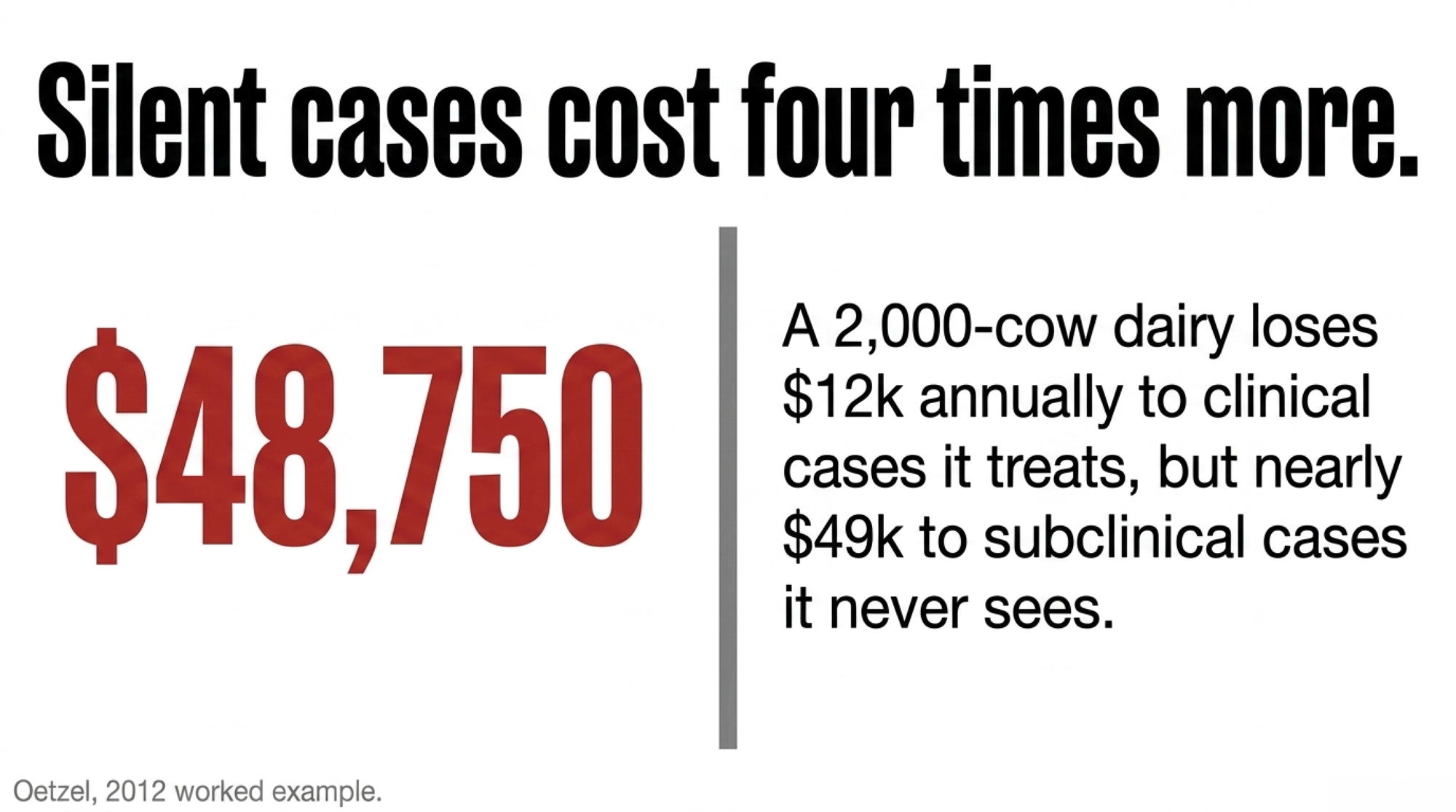
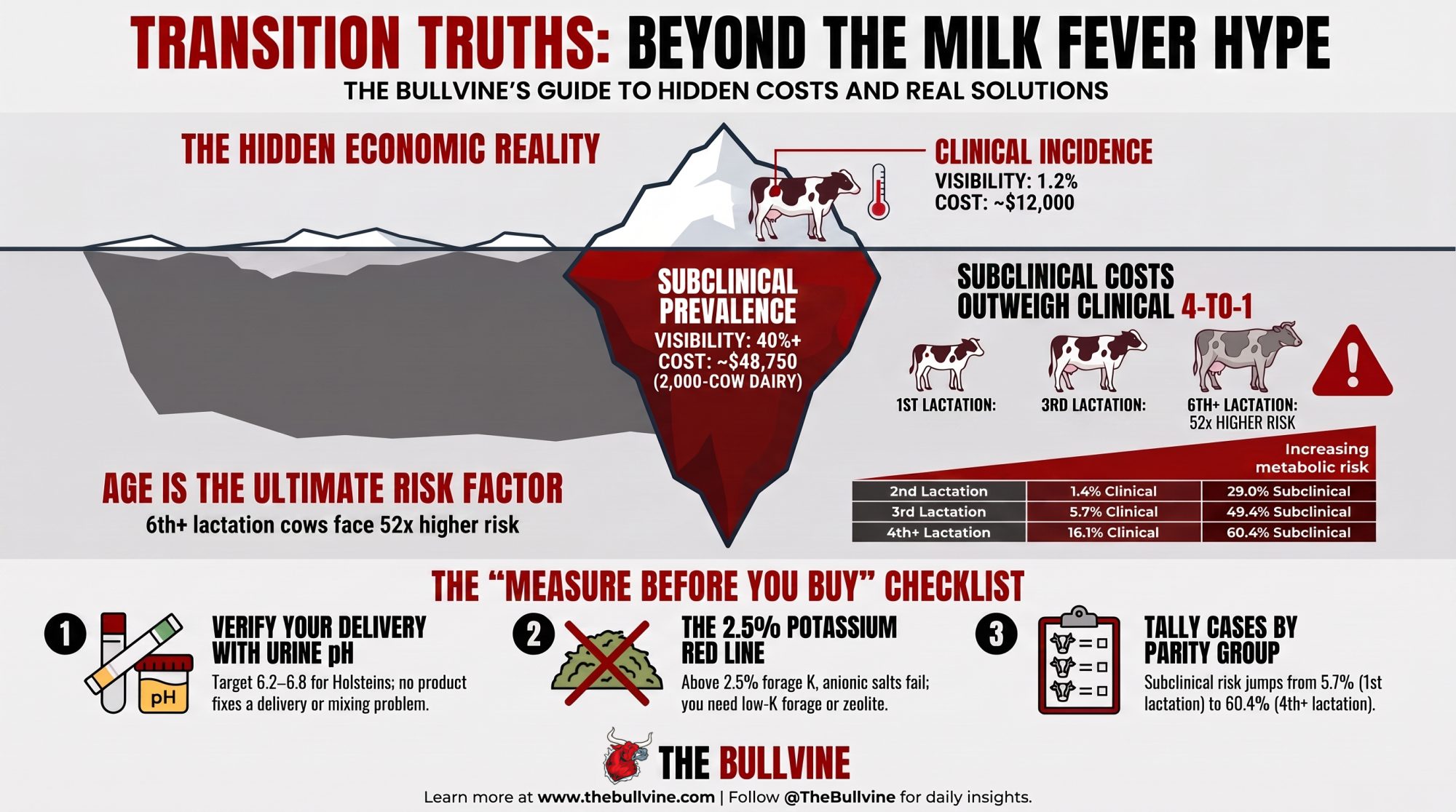
Either way, nothing you buy changes a cow’s parity. And here’s the inversion that reframes the economics. Oetzel’s 2012 worked example put it plainly: a 2,000-cow dairy with 2% clinical incidence at $300 a case loses about $12,000 a year, while the same herd with 30% subclinical incidence among second- and later-lactation cows at $125 a case loses about $48,750. Four times more, from cases nobody treats.
Three Things to Measure Before You Buy Anything

The full decision guide is further down, but if you read nothing else: pull urine pH on your close-up cows, test your dry cow forage potassium, and tally your clinical cases by lactation group. All three cost almost nothing. All three change which of the four approaches below could plausibly work on your farm. None of them require a sales call.

What’s Actually Changed in Transition Prep

Transition prep used to be one conversation. Get dietary cation-anion difference right in the final three weeks, check urine pH, hope. That’s still the backbone: University of Wisconsin–Madison Extension puts the research-based DCAD target at -100 to -200 mEq/kg DM, with -100 often preferred because pushing toward -200 risks too severe a metabolic acidosis response. NASEM’s 2021 requirements land in the same place, recommending -100 mEq/kg DM inside the final 21 days. Target urine pH for Holsteins runs 6.2 to 6.8.

What’s new is that the field now has genuinely different biochemical routes to the same endpoint — with independent research confirming they aren’t the same thing wearing different labels. A 2024 Journal of Dairy Science trial from Wisconsin compared synthetic zeolite A head-to-head against negative DCAD and found both improve postpartum calcium metabolism, but “they appear to work through different mechanisms.” That’s a controlled comparison saying the physiology diverges, not a marketing claim.

Dry-Off Isn’t the End of Anything

The third route steps outside feeding altogether, and it starts earlier than most protocols do. Julien Redor, Ruminant Technical Manager at the French company Natual, frames it this way: drying off “should no longer be seen as the end of milk production, but rather as a phase of immunological preparation” directly after the last milking, with active metabolic preparation across the final three weeks before calving.

That framing has independent research behind it. A 2025 Journal of Dairy Science review approaches the dry-to-lactation window through immunometabolism — metabolic and immune function wired together rather than stacked in sequence. A heavily cited 2017 review put the interdependence bluntly: metabolic diseases like milk fever and ketosis raise a cow’s risk of infectious disease, and infectious disease raises her metabolic risk right back.

Here’s what it looks like as a protocol rather than a concept. On a French farm running roughly 250 Holsteins with a stated goal of cutting antibiotic use at dry-off, the sequence is specific: no over-milking at the last milking, minimal teat stimulation afterward, Natual’s Taribol bolus administered systematically within two hours, then straight into a separate dry group on a high-fiber, low-energy ration — physically separated from the milking herd so nothing re-stimulates production. Metrabol follows post-calving, aimed at uterine involution and getting the cycle restarted.

Read that list again and notice how much of it costs nothing. The over-milking, the teat handling, the physical separation, the ration split — those are protocol decisions, not purchases. Whatever you conclude about the boluses, the handling sequence around them is available to any herd that decides to run it.

The Farms Where Everything Looks Right and It Still Goes Wrong

Ask a nutritionist about their problem farms and you’ll often hear the same profile: textbook rations, sporadic milk fever anyway. Dr. Norbert Göres has spent years on that list. He’s a veterinarian with a TiHo Hannover doctorate on cattle feeding and, since 2021, Director of Business Development for the EU market on Sano’s SmartDairyNutrition program.

“There are farms where everything seems to be right — low potassium dry cow rations, optimal mineral supplementation and a perfectly mixed ration, but they continue to be confronted with cases of milk fever here and there,” Göres said in a European trade interview on transition management. “These types of cases made us rethink existing concepts and further develop them.”

Sano’s answer is Mipro Close-Up 700 — acidification held across the full dry period instead of the close-up phase alone, paired with rumen-protected methionine and choline for liver support. The company reports clinical milk fever effectively eliminated on client farms and fresh cows averaging 7.9kg more milk per day, with the biggest gains in older cows. Those are company-reported field results from Sano’s own advisory work. We could not locate the underlying trial data in the published literature, which doesn’t mean the results aren’t real — field results rather than published trials are common practice across on-farm nutrition advisory programs — but it does mean you’re weighing a vendor’s client outcomes rather than an independent trial.
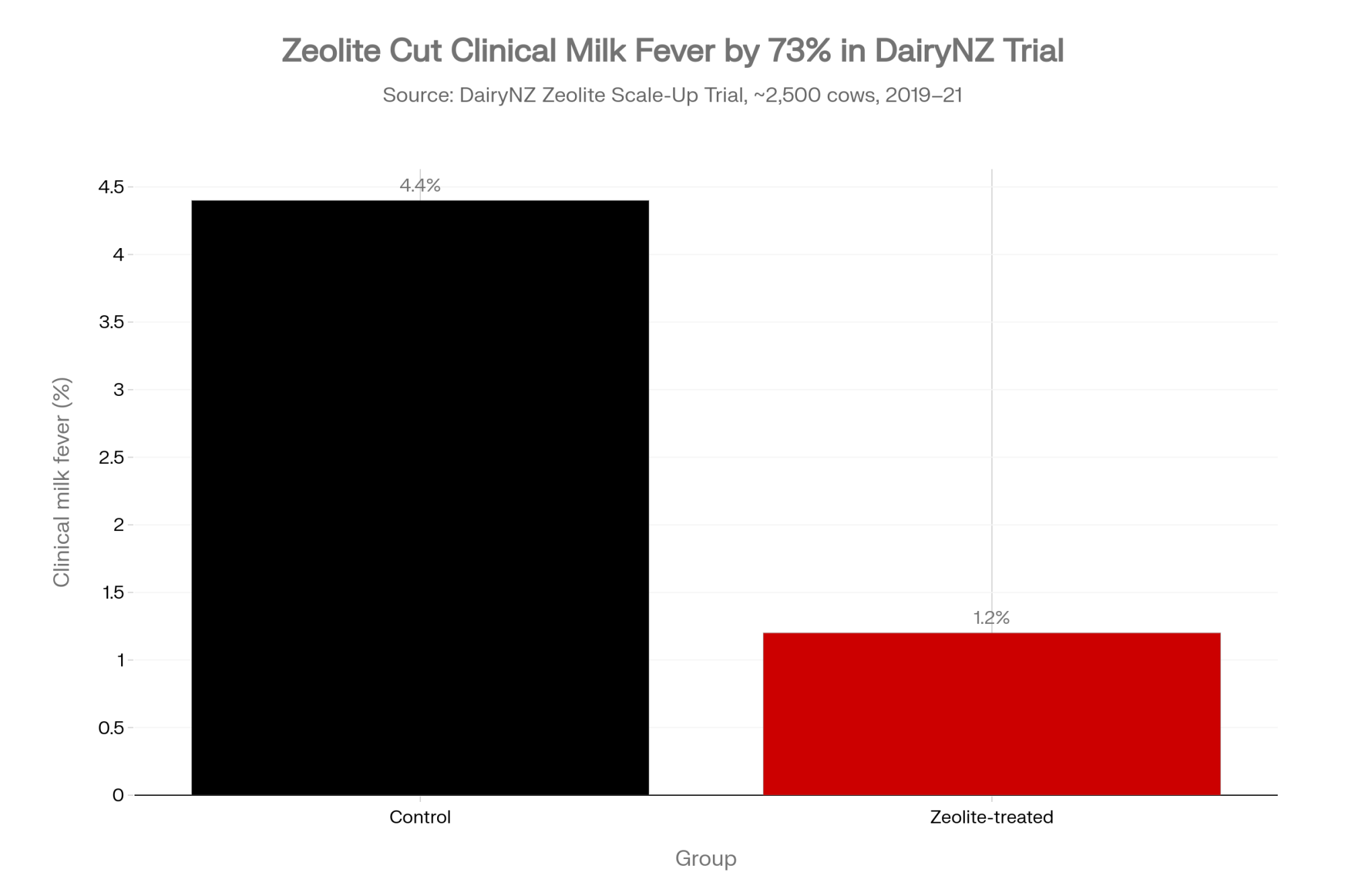
Zeolite’s trail is more traceable, and it doesn’t rest on one trial. Kerwin and colleagues, publishing in the Journal of Dairy Science in 2019, found synthetic zeolite A fed prepartum produced markedly improved serum calcium around calving in a housed Cornell herd — and DairyNZ’s scale-up work is the most recent large-scale confirmation. DairyNZ — funded by New Zealand dairy farmers through the levy and by the Ministry for Business, Innovation and Employment — ran its Zeolite Scale-Up Trial across roughly 1,000 cows in three Waikato herds in 2019/20 and another 1,500 cows across three herds the following season. Half of each herd got 500g/day of synthetic zeolite for three weeks pre-calving. Clinical milk fever fell from 4.4% in controls to 1.2% in treated cows.

Worth noting where the commercial interest sits on this one too. Vilofoss, which markets X-Zelit, calls the product “a definitive solution for the control of hypocalcemia” and “a significant and disruptive advance” in its own 2026 conference material. Strong independent evidence and strong marketing aren’t mutually exclusive. They’re just different things, and only one went through peer review.

Four Levers, Four Failure Points

ApproachMechanismBest fitWhere it fails
Close-up negative DCADAcidosis activates TRPV5/TRPV6 calcium channels; mechanism still debatedConfinement herds, controlled and testable rationsNo benefit below pH 6.0 or -100 mEq/kg DM; failed entirely at dietary Ca above 1.6% in a 1992 trial
Extended acidification — Sano Mipro Close-Up 700, full dry period plus methionine and cholineSame acidification route held longer, with liver supportPersistent cases despite textbook close-up formulationNeeds precise DCAD calculation, mineral balancing, cow comfort, routine urine pH. Results are company-reported, not independently published
Synthetic zeolite — Vilofoss X-Zelit, 500g/day for 2–3 weeks, stop at calvingBinds calcium and minerals in the rumen; large pre-calving blood phosphate drop documentedGrazing and high-K forage systems where DCAD is hard to hitNot on fodder beet or low-P diets; not mined natural zeolite; magnesium needs active management; cuts prepartum intake ~13% versus negative DCAD
Dry-off bolus support — Natual Taribol within 2 hours of last milking, Metrabol post-calvingAnti-inflammatory and immune support at dry-off, layered on any feeding programHerds targeting antibiotic reduction at dry-offNo peer-reviewed trial located on either product as of publication; the 85-minute lying-time study used a different bolus type

Running the Barn Math, and Naming Who Built It

ConditionCost per caseIncidenceAnnual cost, 200-cow herd
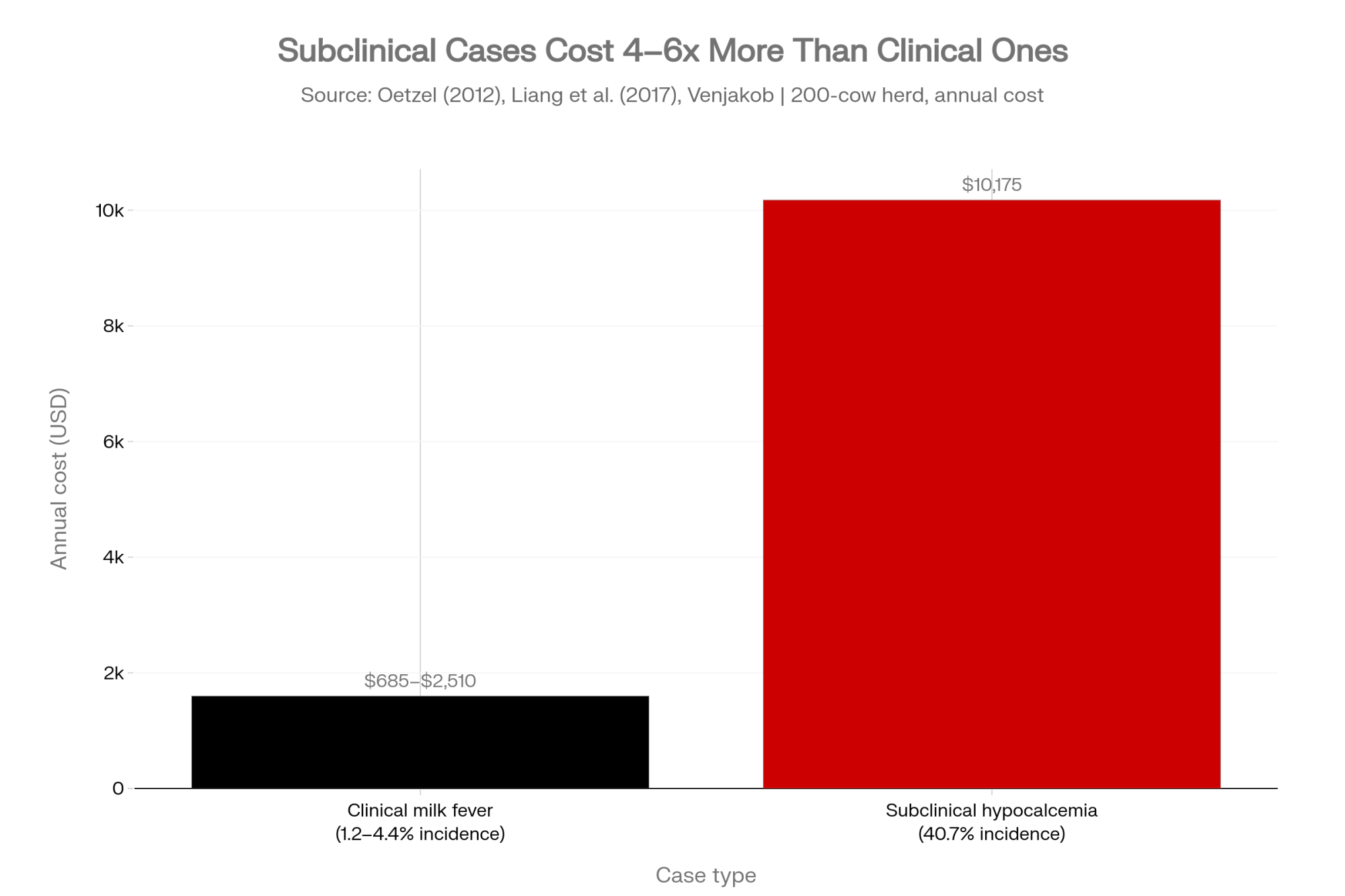
Clinical milk fever$285 per multiparous case (Liang et al. 2017, JDS)1.2–4.4% in DairyNZ trial herdsRoughly $685 to $2,510
Subclinical hypocalcemia$125 per affected cow (Oetzel, 2012 worked example)40.7% measured across 1,380 German cows at a 2.0 mmol/L thresholdRoughly $10,175

Incidence figures pair DairyNZ’s pasture-trial herds with US per-case costs and a German prevalence survey. Oetzel applied his $125 to second-and-greater-lactation cows; Venjakob’s 40.7% covers all parities, so the herd figure runs slightly high. Directional, not transferable — run your own incidence.

The direction holds across both currencies and both continents: the subclinical column is always the bigger number. The multiple doesn’t hold. It runs about 3.6:1 in Phibro’s model, 4.1:1 in Oetzel’s own example, and closer to 6:1 using the figures above. Which tells you the incidence assumption is doing most of the work — and that it’s the number worth arguing about.

Cost figurePublished byCompany sellsUnderlying sourceYear
€16,950/yr subclinical modelPhibro Animal Health (Arnout Dekker)Anionic minerals (Animate)Oetzel (2011) per-case cost2021
€312 clinical caseGuard et al.— (academic)Original 1996 study1996 — 30 yrs old
“Definitive solution” languageVilofossSynthetic zeolite (X-Zelit)Company conference material2026
7.9kg/day milk gain, milk fever “eliminated”SanoMipro Close-Up 700Company-reported, no published trialOngoing
Clinical milk fever 4.4%→1.2%DairyNZ (farmer levy-funded)Nothing — independentZeolite Scale-Up Trial2019–21

So here’s the model most often quoted at producers. That 250-cow European breakdown — clinical at €312 a case and 6% incidence giving €4,680 a year, subclinical at €113 and 60% giving €16,950 — was published in February 2021 by Arnout Dekker, Business Manager Europe for Phibro Animal Health. Phibro markets Animate, an anionic mineral used in negative-DCAD programs.

The per-case costs underneath the table aren’t Phibro’s own: €312 traces to Guard et al. (1996), €113 to Oetzel (2011). The 6% and 60% incidence figures are the model’s. Don’t convert between the euro model and the US numbers — different cost assumptions, different years, different decades in the case of Guard.

If you want to see what a single fresh-cow line item does at scale, our reporting on Steve Jaeger’s $511 fresh cow problem tracks a $111-per-cow fix across 4,495 cows.

Different Doors, Same Room

Negative DCAD acidifies the cow, so her own calcium regulation switches on before she needs it. It’s a systemic metabolic intervention, and it only works if she eats the ration you formulated.

Zeolite goes through a different door, and the sources disagree about which door. DairyNZ describes synthetic zeolite binding dietary calcium and other minerals in the rumen, stimulating increased intestinal absorption — while also documenting a large pre-calving phosphate drop as part of the mechanism. Martín-Tereso’s 2011 review reports the original calcium-binding hypothesis has been challenged by a hypophosphatemia-driven explanation, where lower blood phosphorus reduces FGF23 signaling and triggers bone mobilization. A 2025 review adds that zeolite likely acts on several systems at once, including the ruminal environment and immune modulation.
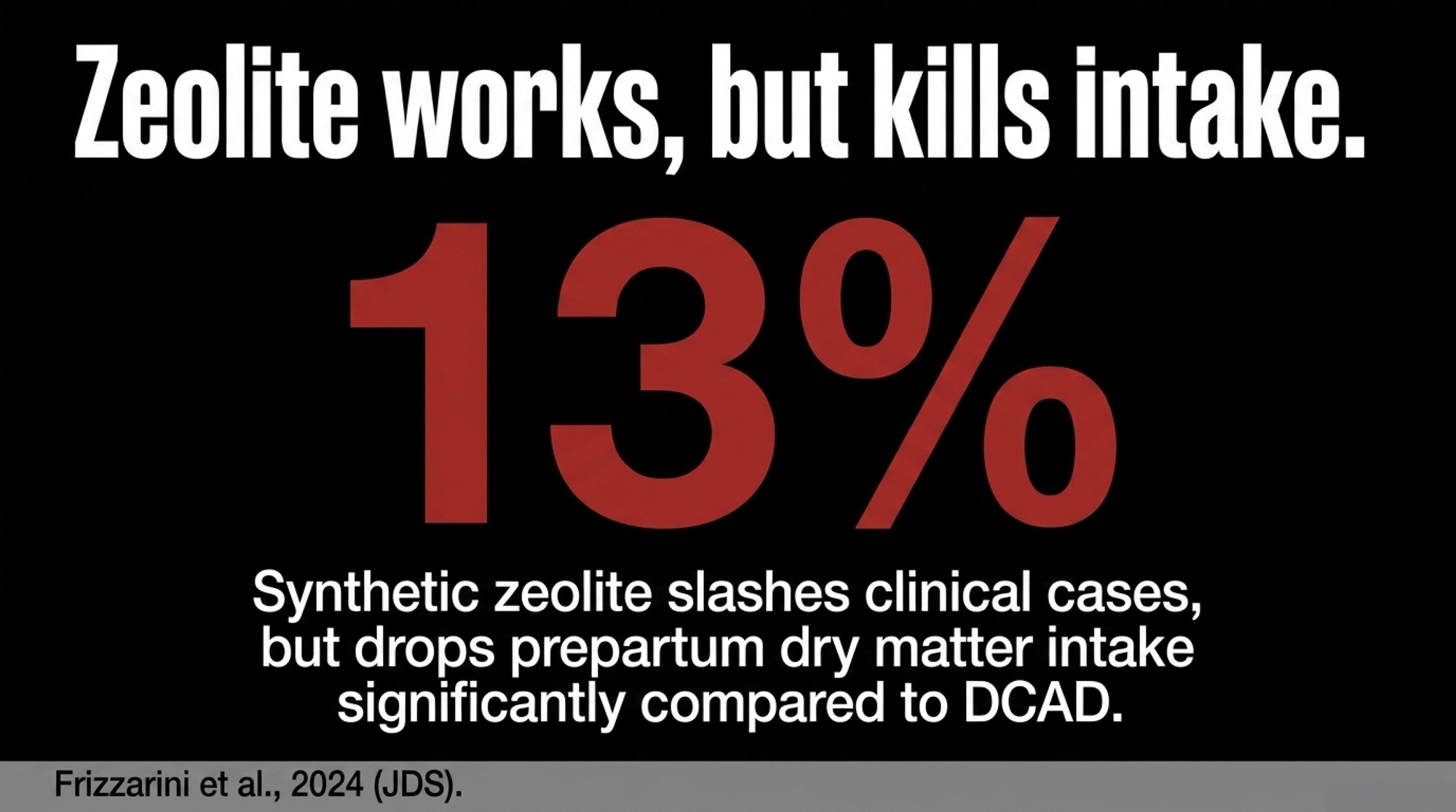
Here’s the trade-off you should expect, and it’s substantial. Frizzarini and colleagues, in that 2024 Wisconsin trial, measured prepartum dry matter intake at 11.7 kg/day on zeolite against 13.5 on negative DCAD and 13.9 on the control — a 13% drop versus DCAD and 15.7% versus control. Rumination fell too: 487 minutes a day against 527 and 531. Both differences were significant at P<0.01.
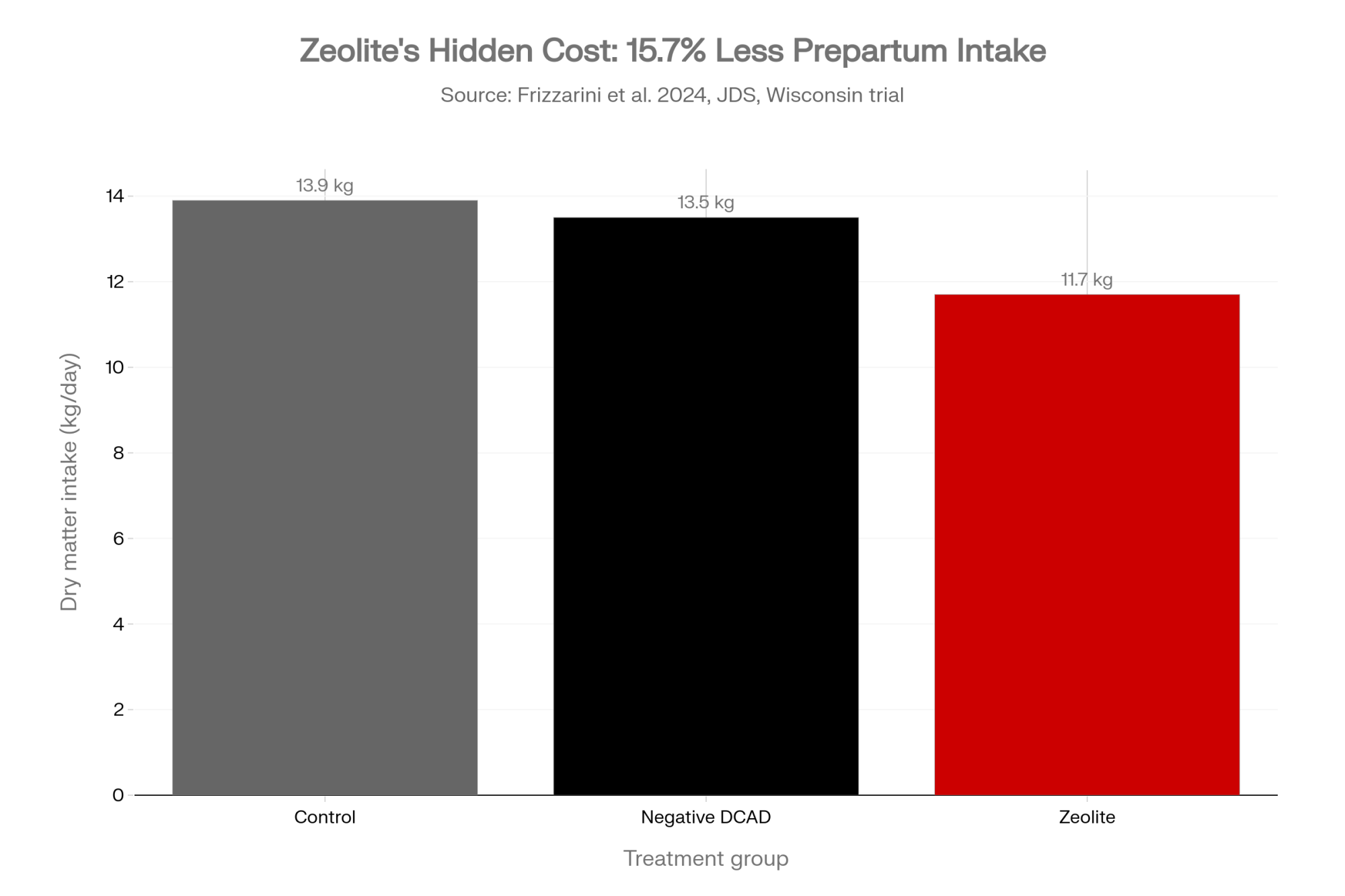
That’s not a small dip, and any nutritionist will flag it. What the same trial found, though, is that blood BHB didn’t change, body fat mobilization postpartum didn’t increase, and rumination came back to parity after calving. The authors concluded zeolite “does not affect energy metabolism” despite the intake reduction, and reported higher colostral IgG plus the most milk from third-lactation-and-older cows on zeolite. So the prepartum intake loss appears to be a cost the cow absorbs without metabolic consequence — but you should know it’s there before a rep tells you the product is free of downsides.

The Mechanic Nobody Sells Against

Delivery. Urine pH testing exists precisely because correctly formulated DCAD rations fail in practice. Cows running out of feed and slug feeding, under- or over-mixing, and unexpected shifts in forage mineral levels all change what the cow receives versus what’s on the spec sheet. A ration is a plan. Urine pH is the only thing that tells you whether she actually got the memo.

Why One Farm’s Number Can’t Settle It

Savaron’s recent history is a matter of public record: fire destroyed a barn at the Laurierville farm in March 2020, a new facility came into operation in December 2021, and the herd is milked robotically. Caron has spoken publicly about the rebuild.

Nothing in this section reflects on Caron’s management or on her herd’s performance. Ferme Roland Caron holds a national animal-welfare award, which is not something a poorly run operation collects. The confounders here are structural, and they would apply identically to any farm that rebuilt and automated across the same seasons — including, most likely, yours.

That’s the point. When a facility change, a new milking system, and a transition protocol all land inside a few seasons, nobody can cleanly separate afterward what moved the tank. X-Zelit has independent trial evidence of its own; none of it rests on Savaron. But if you can’t tell which of your own changes moved the needle, you can’t repeat it, scale it, or stop paying for the part that didn’t matter.

Your Dry Pen Decision Guide

Work down in order. Each step is a gate, not a suggestion.

IF you haven’t measured urine pH on close-up cows in 60 days ➔ don’t spend another dollar on additives until you do. Target 6.2 to 6.8. Mixer accuracy and slug feeding are the documented failure points, and no product fixes a delivery problem.

IF your dry cow forage K is above 1.5% of DM ➔ you’re into anionic-salt territory. Above 2.5% ➔ salts won’t rescue it. Published guidance sets the dry cow forage target under 1.5% K, treats 2–2.5% as the range where anionic salts become necessary, and calls above 2.5% almost impossible to correct with salts alone. Cornell puts the grass target under 2% K for a workable anionic diet. Past 2.5%, low-K forage or zeolite is the answer, not more salt.
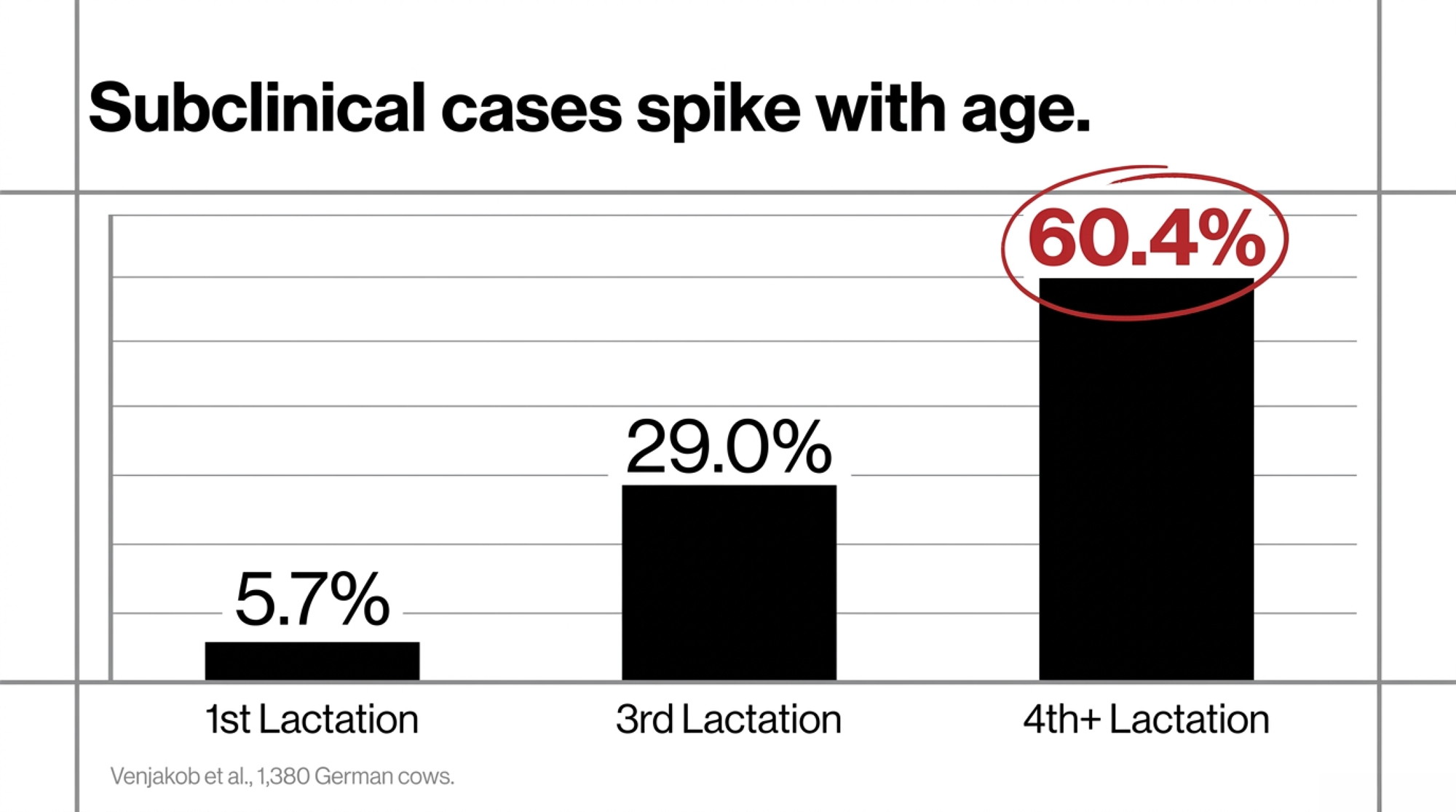
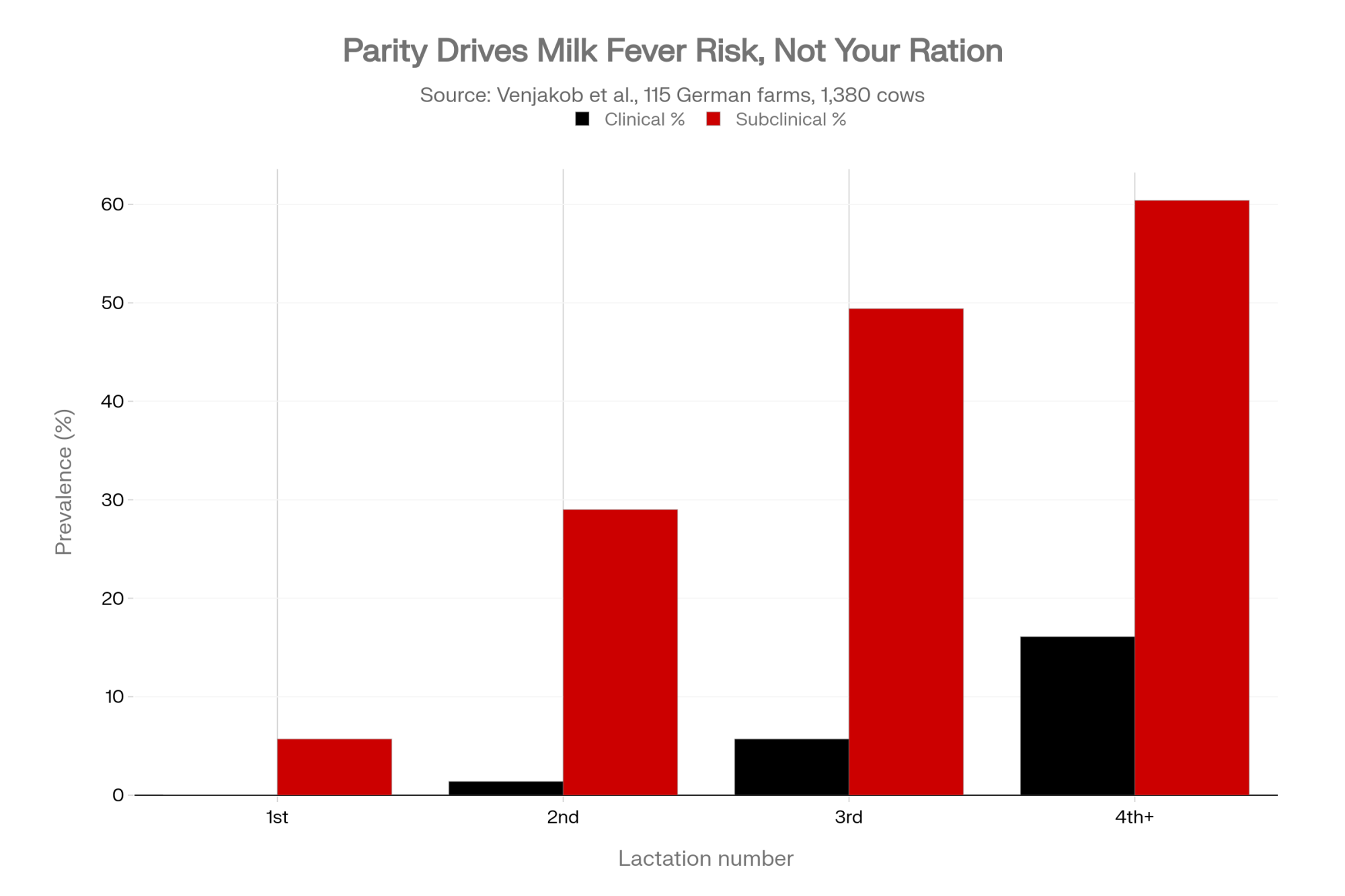
IF your clinical cases cluster in fourth-lactation-and-older cows ➔ split your dry cow ration by parity. Venjakob’s survey of 1,380 cows across 115 German farms found clinical milk fever at zero in first lactation, then 1.4%, 5.7% and 16.1% in second, third and fourth-plus. Subclinical prevalence at a 2.0 mmol/L threshold ran 5.7%, 29.0%, 49.4% and 60.4% across the same four groups. One group ration treats two different risk populations identically.

IF lameness in your dry pen is unmeasured ➔ score it before you buy anything. In Neves and colleagues’ 2017 work, cows that were lame but normocalcemic at calving were 3.2 times more likely to be subclinically hypocalcemic by two days in milk than non-lame normocalcemic cows — the paper’s abstract renders the same comparison as 3.4. Either way, that’s a facility problem wearing a mineral problem’s clothes.

IF more than 15% of first-week fresh cows show BHB above 1.2 mmol/L ➔ calcium isn’t your bottleneck. That threshold signals significant herd-level disease risk and real production loss. Steeneveld’s 2020 analysis put clinical ketosis at €709 a case and subclinical at €150, running €3,613 a year on a default 130-cow Dutch farm and €7,371 on a high-risk one. For comparison, the clinical milk fever figure in Phibro’s model above is €312 a case, sourced to Guard et al. (1996) — a different study, a different decade, and not Steeneveld’s number.

IF you’re changing two things at once ➔ stagger them. A product alongside a facility upgrade, a robot startup, or a grouping change means you won’t know which one worked.

IF a vendor shows you a testimonial ➔ ask three questions. Is there an independent, peer-reviewed trial on this specific product, or only on the ingredient class? Who funded it? Who co-authored it? Kerwin’s 2019 Cornell zeolite trial lists co-authors from outside the university alongside the Cornell team — standard and disclosed in applied nutrition research, and worth factoring in.

Sørensen and colleagues said the underlying thing plainly back in 2002: the most suitable milk fever control strategy for any herd depends on herd-specific circumstances — the farmer’s skills, the production system, and the economics of that particular choice. Two decades on, nothing has displaced it. DairyNZ’s own scale-up data points the same way, noting that herds with a milk fever history benefit most from zeolite.

Run Your Own Numbers Before You Run a Trial

If your transition numbers have been stuck for three years, the honest question isn’t which of these approaches to buy. It’s whether you’ve got enough measurement in place to know whether the last thing you changed actually worked.

The European Food Safety Authority requires a minimum of three independent in vivo studies showing significant effects before an efficacy claim is supported for a feed additive. Our own view is that the design details matter as much as the count — control groups, randomization, blinding, enough animals to rule out chance — but that’s editorial framing, not EFSA’s wording. Either way, three independent studies is a workable bar to hold in mind when a rep shows you one farm’s numbers. It’s a fair bar to hold yourself to, too.

Start with your own figures: The Bullvine’s Ketosis Cost Calculator will put your fresh-cow BHB rate against Steeneveld’s per-case costs, and the Health ROI Calculator will tell you whether the input you’re weighing clears its own price. We’re publishing the seven gates as a printable one-pager for the office wall — watch for it in this week’s Bullvine Weekly.
Key Takeaways

  • Before you buy anything, pull urine pH on close-up cows and check you’re inside 6.2 to 6.8, and get a forage K test. If K is above 1.5% of DM, you’re into anionic-salt territory; past 2.5% salts won’t rescue it, and you need low-K forage or zeolite.
  • Zeolite cut DairyNZ’s clinical milk fever from 4.4% to 1.2%, but it also drops prepartum dry matter intake around 13% and needs magnesium watched. Extended acidification rests on company-reported field results, and there’s no published trial on the dry-off boluses specifically.
  • On 200 cows, the clinical bill runs roughly $685 to $2,510 a year while subclinical sits near $10,175. Tally your cases by lactation group — subclinical prevalence goes from 5.7% in first-lactation cows to 60.4% in fourth-plus, so one dry ration is treating two different herds.
  • When someone hands you a cost-per-case model, check who published it before you check the number. The €16,950 figure came from a company selling anionic minerals — the academic work under it is sound, but the incidence assumptions are theirs.

Research and product claims reflect published literature and company statements available as of publication. Sano, Natual and Vilofoss were not asked for comment before publication; this article will be updated if any party provides trial data or a response.

Learn More

The Sunday Read Dairy Professionals Don’t Skip.

Every week, thousands of producers, breeders, and industry insiders open Bullvine Weekly for genetics insights, market shifts, and profit strategies they won’t find anywhere else. One email. Five minutes. Smarter decisions all week.

NewsSubscribe
First
Last
Consent

Negative DCAD Diets: The Proven Strategy for Healthier Transition Cows & Higher Profits

Stop milk fever before it starts! Discover how negative DCAD diets boost calcium, slash transition disorders, and add $640+/cow in milk profits.

EXECUTIVE SUMMARY: Negative DCAD diets (-8 to -12 meq/100g DM) remain dairy’s gold standard for transition cows, preventing hypocalcemia by priming calcium mobilization, boosting milk yield, and reducing metabolic disorders. Backed by decades of research, this strategy improves multiparous cow health and profitability but harms first-calf heifers’ reproduction. Key implementation steps include urine pH monitoring (6.0-6.8 for Holsteins), selective use of commercial anion supplements, and avoiding over-acidification. Modern refinements like neutral DCAD diets show promise but require further validation. With proper execution, farms report 0+/cow savings from avoided milk fever and 1,800-3,200 lbs increased lactation yields.

KEY TAKEAWAYS:

  • Target -8 to -12 meq DCAD for 21 days pre-calving to prevent milk fever and boost calcium availability
  • Urine pH 6.0-6.8 (Holsteins) confirms effectiveness – extreme acidification reduces intake
  • Exclude first-lactation heifers – negative DCAD impairs their reproduction
  • $640+/cow profit potential from higher milk yields and disease prevention
  • Neutral DCAD (0 ±30 meq) emerging as a palatable alternative with 87% milk fever reduction

Feeding negative Dietary Cation-Anion Difference (DCAD) diets to transition dairy cows has stood the test of time, with hundreds of research studies confirming its effectiveness in preventing metabolic disorders and improving performance. This scientifically validated nutritional strategy significantly reduces the risk of hypocalcemia (milk fever) and enhances overall migration to cow health. This report examines the mechanisms, benefits, implementation strategies, and latest research on negative DCAD diets for dairy producers seeking to optimize transition cow management.

Why DCAD Works: The Science Behind Calcium Mobilization

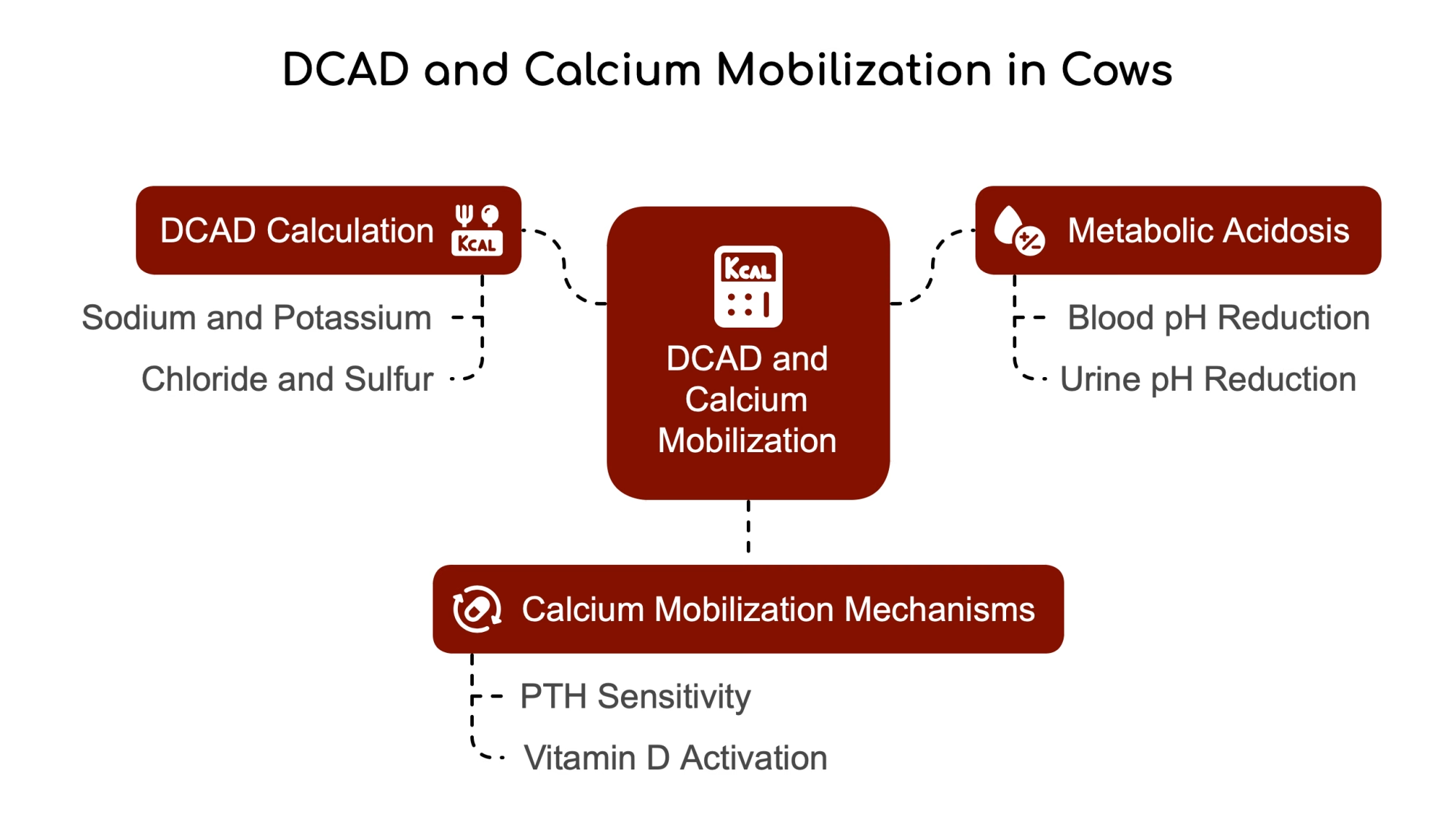
DCAD represents the diet’s balance between positively charged cations (primarily sodium and potassium) and negatively charged anions (chloride and sulfur). The most used formula to calculate DCAD is DCAD (meq) = (Na + K) – (Cl + S). A negative DCAD diet contains proportionately more chloride and sulfur in relation to potassium and sodium, thus lowering the dietary cation-anion difference value.

When cows consume a negative DCAD diet, they enter a state of compensated metabolic acidosis, which results in a slight reduction in blood pH and a significant reduction in urine pH. This subtle change in blood pH plays a crucial role in calcium metabolism. The slight acidification increases the sensitivity of tissues to parathyroid hormone (PTH), which helps mobilize calcium from bone reserves and enhances calcium absorption in the intestine.

This metabolic adaptation is significant during the transition period when calcium demands skyrocket. When a cow begins lactation, her calcium requirement suddenly increases dramatically as calcium moves from the bloodstream into colostrum and milk. Proper metabolic preparation can lead to a dangerous drop in blood calcium levels. Negative DCAD diets essentially “prime” the cow’s calcium metabolism system to respond more efficiently to this challenge.

The Calcium Mobilization Pathway: How DCAD Unlocks Bone Reserves

The biological pathways involved in calcium mobilization are complex but well-understood. When blood pH is slightly reduced through negative DCAD feeding, PTH receptors become more responsive. This enhanced sensitivity triggers two key calcium-regulating mechanisms: first, PTH has a direct effect on bone, stimulating the breakdown of bone tissue and releasing stored calcium into the bloodstream; second, PTH stimulates the kidneys to produce more active vitamin D, which in turn increases calcium absorption from the digestive tract.

3 Major Benefits of Negative DCAD Diets That Boost Your Bottom Line

The benefits of feeding negative DCAD diets during the transition period extend far beyond just preventing clinical milk fever. Research has consistently demonstrated multiple advantages for dairy cows and farm productivity.

1. Slash Hypocalcemia Rates: Stop Milk Fever Before It Starts

Hypocalcemia occurs in both clinical (milk fever) and subclinical forms. While clinical cases are obvious when cows go down and cannot stand, subclinical hypocalcemia affects a much more significant percentage of the herd, often 50% of mature dairy cows and 25% of first-calf heifers. These cows appear normal but have reduced blood calcium levels that impair muscle function throughout the body, including the digestive tract and uterus.

A meta-analysis of controlled experiments showed that feeding a negative versus positive DCAD diet reduced the relative risk of developing milk fever to between 0.19 and 0.35. This represents an impressive 65-81% reduction in milk fever risk simply through dietary management. Research has consistently shown that negative DCAD diets can eliminate clinical hypocalcemia and drastically reduce the incidence of subclinical hypocalcemia.

2. Boost Milk Production: More Milk in the Tank

Beyond disease prevention, negative DCAD diets have been shown to enhance lactation performance. A comprehensive meta-analysis found that lowering DCAD increased ionized calcium in blood before and at calving. This improved calcium status supports higher milk production in early lactation.

Research consistently shows that properly implemented negative DCAD programs lead to higher milk production, particularly in second lactation and older cows.

3. Reduce Transition Disorders: Healthier Cows, Fewer Vet Bills

The benefits extend to other transition disorders as well. Studies show a decreased incidence of retained placentas, metritis, displaced abomasums, and improved reproductive performance in cows fed negative DCAD diets. This is partly because calcium is necessary for proper muscle contraction throughout the body, including the uterus and digestive tract. When calcium levels are maintained, these systems function more effectively.

How to Implement a Successful DCAD Program on Your Dairy

Implementing a negative DCAD program requires careful attention to diet formulation and monitoring. Research has identified optimal ranges and practical approaches to achieve the desired effects.

The Perfect DCAD Range: Don’t Go Too Low

The scientific consensus points to an optimal negative DCAD range of -8 to -12 meq per 100 grams of dry matter for transition cows. This level can produce the desired metabolic effects without excessive acidification or decreased feed intake.

Interestingly, research shows that pushing DCAD levels beyond -12 does not provide additional benefits and may be counterproductive. Studies found that reducing the level of negative DCAD too far reduced prepartum dry matter intake and induced a more exacerbated metabolic acidosis. This demonstrates that more is not necessarily better regarding DCAD manipulation.

Table 1: DCAD Implementation Guidelines

ParameterRecommended RangeKey Considerations
Prepartum DCAD-8 to -12 meq/100g DMAvoid < -15 meq for intake
Postpartum DCAD+35 to +45 meq/100g DMSupports lactation
Urine pH (Holstein)6.0-6.8Test 3+ days after initiation
Urine pH (Jersey)5.5-6.0Breed-specific metabolism
Feeding Duration21-42 days prepartumLonger periods are still effective

4 Steps to Implement DCAD Successfully on Your Farm

Successful implementation of a negative DCAD program requires several key steps:

  • Analyze feed ingredients thoroughly: Conduct chemical analysis to know the exact DCAD levels of your feed ingredients and forages. This is crucial because natural variation in mineral content, especially in forages, can significantly impact the final DCAD value.
  • Minimize dietary potassium and sodium: Decrease these cations as much as possible in the transition diet. This often means avoiding or limiting high-potassium forages like certain alfalfa hays.
  • Add appropriate anionic supplements: Adjust DCAD to the target negative range by adding a palatable anion source to the ration. While raw anionic salts were used in early research, many commercial products now offer improved palatability and consistency.
  • Ensure adequate mineral balance: Formulate magnesium above 0.40% of total dry matter and provide sufficient calcium and phosphorus. Research has demonstrated that when more than 180 grams of dietary calcium are fed with a fully acidogenic diet, cows become more resistant to decreases in serum calcium concentrations.

Monitoring Success: The Urine pH Test You Need to Master

Urine pH testing is the simplest and most effective way to monitor whether a negative DCAD diet works appropriately. This non-invasive, low-cost method provides immediate feedback on the cow’s metabolic acid-base status.

Target pH Ranges: Not Too High, Not Too Low

For Holstein cows, the target urine pH range is typically 6.0-6.5, while Jersey cows generally require a slightly lower range of 5.5-6.0 due to breed differences in acid-base metabolism. Some sources recommend a broader range of 6.0-6.8 for all cows. If urine pH falls outside the recommended range, adjustments to the diet or feeding management are needed.

Recent research indicates that urine pH readings below 6.0 may not be reliable indicators of metabolic acid-base status. Once urine pH drops below 6.3, the kidneys change how they remove hydrogen ions from the blood, making urine pH a less reliable indicator of how close the cow is to uncompensated metabolic acidosis.

Simple Testing Protocol: No Need to Check Every Cow

After introducing a negative DCAD diet, wait at least three days before testing urine pH to allow the metabolic effects to develop. Rather than testing every cow daily, select a representative sample (approximately 10%) of cows on the diet for several days. Testing should be done consistently relative to feeding, as there can be diurnal variations in urine pH.

It’s important to remember that the goal is not to achieve the lowest possible urine pH. Instead, urine pH indicates that the negative DCAD diet is achieving the desired metabolic effect. There’s no benefit to extremely low urine pH values, which may indicate excessive acidification.

Timing Matters: When to Start and Stop DCAD Feeding

The timing and duration of negative DCAD feeding are essential factors in maximizing its benefits while managing costs and logistics.

Optimal Feeding Window: The 3-Week Sweet Spot

The standard recommendation is to feed negative DCAD diets during the last three weeks before expected calving. This timeframe allows sufficient opportunity for the diet to influence calcium metabolism before the calcium challenge of lactation begins.

Some research indicates that feeding a negative DCAD diet for more extended periods, up to 42 days before calving, can also be practical and doesn’t appear to cause problems. This flexibility can benefit farms with limited ability to move cows between groups frequently.

Group Housing Strategies: Making DCAD Work in Your Barn

If pen moves or grouping strategies don’t allow a separate transition group to be formed 21 days prepartum, farms can still benefit from negative DCAD feeding. Research suggests that starting negative DCAD diets earlier in the dry period can yield health and production benefits like the standard three-week protocol.

However, it’s important to note that DCAD manipulation is not recommended for lactating cows, where a positive DCAD diet is beneficial for milk production. Research suggests a negative DCAD in the prepartum stage and a positive DCAD in the postpartum stage for optimal milk production efficiency and minimal metabolic disorders.

Critical Considerations: The Latest Research Findings You Need to Know

While negative DCAD diets have proven highly effective, there are some important considerations and potential limitations to keep in mind.

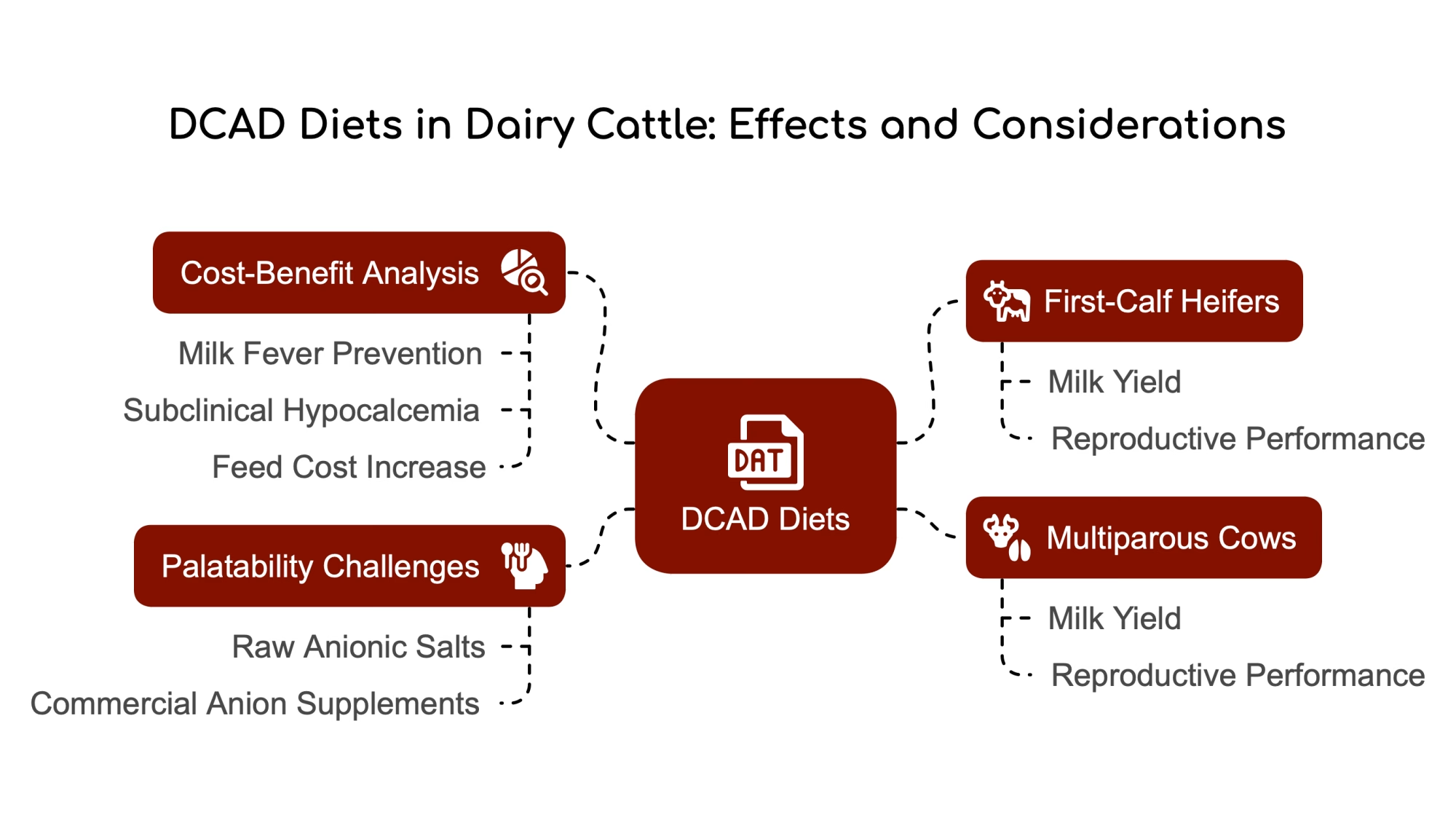
First-Calf Heifers: Why DCAD May Hurt, Not Help

Recent research has revealed that nulliparous cows (first-calf heifers) respond differently to negative DCAD diets than multiparous cows. Studies have found that reducing DCAD improved milk, fat-corrected milk, fat, and protein yields in multiparous cows; however, in nulliparous cows, reducing DCAD either did not affect milk and protein yields or reduced fat-corrected milk and fat yields.

Research has found that the reproductive performance of first-lactation heifers was impaired when fed negative DCAD diets, in contrast to their older herd counterparts. This research suggests that different DCAD recommendations may be needed for first-calf heifers, and negative DCAD diets are not recommended for this group.

Table 2: Parity-Specific Responses to Negative DCAD

OutcomeMultiparous CowsNulliparous Cows
Milk Yield Change+1.7-3.2 kg/dNo improvement/Reduction
Reproductive PerformanceImprovedImpaired
Recommended DCAD-8 to -12 meq/100g DMNeutral/Positive DCAD
Metabolic BenefitStrong calcium mobilizationMinimal benefit

Palatability Challenges: Keeping Feed Intake Strong

One of the main drawbacks of traditional negative DCAD programs is palatability issues with raw anionic salts, which can reduce feed intake. Decreased prepartum feed intake is an expected response when feeding negative DCAD diets due to induced metabolic acidosis. However, modern commercial anion supplements often have improved palatability compared to raw anionic salts.

Research has clarified that the depression in feed intake is not necessarily related to the inclusion of acidogenic products but is caused by the metabolic acidosis induced by the acidogenic diet.

The DCAD Cost-Benefit Analysis: Is It Worth It? (Spoiler: Yes!)

Decreasing the ration DCAD to achieve very low urine pH values adds unnecessary cost without additional benefits. When formulating from a base diet of +18 to a negative DCAD of -8, there is a cost associated with adding anionic supplements. Pushing beyond necessary levels (e.g., from -10 to -14) adds cost with no added benefit.

Given that first-lactation heifers may not benefit from negative DCAD diets and could experience reproductive impairment, selective use of negative DCAD diets only for multiparous cows could provide significant cost savings.

Table 3: Economic Impact of DCAD Implementation

FactorTypical ImpactEconomic Value
Milk Fever Prevention65-81% reduction$300/case avoided
Subclinical Hypocalcemia50% reduction$125/cow in lost production
Feed Cost Increase$0.65/cow/day
Milk Yield Increase1,800-3,200 lbs/lactation$360-640/cow (@$0.20/lb)
Reproductive Efficiency15% improvement$150/cow in reduced losses

Cutting-Edge DCAD Research: What’s New in Transition Cow Nutrition

Research on DCAD continues to evolve, with scientists exploring refinements and alternatives to traditional approaches.

Moderate vs. Extreme Acidification: Finding the Sweet Spot

Recent research has focused on moderate acidification (pH 6.0-7.0) and extreme acidification (pH below 6.0). The evidence suggests that moderate acidification provides the benefits of improved calcium metabolism without the risks of uncompensated metabolic acidosis that can occur with extreme acidification.

Studies have shown that regardless of the blood calcium threshold used to establish hypocalcemia, the incidence of hypocalcemia and related health problems was not decreased by making cows extremely acidotic.

Neutral DCAD: A Promising Alternative?

While negative DCAD diets remain the gold standard, some researchers are investigating whether a neutral DCAD (0 ± 30 mEq/kg) might offer benefits while reducing palatability issues. A cross-sectional study of eight dairy herds found that adjusting DCAD to neutral values reduced clinical parturient paresis (milk fever) occurrence by an average of 87% compared to baseline. This approach might improve ration palatability by requiring lower levels of acidogenic salts.

However, more research is needed to fully validate this approach, particularly its effects on subclinical hypocalcemia and feed intake.

Immune Function Boost: An Unexpected Benefit

Research has examined whether negative DCAD diets affect immune function. Studies assessing effects on blood neutrophil function found that negative DCAD diets can improve neutrophil function in parous cows, particularly the proportion of neutrophils with killing activity. This suggests that the metabolic benefits of negative DCAD feeding may extend to improved immune function.

Long-term Performance Effects: The Gift That Keeps Giving

Controlled trials on commercial dairy farms have confirmed that feeding negative DCAD diets improved milk production in multiparous cows, particularly in early lactation. This adds to the growing body of evidence supporting the long-term performance benefits of this approach beyond just transition health.

Bottom Line: DCAD Still Delivers Results When Done Right

Negative DCAD diets remain among the most well-researched and effective nutritional strategies for managing transition cows. The evidence strongly supports their use to prevent hypocalcemia, reduce other transition disorders, and improve subsequent lactation performance, particularly in multiparous cows.

The optimal implementation involves feeding a diet with DCAD in the range of -8 to -12 meq per 100 grams of dry matter during the last three weeks before calving, monitoring effectiveness through urine pH (targeting 6.0-6.8), and ensuring adequate levels of calcium, magnesium, and phosphorus.

Essential updates to traditional recommendations include:

  1. Negative DCAD diets should NOT be fed to first-lactation heifers, as they may impair reproductive performance in this group.
  2. Moderate acidification (urine pH 6.0-6.8) is preferable to extreme acidification (urine pH below 6.0).
  3. After calving, cows should transition to a positive DCAD diet (+35 to +45 meq/100g DM) to support milk production.
  4. While negative DCAD remains the gold standard, neutral DCAD (0 ± 30 mEq/kg) shows promise as an alternative that may improve palatability while still reducing milk fever incidence.

For dairy producers seeking to optimize transition cow health and performance, implementing a well-designed negative DCAD program for multiparous cows represents a science-backed investment in cow health and farm profitability.

Key Questions for Your Nutritionist:

  • What is the current DCAD level in our transition cow diet?
  • Are we monitoring urine pH regularly to confirm our DCAD strategy is working?
  • Should we consider separating first-calf heifers from our negative DCAD program?
  • What is the cost-benefit analysis of our current DCAD implementation?

Learn more:

Join the Revolution!

Join over 30,000 successful dairy professionals who rely on Bullvine Daily for their competitive edge. Delivered directly to your inbox each week, our exclusive industry insights help you make smarter decisions while saving precious hours every week. Never miss critical updates on milk production trends, breakthrough technologies, and profit-boosting strategies that top producers are already implementing. Subscribe now to transform your dairy operation’s efficiency and profitability—your future success is just one click away.

NewsSubscribe
First
Last
Consent

Rethinking Cow Health: How Immune Activation Shapes Transition Dairy Cow Performance

Learn how immune activation affects your transition cows. Are outdated ideas limiting your farm’s success? Find fresh insights now.

Do the problems transition cows face come down to just high NEFA levels and low calcium? Think again. It’s time to peel back the layers of entrenched beliefs and shine a light on the hidden puppet master—immune activation. In simpler terms, immune activation is when a cow’s immune system becomes more active, affecting its health and dairy farm profits. Historically overlooked, the immune system’s role during the crucial transition period is increasingly recognized as central to a cow’s health and productivity. When a cow’s immune system is activated, it influences metabolic pathways in ways vital for understanding how we should manage their well-being and output. So, isn’t it time we focus on what truly affects our bottom line?

Unraveling the Transition Tango: Beyond Fat and Calcium 

The transition period is crucial for dairy cows, serving as the bridge from gestation to lactation. It involves significant physiological and metabolic shifts as the cow’s body prepares for milk production, demanding substantial changes in nutrient allocation and hormonal adjustments. These alterations are vital for the onset of lactation and challenge the cow’s metabolic stability, underscoring the importance of this period. 

Traditionally, the spotlight has been on how effectively a cow can manage the mobilization of adipose tissue. As the cow prepares to lactate, her energy needs surge. If feed intake does not keep pace, she begins to tap into her fat stores, releasing non-esterified fatty acids (NEFA) into her bloodstream. These NEFA are crucial as they provide energy, but excessive levels can lead to metabolic disorders like ketosis. 

Then, there’s the concern of hypocalcemia or low blood calcium levels. Calcium is essential for milk production, and the onset of lactation can drop blood calcium levels significantly, leading to what is commonly known as milk fever. A cow’s ability to quickly adapt her calcium metabolism—through dietary adjustments and internal reserves—is critical to sidestepping this disorder and maintaining her health and output. 

The combined pressures of adipose mobilization and calcium management make this period precarious. While these traditional views have long shaped our understanding of transition cow health, they are just pieces of a much larger puzzle. This puzzle includes immune activation and its impact on transition success, offering new angles on addressing longstanding daily challenges. For instance, understanding immune activation could lead to changes in feed management or immune-boosting supplements.

Time to Rethink the Transition Woes? 

Have you ever blamed increased NEFA, hyperketonemia, and hypocalcemia for all your cows’ woes during the transition period? It’s a belief that’s been drummed into us for ages, like a troublesome melody that gets stuck in your head. However, a thought might make you pause momentarily: What if these metabolic changes are not the villains? 

Now, before you dismiss this idea, let’s examine it a little more closely. The industry has been convinced that these factors are the big bads disrupting cow health for years. They’ve been portrayed as the root cause of many periparturient problems, keeping cows from performing their best. But what if we’ve been looking at this all wrong? 

Consider this—these changes might be part of a cow’s regular metabolic adjustments. They could be how a healthy cow prepares to handle the incredible demands of milk production. Instead of seeing them purely as the causes of disease, what if we viewed them as signs, markers telling us that a cow is dealing with its new physiological state? 

Here is another intriguing angle: Could what we see as a problematic result from immune activation? This is where it gets fascinating. Immune responses and the resulting inflammation are natural parts of a cow’s transition. They can profoundly affect a cow’s metabolism. So, when your cows exhibit these changes, it might reflect underlying immune activity more than anything else. 

Consider this: what if high NEFA, elevated ketones, and low calcium are just the tip of the iceberg, representing deeper, natural processes at work? This thought should not just make you pause, but it should also encourage you to rethink your strategies. This does not just shake up a few conventional wisdom points; it fundamentally questions how we understand and, importantly, manage transition cow health, empowering you to take a more proactive role in managing your herds. 

The Symphony of Bovine Biology: Embracing Inflammation in Dairy Cows

Dairy cows are not just milk machines but complex creatures dealing with an astoundingly dynamic biological ecosystem, especially during transition. Immune activation and inflammation are not anomalies during this time—they are natural components of a cow’s biology. If this surprises you, it might be due to the traditional tendency to view inflammation with apprehension. But in the dairy world, a degree of inflammation is as regular as sunrise in the morning, highlighting the naturalness of these processes. 

So, where does this immune activation originate? During the transition, the cow’s body undergoes a massive shift, akin to a biological symphony, with inflammation playing a significant role in this grand composition. The origins of immune activation are closely associated with critical physiological structures, namely, the mammary gland and the gastrointestinal tract. 

The mammary gland, quite understandably, takes center stage. As it prepares for milk production, tissue remodeling needs cleanup. Guess who is called in for the job? The immune response! Not only do immune cells infiltrate to manage this reorganization, but they also guard against microbial interlopers that could lead to infections. This homeostatic inflammation ensures the body’s symphony continues without an unwanted encore from pathogenic bacteria. 

Down south in the digestive arena, the gastrointestinal tract doubles as a nutrient absorption hub and a pathogen barricade. During the transition, stressors or diet changes can upset the delicate balance, allowing some of the wrong bacteria to escape and cause trouble. However, the immune system is like an old-time sheriff. It responds to the invasion, sometimes with guns blazing, in the form of inflammation. 

While it might not be all sunshine and rainbows for the cow, this inflammatory response is part of the survival toolkit. It’s about maintaining and adjusting equilibrium during one of the most challenging times for these bovines. Understanding this can shift how we manage our herds, viewing a certain level of inflammation not as a foe but as an ally doing its job—ensuring cows transition smoothly into their milk-producing destiny.

Maestro of Metabolism: Dancing to the Immune System’s Beat

As dairy farmers, we are all too familiar with the dazzling dance of metabolic and mineral adjustments in our beloved bovines. Immune activation is like the maestro orchestrating unexpected beats in this complex waltz. When the immune system kicks into high gear, it pulls glucose from the usual players and redirects it toward its mission-critical operations. This redirected glucose finds itself a new home in leukocytes, which need energy to fight off any lurking pathogens. 

This glucose grab impacts feed intake, too. Immune activation tends to curb appetite, leading to reduced feed intake. It is a universal response across animal species, including our dairy cows. You may notice your cows turning their noses up at the feed trough, which can set off a cascade of energy balance issues if not appropriately managed. 

Now, let us talk about calcium. Immune activation induces hypocalcemia—that frustrating drop in circulating calcium levels—which can hamper cow health if it persists unchecked. However, here is the kicker: cows display remarkable metabolic flexibility amid this mineral upheaval. They leverage this flexibility to prioritize what they do best—producing milk. 

How do they do it? By smartly redirecting energy resources, mainly glucose, towards the mammary glands, cows ensure milk synthesis remains a top priority. Insulin resistance in tissues like muscle and adipose allows cows to spare glucose, channeling it directly into milk production. It’s a biological tango in which every step seems perfectly choreographed to maintain the milk flow, even when resources are scarce. 

This capacity for metabolic flexibility exemplifies how adept cows are at balancing the demands of immune response and milk production. So, while immune activation may disrupt the usual metabolic rhythm, cows are hardwired to navigate these challenges with a grace that keeps milk synthesis front and center.

Rethinking the Sacred Cows: Are NEFA, Ketones, and Calcium the Real Culprits? 

It is time to highlight the traditional thinking linking NEFA, ketones, and calcium with poor health outcomes in our beloved dairy cows. Over the years, these associations have become agricultural gospel, often regarded as direct culprits behind metabolic disorders during the transition period. But let’s take a step back and reconsider: Are these components truly causative, or have we been placing blame without sufficient evidence? 

Most research on these connections relies on observational studies, where correlation masquerades as causation. However, the flaw is that these metabolites are not proven to be the direct agents of harm. Sure, we see them arise when health falters, yet assuming they are the cause might be akin to blaming firefighters for starting fires because they are seen at the scene. 

Consider immune activation-induced hypophagia. This decrease in appetite is mainly responsible for the rise in NEFA and ketones. When the immune system kicks into gear, it demands a bigger slice of the glucose pie. As glucose powers immune responses, less is left for the cow’s maintenance, let alone milk production. The animal compensates for this shortfall by mobilizing adipose tissue, releasing NEFA, and converting them into ketones—the body’s backup energy currency. 

In this dance, calcium does not escape unscathed, either. Immune signals can disrupt calcium homeostasis, leading to what is often diagnosed as hypocalcemia. However, pushing more calcium without addressing the immune signal can be like mopping water while the tap is still running. 

Thus, what we’re witnessing isn’t the harmful effects of these metabolites per se but rather the footprint of a more complex process: the immune system commandeering resources to battle pathogens or heal wounds. It’s time we reconsider these ‘symptoms’ not as causes of disease but as clues pointing toward an underlying immune activation requiring our attention.

Beneath the Surface: Understanding Inflammation’s Hold on Transition Cows 

Transition dairy cows face numerous challenges, with pathogenic inflammation playing a critical role in their health dynamics. Let us explore the primary sources: 

Uterus 

Following parturition, the uterus often becomes vulnerable to bacterial infections. This is due to the natural dilation during childbirth, which can compromise anatomical barriers like the cervix. When the uterine wall is injured or compromised, it releases signals that attract an inflammation-inducing response. Bacteria that exploit this breach drive systemic inflammation, infiltrating the tissues and triggering an immune response. This initial local reaction can ripple throughout the body. 

Mammary Gland 

The mammary gland is another battleground for inflammation. Dry-off and early lactation are periods of heightened susceptibility to infections, particularly mastitis. Bacterial intrusions, primarily from gram-negative bacteria, activate an inflammatory cascade. Inflammation disrupts local tissue and, through mechanisms like the breakdown of the blood-milk barrier, allows inflammatory mediators to spread, potentially reaching systemic levels. 

Gastrointestinal Tract 

The gastrointestinal tract, a key player in inflammation, houses many bacteria. When the gut barrier is weakened, as often during stress or poor nutrition, microorganisms or their components can enter systemic circulation. This results in a robust immune reaction that seeks to neutralize these foreign entities, but often at the cost of triggering systemic inflammation. 

When combined, these sources significantly contribute to systemic inflammation in transition cows. The body’s attempt to respond to local threats can become a full-body event, impacting not just the immediate areas of infection but overall health and productivity. Addressing these sources can lead to better management and outcomes for transition cows. 

Diving into the Depths of Immunometabolism and the Warburg Effect

Let us delve into the heart of immunometabolism and how immune activation leads to a radical shift in a cow’s metabolism, spotlighting a fascinating phenomenon known as the “Warburg effect.” You might have heard of this concept in the context of rapidly proliferating cancer cells—it describes a scenario where cells pivot from their usual oxygen-powered energy production to relying heavily on aerobic glycolysis. This metabolic switch is employed by immune cells, including leukocytes, as they prepare for the front line in the battle against pathogens. 

In a healthy animal, most cells typically bank on combining glycolysis, the tricarboxylic acid (TCA) cycle, and oxidative phosphorylation to churn out energy efficiently, producing roughly 36 ATP molecules per glucose molecule. However, when immune cells are activated, like during infection, they increase their glucose consumption manifold despite oxygen, triggering the Warburg effect. Why? It speeds up the energy supply chain—allowing a quick response—and funnels intermediates into pathways that produce the building blocks necessary for cell growth and proliferation, such as nucleotides and amino acids

Now, you may wonder, what is the ripple effect of this metabolic revamp at a systemic level? Essentially, the entire body pitches in to support this immune skirmish. This redirection of glucose towards supporting immune activation, away from other tissues, like muscle and adipose, affects various bodily functions. The cow’s metabolism is fundamentally altered. Even milk synthesis takes a backseat as the cow’s physiology maneuvers to prioritize glucose for immune use, just as a nation might divert resources to defense during wartime. 

These metabolic reprogramming strategies underscore how the immune system commandeers the cow’s myriad physiological processes, illustrating the profound interconnectedness within dairy cows during challenging periods such as transitioning. And here’s a nugget of thought: Doesn’t this reframing suggest we should consider the metabolic shifts not as origins of the transition woes but as essential elements of the cow’s adaptive survival blueprint? We’ve got to wonder—are our cows simply coping as nature intended?

When Immune Activation Steals the Spotlight: Navigating Dairy Cow Dynamics

Immune activation takes center stage in the transition period, and its effects on cow performance are profound. When the immune system is in full swing, it places hefty demands on the cow’s resources, leading to a cascade of effects ripple through several key areas. 

Feed Intake 

Inflammation triggers a marked reduction in feed intake. While this anorexic state may seem counterproductive, it is a preserved evolutionary response to infection. The decrease in consumption pre-calving exacerbates the negative energy balance that cows experience, precipitating further issues with the energy supply required for milk production and overall metabolism. 

Fatty Liver 

The impact of immune activation on the liver is also significant. Inflammatory cytokines disrupt hepatic lipid metabolism, facilitating the accumulation of triglycerides and leading to the notorious fatty liver condition. This condition does not just stem from excessive fat being delivered to the liver; it is a compounded issue in which inflammation alters the liver’s metabolic processes, exacerbating fat buildup. 

Milk Fever 

The connection between inflammation and milk fever is quite striking. During periods of immune challenge, calcium homeostasis is disrupted, leading to hypocalcemia. Although this calcium drop is a protective strategy the body employs to cope with pathogens, it can precipitate milk fever if uncontrolled. Traditionally, milk fever was attributed solely to dietary shortcomings, but it’s becoming apparent that immune responses play a crucial role. 

Reproductive Performance

Lastly, reproductive efficiency does not remain untouched by immune activation. Both local and systemic inflammations can impede reproductive processes. For example, retained placenta, often exacerbated by inadequate immune responses, can delay uterine clearance and fertility. Furthermore, inflammation might directly impact hormonal balances and reproductive organ function, delaying return to estrus and affecting overall reproductive outcomes. 

In conclusion, the invisible hand of inflammation has a firm grip on various aspects of dairy cow performance. Beyond the physiological adjustments needed to tackle these immune challenges, inflammation underscores the complexity of biological responses during transition. By understanding and managing inflammation, we can refine these outcomes better, ensuring healthier and more productive dairy cows. 

NSAIDs: The Double-Edged Sword in Transition Cow Management 

When pondering ways to help our dairy cows through the challenging transition period, going straight for interventions like nonsteroidal anti-inflammatory drugs (NSAID) is tempting. They can offer a quick fix for inflammation, which can sometimes be complicated. The use of NSAIDs has shown mixed results. On one hand, they can boost milk yield and offer short-term relief (Farney et al., 2013bCarpenter et al., 2016). Conversely, too much inflammation can lead to health issues like fever, stillbirth, and retained placenta (Schwartz et al., 2009Newby et al., 2013). So, what is the ideal approach? 

Managing inflammation in transition cows is like walking a tightrope. Too little, and you risk letting diseases take hold. Too much, and you might push your cows towards other health problems. It’s about finding that sweet spot where inflammation aids in healing and adaptation without becoming destructive. This balance might change based on the cow’s parity or the timing of intervention, complicating the matter further (Farney et al., 2013bSpencer et al., 2020). 

A tailored approach focusing on preventive measures might be the key here. Rather than jumping to treatment, consider strategies that boost overall cow health and prevent immune activation in the first place. This might include better management practices, nutritional adjustments, and ensuring a low-stress environment. After all, prevention beats cure, especially when managing something as complex and sensitive as a cow’s immune system. By striking the right balance, you’re not just supporting the immediate health of your cows but investing in their long-term productivity and well-being.

The Bottom Line

As we navigate the complex matrix of transition cow health and performance, it is clear that our traditional paradigms might need revision. The dogmas that have long guided our strategies—focusing heavily on NEFA, ketones, and calcium—may not be the complete picture. Instead, immune activation and the consequent inflammatory responses play a significant role in the challenges cows face during this critical period. 

Understanding this new perspective helps us appreciate the intricate dance of metabolism and immunity. It encourages us to consider alternative approaches to enhancing cow welfare and farm profitability. As we pivot from old beliefs, we have a vast opportunity to improve our practices. 

We invite you to share your thoughts and experiences. How has this information shifted your understanding of transition cow health? Comment below with your insights, and let us embark on this journey of discovery together. Feel free to share this article with your colleagues and peers who might benefit from a fresh perspective on this pivotal topic in dairy farming. 

Key Takeaways:

  • The health and performance of transition cows can be heavily influenced by immune activation, which challenges traditional notions that focus primarily on fat and calcium management.
  • Inflammation and immune responses are now recognized as everyday aspects of dairy cow biology during the transition period.
  • These immune processes can impact feed intake, metabolic hormone levels, and energy balance, all of which play a significant role in cow health and milk production.
  • While high levels of nonesterified fatty acids (NEFA), ketones, and hypocalcemia are associated with transition cow disorders, they might not be the direct cause but indicators of underlying immune activities.
  • Rethinking strategies to address these issues involves considering how inflammation and immune activation might contribute to metabolic disruptions.
  • Researchers suggest that focusing efforts on reducing immune challenges and inflammatory stimuli may improve transition cow health and farm profitability.
  • < UNK> Using non-steroidal anti-inflammatory drugs (NSAIDs) in managing inflammation may provide benefits, but the strategy requires careful consideration to avoid adverse side effects.
  • A comprehensive understanding of the complexity of transition cow biology necessitates re-evaluating traditional management practices in favor of approaches that integrate immune health.
  • Continued research is essential to explore alternative pathways and management strategies that account for immune activation’s role in transition cow outcomes.

Summary:

The intricate dance of dairy cows transitioning from dry to lactating phases extends beyond managing fat and calcium levels. Traditionally, the focus has been on controlling adipose tissue mobilization and hypocalcemia to combat transition issues such as ketosis and milk fever. Yet, new insights suggest that immune activation is pivotal in shaping a cow’s health and productivity. This overlooked player possibly orchestrates the metabolic and calcium balance, challenging long-held beliefs. Understanding these immune-driven dynamics is crucial with the shift from gestation to lactation involving extensive physiological changes. Embracing this knowledge could lead to strategic changes in feed management or the introduction of immune-boosting supplements, offering a fresh perspective in tackling health challenges during critical transition periods.

Learn more:

Join the Revolution!

Bullvine Daily is your essential e-zine for staying ahead in the dairy industry. With over 30,000 subscribers, we bring you the week’s top news, helping you manage tasks efficiently. Stay informed about milk production, tech adoption, and more, so you can concentrate on your dairy operations. 

NewsSubscribe
First
Last
Consent

Send this to a friend