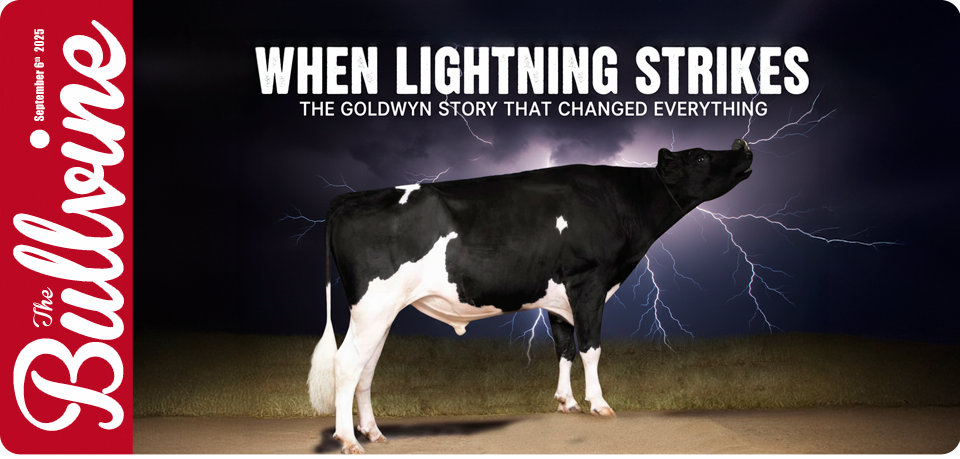





How Braedale Goldwyn rewrote the rules of Holstein breeding with genetics, show dominance, and a market-changing legacy.

You know that feeling when you’re walking through a barn and spot a calf that just… has something special about it? Most of the time, you’re wrong, honestly. But every once in a while…
January 3rd, 2000. Cumberland, Ontario. Terry Beaton is watching a newborn James calf get its legs beneath it in the maternity pen. Just another planned mating, right? Except this gangly calf would become Braedale Goldwyn—and honestly, I’m not sure any of us realized we were witnessing the start of a genetic revolution.
The Foundation Nobody Saw Coming
Here’s what I’ve always found fascinating about Terry Beaton—the guy understood maternal lines when most of us were still chasing flashy sires. Back in ’85, when computer indexes were still a newfangled thing and half the industry didn’t trust them, Terry was already thinking generations ahead.
Picture this: November 1985, Sunnylodge Farms dispersal. You know how those sales go—everybody’s buzzing, coffee’s flowing, and the really good cattle are bringing serious money. The sale averaged $6,839 per head (which was real money back then), and the top lot was this first-lactation heifer, Sunnylodge Elevation Jan, VG-87-13*.
Now Terry didn’t just bid on her and walk away. After the sale, he tracks down Carl Smith—the original owner—and proposes a partnership. They’d flush her extensively and split the embryos. I mean, think about that for a minute. Most guys buy a cow, milk her out, maybe get excited about a daughter or two. Terry’s already planning a dynasty.
That single decision—man, talk about return on investment.
Building Something That Lasts
What’s happening with the Jan family over the next fifteen years is basically a masterclass in line breeding done right. And I say “done right” because we’ve all seen line breeding go sideways—fertility issues, weird recessive traits popping up, the whole nine yards.
But Terry had this knack for stacking the generations without painting himself into a corner. Jan’s Chief Mark daughter, Sunnylodge Chief Vick, earned 31 brood cow stars. Solid numbers—the kind that pay bills and keep bankers happy. Then Vick to Aerostar produces Moonriver, who honestly didn’t look like much herself (GP-83, sold to Japan as a youngster), but left behind this heifer calf that would change everything.

That calf was Braedale Gypsy Grand, VG-88-37*. And folks, this cow was special. Holstein Canada Cow of the Year in 2003, but more importantly, she was what we call a “genetic locomotive”—a rare female that just cranks out excellent offspring. Her sons were already topping the LPI charts before anybody had heard of Goldwyn: Goodluck at #4, Freelance at #2, plus Spy, Rainmaker, and others.

The family was already a brand. That’s what blows my mind about this whole story.
The Storm Cross That Set Everything in Motion
Then comes the mating that made it all worthwhile—Gypsy Grand to Maughlin Storm. On paper, it looked like another solid breeding decision. Storm was decent, nothing that would make Holstein International headlines. But when that mating produced twins—Baler Twine and Second Cut—the industry was about to get a genetics lesson we’re still talking about.

Here’s where it gets wild… Years later, when genomic testing became available, researchers discovered that these two cows were identical twins from a split embryo. Both scored VG-86 in the first lactation with nearly identical production. Both became legendary brood cows. It’s like hitting the genetic lottery twice with the same ticket.
And get this—Baler Twine stayed at Braedale and produced Goldwyn, while Second Cut went to Gillette and became the dam of five Class Extra sires. Same genes, different locations, both producing champions. That’s the kind of genetic consistency you build entire programs around.
The Paternal Power Play: Shoremar James
While the Braedale maternal line is rightly celebrated as a masterpiece of breeding, the choice of sire that ultimately produced Goldwyn was no accident. The other half of the pedigree came from another Canadian dynasty, the Shore family, whose Shoremar prefix represented a century of breeding for balanced, long-lasting, profitable cattle.
The sire, Shoremar James, was a product of this exact philosophy. Sired by the legendary MARK CJ GILBROOK GRAND, his real power came from his dam, STELBRO JENINE AEROSTAR, a monumental brood cow in her own right. The Shores, much like Terry Beaton, built their success on the back of incredible cow families, as detailed in The Bullvine’s feature, When Giants Fall Silent: The Shore Dynasty’s Century of Shaping Holstein Excellence.

So, what did James bring to the table? He provided a brilliant outcross of proven genetics known for dairyness, frame, and functional type. Mating him to the line-bred power of Baler Twine was a strategic masterstroke. It combined Beaton’s concentrated genetic engine with the Shore family’s legacy of durability and balance. This wasn’t just a mating; it was a fusion of two of Canada’s greatest breeding philosophies.
When Everything Changed Overnight
February 2005. I remember checking proofs that morning, and honestly? Most moves are predictable. Bull jumps five spots, drops three, whatever. But when a bull rockets from #82 to #5 LPI in a single run—that’s when you stop drinking coffee and start making phone calls.
According to Canadian Dairy Network data, Goldwyn’s jump was unprecedented—77 positions in one proof run. By May 2006, he’d climbed to #3 LPI. Those aren’t incremental improvements; that’s a genetic explosion.
I can picture Terry in that Cumberland farmhouse, probably still in work clothes from morning milking, staring at his computer screen. After decades of careful breeding, staying patient while others chased genetic fads, suddenly he’s got a bull that’s not just good—he’s potentially game-changing.
The phone must’ve started ringing that morning and not stopped for months.
The Show Ring Revolution

“What made Goldwyn different wasn’t just the numbers—though those were impressive enough. Walk into any barn with his daughters, and you could spot them from the feed bunk. Those udders weren’t just good; they were architectural marvels.”
World Dairy Expo 2008 was the moment everything crystallized. When they announced Premier Sire and called Goldwyn’s name, ending Durham’s long reign… you had to be there. The tension in that Coliseum was incredible. Durham had been the gold standard—consistent, profitable daughters that made sense in commercial herds across Wisconsin and beyond.
But when Goldwyn’s daughters started walking into that ring, something shifted. The mammary perfection, the dairy strength, the sheer presence—it was like watching a new breed standard emerge in real time. Holstein Canada records show he eventually became the first sire in history to produce over 1,000 daughters classified Excellent—a milestone that redefined what was possible.

By 2013, at World Dairy Expo, Goldwyn sired nearly 25% of the entire Holstein show, with 47 daughters placing in the top 10 of their classes. That level of single-sire dominance is virtually unparalleled.

The Economic Juggernaut
But here’s where the story gets really interesting from a business perspective. The Walrus magazine documented how Goldwyn’s semen went from standard AI product to investment commodity. By 2006, straws were $100 each—premium pricing that reflected serious market confidence. After his death in 2008, secondary market prices soared to between $800 and $1,000 per straw.
Think about that for a minute. A thousand dollars for a single breeding. That’s not just genetic merit; that’s treating bull semen like blue-chip stock.

His daughters consistently topped sales worldwide. Eastside Lewisdale Gold Missy’s $1.2 million sale in 2009 made global headlines and established new benchmarks for the valuation of elite dairy females. At the 2008 World Classic Sale, a young Goldwyn daughter commanded $97,000. This pattern repeated at auctions globally—”Goldwyn” in a pedigree became a powerful marketing tool that reliably added value.
The Complex Reality We’re Still Managing

Now here’s where we need to talk honestly about consequences, because Goldwyn’s success created challenges we’re still dealing with. Recent genomic analysis reveals why he was such a dominant sire of daughters but not necessarily sons—he passed significantly more genetic merit to daughters (65%) than sons (54%). It’s like the genetic recipe needed that maternal contribution to really shine.
This explains why his sons, such as Atwood, Dempsey, Lauthority, and Goldchip, became popular but never achieved the revolutionary impact he did. His lasting influence is arguably as a maternal grandsire—that “Goldwyn” in the second generation remains a stamp of quality.
But we can’t ignore the genetic concentration issue. By 2008, Goldwyn and two other popular sires accounted for nearly 12% of all registered Holstein females in Canada. That level of concentration raises valid concerns about the long-term health of the breed.
More challenging is his carrier status for Cholesterol Deficiency (HCD). Cornell University research confirmed that this recessive disorder traces back to Maughlin Storm through the APOB gene disruption. Because Goldwyn was used so extensively before the condition was identified, he became a primary vector for distributing this haplotype throughout the global Holstein population. Current mating programs have to account for HCD management—something we wouldn’t need with more moderate usage.

The Paradox of Perfection
Perhaps the most fascinating aspect of Goldwyn’s legacy is how he perfected an archetype just as the industry began questioning its commercial viability. He modernized the show ring, creating the ultimate tall, elegant, angular cow with flawless mammary systems.
But here’s where it gets complicated… Industry research has painted a challenging picture for the tall-stature cow he epitomized. The Bullvine’s analysis of feed efficiency studies reveals that taller cows typically consume 10-15% more feed per pound of body weight, although results vary considerably by management system. That translates to real costs in today’s volatile feed markets.
Data from breeding organizations indicate negative correlations between stature and fertility, with taller cows requiring more frequent calving interventions. Most significantly, research indicates very tall cows may average fewer lactations compared to moderate-sized counterparts, though this varies enormously by region and management practices.
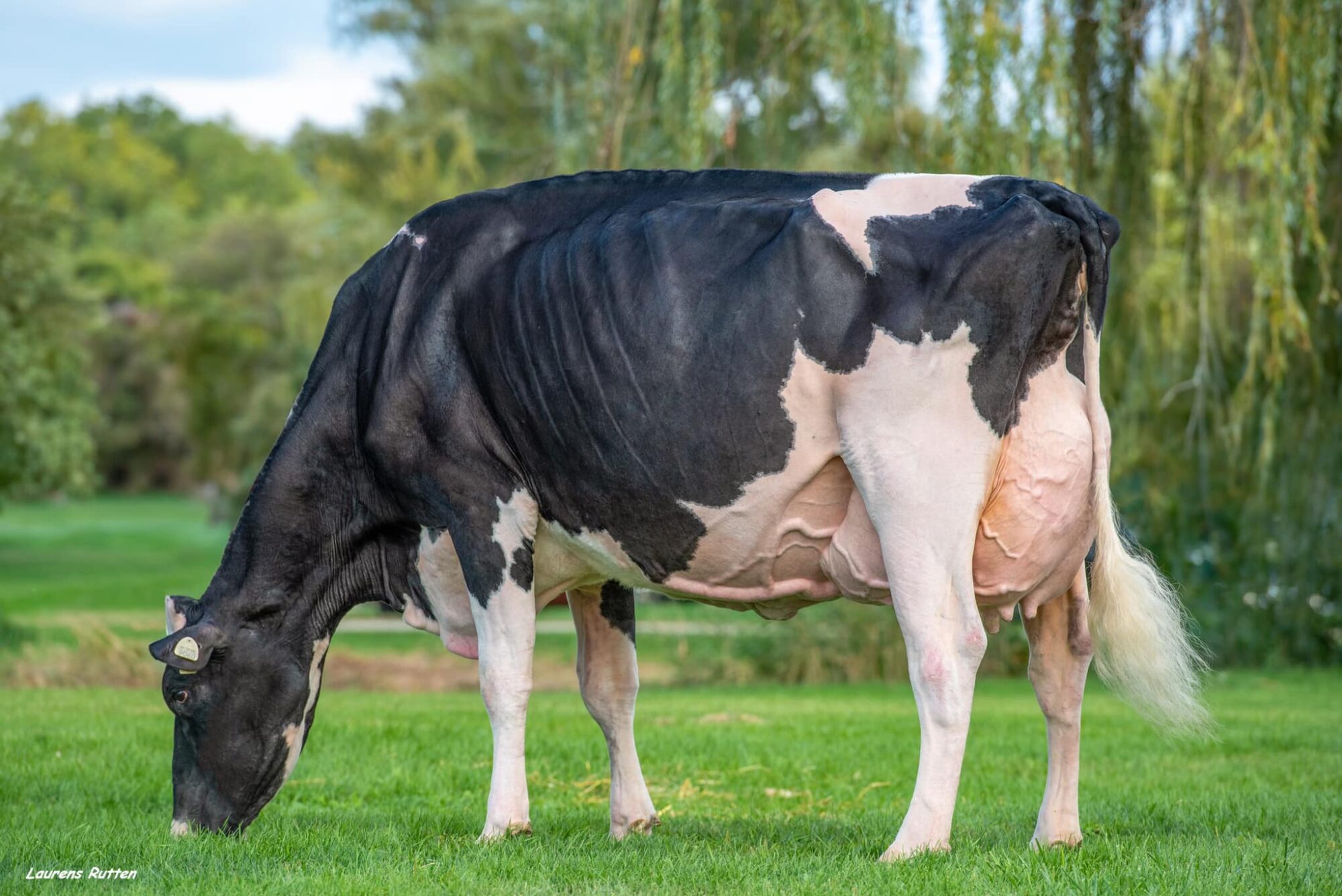
Many Goldwyn daughters achieved exceptional longevity in well-managed herds—documented cases of cows lasting five or more lactations compared to industry averages around 2.8. But that’s the key phrase: “well-managed herds.” Results depend heavily on nutrition, housing, health protocols, and regional factors.

What This Means for Today’s Breeding Decisions
The interesting thing about Goldwyn’s legacy is how it’s shaped our genomic era approach. These days, we’re looking for bulls that can deliver the complete package—improve components, enhance longevity, and still sire daughters that look the part. That’s essentially the Goldwyn standard applied with better tools.
Genomic testing has given us capabilities Terry never had. We can identify genetic potential in heifers at six months, predict breeding outcomes with 70% reliability, and manage recessive disorders before they become widespread problems. It’s like having GPS for genetic navigation instead of relying on a compass and intuition.
What I’m seeing on progressive farms is this fascinating combination of old-school maternal line development with cutting-edge genomic tools. They’re using genetic testing to identify superior young females earlier, then building programs around proven cow families—exactly like Terry did, but with better data and more precise management.
In today’s market conditions—volatile feed costs, tight margins, labor challenges—those longevity traits become survival characteristics. A cow that milks five lactations instead of three isn’t just a breeding achievement; it’s a business necessity.
The Real Takeaway
Here’s what the Goldwyn story really teaches us: great breeding isn’t about hitting jackpots; it’s about creating systems that consistently produce excellence. Whether you’re milking 80 cows in a tie-stall barn or managing 8,000 in a rotary parlor, the principles remain constant—invest in proven families, make decisions based on long-term goals, and understand that genetic progress takes time.
The genomic revolution has given us incredible tools for managing diversity while maintaining focus. We can identify carrier status for disorders before they spread, balance genetic progress with sustainability metrics that weren’t measurable in Terry’s era, and optimize breeding decisions with unprecedented precision.
But the fundamental lesson endures: depth beats flash every time. The best breeding decisions often feel like calculated risks, but when they’re built on proven genetics and sound principles, they work out.
Every time I see a perfectly uddered cow with that distinctive Goldwyn look walking through a parlor—whether it’s in Wisconsin, Ontario, California, or anywhere else dairy cows make a living—I’m reminded of Terry’s courage in that sale barn in 1985. Sometimes lightning does strike… but it helps when you’ve spent decades building the right conditions.
That’s the kind of breeding that built the Goldwyn legacy. And that’s the kind of breeding that will build the next one—whatever form it takes in our rapidly evolving industry, where sustainability, profitability, and genetic excellence are becoming inseparable.
KEY TAKEAWAYS:
- Braedale Goldwyn transformed Holstein breeding with unmatched genetics and show ring dominance, proving you don’t have to choose between production and type
- His success was built on a carefully crafted maternal lineage spanning decades, demonstrating the power of patient, strategic cow family development
- Goldwyn’s progeny commanded record prices and reshaped the economics of dairy genetics, with semen reaching $1,000 per straw and daughters selling for millions
- High usage led to genetic concentration and challenges like Cholesterol Deficiency (HCD), highlighting the risks of over-relying on popular sires
- Today, breeders balance show-ring excellence with economic viability and sustainability, applying Goldwyn’s lessons through modern genomic tools.
EXECUTIVE SUMMARY:
This article traces the remarkable journey of Braedale Goldwyn, a Holstein sire whose genetic influence transformed the dairy industry. Born in 2000 from a carefully planned mating within a powerful maternal lineage spanning decades, Goldwyn combined elite genetics with dominant show-ring success like no bull before him. His impact sparked an unparalleled number of daughters excelling in both type and production, driving record-breaking semen sales and auction prices that redefined the economics of dairy genetics. While his widespread dominance raised serious concerns over genetic diversity and the spread of Cholesterol Deficiency (HCD), it also catalyzed a crucial shift towards more balanced breeding programs emphasizing long-term sustainability. Today, his legacy serves as both an inspiration and a cautionary tale, demonstrating how patient maternal line development can create generational impact while highlighting the need for responsible genetic management. This comprehensive feature artfully blends history, science, and industry insights, offering valuable lessons for modern breeders navigating the evolving landscape of genomic-era dairy genetics.
Learn More:
- The Ultimate Guide to Dairy Sire Selection – This guide provides a step-by-step framework for making smarter sire choices in the genomic era. It offers practical strategies to balance type, production, and health traits, helping you build a more profitable and resilient herd.
- The 2025 Dairy Genetics Marketplace: Where is the Money? – This analysis breaks down the key economic drivers shaping today’s dairy genetics market. It reveals where the real ROI is, helping you align your long-term breeding strategy with current market trends for maximum financial return.
- Beyond Genomics: Is Gene Editing the Next Great Leap for Dairy Cattle? – Explore the next frontier in dairy genetics. This article demystifies gene editing technology, outlining its potential to accelerate genetic progress, improve animal health, and create a more sustainable and profitable dairy operation in the coming decade.
 Join the Revolution!
 Join the Revolution!
Join over 30,000 successful dairy professionals who rely on Bullvine Weekly for their competitive edge. Delivered directly to your inbox each week, our exclusive industry insights help you make smarter decisions while saving precious hours every week. Never miss critical updates on milk production trends, breakthrough technologies, and profit-boosting strategies that top producers are already implementing. Subscribe now to transform your dairy operation’s efficiency and profitability—your future success is just one click away.