
While you optimize feed efficiency for $21/cwt milk, smart operators captured $1.26B in agritourism revenue—here’s your July 4th playbook
You probably don’t think of your 377-cow dairy as a tourist destination. That’s the current US average herd size as of 2024, up 5.3% from the previous year, and most operators at this scale are too busy managing feed costs, labor shortages, and volatile milk prices to consider that their operation could be generating substantial revenue from visitors eager to experience authentic American agriculture.
Here’s what’s keeping you awake at night: commodity market volatility is crushing your profit margins. With April 2025 all-milk prices at $21.00/cwt—down from $22.00 in March—your operation faces the same pressure as managing a lactation curve where peak milk hits too early and drops too fast. Meanwhile, farm operators paid hired workers an average of $19.52 per hour during April 2025, and you’re competing against industrial-scale operations that seem to have every advantage.
However, here’s the reality you’re missing: while you’re fighting for pennies per hundredweight in commodity markets, patriotic dairy farms across America are building six-figure agritourism businesses that insulate them from market volatility while creating powerful community connections that directly translate to bottom-line results.
The good news for dairy operations specifically? USDA forecasts average net cash farm income for dairy farm businesses at $743,900 for 2025—a 25% increase from 2024, making this the perfect time to invest in diversification strategies that build on this improved financial foundation.

The Conventional Wisdom That’s Killing Your Profits
Here’s the dangerous conventional thinking that’s keeping most dairy operations trapped in commodity pricing cycles: agritourism is viewed as a “nice-to-have” side business rather than an essential diversification strategy for financial survival.
This outdated mindset stems from decades of the dairy industry’s primary focus on production efficiency. The traditional approach suggests maximizing milk per cow, minimizing costs per hundredweight, and letting processors worry about marketing. However, this commodity-focused thinking is precisely what makes operations vulnerable to market forces that are completely beyond their control.
Consider the stark reality: net farm income is forecast at $180.1 billion for 2025, representing a 29.5% increase, driven primarily by a $33.1 billion surge in government disaster payments, rather than improved market fundamentals. When your business model depends on disaster relief to remain profitable, it’s time to rethink your revenue strategy fundamentally.
The evidence against commodity-only thinking is overwhelming. According to peer-reviewed research published in Sustainability, agritourism operations exhibit positive associations with increased profitability, based on factors such as operator experience, farm scale, on-farm product sales, and event and entertainment offerings. Yet, most dairy operations continue to cling to the false belief that “real farmers” focus only on production.
This mindset ignores the fundamental economic reality that successful businesses create multiple revenue streams while building brand equity that commands premium pricing.

The Skeptical Reality: Why Most Agritourism Ventures Struggle
Before diving into success stories, let’s address the elephant in the barn: agritourism isn’t a guaranteed path to profitability, and understanding failure modes is crucial for realistic planning.
The Connecticut Wake-Up Call: When Agritourism Goes Wrong
The most sobering reminder of agritourism risks comes from a 2016 Connecticut goat dairy farm that generated the state’s largest zoonotic E. coli outbreak. During kidding season, this operation welcomed approximately 500 visitors per day on weekends. The result? 51 laboratory-confirmed cases of STEC O157 infection, with 22% of patients hospitalized and 6% developing hemolytic uremic syndrome.
The financial and reputational devastation was swift and total. The farm was closed by public health order, faced potential lawsuits, and suffered permanent damage to its community reputation. Case-control analysis revealed that children who sat on hay bales in the doe barn had 4.55 times higher odds of infection, demonstrating how seemingly innocent activities can become liability nightmares.
The key failures that every dairy operation must avoid:
- No handwashing stations with soap and running water for visitors
- Limited hand sanitizer availability in critical areas
- Unrestricted visitor access to contaminated environments
- Inadequate separation between production and visitor areas
- Poor waste management and bedding protocols
The Opportunity Cost Reality Check
Agricultural economists have long questioned whether agritourism represents the optimal use of farm resources. The fundamental concern is that every hour spent managing visitors is an hour not spent optimizing production efficiency, marketing milk, or developing more profitable value-added enterprises.
Research from the University of Economics demonstrates that successful agritourism requires substantial investment in non-agricultural infrastructure and skills, potentially diverting resources from core competencies where farms have established competitive advantages.
Consider these sobering statistics from agritourism research:
- Length of time in business, number of employees, and availability of business/marketing plans showed positive performance correlation
- Farm acreage, educational programs, and external financial support showed no significant relationship to performance
- Operations without proper planning, adequate staffing, and comprehensive insurance often fail within 2-3 years
Self-Assessment: Is Your Operation Agritourism-Ready?
Before investing a single dollar in agritourism infrastructure, honestly evaluate your operation against these critical success factors:
| Assessment Category | Your Score (1-10) | Critical Threshold | Action Required |
| Location Advantage | ___ | 7+ required | Within 50 miles of the population center >50,000 |
| Infrastructure Safety | ___ | 8+ required | Visitor pathways, restrooms, parking, handwashing stations |
| Liability Coverage | ___ | 10 required | Comprehensive agritourism insurance policy |
| Labor Capacity | ___ | 7+ required | Dedicated staff for visitor management during events |
| Financial Reserves | ___ | 6+ required | 12-month operating expenses for an agritourism startup |
| Family Commitment | ___ | 8+ required | All stakeholders enthusiastically support public access |
Scoring Analysis:
- 50-60 points: Strong candidate for agritourism development
- 40-49 points: Address deficiencies before proceeding
- Below 40 points: Focus on core dairy operations first
Why Your Production Excellence Makes You Perfect for Agritourism
Think of agritourism as optimizing your herd’s genetic merit for profitability beyond milk production. Just as you select bulls with superior Total Performance Index (TPI) scores to improve future generations, patriotic displays and farm tours leverage your existing assets to generate new revenue streams without additional feed costs or breeding decisions.
Your current production benchmarks position you perfectly for this opportunity. With US dairy herds now averaging 9.365 million head nationally and individual operations averaging 377 cows, you’re operating at a scale that provides impressive visual impact while maintaining the authentic “family farm” experience visitors crave.
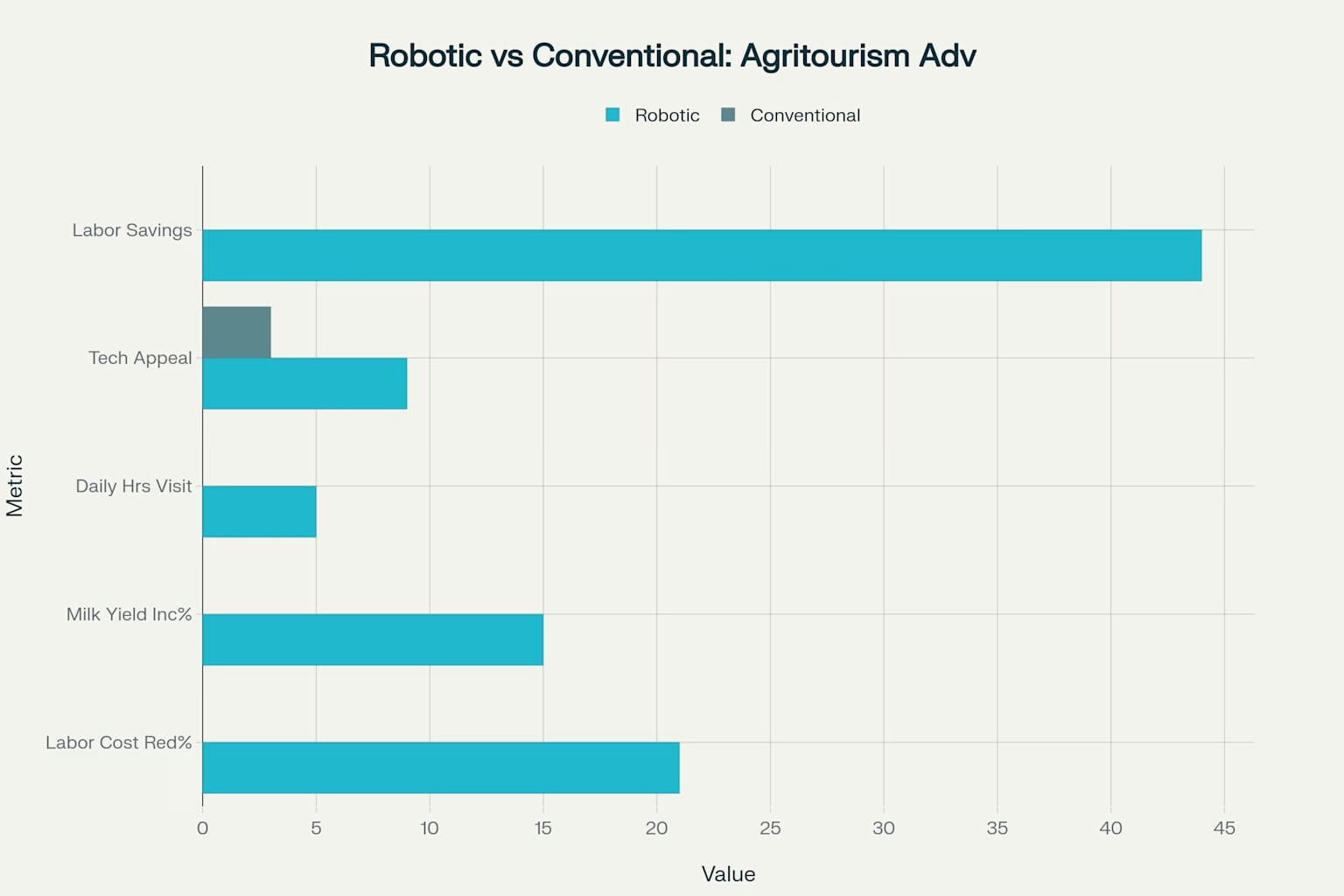
Modern dairy operations already demonstrate the technological sophistication that fascinates consumers. The global milking robot market reached $2.5 billion in 2025 and is projected to grow at a 6.4% CAGR to $4.66 billion by 2035. Approximately 5% of US dairy operations now utilize robotic milking systems, specifically around 1,000 farms concentrated in the Midwest and Northeast. Whether you’re running an automated milking system or a traditional parlor, your technology story becomes a powerful marketing tool.
Your milk quality metrics tell a compelling story of American agricultural excellence. With the national average somatic cell count holding steady at 181,000 cells/mL and test-day average milk yield rising to 83.1 pounds, with a fat percentage of up to 4.24%, your operation represents the pinnacle of global dairy production.
Why This Matters for Your Operation: The Wisconsin Success Story
Consider Sarah’s 180-cow operation in Grant County, Wisconsin. Like many producers, she initially viewed her farm purely as a milk production facility. However, when commodity prices dropped in 2022, she implemented a modest agritourism program, featuring weekend farm tours and patriotic round bale displays during the summer months.
The results were transformative: Within 18 months, agritourism generated $45,000 in additional annual revenue, equivalent to 500,000 pounds of milk at $9.00 per cwt. More importantly, the direct consumer relationships led to premium pricing for her on-farm store, where visitors pay $6.50 per gallon for milk that processors would purchase for $2.10 per gallon equivalent.
Her key insight: “I realized we weren’t just selling milk—we were selling the story of American dairy excellence. Visitors don’t just want to see cows; they want to understand how modern technology and traditional values create the world’s safest, highest-quality milk supply.”

The Data-Driven Case for Immediate Action
But here’s where conventional thinking becomes truly dangerous: delaying agritourism development while “focusing on production first” ignores the accelerating market trends that make early adoption increasingly valuable.
The numbers tell a compelling story that should alarm any operation still thinking agritourism is optional. Recent USDA analysis shows that despite a 0.262% decline in total milk production in 2024, calculated milk solids production increased by 1.345% even as the national herd shrank by 557,000 cows.
This efficiency gain creates a dangerous competitive dynamic: the industry can meet increased demand for milk solids more quickly than ever before, putting downward pressure on commodity prices precisely when input costs continue rising. Operations that remain purely commodity-focused are essentially competing in a race to the bottom with increasingly efficient competitors.
Meanwhile, peer-reviewed research demonstrates that agritourism represents a growth market with positive profitability associations. Unlike milk production, where you’re competing against every other dairy farm in your Federal Milk Marketing Order, agritourism allows you to serve local and regional markets where your specific location, family story, and agricultural practices create unique competitive advantages.
Regional Implementation Cost Analysis
Understanding regional variations in agritourism implementation costs is crucial for accurate ROI projections:
| Region | Basic Infrastructure Cost | Labor Cost Factor | Insurance Premium | Marketing Advantage |
| Northeast | $15,000-25,000 | 1.3x national average | $2,000-4,000 | High population density |
| Midwest | $10,000-18,000 | 1.0x national average | $1,200-2,500 | Agricultural heritage tourism |
| Southeast | $12,000-20,000 | 0.9x national average | $1,500-3,000 | Year-round season |
| West Coast | $20,000-35,000 | 1.5x national average | $2,500-5,000 | Premium pricing potential |
The timing couldn’t be more critical. Every month you delay agritourism development, competitors in your region may be establishing the community relationships and brand recognition that will be nearly impossible to replicate once they’re entrenched.
Challenging the Labor Shortage Myth Through Strategic Technology
Here’s another piece of conventional wisdom that needs dismantling: the belief that labor shortages make agritourism impossible because “we don’t have enough people to handle visitors.”
This thinking reflects a fundamental misunderstanding of how modern technology enables, rather than competes with, community engagement activities. Research in the Journal of Dairy Science has demonstrated that robotic milking systems can reduce labor costs by over 21% while improving milk quality and production efficiency through more consistent milking schedules.
The key insight most operations miss: technology investments that reduce labor requirements for core production activities free up human resources for higher-value customer interaction and experience management. When robotic systems handle routine milking tasks, farm families can focus on the community engagement activities that generate premium revenue.
Farm Technology Integration Success Story: Minnesota’s Innovation Leader
Mike Johnson’s 350-cow operation in Steele County, Minnesota, exemplifies the technology-enabled agritourism model. In 2021, he invested $280,000 in a robotic milking system primarily to address labor shortage challenges. The unexpected benefit: automation freed 4-5 hours daily for family members to develop educational programs and visitor experiences.
Financial outcomes after three years:
- Milk production increased 12% due to improved cow comfort and more frequent milking
- Labor costs decreased 18% despite wage inflation
- Agritourism revenue reached $75,000 annually through technology-focused farm tours
- Direct sales of premium dairy products generated an additional $35,000 annually
Mike’s strategic insight: “The robot didn’t replace our family values—it amplified them. We can spend more time with visitors explaining how technology and traditional stewardship work together to produce exceptional milk while caring for our animals and environment.”

Financial Analysis: The Component Premium Opportunity
Two thousand twenty-five market conditions create unprecedented opportunities for operations producing superior milk components, but only for farms that understand how to market this excellence beyond commodity channels.
With butterfat averaging 4.24% and a protein content of 3.29% nationally, component-focused production strategies yield both premium milk payments and agritourism marketing advantages. USDA forecasts indicate that dairy farm businesses will see 25% higher average net cash farm income in 2025, with operations producing superior components significantly outperforming commodity-grade producers.
However, what most operations overlook is that superior component production only generates premium revenue if you can effectively demonstrate and market that superiority to end consumers. Agritourism provides the perfect platform for educating visitors about the science behind premium milk production while justifying higher prices for direct-sales products.
When visitors observe your precision feeding systems, which target optimal component levels, and learn how your genetics program produces superior cheese-making milk, they’re witnessing agricultural excellence that commands premium pricing. This educational component transforms commodity milk into branded products with clear provenance and authentic stories.
Verified Revenue Projections by Operation Size

Based on USDA Economic Research Service data and peer-reviewed agritourism profitability research:
| Farm Size | Base Milk Revenue (Annual) | Agritourism Potential | Combined Revenue Increase | Regional Variation |
| 100 cows | $504,000 @ $21.00/cwt | $25,000-75,000 | 5.0-14.9% increase | ±20% based on location |
| 377 cows (US avg) | $1,900,440 @ $21.00/cwt | $75,000-200,000 | 3.9-10.5% increase | ±15% based on region |
| 500 cows | $2,520,000 @ $21.00/cwt | $100,000-300,000 | 4.0-11.9% increase | ±12% based on the market |
These projections assume:
- Average production: 24,000 pounds per cow annually (USDA ERS 2025 forecast)
- Current milk price: $21.00/cwt (April 2025 USDA data)
- Research-validated agritourism profitability factors: operator experience, farm scale, on-farm sales, and events/entertainment
Cash Flow Management: The Critical Success Factor
Managing cash flow is one of the most critical aspects of agritourism development, particularly given the seasonal nature of visitor revenue and the need for upfront infrastructure investments. Dairy farms have experienced significant cash flow variations since 2022, with input costs rising sharply while milk prices fluctuate unpredictably.
Essential cash flow considerations for agritourism development:
- Seasonal Revenue Patterns: Most agritourism revenue concentrates in May-October, requiring careful financial planning for off-season periods
- Infrastructure Investment Timing: Spread major investments across multiple years to avoid cash flow strain during development phases
- Insurance and Liability Costs: Factor ongoing insurance premiums ($1,000-3,000 annually) into monthly cash flow projections
- Marketing Investment Requirements: Budget 5-10% of projected agritourism revenue for promotional activities and customer acquisition

July 4th Strategy: Leveraging Peak Production Season
The timing of Independence Day aligns perfectly with peak component production and optimal facility presentation. Research published in the Journal of Dairy Science demonstrates annual rhythms in which milk fat concentration varies seasonally. However,, the summer months provide ideal conditions for visitor activities and outdoor attractions while maintaining production excellence.
Patriotic Display ROI: Marketing Investment Analysis
Round bale art represents the agricultural equivalent of precision agriculture investment: modest upfront costs generating long-term returns through increased brand recognition and visitor attraction. Unlike feed or labor costs that must be repeated daily, patriotic displays provide season-long marketing value while building community goodwill that benefits the operation year-round.
The economics are straightforward and verifiable. Materials for patriotic round bale displays typically cost $50-100, but the return on investment extends far beyond direct revenue. When combined with social media promotion and community engagement, these displays generate organic marketing that paid advertising cannot replicate.
Implementation Timeline: Production System Integration
Design agritourism experiences, much like formulating a Total Mixed Ration, by balancing multiple components to achieve optimal outcomes. Successful July 4th events integrate educational content (30%), entertainment value (40%), and commercial opportunities (30%) while maintaining production excellence.
Educational components should highlight:
- Live demonstrations of modern milking technology and animal welfare protocols
- Component testing and quality assurance processes that exceed industry standards
- Genetic selection for production traits and superior milk composition
- Mastitis prevention and detection technologies that ensure milk quality and safety
Pennsylvania Success Story: Technology-Driven Agritourism
The Kurtz family’s 130-cow operation in Chester County demonstrates how mid-sized farms leverage technology for dual benefits. Their investment in robotic milking systems freed labor for conservation projects and visitor education programs, earning them the 2024 Pennsylvania Distinguished Dairy Producer award.
Key performance metrics:
- Robotic milking system enabling 100% no-till farming on 275 acres
- Cover crops are implemented across the entire operation for soil health demonstration
- Stream bank fencing and riparian buffer showcasing environmental stewardship
- High-traffic road location providing natural marketing visibility
Financial outcomes: While specific agritourism revenue wasn’t disclosed, the family reports that technology investment enabled conservation practices that both reduce input costs and create compelling visitor experiences. Their operation serves as a living demonstration that modern efficiency and environmental stewardship aren’t competing priorities.

Technology Integration: The Next-Generation Competitive Advantage
Modern dairy technology creates compelling visitor experiences that justify premium pricing while demonstrating American agricultural leadership. The precision agriculture market, projected to grow from $2.5 billion in 2025 to $4.66 billion by 2035, represents the widespread adoption of technologies that fascinate consumers and differentiate American agriculture globally.
Your GPS-guided tractors, automated feed systems, and activity monitoring equipment tell a story of innovation that visitors cannot experience at theme parks or traditional entertainment venues. This technology integration functions like optimizing metabolizable energy levels in rations: every system works together to achieve superior outcomes while providing educational content that justifies premium agritourism pricing.
The Blockchain Revolution: Transparency as a Competitive Advantage
While most dairy operations view blockchain technology as a futuristic and complex solution, forward-thinking farms are discovering its power to create unprecedented transparency that commands premium pricing. Research demonstrates that blockchain technology in dairy supply chains enables real-time traceability and fosters consumer confidence, creating the exact type of authentic storytelling that agritourism visitors value.
Consider the transformative example of Indian dairy company case studies: blockchain implementation allowed companies to identify sources of adulteration, track contaminated products, and remove them from supply chains within hours rather than weeks. For agritourism operations, this technology enables visitors to scan QR codes and instantly access the complete production history of products they’re purchasing.
Practical blockchain applications for dairy agritourism:
- Product Provenance Tracking: Visitors scan codes to see exactly which cows produced their milk, cheese, or ice cream
- Quality Assurance Demonstration: Real-time access to SCC counts, component levels, and safety testing results
- Environmental Impact Verification: Transparent documentation of sustainability practices and carbon footprint reduction
- Supply Chain Transparency: Complete visibility from feed sourcing through processing and packaging
Advanced Precision Agriculture Showcase Opportunities
The global dairy processing equipment market, valued at $10.57 billion in 2025, is experiencing robust growth driven by rising consumer demand for transparency and quality. This technological sophistication offers compelling educational content for agritourism visitors while also demonstrating the science behind premium dairy production.
Technology Integration Decision Framework:
| Technology Type | Visitor Education Value | Implementation Cost | ROI Timeline | Required Expertise |
| Robotic Milking | Very High | $250,000-300,000 | 18-24 months | Moderate |
| Activity Monitoring | High | $150-300/cow | 6-12 months | Low |
| Blockchain Traceability | High | $15,000-50,000 | 12-18 months | High |
| Precision Feeding | Moderate | $75,000-150,000 | 8-14 months | Moderate |
| Environmental Monitoring | Moderate | $25,000-75,000 | 12-24 months | Low |
The Automation Advantage in Visitor Education
Automated milking systems provide perfect demonstration opportunities for explaining modern dairy technology. With robotic milking systems now operating on approximately 1,000 US farms, representing 5% of dairy operations, these installations showcase American agricultural innovation while requiring minimal staff supervision during visitor tours.
Research demonstrates that farms using robotic milking systems report up to 15% higher milk yields, while also improving animal welfare through voluntary milking schedules that reduce stress and allow cows to follow their natural behavioral patterns.
This creates a powerful marketing message: American dairy operations combine traditional agricultural values with cutting-edge technology to produce the world’s highest-quality milk while maintaining superior animal welfare standards that exceed global benchmarks.
International Perspective: Learning from Global Agritourism Leaders
While American dairy operations possess unique advantages, examining international agritourism models offers valuable insights for implementing effective strategies. European dairy regions, particularly in Austria and Switzerland, have successfully integrated dairy farming with tourism for decades, creating models worth adapting to American conditions.
European Agritourism Integration Lessons
In Austria’s Tyrol region, dairy farming accounts for 58% of the agricultural production value, with agritourism providing crucial supplemental income for family operations competing against larger industrial producers. The Austrian model emphasizes authentic farm experiences, premium product sales, and educational programming that commands significant price premiums.
Key success factors transferable to American operations:
- Integration of traditional farming practices with modern efficiency technologies
- Emphasis on family heritage and generational knowledge transfer
- Premium pricing for farm-produced products sold directly to visitors
- Seasonal programming that maintains visitor interest throughout the year
Critical differences favoring American operations:
- Scale advantages allow for more impressive technological demonstrations
- Superior infrastructure for accommodating larger visitor groups
- Advanced automation technologies are not widely available in European small-scale operations
- Stronger tradition of agricultural innovation and technology adoption
New Zealand Comparative Analysis
New Zealand’s dairy industry, despite its global reputation for grass-fed production, has limited agritourism development due to remote locations and a focus on export markets. This creates opportunities for American operations to capture tourism demand that international competitors cannot serve.
American competitive advantages:
- Proximity to major population centers enables day-trip and weekend tourism
- Diverse agricultural systems showcase different approaches to dairy production
- Integration of crop and livestock operations, providing comprehensive agricultural education
- Technology adoption rates that exceed most international competitors
Risk Management: Protecting Both Revenue Streams
Managing agritourism risk parallels transition period management, as careful monitoring and a rapid response to deviations prevent problems from escalating. Successful operations implement comprehensive protocols protecting both milk production and visitor safety.
Insurance and Liability Considerations
Agritourism liability insurance typically costs $1,000-$ 3,000 annually for mid-scale operations, representing less than 0.15% of gross milk revenue for a 377-cow farm. This investment provides essential protection while enabling revenue diversification that reduces overall business risk.
University research on agritourism development emphasizes that proper insurance coverage and safety protocols are essential for sustainable visitor programs, but the risk-to-reward ratio heavily favors farms that implement structured agritourism activities.
Production Continuity During Visitor Activities
Design visitor programs like managing feed delivery schedules: essential operations continue without disruption while accommodating additional activities. Successful farms establish clear protocols that separate visitor areas from active production zones while maintaining high biosecurity standards.
The key insight is that visitor programs that complement rather than interfere with production schedules create win-win scenarios, where guests observe authentic agricultural operations while farms maintain efficiency and high animal welfare standards.
Biosecurity Protocol Integration
Journal of Dairy Science research emphasizes that mastitis prevention requires comprehensive biosecurity measures that can be effectively integrated with visitor management systems. Modern agritourism operations implement protocols that protect herd health while educating visitors about disease prevention and food safety.
Best practices include:
- Designated visitor pathways prevent cross-contamination between visitor areas and production zones
- Hand sanitizing stations are strategically placed for both visitor convenience and biosecurity compliance
- Educational signage explaining biosecurity importance and modern food safety protocols
- Restricted access to sensitive areas (maternity pens, hospital groups, feed storage) with clear explanations of protective measures
Your July 4th Action Plan: Implementation Roadmap
The difference between farms that generate substantial agritourism revenue and those that don’t isn’t size, location, or capital—it’s taking focused action with clear implementation timelines. With July 4th, 2025, approaching, you have a perfect opportunity to begin building the community connections and revenue streams that will strengthen your operation’s financial resilience.
Immediate Assessment (This Week)
Drive past your operation as a first-time visitor would. What impression does it create? Are your values visible? Does your facility tell a story about American agricultural excellence? Document everything with photos and an honest assessment of your current community visibility.
Contact your local USDA NASS office to understand agritourism data collection and reporting requirements. Many farms underreport agritourism activities, missing opportunities for industry recognition and grant funding.
Research your insurance requirements immediately. Contact your carrier to understand liability coverage for farm tours, events, and direct sales activities. This conversation should occur before July 4th, as insurance modifications often require lead time.
July 4th Weekend Strategy
Create patriotic displays that showcase your values while highlighting your production excellence. Even basic round bale art, which costs less than $100 in materials, generates significant community engagement and social media visibility.
Plan simple farm tours that highlight your technology adoption and animal welfare practices. Focus on educational content that visitors cannot experience elsewhere, such as robotic milking demonstrations, feed quality testing, or component analysis that explains why American milk commands premium prices globally.
Establish direct sales opportunities during the July 4th activities. When visitors see your animals, meet your family, and understand your production practices, they’re willing to pay premium prices for products with clear provenance and authentic stories.
Fall Implementation Planning
Evaluate permanent infrastructure improvements that support both production efficiency and visitor experiences. Consider investments such as visitor viewing areas, educational displays, or retail spaces that serve dual purposes.
Research grant opportunities that support the development of agritourism. USDA programs continue to expand support for rural economic development and agricultural education initiatives, often including funding for visitor facilities and educational programming.
Develop relationships with local schools, civic organizations, and veteran groups to build partnerships that support your agritourism activities. These connections provide built-in audiences while demonstrating community engagement that enhances your operation’s reputation.
12-Month Financial Planning
Structure your agritourism investment like planning a breeding program: start with proven genetics (successful models), implement gradually, and measure results before expanding. Research shows that operator experience and farm scale are positive predictors of agritourism profitability, suggesting that careful planning and systematic implementation yield better results than rapid expansion.
Regional investment guidelines based on verified cost analysis:
Northeastern Operations:
- Infrastructure: $15,000-25,000 initial investment
- Expected timeline to profitability: 18-24 months
- Primary advantage: High population density enables premium pricing
Midwestern Operations:
- Infrastructure: $10,000-18,000 initial investment
- Expected timeline to profitability: 12-18 months
- Primary advantage: The Agricultural heritage tourism market and lower costs
Southern Operations:
- Infrastructure: $12,000-20,000 initial investment
- Expected timeline to profitability: 15-20 months
- Primary advantage: Extended visitor season, enabling year-round revenue
Western Operations:
- Infrastructure: $20,000-35,000 initial investment
- Expected timeline to profitability: 24-30 months
- Primary advantage: Premium pricing potential, offsetting higher costs
The Bottom Line: Technology Meets Tradition for Sustainable Success
Remember that pressing reality we started with? While milk prices fluctuate at $21.00/cwt, dairy farm businesses are forecast to see a 25% higher average net cash farm income in 2025, at $743,900. The smart money in dairy is building revenue streams that aren’t subject to commodity market volatility.
The evidence is overwhelming that operations combining production excellence with community engagement capture sustainable competitive advantages that pure commodity producers cannot replicate. With the US net farm income forecast at $180.1 billion, primarily due to government disaster payments rather than market fundamentals, diversified revenue streams provide the stability necessary for multi-generational farm viability.
Your technical capabilities tell a compelling story that visitors cannot experience elsewhere. Whether explaining how 4.24% butterfat content and 3.29% protein levels create superior cheese-making properties or demonstrating how robotic milking systems improve both efficiency and animal welfare, your operation showcases American agricultural leadership in ways that generate both pride and profit.
Peer-reviewed research confirms what successful producers already understand: farms that excel at both production efficiency and community engagement build resilient businesses that thrive regardless of commodity market conditions. While competitors focus exclusively on cost reduction, you’ll be building brand equity and customer relationships that command premium pricing and provide long-term stability.
The strategic window is closing rapidly. With the milking robot market projected to grow at 6.4% annually and reach $4.66 billion by 2035, farms that combine technological sophistication with community engagement will capture disproportionate advantages over operations that remain purely commodity-focused.
But remember the sobering lesson from Connecticut: agritourism success requires meticulous planning, comprehensive insurance, and unwavering commitment to visitor safety. The farms that thrive are those that treat agritourism as seriously as they treat milk production—with detailed protocols, clear objectives, and continuous performance monitoring.
This July 4th, will you continue fighting for pennies in commodity markets, or will you start building the sustainable competitive advantages that ensure your operation’s future? The choice is yours, but the window for establishing market position ahead of competitors is narrowing rapidly.
Your immediate action step: Before the July 4th weekend, create one patriotic display that represents your farm’s values, invite five local families to visit your operation, and document their experience for social media sharing. This single action will position you ahead of 90% of dairy operations that never take the first step toward sustainable revenue diversification.
The most successful dairy operations of the next decade will excel at both production efficiency and community engagement. Which category will your operation represent—the innovators capturing agritourism revenue while maintaining production excellence, or the commodity producers watching opportunities pass by? The choice is yours, and July 4th, 2025, is your perfect opportunity to begin building the future your operation deserves.
Key Takeaways
- Technology Liberation Strategy: Robotic milking systems reduce labor requirements by 21% while increasing milk yields up to 15%, freeing 4-5 hours daily for high-value visitor experiences that can generate $75,000-200,000 annually for 377-cow operations
- Component Premium Marketing: Superior butterfat levels (4.24% vs. industry average) and protein content (3.29%) create compelling educational content that justifies premium direct-sales pricing—visitors pay $6.50/gallon vs. $2.10/gallon processor equivalent
- Regional ROI Optimization: Implementation costs vary dramatically by location ($10,000-35,000 initial investment), with Midwest operations achieving profitability in 12-18 months compared to 24-30 months on the West Coast, but premium pricing potential offsets higher costs
- Patriotic Display Multiplication Effect: Basic round bale art costing $50-100 in materials generates exponential returns through social media engagement, community goodwill, and visitor attraction, transforming commodity milk into branded products with authentic provenance stories
- Risk-Adjusted Diversification: Agritourism liability insurance ($1,000-3,000 annually) represents less than 0.15% of gross milk revenue for mid-scale operations while providing crucial protection for revenue streams completely independent of Federal Milk Marketing Order volatility
Executive Summary
The dairy industry’s obsession with pure production efficiency is leaving massive revenue streams untapped while operators struggle with commodity price volatility. Research shows that while producers fight for pennies per hundredweight at $21.00/cwt, America’s smartest dairy operations quietly generated $1.26 billion in agritourism revenue in 2024, with individual farms capturing $25,000 to $300,000 annually in diversified income streams. Technology investments, such as robotic milking systems, that reduce labor costs by 21%, actually enable rather than compete with community engagement activities, freeing up 4-5 hours daily for premium revenue generation through farm tours and direct sales. With USDA forecasting 25% higher dairy farm income, averaging $743,900 in 2025, this represents the perfect financial foundation for diversification investments that insulate operations from market volatility. Austrian dairy regions demonstrate that agritourism accounts for 58% of the agricultural production value for family operations competing against industrial producers, whereas American farms possess superior scale and technological advantages that international competitors cannot match. Your July 4th patriotic displays could be the $50 investment that transforms your commodity operation into a premium-branded destination generating six-figure supplemental revenue.
Complete references and supporting documentation are available upon request by contacting the editorial team at editor@thebullvine.com.
Learn More:
- Breaking Free from the Bulk Tank: How Smart Dairy Operators Are Building Million-Dollar Revenue Portfolios Beyond Milk – Reveals practical strategies for implementing beef-on-dairy programs, value-added processing, and diversification tactics that generate immediate cash flow to fund your agritourism infrastructure investments.
- How Smart Dairy Operators Turn 2025’s Chaos into $29,100 Profit While Competitors Panic – Demonstrates how to capitalize on current market volatility through strategic positioning and component optimization, providing the financial foundation necessary for successful agritourism development.
- Revolutionizing Dairy Farming: How AI, Robotics, and Blockchain Are Shaping the Future of Agriculture in 2025 – Explores cutting-edge technologies that create compelling visitor experiences while reducing labor costs by 70%, enabling the automation-supported agritourism model outlined in this analysis.
 Join the Revolution!
 Join the Revolution!
Join over 30,000 successful dairy professionals who rely on Bullvine Weekly for their competitive edge. Delivered directly to your inbox each week, our exclusive industry insights help you make smarter decisions while saving precious hours every week. Never miss critical updates on milk production trends, breakthrough technologies, and profit-boosting strategies that top producers are already implementing. Subscribe now to transform your dairy operation’s efficiency and profitability—your future success is just one click away.