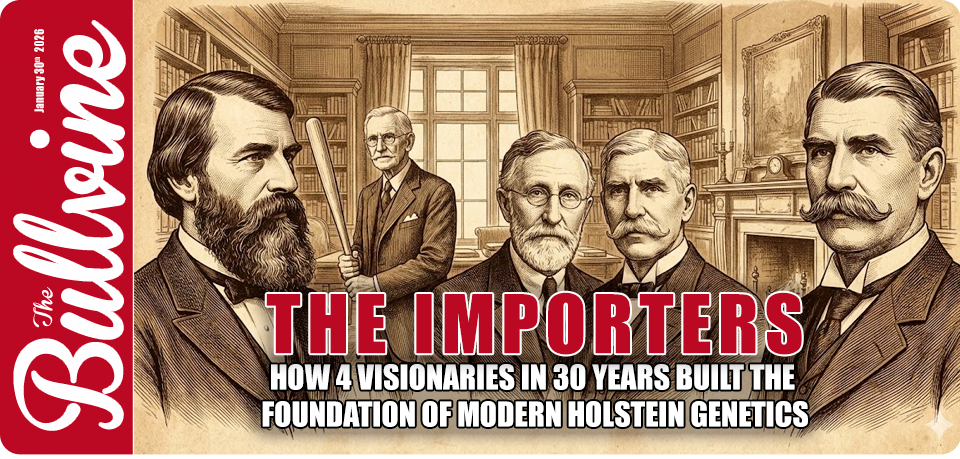





The untold story of the blind farmer, the Boston merchant, and the New York pioneers who shaped the majority of today’s black-and-white herds—and what their foundation genetics philosophy means for your operation in 2026.
Prologue: The Man Who Could See Colors Through His Hands
The classifier had barely straightened up from examining the Holstein cow when Henry Stevens reached out and ran his weathered fingers along her topline. He moved slowly, deliberately—across the loin, down the rump, tracing the ligaments of the rear udder. His eyes saw nothing. They hadn’t for years.
“She’s mostly black on the left side,” Stevens said quietly. “White blaze down the face. And the udder—the texture there, at the fore attachment—that’s special.”
His sons exchanged glances. Their father was right. He was always right.
This was Brookside Farm, Lacona, New York, sometime in the 1890s. Henry Stevens had lost his sight to illness in middle life, yet his greatest achievements as a breeder came afterward. He could tell the condition, character, and even the color of a Holstein by running his hands over the animal—the white patches felt different than the black, he explained, a difference in texture most people with perfect vision would never notice.
The Stevens boys—Ward, Ralph, and Floyd—learned to trust their blind father’s judgment more than their own eyes. And why wouldn’t they? By the time Henry died in February 1915, he had assembled what breeders called the “Big Four”: DeKol 2d, Netherland Hengerveld, Belle Korndyke, and Helena Burke. Four cows whose sons would provide the original genetic impulse that lifted an entire breed.
If you milk Holsteins today, you milk his legacy—foundation genetics that shaped everything from your tank average to your genomic predictions.
But Henry Stevens didn’t work alone. He was part of something larger—a loose confederation of New York entrepreneurs, nurserymen, abolitionists, and stubborn visionaries who, in the span of three decades, transformed an obscure Dutch dairy cow into the dominant force in global milk production.
This is their story. And honestly? It’s stranger than you’d expect.
Act I: Ships, Snow, and the Smell of Holland Rum
The Boston Pier That Changed Everything
The whole thing started with a ship full of rum.
In 1852, a Dutch sailing vessel docked in Boston Harbor carrying Caribbean spirits. The retiring ship’s master had kept a single cow on board during the voyage—a big, rawboned, black-and-white animal he’d bought in Holland for the sole purpose of providing fresh milk to the crew.
Winthrop W. Chenery happened to be on that pier. He was a Boston merchant, six feet four inches tall and weighing three hundred pounds—a man not easily overlooked or easily deterred. When he saw that cow’s production, he was thunderstruck. She gave more milk than any animal he’d ever encountered. He bought her on the spot.
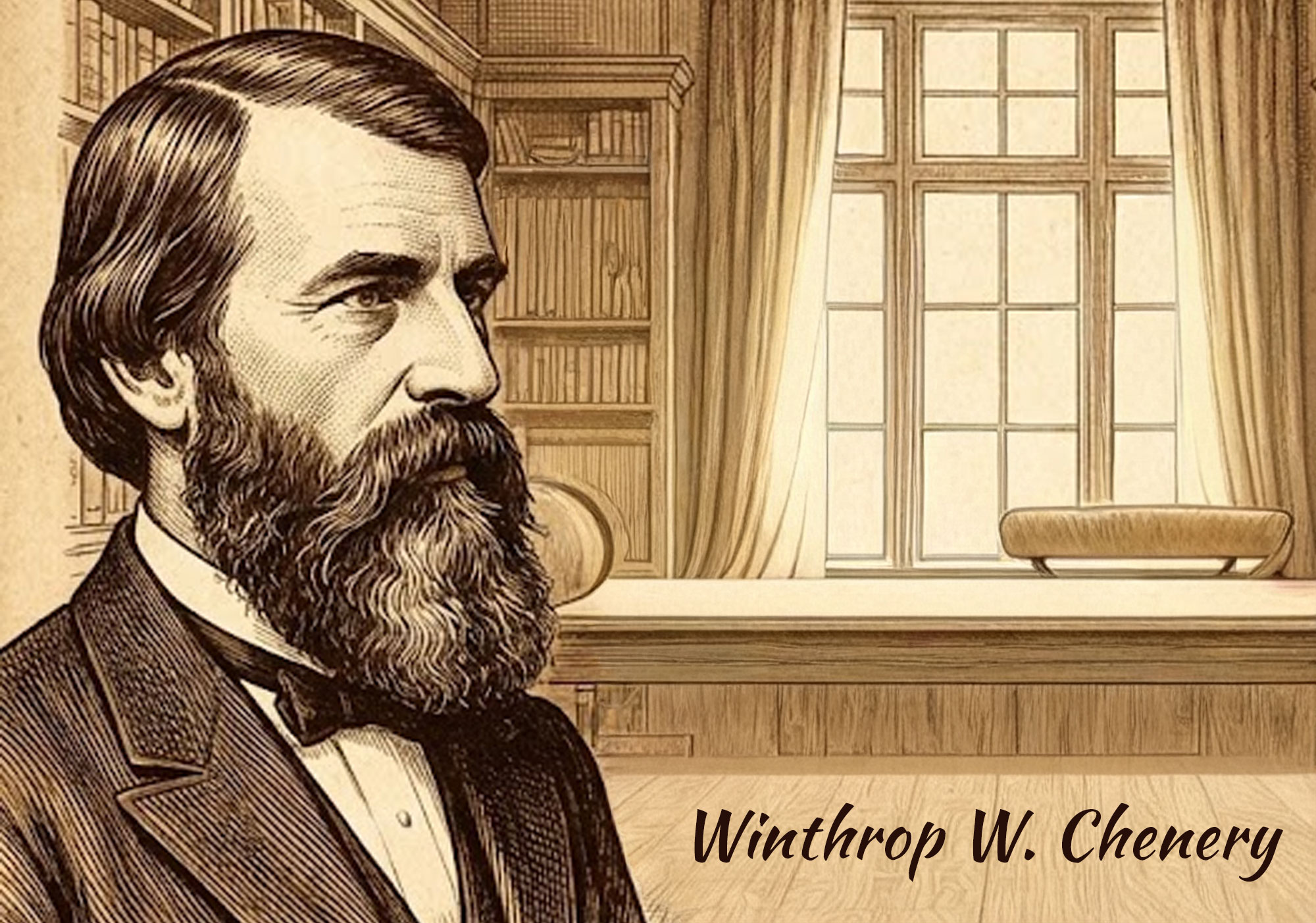
That purchase would change everything. But not before nearly destroying Chenery’s dreams.
Rinderpest and Resilience
In 1857 and 1859, Chenery imported more Dutch cattle. Then disaster struck. His herd contracted rinderpest—a devastating cattle plague—and the Commonwealth of Massachusetts ordered every animal destroyed. Every one, except a single bull named Dutchman 37.
Here’s the thing about Chenery: the very day his cattle were killed, he sent to Holland for replacements. The very day. Think about that for a second. Most men would have walked away. Chenery stood amid the ashes of his breeding program and doubled down.
His 1861 importation survived. And from it emerged Texelaar, who in 1865 produced 76 pounds, 5 ounces of milk in a single day—numbers that seemed almost fictional to American farmers accustomed to their modest native cattle. The Dutch cow, it turned out, was a production machine unlike anything the New World had ever seen.
Miller’s Evening Walks Near Harvard
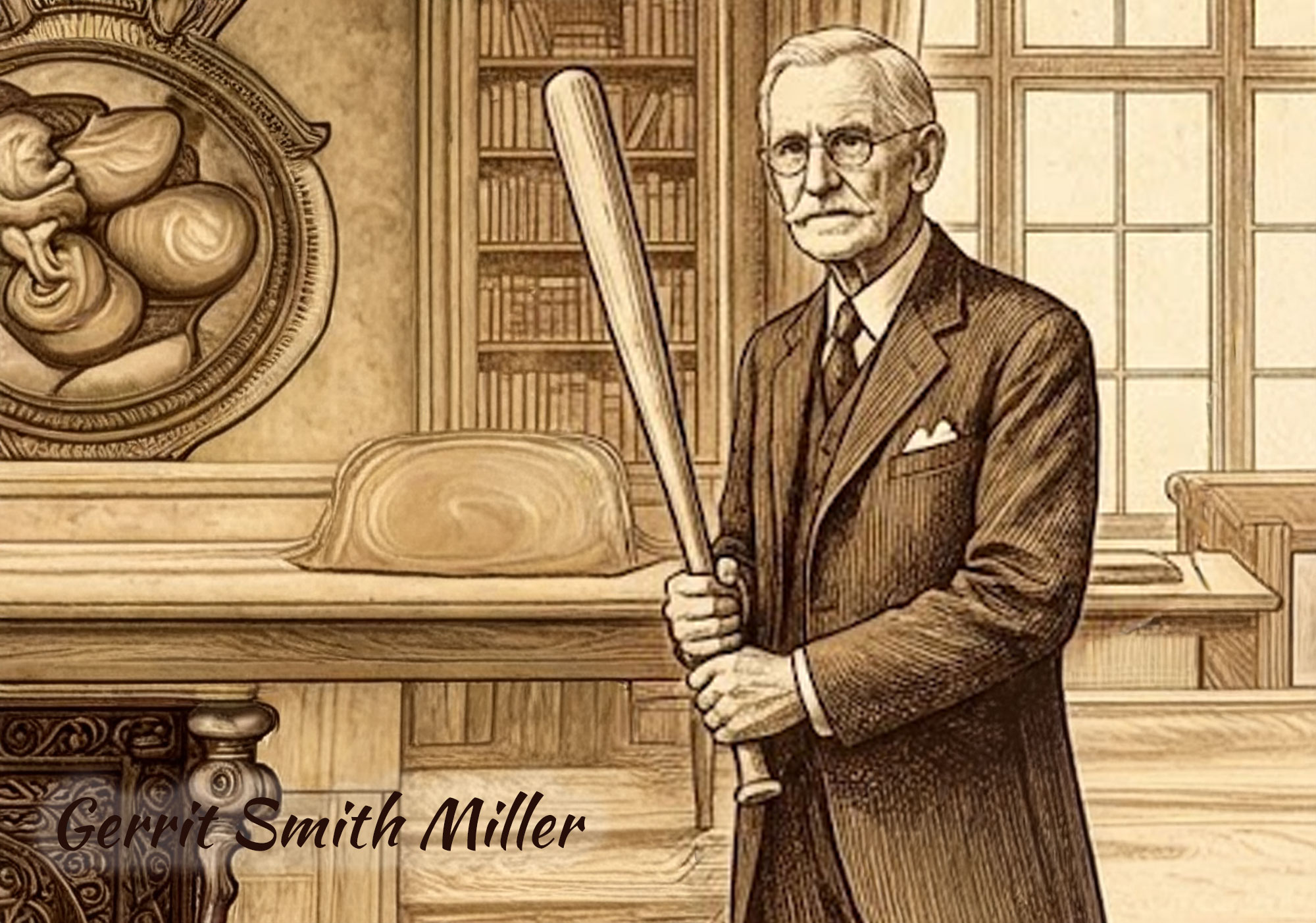
Meanwhile, in the late 1860s, a young man named Gerrit Smith Miller was taking evening walks near Harvard University. His path regularly led past the Chenery farm at Belmont, where those strange black-and-white cattle grazed in the Massachusetts twilight.
Miller came from money—serious money. His grandfather, Gerrit Smith, had been one of New York State’s largest landowners and most passionate abolitionists. The family estate at Peterboro had served as a major stop on the Underground Railroad, guiding escaped slaves north to freedom in Canada. John Brown himself had visited that parlor, plotting the raid on Harpers Ferry that would help ignite the Civil War.
Young Gerrit inherited his family’s reformist streak, but he channeled it differently. Walking past Chenery’s Holsteins, he saw something that stirred his imagination: a way to feed more people, better. He would later distill his philosophy into a single line, now cast in bronze on a boulder along Oxbow Road near Peterboro: “to make two quarts of milk where there had been one before.”
The October Snow That Made History
When Miller returned home, he convinced his father to let his brother Charles, then studying in Europe, purchase some of these Dutch cattle to bring back. Charles bought a bull and three cows at a cattle market in West Friesland, at the northern tip of the Netherlands. He accompanied them across the Atlantic, then by rail to the Canastota depot in central New York.
On October 19th, 1869, with five inches of early snow on the ground, those four animals—the bull Hollander and the cows Crown Princess, Dowager, and Fraulein—walked the old plank road from Canastota to Miller’s farm at Peterboro. Within weeks, the three cows were giving two-thirds as much milk as the nine native cattle that had carried the farm until then.
The black-and-white cow had arrived in New York. And New York would never be the same.
Two Buggies, Two Dynasties
Now, the thing about those old-time breeders—they talked. Word traveled fast through agricultural circles, and by 1876, everyone in central New York knew about Miller’s remarkable Dutch cattle.
One autumn afternoon, two separate buggies pulled into Miller’s Peterboro farmyard within minutes of each other. One carried Wing and Judson Smith, nurserymen from Syracuse. The other carried Henry Stevens from Lacona.
Both parties had come to see the Holsteins. Both left as buyers.
Stevens purchased two cows, May and Juno, for $300 each—serious money when a working man’s daily wage was a dollar. The Smiths bought a bull named Uncle Tom along with several females.
What happened that day at Peterboro was more than a cattle sale. It was the founding moment of two dynasties that would shape the breed for generations. The Smiths would go on to form Smiths & Powell and import 1,293 Holstein cattle from Holland, according to Holstein registry records—roughly one-sixth of all animals ever brought over. Henry Stevens would build Brookside Farm into a powerhouse, even after losing his sight—and his family would assemble the Big Four foundation cows whose blood still flows through modern herds.
And it all started because two buggies happened to arrive at Miller’s barn on the same afternoon.
Act II: Manure, Milk, and the Men Who Changed Everything
From Orchards to Empire
Here’s something that surprises people: many of the most important early Holstein breeders weren’t dairymen at all. They were fruit growers.
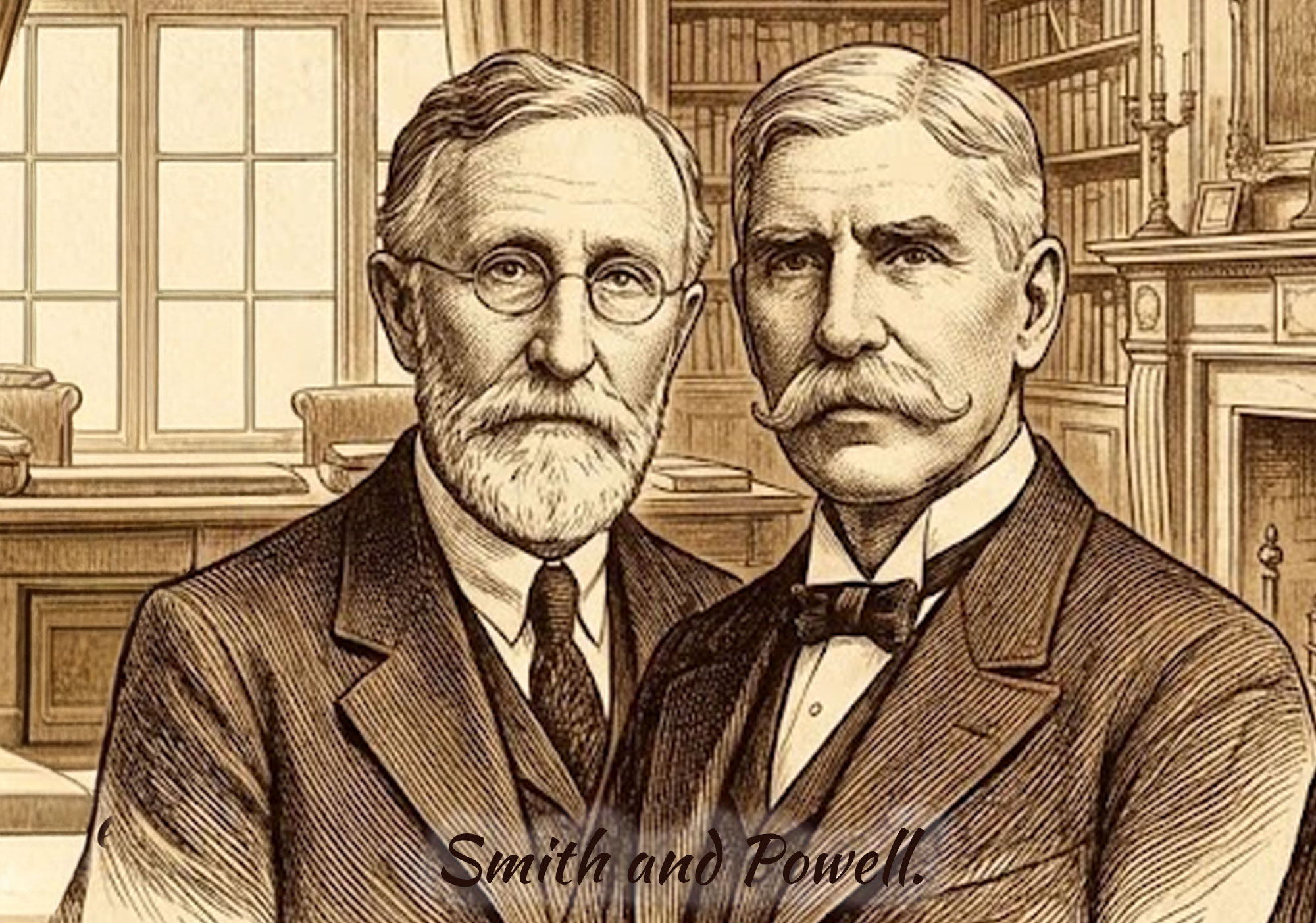
Smiths & Powell operated Lakeside Stock Farm on the southern shore of Onondaga Lake near Syracuse, but their primary business was nurseries and orchards. By the 1880s, their barns stretched along the lakeshore, the morning air thick with the sounds of hundreds of cattle and the mingled smells of fresh milk and the manure that would fertilize thousands of fruit trees.
Wing Smith handled the buying—he was the one with the eye for cattle, a meticulous record-keeper who could recite pedigrees from memory. His partner Powell managed the sprawling nursery operations and kept the books balanced. They complemented each other perfectly: one man dreaming of the next great cow, the other making sure the operation stayed solvent long enough to find her. Together, they built something neither had originally imagined.
T.G. Yeomans & Sons of Walworth, Wayne County, grew pears on 150 acres drained by a tile system stretching sixty miles—with drains passing within five feet of every single tree.
So why did these obsessive orchardists want cattle? Manure. Massive amounts of it. The Dutch cows were big animals that produced prodigious quantities of fertilizer for those carefully tended fruit trees.
But somewhere along the way, these men noticed something: the milk checks were starting to outstrip the fruit profits. The Holstein wasn’t just a manure machine. She was an economic revolution on four legs.
Smiths & Powell pivoted hard. They began importing directly from Holland, making large shipments every year starting in 1878. Their Lakeside Stock Farm became the Ellis Island of Holstein cattle—a revolving door where Dutch imports arrived by the hundreds and dispersed across the American landscape.
An 1889 newspaper advertisement captures the scope of their operation: “500 HEAD ON HAND. Largest and Choicest Herd in this Country.” They offered Clydesdale and Percheron horses, Berkshire swine, and of course, their signature Holsteins—with prices “low for quality stock.”
Dowager Sets the Standard
The numbers these early cows produced seem modest by today’s standards, but in context, they were staggering.
Miller’s Dowager completed the first official annual milk record in the United States, finishing on March 10, 1871 with 12,681 pounds, 8 ounces of milk in 365 days. At a time when 6,000 pounds was considered exceptional, Dowager had more than doubled the standard.
Miller later wrote about it: “In 1868 a cow that would give 6,000 lbs. of milk in a year and 12 lbs. of butter in seven days was considered exceptional.” Dowager gave fifty pounds per day at her peak—and maintained that flow for months.
But the records kept falling. In 1880, Aaggie, a Smiths & Powell import, became the first cow to exceed 18,000 poundsof milk in an accredited year. In 1885, another Smiths & Powell cow, Clothilde, set a world record of 26,021 pounds.
And then came 1887.
The Madison Square Garden Showdown
If there’s a single moment when the Holstein-Friesian graduated from curiosity to contender, it happened at Madison Square Garden in 1887.
The butter test had become the proving ground of dairy breeds. Jersey breeders were so confident in their dominance that Frederick Bronson, President of the American Jersey Cattle Club, had arranged beforehand to have a Jersey cow engraved on the championship trophy.
Clothilde and her stablemates had other plans.
The tension in that arena must have been something. Jersey partisans lined the railings, certain their delicate fawn-colored cows would prove their superiority once and for all. The Holstein contingent—still considered upstarts by the dairy establishment—stood by their big, angular black-and-whites.
When the results were announced, the Holsteins had won.
“The black-and-white cow had beaten the Jersey at her own game—butter production, the metric Jerseys supposedly owned.”
In the eyes of the dairy world, Holstein cattle had achieved parity with the colored breeds. The ripple effects were immediate. That same year, Dallas B. Whipple’s Pietertje 2d became the first cow of any breed to produce 30,000 pounds of milk in a year. The production ceiling wasn’t just being raised. It was being demolished.
The Chenery-Whiting Feud
Not everything was triumph and progress. The early Holstein world was also torn by bitter conflict.
Winthrop Chenery and Thomas E. Whiting of Concord, Massachusetts had started as allies. Both believed in the Dutch cow. But by the mid-1870s, they were locked in a feud so vicious it would split the entire breeding community.
The flashpoint was a bull named Ellswout, who possessed a black face with a white blaze—markings that Chenery’s faction considered characteristic of a sub-breed. When Chenery’s association refused to register Whiting’s cattle, the insult cut deep.
Whiting responded by helping establish a rival organization: the Dutch-Friesian Herd Book, competing directly with Chenery’s Holstein Herd Book (H.H.B.)—the original American registry that would eventually evolve into today’s Holstein Association USA. The agricultural press of the era feasted on their accusations and counter-accusations, filling pages with what amounted to early flame wars.
The personal cost was real. Whiting died in 1877 at just fifty years old, and contemporary accounts suggested the stress of the controversy contributed to his early death.
But here’s the irony—and there’s always irony in these stories. All that public bickering generated massive free publicity. Farmers who had never heard of Holstein cattle suddenly couldn’t escape them. The feud that tore the community apart also made the breed famous.
The Blind King’s $6,000 Gamble
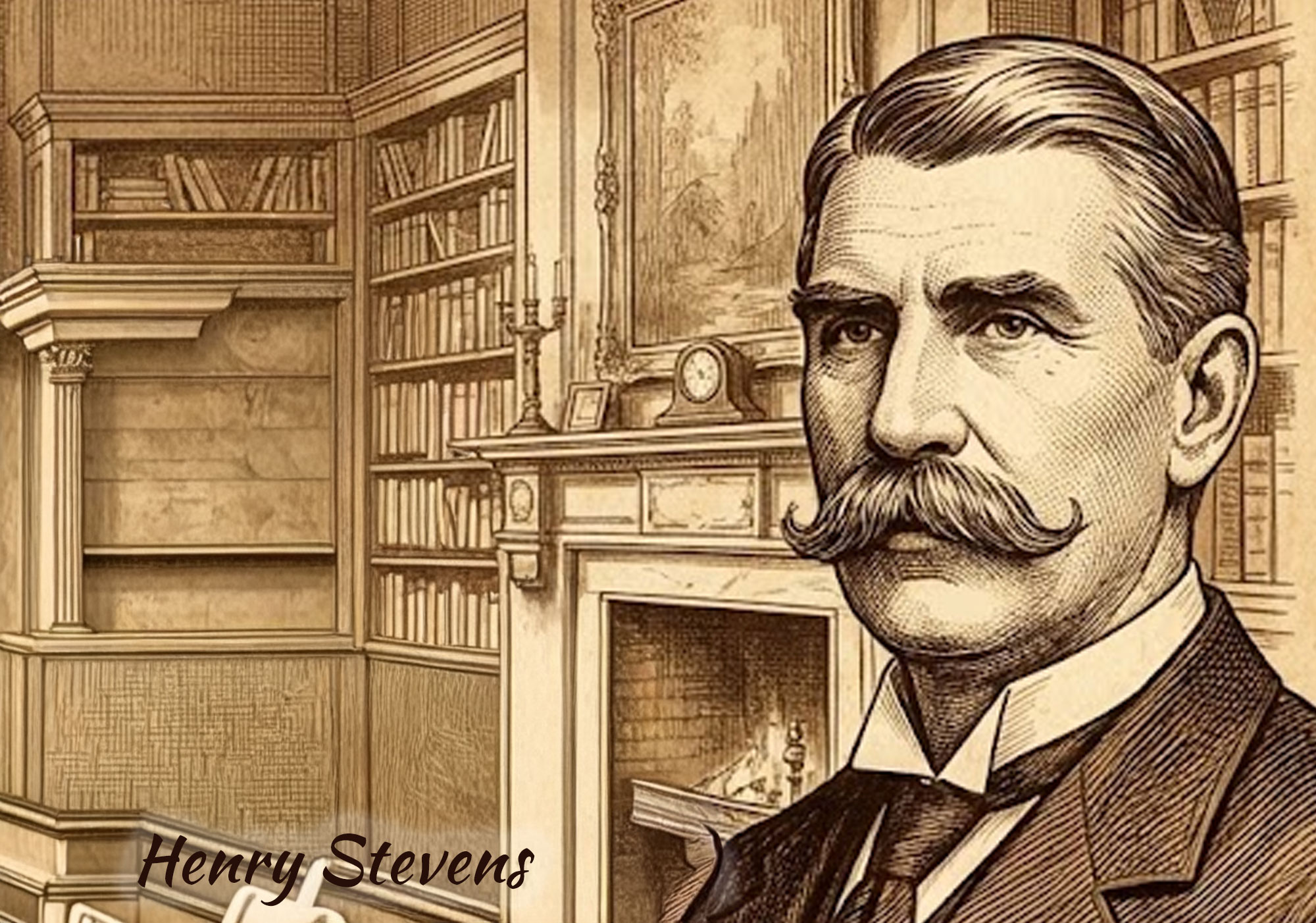
While the agricultural press gorged on controversy, the real work of breed-building continued in quieter barns.
Henry Stevens was doing something remarkable at Brookside Farm. He’d gone blind in middle life—the exact cause lost to history. But his sons would later recall that their father seemed almost unbothered by the loss. He continued walking through his barns every day, running his hands over each animal, making breeding decisions that confounded rivals who could see perfectly well.
“In selecting animals,” one account noted, “the Stevens sons placed more reliance on their blind father’s judgment than on their own.”
His methods paid off spectacularly. In 1891, Stevens made the purchase of his career: six head from the J.B. Dutcher herd for $6,000—a fortune at the time. The lot included DeKol 2d and Pauline Paul, both destined for greatness.
DeKol 2d had been imported as a virgin yearling by B.B. Lord & Son of Sinclairville, New York—shrewd traders who specialized in young heifers because they could pack more of them onto a ship. She passed through the Dutcher herd before Stevens recognized her potential.
Under Stevens’ management, DeKol 2d’s sons would spread across the continent. Pedigree analysis conducted by Holstein researchers found her genetic contribution reached approximately 7% of the modern herd—a staggering number for a single foundation dam imported over a century earlier.
The 1,000-Pound Breakthrough
And in 1912, Stevens achieved what might be the ultimate vindication: Pontiac Clothilde DeKol 2d, a cow developed in his program, became the first animal of any breed to produce 1,000 pounds of butterfat in a year.
Think about what that meant. A blind man, working by touch alone, had bred the most productive cow on the planet.
“The blind man had seen further than anyone.”
The Farmer Named Smit
Amid all the high drama, there were quieter moments too. Moments that remind you these were real people, not just names in herd books.
Miller once shared an amusing tale about purchasing a Dutch cow named Nannie Smit. He and his brother had been walking through the Dutch countryside when a farmer beckoned them over, saying he’d noticed they were Americans buying cattle. Although he had nothing for sale—shrewd Dutch bargainer—he’d like to show them his stock.
Miller was impressed by the cheese yields the man claimed from his small herd. One heifer caught his eye, and he negotiated to buy her. Up to this point, neither party had shared their names.
When the Dutchman signed the ownership papers, he wrote: Gerrit Smit.
Miller’s own name, of course, was Gerrit Smith Miller. When asked what to call the heifer, the farmer said he’d name her for his small daughter: Annitje Smit.
Miller then revealed that his own grandmother and sister were likewise named Anne.
The coincidence delighted both men. In the Holstein Herd Book, the heifer was recorded as Nannie Smit. She’d go on to head the two-year-old class at the New York State Fair in 1880—and her son, North Star, would appear in the pedigree of Johanna Rue, one of the breed’s important early cows.
It’s a small story. But it reminds you that behind every registration number was a handshake, a conversation, a moment of human connection across language barriers and ocean distances.
Act III: Twilight and the Long Echo
When the Mansions Burned
The pioneers didn’t last forever. They couldn’t.
Frederick C. Stevens—no relation to Henry—operated Maplewood Farm at Attica, New York, where he bred some of the era’s most influential cattle, including Sir Henry of Maplewood and Colanthus Abbekerk. But in 1898, fire destroyed most of his farm buildings. Stevens transferred his Holsteins to his father and turned his attention to Hackney ponies. He never came back to dairy cattle.
The Powell Brothers of Shadeland Farm in Pennsylvania built a 1,400-acre estate so vast it had its own Wells Fargo office and a forty-room mansion. But they were horse breeders as much as cattle breeders, and when the internal combustion engine arrived, their Percheron and French Coach markets collapsed. The empire crumbled.
Miller’s Final Years
And then there was Miller.
Gerrit Smith Miller had stayed in the Holstein business longer than anyone—nearly seventy years from that first 1869 importation. He’d edited the herd books, established production testing as standard practice, and watched his Kriemhild herd become one of the most respected in America.
On March 3, 1936, fire consumed the Peterboro Mansion House—the same building where his grandfather had sheltered escaped slaves, the same parlor where John Brown had plotted revolution. Miller was ninety-one years old. The loss demoralized him and ruined his health.
Gerrit S. Miller died in March 1937, at ninety-two. His Kriemhild herd—the oldest Holstein herd in the nation—was dispersed that August.
The original pioneers were gone.
But the cattle remained.
16 Generations to Your Herd
Here’s what those men left behind.
Follow the maternal line of Plushanski Chief Faith, one of the great brood cows of the late twentieth century, and you’ll travel back through sixteen generations to Pancha 7459 H.H.B.—a heifer imported in 1884 by F.C. Stevens of Attica, New York.
Trace Glenridge Citation Roxy, scored EX-97 and voted Queen of the Breed, back through Norton Court Model Vee and Norton Court Reflection Vale, and you’ll land on Ottile 8807 H.H.B. and Vrouka 448 C.H.B.—both imported to New York in the 1880s.
St. Croixco Lad Nina’s family goes back to a cow purchased in 1916 that descended from Nellie Beauty Beets DeKol, and from there through seven further generations to animals from the early importations.
Think of what that means. When Emerald-Acr-SA T-Baxter topped Canada’s LPI list in 2007, the bloodlines traced back through layers of genetics that originated in those New York barns. When Emerald-Acr-SA T-Dawson became the leading protein bull of 2003, he carried the inheritance of decisions made when Grover Cleveland was president.
CDN and Holstein USA pedigree analyses confirm what lineage students have always suspected: foundation-era sires still capture meaningful genetic variation in today’s genomic evaluations. The ghosts of Billy Boelyn and Netherland Prince still pull on the strings.
The Nursery of the Breed
By 1931, more than half the milk consumed in the United States came from Holstein cattle—a figure documented in USDA agricultural census data of the era. By 1930, Madison County, New York—Miller’s home turf—ranked first in Holstein numbers among all dairy counties in the nation.
The label stuck: New York State became known as “The Nursery of the Breed.” Not because it was convenient. Not because of marketing. But because a handful of men had the foresight to import superior genetics, the discipline to keep accurate records, and the stubbornness to prove their cattle against all skeptics.
Historical Production Milestones
| Year | Cow | Achievement | Impact |
| 1865 | Texelaar | 76 lbs milk/day | Proved production potential of Dutch genetics |
| 1871 | Dowager | 12,681 lbs/year | First official annual milk record in U.S. |
| 1887 | Clothilde | Beat Jerseys in butter test | Breed parity established at Madison Square Garden |
| 1912 | Pontiac Clothilde DeKol 2d | 1,000 lbs butterfat/year | Ultimate production ceiling broken |
Three Principles That Still Matter
Measure what matters. Miller’s Dowager record wasn’t a novelty—it was a template. When he insisted on weighing milk and tracking production, he was inventing the system that would become DHIA (Dairy Herd Improvement Association) testing and modern genetic evaluation. Every herd report you pull today traces its roots to those leather-bound ledgers at Kriemhild.
Breed families, not freaks. Maplewood, Brookside, Lakeside, Kriemhild—these programs stacked consistent maternal lines across generations. They weren’t chasing the latest fad sire. They were building something meant to last. Sound familiar? It’s the same tension we explored in Bell’s Paradox: The Worst Best Bull in Holstein History—the trade-off between popular genetics and long-term herd health.
Tie cows to a bigger purpose. Whether it was abolition and social reform in Peterboro, or community-anchored agricultural development across rural New York, these men believed better cows meant better lives. That conviction never wavered.
What This Means for Your Breeding Program
The importers’ principles aren’t just historical curiosities—they’re decision frameworks that apply to your 2026 mating choices.
The genomic connection is real. When CDCB recalculates genomic reliabilities with each base change, the predictive power still traces back to variation these importers established. Foundation genetics aren’t ancient history—they’re baked into your genomic proofs right now. [Read more: Lucky or Calculated? The Surprising Truth About Genomics and Luck in Dairy Breeding]
Know where you stand on inbreeding. These foundation animals appear in virtually every modern pedigree. Both Lactanet and CDCB report that Holstein inbreeding coefficients have been climbing steadily—roughly 0.3 percentage points annually in recent years, with herd averages now commonly exceeding 8-9%. When your coefficients push into that territory, you’re navigating a genetic bottleneck that started 150 years ago.
Here’s what to do about it:
- Before chasing the latest genomic star, ask yourself: Am I building cow families or collecting genetic freaks? The programs that lasted stacked generations of consistent females. Talk to your genetics rep about your herd’s foundation bloodline concentration.
- Your records matter more than you think. Miller’s obsessive documentation created the infrastructure for modern genetic progress. If you’re not tracking daughter performance, you’re flying blind—and not in the way Henry Stevens managed it.
- Inbreeding management isn’t optional anymore. Monitor your coefficients. Use outcross sires strategically. Understand you can’t escape the bottleneck entirely—but you can manage it.
- Look beyond the data. Stevens couldn’t see his cows, but he understood them. The best breeders today combine genomic tools with the kind of intuitive stockmanship these pioneers practiced by necessity. [Read more: The New Math of Dairy Genetics: Why This Balanced Breeding Thing is Finally Clicking]
The Standard They Set
Stand in a modern freestall at 5:30 in the morning. Watch the cows shuffle toward the robots, their breath fogging in the cold. The herd management software is tracking everything—milk weights, components, health events, genomic predictions.
It’s easy to think you’re a world away from Henry Stevens running his hands along a cow’s topline in an 1890s tie-stall barn, trying to sense what his eyes could no longer see.
But you’re not.
The bones of those cows—the rumps, the udders, the will to milk—were shaped by men who kept records in leather-bound ledgers, who traveled steerage class to Dutch cattle markets, who bet everything on animals most of their neighbors had never heard of. Chenery ordered new cattle the day his herd was destroyed. Miller walked that plank road in October snow. Stevens trusted his fingers when his eyes failed him.
They had no genomic predictions. No embryo transfer. No synchronized AI programs. What they had was observation, patience, courage, and an unshakeable belief that the black-and-white cow could change American agriculture.
They were right.
If Gerrit Miller had never seen Chenery’s cattle grazing near Harvard, if Henry Stevens had given up when he went blind, if Smiths & Powell had stuck with nursery stock—the industry you work in today would look fundamentally different. Maybe those milking shorthorns would still be the default dairy cow. Maybe production per animal would be half what it is. Maybe the Jersey would have swept the continent instead.
Instead, every pasture from California to Quebec is dotted with black and white. The genetics that poured out of Peterboro and Syracuse and Lacona now circle the world. When a classifier in New Zealand evaluates a cow’s mammary system, when a breeder in Germany studies genomic reliabilities, when your neighbor down the road flips through a sire catalog—they’re all working within a framework those New York pioneers established.
The next time you make a mating decision, you’re building on foundations they laid 150 years ago.
Epilogue: The Plymouth Rock of the Holstein Breed
There’s a boulder along Oxbow Road, just north of Peterboro, New York. A bronze plaque marks it as the “Plymouth Rock of the Holstein Breed”—the spot where Miller’s Kriemhild herd once grazed.
The plaque was dedicated in 1929, when Holstein breeders gathered to honor Miller as “the oldest living breeder” of their chosen cattle. He was eighty-four then, still sharp, still devoted to the breed he’d helped build.
Eight years later, he was gone. The mansion had burned. The herd was dispersed. The era of the original importers had ended.
But the cattle remained. The records remained. The standard remained.
The next time you lean over a newborn heifer and see something promising in her structure—the next time you study inbreeding coefficients or scroll through genomic proofs searching for the right mating—remember the men who made it all possible.
A blind farmer who could tell a cow’s color by touch. A merchant who rebuilt his herd the day it was destroyed. A reformer’s grandson who wanted to make two quarts of milk where one had been before. Nurserymen who started out wanting manure and ended up changing an industry.
They weren’t just importing cows from Holland.
They were importing a standard. A system. A faith in what careful breeding could accomplish.
And every Holstein walking the earth today is proof they were right.
That bronze marker still stands along Oxbow Road—a quiet reminder of where your black-and-white cows began.
Key Takeaways
TL;DR for the time-pressed breeder:
| What Happened | Why It Matters Today |
| 4 visionaries (Chenery, Miller, Smiths & Powell, Stevens) imported foundation genetics 1852-1899 | ~7% of your herd traces to DeKol 2d alone |
| Henry Stevens went blind but made his best breeding decisions afterward | Intuitive stockmanship still matters in the genomic age |
| Madison Square Garden 1887: Holsteins beat Jerseys at butter production | Established the breed’s legitimacy that dominates today |
| Miller invented production testing with Dowager’s 1871 record | Every DHIA report traces to his leather-bound ledgers |
| By 1931: Holsteins produced 50%+ of U.S. milk | Foundation genetics became industry standard |
Your Action Items:
- Check your herd’s inbreeding coefficients—if you’re above 8-9%, you’re deep in the foundation bottleneck
- Ask your genetics rep about foundation bloodline concentration in your matings
- Build cow families across generations, not collections of genomic freaks
- Remember: records matter—Miller proved it 155 years ago
Related Reading
- Bell’s Paradox: The Worst Best Bull in Holstein History — The modern parallel to foundation genetics concentration
- International Holstein Show – World Dairy Expo 2025 — Where today’s champions trace foundation lines
- Genomics Resources — Combining modern tools with traditional stockmanship
- Managing Inbreeding in Modern Herds — Navigating the bottleneck these pioneers created
 The Sunday Read Dairy Professionals Don’t Skip.
 The Sunday Read Dairy Professionals Don’t Skip.
Every week, thousands of producers, breeders, and industry insiders open Bullvine Weekly for genetics insights, market shifts, and profit strategies they won’t find anywhere else. One email. Five minutes. Smarter decisions all week.