Archive for milk production trends

The Great Dairy Realignment: What’s Really Happening as Global Production Reshapes Competition

India now produces 31% of the world’s milk—reshaping global dairy production in unprecedented ways.

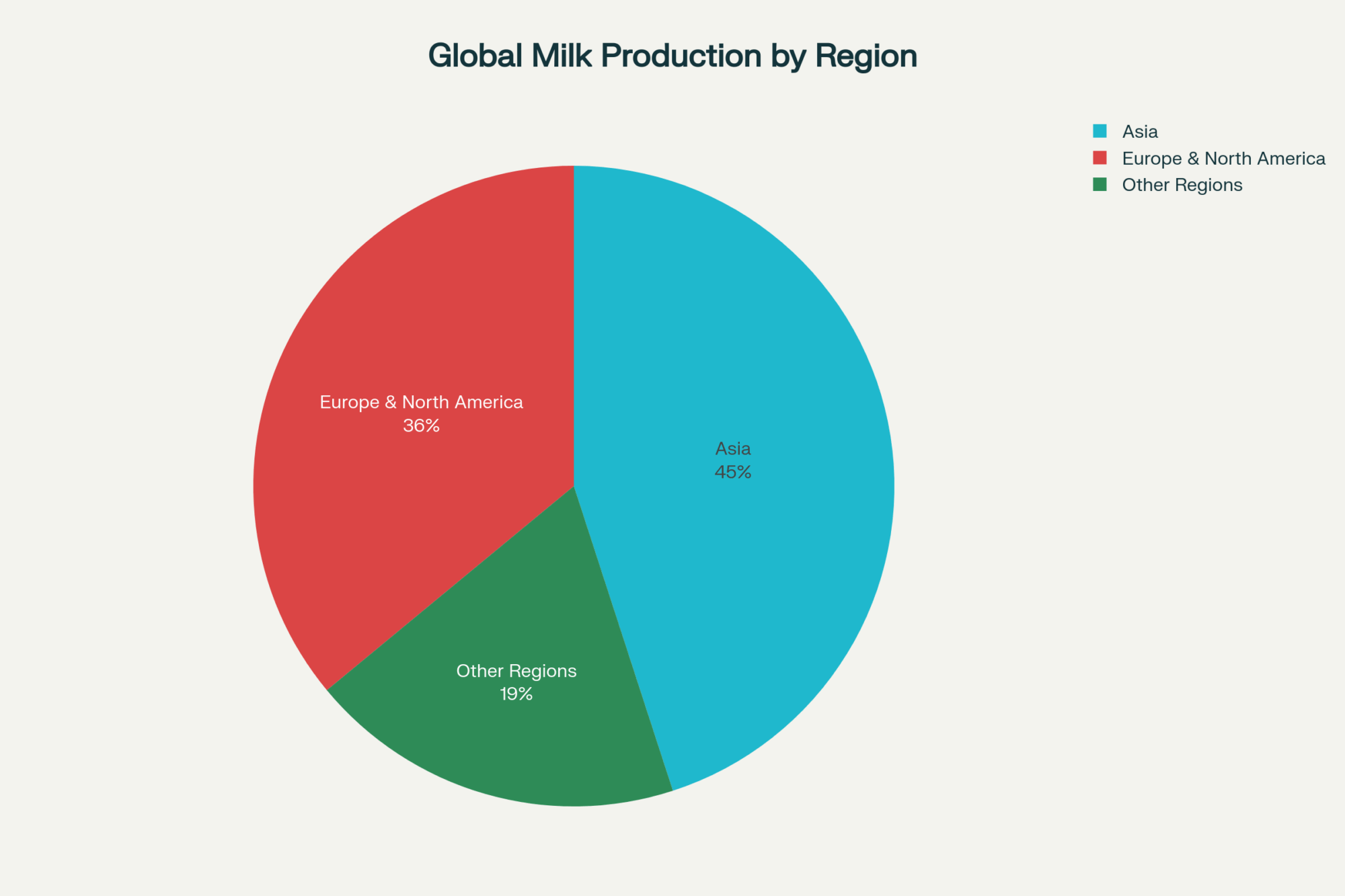
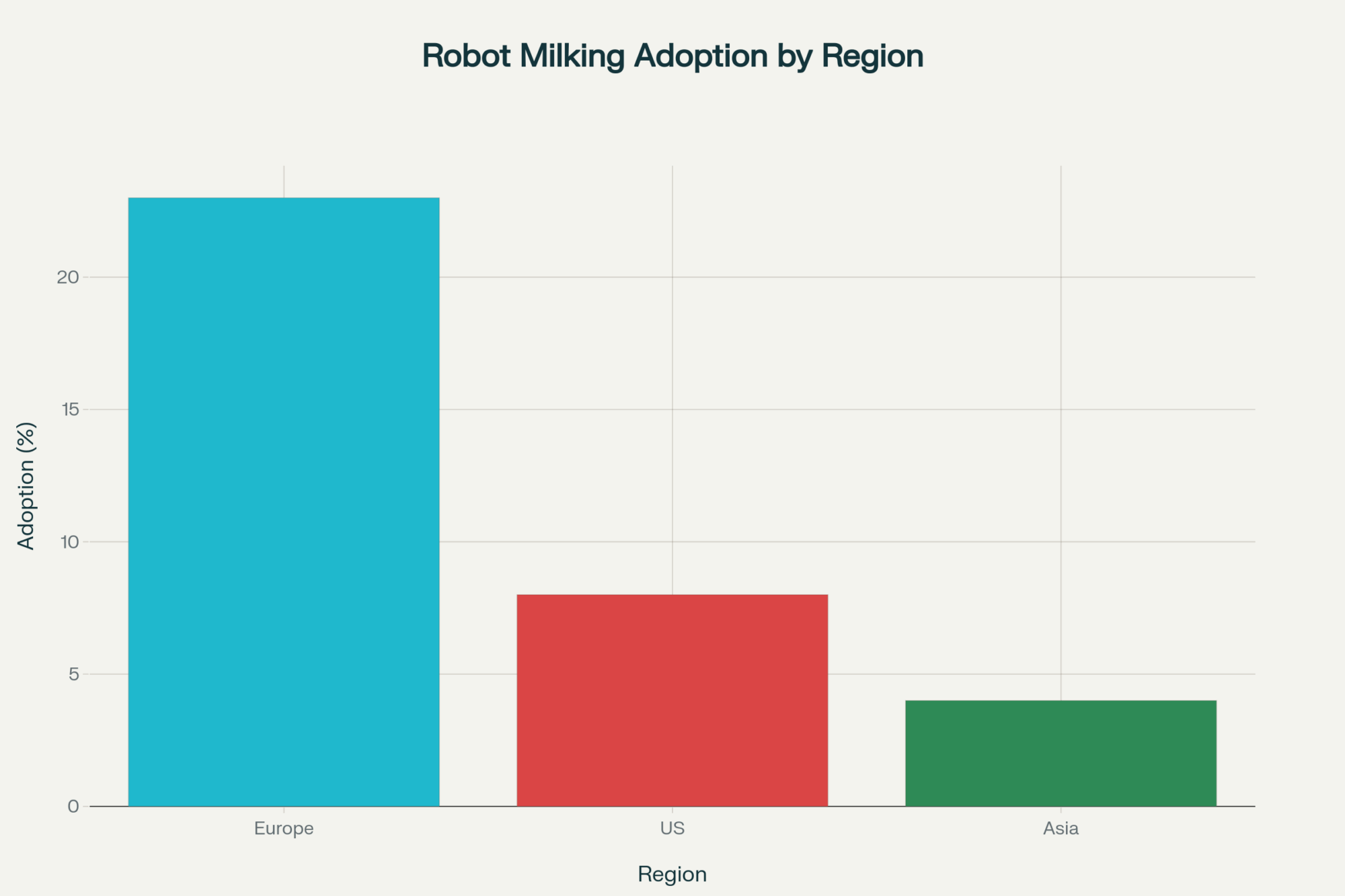
EXECUTIVE SUMMARY: India has surged to lead global milk production, with a roughly 31% share, outpacing the EU, US, and New Zealand combined, driven by a rising middle class and the expansion of cooperatives. Asia now accounts for 45% of global milk production, reshaping market dynamics, while Europe and North America hold approximately 36%. Robotic milking adoption varies dramatically—23% in Europe versus under 10% in other regions—with emerging producers leveraging mobile and AI tech as cost-effective alternatives. What’s particularly encouraging is that sustainably managed dairies are earning an estimated €6.22 more per 100kg milk produced, while carbon footprint variations increasingly shape market access. Trade tensions and certification requirements are shifting competitive landscapes, but this creates opportunities for operations that can adapt quickly. What this means for your operation depends on your region, scale, and infrastructure—with success coming through targeted efficiency improvements, sustainability practices, and understanding niche markets. Recent research shows the key is local adaptation, and staying informed about these industry shifts will position you for long-term resilience.

KEY TAKEAWAYS:

  • Precision pays off: Dairies adopting targeted feeding strategies and fresh cow management protocols can achieve up to 15% improvements in butterfat performance and overall milk quality—critical for premium market access.
  • Smart tech choices matter: Consider scalable technology investments that match your infrastructure. Mobile monitoring and AI-driven herd management can deliver 60-70% of the benefits of robotics at a fraction of the cost.
  • Sustainability drives profits: Environmental practices aren’t just compliance—they’re opening premiums up to 25% while improving herd health and operational consistency, making them essential for market competitiveness.
  • Regional strategies work best: Production dynamics vary widely—Asia leads in volume, Europe in efficiency—so your approach should reflect your farm’s unique context, resources, and market position.
  • Market access is evolving: Stay current with trade policies and certification requirements, as premium market entry increasingly depends on meeting sustainability and traceability standards.
dairy profitability, global dairy production, farm efficiency, milk production trends, dairy technology

You know, I was chatting with a colleague from Punjab just last month, and he mentioned how the dairy landscape has shifted dramatically. India, for instance, has surged ahead to become the world’s leading milk producer, clocking in around 216 million metric tons this year. That’s roughly a third of global milk production. To put this in perspective, that’s more than the combined output of the European Union, the United States, and New Zealand.

What’s fueling such growth? Well, it largely stems from a rapidly expanding middle class embracing dairy consumption across all regions—from Punjab’s lush fields to Gujarat’s vibrant cooperatives. This shift is not just about sheer volume but a complex blend of geography, demographics, and how technology and infrastructure get deployed.

We’re seeing Asia holding about 45% of the global dairy production, while North America and Europe together make up around 36%. This isn’t just shifting numbers on a chart—it’s reshaping the whole industry.

Technology Adoption: Different Paths, Different Results

Now, when I think of technology, the story gets a bit nuanced. I had a great conversation recently with a California dairy operator who told me his investment in robotic milking paid off in just under three years. However, friends in India shared that their investments took six years or more to recover due to inconsistent power and internet issues.

In Europe, about 23% of dairy farms are using robotic milking, whereas adoption in the US is around 8%, and many Asian countries are still at 2-6%. But what’s really fascinating is how many producers in emerging markets are adopting mobile apps, IoT monitoring, and AI-powered herd management to capture much of the same benefit without the high costs.

It’s worth noting that this approach—skipping expensive automation for targeted tech solutions—is proving surprisingly effective for operations that can’t justify the infrastructure investment.

The Efficiency Story Gets Complicated

When it comes to efficiency numbers, the Netherlands leads with around 8,500 liters per cow annually, while India is closer to 1,200. That’s a massive seven-fold difference.

But here’s what’s interesting—both systems fit their setups. European operations target premium markets by optimizing butterfat and protein components, focusing heavily on fresh cow and transition period management. You probably know how critical those first 100 days in milk are for setting up the whole lactation curve.

India’s volume-based model taps into cooperative networks and benefits from lower input costs. Millions of smallholder farms, each with just a few animals, collectively create enormous production capacity.

That volume-based approach is facing pressure, though, as rising land prices and shrinking rural labor pools challenge traditional cost advantages. And that’s pushing even small-scale operations to think about genetic improvements and feed efficiency.

Sustainability: From Compliance to Profit Center

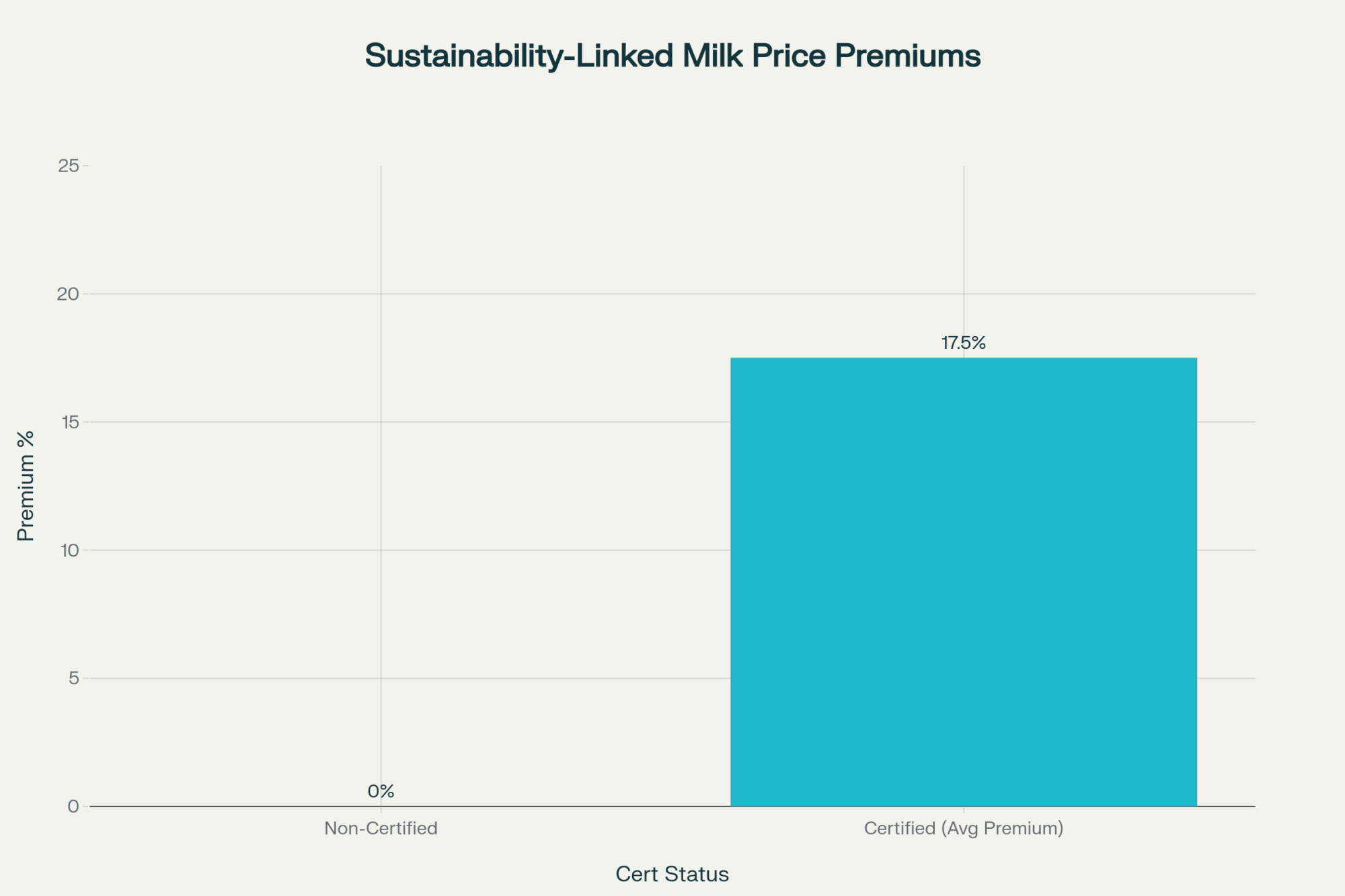
Here’s something that caught my attention—sustainability is no longer just a buzzword. It’s impacting profitability. Wageningen University research shows sustainable farms can boost income by around €6.22 per 100 kilograms of milk produced, combining cost savings and price premiums. For a mid-sized dairy, that adds up fast.

Buyers are increasingly seeking sustainability certifications, paying up to 25% premiums for compliant farms. What’s encouraging is that sustainable practices also tend to improve herd health and production consistency—so it’s a genuine win-win.

Carbon footprints are part of the equation, too. New Zealand’s dairy farms average around 0.9 kg of CO2 per liter of milk production, compared with India and Brazil, where footprints can be two to three times higher. This is starting to influence market access and pricing structures in ways we hadn’t seen before.

Trade Dynamics Keep Us on Our Toes

Trade tensions, such as the ongoing challenges between the US and Canada, have resulted in billions of dollars lost in trade opportunities. Meanwhile, Australia and New Zealand are strategically benefiting from shifting Chinese demand and their sustainability advantages, while Russia’s subsidy of export logistics is shaking up the competitive landscape.

Certification, auditing, and traceability now form essential gatekeepers to premium markets, favoring farms with robust infrastructure. That puts farms in regions like Europe and New Zealand in a strong position, while farms in lower-resource areas need to adapt rapidly.

The Plant-Based Reality Check

The plant-based market certainly has traction, holding about 12% in mature dairy markets. But it’s not the tsunami that some predicted. Meanwhile, lactose-free dairy is gaining quietly but steadily, appealing to consumers wanting milk without digestive issues.

We’re also seeing strong growth in niche categories, such as organic, A2, and probiotic-enhanced milks, many of which command price premiums of 15-25%. And interestingly, consumers increasingly blend plant-based and dairy products depending on use—what’s sometimes called “hybrid consumption.”

What This Means for Your Operation

So, what’s the takeaway for you—whether you’re running a 500-cow operation in Wisconsin, a family dairy in Punjab, or a cooperative setup in Canterbury? Understand the unique strengths and circumstances of your operation.

Higher-cost regions can benefit from targeting efficiency and sustainability to tap into premium markets. That means mastering fresh cow protocols, optimizing dry period management, and meeting the certification requirements that open doors to better pricing.

Emerging regions should emphasize scalable, cost-appropriate technologies and gradual efficiency improvements while maintaining their cost advantages.

One-size-fits-all strategies are a thing of the past. Success comes down to mastering the details—fresh cow care, transition management, butterfat performance—while adapting to your local market and environment.

There’s a lot to consider, of course, but what’s encouraging is that curiosity, flexibility, and informed decision-making are what will keep the best farms moving forward. After all, adapting to change has always been at the heart of successful dairy farming.

The key is staying ahead of where the industry’s heading rather than just reacting to where it’s been.

Complete references and supporting documentation are available upon request by contacting the editorial team at editor@thebullvine.com.

Learn More:

  • Global Dairy Market Trends 2025: European Decline, US Expansion Reshaping Industry Landscape – This article provides a strategic market overview, revealing how production trends in Europe and the US are creating new opportunities. It offers a crucial context to the main article’s global realignment theme by showing how regional economic shifts directly impact your business, helping you prepare for future market volatility.
  • The Future of Dairy Farming: Embracing Automation, AI, and Sustainability in 2025 – While the main piece touches on technology, this article dives deeper into how specific innovations like whole-life monitoring and AI are becoming essential. It offers a future-oriented perspective and shows how these smart tech choices can deliver significant efficiency gains and improve herd health, positioning your farm for long-term competitiveness.
  • 7 Proven Strategies to Perfect Silage Quality for Maximum Milk Production – This tactical guide provides actionable, on-farm strategies for improving feed management, a key driver of profitability. It complements the main article’s focus on efficiency and sustainability by offering practical steps you can implement immediately to increase milk quality, a crucial factor for accessing premium markets.

Join the Revolution!

Join over 30,000 successful dairy professionals who rely on Bullvine Weekly for their competitive edge. Delivered directly to your inbox each week, our exclusive industry insights help you make smarter decisions while saving precious hours every week. Never miss critical updates on milk production trends, breakthrough technologies, and profit-boosting strategies that top producers are already implementing. Subscribe now to transform your dairy operation’s efficiency and profitability—your future success is just one click away.
NewsSubscribe
First
Last
Consent

Why This Dairy Market Feels Different – and What It Means for Producers

USDA reports U.S. milk production up 3.5% in July 2025—a surge not seen in years. Are you milking all you can

EXECUTIVE SUMMARY: Colleagues, here’s what we’re seeing: The U.S. dairy industry is undergoing a seismic shift driven by unprecedented productivity gains and structural market changes that are rewriting the rules of profitable farming. Recent USDA data shows milk production jumped 3.5% in July 2025, with per-cow yields climbing 36 pounds to 2,081 pounds—that’s nearly 2% year-over-year growth from fewer, more efficient operations. Meanwhile, the 2022 Census reveals almost 40% of smaller dairy farms have exited since 2017, consolidating production into larger herds that now account for 67% of national milk volume. This isn’t just about scale anymore—it’s about technology adoption as the key differentiator between survival and profitability. Wisconsin trials we’ve analyzed show farms integrating digital monitoring and genomic tools achieve milk yield improvements of 8-15% within 18 months. Globally, we’re seeing similar patterns, with European production up 1.2% this summer despite environmental pressures. Looking ahead, this means operations that swiftly adopt data-driven practices and systematic technology won’t just survive market volatility—they’ll dominate it. The conversation about dairy’s future isn’t theoretical anymore… it’s happening in barns across the country right now, and the results speak for themselves.

KEY TAKEAWAYS

  • Digital Monitoring Delivers Immediate ROI: Adopting integrated health and feeding monitors can boost milk yield by up to 15% within 18 months—we’re talking real production gains plus improved animal welfare that pays for itself (Wisconsin research trials).
  • Genomic Selection Acceleration: Targeted breeding programs now deliver nearly 2% annual productivity gains per cow, essentially doubling traditional genetic progress rates—meaning your breeding decisions today impact profitability for years (Recent genetic advancement studies).
  •  Scale Strategy Shift: With larger herds producing 67% of U.S. milk, strategic technology choices now determine market power more than herd size alone—efficiency trumps scale when margins tighten (USDA Census analysis).
  • Infrastructure Investment Priority: Nearly 40% of smaller farms face broadband limitations that lock them out of modern management systems—upgrading connectivity isn’t optional anymore, it’s survival (University Extension connectivity surveys).
  • Financial Planning Imperative: Complete automation packages typically require $500,000-$800,000 over 18 months, making debt restructuring and strategic financing crucial before technology adoption—plan the money before you plan the machines (Industry modernization cost analysis).
dairy farm profitability, milk production trends, dairy technology, herd management, farm efficiency

Lately on farms across Wisconsin and the Midwest, you can hear something stirring—prices are low, milk’s flooding the market, and conversations in the feed aisles have taken a serious tone. This isn’t your typical down cycle. Something structural is changing.

Production is Growing, Despite Shrinking Farm Numbers

USDA’s report from July 2025 tells the real story: 24 major dairy states produced 18.8 billion pounds of milk, a 3.5% increase from last year. What really jumps out is per-cow production, rising 36 pounds to 2,081 pounds in July 2025. Combine that with an extra 154,000 cows, now at 9.04 million head, and we’re swimming in milk.

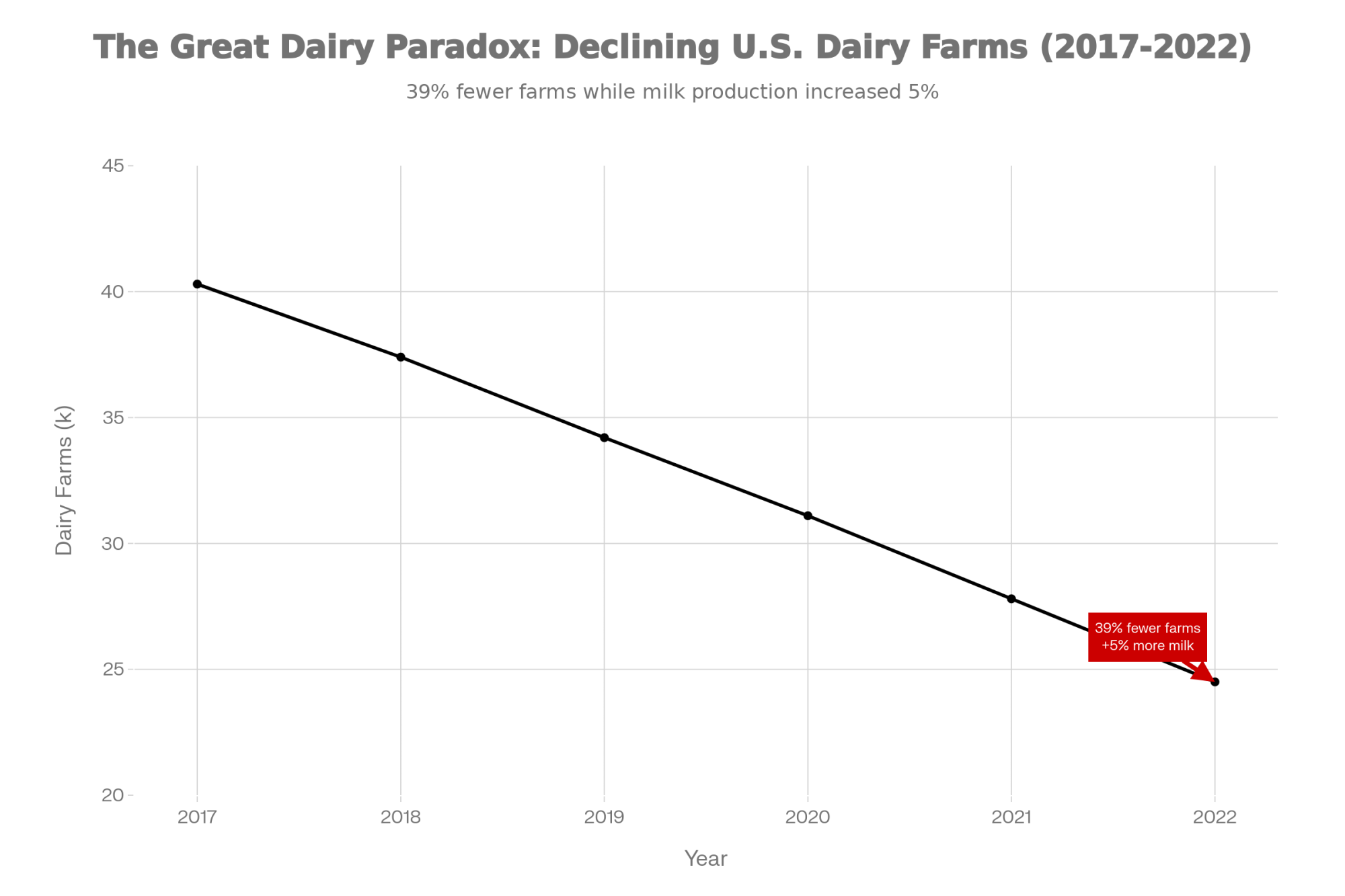
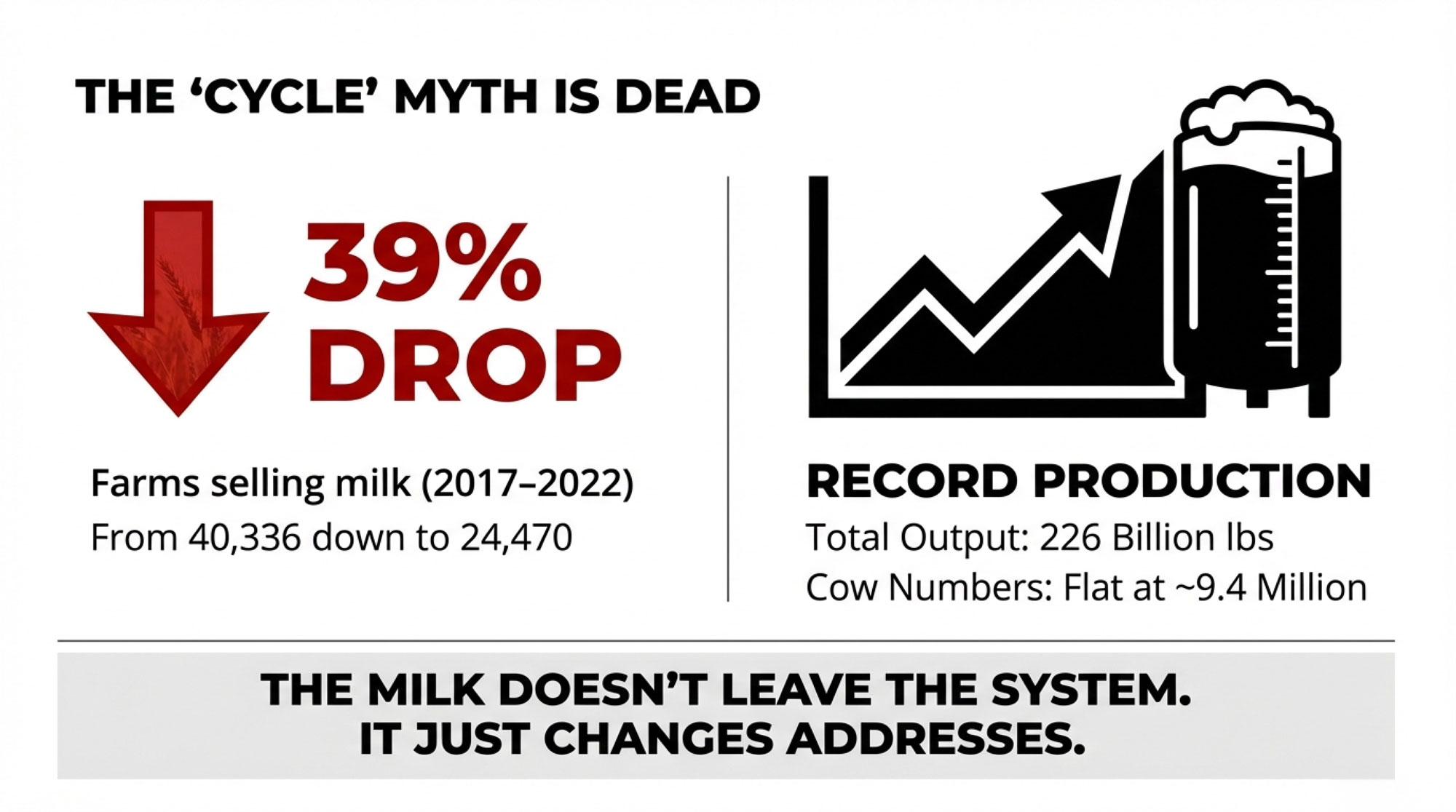
However, the number of farms continues to decline. The USDA Census shows a drop to 24,082 dairy farms in 2022—down nearly 40% since 2017. Larger operations now produce roughly 67% of U.S. milk.

Prices Are Falling Hard

Butter prices plunged to $1.86 per pound, the lowest since 2021, with cheddar hovering around $1.68. October Class III milk futures settled at .31, with no signs of a bounce back soon.

This isn’t a seasonal blip; it’s a market overhaul fueled by new technology and herd management.

Technology’s Growing Role

In a 2025 Minnesota Extension survey, around two-thirds of dairy farms use automated calf feeders, but robotic milking is found on only 23% of smaller herds under 500 cows. Wisconsin studies document 8-15% milk production increases within the first 18 months of integrated technology adoption.

Genetics keep pushing progress too: genomic selection has nearly doubled annual productivity gains, now near 2% per year.

The Growing Divide

The efficiency gap widens as better-equipped farms turn profits at prices leaving others behind. Those who aren’t monitoring feed, health, and reproduction data closely risk falling out of the race.

Consolidation’s Impact

USDA’s 2022 Census notes that despite losing over 15,000 dairy operations since 2017, total milk output rose 5% during the same period. Larger operations have taken in assets from exited farms, raising overall production efficiency.

What Europe’s Data Tells Us

According to CLAL.it, EU milk production rose by 1.2% year over year in July 2025, despite environmental and health challenges. This global trend reinforces the structural shifts dairy farmers face everywhere.

Regional Challenges and Connectivity Issues

While some Midwest dairies have strong broadband and support systems, almost 40% of smaller farms struggle with internet access, limiting technology adoption. Grazing systems in Western states add complexity due to different management styles and tech compatibility issues.

The Cost of Keeping Up

Modernization typically costs $500,000 to $800,000 over about 18 months, including:

  • $80-$120 per cow for sensor collars
  • $150,000-$300,000 for automated feeding systems
  • $250,000-$500,000 per robotic milking system
  • $25,000-$75,000 annually for data integration and software

Reorganizing debt obligations comes before investing in tech upgrades for many farms.

Next Steps for Your Operation

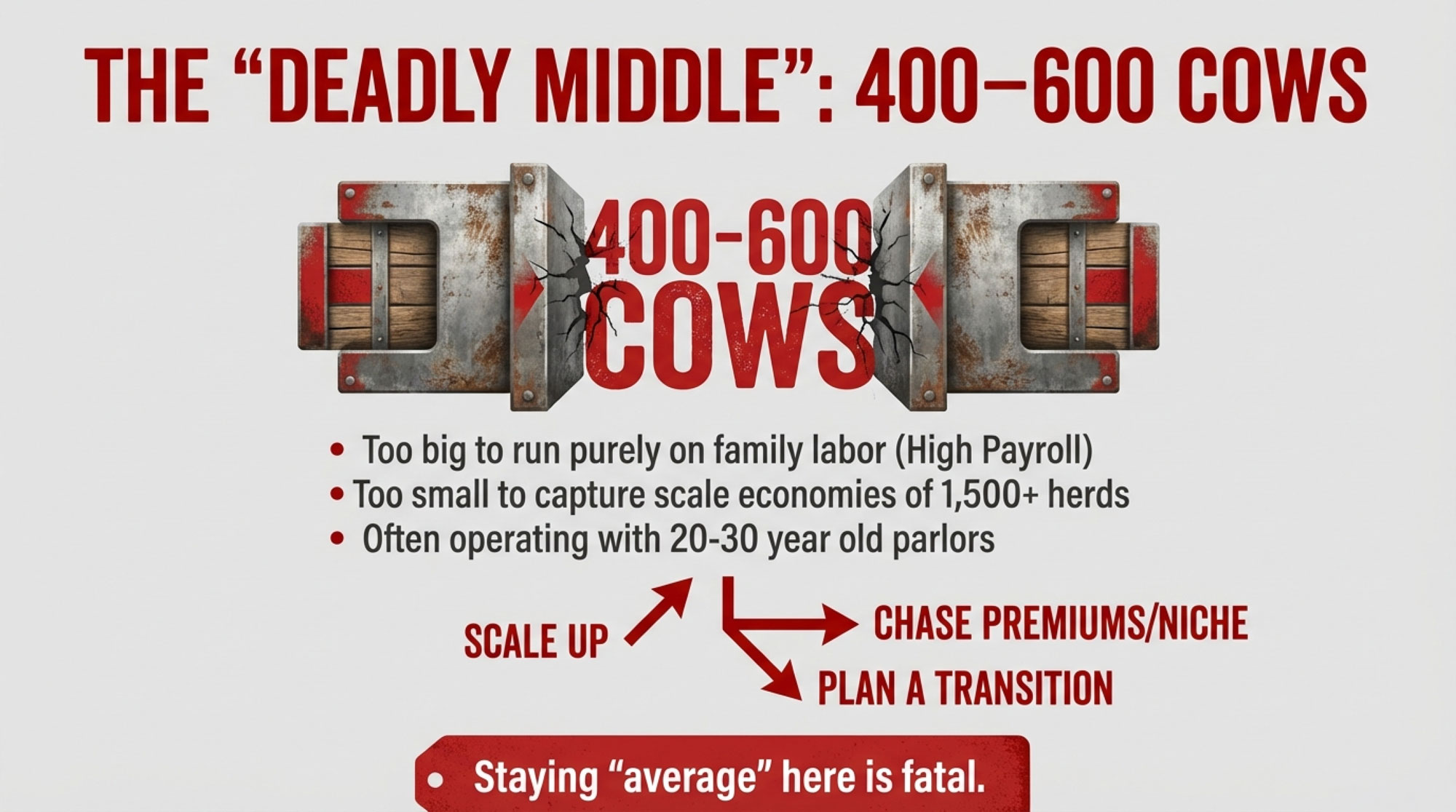
If you milk fewer than 400 cows, it’s time to either ramp up efficiency fast or reconsider your options.

For operations milking 400-800 cows, move stepwise: start with health monitoring tech, then feeding systems, and finally milking automation.

Above 800 cows? Use your scale to invest strategically and consider acquiring distressed neighbors.

Beware the Lure of Price Spikes

Experience shows price jumps to $22+ lull many producers into postponing critical investments—only to get hit harder when prices fall again.

Those who invest steadily through the cycles are the ones who survive and thrive.

The Future: Three Clear Paths

  1. Ultra-efficient commodity producers thrive at $15-$17 milk
  2. Premium producers add value to command $20-$25
  3. Niche artisanal farms charge $30+

If you don’t fit clearly in one, it’s a very tough road ahead.

The Bottom Line

The days of the traditional dairy model are over. This industry demands you bring tech and data into every decision.

Are you ready to be a tech-driven dairy business? Or will you be left behind in the changing herd?

All data reflects USDA Monthly Milk Reports, 2022 USDA Census, CME Market Data, Minnesota Extension Surveys, Wisconsin Research Trials, and European Production Data from CLAL.it.

Complete references and supporting documentation are available upon request by contacting the editorial team at editor@thebullvine.com.

Learn More:

Join the Revolution!

Join over 30,000 successful dairy professionals who rely on Bullvine Weekly for their competitive edge. Delivered directly to your inbox each week, our exclusive industry insights help you make smarter decisions while saving precious hours every week. Never miss critical updates on milk production trends, breakthrough technologies, and profit-boosting strategies that top producers are already implementing. Subscribe now to transform your dairy operation’s efficiency and profitability—your future success is just one click away.

NewsSubscribe
First
Last
Consent

America’s Dairy Map Is Moving: Why the Plains Are Winning the Profitability Battle

Where should you really be milking in 2025? Hint: It’s not where you think.

EXECUTIVE SUMMARY: Here’s the deal: dairy’s economic heart is shifting to the Plains, fast. Kansas milk production jumped 18.64%, South Dakota’s rose 10.64%, and the combined investment in processing has topped $2 billion since 2020. Those numbers aren’t just stats—they mean smaller hauling costs, stronger margins, and better feed efficiency according to Kansas State’s latest research. Meanwhile, Wisconsin lost over 300 farms, but milk production’s holding steady by consolidating on bigger, more efficient farms. Globally, efficiency and cost advantages drive production shifts—and the US Plains are no exception. If you’re considering where to grow or reinvest, it’s time to examine the economics, from water reliability to mailbox prices. This isn’t about tradition—it’s about profitability. You should be watching these trends closely and adapting now.

KEY TAKEAWAYS:

  • Kansas and South Dakota reported milk production gains of over 10% in 2025, driven by infrastructure investments. Producers should evaluate nearby processing plants to reduce hauling costs and boost margins in today’s volatile market.
  • Feed conversion improvements in new Plains dairies give a measurable cost advantage—start tracking feed efficiency with DairyComp and compare to regional benchmarks for better ROI.
  • California faces high regulatory costs (~$245/cow) but offsets some with digester and LCFS credits—producers should assess environmental programs’ ROI and explore similar revenue streams.
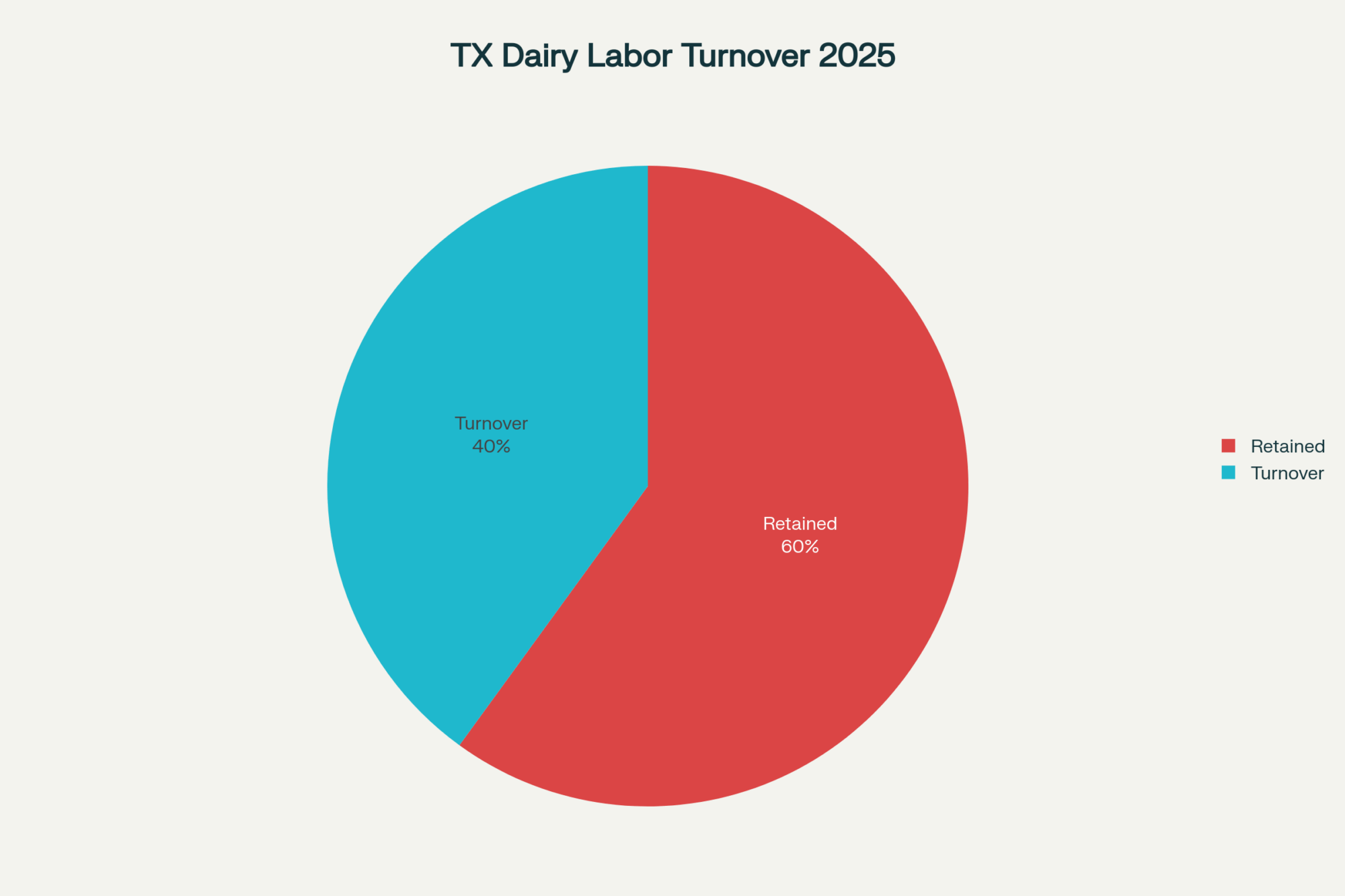
  • Labor turnover exceeds 40% in parts of Texas; implementing effective retention practices can help stabilize operations, reduce costs, and improve herd performance in the 2025 tight labor market.
  • Land values in key Plains expansion areas jumped 22%, so timing land purchases carefully and monitoring cropland prices are vital for strategic growth and profitability.

While traditional dairy states grapple with rising costs and regulatory pressures, a new economic reality takes hold in America’s heartland. According to August 2025 data from USDA-NASS, Kansas posted an 18.64% jump in milk production from the previous year, with South Dakota following at 10.64%. Since 2020, milk output has grown the fastest in Texas, South Dakota, and Kansas, while legacy states like Wisconsin and California have maintained their volume through consolidation, rather than by adding farms. The net effect is more milk being produced closer to new processing plants — and farther from some older ones.

The Data Driving the Shift

The numbers from Kansas are striking, with the state delivering an 18.64% increase in milk production from the previous year, followed closely by South Dakota at 10.64%. Texas continues to cement its position, producing 1.51 billion pounds in July while steadily expanding its herds.

What really stands out is how these newer Plains dairies are improving feed conversion. Agricultural economists at Kansas State University reported meaningful efficiency gains, meaning these farms get more milk from every pound of feed compared to older operations — a critical advantage when feed costs remain stubbornly high.

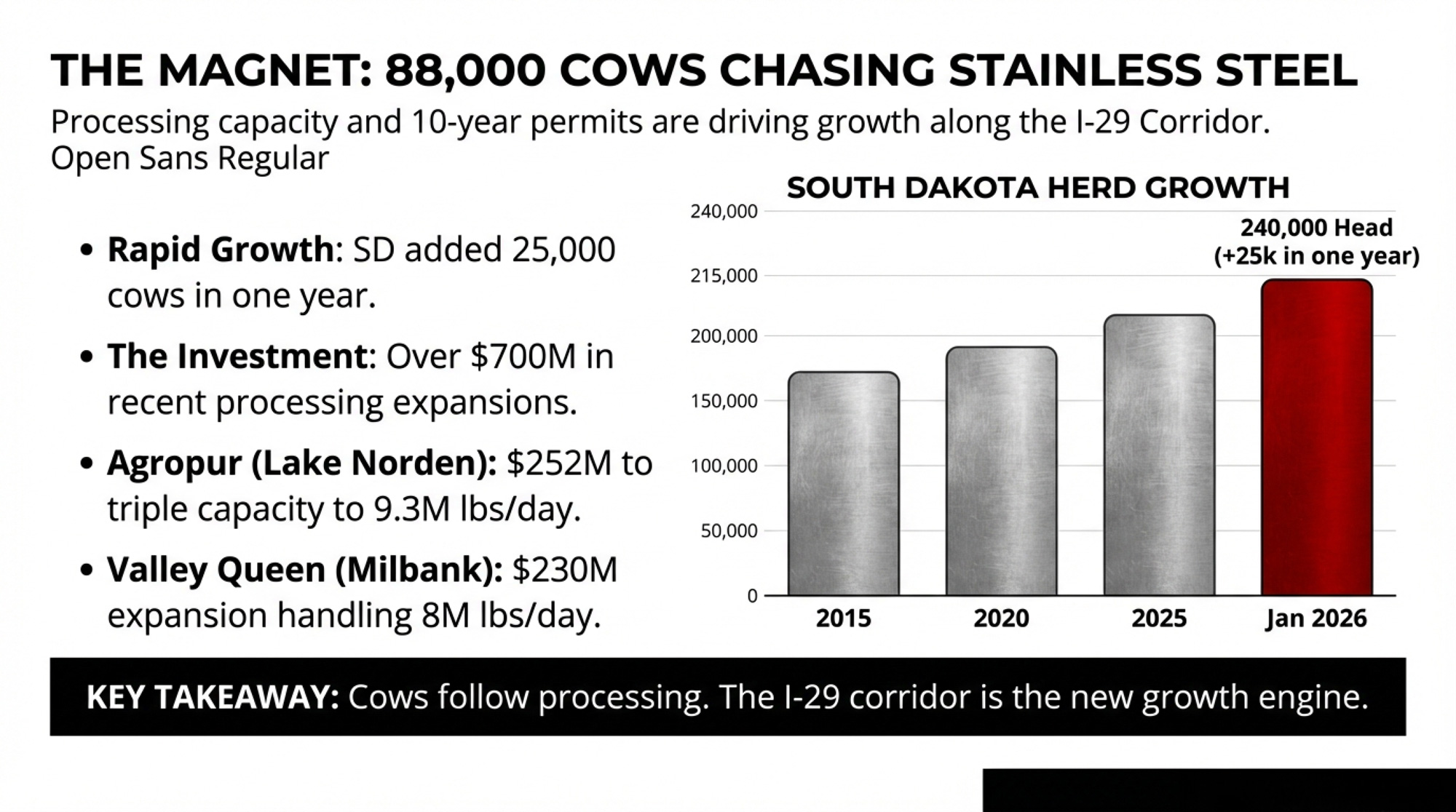
South Dakota’s growth is similarly well-founded. Herd numbers are up, and the state has seen substantial investment in infrastructure and feed supply, supporting sustained expansion.

Meanwhile, Wisconsin faced the closure of 313 dairy farms in 2024, highlighting the pressure on producers in traditional regions. However, production has remained resilient as dairy cows are consolidated on fewer, more efficient farms, helping maintain output and profitability.

California faces similar challenges — but with key advantages. California dairy producers benefit from proximity to major processors, higher milk solids, and revenue streams from digester-generated energy and Low Carbon Fuel Standard (LCFS) credits, which can offset some regulatory costs.

The Core Economics: Water, Labor, and Regulation

Water adds considerable complexity. Parts of the High Plains, particularly western Kansas and the Texas Panhandle, rely heavily on the Ogallala Aquifer, where water levels are declining rapidly. However, other regions, like eastern South Dakota and Nebraska, experience more stable groundwater supplies. For long-term investments, reliability and costs — including heat stress-related cooling — must factor heavily into planning.

California producers face strict water regulations, which drive up costs and incentivize innovative solutions. Regulatory costs are high, but partly offset by additional revenue from environmental credits and proximity to processing facilities.

Labor is another hurdle. Automation and efficient facility design help newer Plains dairies reduce labor per hundredweight of milk. Wisconsin and California are adapting—but the learning curves and capital needs remain significant.

Regulatory compliance costs in California are among the highest in the country — estimated at roughly $245 per cow annually, compared with $70 per cow in Plains regions. But environmental credits help some producers offset these expenses. Still, overall operational costs remain a significant factor in expansion decisions.

Where the Smart Money Is Flowing

Since 2020, investors have poured over $2 billion into dairy processing infrastructure across Kansas, Texas, and South Dakota, including expansions at the Hilmar Cheese plant in Kansas, Leprino Foods facilities in Texas and Colorado, and Valley Queen Cheese’s plant in South Dakota. These investments support and attract growing milk supplies in the region.

One 1,800-cow Plains dairy operator, speaking on the condition of anonymity, said, “The cost advantages out here allow us to reinvest and grow in ways that weren’t possible back East.”

Access to favorable financing tends to favor larger operations, though exact rates vary and are often proprietary.

Automation investments, such as milking systems, typically pay back in 18-24 months on average in these growth areas, driven by increased production and labor savings.

Proximity to processing plants is also a game-changer. The Plains benefit from facilities like Hilmar Cheese in Kansas, Leprino’s operations in Texas and Colorado, and Valley Queen in South Dakota. Herds delivering milk over shorter distances avoid the margin erosion caused by long-distance hauling.

Growth Pains: Risks to Watch

The National Weather Service highlights increasing weather variability in the Plains, posing risks to feed costs and cow comfort management.

Labor challenges persist, with turnover rates exceeding 40% at Texas dairies, according to the Texas Association of Dairymen.

Export demand appears promising, with the USDA projecting 4-6% growth for 2025; however, trade policies pose risks to maintaining this momentum.

Land prices are climbing rapidly. The Kansas City Fed reports a 22% increase in cropland values in Western Missouri over the past year, restricting the window for affordable expansion.

Disease outbreaks, animal movement restrictions, and gaps in insurance coverage for extreme weather add additional risk layers.

Why Scale Matters

Research by Cornell University confirms that dairies running more than 2,000 cows achieve significant economic advantages across geographies.

Your Strategic Takeaways

Monitor mailbox pricing and basis differences carefully, as these swings impact profitability more than volume changes. Track feed and forage costs, including sourcing silage and alfalfa locally versus transporting feed into expanding regions. Factor hauling distances and processing capacity availability into your cost analysis.

Consider potential impacts from upcoming federal milk marketing order reforms, which may alter class price relationships and influence regional payouts.

Test the sensitivity of your operation to 15% variations in feed costs, $1 modifications in milk prices, and additional cooling hours due to heat stress to refine strategic plans.

Look, I know change isn’t easy in this business. But the numbers don’t lie—and neither do your margins. Whether you’re considering expansion, exploring new technology, or simply trying to stay competitive, these shifts are happening whether we like it or not.

What do you think? Are you witnessing any of this unfold in your area?

Complete references and supporting documentation are available upon request by contacting the editorial team at editor@thebullvine.com.

Learn More:

  • The Unseen Costs of Employee Turnover on Your Dairy – Our analysis flags the 40% turnover in Texas as a major risk. This article breaks down the hidden financial drain of that churn and provides practical strategies for improving employee retention to cut costs and stabilize your workforce.
  • Brace for Impact: Why 2025’s Dairy Price Surge Masks a $780 Billion Industry’s Perfect Storm – Go beyond regional shifts and explore the global market volatility impacting your bottom line. This strategic analysis reveals how to interpret complex market signals and position your operation to withstand the economic pressures of 2025 and beyond.
  • Is Your Dairy Ready for the AI Revolution? – We’ve established efficiency as a key driver for growth. This piece explores the next frontier: artificial intelligence. It demonstrates how to leverage predictive analytics for superior herd health, reproductive performance, and enhanced profitability in a competitive future.

Join the Revolution!

Join over 30,000 successful dairy professionals who rely on Bullvine Weekly for their competitive edge. Delivered directly to your inbox each week, our exclusive industry insights help you make smarter decisions while saving precious hours every week. Never miss critical updates on milk production trends, breakthrough technologies, and profit-boosting strategies that top producers are already implementing. Subscribe now to transform your dairy operation’s efficiency and profitability—your future success is just one click away.

NewsSubscribe
First
Last
Consent

Your Feed Bill Just Dropped – But Here’s What Those June Numbers Really Tell Us About the Future

Milk yields jumped 33 lbs per cow—what’s really driving this surge on farms like yours?

EXECUTIVE SUMMARY: Here’s what I’m seeing across the coffee shop circuit lately… milk production per cow climbed 33 pounds this year, and it’s not from throwing more animals at the problem. Smart operators are dialing in precision feeding and genomics, seeing feed efficiency gains hitting 8-12%. With corn prices sitting around $4.20 per bushel, a 500-cow operation can pocket over $1,500 monthly in feed savings alone. Globally, US dairy’s becoming the go-to partner for international buyers—they’re calling us “strategic partners” now, not just suppliers. The window’s wide open, but it won’t stay that way forever. Time to get serious about these tools before your neighbors beat you to it.

KEY TAKEAWAYS

  • Boost feed conversion 8-12% by implementing precision nutrition protocols—start by tracking individual cow intake and adjusting your TMR formulations based on production groups
  • Lock in $1,500+ monthly savings on a 500-cow operation by securing corn contracts under $4.50/bushel while prices remain historically low
  • Increase reproductive efficiency 15-23% through automated monitoring systems—but only if you invest in proper staff training and phased rollouts
  • Capture export premiums by maintaining top-tier milk quality and protecting margins with Dairy Revenue Protection enrollment (available quarterly)
  • Maximize genetic potential using genomic testing to identify high-value breeding decisions—ROI typically shows within 12-18 months on commercial operations

Examining these latest milk production figures, something is happening that has genuinely fired me up about where this industry’s headed. I mean, when was the last time you saw numbers like this? The 24 major dairy states cranked out 18.5 billion pounds in June – that’s 3.4% over last year, according to the USDA’s latest data drop – but here’s what really caught my attention…

This isn’t your typical “throw more cows at the problem” story we’ve been seeing for decades.

The thing about these numbers that nobody’s talking about…

What strikes me most about this production surge is how it’s happening. We’ve got 9.469 million head nationally (146,000 more than June 2024), but these girls are averaging 2,031 pounds per cow – a solid 33-pound jump from last year.

If you’ve been in this business long enough, you know that kind of per-cow improvement doesn’t just… happen.

I was talking to Jake Morrison out in Tulare County last week – he’s running 2,400 head, and his June numbers were up 41 pounds per cow year-over-year. “Andrew,” he says, “we didn’t change our genetics overnight. This is feed efficiency and management paying off.” And he’s absolutely right.

According to recent research from Penn State and UC Davis, precision nutrition programs deliver 8-12% feed efficiency gains when implemented correctly. This isn’t some consultant’s pipe dream anymore – this is happening on commercial dairies right now, and the June numbers prove it.

The second quarter hit 58.7 billion pounds, up 2.4% year-over-year. That turnaround from a sluggish first quarter tells you everything about how quickly this industry pivots when the economics align.

What’s driving the efficiency revolution

Here’s where it gets interesting – and I’ve been tracking this across multiple regions. The smart operators aren’t just celebrating cheaper corn… they’re completely rethinking their approach to nutrition management.

Tom Vlaeminck’s group at Cornell published findings earlier this year showing that targeted amino acid supplementation can improve milk protein yield by 0.8-1.2 pounds per cow daily while actually reducing crude protein intake. When you multiply that across a 1,000-cow operation… we’re talking real money here.

A Fresno dairy has been implementing precision feeding protocols since January. “We’re seeing 6% better feed conversion on average,” they told me, “but some fresh cow groups are pushing 10-11% improvement.” Their feed costs dropped $127 per cow per month while maintaining production.

That’s the kind of efficiency that shows up in these national numbers.

Feed costs are finally working in our favor (for now)

Herd SizeDaily Corn Consumption (lbs)Monthly Savings at $4.20/buAnnual Impact
100 cows800$300$3,600
500 cows4,000$1,500$18,000
1,000 cows8,000$3,000$36,000
2,500 cows20,000$7,500$90,000

Based on current market calculations and the USDA’s latest WASDE projections, corn is projected at $4.20/bushel, presenting opportunities we haven’t seen since 2019. For a 500-cow herd feeding 8 pounds of corn per head daily, that price drop translates to over $1,500 monthly savings – assuming you’re smart about procurement timing.

But here’s the thing – the producers winning right now aren’t just buying cheaper grain. They’re leveraging this window to invest in systems that’ll pay dividends when feed costs inevitably climb again.

The global vacuum creates our advantage

This domestic efficiency surge is occurring while global production is stumbling, creating a unique competitive advantage. Ben Buckner from AgResource Company nailed it when he told me last month: “We can see generally no one in the world producing more milk than in the previous year. That’s the driver you need to spark fear in the marketplace.”

For the US, this means our efficiency-driven growth is meeting a world market hungry for products. Class III futures have held above $22 per hundredweight for most of the second half, and when combined with reduced feed costs, it adds up to margins we haven’t enjoyed since 2014.

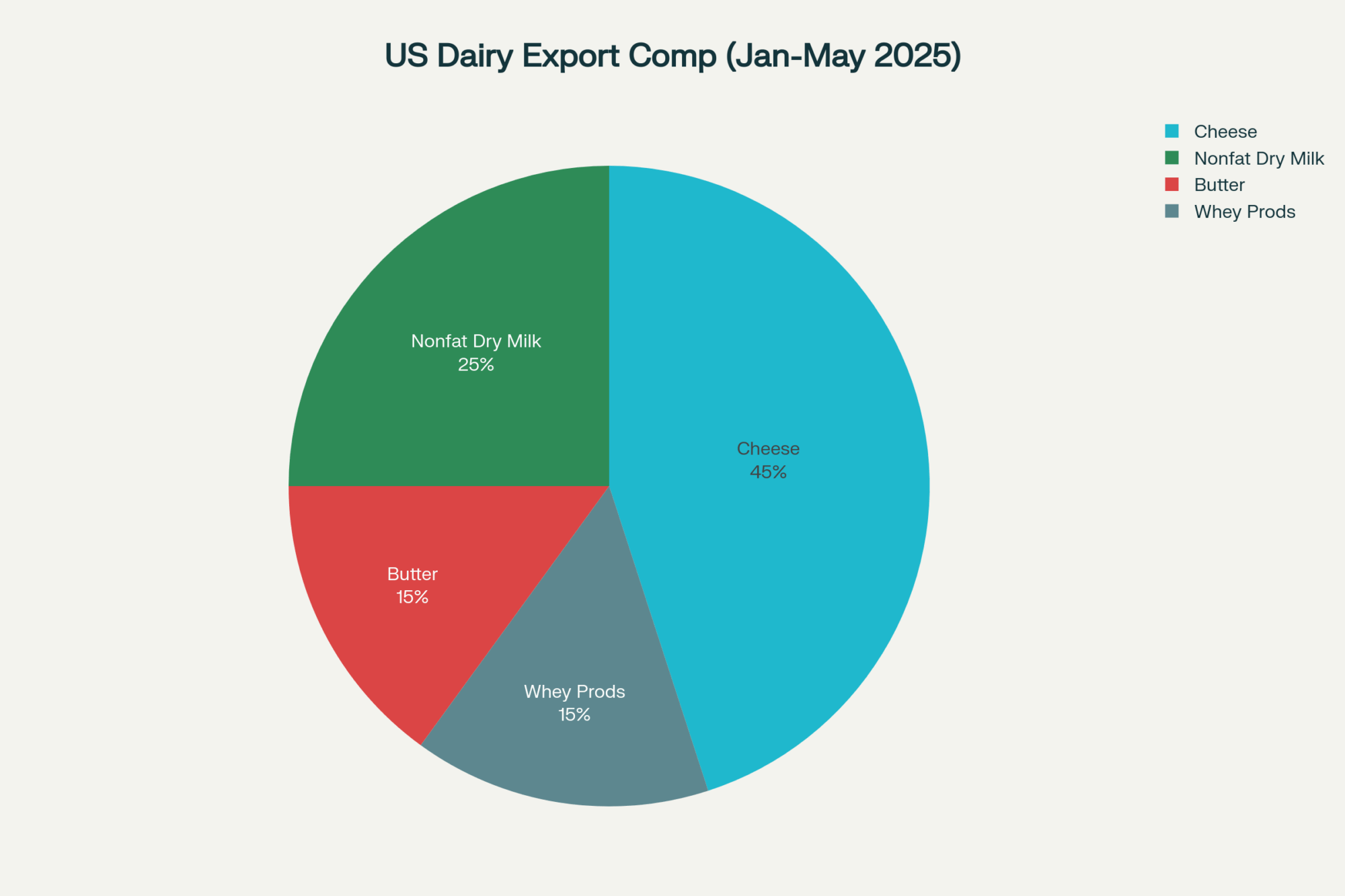
The timing couldn’t be better. US dairy exports hit $3.83 billion through May 2025 – up 13% year-over-year – with cheese exports setting monthly records. Notably, USDEC data show that our pricing competitiveness has improved dramatically against European suppliers, a trend observed across multiple export markets.

Recent case study analysis shows many farms adopting systematic precision nutrition protocols are achieving ROI within 12-18 months. That’s not theoretical – that’s documented on actual operations.

StrategyImplementation TimeframeAnnual Benefit per CowROI Timeline
Precision Nutrition Programs3-6 months$150-2006-12 months
Genomic Testing6-12 months$75-12512-18 months
Automated Milking Systems12-18 months$180-25018-24 months
Feed Price HedgingImmediate$50-150 (variable)Immediate
Health Monitoring Tech6-9 months$100-1757-14 months

The tech revolution is finally delivering results

I’ll level with you – I’ve been skeptical of dairy tech promises for years. Too many vendors are selling dreams that don’t pencil out when you crunch the real numbers on actual farms.

But what I’m seeing now is different, and it’s got me cautiously optimistic.

What’s actually working (and what isn’t)

Recent research from the Journal of Dairy Science indicates that automated monitoring systems can improve reproductive efficiency by 15-23% when implemented correctly in conjunction with trained staff. The key phrase there is “properly implemented with trained staff,” which explains why some operations see dramatic improvements while others see minimal impact.

I spent time at Rick Peterson’s place in Minnesota last month – 950 cows, a full robotic milking system installed two years ago. “The first year was rough,” he admits. “We thought we could just flip a switch and everything would improve. Reality check – technology amplifies good management, it doesn’t replace it.”

His second year? Milk production up 18%, somatic cell count down 40%, and labor costs reduced by $23,000 annually. But that came after investing heavily in staff training and system optimization.

The regional story tells different tales

StateProduction Increase (Million lbs)Primary Growth Driver% Change YoY
Idaho+135Robotic milking adoption+9.7%
Texas+131Feed management systems+9.5%
California+91Efficiency improvements+2.7%
Kansas+75Strategic expansion+19.0%
South Dakota+45Technology integration+11.5%

What’s fascinating is how technology adoption varies dramatically by region, and the June production numbers reflect these differences.

Idaho’s 135 million pound year-over-year increase comes primarily from robotic milking adoption reaching critical mass, according to local extension data. Texas added 131 million pounds through strategic feed management systems and investments in climate-controlled housing for its expanding operations.

According to industry reports, precision feeding systems can generate annual savings of $35,000 to $45,000 for a 1,000-cow operation while reducing environmental nitrogen losses by 20%. That’s not just good economics – it’s essential insurance in an increasingly regulated environment.

But here’s what nobody talks about… the payback periods for integrated monitoring platforms are averaging 7-14 months for operations that do their homework upfront. The farms that struggle? They rush into wholesale technology changes without proper planning.

Global markets are opening doors (while they last)

The international picture is creating opportunities that might not be here tomorrow, and that’s what keeps me up at night.

European production has stumbled badly this year – Bluetongue disease hit harder than expected, and their environmental regulations are constraining expansion more than most analysts predicted. Meanwhile, New Zealand continues to struggle with supply growth constraints after its environmental framework changes.

Infrastructure timing couldn’t be better

Two major cheese processing facilities launched operations early this year, adding 360 million pounds of annual capacity right as production expands. According to Ever.Ag’s analysis shows that US butter maintains a 30-35% price advantage over global competitors after adjusting for fat content.

The language from global buyers has shifted, a point Mike North from Ever.Ag drove home:

“Global buyers are referring to US dairy suppliers as ‘strategic partners.'”

However, what worries me is that this window might not remain open if global competitors recover or trade policies shift unexpectedly. The smart money is capitalizing now while the advantage exists.

Export momentum builds on efficiency gains

US Dairy Export Composition Jan-May 2025

What’s particularly encouraging is how our efficiency improvements directly translate to increased export competitiveness. When you can produce more milk per cow with lower feed inputs, you create sustainable cost advantages that persist even when global markets tighten.

A Wisconsin operation I visited last month exports 40% of their cheese production. “Five years ago, we couldn’t compete internationally,” the owner told me. “Now, with our cost structure, we’re pricing European suppliers out of Asian markets.”

The challenges nobody wants to discuss publicly

Let’s be realistic about what’s ahead, because it’s not all sunshine and cheap corn.

The heifer crisis is real

Replacement heifer inventories sit at 47-year lows according to the USDA’s latest cattle inventory report. This fundamentally constrains traditional expansion strategies. You can optimize existing cows only so much before hitting biological limits.

Sarina Sharp from Daily Dairy Report hit something every producer I know is dealing with: “This heifer shortage means cows in the barn are older and less efficient on average than normal.”

But here’s where creative operators are adapting – extended lactation protocols, precision breeding programs, and strategic crossbreeding are maximizing genetic potential within existing herds. It’s not ideal, but it’s reality.

Weather dependency creates vulnerability

We’re essentially betting on achieving record yields for a third consecutive year with little margin for error. One major weather event could turn these favorable feed economics on their head overnight.

I was speaking with grain traders in Chicago last week – they’re concerned about subsoil moisture levels across key corn-producing regions. “We need near-perfect weather to hit these yield projections,” one told me. “Any significant deviation and corn prices jump fast.”

Technology headaches are real

Data security protocols, staff training requirements, backup system necessities… these aren’t trivial implementation challenges. The leading operations I track are implementing phased rollouts with comprehensive staff development rather than diving headfirst.

And the threat of HPAI hasn’t vanished. As of this month, USDA APHIS confirms cases in nearly 100 herds across 12 states. Smart biosecurity investments provide competitive advantages while protecting against production disruptions; however, the threat remains.

And here’s something that genuinely concerns me – domestic demand remains frustratingly flat. If export markets soften and we can’t absorb increased production domestically, we could see price pressure that quickly eliminates these efficiency gains.

What the smart operators are doing right now

The successful operations I’m tracking focus on three key areas, and they’re not waiting for perfect conditions.

Strategic feed program optimization

They’re optimizing based on total economic value rather than chasing commodity bargains. Danny Rodriguez, located in California’s Central Valley, showed me his procurement strategy – he locks in feed ingredients 6-8 months ahead by using options contracts, which protects against price spikes while maintaining flexibility.

“We’re not trying to time the market perfectly,” he explains. “We’re managing risk while capturing efficiency gains.”

Systematic technology implementation

Second, they’re implementing technology systematically with proper training rather than rushing into wholesale changes. The farms seeing real productivity increases aren’t the ones buying everything at once.

Recent work from USDA economists emphasizes that financial risk management through Dairy Revenue Protection programs is crucial, particularly given the anticipated volatility in feed prices and potential market fluctuations ahead. This isn’t the time to get caught without protection.

Building competitive moats

What’s fascinating about this June production surge is that it represents genuine, efficiency-driven growth, creating sustainable competitive advantages. The combination of strategic herd management, precision technology, and favorable input costs allows well-managed operations to capture both immediate profitability and long-term market positioning.

But here’s what you need to understand: this opportunity has an expiration date.

“This opportunity has an expiration date.”

Feed cost advantages could evaporate with weather events. Export markets may shift in response to policy changes. Technology ROI depends on proper implementation and staff buy-in.

TechnologySetup PhaseTraining PhaseOptimization PhaseFull ROI Achieved
Robotic Milking3-6 months6-12 months12-18 months18-24 months
Precision Feeding1-2 months2-4 months4-8 months6-12 months
Health Monitoring1-3 months3-6 months6-9 months9-15 months
Automated Systems6-12 months6-9 months9-12 months15-24 months

The bottom line for your operation

For dairy operators, the path forward is becoming clearer every day. Here’s what I’d prioritize if I were still running cows:

Lock in feed advantages now through strategic procurement and hedging, not just spot buying. A December corn price under $4.50 is a gift from the market, while the USDA forecasts average farm prices at $4.20/bushel. Use options to cap upside risk while maintaining flexibility.

Invest systematically in actionable technology – monitoring systems, precision feeding, automated health detection – but implement with proper planning and training. The operations seeing documented productivity increases are the ones that treated technology adoption like any other major management change.

Optimize existing resources before expanding. With heifer inventories at 47-year lows, traditional expansion is expensive and slow. The most successful operations maximize their resources through better genetics, improved nutrition management, and strategic culling.

Protect your downside ruthlessly. DRP enrollment periods are available quarterly – don’t wait for price volatility to hit. The margins we’re seeing now won’t last forever, and the operations that survive the next downturn will be the ones that planned ahead.

The farms capitalizing on this moment combine traditional dairy expertise with modern efficiency tools and strategic market thinking. They’re not just producing more milk – they’re producing it smarter, more profitably, and more sustainably.

These June numbers represent more than just statistical success. They demonstrate how American dairy is positioning itself as the global industry leader through strategic capability rather than simple volume expansion.

The question isn’t whether this surge continues – it’s whether your operation will be positioned to capture the value while the window remains open. The producers who understand this shift and act accordingly will be the ones who remain profitable when the next market cycle arrives.

And in this business, that’s what really matters.

Complete references and supporting documentation are available upon request by contacting the editorial team at editor@thebullvine.com.

Learn More:

Join the Revolution!

Join over 30,000 successful dairy professionals who rely on Bullvine Weekly for their competitive edge. Delivered directly to your inbox each week, our exclusive industry insights help you make smarter decisions while saving precious hours every week. Never miss critical updates on milk production trends, breakthrough technologies, and profit-boosting strategies that top producers are already implementing. Subscribe now to transform your dairy operation’s efficiency and profitability—your future success is just one click away.

NewsSubscribe
First
Last
Consent

June Milk Numbers Tell a Story Markets Don’t Want to Hear

5% component-adjusted growth while markets tanked? Something’s broken in how we’re thinking about milk production.

EXECUTIVE SUMMARY: You know that feeling when good news hits like bad news? That’s exactly what happened with June’s milk production report. We hit 19.23 billion pounds nationally—up 3.3% year-over-year—but markets sold off hard anyway. The real story isn’t the volume; it’s that component-adjusted production surged 5% while geographic production is completely reshuffling. Kansas jumped 19.1% thanks to new processing capacity while Wisconsin barely moved at 0.3%. Meanwhile, butterfat climbed to 4.18% and protein hit 3.25%—those improvements alone are worth serious money per hundredweight. European competitors are struggling with environmental constraints, creating export opportunities, but domestic demand challenges aren’t going away. Here’s the thing: if you’re still thinking volume-first instead of components-plus-location strategy, you’re already behind where this industry’s heading.

KEY TAKEAWAYS

  • Component premiums are the new profit center – With butterfat up 2% and protein up 1.5% year-over-year, focus on genetics and nutrition programs that boost components rather than just volume. That 5% component-adjusted growth versus 3.3% base growth represents real dollars on every milk check.
  • Geography is destiny in 2025 – Plains states with new processing capacity are seeing explosive growth (Kansas +19.1%, Texas +9.5%) while traditional regions stagnate. If you’re planning expansion, secure processing agreements first—capacity constraints are creating 18-24 month margin pressure cycles.
  • Feed cost advantages won’t last forever – Current milk-to-feed ratios around 1.8 are workable, but smart producers are locking grain prices now. Weather, trade issues, or energy costs could flip the equation overnight, so build flexibility into your feed program.
  • Export opportunities exist but don’t count on them – U.S. cheese exports are strong while Europe struggles with environmental limits, but building your whole strategy around international demand is risky. Domestic foodservice demand remains weak, so diversify revenue streams through beef-on-dairy programs.
  • Strategic thinking beats volume obsession – Cornell analysis suggests 75-85% probability of continued margin pressure through early 2026. Winners will be operations that read market signals, optimize for components over volume, and adapt quickly when conditions change.

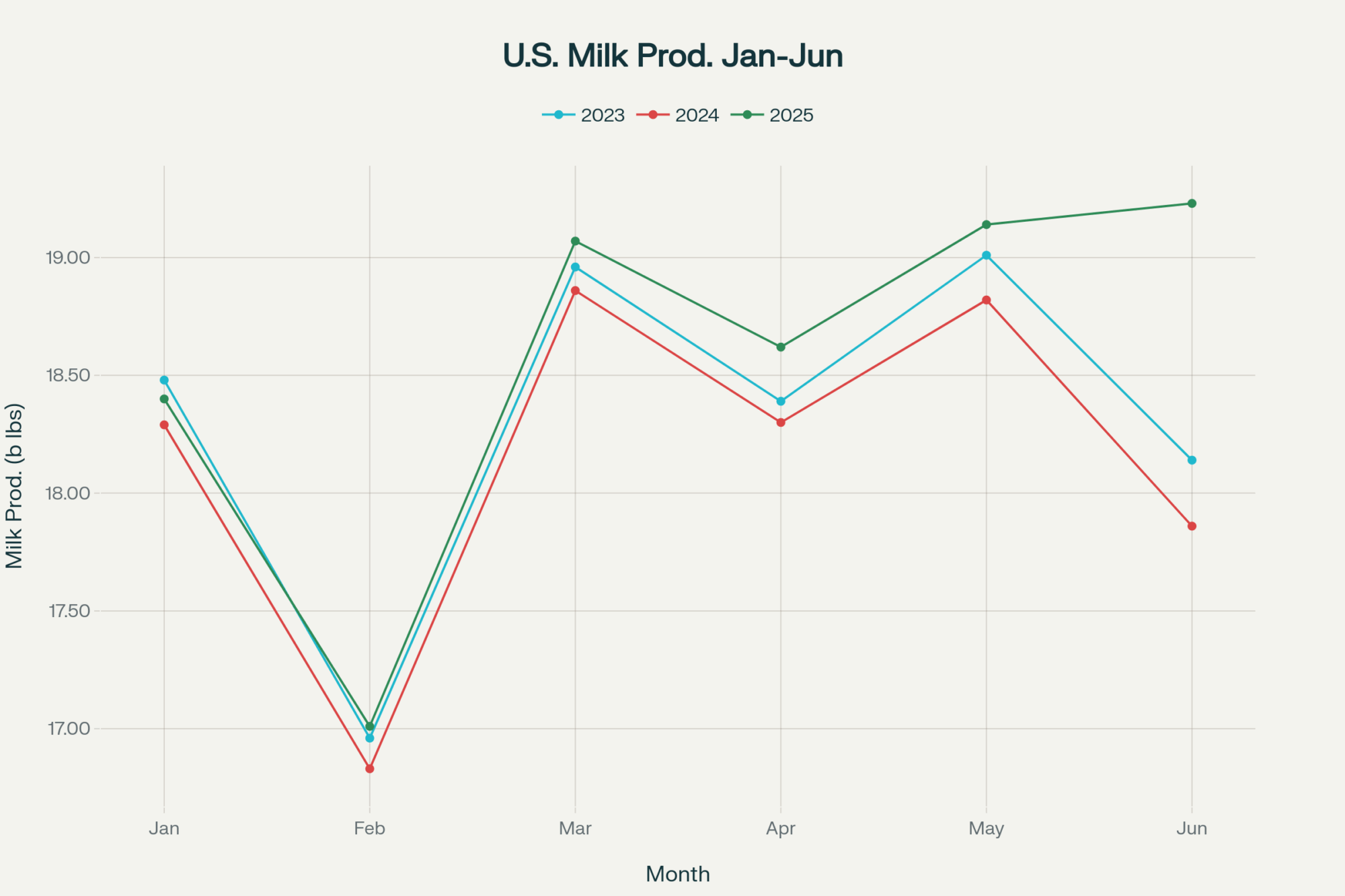
You know that pit-in-your-stomach feeling when production reports should make you smile, but instead your phone starts buzzing with panicked calls from concerned producers? That’s exactly where we landed when June’s milk numbers dropped. The raw data—19.23 billion pounds nationally, up a whopping 3.3% from last year—should’ve had us popping champagne. Instead, markets sold off sharply, and honestly, that disconnect is telling us everything we need to know about where this industry’s headed.

Monthly U.S. Milk Production Trend for January–June, 2023–2025

When Crushing Expectations Becomes the Market’s Nightmare

What strikes me about June’s numbers is how they caught absolutely everyone off guard. According to the latest StoneX analysis¹, the report was “bearish compared to expectations”—and that’s coming from analysts who eat, sleep, and breathe these numbers.

We didn’t just meet projections… we obliterated them. Most folks were penciling in maybe 2% growth, but here we are staring at production that jumped 3.3% year-over-year. What really gets my attention, though, is how the component story amplifies everything. Our butterfat content increased to 4.18% (up from 4.10% last year), while protein levels rose to 3.25%(up from 3.20%). When you factor in those improvements—and this is crucial for understanding the real market impact—we’re looking at component-adjusted production that surged 5% year-over-year.

Five percent! The last time we saw growth like that? May 2021, right when everything was still bouncing back from pandemic disruptions.

What really caught my attention was the 2,031 pounds per head in June, up 1.7% from the previous year. Now, before anyone gets too carried away, remember that we’re comparing this to a brutal June 2024 when H5N1 absolutely hammered production numbers across key regions. The StoneX folks note we were “lapping over a 1.7% drop last year due to bird flu,” so there’s definitely some recovery built into that figure.

However, here’s the thing that should make everyone pause—we’ve added 114,000 head since December (that’s equivalent to adding several good-sized dairies every month), and we’re still seeing these kinds of individual animal improvements. Mark Stephenson from Wisconsin’s dairy markets program has been tracking these patterns for decades, and as he pointed out in his recent university brief, “when you see both scale and efficiency gains happening together, producers are clearly responding to sustained positive signals… but markets don’t always interpret additional supply as welcome news.”

The Geographic Revolution That’s Rewriting Our Industry Map

What’s happening regionally is what really gets my blood pumping about this data. Producers are “culling fewer dairy cows” because margins have been workable, but that’s just scratching the surface.

Year-over-Year Milk Production Change by State, June 2024-2025

Look at these Plains states numbers and tell me we’re not watching a fundamental restructuring:

  • Texas: jumped 9.5% to 1.503 billion pounds
  • Kansas: posted a jaw-dropping 19.1% increase to 400 million pounds
  • South Dakota: surged 11.5% to 255 million pounds

Meanwhile, traditional regions are struggling:

  • Washington: dropped 9.3% to 475 million pounds
  • California: managed only 2.7% growth despite adding cows
  • Wisconsin: barely budged at 0.3%
Milk Production Composition by Top States in 2025

That Kansas number isn’t some statistical fluke. That’s the new Hilmar cheese facility in Dodge City pulling milk like a powerful magnet. I was talking to a producer near there recently—he’s been shipping to that region for about eighteen months now—and he said the local milk market dynamics have completely changed. Premium pickups, shorter hauls, predictable demand… it’s exactly what every operation wants.

Here’s the thing, though, and this is where it gets uncomfortable for those of us in traditional dairy country. Industry investment exceeding $10 billion is flowing toward areas where operations can actually pencil out profitably. Smart money follows processing capacity, and that capacity is definitely heading south and west.

Brian Gould from UW-Madison doesn’t mince words about this trend; he pointed out that “we’re witnessing the most significant geographic restructuring of U.S. dairy production since the 1970s, but this time it’s being driven by regulatory environment and processing economics, not just feed costs.” That’s a sobering assessment from someone who’s tracked these patterns longer than most of us have been in the business.

The Market Reality Nobody Wants to Face

Now, here’s where the story gets really uncomfortable —and why those market reactions weren’t just traders having a rough day. Despite these impressive production numbers, we face some fundamental demand challenges that are unlikely to be resolved anytime soon.

Restaurant traffic still hasn’t bounced back to where we need it. When you consider that over half of America’s food dollars get spent outside the home, weak foodservice demand creates problems that more milk simply can’t solve. Major restaurant chains have been reporting declining traffic in recent quarters, and that ripple effect is felt in cheese demand faster than most people realize.

The Processing Bottleneck That’s Coming for All of Us

What really concerns me—and I’m hearing this from plant managers across multiple regions—is that some facilities are already approaching capacity limits, while others are having to implement milk dumping protocols when volumes exceed what they can handle. We’re seeing this with current production levels, not the higher volumes everyone’s projecting for the rest of .

Recent analysis from Cornell’s Program on Dairy Markets and Policy suggests this kind of regional capacity mismatch typically pressures milk prices for 18 to 24 months until infrastructure catches up or production adjusts. When analysis from sources like Cornell suggests a 75-85% probability of continued margin pressure through early 2026 based on current supply trajectories, that timeline isn’t exactly encouraging news if you’re planning expansions.

Feed Costs Keep Things Manageable… For Now

The one bright spot that’s keeping margins workable? Feed costs haven’t gone completely sideways on us. We’re seeing corn futures trading in the low-four-dollar range, and while protein feeds aren’t cheap, they’re not breaking operations either. That’s maintaining milk-to-feed ratios around 1.8, which most producers can work with.

I was just talking to a guy running 850 cows in central Wisconsin who locked corn back in May when planting conditions looked sketchy. Smart move. He’s feeling pretty good about that decision while watching grain markets bounce around this summer.

But here’s what worries me… feed cost advantages can disappear faster than a fresh cow’s peak production drops off. Weather patterns, trade disruptions, energy costs—any of these could flip the equation pretty quickly.

What This Actually Means for Your Bottom Line

Looking ahead—and this is where three decades in this business starts showing—I don’t think this greater than 3% growth rate continues much longer. The StoneX analysis confirms what most agricultural economists are projecting: we’ll moderate toward 2% growth as we face tougher year-ago comparisons and seasonal heat stress hits those expanding Plains herds.

If you’re operating in traditional dairy regions, Focus on efficiency gains over cow numbers. This geographic shift is real, and trying to counter it by simply adding more animals might not be the most effective approach. The data shows Wisconsin barely growing while Kansas explodes—that should tell you something about where competitive advantages lie.

If you’re in one of those growth regions, Be strategic about it. Just because you can expand doesn’t mean you should do so without first locking in processing agreements. When forward-looking models show a 60-70% probability of regional capacity mismatches continuing through 2026, securing those relationships becomes critical.

Regardless of where you are, Start taking component premiums seriously if you haven’t already. Those butterfat and protein numbers aren’t just statistics on your milk check—they’re becoming the difference between profit and loss. When component-adjusted production is growing at 5% while base volume grows at 3.3%, that spread represents significant financial gains.

What’s interesting about the export picture is that U.S. cheese exports have been hitting strong levels recently while European production struggles with environmental constraints. When your competitors can’t produce, opportunities definitely emerge. But counting on exports to bail us out of domestic oversupply? That’s a risky way to build a business model.

It’s essential to remember that export markets can shift more rapidly than domestic production can adjust. Building a business model that depends entirely on international demand is like farming without crop insurance—it might work until it doesn’t.

The Bottom Line: Strategic Thinking Beats Volume Every Time

If you’re making production decisions for the next 18 months, here’s what I’m telling producers: forget about filling every stall or pushing every cow to maximum output. The operations I see thriving aren’t just focused on making more milk—they’re making smarter milk.

Key strategic moves that separate successful operations:

  • Prioritize components over volume (those 2% butterfat and 1.5% protein gains matter more than total pounds)
  • Secure solid processing relationships before expanding (capacity constraints are real)
  • Diversify revenue streams (beef-on-dairy programs have become essential, not optional)
  • Build financial flexibility to weather market volatility (18-24 month margin pressure cycles are becoming the norm)

What I’ve learned over the years is that producers who understand market signals, position themselves strategically, and build operations that can adapt when conditions change—and they always do—those are the ones that remain standing when the dust settles.

This June report confirms that we have the technical ability to produce milk like never before. The real question facing our industry is whether we’ve got the wisdom to produce it profitably in a market that’s sending us some pretty clear signals about supply, demand, and where we’re headed.

Honestly? I think that’s the conversation we should be having, rather than just celebrating production records. Because right now, with component-adjusted production up 5% and markets selling off anyway, the story being told is one we might not want to hear… but we’d better start listening.

Complete references and supporting documentation are available upon request by contacting the editorial team at editor@thebullvine.com.

Learn More:

  • Unlocking Component Gold: Are You Feeding for Fat and Protein, or Just Volume? – This tactical guide moves beyond why you need higher components to how you achieve them. It offers practical feeding and management strategies for immediately boosting butterfat and protein, directly impacting your milk check and profitability.
  • The Dairy Industry’s New Math: Are You Ready For The Change? – With the main article forecasting margin pressure and geographic shifts, this piece provides the strategic financial playbook you need. It details the key performance indicators (KPIs) that top herds use to build resilience and weather market volatility.
  • Beef on Dairy: A Trend That’s Here to Stay – The main article flags beef-on-dairy as essential. This piece breaks down the economics of this strategy, revealing how to leverage terminal genetics and market knowledge to transform your calf program from a cost center into a significant revenue stream.

Join the Revolution!

Join over 30,000 successful dairy professionals who rely on Bullvine Weekly for their competitive edge. Delivered directly to your inbox each week, our exclusive industry insights help you make smarter decisions while saving precious hours every week. Never miss critical updates on milk production trends, breakthrough technologies, and profit-boosting strategies that top producers are already implementing. Subscribe now to transform your dairy operation’s efficiency and profitability—your future success is just one click away.

NewsSubscribe
First
Last
Consent

US Butter Markets Explode as Global Dairy Signals Turn Mixed

Butter prices explode 7.75¢ as smart US farmers reap rewards from keeping cows others culled. Are you positioned for what’s coming next?

EXECUTIVE SUMMARY: The global dairy market just delivered a masterclass in contradictions, with US butter prices rocketing 7.75¢ to $2.42 per pound while Asian futures tumbled across the board. American dairy farmers are reaping massive rewards from a strategic shift in herd management – keeping 385,000 more cows in 2024 despite bird flu chaos, pushing herds to a 3-year peak of 9.425 million head. European markets paint their own picture of strength, with butter trading €1,080 (+17.4%) above last year and cheese premiums hitting 18% year-over-year. The winners in this three-speed global market aren’t those following old playbooks, but operations that maximized cow retention during tight periods, invested in component quality, and built relationships beyond traditional powder buyers. This fundamental shift toward strategic thinking over reactive management is separating the market leaders from the followers, and the positioning window is rapidly closing.

KEY TAKEAWAYS

  • Strategic herd management pays off big: US farmers who resisted culling during tight times kept 385,000 more cows than normal in 2024, driving herds to 3-year highs and positioning themselves for explosive profitability as butter hits $2.42/lb.
  • Regional markets are decoupling: European butter strength (+17% year-over-year) and US domestic resilience contrast sharply with Asian futures weakness, creating a three-speed global market that rewards geographic diversification.
  • Component quality trumps volume: Cheese markets showing 18% premiums and butter commanding record prices signal that high-component milk and value-added processing are the new profit centers, not commodity powder production.
  • Feed costs remain manageable: Despite slight upticks in corn and soybean meal, feed costs stay historically reasonable relative to milk prices, providing a crucial tailwind for margin expansion.
  • Simple strategies won’t work anymore: The market now rewards sophisticated thinking – operations still making decisions based on 2022 conditions are leaving serious money on the table as the herd expansion window closes.

US butter prices rocketed 7.75¢ this week to hit .42 per pound – the highest since February – while American dairy herds reached a 3-year peak of 9.425 million cows. Meanwhile, global markets painted a confusing picture, with European butter soaring 17% above last year, but Asian futures are tumbling across the board.

Let’s face it – the dramatic butter surge caught many off guard after three months of sideways trading. But here’s the thing: smart money saw this coming. With US milk production jumping 1.5% in April and component levels running hot, more cream is hitting the market than expected.

What happened here? US dairy farmers pulled off something remarkable. Instead of culling aggressively during tight times, they kept cows in the barn. We’re talking 385,000 fewer culls in 2024 alone, despite bird flu wreaking havoc. This year? Another 190,000 cows were saved from the slaughterhouse compared to normal patterns.

European Markets Paint Different Story

Across the Atlantic, European traders are singing a different tune entirely. But here’s what’s really interesting – EEX futures moved just 225 tonnes last week. That’s pocket change compared to Asia’s massive volumes, right?

German butter jumped €200 in a single week to €7,300, while EU butter averages now sit €1,080 (+17.4%) above last year. That’s not seasonal strength – that’s structural demand meeting constrained supply. What’s driving this kind of premium when everyone’s talking about abundant milk?

The cheese complex tells an even more compelling story. Mozzarella gained €17 to €4,207, now trading €633 (+17.7%) above year-ago levels. When specialty cheese runs 18% premiums, you know something fundamental has shifted in European dairy markets.

French butter retreated €58, showing the regional variations that smart traders exploit. Dutch producers split the difference, gaining €50 to €7,230.

Asian Markets Tell Sobering Tale

While Europeans celebrated, Asian futures told a completely different story. SGX moved 20,842 tonnes – nearly 100 times the European volume – but prices slumped across the board. What’s going on here?

Whole milk powder dropped 2.0% to $3,854, while skim milk powder fell 0.8% to $2,826. The Global Dairy Trade index reflected this weakness, falling 0.9% to $4,589.

This isn’t random market noise. European processors prioritize domestic demand and regional exports, while Oceania suppliers face harsh reality: Chinese import patterns are shifting toward selectivity rather than volume buying. Fonterra Regular WMP managed just $4,350 at the latest GDT event, while Belgian product commanded $4,600 – a spread that speaks volumes about quality premiums in today’s market.

US Producers Rewrite Herd Management Playbook

Here’s where things get fascinating. The real story isn’t just about prices – it’s about how US producers fundamentally changed their approach to herd management. This transformation started during the heifer shortage but has become something entirely different.

Consider these numbers: US dairy farmers culled 35,000 fewer cows than average in 2023. Last year, despite bird flu chaos, they kept 385,000 cows that would normally have headed to slaughter. So far in 2025? Another 190,000 saved. Are you starting to see the pattern here?

Result? The April dairy herd hit 9.425 million head – up 89,000 from last year and the highest since March 2023. April milk production surged to 19.4 billion pounds, the strongest growth since August 2022.

States with new cheese processing capacity are seeing explosive growth. Kansas milk output jumped 11.4% year-over-year, Texas gained 10.6%, and South Dakota posted 9.2% growth. Build it, and they will come – isn’t that exactly what’s happening?

Global Trade Flows Reveal Strategic Shifts

The export picture shows fascinating regional strategies emerging. New Zealand’s dairy exports climbed 10.8% in April, with cheese exports exploding 33.7% year-over-year. This isn’t an accident – it’s strategic repositioning away from commodity powders toward value-added products.

But here’s what’s really interesting: Chinese dairy imports for April tell a complex story. Overall imports were stronger by 13.9% year-over-year, pushing cumulative imports 30% above last year. But dig deeper, and you’ll find this strength comes from strategic stockpiling during temporary tariff windows, not sustained demand growth.

EU dairy exports to the US jumped 33% in March – likely producers rushing products ahead of potential tariff increases. Meanwhile, whey exports to China surged 37%, with whey protein concentrate up 49% and whey protein isolate exploding 176%. What’s driving this sudden appetite for whey products?

Feed Markets Provide Crucial Context

Don’t ignore what’s happening in feed markets. July corn gained 16¢ to $4.59 per bushel, while soybean meal added $4 to $296 per ton. These moves reflect export demand and weather concerns, but feed costs remain historically manageable relative to milk prices.

The slight uptick in grain prices, driven by US weather concerns, creates interesting dynamics for non-US producers who rely on imported feed. They’re facing higher underlying grain prices plus a stronger dollar – a double hit that could accelerate margin erosion. Let’s face it: that’s not a position you want to be in.

What This Means for Your Operation

This market rewards three strategies: strategic herd management, value-added processing, and geographic diversification. But are you positioning your operation to take advantage of these trends?

The winners are operations that maximized cow retention during tight periods, invested in component quality, and built relationships beyond traditional powder buyers. European butter strength, US domestic demand, and selective Asian buying create opportunities for producers who can read between the lines.

Cheese output is climbing in the US, and domestic demand isn’t keeping pace. But strong exports have helped maintain normal seasonal growth. April cheese stocks totaled 1.41 billion pounds, down 2.4% from last year – though that deficit has narrowed in each of the past five months.

Whey markets stepped back, with spot powder falling 0.75¢ to 54.25¢. Chinese importers stocked up on products before temporary tariffs kicked in, boosting April imports by 13.9%. Expect fewer ships arriving this month, but US exporters rush to book sales during the 90-day pause.

The Bottom Line

Here’s the reality: this market just got incredibly complex, and the simple strategies won’t work anymore. European butter strength, US domestic resilience, and Asian selectivity create a three-speed global market that rewards sophisticated thinking.

Smart producers should immediately review culling strategies. If you’re still making decisions based on 2022 market conditions, you’re leaving serious money on the table. The herd expansion window is closing, and correctly positioning will determine who dominates the next cycle.

The global dairy game has fundamentally changed. The producers who recognize this shift – and act on it – will be the ones writing their own success stories in the months ahead. Are you ready to adapt, or will you get left behind?

Learn more:

Join the Revolution!

Join over 30,000 successful dairy professionals who rely on Bullvine Weekly for their competitive edge. Delivered directly to your inbox each week, our exclusive industry insights help you make smarter decisions while saving precious hours every week. Never miss critical updates on milk production trends, breakthrough technologies, and profit-boosting strategies that top producers are already implementing. Subscribe now to transform your dairy operation’s efficiency and profitability—your future success is just one click away.

NewsSubscribe
First
Last
Consent

Weekly Global Dairy Market Recap—Monday, 24 February 2025

Global dairy markets navigate choppy waters as production rebounds clash with uneven demand. Butter defies trends, surging 2.2% at GDT, while SMP slumps. U.S. milk output inches up 0.1%, driven by Texas and Idaho gains. EU exports rise 1.0%, buoyed by strong Chinese demand. What’s next for dairy in 2025?

Summary

Global dairy markets remain complex as production rebounds clash with uneven demand. The GDT Price Index dipped 0.6%, with butter defying trends by rising 2.2%. U.S. milk production inched up 0.1% in January, driven by gains in Texas and Idaho, while the national herd expanded by 41,000 head year-over-year. EU27+UK milk equivalent exports rose 1.0% in December, buoyed by strong Chinese demand. New Zealand’s January collections surged 2.6% year-over-year, with milksolids up 5.0%. Despite oversupply concerns in some regions, butter markets showed resilience, with CME spot prices climbing 3.75¢ to $2.415/lb. However, NDM prices fell 4¢ to $1.24/lb amid weak demand. As the sector navigates these challenges, producers and processors must balance efficiency gains with evolving consumer demands and regulatory requirements.

Key Takeaways

  • Global dairy production shows mixed signals: New Zealand and Argentina surge, while EU and US growth remains tepid.
  • GDT Price Index dipped 0.6%, with butter defying trends by rising 2.2%.
  • US milk production inched up 0.1% in January, with the national herd expanding by 41,000 head year-over-year.
  • Regional disparities persist in US production, with California struggling (-5.7%) while Texas and Idaho surge (+6.5% and +6.4% respectively).
  • EU27+UK milk equivalent exports rose 1.0% in December, buoyed by strong Chinese demand (+21% year-over-year).
  • Butter markets show resilience, with CME spot prices climbing 3.75¢ to $2.415/lb despite oversupply concerns in some regions.
  • NDM prices fell 4¢ to $1.24/lb amid weak demand, now holding a price advantage over European and New Zealand products.
  • Feed costs are edging upward but remain modest, with May25 corn futures at $5.1275/bu (+4¢) and soybeans at $10.63/bu (+10¢).
  • Component levels in US milk continue to increase, contributing to plentiful fat availability and historically low cream multiples.
  • New cheese processing capacity in the US could help absorb excess butterfat in the coming months.
global dairy market, butter prices, milk production trends, dairy exports, consumer demand

The global dairy landscape continues to evolve, with production rebounds in key regions offsetting stagnation elsewhere. Market dynamics reveal a complex interplay of supply growth, shifting demand patterns, and ongoing price volatility across significant commodities.

Production Trends

Country/Region2024 Expected (Billion Pounds)2025 Forecast (Billion Pounds)Change
Argentina23.624.71.1
Australia19.219.40.2
European Union320.9320.3-0.6
New Zealand47.648.10.5
Major Exporter Total411.3412.51.2

Southern Hemisphere Surge

New Zealand’s January collections jumped 2.6% year-over-year to 2.39 million tonnes, with milk solids up an impressive 5.0%. Fonterra has revised its 2024/25 forecast upward to 1,510 million kgMS, representing a 2.7% increase from the previous season. Argentina’s output also impressed, rising 5.6% to 907,000 tonnes in January.

Mixed Signals in the North

U.S. milk production showed signs of recovery, inching up 0.1% to 19.1 billion pounds in January. The national herd expanded by 41,000 head year-over-year, reaching 9.365 million cows. However, regional disparities persisted, with California struggling (5.7%) while Texas and Idaho surged (+6.5% and +6.4%, respectively).

European collections remained tepid, with December output across the EU27+UK up just 1.0% year-over-year. Annual growth for 2024 settled at a modest 0.7%.

Market Dynamics

Futures and Spot Markets

EEX butter futures edged up 0.3% to €6,992 for the Feb25-Sep25 strip, while SMP dipped 0.2% to €2,643. SGX saw more pronounced movements, with WMP down 2.8% to $3,844 and butter up 3.8% to $6,832.

The CME spot butter market clawed back 3.75¢ to settle at $2.415/lb, bucking broader bearish trends . NDM fell 4¢ to $1.24/lb, while cheese markets remained unsettled, with blocks losing 2¢ to close at $1.90/lb.

Global Dairy Trade

The GDT Price Index slipped 0.6% at Event 374, with notable declines in SMP (-2.5%) and cheddar (-3.4%). Butter remained a bright spot, gaining 2.2% to reach $7,390.

Trade Flows and Policy

EU27+UK milk equivalent exports rose 1.0% in December, with strong shipment growth to China (+21% year-over-year). New Zealand’s January exports showed strength across multiple categories, including WMP (+8.1%), IMF (+24.9%), and cheese (+32.9%).

Recent trade tensions have emerged, with rivals accusing Canada of dumping dairy products. This highlights the complex interplay between domestic supply management systems and international trade obligations.

Consumer Trends and Outlook

YearMarket Size (Billion USD)CAGR
2025649.9
2030 (Projected)813.64.60%

Plant-based alternatives continue to gain traction. In 2022, plant-based milk sales in Denmark increased 17%, while dairy milk sales fell 10%. This shift reflects growing consumer interest in sustainability and health-conscious options.

Feed markets show upward pressure, with May 25 corn futures settling at $5.1275/bu (+4¢) and soybeans at $10.63/bu (+10¢). These input cost increases could squeeze producer margins in the coming months.

Innovation and adaptability will be key as the sector navigates these challenges. Producers and processors must balance efficiency gains with sustainability initiatives to meet evolving consumer demands and regulatory requirements.

Learn more

Join the Revolution!

Bullvine Daily is your essential e-zine for staying ahead in the dairy industry. With over 30,000 subscribers, we bring you the week’s top news, helping you manage tasks efficiently. Stay informed about milk production, tech adoption, and more, so you can concentrate on your dairy operations. 

NewsSubscribe
First
Last
Consent

Global Dairy Market Report for January 10th 2025: Volatility Amid Shifting Production

Dairy markets swing wildly as trade tensions boil over. The March Class III contract lurched more than a dollar in a single day, leaving farmers scrambling. With U.S. tariffs rising and China retaliating, the global dairy landscape faces an economic battle. Who will emerge victorious in this high-stakes game of dairy dominance?

Summary:

The global dairy market is facing challenges due to trade tensions and changes in production. In February 2025, there was significant activity, with EEX futures trading 2,100 tonnes of dairy products. Butter futures decreased while SMP futures went up. The Global Dairy Trade auction index increased by 3.7%. Regionally, Ireland and Poland saw strong milk production growth, while milk prices in China increased slightly after a long decline. In the U.S., trade issues impacted milk powder exports, but cheese exports to Mexico did well. With mixed results worldwide, dairy farmers must focus on being efficient and adaptable to navigate these changing market conditions.

Key Takeaways:

  • Global milk supply forecasted to grow by 0.8% in 2025, with all significant exporting regions expecting gains for the first time since 2020.
  • Trade tensions between the U.S. and Canada may disrupt established trade flows, influencing global dairy markets.
  • EU milk production shows recovery, but an overall decline is expected due to environmental and regulatory challenges.
  • U.S. dairy exports are mixed, with cheese exports booming despite a sharp decline in milk powder production.
  • China’s dairy market stabilizes, with import growth projected and farmgate milk prices rising for the first time in over two years.
  • Fluctuating prices and shifting production patterns reshape the global dairy landscape, presenting challenges and opportunities.
  • Dairy farmers are encouraged to adopt risk management, explore value-added products, and leverage emerging markets for growth.
  • Emphasis on efficiency and adaptability is crucial for dairy farmers to thrive in a dynamic and evolving market environment.

During a volatile week in the financial markets, dairy market prices fluctuated significantly due to escalating trade tensions. The March Class III contract swung more than a dollar in a single day, causing farmers and traders to react quickly to the rapid price changes. As the U.S. ratchets tariffs and China retaliates with precision strikes, the global dairy landscape finds itself caught in an escalating economic battle. Recent data from key exchanges and industry reports reveal a sector teetering between opportunity and crisis – but who will emerge victorious in this high-stakes game of global dairy dominance? As exports increase, production changes, and consumer preferences evolve, dairy farmers worldwide deal with a highly dynamic market. Will they adapt swiftly to seize new opportunities or falter under the pressures of volatility?

Market Dynamics 

Global milk production is forecasted to rise by 0.8% in 2025, driven by technological advancements, shifting consumer preferences, and improved farming practices across major exporting regions, marking the first simultaneous growth since 2020. This increase is influenced by higher prices paid to farmers for milk, lower costs for animal feed, and better weather conditions, indicating a possible positive change for the global dairy sector. This growth is driven by increased profitability for dairy farmers. Additionally, more affordable feed costs and favorable weather patterns support higher yields. 

Although there are positive expectations, the dairy market continues to be unstable for various reasons. A substantial increase in dairy processing capacity, particularly in the United States, is expected to reshape regional milk markets. China’s projected 2% year-on-year increase in dairy imports for 2025 could significantly impact global trade flows and prices. Additionally, ongoing trade disputes, especially between the United States and Canada, threaten to disrupt established trade patterns. 

Combining these factors results in a complicated and ever-changing global market landscape for dairy farmers and processors. Consumer demand fluctuations, driven by economic pressures and changing preferences, influence the market. While feed costs are currently favorable, they remain subject to fluctuations in the global commodity market. As the industry navigates these challenges and opportunities, adaptability and strategic planning will be crucial for success in the evolving global dairy landscape 2025. 

Country/Region2024 Expected (Billion Pounds)2025 Forecast (Billion Pounds)Change
Argentina23.624.71.1
Australia19.219.40.2
European Union320.9320.3-0.6
New Zealand47.648.10.5
Major Exporter Total411.3412.51.2

Source: USDA, Economic Research Service calculations based on USDA, Foreign Agricultural Service. Dairy: World Markets and Trade Report, December 2024.

Regional Production Trends 

European Union

In 2025, the European Union’s dairy industry shows varied trends among its member countries. While some countries show promising growth, EU milk production is forecast to decline marginally. 

Ireland stands out with a remarkable 30.1% year-over-year increase in December collections, showcasing the country’s strong recovery and efficient dairy farming practices. This surge is attributed to favorable weather conditions, improved feed quality, and strategic investments in dairy infrastructure. Poland and Spain also posted gains, with solid milk production up by 3.4% and 0.7% respectively in December. Poland’s growth is driven by ongoing consolidation in the dairy sector and investments in modern farming technologies. Spain’s modest increase reflects a gradual recovery from past obstacles, including economic downturns and supply chain disruptions, showcasing the industry’s resilience and adaptive strategies. 

Despite these positive indicators, the EU as a whole faces headwinds. It is predicted that milk output will slightly decrease to 149.4 million metric tons (MMT) in 2025, a drop from 149.6 MMT in 2024. This decline is attributed to several factors: 

  • Declining cow numbers: Stricter environmental regulations and farm consolidation are reducing overall herd sizes across the EU.
  • Tight farmer margins: Rising input costs, particularly for feed and energy, are squeezing profitability for many dairy farmers.
  • Environmental regulations: The EU’s Green Deal and Farm to Fork strategy impose stricter sustainability requirements, forcing some farmers to reduce production or exit the industry.
  • Disease outbreaks: Concerns about diseases like bluetongue in some regions are impacting production and trade.

The European dairy industry is also experiencing a shift in product focus. Cheese manufacturing is set to be a primary focus due to high local and international demand. This focus on cheese may come at the expense of butter, non-fat dry milk, and whole milk powder production. 

Looking ahead, the EU dairy sector must balance environmental sustainability with economic viability. Innovations in feed efficiency, animal welfare, and sustainable farming practices will be crucial for maintaining the EU’s position in the global dairy market.

United States 

In 2025, the U.S. dairy industry grapples with diverse challenges, including labor shortages and environmental regulations, alongside promising prospects such as export market growth and technological advancements. While milk production shows signs of growth, there are significant variations across product categories and regions. 

Cheese production experienced a dip of 0.7% year-over-year in December, totaling 1.2 billion pounds. This decrease is primarily attributed to shifts in consumer demand and increased competition from plant-based alternatives. However, the export market tells a different story, with cheese shipments surging by 21% compared to December 2023. This export boom is driven by strong demand from key markets like Mexico and South Korea and favorable exchange rates. 

Regional variations in milk production are becoming more pronounced. Texas and Idaho are leading the charge, with production increases of 7.5% and 3.5%, respectively. These states benefit from: 

  • Large-scale, efficient dairy operations
  • Favorable climate conditions for year-round production
  • Strategic investments in processing capacity

Other major dairy states also see increased milk production, albeit at more modest rates. Factors contributing to this growth include: 

  • Improved cow genetics, leading to higher per-cow yields
  • Adopt advanced technologies like robotic milking systems
  • Optimized feed management practices

However, challenges remain for the U.S. dairy sector: 

  • Labor shortages continue to impact farm operations and processing facilities
  • Environmental regulations, particularly regarding methane emissions, are becoming more stringent
  • Volatility in feed costs affects profitability

The USDA forecasts overall U.S. milk production to reach 227.2 billion pounds in 2025, slightly lower than previous estimates due to decreased milk per cow yields and adjustments in dairy cow inventories, signaling potential challenges for the industry. 

Adaptability and innovation will be key as the U.S. dairy industry navigates these complex dynamics. Farmers and processors are likely to focus on: 

  • Diversifying product offerings to meet changing consumer preferences
  • Investing in sustainability initiatives to meet regulatory requirements and consumer expectations
  • Explore new export markets to capitalize on strong global demand

Oceania 

The Oceania region, particularly New Zealand, plays a crucial role in the global dairy market. The strong participation in the latest Global Dairy Trade (GDT) event, with 182 bidders competing for 23,854 tonnes of product, underscores the region’s importance in setting global dairy price trends. 

New Zealand‘s dairy sector is anticipating significant seasonal peaks in production for 2025.  

  • Favorable weather conditions: La Niña weather patterns are expected to bring adequate rainfall, supporting pasture growth.
  • Herd management improvements: Farmers focus on breeding programs and animal health to increase per-cow productivity.
  • Technological advancements: Precision farming techniques enhance overall farm efficiency.

However, the industry also faces challenges: 

  • Environmental regulations: New Zealand’s government is implementing stricter environmental policies, which may impact production practices.
  • Land use competition: Increasing pressure from alternative land uses, such as forestry and horticulture, could limit dairy expansion.
  • Labor shortages: Like many countries, New Zealand is grappling with agricultural labor shortages.

Australia, the other major player in Oceania’s dairy sector, is expected to see modest growth in milk production. The country is recovering from previous droughts and focusing on rebuilding its dairy herd. 

Both countries will likely benefit from strong global demand, particularly from Asian markets. However, they must navigate changing consumer preferences, especially the growing demand for plant-based alternatives. 

China 

China, the world’s largest dairy importer, shows signs of market stabilization, with potential significant impacts on global dairy trade. Farmgate milk prices in January increased for the first time in 27 months, signaling a possible turning point in the country’s dairy sector. 

However, at 3.12 Yuan/Kg, prices remain 14.5% below year-ago levels, indicating ongoing challenges for domestic producers. This price pressure has led to: 

  • Consolidation in the dairy farming sector, with smaller farms exiting the market
  • Increased focus on efficiency and productivity among more extensive operations
  • Government initiatives to support the domestic dairy industry

In 2025, China’s milk production will fall by 1.5% year-on-year. This decline is attributed to: 

  • Herd reductions due to sustained low prices
  • Stricter environmental regulations impacting farm operations
  • Shift towards more extensive, more efficient dairy operations

Despite the projected decrease in domestic production, China’s dairy market remains dynamic: 

  • Consumer demand for dairy products continues to grow, particularly in urban areas
  • The government is promoting increased dairy consumption for nutritional benefits
  • E-commerce and innovative dairy products are expanding market reach

China’s dairy imports are projected to grow by 2% year-on-year in 2025, ending a three-year decline. This increase could significantly impact global dairy trade flows and prices. 

Key factors to watch in China’s dairy sector include: 

  • Government policies supporting domestic production vs. import reliance
  • Changing consumer preferences, especially among younger demographics
  • Developments in China’s trade relationships with major dairy exporting countries

As China’s dairy landscape evolves, it will play a pivotal role in shaping global dairy markets, influencing everything from commodity prices to product innovation. 

Trade Tensions and Market Volatility 

The dairy industry is central to a complex web of international trade disputes, with recent developments creating significant market uncertainty. The U.S., Mexico, and Canada have agreed to a 30-day détente, temporarily easing tensions in North American trade relations. This short-term truce is aimed at addressing shared concerns over drug trafficking across borders, highlighting the interconnected nature of trade and broader geopolitical issues. 

However, escalating trade conflicts with China overshadow the respite in North American tensions. The U.S. has implemented a sweeping 10% tariff increase on Chinese imports, which has prompted swift retaliation from Beijing. China’s response, characterized by targeted sanctions, demonstrates a strategic approach to economic warfare, potentially impacting specific sectors of the U.S. economy while minimizing domestic economic disruption. 

The ripple effects of these trade tensions are already evident in the dairy market. U.S. milk powder exporters, traditionally reliant on robust international demand, are adopting a cautious stance. The USDA’s Dairy Market News reports that Mexican demand for U.S. milk powder has become “subdued,” a concerning development given Mexico’s status as a key market for U.S. dairy exports. In 2024, Mexico imported approximately 576,000 metric tons of U.S. dairy products, making it the largest export destination for American dairy. 

This hesitancy extends beyond international buyers, with domestic purchasers also showing reluctance. Market analysts note a “chilling effect” on U.S. buyers, who are wary of committing to purchases in such an unpredictable environment. This cautious approach is encapsulated in the industry phrase of avoiding “catching the proverbial falling knife,” reflecting fears of buying into a declining market. 

These trade conflicts affect more than just milk powder; they extend to other dairy products. The dairy commodity spectrum, including cheese, butter, and whey products, faces potential disruption. For instance, U.S. cheese exports to Mexico, which saw a 36% year-over-year increase in August 2024, could be at risk if current trade uncertainties persist or escalate. 

Looking ahead, the industry faces several critical junctures that could further shape market dynamics: 

  1. The conclusion of the 30-day North American détente could lead to a more stable trading environment or a return to heightened tensions.
  2. Potential expansion of Chinese tariffs to include key dairy products like whey, which have so far been spared but remain vulnerable.
  3. The upcoming 2026 review of the U.S.-Mexico-Canada Agreement (USMCA) could reshape the North American dairy trade for years.

In this volatile climate, dairy producers and exporters must remain agile, ready to adapt to rapidly changing market conditions. Diversification of export markets, exploration of value-added product lines, and close monitoring of international trade policies will be crucial strategies for navigating these turbulent waters. 

Production Shifts and Export Trends 

The U.S. dairy industry is experiencing significant shifts in production patterns and export trends, with notable divergences between milk powder and cheese sectors. 

Milk Powder Production Decline 

U.S. milk powder output has substantially declined, with December production 15% lower than the prior year. This trend extends beyond a month, as 2024 milk powder production slumped 13% to reach the lowest annual total since 2013. Several factors contribute to this decline: 

  1. Shifting consumer preferences: Domestic consumers increasingly opt for alternative dairy products, reducing demand for traditional milk powder.
  2. Processing capacity reallocation: Many processors have shifted their focus to higher-value products like cheese and specialty ingredients, reducing capacity dedicated to milk powder production.
  3. Feed cost fluctuations: Rising feed costs have impacted milk production, with some farmers reducing herd sizes or shifting to alternative feed strategies.
  4. Environmental regulations: Stricter environmental policies in some states have reduced dairy herd sizes, impacting milk availability for powder production.

Booming Cheese Exports 

U.S. cheese exports are experiencing unprecedented growth compared to the milk powder sector. The U.S. exported 97 million pounds of cheese in December, marking a 21% increase compared to December 2023. This export surge has led to a record-breaking utilization of domestic production, with exports accounting for 8% of U.S. cheese production in 2024. Key drivers of this cheese export boom include: 

  1. Competitive pricing: U.S. cheese prices have become more competitive globally, attracting international buyers.
  2. Product diversification: American cheesemakers have expanded their product range, catering to diverse international tastes and preferences.
  3. Quality improvements: Investments in cheese-making technology and processes have enhanced the quality and consistency of U.S. cheese, making it more appealing to foreign markets.
  4. Trade agreements: Favorable trade agreements, particularly with Mexico and South Korea, have facilitated increased cheese exports.
  5. Marketing efforts: Aggressive marketing campaigns by U.S. dairy organizations have successfully promoted American cheese in key international markets.

Market Implications 

These contrasting trends in milk powder production and cheese exports have significant implications for the U.S. dairy industry: 

  1. Processor strategy shifts: More processors may pivot towards cheese production, given the strong export demand and higher profit margins than milk powder.
  2. Farm-level impacts: Dairy farmers may need to adjust their production strategies to meet the changing demand, potentially focusing on milk composition that favors cheese production.
  3. Global market positioning: The U.S. is strengthening as a significant cheese exporter while potentially ceding ground in the global milk powder market.
  4. Supply chain adaptations: U.S. dairy exports’ logistics and supply chain are likely to evolve, with increased focus on cheese transportation and storage.

As these trends unfold, the U.S. dairy industry must remain agile, adapting to changing global demand patterns and market opportunities. The contrasting fortunes of milk powder and cheese sectors underscore the importance of diversification and market responsiveness in the dynamic global dairy trade landscape.

Price Movements and Future Outlook 

YearAll-Milk Price Forecast (USD/cwt)
202523.05
202619.00
202719.10
202819.30
202919.50
203019.70

Source: USDA, Economic Research Service

The dairy market is experiencing significant price fluctuations across various products, reflecting the complex interplay of supply, demand, and global trade dynamics. 

CME Spot Market Trends: 

The CME spot nonfat dry milk (NDM) fell 1.5¢ to $1.33 per pound, reaching its lowest point since August. This decline suggests an oversupply in the milk powder market, potentially due to weakened export demand or increased domestic production. The drop in NDM prices could impact Class IV milk prices, as NDM is a key component. 

Similarly, CME spot Cheddar blocks also decreased, falling 1.75¢ to $1.86 per pound. This downward movement in cheese prices may indicate softening demand or increased production, which could pressure Class III milk prices. 

Global Dairy Trade (GDT) Auction Results: 

Unlike the CME spot market, the GDT auction demonstrated strength in powder markets. Whole milk powder (WMP) values jumped 4.1%, while skim milk powder (SMP) prices leapt 4.7%. These significant increases suggest robust international demand, particularly from key importing regions like Southeast Asia and China. The divergence between domestic U.S. prices and international auction results highlights the global nature of dairy trade and the potential for arbitrage opportunities. 

Future Price Outlook: 

The average milk price is forecast to rise by 5% in 2025 compared to 2024, driven by favorable trends in recent Global Dairy Trade auctions. This projection indicates a generally optimistic outlook for global dairy markets, supported by expectations of continued strong demand and potentially tightening supplies in major exporting regions. 

However, the U.S. market presents a contrasting picture, with projections of a decrease of 30 cents per hundredweight in all milk prices. This discrepancy between global trends and U.S. forecasts could be attributed to several factors: 

  • Domestic Supply and Demand Balance: The U.S. might increase milk production or face lower domestic demand than global markets.
  • Export Competitiveness: A stronger U.S. dollar or increased competition from other exporting nations could impact the U.S.’s position in global markets.
  • Policy Changes: Potential shifts in U.S. dairy policy or trade agreements could influence domestic pricing.
  • Regional Variations: The U.S. forecast may be more heavily influenced by specific regional production trends or processing capacities.

Implications for Dairy Farmers: 

These price movements and forecasts present a complex picture for dairy farmers. While global markets show signs of strength, U.S. producers may face challenges if domestic prices remain suppressed. Farmers must closely watch local and international market trends, adjust their production strategies, and explore new market opportunities to maximize their returns in this changing environment.

The Bottom Line

As the global dairy market navigates through unprecedented volatility in early 2025, dairy farmers worldwide find themselves at a critical juncture. The rising milk supply, shifting trade dynamics, and evolving consumer preferences create challenges and opportunities. While farmgate prices generally improve in many regions, trade tensions and potential tariffs loom large, particularly for U.S. producers eyeing the Mexican market. Success in this dynamic environment will hinge on adaptability and strategic foresight. Dairy farmers must focus on efficiency, embrace risk management strategies, and explore diversification opportunities. Whether investing in value-added products, adopting new technologies to address labor shortages, or implementing sustainable practices to meet evolving regulations, the path forward requires innovation and resilience. In 2025, the global dairy industry is positioned for growth but faces the risk of rapid changes due to geopolitical factors. Farmers who stay informed, remain flexible in their approaches, and capitalize on emerging market trends will be best positioned to thrive in this complex and ever-changing dairy ecosystem. 

How is your operation adapting to these market trends? Share your experiences and strategies in the comments below. 

Learn more:

Join the Revolution!

Bullvine Daily is your essential e-zine for staying ahead in the dairy industry. With over 30,000 subscribers, we bring you the week’s top news, helping you manage tasks efficiently. Stay informed about milk production, tech adoption, and more, so you can concentrate on your dairy operations. 

NewsSubscribe
First
Last
Consent

Dairy Margins Stable Amid Rising Butter Demand and Tight Corn Stocks: January 16th, 2025 Update

See how steady dairy margins and rising butter demand impact your farm. Are you ready to take advantage of strong margins with limited corn? Learn more now.

Summary:

For the first half of January, dairy margins stayed steady even with market changes. Milk prices dropped a little for short-term sales, while feed costs varied. Corn prices went up, but soybean meal prices went down. Strong demand for butter helped hold up Class IV Milk prices despite a slight 0.8% drop in U.S. milk production in November. Butter production rose, especially in the Central Region, balancing the lower milk output. USDA’s reports showed less butter in storage and higher corn prices because of fewer supplies. These trends mean dairy farmers need to plan smartly and carefully manage their purchases of corn and soybean meal, as well as consider deals for future milk production to keep good profits. 

Key Takeaways:

  • Dairy margins remained stable in early January despite mixed trends in feed markets.
  • Strong domestic demand for butter boosted Class IV Milk prices, balancing decreased milk production.
  • U.S. butter production increased by 4.4% year-over-year, compensating for a 0.8% drop in milk output.
  • Notable growth in butter production emerged from the Central Region, with a 13.3% increase.
  • The USDA’s Cold Storage report indicated tighter butter stocks with a slight increase to 213.5 million pounds.
  • Record domestic butter disappearance reached 241.4 million pounds, up 22% from the previous year.
  • The USDA’s January WASDE report presented a bullish outlook for corn, reducing ending stocks to 1.54 billion bushels.
  • Clients are advised to leverage strong margins through strategic coverage in deferred periods.
dairy profits, butter demand, feed cost management, milk production trends, USDA dairy report

So far this year, dairy profits have stayed steady despite fluctuating feed costs. At the same time, people are using more butter at home than ever before. Challenges like lower milk production and changes in local manufacturing need to be examined closely because they affect revenue. This analysis explains how these factors impact the dairy industry and suggests ways to stay profitable even when the market changes.

DateMilk Prices (per cwt)Corn Prices (per bushel)Soybean Meal Prices (per ton)Dairy Margins (per cwt)
January 2024$18.50$6.20$490$9.75
November 2024$18.20$6.50$470$9.60
December 2024$18.00$6.60$460$9.40
January 16th 2025$17.80$6.70$450$9.20

Maintaining Dairy Margins Amid Market Fluctuations and Strategic Feed Procurement

In January 2025, the dairy markets demonstrated the industry’s resilience and strength, effectively harmonizing various factors. As supply and demand shifted, milk prices decreased slightly for short-term sales, helping to keep margins steady. 

At the same time, feed costs showed mixed results, affecting farmers’ spending and earnings. The USDA January report showed that fewer supplies increased corn prices. This could make it harder for farmers to manage the higher feed costs well. On the other hand, soybean meal prices decreased, helping to make up for the higher corn prices. 

Farmers needed to carefully plan their feed purchases in response to the price changes in corn and soybean meal. By being flexible, they could deal with shifting market trends. These ups and downs in feed costs show why developing new and creative ways to keep the economic scene profitable is essential.

Butter Demand Drove U.S. Dairy Market Dynamics, Balancing Declines in Milk Output

The changing world of American dairy farming has its ups and downs but stays strong because of high butter demand. This demand helps balance changes in milk production. Recent data from November shows a slight 0.8% drop in milk production, while butter production increased by 4.4% compared to the previous year. Butter is made from cream because of its high demand. California saw a 12.8% decrease in butter production due to pandemic challenges. Still, the Central region had a 13.3% increase because of good conditions. This balance helps keep milk production and prices steady nationwide. Different areas faced challenges and benefits that affected their dairy production over time. The constant demand for butter helps stabilize milk prices and keep the market balanced despite these changes.

USDA Cold Storage Report Highlights Tighter Butter Supplies Amid Surging Demand

The latest Cold Storage report from the USDA showed some critical shifts in the butter market, highlighting that stockpiles had decreased noticeably. By November, reserves measured 213.5 million pounds, a slight increase from previous numbers, but still showing the pressure on supply due to high global demand. 

Adding to the complexity, butter exports increased significantly (22%), with nearly 6.8 million pounds shipped overseas. Despite this increase, the U.S. still imported 16.4 million pounds of butter. This situation shows strong domestic use of butter supplies, with disappearance rates hitting record highs of 241.4 million pounds last month, a massive 22% increase compared to the same time in 2023. This trend highlights the strong demand for butter in the U.S., leading to supply issues and strategic adjustments in the dairy sector.

USDA’s WASDE Report Signals Unprecedented Corn Supply Shift, Urging Strategic Response in Dairy Sector

The January WASDE report surprised everyone by lowering the expected corn reserves to just 1.54 billion bushels. This was the seventh month the stockpile dropped, showing significant changes in the country’s corn supply. This is a big deal for dairy farmers because corn is a key feed for their cattle. With less corn available, prices will likely go up, which could make farming more costly. 

Dairy farmers must now plan smartly to handle rising feed costs. Since feed is a big part of their expenses, more expensive corn could hurt their profits if they’re not careful. They need to use strategies like forward contracting to secure better prices ahead of time. Farmers aim to stabilize their feed costs despite fluctuating corn prices by closely monitoring the market. 

This ongoing 11.4% reduction in corn inventory has been unparalleled in the last two decades. It highlights the need for dairy farmers to be flexible and ready to adapt. These continuous cuts might affect feed costs, milk production, and profits. All individuals in the dairy industry should closely monitor these changes and utilize this information to anticipate potential challenges arising from fluctuating corn prices.

Strategic Forward Contracts and Flexible Operations: Navigating Strong Dairy Margins Amid Market Volatility

Taking strategic steps such as locking in good deals for future milk production and feed prices is key for dairy farmers who want to boost their income. An innovative strategy involved securing future agreements for milk production and feed pricing. This helps protect against possible market changes. Using a flexible approach can also help adjust to a changing marketplace. This might involve changing products or production schedules to match times when profits are high. Keeping up with industry reports, like the USDA’s findings, can help make informed decisions about costs and income. Currently, trends such as the significant demand for butter and fluctuations in feed costs necessitate continuous strategy updates by producers. This allows them to maintain or improve their earnings despite market challenges.

Navigating Dairy Market Dynamics: Historical Trends and Strategic Adaptations

Margins have been crucial in dairy farming over the past decade, as price fluctuations often influence milk and feed prices. In the past, high margins occurred when milk prices were steady, and feed costs were low, helping farmers adjust to changing markets. However, milk prices have recently fluctuated due to increased market pressures. 

Butter production has significantly changed due to cultural shifts and new methods. The higher fat content in milk has increased butter production, compensating for lower milk quantities. During tough times, like when bird flu affected California’s production, other areas, like the Central Region, increased production to compensate for the loss. 

Recent USDA reports indicate a continuous decline in corn stocks. These drops have affected feeding costs, leading dairy farmers to make plans to ensure they have enough feed. Over time, these developments compel farmers to enhance the flexibility of their operations to navigate unpredictable market conditions effectively.

Molding the Future: Butter Demand and Feed Costs in a Developing Dairy Environment

The strong demand for butter and innovative feed cost management strategies will be crucial in shaping the future of the dairy sector. Stable dairy margins may improve butter production methods and impact milk prices. While California faces problems with production, the rise in output in places like the Central Region could impact the national dairy market, causing changes in production patterns across the country. 

Considering the USDA’s positive outlook on corn supply, dairy farms may require more astute purchasing strategies to manage fluctuations in feed costs. Since there is a reduced availability of corn, feed costs may increase for dairy farmers. Farmers might use forward contracting and flexible feeding plans to keep margins safe from price changes. Moreover, global trade patterns and butter export trends may unlock new markets for U.S. dairy products, given the increasing butter consumption in the U.S. The increased love for dairy fats, shown by record butter consumption, affects international trade and long-term trends. This strong butter demand, smart feed buying, and innovative product ideas are expected to create fresh growth opportunities in the dairy world. Those in the industry must stay alert and ready to make the most of these trends and remain competitive in a changing global market.

The Bottom Line

Dairy farm revenues stayed steady in January for the first part of the month, even though feed costs changed and milk production decreased. This helped stabilize prices, even with a significant drop in grain supplies. The USDA’s reports stress the importance of dairy producers staying alert and adaptable. Being proactive can help dairy producers secure their future in this ever-changing industry.

Learn more:

Join the Revolution!

Bullvine Daily is your essential e-zine for staying ahead in the dairy industry. With over 30,000 subscribers, we bring you the week’s top news, helping you manage tasks efficiently. Stay informed about milk production, tech adoption, and more, so you can concentrate on your dairy operations. 

NewsSubscribe
First
Last
Consent

Will Increased Profits for Dairy Farmers Lead to Higher Milk Production?

Will more profits for dairy farmers result in more milk production? Explore the key factors shaping the future of milk output and its impact on the industry.

Summary:

The latest USDA Milk Production report reveals a slight increase of 0.1% in August compared to the previous year, suggesting a complex outlook for dairy farmers. While the modest uptick is attributed to improved weather and reduced Highly Pathogenic Avian Influenza (HPAI) impact, the future remains uncertain—notable gains in California, South Dakota, and Texas contrasting with New Mexico’s significant decline. Economic factors, environmental conditions, and disease outbreaks will continue to shape production trends, raising the critical question: will rising profits lead to more milk?

Key Takeaways:

  • A slight increase in milk production was seen in August, but future increases may be limited by new challenges such as disease outbreaks.
  • California, South Dakota, and Texas showed positive growth, while New Mexico experienced a significant decline.
  • The financial outlook for farms is crucial in determining if increased profits will lead to more milk production.
  • Environmental conditions and disease outbreaks, including Highly Pathogenic Avian Influenza (HPAI), significantly shape milk production trends.
  • Continued monitoring of economic, environmental, and health factors is essential for the dairy industry’s future.

At a turning point, the dairy sector must balance on the tightrope of little increase and financial instability. Comparatively, the August USDA Milk Production data showed a slight rise of 0.1% compared to last month. Although this rise seems minor, it begs a critical issue: Will more earnings in dairy farmers’ pocketbooks finally translate into more milk production? But now that HPAI is in California, the increasing momentum might be decreasing here in September; strangely, one of the states leading the way upward in August is slowing down here. As industry analysts, economists, and stakeholders, it is essential that we closely examine these dynamics as we probe the elements influencing the sector. The intricate mosaic formed by weather conditions, disease outbreaks, and dairy farms’ general financial situation will decide if higher profitability can propel a more significant increase in milk output.

Profit Margins and Milk Production: A Dance Through Decades of Change 

Dairy farm profit margins and milk output have long been subjects of considerable research and discussion. Let’s turn back now. Changes in policies, the environment, and the economy since 1997 have affected milk output by producers. Often, there was an apparent increase in output when profit margins skyrocketed during good times for the economy. Driven by a better financial situation, farmers invested in better feed, technologies, and facilities, immediately increasing milk production.

For example, the USDA noted notable increases in milk output during the early 2000s economic boom, which matched more significant profit margins [USDA Data Products]. Likewise, the dairy boom in 2014—characterized by very high milk prices—saw output drop significantly as profits provided the required funding for growth and innovation.

Still, it can be a complex equation. Environmental factors, world demand, and health crises may upset this link. The financial crisis 2008 serves as a sobering reminder of how rapidly fortunes may turn upside down, resulting in an unexpected decline in output and profits even in light of past increases.

Knowing these past developments helps us to see things from a different angle. Although more revenues usually translate into more milk production, unforeseen events might change this direction. Balancing hope and caution and monitoring the many elements influencing this ever-changing sector will be imperative.

Stable Yet Shifting: What Do Current Milk Production Trends Tell Us?

August’s most recent USDA Milk Production report shows a complex terrain for the dairy sector based on present production patterns. Milk output showed slight variation from last year’s level, reflecting stability and a steady increase.

The average cow output in the 24 central states was 2,036 lbs. in August, up 8 lbs. from August 2023. These numbers point to a modest but notable increase in individual cow output.

Regional performance analysis offers further information. Historically, as a powerhouse in dairy output, California saw a 2.0% year-over-year growth. With corresponding rates of 8.5% and 7.8%, South Dakota and Texas also showed outstanding increases. On the other hand, New Mexico had a notable drop—11.3% from the year before.

Though small, these numbers highlight the need to monitor environmental and economic variables impacting milk output. The dairy industry must change and react to these factors in the future to maintain and maybe increase production.

The Unpredictable Dance of Weather and Health: Navigating Dairy’s Volatile Landscape

Examining the August data shows how closely health emergencies like Highly Pathogenic Avian Influenza (HPAI) interact with environmental circumstances. Milder weather probably filled in the output shortfall significantly. Furthermore, the areas with fewer HPAI outbreaks showed higher production numbers, which supports the theory that knowledge of environmental and health issues is essential to comprehending output fluctuations.

Now that HPAI is in California, the increasing momentum might slow in September; paradoxically, one of the states leading the way upward in August, California, was up 2.0% year over year. This shows the often shifting dynamics in the dairy sector, where even states displaying positive development might encounter obstacles preventing continuous output expansion.

HPAI and Beyond: Navigating the Complex Web of Dairy Production Challenges 

Future milk production assessment calls for carefully considering numerous issues and constraints affecting the sector’s direction. One major worry is that highly pathogenic avian influenza (HPAI) invades essential states like California. Given its recent 2.0% year-over-year rise in output, HPAI’s presence in California raises alarming questions. Should HPAI afflict other areas, the accompanying biosecurity policies and limitations may stop the increasing tendency.

Likewise, other states exhibiting notable positive increases might have problems should HPAI or related problems surface. For example, Texas had a 7.8% rise in output, while South Dakota recorded a fantastic 8.5%. These improvements, nevertheless, might be lost should adverse circumstances develop. On the other hand, states like New Mexico recorded a notable drop of 11.3% year over year, suggesting that certain regions are already suffering under current demands.

Environmental conditions, illness outbreaks, and economic changes are essential factors that need careful observation. Dairy players must be alert to these elements to negotiate any downturns and properly seize new prospects.

The Economic Tightrope: Can Financial Health Drive Milk Production? 

Given the nature of the present economy, one cannot stress the financial situation of dairy farms. Rising operating expenses, changing milk prices, and erratic environmental conditions affect a dairy farm’s financial situation and determine its general output. Farmers struggle with these financial difficulties constantly. Hence, wise financial management is essential for survival and expansion.

Will more milk output follow from more excellent money in farmers’ pockets? This question exposes a fundamental industrial disagreement. Increased profitability theoretically provides farmers the means to invest in better technology, premium feed, and improved herd health—qualities that may increase milk supply.

The response may be more complex, however. The supply of heifers—young female cows not yet calved—is a major restricting issue even if the financial situation improves. Without enough heifers to grow herds, even the most financially strong farms might have trouble increasing output. This dynamic calls for a comprehensive perspective wherein interactions among financial stability, herd expansion capacity, and external factors like disease outbreaks and environmental circumstances shape the future of milk production.

Monitoring these economic indicators and their interactions with other production variables is vital for dairy stakeholders. A key component of the dairy sector’s complicated machinery is that farms’ financial situation affects everything from daily operations to long-term strategic planning.

Navigating Future Challenges: Economic Health, Environmental Impact, and Disease Management 

The future requires thoroughly examining several vital factors as milk production trends hover in a fragile equilibrium. The economic conditions will probably be rather significant. Will we find a direct link to higher milk output as farm financials improve? History points to a good trend, but recent unheard-of disturbances have tempered our hope.

One must recognize environmental factors. Weather patterns have become increasingly erratic. Extreme temperatures and drenches may stress animals, directly affecting milk output. Mother Nature still has a powerful influence even with developments in agricultural management and technologies. Recall the 2022 heat wave? It cut output in a few critical states. Still, good circumstances this past summer helped to cause a little increase. Will these patterns hold now?

Still, another wild card is disease outbreaks. Although Highly Pathogenic Avian Influenza (HPAI) has some lessening effect, its re-emergence in California warns us of its continuous menace. Lessons from prior infections underline the need for constant awareness and strong biosecurity policies. Are farms more suited today than ten years ago to control such hazards? Though the sector is still split, some industry insiders would say yes.

The combination of better economic times, mild weather, and efficient disease control will help the dairy business to be positioned for cautious hope. Still, one has to be realistic. The way ahead is anything from simple, even if heifer availability limits things. Navigating these problematic challenges will depend on being informed and agile. What, then, in your opinion, will be the most challenging obstacle for the dairy sector ahead?

The Bottom Line

The dairy sector finds itself at a crossroads, where small changes in milk output suggest probable industrial transformation. The figures for August show how dynamically linked environmental circumstances, disorders like HPAI, and economic issues are. However, continuous difficulties limit this potential. Looking forward, one wonders: Will milk output rise noticeably if dairy farmers discover more money in their pockets? Alternatively, are other factors, including heifer availability and disease outbreaks, that will finally define the limits?

Learn more:

Join the Revolution!

Bullvine Daily is your essential e-zine for staying ahead in the dairy industry. With over 30,000 subscribers, we bring you the week’s top news, helping you manage tasks efficiently. Stay informed about milk production, tech adoption, and more, so you can concentrate on your dairy operations. 

NewsSubscribe
First
Last
Consent

US Dairy Prices on the Rise: What Farmers Should Know

Discover how rising dairy prices could benefit farmers. Will strong demand and reduced supply keep prices high through 2025? Learn more.

Summary:

Are you ready for a deep dive into the current state of the dairy market? Today, we’ll explore the forces driving dairy prices upwards and what they mean for your farm. With no expected increase in milk production through at least 2025, the USDA forecasts a promising future for dairy farmers. The USDA has raised the all-milk price for this year by 75 cents to $23.05 per hundredweight and expects further strength into 2025 with a forecast of $23.45 per hundredweight. Dairy prices are rising, with stable prices and robust demand beyond 2025. This tightening supply means higher butter, cheese, nonfat dry milk, and whey prices, including Class III and Class IV. Reduced cow numbers and slower output growth per cow are likely contributors. Additionally, global market patterns, trade policy, and geopolitical events significantly impact dairy pricing, while tariffs and new trade agreements play crucial roles. To capitalize on these market shifts, farmers should monitor milk production trends and adjust their strategies accordingly, incorporating technological advancements and staying compliant with evolving regulations.

Key Takeaways:

  • The USDA predicts no increase in milk production until at least 2025 due to lower cow numbers and slower production growth per cow.
  • Butter, cheese, nonfat dry milk, and whey prices are expected to remain strong into 2024 and 2025.
  • The Class III and Class IV milk prices have been raised in response to recent price strength and reduced milk supply.
  • The all-milk price forecast for 2024 improved by 75 cents, reaching $23.05 per hundredweight, with a further 60-cent increase anticipated for 2025.
  • Strong demand is projected to persist, positively impacting milk product prices and benefiting farmers financially.

Dairy prices are rising, and if you work in the business, you’ve seen an increase in your bottom line. Recent USDA data supports this trend, with an eye-opening analysis indicating stable pricing and robust demand long beyond 2025. This isn’t a blip; it’s a substantial change that might influence the future of dairy production. The USDA reports, “Expectations for butter, cheese, nonfat dry milk, and whey prices were raised for 2024 due to recent price strength and a reduced milk supply”. The paper identifies various variables contributing to the hopeful forecast, including reduced cow numbers, slower output growth per cow, and robust demand for dairy products. So, how can a dairy farmer benefit from these trends? What tactics can help your farm succeed in this changing market landscape?

Dairy Product2024 Price Forecast2025 Price Forecast
Cheddar Cheese$1.620 per lb$1.680 per lb
Dry Whey$0.425 per lb$0.440 per lb
Butter$2.925 per lb$3.000 per lb
Nonfat Dry Milk (NDM)$1.180 per lb$1.200 per lb
All Milk Price$23.05 per cwt$23.45 per cwt

Decoding the Dairy Market Surge: Understanding the Forces Behind Rising Prices 

When we look at the present status of the dairy market, it’s clear that we’re in the middle of a period of rising prices. According to the most recent USDA data, a substantial and credible source, the cost of all milk has increased significantly, hitting $23.05 per hundredweight. This is a significant milestone for dairy producers who have lately faced changing market circumstances.

Several causes contribute to this upsurge. First, there is a decrease in cow numbers, which naturally decreases total milk output. But there are other issues: production per cow isn’t rising as quickly as previously. These variables combine to generate a tighter supply situation, an essential feature in the present market dynamics.

Why are cow numbers decreasing? Several factors, including aging herds and economic constraints, prompted some farmers to cut herd size. Then, you see slower increases in productivity per cow. Advances in technology and dairy practices need to translate into significant output gains, thus limiting supplies.

This cycle of limiting supply against stable or growing demand creates the conditions for increased pricing. Farmers now benefit from the strength of the price, which may help offset other operational concerns. Understanding these essential characteristics offers a better view of the dairy market’s current state and what may lie ahead.

Global Market Trends: Navigating International Demand and Supply Dynamics 

When we look outside our boundaries, global dairy market patterns provide a plethora of information on the causes of price swings. Understanding the worldwide demand and supply dynamics is critical. For example, developing regions in Asia and Africa are witnessing a rapid rise in dairy consumption. This encourages more exports from major dairy producers such as the United States, New Zealand, and the European Union, resulting in higher prices overall.

However, trade policy and geopolitical events considerably impact dairy pricing. Consider the current trade tensions between the US and China. Tariffs may establish obstacles to market entry, resulting in domestic excess supply and reduced pricing. Alternatively, new trade agreements might provide opportunities and boost demand. Monitor changing trade environments for possible effects on dairy pricing.

In addition, geopolitical volatility complicates matters. Conflict zones may disrupt supply networks, generating shortages and pushing prices higher. Consider the current tensions in Ukraine and their impact on global food prices. Such instances highlight the complex network of forces affecting dairy pricing. To navigate these challenges, it’s crucial to diversify your supply sources and maintain a robust risk management strategy.

Staying informed about global market patterns, trade regulations, and geopolitical events can offer a broader perspective on the increase in dairy prices. Not only do local variables influence our terrain, but so does a complex, linked global economy. How prepared are you for navigating these rough waters? By staying informed, you can feel empowered and knowledgeable, ready to make the best decisions for your business.

Preparing for the Future: Navigating Challenges and Seizing Opportunities in the Dairy Market 

The dairy market landscape suggests a mix of challenges and opportunities. Farmers should closely monitor several key indicators to make informed decisions about their operations and investments. 

  • Milk Production Trends: The USDA has signaled that milk production will not surge significantly through at least 2025 due to lower cow numbers and slower productivity growth per cow. Monitoring these trends will help farmers anticipate supply constraints and adjust their production strategies accordingly.
  • Price Projections: As recently evidenced, expectations for butter, cheese, nonfat dry milk, and whey prices have been raised, reflecting current price strength and reduced supply. Farmers should consistently review price forecasts for these products to align their pricing strategies and maximize profitability.
  • Feed Costs: Another crucial factor is feed cost, which directly impacts production costs. Fluctuations in feed prices can erode margins, so monitoring feed market trends and exploring cost-efficient feed solutions will be essential.
  • Global Demand: The international market plays a vital role in the dairy industry’s dynamics. Keeping abreast of global demand trends, trade policies, and currency exchange rates will help farmers better position their products worldwide.
  • Regulatory Changes: Stay informed about upcoming regulations affecting dairy farming practices, including environmental policies, labor laws, and animal welfare standards. Proactively adapting to these changes can ensure compliance and sustainability in operations.
  • Technological Advancements: Innovations in dairy farming technology, from automated milking systems to advanced data analytics, can drive efficiencies and reduce costs. Investing in and adopting these technologies could provide a competitive edge.

By staying vigilant and informed about these critical indicators, dairy farmers can navigate the market’s complexities, seize growth opportunities, and sustain their operations through the industry’s ups and downs.

Rising Dairy Prices: Beyond the Chart, Real Benefits for Farmers 

The sustained high dairy prices are more than simply a statistic on a graph; they provide significant advantages to dairy producers. Have you considered how this pricing strength may affect your bottom line? Higher butter, cheese and nonfat dry milk prices enhance income from farm to market. For instance, a 10% increase in dairy prices could lead to a 15% increase in your farm’s revenue. The USDA’s anticipated increase in all milk prices to $23.45 per hundredweight by 2025 is a statistic we cannot ignore [USDA Report].

Higher pricing may boost profits, enabling you to invest more in your business. Are you contemplating improving your equipment or growing your herd? With increased money, these possibilities become more viable. However, it is also necessary to think strategically. How would these prospective income increases impact your long-term sustainability? Will you invest in technology to improve efficiency or save for future uncertainties?

A balanced approach is required while making decisions under favorable market circumstances. Consider how increased income may assist you in managing obligations, such as loans for equipment or land. By optimizing your cash flow, you may better fulfill your existing responsibilities and prepare for future development. What modifications to your operations make the most sense right now? Perhaps expanding your product line or improving your marketing efforts? Remember, a balanced approach gives you control and reassurance in these changing times.

Addressing Hurdles Amid Optimism: Rising Costs, Labor Shortages, and Market Volatility 

Despite the optimistic forecast for dairy prices, several issues might dampen this confidence. Rising feed prices remain a significant worry. With global commodity prices shifting, the cost of feed materials like maize and soybeans may increase abruptly. Have you thought about how to control these expenses? Exploring other feed sources or locking in prices via futures contracts might assist.

Labor shortages are another serious concern. Many dairy farms struggle to attract and keep qualified workers. Are you experiencing this on your farm? Investing in automation and technology may help you alleviate specific labor difficulties, but bear in mind the upfront expenses and learning curve involved with these solutions.

Finally, market turbulence looms over the agriculture industry. Consumer tastes, trade policy, and changes in the global economic situation may significantly influence pricing. How prepared are you for unexpected market shifts? Diversifying your product offerings and building strong client connections might give some protection against these unpredictability shifts.

As we traverse these possible roadblocks, proactivity and flexibility are essential. Staying knowledgeable and open to new tactics can help protect your farm’s future in an ever-changing world.

The Bottom Line

As we negotiate the changing environment of the dairy sector, it is evident that the current market rise presents both possibilities and challenges. Strong demand and limited supply have raised butter, cheese, nonfat dry milk, and whey prices, giving dairy producers a nice financial boost. The USDA’s updated predictions emphasize this possibility, predicting a continuous increase in Class III and Class IV prices through 2025.

However, while we celebrate these achievements, we must stay alert. Rising operating expenses, workforce constraints, and market volatility present substantial difficulties requiring strategic planning. The advantages of these price rises may be temporary if we are not prepared to confront these challenges head-on.

So, how do you plan to prepare your farm for the future? Consider broadening your product offers, investing in efficient technology, and hiring dependable employees. Today’s choices may be the key to success in tomorrow’s market. Let us use these findings to take action and secure our farms’ long-term success.

Learn more: 

Join the Revolution!

Bullvine Daily is your essential e-zine for staying ahead in the dairy industry. With over 30,000 subscribers, we bring you the week’s top news, helping you manage tasks efficiently. Stay informed about milk production, tech adoption, and more, so you can concentrate on your dairy operations. 

NewsSubscribe
First
Last
Consent

Rabobank’s Global Dairy Report Q3 2024: Shifting Market Narratives Impacting Global Milk Production and Prices

How are shifting market trends affecting global milk production and prices? Are you ready for the changes Rabobank forecasts for the dairy industry?

Summary:

Rabobank’s Global Dairy Quarterly Q3 report reveals shifting market narratives, shaped by unpredictable weather, geopolitical tensions, and variable milk production. While supply from main producers is set to rise slightly due to better milk prices and cheaper feed, concerns like La Nina, China’s production challenges, and the spread of Bluetongue in Europe pose significant obstacles. The confluence of these factors underscores the importance of strategic planning and adaptability in the dairy industry.

Key Takeaways:

  • The global dairy market faces multifaceted challenges, including unpredictable weather and geopolitical tensions.
  • Rabobank forecasts a modest increase in milk production for the latter half of 2024, driven by improved milk prices and reduced feed costs.
  • Key concerns include the potential return of La Nina, a pause in China’s milk production growth, and the spread of Bluetongue disease in Europe.
  • The dynamic landscape emphasizes the need for strategic planning and flexibility within the dairy sector.
global dairy industry, Rabobank report Q3 2024, milk production trends, dairy market challenges, geopolitical instability dairy, environmental impact dairy farming, milk prices recovery, China dairy sector issues, feed price fluctuations, La Niña weather effects

Today’s uncertain weather, shifting cattle numbers, and growing feed prices need dependable information. That’s where Rabobank comes in. Rabobank, known for its professional research, has released its latest Global Dairy Quarterly Q3 2024 report, a vital reading for anybody trying to keep ahead of the curve. So, what can we expect for the remainder of 2024? Let’s examine the critical variables and trends influencing the dairy environment this quarter and beyond.

Decoding the Complexities: What’s Behind the Fluctuating Milk Production? 

A few key characteristics jump out when we look at the changing market narratives in the global dairy industry. Have you ever wondered why milk output has been inconsistent lately? One significant element is the changeable weather. Weather patterns have grown increasingly unpredictable, directly affecting dairy farming operations. Droughts, floods, and shifting temperatures impair feed supplies and milk outputs, making it more difficult for farmers to maintain constant production rates.

Another primary reason is the decline in cattle numbers. Fewer animals means less milk production capability. This decrease may be linked to various factors, including excellent culling rates, disease outbreaks, and the cost of keeping a big herd. With fewer cows to milk, it’s hardly surprising that output growth has been uneven.

Increased feed prices have had a substantial impact on costs. Feed accounts for a significant amount of dairy production expenditures. When feed prices skyrocket, farmers often find themselves in a difficult situation. To minimize expenses, they may need to reduce animal nutrition, which would influence milk output. This financial hardship causes an irregular feed supply loop, resulting in variable milk.

Combining these factors—unpredictable weather, fewer cattle, and high feed costs—makes it easy to understand why global milk output has been so volatile. These elements add to a complicated narrative that affects market dynamics, pricing, and, ultimately, the supply chain. Understanding the interaction of these difficulties allows us to forecast future trends and change our strategy appropriately.

The Upswing: Rabobank Projects Modest Milk Production Increase for Late 2024 

Rabobank researchers predict a gradual rise in milk production from the seven vital milk-producing areas in the second half of 2024. What is driving this projection? Two significant causes are recent increases in milk costs and the shift toward more economical feed.

As milk prices recover, producers are more motivated to maximize output. This economic increase may help balance past obstacles, such as high feed prices and inclement weather. Farmers may feed their cattle better as feed becomes more available and inexpensive, which is expected to increase milk output.

Combining higher milk prices and lower feed costs generates a more favorable environment for increasing milk production. Rabobank believes that these circumstances will help steady, and even slightly enhance, milk output across significant areas.

Are you seeing similar patterns in your area? If so, it may be time to consider how these more significant market trends may affect your business.

Geopolitical Instability and Environmental Challenges: A Double-Edged Sword for the Dairy Market 

The geopolitical backdrop in the Middle East continues to provide issues for the global dairy business. Political instability and violence in this area have traditionally caused trade interruptions and fluctuating demand for dairy goods, especially powders. When estimating dairy demand, consider how instability may lower consumer buying power and raise transportation costs owing to increased security and insurance rates. Dairy farmers and firms should pay careful attention to these events, as any escalation might considerably affect export income.

On the environmental front, the expected return of La Niña weather patterns later this year adds complexity. La Niña causes more relaxed and moist weather in the Northern Hemisphere and drier conditions in the Tropics. This might be difficult for major milk-producing countries like New Zealand and Australia. Drier weather may damage pasture growth, resulting in more significant feed expenditures and, perhaps, lower milk output. In contrast, locations such as the United States Pacific Northwest may benefit from increasing precipitation, possibly improving feed and water availability for dairy cows.

Given these considerations, the confluence of geopolitical instability and climatic unpredictability emphasizes the need for strategic planning and adaptation in the dairy business. Are your operations and supply chains able to endure these disruptions? Now may be the time to examine and make any required changes.

Fragmented Yet Resilient: Dissecting Milk Production Trends in the European Union 

The present milk production landscape in the European Union is mixed. The variety of production between member nations is crucial for understanding overall market dynamics.

For example, milk output in the Netherlands fell by 1.9% in June. This drop highlights a challenging year for Dutch farmers. Meanwhile, Denmark and Germany showed resilience by eradicating their year-on-year milk deficits in the second quarter.

A rainy spring in Ireland created harsh circumstances, reducing milk output. The results show an 8.7% fall in the first quarter and an additional 4.2% drop in the second quarter compared to the previous year. This highlights how weather patterns may significantly affect agricultural production.

On the plus side, Poland’s milk output increased by 4.1% in May, showing significant growth. Italy and Spain also saw good trends, with outputs of 1.4% and 1.5%, respectively. These advances stand out against the backdrop of uneven outcomes.

France, the EU’s second-largest milk-producing nation, had its first year-over-year gain (0.4%) in recent years. However, this expansion has been unstable, with recent weeks indicating a decline. This variation reflects the sector’s persistent uncertainty and problems.

Overall, the European dairy market’s fragmented production patterns reflect the complex interaction of local factors and more significant economic pressures. Dairy farmers and industry partners must continue negotiating these diverse environments to achieve sustainable development.

China’s Dairy Sector: Bracing for Impact Amid a Perfect Storm of Challenges 

China’s dairy business, a dominant participant in the global market, is facing considerable challenges. China’s milk production growth is expected to slow in 2025, which might have far-reaching consequences for the business. Have you considered how this transition may affect your company plans?

Rabobank experts point to this slowdown after many years of solid growth. What are the reasons? Rising production costs and environmental sustainability requirements put pressure on Chinese dairy producers. This scenario is concerning, particularly for stakeholders that rely on China’s rapid expansion.

China’s anti-subsidy investigation into US dairy imports complicates matters even more. This investigation seeks to determine if American manufacturers obtain improper government subsidies, giving them a pricing edge in the Chinese market. If China imposes tariffs or other trade obstacles, the global dairy trade dynamics may change dramatically.

The United States, a major supplier to China, may see its access to this lucrative market curtailed. As a result, American dairy producers may confront an oversupply, which might lead to domestic price declines. Simultaneously, China may seek other suppliers, which might help other foreign firms while upsetting traditional supply networks.

Navigating these developments demands both alertness and agility. Are your plans adaptable enough to handle these anticipated market shifts? Staying educated and adaptive might be the difference between flourishing and surviving in an ever-changing market.

Bluetongue’s Spread: A Growing Concern 

Bluetongue has resurfaced as a significant problem for European dairy producers. This viral, insect-borne illness infects ruminants like cows, causing fever, swelling, and ulceration. Though it does not directly harm people, it may have severe consequences for cattle.

Bluetongue is already spreading across Europe, posing a danger to milk supply. What does this mean to you? If the illness is not controlled, sick cows will produce less milk, reducing the total supply and perhaps raising costs.

Let’s look at the particular examples in the EU. Italy, Poland, and Spain have all demonstrated favorable production trends, but a massive bluetongue epidemic might jeopardize these advances. The price of disease care and lower milk output might make 2024 a challenging year for European dairies.

Given Rabobank’s cautious estimates, it is critical to remain updated about this problem. Monitoring local epidemics and implementing preventative actions may help limit the hazards. After all, ensuring herd health is closely related to sustaining healthy milk output.

Butterfat Prices: Stabilizing Forces and Market Implications 

Why are butterfat prices predicted to be sustained in the near term? Several important things are at play here. The worldwide demand for high-fat dairy products, such as butter and cream, remains strong. This consumer desire is more than simply a fad; it is a fundamental change influenced by nutritional patterns and culinary tastes across several geographies.

Furthermore, the supply side has limits. Farmers are often forced to change their feed blends due to rising feed prices, which might affect the butterfat percentage of their milk. Unpredictable weather patterns like La Niña may also affect milk production and composition.

Geopolitical instability is another critical element, especially in countries such as the Middle East. This uncertainty may disrupt supply chains, making it more difficult for manufacturers to bring their goods to market, reducing supply and keeping prices high.

But what does this imply for the dairy industry? Increased butterfat pricing might have conflicting results. Higher pricing may boost profits for makers of butterfat-rich items, but they might squeeze consumers and lower demand in the long run. Furthermore, processors that need butterfat as an input may suffer higher operating expenses, which might spread across the supply chain.

Finally, the variables that drive short-term butterfat pricing seem to create a complicated picture. Understanding these dynamics is critical for anybody working in the dairy sector, from farmers to market analysts. What tactics do you intend to use to manage this challenging market?

The Bottom Line

As we conclude, the dairy business is at a crossroads. The scene is constantly shifting, from the projected increase in milk output in late 2024 to the geopolitical and environmental challenges. European Union nations have shown diverse production tendencies, but China’s dairy business is preparing for a difficult moment. Meanwhile, the spread of Bluetongue throughout Europe and high butterfat costs challenge market forecasts.

Keeping up with these changing storylines is critical. The dynamics outlined here have a considerable influence on your operations. Understanding these patterns allows you to make more strategic choices, such as altering manufacturing processes, entering new markets, or just keeping ahead of the curve. In a volatile business like dairy, being proactive rather than reactive may mean all the difference.

Learn more:

Join the Revolution!

Bullvine Daily is your essential e-zine for staying ahead in the dairy industry. With over 30,000 subscribers, we bring you the week’s top news, helping you manage tasks efficiently. Stay informed about milk production, tech adoption, and more, so you can concentrate on your dairy operations. 

NewsSubscribe
First
Last
Consent

Rising Milk Prices and Lower Feed Costs Boost Profitability: May Dairy Margin Watch

Uncover how surging milk prices and decreased feed costs are enhancing dairy profitability. Interested in the freshest trends in milk production and inventory? Dive in to learn more now.

The dairy market witnessed a significant upturn in May, attributed to the rise in milk prices and the decrease in feed costs. This has led to a boost in profitability for dairy producers. Despite milk production still trailing behind last year, the gap is gradually closing, indicating a path to recovery. The USDA’s latest reports, being a reliable source, provide crucial insights that can potentially shape the dairy market. 

  • Dairy margins improved in late May.
  • Milk production dropped 0.4% from last year, the smallest decline in 2023.
  • Weaker feed markets lowered costs.

These factors are setting the stage for improved profitability. Farmers, demonstrating their adaptability, are strategically extending coverage in deferred marketing periods to maximize these gains. Grasping these changes is of utmost importance in navigating the evolving dairy margin landscape.

Riding the Wave: Dairy Margins Climb on the Back of Market Dynamics 

Dairy margins have experienced notable improvements, especially towards the end of May. Apart from the spot period in Q2, ongoing rallies in milk prices coupled with declines in feed market costs have significantly bolstered profitability for dairy producers. This positive shift in margins can be traced back to several market dynamics that have unfolded over the past month. 

Steadying the Ship: Signs of Stability in Milk Production Trends

MonthMilk Production (billion pounds)Year-over-Year Change (%)Dairy Herd Size (million head)
February 202317.925-0.89.36
March 202318.945-0.79.35
April 202319.135-0.49.34
March 2023 (Revised)18.945-0.79.36
April 202419.135-0.49.34

Milk production trends show a continued year-over-year decline, but the gap is narrowing, hinting at stability. The USDA’s April report recorded 19.135 billion pounds of milk, a slight 0.4% drop from last year. This is the smallest decline in 2024, indicating that production levels may stabilize. 

The USDA also revised March data, showing a 0.7% decrease compared to the reported 1.0%. This revision suggests that the production landscape might be improving. While still below last year’s levels, these updates point to a possible upward trend.

Adapting to Market Pressures: Implications of the Changing U.S. Dairy Herd

The dynamics of the U.S. dairy herd tell of broader milk production trends and market conditions. The USDA reported a reduction from 9.348 million dairy cows in March to 9.34 million in April, marking an 8,000-head decline. Year-over-year, the herd is down by 74,000 cows. 

These figures underscore a contraction in the dairy herd, a crucial aspect for comprehending market dynamics. A revision of March’s data revealed the herd was more significant than initially reported, indicating dairy producers are adapting to market pressures for sustainability and profitability.

Contrasting Fortunes: Dramatic Spike in Butter Stocks versus Modest Cheese Inventory Growth

ProductApril 2023 (lbs)March 2024 (lbs)April 2024 (lbs)Change from March to April 2024 (lbs)Change from March to April 2024 (%)
Butter331.7 million317.3 million361.3 million44 million13.9%
Cheese1.47 billion1.45 billion1.46 billion5.6 million0.4%

According to the USDA’s April Cold Storage report, butter inventories notably increased. As of April 30, there were 361.3 million pounds of butter in storage, up 44 million pounds from March – the most significant jump since the pandemic. This rise indicates strong domestic production outpacing demand, with stocks now up 9% from last year, highlighting consistent growth in 2024. 

Conversely, the cheese market experienced milder growth. Cheese stocks rose by only 5.6 million pounds from March to April, totaling 1.46 billion pounds by the end of April, down 0.6% from last year. This limited increase is mainly due to a surge in cheese exports this spring. However, with U.S. cheese prices losing global competitiveness, these exports may slow down, potentially changing this trend.

Export Dynamics: The Balancing Act of U.S. Cheese Inventory 

YearCheese ExportsPrice CompetitivenessKey Markets
2020800 million lbsHighMexico, South Korea, Japan
2021850 million lbsModerateMexico, South Korea, Canada
2022900 million lbsHighMexico, China, Japan
2023950 million lbsModerateMexico, South Korea, Australia
2024500 million lbs (estimated)LowMexico, South Korea, Japan

Cheese exports have significantly influenced U.S. cheese inventories this spring. Increased exports have helped manage domestic cheese stocks despite high production levels. However, with U.S. cheese prices losing their competitive edge onthe global market, exports will likely slow. This may result in growing domestic cheese stocks, presenting new challenges for inventory management.

Looking Ahead: Promising Outlook for Dairy Margins

Looking ahead, dairy margins show promise. In Q2 2024, margins ranged from -$0.11 to a high of $3.71, with the latest at $3.02, in the 95.5th percentile over the past decade. This is a solid historical position. For Q3 2024, margins vary from $1.73 to $4.49, currently at the high end of $4.49, in the 93.4th percentile. This suggests continued profitability. Q4 2024 sees more variability, with margins from $1.81 to $3.54, currently at $3.54, in the 88.6th percentile. Lastly, Q1 2025 shows a slight dip with margins from $1.63 to $2.61, but still favorable at the 91.8th percentile. These figures depict an optimistic outlook for dairy margins in the coming quarters, driven by solid milk prices and stable feed costs.

The Bottom Line

Due to rising milk prices and weakening feed markets, recent market dynamics have boosted dairy margins. Despite a year-over-year drop in milk production, USDA data revisions show smaller declines and changes in dairy herd numbers. Butter and cheese inventory trends emphasize the importance of diligent market monitoring. 

Understanding these margins and staying informed is crucial for dairy producers. Fluctuations in butter and cheese stocks highlight the industry’s ever-changing landscape. Extending coverage in deferred marketing periods can offer strategic advantages. 

Stay ahead by monitoring industry reports like the CIH Margin Watch report. For more information, visit www.cihmarginwatch.com. Adapting to market changes is critical to sustaining profitability in the dairy industry.

Key Takeaways:

  • Improved Dairy Margins: Late May witnessed a significant rise in dairy margins as milk prices rallied and feed costs dropped.
  • Milk Production Trends: Though milk production is still down compared to last year, the rate of decline is slowing, signaling a move towards stability.
  • USDA Reports: April figures showed a smaller-than-expected decrease in milk production and larger inventories of butter, while cheese inventories grew at a slower pace.
  • Future Margins: Projections show promising dairy margins through the end of 2024 and into early 2025, suggesting sustained profitability for dairy farmers.


Summary: The dairy market experienced a significant upturn in May due to rising milk prices and decreased feed costs, boosting profitability for dairy producers. Despite milk production still trailing last year, the gap is gradually closing, indicating a path to recovery. The USDA’s latest reports provide crucial insights that can potentially shape the dairy market. Milk production margins improved in late May, with milk production dropping 0.4% from last year, the smallest decline in 2023. Weaker feed markets lowered costs, setting the stage for improved profitability. Farmers are strategically extending coverage in deferred marketing periods to maximize these gains. Milk production trends show a continued year-over-year decline, but the gap is narrowing, hinting at stability. The USDA’s April report recorded 19.135 billion pounds of milk, a slight 0.4% drop from last year, indicating that production levels may stabilize. A revision of March data revealed a 0.7% decrease compared to the reported 1.0%, suggesting that the production landscape might be improving. Looking ahead, dairy margins show promise, with Q2 2024 margins ranging from -$0.11 to a high of $3.71, Q3 2024 margins ranging from $1.73 to $4.49, Q4 2024 margins from $1.81 to $3.54, and Q1 2025 margins from $1.63 to $2.61.

Send this to a friend