



The kid who used to run off the school bus to his grandparents’ barn is now the Klussendorf Association’s 19th honorary member. Six decades on, Peter Vail’s greatest work isn’t the banners. It’s the people he brought along with him.
Peter Vail was making his way onto the colored shavings at World Dairy Expo when the citation got to the heart of it.
The Klussendorf Award, it said, represents “the highest ideals of our industry: character, sportsmanship, integrity, dedication, and an unwavering commitment to excellence in the dairy show ring.” Few individuals, it went on, have “embodied these values as completely or influenced as many people as this native New Yorker.”
Vail, of Salem, N.Y., is 87. He has owned or bred champions in Holsteins, Jerseys, Brown Swiss, Ayrshires and Milking Shorthorns. His partnership bred and sold the most expensive Brown Swiss cow in U.S. history. But the story he told during Expo week was about a calf.
A young woman from Vermont had come up to him and asked if she could lease one for next year. Vail said yes. He ran her through what he had in September calves and December calves, and told her to pick one.
“You take the calf and lease the calf,” he told Casey Treloar. “It’s fine with me.”
That’s Peter Vail. Now the Klussendorf Association has made it official.
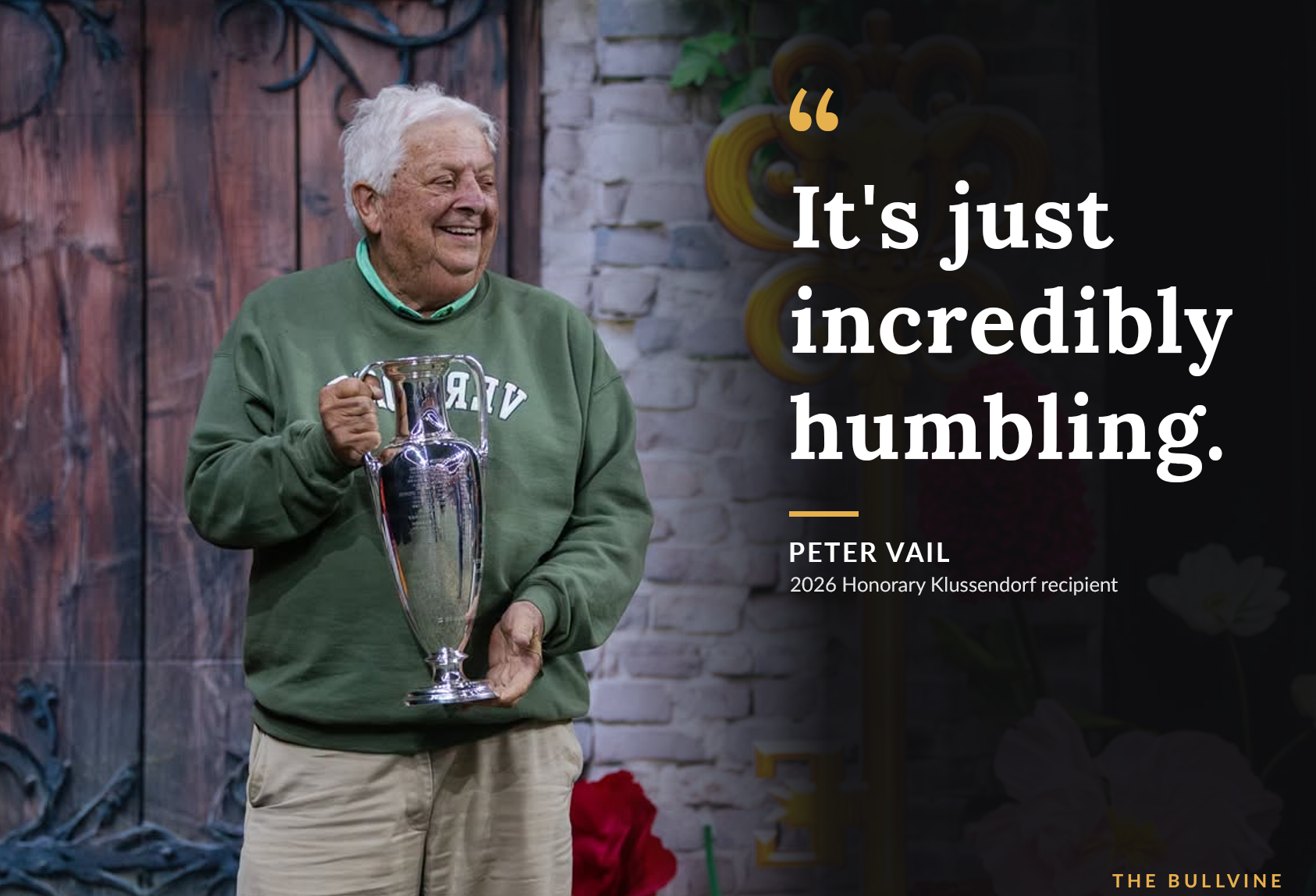
“It’s just incredibly humbling,” he said of joining a roll that has been honoring the show ring’s best people since 1937.
From a 1964 Dispersal to a Three-Generation Fertilizer Business
The citation took the crowd back to the beginning. At 12, Vail would run off the school bus and straight across the road to his grandparents’ farm in eastern New York. He and his brother Walter showed through 4-H. As teenagers, they rode the train to Harrisburg, Pa., and Waterloo, Iowa, fitting their own cattle and other people’s.
At Cornell, he made the dairy judging team under Dr. George Trimberger, the man the citation called legendary. To this day, Vail credits Trimberger with training his eye for a good cow.
After graduation, he bought a small herd of quality Brown Swiss. He dispersed the herd in 1964. For a lot of young cattlemen, that would have been the end of the story.
For Vail, it was the start of the build.
He went into fertilizer. The company that became CaroVail traces its beginning to 1979 and now serves farms from locations across New York and Massachusetts, custom-blending fertilizer to each farm’s soil. It’s a business that lives on knowing your customer’s land and earning that trust back every season.
“We’ve dealt with farmers that have treated us very, very well,” Vail said. Three generations later, the family is still running it. “My son, grandson and granddaughter [are] involved in that business now.”
CaroVail became the engine. When Vail returned to cattle, he invested millions of dollars and helped develop cattle in most every breed, particularly Brown Swiss, Ayrshire and Milking Shorthorn. He brought capital and a judge’s eye, and he used both.
And he’s done it with Lyn beside him. Peter and Lyn Vail have been married for more than 65 years. They have two children, Peter Jr. and Lauren.
Five Brown Swiss Grand Champions in Nine Years
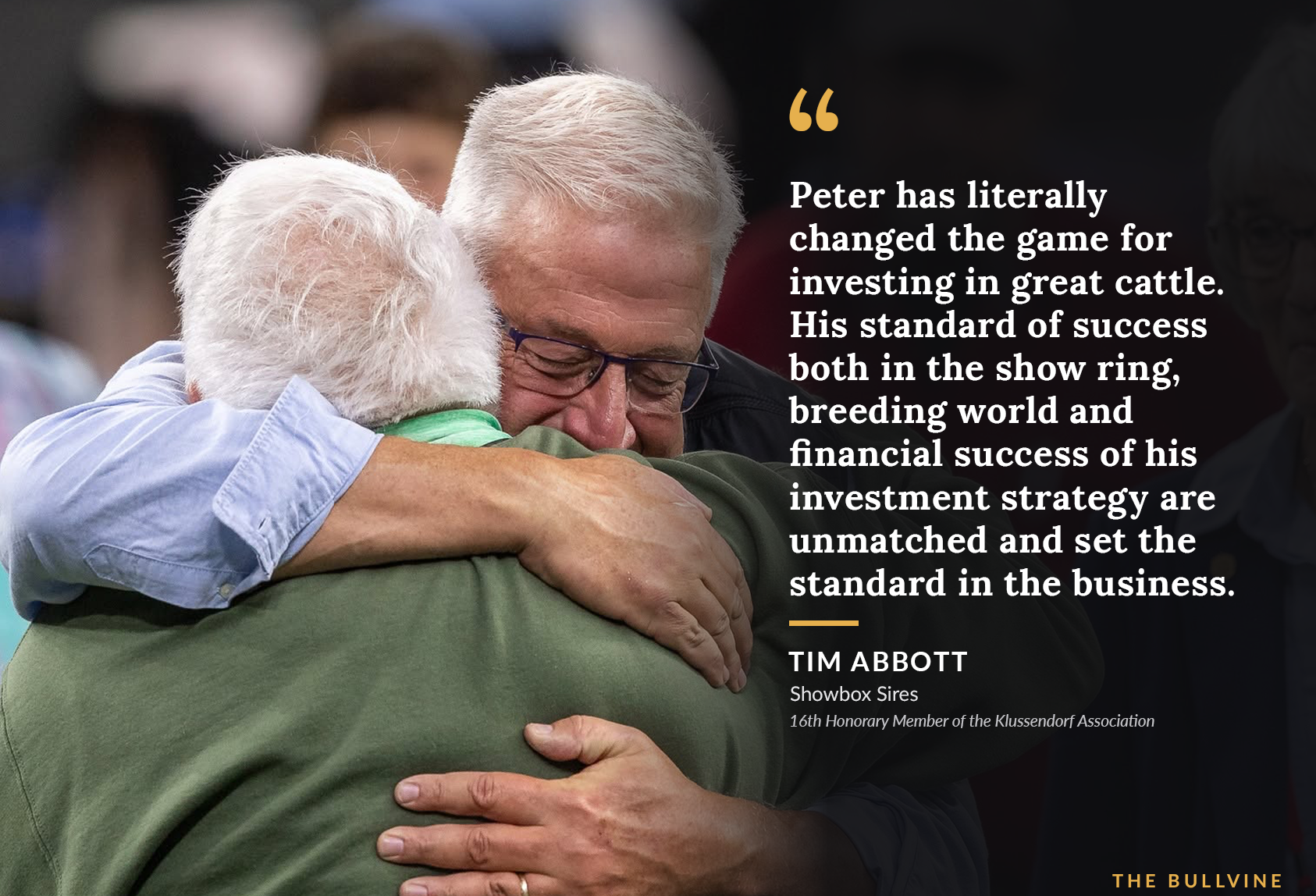
“Peter has literally changed the game for investing in great cattle,” Tim Abbott of Showbox Sires. “His standard of success both in the show ring, breeding world and financial success of his investment strategy are unmatched and set the standard in the business.”
The proof starts in Copake, N.Y. In 2002, Vail and Ken Main formed Elite Dairy, and the Brown Swiss Association still describes their plan in seven words: “buy the best and make them better.”
They did both. Over 16 years, animals owned or bred by Elite earned more than 40 All-American recognitions. Five different cows won Grand Champion Brown Swiss at World Dairy Expo for them: Old Mill JP Grace in 2010, Dublin-Hills Treats in 2011, Cutting Edge B Gretchen-ET in 2013, Eloc Wagor Kandid in 2014, and Cutting Edge T Delilah in 2018. Gretchen and Delilah both carried the partnership’s own Cutting Edge prefix, and breeding Gretchen was the accomplishment both partners called their biggest.
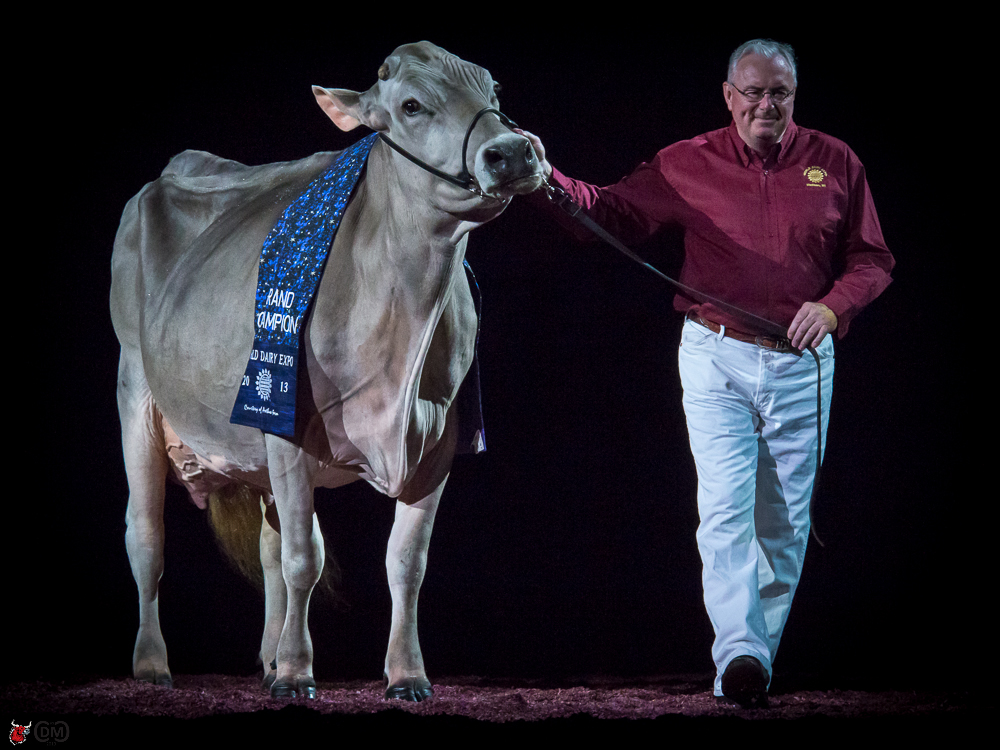
By 2021, World Dairy Expo counted six Grand Champion titles and 13 straight years as Premier Exhibitor of the International Brown Swiss Show. That year, the Klussendorf Association named Main and Vail its 12th Robert “Whitey” McKown Master Breeders. This year, it honored Vail on his own.
A $210,000 Record and the Cow That Never Left
Ask Vail about his favorites, and he can’t stop at one. He names one per breed instead: Griffin, Blexy, Delilah, Karmina, Willow and Jeanette.
“I think the Delilah cow and the Griffin cow would be the two cows that stuck with me the longest,” he said.
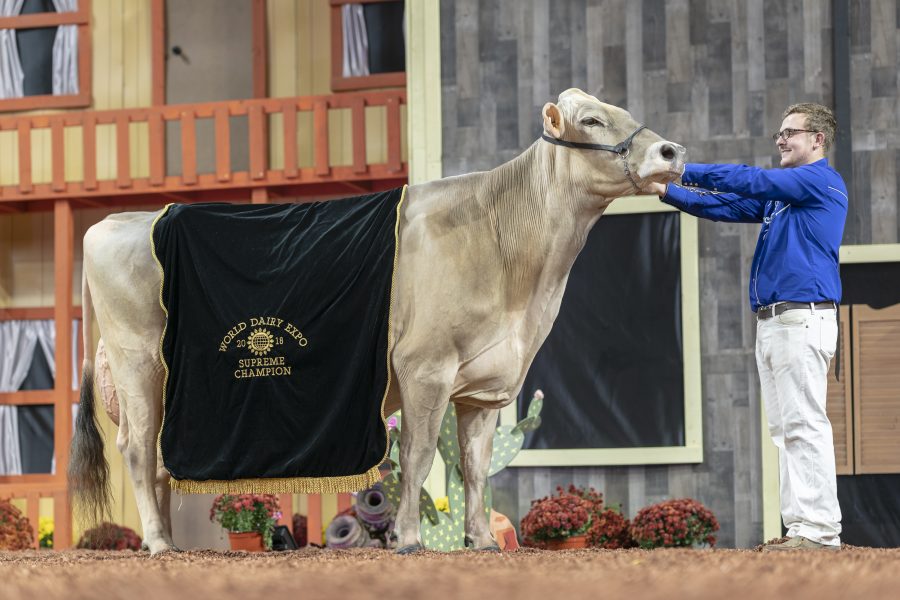
Cutting Edge T Delilah was Supreme Champion of World Dairy Expo in 2018. On Sept. 4, 2019, she walked in to open the Elite Dairy dispersal and sold for $210,000, the highest price ever paid for a U.S. Brown Swiss, according to the Brown Swiss Association. That was 23.5 times the sale’s $8,948 average. A few weeks later, under new ownership, she won Supreme again.
Most people sell a cow for a breed record and take the win. Vail kept going.
“Delilah has 77 offspring registered,” he said. “… I just bought an IVF session out of her this summer. So we’re gonna do her again next week.”
How many breeders have the discipline to keep investing in genetics they cashed out seven years ago? That isn’t speculation. That’s devotion to a cow family.
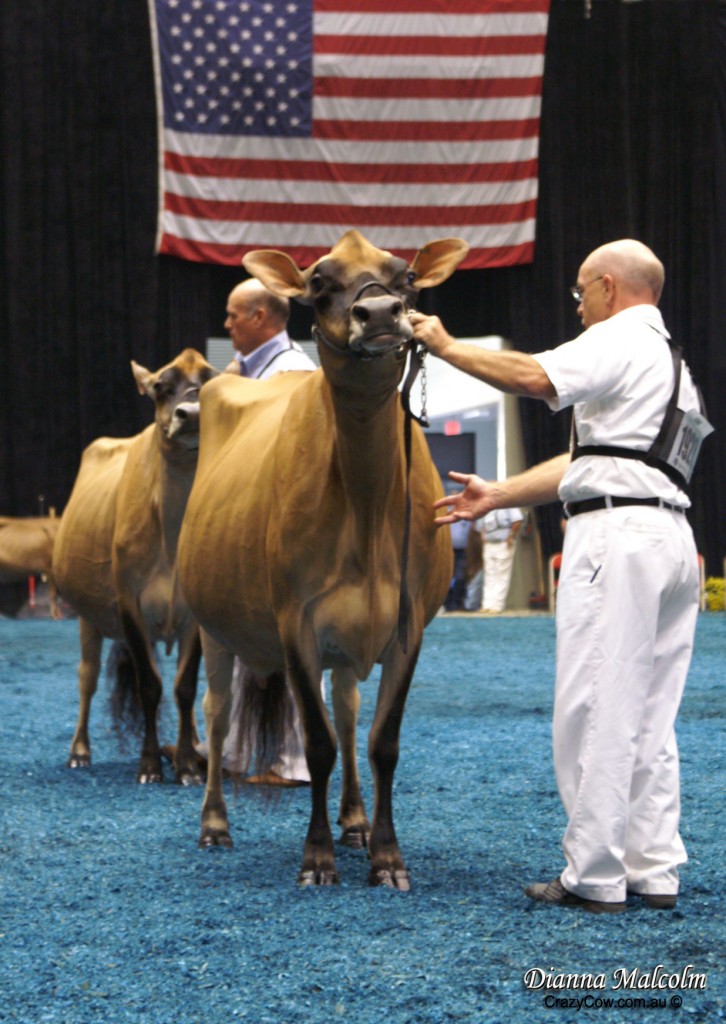
Gene Henderson leads Llolyn Jude Griffen-ET, the first cow Peter Vail and Tom and Kelli Cull bought together, at the 2005 Field of Dreams sale. She went on to be Grand Champion Jersey and Reserve Supreme Champion at World Dairy Expo 2007. Vail still names her one of the two cows that stayed with him longest.
Llolyn Jude Griffin-ET, the Jersey he bought with Tom and Kelli Cull of Budjon Farms at the 2005 Field of Dreams sale, was Reserve Supreme Champion of Expo in 2007. The Ayrshires on his list are champions too. Marilie Gentleman Karmina was Grand Champion in 2021 for Budjon Farms and Peter and Lyn Vail. B-Wil Kingsire Willow was Grand in 2025 and won her class again this fall.
The Klussendorf Rewards the Caretaker, and Vail Chose Caretakers
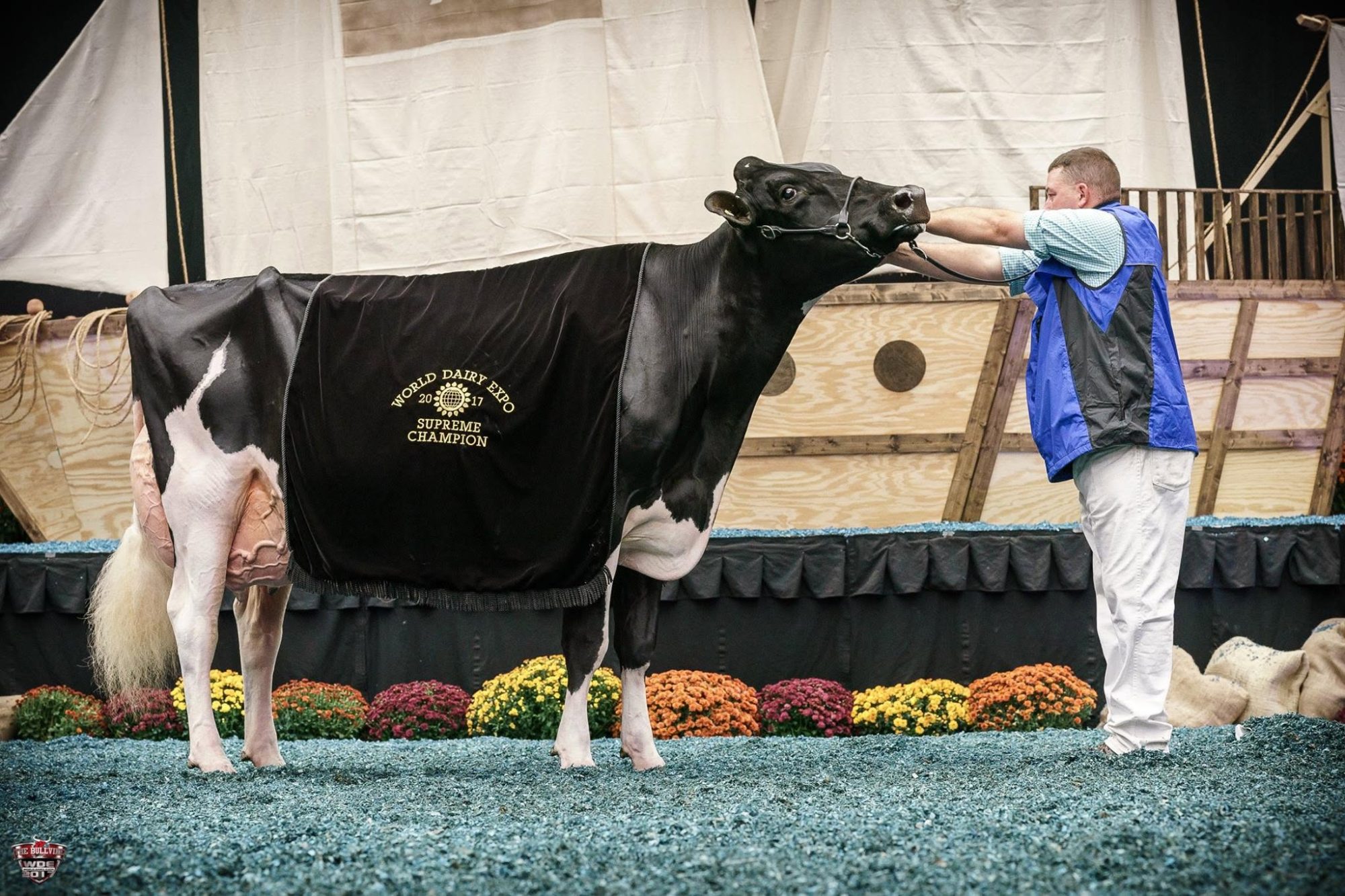
Then there’s Blexy. Rosiers Blexy Goldwyn-ET was Supreme Champion of the 2017 Expo for five owners: Budjon, Vail, Abbott, Van Exel and Woodmansee.
Look at what has happened to those five names since.
| Blexy co-owner | Klussendorf recognition |
| Tim Abbott, Enosburg, Vt. | 16th Honorary Member, 2014 |
| Tom Cull, Budjon Farms, Lomira, Wis. | 82nd Klussendorf Award, 2024 |
| Clark Woodmansee III, Preston, Conn. | 83rd Klussendorf Award, 2025 |
| Hank Van Exel, Lodi, Calif. | 2026 Klussendorf Award |
| Peter Vail, Salem, N.Y. | 19th Honorary Member, 2026 |
Five owners of one cow, and every one of them now carries Klussendorf recognition. Three won the Klussendorf Award itself in three straight years. This fall, Vail and Van Exel, two owners of that 2017 Supreme Champion, were honored in the same Expo week.
Think that’s a coincidence? It isn’t. The show ring rewards the cow, but the Klussendorf rewards the caretaker, and Vail built his whole program around caretakers.
When asked in 2018 how many partners he had, he started at seven to ten and kept counting past 15. His test for a partner: “good cow people and caretakers” who can get cows ready 365 days a year, “not just show week.”
At 87, Madison Still Knows His Name
The citation read in the ring credited him with 79 animals at Expo in 2025, 49 of them in the top 10 and eight class winners.
This year, he did it again. Here’s what World Dairy Expo’s official results show for cattle Vail owned or co-owned:
| Breed | Placings | Top 10 | Class wins | Highlights |
| Ayrshire | 26 | 19 | 3 | Junior Champion; Reserve Grand; Premier Exhibitor |
| Milking Shorthorn | 19 | 15 | 3 | Premier Exhibitor |
| Brown Swiss | 13 | 4 | 1 | Reserve Senior Champion |
| Jersey | 11 | 11 | 2 | Junior Champion; Premier Breeder and Exhibitor of the Heifer Show |
| Holstein | 5 | 2 | 1 | Reserve Intermediate Champion |
| Guernsey | 1 | 1 | 0 | — |
| Total | 75 | 52 | 10 |
Note: These 75 placings reflect individual class results pulled directly from official Expo logs, excluding group classes, production awards and Red & Whites.
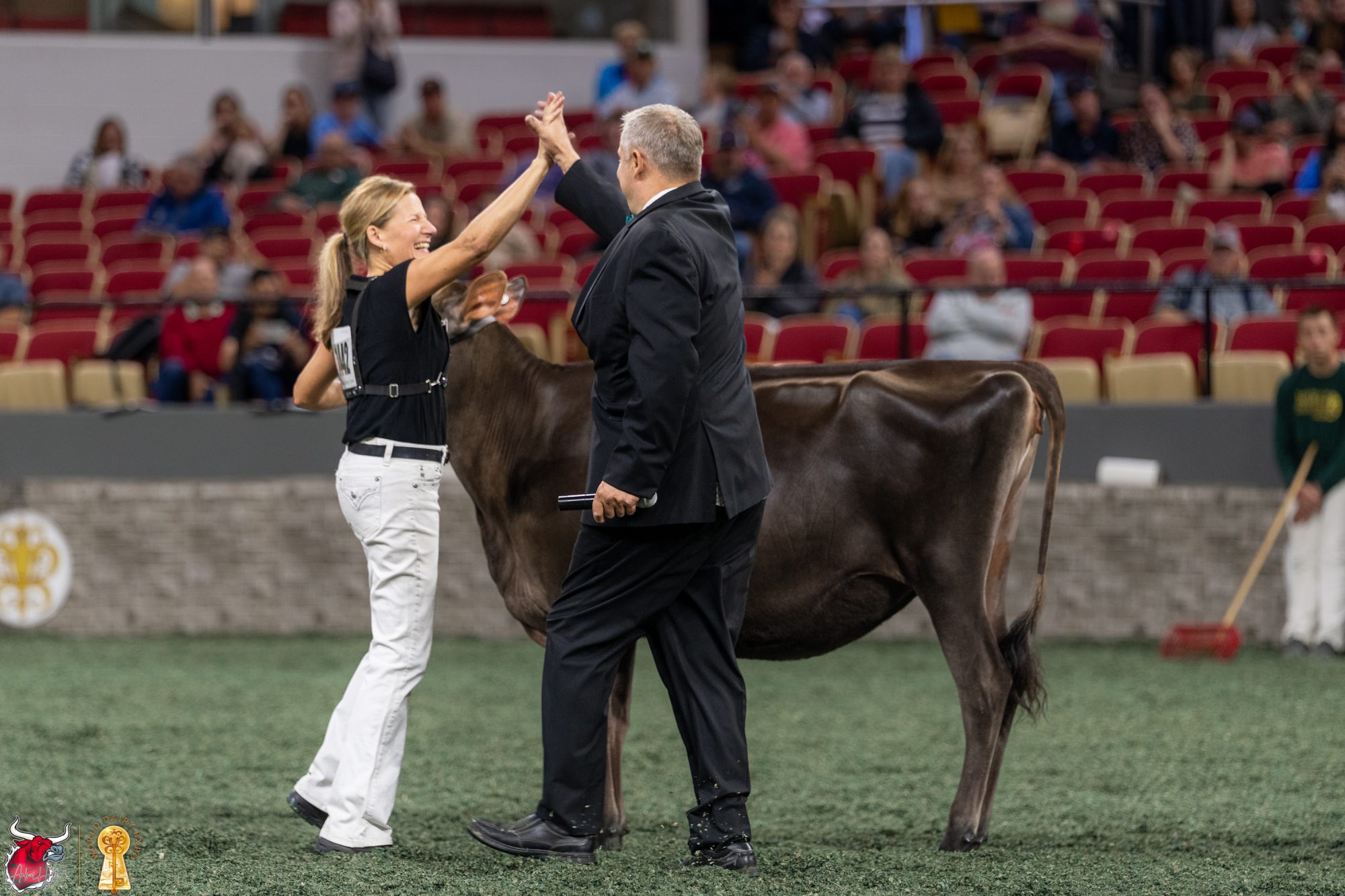
That’s 75 placings across six breeds, and 11 for 11 in the top 10 with his Jerseys alongside Budjon Farms. Budjon-Vail Joel Starstruck-ET went Junior Champion and then Reserve Supreme Champion Heifer of the entire show. Ullmstar-SV R Money Maker was Junior Champion Ayrshire.
The third junior champion of the week wasn’t even his to lead. Cold Springs Pv M Believe N Me-ET was Junior Champion Milking Shorthorn for Erin and Tyler Marotz and Dean Engelman. Vail said he bred her.
That might be the most Peter Vail result of all. His genetics win in other people’s hands.
His Legacy Wears a Junior Exhibitor’s Number
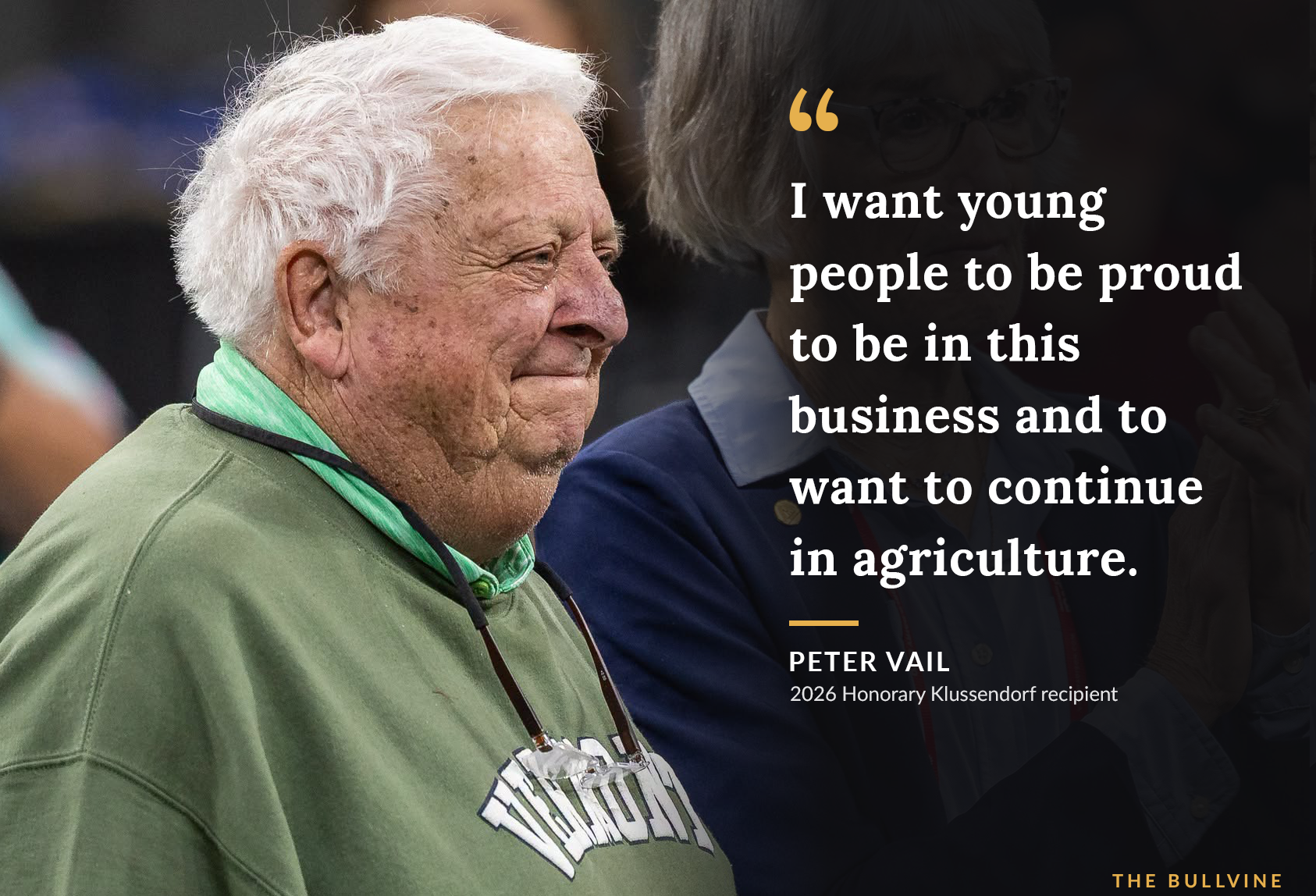
“I want young people to be proud to be in this business,” Vail said, “and to want to continue in agriculture.”
His genetics are already in young hands. Fifteen more 2026 Expo placings went to Budjon-Vail and Nasholm-Vail cattle shown by other exhibitors, four of them in the Junior Holstein Show. In the Junior Jersey Show, Budjon-Vail Jordan C Shaneese-ET went Reserve Grand Champion for Kamryn, Kate and Colt Kasbergen and Kash-In Jerseys. In the Elite years, the partnership sold heifers to 4-H members across the tri-state area to bring kids into Brown Swiss.
The citation didn’t hedge on his generosity. Vail is “always the first person to donate and support in any way that he possibly can,” it said. “His philanthropic ways are second to none.”
Abbott said it best two years ago. Vail’s legacy, he said, “will be one of generosity, passion and vision for both the feed and fertilizer business and cattle breeding world.”
What the Vail Way Asks of the Rest of Us
Few breeders will ever invest at Vail’s level. Most of what made him great never needed a checkbook, and every breeder can do it.
- Choose 365-day cow people. Vail’s test is simple: who keeps cattle ready all year? That means a herd that looks right in the dead of February, not just when the clippers come out in October. Build your partnerships on care, and the banners take care of themselves.
- Stay loyal to the cow family. Delilah sold for a breed record, and Vail kept investing in her genetics seven years later. Great cows aren’t one-day events. Their value lives in the daughters, and the breeders who last are the ones who stay with a family after the ribbon fades.
- Say yes to the kid who asks. One leased calf costs an owner very little. It can give a young exhibitor a reason to stay in this business for life. Vail has been saying yes since the Elite days. The next time a kid walks up to your stalls, do the same.
The Cow He’s Watching Next
Before the interview ended, Treloar asked who he wanted to see in the Holstein cow show.
“I think the Holstein champion cow is kind of wide open right now,” Vail said. “The sharper cows that have been well cared for for a year will be the ones that come to the top.”
Well cared for for a year. Not for a week.
That’s been his standard for partners, cows and kids alike. The citation said Peter Vail has “changed lives, strengthened our industry, and deepen[ed] countless people’s love for the dairy cattle business in very lasting and meaningful ways.” This October, the Klussendorf Association wrote his name beside the very people he built that legacy with.
And at 87, he was right where you’d expect: in the stands at Madison, watching for the next great one.
Congratulations, Peter.
Learn More
- Five Roads to Madison: The Cows, Families and Decisions — Map out the daily management protocols and breeding choices required to build a competitive string. Breaks down the concrete steps top operations execute 365 days a year to put their best cattle on the colored shavings.
- 2018 WDE Supreme Champion Delilah Sells for Brown Swiss World Record $210,000 — Track the dollars behind Peter Vail’s most lucrative partnership success. Exposes the financial mechanics of a record-shattering dispersal, revealing exactly how elite cow families command premium valuations and deliver massive returns long after the gavel falls.
- World Dairy Expo 2026: Seven Breeds, One Pattern — Arm yourself with the judging data shaping the modern show ring. Dismantles the results across all major breeds to reveal the dominant genetic and phenotypic trends judges are currently rewarding, helping you align your future matings.
The Sunday Read Dairy Professionals Don’t Skip.

Every week, thousands of producers, breeders, and industry insiders open Bullvine Weekly for genetics insights, market shifts, and profit strategies they won’t find anywhere else. One email. Five minutes. Smarter decisions all week.