

Archive for dairy youth programs

Peter Vail, 87, Earns the Honorary Klussendorf and Still Tells Kids to Pick a Calf

The kid who used to run off the school bus to his grandparents’ barn is now the Klussendorf Association’s 19th honorary member. Six decades on, Peter Vail’s greatest work isn’t the banners. It’s the people he brought along with him.

Peter Vail was making his way onto the colored shavings at World Dairy Expo when the citation got to the heart of it.

The Klussendorf Award, it said, represents “the highest ideals of our industry: character, sportsmanship, integrity, dedication, and an unwavering commitment to excellence in the dairy show ring.” Few individuals, it went on, have “embodied these values as completely or influenced as many people as this native New Yorker.”

Vail, of Salem, N.Y., is 87. He has owned or bred champions in Holsteins, Jerseys, Brown Swiss, Ayrshires and Milking Shorthorns. His partnership bred and sold the most expensive Brown Swiss cow in U.S. history. But the story he told during Expo week was about a calf.

A young woman from Vermont had come up to him and asked if she could lease one for next year. Vail said yes. He ran her through what he had in September calves and December calves, and told her to pick one.

“You take the calf and lease the calf,” he told Casey Treloar. “It’s fine with me.”

That’s Peter Vail. Now the Klussendorf Association has made it official.
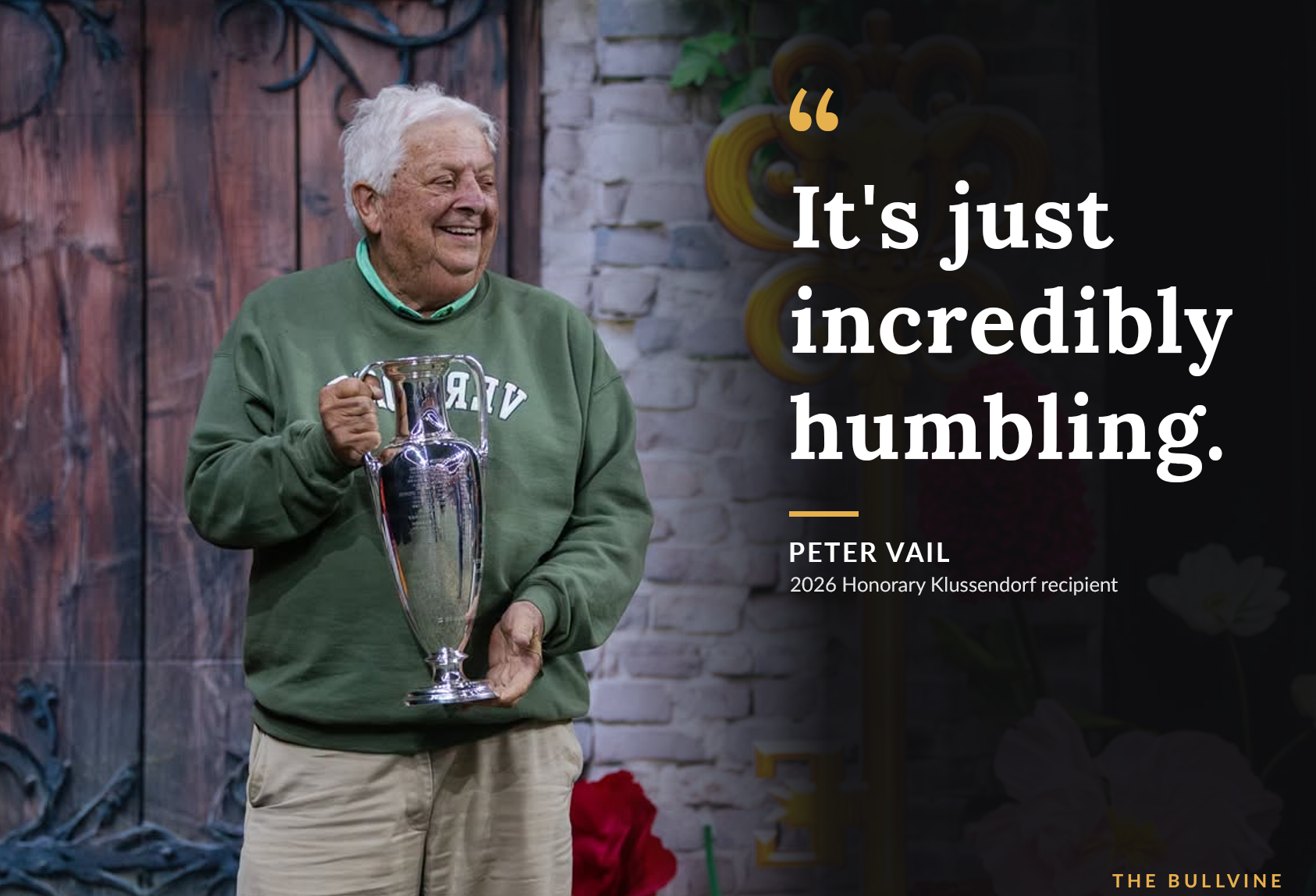
“It’s just incredibly humbling,” he said of joining a roll that has been honoring the show ring’s best people since 1937.

From a 1964 Dispersal to a Three-Generation Fertilizer Business

The citation took the crowd back to the beginning. At 12, Vail would run off the school bus and straight across the road to his grandparents’ farm in eastern New York. He and his brother Walter showed through 4-H. As teenagers, they rode the train to Harrisburg, Pa., and Waterloo, Iowa, fitting their own cattle and other people’s.

At Cornell, he made the dairy judging team under Dr. George Trimberger, the man the citation called legendary. To this day, Vail credits Trimberger with training his eye for a good cow.

After graduation, he bought a small herd of quality Brown Swiss. He dispersed the herd in 1964. For a lot of young cattlemen, that would have been the end of the story.

For Vail, it was the start of the build.

He went into fertilizer. The company that became CaroVail traces its beginning to 1979 and now serves farms from locations across New York and Massachusetts, custom-blending fertilizer to each farm’s soil. It’s a business that lives on knowing your customer’s land and earning that trust back every season.

“We’ve dealt with farmers that have treated us very, very well,” Vail said. Three generations later, the family is still running it. “My son, grandson and granddaughter [are] involved in that business now.”

CaroVail became the engine. When Vail returned to cattle, he invested millions of dollars and helped develop cattle in most every breed, particularly Brown Swiss, Ayrshire and Milking Shorthorn. He brought capital and a judge’s eye, and he used both.

And he’s done it with Lyn beside him. Peter and Lyn Vail have been married for more than 65 years. They have two children, Peter Jr. and Lauren.

Five Brown Swiss Grand Champions in Nine Years
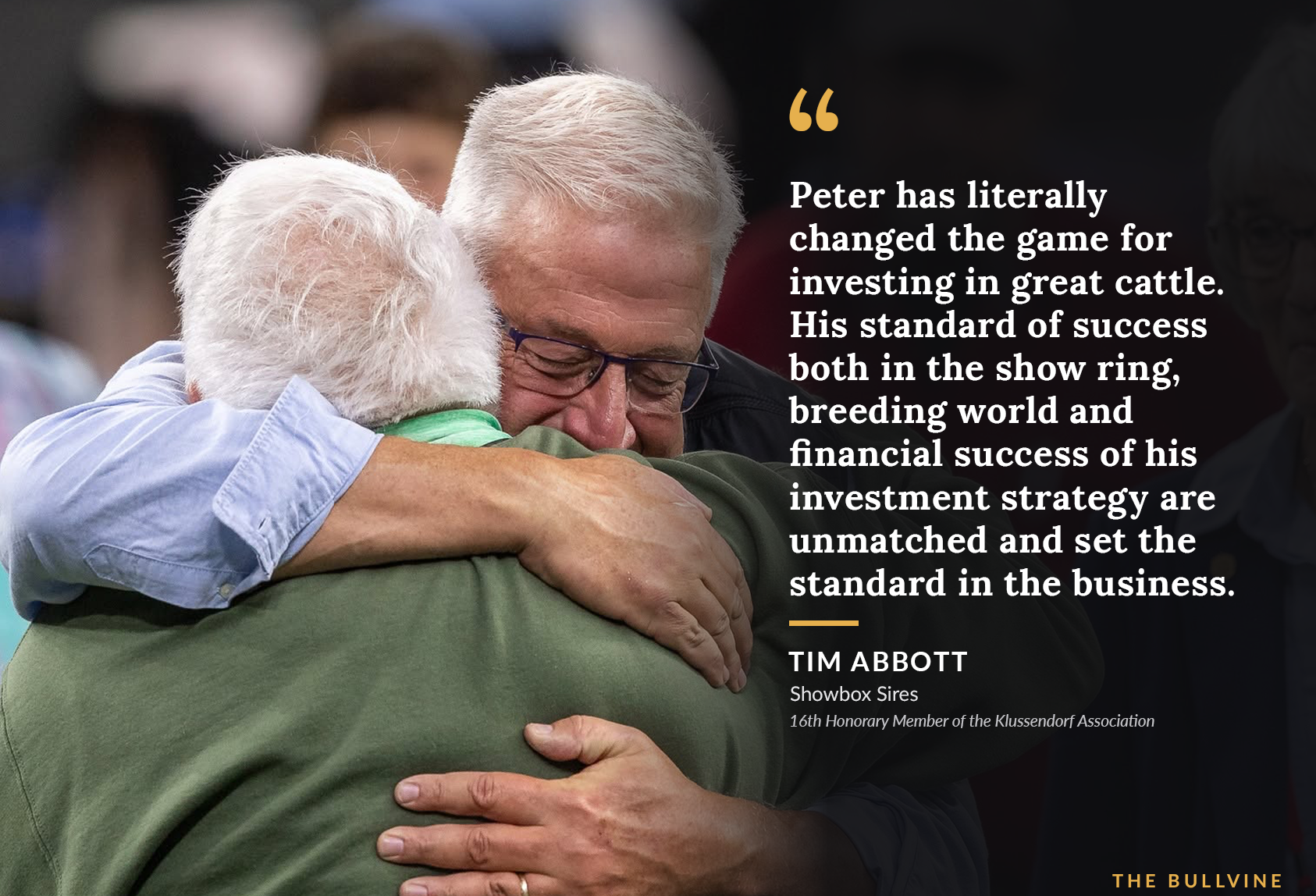
“Peter has literally changed the game for investing in great cattle,” Tim Abbott of Showbox Sires. “His standard of success both in the show ring, breeding world and financial success of his investment strategy are unmatched and set the standard in the business.”

The proof starts in Copake, N.Y. In 2002, Vail and Ken Main formed Elite Dairy, and the Brown Swiss Association still describes their plan in seven words: “buy the best and make them better.”

They did both. Over 16 years, animals owned or bred by Elite earned more than 40 All-American recognitions. Five different cows won Grand Champion Brown Swiss at World Dairy Expo for them: Old Mill JP Grace in 2010, Dublin-Hills Treats in 2011, Cutting Edge B Gretchen-ET in 2013, Eloc Wagor Kandid in 2014, and Cutting Edge T Delilah in 2018. Gretchen and Delilah both carried the partnership’s own Cutting Edge prefix, and breeding Gretchen was the accomplishment both partners called their biggest.
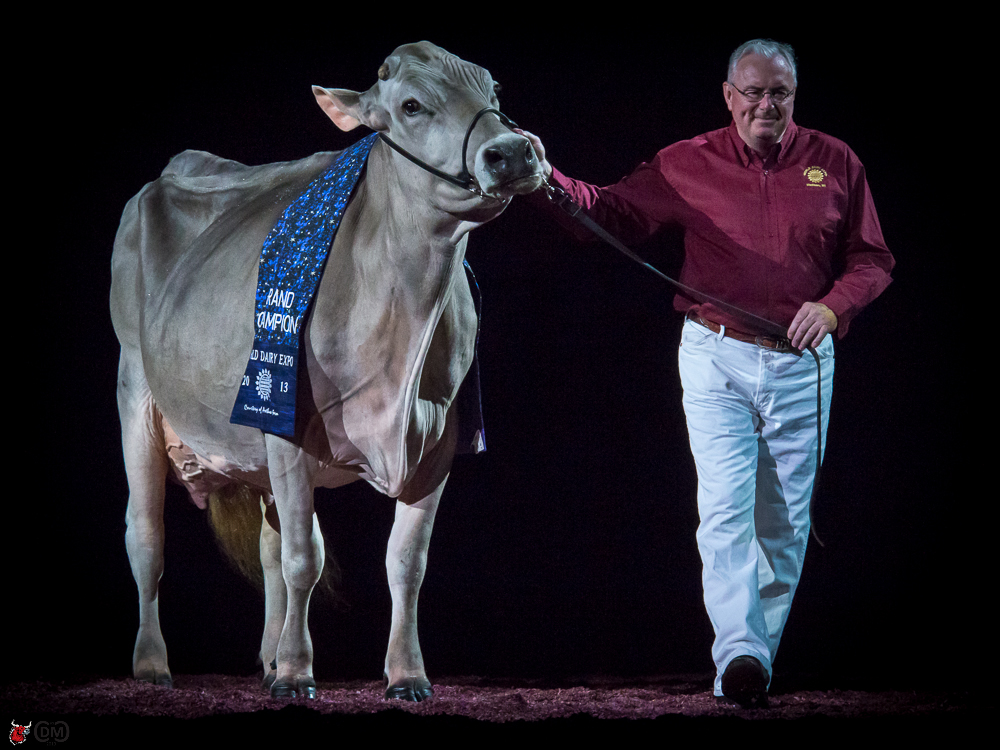
Cutting Edge B Gretchen-ET wears the Grand Champion sash at World Dairy Expo 2013 after winning the four-year-old class for Ken Main and Peter Vail. She was also Grand at the Eastern National that year, and both partners called breeding her their biggest accomplishment.

By 2021, World Dairy Expo counted six Grand Champion titles and 13 straight years as Premier Exhibitor of the International Brown Swiss Show. That year, the Klussendorf Association named Main and Vail its 12th Robert “Whitey” McKown Master Breeders. This year, it honored Vail on his own.

A $210,000 Record and the Cow That Never Left

Ask Vail about his favorites, and he can’t stop at one. He names one per breed instead: Griffin, Blexy, Delilah, Karmina, Willow and Jeanette.

“I think the Delilah cow and the Griffin cow would be the two cows that stuck with me the longest,” he said.
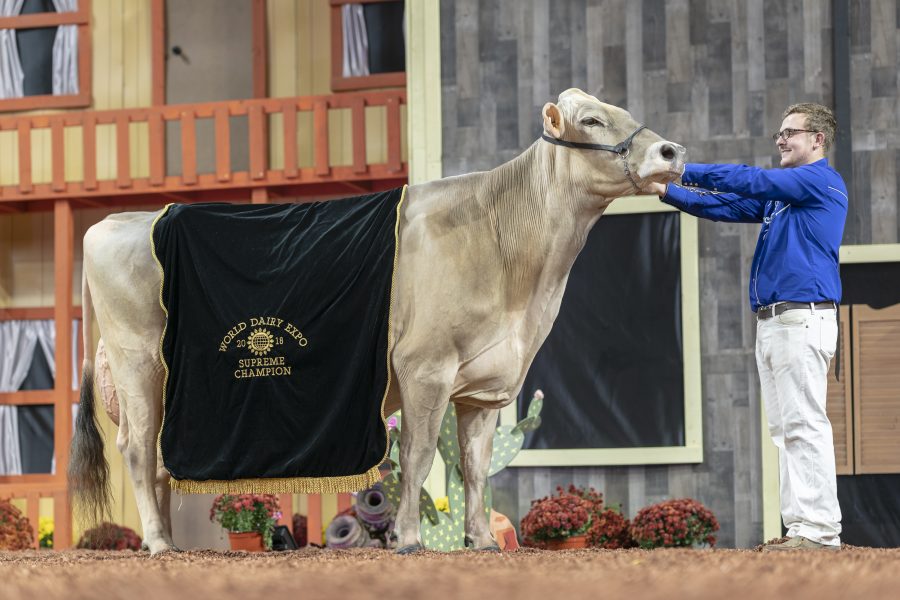
Cutting Edge T Delilah wears the Supreme Champion blanket at World Dairy Expo 2018. In 2019, she sold for a U.S. Brown Swiss record of $210,000 and won Supreme again. She now has 77 registered offspring, and Peter Vail bought another IVF session out of her this summer.

Cutting Edge T Delilah was Supreme Champion of World Dairy Expo in 2018. On Sept. 4, 2019, she walked in to open the Elite Dairy dispersal and sold for $210,000, the highest price ever paid for a U.S. Brown Swiss, according to the Brown Swiss Association. That was 23.5 times the sale’s $8,948 average. A few weeks later, under new ownership, she won Supreme again.

Most people sell a cow for a breed record and take the win. Vail kept going.

“Delilah has 77 offspring registered,” he said. “… I just bought an IVF session out of her this summer. So we’re gonna do her again next week.”

How many breeders have the discipline to keep investing in genetics they cashed out seven years ago? That isn’t speculation. That’s devotion to a cow family.
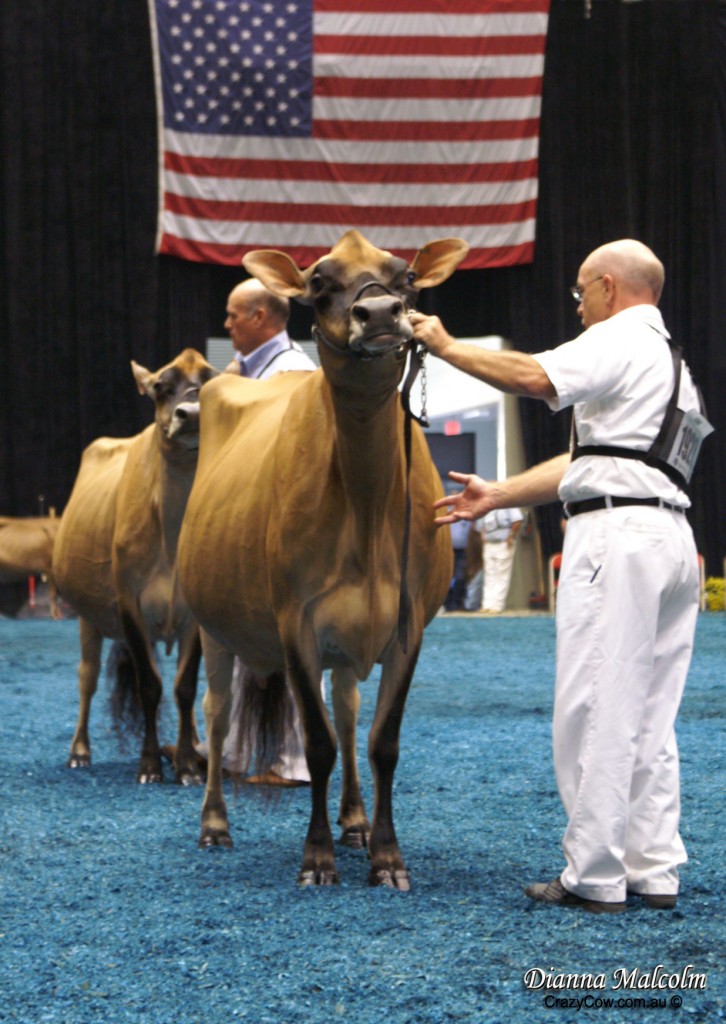
Gene Henderson leads Llolyn Jude Griffen-ET, the first cow Peter Vail and Tom and Kelli Cull bought together, at the 2005 Field of Dreams sale. She went on to be Grand Champion Jersey and Reserve Supreme Champion at World Dairy Expo 2007. Vail still names her one of the two cows that stayed with him longest.

Llolyn Jude Griffin-ET, the Jersey he bought with Tom and Kelli Cull of Budjon Farms at the 2005 Field of Dreams sale, was Reserve Supreme Champion of Expo in 2007. The Ayrshires on his list are champions too. Marilie Gentleman Karmina was Grand Champion in 2021 for Budjon Farms and Peter and Lyn Vail. B-Wil Kingsire Willow was Grand in 2025 and won her class again this fall.

The Klussendorf Rewards the Caretaker, and Vail Chose Caretakers
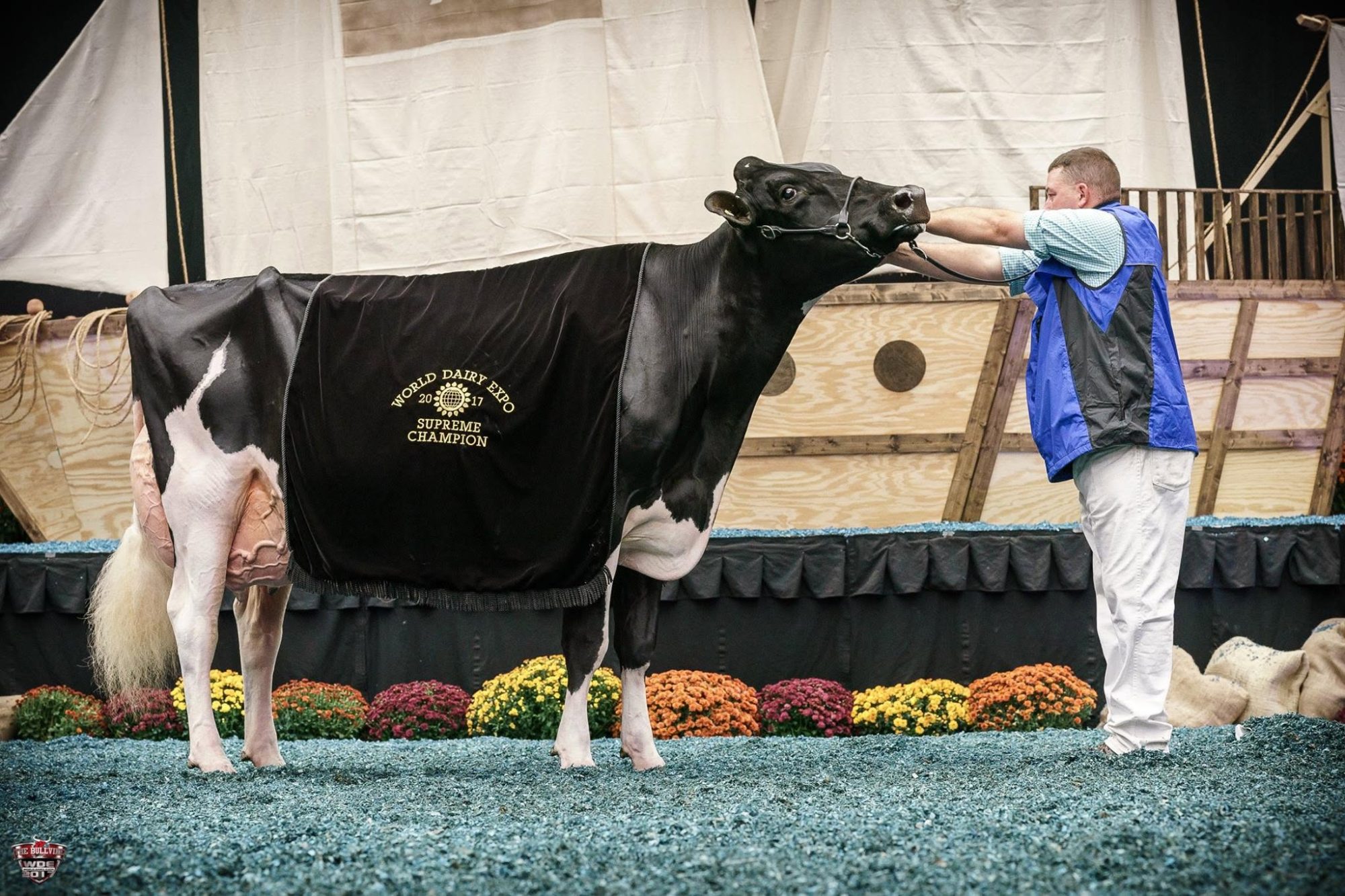
Rosiers Blexy Goldwyn-ET wears the Supreme Champion blanket at World Dairy Expo 2017 after winning her six-year-old class and Grand Champion of the International Holstein Show. All five of her owners (Budjon, Vail, Abbott, Van Exel and Woodmansee) now hold Klussendorf honors.

Then there’s Blexy. Rosiers Blexy Goldwyn-ET was Supreme Champion of the 2017 Expo for five owners: Budjon, Vail, Abbott, Van Exel and Woodmansee.

Look at what has happened to those five names since.

Blexy co-ownerKlussendorf recognition
Tim Abbott, Enosburg, Vt.16th Honorary Member, 2014
Tom Cull, Budjon Farms, Lomira, Wis.82nd Klussendorf Award, 2024
Clark Woodmansee III, Preston, Conn.83rd Klussendorf Award, 2025
Hank Van Exel, Lodi, Calif.2026 Klussendorf Award
Peter Vail, Salem, N.Y.19th Honorary Member, 2026

Five owners of one cow, and every one of them now carries Klussendorf recognition. Three won the Klussendorf Award itself in three straight years. This fall, Vail and Van Exel, two owners of that 2017 Supreme Champion, were honored in the same Expo week.

Think that’s a coincidence? It isn’t. The show ring rewards the cow, but the Klussendorf rewards the caretaker, and Vail built his whole program around caretakers.

When asked in 2018 how many partners he had, he started at seven to ten and kept counting past 15. His test for a partner: “good cow people and caretakers” who can get cows ready 365 days a year, “not just show week.”

At 87, Madison Still Knows His Name

The citation read in the ring credited him with 79 animals at Expo in 2025, 49 of them in the top 10 and eight class winners.

This year, he did it again. Here’s what World Dairy Expo’s official results show for cattle Vail owned or co-owned:

BreedPlacingsTop 10Class winsHighlights
Ayrshire26193Junior Champion; Reserve Grand; Premier Exhibitor
Milking Shorthorn19153Premier Exhibitor
Brown Swiss1341Reserve Senior Champion
Jersey11112Junior Champion; Premier Breeder and Exhibitor of the Heifer Show
Holstein521Reserve Intermediate Champion
Guernsey110—
Total755210

Note: These 75 placings reflect individual class results pulled directly from official Expo logs, excluding group classes, production awards and Red & Whites.
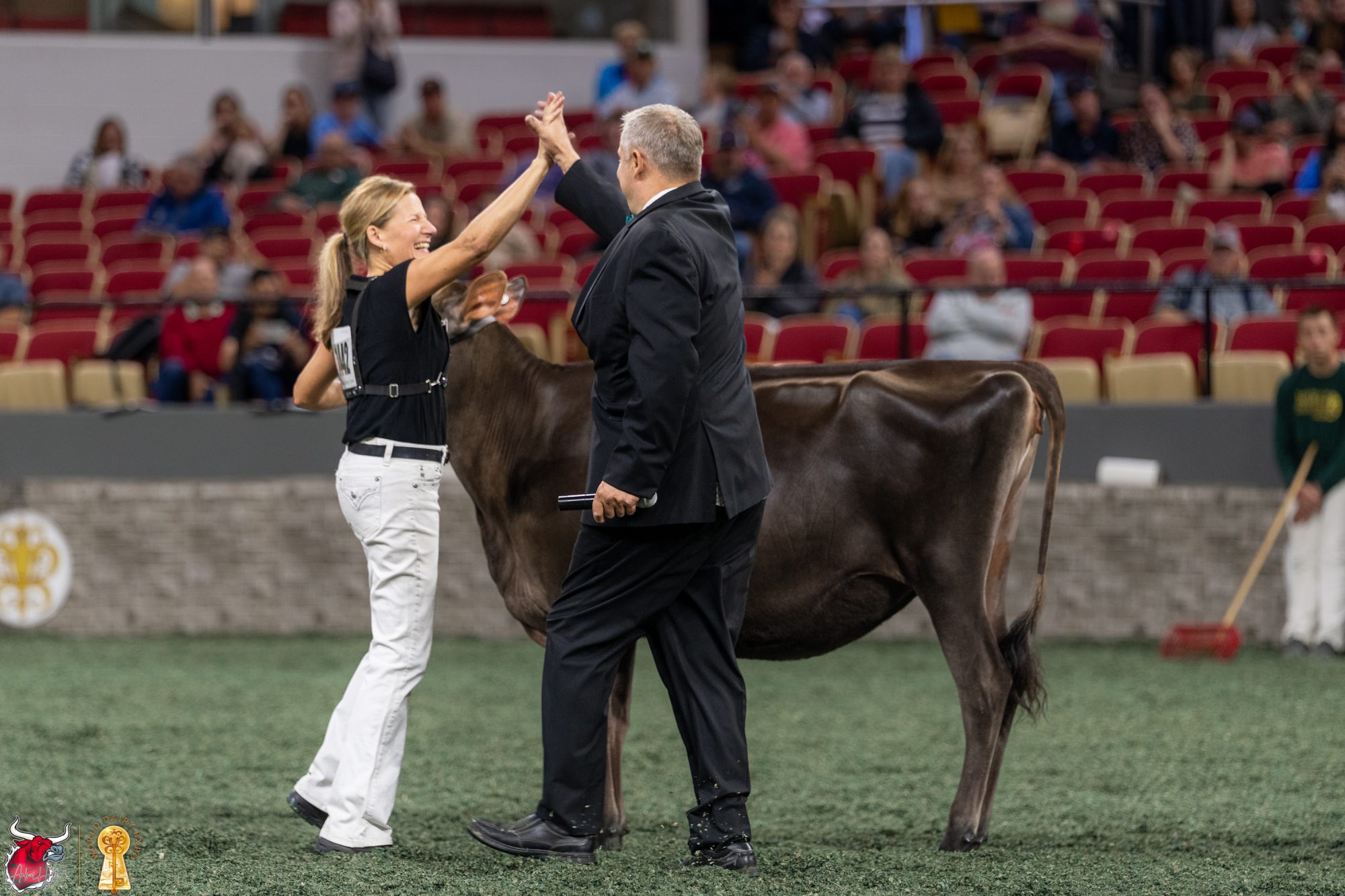
That’s 75 placings across six breeds, and 11 for 11 in the top 10 with his Jerseys alongside Budjon Farms. Budjon-Vail Joel Starstruck-ET went Junior Champion and then Reserve Supreme Champion Heifer of the entire show. Ullmstar-SV R Money Maker was Junior Champion Ayrshire.

The third junior champion of the week wasn’t even his to lead. Cold Springs Pv M Believe N Me-ET was Junior Champion Milking Shorthorn for Erin and Tyler Marotz and Dean Engelman. Vail said he bred her.

That might be the most Peter Vail result of all. His genetics win in other people’s hands.

His Legacy Wears a Junior Exhibitor’s Number
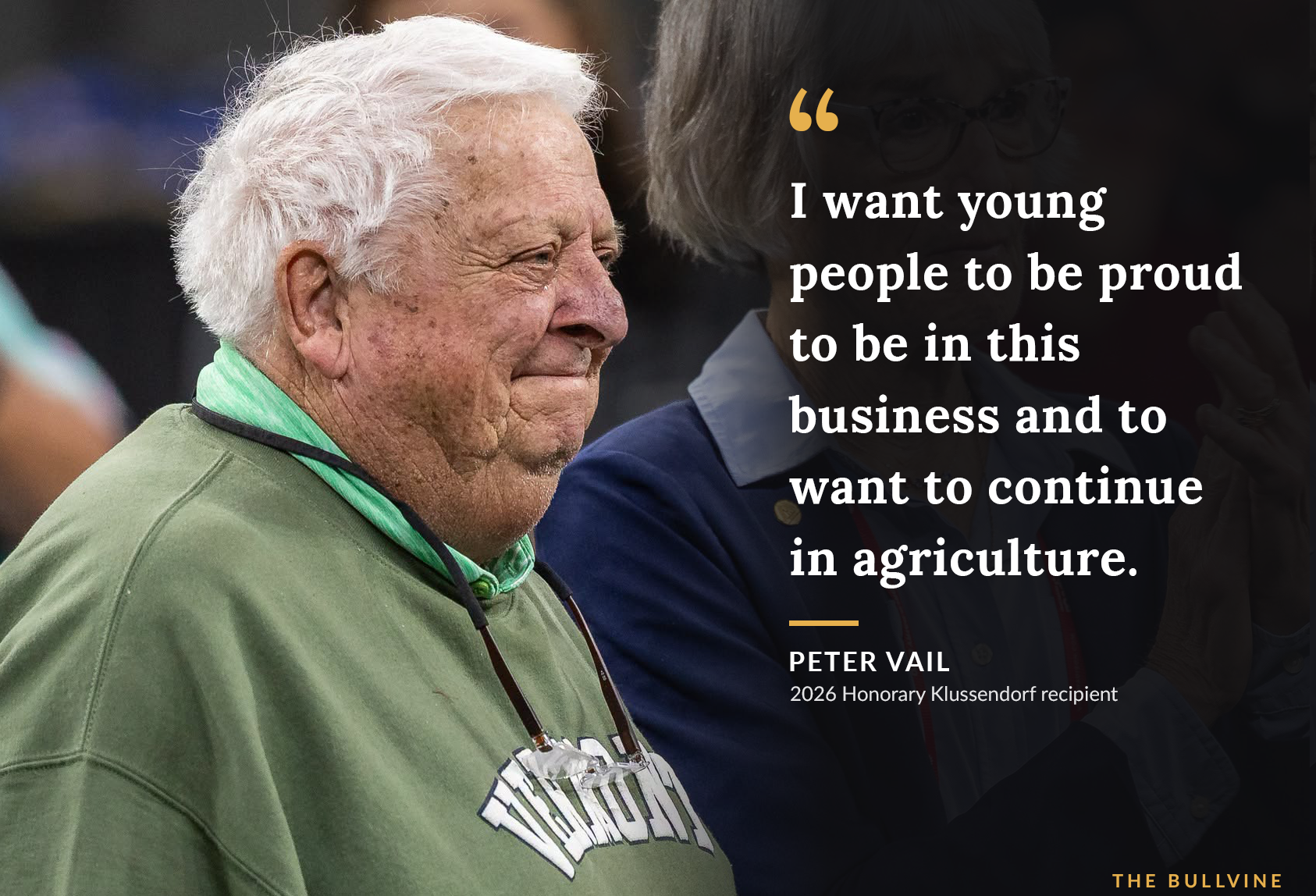
“I want young people to be proud to be in this business,” Vail said, “and to want to continue in agriculture.”

His genetics are already in young hands. Fifteen more 2026 Expo placings went to Budjon-Vail and Nasholm-Vail cattle shown by other exhibitors, four of them in the Junior Holstein Show. In the Junior Jersey Show, Budjon-Vail Jordan C Shaneese-ET went Reserve Grand Champion for Kamryn, Kate and Colt Kasbergen and Kash-In Jerseys. In the Elite years, the partnership sold heifers to 4-H members across the tri-state area to bring kids into Brown Swiss.

The citation didn’t hedge on his generosity. Vail is “always the first person to donate and support in any way that he possibly can,” it said. “His philanthropic ways are second to none.”

Abbott said it best two years ago. Vail’s legacy, he said, “will be one of generosity, passion and vision for both the feed and fertilizer business and cattle breeding world.”

What the Vail Way Asks of the Rest of Us

Few breeders will ever invest at Vail’s level. Most of what made him great never needed a checkbook, and every breeder can do it.

  • Choose 365-day cow people. Vail’s test is simple: who keeps cattle ready all year? That means a herd that looks right in the dead of February, not just when the clippers come out in October. Build your partnerships on care, and the banners take care of themselves.
  • Stay loyal to the cow family. Delilah sold for a breed record, and Vail kept investing in her genetics seven years later. Great cows aren’t one-day events. Their value lives in the daughters, and the breeders who last are the ones who stay with a family after the ribbon fades.
  • Say yes to the kid who asks. One leased calf costs an owner very little. It can give a young exhibitor a reason to stay in this business for life. Vail has been saying yes since the Elite days. The next time a kid walks up to your stalls, do the same.

The Cow He’s Watching Next

Before the interview ended, Treloar asked who he wanted to see in the Holstein cow show.

“I think the Holstein champion cow is kind of wide open right now,” Vail said. “The sharper cows that have been well cared for for a year will be the ones that come to the top.”

Well cared for for a year. Not for a week.

That’s been his standard for partners, cows and kids alike. The citation said Peter Vail has “changed lives, strengthened our industry, and deepen[ed] countless people’s love for the dairy cattle business in very lasting and meaningful ways.” This October, the Klussendorf Association wrote his name beside the very people he built that legacy with.

And at 87, he was right where you’d expect: in the stands at Madison, watching for the next great one.

Congratulations, Peter.

Learn More

  • Five Roads to Madison: The Cows, Families and Decisions — Map out the daily management protocols and breeding choices required to build a competitive string. Breaks down the concrete steps top operations execute 365 days a year to put their best cattle on the colored shavings.
  • 2018 WDE Supreme Champion Delilah Sells for Brown Swiss World Record $210,000 — Track the dollars behind Peter Vail’s most lucrative partnership success. Exposes the financial mechanics of a record-shattering dispersal, revealing exactly how elite cow families command premium valuations and deliver massive returns long after the gavel falls.
  • World Dairy Expo 2026: Seven Breeds, One Pattern — Arm yourself with the judging data shaping the modern show ring. Dismantles the results across all major breeds to reveal the dominant genetic and phenotypic trends judges are currently rewarding, helping you align your future matings.

The Sunday Read Dairy Professionals Don’t Skip.

Every week, thousands of producers, breeders, and industry insiders open Bullvine Weekly for genetics insights, market shifts, and profit strategies they won’t find anywhere else. One email. Five minutes. Smarter decisions all week.

NewsSubscribe
First
Last
Consent

Canada’s Young Breeders Take Europe by Storm: Full Results and Future Stars from Young Breeders School 2025

The maple leaf just planted its flag on Europe’s biggest youth dairy stage—against more than a dozen nations, Canada didn’t just win, they set a new standard for dairy youth excellence.

Ariane Lebel of Canada reacts with emotion after being announced as the top overall winner at Young Breeders School 2025—a defining moment for the next generation of global dairy talent.

The Young Breeders School 2025 wasn’t just a show—it was the international proving ground for tomorrow’s dairy leaders. Over 100 talented competitors from 13 countries brought their A-game, and at the end of the day, it was a Canadian sweep to remember.

Top Results: Canada Leads the Charge

  • Ariane Lebel and Audrey Labbé from Canada staked their claim at the top of the individual rankings, fueling industry buzz about North America’s youth development pipeline. Their showmanship, animal presentation, and judging precision set benchmarks for their peers.
  • Nicole Verhof added even more maple flavor, earning the coveted Leadership Award—a nod to her ability to motivate and guide her team under pressure.
  • Canada’s program is walking the talk with multiple under-18 winners and top team finishes, powered by hands-on training and steady support from mentors and industry champions.

Europe’s Best: Team Depth and Judging Skills

Austria’s young breeders erupt in celebration as they clinch the team championship at Young Breeders School 2025, marking a defining moment for European dairy youth and showcasing the pride and unity fueling their industry-leading program.

The team competitions proved Austria and Switzerland aren’t just keeping pace—they’re building deep benches loaded with future all-stars.

  • Austria claimed top team honors, and Christophe Fink (Austria) earned “Best Judge”—proving their youth programs are honing skills beyond the ring.
  • Germany’s [V.O.ST] brought home a podium result with a blend of technical expertise and cow sense.

U.S. Clipping Skills: Presentation Still Rules

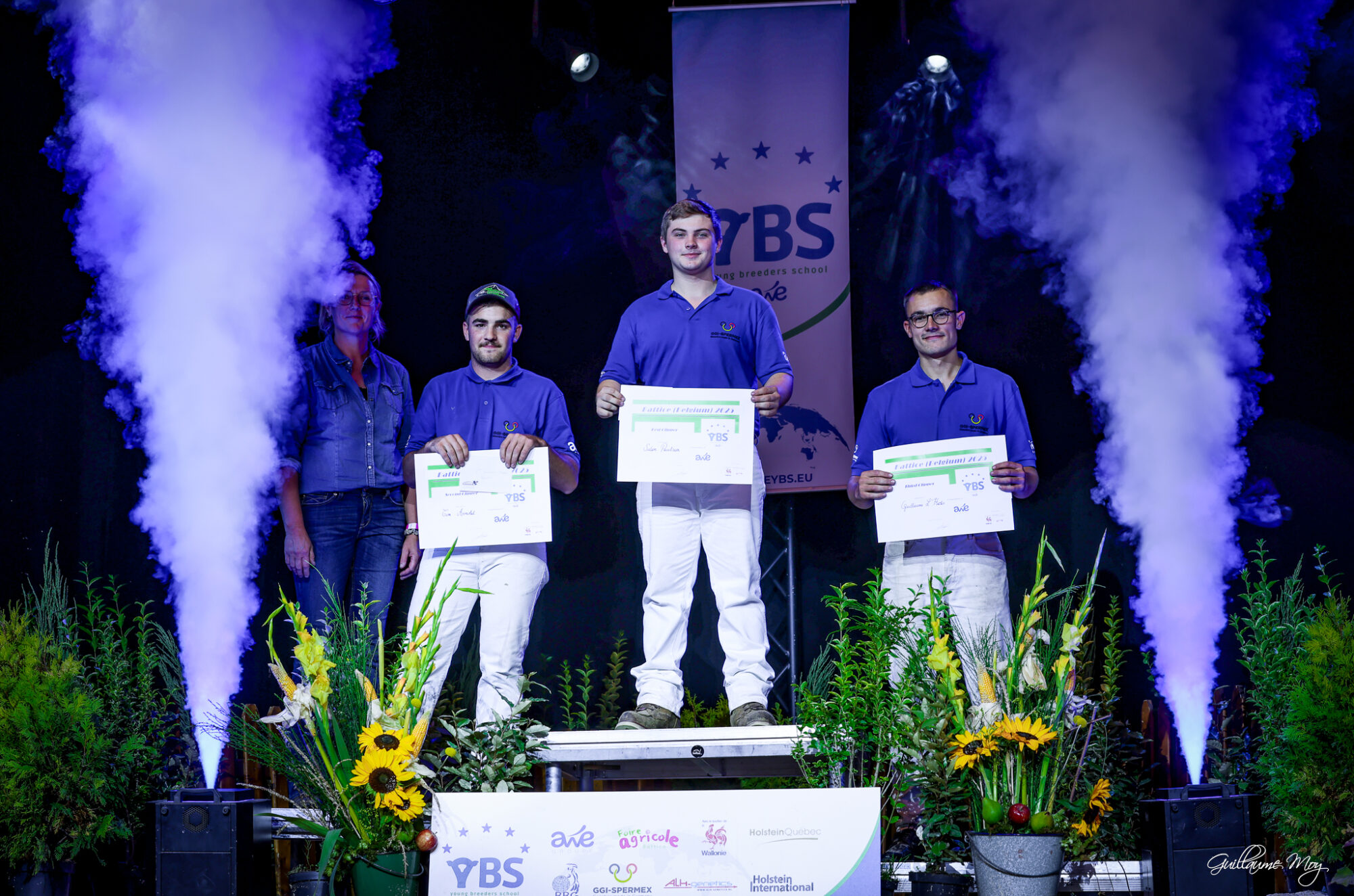
Suton Paulson stands atop the podium alongside fellow champions, celebrating their triumph in the Young Breeders School 2025 clipping competition—a showcase of American skill and precision that set the standard in cattle presentation for this year’s international event.

The United States made waves in the clipping arena, with Suton Paulson named Best Clipper—showing that American youth aren’t just about big genetics, they know how to prep and present cattle for maximum advantage. In a field of more than 100 animals, that edge made all the difference.

Data Drill: Young Breeders School by the Numbers

Metric2025 Figure
Countries Competing13
Total Participants~110
Age Range12–25 years
Classes Judged24
Breed DivisionsHolstein, BBB, More

Bottom Line: Excellence Is International

This event shows that youth programs build tomorrow’s market-makers, managers, and genetic innovators. The judging, clipping, and teamwork are more than sport—they’re training tools for real-world dairy success. Today’s Young Breeders School champions are tomorrow’s global exporters and herd improvement leaders.

Keep an eye on rising stars; the dairy youth movement is global and only getting hotter:

  • Maria Otero Naval (Spain) and Claudia Laupez (Spain), both top finishers, signal Spain’s continued momentum.
  • Under-16 division winners are maturing into serious junior judges and presenters—look for surprise names next year.

Young Breeders School 2025 proved that the next generation of dairy leaders isn’t waiting for permission—they’re earning their stripes and driving change now. Canada may have led the pack this time, but with so much international talent on display, next year’s battle for youth supremacy is wide open.

Invest in youth, invest in the future—the world’s best dairy farms are already doing it.

Showmanship Classes

  • Classe 1: Engelen Rian (South Netherlands), Müller Renato (Austria), Zonnenberg Jade (South Netherlands)
  • Classe 2: Eiting Katharina (V.O.S.T.), Spenle Thomas (The French Dream), Gavranovic Jasenko (USA)
  • Classe 3: Coz Romain (The French Dream), Mudd Jackie (USA), Kocieba Aleksandra (Poland)
  • Classe 4: Steiner Fabian (Switzerland), Lebel Ariane (Canada), Williamson Sarah (Ireland)
  • Classe 5: Labbé Audrey (Canada), Uhr Nadia (Canada), Hammann Summer (USA)
  • Classe 6: Otero Naval Maria (Spain), Dickson Leah (Australia), Bloemhof Evelien (Young NL)
  • Classe 7: Gutzwiller Olivier (The French Dream), Spriet Antoine (Wallonia II), Logtenberg Ida (Luxembourg)
  • Classe 8: Gumtz Marie-Luise (R.S.H.), Klasson Emilia (Sweden), Montes Xabi (Spain)
  • Classe 9: Gutzwiller Alicia (The French Dream), Otero Naval Andrea (Spain), Versteeg Sarah (Canada)
  • Classe 10: Eickhoff Laura (Masterrind), Groot Wassink Isa (Young NL), Van Overbeek Eva (South Netherlands)
  • Classe 11: Croat Lena (Luxembourg), Zonnenberg Lieve (South Netherlands), Bezdeliga Lasma (Latvia)
  • Classe 12: Niskanen Emmi (Finland), Gunnink Jarn (Young NL), Lopez Claudia (Spain)

Showmanship BBB (Belgian Blue Breed)

  • Classe 1: Withagen Zélie, Delatte Florian, Jost Carmen
  • Classe 2: Bontemps Oscar, Havart Germain, Mary Lucas
  • Classe 3: Desmet Clément, Dambly Louise, Dewaele Vincent
  • BBB Championnat: Desmet Clément, Withagen Zélie, Bontemps Oscar

Showmanship Champions (General)

  • Championnat: Gutzwiller Alicia (The French Dream), Labbé Audrey (Canada), Gutzwiller Olivier (The French Dream)

Type Show Classes — Holstein

  • Classe 1: Anastasia du Luce, Roumanie du Mont des Faucons, Rover du Mont des Faucons
  • Classe 2: Lak Transfer Finale, Vita, Orchidee du Moligna
  • Classe 3: Las Vegas de la Garde-Dieu, EHB Venteuse, Rodania de Bois Seigneur
  • Classe 4: Randa, Vuvuzela, Victorine
  • Classe 5: Vileda de l’Herbagere, Sunday de la Garde-Dieu, Shake de Bois Seigneur
  • Classe 6: Vodka, Ninon de la Garde-Dieu, Deception de la Tour de Lisogne
  • Classe 7: Shana de Bois Seigneur, April de la Garde-Dieu, Volda
  • Classe 8: Nafi du Moligna, 2320 du Chai d’Herchies, Volka du Luce
  • Classe 9: Vanille du Luce, 8938 du Chai d’Herchies, EHB Valana Chief
  • Classe 10: 8924 du Chai d’Herchies, Vita du Luce, Ophelia de la Garde-Dieu
  • Classe 11: Vertue de l’Herbagere, Valeureuse de l’Herbagere, Debordee de la Tour de Lisogne
  • Classe 12: EHB Uriel Chief, Josephine de Sanzinnes, Zolomita
  • Champion Heifers: Vertue de l’Herbagere, Vodka, Randa

Type Show Classes — BBB (Belgian Blue Breed)

  • Classe 1: Paprika d’Othee, Tangible de Saile, Taniere de Saile
  • Classe 2: Vouee de Lez Fontaine, Tabelle de Saile, Platine de Waret l’Eveque
  • Classe 3: Trottinette de Cras Avernas, Camelia de Forseilles, 9228 de Waret l’Eveque
  • Championnat: Paprika d’Othee, Vouee de Lez Fontaine, Trottinette de Cras Avernas

The Sunday Read Dairy Professionals Don’t Skip.

Every week, thousands of producers, breeders, and industry insiders open Bullvine Weekly for genetics insights, market shifts, and profit strategies they won’t find anywhere else. One email. Five minutes. Smarter decisions all week.

NewsSubscribe
First
Last
Consent

What Dairy Shows Must Learn from the Booming Stock Show World

Dairy shows fading while stock shows boom? Discover how youth engagement, tech, and agri-tainment can revive dairy’s legacy.

Look around any dairy show lately. You’ll probably recognize almost everyone there: the same faces you’ve seen for years. Fewer vendors than a decade ago. And those grandstands? Well, they’ve got plenty of empty seats. Compare that with the electric atmosphere at major beef, swine, and sheep shows across North America.

You know that feeling when you walk into a dairy show barn and… something’s just missing? The energy isn’t quite there anymore. Meanwhile, down the road at the county fair, the beef and swine shows are packed with families, buzzing with excitement, and creating memories that’ll last generations. What’s going on here?

I’ve been watching this trend for years, and it’s time we had an honest conversation about why our counterparts are thriving while we’re just… surviving. If we don’t embrace some significant changes soon, we might look at empty grandstands and faded ribbons instead of a vibrant future.

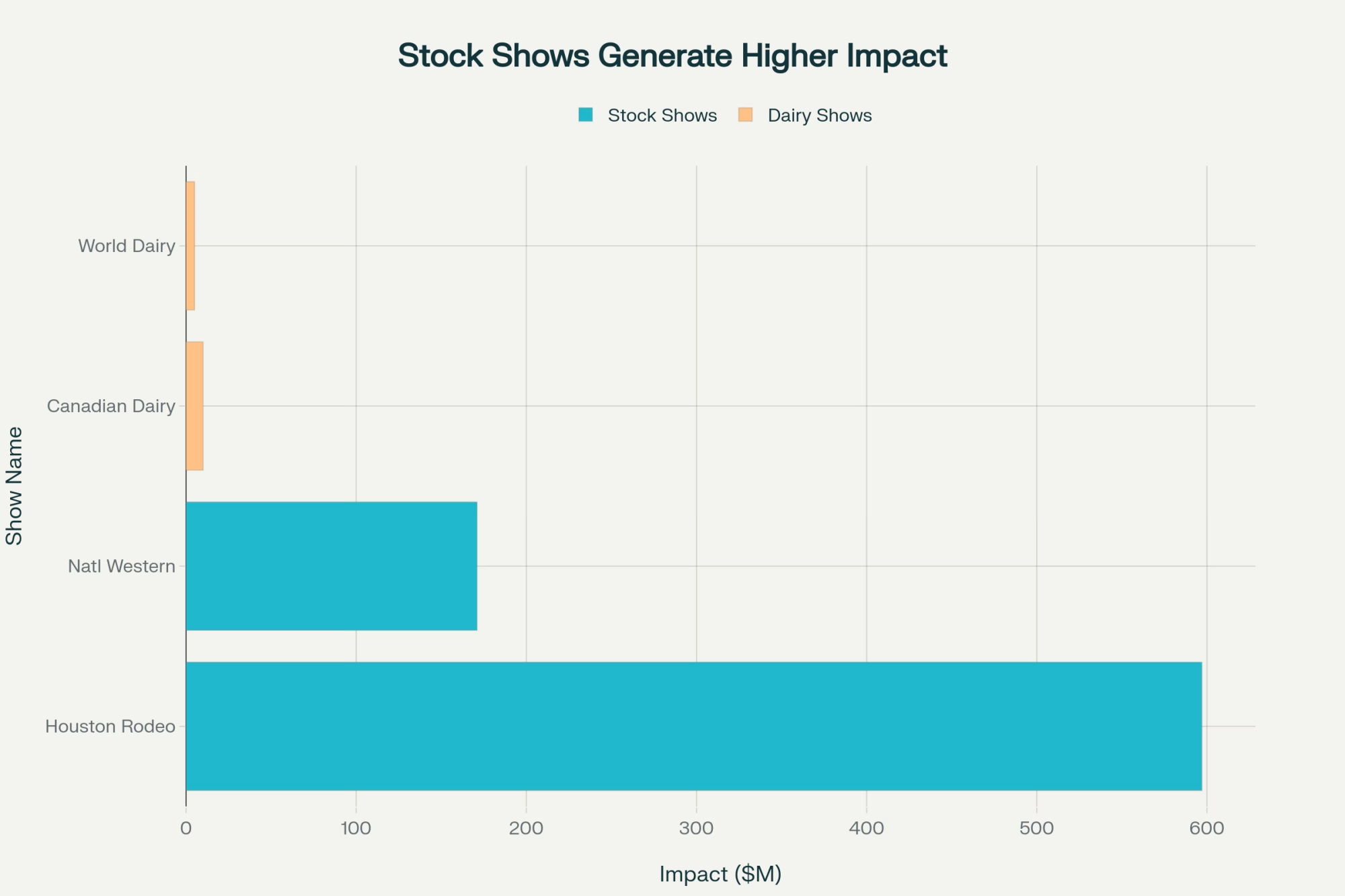
The Houston Livestock Show and Rodeo pulled in a staggering $190 million in revenue in 2022 and attracted over 2.5 million attendees in 2023. The National Western Stock Show generated $171 million in economic activity in 2023 alone. And then there’s the San Antonio Stock Show & Rodeo delivering an economic impact exceeding $288 million while investing $12 million in youth education programs.

Major stock shows generate hundreds of millions in economic impact through their entertainment-focused model, while dairy shows produce significantly less economic activity despite their technical excellence.

These aren’t just livestock competitions anymore—they’ve become cultural phenomena that appeal to people who’ve never set foot on a farm. And here’s what should keep you up at night: they’re growing while we’re shrinking.

The Hard Truth About Dairy Show Participation

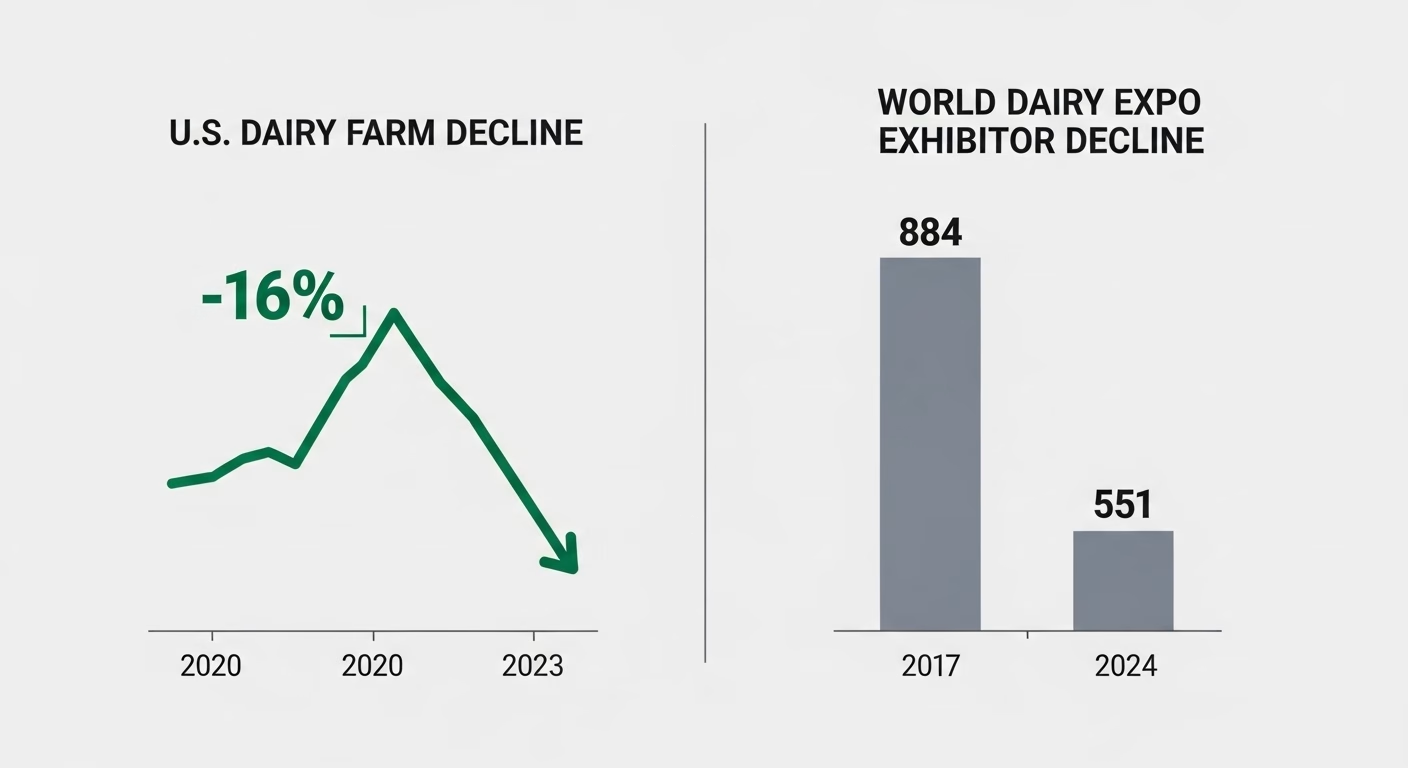
According to USDA data, the U.S. lost over 5,000 dairy farms between 2020 and 2023, a decline of nearly 16%. In states like Wisconsin, the trend is relentless, with hundreds of multi-generational farms closing their doors each year.

The majority of dairy cattle are now on large farms that typically don’t participate in shows, leaving smaller farms to maintain the show ring tradition

This consolidation hits show participation hard. Larger operations rarely prioritize showing cattle, while smaller family farms that have traditionally filled our show rings are disappearing. When you’re focused on component pricing and robotic milking efficiency, fitting a show string often falls off the priority list. But I wonder: Is that a mistake that costs us more than we realize?

The Numbers Don’t Lie: Key indicators, from the farm gate to the trade show floor, show a clear downward trend in the ecosystem supporting traditional dairy shows.

Even our premier showcase, World Dairy Expo, is feeling the pinch. Commercial exhibitor numbers declined from 884 participating companies in 2017 to 551 in 2024—a nearly 38% reduction. But declining farm numbers aren’t our only challenge. Preparing and showing dairy cattle demands substantial time, expertise, and resources. Plus, recent health challenges like Highly Pathogenic Avian Influenza (HPAI) add another layer of complication with testing protocols and movement requirements for exhibitors in at least 16 states with affected herds.

What This Means for Your Operation

If you’re still actively showing cattle, you compete in a shrinking arena, literally and figuratively. Fewer participants mean less competitive diversity, potentially diminished prestige, and ultimately, reduced value for your marketing efforts. Those gorgeous show photographs of your “EX-96” champion Holstein mean less when there are fewer eyes to see them and fewer progressive breeders to purchase your genetics.

What’s Working for Stock Shows (That We’re Missing)

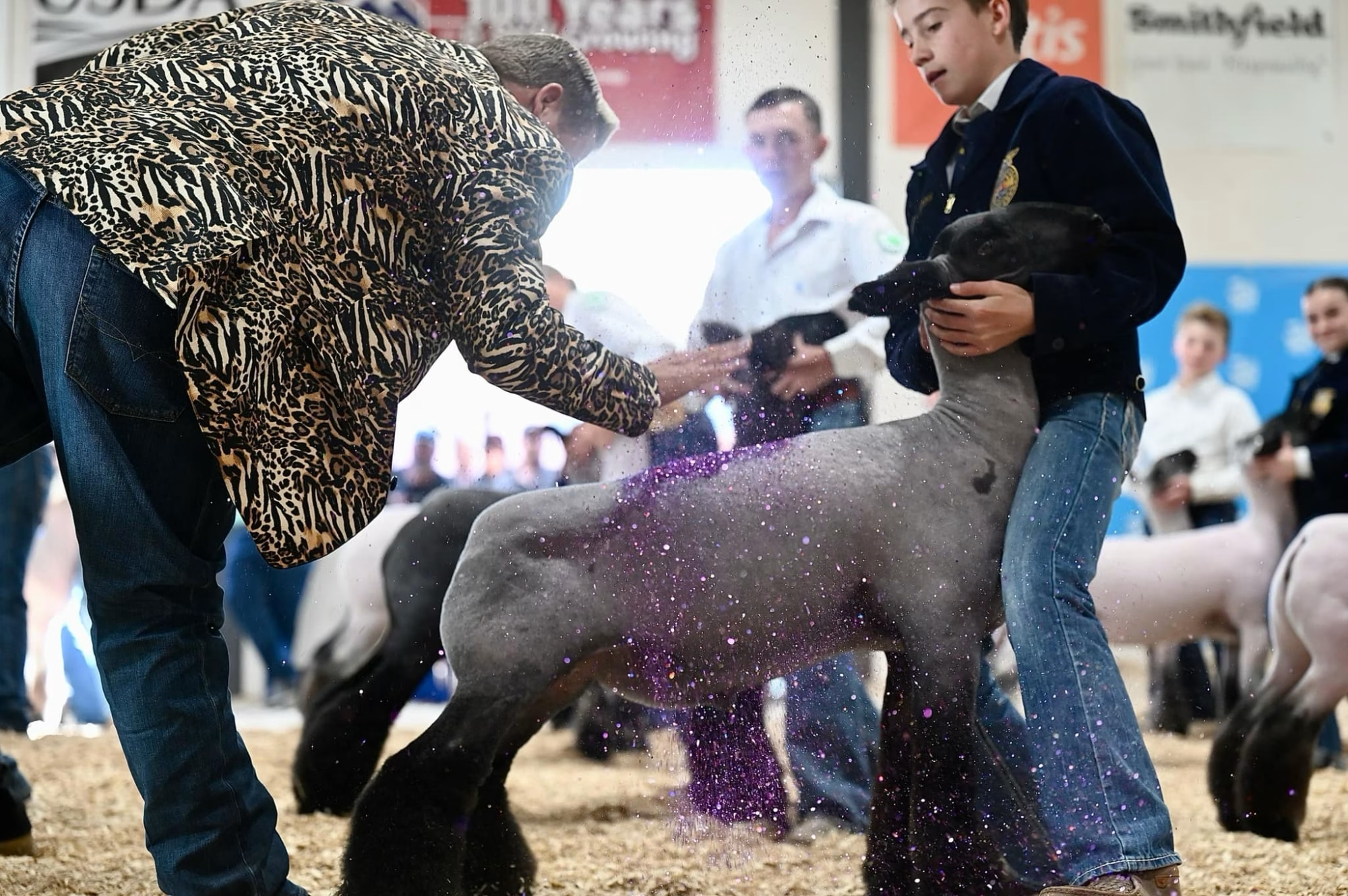
More Than a Judgment, It’s a Spectacle: Famed stock show judge Ryan Rash creates a memorable moment by selecting the champion lamb with a shower of glitter. This brand of ‘agri-tainment’ generates an electric atmosphere often missing from the more reserved dairy show ring. (Read more: Emulating Ryan Rash: The Dire Need for Revolutionizing Dairy Cattle Judging Standards)

For decades, the dairy show’s singular focus on genetic evaluation and type classification has served the purebred industry well, but in a changing world, this narrow focus has become a liability. The most successful stock shows have mastered three key areas we’re struggling with:

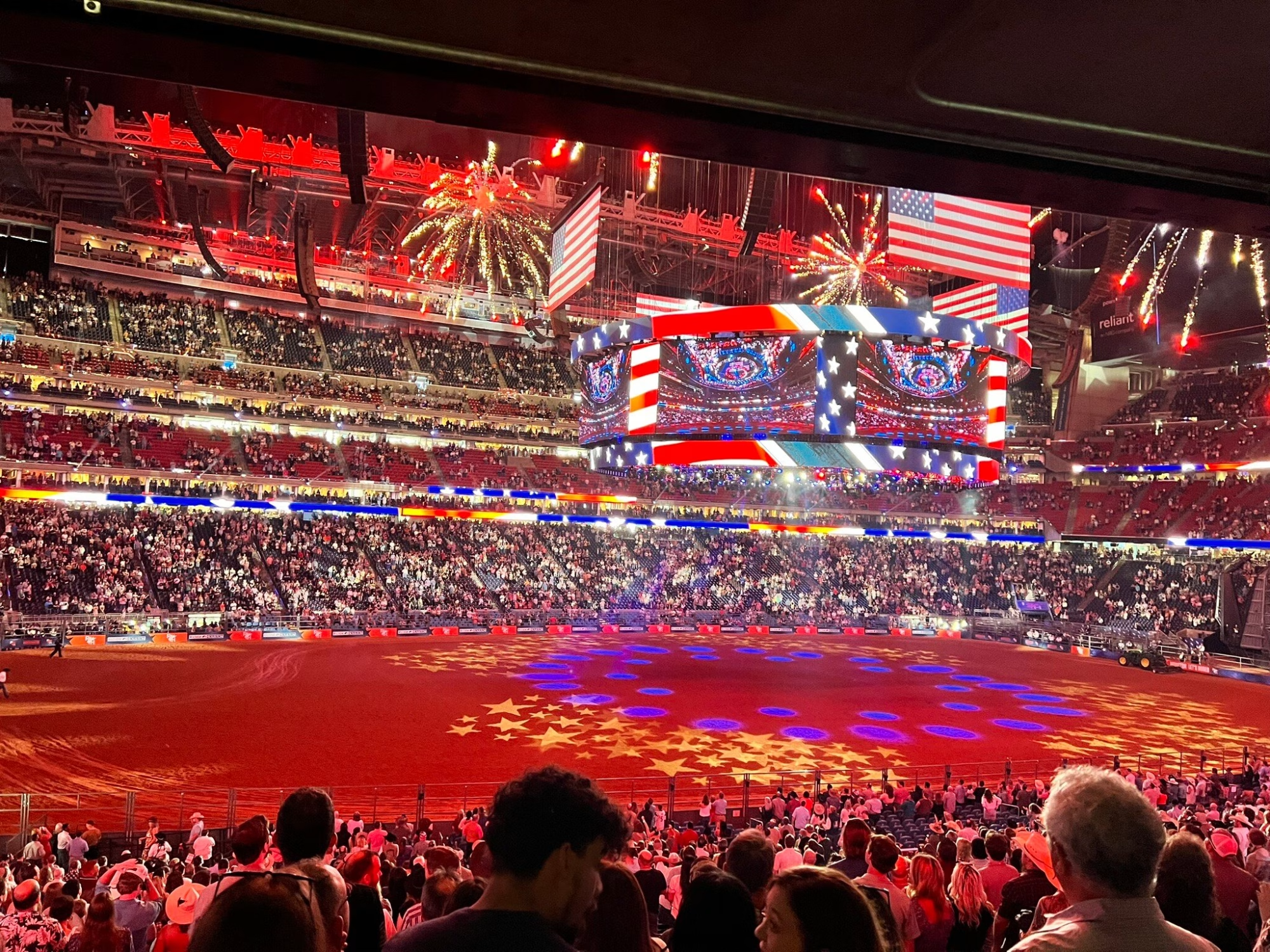
The ‘Other’ Barn: Major stock shows have become cultural phenomena, drawing massive crowds by blending competition with entertainment and broad community appeal.

Multiple Demographic Appeal

The most successful stock shows have created “something for everyone” environments. The Houston Rodeo’s blend of livestock events, headline entertainment, educational exhibits, and carnival atmosphere isn’t just about attendance numbers—it’s about cultivating relationships with urban and suburban communities.

Youth Development Powerhouses

Stock shows excel at jackpot circuits—frequent, accessible events that allow young exhibitors to gain experience in competitive but lower-stakes environments. As one source notes, “The more Jackpot Shows a youth goes to, the more they’ll learn about raising livestock, showing, and winning at fair.” We have strong programs like Dairy Bowl and Dairy Challenge, but we’ve failed to create the same accessible “feeder system.”

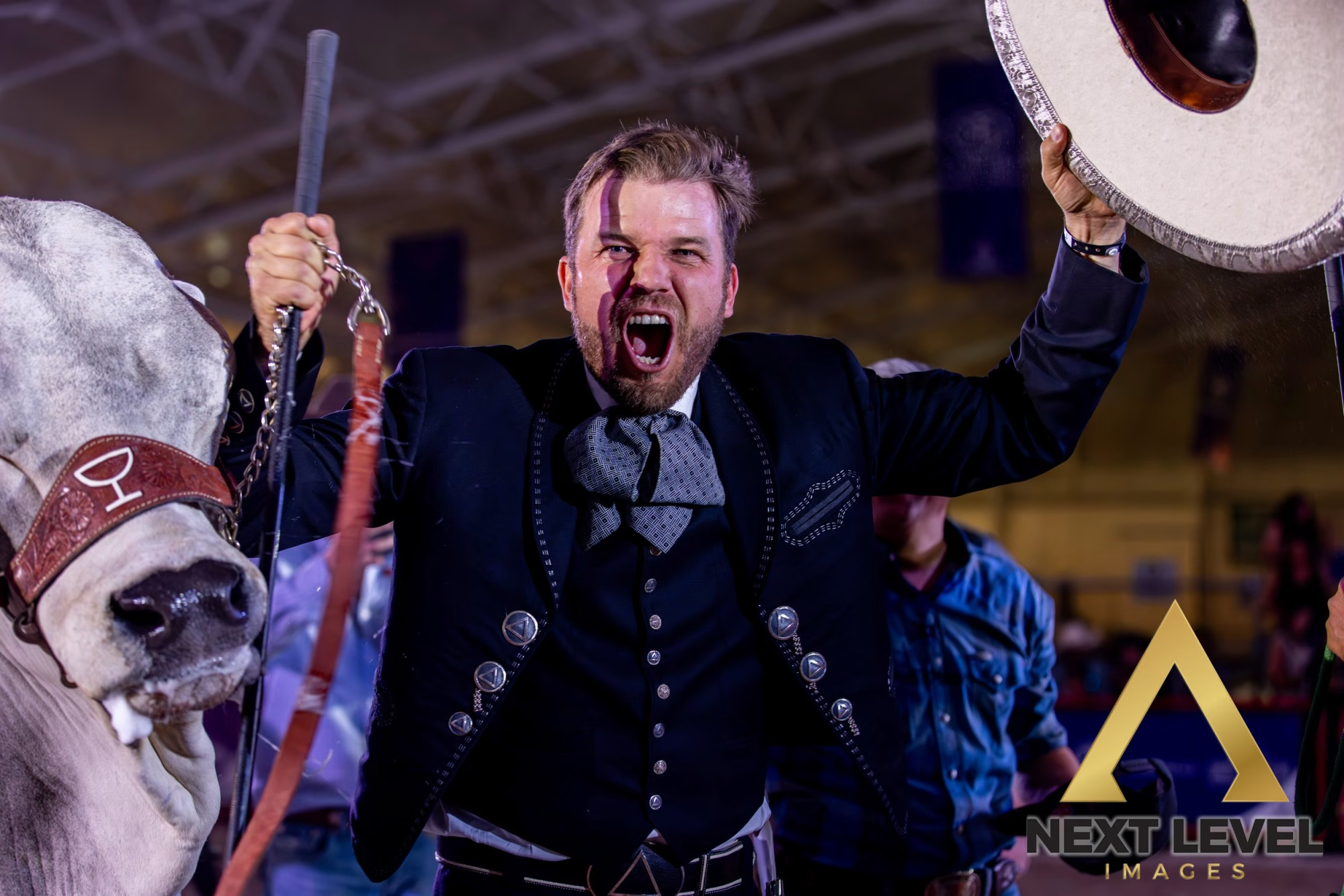
This is What Passion Looks Like. When shows create an environment that celebrates culture and encourages raw emotion, the result is a magnetic energy that pulls in crowds—a far cry from a quiet nod from the judge. (Photo Next Level Images)

Event Experiences, Not Just Competitions

Leading stock shows have transformed from simple competitions into comprehensive entertainment destinations. Too many dairy shows still operate primarily as insider events, technically excellent but failing to create the same magnetic appeal that draws in the broader community.

Your Blueprint for a Dairy Show Revolution

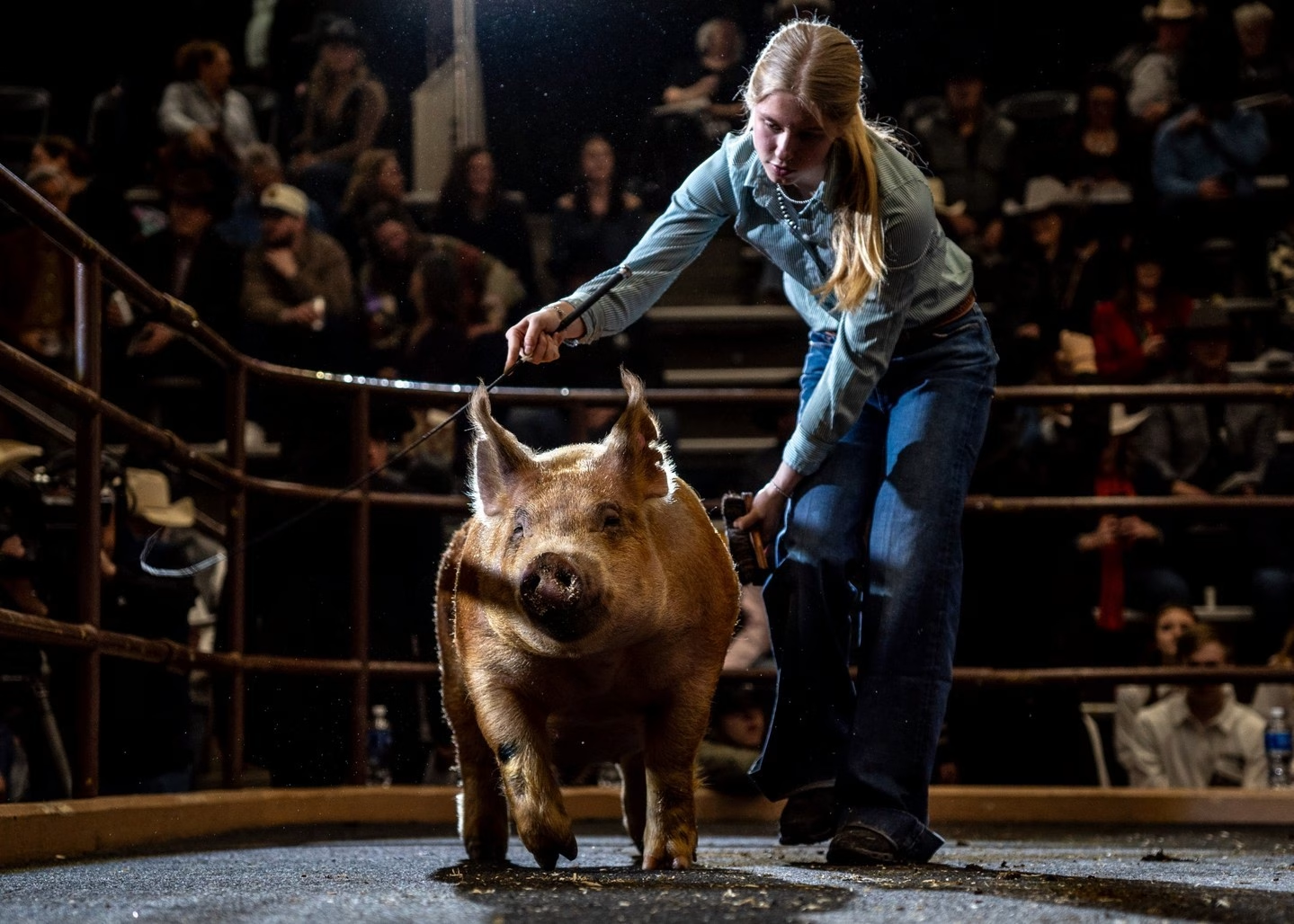
Where Youth Take the Spotlight: The high-stakes, high-reward atmosphere of champion auctions at major stock shows like the National Western creates unforgettable, career-defining moments for young exhibitors.

It’s time to stop lamenting declining participation and start implementing bold changes. Here’s your action plan for revitalizing dairy cattle shows:

1. Reimagine Youth Engagement

Create More Accessible Entry Points

The jackpot show model has proven extraordinarily effective in the beef, sheep, and goat sectors. We need dairy-specific jackpot circuits that provide:

  • Regular, affordable practice opportunities
  • Lower-stakes environments for skill development
  • Consistent feedback from varied judges
  • Geographic accessibility for more participants

Diversify Youth Programming

While dairy shows have strong youth components like showmanship, stock shows excel in offering a wider array of skill-building activities:

  • Skillathons and knowledge competitions that test comprehensive understanding of dairy husbandry
  • Marketing and communication contests focused on promoting dairy genetics
  • Structured mentorship programs pairing experienced exhibitors with newcomers

4-H Canada reported 17,434 members involved in 45,460 projects in 2022, with Ontario seeing significant 30% growth that year. This demonstrates that youth interest exists, but are we capitalizing on it with innovative, accessible programs?

Break Down Financial Barriers

More Than a Ribbon: Stock show circuits have mastered the art of high-stakes competition, offering life-changing payouts that justify the investment of time and money. For dairy shows to attract the best, the rewards must match the dedication required. (Photo: Next Level Images)

We need creative solutions to reduce financial barriers:

  • Robust animal leasing programs connecting farms with interested youth
  • Project scholarships beyond traditional show ring prizes
  • Community-sponsored animals for youth without farm backgrounds
  • Grant programs to assist new families with expenses

2. Modernize Show Formats

Introduce New and Engaging Classes

Consider innovative show categories that increase audience involvement:

  • “People’s Choice” awards allow spectators to vote for their favorites
  • “Functional Type” classes focus on traits important for modern production
  • Youth-focused fun classes, like costume contests, create memorable experiences

Improve Presentation and Commentary

Make dairy shows more accessible to newcomers through:

  • Professional, educational announcing that explains judging criteria in accessible language
  • Clear visuals, including large screens showing class information
  • Streamlined show scheduling that maintains audience interest

The recent Purebred Dairy Cattle Association (PDCA) updates to its Show Ring Code of Ethics, effective March 1, 2025, demonstrate our willingness to adapt. We need to extend this innovative thinking to the entire show experience.

Integrate “Agri-tainment”

Add complementary attractions enhancing the overall experience:

  • Dairy product tastings and cooking demonstrations
  • Interactive educational exhibits about modern dairy farming
  • Family-friendly activities connecting visitors to dairy agriculture
Traditional Dairy Show ApproachModernized Experience
Technical judge’s reasons focused on linear trait evaluationClear commentary explaining decisions in accessible language while referencing key conformation traits
Limited audience engagementInteractive elements like “People’s Choice” voting and educational displays
Focus solely on competitionComplementary attractions (tastings, demonstrations, education)
Complex class structureStreamlined schedule with variety for spectator interest

3. Harness Technology for Wider Reach

Digital Engagement Strategies

  • High-Quality Livestreaming: Professional broadcasts with commentary make events accessible globally
  • Show-Specific Apps: Digital tools for schedules, entries, results, and exhibitor information
  • Social Media Integration: Create consistent, engaging content before, during, and after shows
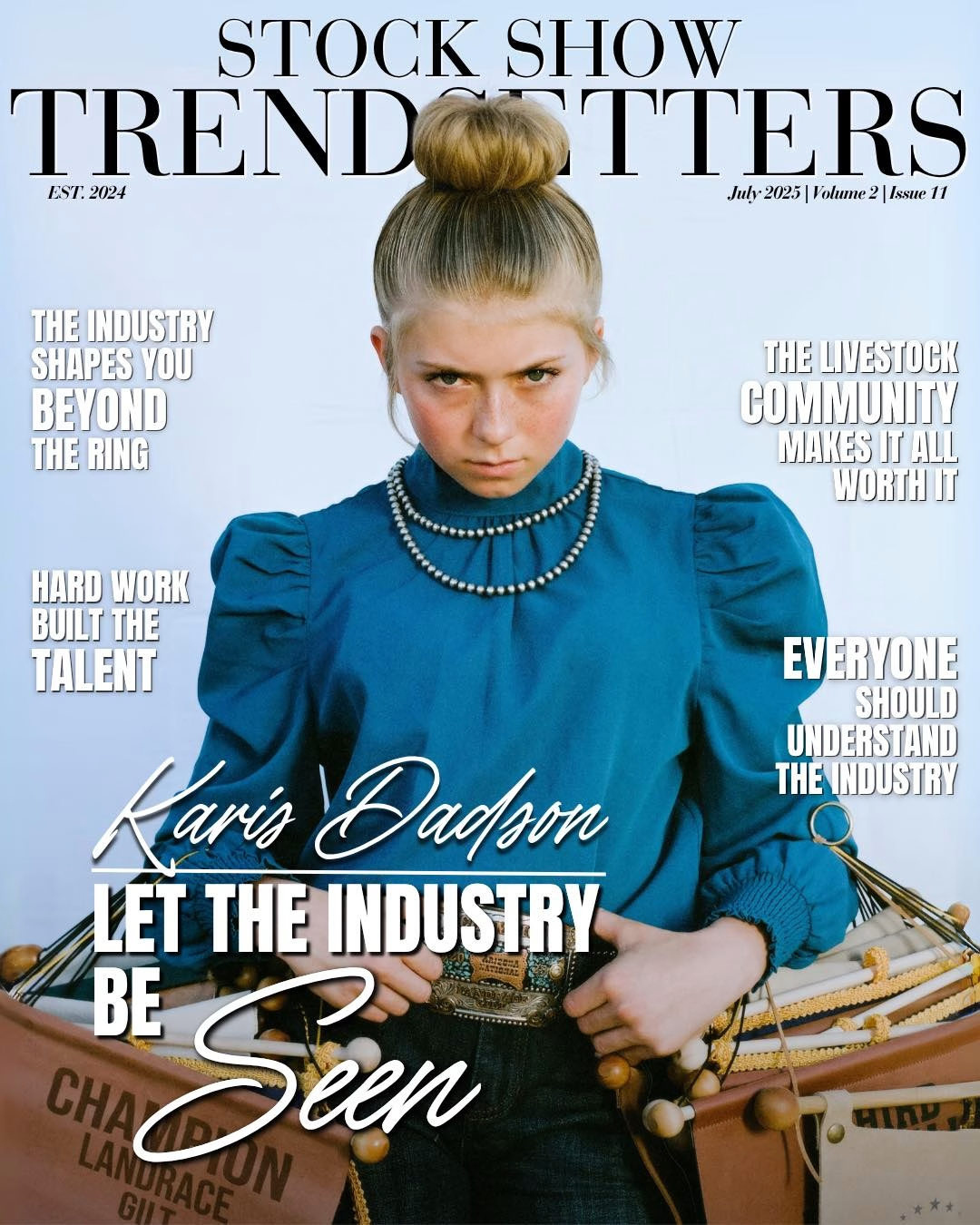
Creating Stars, Not Just Champions: In the stock show world, social media can turn a young exhibitor’s fierce determination into a viral moment. This kind of organic marketing and personality-driven content, exemplified by sensations like Karis Dodson, is a powerful tool dairy shows have yet to fully harness.

Show management technology like Showman.app can streamline online entries, process payments securely, and disseminate results quickly. This frees up valuable time for more strategic activities.

Why This Matters

The digital audience for your show could potentially be many times larger than your in-person attendance. Failing to embrace technology limits your reach and misses opportunities to showcase your animals to a global audience.

4. Market Strategically to Multiple Audiences

The Heart of the Matter: Beyond the wins and the banners, the show ring is forged by quiet dedication, the partnership between exhibitor and animal, and a passion that defines a lifestyle. This is the powerful, human story our marketing must learn to tell. (Photo: Showtimes Magazine)

Tell the Dairy Story

Focus marketing on the people, passion, and heritage:

  • Highlight the dedication of exhibitors and their deep connections with their animals
  • Showcase family traditions and multi-generational aspects of dairy farming
  • Connect show ring excellence to broader food system contributions

Target Diverse Audiences

Develop distinct marketing strategies for different segments:

  • Families and Youth: Promote shows through schools, 4-H clubs, and community groups
  • General Public: Frame events as educational entertainment and agritourism opportunities
  • Potential New Exhibitors: Offer introductory clinics and “learn to show” days

Breed Association Perspective

For perspective, Holstein USA reports that across 11 National Holstein Shows in 2022, 463 different animals placed in the top three of their classes, while the 2024 National Holstein Convention attracted over 700 enthusiasts. These numbers demonstrate continued interest but also point to a need for growth strategies.

5. Enhance Exhibitor and Spectator Experience

Facility Comfort and Accessibility

Ensure venues provide:

  • Adequate seating with clear sightlines
  • Good lighting and audio systems
  • Accessible amenities for all attendees
  • Comfortable environments for both animals and people

Create a Welcoming Atmosphere

Foster inclusivity through:

  • Making events inviting for newcomers and first-time exhibitors
  • Providing clear explanations of processes and expectations
  • Celebrating participation alongside competitive achievement

Value-Added Activities

Incorporate complementary elements:

  • Trade shows featuring dairy equipment and genetics
  • Educational workshops on topics like genomic selection
  • Networking opportunities for industry professionals

The Ethics Balancing Act

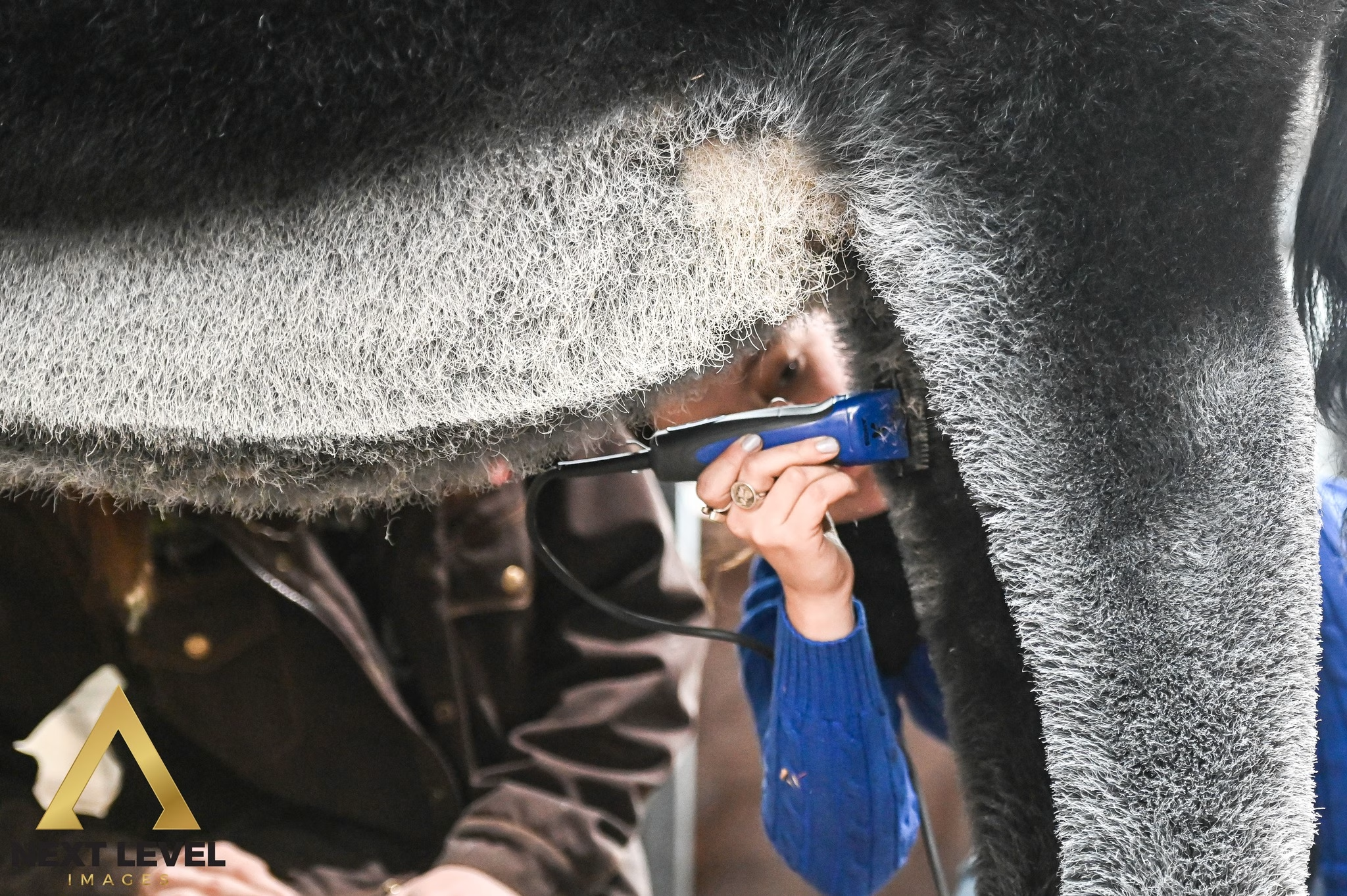
Integrity in the Details: As the industry innovates, maintaining the highest ethical standards in animal care and presentation is critical for preserving the credibility of dairy shows. (Photos: Next Level Images)

As we innovate, we must maintain our industry’s integrity. Recent updates to the PDCA Show Ring Code of Ethics reflect a proactive effort to address evolving fitting techniques and reinforce ethical conduct.

The allowable topline hair length was increased from 1 inch to 1.5 inches. More critically, the code now specifically addresses controversial practices such as teat setting, over-bagging, and misrepresentation of lactation status.

These changes strike a necessary balance between tradition and evolution. But let’s be brutally honest: our industry has too often turned a blind eye to questionable practices in the name of show ring glory.

We can modernize our shows while maintaining ethical standards that preserve public trust in dairy exhibitions.

The Moment We Strive For: The selection of Erbacres Snapple Shakira-ET as Grand Champion at World Dairy Expo represents the pinnacle of dairy show prestige and excitement. The challenge now is to build a system that creates more of these captivating moments and shares them with a wider audience.

The Bottom Line

The dairy cattle show scene is pivotal, much like the crossroads many operations faced when deciding whether to invest in robotic milking systems. The status quo simply isn’t sustainable.

Success will require abandoning our rigid adherence to tradition and embracing necessary innovations. The recent PDCA updates demonstrate our industry’s willingness to evolve. This same adaptive mindset must extend to youth engagement strategies, show formats, marketing approaches, and technology integration.

Most critically, dairy shows must reconnect with their fundamental purpose: celebrating excellence in dairy breeding while fostering the next generation of industry leaders. By emphasizing the unique attributes of dairy cattle while making shows more accessible and engaging, we can secure their place in agriculture’s future.

The path forward involves collaboration among breed associations, show organizers, industry partners, and educational institutions. As dairy cooperatives leverage many farms’ collective strength, our show community must work together toward a common goal.

The question isn’t whether dairy shows will change—it’s whether you’ll be part of driving that change or be left behind when it happens.

What bold moves will you make to reinvigorate your dairy show participation this year? The future of dairy exhibitions depends on your answer.

Key Takeaways:

  • Reimagine youth engagement through jackpot shows, skillathons, and financial aid to lower entry barriers
  • Modernize events with “People’s Choice” classes, agri-tainment, and professional commentary
  • Leverage technology via apps, social media, and live-streaming to broaden reach
  • Market strategically by highlighting dairy’s heritage and life skills for urban audiences
  • Balance tradition with ethics to maintain credibility and animal welfare

Executive Summary:
Dairy cattle shows face declining participation amid industry consolidation and high barriers to entry, while stock shows thrive through youth programs, entertainment-driven events, and strategic marketing. To revitalize, dairy shows must adopt proven strategies: create accessible youth pathways, modernize formats with spectator-friendly classes and tech integration, and rebrand as community-focused experiences blending education and entertainment.

Complete references and supporting documentation are available upon request by contacting the editorial team at editor@thebullvine.com.

Learn more:

The Sunday Read Dairy Professionals Don’t Skip.

Every week, thousands of producers, breeders, and industry insiders open Bullvine Weekly for genetics insights, market shifts, and profit strategies they won’t find anywhere else. One email. Five minutes. Smarter decisions all week.
NewsSubscribe
First
Last
Consent
Send this to a friend