


What if I told you tweaking your heifer strategy could add thousands to your bottom line this year?
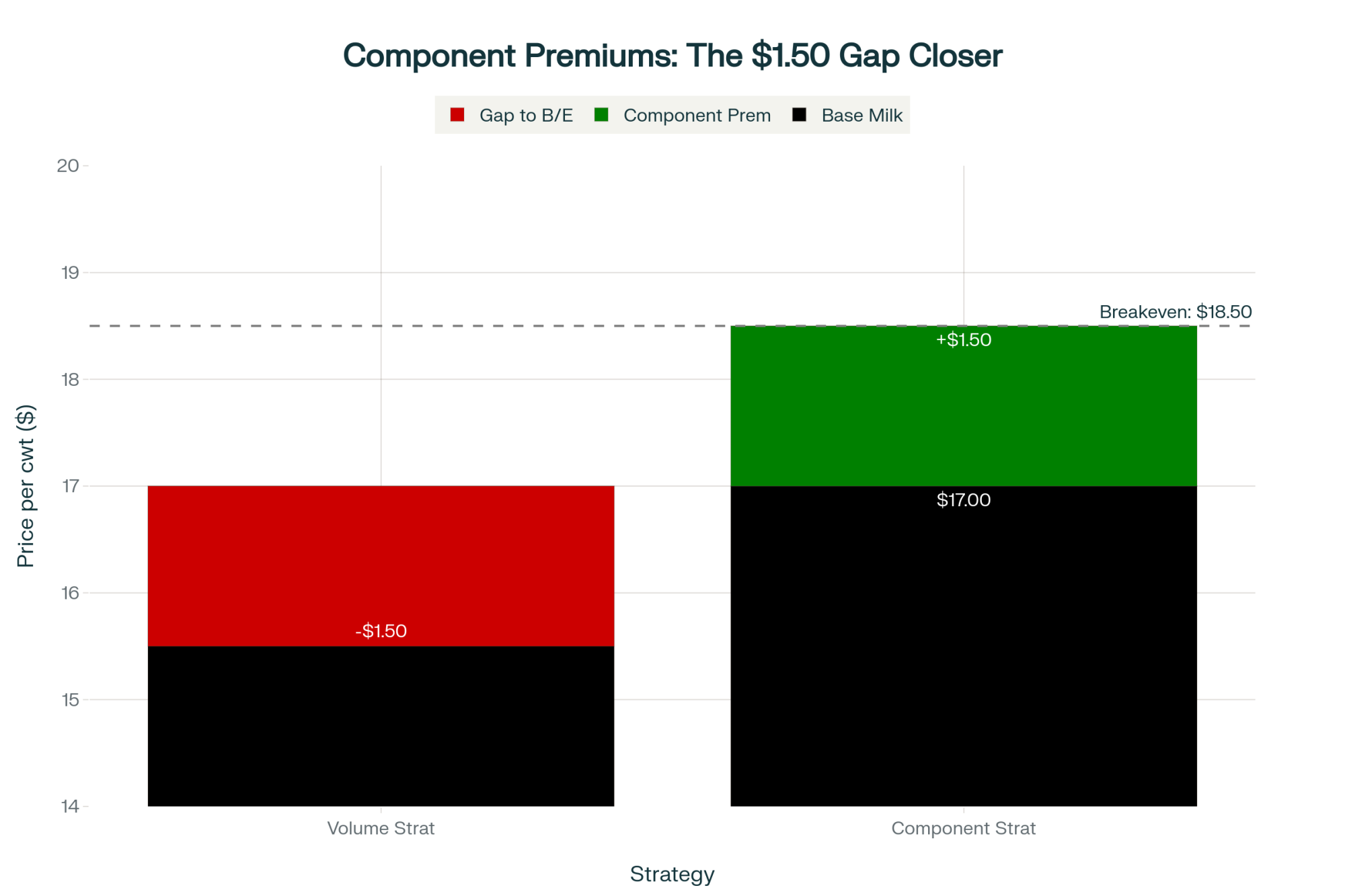
EXECUTIVE SUMMARY: The dairy industry in 2025 is different. Replacement heifers are scarce — farms are keeping an extra 600,000 cows, which means feed costs go up by $150 per cow annually. However—and this is crucial—genomic testing advances have increased butterfat and protein values by up to 90%, resulting in an additional 35 to 45 cents per hundredweight. Add in the shake-up in milk pricing and the beef-on-dairy boom, and you’re looking at a market that rewards smart, data-driven moves. Global processors are investing billions, which means component premiums are likely to increase by 50 to 150 cents per hundredweight soon. So if you’re still guessing on genetics, pricing, or herd management, you’re leaving serious money on the table. The evidence, from USDA reports and Penn State Extension research, is clear: this year, you should get strategic with genomic testing and feed efficiency upgrades, starting now.
KEY TAKEAWAYS:
Heifer Scarcity: High replacement prices ($3,500-$4,500) force retention of less efficient older cows, creating an economic trade-off
Component Genetics: Genomic advances increase butterfat and protein by 70-90%, adding 35-45 cents per 0.1% butterfat in premiums
Strategic Beef-on-Dairy: Now 1/3 of inseminations, this strategy boosts income with high-value calves but requires careful management to protect the future replacement herd
In 2025, the dairy industry isn’t just changing—it’s being fundamentally rewritten. A convergence of market forces is reshaping profitability, from the genetics in the tank to the final milk check. A historically tight replacement heifer market, relentless genetic gains in components, transformative milk pricing adjustments, and the strategic rise of beef-on-dairy are creating a new economic landscape. Coupled with massive new processing investments, these trends present both significant challenges and unprecedented opportunities for producers who are prepared to adapt.
1. Heifer Scarcity Forces a Culling Conundrum
First, the tight replacement heifer market is forcing difficult decisions across the country. Farms are holding onto more cows than usual—about 600,000 more since last fall, as per Hoard’s Dairyman. USDA figures confirm replacement heifer inventories are at their lowest in over 20 years, with fewer than 4 million heifers nationwide. Producers from Wisconsin to California report grappling with extended culling intervals as older cows cannot match the production of fresh animals, but current economics make it a necessary compromise.
This strategy results in a loss of approximately $150 per cow annually in feed efficiency, corresponding to a 2-3% reduction in feed conversion. However, with replacement heifers commanding prices from $3,500 to over $4,500 depending on the region, the math often favors retention. USDA Regional Market Reports for Wisconsin and California contextualize these price ranges, illustrating significant market nuances driven by differences in feed and labor costs, particularly between the Corn Belt and the Pacific Northwest.
Mitigating these efficiency losses has led many operations to embrace technology. Automated feeders and robotic milking systems are reported to save $120 to $180 per cow annually on feed costs. While the upfront investment can exceed $250,000 for a medium-sized farm, the payback period typically ranges from five to seven years. This adoption trend is accelerating, particularly among larger herds.
2. Component-Driven Genetics: The New Profit Engine
Simultaneously, genetic advancements are creating new revenue opportunities through higher milk components. The upward trend in butterfat and protein is no coincidence. U.S. averages have climbed to over 4.3% butterfat and 3.3% protein, a substantial increase from five years prior. This growth stems from the widespread adoption of genomic testing, which has been established since 2017.
Penn State’s Dr. Chad Dechow reports genomic breeding values for butterfat have increased roughly 70 to 90 percent since 2020, with protein improvements closely following. These genetic gains translate to an additional 35 to 45 cents per hundredweight for every 0.1% increase in butterfat—real dollars on the milk check.
3. The New FMMO Pricing Reality
Compounding these genetic shifts are the mid-2025 reforms to the Federal Milk Marketing Order. The USDA adjusted make allowances to reflect better modern processing costs, along with changes to Class I differentials. This resulted in a 85- to 90-cent-per-hundredweight drop in the all-milk price for many producers. Yet, premium payments for higher butterfat and protein content help offset some of the impact.
Farms operating on narrow margins or carrying significant debt must closely monitor their cash flow, particularly with agricultural lending rates near 7%.
4. Beef-on-Dairy: From Side Hustle to Strategic Income
However, experts at the University of Wisconsin Extension advise a cautious, strategic approach. Overusing beef semen risks reducing replacement heifer inventories by up to 20% over the next few years. The recommended strategy targets beef crosses on low-producing cows, while protecting top-tier genetic females.
The dairy sector has seen over $8 billion committed to new processing plants, including Walmart’s $350 million Texas facility, Fairlife’s $650 million New York plant, and Chobani’s $1.2 billion expansion. These facilities focus on cheese and specialty products that require higher-quality milk components.
Industry analysts predict that component premiums could surge by 50 to 150 cents per hundredweight as these plants reach full capacity by 2027.
The Overarching Factor: Margin Management
Feed costs represent 50 to 60 percent of dairy farm expenses. With 74 percent of the 2025 corn crop rated good to excellent, projected moderation in feed prices makes protecting income over feed cost (IOFC) even more critical. Income over feed cost peaked near $16 per hundredweight last fall, making careful ration management and technological adoption essential strategies for margin improvement.
For producers managing herds of 500 or more, no one-size-fits-all management exists. Success demands balancing heifer management amidst scarcity, exploiting genetic gains to maximize premiums, strategically deploying beef-on-dairy without compromising replacements, and aligning milk supply with processors who value component-rich milk.
Regional conditions matter significantly; practices successful in Wisconsin’s pastures might be less practical in California’s dry lots or labor-scarce regions. Staying informed on nuanced local market and management factors is essential to navigating this new profitability landscape.
Those who master these complexities and develop strong processor relationships will define profitable dairy farming in the coming decade.
Complete references and supporting documentation are available upon request by contacting the editorial team at editor@thebullvine.com.
Feed to Win: How to Maximize Your Dairy Show Heifers Potential – Go beyond the numbers with this tactical guide on heifer development. It provides practical, step-by-step strategies for nutrition and management to ensure your expensive replacement heifers achieve their maximum genetic potential and deliver a strong return on investment.
The Next Frontier: What’s Really Coming for Dairy Cattle Breeding (2025-2030) – Look ahead with this future-focused analysis of emerging technology. It explores how gene editing for “designer milk,” AI-driven breeding decisions, and advanced health markers will move from theory to on-farm reality, creating new revenue streams.
The Sunday Read Dairy Professionals Don’t Skip.
Every week, thousands of producers, breeders, and industry insiders open Bullvine Weekly for genetics insights, market shifts, and profit strategies they won’t find anywhere else. One email. Five minutes. Smarter decisions all week.
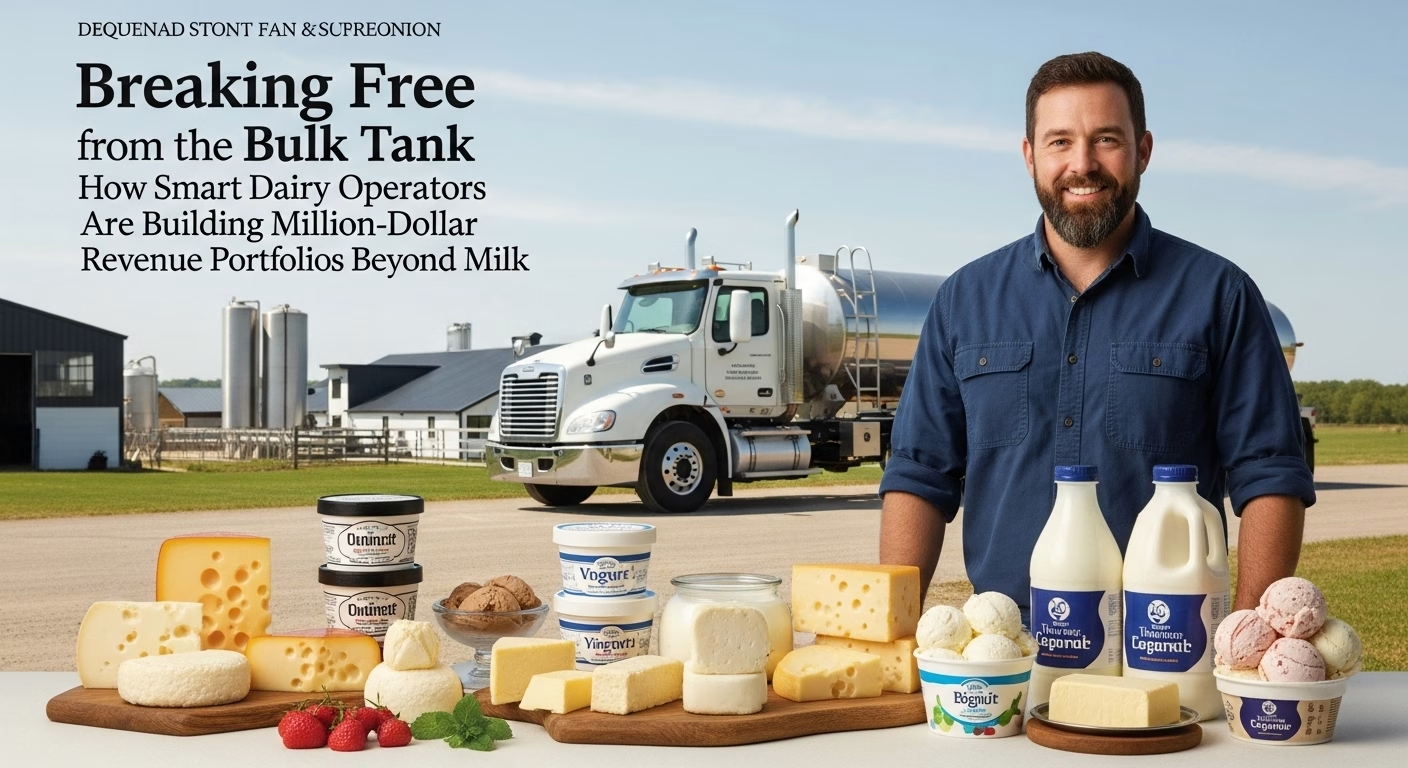
Stop betting your farm on milk prices alone. Smart operators are building $200K+ diversified revenue streams while commodity-focused dairies fail.
EXECUTIVE SUMMARY: The “milk-only” business model is systematically bankrupting North American dairy farmers, with 80% struggling financially despite record production efficiency. While industry cheerleaders push the “get big or get out” mythology, progressive operators are building integrated revenue portfolios that generate substantial cash flow regardless of volatile milk prices. Beef-on-dairy programs alone are delivering $900+ per calf versus near-zero value for Holstein bull calves, with 317,000 additional beef semen units sold in 2024. Meanwhile, replacement heifer costs have exploded to $3,000+ per head, making strategic crossbreeding not just profitable but essential for survival. Carbon markets offer $400-450 annual revenue per cow for large operations, while agritourism generated $1.26 billion industry-wide in 2022. The evidence is overwhelming: diversified operations aren’t just surviving—they’re building generational wealth while their commodity-dependent neighbors exit the industry. It’s time to honestly evaluate whether you’re running a resilient business or gambling with your family’s future on a single, brutally volatile commodity.
KEY TAKEAWAYS
Beef-on-Dairy Revenue Explosion: Strategic crossbreeding of lower-genetic-merit cows generates immediate $300-500 annual revenue per eligible animal, with day-old calves commanding $900+ versus minimal Holstein bull calf values—providing crucial seed capital for additional diversification strategies.
Replacement Heifer Economics Favor Diversification: With replacement costs exceeding $3,000 per head and genomic testing enabling precision herd segmentation, producers can maximize genetic progress through elite females while monetizing lower-merit animals for immediate cash flow.
Scale-Specific Implementation Strategy: Small operations (1,000 cows) can pursue high-capital ventures like anaerobic digesters generating $400-450 per cow annually.
Integrated Revenue Architecture Creates Flywheel Effect: The most sophisticated operations strategically combine beef-on-dairy cash flow, value-added processing, agritourism ventures, and carbon markets to build synergistic business systems far more resilient than commodity-focused competitors.
Industry Consolidation Accelerates Diversification Imperative: With farm numbers dropping 39% between 2017-2022 and the “hollowed out middle” facing extinction, diversification has transitioned from optional side business to survival necessity for maintaining competitive position in a rapidly consolidating industry.
The American dairy industry’s survival depends on one critical pivot: transforming from commodity-dependent operations into diversified revenue powerhouses. While 75% of producers expect profitability in 2025, the winners won’t be those producing the most milk—they’ll be the entrepreneurs building integrated business systems that generate wealth regardless of volatile milk prices.
What if the entire foundation of modern dairy economics is built on a dangerous myth that’s bankrupting hardworking farm families across America?
You’ve spent decades perfecting your Total Performance Index (TPI) scores, optimizing dry matter intake (DMI) to push milk yield beyond 85 pounds per cow per day, and monitoring somatic cell counts (SCC) like your livelihood depends on it—because it does. Your transition period management rivals textbook perfection, your genomic testing program generates Expected Breeding Values (EBVs) that would make geneticists proud, and your precision agriculture systems collect more data than most Fortune 500 companies.
Yet you’re still struggling to maintain positive cash flow because you’re betting your entire operation on a single, brutally volatile commodity in an industry where milk price volatility has reached unprecedented levels.
Here’s the uncomfortable truth that’s keeping progressive operators awake at night: if you’re still running a traditional milk-only business model in 2025, you’re not managing a dairy—you’re gambling with generational wealth in a rigged casino where volatile commodity markets hold all the cards.
The producers who are not just surviving but building sustainable wealth have cracked a code that challenges everything the industry establishment preaches. The future isn’t about producing more milk per cow—it’s about building integrated profit systems where milk becomes just one revenue stream in a diversified portfolio that generates cash from multiple directions, insulating operations from the devastating price swings that have destroyed thousands of family farms.
This transformation is already happening, and the numbers from industry leaders are staggering.
The $780 Billion Reality Check: Why Traditional Models Are Systematically Failing
While the North American dairy industry continues to power economic growth with a massive footprint supporting over 3 million jobs and generating nearly $780 billion in total economic impact, individual operators face a brutal paradox. The industry thrives while farm-level margins get systematically crushed by structural forces that show no signs of reversing.
Think of it like running a genetic evaluation program where your EBVs for milk production keep climbing, but your actual profit per cow keeps declining. The fundamental economics don’t add up anymore, and pretending they do is financial suicide.
The Production Paradox That’s Destroying Profitability
Here’s the sobering reality that industry cheerleaders don’t want you to see: According to recent industry data, approximately three-quarters of dairy farmers expect to be profitable in 2025, representing a significant shift from 2024. However, this optimism is built on diversification strategies rather than improved milk prices alone.
USDA forecasts show the all-milk price for 2025 increased by just 50 cents to $23.05 per hundredweight—a modest improvement that barely keeps pace with escalating input costs. The USDA expects reduced milk production per cow to help balance supplies with good demand, but this structural constraint highlights the industry’s limited ability to respond to price signals.
Why This Matters for Your Operation: If you’re milking 1,000 cows and achieving the USDA-projected milk price of $23.05/cwt, you’re generating $2.3 million in gross revenue—before accounting for feed costs that can consume 50-60% of production expenses, labor shortages driving wages higher, and the inevitable market crisis that wipes out six months of margins overnight.
The Consolidation Crisis: Why “Get Big or Get Out” Is a Dangerous Myth
Here’s where we need to demolish some sacred cows in dairy management thinking.
The industry establishment continues pushing the “get big or get out” narrative despite mounting evidence that this approach creates a dangerous concentration of risk and systematically destroys the middle-class farming structure that built America’s agricultural strength.
The evidence is stark: technology is fueling consolidation as big global farms get bigger, creating an investment treadmill that forces continuous capital deployment just to maintain a competitive position. The result? A hollowing out of the middle class of dairy farming that threatens the industry’s foundation.
The Four-Pillar Wealth-Building Framework: Beyond Commodity Dependence
The operations building real wealth have moved beyond the traditional production mindset. They’ve implemented what industry insiders call the “Integrated Revenue Architecture”—four proven profit centers working synergistically to create more resilient businesses than their commodity-focused competitors.
Pillar One: Beef-on-Dairy—The Strategic Cash Flow Foundation
This isn’t random crossbreeding—it’s precision herd segmentation using genomic testing to create a two-tier genetic strategy that maximizes the value of every pregnancy in your herd.
The Strategic Framework That’s Working
Your elite females (top 30% genomic merit) get bred with sexed dairy semen to produce the next generation of replacements. Your lower-genetic-merit cows (bottom 40%) get strategically bred to proven beef sires selected specifically for calving ease and beef-on-dairy performance.
Verified Financial Impact from Industry Data
The numbers are compelling and represent a fundamental shift in industry practices. According to the National Association of Animal Breeders, 7.9 million units of beef semen were sold to dairy farmers in 2024, trailing only the top category of sex-sorted dairy semen, which sold 9.9 million units. This marks back-to-back years that U.S. dairy farmers purchased a record number of beef semen units.
The beef-on-dairy semen sales increased by about 317,000 units both in the U.S. and for export in 2024, demonstrating the rapid adoption of this strategy. With roughly 20% of the beef supply now originating from the U.S. dairy herd and the lowest U.S. beef cattle numbers since 1951, this percentage continues climbing.
Implementation Strategy and Financial Impact:
Initial investment: $50-75 per pregnancy (premium beef semen cost)
Payback period: Immediate (birth to 7 days)
Annual revenue potential: $300-500 per eligible cow
Operational complexity: Low (builds on existing breeding program)
Why This Strategy Is Reshaping the Industry: The widespread adoption is fundamentally altering supply dynamics. U.S. dairy-bred fed slaughter has grown to be more than 4 million head annually, and over half are beef-on-dairy, according to CattleFax. This shift creates a more genetically elite but smaller future dairy herd while providing crucial cash flow for current operations.
Let’s address the elephant in the processing room: most value-added ventures fail because farmers underestimate the complete business transformation required.
Research consistently shows that while value-added processing offers the highest potential margins, it also carries the highest risk. The capital requirements are substantial, regulatory compliance is complex, and the shift from agricultural producer to consumer packaged goods manufacturer represents a fundamental business transformation.
Capital Reality Check:
Small artisanal operation: $52,000-135,000
Mid-scale commercial facility: $200,000-500,000
Large-scale processing partnership: $2-10 million
The large-scale success model—operations building multi-million-dollar processing partnerships—works because it shifts the business model from commodity price-taking to cost-plus manufacturing contracts that insulate operations from milk price volatility.
According to industry research, agritourism revenue grows as farms diversify income streams. Success correlates directly with visitor volume and geographic location, with operations within 50 miles of metropolitan areas showing significantly higher revenue potential.
Implementation Models by Scale:
Small Operations (1,000 cows): All strategies become viable. Consider high-capital ventures like anaerobic digesters and processing partnerships. Prime candidates for corporate insetting programs.
The Flywheel Effect: Creating Synergistic Revenue Streams
The most sophisticated operations create synergistic revenue streams where each element amplifies the others. The consistent cash flow from beef-on-dairy provides seed capital for a small creamery. The creamery’s products become the centerpiece of an agritourism venture with an on-farm store. Meanwhile, the manure from the core herd can feed a digester, generating carbon credits and renewable energy.
The Bottom Line: Your Strategic Framework for 2025 and Beyond
Remember that provocative question we started with? What if the entire foundation of modern dairy economics is built on a dangerous myth that’s bankrupting hardworking farm families?
The evidence is overwhelming, and the time for incremental changes has passed. The North American dairy industry will continue generating massive economic value, but the operators who capture that value won’t be the ones producing the most milk—they’ll be the ones building the most resilient, diversified revenue systems.
The industry data confirms this shift: approximately three-quarters of dairy farmers expect to be profitable in 2025, but this optimism isn’t built on wishful thinking about milk prices—it’s grounded in strategic diversification that creates sustainable competitive advantages independent of commodity market volatility.
The operations implementing these integrated strategies aren’t just surviving current market conditions—they’re positioning themselves to profit regardless of where milk prices go. While commodity-focused farms continue riding the price roller coaster, diversified operations build sustainable wealth across multiple revenue streams.
Your Immediate Implementation Strategy
Don’t wait for perfect market conditions or complete certainty. The operations winning this transformation started with the same challenges and uncertainties you face today.
Week 1-2: Diversification Audit
Calculate your beef-on-dairy potential by genomic testing your entire herd and identifying the bottom 40% genetic merit cows
Assess your location’s agritourism viability within a 50-mile radius of population centers
Evaluate regional processing opportunities and cooperative partnerships
Month 1: Foundation Building
Implement a strategic beef-on-dairy program using genomic segmentation
Begin regulatory research for agritourism licensing if geographically viable
Analyze cash flow improvements from immediate beef-on-dairy implementation
Months 2-6: Strategic Development
Use beef-on-dairy cash flow to fund initial agritourism infrastructure
Explore processing partnerships or regional cooperative opportunities
Develop long-term capital plan for higher-investment strategies
Year 1-2: Advanced Integration
Evaluate carbon market participation through insetting programs like Athian’s marketplace
Assess technology investments that enable rather than consume diversification capital
The future of profitable dairying isn’t about perfecting your production metrics—it’s about building an integrated business system that generates wealth from multiple sources while milk provides the stable foundation for expansion.
The milk price volatility will continue. Economic pressures will intensify. Industry consolidation will accelerate. The only question is whether you’ll be riding these forces or building a business that profits regardless of their direction.
The choice is stark: evolve your business model now or watch your margins evaporate year after year while more strategic competitors build sustainable wealth.
The revolution is already underway. The only question is whether you’ll lead it or be left behind by it.
Every week, thousands of producers, breeders, and industry insiders open Bullvine Weekly for genetics insights, market shifts, and profit strategies they won’t find anywhere else. One email. Five minutes. Smarter decisions all week.
Revolutionize your dairy farm’s profitability with the Angus advantage. Discover how beef-on-dairy crossbreeding transforms the industry, offering premiums up to $300 per calf. With the U.S. cattle inventory at a 73-year low, learn why savvy producers are capitalizing on this game-changing strategy.
Summary
The beef-on-dairy revolution, spearheaded by Angus Genetics, is reshaping the economics of dairy farming across North America. As the U.S. cattle inventory reaches a 73-year low, dairy producers leverage beef crossbreeding programs to capitalize on premium prices while advancing their dairy herd genetics. This strategic approach involves using sexed semen on superior dairy cows for replacements while breeding lower genetic merit cows to Angus bulls. The resulting crossbred calves command $100-$300 premiums over purebred dairy calves, creating a significant new revenue stream. Recent data from USDA and CoBank highlight a dramatic shift towards higher-quality beef production, aligning perfectly with the strengths of Angus-Holstein crosses. With improved calving ease, superior growth rates, and enhanced carcass quality, beef-on-dairy programs offer a dual-income model yielding annual benefits of approximately $300,000 for a 1,500-cow dairy operation. This paradigm shift boosts profitability and addresses efficiency and sustainability challenges in the dairy and beef sectors.
Key Takeaways:
Beef-on-dairy crossbreeding, particularly with Angus genetics, is transforming dairy economics.
Crossbred calves command $100-$300 premiums over purebred dairy calves.
The latest USDA data shows continued contraction in the U.S. cattle inventory, which has created favorable market conditions.
Angus-Holstein crosses consistently outperform other breeds in key economic traits.
Implementing beef-on-dairy programs can yield annual benefits of ~$300,000 for a 1,500-cow dairy operation.
The beef-on-dairy revolution has fundamentally transformed dairy economics across North America, with Angus Genetics emerging as the undisputed leader in this strategic breeding approach. As U.S. cattle inventory has plummeted to its lowest level in 73 years, dairy producers implementing beef crossbreeding programs are capitalizing on premium prices while advancing genetic progress in their dairy herds. This creates a powerful dual-income model that traditional dairy operations cannot match.
This breeding approach, which involves strategically mating dairy cows to beef bulls—predominantly Angus—has created unprecedented economic opportunities for forward-thinking dairy producers while addressing several long-standing industry challenges.
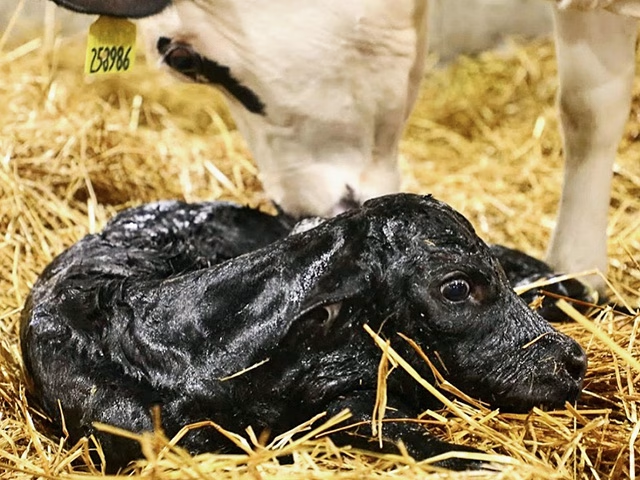
The concept is straightforward: Dairy farmers use sexed semen from their genetically superior cows to produce replacement heifers while breeding lower genetic merit cows to beef bulls. The resulting crossbred calves command substantially higher premiums than purebred dairy calves, creating a valuable revenue stream that directly counters milk price volatility. According to the latest industry data, day-old beef-on-dairy crossbred calves entering the beef supply chain sell for $100-$300 more than their 100% dairy-bred counterparts—an immediate revenue boost requiring zero additional infrastructure investment.
Why Angus Dominates: The Numbers Don’t Lie
Among the various beef breeds used in dairy crossbreeding programs, Angus has emerged as the overwhelming favorite, particularly in North America. This dominance isn’t accidental or merely fashionable—it reflects complex economic realities documented through rigorous research comparing breed performance in commercial settings.
According to industry surveys, Angus is the most popular beef semen in beef-on-dairy programs. This preference for Angus genetics is based on several key advantages benefiting dairy producers’ bottom lines, not vague marketing claims.
The increasing availability of carcass data on dairy-beef animals has reinforced Angus’s popularity. As more performance records become available, the evidence supporting Angus as the optimal beef breed for dairy crossbreeding has only strengthened. This trend is particularly significant given the current state of the U.S. cattle industry.
According to the latest U.S. Department of Agriculture Cattle Inventory Report released on January 31, 2025, the total cattle and calf inventory stood at 86.7 million head as of January 1, 2025, down 1% from the previous year and continuing a multi-year contraction. The beef cow population expressly declined by 1% to 27.9 million head. This ongoing reduction in the national herd has created a seller’s market for quality beef animals, with beef-on-dairy crosses positioned perfectly to help fill the supply gap.
Furthermore, a February 25, 2025, report from CoBank reveals that U.S. beef quality has dramatically transformed over the past decade. Prime beef production has increased by 140%, reaching more than 2 billion pounds annually. Production of Choice grade beef, which now comprises over three-quarters of the market, grew by 20%, with nearly 16 billion pounds produced in 2024. Meanwhile, lower-grade meat like Select has decreased by 37% since 2014, landing at 3.17 billion pounds in 2024.
This shift towards higher-quality beef production aligns perfectly with the strengths of Angus-Holstein crosses, which are known for their superior marbling and meat quality. The CoBank report also notes that emerging data from USDA Agricultural Marketing Service shows beef-on-dairy cattle maintaining “the largest proportion of their value from feeder price to slaughter cattle auction price on a per hundredweight basis.” This value retention throughout the production chain is a critical economic advantage that ensures consistent demand for these animals at every growth stage.
These latest statistics underscore the economic opportunity that beef-on-dairy programs, particularly those utilizing Angus genetics, represent for dairy producers in the current market environment.
First and foremost, Angus bulls are renowned for calving ease—a critical consideration when breeding dairy cows. Angus cattle have moderate birth weights, which is excellent for calving ease. They also have lower gestation lengths, so you can get cows milking quicker and back in calf sooner. The Angus gestation length can be seven to 10 days shorter than some continental breeds.
This reduced gestation length provides a significant operational advantage for dairy farmers, allowing cows to return to production more quickly and potentially improving overall herd fertility by getting cows back in breeding condition sooner. The shorter interval between calvings can translate to more lactation days over a cow’s productive lifetime—a benefit that compounds the initial value of the crossbred calf.
Beyond calving traits, Angus’s genetics contribute to early maturity and superior marbling in the meat—qualities highly valued in the beef industry and translating to premium prices for finished animals. This advantage is bolstered by the inherent marbling capability already present in Holstein genetics.
“Holstein cattle tend to marble extremely well, themselves. The crosses are grading better now, which is a testament to the better selection of beef semen,” explains Jonathon Beckett, a feedlot nutrition consultant cited in Farm Progress. This complementary genetic combination creates a crossbred animal that captures the best attributes of both parent breeds.
Table 1: Performance Comparison of Different Beef Breeds Crossed with Holstein (Penn State, 2023)
Performance Metric
Angus
Charolais
Hereford
Limousin
Red Angus
Simmental
Initial Weight (lbs)
1,066
1,049
1,013
1,009
1,003
1,131
Final Weight (lbs)
1,555
1,494*
1,431*
1,389*
1,437*
1,572
Average Daily Gain (lbs)
4.03*
3.83*
3.61*
3.13
3.60*
3.93*
Days on Feed
121*
122*
129*
152
130*
122*
Hot Carcass Weight (lbs)
999*
946*
891
865
896
972*
Rib Eye Area (sq. in)
14.5*
13.7
13.1
13.1
13.5
14.3*
% Yield Grade 2 or 3
100%
100%
61%
80%
80%
80%
*Values within rows with different superscripts significantly differ at P < 0.05. Source: Penn State Extension, 2023 Beef Sired Progeny from Dairy Cows
Table 1 demonstrates that Angus-sired calves consistently outperform other beef crosses in key economic traits, including hot carcass weight, ribeye area, and yield grade consistency. These objective measurements explain why dairy producers overwhelmingly choose Angus when implementing beef-on-dairy programs.
Premium Profits: How Beef-on-Dairy Boosts Your Bottom Line
The economic advantages of Angus-dairy crossbreeding extend well beyond the initial sale of the calf, creating value at every stage of the production chain. For dairy farmers, the immediate benefit comes from the substantially higher prices these crossbred calves command compared to purebred dairy bull calves.
Table 2: Calf Value Comparison: Dairy vs. Beef-Dairy Crossbred
Calf Type
Price Range
Premium Over Dairy
Purebred Dairy Calves
$35-$100
–
Beef-Dairy Crossbred
$128-$330
$93-$230
Net Premium per Crossbred
$276 average
Up to 840% increase
Source: World Wildlife Fund & Michigan State University Report, 2023
As Table 2 illustrates, crossbred calves command substantially higher prices in the marketplace, with an average premium of $276 per head over Holstein calves. This premium pricing represents a significant opportunity for dairy operations to enhance revenue without increasing milk production or overhead costs.
“On average, day-old beef and dairy crossbred calves entering the beef supply chain sell for $100-$300 more than their 100% dairy-bred counterparts,” according to recent industry reports. This substantial price differential can translate to dramatic income improvements, particularly for more extensive operations.
Recent data confirms that “beef-on-dairy cattle maintained the largest proportion of their value from feeder price to slaughter cattle auction price on a per hundredweight basis.” This value retention throughout the production chain is a critical economic advantage that ensures consistent demand for these animals at every growth stage.
Industry consultants confirm this market reality: “The premium in the marketplace is down to quality and evidence that the calf is sired by a registered Aberdeen-Angus bull.” This emphasis on documented genetics highlights the importance of using registered Angus bulls with strong genetic backgrounds rather than any black bull—a critical distinction savvy producers recognize.
For calf raisers and feedlot operators who purchase these crossbred calves, the economic benefits continue to accrue through superior growth rates, feed efficiency, and, ultimately, higher-value carcasses. “One of the advantages of the Angus-Holstein cross, however, is that you may get 50 to 70% of them qualify for Certified Angus Beef premiums,” according to Farm Progress. These premium qualification rates represent significant added value that flows back through the supply chain.
The most recent data reveals a dramatic quality transformation in the U.S. beef supply, with significant increases in Prime and Choice beef production in recent years. This quality revolution parallels the rise of beef-on-dairy programs, creating perfect market timing for producers implementing these breeding strategies.
Table 3: U.S. Beef Quality Transformation (Recent Years)
Quality Grade
Production Change
Market Share Trend
Prime
Significant Increase
Increasing
Choice
Moderate Increase
Dominant (>75%)
Select
Decreasing
Declining
Source: Industry ReportsTable 3: U.S. Beef Quality Transformation (Recent Years)
Quality Grade
Production Change
Market Share Trend
Prime
Significant Increase
Increasing
Choice
Moderate Increase
Dominant (>75%)
Select
Decreasing
Declining
Source: Industry Reports
Table 3 demonstrates the dramatic shift toward higher-quality beef production, creating robust demand for animals that can consistently grade in the upper-quality tiers—precisely what well-bred Angus-Holstein crosses can deliver.
Furthermore, the consistent supply of crossbred calves from dairy operations helps stabilize the beef pipeline, addressing one of the beef industry’s perennial challenges. “Due to the nature of milk production, dairy operations can offer a consistent, year-round supply of calves. Additionally, dairy dams offer highly consistent genetics, so when crossed with sires selected for complementing traits, we can provide U.S. packers with a consistent animal and supply, delivering ease of processing and helping stabilize the market.”
This year-round consistency contrasts with the seasonal calving patterns typical in traditional beef operations and represents a significant logistical advantage for processors seeking to maintain steady production schedules. Supply timing and animal quality predictability create efficiencies throughout the processing and marketing chain that pure beef or pure dairy systems cannot match.
Performance Advantages: Beyond the Hype
Can dairy producers afford NOT to implement beef-on-dairy strategies in today’s market? The performance data suggests they cannot. These crossbred animals effectively bridge the gap between purebred dairy steers (which often suffer from poor feed conversion and excessive frame) and conventional beef animals, delivering measurable advantages documented through rigorous research.
“Although beef-on-dairy calves cannot boast as high dressing percentage as conventional beef cattle, they offer distinct carcass advantages over their dairy cousins. Their increased muscularity and smaller skeletal size lend to a higher lean red meat yield and lower bone percentage,” state industry reports. This improved yield efficiency directly impacts processing profitability and explains why packers are willing to pay premiums for these animals.
Research has documented several benefits throughout the production chain: “Compared to purebred dairy calves, beef-on-dairy calves can provide higher-quality beef products without impacting current milk production efficiencies.” The same research found that “beef-on-dairy calves show greater feed efficiency, which lowers the environmental footprint from their production.”
Table 4: Feed Efficiency Comparison by Animal Type
Metric
Crossbred Steer
Holstein Steer
Beef Steer
Days on feed
174.3
289
143.4
Feed cost ($/day)
0.90
0.90
0.90
Total feed costs ($)
157
260
129
Feed costs saved vs. Holstein
$103/head
–
$131/head
Feed savings (1,500 head)
$77,102
–
$97,857
Source: Industry Research Data
Table 4 reveals dramatic differences in feed efficiency. Crossbred steers require 115 fewer days on feed than purebred Holstein steers. These efficiency gains translate to substantial cost savings—$77,10 annually for a 1,500-head dairy operation—while reducing beef production’s environmental footprint.
The quality grade advantage is equally significant. “Beef-on-dairy calves can be expected to grade like conventional beef animals with a majority grading Choice or higher. They are a true intermediate between conventional beef and purebred dairy animals, inheriting the muscularity from the sire and superior marbling from the dam.” This balanced genetic contribution results in carcasses that excel in quality and yield grades, which maximizes value in the current beef grading system.
Jonathon Beckett’s observations from the feedlot sector confirm these advantages: “The quality of these crossbreds has improved dramatically. When dairies first started doing this, they used any readily available Angus semen, and the quality of the calves was not consistent. Now they have a better idea of what matches well with Holsteins.” This evolution in the breeding approach has led to significant improvements in feedlot performance and carcass merit.
Beckett further notes that “Feedlot performance and carcass traits have improved. The cattle are marbling better, have improved rib-eye area, and have better muscling. This helps the packers. I’ve had several lots of cattle that were 30% to 40% Prime, which is outstanding.” These Prime grading percentages far exceed industry averages and demonstrate the exceptional quality potential of well-bred Angus-Holstein crosses.
Research also suggests that beef-dairy crossbred calves have higher survivability rates than those sired by other breeds commonly used in dairy herds. Once the calves are on the ground, they offer attractive growth rates. This improved survivability represents a significant economic advantage, as calf mortality directly impacts the bottom line for dairy farmers and calf raisers.
Challenging Conventional Dairy Wisdom
The notion that dairy farms should focus exclusively on milk production belongs in the past century. Today’s most profitable operations view themselves as protein producers, with milk and meat contributing to the bottom line. This paradigm shift represents more than an incremental change; it fundamentally restructures how progressive dairy operations view their business model.
Are purebred dairy bull calves becoming an economic liability rather than a byproduct? The market signals indeed suggest so. With beef-on-dairy calves selling for 4-6 times the value of straight Holstein calves in some markets, continuing to produce low-value dairy bull calves represents a massive opportunity cost that few operations can justify.
By breeding your best dairy cows for heifer replacements, you can increase the selection intensity and speed up genetic progress in your dairy herd—creating a dual advantage many producers don’t fully appreciate. This means you’re simultaneously improving both beef calf value and dairy genetics. Rather than diluting your focus, this approach accelerates genetic improvement in your dairy operation while adding a profitable income stream.
The rise of beef-on-dairy crossbreeding may also significantly affect milk price dynamics. This breeding approach could help stabilize milk prices by naturally curbing replacement heifer production during low milk prices (as more cows are bred to beef) and increasing replacement production when prices improve.
Are you eager to discover the benefits of integrating beef genetics into your dairy herd? “The Ultimate Dairy Breeders Guide to Beef on Dairy Integration” is your key to enhancing productivity and profitability. This guide is explicitly designed for progressive dairy breeders, from choosing the best
Learn how beef-on-dairy is shaping beef production. Will it significantly impact the market? Find out in our expert analysis.
Summary: The beef-on-dairy trend is reshaping the dairy industry but making only a modest dent in U.S. beef production. In 2022, beef-on-dairy cattle comprised 7% of cattle slaughter, or 2.6 million head, with projections suggesting this could rise to 15% by 2026. However, this doesn’t increase the total cattle count but changes the composition, as more beef-on-dairy cattle replace traditional dairy-fed ones. While dairy farmers adopt beef semen to boost calf value, the overall beef production impact remains negligible. The adoption of beef-on-dairy has surged, reaching 7.9 million units in 2023 due to cost differences and breeding technology advances. Customer perception, market demand, and credibility from sources like branded beef programs will be critical to this trend’s longevity.
Beef-on-dairy is growing, making up 7% of cattle slaughter in 2022, potentially rising to 15% by 2026.
The trend doesn’t increase the total cattle count but changes the composition, replacing traditional dairy-fed cattle with beef-on-dairy cattle.
Dairy farmers are adopting beef semen to enhance calf value, yet the overall impact on beef production is minimal.
Adoption of beef-on-dairy reached 7.9 million units in 2023, driven by cost differences and breeding technology advances.
Consumer perception, market demand, and credibility from branded beef programs will be crucial for the trend’s sustainability
Are you wondering about the latest buzz over beef-on-dairy? It’s no wonder that this movement is gaining traction. Dairy producers increasingly use beef semen in their herds to generate calves more suited for meat production. Understanding this trend is vital for dairy farmers and industry experts, as it directly affects calf value and beef output quality, potentially changing market dynamics. This crossbreeding approach uses existing dairy resources to increase profitability, has consequences for beef quality and production standards, and may impact market supply and demand for beef and dairy products. By delving into this concept, you’ll learn how it’s gaining traction, what it means for the overall beef production market, and why its impact may be less significant than some believe, giving you a better understanding of how this trend may shape the future of both the dairy and beef industries.
Why Beef-On-Dairy Is Gaining Ground: Key Figures and Future Projections
Beef-on-dairy adoption has expanded significantly, with Lauber et al. (2023) reporting that it climbed from 18% or 738 thousand head in 2019 to 26% or 1.12 million head by 2021. In 2023, the National Association of Animal Breeders reported that beef semen sales to the dairy sector reached 7.9 million units, accounting for 31% of overall semen sales to dairy farmers, which included sexed, conventional, and beef semen sales (NAAB, 2023).
Several variables are influencing this tendency. One advantage of utilizing beef semen in dairy cows is that the cost difference is minor. As a dairy farmer, you can look forward to the potential boost in calf value since crossbred cattle command higher market prices. Furthermore, advances in breeding technology and genetics make this an attractive alternative for many people, offering a promising future for the industry.
Experts expect beef on dairy will account for 15% of cow slaughter by 2026. Given the dairy industry’s ongoing acceptance, these estimates seem reasonable. So, what is the takeaway? Beef-on-dairy is here to stay and will undoubtedly expand. Still, its total influence on beef output will be minimal. Does this seem like a good opportunity for your farm?
The Historical Roots: Why Beef-On-Dairy Became the Go-To Strategy
Understanding beef-on-dairy’s origins helps explain why this technique has gained popularity in recent years. Historically, dairy farms concentrated entirely on milk production, which resulted in lower-value male calves from dairy breeds. These calves did not match the quality criteria of typical beef cattle, resulting in reduced market pricing. However, the successful introduction of beef-on-dairy in the mid-twentieth century changed this narrative, paving the way for its popularity.
The idea of beef-on-dairy has been introduced previously. Its origins may be traced back to the practical farming practices of the mid-twentieth century when farmers experimented with crossbreeding dairy cows with beef bulls to boost the marketability of their herd’s progeny. However, the introduction of modern reproductive technologies such as artificial insemination and sexed sperm in the late twentieth and early twenty-first century completely transformed this practice.
By the early 2000s, technology had improved enough to enable dairy producers to selectively breed their herds with beef traits, resulting in much higher calf quality. The result? More healthy beef-like calves grew quicker and sold for more incredible prices.
The tipping moment occurred in 2015. As market dynamics changed and dairy producers were under pressure from changing milk prices, many sought other cash sources. Beef-on-dairy methods offered a feasible alternative, providing higher financial returns without significantly modifying current operating structures. This shift was a response to the changing economic landscape of the dairy industry, where traditional revenue streams were no longer as reliable.
The approach gained traction as statistics revealed the economic advantages of raising a calf that might flourish in the meat market. This was not simply theoretical; real-world data, such as market prices for crossbred calves compared to purebred dairy calves, indicated significant increases in calf value owing to improved genetics from beef breeds.
Knowing this history helps us understand why beef-on-dairy has been a popular approach for many dairy companies. It is not enough to follow a trend; one must also make educated selections based on decades of development and technical breakthroughs. This understanding can give us confidence in the future of the industry and its ability to meet market demands.
The Evolution of Cattle: Breaking Down Beef-On-Dairy’s Impact on Production
Let’s look at how beef-on-dairy impacts total beef output. While the quantity of calves born to dairy cows stays constant, the types of cattle that enter the beef production system vary. We are considering a trade-off between conventional-fed dairy cattle and beef-on-dairy cattle.
Thus, beef-on-dairy gradually increases the number of animals entering the beef production chain. It alters the makeup of the cattle population. Instead of typical dairy breeds in the beef industry, you will see more beef-dairy crossbreeds.
What exactly does this imply for you? When conventional-fed dairy cattle are substituted with beef-on-dairy cattle, the kind of beef produced changes. Beef-on-dairy cattle exhibit features of both their dairy and beef parents, which may improve meat quality and output. This transition is mostly a reallocation of the beef supply chain, not an addition.
What was the result? While the total amount of beef produced may only increase somewhat, quality and market dynamics may change significantly. This adjustment mirrors a more significant industry trend, suggesting a continuing development in successfully balancing dairy and beef production to satisfy market demands. This trend indicates a shift towards a more integrated approach to cattle farming, where both dairy and beef production are considered in tandem to optimize market outcomes.
The Quality Over Quantity Paradigm: Exploring Beef-On-Dairy’s Market Impact
While beef-on-dairy does not increase the overall quantity of cattle, it does influence the kind of beef available on the market. With more beef genes in the mix, the meat quality may vary. Beef-on-dairy calves may have different live weights, dressing percentages, and carcass weights than conventional dairy cattle.
Let’s break it down. Traditional-fed dairy cattle weigh around 1,400 pounds, with an average dressed weight of 800 pounds. What happens when we go from beef to dairy? According to experts, beef semen may have a slightly lower live weight but a more significant dressing percentage. This implies that, although the original live weight is lower, the dressed weight may be more critical owing to increased meat output.
Assuming a moderate 3% increase in dressed weight for beef-on-dairy cattle, carcass weights might rise by around 24 pounds. If all non-replacement dairy calves were beef-on-dairy in 2023, it would result in around 3.84 billion pounds of beef, compared to 3.73 billion from standard-fed dairy cattle. This 0.42% increase may seem minor, but it is significant in an industry where every pound matters.
Another factor to examine is the percentage of beef-on-dairy calves that are steers, which often have higher dressed weights. Suppose a more significant proportion of beef-on-dairy calves are steers. In that case, beef quality and volume might be more influenced. The difference may not be substantial, but these tiny changes assist in refining the beef supply entering the market.
So, even if beef-on-dairy may not significantly increase total beef output, it does promise to enhance the quality and potential economic worth of the beef produced. This shift has potential for both the dairy and cattle industries.
Economic Considerations for Dairy Farmers: The Game-Changing Potential of Beef-On-Dairy
Let’s look at the economic implications for dairy producers. Could beef-on-dairy make dairy heifers more valuable than beef cattle? There is a solid argument for this. With cattle genetics, dairy calves may be transformed into higher-value beef animals. This move might result in increased cash flow from the same number of calves.
Consider this: if dairy farmers can earn more per head for beef-on-dairy calves, that would be a game changer. It might pay additional operating expenses or perhaps support agricultural upgrades. More money in farmers’ purses equals more profitability for dairy enterprises.
Now, how does this affect dairy herd expansion? Higher calf prices may make dairy production more profitable. If revenues grow, some dairy producers may decide to enlarge their herds. More cows may produce more milk and beef-on-dairy calves, resulting in a growth cycle and increased profitability.
So, although beef-on-dairy may have little influence on overall beef output, the ramifications for dairy producers’ bottom lines are significantly more severe. That is why it is critical to monitor this development attentively. It has great potential to shape the future of dairy operations.
Consumer Perception and Market Demand: What’s the Buzz on Beef-On-Dairy?
How do customers perceive beef-on-dairy products, and is there increasing market demand? This issue is crucial to determining the trend’s long-term durability. It’s a topic worth discussing, particularly for those involved in the dairy and meat sectors.
Interestingly, customer opinion is typically influenced by several elements, including quality, taste, ethical issues, and pricing. According to recent research, most customers are unfamiliar with the intricacies of beef-on-dairy products. Still, they are willing to test them provided they fulfill quality and flavor standards. Credibility from reliable sources, such as branded beef programs, might have a substantial impact on these impressions.
In terms of commercial demand, millennials and Generation Z are especially interested in food that is produced sustainably and ethically. These populations are likelier to embrace beef-on-dairy crossbreeds because of their perceived efficiency and low environmental effects. This tendency is consistent with the increased demand for higher-quality beef without a substantial environmental cost.
Furthermore, the change to premium and branded beef programs would increase customer trust. Programs that guarantee beef-on-dairy products’ quality and ethical standards might help increase market acceptability and demand. By emphasizing quality over quantity, you may establish beef-on-dairy products as a premium option.
However, market expansion will not occur suddenly. A concentrated marketing and educational campaign will be required to increase consumer awareness. If successful, beef-on-dairy might become a regular in grocery store meat departments and on high-end restaurant menus.
Consumer opinions are cautiously optimistic, and there is growing market demand, especially among younger, ecologically concerned customers. For dairy producers, this implies that beef-on-dairy might be the game changer in balancing profitability and sustainability.
Marketing and Branding: Will Beef-On-Dairy Raise the Bar or Rock the Boat?
Regarding marketing and branding, the emergence of beef on dairy has the potential to change things. Imagine a future in which your beef products meet or surpass quality requirements. Beef-on-dairy calves often inherit the marbling of their beef sires, which may lead to better ratings such as USDA Choice or Prime. This immediately contributes to branded beef campaigns that depend on superior quality. Consider Certified Angus Beef and other specialist marks that attract high rates. With beef-on-dairy, these programs may see an increase in eligible cattle, broadening the product offering.
However, the issue remains: will these quality premiums stay stable or endure volatility? Because beef-on-dairy strives to combine the most significant aspects of both worlds—beef and dairy—most signals point to sustained pricing. Consumers are continuously prepared to pay for quality. As long as beef-on-dairy production meets high standards, premiums should remain stable. The versatility of branded programs may also help to mitigate any transitory implications. As long as these programs can include beef-on-dairy cattle without violating their demanding standards, the marketing of U.S. beef products is expected to improve rather than deteriorate.
The Bottom Line
In terms of marketing and branding, the emergence of beef on dairy has the potential to change things. Imagine a future in which your beef products meet or surpass quality requirements. Beef-on-dairy calves often inherit the marbling of their beef sires, which may lead to better ratings such as USDA Choice or Prime. This immediately contributes to branded beef campaigns that depend on superior quality. Consider Certified Angus Beef and other specialist marks that attract high rates. With beef-on-dairy, these programs may see an increase in eligible cattle, broadening the product offering.
However, the issue remains: will these quality premiums stay stable or experience volatility? Because beef-on-dairy strives to combine the most significant aspects of both worlds—beef and dairy—most signals point to sustained pricing. Consumers are continuously prepared to pay for quality. As long as beef-on-dairy production meets high standards, premiums should remain stable. The versatility of branded programs may also help to mitigate any transitory implications. As long as these programs can include beef-on-dairy cattle without violating their demanding standards, the marketing of U.S. beef products is expected to improve rather than deteriorate.
Are you eager to discover the benefits of integrating beef genetics into your dairy herd? “The Ultimate Dairy Breeders Guide to Beef on Dairy Integration” is your key to enhancing productivity and profitability. This guide is explicitly designed for progressive dairy breeders, from choosing the best beef breeds for dairy integration to advanced genetic selection tips. Get practical management practices to elevate your breeding program. Understand the use of proven beef sires, from selection to offspring performance. Gain actionable insights through expert advice and real-world case studies. Learn about marketing, financial planning, and market assessment to maximize profitability. Dive into the world of beef-on-dairy integration. Leverage the latest genetic tools and technologies to enhance your livestock quality. By the end of this guide, you’ll make informed decisions, boost farm efficiency, and effectively diversify your business. Embark on this journey with us and unlock the full potential of your dairy herd with beef-on-dairy integration. Get Started!
Discover how Beef-on-Dairy can revolutionize your farm, boosting profits, improving herd health, and streamlining operations. Ready to transform your dairy management? Find out more now.
Beef-on-dairy is a game changer in dairy farming, combining the finest characteristics of beef and dairy breeds to produce more lucrative, flexible herds. Farmers who crossbreed beef bulls with dairy cows might generate calves with better market values due to their superior growth rates and meat quality. This technique capitalizes on both breeds’ efficiency and superior genetics. It optimizes resources like feed and acreage, resulting in increased total output. This novel method can potentially improve profitability and sustainability, ushering in a new age of dairy production.
Boost Your Revenue with Beef Genetics Integration
Furthermore, incorporating beef traits into your dairy herd can significantly increase profitability. By using beef semen, especially in cows with greater parity, you may generate calves that are not just dairy by birth but also beef in value. The exact price difference can vary based on factors such as breed, age, and overall health of the calves. However, beef-on-dairy calves are not uncommon to sell for 20-30% more than their pure dairy counterparts. This price premium can significantly boost your farm’s revenue, making the beef-on-dairy strategy an attractive option for dairy farmers looking to diversify their income.
Moreover, the market is validating this shift, with dairy cattle now accounting for 23% of all fed steers and heifers in the United States. Beef-on-dairy animals are proving their adaptability in feed yards, efficiently reaching appropriate market weights. By focusing on this category, you’re rearing calves and tapping into a growing market trend that promises long-term financial success.
Superior Calves from Day One: The Benefits of Beef-Dairy Crossbreeding
Incorporating beef genetics into your dairy herd isn’t just a strategy for diversifying income—it’s about raising healthier, more resilient calves. The hybrid vigor, or heterosis effect, from crossbreeding beef and dairy breeds, enhances immunological function, reducing major calf illnesses and lowering mortality rates. These beef-cross calves grow faster and more efficiently, reaching market weights sooner and significantly decreasing feed, labor, and veterinary costs. This accelerated, healthier growth streamlines farm management, making beef-on-dairy crossbreeding a savvy move for any progressive dairy operation.
Streamline Operations and Boost Profits: The Synergy of Beef-on-Dairy Genetics
Consider how integrating beef-on-dairy genetics can enhance your farm’s efficiency and profitability. You optimize resources and reduce waste by producing dual-purpose animals that excel in both milk production and meat quality. The stable dairy cow population of 9.4 million and the annual need for 4.7 million heifers highlight the potential for beef-on-dairy programs to boost herd productivity, ideally increasing return to replacement rates up to 80%. Technological advancements like 3D cameras for genetic evaluation ensure precision breeding, enhancing your genetic stock and streamlining operations. This strategy transforms farm management, improving body weight and condition ratings while making your farm a model of efficiency in milk and meat production.
Unlock New Revenue Streams: The Financial Security of Diversified Operations
Market diversification is a strategic game changer. Integrating cattle genetics into your dairy farm generates additional income sources while drastically reducing your dependency on variable milk prices. When market circumstances change, having numerous revenue streams protects your financial security. You’re not only generating milk anymore but also producing high-quality beef calves in great demand. Diversifying your business helps you weather market swings and maintain earnings during declines in the dairy industry. The premium you may charge for these better-crossbred calves adds a significant profit to your bottom line, making your farm more robust and profitable in the long term.
Unleash Genetic Potential: Crafting a Resilient and Productive Herd
When we examine the genetic benefits of crossbreeding, it becomes evident that integrating beef traits into your dairy herd is not merely a strategy for boosting income but forging a more resilient and productive herd. Beef breeds like Angus and Hereford bring superior reproductive efficiency, reducing calving intervals and enhancing overall herd fertility—critical for addressing the high 40% herd turnover rate many dairies face. Crossbred calves often exhibit heightened disease resistance, lowering veterinary costs and mortality rates while promoting robust growth. The longevity of hybrid animals, due to the combination of hardy beef genetics and the high milk yield from dairy cows, further extends the productive lifespan of your herd, reducing replacement costs and supporting long-term herd stability and profitability. By leveraging these genetic advantages, you could revolutionize your operations and pave the way for a more lucrative and stable future in dairy farming.
Boost Your Eco-Footprint: The Environmental Gains of Beef-on-Dairy Practices
Incorporating beef-on-dairy principles isn’t just a wise financial decision—it’s a step toward more sustainable agriculture. Leveraging crossbred genetics enhances feed efficiency and hardiness, optimizing resource use and producing healthier animals with fewer inputs. This approach reduces the environmental impact by lowering carbon emissions and promoting sustainable land use, especially as mixed cattle prove more resilient to climate variability. By adopting beef-on-dairy practices, you’re boosting your profits and contributing to a more responsible agricultural industry.
Stake Your Claim in the Gourmet Beef Boom: How Dairy Farmers Can Thrive on Rising Demand
The growing consumer demand for high-quality beef highlights a potential opportunity for dairy producers who can use beef-on-dairy genetics as beef-centric culinary trends captivate the public’s taste and the market’s hunger for premium meat rises. Farmers may take advantage of this profitable area by incorporating beef genetics into dairy herds, providing excellent meat that satisfies growing consumer demands. This strategic alignment complements the supply of in-demand beef cuts. It enables dairy producers to capitalize on increased profit margins, assuring a diverse revenue stream and strengthening financial resilience. Embracing beef-on-dairy principles enables farmers to successfully adapt to market needs by optimizing their operations to produce beef at premium rates, unlocking significant earnings possibilities.
Revolutionizing Herd Management: Dual-Purpose Genetics That Save Time and Money
Now, you may be wondering about labor and if maintaining a herd with dual-purpose genetics results in meaningful efficiencies. Spoiler alert: It does. Streamlining herd management to include beef-on-dairy genetics optimizes your dairy and beef production processes without doubling your effort. A well-planned crossbreeding program ensures uniform feeding, health monitoring, and general herd management, eliminating the need for separate dairy and beef cattle procedures. Adopting technologies like 3D cameras for genetic evaluation further reduces human labor while improving selection accuracy. By correctly grouping these dual-purpose cows based on their genetic potential and dietary requirements, you lessen the need for frequent physical intervention. This enhances animal health and output and cuts labor costs, ultimately saving money and creating a more robust and productive herd capable of delivering premium milk or high-quality meat without overburdening your crew.
Diversify Your Farm’s Output to Fortify Against Market Fluctuations!
Diversifying your farm’s production with beef-on-dairy is a practical risk management approach, mitigating fluctuations in milk prices and market conditions. It integrates elite cattle genetics into the dairy herd, producing high-quality milk and premium beef, resulting in a robust and flexible economic model. This dual-output strategy allows you to capitalize on increased demand for gourmet meat, providing a revenue buffer during low milk prices and supplementing income during high milk prices. Furthermore, the cost savings from beef-on-dairy genetics—such as higher feed conversion rates and enhanced herd health—bolster your farm’s economic resilience, ensuring a sustainable and profitable business amidst industry volatility.
The Bottom Line
Adopting beef-on-dairy solutions is essential for dairy producers looking to innovate and improve their operations. Integrating cattle genetics increases income and produces exceptional calves from the outset. This method simplifies your operations, increases earnings, creates new income sources, and improves your herd’s genetic resiliency. Additionally, beef-on-dairy methods may help reduce environmental impact while tapping into the lucrative gourmet beef industry. These dual-purpose genetics transform herd management by reducing time and money while diversifying your farm’s production to reduce market swings. Beef-on-dairy has enormous transformational potential, whether via enhanced herd reproduction, innovative supply chain alliances, or refining management, genetics, and nutritional programs for maximum efficiency. Take the initiative, investigate these advantages, and guide your dairy farm to a more lucrative, inventive future.
Key Takeaways:
Boost your farm revenue by integrating beef genetics with dairy herds, creating a valuable dual-purpose operation.
Enhance calf quality and productivity from day one through strategic crossbreeding techniques.
Streamline your farm management with dual-purpose genetics, saving time and optimizing operational efficiency.
Diversify income streams to create financial security and safeguard against market volatility.
Leverage genetic potential to build a resilient and high-performing herd.
Improve your farm’s environmental footprint through more efficient and sustainable practices.
Capitalize on the growing demand for gourmet beef by producing premium-quality beef from dairy operations.
Revolutionize herd management by implementing genetics that serve both dairy and beef production needs.
Fortify your farm’s output diversification as a strategic buffer against unpredictable market fluctuations.
Summary:
Beef-on-dairy is a new dairy farming method that combines the best characteristics of beef and dairy breeds to produce more profitable and flexible herds. Farmers crossbreed beef bulls with dairy cows to generate calves with better market values due to their superior growth rates and meat quality. This technique optimizes resources like feed and acreage, resulting in increased total output. This novel method can potentially improve profitability and sustainability, ushering in a new age of dairy production. By incorporating beef traits into a dairy herd, farmers can generate calves that are not just dairy by birth but also beef in value, attracting higher market prices and improving revenue streams. This approach is sustainable and profitable, optimizing the genetic potential of crossbred cattle, leading to increased feed efficiency and hardiness. Additionally, it minimizes the environmental impact of dairy production by using fewer low-yield dairy calves and reducing carbon emissions per unit of cow produced.
Are you eager to discover the benefits of integrating beef genetics into your dairy herd? “The Ultimate Dairy Breeders Guide to Beef on Dairy Integration” is your key to enhancing productivity and profitability. This guide is explicitly designed for progressive dairy breeders, from choosing the best beef breeds for dairy integration to advanced genetic selection tips. Get practical management practices to elevate your breeding program. Understand the use of proven beef sires, from selection to offspring performance. Gain actionable insights through expert advice and real-world case studies. Learn about marketing, financial planning, and market assessment to maximize profitability. Dive into the world of beef-on-dairy integration. Leverage the latest genetic tools and technologies to enhance your livestock quality. By the end of this guide, you’ll make informed decisions, boost farm efficiency, and effectively diversify your business. Embark on this journey with us and unlock the full potential of your dairy herd with beef-on-dairy integration. Get Started!
Andrew grew up on a dairy farm in southern Ontario — which means he learned about herd management, hard work, and tight margins long before it became a career. He went on to build an animal genetics marketing company, running campaigns that actually moved the needle in a notoriously tough-to-reach industry. Today he channels that background into The Bullvine, where he writes about genetics, farm business, and the decisions that separate profitable operations from struggling ones. He doesn’t pull punches, and dairy farmers seem to appreciate that.
To provide the best experiences, we use technologies like cookies to store and/or access device information. Consenting to these technologies will allow us to process data such as browsing behavior or unique IDs on this site. Not consenting or withdrawing consent, may adversely affect certain features and functions.
Functional
Always active
The technical storage or access is strictly necessary for the legitimate purpose of enabling the use of a specific service explicitly requested by the subscriber or user, or for the sole purpose of carrying out the transmission of a communication over an electronic communications network.
Preferences
The technical storage or access is necessary for the legitimate purpose of storing preferences that are not requested by the subscriber or user.
Statistics
The technical storage or access that is used exclusively for statistical purposes.The technical storage or access that is used exclusively for anonymous statistical purposes. Without a subpoena, voluntary compliance on the part of your Internet Service Provider, or additional records from a third party, information stored or retrieved for this purpose alone cannot usually be used to identify you.
Marketing
The technical storage or access is required to create user profiles to send advertising, or to track the user on a website or across several websites for similar marketing purposes.
To provide the best experiences, we and our partners use technologies like cookies to store and/or access device information. Consenting to these technologies will allow us and our partners to process personal data such as browsing behavior or unique IDs on this site and show (non-) personalized ads. Not consenting or withdrawing consent, may adversely affect certain features and functions.
Click below to consent to the above or make granular choices. Your choices will be applied to this site only. You can change your settings at any time, including withdrawing your consent, by using the toggles on the Cookie Policy, or by clicking on the manage consent button at the bottom of the screen.
Functional
Always active
The technical storage or access is strictly necessary for the legitimate purpose of enabling the use of a specific service explicitly requested by the subscriber or user, or for the sole purpose of carrying out the transmission of a communication over an electronic communications network.
Preferences
The technical storage or access is necessary for the legitimate purpose of storing preferences that are not requested by the subscriber or user.
Statistics
The technical storage or access that is used exclusively for statistical purposes.The technical storage or access that is used exclusively for anonymous statistical purposes. Without a subpoena, voluntary compliance on the part of your Internet Service Provider, or additional records from a third party, information stored or retrieved for this purpose alone cannot usually be used to identify you.
Marketing
The technical storage or access is required to create user profiles to send advertising, or to track the user on a website or across several websites for similar marketing purposes.