


Archive for beef-on-dairy programs

15% of Income Saves Your Farm: The Shutdown Survival Formula That Actually Works

Farms with 15-20% non-federal income sailed through the 35-day 2019 shutdown while neighbors sold out

EXECUTIVE SUMMARY: What farmers are discovering through hard experience is that government shutdowns create a predictable 4-week cascade of financial pressure that separates prepared operations from vulnerable ones. Extension specialists have documented how farms with just 15-20% of revenue from non-federal sources maintain stability while others face asset liquidation by week three—when feed dealers tighten terms, banks question operating notes, and processors delay payments. The 2018-2019 shutdown, lasting 35 days, demonstrated that forced sales recover only 50-67% of asset value, while planned transitions preserve 80-90%, a difference that represents decades of equity. Here’s what this means for your operation: building resilience isn’t about size or efficiency anymore… it’s about creating multiple pathways to cash flow before you need them. The good news is that farms implementing basic diversification strategies—whether through beef-on-dairy programs, custom work, or value-added processing—are finding they can weather these disruptions while maintaining control of their future.

A Wisconsin dairyman told me something last month that captures what’s happening across the industry: “The first time we went through a government shutdown, we thought it was just about waiting it out. By the third one, we realized waiting wasn’t a strategy—preparation was.”

That shift in thinking—from reactive to proactive—is becoming essential as political disruptions move from rare exceptions to recurring business risks. And whether we like it or not, we need to plan for them.

What’s interesting here is how differently these events hit different operations. Many of us have seen some farms barely skip a beat while their neighbors down the road are making decisions that’ll affect them for years. After speaking with dozens of producers who’ve navigated these situations, as well as reviewing what extension specialists have documented about past disruptions, the difference usually comes down to understanding how these things unfold and having some systems in place before you need them.

How the Money Problems Actually Cascade

So let me paint you a picture that’s becoming way too familiar. Take your typical 500-cow operation in the Midwest—and there are thousands of these across Wisconsin, Michigan, Iowa, you name it. These farms run on pretty tight cash flow cycles, right? Money comes in from milk sales, money goes out for feed and expenses, and if you’re lucky, there’s a little cushion left over.

But here’s what happens when the government shuts down. It’s not just one thing that goes wrong—everything starts tightening up at once. Farm financial advisors often observe this pattern repeating itself, creating compound pressure that individual farms can’t control.

Extension specialists have noted similar patterns from producers who’ve been through this, and it tends to go something like this: That first week, everyone’s thinking it’ll blow over quickly. Business as usual. Milk is shipped, feed is delivered, and cows are milked. But by the second week? That’s when things start getting interesting—and not in a good way.

Your feed dealer, who’s been giving you terms forever, suddenly mentions he needs to tighten things up. The banker starts asking more questions about your operating note. The milk processor mentions they might need to delay payments a bit due to “administrative complications.”

Many producers describe it this way: “In normal times, if one thing goes wrong, you adjust. During a shutdown, everything tightens at once. Your flexibility just… disappears.”

And that’s really what catches people off guard. By week three, you’re having conversations you never wanted to have. By week four? Some folks are making decisions that can’t be undone. This pattern closely matches what researchers documented during the 2013 and 2018-2019 disruptions—the 2018-2019 shutdown lasted 35 days and particularly affected dairy operations due to frozen Dairy Margin Coverage payments and halted export certifications.

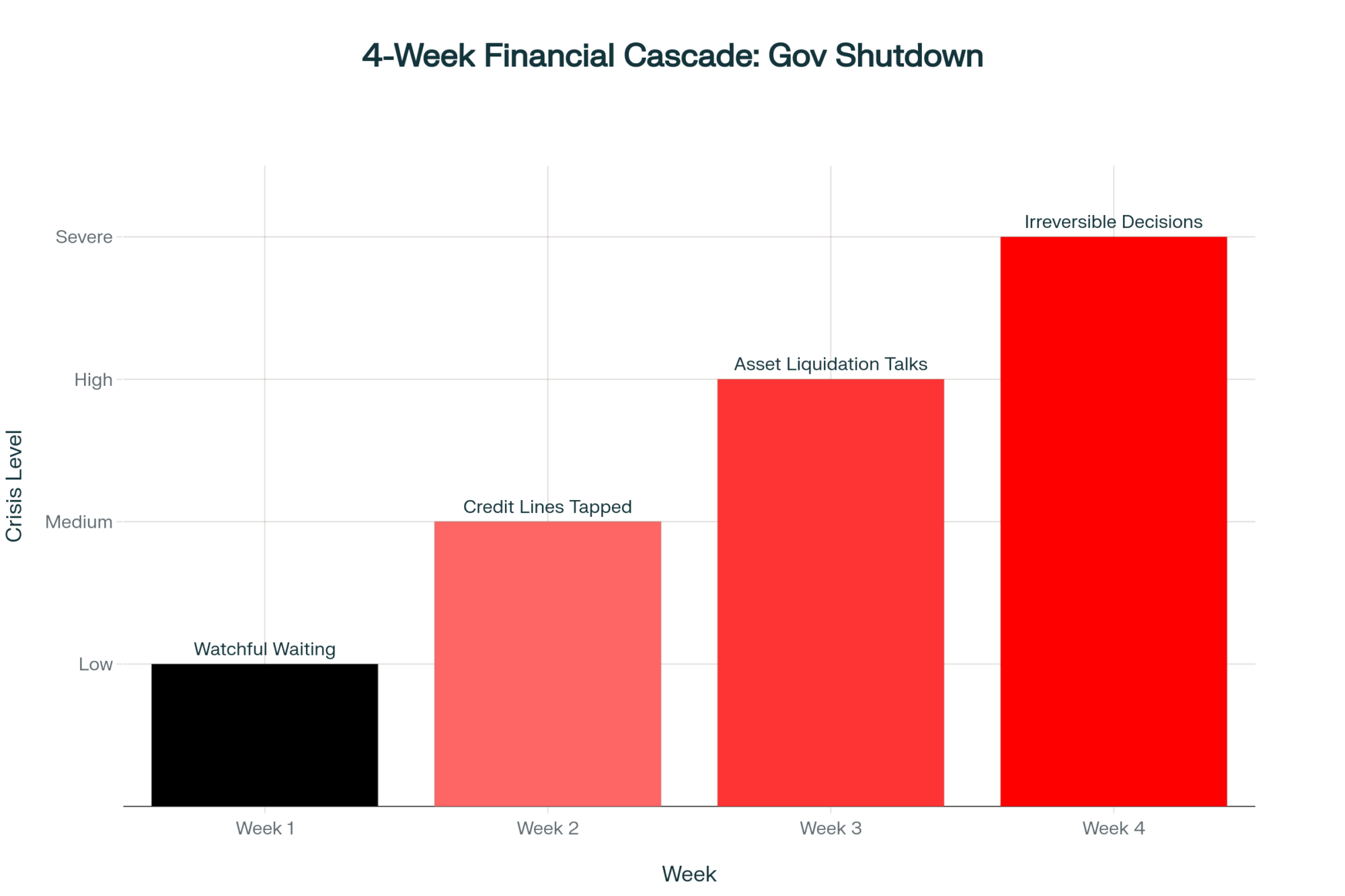
THE 4-WEEK SHUTDOWN TIMELINE

Week 1: Watchful waiting, minimal changes, optimism prevails
Week 2: Credit lines tapped, supplier terms tighten, concern grows
Week 3: Asset liquidation discussions, hard conversations begin
Week 4: Irreversible decisions—sell, partner, or restructure

When Genetics Become Your Emergency Fund

Here’s something that really bothers me about these crisis situations, and it’s worth thinking through carefully. When cash gets tight, selling animals becomes the obvious move, right? But which animals? And what’s that really costing you down the road?

I’ve heard similar stories from multiple producers who’ve faced this exact situation. They needed substantial cash quickly. Selling cull cows wasn’t going to cut it. But those top heifers? They’d bring real money. Problem was, those heifers represented years of careful breeding decisions.

Extension dairy specialists consistently emphasize that every generation of genetics you build represents accumulated progress. Better production, improved health traits, higher components… all that work your family might’ve been doing for decades. When you’re forced to sell those top-tier animals for quick cash, you’re not just losing individual cows. You’re potentially setting your herd back years.

And here’s what makes it worse—the market dynamics during these disruptions are typically brutal. Buyers know you need cash, so prices often drop right when you need maximum value. Then, when things stabilize and you want to rebuild? Those same genetics cost way more than you sold them for, if you can even find comparable quality.

As one producer explained it: “Selling those heifers felt like cashing in your retirement account at age 40. Sure, you solve today’s problem, but what about tomorrow?”

Why Your Zip Code Matters More Than Ever

Out West: Big Scale, Big Challenges

Those huge operations in California and Idaho—they’ve got some advantages during disruptions, but don’t think they’ve got it easy. Indeed, larger herd sizes typically mean better banking relationships and access to more financial tools. However, they also have massive daily cash requirements.

What’s particularly interesting about Western operations is how many are integrated with processing. Direct relationships with cheese plants or powder facilities can provide some payment stability. But when export markets get disrupted? Those advantages can disappear pretty quickly.

Producers with several thousand cows often mention that size gives them options, sure. But the daily burn rate is enormous. They might survive longer than smaller farms, but if they fall? They fall hard.

The Midwest’s Tough Middle

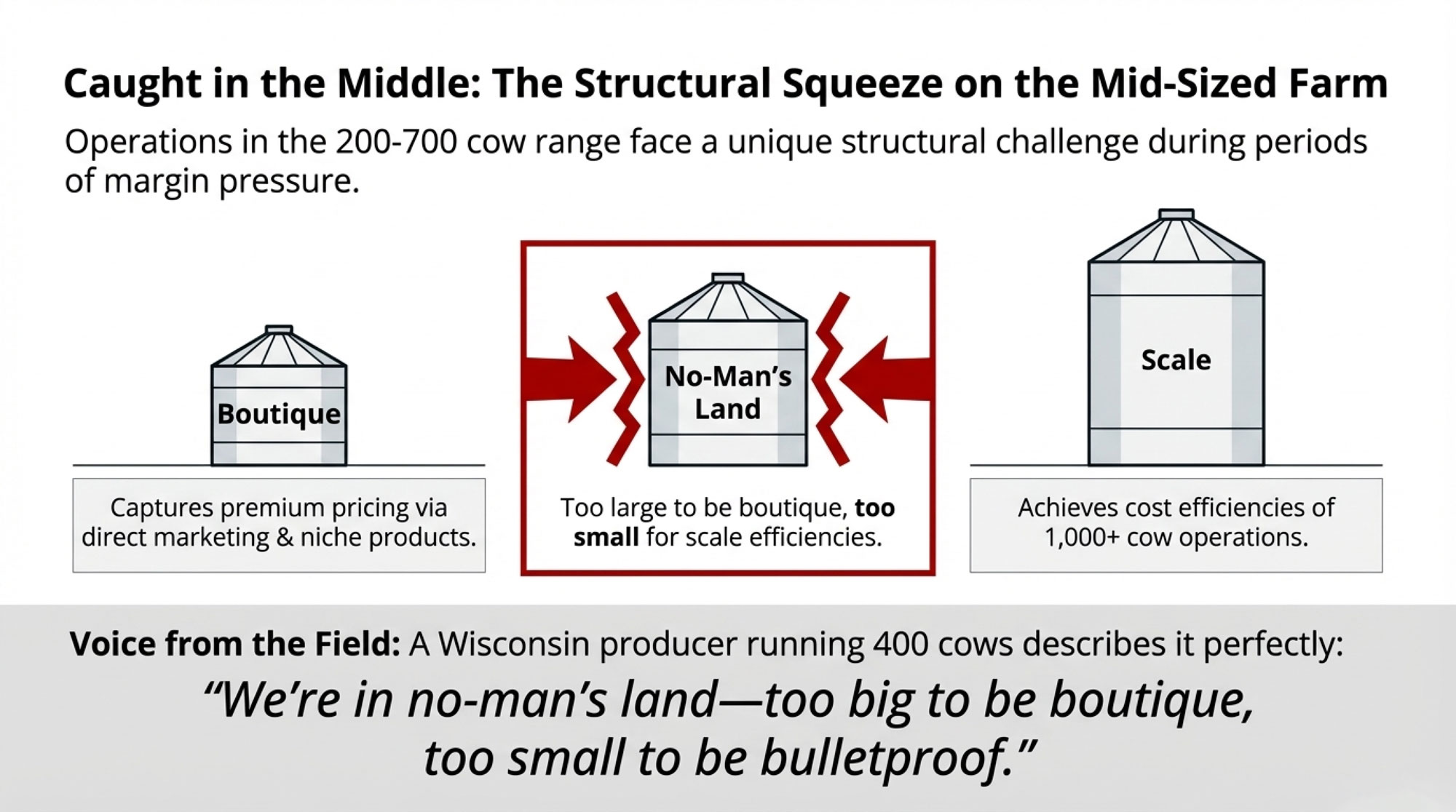
The heart of American dairying—Wisconsin, Minnesota, Michigan—these folks face their own unique challenges. Those 400 to 800 cow operations? They’re often multi-generational family businesses with deep roots but limited financial flexibility.

What many of us have noticed is that these farms have all the knowledge and capability to weather disruptions. What they sometimes lack is the capital reserves of bigger operations or the nimbleness of smaller ones. Producers in this situation often refer to it as the “efficiency trap”—they’re perfectly optimized for normal times but vulnerable when normal times are no longer the norm.

However, what’s encouraging is that this region has an incredible cooperative spirit. Equipment sharing, feed buying groups, and neighbors helping neighbors… that social capital becomes real financial value during tough times.

Northeast Innovation

Now, Northeast operations have developed some really interesting approaches. Perhaps it’s because they’ve always faced challenges related to distance from markets and inadequate infrastructure, but many of these farms maintain surprisingly diverse revenue streams.

Direct marketing, agritourism, value-added processing—it’s way more common up there. Yes, it makes things more complex to manage, but it also provides cash flow when commodity markets or federal programs encounter issues.

Extension programs in states like Vermont and Pennsylvania have documented how this diversification helps during disruptions. Programs like Penn State Extension and UVM Extension have case studies showing farms with diversified income weathering shutdowns better. One Pennsylvania producer, who runs 300 cows and operates a farmstead cheese business, told me that cheese-making started as a hobby. Now? “It’s our shutdown insurance policy,” she says.

The Competition That Never Stops

While we’re dealing with domestic political drama, the rest of the dairy world continues to move forward. And that has consequences we really need to think about.

During recent disruptions, processors have mentioned losing long-standing export relationships. Why’s this such a big deal? When international buyers are unable to obtain a reliable supply from us, they often seek alternatives. New Zealand steps in. The EU fills the gap. Even countries like Argentina are becoming players.

What really concerns many industry observers is how quickly these relationships solidify. Reacquiring an export customer after a disruption? It typically takes much longer than building the original relationship. Trust is hard to rebuild in international business.

And look, this isn’t about foreign competitors being predatory or anything. They’re just doing business. International buyers have their own obligations. When American political issues threaten their supply chains, they make rational decisions to diversify their supply chains. Can’t really blame them.

What Actually Works: Lessons from Survivors

So while external pressures mount—from tightening cash flow to lost export markets—the operations that survive these disruptions aren’t just lucky. They’ve built specific strategies that work regardless of what’s happening in Washington or world markets.

Examining farms that have successfully navigated multiple disruptions, extension specialists and farm management consultants have identified several patterns. And interestingly, size isn’t the determining factor. Small operations can sail through storms that sink farms five times their size.

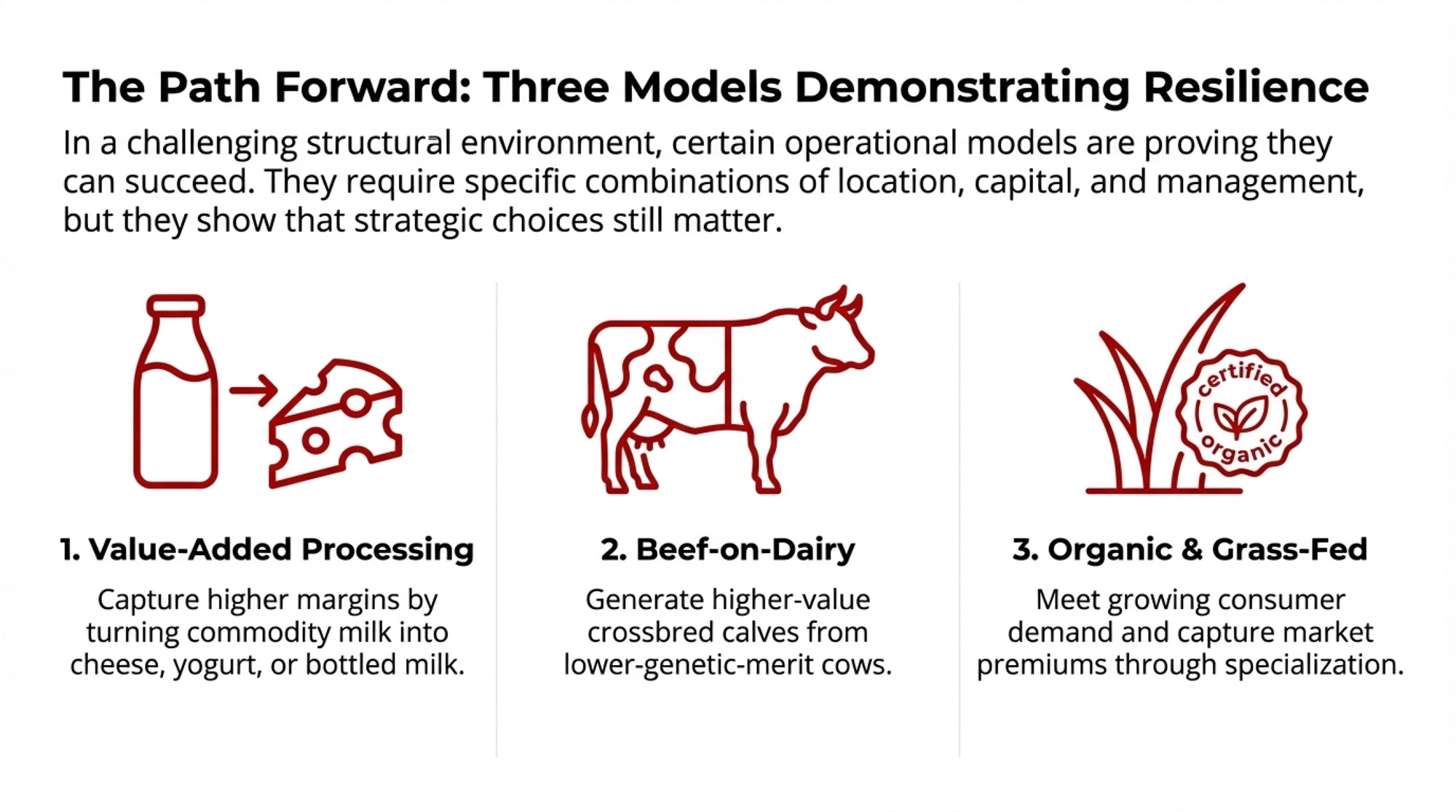
First, income diversification really matters. Now, I’m not saying every farm needs to open a corn maze and petting zoo. But having even 15 or 20% of revenue from sources that don’t depend on federal programs? That provides crucial breathing room. It could be custom heifer raising, beef-on-dairy programs, or contract cropping… many options fit different operations.

Second, relationship banking consistently outperforms transactional banking. Producers who’ve worked with the same lender for years, who’ve been transparent about their operations, who built trust before they needed credit—these folks have options during crises that others just don’t have. Agricultural lenders tell me they’re more likely to work with farms they know well during disruptions.

Third—and this surprised me when I first learned about it—state and local connections often matter more than federal ones. While everyone focuses on Washington, state agriculture departments and local development authorities often have resources that continue to operate regardless of the circumstances. Many states have documented these programs continuing to operate during federal shutdowns, including Wisconsin’s Buy Local Buy Wisconsin program and Minnesota’s livestock investment grants.

Having the Hard Conversation

Okay, this is tough to talk about, but sometimes the smartest business decision isn’t about surviving at any cost. Sometimes it’s about maintaining control while you still have options.

Farm transition specialists have observed three basic approaches, each with distinct outcomes.

Some folks plan succession gradually, bringing in the next generation or capable employees over time. This preserves all that accumulated knowledge and keeps the farm in the community while providing security for retiring owners.

Others explore partnerships—perhaps management agreements where experienced operators continue to run farms under new ownership structures. Several documented cases demonstrate that this approach is effective for all parties involved.

And then there’s recognizing that a dairy farm is really a collection of multiple valuable assets. Sometimes separating those assets—land, facilities, equipment, expertise—creates more value than keeping them bundled.

What troubles many of us is when producers wait until a crisis removes all their options. Industry data suggest that forced liquidation might recover half to two-thirds of the potential value. Planned transitions? Often 80 to 90%.That difference represents decades of hard work.

However, there’s another side to this—not everyone needs to consider transition. Many operations have successfully maintained their independence despite multiple disruptions. These farms typically share some characteristics: minimal debt, diverse income streams, and adequate reserves. They might not be the biggest or most “efficient” by conventional standards, but they’re still milking profitably years later.

Learning from Patterns

We’ve experienced several significant federal disruptions over the past decade, and each one has taught us something. The Congressional Research Service has documented how short disruptions—a couple of weeks or less—create headaches but rarely cause permanent change. Extended disruptions lasting a month or more? Those can fundamentally alter farm operations and whole communities.

What concerns many industry observers is that recovery periods appear to be lengthening. Yes, operations may resume normal activities fairly quickly after services restart. However, the full effects—lost export markets, disrupted breeding programs, and damaged relationships—can persist for years, according to research on farm management.

This suggests that we need to reconsider our approach to planning. Rather than treating disruptions as rare emergencies, maybe we should consider them recurring business challenges that need systematic preparation.

Building Your Own Resilience Plan

Based on what extension specialists and successful producers have shared about navigating multiple disruptions, here’s a framework that seems to work:

Getting Your Financial House in Order

Start by really understanding your daily cash needs—not just the obvious stuff, but everything. Those small expenses add up quickly when cash is tight. And keep detailed records, not just for tax purposes, but also so you can make quick decisions when needed.

Build banking relationships before you need them. Regular communication with lenders, transparent reporting, and establishing credit during good times, rather than waiting for a crisis—agricultural lenders consistently emphasize the importance of this approach.

Creating Operational Flexibility

Examine your operation and determine what’s truly fixed versus what can be adjusted if needed. Could you temporarily change milking frequency? Adjust rations? Defer purchases? Having these contingency plans thought through makes implementation way less stressful.

Consider structural changes that offer flexibility. Maybe separate land ownership from operating assets. Create distinct entities for different business lines. Set up equipment partnerships. Farm business advisors often recommend these strategies for building resilience during uncertain times.

Positioning for the Future

Develop income streams that work independently of federal programs. Even modest diversification—10 to 15% of revenue—can provide crucial breathing room when you need it most. Extension programs in multiple states have documented this pattern, showing farms with diversified income sources maintain better cash flow during disruptions.

And build networks before you need them. Strong relationships with neighbors, suppliers, processors, and advisors—these become invaluable during disruptions. Not just for practical support, but for information flow when normal channels fail.

The New Reality We’re Facing

The dairy industry has always dealt with cycles—milk prices, feed costs, and weather. What’s different now is adding political uncertainty as a significant operational risk. And this isn’t about taking sides on politics—it’s simply recognizing business reality.

The most successful operations many of us observe aren’t necessarily the biggest or most efficient by traditional measures. They’re the ones that have accepted uncertainty as a baseline and built accordingly. They maintain reserves even when expansion looks attractive. They keep flexibility even when specialization might be more profitable. They invest in relationships even when transactions might be more efficient.

As one thoughtful Minnesota producer put it, “We used to farm like optimists and market like pessimists. Now we do both like realists.”

Where We Go from Here

Government shutdowns are just one of the many challenges facing dairy operations today. However, they offer important lessons about resilience, preparation, and adaptability that apply to a wide range of situations.

The farms that’ll thrive in the coming decades won’t necessarily be those with the highest production or lowest costs. They’ll be the ones that can maintain stability through instability. That can adapt quickly. Those who have built systems and relationships that function regardless of external circumstances.

For producers currently operating, the message seems pretty clear: Hope for stability but prepare for disruption. Build multiple pathways to success. Most importantly, maintain control of your destiny by making strategic decisions when you have options, not reactive decisions under pressure.

The dairy industry has survived and evolved through numerous challenges. This current era of political uncertainty? It’s just another test of our adaptability. And those who recognize the pattern, prepare accordingly, and support each other through disruptions—they’ll emerge stronger.

That’s not just optimism talking. That’s what history keeps teaching us, again and again. We’re a resilient bunch, us dairy folks. Always have been. And with the right preparation and mindset, we always will be.

For specific state program information, contact your local extension dairy specialist or the state department of agriculture—such as Penn State Extension, the University of Wisconsin-Madison Division of Extension, or Cornell Cooperative Extension. They can provide details on resources that operate independently of federal systems.

KEY TAKEAWAYS

  • Build 15-20% non-federal income streams through custom heifer raising ($800-1,200/head profit), beef-on-dairy programs (adding $150-300/calf value), or direct marketing that keeps cash flowing when DMC payments freeze
  • Understand the 4-week timeline: Week 1 brings watchful waiting, Week 2 taps credit lines, Week 3 forces asset discussions, Week 4 demands irreversible decisions—knowing this pattern helps you prepare contingencies before pressure mounts
  • Protect genetic investments by identifying the bottom 20% producers for emergency sales rather than top heifers—selling quality genetics during a crisis means losing 30-40% of value plus years of breeding progress you can’t easily recover
  • Strengthen state and local connections since programs like Wisconsin’s Buy Local initiatives and Pennsylvania extension services keep operating during federal shutdowns, providing resources when you need them most
  • Plan transitions strategically because industry data shows forced liquidation recovers half to two-thirds of value, while planned transitions preserve 80-90%—that 25-30% difference on a million-dollar operation means $250,000-300,000 in preserved equity

Complete references and supporting documentation are available upon request by contacting the editorial team at editor@thebullvine.com.

Learn More:

Join the Revolution!

Join over 30,000 successful dairy professionals who rely on Bullvine Weekly for their competitive edge. Delivered directly to your inbox each week, our exclusive industry insights help you make smarter decisions while saving precious hours every week. Never miss critical updates on milk production trends, breakthrough technologies, and profit-boosting strategies that top producers are already implementing. Subscribe now to transform your dairy operation’s efficiency and profitability—your future success is just one click away.

NewsSubscribe
First
Last
Consent

Unlocking Profit and Quality: The Dairy Farmer’s Guide to High-Value Beef Production

Learn how intentional animal care and beef-on-dairy programs can enhance your dairy farm’s profitability and beef quality. Ready to meet consumer demands and boost efficiency?

Summary: The article delves into essential practices required to produce high-quality beef, emphasizing intentional animal care, stewardship, and genetic selection. It highlights how beef-on-dairy programs align with consumer demands for quality and sustainability while offering economic benefits to producers. Programs like Beef Quality Assurance (BQA) and the National Dairy FARM program promote animal welfare and establish consumer trust through transparency. In a competitive market, intentionality in beef production is crucial, addressing concerns for 29% of customers who prioritize animal welfare. Beef-on-dairy programs reduce production costs and increase market prices due to better carcass characteristics, potentially boosting ROI by up to 25%. Transparency and stewardship, especially through artificial insemination (AI), are vital for building trust and enhancing genetic traits that improve efficiency and product quality, ensuring long-term financial stability.

  • Intentional animal care and stewardship are essential for producing high-quality beef.
  • Beef-on-dairy programs align with consumer demands for quality and sustainability.
  • Programs like BQA and the National Dairy FARM program foster animal welfare and consumer trust.
  • Addressing consumer concerns about animal welfare is crucial in a competitive market.
  • Beef-on-dairy programs can reduce production costs and increase market prices.
  • Genetic selection and artificial insemination enhance efficiency and product quality.
  • Transparency in beef production builds trust and ensures long-term financial stability.

In today’s competitive market, intentionality in beef production is critical. High-quality beef is the product of purposeful attention and rigorous management procedures. Producers understand that cattle treated with respect and given correct care, handling, and nutrition grow quicker, perform better, and are more efficient, resulting in a higher-quality product and more profitability. The fact that 29% of customers say animal welfare is their primary concern regarding beef production demonstrates how this factor influences consumer decisions and industry trust.

The Financial Case for Beef-on-Dairy Programs: Boosting Profitability and Sustainability

Economic assessments of standard dairy farming vs beef-on-dairy programs demonstrate significant cost savings and income prospects, which substantially impact farmers’ long-term financial strategy. Farmers may significantly cut feed and resource costs using beef-on-dairy programs since these mixed calves are typically more efficient, requiring fewer feeding days than standard beef cattle. This efficiency immediately lowers feed, labor, and healthcare overhead expenses.

The income side demonstrates that beef-on-dairy calves command higher market prices, with an estimated 12-20% rise per calf, due to enhanced carcass characteristics such as marbling, softness, and taste, which customers strongly appreciate. Prioritizing quality increases sales price, marketability, and demand, leading to more muscular income streams.

The long-term financial gains are as compelling. Adopting beef-on-dairy programs allows farmers to create a more sustainable model that meets customer expectations for animal care and ecologically sound approaches. This sustainable method protects the farm from changing market circumstances. Building a solid brand reputation may increase income by 10-15% yearly via premium pricing and loyal client bases.

Finally, the combination of lower costs, higher income potential, and sustainable methods makes a financial argument for switching from standard dairy farming to beef-on-dairy operations. This transformation can potentially enhance return on investment (ROI) by up to 25%, promoting higher profitability and long-term financial stability while preparing farmers to prosper in a competitive market.

The Importance of Animal Welfare in Beef Production 

Animal welfare is critical to contemporary beef production, impacting the finished product’s quality and economics. Proper care, handling, and feeding are more than legalities; they contribute to healthier, more productive animals. Cattle treated with respect, fed properly, and handled humanely are more likely to grow quicker and perform better. This results in a better final product that meets and surpasses market expectations.

Furthermore, increased customer awareness about animal welfare drives the industry’s emphasis. According to recent research, 29% of customers are becoming more concerned about animal welfare in beef production. As consumer knowledge and concern for animal welfare grows, maintaining good standards of care becomes increasingly more critical. These measures increase customer trust while ensuring a sustainable and ethical approach to beef production.

Producers that promote animal welfare often see real increases in production and profitability. Cattle that have been well cared for are more efficient, using fewer resources to achieve market weight. This efficiency not only saves money but also produces a better-quality product that can be sold at a higher price. Programs like Beef Quality Assurance (BQA) and the National Dairy FARM program offer essential foundations for adopting best practices in animal care, reinforcing the industry’s commitment to animal welfare.

The importance of animal welfare in beef production cannot be emphasized. Producers may obtain a high-quality, lucrative product by prioritizing adequate care, handling, and nutrition. However, it is critical to realize that this achievement is inextricably linked to the trust of a sophisticated customer base. By addressing their real concerns and being transparent, manufacturers can create and sustain confidence, guaranteeing the industry’s continuing prosperity.

Capitalizing on Consumer Trends: How Beef-on-Dairy Aligns with Quality and Sustainability Demands

Recent market trends show a significant movement in customer preferences toward quality and sustainability in beef products. According to Food Marketing Institute research, 53% of customers are prepared to pay extra for sustainably produced goods (FMI, 2022). This trend demonstrates an increased demand for high-quality beef farmed with consideration for animal welfare and environmental sustainability.

Beef-on-dairy initiatives are perfectly positioned to meet increasing customer preferences. These programs may yield beef with enhanced marbling and tenderness, features that customers love (source: Certified Angus Beef, 2023). Furthermore, merging dairy and beef production systems allows for more effective resource use, which improves sustainability efforts. According to research published in the Journal of Dairy Science, beef-on-dairy cattle need 10-15% fewer feeding days than standard beef breeds, lowering feed costs and environmental effects.

Furthermore, openness and traceability are increasingly essential components of customer confidence. Programs that provide extensive farm-to-fork insights backed up by data on animal care and health treatments may significantly boost customer trust. According to a Coalition for Sustainable Food Systems poll, 64% of customers feel that openness in food production is vital for brand credibility.

Beef-on-dairy campaigns may meet and surpass expectations by considering market changes and customer preferences. Adopting best practices and utilizing technology for increased efficiency and transparency enables dairy producers to benefit from rising possibilities in the meat market. This strategic connection provides a successful and sustainable future for beef production, which resonates strongly with today’s conscious customers.

Nourishing Trust: How Transparency and Stewardship Can Reconnect Consumers with Their Food

As customers get farther remote from the source of their food, cattle, and dairy farmers must create and retain confidence. Transparency and sound stewardship practices are critical for bridging this gap. Producers may develop customer trust and confidence by publicly demonstrating the care and ethical concerns involved in animal treatment and production. This improves the image of the beef and dairy sectors and guarantees that customers are satisfied with their purchase decisions, knowing that the products they eat result from ethical and humane procedures.

Good stewardship includes a variety of behaviors, such as good nutrition and ethical animal husbandry, as well as sustainable land and resource management. Programs such as Beef Quality Assurance (BQA) and the National Dairy FARM program provide critical foundations for adopting these best practices, allowing farmers to show their commitment to ethical standards. Such openness creates a compelling story that can be presented to customers, eventually bridging the comprehension gap and building a deeper connection between the farm and the dinner table.

Stewardship in Beef Production: Beyond Animal Care to Sustainability and Profitability

Stewardship in beef production goes beyond animal care; it is a complete strategy that combines ethical treatment, environmental sustainability, and economic viability. Embracing stewardship may help beef farmers meet customer demands for transparency and humane methods. It is becoming clearer that customers, who are incredibly disconnected from agricultural origins, value animal welfare and demand producers’ commitment via actual activities.

Effective management requires thorough attention to cattle well-being, including adequate diet, handling, and general care. This devotion meets ethical duties and correlates clearly with improved cattle performance. Animals reared in conditions that provide constant, high-quality care are more likely to develop faster, have more excellent health, and be more efficient. These elements combine to produce exceptional beef, emphasizing the significance of stewardship in delivering high-quality results.

Furthermore, stewardship techniques supported by Beef Quality Assurance (BQA) and the National Dairy FARM Program provide systematic, science-based assistance. These programs provide farmers with the information and skills to apply best practices, ranging from animal management to ethical antibiotic use. By following these guidelines, companies may meet and surpass customer expectations, promoting trust and happiness.

Finally, proper stewardship is critical for producing high-quality beef. It requires a comprehensive strategy that combines ethical care with strategic management to guarantee animal welfare and optimum production results. As the business evolves, stewardship will remain critical in closing the gap between consumer expectations and the reality of cattle production.

Maximizing Your Dairy Farm’s Potential: A Blueprint for High-Quality Beef-on-Dairy Programs

  1. Conduct Thorough Genetic Selection
    • Evaluate the existing herd’s genetic profile to identify areas for improvement.
    • Prioritize traits such as efficiency, carcass merit, and marbling to ensure high-quality output.
    • Artificial insemination techniques should be used to incorporate superior Angus genetics into the dairy herd.
  2. Develop Comprehensive Calf Care Protocols
    • Ensure calves receive colostrum within the first few hours of birth to boost immunity.
    • Maintain a clean and comfortable environment to minimize stress and disease.
    • Implement a structured feeding program that includes high-quality milk replacers and gradual introduction of solid feed.
  3. Implement Effective Management Practices
    • Monitor animal health regularly, with scheduled veterinary check-ups and prompt response to health issues.
    • Utilize best practices in animal handling to reduce stress and improve overall welfare.
    • Adopt rotational grazing and sustainable feeding practices to optimize resource use.
  4. Establish a Record-Keeping System
    • Document genetic selection decisions and breeding outcomes for continuous improvement.
    • Keep detailed records of every calf’s health treatments, feed intake, and growth rates.
    • Use this data to adjust management practices and improve efficiency and productivity over time.
  5. Invest in Training and Certifications
    • Participate in Beef Quality Assurance (BQA) programs to stay updated on best practices.
    • Enroll in the National Dairy FARM program to enhance animal care and welfare protocols.
    • Encourage continuous education for farm staff to maintain high standards of animal stewardship.
  6. Engage with Consumers and Stakeholders
    • Communicate transparently with consumers about your beef-on-dairy practices and animal welfare standards.
    • Conduct farm tours and open houses to build trust and educate the public about your commitment to quality and sustainability.
    • Collaborate with industry partners to share best practices and innovative approaches in beef-on-dairy production.

Genetic Selection and Lifetime Management: Key to Quality Beef 

Producing high-quality beef is a complex process that starts long before the animal is born. The importance of genetic selection cannot be emphasized; by deliberately selecting alleles that favor desirable features like marbling, farmers lay the groundwork for improved meat quality. Marbling, the intramuscular fat contributing to softness and taste, results from centuries of deliberate breeding choices.

However, genetics alone do not ensure brilliance. The road from genetic promise to realized quality requires rigorous animal life cycle management. Calves born from genetically better stock need constant care that prioritizes appropriate diet, environment, and health treatments. Every developmental stage, from weaning to finishing, must be carefully controlled to retain and improve the animal’s intrinsic features.

An animal’s nutrition is critical to marbling growth, especially during the finishing period. High-energy feeds, often administered during the latter phases of development, aid in depositing intramuscular fat, distinguishing high-quality beef. When combined with adequate health care and minimum stress, these approaches allow the animal to fulfill its genetic potential.

As a result, the route to creating high-quality beef is scientific and artistic. It blends the fundamental qualities of selective breeding with the day-to-day actions that turn such potentials into reality. When done purposefully, the product meets and surpasses customer expectations for quality and flavor, rewarding the cattle producer’s diligent efforts.

Bridging the Gap: Elevate Your Beef Production with BQA and National Dairy FARM Programs

Knowing animal welfare is critical for both producers and consumers. Beef Quality Assurance (BQA) and the National Dairy FARM Program provide essential information to dairy and beef farmers. These projects offer science-based training and certifications to ensure optimal animal handling, care, and appropriate antibiotic use practices. Producers may show their unshakable dedication to excellent stewardship by participating in these initiatives, which help to bridge the gap between consumer expectations and agricultural reality.

Revolutionizing Dairy Farming: The Unmatched Benefits of Beef-on-Dairy Programs

As the beef-on-dairy trend grows, there will be many advantages, and they will be essential. Farmers are addressing the rising demand for excellent meat by incorporating cattle genetics into dairy herds while improving overall efficiency and sustainability. This novel technique converts dairy farms into dual-purpose firms, creating a more solid and resilient agricultural system.

One significant benefit of beef-on-dairy projects is the capacity to produce higher-quality meat. These initiatives guarantee calves are genetically inclined to desirable carcass features such as marbling, resulting in better beef products that fulfill customer expectations. Proper calf care and nutrition improve growth and performance, leading to better resource use and increased profitability.

Efficiency increases are another critical advantage. Dairy farms have typically focused on milk production, but adding beef traits allows for more efficient resource usage and faster calf development. This dual-purpose technique shortens the time and input costs necessary to grow calves to market weight, providing a more sustainable route for the dairy and beef sectors.

Artificial insemination (AI) is critical for the success of beef-on-dairy initiatives. AI enables farmers to make continual genetic enhancements, picking features that promote efficiency, performance, and carcass quality. This precision breeding technology speeds genetic advancement and produces consistent, high-quality results. Dairy farms may use AI to quickly respond to market needs and contribute to the long-term sustainability of meat production.

Ultimately, beef-on-dairy projects provide a forward-thinking strategy consistent with producer and customer values. These initiatives prioritize animal care, efficient resource use, and quality output, demonstrating a commitment to stewardship and sustainability. They ensure that the agricultural industry may prosper while fulfilling the ever-changing needs of the marketplace.

Building Consumer Trust Through Comprehensive Farm-to-Fork Traceability

Farm-to-fork traceability refers to the meticulous documenting and monitoring of every step in the food production process, from the first stages on the farm to the finished product on the consumer’s plate. This notion is critical for establishing customer confidence since it gives openness regarding the food’s origins, manufacturing procedures, and handling practices. Knowing the specific path of their food reassures customers about its safety, quality, and the ethical methods used in its production.

Beef-on-dairy systems are exceptional at providing this kind of vital traceability. Producers may painstakingly document the life cycle of every beef-on-dairy animal by including thorough records and methodical monitoring at each stage—from breeding and calving to raising and finishing. These initiatives demonstrate the industry’s commitment to animal welfare via high standards of care and health treatments. With this thorough traceability, farmers can successfully interact with customers, showing the better care their goods get and reinforcing confidence in the agricultural community.

Transform Your Dairy Farm: Embracing a Comprehensive Shift to Enhance Beef-on-Dairy Programs

We must all adjust our mindset to capitalize on the benefits that beef-on-dairy initiatives may provide to our sector. This is more than simply incorporating beef genetics into dairy cows; it is a complete reevaluation of our procedures and attitudes across the supply chain. We must be deliberate in all decisions, from genetic selection to animal care, resource management, and marketing methods. This requires a commitment to ongoing development, sustainability, and stewardship.

By changing our perspective, we may go beyond traditional paradigms and embrace creative approaches that assure quality, efficiency, and profitability. Collaboration is critical. Working as a cohesive industry—producers, processors, marketers, and retailers—allows us to exchange information, implement best practices, and jointly raise the bar for beef production.

Good stewardship of our land, animals, and resources is more than just a checklist item; it is the cornerstone for our industry’s future growth. By appreciating and respecting each component of the supply chain, we can create a product that satisfies customer expectations while positively contributing to our shared ecosystem.

The Bottom Line

The key to producing high-quality beef is caring for the cattle and the land and matching our farm practices with customer concerns and stewardship ideals. The practical application of genetic selection and lifetime management emphasizes the need for constant effort to ensure no animal has a poor day. Producers get valuable training via programs like BQA and the National Dairy FARM, reinforcing their dedication to quality and animal care. Integrating beef-on-dairy programs provides a unique opportunity to improve genetics and fulfill market needs while increasing efficiency and sustainability. A comprehensive approach throughout the supply chain enhances product quality and profitability, builds confidence between producers and customers, and promotes transparency and accountability in the cattle production business.


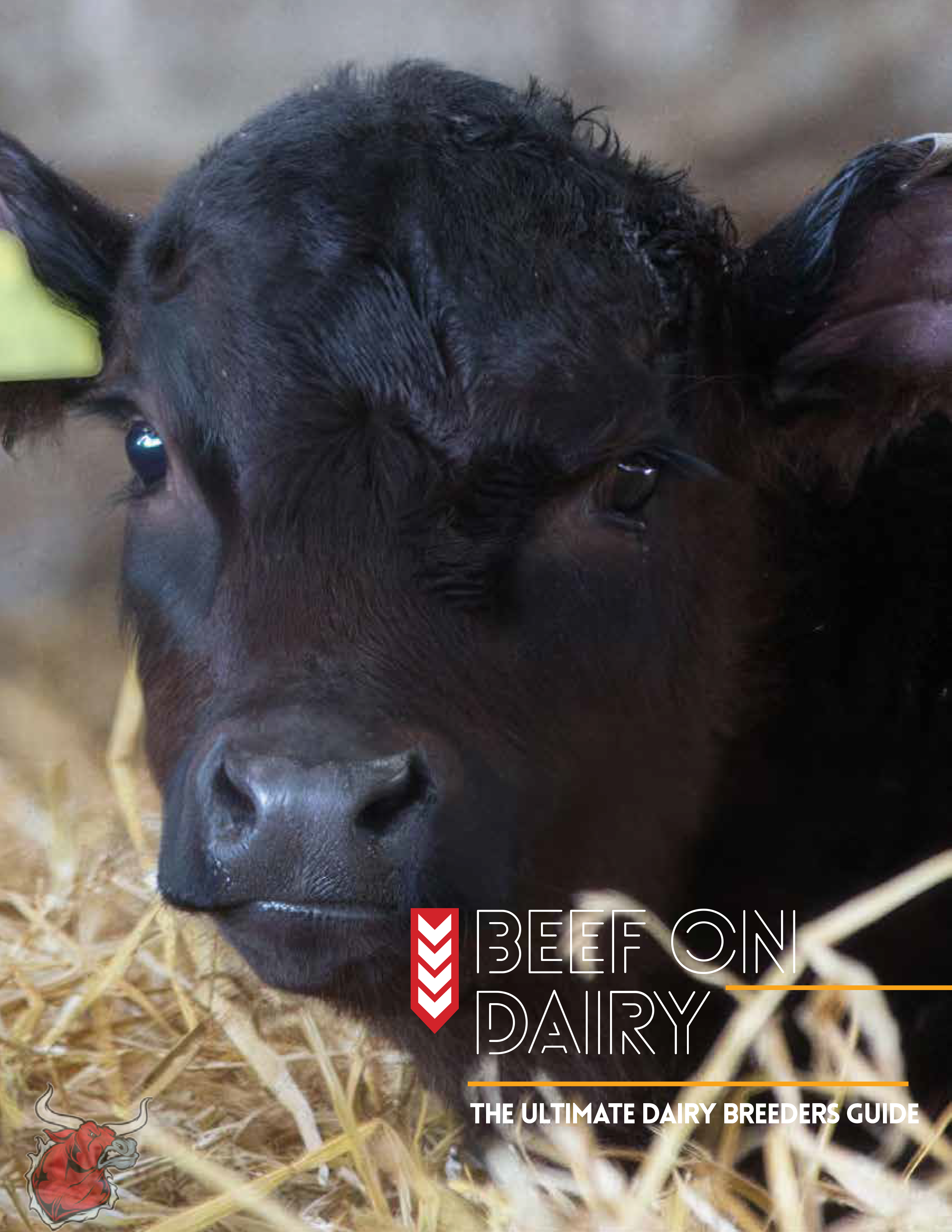
Download “The Ultimate Dairy Breeders Guide to Beef on Dairy Integration” Now!

Are you eager to discover the benefits of integrating beef genetics into your dairy herd? “The Ultimate Dairy Breeders Guide to Beef on Dairy Integration” is your key to enhancing productivity and profitability.  This guide is explicitly designed for progressive dairy breeders, from choosing the best beef breeds for dairy integration to advanced genetic selection tips. Get practical management practices to elevate your breeding program.  Understand the use of proven beef sires, from selection to offspring performance. Gain actionable insights through expert advice and real-world case studies. Learn about marketing, financial planning, and market assessment to maximize profitability.  Dive into the world of beef-on-dairy integration. Leverage the latest genetic tools and technologies to enhance your livestock quality. By the end of this guide, you’ll make informed decisions, boost farm efficiency, and effectively diversify your business.  Embark on this journey with us and unlock the full potential of your dairy herd with beef-on-dairy integration. Get Started!

Learn more:

Harnessing EPDs in Your Beef-on-Dairy Program: Maximize Your Profit

Maximize your beef-on-dairy profits by harnessing EPDs. Discover how understanding expected progeny differences can boost your program’s success and market appeal.

Amidst the ever-changing market dynamics, one breeding strategy stands out for its financial rewards: beef on dairy. With beef calf prices skyrocketing and milk prices struggling, venturing into the beef market is enticing. Native beef producers are grappling with the double whammy of drought conditions and escalating costs, resulting in a shortage of beef calves. This presents a golden opportunity for dairy producers to supply crossbred cattle to the beef market, reaping the benefits of high beef prices. In certain regions, day-old calves are commanding prices exceeding $1,000, a testament to the potential profitability of beef-on-dairy programs. 

Beef-on-dairy programs are filling the void left by native beef producers and setting the stage for long-term profitability by creating cattle that meet market demands. This article explores navigating Expected Progeny Differences (EPDs) to make informed breeding decisions, optimize calf growth, and meet market demands. Discover essential traits—fertility and calving ease to carcass quality—ensuring your beef-on-dairy program thrives. Get ready to transform insights into profit and maximize this evolving market opportunity.

Harnessing EPDs: Elevating Your Beef-on-Dairy Program for Profitability and Market Success 

Expected progeny differences (EPDs) are not just tools but strategic weapons for dairy producers looking to enhance their beef-on-dairy operations. These predictions estimate the genetic potential of future offspring for various traits, utilizing data from breed associations and advanced genomic tools. By harnessing the power of EPDs, dairy producers can make informed decisions that can significantly improve their operations’ profitability and market success. 

By leveraging EPDs, dairy producers can significantly improve their operations’ profitability. Key traits like calving ease and fertility are essential for ensuring healthy births and minimizing labor, directly impacting operational efficiency and continuous milk production

Growth traits, such as Weaning Weight and Yearling Weight, enable producers to raise calves that reach market weight more efficiently. This maximizes financial returns, especially when retaining calves to heavier weights before sale. 

Terminal traits like carcass weight and marbling are vital and strategic for downstream customers, including feedlots and packing plants. Selecting sires with favorable EPDs for these traits is not just a choice but a strategic move that helps dairy producers build long-term relationships with buyers who value high-quality, predictable carcasses. This strategic approach often leads to premium payments, a testament to the importance of tailoring genetic selections to market needs for lasting market success. 

Strategically applying EPDs in beef-on-dairy programs boosts immediate operational efficiency and ensures sustained profitability by producing desirable, high-quality cattle that meet market demands.

Fertility and Calving Ease: Cornerstone Traits for Optimizing Dairy Operations

Fertility and calving ease are not just important; they are the cornerstones of optimizing dairy operations. Fertility directly impacts herd productivity and profitability, making it crucial for cows to conceive efficiently. Difficult calvings can severely affect cow and calf health, delaying the dam’s return to milk production and increasing costs due to extended days open and potential veterinary care. Therefore, prioritizing these traits is essential for dairy operations’ smooth functioning and profitability. 

While beef breed association EPDs lack direct fertility markers, available genomic estimates and internal fertility indexes provided by A.I. companies can be valuable. Selecting sires with proven fertility metrics ensures a smoother breeding program

Calving ease is equally important. Hard calvings can reduce subsequent lactation milk yield and cause severe health issues for both cow and calf. Beef sires’ Calving Ease EPDs provide statistical predictions based on observed calving ease and birth weights in progeny. Higher Calving Ease EPDs in beef indicate a higher percentage of unassisted births, thus a desirable trait in sire selection. 

For breeds where Birth Weight EPDs are available, lower birth weights often correlate with easier calvings as lighter calves present fewer delivery complications. However, since Birth Weight is included in Calving Ease EPDs, focusing on Calving Ease can be more beneficial against calving difficulties

In summary, prioritizing fertility and calving ease enhances reproductive efficiency and secures her well-being. This strategic focus leads to improved milk production, reduced veterinary costs, and a more profitable dairy operation.

Maximizing Growth and Efficiency: The Critical Role of Weaning Weight, Yearling Weight, and RADG in Beef-on-Dairy Programs

The impact of traits like Weaning Weight, Yearling Weight, and Residual Average Daily Gain (RADG) is pivotal for dairy producers raising beef-on-dairy calves. These traits aid in selecting sires that produce desirable growth, ensuring calves reach optimal weight at various growth stages. 

Weaning and Yearling weights predict differences in calf weight at 205 days and 365 days, respectively. Higher values indicate better growth performance, translating to heavier, more marketable calves. This bolsters immediate profitability and enhances the herd’s long-term reputation. 

Residual Average Daily Gain (RADG) measures weight gain efficiency for the same feed amount. A higher RADG value means calves gain weight more efficiently, reducing feeding costs and accelerating market readiness. This aligns with buyer specifications for weight and size, which is crucial in a competitive market

Producers raising heavier beef-on-dairy calves will benefit from these growth traits, ensuring consistent, predictable performance. Selecting for these traits fosters strong buyer relationships, enhancing market opportunities even amid market fluctuations.

Strategic Selection for Terminal Traits: Enhancing Carcass Quality and Profitability 

Carcass traits are pivotal for beef quality and profitability, centering on Carcass Weight (C.W.)Marbling, and Ribeye Area (REA). A higher C.W. means more pounds, which translates to better economic returns since grid pricing rewards heavier carcasses. Marbling, essential for superior USDA Quality Grades (Q.G.), ensures consumer satisfaction with tenderness and flavor, fetching premium prices. REA indicates muscling; an optimal size means a well-muscled carcass. However, overly large ribeyes can be discounted if they don’t fit specific branded programs. Selecting sires with strong EPDs for these traits is critical to producing high-quality beef-on-dairy crossbreds that meet market demands and boost profitability.

Aligning Strategies with Scenarios: Tailoring Traits for Maximum Impact 

Let’s explore a few scenarios to see which traits should be prioritized: 

Scenario 1 – Typical Tim: This dairy uses beef sires on mature cows and younger females, often having calving difficulties. They sell day-old calves through a supply chain program that values Quality Grade (Q.G.) at the end. The focus should be on Calving Ease and Marbling to meet terminal trait thresholds suggested by buyers. 

Scenario 2 – Smaller Sam: A small dairy not serviced by a pickup route but markets elite beef-on-dairy calves through a local sale barn. Without knowing the calves’ final destination, this producer should prioritize Fertility and Birth Weight EPDs to avoid overly small calves, as sale barns often differentiate prices by weight. 

Scenario 3—Feedlot Fred: This dairy raises crossbred calves to 500 pounds, marketing directly to a feedlot that favors heavier carcasses. The focus should be on growth traits like Weaning Weight and RADG for feedlot efficiency and Carcass Weight to align with the feedlot’s performance grid. 

It is crucial to address fertility and calving ease while considering buyers’ needs for growth and carcass traits through genetic selection. This approach will help build lasting relationships and set your beef-on-dairy program up for long-term success.

The Bottom Line

Using Expected Progeny Differences (EPDs) in your beef-on-dairy program yields significant benefits by enabling precise breeding decisions that meet market demands and drive profitability. Focusing on crucial traits like fertility, calving ease, growth, and carcass quality optimizes operations, produces high-quality calves, and strengthens long-term buyer relationships. Customizing genetic selections to market needs ensures dairy producers can consistently supply predictable crossbreds, building a sustainable business that adapts to market changes. Balancing these factors boosts immediate financial gains and lays the groundwork for lasting market success.

Key Takeaways:

  • Market Opportunity: Beef-on-dairy crossbreds are in high demand, with day-old calves fetching substantial prices due to beef calf shortages.
  • Fertility and Calving Ease: Prioritize fertility and easy calving traits to ensure smooth reproduction and quick return to production for dairy cows.
  • Growth Traits: Focus on Weaning Weight, Yearling Weight, and RADG to ensure efficient growth and higher sale weights, whether retaining calves or selling early.
  • Terminal Traits: Select for desirable carcass traits such as Marbling and Ribeye Area to meet the specifications of feedlots and packing plants, optimizing carcass quality and yield.
  • Buyer Relationships: Understand your buyers’ requirements and tailor your genetic selection to meet their needs, fostering long-term profitable relationships.

Summary:

Beef-on-dairy programs are gaining popularity due to rising beef calf and milk prices, benefiting dairy producers by supplying crossbred cattle to the beef market. Genetic Predictions (EPDs) are strategic tools used to enhance beef-on-dairy operations by estimating future offspring’s genetic potential for various traits. Key traits like calving ease and fertility are essential for healthy births, minimizing labor, and maximizing operational efficiency. Growth traits like Weaning Weight and Yearling Weight enable calves to reach market weight more efficiently, maximizing financial returns. Terminal traits like carcass weight and marbling are vital for downstream customers, and selecting sires with favorable EPDs helps build long-term relationships with buyers. Balancing these factors boosts immediate financial gains and lays the groundwork for lasting market success.

Download “The Ultimate Dairy Breeders Guide to Beef on Dairy Integration” Now!

Are you eager to discover the benefits of integrating beef genetics into your dairy herd? “The Ultimate Dairy Breeders Guide to Beef on Dairy Integration” is your key to enhancing productivity and profitability.  This guide is explicitly designed for progressive dairy breeders, from choosing the best beef breeds for dairy integration to advanced genetic selection tips. Get practical management practices to elevate your breeding program.  Understand the use of proven beef sires, from selection to offspring performance. Gain actionable insights through expert advice and real-world case studies. Learn about marketing, financial planning, and market assessment to maximize profitability.  Dive into the world of beef-on-dairy integration. Leverage the latest genetic tools and technologies to enhance your livestock quality. By the end of this guide, you’ll make informed decisions, boost farm efficiency, and effectively diversify your business.  Embark on this journey with us and unlock the full potential of your dairy herd with beef-on-dairy integration. Get Started!

Learn more:

Send this to a friend