





Stop chasing milk volume myths. CRISPR gene editing delivers $5,000 per cow annually while genomic testing cuts feed costs through precision breeding.
The dairy industry’s sitting on the edge of something big. We’re talking about technological and genetic breakthroughs between 2025-2030 that’ll completely change how we think about dairy cattle breeding. And here’s the thing—these aren’t just fancy lab experiments. They’re real solutions that can put serious money in your pocket through lower feed bills, reduced labor costs, and premium milk markets.
The secret? Stop thinking of these innovations as complicated science projects and start seeing them as profit opportunities. Because that’s exactly what they are.
Game-Changing Tech: What’s Coming in the Next Few Years (2025-2030)
1. Designer Milk Through Gene Editing and Selection
When it’s happening: 2025-2027.
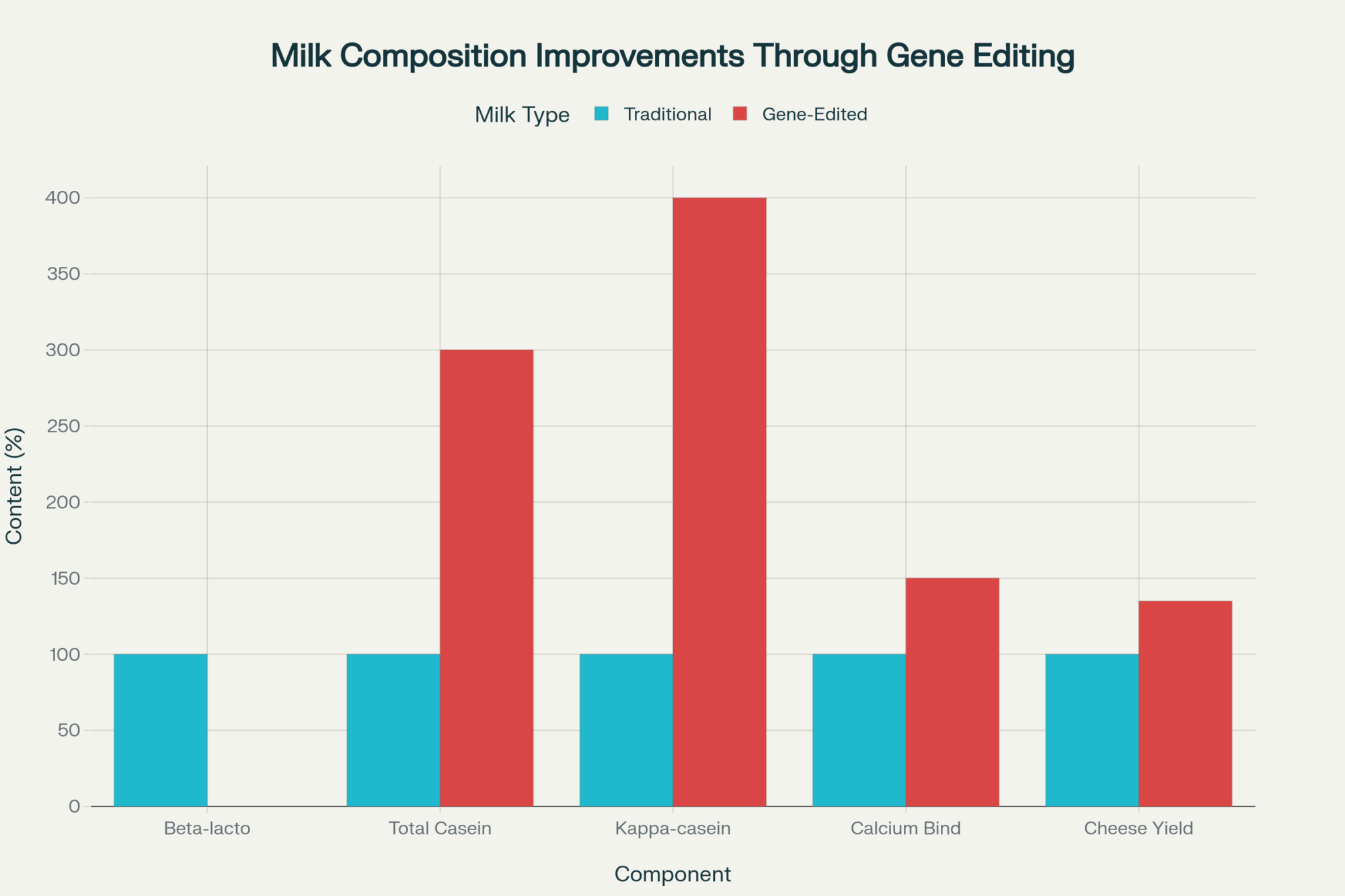
Remember when organic milk was just a crazy idea? Well, get ready for the next revolution. Scientists are using CRISPR technology—think of it as molecular scissors—to create milk that’s actually better than what nature gave us. They’ve figured out how to eliminate beta-lactoglobulin, the protein that makes some people allergic to milk. Plus, by genetic selection, dairy farmers can now bump up casein content by 17-35%, which means their desired casein milk makes more and better cheese, reduces gastrointestinal symptoms, and potentially benefits for bone health and blood pressure management. While regulatory approval remains a key step, forward-thinking producers are positioning their herds to capitalize the moment these markets open.
What it means for your wallet:
- Premium markets willing to pay 15-25% above commodity prices.
- Processors offering component bonuses for high casein milk.
- New customer segments you couldn’t reach before
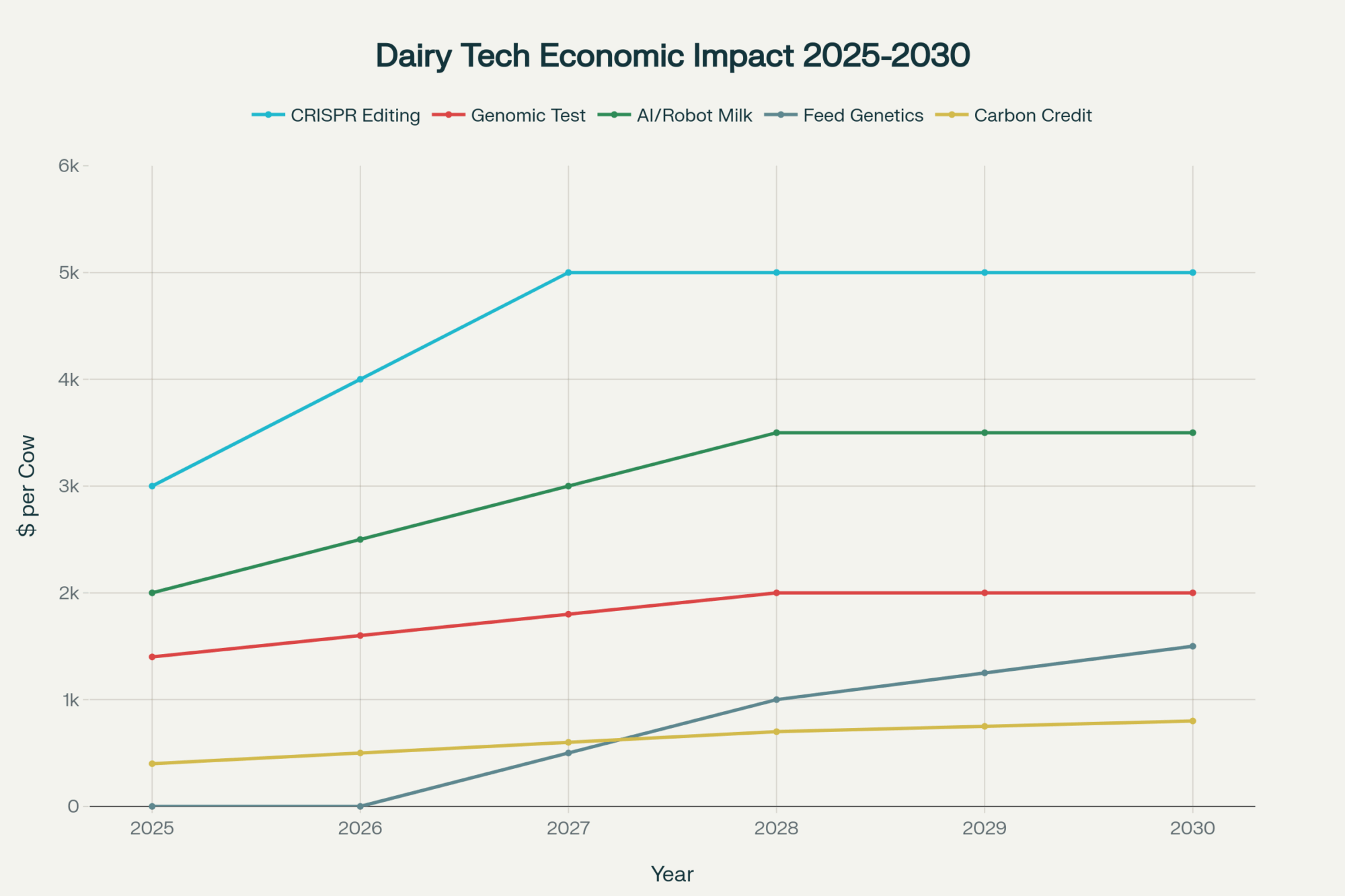
The bottom line: We’re talking $3,000-$5,000 extra revenue per cow annually if you can access these specialty markets. That’s not pocket change.
2. Breeding Healthier Animals Through Smart Genetics
When it’s happening: 2025-2028.
Here’s something every dairy farmer knows that sick cows don’t pay bills. The good news? Genomic selection is getting scary good at predicting which animals will stay healthy. We’re seeing genetic markers for lameness resistance and mastitis immunity that actually work.
Digital dermatitis—that foot disease that drives everyone crazy—has heritability rates of 0.21 to 0.25. Translation: you can breed your way out of this health problem.
Real numbers that matter:
- Each avoided mastitis case saves you $444.
- Preventing lameness stops those brutal 20% milk production drops.
- Some farms are seeing 300% better mastitis resistance.
Real farm example: Dave Kammel in Wisconsin tells it straight—his two robots save him three hours of daily labor while his cows stay healthier. The Casey Family Farm in Ireland? They cut labor needs by 25% with robotic systems.
3. AI That Actually Thinks Like a Dairy Cattle Breeder
When it’s happening: 2025-2028.
Forget the sci-fi nonsense. Today’s AI systems can crunch over 200 genetic markers while watching your cows 24/7 through sensors. Robotic milking systems aren’t just milking machines anymore—they’re learning each cow’s preferences and optimizing everything in real-time.
What you get:
- 70% reduction in milking labor costs (yes, really)
- Minimum 15% higher milk yields
- Disease detection up to a full week before you would have notice symptoms.
One UK study showed AI catching mastitis early enough to save €1,500 per case. That’s the kind of technology that pays for itself.
The Medium-Term Game Changers (2026-2030)
4. Know Your Calf’s Future at Birth
When it’s happening: 2026-2028.
Here’s where it gets interesting. Genomic testing on newborn calves gives you 65-80% reliability on their lifetime breeding values. Compare that to the 20-25% you get from just looking at the parents, and you’ll understand why this matters.
The Council on Dairy Cattle Breeding tracks 49 different traits and can estimate lifetime profit through their Net Merit Index. A calf with a $300 breeding value will make you $450 more over her lifetime than one with -$150 value.
The math is simple: Stop feeding $1,400-$2,000 worth of feed to animals that’ll never pay it back. Test early, cull smart, and put your money on winners.
5. Finally Fixing Fertility Issues
When it’s happening: 2027-2030.
Fertility’s been the black sheep of dairy genetics for years—low heritability, lacking in reliable data points and very hard to improve. But combining advanced reproductive tech, along with genomic selection, is changing the game.
A 5-day improvement in calving interval saves a 1,000-cow dairy $17,500 annually. Bump those 21-day pregnancy rates from 12% to 33%, and you’re cutting calving intervals by 63 days. Each new pregnancy is worth $100-$500, depending on who you ask.
6. Feed Efficiency That Actually Matters
When it’s happening: 2027-2030.
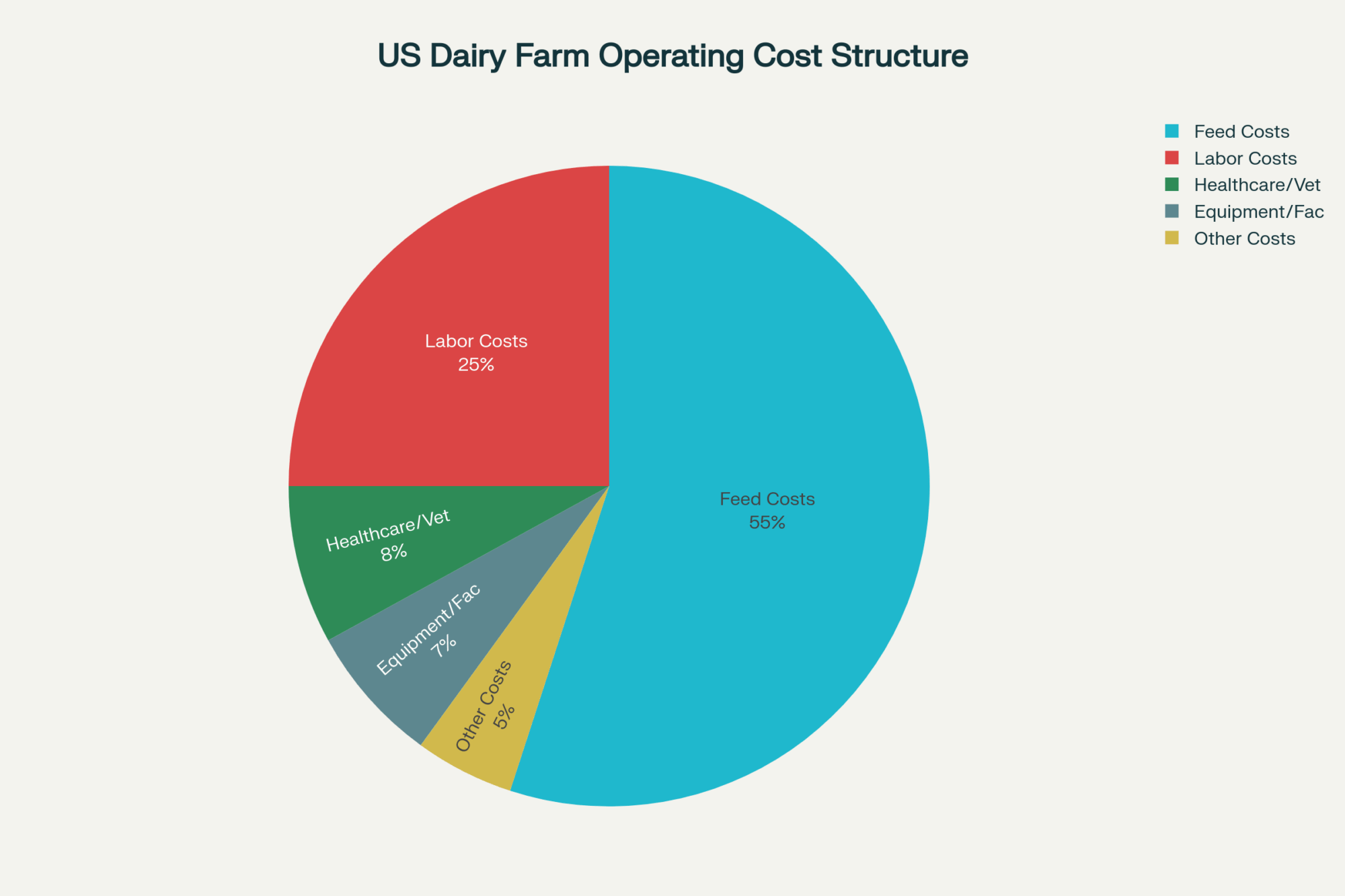
Feed costs eat up 50-60% of milking herd variable expenses. Even small improvements can help—big time. A modest 5-15% improvement in feed conversion efficiency means $87,500-$393,750 in annual savings for a 1,000-cow operation.
And here’s the kicker: new feed additives like Rumin8’s product are showing 95.2% methane reductions without hurting milk production. Massachusetts dairy farms using anaerobic digesters are offsetting over 2 million pounds of CO2 annually while powering 1,600 homes. Some EU farms are earning €12,000 annually in carbon credit subsidies.
From Science to Sales Pitch
STgenetics’ Juan Moreno has this figured out. Instead of talking about complex genomic algorithms, he talks dollars and cents. A $30 genomic test saves $1,400 by helping you avoid raising the wrong heifer. His EcoFeed technology saves 10% on feed costs—and feed represents 55% of your animal operating expenses.
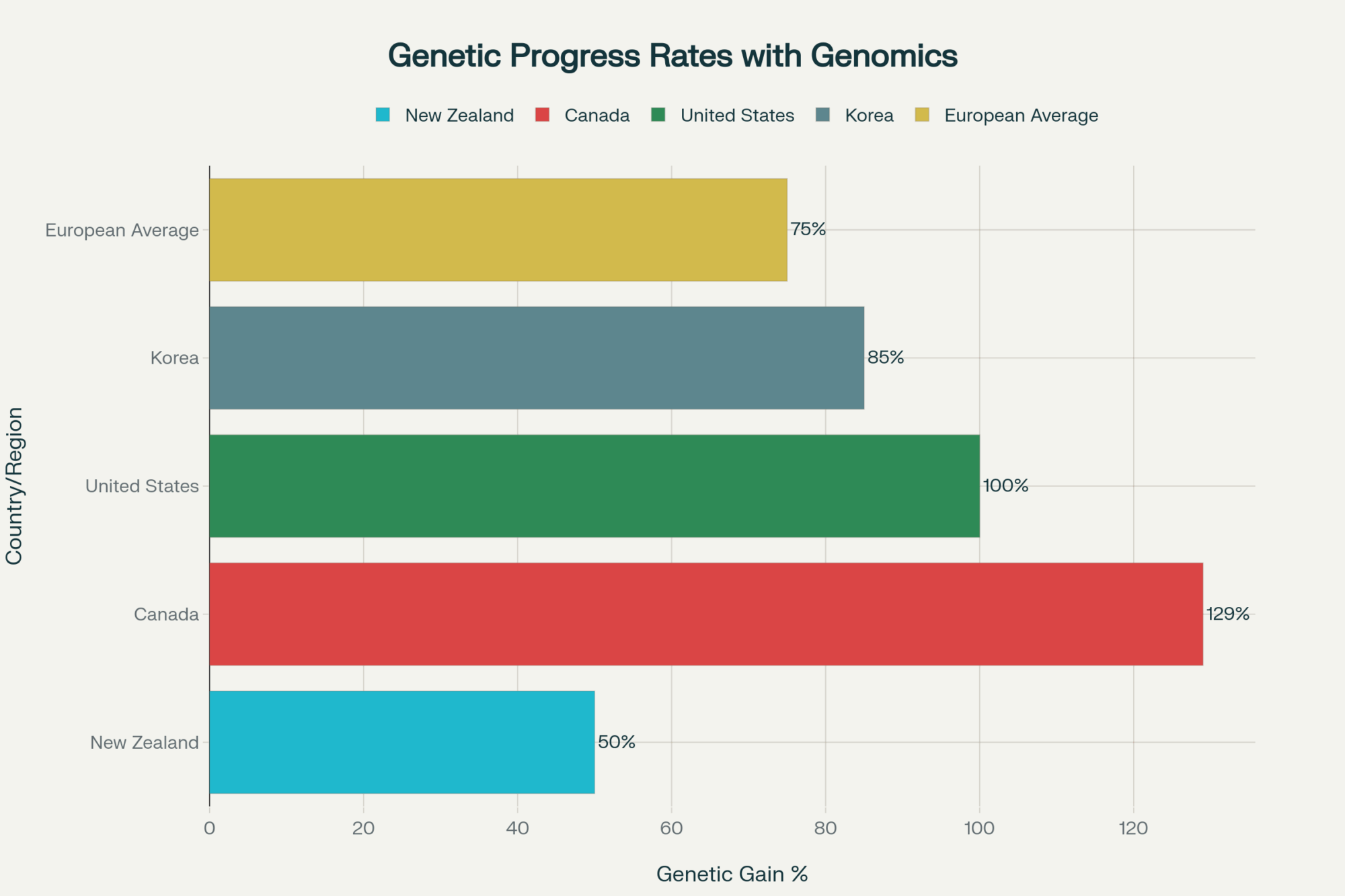
Moreno doesn’t try to sell one-size-fits-all solutions either. He knows a grass-based farm in New Zealand has different priorities than a confinement operation in Wisconsin.
Making “Net Zero” Actually Make Sense
Stop thinking of environmental goals as costs. Start thinking of them as profit centers. Including that feed conversion efficiency improvement cuts a dairy farm’s methane emissions? Along with reducing your biggest expense. Plus, water conservation that looks good to regulators. It’s also cutting your water bill by up to 30%.
The USDA’s throwing $7.7 billion at climate-smart practices. Processors are starting to pay premiums for verified farm sustainability data. Smart farmers are figuring out how to get paid for doing what they should be doing anyway.
Real-World Results You Can Actually Believe
Korean Robotic Success
Korean dairy farms using robotic systems have experienced 2.44-2.88 kg more milk per cow daily, plus 0.10-0.11 more calves per cow annually. Labor savings were huge, especially for smaller family operations.
Welsh Genomic Testing Win
Welsh farmers genomically testing heifers have found that 23% would’ve been kept using old methods but shouldn’t have been retained. Net benefit: £19.39 per heifer after testing costs. Over a whole herd and multiple generations, that compounds fast.

Your Implementation Roadmap
| Phase | Actions/Technologies | Expected Benefit | Timeline |
|---|---|---|---|
| Immediate (2025-2026) | Genomic testing on heifers; Health trait selection; Sensor data capture | Optimize replacements, disease resistance, operational monitoring | Short-term |
| Medium-Term (2026-2028) | Robotics, feed efficiency genetics, advanced reproductive tech | Labor cuts, feed cost savings, more productive cows | 1-3 years |
| Long-Term (2028-2030) | Full precision farming, carbon credits, premium marketing | Sustainably higher margins, compliance, market access | 3-5 years |
Start Now (2025-2026)
- Genomic testing on replacement heifers—no excuses
- Include health trait selection in your breeding program.
- Use basic sensors for monitoring cow and heifer performance, behavior and health.
Next Phase (2026-2028)
- Install robotic systems if the dollar numbers work for your operation.
- Include feed conversion efficiency genetics in your selection criteria.
- Advance reproductive performance and management by using genomic data.
Long-term Play (2028-2030)
- Implement full precision farming integration.
- Enrol in carbon credit programs and obtain environmental benefits.
- Be able to benefit from premium product marketing based on your genetic improvements.
The Bottom Line
Look, nobody’s saying this transformation will be easy. But the dairy farms that figure out how to use these tools first are going to have massive advantages. Lower costs, higher production, access to premium markets—the whole package.
The key is remembering that this isn’t about being the most high-tech farm in the county. It’s about being the most profitable. These innovations aren’t just technological advancement—they’re direct paths to better margins, smoother operations, and farms that’ll still be thriving when your kids take over.
Early adopters always win in agriculture. The question isn’t whether these changes are coming—they’re already here. The question is whether you’ll lead the charge or spend the next decade playing catch-up – or even, sadly, having to exit the industry.
Smart money says it’s time to start planning your move.
KEY TAKEAWAYS
- Challenge the “Volume Over Value” Orthodoxy: While traditional breeding focuses on milk volume, precision genetic engineering for milk composition delivers $3,000-$5,000 additional annual revenue per cow through premium A2 markets and enhanced casein content (17-35% increases), with processing efficiency improvements that benefit component-based pricing structures—proving composition drives profitability more than volume.
- Implement AI-Powered Precision to Cut Labor 70%: Robotic milking systems equipped with predictive analytics reduce labor costs by up to 70% while increasing milk yields minimum 15% (22 to 25 liters daily per cow), with mastitis detection capabilities saving €1,500 per case through early intervention—addressing the critical labor shortage while improving herd health and production efficiency.
- Leverage Genomic Testing for Strategic Culling Decisions: Early-life genomic testing provides 65-70% breeding value reliability versus 20-25% from parent averages, enabling identification of low-genetic-merit animals before investing $1,400-$2,000 in feed costs—a calf with $300 Net Merit breeding value generates $450 more lifetime profit than one with -$150 value across three lactations.
- Optimize Total Farm Feed Efficiency for Maximum Cost Savings: Genetic selection for feed conversion efficiency delivers $87,500-$393,750 annual savings per 1,000-cow operation through modest 5-15% improvements, directly addressing feed costs that represent 50-60% of variable milking herd expenses while positioning farms for carbon credit revenue streams worth up to €12,000 annually through methane reduction initiatives.
- Adopt Global Success Models Over Traditional Approaches: New Zealand farms achieve genetic progress equivalent to eight years of conventional breeding through female genomic selection combined with sex-selected semen, while Korean operations report 2.44-2.88 kg daily production increases and 0.10-0.11 more calves per cow annually—proving integrated precision breeding systems deliver measurable commercial results that transform farm economics.
EXECUTIVE SUMMARY
The dairy industry’s obsession with milk volume over composition is costing farms thousands while precision genetic engineering and AI-powered breeding systems generate $87,500-$393,750 annual savings per 1,000-cow operation. Revolutionary CRISPR-Cas9 technology will eliminate milk allergens while through genetic selection increasing casein content by 17-35%, opening premium markets worth 15-25% above commodity prices—translating to $3,000-$5,000 additional revenue per cow annually. Meanwhile, genomic testing at birth provides 65-80% breeding value reliability compared to just 20-25% from traditional parent averages, enabling early culling decisions that save $1,400-$2,000 in feed costs per low-merit heifer. AI-powered robotic milking systems slash labor costs by up to 70% while boosting milk yields 15%, with early mastitis detection saving €1,500 per case through predictive analytics that identify disease up to a full week before symptoms appear. Many countries have demonstrated genetic progress equivalent to eight years of traditional breeding through strategic female genomic selection, feed intake and efficiency improvements that deliver immediate returns by reducing the largest variable cost and that numerous technologies work in commercial environments. It is all possible. Opportunity knocks for business oriented dairy farmers by incorporating precision genetics that transform complex science into measurable farm profits.
Complete references and supporting documentation are available upon request by contacting the editorial team at editor@thebullvine.com.
Learn More:
- The Genomic Game Plan: Are You Playing to Win or Just Playing? – This article provides a practical framework for turning genomic data into a concrete breeding strategy. It moves beyond theory to demonstrate how to create a custom genetic plan that directly targets your herd’s specific weaknesses and business goals.
- Dairy’s Tipping Point: Is Your Business Model Built for the Future or the Past? – Shifting focus from on-farm tech to market strategy, this piece challenges you to assess your entire business model against future economic pressures. It’s essential reading for ensuring your operation has the long-term strategic viability to capitalize on new technology.
- The Invisible Herd: How Digital Twins Are Revolutionizing Dairy Management – Taking the concept of AI a step further, this piece explores the next frontier: digital twins. It reveals how virtual models of your cows can simulate genetic and management outcomes, allowing you to de-risk major investments before you spend a dime.
 The Sunday Read Dairy Professionals Don’t Skip.
 The Sunday Read Dairy Professionals Don’t Skip.
Every week, thousands of producers, breeders, and industry insiders open Bullvine Weekly for genetics insights, market shifts, and profit strategies they won’t find anywhere else. One email. Five minutes. Smarter decisions all week.