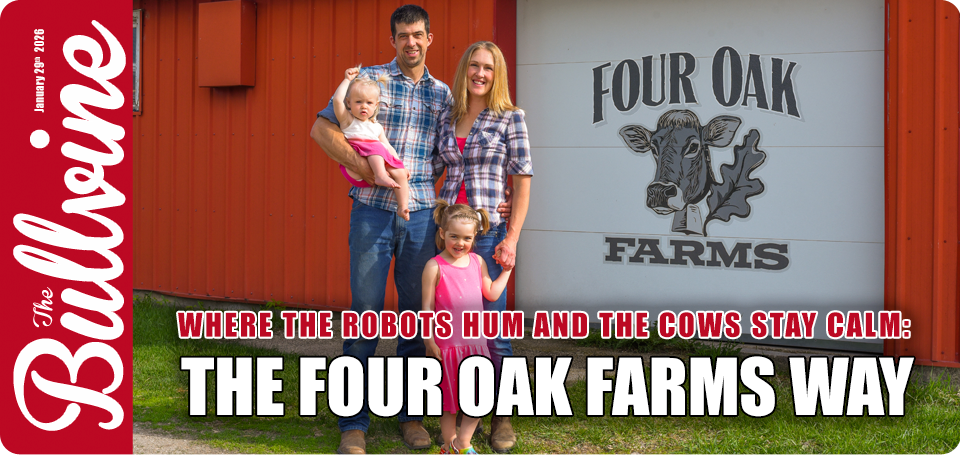





Think robots ruin cow comfort and family time? At Four Oak Farms, the robot hums, the Brown Swiss relax, and the kids still make bedtime.
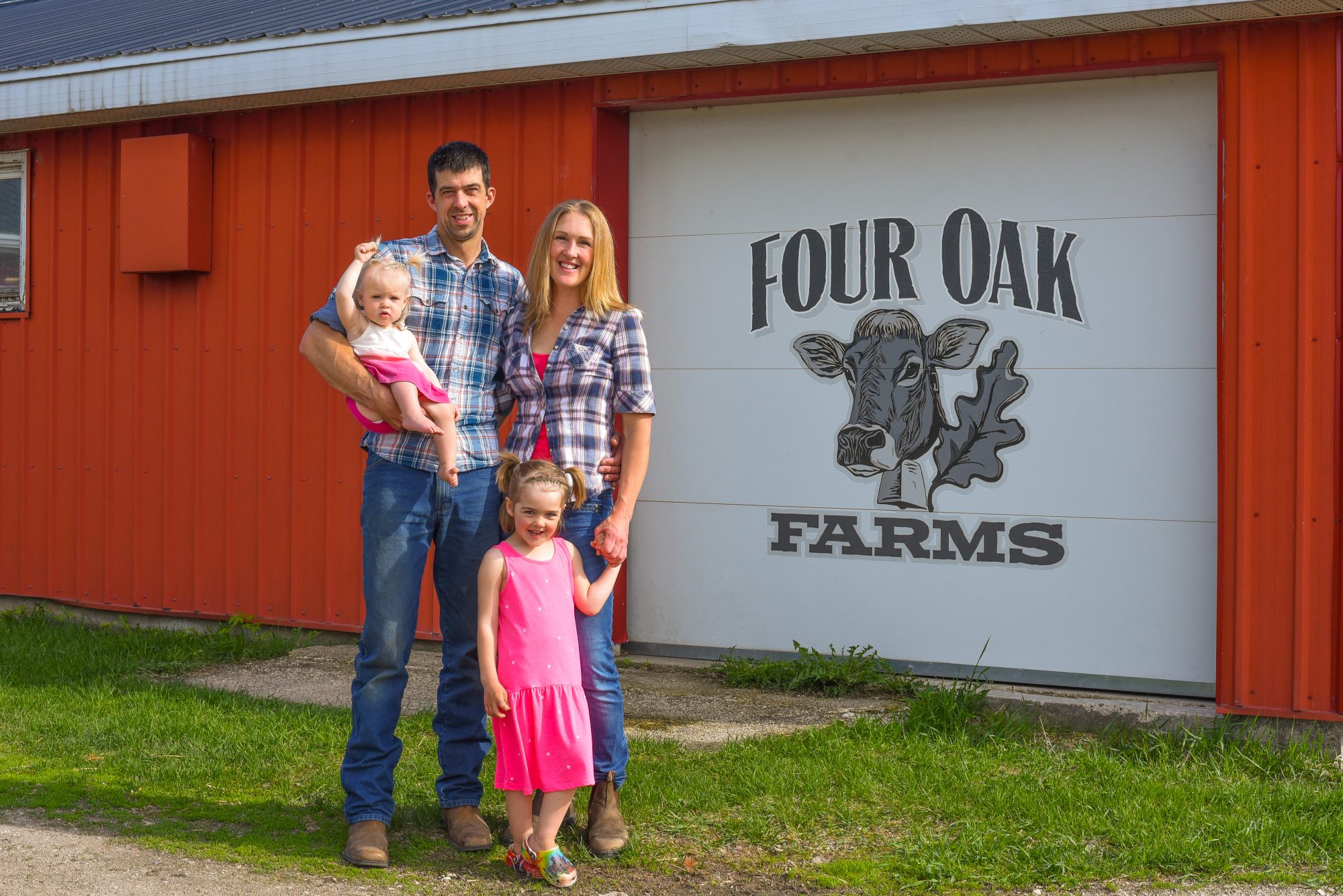
There’s a moment every dairy farmer knows — that split-second when you realize the next big decision might just change everything. For Marcus and Paige Dueck of Four Oak Farms, near Kleefeld, Manitoba, that moment came in July 2020 when Western Canada’s first Robomax mobile milking robot rolled into their old tie-stall barn.
They didn’t pop champagne or post about it online. They did what farm families do — took a deep breath and hoped to make it through the night. Paige remembers it clearly: “Oh, it was… it was overwhelming. It definitely didn’t feel like it gave us more freedom at first.”
Five years later, it’s clear they were right to persevere. Milk production is up more than 40 percent. Work-life balance is better than ever. But maybe the biggest win isn’t about litres in the tank — it’s about how one Manitoba family turned a leap of faith into a new rhythm of life with their herd.
Betting Big on Different
Back in 2020, the Duecks were at a crossroads. Marcus recalls, “My parents were looking to slow down their involvement in the barn, we had a new baby, and we had to make a decision. Expanding just wasn’t a financially feasible option.”
Enter Robomax — a Quebec-built, rail-mounted milking unit that travels stall to stall like a robotic milker on rails. It wasn’t just new to Manitoba; it was new to western Canada, period. Installation wasn’t easy. The instructions were in French, travel restrictions kept the factory techs at home, and Marcus and Paige ended up becoming their own support team.
Paige laughs about it now. “It was like being dumped in a different country, and you just have to figure it out.” Over time, she adds, “We got to know its language and its needs, and how to schedule our life around it.”
Now, producers across the Prairies are asking questions. With labor costs climbing and retrofit projects easier to justify than new barns, automation like this is proving its worth. According to summaries from World Dairy Expo discussions and recent DHI benchmarking data, mid-sized dairies integrating robotics into existing setups are seeing steady efficiency gains without expanding herd size. Four Oak was simply one of the first to prove that it works.
The Brown Swiss Advantage
Walk into Four Oak today, and the calm hits you first. No clatter, no shouting — just the steady hum of the robot gliding down the rail. And the cows? Big, easygoing Brown Swiss.
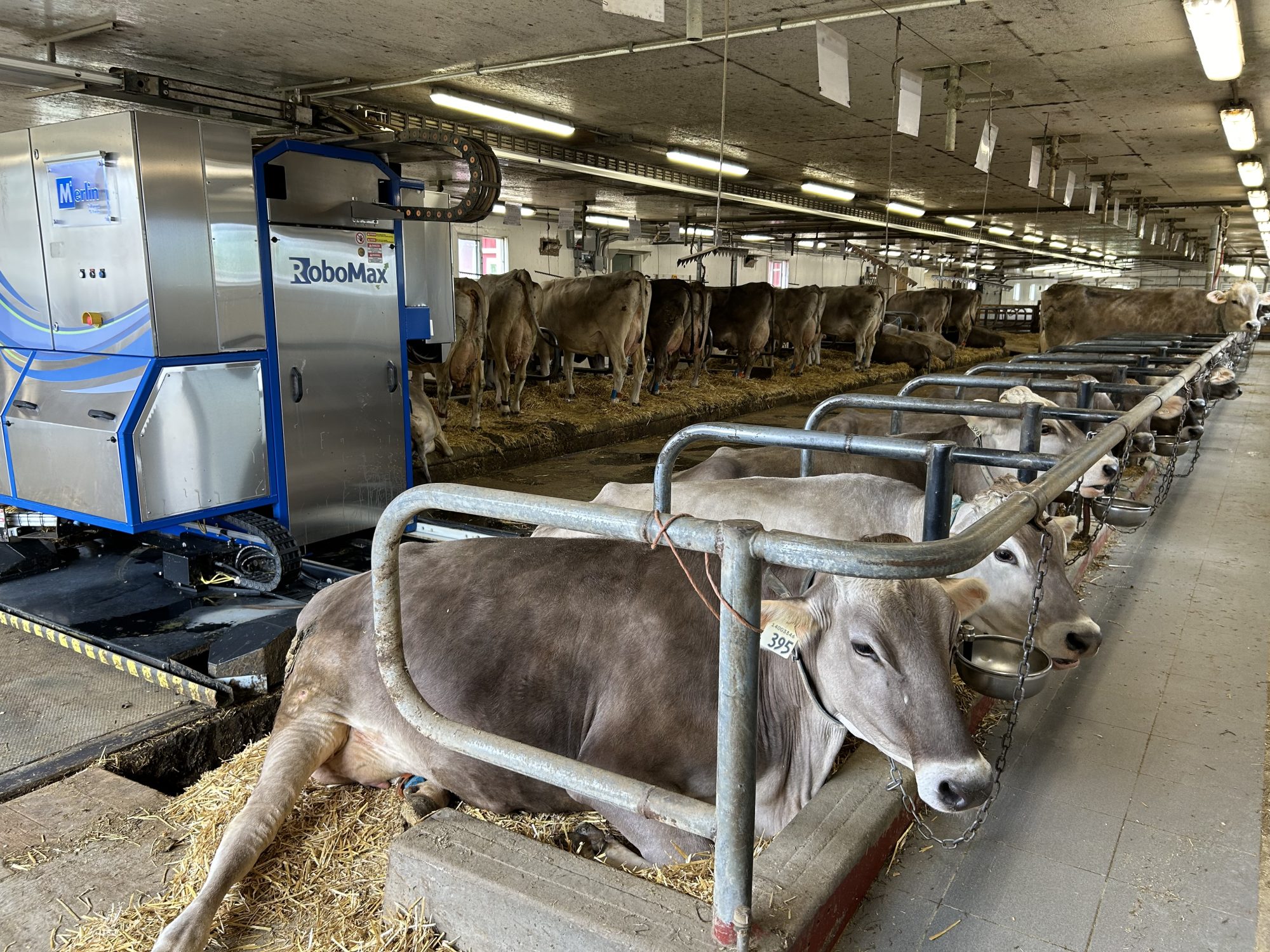
“We started switching out the Holsteins after my mom fell in love with the Swiss at a show,” Marcus says. “She thought they were pretty to look at and incredibly docile.”
Many mistake the Swiss for Jerseys, Paige adds. “They’re similar in color, but they’re much larger and have this stubborn, docile demeanor. They fit the robot perfectly — calm, consistent, and not easily rattled.”
Beyond the personality perks, the Swiss deliver where it counts — on component pricing. As butterfat and protein premiums take a bigger role in paycheques, switching breeds can make more financial sense than adding cows. “You don’t need more cows,” Marcus says. “You just need the right cows — ones that make milk that pays better.”
Recent Hoard’s Dairyman herd trend data reflects their experience: Brown Swiss and crossbreds are making noticeable gains in robotic herds due to temperament, longevity, and stronger milk solids.
When the Data Meets the Gut
Farmers have always managed cows by instinct — robotics simply made that instinct measurable. At Four Oak, every cow’s daily metrics are as familiar as her name. “The robot tells me if a quarter’s off before my eyes ever could,” Paige says. “Now we catch udder issues before they turn into lost milk.”
After the system stabilized, the Duecks shifted from twice-a-day to three-times-a-day milking. Combined with tailored feeding and better cow grouping, production surged. “It’s never one big change,” Marcus says. “It’s a thousand little ones.”
Across North America, farmers are realizing the same truth: robotics don’t replace good stockmanship — they prove it. The dairies succeeding today are using automation data to back up their intuition, not override it.
Turning Spin-Offs into Strengths
For Marcus and Paige, diversification isn’t about chasing trends—it’s about building resilience. “In dairy, you can’t have all your eggs, or your milk, in one basket anymore,” Marcus says.
That’s how Four Oak Ag Solutions was born. “I helped a friend with his manure plan, then another one called. Pretty soon, it became its own business,” Marcus explains. “There’s real value in data — not just for milk, but for nutrient management too.”
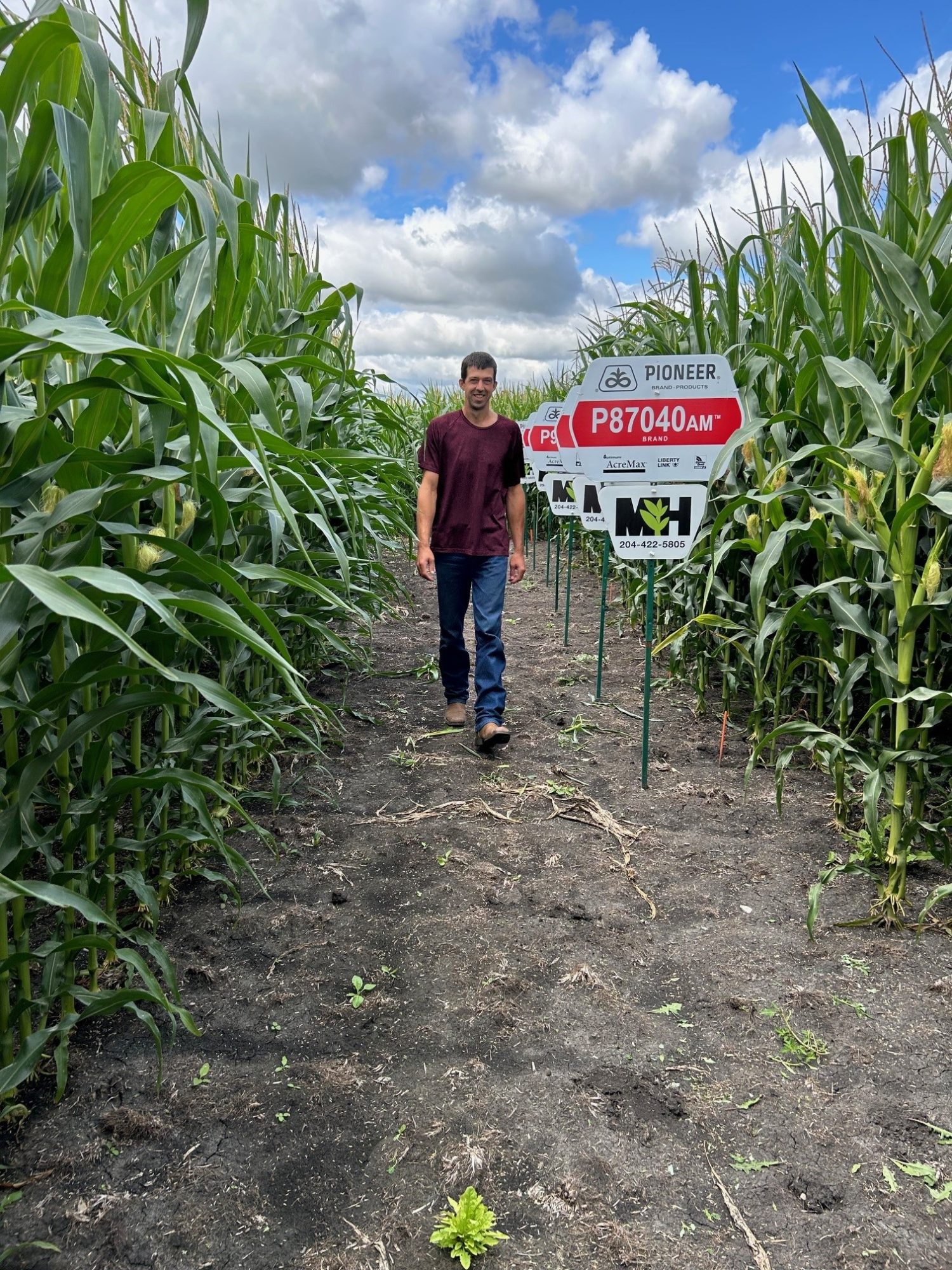
Then came Paige’s idea — using her horse-world connections to expand their hay sales. “I told Marcus the horse barns would value small, consistent bales,” she laughs. “Now we’re known for our hay.”
A custom German baler and bale dryer later, their hay business became a dependable income stream. “It’s another layer of security,” Marcus adds. “When other crop conditions are tough, hay helps keep things steady.”
You don’t have to look far to see similar models. From Ontario to Pennsylvania, dairies are using side ventures such as hay, compost, and on-farm energy to smooth out market volatility.
Marriage, Mindset, and Momentum
What stands out about Marcus and Paige isn’t just their numbers — it’s how they run their farm together. “We’ve got lanes,” Paige explains. “He does crops and consulting; I handle cows and admin. We don’t argue much because we trust each other’s work.”
Marcus nods. “She’s great with people. I’m better with spreadsheets. Between us, it works.”
That partnership earned them Manitoba’s 2024 Outstanding Young Farmers title. But what they value most is what came after. “The application process forced us to take a hard look at our operation,” Marcus says. “We realized we’d outgrown some old systems. We changed accountants, banks — the whole picture.”
Paige adds, “We see a lot of farms chasing size, not sanity. For us, it’s about balance. You can scale without losing peace.”
It’s a message that rings true across the dairy world today — profitability built on purpose. As margins tighten, more producers are rediscovering what matters most: efficient cows, engaged families, and systems that support both.
The Future Looks Familiar
Ask the Duecks what’s next, and they won’t talk about expansions or robots. They’ll talk about consistency. “Supply management keeps us stable,” Marcus says, “but excellence — that’s still a choice you make every day.”
Paige nods. “We want to stay close to what we love — the kids, the cows, and a farm that gives us time for both.”
Out in the barn, the robot hums past another Brown Swiss, rhythmic and unhurried. The air smells of feed and peace. This is the sound of balance — progress that feels earned, not automated.
Because at Four Oak Farms, technology didn’t replace the heart of dairying. It simply gave it a clearer rhythm.
Key Takeaways:
- Tie-stall robotics is real — Four Oaks’ rail-mounted Robomax works without a barn rebuild
- 40% more milk, zero herd growth — gains came from 3x milking frequency and cow-level data, not more cows
- Breed choice matters for automation ROI — Brown Swiss temperament and component premiums outperform Holsteins in robotic setups
- Diversification is margin insurance — hay sales and consulting buffer Four Oak against milk-price swings
- Year one is survival; year five is transformation — the Duecks went from overwhelmed to Manitoba’s Outstanding Young Farmers
Continue the Story
- Lovholm Holsteins: The Only Farm to Breed 2 World Dairy Expo Holstein Champions Milks 72 Cows in Tie-Stalls – The Lovichs in Saskatchewan walked a similar path to the Duecks, finding their own “freedom to farm” through a focus on individual cow care. Their story proves the point that profitability and success are truly about passion, not just size.
- The Robotic Milker Hangover: The Hard Truths About Automation Your Dealer Won’t Tell You – This deep dive into robotic transitions helps us understand the world the Duecks were navigating during that first overwhelming year. It explains the industry forces and management shifts required to turn automated hums into a rhythmic, sustainable way of life.
- The Family Farm Time Bomb: Why 83% of Dairy Operations Won’t Survive (And What Smart Producers Are Doing About It) – As Marcus and Paige prioritize “sanity over size,” this look at succession planning carries forward their vision for a balanced future. It shows why precision technology is the key to building a farm that the next generation actually wants to lead.
 The Sunday Read Dairy Professionals Don’t Skip.
 The Sunday Read Dairy Professionals Don’t Skip.
Every week, thousands of producers, breeders, and industry insiders open Bullvine Weekly for genetics insights, market shifts, and profit strategies they won’t find anywhere else. One email. Five minutes. Smarter decisions all week.