1960: Joe Simon paid 5x more for semen while neighbors bought cheap. 2024: Two Farnear bred bulls win Premier Sire at World Dairy Expo.
What strikes me about successful dairy breeding is… It’s never about luck—it’s about having a philosophy and sticking to it through thick and thin.
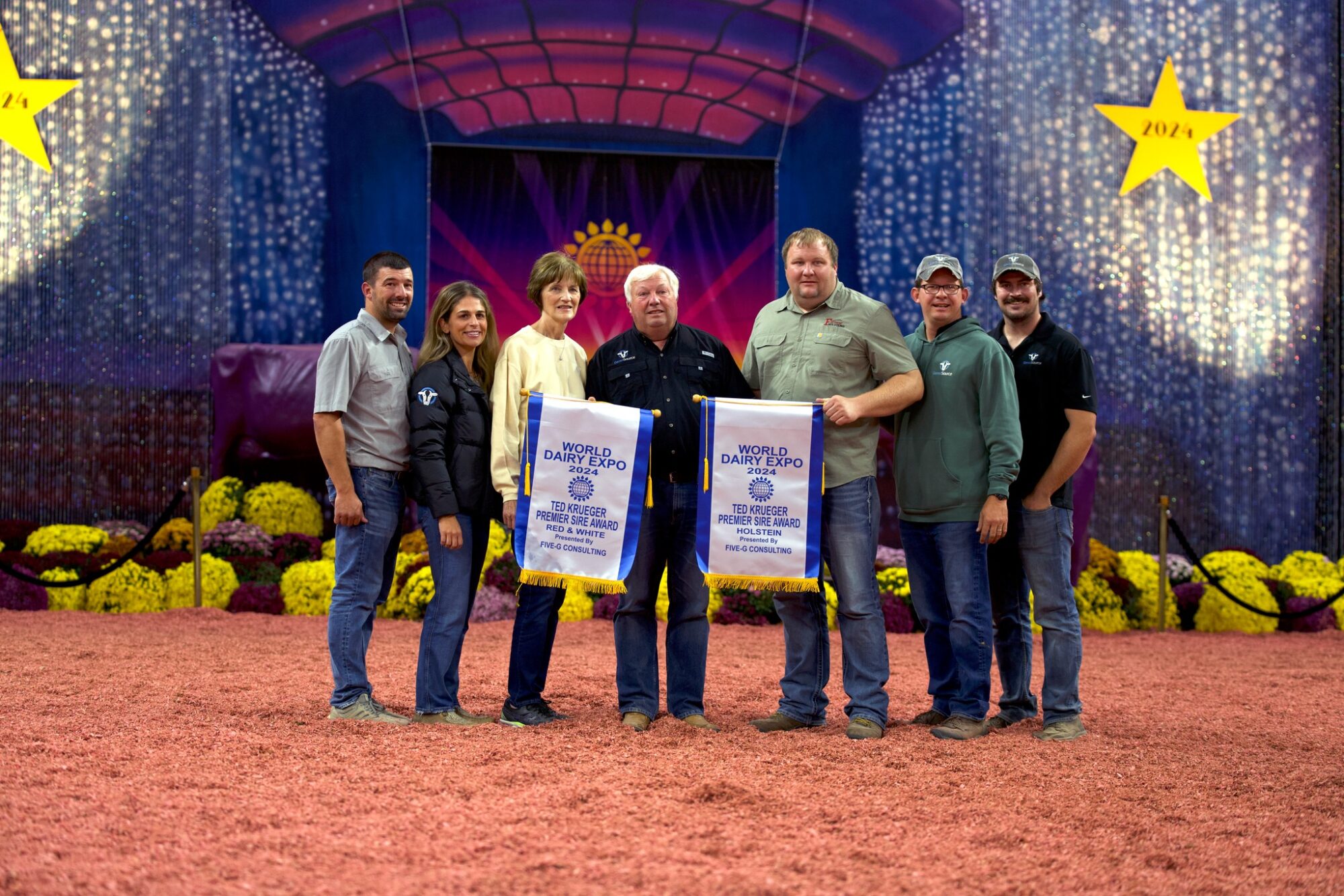
Take what happened at Farnear last October. Tom Simon is watching the Grand Champion presentations at World Dairy Expo when the announcement comes: two Premier Sires from one operation, Farnear Delta Lambda-ET leading Black Holsteins, Farnear Altitude Red-ET topping Red & Whites.
“Dad would’ve been so proud,” Tom tells me, his eyes scanning cows whose genetics trace back sixty years to those first strategic decisions that built everything they have today.
When Vision Looked Expensive
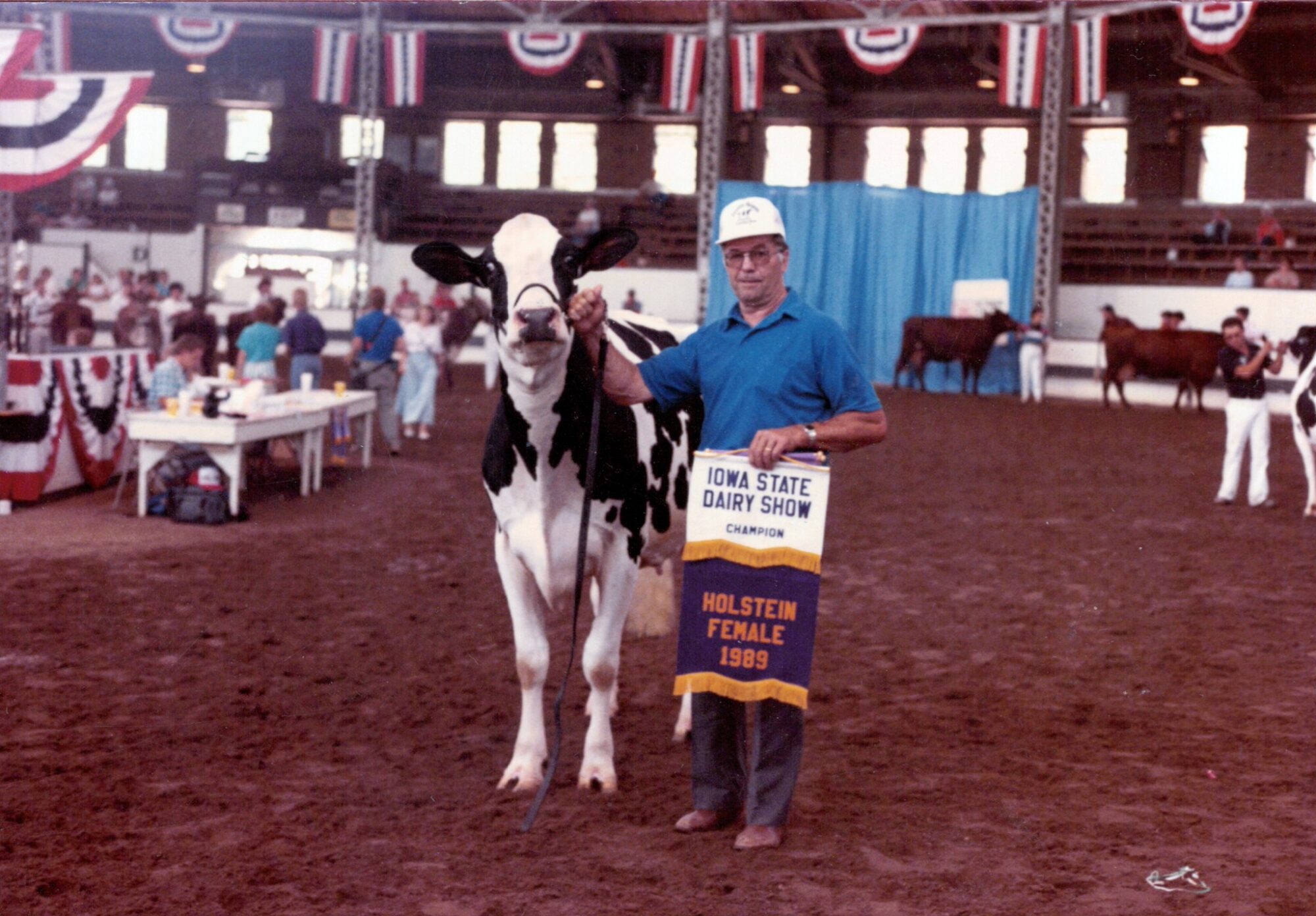
Here’s the thing about Joe Simon’s approach back in the ’60s… most Iowa farms were content running grade cattle, keeping genetics costs manageable. Joe made a completely different calculation.
He bought eight registered Holstein heifers and committed to using premium AI—semen that cost three to five times what neighbors were paying.
What strikes me about that decision is how it reflected a fundamental business principle that too many producers still miss today.
“Dad’s philosophy was simple,” Tom explains. “It costs the same to feed a bad cow as a good cow, so invest your time and effort wisely.”
You’re looking at daughters you won’t milk for two years, granddaughters you won’t evaluate for four. In dairy, where cash flow challenges can quickly sink operations, Joe was making calculated investments with decade-long payoffs.
But Joe understood something the industry is still learning: genetic excellence isn’t an expense—it’s the foundation on which everything else builds.
“I always remember my dad standing firm on his principles,” Tom shares. “He’d say the best investment he could make was in the best bulls available.”
The Proof Validated Everything
Enter Farnear Mark Lizzy Papoose, who earned Reserve All-American and Best Bred & Owned at the 1993 World Dairy Expo. This wasn’t just validation—it was complete vindication of strategic thinking.
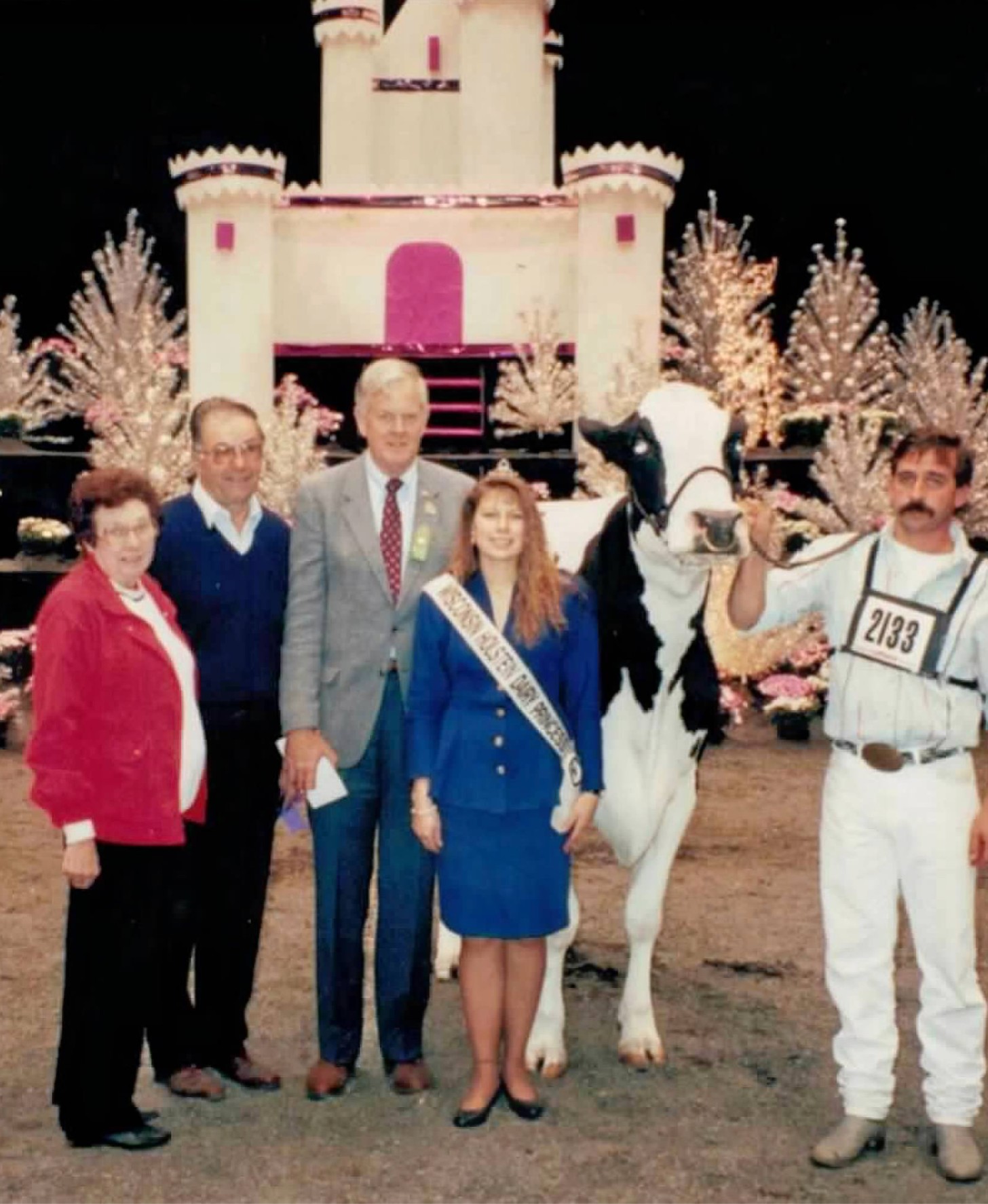
“Papoose proved Dad’s approach wasn’t just different—it was right,” Tom reflects. “She produced consistently, stayed sound, and passed those traits to her offspring. That’s when we really understood the power of investing in proven genetics.”
Most operations would’ve considered that level of success sufficient. Farnear expanded into embryo transfer instead, continuing to build on their genetic foundation.
Strategic Investment During Crisis
Fast forward to 2008. Markets imploding, feed corn hitting record prices—I recall corn reaching $8 in some markets—neighbors struggling to make ends meet. While others were cutting every possible cost, Farnear made another strategic move.
They invested in the Apple family.

“At the time, we believed investing in Apple would open new opportunities for our farm while staying true to Dad’s philosophy of using the best genetics available,” Tom explains. The confidence in that decision—made during one of dairy’s toughest periods—speaks to the strategic thinking that drives everything at Farnear.
What came next? Farnear Aria Adler-ET *RC EX-96, the 2021 All-American Production Cow. Sons and grandsons like Altitude and Audacious-Red. Daughters nominated All-American. The kind of genetic influence that shapes breed directions for generations.
What Genomics Changed About Everything
What happened next completely transformed our understanding of genetic progress.
Genomics didn’t just change the timeline—it validated the strategic approach Joe Simon had been advocating for decades. According to recent work by researchers at agricultural universities, genomic selection can increase genetic progress by up to 300%, with accuracy improving more rapidly than initially predicted in 2008.
“It’s fascinating how genomics aligned perfectly with our philosophy,” Tom explains. “We went from waiting years for daughter performance to selecting high-performance, well-balanced animals based on DNA at six months old. Talk about accelerating the return on genetic investment.”
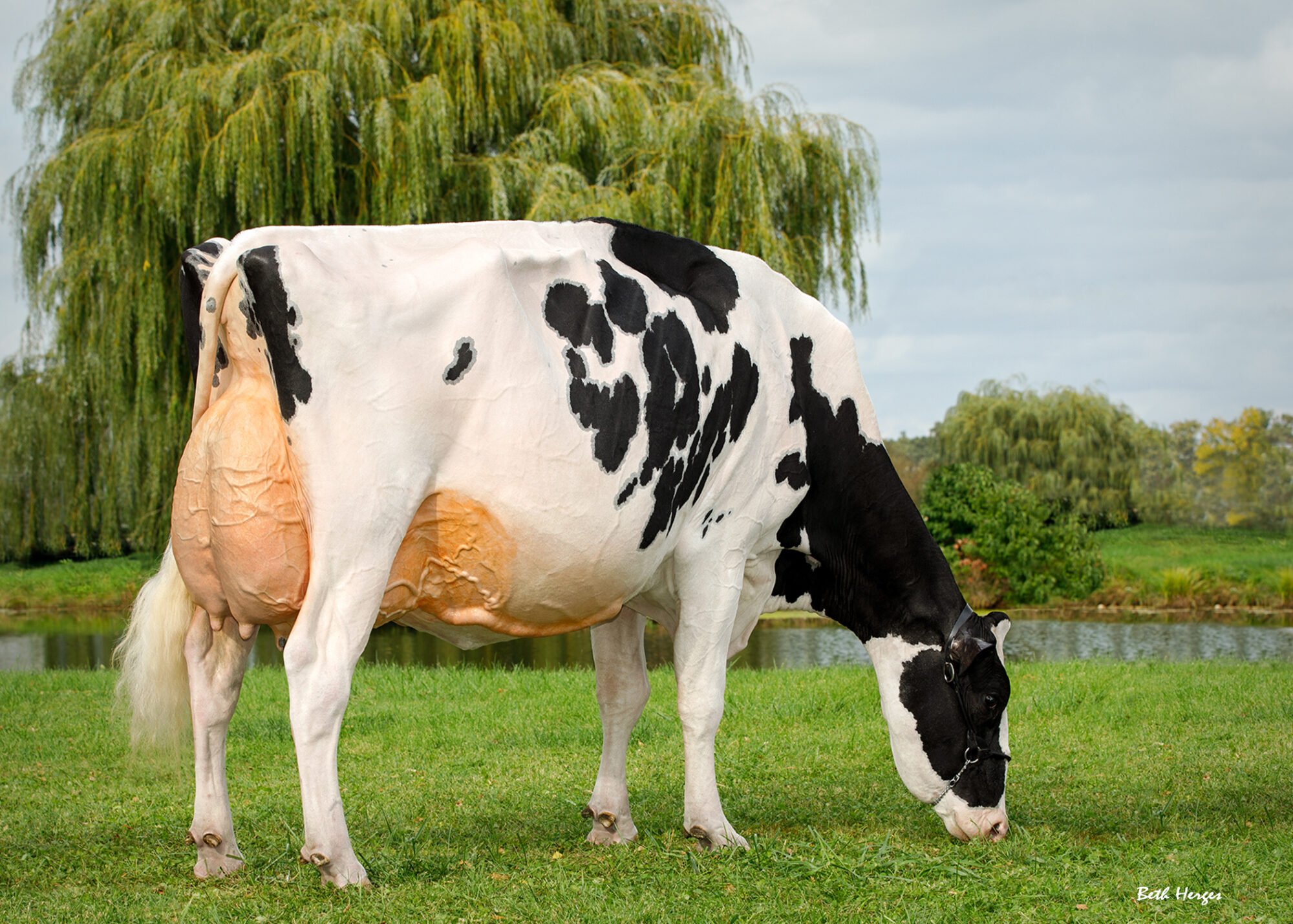
Delta Lambda exemplifies this evolution perfectly. When those genomic evaluations came back, they painted a clear picture: exceptional udder traits, type characteristics that appeal to commercial operations, production potential that satisfies demanding herds.
What’s particularly noteworthy is how commercial dairies initially embraced him. The show ring success followed—complete validation of breeding for function over flash.
“Lambda proved himself in working herds first, then started seeing success in the show ring,” Tom observes. “That’s exactly how we hoped it would work.”
When Technology Became the Judge
Here’s where things get really interesting… the 2021 robotic milking installation became an unplanned audit of their entire breeding philosophy.

Walking through that facility—the steady hum of precision machinery, robotic arms moving with surgical accuracy, sensors evaluating each cow—you realize how prescient their focus on functional traits has been.
“Robots demand perfection in ways human milkers can compensate for,” Tom explains. “Precise teat placement, ideal udder attachment, calm temperament, strong feet and legs—all the functional traits we’ve always emphasized are now operational necessities.”
This robotic revolution is accelerating everywhere. Current industry data indicate that adoption is reaching double digits across major dairy regions, with some European areas approaching 50%. What’s remarkable is how Farnear’s breeding decisions positioned them perfectly for this technological shift.
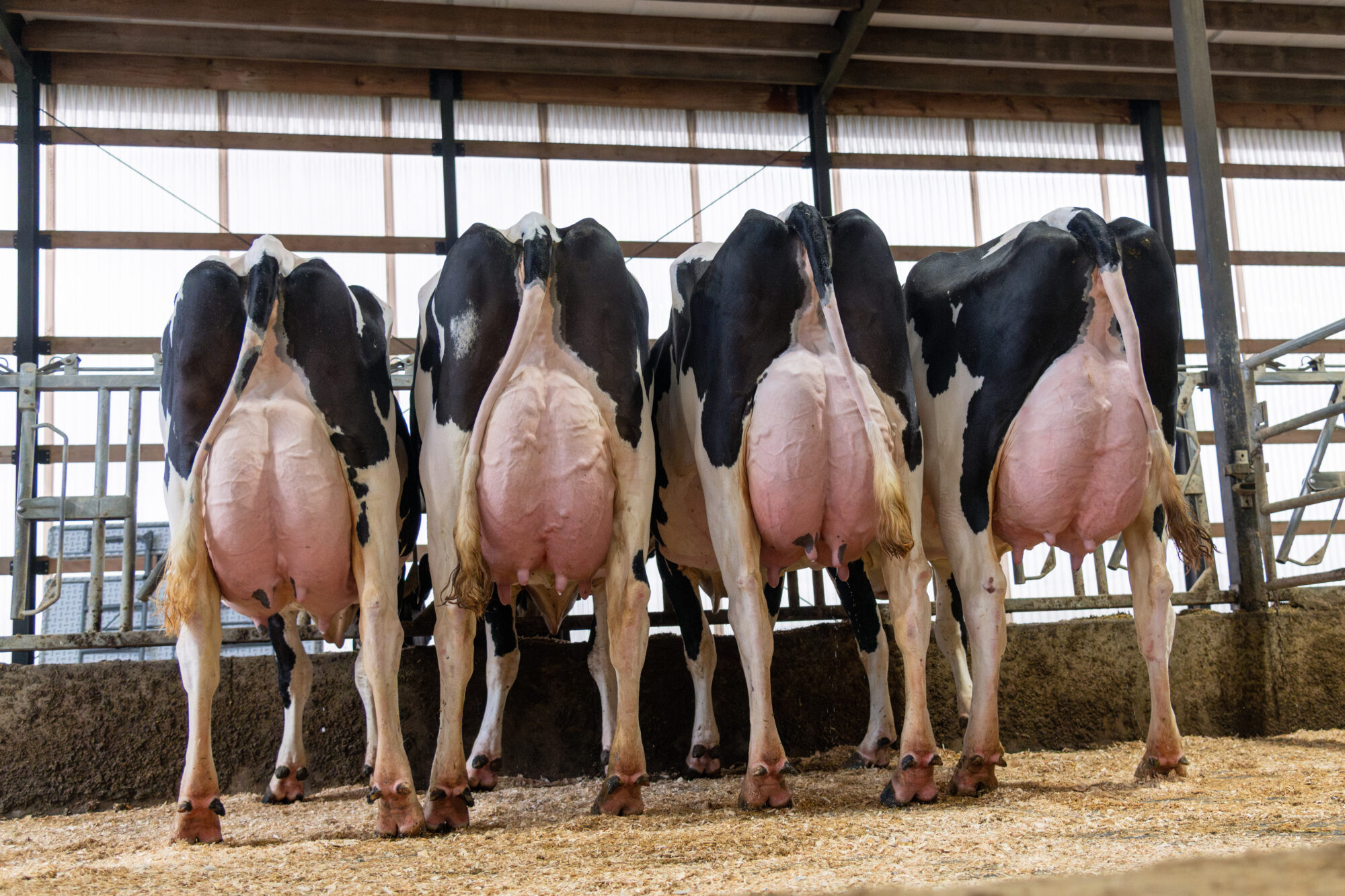
Udder depth, teat length, rear leg set—these aren’t just linear trait scores anymore. They’re operational requirements determining whether cows can function in modern dairy systems.
The Foundation: Proven Cow Families
But here’s what drives everything they do: behind every technological advancement lies the real foundation—cow families.
“Female lineages drive everything we do,” Tom emphasizes. “We study matriarchal lines like Apple, Lila Z, Delicious—families that consistently deliver what you want to milk generation after generation.”
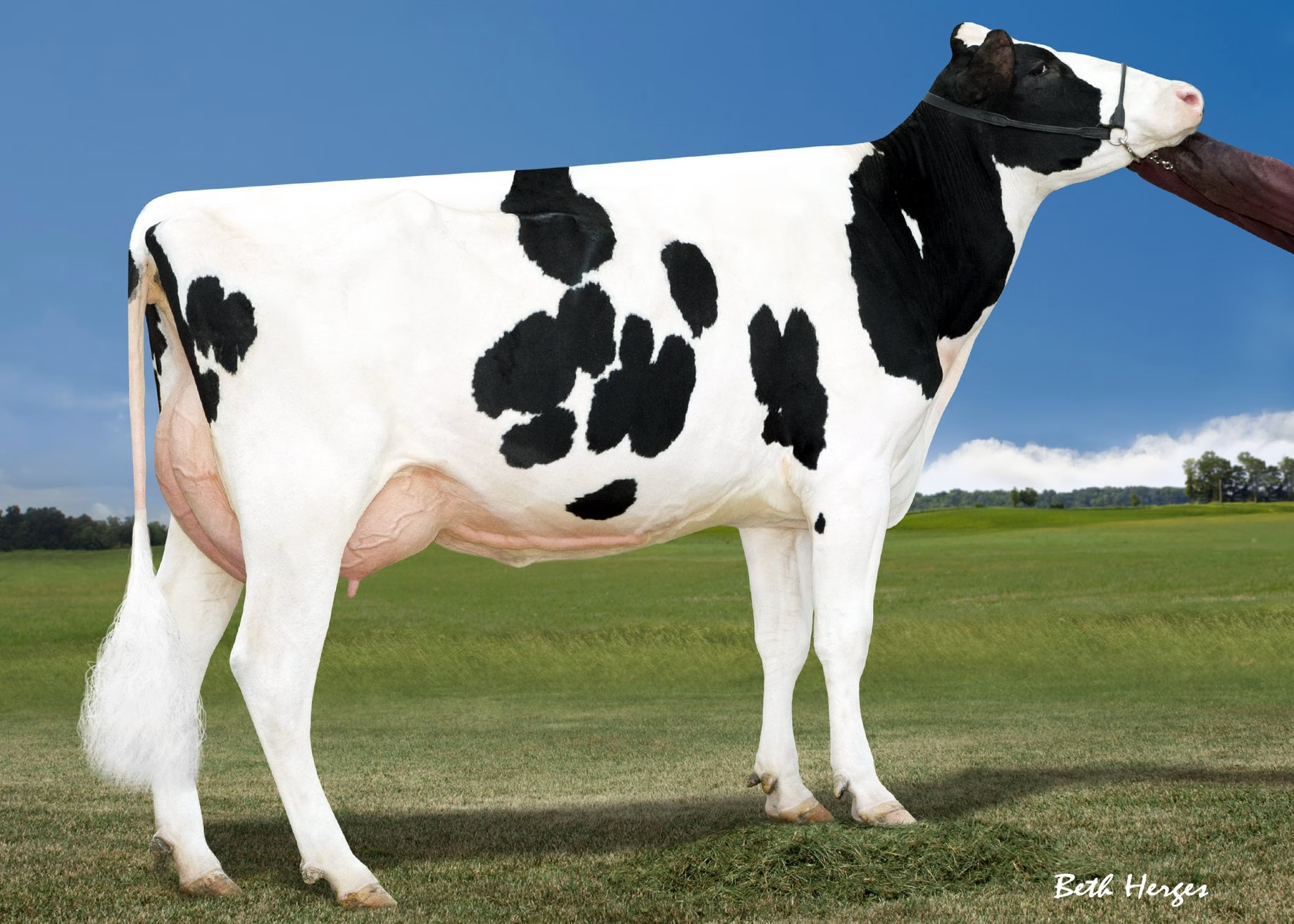
This systematic approach reflects deep strategic thinking. While some programs focus on individual trait improvements, Farnear invests in proven family consistency—a strategy that requires more patience but yields more sustainable results.
“We want solid production, sound linear traits, strong health records, and bulletproof sire stacks,” Tom explains their selection criteria. “Fertility and longevity matter, but we believe great cow families have more lasting impact than chasing individual traits.”
How Real Collaboration Works

The decision-making process operates as a true family partnership, and I mean that in the best possible way.
“We work together seamlessly on every major decision,” Tom explains. “I handle bull selection, while Mark and Adam focus on mating strategies. Different expertise, unified philosophy.”
This collaborative approach ensures every decision aligns with their core principles while benefiting from diverse perspectives and expertise.
“Three generations bringing different insights to the same goal—breeding cattle that excel in both production and type,” Tom notes. “That collaboration keeps us focused and effective.”
The Balance That Actually Matters
This is where you see Farnear’s real understanding of long-term success.
“We’ve always focused on breeding cattle that excel in both production and type,” Tom explains. “Dad believed in balance—cows that not only produce exceptional volumes but also have the structural correctness to stay sound and productive for years.”
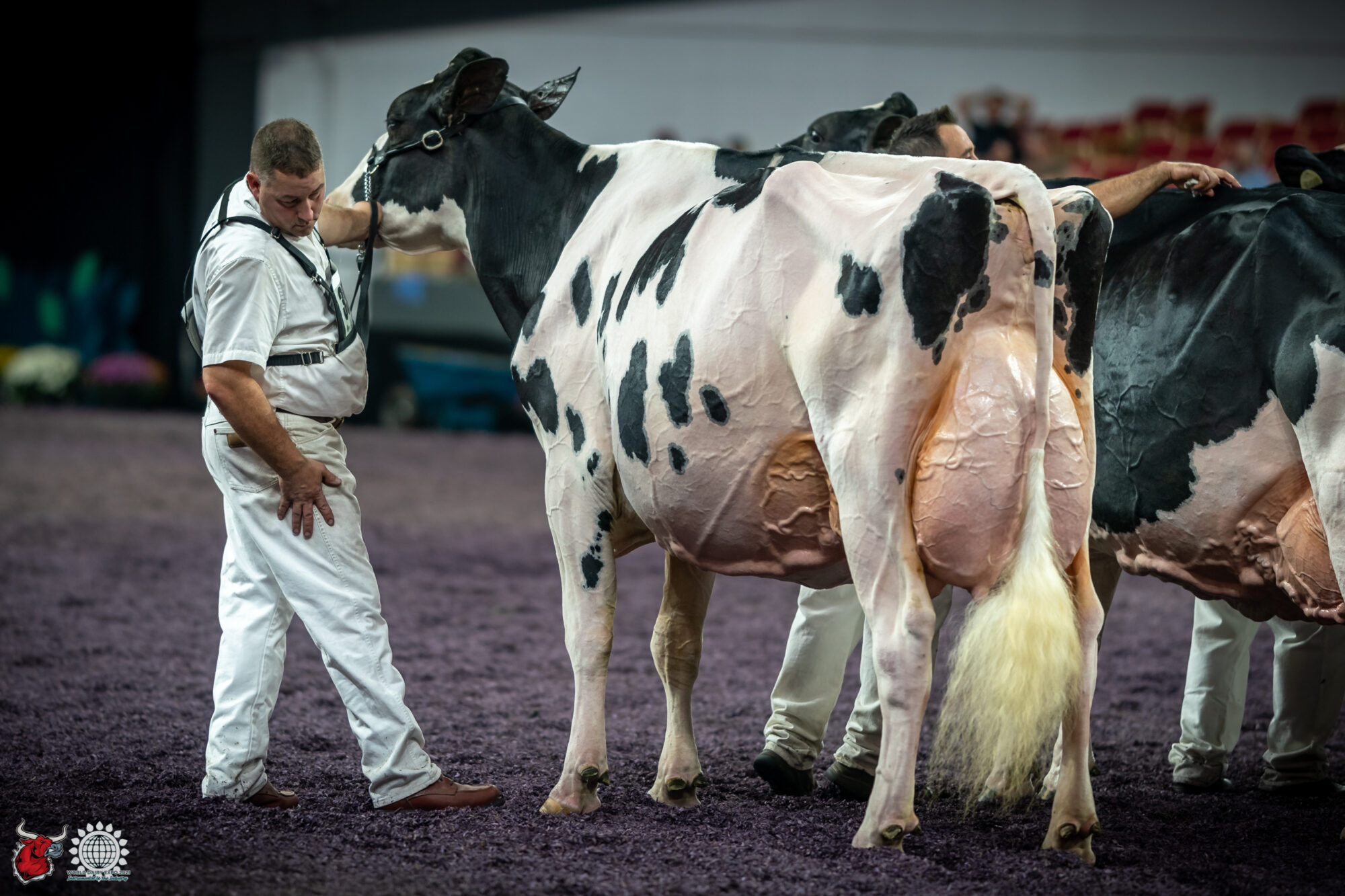
This balanced approach reflects Joe Simon’s fundamental wisdom about comprehensive genetic value. Current industry trends indicate an increasing emphasis on this balanced breeding approach as operations shift away from single-trait selection.
“Quality isn’t just about milk in the tank,” Tom notes, echoing his father’s philosophy. “It’s about structural soundness, longevity, and the ability to thrive in modern dairy systems. Remember—it costs the same to feed a bad cow as a good cow, so invest your resources wisely.”
But That’s Not the Whole Story
What really amplified their impact was joining GenoSource in 2014—pooling resources with seven other pioneering breeding families. (Read more: From Pasture to Powerhouse: The GenoSource Story)

“Individual operations have natural limitations,” Tom observes. “Strategic collaboration allows us to achieve genetic impact and market reach that none of us could manage independently.”
This partnership demonstrates confidence in their genetic program while expanding their ability to influence breed improvement across multiple markets and management systems.
Going Global (Whether You Plan to or Not)
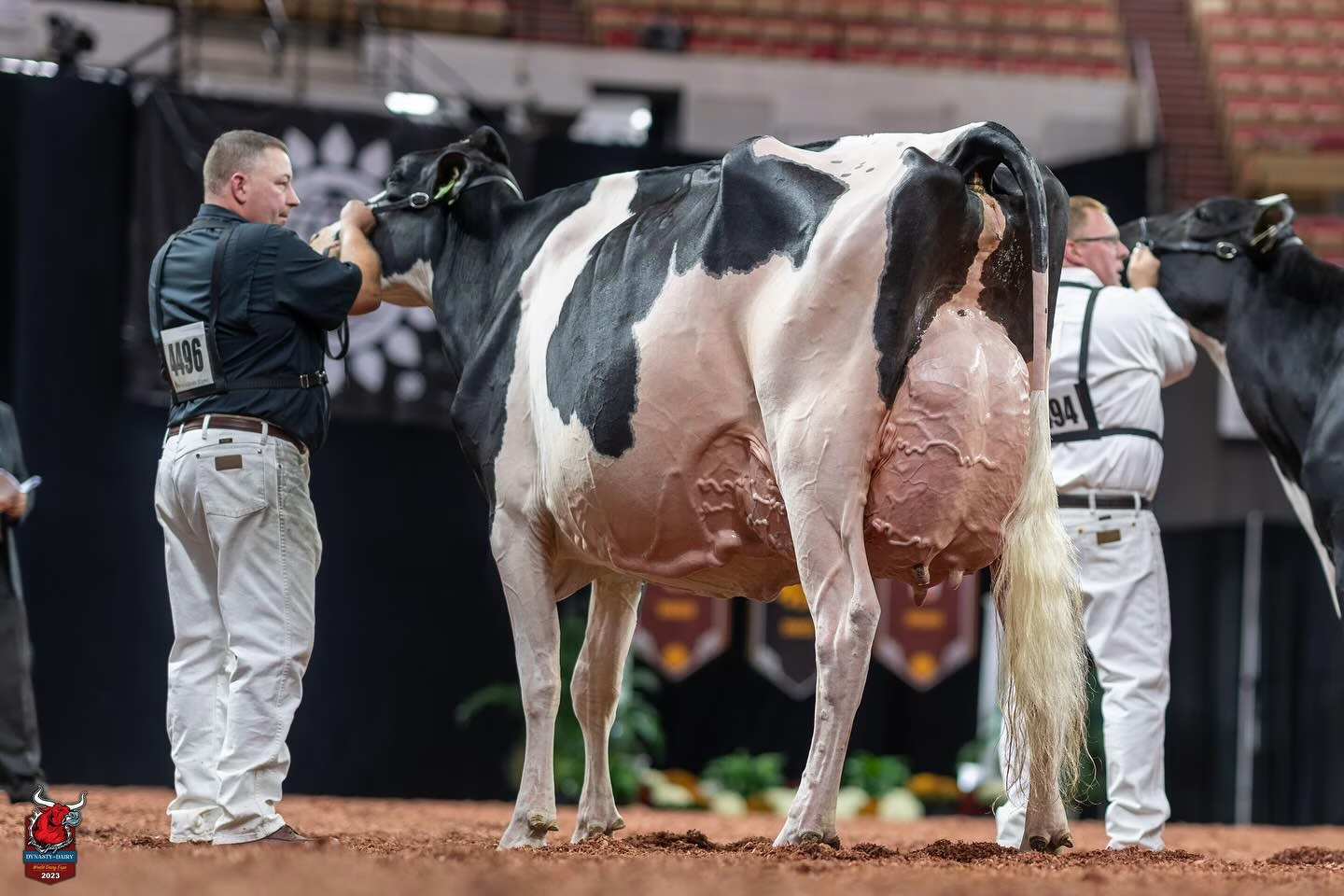
What’s particularly impressive is how Farnear’s influence now extends globally, with genetics performing successfully in diverse climates and management systems from high-input Midwest operations to extensive grazing systems overseas.
“Different regions need different genetic solutions,” Tom explains. “Heat tolerance for Southern operations, component production for cheese markets, longevity for grazing systems—we breed for versatility and performance across diverse conditions.”
Current market analysis from industry publications suggests continued emphasis on genetic efficiency over volume in 2025. Farnear’s balanced approach positions them perfectly for these evolving market demands.
What the Next Generation Brings
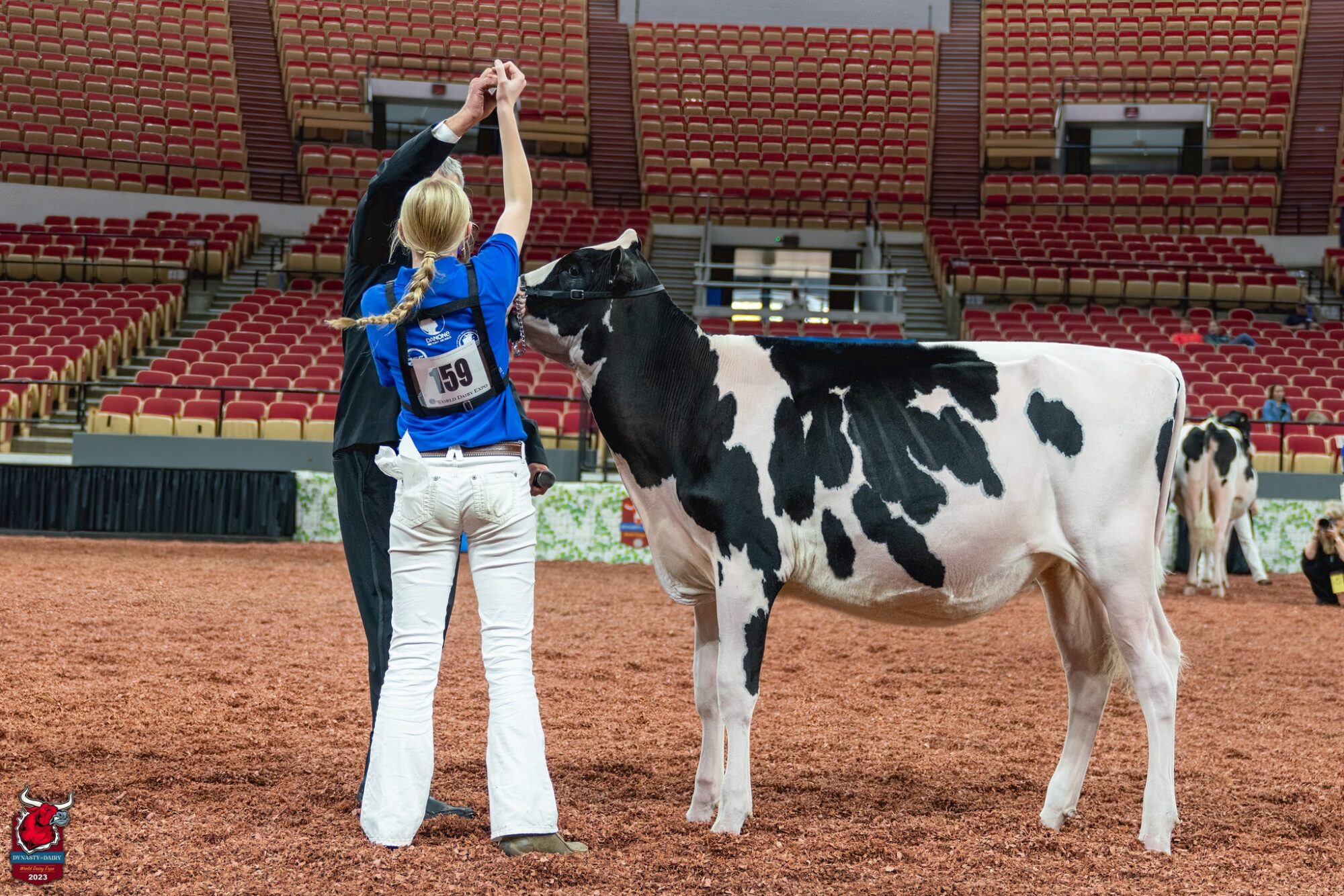
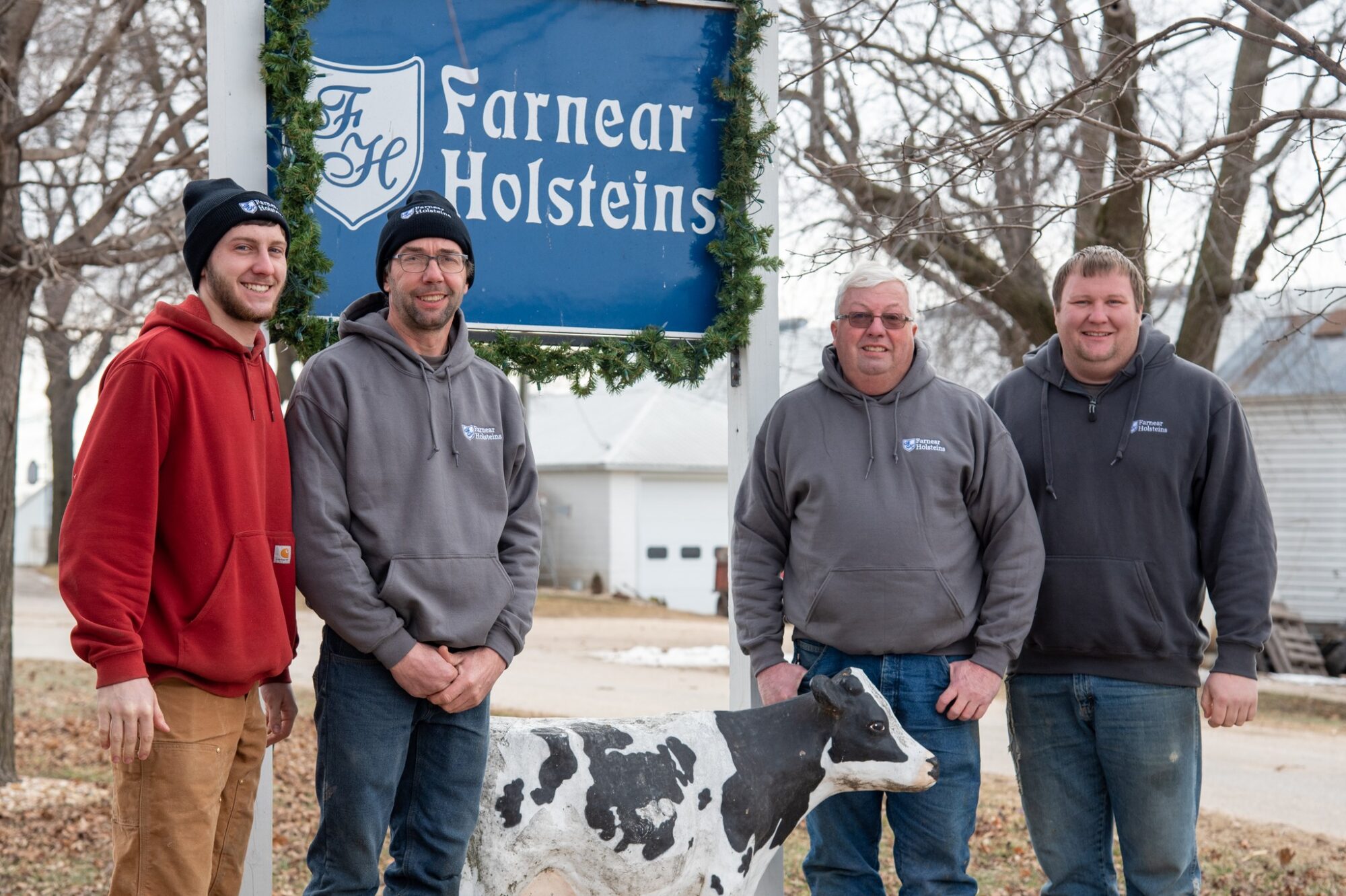
Mark and Adam aren’t just carrying forward tradition—they’re integrating modern analytical tools with proven breeding wisdom.
“They see patterns and opportunities we might miss,” Tom smiles. “Fresh perspectives on data we’ve been analyzing for years. That combination of experience and innovation creates success for our next generation.”
Their integration of AI analytics and precision management with time-tested breeding principles demonstrates how the Farnear philosophy adapts and evolves while maintaining core consistency.

The Lesson for Everyone Else
Here’s what makes Farnear’s success story particularly valuable: it stems from consistent strategic thinking rather than fortunate timing or lucky breaks.
Using superior genetics when others accepted average. Investing in Apple during challenging economic times. Embracing genomics early while maintaining focus on balanced breeding. Collaborating strategically with other industry leaders.
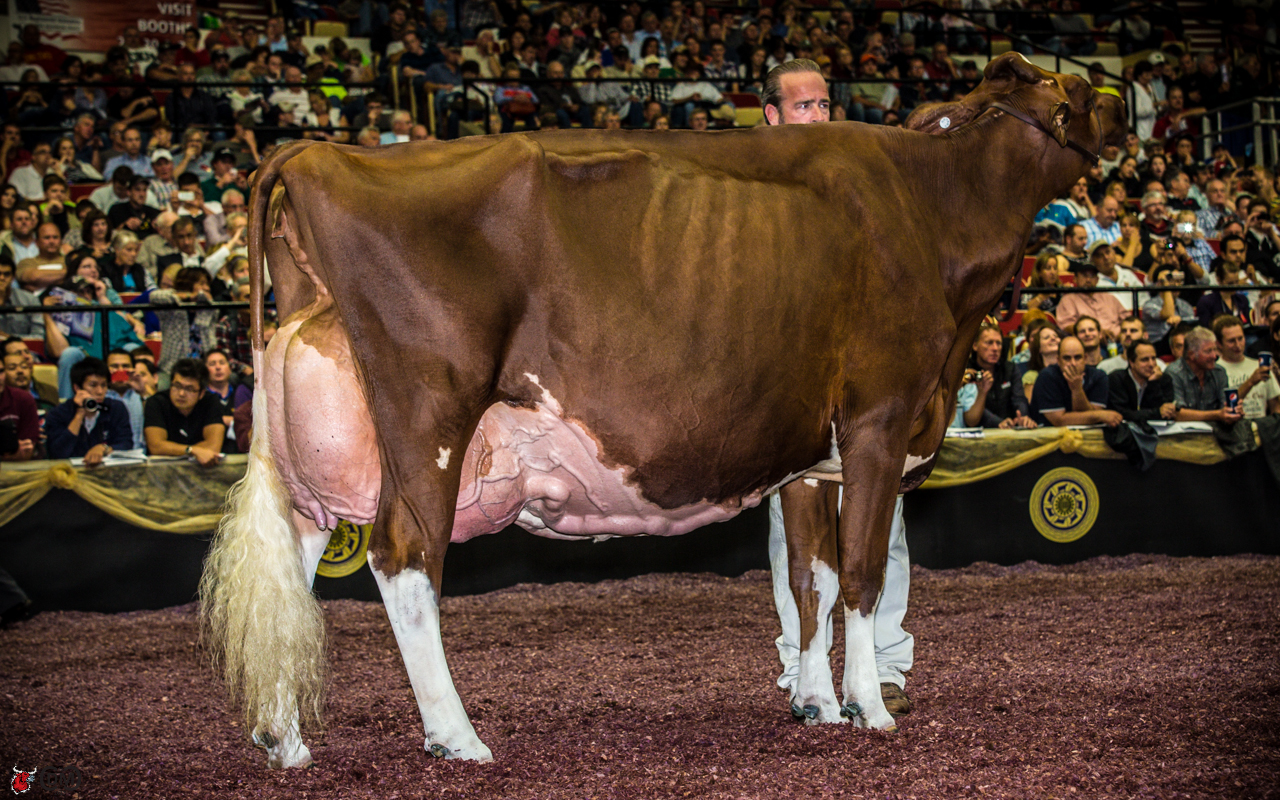
“The most expensive mistake in dairy breeding isn’t what you spend on genetics,” Tom emphasizes. “It’s what you lose by not investing wisely in the first place.”
In an industry where genetic improvement spans generations, today’s breeding decisions determine your competitive position for decades ahead.
The Bottom Line
When that recognition came through at World Dairy Expo last October, it represented more than breeding achievement. It validated Joe’s strategic vision that genetic excellence isn’t an expense—it’s the foundation for sustainable competitive advantage.
The Farnear story demonstrates that strategic genetic investment, guided by clear principles and long-term thinking, creates lasting value in ways that short-term cost-cutting never can.
What some might call expensive investments today often become the competitive advantages that define tomorrow’s industry leaders.
The dairy industry continues learning from what the Simons established sixty years ago: strategic thinking and premium genetics aren’t luxuries—they’re the foundation of sustained success in modern dairy production.
Key Takeaways
- Premium genetics cost 3-5x more but deliver generational ROI—invest for decades, not quarters
- Genomic selection accelerates progress 300%: select proven genetics at 6 months vs 4+ years waiting
- Robotic systems require functional perfection: udder depth, teat placement now drive profitability directly
- Bet on proven cow families like Apple, Lila Z—genetic consistency outperforms trait chasing every time
Executive Summary
The Farnear Formula shows how strategic genetic investment over six decades built a Premier Sire dynasty, proving long-term thinking beats short-term cost-cutting in dairy breeding. Joe Simon’s core belief—”it costs the same to feed a bad cow as a good cow”—drove his decision to invest 3-5x more in premium genetics during the 1960s, creating generational success. The 2008 crisis tested this approach when Farnear bought into the Apple family while competitors retreated, producing 2021 All-American Aria Adler and her champion offspring. Genomic technology accelerated progress 300%, enabling selection at six months versus years of waiting, while robotic systems confirmed their focus on functional traits like udder depth and teat placement. Farnear’s team approach and emphasis on proven families like Apple, Lila Z, and Delicious shows how strategic decisions compound over generations. Their dual Premier Sire wins at 2024 World Dairy Expo cap decades of patient investment in genetic excellence over trends.
Learn More:
- Boosting Dairy Farm Efficiency: How Robotic Milking Transforms Workflow and Reduces Labor – This article provides a tactical breakdown of implementing robotic milking systems, a key technological shift discussed in the Farnear piece. It offers practical guidance on barn design and workflow optimization, demonstrating how to directly translate the breeding philosophy of functional traits into tangible operational benefits.
- Dairy Industry Trends 2025 – This strategic overview analyzes key economic and market dynamics for 2025. It reveals how factors like fluctuating milk prices and changing global demands can impact profitability, providing essential context for why a long-term strategic approach to genetic investment, like the Farnear Formula, is a critical risk-reduction strategy for sustained success in a volatile market.
- The Role of Genomics in Advancing Dairy Herd Genetics – This article would explain the science and practical application of genomics in dairy breeding. It would provide actionable insights into how to use genomic data to select for specific traits, accelerating genetic progress and validating a strategic breeding philosophy years before daughter performance data becomes available, as demonstrated in the Farnear story.
 The Sunday Read Dairy Professionals Don’t Skip.
 The Sunday Read Dairy Professionals Don’t Skip.
Every week, thousands of producers, breeders, and industry insiders open Bullvine Weekly for genetics insights, market shifts, and profit strategies they won’t find anywhere else. One email. Five minutes. Smarter decisions all week.