The amount of bragging and arguing that goes on among breeders about what country has the best genetics in the world is insane. Because many have no actual facts to back up their opinion, the Bullvine decided to take a closer look and see just who does have the best genetics in the world. We took a look at the top 50 proven and top 50 genomic sires (where possible) in each of the major north American indexes (TPI, NM%, LPI, PTAT and Conf) to see just what countries have the top bulls on each. We used north American indexes since all other indexes did not publicly provide MACE lists for use to do an accurate evaluation. The following is what we found.
TPITM
When it comes to TPI, it’s not surprising that the US dominates both the proven and genomic sire lists. Given that TPI is a US based index, it’s only natural that they would have such a large proportion of the list. What is interesting about these results is that Canada does have 14% of the top genomic sires. Maybe a sign that Canadians are starting to put more attention into TPI and are adjusting their breeding programs so that they can achieve high ranking TPI animals.
NM$
Since young sire information between countries is not readily available, its not surprising the we have mostly US sires on the genomic lists. What is interesting about these results is that the Nordic countries have 22% of the top proven sires for NM$. This is a direct result of their heavy focus on health and fertility and thus leading the way in genetic progress in these areas (Read more: What the experts will tell you about who is winning the genetic improvement race).
PTAT
When it comes to type it’s not surprising that Canada makes its strongest showing in this area. Years of intense breeding for this trait have led to Canada having a larger market share in this area. What is also interesting is the diversity of countries that make the top proven sire list.
LPI
Almost shockingly there are no Canadian bred proven sires in the top 50 LPI sires in the world. Given that LPI is Canada’s national index you would think there would be at least a few. While the genomic lists do have 22% Canadian bred sires, it shows that in the recent past Canadian’s have been lagging behind other countries.
Conformation
One area that has always been a great strength is the Canada’s ability to breed great type. While they certainly have their largest market share in this area. It is interesting to note that the Canada does have more of the top proven and genomic conformation sires in the world.
The Bullvine Bottom Line
While there is no question that the US has the largest population of dairy breeders in the world, and hence they should have the largest market share, what is surprising is how they have so much of the world’s top genetics. Well beyond just the size of their population base, the US is the world leader in producing top Holstein sires.
In honor of Independence Day in the United States, the Bullvine decided to take a closer look at the top USA bred bulls. In the world market, indexes like TPI and NM$ dominate much of the discussion. But, in typical Bullvine form, we decided to look at things a little differently. Instead of ranking them all by TPI (Holstein USA’s national index – Read more Everything You Need To Know About TPI and LPI), The Bullvine decided to rank them by BPI (Read more – Bullvine Performance Index). Note that all animals are percentage ranked compared to the highest bull (Mr. Lookout P Enforcer).
Top BPI Proven Sires
Name
Milk
Fat
Prot
NM$
PTAT
Rel
BPI
DE-SU OBSERVER
1602
61
52
792
2.7
0.99
99.8%
BADGER-BLUFF FANNY FREDDIE
1236
54
43
779
1.57
0.99
98.7%
DE-SU GULF
1489
73
40
549
2.8
0.92
92.9%
MORNINGVIEW LEVI
876
68
54
693
1.4
0.95
91.3%
COYNE-FARMS SHOTLE YANCE
1815
75
54
516
1.9
0.93
89.6%
DE-SU HISTORY
1524
84
58
567
2.41
0.93
89.2%
LONG-LANGS OMAN OMAN
1262
81
73
588
2.17
0.99
88.3%
END-ROAD O-MAN BRONCO-ET
1770
47
62
512
2.08
0.99
88.1%
O-BEE MANFRED JUSTICE
781
63
46
643
-0.07
0.99
87.4%
VA-EARLY-DAWN SUDAN CRI
1268
82
53
538
1.79
0.92
86.8%
Top BPI Genomic Sires
Name
Milk
Fat
Prot
NM$
PTAT
Rel
BPI
MR LOOKOUT P ENFORCER
1731
74
67
708
2.75
0.73
100.0%
MR LOOKOUT PESCE ALTA5G
1020
53
46
6.12
3.96
0.72
98.4%
DE-SU JEROD 1223
1610
89
51
847
2.71
0.74
97.5%
COYNE-FARMS JABIR
1441
95
55
885
2.66
0.72
96.7%
RMW ANCHOR
1474
98
47
716
3.04
0.72
94.8%
MR LOOKOUT P EMBARGO
1485
94
56
644
3.38
0.72
93.8%
DE-SU DISTINCTION 11130
1754
97
64
834
3
0.72
93.8%
WELCOME ARMITAGE PESKY
1024
92
63
744
2.3
0.72
93.6%
SULLY MCCORD 269
1413
90
53
780
3.17
0.71
92.9%
Top BPI Polled Sires
Name
Milk
Fat
Prot
NM$
PTAT
Rel
BPI
TIGER-LILY LADD P-RED
-40
30
31
477
3.03
0.75
83.8%
SANDY-VALLEY CHIPPER-P
1379
29
46
568
2.6
0.72
81.5%
DA-SO-BURN MOM EARNHARDT P
1557
76
73
598
1.97
0.74
81.0%
PINE-TREE OHARE-P
2073
53
55
682
1.92
0.74
78.7%
KERNDTWAY ELIMINATOR-P
604
58
23
488
2.43
0.73
78.0%
HICKORYMEA PARKER P
191
33
20
542
2.24
0.75
78.0%
RI-VAL-RE OBSRVR DOLO-P
1143
49
36
571
2.78
0.73
76.6%
LIRR SPECIAL EFFECTP-RED
122
39
17
577
1.78
0.73
75.5%
RI-VAL-RE OBSRVR DAVE-P
1367
53
46
539
2.54
0.73
74.9%
SANDY-VALLEY COLT P-RED
705
10
26
468
1.78
0.75
73.3%
It is interesting to see just how closely ranked the top Genomic sires and proven sires in the USA are. Unlike Canada that recently adjusted its LPI formula to bring indexes closer together (Read more: Canadian LPI Rescaling Explained (April 2013)), the US has always had a very close ranking among top sires. Even the most progressive Genomic breeder, should still consider using sires like DE-SU OBSERVER, BADGER-BLUFF FANNY FREDDIE and DE-SU GULF. Having said that, many may choose to use the highest of their sons in order to stay ahead of the rest.
Another interesting note is how quickly the top polled sires are catching up to their non-polled counterparts. Only a year ago the top polled sires would not have been within 30% of the top non-polled. These days they are within 20% and at this current rate, in another 5 years they will be at the same level.
The Bullvine Bottom Line
There is no question that, when you look at the top bull lists around the world, the USA dominates (Read more: What the Experts Will Tell You about Who Is Winning the Genetic Improvement Race). Between the use of TPI and NM$ US breeders have been leaders in the identification of top bloodlines for health, fertility and profitability. The question now becomes, “Can they stay on top?”
Until recently, if you were talking about polled dairy genetics you were talking about a minor portion of the breeding population. However, modern dairy genetics has seen dramatic changes in that situation. The rising popularity of polled has been propelled in part by activists, consumers and breeders all of whom are seeking better ways to provide healthy products to the marketplace in an efficient, profitable and sustainable manner. Polled is a proactive opportunity to solve issues and meet needs in one genetic swoop.
Polled Pioneers Past and Present
Polled pioneer breeders have been few and far between. Thirty-nine years ago Burkett Falls Farm (Father Dave & Son John Burket, East Freedom, Pennsylvania, USA) had an Elevation daughter born, Sophie EX93, from which the majority of today’s polled Holsteins trace. The desire of breeders to have polled Holsteins until now has remained just that, a desire. Some polled bulls have entered AI but except for Aggravation Lawn Boy P-Red (born in 2002) few have gained much attention. Perhaps two reasons for that are that polled may have been associated with breeder proven bulls, known for unreliable single herd proofs, and a frequent association between polled and Red & White, which in North America represents only about 5% of the Holstein population.
Aggravation Lawn Boy P-Red (EX-93-GM)
Changing Polled Perceptions
On the one hand, the dominance of the polled trait in beef cattle has given rise to the false impression that polled Holsteins are descendant of a beef background. Today’s DNA testing capabilities answer that concern. However, despite this, the attitude of leading edge breeders is changing. No longer is the approach, stated in 1964 by the then Holstein Canada CEO George M Clemons, ‘we have other more important traits to improve’, in line with current breeders’ thinking. Today, having doubled the 1964 production levels, breeders want to avoid unpleasant work, unnecessary costs and raise a positive animal welfare reputation.
Polling for Dollars
Just last month at the Ri-Val-Re Sale, in Michigan, Bomaz Numero Uno 5904 PC (Numero Uno x Lawn Boy P-Red x Laudan x Garter), the #3 TPI™ polled heifer in the breed at 2365, sold for $(US) 215,0000. (Read more: Ri-Val-Re Select Sale Averages an Outstanding $25,910) Polled has come of age. Not only is Uno 5904 high indexing for fat, protein, mammary systems, productive life, daughter fertility, milking speed and milking temperament but she is also an outcross. In the same sale Ri-Val-Re The Best P-Red, the #1 TPI™ & NM$ female in the breed (Special Effect P-Red x Macguiness x Advent-Red x Ranger x Factor) sold for $(US) 38,000. Again an outcross to Oman, Goldwyn, Shottle, Bolton and Planet. Their buyers obviously have plans. Polled also made the headlines last fall when five doses of semen sold for $50,000 (Read more: $10,000 a dose Polled Semen). It was five doses of semen and the right to exclusivity of use for a few months of the homozygous polled bull Kulp-Dale Golden PP-Red (Colt-P x Goldwyn x Redman x Perk-Red x Rubens).
Ri-Val-Re The Best P-Red, the #1 TPI™ & NM$ female in the breed (Special Effect P-Red x Macguiness x Advent-Red x Ranger x Factor) sold for $(US) 38,000 at the Ri-Val-Re Select Sale.
Going Down the Polled Road
There are two ways to use polled in a herd’s breeding program when it comes to sire selection. One way is to go all out and only use PP bulls. All heifers born will be polled. The limiting factor will be that the heifers will not be as high for gTPI™, gLPI or NM$ as using P bulls (heterozygous for polled)
The alternative method would be to use P bulls. In the first generation half the heifers will be polled and in the second generation 25% will be homozygous polled, 50% will be polled but heterozygous and 25% will be horned. Definitely a slower route but the heifers will be higher indexing than using PP bulls.
More Bulls Are Polled Apart
The rise in polled popularity goes beyond two top selling heifers and five doses of semen. A search of the CDN files of Black & White polled bulls waiting to be old enough to be sampled, shows six bulls born in later 2012 and seven born and registered already in 2013 over +2750 LPI. Two are over +3000 LPI. Note that, on the CDN files, bulls cannot get a gLPI or have a DGV LPI listed until they are one year of age, These thirteen young bulls are the result of breeders breeding their top indexing females to polled bulls. As more and more top gTPI™ and gLPI cows and heifers are flushed to top polled bulls, 2500 gTPI™ young bulls and heifers will only be a short time down the road.
How to Pick Up Speed On the Polled Road
Roy MacGregor of DairyBullsOnline
It is always wise to ask questions and follow advice of the experts in new procedures. shares his insights on where to start when establishing polled genetics in your herd (Read more: They`re Sold On Polled!!). “The first procedure is to check for horn bud. If no bud do not dehorn. If after 3-4 weeks no horn bud develops your animal is likely polled. Another really good indicator is double eyelashes. A smooth head and double eyelashes should mean polled right away. Some calves and especially males can develop small immature buds or scurrs much later at 4-6 months or even older. In this case testing your calf with the German test or the UC Davis test is the best idea to avoid confusion.” He offers this encouragement “
There is a small learning curve but after a breeder gets a couple polled calves he will understand that smooth (like glass smooth) means polled, and it will get easier from there. “
Polled Procedures or “When in doubt, test!”
The test currently used through Holstein is the Igenity test, which we are told is accurate to 95% which is really quite good however we are all aware of the bulls Shine, and Balti being the exception. The most accurate test today is the German or UC Davis test closer to 99.9% or greater. However nothing can be said to be 100% because in genetics natural mutations can, and do occur. It should be noted no polled test can save poor management of mixed up hair samples. Of course, to err is human but when in doubt, test. For Homozygous calves obviously the only way to know is either wait until several offspring are born polled from one horned parent, or test. However in today’s day and age nobody wants to wait so we simply have to trust the best test at our disposal.
Is Polled Suffering from a Bad Code
Firstly the POC code currently in place naturally tends to lead some to believe there are “polled carriers” which only confuses the matter even more. There is no such thing as a “Polled carrier” animals are either polled or horned. Roy MacGregor, offers this opinion. “I think giving a dominate trait a recessive code is the wrong approach. It would be simpler to add P or PP right in the name. Nobody has to go looking for codes. It’s all right there right in the name, and with proper protocol at registration (simple pedigree research) and proper testing (when needed) this could easily be automatic.”
The Polled Learning Curve
For those who have been following some of the questions and concerns, MacGregor provides his viewpoint. “I think A.I’s all over the world have now panicked and realized all polled bulls need to tested at UC Davis, so the initial shock is probably over. However the problem now is what to do with all the females coded as POC on the 95% accurate Igenity test? This whole POC coding adventure has been especially frustrating for those who have been dealing with polled for years. Imagine being told you have to test something for POC that is obviously polled? Would you ask a breeder with a Red calf to test it for *RC? Polled is still fairly new so hopefully over time common sense will prevail, people just need to relax, slow down, and follow step one (check for the horn bud).”
The Bullvine Bottom Line
So, how do you see polled in your breeding program? Is it an opportunity? Is it an annoyance? Is it a necessity? The genetics are rapidly being established that mean there is no sacrifice in genetic merit if you breed for polled dairy cattle. The first choice of public opinion is moving quickly in favor of polled. From the sidelines, to headlines to main line it’s time to ask yourself, “When it comes to polled, what line will I commit to?”
Whether it’s wartime or rock music, we have learned to expect the best from the British. The dairy industry is no exception. As The Bullvine gets to know our international peers better, we travel to Ravenscroft Hall Farm in the heart of Cheshire, England. Here Mark Nutsford and his wife Susan run the Riverdane Herd. Targeting real goals has helped them achieve their dairy aspirations says Mark. “My granddad on my Mother’s side was a dairy farmer, so from an early age I spent as much time on the farm as I possibly could. Dairy cows have always been my passion and I always knew that one day I would have my own dairy farm.” Having said that, they don’t rest on their laurels but continue to charge ahead to broaden their dairy horizons.
Not Ready to Surrender to the Status Quo
Trained as an embryologist and ET technician, Mark’s main job is to run Celltech Embryo Transfer. Additionally, the Nutsfords have a semen company called KingStreet Sires. It is run by Susan and their general sales manager Sam Wake. Mark explains how this arm of their business endeavours came to be. “KingStreet Sires was born out of the frustration of not being able to get a decent price for our bulls entering into AI or even purchase the kind of semen we wanted to use on our cows.”
Appleview Rudolph Mattia EX 97 Mattia scored max. every lactation
Reconnaissance to Build Genetic Potential
Immediately after they sold their first herd in 2008 to the Willsbro herd in Cornwall, the Nutsfords began to scour the world to purchase embryos” We wanted to purchase from what we thought were the best breeding families. This resulted in purchasing embryos and calves from such renowned families such as Attlees, Ashlyns, Red/Black Roses, August, James Rose, Roxys, Jolies etc. but we also kept some embryos from our own established families which came originally from North America, such as the Tony Beauties, Sara’s, and Mattias. As well as from three 97 point cows that were at Riverdane. Pansys Dilys and Mattia the latter still alive at Riverdane may be the only 97 point cow ever to be scored max points in every lactation i.e. and the British system, 89 as 2 years, 90 second calf, 93 third calf, 95 fourth calf and 97 fifth calf. We have bred or owned 13 VG 89 2 yr olds and numerous max pointer cows of which there are four on the farm at the moment.”
Bressingham Raider Pansy 2 EX-97-4E Pictured after 12 calves
Strategic Planning “Develop a profitable cow”
Mark describes what they look for. “Our breeding philosophy is to develop a profitable cow.” He expands on the reasoning. “Because maize silage, grass silage and whole crop wheat is what we can grow on our farm fairly efficiently and is our cheapest source of feed, we want a cow that can produce on average 60/70n tons in five lactations, can consume large amounts of forage and then synthesize it into milk. We are looking for a cow with great quality and plenty of dairy strength as well as the traits that everyone else wants such as great feet and legs and udders. It is very important to us when we choose a bull that we can see where the greatness comes from or he will not interest us. Most of the bulls we use now are genomic bulls from great cow families that have strength and depth.”
Lavenham Adeen EX-90-UK 1st Senior Cow and Black & White Champion AgriScot 2012 & UK Dairy Expo
Generating Milk Pail and the Show Ring Awards
Mark emphatically points out his favourite cow. “The greatest cow I have ever owned is probably Appleview Rudolph Mattia EX 97. Her accolades are too numerous to mention but she has scored max points in every lactation and also been nominated every time as well as being crowned All Britain in 2004. She has produced 150+ tonne of milk and at 16 years of age is still the boss! Her breeding accolades are also impressive and we are currently showing a granddaughter by Goldwyn that was undefeated as a 2 year old and as a 3 year old in her class. As far as a show cow we have a daughter of the great Skychief Adeen by Durham that has been Grand Champion at both her recent outings at Agriscot and the UK Dairy Expo under two of the greatest judges of all time John Gribbon and Barclay Phoenix.”
Lavenham Durham Adeen EX-90-UK Sister to the dam of MD-Delight Durham Atlee EX-92-USA
The Genetic Torch Marches on from Renowned Families
Persistently seeking the best is showing results for Riverdane. “Most of our better cows are from world renowned families such as Shottle Autumn VG88 2 year from Roy Autumn All American Milking Yearling and Junior Champion at Madison. Goldwyn Atlee VG89 is a full sister to Ariel and Atwood. Durham Adeen, from Skychief Adeen, is from a family I have known well from the days I used to travel to Aitkenbrae. I even remember Starbuck Ada’s dam as a 2-year-old (Sheik). Talent Ashlyn granddaughter of the all world cow Tri day Ashlyn is one of our best growing cows and has recently being raised to max points as a second calver. A cow that I own with ADI and Ponderosa has just being made max points 93 as a third calver just back from winning the 5 year old class at the European show. She is on flush to Goldwyn or Gold Chip. One 2 year old heifer that has just calved is a Goldwyn from a Dundee from James Rose that is showing great promising qualities for the future.”
Riverdane Talented Ashlyn EX90 3YR All Britain Intermediate Heifer in Milk Champion 2012 1st Milking Heifer & Supreme Champion Holstein & Best Udder Cheshire County Show 2012 1st Junior 2yr & Reserve Champion Holstein Heifer Great Yorkshire Show 2012
Irresistible Sire Stack
Mark has specific requirements when purchasing cows too. “The most exciting one that I have ever purchased is Ridgefield Goldwyn Atleen (A Goldwyn from Durham Atlee). For me the stack up of sires in that pedigree was irresistible: Goldwyn, Durham, Storm, Skychief, Starbuck and Shiek. For me these are six of the greatest sires of all time The family seems to produce an all fronts whether it’s genomics, milk, fat, protein, shows or just great to work with.”
The Outcross Search is On
Adding it all up, Mark has what he calls “30-ish” years in the dairy industry. “We are in an era where the two greatest bulls of all time are having a massive influence, Shottle and Goldwyn. Our herd is based on these two great bulls either through them or their sons, so at the moment we are looking for outcrosses. This is proving very difficult at the moment as we are not great fans of the Oman and Planet bloodlines. The sires that I am currently working with are Goldsun, Goldchip, Cashcoin, Cashmoney, Explode, Aftershock, Atwood sons Brady and Mars Yorik.”
Riverdane Shottle Amber VG-88-UK 2yr High Shottle daughter from the full sister to Atwood!
Following Distinguished Mentors
Finding exceptional mentors has been an easier task for Mark. “Peter Heffering was always my mentor although I didn’t know Peter that well, we used to speak occasionally and I followed his career. I was inspired by his attitude, work ethic and his ability to take things to another dimension. (Read more: Hanover Hill Holsteins: Peter Heffering 1931-2012) Martin Roburge from Quebec was also a great friend and teacher. In the UK two great cowmen John Gribbon and the late Harold Nicholson have had a massive influence on my showing and judging career. John in my opinion is one of the greatest cattle judges the world has seen in recent years, it’s not just how he judges it’s the way he also handles people especially the crowd and how he involves them with the show, I think the Europeans are better at the then the North Americans.”
Learning the Art of Judging
I have been lucky enough to have twice been invited to the Canadian judging school which also includes tutorials as well as judging. One of the subjects we talked about and were tutored on was mentoring. Dan Doner gave a great tutorial and one I will always remember and try to practice, so anyone starting out in the business which is always a good idea to have a role model to ask advice and try to copy their strengths as I did with the likes of Peter Heffering, Harold Nickolsen and John Gribbon and with judging, people like Richard Keane from New York who today is still one of the best judges I have been able to learn from (style, manner, accuracy and professionalism) and admire.
Success Before the Judge
My greatest accomplishment was in 2003 when we were champion (Reserve once) at every major show (8 Majors) in England + Scotland with different cows at every show except the royal Highland but we bred the champion there. We were also the second highest yielding herd in the UK according to National Milk Records. Peter Heffering did it with Charity in her prime which was always a major influence with me.”
…..And When He Is the Judge
The influence of mentors continues when Mark himself is the Judge. “I’ve judged in a lot of European countries and most of the big shows in the UK and Ireland but never in North America. Not a lot of Europeans get asked to judge in North America which is a shame because I think a lot of the best judges and cow men are in Europe. It is always a good idea to bring someone in that is not part of the ‘scene’ to give a fresh prospective. A lot of North Americans have judged in Europe over the years and have done a great job. It would be nice if these invitations were reciprocated back to North America.”
Dairy Breeding Never Stands Still
It is unrealistic to think that there will be a time when all the problems are solved and the battles won. Mark has had to deal with many events already. “The biggest change I have seen is happening at this present time. It is genomics and affects the way we breed our cows and choose our bulls. I am a big believer in the formulas e.g. in the TPI formula 20% of the formula is made up of productive life 9% (8% heritable) and daughter pregnancy rate 11% (4% heritable) is this wisdom. In the UK our PLI formula is 45.2% PIN 21.1% Lifespan (6% heritable) Fertility 18.5% (3% heritable) Scc 5.5%, Udder 5.6% and locomotion at 4.1% so nearly 40% of the formula is approximately 4.5% heritable . To me this is a hoax on a large scale.
Select Sires in the U.S have a TPI formula that makes sense to me, 40% production traits (Milk (PTAM), fat pounds (PTAF), protein pounds (PTAP), 40% type traits (Udder composite(UDC) Feet + Leg composite (FLC, Strength) 20% Fitness traits – productive life (PL), Somatic Cell Score (SCS), Daughter Pregnancy Rate (DPR), Calving ease (DBH). Bulls are excluded from receiving the designation if they do not meet predetermined levels for udder composite, feet and leg composite and Type. I think most discerning dairy farmers would agree to this common sense approach to breeding.”
Isaac Lancaster, Mark Nutsford and John Gribbon taking a toast to the last ever Royal show in England.
Today’s Selection Criteria and Future Skirmishes
You can’t make decision without having a realistic perspective on dairying. Mark considers one rising dilemma. “AI companies are paying a lot more money for the bulls that meet their criteria so a lot of breeders are spending a lot more money to achieve their goal to try and push the TPI, LPI, PLI boundaries. This is ok if you are happy with the formulas but if like me you are reticent about the formulas but have more confidence in the individual breakdowns, to a certain degree that nothing has changed it just another set of figures to work with. A more ‘balanced’ formula for type, production, and health traits is the way I see going forward especially when the genomic figures become more refined in the future.”
It’s All About Breeding and Balance
Mark anticipates where the industry is going. “I think the genetic companies will continue to buy in to the female lines to save money on sire procurement which will push the prices of the top female lines up. Bull prices will continue to make record highs as AI companies compete for the top genomics possible on on-line auctions or special bull sales. There will be a trend in Europe to cross breed, but most people who try it usually come back to Holsteins when they realize the cross breeds aren’t as efficient in milk production and that’s what pays the bills. I still think that the true type model cow (The British one) is still the best model and if you want a definition of what balanced is look at the British Holstein model cow!”
The Bullvine Bottom Line
Mark and Susan Nutsford hope to keep broadening the horizons of KingStreet Sires, Celltech, and Riverdane. “We want to try to be a part of and influence the Holstein breed in whatever small part possible.” It’s no wonder that The Bullvine feels this British invasion is, once again, music to our ears! “Charge on!”
In honour of Canada Day, the Bullvine decided to take a closer look at the top Canadian bred animals. But, in typical Bullvine form, we decided to look at things a little differently. Instead of ranking them all by LPI (CDN national index – Read more Everything You Need To Know About TPI and LPI), The Bullvine decided to rank them by BPI (Read more – Bullvine Performance Index). Note that all animals are percentage ranked compared to the highest animal of their gender.
Top BPI Proven Sires
Name
Milk
Fat
Prot
SCS
Conf
Rel
BPI
CRACKHOLM FEVER
620
56
20
2.63
15
0.93
100.0%
GEN-I-BEQ BRAWLER
910
62
46
2.85
10
0.94
99.8%
GEN-I-BEQ TOPSIDE
1197
72
45
2.75
12
0.92
91.1%
GEN-I-BEQ ALTABUZZER
1417
82
46
2.82
6
0.89
90.2%
DOMICOLE CHELIOS
845
78
41
2.78
14
0.93
89.2%
COMESTAR LAUTREC
1168
72
47
3.06
9
0.9
88.9%
BUTOISE BAHAMAS
1725
52
73
3.18
6
0.9
88.7%
HYLLTOP PRESLEY RED
866
78
56
3.02
6
0.89
88.4%
DELABERGE DEMOCRACY
443
69
47
2.65
9
0.85
86.9%
GILLETTE WINDBROOK
937
62
40
3.06
15
0.85
86.0%
Top BPI Genomic Sires
Name
Milk
Fat
Prot
SCS
Conf
Rel
BPI
SUNTOR JOYRIDE
2162
87
92
2.72
17
0.66
83.0%
GENERVATIONS LEXOR
1635
90
84
2.89
12
0.72
82.1%
COMESTAR LAUTRUST
1896
90
80
2.75
12
0.67
81.9%
LEOTHE DAUPHIN
1805
88
72
2.74
11
0.66
81.5%
JEANNIESTAR D MILKMASTER
1955
94
88
2.99
11
0.67
79.9%
GENERVATIONS LIQUID GOLD
1546
102
82
2.87
14
0.65
79.9%
BOLDI V S G ANTON
1910
90
72
2.8
17
0.64
79.4%
GENERVATIONS LIMBO
1755
103
75
2.85
10
0.67
79.0%
GENERVATIONS BIG KAHUNA
2167
80
76
2.82
14
0.65
78.8%
GENERVATIONS L1423
2374
76
87
2.91
15
0.65
78.7%
Top BPI Polled Sires
Name
Milk
Fat
Prot
SCS
Conf
Rel
BPI
WEST PORT ARRON DOON MITEY P
-101
49
16
2.58
4
0.94
80.9%
MEMENTO BENEDICT P
1023
-11
10
2.75
9
0.92
78.4%
VENTURE TRANSFORMER P
928
53
44
2.73
7
0.7
73.7%
LA PRESENTATION BEAR P
567
21
19
2.94
4
0.9
72.6%
WEST PORT ARRON DOON MALTBY P
1363
33
42
2.57
0
0.9
72.4%
OCONNORS BERKLEY
1661
52
51
2.63
8
0.69
71.7%
ERBCREST SATCHEL P
1137
21
40
2.72
11
0.7
70.5%
LA PRESENTATION BROYARD P
1190
51
45
2.67
7
0.69
69.8%
VENTURE MAN O POLLED P
769
37
58
3.06
10
0.69
69.6%
HICKORYMEA-I OKA P
-87
46
16
2.65
9
0.9
69.1%
Top BPI Cows
Name
Milk
Fat
Prot
SCS
Conf
Rel
BPI
STANTONS FREDDIE CAMEO
1784
108
71
2.81
7
0.71
95.4%
STANTONS MANOMAN EZRA
1607
103
81
2.9
12
0.73
94.5%
MAPEL WOOD M O M LUCY
2174
106
90
2.95
12
0.72
94.5%
VELTHUIS SG MOM ALESIA
1897
91
71
2.84
16
0.72
93.8%
DELABERGE OMAN DOILEE
1604
70
88
2.92
10
0.73
93.4%
STANTONS OBSERVER EXTREME
2731
91
91
2.67
14
0.68
92.2%
BENNER MANOMAN JANESSE
1467
113
78
3
11
0.72
91.8%
OCONNORS PLANET LUCIA
2452
101
99
2.92
15
0.72
91.4%
STANTONS OBSERVER EXPOSE
2200
79
84
2.83
11
0.7
91.2%
COMESTAR LAUTAMAI MAN O MAN
2156
85
93
2.88
12
0.71
90.5%
Top BPI Heifers
Name
Milk
Fat
Prot
SCS
Conf
Rel
BPI
GILLETTE MOGUL CARREL
1056
107
64
2.67
15
0.66
100.0%
STANTONS MCCUTCHEN 1174 AGREE
2101
103
81
2.59
19
0.65
98.7%
VELTHUIS S G SNOW EVENING
2859
103
95
2.83
16
0.7
97.6%
VELTHUIS SG SNOW EVENT
2859
103
95
2.83
16
0.7
97.6%
LOOKOUT PESCE PONDE KREED
1826
94
84
2.86
14
0.65
97.1%
MAPEL WOOD SUDAN LICORICE
2326
108
97
2.7
12
0.67
96.3%
LOOKOUT PESCE EPIC HUE
1888
93
83
2.88
18
0.65
94.5%
STANTONS SNOW ELAISKA
2268
85
98
2.81
13
0.66
92.2%
STANTONS MCCUTCHEN PROFIT
2203
94
87
2.88
12
0.65
91.5%
OCONNORS LIVING THE DREAM
2228
88
87
2.79
16
0.64
91.0%
Top BPI Polled Females
Name
Milk
Fat
Prot
SCS
Conf
Rel
BPI
MAPEL WOOD LADD LEAH P
1509
81
67
2.92
12
0.65
86.4%
VENTURE MCCUTCHEN SATIN P
1029
72
47
2.72
15
0.61
86.3%
VENTURE EPIC SCARLET P
1189
69
46
2.75
12
0.65
85.5%
BRYHILL ONE SASSY P
1262
96
50
2.58
13
0.63
85.4%
BRYHILL SS SASHA P
2160
100
74
2.72
13
0.61
84.8%
Show Ring Success
RF GOLDWYN HAILEY EX-97-2E-CAN Show Winnings: ALL-CANADIAN MATURE COW 2012 RES. ALL-CANADIAN 5-YR 2011 GRAND ROYAL 2012 GRAND QC INTERNATIONAL 2012 GRAND MADISON 2012 RES.GRAND ROYAL 2011
Of course, our look at the top animals in Canada would not be complete without checking out the show ring. The undisputed show Champion would have to be RF Goldwyn Hailey. Her extreme balance has dominated the North American show circuit for the past 2 years. However, there are up and comers including Valleyville Rae Lynn, Ms Pride Gold Invite 761 and Desnette Alexia Roseplex.
VALLEYVILLE RAE LYNN VG-89-2YR-CAN 1ST ALL-ONTARIO SR.2-YR 2012,2012 RES. ALL-CANADIAN SR.2-YR 2012 RES.INT. ON SPRING DISCOVERY 2012 2ND SR.2-YR ROYAL 2012 1ST SR.2-YR ON SPRING DISCOVERY 2012 1ST MILKING 1-YR AUTUMN OPP. 2011
The Bullvine Bottom Line
As Canada seeks to regain ranking as the top source for Holstein genetics, it’s these bloodlines that are going to lead the charge. Happy Canada Day!!!!
The dairy industry is not a large one. It’s also an industry that loves gossip, controversy, and the latest rumor. So when you do something stupid it does not take long for word to get around. And that was before there was social media. That is why I find it so surprising that some breeders don’t realize that the dairy industry is a pretty small pond and that the ripples reach from edge to edge.
I have had the pleasure of knowing many different characters in the industry. Some of them carried a reputation that was much larger than life yet, when you got to know them, they were actually pretty good people. Then there are others who would tell you to your face how good they are or how “honest” they are and then turn and stab you in the back the second you weren`t looking. The challenge is that sometimes it’s hard to tell which one is which.
Whether it’s someone who loves to party hard and be the life and soul of the party, or how you conduct yourself in business, the number one thing you have is your name. Once tarnished, it takes years to rebuild. In the dairy industry there really is no difference between your personal and professional brand. Many young people try to think that they can do crazy things and it will not affect them later in life. The thing is, the industry is too small for that. There are many very talented young people that have kissed away potentially great careers in the dairy industry by the stupid things they did in college or university. There are also those that have taken years to regain the trust of others.
Social media has taken word of mouth and put it on steroids. What used to take weeks or even months to spread through the dairy industry, now takes just minutes online. There is a new reality in the dairy industry. It’s no longer what you say and do to manage your brand or good name that matters. It’s what others are saying about you online. From our smartphones to our tablets and computers, to interacting with family, friends, colleagues and customers, our lives – and thus our reputations – exist online.
It may sound funny but it’s true. Since starting the Bullvine I have seen it many times. Breeders getting ripped apart by other members of the community on Facebook and other places and they don’t even realize that it’s happening. But thanks to things like Facebook news feeds and Twitter streams, thousands of other members of the dairy industry do see it. It may be as simple as someone being very critical of a cow or bull. Other times it can be a blatant attack on someone’s character. However, since the victims are not on these different social media platforms, they are not there to defend themselves. Moreover, others that are reading these comments assume they`re the truth.
Another area where I have seen an extreme effect is dairy cattle livestock photography. No group as a whole has been more ripped apart in social media. While many of them have avoided Facebook as much as possible, it has not stopped breeders from expressing their opinions. It was the barrage on photographers that led us to develop the Dairy Marketing Code of Conduct, in order to help rebuild their reputations.(Read more: Introducing the Dairy Cattle Marketing Code of Conduct and Dairy Cattle Marketing Code of Conduct)
Now we have all been there, where someone misrepresented what they were selling or we felt that we got the raw deal in a purchase agreement. There have been some very legendary breeders that have been able to keep things like this under wraps. But in today’s social world, things like this can go from known by one or two people to known by thousands in a moment’s notice. That is why in today’s industry you have to conduct yourself above board 100% of the time. Otherwise all it takes is a few comments on places like Facebook, before the whole world knows your true character.
Every day more and more breeders are getting on Facebook. Breeders of all ages are enjoying the many benefits of connecting with breeders from around the world. If you want to market your cattle to the world, there is no greater more cost effective platform than Facebook. It’s no longer optional. It’s mandatory. But that is just the first step. You also need to become an active member of the conversation. Not just promoting only what you want to sell, (which kills your reputation), but also joining the conversation and developing friendships and a strong online reputation. It’s funny how some breeder’s true colors come out online. The ones that care about building community and helping others find that their posts get promoted like wildfire. While others, who are just in it to suck money out of others, find that they get very little response to their posts. Inevitably, t building a credible reputation online and forming real and lasting relationships with people, pays off in substantial ways, when you find yourself the center of negative online attention.
The Bullvine Bottom Line
In the dairy industry many breeders talk a lot about their name and their reputation. The thing is sometimes they don’t understand the difference between how they perceive themselves and how others perceive them. It’s not what you say that builds your reputation. It’s what you do. The key thing is to understand that when you make good decisions and stand behind what you say, especially when it’s difficult, your name, who you are, and what you stand for becomes something everyone can trust. Because, when we leave this earth, your good name is all you really have.
If you are like most breeders between the time spent sorting through the many different lists from around the world and listening to the propaganda the A.I. companies put out promoting their sires, the hype is enough to make a breeder’s head spin. In order to bring clarity to the confusion, the Bullvine has filtered through the many lists, brought them into a common base and has developed the following four categories sires that you should take a look specifically for your breeding program.
Overall Performance
When looking for the sire the will help improve your herd across the board, we looked for sires that have a balance of production and longevity. Additionally, we wanted high health and fertility traits that deliver a low maintenance cow (Read more – Fact vs. Fantasy: A realistic approach to sire selection).
DE-SU OBSERVER
(Planet x O Man x BW Marshall)
With his validation from top genomic sire to proven sire status, Observer is a sire that should be on all breeders’ lists. This former No. 1 GTPI genomic young sire and worldwide father of sons is now the #1 gTPI sire in the USA and transmits excellent production (+1,602 Milk) and Protein (+52 Protein, +.02% Protein) with highly reliable data from over 200 milking daughters. OBSERVER daughters have exceptional udders (+3.02 Udder Composite) and Type (+2.70 Type). Observer will work best on tall females with lots of frame and that need udder improvement.
LONG-LANGS OMAN OMAN
(O Man x Aaron x Bellwood)
When it comes to your breeding goals, Man-O-Man certainly is a sire that should still get consideration even for the most aggressive genomic programs. Look for Man-O-Man to sire outstanding production from cattle that have correct feet and legs and strong mammary systems. One area to watch him for is his rump angle, as his daughters can be a touch high in the pins.
CO-OP BOSSIDE MASSEY
(MASCOL x FORM BRET x MANFRED)
Massey is a popular sire of sons combining elite indexes with a great outcross opportunity. Massey daughters are snug uddered with strong attachments. Though they should be protected for rump angle (high) and dairy strength, his low somatic cell score, high herd life/productive life and strong fertility make Massey a great sire for your breeding program.
MR LOOKOUT P ENFORCER
(Facebook x Shottle x O Man)
This Marbri Facebook son has some of the highest DGVs in the breed. Look for him to sire extreme component yields from strong dairy cattle with great feet and legs. One area to be cautious on using him is his body depth. Both his sire stack and his DGVs would say this area needs protecting.
DA-SO-BURN MOM EARNHARDT P
(Man-O-Man x Lawnboy x September Storm)
If you’re breeding for polled you are most certainly thinking of where the market is heading. One area that I always find interesting is those breeders who breed polled, but in fact are only selecting for type. If you are going to go polled you need to consider overall improvement and production as well. Earnhardt P is one of the premier gTPI polled bulls in the breed. He sires high protein and extreme NM$. He has been used heavily as a sire of sons as a result of his polled status and high Net Merit. Look for Earnhardt P to sire high components, with solid feet and legs and mammary systems. One area he will need to be protected on is his rumps, as he can leave high pinned daughters that are a touch narrow.
Production Improvement
It might be easy to just take the top milk lists or combine the fat plus protein and say those sires are the best for overall production. We here at the Bullvine would not want to totally forgo type as well as health and fertility so we are looking for the sires that give you the maximum production gain, without sacrificing everything to get it. In addition to Observer, Man-O-Man and Earnhardt P mentioned above we recommend the following sires to improve production.
UFM-DUBS ALTAESQUIRE
(O Man x AltaSam x Patron)
ALTAESQUIRE’s 2nd crop daughters seem to be outperforming his first crop proof. Watch for ALTAESQUIRE to sire more production and components as well as better mammary systems than his current proof would indicate. While offering dairy strength and rump improvement, ALTAESQUIRE needs to be used cautiously on mammary systems and feet and legs. But if you are looking to put a production punch into a good uddered and legged cow/heifer, ALTAESQUIRE will do the trick.
DE-SU ALTAGOALMAN
(Bolton x O Man x BW Marshall)
ALTAGOALMAN is a proven sire from the high Genomic Index De-Su herd. Though ALTAGOALMAN will sire outstanding production both his genomic proof and his daughter information would indicate that he needs to be protected on dairy strength. He delivers significant overall production improvement. While AltaGoalman will not hurt your udders and legs, he certainly needs to be protected on body depth and rump. AltaGoalman is most definitely best suited for commercial environments but can also be used for a shot of production, if used carefully.
SEAGULL-BAY SUPERSIRE
(Robust x Planet x Shottle)
This Robust son from 2012 Golden Dam Finalist AMMON-PEACHEY SHAUNA VG-87-2YR-USA, really is a genomic wonder. Not only does he have some of the highest genomic values in the breed for production but he also has great functional type and health traits to go with it. Here you have a sire that is over 2500 lbs. for milk, with positive component deviations, 2.50 for type, and over 7 for productive life.
PINE-TREE OHARE-P
(O Man x Signif-P x Goldwyn)
For those of you looking to get into polled there is Ohare-P. Extreme production combined with functional type and good health traits make Ohare-P a sire that if you are breeding for the future, should be part of your program. He will need to be protected a little on % components, and frame and capacity.
Longevity Improvement
For those of you who are looking to breed cattle that last lactation after lactation, or maybe you are having problems with your 2 year olds not coming back for a 2nd lactation, we recommend the following sires:
MAPLE-DOWNS-I G W ATWOOD
(Goldwyn x Durham x Storm)
While many would consider Atwood a show bull, and he is very good at that (Read more: 7 Sires to Use In Order To Breed the Next World Dairy Expo Champion) he is also a great longevity sire as well. Unlike many of the top show sires who are negative for production and low fertility scores, Atwood actually has solid components and acceptable health and fertility numbers. While you most certainly would want to protect him on production and daughter fertility, Atwood will add a punch of type to your high producing 2yr olds that, for whatever reason, may not be around for many more lactations.
COYNE-FARMS DORCY
(Bolton x Bret x Rudolph)
Dorcy is proving to be an outstanding longevity improvement sire, through both his sons and daughters. Breeders interested in a Bolton son from an outcross pedigree, top-notch udders, very good feet & legs and functional traits may consider using DORCY. Dairy Strength and Rump are only slightly above breed norms.
MR LOOKOUT PESCE ALTA5G
(Altakool x Atwood x Shottle)
An Atwood son sure to get a lot of attention is Alta5G. While not from a big name show ring family, this type sire has a breed leading +23 DGV for Conformation in Canada. Alta5G is from the same family at De-Su as Observer and, much like the other members of this outstanding genomic family, it seems that generation after generation keeping getting higher and higher numbers. Look for him to sire daughters with outstanding udders and feet and legs, with loads of dairy strength. One area that he will need to be protected on is his rumps, specifically rump angle and pin setting.
SILDAHL JETT AIR
(BAXTER x BW MARSHALL x MANFRED)
This outcross sire offers great longevity improvement combined with strong health and fertility. He does need to be protected on protein and milking speed. However his great feet and legs, udders and health and fertility make him an outcross sire you don’t want to miss.
Health and Fertility Improvement
One area that is not getting enough attention from most breeders is health and fertility. While there is no question that every breeder knows that more pregnancies equal more profits, many of the top ranking sires actually have negative values for health and fertility. The following are some sires that should help you change that:
BADGER-BLUFF FANNY FREDDIE
(O Man x Die-Hard x Metro)
If you are going to talk health and fertility, you’re going to have to take a look at Freddie. While his type numbers may scare some, you cannot deny his extreme health and fertility numbers combined with solid production. While I don’t expect to see many Freddie daughters in the show ring any time soon, he will work well in most commercial environments. He will leave moderate sized daughters that have strong udders but very much need to be protected for dairy strength.
S-S-I DOMAIN LITHIUM
(Domain x Bolton x O Man
S-S-I DOMAIN LITHIUM has some of the highest DGV’s for health and fertility. Lithium is from one of the top genomic cows in the breed, GLEN-TOCTIN BOLT LUCILLE VG-87-DOM. Combining high herd life, low Somatic Cell counts and high daughter fertility with over 1600 lbs. of milk, 110 of fat and protein and 2.5 points on type makes Lithium a great choice when looking for improvement. It is interesting to note that his DGV’s for health and fertility are almost 8% higher than the next highest genomic young sire (BRANDT-VIEW ALTAOTIS) and 50% higher than his own official index, indicating that he really is the sire to use when wanting to address this area that has flown under the radar far too long.
TIGER-LILY LADD P-RED
(Destry x Lawn Boy x September Storm)
For those of you that are really looking to breed to where the market is heading, there is LADD-P-RED. He is the highest health and fertility polled sire in the breed today. These are two key aspects that breeders around the world are looking for. (Read more: Why Is Everyone So Horny For Polled? and How Healthy Are Your Cows?). While LADD-P-RED will not wow you with his production, his strong components, with solid type make him a sire that will fit into most breeding programs.
The Bullvine Bottom Line
We have stated it many times. In maximizing your genetic gain, you can’t simply choose the very top of the TPI or LPI list. You need to make sure that your matings are the best corrective cross. Breeding great cattle is part art and part science. You need to have both parts. It takes careful consideration and generation after generation of corrective mating to breed great cow families. That is why, instead of just giving you a list of the top 16, we have tried to provide you with insight into which sires will provide you with the maximum gain in each specific area. It`s all about choosing what is best for you.
“Life begins at the end of our comfort zone” quotes Katie Kearns of Wisconsin, USA about her dairy exchange experiences. She explains. “Traveling or working abroad pushes me to continue with more experiences. Sure, it can be nerve wracking to move to another continent but that is what is exciting about it as well. It is a chance to immerse yourself in a new place, surround yourself with new faces and push yourself above your limits. What you know about dairy cattle can take you somewhere you have never been.” She concludes with her favorite sales pitch, “I promise you, you will never regret it.”
Katie Kearns & Ryanna Allen Topsy EX94 (Hon Men Champion IDW 2010)
Out of Country Experiences
From the hosting side of dairy exchanges, Dianna and Dean Malcolm of Blue Chip Genetics (Read more: Dean and Dianna Malcolm: Forward in Five Gears! And Dean and Dianna Malcolm: Gobsmacked in Australia), confirm all that is good. Dean says “The reason why we considered hosting international guests was because when I travelled through North America the hospitality from everybody was phenomenal. I always thought if I was ever in the position to take someone in or share what we have with someone, I’d be all over it.” Dianna evaluates their success. “In the main, we have been incredibly lucky with the caliber of young people who have stayed with us.” She enthuses about several stand-outs who have lived with them so far.” Definitely Ben Yates (UK, Wyndford Farms), Sheila Sundborg (Suntor Holsteins, Canada), Darci Daniels (USA) and Katie Kearns (now at Gen-Com).” They have also welcomed guests during International Dairy Week who have developed into close friends and partners in cattle. “Chris McGriskin (Canada) has been with us for seven years. Jamie Farrell (Canada) is another regular and Thomas Deuschel (Canada) is another special member of our IDW team. They are now all part of our extended family and Dean considers Chris as his brother … he just loves those guys and appreciates their extreme ability with cattle, natural teamwork, sense of humour and deep friendship.”
Dianna and Dean Malcolm of Blue Chip Genetics have played hosts to youth from around the world.
Where Dairy Passion Meets International Opportunity
There are many good stories from both sides about how like minded people found each other. Sheila Sundborg’s story started with a picture. “While in Australia in 2010, I had taken some candid shots of Dean and Di’s Grand Holstein /Supreme Champion Bluechip Drake Whynot at the Royal Melbourne. I emailed the photos to share with them.” Friendly emails and a farm visit established their connection. For Darci Daniels the internet played a role. “I did a few Google searches for dairy farms in Australia and Bluechip showed up. I saw some of the cow families and genetics that they were working with and it looked like a beautiful place. I also saw their Journal, CrazyCow and read how passionate they were for their cattle and I knew I wanted to work there.” Di recalls how they met Katie Kearns through their network and connections with Ernie Kueffner and Terri Packard. “Katie had worked at Arethusa full time for three years and she was looking to spend some time in Australia and I believe she got our contact from them.” Katie had strong reasons for wanting to try an exchange, after her work experience at Arethusa Farm and because of her goal of always working with the best possible dairy cattle. “I wanted to find somewhere to work that had high expectations of themselves and employees.” Even though this meet up seemed very well thought out, Dean Malcolm attributes the matchups to “good luck” from their end of the deal. Dianna enthuses. “Dean met Chris McGriskin at the World Dairy Expo through his UK friend, Ben Yates (who was Dean’s best man at our wedding), and once they had a drink together there was no going back!!! Perhaps it is also a slight case of, ‘birds of a feather flock together’.” Serendipity or not, the Malcolm’s feel strongly about the results. “We wish all these people lived closer to us so that we could visit with each other much more often.”
Broadening Perspectives
One of the benefits for both exchange hosts and their guests is the opportunity of seeing yourself through each other’s eyes. Dean agrees.”It’s great to share experiences with such a diverse and talented group of young people.” Darci speculates. “Growing up and living my whole life in Wisconsin has led me to under appreciate the resources for the dairy industry that are in my back yard. We have such a wealth of knowledge, ideas and products. I met many people in Australia who would die for the opportunity to come to World Dairy Expo.” For Katie Kearns her expectations were very targeted. “One thing I knew about going to Bluechip was that Di was one of the best in the business when it came to raising calves, an area I was looking to gain more experience in. I was fortunate to spend a heap of time with her in the calf area. Being able to observe and work with her on a daily basis was a great learning opportunity for me.” Sheila Sundborg drew from Di’s marketing background. “I was able to learn a lot about marketing and the step-by-step process of publishing a magazine (Crazy Cow) including layout, stories and interviewing people.”
Eliminating Fears and Misconceptions
Those who haven’t had exchange experiences may have fears about the myriad details of dairy exchange logistics. Speaking for Bluechip Genetics, Dean outlines their cow focused philosophy, “We don’t try to jam our ideas into the visitors. But I guess we have our way of doing things. Our biggest thing is being kind to the animals and listening to them so they know them inside and out.” We have, of course, had a few young people that have not fitted with us. And in those instances we generally try and find them another gig, so their trip is still what they hoped it would be. We try to keep it all positive and we understand that not everyone gels with each other and the important thing is to be aware of it and fix it before it becomes more complicated.”
Katie was part of the team at the recent Bluechip sale that saw a top price of $72,000 for Bluechip Goldwyn Frosty, Goldwyn X Dundee x Harvue Roy Frosty (Pictured here with the outstanding sale crew)
Expanding Dairy Insights
Katie provides her viewpoint and compliments Dean and Di and the effort they put into their cattle. “They consistently turn out cattle that are quiet and easy to work with. It makes for an enjoyable experience when you work with animals that are properly taken care of.” Darci also appreciates the influence that the Malcolms have had on her (and now her husband too),”I admire how Dean and Di have the softness to raise such calm animals, yet have the strength and the drive to set big goals and accomplish them one after another.” Sheila zooms us out to the big picture, when talking about her bigger viewpoint. “Working in Australia and visiting NZ showed me how dairying is without a quota system and barns. It also gave me a better perspective on global marketing and trade.”
Katie Kearns and Kelvin taking a much earned break after the show at the recent International Dairy Week
Travel is the Great Teacher
“You learn so much about yourself when you travel and completely commit yourself to soaking up every opportunity.” says Katie Kearns. “After I finished university, it didn’t take me long to figure out that as long as I was willing to work hard and find some connections, showing cows could take me around the world and then some.” Sheila concurs. “Working abroad with local farmers/breeders for me is the best way to travel and learn. You get a different perspective than if you were just passing through as a tourist.” She has had work placements during college that took her from the Maritimes to the Rocky Mountains in Canada and travel experiences in the UK, Europe, and Australia. Katie also participated in two different study abroad trips: the first to Ghana, Africa and the second a combination trip to Egypt, Tunisia, and Spain. She sums up her experience. “Since then I have been hooked on traveling and seeing the world. I can find myself and discover what I’m made of.
Lasting Life Lessons from a Once-in-a-Lifetime Experience
Because of the relatively brief time that hosts and visitors spend living together it is important that they share interests and are on the same page regarding their expectations. Di sees it as win-win situation for both sides. “We like genuine people, who love animals, who are hard working, fun and willing to learn. And we learn a lot from them too.”Sheila encourages anyone who has the opportunity to go for it and make the most of it. “You only live once so make the most of it. Everyone has positive things to offer. Learn from those you work with.” Katie Kearns is building a considerable resume of work experiences with memorable time spent with people and cows. “I have had great opportunities to work for many different show strings and sale crews – all giving me valuable working experiences and creating awesome connections in this industry.” Darci’s advice is emphatic. “Go do it and don’t let anyone talk you out of it.” Exchange has meant a lot to her personally. ‘It taught me how to live in the moment because I knew that on many of the journeys I took abroad it would be the only time in my life that I would be able to experience that.” Darci seconds Katie’s enthusiasm for exchange and encourages those with the opportunity to “live in the moment.” She expands on the theme. “When you’re 10,000 miles away from home, you probably won’t get to go back to many of those places again and will never get those moments back.”
Darci and Justin Daniels
Building International Bridges
The Malcolms hope others will take the opportunity to host a dairy exchange. “As an example of young people forging their way in the world, we are routinely blown away and inspired by Katie, Darci, Justin and Sheila’s intelligence, focus and work ethic. Katie is just so together and fun to be around; Darci and Justin’s push to buy their own farm and stock it with good cattle is single-minded and Sheila’s talent in so many areas (including photography) tells us that we have actually been the lucky ones to have these exciting young people in our lives. To be honest, our time in this industry would be much less interesting without our regular contact with them.
“They are incredible people to be around, whom, we have no doubt will excel in whatever they do. We were just lucky enough to be a port of call in their journey of life.”
Dean summarizes by saying that hosting young people has been very positive for them.
“We couldn’t recommend it more highly. This is one of the reasons our industry is so global. It’s a fantastic experience and you often make connections and friendships for life. North American young people universally have so much understanding of the work involved in show cows and developing young cattle, often thanks to the 4H program. We’re so jealous it’s not in Australia. We find the young North Americans intelligent cattle people who understand the detail work that it takes with high-end cattle. It has made it so easy to welcome them into our home.” Speaking as a young person who has had opportunities to travel extensively in Canada and parts of the US, Sheila Sundborg says “It was just natural to want to explore more of the world.” She confirms that connections are relatively easy to make in the dairy business. “Through working with Reece Attenborough (of Australia) at Rapid Bay Jerseys, I made close contacts in Australia.” Now she enjoys the two way street that exchanging offers. “My travels have allowed me to promote Suntor genetics and the farm has received many visitors over the years from people I have met while working or traveling.”
The Bullvine Bottom Line
Katie Kearns expresses what exchanging to Australia meant to her. “I cannot even begin to describe how thankful I am to Dean and Di for giving me the opportunity to travel to Australia and have an amazing six months with them. My experience there has reinforced my belief and my love for the show cow industry. What other profession could I have that would allow me to travel around the world doing what I love, create life-long friendships and give me experiences and memories to last forever? Sheila Sundborg concludes that a dairy exchange always boils down to one thing. “It’s the people you meet along the way. The further you go the smaller the world gets. It’s a great industry to be a part of.” All three exchangers endorse her future plan. “I am using my network to give the chance to other young dairy enthusiasts to have similar experiences.” Obviously they all agree that a great dairy exchange is definitely a change for the best!”
Breeders like to have benchmark numbers that they can refer to when selecting bulls, buying embryos or selling animals. Numbers like 2000 TPI™ just a few years back were unattainable but now have been surpassed. Some breeders are saying that they cannot keep up with the fast pace while others are taking rapid breed advancement in their stride. The Bullvine decided to study and report on the genetic advancement that has been made over the past few years.
Continuous Turnover at the Top
Five to ten years ago TPI™ for the top USA proven sires remained the same in composition and value year after year. Back then proven sires stayed current for three to five years. Well that has changed. We have new norms on the rates of change and the length of time daughter proven bulls are used heavily. From April 2012 to April 2013 ten new bulls entered the top twenty TPI™ list and the average TPI™ of the top twenty increased by 44 points going from 2150 to 2194. In Canada fourteen new sires were on the top twenty LPI list in 2013 compared to 2012 and the average LPI was 292 points higher. No longer can breeders pick a bull and expect him to remain a list topper for at least three years.
Expecting More of Young Sires
The rate of change is even more evident in the young unproven bulls. Table 1 contains the averages for the top twenty young sires by year of birth. The source for this information are the CDN files and reports as these were readily available for the young sires genomically tested and sampled or about to be sampled in North America.
Table 1: Average Young Sire Indexes
Birth year
LPI
Milk
Fat
Fat %
Protein
Protein%
CONF
Mammary
Feet/Legs
Strength
HerdLife
SCS
Daus Fertility
2012*
3378
1885
94
0.22
81
0.17
14
13
11
8
111
2.71
103
2011
3293
2048
97
0.1
80
0.17
12
11
8
6
110
2.69
103
2010
3196
1871
91
0.14
76
0.14
11
11
9
5
109
2.77
102
2009
3058
2033
95
0.18
74
0.08
8
8
6
2
108
2.76
100
Note * Not all young sires born in 2012 have yet been released for sampling
All indexes listed are on a 2013 base
From the top twenty young sires born in 2009 to those born in 2012 their LPI increased by 80 points per year. The 2012 crop are significantly higher for their type indexes with higher values also for Herd Life and Daughter Fertility.
The top twenty young bulls born in 2012 and that will be sampled are all by high genomic young sires with fifteen of them from dams whose sires are proven bulls. The genetics industry continues to change at the rate that bulls are used and then replaced by other newer sires that are superior.
Heifers Rise Higher Too
Our study and analysis on heifers could only go back to 2011 as by 2013 they are milking and their own performance forms part of their indexes. However Table 2 shows that the top heifers have higher fat and protein yields and percentages and high indexes for Herd Life and Daughter Fertility. These are important changes for breeders that sell or buy embryos or heifers. Many of the points that the Bullvine has been recommending are being seen in the top heifers: – hold on to milk yield but increase fat and protein yields and percentages and pay more attention to productive life and fertility.
Table 2: Average Heifer Indexes
Birth Year
LPI
Milk
Fat
Fat%
Protein
Protein%
Conf
Mammary
Feet/Legs
Strength
HerdLife
SCS
Daus Fertility
2013*
3516
2218
108
0.24
99
0.18
14
13
10
8
113
2.66
104
2012
3448
1995
103
0.28
89
0.15
13
13
11
7
112
2.7
103
2011
3316
2359
98
0.1
84
0.08
12
12
9
6
109
2.77
101
Note * Only includes heifers born January to April in 2013
All indexes listed are on a 2013 base
The Bullvine Bottom Line
Both breeders and marketers of dairy cattle genetics face the reality of faster rates of genetic advancement and animals remaining list toppers for shorter periods of time. The trends seen in heifers of holding the milk while increasing fat and protein and increased emphasis on longevity and fertility can be expected to continue. Genomic evaluations have been a major contributor to these changes but so also has breeder acceptance of the need for long lived profitable dairy cows that are able to perform while requiring less labour. With each new index release run breeders can expect to see new list toppers. Use the best and move on from the rest.
Not sure what all this hype about genomics is all about?
Want to learn what it is and what it means to your breeding program?
Success isn’t sexy. It’s all about doing the basics the best you can with passion and consistency. Not one of the uber-successful people I have ever worked with got there without outworking everyone around them. The old line remains true “The harder you work, the luckier you get.” The dairy industry is no different from that of any other. Yes there is a lot of work involved in farming, but to be a successful dairy breeder you need to work hard and be persistent.
Too often we see herds that seem to capture all the headlines and own all the super star cattle and think, “Man, life must be easy for them!” The thing that many don’t realize is that behind all the flash and cash there is a lot of hard work.
Dairy Cattle Breeding Is Not a Popularity Contest
The herds that I have seen that have the greatest consistency from animal to animal, and generation to generation, don’t always use the most popular sires, or only the bulls from the top of the lists. They take the time to really look for what their breeding program needs and more accurately, exactly what that particular animal needs in order to be improved for the next generation. Does that mean they have to be great evaluators of cattle? No. Sure it helps. But you can also use tools such as type classification and genomics to assist with this. (Read more: Dairy Cattle Genomics and Dairy Cattle Breeding Recommendations) What it really means is that you take the time to figure out what your definition of success is and then work at achieving it.
Sweat the details
Dairy cattle breeding is not rocket science. While I am not saying it is easy to breed the next great one, what I am saying is that it is as much about hard work as anything else. The reason you see many of these herds consistently breeding great cattle, is because the take the time to sweat the small stuff. They take the time to think about each matting and consider just what sire will provide the greatest result. From how they run their close-up program to every one of their transition programs, uber successful breeders take the time to sweat the details.
The Bullvine Bottom Line
Sure we would all love to be rock stars in the dairy industry. But it isn’t going to happen overnight. It takes time and effort to achieve success. There is no doubt in the dairy industry that the harder you work the luckier you get. There is no instant gratification in the dairy breeding industry, it takes hard work and persistence in order to achieve success. The sexy part comes at the end of the road not at the beginning.
Here is an idea that I am sure will shock many of the people who read The Bullvine. I don’t care if you like me. I really don’t. I actually think it’s better if you don’t like me. That tells me that I am achieving my ultimate goal. You see. We didn’t start The Bullvine to become liked by everyone, or to be the most popular people in the dairy industry. We started The Bullvine to provide some leadership in a time of uncertainty. Besides being a leader isn’t about being liked. It’s about doing what’s right.
So many leaders in the dairy industry are afraid of conflict. They hide from it. They have this deep-seated need to be popular and admired. They hate ruffling feathers and making waves. In reality they are insecure and not comfortable living in their own skin. Great leaders are different than that. They fearlessly make tough calls. They speak the truth as they see it. They run their own race, making the right decisions and worrying little about public opinion. They are courage in action.
It wasn’t easy. The right thing to do is generally the hardest thing to do. Sure we could have taken the easy route. But isn’t that what led us to these issues in the first place. Cattle photographers doing what is easy instead of what is right? Sure we can add topline hair and tails back in Photoshop. But where do you draw the line. When does that become no longer respecting the craft that you love so much? I often see photographers these days not making sure that they get the lighting correct. “We can just touch it up in Photoshop later”. Being a leader is not about doing what is easy. It’s about doing what is hard, when you know it is the right thing to do.
The same can be said about breeding ethics. Sure you can cheat the age of a calf or sneak a few extra pounds in on a milk test. But where is your integrity? Integrity is what you do when no one is watching. It’s doing the right thing all the time. Not because it’s the easy thing to do. Not because it’s the most popular thing to do. It’s because it’s the right thing to do.
The Bullvine Bottom Line
When you lead from a position of truth, justice and fairness you’ll have your critics. I once heard this quote and it rings true for us here at The Bullvine, “Great people build monuments from the stones that their critics throw at them”. If we listened to all the critics that say what we’re am doing is wrong, we would never bring about change in the industry. And that is not the reason we started The Bullvine. We started The Bullvine to lead from the front. We won’t hide behind the lines.
It’s haying season here. A wonderful time of year for dairy farmers who produce the food that feeds the cows that produce the milk that feeds the consumers. As we are watching the weather with one eye and with the other one on the cows and machinery, do we ever spend any time thinking about the next person who buys our dairy genetics? We love dairying and we do it to the best of our ability. Our hearts and minds are engaged. Do we consider engaging the hearts and minds of our genetics customers? Or are their wallets all we care about?
We have to be careful that we don’t think only of the pay cheque and forget that we are providing a product for real people. In today’s marketplace we have two distinct customers. First, the milk drinkers who we are more or less involved with, depending on the product we produce and what country we produce it in. And secondly, the cattle buying customer. Just as our future in the dairy aisle depends on the product we deliver, our future in the genetics industry depends on what we deliver and not what we can get away with.
The milk drinking public gets turned off by the media message of scary farm practices, rising health issues and poor animal care. These concerns reflect badly on each one of us in the dairy industry. We can’t separate ourselves from the message. Likewise, when it comes to selling cattle, we have to respect ourselves and our customers enough that buyers know what we stand for. If we allow ourselves to be the type of business where responsibility ends once the cheque is cashed, then we deserve to have our sales drive out the lane and forget us the next time they buy.
Dairy Sales Are All About People First
If you ever found it impossible to find out details about animals in a sale. If you have been disappointed after purchasing an animal to find out that there is an issue that wasn`t revealed. If you ever found that you were taken in by the fine print in a contract, you know where bad feelings start. “It’s nothing personal.” is the exact opposite of how you feel. It’s very personal!
Good Business is Built on Trust
Good dairy business kicks in when marketers are smart enough and brave enough to work side by side with their buyers for the same end result – good dairy cattle. When full disclosure allows you to make informed decisions, you remember it. You will go back to that source again and again. Of course, this means that a huge opportunity exists. You will likely do best if you avoid misdirection and pandering and instead embrace an honest approach to doing business. RULE #1: Build trust by treating your customers like respected peers and admired family members.
As Good as Your Word
Think about the last time you were impressed by how you were treated in a sales transaction. It’s unfortunate that it’s rare enough to be remarkable. It is so refreshing to find your issues meaning more than a dollar sign and receiving more than was promised and not simply the legal bare bones. Today – especially with the instant sharing possible through social media – your happy transactions and your sad ones are shared far and wide. The word gets out and has instant repercussions on your business credibility and bottom line.
Marketing is More About the Stories than the Sales
Social media has found its way into the dairy business and is having a tremendous impact. Everyday there are new blog posts, videos and press releases. While this is fantastic for agriculture as a whole, it can be really hard to get your dairy business noticed. If you want to rise above the herd, you have to have a good story that captures attention. You need to share what you believe in, who you are and what you stand for. The invisible face behind a magazine ad or an AI brochure listing is too easily lost in the 21st century crowd.
Today You DON’T Get What You Pay to Advertise For
In the not too distant past dairy players where the ones with the money to step up to the marketing table. It took advertising money to make money. Today, with social media, a business of any size can connect with customers and do it without spending a dime on paid advertising. Social media has changed the game and now anyone can compete regardless of the size of their marketing budget.
Where to Go? What to do?
No sooner do you get comfortable with one or two pieces of modern technology, then a whole handful more present themselves to your flying fingers. Sites like Facebook, Twitter, Reddit, and YouTube have totally changed the relationship we have with present and future customers. It can be challenging to figure out where to focus your time and energy. Here again it’s not the single choice of one site over another. In easily understood farmer terms, it’s about cultivating relationships. Find the way to tell your story in a way that is comfortable, honest and open and you will engage customers loyal to you and your business.
Talk is NOT Cheap
This may sound like a complete reversal from the “free” advertising mentioned earlier but, in this case, it is referring to what happens after everyone finds you and then has the ability to share their experience and thoughts, not just with the neighbor over the fence, but with hundreds to thousands of people. Today, more than ever, you must walk the talk and be accountable to your customers. The minute what happened in your barn, in your office or at your auction sale hits the wires it becomes the measure of your business. Believe it! When bad news gets out there it’s going to be shared so quickly it will make your head spin and your bank balance shiver in fear. In the past when bad news raised its ugly face, you had a certain amount of time to plan how to respond. Today, if you wait to respond, it can be too late. Responding in real time with real information will be more successful in transforming negative publicity into a building opportunity.
The Bullvine Bottom Line
Is there a way to use social media so that you won`t have to suffer through scary mistakes? No! Mistakes happen in any environment. Equipment fails. Hay weather upsets the routine. Cows get sick. And that’s just one farm. Ramp that up to real-time techie interaction on the web and you can’t expect perfection of yourself or anyone else. Rather than worrying about making mistakes, you should be worried about not making them! If you’re not experimenting with social media that means you’re missing out on a myriad of ways to win hearts, minds and wallets!
“That Isaac Lancaster, I bet he’s never milked a cow…….!” If that’s your first impression upon meeting the third of four Lancaster siblings from I-Cow Holsteins in North Yorkshire, UK you would be very wrong.
Although this comment makes Isaac smile when he travels to North America, he does prefer to set the record straight. “I have three siblings, two older sisters, Rebecca and Jennifer, and a younger brother Luke. We all worked on the family farm with our parents, Richard and Ann Lancaster, from a young age helping to milk before going to school and again when we returned. Running a dairy farm is something I’ve been involved in all my life.”
Growing the I-Cow Possibilities
I-Cow Holsteins fully represents the dairy passion of this young family starting with the pre-fix selection. Perfectly named I (for Isaac), C (for Claire), O (for Oliver) and W (for William) the I-Cow passion for detail and family planning continues with their dairy herd. “We feel that to milk as many cows as possible for the size of your farm is the only way forward in today’s dairy farming industry as your set costs remain the same. We are currently milking around 160 cows three times per day at I-Cow, but plan to increase to 300 as quickly as we can. Since my brother went to work at Ponderosa Holsteins in Spain, I have taken over the running of the farm along with my wife Claire and our sons William & Oliver. I also buy elite cows for different clients as well as dealing in commercial cattle which brings in extra income. My parents are partners in the farm and they work on the farm too, helping to rear the young stock in the winter months. They spend the summer in the south of France where we have a villa that we rent out for holiday lets.
Perfectly named, I-Cow stands for I (for Isaac), C (for Claire), O (for Oliver) and W (for William).
A “Model” Plan and Sire Stacks
When you strive for dairy excellence, your breeding philosophy shapes the growth of the business. Isaac confirms this. “My breeding philosophy has always been breed for the true type model. When you have 300 cows in one herd they need to be functional. You need good udders, stature, dairy strength and most of all sound feet and legs because, if they can’t walk, it doesn’t matter how good the rest of the animal is. Also sire stacks are very important. I feel that they do not get enough attention. We have always used high type sires but now and again we throw a higher production sire into the pedigree to maintain the production. If you look back at the great sires throughout time, you will find it in their pedigrees also.” Looking ahead Isaac outlines future plans. “We will use mainly high type sires on our herd. It doesn’t matter if some are a bit old as I will milk the daughters through the herd and I like to know what I am getting. Therefore, Atwood, Goldchip, Lauthority, and Sid. We will use a high genomic sire on the genomic cows but still have to like the pedigree, so we are using Cashcoin, McCutchen and Colt 45 at present.”
“It’s hard to pick a favourite cow”
The question of choosing a favourite cow is difficult. Part of the reason for that is that passionate breeders are always looking ahead to the perfect one that is yet to come. For Isaac choosing his favourites presents problems for him as well. “This is difficult. I have been lucky enough to own some world famous cows in partnership deals. Lylehaven Lila Z, Wabash Way Emily Ann and Drakeview Leduc Allure to name a few, but to choose one I would have to say Lila Z at this time. She wasn’t the greatest show cow ever, but the way her daughters have bred now with high type and high Genomics I will have to choose her. Her sire stack was great. Durham x Formation x Starbuck x Astrojet. And now with Goldwyn, Planet, Snowman etc. added to the pedigree, is why they are high in the genomic listings and still remain high in type.”
LYLEHAVEN LILA Z EX-94-CAN 16* ALL-CANADIAN JR.2-YR,JR.1-YR HM. ALL-CANADIAN 5-YR,4-YR HM.INT. ROYAL 2004
Bovines Beyond Borders
Also I have to mention taking a string of U.K cows to Fribourg, Switzerland to the European show. Myself, Mark Nutsford and Ben Yates made the decision to go even after the members of our breed society had been told it could not happen. This was due to different government health regulations but with meetings, various discussions and perseverance, we made it happen and took seven head to the show. (Read more: GB Line-Up for the European Championships Announced!) The results were very good. One 1st placed animal, two 5th placed animals and some 7th and 8th placed too.(Read more: Decrausaz Iron O’Kalibra Wins Grand at the 2013 All European Championship Show) So we proved our point. Remember, we only had three herds to choose from whereas all the other competing nations had their whole country’s herds to choose from. I believe that we did pretty well considering that we only had six weeks to organize it. In addition, the Spanish team that won the group competition consisted of two animals from the four that I bought in the UK for Ponderosa Holsteins: Huddlesford Duplex Medora (Intermediate Champion) and Wyndford Atlas Winsome (2nd place 5yr old). Again, this is something the UK can be proud of. It is something that I feel does not get the promotion or recognition that it deserves for such a large accomplishment.”
HUDDLESFORD DUPLEX MEDORA VG89 Intermediate Champion European Holstein Show 2013
Mapping a Bigger Marketplace with UK Records
When it comes to accomplishments, those who organize cattle sales are well aware that it takes 110% commitment and loads of hard work. It takes even more to set benchmarks. Isaac describes the logistics behind the Global Glamour Sale at Arethusa Farm. “The average of $97,500 at that time (pre-genomic) was a great result and I don’t think that this will ever be surpassed now for animals without genomic data. I spent nearly seven months of my time in the U.S. and Canada that year organising the sale animals with Ernest and Terri and enjoyed every minute of it. We had three unanimous All- Americans in the Sale (Apple, Hazel and Dundee Mona) and also a number one TPI Animal in Wabash Way Emily Ann. Also, we sold an R.C Shottle Heifer (Riverdale Redrose from Lavender Ruby Redrose that was born in England to Willsbro Holsteins of the UK for $255.000 (£127,000 at the time) which is still a breed record price for a U.K animal to be sold. Unfortunately, this never gets a mention which is typical U.K policy not to promote animals on an international level………..anyway don’t get me started on that one.” From an appreciative point of view, Isaac turns to those who provide outstanding support. “I would like to give special mention to Wayne Stead, our head Herdsman, and Nathan Smith who do an excellent job in running the farm on a daily basis. Without them as part of the team it would not be possible for me to have the free time to travel and concentrate on other business.”
Genomics and Genetics. Setting our GPS for Future.
Always prepared to accept change, including his beard going grey, Isaac weighs in on the impact of genomics. “In the last five to six years it has turned into the be- all and end- all of the future of the Holstein Breed. Having said that, I find it strange that herds and individuals who sold only a few bulls to AI are now supplying large numbers of AI bulls to our industry.” This raises a further question for Lancaster. “Is it that all the clever cow men and sire analysts were not breeding or selecting the right bulls in the pre genomic era?? I think the idea of genomics is correct and we cannot and will not stop progress in any way, shape or form, but let’s hope that the people responsible have set the correct formula to move the Holstein breed in the right direction. That is the question we should be asking and only time will provide the answer.”
“Genomics is a great tool if it is not abused.”
Isaac feels genomics hasn’t changed things that much for I-Cow because they use it as a breeding and information tool. He explains. “If I buy a high genomic heifer for myself or a client I have to appreciate the pedigree and the individual animal not just the highest heifer in the sale which I feel some people get suckered in to. The number one GTPI heifer should not necessarily be bred to the number one GTPI bull. Check out the type linear on the heifer to see if she compliments the linear on the bull you are using on her. If this is not the case, you may have to use a sire further down the list because, if you don’t, you will get found out eventually.” Using genomics correctly as a tool is important but there are other considerations for Lancaster. “The biggest problem I can foresee is that the genetic pool is getting smaller and we won’t know what to use. The polled bulls will be used more I feel because there are different sires in the pedigrees that give us that option to gain entry to different bloodlines, so I can see the polled animals becoming more prominent.”
Projecting The Prominence of Polled
Looking deeper into the impact of polled genetics Isaac foresees changes. “I feel the polled business will get larger because in the modern world that we live in, animal husbandry and welfare will get to be a major issue. Some countries are now speaking of banning dehorning. This could be a major change we see in the next 10-20 years. Also, and I hope I am wrong, but the way show cows are presented may change because of the same reasons which will be a disaster for everyone. I love showing cows and there is nothing better than seeing the Grand Champion at Madison stand there with the spot light on her in the centre of the ring chewing her cud. She doesn’t look that stressed out to me. But some people don’t understand and make ridiculous decisions.”
Riverdane Woelkechen 1st 5yr old 2013 All European Championship Owned with Riverdane and Ponderosa
Mentors Pave the I-Cow Pathways to Success
Dairy breeders have long recognized that four areas have tremendous impact on dairy success: marketing, business decisions, personal connections and family support. Isaac feels well served in all these areas. “I’ve been lucky enough to be involved with some of the biggest players in the industry through my time spent working in North America.
On the marketing front I will say Albert Cormier. He was great with me when I ran the A.D.I Edition Sales and gave valuable advice on how to market and discuss individual cows and different families when talking with potential clients and also offered expertise on advertising in breed magazines and forming syndicate groups on high priced animals.
On a business front I will say Ernest Kueffner. We worked together on the Global Glamour sale. Ernie is an individual that will never be replaced because of his way with people and his thought towards business and having the best financial results. His attention to detail on a daily basis is second to none and with Terri Packard they make a great team.
On a personal level Dan Doner is the best family man I know and someone that we can all learn from. Life is not just about cows and money all the time, this can sometimes get in the way of what really matters in life, so special mention to him.
Also all of my family, especially my brother. He’s my best friend and I am very proud of the job he is doing at Ponderosa Holsteins. I hope that one day we can work together on the same project in the same country.
Isaac and his brother Luke, who is also the herd manager at Ponderosa Holsteins in Spain
Positive publicity. Shared conversations.
Keeping the I-Cow name in the minds of the right people at the right time is an ongoing priority for Isaac. “We advertise in different Magazines at the moment and will advertise more in the near future. I like using Facebook because you can see who likes your posts and receive positive feedback (most of the time!) I feel that we do more business through Facebook than we would do through a website and it seems to work well for us. I think that it is an easier and more fun way to communicate rather than through e-mail and with today’s technology it’s a much faster way of communicating as many farmers now own smart phones.”
High Point Golden Rose VG-89-3YR-CAN Goldwyn x Damion 1st 4yr old Ontario Spring Show 2013)
Meeting the Marketplace
The marketplace is always right. Isaac describes their philosophy. “We try to cover every potential market but use breeding sense. If you have something for everyone you can always sell. We are currently working with a number of different animals to cover every market. Genomic, Outcross, Showring and Polled. Willsbro Emily Angel VG 86 2yrs (Planet x Emily Ann), Broeks Elfer VG 87 2yrs (Outcross sister to Snowman), Highpoint Golden Rose (Goldwyn x Damion – 1st 4yr old Ontario Spring Show 2013) and Rainyridge URW Ella P Red (Laron P X Destry x Mr Burns x Shottle) from the Tony Beauty family. I have to fall in love with the animal’s type when I buy them and like to think they can all show no matter what market they will cover and all these cows do that for me. Also their sire stacks are what I like for their prospective markets.”
Willsbro Emily Angel VG 86 2yrs Planet x Wabash Way Emily Ann (Who was purchased by Willsbro in Global Glamour Sale at Arethusa Farm co-managed by Isaac)
6 Steps to Success According to Isaac
There are really five… but only Isaac can claim the good fortune of having his wife for a partner. After that he shares these five steps. “1. Keep your options open. 2. Don’t put all your eggs in one basket because if one basket breaks then you’ll need to have another to fall back on. 3. Remember every day is a school day and you can always learn something new however clever you think you might be and whatever your age may be. 5. Be friendly with everyone and don’t try to be something you’re not.” The most important thing to keep in mind is number 7 – last but not least. “There has always been an art to cattle breeding and that will never change so you have to ensure that you use the information correctly.”
The Bullvine Bottom Line – “Cheers to I-Cow”
With passion, hard work and humour Isaac Lancaster looks forward to a long and rewarding career in the dairy business for himself and his family. The Bullvine and our readers wish the I-Cow all the best and assure Isaac that, upon hearing his name, many are already saying, “That Isaac Lancaster! Isn’t it amazing how passionate he is about the dairy business…..?”
What has two heads, four eyes, eight limbs and can raise, show and sell cattle? That would be the ultimate dairy couple, otherwise known as Chris and Jennifer Hill of MD-Hillbrook. The Hills are marriage-partners as well as business partners and it all started from their shared farm backgrounds, Chris raised at Wauwatosa Ayrshires and Jenn at Glad Ray Farm. As they proceeded through education and work experiences they developed resumes that when combined provided a great foundation for their business.
The Lure of the Crowd
Chris worked for Maple Dell Farm in high school and went on the road as a full time fitter afterwards. Jen rounded out her agricultural roots with a degree in communications and a minor in marketing. With this broad spectrum, the couple was well prepared for a full service dairy business with emphasis on show animals and auction sales. Throw in a motivated crowd, microphones and the possibility to set new records and who among us doesn’t envy them the opportunity to work every day in the industry’s two showplace settings – the show ring and the auction ring?
Chris is certainly one of the best in the business when it comes to selling dairy cattle.
Call to Auction
Chris Hill’s show fitting skills provided him with a large network to build from for his business. He graduated from auctioneering school in 1990 and managed his first sale – the start of the March Madness Sale series – in 1993. Today, with so much riding on the buying and selling of top animals, Chris has mastered the technique of making the crowd comfortable and keeping it light with a little humor. Words come easily for him and both Chris and Jen say that for them the real measure of success is a satisfied client.
Two’s Company: From Feed Pails to Shows and Sales
Chris and Jenn Hill live 5 miles away from Jen’s parent’s farm where their cattle are housed. They develop primarily show heifers with a few genomic or polled females. Jenn works at the farm five days a week. Between the two of them they oversee the development and marketing of both show cattle and auction sales. With such a constantly changing work schedule, Chris and Jenn’s enterprises provide a daily barometer for what is happening in the show and sale end of the dairy business.
Finding Their Calling
Through tapping into each other’s strengths the husband-and-wife team has a unique ability to provide customers with everything that is needed from genetics, to animal fitting and marketing. “Being a sale manager and auctioneer gives us many purchasing and marketing opportunities.” Together they build excitement for the sale or the show animals being exhibited. Jenn outlines some of the tools they use. “We use print media such as Cattle Connection, Red Bloodlines and Holstein World. We also have a website and Facebook page.” Referring to the latter Jenn points out why it’s effective. “Facebook brings a lot of traffic and is the fastest way to ‘spread the word’.” Whether it’s giving orders, taking orders, receiving order or everything in between Chris and Jenn make a great team. Jenn says “We don’t think of it as balancing endeavors, we look at it as everything working together.” Chris points out that it has definite paybacks. “Being contacted to sell or manage/assist with a sale is a huge compliment for us.”
From Raising Cows to Raising Hands
Jenn outlines the parameters they work within. “Our breeding philosophy changes depending on what market niches we are in at the time.” Regardless of the area she makes one thing quite clear. “We always keep in mind a solid pedigree and try not to sacrifice type.” She goes on “Roxy has been a tremendous influence but the Ada family is gaining ground lately with popularity of Aftershock, Atwood, Attic, etc.” She outlines four in particular:
Palmyra M-O-M Manhattan
Palmyra M-O-M Manhattan ET: She is owned in partnership with Ryan Shank. She is the number 2 Red/RC cow of the breed. We purchased this cow for her outcross pedigree as well as being a high genomic RC Man O Man and realized her numbers would rank in the top of the breed. She has flushed well. We have exported embryos and have several pregnancies. The cow herself will be offered in this year’s National Red and White Sale.
Bella View Shot of Gin VG-89 Nom. All-American Fall Yearling 2012 Shottle x EX-92 Goldwyn x VG-89 Cousteau x EX-92 Skychief x EX-96 Blackrose She Sells in the International Intrigue!
Bella View Shot of Gin: We purchased her because she has a great pedigree and was a Shottle that could show. She is now VG89 as a two year old. She will sell July 27 at the International Intrigue. He stall mate, Briar Berry Contd Tabby Red is VG89 as a two year old as well.
Briar Berry Contd Tabby-Red VG-89 1st Sr. 2-year-old NY Spring Show 2013 Nom. All-American R&W Winter Yearling 2012
Whitdale D Hvezda Sky Red: Reserve All American as a fall calf and Reserve Junior Champion at Madison last year and All American as a Yearling. We purchased her as a calf based on her type and pedigree, potential 9th generation EX Red Roxy. She is just fresh and we are excited about her future
Whitdale D Hvezda Sky Reserve All American as a fall calf and Reserve Junior Champion at Madison last year and All American as a Yearling
Greenlead Redl Mi Red: Purchased with Chad Umbel and James and Sharon Keilholtz as a calf. She is turning into a nice brood cow. She produced Glad Ray More Fun Red 3x All American nominee. Junior Champion at the Royal as a yearling and unanimous All American that year, Grand Champion at the Eastern National as a 2 yr old. Her full sister Glad Ray Mamajuana Red was Res. AA Summer Yearling last year and is due in June to Alchemy. We have done IVF work on her and have several more females due.
MS GLAD RAY MORE FUN-RED 1st Jr. 2-year-old & Intermediate Champion, All-American R&W Show 2012 1st Jr. 2-year-old, NY State Fair R&W Show 2012 Res. Sr. & Res. Grand Champion, NY State Fair R&W Jr. Show 2012 Unanimous All-American R&W Spring Yearling 2011 Junior Champion RWF R&W Show 2011 HM Junior Champion Grand International R&W Show 2011
From a Ringside Seat
Both Hills are naturally drawn to those areas that bring out the drama, the competitive streak and the heart pounding excitement. This has led to considerable success in the show rings as well. “The greatest cow we have ever bred and owned is MD-Hillbrook Sunburst Red EX92 (max score). Undefeated in red competition 4x All American R&W. Reserve All American Black and White Senior 2. Sold for $200,000 at the 2011 International Intrigue and continues to do well (Intermediate Champion, Res Grand of the 2012 Red Show at WDE) for her new owners. Chris has had the honor of working with Cathland Lilac EX97, C Aitkenbrae Starbuck Ada EX94 and C Hanson Prestar Monalisa EX95.”
MD-Hillbrook Sunburst Red EX92 (max score) UNDEFEATED in red competition the last four years. 4x All American
Keeping Pace with Change
The Hills feel quite strongly that recognizing and adapting to change is the key to success in today’s constantly evolving marketplace. High type and solid pedigrees (that we started with and continue to appreciate) are no longer the driving force in the industry. The biggest change that we have seen most recently is the impact of the index system. When genomics hit now, it’s like a lottery system. The game now is to see who can get the largest four digit number without paying attention to essential breed characteristics. There is also more of an impact from polled. We see more of a unique pedigree coming into play with the genomics as it continues to grow.”
THE BULLVINE BOTTOM LINE
Undoubtedly there are many opportunities ahead for MD-Hillbrook but Jenn and Chris are already happy with the successful business which makes it “possible to do a job we love.” Jenn and Chris appreciate their parents for the work ethic that keeps them productive. They appreciate each other’s talents for teamwork. To the passionate dairy breeders they strive to please, they give this advice. “You need to be open-minded and take risks. No one ever succeeds by standing on the sideline.” Now that’s a good call!!
No two dairy breeders are exactly the same. They should not be stereotyped as one group but rather considered as a whole that when brought together is better than the sum of its parts.
This is direction we are pointed toward upon getting to know the thoughts of Holstein USA President Chuck Worden. Chuck is descended from a diverse dairy background himself and encourages others, including his three sons, to develop their own unique dairy philosophy. “My start in dairy cattle came through my family farm, Glen Cove Farm. My father and uncle took over their farm from their father. They had both Holsteins and beef, Scotch Shorthorns. In genetics they had more success in the beef than dairy. Today all of my three brothers also have dairies and all of my three sons have returned to our dairy.” The pride in family, uniqueness and diversity rings through every word.
Chuck and his wife, Vanessa (Picture taken at his son Wayne’s wedding this past weekend)
“It’s a love of genetics that keeps all of our family in cattle.”
Chuck and his wife, Vanessa, point with pride to the dairy passion of their family. “Without question the biggest success story of Wormont Dairy is the interest of the next generation. All four of our children have a great passion for genetics and fine cattle. We are most proud of this.”
Wayne, Eric, Vanessa, Kate, Mark and Chuck Worden
Chuck also points back to his own father for inspiring his love of cattle. “My father’s love for cattle genetics spanned both Holstein and Scotch Shorthorns, although most of his success was in beef cattle, having bred many All Americans. At one point he had both the International Supreme Champion (1961) and the World record Shorthorn bull at $36,000 on our farm at one time. He also served on the American Shorthorn board and was voted “builder of the breed”.
A terrific role model for future generations of Wordens.”
Wormont Dairy: Growing and Moving
Whether it’s in New Mexico or New York, Wormont Dairy has always kept their herd evolving with the market. “Currently we’ve got 275 cows, both Holstein and Jersey, all registered. We’ve relocated several times from 60 cow tie stall in the 80’s and 90’s in New York to New Mexico where we had up to 1400 cows on a dry lot and back to New York where we are currently located.” He sums up the successes of their program. “Many families, both bred and purchased, have made useable females for us to breed from. As we’re working into genomics and marketing from them we’re finding surprises as we continue to test females. While in New Mexico a young Outside son of Regancrest Jolt Diantha was used. I loved the calves and bought 700 more doses of him. While at Madison, I bought a pick out of Diantha and chose Outside as the sire. I ended up getting a daughter from this mating. Today Destiny stands at Ex-93 and is our favorite cow.” Looking back Chuck singles out Wormont Blackstar Dorian-ET. “She was our best cow in the 1990’s. She sold 16 sons into AI and spearheaded a family that put over 100 bulls into AI over a ten year time span.”
Solo Outside Destiny-ET EX-93 2E 93-MS Dam: REGANCREST JOLT DIANTHA-ET VG-87 GMD DOM
“Stay focused on your goal!”
Focus is a recurring theme of this dedicated President and Holstein breeder. “Whether you are in love with the showing or breeding for high genomics, you must stay focused on your goal. Many young breeders that I visit with will jump back and forth and never reach their goals because they lose their focus.” He supports his viewpoint with perspective gained working with the Holstein Association. “The biggest challenge we face as dairyman in the US is profitability. In tough times we’ve had to make many compromises on our dairies. One area we’ve tried not to compromise on is genetics when buying semen. With our breed association the biggest challenge will always be doing what’s right for members and the Holstein cow. There is no compromise that would take the breeding decision away from the breeders.”
Chuck explains how they walk the talk at Wormont Holsteins. “Our breeding philosophy focuses on genomics as we strive to get back into a market based breeding program for diversity in income. Over 30 young high genomic sires are always on hand based on GTPI TM and uniqueness of pedigree. We’re not on any AI exclusive list so we get new bulls as they’re available like most everyone else.” The Wormonts keep up with the changing times in their approach to marketing as well. “Although we’re in the building stages of our genomics marketing program, we use Facebook and our website, wormontdairy.com. Lindsey, our daughter, does our website and other marketing initiatives.”
Chuck Worden speaks glowingly of the experiences he has had as President of Holstein Association USA Inc. and points to the people especially. “I am humbled by the many great breeders that I served on the HAUSA board with and now call them and their families our friends. Two that stand out for their focus and resolve are Marvin Nunes of Ocean View and Bill Peck of Welcome, both headed our Genetic Advancement Committee and help influence the direction of our breed. The initiatives put forth by our CEO John Meyer when he was first hired stand out to me. He started “Complete,” our whole program that has led to increased use of many of our core programs. His Management by Objective, MBO, way of measuring success has given HAUSA about ten years of outstanding bottom line success while saving our members money on the services they use. It also allowed the board and staff a chance to see the success as it was accomplished.” Speaking of services he goes on. “Field services have never been free, but all data collectors, DHIA, DRPCs and breed associations have always operated at very conservative margins. The way they charge for services rendered has and probably will change a great deal as more and more marketing is done off of genomic predictions. All allied industry partners will work together to fund research.”
Chuck is very proud to represent Holstein USA. Seen here with 2011 Distinguished Leadership Award Recipients Judy and Charles Iager as well as Holstein USA CEO John M. Meyer
Ready to Face Challenges too!
With his commitment to American dairy breeding, Chuck doesn’t downplay the very real issues they face. “The biggest challenge that I’ve ever focused on any board has been the work done on transfer of the service work on genetic evaluations and genomic predictions from USDA to the dairy industry.” He feels quite strongly about what is needed. “This is not something we can afford to take lightly. It means protecting the integrity and preserving the “Gold Standard of the World” GTPI.”
Years of experience have given Chuck Worden a reasoned perspective on change. “The breeding industry is a constantly swinging pendulum. It‘s easy to get depressed when you feel like the breed has gone too far in one direction. I do believe the rapid rise in genomic bulls has slowed. Many great breeders I’ve witnessed don’t let the pendulum control their breeding program. They do make adjustment to their breeding programs to fit their marketing strategies, focus on your goals, not the popular bull of the month.”
“The challenge to any president is to do the best job of representing our members and our association.”
Although Chuck has spent a lot more of his “extra” time as Holstein President flying than pursuing his hobby of fishing, he is proud of the association he represents “The North American gene pool is the greatest, most in demand in the world. It’s up to our breed associations to maintain the credibility of our breed by maintaining an unbiased, accurate data collector and genetic predictor. I think we’re done a fabulous job of that.”
The Bullvine Bottom Line
No doubt family, friends and fellow dairy breeders count themselves lucky to be associated with the commitment, leadership and dedication of Chuck Worden. There is also no doubt that he feels he has benefitted most. “I’ve got a great deal of respect for the many breeders and industry leaders I’ve gotten to know and work with over the last 15 years. What makes the registered Holstein industry special is the uniqueness and diversity of our breeders. I personally realize that getting involved is worth it. I’ve gained far more than I could ever have imagined. Our involvement does make a difference!” To Chuck Worden, The Bullvine joins our readers in acknowledging your fine focus toward pulling uniqueness and diversity together for the benefit of the members of Holstein Association of America and say, “Thank you!”
If your life was a book and you were the author, what impact would the story have? Many of us are very passionate about working in the dairy industry. But how many of us take the time to look at what we are actually doing and really live our life goals day by day. What are you doing today to achieve your big goals? Because how you spend your days crafts your life.
Small choices over time lead to giant consequences. Each day is a microcosm of your life. How you spend your hours will determine what becomes of your days, your years and, eventually, will write the story of your life. Your words, thoughts and, most of all, your actions define your destiny and shape who you are becoming and what your life will stand for.
The recent passing of an amazing young woman, Andrea Crowe (Read more: It’s Time to Pull Together and Support One of Our Own) got me thinking about the passion that inspires the lives of so many dairy breeders. For those in Atlantic Canada and many more in the rest of Canada and the USA they will remember a fiery redhead that they have grown to know and love. Andrea Crowe’s passion for dairy cattle is second to none. She developed Broad Cove and Hi-Calibre Holstein’s into one of Atlantic Canada’s best. On Tuesday, June 11, 2013 after a long, courageous battle with a still underdetermined disease, Andrea passed away (Read more: Obituary for Andrea Marie Crowe).
It has been said that “Each one of us is called to greatness. Each one of us has an exquisite power within us. Each one of us can have a significant impact on the world around us – if we so choose.” Andrea chose to embrace that power. She was the sole proprietor of Hi-Calibre Holsteins, her own Holstein pre-fix. In recognition of her achievements in the Holstein industry, Andrea was awarded the first Howard Roper Memorial Award in 2003. Other awards specific to her work included several All-Atlantic , All-Ontario and All- Canadian awards. Andrea served two terms as President of the Central Nova Holstein Club and was a member of the 2011 National Holstein Convention Planning Committee. Throughout her life Andrea was active in the 4-H program. In recognition for her leadership, she received the 2012 East Hants Volunteer of the Year Award after being nominated by the Cobequid 4-H Club.
For many years, Andrea battled against a variety of ailments related to the disease that finally took her life. The hospital personnel at IWK Health Center and the Halifax Infirmary became a second family. In order to give back, Andrea, when healthy, was dedicated to public speaking and volunteer work for the IWK Children’s Hospital in Halifax. She was selected to be the first Miracle Child representing the IWK Children’s Hospital for the Children’s Miracle Network and later received the Terry Fox Humanitarian Award for her efforts. She also was invited to be a guest speaker at the World Pain Management Summit held in Montreal several years back. Andrea served on several committees in the medical community to develop standards for arthritis care. Andrea saw a bigger purpose to her life. She accepted her calling and became an example to others who needed hope.
“Your Schedule Doesn’t Lie.” There can be no real success and lasting happiness if what you do every day doesn’t line up with what you believe in. If there is a disconnect between what you do and your deepest values, you will struggle to find fulfillment. Why? Because your story isn’t only what you say, it’s what you do. Words are empty unless they are backed up with actions. It’s about walking the talk 365 days of the year. Ask your conscience. Does your schedule truly represent what you value most and believe to be important? “Your schedule doesn’t lie.”
The Bullvine Bottom Line
Andrea Crowe achieved great things not by sitting back and waiting for them to happen. She didn’t let her ailment define who she was. But rather she developed her skills and gave her best to everything that she did. Andrea inspired and encouraged others with the exceptional way she used her unique gifts and selflessly shared her passion. The best among us are not more gifted than the rest. They just take the steps to live what they believe in each and every day. The days slip into weeks, the weeks into months, and before they know it they arrive at a place that is extraordinary. Andrea Crowe was an extraordinary young woman. Her incredible attitude will always touch and inspire us. Andrea lived a life of great passion and let her daily actions do the talking. She will be dearly missed.
Please join her family to celebrate her amazing life at her true home, their farm, on Saturday, June 15, 2013 at 11AM. with Rev. Natalie Buchanan-Rutherford officiating and burial in the Burntcoat Cemetery, Burntcoat. The family will also be accepting visitors on Friday evening from 7-9 PM in the J. Wilson Allen Funeral Home Hwy 354, Kennetcook. In lieu of flowers, please make donations to the QE II Foundation, the IWK Health Center Foundation, or a charity of your choice, in honor of Andrea. Arrangements have been entrusted to the compassionate care of the J. Wilson Allen Funeral Home, Hwy 354, Kennetcook, ph 1-902-362-2440 or please visit their web site to sign the guest book or send private condolences.
There is no question that the dairy breeding industry is a very passionate group of people. So when breeders jump on the latest bandwagon, many of the old veterans say “it’s just a fad” and laugh at all the “rookies” who waste their time and money on this “meaningless” cause. The funny thing is, if you’re talking about polled, the fad actually does have value. There is both genetic and financial merit to breeding polled. It is these two key factors that have many progressive breeders horny for polled.
Breeders have known about the polled advantage for years and yet they have not endorsed using polled genetics in any significant way. (Read more: Polled Genetics: Way of the future or passing fad? and They’re Sold on Polled!!) While not having to dehorn your calves has economic advantages, many breeders see that job as part of their regular routine and so don’t make getting rid of horns a high priority. They think this way, despite the fact that one mating to a polled sire results in a minimum 50% hornless calves and could be 100%, if the bull is homozygous polled. These are much quicker results than breeding to get a red calf, for instance.
Are you looking ahead or behind?
Even though consumers have not yet cried out for change, that does not mean they won’t in the future. Much like tail docking, once consumers do gain awareness, they are sure to cry foul. When developing your breeding program, it’s not only about supplying the genetics that the market needs today, but also looking to the future. In order to get ahead you need to think about where the market is heading not what has happened in the past (Read more: Marketing Lessons from Glen Drummond Aero Flower). Concerns about animal welfare as well as employee welfare are sure to become more prevalent in the future.
Ms Koenen Ladd P5715-Red PP Gtpi 1936 Homozygous Polled PP Red Roxy! Sells at RI-VAL-RE SELECT SALE, SATURDAY, JUNE 15TH
Are they genetically equal?
Regardless many “old school” breeders have stayed away from breeding polled. Why is that? Well it is probably because, in order to use polled bulls in the past, you had to sacrifice the genetic merit in other traits. That is no longer the case. When you take a closer look at the numbers you realize that the current top 10 proven sires available avg. 2235 GTPI, $654 NM and 2.37 PTAT and the current top 10 Genomic Polled sires available avg. 2198 GTPI $605 NM and 2.58 PTAT. That is only a 2% difference in genetic merit. Even when you compare the top genomic polled sires to non-polled sires, you only see a 13% difference (The current top 10 Genomic sires available avg. 2499 GTPI, $881 NM 2.84 PTAT). Now 13% may sound like a significant difference. But in reality it’s not because our research has shown that bulls within the top 20% of the best sire on the genomic lists all have about an equal chance of topping the list. So the top polled sires are well within this range.
What about inbreeding?
Even though within the current polled bloodlines there are two completely separate crosses that may lead some to believe that they are inbred. The fact is that these bloodlines are pretty much complete outcrosses to Planet, Goldwyn, Shottle and Oman (Read more: 12 Sires to uses in order to reduce inbreeding and Going off the map: 14 outcross Holstein sires that don’t include GPS). Effectively, that means that they are outcrosses to all the bloodlines that most breeders have been using. As a result polled sires become doubly desired. They provide not only the polled advantage but are close to being the top outcross genetics that are available in the market today.
The Bullvine Bottom Line
Those waiting for further proof that breeding polled has merit are the “old school” breeders that are also likely worried about eating green bananas. The problem is, if you wait too long, those bananas are going to turn black. Polled is proven. Don`t wait until it`s too late!
Dairy cattle breeders constantly consider indexes for total merit and major traits. However are we ignoring the consideration of traits that most affect us on a daily basis? What I am thinking about are the traits that have a direct bearing on the harvesting of milk. The traits that every milker feels are important as they go about their daily milking routines. Herds are becoming larger, energy is costly, labour is being replaced by technology and product quality must be high. The Bullvine offers the following thoughts for your consideration.
Measuring Milking Speed
Total attachment time of milking units started to be more seriously considered about thirty years ago. Breeders were no longer willing to tolerate cows that took an excessively long time to milk. Researchers in a few countries started by measuring the kgs of milk per minute that a cow yielded and evaluating and ranking sires by the rate at which their daughters milked. This proved to be a costly way of capturing the data when in fact the goal was to identify, eliminate or at least minimize the use of bulls that produced daughters that were very slow milkers. The next move was to have producers categorize first lactation females as slow, average or fast milkers. In time the three categories was expanded to five – very slow, slow, average, fast, and very fast. The heritabilities achieved for these three methods were 0.26 to 0.30 for measured rate, 0.03 to 0.08 for the three category reporting and 0.22 to 0.25 for the five category recording. The end result was that most countries, interested in having sire proofs for milking speed, adopted the five categories reporting system for use in either their linear classification program or milk recording program.
Importance of Milking Speed
The importance breeders place on milking speed often depends on the milking system they use. Farms with tie stall barns have often not worried about milking time except perhaps for very slow cows. But that is changing as labour rates increase and number of cows per milker get much larger. Robotic farms invest heavily in capital costs per cow and the number of cows per robot is tied closely to milking times. To maximize output per robot per day slow cows become a limiting factor. Rotary milk herds may have it easiest when it comes to slow milking cows as they can simply have the cow take a second turn around the rotary. Definitely in parlours milking very slow cows retards the milking process in a major way.
Let’s dig a little deeper. If 5+% of a herd take one minute longer to milk it may only be a concern for managers with parlour systems. However if 5-10 % of the herd take an extra two minutes or more to milk it becomes a concern for all managers. One cow in ten slowing down the milking process by two plus minutes per milking can add many human steps and hours to the work week. What perhaps used to be tolerated for slow milking cows is definitely becoming a thing of the past. One in ten very slow milkers, in the Canadian genetic evaluation system, occurs when a sire is lower than 95 for Milking Speed. In Denmark where 27% of the cows are milked by automated systems, very slow milking cows are a definite no. With today’s high feed and labour costs, it takes well into a cow’s second lactation for her to show a lifetime profit figure. It just does not make economic sense to use sires that produce even ten percent of their daughters that are slow milkers and that must be culled before they even get to positive figures for lifetime profit.
Milking Speed Sire Indexes
In the TPI™, NM$ and LPI total indexing systems milking speed in not included so in sire selection care must be taken not to use sires that are below a rating of 98 in Canada. In the USA national milking speed sire proofs are not calculated so breeders must depend on AI company figures for milking speed or search outside of the USA for figures published on American sires. At the end of the day slow milking cows need to be avoided.
Milk Volume
Breeders usually talk in terms of kgs or pounds of milk per cow per day with an added comment on the % fat and % protein in the milk. However it is, in fact, the daily fat and protein yields per cow that determines revenue. The milk volume is simply the carrier for the fat and the protein. A cow producing 12,000 kgs of milk in 305 days at 3.5%F and 3.0%P produces 420 kgs of fat and 360 kgs of protein. Yet a cow producing 10,000 kgs of milk at 4.2%F and 3.6%P produces exactly the same – 420 kgs of fat and 360 kgs of protein. The milk revenue from each cow will be exactly the same for this 2.56 kgs (5.64 pounds) of fat & protein per day.
But the comparison does not stop at revenue. Factor in that the milk transportation costs are higher for the 12,000 kg cow and that the 10,000 kg cow can likely be fed a more forage based diet. Also think about the less stress and stain, especially on reproduction, with the difference in yield expected per day of 6.6 kgs or 14.4 pounds of milk.
For genetics and selection this means that breeders need to be thinking in terms of the cow or sire with the highest fat plus protein indexes rather than using the milk yield figure. The vast majority of total merit index systems around the world include in their calculation the fat and protein yield numbers instead of the milk volume number but they likely do not factor in the added cost to run farm equipment, transporting the extra water in the milk or to dispose of the waste water from processing plants.
SCS
The production of high quality milk or dairy products is becoming more important with each passing year. Antibiotic residues will no longer be acceptable to our consumers. Cows must be able to produce milk low in somatic cells. Sire proofs and cow indexes for SCS have become well accepted by dairy breeders. Since every drop of milk a cow produces contains somatic cells and since cows usually increase in their somatic cell count as they progress to 3rd and later lactations, it makes little economic sense to have a cow start at 3.00 in her first lactation and then go higher in later lactations.
What this means for genetics and selection is that sires used and the cows that produce the herd replacements need to be below 3.00 and preferably below 2.80 for SCS.
Udder
Breeders and milk producers often may not share the same ‘must haves’ when it comes to udders. While they can agree that the true models are nice, milk producers want udders that are trouble free with enough capacity for the 780 kgs or 1720 pounds of fat plus protein mentioned above. Trouble free would equate to udders held high off the ground and teats of size, shape and position that allow for easy attachment of milking units. Smooth, high and wide attachments to the body are not a priority but udder texture may have some relevance when it comes to the harvesting of milk.
In terms of genetics, udder indexes values above +1.50 UDC or +5 MS will be sufficiently high enough for sires or females used to produce the next generation of females in a herd.
Milking Temperament
Over time cows become accustomed to their environment. Yet not all family bloodlines are the calm easily adaptable to mechanized systems kind of animal. Research has shown that the correlation between excitable first lactation cows and extended milking times is a moderate 0.25. It can be very annoying and time consuming for milking staff to have first lactation cows that do not quickly adapt to milking. This will have more importance in the future as more and more cows are milk automatically.
A number of countries now produce national genetic evaluations for milking temperament. For milk producers wanting a friendly staff-cow-milking environment, they should take care not to use sires or use cows as the dams of herd replacements that are rated much below average for milking temperament.
Bulls to Consider
Based on the factors mentioned above here are some sires the breeders and milk producers may wish to consider in order have their genetics compliment the harvesting of milk on their farms.
Table 1 Sires to Assist with Milking
Note * All sires are listed according to their CDN indexes for Milking Speed & Milking Temperament. USA does not produce indexes.
The Bullvine Bottom Line
One size or one breeding program does not fit all farms. It will be important in the future for breeders and milk producers to have cows that produce high quality milk, that milk out fast, that produce high daily volumes of fat and protein, and that have udders and temperaments that work well within the on-farm systems.
There is an old proverb that says, “The more things change the more they stay the same.” For Karen and Ron Boerchers and their sons, Steven and Charles, that has proven to be true. Ron provides this update. “In 2009 Steven left the farm with his partner Ellen Gorter to start Optimal Dairy, a 100 cow free stall herd four hours away in Beausejour, Manitoba. Our son Charles who still farms with us at our 65 head tie stall dairy operation in Laurier, Manitoba did not want to continue the dairy operation so we decided it was time to sell.” (Click here for sale details and catalog) That is the emotion filled part that fathers, sons and dairy families are well acquainted with. Ron Boerchers puts a special twist however on “the same” part. “I have always said I wanted to go out at the top of my game. In early January we announced the dispersal date and place. Not even two weeks after, we received the culmination to my dairy farming career, our first Master Breeder shield.” Looks like it was an optimum opportunity shared by the whole family.
Rainyridge last classification occurred June 10th 2013 . (l-r Devin O’hara, Tom Byers, Karen and Ron Boerchers (Photo by Darrel K Barkman)
Rainyridge Reflections: Beauty Won Madison. Barbara Won Hearts.
After years dedicated to dairying, there are many special moments that Ron looks back on. “Beauty’s win at Madison” comes instantly to mind. He explains. “She became the oldest cow to win the Supreme title at 14.5 years of age. That was quite remarkable.” This dairyman and sports fan draws an analogy. “That is comparable to Wayne Gretzky’s points record in the NHL. It is hard to imagine it could ever be broken.” Yet the Boerchers’ lineup had other stars to focus on. “It was special watching Barbara work her way to fame. Barbara made people stop and remember some of her predecessors in this family line. Cows that have all made people stare and imagine. Although, it might have never been spoken, we’re sure many thought ‘Just wait till she has had a couple more calves’.” (Read more: LASTING LEGACY: A Tribute to Rainyridge Talent Barbara)
RAINYRIDGE TONY BEAUTY EX-5E-CAN 9* ALL-CANADIAN MATURE COW 1999,1995,1993,1992 ALL-AMERICAN MATURE COW 1999,1995,1992 GRAND ROYAL 1993 GRAND MADISON 1999 RES.GRAND ROYAL 1999,1995
That Everyday Black and White Magic
While striving to breed the best dairy cow, Rainyridge took a two step process. “At first we bred to bulls with extreme stature and conformation. Once we had the size, we changed to breeding great udders and strong feet and legs.” Like all passionate dairy breeders the Boerchers are inspired to dream big. “It was always our belief that every animal in the barn had a magical mating cross that could result in an EX cow or even an All Canadian. Some were more obvious than others of course.”
RAINYRIDGE TALENT BARBARA EX-95-5YR-USA 2* ALL-CANADIAN 5-YR 2010 1ST 5-YR ROYAL 2010 1ST 5-YR MADISON 2010
Rainyridge Has Got Talent
Dairy breeders love to talk about their favorite cows. Ron is no different but he thinks his choice might surprise a few people. “Some might think Beauty would be the favorite but without a doubt it was Talent Barbara. Beauty might have accomplished more in the public eye but we were directly responsible for Barbara’s accomplishments leading up to her sale at Madison to Ernest Kueffner and St Jacobs. After we sold Barbara we had 3 red carrier Super daughters, 3 Shaquille daughters, 1 Dusk, and 1 Rampage daughter still at the farm as well as 2 female pregnancies to come sired by Lauthority and Vieuxsaule Lucas. It was a marketer’s paradise!”
RAINYRIDGE SUPER BEAUTY VG-87-2YR-CAN SUPERSTITION x TALENT BARBARA
Insights and Highlights from the Bright Lights
As the June sale approaches, Rainyridge continued to develop their inventory. “We are currently flushing the following heifers B-S-D Hunter Paris 6081, Rainyridge Epic Leisure RDC, Farner-tbr-bh Vegas and Sully Giafeeti 299. Two cows being flushed include Rainyridge Super Beauty VG RDC who sells and will make her new owner very happy as she is a good embryo producer. Rainyridge Goldwyn Caution VG-86 is a special young Jr 2 Goldwyn from 4 Ex dams thru our Lee Candice line.”
B-S-D HUNTER PARIS 6081 One of the highest Hunter Daughters in the World (gLPI 3173), Sells in the Sale
The Bull Pen at Rainyridge
Knowing your customer is almost a cliché in marketing but it is the foundation that Rainyridge was built on. “We have two very different markets and programs that we cater separately. For the most part the type program is mainly proven bulls such as Fever, Windbrook, Sid, Atwood, Aftershock and Jordan. Our customers in this market DO NOT like surprises and are very hesitant for the most part to use unproven bulls unless it is for a red mating.
In the genomic and polled market we use the most recent bulls available in order get the most attention. Anton, Ballisto and Earthquake have been used lately along with Chevrolet and Eloquent. Polled bulls include Colt 45, Pine-Tree Overtime and Wilder Kanu. We have also started to breed lines of Immunity Plus genetics. This is a trait we believe has a lot of value to every producer and will be a coded trait one day with a huge potential to market genetics from.”
RAYVERLEY LEADER EZRA EX-CAN 7* 2nd dam TONY BEAUTY ALL-CANADIAN MATURE COW 2003 1ST MATURE COW ROYAL 2003 GRAND MORRIS 2003 GRAND MB SPRING 2003 Owned with Wilsongrove & Erinbrett
Strategic Marketing Initiatives
Running a dispersal sale is a unique business proposition. The Boerchers adjust their marketing method according to the customer they want to reach. “Our experience with advertising through social media vs. traditional advertisements in magazines is that the solid type families get a better response from the traditional advertisements. The much more fast paced world of genomics follows Facebook and twitter much more closely.” The Boerchers must keep an eye on many important details and weigh the options on the many moving parts. “For the most part this dispersal sale is not filled with fast paced genomic genetics. We have some very exciting high genomic lots to sell but 90% is good solid type cows from great families that can be shown and marketed anywhere in the world.”
MDF GOLDWYN BREEZER 40 VG-86-2YR 3rd Dam Tony Beauty Her choice of 2 July 2012 sid heifers or 2 March 2013 Damions sells June 24 in the sale
Looking Back and Looking Forward
Ron is very proud to see both Steven and Charles follow their dreams like he followed his: Steve in cattle breeding and Charles in hay and grain farming. Ron knows the value of good mentors too such as the ones he had in his earlier years. Martin Carrico, Glen Waldon, Ray Brown and Robert Crowe all offered opinions and advice along the uphill journey he had to make. Before son Steven moved to Optimal Dairy he was in charge of the marketing at Rainyridge and still helps out Ron to market his genetics and this dispersal sale. Steven is glad to be mentored by Ron “He taught me that you can try whatever you want to. If it works run with it. If it doesn’t work fix it or don’t do it again.” And like his father, Steven is very grateful for other mentors from the dairy industry. “In my time showing and marketing at Rainyridge, I had one mentor in particular that always helped me and challenged me to do better. Jeff Donohoe (Lakefield Farms) has taught me so much over the years. I really appreciate all of his help.”
Three generations of Rainyridge posing for a moment at the 2013 National Holstein Convention. Thanks to Christina Crowley for getting the shot
Genomics Brings Dramatic Change
The dairy journey has many twists and turns. Genomics is one that presented itself to Rainyridge. Ron and Steve have this insight on this new tool. “Genomics affected our operations dramatically. It forced us to diversify our breeding program to accommodate the changing client base. Show type and cow families are still our passion but in order to keep embryo and genetic sales at their previous levels, we had to cross reference our good families so to speak.”
Rainyridge Rampage Barb VG-86 Due in September she sells along with 4 Meridian and 4 Sympatico embryos
Rainyridge Afterglow. What’s Next?
After the sale Ron and Karen will take some much deserved holidays and enjoy life away from milking. Rainyridge Farms LTD. will still operate its grain and hay land and the commercial beef herd. The Rainyridge prefix will move over to what is now Optimal Dairy. Ron, with Steve and Ellen, will continue to be involved in the dairy industry. This past year Ron chaired the Cow of the Year Committee. His involvement as a Holstein Canada national director has been very fulfilling for him and he will pursue that as well.
Recommendations from Rainyridge
“Investing in good cattle is a lot like spending money on advertising. It is sometimes hard to gauge its return unless you could compare your results without the purchase.” So says Steven as he recalls a sale that he wasn’t completely “sold” on. “I remember giving Ron an extremely hard time about buying one particular heifer at a dispersal sale. He saw something in her I definitely didn’t. He paid $6200 for what became one of the matriarchs of our herd. The animals name was Hanson Broker Candace EX 90-4E 10* the dam of 4 Ex and 6 VG including Rainyridge Lee Candice EX 94-2E 8*.” Sometimes you just have to rely on a Master Breeder’s experience and good judgement.
Bullvine Bottom Line
As the Boerchers set out on a new path, their sale will provide opportunities for other breeders who invest in Rainyridge genetics. For Steve and Ellen it will be an opportunity to continue to expand their horizons as dairy cattle breeders and marketers. For Ron and Karen the sale marks a major turn in the road for their dairy journey but they leave great signposts for those who would follow the dairy dream.
There have been many great dairy breeding partnerships in the history of the dairy breed. On the top of that list many would place Pete Heffering and Ken Trevena (Read more: Hanover Hill Holsteins). However, one partnership I think many forget about is the one they have with their wife or husband. On most dairy farms and in every marriage the most important partnership in the world is the one with the spouse.
When was the last time you thought of your wife or husband as your “partner”? Dictionary.com defines partnership as, “the state or condition of being a partner (Partner: a person who shares or is associated with another in some action or endeavor; sharer; associate.); participation; association; joint interest. Most often we think of partnership when we think of business or law. But the idea of a partnership is also applicable to our marriages. Today I celebrate my seventh wedding anniversary and it very much has me thinking deeply about how much my wife, Zosia, is the perfect partner for me.
I know a lot of people don’t bother to mark every anniversary and holidays such as Valentine’s day sometimes get bad press with the cynics protesting that if couples are truly in love then this should be reflected in their daily lives rather than requiring a special holiday to remind them to tell each other how much they mean to each other. But for me, since my wife deals with my BS every other day of the year, the least I can do is express how I feel about her on this special day.
While I try to show my wife how much I appreciate her every day, let’s face it, with the pressures of modern life, it is difficult to maintain the initial flush of romance on an ongoing, long term basis. After 7 years of being with the same person a much of the mystery is gone, you have fewer “firsts” to look forward to and you will have had to deal with times of difficulty and hardship together as this is a part of life.
In many ways my wife and I could not be more opposite. We kid that if we had met in high school we would have hated each other. I was the jock who skipped class and loved to party. She was the nerd who even asked the teachers for permission to skip school on national skip day. However, as we matured (mostly me, Zosia was already pretty mature) we changed and now have become the perfect complement for each other and ready to take on life’s challenges.
Over the past week I have had the amazing opportunity to go back to where we got married and take some time off to spend with my wife. Awesome. It re-energized me to take on the world. But I must admit, as I watch our extremely energetic and defiant kids run around, I sometime tease my wife that she must have falsely advertised her genetics, After all, I chose her partly due to her ability to corrective mate those faults out of our children. That’s the joking part. (Read more: How I Used Everything I Know About Animal Breeding to Choose My Wife). Seriously, I could not be more proud of her and the family that we have started.
The Bullvine Bottom Line
I can tell you all, that without a very supportive and understanding wife, The Bullvine would have never existed. A fully supportive, loving, trusting wife who will be honest and speak her mind but who will also stand with her husband to the very end frees a man up to do with all his heart that which he desires to achieve. Zosia does just that for me. While she may not be a cattle breeding expert, or even from a dairy farm, nevertheless she loves me and supports me in all the weird and wacky things that I do. For that I can only quote Elvis and say to Zosia, “Love me tender, Love me true, all my dreams fulfilled. For my darlin’ I love you, And I always will.”
I get it! Change freaks some people out. Even though “Change” is a broad term it affects our lives in many specific ways. Our brains expect certain things to stay the same. The old saying might be right, “You can’t teach an old dog new tricks!” But we are not talking about dogs, we are talking about the dairy industry and things are changing – rapidly! As Winston Churchill said “To improve is to change. To be perfect is to change often.” In order to excel in the dairy industry, you cannot be afraid of change, but rather must embrace change.
The dairy breeding industry is going through the most tumultuous time in its history. Between genomics and IVF the industry has been turned on its head, flipped over and slapped on its butt. As if that wasn’t enough, all of these changes have started a chain reaction of even more changes. However, as Niebuhr once said “God grant me the serenity to accept the things I cannot change, the courage to change the things I can, and the wisdom to know the difference.” Many breeders would rather fight than switch. . They are unwilling to accept the fact that even if they refuse to change, the industry around them has changed and is moving on.
Genomics is a game changer
Now I am not saying you have to run out and use all the hottest genomic sires, and start IVF’ing all your top cattle. What I am saying is that you need to take the time to look at what is going on around you and plan how that is going to affect your dairy breeding program. This all starts by knowing your goals. If your goal is to have a Master Breeder herd, or make money selling young stock then yes you best start to embrace these changes.
I know there are many that would tell me that becoming a Master Breeder herd has nothing to do with the use of genomics. However, I would beg to differ. You see many are still confused about exactly what genomics is. Genomics is the technology that allows you to accurately predict what a sire’s (or heifer’s) breeding ability will be (Read more: How much can you trust Genomic Young Sires? and The Truth About Genomics Indexes – Show me they work! ). IT IS NOT AN INDEX. It is a TOOL and that is the message that I wish more would understand. You can use genomics to breed a great show cow. It’s not just for top index animals (Read more: Does Genomics Belong in The Show Ring?). I think if more people took the time to understand this single difference, they would start to use genomics effectively. You can use it to do type mattings all the time, and in fact, it can be very good at helping you do it.
IVF is a game breaker
The technology that I really think is changing the game for those who are looking to make money selling genetics is IVF (Read more: IVF: Boom or Bust for the Dairy Industry). IVF has given breeders the ability to cross their top animals to a greater number of sires and produce many more progeny. The problem this causes is that now there is an abundance of supply in the marketplace. With greater supply at the top end and not having an equally greater demand, the prices for all sectors in the marketplace are forced downward. In the past, when embryo exporters were looking to fill orders, they were held to a threshold of +2500 LPI or +1,900 TPI. Now since there is so much more supply at the top end, their threshold has risen to +3,200 LPI or +2,500 TPI. Have a look at our recent analysis of the public auction of live cattle. You will see that the very top cattle draw the high prices and then the prices drop significantly. (Read more: Who Killed the Market for Good Dairy Cattle?) This produces mixed emotions for me. The breeder in me that sees the potential to get so many more progeny from different sires from my top animals. But then there is the business man in me that sees that due to the massive influx of animals from the top few animals, there is less market for the rest. Recently I have also become concerned that it is making breeders lazy. They don’t work as hard to decide what sires to cross cows on since the only people who are really making money at this are the companies selling the service, as opposed to the breeders that are using the service.
The Bullvine Bottom Line
The key lesson here is that if you change the way you look at things, the things you look at change. Instead of being afraid of genomics and fearing the change it’s making, take the time to see how it can actually help you achieve your personal breeding goals. I am definitely not saying change your breeding goals. I am saying that you should consider how this new tool can actually help you achieve them. If you don’t like something, change it. If you cannot change it, change your attitude.
Not sure what all this hype about genomics is all about?
Want to learn what it is and what it means to your breeding program?
There are basically three ways that boards operate that are familiar to dairy farmers. First there are the ceremonial ones that largely rubber-stamp whatever the CEO wants. Then there are the traditional boards that try disjointedly to attempt to influence. Finally there is the progress board that is comprised of a group of experienced leaders who add value. I have no doubt that you have experienced at least two of these three main board types.
We all give lip service to the fact that we would like to have the highest performing boards leading our dairy associations. Are we successful? A quick check of how we put board members in place might hint at a less than performance-oriented selection process. Boards are only as good as the directors that sit on them.
To my mind, a healthy board is one where there are numerous potential candidates eager to lead. Healthy boards have a rigorous nomination process and, after the directors are in place, there are periodic checks of board performance and, more and more frequently, peer evaluations. Do these steps sound familiar? Probably not.
There was a time when members were face to face with board directors often enough to have a real idea of their position on issues and ability to deal with them. Boards today often cover much larger geographical areas and rely on electronic reporting.
Nothing is more disappointing then having the opportunity to vote on qualified candidates and then discover the individuals can’t, won’t or don’t deliver as expected.
After all, this isn’t like government (or we say it isn’t) where the expectations are already low and there is skepticism. But on most dairy boards the directors are our friends and peers. They’re nice. That’s the conundrum. It would be easier to accept if they were grumpy, snarly and complete strangers. That NOT being the case , we are faced with living out our disappointments when we realize that the change we hoped for isn’t going to happen or, unfortunately, the problems are getting worse.
Boarded Up!
Sometimes we need to identify the root problem that causes some directors not to grow. That problem is often a loss of passion and enthusiasm on the part of members of the Board. For whatever reason they either didn’t have or have lost their spark. An effective board is composed of people who have real excitement for the work of the organization and can sustain that excitement. Of course, that’s easier said than done.
If only we were able to build good boards from the get-go! Clearly, the framework of the board as a whole, and of each director, is paramount. The stakes are even higher when selecting directors today when the talent pool of people who are willing to accept new directorships is shrinking while the need for effective decision making by dairy organizations is becoming even more crucial. At the very least, the board as a whole needs at least eight competencies represented by several directors: business judgment; general management experience or perspective; finance; industry knowledge and trends; leadership; international markets; strategic thinking ability and crisis management expertise. Depending on the organization, the threats and opportunities may require more depth in some of these areas than others.
Plank by Plank the Board Platform is Built
With the right people in place it is imperative that they know what their role is. It is far too easy for Board members get bogged down in the administrative details. After all, many of them run their own businesses. They are comfortable with the details. However staff focus is on the details and the Board focus is on vision, policies and financial oversight. There are three main areas that every board member should be aiming to contribute toward.
Lead domestically, collaborate globally. (Even national or local Boards must keep the global picture in mind).
Innovate continuously for a sustainable future
Inspire the next generation
Above Board
We need to raise our expectations. For the sustainability of our industry, boards need to become more results oriented. And we as members need to hold them accountable. Too often we see Boards getting mired down in the administrative details that should be left to staff to carry out. It is the vision and policy (and of course finances) that are the concern of the Board. A strategic plan with measureable outcomes and assignment of tasks is the main work of a Board. It doesn’t end there. It needs to be dynamic. The biggest weakness of any Board occurs when they do not have an “ACTION” agenda that is reviewed, revised and put in place.
Tracking Open Action Items is key to Board effectiveness. One of the first indicators that an organization is struggling is that open action items are not tracked and reviewed. (Open action items are required actions that have not yet been completed.) Instead, directors only see and react to the latest “fires” that are presented around the board table. Whether open action items are critical to address now or not, they should not entirely be forgotten.
Tracking Board and Chief Executive effectiveness is also key. Too often (especially if there isn’t a crisis) there isn’t a procedure in place to evaluate BOTH roles. Quite often boards just go through the motions. In the end this could weaken the entire structure of the organization. Commitment comes from having a stake in the outcome.
Silly Board or Bored Silly?
With decades of board experience, I no longer have the patience for what I term” silly agendas”. It’s frustrating to commit time and energy to find that you are merely required to rubber stamp the agenda of the CEO, Staff or a particular interest group. In those cases, it might have been more honest to send out a report, ask for an email vote and have the vote sent in.
When you are not actively involved, another weakness can take hold— the “numb out” factor. One of the first signs that a board is in trouble is when members have opinions that they don’t express during meetings. If you find yourself sitting in a board meeting and realize you have “numbed out”, then you’re not doing your duty as a board member. Effective boards guard against this by providing full backgrounds to directors at least a week before each meeting. One of the clearest indicators to board members that the organization is not taking them seriously is if they don’t get materials in time for adequate review before board meetings. Committee reports, action reports, financial report and materials that can help board members act on any major decisions should be available before decision-making is required.
Once directors are fully informed the entire board should be invited to comment. Really invited—not just presented with the rote question, “Is there any discussion? Whenever there’s good dialogue and everybody feels like their opinions are valued and that it’s okay to open their mouths, that’s when progress will be made. Directors should get their work done in between meetings not in between agenda items as the meeting is progressing. Good director research will be brought to the table. Good information will form the basis for discussion. The board will be aligned and involved and transparent. This is the kind of Board that makes a difference to the industry.
In all of this discussion we mustn’t forget to ask, “What is the role of the membership?” Regardless of the people and the goals of the Board, unless the membership is engaged no progress will be made. The work of the Board doesn’t start and end at the Board table. There must be commitment to keeping open, transparent communication with the membership. And the membership is responsible to keep it going both ways. Support works best when it comes from both sides.
The Bullvine Bottom Line
A healthy board process creates dynamics in which everyone is engaged and listening, adding value, supportive of open and authentic exploration of ideas and participating in balanced ways. You know you have the right directors in place, when they are providing the membership with a springboard to a sustainable dairy future!
In an industry where a few major players dominate the world market, it can be very intimidating for new participants about to enter the marketplace. I can still remember working with David Eastman and Albert Cormier when they launched GenerVations. At that time, there was no such thing as genomics, and even though we had the #1 LPI sire, Champion, we still took a lot of heat about the reliability of his proof. However, I learned then, as I know now, fortune favors the bold.
Fast forward 12 years and things have significantly changed. Genomics has leveled the playing field. Any company can market their genetics with the same level of confidence as those of the large A.I. companies. For years everyone has talked about how, in 2013, the A.I. industry would change drastically when new players enter the sire sampling market, as a result of breeders being able to sample their own bulls. However, the reality is changes have already started. Since the introduction of Genomics back in 2008, there have been four significant players enter the A.I. business: AI Total, DairyBullsOnline, Jetstream Genetics and Trans-America Genetics (TAG). They have all made a significant impact on the A.I. industry in a short period of time. Each has gone about their strategy in a different way but each has had their own level of success.
The AI Total Story
Since partnering with AI Service Zuid-West Friesland (A company that provides insemination services for Dutch dairy farmers) in 2010 Jan De Vries and the AI Total team have been very aggressive. Many years in the embryo business (Diamond Genetics and Eurogenes) have provided them with a base of marketing operations that has served them well (Read more: EUROGENES: You Love It. They List It!). Looking to service the producer market, AI Total looks to produce productive, functional, healthy and sustainable cows. For De Vries this means looking at sires that excel in traits such as calving ease and DPR, while not being too large in size for the environments in which they are housed.
At the moment AI Total owns about 15 to 20 bulls that are housed in Europe, and carry sires from GenerVations, Jetstream Genetics and others. A highlight of their current lineup is Hood MOM Emmet, the Man-O-Man son from Tramilda-N Baxter Emily VG-2yr, the dam of the popular North American sire Epic. His 2nd dam is Wabash-Way Evett-ET (VG-86, 2y) who is a Shottle daughter, out of Crockett-Acres Elita-ET (VG-87 DOM 2*) and followed by nine VG or EX dams. Emmett sires cows that are not too big, transmit favorable components and have strong fitness traits. These are all heavily sought after by producers around the world.
In an industry that requires bold moves to be successful, De Vries and his team are not afraid to make them. By working in many different aspects of the dairy genetics marketplace, Diamond Genetics/Eurogenes and AI Total are able to stay ahead and be trendsetters instead of followers.
The DairyBullsOnline Story
Starting out in the R&W market but getting sold on polled, Bryan Quanbury and Roy MacGregor have been extremely aggressive in developing DairyBullsOnline (Read more: They’re Sold Polled). They are promoting polled genetics as the solution that saves labor, reduces stress and improves consumer image. “We know the breed will not be polled in 10 years, but we believe in 10 years bulls that transmit the recessive horn trait will be very hard to market. Today there are about a dozen polled bulls over 2000 GTPI. Next year that will double. We expect that trend to continue for some time.” Bryan Quanbury and Roy MacGregor.
By leveraging technology both on the web through its marketing and social media platforms as well as by using technology for shipping semen internationally DairyBullsOnline is able to operate at much higher efficiency. This enables them to pass benefits back to the producers and breeders that they source their genetics from (Read more: A Wake-Up Call to All-A.I. Companies).
Despite what they lack in market share, they are able to attract unique genetics through offering seed stock breeders a much higher royalty percentage. A great example of this is the sale of Kulp-Dale Golden PP-Red semen for $10,000 a dose, where the proceeds went straight to the breeder (Read more: $10,000 a Dose Polled Semen).
MacGregor and Quanbury have not been afraid to blaze their own trial. Not worrying what others would say about them, they have had a clear vision and have executed their plan very effectively. They knew polled before polled was cool. Being trend setters has it’s rewards, as anyone looking to get into polled in a significant way will certainly have to take a serious look at DairyBullsOnline and the trend setting moves they are making.
The Jetstream Genetics Story
With the arrival of Genomics, Jeff Butler and the ownership team at Jetstream, saw the opportunity for small AI-organizations that focus on top genomic genetics. Having already heavily invested in some of the top genomics females in the world for his Butlerview operations, Butler already had a source of some of the most elite genetics in the world (Read more: Exciting Times For Butlerview).
Established in April 2012, theirs is the shortest story of these four bold, world-changing companies. Nevertheless it has certainly been a very eventful one fourteen months. Roger Turner, Sales and Genetic Manager for Jetstream Genetics, reports that it has exceeded expectations (Read more: Turner Moving Genetics Forward at Jetstream).
At the moment, Jetstream has about 15 bulls that are housed in Wisconsin. Turner, a 15-year veteran in the AI industry, expects that number to increase by about 15 bulls per year. A highlight of the Jetstream lineup are the Cash brothers, Farnear Cashcoin and Cashmoney, sired by the now popular proven sire Observer from MS Chassity Goldwyn Cash VG87 2yr, who is out of the 2012 Golden Dam Finalist Regancrest S Chassity EX-92 (Read more: Regancrest S Chassity – 2012 Golden Dam Finalist). Other popular sires include Colt 45 RC who is the top available type polled sire in the world.
Similar to AI Total and Diamond Genetics, Jetstream and Butlerview partner to be a complete genetics company. In the Butlerview program, there are some of the most well-known cattle in the world, including the extremely popular show cows REW Happy Go Lucky and Cookview Goldwyn Monique. Jeff Butler is definitely not afraid to make bold moves. He has put his money where his mouth is and is blazing new trails in the dairy cattle genetics marketplace. A clear example of this is how Jetstream is leading the way in online semen ordering (Read more: New sires available on easy to use Jetstream online order system).
The TAG Story
Of the four new AI companies profiled here, Trans-America Genetics (TAG) is certainly the oldest of the group, with their first sires already receiving official daughter proofs. The road has been an interesting one for Patrice Simard and the TAG team. Since starting TAG with Alan Bryson almost 5 years ago, there have been ups and downs, but the hard work is starting to provide dividends for all involved in the journey
Indeed the highlight has to be the success of Ronalee Toystory Domain. Domain is the Toystory son that was among the top Genomic sires in the world for a long time and has now successfully transitioned into one of the top daughter proven sires. This achievement is very important for a young AI company as breeders watch to see how their genetic programs turn out. Success like this has positively helped TAG grow in the international marketplace (Read more: TAG Continues to Grow on the International Scene).
Talking about genetic programs, TAG is another company that has the complete genetics marketplace covered. However, unlike the others, TAG does it all under one brand and has been well-rewarded from the great publicity this has received. Many of their Genomic Giants Sales rank at the top of the yearly sales lists (Read more: The 2013 Genomic Giant Sale was a Giant Success!).
Aggressive and energetic does not begin to describe the team at TAG. They have had to weather the trials and tribulations of starting a business and investing your heart and soul into it, but the rewards are starting to pay off as the TAG brand is catching the eye of breeders around the world.
The Bullvine Bottom Line
Starting an AI company is not an easy task. It takes years before you receive your first daughter proven sire, and distribution can prove to be a nightmare. Add to that the fact that you`re under a microscope as everyone is judged each move you make. In order to get ahead, you have to be bold and aggressive. Anything else will result in failure. Fortunately, for these four AI companies, their progressive moves are turning heads and putting good fortune boldly in their path.
There has certainly been great debate since the introduction of genomics about how accurate the information is. While some breeders have gone full throttle on the use of genomic test sires, others are still very hesitant in the use of these yet to be daughter proven sires. For many the question remains,” how much can we trust these sires?”
Recently I had a conversation with a breeder and he said “They are only 70% reliable and you can’t really trust that.” To which I argued, “Actually you can trust that a fair bit.”
Some time ago CDN published that for genomically evaluated bulls with 65% reliable gLPIs, breeders can expect 95% of the time that their official proof will be within 670 LPI points (within about 18-20%). This means that we can be 95% sure that the current top gLPI sire, Suntor Joyride, will be higher than +2813 LPI, once he has his official progeny proven index that is over 90% reliable. That boils down to say that at least 95% of the time Joyride would end up with an official proof that would rank him in the top 10 in Canada. That is the worst case scenario.
When you apply this to your breeding program when you’re using a genomic young sire, you can take 670 LPI points or approximately 455 TPI points off their predicted index and they will achieve that number or higher 95% of the time. For example, take the #1 gPA TPI sire, Seagull-Bay Supersire, who has a current gPA TPI of +2527 and you can be 95% certain that his daughter proof that is over 90% reliable will be at least +2072. That would place him in the top 77 sires in the US (260 points behind current proven leader Observer). Remember that is 95% of the time he would be there at least. Not a bad worst-case scenario. (Read more: The Truth About Genomic Indexes – “Show Me” That They Work)
Pattern vs. Rank
The question that really comes to mind for me is not necessarily how do they rank, but rather how good is genomics at predicting the sire’s breeding pattern? Rankings will change all the time as new sires are added and breeders continue to push the envelope on genetic advancement. I am more concerned about how good genomics is at predicting the strengths and weaknesses of a sire.
To look closer at this, I decided to compare Maple-Downs-I G W Atwood’s genomic proof pattern vs. his now daughter proven pattern. Since Atwood is now over 95% reliable, it is safe to assess his current strengths and weaknesses, remembering that he was heavily used based on his genomic proof. In looking at Atwood’s genomic indexes, you would have said that he was a strong components sire with low production. His type pattern was that he would leave you outstanding daughters with great mammary systems, feet & legs and loads of dairy strength, but needs to be protected on rumps. Looking at his actual daughter performance you would see the same exact pattern. While yes his rump score is lower than his genomic index would have indicated, it was an area that genomics did say needed to be protected.
The interesting pattern that we have started to see is that the greatest variance from genomic prediction to actual proof is in the areas of health and fertility. Logically that makes sense, since most of these traits have a lower reliability. What we are noticing here is that genomic sires due to tend to follow the pattern of their sires for health and fertility traits more so than those of their dams. This makes sense too, since there is a larger data set in the sire’s health and fertility index than in the index of a dam. So next time you are looking at a genomic test sires health and fertility traits be sure to also check out those traits for his sire, as that may be as much a predictor of his potential as are his own indexes.
Sire Sampling
Prior to the introduction of Genomics in 2008, there was great attention paid to how young sires were sampled. AI companies worked very hard at getting a young sire sampled in as many different herds and different environments as possible, in order to get an accurate proof. Since the introduction of Genomics this has actually changed drastically. It is now to the point where the top genomic sires are actually used very selectively.
Young sires are no longer randomly sampled. In today’s genomic age, a lot of the systems and controls are gone. Yes, many of the sires are still offered to all breeders, but these high-ranking young sires are sold at a much higher price, and marketed much heavier. In addition, often the first release semen is only used on contract mattings on extremely high index, carefully selected mates. This too results in anything but random sampling and in reality is almost the perfect method for receiving an inflated proof. It isn’t just because of the actual mates they are being used on, but also because of the care the resulting calves will receive.
Genetic evaluation systems assume that all animals in the herd are treated equally. Yet while there is nothing wrong with a breeder wanting to ensure their return on their investment in these top genetic animals, it certainly causes many problems when accounting for it in the genetic evaluations of these animals. Most “animal-model” genetic evaluations in the world account for the genetic merit of a sire’s mates. However, when the US first added females to their genomic reference set, they actually got lower reliabilities as a result of inaccuracies in female’s proofs, due to preferential treatment. That is why some countries actually leave female genomic data out of their reference sets, as a large portion of the females are these high index animals that, in many cases, have received preferential treatment. In the US they actually implemented a scaling-effect adjustment to bring those top females down. The US has also implemented a new single-step model that includes genomic and traditional data together designed to account for this in bull proofs. Other countries are also looking for potential solutions. This includes possibly withholding early data from evaluations, as well as other options. The challenge is that no one has found a real solution to the actual problem and steps so far just mask the issue with scale downs and other band-aids. This preferential treatment problem is going to get greater attention, as more high profile genomic sires, priced high and heavily marketed will start to receive proofs in 2013.
The Bullvine Bottom Line
More and more Genomic young sires are now receiving their daughter proven proofs and many, such as Observer, have come through with flying colors. While rankings may change, the important thing to remember is that the genomic indexes did accurately predict breeding patterns. In that case, if you took the effort to make sure you used the sire because he was the correct mate for the animal, then the majority of the time the resulting progeny should be fine. If instead you used the sire just because of how he ranked and then his ranking changed, well then yes, you are going to find that you may not be as happy. The key thing to remember in any mating you are doing is know your goals. Make sure you breed towards them by selecting the sire that best accelerates those traits that you are breeding for and fixes the challenges of the cow you are breeding to. When you do that, you can be very confident in using genomic young sires to deliver the results you are looking for.
Not sure what all this hype about genomics is all about?
Want to learn what it is and what it means to your breeding program?
Frequently the method recommended is to find out-cross sires and to use them on a herd rather than closely related or inbred sires. The Bullvine produced such a list a few months back (Read more: 12 Sires to Use in Order to Reduce Inbreeding). However totally out-cross sires are almost non-existent as very few Holstein A.I. breeding bulls do not contain, in their first three generations, a cross to, at least, one of Bolton, Blitz, Durham, Goldwyn, Oman, Planet, or Shottle.
Sires From the Past
But we should not despair. This problem has been the same challenge for the past century. In the past there were concerns about too much concentration of the Holstein bloodlines when Rudolph, Blackstar, Valiant, Elevation, Astronaut, Rockman, the Burkes and the Montvics were in their hay days. It is not new in 2013. A few years back Holstein International produced an article on the extreme focus, around the world, on Blackstar as he had a few hundred sons that were sampled in A.I. But we moved on past the Blackstar focus and outcross sires came along and saved the breed from a one sire focus.
Recent Out-Crosses
The most recent ‘heroes’ to assist with avoiding inbreeding Holsteins have been Shottle, Oman and Planet. They themselves have average to below average inbreeding percentages – 6.25%, 5.06% & 7.27% respectively. We must remember that it was not their lower inbreeding percentages that attracted breeders to them it was what their daughters could do in every breeder’s herd. They were all out-crosses when they arrived on the scene. However, they were all used heavily, perhaps too heavily. In fact it is not the bulls that are the problem. It is our over abundant use of sires on close relatives that lead to them becoming inbreeding concerns.
Why Inbreeding was Practiced in the Past
Before the era of genetic evaluations, inbreeding was employed in what was called ‘Line Breeding’. The concept was to find a family that had the attributes a breeder wanted and then to double, triple or even quadruple up the cow or bull in the pedigree of the next generations. Breeders persist in using the line breeding approach even though we now have very accurate genetic indexes. As a result we are creating an inbreeding problem for ourselves. Especially for traits like fertility, immunity, vigour and longevity. In 2013 these traits are coming to the forefront in the breeding of dairy cattle.
What is Average for Inbreeding?
In the USA inbreeding is expressed by a term called Inbreeding Coefficient, whereas in Canada it is called Inbreeding Percent. The average value for each appear to be similar with the average inbreeding in Holsteins in Canada being 5.87% in 2009.
Here are some examples of inbreeding percent that can be expected from within family matings:
Brother- Sister 25%
Half Brother – Half Sister 12.5%
First Cousins 6.25%
Second Cousins 3.13%
In other words, the average animal in the Canadian Holstein populations was almost equivalent to being the result of mating first cousins.
Sire Selection & Inbreeding
Choosing sires to minimize inbreeding is not as simple as going to CDN.ca or DairyBulls.com and finding the top (lowest) bull for inbreeding percentage or inbreeding coefficient. Thus eliminating from your breeding program any bull that is over average for inbreeding. You must also consider the bloodlines in your herd and the inbreeding of your females.
It can happen that a cow and a bull each have low inbreeding percents but due to being from similar bloodlines the resulting progeny are inbred. Take Goldwyn for example. His sire, James, has an inbreeding percent of 3.67%. His dam, Baler Twine’s value is 9.74%. Yet when mated because of the intense line breeding to both Grand and Aerostar, Goldwyn’s inbreeding value is 15.69%. The line breeding did allow for his genetic make-up to be homozygous at many loci. We all know how he stamps out show type. However breeders planning to line breed further with Goldwyn in the pedigree should be concerned about the definite possibility of inbreeding depression for health and fertility traits. Sire stack does not show inbreeding as accurately as inbreeding coefficient or percent does.
For breeders interested in some bulls with below average inbreeding values, The Bullvine offers the following lists. Note that we have chosen bulls with high total merit indexes and above average for Daughter Pregnancy Rate and Daughter Fertility. There is no benefit to using a sire that has a low inbreeding number yet produces daughters that have low fertility or are lacking in any of healthy fast growing calves, immune animals, SCS, Feet & Legs or Mammary System. Of course the lack of heifer information across herds could be our Achilles Heel in the not too distant future in genetically advancing our heifers.
Tables 1 – Top Sires with Lower Inbreeding Levels
Name
Inbreeding
Index
Fat
Protein
UDC/MS
FLC/F&L
SCS
DPR/DF
Net Merit
Sire Stack
USA Sires
Amighetti Numero Uno
3.6
2456 (GPA TPI)
89
47
2.7
2.21
2.59
1.3
836
Man-O-Man x Shottle x
Co-op O-Style Oman Just
4.1
2246 (GTPI)
47
56
1.21
2.11
2.71
2.4
728
Oman x Teamster x
Farnear-TBR-BH Cashcoin
5
2470 (GPA TPI)
78
52
2.88
1.24
2.56
1.4
904
Observer x Goldwyn x Shottle
De-Su Observer
5.5
2332 (GTPI)
61
52
3.02
0.89
2.76
0.6
792
Planet x Oman x BW Marshall
Canadian Sires
Regan-ALH Diplomat
5.34
2905 (GPLI)
49
73
8
10
2.81
101
327
Mr Burns x Oman x Durham
UFM-DUBS AltaEsquire
5.69
2864 (GLPI)
110
63
1
4
2.79
103
466
Oman x Sam x Patron
Genervations Lexor
5.79
3291 (GPA LPI)
90
84
11
14
2.89
100
652
Man-O-Man x Goldwyn x Durham
Swissbec Brekem
5.85
3227 (GPA LPI)
72
80
13
10
2.87
102
641
Bookem x Man-O-Man x Mr Burns
Other Sires
O-Man End-Story
3.81
2915 (Mace LPI)
80
69
6
7
3.13
103
483
Oman x Besn x Luke
Bertaiola Mincio
4.3
2927 (Mace LPI)
74
45
16
11
3.06
100
460
Bolton x Iron x Mtoto
Koepon AltaClassman
5.29
3180 (Mace LPI)
94
73
8
10
2.71
103
721
Man-O-Man Shottle x Aerostar
KNS Reminder
5.74
3199 (Mace LPI)
106
79
7
10
2.86
101
681
Sudan x Oam-O-Man x Goldwyn
The Bullvine cautions breeders using genomic sires to not use just one sire. Many of the top sires on the genomic listings have average to above average inbreeding numbers. So it is best to use many genomic sires. Many breeders wisely use from 5 to 20 doses of a genomic sire and then move to another high genomic sire.
Six Suggested Practices
Avoid using any sire that has above average inbreeding numbers especially if his pedigree has similar sires to the females in your herd.
After identifying sires with average to below average inbreeding numbers, make sure they are superior for traits important in your breeding program like fat yield, protein yield, feet & legs, mammary system, udder health and fertility.
Use a sire’s genetic and inbreeding indexes when selecting sires and do not practise line breeding.
If there is a sire that you would like to use but his inbreeding index is on the higher side then use his top two non-inbred genomics sons.
Use computerized sire mating programs as they consider inbreeding when making sire recommendations.
A.I. organizations should publish the inbreeding values for the sires they sample, prove and market.
The Bullvine Bottom Line
Inbreeding is a consideration but not the driving force when it comes to improving the genetic merit of a dairy herd. Line breeding served its purpose in the past but now can be detrimental to lowering inbreeding in dairy cattle. By following the suggested practices you will not only be able to better understand inbreeding, you will actually accelerate you genetic advancement, by not avoiding those sires that you thought would have been a inbreeding problem. It’s important to remember just how much effect inbreeding will have, and how does that compare to the difference in genetic merit between the sires you are choosing from.
Not sure what all this hype about genomics is all about?
Want to learn what it is and what it means to your breeding program?
There is no question dairy breeders as a whole are a very passionate group. For the most part, it’s not a “line of work” you get into for the money. Between the equity burden and the long hours, it also doesn’t appear to be a “sexy” choice in the opinion of outsiders looking into the industry. But the one thing that all those who are in the industry know is that breeders are also extremely loyal. And the one area where most breeders demonstrate this insane loyalty is to the A.I. companies they purchase their semen from. They pretty much bleed the colors of the A.I. company they support.
Such brand loyalty is something companies like Apple and Coke would die to have. While these two massive global brands spend billions in marketing to build brand loyalty, A.I. companies have done it in a very different way. They have done it through generation after generation of brain washing. That’s correct brain washing.
Is there any difference in the major A.I. companies?
Recently my staff was working on some brand research for GE and I gave them the exercise to look at the Artificial Insemination market and look at each of the major A.I. companies and tell me how each company was different. You know what they found? Nothing! For the most part they are all within 5% of each other for product offering. While some do offer a few more services, they all, for the most part, offer the same service.
This really got me to thinking, and remembering my days of running the roads selling semen. It actually made sense. When I went into herds that were well established and had been operating for generations, they pretty much bled the color of their local A.I. cooperative. However, when I went into herds that were new to the industry or herds where the operators came from other countries, I found them much more open to what I had to say.
While many of the companies are trying to position themselves differently in the market like Wal-Mart, Apple and Amazon in reality there really isn’t any difference. (Read more: A Wake-Up Call to All A.I. Companies) Even in our article, Semex – The Rise and Fall of a Semen Empire, we highlight how Semex grew rapidly and developed an extremely loyal following around the world by being different, by breeding “the Canadian Kind”. However, as they got bigger they started to lose their focus on what made them different and now from an outsider looking in it would appear to be no different from all the rest.
Thinking about this I wonder how much breeders are limiting their genetic advancement due to loyalty to a certain A.I. company? Yes there is not a great difference when you average out the top sires from each company, but why do you seek to be average? Wouldn’t it be best to just use the best each company has to offer and forget the rest?
I think part of the problem is that there seems to be very little difference between the top sires. Something I was shocked to see is that Canadian Dairy Network actually accentuates the issue. Instead of promoting how the LPI formula was better at spreading out the top sires and differentiating them, they actually adjusted the formula to make them all closer?
Now I have had it said to me that this was done at the request of the large A.I. companies because they wanted to sell more proven sire semen and needed the genomic test sires to look less attractive. There is some logic behind this, because young sires do produce less semen and there always seems to be a limited supply (Read more: $10,000 a dose Polled Semen and $750 Dollar Semen! Are you crazy?). But the breeder in me says, “What’s more important marketing semen or genetic advancement?”
The Bullvine Bottom Line
Sure the A.I. companies will give you nice hats, maybe even a few coats and shirts, but is that enough to trade your future for? As we have more and more options of companies to purchase semen from, and more and more ways to purchase the semen, I ask you three important questions. ”How much of your semen purchase is dictated by tradition or brand loyalty?” Moreover, “Is your decision based on what is genetically best for your herd?” And finally “Who bleeds for your bottom line?”
“It is a great and rewarding life.” “We’re balls to the ball”. Those are two heartfelt comments that represent two sides of the dairy coin in Australia (Read more: Is Down Under Going Under?). But if ever a couple can be counted on to have their coin land right side up, it’s Dean and Dianna Malcolm of Bluechip Genetics. Welcome to part two of the series inspired by the Aussie Dairy industry. (Read part one: Dean and Dianna Malcolm: Forward in Five Gears! That’s Aussie D.I.Y.) Dianna tells us that it’s cows and people that will get things right side up down under. Of course this author-dairy-woman-marketer has a very unique viewpoint.
“We also market fairly heavily about the temperament we put on our cattle with the work I do in the calf pens and the work Dean proactively continues when they are taken by him at 8 months. I should also mention that Dean is gifted at building trust with animals that we bring in from other operations. We both believe that you can’t get the best out of them if they are not happy and confident. We have found that buyers are coming back, partially for that reason, and that if a cow turns out not to be an International Dairy Week Champion they can forgive her some if she is a pleasure to work with.” For those who might question this attention, Dianna responds. “Some people say they don’t have time to put into their calves. I could easily argue the same thing – but I believe it’s important to make time for the babies. Like children, you only get one chance to shape these animals’ temperament. And I feel a massive responsibility too that we take them from their working mums and they need lots of love and a safe environment to grow.”
Corkers in the Show Ring? Too Right!
The past seven years have been very busy but they are justifiably proud of one area in particular. Since starting farming in 2006 Bluechip has won Premier Breeder (four years) and Premier Exhibitor for the last three successive years at the fourth biggest show in the world, International Dairy Week (IDW). This year they also won Junior and Reserve Junior Champion and four of the heifer classes. (Read more: 2013 IDW Holstein Show Results) Last year they won the first three heifer classes, including four of the top six places in one class. “That has been perhaps more challenging to achieve because we have staged annual sales every year and sold a lot of our top animals,” Dean said. “To be able to hold it together going forward competitively to this point (for us personally) has been an accomplishment.” Dianna adds “It is a credit to Dean’s forward planning and management. He is always thinking ahead and I think that has been a big strength for us.”
Fairvale Jed Bonnie 94 EX Grand Champion IDW 2005/2007 Reserve Grand Champion IDW 2004
They Target Good Cow Families.
Dean and Dianna profess to following a simple breeding philosophy. “We love great cow families,” Dean said. “From there we love to sire stack and we use bulls from great cow families. One of the key things is udders and in particular rear udders. Another key thing for us is rear leg, rear view. We don’t get caught up in the stature. We like to keep the angles right. With regard to Genomics, we are using some. However, we have to have the families and the sire stacks that we believe in within that.” They look back with pleasure on one of their early successes. “Fairvale Jed Bonnie EX was co-bred by myself and Ross and Leanne Dobson (our longest partners – 15 years),” Dean said. “Di and I didn’t have a farm when we bred her. Bonnie was owned by Leslie Farms when she won International Dairy Week 2005 and 2007. She was Reserve Champion under our ownership in 2004. At the time we sold her, she was set for 2005. In more recent times Bluechip Drake Whynot is proving to be one of our very best brood cows and the dam of this year’s Junior Champion at International Dairy Week (Bluechip Alexander Whynot). Of all her daughters sold they have averaged close to $16,000. Bluechip Goldwyn Noni is another exciting prospect. She’s due in July and I believe we have not had an animal on farm with the size, length, width and beautiful set of feet and legs. She’s ticked every box right now – she was Reserve Junior Champion at International Dairy Week in 2012.”
Bluechip Alexander Whynot Recent Jr Champion at IDW. Owned by Bluechip Genetics & Averill Leslie
Great People
“You also need a super network of people around that you trust. And that can be anything from your grain supplier to your nutritionist, to your banker and the good friends and family that you can confide in when things are tough or good!” Dean said.
High on the list of those who have mentored Dean and Dianna are their parents. Dianna credits her parents Donald (now deceased) and Averill Leslie for their work ethic and “for teaching me how to feed and care for animals and how to treat people with respect.” For Dean it was his grandfather and father. “Bob Marshall (Paringa Holsteins) was an exceptional cowman and a pioneer of the industry,” Dean said. “My father, Phil, keeps us grounded and has shared his knowledge and huge work ethic.”
The ripple then goes out to Mike Deaver (Sherona Hill) “for being one of the great cowmen of all time and a man who has been so generous with his friendship and advice” and Dean Geddes (Tahora Holsteins, NZ – Di’s cousin and Dean’s close friend). A special person has been Chris McGriskin (Canada) who has fitted their IDW team for seven years. “Dean and Chris are very tight and Dean thinks of him as his brother. And that is one of the wonderful things about his industry. The friendships that you know will be lifelong.” Dianna cherishes one such special friendship with John Brooks. “He was the man who gave me my first job as a sports journalist back in 1987. He changed my life and he was one of the last great scribes of the sports world. I have his photo on the wall beside my desk and I think of him often and still ring him in New Zealand fairly regularly.” Both Malcolm’s treasure those who mentored them and are exceptional at mentoring others, especially the young.
Ryanna Allen Topsy, EX94 Hon Men Champion IDW 2010
Pass it On to the Young People
“We are so grateful to spend some time with these young people and know that the industry is richer for their presence.” Dianna is speaking for Dean and herself when she draws attention to Darci and Justin Daniels (Hixton, US), Sheila Sundborg (Ormstown, Quebec, Canada) and Katie Kearns (USA, relocating to a new position with Gen-Com). She elaborates. “These four have impacted our lives in the last years. All have visited and lived with us without knowing us beforehand. And they have all become part of our extended family. And that is the real gift of this industry. The friendships that form and stick. Katie left this week after living with us for the last six months and we are planning some exciting things with Katie with some cattle within her new role. Darci and Justin are already partners in cattle with us and they have registered Bluechip-USA on our behalf and one day we hope to show a string of cattle at the WDE. Nothing like dreaming big, is there?”
Dean and Dianna also host many international students and young breeders and shared their wealth of knowledge. Shown here are Katie Kearns(left) and Darci and Justin Daniels(Right).
Bullvine Bottom Line
Dreaming big and working hard is the key. To the Malcolms it is teamwork and solidarity that is building their present and protecting their future. As they set an example of hope for others, we encourage them. “You have a huge wall of support around you. Keep laughing and believing in yourself. You’re already so outstanding, we’re completely gobsmacked!”
How often have you heard a 4H leader, FFA member, classifier or show judge say a heifer or cow must have slope from her hips to her pins and be wide in the pins because that’s what we need for good fertility? Yes we have all heard that many times. But is it true? Could it be that the Holstein bloodlines we have selected were poorer for fertility than other bloodlines we left behind half a century ago? And that rump conformation has a low correlation with fertility.
A Colorful Opinion
Something we can all agree on is that the fertility levels in our herds, the world over, are not what breeders would like them to be. I well remember just a year ago when I had a discussion with an old time Jersey breeder. True to form he was telling this Holstein guy that Holstein breeders have ruined the breed. Sure higher butterfat and protein yields and udders much higher off the ground were great moves but why the excessive stature, very flat and deep rear rib and the demand that animals be tall in the front end when nature did not make them that way? “Jersey cows don’t need to have sloping rumps in order to quickly get back in-calf. So why do Holsteins need sloping rumps?” His bottom line was that by going for the tall skinny cow syndrome we have selected against reproductively sound females. His concluding statement was “You are breeding cows not runway models.” Think about it, shorter, rounder cows that may give a little less milk but get in-calf quicker are very likely preferred by milk producers to the tall, deep rear rib, walk uphill ones.
Have we won a Little but Lost a Lot?
Have we selected our Holsteins for the ones that do not quickly get back in-calf? Is it possible that our breeding strategies have taken us in a wrong direction when female fertility is frequently the biggest cow problem that breeders have? (Read more: How Healthy Are Your Cows?)
Certainly over the past half century the average production of Holsteins has doubled. And yes in the past decade we are seeing more outstanding scoring (type classification) cows. And the winners at the shows are super cows with awesome mammary systems.
However whether it is genetics, nutrition or management, our calving intervals are longer and pregnancy rates are perhaps half what they were forty years ago. As well with the need for breeders to focus today on profitability there is the need to replace high cost manual labour with technology and there are moves ahead pointing to less use of drugs and medicines for food safety reasons. Therefore we need to find some way to put reproduction efficiency back into the Holstein cow. And do it by selection rather than by cross-breeding.
Skinny at Odds with Conception
Research and breeder experience has brought to our attention that cows that have above average body conditioning get back in-calf quicker and with less trouble than cows that sacrifice their body condition due to high yields, poor nutrition, inadequate transition cow feeding, poor conformation, … or maybe some combination of all of those.
The Billion Dollar Question
So I ask. “Now that we have sire and cow indexes for Daughter Pregnancy Rate (USA) and Daughter Fertility and Body Condition Score (Canada) are breeders using those indexes in their Breeding Programs?”
Bulls That Get Used
The Canadian Dairy Network, last week, published the thirty Holstein sires with the most daughters registered in Canada in 2012 (Read more: Canadian A.I. Market Share and Most Popular Sires for 2012) accounting for 40% of the total registrations. The remaining 60% were sired by 5900 other bulls. The Bullvine decided to study in some depth the 20 sires with the most registered daughters in Canada in 2012. Those twenty sired 35% of the females registered which should be a good benchmark for where the breed is heading.
Table 1 Sire Comparison – 2012 Daughters Born vs. 2011 Top Sires Available
Group
LPI
Milk (kg)
Fat (kg / %)
Protein (kg / %)
CONF
MS
F&L
HerdLife
DF
SCS
Udepth
CA
20 Bulls-most registered 2012
2075
1031
60 /+.21%
41 / +.06%
15
12
8
105
98
2.89
4s
102
20 Bulls - top in 2011
2392
1393
67/+.16%
55 / +.07%
10
10
9
108
102
2.87
4s
104
Difference
-317
-362
-7
-14
5
2
-1
-3
-4
-0.02
0
-2
Table 1 compares the twenty sires with the most registered daughters in 2012 to the top twenty Canadian proven LPI sires available to Canadian breeders in 2011. The short answers to the comparisons are: breeders use sires with lower LPIs, less production, more type, less fertility and less Herd Life than the very top LPI sires that A.I. organizations marketed. The shocking truth is that ten of the top twenty most used sires were below average for their Daughter Fertility (DF) indexes. One of those twenty sires had a DF index of only 88 while the top two sires were rated at 107 & 106. High (top 10%) but not overly high.
In case you are wondering if this is a Canadian phenomenon you can refer to a recent Bullvine article (Read more: Top Sires North American Breeders Are Using). The sires with most registered daughters in the USA have the same deficiency in their genetic merit for female fertility. Six of the top ten bulls with the most registered daughters in the middle half of April 2013 were below average for Daughter Pregnancy Rate. Different country same story.
Let’s take the Bull by the Horns
Even though we have only had fertility indexes on bulls for a few years, we as breeders are not using them to genetically improve female fertility in our herds. And it likely goes beyond that – are our A.I. organizations using them when selecting the parents of the next generation of bulls? After all over 90% of the genetic improvement in a herd comes from the sires used.
Fertility Sires
Sires do exist that top the April 2013 North American TPI™ and LPI listings and have fertility ratings in the top 25% of the Holstein breed. Breeders wishing to genetically improve their herds for female fertility should consider the following sires:
Table 2 Top Sires with High Fertility – April 2013
Click on image for enlargement
Of course we all want to know what we will have to give up to get the female fertility. Further analysis of the twenty-four bulls listed in Table 2 shows that only significant concession would be in ‘show type’ for eight of the twelve top proven sires. All bulls on this listing have above average indexes for PTAT or CONF.
The Bullvine Bottom Line
Half a century of breeding for increased yields, taller and more angularity cows have taken their toll on the fertility in our herds. Female fertility indexes are available for both males and females. With genomics these indexes became much more accurate. Now is the time to put the genetics for female fertility back into our modern Holsteins. It is not a “Perhaps or Maybe”, it is a “MUST”!
Not sure what all this hype about genomics is all about?
Want to learn what it is and what it means to your breeding program?
Today the average North American is three generations removed from a farm. Food is still being provided even though the numbers would suggest that dairy farmers themselves are going missing. Both husband Murray and I represent the fourth generation to live on the family dairy farm, which puts us among the 2 percent who still live on farms. Although each succeeding generation has spent more time working off the farm, all three of our children are in agricultural careers in A.I., nutrition and ag marketing.
In the modern marketplace milk and the dairy industry are misjudged and misunderstood. (Read more: How got milk? Became got lost?) Those of us who remain are concerned about what happens to the milk they produce between the time it leaves the farm lane and takes up shelf space in the dairy aisle. This formerly “perfect food” is marked by a hit and miss journey that has many more misses than hits. Targeted by misconceptions, misinformation, and communication is it any wonder that there are days when both sides feel that dairy pride could be presumed missing?
MIStaken Identity
Every one of us who grew up with a farmer as a role model is astonished today at the metamorphosis from “Farmer in the Dell” to “The Farmer is the Devil”. However on the farmer side of the fence, we too shouldn’t jump to the conclusion that the consumer is “the Big Bad Wolf.” ready to huff and puff and blow our dairy world down. None of these images fully portrays the real strengths, challenges and fears facing 21st Century farmers and their customers.
MISunderstood
It’s extremely difficult to understand how some of the public perceives farmers as “MOST WANTED!” for abuses against our own animals. The immediate question arises, “How can anyone imagine that people who work daily with livestock don’t care about the animals?” It would seem to be a no-brainer that only the best possible care allows animal handlers to survive and thrive on the farm. Having said that, neither are financial reasons the main motivation. “You do it because you love the animals. Otherwise why would you be up before sunrise and making final rounds after sunset day in and day out?” You wouldn’t.
MISlabeled
Over time, fewer and fewer find the rewards that are commensurate with the commitment and dedication that dairying demands. For those who do have the desire, farming methods have become more efficient. Technology has contributed to the sustainability. Automated equipment, robotic milkers and GPS tractors are just a few of the tools that keep efficiency growing. As in any other industry, investing in new technology requires that the business, in this case the farm, must get bigger. In responding to the challenges, it is frustrating to be labeled with the implied derogatory term, “Factory Farmers.” The truth is 98% of farms are family owned (what other business can claim that) and the goal is, as it has always been, to provide food …. for everyone. Not selfish. Not criminal.
MISjudged
It’s ironic in this day and age of mass production, mega stores and IMAX that big farms are judged to be bad. It’s hypocritical to accept the growth of computer assembled cars and think that food producers can remain at a static size. There was a time when one famer fed five. Everyone respected their hard work. Today one farmer feeds 200 and it seems like everything from motives, to ethics to animal husbandry is being questioned. Is there any other profession, where the consuming public insists on reverting to the past? If you’re reading this, you are using a computer. How many channels are available on your TV? Is your transportation provided by a “mom-and-pop” car shop? Do you drink your water from a pump in your yard or do you reach for a plastic bottle?
MISconceptions
As an industry we need to accept responsibility for debunking myths that have taken hold in consumer understanding. Jude Capper, assistant professor of dairy science at Washington State University spoke at the Alltech Symposium. “Organic dairy farming certainly has a very favorable consumer perception. But, productivity on the typical organic dairy farm is lower than conventional farms – anywhere from 14 to 45 percent lower in terms of milk yield per cow.” she said. “What that means is that more cows are needed in the organic systems, along with more natural resources, to make the same amount of milk as the conventional systems. And, that increases the carbon footprint per pound of milk.” Since 1944 the carbon footprint per pound of milk has been reduced by 63%. Dairy farmers have made major progress and it is something they should be proud to declare and share.
MISinformation
For whatever reason – perhaps because of their agrarian forefathers – people feel quite comfortable assuming their expertise about modern farming. Where they might tread lightly in pronouncing how factories should be managed yet there are many “activists” who can speak against modern agricultural practices. Genetically modified organisms deepen the divide between farmers and consumers. GMOs are crops that have been scientifically altered to enhance the plant’s quality and resistance to elements and pesticides. In a national survey 64 percent of people said they were unsure if eating GMOs was safe. It is time for the dairy producer to stand proudly behind the products we produce, eat, drink and serve to ourselves and our children.
MIScommunication
Farmers and consumers too often have an “us against you” mentality, which the media intensifies by focusing on negative instances that can colour the entire industry. More consumers are asking questions about where their food comes from and about farming in general. That’s great. Just asking questions is the best way for the public to learn about farming. Asking and getting an answer is the only way to bridge the gap between emotional finger pointing and mutual thumbs up!
MISSing the Opportunity
The time is long past, where we can rely on our good intentions to spread the good word to the consuming public. It’s time to proactively take whatever role we are most comfortable with. Rather than witness a loss in dairy and consumer confidence – I would rather stand on my soapbox, share great stories, teach what I believe in, and raise my voice at every opportunity. It’s time to be the “change I wish to see!”
The Bullvine Bottom Line
It’s not easy being on the receiving end of blame. However whether producer or consumer it’s in our best interest to make sure that there are voices, from both sides, speaking with pride, about the products we produce and eat!
We all love good cows. We also admire good cattle breeders. When you find a good story teller to add to that mix, you have met Charlie McEvoy of Marathon, New York. Whether you are a member of his family, a friend or a fellow cattle enthusiast, Charlie is one of those good people that inspires everyone who knows him to sing his praises. Of course, he is far too modest to agree but quite simply states, “I’ve been driven by my love of cattle and the thrill of breeding the next generation.”
A Holstein Family Man
Busholm Eclip Ken Milkshake EX-95. She is owned by McEvoy’s, VanSkiver, McGarr and Green
Family means a lot to Charlie McEvoy. In 1951 his parents established Mac-Mara Holsteins in Marathon, New York. Charlie was 16 years old at the time. His father Ken played an important mentorship role in Charlie’s life. He was a farmer and also sheriff of Cortland County for 27 years. “Dad was my good friend, partner in the farm and a man that who was respected by everyone he met.” Sixty-two years later Charlie is now the respected role model. He continues his love for registered Holsteins as 2013 President for the New York Holstein Association. He has served on many boards and committees and always encourages the next generation.
There are many reasons for Charlie to be proud of his legacy but he is quick to proclaim what he feels to be his finest achievement. “Caroline and I have raised eight children that are great kids and fantastic parents for our 18 grandchildren.” Today Charlie is in partnership on the farm with his youngest son, Ken and his wife Lydia. The other seven are professionally employed in their chosen careers: engineer, lab tech, accounting , sales, town high employee, retired cooperative extension agent. They are all proud of their agricultural roots and the sons still find time to show and help at the farm. On the cow side his herd reached 113.1 BAA in 2008. Great achievements in family and in the barn.
Charlie McEvoy is a standard fixture at many dairy shows. He has been actively exhibiting at every New York Spring Dairy Carousel since its origin. Pictured here with his son Donny.
The Rail McEvoy
It was in the early 1950s when McEvoy met Henry Thomas, a nationally known cattleman who Charlie felt, along with Casey Sly, “were the first great cowmen I got to work with.” During those days, Charlie traveled across the country by railway to shows in Columbus, Chicago, Waterloo, and points farther west. He tells the story. “My first trip on the box car was when I was 14 years old with McDonald Guernsey Farm going to the National Dairy Congress in Waterloo. It was the first trip of many. In the box car each cow or bull had their own stall. We would brush them regularly and their tails were washed daily. We would put 8 mature cows and 4 younger head on a box car. Over the top of them we would build a deck that housed hay, feed, water and our cots. It took about 5 days to get from Cortland to Waterloo. We would load the cows in the morning and let them get comfortable and acclimated to the car. At night the engine would come to take us to Binghamton to meet more show herds and head west. We’d stop in Buffalo to add more cars and head to Chicago where we’d spend a day getting rearranged to go to Waterloo. Once at Waterloo a tack truck would meet us to haul our show gear and we would lead the cows to the fairgrounds about a quarter mile away. During the ride on the box car we lived on cheese, crackers, sardines and beans.” Those grand kids are going to hear good stories!
Charlie Has A Way With Cows
Doing what he loved throughout six decades provides Charlie with an opportunity to meet and work with the best in the business. He has worked with such iconic herds as Dreamstreet, Lylehaven, Pamtom, Arethusa and many others. Herb Kerr, owner of Pamtom Farm, often referred to his famous Star Marie cow as “Charlie’s Cow,” as he was the only one to show her at the National Shows. From Charlie’s viewpoint two things stand out from those experiences. “What made it special were the amazing cows that each string had in them.” And then he adds “But what made it more memorable was the great talented people I got to work with. Any amount of pressure and hard work is easy when you’re laughing.”
The Award Winner of Marathon
Charlie McEvoy & Gary Culberston of Ladyholm Holsteins in picture when they were showing for Mansion Valley Farm
In 2006, Charlie was honored for his dedication to the Cortland Classic show, and, in 2007, for his outstanding fellowship and sportsmanship at the New York State Fair. McEvoy’s career as a farmer and a showman has included a number of awards, among them New York State Active Master Breeder (2009), Northeast Fall National Holstein Herdsman Award in Springfield, Mass., the Stanley Murphy Award, the New York State Fair W. Stewart Stephens Memorial Award for Outstanding Fellowship and Dedication as a Showman. In 2009 Charlie McEvoy, was named the 68th winner of the Klussendorf Trophy, the highest recognition given to a dairy cattle showman in the United States. He says, “It was a humbling experience.”
Showman. Sportsman. Herdsman.
Charlie has had a long and distinguished career with dairy cattle and has witnessed tremendous changes. He points out. “The speed at which things change or move is mind boggling. I’m from a generation when you mated cows it was with bulls that you’ve seen daughters out of and have reliability. Now we use a son of a young sire out of a heifer that hasn’t calved yet”.
To this day, he still loves the show ring and is enthusiastic. “The quality at any show up and down the line is amazing. The modern cow has so much style, balance, openness of rib combined with dairy strength and a sewed on udder. Also the fitting practices have changed so much. When I first started out we would clip their heads and shoulders and then blanket them. Now toplines and belly hair are groomed to perfection.”
Looking back at cows that have had impact on the Holstein breed Charlie singles out Aitkenbrae Starbuck Ada. He explains his choice. “She is one of my favorite young cows of all time. Her descendants, whether male or female, have changed our barns and show strings forever.”
Closer to home his love of breeding the next generation of cows makes narrowing down the list difficult. “It is hard to choose just one “greatest”. There are so many special cows but I guess the first ones that jump to my mind are Millervale Ultimate Rosalyn and Camp-Hollow Ultimate Kate. They were Grand and Reserve at World Dairy Expo in 1983. Taraley Astro Sherry was another favorite, just because she was an awesome individual and a true dairy man’s dream.”
Committed to Cows and Community
Dairy cattle remain a passion for Charlie who does chores every day and still finds time to think about the next human generation as well. He has served on many boards and community groups. McEvoy served as the dairy supervisor at the Broome County Fair for 30 years. While supervisor he encouraged the creation of a milking parlor which demonstrates the milking procedure to the public. He has been an advocate for the youth in agriculture, assisting many with the pursuit of their dreams.
Charlie recognizes that changes are inevitable and has seen many of them. Looking toward the future he says, “Hopefully the greatest change will be the American milk pricing system. If it aint broke don’t fix it. If it is broke over haul it.”He offers this advice. “Work hard, stay positive, take advice from ones that have been in it, visit and see other successful farm operations and when possible diversify your farm to provide different avenues for income. “
The Bullvine Bottom Line
Much has changed in the dairy business from the shows to the barn to the cattle themselves, but Charlie inspires those who learn from his dedication and hard work. A family man. A cow man. A gentleman. Goodness knows Charlie McEvoy is as Good as Gold!
You can look at all the numbers you want, go to as many cow shows as you would like and, if you take away the people, it just wouldn’t be the same. The thing that makes the dairy breeding industry so special is the people.
Since starting the Bullvine, we have had the pleasure to meet many new passionate breeders from around the world. Breeders who have poured their heart and soul into breeding great cattle. Sure we have “touched” on a few issues that have gotten a “reaction” from many (Read more). But when it’s all said and done, for us here at the Bullvine it is also all about the people.
The following are some of the many NEW breeders that we have met since starting the Bullvine. Breeders whose stories have inspired us to do more. (To see all the breeder profiles we have covered click here)
Julia James: “Cow By Cow. Doing It Now.” Julia James is truly an inspirational young woman. In an industry dominated by men, she is certainly making her mark. Some people dream of a life they hope to have some time. Julia has a three word answer to anything and everything that may be holding you back, “Do it now!”
Stephanie Aves – Anything Is Possible If You’ve Got St-Yle!
Talk about a young woman overcoming obstacles! The Stephanie Aves story is one that will inspire all. She is passionate about dairy cattle, she loves what she does, and there is nothing stopping her from doing great things.
Dairy Carrie – Diary of a City Kid Gone Country
There is no question in this connected world that we need to have more advocates for the dairy industry. Carrie Mess, a city girl turned country, is certainly one of the dairy industry’s greatest advocates, showing the world what makes the dairy industry great and why she loves it so much.
The Magic of Francesca
When talking about women with great passion, it’s hard for me to leave out Beverly Donavon and the story of the great Sweet-Pepper Black Francesca. It’s a story you cannot help but be touched by emotionally. I have had the pleasure of getting to know Beverly and her husband Richard pretty well since starting the Bullvine and they certainly are among the most passionate in the business.
Dean and Dianna Malcolm: Forward in Five Gears! That’s Aussie D.I.Y.
Of course there are also many great partnerships that really stand out around the world. The story of Dean and Dianna Malcolm demonstrates that passion, determination, and talent can help overcome all naysayers.
Ocean View Genetics: The Fine Art of Marketing Great Breeding
Just like the Malcolm’s the partnership of Pam and Daryl Nunes is one that shines brightly in the dairy industry. Their talents complement each other very well (similar to Dean and Dianna) and they certainly have bred some of the greatest cattle in the dairy industry and been a pinnacle example of how to market dairy cattle to the world. The Oceanview ads are some of the greatest in history.
Keightley and Core Jerseys: Heart of the Family
Of course when talking partnerships it would be impossible to leave out that of Alta Mae Core and Jeff Keightly. These two have formed Keightly and Core Jersey’s – a powerhouse in the Jersey business. At Keightly and Core it’s all about building on heartfelt passion for family – both home and livestock.
Halter, Pen and Gavel. That’s Just the Norm.
It’s hard for me to think about anything Jersey without thinking of the living legend Norm Nabholz. While he has transcended many breeds and is respected by peers in all of them who feel “Norm has to have the highest I.Q. in the dairy business.” A mentorship Norm shares through his books.
Gary Sauder: The Muse in His Studio
Speaking of Jersey’s and artistic talent, we cannot overlook that of Gary Sauder. His paintings are iconic for their realism and truism to the animal. Gary’s artwork can be appreciated by all.
Emma Caldwell’s Art Stirs Mind and Heart!
Another great artist who is catching the world’s attention for her paintings is Emma Caldwell. She may be young but she has loads of talent and has an extremely bright future ahead of her.
Han Hopman: Shooting Straight at Holstein International
When talking about paintings and pictures, it’s hard for me to not think of the great Han Hopman. His pictures have captured some of the greatest moments in Holstein history. With Han’s talent for catching the moment that tells the story he has certainly changed the way we see the dairy world.
Francisco Rodriguez: Passion With A Purpose
When talking about stories from around the world, I think of Francisco Rodriguez. Francisco is a very talented individual who left his native Columbia to come to America and chase the American dream.
Of course there are also those stories from breeders that we have known for many years that have also inspired us greatly. To highlight a few:
It’s Time To Pull Together And Support One Of Our Own
Andrea Crowe is in a battle that many of us could not imagine. This extremely passionate young breeder has more fight in her than Mike Tyson and Muhammad Ali combined. Every time I think of Andrea (or read her blog articles on Holstein Universe) I can’t help but be inspired.
Cristy Nurse: From Show Ring Beauty to World Class Rower
Of course, when talking about inspirational young woman I can’t leave out Cristy Nurse. I have had the pleasure of knowing Cristy for many years and her story of success and perseverance is inspirational. Nothing tells you more about a person than how they handle adversity, and when Cristy was left off the Olympic team, she handled it with class and dignity (Read more: Cristy Nurse – Standing Tall)
The 2012 Royal Winter Fair Holstein Show – One Of The Greatest Stories Ever Told!
Talking about stories that have just grabbed me, it would be hard to miss the success of the Eby’s and Ebyholme Goldwyn Marcia. I have known the Eby’s all my life, competing with Andrea and Rob in 4-H for many years I certainly was touched when I saw Rob embrace his father after Marcia’s success at the Royal. I was at their sale last summer (Read more: Ebyholme – The End of an Era). To see these two young breeders (Rob and his wife Julie) share their success and an emotional moment at the Royal was truly special.
The Bullvine Bottom Line
The bottom line when it comes to what is truly special has to be, “In dairying, as in life, it’s all about the people.”
Recently the Bullvine wrote an article, “Is Down Under Going Under?” which initiated an ongoing exchange of emails between Murray Hunt and Dianna Malcolm. Despite her happiness with the “positive messages regarding our sale”, Dianna was somewhat revved up. “Your blog’s timing was just appalling in terms of our sale marketing. The story was fair, but we had our balls to the wall and we were trying to be so positive for ourselves and our courageous co-vendors.” With a little coaxing on our part, Dianna agreed to give us a more fully rounded picture of the situation. So settle in for a trip down under to the State of Victoria, where Dianna and husband Dean keep at least five business growing. It numbers even more when you include their commitment to encouraging the young, the dedicated and even the discouraged dairymen and women to hang on to hope in these crazy times for the Australian dairy business.
Keeping Up and Always Moving Forward
When faced with adversity in the dairy business, there are many who would scale back. Not so for Dean and Dianna Malcolm, who were born into dairy families and inherit their work ethic and, probably their tenacity, from their parents. At the present time, they have no less than five businesses that grew out of their shared expertise: Crazy Cow in Print and website; Public Relations; Bluechip Genetics; Extreme Genetics and Cattle Photography. These are their offspring. “We were unable to have a family, so we have instead put our energy into the business.” And what considerable energy that is. Indeed the Malcolms continually widen their circle as they polish every aspect of their passion for dairying.
Bluechip Apple Spice (left – sold for $101,000) and Bluechip Toffee Apple (Right) (photo taken at 6 1/2 mths old) Dam: KHW Regiment Apple, EX95, Grand Champion R&W WDE 2011, All World R&W 2010
The Tall Poppy Syndrome
“We do push each other and ourselves to be the best we can be.” says Dean referring to the successes they have already measured. “We started Bluechip Genetics from the ground up in 2006. The farm comprises 225 acres, milking 125 cows averaging over 10,000 litres at a 4.1% fat and a 3.3% protein. We have 125 heifers (40 bulls to be sold as herd sires) and 50 Angus cattle, which are used as recips. We are honoured to have partnerships with Mike Deaver, Mike and Julie Duckett, Ferme Blondin and St Jacobs/Tim Abbott, which has been exciting. We also have a number of awesome Australian partners and Dean and Jo Geddes, from Tahora in NZ.” They stand poppy-tall in the showring too where they have been Premier Breeder and Premier Exhibitor for the last three successive years at the fourth biggest show in the world, International Dairy Week (IDW).
Bluechip Alexander Whynot Recent Jr Champion at IDW. Owned by Bluechip Genetics & Averill Leslie
The Dean and Di Duo: She Fits the Words .. He Fits the Cows
Success for this couple hinges on working closely together while highlighting their different areas of expertise. Dianna’s background in mainstream media (including working as a reporter in television) has been a big help. The CrazyCow website was established in 2000 and CrazyCow in Print has been up and running since 2003. Dean and Dianna see key advantages to their shared talents. “At the core of it all, Dean was a successful cattle fitter, so we do have the advantage of being able to manage and develop (and now to also market cattle through photography and CrazyCow) relatively inexpensively in-house.” Both get to travel (for instance regularly to the World Dairy Expo). “And through CrazyCow and Bluechip, we have found like-minded partners and supportive networks that keep us thinking globally and moving forward.”
CrazyCow In Print
Dean and Dianna are justifiably gratified at CrazyCow In Print’s evolution. “When we started the first all breeds journal of the modern era back in 2003 out of our lounge room it was in the middle of the drought and so many people said it wouldn’t work. But it has endured, grown and been mirrored by a number of other international publications. To now have international respect and interest for a magazine produced in Australia is a personal triumph for us both. It’s also good for the Australian industry to be showcased and understood by the greater global dairy community.”
To Market. To Market.
The Malcolms have complimentary roles with the cattle too “I rear the calves and Dean takes my babies from eight months of age to complete their development and plan their careers.” And then promotion clicks in: both showing and picturing. “We believe print advertising still plays a huge part in the dairy industry. But, in particular, Facebook is becoming massive and we try to manage a balance between the social media and the various in print mediums. We have also pursued video work, which has been distributed through social media, and that has been incredibly successful.” Dean sums up their marketing philosophy: “We also work extremely hard to build stronger and deeper cow families in terms of show ring success, picturing, classification and production.” Is it becoming clearer what triggered their concern over worldwide attention to the Aussie dairying troubles?
“Advertising is Critical!!! Just Critical!!!!!”
Like any entrepreneurs who put everything on the line, the Malcolms risked everything for their recent Bluechip Invitational Sale. “We had all our marketing on the line, because we used CrazyCow In Print and FB to market, including the video that young industry talent Bradley Cullen, Di and I made,” Dean said. “So many people were fearful that our sale would not fly … and, to be honest, we depend on marketing cattle to keep the farm going forward because there is not enough money in milk right now. But we also had CrazyCow on the line because we had marketed so heavily through there (naturally) and we knew people would judge that decision too. Di and I stuck together and put up 75% of our young in-milk team and our best heifers in a year that I have to wonder if others would have done.” They kept moving forward but recognized what was at stake. “To say I wasn’t breathing when the sale started is an understatement – but this sale proved that good animals, with the right pedigrees, presented in the right form do sell,” Dianna said. The sale averaged $6600 overall – Bluechip animals averaged $7300. How does she feel today? “Dean is more courageous than me, perhaps because he is such a detailed planner. For me, I’m just so relieved to have this sale behind us. It was (in the end) a positive day for the whole industry and hopefully injected some hope into the whole game that has been seriously missing in Australia.” Thank goodness for today’s marketing. Both Malcolms feel it is “so much more immediate, fun and so empowering.”
Top price at the Bluechip sale was Bluechip Goldwyn Frosty, Goldwyn X Dundee x Harvue Roy Frosty, sold for Top price $72,000 (Pictured here with the outstanding sale crew)
Knickers and Knockers – A Knotty Situation
With a quick sigh of relief due to their well-earned success, Dean and Dianna readily admit that there are still many challenges facing them. What you may ask could ever faze these two. Dianna answers with heat. “ Milk price!!! And our useless government!” She feels quite strongly about these two. “Strangely, that has hurt us more even than the droughts, the floods, the pestilence and the severe heat (animals aren’t housed indoors in Australia)… So that gives you some idea of what we face right now. We have never seen it so tough.” Dean looks forward with a grim prediction. “If small business and agriculture are not more respected by our governments, there will be no food. We love that saying: If you ate today, thank a farmer.” The picture isn’t pretty in fact they both describe it as “horrific.” “We have been pushed into working harder and harder, for less and less,” Dean said. “Without our passion we would have exited this industry long ago because we have the ability to make money in other lines of work. Someone must be making money from our product. The world needs more and more food, yet primary production (not just dairy) in Australia has been smashed. That goes for small business too. It is criminal really. No-one is educating the next generation about farming and they are getting more and more disconnected. It is incredibly disappointing and concerning. Milk price needs to lift significantly and immediately because when farmers make money, everyone makes money.” Dianna adds: “Sadly, farmers are so independent that achieving solidarity is no mean feat and that is what we all need to achieve change (in my opinion).” If only more opinions were so eloquently expressed and actively implemented but there is only so much time for these multi-faceted business entrepreneurs.
Dean and Dianna also host many international students and young breeders and shared their wealth of knowledge. Shown here are Katie Kearns(left) and Darci and Justin Daniels(Right).
“We Don’t Have a Life”
It’s hard to picture with so much going on that the Malcolms declare that they don’t have a life. Dianna does give a clue to the management philosophy. “There are some very robust conversations in this house, but we have a common goal so we usually work it out without too much bloodshed.” We’re sure it is much more peace loving than that and she agrees. “The fact that we’re still married might be viewed as an accomplishment in this fast-moving world.” Of course they don’t have a life. They have five lives.
The Bullvine Bottom Line
Constant change (much of it unsettling) is unfortunately the current situation for dairying in many parts of the world. For these two Aussies we are grateful that they are sharing their passion and enthusiasm. We wish Dean and Dianna Malcolm all the best as they continue to turn things up down under!
So much about dairying in North America is in a state flux, that it is reassuring when people are willing to take leadership roles. Glen McNeil, the Immediate Past President of Holstein Canada, demonstrated his commitment to Holsteins and leaves the position still committed to continuous improvement of the industry and hopeful for changes ahead. “There will be speed bumps that give us a reality check and that is called balance and experience.” But overall he is positive. “People seek, adapt and embrace change at different stages. Developing proactive policies and direction on an ongoing basis is the responsibility of the Board of Directors as is due diligence…” This doesn’t mean he sees the world through rose-coloured glasses. “The constant degree and speed of change, and the methods of communication that are being used today mean that everything becomes super fast paced.” Adapting to the times and respect for the people on all sides of an issue has worked well for Glen.
Barn to the Board Room – Respect for the Roots
Glen has great respect for people in the barn and in the Board Room. It has served him well and been returned to him. He highlights his experiences while at the Holstein Canada Board table. “This enriching experience at the Board table has helped me develop an attitude of respect towards people and their opinions. People remember how you treat them and how you make them feel, longer than what you said. The most important ingredient of success is knowing how to get along with people.”
Getting the basics right about people and developing cow knowledge skills has been important to Glen. He looks to those who influenced him early on. ” My parents taught me work ethic, morals, respect and care of livestock. Dave Houck (Romandale Farms) taught me the art of breeding including aAa. Dave introduced me to Bill Weeks from Vermont, Frank Phister of Mexico, and many great Holstein enthusiasts worldwide. Earl Osborne, Bill Grieve and Pascal Lemire, all Past Presidents of Holstein Canada, were great leaders that inspired me.”
The Triple Excellent Heather Holme Team
The team of Glen and Vanda took over ownership of Heather Holme in 1977 and they have always focused on “the vital importance of developing positive relationships with family, employees, clients, and suppliers to our business.” Attention to detail has helped the McNeils to bring out the best in their cows. Having won three Master Breeder Shields is a unique and rare achievement. It is always amazing that those who reach these heights make the success sound simple. Glen has a four point philosophy. “Sire selection and animal care on a day to day basis is paramount! Consistently using elite breed improving sires in complimentary matings for generations is vital. We use our classification information and aAa in every mating. We avoid incorporating inferior genetics. “ Simple but true. And yet it goes beyond genetics to the people involved. The McNeils praise each team member on-farm at Heather Holme or through their service suppliers for the expertise that they contribute to the overall success.
(L) Heather Holme R Josee EX 4E (C) Heather Holme Gibson Jolene EX 2E (R) Heather Holme Golden Jewel VG
The World Wide Excellence of Canadian Holsteins
Glen is equally emphatic about his commitment to Canadian Holsteins and their role. “There is not a country in the developed world that is short of milk or we would not have the milk price issues that are as evident as they are today in so many countries. Canada needs to continue to breed a balanced dairy cow that can sustain the high production to enable them to express their genetic potential over a lifetime to increase profitability. Every dairyman in the world wants trouble free, profitable cows, with the correct conformation to withstand the high production that today’s dairy cow is capable of producing.” A big order but one Glen is confident can be achieved.
Glen McNeil and Holstein Canada CEO Ann Louise share their Canadian “hockey” heritage with Irish and Finnish 2012 World Holstein Conference Participants!
Achieving More Close to Home Too
With the pressures on all organizations to provide relevant and needed services to its members, The Bullvine asked for Glen’s thoughts on Holstein Field Services “Field Service is just that, an extension service to our members to communicate to and educate our dairies on the profitability opportunities with registration, classification, milk recording, genome testing, etc. The pricing model for services must be flexible and will evolve as more dairies see the advantages of these services. Communications in different forms is paramount today.”
The Next Turn in the Road
Having seen the Holstein industry from various viewpoints, Glen shares his perspective. “I have tremendous respect and faith in our youth involved in the dairy business at many different levels. In having the opportunity to travel worldwide I have great appreciation for supply management in Canada.” New opportunities will present themselves with all the hills and valleys that progress demands. McNeil knows it will take willingness to change. “We would never consider using the same sires that we used 20 years ago, or farm the same way, feed or manage our cows the way we did 20 years ago. Common sense and understanding what Genomics can and cannot do will be very revealing in the next 2-3 years.”
Glen McNeil and Holstein Canada CEO Ann Louise Carson, Mario Perrault were attending the All-European Championship Show in Fribourg, Switzerland. The traditional alpine horns in the picture are played in the Swiss Alps.
“One Door Closes. Another Opens.”
History will continue to be written at Heather Holme where one theme they have built on is that “challenges are also opportunities”. Glen welcomes the changes opening up in his schedule. “I am fortunate to be able to return to our farm on a more regular basis than I have for a few years to assist Curtis and Vanda as required and spend more valuable time with our family”. No doubt there will be new evolutions ahead. It is noteworthy that the McNeils are using Facebook to share their ideas and to market their cattle by almost daily updates. Look for the McNeils to have and sell healthy cattle as they have maintained their CHAH (disease free) Herd status when others found it an expense rather than an investment.
Son Curtis and herdsman Greg Feagan, Greg has been working with Heather Holme for 31 years.
The Bullvine Bottom Line
The McNeils at Heather Holme believe in taking good stock and best practices, making them better and getting results. Adapting to and changing with the times has built their success. Glen looks to the future with the same equanimity that has served both Heather Holme and Holstein Canada well. “Change is inevitable and desirable. Adapt and harness new technologies to continue to be profitable and competitive and learn how to adapt to change. “We applaud McNeil for his dedication, vision and commitment. It smoothes out the speed bumps so that Glen can confidently declare. “The future is bright for Holstein Canada and the Canadian dairy industry!”
It would be oversimplifying a very complex management situation, if you reduced calf management to feeding colostrum. You must pay attention to a myriad of details. It all starts with the health and management of the mother and ripples out to include the environment, biosecurity, health and protocols of all the areas that touch on a calf before birth and after. Having said that, it is still valid to declare that colostrum remains the key to success with newborn calves. It is also where too many of us are falling short.
Not ALL Colostrum is Created EQUAL
Researcher Kim Morrill and a team of colleagues at Iowa State University conducted a study on colostrum quality. The team collected 827 samples of first-milking colostrum from 67 farms in 12 states between June and October 2010. The parity of donor cows was recorded, as was the storage method of the colostrum when it was sampled — either fresh, refrigerated or frozen. The findings were reported in the July 2012 edition of the Journal of Dairy Science. What the team found is rather revealing. Only 39.4 percent of the samples met industry standards for both immunoglobulin (IgG) concentration and a bacteria measure known as total plate count (TPC).
Survival of calves with inadequate serum immunoglobulin concentrations is reduced, compared with calves having acceptable levels of immunity. Source: National Dairy Heifer Evaluation Project, NAHMS, 1992.
Therefore, slightly more than 60 percent of colostrum on dairy farms is inadequate, putting a large number of calves at risk of failure of passive transfer and/or bacterial infections.
If judged only on the basis of IgG, without looking at TPC, a sizeable number of the samples still fail to pass muster. Almost 30 percent of the samples had IgG concentrations that fell below the industry standard, which is defined as having more than 50 milligrams of IgG per milliliter.
Nearly 43 percent of the samples had total plate count or TPC that failed the industry standard, which is defined as having less than 100,000 colony-forming units per milliliter.
Colostrum Effectiveness: Goes Down Fast
The ability of the calf to absorb colostrum decreases with time. By 9 hours after birth the calf can only absorb half of the colostrum. By 24 hours the amount absorbed is minimal.
Feed the colostrum as soon as possible after birth
Feed calves one gallon of colostrum (100 pound calf). Minimum for Holsteins is 3 quarts.
Eight to twelve hours later feed another two quarts
Try to get the calf to suck the colostrum, whatever they do not suck will need to be tubed.
What about ARTIFICIAL Colostrum?
The most common methods used for evaluating colostrum quality are with a colostrometer, a refractometer or by visual appearance. The calf needs to continue to receive colostrum the first two days, if not from its mother then from another cow that has recently given birth. Manufactured colostrum replacers are also available. Sometimes these arrive frozen. Because the antibodies in the colostrum are crucial to helping the calf build its disease resistance, thawing should be achieved slowly and carefully to avoid destroying the antibodies.
Quantity: This area needs improvement.
“A lot of dairy producers are giving only about 2 quarts of milk per calf per day. They’re doing a pretty good job of getting it to the calf early, but they’re not giving them a great enough quantity of milk. They need a gallon a day and more in cold weather.” Surveys show that 45.8 percent of operations hand-fed more than 2 quarts but less than 4 quarts of colostrum during the calves’ first 24 hours of life. there’s a lot of data on the role colostrum plays in growth, says Jim Drackley, dairy scientist at the University of Illinois and another of the roundtable participants.“The initial development of the intestinal tract in the first couple days of life is very much dependent on colostrum intake. We know that the basics include getting enough colostrum into the calf as quickly as possible, and that the colostrum should be of good quality in terms of its antibody concentration.
KEEP IT CLEAN: Unsanitary Colostrum
There is too much bacteria in much of the colostrum that is collected and fed on dairy farms. This could be the source of an early infection or give the calf problems in absorption. But even people who feed adequate amounts can still have problems if the colostrum is unsanitary, points out Simon Timmermans, veterinarian from Sibley, Iowa. “We’ve started a HACCP protocol where we collect a random colostrum sample weekly before it goes into the calf,” Timmermans says. “We can detect if there is a hygiene problem based on the bacterial count. I think that’s the key reason why we see such better performance out of the beef industry. It’s the human element, and it goes to hygiene.”
Every Delay. Every Bucket Change. Multiplies Contamination
Timmermans explains that colostrum is a great culture media for iron-loving bacteria like Salmonella. “The producer may do everything perfectly, collecting that one gallon of colostrum, but then he lets it sit out in a bucket for three hours before he gets it fed to the calf” and bacterial levels explode.
What We All Know. What we DON`T Always Do!
Cows have stronger, higher quality colostrum compared to heifers. It is important to feed one gallon of colostrum to Holsteins to make up for the differences in strength. (The stronger the colostrum, the more antibodies that it contains.) A colostrometer can be used to determine the quality of colostrum. This will detect the poor quality of colostrum which should not be used.
Save Calf Lives, Sanitize
Dam’s udders should be cleaned and prepped with pre-dip before colostrum is harvested. Extra colostrum can be stored in the refrigerator for up to 7 days. Be sure to date the colostrum so that freshness can be ensured. Colostrum can be frozen for up to one year. Colostrum should be thawed out by placing the container in warm water. Microwaving colostrum will destroy the valuable antibodies present.
The Bullvine Bottom Line
Producers do a pretty good job of getting colostrum to the calf early. Colostrum is the key to success, but you have to have the right combination of timing, quality and quantity.
There are some herds where the temperature is checked on fresh cows twice a day for the first couple of days after calving. But for the rest, how many of us know the temperatures and the borderline sicknesses of animals in our herds? Should we?
Let’s look at this a little closer.
Lost Dollars
“The economics of animal disease are huge and often unrecognized.”
“A goal of every dairy producer is to have healthy cows that breed back quickly.”
“Early detection of disease reduces the cost of disease to the farm and increases the length of animals’ lives.” These are three quotes from Dr Jeffrey Bewley, a University of Kentucky Professor whose research focus is precision economics.
Consider your own farm. If you are not 100% aware of the health status of every animal on your farm, how can you know the dollars disease is costing you?
There are numbers reported that say each mastitis case costs us $350-$400 or that each extra day open for our milking herd costs us $4 – $5 in lost profit. But do we know anything about our heifer herds? What does a case of calf pneumonia or scours cost? How much of our labor costs are associated with treating sick animals? And then there are costs to subclinical disease that we do not even know exist (Read more: Dollars and Sense: Herd Health and Reproduction).
The Big Unknown
How many disease incidents get missed on our farms? Let’s admit it, we do not know. If we could have an army of herd persons, we might come close to knowing but then our bank balance would be a very large negative number.
So let’s step away from dairy farming for a minute. Let’s go to our local hospital, where sick people are nursed back to health. The patient is hooked up to machines for constant monitoring so that the Doctors and Nurses can use the numbers to make decisions. Continuous monitoring.
Wouldn’t it be great to make informed decisions by having numbers provided by continuous animal health monitors on dairy farms??
Is it any wonder that robot owners tell us that they have never known as much about their cows and managed them so well?
But robots exist beyond the milking herd. Calves can now be fed robotically. And other devices are arriving on the market every year to capture more animal performance information.
Another way to consider precision dairy farming is to think in terms of more data to manage with and make more profit from.
Like to “Know”
However before going further into what equipment is out there to capture on-farm animal data. it is important to know where you’re starting from. What are the biggest health challenges on your farm?
How would you rank the following?
heat detection / timing of breeding / cows not showing heats until over seventy days in milk
heifers not detected in heat until after fifteen months of age / heifers not calving until 27 months
LDAs / milk fever / ketosis
lameness followed by loss in production, hoof trimming, medication and milk being discarded
difficult calvings followed by retained placentas, metritis,… resulting in cost and delayed conception
animals off feed and off on performance
calves or heifers with health challenges
not able to detect the onset of sickness prior to it becoming a major problem
We all have problems. First we need to identify our problems. Only after that can we plan to manage to not have them.
Systems Available
State-of-the art milking systems will measure drops in yield. Robots will do it by each quarter of the cow’s udder, and in particular, electrical conductivity of the milk at the quarter level during milking. Parlor systems measure it at the cow level. There is a good association between electrical conductivity, somatic cell count and mastitis.
Tags will measure rumination, or cud chewing, providing an opportunity to react quickly to, say, the onset of illness or disadvantageous feeding changes, at the single-animal and herd level
Another system uses ear tags to take the surface temperature of the inside of the right ear of each transition and fresh cow every five minutes.
A passive rumen bolus system will monitor animal core temperature, which provides information for early disease detection, ovulation detection, heat stress and timing of parturition.
Another ear tag will monitor ear temperature and head-ear movement to identify potential peripheral shock (cold extremities), which may be particularly useful for early identification of milk fever or for detecting cows moving their head or ears more when they are in heat.
Another technology will monitor lying behavior and activity. Activity monitoring is a comparatively new technology that is gaining in use for monitoring animal health including estruses.
Yes there are new systems continually becoming available but the question is how accurate are they and do their benefits out-weigh their cost? For example, $25 more profit per cows per year from using a device may not be worth it but $200 more profit per cow definitely requires serious consideration of the technology.
Plan for Profit
It is no longer good enough to not know or ignore health (that includes fertility) details on your cows. Past approaches of ‘not sweating the small health stuff’ are not appropriate as profit on today’s dairy farms depends on taking a total package approach. Remember: you need to continually looking for ways to improve; you need to decide on the limiting factors on your farm; you need to prioritize your technological enhancements; you need to capture the information accurately and economically; and you need to manage for profit.
The-Bullvine-Bottom-Line
None of this is new information to people who work with dairy cows. We all breathe a sigh of relief when a cow gets through the transition period disease free and we can look forward to a productive lactation and a confirmed pregnancy ahead. Or when a healthy calf in born that grows quickly and enters the milking herd at a young age. Obviously the first line of defence or attack is always a proactive plan to grow and have healthy, disease free, disease resistant profitable cattle. When it comes to profitable dairy cows, raising health is a good thing!
Recently I had a conversation with a dairy cattle photographer that got me thinking about the state of dairy cattle marketing and the effect it has on the marketplace. For regular readers of The Bullvine our very publicly expressed positions on photo ethics and dairy cattle photography are very clear. (Read more: No Cow Is Perfect – Not Even in Pictures and Dairy Cattle Marketing Ethics – Do they exist?) The points made by this photographer encouraged me to think further about our approach. “Have we tarred all photographers with the same brush?”
There is no question that many good photographers have been tarred with the same brush as those who have a lower level of ethics. One of the effects that has happened from this is that many breeders no longer trust the images they see. Hence why we introduced the Dairy Cattle Marketer’s Code of Conduct (Read more: Introducing the Dairy Marketing Code of Conduct and Dairy Cattle Photography Overexposed)
This photographer I was speaking with pointed out to me that, since we have “brought this to light”, they cannot even set foot on a farm without hearing some sort of negative comment toward photographers or off-handed jabs about Photoshop. The sad part is that was not my intent at all. Certainly not for this photographer and the team she works with, as I have the utmost respect for them.
Contrary to public perception, there are photographers that do amazing work and do so ethically. There is no question that photography is an art form. Sure there is a science to it, but it is also a finely honed craft. Especially dairy cattle livestock photography. I dare anyone to just pick up the camera walk into the barn and expect that they can nail a great shot. Getting the composition correct isn’t easy. That one aspect really differentiates the talented ones from the average ones.
Another aspect that I have seen that really makes a difference between those photographers whose work I trust and those that I have some reservations about is their use of light. Lighting is probably the most important aspect that I think many photographers have gotten lazy about since the introduction of Photoshop. There are some that would rather edit or adjust during postproduction rather than take the time to get the shot correct in the first place. With the introduction of digital photography, many photographers are now just taking the pictures of the animals in the barn and then cropping them out, adjusting them and putting them on a new background. That is why I love to see videos such as this one below from Cybil Fisher and how they make sure they get the lighting correct so that they don’t have to do so much post production adjusting.
While Cybil and her amazing team do adjust tails, toplines and backgrounds, that is all they do. By my standards this is acceptable. They do exceptional work. Some of the greatest shots over the past few years have been done by these talented women. One of the reasons they do nail the shot so often, is that they take the time to respect the craft. They make sure they get the composition correct. They take the time to make sure they get the lighting correct. They do this before they snap the shot, not after. While for some this may sound like a little thing, for me it is a big thing. Sure it would be just as “easy” to edit afterwards. But in fact it’s not. If you don’t nail the shot both in composition and in lighting, there is no ethical postproduction that is acceptable when marketing dairy cattle genetics. Sure it works for super models, but we are not purchasing the genetics from these super models we are purchasing the clothes they wear (FYI Did you know that Gisele Bundchen made $45 million last year? Maybe we should purchase her genetics)
The Bullvine Bottom Line
There is no doubt that we, as an industry, need to clean up our act and improve public perception. We also need to make sure that we don’t tar all photographers with the same brush. That is why I encourage those photographers who don’t want to be tarred with that brush to call us and let’s talk about the benefits of the Dairy Cattle Marketer’s Code of Conduct.
Not since Wayne Gretzky ripped Leaf fan’s hearts out in game 6 of the 1993 playoffs have they felt such pain as they did on Sunday night after having a 3 goal lead on Boston with just over 10 minutes to play. (FYI I had to forgive Gretzky as I married his cousin and it would cause bad in-law relations). Making Leaf fans more prime for pain was the fact that they have not been in the playoffs for the past 9 years. After watching what had to be one of the worst collapses in hockey history, I got to thinking about what it took to be great. What I came up with is that truly great players like Gretzky and Crosby don’t only make themselves look great but they also make the players around them that much better. Just like great cattle investments don’t only make themselves profitable but also help the animals around them more profitable.
Lessons from Sydney Crosby
Due to the lockout of 2004-2005, Sidney Crosby and Alexander Ovechkin both entered the NHL in the same year. At the time there was great debate about who was going to be the better player. Since then the stats would tell you that Ovechkin has been the better investment. He has 371 goals, 365 assists for 735 points, whereas Crosby has had 238 goals, 427 assists for 665 points. However, sometimes numbers don’t tell the whole story. Even though Ovechkin has won more individual awards (Rookie of the Year, 2x NHL goal scoring leader, 2x most valuable player, vs. 1 MVP and 1 scoring title for Crosby), ask any NHL player which one is better and they would tell you that Crosby is by far. That is because Crosby not only puts up numbers himself but he also makes the players around him raise their level of play. For example, before playing on a line with Crosby, Chris Kunitz highest goal total was 26 in an 82 game season. This year, playing with Crosby he had 22 in the shortened 48 game season. That is an almost 50% increase. This outstanding ability to inspire others around him has resulted in Crosby having played more playoff games than Ovechkin and has already won a Stanley Cup in his career.
When I got to thinking about how the truly great ones not only make themselves look great they also make the others around them better, it reminded me of a comment that Jeff Butler of Butlerview made in an interview we did with him just before Royal last year (Read more: Exciting Times for Butlerview). In the article Jeff say’s “type brings the foot traffic to the farm, but genomics and pedigree get them buying.” This further reminded me of an article I had written early this year about the great RF Goldwyn Hailey and how she herself may not be a great return on investment (Read more: RF Goldwyn Hailey: Cash Cow or Cash Hog?). While there is no question that Hailey’s own numbers alone are not the highest ROI in the market today, if you look at it from a marketing investment she and other great show cows could be the wisest marketing investment you could ever make. Now I am not talking buy these animals for the over 1 million dollar mark. But as Jeff says nothing drives traffic to your door like a great show cow. Something Jeff should know considering he owns 2 of the top 5 cult following cows in the world today (R-E-W Happy Go Lucky and Cookview Goldwyn Monique).
The big thing you need to remember and as Jeff pointed out in our article is that you need the supporting cast in your herd to help convert that traffic into revenue. For Butlerview that means animals like Regancrest S Chassity, Regancrest G Brocade and De-Su 199 Chart Topper. These high genomic animals from big name pedigrees are the ones that help Butlerview’s big investment in show cattle pay dividends. Key to any of this is the fact that all animals need to be good embryo producers or you might as well kiss your money goodbye (Read more: What Comes First the Chicken or the Egg?).
Lessons from Wayne Gretzky
The great hockey player to every play the game, Wayne Gretzky, always said don’t go to where the puck is but rather, see where the puck is going and go there. As we highlighted in our article about the marketing of Glen Drummond Aero Flower and DES-Y-GEN PLANET SILK, you need to see or even predict where the marketing is heading and make sure your marketing and breeding goals are in alignment with that (Read more: Marketing Lessons From Glen Drummond Aero Flower). As the dairy industry develops, efficient milk production that fills the consumers’ needs will gain greater importance. National indexes are always being adjusted to reflect the marketplace. In Canada it will not be long before greater weighting will be placed on health and fertility traits, this means you should already be breeding for this today so that your ahead of the curve when these changes occur. Remember that it’s not only about how much milk, or how many show winning daughters a sire produces, but it’s also important to breed to a bottom line that is consumer friendly. It’s only a matter of time before the national indexes reflect this even more.
DES-Y-GEN PLANET SILK *RDC VG-87-2YR-USA David Dyment has kept Planet Silk ahead of the curve by combining both high index, Red Factor and polled in one complete package. Her sons and daughters dominate the top of the Red and the RC list (GTPI). Her son DYMENTHOLM S SYMPATICO is one of the highest GTPI and GLPI active bulls in the breed.
The Bullvine Bottom Line
Headliners will get you attention, but their ability to make the others around you shine as well will be what makes you the money. Sidney Crosby is a great player, but it’s the ability to lift up the others around him better that wins the Stanley Cup. The same was true for Wayne Gretzky. It wasn’t just his own ability to dominate a game that created the opportunity for Gretzky to appear in 6 Stanley Cup finals, winning four of them. It was his ability to see the play developing and make his team around him shine too that did it. Until players like Ovechkin learn this key lesson he will never win a cup. The same is true when you are designing your genetic marketing program. Until you learn just how you are going to use your headliners to maximize the other genetic stars in your herd and look 3+ years down road and see where the market is heading, you are never going to generate as much return on your investment as you could.
We are glad you have joined us at The Bullvine for Part 2 of the Hometown Jerseys success story. In Part 1 we saw how Neil and Melanie Hunter started a dairy farm which in some ways seemed to be “Against All Odds”. (Read more: HOMETOWN JERSEYS: Against All Odds). Mentored by family Melanie and her sister Tiffany started in 4-H with two daughters of Springville Designer Jewel VG. Neil too was mentored by his Uncle Ralph Cherry and local dairy farmers, Doug and Mary Anne Peart of Peartome Holsteins. Once married, the young couple saw past the drawbacks of purchasing a 265 acre farm that hadn’t shipped cream in 15 years. They claim that they took advice to “find a way to get started and worry about everything else after.” However they continued to carefully plan and evaluate their choices. Despite BSE, changes in quota regulations, financial and family health impacts, this young couple persevered thanks to hard work, due diligence and, above all, the ability to take advice. They learned from the best mentors in the business including family (Glenn, Ann and Tiffany Babcock, Ralph Cherry, Earl and Jean Baker), friends (Doug and Mary Anne Peart) and cattle breeders near and far who shared their passion for good cattle.
Great Accomplishments & Very Good Two Year Old Streak
Hometown Jerseys have recorded several successes but they agree on what Neil describes as their greatest accomplishment. “For us it was simply getting started to milk cows against the odds and all of the people who said it couldn`t be done. That includes our bank client rep at the time, who told us in 2009 that we should sell it all and buy a house in town.” A benchmark of which they are also justifiably proud is this one “We have had a VG 2yr old in every round since we started milking 8 years ago , including the round when we only had 1 cow to show, a VG 86 2yr. old. And over 50 percent of our homebred 2 year olds (Hometown prefix) have scored VG.” Very good indeed!
Strategic Climb to Opportunities and Hometown Recognition
With growing confidence after their purchases in Virginia and Tennessee, Hometown returned the following year to Gaby Jersey Farm’s Production Sale and purchased lot #1 “Pick of the Herd” for $25,000. Neil covers the highlights. “We selected Gabys Action Baby EX 91 who was the 3rd high seller in the US that year. She has put 5 bulls in AI. Our relationship with Gaby Jersey Farm was further strengthened in Nov 2011 (15 months later) when we travelled back to Louisville KY (the 1st time since representing Ontario on the judging team) to show Gabys Artist Ambrosia in the Mature Cow class of the All-American. Ambrosia created quite a bit of interest since there had never been as high a genomically tested Jersey at such a high profile event. She had already been 2nd Mature Cow at both the Quinte and Stratford Championship Shows in Ontario, also winning the highest BF record in both shows. Ambrosia placed 10th in Louisville, but opened the eyes of many conventional breeders that there may be something to this “genomic thing”. Completing the list of awards for 2011 was the highest Butterfat produced by a Jersey cow in Canada presented to Gabys Artist Ambrosia. Our herd had never achieved anything like that before and certainly had never made it a goal. The strategic purchase of these cows in 2010 was proving its worth in recognition of the Hometown herd name worldwide and was starting to pay dividends.”
Gabys Action Baby EX-91 4-11 proj. 11681M 603F 5.2% 429P 3.7% (373-351-361) Dam of three TAG sires (Branson, Banker, Donovan) Full sister to Ballard at ABS Has contracts with Semex, ABS and Alta
Hometown Bred. Hometown Owned.
Two cows have fulfilled Neil and Melanie’s goal of working with and breeding the best. Neil describes his first Hometown Owned choice. “Way-Bon Counciller Mystery SUP EX 95-5E was bought at the end of 1st lactation. She has wowed visitors anytime in her lactations with her huge, long dairy frame that looks the same all year long. This is the cow which gave us confidence to take some chances after selling her son first son, Hometown On The Money, to AI. She is a 3* brood cow off of the 1st 4 milking daughters. She will continue to increase as she will have at least 4 sons in AI and likely all but one daughter will be EX.”
Way-Bon Counciller Mystery SUP EX 95-5E HM. Grand Champion – NY Spring Show 2013 2nd Place 100,000 Lb. Cow – NY Spring Show 2013 6th Place Mature-Cow – Royal Winter Fair 2010 1st Place Mature-Cow – Ontario Spring 2010 2nd Place Mature-Cow – Ontario Summer 2010 4th Place Mature-Cow – Royal Winter Fair 2009 Nominated All-Canadian – Mature-Cow 2008 6th Place Mature-Cow – Royal Winter Fair 2008 4th Place Mature-Cow – Ontario Spring 2008 Nominated All-Canadian – 5-Year-Old 2007 3rd Place 5-Year-Old – Royal Winter Fair 2007 Female Offspring: 8 Daughters Average 87.75 Points Including 3 Excellent Daughters Dam of Semex Genomax Sire: Hometown On The Money
Next Neil goes on to describe Hometown bred J Meant To Be VG 87 2yr. “Meant To Be has attracted great cattle people like Gerald Coughlin’s interest since a being a Sept Calf. She lived up to our expectations when she went 87pts 10 days fresh and later that week was 1st Senior 2yr old, NY Spring Carousel 2013 and a major contributor to our 1st Premier Exhibitor banner at a major show. Meant To Be is from the prolific heifer giving family we are developing which traces back to the original Jersey cow Melanie’s grandfather gave to her and her sister Tiffany.”
Hometown J Meant To Be VG 87 (18 days fresh, 1st calf) 1st Senior 2 Year Old at the New York Spring Carousel 2013
Hometown Marketing Programs and Initiatives:
Melanie and Neil have a 4-step approach to marketing. They outline what they use and why.
Unique Niches: “We aren’t large and don’t have a large budget, therefore we buy or develop unique cows and market sons to AI or privately sell semen, leaving us with the females for the next generation”.
Facebook: “For the past 5 months we are continuing to increase our use of this marketing avenue as it is cheaper, simpler and more current than a webpage or magazine advertising.”
Magazines: “This is used for large announcements and ads when we have a need to speak to a larger audience than the keenest or most aggressive 25% which we feel already use Facebook.”
Face To Face Contact: “We attempt to be in contact with people as often as possible by supporting the breed events like shows, sales, meetings and judging opportunities. We feel people buy from people in the majority of cases, therefore, pure use of the internet as a marketing tool will have a limited reach.”
The “Bull Business” and “Genomics” Growing at Hometown Jerseys
Click on image to see ad
Neil and Melanie are keen and look for opportunities to take advantage of such as Genomics. “The advent of genomics gave us a trend to recognize and get ahead of. It has become a key, but not exclusive, decision making tool when deciding which sires to use and which donors to include in our flushing program. It will also be utilized as a culling tool in the same fashion, but will never supersede our “cow sense” related to their visual appearance.” They go on to provide examples of how it is working. “In the recent April proof run, Hometown privately genomically tested 9 bulls; 6 of them will be high enough to see AI service. The future of our business should include bulls sold to major AI’s as well as privately proven. The decisive factor of which ones will be private will relate to the size of the potential market and the “net” value attached to them by ourselves vs. conventional AI businesses.”
Hometown Breeding Philosophy:
Hometown sticks to a sustainable breeding plan. Neil describes the parameters. “We breed for pleasing general appearance cattle with snuggly attached udders, solid feet and legs, deep rib and wide enough chest and muzzles to eat large amounts of homegrown forage in order to convert it to high amounts of BF and Protein in the most cost efficient manner possible. This has led us to use a base of more typically type sires and cross them with the more attractive general appearance “production sires” that possess extreme rear udder width.” They make use of genetic tools. “We do rely on genomic testing as one of the influencers in narrowing down our sire and donor dam selections, but not exclusively. Finally, we breed from the deepest cow families as they will always be in demand as they have the highest probability of transmitting the traits they are recognized for.”
The Bullvine Bottom Line
With the courage of their convictions and a dream that they shared through whatever came their way, Melanie and Neil Hunter are building Hometown Jerseys in a way that is making the family, friends and fellow dairy breeders who encouraged them very proud. We know that they will use their experiences and enthusiasm to encourage and mentor those who aspire to thrive against the odds. For Hometown Jerseys they’re working hard to make sure the odds remain in their favor.
With the introduction of the Internet and social media, the dairy cattle auction business has gone through a tremendous change. In the beginning there was dairy cattle marketing 2.0 where dairy breeders could use the power of social media to promote their cattle. More recently there has evolved dairy cattle auctions 3.0. This is where dairy cattle breeders are able to harness the triple powers of internet marketing and social media and websites like Holstein Universe, Holstein Plaza, and Eurogenes to actually sell their genetics to the world.
In our recent analysis of what is selling at the Canadian Auction sales of 2013, we found that high genomic animals, (animals that are over 3,000 LPI) outsold all other animals by a whopping 61%. (Read more at An Insider’s Guide to What Sells at the Big Dairy Cattle Auctions). This change in market demand has coincided with changes in how these sales can now be run. A great example of this is the recent Genomic Giants Sale series held in Quebec (Read more: The 2013 Genomic Giant Sale Was a Giant Success!) and the Planet Holstein Sale at the 2012 World Dairy Expo (Read more: The Plant Explodes at World Dairy Expo – 2013 Planet Holstein Sale Recap). Both of these sales had outstanding sale averages ($33,775 and $40,853 respectively) and yet none of the animals were actually present at the sale. The reason this startling change works is that breeders’ buying decisions are backed by confidence in genomics and in the favorable buyer satisfaction guaranteed terms. Breeders are investing in these animals with confidence.
The next evolution of these sales is about to happen as they are taken fully online. There have certainly been many breeders who have taken advantage of social media (Read more: The Dairy Breeders Guide to Facebook) and there is no question about how it helps promote your sales consignments (Read more: Nothing Sells Like Video). However these are all tools that facilitate the sale but do not actually result in the sale. That is where sites such as Holstein Universe, Holstein Plaza, and Eurogenes can help. (Read more: EUROGENES: You Love It. They List It! and Tag Sales: What are they? What makes them successful? and What does the future hold?) Breeders from around the world are looking to actually purchase genetics. While sites like Facebook are great for getting the message out there, you also need a platform to list all your genetics. Enter Holstein Universe, Holstein Plaza and Eurogenes. Holstein Universe is like an online tag sale. Tag sales have caught on like wildfire in North America and Holstein Universe is the digital version of a tag sale. Holstein Plaza and Eurogenes are a combination of donor listing services, live auctions and news and events. Breeders are looking to not only market their genetics to the world, but also to join the community and list actual genetics for sale. These three sites offer all these aspects.
The Bullvine Bottom Line
For years the knock on the internet and social media has been,”Yeah that’s great but how do I actually make money? How do I actually sell something? Instead of just using the internet and social media as a large megaphone, how do I use it as a sales tool?” That is where online auction sites and dairy community sites have greatly changed the game. No longer is it just a tool to get the latest news about your genetics out to the world but you can actually sell to the world.” Cha-ching!!
Just about a year ago we drew attention to the fact that, when Dairy Breeders could genomic test their own bulls, it would start to cause the beginning of the end of the seed stock business (Read more: How Genomics Is Killing The Dairy Cattle Breeding Industry).These predictions were pretty easy to make because these changes were necessary in order for A.I. Companies to thrive in this new genetic environment. With March 2013 now behind us and breeders able to genomic test their own sires, these predictions are coming true. The challenge with these changes is that, while they make great business sense for the artificial insemination companies, they could spell the end of the seed stock business, as we have known it
At the recent Farnear Focus on the Future Sale, Alta Genetics paid $185,000 for a Massey daughter from Larcrest Case VG-86-2yr with a gTPI of +2505 (Read more: Farneer Focus on the Future Sale Averages $15,471 on 112 lots) . While Alta Genetics owning females is not new (Read more: Should A.I. Companies Own Females?), it does mark the resurgence of their program and certainly a significant investment by Alta Genetics probably indicating that they are looking for new ways to control their sire procurement costs. Of course Alta Genetics is not the only A.I. company that currently owns females. Others, especially some of the smaller companies, have taken to owning top females in order to secure procurement of valuable and unique genetics and to differentiate their genetic offering (Read more: A Wake-Up Call To All A.I. Companies). There are also those who have taken a very public stance against ownership of females (Read more: Select Sires vs. Semex – A Contrast in Cooperatives). This too may be a move to watch, as the competition for breeder-bred bulls will decrease with less competition for them from other A.I. companies. Thus Semex and others too may start to see procurement costs subside. Of course the market will decide just how low this price will go, as the other studs will always be watching the cost of production versus the cost of procurement.
What Has Caused This to Happen?
Since March 2013, breeders have had the ability to test their own bulls before negotiating the deal with an A.I. company. This results in a much greater negotiating position for bull breeders. The estimated effects of this change are as follows:
The number of young sires sampled will not decrease further
The cost to actually sample a sire will stay low
With open ended leases and increased competition the cost of procurement could go way up and could even hit the $1M mark per proven bull.
Semen sales price will not change
Revenue will stay the same
With greatly increased procurement expenses profits will decrease drastically
How A.I. Companies are Reacting
There are not substantial enough profit margins in the A.I. industry to support such a change in profitability. As a result, A.I. companies are being forced to take one of the following actions:
Increase semen price
Since they now have greater expenses, A.I. companies will be forced to increase price. As demonstrated in many other industries, the market will not respond favorably to this and ultimately will drive prices back down. END RESULT: No change
Cap contracts
So if A.I. companies cannot increase revenues they will have to try and cut their costs. The procurement of sires will become the major expense they will look to control. One way to do this will be to cap bull contracts. However, as the NHL has shown us, even if A.I. could introduce a cap, some members will break that rule and other breeders will not stand for it. END RESULT: No change
Produce their own product line
If A.I. companies cannot buy the bulls at a cheaper price, then they will have to go out and buy females and produce their own product. This will lead to cheaper acquisition costs. A.I. companies can now buy the females for $50,000 to $250,000 and only need to have that female produce one son. That will still be cheaper than leasing the son on an open lease. This also allows them to have greater control of their bloodlines, accelerate their genetic advancement and develop their own distinctive product. END RESULT: Cheaper product development costs and a distinctive product.
What does this mean to YOU the average seed stock producer?
For the initial stage, which we are currently in, as A.I. companies buy into the female side, prices will rise. Once they have the base genetics, they will not need to buy any more and they will stop buying. Also currently we see top genetic breeding programs investing more in the top .1% of the genetics market. The money for this is not coming as much from the female side as it is from the current or future revenue potential of semen lease deals. The problem is that these bull breeders will be out of the market, as more and more A.I. companies STOP leasing from them, because they are now producing their own genetics.
With A.I. companies starting to own more of the top genetics, especially in the health and fertility and polled bloodlines( an area the market is heading to in the future) this will leave the seed stock breeder with a product or cattle that do not top the lists like they used to. Also, now the A.I. companies will not release their new high genomic sires until they have mated them on all their own females first. This will give A.I. companies a substantial advantage in generating list toppers. Bull breeders, on the other hand, will not have the lease deals that they currently enjoy, so they will not have the same revenues from the sale of high index animals.
The Bullvine Bottom Line
Nobody likes to be told “I Told You So” and the reason I bring this up is not to do that, but rather to open the eyes of breeders to what is happening and what the future still holds. While there will always be a seed stock business selling females to other breeders, as the bull market continues to change, so will the prices for the top genomic females. You will continue to see a spike for a few years, while the genetics companies stock up on top genetics. However, after that, you will start to see prices drastically decline. Your best course of action would be to ride the wave while it lasts, and then plan on all future sales/revenue (3-4 years from now) to start to be from females only, with only a very small, select group of sires being contracted by A.I. companies in the future.
Not sure what all this hype about genomics is all about?
Want to learn what it is and what it means to your breeding program?
Andrew grew up on a dairy farm in southern Ontario — which means he learned about herd management, hard work, and tight margins long before it became a career. He went on to build an animal genetics marketing company, running campaigns that actually moved the needle in a notoriously tough-to-reach industry. Today he channels that background into The Bullvine, where he writes about genetics, farm business, and the decisions that separate profitable operations from struggling ones. He doesn’t pull punches, and dairy farmers seem to appreciate that.
To provide the best experiences, we use technologies like cookies to store and/or access device information. Consenting to these technologies will allow us to process data such as browsing behavior or unique IDs on this site. Not consenting or withdrawing consent, may adversely affect certain features and functions.
Functional
Always active
The technical storage or access is strictly necessary for the legitimate purpose of enabling the use of a specific service explicitly requested by the subscriber or user, or for the sole purpose of carrying out the transmission of a communication over an electronic communications network.
Preferences
The technical storage or access is necessary for the legitimate purpose of storing preferences that are not requested by the subscriber or user.
Statistics
The technical storage or access that is used exclusively for statistical purposes.The technical storage or access that is used exclusively for anonymous statistical purposes. Without a subpoena, voluntary compliance on the part of your Internet Service Provider, or additional records from a third party, information stored or retrieved for this purpose alone cannot usually be used to identify you.
Marketing
The technical storage or access is required to create user profiles to send advertising, or to track the user on a website or across several websites for similar marketing purposes.
To provide the best experiences, we and our partners use technologies like cookies to store and/or access device information. Consenting to these technologies will allow us and our partners to process personal data such as browsing behavior or unique IDs on this site and show (non-) personalized ads. Not consenting or withdrawing consent, may adversely affect certain features and functions.
Click below to consent to the above or make granular choices. Your choices will be applied to this site only. You can change your settings at any time, including withdrawing your consent, by using the toggles on the Cookie Policy, or by clicking on the manage consent button at the bottom of the screen.
Functional
Always active
The technical storage or access is strictly necessary for the legitimate purpose of enabling the use of a specific service explicitly requested by the subscriber or user, or for the sole purpose of carrying out the transmission of a communication over an electronic communications network.
Preferences
The technical storage or access is necessary for the legitimate purpose of storing preferences that are not requested by the subscriber or user.
Statistics
The technical storage or access that is used exclusively for statistical purposes.The technical storage or access that is used exclusively for anonymous statistical purposes. Without a subpoena, voluntary compliance on the part of your Internet Service Provider, or additional records from a third party, information stored or retrieved for this purpose alone cannot usually be used to identify you.
Marketing
The technical storage or access is required to create user profiles to send advertising, or to track the user on a website or across several websites for similar marketing purposes.








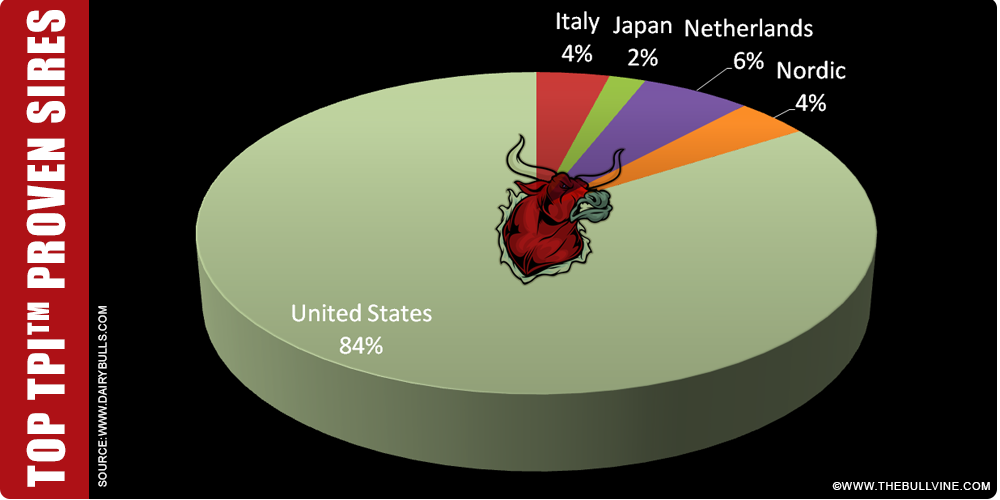

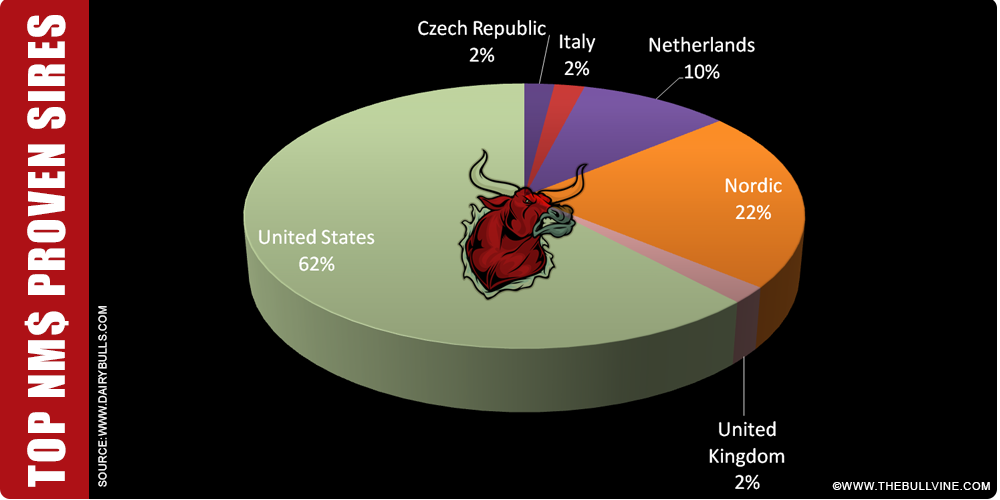
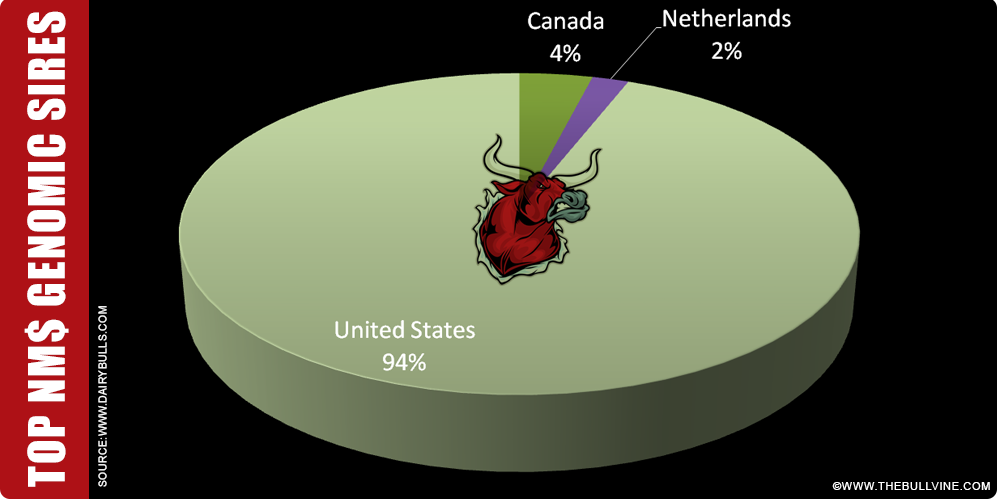
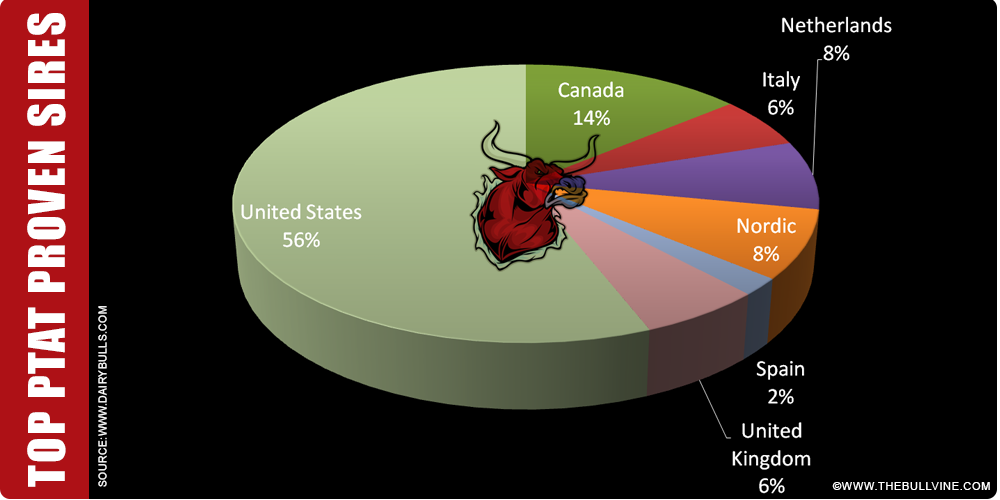
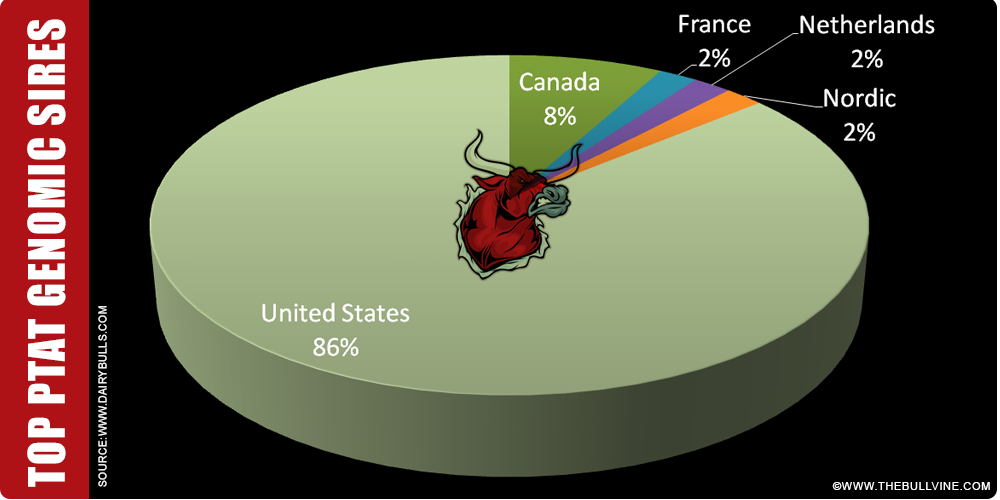
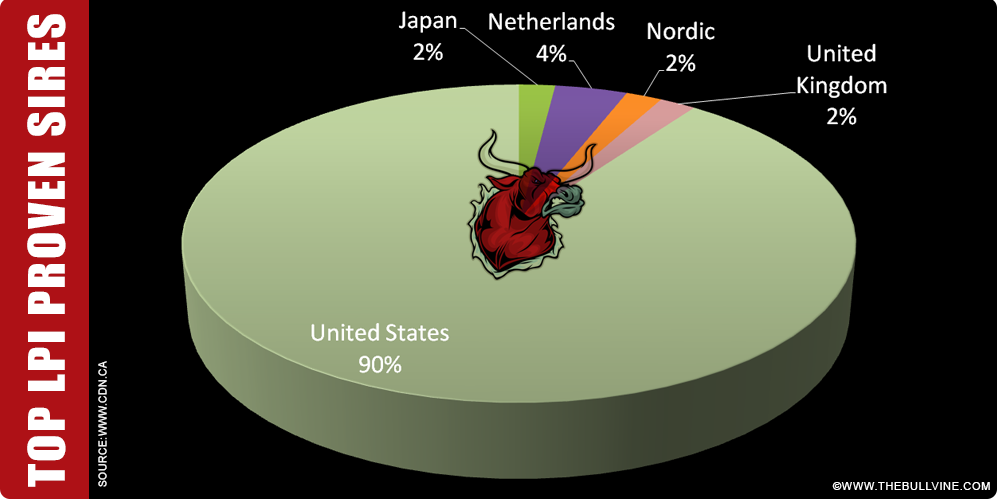
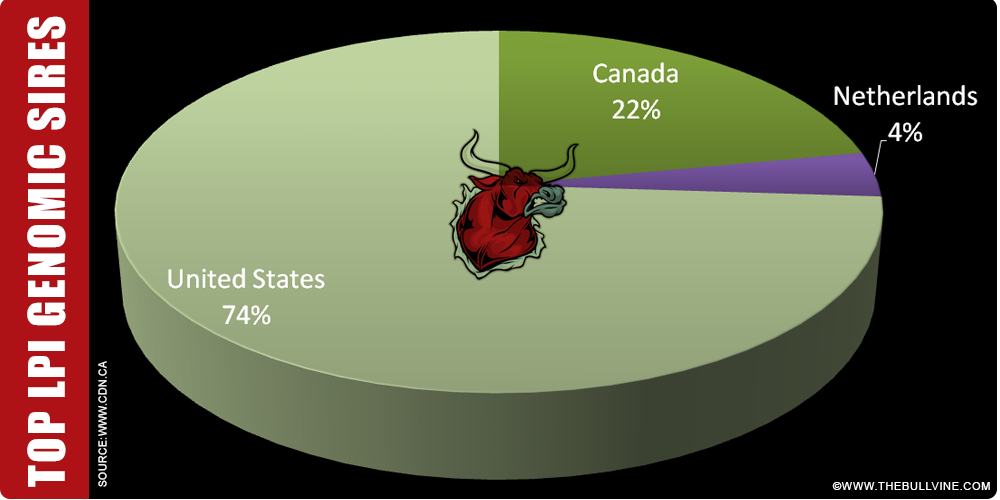
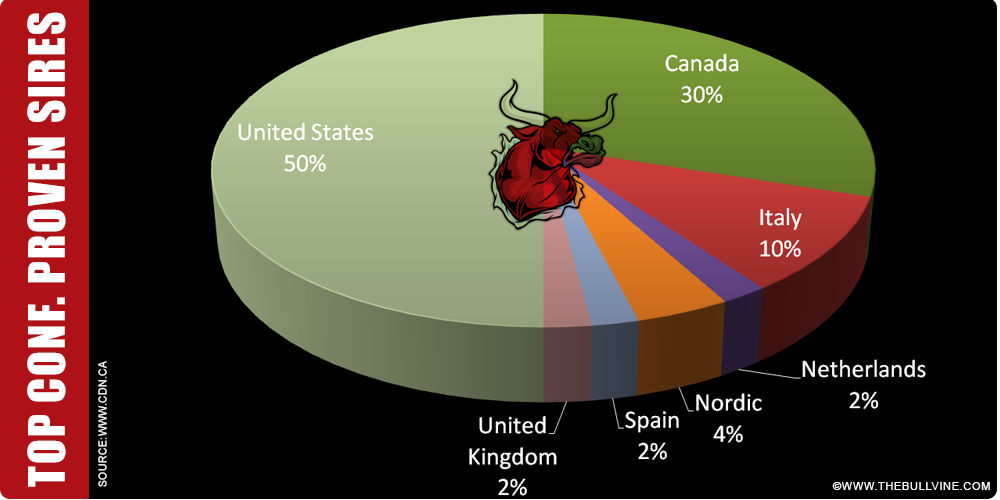
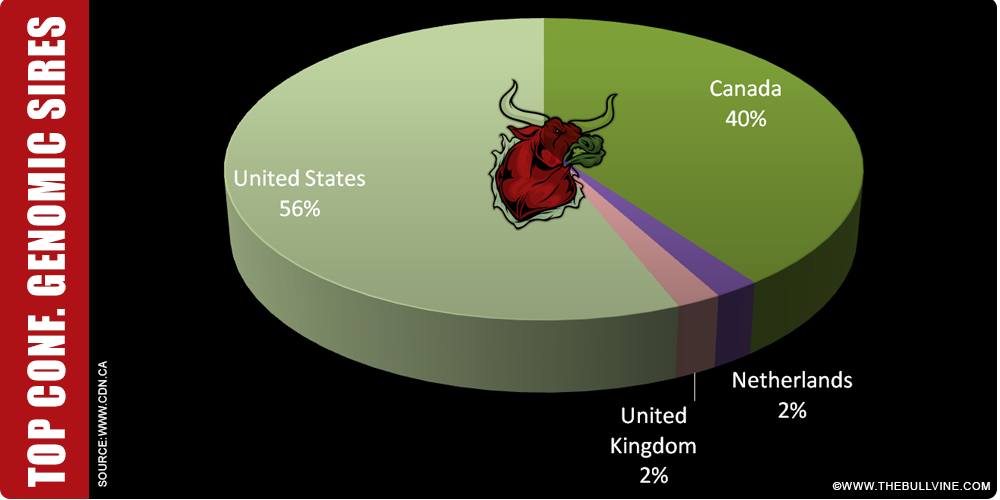

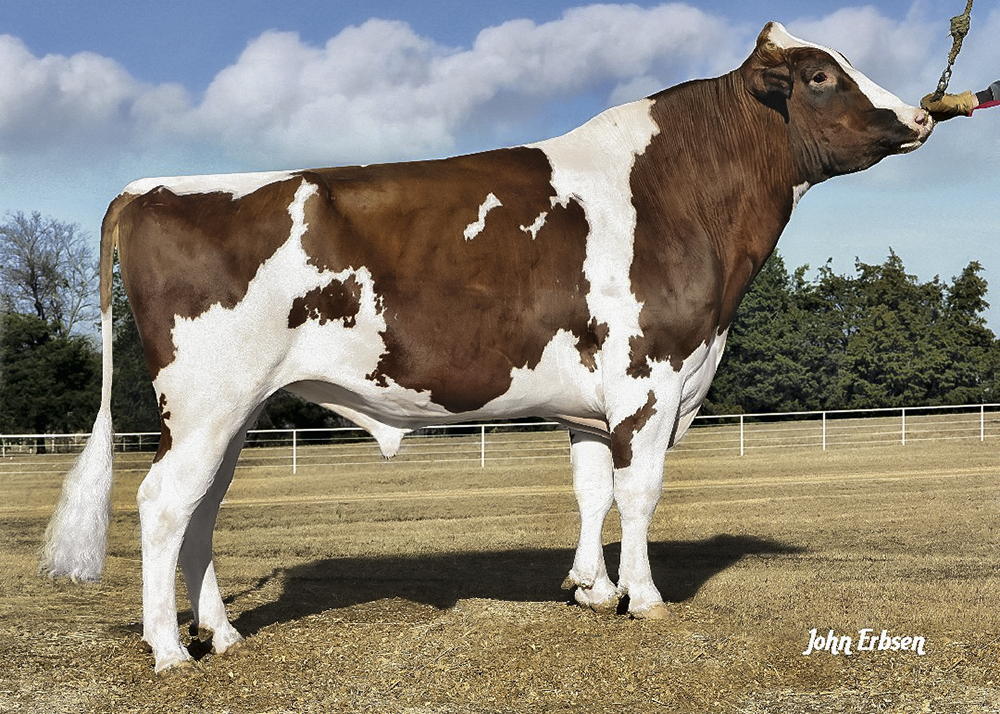
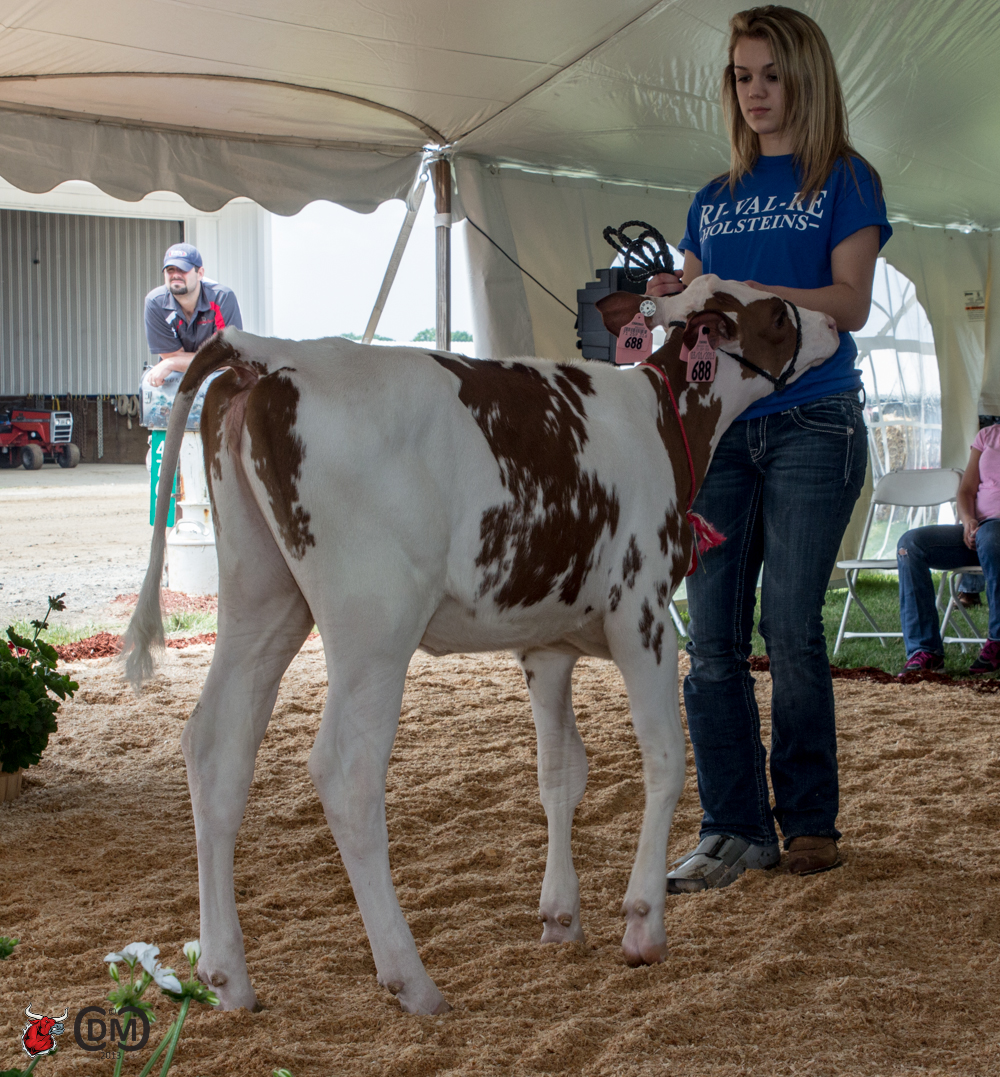
.jpg)
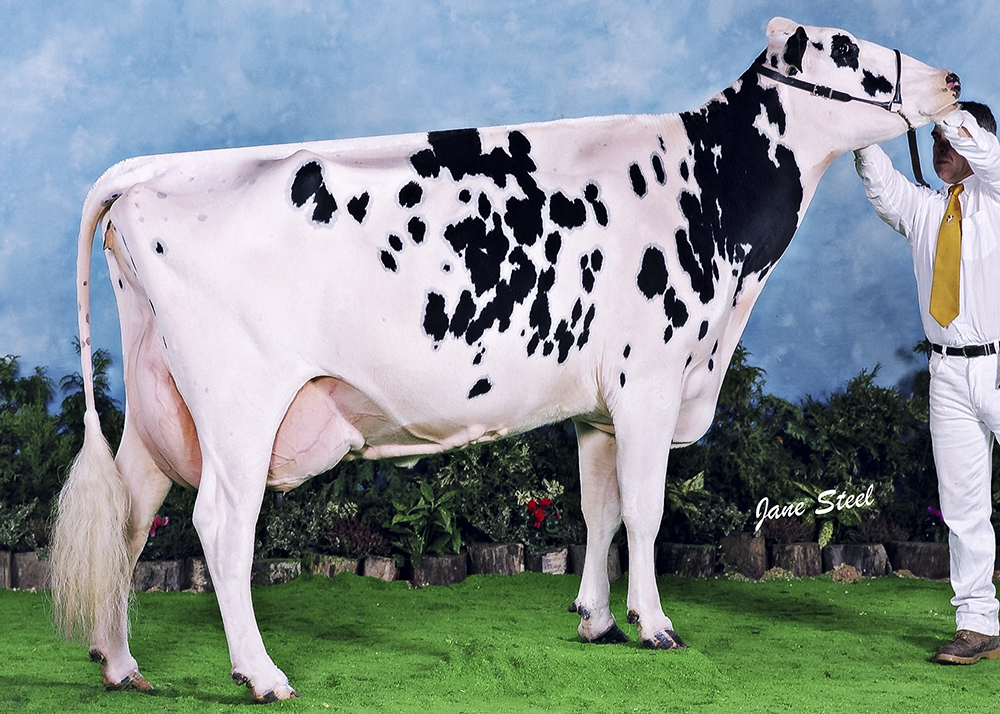
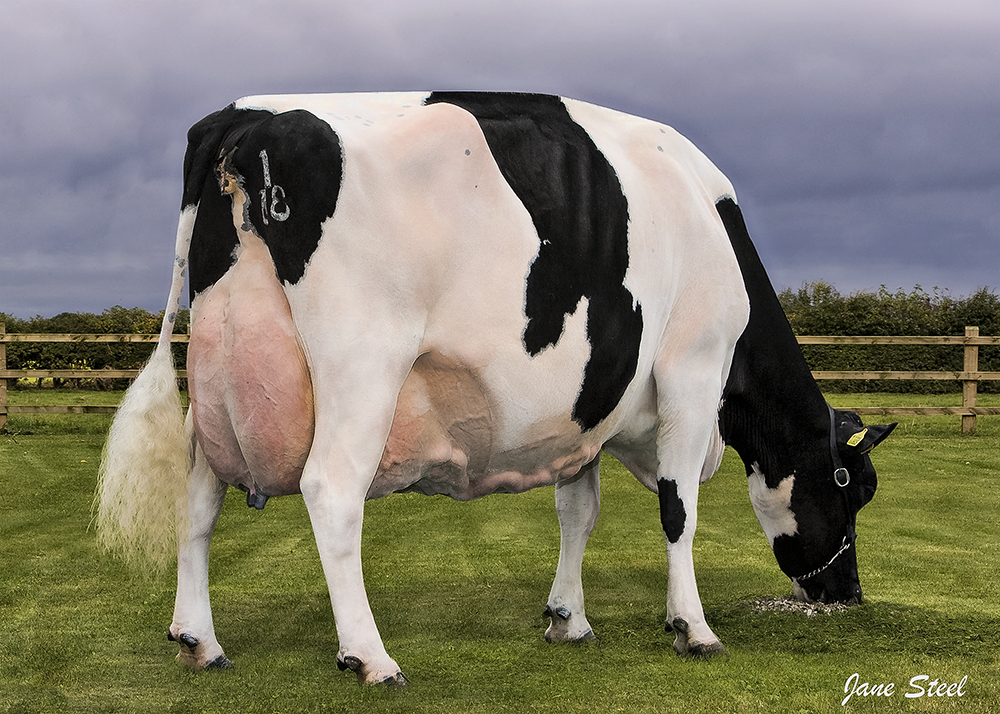
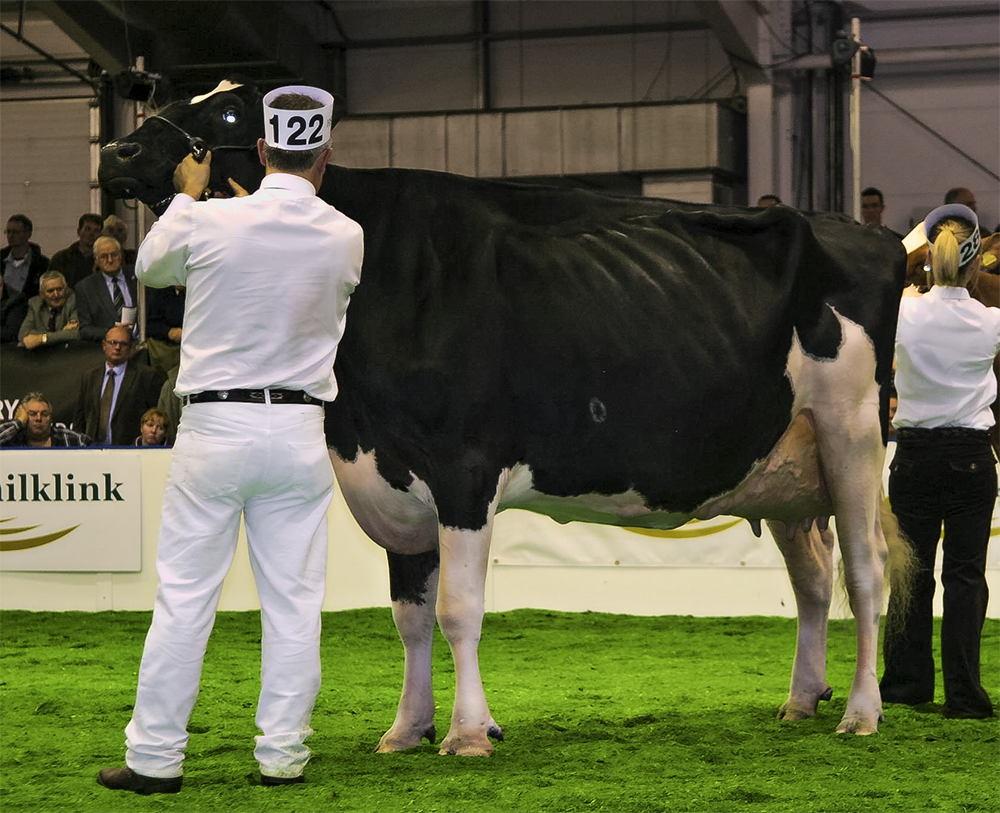
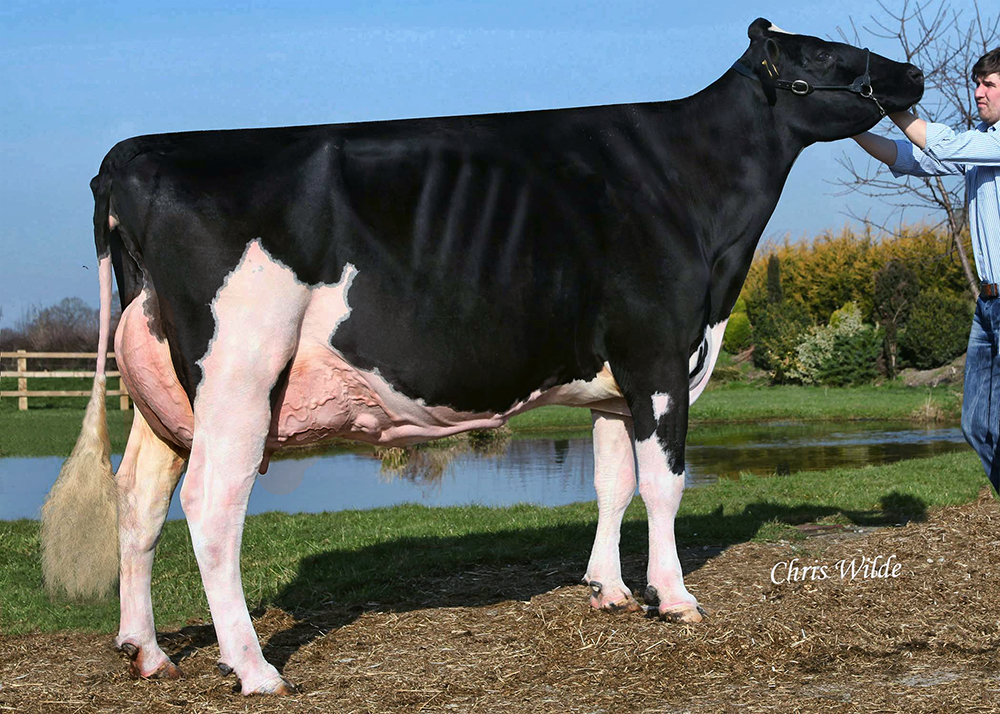
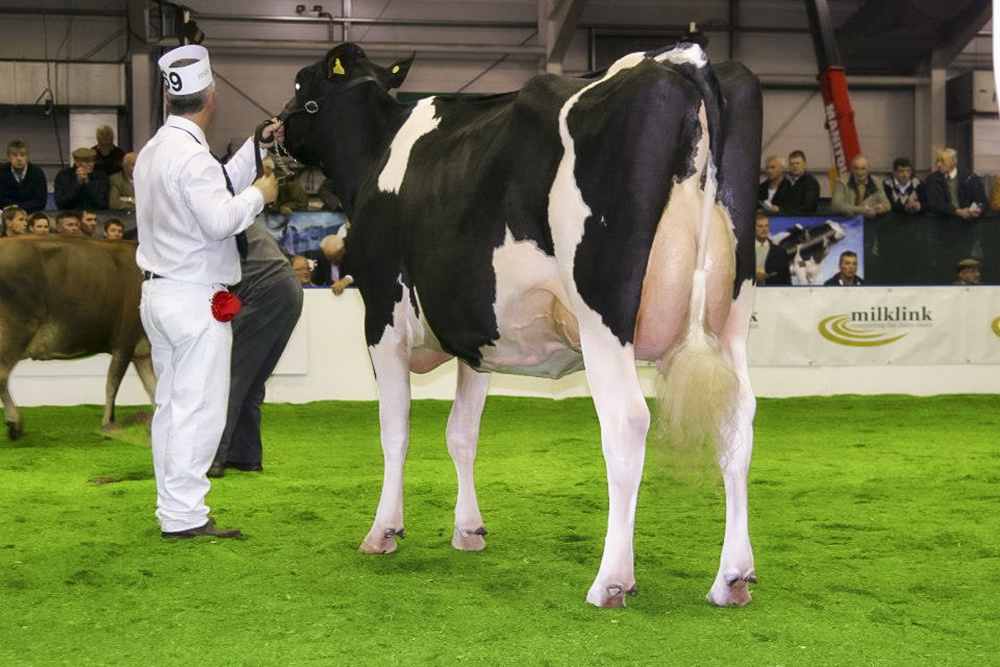
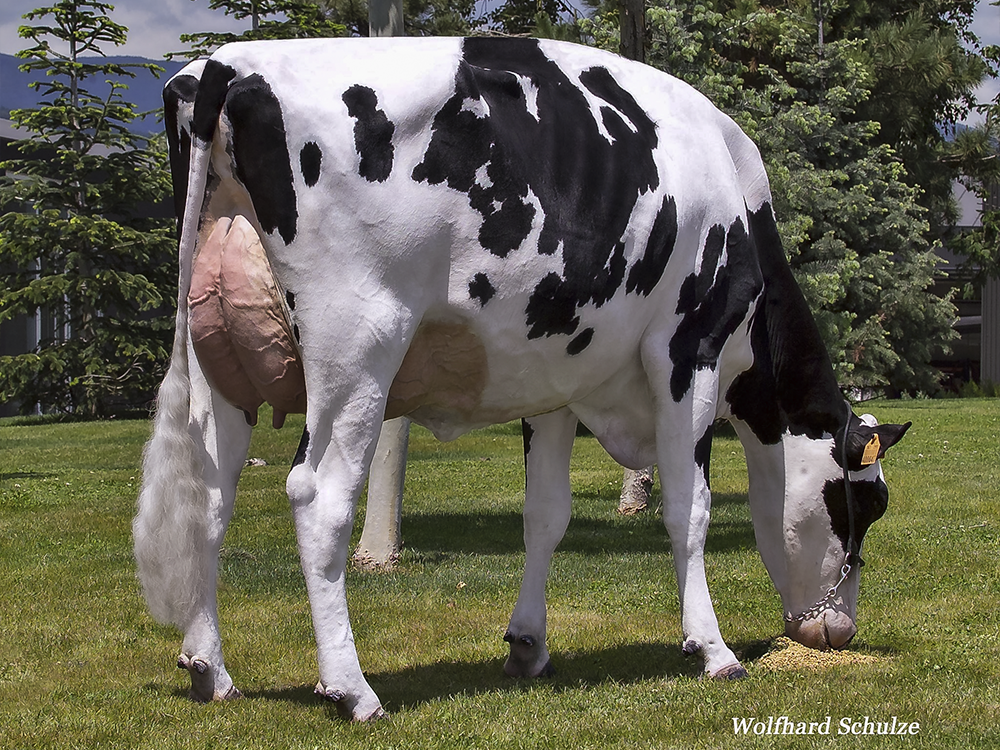
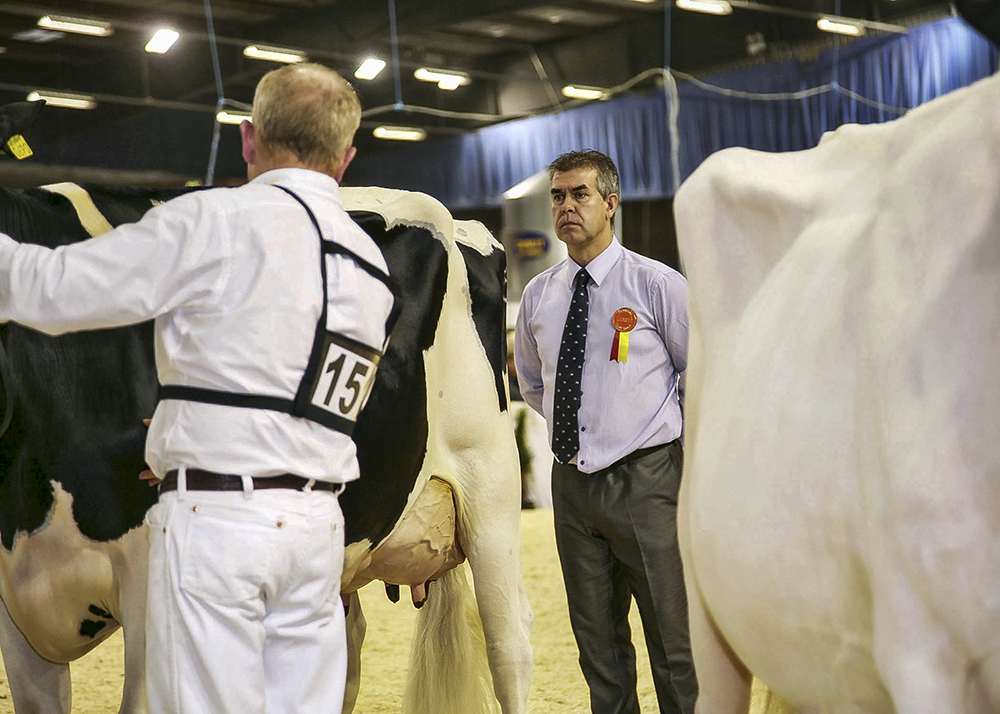
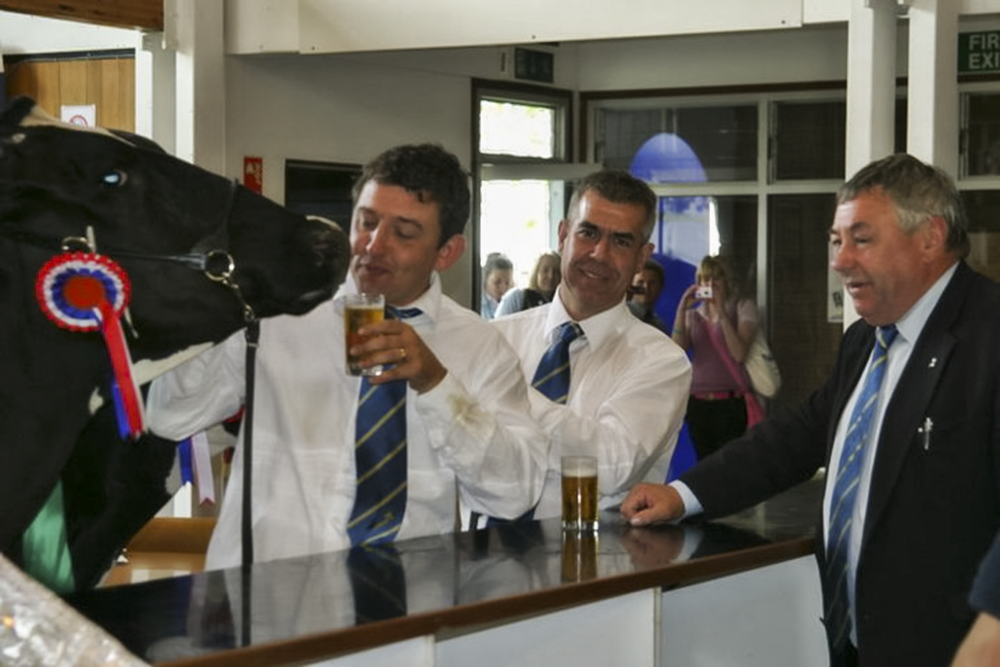
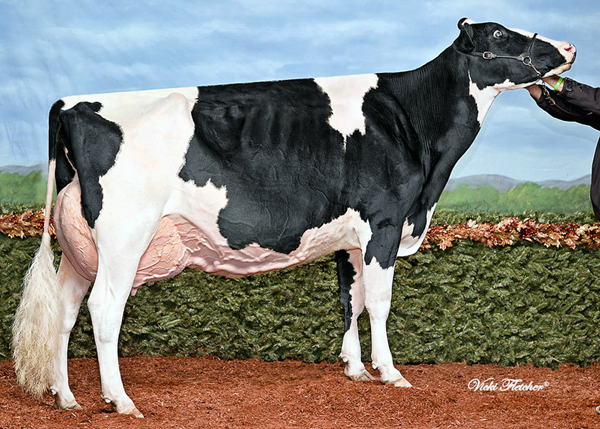
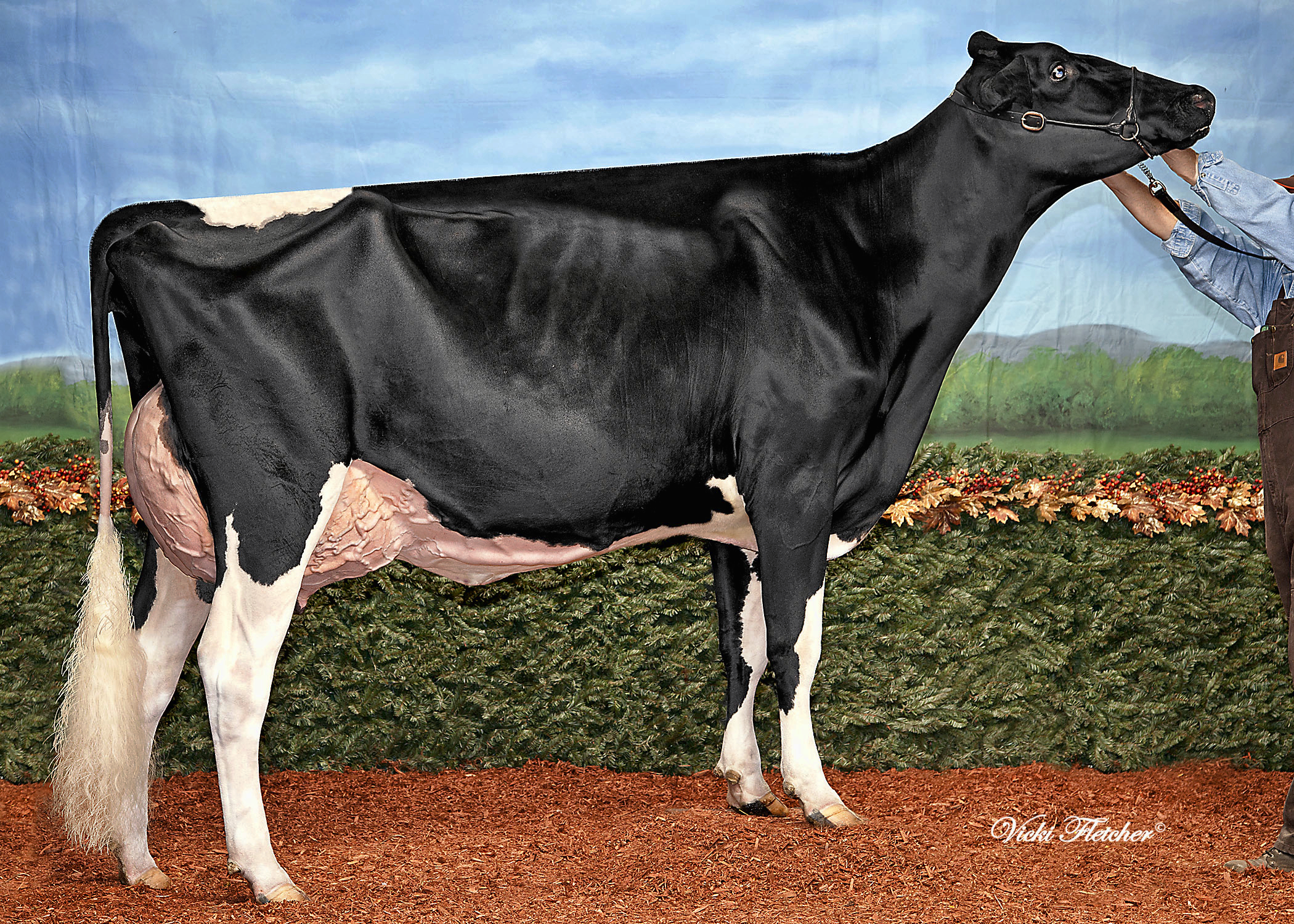

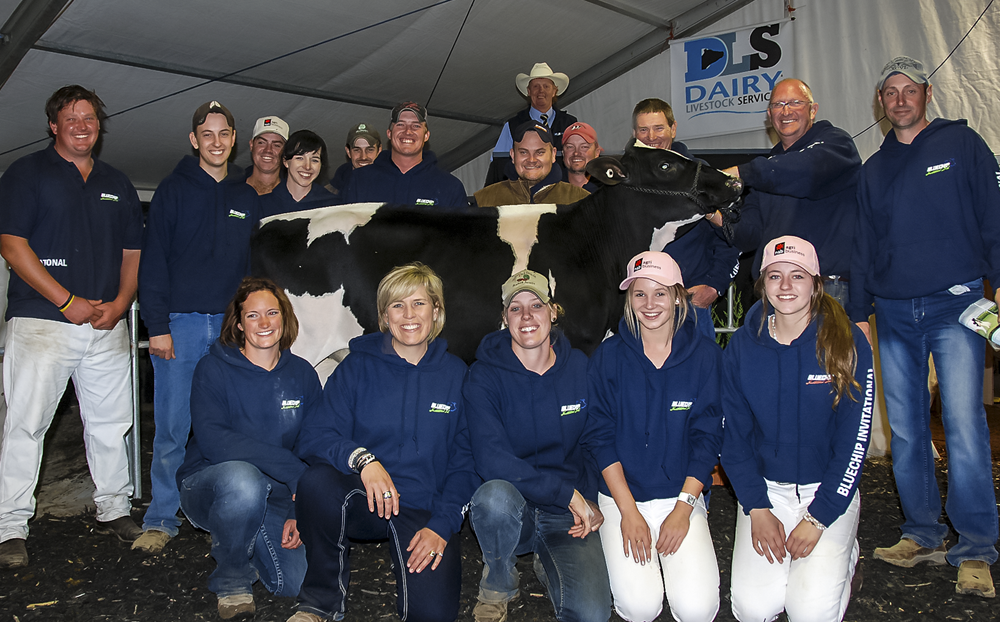
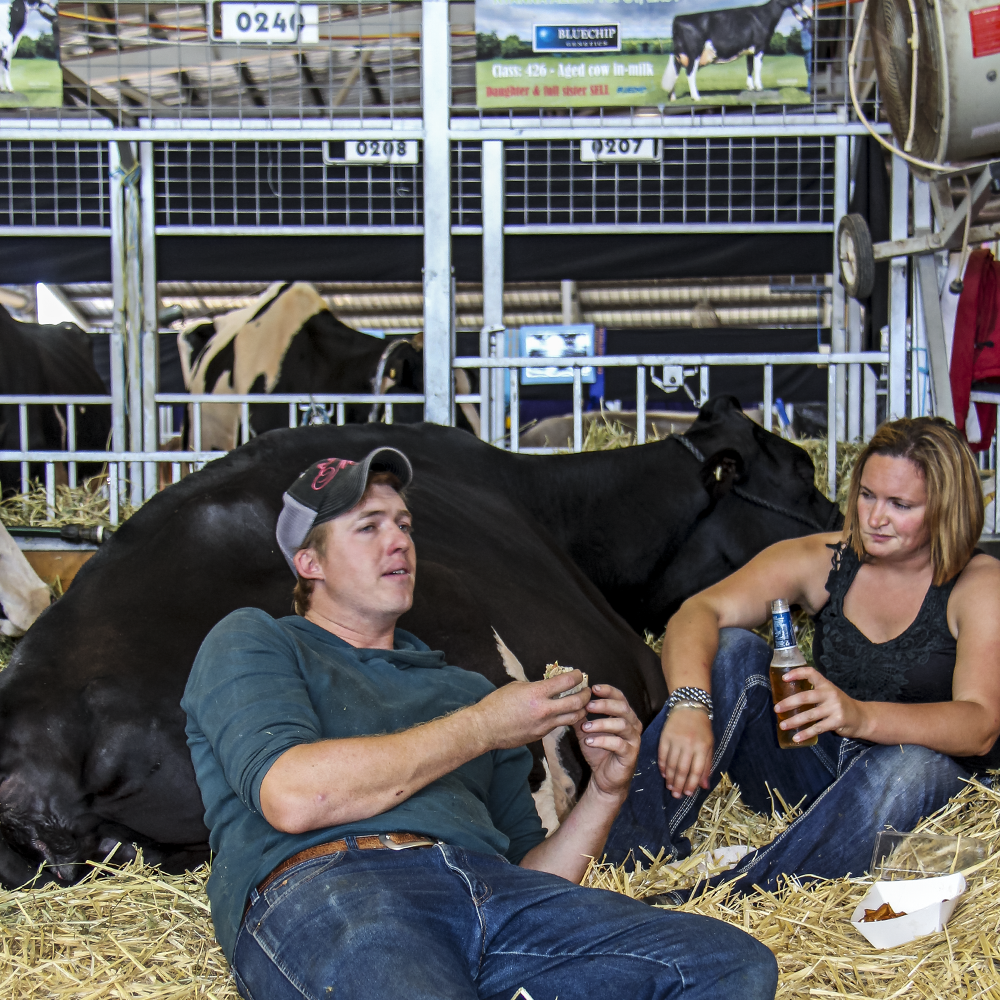

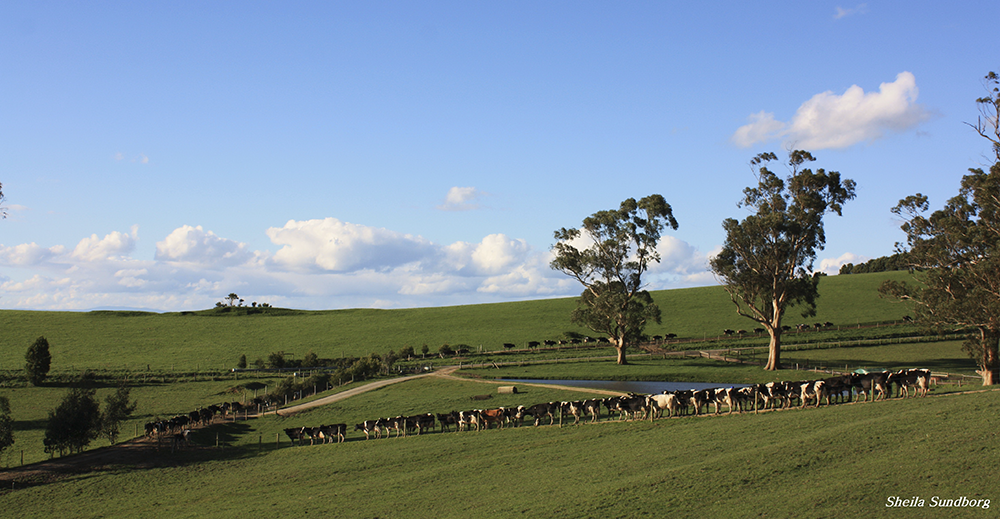

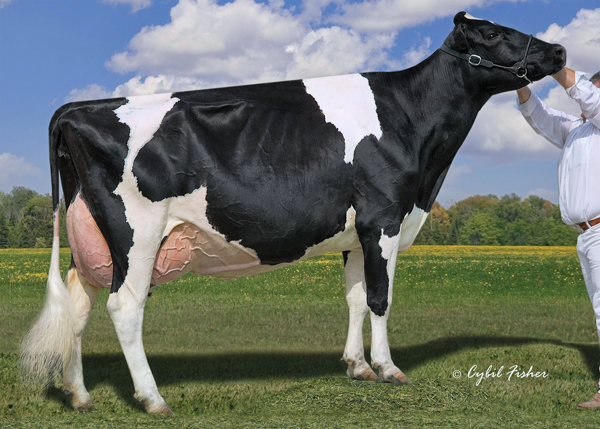
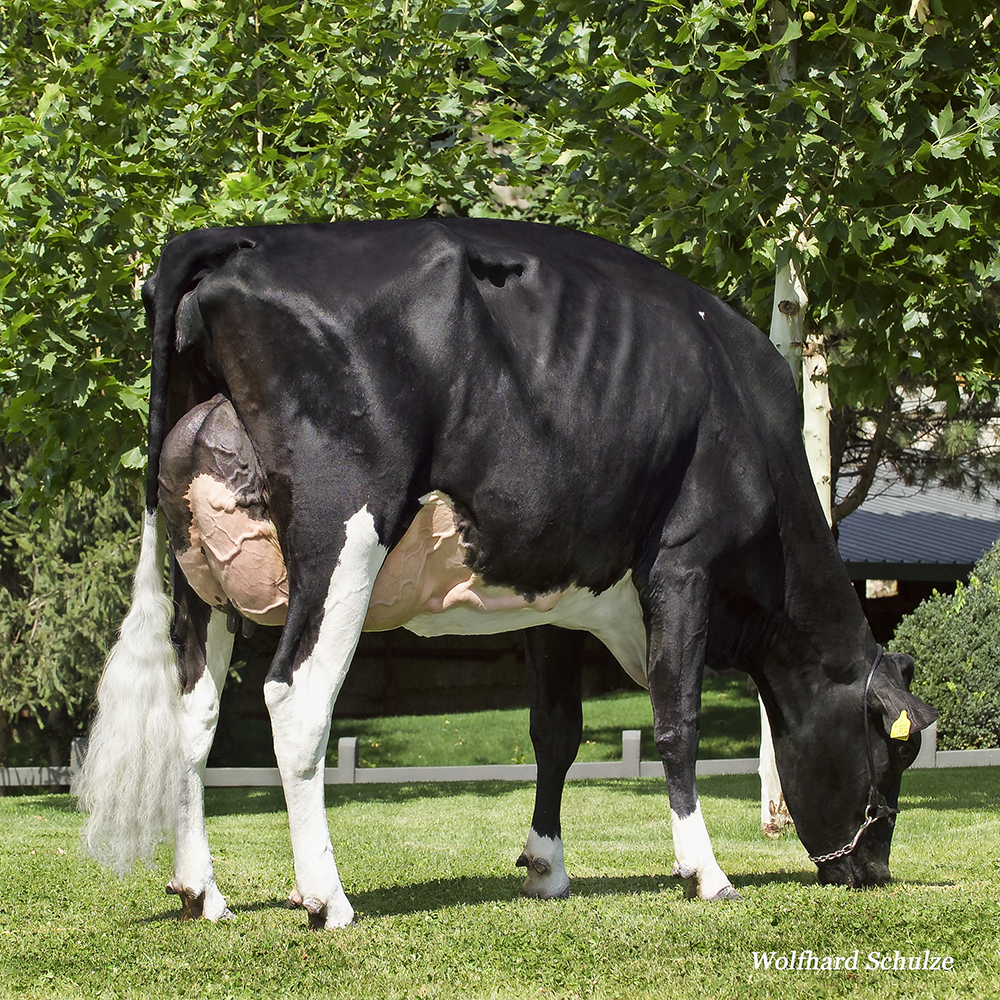
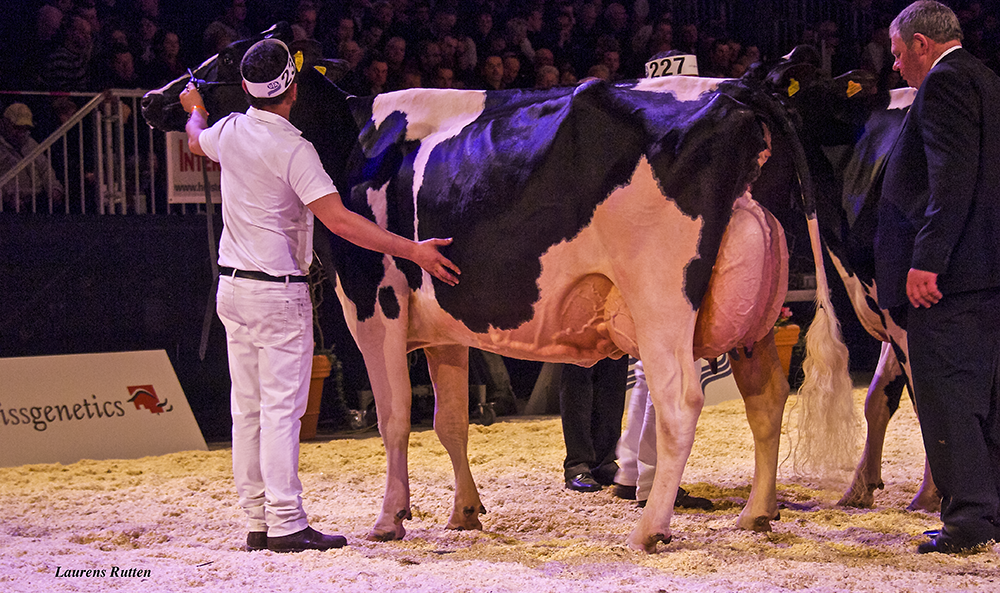
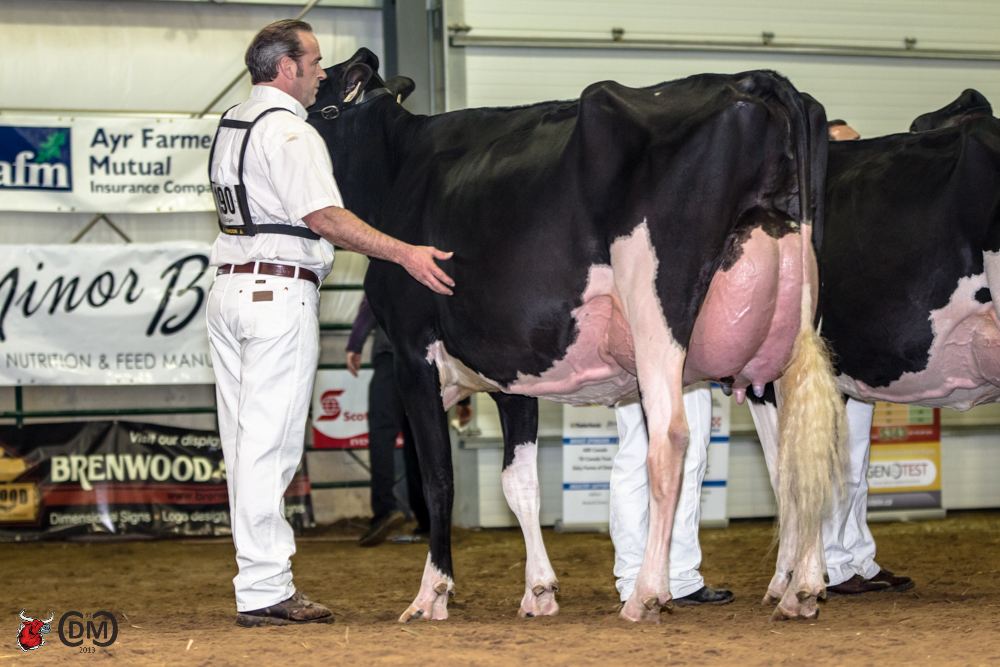

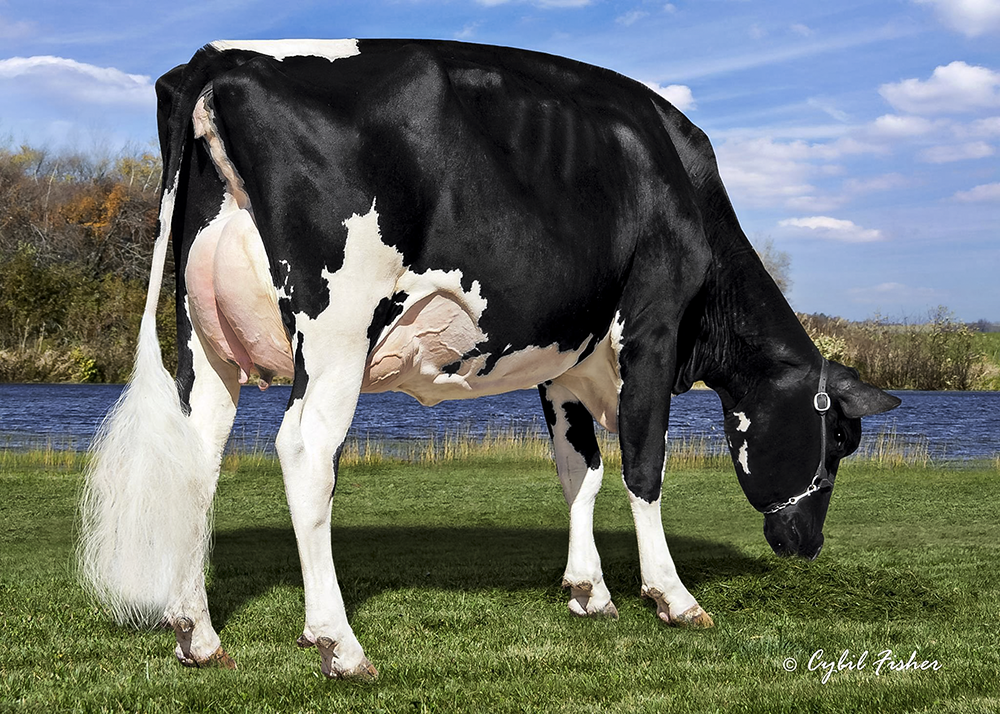
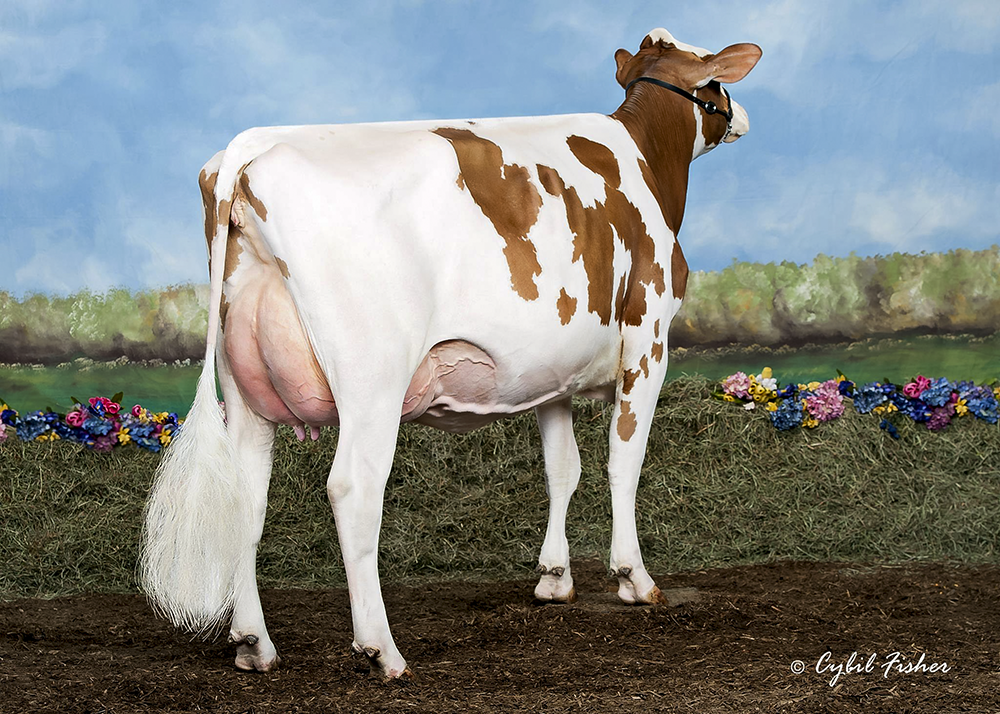
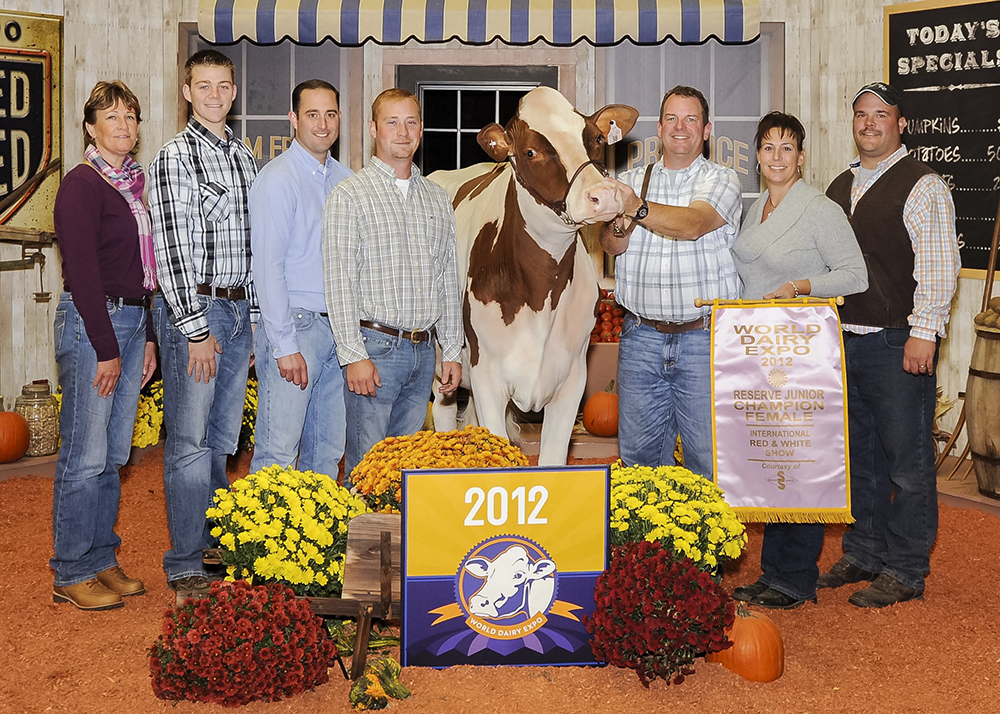
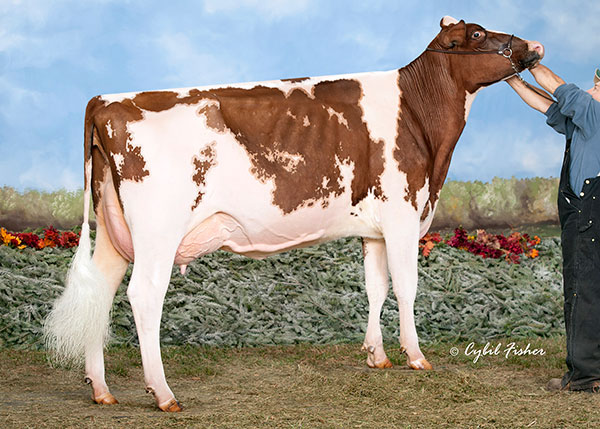
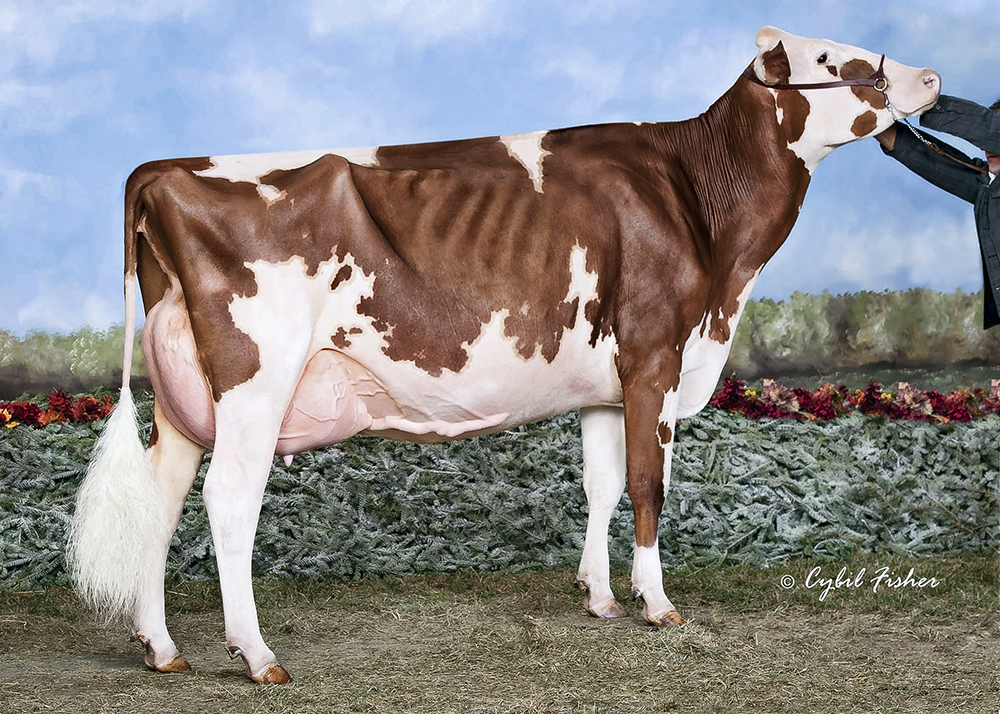

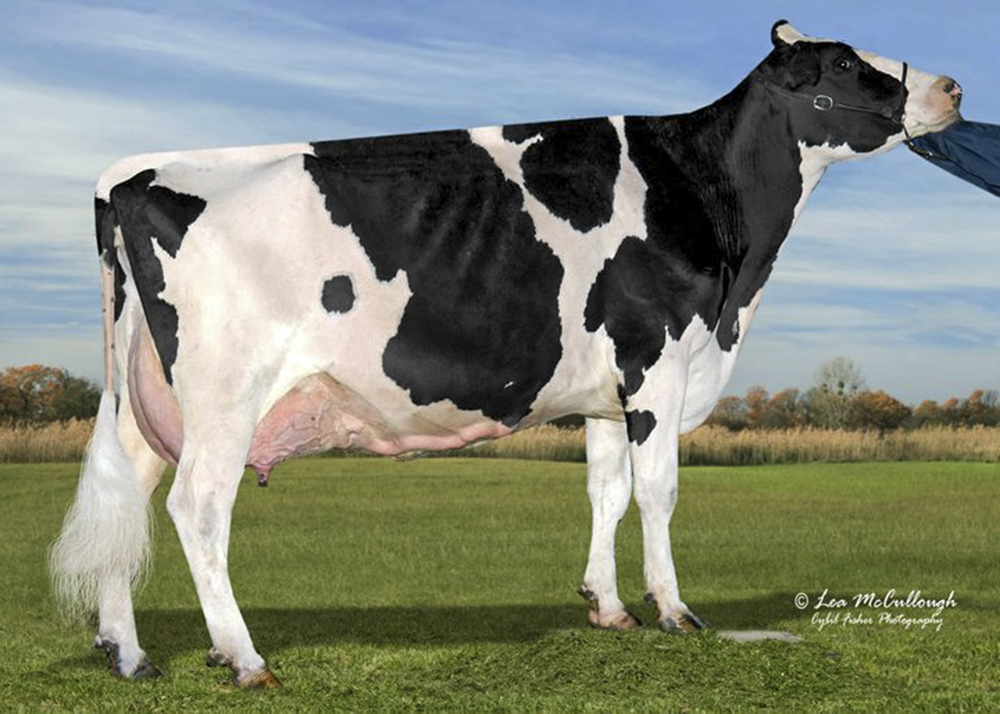
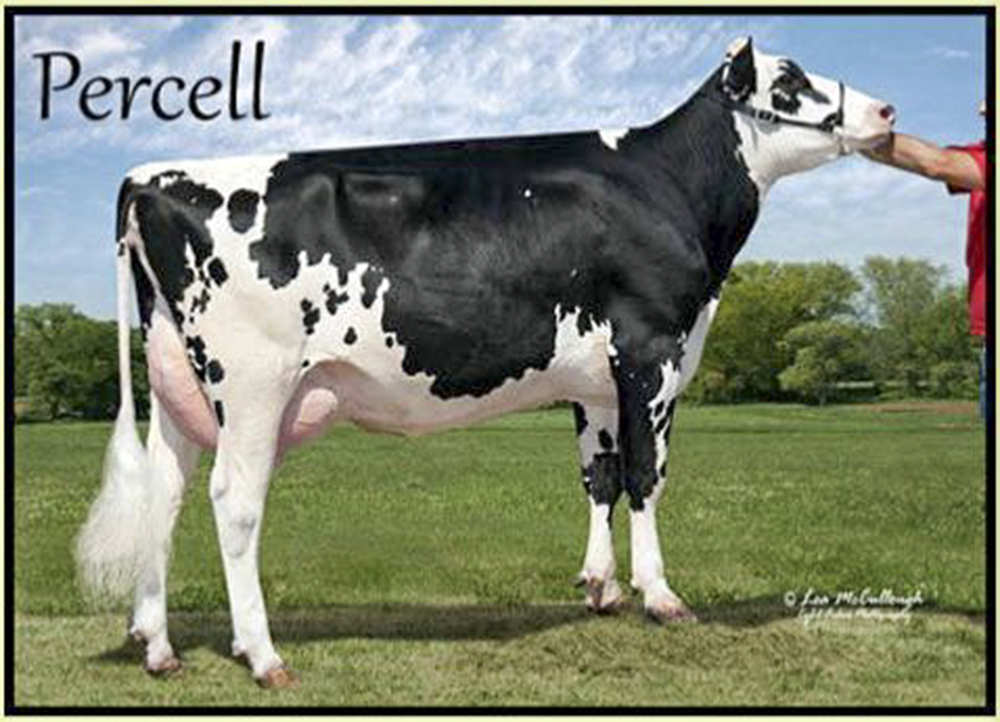


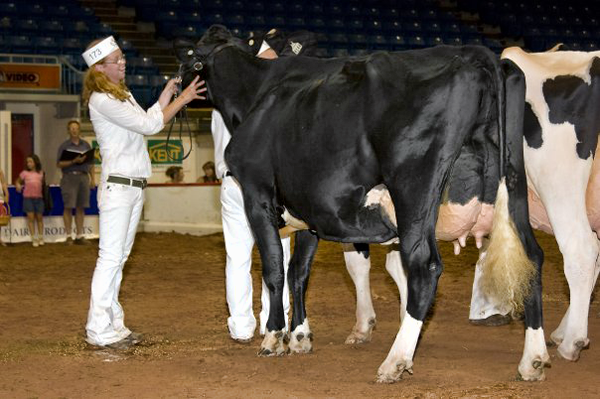
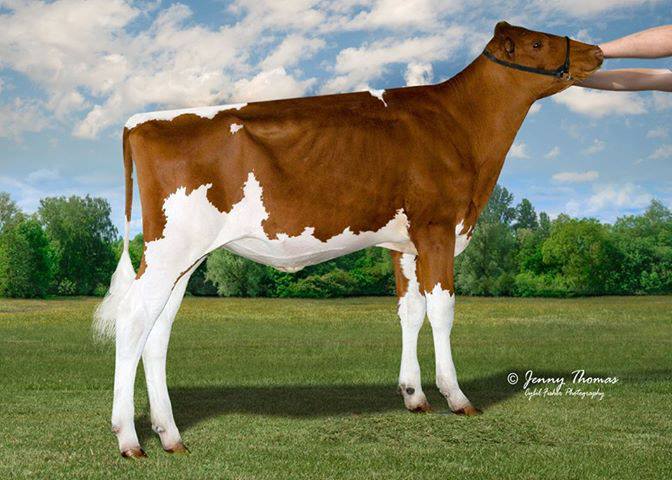
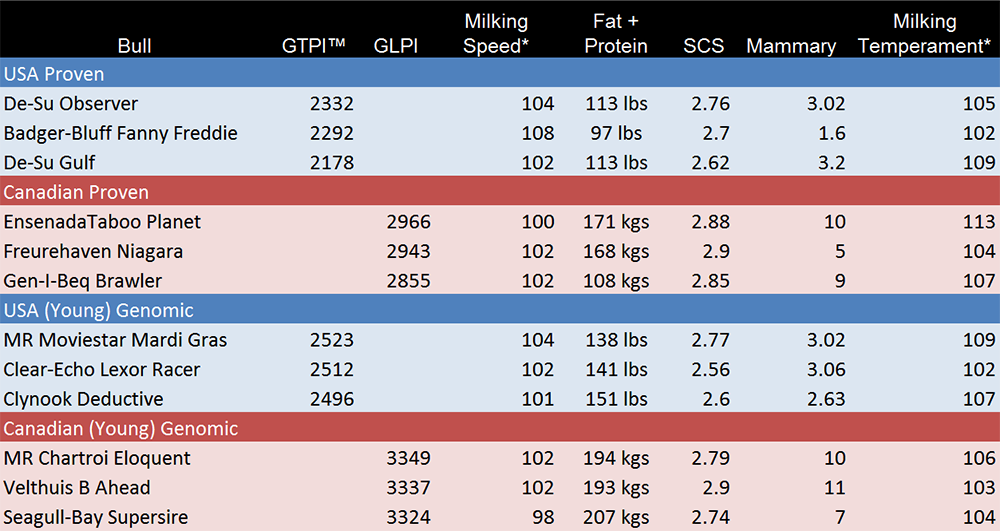
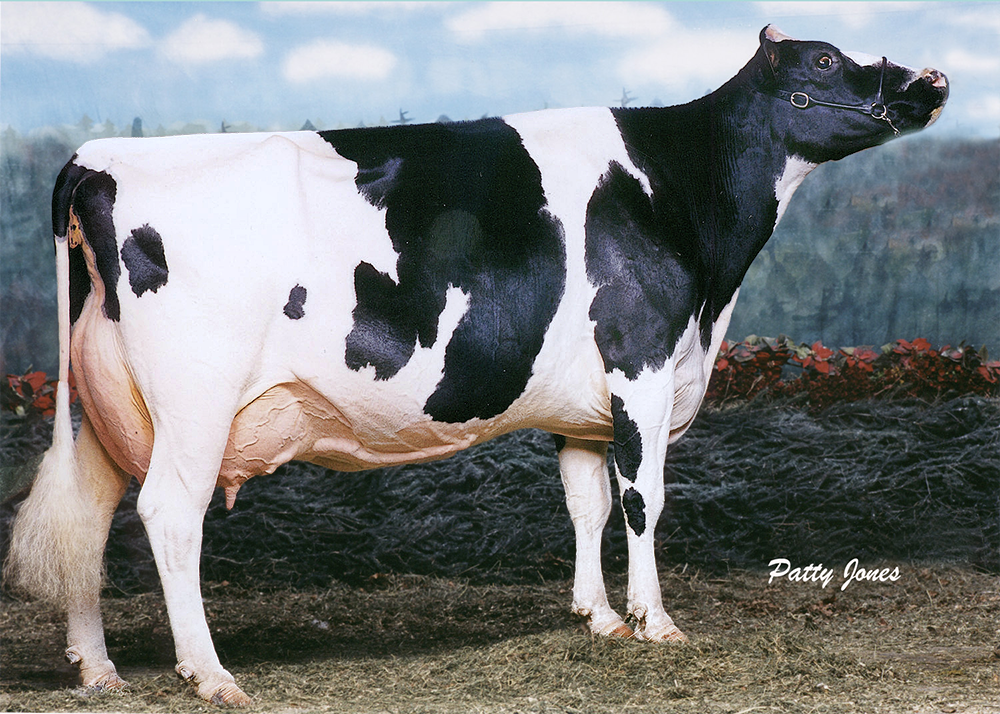
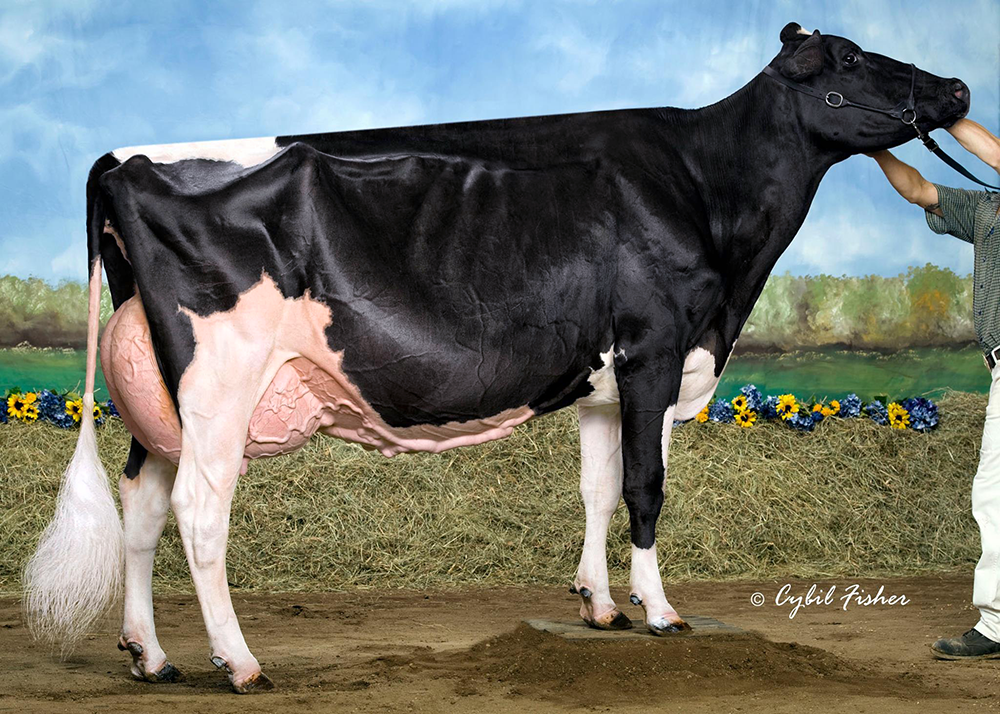
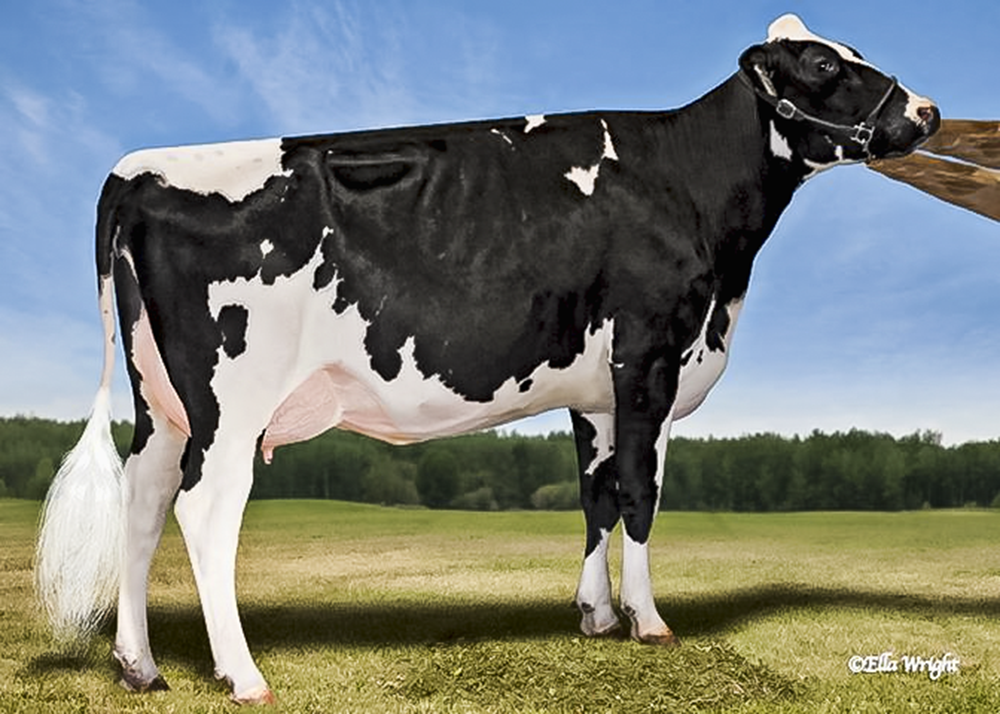
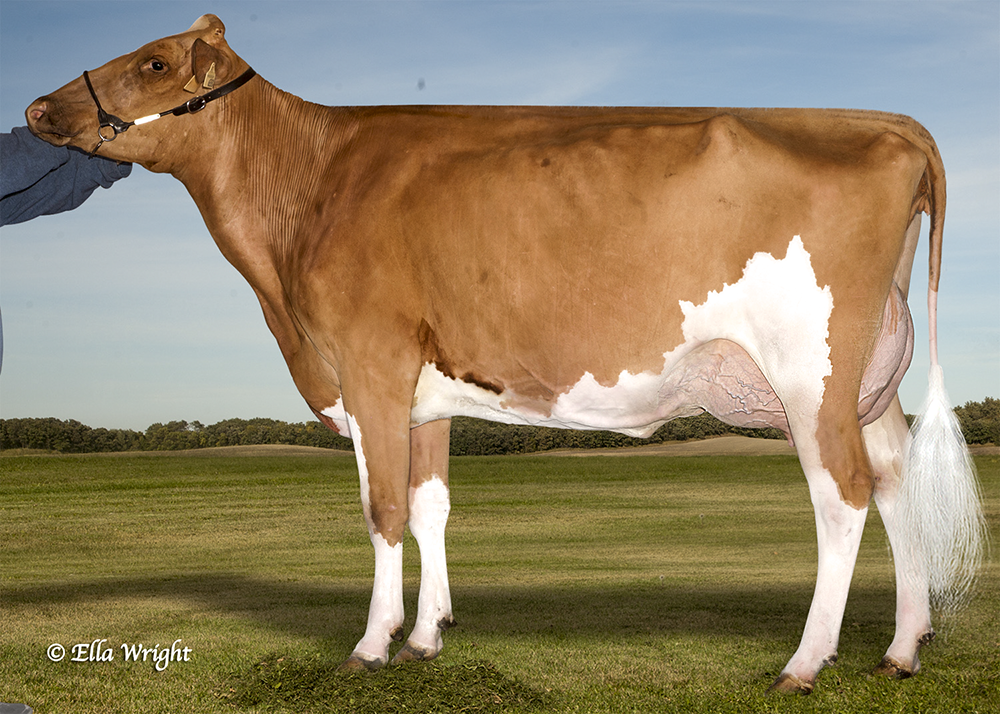
![RAINYRIDGE_cover[1]](https://www.thebullvine.com/wp-content/uploads/2013/06/RAINYRIDGE_cover1.jpg)



 MISunderstood
 MISinformation
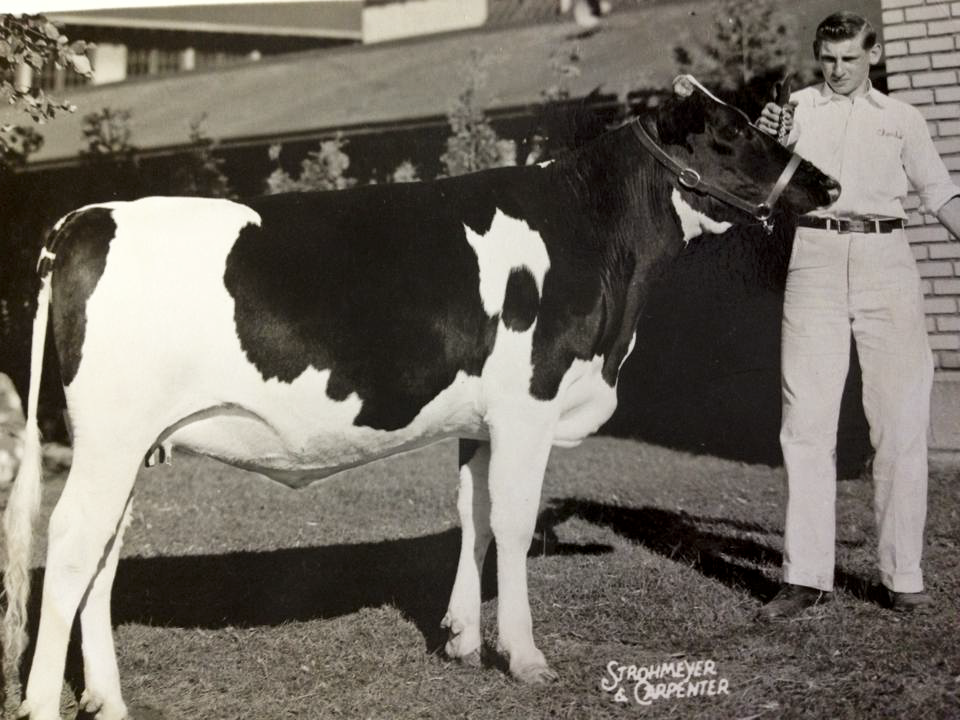
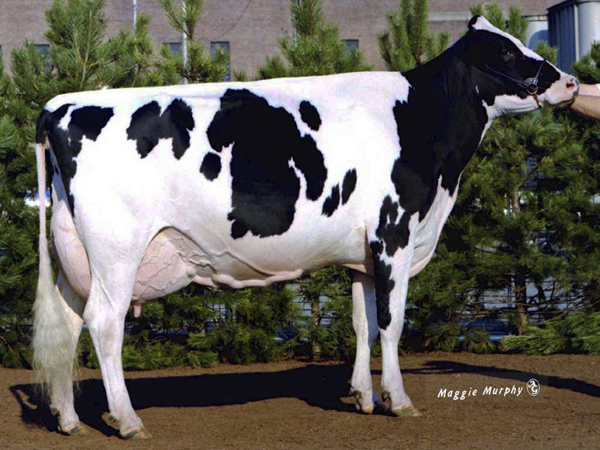
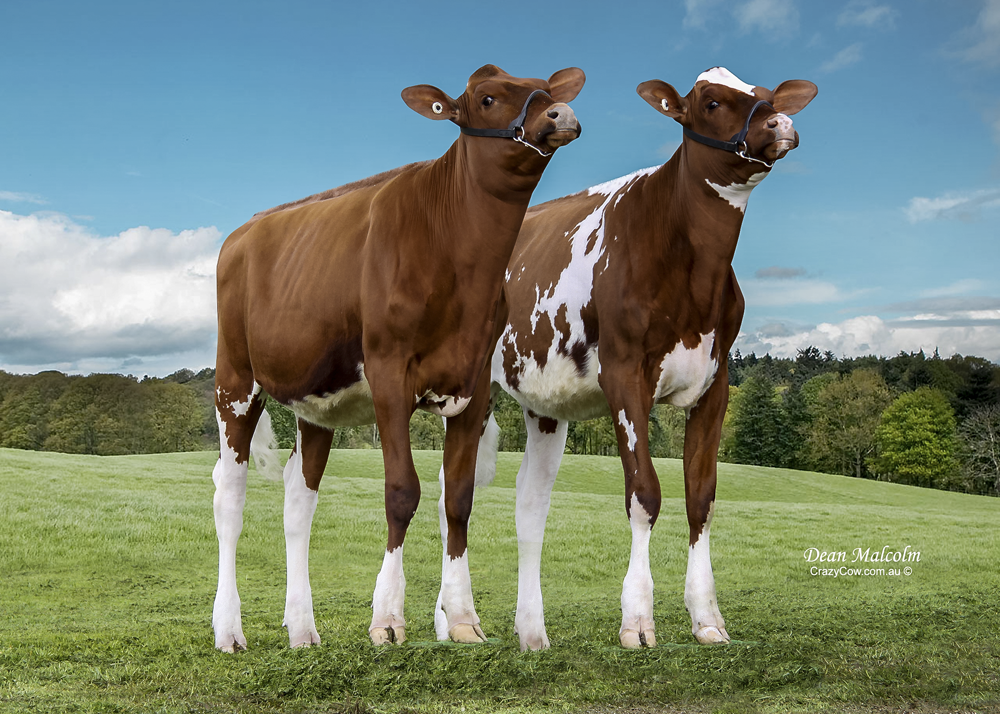

 Glen has great respect for people in the barn and in the Board Room. It has served him well and been returned to him. He highlights his experiences while at the Holstein Canada Board table. “This enriching experience at the Board table has helped me develop an attitude of respect towards people and their opinions. People remember how you treat them and how you make them feel, longer than what you said. The most important ingredient of success is knowing how to get along with people.”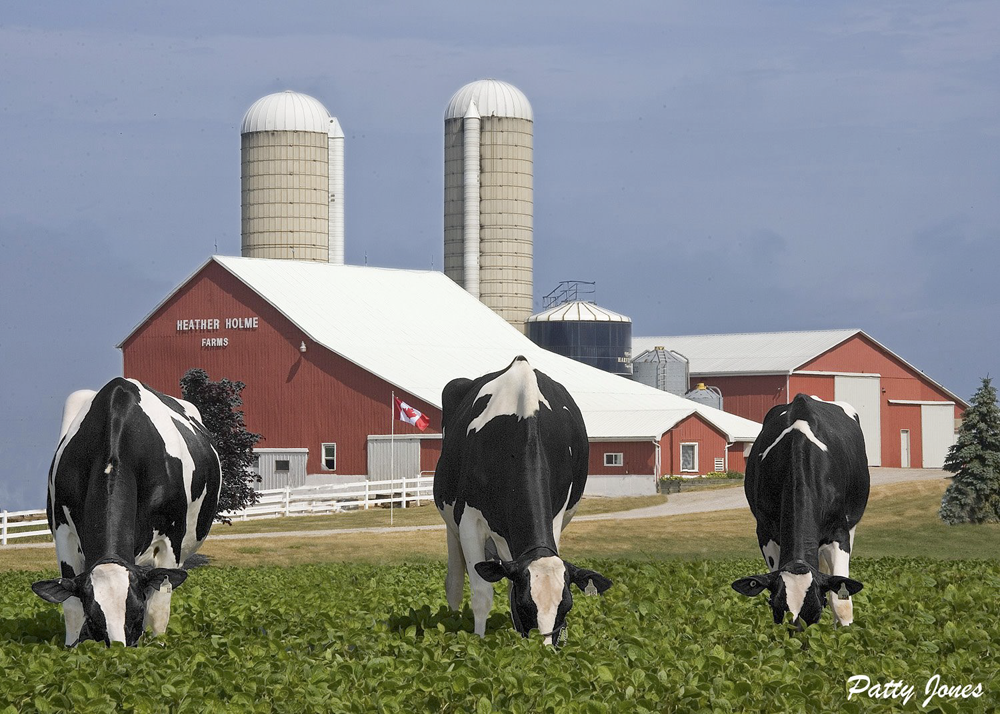
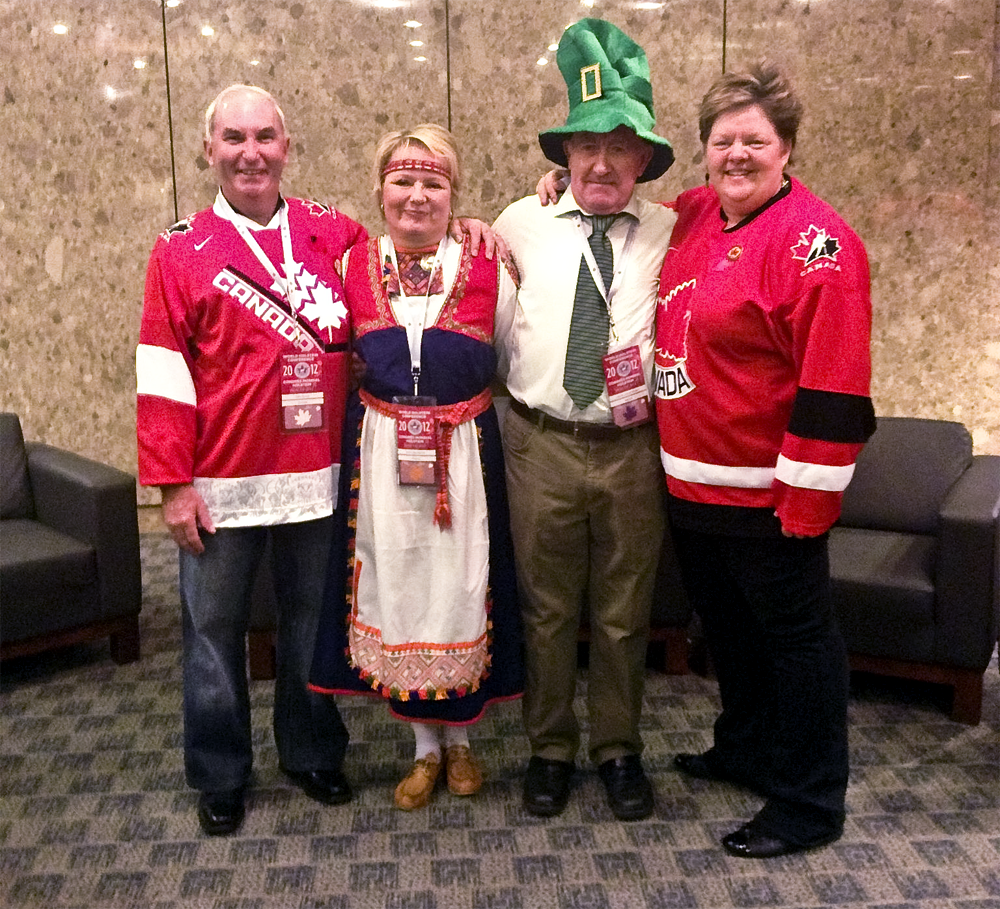
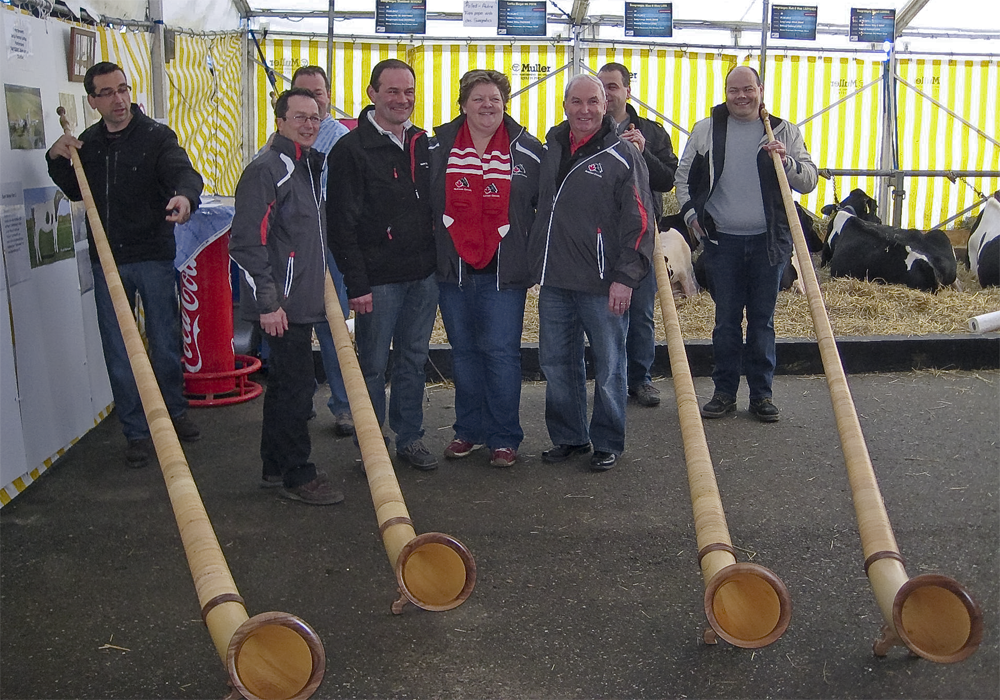

![08-001f1[1]](https://www.thebullvine.com/wp-content/uploads/2013/05/08-001f11.jpg) The ability of the calf to absorb colostrum decreases with time. By 9 hours after birth the calf can only absorb half of the colostrum. By 24 hours the amount absorbed is minimal.
The ability of the calf to absorb colostrum decreases with time. By 9 hours after birth the calf can only absorb half of the colostrum. By 24 hours the amount absorbed is minimal.
![sidney-crosby-alex-ovechkin-game-7[1]](https://www.thebullvine.com/wp-content/uploads/2013/05/sidney-crosby-alex-ovechkin-game-71.jpg) Due to the lockout of 2004-2005, Sidney Crosby and Alexander Ovechkin both entered the NHL in the same year. At the time there was great debate about who was going to be the better player. Since then the stats would tell you that Ovechkin has been the better investment. He has 371 goals, 365 assists for 735 points, whereas Crosby has had 238 goals, 427 assists for 665 points. However, sometimes numbers don’t tell the whole story. Even though Ovechkin has won more individual awards (Rookie of the Year, 2x NHL goal scoring leader, 2x most valuable player, vs. 1 MVP and 1 scoring title for Crosby), ask any NHL player which one is better and they would tell you that Crosby is by far. That is because Crosby not only puts up numbers himself but he also makes the players around him raise their level of play. For example, before playing on a line with Crosby, Chris Kunitz highest goal total was 26 in an 82 game season. This year, playing with Crosby he had 22 in the shortened 48 game season. That is an almost 50% increase. This outstanding ability to inspire others around him has resulted in Crosby having played more playoff games than Ovechkin and has already won a Stanley Cup in his career.
Due to the lockout of 2004-2005, Sidney Crosby and Alexander Ovechkin both entered the NHL in the same year. At the time there was great debate about who was going to be the better player. Since then the stats would tell you that Ovechkin has been the better investment. He has 371 goals, 365 assists for 735 points, whereas Crosby has had 238 goals, 427 assists for 665 points. However, sometimes numbers don’t tell the whole story. Even though Ovechkin has won more individual awards (Rookie of the Year, 2x NHL goal scoring leader, 2x most valuable player, vs. 1 MVP and 1 scoring title for Crosby), ask any NHL player which one is better and they would tell you that Crosby is by far. That is because Crosby not only puts up numbers himself but he also makes the players around him raise their level of play. For example, before playing on a line with Crosby, Chris Kunitz highest goal total was 26 in an 82 game season. This year, playing with Crosby he had 22 in the shortened 48 game season. That is an almost 50% increase. This outstanding ability to inspire others around him has resulted in Crosby having played more playoff games than Ovechkin and has already won a Stanley Cup in his career.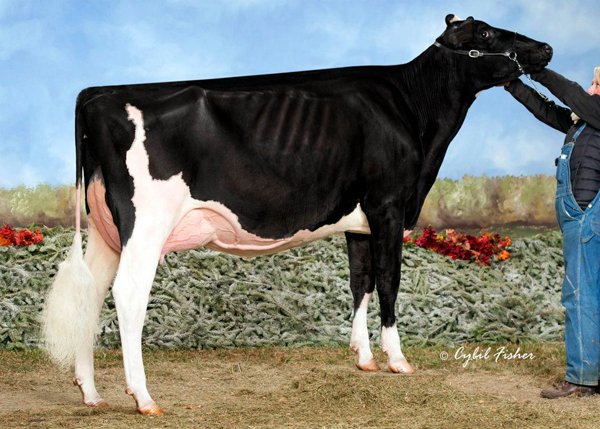

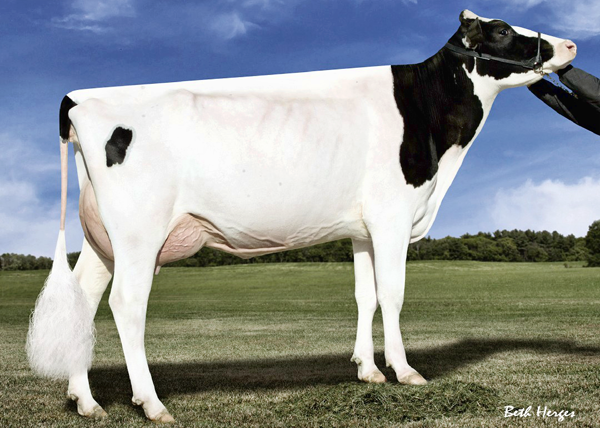
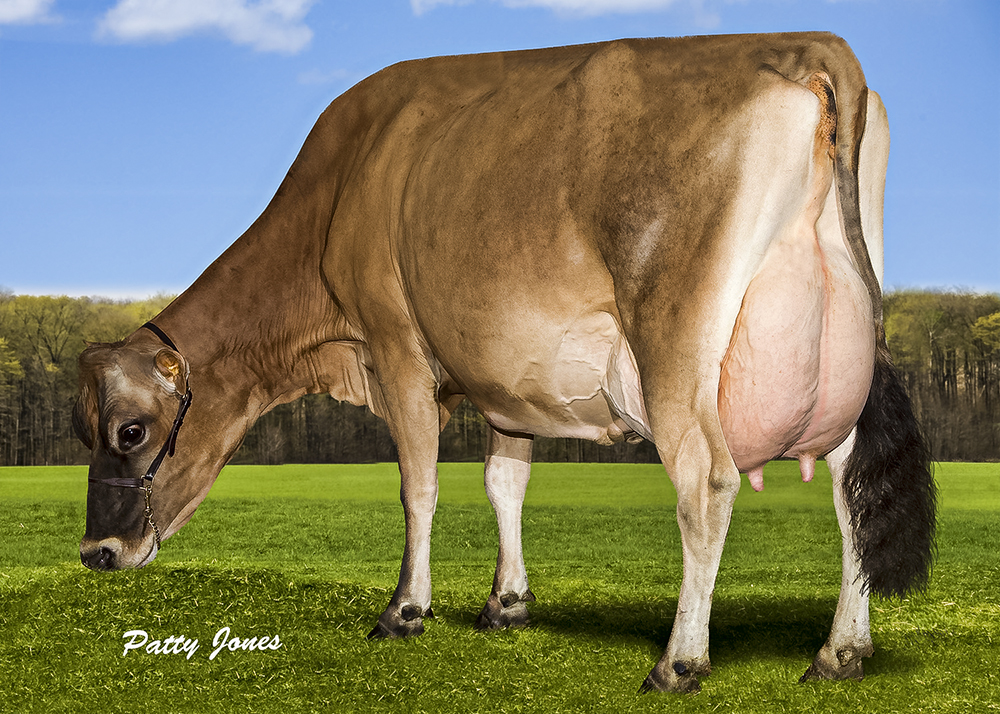
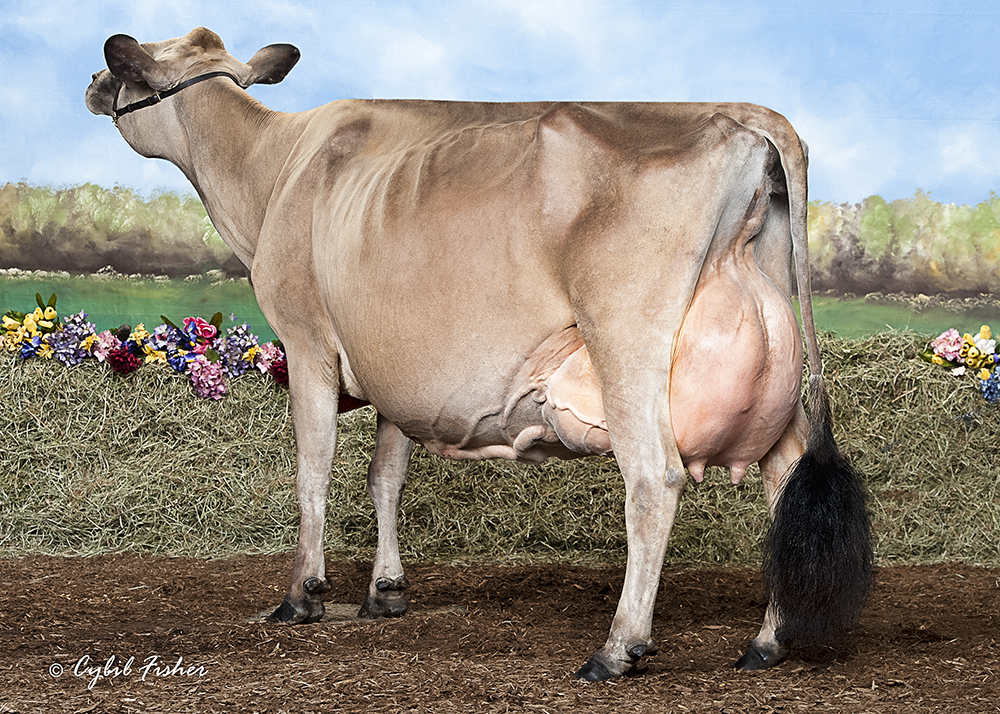
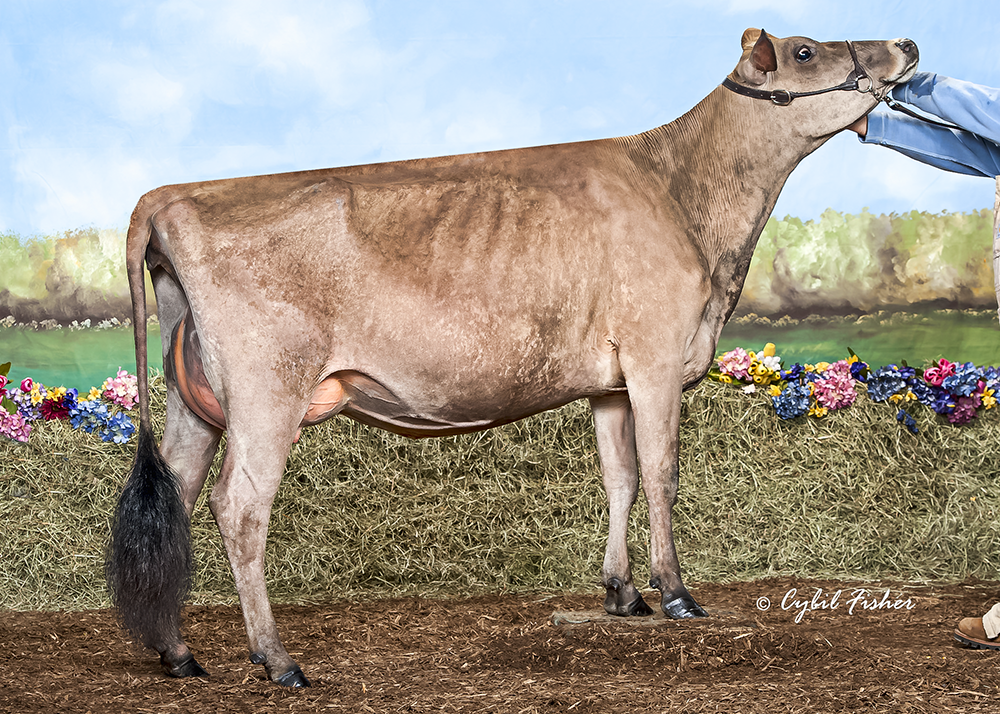
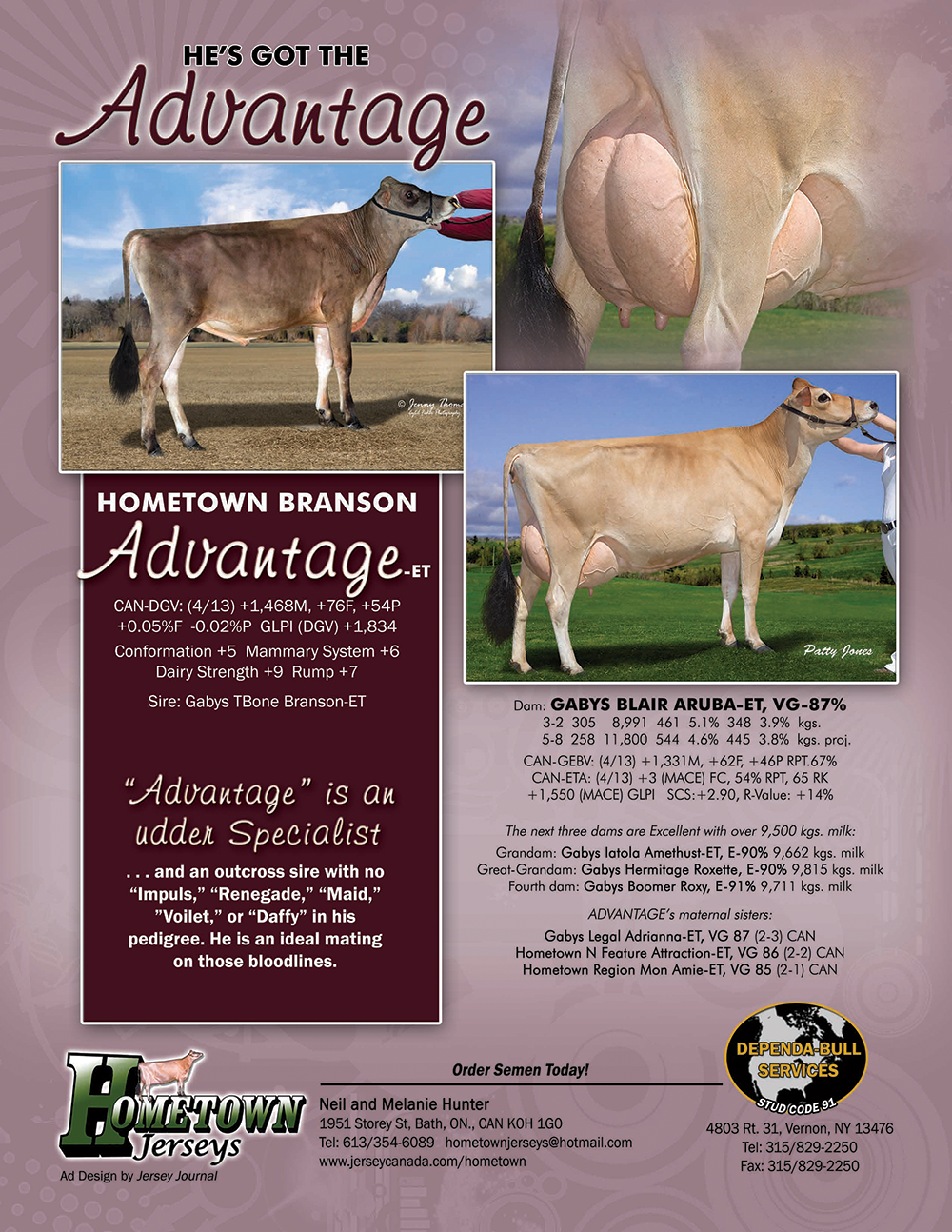
 In our recent analysis of what is selling at the Canadian Auction sales of 2013, we found that high genomic animals, (animals that are over 3,000 LPI) outsold all other animals by a whopping 61%. (Read more at