



Archive for summer conception rate

Two Clocks, One Open Cow: Summer Fertility Fails Before the Preg Check Can See It

Heat can weaken an egg for weeks or months before breeding, and it hits the embryo hardest in its first few days. Here’s an audit that maps both windows, plus why the feed-bunk fix and the embryo-transfer pitch both need tougher math.
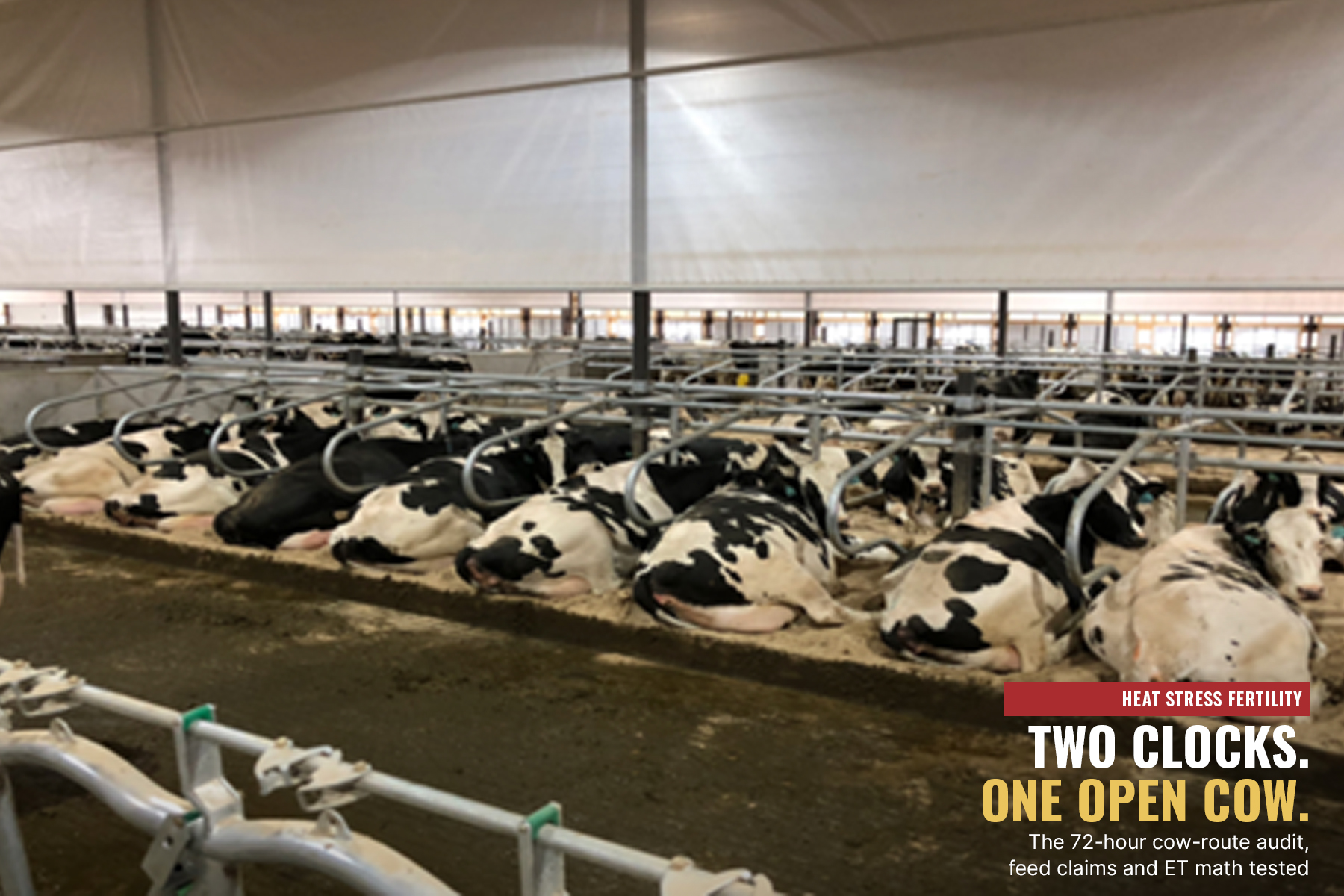
heat-stress-embryo-loss-clocks

You just pulled your August preg check report, and your conception rate is in the gutter. Your first instinct is to blame the heat, yell at the breeder, or call your feed rep to buy a magic supplement. Stop.

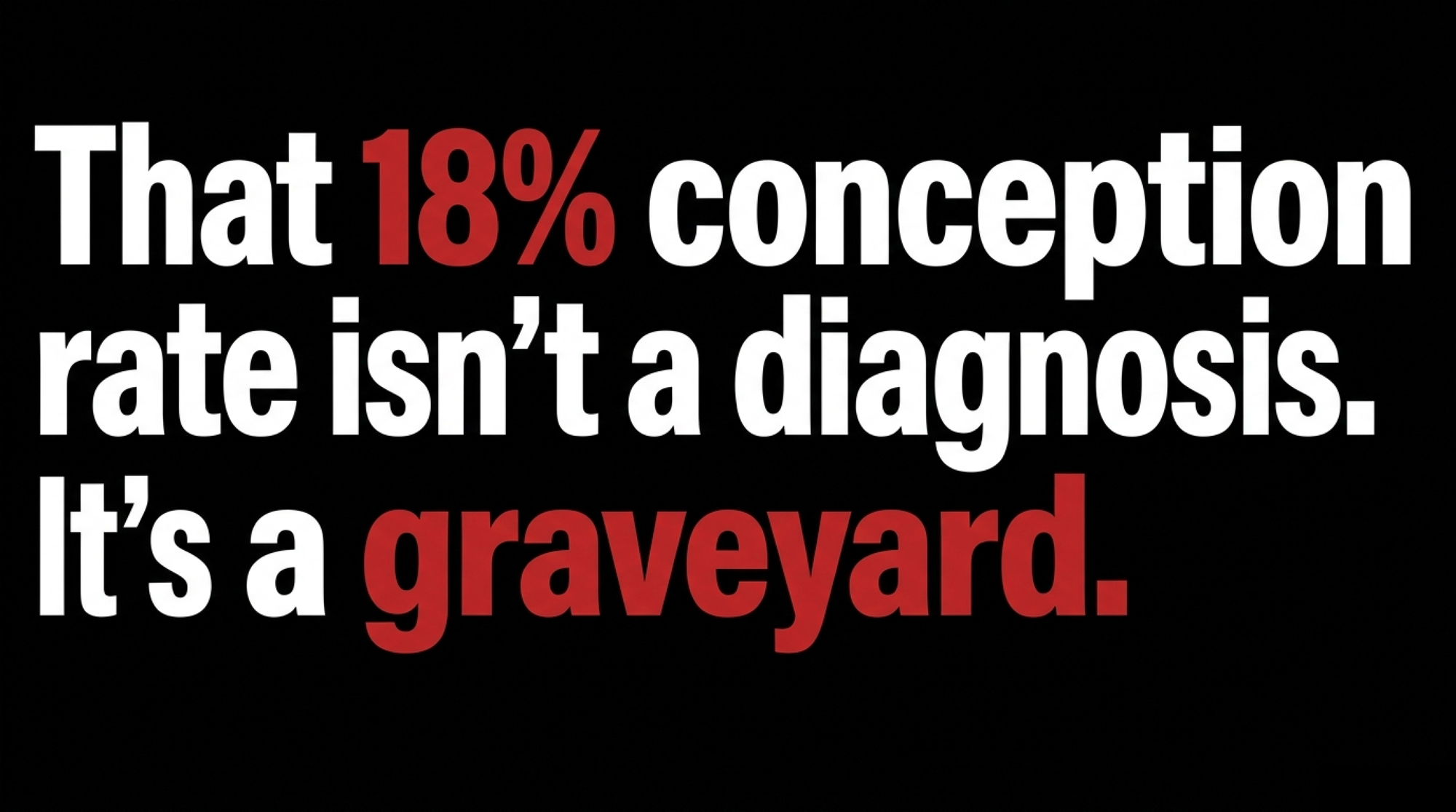
That 18% conception rate isn’t a diagnosis—it’s a graveyard. By the time that number hits your desk, the pregnancies you lost are already ghosts. A cow can show a clean heat, stand perfectly, and get bred on time, and the pregnancy can still vanish before the first check.

If you want to stop lighting semen money on fire, you need to stop managing to the herd report and start managing the biology. Here is the brutal math of summer fertility, and how to audit the 72 hours that are actually robbing you blind.

The 18% That Isn’t a Diagnosis
Picture a herd whose conception rate slides from 32% in spring to 18% in August. That’s 14 percentage points, or about 44% fewer successful services per 100 bred. (Hypothetical figures; Bullvine math.)

Here’s what that 18% actually is. University of Georgia Extension defines conception rate as successful services divided by total services. It isn’t the 21-day pregnancy rate, which divides by eligible open cows and also measures whether those cows got bred at all. Before reading anything into an August dip, confirm the report is sorted by service date, not diagnosis month.
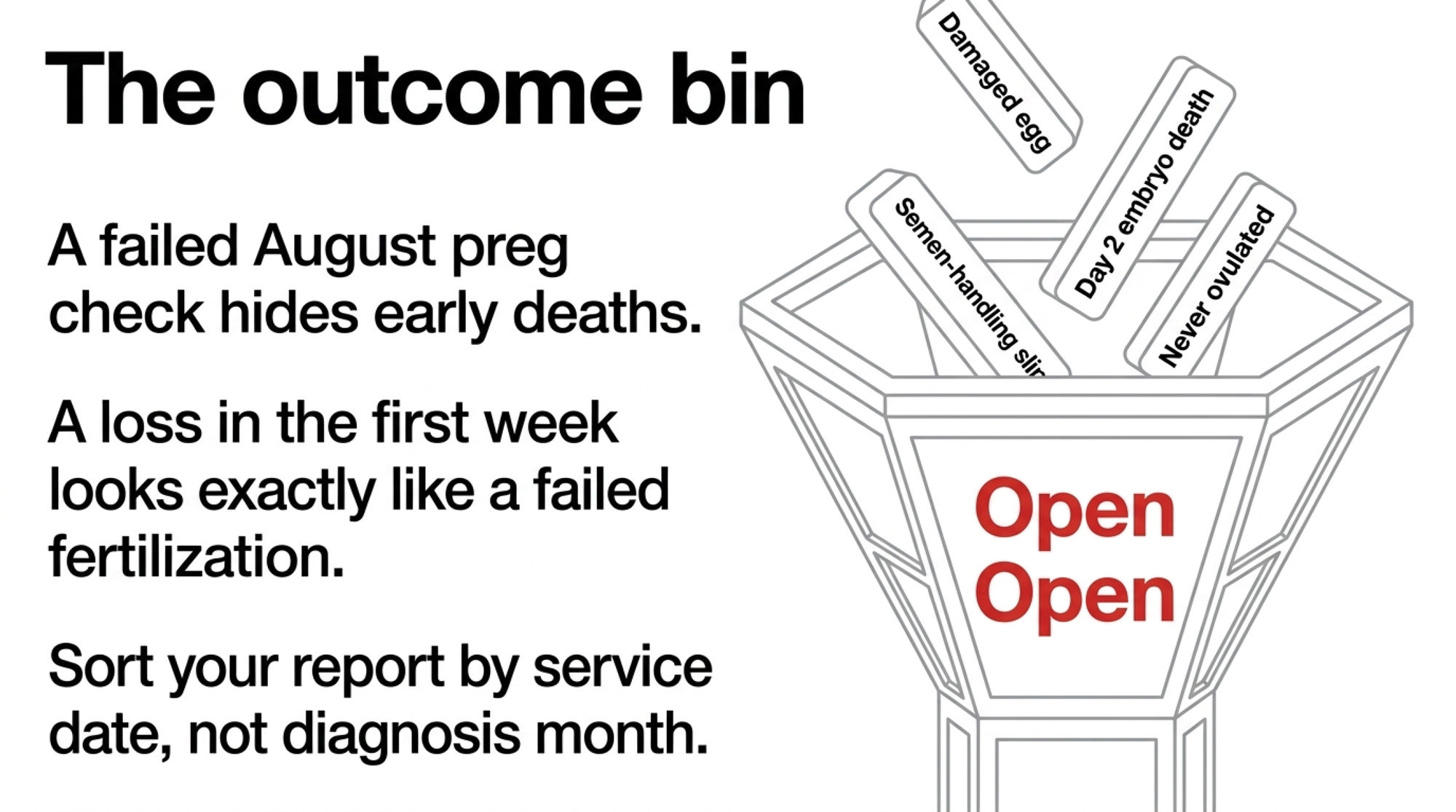
The other 82 services land in one bin. A cow that never ovulated, an egg that was never fertilized, a damaged egg that fertilized and stalled, an embryo that died on Day 2, a semen-handling slip, a data-entry error: the software records every one of them as “open.” In Morton and colleagues’ 2007 Journal of Dairy Science study of 16,878 services across 25 Australian herds, 89% of successful services were confirmed between 35 and 70 days after breeding. A loss in the first week looks exactly like a failed fertilization on that timeline.

Morton’s team also tied lower conception to heat in three separate windows: three to five weeks before service, the week before service, and service through Day 6. Hot days run in streaks, though, so the researchers couldn’t isolate any single bad day.

Conception rate is an outcome bin, not a biological diagnosis.

Before blaming August, split the report: first services versus repeats, timed AI versus heat detection, conventional versus sexed versus beef semen, and AI versus embryo transfer. A change in breeding mix can look a lot like heat damage.

The Long Clock: An Egg With a History

A September egg isn’t built in September. It spends weeks to months inside a growing follicle, supported by granulosa and cumulus cells. During that time it stockpiles the mitochondria, proteins and stored RNA it will run on after fertilization.

The key experiment comes from Brazil. Torres-Júnior and colleagues (Theriogenology, 2008) put five non-lactating Gir cows in a chamber at 38°C (100.4°F) by day and 30°C (86°F) by night, at 80% relative humidity, for 28 days. A second group stayed cool. The heat was real at the cow level: rectal temperature averaged 39.3°C versus 38.7°C, and respiration ran 79.2 versus 20.4 breaths per minute.
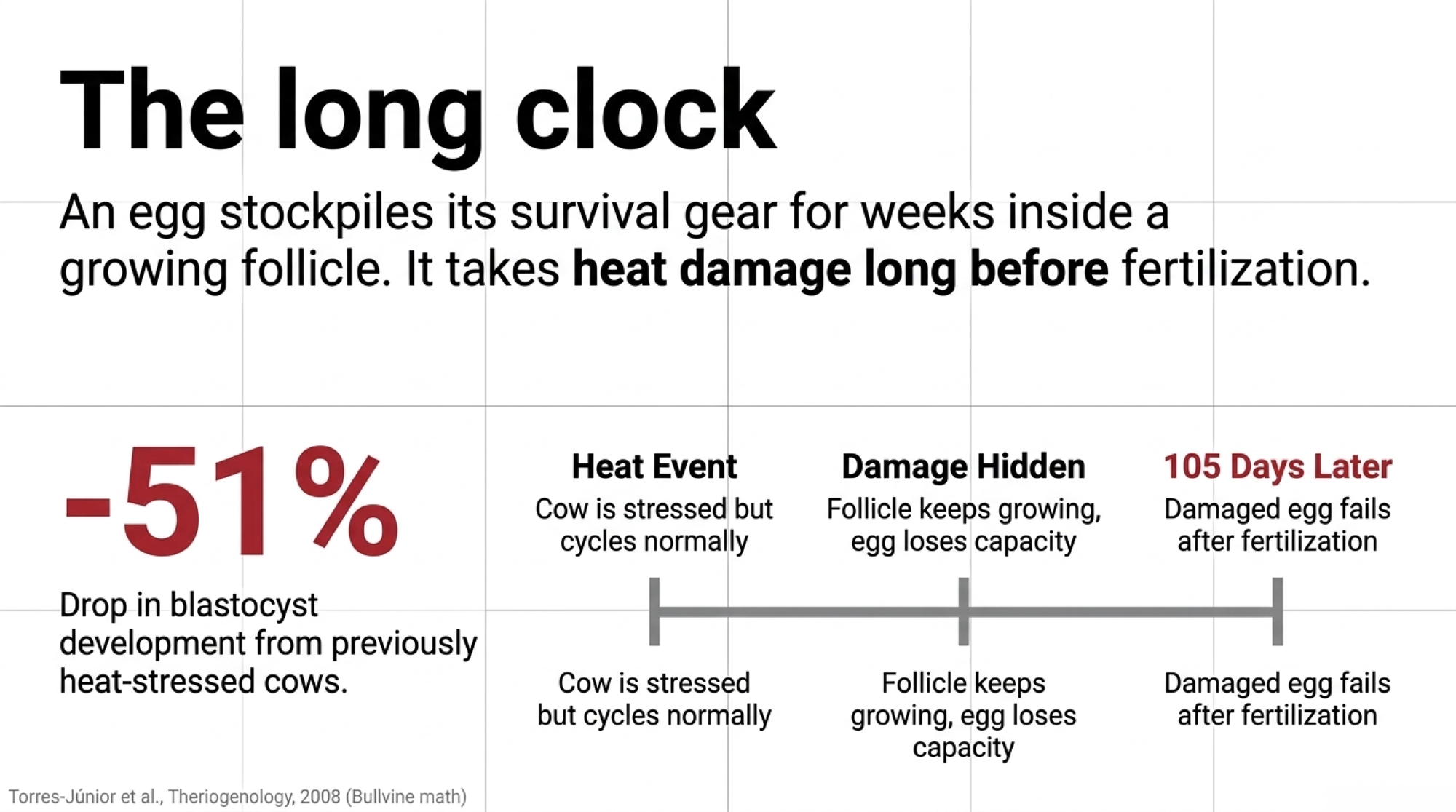
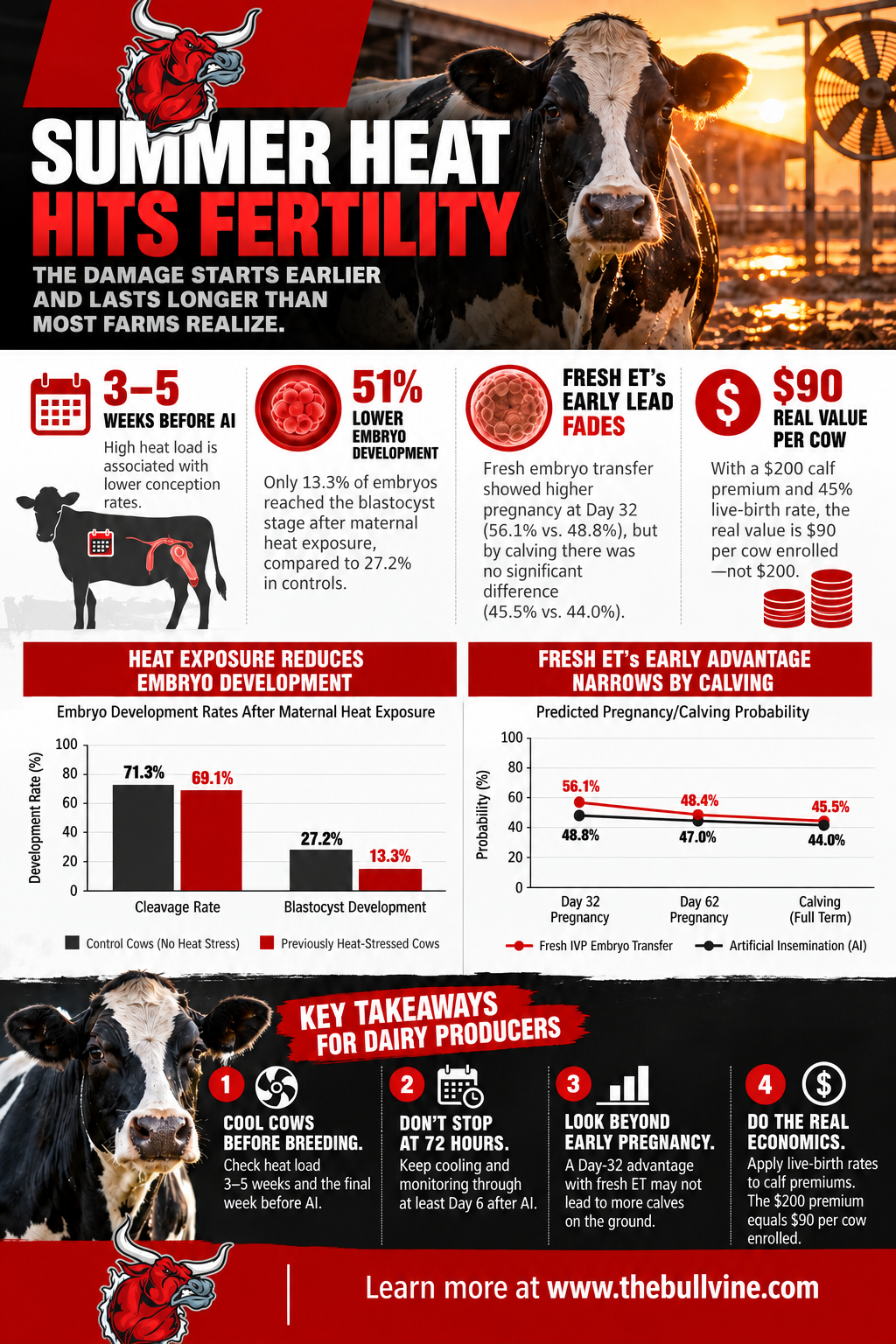
During the heat, the drop in embryo output wasn’t statistically significant: 25.0% of eggs became blastocysts in heat-stressed cows versus 35.5% in controls. After the heat ended, the gap opened up. Only 13.3% of eggs from previously heat-stressed cows reached the blastocyst stage, compared with 27.2% from controls. That’s 13.9 points, or roughly 51% lower (Bullvine math), and the impairment showed up in eggs collected as late as 105 days after the heat ended.

Here’s the unsettling part. Cleavage was basically the same: 69.1% versus 71.3%. The eggs fertilized and divided normally, then failed when development got harder. Previously stressed cows also had more large follicles (1.6 versus 1.0 over 9 mm) and shorter cycles (17.5 versus 20.7 days). On the outside, the cows looked like they were cycling fine.

The follicle can keep growing after the egg inside it has lost developmental capacity.
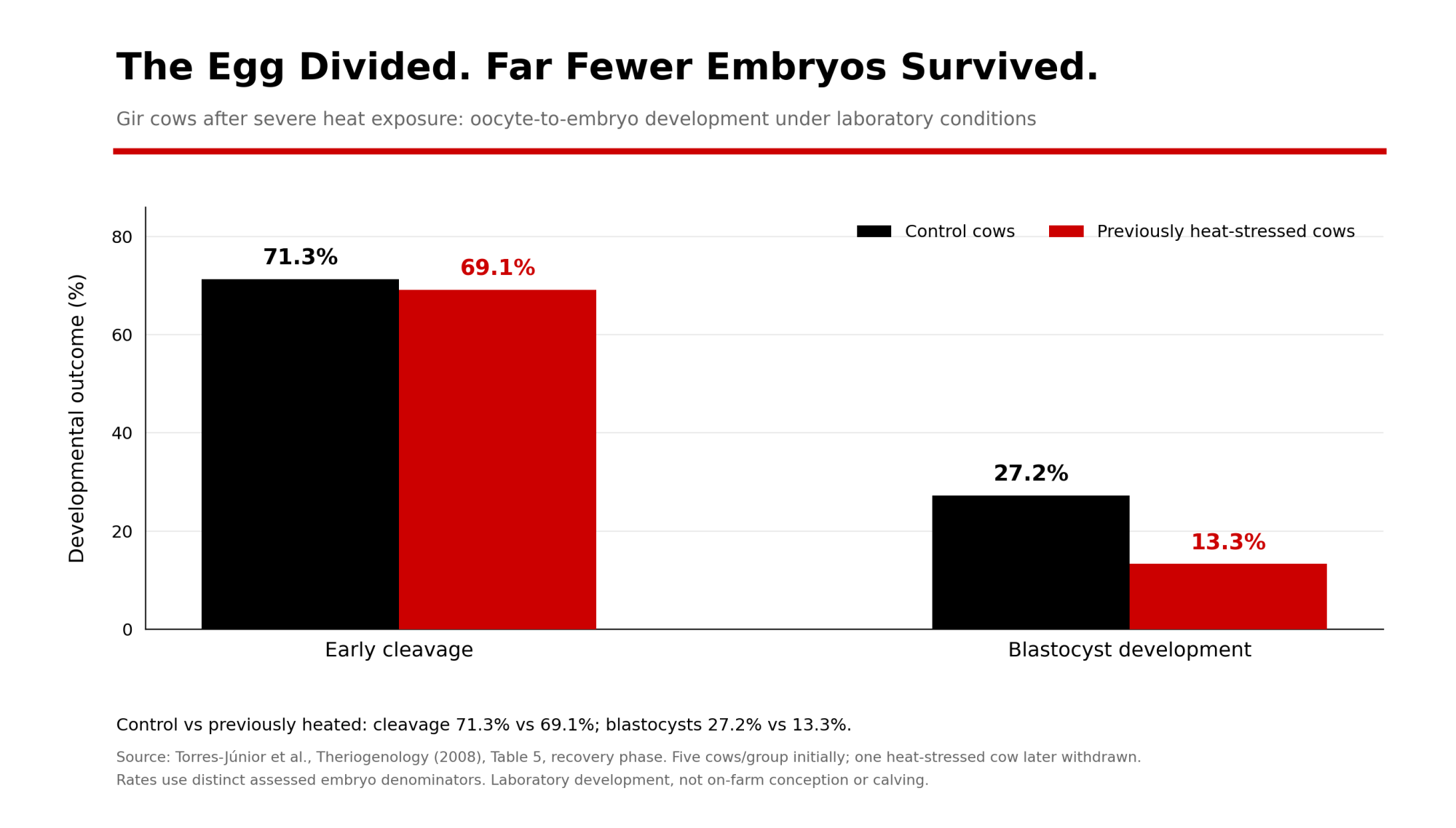
Now the limits. That’s 10 heat-tolerant Bos indicus cows, none milking, under severe chamber heat, and 7 of 17 egg-collection sessions were dropped because of lab problems. The study proves a delayed carryover is biologically real. It doesn’t prove that a specific June heat wave killed a specific September pregnancy, and recovery time varies with how hard the heat hit and which follicle stage took it.

The management call still holds: cooling has to protect cows for weeks before they’re bred, including dry cows and early-lactation cows heading toward first service, not just the breeding pen. Back in May, The Bullvine looked at which cow families quit breeding once THI reaches 60 (“It’s Not Your Fans, It’s Your Genetics”). This piece covers the other half of that question: when the damage lands.

The Short Clock: Dividing Before the Repair Crew Arrives

The second window opens at insemination and closes fast.

Ealy, Drost and Hansen (Journal of Dairy Science, 1993) heat-stressed superovulated lactating Holsteins on Day 1, 3, 5 or 7 after estrus. Heat on Day 1 reduced embryo viability and development when embryos were recovered on Day 8. Heat on Days 3, 5 and 7 did not.

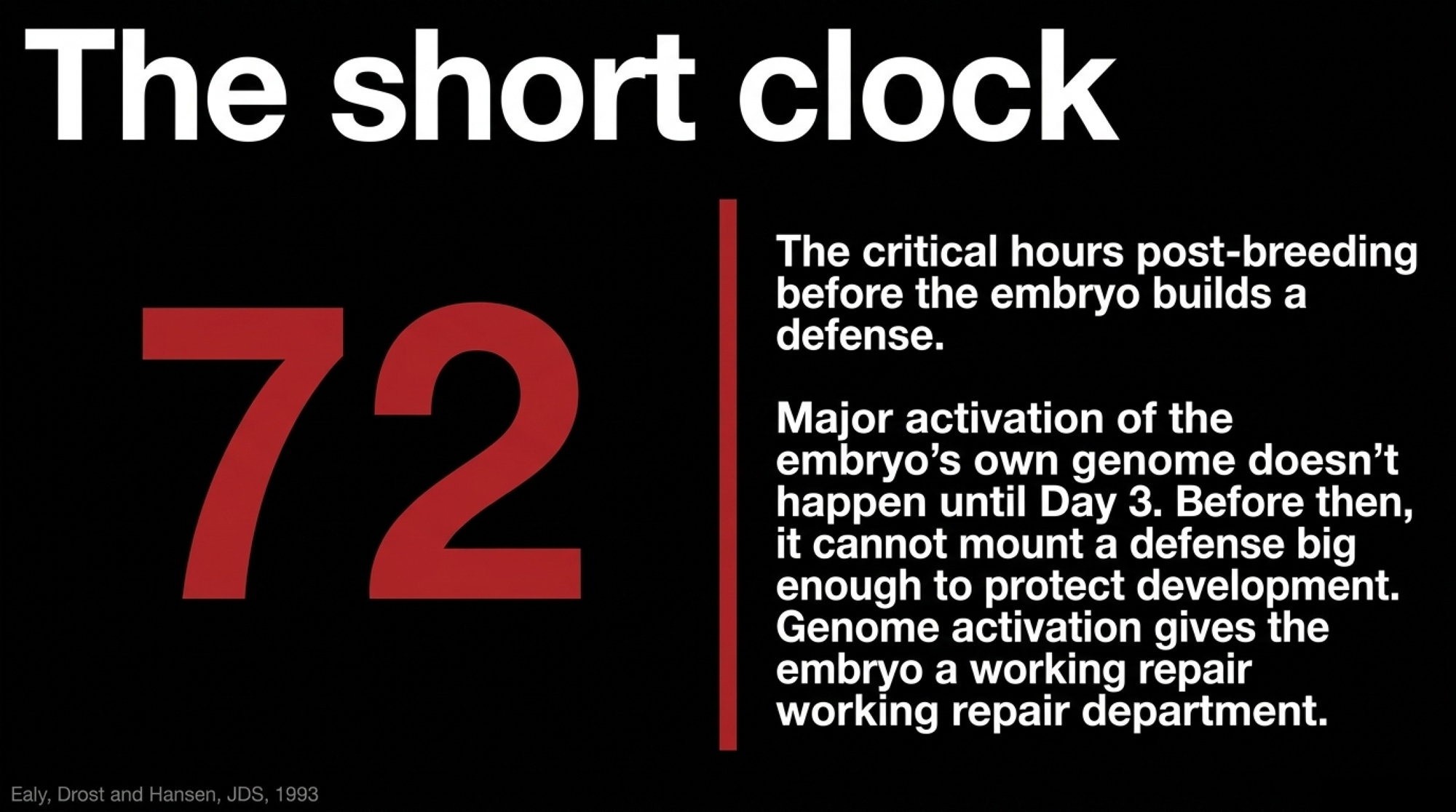
The reason is construction timing. For its first few divisions, the embryo runs mostly on supplies the egg packed before fertilization. Major activation of the embryo’s own genome doesn’t happen until the eight- to 16-cell stage, around Day 3. A two-cell embryo isn’t completely silent. It can switch on some heat-shock genes, such as HSPA1A. It just can’t mount a defence big enough to protect development.

Several protective systems come online around genome activation. Glutathione, a key cellular antioxidant, rises around the nine- to 16-cell stage. The ability to remove damaged cells through apoptosis appears around the eight- to 16-cell stage, so a multicellular embryo can sacrifice a few cells instead of losing the whole program.

Lab work shows the swing. Sakatani and colleagues (Journal of Dairy Science, 2012) held zygotes at 40°C (104°F) for 12 or 24 hours, and both exposures cut Day 8 blastocyst development. When the same group (Reproductive Biology and Endocrinology, 2013) gave morulae an eight-hour 40°C exposure at 116 hours after insemination, blastocyst development held at 28.8% versus 30.4% in controls, with no loss in cell number.

Genome activation doesn’t make the embryo heatproof. It gives the embryo a working repair department.

Day 3 marks a big gain in resistance, not immunity. Treat “72 hours” as a management window, not a stopwatch.

The 72-Hour Cow-Route Audit
Most farms can show you their fans. Fewer can show you where a cow bred Tuesday morning spent every hour until Friday morning, and whether she stayed cool the whole time.

The audit starts at the insemination timestamp and follows the cow, not the wiring diagram.

LocationWhat to verifyCommon failure
Home penAirspeed at standing and lying height, soaker coverage, stocking density, controller runtimeFans cover the feedline but not the stalls
Holding areaGroup size, time in pen, nozzle function, airflowCrowding adds heat while cutting exposed skin
ParlorAir movement during milkingHolding pen is cooled; parlor stalls aren’t
Exit laneShade, water, optional exit soakWet cow walks into dead air or sun
HeadlocksLockup length, time of day, soaker reachAfternoon herd work locks cows away from air and water
Sort or hospital penSame checks as the home penSecondary pen gets second-rate cooling
OvernightFan runtime, minimum cow temperatureController shuts down before cows shed the day’s heat

Use published benchmarks as targets, not gospel. Penn State Extension recommends 3.5 to 5 mph of air movement in resting, feeding and holding areas, with soaking for one to three minutes inside a 5- to 15-minute wet-dry cycle. University of Wisconsin–Madison Extension sets a minimum of 200 feet per minute over resting cows, and prefers 400.

Then measure the cow. Wisconsin Extension’s rule of thumb: if at least 25% of a pen is breathing 60 or more times per minute, cooling isn’t keeping up. Mississippi State Extension treats 26 to 50 breaths per minute as normal, suggests sampling about 10% of the herd, and warns against using the crowded holding pen as your baseline.

Owning the equipment isn’t the same as passing the audit. In a March 2025 University of Georgia Extension case, a commercial holding area had both fans and soakers. Clogged nozzles and weak airspeed still let cow body temperature climb through the holding pen and parlor.

Night is where most producers get surprised. In Gaughan and colleagues’ 2023 Journal of Dairy Science trial with 120 Holstein-Friesians, adding night cooling to day cooling cut rumen temperature during the third heat wave from 40.10°C to 39.58°C. That’s 0.52°C, or 0.9°F (Bullvine math). The trial measured physiology and milk, not conception. Separately, Tresoldi and colleagues (Journal of Dairy Science, 2019) recorded cows’ highest hourly body temperature, 39.1°C, around 9 to 10 p.m. in California, hours after the air temperature had peaked.

Don’t ask whether the breeding pen is cooled. Ask where that cow spent every hour after she was bred.

Exposure windowPublished evidenceFarm audit priorityEvidence boundary
3–5 weeks before AIHigh heat load associated with lower conceptionRecover pen-level heat historyAssociation, not an exact day of damage
Final week before AIHigh heat load also associated with lower conceptionReview holding, lockups and nighttime exposureAdjacent hot days are correlated
Service day–Day 3Day 1 embryo particularly vulnerable; field association also reportedIntensive cow-route and cow-response checks72 hours after AI is a management window
Days 4–6 after AICommercial-herd association continues through Day 6Continue cooling and exposure recordsNot evidence of one uniquely damaging day

Run it like this:

  1. Export every service with cow ID, date and time, pen, parity, days in milk, technician, semen type and protocol.
  2. Set each cow’s window from 24 hours before service to 72 hours after.
  3. Hang temperature-humidity loggers at cow height in every location bred cows pass through, logging every 5 to 15 minutes.
  4. Pull fan and pump runtime, alarms and power interruptions separately from the weather data.
  5. Track cow response with respiration counts, panting scores, or continuous vaginal or rumen temperature where you have it.
  6. Analyze service day, 0–24, 24–48 and 48–72 hours, and each overnight minimum separately. A three-day average hides a two-hour afternoon spike.

Be honest about what it proves. The audit can show that failed services cluster after specific exposure patterns. It can’t prove heat killed a specific embryo. This is The Bullvine’s proposed framework, built from published biology and extension benchmarks. It hasn’t been validated as a protocol.

Where the Feed-Bunk Pitch Stops

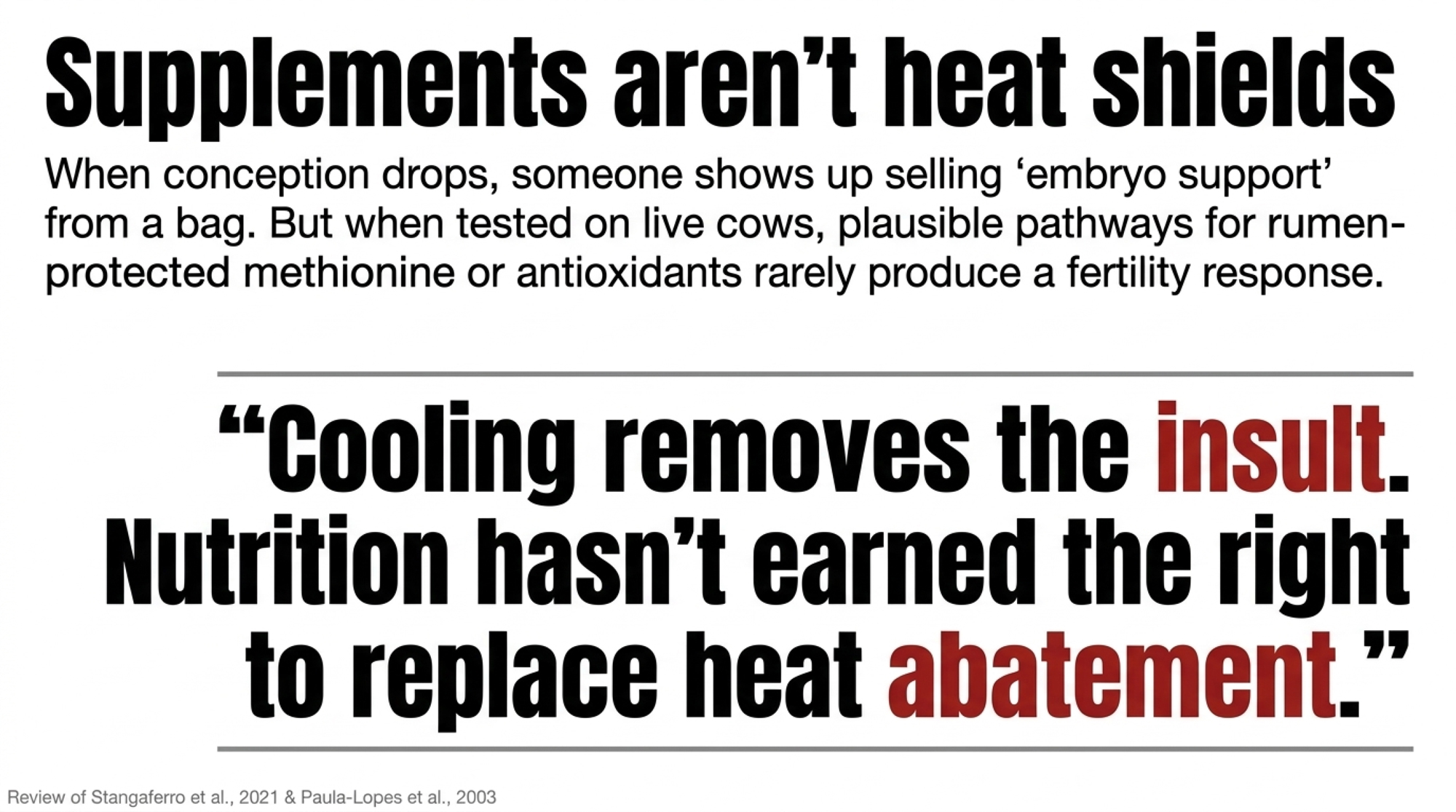
Once a herd understands both clocks, someone shows up with a bag. Protected methionine, an antioxidant package, something promising “embryo support” from the bunk.

Put the claim on a ladder. Most stall on the first or second rung.

Evidence rungSpecific study resultWhat the result supportsWhat remains to prove
1. Cell cultureCleavage: 84.6% vs. 58.0%; blastocysts: 22.7% vs. 8.1%Severe laboratory heat impairs developmentFeeding a cow prevents that damage
2. Cow metabolism32-cow methionine heat challengeCertain metabolic pathways respondedImproved pregnancy or calving
3. Reproductive tractNo direct reproductive-tract endpoint in the cited feeding trialsMechanistic possibilitiesProduct-specific protection under heat
4. Pregnancy470 cows: 54.3% vs. 55.1% Day-32 pregnancy per AINo significant methionine fertility benefit in that trialRepeatable heat-specific benefit
5. Live calfNo live-calf benefit established by these cited trialsCommercial payoff remains unprovenMore live calves per enrolled cow

Rung 1. In Mzedawee and colleagues’ work, maturing egg complexes held at 40.5°C for 23 hours dropped from 84.6% to 58.0% cleavage and from 22.7% to 8.1% blastocyst formation. Those are relative declines of about 31% and 64% (Bullvine math). Amino-acid turnover shifted too. But altered turnover may simply mark injured cells. It doesn’t prove a deficiency that feed can fix. Even in a dish, more isn’t automatically better: a 2025 Biology of Reproduction study found that removing methionine entirely hurt embryo development, but raising it from 31 to 57 µM didn’t produce more blastocysts.

Rung 2. Coleman and colleagues fed rumen-protected methionine to 32 multiparous Holsteins, half of them under a nine-day heat challenge with electric heat blankets. Some liver signalling pathways changed. Liver glutathione didn’t rise, measured immune-cell function didn’t improve, and no cow was bred. Adisseo, maker of the Smartamine M product tested, partially funded the study.

Rung 4. In the largest direct test, Stangaferro and colleagues enrolled 470 multiparous Holsteins at Cornell and the University of Wisconsin–Madison. Methionine went from roughly 2.1–2.3% to 2.6–2.9% of metabolizable protein. Day 32 pregnancy per AI was 54.3% for controls and 55.1% with methionine. Pregnancy loss from Day 25 to 67 was 22.6% versus 19.2%, and neither difference was significant. This wasn’t a heat-stress trial, and one coauthor had an Adisseo affiliation. It still sets the boundary: a plausible pathway didn’t produce a fertility response.

Antioxidants have a similar track record. Paula-Lopes and colleagues (Journal of Dairy Science, 2003) found that vitamin E and selenium injections didn’t improve fertility in three herds. In culture, nine hours at 41°C cut blastocyst development from 51.2% to 3.4% without vitamin E and from 54.0% to 5.2% with it. The early embryo stayed fragile either way.
Nutrition isn’t useless, though. Khemarach and colleagues (Scientific Reports, 2021) gave 400 repeat-breeder Holsteins on 30 Thai farms either a placebo or 400 mg/day of beta-carotene, at an average THI of 82.1. First-service pregnancy didn’t differ, but supplemented cows had a 44% higher modeled probability of pregnancy over 160 days. BASF Thailand supplied the product, and the authors declared no competing interests. Those were low-producing tropical cows, about 15.5 kg of milk a day, and probably not at North American nutrient status. A 2024 meta-analysis of 29 publications found better first-service pregnancy odds with beta-carotene (odds ratio 1.38; 95% CI 1.08–1.76), but 8 of 11 outcomes weren’t significant and the results varied widely between studies.

The line runs between correcting a deficiency and buying a heat shield. Summer intake drops, so rebalance metabolizable protein and amino acids in grams per day at actual dry matter intake, not on the winter formulation. Before paying for embryo protection, ask the supplier:

  • Was the evidence from a culture dish or a live cow?
  • Were the cows measurably heat-stressed, with barn data and cow temperatures reported?
  • Was baseline nutrient status measured?
  • Was the endpoint pregnancy and live birth, or a blood or liver marker?
  • Was cooling equal across treatments?
  • Who funded it, and has anyone independent replicated it?

Cooling removes the insult. Nutrition may support the cow’s response, but it hasn’t earned the right to replace heat abatement.

Embryo Transfer: Count Every Cow You Synchronized

ET gets pitched as a biological bypass. Put a Day 7 embryo, which already has most of its heat resistance, into a cooled recipient and you skip the most fragile stretch.

The biology holds up. The headline number usually doesn’t mean what people think. Peter Hansen’s June 2026 review in the Journal of Reproduction and Development found that across 11 studies, ET pregnancy rates in hot periods averaged only 2.6 points below cool periods. That shows how steady ET results stay across seasons. It is not an ET-over-AI advantage, and Hansen notes that factors other than heat also change by season.

Embryo type is where the money is. In Stewart and colleagues’ 2011 Journal of Dairy Science summer trial, live births per cow enrolled were 27.5% with fresh IVP embryos, 17.1% with vitrified IVP embryos, and 14.6% with AI. That’s 12.9 extra calves per 100 cows for fresh ET, and only 2.5 for vitrified (Bullvine math).
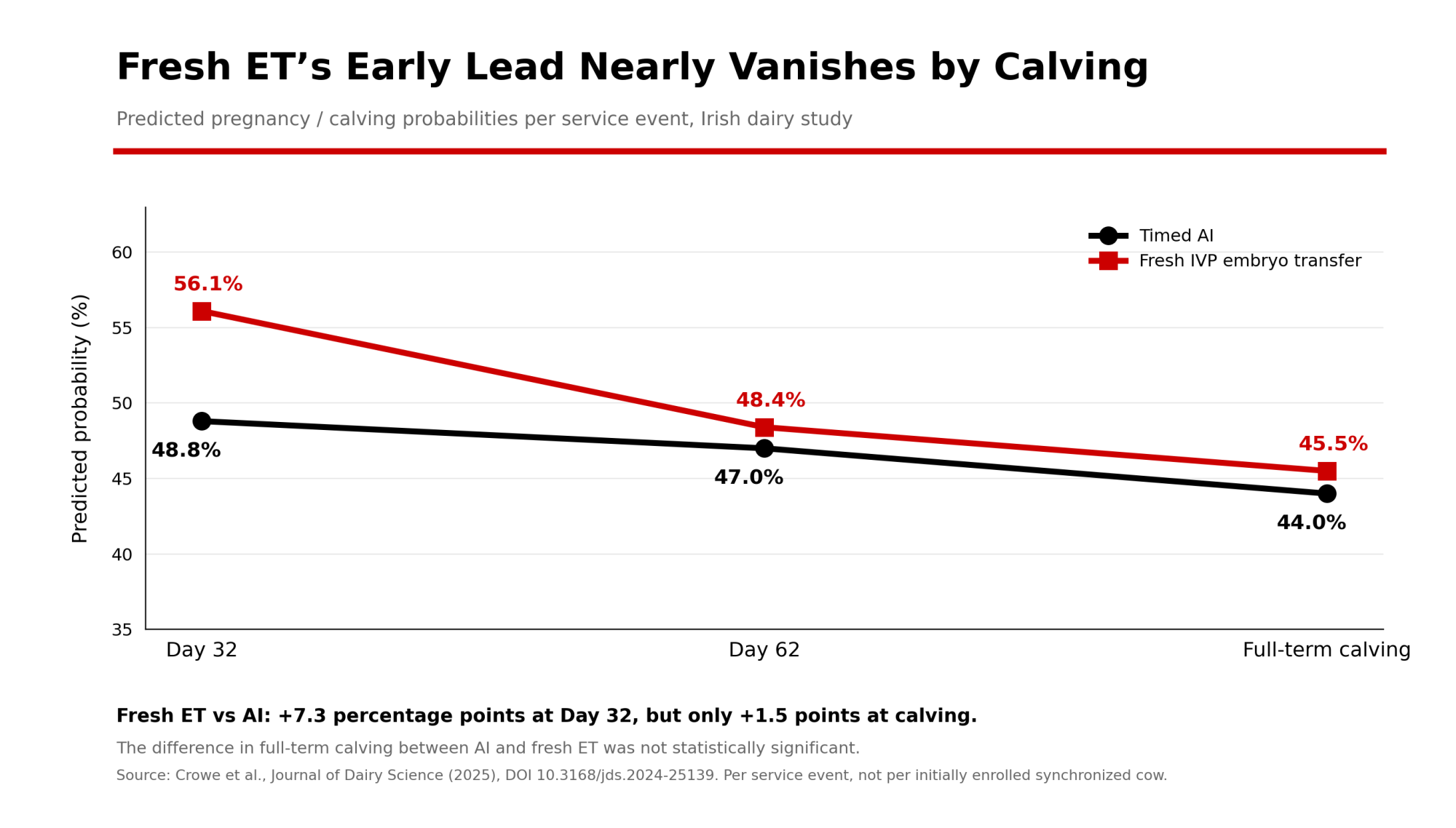
Newer data adds a warning. Crowe and colleagues (Journal of Dairy Science, 2024) enrolled 1,197 lactating cows in 10 Irish herds from March through August. This was a pasture-based trial, not a controlled heat study, and it used proprietary Vytelle culture media. Of the cows synchronized for ET, 9.6% weren’t suitable for transfer on Day 7.
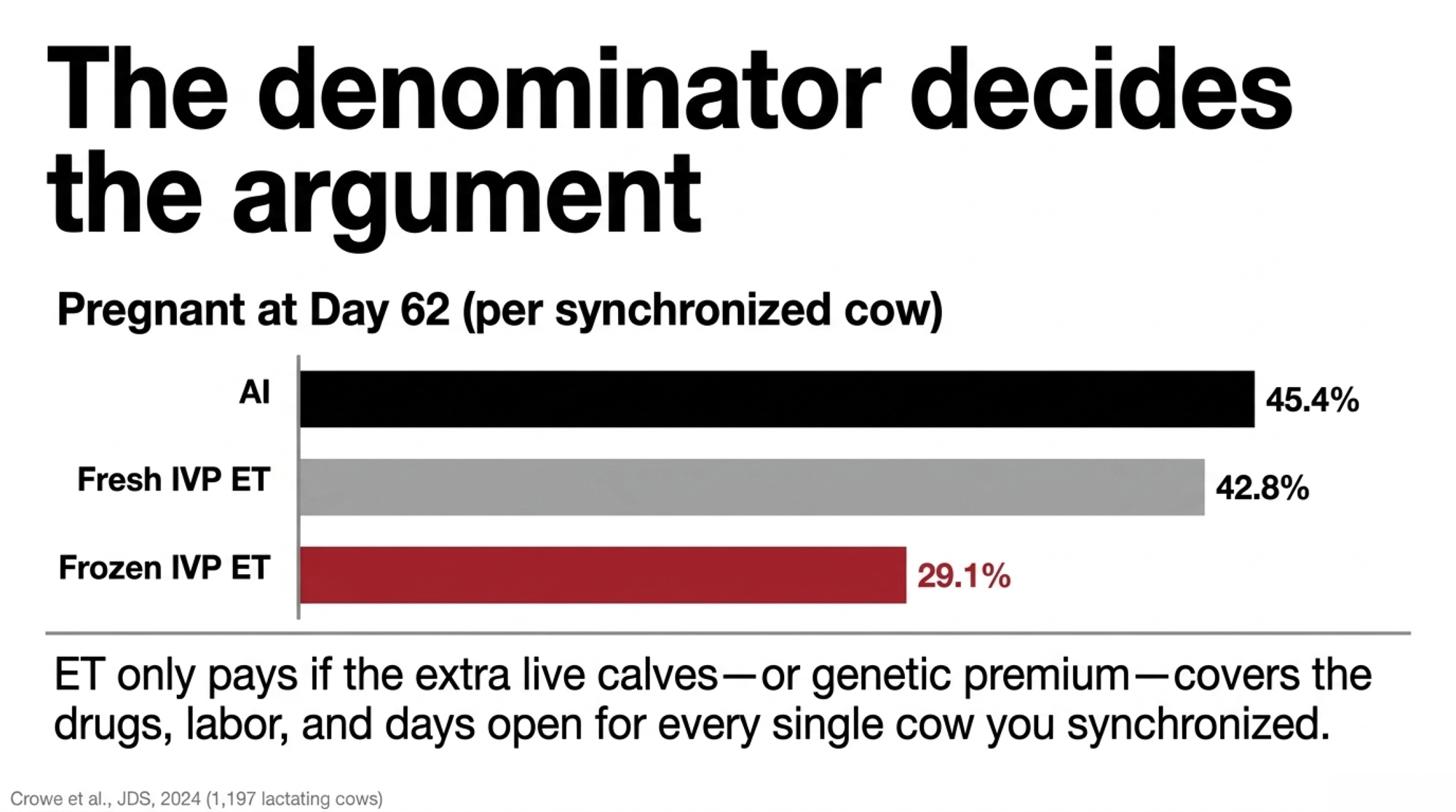
OutcomeAIFresh IVP ETFrozen IVP ET
Pregnant at Day 62, per synchronized cow45.4%42.8%29.1%
Loss, Day 32 to 624.7%12.2%18.8%

The denominator decides the argument. Say 100 cows are enrolled, 90 receive embryos, and 38 calve. That’s 42.2% per transfer but 38% per cow enrolled (Bullvine math). The drugs, labour and days open were spent on all 100.

The break-even test is simple:

Maximum extra ET cost per enrolled cow = (ET live-birth rate − AI live-birth rate) × value of one extra live calf, plus any calf or genetic premium you can document separately.

ComponentCalculationValue per enrolled cowInterpretation
AI calf value40% × $500$200AI baseline
ET calf value before premium45% × $500$225Same baseline calf value
Additional live-calf value5 percentage points × $500+$25Fertility contribution
Calf premium on ET births45% × $200+$90Premium weighted by live births
ET total expected calf value$225 + $90$315Before additional ET costs
Maximum additional ET cost$315 − $200$115Break-even ceiling per cow enrolled

A 2022 Journal of Dairy Science invited review by Crowe and colleagues found that IVP-ET economics improve as embryo cost falls and calf value rises, and that mixed AI-and-ET programs often beat either one alone. Plug in your own 2026 prices. Older model costs aren’t a budget.

ET belongs in a summer program when four things are true. The cooling audit is done and the gaps are fixed. Summer AI failure looks concentrated before Day 7. Fresh embryos are actually available. And either the extra live calves or the calf premium covers every cow you synchronized.

ET belongs where the bypass has something expensive to bypass.
What This Means for Your Operation

  • Re-cut the summer report. Sort it by service date, then split it by service number, protocol, semen type and AI versus ET before you assign blame to August.
  • Cool the long clock. Protect cows for weeks before breeding, dry cows and fresh cows included. Morton’s data tied lower conception to heat three to five weeks before service.
  • Run the 72-hour route audit during a real heat event. Log every location, every overnight minimum, and how the cow responds.
  • Rebalance, don’t gamble. Formulate at actual summer dry matter intake, and make any supplier selling embryo protection show pregnancy data from heat-stressed cows.
  • Trial ET honestly. Run fresh ET against AI on cows in the same season, and score both on live calves per cow enrolled.

A pregnancy check can only report what survived long enough to be counted. 

🔥 The Bullvine Summer “Burn Rate” Calculator

Your herd software says conception rate dropped. Bullvine Math tells you exactly how much cash you just lit on fire. Plug in your numbers to see the cost of your summer heat gap.

Learn More

  • What is the True Cost of a Day Open? — Stop guessing what a missed cycle costs your dairy. This hard-math analysis pinpoints the daily margin bleed per open cow, justifying aggressive reproductive interventions before cull rates inevitably spike.
  • Dairy Cattle Fertility: It’s All in the Genes — Breeding for structural fertility outlasts any mechanical heat abatement system. Follow the money on long-term sire selection to permanently elevate your herd’s baseline reproductive performance over the next decade.
  • Sexed Semen: Are You Making the Right Choice? — Maximize synchronization ROI by rethinking which straws enter your most valuable heifers. Exposing the hidden financial traps of gender-sorted products, this framework arms you with an unconventional semen allocation strategy.

The Sunday Read Dairy Professionals Don’t Skip.

Every week, thousands of producers, breeders, and industry insiders open Bullvine Weekly for genetics insights, market shifts, and profit strategies they won’t find anywhere else. One email. Five minutes. Smarter decisions all week.
NewsSubscribe
First
Last
Consent

It’s Not Your Fans, It’s Your Genetics: Why Cows Quit Breeding at THI 60

At THI 60, some cow families keep breeding and some melt—same barn, same ration, same fans. That second group is quietly running your days open up 40 and costing 200–320 CAD a head.

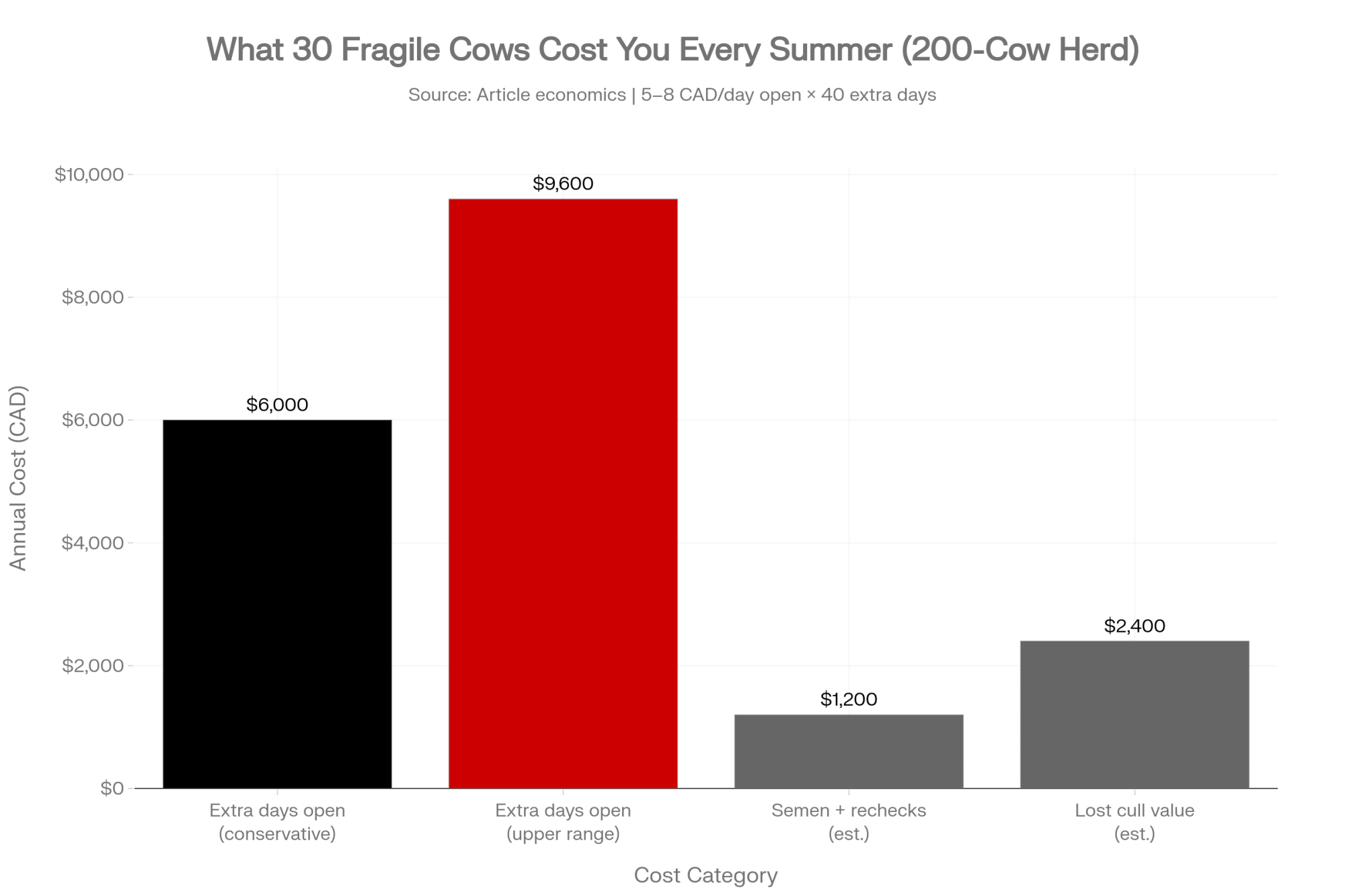
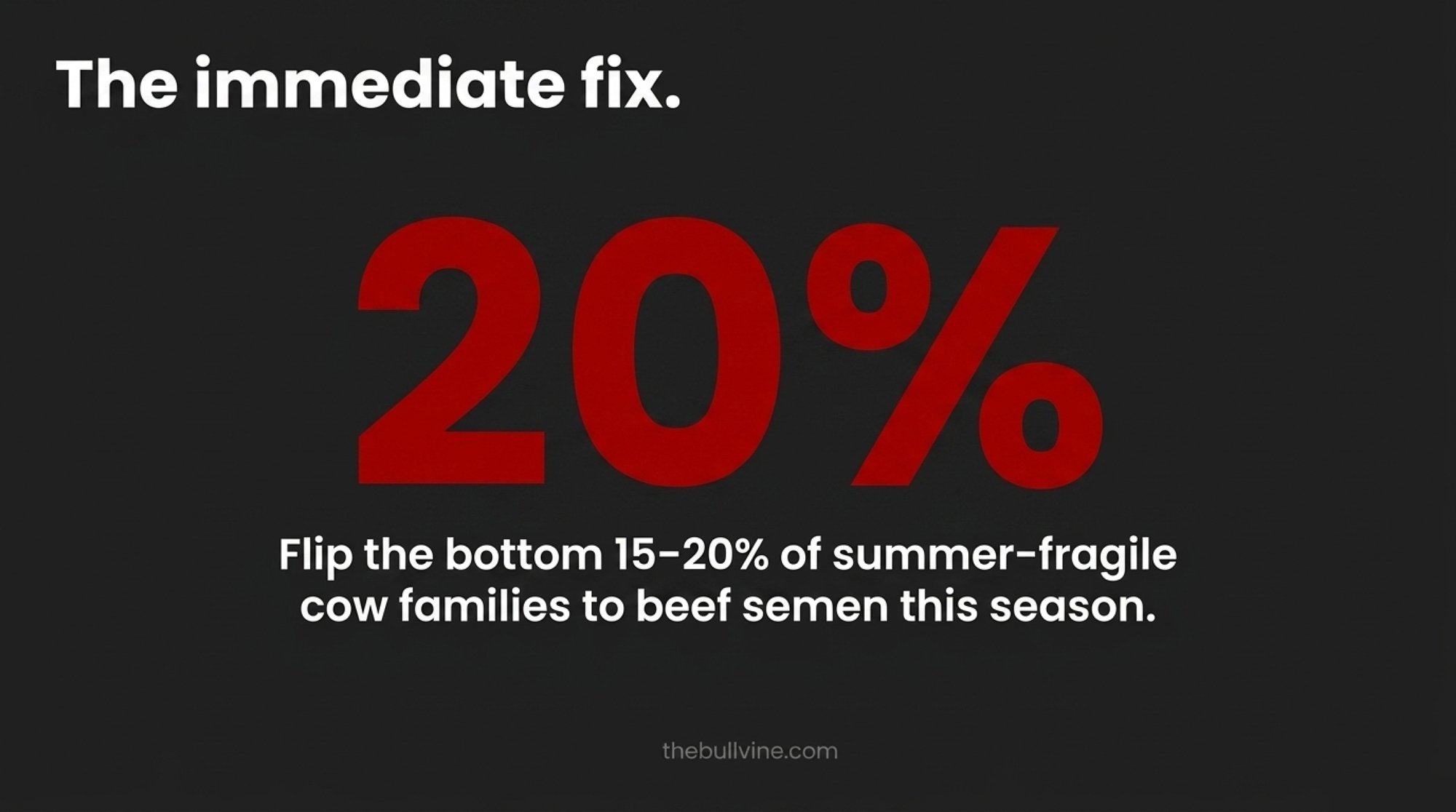
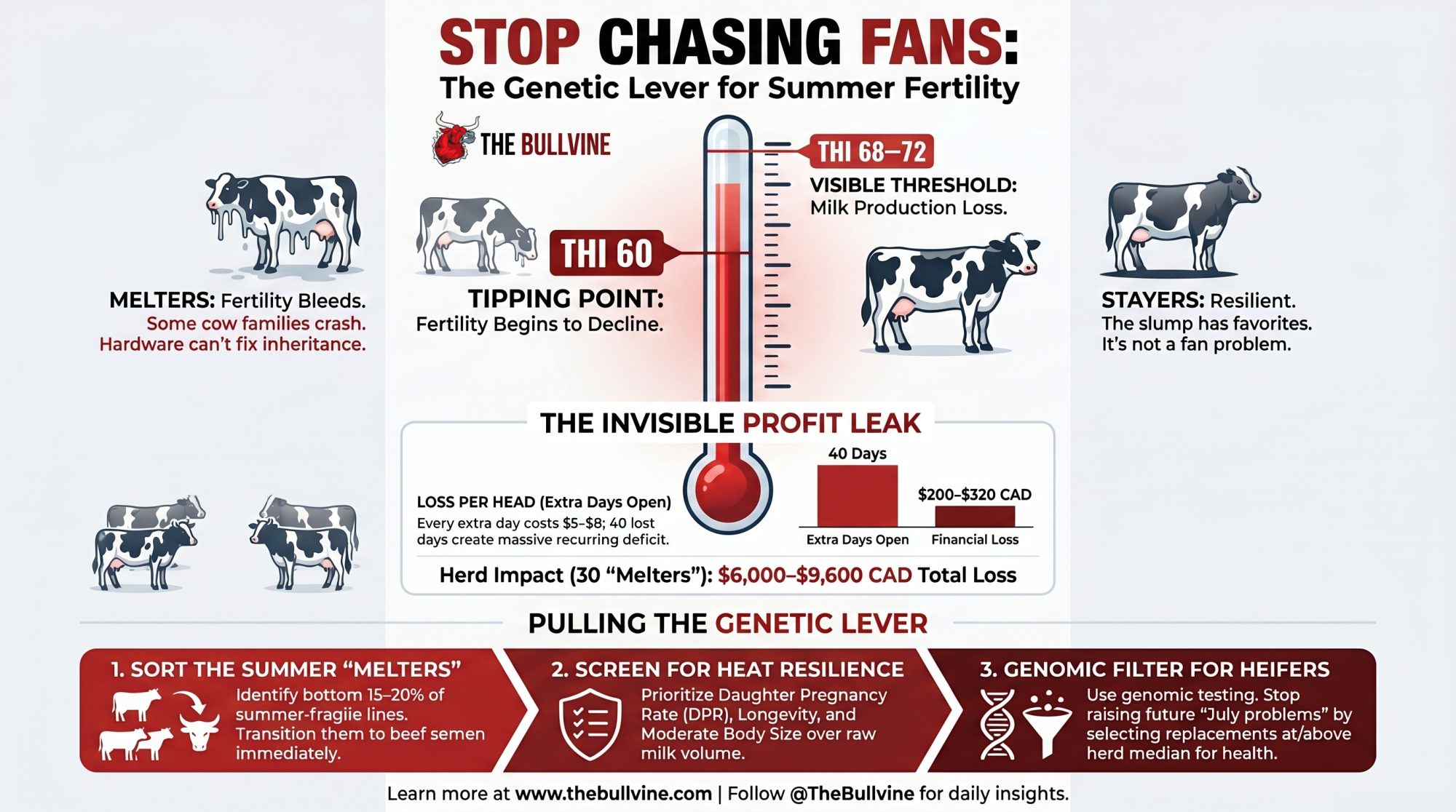
Executive Summary: Once the temperature-humidity index hits about 60, fertility starts bleeding—well before the 68-to-72 milk-loss threshold most cooling triggers are set to. Here’s the part hardware won’t fix: the loss isn’t even across the barn. Some cow families keep cycling and conceiving through July; the melters crash—piling up extra services, dragging days open out by weeks, and dominating the summer cull and recheck lists even after you’ve maxed out fans and soakers. Run the math and it stings: at roughly 5–8 CAD per extra day open, 40 lost days runs 200–320 CAD a head, and if just 30 cows in a 200-cow herd carry that pattern every summer, you’re looking at 6,000–9,600 CAD a year before the wasted semen straws and vet rechecks. The fix is genetic, and you already own the tools—sort three to five years of June-through-September breedings by cow family in DairyComp, flip the bottom 15–20% of summer-fragile lines to beef semen, and screen replacement heifers for heat resilience before economic index. None of it rescues this July; it changes the daughters you freshen in 2028. If you’ve spent on cooling and conception still craters every summer, this is the lever you haven’t pulled yet.

heat stress fertility

It’s a composite scene, based on how this plays out on many farms. The fans are running. Soakers click on and off in rhythm. Steam hangs in the feed lane, and the cows look about as comfortable as Holsteins get on a humid July afternoon. A herd owner walks the high group, stops at a tall cow giving 90 pounds, and says he can’t afford to cull her.

But his summer breeding record says otherwise. Year after year, once the temperature-humidity index reaches about 60, conception drops sharply—and the heat-stress damage doesn’t fall evenly across the barn. Some cow families keep breeding. Others fall apart. The cooling money is already spent. And it still isn’t enough, because the weak point isn’t just airflow. It’s genetics.

What’s Really at Stake When THI Hits 60?

Spring can make any herd look smarter than it is. Body condition holds, first cut is moving, and reproduction finally looks the way the protocol sheet promised. Then the air turns sticky, THI sits in the 60s for a few days, and the picture shifts.

You see it fast enough in the reports: conception slides through June to September, days open stretch, and health problems like mastitis, metritis, and lameness start stacking up after the first real heat run. Graph three to five years of records, and you can watch the operation slide from profit mode into damage control as THI climbs from the 50s into the 60s and 70s.

That part isn’t breaking news. The sharper question is this: what happens when you sort the same summer data by sire line or cow family?

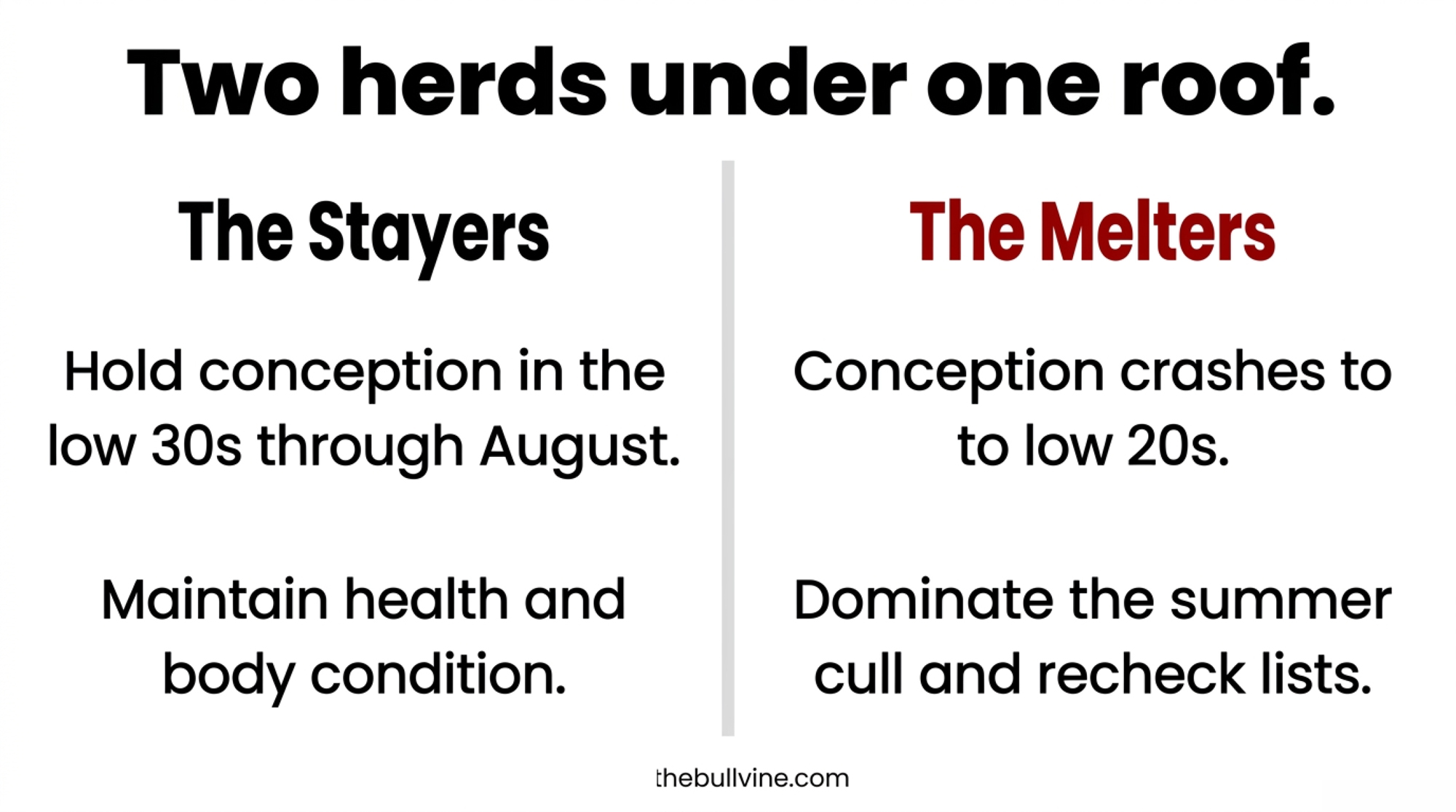
In real herd terms, two different “herds” can be standing under the same roof. One group—the stayers—gives up a little fertility but stays functional. The other—the melters—loses far more ground in the same THI band, then dominates the summer cull list, the recheck list, and the hospital pen. Same barn. Same ration. Same breeding crew. Different cows.

Why THI 60, Not 68?

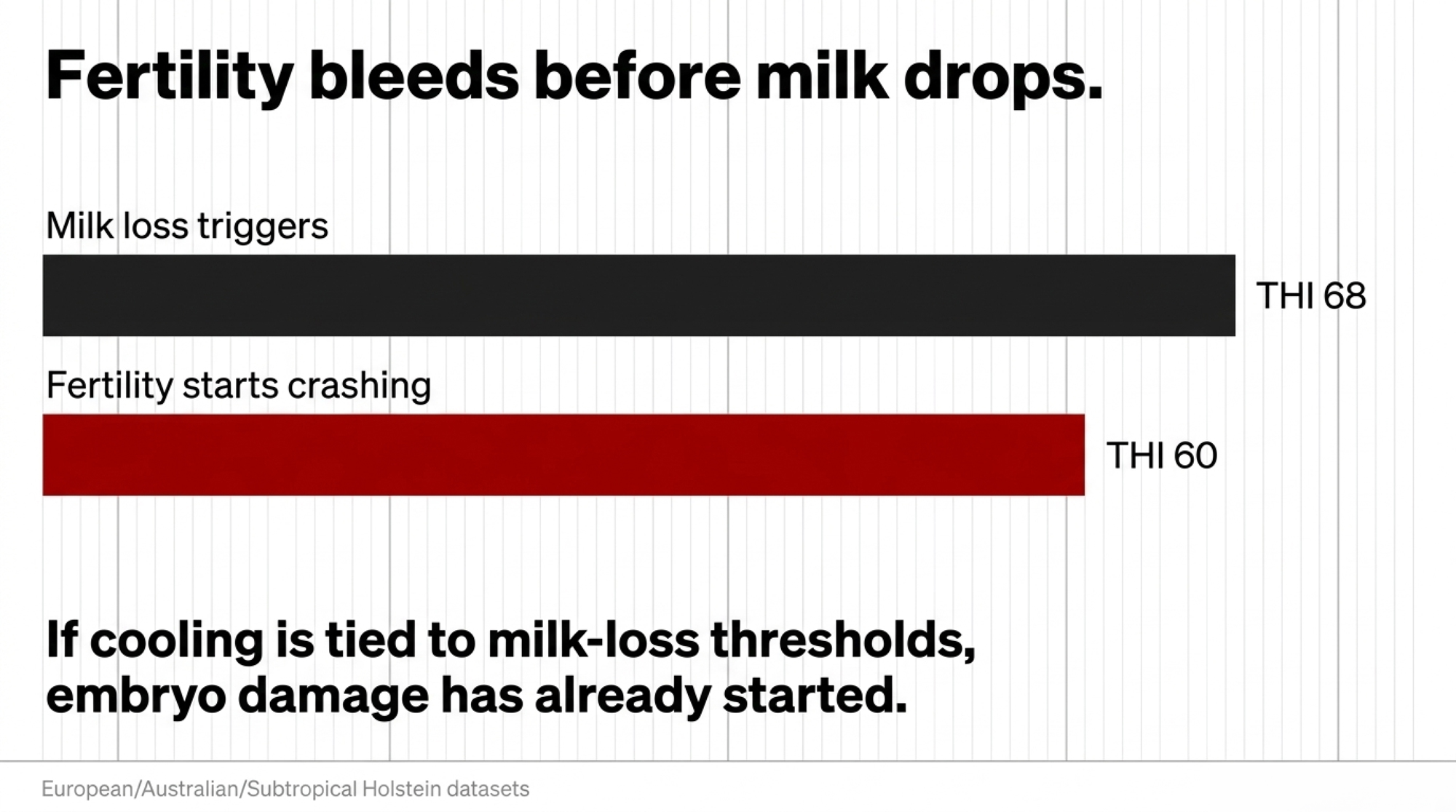
For years, the working number was 68 to 72—the point where milk yield visibly drops and most cooling triggers are set. Fertility tells a different story. It starts bleeding earlier.

Across Holstein datasets from Europe, Australia, and subtropical regions, researchers have found fertility traits weakening below the old 68-to-72 rule of thumb—often around 60 or lower. Recent barn-level coverage pegs the same early onset, with heat effects on production showing up near 68°F THI and fertility taking hits sooner. The mechanism isn’t mysterious: the developing egg and the early embryo are heat-sensitive in windows that open before a cow looks visibly stressed, which is why a “mild” stretch of weather still shows up six weeks later as an empty cow.

So the practical takeaway is blunt. If your cooling trigger is set to the milk-loss threshold, your fertility losses started before the fans ramped up. The genetic gap between heat-tough and heat-fragile cows shows up while the weather still feels merely uncomfortable rather than dangerous.

How the Melters Give Themselves Away

Go back to that 90-pound cow. On a cool April morning, she looks like the right kind. Big frame. Big appetite. The kind that makes a herd owner feel better about his feed bill. Then July shows up and starts asking different questions.

Advisors working with heat-sensitive herds describe a pattern that keeps repeating in high-yield families:

  • Lower summer conception: In the THI 60-to-70 window, some families can run 10 to 15 points behind more-resilient lines within the same herd, advisors report.
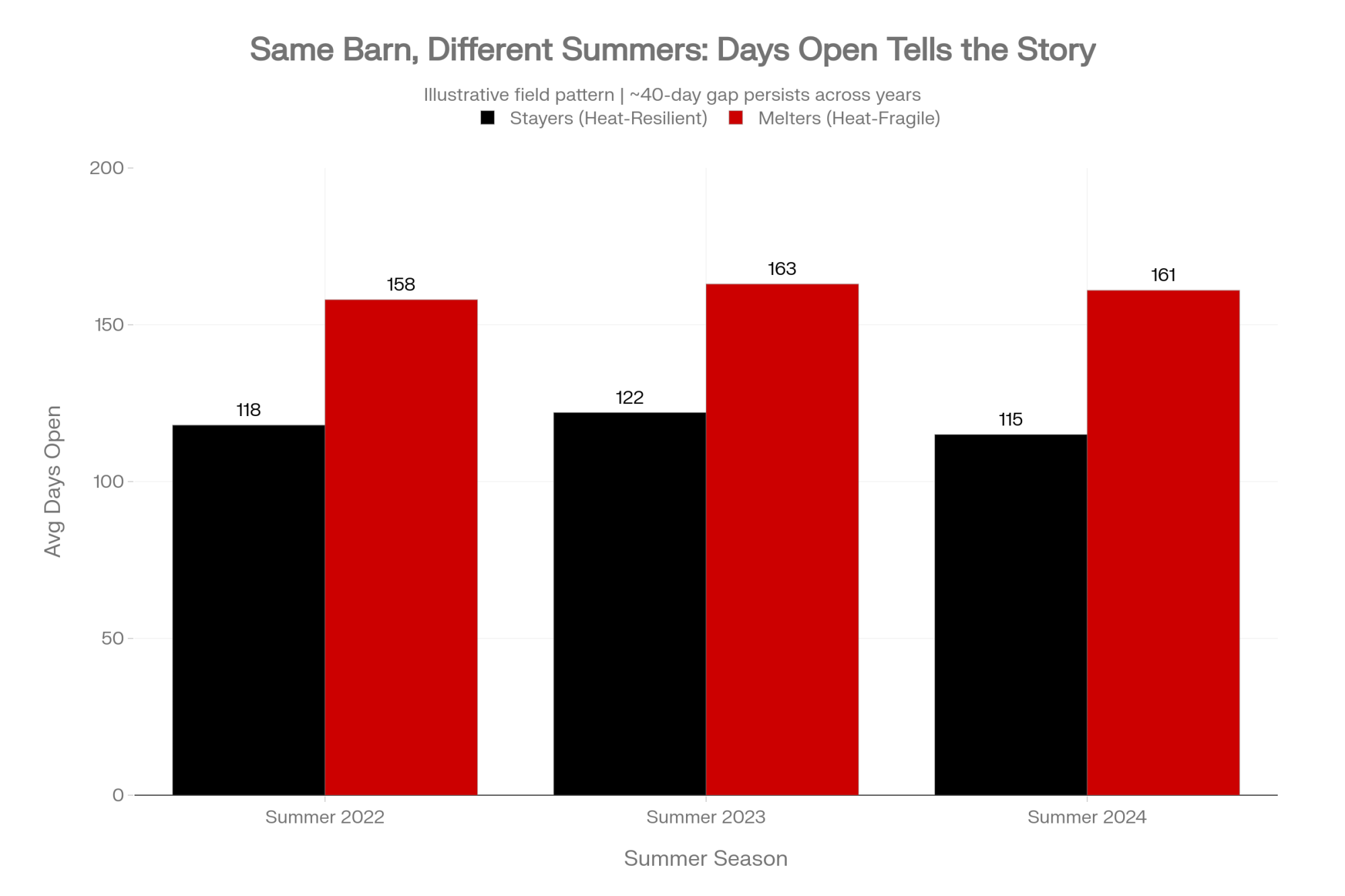
  • More days open: Those same cows often drag several extra weeks compared with the stayers standing beside them.
  • More post-heat wreckage: Mastitis, displaced abomasum, and lameness show up more often after sustained heat events.
MetricHeat-Resilient Families (Stayers)Heat-Fragile Families (Melters)Warning Level
Cool-season conception rate35–38%34–37%Normal
Summer (THI 60–70) conception30–33%18–22%🔴 Critical
Extra days open vs. cool-season+5–10 days+35–45 days🔴 Critical
Services per conception (summer)1.8–2.23.0–4.5+🔴 Critical
Post-heat health events (mastitis, DA, lameness)Low–moderateHigh; repeat offenders🔴 Critical
Summer cull / recheck list presenceOccasionalDominates list🔴 Critical
Cool → summer conception drop<5 points10–15+ points🔴 Actionable threshold
Per-cow annual summer cost (40 days open)~$50–100 CAD$200–320 CAD🔴 Critical

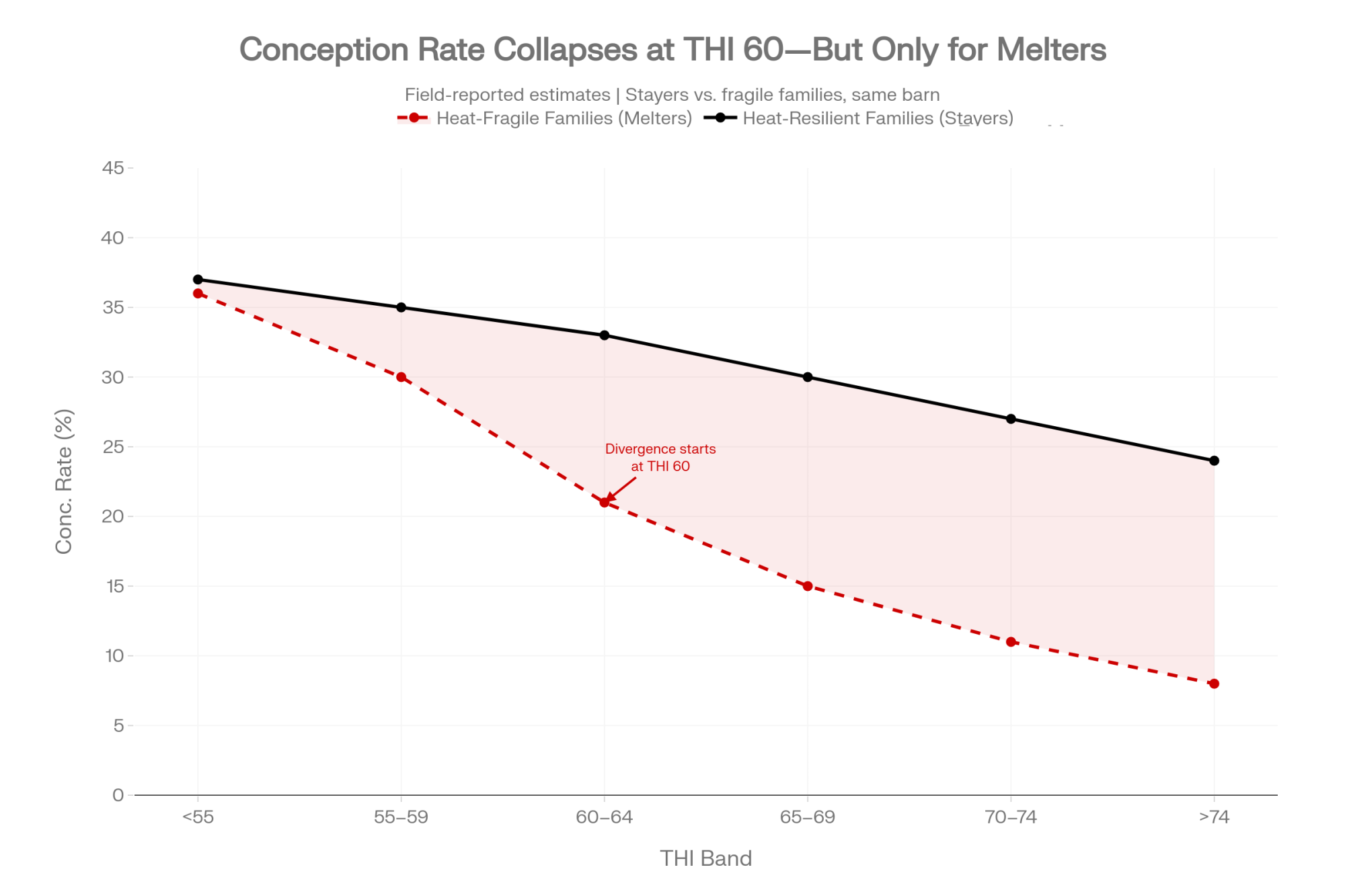
When you sort by family rather than by the whole herd, the picture gets cleaner. Advisors describe cool-weather conception in the high 30s for some herds, with the most heat-sensitive families dropping into the low 20s at mid-60s THI while steadier families hold closer to the low 30s. Treat those as field observations, not a published dataset—the direction matches the heat-stress research, but the exact spread will vary by herd.

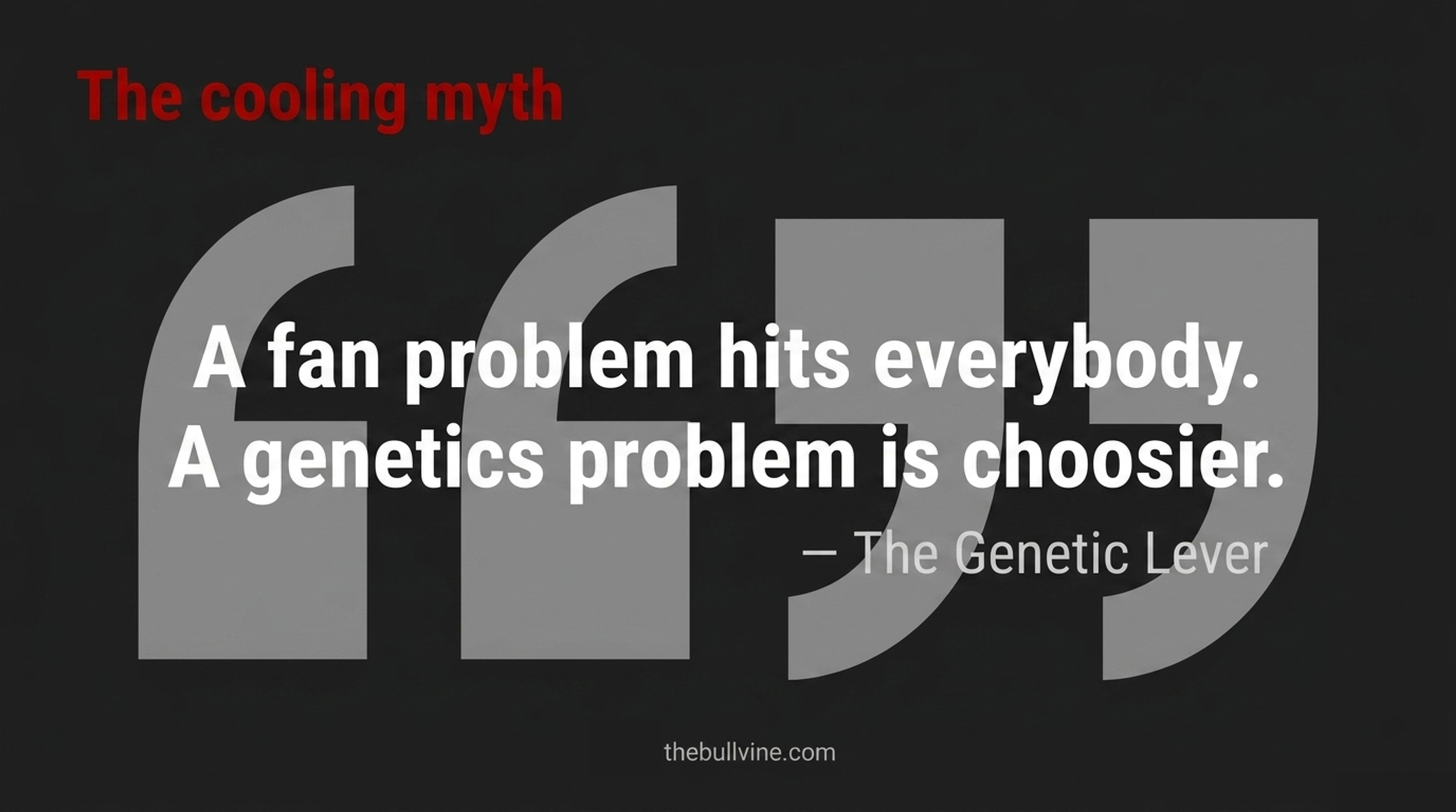
Here’s the tell that separates a genetics problem from a management one. Bad ventilation in the summer hammers everybody. The whole high group slides together, the fresh pen backs up, and the slump tracks the weather. A genetics problem is choosier. The same registration prefixes, the same maternal lines, show up open and rechecked while their pen-mates—same air, same water, same TMR—keep cycling and conceiving.

When the slump has favorites, you’re not looking at a fan that quit. You’re looking at inheritance. Melter families tend to reappear in the same ugly categories—open, repeat breeder, multiple health hits after heat—even when barns upgrade cooling or change protocols. At some point, that’s not bad luck. That’s an inherited weakness you’re choosing to keep breeding.

What Genetics Are Hiding in Your Summer Reports

Most herds already own the tools to start changing this. They just use them in the wrong order.

Too often, breeders start with Net Merit, TPI, Pro$, or LPI and then take a glance at fertility as a secondary screen. For heat resilience, flip that order. Filter first for the traits that predict summer survival. Then let your total merit index sort what’s left.

A heat-friendlier sire profile usually looks like this:

  • Positive fertility signal: Clearly favorable Daughter Pregnancy Rate or equivalent, not simply “acceptable.” Under heat load, even modest genetic differences in fertility show up larger.
  • Longevity and health behind it: Positive productive life or herd life, plus better-than-average udder health, metabolic disease, and lameness signals. Those traits earn their keep when cows are already carrying heat.
  • Moderate body size: Neutral to slightly negative size and stature, backed by sound feet and legs. Bigger cows produce more metabolic heat and shed it harder in humid conditions.

On the female side, genomic testing is where this gets practical, and it deserves more than a footnote.

How Genomic Testing Changes the Replacement Math

Parent averages are a guess. For low-heritability traits like fertility, that guess is especially soft—a daughter of a high-DPR bull and a fragile dam could land anywhere. Genomic testing tightens the guess by reading the calf’s own genotype, and the reliability gain on fertility, productive life, health, and size is exactly where it matters most for heat work.

Here’s the practical move. When test results come back, stop treating every heifer as an automatic keeper. Rank them on a heat-resilience screen first—fertility, productive life, health, moderate size—and only then sort by your economic index. The heifers that clear both bars are the ones you breed to sexed semen and build depth from. The bottom slice, the ones soft on fertility and health with high-stature signals, are your beef-cross candidates regardless of how their milk proof reads.

There’s a cost-control angle too. Testing isn’t free, but a herd that’s already retaining too many heifers is paying to raise its own future July problems. Aiming the genomic screen at heat resilience turns a sunk testing cost into a culling-and-mating decision you’d otherwise make blind. Even without a tidy national heat-tolerance index, this beats guessing from pedigree on the exact traits that crack under heat.

How to Spot Heat-Stress Infertility in Your Own Breeding Records

None of this works if the data stays locked in whole-herd averages. The good news: you don’t need new software. Tools like DairyComp and PCDART already break reproduction down by service sire and date—DairyComp’s BREDSUM summary has long been used by consultants to rank conception and pregnancy rate by sire.

Start with a date filter. Flag every service bred between June 1 and September 30 across the last three to five years—that’s your heat-window cohort. Wisconsin extension has even published the DairyComp commands for spotting heat-stress fingerprints in milk, components, and reproduction records, so the workflow isn’t exotic. Then run conception rate and days open two ways: once by sire, once by maternal line or cow-family group.

The split that matters is the gap. Look at each family’s summer conception against its own cool-weather number, not just the herd average.

Walking One Cow Family Through Three Summers

Picture how this reads on screen once the cohort is built. Take a single maternal line—call it the family behind your 90-pound cow—and pull its bred-to-conception record across three summers next to a steadier line in the same barn.

The fragile line shows a familiar shape: cool-season services convert fine, then June-through-September conception sags, three or more services per conception pile up on the same cow IDs, and days open on that line run weeks past the steady family standing in the next pen. Do it for three summers running and the pattern either holds or it doesn’t—that’s the whole point of the exercise. A family that runs 35% in spring and 33% in August is holding. A family that runs 36% in spring and 21% in August is melting, and it’s that second number quietly steering your cull list and your recheck sheet.

One caution before you act on the sort. Low-heritability fertility traits are noisy, and a single hot summer on a handful of cows isn’t a verdict. You want a repeated pattern—the same lines collapsing across multiple summers—before you start retiring genetics. One bad August is weather. Three is a trend.

Does the Barn Math Actually Hold Up?

Yes—and it’s worth being honest about where the numbers come from.

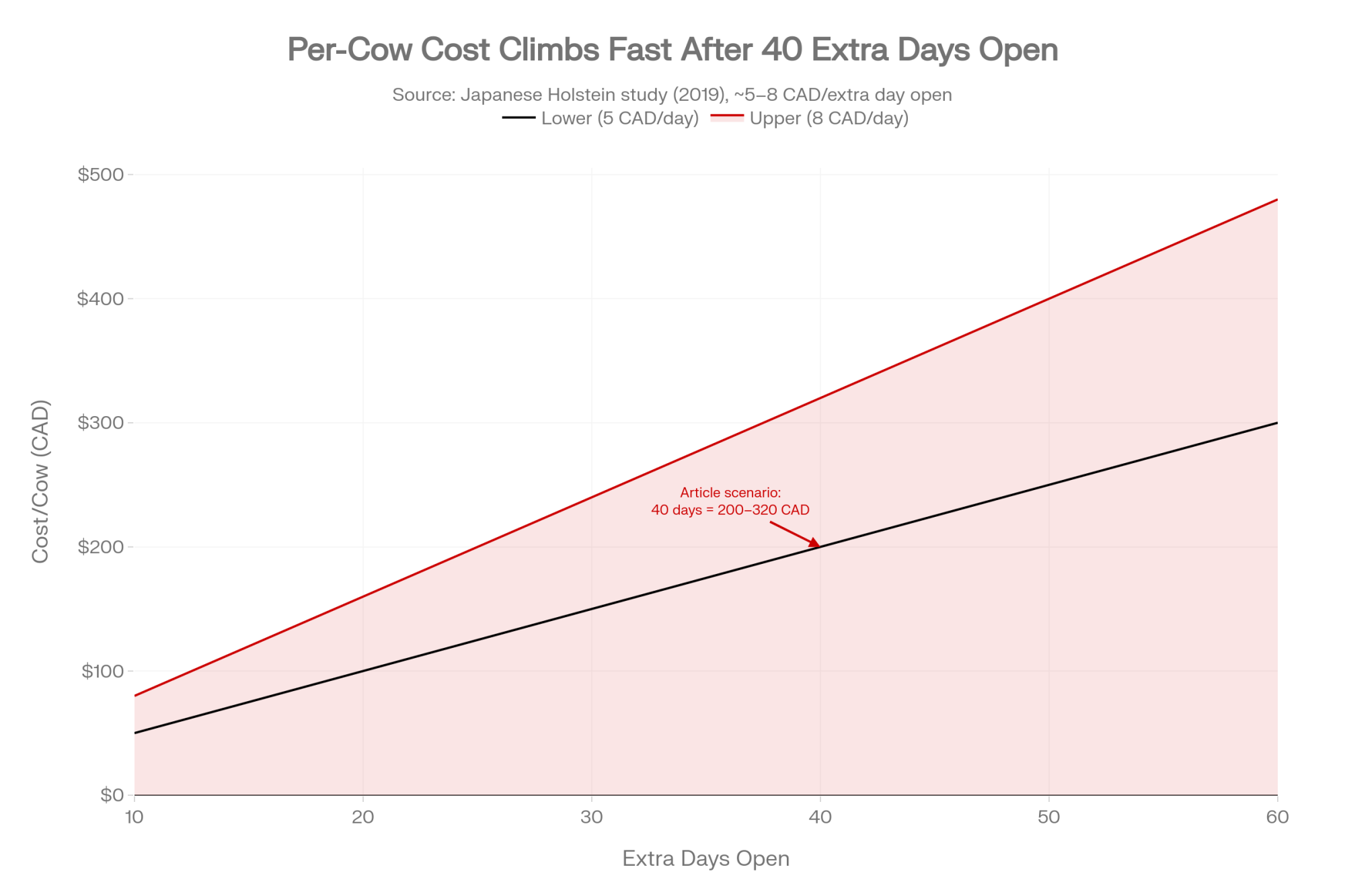
A 2019 Japanese Holstein study estimated the economic value of days open at 399 to 857 yen per day, depending on region and scenario. That’s the original published figure. At the 2019 average exchange rate of about 0.0122 CAD per yen, that works out to roughly 5 to 10 Canadian dollars per extra day open—call it 5 to 8 CAD as a conservative working range.

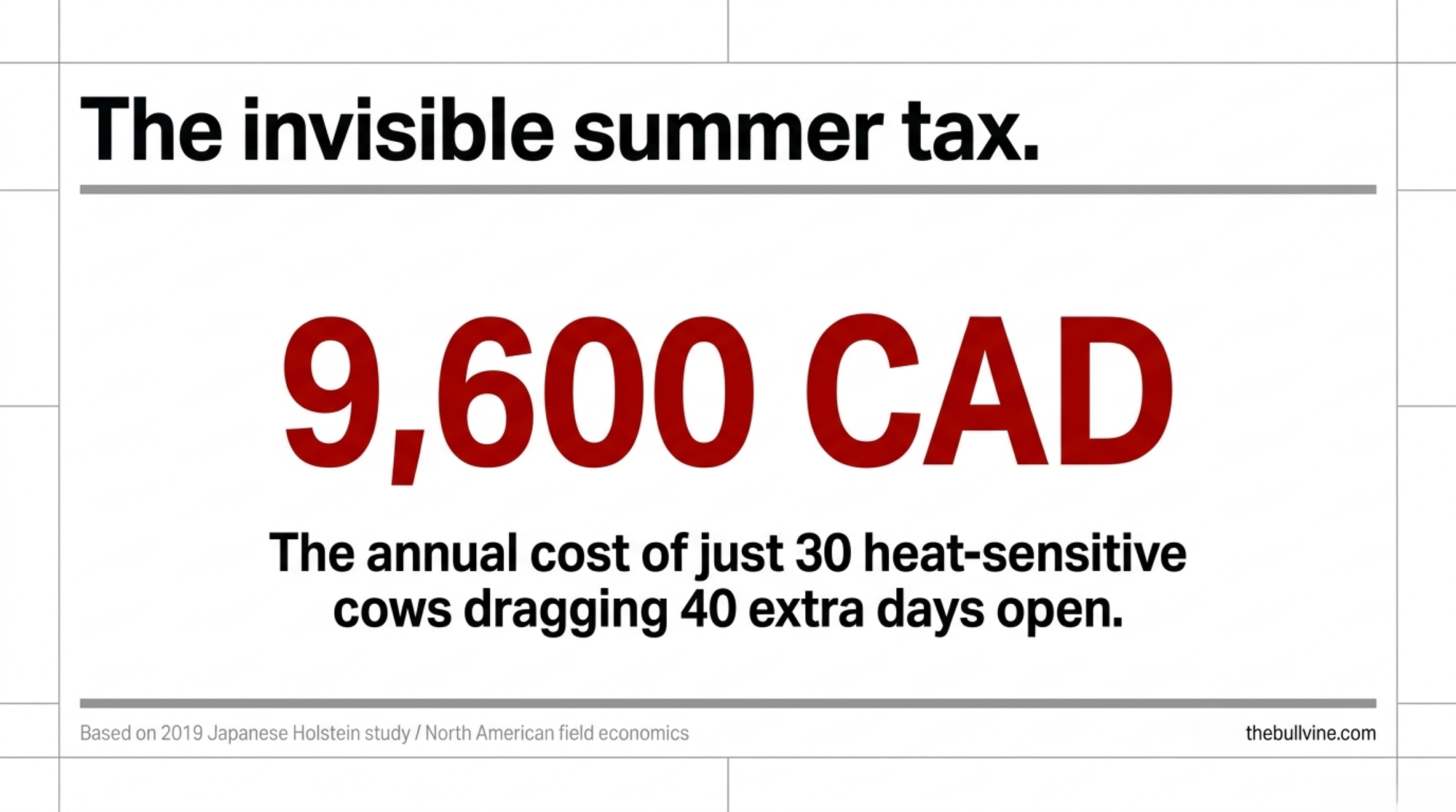
Walk it through one cow. Say a melter-family member tacks on 40 extra days open during a hot season—not a stretch when conception in that line drops into the low 20s. At the conservative end, that’s 40 × 5 CAD = 200 CAD. At the upper end, 40 × 8 CAD = 320 CAD. Now scale it as a what-if: if just 30 cows in a 200-cow herd carried that pattern every summer, the drag would land somewhere around 6,000 to 9,600 CAD a year—before you count the extra semen straws, the vet rechecks, and the higher odds those cows leave on a cull truck. That’s a recurring line item hiding inside “we had a tough summer.”

North American field economics land in the same zone. In Bullvine’s March 2026 analysis of Arizona heat-stress economics, a 3.5-point DPR gap worked out to roughly $157 to $367 per daughter over three lactations, using DCRC/Fetrow figures—often enough to beat a 150-point NM$ advantage once heat-driven days open and culls hit the ledger. So the Japanese figure isn’t an outlier. It’s a reasonable, conservative read on a cost that quietly repeats in the same families, season after season.

And there’s a bigger reason to care. Net Merit modeling and field analyses have repeatedly shown that better fertility and longevity often return more lifetime profit than chasing a little more milk from cows that don’t stay problem-free. The trade-off isn’t “milk versus nothing.” It’s usually “a little less peak versus fewer summer losses.”

Four Paths That Actually Change the Herd

There’s no perfect answer here. Herd size, replacement pressure, data quality, and appetite for short-term pain all matter. But there are four realistic ways to start.

Path 1: The One-Rule-Tonight Plan

Best fit: You’ve already invested in decent cooling and want to stop making the problem worse this breeding season.

Pull three to five years of records. Sort conception and days open for services bred June through September—or in the THI 60-to-70 range—by sire and by cow family.

Then draw a hard line under the bottom 15 to 20 percent of families for summer fertility. Those cows get beef semen only. No dairy replacements from them this year. At the same time, push your best fertility-and-health sires, ideally with moderate stature, onto the families that held together.

What it fixes: It stops fragile genetics from quietly filling your heifer pens. What it can hurt: If replacement numbers are already tight and you don’t tighten sexed-semen use on your better families, you can come up short on heifers. Do this within 30 days: Pull the last three to five summers of breeding records, rank families by summer conception, and decide which lines go beef-only now. That won’t rescue this July. It can absolutely change the calves you freshen in 2028.

Path 2: The Genomic Replacement Filter

Best fit: You’re already genomic-testing heifers, or you’re close to it.

Once results arrive, stop acting like every heifer deserves the same future. For heat resilience, keeper heifers should sit at or above herd median for fertility, productive life, and health, without extreme stature or body-weight signals. After that, sort by your preferred economic index.

What it fixes: It keeps you from raising the next batch of beautifully bred summer disappointments. What it can hurt:Get too aggressive too fast, and you can tighten your replacement pipeline before your better families have built depth.

Path 3: The Hot-Pens-First Sire List

Best fit: You can pinpoint where heat hits hardest—fresh pens, high group, specific barns—and you track breeding by pen.

Build a tighter sire list just for those groups. Every bull on it clears your fertility, productive life, health, and moderate-size thresholds. And where your evaluation system offers THI-slope or heat-tolerance breeding values, use them.

What it fixes: It matches your toughest environments with daughters more likely to hold together. What it can hurt:Genetics won’t save a pen with poor airflow, weak water access, or cooling that’s failing in plain sight.

Path 4: The Full Three-Year Reset

Best fit: Heat stress is a recurring profit problem in your region, and you’re ready to let data make the uncomfortable calls.

  • Year 1 — Triage: Pull three to five years of summer data, identify stayers and melters at THI 60 to 70, and flip the worst families to beef only.
  • Year 2 — Aim replacements harder: Genomic-test heifers, keep only those at or above herd median in fertility, productive life, and health with moderate size, and rebuild your sire list around bulls whose daughters actually held up through summer.
  • Year 3 — Tighten the cull gate: Move repeat offenders up the list—especially cows from fragile families that have now shown the same summer pattern twice.

Advisors who’ve watched herds follow that kind of plan describe a familiar payoff. Summer fertility still dips. But the crater shrinks, and the spread between the best and worst families tightens as more resilient cows make up the milking string. That’s the real outcome. Not a miracle. Not a silver bullet. Just a different herd.

Quick Comparison: Which Path Fits Your Barn?

PathBest ForKey ActionPayoff TimelineMain Risk
1. One-Rule-TonightCooling done; act this seasonBeef semen on bottom 15–20% of summer familiesCalves freshening ~2028Heifer shortfall if sexed semen not tightened
2. Genomic FilterAlready testing or near-readyScreen heifers for fertility, PL, health before economic indexNext replacement groupPipeline tightens too fast
3. Hot-Pens-First SiresBreed by pen; know your hot spotsDedicated sire list cleared for fertility + moderate sizeCurrent-year matingsWon’t fix broken cooling infrastructure
4. Three-Year ResetRecurring regional heat problemYear 1: triage; Year 2: aim replacements; Year 3: tighten cull gateMilking string by Year 3Needs multi-year data discipline

What This Means for Your Operation

Use this like a working audit, not a sermon. Each line is a decision you can make in the next breeding cycle.

  • Pull three to five years of summer breedings and sort by family. If the same lines keep collapsing at THI 60 to 70 while others hold closer to cool-weather performance, treat it as a selection issue—not just a facilities issue.
  • Check which bulls you’re still using in your hardest pens. If your hottest groups are still getting high-milk, low-fertility, taller sires, you may be breeding more July problems on purpose.
  • Audit your replacement policy. Are you keeping heifers because they’re balanced for fertility, productive life, and health—or because their milk proof looks good enough to keep the peace?
  • Set a cull threshold for repeat summer offenders. Two summers running with clearly extended days open, or three or more services per conception in the June-to-September window, is a defensible line in the sand.
  • Split your reports by THI band, not just by month. Even a simple under-60 versus over-60 comparison can tell you whether your cooling trigger is set too late.
  • Decide where the next dollar works harder. Another hardware purchase might help. But on some farms, stopping replacements from the worst 15 to 20 percent of summer families changes more than the next fan line does.

Key Takeaways

  • If you’ve already spent on cooling and conception still crashes every July, the next lever is genetic: stop making daughters from families that melt at THI 60, and concentrate your best semen on the families that don’t.
  • If the summer slump has favorites—the same maternal lines open while their pen-mates conceive—treat it as inheritance, not airflow. A fan problem hits everybody; a genetics problem is choosier.
  • If certain families lose far more ground in the THI 60-to-70 range while others stay near their cool-weather baseline, that’s a repeatable signal worth breeding around—but confirm it across multiple summers before retiring genetics.
  • If you genomic-test, screen heat resilience before economic index, so a strong milk proof can’t sneak a fragile heifer past the gate.
  • If you flip the bottom 15 to 20 percent of summer-fragile families to beef semen now and protect replacements from the stayers, you start changing your heifer pipeline without culling a single cow today.

The cows that matter most in your breeding plan aren’t the ones that impress you in April. They’re the ones you still trust in late July. Three summers from now, your barn will be full of daughters from the decisions you’re making this breeding season. Are they built for your climate—or are you still breeding April heroes that can’t cash a summer milk cheque?

Run Your Numbers

Pregnancy Rate Economics Calculator — This article says your melter families are dragging days open up 40 and bleeding 200–320 CAD a head. Put a real number on it: the calculator translates days-open savings, extra pregnancies, and cull impact into net annual ROI for your herd before you change a single breeding decision.

Complete references and supporting documentation are available upon request by contacting the editorial team at editor@thebullvine.com.

Learn More

  • Is Genomic Testing Worth the Investment? — Arms you with a definitive cost-benefit framework to measure the real-world dollar return of heifer genomic screening versus the overhead of blind-raising replacements that risk crashing during peak summer stress.
  • The Shift to Beef: Maximizing the Value of Lower Tier Cows — Breaks down tactical mating frameworks to aggressively capitalize on beef-on-dairy strategies, transforming your herd’s underlying “melter” family liability into immediate, premium-earning feeder calf cash flow.
  • Breeding for the Future: Why Reproductive Longevity Trumps Peak Milk — Exposes the hidden financial drain of chasing high-fluid-milk sires, proving why shifting selection criteria toward sustainable daughter pregnancy rates and extended herd life consistently secures greater lifetime margin per stall.

The Sunday Read Dairy Professionals Don’t Skip.

Every week, thousands of producers, breeders, and industry insiders open Bullvine Weekly for genetics insights, market shifts, and profit strategies they won’t find anywhere else. One email. Five minutes. Smarter decisions all week.
NewsSubscribe
First
Last
Consent
Send this to a friend