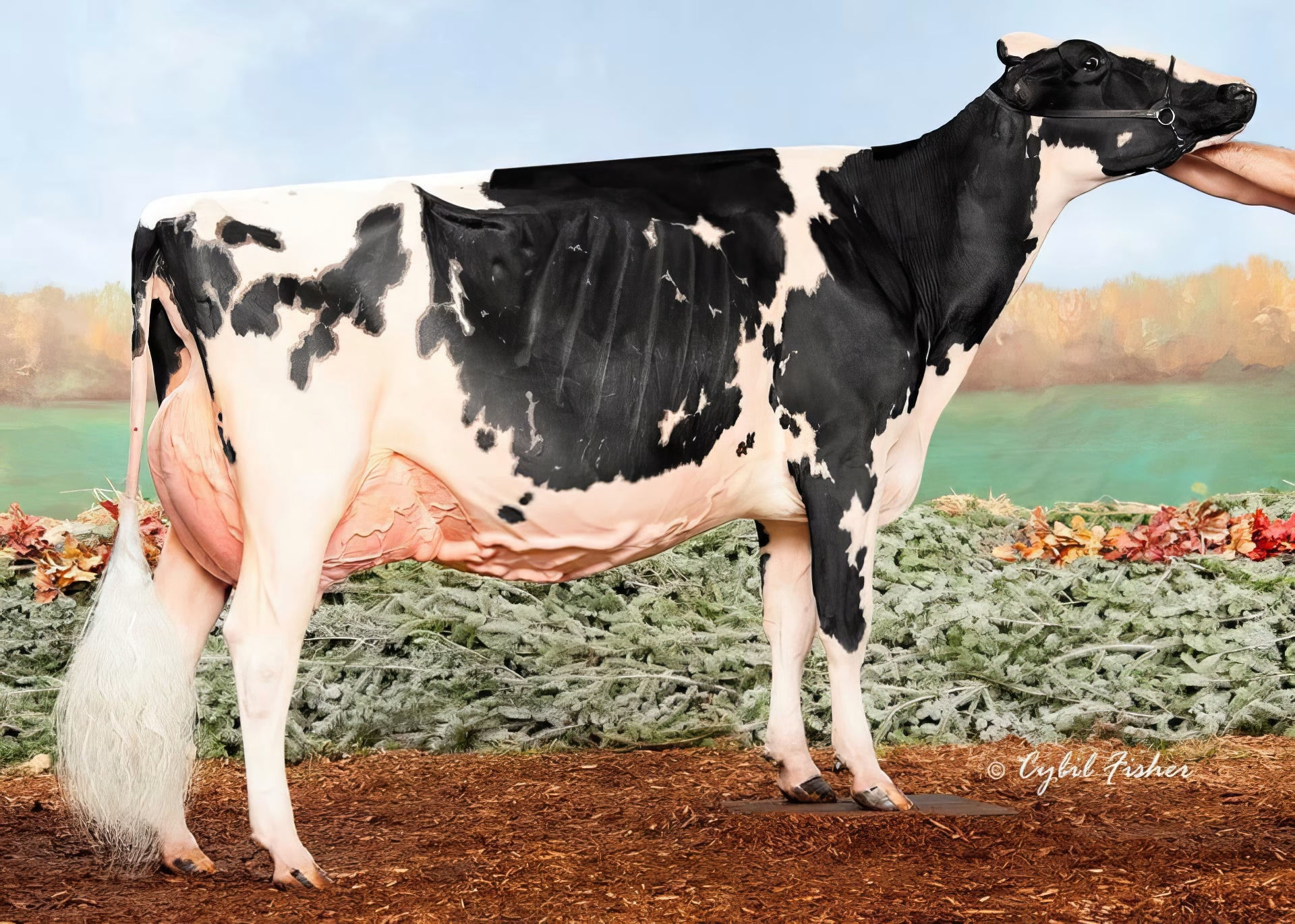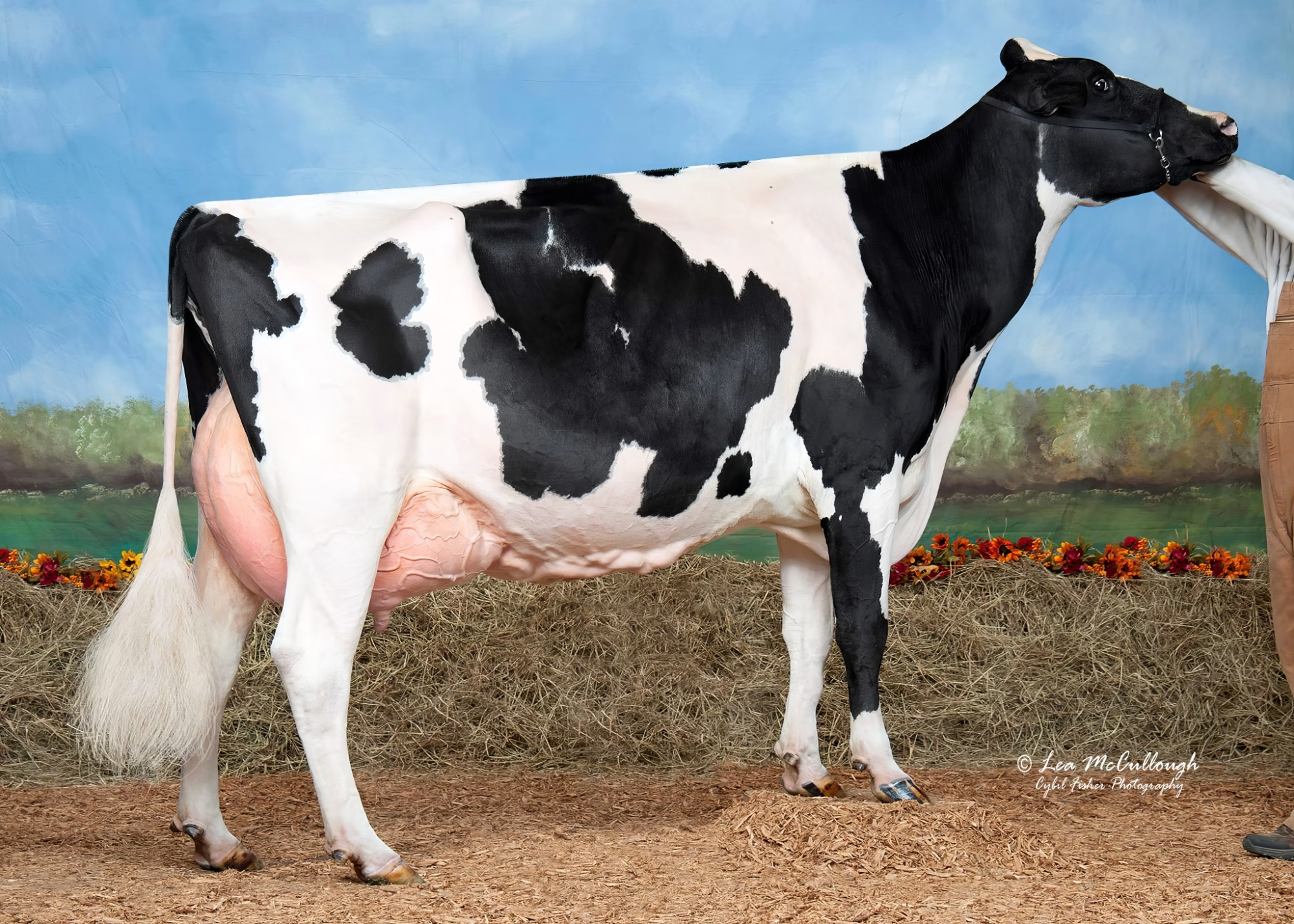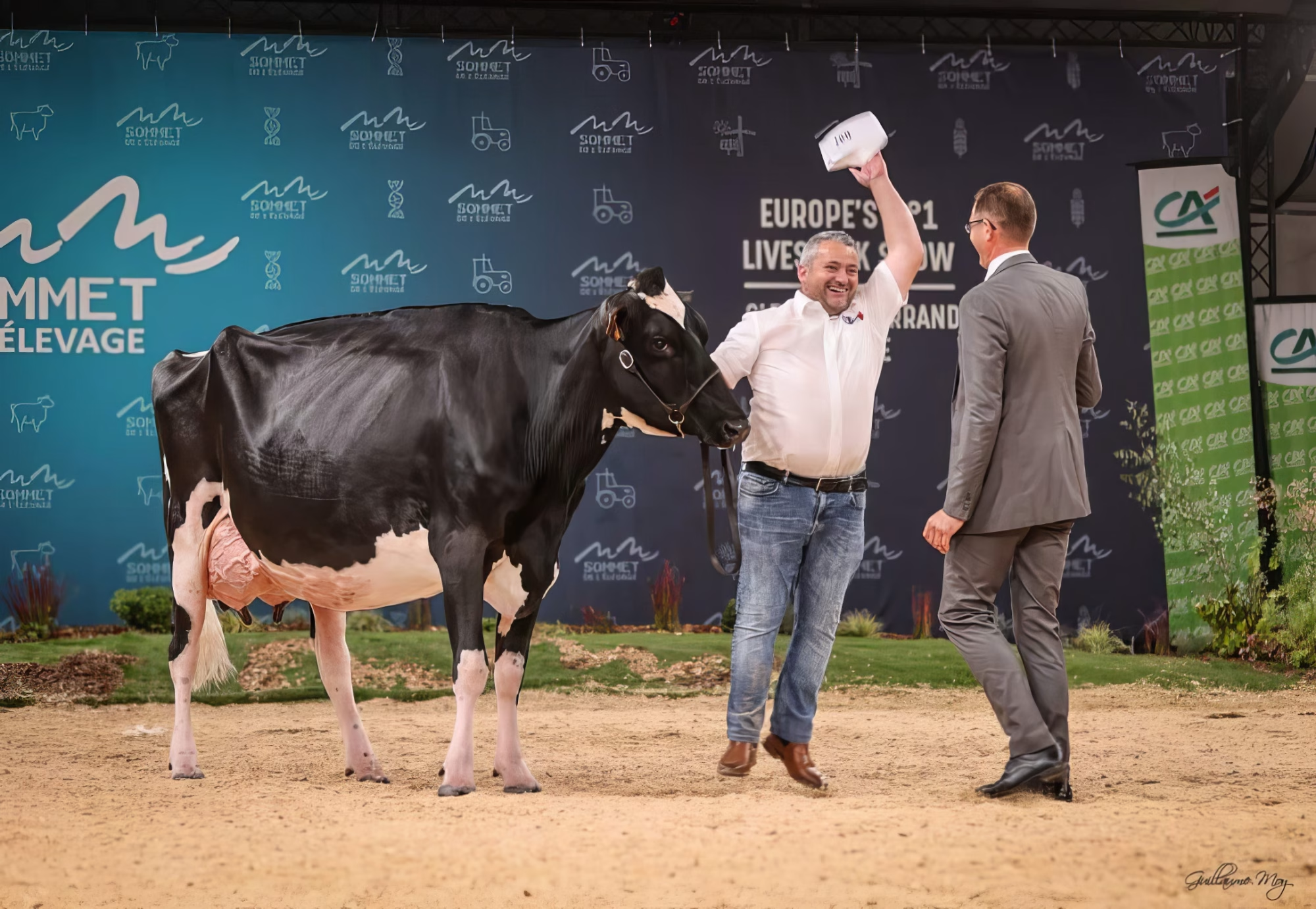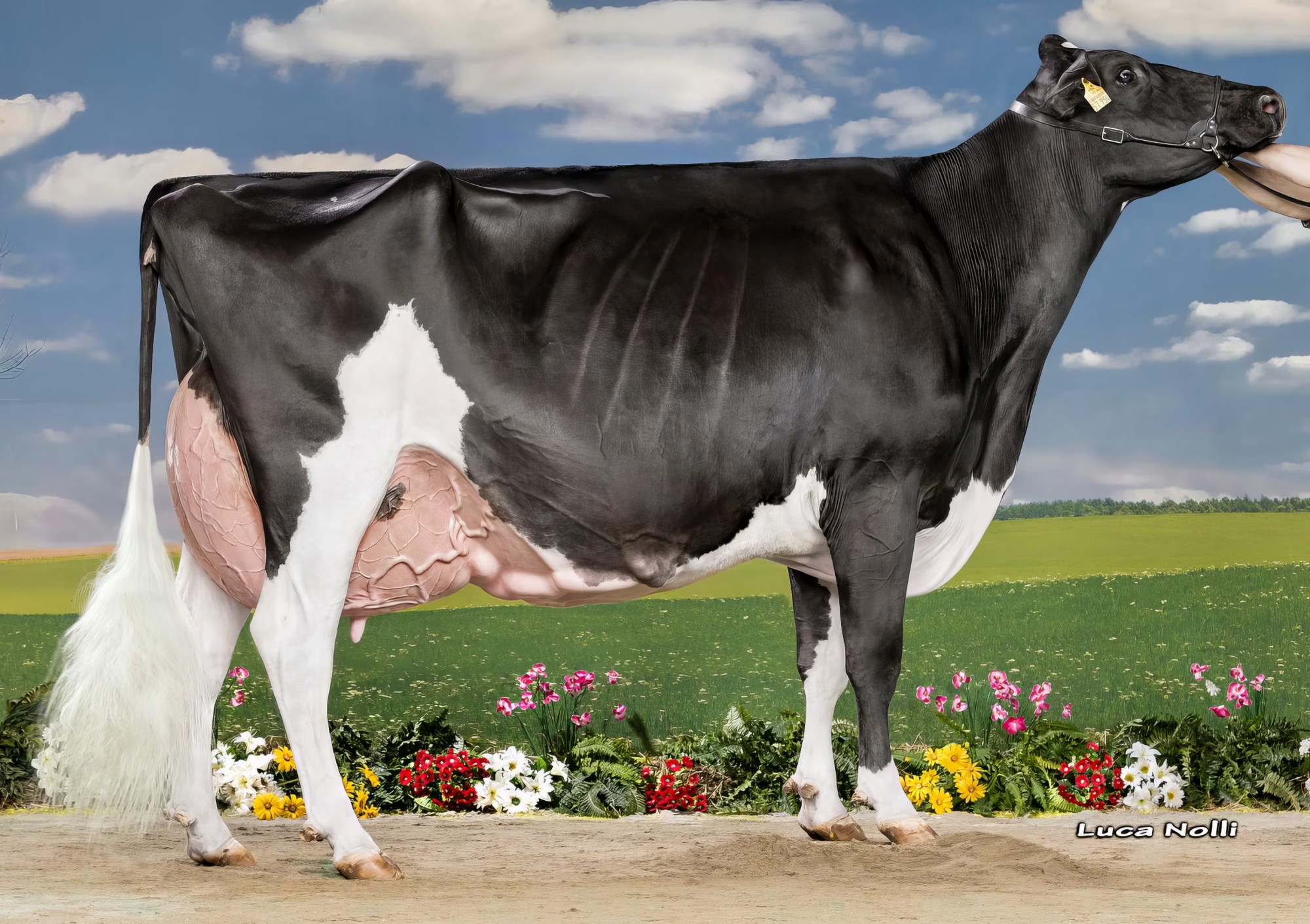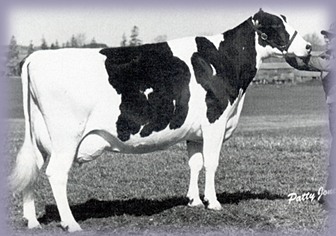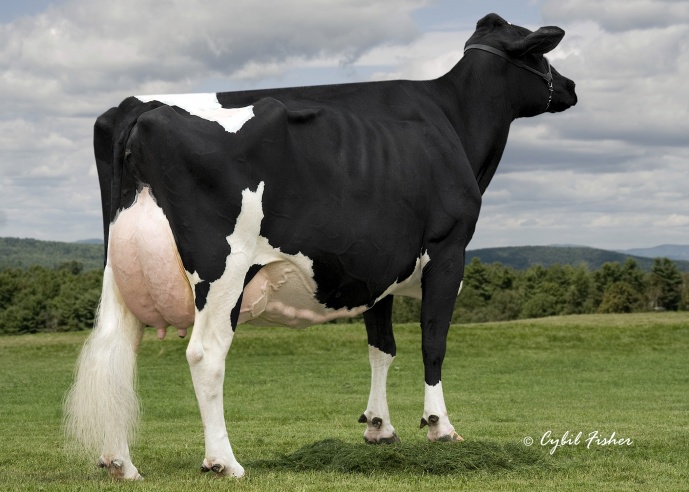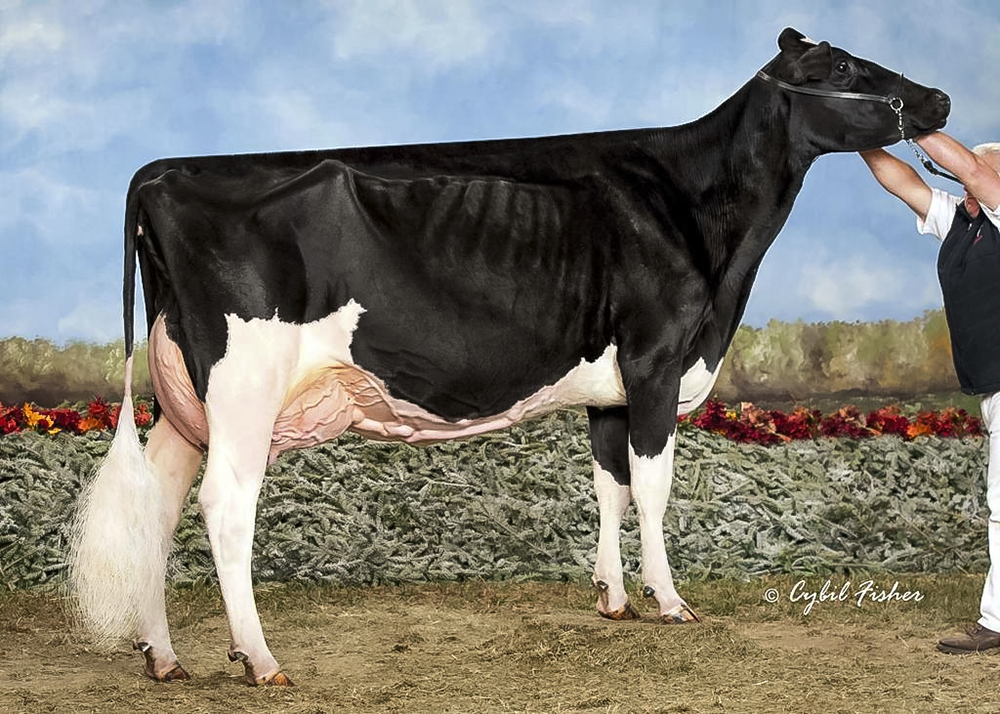




Archive for Rosafe Citation R

Rockwood Rocket Tone: 6-Time All-Canadian, and “an Absolute Disaster” as a Sire

Six times All-Canadian. One of the most formidable bulls ever shown. Then his daughters freshened—and Rocket Tone couldn’t breed. Only 1 in 6 champions ever could.
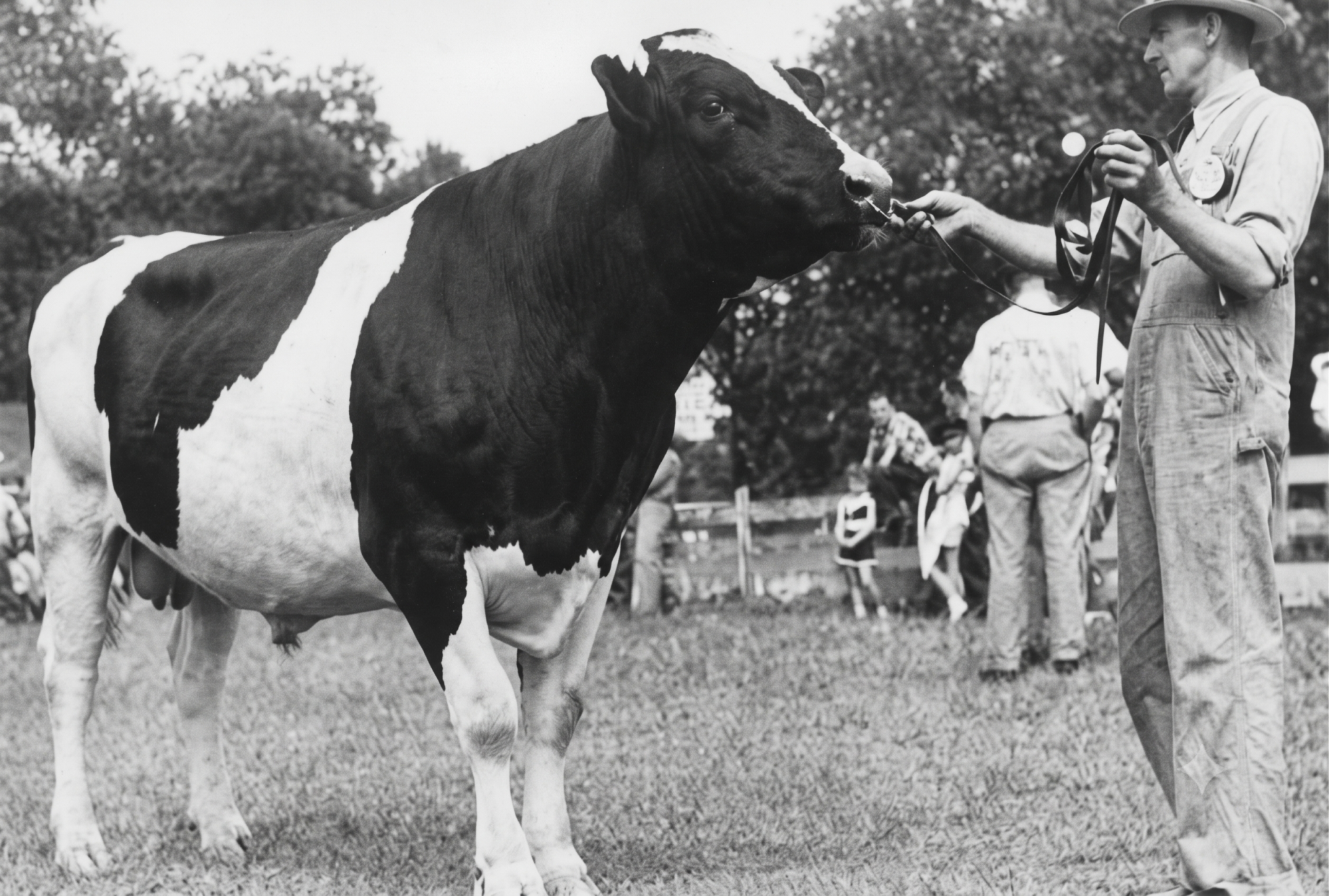
Rockwood Rocket Tone on the tanbark—six times All-Canadian and one of the most formidable bulls ever shown. The crowd could read his greatness at a glance. His daughters, freshening years later, would tell the truth the show ring couldn’t.

The crowd could see Rockwood Rocket Tone before he ever truly entered the ring.

That was the thing about the great show bulls of that vanished era. They didn’t just walk onto the tanbark—that soft brown bark-dust footing spread across the show floor. They arrived. Big necks, hard toplines, sweeping ribs, hides rubbed to a shine, handlers leaning into the halter just enough to make the whole performance look effortless. In those days—before bull classes disappeared from the major fairs and left the males to the semen catalogs—a champion male could still stop traffic at the Royal Winter Fair or the Canadian National Exhibition. And Rocket Tone was one of the most formidable ever to set foot on that floor. 
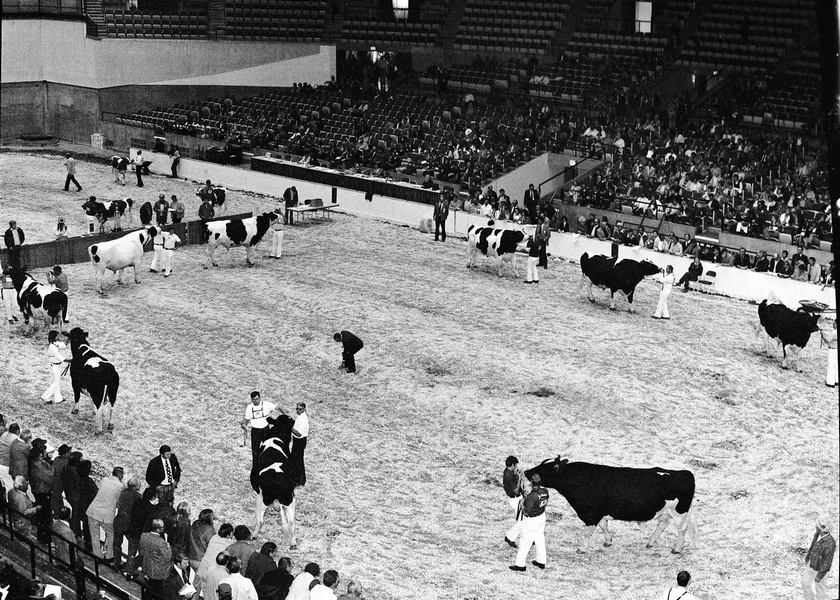
Look hard—you won’t see this again. A full class of aged bulls works the tanbark at the 1975 World Dairy Expo, before a coliseum that came just to watch the males. Within a generation these classes all but vanished from the great fairs, and with them went the stage where a bull could stop traffic on looks alone.

He was a son of Houckholme Sovereign Sky Rocket, bred at Rockwood Holsteins in St. Norbert, Manitoba, later proven at the Quinte District stud in Belleville, Ontario. Junior champion at the Toronto Royal Winter Fair in 1949. Then All-Canadian six times running—senior yearling, two-year-old, three-year-old, aged bull—a record beaten only by Montvic Rag Apple Marksman and Spring Farm Juliette. 

Six times. Let that sink in. This was back when hauling cattle was real work, fitting was closer to art than science, and a bull had to whip other great bulls face-to-face—not win a photograph contest. 
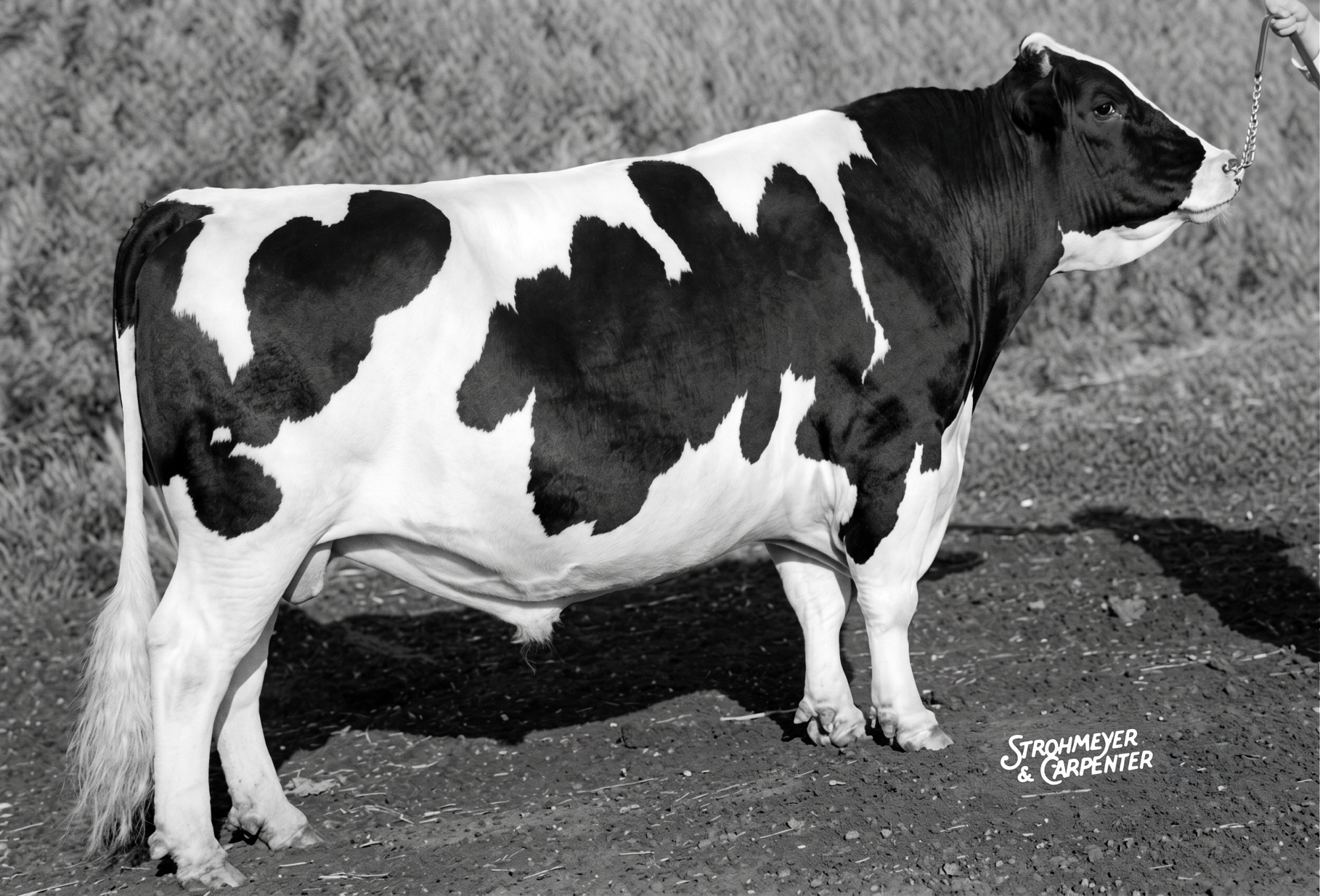
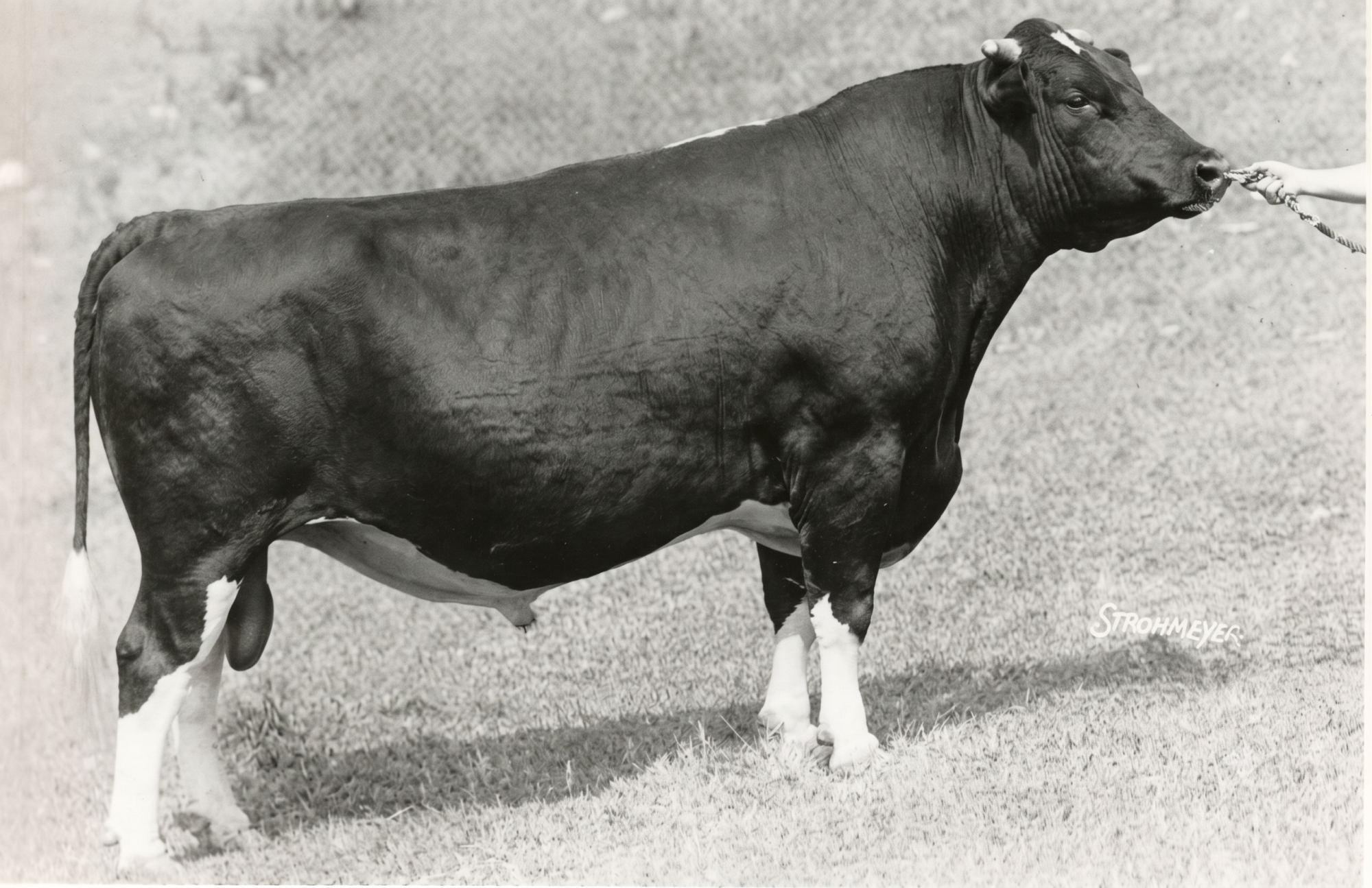
Rockwood Rocket Tone, immortalized by Strohmeyer & Carpenter. Study that topline, those ribs, that scale—this is the picture that won six All-Canadian banners. It’s also the picture that couldn’t tell you a single thing about what he’d breed.

And then, when the ribbons were boxed up, and his daughters began to freshen, the truth came in quiet.

Rocket Tone couldn’t breed.

Not the way breeders needed him to. Not the way that magnificent body promised he would.

“A dud, just an absolute disaster.” — E.Y. Morwick, on Rockwood Rocket Tone as a transmitter of desirable qualities 

E.Y. Morwick—one of the sharpest students of Holstein history this continent ever produced—didn’t soften it. That line still lands like a cold pail of water down the back of the neck. The old bull had fooled the eye. Or maybe, more honestly, the eye had fooled the men who trusted it too far. 

Now set him beside Smithcroft Snowball Rocket.

Snowball Rocket didn’t carry quite the same thunder. Gordon Smith of Milverton, Ontario bred him, a paternal grandson of Rockwood Rag Apple Remus, and Morwick described him as long, stylish, and beautifully balanced. He won All-Canadian as a two-year-old in 1956, then Reserve All-American and Reserve All-Canadian aged bull the year after. A lovely bull, sure. But not the mythic beast Rocket Tone appeared to be. 

Then his daughters started winning. And they didn’t stop.
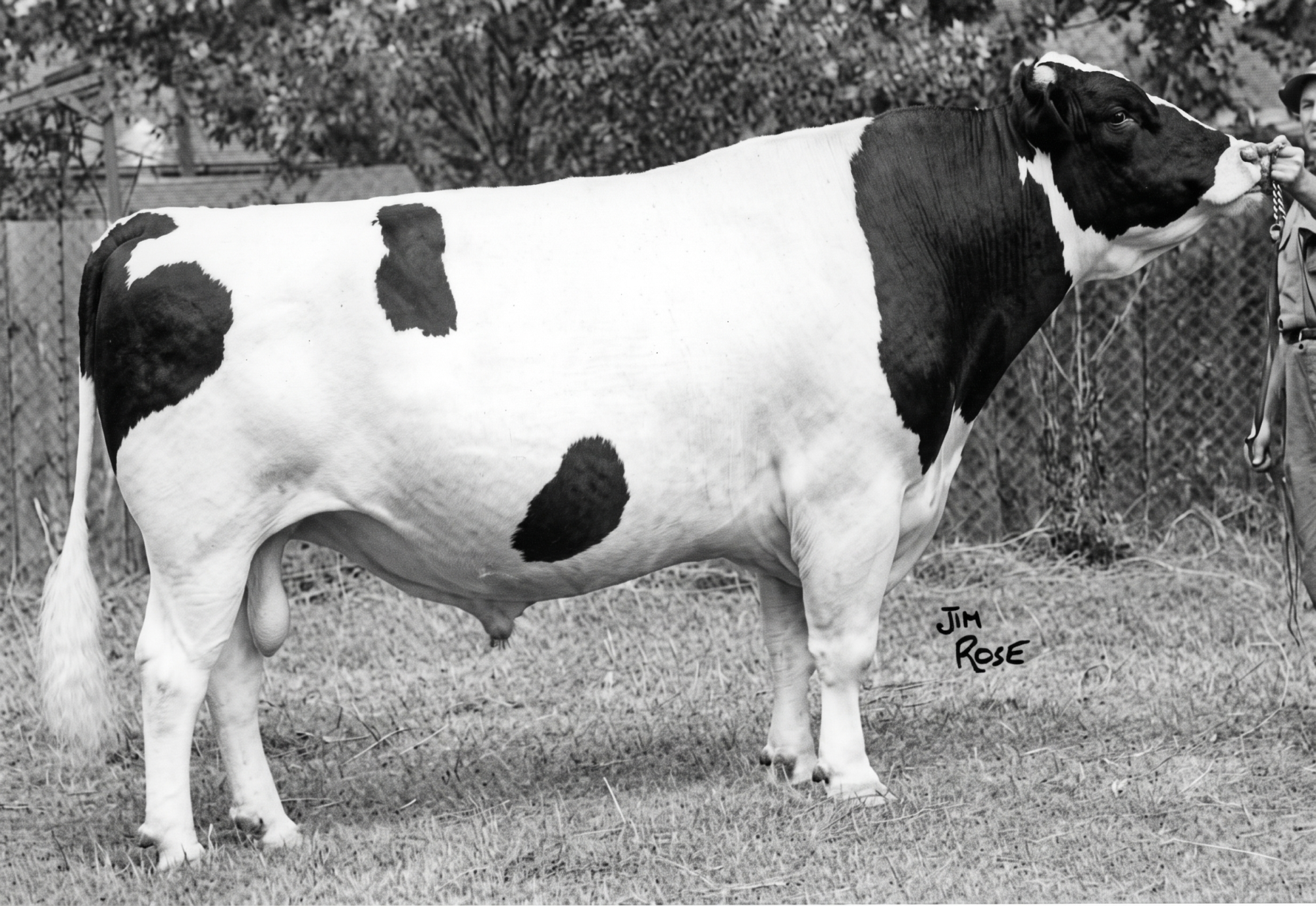
Smithcroft Snowball Rocket—long, stylish, beautifully balanced, but never the thunder Rocket Tone carried into a ring. He didn’t need it. His daughters went on to win the only contest that ever counted.

Greenden Rocket, All-American two-year-old in 1958. Delightful Rocket, grand champion at Chicago and Reserve All-American four-year-old in 1960. His gets of sire—that’s a group of a bull’s offspring shown together as proof of what he stamps into them—were nominated for All-Canadian honors in 1960, 1961, 1962, 1963, and 1966, and he pulled off the rare trick of nominating two separate gets in a single year, 1963. Four times his gets were nominated All-American, headlined by that intimidating string Green Meadow Farms of Elsie, Michigan brought out in 1960. 

So there it is, laid out plain as a fresh classification card. Two related, structurally similar bulls from the same broad Canadian tradition. One a legend of the ring who left almost nothing. One a quieter champion who helped remake the breed.

That’s where this story really begins. Not in a straw-bedded calf pen—but in a warning. Admire the phenotype. Then interrogate the pedigree.

Act I: When the Ring Ruled

Most modern breeders can’t quite picture how much authority the show ring carried back then.

Today, a breeder studies genomic predictions, linear type breakdowns, daughter fertility, health traits, and production data that pours in faster than a barn cat at feeding time. Back then? A great bull standing under the lights at the Royal or the Waterloo Dairy Cattle Congress could become a breeding proposition almost entirely on the strength of looking the part. 

And the part mattered enormously.

A show bull was supposed to project power without coarseness, breed character without weakness, enough scale to promise a next generation of big, durable, profitable cows. The tanbark was theatre. But it was also the marketplace. A championship raised semen demand, lifted sale prices, and earned bragging rights that traveled from the county line clear across national borders. 
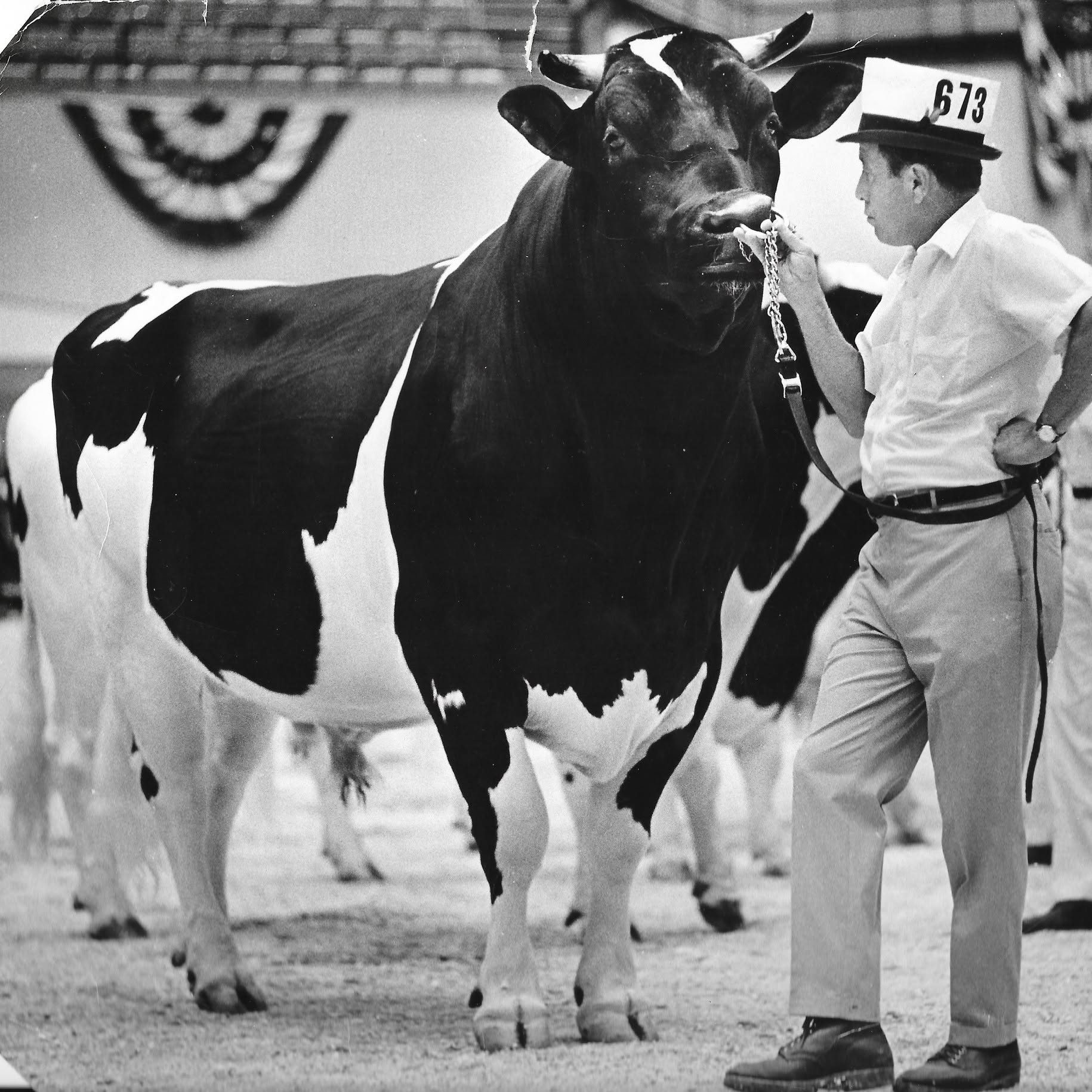
The whole theatre in one frame: Allen Hetts, one hand steady on the chain, walks Crescent Beauty Talent past the bunting—Reserve Grand Champion Bull in 1967, Grand Champion by 1969. That fall, Talent shipped to Japan, because a title like this didn’t just win a banner. It could move a bull halfway around the world.

Artificial insemination was beginning to change everything. The Oxford District Cattle Breeders Association, under herdsman Paul Jensen, did something almost no other Ontario stud bothered with—it actually campaigned its bulls at the shows. Snowball Rocket was one of those Oxford bulls, keeping company in the record with Baker Reflection Jerry, the All-Canadian two-year-old of 1960, and Clearcreek Model, Reserve All-Canadian bull calf in 1956. That mattered, because A.I. was becoming the bridge between a bull admired by a few thousand people at ringside and a bull whose daughters milked in barns from Ontario to Oregon. 

But the old question wouldn’t lie down.

Did the glamour bulls breed?

Morwick chewed on that through eleven of the most prominent Holstein breeding establishments in North America—six Canadian, five American—and his verdict was blunt. Most didn’t. By his own reckoning, only about half of the famous show bulls proved reliable transmitters, and only about a third of that half—call it one in six overall—ever reached the exceptional class. A follow-up analysis put numbers to the whole roster, scoring each institution’s show bulls from five, for a superior transmitter of type and production, down to zero, for a bull who as a breeder did next to nothing. 

So yes. The tanbark could crown a champion.

But the breeding shed kept its own book, and it balanced to the penny.

Here’s how the eleven houses finished, best to worst:

Breeding establishmentPrincipal breederScoreDaughter Verdict & Key Sires
Rosafe FarmsDr. Hector I. Astengo17Citation R. scored a perfect 5; Preceptor, Signet, and Shamrock Perseus each earned 4 off the A.B.C. Reflection Sovereign blood.
Mount VictoriaT.B. Macaulay16Marksman a 5, Sovereign and Monogram 4s, Hartog a 3—the Rag Apple dynasty at full power.
Carnation Milk FarmsE.A. Stuart16Governor Imperial and Royal Master perfect 5s, Homestead Revelation a 4, Matador Masterpiece a 2.
Pabst FarmsFred Pabst15Sir Roburke Rag Apple and Roamer Dean Walker Lad 5s—yet four-time All-American Fobes Burke managed a 1.
Elmwood FarmRobert V. Rasmussen14King Bessie Korndyke Ormsby a 5; Progressor, Senator, Gypsie each a 3.
Spring FarmJ.M. Fraser14Inka Jewel and Fond Hope 5s, Reflection a 4—and Sovereign Supreme, for all his ribbons, a 0.
Romandale FarmStephen B. Roman9Marquis a 5, Dividend a 4, while Governor and Argus both scored 0.
Franlo FarmF.W. Griswold8Roebuck Regent and Gen Treasure Model 4s; Chip Douglas King and Chip Montvic Royal, 0s.
Cash-MarC.M. Bottema Jr.8Ormsby Jerry and Jerry Darky Lassie 4s; Jerry Delight and TM Pell City, 0s.
SheffieldJohn Malcolm8Crown Prince, Dusty, Monarch, Chico—four pretty bulls, four scores of 2.
Glenafton FarmJ.J.E. McCague5Rag Apple Alert a 5; eight other campaign sires, all 0.

Rosafe seventeen. Glenafton five. Sit with that gap a moment, because the whole story lives inside it.

The best sires all shared something the failures didn’t. Deep maternal families. Linebred strength that held up. Daughters and sons who proved the body wasn’t just a lucky roll of the genetic dice. The great ones stood behind cows like Montvic Rag Apple Colantha Abbekerk, Lakefield Fobes Delight, Bonnie Lonelm Texal High, Soo Rag Apple Princess. The duds? Often glamorous enough to win—but without the additive power to stamp a daughter. 

That’s the whole difference between a great photograph and a great sire.

Act II: The Bulls Who Kept Faith—and the Ones Who Broke It

Mount Victoria: The Cathedral of the Rag Apples

If this story has a cathedral, it stands at Mount Victoria.

T.B. Macaulay’s herd at Hudson Heights, Quebec became the home of the Rag Apple blood that shaped North American Holstein breeding for decades, concentrating the line of Johanna Rag Apple Pabst into cattle that looked important before the records even confirmed it. And then came the brothers. 

Big, black, and beautiful. That’s exactly the feeling Morwick reached for when he wrote about Montvic Rag Apple Marksman and Montvic Rag Apple Sovereign, both sons of the great cow Montvic Rag Apple Colantha Abbekerk. They formed the All-Canadian produce of dam—the top-placed pair of offspring from one cow—in 1945, 1946, and 1947. Other famous male pairs had come before: Hays Taxpayer and Hays Alamoda, Hays Sensation and Hays Supreme, Man-O-War Progressor and Sir Man-O-War Heilo. Put them side by side and photographed against Marksman and Sovereign? Morwick said no contest. 

But the brothers had something those pairs didn’t. They bred.
Montvic Rag Apple Marksman—big, black, and beautiful, and rarest of all, a champion who bred as well as he looked. Seven times All-Canadian, then sire of five All-Canadian gets. This is what it looks like when the eye and the pedigree finally agree.

Marksman went All-Canadian seven times as an individual and then sired the All-Canadian gets of 1946, 1947, 1949, 1950, and 1951. Sovereign sired A.B.C. Reflection Sovereign and Houckholme Sovereign Sky Rocket—two of the most prolific sources of show-winning stock the breed had. And there’s a twist worth savoring: Sky Rocket was Rocket Tone’s own sire. The same family that produced the breed’s great disappointment also produced its engine. Blood is like that. Generous and cruel in the same breath. 

Now, the sad one.

Montvic Rag Apple Hartog spent too many of his best days on the show circuit and not enough at Hays Farms doing bull’s work. He wasn’t used nearly as hard as he should’ve been. And yet even from that neglect he threw Hays Supreme—the best bull, Morwick said, the Hays boys ever bred. Hays Supreme sired Supreme Ruby Echo, Canada’s first 200,000-pound milk cow, and anchored a line running down through Inka Supreme Reflection, A.B.C. Reflection Sovereign, Glenvue Nettie Jemima, and Spring Farm Fond Hope. A half-wasted bull. A river still deep enough to cut through generations. 

Carnation: Stacking the Production Deck

Swing south and west now, to Carnation Milk Farms in Washington.

E.A. Stuart wasn’t only chasing ribbons—he was building production and scale into cattle that had to hold up in real, commercial dairying. And at Carnation, the proof didn’t come from the show string. It came stacked three generations deep. Carnation Governor Imperial won All-American three times and sired seven Gold Medal sons—Gold Medal being the old honor for a bull whose daughters proved themselves in both the show ring and the milk pail. His son carried it forward, and his grandson, Carnation Homestead Revelation, topped the Honor List—the annual roll of the top proven sires by daughter records—in 1958, completing the breed’s first three-generation string of Honor List-leading sires. Grandfather, father, son, each ranked first in the nation. Nobody had ever stacked three like that, and the men in the Carnation barn knew exactly what they were standing on.

Then came Royal Master, and this time the proof arrived in a sale ring.

Carnation Royal Master sired two world-record sellers at once—Don Augur Mothermarthas Pride at $108,000 in 1966, and Oak Ridges Royal Linda at $62,000 in 1968. Picture the Don Augur ring that day: the bidding cracking past every previous mark, the crowd going still, an auctioneer’s voice climbing into territory nobody in the barn had ever heard for a female. That wasn’t showring smoke. That was hard cash betting on a bloodline that had already proven it delivered. 

The Wisconsin Invasion and the Illusion of Fobes Burke

Pabst Farms taught maybe the sharpest lesson of all—and it cut the opposite way.

Fred Pabst’s herd at Oconomowoc, Wisconsin, bred cattle of tremendous uniformity, and Pabst quietly produced non-show sires like Pabst Regal and Pabst Roamer who each threw two All-American gets. But the bull everyone came to see was Pabst Fobes Burke, classified EX-96—an outstanding score for a bull in that day. 

What a sight he must’ve been. He was All-American four times between 1953 and 1957, and he headed the Wisconsin invasion of the 1956 Royal Winter Fair, the year Pabst walked into Toronto and presented both grand champions—Fobes Burke and Plain View Inga. One can only imagine the mood at ringside for the Ontario men that afternoon. Wisconsin hadn’t come to compete. Wisconsin had come to take the flags home, and did. 

Then the daughters freshened.
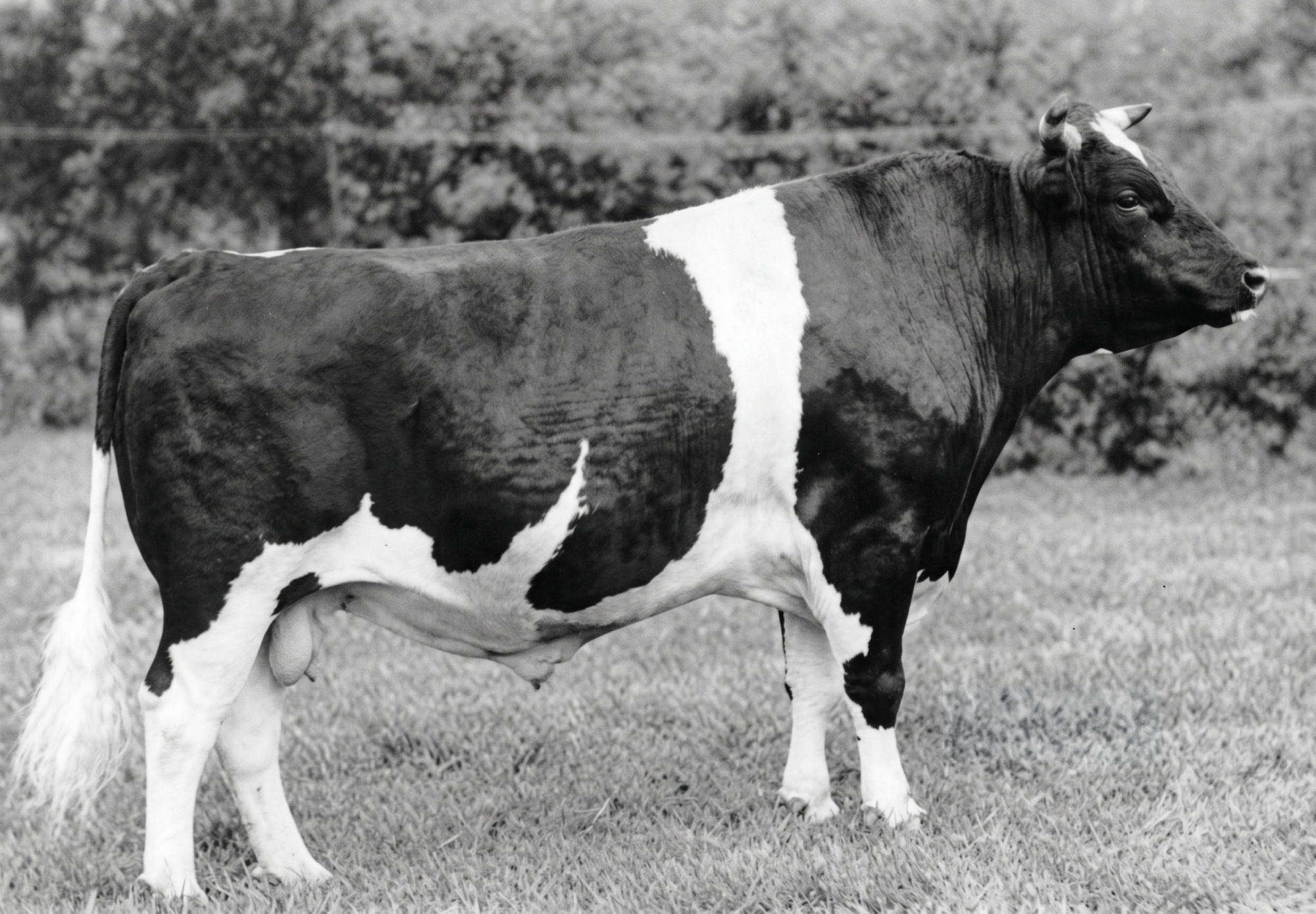
Pabst Fobes Burke, classified EX-96—four-time All-American and the bull everyone crowded the rail to see when Wisconsin took both grand championships at Toronto in 1956. The body was flawless. What his daughters freshened into would tell a very different story.

And Fobes Burke—by the good sire Sir Regal Fobes, out of a Wisconsin Admiral Burke Lad daughter—did next to nothing. What stung most was where the real breeding power sat: not in the champion, but in the father who’d never drawn half the crowds. Sir Regal Fobes left thirty-four classified daughters averaging 82.7 points, six of them Excellent. Walk that number back to what it meant. In an era when a solid working cow scored in the high seventies, a bull who could pull a whole barn of daughters up past eighty-two—with a half-dozen going Excellent—was a genuine type-builder. Pabst Sir Roburke Rag Apple was better still: three All-Americans, fifteen Gold Medal daughters, 230 daughters over 100,000 pounds lifetime, and leading Honor List sire in 1961, 1962, and 1964. Roamer Dean Walker Lad ranked second on the Honor List in 1954 with nine Excellent offspring and Class Extra sons—Class Extra being the Canadian rating reserved for sires whose progeny stood out most sharply. The glamour bull in the middle of all that? A footnote. 

Maybe there’s nothing mysterious there. Maybe some bulls are simply great without being able to hand it down. That’s the uncomfortable part every breeder eventually swallows: an animal can be excellent without being prepotent.

Spring Farm: The Costliest Decision Jack Fraser Ever Made

Spring Farm made that same point—and it must have cost Jack Fraser some sleep.

Fraser, of Streetsville, Ontario, bred cattle that became part of the breed’s foundation memory. His Spring Farm Inka Jewel was an All-American bull calf in 1935, then opened in 1937, winning grand at Ottawa and reserve grand at the C.N.E. And then, at the Lindsay Fair, the bull got hung up in his halter, wrenched his back, and had to be destroyed.

Read that again. One tangled halter, one bad wrench, and a young sire of enormous promise was gone.

Except he wasn’t, really. In just three herds and a short life, Inka Jewel sired Inka Supreme Reflection and Inka Supreme Lillian for Jim Henderson, plus lines feeding into A.B.C. Reflection Sovereign, Spring Farm Juliette, and Spring Farm Fond Hope. Short life. Long shadow. That’s how it goes with the real ones. 

But the harder story—the one that stings—was Sovereign Supreme.

Spring Farm Sovereign Supreme, a son of Montvic Rag Apple Sovereign, went All-Canadian four times and All-American three. Fraser believed in him. The Herd Book from the late 1940s shows more than 100 Sovereign Supreme calves registered by Fraser—against just five he registered by Elmcroft Voyageur M, the other bull sharing his herd-sire duties. 

Picture Fraser years later, thumbing back through those pages. A hundred-plus by the bull who couldn’t transmit. Five by the bull who could.

“Using Sovereign Supreme to the near-exclusion of Voyageur M was probably the biggest mistake Jack Fraser ever made.” — E.Y. Morwick 

Sovereign Supreme was a write-off in the breeding shed. Voyageur M sired Spring Farm Fond Hope

And Fond Hope changed the arc of everything. All-Canadian as calf, senior yearling, and two-year-old, he and his full sister Spring Farm Juliette formed the All-Canadian produce of dam four years running, 1950 through 1953. His influence ran so deep that Senator Harry Hays drew on his sons as foundation stock for a whole new beef breed, the Hays Converter. When a Holstein bull leaves his mark outside the Holstein breed entirely, you know the ground moved under everyone’s feet. 

The Same Tune, Four More Times: Romandale, Franlo, Cash-Mar, Sheffield & Glenafton

The other houses kept singing verses of the same tune, so let’s take them together, because by now the pattern needs no introduction.

Stephen Roman—the mining magnate who poured a fortune into building Romandale at Unionville, Ontario—bred eight bulls that won twelve All-Canadian awards, and only two, Reflection Marquis and Dividend, truly cut through as sires. Marquis was the crown jewel, siring Agro Acres Marquis Ned and a string of sons, plus a daughter, Agro Acres Marquis Patsy, who went All-Canadian two years running. But Romandale Reflection Governor, three-time All-Canadian himself, left thirty-nine classified daughters averaging a dismal 51 percent Good Plus and better. Same prefix. Same glamour. And when the classifier worked down those Governor daughters, the cards came back with the kind of scores that make a breeder go quiet, set down his coffee, and rethink a whole mating plan. Argus, another All-Canadian, contributed nothing worth remembering. 
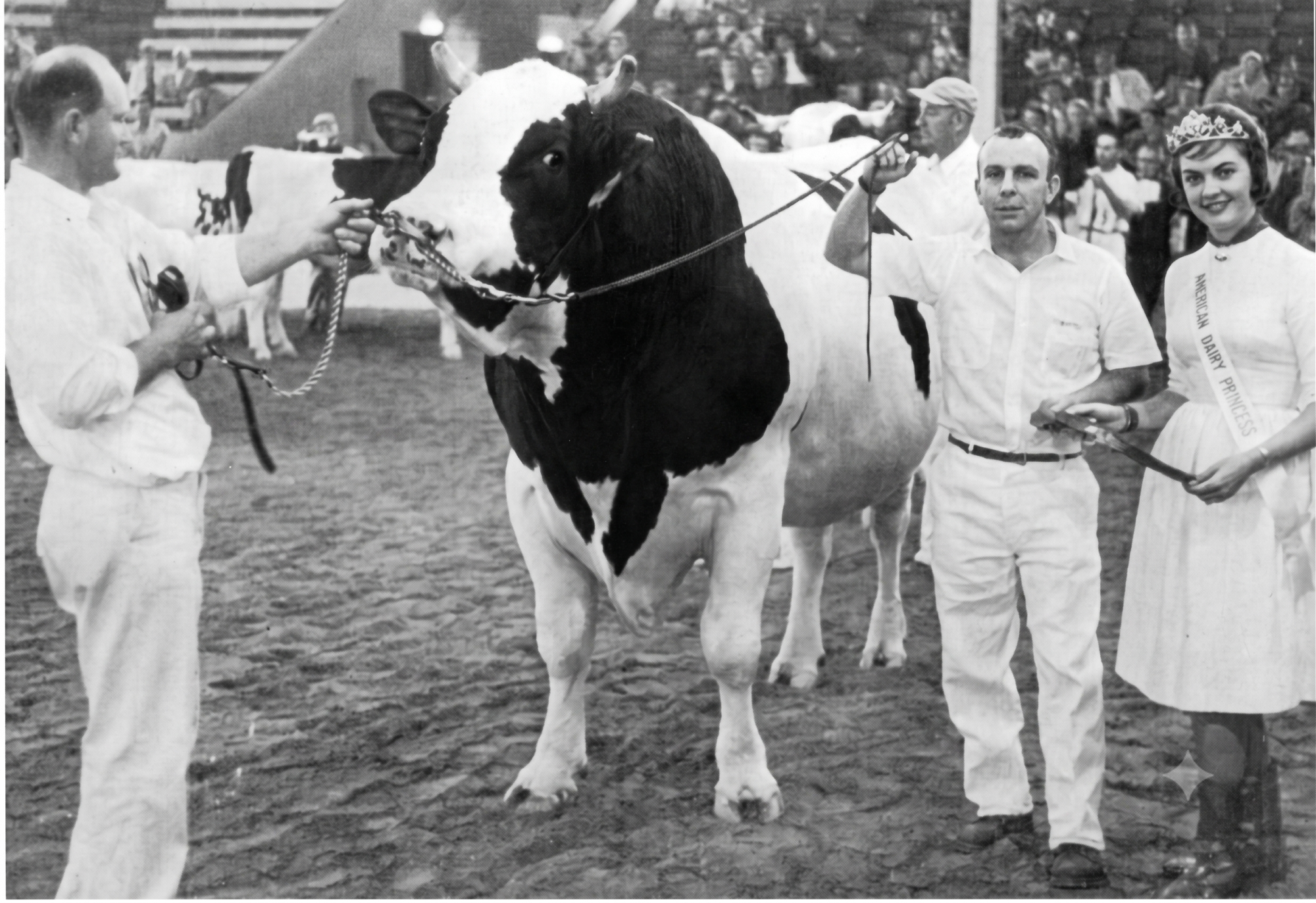
A Canadian bull, an Iowa coliseum, a crowd on its feet—Romandale Reflection Marquis stands Grand Champion at the 1962 National Dairy Cattle Congress in Waterloo, led by Mac Logan and breeder Dave Houck. Of eight Romandale bulls that won twelve All-Canadian banners, Marquis was one of only two who bred as well as they showed—the crown jewel of Stephen Roman’s Holstein empire, and living proof of the rule this whole story turns on. (Read more: THE ROMANDALE REVOLUTION: How a Uranium Billionaire & Cow Sense Conquered the Holstein World)

Griswold’s Franlo, in Hopkins, Minnesota, ran under manager Henry Bartel Sr.—a fitter’s fitter—who turned out show-winning males with cookie-cutter consistency, and most were write-offs in the shed. They mirrored their ancestor, Chip of Nettie Aaggie, the bull who whipped both Marksman and Sovereign at the 1946 Royal yet failed as a breeder. Franlo Chip Douglas King and Chip Montvic Royal looked unbeatable and bred like fence posts. The two exceptions, Roebuck Regent and Gen Treasure Model, both traced their strength to one good cow, Browns Mistress Corrine—the maternal line steadying what the glamour line couldn’t. 

Cash Bottema could fit and lead a bull with anybody who ever gripped a lead strap—”his bulls, not his own,” as Morwick dryly put it, needling the man who won on cattle he hadn’t bred. His Cash-Mar Ormsby Jerry and Jerry Darky Lassie proved solid, the latter posting a daughter-dam gain of 3,259 pounds of milk in a Montana herd. But Jerry Delight, three-time All-American, and TM Pell City left nothing behind. 

John Malcolm’s Sheffield gave us the prettiest cautionary tale of the lot—and it came with the biggest cheque. The 1960 Sheffield Dispersal averaged $3,154 on 75 head—the highest North American auction average to that time—but that money rode on the magnificent females, not the bulls. Crown Prince, Dusty, Monarch, Chico—four handsome sons of Rosafe Sovereign Supreme who caught every eye and changed nothing. 

And Glenafton. J.J.E. McCague bred nine bulls that won ten All-Canadian awards, and exactly one—Glenafton Rag Apple Alert—became an exceptional sire. Alert, a Marksman son, topped the 1944 All-Canadian Sale as a three-month calf at $5,100, then topped it again in 1947 selling to Chile for $11,500; he stayed under McCague–McIlquham ownership right through that fall’s Royal Winter Fair, where he placed first in the two-year-old class and stood reserve grand champion. His gift to the breed was Maplenix Rag Apple Mercury, a key sire of show type across Eastern Ontario in the 1960s. 

The other eight Glenafton show bulls won their banners and left the barn silent behind them. 

That contrast, all by itself, might be the whole article in miniature.
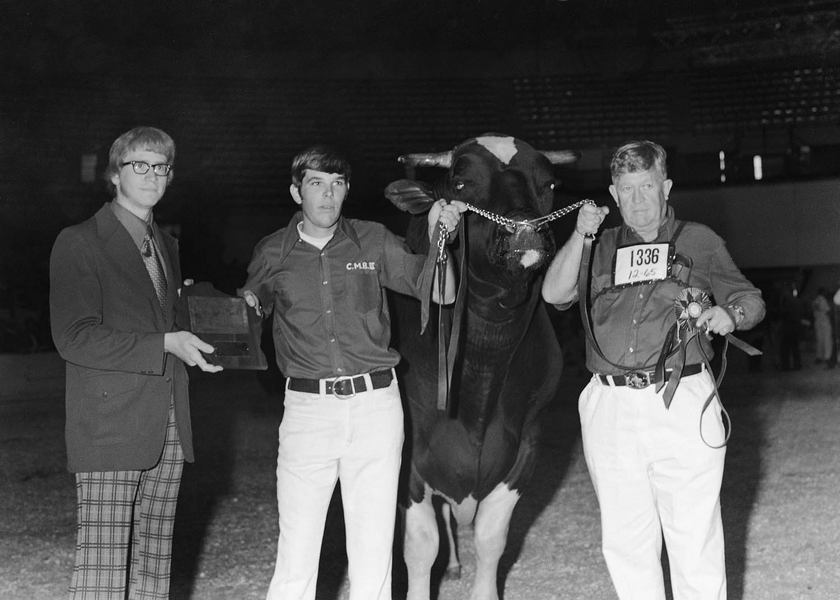
A generation after Rocket Tone, the tanbark still crowned its kings—Zeldenrust Fond Memory, Champion Bull at the 1974 World Dairy Expo. New decade, new coliseum, new champion under the lights. But the only verdict that ever counted was still waiting out in the barn, in the daughters he’d leave behind.

Act III: What the Daughters Always Knew

So the ledger closes on eleven great houses—and every one of them keeps circling back to a single, stubborn truth. A daughter doesn’t care about ribbons.

She either freshens with the udder, the feet and legs, the strength and production and staying power to make a breeder nod—or she doesn’t. A son either breeds beyond himself or he fades into yellowed photographs and old catalogs. The bull classes could honor a magnificent body, and sometimes the body told the truth. But the daughters spoke a language no judge could overrule.

Rosafe: When Beauty and Blood Finally Agreed

Rosafe Farms showed the dairy world what happened when beauty and breeding power finally lined up.

Dr. Hector Astengo, of Brampton, Ontario, bred bulls Morwick called scintillating and unequaled as breeders—most of them sons of A.B.C. Reflection Sovereign. Rosafe Signet was grand champion at the Royal in 1958 and 1959, and then his daughter Bond Haven Signet Sally took the Royal grand championship as a four-year-old in 1961. And this is the detail that ought to raise the hair on any breeder’s arm: that was the first time in history a Royal grand champion male had sired a Royal grand champion female. The photograph proved itself. The blood backed the beauty. 

Rosafe Citation R., Signet’s full brother, sired All-Canadian gets across four different years and led Canada’s Honour List in 1966, 1967, and 1969. And that’s exactly where the past reaches out and lays a hand on the present—because Citation R.’s blood didn’t stay in the 1960s. 
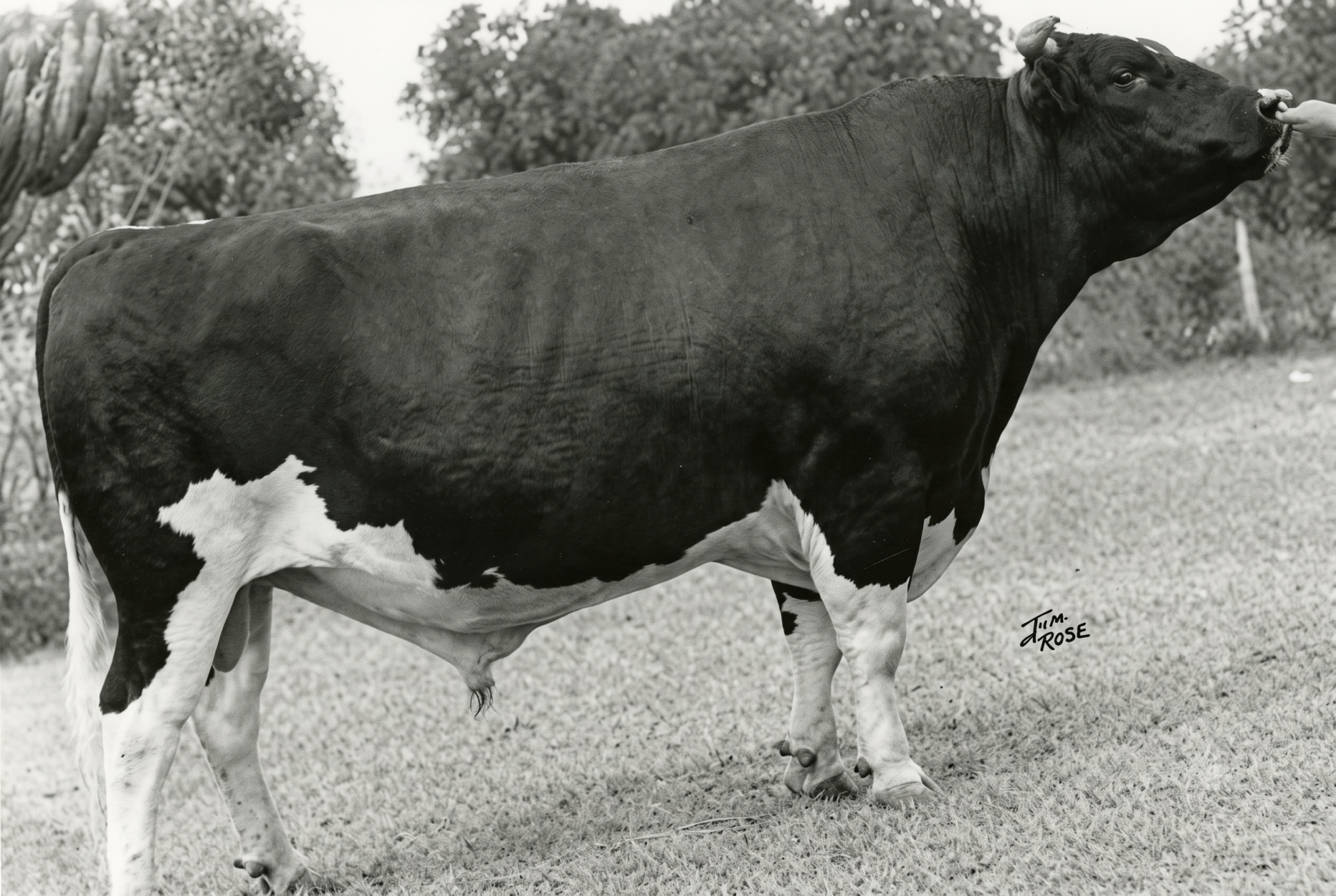
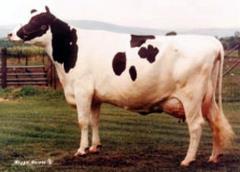
Rosafe Citation R.—the bull who ended the argument. Where so many champions couldn’t breed on, he earned a perfect transmitter score and topped Canada’s Honour List three times. This is what beauty and blood look like when they finally agree—and his blood was about to walk straight into the modern era.

The Genetic Echo: Where They Live Today

Follow Citation R. forward, and you arrive at Glenridge Citation Roxy.

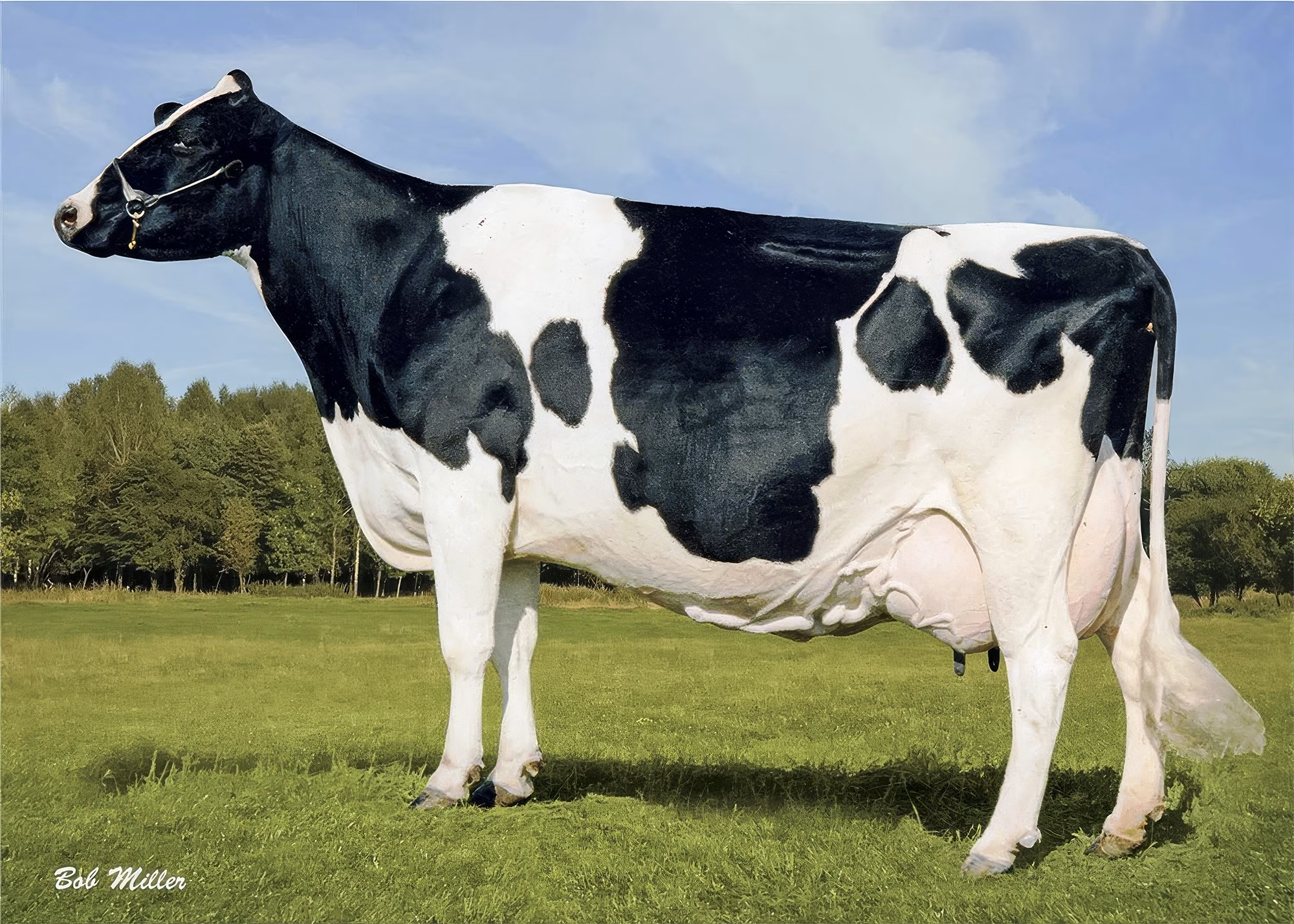
Roxy was a Citation R. daughter out of Norton Court Model Vee. She classified EX-97, produced 209,784 pounds of milk and 9,471 pounds of fat in her lifetime, and became the first cow in the world to have ten daughters classified Excellent. Ten daughters, all Excellent. Mention that in a serious breeder’s barn today and watch the eyebrows climb, because plenty of good cows never leave one. Her maternal grandsire, Springbank Model Fame, traced straight back to that Franlo exception, Gen Treasure Model—the very bull whose good maternal foundation had rescued a risky glamour line a generation earlier. 

So the old debate between glamour and transmission didn’t end in some dusty essay. It walked, on four black-and-white legs, right into the pedigrees breeders still chase.

And Roxy wasn’t the only one carrying that blood forward, which is the part that always stops me cold. Trace the maternal line of Walkway Chief Mark—a bull whose name a lot of older breeders can still rattle off from memory, one of the great proven sires of his day—and it runs back through Cash-Mar Reflection Triune to Franlo’s Gen Treasure Model, that same steadying cow family, turning up in the pedigree of a household name where you’d never think to look. Then there’s Round Oak Rag Apple Elevation—the bull who became one of the most influential sires in the history of the breed, a name sitting behind an enormous share of modern North American Holsteins. His maternal granddam? Glenafton Gaiety. An uncampaigned Glenafton cow who never chased a single ribbon in her life. The best animal in the barn, it turns out, isn’t always the one wearing the sash. 

And if you think all that belongs safely in the past—that genomics finally settled the argument—look closer.

The Same Bet, Now in a Genomic Suit

The tools changed beyond recognition. The wager didn’t.

Today the glamour comes wrapped in a genomic test instead of a show halter. A chart-topping GTPI number, a headline LPI figure, an IVF-fueled flush program pulling dozens of embryos from a single donor, a six-figure genomic heifer changing hands before she’s ever milked—these are the modern equivalents of that big-necked bull stopping traffic on the tanbark. And the modern show ring still crowns its own royalty: names like Erbacres Snapple Shakira and Blondin Goldwyn Subliminal draw the same crowds, the same awe, the same assumption that a phenotype this good must breed on. Sometimes it does. Sometimes, just like Rocket Tone, it doesn’t.

The mandate hasn’t budged an inch. If the maternal line underneath all that data lacks the additive power to stamp the next generation, you aren’t buying breed improvement—you’re buying a very expensive lottery ticket with a prettier envelope. Genomics narrowed the odds. It never repealed the rule.

The Lesson That Outlived Them All

So what did the glamour bulls finally teach us?

To admire a great phenotype—and then interrogate it. That a bull’s own body is one performance, while his daughters are the encore that actually matters. That deep cow families and repeatable transmission must outweigh one perfect afternoon under perfect lights. 

And they taught humility. Because no honest breeder reads about Rocket Tone, Sovereign Supreme, Fobes Burke, Reflection Governor, or those eight silent Glenafton bulls without a chill of recognition. Those weren’t ugly animals. They weren’t nobodies. They were often magnificent. The trouble was never bad eyes. The trouble was trusting the eye, alone, to tell the whole story. 

But don’t mistake this for a scolding. It’s a tribute.

Because the bulls that did transmit gave the Holstein breed its backbone. Marksman and Sovereign lit the Rag Apple name for generations. Governor Imperial, Homestead Revelation, and Royal Master carried Carnation production down through record-shattering sales. Sir Roburke Rag Apple and Roamer Dean Walker Lad proved a show bull could be more than a pretty picture. And Citation R. carried Astengo’s genius into daughters and gets, and into one of the most revered cow families the breed has ever known. 

Maybe that’s the lesson still standing after all these years. Genomics changed the tools. Classification changed. The bull classes have all but vanished from the great fairs, and semen now travels farther than any show string ever could. But the old question hasn’t aged a day. Every time a breeder squints at a proof, watches a heifer cross the concrete, and wonders whether her beauty will outlast the photograph, that same quiet question is doing its work at the very heart of breed improvement—the one Rocket Tone’s daughters answered the hard way. Does she transmit?

Rockwood Rocket Tone deserves to be remembered—not for failing, but because his failure taught a lesson too expensive ever to forget. Smithcroft Snowball Rocket deserves to stand right beside him, not as the prettier legend, but as the bull who reminded everyone that the true champion is often crowned years after the judge’s hand comes down. Between the two of them lives the great and permanent lesson of Holstein history: the tanbark can crown the body, but only the daughters can crown the blood. The breed we milk today wasn’t built by the bulls who merely looked immortal—it was built by the ones whose daughters made them so. 

Key Takeaways

  • A show banner tells you what a bull is, not what he’ll leave behind—Rockwood Rocket Tone won All-Canadian six times and still bred like a fence post, while quieter Snowball Rocket remade the breed through his daughters.
  • Only about 1 in 6 of history’s most decorated show bulls became exceptional sires. Before you chase a phenotype, dig into the maternal line—deep, proven cow families are what separated Rosafe’s 17 from Glenafton’s 5.
  • The rule didn’t change with genomics. A chart-topping GTPI heifer or a six-figure flush donor still has to transmit, or you’ve bought a very expensive lottery ticket with a prettier envelope.

Continue the Story

  • The Vision of Mount Victoria: T.B. Macaulay’s Holstein Legacy – Long before Rocket Tone fooled the eye, T.B. Macaulay was using strict mathematical principles to build the foundational Rag Apple dynasty, proving that true breeding power is engineered through rigorous maternal selection rather than show-ring glamour.
  • The Bull Who Changed Everything: The Johanna Rag Apple Pabst Story – Walk the old barns of the 1920s Wisconsin circuit to see how a single prepotent sire defied the odds of Morwick’s one-in-six rule, anchoring the entire genetic framework of the modern Holstein breed.
  • Rosafe Citation R – Discover how Hector Astengo’s linebred masterpiece carried the ultimate triumph of blood over beauty forward through time, leaving an omnipresent blueprint of excellence that still dominates pedigrees in today’s genomic era.

The Sunday Read Dairy Professionals Don’t Skip.

Every week, thousands of producers, breeders, and industry insiders open Bullvine Weekly for genetics insights, market shifts, and profit strategies they won’t find anywhere else. One email. Five minutes. Smarter decisions all week.
NewsSubscribe
First
Last
Consent

Glenridge Citation Roxy: The Legendary “Queen of the Breed”

Explore the remarkable legacy of Glenridge Citation Roxy, the pioneering cow who achieved unprecedented milestones. Discover how she set new benchmarks in genetic excellence within the dairy breeding industry.

The dairy industry has seen many extraordinary cows, but Glenridge Citation Roxy stands out as the “Queen of the Breed.” She was born over 50 years ago and ushered in a new era for the Holstein breed. Her remarkable lineage and achievements have left a lasting mark on dairy farming worldwide. Bob Miller and Pete Heffering have become legends in the breeding industry with their achievements. The transmitting strength of this family lies predominantly in the female line. No other Holstein family has provided more EX cows than the Roxys. Still today, every significant sale catalog features at least one female descendant of Roxy, showcasing her enduring influence. Join us as we explore her achievements, exceptional genetic lineage, and lasting legacy in the Holstein breed. 

The Birth and Rise of Glenridge Citation Roxy: A Legacy Begins 

Glenridge Citation Roxy was born on the Lorne Loveridge farm at Grenfell, Saskatchewan, on April 15, 1968. Lorne, who took over management of the farm in 1957, bought the herd and changed the prefix from Norton Court to Glenridge in tribute to his wife, Glenna Loveridge. Loveridge switched to R names for Vee’s offspring (Reba, Roxy, and Rocket) instead of continuing with V names, claiming he was “too dumb” to come up with any more V names.

The seeds of the Roxy story began with youth programs and the Royal in the early 50s. As a kid from Quebec, Millar was at the Royal Winter Fair in 1951 for the 4-H dairy judging contest when he saw an impressive cow named Glenvue Nettie Jemima. Jemima would later become the dam of a bull named Rosafe Citation R. Lorne Loveridge, as a kid from Saskatchewan, was at the Royal a year later in the 4-H small grains judging contest. He was able to sneak away from competition long enough to be blown away by the quality of the Holsteins he saw and went home to convince his dad to use frozen semen and A.I. to improve the family’s herd. One of the first bulls they used was Roeland Reflection Sovereign, the sire of a cow named Norton Court Reflection Vale, Roxy’s dam. 

Rosafe Citation R, Roxy’s sire, was purchased as a bull calf for $30,000 by the Ontario Association of Animal Breeders at the 1958 Sale of Stars in Toronto. This acquisition stemmed from the strategic foresight of H.J. Wilcox, who had bought Citation R’s dam, Glenvie Nettie Jemima (EX-13*), hoping she would bear a son. Citation R was aggressively utilized at $7.00 per service, significantly higher than the norm. Despite being a Red Carrier, initially viewed as a drawback, Citation R’s progeny excelled, particularly his daughters, who dominated the show ring. In 1961, Citation R was sold to Santa Monica Ranch in Mexico for $33,000, only to have his semen later repatriated due to high demand in Canada and the US. This timely return facilitated the breeding of Norton Court Model Vee, Roxy’s dam, in 1967, blending top-tier genetics that would lead to the birth of Glenridge Citation Roxy.  Notably, Vee’s lineage traced back to remarkable ancestry, including A.B.C. Reflection Sovereign, while her dam, Norton Court Reflection Vale (VG-4*), underscored this genetic treasure trove. Together, these lines culminated in Roxy, an unparalleled bovine legacy. 

Roxy also had strong ties to Wisconsin Fobes, partly through the Chip of Nettie & Aaggie cross, enhancing her prestigious lineage. Her maternal line began with Ottile 8807 H.H.B., imported from Holland by B.B. Lord & Son in 1883, and Vrouka 448 C.H.B., brought to America by Holman & Collamer in 1884. These cows were instrumental in shaping Roxy’s pedigree. 

As a calf, Roxy was a tall, gangly heifer that didn’t attract much attention until she calved for the second time. At this point, Doug Blair and Lowell Lindsay noticed her. Blair, part owner of Western Breeders’ Services (forerunner to Alta Genetics), and Lindsay, sire procurement officer for United Breeders, were both overwhelmed by her. They contemplated a joint purchase but couldn’t meet Loveridge’s asking price. Enter Bob Miller, a Canadian-born cattle photographer who had immigrated to the US and established the Mill-R-Mor herd. Summoned to photograph Roxy and her dam Vee, Miller had been searching for a cow family with specific requirements: type, production, and longevity. Roxy and her family checked all the boxes for Miller, but he didn’t purchase her immediately. Later, Roxy gained recognition as Reserve Grand Champion at the 1972 Canadian Western Agribition and was nominated for All-Canadian consideration in 1973.

In 1973, Bob Miller bought Roxy and a half interest in her dam, moving them to Illinois, where they continued to thrive.   Subsequently, Roxy, her dam, her grand-dam Vale, and her three-quarter sister Glenridge Emperor Rocket (EX-96-3E) were moved to Mil-R-Mor in Illinois, where promotion and marketing were more feasible.

Achieving Unprecedented Success Under Miller’s Stewardship

In Miller’s hands, Roxy made four records over 1,000 lbs. fat, reaching 26,470 lbs. milk, 4.4% fat in her best year. Her career total was 209,784 lbs. milk, 4.5%, 9,471 lbs. fat, rounding out three generations of 200,000-lb. Producers. A rare Holstein to classify 97 points, Roxy earned a 4E rating at 12 years of age. Her show record included All-Illinois honors (1976-1979), a win in the dry-aged class at the 1979 Central National Show, and two All-Canadian nominations. She was part of eight All-American and All-Canadian groups, and with Glenridge Emperor Rocket, became All-Time All-American produce in 1984. 

Unanimous Acclaim: The Legendary Assessments of Glenridge Citation Roxy

Between them, Andy Clawson and Avery Stafford have classified over 1,000,000 cows. Their assessments of Glenridge Citation Roxy are nothing short of legendary. Clawson, the classifier who initially scored Roxy with an impressive 96 points, declared, “Roxy was closer to perfection than any cow I ever scored,” underscoring her unparalleled quality. Avery Stafford, who elevated her score to an extraordinary 97 points two years later, echoed this sentiment unequivocally. “Roxy was the best cow who had ever come before me,” Stafford remarked, establishing her status as a pinnacle in the field. 

R.F. Brown, known for developing Green Elms Echo Christina, stated, “Roxy was the best I have ever seen,” a high compliment from someone recognized for his discerning eye and high standards.

Roxy captured public affection, winning titles such as Queen of the Breed I & II, Top Cow of the Century, and International Cow of the Century, decided by popular vote in breed magazines. 

A Milestone in Bovine Excellence: Roxy’s Unmatched Legacy and Ubiquity

Roxy was the first cow with ten daughters classified Excellent. Achieved 4E-97-GMD and became a 3rd generation 200,000-lb. Milk producer. Member of eight All-American, All-Canadian, or Reserve All-Canadian groups. The Roxy family is everywhere, consistently appearing in sale catalogs and maintaining their proper type and high milk production legacy.

Miller recognized the potential of embryo transfer, a budding technology at the time, and Roxy produced 30 embryos along with three natural offspring. She had 20 daughters, becoming the first cow to have ten Excellent daughters—16 of her daughters eventually scored Excellent, with additional Excellent and Very Good offspring.

Seven of Roxy’s daughters earned Gold Medals, contributing to a cow family of exceptional persistence. There are 50 direct maternal lines of at least four generations of Excellent descending from Roxy. Her 16 Excellent daughters produced 34 Excellent daughters; these 34 had 52 Excellent daughters, who then had 48 Excellent daughters—virtually a nonstop excellence-producing family. 

Their consistency as breeders is remarkable. Extensive research reveals an impressive lineage: over 381 Roxy descendants have achieved EX status, tracing directly back to Glenridge Citation Roxy. This legacy expands exponentially when considering the progeny of her sons. A standout in perpetuating this excellence is Gloryland Lana Rae EX-94-2E-USA DOM. An impressive 16 out of Lana Rae’s 21 classified daughters have reached EX status, with an average score of 90.9 points. Lana Rae descends from an exceptional line: an EX Lindy daughter of Hanoverhill Tony Rae EX-96-2E, following Hanoverhill TT Roxette EX-94-2E USA, then back to Roxette. 

Good udders, feet, legs, great frames, and diligent milk production mark the Roxy legacy. These cows are healthy, fertile, and resilient, rebounding from stress and not “knuckling under” as some do. 

Roxy’s Most Outstanding Daughter Mil-R-Mor Roxette (EX-30*)

Until 1977, Bob Miller had never sold a daughter. He relented that year when he consigned Roxy’s Elevation daughter to the National Convention Sale in Columbus, Ohio. She was Mil-R-Mar Roxette, born on Valentine’s Day the year before and sold openly. Peter Heffering purchased 17 heads, ringing up a bill of $207,600. Among the cattle purchased was J.P.G. Standout Kandy, the top seller at $41,000, and Mulder Elevation Mazie. He also bought Mil-R-Mar Roxette for $25,000, the third highest price of the sale. 

R Peter Heffering commented, “We felt that Roxy was one of the breed’s great cows and probably the best daughter of Citation R. Elevation was making a lot of good offspring, so when the Elevation heifer was coming up for sale at the National Convention Sale, we bought her as a foundation female for the herd. Roxette flushed well and became one of Roxy’s strongest transmitting daughters.”

After the sale, Miller raised objections regarding the investor’s terms. A rumor persists that the transaction nearly collapsed. However, years later, Miller expressed his gladness that Roxette ended up at Hanover Hill.  Roxette’s son, Hanoverhill Raider (EX-Extra), is sired by Hanoverhill Starbuck (EX-Extra) and ranks among the top Hanover Hill bulls. 

Her notable daughters include: 

  • Hanover-Hill Astra Roxie (EX-GMD) This Paclamar Astronaut’s daughter recorded six consecutive records over 22,000 lbs. milk and 1,000 lbs. fat. She was the dam of three Excellent and three Very Good daughters, including Hanoverhill TTA Roxie (EX), one of the first cows to produce over 50,000 lbs. milk in Canada with her record of 52,879 lbs. milk, 2,200 lbs. fat, and 1,801 lbs. protein in 365 days.
  • Hanoverhill TT Roxette-ET (EX-94-2E-GMD-DOM) Roxette’s Triple Threat daughter was sold for $37,000 in the 1989 Hanover Hill Dispersal. She made 31,790 lbs. milk, 1,303 lbs. fat, and 961 lbs. protein at six years. Her daughter, Hanoverhill Tony Rae, became grand champion at the 1992 Western Spring National and the 1993 Western National. Tony Rae left nine Excellent and 13 Very Good daughters. One of her notable descendants was Scientific Debutante Rae (EX).
  • Hanoverhill Star Roxy (EX-92-3E-GMD-DOM) She was Roxette’s Hanoverhill Starbuck daughter and a full sister to Hanoverhill Raider. As a four-year-old, she produced 31,779 lbs. milk, 1,393 lbs. fat, and 1,054 lbs. protein and left behind six Excellent daughters. One of her exceptional daughters, Hanover-Hill-R MSCT Roxy (EX-93), was sold for $40,000 in the 1998 Hanover Hill Dispersal.
  • Hanover-Hill-R Rhonda-TW (EX-94-4E-GMD-DOM) Rhonda, Star Roxy’s Leadman daughter, mothered Hanover-Hill-R MI Rochelle-RC (EX-93), who was dam to Sir Ridgedale Rustler-Red (EX-95). Rustler was exceptionally popular in Germany.
  • Mil-R-Mor Toprox-ET (EX-94-3E-GMD): This highest-record daughter of Glenridge Citation Roxy produced 43,660 lbs. of milk, 5.3% fat, and 3.4% protein. Described by Mary Briggs of Brigeen Farms as healthy and fertile, Toprox was known for her temperance and capacity—a monument at Mil-R-Mor farm honors Glenridge Citation Roxy’s remarkable achievements and contributions.

Roxy’s Descendants Continue to Make an Impact

Roxy’s descendants continue to make an impact. Their consistency as breeders is remarkable. Breeders who invested in Roxy’s lineage developed strong lines under varied management conditions. Notable descendants still making an impact include:

Golden-Oaks Champ Rae EX-93

Ms Crushable Carolina
Reserve Intermediate Champion World Dairy Expo 2022
(Crushabull x GOLDEN OAKS BY CHARLOTTE ET EX 90 x GOLDEN-OAKS MCC CHARLINA-ET EX-90
x GOLDEN-OAKS ATWD CHARLA-ET EX-93 x GOLDEN-OAKS CHAMP RAE-ET EX-93)

(Calbrett-I H H Champion x Scientific Beauty Rae RC EX-90 x Scientific Jubilant Rae RC EX-90 x Hanoverhill Tony Rae EX-96 x Hanoverhill TT Roxette EX-94 x Mil-R-Mor Roxette EX x Glenridge Citation Roxy EX-97) 
Champ Rae, a foundation dam bred at Golden-Oaks Farm in Wauconda, Illinois, has 47 US-class daughters, with 17 scored VG and 19 EX. Many of these daughters have achieved top records of 35,000-40,000 lb. (18,144 kg) of milk. The dam’s fame is spreading internationally, with Spanish AI Ascol testing Byway son Tec Laureles Sanmames out of granddaughter Charlina. The dam’s daughters and granddaughters have performed well, with Golden-Oaks Sid Charlise VG-87, now at Cherry Crest Holsteins in Canada, and Golden-Oaks Atwood Chloe EX-92 from Cranehill Genetics and Long-Haven Sid Carla EX-94 from Oakfield Corners Dairy. New York’s Kings-Ransom Farm hosts three special sisters: Kings-Ransom Cleavage, Cleo, and Kings-Ransom Epic Cassie, each with EX-94 scores. Jeff King, manager at Golden-Oaks Farm, praises Champ Rae’s enormous frame and her sisters’ functional and productive nature, stating that they give lots of milk with a high-fat test and require minimal attention. The goal is to combine Champ Rae descendants with high-type sires, sacrificing as little as possible for fitness traits and longevity.

Gloryland-I Goldwyn Locket EX-94

Walkerbrae Doorman Locket EX95
HM All American 5yr old 2018
Nominated AA and AC Junior 3 2016
Doormand x GLORYLAND-I GOLDWYN LOCKET 2E94

(Braedale Goldwyn x Gloryland Lakota Rae VG-88 x Gloryland Lana Rae EX-94 x Scientific Liza Rae EX-90 x Hanoverhill Tony Rae EX-96 x Mil-R-Mor Roxette EX x Glenridge Citation Roxy EX-97)
Bred by David Tait, goes back to Hanoverhill Tony Rae EX-96. Locket, classified EX-94, through Scientific Liza Rae EX-90 and the notable Gloryland Lana Rae EX-94. Lana, distinguished for her superb udder quality and excellent feet, produced 32 daughters, with 22 achieving EX status, including the illustrious Gloryland Lexie Rae EX-96 and Gloryland Liberty Rae EX-95, who commanded $410,000 in 2008.  Locket’s exceptional genetics originated from the Canadian Crasdale herd of Brian Craswell, who produced Locket and her full sister through embryo transfers. Bert Tuytel later acquired a share in Locket. 

Brigeen-C Integrit Robin EX-95 

Dirigo-Conant Gold Rissa-ET (Ex-91)
1st Aged Cow, BU and Hon. Mention Champion Louisville 2012
Her dam is Brigeen-C Integrit Robin-ET (Ex-95)

(Robthom Integrity x C Haselmere Prelude Rhoda EX-91 x Brigeen Southwind Rhonda VG-88 x Mil-R-Mor SWD Rockette VG-86 x Mil-R-Mor Toprox EX-94 x Glenridge Citation Roxy EX-97)
In 1985, the Briggs family from Brigeen in Maine bolstered their herd by selecting six members of the Roxy family. Among them was Mil-R-Mor Toprox, a Hilltop Apollo Ivanhoe daughter from Roxy, who set records with figures of 43,660 lbs of milk at 5.3% fat. Toprox was the highest classified at EX-94. The group also included two Valiant heifers who matured into highly regarded cows. A partnership with David Saunders from Canada led to the purchasing of a Southwind heifer, which eventually scored EX-91 and produced the EX-91 Prelude heifer sold at the Maine State Sale in 1999 named Brigeen-C Integrit Robin. Robin, acquired by Steve Keene and Duane Conant, was flushed to Emory before the sale, resulting in notable offspring like Brigeen Emory Raisa EX-92, a Grand Champion in 2005. Robin’s legacy continued with her daughter, Brigeen Convincer Rhonda EX-95, who also became a champion. Brigeen Atwood Regina EX-90 is a standout, holding a national fat record. Robin’s influence extended globally with exports to Japan and Europe, where her descendants continued to excel, including Ladys-Manor Celebrity EX-94 and Plant-Tree Robin EX-90, solidifying the enduring excellence of the Roxy family.

Sancy MAHOU
Grand Champion SUMMIT of Breeding 2021
(Diamondback x Destry x Barbwire mahogany red EX92 x Scientific (Storm)Mahogany Red EX-90-USA x Scientific Jubilant Rae *RC EX-90-USA  x Hanoverhill Tony Rae EX-96-USA 3E x Hanoverhill TT Roxette EX-94-USA 2E x Mil-R-Mor Roxette EX-90 )

Liddlehome Beemer Rockstar Et EX 92
(Beemer x Liddlehome-R Durham Rhonda Et EX 95 xMiss Ridgedale Rhonda Et EX 92 x Hanover-Hill-R Rhonda EX 94 x Hanover-Hill Star Roxy Et EX 92 x A Mil-R Mor Roxette EX 90 xGLENRIDGE CITATION ROXY ET EX 97)

The Bottom Line

Glenridge Citation Roxy’s legacy intertwines excellence and remarkable influence. Her outstanding EX 97-point classification and the groundbreaking achievement of producing Excellent daughters established her lineage as a cornerstone in the dairy industry.  Born over 50 years ago, Roxy inaugurated a transformative era for the Holstein breed. Renowned breeders like Bob Miller and Pete Heffering have become legends due to their work with her progeny. The strength of Roxy’s lineage is evident in her female descendants, with no other Holstein family producing more EX cows. Numerous branches of this family continue to excel globally. Still today, every significant sales catalog features at least one female descendant of Roxy, highlighting her lasting influence. She truly is the Queen of the Breed.

Key Takeaways:

  • First cow in the world to have ten daughters classified as Excellent.
  • First cow to achieve the prestigious 4E-97-GMD classification and be a third-generation 200,000-lb. milk producer.
  • Member of eight All-American, All-Canadian, or Reserve All-Canadian groups.
  • Her lineage is omnipresent in the dairy industry, appearing in sale catalogs worldwide.
  • Renowned for transmitting her superior type and production capabilities consistently across generations.

Summary:

Glenridge Citation Roxy, hailed as the “Queen of the Breed,” is a legendary bovine, noted for being the first cow in the world to have ten daughters classified as Excellent and to achieve the rare 4E-97-GMD designation while also being a third-generation 200,000-pound milk producer. Her remarkable genetics have made an indelible mark on the industry, with her descendants gracing sale catalogs and show rings across the globe. Andy Clawson and Avery Stafford, classifiers who assessed her, spoke in unison about her unparalleled excellence, describing her as the finest cow they had ever encountered. Even decades later, her family lineage continues to influence dairy cattle breeding standards, preserving her legacy of superior type and production. As the definitive example of bovine perfection, Roxy’s influence is perpetuated through an impressive roster of accolades and the enduring popularity of her offspring, ensuring that her name remains synonymous with dairy excellence.

Learn more:

The Real Story Behind Glenridge Citation Roxy

Glenridge Citation Roxy EX-97 is a true legend of the dairy breeding industry.  Holstein enthusiasts around the world voted Roxy as the “Cow of the Century.”  But did you know this breeding icon almost never existed?

At the 1958 Sale of Stars in Toronto, the Ontario Association of Animal Breeders (eight A.I. units at the time) bought a bull calf, Rosafe Citation R, for an unbelievable price at the time of $30,000 from H.J. Wilcox, who had purchased his dam, Glenvie Nettie Jemima (EX-13*) earlier that year at the age of 15 for $9,000 at the Rosafe Dispersal hedging his bets that she would have a son.  Ontario Association of Animal Breeders was placed him in service at a cost of $7.00 per service, $2.00 above the normal rate, and breeders used him enthusiastically. When the first Citation R calves were being born it was discovered that he was a Red Carrier, something that was seen as undesirable at the time (Read more: Is Red Still Relevant?).  In line with A.I. practice at the time, Citation R was returned to the Wilcox family, who in 1961 sold Citation R to Don Marcos Ortiz, owner of Santa Monica Ranch in Mexico for $33,000.  As those early Citation R daughters developed they dominated the show ring.  With a limited supply of semen available and in high demand in Canada and the US, it prompted Curtis Breeding Service and the Canadian A.I. units in 1966 to bring the semen back.  This was just in the nick of time for Roxy, as the following year Lorne Loveridge, breeder of Roxy, was looking for the right mating of his top cow Norton Court Model Vee, Roxy’s dam.

As a calf Roxy was a tall, gangly heifer that really did not attract much attention from anyone, until she calved for the 2nd time.  It was at this time she caught the eye of Doug Blair and Lowell Lindsay. (Read more: Sire facility dedicated to Alta founder, Doug Blair and Lowell Lindsay To Be Inducted Into Canadian Agricultural Hall of Fame)  Blair, part owner of Western Breeders’ Services (forerunner to Alta Genetics) at the time, was looking for bulls to buy, as was Lindsay, who was sire procurement officer for United Breeders.  When they saw Roxy, they were overwhelmed.  They discussed buying her on a 50-50 basis, but they couldn’t come up with the hefty sum Loverridge was asking for.  Enter Bob Miller (Read more: Bob Miller – Outstanding from Any Angle).  Miller was a Canadian born cattle photographer who had immigrated into the US and started his own herd Mill-R-Mor.  Miller was summoned to the Loveridge farm to photograph Roxy and her dam Vee. Miller for quite some time had been searching for a cow family to build his breeding program around.  He had some very specific requirements.  Roxy and her family met all of them – type, production and longevity.  Miller fell in love with Roxy but didn’t purchase her at this time.  Later that year Roxy was named Reserve Grand Champion at the 1972 Canadian Western Agribition, and was nominated for All-Canadian consideration as a four year old in 1973.  Loveridge had already started to realize that his location precluded many visitors from seeing the cow and her family.  It was at this time Miller returned to Glenridge and purchased Roxy and half interest in her dam.    Loverdige considered Miller’s Illinois location more suitable for promotion and marketing and the pair as well as Vale, Roxy’s ganddam, and Glenridge Emperor Rocket (EX-96-3E), Roxy’s three-quarter sister by Downalane Reflection Emperor, moved to Mil-R-Mor.

In Miller’s hands Roxy made four records over 1,000 lbs of fat.  With career totals of 209,784 lbs of milk, 9,471 lbs of 4.5% fat.  Making her the 3rd generation of 200,000 lbs of lifetime production.  She was also one of the very few to ever score EX-97 points.  Roxy was also a member of eight All-American, All-Canadian or Reserve All-Canadian groups, and with Glenridge Emperor Rocket was three times All-American Produce of Dam and all-Time All-American Produce of dam in 1984.

ho000008724158[1]

Glenridge Citation Roxy EX-97-4E
Queen of the Breed I & II
Member of the All-American Produce of Dam ’77, ’78 & ’79
Member of the All-American & All Canadian Get of Sire ’79
1st cow of the breed to have 10 Excellent dtrs
International Cow of the Century 1999
Dam of the 1st 30* STAR brood cow in Canada
7 of her EX daughters earned Gold Medal Status
Dam of 16 EX daughters
She has 3 descendents with 15 or more EX Dtrs! (Roxette 17, Lana Rae 20 & Integrity Robin 15)
The only 4 Generation direct line group of cows with more than 11 EX dtrs: Roxy 16, Roxette 17, Dixie Rox 11, Bstar Roxie 12)
Highest producution Roxy is Brigeen Convincer Rhonda EX-95, 66,320 lbs milk in 365 days
Highest Classified Roxy female is C Hanoverhill Tony Rae EX-96
Highest Classified Roxy male is Sir Ridgedal Rustler Red EX-97
Roxy has more than 300 EXCELLENT descendents


Brood Cow Extraordinaire

Even though embryo transfer was in its infancy, Miller placed Roxy on an E.T. program where she produced 30 E.T. offspring and three natural calves.  She had 20 daughters and was the first cow to ever have ten Excellent daughters.  Eventually, this led to 16 daughters scoring EX, four more were VG and there were 4 Excellent Sons.

Mil-R-Mor Roxette EX-Can GMD-DOM 30*

Mil-R-Mor Roxette
EX-Can GMD-DOM 30*

Roxy’s most impactful daughter Mil-R-Mor Roxette (EX-30*) is not without her own story.  Until 1977, Bob Miller had never sold a Roxy daughter.  At the encouragement of Horace Backus, Miller consigned Roxy’s Elevation daughter, Roxette, to the National Convention Sale that year, being held in Columbus Ohio.  Enter the legendary Peter Heffering (Read more: Hanover Hill Holsteins: Peter Heffering 1931-2012).  Heffering had some investors who were looking to purchase some top animals, but would need to a little time to bring the money together.  Backus and Heffering agreed to terms and Heffering came to the Convention Sale and purchased 19 head for $207,600.  Among the cattle purchased were J.P.G. Standout Kandy, the top seller at $41,000 who was named All-American Aged Cow that year and again two years later. He also purchased Mulder Elevation Mazie, who would become a member of two Elevation All-American Gets.  As well he purchased Mil-R-Mor Roxette at $25,000, the third highest seller in the sale.

R Peter Heffering commented “We felt that Roxy was one of the breed’s great cows and probably the best daughter of Citation R. Elevation was making a lot of good offspring, so when the Elevation heifer was coming up for sale at  the National Convention Sale, we bought her as a foundation female for the herd. Roxette flushed well and turned out to be one of the strongest transmitting daughters of Roxy.”

After the sale, Miller raised objections.  He hadn’t been consulted about his heifer being sold on investor terms, with a third down on sale day and the balance over the next two years.  Rumors spread that the deal almost collapsed, though Miller has said years later that he was glad Roxette ended up at Hanover Hill.

54993[1]

Stardale Leader Roxy EX-95-UK 7E
5 Milking dtrs in UK: 1 x EX, 2 x VG-87 & 2 x VG-86
5 generations average over 93 points for type!

Roxette produced 17 EX daughters and helped establish Roxys as the breed’s most consistent Excellent family.   She became Canada’s first 30 star brood cow and scored 20 stars in the UK where she had many fans after leaving 11 of 22 daughters scored Excellent. Roxette moved first to Bond Haven, where she bred a Dixiecrat daughter, Bond Haven Dixie Rox, who superseded her dam as EX-93 2E 52* after moving to the UK.  Stardale Leader Roxy EX-95 7E, by Comestar Leader from a Mr. Mark Cinder daughter of Rox, is one of the most popular brood cows in the UK.  Leader Roxy produced over 100 tons of milk with her eighth lactation totaling almost 14,000 kgs in 305 days after a seventh lactation yield of 15,200 kgs at 5.27% fat and 3.29% protein for her owners, the Willsbro herd. Leader Roxy has proven to be a solid investment. Purchased for 8,500gns at the 2006 Stardale Sale of the milking herd of Robert and James Burrow, she has to date bred 16 daughters, 13 of which hold the Willsbro prefix, and her nine classified daughters have all scored Very Good or Excellent.

According to research, there are now over 381 EX Roxy’s whose pedigrees run in a continuous line of Excellent cows back to Roxy and hundreds more through her sons.  One of the greatest contributors to that in recent years has been Gloryland Lana Rae EX-94-2E-USA DOM.  So far 16 of her 21 classified daughters have reached EX, with all 20 averaging 90.9 points.  Lana is from an EX Lindy daughter of Hanoverhill Tony Rae EX-96-2E, then Hanoverhill TT Roxette EX-94-2E USA, then Roxette.  The highest scored daughter of Lana Rae is one of her five Durham daughters, Glory-Land Liberty Rae EX-95 EX-95-3E-USA DOM 4*. Liberty Rae was sold for $410,000 in the 2008 Cowtown Sale. She went on to win first Aged Cow, Best Udder, Senior and Grand Champion at the 2009 Vermont State Show.  Liberty Rae has 16 EX daughters.

GLORYLAND LIBERTY RAE EX-95-3E-USA    DOM   4* NOM. ALL-AMERICAN 4-YR 2005

GLORYLAND LIBERTY RAE EX-95-3E-USA DOM 4*
NOM. ALL-AMERICAN 4-YR 2005

It’s also this side of the family that produced Scientific Debutante Rae EX-92-4-YR GMD DOM 3* (Durham x EX-Jubilant x EX-96 Hanoverhill Tony Rae EX-96-3E then TT Roxette) who was the 2005 World Dairy Expo Reserve Champion, 2010 Global Red Impact Cow of the Year, and the dam of many notable Red and White sires, highlighted by Scientific Destry.

SCIENTIFIC GOLD DANA RAE EX-95 2E
Reserve All-American 5-Year-Old 2012
Goldwyn x SCIENTIFIC DEBUTANTE RAE-ET *RC EX-92

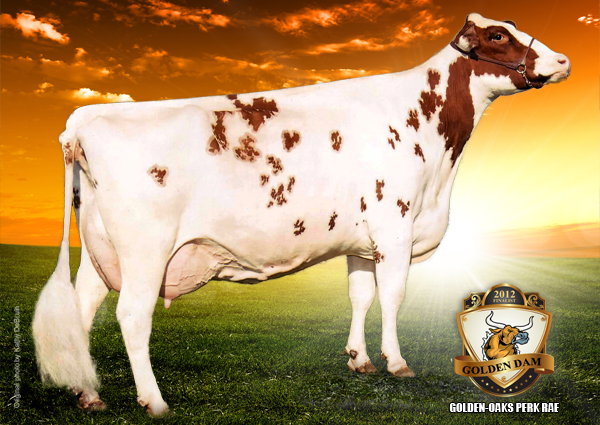
Also from TT Roxette comes the extremely influential polled brood cow, Golden-Oaks Perk Rae –Red P EX.  Perk Rae is an eighth generation Excellent polled Roxy. The polled gene in combination with red and Roxy has made Perk Rae the cornerstone of the marketing program at Golden Oaks Farms. Perk Rae traces back to the Roxys through Scientific Beauty Rae-ET *RC EX-90 who is sired by Rubens, then Jubilant Rae and Tony Rae. Sired by Perk-Red, Perk Rae has numerous daughters worldwide and sons at ABS Global, ABC Genetics and Trans-World Genetics. (Read more: GOLDEN-OAKS PERK RAE – 2012 Golden Dam Finalist).

GOLDEN-OAKS PERK RAE EX-90-5YR-USA 2*

Other notable descendants of Roxette are her sons Raider (Starbuck) who was a very influential bull across Canada and the United States in the mid-1990’s and Royalist (Sheik). A full sister to Hanoverhill Raider is Hanover-Hill Star Roxy EX-92 2E. Star Roxy was twice nominated All-American and had four EX-94 offspring, three daughters and one son. Her great grandson, STBVQ Rubens VG-88 ST’98 GM’03, added udder quality, style and airiness not previously seen in the red and whites. This earned him the Premier Sire banner at World Dairy Expo for six years in a row.

Mil-R-Mor Toprox (EX-94-3E-GMD)

Mil-R-Mor Toprox (EX-94-3E-GMD)

Mil-R-Mor Toprox (EX-94-3E-GMD) was the highest record daughter of Roxy, and one of the breed’s first 2,000 lb. fat cows.  Sired by Hilltop Apollo Ivanhoe (VG-GM). Her most famous descendant of recent times is Brigeen-C-Integrit Robin EX-95.  One of the highest scoring Integrity daughters worldwide, Brigeen-C Integrit Robin was bred from Haselmere Prelude Rhoda EX-91 3E. Rhoda descends from Brigeen Southwind Rhonda VG-88 2* via Mil-R-Mor SWD Rockette VG-86, who in turn is out of Mil-R-Mor Toprox 3E-94. Mary Briggs, one of the partners in Brigeen Farms, describes Roxy’s in The Holstein History, as “Healthy and fertile – the indexes around the world for somatic cell count, fertility and longevity highlight the family’s real strengths.  They are above average in size and substance and are even-tempered, seldom fighting or stupid. They aren’t a nuisance: they just go along doing their business”.

Bottom Line

These days we see the Roxy’s all over the world having great results in the show ring, the bulls are hitting the top Genomic rankings and family members sell for sky-high prices at auctions.  You can’t pick up a catalog from a top sale without finding a female descendant that traces back through her maternal line to Roxy.  They are all out of different branches, but trace back to the one and only QUEEN- Roxy! Glenridge Citation Roxy has touched every corner of the Holstein world, bringing style, power and longevity to the breed. And she is a real cowman’s favorite with show style to boot.  While it was Red factor that almost resulted in the greatest cow in the history of the dairy breed, Glenridge Citation Roxy EX-97 GMD 6* having never been born, it is now the Red factor, re-introduced to the family through Triple Threat that is having the greatest impact on Roxy’s legacy today.

To read more great stories from some of the most legendary cows in the Holstein breed read “The Holstein History”.

[related-posts-thumbnails]

Send this to a friend