Archive for raw milk outbreaks

233 Sick, 40 in the Hospital, One Farm Still Selling: What Raw Farm’s Outbreak Streak Costs the Rest of You

A California raw-milk dairy weathered eight outbreaks in 18 years and kept its shelf space — and in 2026, the federal brakes came off. Here’s why that lands on your milk check, not just theirs.

EXECUTIVE SUMMARY: One California dairy — Raw Farm, run by raw-milk crusader Mark McAfee — has been linked to at least 233 illnesses and 40 hospitalizations across eight outbreaks since 2006, and it’s still shipping 5.48 million pounds a year into hundreds of stores. Half the kids in its latest E. coli outbreak were under five, yet the FDA closed its 2026 case with no enforcement, RFK Jr. now runs the agency’s parent department, and Massie’s Interstate Milk Freedom Act (H.R. 7880) would open a national raw-milk lane that’s never legally existed. Here’s why it’s your problem even if you’ve never sold a drop raw: consumer trust doesn’t sort by category, so when a parent reads “raw cheddar sent kids to the hospital,” they just hear “dairy made a kid sick.” Soften fluid demand after a national scare and you push milk out of Class I — your highest-value pool use — into manufacturing classes, and the blend price every pooled producer gets drifts down with it. For scale on how that lever moves money, USDA’s 2025 make-allowance tweak alone cut class prices 85–93¢/cwt and pulled $337 million out of producer pools — and that wasn’t even a demand event. The full piece runs the barn math on a 200-cow herd and hands you a 30-day message-discipline and liability checklist to protect your brand before the next headline hits. If you ship fluid or sit on a checkoff board, that 30 seconds of reading decides whether you’re ready or improvising on camera.
raw milk outbreaks

Mark McAfee doesn’t sound like a man on the ropes. The owner of Raw Farm in California’s Central Valley has called himself a pioneer — somebody “climbing a mountain they say you can’t climb,” in his own words to reporters. By April 2026, he was climbing it again, recalling cheddar “under protest” while federal and state investigators traced sick kids back to his product.
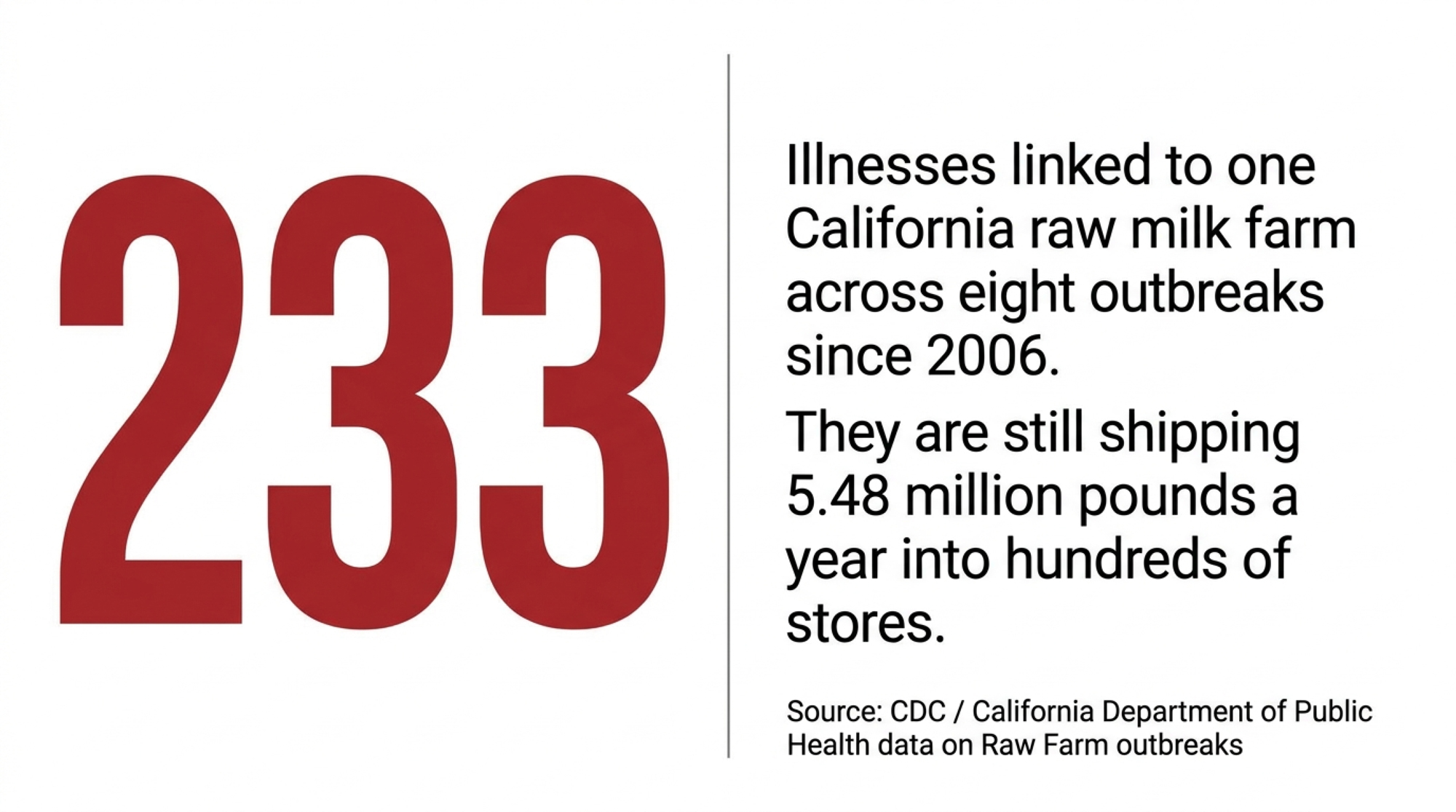
Here’s the number that should stop you. Across eight outbreaks since 2006, public health investigators have linked Raw Farm products to at least 233 illnesses and roughly 40 hospitalizations. Half the people sickened in the latest E. coli outbreak were children under five. And the farm is still selling — about 5.48 million pounds of raw milk a year by its own scale, into hundreds of stores. The raw-milk fight isn’t your fight. But the bill has a way of showing up at your door anyway.
How does one farm rack up eight outbreaks and keep its shelf space?

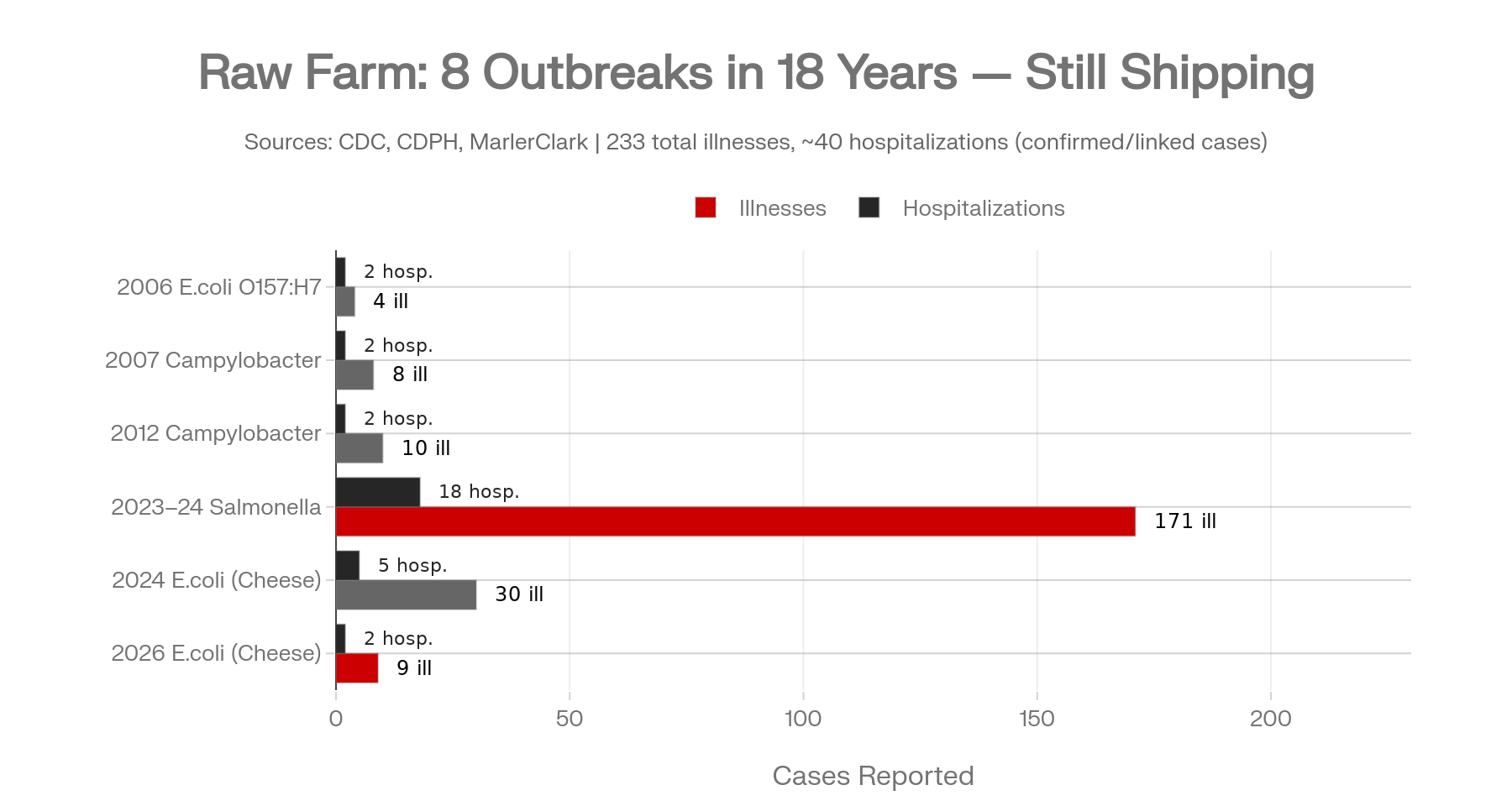
Start at the beginning, because the pattern is old. In 2006, an E. coli O157:H7 outbreak tied to the operation — then called Organic Pastures — sent two young children to the hospital, one with hemolytic uremic syndrome, and California’s health department concluded the farm’s unpasteurized products were the likely source. That’s kidney failure in a kid. From a glass of milk.

What followed was 18 years of the same movie on repeat. A 2007 Campylobacter outbreak and recall. A May 2012 Campylobacter outbreak that sickened ten people, from a nine-month-old to a 38-year-old. A 2010 interstate injunction, then a 2023 consent decree with independent audits. A 2023–24 Salmonella outbreak that sickened 171 people. Then two E. coli cheese outbreaks — one in early 2024, another that surfaced in March 2026.

The CDC declared the 2026 outbreak over on April 29, after nine confirmed illnesses across multiple states, with one case of HUS and no deaths. Raw Farm disputes the investigations. The company’s official recall notice states flatly that “no pathogens have been found in RAW FARM-brand cheese products” and that the recall was “performed under protest.” That’s its on-record position, and it belongs in the story. But the agencies named the farm anyway — the FDA and CDC had already identified it as the likely source of a similar 2024 outbreak, and California’s health department said it could not rule out the farm, given how many patients had consumed its products before getting sick.

Why did the federal brakes come off in 2026?

Because the people running the enforcement machine changed, and so did the politics. Robert F. Kennedy Jr. — a vocal raw-milk advocate — now runs Health and Human Services, the department that houses the FDA. The agency’s posture toward Raw Farm softened throughout 2025 and into 2026, and a consumer watchdog group put the question bluntly: Did the FDA go easy on a repeat offender with ties to RFK Jr.’s campaign?

Then Congress moved. In March 2026, Representatives Thomas Massie and Chellie Pingree introduced the Interstate Milk Freedom Act — H.R. 7880 — to strip federal restrictions on interstate raw-milk sales entirely. The bill would hand raw milk a national lane it has never legally had.

ActorWhat They GainWho Carries the Risk
Raw Farm / Mark McAfeeNational retail lane; no federal enforcement ceilingSick consumers; pooled producers via trust damage
RFK Jr. / HHSPolitical base consolidation; “food freedom” opticsFDA credibility; outbreak response capacity
H.R. 7880 co-sponsors (Massie/Pingree)Libertarian/food-movement crossover votesInterstate consumers with no state-level backstop
Raw-milk retailers (multi-state)Expanded SKU access without FMMO scrutinyBrand liability if product recalled post-sale
Pooled fluid-milk producersNothingBlend-price erosion from demand scare; no compensation mechanism

This is the part that matters for you, and it has nothing to do with whether raw milk is good or bad. The guardrail you’ve quietly relied on — federal enforcement keeping the worst actors penned in their own states — is being filed down. And the science on the underlying risk hasn’t moved an inch.

The risk math hasn’t changed, even if the politics did
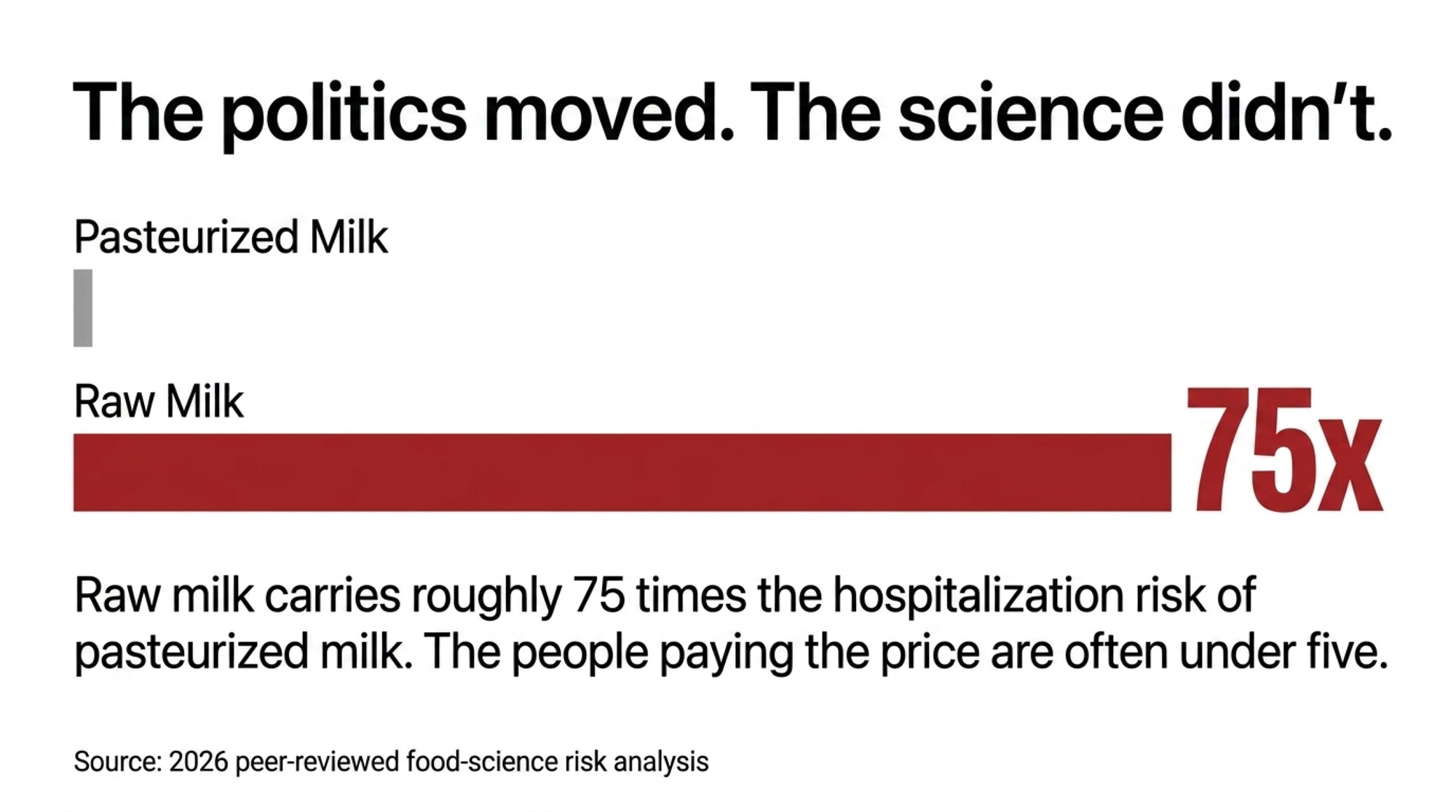
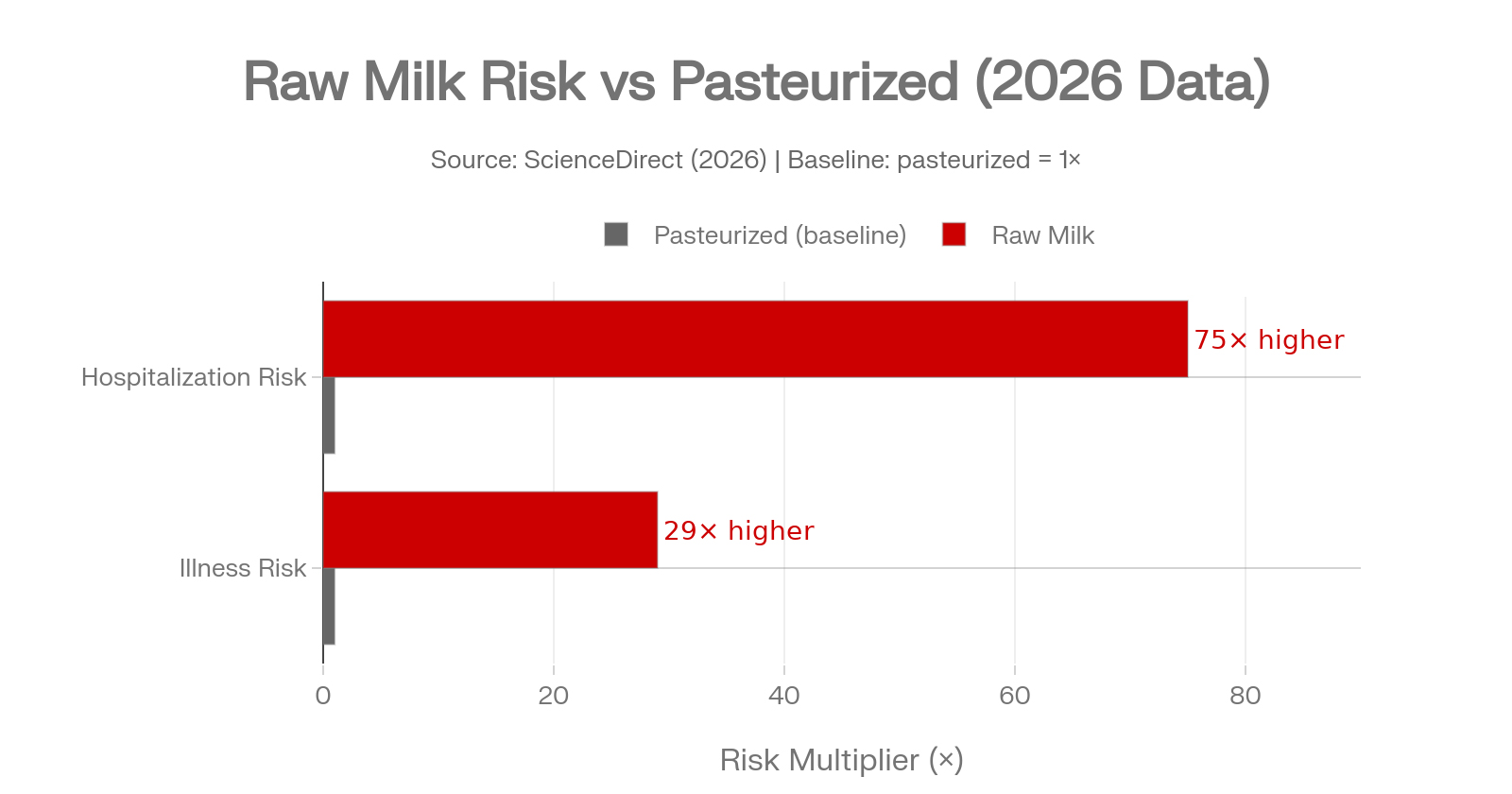
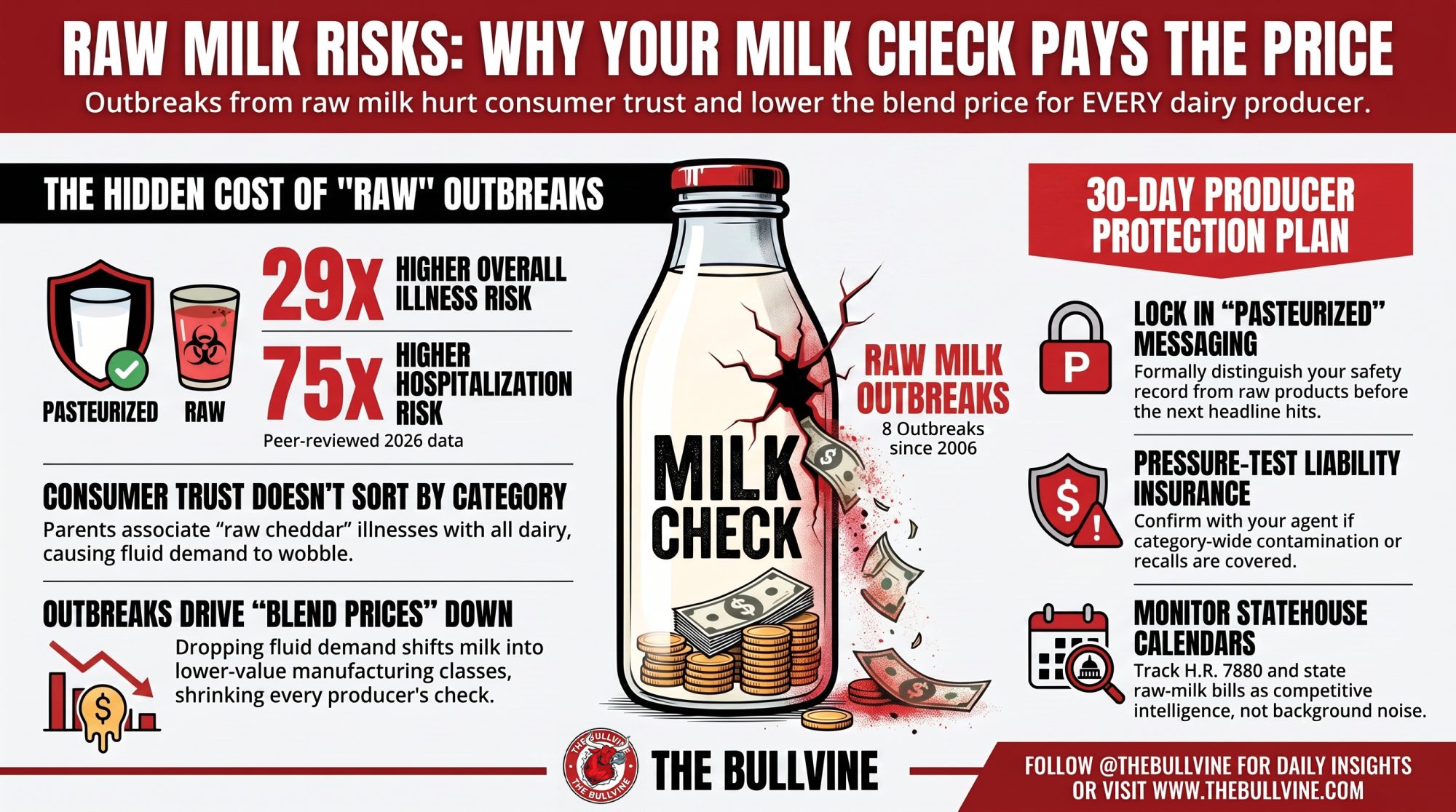
The CDC’s own characterization is that raw milk causes illness far more often than pasteurized — dozens of times the per-unit risk, not a few percentage points. A peer-reviewed analysis cited in Canada’s communicable disease report put unpasteurized dairy at hundreds of times more illnesses and dozens of times more hospitalizations. A 2026 food-science study using different methods landed on roughly 29 times the illness risk and 75 times the hospitalization risk.

The exact multiplier moves with the method. The direction never does. Raw milk gets people sick at a rate pasteurized milk doesn’t, and the people who pay the hardest are the youngest.

That’s the science. Now the part nobody’s pricing.
What does someone else’s outbreak actually cost your operation?
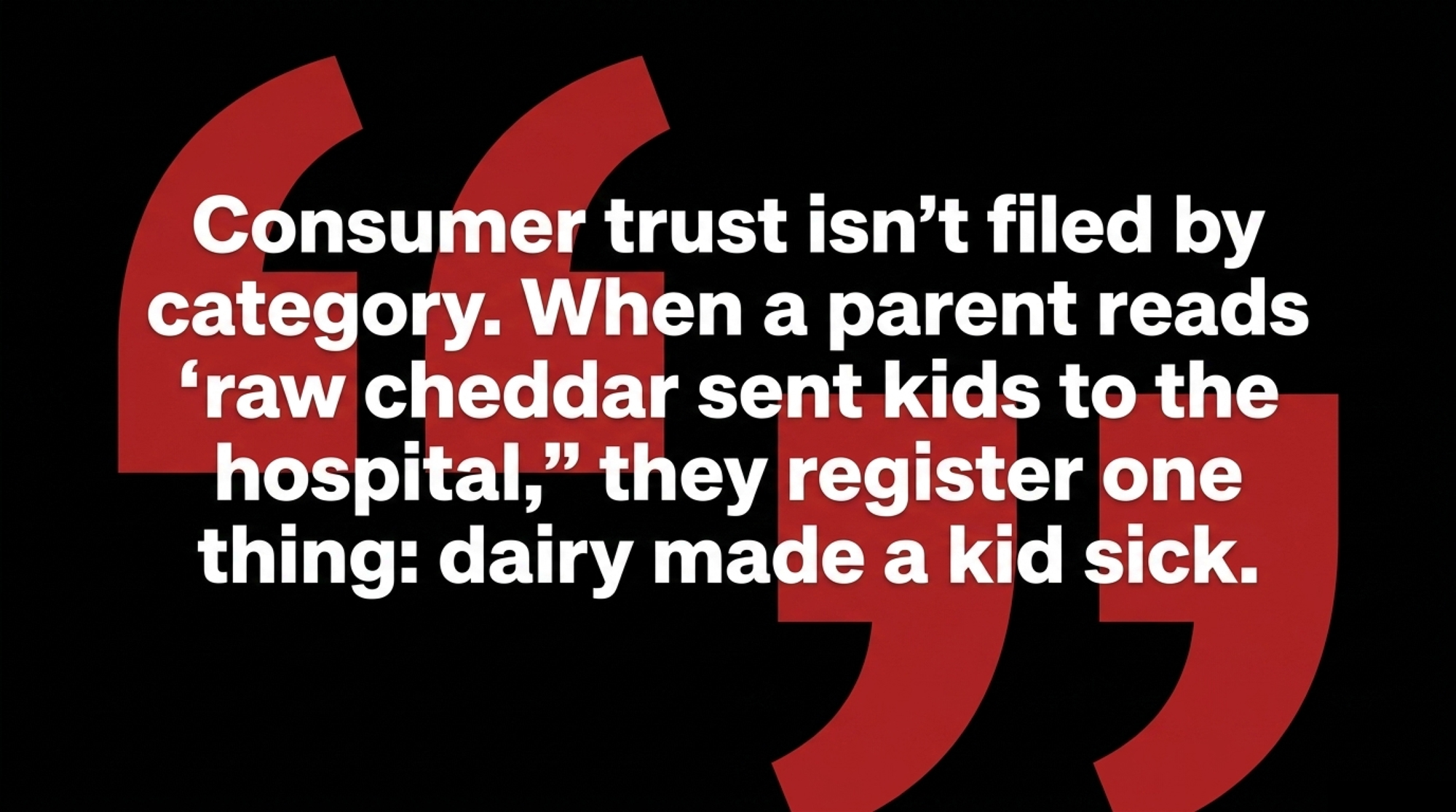
Consumer trust isn’t filed by category. When a parent reads “raw cheddar sent kids to the hospital,” they don’t run a mental search-and-replace for “raw” versus “pasteurized.” They register one thing: dairy made a kid sick. The headline does the damage. The fine print never catches up.
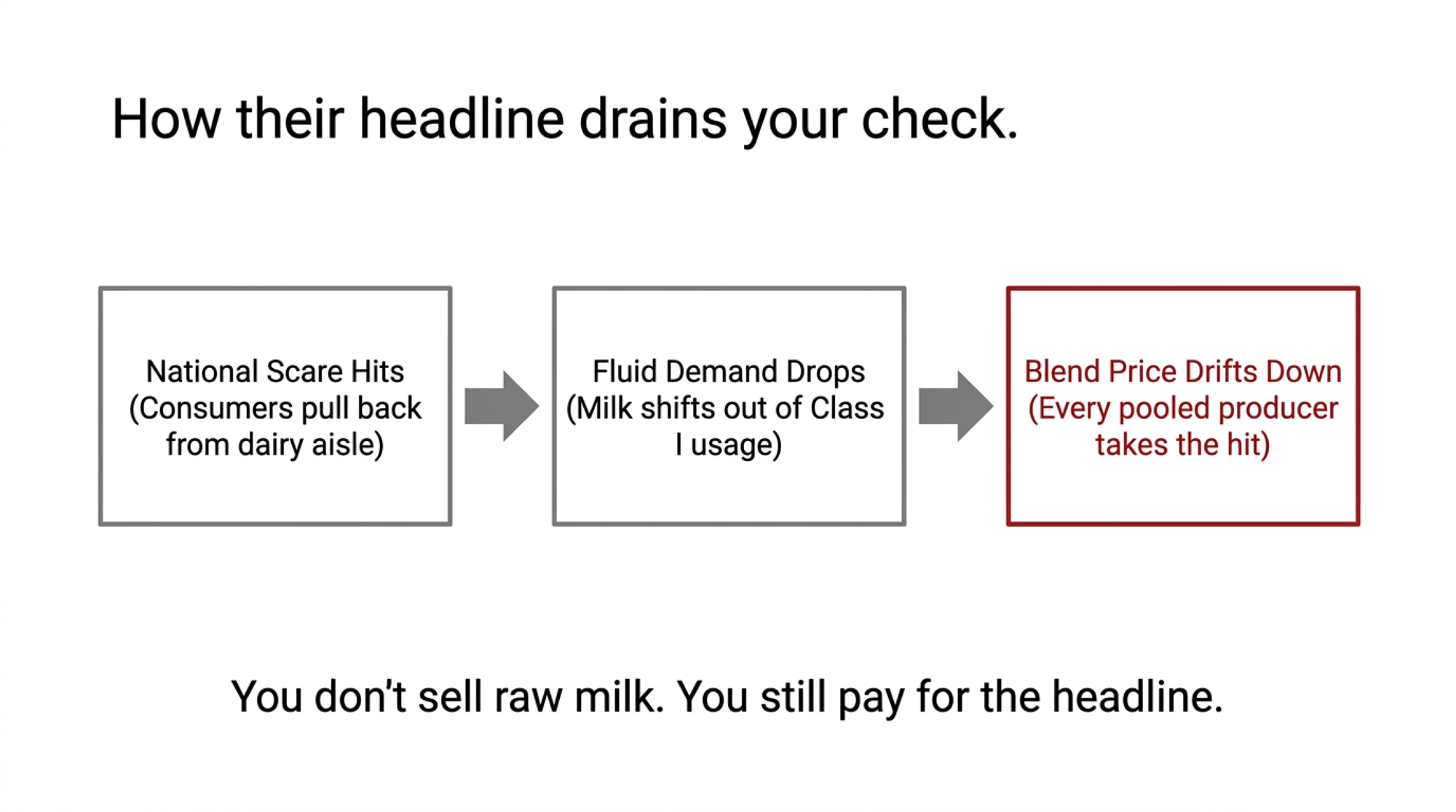
Here’s the barn-math version, and you can map it to your own numbers. Run a 200-cow herd shipping 75 pounds a day, and you’re moving roughly 5.48 million pounds of milk a year — almost exactly the volume Raw Farm pushes. Now picture a fluid-demand wobble after a national raw-milk scare. Class I — fluid milk — is the highest-value use in the federal pool, and your blend price is a weighted average of how that pool’s milk gets used. Soften fluid demand, shift milk into lower-value manufacturing classes, and the uniform price every pooled producer receives drifts down — whether your milk ever touched a fluid bottle or not. You don’t sell raw milk. You’d still help pay for the headline.
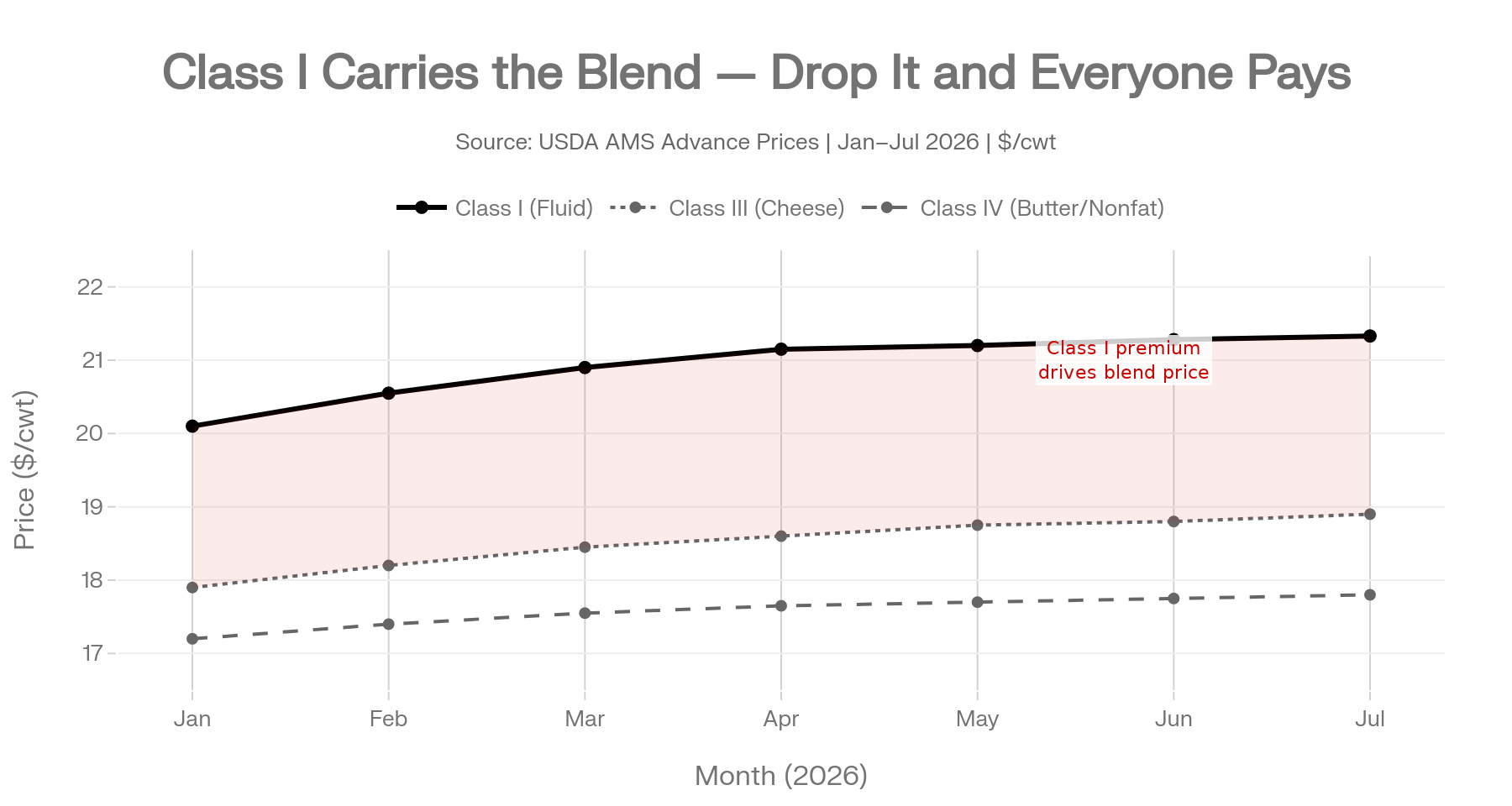
How big is the drift? Use the system’s own arithmetic. The July 2026 base Class I price ran $21.33/cwt — well above Class III and IV manufacturing values most months. For perspective on how the formula moves real money: USDA’s 2025 make-allowance change alone permanently cut class prices by roughly 85 to 93 cents per hundredweight and pulled an estimated $337 million out of producer pools. That wasn’t even a demand event — just a formula tweak. A genuine, sustained dip in fluid demand pushes the same lever in the same direction. The exact cents-per-hundredweight depends on the depth and length of any scare, and pinning that figure needs a full pool model — which is exactly what the Tier 3 follow-up runs. The mechanism is settled. The magnitude is the open question.

Price EventTriggerClass Price ImpactEst. Producer Pool Impact
2025 USDA make-allowance adjustmentFormula change (USDA rulemaking)–85 to –93¢/cwt–$337M from producer pools
Hypothetical raw-milk demand scareConsumer trust erosion; Class I fluid shiftTBD — depends on scare durationDirectionally same lever, formula already set
July 2026 Class I base priceUSDA advance pricing$21.33/cwtHighest-value pool position — most to lose
2024 bird flu / avian influenza dairy scareDisease outbreak; consumer concernModest Class I softeningLocalized; recovered within quarters
PatternAny event softening fluid demandPushes milk to lower manufacturing classesEvery pooled producer pays; raw or not

Options and Trade-Offs for Your Operation

You can’t control RFK Jr., you can’t control H.R. 7880, and you sure can’t control McAfee. You can control how your operation and your message are positioned when the next headline hits. Three paths, depending on where you sit.

ActionWho It’s ForCost to ActCost to Skip
Publish clear “we’re pasteurized” message across all channelsEvery fluid producer, farmers’ market sellerOne afternoon; near $0Improvising on camera when a reporter calls
Pull product-liability policy; ask about category-contamination coverageProcessors, large consumer-facing operations1 hour + possible premium reviewDiscovering coverage gap mid-recall
Put raw-milk bill status on monthly review calendarAnyone in a state with active raw-milk legislation15 min/monthBlindsided by overnight competitive shift
Brief co-op board or checkoff committee on category-trust riskBoard members, checkoff directorsOne agenda itemNo institutional response plan when headlines hit
Run your own blend-price sensitivity: what does –$0.50/cwt do to your operation?Any pooled producerSpreadsheet hourTreating a structural risk as background noise
Review recall plan; confirm chain-of-custody documentationAnyone with consumer-facing brandQuarterly ops reviewRecall conversation you’re having for the first time during a recall

Tighten your own message discipline — start this month. Within the next 30 days, sit down with whoever speaks for your farm — on social, at the co-op, at the farmers’ market — and draw the line in plain language: your milk is pasteurized, your safety record is separate, and you don’t get lumped in with raw. This works for everyone and costs almost nothing but an afternoon. The limit: messaging can’t fix a problem you actually have, so it only helps if your own house is in order first.

Pressure-test your liability and recall posture. This fits processors and larger operations carrying real consumer-facing exposure. Pull your product-liability coverage and your recall plan, and ask your insurer the direct question: are we covered if a category-wide raw-milk scare drags our brand into a recall conversation we didn’t cause? It requires an honest hour with your agent and maybe a premium conversation. The risk of skipping it is finding the gap during the crisis instead of before it.

Watch your state’s raw-milk rules like a hawk. This is for anyone in a state where raw-milk law is in play — and with H.R. 7880 live, that list could grow fast. If your state opens an interstate lane, the competitive and reputational math in your region shifts. The forward signal to watch isn’t a poll. It’s your statehouse calendar and the bill’s committee progress.
Key Takeaways — Decisions, Not a Recap

  • If you sell anything fluid and consumer-facing, lock in your “we’re pasteurized, we’re separate” message within 30 days — before a scare forces you to improvise it on camera.
  • If you carry brand or processing exposure, call your insurer this quarter and get the category-contamination question answered in writing, not assumed.
  • If your state has a live raw-milk bill, track its committee progress monthly — treat the statehouse calendar as a competitive-intelligence feed, not background noise.
  • If you sit on a checkoff or promotion board, the question to put on the table is whether your consumer messaging can survive being lumped in with a raw-milk outbreak — and if it can’t, that’s the gap to close now.
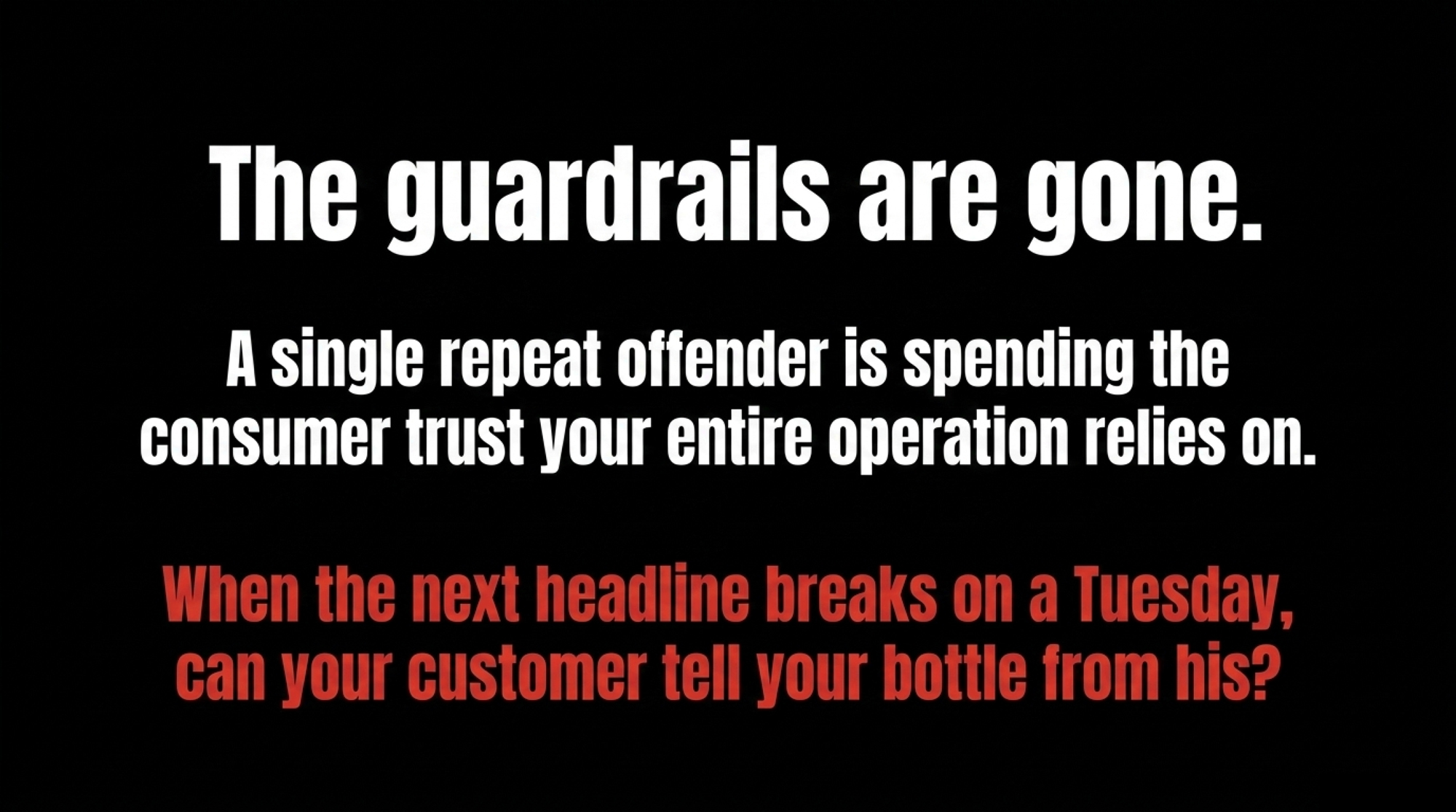
Raw Farm has weathered eight outbreaks and kept selling. The open question isn’t whether McAfee can keep climbing his mountain — he’s made clear he intends to. It’s whether the rest of the dairy case gets billed for the trust he spends on the way up. So pull your own numbers. Where does your brand sit if the next “raw milk sent kids to the hospital” headline runs on a Tuesday, and a customer can’t tell your bottle from his?

Run Your Numbers

Dairy Profit Projector — A raw-milk scare you didn’t cause can still soften fluid demand and drag your blend price down. Run your herd through the Projector to pressure-test what a milk-price dip does to your next 12 months of IOFC, breakeven, and whole-herd margin — before the headline hits.

Complete references and supporting documentation are available upon request by contacting the editorial team at editor@thebullvine.com.

Learn More

The Sunday Read Dairy Professionals Don’t Skip.
Every week, thousands of producers, breeders, and industry insiders open Bullvine Weekly for genetics insights, market shifts, and profit strategies they won’t find anywhere else. One email. Five minutes. Smarter decisions all week.


NewsSubscribe
First
Last
Consent

Will RFK Jr.’s Influence Ignite a Raw Milk Revolution in America?

Could RFK Jr.’s potential role ignite a raw milk boom in America? Discover what this means for dairy farmers and the unpasteurized milk market.

Summary:

The debate over raw milk has reignited with Robert F. Kennedy Jr.’s potential confirmation as Health and Human Services Secretary under President-elect Donald Trump, posing the question: should raw milk be embraced for its supposed health benefits or restricted due to safety concerns? As supported by European studies, advocates argue that raw milk retains essential nutrients and probiotics lost in pasteurization, potentially reducing asthma and allergies. However, opponents highlight the risk of harmful bacteria like E. coli and Salmonella, noting 75 illness outbreaks linked to raw milk between 2013 and 2018, resulting in 2,645 illnesses and 228 hospitalizations. Kennedy’s support for raw milk could shift federal policy, influencing national regulations and impacting dairy farmers, thus challenging the industry to balance health claims with public safety concerns.

Key Takeaways:

  • The potential appointment of RFK Jr. as Health and Human Services Secretary could influence the national policy on raw milk sales, potentially boosting its availability.
  • Raw milk proponents argue it contains healthier enzymes and probiotics, but significant safety concerns are linked to harmful pathogens and past outbreaks.
  • Despite lobbying efforts, raw milk sales remain restricted mainly in Wisconsin, with only incidental exchanges between farmers and consumers being allowed legally.
  • State legislation efforts to expand raw milk sales have repeatedly faced opposition due to public health concerns and potential impacts on the dairy industry.
  • Raw milk has been associated with many illness outbreaks, emphasizing the ongoing debate between perceived health benefits and proven safety risks.
  • Proponents of raw milk are advocating for more thorough safety measures and standards, which could lead to more regulated and potentially safer raw milk sales.
  • The impact of federal support for raw milk could create opportunities for small farms but continues to raise concerns about public health safety.
  • Raw milk advocates in states like California continue to find legal mechanisms to distribute their products, underscoring the tension between regulation and market demand.
raw milk revolution, Robert F. Kennedy Jr., health benefits of raw milk, probiotics in raw milk, raw milk safety risks, pasteurization effects, raw milk outbreaks, dairy industry regulations, public health and raw milk, unpasteurized milk dangers

Is the raw milk revolution about to break through, or are we heading towards a public health disaster? This ongoing controversy has caught the attention of the dairy industry and fans of raw milk. Things are heating up with the possible confirmation of Robert F. Kennedy Jr. as Health and Human Services Secretary. He strongly supports raw milk, which has been controversial because of its health risks and benefits. If RFK Jr. is confirmed, it could lead to more availability of raw milk. But what does this mean for dairy farmers with strict safety rules, and can the industry handle the risks to health and reputation? 

The Raw Milk Debate: Health vs. Safety 

Raw milk supporters argue it has many health benefits because it contains natural enzymes and probiotics. These components aid digestion and help gut health, potentially reducing asthma and allergies. Some European studies on children raised on farms support these claims. Raw milk fans also say these nutrients are lost during pasteurization, making raw milk the better choice for those wanting a healthier diet. 

Conversely, health officials warn about the safety risks of drinking raw milk. Unpasteurized milk can contain harmful bacteria like E. coli, Salmonella, and Campylobacter. The Centers for Disease Control and Prevention (CDC) reported that between 2013 and 2018, 75 outbreaks of illness from raw milk caused 2,645 people to get sick and 228 to be hospitalized. These numbers highlight the public health dangers of consuming raw milk. 

Experts such as Alex O’Brien, Safety and Quality Coordinator at the University of Wisconsin’s Center for Dairy Research, believe that the risk from these bacteria is far greater than any health benefits. “The more people who consume it,” O’Brien says, “the higher the chance someone will get sick.” This ongoing debate between the possible health benefits and clear safety risks forces those in the dairy industry to consider the growth potential of raw milk sales versus the need to keep consumers safe. 

RFK Jr.: A Catalyst for Change or A Risk to Public Safety?

Robert F. Kennedy Jr. strongly advocates for raw milk, emphasizing its benefits despite safety concerns. His potential appointment as the Health and Human Services Secretary could significantly impact the U.S. dairy industry. Given his track record in environmental and health issues, he might advocate for more straightforward national rules on raw milk, a prospect that some raw milk supporters view with optimism. 

People in the industry are discussing what could change if he takes the job. Some raw milk supporters think Kennedy’s appointment would be a good thing. Mark McAfee, who runs Raw Farm, says, “It ain’t going to hurt anything. I know government intervention, but that doesn’t seem to be his agenda.” This shows that some people hope for more supportive rules on raw milk. 

On the other hand, there are worries about safety. As Rebekah Sweeney from the Wisconsin Cheese Makers Association points out, allowing raw milk to be sold widely comes with risks. “The scientific data and illness outbreak records we have—now dating back more than 100 years—make it clear: raw milk is not a safe commercial product.”This means that changing the rules could lead to more debates. 

The possible changes also affect state rules and local laws, changing how businesses handle raw milk. The challenge is to find a balance between public health and giving people more choices. This is important for a big industry in Wisconsin, worth $46 billion, and for many people across the country. Whether Kennedy will align federal goals with state needs is still uncertain, and the dairy community is observing, ready for what might come next.

RFK Jr.’s Confirmation: A Turning Point for Small Dairy Farms?

The confirmation of RFK Jr. could dramatically change the dairy industry, especially for smaller farms. If raw milk sales become legal, dairy farmers might find new ways to make money. People interested in raw milk’s health claims may become regular customers, helping local farms by buying this unique product directly from them. This could provide a significant economic boost to small farms, but it also comes with the challenge of meeting strict safety standards for selling raw milk. 

However, these benefits come with challenges. One major issue is the strict safety rules for selling raw milk. Farmers must meet high safety standards to ensure their milk is safe to drink. This might mean buying new equipment and changing their practices, which can be challenging for smaller farms with less money. 

New methods of selling milk, such as forming groups or clubs to sell directly to consumers, could foster a sense of community and encourage consumers to support local farms. These innovative approaches could also transform the traditional relationship between customers and producers, creating a more connected and supportive community. 

The economic future for dairy farmers is both promising and risky. Farmers must carefully weigh the financial gains against the operational risks as changes occur. How small farms handle these opportunities and challenges will significantly affect the dairy industry’s economic impact, making it crucial for all stakeholders to stay informed and engaged.

The Cost of Freedom: Balancing Public Health and Raw Milk Rights

From a conservative viewpoint, the raw milk debate isn’t just about freedom or choice; it’s mainly about keeping the public safe and healthy. The raw milk movement, which supports natural and traditional methods, often ignores the safety guidelines created over many years to protect people from dangerous germs. With over a hundred years of research showing the risks of drinking raw milk, we should focus on keeping these essential safety measures in place. 

The history is worrying: from 2013 to 2018, the Centers for Disease Control and Prevention (CDC) noted 75 illness outbreaks linked to raw milk, which affected 2,645 people, caused 228 hospitalizations, and led to three deaths. This isn’t just hearsay but accurate data that calls for a careful approach. 

Recent outbreaks clearly show the risks involved. Over 100 salmonella cases in 2023-2024 were linked to raw milk from a California dairy farm, with seven needing hospital care. This highlights how serious and unpredictable the health risks are. In Wisconsin, a 2014 incident in which 38 people got Campylobacter infections shows the ongoing threat to public health. 

Loosening raw milk regulations might damage the dairy industry’s reputation for safety and reliability. Conservatives value community and strong industries, and Wisconsin’s dairy industry is a key economic player. Risking people’s health by selling more raw milk could damage the economy. 

While some might like the idea of fewer regulations, a conservative stance demands caution and responsibility. Safety measures like pasteurization are crucial for health and trust in the nation’s agricultural products. The risks are too high, and the proof is too solid, so ignore the clear need for strict dairy safety standards.

Lobbying and Legislation: The Battlefront of the Raw Milk Debate

Lobbying and legislation are where the raw milk debate happens with much passion. On one side are advocates of raw milk, who believe in the freedom to choose and claim health benefits from drinking unpasteurized milk. They use grassroots efforts and personal stories to win over the public and lawmakers. Mark McAfee of Raw Farm is a leading voice in this movement, mentoring farmers and showing them legal ways to challenge current rules. 

On the other hand, opponents of raw milk sales, including big dairy companies and health groups, rely on scientific data. They point to many illness outbreaks, highlighting the risks of drinking raw milk. The Wisconsin Cheese Makers Association, led by people like Rebekah Sweeney, is a strong opponent. They fight hard to keep strict safety rules, arguing that health threats should not risk the state’s dairy industry stability [Journal Sentinel]. 

Efforts to expand raw milk sales in Wisconsin have had mixed results. Since 2009, several bills have tried to ease restrictions, but each has failed. Strong opposition mainly comes from the powerful dairy lobby in the state. A clear example is the 2023 bill to legalize retail raw milk sales. It failed to go beyond committee discussions because of health and safety concerns [Journal Sentinel]. 

The reasons behind these efforts differ. Supporters argue for farm freedom and consumer choice and oppose government control. Opponents focus on public safety and the economic impacts on a state heavily reliant on the dairy industry. This conflict between personal freedom and community safety is at the heart of the legislative standoff. 

The political environment stays heated, shaped by intense lobbying on both sides. With people like Robert F. Kennedy Jr. potentially getting key government roles, the future of raw milk laws might change. However, the key battles of lobbying and legal challenges will continue to be necessary. 

Case Studies: Successes and Failures in Raw Milk Legislation 

States use different rules to legalize the sale of raw milk. These examples can teach us what works and what doesn’t, helping us decide how to handle these sales. 

Success Story: California’s Strict Testing Rules 

California is often seen as successful because it allows raw milk sales in stores but has strict rules and testing. The rules require regular tests for germs, which helps keep raw milk safe. Supporters say these steps allow people to choose raw milk while keeping it primarily safe for everyone. (Source: California Department of Food and Agriculture) 

Failure: Pennsylvania’s Confusing Rules 

Pennsylvania’s story is more of a warning. They allow raw milk sales, but California’s rules must be clarified. This leads to different safety measures at different farms, which can cause outbreaks of sickness from raw milk. The mix of rules makes it challenging for producers and risks losing consumer trust. (Source: Pennsylvania Department of Health) 

Mixed Results: Maine’s Local Control Test 

Maine tried something in-between by letting local areas decide on raw milk sales. Some places have thriving markets where producers sell directly to buyers. But critics say this mix of rules lacks safeguards to stop health risks. (Source: University of Maine Cooperative Extension) 

These examples show how critical balanced rules are. States with strict safety rules, like California, tend to have better safety and steady market results. Like Pennsylvania, states with unclear or weak rules struggle to maintain consumer trust and health safety. As raw milk sales gain more attention, these lessons are essential for lawmakers considering new laws.

Consumer Shift: The Growing Appetite for Raw Milk

The demand for raw milk has been growing in some areas, even though it has a controversial reputation among health experts. Recent data shows that more people are interested in it, especially those who like organic and natural foods. This trend is mainly driven by younger people, who are cautious about processed foods and prefer options they think are healthier. 

Furthermore, sales data from places where raw milk is legal show this rising interest. From 2015 to 2023, these states saw a steady increase in sales by about 10% each year [Data Source: Journal of Food Protection]. Still, this growth isn’t the same everywhere; it varies depending on local rules. 

Changing consumer preferences could significantly affect the dairy industry’s future. If the move towards natural foods continues, it might generate more support for selling raw milk and lead to changes in laws in stricter states. Raw milk supporters say it could become more widely accepted and bought with proper rules and safety checks. 

Demographic changes also suggest that raw milk might gain more buyers. Younger people have more money to spend and prefer natural products. Raw milk could eventually be sold in regular stores as long as it is proven safe and high-quality. 

Ultimately, this suggests that while raw milk might never become more popular than pasteurized milk, its market share could grow if people choose more natural foods. Additionally, as opinions about raw milk become more accepting, driven by changing laws and higher demand, the dairy industry may need to adapt quickly.

The Bottom Line

As we look at this critical moment, the possible confirmation of Robert F. Kennedy Jr. as Health and Human Services Secretary could significantly change the raw milk movement in the U.S. This article explored the ongoing debate between raw milk’s health benefits and safety risks. It also looked at the lobbying efforts around raw milk laws. It shared the challenges and successes in states with different rules. Supporters say raw milk offers better nutrition and could help small dairy farms. However, opponents point to strong evidence of health risks and potential problems for the dairy industry. 

If RFK Jr. is confirmed, it might lead to more support for raw milk, changing the current rules. As the dairy industry considers these possible changes, it must balance new ideas and traditional practices with consumer freedom and safety. The big question is: Can the industry change to meet new consumer demands while keeping people safe, or will the excitement of new ideas overshadow the importance of safety? Our direction will shape the future of dairy farming and its key role in America’s farming economy.

Learn more:

Join the Revolution!

Bullvine Daily is your essential e-zine for staying ahead in the dairy industry. With over 30,000 subscribers, we bring you the week’s top news, helping you manage tasks efficiently. Stay informed about milk production, tech adoption, and more, so you can concentrate on your dairy operations. 

NewsSubscribe
First
Last
Consent
Send this to a friend