



A California raw-milk dairy weathered eight outbreaks in 18 years and kept its shelf space — and in 2026, the federal brakes came off. Here’s why that lands on your milk check, not just theirs.
EXECUTIVE SUMMARY: One California dairy — Raw Farm, run by raw-milk crusader Mark McAfee — has been linked to at least 233 illnesses and 40 hospitalizations across eight outbreaks since 2006, and it’s still shipping 5.48 million pounds a year into hundreds of stores. Half the kids in its latest E. coli outbreak were under five, yet the FDA closed its 2026 case with no enforcement, RFK Jr. now runs the agency’s parent department, and Massie’s Interstate Milk Freedom Act (H.R. 7880) would open a national raw-milk lane that’s never legally existed. Here’s why it’s your problem even if you’ve never sold a drop raw: consumer trust doesn’t sort by category, so when a parent reads “raw cheddar sent kids to the hospital,” they just hear “dairy made a kid sick.” Soften fluid demand after a national scare and you push milk out of Class I — your highest-value pool use — into manufacturing classes, and the blend price every pooled producer gets drifts down with it. For scale on how that lever moves money, USDA’s 2025 make-allowance tweak alone cut class prices 85–93¢/cwt and pulled $337 million out of producer pools — and that wasn’t even a demand event. The full piece runs the barn math on a 200-cow herd and hands you a 30-day message-discipline and liability checklist to protect your brand before the next headline hits. If you ship fluid or sit on a checkoff board, that 30 seconds of reading decides whether you’re ready or improvising on camera.
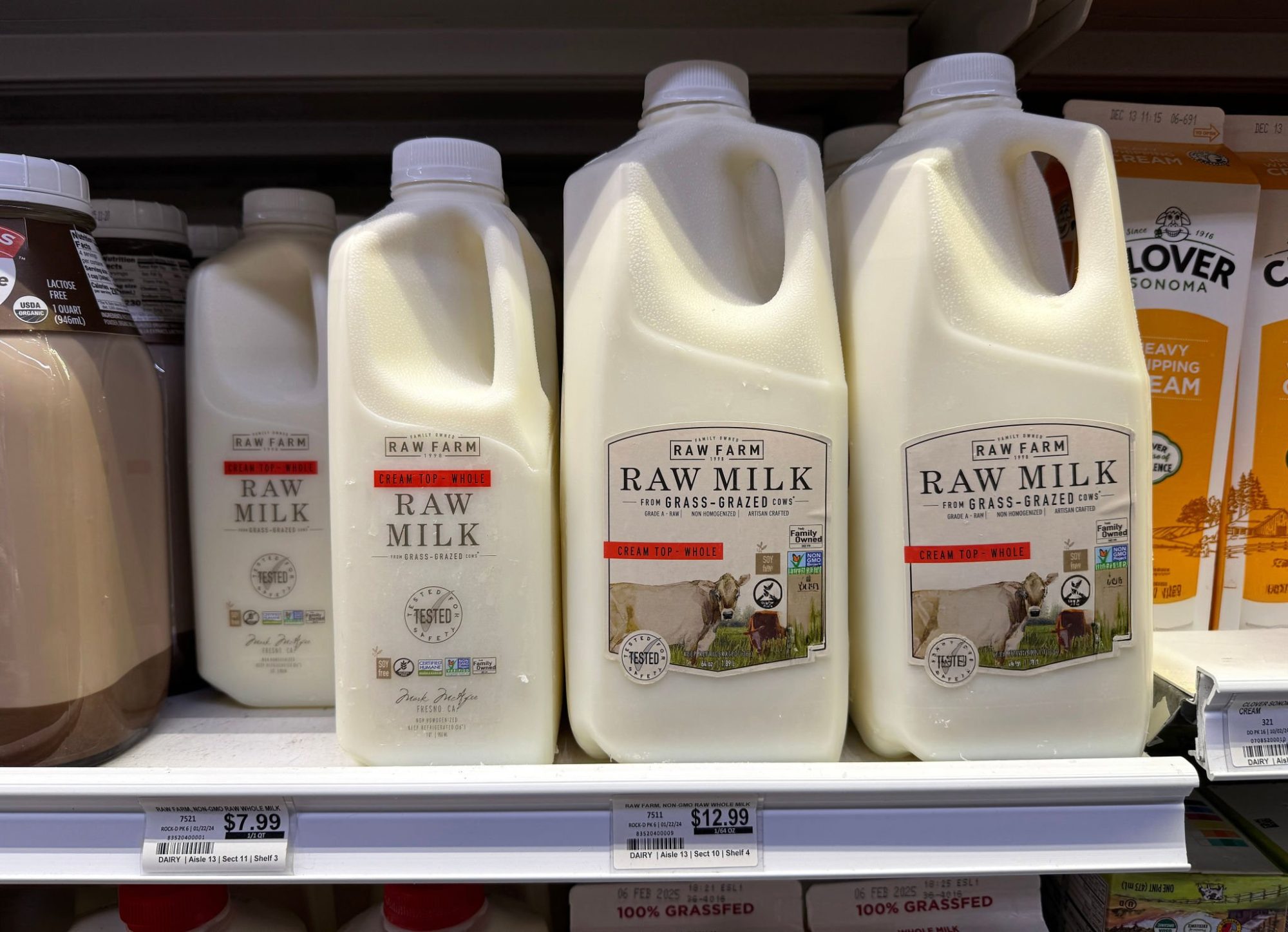
Mark McAfee doesn’t sound like a man on the ropes. The owner of Raw Farm in California’s Central Valley has called himself a pioneer — somebody “climbing a mountain they say you can’t climb,” in his own words to reporters. By April 2026, he was climbing it again, recalling cheddar “under protest” while federal and state investigators traced sick kids back to his product.
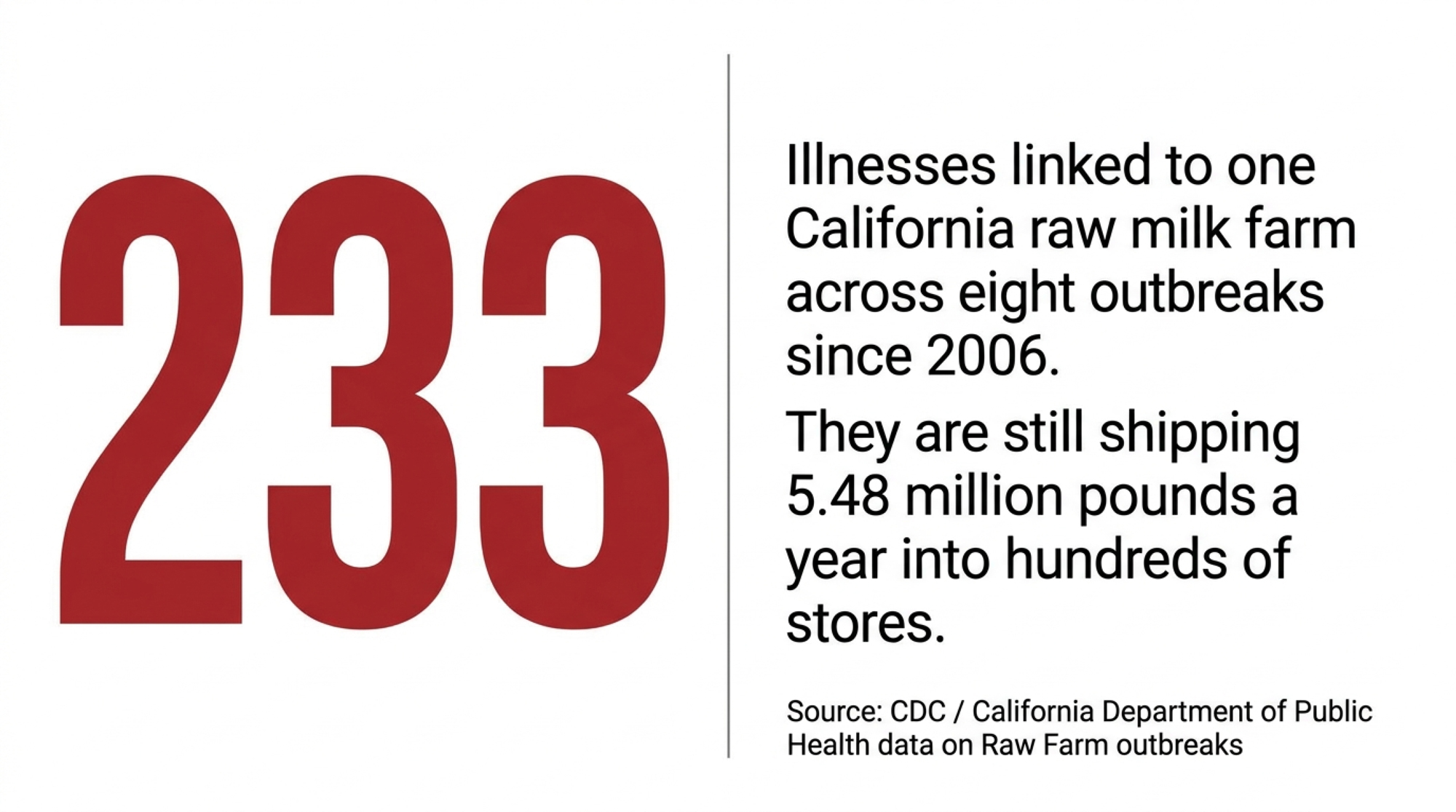
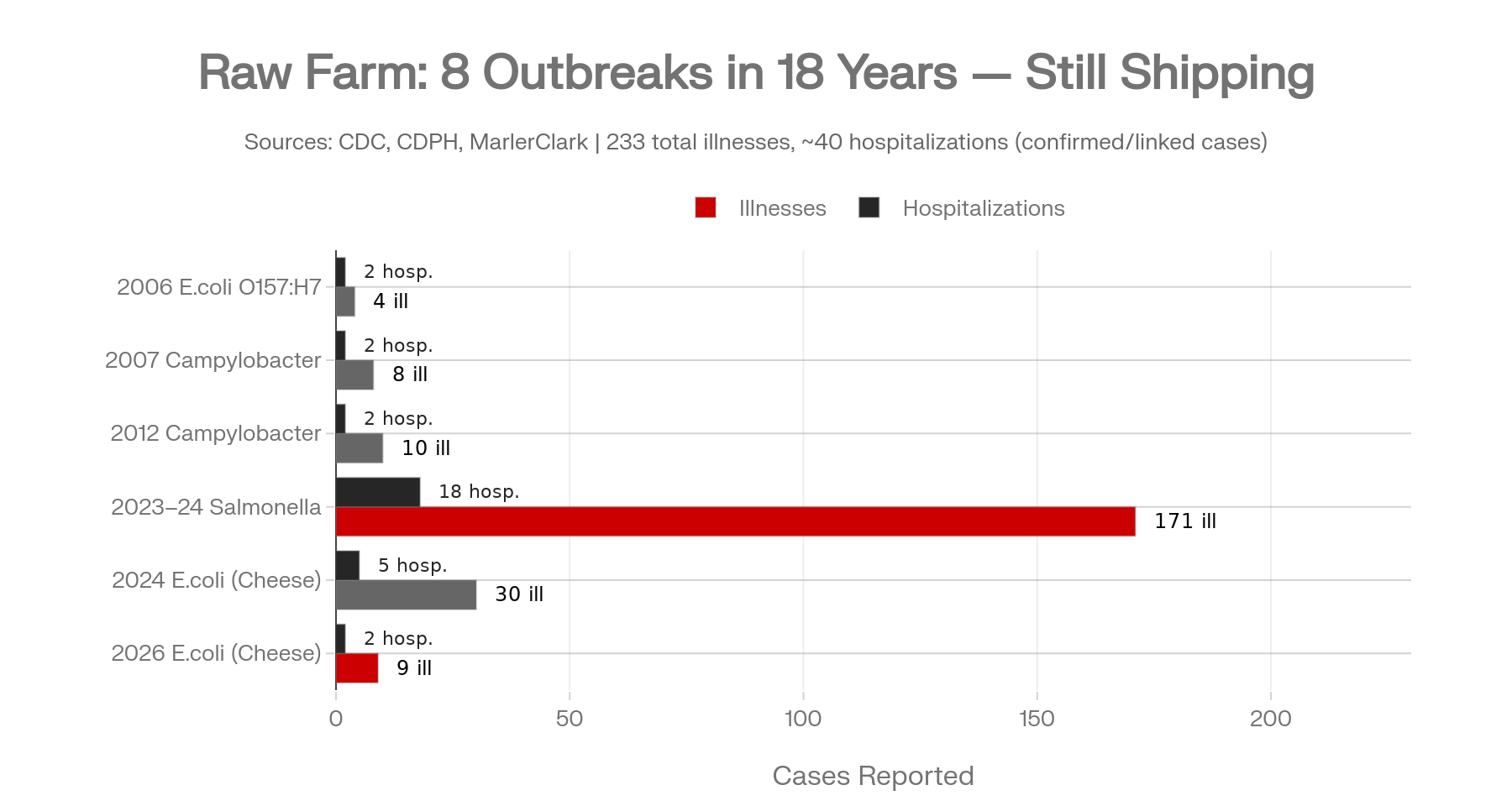
Here’s the number that should stop you. Across eight outbreaks since 2006, public health investigators have linked Raw Farm products to at least 233 illnesses and roughly 40 hospitalizations. Half the people sickened in the latest E. coli outbreak were children under five. And the farm is still selling — about 5.48 million pounds of raw milk a year by its own scale, into hundreds of stores. The raw-milk fight isn’t your fight. But the bill has a way of showing up at your door anyway.
How does one farm rack up eight outbreaks and keep its shelf space?
Start at the beginning, because the pattern is old. In 2006, an E. coli O157:H7 outbreak tied to the operation — then called Organic Pastures — sent two young children to the hospital, one with hemolytic uremic syndrome, and California’s health department concluded the farm’s unpasteurized products were the likely source. That’s kidney failure in a kid. From a glass of milk.
What followed was 18 years of the same movie on repeat. A 2007 Campylobacter outbreak and recall. A May 2012 Campylobacter outbreak that sickened ten people, from a nine-month-old to a 38-year-old. A 2010 interstate injunction, then a 2023 consent decree with independent audits. A 2023–24 Salmonella outbreak that sickened 171 people. Then two E. coli cheese outbreaks — one in early 2024, another that surfaced in March 2026.
The CDC declared the 2026 outbreak over on April 29, after nine confirmed illnesses across multiple states, with one case of HUS and no deaths. Raw Farm disputes the investigations. The company’s official recall notice states flatly that “no pathogens have been found in RAW FARM-brand cheese products” and that the recall was “performed under protest.” That’s its on-record position, and it belongs in the story. But the agencies named the farm anyway — the FDA and CDC had already identified it as the likely source of a similar 2024 outbreak, and California’s health department said it could not rule out the farm, given how many patients had consumed its products before getting sick.
Why did the federal brakes come off in 2026?
Because the people running the enforcement machine changed, and so did the politics. Robert F. Kennedy Jr. — a vocal raw-milk advocate — now runs Health and Human Services, the department that houses the FDA. The agency’s posture toward Raw Farm softened throughout 2025 and into 2026, and a consumer watchdog group put the question bluntly: Did the FDA go easy on a repeat offender with ties to RFK Jr.’s campaign?
Then Congress moved. In March 2026, Representatives Thomas Massie and Chellie Pingree introduced the Interstate Milk Freedom Act — H.R. 7880 — to strip federal restrictions on interstate raw-milk sales entirely. The bill would hand raw milk a national lane it has never legally had.
| Actor | What They Gain | Who Carries the Risk |
|---|---|---|
| Raw Farm / Mark McAfee | National retail lane; no federal enforcement ceiling | Sick consumers; pooled producers via trust damage |
| RFK Jr. / HHS | Political base consolidation; “food freedom” optics | FDA credibility; outbreak response capacity |
| H.R. 7880 co-sponsors (Massie/Pingree) | Libertarian/food-movement crossover votes | Interstate consumers with no state-level backstop |
| Raw-milk retailers (multi-state) | Expanded SKU access without FMMO scrutiny | Brand liability if product recalled post-sale |
| Pooled fluid-milk producers | Nothing | Blend-price erosion from demand scare; no compensation mechanism |
This is the part that matters for you, and it has nothing to do with whether raw milk is good or bad. The guardrail you’ve quietly relied on — federal enforcement keeping the worst actors penned in their own states — is being filed down. And the science on the underlying risk hasn’t moved an inch.
The risk math hasn’t changed, even if the politics did
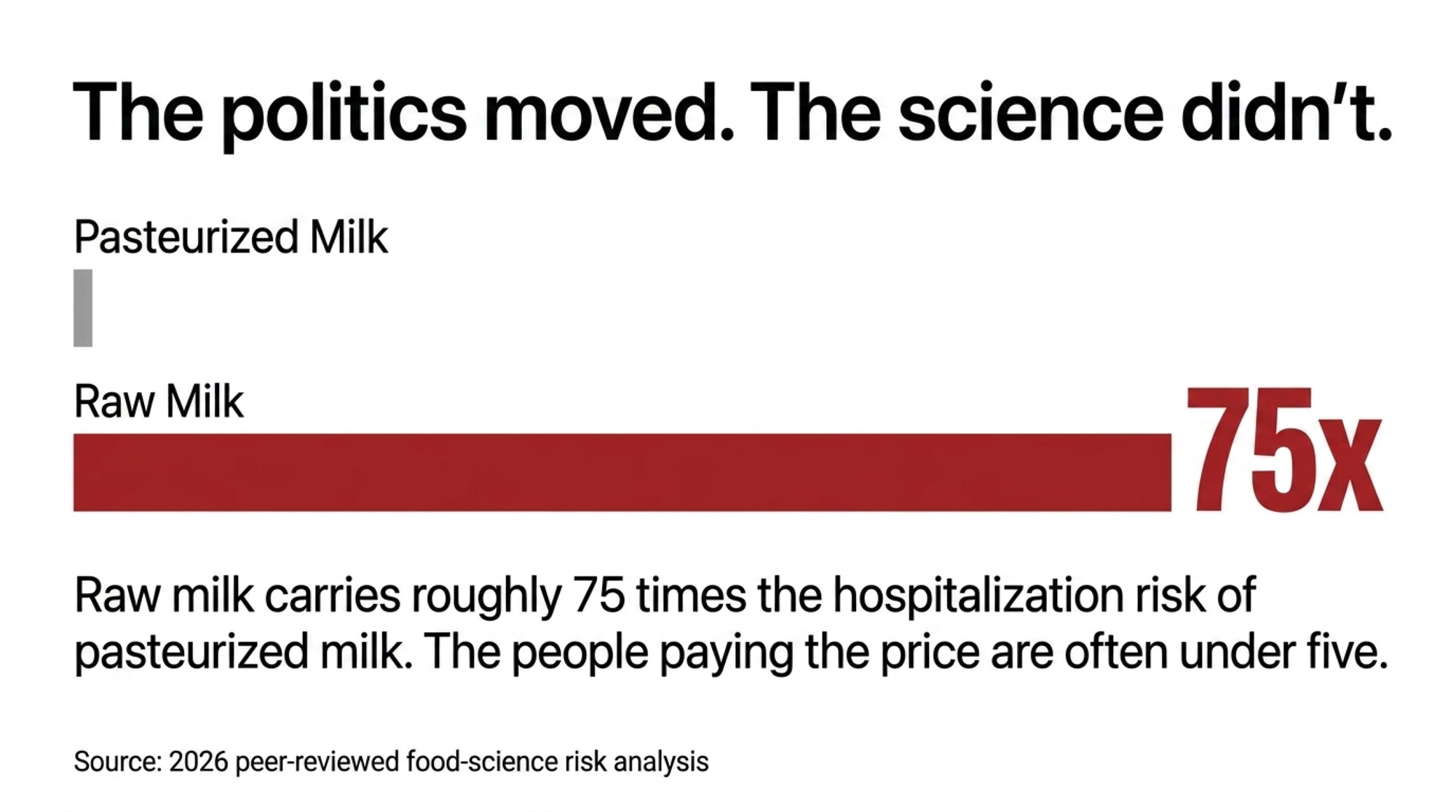
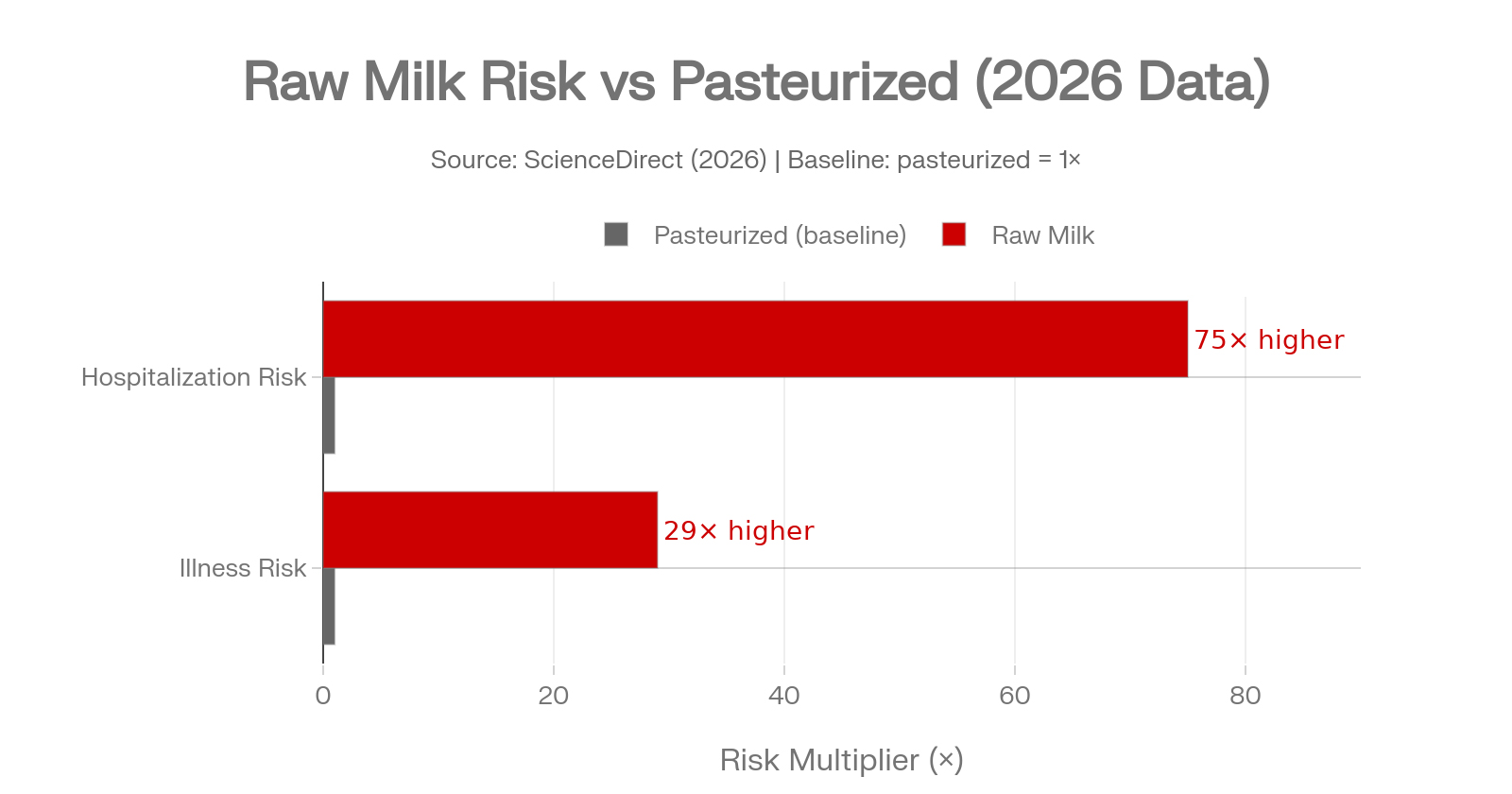
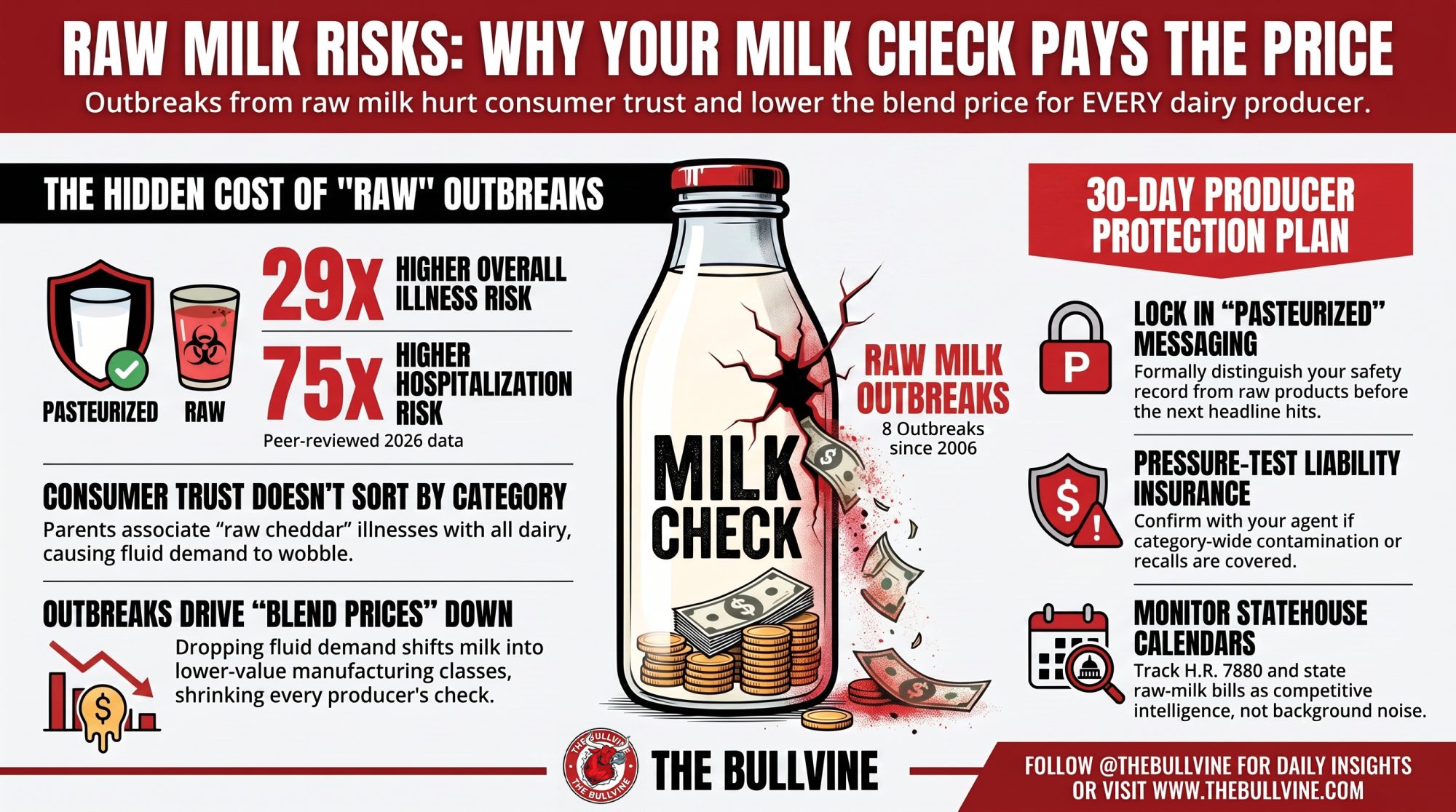
The CDC’s own characterization is that raw milk causes illness far more often than pasteurized — dozens of times the per-unit risk, not a few percentage points. A peer-reviewed analysis cited in Canada’s communicable disease report put unpasteurized dairy at hundreds of times more illnesses and dozens of times more hospitalizations. A 2026 food-science study using different methods landed on roughly 29 times the illness risk and 75 times the hospitalization risk.
The exact multiplier moves with the method. The direction never does. Raw milk gets people sick at a rate pasteurized milk doesn’t, and the people who pay the hardest are the youngest.
That’s the science. Now the part nobody’s pricing.
What does someone else’s outbreak actually cost your operation?
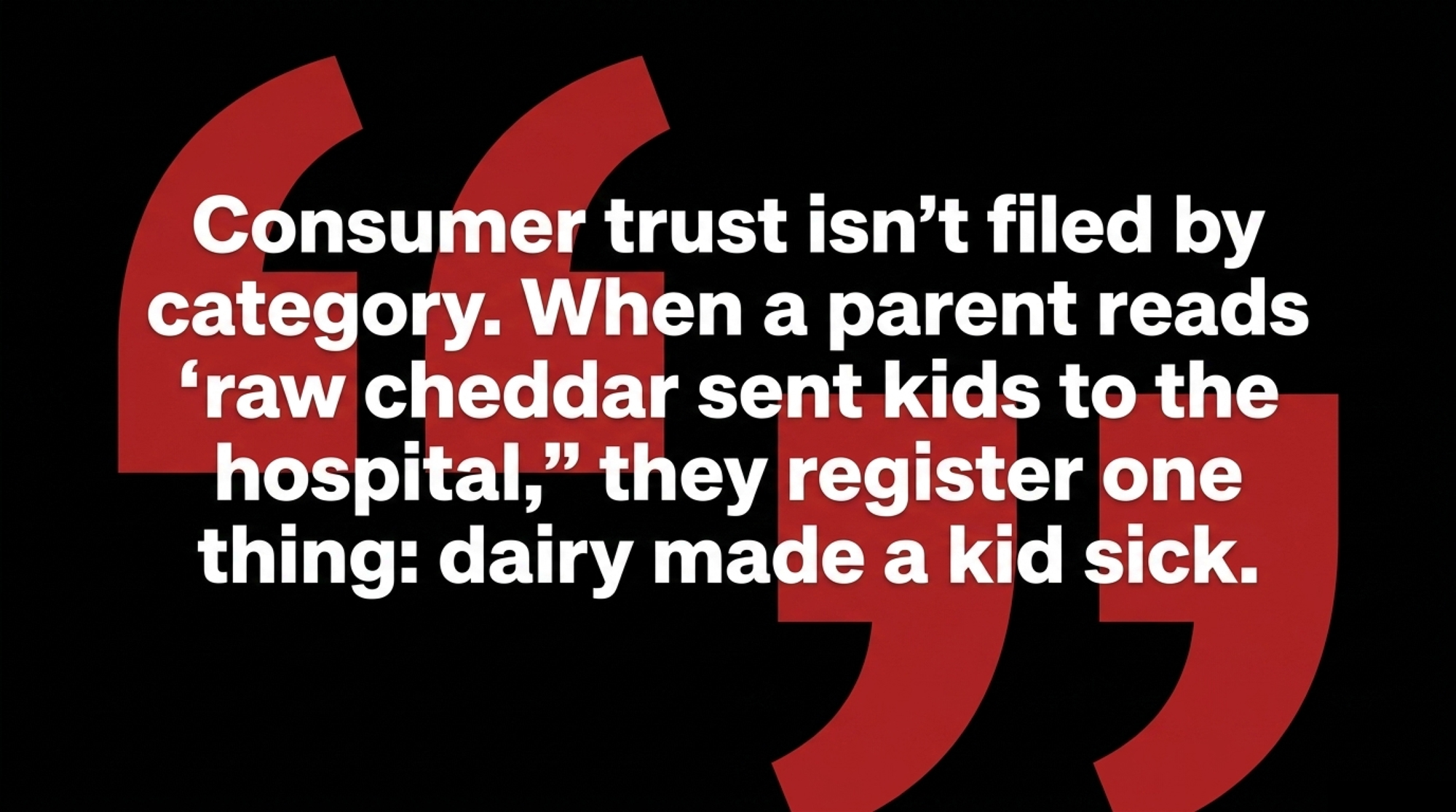
Consumer trust isn’t filed by category. When a parent reads “raw cheddar sent kids to the hospital,” they don’t run a mental search-and-replace for “raw” versus “pasteurized.” They register one thing: dairy made a kid sick. The headline does the damage. The fine print never catches up.
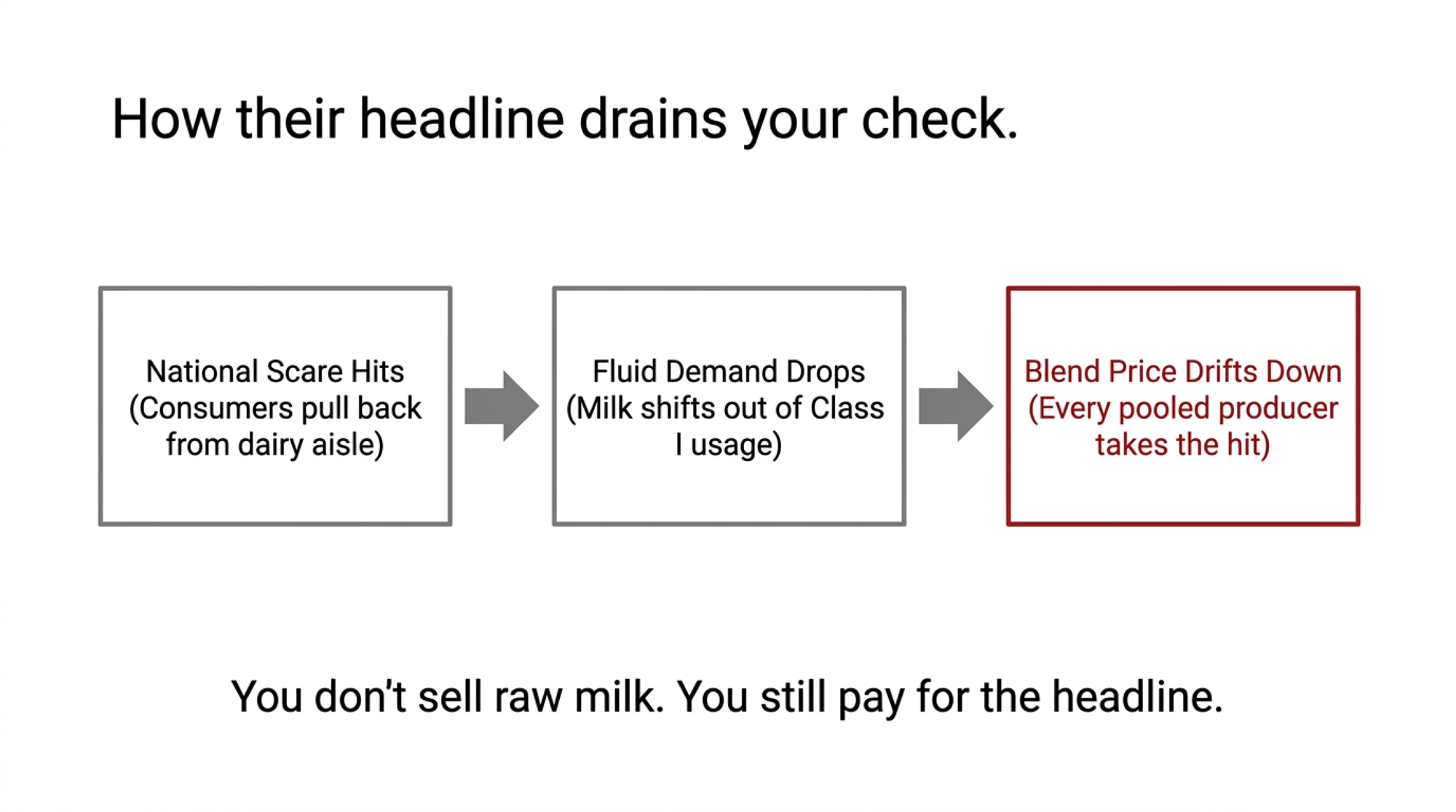
Here’s the barn-math version, and you can map it to your own numbers. Run a 200-cow herd shipping 75 pounds a day, and you’re moving roughly 5.48 million pounds of milk a year — almost exactly the volume Raw Farm pushes. Now picture a fluid-demand wobble after a national raw-milk scare. Class I — fluid milk — is the highest-value use in the federal pool, and your blend price is a weighted average of how that pool’s milk gets used. Soften fluid demand, shift milk into lower-value manufacturing classes, and the uniform price every pooled producer receives drifts down — whether your milk ever touched a fluid bottle or not. You don’t sell raw milk. You’d still help pay for the headline.
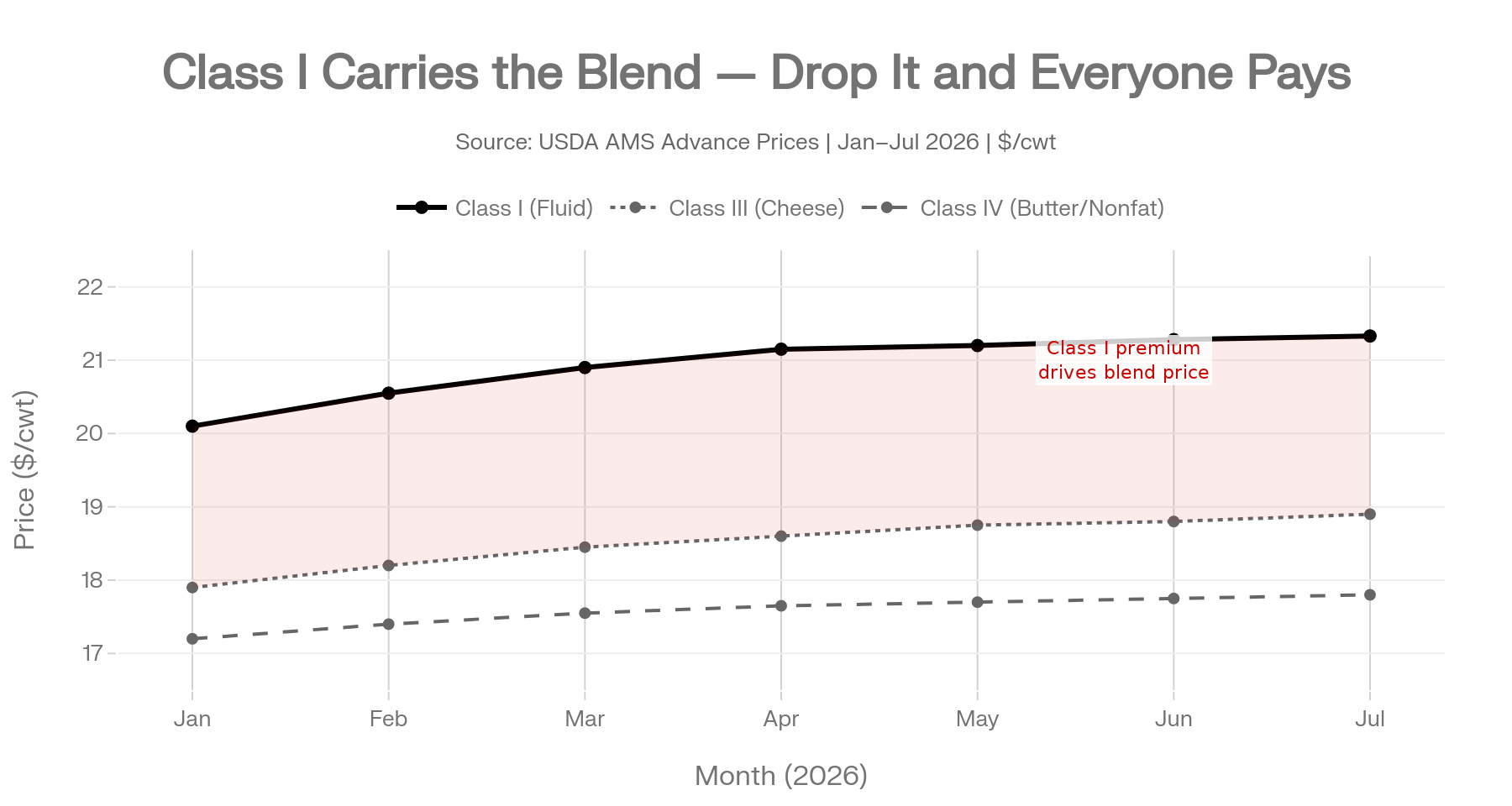
How big is the drift? Use the system’s own arithmetic. The July 2026 base Class I price ran $21.33/cwt — well above Class III and IV manufacturing values most months. For perspective on how the formula moves real money: USDA’s 2025 make-allowance change alone permanently cut class prices by roughly 85 to 93 cents per hundredweight and pulled an estimated $337 million out of producer pools. That wasn’t even a demand event — just a formula tweak. A genuine, sustained dip in fluid demand pushes the same lever in the same direction. The exact cents-per-hundredweight depends on the depth and length of any scare, and pinning that figure needs a full pool model — which is exactly what the Tier 3 follow-up runs. The mechanism is settled. The magnitude is the open question.
| Price Event | Trigger | Class Price Impact | Est. Producer Pool Impact |
|---|---|---|---|
| 2025 USDA make-allowance adjustment | Formula change (USDA rulemaking) | –85 to –93¢/cwt | –$337M from producer pools |
| Hypothetical raw-milk demand scare | Consumer trust erosion; Class I fluid shift | TBD — depends on scare duration | Directionally same lever, formula already set |
| July 2026 Class I base price | USDA advance pricing | $21.33/cwt | Highest-value pool position — most to lose |
| 2024 bird flu / avian influenza dairy scare | Disease outbreak; consumer concern | Modest Class I softening | Localized; recovered within quarters |
| Pattern | Any event softening fluid demand | Pushes milk to lower manufacturing classes | Every pooled producer pays; raw or not |
Options and Trade-Offs for Your Operation
You can’t control RFK Jr., you can’t control H.R. 7880, and you sure can’t control McAfee. You can control how your operation and your message are positioned when the next headline hits. Three paths, depending on where you sit.
| Action | Who It’s For | Cost to Act | Cost to Skip |
|---|---|---|---|
| Publish clear “we’re pasteurized” message across all channels | Every fluid producer, farmers’ market seller | One afternoon; near $0 | Improvising on camera when a reporter calls |
| Pull product-liability policy; ask about category-contamination coverage | Processors, large consumer-facing operations | 1 hour + possible premium review | Discovering coverage gap mid-recall |
| Put raw-milk bill status on monthly review calendar | Anyone in a state with active raw-milk legislation | 15 min/month | Blindsided by overnight competitive shift |
| Brief co-op board or checkoff committee on category-trust risk | Board members, checkoff directors | One agenda item | No institutional response plan when headlines hit |
| Run your own blend-price sensitivity: what does –$0.50/cwt do to your operation? | Any pooled producer | Spreadsheet hour | Treating a structural risk as background noise |
| Review recall plan; confirm chain-of-custody documentation | Anyone with consumer-facing brand | Quarterly ops review | Recall conversation you’re having for the first time during a recall |
Tighten your own message discipline — start this month. Within the next 30 days, sit down with whoever speaks for your farm — on social, at the co-op, at the farmers’ market — and draw the line in plain language: your milk is pasteurized, your safety record is separate, and you don’t get lumped in with raw. This works for everyone and costs almost nothing but an afternoon. The limit: messaging can’t fix a problem you actually have, so it only helps if your own house is in order first.
Pressure-test your liability and recall posture. This fits processors and larger operations carrying real consumer-facing exposure. Pull your product-liability coverage and your recall plan, and ask your insurer the direct question: are we covered if a category-wide raw-milk scare drags our brand into a recall conversation we didn’t cause? It requires an honest hour with your agent and maybe a premium conversation. The risk of skipping it is finding the gap during the crisis instead of before it.
Watch your state’s raw-milk rules like a hawk. This is for anyone in a state where raw-milk law is in play — and with H.R. 7880 live, that list could grow fast. If your state opens an interstate lane, the competitive and reputational math in your region shifts. The forward signal to watch isn’t a poll. It’s your statehouse calendar and the bill’s committee progress.
Key Takeaways — Decisions, Not a Recap
- If you sell anything fluid and consumer-facing, lock in your “we’re pasteurized, we’re separate” message within 30 days — before a scare forces you to improvise it on camera.
- If you carry brand or processing exposure, call your insurer this quarter and get the category-contamination question answered in writing, not assumed.
- If your state has a live raw-milk bill, track its committee progress monthly — treat the statehouse calendar as a competitive-intelligence feed, not background noise.
- If you sit on a checkoff or promotion board, the question to put on the table is whether your consumer messaging can survive being lumped in with a raw-milk outbreak — and if it can’t, that’s the gap to close now.
Raw Farm has weathered eight outbreaks and kept selling. The open question isn’t whether McAfee can keep climbing his mountain — he’s made clear he intends to. It’s whether the rest of the dairy case gets billed for the trust he spends on the way up. So pull your own numbers. Where does your brand sit if the next “raw milk sent kids to the hospital” headline runs on a Tuesday, and a customer can’t tell your bottle from his?
Run Your Numbers
Dairy Profit Projector — A raw-milk scare you didn’t cause can still soften fluid demand and drag your blend price down. Run your herd through the Projector to pressure-test what a milk-price dip does to your next 12 months of IOFC, breakeven, and whole-herd margin — before the headline hits.
Complete references and supporting documentation are available upon request by contacting the editorial team at editor@thebullvine.com.
Learn More
- Your Milk Check Is at the Mercy of a Cheese Shredder: What the Great Lakes Recall Reveals About Dairy’s Broken Supply Chain — Exposes how a single equipment failure hundreds of miles away triggered immediate 5–15% milk intake cuts for blameless farms, detailing the exact operational vulnerabilities of the modern converter supply chain.
- $337 Million Disappeared from Milk Checks. Cheese Prices Never Dropped — Breaks down the exact formula mechanics behind recent FMMO make-allowance increases that stripped up to 92¢/cwt from producer pools, arming strategic planners with a structural roadmap to project long-term milk check exposure.
- 14% Believe Your Dairy Label. Jasper Hill Gets $22 a Wedge. The Difference Is One Certification. — Delivers a blueprint for commanding $40–$50/cwt pay prices through rigorous, third-party welfare certifications, proving how progressive operations can insulate their businesses from generic commodity trust destruction.
The Sunday Read Dairy Professionals Don’t Skip.

Every week, thousands of producers, breeders, and industry insiders open Bullvine Weekly for genetics insights, market shifts, and profit strategies they won’t find anywhere else. One email. Five minutes. Smarter decisions all week.




