


Archive for direct-to-consumer dairy

A $240,000 Warning: What a $5/cwt Gap Really Does to a 400-Cow Dairy

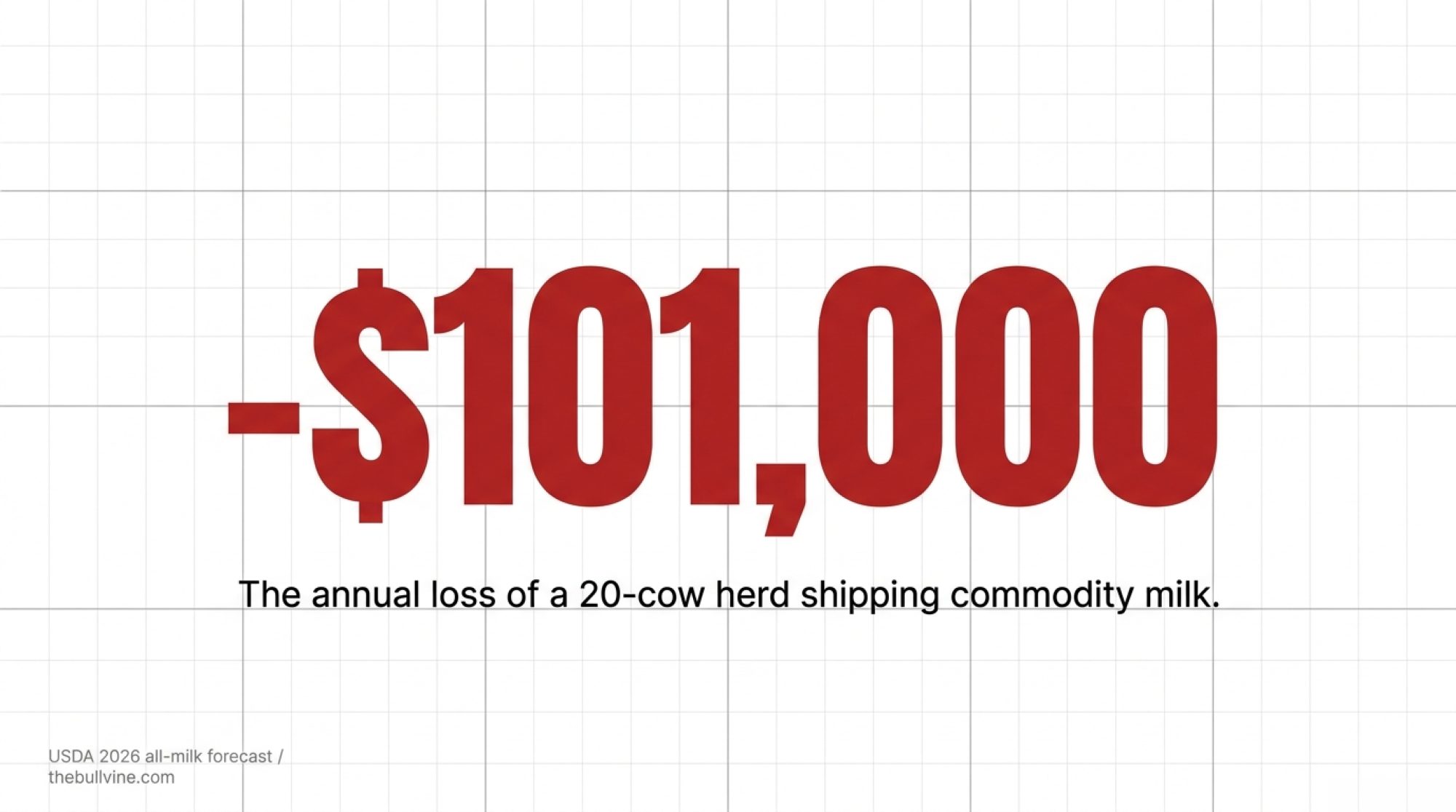
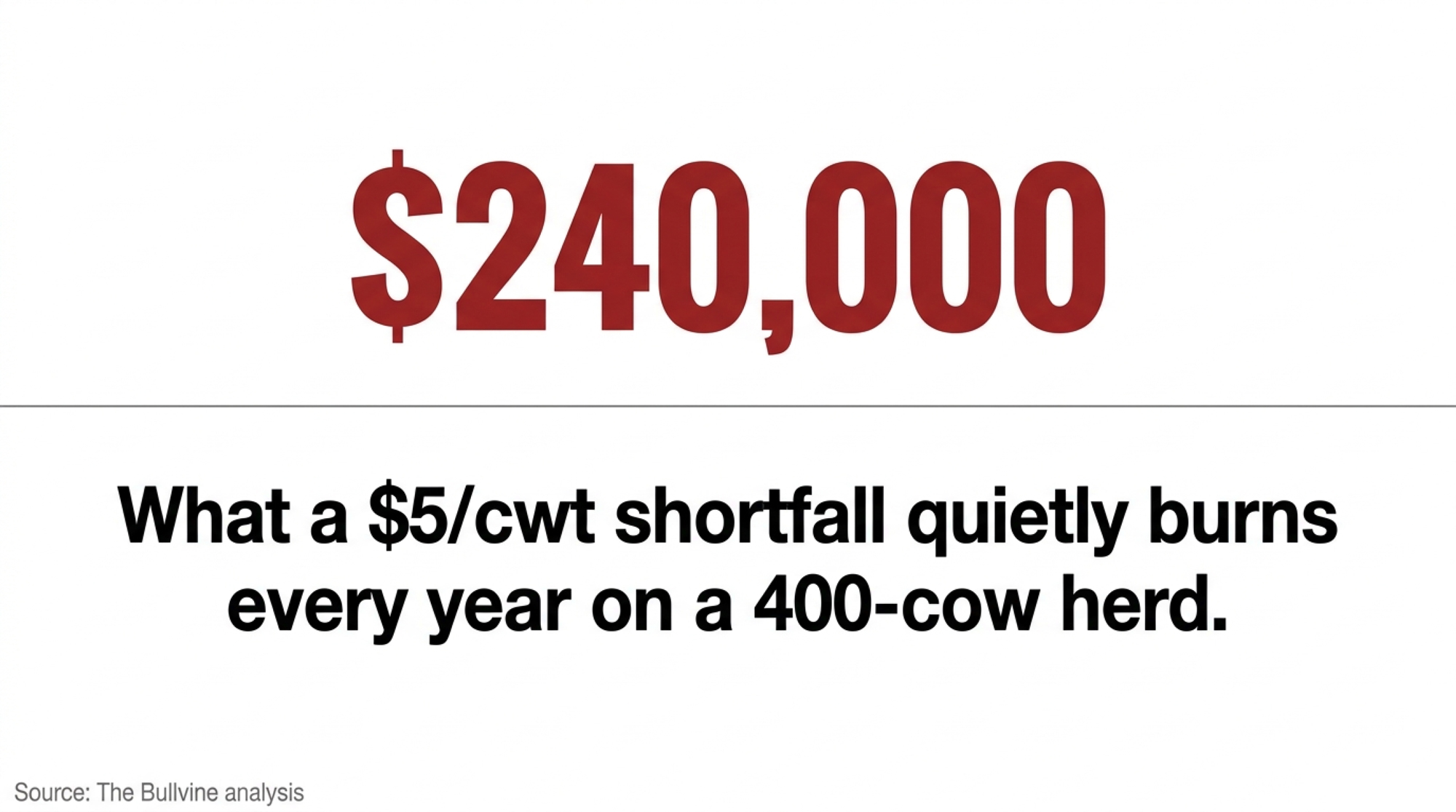
On a 400-cow herd, a $5/cwt shortfall quietly burns about $240,000 a year — and value-added only saves you if the math, the market, and your labor all line up.

On her 25th birthday — April 18, 2026 — Natalie Paino became licensed to make cheese curds from her family’s own milk. Getting there took six years: grant applications, a creamery built inside a shipping container, the full 423-page Pasteurized Milk Ordinance, and two kids born along the way. 

Paino runs Hightail Delivery near Plainfield, Iowa, selling ice cream and fresh cheese curds straight to consumers off the family’s dairy. She didn’t build it because direct sales are trendy. She built it because the commodity milk check stopped making sense — and that’s the same quiet conclusion many mid-size operators are reaching at their own kitchen tables right now. “Milk prices have been pretty poor over the last 40 years,” she told Iowa Food & Family in March 2026. “In fact, they’ve stayed about the same throughout that time, even adjusting for inflation.” That’s not a complaint. It’s a diagnosis — and the numbers back her up. 

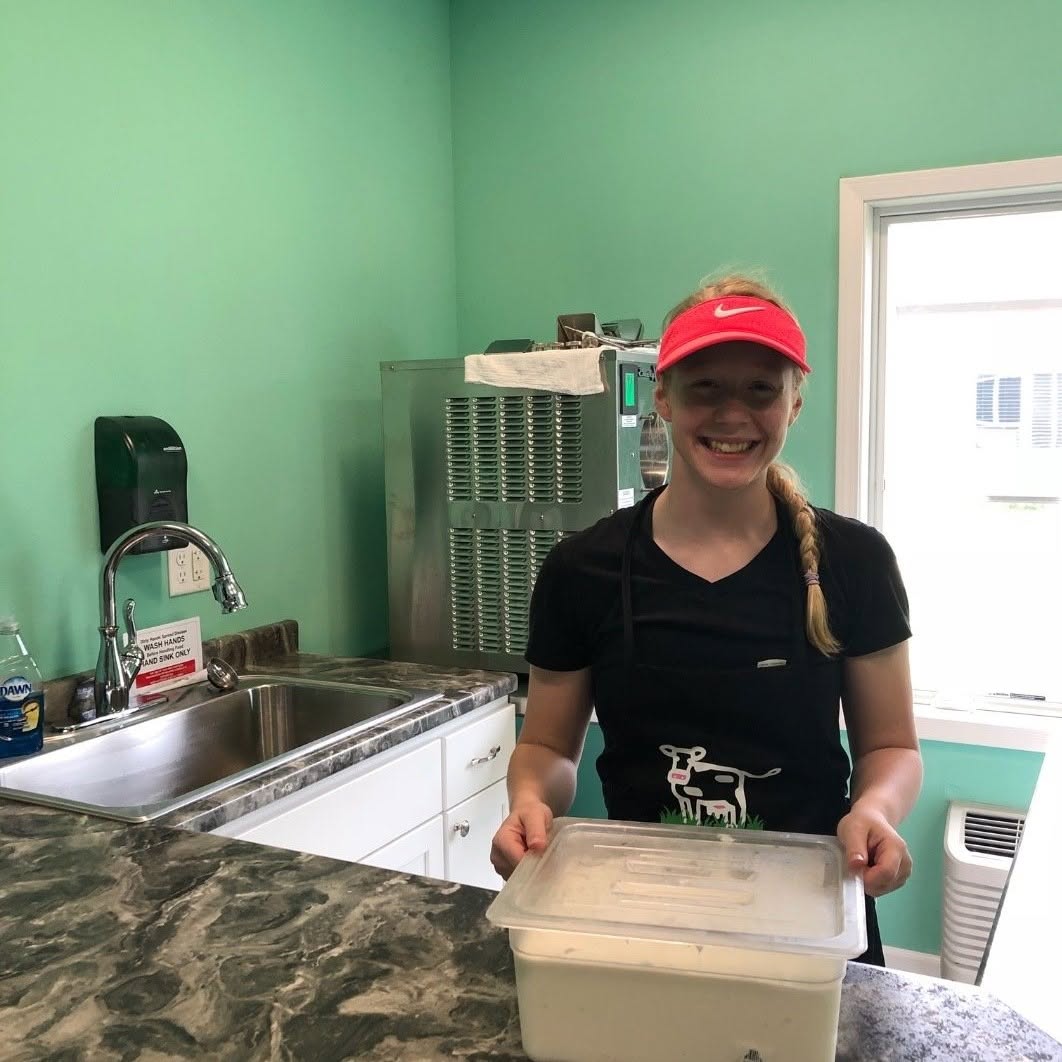
Natalie Paino, packs a tub of ice cream to go at Hightail Delivery near Plainfield, Iowa — soft-serve machine humming behind her, the family dairy’s milk turned into something the commodity check never paid for.

Her work didn’t go unnoticed, either. Iowa State University Extension and Outreach named her a 2025 “Women Impacting Ag” honoree, and in 2026 she took a $10,000 Iowa Farm Bureau “Grow Your Future” award toward the operation. The recognition matters less than what it signals: a 25-year-old built a working dairy business out of a milk check that, by her own account, hasn’t paid in decades. 

What’s Changing and Why

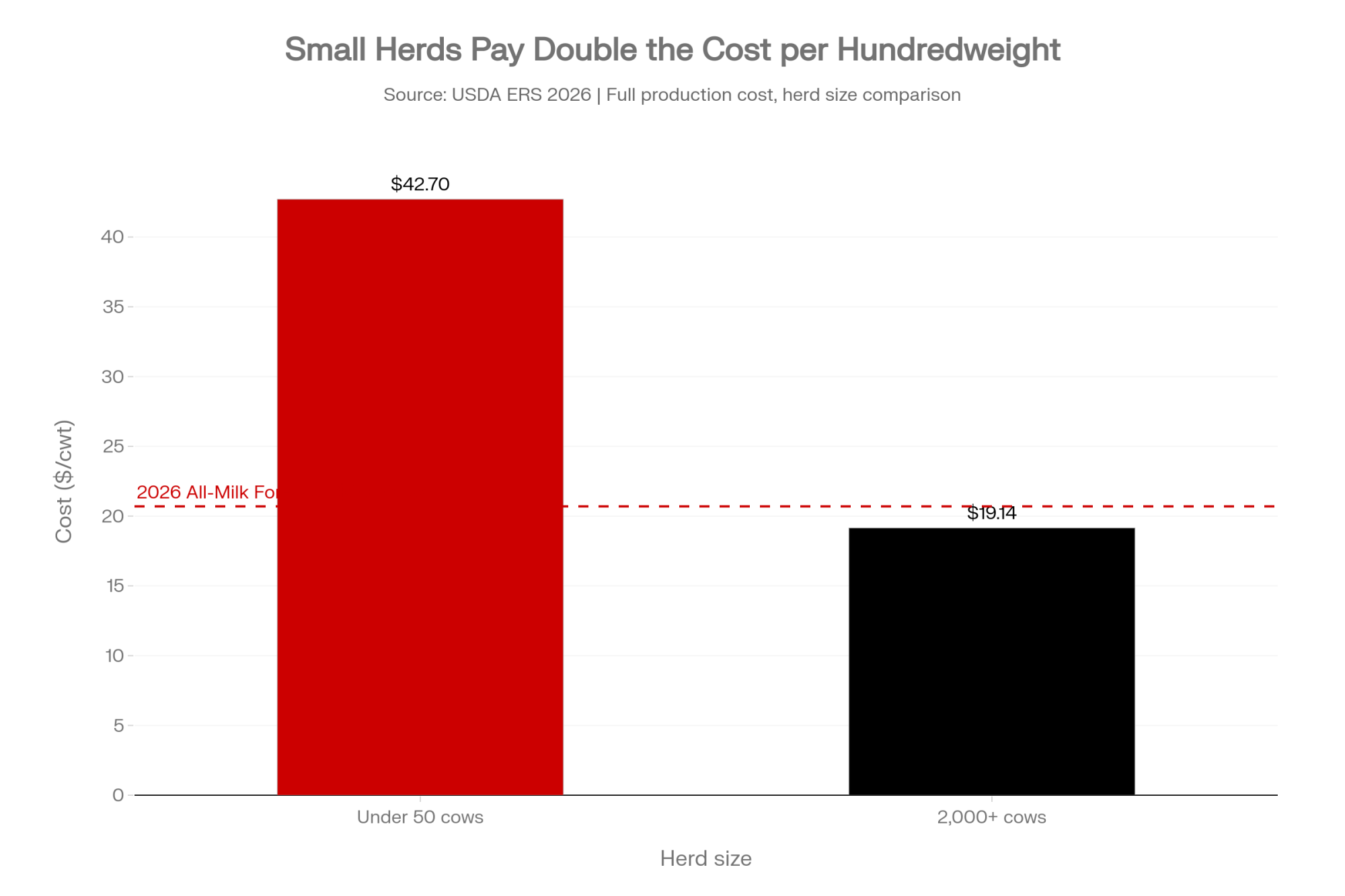
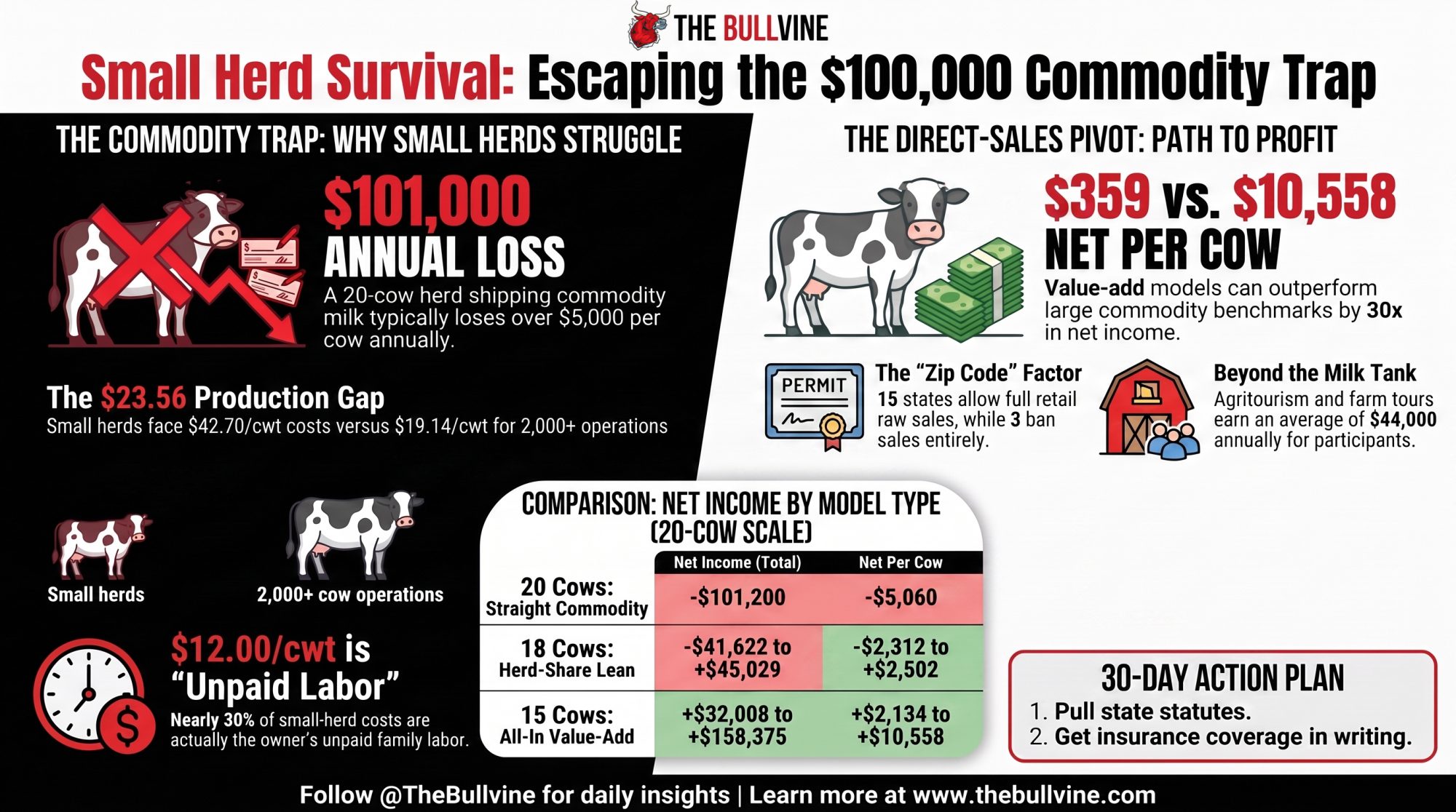
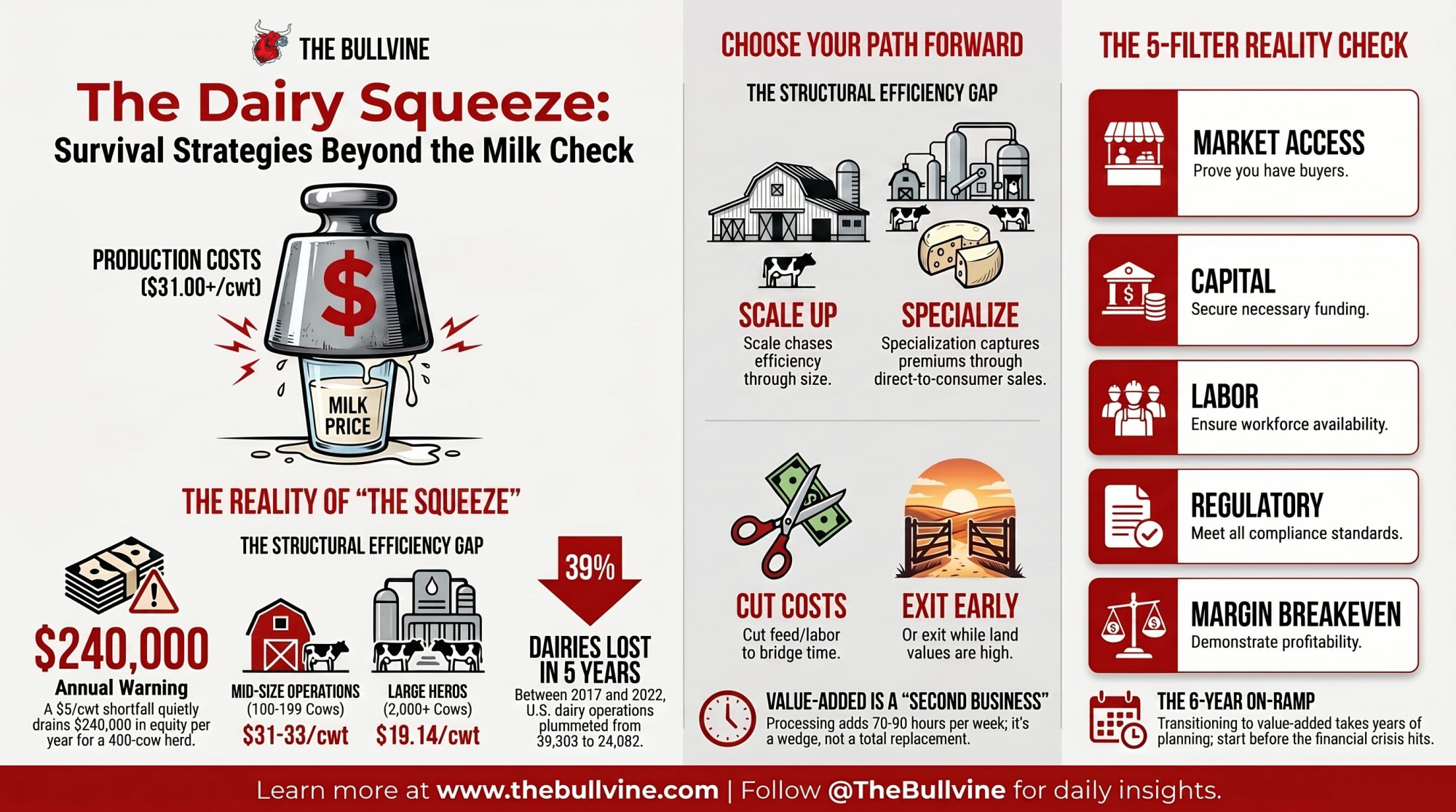
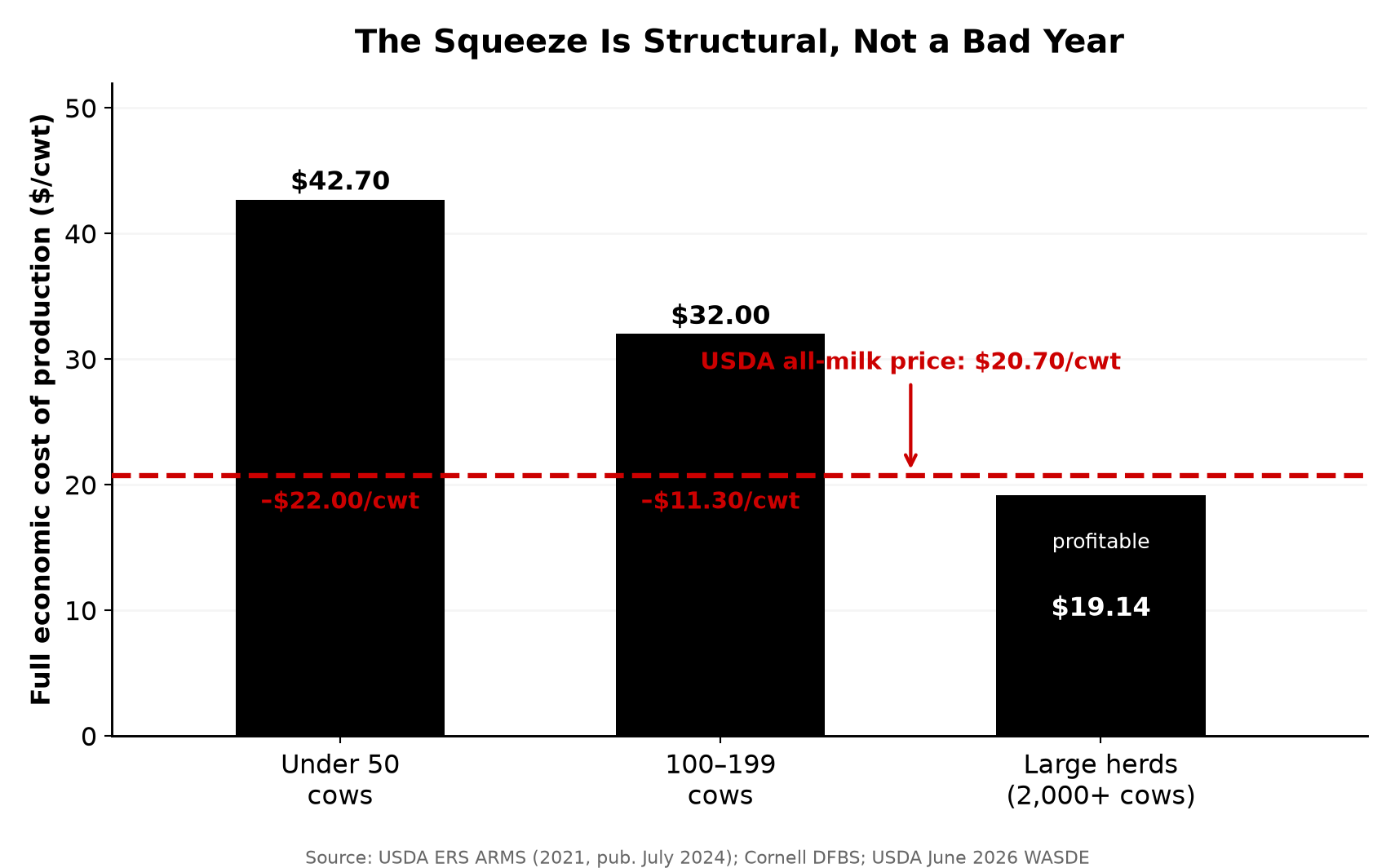
Here’s the gap driving it all. For a 100-199-cow operation, Cornell University’s most recent Dairy Farm Business Summary puts the full cost of production at $31-33/cwt for that size class. USDA’s June 2026 WASDE projects this year’s all-milk price at $20.70/cwt — up from the $18.95 it forecast back in February, but still well short. Even big, efficient herds run $19.14/cwt in full economic cost, per USDA ERS’s 2021 ARMS survey published in July 2024. So the loss shows up before you count a single hour of family labor. 

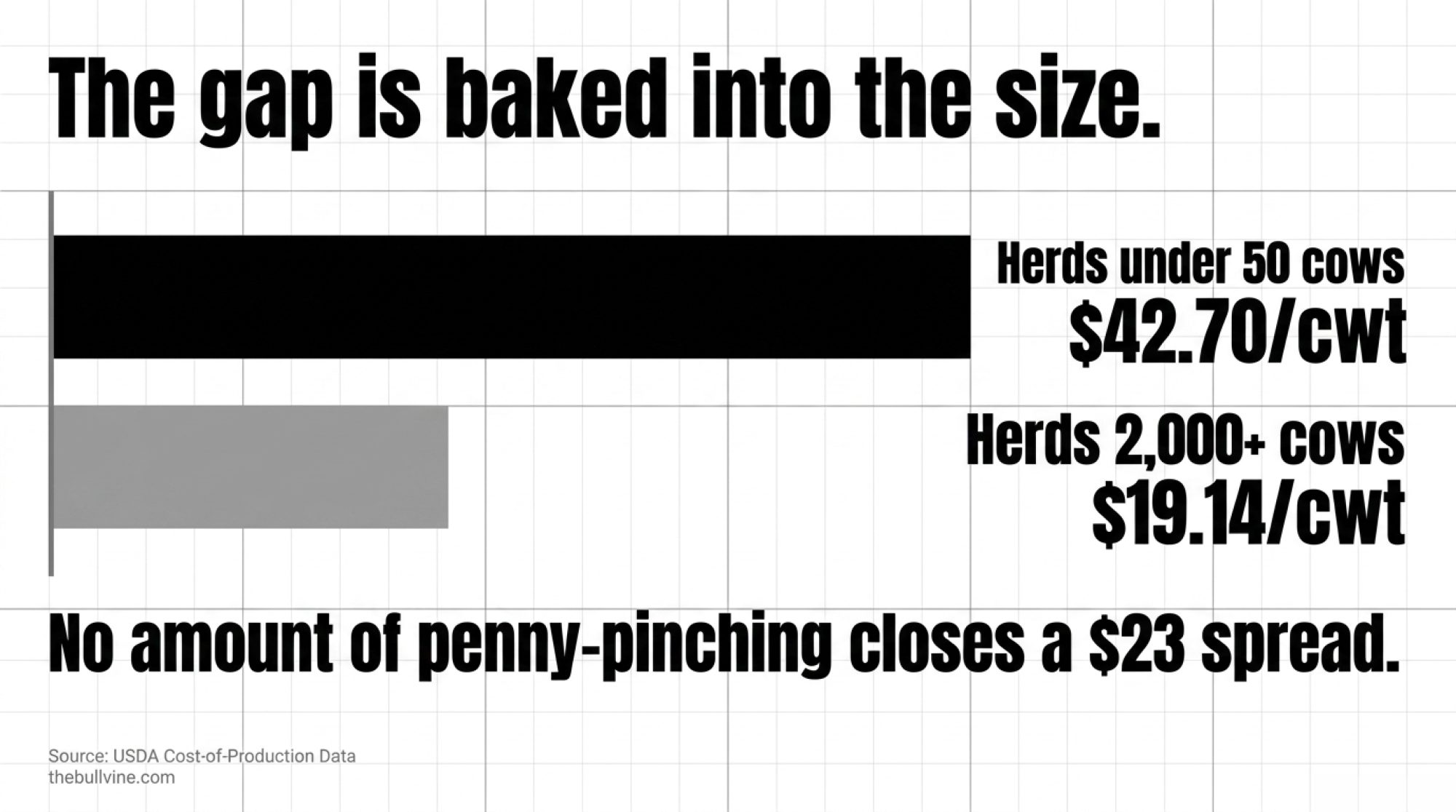
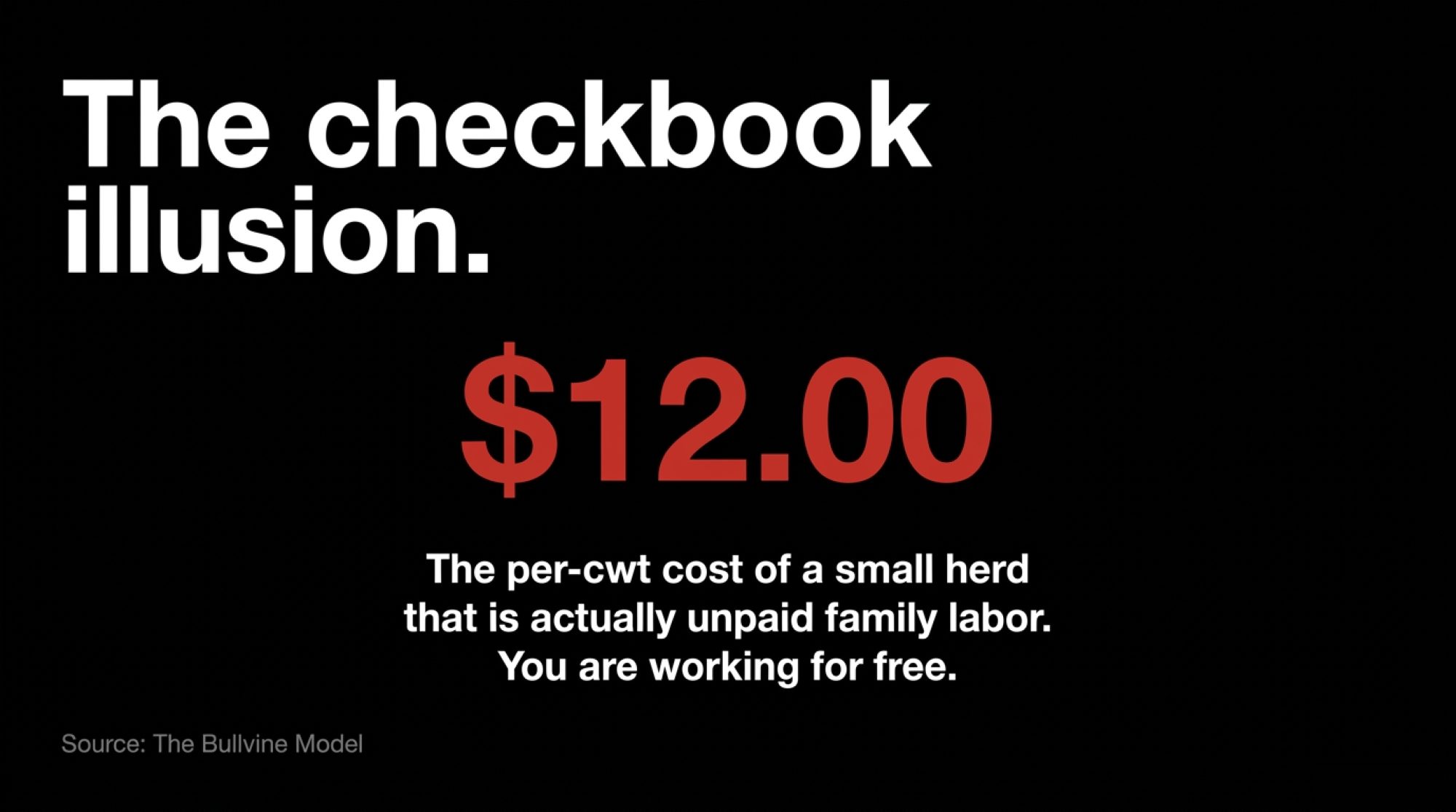
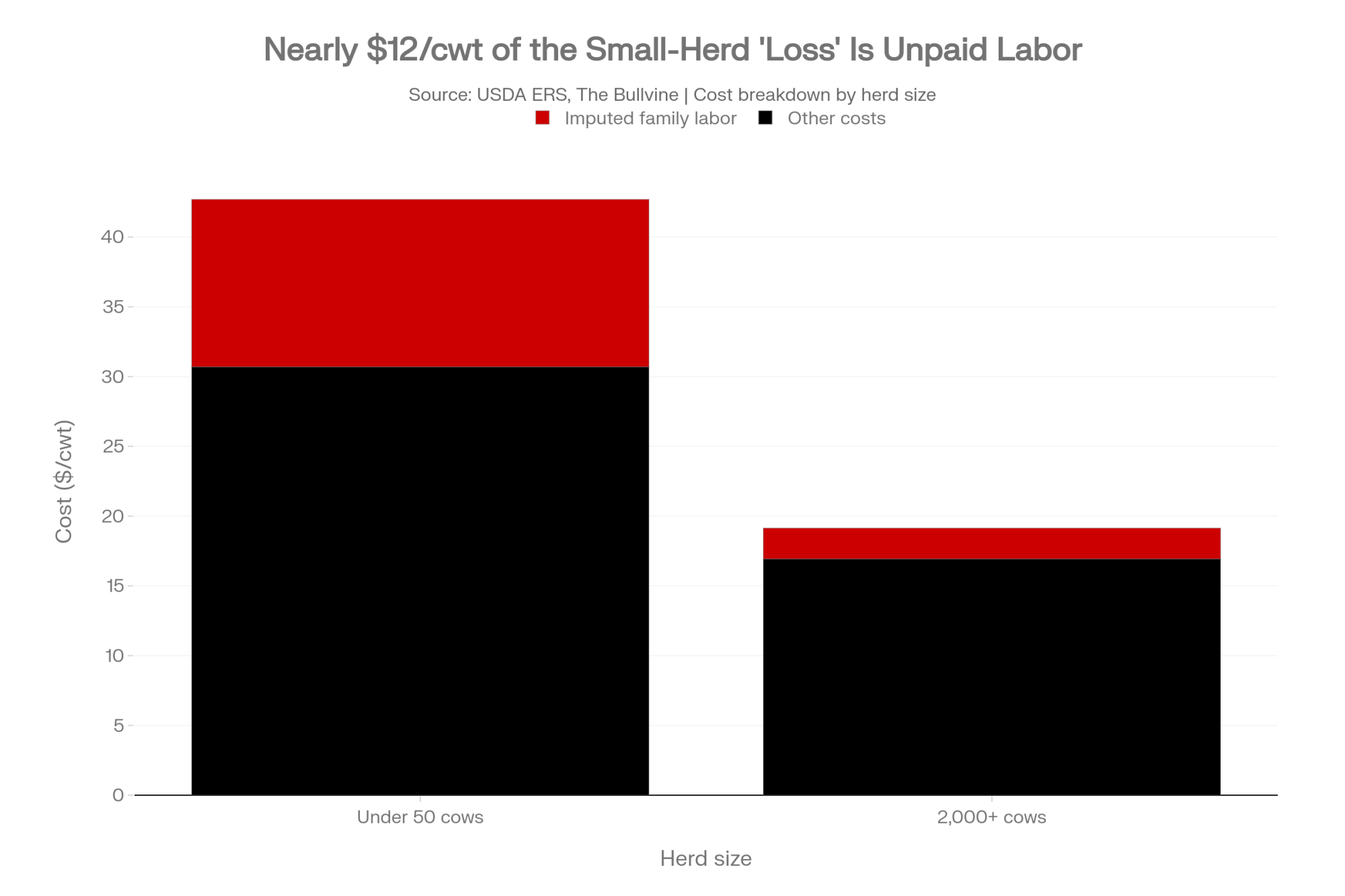
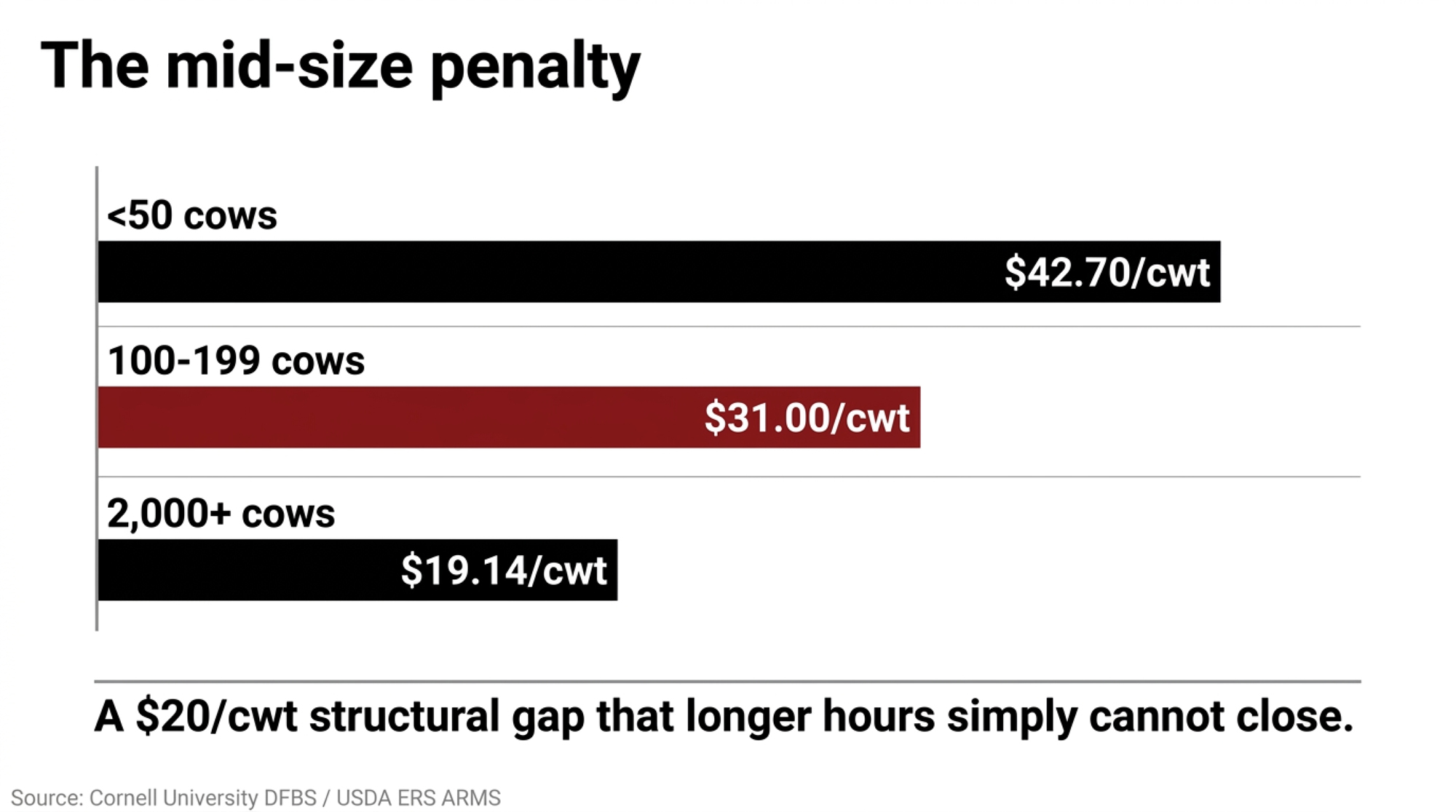
And this isn’t a rough patch you wait out. That same USDA ERS ARMS data shows herds under 50 cows carry full economic costs near $42.70/cwt, while 2,000-plus-cow operations sit at $19.14/cwt — a structural gap of more than $20/cwt that longer hours can’t close. The mid-size disadvantage is baked into purchasing power, labor efficiency, and scale, not effort. A cycle ends. This one hasn’t ended for small- to mid-sized commodity dairy in over a generation. 

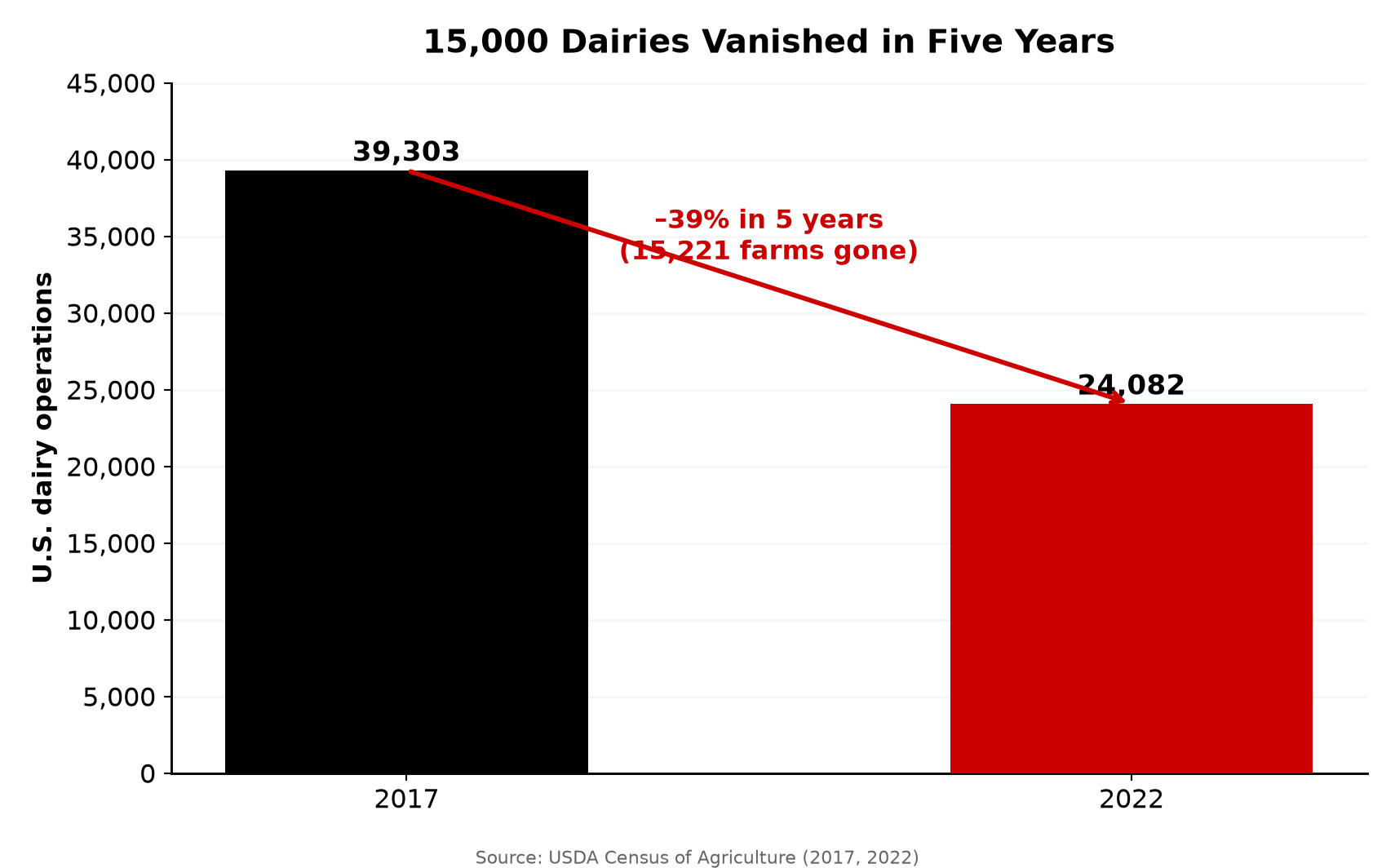
The squeeze lands hardest in the middle. Big enough to be a full-time business, too small to hit the cost efficiencies of a 2,000-cow operation. The 2022 USDA Census of Agriculture counted 24,082 dairy operations, down from 39,303 in 2017 — roughly a 39% drop in five years. The mid-size herd is standing right in its path. 

That exit rate isn’t spread evenly. The farms disappearing fastest are the ones too big to run as a hobby and too small to out-buy and out-scale a mega-dairy on feed, labor, and capital. Paino’s own read on the long arc — four decades of flat, inflation-adjusted prices — is exactly the math that’s been quietly thinning that middle for years. Where does your breakeven actually sit? If you haven’t run that number against $20.70 milk lately, that’s the first thing this piece should push you to do. 

How This Plays Out on Real Farms

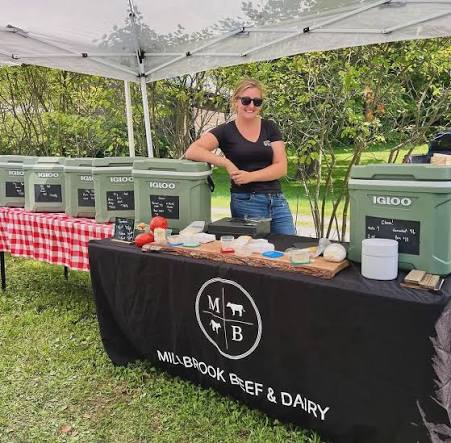
Keegan Donovan works her Millbrook Beef and Dairy stand at a farmers market in Dutchess County, New York — coolers of product, a board of fresh cheese, and the first-generation bet that direct sales beat shipping commodity milk.

Paino isn’t a one-off. Keegan Donovan was 22 when she and her husband, Brian, launched Millbrook Beef and Dairy in Dutchess County, New York, in 2022 — first-generation farmers who quickly found that the cost of producing their milk outran what they were paid for it. Their answer was to stop shipping commodity milk entirely and sell beef, dairy, pork, and eggs directly off the farm. “You have to be able to bet on yourself,” Keegan told Main Street Magazine in 2024. For two people who started with no land base and no inherited herd, that bet was the whole business plan. 

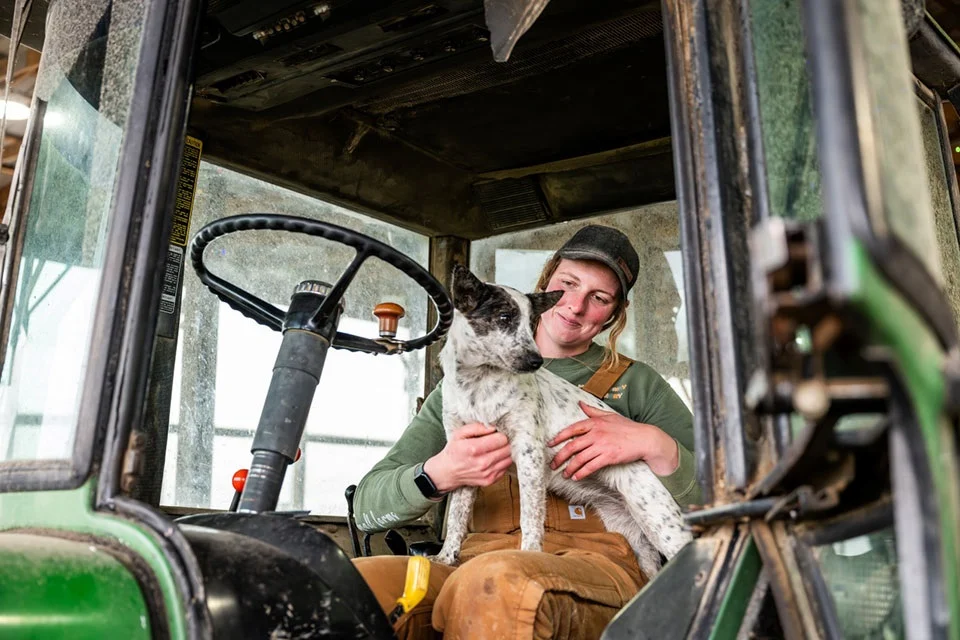
Emily Mullen-Niccum takes a quiet minute with the farm dog in the tractor cab at her family’s Butler County, Ohio dairy — one of the two operations left in a county that once ran 88, now turning 4,000 pounds of milk a week into 35 flavors.

Then there’s Emily Mullen-Niccum, who came back to her family’s Butler County, Ohio, dairy knowing exactly how the commodity story ends there. Her county had gone from 88 dairies in 1970 down to two. She runs about 65 cows through a robotic milker and turns 4,000 pounds of milk a week into 35 product flavors. Her line to DTN/Progressive Farmer in January 2025 lands harder than any margin chart: “Average was over. Nothing bad about Dad or that generation of farmers… However, that generation has forgotten their worth.” 

What ties these three together isn’t age or geography. It’s the same calculation, run independently, ending the same way: the milk check alone doesn’t clear the cost of producing the milk, so they each found a buyer who’d pay for something more than a tanker pickup. None of them set out to be a movement. Each one just looked at the same spread between cost and check and decided the tanker wasn’t the only way off the farm.

Now the barn math — and watch what it does to the dream version. Take a slightly bigger herd than the one in the headline — 500 cows — and carve off 20% into a direct channel netting an extra $1.50 a gallon. At roughly 70 lbs of milk per cow, that slice is about 800 gallons a day (at 8.6 lbs per gallon), which throws off close to $1,200 a day.Sounds like the problem’s solved. It isn’t. You’re still shipping the other 80% into the same commodity market that’s bleeding money, and that premium only shows up if you actually sell every gallon you process. The direct channel doesn’t replace the milk check. It patches part of the hole the check leaves — and only when the selling works.

The Mechanics Behind the Outcomes

So the first thing to get straight: value-added is a wedge, not a replacement. A 300-cow herd makes around 21,000 lbs of milk a day — far more than a farmstead creamery typically moves. Most operations at this scale process only a fraction of their own volume through premium channels and ship the rest conventionally; UMass Extension warns producers outright that a value-added business may not turn a profit in its first five years. The co-op check doesn’t vanish. It shrinks while a higher-margin slice grows beside it. 

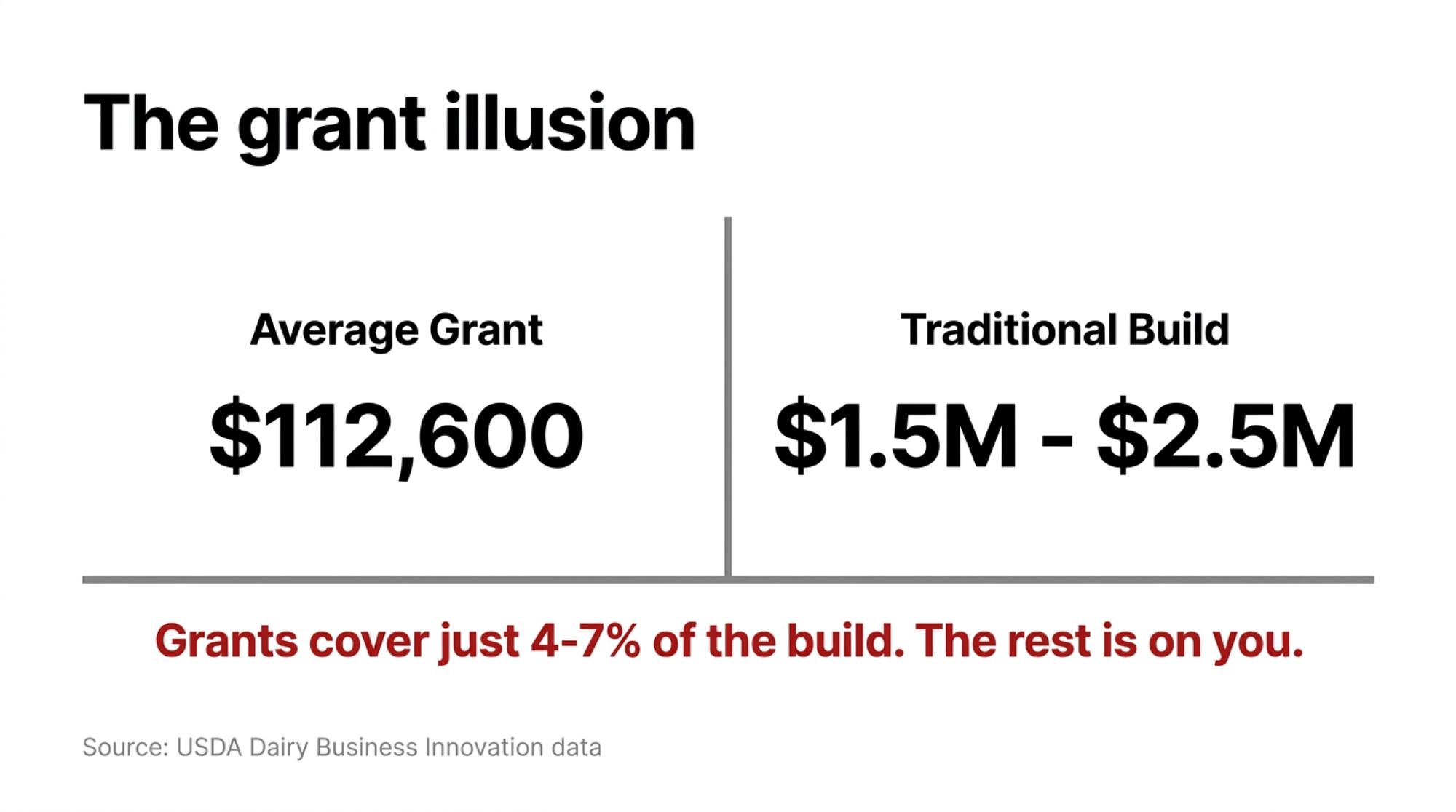
The capital math is humbling, too. A traditional on-farm creamery build runs $1.5-2.5 million, and the average USDA Dairy Business Innovation grant works out to roughly $112,600 per funded entity — about 4-7% of the bill. That’s the number that should stop people cold. Paino dodged it by going small on purpose. “Building a traditional creamery could easily cost millions of dollars,” she said. “So I started researching micro-dairies.” A shipping container isn’t a romantic origin story. It’s how you keep the entry cost from burying you before the first batch sells. 

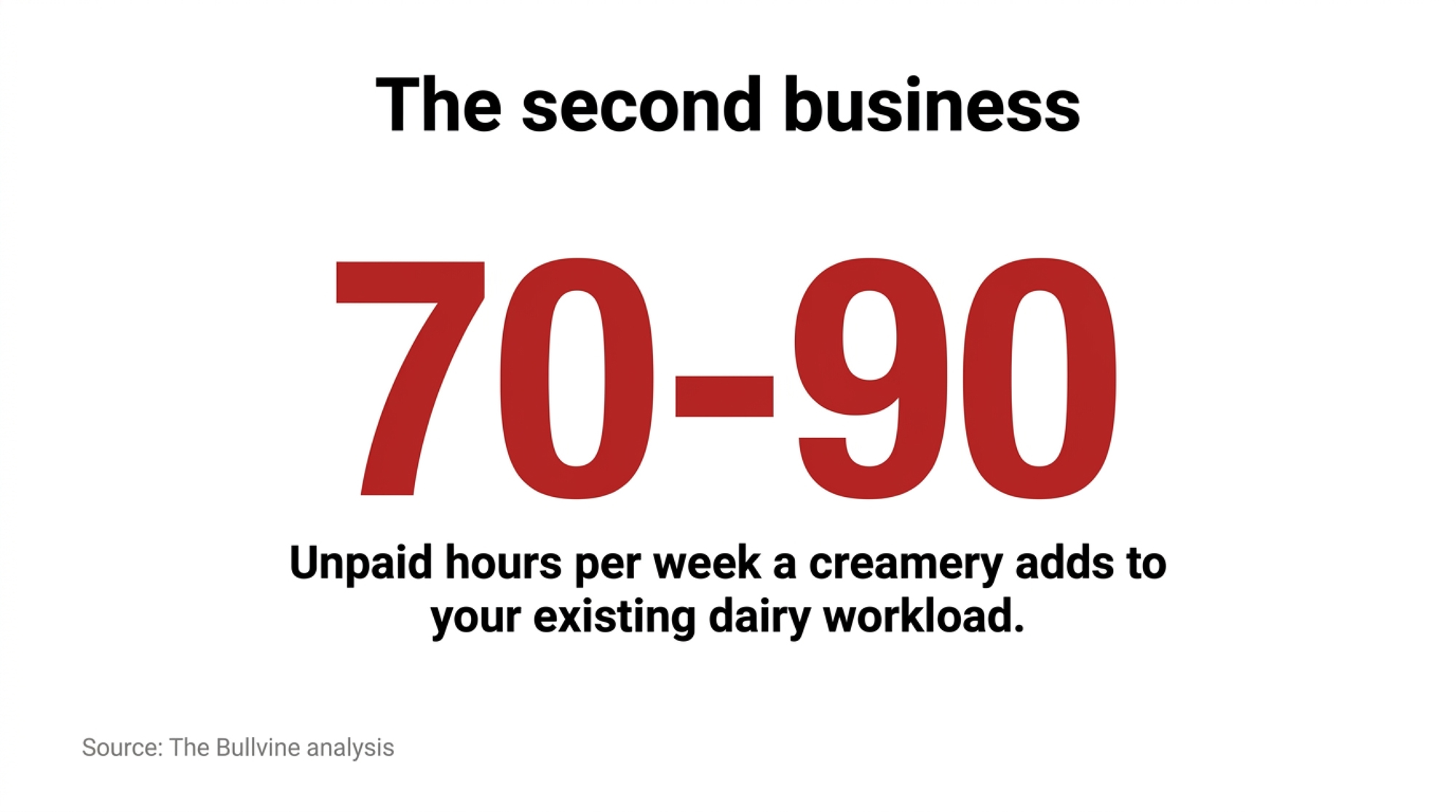
Then there’s the cost nobody pencils in. A Bullvine analysis of a documented creamery operation found that on-farm processing added 70-90 hours per week to a full dairy workload. That’s not a side hustle. That’s a second business stapled to the first one — and somebody in the family has to run it, or you’re hiring it out and watching that $1.50 premium shrink. 

Paino’s six-year timeline tells you the rest. The grant applications, the 423-page PMO, the licensing that didn’t clear until her 25th birthday — that’s not slow execution, that’s the actual length of the on-ramp. Anyone who thinks value-added is a quick pivot out of a bad milk year has the timeline backwards. You start building before the crisis, or you’re building during it with no runway left. 

What Does This Mean for Your Co-op?

Here’s the angle that doesn’t get talked about enough. Every gallon a young member routes into ice cream or curds is a gallon that doesn’t ride the co-op tanker. And the members most likely to peel off are exactly the ones a co-op needs for the next 30 years — the under-35 crowd, who already make up just 9% of U.S. producers (USDA 2022 Census). When your youngest, most adaptable members start carving off volume, the erosion isn’t just this year’s pounds. It’s the future supply base. 

Run the co-op-side math, using that same 500-cow member from above. Shift 20% — roughly 7,000 lbs a day — out of the commodity pool and into their own creamery. Over a year, that’s about 2.5 million pounds of fluid milk leaving the co-op’s book from one farm (7,000 lbs × 365 days; illustrative, built on the herd assumptions above). One farm won’t move a regional co-op. But ten or twenty of them, clustered near the same metro markets where value-added actually works, start to thin the fluid pool on which a balance sheet was built.

The honest read for co-op supply managers: this isn’t a stampede, and there’s no clean public figure yet on how much volume direct channels are pulling out of co-op pools. But the direction is one-way. The members leaving the commodity pool aren’t the ones retiring out — they’re the ones who were supposed to be still shipping in 2050.

Is Value-Added Actually Right for Your Farm?

Before you price a single tank, run the operation through five honest filters. Each one has killed more creamery dreams than bad product ever has. Lay them out as a vertical checklist block — one card per filter, each with the question on top and the hard number underneath — so a reader has to slow down and answer each before scrolling on.

FilterThe QuestionHard NumberKill Signal
1 — Market AccessWithin reach of a metro market that’ll pay a premium?Needs a farmers-market track record, not a hunchNo market = no margin
2 — CapitalCan you fund the build without betting the dairy?Grant covers only 4–7% of a $1.5–2.5M buildFull-scale number sinks most first-timers
3 — LaborWho runs the second business?On-farm processing adds 70–90 hrs/week“We’ll figure it out” = unstaffed second business
4 — Regulatory LoadReady for the PMO, licensing, inspections?The PMO runs 423 pages; on-ramp ran 6 years for PainoTreating compliance as a footnote, not the job
5 — Margin BreakevenAt what volume/price does the premium clear costs?Budget for no profit in years 1–5 (UMass)Can’t write the number = a hope, not a plan
  • FILTER 1 — MARKET ACCESS Are you within reach of a metro market with buyers who’ll pay a premium — and can you prove it with a farmers-market track record, not a hunch? UMass Extension’s first question is blunt: are your locations convenient to the consumer? No market, no margin. 
  • FILTER 2 — CAPITAL Can you fund the build without betting the dairy? The grant covers 4-7%, not half. The rest is on you and your lender — a micro-build like Paino’s container creamery exists precisely because the full-scale number sinks most first-timers. 
  • FILTER 3 — LABOR Who’s running the second business — the processing, deliveries, licensing paperwork, and marketing? If the answer is “we’ll figure it out,” that’s 70-90 hours a week with no name attached to it. 
  • FILTER 4 — REGULATORY LOAD Are you ready for the Pasteurized Milk Ordinance, state licensing, and inspection cycles? Paino read all 423 pages of the PMO. That’s the job, not a footnote. 
  • FILTER 5 — MARGIN BREAKEVEN At what volume and price does the premium actually cover processing, labor, packaging, and spoilage? UMass tells producers straight: budget for no profit in the first five years. If you can’t write that number down, you don’t have a plan — you have a hope. 

Clear all five, and value-added is a real wedge against the squeeze. Miss two or more, and you’re building a money pit with a freezer attached.

How Much Does Waiting Actually Cost You?

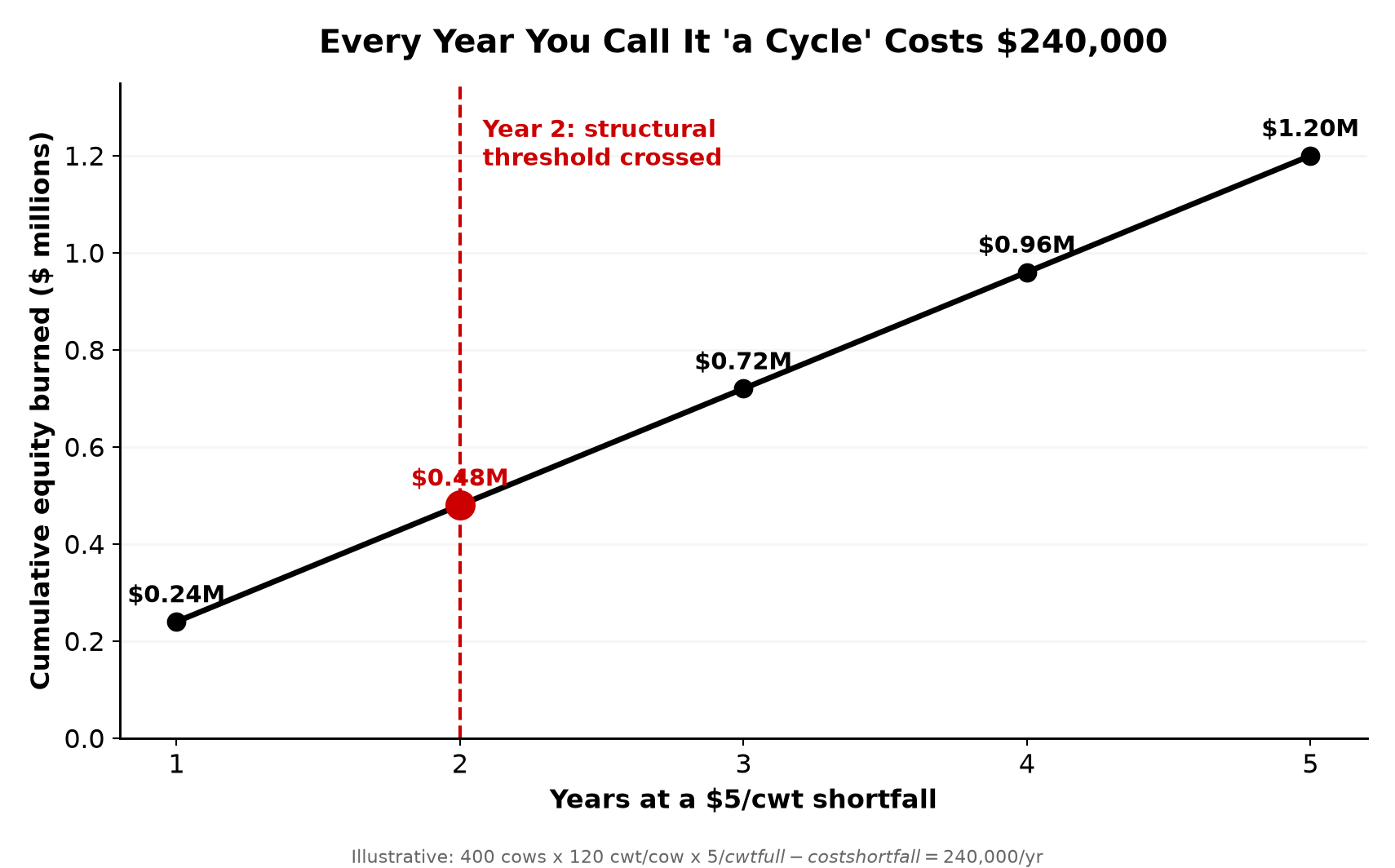
This is where the clock matters. There’s no tidy figure for how long a struggling dairy drifts before it exits, but the pattern advisors describe is consistent: if off-farm income has bailed out farm operating losses in three or more of the last five years, that’s structural, not a tight stretch. Put real numbers on it. For a 400-cow herd shipping 120 cwt per cow, a $5/cwt full-cost shortfall amounts to about $240,000 a year — straight out of family equity, not the feed mill or the co-op. Every year you call that “a cycle,” that’s the bill. 

So the honest question isn’t “will prices come back?” It’s “what is this gray zone costing me every year I keep deciding not to decide?” Bullvine’s modeling puts the critical threshold at two consecutive years of full cost above the all-milk price — past that, you’re funding someone else’s business plan with your own balance sheet. The direction is one-way, and the value-added on-ramp that might offset it runs for years, not months. So the decision and the build can’t be the same conversation. 

Is Your Inheritance Plan Built on a Real Conversation?

Plenty of operators absorb losses on the quiet assumption that a son or daughter will take over. Be careful with that one. Only 9% of U.S. producers are under 35, and the average age of producers is 58.1 years (USDA 2022 Census). Iowa State research found a daughter’s odds of being the chosen successor climb from about 5.4% to 20.7% when she has real farm experience — though the experience and an explicit plan have to come first, and that figure is Iowa-specific, so treat it as directional rather than national. 

Here’s the sharper question underneath it. What are you actually trying to pass on — the land and the history, or this exact commodity business model? They’re not the same thing. Families hand down land and paid-off equipment all the time. Far fewer manage to hand down an unchanged model that’s losing money at today’s prices, and asking a 25-year-old to inherit a margin gap isn’t much of a gift. The young operators in this piece didn’t reject the family farm — they rejected the part of it that didn’t pay, and kept the cows.

Options and Trade-Offs for Farmers

When the commodity math breaks, four structural responses exist. Not all of them are open to every farm. Present these as four side-by-side path cards — each with the move, when it works, and the trap — so a reader can scan straight to the one that fits their balance sheet.

PathThe MoveWorks WhenThe Trap
Scale UpChase size efficiency — big herds run $19.14/cwt vs. $42.70 for the smallestYou’ve got equity and lending roomBorrowing toward efficiency you can’t service — millions of capital on an already-underwater sheet
Specialize (Value-Added)Capture the premium — diversified dairies report $25K–$300K/yr in non-commodity incomeYou’ve cleared all five filtersBuild the creamery before proving demand and you’ve bought a pricier way to lose money
Cut the Cost BaseAttack feed and labor — the two biggest cost linesYou need a bridge while you decideStalls as a standalone — most survivors already trimmed what they can; there’s a floor
Exit on Your TermsSell while land values holdNo viable successor, no capital for specializationWaiting until a lender forces the sale instead of choosing the timing
  • PATH 1 — SCALE UP The move: Chase the cost efficiency of size. The biggest herds run at $19.14/cwt full cost while the smallest sit near $42.70, and that gap is widening, not closing. Works when: You’ve got equity and lending room. The trap: Borrowing your way toward an efficiency you can’t service — reaching cost-competitive scale can mean millions in capital on a sheet that’s already underwater.
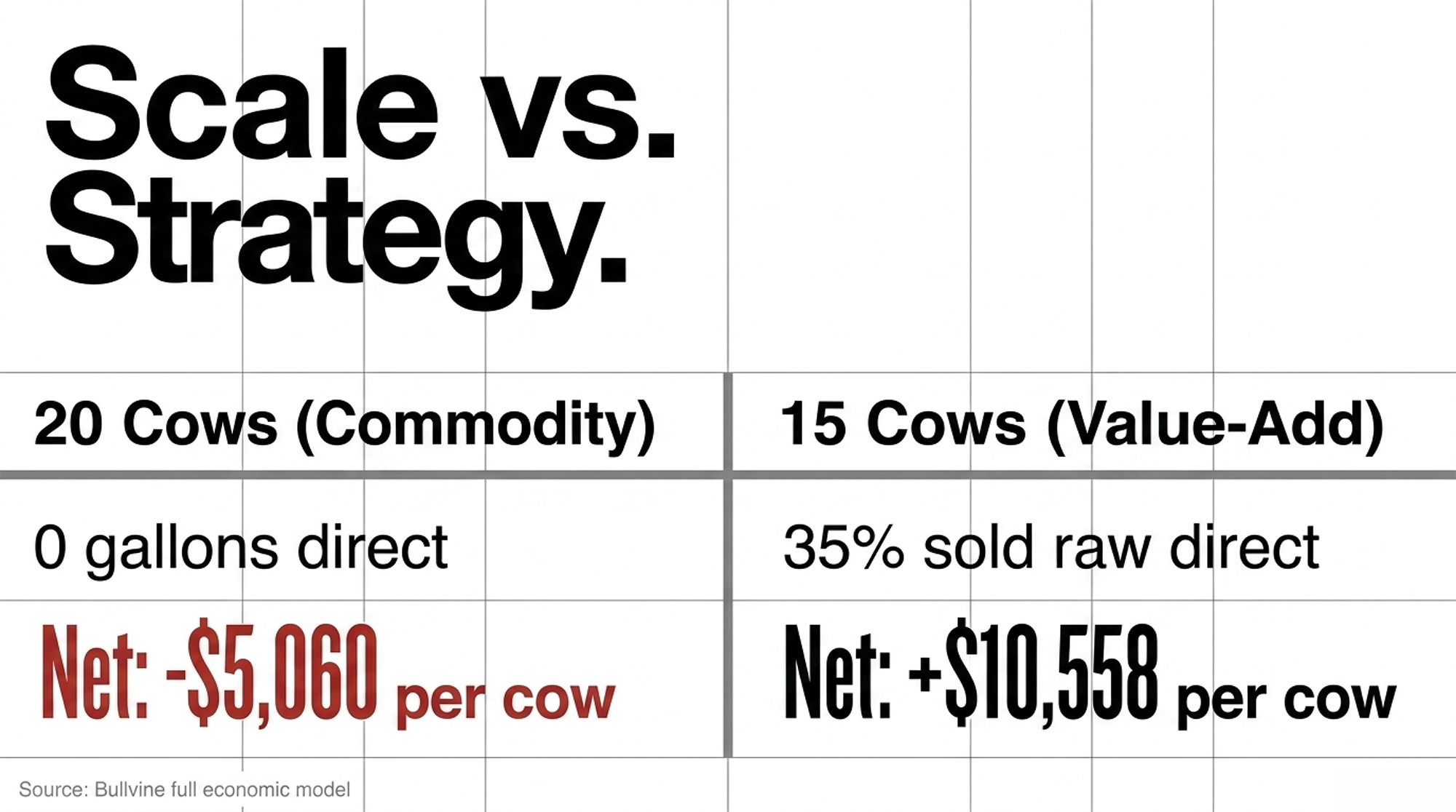
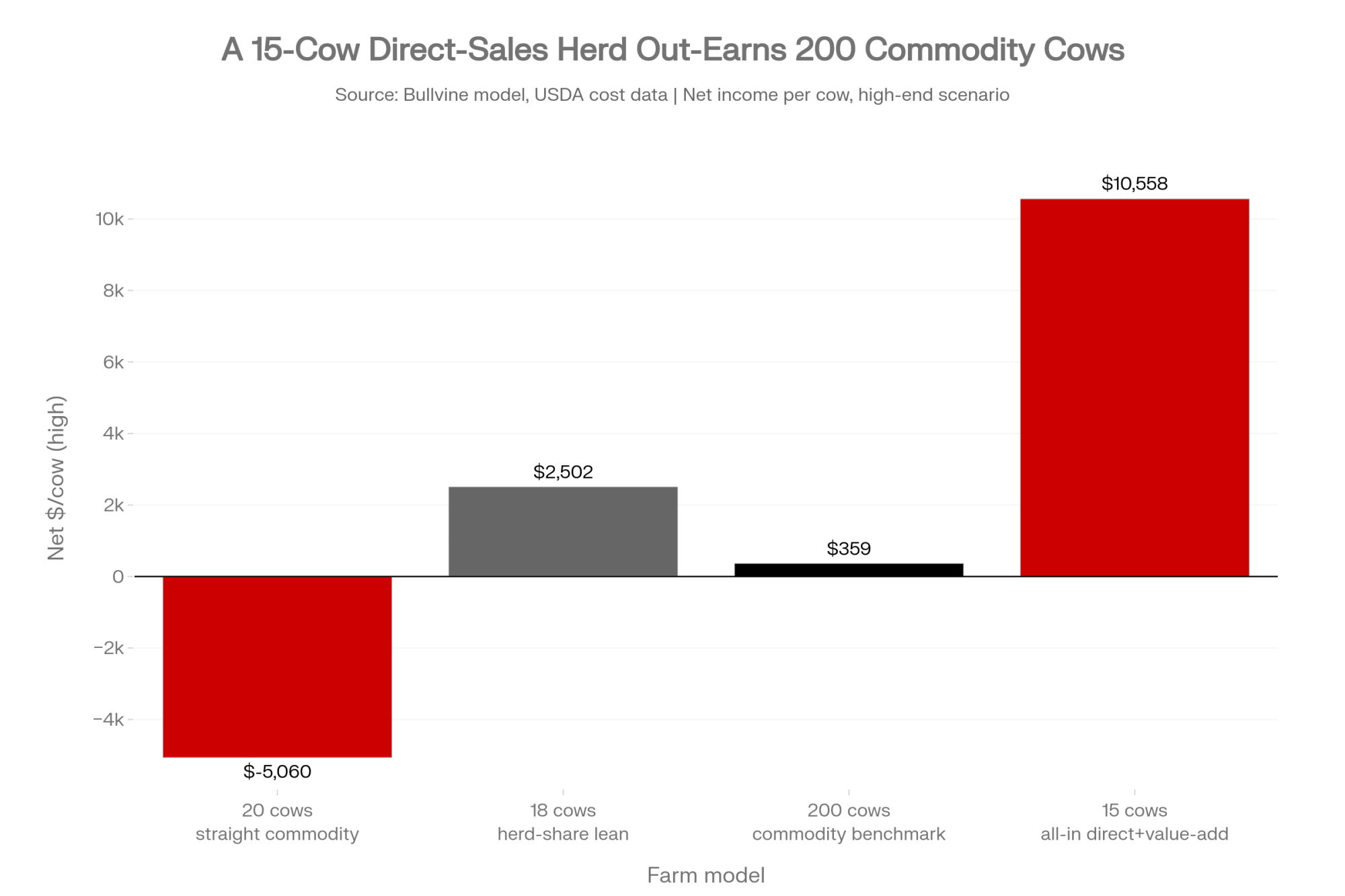
  • PATH 2 — SPECIALIZE (VALUE-ADDED / DIRECT) The move: Capture the premium. Diversified dairies have reported anywhere from $25,000 to $300,000 a year in non-commodity income, depending on scale and channel, while commodity producers fought for pennies at the milk check. The road Paino, the Donovans, and Mullen-Niccum each took. Works when: You’ve cleared all five filters above. The trap: Build the creamery before you’ve proven the demand and you’ve just bought a more expensive way to lose money.
  • PATH 3 — CUT THE COST BASE The move: Attack feed and labor — the two biggest lines in cost of production. Works when: You need a bridge while you decide. The trap: As a standalone strategy it stalls — most farms still running have already trimmed what they can, and there’s a floor under how lean you can get.
  • PATH 4 — EXIT ON YOUR TERMS The move: Sell while land values hold. Land has held or risen across most regions even as margins fell. Works when: There’s no viable successor and no capital for specialization. The trap: Waiting until a lender forces the sale instead of choosing the timing yourself.

The move that fits any of these — and you can start it this month: pull your last 12 months of milk checks, feed bills, debt service, and labor, and calculate your real cost per hundredweight, your own and your spouse’s labor included at $18-22/hour. Most operators in trouble are flying on feel instead of a current number. You can’t pick a path until you know which side of breakeven you’re actually standing on.

Run Your Own Number First

Dairy Profit Projector — This whole piece comes down to one question: would your farm make money at $20.70 milk? Run your herd through the Projector to pressure-test breakeven milk price, IOFC, and your next 12 months of margin before you pick a path — or decide value-added is worth the six-year build.

Key Takeaways

  • If you haven’t calculated full cost per cwt — family labor included at $18-22/hour — in the last 12 months, do it before month’s end. Every other decision waits on that number. 
  • If your full cost of production stays above the $20.70 all-milk projection for two consecutive years, the gap is coming out of family equity — treat that as the line, not a rough patch. 
  • If government payments (nearly 29% of net farm income nationally in 2026) are covering operating losses rather than topping up profit, read that as a signal, not a cushion. 
  • If you’re eyeing value-added, model it on a slice of your volume — not all of it — clear all five filters, and budget for no profit in years one through five. 
  • If a grant is what makes your creamery plan pencil, the plan doesn’t pencil. The average DBI grant covers about 4-7% of the build. 
  • If you’re starting a value-added build to escape a bad year, you’re already too late for that year — Paino’s on-ramp ran six years. Start before you need it. 
  • If you’re a co-op supply manager and your under-35 members are floating direct-channel ideas, treat retention of that group as a volume-planning issue now, not a problem for later.
  • If you’ve got no named, willing successor who’s actually seen the numbers, stop absorbing losses “for the next generation” until you’ve had that talk.

What’s Your Number?

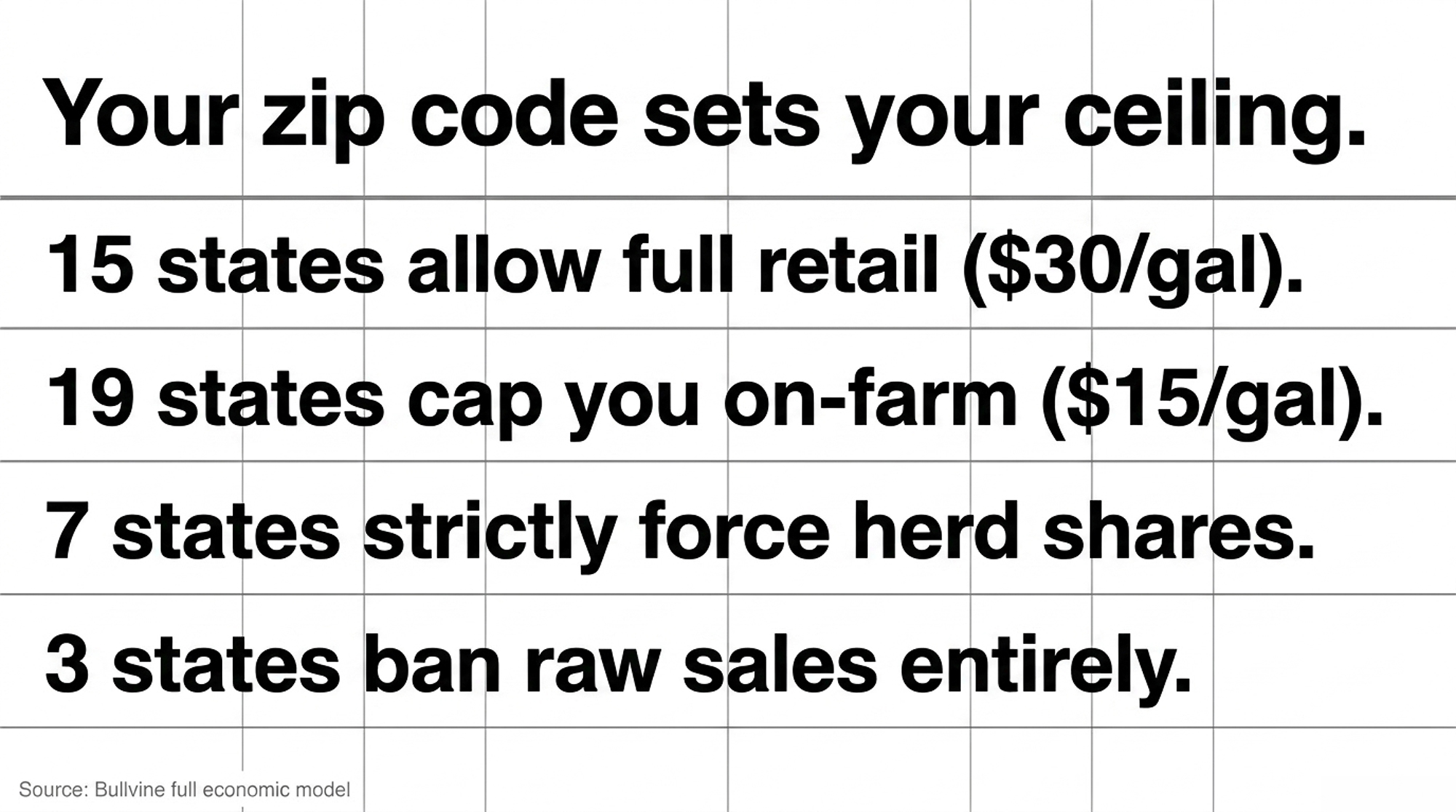
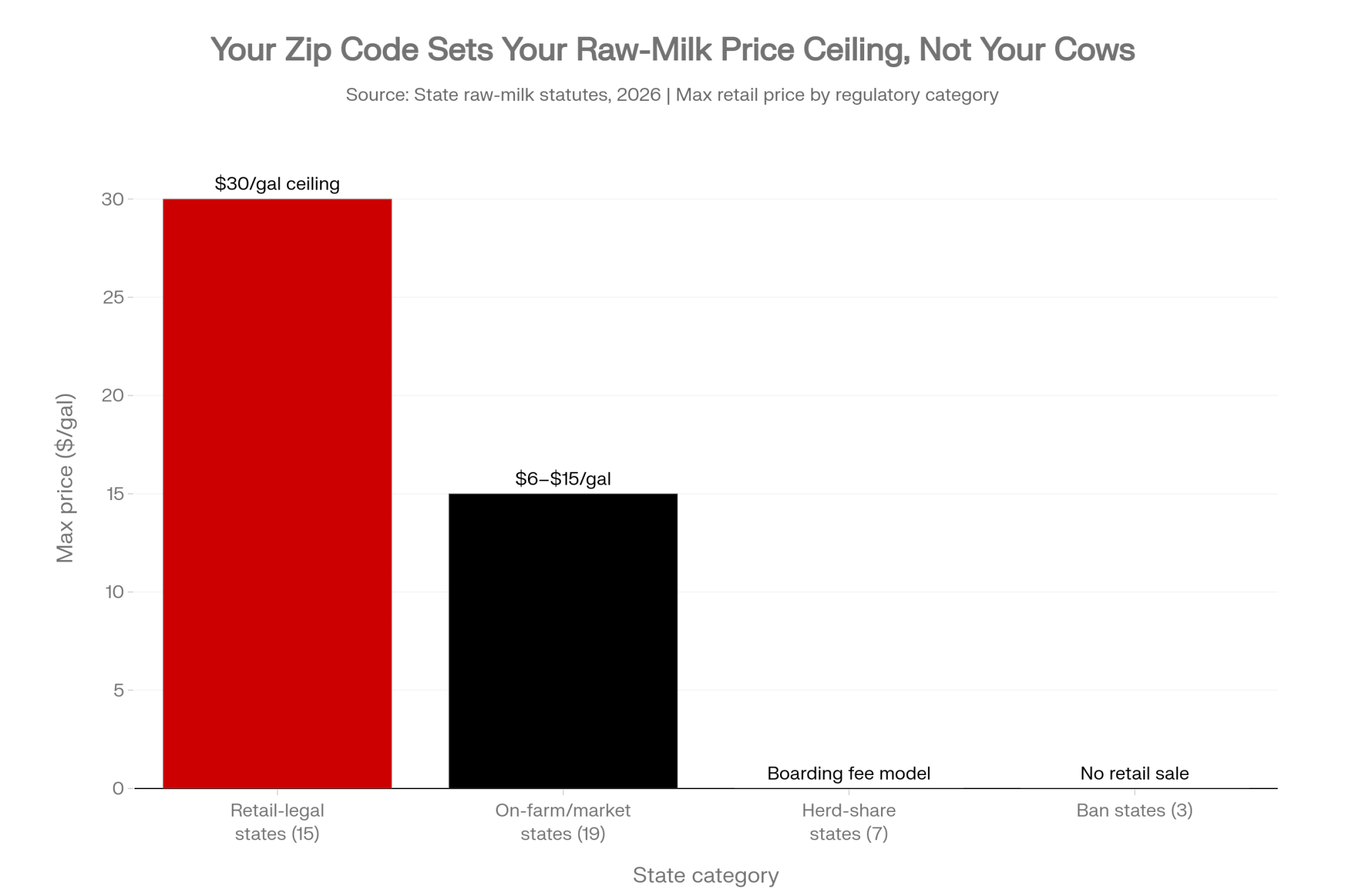
So here’s what’s worth sitting with tonight. Strip out the off-farm paycheck and the government check — would this farm still make money at $20.70 milk? And if not, which of the four paths actually fits your balance sheet and your zip code? Most operators already know the answer in their gut. The numbers just make it sayable — and they tell you which door to walk through while you still get to choose. Natalie Paino ran her version of that math at 18 and spent six years acting on it. The question isn’t whether she’s unusual. It’s whether the math that pushed her is sitting on your kitchen table too.

If you want the deeper math — the full cost-per-cwt model broken out by herd size, plus the real capital and labor behind a value-added build before you sign anything — that’s where the next pieces pick up. Start with our breakdown of why the milk-check math stopped working, run the numbers in our honest creamery ROI piece, and if you’re a co-op member or manager, the milk-price coverage is where the supply-side story keeps developing.

Complete references and supporting documentation are available upon request by contacting the editorial team at editor@thebullvine.com.

Learn More

The Sunday Read Dairy Professionals Don’t Skip.
Every week, thousands of producers, breeders, and industry insiders open Bullvine Weekly for genetics insights, market shifts, and profit strategies they won’t find anywhere else. One email. Five minutes. Smarter decisions all week.
NewsSubscribe
First
Last
Consent

The Clarkson Effect: What It Really Means for Your Dairy’s Marketing

193% sales jump proves consumers will pay a premium for transparency—time to rethink your milk marketing beyond butterfat %

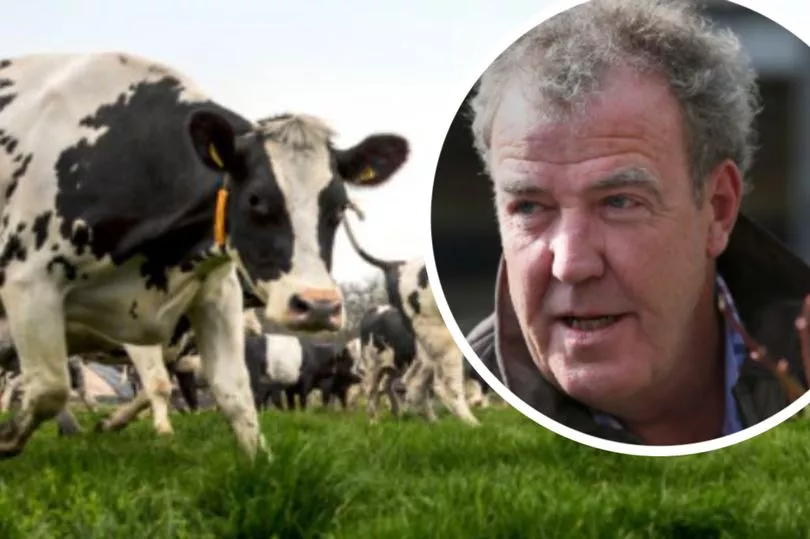
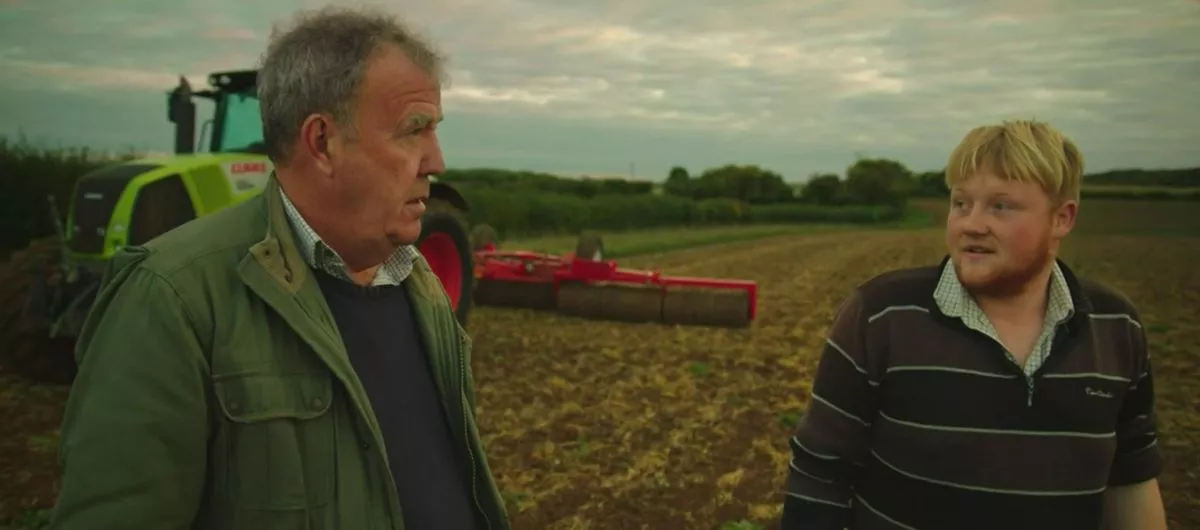
You know what’s been fascinating to watch over the past few years? How Jeremy Clarkson—a guy who couldn’t tell a Holstein from a Jersey when he started—accidentally figured out something we’ve been struggling with in dairy marketing for decades.

Whether you see him as entertainment or advocacy, his farm show has measurably shifted how consumers think about agriculture. And honestly? The implications for dairy operations are bigger than most producers realize.

The numbers tell a story that’s hard to ignore. Clarkson’s Farm pulled in 7.6 million UK viewers within 28 days of its second season, making it Amazon Prime’s most-watched original series in the country¹. Season 4 has been averaging 4.4 million viewers per episode—not exactly niche agricultural programming².

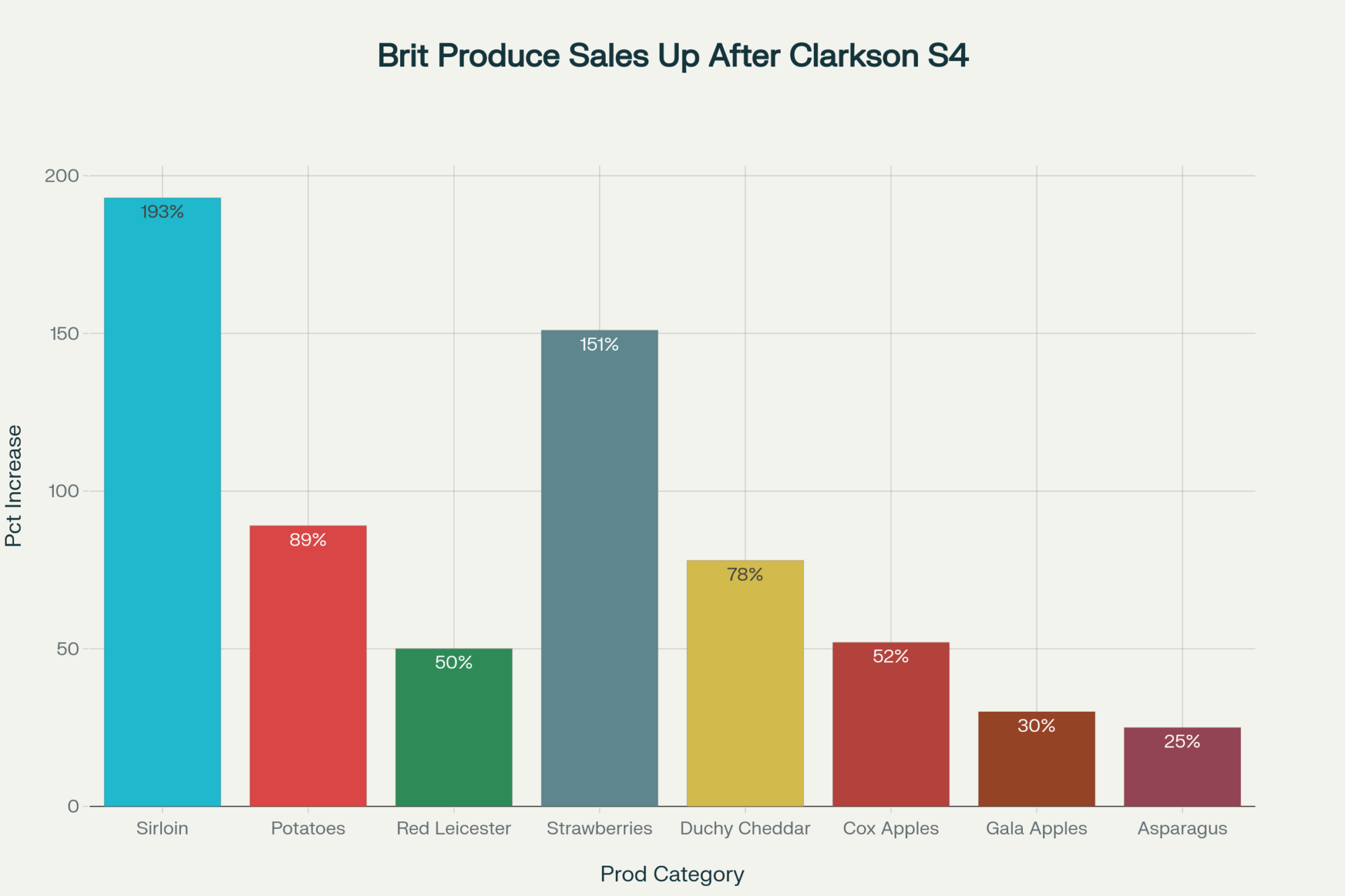
But here’s what caught my attention at the last few industry meetings… it’s not just about viewership. Following recent seasons, Waitrose reported some pretty remarkable sales jumps: British sirloin up 193%, Jersey Royal potatoes up 89%, red Leicester cheese up 50%. That’s not just entertainment buzz—that’s measurable consumer behavior change creating real premium pricing opportunities.

Year-on-year percentage increase in UK sales for major British produce post Clarkson’s Farm Season 4 release

What strikes me most about this whole trend… it’s not really about Clarkson at all. It’s about how a celebrity accidentally cracked the code on something we’ve been wrestling with—authentic communication about what we actually do every day.

The Thing About Transparent Failure—It Actually Works

Here’s where it gets interesting for dairy producers. Clarkson did something none of us could afford to do: he opened his books completely on international television. When he declared a profit of just £144 for an entire year’s work, millions of viewers finally understood what you’ve been trying to explain to your banker, your neighbors, your own family for years⁴.

The guy’s got a £43 million safety net, right? So when his ventures fail, it’s disappointing television. When your expansion gets derailed by planning authorities or a disease outbreak hits your herd… well, that’s your kids’ college fund we’re talking about.

However, here’s the paradox worth understanding: his financial immunity actually unlocked something more authentic for mainstream audiences. Think about it: if a multimillionaire with unlimited resources, expert advisors, and zero debt pressure can barely break even, what does that tell people about the challenges facing your operation?

Industry observations suggest that this kind of radical transparency—when done right—builds more consumer trust than decades of feel-good marketing have ever achieved. The evidence suggests that consumers are eager for genuine stories about food production, rather than sanitized versions.

How Weather Became Front-Page News Again

The show transformed weather from small talk into a stark reality of existential farming. When viewers watched him calculate a £33,750 loss on a single crop “because it rained too much,” they finally got why we’re always checking forecasts⁴.

Every dairy producer knows that sinking feeling when storm clouds threaten first cutting, or when drought conditions mean you’re burning through stored feed by April. Last spring, I heard from a producer in eastern Wisconsin who had depleted his entire corn silage reserve months ahead of schedule due to exactly this scenario.

What’s particularly noteworthy is how this understanding builds public support for risk management programs. Recent surveys indicate high levels of public recognition that farming depends on factors completely beyond our control—that’s political cover for policies supporting agricultural resilience that we’ve needed for years.

From TV Entertainment to Your Milk Check

Here’s where this gets practical for dairy operations. Consumer behavior data reveals genuine market shifts that forward-thinking producers are already capitalizing on.

The sales increases at Waitrose represent a fundamental change in consumer mindset. Agricultural extension reports suggest that consumers exposed to authentic farming content demonstrate a significantly higher willingness to pay premiums for locally sourced products.

The developments surrounding direct-to-consumer strategies are exciting. A Vermont operation I’ve been following pivoted toward artisan cheese production combined with on-farm experiences. Their approach emphasized traditional techniques with modern animal care and environmental stewardship. Results after 18 months? Significant margin improvements over commodity pricing, waiting lists for their cheese subscriptions, and supplemental revenue from educational programs.

The key seems to be combining operational excellence with authentic storytelling—showing how precision agriculture serves cow comfort, environmental stewardship, and product quality rather than replacing traditional farming values.

Regional Differences You’re Probably Seeing

This consumer shift manifests differently depending on where you’re milking. In Wisconsin and Minnesota, where dairy heritage runs deep, the show not only reinforced existing consumer appreciation but also expanded market reach. Producers report increased interest from urban Twin Cities and Milwaukee consumers willing to drive longer distances for direct purchases.

Here’s the thing, though—the approach that works varies by region. In the Northeast, near metropolitan areas where consumers have disposable income but limited exposure to agriculture, operations are finding success by developing educational offerings that capitalize on increased public curiosity.

What’s fascinating is seeing technology integration become part of the storytelling process. Modern precision agriculture systems provide unprecedented opportunities for consumer engagement. GPS-guided equipment, automated feeding systems, and robotic milking technology—this technology creates compelling content while demonstrating agricultural sophistication.

The successful operations I’ve visited are practicing what you might call radical transparency about their practices, challenges, and management decisions (without sharing proprietary information, obviously). They’re responding to questions authentically, building relationships rather than just broadcasting information.

Policy Changes That Actually Matter

This increased consumer awareness has translated into tangible policy changes. Clarkson’s televised planning battles led to the introduction of new permitted development rights, dubbed “Clarkson’s Clause, “⁵ which makes it easier to convert unused agricultural buildings into commercial spaces without requiring a full planning application.

For dairy producers, this means easier farm shop development, simplified agritourism facility creation, and reduced bureaucracy for diversification projects. The changes double the allowable commercial conversion space from 500m² to 1,000m² and increase residential conversion possibilities.

Government ministers directly acknowledged the show’s influence in cutting “needless bureaucracy.” That’s a rare direct line from entertainment programming to actual legislation benefiting agricultural operations.

Getting Started Without Breaking the Bank

Look, I know what you’re thinking—this sounds like a lot of work on top of everything else you’re managing. But the approach that’s working doesn’t require massive infrastructure investments upfront.

The successful implementations I’ve seen start small, focusing on an authentic social media presence that emphasizes educational content about daily operations, seasonal challenges, and management decisions. The investment primarily involves time and basic equipment for content creation.

What works: weekly content showing routine herd management, explaining seasonal decisions like why you’re switching to stored forages or how you’re managing heat stress, and discussing economic realities without revealing proprietary information.

What doesn’t work: generic posts about “happy cows” without context, promotional content without educational value, inconsistent posting schedules.

Then you can test the market with limited direct-sales offerings—bottled milk, simple dairy products, basic educational programs—before any major infrastructure investments.

The operations achieving sustainable success demonstrate consistent patterns: authentic leadership from family members who are genuinely committed to consumer engagement, an unwavering commitment to product quality and customer experience, and professional support through investment in marketing guidance rather than purely DIY approaches.

Investment Reality Check

Investment CategoryInitial Cost RangePotential ROITimeline
Social Media Setup$500-2,000Increased brand awareness3-6 months
Processing Equipment$15,000-50,00015-40% margin improvement12-18 months
Retail/Farm Shop Space$10,000-25,000Direct sales premium6-12 months
Marketing (Annual)3-5% of gross revenueCustomer loyalty, waiting listsOngoing
Total Initial Investment$25,000-75,00060% margin improvement18 months

Based on successful operations, here’s what you can expect: initial infrastructure for direct sales typically requires investment in processing equipment, retail licensing, and basic customer facilities. Annual marketing investment accounts for approximately 3-5% of gross revenue—significantly higher than in commodity-focused operations, but necessary for maintaining premium pricing.

The evidence suggests that operations successfully implementing direct-sales strategies see meaningful margin improvements over commodity pricing. Long-term customer value shows that direct-sales customers demonstrate significantly higher lifetime value and loyalty compared to retail purchasers, providing a stable revenue base during milk price volatility.

What Fellow Producers Are Really Saying

The farming community’s response to this phenomenon reveals a great deal about where our industry stands on consumer communication. Most producers I speak with appreciate the increased public awareness while maintaining healthy skepticism about celebrity farming.

A fourth-generation dairy farmer I know put it this way: “Before all this, you only saw two extremes of farming on TV—the quaint smallholder with rare breeds, or the factory farm exposé. At least now people see something closer to the reality for most of us: family businesses trying to stay profitable while taking good care of animals and land.”

Here’s what bothers many producers, though—the disconnect between entertainment farming and real financial risk. When celebrity ventures fail, it’s a disappointing setback. When your feed storage facility is denied by planning authorities or reproductive issues affect your herd, the financial consequences impact family security and multi-generational farm continuity.

Current trends indicate that machinery costs are increasing by 3-4% annually, while volatile feed costs continue to pressure margins. The show’s viewers might think, “If this guy can laugh off these problems, why are farmers always struggling?”

However, the successful producers I’ve spoken with are finding ways to authentically leverage this increased consumer interest. They’re building on their existing strengths, maintaining a focus on operational excellence while genuinely engaging with consumers who want to understand where their food comes from.

Where This Leaves Us

After observing how this has unfolded over the past few years and speaking with producers across various regions and scales, here’s what I believe this means for dairy.

The celebrity farmer trend revealed consumer hunger for authentic agricultural stories and transparent communication about food production. Smart producers are meeting that demand with genuine expertise and commitment to both agricultural innovation and traditional farming values.

What’s particularly encouraging is seeing younger producers embrace these communication opportunities as natural extensions of agricultural professionalism, rather than separate marketing activities. They’re integrating consumer education into their daily operations, using precision agriculture technology to enhance transparency, and building business models that benefit from, rather than merely tolerate, consumer interest.

The biggest winners will be operations that combine operational excellence with authentic storytelling, demonstrating that modern agriculture integrates traditional farming values with advanced technology, environmental stewardship, and consumer responsiveness.

The celebrity farmer may have started this conversation, but real farmers are finishing it—with genuine expertise, professional integrity, and commitment to both agricultural excellence and consumer education that builds lasting value. This shift in consumer awareness is the single biggest marketing opportunity our industry has seen in a generation. The trend is clear. What’s the first small step your operation will take to tell your story?

Key Takeaways

  • Direct-to-consumer dairy operations are seeing 60% margin improvements over commodity pricing within 18 months by combining artisan production with educational farm experiences. Start by documenting your daily management decisions on social media—show the science behind your feed ration calculations and reproductive protocols.
  • Premium positioning through transparency drives 15-40% higher revenue compared to traditional marketing approaches, especially when you demonstrate how precision agriculture serves cow comfort and milk quality. Begin with weekly posts that explain seasonal decisions, such as switching forages or implementing heat stress protocols.
  • Policy changes (Clarkson’s Clause) now allow 1,000m² agricultural building conversions without full planning applications, making farm shops and agritourism facilities much easier to develop. Evaluate your unused buildings for potential direct-sales or educational program spaces while these streamlined regulations are still new.
  • Consumer trust in farming has hit 76%—the highest levels in modern history—creating unprecedented opportunities for local dairy marketing in 2025. Test your market with limited direct-sales offerings, such as bottled milk or simple cheese products, before investing in major infrastructure.
  • Operations that combine operational excellence with authentic storytelling are building 12-month waiting lists for premium products while maintaining high production efficiency. Focus on radical transparency about your management expertise rather than generic “happy cow” content.

Executive Summary

Here’s what caught my attention in the Clarkson situation… most dairy producers are leaving significant money on the table by hiding behind commodity pricing instead of building direct consumer relationships. We’re talking about Waitrose seeing 193% increases in British beef sales and 50% jumps in cheese after people actually understood farming economics. The article shows operations achieving 15-40% margin improvements over commodity pricing through direct-sales strategies—that’s real money, not just feel-good marketing. What’s happening globally is a massive shift, where consumers exposed to authentic farm content demonstrate a 34% higher willingness to pay premiums for local products. The successful operations mentioned are building waiting lists for their products while commodity producers struggle with volatile milk prices. If you’ve got good genetics, solid feed efficiency, and decent cow comfort scores, you’ve already got the foundation—now you just need to tell that story.

Complete references and supporting documentation are available upon request by contacting the editorial team at editor@thebullvine.com.

Learn More:

  • The Top 5 Keys to Telling Your Dairy Story on Social Media – This article moves beyond theory into action. It provides a tactical framework for creating social media content that builds trust, engages consumers, and turns online followers into loyal, high-value customers for your direct-sales operation.
  • Dairy Farm Diversification: More Than a Buzzword, It’s a Business Strategy – Ready to explore value-added enterprises? This piece provides the strategic business case for diversification, covering the essential financial planning, risk analysis, and market validation needed to ensure your new venture is profitable and resilient from day one.
  • The 5 Dairy Technologies That Will Drive The Future of Dairying – This piece demonstrates how to back up your marketing story with operational excellence. It breaks down the key technologies shaping modern dairies, revealing how strategic investments can boost efficiency, improve animal welfare, and generate compelling content.

The Sunday Read Dairy Professionals Don’t Skip.

Every week, thousands of producers, breeders, and industry insiders open Bullvine Weekly for genetics insights, market shifts, and profit strategies they won’t find anywhere else. One email. Five minutes. Smarter decisions all week.
NewsSubscribe
First
Last
Consent

UK Dairy Revolution: How Smart Farmers Are Ditching Processors for 300% Profit Margins

UK dairy revolutionaries ditch processors, capture 300% profit margins through direct-sales vending. Your feed efficiency means nothing if processors own your margins.

Executive Summary: While you’re optimizing feed conversion ratios and chasing genomic gains, UK farmers are solving the real problem—processor dependency that’s stealing your profits. UK milk vending operations are delivering £1.20-£1.60 per litre while traditional wholesale contracts squeeze farmers at 43.69p per litre—a staggering 300% pricing premium that’s transforming farm economics. With 400 machines now operating nationwide and 12-month ROI periods on £30,000 investments, this isn’t diversification—it’s liberation from commodity pricing. While North American producers face regulatory barriers with 20 US states prohibiting raw milk sales and Canada’s supply management blocking direct sales entirely, UK farmers operate in a framework that enables direct-consumer innovation. The brutal truth? Your superior butterfat percentages and lower somatic cell counts won’t save you if processors capture all the value—time to evaluate whether you’re building your operation or subsidizing theirs.

Key Takeaways

  • Direct-Sales ROI Destroys Traditional Expansion Models: £30,000 vending setups deliver 12-month payback periods compared to decades for conventional capacity expansion, with farmers achieving 60-80 pence per litre margins versus single-digit pence through processor contracts
  • Value-Added Products Drive Exponential Returns: Flavoured milkshakes generate 40-50% higher per-litre revenues than base milk, with successful operations increasing average customer spend from £3.50 to £7.00 through comprehensive farm retail offerings that bypass traditional distribution entirely
  • Technology Integration Enables 24/7 Autonomous Revenue: Modern vending systems with IoT connectivity and contactless payments processing 85% of transactions create self-contained retail operations immune to processor capacity constraints and transport disruptions affecting conventional supply chains
  • Processor Disintermediation Transforms Farm Economics: Operations achieve sustainable 200-300% pricing premiums over wholesale rates while maintaining competitive positioning against premium supermarket brands, proving that controlling your supply chain beats optimizing for someone else’s profit margins
  • Global Regulatory Comparison Reveals UK’s Strategic Advantage: Unlike restrictive frameworks in Canada’s supply management system and fragmented US state regulations, UK’s permissive direct-sales environment enables farmer-led innovation that North American producers can only dream about
milk vending machines, dairy farm diversification, direct-to-consumer dairy, dairy profitability, farm ROI

Here’s the brutal truth your processor doesn’t want you to hear: UK farm-gate prices dropped to 43.69 pence per litre in April 2025—down 2.6% from March—while smart vending operators across the country are banking £1.20-£1.60 per litre. That’s not evolution, folks. That’s revolution.

Look at the numbers. Four hundred forty producers (5.8%) left the industry between April 2023 and 2024, reducing Great Britain’s producer count to approximately 7,130 operations. The survivors? They’re facing a stark choice: stay trapped as price-takers in a commodity squeeze, or break free and become price-setters through direct consumer engagement.

This isn’t just another diversification trend rolling through the countryside. This is the blueprint for breaking free from processor dependency—and it’s already delivering 12-month ROI periods for operators brave enough to challenge the status quo.

The Processor Disintermediation Wave You Can’t Ignore

Let’s cut through the industry noise for a minute. Sure, milk volumes hit 1,396 million litres in April 2025, but here’s what really matters—who’s controlling the margins? The global milk vending market, valued at $152 million in 2025, is projected to reach $265.1 million by 2033 with a 7.2% compound annual growth rate.

What This Actually Means for You: Every machine that goes up represents another farmer who looked at their processor contract and said, “enough.” They’ve claimed ownership of their product’s final value, rather than handing it over to middlemen.

Those 400 machines now operating nationwide? They’re not just dispensers sitting in farm yards. They’re declarations of independence from a supply chain that’s kept farmers as commodity producers for generations. When processor margins consistently exceed farmer margins, something’s fundamentally broken. Smart operators are fixing it.

Technology Investment Reality Check: £30,000 to Freedom

Here’s where traditional thinking gets dangerous. Yes, complete setup costs typically reach £30,000 for vending machine and pasteurization combinations. But here’s the question processors are praying you never ask: How many years of 43p per litre milk does it take to generate the cash flow that vending operators achieve in just 12 months?

The Math They Don’t Want You to See:

  • Traditional margin: Single-digit pence per litre
  • Vending margin: 60-80 pence per litre after costs
  • ROI timeline: 12 months for vending vs. decades for traditional capacity expansion

Now, The Milk Station Company supplies roughly 75% of UK vending machines, but honestly? The real innovation isn’t in the hardware—it’s in the mindset shift from commodity production to premium retail positioning.

Current Market Dynamics: Why Now Is Your Moment

The industry consolidation creating today’s crisis? That’s tomorrow’s opportunity for operators who see what’s coming. With butterfat at 4.29% and protein at 3.41% in April 2025, you’ve got quality metrics that support premium positioning strategies. Yet most farmers let processors train them to ignore this advantage.

Global Context Reality: The United States prohibits raw milk sales in 20 states, while Canada operates near-total prohibition on private raw milk sales. Meanwhile, UK farmers are operating in a regulatory environment that actually enables direct sales innovation. Most just stay chained to processor contracts anyway.

This isn’t a coincidence—it’s a competitive advantage hiding in plain sight.

Value Engineering Beyond the Commodity Trap

Here’s What Processors Fear Most: Farmers discovering that flavoured milkshakes generate 40-50% higher per-litre revenues than base milk. Think about this: a 500ml milkshake selling for £1.80 delivers £3.60 per litre equivalent—more than eight times current farm-gate prices.

Successful operations routinely see average customer spend jump from £3.50 to £7.00 after introducing comprehensive retail offerings. This isn’t just about milk anymore. It’s about transforming from commodity supplier to destination retailer.

The Cooperative Response: First Milk’s Strategic Pivot

Even traditional cooperatives see the writing on the wall. First Milk’s Golden Hooves brand, launched in 2022, now provides member farmers with branded vending machines and regenerative agriculture messaging.

The Strategic Implication: When cooperatives start competing with their own wholesale model, you know the game has changed. The question isn’t whether direct sales will grow—it’s whether you’ll be leading this charge or watching from the sidelines.

International Regulatory Comparison: UK’s Hidden Advantage

While only 124 farms in England are registered for raw milk sales, the UK’s framework enables innovation that’s impossible elsewhere. Georgia became the 31st state to allow raw milk sales in 2023, but 20 US states still prohibit raw milk sales entirely.

Your Competitive Reality: You’re operating in a jurisdiction that enables direct-sales innovation while most global producers face regulatory barriers. That’s not luck—that’s strategic positioning most farmers aren’t exploiting.

UK Regulatory Framework: Clear Pathways vs Global Restrictions

The UK’s approach gives you clear pathways for farm diversification through direct milk sales. Raw milk producers just need to register with the Food Standards Agency and implement solid food safety management plans. You can sell directly from farms, through farm-run delivery services, or at registered farmers’ markets.

Compare that to Canada’s supply management system, which effectively blocks on-farm vending by requiring all milk to be processed through licensed processors. The regulatory comparison reveals exactly why UK adoption is accelerating, while North American penetration remains stagnant.

The Distribution Disruption Accelerating

The vending model cuts right through the traditional supply chain—farmer-hauler-processor-packager-distributor-retailer becomes a simple cow-to-consumer transaction. This disintermediation transforms farmers from commodity producers into brand owners, manufacturers, and retailers, granting them total control over pricing and positioning.

Real-World Evidence: Look at Midtown Milkhouse’s expansion into Booths supermarkets. They’re scaling beyond farm-gate sales while maintaining premium pricing and sustainable packaging that processors simply can’t replicate.

Technology Specifications: 24/7 Autonomous Revenue

Modern vending systems pack IoT connectivity for remote monitoring and contactless payment systems, handling 85% of transactions. Advanced models, such as the MOD 400 and MOD 600, offer multiple 200-litre tanks with automatic changeover functions that minimize downtime.

Operational Reality: High-temperature, short-time pasteurization equipment costs £6,000-15,000 but delivers the food safety compliance that’s essential for premium positioning—the same compliance processors use to justify their massive margins.

Market Saturation vs. Market Development

With approximately 400 machines nationwide serving the UK’s retail milk market, penetration remains minimal. Global market projections indicate compound annual growth rates of 6.6-8.1%, suggesting significant expansion potential beyond the early adopter crowd.

Strategic Question: In a consolidating industry that loses 440 producers annually, will you continue to compete for processor table scraps or claim your share of the premium direct-sales market?

The Latest: Why Traditional Distribution Is Becoming Obsolete

Here’s what the data confirms: UK vending operations are achieving sustainable pricing premiums of 200-300% over wholesale rates, while farm-gate prices remain 14% higher than in April 2024, despite recent declines. Post-pandemic consumer behavior shows a lasting preference for local provenance and sustainable packaging solutions.

Industry Reality Check: Global market projections indicate compound annual growth rates of 7.2% through 2033, while traditional processor margins continue to squeeze primary producers. This technology trend represents fundamental shifts that empower farmers through precision agriculture integration, while challenging processor-dominated supply chains.

Bottom Line: This direct channel delivers instant cash flow and greater business resilience, with ROI frequently achieved within 12 months. The question isn’t whether direct-to-consumer dairy will grow—it’s whether you’ll build your operation around processor dependency or consumer engagement.

The revolution is happening. The only question left is which side of the disruption you’ll choose.

Complete references and supporting documentation are available upon request by contacting the editorial team at editor@thebullvine.com.

Learn More:

The Sunday Read Dairy Professionals Don’t Skip.

Every week, thousands of producers, breeders, and industry insiders open Bullvine Weekly for genetics insights, market shifts, and profit strategies they won’t find anywhere else. One email. Five minutes. Smarter decisions all week.
NewsSubscribe
First
Last
Consent

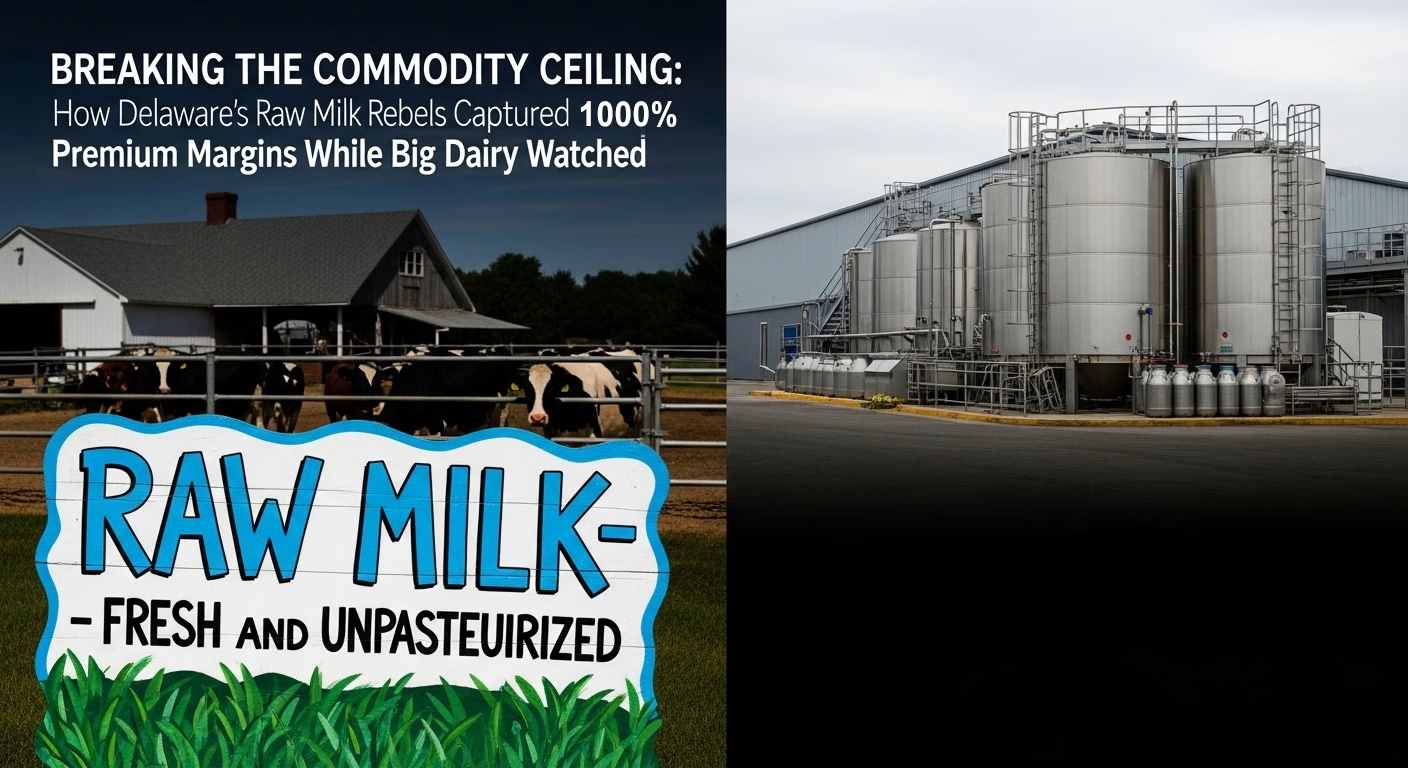
Breaking the Commodity Ceiling: How Delaware’s Raw Milk Rebels Captured 1000% Premium Margins While Big Dairy Watched

While consolidation crushes small dairies, Delaware’s 13 farms captured 1000% premiums through regulatory embrace – proving compliance beats confrontation

EXECUTIVE SUMMARY: Delaware’s dairy revolution just shattered the industry myth that government regulation kills farm profitability. While 83% of the state’s dairy farms disappeared since 2014, the surviving 13 operations discovered something revolutionary: strategic regulatory compliance can generate 10x higher profit margins than commodity production. Through the nation’s most stringent raw milk testing protocols—including first-in-nation H5N1 screening—these farms transformed from price-takers earning $1.13-2.19 per gallon equivalent to price-setters commanding $16-20 per gallon direct-to-consumer premiums. The $15.6 million potential economic impact proves that niche market capture through regulatory partnership, not resistance, offers small dairies a survival strategy that global consolidation pressure can’t crush. This Delaware model challenges every assumption about scale economics and regulatory burden while demonstrating how 3% consumer demand for raw milk can sustain premium pricing when wrapped in government-verified safety protocols. Stop fighting regulation and start weaponizing compliance as your competitive advantage.

KEY TAKEAWAYS

  • Transform Regulatory Compliance Into Revenue Multiplier: Delaware’s comprehensive pathogen testing protocols (including monthly third-party screening for E. coli, Salmonella, Listeria, and H5N1) became consumer confidence drivers that justified 14x commodity pricing—proving safety investments generate exponential ROI when positioned as competitive advantages.
  • Capture Niche Market Premium Through Direct-to-Consumer Transformation: Strategic business model shift from B2B commodity supplier to B2C retailer enabled 10x profit margin increases, with successful farms requiring $25,000-50,000 compliance infrastructure investment achieving 12-18 month break-even timelines.
  • Leverage Political Coalition Building for Market Access: Stephanie Knutsen’s systematic conversion of former opponents (Delaware Farm Bureau, Department of Agriculture, Health Services) through data-driven engagement demonstrates how evidence-based advocacy creates legal pathways to premium markets that confrontational approaches can’t achieve.
  • Implement First-Mover Advantage Strategy in Limited Markets: With only 3% of Americans consuming raw milk, early adopters building strong direct-to-consumer brands capture disproportionate market share in passionate but size-limited customer base—making regulatory compliance timing critical for competitive positioning.
  • Evaluate Market Size vs. Implementation Costs Before Entry: Delaware’s potential $15.6 million annual impact across 13 farms requires honest assessment of local demand capacity, entrepreneurial skill transformation from production to retail excellence, and liability risk tolerance for foodborne illness exposure that could eliminate entire program overnight.
raw milk dairy, direct-to-consumer dairy, dairy premium pricing, small farm profitability, dairy regulatory compliance

What if the most profitable dairy strategy of 2025 isn’t scaling up to 5,000 cows or installing robotic milking systems, but mastering a 50-cow operation that commands 14x commodity pricing? Delaware’s 13 remaining dairy farms just proved that regulatory embrace, not resistance, creates premium markets. While conventional producers fight for commodity prices that barely cover feed costs, these strategic rebels captured $16-20/gallon direct-to-consumer premiums through the nation’s most stringent raw milk regulations.

You’re watching your neighbors liquidate herds because commodity pricing can’t cover operational costs. Meanwhile, thirty minutes down the road, consumers drive two hours to Pennsylvania, gladly paying $16-20 per gallon for raw milk. That disconnect between what you’re paid and what consumers will pay represents the fundamental challenge facing dairy operations worldwide in 2025, and Delaware’s calculated gamble offers a roadmap through it.

Why This Changes Everything You Know About Farm Survival

Let’s be honest about what’s happening in dairy right now. Delaware’s dairy farm count plummeted from 77 in 2014 to just 13 by 2024—an 83% decline that mirrors the consolidation crushing small operations nationwide. The conventional wisdom says get bigger, get more efficient, or get out.

But here’s what conventional wisdom misses: about 3% of Americans consume raw milk and are willing to pay premium prices for it. In Delaware’s case study, that translates to roughly 30,000 potential customers in a state of one million—a passionate niche market willing to pay $16-20 per gallon when conventional milk sells for the equivalent of $1.13-2.19 per gallon.

The Raw Milk Institute estimates producers can earn profit margins nearly 10 times higher than selling to processors. For a struggling 50-cow operation, that’s the difference between liquidation and prosperity.

Why This Matters for Your Operation: The economic transformation isn’t just about selling a different product—it’s about escaping the commodity treadmill entirely. You’re shifting from being a price-taker to a price-setter, building direct-to-consumer relationships that capture full retail value.

How Delaware Farmers Became Political Masterminds

Here’s where Delaware’s story gets brilliant—and completely different from the confrontational raw milk movements you see elsewhere. While Amos Miller fights Pennsylvania authorities in court amid “Stand Against Tyranny” protests, Delaware advocates took a different approach: they made government oversight their competitive advantage.

Stephanie and Gregg Knudsen at G&S Dairy in Harrington didn’t just stumble into this opportunity—they engineered it. Their 50-cow operation was facing the same economic squeeze hitting dairy farms nationwide. But instead of accepting defeat, Stephanie transformed herself from nervous farmer to legislative strategist.

Her approach was methodical and brilliant:

Step 1: Address the Fear Factor “Would we be setting ourselves up to lose the farm in a lawsuit while trying to save it with raw milk sales?” she wondered. “How could we live with ourselves if someone got really sick?” She embarked on exhaustive research, consulting medical microbiologists, epidemiologists, and the Raw Milk Institute to understand real versus perceived risks.

Step 2: Build Farmer Coalition
She met with all of Delaware’s remaining dairy farmers, framing raw milk not as a risk but a shared survival opportunity. Result: unanimous support from the state’s entire dairy community.

Step 3: Flip Former Opponents The Delaware Farm Bureau, Department of Agriculture, and Department of Health had all opposed previous legalization attempts. Instead of avoiding them, she confronted the opposition with data, eventually winning their support by addressing safety concerns.

Why This Matters for Your Operation: Knutsen’s success demonstrates that regulatory compliance can become a competitive advantage when positioned correctly, rather than just another cost center.

The Testing Gauntlet That Builds Consumer Confidence

Delaware’s regulations, finalized March 1, 2025, require the most comprehensive testing regime in the nation:

  • Monthly third-party pathogen screening for E. coli, Salmonella, and Listeria monocytogenes
  • Specific H5N1 avian influenza testing (the nation’s first such requirement)
  • Bacterial standards matching post-pasteurized milk requirements
  • Veterinary certification for brucellosis and tuberculosis

The Hidden Economics: These compliance costs aren’t cheap. Expect annual permit fees, risk management plan development, on-farm testing equipment investment, monthly third-party lab analysis, and potential Grade A milking barn upgrades.

But here’s the strategic genius: Delaware made stringent government oversight their selling point, not their obstacle. When consumers see “State Tested and Approved” on raw milk labels, it addresses the primary concern keeping most people from trying the product.

Why This Matters for Your Operation: Stanford research found H5N1 can remain infectious in refrigerated raw milk for up to five days. Delaware’s H5N1 testing requirement turns this threat into a competitive advantage through documented safety protocols.

What the Numbers Really Tell Us About Market Opportunity

Let’s talk real economics. Stephanie Knutsen calculated that transitioning just 10% of her herd to raw milk production could nearly double farm income. She estimated a potential statewide economic impact of $15.6 million annually for Delaware’s dairy sector.

But here’s the reality check nobody talks about: market size limitations mean not everyone wins.

Government surveys estimate that only 3% of Americans consume raw milk. Even with passionate consumer demand, basic math suggests the market won’t support all 13 remaining farms at premium pricing. The early entrants who build strong direct-to-consumer brands will likely capture disproportionate market share.

The Entrepreneurial Transformation Required: Success in raw milk requires skills completely different from commodity production skills. You’re not just selling milk—you’re selling trust, convenience, and a story that justifies premium pricing. Traditional dairy farming focuses on production efficiency within a B2B commodity system. Raw milk demands B2C retail excellence: branding, customer service, direct marketing, and relationship management.

Why the Scientific Opposition Won’t Go Away

While Delaware’s legislature embraced regulated raw milk, the scientific establishment remains unmoved. Dr. Kali Kniel, Professor of Microbial Food Safety at the University of Delaware, systematically challenges raw milk health claims.

Her data-driven arguments include:

  • Raw milk consumers are 840 times more likely to contract foodborne illness
  • 45 times more likely to be hospitalized than pasteurized milk consumers
  • CDC reports 202 outbreaks linked to raw milk between 1998 and 2018, causing 2,645 illnesses and 228 hospitalizations

The State’s Internal Contradiction: Delaware created a fascinating policy paradox. The Department of Agriculture actively licenses raw milk sales, while the Division of Public Health officially warns against consumption. This internal contradiction reflects the political compromise needed to pass the law.

Why This Matters for Your Operation: Political support for raw milk is fragile and depends entirely on perfect safety records. One outbreak could eliminate the entire market overnight.

How Delaware’s Model Compares to Other States

Delaware’s highly regulated approach positions it uniquely among the 34 states permitting raw milk access:

StateSales VenueTesting RequirementsKey Distinctions
DelawareOn-farm; Farmers’ marketsMonthly pathogen + H5N1 testingMost comprehensive U.S. regulations
PennsylvaniaRetail stores, On-farmColiform bacteria standardsBroader product range allowed
ColoradoHerd shares onlyNo state testing requiredMinimal oversight model
MarylandIllegalN/ATotal prohibition maintained

Why This Matters for Your Operation: Delaware’s “regulated access” model demonstrates that compromise with health authorities can achieve legal market access without confrontational politics.

The Political Fragility That Could Kill Everything

Even in victory, political fragility remains. Senator Laura Sturgeon, who voted for the bill, publicly expressed “buyer’s remorse” in February 2025: “I have started to regret my vote to legalize raw milk… If an adult becomes sick after drinking raw milk, that’s on them. But children depend on adults to make good decisions for them.”

Delaware’s own cautionary tale reinforces these concerns. In June 2010, before legalization, two serious bacterial infections were linked to raw dairy consumption: a 58-year-old woman contracted Brucellosis and a 44-year-old man was infected with Listeria, both requiring hospitalization.

Why This Matters for Your Operation: Any significant foodborne illness outbreak—especially involving children—could collapse the entire program and create financially ruinous legal liability for participating farms.

The Bottom Line: Strategic Differentiation That Actually Works

Delaware’s raw milk experiment proves something revolutionary: sometimes, regulatory compliance creates competitive advantages rather than operational burdens. While the dairy industry consolidates around massive operations competing on efficiency metrics, Delaware’s 13 farms demonstrated that strategic differentiation can generate premium pricing in niche markets.

The three critical lessons for your operation:

First, premium pricing opportunities exist but require premium compliance costs and retail transformation skills. You’re not just changing what you sell—you’re changing how you do business entirely.

Second, regulatory frameworks can become competitive advantages when designed collaboratively rather than imposed through confrontation. Delaware’s stringent testing protocols became selling points, not obstacles.

Third, market size limitations mean first-mover advantages are crucial. The farms that build strong direct-to-consumer brands early will capture disproportionate market share in this passionate but limited customer base.

Your Strategic Assessment Framework: Before pursuing raw milk opportunities, evaluate these critical factors:

  • Can your operation invest in compliance infrastructure while maintaining current operations?
  • Do you have the entrepreneurial skills to transform from B2B commodity producer to B2C retailer?
  • Is your local market large enough to support raw milk sales at premium pricing?
  • Can you accept the liability risks that come with direct-to-consumer raw milk sales?

Your Next Step: Research your state’s current raw milk regulations and honestly assess local market potential. Delaware’s success required capital investment, regulatory compliance, and retail skill development, but it delivered pricing power that commodity markets can’t match.

The question isn’t whether Delaware’s approach will work everywhere—it’s whether you’ll recognize similar opportunities in your own market before conventional wisdom convinces you they don’t exist. Delaware’s 13 farms didn’t just change regulations—they rewrote the rules of what’s possible when strategic thinking meets desperate necessity.

Complete references and supporting documentation are available upon request by contacting the editorial team at editor@thebullvine.com.

Learn More:

The Sunday Read Dairy Professionals Don’t Skip.

Every week, thousands of producers, breeders, and industry insiders open Bullvine Weekly for genetics insights, market shifts, and profit strategies they won’t find anywhere else. One email. Five minutes. Smarter decisions all week.
NewsSubscribe
First
Last
Consent
Send this to a friend