




Archive for Registered Holstein

37 Sales, 38 Years, One Last Tanbark: Tom and Sandy Morris Close the World Classic

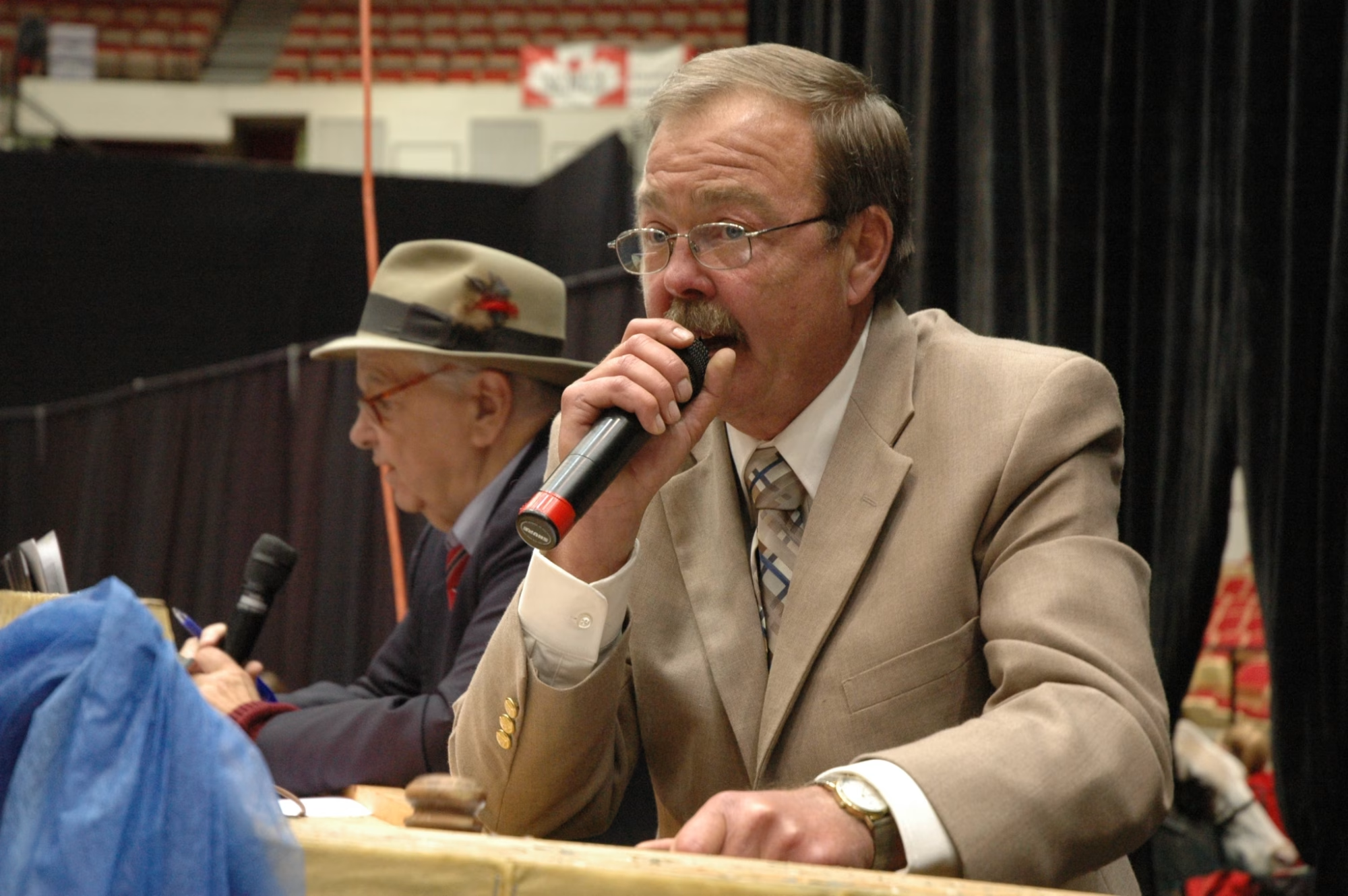
At 6:00 p.m. on Wednesday, September 30, the gavel falls in The Tanbark for the 37th and final time under the management of Tom and Sandy Morris.

Seventy-two years earlier, a red ribbon was hung at Deronda Farm near Amery, Wisconsin—won by a 2-year-old Holstein from Arden and Maldwyn Morris’s Arwyn Farms at the 1954 Royal Agricultural Winter Fair. Today, World Dairy Expo’s official sale directory lists the manager of the World Classic ’26 Holstein Sale as Tom Morris Ltd. (Read our feature interview – A Lifetime in the Ring: Tom Morris and the Evolution of a Dairy Dynasty)

Between that Royal ribbon and Wednesday night’s finale sits the longest continuous act of price discovery in the North American registered dairy business—built, calculated, and executed every step of the way by Tom and Sandy together. The Bullvine combed through World Dairy Expo’s archives to reconstruct that legacy in full.

What we found: 21 documented World Classic sales between 1999 and 2024 moved $24.1 million across 955 lots.That is a Bullvine calculation from Expo’s own published summaries, marking the first time these numbers have been audited and totaled in one place.

The Arithmetic Nobody Ran

Start with the figure leading every tribute this month: thirty-eight years.

It is accurate chronologically, but it does not represent the sale count. Tom and Sandy took the reins of the World Classic in 1989. When World Dairy Expo canceled the 2020 show, the calendar and the gavel drifted apart by a year.

Run the timeline forward from that inaugural 1989 auction: Wednesday night marks the 37th World Classic in 38 years.

That distinction matters to anyone who has consigned or bid there. A sale manager’s record is their ledger, and the industry has spent a decade casually rounding off the Morrises’ numbers. Over their joint career, Tom and Sandy have orchestrated more than 500 sales, including nine National Holstein Convention Sales.

Tom’s own perspective cuts through the estimates. “I wish I had a tally of the number of animals I’ve sold, or the total gross,” he told Dairy Star. “It would be mind-boggling.”

What 21 Sales Actually Show

Lot counts marked with an asterisk are calculated from the reported gross divided by the published average where Expo’s archived summaries omitted the lot tally.

YearGrossLotsReported AverageTop Lot
1999$340,00047*$7,234$17,400 — Nosawa & Co., Japan
2000$392,60045$8,724$82,000 — C Laduc Broker Mandy clone
2002$421,90036*$11,719$42,000 — choice of Tri-Day Ashlyn-ET
2004$588,80040$14,720$50,000 — Rosedale-L SS Rose-Red-ET
2005$619,40042*$14,748$51,000 — Budjon-JK Champ Elianna-ET
2006$725,50041$17,695$135,000 — Rosedale Adventageous-Red-ET, England
2007$781,30038$20,561$85,000 — Budjon Redmarker Desire RC
2009$832,20042$19,814$95,000 — Harvue Roy Frosty choice, Mexico
2010$835,30044$19,666$87,000 — RMW Super Anane-ET
2011$1,173,70043$27,295$82,000 — Lookout Pesce Magna P Sarah-Red
2012$1,490,00045$33,111$122,000 — Elm-Park Geisha PP-Red-ET, UK
2013$1,264,60048$26,262$131,000 — Oconnors Aikman Scarlet-Red, Ontario
2014$1,208,20052$23,234$74,000 — De-Sue 1912-ET
2015$1,304,60047$27,757$117,000
2016$1,364,10044$31,002$270,000
2018$1,748,30050$34,966$205,000 — Lexvold Rolan Anne-ET, BC
2019$1,330,75047$28,314$145,000
2020——Expo canceled—
2021$2,168,20049$44,249$220,000
2022$2,086,75053$39,373$170,000 — JX FB Verstappen {6}-ET
2023$1,760,80047$37,464$170,000
2024$1,663,475**55$30,245$205,000 — OCD Sheepster 23614 IVF, Semex

*Estimated lot count based on published average and gross.

2024 gross implied from 55 lots at the published $30,245 average.

Note: 2001, 2003, 2008, 2017, and 2025 are excluded due to incomplete or unverified official World Dairy Expo settlement records.

The Book Barely Grew. The Money Tripled.

This is the reality pedigree breeders must digest:

  • 1999–2009 (8 documented sales): Average gross of $587,712, average 41.4 lots, mean average price of $14,402.
  • 2021–2023 (3 documented sales): Average gross of $2,005,250, average 49.7 lots, mean average price of $40,362.

Over two decades, the catalog grew by barely eight head, yet the gross multiplied 3.4 times and the sale average climbed 2.8 times.

That increase did not come from bloat. It came from demanding that the same tight, curated lineup carry an exponentially higher density of genetic capital—the hallmark of an elite auction functioning at its peak.

The mechanics behind that growth were deliberate: “a limited offering of the world’s most sought-after genetics,” as Tom noted, staged with the lighting, pacing, and presence of a premier entertainment event. Scarcity, presentation, and timing converged on a week when every decision-maker in dairy breeding was already in Madison.

Tom’s public benchmark—that the World Classic exceeded $1 million fourteen times and cracked $2 million three times—matches the historical record. Our data independently verifies 12 of those million-dollar nights and two $2-million benchmarks, with the unrecovered 2017 and 2025 catalogues accounting for the variance. Notably, the 2021 renewal—49 lots, $2,168,200 gross, and a $44,249 average—remains the highest-grossing sale ever held on the grounds of World Dairy Expo.

Leaving the Coliseum Floor

The historical progression of the auction venues tells its own story.

Accounting for the uninterrupted run since 1989 alongside the 2020 cancellation, 2022 marked the 33rd and final World Classic staged under the iconic roof of the Veterans Memorial Coliseum. In 2023, the event transitioned to The Tanbark.

The change in setting closed a distinct chapter in show-ring culture. “We used to have a huge crowd on the Coliseum floor,” Tom told Dairy Star. “It was the big event and every Holstein enthusiast in the world was there.”

Anyone who sat shoulder-to-shoulder on those concrete steps during the 1990s understands the gravity of that setting. It was a tangible, electric atmosphere where every bid echoed across the show arena.

First Through the Ring

Those who view the World Classic purely as a showcase for exhibition cows misjudge its historical function. It served as a proving ground for commercial and genetic innovations:

  • Contract flushes and early frozen embryo packages before they became industry standards.
  • The first cloned dairy animal ever sold at a public livestock auction.
  • Consolidated consignments featuring elite breeders from five European nations on a single night.
  • Live calves imported directly from Europe, including two German heifers that completed a mandatory summer-long quarantine off the Atlantic coast before stepping into the sale ring.

That agility is why the sale mastered the genomic shift rather than being sidelined by it. By 2024, the marquee lot was an IVF session on OCD Sheepster 23614—then the breed’s top GTPI female—commanding $205,000 from Semex.

An auction outfit that began selling conventional milking cows in the 1970s evolved to market high-indexing donor flush contracts to international AI studs. That degree of commercial range is unmatched in modern pedigree sales.

The Physical Toll

Tributes frequently focus on the gavel and skip the mileage. The Morrises never romanticized the labor.

“In the old days, some weeks there were seven sales, or nine sales in 10 days in four states,” Tom recalled. “You’re sleeping in the back of the car or taking a red-eye out of Seattle to get back to Rockford to sell the next morning.”

The road to the World Classic was paved with landmark events: the 1984 Southfork Sale in Plano, Texas—hosted by Price’s Dairies, grossing $13 million with Charley Pride entertaining the crowd—and the 1988 Satellite Adventure Sale in Orlando, linking regional bidding rooms across three time zones via live feed a full decade ahead of the consumer web.

Underneath the technical logistics was an unwavering baseline of professional accountability: “When a family entrusts their lifetime of work and their retirement to your hands, you have got to be on your A game, as there are no do-overs.”

Why Sandy’s Name Belongs on the Marquee

Since marrying in 1975, Tom and Sandy built three pillar organizations side-by-side: Deronda Farm, Tom Morris Ltd., and The Cattle Connection.

Deronda bred or developed more than 200 Excellent cows, and its three complete dispersals across the 1980s each finished as the highest-averaging herd dispersal in the nation for its respective year.

The Cattle Connection became the highest-circulation dairy breed sales publication in North America, serving breeders across the continent for more than three decades before its acquisition by Holstein International.

Tom has never hesitated to credit where credit is due: “There’s no question the best thing that ever happened to me is having Sandy as a partner, in every way and in everything that we have ever done, for over a half century.”

Their family roots run parallel with World Dairy Expo itself. Both the Morris and Mayer families consigned heifers to the inaugural 1967 donation sales that raised $21,156 across 78 head to capitalize the very first show.

The Morrises represent the unbroken line connecting those initial $200 foundation heifers to modern $2 million pedigree sales.

Looking to the future, the mandate is clear: “I believe it is time for the next generation to step up,” Tom noted regarding the transition. “Change is hard… to step back and let them do their thing.”

One More Card

For fifty consecutive summers, Tom has also volunteered his voice to call the junior livestock auction at the Polk County Fair—selling 4-H steer and heifer projects with the same commanding cadence heard at the World Classic.

He also helped establish World Dairy Expo’s Merle Howard Award, a fixture recognizing youth leadership that reached its 20th year in 2025.

At 6:00 p.m. Wednesday, the overhead lights will illuminate The Tanbark, and the sale will open one last time.

“Great cows come and go,” Tom once observed, “but it’s the great friendships that last a lifetime.”

The consignments passing through the ring on Wednesday will scatter to barns across the globe. But for the first time in 38 years, the enduring ledger of what Tom and Sandy Morris built stands documented in one place.

The Sunday Read Dairy Professionals Don’t Skip.
Every week, thousands of producers, breeders, and industry insiders open Bullvine Weekly for genetics insights, market shifts, and profit strategies they won’t find anywhere else. One email. Five minutes. Smarter decisions all week.
NewsSubscribe
First
Last
Consent

Oakfield Solomon Sunset Earns 2025 Star of the Breed – And She Did It the Hard Way

The Lambs sold her at their 2019 Spring Sensations Sale, bought her back in 2022, and rode her to 178,000 lbs lifetime and three Eastern Fall National banners. Worth the round trip.

Star of the Breed
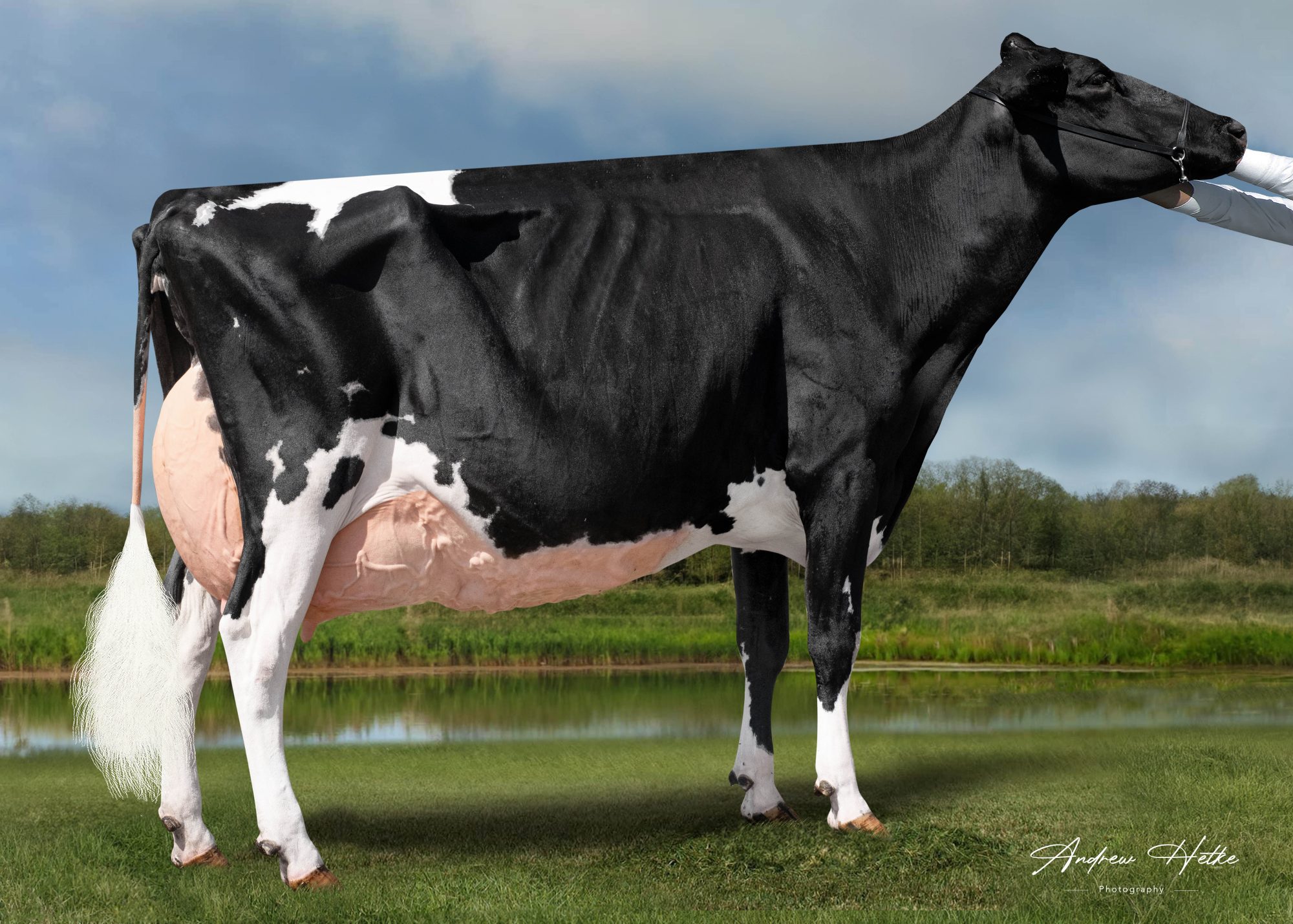
Oakfield Solomon Sunset-ET has been named the 2025 Star of the Breed by Holstein Association USA. Sunset is owned by Jonathan and Alicia Lamb of Oakfield, New York. Photo Credit: Andrew Hetke Photography

Holstein Association USA just handed its top honor to a cow who wasn’t supposed to come home again. Oakfield Solomon Sunset-ET EX-96 2E is the 2025 Star of the Breed—bred by Jonathan and Alicia Lamb at Oakfield Corners Dairy in western New York, sold to Adam Liddle in 2019, and bought back three years later when it became obvious she was the one that got away.

This isn’t a lifetime achievement handshake. The Star of the Breed is the only award in the Registered Holstein® world that forces a cow to deliver in the barn and the ring—top-five at a National show, a completed lactation in the last year, TriStar enrollment, and an official classification score. No split-decision winners.

The Numbers That Got Her There

Sunset’s qualifying five-year-old record is the kind of line most barn managers would frame:

  • 51,710 lbs milk
  • 2,087 lbs fat at 4.0%
  • 1,674 lbs protein at 3.2%
  • Third, Aged Cow Class, 2025 Northeast Spring Holstein Show
  • 178,000+ lbs lifetime milk and still counting

“The cow milks like crazy,” Alicia Lamb says. “She’s a beautiful cow—one of our greatest show cows we’ve had over the years.”

Show Herd Manager Jamie Black, who looks after her every day, puts it plainer: “She’s a cow that grabs your attention as soon as you look at her. She looks like a cow that works hard every day and does it easy.”

The Buy-Back Story

Start with the dam. The Lambs bought Bella-Rosa GW Sara-ET EX-96 3E at the 2013 National Holstein Convention Sale—a cow Alicia describes as “not the prototypical show cow at the time. She wasn’t super tall. But she was just perfectly balanced.” Sara later did her damage at Madison in her later years.

By 2019, Sara had thrown a fall group of Solomon, Avalanche, and High Octane daughters. Oakfield Corners dropped three of Sara’s fall calves into the ring together at the Spring Sensations Sale on choice. Adam Liddle took first pick—and then agreed to take all of them. Sunset went with him.

The Lambs saw her again as a fresh two-year-old at the Greenwich state show. Asked the price. She wasn’t bred. They walked. When she calved as a three-year-old, they came back and brought her home in 2022.

How often does a breeder get a second shot at a cow that turns into a national champion? Almost never.

Harrisburg, Three Years Running

Jamie doesn’t sugarcoat the early days. “Her first big show, she didn’t pay at the New York State show. We went to Harrisburg and I basically walked her backwards the whole time, because she just was not having any.”

Then she figured it out.

  • 2022 Eastern Fall National — First in class, Grand Champion, Best Bred & Owned, Supreme Bred & Owned
  • 2023 Eastern Fall National — First in class, Grand Champion, Best Bred & Owned
  • 2024 Eastern Fall National — First in class, Reserve Grand (beat by Candy Cane), Best Bred & Owned
  • 2025 Northeast Spring Show — Bred & Owned winner, a full year in milk when the judge questioned it

Three straight Best Bred & Owned titles at Harrisburg. “Probably one of the proudest things we as breeders have in our inventory,” Jamie says.

The Classification Day That Almost Wasn’t

Sunset’s EX-96 moment nearly didn’t happen. “She had been put up once before and had one of her sunset days, where she didn’t want to do anything right,” Jamie recalls. The classifier came back around the next visit. She passed “very easy.”

The tell, Jamie says: “Every time you walk in the barn, she looks the exact same.”

The Pedigree Behind Her

Sunset’s by Solomon—a bull Jonathan describes as “popular for a bit, dropped off, then came back once a few daughters calved.” Behind Sara sits Linette Spend Deed EX-90, and behind her Spending Spirit EX-95, honorable mention All-American Aged Cow. “A lot of All-American in the pedigree. Very deep.”

The Breeding Philosophy

Jonathan isn’t chasing the tallest cow in the tent, and he’ll tell you so.

“We don’t want to have the biggest, but we want to have the most correct. And we certainly want them to have plenty of width and power and strength.”

Jamie’s description of Sunset lines up exactly: “A balanced cow with extremely open, dairy, sweeping rib. Massive cow with a lot of width, not extremely tall, but very dairy, feminine, clean-boned, silky-hided.”

Translation for anyone still stuck on stature: functional type is winning again.

Is She Transmitting?

Early signs say yes. Adam Liddle has an EX Tattoo daughter that keeps gaining points each scoring. The Lambs’ favorite mating so far is Crushable, which produced two daughters inside the top three at National shows in milking form this past year. Every other Crushable daughter they have is still a two-year-old.

“Her calves and heifers in the hutches—they all have the same look,” Jamie says. “Very striking. Deep-ribbed, hard-topped, good-legged heifers.”

Jonathan tempers the hype appropriately. “Those were our first daughters from her. They’re turning three this year, so very young. It’s going to be a lot of fun as more of her daughters calve.”

What’s Next for Sunset

She flushes consistently—not extreme, but “every time we flush, we’re going to get at least one or two calves,” Jonathan says. She’s still milking well. She still looks incredible. The open question in the Oakfield office right now: one more show, or keep her home, happy, and healthy?

“We’ll make a decision fairly soon.”

How the Award Actually Works

Most people nod along at “Star of the Breed” without knowing the filter. Here’s the real one, in place since 2007:

  • Top-five placing at a National Holstein Show
  • Completed lactation within the last year
  • Herd enrolled in the TriStar℠ program
  • Official classification score on file

From the eligible pool, HAUSA runs this calculation:

Combined ME Fat and Protein + Age-Adjusted Classification Score × (Breed Average ME CFP ÷ Breed Average Age-Adjusted Score)

A weighted blend that refuses to let a show queen with mediocre components win, and refuses to let a component monster with a weak udder win either. Both, or nothing.

Oakfield Corners, By the Numbers

Jonathan is a 12th-generation farmer—his family has been farming in the U.S. since arriving from England roughly 200 years ago, most of it in western New York. Today, Oakfield Corners milks about 11,000 cows across four locations: three in western New York, one in western Ohio. The marketing strategy runs on two parallel tracks: gTPI/NM$ index cattle aimed at the next sire dam, and show-cow matings engineered for marketable heifers through sales like Spring Sensations.

Jonathan’s operating principle, straight from the podcast: “Continual improvement. Find the bottlenecks, fix them, move on to the next ones.”

What Recognition Means Here

“It’s humbling,” Alicia says. “For a cow we’ve bred and worked with, and a cow family we really love and appreciate, to be recognized at this level—it’s a great honor for us. A great honor for Sunset.”

Jonathan frames it against Sara’s legacy. “We didn’t bring Sara to national shows because we didn’t think she was big enough at times. Sunset is a little more modern—not one of these huge cows either—but excessive in width and power and strength. That exemplifies the type of cows we’re trying to breed today.”

The Orlando Recognition

Sunset will be officially honored at Holstein Association USA’s 140th Annual Meeting, part of the 2026 National Holstein Convention in Orlando, Florida, June 22–25. Registration is open through May 20, with two new all-inclusive packages this year. Details at holsteinconvention.com. Deeper profile in the Spring 2026 issue of The Pulse, plus the full Holstein Connections podcast episode at linktr.ee/holsteinconnections.

For the Lambs, Jamie Black, and anyone still arguing that balanced, correct, hard-working cows don’t win anymore—Sunset just made the case louder than any catalog page could.

The Sunday Read Dairy Professionals Don’t Skip.

Every week, thousands of producers, breeders, and industry insiders open Bullvine Weekly for genetics insights, market shifts, and profit strategies they won’t find anywhere else. One email. Five minutes. Smarter decisions all week.
NewsSubscribe
First
Last
Consent

16 Straight Years: The Kestells Headline Holstein USA’s 2025 Herds of Excellence

Sixteen years, 80-ish cows, and a 39,430-lb ME average with 1,707 fat – the Kestells just made the Herds of Excellence list again, alongside Fustead and Doorco. All three are Wisconsin.

Wisconsin swept Holstein Association USA’s 2025 Herds of Excellence list, with three Registered Holstein® operations — Fustead, Doorco, and Ever-Green-View — clearing the bar on both conformation and production. The headline? Ever-Green-View’s Kestell family just notched their 16th consecutive year on the honor roll, a run that’s starting to look less like a streak and more like a dynasty.

Who Made the Cut

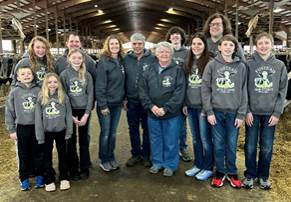
The Fust family at Fustead Holsteins was recognized as a 2025 Herds of Excellence. Pictured are (back row) Shannon, Tyler, Wendy Brian, Aiden, Adam and (front row) Tanner, Savannah, Sarah, Darleen, Jennifer, Connor, and Bailey.

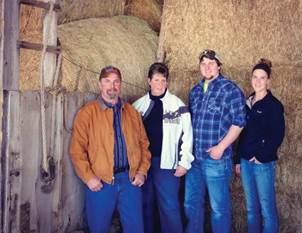
The Vandertie family at Doorco Holsteins has been named a 2025 Herds of Excellence. Pictured are Dan, Julie, Austin and Bridget.

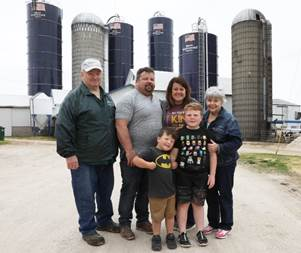
The Kestell family at Ever-Green-View Holsteins, LLC has been named a 2025 Herds of Excellence for the sixteenth time. Pictured are (back row) Tom, Chris, Jennifer and Gin and (front row) Cole and Will.

Three herds, three stories, one state. Here’s how they stacked up:

HerdFamily / LocationDivisionHomebred %AACSME Milk / Fat / ProteinYears Honored
Fustead Holsteins Fust Family, Wausau, WI Large (500+) 73.4% 83.3 32,630M / 1,524F / 1,076P 2nd year
Doorco Holsteins Vandertie Family, Brussels, WI Small (10–99) 100.0% 90.5 37,225M / 1,557F / 1,154P 8th year
Ever-Green-View Kestell Family, Waldo, WI Small (10–99) 98.9% 87.6 39,430M / 1,707F / 1,227P 16th year

Why the Small Herd Numbers Should Make You Blink

Look again at Doorco and Ever-Green-View. A 100% homebred herd classifying at 90.5 points isn’t luck — it’s decades of mating decisions paying compound interest. And Ever-Green-View’s 39,430-pound ME milk average with 1,707 pounds of fat is elite production territory, full stop. These aren’t boutique show herds coasting on type; they’re hitting production numbers that’d make a 2,000-cow commercial operation jealous.

What It Takes to Qualify

Holstein USA doesn’t hand these out. Herds need a recent classification, an age-adjusted classification score (AACS) of 83+, at least 70% homebred genetics, and enrollment in the TriStar℠ production records program. Then come the production hurdles, which get steeper as herd size shrinks:

  • Large (500+): 15% above breed average ME for milk, fat, and protein 
  • Medium (100–499): 20% above breed average 
  • Small (10–99): 25% above breed average 

The logic is straightforward — smaller herds have fewer cows to absorb variability, so the bar climbs.

CEO’s Take

“The Herds of Excellence award celebrates the families who work together, year after year, to build outstanding Registered Holstein herds,” said Holstein Association USA CEO Lindsey Worden, framing the honor around homebred genetics and cow family depth rather than splashy one-off scores.

What’s Next

The three families will be recognized at Holstein USA’s 140th Annual Meeting in Orlando, Florida, with full write-ups landing in the Spring 2026 issue of The Pulse. Registration details for National Holstein Convention are at holsteinconvention.com.

The Sunday Read Dairy Professionals Don’t Skip.

Every week, thousands of producers, breeders, and industry insiders open Bullvine Weekly for genetics insights, market shifts, and profit strategies they won’t find anywhere else. One email. Five minutes. Smarter decisions all week.
NewsSubscribe
First
Last
Consent
Send this to a friend




