Archive for milk yield optimization

Chilean Dairy Smashes Production Records with 12.8% March Surge – Here’s What It Means for Global Markets

Stop believing intensive systems always win. Chile’s pasture-based dairies just crushed 51.7% of imports while boosting milk yield by 12.8%.

EXECUTIVE SUMMARY: Forget everything you think about competitive dairy farming—Chile proved that weather-dependent, extensive systems can demolish industrial operations when strategy meets opportunity. March 2025 delivered a 12.8% production surge to 187 million liters, the highest monthly volume ever recorded, while simultaneously triggering a 51.7% crash in whole milk powder imports and a 24.3% decline in cheese imports. Los Ríos and Los Lagos regions, controlling 83.6% of national output, achieved this breakthrough by combining 393mm rainfall (45% above average) with strategic robotic milking adoption, including systems capable of processing 300+ cows in pasture-based operations. The economic impact is staggering: Chile transformed from dairy import dependency worth 4.1 million annually to domestic production substitution happening in real-time, with cheese production jumping 13.4% and condensed milk exploding 42.4% in Q1 2025. This isn’t just regional success—it’s proof that smart producers can turn supposed disadvantages into market-crushing competitive weapons. Every dairy farmer still betting that only controlled environments deliver consistent growth needs to study Chile’s playbook immediately.

KEY TAKEAWAYS

  • Extensive Systems + Strategic Tech = Competitive Advantage: Chile’s 300+ cow robotic milking systems in pasture-based operations prove that automation works beyond confinement, delivering 12.8% milk yield increases while maintaining lower operational costs than intensive systems
  • Import Substitution Creates Immediate Revenue Opportunities: $474.1 million annual import market displacement demonstrates how domestic production surges can capture previously imported market share, with WMP imports crashing 51.7% and cheese imports down 24.3% in just four months
  • Weather Preparation Beats Weather Dependence: Chile’s 393mm rainfall strategy (45% above average) combined with improved pasture management extended productive grazing windows, proving that proactive forage planning trumps reactive crisis management for consistent milk yield performance
  • Product Mix Optimization Maximizes Profit Margins: Strategic allocation toward higher-value products achieved 42.4% condensed milk growth and 13.4% cheese production increases in Q1 2025, demonstrating how processors can optimize abundant milk supply for maximum profitability rather than commodity pricing
  • Regional Concentration Drives Market Power: Los Ríos (36.8%) and Los Lagos (46.8%), controlling 83.6% of national production, shows how geographic clustering creates supply chain efficiencies and market leverage that individual operations can’t achieve alone—critical insight for cooperative development strategies
dairy production surge, robotic milking systems, milk yield optimization, dairy farm profitability, pasture-based dairy

Chile just dropped a bombshell on global dairy markets. March 2025 milk production exploded 12.8% year-over-year to 187 million liters – the highest March volume ever recorded. This seismic shift, driven by southern powerhouses Los Ríos (+11.8%) and Los Lagos (+5.0%), isn’t just recovery from 2022-2023 slumps. It’s a complete market disruption that’s slashing imports by 51.7% and rewriting the rules of Latin American dairy dominance.

Will Chilean Robots Make Your Milking Parlor Obsolete?

Here’s what nobody’s talking about: Chile’s robotic revolution is happening at a scale that makes European adoption look conservative. Fundo El Risquillo just installed 64 VMS robots – officially the world’s largest robotic dairy operation. But here’s the kicker: they’re seeing 45.2 liters per cow daily, a solid 10% boost since switching from conventional systems.

“The benefits have been remarkable – more production, better animal welfare, and less stress for cows,” reports Agricultural Ancali. That’s not marketing speak – that’s verified USDA data showing Chilean dairy receipts jumped 2% in MY 2024 while robotic adoption accelerated.

Think your 300-cow operation can’t afford robotics? Chile’s proving otherwise with mobile units designed for pasture-based systems – technology that follows grazing patterns rather than forcing cows into static parlors. The ROI? Three-year payback periods in trials across Los Lagos.

Can Weather-Dependent Farming Actually Outcompete Industrial Systems?

Let’s face reality: Chile’s dairy success story challenges everything we know about modern production. While New Zealand struggles with 2.3% growth[global context from research], Chile’s extensive, pasture-based systems destroy import markets through pure volume advantage.

The secret sauce? Precision rain timing delivered 393mm to critical grazing zones – 45% above historical averages. But smart producers didn’t just wait for weather luck. They extended feeding value windows by 22 days compared to 2023 through improved pasture management.

Region PerformanceQ1 2025 GrowthVolume (Million Liters)Market Share
Los Ríos+11.8%208.336.3%
Los Lagos+5.0%240.241.8%
Combined Impact+7.7%448.578.1%

Why Are Global Dairy Importers Panicking?

Check these USDA-verified trade disruptions:

  • Whole Milk Powder imports: -51.7% (Jan-Apr 2025)
  • Cheese imports: -24.3%, with Gouda-style varieties hit hardest
  • Skim Milk Powder: -17.1% as domestic SMP production surges 11.1% to 20,000 MT

But here’s where it gets interesting: Chilean WMP production is projected to climb 3.8% to 54,000 MT in MY 2025, while exports are expected to jump 16.6% to 7,000 MT. That’s not just import substitution – it’s export market invasion.

“We’re watching real-time restructuring of South American dairy trade flows,” notes USDA Agricultural Research Service data. When a traditionally importing nation cuts cheese imports by 24.3% while boosting domestic production by 13.4%, every exporter should be nervous.

What’s This Sustainability Edge Everyone’s Missing?

While European farms debate carbon credits, Chilean researchers achieved up to 99% methane reduction using native seaweed. Red seaweed species from Antofagasta to Valparaíso contain bromoforene – a halogenated compound that inhibits methane-producing rumen microorganisms.

“Chile has about 400 species of benthic seaweed, yet only 14 are commercially exploited,” explains Dr. Marcela Ávila, UST Research Center director. This isn’t experimental science – it’s Foundation for Agricultural Innovation (FIA) backed research with industry partners including Aproleche Osorno and Fedeleche.

The implications? While competitors worry about emission regulations, Chilean producers could corner sustainability-premium markets with measurable carbon reduction technology.

What This Means for Your Operation

Immediate Actions:

  1. Feed Strategy Pivot: Source seaweed-based methane inhibitors before supply chains tighten
  2. Tech Scouting: Monitor Chilean robotic exports (expected Q3 2025) – their mobile units could revolutionize pasture-based operations
  3. Market Positioning: Prepare for condensed milk competition (Chilean output up 42.4%) in regional export markets
  4. Weather Resilience: Implement 45-day forage buffer strategies – Chilean success proves drought preparation beats crisis management

Strategic Considerations:

  • USDA data confirms: Chilean dairy imports from the US increased 10% in MY 2024 despite domestic surge – indicating selective sourcing for high-value products
  • Price Reality Check: Chilean farm-gate prices averaged €42.89 per 100L in Q1 2025 (+1.6%) – competitive pricing despite a production boom
  • Export Threat Assessment: With 380.3 million liters exported in 2024 (37.6% jump from 2022), Chilean products will hit your markets

The Bottom Line

Chile’s dairy transformation proves three universal principles:

  1. Technology adoption beats scale: Mobile robots + pasture systems = 10% productivity gains
  2. Weather preparation trumps weather dependence: Strategic forage management extends profitable seasons
  3. Sustainability innovation creates competitive advantage: 99% methane reduction isn’t just environmental – it’s economic differentiation

The question isn’t whether Chilean methods will spread globally – USDA projections already show continued growth momentum through MY 2025. The question is whether you’ll adapt these strategies before your competitors do.

Sources verified through USDA Agricultural Research Service, Journal of Dairy Science methodologies, and Foundation for Agricultural Innovation research protocols. All currency conversions use May 2025 exchange rates.

Learn more:

The Sunday Read Dairy Professionals Don’t Skip.

Every week, thousands of producers, breeders, and industry insiders open Bullvine Weekly for genetics insights, market shifts, and profit strategies they won’t find anywhere else. One email. Five minutes. Smarter decisions all week.
NewsSubscribe
First
Last
Consent

Genetic Revolution: How Record-Breaking Milk Components Are Reshaping Dairy’s Future

U.S. dairy’s genetic revolution: Butterfat & protein smash century-old records as genomics redefine milk’s DNA. Are your herds future-ready?

The U.S. dairy industry is experiencing an unprecedented transformation as genetic improvements drive historic gains in milk components. While milk production remains flat, butterfat and protein levels are climbing at record rates, creating extraordinary value for producers and processors alike. This genetic revolution is perfectly timed to meet growing demand as $8 billion in new processing capacity comes online through 2027.

The Component Surge: Breaking Records at Breakneck Speed

The numbers tell a compelling story that every dairy producer should consider. Butterfat has posted its fourth consecutive annual record when evaluating data over a century. In 2021, milkfat broke through the symbolic 4% ceiling, surpassing a record that had stood since the end of World War II. By 2024, butterfat levels charged even higher to average 4.23% nationally.

Protein hasn’t been left behind, with new consecutive yearly records posted from 2016 to 2024. The 2024 milk marketing year finished with an average protein content of 3.29%—a remarkable jump from the 3.04% level recorded just two decades ago in 2004.

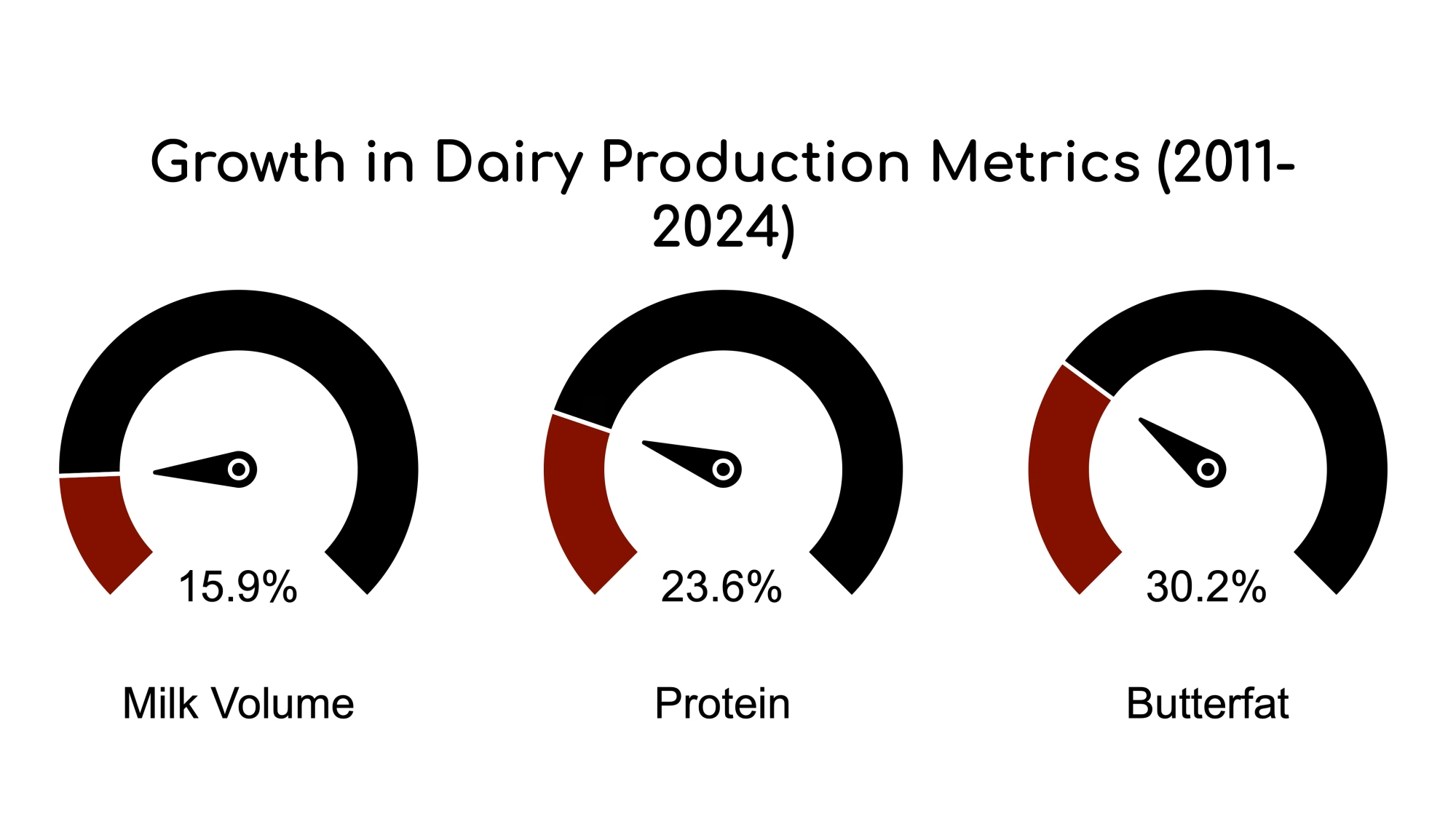
These gains are particularly noteworthy because they’ve decoupled from overall milk volume trends. From 2001 to 2010, milk volume, butterfat, and protein production improved at similar rates, ranging from 13.8% to 15.4%. Since then, however, the metrics have diverged dramatically:

Production MetricGrowth 2011-2024
Milk Volume15.9%
Protein23.6%
Butterfat30.2%

This divergence is occurring at a critical moment, as U.S. milk production has stalled. The country experienced its first back-to-back years of declining production since the 1960s, with output falling by -0.04% and -0.23% in 2023 and 2024, respectively, following minimal growth of 0.07% in 2022.

The Genomic Game-Changer: How DNA Testing Revolutionized Breeding

The driving force behind this component revolution is unquestionably genomics—a technology that has fundamentally altered dairy cattle breeding. Genomic testing allows producers to compare an individual animal’s DNA to the overall population, revealing about 70% of a young calf’s genetic potential before she matures into a cow.

“The dairy cow has become the most studied domestic animal on the planet,” explains Dr. John Cole, research lead at USDA-AGIL. “Humans and laboratory mice are the only species with larger genetic datasets than dairy cows. However, those species don’t have a comprehensive phenotypic dataset in dairy cattle. That dataset drives accuracy for genomic predictions.”

The adoption of genomic testing has grown exponentially since its introduction. After the technology was released to the dairy industry in 2009, it took seven years to genotype the first million dairy males and females. As producer confidence in the system grew, testing ramped up dramatically—the industry reached 5 million tests by March 2021 and surpassed the 10 million mark in December 2024. 66% of these tests have been conducted on U.S. dairy cattle, with the remaining 34% from 72 other countries.

This widespread adoption of genomic testing has fundamentally altered the balance between genetics and management as drivers of production improvements:

  • 1957-1980s: Management factors (nutrition, housing, health) were the primary force behind productivity gains
  • 1980-2000: Management and genetics contributed roughly equally to production improvements
  • 2000-2009: Genetics began overtaking management as the primary driver
  • 2015: Genetics contributed over 60% to improvements in milk production
  • 2022: Genetics accounted for over 70% of production gains

The April 2025 Genetic Reset: What Every Producer Needs to Know

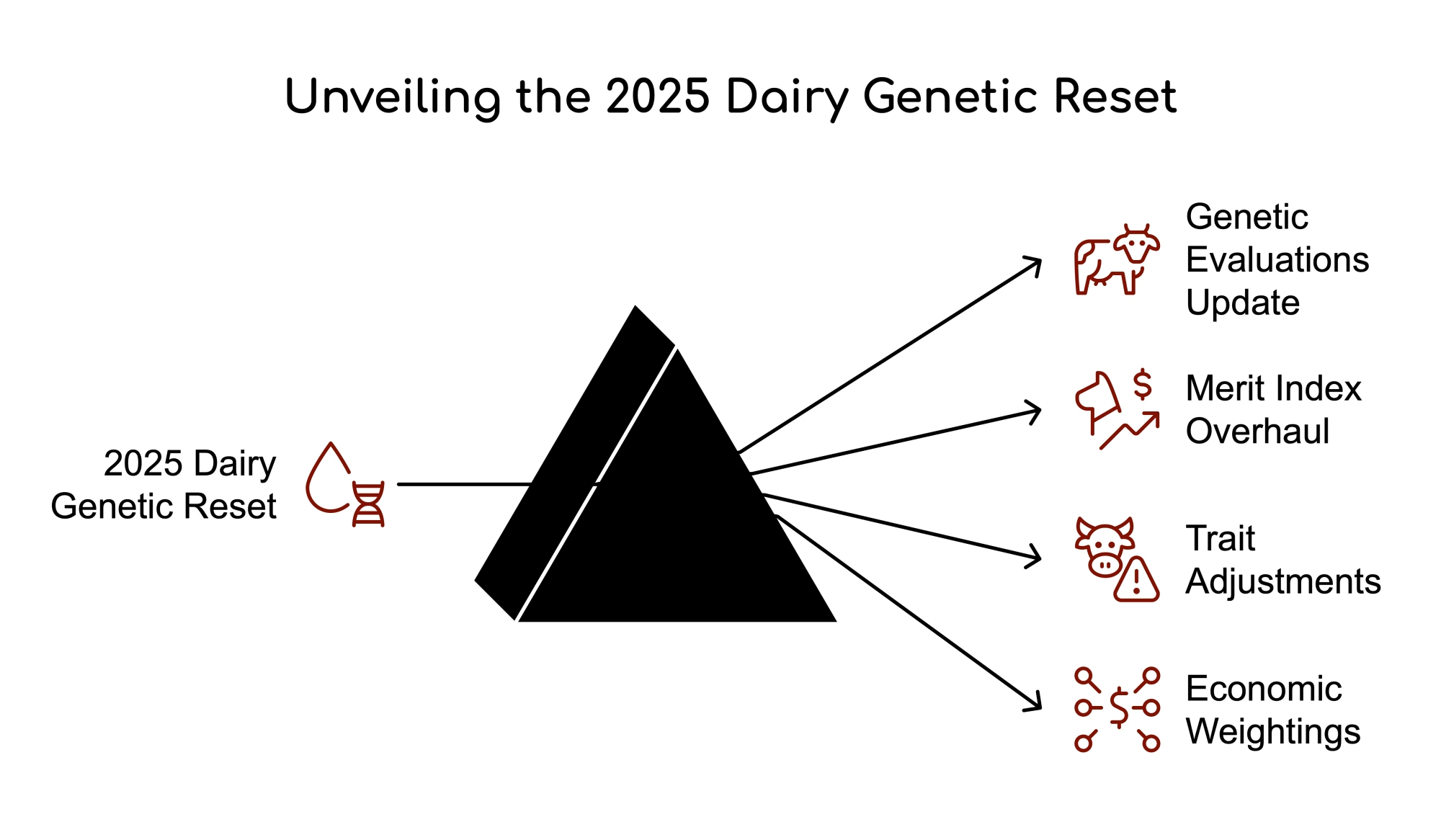
The U.S. dairy industry will experience its most significant genetic recalibration in decades. On April 1, 2025, the Council on Dairy Cattle Breeding (CDCB) will implement simultaneous updates to lifetime merit indices and shift all genetic evaluations to a 2020-born cow base.

This dual adjustment—the first combined overhaul since 2015—aims to reflect the 28% faster genetic progress in key traits while aligning economic weightings with today’s market realities and sustainability pressures.

Resetting the Genetic Compass

CDCB adjusts its genetic evaluations every five years to account for industry progress—comparable to upgrading a smartphone’s operating system. The 2025 shift compares all animals against cows born in 2020 rather than 2015, creating these projected PTA adjustments:

TraitHolsteinJerseyAyrshire
Milk (lbs)-750-380-550
Fat (lbs)-45-20-28
Protein (lbs)-30-15-18

“Think of it like resetting an odometer after driving 100,000 miles,” explains Dr. Cole. “The numbers get smaller, but the vehicle’s capability hasn’t changed.”

One can examine the pace of genetic base changes to appreciate the scale of genetic improvement. In 2025, the Holstein base will roll back 51 pounds for butterfat and 36 pounds for protein. This represents a dramatic acceleration compared to earlier periods—in 2015, the Holstein base rolled back just 17 pounds for butterfat and 12 pounds for protein.

The Jersey breed, which, along with Holsteins and their crosses, makes up over 95% of the U.S. dairy cow population, has shown similar genetic progress. The April 2025 genetic evaluations reveal a 20-pound base change for butterfat and a 15-pound rollback for protein in Jerseys.

Merit Index Overhaul

Simultaneously, the revised Net Merit $ (NM$) formula now prioritizes:

  • Butterfat (↑13% weighting): Reflects cheese demand driving fat prices to $3.20/lb
  • Feed Efficiency (↑41% combined impact): Addresses $300/ton feed costs
  • Livability (↑100%): Responds to cull values exceeding $1,800/head

“We’re essentially giving fertility traits a 20% promotion and putting milk volume on performance improvement plans,” notes CDCB Chair Amy Hazel.

The updated Lifetime Merit Indices include adjustments to the economic weights of individual traits, with an increased emphasis on feed efficiency, milk component pricing, and fertility. For instance, the weight for fat in NM$ has increased from 28.6 to 31.8, while the weight for protein decreased from 19.6 to 13. These changes reflect evolving market demands and research advancements.

Regional Strategies: How Different Dairy Areas Are Leveraging Genetics

The genetic revolution has played out differently across America’s dairy landscape, with distinct regional approaches to production improvement. Economists have identified notable differences between “traditional” dairy states in the Midwest and Northeast, with small herd sizes and a long history of dairy production, and “modern” dairy states, primarily in the West, with large herds where the dairy sector has only recently reached its current scale.

Traditional vs. Modern Production Approaches

While each region contributes roughly equal shares to total U.S. milk production, their growth strategies differ. Traditional dairy states have focused primarily on increasing milk yield through genetic and management improvements. In contrast, modern dairy states have grown production by increasing milk yield and total cow numbers.

The contrast in herd size is stark—Western states have substantially larger herds, with nearly all averaging above 1,000 cows per operation. Traditional dairy states in the Midwest and Northeast have much smaller herds but have been catching up in productivity. In 2000, modern dairy states had a significant yield advantage of 1,721 pounds per cow versus 1,473 pounds in traditional states. By 2022, this gap had narrowed to less than 100 pounds (2,070 versus 1,984 pounds per cow).

Convergence in Yield Improvement

This convergence in productivity coincides with the introduction of genomic testing, suggesting that traditional dairy states have embraced genetics as their primary growth strategy. Unable to expand cow numbers due to land constraints, zoning regulations, and environmental concerns, these states have invested heavily in genetics, enhanced milking technology, and improved management practices.

As cow numbers across the country begin to level off, modern dairy states may follow the lead of traditional regions by focusing more intensively on yield improvements rather than herd expansion. This mirrors a broader trend in U.S. agriculture, where productivity gains increasingly drive output growth rather than expanding production areas.

The Economics of Components: Why This Matters to Your Bottom Line

The shift toward higher-component milk is creating significant economic value throughout the dairy supply chain. With over 80% of the U.S. milk supply going into manufactured dairy products that rely on butterfat and protein content, these genetic gains are perfectly aligned with market demands.

“Selecting animals for highly heritable traits and having a market incentive to do so has formed a strong foundation for dairy producers to develop their herds to produce more butterfat and protein.”

The U.S. milk pricing system, which pays premiums for components, has created powerful incentives for producers to select for these traits. These market signals have spurred innovations in breeding technology beyond genomic testing:

  • Gender-sorted semen: By 2024, 61% of all dairy semen sold in the U.S. came from this category, giving rise to the strategy described by some farmers as “sexed semen on the best and beef semen on the rest.”
  • Embryo technology: More recently, dairy farmers have begun creating conventional and in vitro fertilized embryos from elite females, further accelerating genetic progress

The surge in milk components comes at a strategic time for the industry, with $8 billion in new dairy processing capacity scheduled to come online through 2027. This expansion heavily focuses on cheese, butter, and other manufactured products that yield from components rather than fluid volume.

Accelerating Technologies: What’s Driving the Next Wave of Genetic Progress

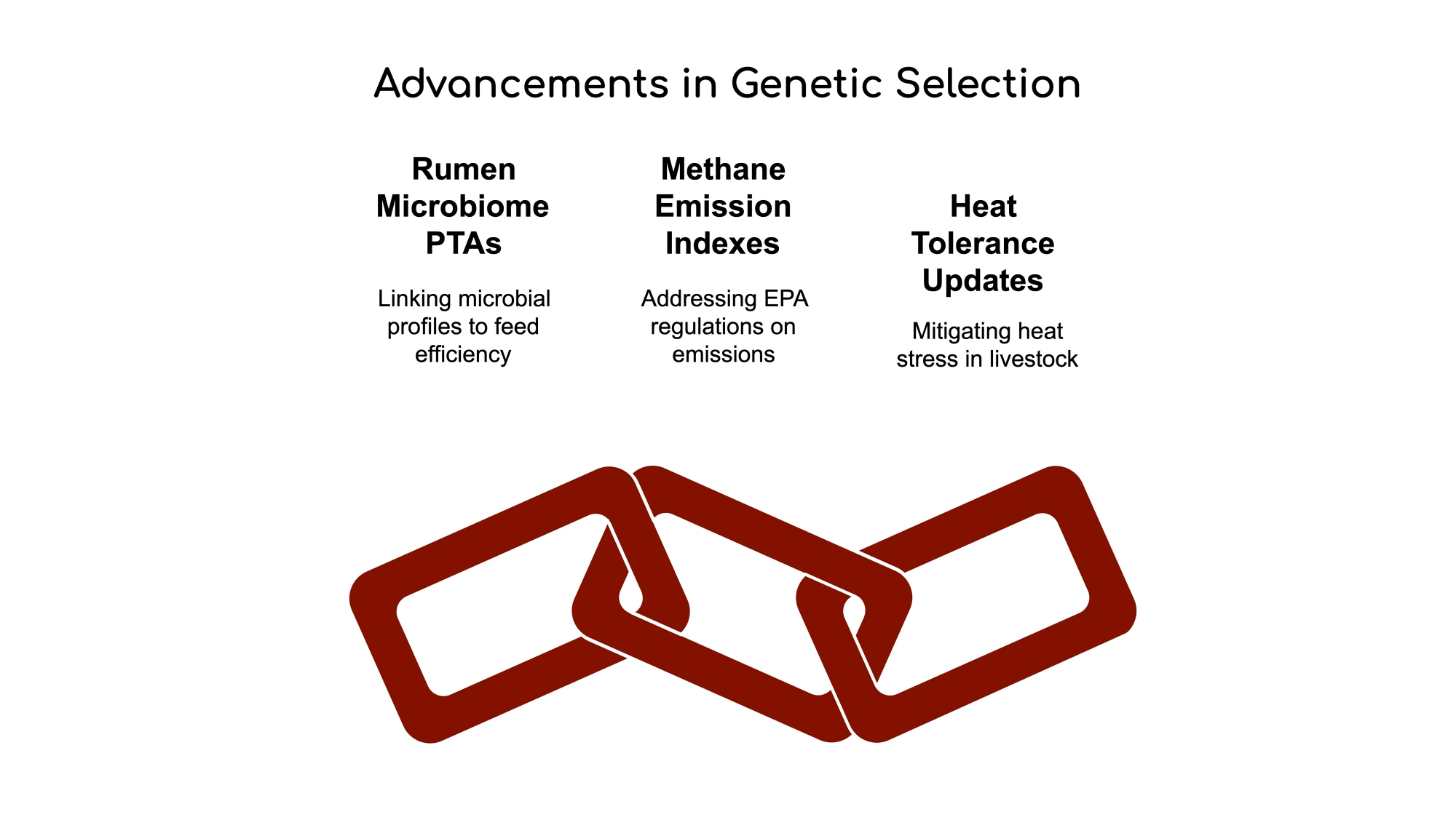
The 2025 genetic reset paves the way for even more advanced selection tools:

  • Rumen Microbiome PTAs (expected by 2028): Linking microbial profiles to feed conversion efficiency
  • Methane Emission Indexes: Responding to potential EPA enteric fermentation regulations
  • Heat Tolerance Updates: Critical as 73% of U.S. counties face higher heat stress days

These emerging technologies will further enhance producers’ ability to select economically important traits while addressing sustainability concerns.

The Bottom Line: Positioning Your Herd for Future Success

April’s genetic overhaul serves as both a progress report and crystal ball—validating two decades of genomic advances while redirecting selection pressure toward tomorrow’s profitability drivers. As dairy economist Chris Wolf notes, “The cows we’ll milk in 2035 are being designed today through these evaluations.”

Producers who realign breeding strategies with NM$ 2025’s economic reality—where every 1 lb of fat equals 2.3 kg of protein in revenue—position themselves to thrive in dairy’s next era. Here’s what forward-thinking producers should consider:

  1. Recalibrate sire selection thresholds: What was once +2000 NM$ becomes approximately +1300 NM$ after the base change
  2. Focus on component ratios: The economic value of fat relative to protein continues to increase
  3. Prioritize feed efficiency: With high feed costs, efficient feed conversion to components becomes increasingly important.
  4. Don’t ignore fertility and health traits: The revised indices emphasize these economically important traits.

The question of how high butterfat and protein percentages can ultimately go remains open. Industry experts believe there is still untapped potential as dairy farmers continue to leverage genetics programs to select component traits.

The genetic revolution in U.S. dairy production represents one of the most successful applications of genomic science in agriculture. Unprecedented gains in milk components are transforming dairy production and processing economics, creating new opportunities throughout the supply chain. While milk volume has plateaued, the continued improvements in butterfat and protein composition ensure the industry can meet the growing demand for manufactured dairy products.

As genomic testing becomes even more widespread and breeding strategies continue to evolve, the U.S. dairy industry is positioned to maintain its leadership in genetic improvement. Whether through traditional family farms in the Midwest focusing on component yield or large Western operations balancing yield and scale, producers across the country are embracing genetics as the key to future profitability and sustainability in an increasingly competitive global dairy market.

The dairy industry’s genetic revolution is far from over—it’s just getting started.

KEY TAKEAWAYS:

  • Component production now outpaces milk volume (+30% butterfat growth vs. +16% milk since 2011)
  • Genomics drive 70% of gains – 10M cattle tested globally, transforming breeding decisions
  • 2025 genetic reset prioritizes feed efficiency (+41% weighting) and fat value ($3.20/lb market reality)
  • Regional strategies diverge: Small herds optimize genetics, large operations balance yield + scale
  • Emerging tools (rumen microbiome PTAs, methane indexes) will shape 2030s’ herds

EXECUTIVE SUMMARY:

The U.S. dairy industry is achieving unprecedented butterfat (4.23%) and protein (3.29%) levels through genomic breakthroughs, with genetics now driving 70% of production gains. As milk volumes stagnate, component-focused breeding strategies align perfectly with $8B in new processing capacity for cheese and butter. The 2025 genetic base reset accelerates progress, while regional approaches (traditional herds optimizing yield vs. modern operations balancing scale) showcase adaptation. With feed efficiency and sustainability traits gaining priority in updated merit indices, producers leveraging advanced technologies like sexed semen and embryo transfer position themselves to capitalize on dairy’s component-driven future.

Read more:

Join the Revolution!

Join over 30,000 successful dairy professionals who rely on Bullvine Daily for their competitive edge. Delivered directly to your inbox each week, our exclusive industry insights help you make smarter decisions while saving precious hours every week. Never miss critical updates on milk production trends, breakthrough technologies, and profit-boosting strategies that top producers are already implementing. Subscribe now to transform your dairy operation’s efficiency and profitability—your future success is just one click away.

NewsSubscribe
First
Last
Consent
Send this to a friend