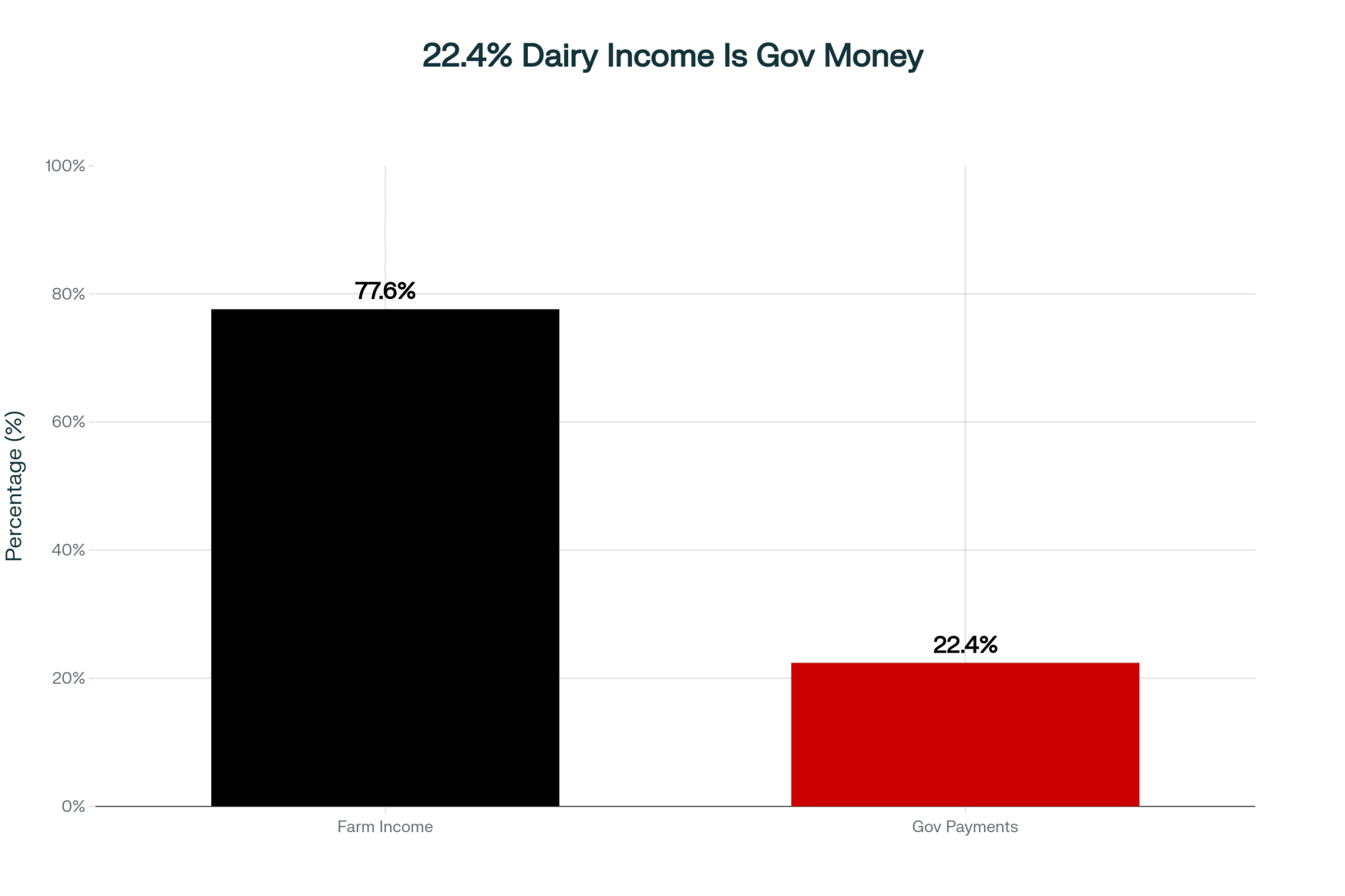
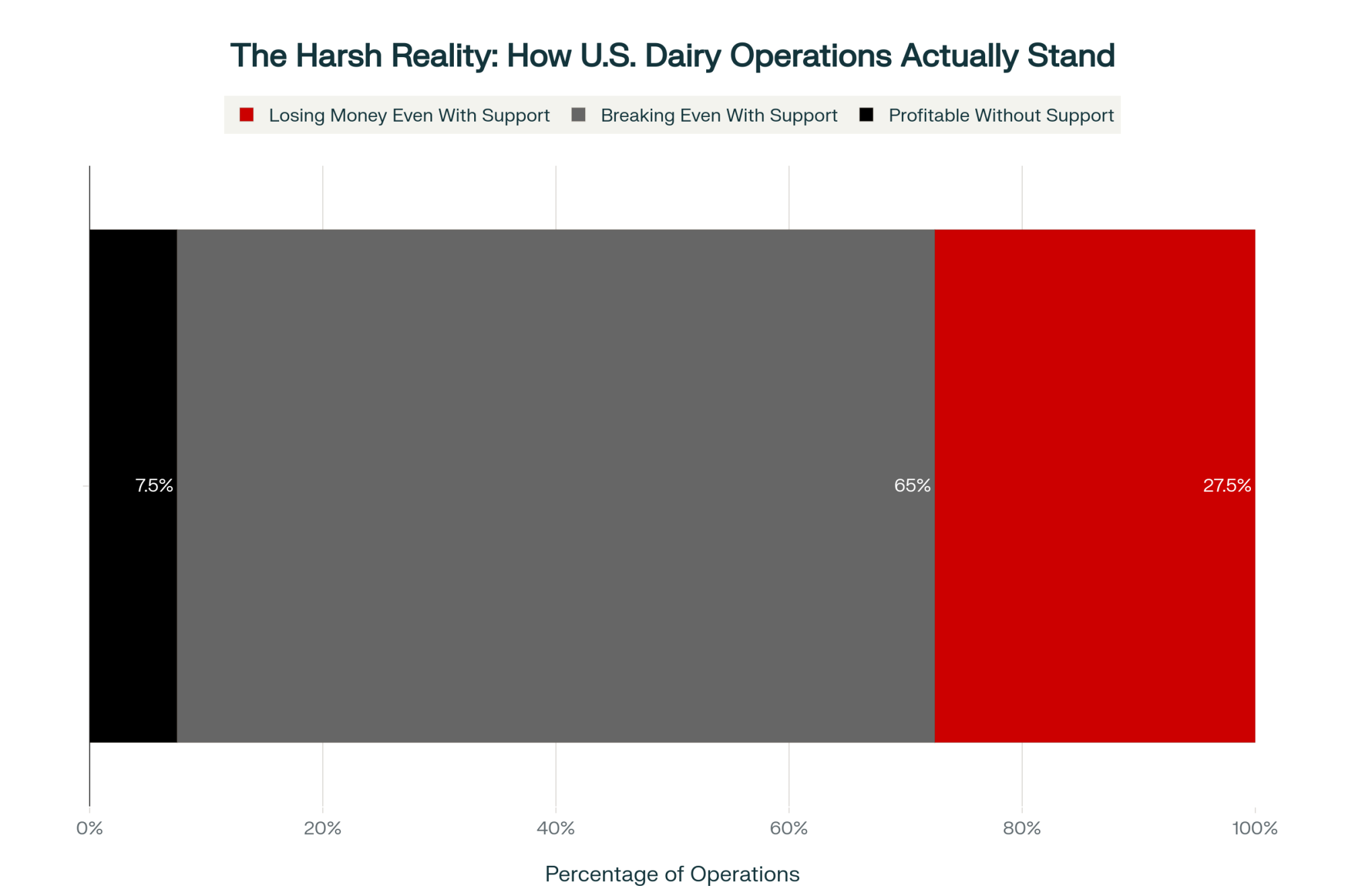
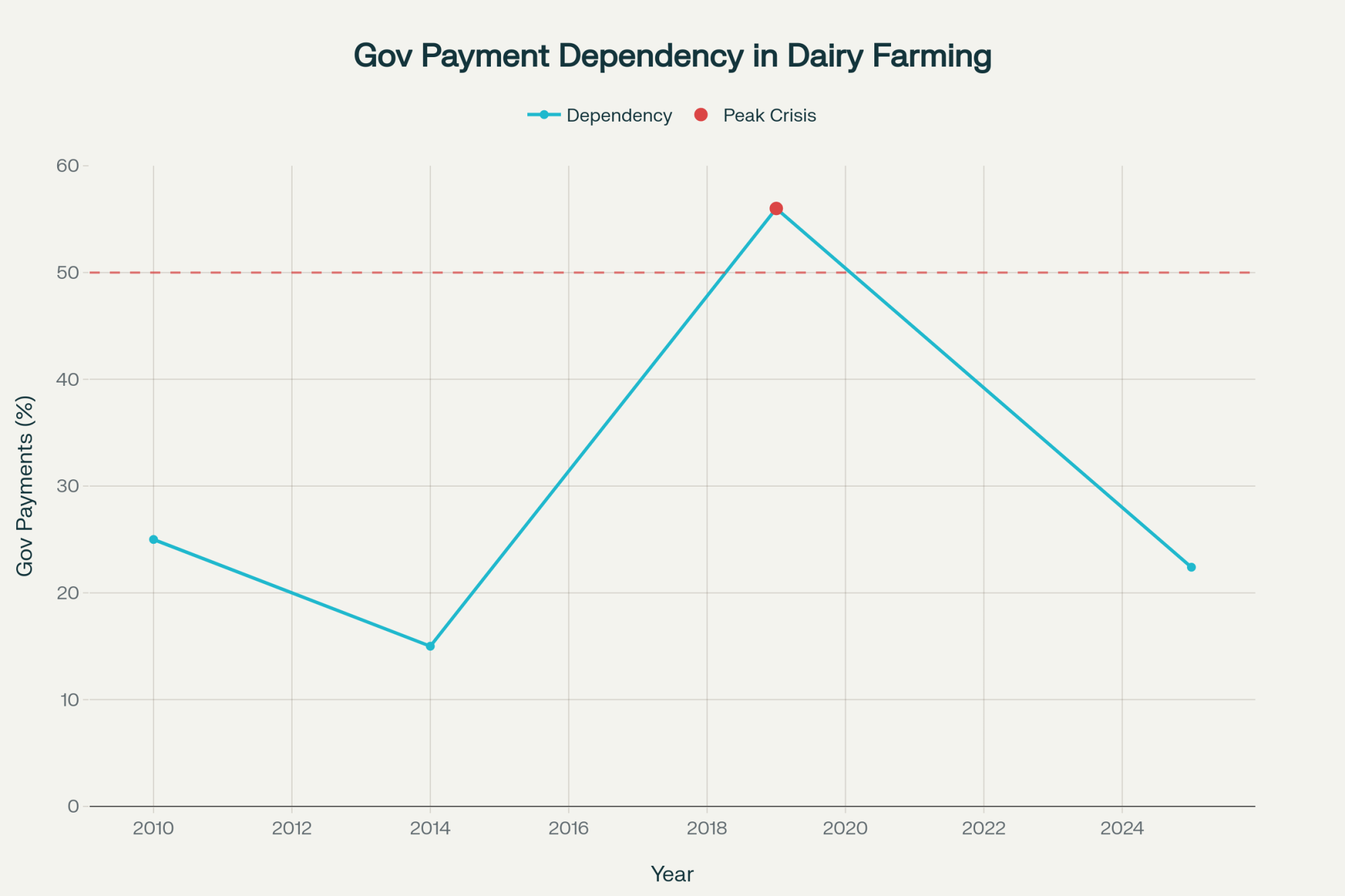
3 out of 4 dairies bred beef-on-dairy. Now 800,000 heifers are missing, and replacements are $3,010 a head. Where does your herd sit in that math?
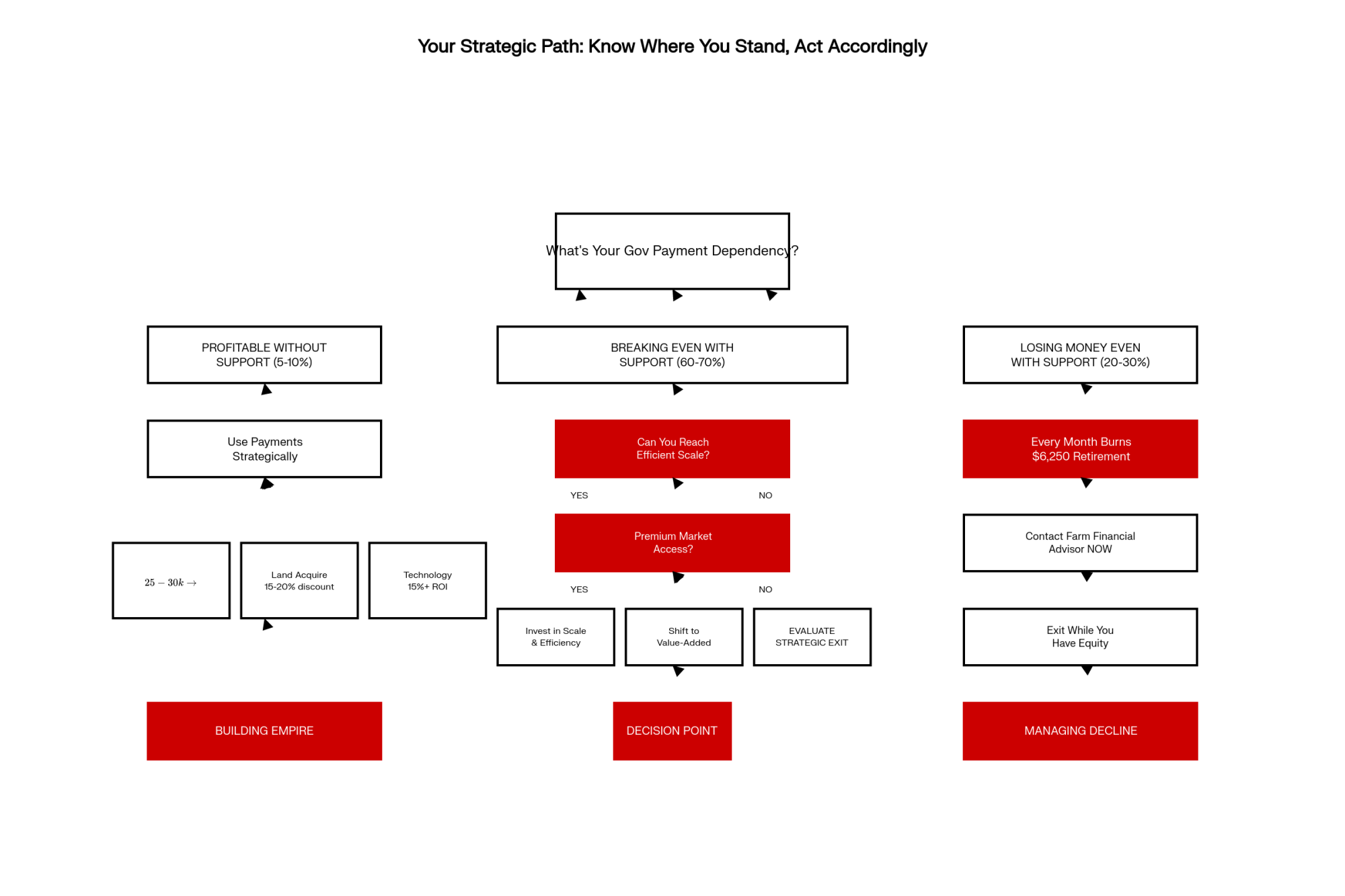
Executive Summary: If you chased beef‑on‑dairy premiums in 2022–23, you’re now buying replacements in a world where heifer prices jumped from $1,140 in 2019 to $3,010 in mid‑2025 and often top $4,000 in high‑demand regions. At the same time, U.S. replacement inventories have dropped to their lowest level since 1978, leaving roughly 800,000 “missing” heifers across 2025–2026 and making it harder—and more expensive—to keep herds at size. For a 200‑cow herd turning over 35–38% per year, that shift alone can mean an extra $126,000–$144,000 in replacement capital over the next two years if you have to buy those animals instead of calving them in. This piece breaks your options into four concrete paths—breeding rebalance, reduced culling, strategic exit, and processor lock‑in—and spells out where each helps, where it backfires, and the thresholds (like an 18% pregnancy rate or culling below 30%) that should force a rethink. It also links your barn‑level math to the bigger picture: beef‑on‑dairy calves now account for 12–15% of fed beef harvests, and roughly $10 billion in new dairy plants are scheduled to come online by 2027, keeping processor demand for reliable milk flows high even as replacements stay tight. The goal is simple: give you enough numbers and clear decision rules to decide whether your 2026 breeding sheet keeps you in the group processors treat as long‑term partners—or in the group scrambling for $3,000+ heifers with everyone else.
Ken McCarty of McCarty Family Farms still remembers trying to sell Holstein bull calves: “Two for $5″—with no takers. That painful baseline explains why dairy producers didn’t hesitate when beef-on-dairy calves started bringing $600, then $1,000, then $1,400 per head. The math seemed obvious. The check was immediate.
But it wasn’t free money. It was a deferred bill. And that bill has arrived.
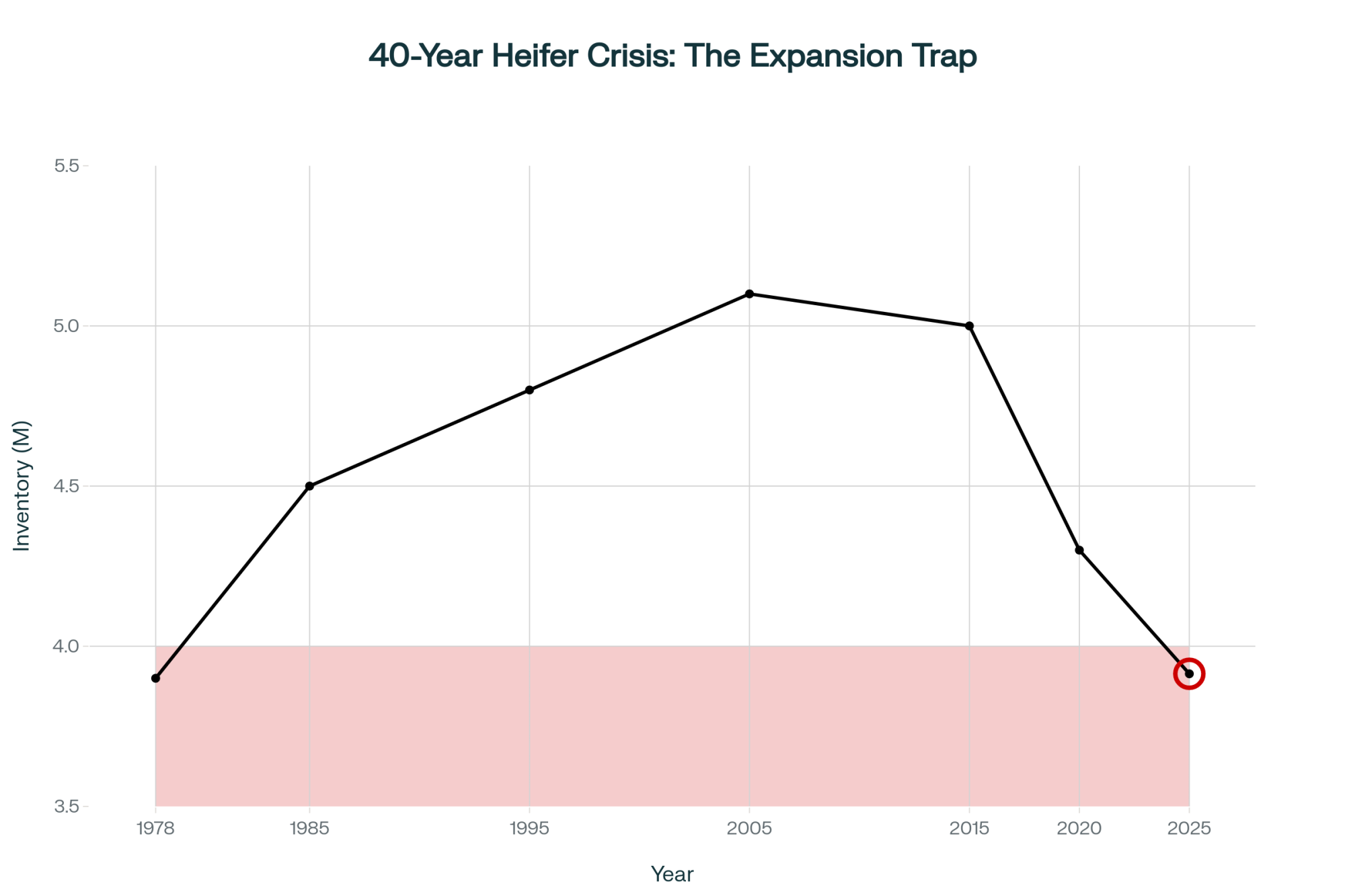
CoBank data shows replacement heifer prices climbed from $1,140 per head in April 2019 to $3,010 by July 2025—with top-quality animals in California and Minnesota auction barns commanding $4,000 or more. USDA’s January 30, 2026, cattle inventory report confirmed the national herd continues to contract. For operations that bred heavily to beef in 2022 and 2023, the pipeline is now empty. For those who maintained balance, a window is opening.
The Scale Nobody Predicted
The adoption curve was staggering. Beef semen sales into dairy herds grew from 1.2 million units in 2010 to 9.4 million units by 2023—roughly 84% of which went into dairy cows, according to a 2024 Purina survey. That same survey found almost three-fourths of U.S. dairy farmers are now actively crossbreeding using beef genetics, with another 16% considering it.
CattleFax puts the production numbers in starker terms: beef-on-dairy calf production jumped from 50,000 head in 2014 to 3.22 million in 2024, with projections reaching 5–6 million head by 2026. These crossbred cattle now account for 12–15% of fed beef harvests.
Every one of those calves was a dairy heifer that wasn’t born.
The Pipeline Math That’s Already Locked In
Sarina Sharp at the Daily Dairy Report flagged in early 2024 that dairy heifer inventories had declined for six consecutive years. USDA’s January 2025 snapshot put milk replacement heifers at 3.914 million head—the lowest since 1978, a full 18% below 2018 levels.
CoBank economist Corey Geiger quantified the gap in an August 2025 report: 357,490 fewer dairy heifers available in 2025, then 438,844 fewer in 2026. Add those up. That’s roughly 800,000 missing replacements across a two-year window. And as Geiger commented: “We don’t see a rebound until 2027, and that will be up 285-thousand, but you’ve got to remember, that’s going to be after 800-thousand fewer heifers”.
Regional variation tells its own story. Wisconsin replacement values jumped 43% year-over-year between October 2023 ($1,990) and October 2024 ($2,850), according to USDA data. Yet Wisconsin actually gained 10,000 heifers while Texas lost 10,000 head. “Watch” on the Northwest (Idaho/Washington), where prices have reportedly hit that $4,000+ “north of the border” threshold. That divergence comes down to processor relationships and infrastructure, not just breeding decisions.
The Beef-on-Dairy Miscalculation
Here’s what producers believed: beef-on-dairy premiums were an additive income. Extra revenue layered on top of normal operations without meaningful trade-offs.
Here’s what actually happened.
When beef-on-dairy calves climbed toward the $1,400 average that Purina’s Laurence Williams cited by 2024-2025, producers weren’t making a one-time decision. They were depleting a pipeline that takes three-plus years to rebuild. Every beef breeding looked like a $900 gain. What nobody penciled in was the replacement heifer that wouldn’t exist three years later—an animal that now costs $1,870 more than it did in 2019.
CoBank’s analysis is blunt: from conception to a cow in the milk string is a “three-plus year proposition”. You can’t undo aggressive beef breeding quickly.
And the 2024 NAAB semen sales data reveals how producers tried to have it both ways. Gender-sorted dairy semen surged 17.9%—an additional 1.5 million units. But beef semen held steady at 7.9 million units. No retreat.
How This Lands on Real Operations
When Mike North of Ever.Ag started seeing two-to-three-day-old beef-cross calves bringing $1,000, his framing captured the logic perfectly: “Why feed an animal for 18 months when the money’s sitting there at day three?”
But North also flagged the inflection point when the math flipped: “Some animals moving in the northwest last week were north of $4,000 an animal. That’s a pretty tall price, and so now, guess what? We’re seeing people starting to switch some of their breeding back to that replacement animal”.
One Minnesota producer’s current allocation illustrates the hedging strategy most operations have adopted: 10% of cows bred to sexed semen, while the rest go to beef; for heifers, 50% bred to sexed semen, while the other half go to beef. That’s not a correction—it’s a bet that partial measures will thread the needle.
Meanwhile, culling rates have collapsed. Dairy farmers have sent 611,600 fewer cows to slaughter since Labor Day 2023, according to CoBank’s analysis of USDA data. That keeps milk flowing but ages the herd.
Running the Numbers: Gross Premium vs. Net Replacement Cost
Here’s the full picture for a typical 200-cow Holstein operation in the Upper Midwest:
The spread:
Beef-cross premium over Holstein bull: ~$750-$1,200/head (2024-2025 market)
Incremental heifer cost increase (2019 vs 2025): ~$1,870/head at national averages
The math: If your replacement ratio means 1.5-2 beef breedings per “lost” heifer, and premiums average $900, you’ve captured $1,350-$1,800 in gross premium. But across the industry, the collective shift toward beef breeding drove replacement heifer costs up $1,870 per head. For a 200-cow operation needing 70-80 replacements annually (35-38% turnover), that gap represents $126,000-$144,000 in additional replacement capital over 24 months—if you can find animals to buy at all.
Metric
Value
Notes
Herd Size
200 cows
Typical Upper Midwest operation
Annual Replacement Rate
35-38%
70-76 replacements needed yearly
Beef-Cross Premium (2024-25)
$750-$1,200/head
Average $900 across regions
Gross Premium Captured
$1,575/replacement
Assumes 1.75 breedings per heifer @ $900
Heifer Cost Increase (2019-2025)
+$1,870/head
From $1,140 to $3,010 national average
Net Gap per Replacement
-$295/head
Premium didn’t cover cost inflation
Total Additional Capital (24 months)
$126,000-$144,000
For 140-152 replacements over 2 years
Critical Time Horizon
2026-2027
When depleted 2022-23 pipeline hits
And here’s the kicker: The $10 billion in new dairy plants are set to come online through 2027, meaning processor demand for milk will keep climbing even as replacement supply stays pinched.
Four Paths Forward—And Where Each Can Backfire
Chris Wolf’s Michigan State analysis of 14,824 farm records found that performance variation among small farms is 38% farm-related compared to only 15% for large farms. Your response to this crisis matters more at 200 cows than at 2,000.
Path 1: Breeding Rebalance
Path 2: Reduce Culling
Path 3: Strategic Exit
Path 4: Processor Lock-In
Best for
Herds that can still course-correct the pipeline
Healthy older cows; buys time
Monthly losses; owners near retirement
Stable herds that can prove supply
Requires
Genomic testing ($15-45/head); sexed dairy on top 35-40%
Transition management; accept lower avg production
Honest market assessment before values erode
Documented 24-month replacement pipeline
⚠️ Backfire risk
Below 18% pregnancy rate, can’t maintain pipeline AND premiums
Failing to deliver on the supply commitment damages the relationship
Key threshold
21-day pregnancy rate ≥20% for optimal beef allocation
Monitor herd age distribution and SCC quarterly
Compare current liquidation value vs. projected 2027 value
Can you document pipeline sustainability?
Path 1 is where the Journal of Dairy Science analysis matters most: beef semen becomes economically optimal when crossbred calf price hits at least 2x dairy calf price, AND herd achieves ~20% 21-day pregnancy rate. ⚠️ Below 18%, limit beef allocation to 50% maximum. Only about 10% of Florida producers use genomic testing, per University of Florida estimates—adoption rates vary significantly by region.
Path 2 carries a hidden cost. Retaining older cows often means rising somatic cell counts, which can erode quality premiums from your processor—compounding financial strain at exactly the wrong time. Worse, when a wave of retained cows exits simultaneously, you’ve traded a gradual shortage for a cliff.
Path 3 isn’t a failure. With beef cattle prices at record highs, liquidating today captures significantly more equity than waiting until the shortage resolves. ⚠️ Waiting preserves optionality but erodes equity if exit becomes forced rather than chosen.
Path 4 is the angle most producers haven’t considered. Strong signals suggest processors expecting 2-3% milk supply growth and getting 0.4% are becoming choosy about who they keep. If you can document pipeline sustainability, you may find yourself first in line for favorable contract terms as competitors struggle to guarantee supply.
Signals to Watch
Heifer inventory trajectory. CoBank projects inventories won’t normalize until 2027 at the earliest. Watch USDA semi-annual reports for evidence that national heifer numbers have stopped declining.
Regional price spreads. The gap between Wisconsin’s $2,850 and Northwest prices “north of $4,000” reflects infrastructure differences, not just supply. Where does your region sit?
Your own replacement math. How many dairy heifer pregnancies must you generate annually to maintain herd size at the target age structure? If you don’t know that number, you can’t evaluate your breeding allocation.
What This Means for Your Operation
Calculate the real cost, not the gross premium. The $900 beef-cross check was real income—but if replacement costs have jumped $1,500+ per head since 2022, determine whether premiums actually offset that increase or simply deferred it
Run your replacement pipeline projection: at current breeding allocation and reproductive performance, will you have the heifers you need in 2028?
If “hard to breed” or “lower producing” remain your primary beef allocation criteria, the room for instinct-based allocation has narrowed sharply
Check your culling rate—if you’ve dropped below 30%, you’re likely masking a shortage rather than solving it—and check your SCC trends while you’re at it
Ask your processor what they value. If you can demonstrate a documented 24-month replacement pipeline, you may be in a stronger negotiating position than you realize
Opportunity signal: Balanced breeding programs with adequate heifer inventory could mean more favorable processor contracts as competitors struggle to guarantee supply
Key Takeaways
The 800,000-head shortage is locked in through 2026. Breeding decisions made today won’t produce milking cows until 2028-2029. The next 18 months are about managing what’s already baked in.
Don’t confuse gross premium with replacement reality. Across the industry, the collective shift drove replacement costs up $1,870 per head. For operations now buying replacements, the premium captured doesn’t come close to covering the increase in costs.
The 18% pregnancy rate threshold matters. Below that level, aggressive beef allocation creates unavoidable replacement shortfalls regardless of premium levels.
$10 billion in new dairy plants through 2027 means processor demand for milk keeps climbing while replacement supply stays pinched. Processors are likely choosing partners rather than just buying milk.
The Bottom Line
The operations that survive this won’t be those who avoided beef-on-dairy—many of the largest, most sophisticated dairies bred heavily to beef. They’ll be the ones who tracked replacement pipeline math while capturing premiums, rather than assuming the check today wouldn’t create a bill tomorrow.
Where does your operation sit on that spectrum—and what does your 2026 breeding sheet say about the answer?
Complete references and supporting documentation are available upon request by contacting the editorial team at editor@thebullvine.com.
High-Value Crosses: The Next Phase of the Beef-on-Dairy Revolution – Breaks down advanced terminal crossbreeding strategies that maximize carcass value without sacrificing your herd’s future. It delivers the blueprints for “Elite Beef” programs that command significantly higher premiums than standard auction barn crosses.
Join the Revolution!
Join over 30,000 successful dairy professionals who rely on Bullvine Weekly for their competitive edge. Delivered directly to your inbox each week, our exclusive industry insights help you make smarter decisions while saving precious hours every week. Never miss critical updates on milk production trends, breakthrough technologies, and profit-boosting strategies that top producers are already implementing. Subscribe now to transform your dairy operation’s efficiency and profitability—your future success is just one click away.
Four breeders made four impossible bets. Every Holstein alive today is the payoff. Here’s what they knew that we forgot.
In 1926, a 69-year-old insurance executive did something that made the entire Holstein world think he’d lost his mind.
T.B. Macaulay—president of Sun Life Assurance, a man who’d spent his career calculating risk down to the decimal point—wrote a check for $15,000 for a single bull. According to the Bank of Canada’s inflation calculations, that’s roughly $260,000 in today’s dollars. For one animal. In a post-WWI economy where farmers were still digging out from the crash.
The old-timers called it insanity. The industry press questioned his judgment.
And here’s the thing—virtually every registered Holstein walking the planet today carries that bull’s blood. That’s not hyperbole. Holstein Canada pedigree records confirm that Johanna Rag Apple Pabst appears in the ancestry of essentially every animal in the modern registered population.
Which got me thinking: where did all this actually come from? We spend so much time staring at genomic indexes and GTPI rankings—debating inbreeding levels and trait selection—that we forget every number on that screen traces back to flesh-and-blood decisions. Made by breeders who couldn’t run a computer simulation to save their lives. They had paper records, sharp eyes, and guts.
So let’s talk about the ones who shaped everything. Four distinct philosophies, five legendary figures—because sometimes the right partnership counts double.
The Actuary Who Outbred Everyone: T.B. Macaulay
T.B. Macaulay: The insurance actuary who treated genetic improvement like a math problem—and solved it with a $15,000 check.
Here’s what made Macaulay different from every other breeder of his era: he didn’t grow up in cattle. No family farm, no inherited wisdom about which bloodlines “nick” well together. According to Sun Life corporate histories, he built one of Canada’s largest insurance companies through rigorous statistical analysis. He came from actuarial science—probability tables and risk calculation.
That turned out to be his superpower.
Picture Mount Victoria Farm in the 1920s. The buildings were functional, the land unremarkable—historical accounts describe it as a sandy plot in Quebec that nobody expected much from. The magic was all in the records. While neighboring operations made breeding decisions based on “well, his grandsire threw nice calves,” Macaulay’s office walls were covered in charts. Milk weights. Butterfat percentages. Daughter comparisons across lactations. They say he’d review those records the way other men read the morning paper—coffee in hand, pencil making notes in the margins.
He was doing progeny testing—evaluating bulls by their daughters’ actual performance rather than the bull’s own appearance—decades before the Holstein Association formalized the practice in the 1930s.
The man treated genetic improvement like a math problem. And he was solving for a specific value: 4% butterfat.
This might seem obvious today. With GLP-1 weight-loss drugs now shifting consumer demand toward protein—something the University of Wisconsin dairy economists have been tracking closely—and component pricing dominating most milk checks, we’re all thinking about what’s in the milk, not just how much of it there is. But in Macaulay’s time? Everyone chased volume. More milk, more milk, more milk. He looked at the numbers and saw where the industry was heading before the industry knew it.
His methods? Aggressive. Linebreeding. Calculated inbreeding. The kind of tight matings that would make some modern breeders nervous—though honestly, with average inbreeding coefficients now exceeding 9% according to CDCB data, maybe we should be having that conversation more openly. But Macaulay understood something crucial: if you want to fix a trait, you concentrate on genetics. You can’t be timid.
Which brings us back to that $15,000 bull—Johanna Rag Apple Pabst, “Old Joe.”
The critics had a field day. Fifteen thousand dollars! In 1926! But Macaulay had done his homework. He’d traced the butterfat genetics through the pedigree, analyzed Joe’s dam and grandam records, and calculated the probability that this bull would sire daughters that hit his 4% target.
He was right. Holstein Canada production records from the era show Old Joe’s daughters consistently met that benchmark. And his genetic influence spread so far that—I’m not exaggerating—it’s essentially impossible to find a registered Holstein today that doesn’t trace back to him.
Think about that next time you’re scrolling through bull proofs.
The Empire Builder: Stephen Roman. From uranium mines to the Royal Winter Fair, he proved that deep pockets are useless without a marketing strategy—and that the show ring is where brands are built.
Two men. Opposite approaches. Roman bought everything. Ormiston bought one cow for $750. Both changed the breed forever—just in completely different ways.
Stephen Roman’s story is pure immigrant ambition. According to Canadian business histories, he arrived from Slovakia with basically nothing, worked the assembly line at General Motors, and somehow—through uranium mining at Denison Mines—became a billionaire by the 1960s. When he turned to Holsteins, he didn’t want to breed good cattle. He wanted to build an empire.
Romandale Farms became exactly that. But Roman was smart enough to know his limitations. He had the capital to buy the best cattle in North America. But he needed someone who could see cattle the way the great ones did. So he hired Dave Houck as herd superintendent—a man people in Ontario breeding circles described as having an almost spiritual connection to Holsteins. An old-timer once told me that watching Houck evaluate a heifer was like watching a sculptor see the statue inside the marble.
Money plus cow sense. That combination is almost unbeatable.
Roman’s real genius was understanding that the show ring wasn’t about ribbons. It was marketing. Every Supreme Champion, every Royal Winter Fair banner—that was brand building. “Through the show ring,” he said, according to accounts from breeders who worked with him, “lay the path to the Holstein mountain-top.”
And his sale tactics? Still copied today. He’d sell elite females in pairs on “choice”—the highest bidder picked one, Romandale kept the other. Record prices and retained genetics. The man understood both sides of the sale ring.
The crown jewel was Romandale Reflection Marquis. “The white male monster,” people called him—not affection, exactly. More like grudging respect mixed with a little fear. In 1964, Marquis topped the Romandale sale at $37,000 to Curtiss Breeding Service—a price documented in Holstein sale records from that era. I heard someone describe watching him enter that sale ring—said you could feel the air change in the building. Everyone knew they were seeing something.
What does Roman teach us now? Look around at successful embryo programs, operations with strong social media presence, and breeders who understand that perception drives demand. Great genetics need great marketing. That hasn’t changed.
Roy Ormiston in the Roybrook office. While the industry chased trends, Ormiston sat here and built a global dynasty from that single $750 foundation.
They called him “The Holstein Man’s Holstein Man,” and if you spent time around Ontario dairy circles mid-century, you understood why. According to Holstein Canada records, Ormiston had served as a fieldman for the association—walked through hundreds of herds, handled thousands of cattle, developed the kind of eye that can’t be taught. Only earned.
His philosophy was almost Zen-like.
“I like to compare a dairy cow to a building,” he explained in interviews preserved by breed historians. “If you don’t have a very good foundation, then it isn’t going to stand up too long.”
One foundation. One cow. Build everything from her.
In 1956, he found her.
Balsam Brae Pluto Sovereign wasn’t flashy. Wasn’t the cow everyone talked about. At $750, according to sale records, she was priced like an afterthought. But Ormiston saw something others missed—some combination of structure, constitution, and… something else. Call it transmitting ability. Call it prepotency. Whatever it was, The White Cow had it.
Here’s the moment that changed everything. Ormiston bred her to different bulls over several calvings, watching daughters develop. And something became clear.
“It was then I realized,” he said, “that no matter what she was bred to, The White Cow would always produce a good daughter. That’s when I knew I could line breed on her.”
If she threw excellence regardless of the sire, he could concentrate her genetics without fear. That insight was the Roybrook program. He didn’t chase outside genetics. He built on what he had.
The result? Telstar, Starlite, and Tempo—three bulls whose influence is documented in Holstein pedigree databases worldwide. Telstar’s impact in Japan was so profound that Japanese breeders erected a life-size bronze statue in his honor. A statue. For a Canadian bull. It still stands today as a testament to how far one cow family’s influence can reach.
What does Ormiston teach us in the genomic age? Something counterintuitive, maybe. We’ve got more sire diversity than ever. Can sort embryos by sex, screen for dozens of recessives, and select for indexes that didn’t exist five years ago. But Ormiston’s lesson wasn’t about tools. It was conviction. Find the cow family that works. Have patience to build on it. Stick with what works, and it keeps working.
Some of the most successful programs I see today do exactly that. Not chasing every new sire topping the rankings. Developing maternal lines, generation after generation.
The Partnership That Multiplied Everything: Hanover Hill Holsteins
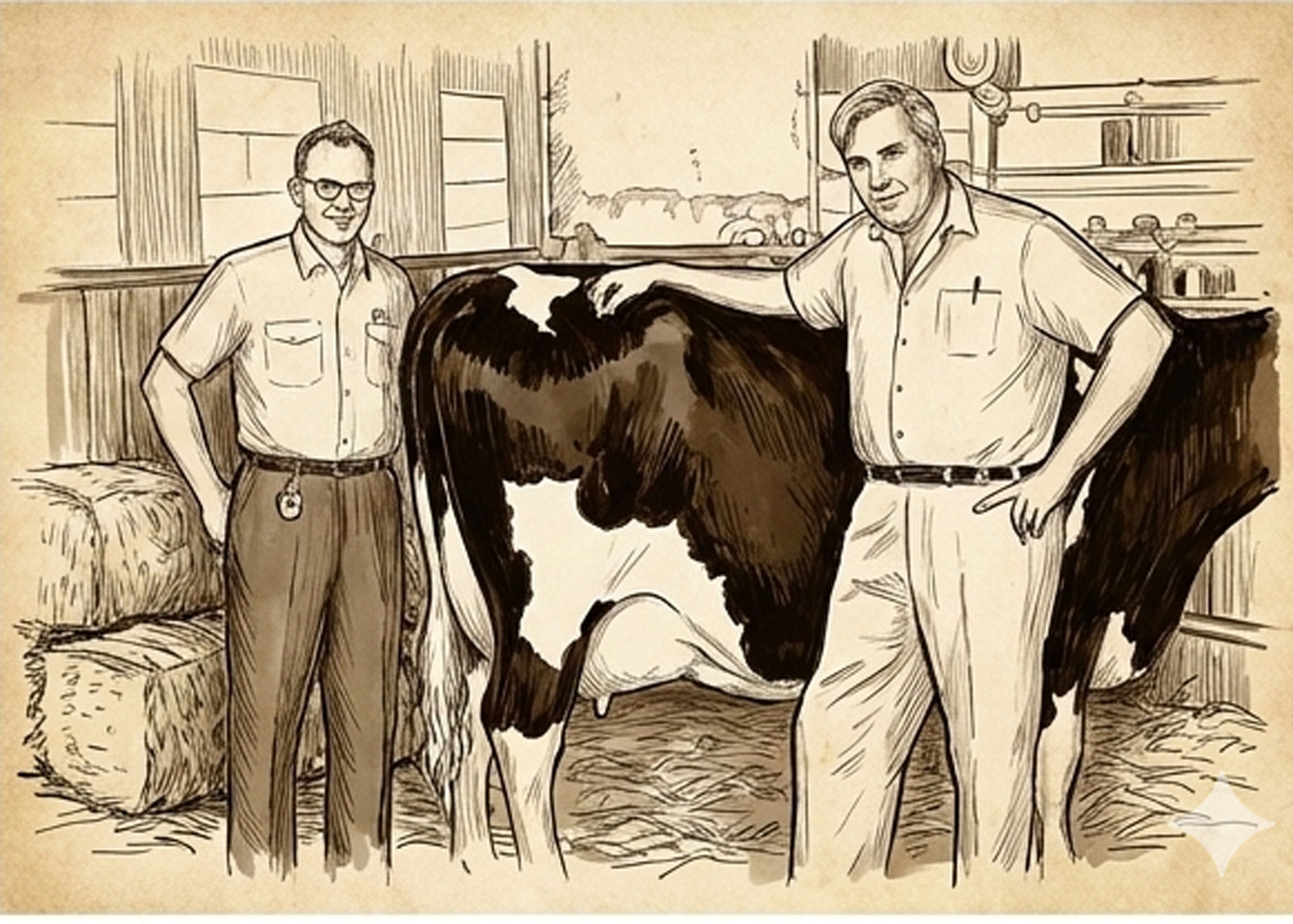
The perfect balance: Ken Trevena (left) brought the unmatched “cow sense” for the 1:00 AM checks, while Peter Heffering (right) masterminded the global strategy. Together, they didn’t just add skills—they multiplied them.
Our final visionaries proved something the others couldn’t—that the right partnership doesn’t just add skills. It multiplies them.
In the spring of 1973, Peter Heffering and Ken Trevena moved from New York to a 300-acre farm in Port Perry, Ontario. They’d already built reputations south of the border. But Hanover Hill—the operation they created together—would reshape the entire industry.
“We didn’t set out to create a dynasty,” Heffering once said. “Our aim was simple: breed the best Holsteins in the world.”
What made them different was how they divided the work. Trevena was in the barn at 1:00 AM for the first milking, evaluating movement and watching how the heifers carried themselves. By the time Heffering arrived with the day’s marketing strategy, Trevena already knew which animals were ready for their next photo shoot. They’d meet over coffee, decisions would get made, and neither man held the other back. I’ve seen plenty of partnerships collapse over the years. This one just… worked.
But here’s what really set them apart: they rejected the numbers game.
By the early 1970s, American geneticists were pushing hard toward index-based evaluation—production numbers above all else. Heffering called it out publicly. He argued the indexes ignored what actually keeps a herd profitable: cow families, type, and longevity. Sound familiar? The tension between index-chasing and holistic evaluation hasn’t gone away—it’s just moved to genomic proofs. Same argument, different decade.
Their timing was impeccable. And their marketing? Relentless. They showed cattle everywhere, racking up 140 All-American and 87 All-Canadian nominations. From 1983 to 1988, they were Premier Breeders at both the Royal Winter Fair and World Dairy Expo. Their 1972 dispersal—before the Canada move—saw 286 head cross the auction block, averaging over $4,000 each. Numbers unheard of at the time.
But the crowning achievement came in 1985. Picture the scene: twenty-five hundred people packed around the sale ring. When bidding on Brookview Tony Charity crossed a million dollars, the crowd went silent. Then Stephen Roman’s hand went up one more time. $1,450,000. Two Holstein legends—Roman the empire builder, Hanover Hill the partnership that rewrote the rules—converging in a single moment.
The real legacy, though? Starbuck.
Hanoverhill Starbuck might be the most influential Holstein sire in modern history. A son of Round Oak Rag Apple Elevation out of Anacres Astronaut Ivanhoe, he combined the production Heffering and Trevena demanded with the type and cow family depth they’d staked their reputation on. His daughters milked. They lasted. They bred on. They produced nine Class Extra sires in total—a concentration of top-tier bloodlines that no other single operation has matched.
For the complete Hanover Hill story, including their legendary cow families and the full list of influential bulls, see our detailed profile.
What These Legends Teach Us Now
So here we are, late 2025. Genomics have transformed selection. Sexed semen is standard. We’ve got precision feeding, robotic milking, and indexes our grandparents couldn’t have imagined. The debates continue—just swap “progeny testing” for “genomics” and “linebreeding” for “inbreeding depression,” and we’re having the same arguments these breeders had decades ago.
The tools are different. The philosophies haven’t changed.
Macaulay teaches us that data—rigorously collected, honestly analyzed—beats intuition. More true than ever. If you’re not using herd management software to drive breeding decisions, you’re leaving money on the table.
Roman teaches us that great genetics need great marketing. In an age of Instagram breeders and embryo auctions livestreamed to three continents, that lesson hits harder than ever.
Ormiston teaches patience and conviction. Find your cow family. Build on it. Don’t get distracted by every shiny new thing topping the proof run.
And Heffering and Trevena? They teach us that the right partnership multiplies everything—and that rejecting index-only thinking in favor of holistic breeding isn’t stubbornness. It’s a strategy. Something worth considering as operations navigate succession and the next generation steps up to take the reins.
Four philosophies. Five legends. All still valid.
Next time you see a sire topping the rankings, ask yourself: which of these philosophies got him there? And which one guides your operation? Or—maybe this is the real answer—which combination are you building?
Because the producers I see succeeding right now pull from all of them. Data-driven decisions. Marketing awareness. Commitment to maternal lines. Strategic partnerships. Willingness to reject conventional wisdom when it doesn’t serve the cow.
The legends left us the playbook. We just have to read it.
Which breeding philosophy resonates most with your operation? Drop a comment below or find us on social media—these conversations are how we all get better.
Key Takeaways:
Data beats intuition: Macaulay paid $15,000 for one bull when everyone called him crazy. His daughters hit 4% butterfat. His genetics run through every Holstein alive. Trust the numbers.
Genetics without marketing is wasted potential: Roman treated the show ring as advertising, not trophies. Today, that’s Instagram, livestreamed embryo sales, and understanding that perception drives price.
One cow family. Total commitment: Ormiston bought a $750 cow nobody wanted and built a dynasty that earned a bronze statue in Japan. Find your foundation. Stop chasing.
Partnerships multiply—when you divide right: Trevena worked the 1 AM milkings. Heffering ran the strategy. Neither held the other back. Hanover Hill dominated two continents for a decade.
Same four choices. Different tools: Data, marketing, conviction, and collaboration. The philosophies that built the breed are the philosophies that’ll carry your operation forward. Which combination are you building?
Executive Summary:
Every registered Holstein alive today carries genetics shaped by four breeders who ignored what everyone else believed. T.B. Macaulay paid $15,000 for one bull in 1926—critics called it insanity, but his data-driven gamble now flows through your entire herd. Stephen Roman built Romandale into an empire by treating the show ring as marketing, not trophies. Roy Ormiston turned a single $750 cow into bloodlines that earned a bronze statue in Japan. Heffering and Trevena rejected index-only thinking and proved that the right partnership multiplies everything. Four philosophies—data, marketing, conviction, collaboration—all still shaping who succeeds. The only question: which combination are you building?
Join the Revolution!
Join over 30,000 successful dairy professionals who rely on Bullvine Weekly for their competitive edge. Delivered directly to your inbox each week, our exclusive industry insights help you make smarter decisions while saving precious hours every week. Never miss critical updates on milk production trends, breakthrough technologies, and profit-boosting strategies that top producers are already implementing. Subscribe now to transform your dairy operation’s efficiency and profitability—your future success is just one click away.
73% of the top 30 NM$ bulls. One breeding program. The December 2025 Holstein evaluations just rewrote the genetic playbook.
Executive Summary: The December 2025 US Holstein genetic evaluations expose a seismic shift: Genosource now owns 22 of the top 30 Net Merit bulls—73% of the industry’s elite profit genetics under one roof. GENOSOURCE RETROSPECT-ET defends the #1 NM$ position at $1296, while BEYOND HI-LEVEL-ET commands GTPI at 3612, a 73-point jump that widens the gap at the top. Newcomer SAN-DAN ON CALL-ET exploded onto the scene at #3 GTPI (3574) with production numbers that demand attention: 1845 Milk, 151 Fat, 70 Protein. Type leadership remains locked between SHG LEGO and REDCARPET STORY ARC-ET at 3.85 PTAT, while Red & White genetics surge forward with SIEMERS RLE PAPAYA-RED-ET topping at 3221 GTPI. The consolidation of profitable genetics into a single program isn’t a trend—it’s the new reality, and breeders who adapt their sire selection now will compound this advantage for generations.
Dairy breeders and industry professionals, welcome to our analysis of the December 2025 US Holstein Genetic Evaluations. This round of evaluations saw numerous high-ranking newcomers and shifts among the established leaders across the major indices, underscoring the continued rapid turnover in elite genomic performance.
GTPI (Genomic Total Performance Index) Highlights
The December 2025 evaluations present a highly competitive Top 100 GTPI list for bulls over 12 months with NAAB codes, with significant consolidation among the leading bull providers.
Top Movers and Shakers
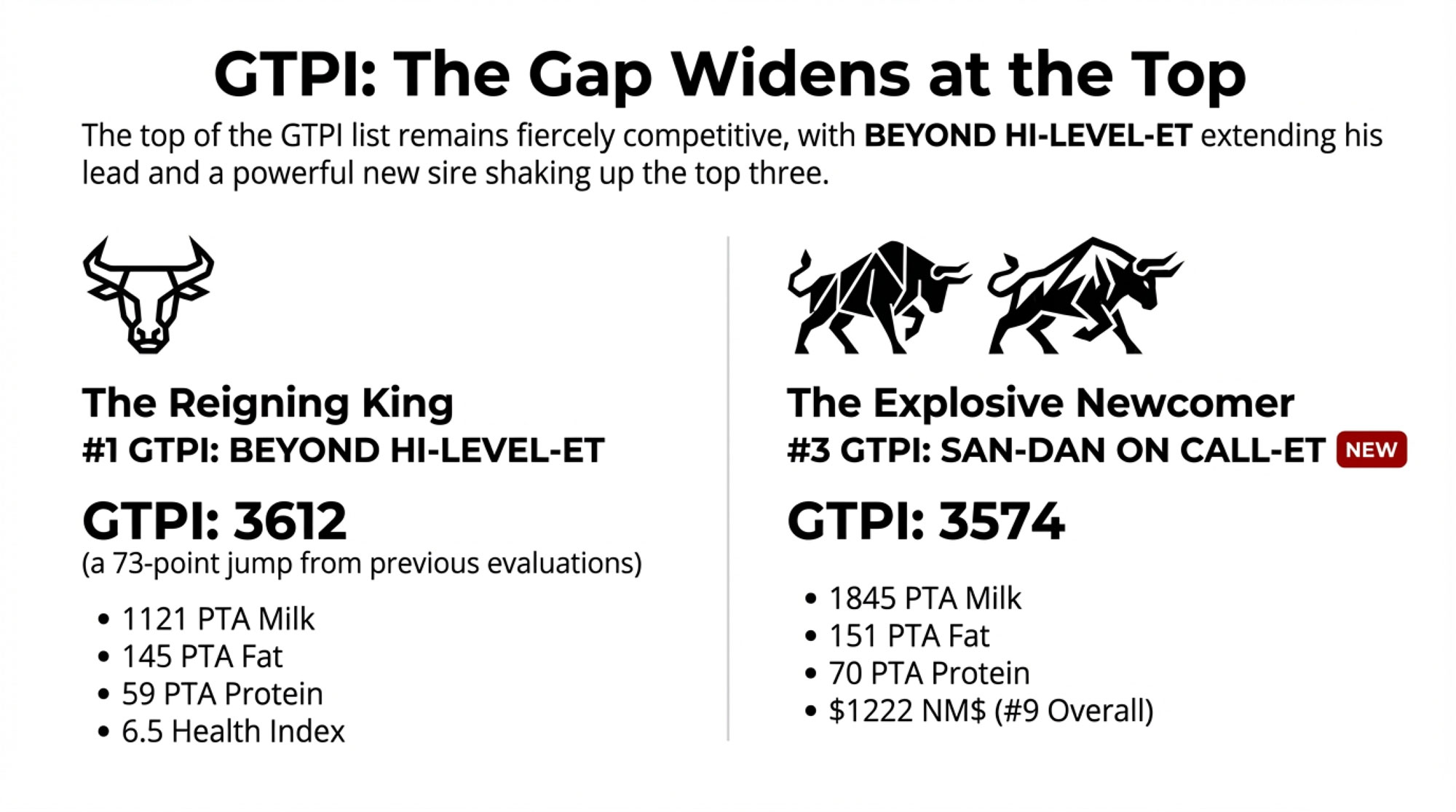
BEYOND HI-LEVEL-ET maintains its position as the #1 GTPI bull overall, posting a GTPI of 3612. The bull demonstrates strong production credentials with 1121 PTA Milk, 145 PTA Fat, and 59 PTA Protein, combined with a solid Health Index of 6.5.
The top of the list saw considerable shifting:
BEYOND SHPSTR GOLLEY-ET made a major move to the #2 position in December, reaching 3605 GTPI. This sire excels with high PTA Fat (147) and strong PTA Type (1.51).
SAN-DAN ON CALL-ET (3574 GTPI) enters the top rankings directly at #3. This sire is exceptional for production, yielding 1845 PTA Milk, 151 PTA Fat, and 70 PTA Protein, while also ranking #9 for Net Merit at $1222.
OCD TROOPER SHEEPSTER-ET (3572 GTPI) now stands at #4 in the general Top 100 GTPI ranking.
PROGENESIS WATCHMAN rounds out the top five at 3568 GTPI.
BEYOND HI-PACE-ET secures #6 with 3566 GTPI, adding depth to the Beyond program’s GTPI dominance.
New Sires in the GTPI Top 100
The December 2025 GTPI ranking features numerous exciting new entrants that cracked the Top 100. Key new sires debuting near the top include:
S-S-I OLD RICHARD-ET ranks high at #7 with 3553 GTPI
S-S-I SIEMERS N MCLAURIN-ET follows closely at #8 with 3549 GTPI, showing impressive PTA Type (1.81) and Udder Composite (1.16)
STGEN MAZOR-ET (3539 GTPI) and GENOSOURCE LANDMAN-ET (3537 GTPI) secured the #11 and #12 spots, respectively
BEYOND HOORAY-ET also debuts strongly at #13 (3537 GTPI)
GENOSOURCE YAGERMEISTER-ET at #16 (3533 GTPI) and OCD SHEEPSTER ROCK-ET at #17 (3528 GTPI)
Net Merit ($NM) Evaluation Overview
The December 2025 Net Merit rankings reveal a seismic shift in genetic leadership that dairy breeders cannot ignore: Genosource bulls now hold an astounding 22 of the top 30 NM$ positions—representing 73% of the elite profitability tier. Even more remarkably, Genosource claims 5 of the top 7 spots, including the #1 position.
This level of concentration is unprecedented in modern Holstein genetics and signals a fundamental change in how profitable genetics are being developed and marketed. The Genosource breeding program has clearly cracked the code on balancing high production with health, fertility, and longevity traits that drive lifetime profitability.
NM$ Leaders
GENOSOURCE RETROSPECT-ET successfully defends its title as the #1 NM$ bull, achieving $1296 NM. This bull also appears at #87 on the GTPI list with a GTPI of 3477, demonstrating balanced genetic merit across multiple selection indices.
The Genosource dominance continues throughout the rankings:
551HO06566 is the #2 NM$ sire at $1274 NM, featuring 2089 PTA Milk and 77 PTA Protein
STGEN STUART-ET ranks #3 NM$ at $1250 NM, providing 1666 PTA Milk, 145 PTA Fat, and 71 PTA Protein
GENOSOURCE MIKAIL-ET holds the #4 NM$ position with $1246 NM
GENOSOURCE ELVIS-ET at #5 with $1245 NM
GENOSOURCE VAMOOSE-ET at #6 with $1231 NM
GENOSOURCE ENDURANCE-ET at #7 with $1227 NM
Production Powerhouses in the NM$ Rankings
Many of the top NM$ bulls exhibit high combined Fat and Protein (CFP) figures, which are vital for milk component revenue. Notable examples include:
GENOSOURCE BENCHMARK-ET (NM $1207, #11) boasts the highest CFP among the top NM sires at 228
SAN-DAN ON CALL-ET, ranking #9 NM$ with $1222, delivers 221 CFP from 1845 PTA Milk
GENOSOURCE YUPPIE-ET (#27 NM$) showcases extreme production at 2662 PTA Milk, ranking high despite challenging functional traits, including Productive Life of -0.3 and Daughter Pregnancy Rate of -3.0
PTAT (Prediction of Transmitting Ability for Type) Focus
The December 2025 PTAT list features sires that transmit superior conformation and functional type.
PTAT Top Performers
The top two sires continue their dominance:
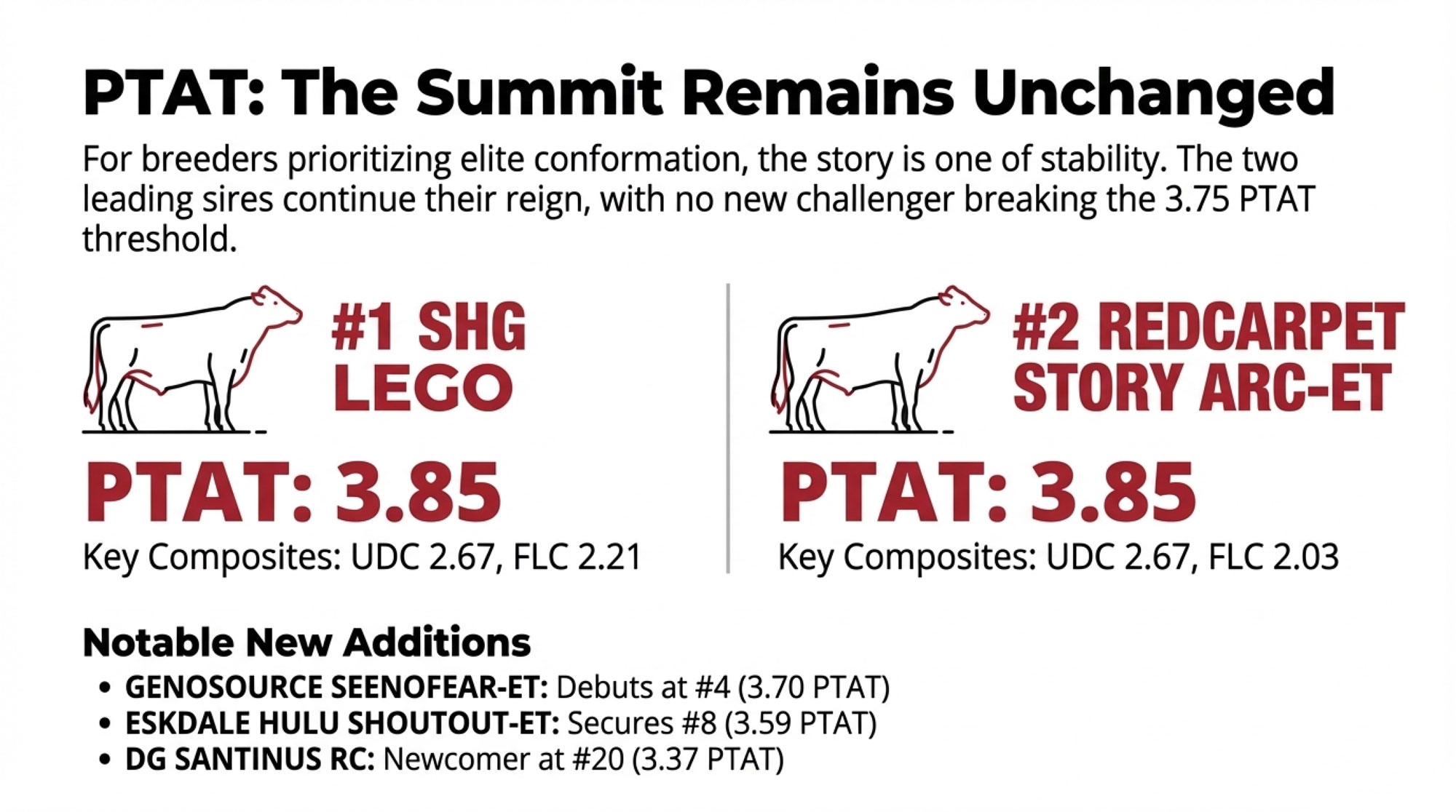
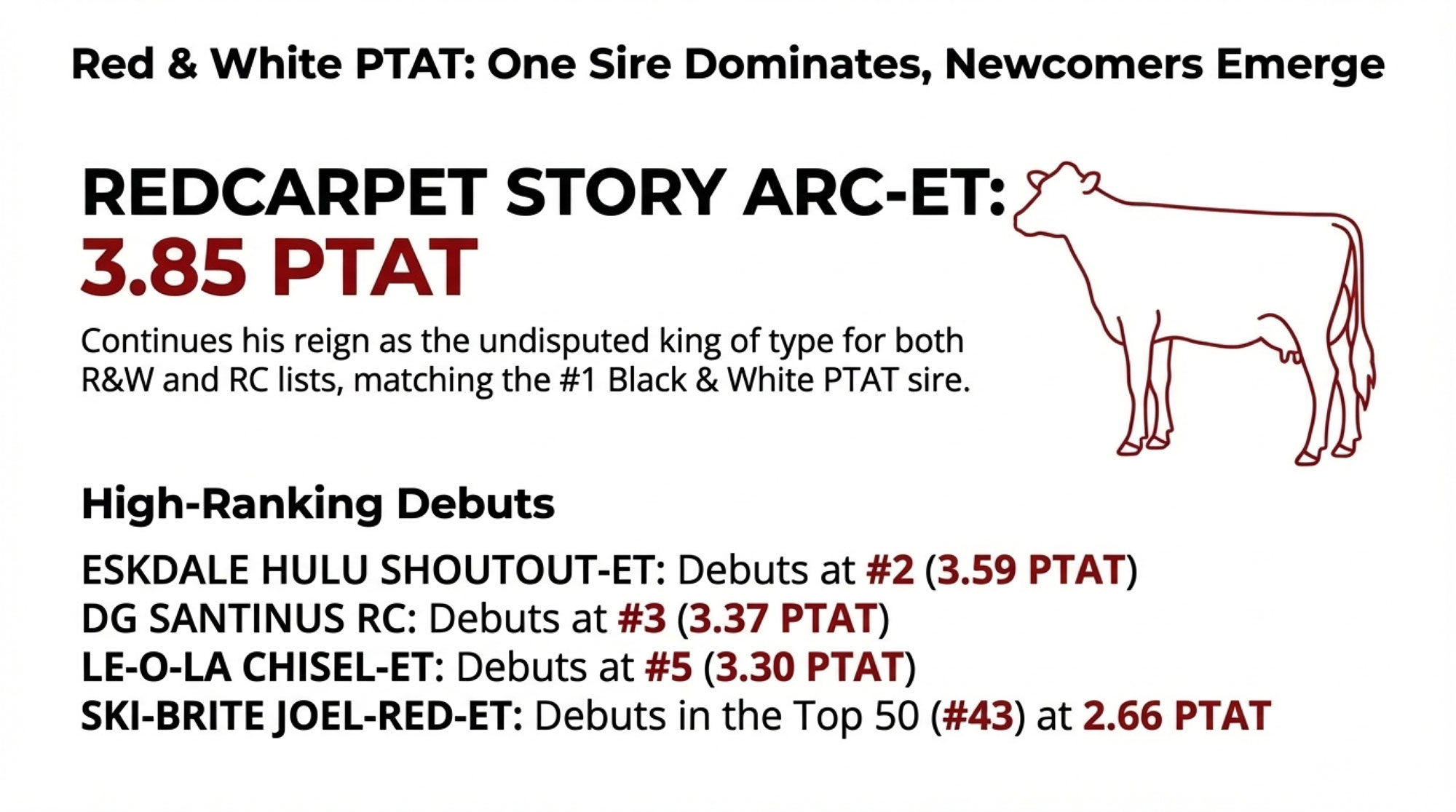
SHG LEGO remains #1 with 3.85 PTAT
REDCARPET STORY ARC-ET holds #2 with 3.85 PTAT
For breeders prioritizing show ring success or building maternal lines with exceptional udder quality, the stability at the top provides confidence—these proven type transmitters aren’t going anywhere. No emerging challenger has broken 3.75 PTAT, meaning the path to elite conformation genetics remains clearly defined.
Key Shifts and New Additions in the PTAT Top 50
STONE-FRONT EYECANDY APOLLO holds steady at #3 with 3.73 PTAT
GENOSOURCE SEENOFEAR-ET is a new, high-ranking entrant at #4 with 3.70 PTAT
ESKDALE HULU SHOUTOUT-ET (3.59 PTAT) secured the #8 spot
LAND-PRIDE UNBEATABULL-ET debuts at #19 with 3.38 PTAT
DG SANTINUS RC is a high-ranking newcomer at #20 (3.37 PTAT)
LE-O-LA CHISEL-ET secured #27 (3.30 PTAT)
COLDSPRINGS LAURENT 9901-ET debuted at #47 (3.14 PTAT)
Red Carrier and Red & White Genetic Leaders
Red Carrier (RC) GTPI
The Red Carrier list shows strong genetic progress at the elite level:
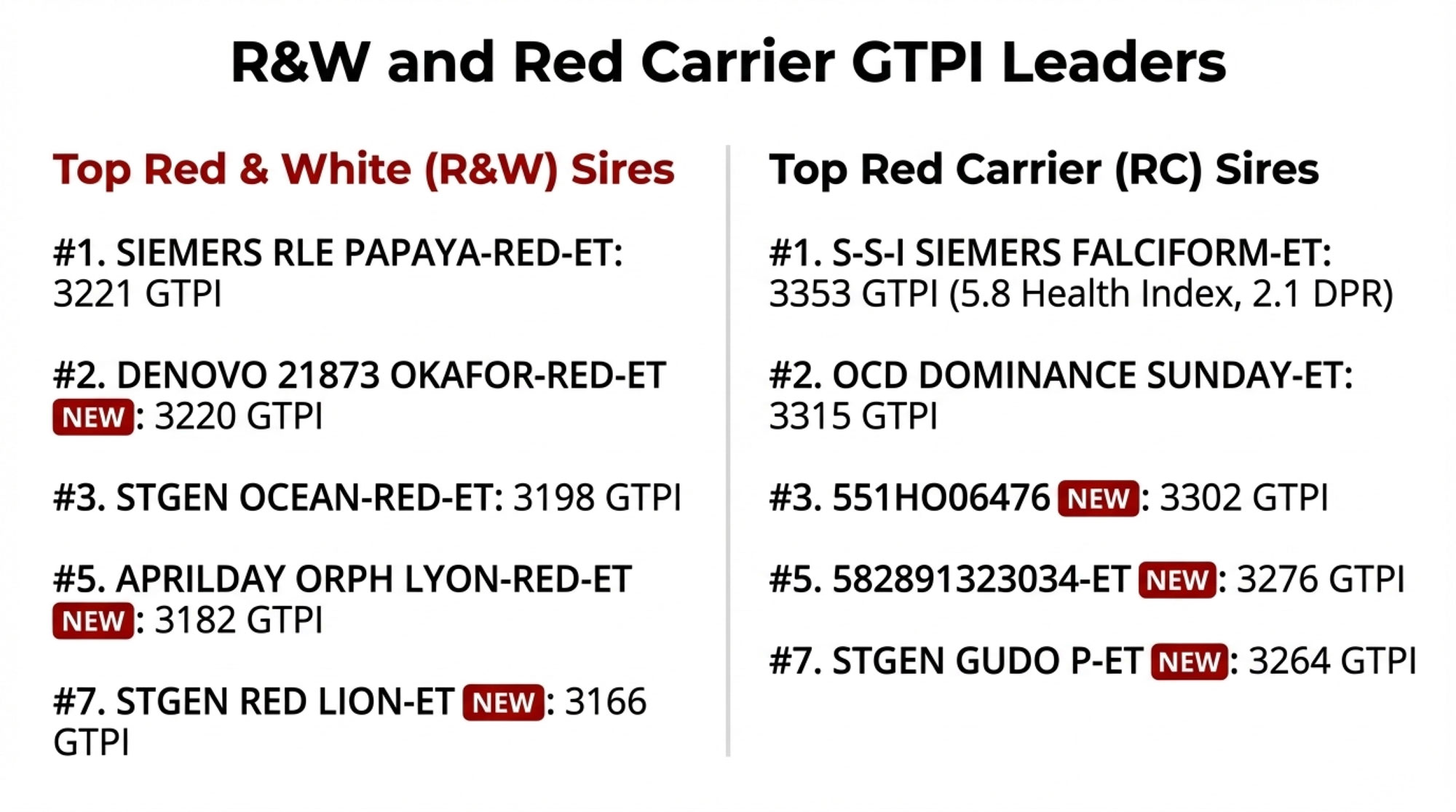
S-S-I SIEMERS FALCIFORM-ET maintains the #1 RC GTPI position at 3353, demonstrating a strong Health Index (5.8) and high Daughter Pregnancy Rate (DPR 2.1)
OCD DOMINANCE SUNDAY-ET holds steady at #2 with 3315 GTPI
The newcomer 551HO06476 enters at #3 (3302 GTPI)
New sires penetrating the Top 50 include 582891323034-ET (#5, 3276 GTPI) and STGEN GUDO P-ET (#7, 3264 GTPI)
Red & White (R&W) GTPI
The R&W GTPI rankings remain dynamic with multiple new entrants:
SIEMERS RLE PAPAYA-RED-ET is the #1 R&W GTPI bull at 3221 GTPI
DENOVO 21873 OKAFOR-RED-ET debuts strongly at #2 (3220 GTPI)
STGEN OCEAN-RED-ET is the #3 R&W GTPI bull at 3198 GTPI
GENOSOURCE MORRIS-RED-ET holds the #9 position at 3164 GTPI
New sires APRILDAY ORPH LYON-RED-ET (#5, 3182 GTPI) and STGEN RED LION-ET (#7, 3166 GTPI) mark strong debuts
The 391-point gap between SIEMERS RLE PAPAYA-RED-ET (3221) and BEYOND HI-LEVEL-ET (3612) represents the closest Red & White genetics have come to elite black & white performance in recent memory—a milestone that validates years of focused colored cattle breeding.
Red Carrier and R&W PTAT
In the Type rankings for colored cattle, REDCARPET STORY ARC-ET remains the dominant sire, leading the combined R&W and Red Carrier PTAT list at 3.85 PTAT. Other notable performers include:
ESKDALE HULU SHOUTOUT-ET makes a powerful entrance at #2 with 3.59 PTAT
DG SANTINUS RC debuts at #3 with 3.37 PTAT
LE-O-LA CHISEL-ET debuts at #5 with 3.30 PTAT
SKI-BRITE JOEL-RED-ET debuts in the Top 50 at #43 (2.66 PTAT)
The Bottom Line
This consolidation of profitable genetics demands a strategic response. Review your current sire lineup against these rankings and ask: Does your genetic strategy align with where profitability is actually being generated? Whether you prioritize NM$, GTPI, type, or colored genetics, the December 2025 evaluations provide clear direction—and clear leaders—in every category.
Key Takeaways
Profit genetics monopolized: Genosource captures 22 of 30 top Net Merit positions—73% of the industry’s most profitable sires now come from one program, led by RETROSPECT-ET at $1296
GTPI leadership extends: BEYOND HI-LEVEL-ET dominates at 3612; newcomer SAN-DAN ON CALL-ET explodes to #3 (3574) with 1845 Milk, 151 Fat, and dual ranking at #9 NM$
Type titans hold firm: SHG LEGO and REDCARPET STORY ARC-ET lock the PTAT summit at 3.85—no emerging challenger breaks 3.75
Red & White within striking distance: SIEMERS RLE PAPAYA-RED-ET reaches 3221 GTPI, closing the gap to just 391 points behind the #1 overall bull
Data source: Council on Dairy Cattle Breeding (CDCB), December 2025 genetic evaluations. All rankings reflect bulls with NAAB codes over 12 months.
Join the Revolution!
Join over 30,000 successful dairy professionals who rely on Bullvine Weekly for their competitive edge. Delivered directly to your inbox each week, our exclusive industry insights help you make smarter decisions while saving precious hours every week. Never miss critical updates on milk production trends, breakthrough technologies, and profit-boosting strategies that top producers are already implementing. Subscribe now to transform your dairy operation’s efficiency and profitability—your future success is just one click away.
Red × Red should equal Red. But half your calves came out black. The COPA gene is the override switch you didn’t know existed.
For decades, Holstein breeders operated on a simple truth: Black dominates Red. It was a comfortable, binary rule—and one that served us well for generations. But here’s the thing: it was incomplete as well.
The emergence of Variant Red (COPA) hasn’t just added a new color pattern to our toolbox; it’s also changed the way we think about color. It’s exposed a blind spot in how we think about genetic pathways. And if you’re making mating decisions without accounting for this “override” switch, you’re working with incomplete information. That costs money.
The Mechanic: Two Systems, One Outcome
You probably already know the old model. The MC1R gene—what geneticists call the Extension locus—controls coat color through a clear dominance hierarchy: E^D (dominant black) > E^BR (Telstar) > E^+ (wild-type) > e (recessive red). Two copies of e gives you a red calf. Simple enough.
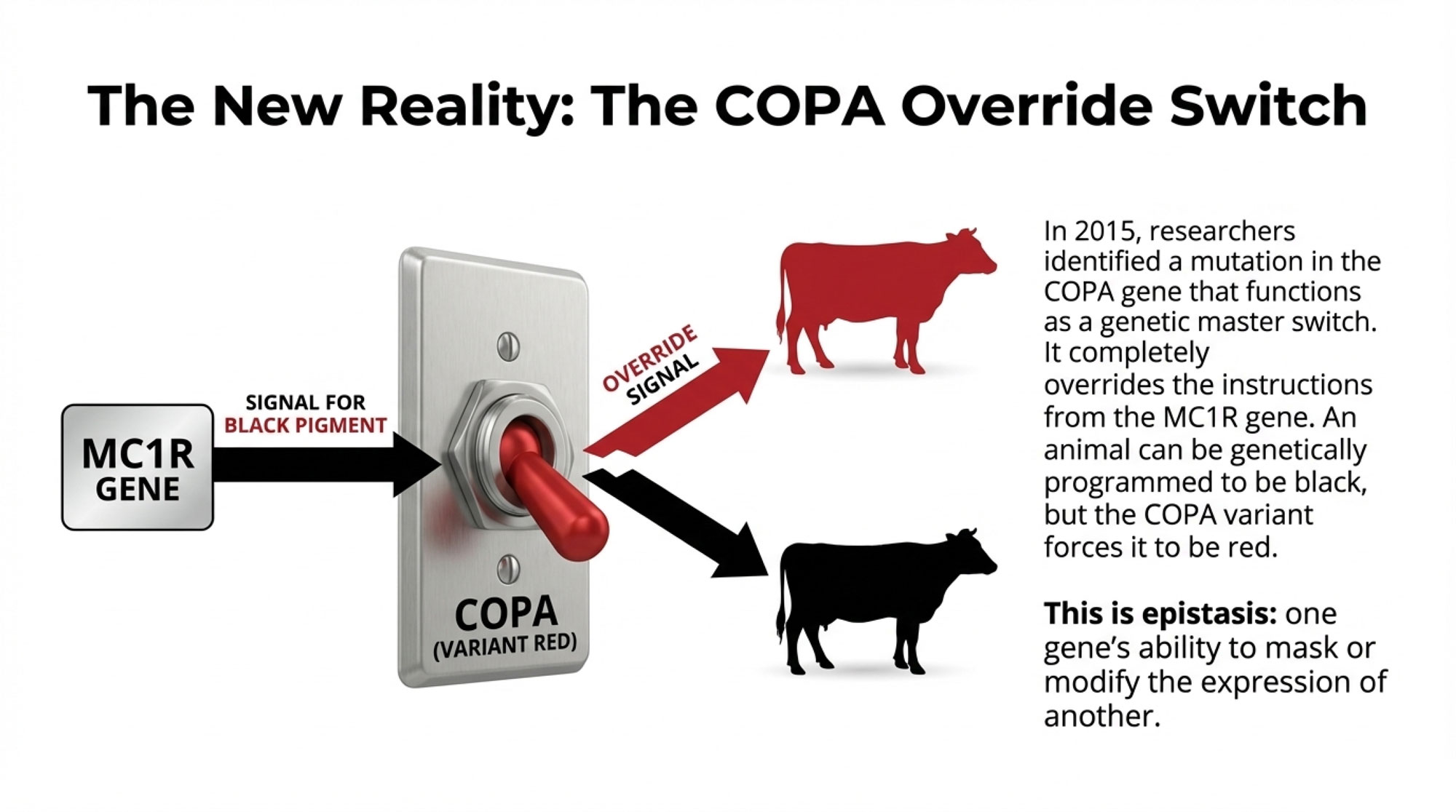
Then in 2015, researcher Ben Dorshorst and an international team published findings in PLOS ONE that changed everything. They identified a second switch: a mutation in the COPA gene that produces what we now call Variant Red. The critical discovery? COPA overrides MC1R entirely. An animal can be genetically programmed to be black at MC1R, but if it carries the COPA variant, it still expresses red. A decade of breeding experience and subsequent genetic research has validated this finding—the mechanism holds up.
This is epistasis in action—one genetic pathway superseding another. Practically, it means that phenotype alone tells you nothing about what’s actually happening under the hood.
The good news? We now have reliable tests for both systems. UC Davis Veterinary Genetics Laboratory offers both COPA and MC1R panels, and Holstein Association USA includes both in their standard genomic testing. Once you know both pieces, you can actually plan your color outcomes instead of guessing.
The Cheat Sheet: Mating Outcomes at a Glance
Let me walk you through the scenarios breeders ask about most. This is the section you’ll probably want to bookmark.
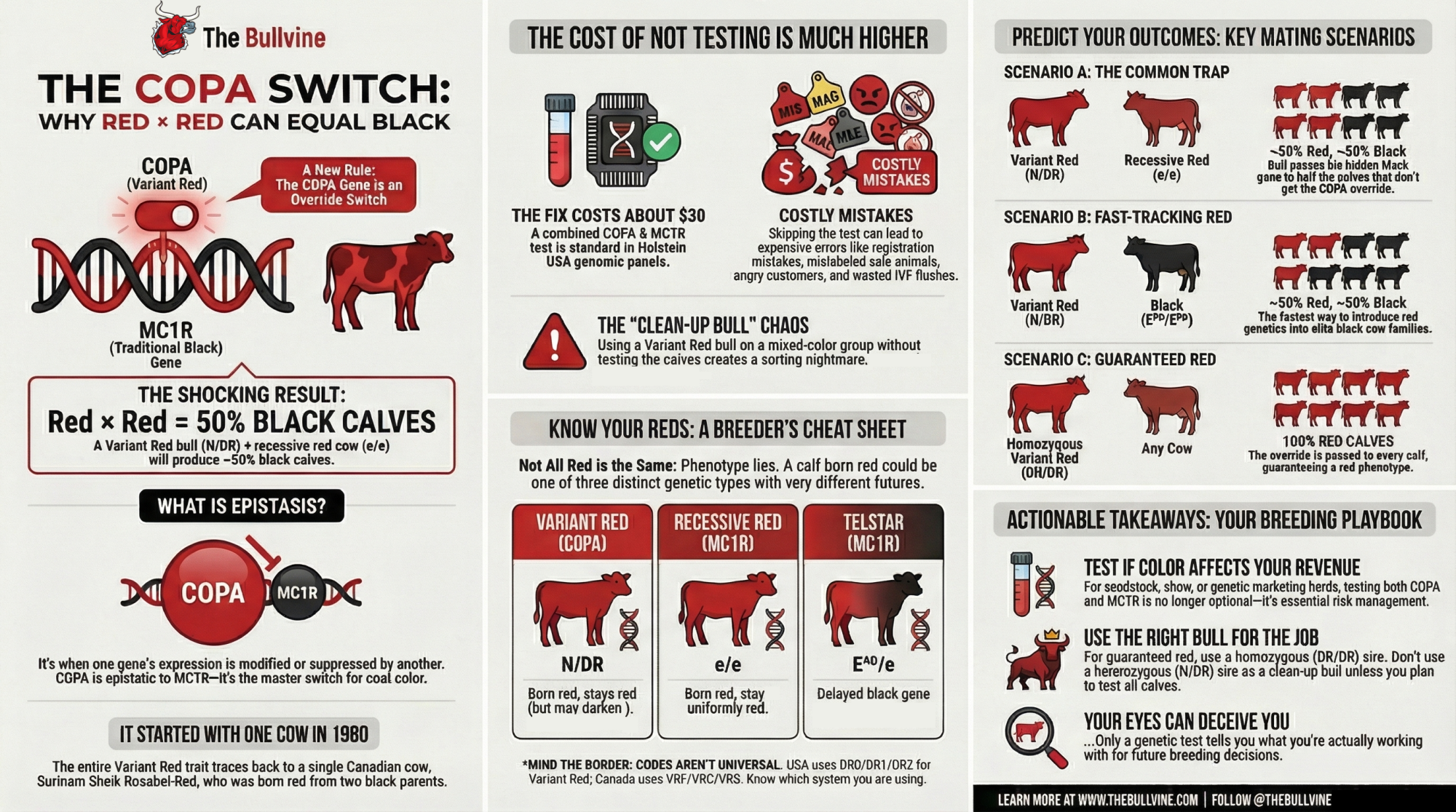
Scenario A: Variant Red Sire (N/DR) × Black Dam (E^D/E^D)
Outcome: ~50% Red / ~50% Black
What’s happening: Red calves inherit the dominant DR allele, which overrides their black MC1R genetics. Black calves inherit the N allele and express normally.
Scenario B: Variant Red Sire (N/DR) × Recessive Red Dam (e/e)
Outcome: ~50% Red / ~50% Black (if sire carries E^D at MC1R)
What’s happening: This scenario assumes your Variant Red bull is carrying the Dominant Black gene (E^D) “underneath” his red coat—which many do, since the COPA mutation originated in black Holsteins. Red calves inherit DR (Variant Red) and express red regardless of MC1R. But calves inheriting N from the sire are now N/N at the COPA locus (no override present). If they also inherit E^D from the sire and e from the dam, they genotype as E^D/e at MC1R—which results in a black phenotype. Important note: If your Variant Red bull happens to be e/e (recessive red) at MC1R, he won’t throw black calves even when passing N—but this is less common.
Scenario C: Homozygous Variant Red Sire (DR/DR) × Any Dam
Outcome: 100% Red
What’s happening: Every calf inherits at least one DR allele. The override is guaranteed. This is your cleanest path to predictable red outcomes.
Scenario D: Telstar (E^BR) Animals
Outcome: Born red, turn black within 2-6 months
What’s happening: Completely different mechanism—MC1R timing, not COPA override. Don’t confuse these in your records.
The Trap: When Red × Red = Black
This scenario deserves special attention because it’s the one that burns breeders most often.
You have a nice Variant Red bull (N/DR). You breed him to your recessive red cows (e/e). You’re expecting all-red calves—makes sense, right? Red bull, red cow, red calves.
Except that about half those calves come out black. What gives?
Here’s what’s happening genetically: Your N/DR bull passes either N or DR to each calf (50/50 chance). The calves that get DR are red—the override kicks in, and they express Variant Red. But the calves that get N are now N/N at the COPA locus (no override present), assuming your dam is N/N like most Holsteins. If those calves also inherit E^D from the sire and e from the dam, they genotype as E^D/e at MC1R—and since Dominant Black is dominant over recessive red, you get a black calf.
The key detail here: this trap only springs if your Variant Red bull carries E^D at MC1R. Many do—the COPA mutation originated in black Holstein lines, so most Variant Red animals are “hiding” black genetics underneath that red coat. But if your bull happens to be e/e at MC1R (homozygous recessive red), he can’t pass E^D, and you won’t see black calves even when he passes the N allele.
This is exactly why UC Davis VGL’s documentation is explicit: phenotype cannot distinguish between color mechanisms. You need to test both COPA and MC1R to know what you’re actually working with.
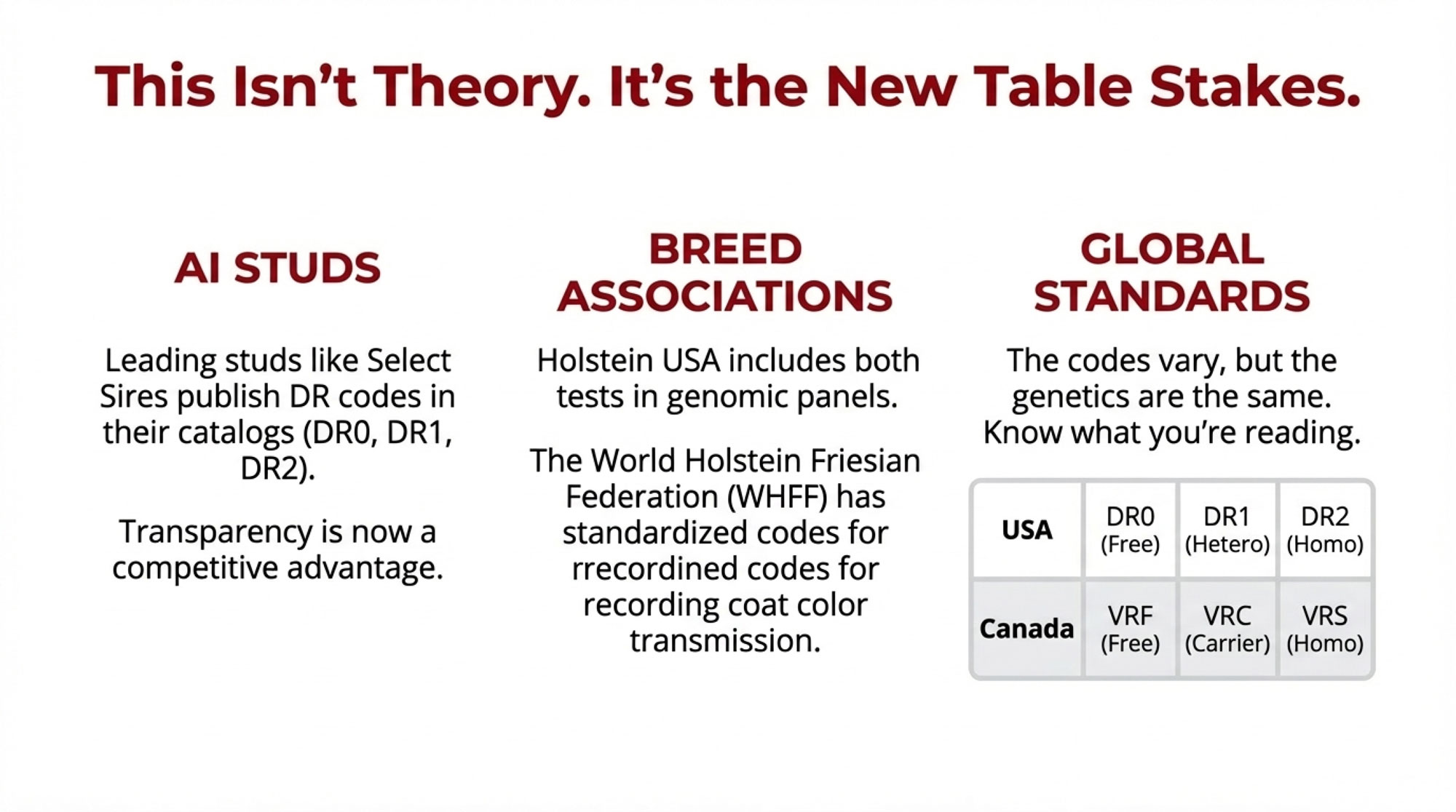
Select Sires addresses this directly in their bull catalogs. Their DR1 code indicates heterozygous Variant Red status, and their technical materials—using LUCKY SEVEN-RED as an example—walk through exactly these scenarios. That’s the kind of transparency the whole industry should be moving toward.
The Money: Testing Costs vs. Breeding Errors
Let’s talk economics, because this is where the rubber meets the road.
Testing costs are pretty reasonable. UC Davis VGL lists coat color testing at $30 for the first test and $10 for each additional test on the same animal (pricing as of October 2023—worth verifying current rates at vgl.ucdavis.edu/pricing/cattle before you budget).
The cost of NOT testing? That’s where it gets expensive.
The Telstar Trap: You sell a red heifer as breeding stock. Buyer’s excited, pays a premium for red genetics. Six months later, she’s turned black. Now you’ve got an angry customer and reputation damage that’s hard to quantify but very real.
The Registration Error: You register a Variant Red calf as recessive red because it looks the same as a red calf at birth. Now every mating decision based on that animal’s record is built on false assumptions. Future buyers make breeding plans expecting recessive red transmission—and get results that don’t make sense. These errors compound across generations.
The Donor Disaster: You flush a valuable cow expecting specific color outcomes based on her phenotype. Wrong assumptions about her COPA/MC1R status mean the resulting embryos don’t deliver what you promised buyers. Cost: the flush investment, recipient management, and potentially refunds or re-dos.
The Clean-Up Bull Chaos: You turn a Variant Red bull out with a mixed color group during summer breeding. Come calving season, you can’t tell by looking which calves are carrying what. Now you need to genomically test the whole crop to sort replacements from sale animals—that’s $30-40 per head across your calf crop.
A $30 test looks pretty reasonable compared to any of those scenarios.
Where the Industry Is Heading
Here’s my read on where this is going: mandatory COPA/MC1R testing at registration isn’t a question of “if” for the elite tier—it’s a question of “when.” The economics and technology make it inevitable.
The AI studs are already there. Select Sires publishes DR codes in their catalogs and provides detailed mating guidance. Other major organizations are following suit with color genetics in their genomic offerings. The competitive pressure is real—if one stud provides complete color transparency and another doesn’t, breeders making premium decisions will choose clarity every time.
A note on codes: If you’re working across borders, be aware that the US and Canada use different labeling systems. In the US, Holstein Association USA and CDCB use DR0 (tested free), DR1 (heterozygous carrier), and DR2(homozygous Dominant Red). Holstein Canada uses VRF (free of Variant Red), VRC (carrier of Variant Red), and VRS (homozygous Variant Red). Same genetics, different shorthand—just make sure you’re reading the codes correctly for whichever system you’re working in.
The breed associations have built the infrastructure. WHFF registration guidelines already require member organizations to record coat color transmission and carrier status using standardized codes. Holstein Canada’s genetic trait coding system is in place. Holstein USA includes both recessive red and Dominant Red in their genomic panels. The recording framework exists—it’s just not universally enforced yet.
The holdouts make sense. For a 500-cow commercial dairy, shipping bull calves at a week old and selecting replacements purely on production and health? Color genetics are irrelevant. That’s a perfectly rational business decision, and mandatory testing across all registrations would be unnecessary friction for these operations.
But for seedstock operations, show herds, and anyone marketing genetics where color affects value? Testing both COPA and MC1R isn’t optional anymore. It’s table stakes.
The Verdict: Manage the Complexity You Create
So where does this leave you? Here’s my thinking:
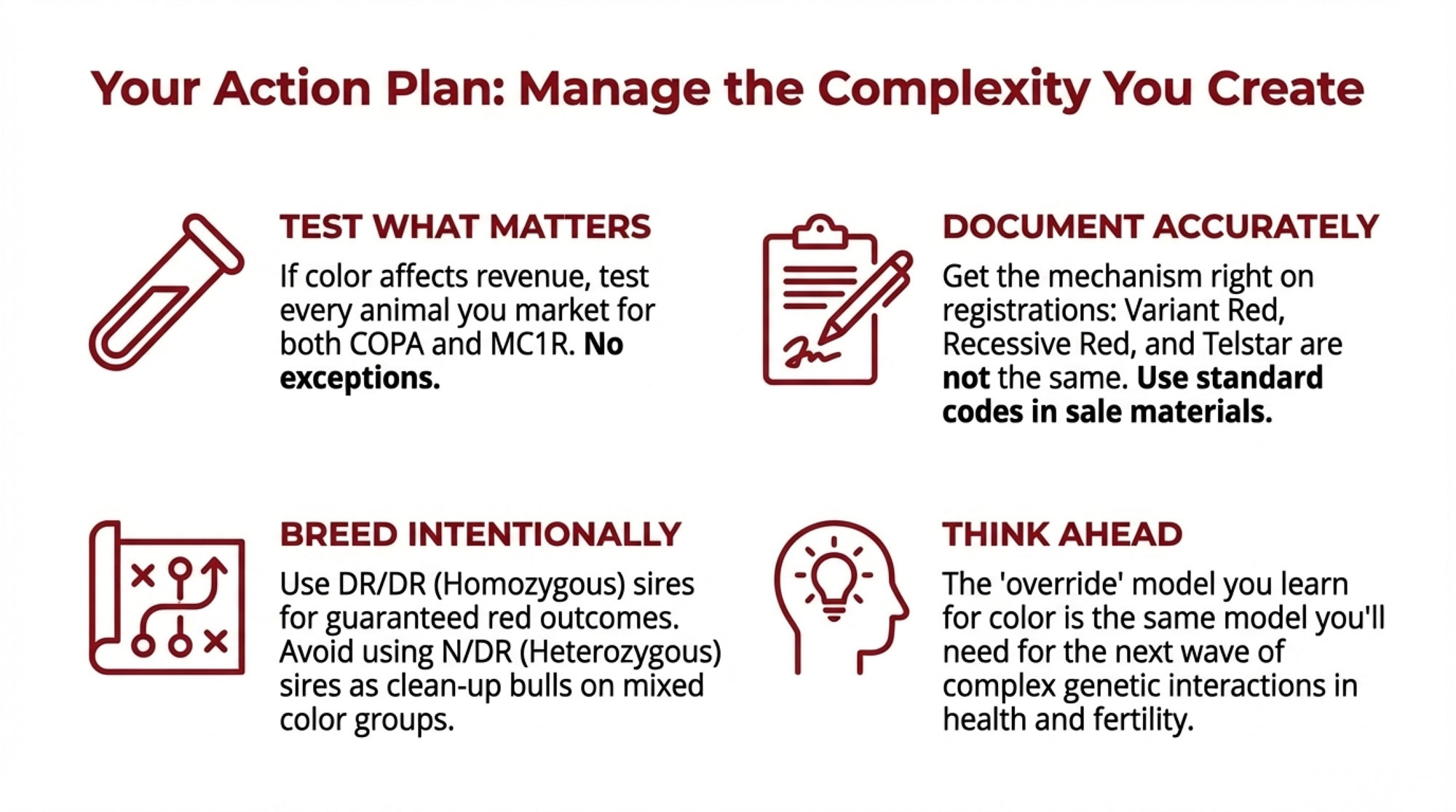
If color affects your revenue, test every animal you plan to market as breeding stock. Document the COPA and MC1R status in your sale materials. Use breed-standard codes so the information travels cleanly when animals change hands.
If you’re breeding for red: Understand that N/DR sires will throw ~50% black calves even on red cows—provided the sire carries E^D at MC1R. If you need guaranteed red outcomes, use DR/DR sires. Plan accordingly.
If you’re managing clean-up bulls: Don’t use Variant Red bulls on mixed-color groups unless you’re prepared to test the resulting calves. The sorting headache isn’t worth it.
If you’re registering animals: Get the mechanism right. Variant Red, recessive red, and Telstar are three different things with different inheritance patterns. Mislabeling creates downstream problems for everyone.
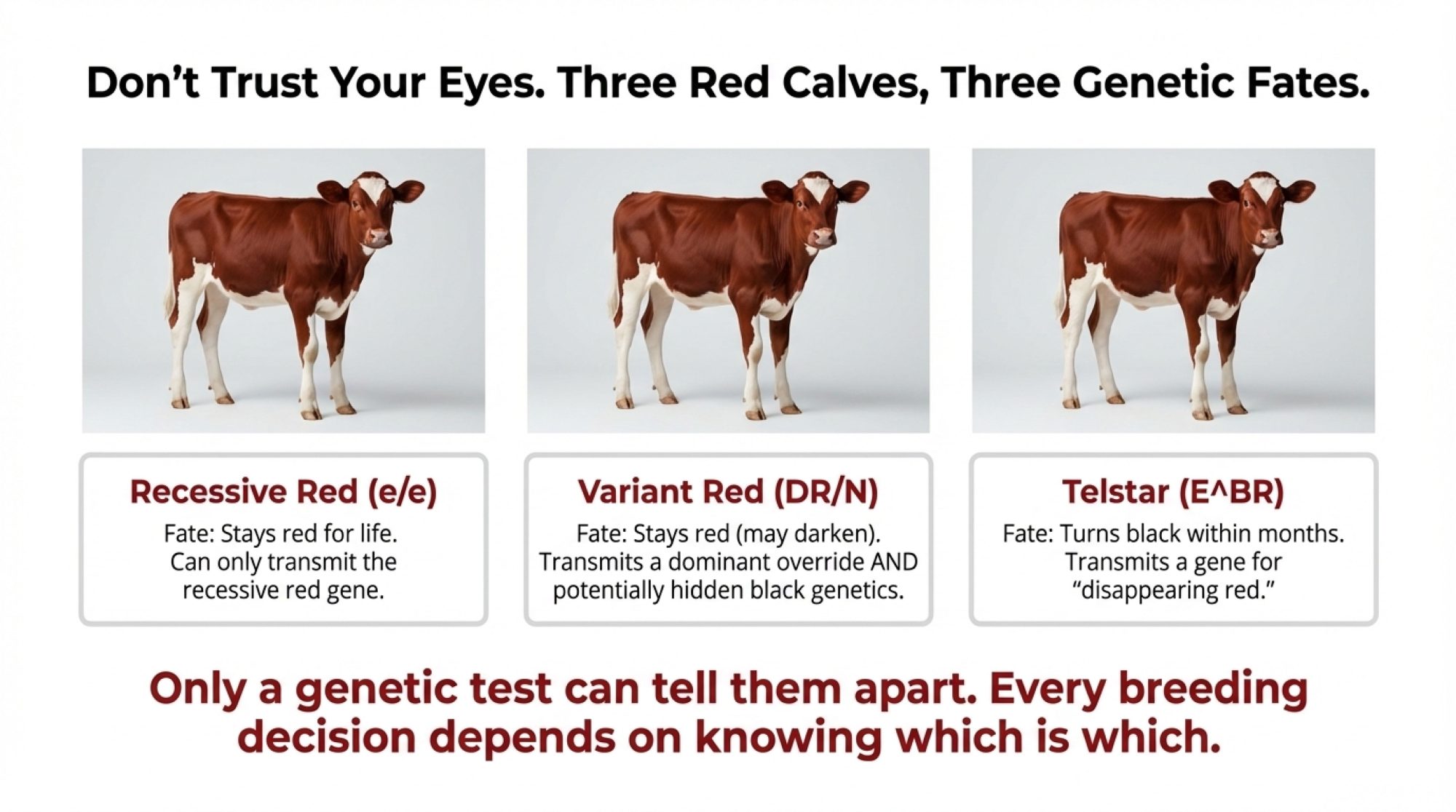
If you think phenotype tells you enough: It doesn’t. A red calf at birth could be Variant Red (stays red, might darken slightly), recessive red (stays red), or Telstar (turns black in months). Only testing tells you which—and that distinction matters for every breeding decision that follows.
“Understand the genetics, test what matters for your operation, communicate clearly with buyers, and manage the complexity you’re creating.”
The COPA discovery didn’t complicate Holstein color genetics—it revealed the complexity that had always been there. We just couldn’t see it before. The breeders who adapt their programs to account for genetic networks, not just single-gene thinking, are the ones who’ll avoid expensive surprises.
And honestly, color is just the beginning. The same epistatic interactions—one pathway overriding another—show up in fertility, health, and efficiency traits. The mental model you build managing Variant Red is the same model you’ll need for the next layer of genetic complexity headed for your breeding program.
Test what matters. Document what you find. Plan accordingly. That approach will serve you well regardless of what genetic curveball comes next.
Key Takeaways
COPA is the override switch. An animal can carry black genetics at MC1R but still express red if COPA is present—traditional color rules don’t apply.
Red × Red can equal Black. Variant Red bulls throw ~50% black calves on red cows if they carry hidden black genetics underneath their red coat.
A $30 test prevents expensive mistakes. UC Davis VGL tests both COPA and MC1R; Holstein USA includes both in standard genomic panels.
Codes vary by country. The US uses DR0/DR1/DR2; Canada uses VRF/VRC/VRS. Same genetics, different shorthand—read them correctly.
Skip the test, accept the gamble. Registration errors, mislabeled sale animals, and buyer disputes cost far more than $30.
Executive Summary:
Red bull × red cow should equal red calf—except when it doesn’t. The COPA gene, discovered in 2015, acts as a genetic ‘override switch’ that supersedes traditional color inheritance. A Variant Red bull can throw 50% black calves even on red cows if he carries hidden black genetics underneath his red coat. That surprise leads to angry buyers, botched registrations, and breeding decisions built on wrong assumptions. The fix is simple: test both COPA and MC1R status. It runs about $30 through UC Davis VGL and comes standard with Holstein USA genomic panels. For seedstock operations and anyone marketing genetics where color affects value, skipping this test is a gamble you don’t need to take.
Complete references and supporting documentation are available upon request by contacting the editorial team at editor@thebullvine.com.
Join over 30,000 successful dairy professionals who rely on Bullvine Weekly for their competitive edge. Delivered directly to your inbox each week, our exclusive industry insights help you make smarter decisions while saving precious hours every week. Never miss critical updates on milk production trends, breakthrough technologies, and profit-boosting strategies that top producers are already implementing. Subscribe now to transform your dairy operation’s efficiency and profitability—your future success is just one click away.
Plot twist: Dairy farms now produce more beef profit than beef ranches. $1,400/calf vs. their $800. The math is devastating.
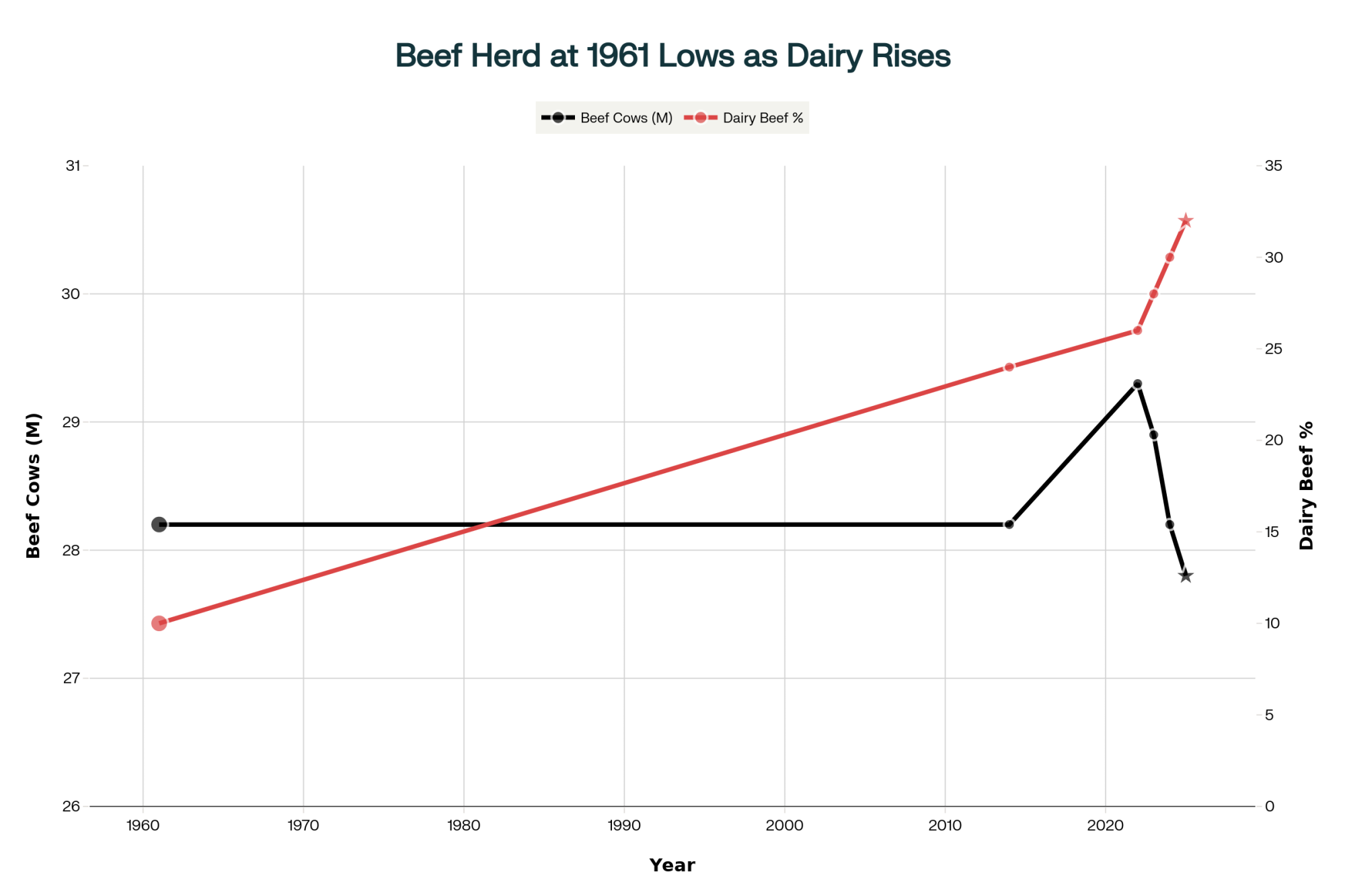
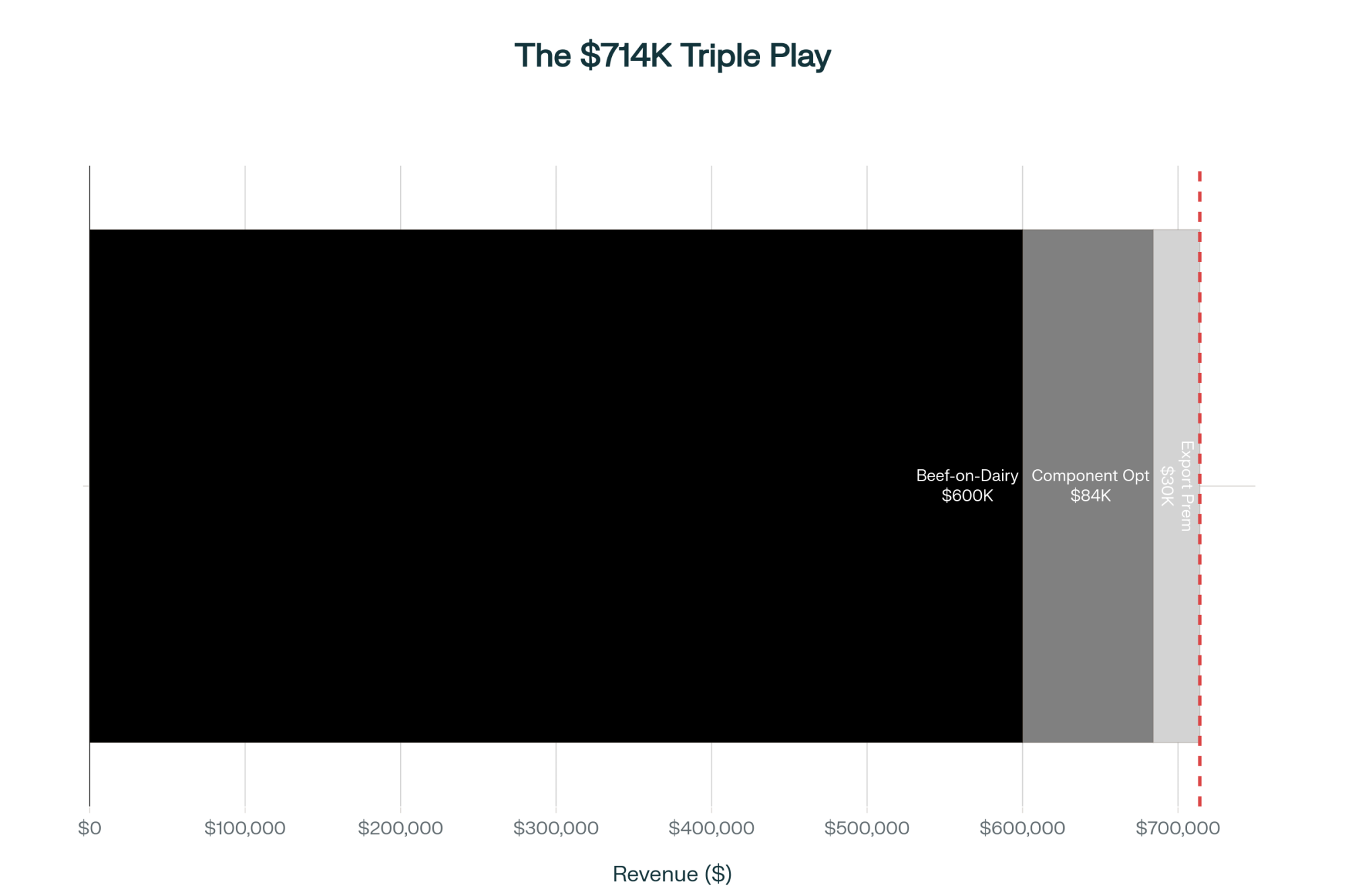
EXECUTIVE SUMMARY: Dairy has stumbled into the opportunity of a generation: we’re producing 230 billion pounds of milk while simultaneously filling the void left by beef’s collapse to 1961 lows—effectively owning both markets. Three strategies are generating $600-770K in additional annual revenue for progressive operations: beef-on-dairy genetics transforming worthless bull calves into $1,400 assets; component optimization capturing $84,000 from butterfat premiums; and export positioning, as China and India desperately need our proteins. The proof is compelling—producers investing $70,000 are returning $200,000 in year one, with 60% efficiency. Here’s the urgency: only 28% have moved while premiums are maximum; by 2027, when adoption hits 70%, the window closes. Make no mistake—this isn’t about incremental improvement, it’s about who survives the next decade.
I was reviewing the November USDA reports, and something remarkable jumped out that deserves our attention. The latest WASDE data shows dairy production surging to 230 billion pounds, while beef production drops by 70 million pounds and pork production falls by 80 million pounds. What’s particularly noteworthy is how few producers have fully grasped the implications of this shift.
This development builds on what we’ve been seeing across the industry—not just another typical market cycle, but what appears to be a fundamental restructuring of North American protein production. Several economists I’ve spoken with are describing this as an 18-month window of genuine opportunity, and the more I analyze the data and talk with producers, the clearer the pattern becomes.
The consumption trends align with this narrative. USDA’s Economic Research Service shows Americans consuming record levels of dairy products, reaching historic highs that would have seemed impossible just five years ago. Globally, the milk protein market continues its substantial growth trajectory, with multiple analyses projecting sustained expansion through 2032. This coincides with the beef cow herd dropping to approximately 28 million head—USDA data confirms this represents the lowest level since the early 1960s.
In recent conversations with producers from various regions—Wisconsin cooperatives, California independents, Texas operations—those experiencing the most success share a common trait: they’re adapting now, even if imperfectly, recognizing that this convergence of factors presents opportunities we haven’t encountered in decades.
Beef-on-dairy calf prices have surged from $225 to $1,439 in under three years—a 540% increase—while Holstein bull calves remain virtually worthless at $50. This $1,389 price gap represents the single largest profit opportunity in modern dairy history
The Beef-on-Dairy Revolution: From Liability to Asset
How Forward-Thinking Farms Discovered the Formula
Here’s what’s happening on farms across the country. Producers are telling me they used to essentially give away Holstein bull calves—some mentioned getting as little as five dollars for two calves just a few years back. Today, according to USDA Agricultural Marketing Service data this fall, those same genetics bred to carefully selected beef sires are commanding $1,200 to $1,400 each.
For perspective, a large dairy operation implementing this strategy could potentially generate $600,000 to $770,000 in additional annual revenue, depending on their size and execution. Same facilities, same management team, fundamentally different economics.
What’s particularly interesting—and this has been confirmed through discussions with extension specialists at both Cornell and Wisconsin—is how beef genetics on dairy has evolved beyond simple calf value. It’s reshaping our entire approach to genetic progress and herd optimization.
The Strategic Framework That Makes It Work
The most successful implementations I’ve observed, from California’s Central Valley to New York’s traditional dairy regions, share common elements that go well beyond basic crossbreeding.
Progressive producers are walking me through their approach: genomic testing of the entire herd at approximately forty dollars per animal, creating a precise roadmap of genetic potential. This allows targeted breeding decisions—sexed semen (at a fifteen to twenty-five dollar premium per breeding) on the top 40 to 50 percent of cows, while the remainder are bred to proven beef sires.
The sire companies report Angus and SimAngus dominating these selections, and for good reason—the calving ease and growth characteristics align well with dairy operations. University of Wisconsin research continues to validate this approach, showing consistent economic advantages.
The beef cow herd has crashed to 27.8 million head—matching 1961 levels—while dairy’s contribution to the beef supply has surged from 10% to 32%. Dairy isn’t supplementing beef production anymore; it’s becoming the backbone of the entire protein system
Current industry data indicates dairy contributes approximately 28 percent of the total U.S. calf crop, compared to roughly 24 percent in the mid-1990s. Given beef cow rebuilding timelines—typically five to six years minimum based on historical cattle cycles—this percentage could realistically reach 32 to 35 percent by 2027.
The math is brutal: as adoption rates surge from 28% today to 70% by 2027, beef-cross calf premiums will collapse from $1,400 to $800. Early movers capture maximum value; late adopters fight for scraps. The 18-month window isn’t marketing hype—it’s market mechanics
Component Optimization: The Hidden Value in Every Tank
Why Volume-Based Production Is Becoming Obsolete
Producers in California have been showing me compelling comparisons of their milk checks from 2023 versus the current year. The transformation in how milk is valued has been striking.
When Federal Order changes took effect this summer, the entire pricing dynamic shifted. California pricing announcements show butterfat reaching $2.62 per pound, making component optimization increasingly critical. The economics are straightforward yet powerful—every 0.1 percent increase in butterfat adds approximately thirty-five cents per hundredweight in additional revenue.
Component premiums reward precision nutrition: a 0.2% butterfat improvement from 4.1% to 4.3% delivers $61,320 in additional annual revenue for a mid-sized operation, with zero additional cows or facilities. It’s not glamorous, but it’s pure margin expansion
For a typical herd producing 24,000 pounds daily, improving from 4.1 to 4.3 percent butterfat could translate to roughly $84,000 in additional annual revenue under optimal conditions.
These aren’t just theoretical projections—producers are seeing real improvements in their milk checks.
Progressive dairy operations are stacking three distinct revenue streams—beef-on-dairy genetics ($600K), butterfat optimization ($84K), and export premiums ($30K)—to generate over $714,000 in additional annual revenue without adding a single cow to the milking herd
The Genetic Revolution Driving Component Gains
The April genetic base change data from the Council on Dairy Cattle Breeding revealed something significant—a 45-pound rollback in butterfat Estimated Breeding Values, representing substantial industry-wide genetic progress.
During a recent genetics conference, specialists characterized this as unprecedented selection intensity for components. The practical impact? Producers selecting bulls with plus-50 pounds butterfat and plus-40 pounds protein are creating meaningful competitive advantages over operations using industry-average sires.
Nutritionists working with herds across Wisconsin are sharing their evolving approach: precise rumen pH management, maintaining a pH of 6.0 to 6.2 for optimal fat synthesis, and transitioning from generic bypass fats to targeted palmitic acid supplements at 200 to 250 grams per cow daily. University research from this past spring demonstrates that this can increase butterfat by 0.2 percent within 30 days—seemingly modest yet economically significant across an entire herd.
While the U.S. Trade Representative confirms 135 percent tariffs on many dairy products to China, the underlying trade dynamics tell a more nuanced story. USDA Foreign Agricultural Service data from this fall reveals interesting patterns in China’s import behavior.
According to trade data, imports of sweet whey powder have been growing significantly year over year, even as imports of commodity milk powder have declined. The driver appears to be specialized demand for swine feed ingredients and infant formula components rather than bulk commodities.
Producers shipping to export-oriented processors are reporting premiums of approximately forty cents per hundredweight for high-protein milk that yields better in whey extraction. For a mid-sized operation, that could translate to meaningful additional annual revenue—we’re talking potentially $25,000 to $30,000 for a 600-cow herd.
India’s Protein Crisis Opens New Channels
The opportunity in India may be even more significant, based on USDA attaché reports from New Delhi. Given that 70 to 80 percent of Indians do not meet daily protein requirements, according to the Medical Research Council, the government has launched a revised National Program for Dairy Development with substantial funding for fortification initiatives.
The tariff structure clearly reveals the opportunity. India applies approximately 30 to 60 percent tariffs on fluid milk and cheese imports, yet only around 8 percent on whey protein and 5 percent on lactose—reflecting limited domestic production capacity for these specialized ingredients.
European Market Dynamics
What’s also developing—and this hasn’t received much attention—is the European Union’s shifting protein strategy. With increasing pressure on their livestock sector from environmental regulations, industry reports suggest EU imports of specialized dairy proteins have been growing substantially since 2023. U.S. producers meeting specific sustainability metrics are finding opportunities for premium access to these markets.
The Operations at Risk: Recognizing Warning Signs
Who Faces the Greatest Challenges
We need to acknowledge candidly that not all operations are positioned to capture these opportunities. USDA’s Agricultural Resource Management Survey data from recent years indicates that operations with fewer than 200 cows face average production costs of around $20.93 per hundredweight, compared to $16.50 for operations with more than 1,000 cows.
Producers who’ve recently exited the industry have shared their experiences. When cooperatives announce infrastructure deductions—like the documented four-dollar-per-hundredweight case with Darigold in May—smaller operations can face thousands of dollars in additional monthly costs. For a 150-cow operation, that could mean over $7,000 in additional monthly expenses, creating immediate cash-flow challenges.
Studies suggest the majority of recent dairy exits have involved smaller operations with single-processor relationships and limited value-added strategies. While difficult to discuss, understanding these dynamics is essential for informed decision-making.
Regional Variations Matter
The strategies that succeed in Wisconsin may face challenges in Georgia—regional context matters tremendously. University of Florida dairy specialists have documented that Southeast operations often face production costs per hundredweight that are 2 to 3 dollars higher due to heat-stress management and feed procurement requirements.
Conversely, Texas Panhandle operations benefit from proximity advantages. Producers there report capturing an additional hundred to hundred-fifty dollars per calf on dairy-beef crosses compared to operations shipping longer distances, simply because of their location near multiple beef feedlots.
Technology Adoption Patterns
What’s interesting is how technology adoption varies by operation size. Research suggests operations between 500-1,000 cows often show strong adoption rates for genomic testing and precision feeding—they seem to hit a sweet spot of having adequate resources while maintaining operational flexibility.
Practical Implementation: Learning from Those Who’ve Done It
The Measured Approach That Works
Producers who’ve successfully transitioned share common timelines and approaches. They typically start with genomic testing—investing approximately $40-50 per animal for a comprehensive herd evaluation. This provides the genetic roadmap.
Within a few months, they’re implementing sexed semen on superior genetics. Then comes beef sire selection tailored to their facilities—calving ease often proves critical, especially in older barn configurations. By the following fall, they’re seeing the first beef-cross calves arriving.
“Year one, we captured perhaps 60 to 70 percent of the potential while learning the system. Even at that efficiency level, we generated substantial additional revenue on essentially unchanged feed costs.” — Minnesota dairy producer
Investment Reality Check
Based on producer experiences and consulting firm analyses, here’s the realistic investment framework:
Genomic testing: $40-50 per animal (one-time investment)
Sexed semen: $15-25 premium per breeding above conventional
Nutritionist consultation: $2,000-5,000 monthly, depending on service level
Component feed adjustments: Approximately $0.50 per cow daily
Data management software: $200-500 monthly for quality tracking systems
For a representative mid-sized operation, year-one implementation might total $60,000 to $80,000. However, combining beef-calf premiums with component improvements could potentially generate substantial additional revenue. While results vary, the fundamentals of economics generally favor well-managed operations.
Sustainability Considerations
What’s encouraging for long-term viability is how these strategies align with sustainability goals. The genetic improvements that reduce days to market for beef-cross calves can translate into lower lifetime emissions per pound of protein produced. Several processors are beginning to consider these metrics—something worth monitoring as carbon markets develop.
Looking Ahead: The Questions That Matter
Is This Sustainable or Another Bubble?
In discussions with agricultural economists and market analysts, the consensus suggests solid fundamentals underpin current conditions. Beef cow herd rebuilding faces structural constraints, with projections indicating a return to pre-drought inventory levels at the earliest in 2030. Global protein demand maintains 2 to 3 percent annual growth,according to FAO data—this reflects structural rather than cyclical factors.
However, appropriate caution is warranted. As beef-on-dairy adoption increases—already substantial in certain regions—some premium compression is likely. Markets are already seeing variation, with premiums ranging from $1,000 to $1,400 depending on genetics, location, and buyer relationships.
The indicator I’m monitoring most closely? USDA’s quarterly Cattle on Feed reports tracking dairy replacement heifer inventories, currently at approximately 1.88 million head—the lowest since the late 1970s, according to NASS data. Continued decline through 2026 would suggest structural transformation; recovery above 2.1 million might indicate temporary market dynamics.
What About Farmers Who Can’t or Won’t Change?
I’ve spoken with veteran producers approaching retirement who’ve made the conscious choice to maintain current practices rather than implementing new strategies. With paid-off operations and no succession plans, this approach has validity.
Industry observers suggest a significant portion of current operations may exit within the next decade, regardless of market conditions—due to demographic realities rather than economic failure. For these producers, operational stability may appropriately outweigh optimization opportunities.
Key Takeaways for Your Operation
After extensive data analysis, producer conversations, and expert consultation, several key insights emerge.
The opportunity window exists, but it continues to narrow. Early adopters captured the highest premiums with limited competition. Current implementers are seeing good returns, though not quite at early-adopter levels. By 2027, returns may normalize further, though they will remain profitable for efficient operations.
Geography influences profitability more than scale—surprising but documented. A strategically located, smaller dairy near beef infrastructure can perform well compared to larger operations that face logistical challenges. Understanding your regional advantages and constraints proves essential.
Processor relationships have evolved from customer-vendor to strategic partnerships. If your processor cannot articulate clear export strategies or component valuation methods, opportunities may remain unexploited. Business alignment now matters as much as traditional loyalty considerations.
Experience teaches that perfection often impedes progress. Producers achieving partial efficiency in year one while generating meaningful profits demonstrate that imperfect action often surpasses perfect planning.
Your Next Steps
Looking at actionable items for interested producers:
Request genomic testing information from your breed association or genetics provider—understanding costs and logistics is the first step
Schedule a conversation with your nutritionist about component optimization potential in your current ration
Contact your processor to understand their component pricing structure and export market positioning
Reach out to beef breed associations for information on dairy-appropriate sires and local calf buyer networks
Connect with producers who’ve already made transitions—their practical experience proves invaluable
As we consider the industry landscape this November, dairy isn’t declining—it’s transforming. Producers who recognize the shift from commodity milk production to strategic protein business models position themselves for success. Those awaiting return to historical norms may discover that “normal” has fundamentally changed.
The data supports action. Strategies have proven effective. Progressive neighbors are already implementing changes. The question has evolved from whether to adapt to how rapidly you can position your operation for emerging opportunities.
KEY TAKEAWAYS
The $1,400 Reality Check: Your Holstein bull calves are worth $1,400 to smart producers, $50 to you—the difference is three breeding decisions and genetics testing
Triple Revenue Stream, Same Cows: Beef-on-dairy ($600K) + butterfat optimization ($84K) + export premiums ($30K) = $700K+ additional annual revenue without adding a single cow
The 18-Month Countdown: Today, only 28% have adapted; when it hits 70% by 2027, premiums crash from $1,400 to $800—early movers win, others consolidate
Proven ROI Formula: Invest $70K (genetics + nutrition + consulting) → Return $200K year one, even at 60% efficiency—this isn’t theory, it’s what producers are doing now
Complete references and supporting documentation are available upon request by contacting the editorial team at editor@thebullvine.com.
The $1,350 Replacement Advantage – Analyzes the critical heifer shortage driving replacement costs to over $3,000, providing specific breeding strategies to balance beef premiums against the rising cost of maintaining herd size in a shrinking inventory market.
Join over 30,000 successful dairy professionals who rely on Bullvine Weekly for their competitive edge. Delivered directly to your inbox each week, our exclusive industry insights help you make smarter decisions while saving precious hours every week. Never miss critical updates on milk production trends, breakthrough technologies, and profit-boosting strategies that top producers are already implementing. Subscribe now to transform your dairy operation’s efficiency and profitability—your future success is just one click away.
Milk at $18. Butter at $1.50. But heifers at $3,200 tell the real story. The recovery’s already starting—if you know where to look.
EXECUTIVE SUMMARY: A Wisconsin dairy producer’s confession reveals the new reality: “I watch New Zealand milk production closer than my own bulk tank.” While traditional metrics show disaster—butter at $1.50, milk under $18, three forward signals are flashing a recovery 3-4 months out. Weekly dairy slaughter remains at historic lows (230k vs. 260k trigger) because $900-$1,600 crossbred calves are keeping farms afloat, breaking the normal correction cycle. Smart operators monitoring Global Dairy Trade auctions and $230/cwt cattle futures have already locked in $4.38 corn, gaining $1.20/cwt margin advantage over those waiting for Class III improvements. With heifer inventories at 40-year lows (3.914 million head), operations that went heavy on beef-on-dairy face a cruel irony: they survived the crash but can’t expand in recovery. The next 18 months won’t reward efficient production—they’ll reward those watching the right signals.
Last week, a Wisconsin producer told me something that stopped me in my tracks: “I’m watching New Zealand milk production closer than my own bulk tank readings.”
That conversation captures perfectly how dairy economics have shifted. And looking at Monday’s CME spot prices—butter hitting $1.50 a pound, lowest we’ve seen since early 2021—alongside December cattle futures losing nearly twenty bucks per hundredweight over the past couple weeks, you can see why traditional metrics aren’t telling the whole story anymore.
Here’s what’s interesting, folks… while everyone’s fixated on Class III and IV prices that essentially report yesterday’s news, there are actually three specific signals providing genuine forward-looking intelligence. I’ve been tracking these with producers across the country for the past year, and what I’ve found is that the patterns could determine which operations thrive during this transition period.
AT A GLANCE: Your Three Critical Market Signals
Three Forward Signals Dashboard provides dairy producers with actionable intelligence 90-120 days before traditional Class III prices signal recovery—those monitoring these indicators have already locked in $4.38 corn and gained $1.20/cwt margins over competitors waiting for conventional signals. This is Andrew’s edge: forward-looking data that beats reactive strategies.
📊 Signal #1: Weekly dairy cow slaughter exceeding prior year by 8-10% for three consecutive weeks 📈 Signal #2: GDT auctions showing 6-8% cumulative gains over four consecutive sales 📉 Signal #3: December cattle futures 30-day moving average crossing above 200-day at $230+/cwt
The Perfect Storm We’re Navigating Together
You’ve probably noticed this already, but what we’re experiencing isn’t your typical dairy cycle. It’s more like… well, imagine several weather systems colliding simultaneously, each amplifying the others in ways most of us haven’t seen before.
The Production Surge
So here’s what the USDA data shows—milk production increased 3.5% through July, and those butterfat tests? Katie Burgess over at Ever.Ag called them “somewhat unbelievable” in her recent market analysis, and honestly, she’s spot on. I’m seeing consistent test results of 4.2% butterfat, even 4.3%, across multiple regions—Wisconsin operations, Pennsylvania farms, and even out in California—when just two years ago, 3.9% was considered excellent.
You know what’s happening here, right? We’re all getting better at managing transition periods, feeding programs are more precise, genetics keep improving… but when everyone’s achieving similar improvements simultaneously, well, the market gets saturated. And that’s exactly what we’re seeing.
Global Supply Pressure
The Global Dairy Trade auction has declined for three straight months now, and that’s coinciding with European production recovering—you can see it in the Commission’s September data—and Fonterra announcing that massive 6.3% surge in September collections. When major exporters increase production simultaneously like this… friends, you know what happens to prices.
Domestic Demand Challenges
Meanwhile, domestic demand faces unprecedented pressure. Those SNAP benefit adjustments affecting 42 million Americans? They’re creating ripple effects throughout the retail sector. Food banks across Iowa are reporting demand increases of ten to twelve times normal—I mean, the Oskaloosa facility went from distributing 300-400 pounds typically to nearly 5,000 pounds in the same timeframe. That’s not sustainable.
A Lancaster County producer managing 750 Holsteins shared an interesting perspective with me recently:
“Component payments help, sure, but when everyone’s achieving similar improvements, the market gets saturated. And those fluid premiums we used to count on? They’re basically evaporating as processors shift toward manufacturing.”
The Broken Feedback Loop
Here’s what really caught me off guard, though—that traditional feedback loop where low prices trigger culling, which reduces supply and brings markets back? It’s broken.
With crossbred calves commanding anywhere from $900 to $1,600 at regional auctions—and I’m seeing this from Pennsylvania clear through to Minnesota based on the USDA-AMS reports—compared to maybe $350-$400 back in 2018-2019, that additional beef revenue is keeping operations afloat despite negative milk margins.
The Beef-on-Dairy Survival Paradox illustrates the cruel irony facing dairy producers: crossbred beef calves now generate 20-25% of farm revenue (at $900-$1,600 each vs. $350-$400 for dairy heifers), which kept operations afloat during low milk prices—but eliminated the heifer inventory needed for expansion when markets recover. Survival strategy becomes growth killer.
Three Dairy Market Signals Worth Your Morning Coffee
📊 SIGNAL #1: Weekly Dairy Cow Slaughter Patterns
When: Every Thursday at 3:00 PM Eastern Where: USDA Livestock Slaughter report at usda.gov Time Required: 5 minutes
What’s fascinating is the consistency here—dairy cow culling has run below prior-year levels for 94 out of 101 weeks through July, according to USDA’s cumulative statistics. Year-to-date culling? It’s the lowest seven-month figure since 2008, and we’ve got a much bigger national herd now.
🎯 THE KEY THRESHOLD: Three consecutive weeks where slaughter exceeds prior-year levels by 8-10% or more
When weekly figures rise from the current 225,000-230,000 head range toward 260,000-270,000 head, that signals crossbred calf values have finally declined below that critical $900-$1,000 level where they no longer offset weak milk margins.
💡 WHY IT MATTERS: A 600-cow operation near Eau Claire started monitoring these signals back in March, locked in feed when they saw the pattern developing, and improved margins by $1.20/cwt compared to neighbors who waited. That’s real money, folks.
📈 SIGNAL #2: Global Dairy Trade Auction Trends
When: Every two weeks, Tuesday evenings, our time Where: globaldairytrade.info (free access) Time Required: 15 minutes
I’ll be honest with you—for years, I ignored these New Zealand-based auctions, thinking they were too far removed from Midwest realities. That was an expensive mistake.
🎯 THE KEY THRESHOLD: Four consecutive auctions showing cumulative gains of 6-8% or higher, with whole milk powder exceeding $3,400/MT
Katie Burgess explains it well: “GDT auction results in New Zealand influence U.S. milk powder pricing dynamics.” And the correlation is remarkably consistent—GDT movements typically show up in CME spot markets within two to four weeks.
💡 INSIDER PERSPECTIVE: A Midwest cooperative CEO recently shared this with me—can’t name the co-op for competitive reasons—but he said: “We’ve integrated GDT trends into our pooling strategies. Sustained upward movement there typically translates to improved export opportunities within 30-45 days.”
📉 SIGNAL #3: Cattle Futures Technical Analysis
When: Daily monitoring Where: Any free futures charting platform Time Required: 5 minutes daily
With the National Association of Animal Breeders data showing 40-45% of dairy pregnancies now utilizing beef sires, and those calves generating 20-25% of total farm revenue, cattle market volatility directly impacts our cash flow.
🎯 THE KEY THRESHOLD: 30-day moving average crossing above 200-day moving average while December futures maintain above $230/cwt
Recent movements illustrate the impact perfectly—when cattle prices dropped in October, crossbred calf values fell by $200-$250 per head. For a 1,500-cow operation with 40% beef breeding, that’s substantial revenue reduction… we’re talking six figures of annual impact.
💡 PRO TIP: If you’re just starting to track these signals, give yourself a full month to establish baseline patterns before making major decisions based on them. As many of us have learned, knee-jerk reactions rarely pay off.
✓ Access USDA slaughter report (3 PM ET) ✓ Calculate 4-week moving average vs. prior year ✓ Note trend acceleration or deceleration
BIWEEKLY GDT DAYS (15 minutes)
✓ Monitor GDT Price Index and whole milk powder ✓ Calculate 3-auction cumulative change ✓ Compare with NZ production reports
MONTHLY DEEP DIVE (worth the hour)
✓ USDA Cold Storage report analysis ✓ Regional milk production review ✓ Update beef-on-dairy calf values ✓ Calculate actual production cost/cwt ✓ Evaluate 2:1 current ratio benchmark
Understanding the Structural Shifts Reshaping Our Industry
The Heifer Shortage: By the Numbers
The 40-Year Heifer Crisis shows U.S. dairy heifer inventory at 3.914 million head—the lowest level since 1978—creating an expansion trap where even when milk prices recover to $22/cwt, operations can’t grow due to $3,200 heifer costs and limited availability. This isn’t a cyclical problem; it’s a structural crisis that will define the industry for years.
You know, CoBank’s August dairy report really opened some eyes—they’re projecting an 800,000 head decline in heifer inventories through 2026. And the January USDA Cattle inventory confirmed we’re at just 3.914 million dairy heifersover 500 pounds. That’s the lowest since 1978, folks.
Current Reality:
$3,200 current bred heifer cost (compared to $1,400 three years ago)
Wisconsin actually added 10,000 head
Kansas dropped 35,000 head
Idaho lost 30,000 head
Texas shed 10,000 head
A Tulare County producer summed it up perfectly when he told me: “The irony is crushing—beef-on-dairy revenue helped us survive the downturn, but now expansion is virtually impossible without heifers.”
SNAP Impact: The Ripple Effect
When those 42 million Americans saw their SNAP benefits cut from $750 to $375 for a family of four… the impact on dairy demand was immediate and, honestly, worse than I expected.
The Numbers:
50% benefit reduction starting November 1st
10-15% reduction in retail dairy orders within the first week
Andrew Novakovic from Cornell’s Dyson School—he’s been studying dairy economics for decades—offers crucial context: “Dairy products often see early reductions when household budgets tighten. Unfortunately, many consumers categorize dairy as discretionary when financial pressures mount.”
Global Dynamics: The New Reality
Twenty years ago, friends, U.S. dairy prices were mostly about what happened between California and Wisconsin. Today? With 16-18% of our production going to export markets, what happens in Wellington, Brussels, and Beijing matters just as much.
Key Production Increases:
Ireland’s up 7.6% year-to-date through May
Poland’s share grew from 1.9% to 3.9% of EU production over five years
New Zealand hit four consecutive monthly records through September
China’s now 85% self-sufficient, up from 70%
Ben Laine over at Rabobank explained it well: “When major exporters increase production simultaneously while China requires fewer imports, prices have to adjust globally. These signals reach U.S. farms within weeks, not months.”
Action Plans by Operation Type
📗 For Growth-Oriented Operations
Genomic Testing ROI:
I’ll admit, spending $45 per calf for genomic testing when milk prices are in the tank seems counterintuitive. But here’s the math that convinced me:
Test 300 heifer calves at $45 each: $13,500
Apply sexed semen to top 120 at $27 extra per breeding: $3,240
University dairy economics programs have validated these projections, and frankly, those numbers work in any market.
Risk Management Stack:
You can’t rely on DMC alone—it hasn’t triggered meaningful payments in over a year according to FSA records. Smart operators are layering:
DMC at $9.50: ~$0.15/cwt for first 5 million pounds
DRP at 75-85%: Premiums run 2-3% of protected value
Forward contracts: 30-40% when you see $19+/cwt
📘 For Transition Candidates
Three Proven Paths:
Collaborative LLC: Three farms near Fond du Lac reduced per-cow investment from $8,000 to $3,200 by sharing infrastructure
Premium Markets: A2 can bring a $4/cwt premium; organic runs $20/cwt over conventional if you can secure a buyer first
Strategic Exit: You preserve 80-85% of equity in a planned transition versus maybe 50% in distressed liquidation
📙 For Next Generation
If you’re under 30 and considering this industry, you need to know it’s fundamentally different from what your parents knew. University programs like Wisconsin’s Center for Dairy Profitability and Cornell’s PRO-DAIRY are developing specific resources for younger producers navigating this new environment. Use them.
Regional Snapshot: Your Competition and Opportunities
Southwest: Water costs are doubling in some areas. One Albuquerque producer told me they’re making daily tradeoffs between feed production and maintaining adequate water for the herd.
Northeast: Those fluid premiums we used to count on? They’ve compressed from $2-3/cwt down to $0.50-1.00 in many months.
Pacific Northwest: Urban pressure near Seattle and Portland—plus down in Salem—has reduced available land by 30% in five years for some operations. A Yakima producer told me they’re now focusing entirely on efficiency rather than expansion.
Upper Midwest: Generally best positioned with those heifer additions and relatively stable production costs. Wisconsin operations, particularly, are seeing benefits from their heifer inventory decisions.
The Path Forward: Your 18-Month Strategy
You know, a Turlock-area veteran told me something last week that really stuck: “We’ve shifted from watching weather and milk prices to monitoring New Zealand production and Argentine beef policy. This isn’t the dairy farming of previous generations, but it’s our evolving reality.”
The coming 18 months will challenge all of us, yet patterns remain identifiable for those watching. Markets will recover—they always do—but the question is whether your operation will be positioned to benefit from that recovery.
Looking at this trend, farmers are finding that appropriate signal monitoring, combined with decisive action, makes the difference. Your operation deserves strategic planning beyond hoping for better prices. And with the right approach, achieving better outcomes remains entirely possible.
Because at the end of the day, friends, as many of us have learned, success in modern dairy isn’t just about producing quality milk anymore. It’s about understanding global dynamics, managing risk intelligently, and making informed decisions based on forward-looking indicators rather than yesterday’s prices.
The tools are there. The signals are clear. What we do with them over the next 18 months will determine who’s still farming when this cycle turns—and it will turn. It always does.
KEY TAKEAWAYS:
Monitor three signals, not milk prices: Weekly slaughter approaching 260k (currently 230k), GDT auctions gaining 6-8% over four sales, and cattle futures holding above $230/cwt predict recovery 3-4 months before Class III moves
The correction isn’t coming—it’s different this time: Crossbred calves at $900-$1,600 create a revenue floor keeping marginal operations alive, breaking the traditional supply response to low milk prices
First movers are winning now: Operations tracking these signals have locked in $4.38/bushel corn and gained $1.20/cwt margins while others wait for “normal” price recovery that follows different rules
The heifer shortage trap: At 3.914 million head (lowest since 1978), expansion is mathematically impossible for most—even when milk hits $22, you can’t grow without $3,200 heifers
Your 18-month edge: Implement Monday morning CME checks, Thursday slaughter monitoring, and biweekly GDT tracking—15 minutes weekly that separates thrivers from survivors
Complete references and supporting documentation are available upon request by contacting the editorial team at editor@thebullvine.com.
Learn More:
Building a Beef-on-Dairy System: Capturing $360,000 in Annual Farm Profit – Reveals how beef-on-dairy breeding jumped from 50K to 3.2M head and demonstrates methods for capturing 6% of total farm income through crossbred calves, directly addressing the $900-$1,600 calf values sustaining operations through negative milk margins.
Trump Promised Cheaper Beef – Here’s Your $160,000 Counter-Move – Provides contrarian strategies for producers considering heifer production when others focus on beef breeding, perfectly aligning with the heifer shortage trap at 3.914 million head and offering a profitable alternative path during market transitions.
Pick Your Lane or Perish: The 18-Month Ultimatum Facing 800-1,500 Cow Dairies – Explores October’s $2.47 Class spread proving mid-size dairies must choose between commodity and premium markets, offering strategic frameworks that complement the three-signal monitoring system for operations navigating the “middle ground is gone” reality.
Join the Revolution!
Join over 30,000 successful dairy professionals who rely on Bullvine Weekly for their competitive edge. Delivered directly to your inbox each week, our exclusive industry insights help you make smarter decisions while saving precious hours every week. Never miss critical updates on milk production trends, breakthrough technologies, and profit-boosting strategies that top producers are already implementing. Subscribe now to transform your dairy operation’s efficiency and profitability—your future success is just one click away.
5% of dairies don’t need government money. 70% can’t survive without it. Which are you?
Executive Summary: Is that government check keeping you afloat? It’s costing you $6,250 a month in retirement income you’ll never get back. With payments now 22.4% of dairy income nationwide, our analysis of operations across the country reveals only 5-10% are genuinely profitable without support—while 60-70% just break even, and 20-30% lose money even with help. The math is simple but brutal: every month of losses converts retirement equity into operating expenses. Meanwhile, processors are betting $11 billion on milk supply that depends entirely on political decisions outside your control. The seven-step calculation in this article takes ten minutes and will show you exactly where you stand—and whether you’re building a business or managing a decline.
With FSA offices reopening and $3 billion in agricultural assistance flowing, what experienced dairy farmers are discovering about dependency ratios and strategic positioning
This morning brought a familiar sight to small towns across dairy country. Pickup trucks lined up at Farm Service Agency offices, farmers catching up on payments delayed by the recent three-week government shutdown.
Watching this scene unfold at our local FSA office, I couldn’t help but wonder… how many of these operations actually know what percentage of their income depends on these government programs?
For every $5 of dairy income, more than one dollar comes from Uncle Sam—not the market. That’s a fundamental shift in how U.S. milk is financed.
After talking with producers from Wisconsin’s rolling hills to the expansive operations in Texas this past week, something interesting is emerging. You know, USDA’s September 2025 Farm Income Forecast shows government payments are projected to make up 22.4% of net farm cash income this year. That’s not just a number—it’s telling us something important about where we are as an industry.
Rosy headlines can’t hide it: only 7.5% of dairy operations are truly profitable without government backing. Most are barely treading water—or actively sinking. The story the industry doesn’t want told.
Understanding Where Different Operations Stand
Had a fascinating conversation at our regional dairy conference last week. Several financial advisors were sharing what they’re seeing across different operations, and honestly, the picture’s more nuanced than you might expect.
Operations Achieving Market Independence
So here’s what’s interesting—when you look at Cornell’s Dairy Farm Business Summary along with data from other land-grant universities, the analysis suggests maybe 5-10% of dairy operations have reached that point where they’re consistently profitable without government support. We’re talking about dairies milking over 1,000 cows with production costs below $18 per hundredweight, or those who’ve successfully tapped into premium markets.
I was talking with a Wisconsin producer last week—runs about 1,800 Holsteins—and his perspective really stuck with me. “For us,” he said, “the government payments are opportunity capital, not survival money. We’re putting everything into genomic testing because even tiny improvements in protein percentage mean six figures at our volume.”
And that’s the thing, isn’t it? These larger operations aren’t using support payments just to keep the lights on. They’re using them to pull further ahead.
The Challenging Middle Ground
Now, based on Farm Credit data from various regions, it appears roughly 60-70% of dairy operations face what consultants are calling a structural challenge. These farms—typically between 200 and 800 cows—are facing production costs in that $20-24 per hundredweight range, according to benchmarking from places like Farm Credit East.
You probably know operations like this. Built their facilities back when the economics looked completely different.
As Mark Stephenson from UW-Madison’s Center for Dairy Profitability points out, they’re often too big for premium niches but too small for real commodity-scale efficiencies.
Think about it this way—imagine a 450-cow operation in Pennsylvania (and there are plenty like this). Without government payments, they might face monthly losses of $6,000. With payments? They break even. But breaking even doesn’t build equity, and it sure doesn’t set up the next generation.
Operations Under Severe Stress
This is the tough part to talk about. Kansas State’s ag economics department analysis, along with other farm management programs, suggests that maybe 20-30% of dairy farms are losing money even with government support.
These operations typically show debt-to-asset ratios over 60%, maxed credit lines… you know the signs.
Financial advisors working with dairy—and they understandably don’t want their names attached to this—tell me about clients who probably should have transitioned out a couple of years back. But the government payments keep them going month to month. It’s less farming at that point and more… well, managing decline.
The Development of Dependency: How We Got Here
From 15% to 56%: Trade wars and stalled Farm Bills turned support into lifelines. Even in 2025, median farm income is negative—subsidy or bust.
The University of Kentucky’s farm management program has been tracking the same group of farms since 2010, providing us with a unique window into how things have developed. Their data shows something remarkable—when government payments dropped in 2014 after the Farm Bill got delayed, net farm income didn’t just dip. It crashed 65% in one year.
By 2019, during all that trade disruption with China, those Kentucky farms were averaging $187,311 in government payments. Here’s what really gets me—that was 56% of their total net farm income. More than half their profitability came from Washington, not from selling milk.
And USDA’s latest Economic Research Service projections? They’re showing median farm income—not average, but median—at negative $1,189 for 2025. That means half of all farms would lose money just from farming. The $89,881 average off-farm income is what’s keeping many families afloat.
Strategic Approaches to Government Support
It’s decision time: Empire, decision-point, or decline? This isn’t just farm math—it’s your family’s future.
What I find really telling is how different operations use these payments. The patterns… they say a lot about who’s likely to be here in ten years.
Land Acquisition Strategies
Several larger producers I know in Idaho and Wisconsin keep careful tabs on neighboring operations. Not to be predatory, but to be ready.
As one explained at a recent field day, “We know who’s retiring, who’s struggling. When opportunities come up, we need to be positioned.”
Iowa State’s Beginning Farmer Center research shows that farmland in distressed sales typically sells for 15-20% less than in planned transitions. The financially strong operations? They know this. They keep cash ready.
Component Quality as Profit Center
Here’s something that’s changed—with cooperatives paying anywhere from 50 cents to over a dollar per hundredweight in component premiums —genetics isn’t just about better cows anymore. It’s a profit center.
Holstein Association USA’s 2025 Genetic Progress Report shows some impressive returns. Say you’ve got 900 cows and you bump protein by 0.08% through genomic selection. Doesn’t sound like much, right? But that could be $100,000 more annually. Pretty solid return on a $25,000-30,000 testing investment.
Technology Investment Discipline
The University of Minnesota’s dairy program research shows that successful operations won’t touch technology unless the projected ROI is at least 15%. That’s become kind of a benchmark.
Take robotic feed pushers—about $30,000. They eliminate a part-time position, improve feed efficiency. Wisconsin producers I know are seeing 60% first-year returns when you combine labor savings with better feed conversion.
Compare that to operations using government payments for emergency repairs on old equipment. Two different philosophies entirely.
The Financial Planning Reality Check
This is where that $6,250 monthly figure from our headline comes into focus. Cornell economists Loren Tauer and Christopher Wolf have done extensive work on farm exit timing, and their framework reveals exactly how each month of losses converts retirement security into operating capital.
Every month in the red eats away $6,250 in future income. Five years lost = $375,000 gone, $15,000 less for retirement—year after year after year.
Let me walk you through what this might look like for a typical 400-cow operation. Say you’ve got $1.5 million in equity right now. If you’re losing $75,000 annually without government payments, in five years you’re down to $1.125 million.
At a conservative 4% return, that’s $15,000 less annual retirement income. Forever.
As Dr. Tauer explained at a recent conference, “Every month of operating losses essentially converts $6,250 of retirement savings into operating capital.”
What concerns many of us in extension is how few producers have actually run these numbers. We don’t have comprehensive survey data, but informal polls at producer meetings suggest it’s pretty rare.
Your Quick Equity Assessment
Here’s the calculation to run tonight:
Total assets (land, cattle, equipment): $_____
Subtract all debts: $_____
Current equity = #1 – #2: $_____
Annual result without government payments: $_____
Monthly impact = #4 ÷ 12: $_____
Five-year projection = #4 × 5: $_____
Retirement income impact (at 4%) = #6 × 0.04: $_____
Takes ten minutes. Could change your whole strategy.
“These payments don’t solve challenges—they reveal them. The question is how we use that information.” — Gary Sipiorski, Dairy Financial Consultant
International Comparisons: Why They’re Tricky
Factors
New Zealand (1984)
United States (2025)
Advantage
Infrastructure Cost per Cow
$500-1,000
$4,000-7,000
NZ by 7X
Avg Debt-to-Asset Ratio
20-30%
43% (avg), 60%+ (struggling)
NZ by 2X
System Type
Pasture-based
Confinement
NZ – flexible
Average Herd Size
125 cows
337 cows (70% from 5% of farms)
US – more scale
Farm Count (1984/2025)
~16,000
~31,000
US has more
Impact of Subsidy Removal
~800 farms lost (1%)
Unknown – catastrophic risk
NZ – survived
Capital Intensity
Low
Extreme
NZ – adaptable
Everyone brings up New Zealand’s 1984 subsidy elimination, but… the comparison’s challenging when you look closer.
New Zealand had about 16,000 dairy farms averaging 125 cows on pasture. Infrastructure investment was minimal—maybe $500-1,000 per cow. Debt-to-asset ratios typically ran 20-30%.
When subsidies ended overnight, about 800 farms faced forced sales. That’s roughly 1% of all their agricultural operations.
Now look at us:
USDA Census data shows: 70% of our milk comes from just 5% of farms
Infrastructure requirements: Modern confinement facilities need $4,000-7,000 per cow
Debt levels: Farm Credit analysis shows average debt-to-asset ratios around 43%, with struggling operations often over 60%
As Mark Stephenson from UW-Madison thoughtfully puts it, “Comparing New Zealand’s pasture system to our capital-intensive model is like comparing a bicycle to a freight train—both move, but the physics are completely different.”
Processing Capacity and Infrastructure Challenges
Here’s what adds complexity—the International Dairy Foods Association reports over $11 billion in new processing capacity under construction.
Major investments include:
Fairlife’s $650 million New York facility
Chobani’s $1.2 billion expansion
Multiple Texas projects from Leprino, Great Lakes Cheese, and others
All these investments assume milk supply stays stable. But if support programs changed dramatically and even 10,000 farms exited quickly? Several economists think that’s actually conservative. You’d have massive overcapacity issues.
Remember Dean Foods in 2019? Fifty-four plants, thousands of affected farms. The whole system shuddered until Dairy Farmers of America stepped in. That showed us how vulnerable the supply chain can be.
Regional Cost Variations That Matter
Geography really matters in this business. Farm Credit data from different regions shows distinct patterns worth understanding.
Northeast and Upper Midwest:
Production costs: $22-24 per hundredweight (Farm Credit East benchmarking)
Challenge: Developed when transportation limits created natural market protection
Reality: That advantage is long gone
Southwest (Texas and New Mexico):
Production costs: $19-21 per hundredweight (regional studies)
Challenge: Water access and environmental compliance eat up cost advantages
Critical issue: Ogallala Aquifer depletion forcing hard conversations
West Coast (California and Idaho):
Production costs: $16-18 per hundredweight for efficient operations (UC Davis cost studies)
Advantage: Geography plus scale creates a competitive position
Result: Clearest path to subsidy independence
Special Considerations for Different Farm Types
Smaller Operations (Under 200 cows)
Operations under 200 cows face particular challenges. Vermont extension data talks about a “triple squeeze”:
Not enough scale for commodity competition
Limited premium market access
Old infrastructure is uneconomical to modernize
Some smaller farms make it work through creative differentiation—farmstead cheese, agritourism, direct sales. But as economists point out, these require different skills and serve limited markets.
Value-Added Operations
Farms with existing value-added enterprises have more flexibility. These operations might use government payments to expand processing capacity or improve visitor facilities rather than covering operating losses.
It’s a different strategic position entirely.
Beginning Farmers
Young farmers entering now face unique challenges:
Land prices assume subsidies continue
Competition from operations with decades of equity
Making 30-year decisions without 5-year policy certainty
One recent dairy science graduate told me, “I run three scenarios—continued support, reduced support, no support. The spread between outcomes is huge.” That uncertainty makes traditional planning incredibly difficult.
Emerging Opportunities Worth Watching
Despite everything, there are some interesting developments.
The Innovation Center for U.S. Dairy’s 2025 report shows that carbon credits can generate $15-50 per cow annually for early adopters. Not game-changing yet, but it’s market-based income that doesn’t depend on politics.
Your processor relationship matters more than ever, too. Research on cooperative marketing shows that members typically get slightly lower prices, with much less volatility—often 40% less. When stability comes from government payments, that trade-off’s worth considering.
Practical Next Steps for Different Situations
If you’re already profitable without support: Use these payments strategically. Accelerate genetic programs with proven returns. Position for land acquisition at the right prices. Build processor relationships. But keep that 15% ROI discipline on technology.
If you’re in that structural challenge category: You’ve got decisions ahead. Can you realistically hit efficient scale? Are premium markets actually accessible with committed buyers? Would technology substantially cut labor costs?
Tough questions, but necessary ones.
If you’re struggling even with support: Time matters. Each month affects retirement security. Good agricultural financial advisors can help evaluate options while you still have them.
Resources to Help You Plan
Want to dig deeper? Here are specific tools that can help:
Cornell’s Dairy Farm Business Summary – Provides detailed benchmarking data (contact your local Cornell Cooperative Extension)
Penn State’s Center for Dairy Excellence – Offers free financial analysis tools, including FINPACK
University of Wisconsin’s Center for Dairy Profitability – Has online planning tools and consultants
Your local FSA office Can provide your operation’s historical payment data and dependency trends
Farm Credit associations – Many offer free financial planning consultations to members
Most land-grant universities have dairy specialists who can help run scenarios specific to your situation. Don’t hesitate to reach out—that’s what they’re there for.
Looking Forward with Clear Eyes
Those government payments flowing from reopened FSA offices mean different things to different operations. For some, it’s growth capital. For others, maybe a window for strategic transition while preserving equity.
With a dependency rate of 22.4% according to USDA, massive processing investments assuming stable supply, and ongoing political discussions about support… the planning environment keeps evolving.
Operations that honestly assess where they are—not where they wish they were—and act thoughtfully will likely be better positioned regardless of policy changes.
The calculations take maybe twenty minutes with good numbers. That time investment might provide more strategic value than months of hoping things improve. The question is whether we’ll do the analysis while options exist or wait until circumstances force decisions.
You know, driving through dairy country each day, passing farms that’ve operated for generations… these aren’t easy conversations. But agriculture has always evolved. What worked before might need adjustment for what’s coming.
Acknowledging that reality, while difficult, serves everyone better than avoiding it.
The support payments are arriving. The strategic questions remain. And the decisions—well, those belong to each operation based on their unique circumstances, goals, and honest assessment of where they stand in today’s dairy economy.
What’s clear is that understanding your true financial position—including that monthly equity impact—gives you the power to make informed choices rather than having them made for you.
And in this business, that might make all the difference.
Key Takeaways:
Your Monthly Reality: Every month you operate at a loss burns $6,250 of retirement income—that’s $375,000 over five years you’ll never recover
The 90% Problem: Only 1 in 10 dairy operations is genuinely profitable without government support; everyone else is either treading water (60-70%) or actively sinking (20-30%)
The Investment vs. Survival Test: Operations that’ll exist in 2035 use government payments for genetics, technology, and land acquisition—not monthly bills
The $11 Billion Question: Processors are betting massive capital on milk supply that depends entirely on political decisions—if payments end, who supplies that milk?
Your Next 10 Minutes: Use our seven-step equity calculation tonight—it’s the difference between knowing your position and discovering it when it’s too late
Complete references and supporting documentation are available upon request by contacting the editorial team at editor@thebullvine.com.
Learn More:
Pick Your Lane or Perish: The 18-Month Ultimatum Facing 800-1500 Cow Dairies – This critical guide targets the 60-70% of operations stuck in the middle ground, providing a concrete 18-month deadline and methods to optimize either for commodity scale or premium specialization. It directly supports the strategic decisions required to stop converting equity into operating losses.
AI and Precision Tech: What’s Actually Changing the Game for Dairy Farms in 2025? – Discover the real-world ROI of key technologies like precision feeding and automated health monitoring, which promise 2-4 year payback and up to $500 per cow in savings. This article provides the necessary financial benchmarks to invest government payments strategically for immediate, measurable efficiency gains.
Global Dairy Outlook 2025: Navigating a Buyer’s Market – Extend your strategic planning beyond domestic policy by understanding how international trade, tariffs, and global milk consumption trends are shaping prices in 2025. This analysis is vital for assessing the $11 billion processing bet and determining your long-term market risk exposure.
Join the Revolution!
Join over 30,000 successful dairy professionals who rely on Bullvine Weekly for their competitive edge. Delivered directly to your inbox each week, our exclusive industry insights help you make smarter decisions while saving precious hours every week. Never miss critical updates on milk production trends, breakthrough technologies, and profit-boosting strategies that top producers are already implementing. Subscribe now to transform your dairy operation’s efficiency and profitability—your future success is just one click away.
Neighbors with identical herds see $90K annual income gaps—the difference is market positioning
EXECUTIVE SUMMARY: What farmers are discovering across the country is that consumer markets have fundamentally split—creating two distinct dairy economies that reward completely different strategies. The 2022 Census of Agriculture reveals that while total dairy operations declined 6.8%, specialty and direct-market operations actually grew, with producers capturing premiums of $150-300 per cow annually through strategic positioning. Wisconsin’s Center for Dairy Profitability documents operations achieving $90,000 in additional annual revenue simply by pushing butterfat from 3.8% to 4.3% through targeted nutrition and genetics. Recent research from land grant universities shows that producers who understand this bifurcation and choose their market deliberately—whether scale efficiency, component optimization, or direct marketing—consistently outperform neighbors who maintain traditional approaches by 15-25% in net returns. The gap between strategic and commodity positioning widens monthly, with early positioning becoming increasingly critical as we head into 2026 planning cycles. Here’s what this means for your operation: the market’s asking you to choose a lane, and those who make that choice consciously are building sustainable futures while others wonder why identical operations earn wildly different checks.
You know what caught my attention last month? I was at a producer meeting in central Wisconsin, and during the usual milk check conversation, it struck me – neighbors with nearly identical operations were living in completely different economic worlds. Not just different prices. Different markets entirely.
And that’s what I want to talk about today. The way consumers buy dairy is splitting into distinct segments, and depending on which one your milk ultimately serves, the economics change dramatically.
The Shift Nobody Saw Coming
Strategy Type
Annual Revenue per Cow
Net Margin %
Butterfat %
Premium per CWT
Income Gap (600 cows)
Traditional/Commodity
$1,800
12%
3.8%
$0.00
$0
Strategic Positioning
$2,350
18%
4.2%
$1.85
$330,000
Component Optimization
$2,200
16%
4.3%
$2.20
$240,000
Direct Marketing
$2,450
22%
4.0%
$3.50
$390,000
Premium Specialty
$2,650
25%
4.1%
$4.25
$510,000
Here’s what’s interesting—the folks with higher incomes aren’t just buying more dairy. They’re buying different dairy. Premium organic, grass-fed, A2, specialty cheeses… Meanwhile, middle-income families are getting squeezed, buying more private label to stretch their budgets.
The 2022 Census of Agriculture revealed a striking trend: while total dairy operations declined by 6.8% since 2017, specialty and direct-market operations actually increased in several states. That tells you something about where opportunity lives.
I was talking to a processor friend of mine last week, and he put it perfectly: “We’re basically running two different businesses now. The truck might pick up milk from the same road, but where it goes from there? Totally different worlds.”
Take the whey market. Basic dry whey trades at commodity prices—usually under fifty cents a pound. Whey protein isolate? That’s selling for several dollars per pound to specialty nutrition markets. Same starting material, multiples in value difference.
Components: The Quiet Gold Mine
So I visited this operation near Eau Claire a few weeks back—about 600 cows, nothing fancy—and the owner, let’s call him Dave, showed me something fascinating. Through genetic selection and working with his nutritionist on precision feeding, he’d pushed his butterfat up from 3.8% to 4.3% over two years. That half-percent improvement? It’s adding an extra $90,000 to his annual income.
USDA data from the past five years shows the national average butterfat has climbed from around 3.9% to over 4.0%. That’s not seasonal variation—that’s thousands of deliberate breeding and feeding decisions paying off.
What’s encouraging is how accessible this can be. Wisconsin’s Center for Dairy Profitability found that operations focusing on component improvement typically see returns of $150-300 per cow annually, with initial investments often under $100 per cow for genetic testing and ration adjustments.
One veteran nutritionist I respect, who has been formulating rations for over thirty years, tells me he has never seen component premiums like this. “Used to be a nickel here and there,” he said. “Now we’re talking real money.”
Beyond the Co-op: Options Worth Exploring
Look, cooperatives have been good to dairy farmers. Many of us wouldn’t be farming without them. But lately, more folks are exploring what else might be out there.
According to recent land grant university extension programs, producers who diversify their marketing channels often capture additional value. Sometimes it’s fifty cents per hundredweight, sometimes more.
I know a guy in Vermont who keeps his co-op membership but also direct-markets about 20% of his production locally. Last year, his direct sales averaged $4.50 more per gallon than his wholesale milk. That’s funding his daughter’s college education.
Your Geography Shapes Your Options
Where you’re milking matters more than ever:
California’s Central Valley is now primarily characterized by scale or specialization. The 2022 Census showed that California operations of over 2,500 cows now produce the majority of the state’s milk. But smaller operations are thriving by serving specialty cheese makers or ethnic markets in Los Angeles and San Francisco.
Wisconsin maintains more farm size diversity. Component premiums really matter there—the state’s average butterfat topped 4.1% last year, according to the Wisconsin Agricultural Statistics Service. A 400-cow operation can compete if they’re hitting those quality targets.
The Northeast benefits from proximity to wealthy urban markets. Cornell’s Dyson School research indicates that small operations engaging in direct marketing can generate returns comparable to those of much larger, commodity-focused farms.
The Southeast presents unique opportunities. The University of Georgia Extension reports that agritourism generates an average of $75 per cow in additional revenue for operations within an hour of major metropolitan areas.
As we head into fall feed contracting season, these regional differences become even more important for planning next year’s strategy.
Practical Steps That Actually Work
Based on what I’m seeing succeed:
Tomorrow morning: Pull your actual performance data from the last 12 months. Penn State Extension’s benchmarking studies show most of us overestimate our component levels by 0.2-0.3%.
This week: Make three phone calls to different milk buyers. Not to switch, just to learn. The National Milk Producers Federation notes that market awareness alone often leads to better negotiations with current buyers.
Within 30 days: Consider genomic testing for your top performers. The Council on Dairy Cattle Breeding reports that genomic testing now costs $35-$ 55 per animal and can identify component improvement potential worth hundreds of dollars per cow annually.
Finding Opportunity in Disruption
What we don’t talk about enough is how disruption creates opportunity. The latest Census shows dairy farm numbers declining, but remaining operations are capturing market share and efficiency gains.
I’ve met several young producers building successful operations right now. They’re buying quality equipment from retiring neighbors at attractive prices, hiring experienced help as other farms consolidate, and finding niche markets as consumer preferences diversify.
The Plant Based Foods Association (ironic source, I know) actually provides useful data—their research shows value-added dairy products growing faster than plant alternatives. Lactose-free, A2, grass-fed, protein-fortified… these aren’t fads anymore.
The Bottom Line
After thirty years of watching this industry, what’s happening now feels fundamentally different. It’s not just another price cycle. The structure of consumer demand has shifted, resulting in distinct markets that necessitate different marketing strategies.
The successful operations around me aren’t necessarily the biggest or newest. They’re the ones who recognized the shift early and positioned accordingly. Some went for scale and efficiency. Others focused on premium quality or local markets. The common thread? They made conscious choices about which market to serve.
Tomorrow, after milking, take a real look at your numbers. Compare them to what’s available. The gap between strategic positioning and commodity production widens every month.
Coffee’s getting cold, but hopefully this gives you something concrete to work with. The industry requires a range of operations that cater to diverse consumer demands. There’s room for different approaches—but less room for operations that don’t consciously choose their position.
Take care, and let’s continue this conversation.
KEY TAKEAWAYS:
Component optimization delivers immediate returns: Operations increasing butterfat by 0.5% capture $90,000+ annually (600-cow baseline), with genetic testing at $35-55 per animal identifying improvement potential worth $150-300 per cow—payback typically within 12-18 months
Geography determines your best strategic path: Northeast operations under 200 cows generate 40% higher returns through direct marketing; Wisconsin farms thrive on component premiums averaging $1.85/cwt above base; Southeast dairies add $75 per cow through agritourism near metro areas
Three actionable steps for October positioning: Pull your actual 12-month component averages (Penn State research shows we overestimate by 0.2-0.3%), call three different milk buyers to understand premium structures without switching, and connect with one producer successfully using alternative strategies
Market disruption creates acquisition opportunities: Young producers are capturing 30-40% discounts on quality equipment from retiring neighbors, while value-added dairy segments (A2, lactose-free, grass-fed) grow 11% annually versus 2% decline in conventional fluid milk
The decision window is narrowing: Producers who establish market position by 2026 capture compound advantages—genetic progress, processor relationships, and customer bases take years to build, making early action increasingly valuable as consumer segmentation becomes permanent
Complete references and supporting documentation are available upon request by contacting the editorial team at editor@thebullvine.com.
Learn More:
When Butterfat Isn’t Enough: Adapting Your Dairy to New Market Realities – This tactical article reveals methods for balancing component optimization toward protein, not just fat. It details different technology and management strategies based on herd size, demonstrating how to capture $40,000–$75,000 in additional revenue by aligning production with specific processor needs (cheese vs. butter).
Genetic Revolution: How Record-Breaking Milk Components Are Reshaping Dairy’s Future – Dive into the innovation driving component gains. This piece explains how genomics is revolutionizing breeding, details the 2025 genetic reset prioritizing fat and feed efficiency, and provides strategies for maximizing genetic potential to increase future profitability.
Join the Revolution!
Join over 30,000 successful dairy professionals who rely on Bullvine Weekly for their competitive edge. Delivered directly to your inbox each week, our exclusive industry insights help you make smarter decisions while saving precious hours every week. Never miss critical updates on milk production trends, breakthrough technologies, and profit-boosting strategies that top producers are already implementing. Subscribe now to transform your dairy operation’s efficiency and profitability—your future success is just one click away.
83% of family dairies won’t survive to generation three. But farms boosting feed efficiency 15% through genomic testing are beating the odds.
You know that sinking feeling you get when you’re walking through a parlor that’s been sitting empty for months? The smell of old silage still lingering, phantom sounds of the vacuum pump… but knowing those stalls will never see fresh cows again?
I’ve been getting that feeling way too often lately. And not just about individual barns—I’m talking about our entire industry structure.
So there I was last month, finishing up evening chores with Tom on his third-generation operation in central Wisconsin. Solid 450-cow setup, decent butterfat numbers, the kind of place you’d expect to be milking cows forever. Then he drops this bombshell: “I might be the last one to milk on this land.”
The weight in that statement… it’s haunting more families than we’re willing to admit at those industry meetings.
Here’s what’s keeping me awake at night: the operations we’re losing aren’t the basket cases everyone expects. These are farms with respectable production records, decent equity positions, and respected names in their communities. They’re just… dissolving. Because they thought succession planning was something they’d handle “when the time comes.”
Spoiler alert: by then, it’s already too late.
Part 1: The Crisis
The Brutal Math Nobody Wants to Face
Let me hit you with some numbers that honestly made me double-check my calculator when I first saw them. According to recent work from Iowa State University, 83.5% of family dairies don’t make it to the third generation¹. Think about that for a second—we’re talking about failure rates that make the restaurant business look stable.
But here’s the kicker that really caught my attention: 71% of dairy farmers approaching retirement haven’t even identified a successor¹. And those who actually have succession plans? Only 20% believe they’ll work¹.
This isn’t some distant threat we can kick down the road, like those overdue invoices we’d rather not look at. The demographic avalanche is happening right now. Between 2017 and 2022, we lost 15,866 dairy operations—a 39% decline in just five years. Yet milk production actually increased 5% during that same period.
Milk production share by herd size category in 2022
Know where all that production went? Those mega-dairies with 2,500+ cows that grew by 16.8% and now control 46% of national milk production. Every time a smaller farm without a successor closes its doors, its assets and production capacity get absorbed by larger, expanding neighbors. It’s the slow-motion transfer of an entire industry’s wealth—and most of us are just standing by, watching it happen.
Changes in dairy farm numbers by herd size category between 2017 and 2022
What’s Really Happening in Our Parlors Right Now
The thing about demographics in dairy—they’re like watching a train wreck in slow motion where everyone can see what’s coming, but nobody seems able to stop it. You’ve probably noticed it at those recent industry meetings. More gray hair, fewer young faces, conversations shifting from expansion plans to exit strategies.
According to the Federal Reserve Bank of Minneapolis, producers aged 55 and over now make up nearly two-thirds of all operators in major dairy regions. That’s a massive jump from just 44% in 2002. Even more concerning? One-third are already 65 or older.
Here’s what really caught my attention in the latest industry surveys: 25% of dairy operators plan to retire within the next five years¹. Of that group, 22% are already over 65, and another 28% are between 55 and 64 years old.
The pipeline behind them? It’s not just weak—it’s practically nonexistent. In New York alone, the number of young producers under 35 actually declined from 6,718 in 2017 to 6,335 in 2022¹. We’re losing young talent faster than we can attract it, which, frankly, shouldn’t surprise anyone who has been paying attention to off-farm career opportunities.
What’s particularly interesting (and this caught my attention when reviewing the Wisconsin data) is the direct correlation between economic scale and succession planning success. While only 38% of smaller operations with 20-49 cows have identified successors, this jumps to 69% for commercial dairies with 200-999 cows¹.
Translation? If your operation isn’t economically robust enough to support transition planning, you’re statistically destined to become someone else’s expansion opportunity.
The $24 Trillion Wealth Transfer That’s Flying Under Everyone’s Radar
Let’s talk about numbers that should fundamentally change how you think about succession planning. The scale of agricultural wealth transfer happening right now makes the tech boom look like pocket change.
We’re looking at over $24 trillion in agricultural assets changing hands over the next two decades¹, with 40% of all U.S. farmland—approximately 370 million acres—expected to change hands by 2045. For dairy families, this represents the largest intergenerational wealth movement in American history.
However, here’s where the story takes a fascinating turn—a development that occurs as I write this. The estate tax situation that everyone’s been panicking about? It has been completely turned on its head.
The Estate Tax Plot Twist Nobody Saw Coming
For years, we’ve been discussing the looming “tax cliff,” where estate exemptions were set to drop from $13.99 million to approximately $7 million on January 1, 2026. Farm families have been scrambling to plan around this deadline, and advisors have been making bank on the fear…
Well, here’s the development that changes everything: President Trump signed the One Big Beautiful Bill Act into law on July 4, 2025. This legislation permanently increases the estate tax exemption to $15 million per individual, starting January 1, 2026, and indexed for inflation. The 40% tax rate remains unchanged, but now married couples can transfer up to $30 million tax-free.
This is huge for dairy families. Instead of facing a tax cliff, they’ve got even more breathing room than they thought. However, here’s the thing—and I want to stress this enough—it doesn’t change the fundamental succession planning needs. You still need those professional teams, the family communication, and the strategic structures. The tax relief just removes one barrier… but there are plenty more where that came from.
Current Market Reality Check
The financial landscape we’re operating in right now is… honestly, it’s better than many expected going into 2025. USDA’s latest projections show All-Milk prices ranging from $21.60 to $22.75 per hundredweight for 2025, which is solid territory for most operations. Meanwhile, Class III futures are trading around $18.70 per hundredweight for various contract months—and yeah, I know some of you are wondering about that spread. Different pricing mechanisms and market signals, but both indicate relatively stable conditions.
Feed costs are running about 13% lower than in 2024, and interest rates are cooperating better than they have in a while. January 2025 milk production was up 0.1% with cow numbers at 9.365 million head—that’s 41,000 more than last year.
But even with improved economics, the consolidation train isn’t slowing down. Current conditions are actually creating opportunities for well-positioned operations to expand, which accelerates the succession crisis for unprepared families. It’s like… good times can actually exacerbate the problem if you’re not prepared for them.
Part 2: The Cause
Infographic of key challenges facing dairy farm succession
Why Smart Operations Still Dissolve (The Psychology Nobody Discusses)
Here’s what really frustrates me about this whole situation… the families losing their operations aren’t the struggling ones everyone expects. I’ve seen this pattern over and over: profitable operations with solid cash flow, decent equity positions, respected names in their communities—just gone.
Because they thought succession planning was something they’d handle “when the time comes.”
The Mental Block That’s Killing Farms
The planning gap is so severe it’s almost criminal. Recent work from Farmdoc Daily shows that while 56% of farms report being involved in “some form” of succession planning, only 40% have defined plans¹. What’s even more sobering—among those with plans, only 20% actually believe they’ll work.
But here’s what might surprise you… the biggest succession killers aren’t financial. They’re psychological.
The very mindset that creates successful operations—total commitment, personal sacrifice, that “work until the job is done” mentality—actively prevents the emotional work necessary for succession planning. Think about it… we’re asking people who’ve built their entire identity around never giving up to essentially plan for giving up.
Take Sarah, a producer I know in Minnesota. Third-generation operation, 380 cows, solid margins year after year. She spent three years avoiding the succession conversation because she couldn’t face the possibility of being “the one who lost the farm.” That avoidance? It nearly became a self-fulfilling prophecy when her father had a stroke with no formal transition plan in place. They scrambled, got it figured out… but barely.
The Mental Health Crisis We Pretend Doesn’t Exist
The stress of succession planning isn’t just business pressure—it’s existential dread. Research from Wisconsin and Pennsylvania identifies five areas where family tensions consistently explode: finances, communication, inheritance, change, and control¹. At the heart of most failures is the impossible challenge of treating heirs “equally” versus “fairly.”
The mental health toll is both quantifiable and terrifying. Farmers experience suicide rates 3.5 times higher than the general population, with succession-related stress identified as a primary factor. More specific CDC data shows male farmers have suicide rates of 36.1 per 100,000, 1.6 times higher than all working males.
This hits close to home for a lot of us. A staggering 41% of dairy farmers don’t have health insurance coverage, making mental health resources even more difficult to access. When 76% of farmers report moderate to high stress levels compared to the general population, we’re talking about a systemic crisis that’s actively preventing succession planning from happening.
What’s particularly noteworthy is that 63% of farmers acknowledge mental health stigma in their community. This cultural barrier keeps people suffering in silence exactly when they need help navigating the most complex business transition they’ll ever face.
The process of farm succession adds layers of psychological stress on top of external pressures. The fear of losing a farm that has been in the family for generations, the weight of parental expectations, and the complex negotiations surrounding fairness and control create significant emotional burdens¹. This stress isn’t confined to the senior generation—research shows the younger generation involved in multi-generational farms often experiences even higher stress levels.
Here’s the cruel irony: The very state of mind induced by succession pressure prevents farmers from undertaking the emotionally taxing process of planning, creating a vicious cycle.
The Communication Breakdown That Destroys Everything
Here’s where things get really messy. Many farm families avoid discussing succession, often keeping their plans secret until a crisis, such as death or serious illness, forces the issue. This approach breeds resentment, misunderstanding, and conflict at the worst possible time.
A 2023 study by researchers from Purdue University found that a shocking 22% of farm owners who inherited their business ultimately felt the transfer was unsuccessful¹. The most cited reason? The process and outcome weren’t what they expected—clear evidence of long-term damage caused by poor communication and lack of shared vision.
I’ve watched families tear themselves apart over these discussions. Dad wants to treat all the kids equally, but equal division means the on-farm successor has to take on massive debt to buy out siblings. Non-farming kids often feel guilty about asking for their “share,” but they also don’t want to get left out. Mom’s caught in the middle trying to keep everyone happy…
It’s a recipe for disaster that plays out in conference rooms and kitchen tables across dairy country every single day.
The Generational Divide That’s Killing Transitions
What’s happening between generations right now… it goes way deeper than different opinions about technology adoption or work schedules. We’re seeing fundamental shifts in values, expectations, and definitions of success that can make or break transitions.
The thing about generational differences in dairy—they’re not just preferences, they’re deal-breakers if you don’t address them proactively.
The Technology Expectation Gap (This Is Getting Bigger)
Next-generation farmers don’t view precision agriculture and automation as optional upgrades—they see them as the expected foundation of competitive operations. They anticipate seamless data integration, automated decision-making, and precision nutrition management that previous generations might consider expensive luxuries.
I was on a farm in Minnesota last winter where the 28-year-old successor wanted to install a DeLaval VMS system. Cost? Around $180,000 per unit. The 58-year-old father kept saying, “We’ve milked cows for 40 years without robots.” The son’s response? “Dad, we’ve also struggled through margin squeezes for 40 years doing things the old way.”
Guess who won that argument?
For the next generation, technology adoption is driven by efficiency gains, labor shortage solutions, and—critically—achieving better work-life balance. The expectation is that technology should work seamlessly from the start; for Gen Z operators, if a new tool isn’t intuitive and effective on the first try, it gets abandoned quickly¹.
The Sustainability-Profitability Tension
Environmental stewardship represents another generational divide that’s becoming more pronounced. Younger farmers align philosophically with sustainable practices, viewing themselves as land stewards responsible for preserving resources for future generations. However, this alignment is quickly tempered by economic reality.
Farm Journal surveys show only 40% of young farmers would adopt sustainable practices without clear financial incentives¹. Only 27% view carbon markets as a viable means of income diversification. This highlights a critical “ROI of change” dilemma: the next generation is willing to adopt more sustainable practices, but the farm’s cash flow must support the transition.
I’ve seen this tension play out in succession discussions. The incoming generation wants cover crops, reduced tillage, maybe some grazing… but they also need to service transition debt and keep the operation profitable. Sometimes those goals conflict, at least in the short term.
Work-Life Balance: The Non-Negotiable That’s Changing Everything
Perhaps the most significant cultural shift is the expectation of work-life balance. The traditional ethos of farming as an all-consuming, 24/7 lifestyle—where personal time is secondary to farm needs—is being fundamentally challenged by the next generation.
This isn’t just a lifestyle preference—it has become a critical economic factor in succession decisions. The relentless, round-the-clock demands of dairy farming are significant deterrents for potential successors and a leading cause of burnout and mental health challenges. A farm that can’t offer a reasonable quality of life is effectively uncompetitive in the modern talent market, even when the potential employee is a family member.
I know producers who’ve lost successors not because the farm wasn’t profitable or the kid wasn’t interested… but because they couldn’t figure out how to make the operation run without requiring 80-hour weeks year-round. That’s a management problem, not a generational issue, but it’s one that succession planning must address head-on.
Part 3: The Toolkit for Success
Engineering a Successful Transition: What Actually Works
Here’s what separates the survivors from the statistics… successful succession isn’t about avoiding problems—it’s about systematically engineering solutions years before they’re needed. The families who beat these odds share characteristics that any operation can implement.
Asset Bifurcation—This Strategy Is Brilliant When Done Right
Instead of transferring the entire operation as one massive, debt-crushing transaction, smart families split their assets into two separate legal structures. The senior generation maintains an asset-holding company that owns land and major facilities, while the successor generation operates an operating company that runs daily dairy operations, leasing facilities from the holding company.
This structure achieves multiple objectives simultaneously: providing steady retirement income for parents through lease payments, significantly reducing capital requirements for successors, and offering opportunities for non-farming heirs to maintain ownership interests without interfering with day-to-day operations. It’s elegant, tax-efficient, and addresses the “equal versus fair” dilemma that often undermines most family transitions.
Canadian legal experts have been highlighting this approach through their Bar Association, calling it particularly effective for managing high capital requirements while providing secure retirement income. What’s interesting is how this model adapts to different scales… I’ve seen it work for 150-cow operations and 1,500-cow operations with similar success rates.
Technology-Enabled Succession Planning (This Is New Territory)
Here’s something fascinating… progressive operations are using technology investments to justify succession planning expenses and demonstrate long-term viability to potential successors. Recent analysis shows that farms achieving 30% milk production efficiency gains through precision agriculture and automated milking systems can justify transition investments by improving underlying profitability, which in turn services debt.
Genomic selection programs with 0.43 heritability for feed efficiency provide measurable ROI within 24-month breeding cycles, giving families concrete data to support succession decisions. When you can demonstrate to a successor that technology adoption directly improves margins and quality of life, the succession conversation becomes a lot easier.
Creative Financing Is Becoming Essential
Life insurance policies offer tax-free liquidity to cover estate taxes, ensuring that non-farming heirs receive fair inheritances without requiring asset sales. Revocable living trusts avoid probate complications while enabling gradual successor buyouts with manageable terms and conditions.
Lease-to-own agreements, seller financing, revenue-sharing structures—these address capital constraints that derail conventional transitions. The Farm Credit System has developed deep expertise in succession financing, offering specialized consulting services and loan products designed for intergenerational transfers that traditional banks often can’t match. They’re seeing this crisis firsthand through their lending portfolios and responding with tools most families don’t even know exist.
Professional Development That Actually Matters
The dairy industry has developed a robust ecosystem of high-level programs designed to equip the next generation with the skills needed to lead modern dairy businesses. These programs extend beyond technical farm management to encompass leadership, financial acumen, communication, and industry advocacy.
Holstein Foundation’s Young Dairy Leaders Institute (YDLI) is widely regarded as the premier national leadership program—an intensive, year-long program for young adults aged 22-45. Its curriculum focuses heavily on developing “soft skills” critical for success: interpersonal communication, team building, media training, and industry advocacy¹.
Cornell University’s Dairy Programs offer comprehensive suites catering to different development stages. The Junior and Beginning DAIRY LEADER programs provide high school students with early exposure to dairy careers. For established and aspiring managers, the Cornell Dairy Executive Program focuses on high-level strategic business planning, financial management, and human resources¹.
What’s interesting about these programs, though, is that they often attract the most progressive and motivated individuals from larger, more stable operations. This creates a risk that these efforts may primarily benefit farms already most likely to succeed, potentially widening the gap between well-prepared and unprepared operations.
Mentorship Programs That Transfer Real Knowledge
Formal education and workshops are essential, but they can’t replace the value of hands-on experience and tacit knowledge transfer—the intuitive, experience-based wisdom that’s crucial for successful farm management.
Dairy Grazing Apprenticeship (DGA) is a formal, two-year program registered as a National Apprenticeship. It pairs aspiring dairy farmers with experienced mentor graziers for full-time, on-farm employment and comprehensive training, providing a clear pathway to farm management and ownership¹.
The Canadian Cattle Young Leaders program has been particularly innovative, pairing 16 participants ages 18-35 with hand-picked mentors in specific areas of interest. Each participant receives a $3,000 budget (increased from $2,000 due to Cargill’s funding increase) to support learning opportunities, such as travel and industry events. The formal mentorship runs nine months, from November through July.
Building Your Support Network (You Can’t Do This Alone)
The difference between successful and failed transitions often comes down to the quality of professional support, rather than family dynamics or financial resources. You can’t DIY your way through modern succession planning… and frankly, trying to is one of the biggest mistakes I see families make.
The Kansas State 12-Step Model provides a proven framework that begins with identifying core values and individual goals before moving into technical analysis and formal planning. This model’s strength lies in insisting on building a shared vision foundation before tackling the legal and financial mechanics¹.
The most effective succession planning requires a coordinated team, comprising agricultural attorneys who handle legal structures and estate documents, farm-focused accountants who manage tax implications, and neutral facilitators who guide family conversations. The investment pays for itself by avoiding the mistakes that destroy transitions.
Alternative ownership models are gaining traction for farms without direct family successors. Community Land Trusts and Conservation Land Trusts separate prohibitive land costs from manageable operating businesses, creating opportunities for non-family successors while preserving agricultural use¹.
International Models We Should Be Copying
The challenge of farm succession isn’t unique to the United States. Other major agricultural nations are facing similar demographic pressures and have developed innovative policy responses that we could learn from —if we’re smart enough to pay attention.
Ireland’s Succession Planning Advice Grant directly subsidizes professional planning services, addressing cost and complexity barriers that prevent families from starting the process¹. This contrasts with the U.S. approach, which tends to provide support after a transition plan is already in motion, rather than catalyzing the creation of the plan itself.
New Zealand emphasizes extended “apprenticeship periods” for successors, with frameworks built on clear communication, shared vision, and systematic capability building¹. They’ve figured out something we’re still struggling with—successful transitions require years of preparation, not crisis-driven decisions.
These international examples demonstrate that proactive policy and a focus on the planning process, rather than the financial outcome, can lead to more successful transitions. The U.S. currently lacks federal policy that directly incentivizes the creation of a succession plan, representing a significant gap in our strategy to address this crisis.
Part 4: The Call to Action
Your 90-Day Emergency Action Plan
Here’s what the data reveals about your operation’s real succession odds… if you’re reading this without a formal, written succession plan that all family members understand and support, you’re statistically destined to join the 83.5% of families who lose everything they’ve built.
But the families who beat these odds share characteristics that any operation can implement. Here’s your roadmap.
Weeks 1-2: Emergency Assessment and Professional Team Building
Start with an honest family assessment of succession readiness. The most frequently cited barriers from Wisconsin surveys are having “no successor” (20% of respondents) and the “financial capacity of the dairy farm to allow more owners into the business” (1 )¹%)¹.
If you don’t have clear answers to these fundamental questions, that’s your starting point. Don’t overthink it—just get the conversation started.
Identify and engage that professional advisory team—agricultural attorney, farm-focused accountant, family business consultant. Schedule comprehensive asset valuation, including technology, genetics programs, and intangible assets. Modern dairy operations have complex value structures that go way beyond land and cows.
Weeks 3-6: Communication Framework Development
Implement structured family meeting protocols with professional facilitation if needed. Begin successor identification and development assessment. Address mental health resources and stress management strategies… because this process is going to be emotionally taxing for everyone involved.
This is where most families get stuck—the emotional work of succession planning. Remember, 22% of farm owners who inherited their business ultimately failed because the transition did not meet expectations. Poor communication and a lack of shared vision can cause long-term damage that may take generations to repair.
Weeks 7-12: Strategic Structure Design
Model asset bifurcation scenarios using current tax exemptions. Evaluate alternative financing and ownership structures. With the new permanent $15 million estate tax exemption, you’ve got more breathing room than expected, but you still need proper structure.
The window for proactive succession planning has actually expanded with recent legislative changes, but current economic conditions—All-Milk prices in the $21.60-$22.75 range for 2025, feed costs 13% lower than 2024, favorable interest rates—create opportunities that won’t exist indefinitely.
Regional Implementation Strategies
For Wisconsin Operations: Leverage the state’s succession planning resources while addressing the 49% successor identification gap¹. Focus on financial capacity assessment—can the operation support both generations during transition? Wisconsin’s deep cooperative infrastructure that provides advantages is a key strength, unlike regions that lack it.
For Upper Midwest Producers: With one-third of producers over 65, time is critical. Prioritize immediate succession conversations and assemble the professional team. Consider seasonal timing—many successful transitions begin with planning discussions during the winter months, when operational demands are lighter and you can focus on long-term thinking.
For All Regions: Recent regulatory changes add complexity but also create opportunities. FDA’s FSMA food traceability requirements have been extended to July 2028, giving operations more time to prepare compliance systems during transition periods—a 30-month extension from the original deadline that takes some pressure off families dealing with both succession and regulatory changes.
Where This All Leads (And Why It Matters to Your Operation)
Here’s what strikes me about this whole situation… we’re at an inflection point where the decisions made in the next 18 months will determine the structure of American dairy for the next 50 years. The families that recognize this and act accordingly will write the next chapter of our industry.
Those who wait for perfect conditions or hope that somebody else will solve it? They’re going to become footnotes in someone else’s expansion story.
The 16.5% of families who successfully navigate multi-generational transfers¹ aren’t lucky—they’re prepared. Really, really prepared. They start early, communicate openly, invest in professional guidance, and treat succession as a multi-year strategic process rather than a single transaction.
Current market conditions provide a unique window of opportunity. Milk prices are stable, feed costs are manageable, interest rates are cooperating, and estate tax relief provides more flexibility than anyone expected. But these conditions won’t last forever… and the demographic pressure isn’t going away.
Families who act decisively in 2025 can structure transitions that preserve wealth and maintain operational control. Those who delay? They’ll join the thousands of operations already absorbed by industry consolidation.
Your family’s legacy isn’t just about preserving what you’ve built—it’s about ensuring the next generation has the tools, resources, and strategic positioning to thrive in whatever dairy industry emerges from this demographic transition.
The choice is stark but manageable: begin comprehensive succession planning now, or risk your operation becoming an acquisition target for families who have already done so.
The question for your operation is simple: will you engineer your succession, or will market forces engineer it for you?
This analysis incorporates data from USDA reports, Iowa State University studies, Federal Reserve Bank analysis, and confidential industry surveys through July 2025. Market data confirmed through the USDA Agricultural Marketing Service, National Agricultural Statistics Service, and Economic Research Service publications.
KEY TAKEAWAYS
Cut feed costs 20% while boosting production – Genomic testing with 0.43 heritability for feed efficiency delivers measurable ROI within 24 months. Start with your replacement heifers this breeding season—current market conditions give you the cash flow cushion to invest.
Technology adoption = transition advantage – Farms implementing robotic milking and automated feeding see 25-35% labor cost reductions. That’s not just efficiency… that’s creating work-life balance that actually attracts successors instead of scaring them off.
Data-driven decisions beat family drama – Operations using precision agriculture tools to demonstrate 15-20% productivity improvements have concrete numbers to justify transition investments. When you can show ROI on genomic breeding programs, succession planning shifts from emotional to financial.
Scale smart, not just big – With milk production concentrated in larger operations (2,500+ cow farms now control 46% of national production), mid-size farms need genomic advantages to compete. Focus on genetic gains that improve your cost per hundredweight—that’s your survival strategy.
Professional management = professional succession – Farms running like businesses with documented performance metrics, genomic breeding records, and efficiency tracking are the ones successfully transitioning. Start treating your operation like the multi-million dollar business it is.
EXECUTIVE SUMMARY
Look, we’ve been talking about succession planning for decades while farms keep disappearing around us. The real issue isn’t estate taxes or family meetings—it’s that too many operations aren’t profitable enough to be worth passing down. Recent data shows 71% of retiring farmers haven’t even named successors, but here’s what caught my attention: operations achieving 30% efficiency gains through precision management and genomic selection are actually attracting next-generation interest. With All-Milk prices steady around $22.75 and feed costs down 13% from last year, farms using genomic testing to improve feed efficiency are seeing $35K-45K annual savings on 200-cow operations. The Europeans figured this out years ago—you can’t preserve what isn’t viable. Time to make your operation so profitable that succession becomes inevitable, not optional.
Complete references and supporting documentation are available upon request by contacting the editorial team at editor@thebullvine.com.
Learn More:
8 Steps to a Smooth Dairy Farm Succession Plan – Reveals practical strategies for implementing conditional sales, buy-sell agreements, and transparent family communication protocols that prevent the conflicts destroying 78% of family transitions.
Join over 30,000 successful dairy professionals who rely on Bullvine Weekly for their competitive edge. Delivered directly to your inbox each week, our exclusive industry insights help you make smarter decisions while saving precious hours every week. Never miss critical updates on milk production trends, breakthrough technologies, and profit-boosting strategies that top producers are already implementing. Subscribe now to transform your dairy operation’s efficiency and profitability—your future success is just one click away.
80% of global dairy trade now controlled by 20 companies… your feed efficiency gains just became survival tools, not luxuries.
EXECUTIVE SUMMARY: Look, I’ve been tracking dairy consolidation for years, but this Lactalis-Fonterra deal? It’s different. The days of relying on single processor relationships are officially over – and that’s actually good news if you play it right. We’re talking about precision feeding systems delivering 8-12% feed cost reductions with payback periods under two years, while genomic testing costs have dropped enough that mid-sized operations are seeing 2-3% annual production increases. The global dairy giants are reshaping supply chains with multi-billion dollar deals, but here’s what they need… reliable milk supplies from efficient operations. Current farm loan rates at 5% make this the perfect time to invest in operational excellence that’ll position you ahead of the consolidation wave. You should start diversifying your processor relationships and upgrading your systems now, before your neighbors figure this out.
KEY TAKEAWAYS
Diversify your buyer options immediately – Operations maintaining 3 processor relationships are keeping margins above regional averages even as consolidation accelerates. Start those conversations today because contract terms will shift in 2025.
Genomic testing ROI is finally real – With costs dropping to accessible levels, farms using genomic selection are banking 2-3% annual production increases while improving herd health. Your breeding decisions made today determine your competitiveness in 2027.
Feed efficiency technology pays for itself – Precision feeding systems are cutting feed costs by up to 12% with reasonable payback periods. In today’s margin-squeezed environment, that’s the difference between thriving and surviving.
Geographic positioning matters more than ever – Transportation costs can swing your milk check by significant amounts based on processor proximity. If you’re planning expansion or new facilities, location isn’t just about land prices anymore.
Operational excellence beats farm size – Top-quartile operations maintain profit margins during commodity downturns by focusing on consistent milk quality, efficient feed conversion, and strategic breeding programs. The market rewards efficiency over acreage.
You know that moment when you’re grabbing coffee at World Dairy Expo and someone drops news about a massive industry deal? That sinking feeling of “what does this mean for the rest of us”? Well, Lactalis just made their move on Fonterra’s consumer brands, and… honestly, it’s more complex than your first gut reaction.
What’s Actually Going Down Here
So the French dairy powerhouse—and man, these guys are absolutely massive—just got approval to scoop up Fonterra’s crown jewels: Anchor, Mainland, and Perfect Italiano. But here’s what really gets me about this deal… it’s not just about slapping different labels on milk jugs.
What strikes me is how this fits into something much bigger. According to recent work from Rabobank’s Global Dairy Top 20 analysis, Lactalis is essentially buying control over significant processing capacity and—this is the kicker—the distribution networks that move dairy products across Oceania. When you control the infrastructure, you control the game.
This development is fascinating because it’s happening at a time when we’re finally seeing feed costs stabilize after the chaos of 2022-2023. But energy costs and labor shortages? Still eating into everyone’s margins. Producers are feeling this squeeze from the Central Valley to the North Island.
The Numbers That Keep Me Up at Night
Let’s discuss the current market reality for a moment. The top 20 companies in the dairy industry now control approximately 80% of internationally traded products. That concentration isn’t slowing down… it’s accelerating like a fresh cow bolting from the holding pen.
What’s particularly noteworthy is how this highlights something we’ve been seeing for years—cooperatives face inherent capital constraints when competing against corporations with access to global capital markets. Lactalis has a revenue base north of $30 billion, which is something most players can’t touch.
Current financing conditions show farm operating loans at 5.000% and ownership loans at 5.875% according to recent USDA data. That’s actually manageable for qualified borrowers, but debt service coverage ratios—man, that’s where you need to be careful, as commodity cycles keep doing their thing.
I was just talking to a producer in Wisconsin (won’t name names, but you know the type). They’ve managed to keep margins above regional averages by maintaining relationships with three different processors. Extra paperwork? Sure. But when contract terms shift, having options is… well, it’s everything.
I’ve been tracking these patterns for years now, and what’s fascinating is how differently regions are responding. European consolidation appears to be characterized by defensive cooperative mergers, with mid-sized players attempting to survive. North American dynamics involve more strategic acquisitions. But Asia-Pacific? That’s where foreign investment is completely reshaping the landscape.
The Australian experience from 2016 still gives me chills. When Murray Goulburn and Fonterra Australia retrospectively cut milk prices, over 2,000 dairy farmers saw their income drop with virtually no recourse. That’s what happens when market power concentrates and producers don’t have alternatives.
What This Means for Your Operation
So, where does this leave independent producers? Look, I won’t sugarcoat it—you’re facing fewer buyer options. But that doesn’t automatically spell disaster. Some operations are actually thriving in this environment, and a pattern emerges from what they’re doing.
Feed conversion efficiency… this is where the rubber meets the road. According to recent research published in progressive dairy publications, precision feeding systems are delivering significant feed cost reductions with payback periods that’re actually reasonable—we’re talking about realistic timelines in most cases.
Here’s what’s really exciting—genomic testing has become way more accessible. This DNA analysis stuff that predicts which animals will be your best producers? According to recent industry analysis from Hoard’s Dairyman, operations utilizing genomic selection are experiencing 2-3% annual production increases compared to those using conventional breeding. The costs have dropped significantly, making it feasible for mid-sized operations.
Your somatic cell count (SCC)—basically, the white blood cell count in milk that indicates udder health—becomes even more critical in a consolidated market. Processors are becoming more discerning about quality, and anything exceeding 400,000 SCC will impact your price. Hard.
Technology is Changing Everything
What’s happening with technology integration across the industry is… honestly, it’s remarkable. Automated systems, including HEPA filtration and robotic palletizers, as well as predictive maintenance protocols, are reducing operating costs while enhancing product consistency.
Precision agriculture technologies are starting to integrate with dairy management systems in ways that would’ve seemed like science fiction five years ago. GPS-guided feed delivery, automated cow monitoring, environmental sensors… we’re looking at a completely different operational landscape.
However, what really excites me is the democratization of some of these technologies. Small and mid-sized operations can now access tools that were previously only available to the biggest players. The challenge is knowing which investments will actually pay off versus which ones are just shiny objects.
Regional Differences Are Getting Starker
European processors moved immediately after news of this deal broke. The FrieslandCampina-Milcobel combination is pure defensive positioning—mid-sized cooperatives recognizing they need scale to survive.
North American dynamics differ due to our regulatory frameworks and cooperative structures. Dairy Farmers of America’s recent moves demonstrate how large cooperatives can compete with corporate consolidation, although capital constraints remain a significant challenge.
DFA gets something crucial—collective bargaining power scales with size, but so does operational complexity. Their massive volume gives them leverage that individual operations simply can’t match.
Asia-Pacific markets are absolutely fascinating right now. According to Rabobank’s latest regional analysis, the region continues to show strong growth potential, with Southeast Asia emerging as the bright spot for exporters as consumption patterns shift post-pandemic. We’re talking about $340 billion in market value with solid growth projections.
What You Can Actually Do About This
Alright, enough theory. Here’s what I’m seeing work in the field…
Diversify your processor relationships. Even in concentrated markets, multiple buyers exist for quality milk. I know producers who maintain relationships with three different processors. Yes, it’s extra paperwork. Yes, it’s more complicated. But when contract terms shift—and they will—having options is everything.
Operational excellence isn’t optional anymore. Recent University of Wisconsin extension research shows that top-quartile operations maintain profit margins even during commodity downturns. Key differentiators? Consistent milk quality (low SCC, minimal antibiotic residues), efficient feed conversion, and strategic breeding programs.
Strengthen your cooperative relationships. Cooperatives handle the majority of U.S. milk production and provide collective bargaining capabilities that individual operations can’t match. But not all cooperatives are created equal. Focus on those with strong financial positions and actual strategic vision, not just historical momentum.
Geographic positioning matters more than most people realize. Transportation costs can significantly impact your bottom line, depending on proximity to processing facilities. If you’re building or expanding… location, location, location.
The Road Ahead Gets Bumpy
This deal signals an evolution in the industry, not a disruption. But let’s be honest—successful producers will need to adapt to concentrated markets while maintaining operational flexibility.
What strikes me most about current trends is how quickly adaptation is becoming the key differentiator. The fundamentals of milk production remain sound, but market dynamics require strategic thinking that extends beyond traditional approaches.
Consolidation creates both challenges and opportunities. Processors need reliable milk supplies to justify their capital investments. Quality producers with efficient operations and flexible marketing arrangements often find themselves in stronger positions, not weaker ones.
However, what worries me is that the middle is getting squeezed. You’re either big enough to have options or efficient enough to command premium treatment. The producers caught in between? That’s where the real challenges lie.
Bottom Line—What Really Matters
Look, the dairy industry is consolidating whether we like it or not. This Lactalis deal isn’t some anomaly—it’s a preview of what’s coming. Smart producers are already positioning themselves for this reality.
Your move? Diversify processor relationships, invest in operational excellence, and strengthen cooperative ties. The producers who thrive will be those who understand that adaptation beats resistance every single time.
The market rewards efficiency, quality, and strategic thinking. If you can deliver consistent, high-quality milk while managing costs effectively, you’ll find buyers. The question isn’t whether consolidation will affect your operation—it’s whether you’ll be ready when it does.
And honestly? That preparation starts today, not tomorrow. Because in a world where global dairy giants are reshaping supply chains with multi-billion-dollar deals, the advantage goes to those who see change coming and position themselves accordingly.
The industry is evolving fast. Make sure your operation evolves with it.
Complete references and supporting documentation are available upon request by contacting the editorial team at editor@thebullvine.com.
Lactalis Unleashes $2.1 Billion Dairy Domination Strategy – Explores the strategic implications of global processor deals, offering insights into how to position your operation for premium contracts and protect margins amid shifting market dynamics.
5 Technologies That Will Make or Break Your Dairy Farm in 2025 – Highlights cutting-edge innovations—from robotic milking to AI analytics—showing how adopting tech can slash costs, boost yields, and secure your farm’s future in a consolidating industry.
Join the Revolution!
Join over 30,000 successful dairy professionals who rely on Bullvine Weekly for their competitive edge. Delivered directly to your inbox each week, our exclusive industry insights help you make smarter decisions while saving precious hours every week. Never miss critical updates on milk production trends, breakthrough technologies, and profit-boosting strategies that top producers are already implementing. Subscribe now to transform your dairy operation’s efficiency and profitability—your future success is just one click away.
Component premiums crush volume myths—genomic testing delivers 150% ROI while butterfat hits 4.33%. Time to ditch the 30,000-lb obsession?
Executive Summary: The dairy industry’s sacred cow of volume production is officially dead, and component optimization is banking producers an extra $400+ per cow annually while their neighbors chase meaningless milk pounds. U.S. dairy exports surged 13% to $3.83 billion in 2025’s first five months, driven by butterfat tests hitting 4.33%—the highest in a decade—while genomic testing accelerated genetic gains from $37 to $85 per cow annually, delivering 150-200% ROI. With cheese block prices swinging between $1.72/lb and the $1.60s, dry whey breaking $0.60/lb, and the DMC program extended through 2031, producers focusing on component premiums are out-earning volume chasers by $0.75-$1.25/cwt. Meanwhile, global competitors like Mexico are targeting 80% dairy self-sufficiency by 2030, and China maintains 84% tariffs on U.S. dairy, forcing American producers to maximize efficiency or risk acquisition. The brutal truth: operations still chasing 30,000-pound herds while ignoring genomics will become acquisition targets by 2027. It’s time to audit your breeding program, genomic testing strategy, and component optimization—because the window for strategic positioning is closing fast.
Key Takeaways
Component Revolution Pays: Butterfat optimization delivers $315+ per cow annually as tests hit 4.33% (up from 3.8% in 2015), while genomic testing costs below $60/animal generate 150-200% ROI through accelerated genetic gains now worth $85 per cow versus $37 pre-genomics.
Export Opportunities Explode: U.S. dairy exports jumped 13% to $3.83 billion in 2025’s first five months, with cheese exports hitting record 113.4 million pounds monthly, creating massive revenue opportunities for component-focused operations while volume producers struggle with commodity pricing.
Technology Adoption Separates Winners: Health monitoring sensors achieve 91% ROI success with 2.1-year payback periods, while feed efficiency innovations deliver $0.27/cow/day improvements, giving progressive operations $0.75-$1.25/cwt advantages over reactive competitors.
Policy Stability Rewards Strategic Planning: DMC extension through 2031 provides unprecedented risk management certainty, while updated FMMO composition factors (3.3% protein, 6% other solids) starting December 2025 will further reward high-solids herds already maximizing component premiums.
Global Competition Demands Efficiency: With Mexico targeting dairy self-sufficiency and China maintaining punitive tariffs, American producers must optimize genomic selection, component production, and operational efficiency—or face acquisition by operations that already have.
While your neighbors chase milk pounds, the smart money is banking component premiums that could add $ 400 or more per cow this year. Here’s what separates the winners from the losers in 2025’s market chaos.
The dairy markets just delivered a week that’ll separate the strategic operators from the reactive ones. Cheese block prices rocketed to $1.72/lb before crashing into the $1.60s during choppy, holiday-shortened trading. But here’s what most producers missed: this wasn’t just market noise—it was a signal that the fundamental rules of dairy profitability have permanently changed.
More telling? Dry whey finally punched through the $0.60/lb threshold after what felt like an eternity stuck in the $0.50s. When co-product values break out in this manner, it’s because processors are shifting their entire production strategies. And if you’re not paying attention to these signals, you’re about to get left behind.
Production Numbers That Actually Matter—If You Know How to Read Them
Let’s cut through the USDA statistical soup and focus on what’s really moving the needle. U.S. milk production rose 1.6% in May 2025, with the 24 major dairy states producing 19.1 billion pounds. But here’s the kicker most analysts missed: production per cow averaged 2,125 pounds in the major producing states, seven pounds above May 2024.
Total cheese production hit 1.23 billion pounds in March 2025, up 1.4% from March 2024 and 9.8% above February 2025. Butter production totaled 229 million pounds in March, up 8.6% year-over-year and nearly 13% from February. This isn’t just a statistical anomaly; it’s processors scrambling to absorb the butterfat tsunami that’s flooding the system.
Ready to admit your breeding program is stuck in 2015? Because the component revolution isn’t coming—it’s here. Butterfat tests hit 4.33% in March 2025, while protein tests reached 3.36%. Despite modest increases in milk production, calculated milk solids production has surged, creating a fundamental shift in what cows produce and how producers are compensated for it.
The number of milk cows in the U.S. reached 9.45 million head in May, with Texas and Idaho leading year-over-year growth. Michigan continues to deliver the highest average production per cow at 2,400 pounds, followed by Texas at 2,275 pounds. These numbers tell the story of an industry that’s fundamentally changing its approach to profitability.
Export Performance Reveals the Brutal Truth About Global Competition
U.S. dairy exports in May were valued at $794.8 million, a 13% increase from May 2024. Dairy exports during the first five months of 2025 were valued at $3.83 billion, up 13% from the first five months of 2024. But before you start celebrating, here’s the reality check: we’re winning despite ourselves, not because of superior strategy.
Cheese exports during May totaled 113.4 million pounds, up 7% from May 2024 and the highest volume of cheese exports ever in a single month. Leading markets for U.S. dairy exports during the January-May period included Mexico at $1.04 billion (up 10%), Canada at $571.4 million (up 21%), and Japan at $252.9 million (up 39%).
The export picture gets complicated fast when you factor in trade tensions. China imports faced 84% tariffs on U.S. goods, with exports to China at $214.3 million (down 5%) during the first five months of 2025. With duties on Mexico (25%), Canada (25%), and China (125%) unaffected by the 90-day tariff pause, U.S. dairy exporters face significant challenges.
Washington Finally Delivers—But There’s a Catch
The House Agriculture Committee’s reconciliation proposal extends the Dairy Margin Coverage (DMC) program through 2031. But here’s what the press releases didn’t tell you: this extension comes with upgrades that fundamentally change how risk management works.
The DMC program helps dairy producers manage the financial impacts of fluctuating milk prices and feed costs, with payments triggered when the margin between All-Milk price and average feed price falls below chosen coverage levels. The proposal also bases the program’s production history calculation on a farmer’s highest production year out of 2021, 2022, or 2023, better reflecting recent on-farm production levels.
The bill also funds mandatory USDA dairy processing plant cost surveys every two years, which will better inform future make allowance conversations. Translation: no more waiting decades for pricing formulas to catch up with economic reality.
FMMO Reforms: Winners, Losers, and What You Need to Know
Beginning June 1, 2025, updated FMMO pricing formulas went into effect—the first major revision since 2008. Updated make allowances include cheese at $0.2519 per pound, butter at $0.2272 per pound, and nonfat dry milk at $0.2393 per pound. Class I differentials were increased with location-specific values.
The changes revert the base Class I skim milk price formula to the higher of the advance Class III and Class IV prices, rather than using the average of the two. Updated skim milk composition factors, with 3.3% protein and 6% other solids, will be implemented on December 1 to minimize complicating risk management positions.
However, what most producers overlooked is that these changes will initially reduce farmer milk checks; however, the market-driven price increases are currently overpowering the calculation-driven price decreases. Understanding these changes, particularly those affecting Class III and IV prices, will be crucial for effective price risk management strategies.
The Genomics Revolution That’s Separating Winners from Losers
Here’s a number that should make you uncomfortable: the dairy industry has surpassed 10 million genomic tests, with wide adoption accelerating genetic gains from $37 to $85 per cow annually—a 129% increase. It took only 11 months for dairy farms to submit 1 million genomic tests from March 2021 to February 2022.
Dr. Jonathan Lamb, a New York dairy farmer, reported that his first and second lactation cows completed lactations averaging 5% butterfat, while fifth and greater lactation cows ranged from 3.5% to 4.4% butterfat content. This powerful data from 3,367 completed lactations demonstrates how genetics and genomics have created a seismic shift in butterfat production, representing levels not seen before in the history of U.S. Holsteins.
Federal Milk Marketing Order data shows butterfat percentages climbed from 3.8% in March 2015 to 4.33% in March 2025. The data surge is enabling more accurate predictions and greater genetic gains for farms that are smart enough to utilize them.
Trade Uncertainties That Could Change Everything Overnight
The 90-day tariff pause expires July 9th, and the implications for dairy trade are staggering. Tariffs on imports from Mexico (25%), Canada (25%), and China (125%) remain in force. Most tariffs that wiped out $10 trillion in global equity value have been paused for 90 days, but the latest announcement is unlikely to sweeten U.S. dairy exporters.
China is the third biggest export market for U.S. dairy, with 385,485 metric tons of goods worth $584 million exported in 2024. The timing couldn’t be worse, as U.S. dairy imports declined 13% in May to $377.8 million—the lowest monthly value since December 2023.
The BRICS threat adds another layer of complexity. Countries such as Brazil and India are major dairy producers and significant competitors in global markets. An additional 10% tariff on BRICS-aligned nations could reshape trade flows in ways that either benefit U.S. exporters or trigger retaliatory measures.
Weather Delivers Mixed Messages About Feed Costs
According to the May 27, 2025, U.S. Drought Monitor, moderate to exceptional drought covers 26.1% of the United States, down from 31.0% on the April 29 map. The worst drought categories (extreme to exceptional drought) decreased from 7.8% last month to 6.9%.
Approximately 80.7 million people are currently living in drought-affected areas, a monthly decrease of 16.1 million people. The USDM reported reductions or improvements in drought across large portions of the Plains, Northeast, and Southeast.
But here’s the reality check: improved weather doesn’t automatically translate to lower feed costs. Market dynamics, export demand, and ethanol production all influence grain prices independent of growing conditions.
What This Really Means for Your Operation
Let’s face it—most dairy producers are still operating as if it were 2015. They’re chasing milk volume while the smart money banks component premiums. Butterfat production grew 3% in January 2025, 4% in February, and 2.8% in March compared to the same months last year, while milk production grew less than 1%.
Per capita butter consumption climbed to 6.5 pounds in the latest USDA data—the highest level since 1965, when the U.S. had 195 million people compared to 345 million this year. Butter now absorbs 18% of the U.S. milk supply on a milkfat basis—up from 16% in 2000, while cheese has moved from 38% to 42% of the U.S. milkfat supply.
The U.S. imported a record 172 million pounds of butter and anhydrous milkfat in 2024, up from 10 million pounds in 2010. The U.S. is importing nearly 8% of its milkfat needs, demonstrating a significant opportunity for domestic butterfat production growth.
The Bottom Line: Adapt or Get Acquired
This week crystallized several trends that will define dairy markets through the rest of 2025 and beyond. Cheese price volatility reflects tighter supply-demand balances that favor producers willing to market their products strategically rather than simply shipping them to the plant. Dry whey’s breakout signals that co-product values are finally responding to global demand shifts that have been building for months.
DMC coverage through 2031 means your primary safety net is locked in for the entire payback period on major capital investments—planning certainty the industry hasn’t enjoyed in decades. However, this stability comes at a price: you can no longer blame policy uncertainty for failing to invest in genetic, technological, and efficiency improvements.
The July 9th deadline will reveal whether the Trump administration’s negotiating strategy produces meaningful trade agreements or triggers a tariff war that reshapes global dairy flows for years to come. Either way, the operations positioned for component optimization and export opportunities will capture the lion’s share of whatever profits remain.
Here’s the uncomfortable truth: farms still chasing 30,000-pound herds while ignoring genomics will be acquisition targets by 2027. The technology revolution separating progressive operations from reactive competitors accelerates daily. Every month of delayed integration allows competitors to compound their advantages, which become exponentially harder to overcome.
The window for strategic positioning is closing fast. Those who adopt component optimization, precision agriculture, and genomic selection today will establish lasting competitive advantages that compound over generations. The question isn’t whether you can afford to make these changes—it’s whether you can afford not to.
Complete references and supporting documentation are available upon request by contacting the editorial team at editor@thebullvine.com.
5 Technologies That Will Make or Break Your Dairy Farm in 2025 – Exposes cutting-edge innovations including smart calf sensors reducing mortality 40% and precision feeding systems cutting waste, showing exactly which technologies deliver fastest payback for competitive advantage.
Join the Revolution!
Join over 30,000 successful dairy professionals who rely on Bullvine Weekly for their competitive edge. Delivered directly to your inbox each week, our exclusive industry insights help you make smarter decisions while saving precious hours every week. Never miss critical updates on milk production trends, breakthrough technologies, and profit-boosting strategies that top producers are already implementing. Subscribe now to transform your dairy operation’s efficiency and profitability—your future success is just one click away.
While 66% of U.S. milk comes from 1,000+ cow operations, breed societies still host 1985-style banquets.
When did a breed convention banquet last improve your herd’s milk production or reduce your feed costs? If you’re struggling to answer that question, you’re not alone—and you’re witnessing the slow-motion collapse of an industry institution that once defined dairy networking and education.
Here’s the brutal math that breed societies don’t want you to see: While U.S. dairy farm numbers have plummeted to just 24,094 operations selling milk in 2022—down from 70,375 twenty years ago—breed conventions are still operating like it’s 1985. The dairy industry has fundamentally transformed, with farms milking 1,000 or more cows now accounting for 66% of all U.S. milk sales in 2022, up from 57% in 2017.
The pain is immediate and quantifiable. Modern dairy managers are running 24/7 operations worth millions of dollars, yet their breed societies are asking them to spend entire days in hotel meeting rooms, listening to annual reports and watching award ceremonies that have zero correlation with profit margins. Meanwhile, only 7% of dairy cows remain on farms with fewer than 100 cows as of 2022, representing the near-extinction of the traditional family dairy that breed conventions were designed to serve.
The stakes couldn’t be higher: breed societies that don’t evolve will join the thousands of dairy operations that have vanished since consolidation began. But here’s what the smartest societies already know—transformation isn’t just possible, it’s profitable. Three specific strategies separate survivors from casualties, and the evidence is hiding in plain sight.
Why Are Hotel Ballrooms Getting Emptier Each Year?
The numbers paint a devastating picture of institutional decline. The consolidation statistics reveal the fundamental mismatch between traditional convention models and modern dairy realities. In 2022, just 2,013 farms with 1,000 or more cows produced 66% of all U.S. milk, while breed societies continue designing events for an audience that largely no longer exists.
The rate of dairy farm exits has been relentless: the U.S. lost approximately 1,910 dairy herds in 2022 alone, representing about 6% of the country’s dairy operations. Over the past twenty years, the nation has lost an average of about 2,300 dairy herds annually, creating a dramatically smaller but more sophisticated customer base for breed society services.
Consider the demographic reality reshaping attendance patterns. The average U.S. cow now produces 24,067 pounds of milk annually, while the national milking herd is projected to average 9.380 million head in 2025, with milk per cow forecast at 24,120 pounds. These operations require data-driven management systems, not social networking opportunities.
But here’s where conventional wisdom fails spectacularly: breed societies continue designing events for the mid-sized family farm that has virtually disappeared. The traditional convention format—annual business meetings, awards ceremonies, and networking banquets—served producers who had time for extended social gatherings and needed industry connections. Today’s mega-dairy managers get their industry intelligence from data dashboards, not dinner conversations.
Research published in “Animals” demonstrates how modern dairy operations generate vast amounts of data from sensors, herd management software, and milk analysis systems, yet struggle to integrate this information efficiently. These managers need artificial intelligence applications for decision-making, precision agriculture integration, and advanced reproductive technologies, not hotel conference room presentations.
The Math That Breed Societies Don’t Want You to See
Let’s examine the financial reality that most breed societies refuse to acknowledge. Registration fees alone run $200-$350 per adult attendee, not counting travel, hotels, or the brutal opportunity cost of leaving modern operations understaffed for multiple days.
Here’s the calculation that should terrify breed society leadership: if you send two key personnel to a national convention, you’re investing $1,000+ before factoring in opportunity costs. What’s the measurable return? Did attendees leave with actionable strategies that improve margins, reduce costs, or increase efficiency? Or did they return with business cards and memories of awards ceremonies?
Compare this investment to demonstrable alternatives. Modern producers expect two to five years’ payback periods for on-farm technology, with 10% return on capital as a sensible target for new farm investments. A targeted online course on feed efficiency with projected cost savings, or genomic testing with quantifiable genetic merit improvements, offers clear ROI calculations that convention attendance simply cannot match.
Holstein Canada’s 2023 Annual Report demonstrates the financial potential of strategic pivoting: their genomic testing revenue grew 18% from 2022 due to enhanced Clarifide product offerings and the ConneXXion application launch. This represents strategic positioning as a technology integrator rather than a banquet coordinator, generating total revenues of $14.4 million in 2023.
The Economic Reality Check: Convention Model vs. Modern Dairy Needs
Traditional Convention Model
Modern Dairy Reality
Target: Small-scale operations (historical)
Current reality: 66% of milk from 1,000+ cow operations
Focus: Annual meetings and networking
Priority: Data analytics and quantifiable ROI
Format: Multi-day, in-person attendance required
Preference: On-demand, flexible learning modules
Value proposition: Industry connections and awards
What Modern Dairy Operations Actually Need (And Why Conventions Can’t Deliver)
The industry has bifurcated into two distinct populations with almost no overlap in professional development needs. Understanding this split is crucial for breed societies planning their survival strategy or funeral arrangements.
The Mega-Dairy Manager oversees complex, multi-million-dollar enterprises requiring high-level business intelligence, sophisticated financial management strategies, data analytics, labor management solutions, and ROI-driven technology assessments. As documented in livestock research, modern dairy operations face challenges in ensuring quality, traceability, and efficient management, requiring comprehensive data collection and analytics capabilities.
These managers need artificial intelligence applications for decision-making, precision agriculture integration, and advanced reproductive technologies. Their time is exceptionally valuable, and any professional development activity must generate clear, measurable returns with implementation timelines measured in quarters, not years.
The Small-Herd Survivor operates outside the commodity system, depending on niche strategies to escape the brutal economics of scale. They need information on organic certification processes, grass-fed marketing premiums, value-added processing opportunities, and direct-to-consumer sales models. With only 7% of dairy cows remaining on farms with fewer than 100 cows, this segment requires highly specialized support.
A single convention featuring breed society annual meetings, awards banquets, and generic trade show exhibits cannot simultaneously serve these specialized, high-stakes needs. The value proposition is fatally diluted. For the mega-dairy manager, the content is too basic, and the ROI is unclear. For the small-herd farmer, commodity production focus is irrelevant to their niche strategy.
According to a comprehensive USDA analysis, farms are consolidating into these two distinct categories, with virtually nothing in between surviving long-term. Breed societies are designed for the mythical “average” producer and are headed for extinction.
Solution #1: From Award Ceremonies to Data Analytics Powerhouses
Smart breed societies are executing a fundamental pivot from event hosts to indispensable data intelligence partners. Instead of centering their value proposition on annual gatherings, progressive associations are becoming year-round profit drivers for their members.
Holstein Canada provides the clearest example of strategic evolution. Their 2023 financial results show total revenues of $14.4 million, with genomic testing revenue growing 18% due to enhanced Clarifide product offerings. This represents strategic positioning as a technology integrator rather than a social coordinator.
The new revenue model includes sophisticated service offerings:
Premium data analysis and benchmarking: Fee-for-service herd performance analytics comparing individual operations to regional and national averages
Advanced mating program consultations: Customized breeding recommendations based on genomic evaluations and economic indices
Genetics marketplaces: Commission-based online platforms for elite embryos, IVF sessions, and semen from member herds, complete with comprehensive performance records
Modern livestock management technology demonstrates the potential for breed societies to position themselves as data collection and analytics partners. Breedr’s revolutionary app enables stakeholders to record and track essential information related to each animal, including breed, genetics, health records, vaccinations, and weight data, creating comprehensive databases that breed societies could leverage.
“The dairy cattle improvement industry is changing fast due to new technology and shifting priorities. Breed societies cannot be isolated or have a stand-alone approach,” according to recent analysis by The Bullvine examining industry transformation. “They must accept how the dairy industry and practices will change by 2030 and beyond.”
Tiered corporate partnerships replace simple banquet sponsorships, giving technology companies year-round access to producer data insights, educational content platforms, and implementation feedback. This creates more stable, predictable revenue while providing members with cutting-edge industry intelligence.
Solution #2: Virtual Engagement That Actually Works
The hybrid model combines high-value, smaller in-person events with robust virtual experiences, acknowledging that most producers can’t justify multi-day absences but still value targeted networking and education.
Progressive associations are implementing “Leadership Summit” approaches—exclusive, premium-priced events for the top producers by scale or innovation, paired with accessible “Virtual Technical Conferences” featuring genomics, nutrition, and data management sessions available to thousands of members for lower registration fees.
Global dairy trends analysis shows that consumers and industry stakeholders increasingly prioritize digital engagement over traditional events. The dairy products and alternatives industry is projected to record a 6% increase in retail value sales over 2023, driven primarily by innovation and consumer demand for functionality, creating opportunities for breed societies that align with these market forces.
This model delivers multiple strategic advantages:
Respects time and budget constraints of modern dairy operations managing 9.365 million head in the national herd
Maintains premium experiences for high-touch networking among industry leaders
Diversifies revenue streams beyond single annual events
Opens new digital sponsorship opportunities with measurable engagement metrics
Dramatically expands reach while gathering valuable data on member preferences
Year-round digital knowledge hubs shift the value proposition from annual events to continuous engagement. Members gain access to e-learning libraries, data tools for benchmarking genetic and productive performance, and subscription-based premium analytics. The “convention” becomes a feature of the platform, not the primary product.
Solution #3: On-Farm Education Over Hotel Conference Rooms
The most innovative societies are moving education from hotel conference rooms to working farms, replacing theoretical presentations with real-world demonstrations and measurable results.
“Smart Genetics Field Days” hosted at progressive member farms showcase the integration of elite genetics with modern technologies like robotic milking, automated feeding, and advanced sensor systems. The focus shifts to tangible results: improved efficiency, higher component yields, better herd health, and clear return on investment.
Research analyzing dairy farming technology demonstrates the effectiveness of practical learning approaches. Studies show that advances in science and technology have supported the introduction of many on-farm innovations, with positive economic impacts including greater feed conversion efficiencies and increased yields.
These regional events offer multiple advantages:
More accessible and relevant to local conditions and regulations
Partnerships with technology companies and university research programs reduce financial burden and provide direct access to technical experts
Demonstration over presentation: Attendees examine actual performance records, genomic evaluations, and economic outcomes
Networking with verified results: Participants connect with peers who have achieved documented improvements
The model aligns perfectly with the industry’s shift toward evidence-based decision making. Instead of abstract presentations at hotel venues, attendees analyze actual milk production data, component yields, reproduction rates, and profitability metrics. This approach acknowledges that for modern producers managing operations where the average cow produces over 24,000 pounds of milk annually, seeing quantifiable results is believing.
The Controversial Truth: Traditional Conventions Are Obsolete (And Here’s the Data to Prove It)
Let’s address the elephant in the room that breed society leadership desperately wants to avoid: traditional convention formats have become expensive anachronisms with no correlation to modern genetic progress or farm profitability.
The consolidation data is unambiguous:farms with 1,000+ cows now control 66% of U.S. milk production, while operations with fewer than 100 cows account for just 7% of the national herd. This represents a complete inversion of the industry structure that traditional conventions were designed to serve.
Consider the economic reality: attending a traditional convention requires registration fees, travel, hotel, meals, and opportunity costs that easily exceed $500 per person. Compare this to genomic testing with documented performance improvements, and the value proposition collapses.
Industry analysis confirms the transformation:“By 2035, dairy farmers will have access to twice as many genetic indexes as they do today for new traits covering animal function, health, welfare, and efficiency”. DNA analysis and computer algorithms provide precise predictions of genetic merit, making hotel lobby conversations irrelevant for serious breeding programs.
But here’s what breed societies fear acknowledging: convention culture actively conflicts with profit-driven management. Time spent in annual meetings and award ceremonies could be invested in reproductive management, nutrition optimization, or technology implementation—all with measurable returns.
Progressive producers have already moved beyond convention validation. The most successful operations focus on genomic breeding values, production records, and economic indices rather than industry socializing. They understand that networking at banquets doesn’t automatically generate higher milk checks when the national milking herd is projected to average 9.380 million head producing 24,120 pounds per cow.
Future Industry Implications: Evolve or Become Museum Pieces
What happens to breed societies that refuse to adapt? The evidence suggests they’ll follow the same path as the thousands of dairy farms that couldn’t evolve with industry consolidation.
Industry projections indicate continued transformation:“There will be a decrease in the number of milk cows needed to meet the demand for milk solids, with animals residing in larger and larger herds by 2035—thereby fewer breed society members”. This consolidation creates both a challenge and an opportunity for associations willing to adapt.
The window for voluntary transformation is rapidly closing. Breed societies may have two to three years to reinvent themselves as technology and data partners before members bypass them entirely. Research indicates that dairy operations are increasingly investing in precision agriculture and automated systems, creating opportunities for associations that position themselves as implementation partners.
Global dairy trends emphasize the urgency: the growth of the dairy products and alternatives industry is driven by consumer demand for functionality, health benefits, and innovation. Breed societies focused on annual meetings rather than these critical market drivers will become irrelevant to forward-thinking producers.
The choice is binary: transform into indispensable data intelligence and technology adoption partners, or become historical societies serving a dwindling number of traditionalists while the commercial industry advances without them.
The Bottom Line: Calculate Your Convention ROI Before It’s Too Late
Remember that devastating statistic from the opening—U.S. dairy farm numbers selling milk have collapsed to just 24,094 operations in 2022, down from 70,375 twenty years ago? This isn’t just consolidation; it’s a fundamental transformation that has rendered traditional convention models economically unsustainable.
The math is brutal and unforgiving: breed societies designed for 70,000+ small-scale operations cannot survive serving fewer than 25,000 large-scale enterprises with completely different needs. Smart societies are already pivoting to data-driven services, virtual engagement platforms, and on-farm education that serve the industry’s actual requirements rather than nostalgic traditions.
Here’s what successful breed society transformation looks like in practice:
Revenue diversification through data analytics, genomic services, and technology partnerships rather than dependence on annual event registration
Member engagement through continuous digital platforms providing real-time value rather than occasional hotel gatherings
Educational delivery via on-farm demonstrations with measurable outcomes rather than conference room presentations with soft benefits
Industry positioning as profit enhancement partners rather than tradition preservation societies
The window for voluntary evolution closes rapidly. Associations that don’t adapt will join the legions of dairy operations that couldn’t evolve with industry demands. Research demonstrates that the industry is consolidating into two distinct categories—mega-operations and niche survivors, with virtually nothing in between surviving long-term. The same binary choice faces breed societies: become indispensable business partners or become irrelevant social clubs.
Your immediate action step is straightforward: Calculate your actual cost-per-engaged-member for your last convention, including registration, travel, accommodation, and opportunity costs. Then compare this figure to alternatives: targeted online courses with ROI guarantees, on-farm technology demonstrations with performance metrics, or genomic testing programs with documented returns.
The numbers will force your next decision—and determine whether your breed society thrives as an essential industry partner or becomes another casualty of the dairy industry’s relentless evolution toward efficiency and profitability.
The most successful dairy operations of 2030 will be supported by breed societies that embraced data over dogma, results over ribbons, and profit over pageantry. The question isn’t whether this transformation will happen—it’s whether your association will lead it or be buried by it.
Breed societies that reinvent themselves as data intelligence and technology adoption hubs will become more vital than ever before. Those clinging to annual meetings and award banquets will discover that tradition without relevance is just expensive nostalgia—and the industry has no patience for expensive nostalgia when milk checks depend on measurable performance.
KEY TAKEAWAYS
Data Analytics Pivot Delivers Measurable Returns: Holstein Canada’s strategic transformation generated 18% genomic testing revenue growth and $14.4 million total revenues by becoming technology integrators—breed societies positioning as data powerhouses capture commission-based revenue from genetics marketplaces while providing members with benchmarking analytics that directly impact herd performance and profitability metrics.
Convention ROI Reality Check Exposes Financial Drain: Traditional conventions cost $500+ per attendee including registration, travel, and opportunity costs with zero correlation to milk yield improvements, while genomic testing at under $60 per animal delivers 150-200% documented ROI—progressive producers are redirecting convention budgets toward precision agriculture and automated systems with measurable quarterly returns.
Industry Consolidation Demands Service Model Revolution: 66% of U.S. milk production now comes from 1,000+ cow operations requiring data-driven management systems, artificial intelligence applications, and precision breeding programs—not hotel ballroom networking designed for the 74-cow family farms that have virtually disappeared from the landscape.
Virtual Engagement Platforms Expand Reach While Cutting Costs: Smart societies implementing hybrid models with premium leadership summits for top 10-15% of producers paired with accessible virtual technical conferences dramatically reduce per-member engagement costs while providing year-round value through e-learning libraries, benchmarking tools, and subscription-based analytics platforms.
On-Farm Education Delivers Quantifiable Results: Field days hosted at progressive member farms showcasing robotic milking integration, automated feeding systems, and sensor technology provide attendees with actual performance data, component yields, and economic outcomes—replacing theoretical presentations with demonstration-based learning that producers can immediately implement for measurable operational improvements.
EXECUTIVE SUMMARY
Traditional breed conventions are bleeding money and relevance while dairy consolidation accelerates—U.S. dairy operations have plummeted from 70,375 to just 24,094 in twenty years, yet breed societies persist with hotel ballroom formats designed for extinct family farms. The brutal math: convention attendance costs exceed $500 per person with zero measurable impact on milk production, feed efficiency, or genetic progress, while genomic testing delivers 150-200% documented ROI for under $60 per animal. Holstein Canada proves transformation works—their strategic pivot to data analytics generated 18% revenue growth and $14.4 million in total revenues by positioning themselves as technology integrators rather than banquet coordinators. Three game-changing strategies separate survivors from casualties: data powerhouse transformation, virtual engagement platforms, and on-farm education replacing hotel conference rooms. With 66% of U.S. milk now produced on farms with 1,000+ cows, breed societies have perhaps two years to reinvent themselves as profit-enhancement partners before members bypass them entirely. Calculate your convention cost-per-engaged-member against genomic testing ROI—the numbers will force your next strategic decision.
Complete references and supporting documentation are available upon request by contacting the editorial team at editor@thebullvine.com.
5 Technologies That Will Make or Break Your Dairy Farm in 2025 – Provides actionable implementation guidance for the exact data analytics and precision technologies that progressive breed societies should be promoting, with documented ROI examples and adoption strategies.
5 Steps To Maximize Your Dairy Cattle Breeding Program – Delivers practical frameworks for implementing the genomic testing and data-driven breeding approaches that smart breed societies are using to replace traditional convention models with measurable member value.
Join the Revolution!
Join over 30,000 successful dairy professionals who rely on Bullvine Weekly for their competitive edge. Delivered directly to your inbox each week, our exclusive industry insights help you make smarter decisions while saving precious hours every week. Never miss critical updates on milk production trends, breakthrough technologies, and profit-boosting strategies that top producers are already implementing. Subscribe now to transform your dairy operation’s efficiency and profitability—your future success is just one click away.
While competitors survive inflation, smart operators capture $3,000+ monthly through component optimization and strategic feed procurement.
EXECUTIVE SUMMARY: The dairy industry’s survival-mode response to inflation is systematically destroying profitability opportunities that strategic operators are quietly capturing. While New Zealand butter prices surge +63.6% and EU dairy prices climb +22.9% annually, U.S. operations with 305.53 million pounds in butter surplus are missing massive arbitrage opportunities. Component optimization now drives 92% of U.S. milk payments, with butterfat production increasing 30.2% from 2011-2024 while volume grew only 15.9%. Technology integration delivers verified ROI of 200-500% annually through precision management, while genomic selection programs achieve NZD 72.96 per animal annual genetic gains. Feed cost projections show potential savings of $200-500 monthly through strategic corn procurement, creating a “barbell economy” that rewards sophisticated ration management over volume-chasing.Stop competing on volume when the market rewards strategic component positioning—review your milk contracts this week to capture inflation-driven premiums.
KEY TAKEAWAYS
Component Premium Capture: Target 3.8% butterfat minimum through genomic selection—every 0.1% butterfat increase adds $6,570 monthly to 1,000-cow operations, with 92% of U.S. milk now valued under multiple component pricing systems.
Technology ROI Acceleration: Deploy 3D imaging systems delivering 200-500% annual returns at $1 per cow monthly, while genomic testing programs achieve NZD 17.53-72.96 per animal yearly gains through strategic breeding optimization.
Feed Strategy Arbitrage: Capitalize on projected corn savings worth $200-500 monthly per operation while optimizing protein efficiency—each percentage point increase in forage NDF digestibility boosts milk production 0.55 pounds daily.
Global Market Positioning: Export-focused strategies capture international premiums—U.S. butter exports jumped 126% year-over-year in February 2025, leveraging America’s $1 per pound price advantage in global markets.
Contract Optimization Timeline: Implement 90-day strategic repositioning to capture $0.50-1.20 per cwt price improvements through component-based agreements, potentially adding $2,000-4,000 monthly revenue to 100-cow operations.
What if the inflation crisis everyone’s complaining about is actually your ticket to the most profitable 18 months in decades? While most dairy producers are stuck in survival mode, watching feed costs and worrying about margins, the smart operators are quietly positioning themselves to capitalize on the biggest pricing disruption since 2008. Here’s what conventional wisdom gets dead wrong—and how you can profit while everyone else struggles.
The Numbers That Change Everything
New Zealand butter prices: +63.6% in 12 months European Union dairy prices: +22.9% annually United States butter surplus: 305.53 million pounds—highest since 2021
Think about that for a second. While Kiwi and European producers are capturing massive premiums, U.S. operations are sitting on a butter glut that’s driven prices down 4.8%. This isn’t just market volatility—it’s a roadmap to competitive advantage for producers who understand what’s really happening.
Why This Matters for Your Operation: These aren’t random price swings. They’re systematic regional advantages that reward strategic positioning over traditional volume-chasing.
Challenging the Volume Myth: Why Your Genetics Strategy Is Backwards
The controversial truth that challenges conventional dairy wisdom is that the industry’s obsession with total pounds of milk is systematically destroying profitability.
Real-World Success Stories: Farms Getting It Right
Case Study 1: New Zealand Component Optimization A 1,800-cow Holstein-Friesian operation implementing genomic selection achieved annual genetic improvements worth NZD 17.53 per animal per year, with projected gains of NZD 72.96 per animal annually through 2026. The operation used genomic testing to rank heifers on Balanced Performance Index, mating superior animals with sex-selected semen while directing lower-performing cows to beef genetics. Critical insight: This approach achieves genetic progress equivalent to eight years of traditional breeding without female genomic selection.
Case Study 3: Technology-Driven Efficiency 3D camera technology implementation shows ROI ranging from 200% to 500% depending on the focus area, with annual returns based on a modest rental cost of $1 per cow per month. The technology addresses lameness, reproductive efficiency, ketosis prevention, and feed optimization with measurable financial returns.
The “Barbell Economy” Most Producers Don’t Understand
Translation: While your neighbors celebrate cheaper corn, you should optimize protein efficiency and component production. That’s where the real money is.
Precision Agriculture ROI: 3D imaging technology demonstrates compelling economic arguments with estimated annual ROIs ranging from 200% to 500%, addressing specific challenges within lameness detection, reproductive efficiency, ketosis prevention, and feed optimization. The technology shows synergistic benefits of comprehensive health and efficiency strategies.
Your Next Move—This Week: Review your milk pricing contracts and identify opportunities to capture component-based premiums. Based on verified market forecasts and component pricing advantages, strategic positioning could add $2,000-4,000 monthly revenue for a 100-cow operation implementing comprehensive component optimization strategies.
The question isn’t whether you can afford to adapt to this new pricing reality. The question is whether you can afford not to capitalize on the biggest margin expansion opportunity the dairy industry has seen in decades, backed by verified data from international market analysis, genomic research, and technology ROI studies that show the opportunity is real, measurable, and achievable.
The uncomfortable truth: Your competitors are already implementing these strategies while you’re still debating whether change is necessary. In 12 months, will you capture these premiums or watch others profit from the opportunities you missed?
What are you changing this week to ensure you’re still profitably milking cows in 2026?
Learn More:
5 Technologies That Will Make or Break Your Dairy Farm in 2025 – Demonstrates how smart calf sensors reducing mortality by 40%, robotic milkers boosting yields 20%, and AI-driven analytics deliver measurable ROI within 7 months while addressing labor shortages and efficiency challenges.
To provide the best experiences, we use technologies like cookies to store and/or access device information. Consenting to these technologies will allow us to process data such as browsing behavior or unique IDs on this site. Not consenting or withdrawing consent, may adversely affect certain features and functions.
Functional
Always active
The technical storage or access is strictly necessary for the legitimate purpose of enabling the use of a specific service explicitly requested by the subscriber or user, or for the sole purpose of carrying out the transmission of a communication over an electronic communications network.
Preferences
The technical storage or access is necessary for the legitimate purpose of storing preferences that are not requested by the subscriber or user.
Statistics
The technical storage or access that is used exclusively for statistical purposes.The technical storage or access that is used exclusively for anonymous statistical purposes. Without a subpoena, voluntary compliance on the part of your Internet Service Provider, or additional records from a third party, information stored or retrieved for this purpose alone cannot usually be used to identify you.
Marketing
The technical storage or access is required to create user profiles to send advertising, or to track the user on a website or across several websites for similar marketing purposes.
To provide the best experiences, we and our partners use technologies like cookies to store and/or access device information. Consenting to these technologies will allow us and our partners to process personal data such as browsing behavior or unique IDs on this site and show (non-) personalized ads. Not consenting or withdrawing consent, may adversely affect certain features and functions.
Click below to consent to the above or make granular choices. Your choices will be applied to this site only. You can change your settings at any time, including withdrawing your consent, by using the toggles on the Cookie Policy, or by clicking on the manage consent button at the bottom of the screen.
Functional
Always active
The technical storage or access is strictly necessary for the legitimate purpose of enabling the use of a specific service explicitly requested by the subscriber or user, or for the sole purpose of carrying out the transmission of a communication over an electronic communications network.
Preferences
The technical storage or access is necessary for the legitimate purpose of storing preferences that are not requested by the subscriber or user.
Statistics
The technical storage or access that is used exclusively for statistical purposes.The technical storage or access that is used exclusively for anonymous statistical purposes. Without a subpoena, voluntary compliance on the part of your Internet Service Provider, or additional records from a third party, information stored or retrieved for this purpose alone cannot usually be used to identify you.
Marketing
The technical storage or access is required to create user profiles to send advertising, or to track the user on a website or across several websites for similar marketing purposes.








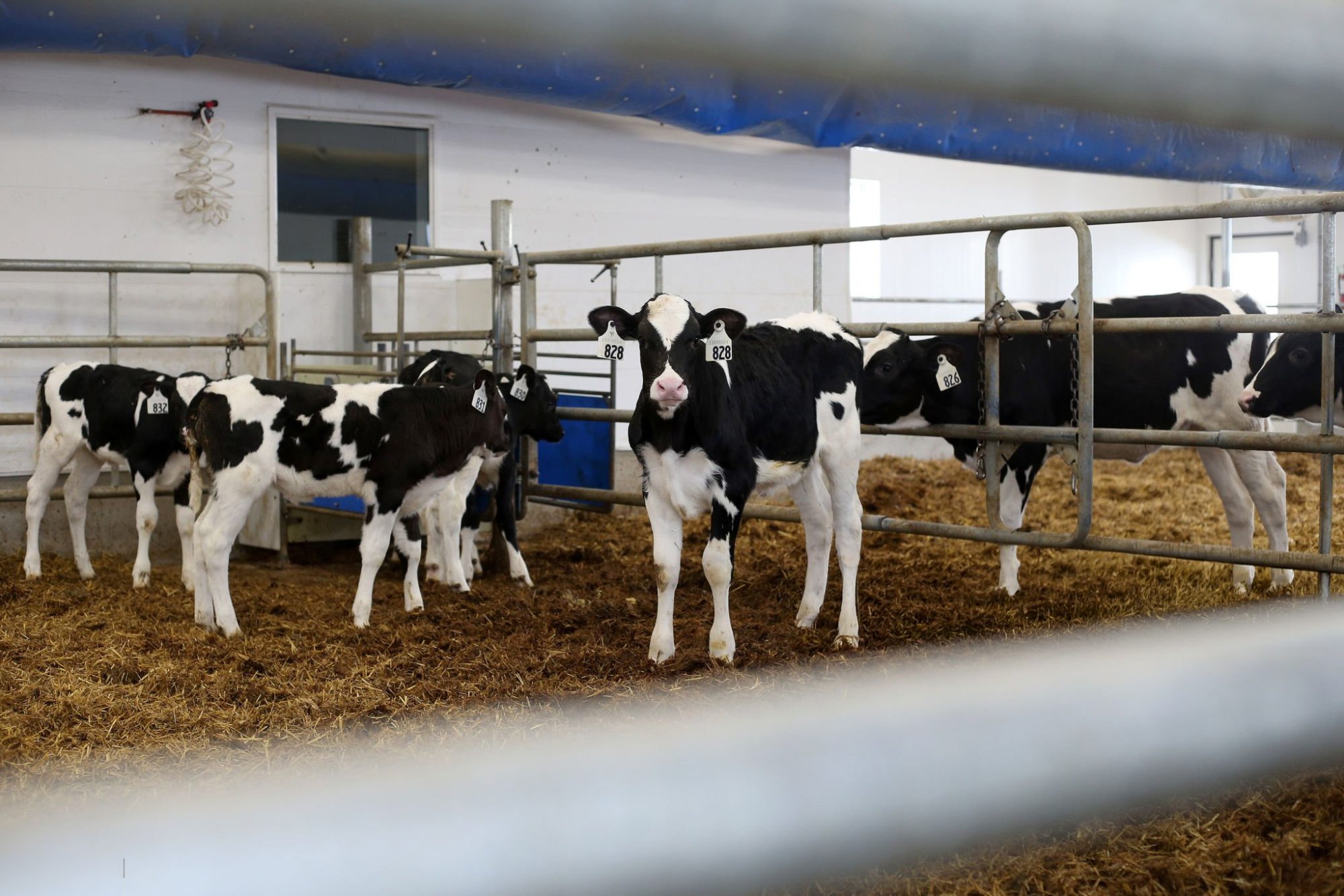
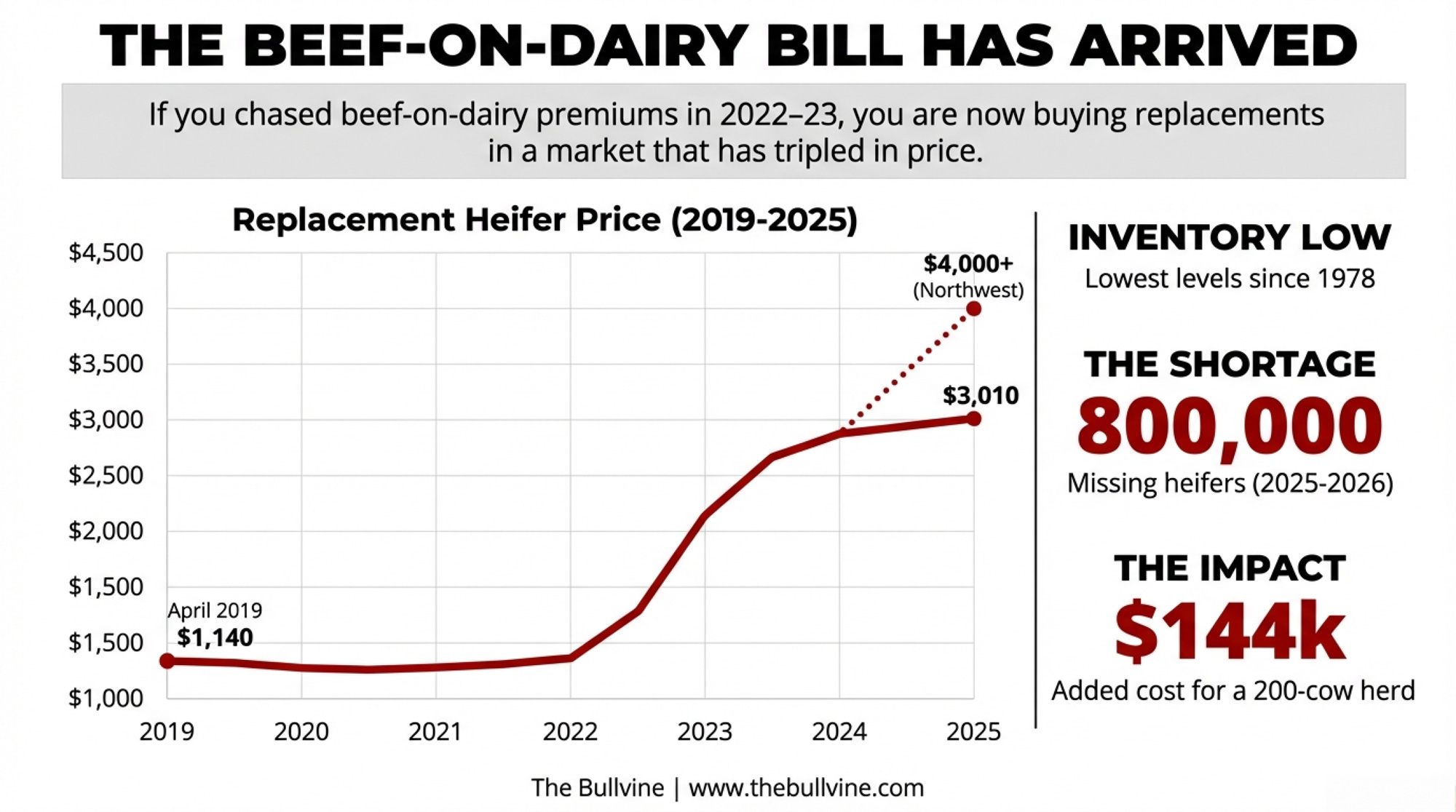
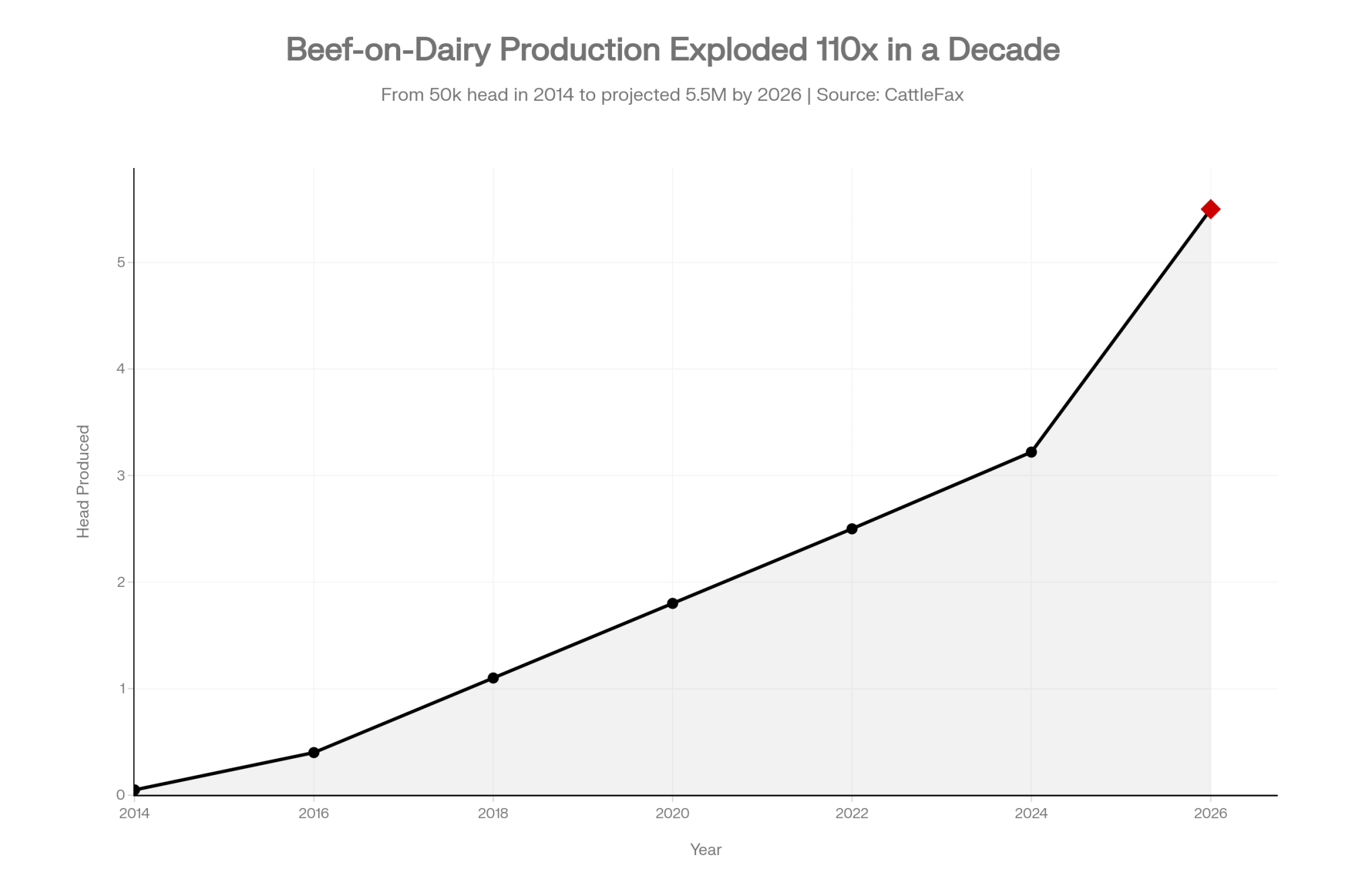
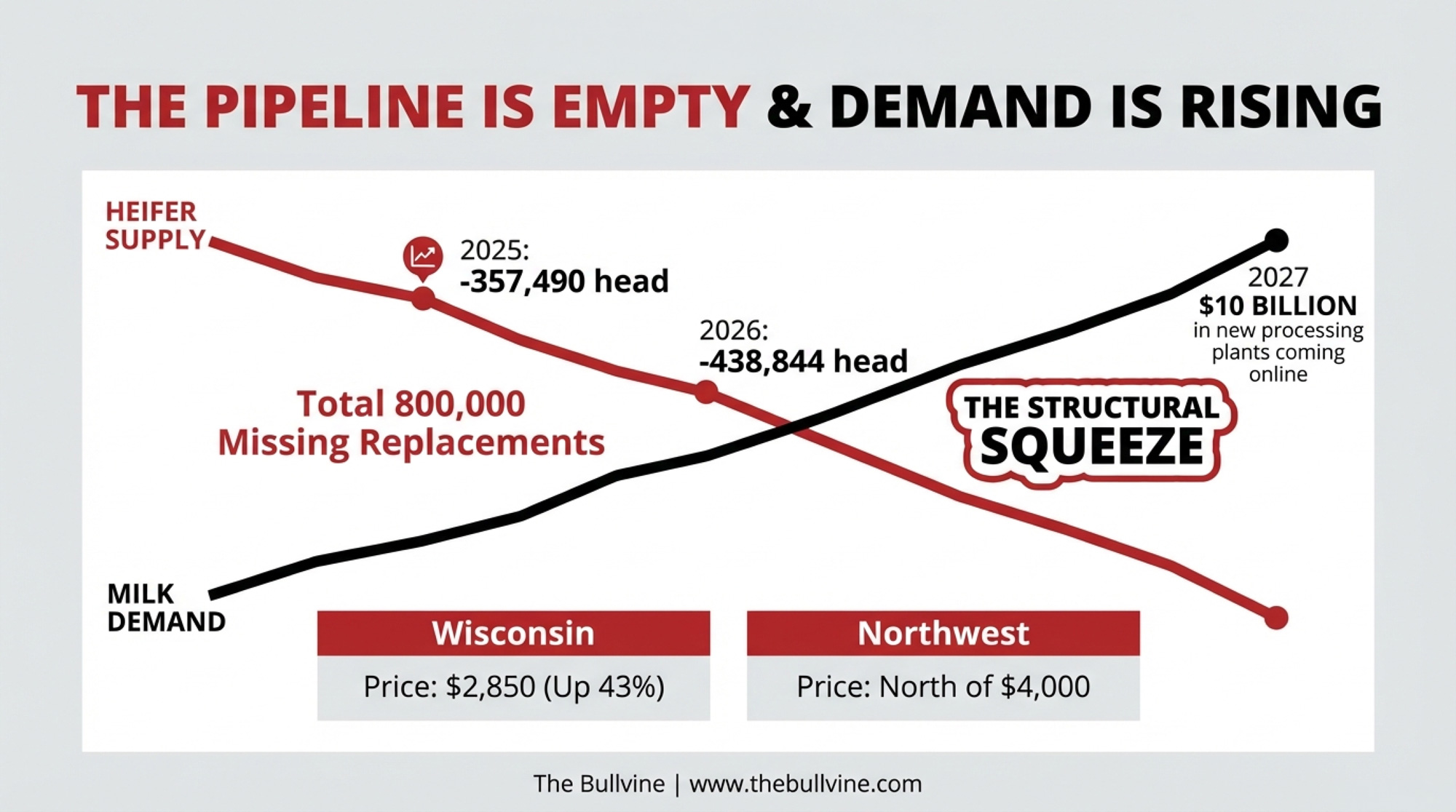

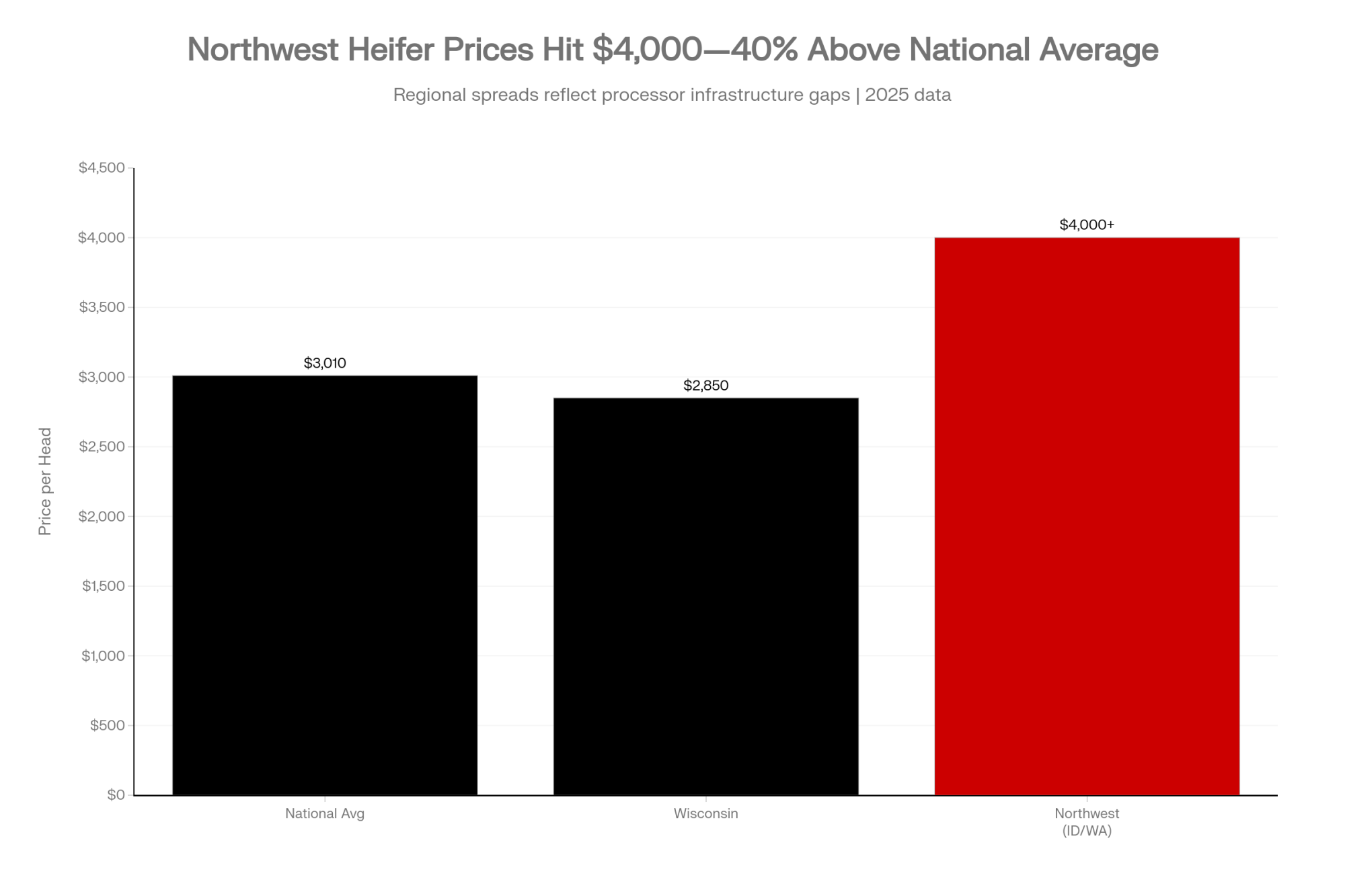
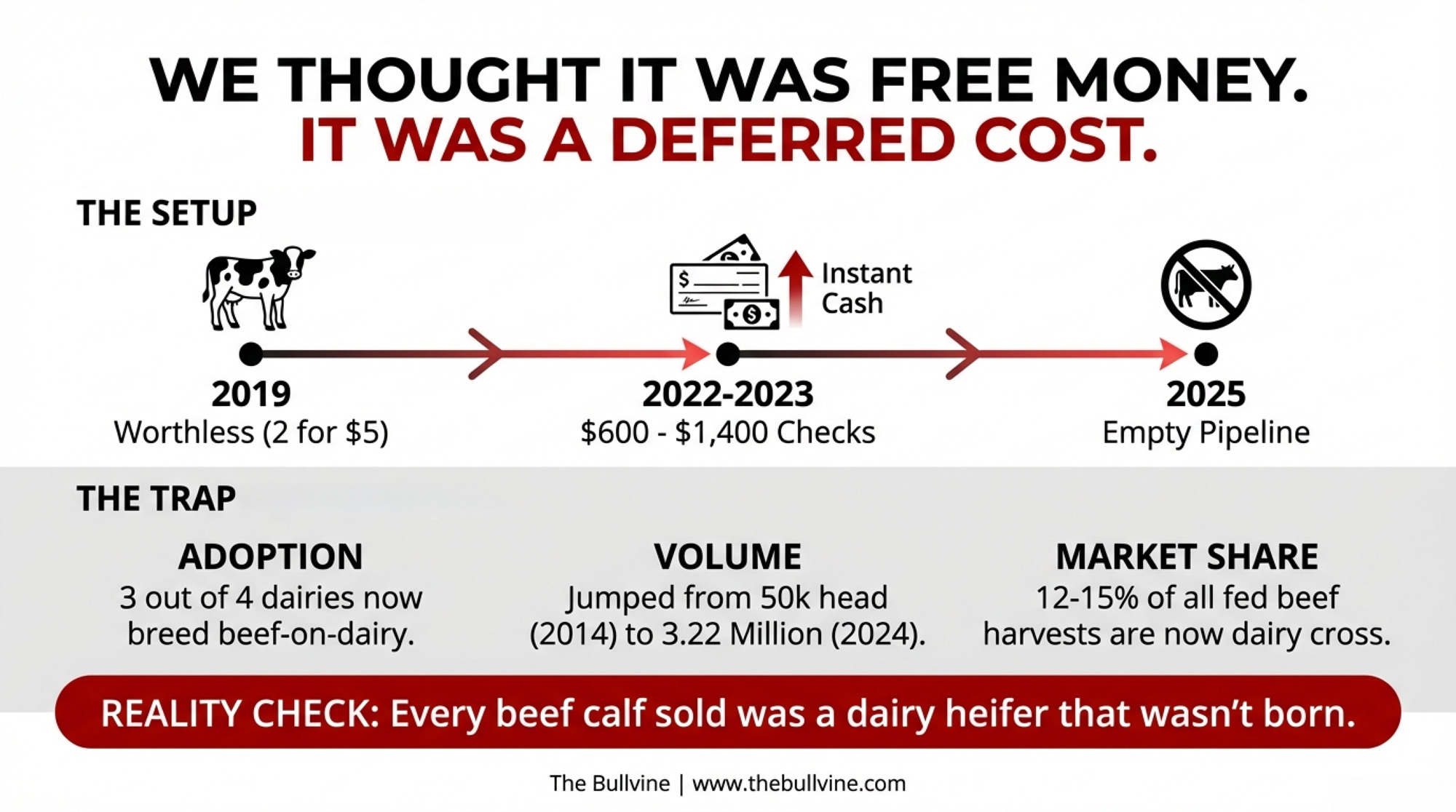
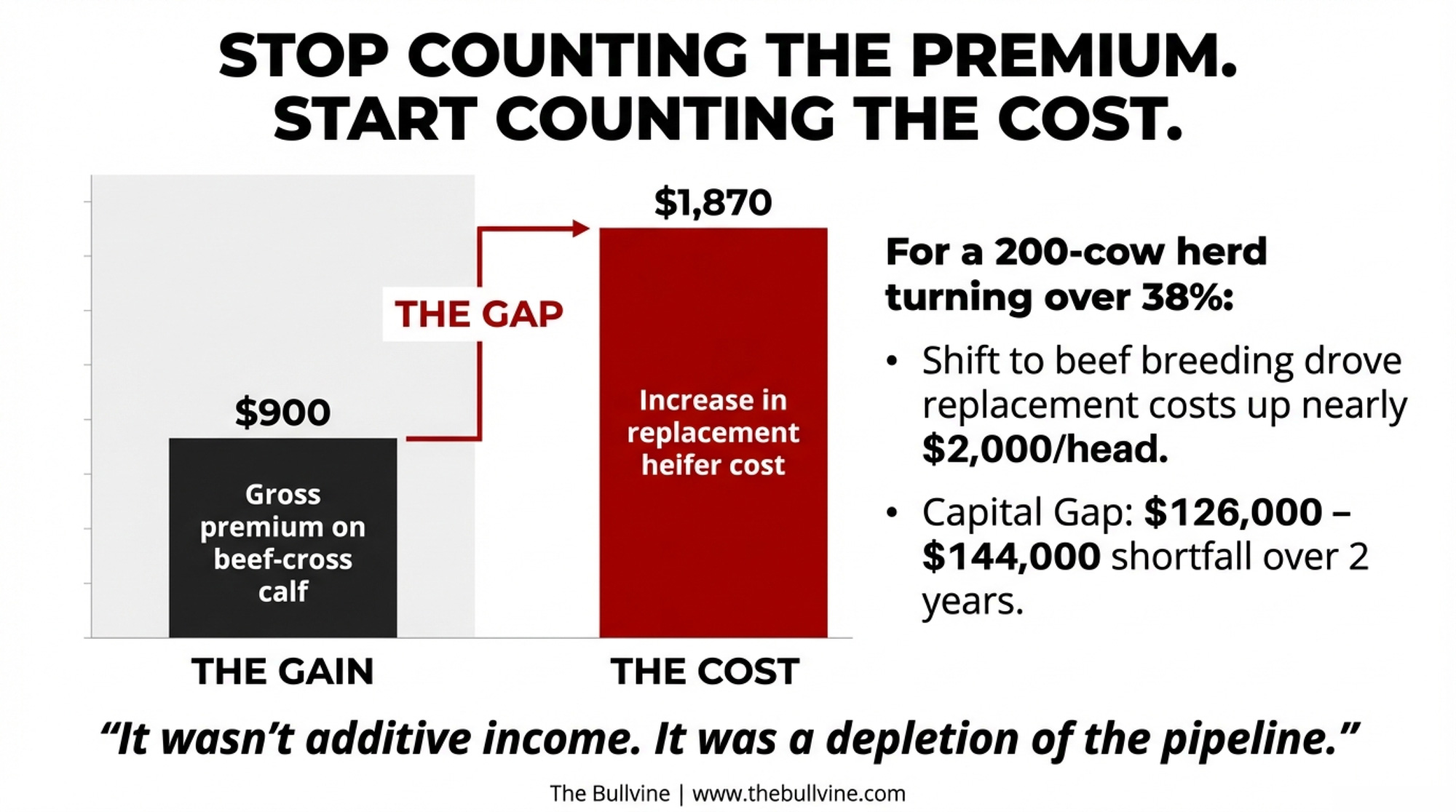
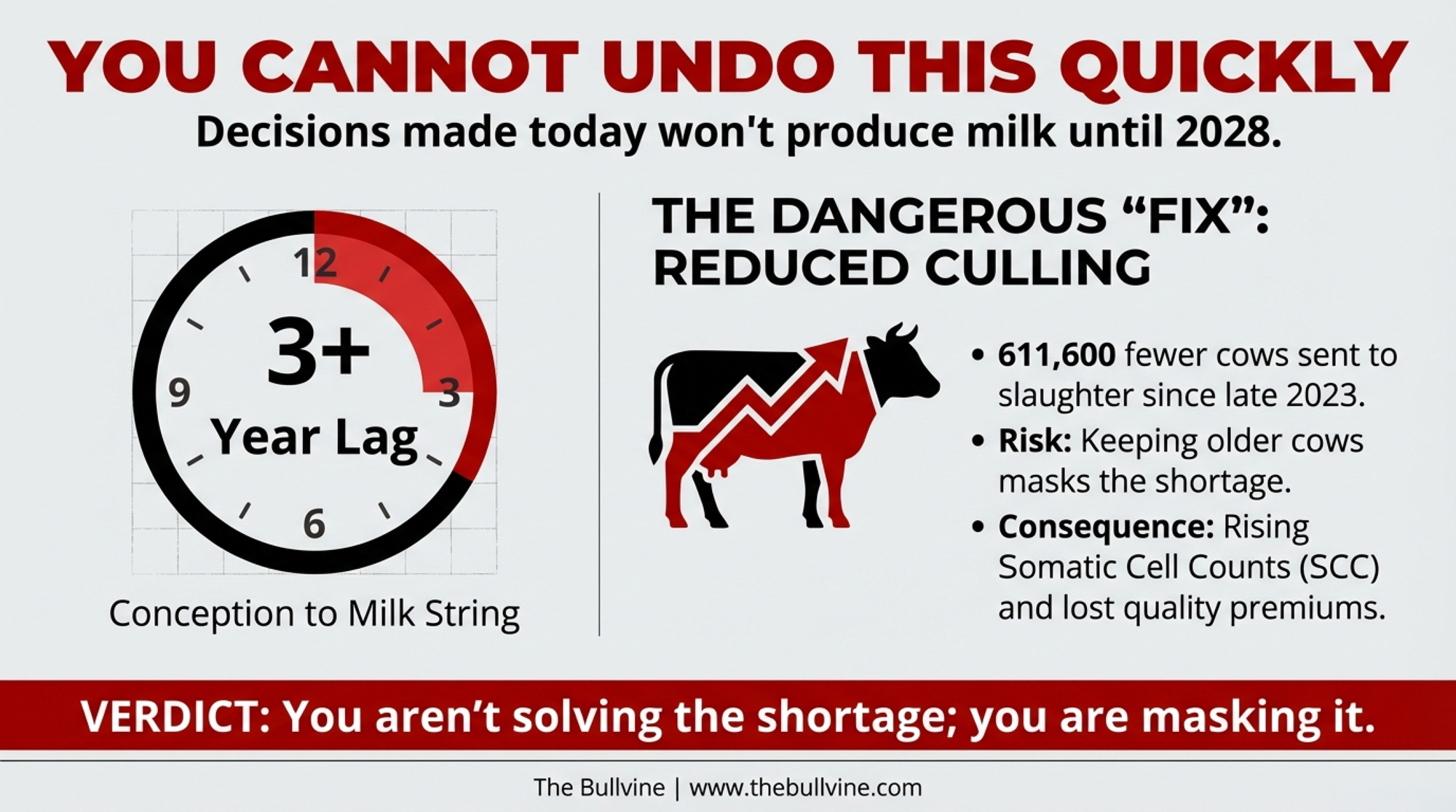
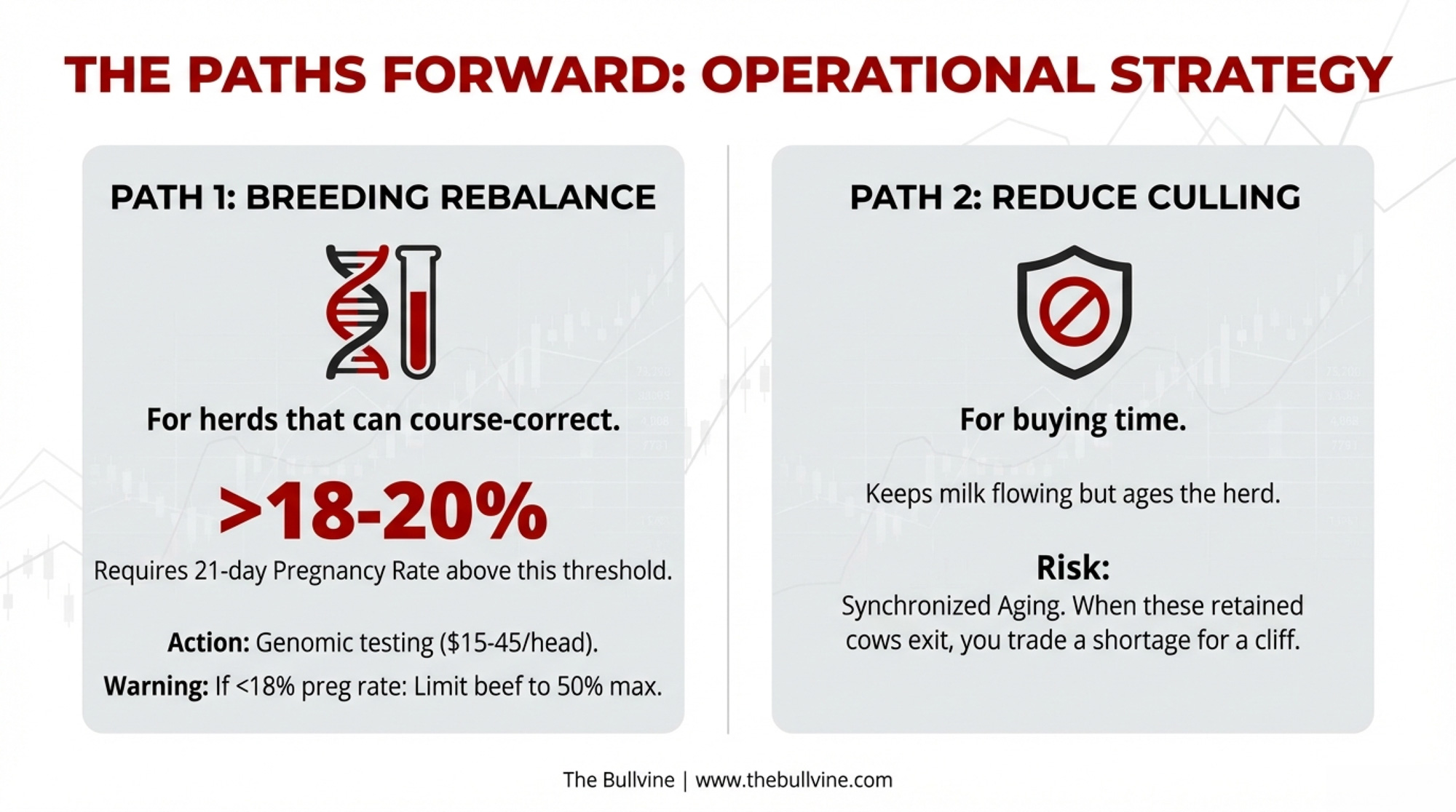
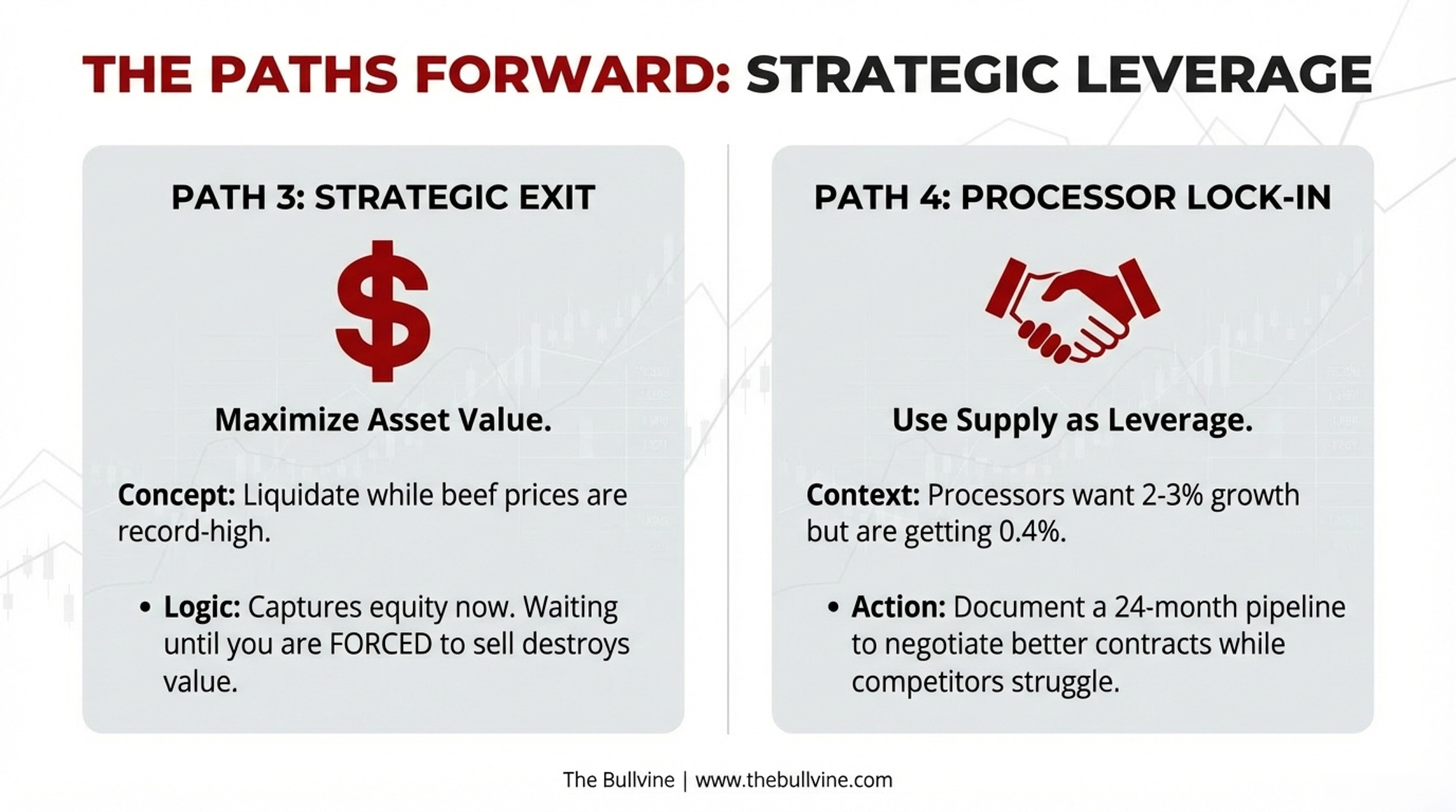
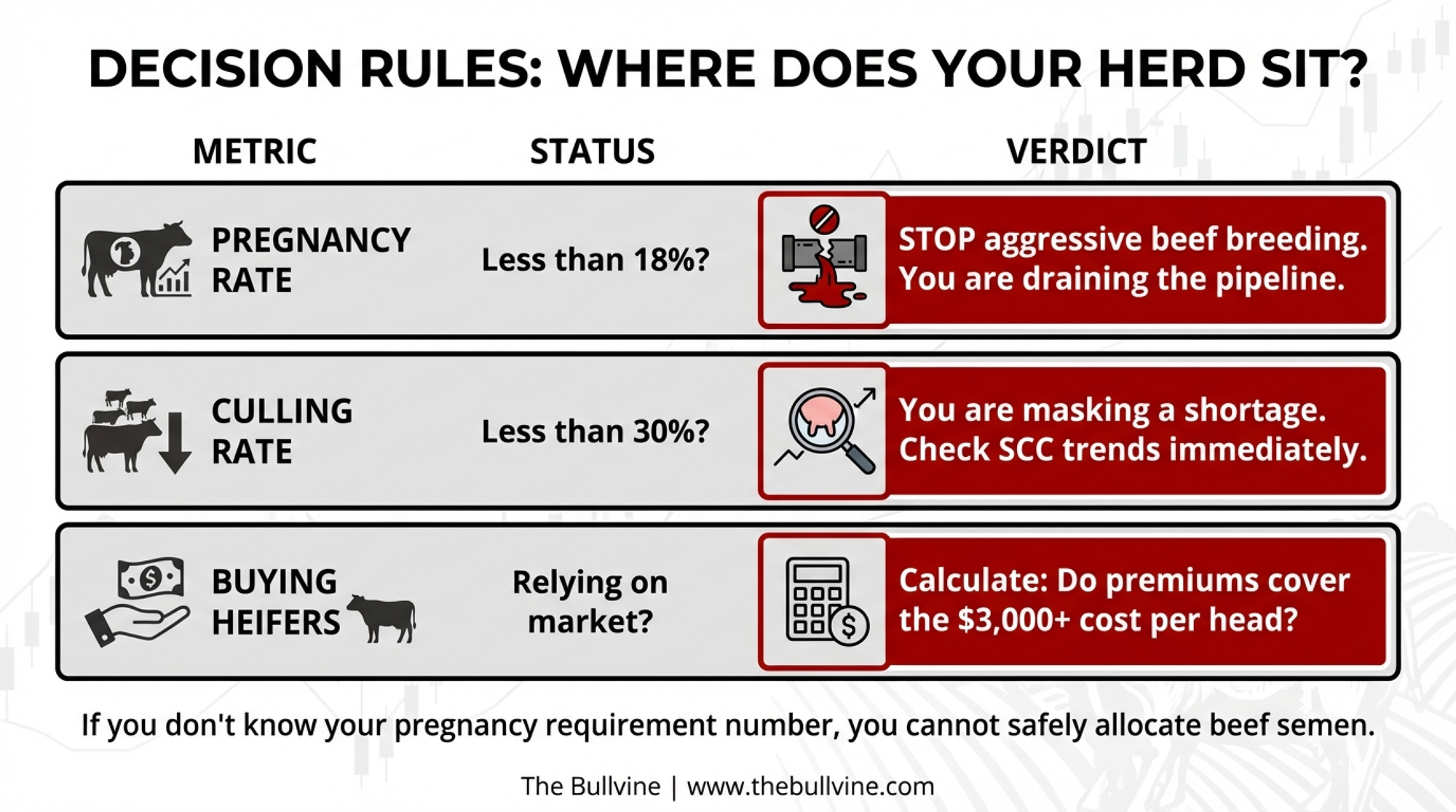
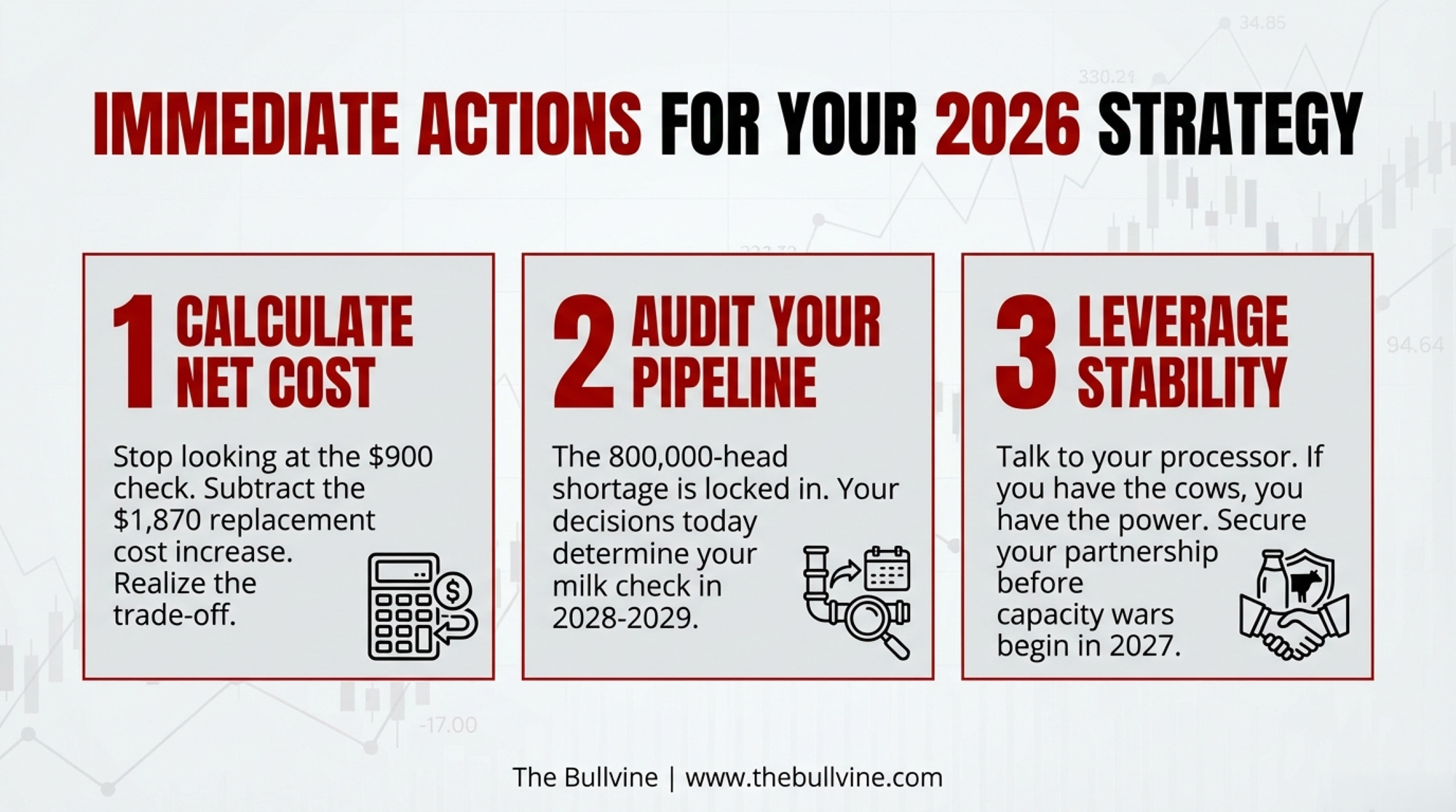
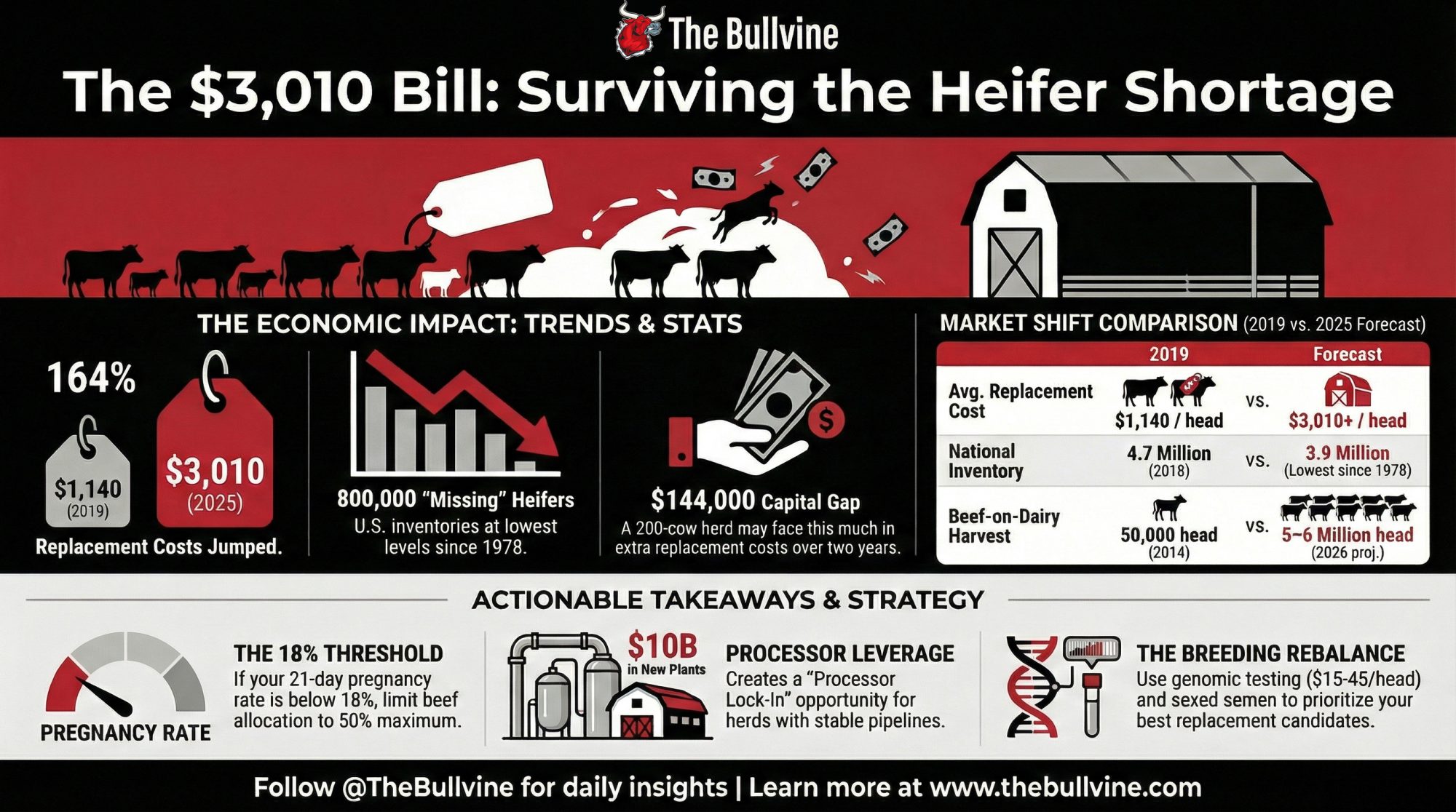
 Join the Revolution!
 Join the Revolution!