





An $800 permit. Up to $50,000 per product per day in penalties. Jacy Vaughn’s West Texas dairy is finding out which number mattered — and the insurance angle is worse.
Executive Summary: A judge in Travis County has already ruled against Jacy Vaughn’s Like Wildflowers Homestead near Lamesa, and the next hearing in Texas DSHS v. Like Wildflowers (Cause No. D-1-GN-25-010854) is scheduled for June 29. Her mistake wasn’t the milk — it was skipping the $800, two-year Grade A Raw-for-Retail permit, a number that’s lunch money next to the 1,000-plus gallons she says she’s dumped since 2025 (call it $5,000–$12,000 at $5–$12 a gallon) and a statutory penalty ceiling of up to $50,000 a day per product. But the part that should grab any direct-sale operator is the insurance: as of June 2024, Verisk’s standard farm forms now carry an optional endorsement letting carriers exclude raw-milk liability outright — and that exclusion can reach the policy covering your cows, your parlor, and the note at the bank. That’s the real asymmetry here. A 30-cow homestead and a 400-cow dairy face the same legal theory, but the big operation is betting the whole shop on a sideline that might gross $15,000 a year. With Texas the #4 milk state in 2025 and the federal interstate ban still in force despite the deregulation noise, a ruling this size becomes the template neighboring regulators reach for. The June 29 hearing will signal where Texas is headed — so the move this week is simple: call your agent and get one answer in writing, does my policy cover raw-milk sales, or already exclude them?
Based on Travis County court records and public reporting available as of June 28, 2026. The case is ongoing; the June 29 hearing is the next step, not a final resolution.
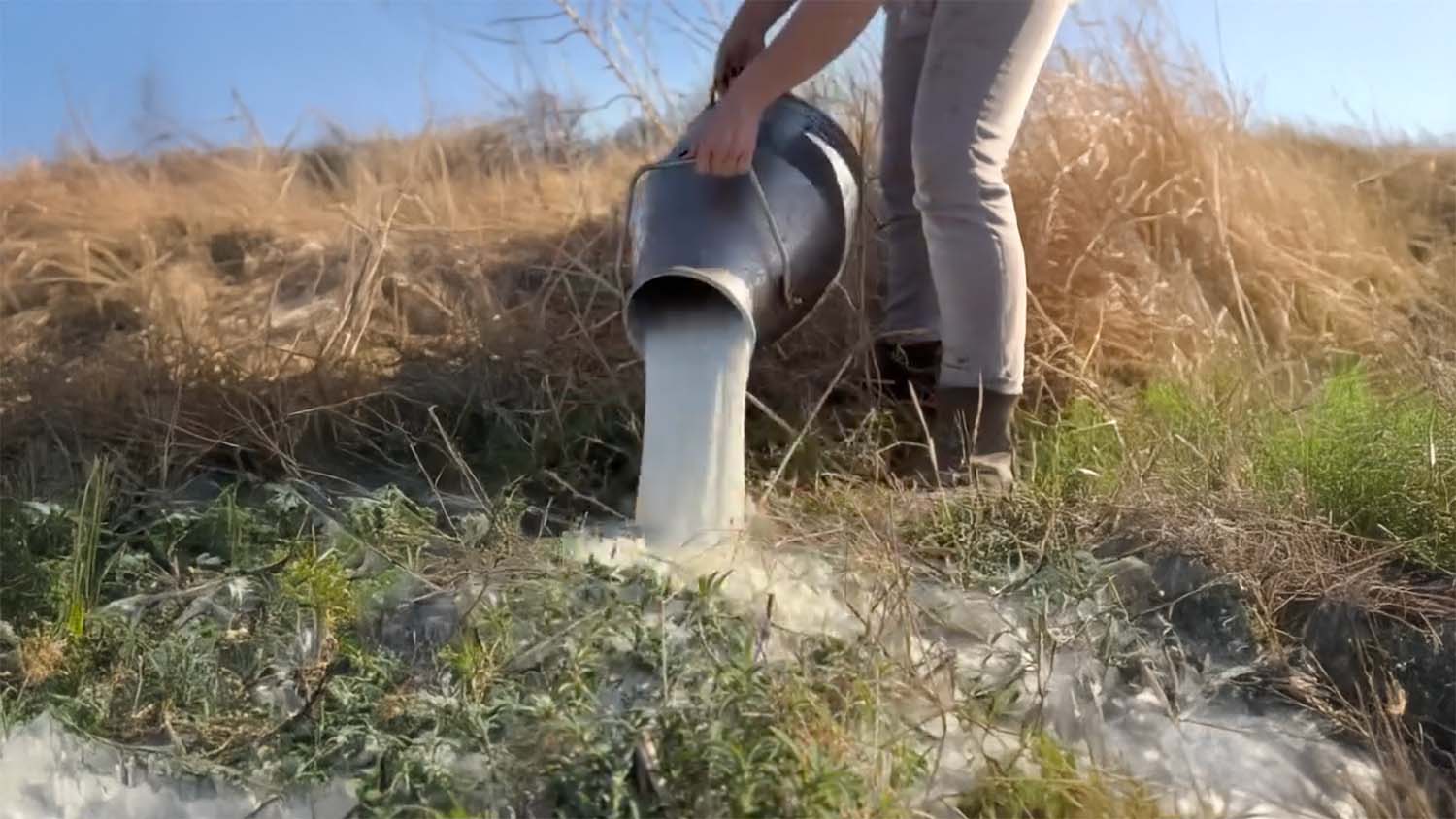
Jacy Vaughn didn’t set out to become a test case. By her own account, she’s a first-generation farmer, a wife, and a mom of two who just wanted to sell raw milk off her micro-dairy near Lamesa, out on the West Texas plains, straight to the families who came looking for it. She’s argued — in her own posts and in her court filings — that a Private Membership Association kept those sales private, member-to-member, beyond the state’s reach. Texas didn’t buy it. The Department of State Health Services took Like Wildflowers Homestead to court for selling without a Grade A Raw-for-Retail permit; a judge already sided with the state once, and the next hearing is June 29.
Here’s the part that should stop you cold, even if you milk 400 cows and wouldn’t touch raw milk with a barn pole. The permit she skipped costs $800 for two years. She says the fight has already cost her more than 1,000 gallons of dumped milk since 2025, plus thousands in legal fees. So this isn’t really a raw-milk story. It’s a story about a risk that’s mispriced on many balance sheets — with a court date about to test it in some of the biggest dairy country in the nation. And the worst of it isn’t the fine or the poured-out tank. It’s the insurance.
What’s Actually on the Docket
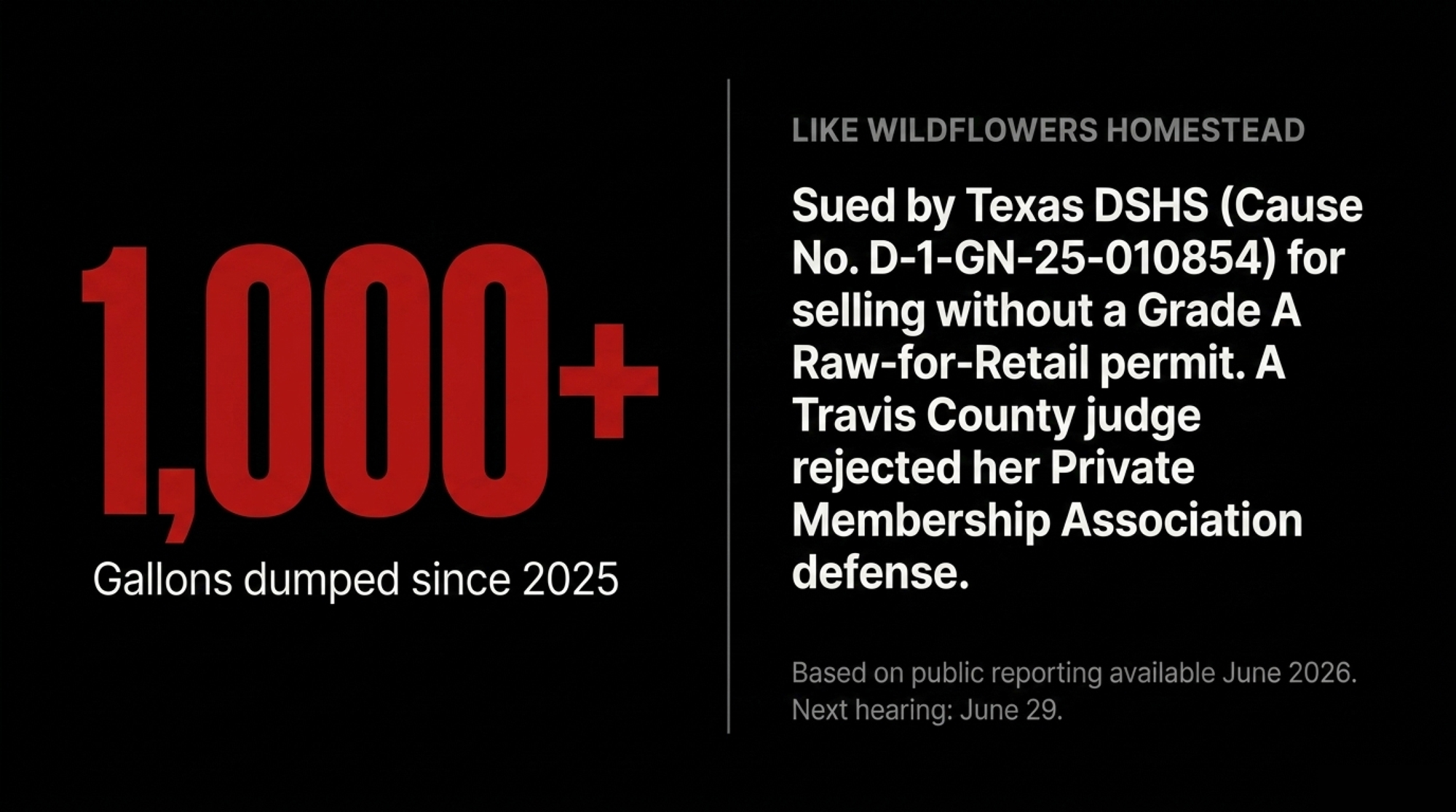
Travis County civil records list the case as Texas DSHS v. Like Wildflowers Homestead, LLC, Cause No. D-1-GN-25-010854, in the 200th District Court. A temporary-injunction hearing ran on February 19, 2026, and by early April, the judge had ruled against the homestead, with the next court date set for June 29. What that April order actually demands — a full shutdown, a narrower injunction, penalties — isn’t fully public. As of the latest reporting, the complete text of the ruling hadn’t been released.
Vaughn has also said publicly that she believes a complaint set the state on her. DSHS files these enforcement actions in Travis County, regardless of where the complaint originated, and the agency hasn’t named any complainant in this case. Treat the competitor theory as her allegation, not a finding — because that’s exactly what it is.
Why a West Texas Micro-Dairy Matters to Everyone Else
Raw milk is having a political moment. HHS Secretary Robert F. Kennedy Jr. has signaled he might lift the FDA’s interstate ban and float voluntary federal standards, and in March 2026, Representatives Thomas Massie and Chellie Pingree introduced H.R. 7880, the Interstate Milk Freedom Act. The mood music says deregulation. The reality says wait.
As of late June 2026, the FDA’s interstate ban remains fully in force, and H.R. 7880 is pending in committee with no floor vote. State law is where raw milk lives or dies. And Texas is blunt about it: any Grade A raw milk sold direct to consumers has to come from a permitted Grade A Raw-for-Retail processor. A PMA membership card doesn’t change that in the state’s eyes.
Now the scale. Texas isn’t some bit player — it ran #3 nationally for milk production in 2024, then Idaho edged back ahead of it in 2025, knocking Texas to #4, with both states posting some of the fastest growth in the country (Idaho up 7.3%, Texas up 6.9% year over year). A ruling in a state that big doesn’t stay put. It becomes the thing regulators in other states point to when their own enforcement questions land on a desk.
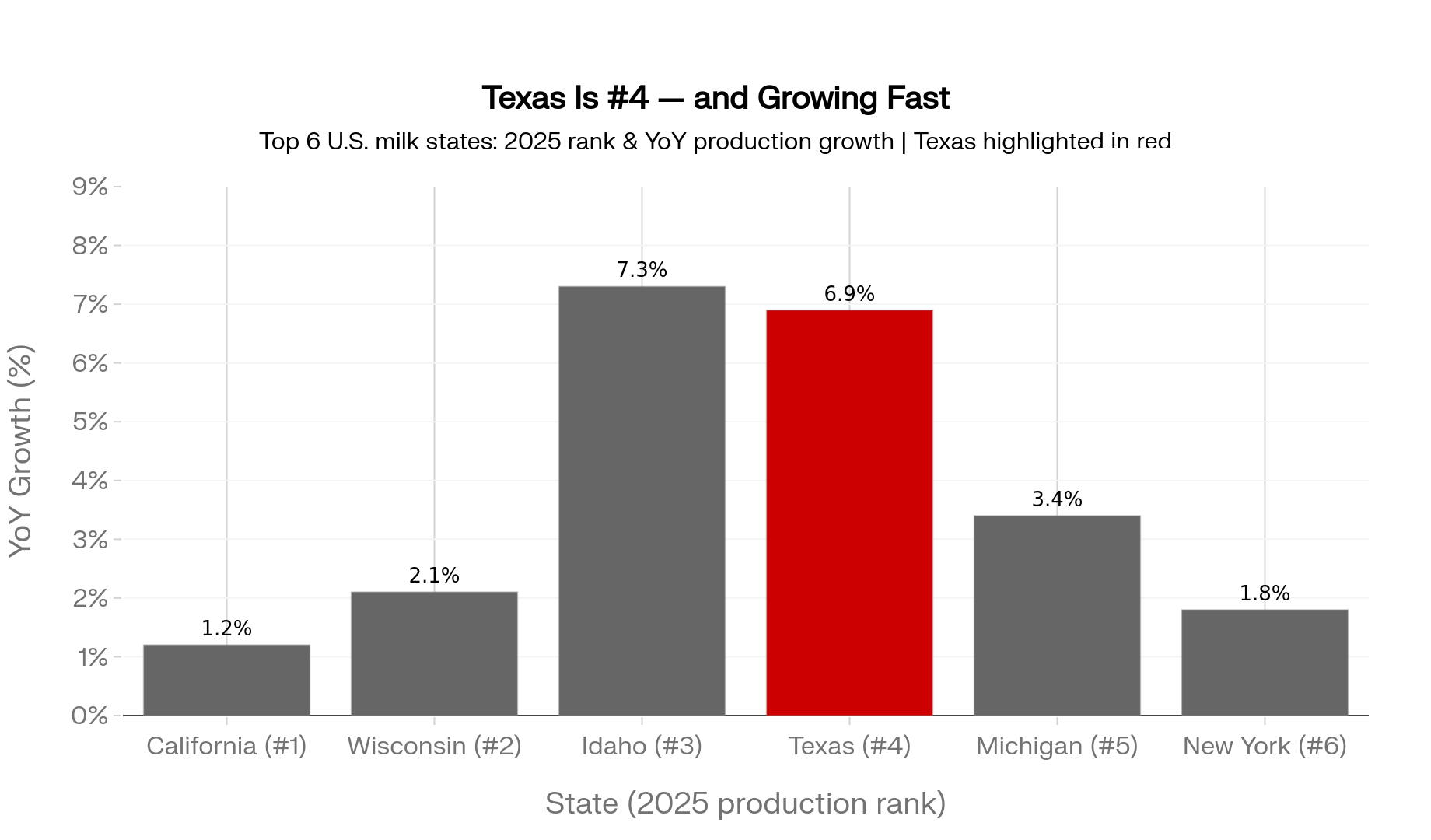
And the dairies most exposed here aren’t the megaherds. They’re the small and mid-size operators eyeing direct sales to claw back a little margin — a much bigger crowd than the handful of true raw-milk believers.
How Much Does Skipping the Permit Actually Cost?
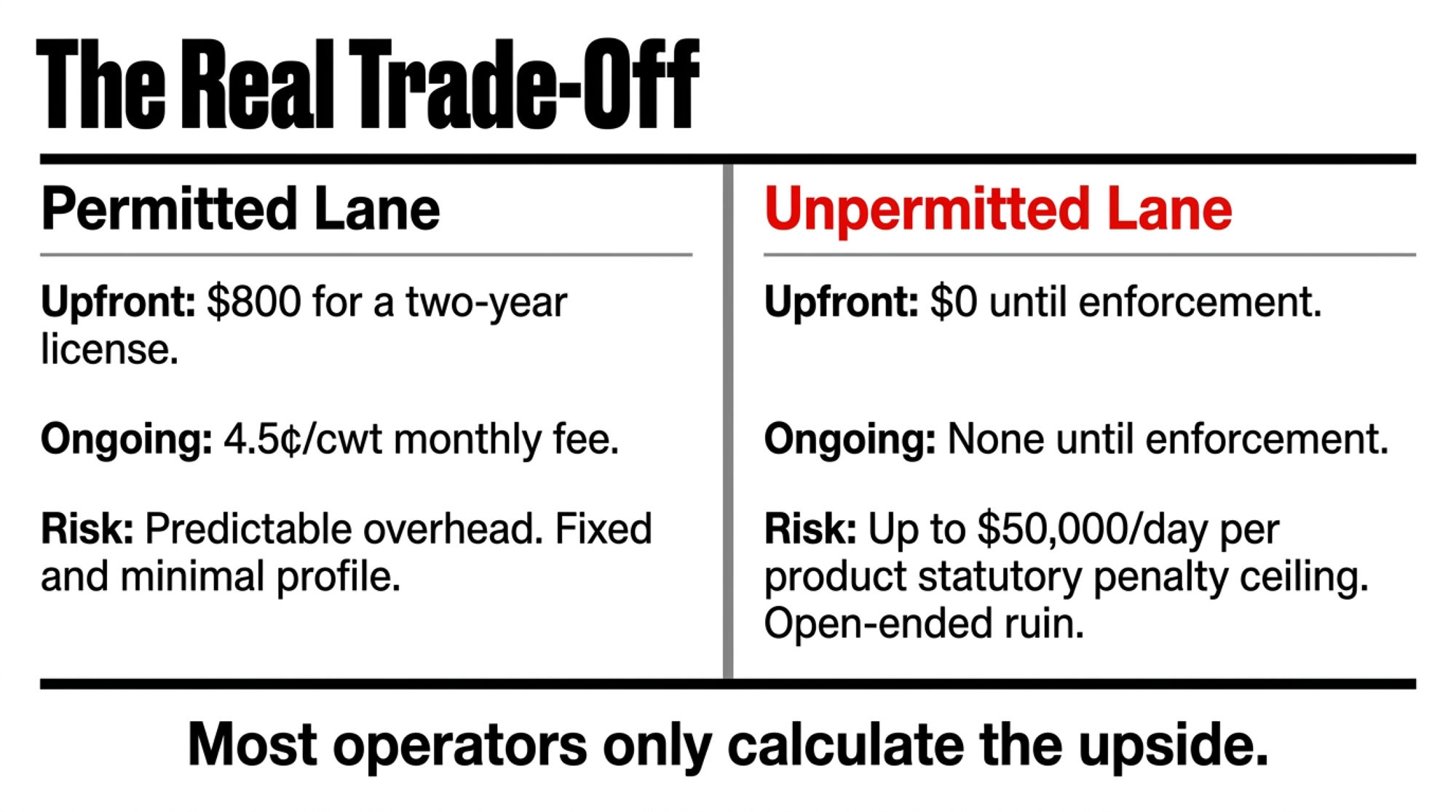
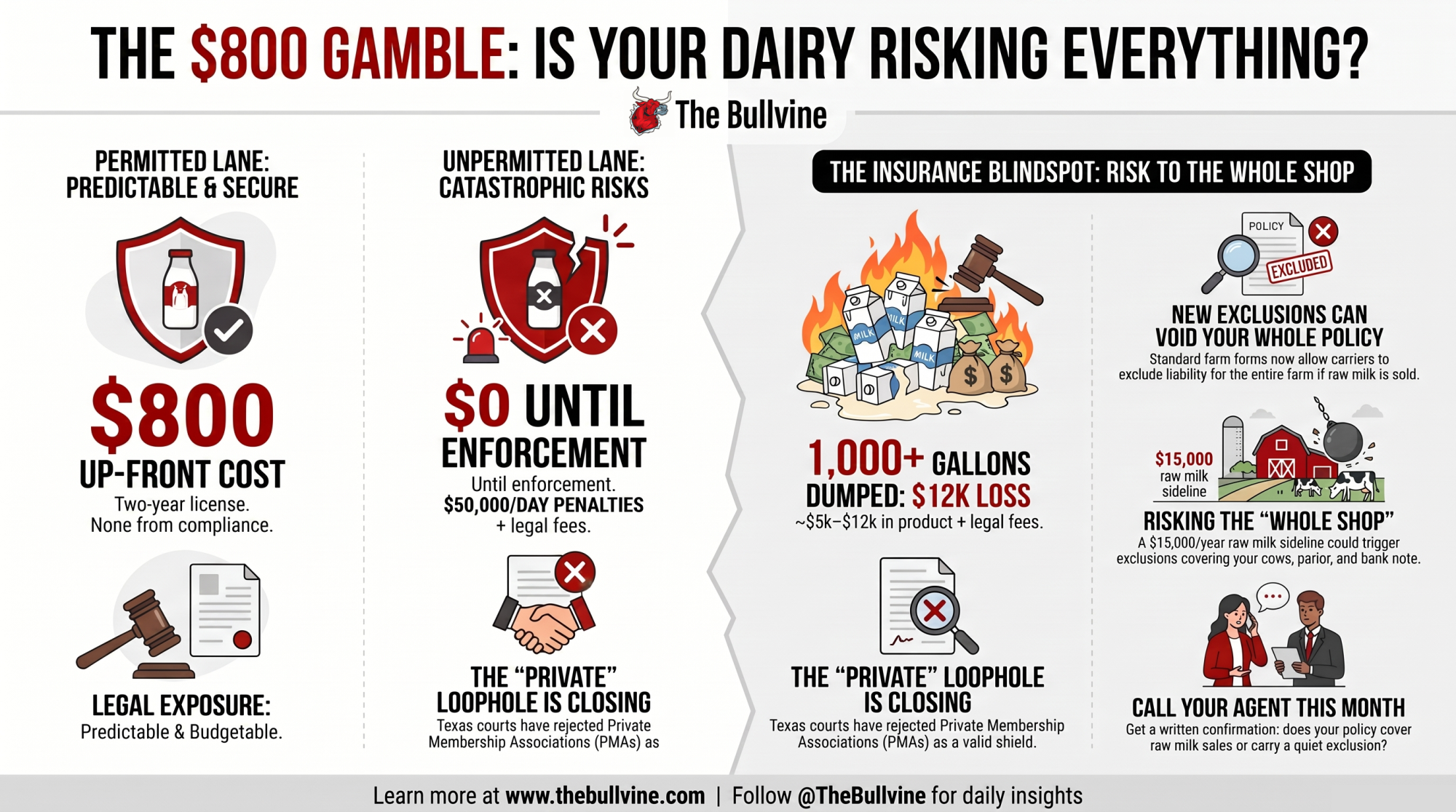
Start with the math nobody runs before they start. The Texas Grade A Raw-for-Retail license is $800 for two years, plus a monthly inspection fee of 4.5 cents per hundredweight processed. For a micro-dairy moving a few hundred gallons, that’s lunch money. The compliance underneath it — quarterly inspections, pathogen testing, temperature logs, posted results, record-keeping — costs time and some capital, but it’s a known, fixed number you can put in a budget.
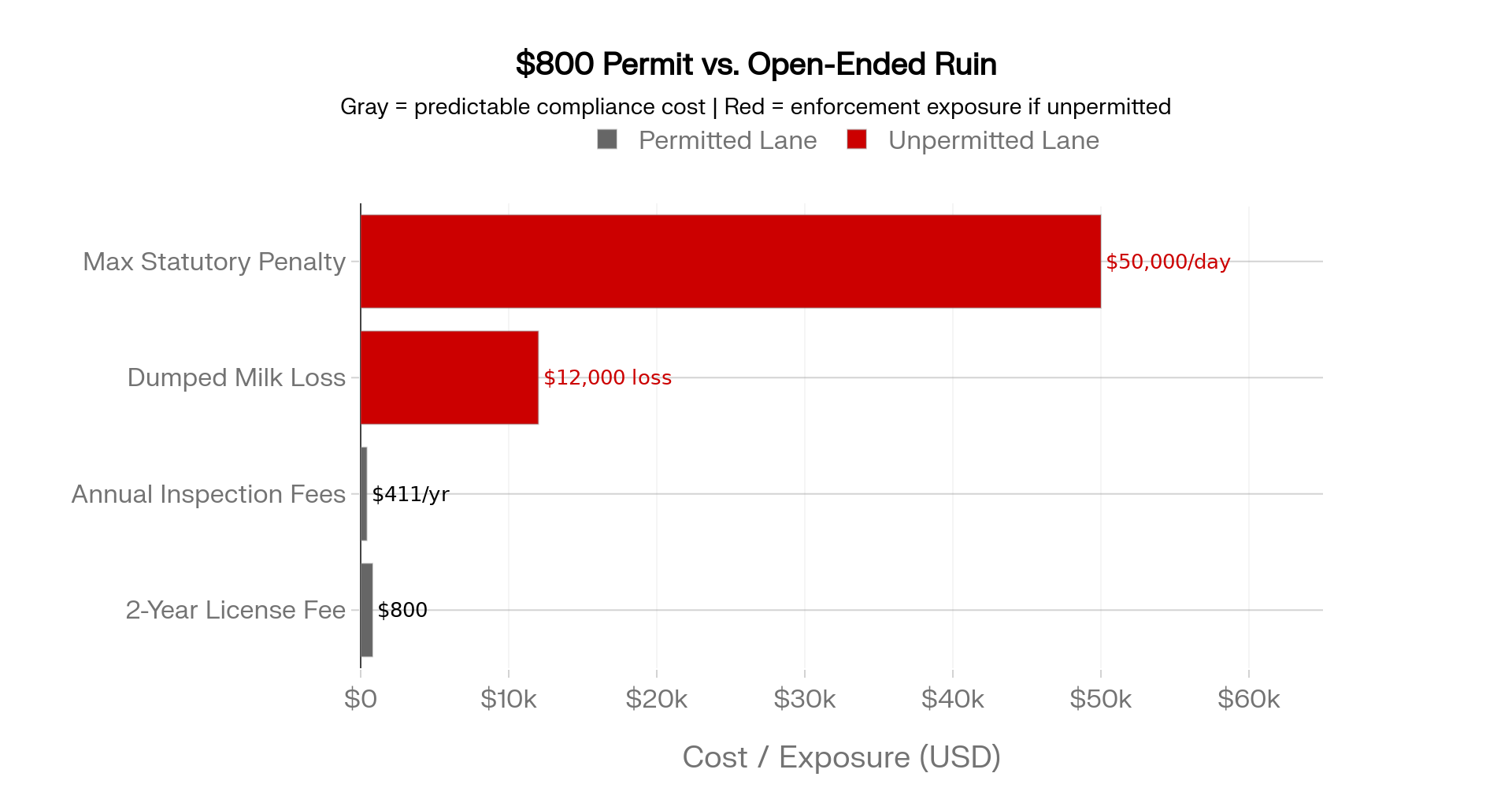
Run that as an annual line. The license pencils to $400 a year. Say you process 250 hundredweight in a year off a small herd — that’s about $11.25 in inspection fees on top. Call it somewhere in the low hundreds of dollars a year to stay legal, before testing and your own labor. Hold that number.
Now run the other column. Vaughn’s account, carried by raw-milk advocacy site GetRawMilk.com, puts it at 1,000-plus gallons poured out since 2025 and thousands in legal fees. Raw milk sells direct for roughly $5 to $12 a gallon. So 1,000 dumped gallons conservatively amount to $5,000 to $12,000 in product hitting the drain — before a single lawyer’s invoice. On top of that, the Texas Food, Drug, and Cosmetic Act allows civil penalties of up to $50,000 per day for each food product in violation: a ceiling courts rarely reach for, but one that’s right there in the statute.
That’s the trade, side by side. A few hundred dollars a year, fixed and known. Against five figures of dumped product, legal fees, and a statutory penalty ceiling that most operators have never read.
The Two Lanes: What Each One Actually Costs
| Metric | ✓ Permitted Lane | ✗ Unpermitted Lane |
|---|---|---|
| Up-front cost | $800 (2-year license) | $0 — until enforcement |
| Annual fees | ~$411/yr (4.5¢/cwt + inspections) | $0 — until enforcement |
| Compliance burden | Quarterly inspections, pathogen testing, temp logs | None — until enforcement |
| Product loss risk | $0 from compliance | 1,000+ gal dumped (~$5,000–$12,000) |
| Legal fee exposure | Predictable & budgetable | Open-ended; $20,000+ documented |
| Statutory penalty ceiling | N/A | Up to $50,000/day per product |
| Insurance coverage | Standard farm policy (verify in writing) | Possible exclusion — Verisk endorsement active since June 2024 |
| Public record | Routine inspection file | Named lawsuit on public docket |
| Risk to whole operation | Fixed & minimal | Open-ended ruin — herd, facility, note at bank |
| Verdict risk (Texas) | No enforcement action | Judge already sided with DSHS at injunction stage |
Most operators never lay it out like that. They ask, “Can I move ten more gallons a day at $10?” and let the legal machinery fade into the background — right up until a process server is standing in the driveway.
It’s only fair to put Vaughn’s argument on the table, because this is more than enforcement paperwork to her. Her position, in her filings and posts, is that the PMA made these private transactions between members, not retail sales the state can touch. That’s a legal argument, not a settled finding, and no final ruling on the PMA question had come down as of the latest reporting. The judge didn’t accept it at the injunction stage. June 29 is when it gets tested again.
The Part That Blindsides People: Insurance
It isn’t the fine that wrecks a dairy here. It’s the coverage you assumed you had.
⚠️ The Insurance Blindspot
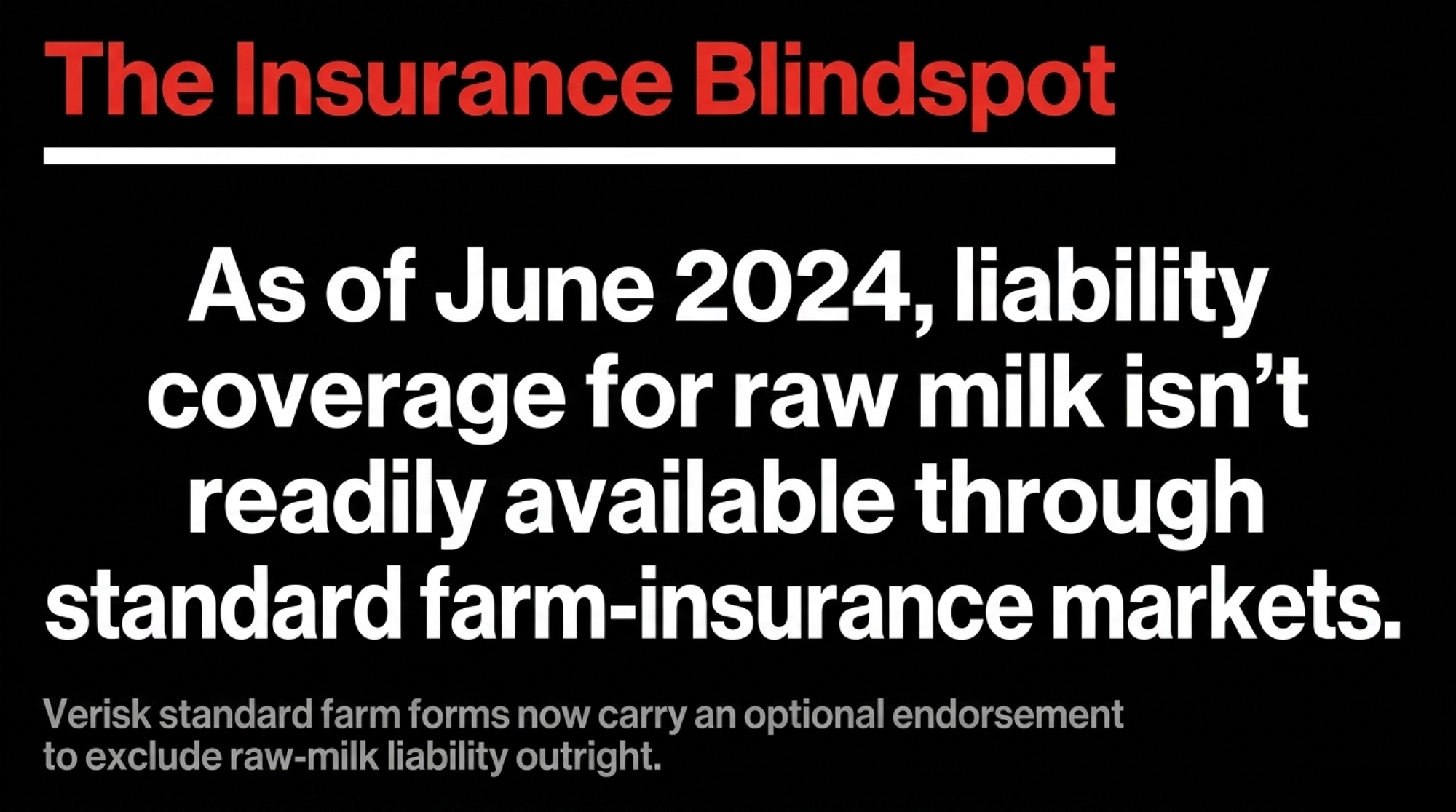
As of June 2024, liability coverage for raw milk isn’t readily available through standard or surplus farm-insurance markets — and even a farm product-liability rider built for direct off-farm sales typically won’t cover it. It’s getting harder, not easier. In June 2024, Verisk — the insurance-industry data firm behind the standard ISO farm forms — described an optional endorsement that allows carriers to explicitly exclude liability coverage for the sale of unpasteurized “raw” milk. Sample exclusion forms are already circulating in the market.
The danger isn’t just being uninsured on the raw milk. It’s an exclusion that can reach the coverage protecting the rest of the operation — the cows, the parlor, the note at the bank. One producer’s account in a dairy group — which The Bullvine has not independently verified — described a policy being bought out, and the new carrier refusing to write raw-milk sales off the farm at all.
Before you sell a single jar, get your agent’s answer in writing: Does my policy cover raw-milk sales, or carry an exclusion?
Why does this stay invisible until it’s too late? Same blind spot dairies have with recall risk. The Bullvine’s own reporting found plants penciling a recall at $100,000 when the realistic hit runs closer to $800,000. People grab the upside number first and assume somebody downstream — an insurer, a lawyer, a waiver — is holding the tail risk. In a Like Wildflowers situation, nobody is. It bounces straight back to the farm gate.
And the legal exposure isn’t hypothetical, especially in Texas. Back in 2017, raw milk from K-Bar Dairy in Paradise, Texas, tested positive for Brucella RB51, according to CDC and Texas health officials — a case the CDC tracked across seven states, with a Texas woman hospitalized and confirmed infected, and officials working to reach more than 800 households that had bought the milk between June 1 and August 7. RB51 is resistant to first-line antibiotics and can turn chronic and lifelong, the agency warned. More recently, Rachel Maddox sued Keely Farms Dairy of New Smyrna Beach, Florida, alleging raw milk sickened her toddler and contributed to the loss of her unborn child, after a state agency report alleged a link between the farm and an outbreak that sickened 21 people, including six children, according to NBC News. None of these claims has been proven in court. But that’s exactly the kind of claim no waiver was ever written to survive.
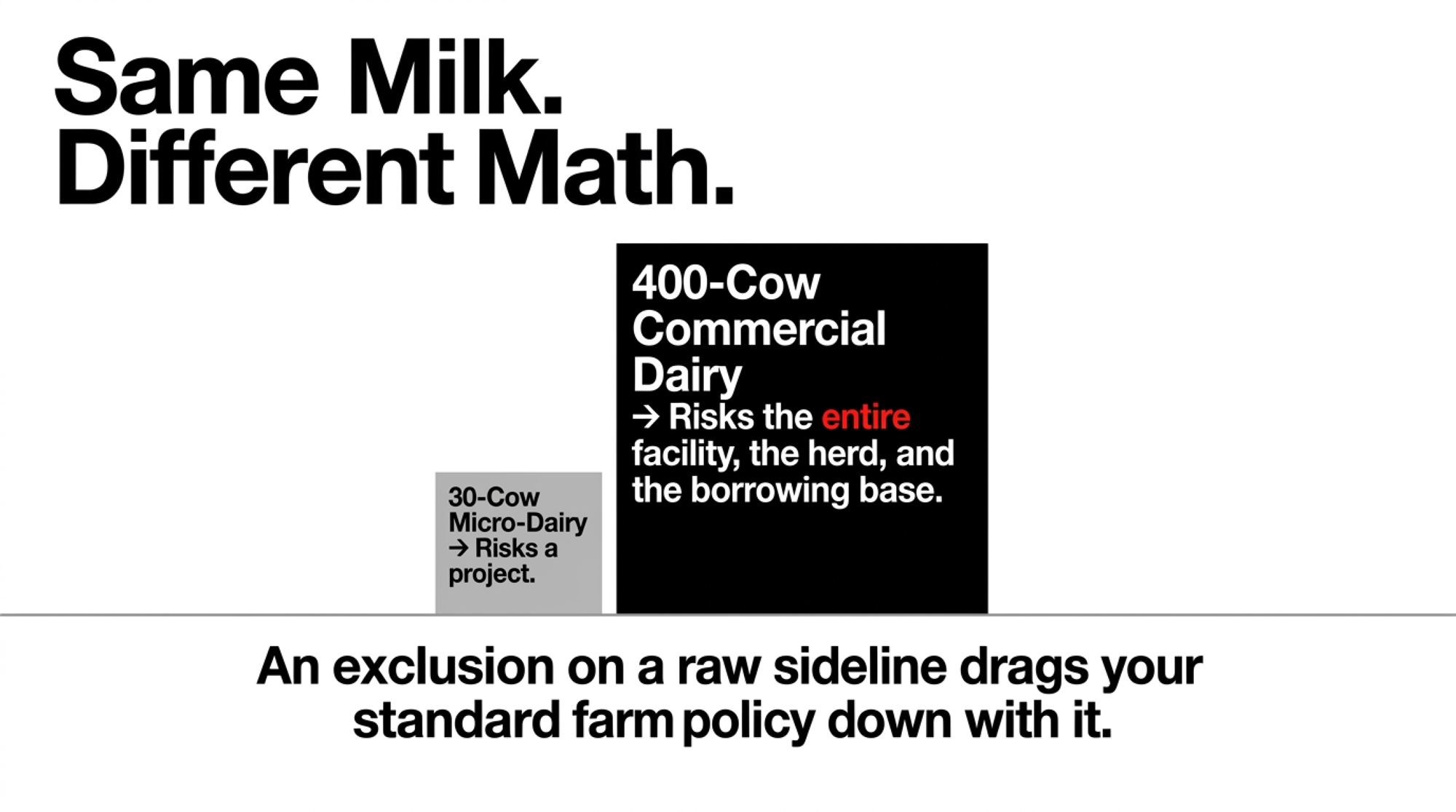
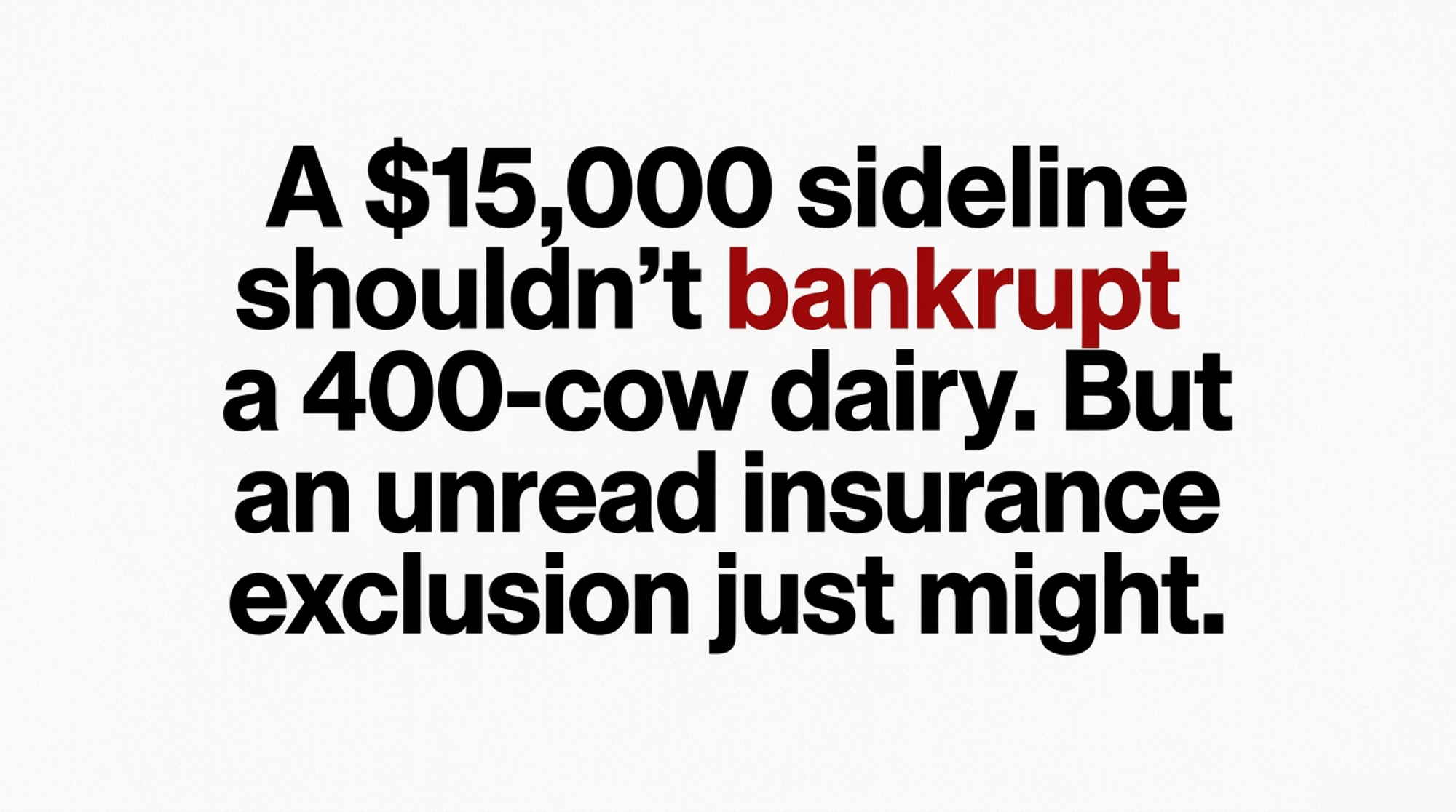
The bet gets worse the bigger you are. A 30-cow homestead and a 400-cow commercial dairy face the same legal theory. But if a raw sideline drags an exclusion onto the policy covering 400 cows, the loss isn’t a few jars — it’s the herd, the facility, and the borrowing base behind them. The micro-dairy is risking a project. The commercial operator is risking the whole shop.
| Factor | 30-Cow Homestead | 150-Cow Mid-Size | 400-Cow Commercial |
|---|---|---|---|
| Raw-milk sideline revenue (est.) | ~$5,200/yr | ~$10,400/yr | ~$15,600/yr |
| Compliance cost (permitted) | ~$500/yr | ~$750/yr | ~$1,200/yr |
| Net margin (permitted) | ~$4,700/yr | ~$9,650/yr | ~$14,400/yr |
| Insurance exclusion impact | Policy on small operation | Policy on mid-size herd | Policy covering 400 cows, parlor & debt |
| Tail liability (single claim est.) | $50,000–$100,000 | $100,000–$300,000 | $300,000–$1M+ |
| What’s at risk | One project | Margin & equipment | Entire operation + borrowing base |
| PMA/herd-share protection (TX) | Unproven; judge rejected at injunction | Unproven; judge rejected at injunction | Unproven; same legal exposure |
| Recommended action | Get permit + written insurer answer | Get permit + written insurer answer | Audit insurance NOW before first sale |
Is a Raw-Milk Sideline Worth It at Your Scale?
Here’s where it gets real for herds in the squeeze. Mid-size dairies — roughly 150 to 500 cows — are already running close to the line, where a small swing in milk price or feed cost flips them from black to red, per The Bullvine’s own margin work. These are the operations looking hardest at direct sales, because the regular milk check is so tight.
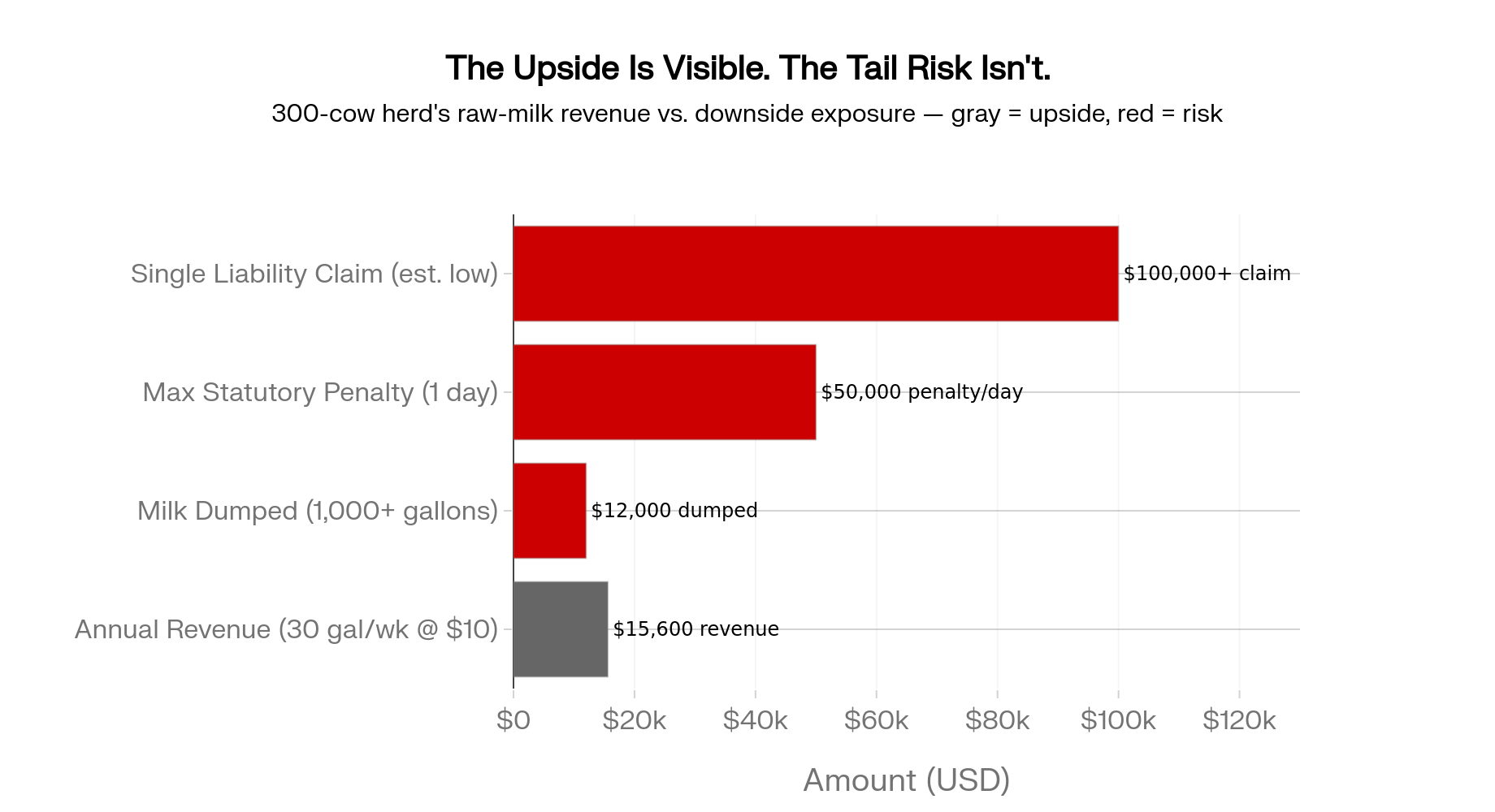
So picture a 300-cow herd testing a small raw line for extra income. Say it moves 30 gallons a week at $10 — that’s about $15,600 a year in topline, before bottling, labeling, and the time it eats. Now set that against the tail risk: one Brucella– or E. coli-type claim, like the ones reported against K-Bar or Keely Farms, landing on a policy that may now carry a raw-milk exclusion. The upside is a five-figure topline you can see. The downside is a six- or seven-figure claim you can’t see, sitting behind an exclusion you didn’t read. For a values-driven micro-dairy, raw milk is a lifestyle-and-mission call, and the operator usually walks in knowing the stakes. For a commercial dairy, it’s a fragile balance sheet sitting next to a risk the insurer may have already carved out — often without anyone in the office running that second column. Same milk. Very different math. A raw sideline can pencil out, but only inside the permit lane, with your insurer’s answer in writing.
What Should a Producer in a Neighboring State Read Into This?
If you’re milking in New Mexico, Oklahoma, or Louisiana, don’t file the Vaughn case under “Texas problem.” The specific rules don’t copy across the border — they’re all over the map. New Mexico allows retail sales of raw milk with a permit. Louisiana bans the sale of raw milk for human consumption outright. And Oklahoma just went the other way: Senate Bill 2028, signed in May 2026, raised the direct-sale cap from 100 gallons per month to 1,500 gallons per month. Three neighbors, three completely different answers.
What does travel is the enforcement posture. A ruling in a top-four production state is exactly the kind of thing a regulator next door cites when an enforcement question lands on their desk. The signal to watch isn’t the verdict alone — it’s whether DSHS treats the PMA-and-herd-share argument as a loophole to close hard, because that’s the argument operators everywhere are leaning on. If Texas slams that door on June 29, expect the language to show up in other states’ enforcement letters within a season or two. That’s how precedent travels in this business — not through statute, but through the example regulators reach for.
Options and Trade-Offs for Farmers
There’s no villain here, and raw milk isn’t the enemy. The real question is how you carry the risk if you go anywhere near direct sales. A few paths producers actually use:
- Get the permit and run in the lane. Right call when raw or direct sales are a real revenue line, not a hobby. It takes the $800 license, inspection readiness, testing, and record-keeping — time and capital, but you keep your legal footing. The do-it-this-month move: before you sell a single jar, call DSHS and your insurance agent in the same week and get both answers in writing. One call confirms the permit path. The other tells you whether your farm policy still covers you after the first sale — or quietly excludes it.
- Bottle through a licensed processor. Many states allow you to produce milk and sell it under your own brand through a licensed processor. Worth it when you want the premium and the brand without owning the full compliance burden — the same play we broke down in our deep dive on direct-sale margins. You give up some control and some cents per gallon — that’s the trade.
- Sit out until the federal law actually changes. Makes sense if deregulation chatter is the only thing tempting you. It takes a clear read of reality: the interstate ban is still in force, and H.R. 7880 hasn’t moved out of committee. You leave a premium on the table while you wait. But you’re not betting the farm on a bill that may never pass.
- Run the PMA or herd-share play anyway. This is what Like Wildflowers did. In Texas, it rarely makes sense, given the explicit permit requirement and the fact that a Travis County judge has already sided with DSHS at the injunction stage. The risk is the whole list above — dumped product, legal fees, an insurance exclusion, and a public court record. Texas does recognize true herd shares as distinct from sales when they operate with a bill of sale and divide milk proportionally, but that’s a question for your own attorney, not a workaround to assume on your own.
Key Takeaways
- If you’re weighing raw or direct sales in Texas, get the $800 Grade A Raw-for-Retail permit in hand before you sell anything — running without it is exactly what put Like Wildflowers in court.
- Call your agent this month and get one answer in writing: Does my policy cover raw-milk sales, or carry an exclusion? If it’s excluded, the rest of the decision just got easy.
- If the only reason you’re tempted is the talk of deregulation, wait — the interstate ban is still federal law, and H.R. 7880 hasn’t passed.
- If you run 150 cows or more, price the tail risk, not just the upside: what happens to the whole operation if a Brucella– or E. coli-type claim lands on an excluded policy?
- Treat waivers, LLCs, and “donation” labels as untested cover against a product-liability claim — talk to your own attorney before you lean on any of them.
- If a customer or a competitor files a complaint, assume the state files where the agency sits, not where you milk — DSHS brought this case in Travis County, hundreds of miles from Lamesa.
The honest question isn’t whether you believe in raw milk or in food freedom. It’s whether your operation could survive being wrong about the legal risk — the way Like Wildflowers is finding out, one dumped tank at a time. So before June 29 tells us where Texas is headed, run your own numbers: what’s your real exposure if a side revenue stream collided with an enforcement action tomorrow, and does your insurance agent already know the answer?
We’re tracking the June 29 ruling and will update this story as it progresses. If you want the full math on whether a raw line actually pencils, we ran the “$3 Million Gamble” Punch Test on raw-milk premiums — and the per-herd-size breakdown with the insurance-exclusion scenario built in runs in next week’s Bullvine Weekly, where the deeper numbers live.
Run Your Numbers
Farm Benchmark Snap Check — Before you bolt a raw or direct line onto the operation, run the DVI margin-risk check. It bands your hedge, debt, and feed exposure in dollars per cow and tells you whether you’re built to absorb a hit — or already too thin to be adding one.
Complete references and supporting documentation are available upon request by contacting the editorial team at editor@thebullvine.com.
Learn More
- RAW FARM’s 7 Outbreaks: Is Your Raw Milk Premium a $3 Million Gamble? — Arms you with a concrete, per-hundredweight risk formula to calculate whether a lucrative direct-sales sideline is strengthening your balance sheet or exposing your farm equity to an uninsurable $3 million liability punch.
- 4.23% Butterfat, $187,000 Gone: The Margin Math That Broke 2025 – And Shapes Your 2028 — Delivers the multi-year checkpoint framework needed to align genetic selection, hidden structural breakevens, and processor product mixes before tight fluid margins quietly liquidate your operation one hundredweight at a time.
- 233 Sick, 40 in the Hospital, One Farm Still Selling: What Raw Farm’s Outbreak Streak Costs the Rest of You— Exposes how unpasteurized disease outbreaks trigger national political blowback that shifts fluid utilization out of high-value Class I pools, depressing the milk checks of commercial producers who have never sold a drop raw.
 The Sunday Read Dairy Professionals Don’t Skip.
 The Sunday Read Dairy Professionals Don’t Skip.
Every week, thousands of producers, breeders, and industry insiders open Bullvine Weekly for genetics insights, market shifts, and profit strategies they won’t find anywhere else. One email. Five minutes. Smarter decisions all week.




