Sleegerholm lost 37 head to fire. In their final Master Breeder year. They still won.
Executive Summary: Barn fire. 37 dead calves. Final Jersey Canada Master Breeder year. Sleegerdale Farms kept milking. Mike & Brenda Sleegerholm’s 90-cow Belmont, ON operation hit the marks: BCA 223→277, 4.4% fat, Nuggy’s Request legacy. Nobody saw this small Jersey herd topping breed giants. Your herd’s next mating? Copy their component stack.

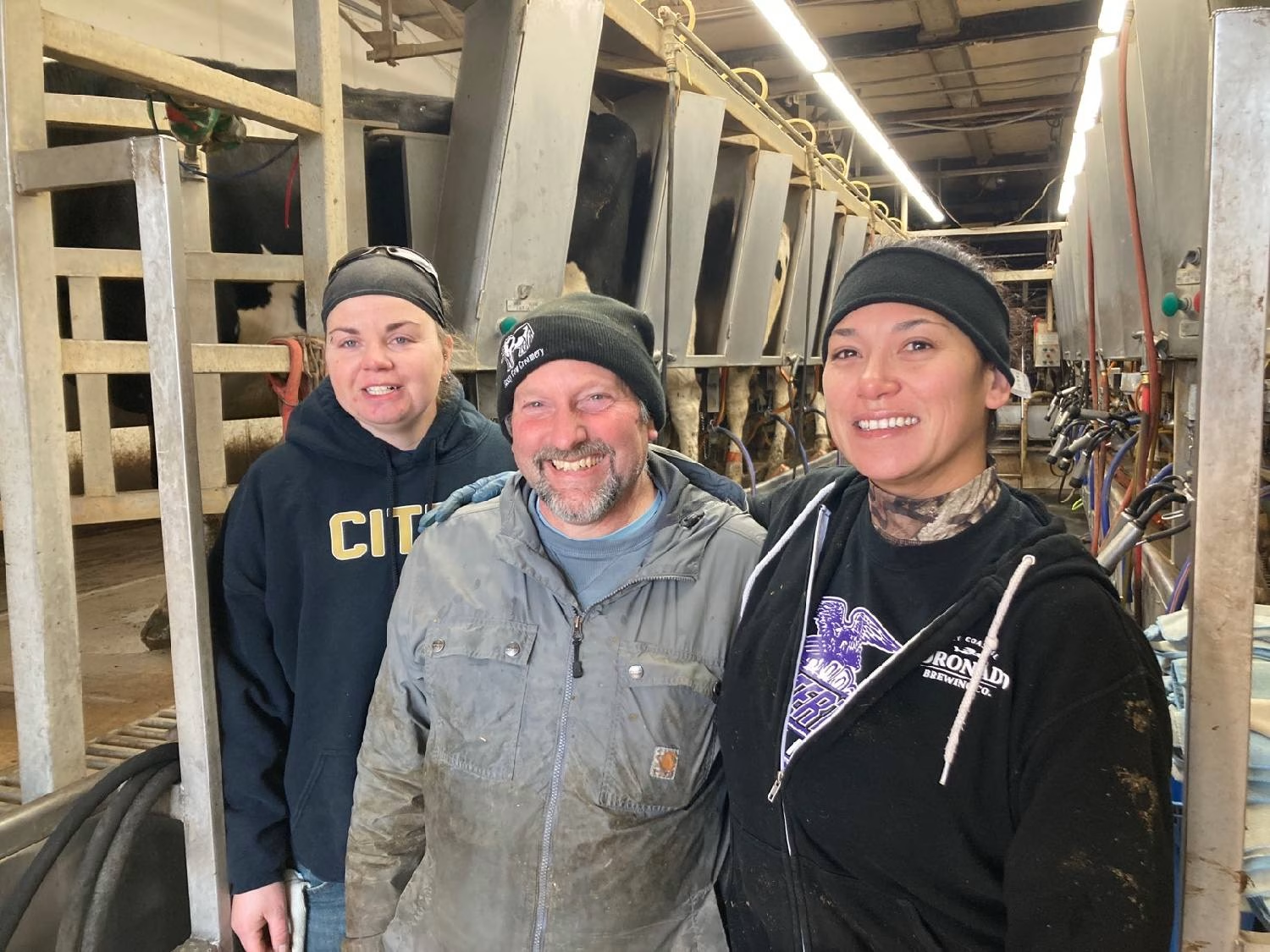
Mike and Brenda Sleegers have been milking cows in their new freestall barn at 4266 Westchester Bourne, Belmont, Ontario, since July 2024. Eighty-eight deep-bedded stalls. Two Lely A5 robots. Brown Jerseys and black-and-white Holsteins sharing the same alleys, the same robots, the same family’s attention — 65 cows in lactation, two breeds under one roof.
On February 25, 2026, Jersey Canada named the Sleegers family’s Jersey prefix, Sleegerholm, its newest Master Breeder. It’s a designation the breed association has awarded roughly 55 to 60 times since 1969, at a maximum pace of one per year. Holstein Canada, by contrast, handed out 21 Master Breeder shields in 2025 alone and has given more than 1,000 since 1929.
That ratio tells you what this award demands. And the Sleegers earned it while splitting their barn between two breeds — and rebuilding after a fire that killed 37 head of young stock in the final year of the scoring window.
Two Prefixes, One Barn
Mike and Brenda Sleegers began adding Jerseys to their Holstein operation in the late 1990s, according to Jersey Canada’s official announcement. That’s when the Sleegerholm prefix was born. The Holstein side — Sleegerdale — already carried a reputation: the Sleegers name appeared in the 2018 Ontario Production Awards’ top-ten list for greatest composite BCA increase, a 27-point jump.
Running two prefixes isn’t cosmetic. It means separate genetic strategies, separate classification goals, and a Master Breeder clock ticking on the Jersey side for 18 years while the Holsteins demand equal attention. Today, the herd averages BCA 280-290-297 (Milk-Fat-Protein) at 35 litres per day, with 71% of cows classified Very Good or higher, per Jersey Canada’s announcement.
Lactanet’s 2023 Progress Report — the most recent publicly available year — shows 65 cows on test, with a composite BCA of 278, shipping 10,520 kg of milk, averaging 4.5% butterfat and 377 kg of protein per cow. The year before: 68 cows, BCA 277, fat at 4.4%. Both reports list the herd as “R. H, J” — registered Holstein and Jersey. A composite BCA climbing from 277 to 280+ across two breeds means neither side is coasting.
That kind of generational commitment to two breeds echoes Ray Brubacher’s story — a Holstein legend who walked away from two dream jobs to follow his own breeding instincts.
When a Barn Fire Hits in the Final Year of an 18-Year Clock
On a Friday night in June 2023, fire tore through the barn at Sleegerdale Farms. Thirty-seven young stock calves and heifers, the next generation of both the Sleegerholm and Sleegerdale programs, didn’t make it out. The primary milking herd survived, but the replacement pipeline took a direct hit. CTV News London reported on the fire the following morning; The Bullvine covered it on June 20, 2023.
Here’s the detail that changes the entire story. Sleegerholm’s Master Breeder evaluation window ran from 2006 to 2023. The fire hit in June of the final year — wiping out the animals the Sleegers were counting on to carry the herd forward while the clock was still running. Every heifer lost is a classification score that won’t happen, a Star Brood point that won’t accrue, a production record that won’t post.
The Sleegers rebuilt — a new freestall barn with 88 deep-bedded stalls and two A5 Lely milking robots — and returned to milking in July 2024, according to Jersey Canada’s announcement. That’s 13 months from fire to functional barn, and less than 20 months before the Master Breeder announcement. The herd they brought back to production posts BCA scores of 280-290-297, with 71% VG or higher. That’s not a recovery herd. It’s a Master Breeder herd.

Jersey Milk in Holstein Country: When Did the Math Start Working?
Here’s the tension the announcement skips over. When you milk Jerseys alongside Holsteins, every Jersey competes for stall space against a black-and-white that ships more litres per day. For years, that volume gap cost real money every single pickup.
The Sleegers started their Jersey program in the late 1990s — before P5 component-based pricing fully rewarded the richer milk that Jerseys naturally produce. Every Jersey stall carried a volume penalty compared to a Holstein under the old pricing formula. By the time component pricing fully rewarded that richness, the Sleegers had been milking Jerseys for over a decade.
So what’s a hectolitre of Jersey milk actually worth today? At DFO’s September 2025 prices ($13.57/kg butterfat, $10.69/kg protein), the component value of every hectolitre breaks down by breed-average composition. Using the Canadian Dairy Information Centre’s 2024 national averages — Holstein at 4.15% fat and 3.36% protein, Jersey at 5.22% fat and 3.94% protein:
- Holstein milk: $92.23 in component value per hectolitre
- Jersey milk: $112.95 in component value per hectolitre
- The gap: $20.72 per hectolitre — a 22.5% component premium on every litre of Jersey milk
That’s a per-litre story, not a per-cow story. Jerseys produce fewer litres, so total revenue per cow comes out close. A Jersey averaging 30 kg/day generates about $33.89 in daily component value. Compare that to a Holstein at 35 kg/day: $32.28. The Jersey edge is $1.61 per cow per day — roughly $587 per cow per year — and she does it on less feed.
Sleegerholm’s blended herd shipped milk at 4.5% fat and 3.58% protein in 2023, according to Lactanet. That works out to $99.37 per hectolitre — 7.7% above the Holstein breed average.
And the formula is shifting further in their direction. DFO is putting $3/kg more value on protein in the second tier as of February 2026 and decreasing the tier-one protein price by 18 cents/kg to encourage a solids-non-fat-to-butterfat ratio above 2.0. Kristin Benke, DFO’s chief business and supply chain officer, shared that “high protein products — fluid milk, yogurt, cheese — have seen incredible growth,” outpacing butterfat demand.
Jerseys naturally produce a high SNF: BF ratio — so that pricing shift could make the breed more valuable, not less. But the specifics depend on your farm’s component profile, which is exactly why you need to run your own numbers. Clark Farms learned that lesson the hard way when they started tracking real ROI on their own diversification.
What Does It Take to Earn Jersey Canada’s Master Breeder?
Jersey Canada awards one Master Breeder shield per year. One. The criteria test consistency across an 18-year evaluation window — and Sleegerholm’s ran from 2006 to 2023, which means the June fire hit in the final year of the clock.
Points come from four categories, all of which are published on Jersey Canada’s website. Classification points scale with score: a VG 85-86 cow earns 2 points; VG 87-89 earns 3, push her to Excellent, and she’s worth 4; 2E or higher gets 5. Production points tie to Composite BCA deviations from herdmates, the national average, or Lifetime Production records. Every cow must contribute at least one point in both production and classification to count — you can’t pad one side and neglect the other.
Star Brood points reward dams whose progeny prove out across generations: 6 points for a 1-Star dam, scaling to 10 for 5-Star or higher. Superior Sire points go to bulls hitting type and production thresholds at 85% reliability, with an LPI of at least +700, and a bull qualifying as both Superior Type and Superior Production earns 15 points.
Here’s where it gets brutal for smaller herds. Total points are averaged across all classified females registered during that 18-year window. Minimum five registrations per year. Only animals at 87.5% purity or higher qualify. You can’t win again for 18 years after your previous shield.
Think about what that averaging formula demands from a 65-cow dual-breed barn. Lone Pine Jerseys in Didsbury, Alberta — the 2021 Master Breeder — milked 110 purebred Jerseys and posted a herd classification average of 88.0 across 163 animals, with 21 Excellents and 78 Very Goods. At Sleegerholm’s herd size, every weak classification drags the average harder because there are fewer cows to absorb it. The margin of error shrinks when your denominator is half as large.
The Cows That Put Sleegerholm on the National Stage
The breakout came at the 2008 Royal Winter Fair. Sleegerholm bred both the Junior Champion Jersey and the Reserve Junior Champion Jersey at the National Jersey Show — first and second in the country’s most competitive junior class, from a dual-breed barn in Middlesex County that had been milking Jerseys for barely a decade.
Five years later, the prefix showed up at the Royal again. Sleegerholm Tequila Jube Jube earned Reserve Junior Champion at the 2013 National Jersey Show, and Sleegerholm Reagan Ikea — co-owned with Ari Ekstein — took Honourable Mention Junior Champion. The 2008 result wasn’t a fluke. It was a program.
Jube Jube had already appeared at the 2012 Royal as a fall calf and later turned up in the Norse Star Summer Hummer Sale, consigned by Mike. By 2016, the prefix was showing up in All-Canadian nominations — Sleegerholm Excitement Nugylee earned a nod in the Junior Yearling category, exhibited by Laura DeKlein and co-owned with Ekstein.
Classification results kept stacking. Jersey Canada’s Excellents list from May–August 2018 includes Sleegerholm Vortex Naughty — a verified Excellent cow bred under the prefix. And the next generation is already competing: at the 2025 Ontario Western Junior Show, the Sleegers kids earned both Champion Junior Showperson and Champion Yearling Heifer on the same day — one showing a Sleegerholm Jersey calf, the other a Holstein.

How Did Paullor and Sleegerholm Build Each Other’s Programs?
Here’s where the breeding story gets interesting. Sleegerholm PJ Victorious Jen was co-owned by Paul and Lorraine Franken alongside Mike Sleegers when she earned All-Canadian recognition. At the 2012 Royal, Sleegerholm PJ Reward Jonie carried a Paullor-prefix dam.
Paul and Lorraine Franken earned their own Master Breeder shield as Paullor in 2010. Two families that co-owned animals and appeared together in national show rings across multiple years. Both made it — Paullor in 2010, Sleegerholm in 2026.
That kind of long-arc collaboration — where one principle can power a dynasty across decades — connects both programs. And it points to one of the takeaways at the end of this piece: small herds multiply faster when they don’t breed alone.
Where Does Sleegerholm Fit in the Master Breeder Lineage?
Jersey Canada has awarded Master Breeder shields since 1969. Here’s a snapshot of recent recipients:
| Year | Family | Location |
| 2017 | Brent & Betty Butcher and Family | Ayr, ON |
| 2018 | Glen & Sheila Burgess | Mildmay, ON |
| 2019 | Robert & Bruce Mellow | Caledon, ON |
| 2020 | Dean Sayles Jr. (Spruce Avenue — 3rd shield) | Paris, ON |
| 2021 | Haeni Family (Lone Pine) | Didsbury, AB |
| 2022 | Michael & Monique Bols (Drentex) | Russell, ON |
| 2023 | Meadow Lynn Jersey Farms, The Judd Family | Simcoe ON |
| 2024 | Daniel & Carine Poirier/Alain & Claudine Poirier, Ferme Cavalait (Cava) | Lefaivre, ON |
| 2025 | Athlone Farms Inc (Braeview) | Tavistock, ON |
| 2026 | Sleegers Family (Sleegerholm) | Belmont, ON |
For the Holstein breeders reading this: since 1929, Holstein Canada has awarded more than 1,000 Master Breeder shields. The Jersey equivalent? One per year, maximum. The 18-year re-eligibility window means repeat winners are rare — seven herds have won twice, and only Spruce Avenue has won three times (1972, 2001, 2020).
Jersey registrations grew 15.6% nationally (11,021 to 12,744) from 2019 to 2024, while total Canadian dairy registrations dropped 14.3%. The breed is growing its share, but earning its top award still takes a generation.
Robert and April Jarrell of Corbyville, Ontario, earned Jersey Canada’s Master Breeder as RJF in 2008 and then Holstein Canada’s as RJ in 2022. Bridon Farms of Paris, Ontario — the Sayles family — went even further, winning Jersey Canada Master Breeder twice (1986 and 2011) and holding the rare distinction of earning both Holstein and Jersey Master Breeder shields in 2011. “Rare is the farm that wins a master breeder shield in more than one dairy breed,” as Farmers Forum reported.
Mike didn’t earn both shields — he earned the Jersey while still running Holsteins. The Jarrells and Bridon Farms proved the dual-breed feat was possible. Sleegerholm proved you don’t need to finish one breed before starting the other.
Options and Trade-Offs
Have you got Holsteins throwing 35 litres and a few empty stalls? Adding Jerseys sounds great until you’re managing two AI sire lineups, two classification schedules, and explaining to your nutritionist why you’re putting a brown calf in the maternity pen.
Committing to a less popular breed means fewer AI companies knocking on your door. Fewer local mentors. A smaller gene pool. Master Breeder eligibility requires a minimum of five Jersey registrations per year for 18 consecutive years — miss one year, and you lose the window.
But there’s a flip side. Less competition for the breeders who stay. Jersey registrations are climbing, while total Canadian registrations are shrinking. The Sleegers were producing high-component milk long before the pricing formula fully rewarded it. DFO’s February 2026 protein restructuring — $3/kg more in the second tier — just moved the formula further in their direction.
Your 30-day move: Pull your last three Lactanet reports and calculate your component revenue per hectolitre. At September 2025 DFO prices, Holstein-average milk earns $92.23/HL in components. Jersey-average earns $112.95/HL — a $20.72 premium per hectolitre. Run your own herd’s fat and protein percentages through that math, then factor in the new P5 protein incentives. If you’ve never made that comparison, you’re making a breed decision by default rather than by math.
Key Takeaways
- If you’re chasing Master Breeder from a small or dual-breed herd: Sleegerholm did it with a BCA of 280-290-297 and 71% of cows VG or higher from a 65-cow dual-breed barn — and rebuilt after losing 37 young stock to a barn fire in the final year of their 2006–2023 evaluation window. The formula rewards consistency across your entire herd, not a handful of stars. Contact your breed association and request your current point standing this month.
- If you’ve been skipping classification cycles: Every cycle you skip means zero cows contributing points, but they still count in the denominator. The 18-year window doesn’t pause. For any herd chasing Master Breeder, classification isn’t optional — every cow needs to contribute.
- If you’ve never calculated your per-hectolitre component premium: At September 2025 DFO prices ($13.57/kg BF, $10.69/kg protein), Jersey-average milk earns $20.72 more per hectolitre than Holstein-average milk — a 22.5% premium. On a per-cow basis, the daily advantage is smaller (about $1.61/day at breed-average yields) because Jerseys ship fewer litres. But that per-litre efficiency matters enormously in a supply-managed system where quota, not barn space, is your constraint.
- If you breed alone, Sleegerholm and Paullor co-owned animals that competed nationally, and both families earned Master Breeder sixteen years apart. Partnerships compound breeding programs — especially when your herd is small enough that one cow family can shift the whole average.
The Bottom Line
Who’s the Jersey breeder in your county that nobody talks about but everyone quietly breeds from? The one still classifying every cow, still entering the summer shows, still here long after the skeptics moved on?
Continue the Story
- Devastating Quebec Barn Fire at Buckland Holsteins Claims 160+ Holstein Cattle – Walks a similar path of tragedy and resilience by exploring the 2025 Buckland fire. It exposes the thin margin between success and catastrophe, mirroring the Sleegers’ own journey through the flames to reach the Master Breeder podium.
- 16 Years Each: Holstein Canada’s 2025 Master Breeders Just Crossed the Finish Line – Wrestled with the same question of how to maintain excellence across nearly two decades. This look at the newest Master Breeder class deepens your understanding of the grueling standards the Sleegers navigated, proving that consistency is the industry’s hardest-won prize.
- When 5:30 AM Chores Matter More Than the NHL Draft: The Martin Family’s Extraordinary Lesson in Raising Kids Who Choose to Stay – Carries forward the theme of family legacy through the eyes of the next generation. Much like the Sleegers kids, Brady Martin found his anchor in the barn, proving that “farm strength” is the real force behind the industry’s most resilient programs.
 The Sunday Read Dairy Professionals Don’t Skip.
 The Sunday Read Dairy Professionals Don’t Skip.
Every week, thousands of producers, breeders, and industry insiders open Bullvine Weekly for genetics insights, market shifts, and profit strategies they won’t find anywhere else. One email. Five minutes. Smarter decisions all week.








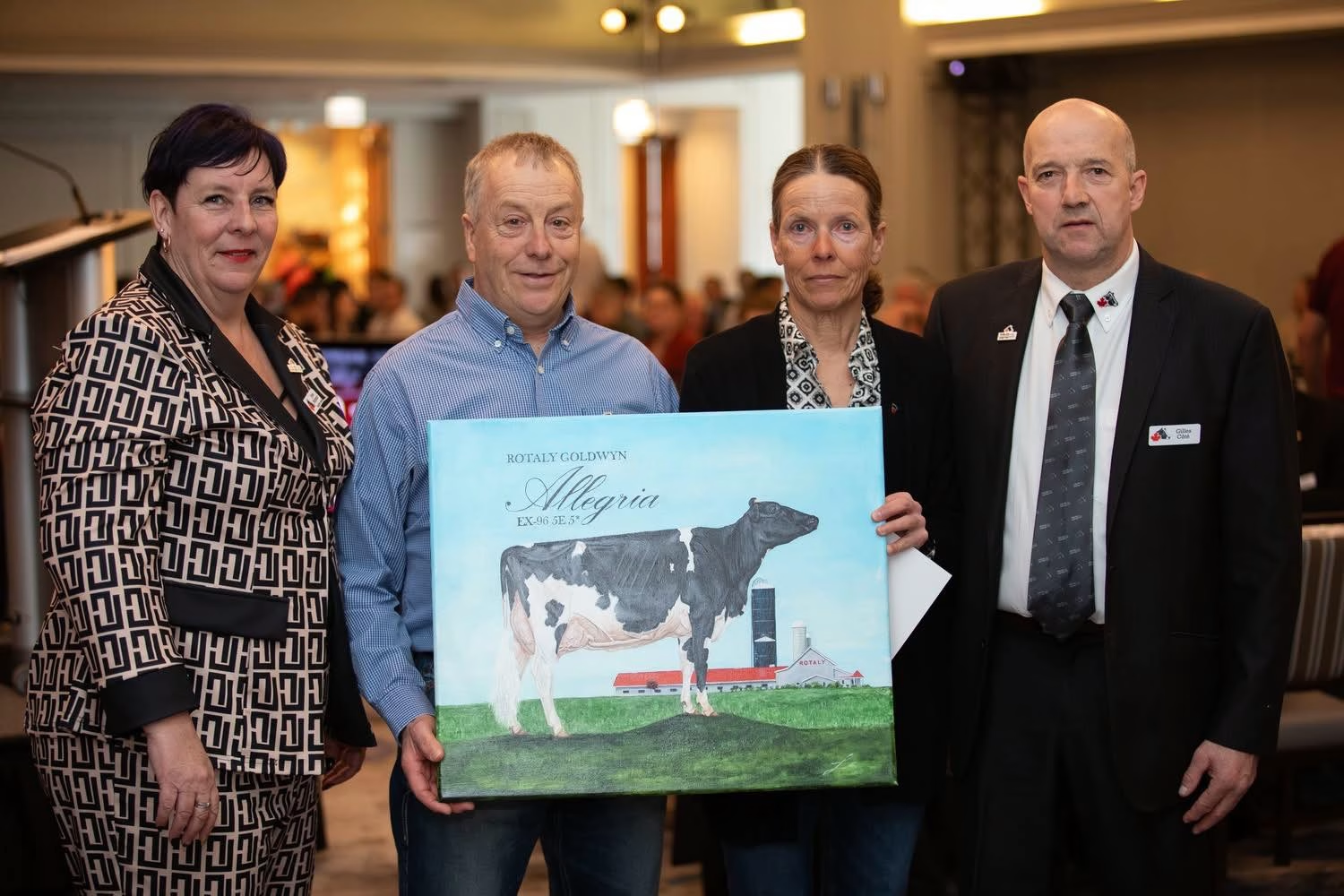









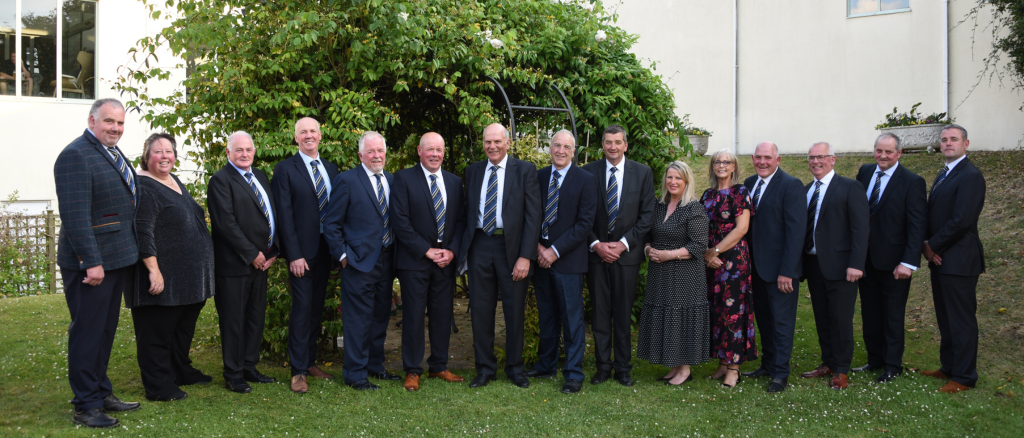




 Meet Holstein Canada’s new leaders for 2024-2025. How will President Gilles Côté and his team drive the future of the organization? Discover their strategic vision.