




Archive for Beef on Dairy – Page 3

Mastering Beef on Dairy Programs: Strategies for Thriving in an Uncertain Future

Uncover the essential strategies to future-proof your Beef on Dairy program. Are you prepared to excel in an unpredictable market? Master the art of adaptation and secure your success.

The merging of beef and dairy genetics is more than a trend; it is a beacon of innovation in the continuously expanding livestock business. This developing crossbreeding method can combine the qualities of beef and dairy cattle, resulting in increased output and carcass quality. However, it is the journey of overcoming the hurdles of this invention that will pave the road for long-term success, pushing us all to push the limits of what is possible.

Crossbreeding in the beef-dairy industry has the potential to combine the greatest features from both fields, but it also introduces complications. As this junction gathers traction, industry participants must plan their programs for the inherent volatility. Discover practical ways for navigating hurdles and maximizing potential in beef on dairy crossbreeding initiatives.

From Necessity to Innovation: The Evolution of Beef on Dairy Crossbreeding

Crossbreeding between beef and dairy has a long history, beginning in the mid-20th century to increase milk output. Market needs changed throughout time, necessitating a trade-off between milk supply and meat yield.

Initially, beef genetics were introduced into dairy cows to enhance carcass quality without impacting milk output. Successful examples include crossing breeds like Angus and Hereford with Holstein cows to generate hybrids with acceptable meat quality and high milk outputs.

Technological developments in the 1970s and 1980s, notably artificial insemination, hastened crossbreeding attempts. This resulted in better genetic selection and data collecting, revealing optimum crossings and management approaches.

Challenges included market opposition to hybrid meat, which was considered inferior, and unpredictability in progeny performance. Refined breeding aims and improved husbandry procedures helped resolve these difficulties over time.

Lessons from history highlight the necessity of rigorous genetic selection and improved reproductive technology. Modern beef on dairy businesses needs comprehensive performance data and a market-oriented strategy to navigate uncertainty and maximize possibilities.

Mastering Economic Factors: A Pathway to Profitability and Sustainability 

YearInitial InvestmentRevenueNet ProfitROI (%)
1$50,000$20,000-$30,000-60%
2$20,000$40,000$20,000100%
3$10,000$60,000$50,000500%
4$10,000$80,000$70,000700%
5$10,000$100,000$90,000900%

Understanding the economic dynamics influencing beef on dairy programs is critical for maintaining profitability and sustainability in a fluctuating market. First and foremost, market trends must be carefully evaluated. Rising consumer demand for high-quality meat has increased pricing and possibilities for dairy farmers. However, this demand varies with economic situations, consumer tastes, and global trade regulations, demanding a more complex approach to market research.

Cost/BenefitDescription
Cost: Initial InvestmentThe upfront expense required for acquiring high-quality beef genetics and implementing crossbreeding programs, including the cost of technology, infrastructure, and labor.
Cost: Maintenance & FeedingOngoing costs related to crossbred cattle care, nutrition, and health management may differ from pure dairy herd management expenses.
Benefit: Higher Market PricesCrossbred beef x dairy cattle can command premium prices in the market due to their higher meat quality, potentially leading to increased revenue streams.
Benefit: Improved EfficiencyUtilizing crossbreeding can result in animals with superior growth rates and feed conversion ratios, enhancing overall herd efficiency and productivity.
Cost: Genetic ManagementEnsuring the optimal selection of genetic traits requires detailed record-keeping and skilled management, entailing additional costs for expertise and resources.
Benefit: Diversified Product LinesEngaging in beef x dairy programs allows producers to diversify their product offerings, potentially reducing market vulnerability and dependency on a single revenue stream.

A cost-benefit analysis is another important consideration. The initial expenditures in genetics, feed, veterinary care, and infrastructural improvements might be significant. However, when handled properly, the benefits might outweigh the drawbacks. Crossbred animals, for example, often demonstrate hybrid vigor, which may lead to increased efficiency and carcass value when compared to purebred counterparts. Increased value may balance greater initial expenses, resulting in a positive return on investment.

Comprehensive financial planning tactics are beneficial and required for a beef-on-dairy operation’s long-term viability and growth. Precise planning, forecasting, and cash flow management are needed to deal with economic unpredictability. We may efficiently shift risk while protecting profits by using mechanisms like forward contracts and futures markets to hedge against price volatility. Diversifying income sources, such as value-added goods or agritourism, may improve financial stability and provide more control over success.

Dairy farmers should maximize profitability and reduce risks by remaining informed about market developments, performing cost-benefit evaluations, and implementing strategic financial planning. Such preventive actions guarantee that these businesses stay robust and flexible, ready to prosper in an uncertain future.

Genetic Selection: The Foundation of Progressive Beef on Dairy Crossbreeding 

Genetic selection is the foundation of successful beef on dairy crossbreeding. It is about recognizing and passing on exceptional features across generations.

Growth rate is essential since it influences manufacturing efficiency and time to market. The Angus and Charolais breeds thrive here, making them excellent for maximizing output timeframes.

Feed efficiency is another crucial element. Efficient feed conversion lowers costs and increases profitability. Breeds like Hereford and Simmental, noted for their high feed efficiency, may significantly improve these qualities in crossbreeding programs.

Meat quality influences market value, such as marbling, softness, and taste. Breeds like Wagyu and Piedmontese, known for their outstanding meat quality, are crucial. Their genetic contributions improve product quality and market position.

A successful crossbreeding approach utilizes modern genetic techniques and data analytics to improve results. Genomic selection and marker-assisted approaches enable accurate breeding choices.

Health and Nutrition: The Cornerstones of a Thriving Beef on Dairy Program

A successful Beef x Dairy program relies heavily on maintaining good health and nutrition. We can ensure our cattle prosper by providing them with a suitable diet and preventative treatment, immediately increasing output. Neglecting these regions might raise hazards, including disease outbreaks and diminished reproductive efficiency, affecting revenue. By putting health and nutrition first, we can ensure we do everything possible to safeguard our assets.

An optimum feeding approach begins with an analysis of crossbreds’ particular demands. Feeding programs should be adapted to individual metabolic needs, ensuring a diet rich in essential proteins, vitamins, and minerals. Use high-energy grains, excellent forage, and vitamins to compensate for any shortfalls.

Regular health monitoring and preventative care are essential. To prevent hazards, adhere to vaccination schedules and use biosecurity measures. Engage a professional veterinarian to evaluate herd health and recommend appropriate measures.

Animal welfare increases production, including stress management, sufficient housing, and compassionate treatment. You treat health and nutrition as interrelated, resulting in a strong foundation for maintaining productivity and mitigating hazards. This combination of diet and proactive health management strengthens your program against future uncertainty.

Integrating Sustainable Practices: The Moral and Strategic Imperatives for Beef on Dairy Programs 

Integrating sustainable agricultural methods into dairy operations is essential for long-term sustainability and ethical considerations. A comprehensive resource management approach may help producers lessen their environmental effects. Implementing rotational grazing systems, for example, improves soil health, lowers erosion, and increases biodiversity, resulting in better pasture usage and healthier livestock.

Water management is similarly essential. Water conservation techniques such as drip irrigation and rainwater collection may considerably reduce use. Advanced manure management techniques further limit nutrient runoff, protecting local waterways and maintaining ecological equilibrium. Using renewable energy sources like solar or wind power reduces greenhouse gas emissions and operating expenses over time.

Continuous improvement of these procedures is essential. Continuing education and adaptive management are critical for achieving regulatory obligations and customer expectations. Monitoring animal health and environmental parameters allows for data-driven choices, supporting sustainability. These solutions lower the environmental impact while increasing the economic resilience of cattle and dairy operations.

Embracing Technological Advancements: A Paradigm Shift in Modern Beef on Dairy Programs 

Technological innovations have transformed cattle and dairy programs, improving accuracy and efficiency. Notably, advances in breeding technology, such as genomic selection and sophisticated reproductive procedures like artificial insemination (AI) and embryo transfer (ET), have transformed genetic enhancement. These techniques provide pinpoint precision in detecting and propagating favorable features, enhancing herd health and performance.

Data analytics are critical for informed decision-making in cattle and dairy operations. Collecting data on animal health, growth rates, feed efficiency, and environmental factors may reveal trends, forecast results, and maximize resources. Farms that use data analytics have a competitive advantage by promptly adjusting to market needs, increasing animal care, and enhancing economic performance.

Farm management software has become indispensable in contemporary agriculture, enabling complete monitoring of farm operations ranging from inventory and labor management to financial planning and regulatory compliance. Digital technologies simplify regular operations, allowing manufacturers to prioritize key objectives and continual development. Furthermore, incorporating IoT devices and sensors allows for real-time monitoring, which improves the efficiency and resilience of beef and dairy operations.

To summarize, technology plays a critical role in cattle and dairy operations. Breeding technologies, data analytics, and farm management software contribute to the industry’s increased productivity, sustainability, and flexibility. These changing technologies will remain critical to cattle and dairy operations’ long-term viability and performance.

Fortifying Stability: Comprehensive Risk Management Strategies for Beef on Dairy Programs 

Risk management is critical to the resilience and success of any Beef on Dairy enterprise, particularly under unexpected settings. A complete strategy, including insurance, diversification, and contingency planning, may reduce dangers and improve stability.

Insurance is a crucial safety net in the fragile agriculture industry. Livestock insurance covers losses caused by illness, calamities, or other unanticipated occurrences, while crop insurance protects against low harvests. Partnering with specialist insurance providers guarantees that customized plans give financial protection while ensuring continuity even under unfavorable circumstances.

Diversification is essential for risk reduction, both genetically and operationally. Incorporating several genetic lines improves herd resilience and performance. Diversifying revenue sources, such as crop farming or specialty markets for beef and dairy products, helps mitigate market swings, promote innovation, and boost profitability.

Effective contingency planning entails anticipating interruptions and developing appropriate solutions to minimize effect. This covers methods for disease outbreaks, supply chain disruptions, and labor shortages. Regular updates and embedding these strategies into the operational culture guarantee that emergencies are handled quickly and coherently. Using data and technical tools for predictive analytics helps with early danger identification and proactive risk management.

A robust risk management framework combines these factors, resulting in a resilient Beef on Dairy program that can thrive unpredictably. Prioritizing insurance, diversifying, and building detailed contingency plans enable farmers to manage the agricultural terrain confidently and carefully.

Charting the Future: Innovations, Challenges, and Strategic Adaptations in the Dairy Industry 

The cattle and dairy business is transforming significantly due to technological breakthroughs, changing customer tastes, and environmental laws. Precision agricultural systems like AI, machine learning, and blockchain are used to improve herd management, genetic selection, and supply chain transparency. These technologies promise to improve operational efficiency and sustainability.

These prospects, however, are not without their obstacles. Stricter restrictions regarding sustainability and animal welfare will need novel compliance solutions. Climate change provides a danger that requires adaptable methods to ensure fodder availability and animal health.

Rising consumer demand for ethically produced and environmentally sustainable beef is both possible and a problem. Aligning with these expectations may result in higher expenses, but it also provides access to premium markets.

Stakeholders must be proactive, such as doing a SWOT analysis to identify weaknesses and investing in continuous education and technology. Collaboration with industry peers, academic institutions, and regulatory authorities will increase preparation and innovation.

To ensure a sustainable future in the beef and dairy business, embracing technology, following rules, and understanding customer preferences are essential.

The Bottom Line

The use of beef on dairy crossbreeding combines historical need with current ingenuity. Economic sustainability requires a thorough grasp of market dynamics and careful financial planning, while genetic selection ensures a strong stock. Health and nutrition are critical to program viability, and sustainable methods balance moral responsibilities with long-term benefits. Technological improvements provide unprecedented levels of efficiency and accuracy. Robust risk management measures are also required to protect stability from future uncertainty. Examining successful programs offers valuable insights into innovation and strategic foresight.

Managing your beef-on-dairy program requires ongoing study, preparedness, and adaptation. These characteristics guarantee survival and promote a robust, resilient organization. Preparation establishes a firm foundation; flexibility allows quick reactions to difficulties, and constant learning keeps your program at the forefront of industry innovations. These concepts form the foundation of a dynamic, future-proof beef on dairy program.

Key Takeaways:

  • Recognize the significance of genetic selection in enhancing productivity and carcass quality.
  • Implement comprehensive health and nutrition strategies to ensure the well-being and performance of hybrid cattle.
  • Integrate sustainable practices as both a moral obligation and a strategic advantage.
  • Embrace technological advancements to streamline operations and improve efficiency.
  • Adopt risk management strategies to fortify stability and mitigate uncertainties.
  • Draw inspiration from successful beef x dairy programs to innovate and remain competitive.
  • Navigate future challenges with an adaptable approach, incorporating the latest innovations and proven strategies.

Summary: 

The integration of beef into dairy genetics in the livestock industry is gaining popularity, aiming to improve productivity and carcass quality. However, challenges in crossbreeding remain, such as market resistance to hybrid meat, perceived inferiority, and variability in offspring performance. Rigid genetic selection and advanced reproductive technologies are crucial to navigating these uncertainties. Economic factors and cost/benefit analysis are also essential for profitability and sustainability. Comprehensive financial planning strategies, including budgeting, forecasting, and cash flow management, are necessary for sustaining and scaling a beef x dairy program. Tools like forward contracts and futures markets can transfer risk and safeguard profits. Diversifying revenue streams can enhance financial stability and producer success.

Download “The Ultimate Dairy Breeders Guide to Beef on Dairy Integration” Now!
Are you eager to discover the benefits of integrating beef genetics into your dairy herd? “The Ultimate Dairy Breeders Guide to Beef on Dairy Integration” is your key to enhancing productivity and profitability.  This guide is explicitly designed for progressive dairy breeders, from choosing the best beef breeds for dairy integration to advanced genetic selection tips. Get practical management practices to elevate your breeding program.  Understand the use of proven beef sires, from selection to offspring performance. Gain actionable insights through expert advice and real-world case studies. Learn about marketing, financial planning, and market assessment to maximize profitability.  Dive into the world of beef-on-dairy integration. Leverage the latest genetic tools and technologies to enhance your livestock quality. By the end of this guide, you’ll make informed decisions, boost farm efficiency, and effectively diversify your business.  Embark on this journey with us and unlock the full potential of your dairy herd with beef-on-dairy integration. Get Started!
Learn more:

Maximizing Dairy-Beef Potential: Grazing Strategies Boost Weight and Efficiency

Learn how grazing strategies can improve weight and efficiency in dair y-beef crossbred cattle. Can these techniques help you enhance your herd’s performance? Read to find out.

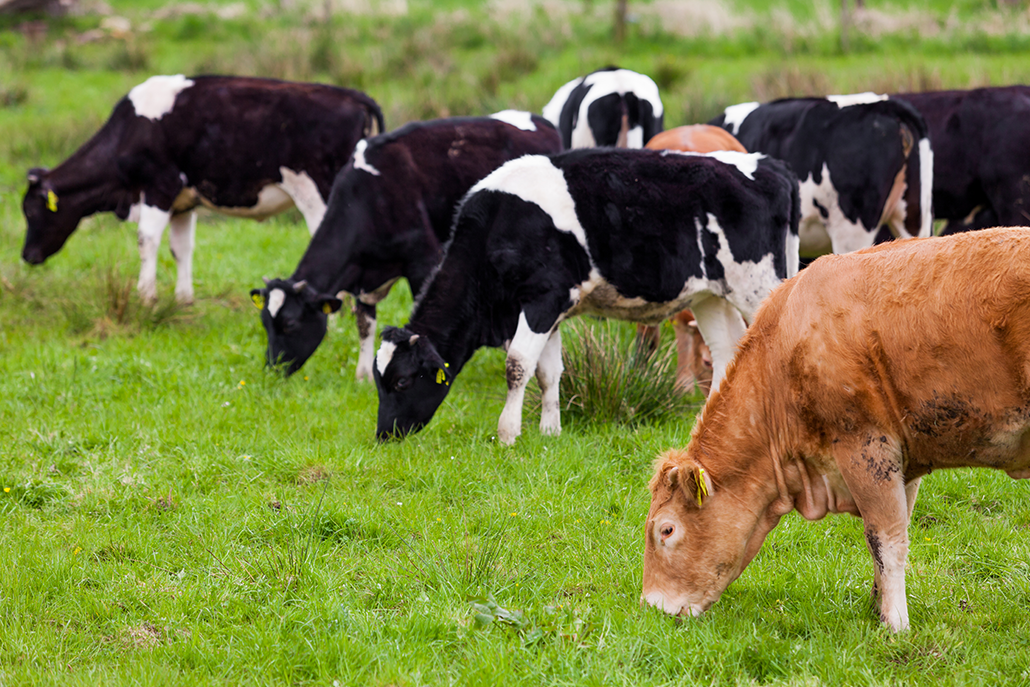
Picture combining beef cattle’s strong efficiency with dairy cows’ milk-producing ability. Welcome to the universe of crossbred dairy-beef animals. These hybrids are a calculated junction of dairy and beef production. For dairy producers, they provide a convincing approach to increase value. Their different requirements, meanwhile, greatly vary from those of local beef cattle. Realizing the unique requirements of dairy-beef crossbreds depends on knowing them. Explore our study results, valuable recommendations, and expert opinions to guide you toward wise choices. Ready to learn how grazing affects the profitability and development of your dairy-beef crossbreds? Please discover out by reading on.

Discover the Unique Challenges and Opportunities of Dairy-Beef Crossbreds By combining the genetic traits of dairy and beef breeds, dairy-beef crossbred animals present unique demands. Selected for their milk production, dairy breeds such as Holsteins produce animals with a different muscle distribution and body type compared to beef varieties like Angus. This necessitates specific monitoring and dietary treatment, making them a fascinating subject of study.

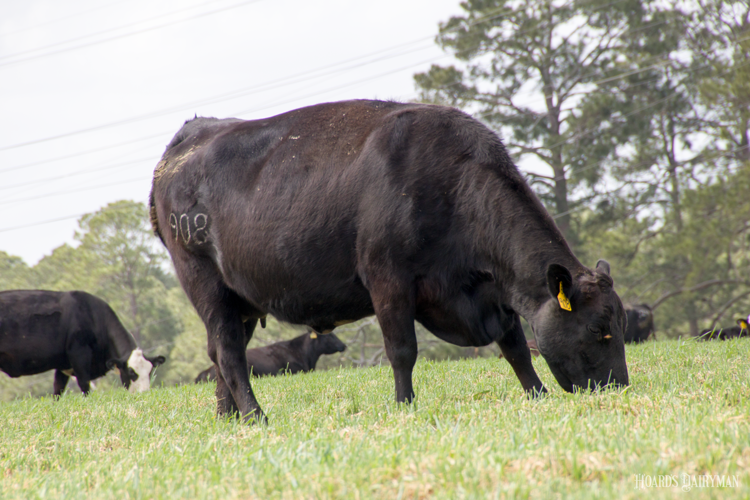
Usually grown on dairy farms in controlled conditions, these calves require assistance adjusting to group life and outdoor grazing when transferred to a feedlot or pasture. Making sure these crossbreds realize their potential means matching them with meat systems. Dairy and cattle farmers will gain from tailored feeding regimens and slow changes to new surroundings.

Unlocking Postweaned Potential: Insights from Ally Grote’s Dairy-Beef Research

Important new information on the unique requirements of post-weaned dairy-beef animals was presented during an engaging Oklahoma State University Extension beef-on-dairy webinar. Graduate student Ally Grote presented her essential study, filling a need mostly related to younger calves. Her research provides new ideas and practical techniques to improve their performance in cattle production systems.

Striking a Balance: Grazing Versus Immediate Feedlot EntryThe first study tracked dairy-beef steers grazing five to six months before going into a feedlot vs those arriving right after. Since these calves frequently come smaller than local beef cattle, grazing before the feedlot saves feed and labor. This intermediate grazing season lowers feedlot resource requirements.

Grading, however, takes time. Eighty days older at the feedlot entrance, the cattle grazed were Still; they spent 144 fewer days in the feedlot and weighed 70 pounds more at slaughter. Their average daily growth (ADG) was 4.2 pounds, but for the straight-to-feedlot group, it was 3.4.

Therefore, even if grazing increases the beginning timeline, it generates more considerable, more robust animals and lowers the intense feedlot care time, optimizing labor and expenses.

Grote’s initial experiment provided apparent answers. Although the animals were 80 days older at slaughter, grazing before feedlot arrival shortened feedlot duration by 144 days. Amazingly, upon shipment, grazed animals weighed seventy pounds more.

The grazed group outperformed, with an average daily growth (ADG) of 4.2 pounds instead of 3.4 pounds for pure feedlot animals. Compared to the feedlot group’s 3.4 pounds, grass animals gained 4.1 pounds daily overall.

Post-slaughter grazed animals had a somewhat greater rib-eye area (14.2 square inches vs. 13.9 inches) and a hotter carcass weight (896 pounds vs. 865 pounds). For dairy beef, meat grading revealed greater consistency in the Choice category; straight feedlot steers more commonly fell into the Select and Prime categories.

Setting the Stage for Grazing Success: preparing Dairy-Beef Crossbreds for the Journey AheadMoving pasture might challenge dairy-beef cows. Their lack of familiarity with pastures, outside circumstances, or group living may cause stress and delayed development.

Acclimatization is a vital phase. They gradually get comfortable being exposed to water troughs and fences. Furthermore, it is essential to select the appropriate forages for their habitat and dietary requirements. This guarantees their health and development, as well as the required nutrients.

Emphasizing these phases will enable them to flourish in fresh grazing grounds. Maximizing their potential in cattle production systems depends on an awareness of and solution for these obstacles.

Compensatory Gain: Debunking Myths with Dairy-Beef Performance 

The second research looked at the compensatory weight growth of dairy-beef animals on a pasture. Researchers watched as 75 native beef and 75 dairy-beef animals moved from grass to a growth supplement in the feedlot.

The results were astonishing. Dairy-beef cattle began lighter, but they caught up fast. Dairy-beef animals grew about 5 pounds daily for 87 days, compared to 4 pounds for native beef, thereby attaining a 115% compensatory gain—much more than the 60% to 80% predicted for local meat.

Dairy-beef cattle, beginning smaller, quickly closed the weight difference. Their near 5-pound daily increase exceeded the usual native beef compensatory gain range. Furthermore, the groups showed no appreciable variations in health, therefore highlighting the vital condition of dairy-beef calves.

The Bottom Line

According to studies by Ally Grote, dairy-beef crossbreds may integrate well into beef production systems and meet competitive performance criteria. Better weight increase and consistent meat quality follow from reduced labor and cost savings gained by grazing before feedlot entrance. The second research shows that dairy beef animals may almost equal or exceed native beef cattle in growth, disproving the notion that they cannot acquire compensatory weight. Dairy-beef animals may be lucrative and flourish under the correct conditions for beef farmers.

Key Takeaways:

  • Dairy-beef animals can graze before feedlot finishing, saving on feed costs and labor.
  • Grazed dairy-beef animals spend less time on feed in the feedlot and achieve higher average daily gains compared to those that go straight to the feedlot.
  • At slaughter, grazed animals had higher hot carcass weights and larger rib-eye areas.
  • Dairy-beef meat is more consistent and often grades in the middle Choice category, with fewer extremes in the grading spectrum.
  • Acclimating dairy-beef animals to pasture and selecting appropriate forages is crucial for successful grazing.
  • Contrary to belief, dairy-beef animals can achieve significant compensatory gain after being on pasture, often exceeding the performance of native beef.
  • No differences in morbidity or mortality rates were observed between dairy-beef and native beef animals in the feedlot.

Summary:

Dairy-beef crossbreds, combining genetic traits of dairy and beef breeds, present unique challenges and opportunities for dairy producers. Graduate student Ally Grote’s research suggests grazing before feedlot entry can save feed and labor, and prepare cows for the journey ahead. Dairy-beef cattle can achieve a compensatory gain of 115%, outperforming native beef cattle in growth. This research suggests that dairy-beef crossbreds may be lucrative and flourish under the right conditions for beef farmers.


Download “The Ultimate Dairy Breeders Guide to Beef on Dairy Integration” Now!

Are you eager to discover the benefits of integrating beef genetics into your dairy herd? “The Ultimate Dairy Breeders Guide to Beef on Dairy Integration” is your key to enhancing productivity and profitability.  This guide is explicitly designed for progressive dairy breeders, from choosing the best beef breeds for dairy integration to advanced genetic selection tips. Get practical management practices to elevate your breeding program.  Understand the use of proven beef sires, from selection to offspring performance. Gain actionable insights through expert advice and real-world case studies. Learn about marketing, financial planning, and market assessment to maximize profitability.  Dive into the world of beef-on-dairy integration. Leverage the latest genetic tools and technologies to enhance your livestock quality. By the end of this guide, you’ll make informed decisions, boost farm efficiency, and effectively diversify your business.  Embark on this journey with us and unlock the full potential of your dairy herd with beef-on-dairy integration. Get Started!
Learn more:

Leveraging Herd Genotyping & Sexed Semen: A Game-Changer in Livestock Industry

Discover how herd genotyping and sexed semen are revolutionizing the livestock industry. Learn about their economic benefits for pure and beef-on-dairy breeding.

Advancements in reproductive technologies like herd genotyping and sexed semen are generating a remarkable revolution in the dairy and beef industries. Far from simply being evolutionary steps, these technologies have been transformative, marking a revolution in pure breeding and beef-on-dairy operations. They are agents of change — ones that significantly impact the heart of the industry — the genetic pool, while also influencing the financial viability of dairy and beef operations.<

The aim of this article is not just to provide an overview of these innovations, but to delve deeper, exploring how they can dictate the future of purebred breeding and beef-on-dairy operations. The potential of these technologies goes beyond their immediate application; they are shaping the progression of agricultural advancements, setting a precedent for future breakthroughs.

“Herd genotyping and sexed semen — more than just technologies, they are potent agents of change, impacting both the genetic diversity and financial sustainability of the dairy and beef industries.”

As we delve into this topic, we will navigate through the specifics of herd genotyping and the role of sexed semen, their combined impacts on breeding and the transformation of beef-on-dairy breeding. A special spotlight will be on the economic and environmental benefits these bring to the industry.

Understanding Herd Genotyping 

Herd genotyping, which utilizes DNA analysis, ushers in a new era of precision in dairy cattle breeding. This innovative technology serves as a tool for distinguishing specific traits in our bovine friends, traits that can either be amplified or diminish, depending on what’s ideal for future generations. 

Genotyping can increase the accuracy of genetic evaluations by 28%

With the aid of herd genotyping, productivity bounds can be pushed, disease resistance can be fortified, and milk quality can be elevated to new standards. This is achieved by analyzing and understanding the herd’s genotype, which allows for meticulous and informed breeding decisions. 

Imagine being able to breed with particularity, to hand-pick the traits that best suit the needs and health of your herd. That’s the power of herd genotyping—crafting herds that are healthier, stronger, and more resistant to diseases. Essentially, we are able to sculpt our cattle according to our preferences, just as an artist passionately shapes clay into pottery. 

But the wonders of herd genotyping are not restricted to just health and strength, it also impacts longevity and performance. Consider it as an investment into the future, shaping the evolution and bolstering the populations of our dairy cattle, while simultaneously securing a promising return on investment.

The Role of Sexed Semen

As the dairy industry has evolved, the use of sexed semen has become a landmark innovation that is transforming the agricultural landscape. This breakthrough technology empowers dairy farmers with the ability to influence the sex of their future calves, predicated upon their individual X or Y chromosomes. This technique is exceedingly beneficial for the dairy sector, where the value of a female calf – colloquially known as a heifer – far outweighs that of a male one. 

Sexed semen can increase the proportion of female calves by up to 90%

The primary appeal of sexed semen is that it significantly increases the odds of breeding female calves, which are preferred in the dairy industry due to their inherent potential to produce milk. By utilizing sexed semen, farmers can optimize their breeding strategies to push towards a more female-centric offspring output, thus enhancing milk production efficiency. This outcome not only decreases the excess production of male calves but also contributs to effective resource management. 

The use of sexed semen can reduce the number of unwanted male calves by 85%

This strategic application of sexed semen aids farmers in steering their dairy operations towards escalated productivity. In essence, sexed semen optimizes the dairy farming model by aligning genetic selection and gender control, ultimately leading to more streamlined operations and profitable results. So, the entry of sexed semen into the fray is undeniably a game-changing force in the modern dairy industry.

Economic and Environmental Benefits

On considering the cost efficacy of herd genotyping and the advantages of using sexed semen, we find that they’ve been significantly transformed by advancements in sexing technologies, the incorporation of direct health traits in the German Total Merit Index for Holstein cattle, diminishing prices for purebred heifer calves and bull calves, and the inauguration of herd genotyping programs.

Utilizing female-sexed Holstein semen to inseminate genetically superior dams augments the average breeding value of heifer calves and leads to the production of more Holstein heifer calves than the replacement number required. This creates a golden chance to enhance the selection response for health and productivity traits at the farm level. A deterministic model that forecasts the increment or decrement in net profit when a farmer participates in a herd genotyping program and adheres to a specific insemination strategy has been introduced into the equation. 

The types of semen allocated to cows and heifers may include sexed or unsexed, Holstein or beef breed. Genetically superior heifers and cows are inseminated with female-sexed Holstein semen, intermediate dams with unsexed Holstein semen, and genetically inferior dams with unsexed or male-sexed beef breed semen. 

Participation in a herd genotyping program is beneficial for German Holstein breeders, in general. The optimal proportions of cows and heifers to be inseminated with a certain type of semen are sensitive to the specific peculiarities of different farms. A minor price gap between crossbred bull calves and crossbred heifer calves often makes the use of male-sexed beef breed semen uneconomical. It was found advantageous to inseminate about 50% of heifers and 10% of cows with the highest genetic merit with female-sexed Holstein semen under conditions that were taken into consideration. Unsexed beef breed semen is best used for approximately 40% of cows that are to be inseminated.  (Read more: Economic benefits of herd genotyping and using sexed semen for pure and beef-on-dairy breeding in dairy herds)

In a herd with a low replacement rate, the selected heifers can manifest their genetic superiority for a more extended period, allowing for a larger proportion of cows to be inseminated with beef breed semen. Given this, participation in a herd genotyping program can be especially advantageous for herds maintaining a low replacement rate.

Transformation in Beef-on-Dairy Breeding

As you see, beef-on-dairy breeding has been garnishing significant attention due to its planned and strategic nature. This unique approach involves using beef breed sires with dairy breed females to generate offspring catered to meet the standards of the beef market. You might be asking yourself, why does this matter to me? First off, this innovative method results in heightened market value and delivers concrete economic advantages. 

Beyond the economic impact, there are closely related benefits one cannot overlook as well. This is where herd genotyping enters the scene. It aids in making educated breeding choices by ensuring phenomenal growth rates and unrivaled meat quality in the offspring that are produced. Interestingly, the strategic pairing of genotyping and sexed semen is a revolutionizing the dairy farm industry. 

One might wonder how sexed semen technology fits into this narrative. The answer is fairly simple – it works by effectively optimizing herd resources. The use of sexed semen technology ensures the production of female dairy calves for replacement, which allows the remaining cows in the herd to be bred with beef sires. This methodology not only ameliorates the economic worth of male calves in the beef market, but also brings an added layer of efficient resource utilization to the herd. By turning an otherwise lesser valuable resource into a potentially lucrative one, dairy farmerscan reap significant financial rewards. 

Furthermore, the combined, strategic application of both genotyping and sexed semen technologies presents an additional and critical layer of benefit – heightened sustainability and reduced waste. A surplus of dairy bulls can pose significant economic and environmental challenges for farming operations. Reducing this surplus directly contributes to more sustainable farming practices and has positive environmental impacts – a win-win for farmers and the environment alike. 

Wrapping this up, it is clear that beef-on-dairy breeding offers a myriad of significant economic benefits – amongst these are breeding healthier, more superior animals, drastically reducing waste, and making a tangible contribution to the overall sustainability of the dairy farming industry. Remember, each small step towards better farming practices can have significant impacts on our economy, your profitability, and the planet we all share.

Challenges from Beef-on-Dairy 

However, the adoption of beef-on-dairy is not without its challenges and considerations. Critics raise concerns regarding potential trade-offs in milk production efficiency and quality associated with crossbreeding and shortage of replacement animals. Furthermore, there are questions surrounding market demand and pricing dynamics for dual-purpose animals, as well as logistical considerations related to managing different production systems within the same operation. Additionally, there are broader implications for the dairy industry‘s genetic landscape and breeding objectives. The integration of beef genetics into dairy herds necessitates careful consideration of breeding goals, selection criteria, and genetic evaluation methods. Balancing the pursuit of dual-purpose animals with the preservation of desirable dairy traits requires a nuanced approach informed by scientific research, industry collaboration, and producer feedback. 

The Bottom Line

Bringing us to the final thought, one can’t help but recognize how sexed semen and herd genotyping have revolutionized dairy herd breeding. This fusion of biotechnology, precision farming, and sustainable practices is unquestionably advantageous, both economically and environmentally. Such strategies, when applied in dairy herds, pave the way for heightened productivity and efficiency, boosting net profit as a result. The reliability rate of the genomic estimated breeding values (GEBV) is not just a statistic – it is a promise of this potential boost. Naturally, change comes with its hurdles, but with a proactive approach and keeping abreast of recent research and case studies, these can be surmounted. The ultimate goal is clear – this transformative influence on breeding forges the path to an economic sustainability and environmental responsiveness in dairy farming. For dairy farmers, directing time and resources into these path-breaking techniques isn’t just a savvy move – it’s an investment into a profitable future.

Summary: Advancements in reproductive technologies, such as herd genotyping and sexed semen, are revolutionizing the dairy and beef industries. Herd genotyping uses DNA analysis to identify specific traits in cattle, increasing genetic evaluation accuracy by 28%. This allows for more precise breeding decisions, boosting productivity and disease resistance. Sexed semen allows dairy farmers to influence the sex of future calves based on their individual X or Y chromosomes, increasing the proportion of female calves, enhancing milk production efficiency, and reducing unwanted male calves. These technologies set a precedent for future breakthroughs in the dairy and beef industries. Participation in herd genotyping programs benefits German Holstein breeders, as the optimal proportions of cows and heifers to be inseminated with a certain type of semen are sensitive to different farms. Beef-on-dairy breeding, involving beef breed sires with dairy breed females, offers heightened market value and economic benefits. Overall, sexed semen and herd genotyping have revolutionized dairy herd breeding, promoting economic sustainability and environmental responsiveness in dairy farming.


Get original “Bullvine” content sent straight to your email inbox for free.


[related-posts-thumbnails]

Send this to a friend