Archive for mastitis prevention

The $640 Question: Why Some Dairy Farmers Are Rethinking Everything They Know About Dry-Off

Wisconsin trial: 47% fewer deaths, 70% less leakage, $640 more per cow. The dry-off method? Backwards from everything you know.

I recently spoke with a producer from central Wisconsin who asked me something that really made me think: “What if everything we’ve accepted about dry-off losses is actually preventable?”

Looking at what’s happening on Wisconsin farms this past year, I’m starting to believe he’s onto something. Here’s what caught my attention—across two dairies with 404 cows total, the ones using StopLac had 70% less milk leakage and nearly half the death losses in the first 60 days after calving. And get this—they’re producing 6.7 pounds more milk daily during their first 100 days in milk. That’s data from AHV International’s trials, and honestly, it’s making me rethink a lot of assumptions.
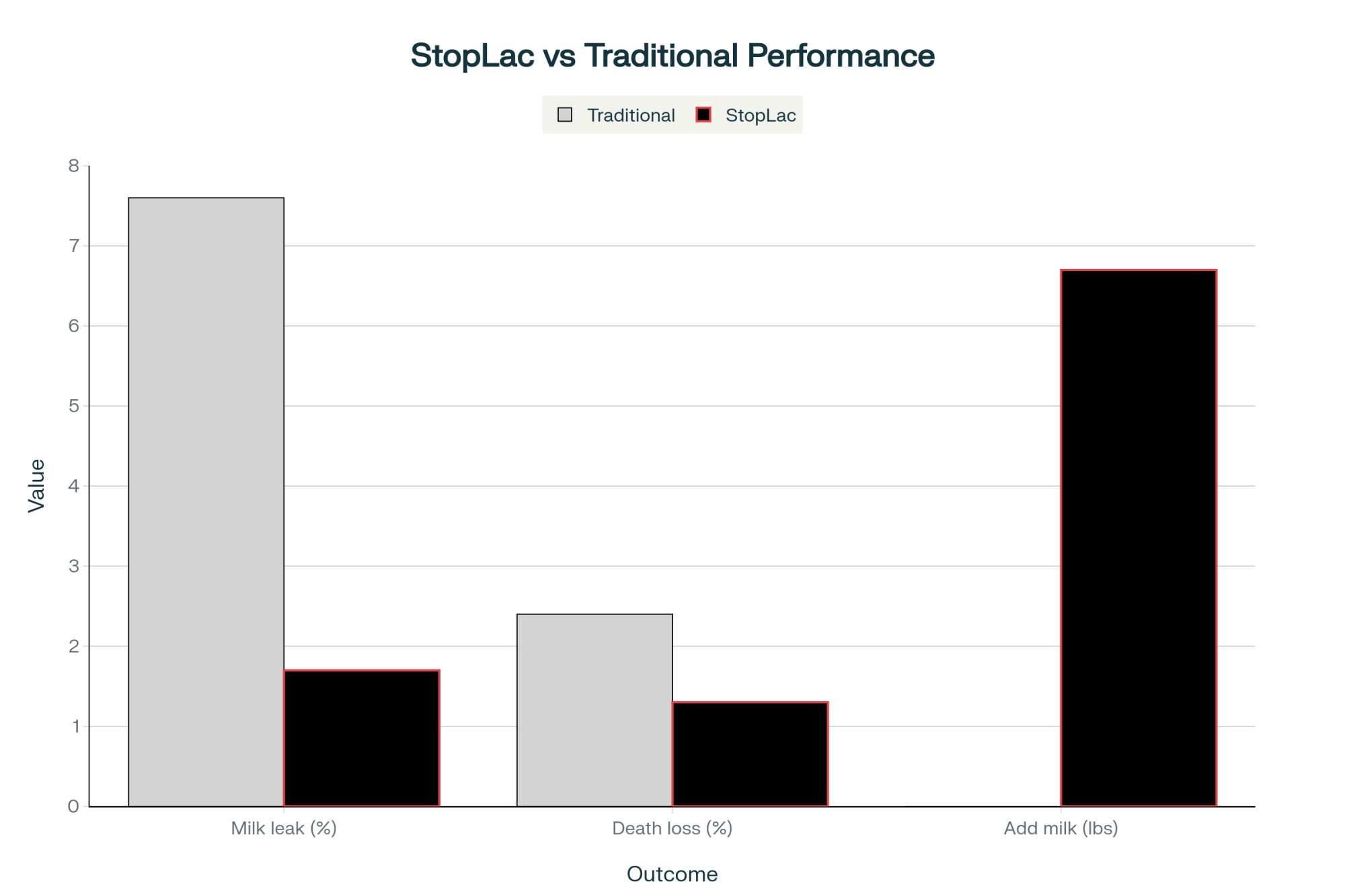
StopLac achieves dramatic reductions in leakage and death loss, plus boosts daily milk yield post dry-off

The Story Behind the Science

Sometimes the best innovations come from people who just can’t accept “that’s how it’s always been done.” There’s this veterinarian in the eastern Netherlands, Dr. Gertjan Streefland, who kept running into cows that wouldn’t respond to antibiotics the way they should. As Jan de Rooy—he runs AHV International now—tells it, Streefland didn’t just throw more drugs at the problem. He started asking different questions.

Now here’s where it gets interesting. The Dutch couldn’t just expand when they hit problems—land costs were astronomical, and they had production quotas limiting them until 2015. So they had to get smarter with what they had. Traditional dry-off had worked fine for decades, but when you can’t add cows, you’ve got to make every single one count.

The breakthrough came around 2010, when de Rooy attended a university course on bacterial communication—something called quorum sensing. Basically, bacteria can coordinate their attacks through chemical signals. When de Rooy and Streefland connected after that course, they began wondering whether bacteria in udder tissue were essentially organizing themselves into a coordinated army rather than random raiders.

What they found aligns with research from places like Cornell’s Quality Milk Production Services—these bacterial communication patterns are real, and they’re a big part of why some infections are so hard to beat. Similar work from the University of Minnesota’s veterinary diagnostic lab has shown that mastitis pathogens exhibit comparable biofilm resistance patterns.

Understanding What Really Happens at Dry-Off

Let me walk you through what happens when we dry off a cow the traditional way. You’ve got a cow making 60, maybe 80 pounds of milk daily, and we just… stop. That udder pressure doesn’t magically disappear. Research from AHV’s work with Utrecht University shows it stays elevated for several days—creating stress we’re only now starting to understand.

Dr. Geoff Ackaert, who’s the Technical Director at AHV, has presented some fascinating evidence about this. Those stress hormones from the abrupt dry-off? They actually wake up dormant bacteria that have been hiding in what we call biofilms—think of them like bacterial apartment buildings where they protect each other and wait out the tough times.

And here’s the kicker—bacteria protected in these biofilms can be 10 times, sometimes much more, resistant to antibiotics in experimental settings. Even on the low end, that’s a huge problem. The National Mastitis Council has documented similar patterns, and independent research from institutions like Ohio State’s veterinary college confirms these biofilm resistance levels.

How This New Approach Actually Works

StopLac takes a completely different approach. Instead of that sudden stop, which creates all that pressure, it helps the cow naturally wind down production—basically a guided shift in how her body manages the transition. It’s different from selective therapy or just using teat sealants, and it’s also distinct from gradual cessation protocols that some farms have tried.

The Utrecht collaboration documented a 56% drop in milk production within 24 hours, but here’s the important part—it’s due to physiological changes, not pressure building up. Jon Beller, who runs about 2,400 cows in Wisconsin, told me something that really stuck: “A lot less vocalization during the dry-off period. The cows cease production almost instantly with no more milk secretion after dry-up.”

Steve Jaeger shared something similar that really caught my attention. “On Friday morning, when I do my walk through and I walk past the dry pen, in the past, after dry off, there were always cows screaming. I mean, just screaming. You could tell the udders were full. They were uncomfortable,” he told me. “Since May 15, I barely had a, you know, you want to say a murmur? The barn was quiet. I just couldn’t believe it.”

You probably know this already—when cows are quieter during dry-off, that tells you everything. They’re not stressed.

What’s happening in the udder is pretty clever, too. The pH shifts so bacteria don’t thrive. Lactose is reabsorbed instead of being fermented by bacteria. Calcium stays balanced—and anyone who’s dealt with milk fever knows how crucial that is. The liver keeps functioning properly instead of getting overwhelmed.

Flowchart comparing the stress-heavy traditional dry-off with the guided, health-protective StopLac approach

The Numbers That Matter

Let’s talk about what this means in real numbers. In those Wisconsin trials with 404 cows, only four cows—about 1.7%—in the StopLac group had milk leakage issues. The control group? Thirteen cows, or 7.6%. Death losses within 60 days were 1.3% versus 2.4%.

That 6.7-pound daily production advantage during the first 100 days? If that holds even partially through the full lactation, you’re looking at substantial gains. Many producers are reporting the improved start carries through, though individual results vary.

During that H5N1 outbreak at Joe Soares Farms—nobody wants to deal with that kind of crisis, but it gave us a valuable comparison. Their Turlock facility, with 2,500 cows using the AHV protocol, maintained about 88 pounds per cow daily, with monthly losses of around 40-60 cows. Their Chowchilla facility with 5,500 cows on traditional protocols? They dropped to 77 pounds per day and were losing over 100 cows per month. The comparison is eye-opening.

AHV protocol outperformed traditional methods during Bird Flu—Turlock dairy achieved 11 lbs more milk per cow daily.

Breaking Down the Economics

Here’s how the money actually works out. Traditional dry-off has all these hidden costs that add up:

You’ve got milk leakage at about $11.55 per cow. New infections run around $94. Death losses within 60 days average $66. Extra culling adds $120. Antibiotics and withdrawal time, another $32.90. Extra labor dealing with problems, at least $16.

Add it all up—that’s $340.45 per cow for each dry-off when things go relatively well.

Now, with an investment of roughly $40 per cow, plus implementation costs, you’re looking at a total investment of $55-60 per cow. The measured benefits in improved production during early lactation, reduced health events, and lower death losses average over $400 according to the trial data. When you stack the $340 in avoided costs on top of the $400+ in production/health gains, and subtract the investment, you are looking at a net economic benefit of $640 per cow.

For a 1,000-cow dairy, that’s significant annual savings. Even if you’re milking 200-300 cows, the proportional benefits are worth looking at. Actually, I talked to a producer in Vermont with 180 cows who started with just his repeat offenders—the cows that always seemed to have issues. He’s now using it across the whole herd because the results on those problem cows were so clear.

It’s important to note that individual results depend on current management practices, facility design, and local conditions. The $640 benefit represents best-case scenarios from trial data—your actual results may vary based on factors like current dry-off success rates, labor efficiency, and herd health status

For comparison, other dry-off innovations typically show different returns. Selective dry cow therapy can reduce antibiotic costs by about 50% while maintaining udder health, according to University of Wisconsin extension research. Internal teat sealants alone generally show ROI in the 200-300% range based on Cornell studies.

Sponsored Post

Who’s Ready for This (And Who Isn’t)

Not every farm is ready to make this change immediately, and that’s fine. The operations I’ve seen succeed with this usually have a few things in common. They’re closely tracking individual cow data. Their teams actually follow protocols—you know how that goes. They think in full lactations, not just quarterly numbers. And they see change as an opportunity, not a threat.

Of course, not everyone’s convinced yet. As one Pennsylvania dairyman told me, ‘I’ll wait to see three-year data before switching my whole herd.’ That’s fair—major management changes deserve careful consideration.

David Goodrich at Goodrich-Cylon Dairy really exemplifies this approach. He’s been using StopLac since early December and tells me, “I have no difference in cell count or fresh cows with mastitis. I find it works really well on the farm, and I have no plans of going back to using tubes and sealants and all that stuff anymore.”

What’s interesting is his observation about implementation: “I don’t think it takes really any more time than putting tubes and sealants in every cow. I actually think it might cut a step out… the employees have really liked that they don’t have to handle the cows twice in the parlor.”

I should mention—some farms in the trials did hit bumps initially, mostly around training staff and getting protocols consistent. One producer said it took about three weeks for his team to really get comfortable with the new approach, but the results made it worthwhile. Another operation struggled initially because it tried to implement during its busiest season—timing matters.

If you’re not tracking individual cows well yet, or if you’re managing finances month-to-month, you might want to build those systems first. There’s no shame in that—recognizing what you need before jumping into new technology is actually smart management.

What to Expect Month by Month

Based on what producers have told AHV during their follow-ups, here’s the typical timeline:

First couple of months: Your milking crew notices cows are calmer at dry-off. No udder engorgement. Staff finds it easier. As Steve Jaeger noted, “It’s obvious that pressure isn’t there, that the AHV StopLac is doing what we need it to do.”

Months 3-4: Hospital pen has fewer cows. The Giacomini trial showed conception rates improving by several percentage points—that’s meaningful progress.

Months 6-8: Treatment costs drop noticeably. Those first StopLac cows are milking better than expected in their new lactation. Jaeger is particularly excited about this: “If we can shrink that udder faster and give that udder more time to regenerate, those cows are going to take off, I hope, a lot faster and perform a little better.”

By month 12: Everything compounds. Better production, fewer deaths, less culling—your banker notices the improved cash flow.

Regional Differences to Consider

It’s worth noting that results might vary depending on where you are and how you manage. Operations in hot, humid areas might encounter different bacterial pressures than those in drier regions. Down in the Southeast, where heat stress is a constant battle, producers report that the reduced metabolic stress during dry-off seems especially beneficial. Meanwhile, Southwest producers dealing with dust and environmental challenges say the stronger immune response helps their cows better handle those conditions.

Grazing dairies could see variations compared to confinement. Organic producers—who can’t use many traditional treatments anyway—might find this particularly useful.

Spring and fall transitions might show different responses, too. Some producers report better results during cooler months, though the trials didn’t show major seasonal variations.

The Regulatory Picture

The regulatory landscape keeps evolving, as we all know. The EU’s Regulation 2019/6 took effect on January 28, 2022, basically ending blanket dry cow therapy as we knew it. Canada’s national framework includes clear objectives to reduce agricultural antibiotic use. And let’s be honest—consumers increasingly want products from farms using antibiotics responsibly.

According to AHV’s specifications, StopLac has a zero withdrawal time—something to consider as regulations continue to tighten.

The Bottom Line

We’re seeing an interesting split in our industry: some operations are questioning old assumptions, while others are sticking with tradition. The Dutch example shows what happens when you can’t just expand your way out of problems—you innovate.

AHV reports over 2,650 farms are now using StopLac, with more than a million tablets distributed since last June. Industry trends suggest these approaches will likely become more common, though nobody can predict exactly how fast things will change.

Questions worth asking yourself: How do your current dry-off results compare to what’s possible now? What happens when neighbors cut their fresh cow losses in half? How might evolving market preferences affect your opportunities?

What started as one vet’s frustration with antibiotic failures has become a documented opportunity for real economic improvement. Each dry-off cycle represents biological potential—once it’s lost, you can’t get it back. Wisconsin producers in these trials aren’t just saving money today; they’re building advantages that compound with each lactation.

The most successful farms I’ve seen treat this as fundamental management evolution, not just buying a new product. Maybe that’s the real lesson—when you can’t expand, innovation becomes essential.

MetricTraditional Dry-OffStopLac
Milk leakage (%)7.61.7
Death loss (%)2.41.3
Daily milk increase (lbs)06.7
Withdrawal time (days)3-60
Annual cost per cow ($)34055-60
ROI per cow ($)0640

KEY TAKEAWAYS

  • The $640/cow revelation: Traditional dry-off creates $340 in preventable losses (mastitis, deaths, culling)—a $55 StopLac investment returns $640 through prevention plus 6.7 lbs more daily milk in early lactation
  • Your barn doesn’t lie: Screaming dry cows = tissue damage and bacterial activation. Silent cows = healthy metabolic transition. Wisconsin trials proved the difference: 47% fewer deaths, 70% less mastitis
  • Implementation roadmap: Start with repeat offenders; implement during calmer seasons; expect a 3-week staff adjustment. Month 1: quieter barns. Month 3: fewer hospital cows. Month 12: banker notices cash flow improvement
  • The regulatory advantage: Zero withdrawal time positions you ahead of tightening regulations (EU already banned blanket dry therapy in 2022, North America following)

Complete references and supporting documentation are available upon request by contacting the editorial team at editor@thebullvine.com.

EXECUTIVE SUMMARY: 

Wisconsin data just proved the unthinkable: traditional dry-off costs you $640 per cow annually in completely preventable losses. In trials with 404 cows, StopLac achieved what tubes and sealants never could—70% less milk leakage, 47% fewer deaths, and 6.7 pounds more daily milk during the first 100 days. The breakthrough came when Dutch farmers, unable to expand due to land constraints, discovered that helping cows metabolically wind down production prevents the pressure that awakens biofilm-protected bacteria. 

Steve Jaeger describes the transformation: “After traditional dry-off, cows were screaming… now with StopLac, the barn is silent.” With an investment of roughly $40 per dose and zero withdrawal time, the economics are undeniable—invest $55-60 total, recover $640 in reduced deaths, mastitis, culling, and improved production. With 2,650 farms already switched and testimonials like David Goodrich’s (“tubes may have caused MORE mastitis”), for many producers, the question isn’t just whether to change—it’s whether they can afford not to.

Complete references and supporting documentation are available upon request by contacting the editorial team at editor@thebullvine.com.

Learn More:

Join the Revolution!

Join over 30,000 successful dairy professionals who rely on Bullvine Weekly for their competitive edge. Delivered directly to your inbox each week, our exclusive industry insights help you make smarter decisions while saving precious hours every week. Never miss critical updates on milk production trends, breakthrough technologies, and profit-boosting strategies that top producers are already implementing. Subscribe now to transform your dairy operation’s efficiency and profitability—your future success is just one click away.

NewsSubscribe
First
Last
Consent

Your Repeat Mastitis Cows Have a 72-Hour Secret – Here’s How to Break It

1,700-cow dairy. Zero hospital pen days. Not a typo. Here’s the 72-hour secret that changed everything.

Picture this: You’re treating the same cow for mastitis for the third time this month. Same quarter. Same frustrating cycle. She clears up, looks great for ten days, maybe two weeks if you’re lucky, then boom—she’s back.

Sound familiar? What if I told you there’s actually a biological clock ticking from the moment bacteria enter that udder, and we’ve been missing it completely?

I recently spent time reviewing research from AHV International, a Dutch company founded by veterinarian Dr. GJ Streefland, who grew tired of witnessing this exact pattern. Working with his business partner Jan de Rooy and researchers at Utrecht University, they discovered something that might explain why we keep fighting the same battles—and losing.

What they found is showing documented savings on real farms. But more than that, it might finally explain why that hospital pen never seems to empty out.

The Discovery That Started with Frustration

The Race You’re Losing: By 72 hours, over 75% of mastitis bacteria have built impenetrable biofilm fortresses—but clinical symptoms don’t appear until day 7.

You know how the best discoveries often come from someone saying, “there’s got to be a better way”? That’s exactly what happened in the eastern dairy region of the Netherlands. Dr. Streefland was watching antibiotics fail in ways that didn’t make sense. Not traditional resistance where bacteria evolve—this was different. Cows would respond, improve, then relapse with identical infections in the same location.

The breakthrough came when Streefland took a course on bacterial communication—yes, bacteria actually communicate with each other through a phenomenon called quorum sensing. Working with Professor Johanna Fink-Gremmels at Utrecht’s veterinary faculty, they started investigating whether this communication system might explain our treatment failures.

What’s fascinating is that they found specific plant compounds could actually disrupt these bacterial conversations and break up the protective fortresses that bacteria build—what scientists call biofilms. Even more surprising? These compounds are effective when administered orally, not just through direct injection into infected tissue. As Streefland explained in company documentation, “With oral applications, we were able to prevent the formation and maintenance of biofilms, enabling the immune system to eliminate biofilm-related disorders. That was really spectacular for me.”

The Critical 72-Hour Timeline for Biofilm Prevention in Dairy Cattle

Here’s where it gets really relevant for your operation. According to AHV’s research, validated across thousands of cows, bacteria follow a predictable timeline:

The Critical 72-Hour Window: Antibiotic effectiveness plummets as bacteria coordinate and build protective biofilm fortresses. By day 7 when symptoms appear, you’re already too late.
Time PeriodWhat’s HappeningTreatment Effectiveness
0-24 hoursIndividual bacteria, vulnerable to immune responseAntibiotics highly effective
24-48 hoursBacteria reach “quorum” and start coordinatingTreatment becomes challenging
48-72 hoursBiofilm matures into protective fortressAntibiotics struggle to penetrate
After 72 hoursEstablished biofilm shields bacteriaTreatment often temporary

Think of it like the difference between one protester with a sign versus fifty people organizing a march. Once they coordinate, everything changes.

Now here’s the kicker—most of us don’t even start treating until clinical signs appear around day seven. By then, we’re no longer fighting bacteria. We’re trying to break through established fortifications.

Real Farms, Real Numbers

Looking at documented results from working farms, Peter Smith at LT Smith & Sons in New York really caught my attention. He milks 1,700 Holsteins, a family operation that has been at it for decades. According to AHV’s case studies, his culling rate for udder health dropped from 1 in 3 cows to 1 in 7.

But here’s what matters day-to-day: Smith reports having 10-12 more cows in the milking string daily because they’re not stuck in the hospital pen or on withdrawal. Some days—and this still amazes me—he has zero cows in the hospital pen. After thirty years in the business, that had never happened before.

Zero Hospital Pen Days: After 30 years of dairy farming, Peter Smith achieved what seemed impossible—an empty hospital pen and 10-12 more cows in the milking string every single day.

In California, Trevor Nutcher’s experience is even more dramatic—though it’s worth noting that his operation had already optimized other management factors, so results may vary. The documentation shows he hasn’t used a mastitis tube since switching to biofilm prevention protocols. His hospital pen that averaged over twenty cows? Often empty now. When cows do need support, they’re back milking in 2.5 days instead of the typical week.

Producer Case Study Summary

ProducerLocationHerd SizeKey Results
Peter SmithNew York1,700 cowsCulling reduced from 1-in-3 to 1-in-7; 10-12 more cows are milking daily
Trevor NutcherCaliforniaNot specifiedZero mastitis tubes; hospital pen often empty
Joe SoaresCaliforniaTurlock: 2,500 cows Chowchilla: 5,500 cowsH5N1 recovery: 3 days vs months; 88 vs 77 lbs daily production

What’s interesting is how these protocols perform under extreme stress. During the 2024 H5N1 outbreak, Joe Soares inadvertently conducted an experiment when both his dairies were affected—his 2,500-cow Turlock operation and his 5,500-cow Chowchilla facility. The operation utilizing biofilm prevention protocols maintained better overall herd health—cows recovered in three days versus months at the traditional protocol dairy. While this was an extreme situation, it suggests that preventing biofilm formation may help maintain stronger baseline immunity. The production difference during recovery was substantial: 88 pounds versus 77 per cow per day. Even if you never face an outbreak, this resilience could matter during any stress event—such as heat waves in California’s Central Valley, humidity challenges in Florida’s dairy regions, or those brutal January cold snaps we see in Wisconsin and Minnesota.

Breaking Down What This Means for Your Bottom Line

Let’s get specific about what the documented trials show financially. The Giacomini farm trial in California provides us with hard numbers from a controlled comparison involving 450 cows, and I think the math is worth doing together.

The Math That Changes Everything: For a 1,000-cow dairy, biofilm prevention delivers $216,000 in documented annual benefits—with payback in just 12-18 months.

Documented Milk Production Gains

The biofilm prevention group produced 193 pounds more milk per cow across the entire lactation. So if we’re looking at $17/cwt—pretty close to where we are this October—that’s roughly $33 per cow in additional milk revenue. Multiply that by your herd size. For a 500-cow dairy, that’s $16,500. For 1,000 cows? $33,000. Just from the milk.

The trial also showed a 32% reduction in metabolic issues during those critical first 60 days. You probably know this already, but metabolic problems in early lactation often cascade into other issues—ketosis leads to displaced abomasum, which leads to… you get the picture. And if you’re dealing with Florida humidity or Arizona heat stress during fresh cow transition? These metabolic challenges get even trickier.

Reproductive Performance in the Trials

What’s encouraging is the consistency across different systems. The US trials—spanning over 20,000 cows across California, Georgia, Florida, and Minnesota—documented 7.4% better conception rates at first service (42.1% vs. 39.2% in control groups). UK operations reported an average of 28 fewer days open. The Giacomini trial showed zero uterine issues at 60 days in the treatment group versus ongoing problems in controls.

Now, the value of each day open varies—some extension economists say $3, others say $5 or more, depending on your market. But let’s be conservative and say $3.50. If you cut 28 days open like UK farms do, that’s $98 saved per cow. Again, multiply by your herd size.

The Longevity Factor

Here’s what really makes you think—research tracking 64,467 animals across Dutch farms found cows on these protocols lived an average of 8.5 months longer.

I don’t need to tell you what replacements cost these days. Whether you’re raising your own or buying springers, extending productive life by over half a year changes your whole culling strategy. Instead of culling for chronic mastitis treatment, you’re culling for production or genetics. That’s a different game entirely.

Quick Action Step: Track Your Hospital Pen Patterns

Starting tomorrow morning, create a simple tracking sheet for your hospital pen:

  • Which cows enter
  • How long do they stay
  • Whether they return within 30 days

This baseline will reveal your actual patterns—you might be surprised by what you find. Many producers discover that their “problem cows” are the same 15-20% that repeatedly cycle through.

What About Treatment and Labor?

The documented savings here make sense when you think about it:

  • Less antibiotic use (because you’re preventing, not treating)
  • Labor time—farms report saving 2-3 hours daily, not treating repeat offenders
  • No milk withdrawal for cows that don’t need treatment

It’s worth noting that prevention protocols do cost more upfront than a tube of mastitis treatment. However, when you factor in all these documented benefits, operations consistently report payback within 12 to 18 months. Of course, your mileage may vary depending on your current situation.

Sponsored Post

Why This Innovation Came from Holland (And What It Means for North American Dairies)

Interestingly, this breakthrough emerged from the Netherlands rather than larger dairy regions like Wisconsin or California. The Dutch had heavily restricted their antibiotic use years before similar pressure emerged in North America. They couldn’t just switch to stronger drugs when first-line treatments failed. They had to think differently.

Plus, the Netherlands is compact—you can drive across their entire dairy region in a few hours. When something works, word spreads fast through their tight-knit farming community. And Dutch producers have been comfortable with precision management for years, making them more receptive to complex biological approaches.

The collaboration between practicing veterinarians and university researchers was crucial. Utrecht University supported unconventional thinking when other institutions might have been more conservative. That academic backing gave credibility to what might have otherwise been dismissed as “just another supplement.”

What’s this mean for us here? Well, with milk quality premiums becoming tighter and consumer pressure on antibiotic use growing, we might want to pay attention to what the Dutch have figured out under pressure.

The Implementation Challenge

Let’s be honest—this approach requires a mental shift that’s harder than you’d think. We’ve built our entire management philosophy around being excellent at treating sick cows. Walk any farm with the owner, and they’ll proudly show you their protocols for the hospital pen. That’s what good managers do, right?

This asks you to intervene before problems are visible. During dry-off (where trials show 70% reduction in milk leakage and 47% fewer death losses with StopLac protocols). During the fresh cow transition. Before stress events. Success looks like… nothing happening. An empty hospital pen.

It’s weird celebrating what doesn’t happen. But that’s exactly the point.

Your veterinary relationship changes, too. Less emergency calls, more strategic planning. Some vets resist initially—understandably, since it challenges traditional service models. However, progressive practitioners see an opportunity to provide higher-value, consultative services.

And let’s be fair—some folks want to see more independent research before making changes. That’s completely reasonable. Each operation needs to weigh the documented benefits against their own comfort level with trying new approaches.

What This Means for Different Operations

  • For larger operations (1,000+ cows): The economics generally work well at scale. If you’re already tracking individual cow data through systems like DairyComp or PCDART, adding biofilm prevention protocols integrates relatively easily. The reduced labor alone—not having staff constantly treating repeat offenders—could justify exploring this approach. And with current margins? Every efficiency counts.
  • Mid-size dairies (300-999 cows): You might see the biggest relative impact. You’re large enough for economies of scale, but small enough that reducing the hospital pen population directly affects daily operations. Imagine what your best employee could accomplish if they weren’t treating sick cows three hours daily. This is especially relevant if you’re in that tough spot deciding between staying commodity or going premium—as many mid-size operations are right now.
  • Smaller operations (<300 cows): The per-cow investment might be higher, but if you’re doing your own treatments, the time savings could be game-changing. Plus, keeping cows productive longer becomes even more critical when every cow counts. For Canadian quota holders or organic producers, the longevity benefits alone might be worth the investment.
  • Grazing operations: The US data showing improved conception rates is enormously important for seasonal calving. And with less intensive management, preventing problems becomes even more valuable than treating them. If you’re grass-based, this could align well with your whole systems approach.
The Complete Picture: $376,000 annual benefit per 1,000 cows. Longevity and reproduction savings dwarf the visible costs—this is why the hospital pen tells only part of the story.

The Practical Reality Check

Look, I’m not suggesting this is a magic bullet. The documented results are impressive, but implementation requires commitment. You need to understand the biology, adjust protocols, and possibly face some resistance from your team or veterinarian.

Some operations might find traditional approaches still work for their situation. If you have excellent treatment success rates, low culling, and manageable hospital pen populations, perhaps you don’t need to change. But if you’re seeing those same cows repeatedly… well, Einstein had something to say about doing the same thing and expecting different results.

The learning curve is real. Producers who’ve made the switch emphasize that understanding when and how to intervene takes practice. But once you get it? They say it becomes second nature.

Where This Heads Next

What’s particularly interesting is that this isn’t limited to dairy. Dr. Geoff Ackaert, AHV’s technical director, notes similar bacterial behavior in poultry, swine, and even aquaculture. The principles appear universal because bacteria operate the same way regardless of host species.

With increasing pressure on antibiotic use globally—whether from regulations or consumer demand—having alternatives becomes crucial. The documented results suggest biofilm prevention could be one viable path forward. And honestly, being ahead of that curve rather than scrambling to catch up? That’s usually the better position.

Making Your Decision

The question isn’t whether the 72-hour biofilm window exists—the biology is clear from AHV’s research. The question is whether understanding and working with this timeline makes sense for your operation.

What would zero hospital pen days mean for your farm? Not just economically, but for your quality of life? For your employees’ job satisfaction? For your ability to focus on improving production rather than constantly treating problems?

Some producers will wait until this becomes standard practice everywhere. Others, like Peter Smith and Trevor Nutcher, are building competitive advantages now while the industry catches up.

Given this October’s milk prices —cheese at $1.67 and margins tightening —every efficiency matters. The chronic mastitis pattern that’s frustrated dairy farmers for generations finally has a biological explanation. Whether that explanation leads to changes in your operation is a decision only you can make.

But at least now you know why that cow keeps coming back to your hospital pen. And more importantly, you know there might be a way to stop her from needing to.

Key Takeaways: 

  • You’re always 72 hours too late: Bacteria build untreatable biofilm shields in 3 days, but clinical signs don’t appear until day 7—by then, antibiotics can’t penetrate
  • Zero hospital pen days are real: Peter Smith (1,700 cows, NY) dropped culling from 1-in-3 to 1-in-7; California’s Trevor Nutcher hasn’t used a mastitis tube since switching protocols
  • The ROI is undeniable: For 1,000 cows: $33,000 extra milk revenue + $98,000 saved on reproduction + dramatically reduced culling = payback in 12-18 months
  • Success requires a mental shift: Celebrate empty hospital pens, not treatment skills—intervene at dry-off and transition before problems become visible
  • Start tomorrow: Track which cows enter your hospital pen, how long they stay, and if they return within 30 days—you’ll likely find the same 15-20% cycling repeatedly

Executive Summary:

Your repeat mastitis cows aren’t antibiotic failures—they’re timing failures. Bacteria build impenetrable biofilm fortresses within 72 hours of infection, but symptoms don’t appear until day seven, making traditional treatments useless. Dutch research finally cracked the code: bacteria use “quorum sensing” to coordinate these defenses, explaining why the same cows keep cycling through hospital pens. The proof is undeniable: Peter Smith’s 1,700-cow NY dairy dropped culling from 1-in-3 to 1-in-7 and achieved zero hospital pen days—after 30 years of trying. Financial analysis from 20,000 US dairy cows documents $33/cow extra milk, $98/cow reproduction savings, and 8.5 months longer productive life. The paradigm shift? Prevent biofilms during dry-off and transition before problems become visible, celebrating empty hospital pens instead of treatment expertise. Start tomorrow: track your hospital pen patterns for 30 days—when you see the same 15-20% cycling through repeatedly, you’ll understand why this 72-hour window changes everything.

Complete references and supporting documentation are available upon request by contacting the editorial team at editor@thebullvine.com.

Learn More:

Join the Revolution!

Join over 30,000 successful dairy professionals who rely on Bullvine Weekly for their competitive edge. Delivered directly to your inbox each week, our exclusive industry insights help you make smarter decisions while saving precious hours every week. Never miss critical updates on milk production trends, breakthrough technologies, and profit-boosting strategies that top producers are already implementing. Subscribe now to transform your dairy operation’s efficiency and profitability—your future success is just one click away.

NewsSubscribe
First
Last
Consent

The $30K Question: Is Your Herd Ready for Selective Dry Cow Therapy?

One Midwest herd just banked $30K cutting antibiotics by 78%—while their neighbors still treat every cow the old way.

EXECUTIVE SUMMARY: Look, I’ve been digging into this selective dry cow therapy thing, and honestly? Most of us are throwing money away treating perfectly healthy cows. Wisconsin researchers tracked 37 herds and found producers saved $5.37 per cow when they switched to data-driven protocols instead of blanket treatments. That’s real money—not company marketing fluff. The Dutch have already figured this out, cutting antibiotic use by 80% while keeping their herds healthier than ever. Here’s the kicker: it only works if your bulk tank SCC stays under 250,000 and your dry cow housing doesn’t suck. But if you’ve got those basics down? The economics work, especially for bigger operations. It’s time to stop guessing and start using the data right in front of you.

KEY TAKEAWAYS

  • Scale determines success — Operations over 1,000 cows see payback in 12-18 months with $2.12 net benefit per cow, while herds under 500 struggle to break even on testing costs
  • Timing is everything — Launch your selective protocols in March-May when environmental pressure is lowest; summer heat and winter mud will crush your success rates if you’re not careful
  • SCC threshold isn’t gospel — That 200,000 cutoff everyone talks about? University of Georgia found too many false positives, so adjust seasonally and watch your individual cow patterns
  • Regulatory pressure building — FDA ramped up antibiotic oversight in 2023, and processors are starting to reward documented reduction programs with premium payments
  • Start small, measure everything — Pilot selective treatment on 25% of your dry-offs first, track every dollar, and make sure your vet’s on board before going all-in
 selective dry cow therapy, dairy profitability, antibiotic stewardship, mastitis prevention, herd management

Let’s be honest. Most of us have been drying off cows the same way our dads did—antibiotics for every cow, every time. But agriculture’s moving fast, and that approach might be costing you.

A recent HerdHQ case study found a large Midwest herd cut antibiotic use by 78%, saving nearly $30,000 annually. Now, that’s company data and not independently reviewed, so keep your skepticism. University research gives more modest but reliable numbers—$2 to $8 saved per cow when selective dry cow therapy (SDCT) replaces blanket treatment.

One thing’s clear: the old ways won’t cut it much longer.

What’s Working in the Midwest Barnyard

University of Wisconsin research covering 37 herds that switched to SDCT found that producers saved an average of $5.37 per cow. But here’s the no-nonsense reality: savings usually come only from herds with bulk tank Somatic Cell Counts (SCC) below 250,000 cells/mL, good dry cow housing, and well-trained staff.

Consider the case of a producer in rural Minnesota who initiated SDCT during a harsh winter. “Mud and frozen water lines made our old SCC thresholds useless,” the producer recalls. “We adjusted protocols for the cold, keeping infections in check.” This demonstrates that facilities and management are just as important as any technology.

The Science Backing SDCT

Dr. Simon Dufour’s meta-analysis found a 66% reduction in antibiotic use when teat sealants were applied properly, with no increase in the incidence of mastitis.

While a 200,000 SCC cutoff is a useful guideline, University of Georgia specialists warn it’s not perfect. False positives can occur, so producers should adjust thresholds seasonally and based on their herd’s history.

Experts from Minnesota Extension agree: stay flexible and watch how your cows respond to changing conditions.

Size Matters: Financial Viability of SDCT

Here’s the tough talk: Your herd size directly impacts the financial viability of SDCT. The following table breaks down estimated costs and payback periods:

Herd Size (Cows)Testing Cost/CowAvg. Savings/Cow/YearNet Benefit/Cow/YearPayback Time
Under 300$8.50$5.37-$3.13Not viable
300-500$6.25$5.37-$0.88Marginal
500-1,000$4.75$5.37+$0.6236-48 months
Over 1,000$3.25$5.37+$2.1212-18 months

*Payback time represents the estimated months to recoup costs of testing and training.

If you milk fewer than 500 cows, focus first on housing improvements and consider cooperative testing with neighbors to reduce costs.

What’s Happening Beyond Our Fences

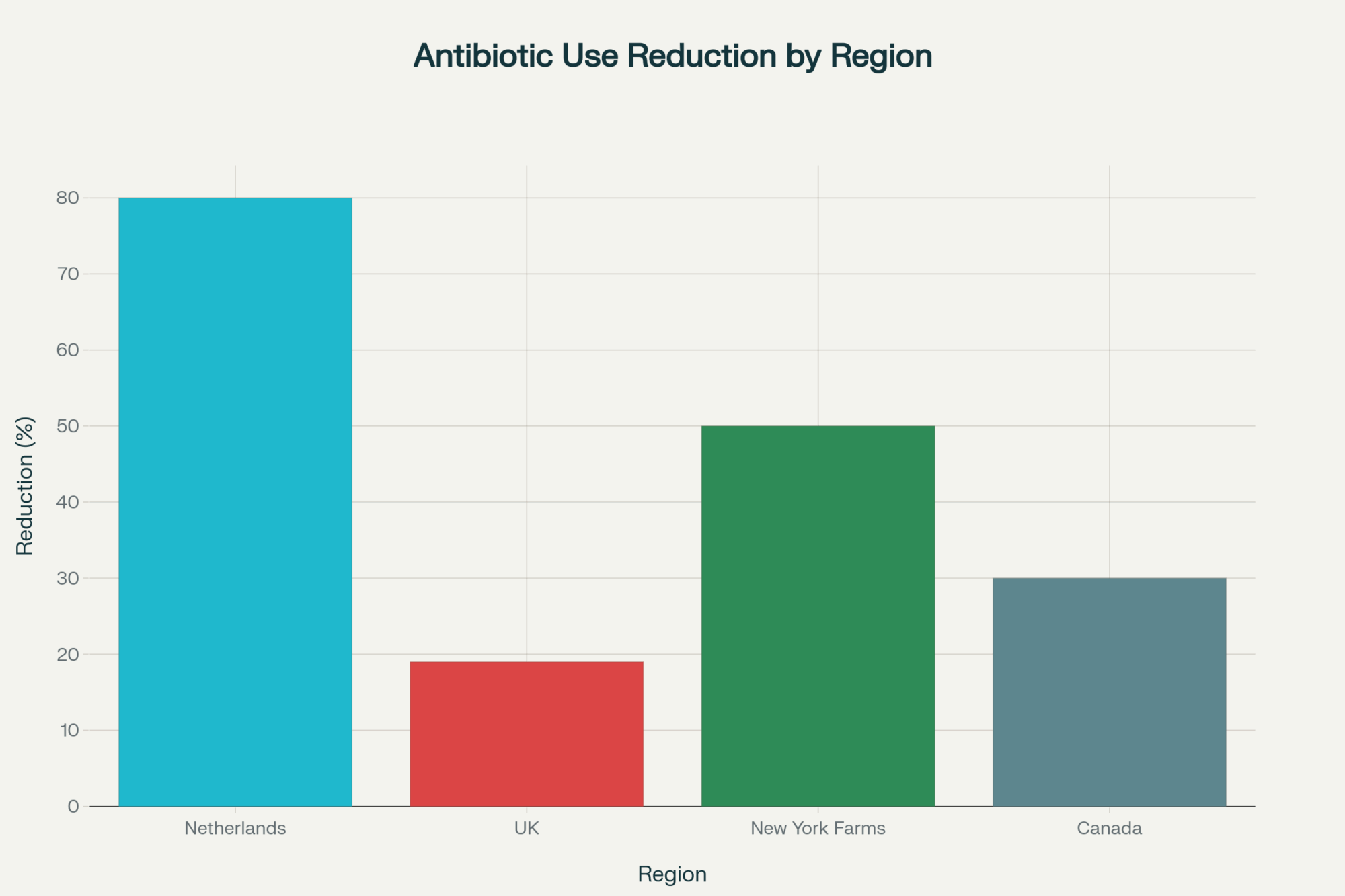
The Dutch government pushed hard for antibiotic cuts, slashing antimicrobial use by over 80% in a decade. In the UK, dairy farms have reduced antibiotic use by 19% since 2020 through targeted, selective treatments, while maintaining milk quality and herd health.

New York farms are proving the concept works. Of the 24 dairies that tried SDCT, nearly all continued the practice, resulting in a 50% or more reduction in antibiotic use.

Canada’s veterinary-led programs confirm health and financial wins from SDCT implementation.

This global momentum demonstrates that the model is effective, but success ultimately depends on adapting these principles to local farm conditions.

Regulatory pressure is mounting, too. The FDA increased veterinary oversight for medically important antibiotics in 2023, signaling that prudent antibiotic use isn’t just good business—it’s becoming a required practice.

Stay Sharp: Use Technology, Not Just Buzz

HerdHQ is popular, but recent research indicates that machine learning has not yet outperformed tried-and-true rule-based SDCT decisions.

Bottom line: master the basics first—clean housing, solid protocols, and veterinary backing.

The Blueprint for SDCT Success

Here’s what Midwest producers and vets say you need:

Prerequisites for Success:

  • Maintain bulk tank SCC under 250,000 cells/mL for six months
  • Keep dry cow housing clean, dry, and comfortable
  • Train your staff on the proper steps for dry-off
  • Build a trusted relationship with your vet

Timing Matters: The optimal time for initiating selective dry cow treatment tends to be spring (March through May). Summer heat triggers mastitis, while winters call for careful adjustments.

“Trying to go it alone with selective therapy usually ends in frustration.”
—A New York dairy veterinarian, from a 2021 Journal of Dairy Science study¹³

Your SDCT Action Plan by Herd Size

For herds of 1,000 cows and up:

  • Schedule a vet consultation to design an SDCT program
  • Audit your dry cow treatment expenses
  • Pilot selective therapy on 25% of dry-offs

For 300 to 1,000-cow herds:

  • Prioritize dry cow housing upgrades
  • Explore testing cooperatives with neighbors
  • Work closely with your vet to tailor protocols

For herds under 300 cows:

  • SDCT savings are likely further out
  • Focus on improving dry cow care fundamentals
  • Explore group testing and extension support programs

Regardless of farm size, keep track of treatment costs, monitor SCCs, and collaborate with your veterinarian.

Bottom Line

Farmers ahead of the curve on SDCT didn’t get lucky—they got prepared. They invested in proper housing, built strong vet relationships, and understood their numbers before making the switch.

The question isn’t whether selective dry cow therapy will become standard practice. The question is whether your operation will be ready when the economics make sense for your herd size and regulatory requirements become even tighter.

Are you ready?

Complete references and supporting documentation are available upon request by contacting the editorial team at editor@thebullvine.com.

Learn More:

  • The Golden Opportunity of the Dry Period – This article provides tactical strategies for optimizing dry cow management and nutrition. It reveals practical methods for reducing metabolic issues and improving udder health, directly supporting the on-farm prerequisites needed for a successful selective therapy program.
  • The Future of Dairy Farming is Now: How to Stay Ahead of the Curve – Go beyond the barn with this strategic look at market trends shaping the industry. It explores how consumer demands for sustainability and antibiotic stewardship are creating new economic opportunities, positioning your prudent use of antibiotics as a market advantage.
  • On-Farm Culturing: A Game Changer in Mastitis Management – This piece is a deep dive into the innovative technology that powers precision SDCT. It demonstrates how on-farm culturing provides the actionable data needed to identify specific pathogens and make confident, cost-effective treatment decisions for individual cows.

Join the Revolution!

Join over 30,000 successful dairy professionals who rely on Bullvine Weekly for their competitive edge. Delivered directly to your inbox each week, our exclusive industry insights help you make smarter decisions while saving precious hours every week. Never miss critical updates on milk production trends, breakthrough technologies, and profit-boosting strategies that top producers are already implementing. Subscribe now to transform your dairy operation’s efficiency and profitability—your future success is just one click away.

NewsSubscribe
First
Last
Consent

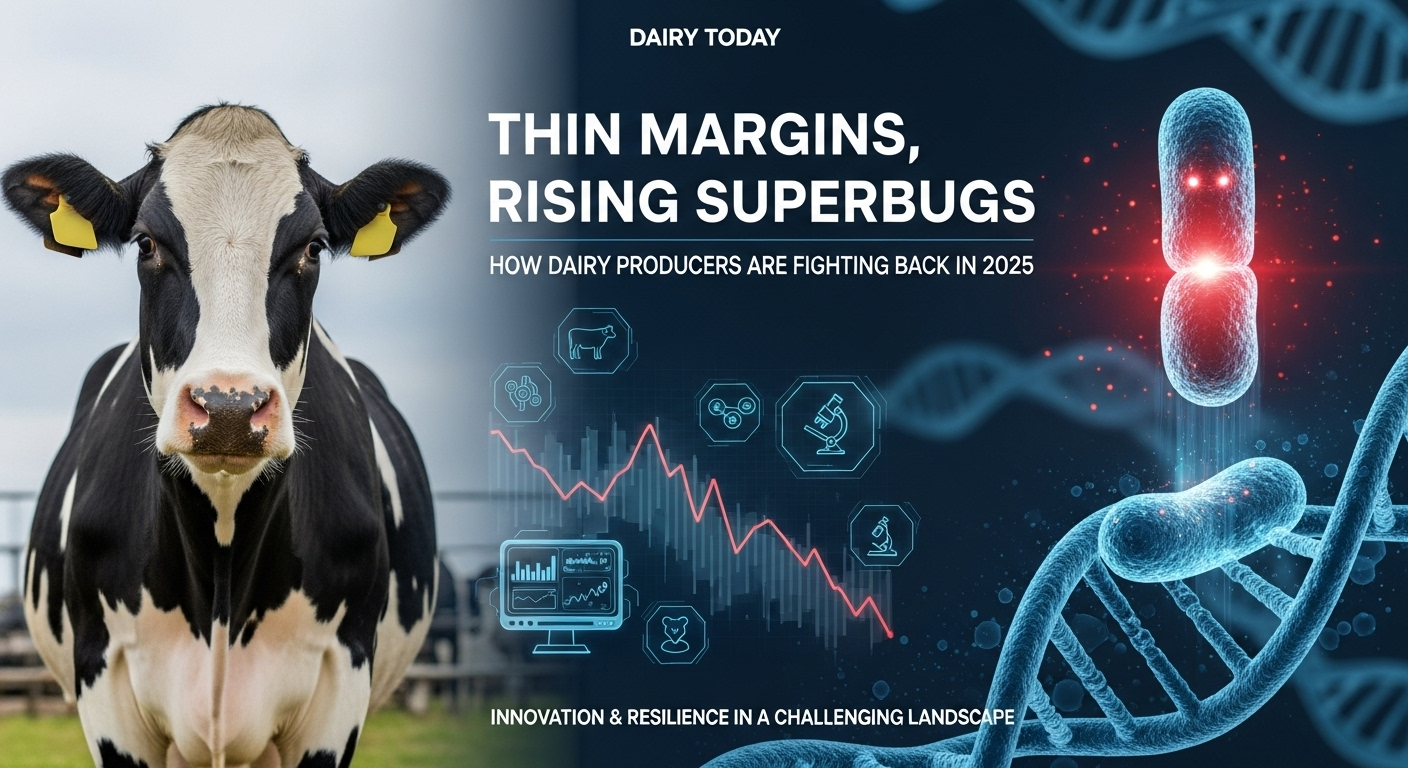
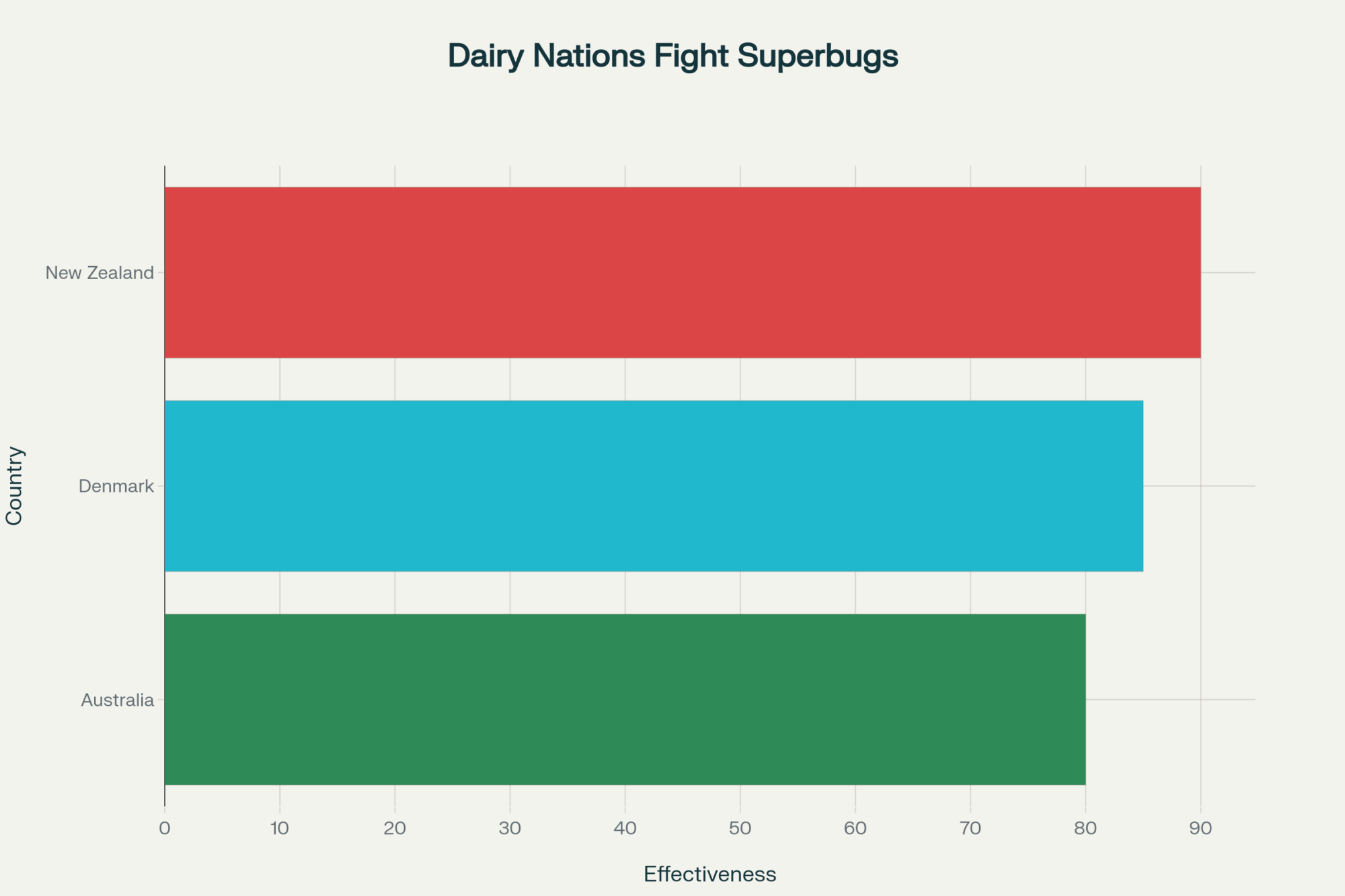
Thin Margins, Rising Superbugs: How Dairy Producers Are Fighting Back in 2025

Stop throwing antibiotics at problems. Smart farms use data, not desperation, to beat superbugs

EXECUTIVE SUMMARY: Look, here’s what’s happening in barns right now — superbugs aren’t just a lab problem anymore, they’re hitting your milk check hard. With Class III sitting around $17.32 and prime at 7.5%, every repeat mastitis case is costing serious money through dumped milk and extended treatments. But here’s the kicker… farms running targeted PCR testing and tightened biosecurity protocols are seeing mastitis drop by 50% — that’s real cash back in your pocket. The Danes figured this out years ago, New Zealand’s all over it, and even Australia’s proving that smart biosecurity beats blind antibiotic use every time. This isn’t about spending more on drugs; it’s about working smarter with the bugs you’ve got. Trust me, if you’re not thinking strategically about antimicrobial resistance right now, you’re leaving money on the table.

KEY TAKEAWAYS

  • Deploy targeted PCR testing now — cut repeat mastitis cases by 50% and stop throwing good money after bad treatments when milk’s trading in the high teens
  • Switch to selective dry cow therapy with your vet — slash antibiotic use by 40-60% without sacrificing udder health, plus you’ll breeze through those FARM audits
  • Map your trouble zones and swab monthly — stop guessing where bugs live and start cleaning where they actually are (calf pens, sick areas, parlor lanes)
  • Get your records audit-ready today — with BC rolling out new protocols and buyers getting pickier, clean documentation saves your bacon when the inspector shows up
  • Train your crew on outbreak SOPs — turn those good intentions into muscle memory because when superbugs hit, you need everyone moving fast and smart
antimicrobial stewardship, mastitis prevention, dairy farm profitability, selective dry cow therapy, farm biosecurity protocols

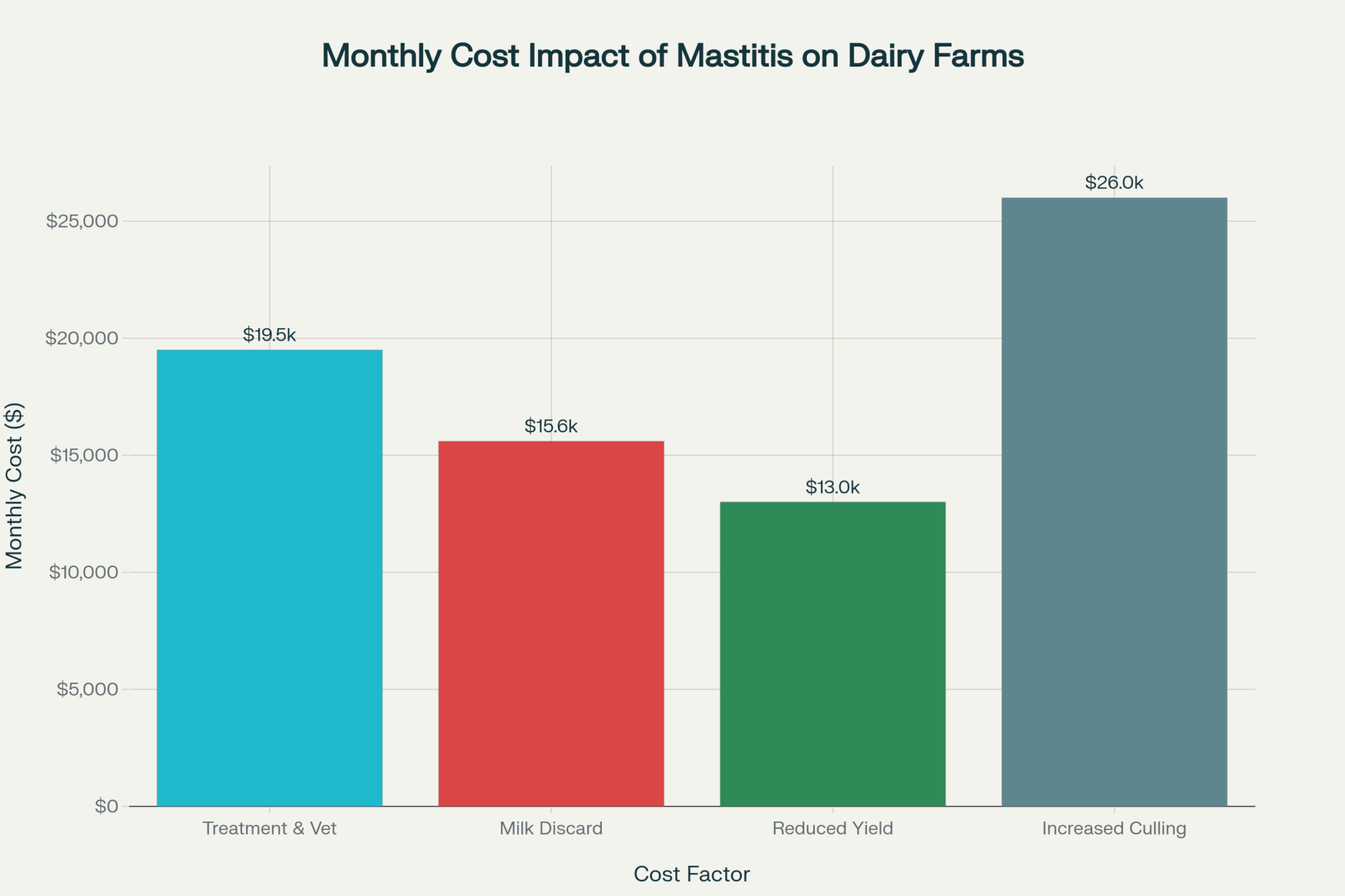
Thin margins are forcing a tough conversation in barns across North America, but it’s not just about feed costs or milk prices—it’s about the rising threat of superbugs. Repeat mastitis cases, milk in the drain, and sudden stoppages in animal movements are hammering producers just as Class III holds around $17.32 per cwt and—with the prime rate at 7.5%—financing any setback from a herd health crisis is more punishing than ever.

The manager of a 1,500-cow herd in Wisconsin put it perfectly: “It’s not the first shot that burns your pocket, it’s the second one, plus the dumped milk and the auditor knocking on your door.” He was discussing how quickly today’s health events can spread to every corner of your farm when good protocols are not followed.

The New On-Farm Threat: Why Biosecurity Is Now a Financial Strategy

British Columbia isn’t just talking tough—they’re running the Salmonella Dublin Investigation and Management Program (SDIMP), launched out of immediate concern that this pathogen’s making barn life riskier and costlier each year.

Meanwhile, fresh research from the Journal of Dairy Science delivers a hard dose of on-farm reality: the real chokepoints in biosecurity aren’t the paperwork or signs—it’s where people, feeders, and vendors cross tracks, or bottlenecks at the calf pen, that keep letting bugs in. Fixing the “sweat-level stuff” isn’t an easy walk.

One operator in a lower-prevalence county in New York, running 800 cows, grumbled that “These new rules feel like a big-city solution to a rural problem—tying us up and costing extra vet time without a clear payout.” That’s a sentiment you hear in a lot of barns off the interstate routes.

The evidence is tough to ignore. For example, Danish researchers recently confirmed why proactive biosecurity matters: herds scoring higher on traffic management, visitor logs, and feed storage biosecurity had a significantly reduced risk of testing positive for Salmonella Dublin. Extension offices now offer outbreak playbooks with practical, not theoretical, steps—these can make the difference between a close call and a costly shutdown.

Connecting Biosecurity to Your Bottom Line

Higher butterfat pulls from firm butter, but soft block cheese markets are squeezing those who rely on component premiums, which is the reality for most producers. That spread can make or break your margin if your quality or volume takes a single health-related hit: a ten-cent loss on milk dumped, or a 20% cull spike, suddenly tips the cashflow balance. And feed? The USDA reported a national average corn price just shy of $3.90/bu at the end of August 2025, but the basis is a roll of the dice everywhere except in the Midwest heartland.

A 2,000-cow dairy in the Texas Panhandle, for instance, switched to targeted PCR testing and cut repeat mastitis cases by half after spring freshening. That’s not a fluke—that herd’s profit and parlor time both showed a jump as soon as repeat treatment costs decreased.

Producers ask if the added step for diagnostics is worth the hold-up, especially during fresh cow rushes. The reality is that most labs now deliver results in 2–5 days. The herds that plug those results straight into their cleaning maps wind up moving sooner on emerging problems, not after the fact. That’s actual cash in the tank instead of poured on the floor.

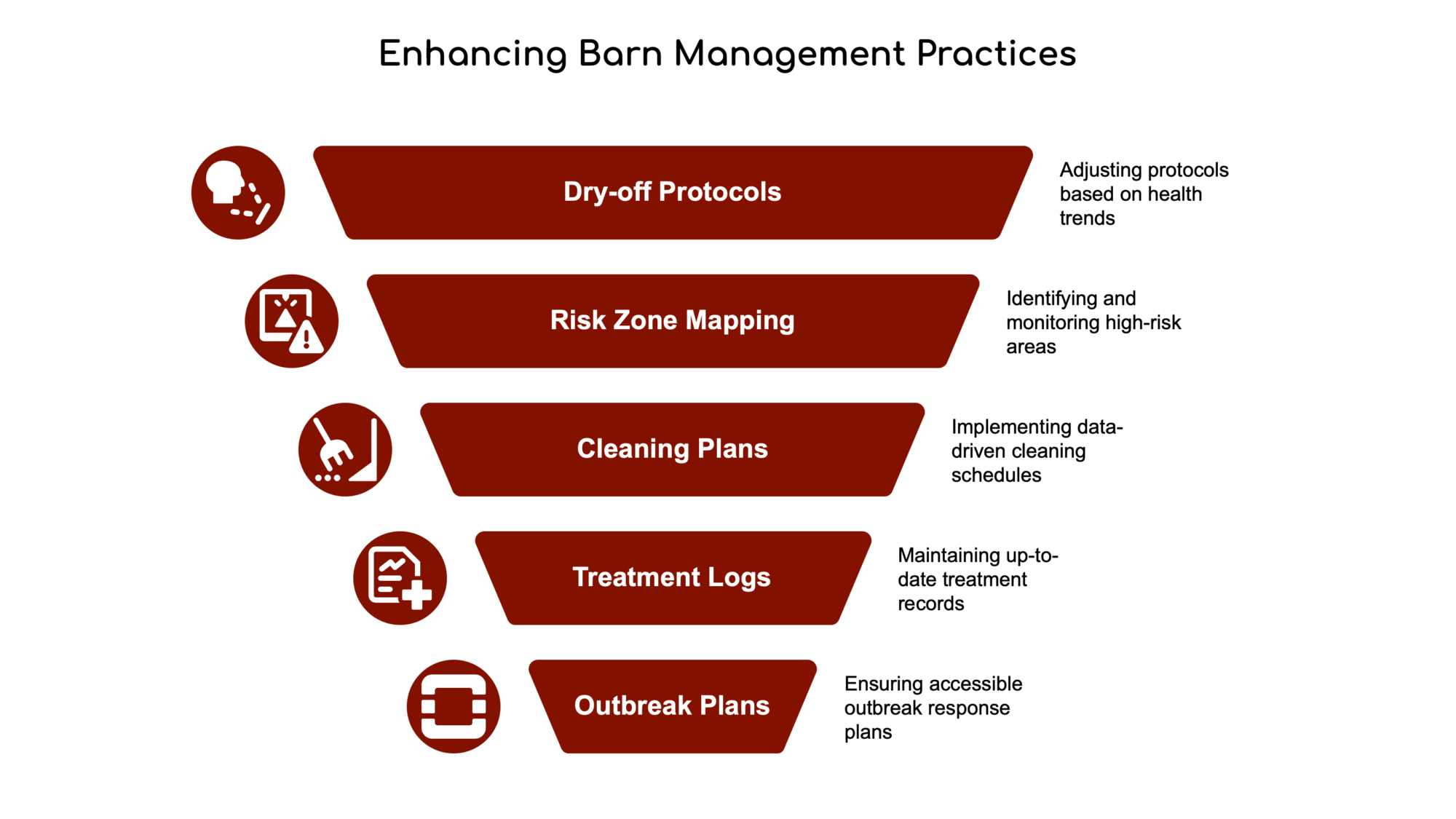
The Producer’s Playbook: 5 Steps to Bulletproof Your Barn

If you’re juggling a 500- or 1,000-cow herd, here’s what sharp operators are doing:

  • Dry-off protocols are set and recalibrated in consultation with the herd veterinarian, always tied to the last quarter’s SCC and mastitis culture trends.
  • Barn maps target known risk zones, including calf pens, sick lines, and parlor passes. Swabs and PCR tests should be conducted every month, not just at audit time.
  • Cleaning and isolation plans rely on live lab data—when a trouble zone arises, it’s already on the rota.
  • Treatment logs? They’re updated every shift, printed, and hung up where anyone can check before a FARM Program audit rolls in.
  • Outbreak plans are posted by the loading dock, not locked in a desk.

All of it comes back to muscle memory—turning those SOPs into habit. The Wisconsin manager put it plain: “We stopped getting caught off guard when SOPs became second nature.”

Learning from the global leaders

Australia? It’s not just talk. Dairy Australia’s Antimicrobial Resistance Guidelines demonstrate that the industry is actively reviewing on-farm antibiotic use, working with veterinarians to maintain low resistance and ensure access to critical medications remains open. That’s action beyond the poster.

New Zealand goes further: DairyNZ’s Smart Dry-Off podcast features South Island operators sharing exactly how team training on SDCT, real-time culture results, and peer accountability have not only reduced antibiotic use but also improved cow health and year-end numbers. The manager of a 600-cow Kiwi-cross herd in Southland told me, “When we made SDCT a priority, training was hard at first—especially with the rush at calving. But by October, our SCCs dropped, and our vet bills looked a lot less frightening.”

Danish data goes even further—biosecurity scores remain the single strongest predictor of staying negative on S. Dublin. Simple fixes, repeated with discipline, work. For insights into how UK dairy farms have successfully slashed antibiotic use by 19% while maintaining herd health, The Bullvine’s recent coverage offers valuable lessons for North American operations.

What’s coming down the pipeline

Let’s talk about the future. What are the most promising alternatives to traditional antibiotics? Phage therapy is in the news, and the science is catching up. It’s not quite in your parlor yet, but it’s showing real potential to mitigate multi-drug resistance in mastitis.

On the prevention and audit front, MSU Extension’s Farm Outbreak Response Plan offers the best step-by-step protocols—from staff communication to animal isolation to emergency supply checklists. Worth bookmarking, especially given how fast these events seem to come.

A recent visit to a dairy in Ohio, as part of their preparation for their FARM Program audit, tells the story—the crew had mapped every PCR result directly into the cleaning schedule, and the auditor’s grin said it all. “Wish this was standard,” he muttered. It’s not about paperwork; it’s about demonstrating you know your on-the-ground risks.

For producers seeking to comprehend the broader context of antimicrobial resistance challenges in US dairy operations, The Bullvine’s comprehensive analysis offers crucial background on the factors driving resistance and practical steps for mitigation.

The New Baseline for Survival and Success

Margins are tight, health risks are up, and nobody can afford to lose product or credibility with the plant, inspector, or lender. Proving stewardship, tightening diagnostics, and making traffic flows unbreakable—these aren’t extras. They’re the new baseline.

It starts with mastering the fundamentals: refining dry-off procedures, mapping every barn zone, documenting protocols, training your team, and executing the plan. The industry is evolving fast, and the producers who master this new reality won’t just survive—they’ll lead. The choice is yours.

Ready to turn this superbug threat into your competitive advantage? The farms that nail this strategy won’t just survive the next few years—they’ll dominate.

Complete references and supporting documentation are available upon request by contacting the editorial team at editor@thebullvine.com.

Learn More:

  • The Ultimate Guide to Selective Dry Cow Therapy – This guide moves from theory to action, providing a practical framework for implementing SDCT on your farm. It details how to use data like SCC and clinical history to make profitable, health-positive decisions cow by cow.
  • The Future of Dairy Farming: How Technology is Shaping the Industry – This article explores the innovative technologies that underpin modern stewardship. It reveals how precision tools, from automated sensors to data analytics, are helping producers prevent disease, optimize treatments, and secure a competitive edge in a demanding market.
  • The Dairy Industry’s Evolution: Navigating a Changing Marketplace – Zooming out from the barn, this piece analyzes the market forces and consumer trends driving the push for antibiotic stewardship. It provides the strategic context you need to align your on-farm practices with evolving global demands and opportunities.

Join the Revolution!

Join over 30,000 successful dairy professionals who rely on Bullvine Weekly for their competitive edge. Delivered directly to your inbox each week, our exclusive industry insights help you make smarter decisions while saving precious hours every week. Never miss critical updates on milk production trends, breakthrough technologies, and profit-boosting strategies that top producers are already implementing. Subscribe now to transform your dairy operation’s efficiency and profitability—your future success is just one click away.

NewsSubscribe
First
Last
Consent

Stop Throwing Money Away: Why Your Selenium Strategy Is Costing You $700 Per Cow

Your selenium strategy is obsolete. New research reveals 60-80% of supplement content is wasted while costing you $700/cow in mastitis and reproductive losses.

Here’s a number that should make every dairy operator sit up and take notice: selenium deficiency-related health issues can cost producers between $325-457 per case of mastitis and $389 per case of retained placenta, according to research published in the Journal of Dairy Science. When these complications cascade—as they often do—total costs can exceed $700 per affected cow. Yet most producers are unknowingly using selenium supplements that deliver as little as 18% of their labeled active ingredient, based on advanced analytical studies published in peer-reviewed journals.

Imagine walking into your feed room and discovering that 60-80% of what you’re paying for in your mineral program is essentially worthless. That’s exactly what’s happening with selenium supplementation across the dairy industry, and it’s time we had an honest conversation about why your current approach might be bleeding money instead of building immunity.

Selenomethionine Content Variability in Commercial Selenium Yeast Products

But here’s the uncomfortable truth the feed industry doesn’t want you to know: Recent analytical breakthroughs have exposed the dirty secret of selenium yeast: its selenomethionine content can vary from as low as 18% to 71.8%, with an average of just 55.8%, according to advanced speciation analysis published in livestock science journals. The rest? Often inactive elemental selenium that provides zero biological benefit.

Why Your Current Selenium Strategy Is Probably Failing You

Let’s start with a question that challenges everything you think you know about selenium: If selenium yeast is so effective, why do farms using premium organic selenium sources still struggle with elevated somatic cell counts and reproductive failures?

The answer lies in a fundamental misunderstanding about what “organic selenium” actually means. According to research from the University of California San Diego, genuine selenium yeast should contain 90% or more of its selenium as selenomethionine. However, independent analytical studies using high-performance liquid chromatography reveal that commercial selenium yeast products routinely fail to meet this standard.

The Modern Dairy Dilemma: Genetic Potential vs. Physiological Reality

Today’s dairy cows represent the Formula 1 race cars of agriculture—genetically engineered for maximum performance but operating at the absolute edge of their metabolic capacity. These elite animals process 150-200 pounds of dry matter intake daily, converting it into 100+ pounds of milk while their mitochondria work overtime, generating massive quantities of free radicals through normal cellular respiration.

Why This Matters for Your Operation: The Italian Holstein Case Study

Real-world evidence comes from a landmark study conducted at Ballottino Farm in Cremona, Italy, involving 100 Italian Holstein dairy cows. Research published by Alltech demonstrated the dramatic impact of optimized selenium nutrition.

Mario Agovino from Alltech Italy led the study comparing sodium selenite (control group, n=48) versus organic selenium supplementation (Sel-Plex group, n=52). The results were compelling:

  • Milk selenium content doubled: 0.058 mg/L with organic selenium versus 0.029 mg/L with inorganic selenium
  • Increased milk yield: 37.9 kg/day versus 36.5 kg/day (1.4 kg/day increase)
  • Reduced somatic cell counts: 272,000/mL versus 320,000/mL
  • Improved reproductive performance: 83% confirmed pregnancy rate versus 67%

Let’s do the math: That extra 1.4 kg (3.08 lbs) daily translates to approximately $0.64 additional revenue per cow per day at current milk prices—or $234 annually per cow. For a 100-cow herd, that’s $23,400 in additional revenue.

The Geography of Deficiency: A Global Challenge Supported by Meta-Analysis

Economic Impact of Selenium Deficiency-Related Health Issues in Dairy Cows
Health IssueCost per Case/Cow ($)FrequencyPotential Annual Cost (100-cow herd)
Clinical Mastitis128-44425 cases per 100 cows$3,200-$11,100
Subclinical Mastitis110 (annual)Per cow annually$11,000
Retained Placenta300-3895-10% of calvings$1,500-$3,890
Combined Annual ImpactVariableCumulative$15,700-$25,990

Here’s a sobering question: Did you know that selenium deficiency affects an estimated one billion people globally, and livestock in the same regions face identical challenges?

A comprehensive meta-analysis published in the Journal of Dairy Science examined 42 studies conducted between 1977 and 2007 across multiple continents. The research, led by Knowles et al., found that “soils in many regions of the world have a low Se content. Consequently, forages and crops grown on these soils may provide inadequate dietary Se for humans and grazing animals”.

The meta-analysis revealed significant geographical variations in selenium supplementation effectiveness, with American cows supplemented with selenium yeast showing greater milk selenium concentrations (approximately 0.37 micromol/L) compared to those receiving inorganic forms.

The Sulfur Antagonism Problem

Modern agriculture has inadvertently exacerbated selenium deficiency by using sulfur-containing fertilizers. Research confirms that sulfur and selenium compete for the same plant uptake mechanisms, with sulfur’s higher application rates consistently winning this biological battle.

Challenging the Conventional Wisdom: Recent Research Findings

Here’s where we need to challenge a fundamental assumption that’s costing the industry millions: A 2024 study published in the Journal of Dairy Science by Cruickshank et al. revealed surprising findings that contradicted conventional wisdom about selenium supplementation.

The study, involving multiparous Holstein cows, found that “regardless of whether selenium came from organic or inorganic sources, it did not affect the cows’ absorption of the mineral, their selenium levels, or their overall performance.” However, the researchers noted a critical distinction: “organic selenium resulted in higher selenium levels in milk, with less being excreted through urine.”

The Heat Stress Research Breakthrough

More compelling evidence comes from research published in the Journal of Dairy Science examining hydroxy-selenomethionine (HMSeBA) under heat stress conditions. The study, conducted by researchers using environmental chambers, compared inorganic selenium (sodium selenite) with HMSeBA supplementation in mid-lactation Holstein cows.

The results demonstrated that “HMSeBA supplementation decreases some parameters of HS-induced oxidative stress” and showed:

  • Increased selenium concentrations in serum and milk during heat stress
  • Maintained glutathione peroxidase activity while it declined in control cows
  • Increased total antioxidant capacity
  • Decreased oxidative stress markers (malondialdehyde, hydrogen peroxide, nitric oxide)
  • Tendency to increase milk yield while decreasing milk fat percentage

The Three Generations: Why Technology Evolution Matters

Bioavailability Comparison of Three Generations of Selenium Supplements

First Generation: The Obsolete Technology Still Widely Used

Despite overwhelming scientific evidence of poor bioavailability, many operations use sodium selenite. Studies consistently show absorption rates of just 10-30% for inorganic selenium in ruminants due to reduction by rumen microbiota.

Second Generation: The Inconsistent Promise of Selenium Yeast

Advanced analytical techniques have exposed serious quality control issues that the feed industry has largely ignored. Recent research using state-of-the-art speciation analysis reveals that commercial selenium yeast products contain highly variable selenomethionine levels.

Third Generation: The Precision Solution

Recent research from 2025 published in the journal Animals examined the effects of organic selenium supplementation in late lactation dairy cows. The study found that “supplementation of organic zinc and selenium in late lactation dairy cows, in the form of chelated zinc amino acid and selenium amino acid complex, had positive effects on immunity and antioxidant activity.”

The Economic Reality: Verified ROI from Italian Research

Economic Benefits of Organic Selenium Supplementation in Italian Holstein Study
MetricControl (Sodium Selenite)Organic Selenium (Sel-Plex)Improvement
Milk Yield (kg/day)36.537.9+1.4 kg (+3.8%)
Somatic Cell Count (cells/mL)320000.0272000.0-48,000 (-15%)
Confirmed Pregnancy Rate (%)67.083.0+16% points
Retained Placenta Cases (per 100 cows)10.06.0-4 cases (-40%)
Days to Confirmed Pregnancy139.0130.0-9 days
Services per Conception1.811.63-0.18
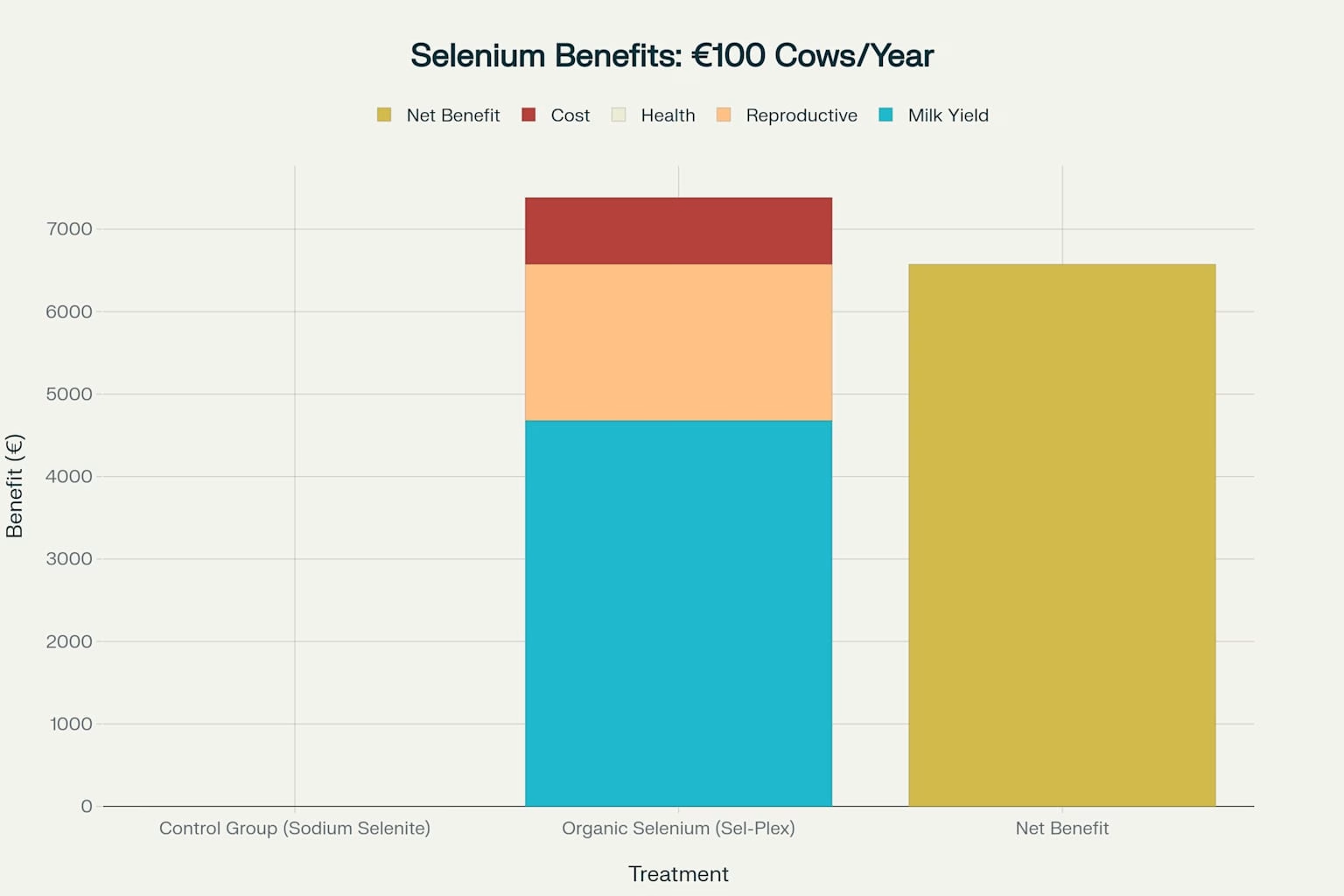
Annual Cost (€ per 100 cows)0.0810.0+€810
Annual Benefits (€ per 100 cows)0.07380.0+€7,380
Net ROI (€ per 100 cows)0.06570.09:1 ROI

The Italian Holstein study provides concrete ROI analysis that challenges the assumption that premium selenium supplements are “too expensive.” The research calculated specific economic benefits:

The Italian Holstein ROI Analysis Breakdown:

  • The added cost of organic selenium (Sel-Plex): €810 annually for a 100-cow herd
  • Documented benefits: €7,380 annually
  • Net benefit: €6,570 ($7,000+) annually
  • Return on investment: 9:1

The study documented specific improvements:

  • 9 fewer open days per cow annually (€2,700 total value)
  • 1.3 L/day/cow increased production (€4,680 total value)
  • Reduced retained placenta cases (6 versus 10 cases per 100 cows)
  • Lower days to confirmed pregnancy (130 versus 139 days)
  • Improved services per conception (1.63 versus 1.81)

Implementation Challenges and Solutions

Addressing Cost Concerns

While third-generation selenium supplements cost 2-3 times more per unit than basic inorganic selenite, the bioavailability differences mean you’re getting 3-5 times more effective selenium per dollar spent. As Agovino’s research demonstrates, preventing just one case of mastitis pays for an entire herd’s annual selenium supplementation program several times over.

Quality Control Issues

The 2024 research by Cruickshank et al. highlights a critical implementation challenge: “Despite expecting differences, the study showed similar results in terms of the cows’ eating habits and milk production” between organic and inorganic sources. This suggests that product quality and consistency remain significant variables in real-world applications.

Potential Limitations

Recent research also reveals some limitations of selenium supplementation. The 2025 Animals journal study noted that “selenium supplementation induced a reduction in fat percentage” and “solids content showed a tendency to decrease.” These findings suggest that selenium optimization requires careful balance with other nutritional factors.

The One Health Opportunity: Adding Value Beyond the Farm Gate

The meta-analysis by Knowles et al. confirms that “using organic selenium could enhance the selenium content in milk, providing potential benefits for consumers or calves and reducing environmental mineral waste.” Research demonstrates that supplementing dairy cows with highly bioavailable organic selenium increases milk selenium concentration, predominantly as selenomethionine bound within milk proteins.

Implementation Strategy: Making the Switch Without Disruption

Phase 1: Diagnostic Assessment (Month 1) Start with comprehensive herd testing using blood selenium analysis. Target plasma levels above 80-100 µg/L, with optimal status above 100 µg/L. Cost consideration: Blood selenium testing typically runs $15-25 per sample.

Phase 2: Critical Product Evaluation (Month 1-2) Demand specific documentation from suppliers about selenium form, purity guarantees, and analytical testing results. If your supplier can’t provide selenomethionine content verification for selenium yeast products, that tells you everything you need to know about product quality.

Phase 3: Strategic Implementation (Month 2-3) Focus upgrades on critical periods: dry cow supplementation and early lactation. The Italian research demonstrates this approach provides the highest return on investment through improved health outcomes and milk production.

Phase 4: Performance Monitoring (Month 3-6) Retest selenium status 90 days post-implementation and track key performance indicators following the Italian study model:

  • Somatic cell count trends (target: reduction from 320,000/mL to 272,000/mL)
  • Milk yield improvements (expect: 1.4 kg/day increase)
  • Reproductive performance metrics (goal: increase confirmed pregnancy rates from 67% to 83%)

The Bottom Line: Transforming Cost into Competitive Advantage

Remember that $700 per cow figure we started with? The Italian Holstein research suggests this may actually underestimate the true economic impact when you factor in the comprehensive benefits documented by Agovino and colleagues.

The Research-Backed Reality Check:

  • Italian research documenting 9:1 ROI from organic selenium
  • Meta-analysis of 42 studies confirming the superiority of organic sources
  • Heat stress research demonstrates maintained antioxidant function
  • Recent 2025 studies confirming immune and antioxidant benefits

The choice isn’t whether you can afford to upgrade your selenium program—it’s whether you can afford not to. With mastitis costs averaging $325-457 per case and retained placenta adding another $389, the Italian research proves that preventing just two cases annually pays for an entire herd’s premium selenium supplementation several times over.

Your Next Strategic Move: Contact your nutritionist this week and demand a detailed breakdown of your current selenium program’s analytical specifications. Ask specifically about selenomethionine content verification, batch consistency guarantees, and bioavailability data. If they can’t provide clear, scientifically-backed answers backed by peer-reviewed research like our cited studies, you’ve just identified why your selenium strategy might fail.

The dairy industry rewards operators who make decisions based on evidence rather than tradition. Cruickshank et al. noted in their 2024 research that “using organic selenium could enhance the selenium content in milk, providing potential benefits for consumers or calves and reducing environmental mineral waste.” Your selenium strategy represents one area where peer-reviewed research clearly points toward an upgrade that pays for itself through improved herd health, reduced treatment costs, and enhanced productivity.

The research is clear. The economics are compelling. The Italian Holstein study provides a real-world roadmap for success. The remaining question is: Will you continue paying premium prices for inconsistent results or invest in proven technology that transforms selenium from a cost center into a profit driver with documented 9:1 returns?

KEY TAKEAWAYS

  • Documented 9:1 ROI on selenium optimization: Italian Holstein research shows €7,380 in benefits against just €810 in costs per 100 cows annually, with specific improvements in milk yield (1.4 kg/day increase), reproductive efficiency (6 vs. 10 retained placenta cases per 100 cows), and udder health (SCC reduction from 320,000/mL to 272,000/mL).
  • Traditional selenium sources are failing your herd: Inorganic selenium (sodium selenite) shows just 10-30% bioavailability in ruminants, while “organic” selenium yeast products contain highly variable active content—analysis reveals some products with as little as 18% selenomethionine and up to 51.8% unavailable elemental selenium.
  • Implementation requires just a 4-phase approach: Start with strategic blood testing ($15-25 per sample) targeting 80-100 μg/L plasma levels, demand SeMet content verification from suppliers, focus supplementation during transition periods, and monitor improvements within 90 days.
  • Heat stress resilience improves with optimized selenium: Research on hydroxy-selenomethionine supplementation shows maintained antioxidant function during thermal stress when conventional approaches fail—critical as climate models predict increasing heat stress challenges for dairy operations across North America in 2025.
  • Beyond cow health—marketing opportunity: Selenium-optimized milk contains significantly higher selenium content in a highly bioavailable form (90% human bioavailability), creating potential premium market opportunities as consumer health awareness grows in 2025’s competitive dairy marketplace.

EXECUTIVE SUMMARY

The selenium supplementation strategy your nutritionist recommended is likely costing you hundreds of dollars per cow while delivering minimal protection. Research reveals that conventional selenium sources suffer from devastating flaws: inorganic forms are 70-90% destroyed in the rumen, while “premium” selenium yeast products contain highly variable levels of active selenomethionine—ranging from just 18% to 71.8% with an average of only 55.8%. Italian research demonstrates a remarkable 9:1 return on investment when upgrading to third-generation selenium sources, with documented benefits including 1.4 kg/day increased milk production, SCC reduction from 320,000/mL to 272,000/mL, and 9 fewer open days per cow annually. In today’s challenging dairy economy, with USDA forecasting cautious milk prices around $20.90/cwt for 2025, this hidden profit leak represents one of your highest ROI opportunities for immediate implementation. It’s time to demand verification of exactly what you’re getting in your mineral program and upgrade from minimum requirement thinking to strategic optimization.

Complete references and supporting documentation are available upon request by contacting the editorial team at editor@thebullvine.com.

Learn More:

Join the Revolution!

Join over 30,000 successful dairy professionals who rely on Bullvine Weekly for their competitive edge. Delivered directly to your inbox each week, our exclusive industry insights help you make smarter decisions while saving precious hours every week. Never miss critical updates on milk production trends, breakthrough technologies, and profit-boosting strategies that top producers are already implementing. Subscribe now to transform your dairy operation’s efficiency and profitability—your future success is just one click away.

NewsSubscribe
First
Last
Consent

Udder Health: Small Changes That Make a Big Difference in Dairy Profitability

Udder health impacts dairy profits! Discover small changes that prevent mastitis, cut costs, and boost milk quality.

udder health, mastitis prevention, dairy profitability, milk quality, dairy cow management

If you’re running a dairy operation, you know that healthy udders are the foundation of your business. They’re the difference between thriving and just surviving. But here’s the thing about udder health – it’s not usually one big problem that tanks your production; it’s often those small, overlooked details that slowly chip away at your bottom line.

The Real Cost of Mastitis on Your Farm

Let’s talk dollars and cents. When mastitis strikes your herd, your wallet feels it immediately. According to USDA research, each clinical care costs approximately $444. Some estimates push that figure up to $600 per case.

Think about what that means across your herd:

  • Milk down the drain: This is not just from discarded milk during treatment but also from the production losses that can persist long after the infection clears. This accounts for up to 80% of your total mastitis-related losses.
  • Treatment expenses: Antibiotics, vet calls, extra labor hours spent treating cows instead of handling other farm tasks.
  • Premature culling: When chronic cases force you to move good genetics out of your herd before their time.
  • Quality penalties: Those SCC premiums disappear when cell counts climb.

When you add it all up, mastitis costs the global dairy industry between .7 billion and billion annually. Here in the U.S., subclinical mastitis alone drains more than $1 billion from producers’ pockets each year.

Back to Basics: Building Your Udder Health Foundation

The National Mastitis Council’s 10-point plan isn’t just another set of recommendations – it’s the playbook that successful dairy farmers have relied on for decades. Here’s what makes it work:

Your Barn Environment: First Line of Defense

Your cows spend 12-14 hours daily lying down, and what they’re lying in matters tremendously. University of Minnesota research has established connections between bedding bacteria counts and udder health.

Think about it – a cow’s teats are in direct contact with that bedding for half the day. Keep it clean and dry, and you’ve won half the battle. For transition cows primarily, aim for less than 100% stall capacity with at least 30 inches of feed bunk space per cow. Remember: moisture is the enemy. It turns bedding into a bacterial playground.

Milking Time: When Details Matter Most

Your milking routine either builds or breaks your health. The difference between good and great often comes down to consistency and attention to detail:

  • Keep cows calm during milking – stress impacts milk letdown and increases the risk of incomplete milking
  • Forestrip to catch clinical cases early and stimulate milk letdown
  • Pre-dip thoroughly and allow proper contact time (30 seconds minimum)
  • Dry teats completely with individual towels – milking wet teats is causing trouble
  • Attach units within that 60-120 second window after stimulation
  • Ensure proper alignment to prevent liner slips and vacuum damage
  • Apply post-dip immediately after unit removal, covering the entire teat

Post-dipping alone can cut new infection rates by more than 50%. That’s a massive return on a small investment of time and product.

Equipment Check: Is Your Milking System Helping or Hurting?

Even the best milking routine can’t overcome equipment problems. Regular maintenance isn’t just about preventing breakdowns but protecting udder health. Replace inflations (liners) on schedule, check vacuum levels regularly, and have your system evaluated by a qualified technician at least annually.

Modern Tools That Make a Difference

Today’s dairy farmer has access to technology that previous generations could only dream about. Here’s what’s worth your attention:

Better Milking Components for Healthier Teats

Milkrite | InterPuls has developed a triangular liner that distributes pressure more evenly during milking. The design aims to improve teat condition by reducing congestion and hyperkeratosis while minimizing liner slips.

Their MIPulse diagnostic tool helps you avoid equipment issues by monitoring milking parameters and alerting you to problems before they impact udder health.

Early Warning Systems: Catching Problems Before They Explode

The smaXtec bolus system continuously monitors your cows from the inside out. Once placed in the reticulum, it tracks:

  • Inner body temperature with precision down to ±0.018°F
  • Rumination patterns
  • Movement activity
  • Drinking behavior

What makes this valuable? The system can detect developing mastitis up to 4 days before you see clinical signs. That’s the difference between a mild case requiring minimal intervention and a full-blown clinical infection. Users report reducing antibiotic use by up to 70% through earlier detection and intervention.

For robotic milking systems, Lely’s MQC-C technology performs automated cell count measurements during milking, giving you daily insights into each cow’s udder health. While not replacing laboratory testing, it provides more frequent monitoring that helps catch rising SCC trends early.

Nutritional Support When Cows Need It Most

Feed additives like Phibro’s OmniGen products are designed to support immune function, potentially helping cows fight off mastitis-causing pathogens. Research collaborations with major U.S. universities have shown promising results, including lower somatic cell counts and fewer health events.

An economic analysis based on University of Florida research estimated a 2.5:1 return on investment ($79 benefit per cow minus $32 feed cost), attributed to increased milk production, better health, and improved reproduction.

Your Team: The Most Important Technology on Your Farm

You can have the best equipment, facilities, and top-notch genetics, but without a well-trained team, udder health will suffer. Michigan State University research found that investing in employee training yields remarkable improvements:

  • Cows receiving inadequate preparation time dropped from 41% to 16%
  • Teat disinfectant coverage improved significantly
  • Pre-dip contact time increased
  • Average milking time decreased, improving parlor efficiency

The key insight? Employees who understand why procedures matter – not just what to do – are likelier to follow protocols consistently. As Dr. Zelmar Rodriguez from MSU puts it, training farm workers results in more excellent knowledge, satisfaction, and willingness to adhere to the milking protocol, leading directly to improved milk quality and udder health.

Creating Your Farm-Specific Action Plan

No two dairy operations are identical, which means your udder health strategy needs to be tailored to your specific situation. Here’s how to build an effective plan:

Know Your Enemy

The University of Minnesota Extension recommends a three-step approach:

  1. Identify your predominant pathogens through milk cultures. Are you dealing with contagious organisms like Staph. aureus or environmental bugs like E. coli? The answer dramatically changes your control strategy.
  2. Figure out why infections are happening by analyzing patterns in your records. Are fresh cows getting sick? Mid-lactation animals? Specific pens? Certain seasons?
  3. Create a targeted plan that addresses your specific challenges. Prioritize interventions with the highest potential impact.

Build Your Advisory Team

Don’t go it alone. Assemble a team that includes your veterinarian, key employees, nutritionist, and equipment technicians. Meet regularly to review data, discuss challenges, and adjust strategies. This team approach brings diverse expertise to the table and helps ensure accountability.

Monitor, Evaluate, Adapt

Udder health management isn’t a “set it and forget it” proposition. It requires ongoing attention:

  • Track key metrics like individual cow SCC, bulk tank SCC, clinical mastitis rates, and culture results
  • Evaluate whether your interventions are working
  • Be willing to adjust your approach based on what the data tells you

Small Changes, Big Returns

Improving udder health doesn’t always require massive investments or complete system overhauls. Often, it’s about consistency in the basics and attention to detail:

  • Are your towels spotless and dry?
  • Is every teat getting full coverage with pre- and post-dip?
  • Are you catching clinical cases at the earliest possible stage?
  • Is your bedding management as good on busy days as on regular days?

These small details can make a tremendous difference in your herd’s udder health, milk quality, and, ultimately, your profitability. The best part? Many of these improvements cost little or nothing to implement – they require commitment and consistency.

Remember, healthy udders don’t happen by accident. They result from intentional management, well-trained teams, and a relentless focus on the most critical details. Start making those small changes today, and watch your milk quality improve, your treatment costs drop, and your bottom line grow.

Key Takeaways:

  • Mastitis costs $177–$586/cow/year via reduced production, treatments, and culling.
  • NMC’s 10-point plan is critical: focus on hygiene, milking routines, and dry cow care.
  • Tech tools matter: Sensors detect mastitis 4 days early; immune supplements (OmniGen) yield 2.5:1 ROI.
  • Train your team: Proper milking routines cut clinical cases by 50% and improve SCC.
  • Customize solutions: Tailor strategies to farm size, pathogens, and resources for lasting results.

Executive Summary:

Mastitis remains the costliest challenge for U.S. dairy farmers, with losses averaging $444 per clinical case and up to $32 billion globally. The National Mastitis Council’s 10-point plan forms the backbone of prevention, emphasizing hygiene, milking protocols, and dry cow management. Modern tools like immune-boosting feed additives, sensor boluses for early detection, and precision milking technology amplify results, while employee training ensures consistency. Success hinges on integrating data-driven strategies, tailored farm protocols, and proactive monitoring. By prioritizing prevention over treatment, farmers can slash antibiotic use, improve animal welfare, and protect profits.

Learn more:

Join the Revolution!

Join over 30,000 successful dairy professionals who rely on Bullvine Daily for their competitive edge. Delivered directly to your inbox each week, our exclusive industry insights help you make smarter decisions while saving precious hours every week. Never miss critical updates on milk production trends, breakthrough technologies, and profit-boosting strategies that top producers are already implementing. Subscribe now to transform your dairy operation’s efficiency and profitability—your future success is just one click away.

NewsSubscribe
First
Last
Consent

The Crucial Role of Health Traits in Dairy Cattle Breeding

Learn how focusing on health traits in dairy cattle breeding can elevate your dairy production. Ready to improve herd health and optimize your farm’s potential?

Summary: Dairy cattle breeding is a multifaceted endeavor where health traits play a crucial role in ensuring the long-term viability and productivity of herds. Understanding the significance of these traits—which encompass factors such as mastitis resistance, fertility, and hoof health—enables farmers to make informed decisions that optimize animal welfare and economic returns. By integrating genetic selection and advanced breeding strategies, dairy farmers can enhance not only the health and longevity of their cattle but also operational profitability. Prioritizing health traits in breeding programs ensures herd productivity and well-being, with genetic selection methods offering significant economic benefits.

  • Health traits are essential for the sustainability and productivity of dairy herds.
  • Key health traits include mastitis resistance, fertility, and hoof health.
  • Informed breeding decisions can enhance animal welfare and economic performance.
  • Integrating genetic selection and advanced breeding strategies improves health and profitability.
  • Prioritizing health traits in breeding programs boosts herd productivity and well-being.
  • Genetic selection methods offer notable economic advantages for dairy farming operations.
health features, dairy cow breeding, disease resistance, somatic cell count, fertility, ease of calving, dairy farmers, welfare, commercial sustainability, profitability, mastitis prevention, herd health, production rates, financial stability, metabolic health, successful breeding operations, physiological processes, longevity, general health, adaptation, productivity, well-being, genetic problems, Estimated Breeding Values, genomic selection, economic benefits, farmers

Technology advances and forward-thinking breeding practices have traditionally driven the dairy industry’s progress. Yet, in our unwavering pursuit of better genetics and maximum yields, have we potentially jeopardized the health and well-being of our dairy herds? As industry stewards, we must approach this critical issue with uncompromising vigilance. This essay discusses health features in dairy cow breeding and encourages dairy producers to reconsider their objectives and approaches. From disease resistance and lifespan to fertility and ease of calving, we’ll examine how these characteristics affect your dairy’s production, ethical criteria, and economic sustainability. Before digging further, one must ask: what are health qualities, and why are they important? How should these features be included in a contemporary, ethical dairy breeding framework? Your choices and actions may significantly impact the health and welfare of your dairy herds. Please reflect on your activities and envisage a new future for dairy farming, one in which health qualities are central to your operations, promising significant economic gains that can enhance your business’s profitability.

Understanding Health Traits in Dairy Cattle:

Understanding health features in dairy cattle necessitates thoroughly examining the many variables that impact bovine health and well-being. These health features include a variety of criteria, including disease resistance, which refers to cattle’s capacity to fight or recover from infections without requiring significant medical intervention. A high level of disease resistance can significantly reduce the occurrence of common illnesses like mastitis, thereby improving the overall health and productivity of your dairy herd. The somatic cell count (SCC) is vital since it indicates milk quality and udder health. Elevated SCC levels typically indicate the presence of mastitis, a common illness in dairy cows. This impacts the cows’ health and the quality of their milk. Reducing SCC is critical for enhancing both milk quality and animal health.

More than 60% of dairy producers now consider health features in their breeding selections. This is a substantial change in the business, suggesting a growing appreciation for the relevance of health attributes in dairy cow breeding. The incidence of mastitis, or the frequency of mastitis infections, is another important health factor. Mastitis prevention is critical for herd health, maximizing production rates, and ensuring financial stability.

Metabolic health and fertility are both critical components in successful breeding operations. Metabolic health maintains the balance of physiological processes, while fertility directly influences reproductive success, herd sustainability, and farm scalability. Longevity, representing dairy cattle’s lifetime and productive period, assesses general health, disease resistance, and adaptation. Cattle that are resistant to mastitis or lameness tend to live longer. Dairy farmers who properly grasp these health qualities are better able to combine high milk outputs with functional traits associated with adaptability, welfare, and resilience—a need in today’s developing dairy sector.

Understanding Health Traits for Herd Management:

Exploring this critical subject, the link between health features and herd management becomes apparent. As a dairy farmer, it’s your responsibility to prioritize health as the first goal. The welfare of your cows is not just an ethical issue but also a foundation for your farm’s commercial sustainability and profitability. By understanding and managing health traits effectively, you can be proactive in ensuring the productivity and well-being of your herd.

Furthermore, breeding for health features considerably improves the herd’s resilience. Approximately 50% of dairy cow problems are genetic. Robust cows have increased tolerance to the infections that plague agricultural areas, reducing the frequency and severity of debilitating ailments. This immediately boosts the dairy farm’s profits. Failing to include health features in breeding techniques risks the agricultural enterprise’s economic survival.

Prioritizing health features improves cattle well-being while increasing farm output and profitability. However, it is crucial to understand that the procedure may include inevitable trade-offs or problems. Should dairy farming experts prioritize health features in their breeding programs? Such a focus improves our cattle, enhances our companies, and boosts the sector.

Economic Impact of Health Traits:

Consider the severe financial consequences when dairy cattle’s health features are impaired. Specific health abnormalities cause significant economic disruptions on dairy farms, primarily by influencing key factors, including milk outputs, culling rates, treatment costs, and overall reproductive efficiency. Can you understand the depth of such economic upheaval? Genetic selection for health qualities may save veterinarian expenditures up to 30%. Let us examine this subject more attentively. Consider a dairy farm where existing health concerns cause a decrease in milk yield. As a result, these health issues need expensive treatments, which raise veterinarian costs—a tremendously unfavorable and onerous condition for any dairy farm. Wouldn’t you agree?

Secondary economic consequences include decreased reproductive efficiency, which slows herd growth rates and, eventually, limits milk production capacity. These circumstances burden the farm’s financial resources, significantly reducing profitability. Improving health features may boost milk supply by 10- 25%. But what if we reversed this situation? What if we made purposeful steps to improve the health features of dairy cattle? Isn’t this an issue worth considering? Improved health features might significantly reduce veterinarian expenditures, easing economic stresses. However, realizing that this may need some upfront expenses or fees is crucial.

Preventing diseases would minimize milk production losses, opening the door to enhanced economic success. Cows with more significant health features generate higher-quality milk containing up to 15% more protein. Furthermore, breakthroughs in health features may extend cows’ productive lifespans. This eliminates the need for early culling and increases herd profitability over time. Spending time, effort, and money on enhancing health features may provide significant economic advantages to dairy farms. It is critical to examine the long-term benefits of these investments.

Genetic Selection for Health Traits:

In the fast-changing dairy business, the introduction of genetic selection methods, notably Estimated Breeding Values (EBVs) and genomic selection, represents a significant opportunity for farmers. These techniques allow you to select and propagate cattle with better genetic qualities, particularly health aspects. This not only improves breeding operations but also promises significant economic benefits, giving you a reason to be optimistic and motivated about the future of your farm.

EBVs decode cattle genetic potential, revealing animals’ hidden skills regarding their offspring’s health and production. This essential information enables farmers to make educated decisions, improving the overall health of individual cattle and herds. The advent of genomic selection ushers in a new age of breeding technology, diving deeply into the inner elements of an animal’s genetic architecture. Genomic prediction allows for the exact discovery and use of critical DNA variations that anticipate an animal’s phenotype with unprecedented precision and dependability, considerably beyond the capabilities of older approaches.

The combined use of these genetic selection approaches has transformed breeding programs worldwide, pushing the search for improved health qualities in dairy cows. Identifying genetic markers connected to improved health features and smoothly incorporating them into breeding goals, which was previously a substantial problem, has become an opportunity for further improvement. This thorough attention to health features improves animal well-being and increases their resistance to disease risks.

Selection Indexes in Breeding Programs

Beyond single feature selection, the complex domain of selection indexes offers a balanced improvement of genetic value. Preventable illnesses account for around 40% of dairy cow mortality, underscoring the need for such comprehensive measures. Selection indices promote overall genetic development by assessing each trait’s unique quality against its economic value and potential genetic benefits. This technique goes beyond isolated changes, generating cumulative improvement across productivity and health qualities while ensuring that each trait’s costs and benefits are matched.

Globally, breeding initiatives are changing toward pioneering features like disease resistance, animal welfare, longevity, and even methane emission reductions. This more extensive approach predicts a future in which animal agriculture progresses from just economic to sustainable and ethical, with a strong emphasis on health features. The financial calculation is carefully addressed to ensure that the costs and benefits of each attribute are balanced.

Europe, a pioneer in this field, is pushing the boundaries of genetic selection for these cutting-edge features, even while worldwide acceptance remains restricted. This poses an important question: will we use the chance to improve the performance of breeding programs by using more extensive and innovative selection indexes?

Heritability of Health Traits

Understanding the heritability of health characteristics is critical in dairy cow breeding. Heritability estimations reveal the fraction of genetic variation that contributes to the observed differences in these qualities among individuals. According to research, heritability estimates for handling temperament features in dairy cattle are relatively high, indicating the importance of genetic variables. As a result, these qualities play an important role in complete multi-trait selection programs, with the potential to improve cattle temperament during handling and milking.

The heritability estimates for maternal and temperament qualities range from low to moderate, indicating a good opportunity for genetic improvement via selective breeding. Modern breeding programs have focused on the genetic examination of health features, using contemporary approaches like likelihood and Bayesian analysis to estimate exact heritability. These are essential for maximizing herd health and production.

While genetics are essential, environmental and managerial variables must also be addressed. Even if a cow is genetically inclined to excellent features, adequate management may prevent it from failing. As a result, the integration of gene selection and best practices in livestock management is critical. How can industry experts use cattle’s genetic potential to increase dairy output and improve animal welfare? As we better understand the complex interaction between genetics and the environment, the answer to this question will define the dairy industry’s future.

Balancing Health Traits with Productivity Traits:

Dairy producers have a recurring issue in balancing the economic imperatives of high milk output and the overall health of their cows. Can these seemingly opposing goals be reconciled to provide mutual benefits? The unambiguous answer is yes. One must examine the complex interaction between dairy cattle’s health and productive attributes to understand this. Undoubtedly, increasing milk output is critical to profitability in dairy farming. However, focusing just on production qualities may mistakenly neglect cow health and well-being, jeopardizing sustainability and herd productivity.

Addressing this complicated dilemma requires consciously incorporating health features into breeding choices. Dairy producers may adopt a more holistic method for choosing ideal genetic combinations by equally weighing health robustness and production qualities. Emphasizing traits such as adaptation, welfare, and resilience broadens breed selection criteria, fostering a more balanced and resilient herd. Optimizing animal health cultivates a sustainable future in which high productivity is achieved without sacrificing essential health traits.

For dairy producers who want to develop a sustainable and profitable enterprise, combining health qualities and production must go beyond lip service and become the cornerstone of successful farming. This breeding method represents a deep awareness of the interrelationship of health and profitability, anticipating a farming future that preserves the integrity of health features while maintaining high production in dairy cattle.

Considerations for Breeding Programs:

Adding health features into breeding plans requires a cautious and methodical approach in dairy cow breeding. These factors must be founded on the dairy producer’s individual management goals, environmental circumstances, and market needs. Isn’t developing a tailored and context-specific approach for managing breeding programs necessary?

Furthermore, advances in genetic evaluations are changing our approach to health features in cow breeding since these programs emphasize genetic assessments for health characteristics. Interesting. Isn’t it true that, although some breeding programs have made significant strides in integrating these qualities into their goals, the path to complete improvement is still ongoing? Genetic improvement techniques strive to maximize selection contributions while minimizing inbreeding. Balancing genetic advantages with the negative repercussions of inbreeding is not something to take lightly. Conscientious dairy producers use mitigation strategies, such as mating software and extension professional advice, to conserve genetic variety while assuring continual genetic progress. Aren’t these tactics essential for preserving genetic diversity while making steady evolutionary progress?

Establishing more complex and productive breeding programs relies on a pragmatic approach to animal breeding that prioritizes animal welfare. The redefining of selection indices and breeding objectives is becoming more critical, requiring incorporating qualities associated with animal welfare, health, resilience, longevity, and environmental sustainability. Thus, it is evident that dairies’ long-term viability depends on breeding goals that improve animal health and welfare, productive efficiency, environmental impact, food quality, and safety, all while attempting to limit the loss of genetic variety.

Collaboration with Breeding Experts and Genetic Suppliers:

Strong partnerships with breeding specialists, genetic suppliers, and veterinarians unlock a wealth of in-depth expertise, giving dairy producers tremendous benefits. These stakeholders provide access to critical genetic data, fundamental breeding values, and cutting-edge genomic techniques for health trait selection. However, it is vital to question whether we are leveraging this enormous pool of experience.

Collaboration with industry experts undoubtedly leads to a more specialized and successful breeding plan that addresses your herd’s health and production requirements. Nonetheless, the interaction between farmers and consultants goes beyond selecting the best breeding stock and treating illnesses. A dynamic and ongoing discussion with these specialists may aid in the early detection of possible problems, breed-specific features, and preventive health concerns. Consider inbreeding, for example. Are we completely aware of the hazards connected with it, as well as the various mitigation strategies? Have we optimized the use of mating software systems, using the expertise of extension professionals to guide these efforts?

Recent advances in genetic testing have created tremendous potential for selective breeding to treat congenital impairments and illnesses. Here, too, close contact with industry specialists is essential. But how often do we push ourselves to keep up with these advancements and actively incorporate them into our breeding programs? Is the secret to a healthier and more productive herd within our grasp, requiring only our aggressive pursuit of these opportunities?

The Bottom Line

The relevance of health qualities is prominent in the great mosaic of dairy cow breeding. This initiative reflects an ongoing journey of exploration, understanding, and application. Our joint responsibility is to use the knowledge gained from previous experiences, moving us toward a future that offers more profitability and higher ethical standards for all stakeholders.

Learn more: 

7 Simple Steps to Maximize Milk Output and Udder Health

Want to boost milk production and keep udders healthy? Learn the best milking equipment and techniques. Ready to transform your dairy farm?

Summary: Optimizing milk production and udder health starts with the right milking equipment and techniques. High-tech pulsation systems, maintaining vacuum pressure, and proper cluster alignment all play key roles. Quality equipment and good practices don’t just boost milk yield—they also enhance cow comfort and farm profitability. Is your setup up to par? Milking procedures and the right gear are crucial for boosting profits and keeping cows healthy. With the right equipment and effective milking practices, you can avoid issues like mastitis and ensure consistent milk output. The milking machine should mimic a calf’s natural suckling for efficient milk extraction and udder health. Regular maintenance and calibration are a must. Preparation is key for fast milking routines—clean and sanitize udders and teats before attaching the milking clusters. Automatic teat sprayers help with efficiency. Don’t forget post-milking care: use teat disinfectants to keep cows healthy and seal teat canals to prevent infections.

  • Invest in high-tech pulsation systems to mimic a calf’s natural suckling, ensuring efficient milk extraction and udder health.
  • Maintain consistent vacuum pressure to optimize milk removal and prevent udder trauma.
  • Ensure proper alignment and positioning of milking clusters to avoid uneven milking and reduce udder stress.
  • Perform regular maintenance and calibration of all milking equipment to ensure peak performance.
  • Clean and sanitize udders and teats before milking to prevent mastitis and ensure milk quality.
  • Utilize automatic teat sprayers for consistent and thorough pre-milking preparation.
  • Apply post-milking teat disinfectant to kill bacteria and seal teat canals to prevent infections.

Have you considered how to correct milking procedures and equipment that might boost your dairy farm’s profitability? Maintaining optimal milk output and excellent udder health is not simply a goal; it is necessary for dairy producers seeking success and sustainability. Higher milk yields immediately increase your earnings, but they should not come at the price of your cows’ health. Optimal milk production boosts profitability, healthy udders contribute to consistent milk outputs, and avoiding mastitis saves time and money. Healthy cows are happy cows, which generate more milk. So, how can you strike a delicate balance between profits and animal health? Learn how choosing the correct equipment and adopting efficient milking practices may make all the difference.

Why the Right Milking Gear is Your Farm’s MVP 

Choosing the correct milking equipment is similar to selecting the best tool for work, except that this task directly influences the health of your cows and the profitability of your farm. Consider this: Would you use a rusty old wrench for a delicate task? Of course not! The same principle applies here. The right milking equipment may make a world of difference.

The milking machine is the beginning point. It’s the core of your business, ensuring milk extraction is efficient and comfortable for the cow. But that’s just the beginning. The pulsator simulates a calf’s natural suckling pattern, generating a vacuum that increases milk flow without straining the udder. Imagine jogging consistently without stopping—it wouldn’t take long until you were fatigued and in agony. A well-functioning pulsator avoids this by providing the udder with necessary rest periods. The vacuum system, your milking machine’s engine, comes next. It is responsible for the suction that removes the milk, yet consistency reigns supreme. Fluctuating vacuum pressure might disrupt the process, resulting in inadequate milking and possible udder injuries.

But here’s the kicker: none matters unless you follow up with routine maintenance and calibration. Consider going in for a basic checkup. Regular inspections may detect leaks, obstructions, and anomalies early, ensuring everything functions smoothly. Maintaining your equipment in good working order ensures milk quality and udder health and protects your whole business. So, what’s keeping you from purchasing the finest equipment and building the groundwork for your dairy farm’s success? Choosing the correct equipment and maintaining it properly can benefit your cows and make your life simpler.

Mimicking Nature: The Secret to Happier, Productive Cows

Have you ever considered how emulating nature may result in a happier, more productive cow? This is where pulsation technology shines. It mimics the natural rhythm of a calf suckling, resulting in a mild and efficient pulsing motion that promotes milk production. This pattern guarantees the milk is wholly extracted while keeping your cows happy and stress-free. Why is this important? Efficient milk removal directly influences udder health, and calm cows are healthier and happier.

But it does not end there. Regular monitoring and calibration of the pulsation system are required. This includes ensuring that the pulsator runs within the necessary limits to maintain the ideal balance of milk extraction and udder well-being. Periodic inspections and modifications might be the difference between a successful milking session and one that causes your cows distress.

So, when did you last check your pulsation system? Maybe now is the day.

Straight Talk: How’s Your Vacuum System Holding Up? 

Let us now discuss the suction system at the core of your milking operation. Have you ever wondered how all that milk is dispensed so efficiently? The vacuum system creates the required suction. The suction mechanism extracts every drop of milk from the udder, much like a straw does when you drink.

Now, here’s where things get interesting. Consider whether your straw had holes or had variable suction power. Isn’t this frustrating? That is why maintaining constant vacuum pressure is critical. Fluctuations in pressure may interrupt the milking process, resulting in inadequate milk evacuation or harm to the mammary tissues. Nobody wants that!

So what is the solution? Regular maintenance and calibration. Consider it a health checkup for your vacuum system. Periodic inspections help you identify leaks, obstructions, and other faults. Calibration guarantees that the system operates within the intended range, customized to your herd’s requirements. By devoting a little effort to care, you may prevent major problems and maintain your milk supply and herd’s health in good condition.

The Milking Cluster: Your Farm’s Silent Hero 

The milking cluster is more than simply a tool; it is the cornerstone of the milking process, ensuring your cows’ productivity and health. A well-functioning milking cluster, designed to fit securely yet softly around the cow’s udder, is essential for complete milk extraction. When correctly aligned and positioned, the cluster reduces stress on the udder. It guarantees that every drop of milk is gathered effectively, resulting in more high-quality milk without jeopardizing your cows’ health.

Automatic cluster removers, also known as detachers, may automate the operation of detaching the milking cluster. This invention lowers the need for human intervention, saves labor, and improves the consistency of the milking process. By expediting this phase, you reduce human mistakes and the danger of overmilking, which may damage the udder. The result? Cows that are healthier and have a more efficient and labor-saving milking practice.

But we won’t stop there. Advancements in semi-robotic milking technologies are completely altering the game. These methods significantly minimize the amount of human labor necessary, making the process quicker and more productive. Imagine your cows being milked with accuracy and care while you concentrate on other vital areas of farm management. These solutions are intended to produce a safer and more sanitary environment for both cows and personnel. Increased efficiency, production, and animal care benefit all stakeholders.

Ever Wonder Why Some Farms Seem to Have Lightning-Fast Milking Routines? 

Have you ever wondered why some farms seem to have lightning-fast milking routines? Preparing meticulously before milking is often the key. Before you connect the milking clusters, clean and sanitize the udder and teats. Consider this: Would you pour a fresh cup of coffee into a filthy mug? No way! Keeping your cows’ teats clean minimizes the unpleasant microorganisms that cause diseases such as mastitis. This protects the quality of your milk and maintains your cow’s health and productivity.

Consider the simplicity of using automatic teat sprayers. These helpful gadgets guarantee that each teat is thoroughly cleaned every time. It’s like having an additional set of hands on the farm, assuring uniformity and efficiency in the pre-milking procedure. Furthermore, with less physical labor, you limit the possibility of human mistakes and save valuable time. A win-win for you and your herd!

Post-Milking Magic: Keep Those Udders in Tip-Top Shape! 

How do you maintain your udders in good condition after milking? This is a crucial step, my buddy! Post-milking care is more than just a checkbox; it may significantly improve udder health. So, what makes it so important?

Let’s discuss teat disinfectants. A nice post-milking teat soak does wonders. It eliminates the residual germs on the teat surface, reducing the risk of mastitis. A few more seconds now may save you a lot of hassles and money in the future.

Now, don’t forget to ensure proper teat-end closure. After milking, the teat canals are like open doors, welcoming germs. Closing them tightly is crucial. Make sure they are securely sealed to keep undesirable visitors away.

In terms of preventing infections, nothing beats appropriate teat care. It is critical to the health and efficiency of your cows and farm. So, keep watchful, take additional measures, and watch as your udder health stats improve.

Post-Milking Touch: Elevate Your Udder Care Game!

Milking is not the end of your effort. Post-milking care is critical for further health and farm output. Consider it the final touch that ensures everything runs smoothly. Why? Because good post-milking care guarantees that your cows’ udders are healthy and disease-free.

One critical step is to use post-milking teat disinfectants. These disinfectants eliminate remaining germs on teat surfaces, considerably lowering the chance of mastitis, an expensive and unpleasant ailment for your cows. A slight spritz or dip may make a huge impact. It would be best to guarantee appropriate teat-end closure, which means the teat sphincter shuts adequately after milking. This prevents infections from entering the udder while the cow lays down or moves.

Prioritizing good teat care protects your cows’ health and ensures consistent, high-quality milk production. A little investment of time and energy may provide significant long-term benefits. So why take chances? Give your cows the most excellent post-milking care to keep them and your company flourishing.

The Bottom Line

Have you noticed the importance of choosing the correct milking equipment and techniques? Every step is essential, from providing correct pre and post-milking care to imitating natural rhythms using pulsation technology and maintaining steady vacuum pressure. The milking cluster’s proper alignment and mild pressure may influence farm efficiency and cow comfort. What’s the bottom line? Investing in high-quality equipment and efficient milking procedures increases milk output, improves cow well-being, and raises farm profitability and sustainability. Isn’t it time to look carefully at your milking setup?

Learn more: 

Choosing the Right Teat Dip: Myths and Facts for Dairy Farmers

Are you using the right teat dip for your dairy farm? Discover how to choose the best one to prevent mastitis, save money, and ensure high-quality milk production.

Have you thought about the significant influence the teat dip you apply has on your dairy farm? The condition of your cows and the quality of your milk output depend much on this little choice. Not only are teat dips essential, but they also serve as the first line of protection against mastitis, a disorder directly influencing production and quality. Join us as we bust common misconceptions regarding teat dips and help you decide which best fits your farm. The proper mix improves the quality of your milk, your dairy’s profitability, and your herd’s general state. Come along as we dispel misconceptions and provide practical guidance on choosing the best teat dip for your farm. By then, you will be ready to make decisions to safeguard your herd and boost production.

The Role of Teat Dips in Dairy Farming 

To protect against infections, teat dips—liquid disinfectants—are applied to dairy cows’ teats before and after milking. These dips, which serve as the first line of defense against mastitis, an inflammatory udder condition, are crucial for dairy farming operations. Their role in reducing the bacteria count on the teat skin not only ensures the production of high-quality milk but also provides a reassuring barrier against illness.

Beyond simple contamination prevention, teat dips are essential for preserving udder health in dairy production. The correct application guarantees uniform coating, forming a barrier against external factors and lowering fissures and sores where germs may flourish. Teat dips can include emollients like glycerin or lanolin to keep the skin flexible and stop dryness and chapping.

Furthermore, teat dips may significantly avoid mastitis, one of the most expensive illnesses in dairy production. Following pre- and post-milking dipping procedures helps farmers improve milk quality while also helping to maintain a low somatic cell count in the milk—an indication of excellent udder health. This monitoring is crucial for securing quality premiums and guaranteeing economic sustainability.

Teat dips are critical for preventing mastitis and enhancing udder health. Farmers can guarantee sound milk output and protect the welfare of their herds by choosing the correct teat dip and consulting milk quality experts.

Debunking the Iodine Myth: Exploring Diverse Germicide Options for Teat Dips

Although most dairy farms believe iodine is the best teat dip germicide, current developments have provided other substitutes with either similar or better effects. For high-yield operations where udder health is critical, chlorhexidine—for example—is hailed for its broad-spectrum antibacterial qualities and long-lasting residual action and known for their efficient cleaning and mildness on teat skin, hydrogen peroxide-based dips shine, especially in challenging weather or with sensitive animals.

Furthermore, lactic and salicylic acids are well-known for their quick action and adaptability in various surroundings. These substitutes challenge iodine’s supremacy and let dairy producers choose the most suitable germicide for their situation, improving udder health and milk quality.

Eventually, the emphasis should be on knowing the many germicides accessible rather than depending only on iodine. This will help dairy producers make wise judgments that guarantee their teat dips fit their particular agricultural environment.

The Synergy Between Germicides and Emollients: Ensuring Comprehensive Teat Health 

Any conscientious dairy farmer must realize that a germicide in a teat dip only counts somewhat. Although they destroy microorganisms well, germicides cannot guarantee the cow’s teats’ general protection. Emollients then become necessary.

Emollients assist in preserving and rebuilding the skin’s natural barrier. Varying weather and frequent milking may dry and split teats, increasing their infection susceptibility. Emollients improve cow comfort by keeping the teat skin smooth and less injury-prone, avoiding pathogen entry into the udder.

Formulating a teat dip requires balancing emollients and germicides to improve effectiveness. The proper proportion guarantees that the germicide kills dangerous bacteria without compromising the integrity of the skin. Specific formulas, for instance, have a vivid green hue that ensures coverage and efficacy for apparent assurance of appropriate dipping.

A premium teat dip, made under Good Manufacturing Practices (GMPs), aggregates these elements to provide complete protection. GMPs ensure that the teat dip is produced in a clean and controlled environment, free from contamination. Regular assessment of dipping techniques and full execution of dipping rules help strengthen this protection, improving udder health and producing better-quality milk.

Dispelling the One-Size-Fits-All Myth: Tailoring Teat Dip Formulas to Individual Farm Needs 

Many people think that the same teat dip recipes apply everywhere. However, this needs to include the particular requirements of every dairy. Herd size, environmental factors, and specific farm needs vary substantially. A method perfect for a small farm may not work well for a large-scale business. Larger herds could require stronger germicides, whereas smaller farms might concentrate on emollients for improved skin conditions.

Another very vital factor is the weather conditions. While farms in humid climates may need moistening dips to avoid chapping, farms in brutal winters might need fast-drying dips to prevent frostbite. Customizing the teat dip to the particular situation of your farm guarantees good disinfection and enhances teat health.

Think through your farm’s particular requirements. While some might find recipes suited for all-year-round housed herds, others would benefit from colored dips for visual coverage checks. By tackling these many elements, farmers may pick the best teat dip, thus improving udder health, keeping low somatic cell counts, and guaranteeing top-notional milk output.

Strategic Teat Dip Selection: Safeguarding Herd Health and Maximizing Dairy Farm Profitability 

Selecting the correct teat dip to protect your herd against mastitis is crucial. Customizing the mixture to fit your farm’s environmental demands guarantees good teat protection and sanitization. In winter, a fast-drying cream decreases chapped teats, lowering infection risk. The complete coating reduces the likelihood of bacteria entering the teat canal by dipping or spraying.

Economically, a good teat dip may result in huge savings. Reasonable mastitis control helps to lower veterinarian expenses and the necessity for culling resulting from ongoing infections. Reduced mastitis instances assist in preserving and improving milk production and quality. Udder health depends on a low somatic cell count (SCC), affecting milk quality and influencing farm profitability, which may attract premium prices. This financial benefit should motivate you to make strategic teat dip selections.

Using items based on good manufacturing standards (GMPs) guarantees consistent performance. Frequent updates to pre- and post-dip treatments support udder health all year round. A local milk quality professional may provide customized advice, achieving a balanced approach to mastitis avoidance, cost savings, and maximum milk output.

The Critical Importance of Choosing the Right Teat Dip: Science and Real-World Evidence 

Dairy producers trying to preserve herd health and maintain milk quality must choose the appropriate teat dip. Mastitis may be much reduced using teat dips created based on scientific study. For instance, studies supported by data showed that teat dips significantly reduced mastitis cases and enhanced udder health, lowering somatic cell numbers.

Actual instances confirm this. Six months after changing to a scientifically validated teat dip, a Midwest dairy farm saw mastitis cases decline from 12 to three per month. This action also improved their milk quality premiums, demonstrating the sensible advantages of well-informed judgments.

Certain clinical benefits from using teat dips have been confirmed. Farmers improve herd health and structure their activities to be successful in the long term. See a local hygiene and milk quality professional to identify a proven teat dip catered to your farm’s requirements.

Harnessing Expertise: The Vital Role of Local Hygiene and Milk Quality Specialists 

Depends on local hygiene and milk quality experts’ output. These professionals provide customized recommendations based on every farm’s circumstances and difficulties. Their observations guarantee that your teat dip schedule is ideal for optimal efficacy, helping fight certain infections and adapt formulas for each season. Before altering your teat dip schedule, it is highly advisable to consult these experts to avoid mastitis, save expenses, and maintain a low somatic cell count.

The Bottom Line

High-quality milk production and herd health depend on ensuring the teat dip is used most effectively. Dairy farmers may limit mastitis incidence and optimize profitability by eliminating iodine fallacies, knowing the synergy between germicides and emollients, and avoiding a one-size-fits-all strategy. Iodine is not always the best choice, even if it is conventional. Teat health depends on the interaction between germicides and emollients. Hence, customized teat dip formulations are essential considering every farm’s situation. See local hygienic and milk quality experts and use items with scientific backing. Effective farm management depends on strategic teat dip choices, influencing operating costs, herd health, and milk quality premiums. A good dairy runs on an educated, customized strategy alone. See your local hygienic and milk quality professional to guarantee the optimal teat dip for your farm’s requirements, avoiding mastitis and promoting a healthier herd.

Consult your local milk quality and hygienic professional to ensure you utilize the best teat dip. Using the correct strategy guarantees a better future for your dairy farm and the prevention of mastitis. Your decision on the appropriate teat dip now goes beyond immediate advantages to open the path for consistent herd health, better milk quality, and more income.

Key Takeaways:

  • Teat dip selection aligns directly with the production of high-quality milk and the minimization of mastitis incidence.
  • Effectiveness varies by formula, farm conditions, and pathogen strains, necessitating tailored choices over generic solutions.
  • Research-backed teat dips offer proven efficacy, making scientific validation a critical factor in selection.
  • Diverse germicides beyond iodine present viable options, broadening choices for specific farm needs and pathogen challenges.
  • The synergy of germicides and emollients is essential for comprehensive teat health, not just pathogen eradication.
  • Engaging local hygiene and milk quality specialists ensures informed decisions, optimizing herd health and profitability.
  • Clinical testing under experimental and natural conditions confirms the real-world applicability and effectiveness of teat dips.
  • Regular veterinary observations are pivotal in monitoring teat conditions and adjusting protocols as needed.
  • Understanding that every farm is unique, pushing against the one-size-fits-all myth, and preemptively assessing specific needs improve outcomes.

Summary:

Teat dips are essential in dairy farming to protect against infections and mastitis. They reduce bacteria count on the teat skin, ensuring high-quality milk production and providing a reassuring barrier against illness. Emollients like glycerin or lanolin help keep the skin flexible and prevent dryness and chapping. Farmers must follow pre- and post-milking dipping procedures to improve milk quality and maintain low somatic cell count. Good Manufacturing Practices (GMPs) ensure clean and controlled production. Customizing teat dip formulas to individual farm needs is crucial for udder health, low somatic cell counts, and maximum milk output. A good teat dip can result in significant savings, as it helps lower veterinarian expenses and the need for culling due to ongoing infections.

Learn more: 

Send this to a friend