India’s losing $3.8 billion in milk yield annually from heat stress—same genetics sitting in your barn right now.
EXECUTIVE SUMMARY: Look, while we’ve been debating whether climate change matters for dairy, it just walked into the world’s biggest operations and started writing checks nobody can cash. The brutal truth is that heat stress is already costing North American producers $51-77 per cow every summer—and your highest genomic performers are getting hit the hardest because we’ve bred them into metabolic furnaces. India’s losing 9.6 million tonnes of production annually, but here’s what should scare you: their Holsteins are the same genetics sitting in barns from Wisconsin to Texas right now. Research from the University of Arizona confirms that elite cows start metabolically crashing at THI levels of just 68, not the 72 we’ve relied on for decades. With cooling systems only offsetting about 40% of losses even in ideal conditions, and feed efficiency dropping 4.13% per THI unit, the math is brutal. Smart producers are already shifting to proactive cooling strategies with 1.5-year payback periods instead of waiting for emergency installations that cost 2-3 times more.
KEY TAKEAWAYS
- Water system upgrade pays back immediately — Heat-stressed cows need 8-10 gallons daily vs. 4-5 normal, and most operations are bottlenecked at the waterer during heat waves. Fix this $15,000 investment now before summer peaks hit.
- THI monitoring beats weather reports every time — Your barn’s microclimate can be 10+ degrees different from the local weather station. Track THI at cow level to trigger cooling at 68, not 72, and maintain milk components when Class III futures are sitting strong.
- Genetic selection hedge against climate volatility — Heat tolerance traits show negative correlation with peak yield, but maintaining 85% production during stress beats losing 25% like Maharashtra operations. Start factoring HSPA4 genetic markers into breeding decisions now.
- Regional cooling strategies vary by humidity — Southwest operations are shifting to nighttime feeding protocols while Great Lakes producers focus on ventilation upgrades. With 17 additional heat stress days projected by 2050, the $200-300 per cow retrofit investment needs to happen before crisis pricing kicks in.
- Nutritional fat supplementation delivers measurable ROI — Bumping dietary fat to 6-7% of dry matter costs just $0.12 per cow daily but maintains feed efficiency when temperatures spike. University of Wisconsin research shows this works across all production levels.

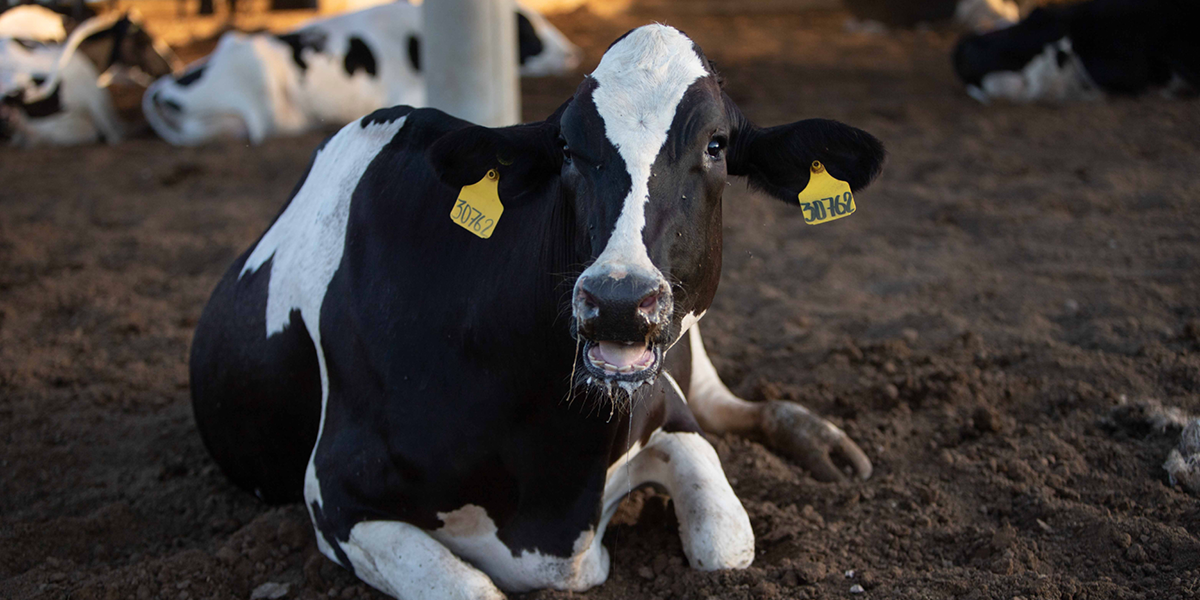
Look, I’ll cut straight to the chase here. While we’ve all been debating whether climate change is coming for dairy, it just walked into India’s biggest operations and started writing checks our industry can’t cash. Their $150 billion dairy sector—that’s the operation pumping out nearly 25% of the world’s milk—is hemorrhaging production like nothing I’ve seen before. And here’s what’s keeping me up at night… those same Holsteins getting cooked over there? They’re sitting in barns from Wisconsin to Texas right now.
The Numbers That Made Me Do a Double-Take
The thing about industry data is that sometimes it hits you like a cold slap in the face. According to recent research published in The Lancet and picked up by our colleagues at Dairy News Today, India is losing 9.6 million tonnes of milk production every year due to heat stress. That’s $3.8 billion walking straight out the barn door annually.
But here’s where my jaw really dropped… the same researchers are projecting that without serious cooling interventions, they could lose 25% of their entire production by 2085. We’re talking about $24 billion in lost revenue. Think about that for a minute—that’s like losing the entire dairy production of California, Wisconsin, and New York combined.
Now, you might be thinking, “that’s India’s problem.” But here’s where it gets personal for every one of us running Holsteins. If you’ve got high-producing cows anywhere from the Canadian border down to the Gulf, you’re dealing with the exact same genetics that are getting hammered over there. Actually—and this is what really concerns me—our cows might be even more vulnerable because we’ve pushed them harder for production than anyone else on the planet.
When the Heat Hits Your Best Producers
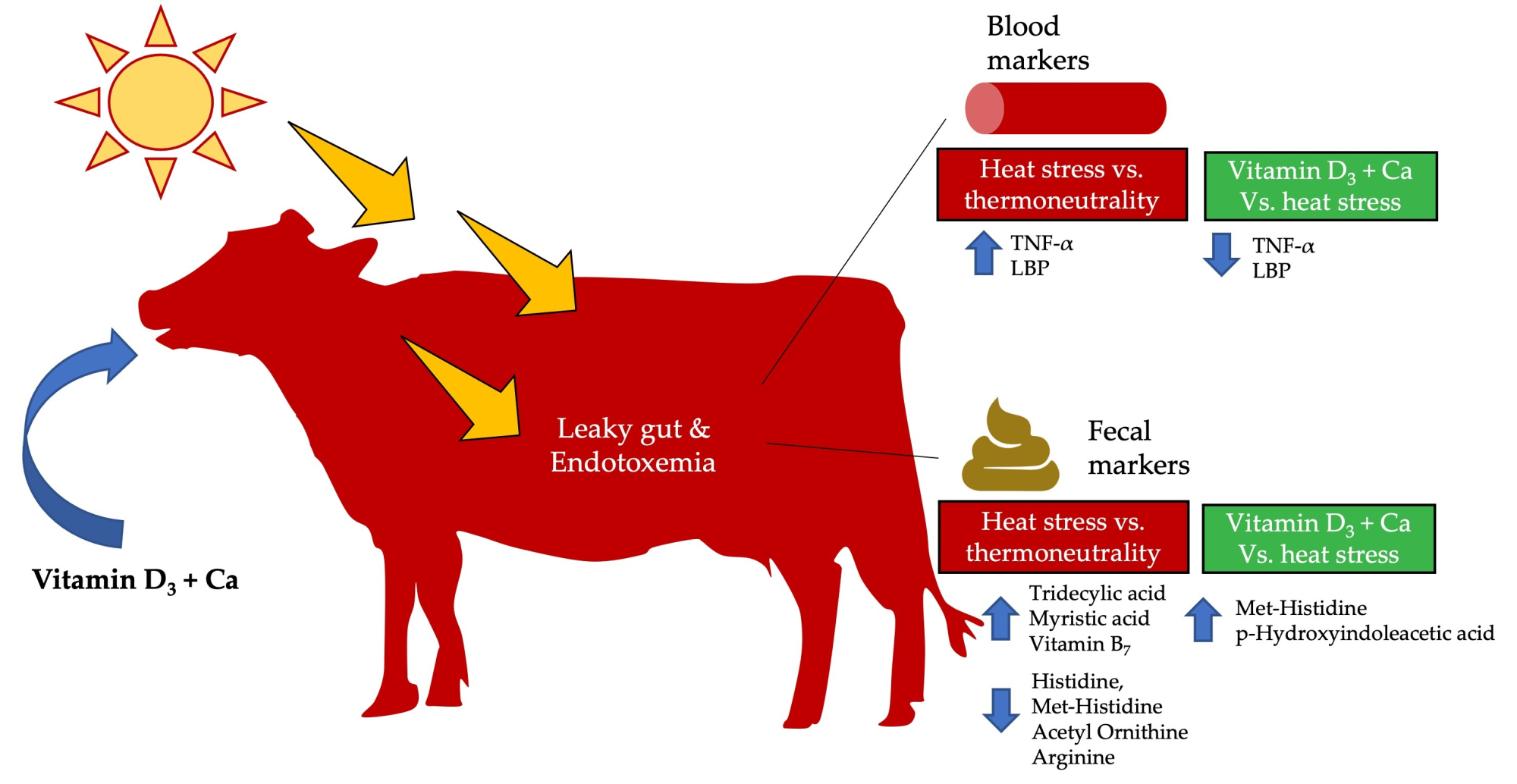
The science on this is pretty sobering. Research emerging from the University of Arizona confirms that high-producing Holstein cows begin to experience metabolic stress at THI levels as low as 68. That’s way below the old threshold of 72 we used to rely on. When THI hits 68, respiration rates jump above 60 breaths per minute, and you start seeing milk yield losses immediately.
What strikes me about this research is how it changes everything we thought we knew about heat stress timing. Those 100-pound cows we’re so proud of? They’re the canaries in the coal mine.
What’s Really Happening When Your Cows Hit the Wall
The thing about heat stress—and I’ve been tracking this stuff for probably fifteen years now—is how it doesn’t just hit production. It cascades through everything. We’ve spent decades selecting cows that can produce 80, 90, even 100+ pounds of milk daily. Those animals are basically metabolic furnaces running at full capacity, and when the temperature climbs, they can’t just dial back the heat production like a lower-producing cow might.
I was speaking with some nutritionists who have been working with operations in Maharashtra (where some of India’s largest dairies are located), and they’re seeing a 25% drop in milk production during the peak summer months. But here’s the kicker—some operations never fully recover their pre-heat production levels even when temperatures moderate. That’s not just a seasonal dip… that’s structural damage to the business model.
Dr. Lance Baumgard’s team at Iowa State has been documenting similar patterns in the United States, and their numbers show that heat stress costs U.S. operations between $1.2 and $1.5 billion annually. We’re looking at losses of $51 to $77 per cow during the summer months for individual producers. If you’re running a 500-cow operation in places like the Central Valley or southern Texas, that’s real money walking away.
Regional Patterns That’ll Surprise You
What is particularly noteworthy is how this is unfolding differently across regions. Producers in the upper Midwest—places that never worried about heat stress before—are starting to see issues they’re not equipped to handle. I’m hearing reports from Wisconsin and Minnesota operations about problems with their ventilation systems that weren’t designed for.
Down in the Southwest, they’ve been living this reality for years, but the frequency and intensity are ramping up. These operations are becoming the laboratories for the rest of us—what works there will eventually work everywhere, because everywhere is starting to look more like Arizona in July.
The Technology Reality Check (And Why Even the Best Systems Have Limits)
Here’s where it gets interesting—and honestly, a bit frustrating. Recent work from Israeli researchers studying over 130,000 cows found that even their most sophisticated cooling systems only offset about 40% of losses when temperatures really spike above 24°C. The recovery time? More than 10 days, even with top-tier cooling infrastructure.
That’s what really gets to me about this whole situation. We’re not dealing with a problem that technology can just solve outright. Even the Israelis, who arguably run some of the most advanced dairy cooling in the world, are hitting limits.
What’s Actually Working on Real Farms
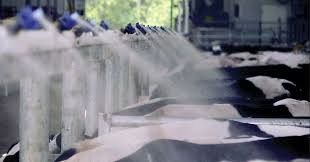
The economics tell a story here. Research comparing different farm setups shows that automated ventilation cuts heat stress impacts by 15-20% compared to traditional barns. However, retrofitting existing structures can cost anywhere from $200 to $ 300 per cow, and that’s probably conservative, depending on your setup and local labor costs.
The payback picture is interesting, though. Israeli studies have found that farmers can typically recoup the costs of cooling equipment in about 1.5 years under normal conditions. However, here’s the catch—and it’s a significant one—effectiveness drops dramatically during extreme heat events, which are becoming increasingly frequent.
I was speaking with a producer in central California last month who had installed a $180,000 evaporative cooling system three years prior. Works great most of the time, he says, but during that heat dome they had in 2023, it couldn’t keep up. His words: “It’s like bringing a garden hose to a house fire.”
The maintenance side is where many operations often get caught off guard as well. You’re looking at significant ongoing costs for upkeep, especially if you live in an area with hard water. Plus, the electrical consumption during peak summer months… it adds up fast when you’re already dealing with compressed margins and higher feed costs.
Feed Strategies That Actually Move the Needle
The thing about nutritional management—and this is something you can start working on tomorrow if your nutritionist is worth their salt—is that it’s often the most cost-effective first line of defense. Research from the University of Wisconsin indicates that increasing dietary fat content to 6-7% of dry matter can help mitigate the effects of heat stress. The implementation costs are reasonable, and the payback is there if you do it right.
However, what’s really interesting is that the approach varies dramatically by region. In the Southwest, producers are shifting to nighttime feeding when it’s cooler. Makes sense, right? Why ask cows to process a full TMR ration when it’s 105°F outside?
Up in the Great Lakes region, they’re focusing more on ration adjustments and shade structures. Different climate, different solutions. There’s no one-size-fits-all approach here, which is both the challenge and the opportunity.
Water: The Often-Overlooked Bottleneck
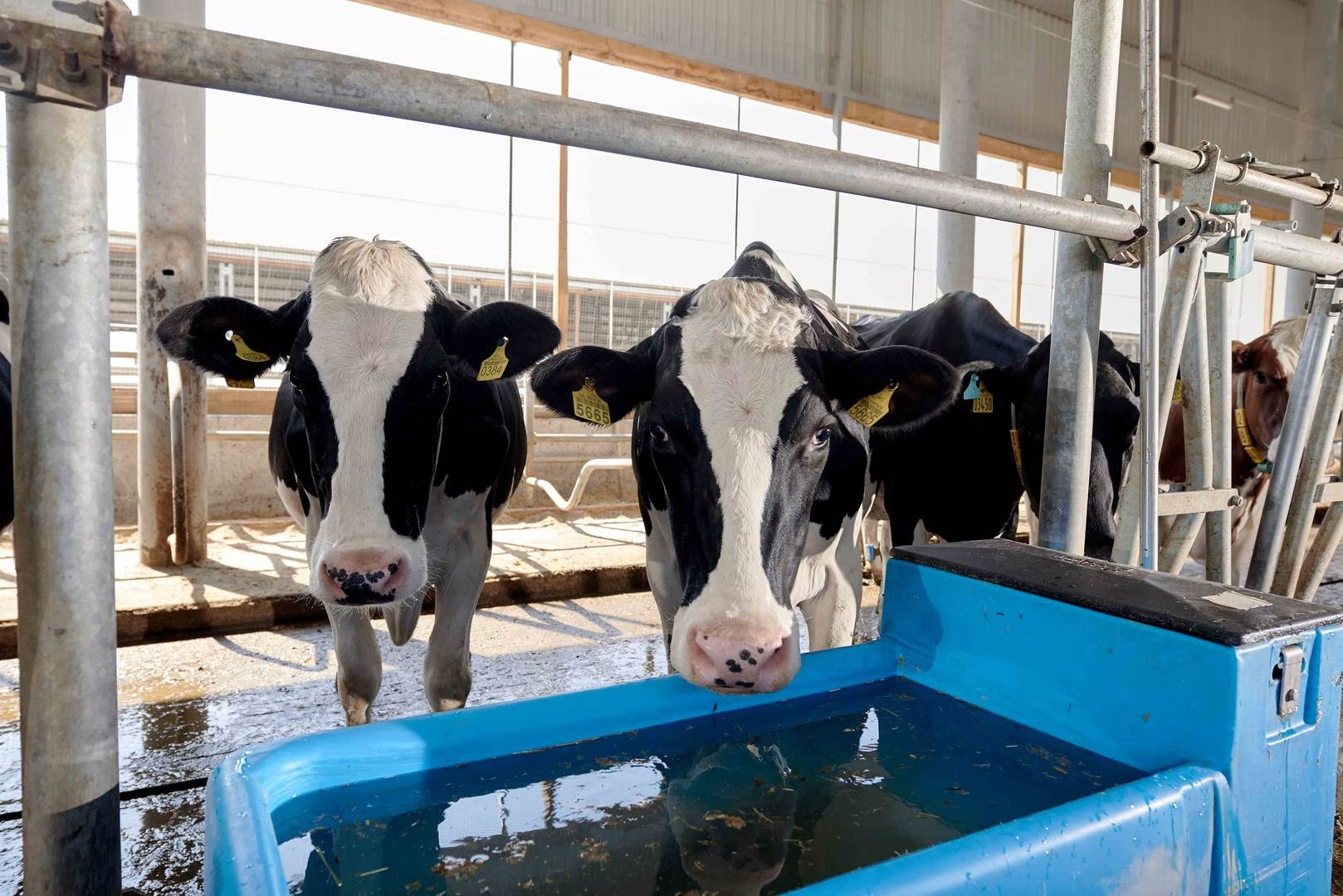
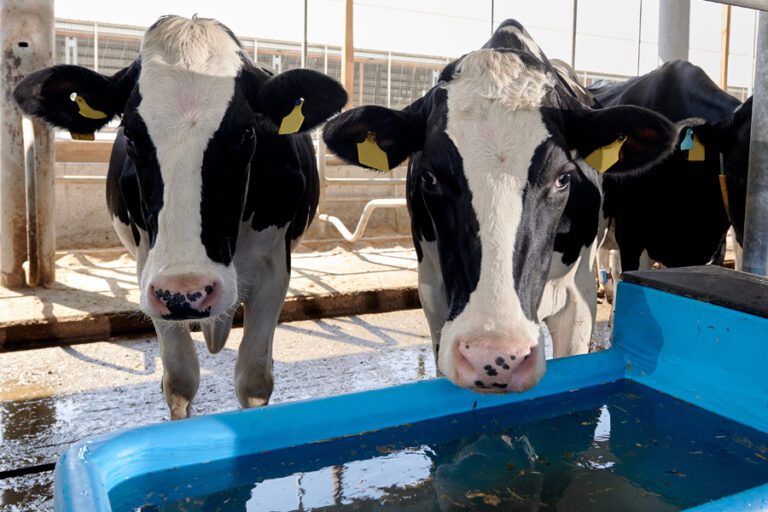
Water capacity… this is where many operations fall short, and it’s honestly one of the easier fixes. Industry standards say 4-5 gallons per cow per day under normal conditions, but heat stress can push consumption to 8-10 gallons. I’ve walked through barns where the water system becomes the bottleneck during extreme weather events.
Had a producer in Iowa—thought he was prepared for everything—until a week of 90+ degree days with high humidity hit. His cows were lined up at the waterers like rush-hour traffic. Fixed it with a $15,000 water system upgrade that probably saved him $50,000 in lost production over that summer alone.
The Genetics Puzzle: Are We Breeding Ourselves into a Corner?
Now here’s where things get really fascinating—and honestly, a bit concerning from a breeding perspective. Recent genomic research from Beijing Agricultural University has identified specific heat tolerance markers, including the HSPA4 gene, as potential tools for selection. However, the commercial application is still several years away, possibly longer.
The challenge—and this keeps me up at night—is that heat tolerance and peak milk yield exhibit a negative correlation. So, we’re facing a fundamental trade-off: do you breed cows that can maintain production in heat, or do you continue to push for maximum output under ideal conditions?
The Breeding Philosophy Shift
This trend suggests we might need to rethink some of our basic assumptions about what makes a “good” cow. The Holstein that can pump out 120 pounds a day in a climate-controlled Wisconsin barn might not be the answer for the future we’re heading into.
I was speaking with some geneticists at a conference last spring, and the conversation kept returning to this question: Are we selecting ourselves into a climate vulnerability? These high-metabolic animals we’ve created… they’re incredible production machines under perfect conditions, but they’re also the most susceptible to environmental stress.
The breeding philosophy is shifting, though slowly. Instead of selecting for animals that can reach incredible peaks, we’re now looking for cows that can maintain decent production when conditions become tough. It’s a completely different approach to genetic progress, and I’ll be honest—it makes me a bit nervous about where we’re headed in terms of overall production capability.
Risk Management: Why Insurance Isn’t the Answer (But It’s Part of the Puzzle)
Heat stress insurance is expanding from places like India to North American markets, which suggests something about where the industry thinks this trend is heading. These are parametric products—they pay out based on temperature and humidity triggers, not actual loss assessment.
The coverage is developing, but let’s be real—it’s not a silver bullet. Most policies cap coverage at 60% of potential losses, so you’re still self-insuring a significant chunk of the risk. The question becomes whether those premiums make sense compared to investing directly in cooling infrastructure.
What strikes me about the insurance development is how it’s happening differently across regions. In places like Arizona and southern California, producers are already pretty familiar with weather-based risk management. However, I’m seeing more interest from traditionally “safe” regions, such as upstate New York and Vermont. That should tell us something.
The Hard Truth About Insurance
The reality is, insurance is a band-aid. It might help with cash flow after a bad summer, but it doesn’t keep your cows productive or maintain your milk quality when the heat hits. And it certainly doesn’t address the long-term genetic implications we’re starting to see in heat-stressed herds.
Regional Reality Check: Where We Stand Right Now
Here’s what I’m seeing across different regions, and some of this might surprise you:
Upper Midwest (Wisconsin, Minnesota, Iowa): Starting to see heat stress issues they never dealt with before. The good news? They’re in the best position to adapt because they’re starting from a cooler baseline. Bad news? Most aren’t prepared for the transition. Infrastructure that worked fine for decades is suddenly inadequate.
Great Lakes (Michigan, Ohio, Pennsylvania): Mixed bag. Some areas are still relatively protected, but the humidity factor is becoming a bigger issue than expected. Lake effect might keep temperatures down, but it’s not helping with humidity levels that stress high-producing cows.
Southwest (Arizona, New Mexico, California): Already living this reality. These operations are the laboratories for the rest of us—what works there will eventually work everywhere, because everywhere is starting to look more like Arizona in July. They’ve got a head start on adaptation, but they’re also hitting the limits of what’s possible.
Southeast (Georgia, Florida, North Carolina): Heat plus humidity creates the worst-case scenario. These producers are facing challenges that may become widespread across much of the country. It’s not just temperature—it’s the combination that kills production.
Texas: The wild card. Massive production, increasingly challenging conditions. What happens there affects milk prices nationwide, so we’re all watching. Some of the most innovative cooling approaches are emerging from Texas operations that must succeed or face bankruptcy.
What’s Coming Down the Pike (And It’s Not Pretty)
Climate projections suggest North American dairy regions could see 17 additional heat stress days annually by 2050. That’s no longer theoretical—it’s about planning horizons for operations, making long-term infrastructure investments today.
The operations that get ahead of this curve are going to have significant competitive advantages. When your neighbors are scrambling to implement emergency cooling during a heat wave, you’ll be maintaining production and potentially capturing market share.
The Competitive Landscape Shift
Consumer demand for sustainably produced dairy products continues to grow. Climate-resilient operations are better positioned to meet those environmental stewardship requirements that major food companies are increasingly demanding. It’s becoming less about marketing and more about market access.
What’s particularly noteworthy is how this creates regional competitive advantages. The traditional dairy regions in the Northeast and upper Midwest are starting to see this as an opportunity—if they can maintain production while warmer regions struggle, that changes the economics of milk transportation and processing.
The Technology Investment Timeline (And Why Waiting Gets Expensive)
Let me be blunt about the technology piece. The earlier you invest, the better your options and the lower your costs will be. Emergency cooling installations during a heat crisis can cost two to three times what planned installations cost.
I know a producer in Kansas who waited until 2023 to install cooling systems. During that heat dome, he was competing with everyone else for equipment and contractors. Ended up paying 40% more than he would have two years earlier, and his cows suffered for three weeks while waiting for installation.
The smart money is planning now, not waiting for the crisis to strike. The cooling technology exists—it’s not perfect, but it works. The question is whether you implement it proactively or reactively.
The Bottom Line: Your Action Plan Starting Right Now
Look, here’s what you need to do, and I’m being completely serious about these timelines:
This Summer – Check your water delivery capacity. Can you provide 8-10 gallons per cow daily during heat stress? If not, fix it now. Also, start tracking THI levels in your barns, not just outside weather. The microclimate in your facility may be significantly different from that of the weather station five miles away.
Fall Planning – Run the numbers on basic ventilation improvements. Focus on areas where you’ll get the biggest impact for the least investment. Payback periods on basic systems are usually reasonable, and you can build from there.
2026 Budget Cycle – Factor serious heat stress mitigation into your capital planning. Whether it’s fans, misters, shade structures, or more comprehensive cooling, budget for something substantial. The cost of doing nothing is going up every year.
Breeding Decisions – Start paying attention to heat tolerance in your genetic selection. Yes, it might cost you some production in the short term, but it’s insurance for the long term. The industry is moving in this direction, whether we like it or not.
Nutritional Strategy – Collaborate with your nutritionist to develop summer feeding protocols. The dietary fat approach has solid research behind it, and nighttime feeding schedules are worth considering depending on your setup.
Risk Assessment – Honestly evaluate your operation’s vulnerability. Are you in a traditionally “safe” region that might not be safe much longer? Are your facilities designed for the climate you have now, or the climate you’re going to have?
The Hard Truth About What’s Coming
The key aspect of this situation is that we have surpassed the point of debating whether climate change is real or whether it will impact dairy. It’s already happening. The question is whether you will be proactive about it or reactive.
What’s happening in India isn’t a cautionary tale anymore—it’s a case study. The technology exists to manage heat stress, but the economics require careful planning and early implementation. You can wait for the crisis to hit your area and pay emergency prices, or you can start planning now and maintain your competitive edge.
The operations that view climate adaptation as a strategic investment rather than an emergency expense will be the ones that still thrive when their neighbors are struggling. And in an industry where margins matter and consistency drives everything, being caught unprepared isn’t just expensive—it can be fatal to the business.
Trust me on this one… the heat isn’t coming for us. It’s already here. The question is what you’re going to do about it, while you still have choices, instead of just reacting.
Complete references and supporting documentation are available upon request by contacting the editorial team at editor@thebullvine.com.
Learn More:
- Heat Abatement Strategies: Protecting Dairy Cows from Rising Temperatures – Reveals practical cooling technologies and sensor-based systems that can reduce water usage by 60% while maintaining cow comfort, providing immediate implementation strategies for summer heat management.
- Climate Adaptation Strategies That Preserve Your Yields – Demonstrates how to integrate facility optimization, genetic selection, and precision management into a comprehensive adaptation framework that protects production while building long-term climate resilience.
- 12 Effective Strategies to Alleviate Calf Heat Stress – Explores cutting-edge innovations including automated monitoring systems, phase change materials, and genetic selection strategies that protect your future herd from heat stress impacts across multiple generations.
 The Sunday Read Dairy Professionals Don’t Skip.
 The Sunday Read Dairy Professionals Don’t Skip.
Every week, thousands of producers, breeders, and industry insiders open Bullvine Weekly for genetics insights, market shifts, and profit strategies they won’t find anywhere else. One email. Five minutes. Smarter decisions all week.