Archive for Dairy Industry – Page 18

Higher input costs hurt West Texas dairy farmers.

The increased costs you pay at the grocery store do not help the producer. Prairie View Dairy in Muleshoe is an example of this.

Labor is one of the highest expenditures, despite the fact that the owner, James Hancock, claims he hasn’t lost many staff.

“But whatever roles we’ve lost, we haven’t been able to find successors for that have lasted very long, because they’re constantly off looking for something new,” Hancock added.

Hancock claims that boosting salaries on his farm is difficult, but no one has lately inquired about a position. Hancock now spends $19 to produce 100 pounds of milk, which sells for $21. He claims that the market is expected to decline to $17 per 100 pounds, implying that he would earn less.

Feed prices are another explanation for the high input costs.

“Not a lot of additional feed in the region that we could get a hold of, particularly with the weather,” Hancock added.

Furthermore, getting the stream is difficult.

“You can’t get the semis to come through, there are a lot of missing drivers out there, and you can’t get enough people to carry the feed to you,” Hancock said. “So, all of it adds up to a larger price for us whenever it arrives.”

Hancock claims he had to sell 400 cows last year, reducing his herd to 4,800 head. That was during the dairy farm’s most difficult period, and things are looking up today, but that might change.

“We were upside down on pretty about everything under the sun a year ago, and the year before that as well,” Hancock remarked. “We’ve had, normally in the industry, three poor years to one good year, but this year we’ve got four awful years to one good year.”

A large portion of the product is being exported.

“A lot of exports today, not so much in the nation.” “A lot of our goods is migrating abroad, which is great, but any type of glitch in that market and you’ve got a whole lot of difficulty,” Hancock said.

Based on current market conditions, he believes the fight might endure up to three years.

Idaho’s Research Dairy Could Be Largest in US

On Tuesday, the University of Idaho’s ambition to establish the nation’s biggest research dairy and experimental farm overcome a major obstacle.

Idaho Gov. Brad Little and two other statewide-elected officials on the Idaho Land Board authorized the university’s proposal to spend $23 million purchase 640 acres of farmland in south-central Idaho, the state’s dairy heartland.

That would be the primary emphasis of the planned Center for Agriculture, Food, and the Environment, or CAFE, at the school.

Idaho’s dairy business is the third-largest in the country, after only California and Wisconsin. However, the business in Idaho – and in general – confronts a number of issues, including greenhouse gas emissions from livestock, land and water contamination, and waste systems from dairies with thousands of cows producing tons of manure.

Political Illustrations

Scott Green, president of the University of Idaho, said the decision was a significant triumph for the state, the university, and the dairy business, but the school hasn’t been able to perform the large-scale research the industry requires to discover answers to those and other complicated challenges.

“The research that we perform there will help us enhance the water quality across the state,” Green said after the decision. “It will assist us in using waste products from the dairy sector in an environmentally and agriculturally advantageous manner.”

Green said that students would get the knowledge required to work at the forefront of agribusiness and dairy sciences. He also said that CAFE allows the institution to earn millions of dollars in research grant money, possibly leading to new ideas and innovation.

If CAFE is successful, it will contain an experimental farm and a 2,000-cow research dairy in Minidoka County. Classrooms, laboratories, and faculty offices would be built in Jerome County near the intersection of Interstate 84 and US Route 93. The College of Southern Idaho campus in Twin Falls County would include a food processing pilot plant as well as a workforce training and education facility.

According to state authorities, the state’s dairy sector has backed the idea by providing more than $8.5 million to far.

Specifically, the board voted on Tuesday to use $23 million from the 2021 sale of 282 acres of endowment land in Caldwell benefiting the University of Idaho’s College of Agriculture and Life Sciences to purchase roughly 640 acres of farmland owned by the university in Minidoka County north of Rupert and convert it to endowment land. The endowment land and funds will now be used to construct the research dairy.

Endowment land is land that Idaho obtained at statehood and that the Land Board administers to create the best long-term return for beneficiaries, mostly public education.

Members of the Land Board had alternative possibilities for the money. It may have invested the $23 million in a fund. It might also have saved the money for future investments in forestry, the most reliable income producer for state property.

The university option was unusual in that it acknowledged research as a valuable asset.

“If this were more inexpensive research, private enterprise would undertake it,” Little remarked after the conference. “These are the types of things that the government must accomplish, these long-term, low-return projects” (investments). If we can get research out of this that leads to a more sustainable, cleaner dairy sector in Idaho, it’s a win-win situation for everyone.”

Applause erupted in the Statehouse meeting room immediately after the vote, an uncommon event for a Property Board meeting that generally deals with staid financial management choices regarding the state’s 3,900 square miles (10,100 square kilometres) of endowment land.

UK daily milk deliveries decrease in August – AHDB

Compared to previous year, milk deliveries were 1.4% lower.

According to AHDB analyst Charlotte Forces-Rees, UK milk deliveries in August were anticipated to be 989 million litres, 14.4 million litres (1.4%) less than in August 2021. This decline is less than the 1.8% rise in milk output predicted for August of last year in the June GB milk production estimate. Averaging 31.89 million litres per day, GB output was projected to be 0.5 million litres lower than August of the previous year. When 31.16 million litres were generated on August 17, daily deliveries were at their lowest. The lowest day last year had 0.5 million less litres than today.

Estimated UK milk deliveries in August came to 1,186 million litres, down 14.5 million litres (1.2%) from August 2021 despite an average daily milk output of 38.24 million litres. The lowest day for UK daily deliveries this year was August 17; it was 0.4 million litres lower than the lowest day in August 2021.

Early data for September already indicates an increase in daily delivery quantities, suggesting that production may have reached its low point in August. This would be consistent with recent seasons, as opposed to the past, when the trough took place later in the year. The increase in block calving during the previous five years is assumed to be the cause of this. This August’s heatwaves put farmers under additional stress, and the further decline in August productivity closely matched the heatwave’s termination on August 14.

Ukraine’s dairy exports have surpassed pre-war levels.

According to the Ukrainian club of agricultural business (UCAB), which cited government figures, Ukraine exported 12,700 tonnes of dairy products in August 2022, more than double the amount shipped in August 2021.

As a result, the entire volume of Ukrainian dairy exports in January–August 2022 increased to 59,400 tonnes, surpassing the volume exported during the same period in the previous year after a decline in shipments in March–April as a result of the Russian invasion.

Ukraine exported a wide variety of dairy goods in August 2022, including:

  • 3,580 tonnes of non-condensed milk and cream (200% more compared to August of 2021)
  • 3,260 tonnes (100%) more of condensed milk
  • 273 tonnes of butter dish (-50%)
  • 2,530 tonnes (+72%) of whey
  • 2,140 tonnes (+250%) of butter
  • One thousand tons of cheese (+62%)
  • During the month of August 2022, Moldova (4,400 tonnes), Poland (2,400 tonnes), and China were the top importers of Ukrainian dairy goods (900 tonnes).

decreased dairy imports

Dairy imports, meanwhile, are progressively falling. 42,300 tonnes of dairy goods were imported into the nation between January and August 2022, which is 37% fewer than during the same time period the year before. Imports totaled 5,000 tonnes in August. Mostly, Ukraine imports cheese.

According to UCAB, Ukraine will probably start exporting dairy products this year if the present trends continue.

In other Ukraine-related news, 50,000 dairy cows need to be replaced immediately. Read on…

domestic demand is declining

The Ukraine Union of Dairy Enterprises anticipated that the country’s milk output would fall by 13–16% this year, to 7.33–7.56 million tonnes, from 8.73 million tonnes in 2021, and that the conflict would decide how severe the problem would be.

Additionally, it is predicted that the average amount of milk consumed per person in Ukraine in 2022 would decrease by 8% from 212 kg in 2021 to 229 kg this year, mostly as a result of population movement both internally and externally as millions of Ukrainians were compelled to flee their homes.

Exports are becoming more and more significant.

Prices for dairy goods have been steadily rising on the domestic market in Ukraine during the last several months. According to the Ukraine Union of Dairy Enterprises, the main cause of this was an increase in export.

In 2022, a dramatic depreciation of the national currency and inexpensive raw milk gave Ukrainian dairy firms the appearance of being competitive on the international market. According to the federation of dairy firms, the trend is anticipated to continue during the winter, when a decline in dairy output is anticipated throughout the European Union.

Dutch and Danish merger to create largest dairy producer in the world?

Much larger than Lactalis. The conversations have not yet been confirmed by either company, but Dutch trade publication foodbusiness.nl claims to have learned about them from credible sources. According to reports, Sybren Attema, chairman of FrieslandCampina, has been speaking with Jan Toft Nrgaard, a colleague from Arla, for weeks.

The scale of the two dairy cooperatives, both of which operate in the Benelux, is comparable: The annual revenue of Dutch FrieslandCampina is 11.5 billion and Danish Arla is 11.2 billion. Together, they would outperform Lactalis, the current leader in the dairy industry, with a combined turnover of 22.7 billion.

In terms of milk supply, climatic needs, and financial performance, the dairy industry confronts significant obstacles. Both businesses may benefit from economies of scale in terms of their competitiveness on global marketplaces.

The consent of all cooperatives, the dairy farmers who provide the milk, as well as the European Competition Authority must be obtained before a potential merger can proceed. The two businesses previously engaged in merger discussions in 2005, but they ended in failure.


Dairy Defined: Say It Loud, Say It Clear: The Plant-Based Beverage Bust is Here

It was the fundamental fallacy that launched a thousand news articles: Dairy was dying as consumers were switching to plant-based beverages. That was always a lie — but at least from a certain angle, it could be stretched into something that at least somewhat looked it like could be true. After all, U.S. fluid milk consumption (though not dairy overall, a fact that was conveniently ignored) has declined, and plant-based beverage sales were rising. 
 
But now even that distortion is no longer true. Retail sales volume of plant-based beverages year-over-year have been negative since February, continuing a trend of flat-to-declining volume that dates to mid-2021. This is no longer a blip – it’s a reality, an inconvenient truth that we hope may finally put the original lie to rest.
 
Declining sales are only some of the woes Team Plant-Based is facing. While eating your fruits and veggies remains good advice – and always will be – that doesn’t mean that ditching dairy nutrients, or animal protein and nutrition in general, is a good idea. The environmental claims of alternatives can be wildly overstated. The nutrition benefits often remain doubtful. And once the novelty wears off, imitator inferiority is left to shine through. 
 
Maybe that’s why Oatly’s share price has declined more than 80 percent since going public last year. Maybe that’s why Beyond Meat is struggling, and the CEO of Maple Leaf Foods said the alts market is unlikely to pan out as originally thought. 
 
And maybe it’s another reason why the Food and Drug Administration shouldn’t reward bad-faith arguments from desperate plant-based promoters that consumer acceptance of their heavily processed, sweetened water as “milk” is inevitable, and they should be rewarded for insisting on misusing a term they have no right to use under existing federal regulation. 
 
If nothing else, perhaps declining sales would inject some welcome humilityinto marketing claims. Of course, we live in the real world, making that outcome, however desirable, highly doubtful. 
 
But at the very least, the news of declining plant-based beverage sales should be reported just as forcefully as the distortion that was used to malign an entire industry. After being told for years that plant-based beverages were the wave of the future, the public would be well-served to know that the hype was a mirage. 

Wisconsin Milk Production Rose Slightly in August

Wisconsin’s total milk production was up in August compared to the same period a year earlier. According to the USDA’s latest milk production report, Wisconsin farmers produced 2.69 billion pounds during the month, which was 1.1 percent higher than last August, but less than the 2.72 billion made in July 2022.

Nationally, 18.2 billion pounds of milk were produced in the 24 major dairy states for the month. That was up 0.6 percent from 2021, but lower than the previous month’s production of 18.3 billion pounds.

California continues to have the highest total production with about 3.45 billion pounds. Georgia had the greatest percent-increase in output as that state produced 163 million pounds of milk–about 14.8 percent more than the same period last year. Only 14 of the top 24 states had higher year-to-year production last month.

Meanwhile, the number of milk cows on farms in the 24 major states was 8.93 million head, 11,000 head less than August 2021, but 8,000 head more than July 2022. The average number of milk cows on Wisconsin farms for the month was 1.27 million head–unchanged from last month, but down 6,000 from 2021. Monthly production per cow averaged 2,145 pounds, which up 35 pounds from last year’s figures.


Source: Wisconsin Ag Connection

Dairy farm was fined for dumping 200,000 gallons of manure into a creek.

According to the Iowa Department of Natural Resources, the owner of a dairy farm in northwest Iowa was sentenced to pay the state more than $36,000 for a huge manure spill that occurred last year and killed about 100,000 tiny fish in a nearby creek.

When a worker at Rock Bottom Dairy, close to Lester, forgot to turn off an irrigator that sprays manure into an adjacent field one night, there was a manure leak in April 2021.

The next morning, it was determined that there had been an overflow of around 200,000 litres of manure into Mud Creek and a nearby tributary. According to the DNR, there were contaminated areas 13 miles downstream with high levels of ammonia and E. coli bacteria.

The dairy has roughly 3,800 animals, and in the last 20 years, the DNR has recorded four prior manure leaks there.

One of them, in 2009, killed approximately 1,400 fish and similarly contaminated the streams with roughly 100,000 gallons of excrement. According to DNR documents, the leak was triggered by a clamp that broke free from a hose being used to move manure about the site. The dairy received a $6,000 fine.

According to Scott Wilson, manager of the DNR field office there, the reasons for the leaks varied in each case.

Regarding the most recent leak, Wilson stated, “This is unfortunate. It was obviously a mistake, and we anticipate that they will develop policies or some other kind of fix to ensure that it doesn’t happen again.

The DNR’s maximum administrative penalties for the most recent incident was $10,000, and dairy owner Bernard Bakker agreed to pay it. Along with the expenditures associated with the DNR investigation into the fish kill, he must also reimburse the state for the estimated 96,168 fish that were destroyed. That came to almost $26,100.

Ireland sets its sights on ASEAN as a significant dairy and meat export market

The National Irish Food Board Bord Bia actively promotes Irish food and beverage exports to South East Asia at the moment after internal research had identified the region as having the biggest development potential.

According to Bord Bia South East Asia Market Specialist Malcolm Leoi, Ireland exported EUR535 million (US$528.6 million) worth of food and beverage exports to ASEAN last year alone, which was a 20% year-over-year growth even amidst the pandemic. This growth was clearly led by dairy, which shows even greater potential for the sector.

The majority of dairy products consumed in the region, including condensed and evaporated milk, already contain Irish dairy; however, because a lot of this is still in the B2B stage, consumers might not be aware of this just yet. In fact, Singapore and Malaysia are our main hubs for dairy processing.

We do think there is room for expansion since Ireland, through its Origin Green program, the first and only national sustainability initiative for the whole agri-food sector, is currently able to provide a degree of sustainability and quality assurance that no other nation can. ​

“We definitely see this as crucial for future growth, with more and more younger consumers today seeking for more sustainable alternatives when making purchasing decisions,” the statement continued.

Leoi further emphasized how the quality of the region’s dairy and meat has already been tried and tested there as not just favoured but also held in high respect due to the farming practices used to produce them.

“All of our cows and sheep are grass-fed, which makes a tremendous difference, for Irish dairy and meat, for example. The Origin Green program also provides long-standing quality, food safety, and sustainability credentials,” he said.

As a small island nation, Ireland has a climate that is ideal for growing grass, which contributes to the grass-fed quality. In addition, because most of the farms in the area have been in operation for many generations, there is much to be said for the understanding and connection that can be made at this level as opposed to factory farms.

We already know that this quality is highly valued in the area since, despite the fact that we have only introduced one consumer-facing dairy brand thus far, Kerrygold butter, which enables better performance and a richer flavour, it has quickly risen to the top spot in several marketplaces.

Ireland’s food exports to ASEAN and East Asia are expected to reach EUR900 million (US$889.3 million) by 2025, almost doubling the EUR535 million (US$528.6 million) export value from 2021. This goal demonstrates Bord Bia’s ambitious plans for the region.
Brexit is a factor.

In contrast to Northern Ireland, which is now a part of the United Kingdom but is no longer a member of the EU, Bord Bia represents the Republic of Ireland, the southernmost region of Ireland and the region that will continue to be a part of the EU even after Brexit.

Leoi stated that the internal market analysis was carried out in anticipation of Brexit and its potential effects on Ireland’s food and beverage economy.

“Whether Brexit happened or not, the population in ASEAN is still expected to grow, leading to a rise in protein demand as well. Additionally, there are a number of markets, including Singapore and Brunei, that are either less able to produce their own food supply or are dependent on imports for meat and dairy, so this is a demand we want to capitalize on, Brexit or not.”

Singapore is a significant market.​

Ireland, in particular, views Singapore as a market with enormous possibilities given the country’s strong emphasis on food security.

No government is more acutely aware of this than Singapore, as seen by its 30 by 30 target, said Leoi. “As populations in Asia rise, output actually has to double, making sustainability and food security a priority not just for consumers but also for governments.”

“Ireland actually understands this very well because, as everyone is aware, food security has taken on significant importance in this country and because supply systems there are no longer as reliable as they once were. For instance, Singapore is searching for reliable partners to diversify its supply chains. ​

We also know that 25% of Singaporean consumers give safety, health, and sustainability in food an increasing amount of importance. The EU already has a reputation for these qualities, but today’s consumers want concrete evidence. Ireland has this differentiated value proposition in the form of Origin Green, which can provide the data and proof points, verified annually, to give consumers that assurance.

Even emerging and middle-income markets like Malaysia, Vietnam, and the Philippines have affluent consumers who share this same taste. As countries become more urbanized, these foods will resonate more with them, so eventually there will be a diffusion of these ideas and values – and we are looking at the long run here. However, Singapore is currently the market that is leading the way for this.

​

Russian announces government support for dairy companies

In an effort to avoid the effects of Western sanctions, the Russian government has tentatively agreed to apply zero import charges for another six months on a broad list of essential machinery and raw commodities.

Victoria Abramchenko, the deputy prime minister of Russia, recently declared that the federal budget will pay dairy farmers for 70% of the costs related to the purchase of labelling equipment. Early in 2023 is when the rule is expected to take effect.

In order to “stabilize the financial position” in the Russian dairy sector and to “reduce the anguish of the previous few years,” this move, according to Artem Belov, chairman of the Russian Union of Dairy Producers, Soyuzmoloko, would be taken.

According to the Russian dairy industry, implementing mandatory labelling would cost approximately 12.2 billion roubles (US$200 million), of which 8.9 billion roubles (US$148 million) would go toward labelling equipment. Belov also noted that Russian dairy companies would need to spend between 9 and 15 billion roubles (US$150 and US$250 million) annually on label purchases from the Russian state operator, in addition to incurring some other costs.

Belov expressed the wish that the Russian government will continue its program of subsidized soft loans, which Russian businesses have benefited from over the previous few years.
Free of charge imports

The concept of expanding duty-free imports on a lengthy list of raw materials, machinery, components, and packaging used by Russian dairy industries has also received approval from the government of Russia.

According to Roman Chubak, a public relations expert for Soyuzmoloko, the decision, which was first authorized by the Eurasia Union Economic Commission in March 2022, had an impact on more than 100 different goods, all of which were crucial for the dairy industry.

Chubak said that the action was required in light of the present “political environment” as well as the growing expenses of logistics and raw materials.

In particular, Chubak said, “these measures [to eliminate import restrictions] enabled the dairy industry to alleviate the adverse consequences of economic sanctions, both for business and, ultimately, for consumers, notably in reference to socially significant items, specialized and baby food.

The government will “assist goods makers maintain steady operations in the face of persistent foreign policy and economic issues” by extending the measure waiver for a further six months, according to Chubak.

AgriSea uses seaweed to clean waterways and feed cows

When Tane Bradley was a little boy, his schoolteacher mother and her boyfriend relocated the family south in search of seaweed after returning from a working vacation on organic farms. Nearly three decades later, Tane and his wife Clare Bradley operate the business once known as Ocean Organics, now AgriSea, which creates liquid concentrates from the local seaweed Ecklonia Radiata. According to Kate Green’s article, they just received a $750,000 loan from the government’s Regional Strategic Partnership Fund.

Tell me how seaweed is used in agriculture.

In the main industries, which include horticulture, dairy farming, apple and kiwifruit orchards, and everything else that grows, our goods are predominantly used.

All seaweeds include nutrients, growth-promoting agents, amino acids, and complex carbohydrates, however, not all seaweeds are created equal. There are roughly 1000 species in Aotearoa.

It is decided to use brown kelps in agriculture. Methods of extraction and fermentation make sure the nutrients are kept for usage by the soil, plants, and animals.

We stumbled onto our beekeeping product by chance. We discovered that beekeepers were purchasing one of our items intended for dairy cows to feed their bees while they were being fed sugar syrup.

According to research, Ecklonia Radiata includes bioactives that can heal gastrointestinal problems and parasites in bees.

How was AgriSea founded?

This company was founded in 1996 by Tane’s mother and her business partner as Ocean Organics. They worked on organic farms throughout the summer as South Auckland school teachers, and one of the farms stood out for its excellence and used seaweed as its primary input.

They returned and did a further investigation after being fascinated by the potential of seaweed. Since they were aware of the demand, they sold their home, loaded up their van, and relocated to the Paeroa.

The days when we could see our consumers by driving about in a day have long since passed after 26 years.

From wine producers to beekeepers, we provide to sectors in the United States, Canada, Italy, and Australia. Autumn sales have climbed by 200% year over year, and farmer uptake has improved as a result of our new relationship with Farm Source.

There are presently around 40 employees. Every day of the week, the six of us used to make lunch together. Even if we only cook on Wednesdays anymore, we are still a way.

How do you ensure the sustainability of your methods?

Our environment serves as our life support system, but it is having difficulty doing so. You can only operate under a take-and-make-waste model for so long.

We take care not to remove all of the seaweed that washes ashore since a different ecology depends on it.

Seaweed is manually collected by our local collectors under the direction of the Ministry of Primary Industries; the supply chain can be challenging and unreliable.

But we must take a more circular approach if we want to maintain a strong life support system for future generations.

Does seaweed provide any advantages for individuals as well?

We have always understood that we wanted to create something for people. Everyone anticipates that it will taste fairly fishy, and various processing techniques can bring out that flavour; believe us, there have been some disastrous efforts.

We received a high-value nutrition grant in 2021 to investigate several techniques for fermenting seaweeds. We sampled a variety of species before settling on one that, in our opinion, tastes alright.

Brown seaweed has a flavour that is fairly sweet, almost like salted caramel, since it contains a lot of long-chain mannitol carbohydrates. We believe we’ve found one with a good iodine level that isn’t overpowering.

Our three children have always understood they are not permitted juice without their seaweed, thus we all consume seaweed as a family.

These are particularly abundant in sulfated polysaccharides, complex carbohydrates only found in brown kelps. Otago University is now doing consumer testing on the formulation.

Next, what?

There are thousands of species of seaweed still to be discovered, but we now only use one. Not just for AgriSea but also for Aotearoa New Zealand and our economy, the prospects are limitless.

Seaweed does not have roots; instead, it absorbs nutrients from the ocean. We’re engaged in a pioneering bioremediation project that involves running water from the Waihou River via a unique seaweed-ponding system.

It cleans up the water by absorbing nitrogen and phosphorus. The seaweed may subsequently be transformed into agriculture fertilizer.

Our innovative animal supplement line, which is the first for dairy cows to lower levels of oxidative stress—the primary cause of disease—and nitrogen excretion, which might have a significant positive impact on our water quality—won a Fieldays Innovation Award.

We also collaborated with Southward Gin, a neighbourhood distillery in Wellington. It turns out that seaweed was a fantastic technique to bring out the drying properties of the gin. They just launched a dry vodka and are currently developing a whiskey.

Being able to use the phrases “seaweed” and “hi-tech” in the same sentence is just the beginning. Winning the Hi-Tech Mori business of the year was a compliment to our staff and partners.

Dairy enzymes market will reach $1 billion by 2030, according to studies

Strict, careful rules can hinder progress. A recent study report by Global Market Insights Inc. projects that the size of the dairy enzymes market would surpass $1 billion by 2030.

The dairy enzymes market trends will be influenced by a favourable forecast for the dairy product processing sector, according to the research. The demand for the product will increase as government measures to lower the risk factors for food items throughout the food and beverage sector that may cause intestinal damage, digestive problems, diarrhea, and other concerns become more widespread. The growing prevalence of lactose intolerance among individuals worldwide is changing consumer preferences toward lactose-free food supplements as an alternative to lactose-rich goods, which will boost the market for dairy enzymes.

According to the paper, strict and circumspect laws regarding the production and use of enzymes might prove to be a significant barrier. However, growing public knowledge of the usage of these enzymes in the production of curds, cheese, butter, and ice creams may encourage consumers to purchase the product while also motivating industry actors to finally minimize the risk-related characteristics of these enzymes.

The dairy enzymes market is divided into many categories in the study based on the kind of enzyme they are: lipases, carbohydrases (amylase, lactase, and others), proteases, esterases, catalases, transglutaminases, and others. The revenue for the carbohydrases market was $220 million in 2021, and it is anticipated that by 2030, it would be worth $350 million, thanks to the growing demand for sports drinks brought on by peoples’ changing lifestyles. Since carbohydrase removes acids and hazardous gases from these materials, it is often employed to produce food and beverage, pharmaceutical, and animal feed products.

By 2030, the whey protein application section of the dairy enzymes market will be valued more than $100 million. Dairy enzymes, like protease, mainly function to break the peptide bonds of different proteins, resulting in smaller, more readily digested pieces that will speed up the absorption of whey proteins. As a consequence, the need for dairy enzymes will significantly grow.

UK milking herd continues to contract – AHDB

Youngstock numbers remain high

The GB milking herd totalled 1.63 million head of cattle, a decrease of 17,000 head (1%) below July 2021, according to the latest data from British Cattle Movement Service. Overall youngstock numbers have continued to increase, and as of July 2022 totalled 941,000 head, up 3.4% (31,000 head) on July 2021, reported Charlotte Forces-Rees, a trainee analyst with AHDB. 

Despite the overall category growth, within youngstock there was a 1.7% drop in the number of calves aged 0-6months (3,800 head), compared to the same time last year. Additionally, there was a slight quarter-on-quarter decline in the number of 0-2 year olds – the first since January 2020.

All main age categories aside from youngstock saw contraction in numbers, with the largest decline seen in the 4-6 year group, back 13,100 head (-2.6%). Due to the increase in youngstock there has been a small growth in overall herd size from July 2021, up 0.3% (7,900 head).

Although the milking herd has been in long term decline, the increase in youngstock could help stabilise numbers as they start to move up through the herd. Conversely, given the financial pressures farmers are under, AHDB believes they could instead see additional destocking, either as an overall contraction to ease financial burdens or to make room for youngstock moving up. Based on cull cow numbers, this does not appear to have happened to date, however it will be a point of discussion with industry at this week’s milk forecasting forum.

Checkoff’s New Product Competition Focuses on Calming Benefits

The Dairy Management Inc. (DMI) New Product Competition is accepting applications for innovative products that focus on dairy’s qualities related to calming.

The program, formerly the National Dairy Council New Product Competition, is open to U.S. undergraduate and graduate students to develop products in line with industry and consumer insights to uncover innovative dairy-based products that offer calming benefits.

Research shows:

• With a heightened emphasis on mental and emotional wellbeing, consumers are looking for products that calm.

• There is projected growth associated with products that calm, and these benefits are of particular interest with Gen Z consumers.

Successful entries will meet competition criteria, demonstrate innovation and provide value to consumers. The judging panel includes experts from across the dairy industry and winning teams will be recognized at the Institute of Food Technologists’ annual meeting in Chicago next July.

The winning team will earn $8,000 with second place receiving $5,000 and $3,000 going to third place.

The competition provides a platform for students to bring their knowledge and expertise to dairy product innovation. Students can integrate their work on product formulation with packaging, pricing and marketing to create a product that meets consumer needs.

The deadline for submissions is Jan. 16, 2023. For information, visit www.usdairy.com/research-resources/new-product-competition or send an email to DMI’s Rohit Kapoor at rohit.kapoor@dairy.org.

How 1 Company is Trying to Save Family Dairy Farms

Stonyfield is sourcing organic milk from local dairy farmers hit hard by recently cancelled contracts.

Stonyfield is sourcing organic milk from local dairy farmers hit hard by recently cancelled contracts.

How acute is the plight of dairy farmers in the Northeast?  The situation was enough for Gary Hirshberg, co-founder and former CEO of Londonderry, N.H.-based Stonyfield Farm Inc., to return to the trenches.

Hirshberg, whose fun title has been “chief organic optimist,” wanted to ensure that the glass of milk is indeed half full for the remaining dairy farmers in his part of the world.

“I’d been taking a step back, but this is a national crisis more than a trend,” he explained. “What called me to action was the fact that we had never before had a situation in which we are suddenly without 135 farms.”

When he was growing up in the 1960s and 70s, there were 4,000 family dairy farms in his home state of New Hampshire, a number that dwindled to 1,000 when he started Stonyfield in 1983, and has recently dropped to close to a hundred.  The more recent problem stems from the fact that the contracts of 135 regional milk suppliers were terminated by two major food companies, Danone North America-owned Horizon and Maple Hill Creamery. 

The losses are attributed to cancelled contracts and to larger operations that have continually siphoned business away from smaller family farmers. Other factors compounded the issue, like macroeconomic conditions and fallout from issues like the pandemic and labor shortages.

Stonyfield and its co-founder have stepped into to stanch some of the proverbial bleeding. They launched Northeast Organic Family Farmer Partnership (NOFFP), a group that aims to boost demand for organic milk produced by local brands. NOFFP has engaged several independent grocers and food cooperatives to become official retail partners, such as Roots Market, in  Olney, Md.; Buffalo Mountain Food Co-Op, in Hardwick, Vt.; and the New Morning Country Store, in Woodbury, Conn., among at least three dozen others.  

Also part of Northeast Dairy Task Force, Stonyfield has been working with several of the recently dropped dairy farms to provide the company with milk for its organic products.  To bring these dairies on board, the company expanded processing capacities at its facility in Londonderry.

“I have my own personal commitment to organic, but from the farmer’s point of view, organic has been a lifeline for their operations,” Hirshberg said. “At this point, I can say confidently that of the 135, roughly 110 of them have gotten some kind of solution.” 

He underscored the important role that grocers can play in helping shore up local farmers while providing consumers with products that meet their own demands for quality, sustainability and health and wellness. “It’s yet another opportunity  to make consumers, retailers and foodservice operators aware that without our support, these farmers won’t exist,” he noted. “The whole ecosystem must be engaged.”

Stonyfield is collaborating with retailers to get the message across. “We went and raised money to fund in-store activation at the point of purchase with things like signage, demos, fliers and efforts to educate retail clerks,” Hirshberg explained. “We also have a partnership seal that we like to get out there.”

On another level, Hirshberg and the company he helped create are seeking formal partnerships to save family dairy farms. Stonyfield recently revealed that global foodservice suppler Sodexo has committed to doubling or tripling its purchase of brands that come from local organic dairies. Also, Stonyfield is currently engaging in discussions with a major grocer in the region to sign on as a similar partner, according to Hirshberg.

Although the challenges faced by small farmers are immediate and organic products are more expensive, Hirshberg said that he has some reasons to back up his optimist title. “There are very clear demographics showing that under-35 consumers, particularly after COVID, are far more inclined towards organic, and not just for health reasons,” he said. “It’s getting better known that organic has clear climate advantages, too.”

In addition to support of organic products by younger and future consumers, Hirshberg is heartened by the broader recognition of the perils faced by family farmers. Other creameries and companies in different parts of the country are interested in Stonyfield’s efforts, he noted.

“There is a growing national awareness of this,” Hirshberg affirmed. “Farmers in every part of the country need to be supported.”

Source: progressivegrocer.com

Volleman’s Family Farm Connects with Consumers at the Dairy

Started in 1993 in Gustine, Texas, with just 50 cows, Volleman’s Family Farm now has 5,000 dairy cows, its own unique milk brand and 14 different milk products.

Volleman brothers Ben, Daniel, Andrew and David recently sat down with American Farm Bureau Federation President Zippy Duvall to discuss their dairy farm and how they bridge the gap between dairy farmers and dairy consumers.

“My parents always had a dream of getting closer to the consumers,” Andrew Volleman said. “We know we make great milk and we wanted to get it in the hands of our consumers, so we’ve had that vision for a long time.”

The Volleman family takes pride in connecting to their consumers and offering a firsthand look at the dairy industry.

One way the Vollemans connect with their consumers is by offering dairy tours once a month. A visit to the family farm is a great way for consumers to learn more about where their products come from and how they get to the grocery store.

Some visitors may be concerned to find out that the cows spend most of their time inside the barn.

David Volleman explained, “A cow starts getting heat stressed at about 68 degrees Fahrenheit. We haven’t dropped below that in months.” He went on to describe how staying inside the barn for the warmer parts of the year helps the cows stay cool, comfortable and healthy. Urban consumers may only have the chance to learn about this if they take a trip put to the farm to learn from the producers.

President Duvall discussed the challenges of dairy farming with the Volleman brothers. They mentioned water, labor, regulations, supply chain issues and heat stress as significant hurdles to the success of their business.

President Duvall commended the Volleman brothers on their ability to overcome these challenges and maintain their family legacy. He hopes that hearing the Vollemans’ story will help consumers understand that just because a farm is large, doesn’t mean it’s a factory.

“It can be large, and it can be personable, and it can be a family out there running it,” he said.

Each of the four Volleman brothers has gone to college and returned to the family farm. They are proud to carry out their parents’ vision and deliver products directly to consumers.

Learn more about Volleman’s Family Farm.

Australia farmgate milk prices likely to remain high

Milk production likely to remain stable

Dairy Australia’s September 2022 Dairy Situation and Outlook report indicates the season is gaining momentum. According to the report, milk production is likely to remain stable this season, with farmgate prices remaining high.

Weather and workforce remain issues for the industry. A third consecutive La Niña weather event is likely, which may increase homegrown feed production, but wet conditions will be challenging for farmers who have already received higher than usual rainfall.

A smaller global milk pool is forecast due to droughts, high input costs and farm exits in the northern hemisphere. This may offer opportunities for Australian exporters.

Australian dairy farmers better placed than the rest of the world to capitalise on potential opportunities

That’s according to leading Dairy Australian analyst John Droppert who says one of the key drivers is the way the La Nina is playing out in the northern and southern hemispheres.

DA’s September Situation and Outlook report shows milk production is likely to remain stable this season, with farmgate prices remaining high.

The report forecasts a smaller global milk pool due to droughts, high input costs and farm exits in the northern hemisphere, which may offer opportunities for Australian exporters.

“High farmgate prices mean most farmers are currently making good profits,” Mr Droppert said.

“In the coming season, farmers will need to manage these high prices against labour shortages and relatively high input costs.

“In addition, increased precautions and contingency planning are being implemented by many farmers to safeguard them against the elevated risk of Foot-and-Mouth disease and Lumpy Skin Disease.”

He said the likely emergence of a rare, third consecutive La Nina event, as forecast by the Bureau of Meteorology, added another “level of intrigue”.

While that might mean good rainfall for some, it also carried the threat of more flooding, Mr Droppert said.

But it could also mean an increase in homegrown feed production, reducing the need for high-priced inputs.

European drought

The report found large parts of the European Union remained in drought, with milk production tracking 0.5 per cent below last year.

The most recent European Commission forecast anticipated a 0.6pc drop in production for the full 2022 calendar year.

Milk prices in the EU were also at record levels, but dry conditions through the northern hemisphere spring and summer had reduced pasture quality and availability.

High prices for purchased feeds had discouraged their use.

The Commission expected cow numbers across the bloc would continue to fall – not least due to the emergence of greenhouse gas emissions policies in key milk producing member states, such as Ireland and the Netherlands.

Conditions were also dry in the western United States (US), with California in particular entering a new phase of ‘exceptional drought’ conditions.

Nonetheless, milk production across the US returned to growth in June, with an increase of 0.2pc compared to June 2021.

“Cow numbers were still down almost 1pc on the same time last year, but the herd was now expanding, giving the United States Department of Agriculture (USDA) confidence to tweak the 2022 calendar year outlook upwards, anticipating growth of 0.2pc, relative to 2021,” the S&O report summary said.

New Zealand ‘complicated’

New Zealand was entering a new season with high farmgate prices but medium-term constraints were likely to discourage overall industry expansion.

Individual farms might see an increase in production this season, if pasture conditions allowed.

Local analysts describe New Zealand’s experience of La Nina to be in the form of a wet spring and drier than average summer, both of which complicated the pasture management task for farmers.

With early signs that pasture growth was sluggish, high fertiliser and supplementary feed prices, combined with the threat of a tightening regulatory environment, meant the 2022/23 New Zealand season looked ‘complicated’.

There was a forecast of a 1.9pc reduction in overall milk intakes, which would constitute a second season of contraction following the 4.2pc drop of 2021/22.

Australia’s milk production concluded the 2021/22 season down by a similar proportion, almost 4pc compared with the 2020/21 year.

The report found significant concern among Australian farmers around high input costs and crippling staffing challenges have carried through to the new season, as have unseasonably wet conditions across large areas of Queensland and New South Wales.

The report found the high likelihood of a third consecutive La Nina would be unwelcome news in these regions, and its eventuality would likely bring challenges for the upcoming harvest period across both northern and southeastern Australia.

On the flip side, the characteristic increased rainfall associated with La Nina also held potential for gains in pasture growth and homegrown feed production for many dairy regions.

This could reduce reliance on highly priced feed inputs, and cushion farmers against the unpredictability of grain and fertiliser markets, which were at the whim of global influences.

It would also contribute to a promising outlook for irrigation water availability.

The Australian domestic dairy market remains characteristically more stable than the international commodity scene.

“Nonetheless, amid the complexity lies significant opportunity,” the report said.

“With two seasons of positive margins behind them, Australia’s dairy farmers are as well placed as any to capitalise.”

Source: 

Technology helps tankers slash travel times

An innovative digital technology is helping the country’s second largest milk processor streamline its transport operations.

Open Country Dairy says it’s now moving more milk from farm to factory, while cutting tanker travel – saving fuel, time, and emissions.

M2X is a digital real-time transport management platform connecting data across Open Country’s transport planning, dispatch and drivers, optimising tanker routes at the click of a button.

It’s now being used by over 250 Open Country drivers based at three sites – Southland, Wanganui and Waharoa in Waikato.

Open Country national transport manager Ginny Christians told Dairy News that drivers were excited to use the new technology.i

She says the technology ensures milk from suppliers’ farm travels the shortest distance possible to Open Country’s processing sites.

“It has already slashed tanker travelling distances by thousands of kilometres,” she says.

Christians says M2X is also helping the dairy company meet its carbon emission reduction targets by making sure trucks are travelling the shortest routes from farm milk collection to processing.

“The system has cut our transport planning time in half. It can automatically redirect trucks where they’re needed to collect excess milk, recognise the High Productivity Motor Vehicle Routes (HPMV) and ensure the right trucks are on the right roads.

“It even provides tanker drivers with useful details on farm tanker tracks.”

She says, from a transport point of view, optimising routes and using the latest emission technologies are important steps Open Country is embracing to make sure it meets climate change obligations.

“Our dairy industry is recognised as one of the most efficient milk producers in the world in terms of emissions, so we need to make sure we all play our part in protecting our reputation on the world stage.”

M2X was launched at Open Country’s Awarua and Wanganui sites last year and was implemented last month at its Waharoa site.

The new platform has seen Open Country move from a more labour-intesnive, manual system to a digital platform that centralises all Open Country’s milk collection and transport data.

Christians says everything is now digitally communicated.

“Drivers load any excess milk volumes into the sysem and the dispatchers back at the processing site can see which trucks in the area have capacity to pick it up,” she says.

“The system even gives drivers specific information about farm tanker tracks and the best and safest way to navigate them.”

M2X keeps drivers informed. For example, they might have to turn left because it’s too dangerous to turn it right.

“Or, there is a bridge ahead and if you turn right onto it, you’ll get stuck because there’s not a wide enough turning circle. Issues are avoided because all that information is digitally available and it doesn’t rely on institutional knowledge,” says Christians.

The cloud-based system is operated from computers at Open Country’s head office that feature a map view of the region’s tanker routes and farms. Open Country’s tanker drivers use either an iPad or download the app on their phone, which they refer to before getting on the road.

The system also recognises HPMV routes which allow trucks weighing more than 45 tonnes to travel on them. This allows Open Country dispatchers to assess if an HPMV truck has capacity to pick up milk and if the farm’s pick-up location is on one of the specially designated HPMV routes.

“Because dispatchers have a map view, they can see where the trucks are and if there’s a truck passing a farm that has capacity to take additional load,” she says.

“It allows them to make quick decisions based on real time milk volumes and events. Alongside creating greater transparency and efficiency across Open Country’s transport operations, the technology has also halved the time spent forecasting and planning and boosted the volume of milk moved,”

Making Waves On The Road

The M2X Transport Management system offers solutions for carriers and enterprise customers across industries such as livestock, milk, forestry, bulk, dairy and general freight. Its software uses advanced optimisation to improve the efficiency of transprt across the supply chain.

The innovative technology won the New Zealand Trade and Enterprise, Most Innovative Hi-Tech Agritech Solution at the New Zealand High Tech Awards last month.

M2X director Krista McKay says as consumer demand grows for sustainably produced food and fibre, the spotlight is not only on farmers, but on the entire primary industry to produce more from less.

“M2X is a single platform that helps companies optimise transport, increase efficiency and reduce both costs and carbon emissions.

“We believe it is a truly sustainable industry solution – a platform where carriers and enterprise customers can work together to achieve and share the benefits of digital efficiencies and optimisation.

“M2X is helping companies reduce their kilometres travelled and ease the impact of labour shortages, while reducing the time animals spend on trucks, which has welfare benefits and reduces overall carbon emissions too. It’s a win-win across the board.

Source: ruralnewsgroup.co.nz

Dairy show judge wants more young people active in the agriculture industry

Oklahoma’s fair season is here, and one staple for many communities is visiting livestock show rings, where many young FFA and 4-H exhibitors compete.

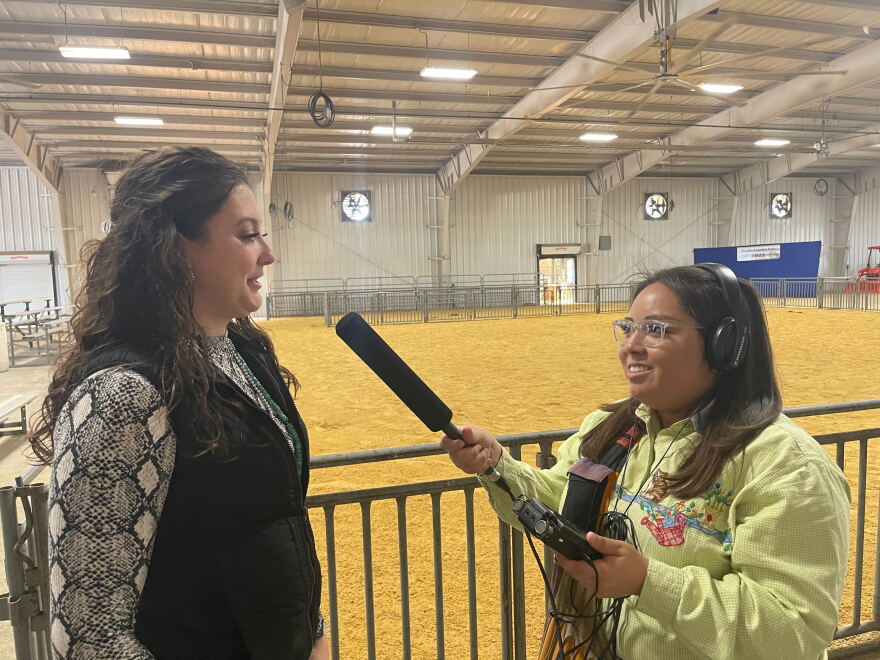
But for Addie Raber, a junior at Oklahoma State University, it was her first time judging livestock instead of showing them. Raber judged the Payne County Dairy Show last month and said she finds it important for young people like herself to be active in the agriculture industry.

“With farms getting bigger but there being less [farmers], we need to keep the youth interested because that’s the next producers of our nation,” Raber said.

Dairy farms across the country have been declining for nearly 20 years, according to the U.S. Department of Agriculture. One reason why, Raber said, is that young people might get dissuaded by the hard work it takes to maintain a dairy farm.

Xcaret_Interview_Judge.jpg

Kateleigh Mills

KOSU’s agricultural and rural affairs reporter Xcaret Nuñez (pictured right) interviews Addie Raber (pictured left) after the Payne County Dairy Show.

“You have to milk the cows every morning and night, and sometimes three times a day, depending on the kind of operation that you run,” Raber said. “They have to be fed once or twice a day, and you have to keep the barns cleaned out constantly.”

Showing animals at the fair plays a critical part in informing the general public about the agriculture industry, said Rusty Gosz, a youth livestock specialist with OSU Extension, in a news release.

“Our livestock shows produce less than 2% of what we’re putting into the food chain,” Gosz said. “But probably 85% to 90% of the general public views agriculture through livestock shows.”

For Raber, showing animals is a responsibility she takes seriously and hopes to continue in the future. As a double major in agriculture communications and animal sciences, she hopes to become a livestock photographer someday.

Source: kosu.org

Latvian dairy producer declares insolvency; others struggle to survive

“Elpa” already said in May that it is stopping production for an indefinite period of time. The Kurzeme District Court has now declared it insolvent. The production plant is in the medium-sized business category and a large part of the processed milk was involved in the free School Milk program in the Kurzeme region.

Gundars Sisenis, the head of the company, said that production was stopped due to a variety of difficulties, including the rapid rise in raw material prices and costly energy resources.

Although Elpa is not a member of the Central Union of Dairy Farmers, the head of the organization Jānis Šolks said that the difficulties are felt by several companies: “The fact that one of the companies failed in this situation is not a surprise. For the time being, we are talking about one company called Elpa, which has been officially declared bankrupt. [Cheese producer] Limbažu siers is also currently a company that has suspended its activities for a period of time. And it’s hard to say what their distant fate will be. However, due to the fact that we have not received any form of aid [..] the fact that only one company is in an insolvency situation shows the sector’s survival capacity. But the question is how long because nothing is over yet.”

The purchase price for raw milk is currently around 50 cents per liter. The price has climbed by 50% during the year.

“By putting this together with the increase in energy prices, plus we also had Ukraine as a significant market for dairy products, and there are difficulties of delivering products to Israel, Azerbaijan, which were also our good outlets. Everything is more expensive again – transport and logistics costs. As a result, the other side is no longer prepared to purchase their products to that extent,” Šolks said.

Rolands Feldmanis, consultant of the Latvian Association of Agricultural Cooperatives, estimated that the exit of the dairy processing company “Elpa” from the market, in general, did not significantly narrow the possibilities for selling raw milk. At the same time, the organization hopes that other farmers will not suffer from insolvency proceedings.

“The negative side is seen historically. Once several processors have ceased to exist, they owe money to farmers and the State. [..] If it is a separate farmer who has given the milk to a processor who no longer pays for a monthly turnover, the farmer himself is on the brink of bankruptcy. However, cooperatives are easier because they usually work with several processors, and the co-op can then settle with this member at the expense of their reserves,” Feldmanis said.

Source: eng.lsm.lv

On Dairy Consumption Trends

For many families, August represents a season of transition. As soon as the calendar flips to this month, those with school-aged children start to think about heading back to school. Those students who play fall sports often start having two-a-day practices in the first week of August. Those who are in youth programs like 4-H and FFA are busy that first week putting the finishing touches on their project animals before they head off to the fair. And then all at once, summer comes to an end.

The county fairs wrap up, project animals either go back in with their herd mates or head to market, and the kids we got used to having around to handle evening milkings and do daily chores on the farm are once again gone at the crack of dawn to catch that big yellow bus. Some parents joke that they can’t wait for school to start again, but I always look to the fall with a mix of anticipation and regret.

The anticipation is because I do look forward to what each school year will bring – how many inches will they grow, what classes will they like, what new friends will they make. The regret is because I am thinking of the things we never had time to do while they were home for the summer. And now, between school and sports schedules, there is not much time to fit in anything else. My boys, however, always seem more excited than me when August rolls around.

Market Transition

As students across the country head back to school, our dairy markets experience a transition as well. In 2021, about 44.3 billion pounds of milk were sold in the bottle – or as fluid milk. That’s roughly 20 percent of the total milk production in the country. From August through May, fluid milk sales range between 3.5 and 3.9 billion pounds per month. However, in June and July, the amount of milk sold as fluid milk falls about 7 percent to around 3.4 billion pounds per month. That is because kids are not drinking as much milk at home as they are at school.

USDA estimated that children aged 6 through 12 years get 35 percent of their milk needs at schools while teenagers aged 13 through 18 years get 25 percent of their milk needs at schools. USDA studies also show that consumption of fluid milk is higher for both groups on weekdays, when schools are generally in session, than on weekends. It’s also higher during the school year than it is during the summer.

In the summer, the milk displaced by schools being closed moves into ice cream sales. In fact, the International Dairy Foods Association (IDFA) estimates that three-fifths of annual ice cream production in the US is made in July, with May and June close behind. In 2021, ice cream makers in the U.S. churned out more than 1.3 billion gallons of ice cream. Based on IDFA’s statistics, about 1 billion gallons of that is produced in the summer months.

Dairy Consumption Growing

On an annual basis, fluid milk sales continue to decline across the U.S. USDA reported a 4.1 percent decline in 2021, falling from 46.2 billion in 2020 to 44.3 billion pounds to 2021. Last year marked the twelfth year in a row that fluid milk sales declined, with fluid milk consumption at its lowest since 1951. The only fluid milk category showing growth last year was flavored milk, with sales up 14.3 percent.

Part of the decline in fluid milk sales is attributed to declining school milk sales. However, fewer families eating at home, where milk is more likely to be served, and declining cereal consumption are also considered factors in the decline. The most significant factor often referenced, though, is competition from other beverages, especially flavored waters.

Despite declining fluid milk sales, total dairy product sales are increasing, with increasing domestic cheese and butter consumption, along with growing export sales, helping to bolster sales. USDA data shows that per capita dairy consumption is now at its highest level since 1960, up 52 pounds over the past 10 years.

Total cheese production was up 2.8 percent in 2021, totaling 13.624 billion pounds. Considering it takes about 10 pounds of milk to make a pound of cheese, that means roughly about 136.24 billion pounds of milk produced in the U.S. goes into cheese production, or roughly 60 percent of the U.S. milk supply. Domestic butter production was down in 2021, falling 3.8 percent from all-time high levels in 2020. Per capita consumption of butter is up nearly 40 percent from 20 years ago, with the average American consuming 6.3 pounds of butter each year.

Dairy and School Meals

The U.S. House Education and Labor Committee just passed the “Healthy Meals, Healthy Kids Act,” a bill which reauthorizes federal child nutrition programs. While dairy groups were disappointed that the bill did not allow for whole milk to be reintroduced into the School Meals Program, it did include provisions to provide increased access and maintain existing access to other healthful dairy foods. The bill also increased students’ access to nutritious food by securing more permanently the ability for schools to serve all milk options, including low and reduced fat milk, consistent with the Dietary Guidelines.

While we didn’t win the war, we did win a major battle in that dairy continues to hold an important spot on the school lunch tray. And, with families across America sending their kids back to school this month, that’s not only a major win for dairy but for the 12 million food insecure children out there who need milk’s powerful package of nine essential nutrients critical to their health and development.

Source: Center for Dairy Excellence

Southeast Michigan dairy farmer named 2022 MMPA Outstanding Young Dairy Cooperator

Katelyn Packard of Manchester, Michigan, was selected as the state winning 2022 Michigan Milk Producers Association (MMPA) Outstanding Young Dairy Cooperator (OYDC) by a panel of judges represented by leaders in the Great Lakes dairy industry. As the state winning cooperator, Packard will represent MMPA at various industry and association activities.

Drew and Beth Rupprecht of Vassar, Michigan, were selected as the runners-up cooperators. Selection of the OYDC is based on the applicant’s farming operations, farm-related and community activities and demonstrated leadership abilities.

Packard farms 950 acres and operates a 450-cow dairy with her family. She is a member of the MMPA Saline-Ann Arbor Local in District 1 and also serves as an MMPA Dairy Communicator, working to promote dairy in her local community. Packard and her family regularly invite neighbors to tour their farm and run a successful farm store where they sell products from their farm.

“We strive for happy, healthy, well-fed animals and have found when this happens, everything else falls into place,” Packard said. “Our farm’s mission is to provide healthy and safe food while caring for our animals, the environment, and our community.”

Packard was one of several finalists invited to the annual OYDC Conference held Aug. 9-10. The state OYDC Conference, held at MMPA headquarters in Novi, provides participants with information about milk marketing activities, cooperatives, milk testing procedures and other current events within the dairy industry. The program has been held annually for over 70 years.

“The OYDC program is a fundamental tool in encouraging young dairy cooperators to network and learn more about their cooperative to help identify future leaders and recognize their efforts,” Doug Chapin, MMPA board chairman, said. Chapin and his wife, Cheri, were the MMPA OYDC runners-up in 1990.

All MMPA OYDC finalists will be officially recognized at MMPA’s 107th Annual Meeting to be held March 2023.

2022 OYDC Finalists

  • Trevor and Holly Bollinger, Vestaburg, Michigan
  • Jordan and Erin Booms, Lake City, Michigan
  • Jason Elenbaum, Mayville, Michigan
  • Jeffrey Marvin, Clayton, Michigan
  • Katelyn Packard, Manchester, Michigan
  • Andrew and Beth Rupprecht, Vassar, Michigan

About Michigan Milk Producers Association
The Michigan Milk Producers Association–established in 1916–is a member-owned and operated milk marketing cooperative and dairy processor serving dairy farmers throughout Michigan, Wisconsin, Ohio and Indiana. In addition to a cheese plant in Indiana and a dairy product plant in Ohio, MMPA operates two SQF Level 3 dairy ingredient plants in Michigan, producing butter, nonfat dry milk powder, condensed skim milk, cream and whole milk powder.

 
Source: NIMILK

A2 Milk shares jump after 52% lift in annual profit, positive outlook

A2 Milk managing director David Bortolussi says while the infant formula market in China remains challenging, there is still a “significant growth opportunity” for the company.

  • A2 Milk profit up 52%
  • Expects revenue and profit growth in 2023
  • Plans $150M share buyback

The a2 Milk Company increased annual profit 52% and said its infant formula business has returned to growth after it took the “difficult decision” to destroy excess inventory that had built up during the Covid-19 pandemic.

Net profit increased to $166.2 million in the year to the end of June, from $80.7m the previous year, while revenue rose 20% to $1.45 billion. The result was ahead of analyst expectations.

The pandemic hurt A2 Milk’s key Chinese infant formula business as closed borders and lockdowns disrupted shipping, the birth rate fell, and competition from local brands increased. It wrote down more than $100m of older stock and said the outlook for its business is now positive with continued growth in revenue and profit expected this year.

“It was a successful year for The a2 Milk Company returning to double-digit growth in revenue and earnings despite significant headwinds,” said managing director David Bortolussi. “Those difficult decisions we made last year around inventory have worked and set the foundations for the result this year.”

The company noted that the infant formula market in China, the world’s largest, remained “challenging”, but said there was still “significant growth opportunity” for A2 Milk. It reiterated its goal for $2b of sales by about 2026.

According to the China National Bureau of Statistics, the number of births in China fell 11.5% to 10.6 million in 2021, and A2 Milk expects the decline to continue in 2022.

This led to a 4.3% overall decline in Chinese infant powder market volume in the year to the end of June. The overall market value slipped 3.1% while prices rose 1.3%.

Today on The Detail Emile Donovan talks to Sam Dickie, a senior portfolio manager at Fisher Funds, to talk about the company’s roller coaster ride, and how one of its greatest strengths has become its greatest weakness.

A2 Milk said its business was benefiting from a shift to ultra-premium brands, more rapid growth of the A2 protein segment, increased concentration towards market leading brands and a shift to online channels.

“We are in a really nice spot to continue our growth, notwithstanding what the market is doing,” Bortolussi said.

Sales of the company’s Chinese label infant formula rose 12% to $437.6m, driven by record high market shares achieved in Mother and Baby stores, which lifted to 3% from 2.2%, and Chinese domestic online channels, which advanced to 2.5% from 2%.

Meanwhile, a decline in English label product was showing signs of stabilisation, with the overall market value down 9% in the year to June, compared with a 33% decline the previous year, the company said.

Sales of A2 Milk’s English label formula jumped 12% to $584.6m after the company restructured the way its products were shipped to China in favour of more direct relationships.

Despite “challenging market dynamics”, A2 Milk said growth in its Chinese and English infant formula was “encouraging”.

“It has been a very good year for us in China, the IFM category has had headwinds, but we are getting just stronger,” said A2 Milk’s Greater China chief executive Xiao Li.

The company expects revenue to increase in both labels this year and said there was “significant opportunity” to grow its market share from its current level of 4% to 5%.

Jarden senior analyst Adrian Allbon said the increase in revenue was helped by a 36% increase in marketing spending in China to $230m.

“The revenue uplift looks to have been underpinned by materially higher marketing spend vs our expectation and almost opposite to market expectations given the Shanghai lockdowns over the period,” Allbon said.

A2 Milk said the extra marketing helped boost the brand to new highs and loyalty increased.

“The company has gone through a pretty brutal turnaround the last couple of years,” said Fisher Funds senior portfolio manager Sam Dickie.

Bortolussi had made bold calls, like writing off inventory and taking more control of its sales into China, which hurt short-term sales but made the business more robust in the longer term, he said.

“The things they can control, they’re controlling well,” Dickie said. “If they can beat expectations and execute well in this very tough environment, while undergoing a turnaround and with this hurricane headwind of a falling birthrate, imagine when those things stabilize.”

Dickie said Fisher Funds had been buying shares in A2 Milk over the past six to nine months.

“They’re in turnaround mode – they’ve still got some tough headwinds out there, but they seem to be executing very well with the aspects they can control.”

The company’s shares were the biggest gainer on the NZX in late afternoon trading on Monday, jumping 9.7% to $6. The stock has lost about 57% of its value over the past three years.

A2 Milk ended the financial year with $816.5m in net cash, and it plans to spend as much as $150m on buying back its shares over the next year.

The company does not pay dividends.

Source:stuff.co.nz

“Adopt a Cow” Program Gives Students an Inside Look at Dairy Farming

The Adopt a Cow program offers an exciting look inside the world of dairy farming, and it’s free for teachers and students! This program is a partnership between the Dairy Farmers of Wisconsin and Discover Dairy, an educational initiative of the Center for Dairy Excellence and Undeniably Dairy (DMI). Wisconsin educators can register to “adopt” a calf for their classrooms from one of three Wisconsin dairy farms. Educational lesson plans for teachers follow Common Core standards in Math, Reading and Science.

The program is ideal for traditional schools, homeschool classrooms, after school and library programs, 4-H groups and more. It’s curriculum targets 3rd-4th graders, but all classrooms K-12 are invited to register. 

During the 2021-2022 school year the program reached:

  • Over 1,700 Wisconsin classrooms
  • More than 43,000 Wisconsin students
  • Schools in 70/72 Wisconsin counties

Adopt a Cow programming and curriculum has proven to grow student knowledge about the dairy industry by 67% and increase their trust in the dairy industry by 18%.

Encourage your local educators to enroll in the 2022-23 Adopt a Cow program by visiting DiscoverDairy.com/adopt before the September 15, 2022 deadline.

Inflation taking a toll on domestic dairy consumption

Overseas demand for U.S. dairy products continues at a blistering pace this year, even as higher prices domestically are taking a toll on consumption closer to home. The U.S. dairy industry achieved another record export volume in June, shipping 19.6 percent, or almost one-fifth, of its total milk solids production to foreign countries. It also set a new record for the dairy trade balance of 16.2 percent in terms of milk solids production.

See report here


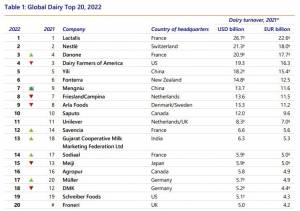
Rabobank publishes Global Dairy Top 20 report

Rabobank has published its annual Global Dairy Top 20, highlighting the 2022 industry leaders in the dairy sector.

Global Dairy Top 20

©Rabobank

Compared to last year’s top 20, five companies have dropped down, six moved up, and the rest maintained the same position, with Lactalis holding on to the top spot. 

The top five companies are:

  1. Lactalis
  2. Nestlé
  3. Danone
  4. Dairy Farmers of America
  5. Yili.

Danone and Dairy Farmers of America have switched places, compared to the 2021 results.

Among the companies that have slipped down the ranking in 2022 were FrieslandCampina and Arla Foods. FrieslandCampina has dropped from #7 to #8, while Arla Foods slipped from #8 to #9 place.

At the same time, Müller was among those that jumped up the ranking, from #20 position in 2021 to #17 in 2022. Meanwhile, Froneri is the new company to join the top 20 this year. 

Rabobank said: “The combined turnover of the Global Dairy Top 20 companies jumped by 9.3% in US dollar terms, following the prior year’s decline of 0.1%…Merger and acquisition activity by Top 20 companies remained relatively stable in 2021 compared to the prior year, but dropped in the first half of 2022, with about 10 deals announced versus the prior year’s approximately 30 deals.”

Source: FoodBevMedia

EU dairy prices at record levels; farmers’ margins remain tight

Milk deliveries expected to decline 0.6% in 2022

According to the latest data and reflections of market experts within the European Commission, EU dairy prices are at record levels. While skimmed milk powder and whole milk powder prices remain relatively stable and whey prices are showing some decline, others continue to rise. This has seen EU raw milk prices reach record highs. Despite this, farmers’ margins remain tight due to higher input costs. Dry and warm weather conditions in spring affected grass quality and the availability of other feed ratio components, which could see milk yield development being lower than expected in 2022.

This, along with a smaller dairy herd (-1%), combine to result in an expected decline of 0.6% in EU milk deliveries in 2022. The lower grass quality and lower feed use are also likely to decrease the milk fat and protein content, thus reducing the availability of milk solids for further processing.

In 2021, the EU milk sector experienced unprecedented developments. The seasonal trend historically observed in the EU raw milk price did not materialise and prices grew throughout the year. Despite the price increase, EU milk deliveries dropped by 0.4%, for the first time since 2009. The rising costs slowed down the milk yield growth (1.2%) and led to a stronger than expected dairy herd reduction (-1.5%).

EU cheese and cream production could continue to grow and reduce milk fat availability for butter and whole milk powder production. An increase in cheese exports is expected, while domestic use of dairy products could grow slightly in 2022 (+0.3%), assuming sustained retail sales and foodservice recovery, as well as limited transmission of higher producer prices along the chain to consumers.

Dairy Farmers in the Netherlands Are Up in Arms Over Emission Cuts

The dairy farmers of the Netherlands have had enough.

They have set fire to hay and manure along highways, dumped trash on roads to create traffic jams, and blockaded food distribution centers with their tractors, leading to empty shelves in supermarkets. Across the country, upside down flags wave from farmhouses in protest.

The anger of the farmers is directed at the government, which has announced plans for a national 50 percent reduction of nitrogen emissions by 2030, in line with European Union requirements to preserve protected nature reserves, that they believe unfairly targets them. Factories and cars also emit large amounts of nitrogen and have not been targeted, they say, although the government said that cuts associated with both polluters would be addressed in the future.

Agriculture is responsible for the largest share of nitrogen emissions in the Netherlands, much of it from the waste produced by the estimated 1.6 million cows that provide the milk used to make the country’s famed cheeses, like Gouda and Edam.

To realize those planned cuts, thousands of farmers will be required to significantly reduce livestock numbers and the size of their farming operations. If they cannot meet the cuts the government demands of them, they may be forced to close their operations altogether.

The Dutch government has set aside about 25 billion euros, about $26 billion, to carry out its plan, and some of that money will be used to help farmers build more sustainable operations — or buy them out, if possible.

“My livelihood and my network is being threatened,” said Ben Apeldoorn, whose farm in the province of Utrecht has about 120 cows producing milk for making cheese. “You’re just no longer allowed to exist,” said Mr. Apeldoorn, 52, who has been a farmer for 30 years.

But activists and ecologists say that drastic measures are needed to cut emissions and allow the Netherlands to do its part to address global warming — an aim that has become all the more urgent this summer as Europe faces record temperatures and drought.

And they say that the agriculture sector has to change.

“If you have less livestock, you have less manure and less production of nitrogen,” said Wim van der Putten, a researcher at the Netherlands Institute of Ecology.

The World Wide Fund for Nature and other environmental organizations wrote in a letter to the Dutch minister of agriculture this month that “the transition to a sustainable agricultural and food system is urgent and necessary.” The letter also said that consumers in the Netherlands needed to do their part to make sure emissions targets were reached.

“Consumers also have to take responsibility,” it said. “Dutch people will have to consume more vegetables and fewer (-70%) animal proteins.”

All of this comes as wrenching change in the Netherlands, where dairy farms have long been as much of the national identity as the country’s windmills and canals. It is also a major producer and exporter of milk and milk products. Last year it sent €8.2 billion worth of dairy products abroad and produced a total of 13.8 billion kilos of milk, according to ZuivelNL, a Dairy organization.

But while many in the nation of 17 million people have sympathized with the farmers, support for them seems to be dwindling. In July, about 39 percent of Dutch people said they supported the farmers’ protests, down from 45 percent the month before, according to a survey by a Dutch research firm.

Prime Minister Mark Rutte, who this month became the country’s longest-serving prime minister and has grappled with what is known in the Netherlands as “the nitrogen crisis,” has condemned the protests, calling them “unacceptable.”

“Willfully endangering others, damaging our infrastructure and threatening people who help clean up goes beyond all limits,” Mr. Rutte, who has met on several occasions with farmers, said recently on Twitter.

Helma Breunissen, 47, a dairy farmer who with her husband also runs a veterinarian’s office, attended one of the meetings with Mr. Rutte to make her anger known.

“If half of the cattle needs to disappear, then my veterinary’s office will also end,” Ms. Breunissen said by telephone. “I don’t want a bag of money from the government, I just want to do my job.”

Farmers also say they are frustrated that the government is not doing enough to find technical innovations or other ways to cut down emissions to avoid reducing livestock numbers.

But, said Mr. van der Putten from the Netherlands Institute of Ecology, technical solutions are not enough to realize the level of cuts needed given the amount of nitrogen the country pumps out, much of it from the production of eggs, dairy and meat.

“The problem is that a solution now needs to be found in a very short term,” he said. “This isn’t a problem that arose in a few years, this is a problem of decades, and everyone just kicked the can down the road.”

“We have to meet goals, those are set by European laws,” said Erwin Wunnekink, a farmer and the chairman of LTO, a farmers organization. “It’s not that we don’t want to meet goals, but it’s mostly the way this has happened.”

The Netherlands is also required under a 2019 law to cut greenhouse gas emissions by 2050 to levels that are 95 percent lower than they were in 1990. Other plans include generating more electricity from wind turbines and solar panels — by 70 percent in 2030, and completely by 2050, according to the government.

In June, the government released a color-coded map of the country that laid out which areas would need to cut the highest percentage of emissions, depending on their proximity to nature reserves. The percentages range from 12 percent to 95 percent.

“The impact of that was gigantic,” said Wytse Sonnema, a spokesman for LTO. That map was not just about individual farmers, he added, but about “the social future of the countryside.”

The realization of the cuts will be carried out by provincial councils in cooperation with farmers. The deadline to complete the plans is July 1, 2023.

Christianne van der Wal, the minister of nature and nitrogen, has made clear that the government’s goals are fixed. She emphasized that the Netherlands needs to adhere to E.U. agreements, one of which includes the protection of nature in member states. “Structurally, we haven’t been keeping to those agreements for about 20 or 30 years,” she said in July.

Wilhelm Doeleman, a spokesman for Ms. van der Wal, said that details on how to cut emissions for other industries would be released in January. But, he said, “agriculture has the biggest share of the responsibility of nitrogen emissions.”

The Dutch government has long supported and stimulated agriculture with subsidies and other incentives in an effort to secure the country’s food supply and promote the export of agricultural products.

While many Dutch support the aims of a greener Netherlands, some right-wing groups have expressed support for the Dutch farmers as a way of opposing climate activism. The right-wing Forum for Democracy has declared that “there is no climate crisis” and opposes the government’s plans.

And the Dutch farmers have also received some support from abroad.

“Farmers in the Netherlands — of all places — are courageously opposing the climate tyranny of the Dutch government, can you believe it?” former President Donald J. Trump said at a rally last month.

For now, a government-appointed mediator is engaged in negotiations between the farmers and the government. The mediator has said there is a “crisis of confidence” between the two sides.

“We’re not going without a fight,” said Mr. Apeldoorn, the dairy farmer. “That’s how most farmers feel right now.”

Source: 

U.S. and Mexico dairy sectors recommit to binational cooperation

The National Milk Producers Federation (NMPF) and the U.S. Dairy Export Council (USDEC) served as the U.S. hosts and event organizers. Mexico’s delegation at the meeting included representatives from the Confederación Nacional de Organizaciones Ganaderas (CNOG), Asociación Mexicana de Productores de Leche (AMLAC), Gremio de Productores Lecheros de Mexico, Cámara Nacional de Industriales de la Leche (CANILEC), and Consejo Nacional Agropecuario (CNA).

On their fifth annual meeting within the framework of the partnership to strengthen the productive sector for milk in North America, held in Kansas City, the U.S. and Mexican dairy industries hereby agree to:

  1. Preserve, facilitate, and enhance fair trade between the two
  2. Preserve this forum for discussion and analysis of the relevant topics and issues of the milk and dairy producing sectors of Mexico and the United States.
  3. Have as a key objective the expansion of dairy consumption in both countries to the benefit of producers, manufacturers and consumers in the United States and Mexico. Promote joint activities that help increase the consumption of our dairy products within our region.
  4. Identify and promote actions that improve the productivity of dairy farms in Mexico and the United States.
  5. Continuously seek to strengthen the image and reputation of milk and dairy products in both countries to defend against the improper usage of milk and milk product names by other products of non-dairy origin.
  6. Maintain an open communication channel between the milk and dairy producers’ organizations of both countries, with the aim of achieving consensus for the benefit of our Likewise, exchange information and successful experiences through the participation of members of both countries in forums and congresses organized by our associations.
  7. Work on the strengthening of cooperation in the areas of technological exchange and training, both in terms of milk production at the farm level and in food safety and quality improvement of milk and dairy products from the nutritional standpoint.
  1. Work on sharing information on key new areas such as sustainability, animal welfare, farm labor, and other issues as they appear and mutually agree to the benefit of our producers and industry to ensure that we coordinate efforts to defend dairy in international forums and with consumers. Exchange information about the market trends of milk and dairy products in the North American region.
  2. Continue activities in defense of common food names, in particular, cheese names, allowing their free use in our North American market.
  1. Develop a work plan on the topics of the common agenda, with a follow-up scheme with scheduled meetings.

Dairy versus alt-dairy: the battle for hearts and minds

Some estimates suggest alt-dairy will expand at a CAGR of 12.5% from 2022 to 2030.

Has the dairy sector got anything to fear from the growing consumer interest in alternatives to conventional products?

No-one is suggesting traditional dairy is going to be overtaken by plant-based alternatives anytime soon. Figures provided by UK-based research and analysis company GlobalData – Just Food’s parent – reveal the size of the global dairy market was US$618.8bn in 2021 while alt-dairy was $48.1bn.

However, alt-dairy appears to have an extremely useful commodity: momentum.

As GlobalData says in its Dairy and Dairy Alternatives Update, Q2, 2022 report: “Potato milk, pea milk, milk derived from precision fermentation and all other kinds of dairy variants have shaken up the dairy industry in the past few years. The growing alternative segment has driven traditional dairy producers to explore new flavours to retain customers’ interest.

“In comparison to dairy alternatives, traditional dairy has also been facing some scrutiny around how healthy it truly is. Launches demonstrate renewed efforts to position dairy products as healthy and ‘good for you’, by adding ingredients that are well-known to have a positive effect on the body.

“As consumers embrace dairy alternatives more, dietary needs are shifting and brands need to adjust accordingly. Brands should take note of how other launches are targeting health-conscious and curious consumers, to ensure that they are offering a novel product that stands out from the crowd.”

Both alt-dairy and dairy received a boost during the Covid pandemic when consumers’ minds turned very much towards what they were putting in their body and focused on health and wellness.

On-trend

But alt-dairy has the added bonus of being on-trend.

In comparison to alt-dairy with its links to hip coffee shops, appeal to younger demographics and sheer innovation, traditional dairy can sometimes feel a little clumsy in its messaging and slow to change.

Of course, it’s not an either/or and nor are the sides in the battle firmly entrenched. Most major dairy companies now have skin in the alt-dairy game.

But it is arguably easier to promote alt-dairy, the new kid on the block, with its varieties and plant-based pedigree, certainly when it comes to dietary intolerances, the impact on the environment and messages for younger consumers.

Some traditional dairy firms are investing more in plant-based.

Last week, French dairy giant Lactalis, the world’s largest dairy company, had just announced it is converting a milk production facility in Canada into one manufacturing plant-based alt-dairy products.

Lactalis said the facility in Sudbury, Ontario, will cease its current milk operations due to “unprofitability in the fluid milk market” there.

Mark Taylor, president and CEO of Lactalis Canada, said: “While our core business is dairy, as an innovation leader and as demonstrated by our forthcoming expansion into plant-based, we are constantly following the consumer and continually seeking opportunities to innovate and respond to the market.”

Against this backdrop of alt-dairy gathering momentum, dairy companies and market-watchers are pondering whether more needs to be done in terms of messaging and innovation to give traditional dairy a boost and to put its young pretender rival in its place.

Health a key battleground

Danny Micklethwaite, vice president of marketing at Arla Foods’ UK arm, says: “The key to winning consumers’ hearts and minds for us is through combining this natural nutrition with innovation and added-value products that really meet consumer needs.”

Vikki Nicholson-West, senior vice-president of global ingredients marketing at the US Dairy Export Council (USDEC), an organisation that represents the global trade interests of the US dairy industry, echoes those thoughts.

“There remains both an opportunity and a need to continue sharing the breadth and depth of science-backed health and nutritional benefits of cows’ milk-based dairy foods and ingredients as smart and delicious choices for nurturing healthy bodies across life stages,” she says.

“For example, while protein is naturally found in a variety of animal and non-animal foods, there is a wide variance in the nutritional quality of protein. Dairy proteins consistently rate high across various protein quality measurement indicators because they are a nutritionally complete protein source containing all of the essential amino acids and high levels of branched-chain amino acids.”

Amira Freyer-Elgendy, an analyst at GlobalData, believes health claims are at the heart of this debate.

“The issue is that, since Covid, people are so careful about their health and a key way they are embracing it is to kick out or reduce dairy,” she says.

“Our global research shows that 60% of people who said they would switch from dairy to plant-based said the main reason was health.

“Alternatives are not technically any more healthy but it’s about health perception.”

Nicholson-West at the USDEC is in no doubt that what her industry represents has a clear advantage on health claims.

“When it comes to health, and specifically having decades of accumulated evidenced-based published nutrition research studies about health, conventional dairy from cow’s milk shines,” she says.

“Dairy firms can and should have confidence that the business/consumer fundamentals and demand outlook remains strong for continued global consumption expansion of dairy-based food and ingredients.”

Alt-dairy gains march on innovation

Micklethwaite at Arla agrees. “Cow’s milk is a unique source of natural nutrition. It is accessible, affordable and remains a staple in household fridges across the nation,” he says.

However, conventional milk can increasingly be found sitting alongside alt-dairy variants in fridges as consumers mix and match depending on their family’s health needs and taste preferences.

Arguably, traditional dairy, like a sports team reliving past glories, has to accept up-and-coming rivals have something new and different to offer. It may have to share the spoils going forward and be aware innovation-heavy alt-dairy may have a few more tricks up its sleeve.

As Mary Ledman, a global strategist at Rabobank covering the dairy market, says: “I think plant-based milk has improved dramatically over the last few decades, as has how consumers use the product. Oatmilk in coffee is delicious and coconut milk in rice pudding is delicious.

“Traditional milk was traditionally used around the breakfast table and largely consumed by families. The demographic has changed.

“The dairy industry can’t rest on its laurels about the nutritional density of milk. Oatmilk will add vitamins etc to match it. It [the dairy industry] still has to innovate.”

Micklethwaite at Arla takes this point and highlights where the cooperative had innovated in traditional dairy.

“Our brands all have very different demographics of shoppers so each piece of marketing we do is highly targeted at the right audience group. For example, communicating the nutrients found in Arla Big Milk will be a very different message to the people we need to see our marketing for Arla Protein,” he says.

“All of our branded milks give consumers the same nutrition as regular milk but with an added benefit. Arla BOB is skimmed milk that tastes like semi [skimmed milk], Arla Big milk is enriched with key nutrients for growing children and Arla Cravendale is filtered for purity, making it last longer than standard fresh. Arla Lactofree offers all the nutrients and goodness of dairy but with the lactose removed, making it easier to digest.

“And, if you take the yogurt category, which is a very crowded space, our products have a clear role for our shoppers. The Arla Protein range is low fat and gives people an easy way to get extra protein in their diet in an easy, tasty way, while Arla Skyr is a great tasting, healthy yogurt that is naturally high in protein.”

But, notwithstanding Arla’s individual efforts, there is a feeling among some industry watchers that dairy as an industry needs to do more on messaging and innovation.

“They probably need to use more buzzwords, perhaps things linked to increased muscle strength and energy boosting. I don’t see many energy-boosting claims so they could tap into that, or immunity boosting,” Freyer-Elgendy at GlobalData says. “Also, there is not so much playfulness in traditional milk. It’s about capturing consumer excitement.

“Alt-dairy is winning on variety in milk but losing on cheese which continues to do well because there’s so much variety in cheese already and it [plant-based cheese] hasn’t got the flavour profile. But dairy generally needs to do more in terms of variety and R&D – blending milk with other things, adding flavours to milk products.”

One area where traditional dairy should be able to prosper is on price, against the backdrop of a cost-of-living crisis. Alt-dairy normally carries a price premium.

“Targeting value-driven consumers is clever. There will be more of this in the next few years,” Freyer-Elgendy says.

The sustainability debate

It could be argued dairy is perhaps on shakier ground when it comes to sustainability and the impact the sector has on the environment.

Arla is one of a number of dairy companies looking to take action in a critical area – methane emissions. It is collaborating with Dutch bioscience company DSM on a large-scale on-farm pilot of Bovaer, a feed additive said to reduce the methane from cows.

More generally, Micklethwaite thinks the dairy industry need to promote its efforts to be sustainable.

“We know that dairy has challenges but Arla farmers are already some of the most climate efficient in the world and we have a clear ambition to be carbon net zero by 2050,” he says.

“Each of our farmers is offered a ‘climate check’. This is an independent assessment of their own carbon footprint, meaning they can have a clear plan on where to focus their efforts in reducing emissions.”

Nicholson-West at USDEC agrees. “US dairy farmers are making solid progress in using significantly less water, land and resources to produce more milk with fewer cows. In 2017, producing a gallon of milk in the United States involved 30% less water, 21% less land and a 19% smaller carbon footprint than in 2007,” she says.

Traditional dairy appears to have weapons at its disposal to be competitive but it has, arguably, not been pro-active enough in getting those messages out. Likewise, while innovation exists – as Arla can testify – it has perhaps not been widespread enough.

But no-one is foolish enough to suggest that alt-dairy has all the winning hands.

When asked if traditional dairy is facing an existential threat, Ledman at Rabobank says: “Absolutely not.”

She adds: “I’m very optimistic about where dairy is going to go – not just as it is directed at millennials but the over-50 crowd as well.

“The early days of Covid saw a flight to traditional dairy. Fluid milk sales sky-rocketed. People were at home eating with their families.

“Now as we get post-Covid we are back more to our previous habits.

“But all major dairy companies have alt-dairy businesses as well. Dairy needs to look at it as a line extension.”

Source: Just Food

U.S. dairy exports soar in June, climbing 9%

Cheese, whey drove U.S. dairy exports to finish the first half positive in both volume and value. 

U.S. dairy exports jumped sharply in June (+9% by volume on a milk solids equivalent basis) despite growing uncertainty in the macroeconomic environment. The rapid expansion of cheese exports, particularly cheddar, remains a consistent storyline for U.S. dairy in 2022. U.S. cheese exports grew by 31% (+10,349 metric tons, or MT) year-over-year in June.

While cheese exports were the stars of the show, they were by no means alone. Exports of U.S. whey products increased by 23% (+10,531 MT), as Southeast Asian buyers secured supplies and volumes held steady to China – the largest single whey importer in the world by a wide margin. Lactose exports saw similar levels of growth (+22%, 7,426 MT).

NFDM/SMP was the only major product to see an export decline in June (-14%, -11,288 MT). But as we discussed in last month’s write-up, the primary obstacle to growing NFDM/SMP exports remains a lack of supply, as U.S. milk powder production trailed prior year levels by 8% (-224,868 MT) over the past 12 months.

Beyond the major categories, the U.S. expanded its portfolio to include gains in milkfat-heavy products. Butter jumped 63% (+2,272 MT), AMF more than tripled (+225%, +1,695 MT), WMP climbed significantly (+83%, +1,695 MT), and even evaporated/condensed milk saw substantial growth (+77%, +883 MT).

Overall, June’s data confirms that even if domestic consumption slows with economic turbulence, the U.S. dairy industry is growing its presence in the international market.

Let’s dive a bit more into why U.S. exports performed so well, particularly in cheese and whey.

Year-to-Date U.S. Exports: January-June

Chart1 (2)-Aug-04-2022-07-29-12-58-PM


For detailed data and charts, check out USDEC’s Data Hub

Cheese: Available Supply + Advantageous Prices + Demand Growth = Export Boom

Through the first half of 2022, U.S. cheese exports grew by 17% (+33,556 MT), easily on pace to smash the previous annual record. This rapid expansion comes after three-and-a-half years of relatively little growth. From January 2018 through June 2021, U.S. cheese exports only saw a single month where annualized exports fell outside the relatively narrow band of 340,000-365,000 MT. June’s trade figures show U.S. cheese exports grew to an annualized volume of over 436,000 MT.

So, what’s driving this rapid success in cheese exports?

First, the U.S. has supplies available to export, unlike many of its competitors. Despite limited milk production growth in the U.S., cheese production has managed to expand. Through May, U.S. cheese production is up 2.5%, while domestic consumption is up only 1.7%. Indeed, domestic consumption of American-type cheeses is actually down 1.5%, creating an opportunity for the near doubling of cheddar exports (+96%, +22,006 MT).

Second, U.S. cheese has been relatively affordable on the global market, both on a spot basis and in futures markets for the majority of the first half of the year. This gap between U.S. cheddar prices on the CME and New Zealand prices on the GDT (coming off the lowest milk production season in four years) supported gains in U.S. market share in Japan and Korea, two of the most highly contested cheese markets.

Pricing factors have also favored U.S. suppliers in key buying regions like Mexico and Central America, where U.S. exports grew by 15,848 MT combined in the first half of 2022. Today, U.S. natural cheese is virtually equal in price to cheese analogues, a traditionally much cheaper alternative that uses palm oil instead of dairy fats. With soaring palm oil prices (see chart below), the incentive for end-users to trade down to analogues has weakened significantly.

Chart2 (2)-Aug-04-2022-07-30-08-81-PM


Finally, the competitiveness of U.S. natural cheese compared to analogues is boosting demand in Latin America at a time when a strengthening peso is raising purchasing power for imports and local milk production remains weak. All of it is contributing to rising demand in the region.

Chart3 (2)-Aug-04-2022-07-30-50-54-PM


Fundamentally, the U.S. having supplies available for export combined with advantageous prices and growing import demand equals an export boom in cheese, despite the many headwinds of shipping, economic uncertainty, and still historically high prices.

Looking ahead, U.S. cheese exports are well placed to continue growing in the near term. The peso is holding steady and even while palm oil prices and competitor prices have come down in recent weeks, exports should keep expanding through the second half of the year since these changes will take time to work through the system.

The major wildcard is Europe. EU27+UK milk production continues to lag, but with concerns over natural gas shortages come winter, the cheese vat is likely to look much more appealing for local processors than a gas-intensive dryer, potentially increasing competition in cheese later in the year.

Whey and Lactose: Improved Shipping and Growth to SEA and China

U.S. whey shipments posted their best month of the year in June, with year-over-year volume up 20% (+10,182 MT) to 62,321 MT. Lactose volume rose 22% (+7,426 MT) to 41,642 MT.

June saw strong gains in whey shipments across geographies, including Southeast Asia (+3,628 MT), Canada (+2,668 MT), South America (+1,938 MT) and Japan (+1,688 MT). That stellar performance lifted year-to-date U.S. whey exports into the black, with total U.S. shipments up 1% in the first half, compared to the first six months of 2021.

The rebound in Chinese pig prices that began in mid-April and peaked in July likely also supported June whey export volume. U.S. whey exports to China (excluding WPC80+) grew 6.5% (+1,618 MT) with gains in sweet whey and permeate. At 26,638 MT, it was the most whey (excluding WPC80+) the U.S. ever shipped to China in a single month—even during the months of herd rebuilding from African Swine Fever.

But more broadly, the recovery in U.S. shipping is what helped lift overall U.S. whey and lactose volumes in June. The many mitigation measures taken by players throughout the U.S. supply chain—including the pop-up container facilities, threats to implement dwell time fees to ocean carriers, and the implications of the Ocean Shipping Reform Act—are beginning to make a difference as delayed product secures passage aboard ocean vessels.

Chart4 (3)-3


After declining for most of the final three-quarters of 2021, the number of loaded outbound TEUs leaving major California ports has been slowly ticking upward this year. In May, loaded outbound TEUs matched the previous year for the first time in nearly a year.

While the West Coast dockworkers contract remains a big shipping unknown, the improvement in container flow bodes well for U.S. dairy export efforts heading into the back half of 2022—particularly as more attention is paid to correcting additional supply chain choke points. Economic growth and inflation (from dairy input costs to retail prices) will continue to create export headwinds, but the supply chain arguably is looking up for the first time since before the pandemic.

Source: USDEC

Dutch dairy farmer explains the impact of government’s radical green agenda

A fifth generation Dutch farmer expresses his concerns about the current situation in the Netherlands due to Prime Minister Mark Rutte’s overarching environmental policies: ‘They need the land from the farmers, that’s the cheapest way.’

In this report, I speak to a fifth generation dairy farmer who is concerned with the overreach by the Dutch government implementing radical green policies.

After a brief introduction with the farmer, I asked if he really thinks these policies are about climate change or whether there is another agenda at play? What does he say to city people who say farmers should just go vegan? And what does he think will happen if the farmers’ demands are not met?

As you are aware, protests by farmers are underway across the Netherlands. In fact, these protests have been going on since 2019, when the Dutch government declared a nitrogen emission crisis, meaning that farmers would have to cut livestock by up to 50%. Emission caps mean that the farmers have to reduce fertilizer usage. There is also a continued worry of farmers having to give up their land to the state.

Fast forward to 2022 and the situation has escalated — the protests have grown substantially, with the government not backing down on their push towards the agenda’s 2030 goals. The farmers are continuing to rally to show their discontent for the Dutch government and the World Economic Forum-pushed blueprints.

Therefore, for just a brief period of time, Rebel News headed back to the Netherlands to scope out the current situation with the farmers, and to see if tensions are still at a boiling point.

Source: Rebel News

Dairy farm in Ukraine’s Donbas region struggles to survive

One of the last working dairy farms on Ukrainian-controlled territory in the eastern Donbas region is doing everything it can to stay afloat in a place where neither workers nor animals are safe from Russia’s devastating war.

Only around 200 head of cattle remain of the nearly 1,300 kept at the farm before Russia invaded Ukraine on Feb. 24. The 8,000-acre (3,200-hectare) farm, set amid rolling hills in embattled Donetsk province, is producing two tons of milk a day compared to 11 tons daily before the war, its managers say.

While a significant proportion of the KramAgroSvit farm’s revenues also once came from cultivating wheat, continuing that work comes with risks. As a farm employee harvested wheat with a grain combine on Sunday, the machine hit two land mines, resulting in a fire that burned more than 60% of the worker’s body.

The worker survived, but is in critical condition as doctors tend to an infection.

An inspection by an emergency services team found 19 additional mines in the field, said Ihor Kriuchenko, the farm’s senior livestock technician, adding that going out to harvest now is “very dangerous due to the shelling and mines.” Farmhands drive combines around visible artillery fragments to avoid them.

Such realities of war have created a cascading series of complications that coalesced to drive the farm’s business down dramatically. In the nearby city of Kramatorsk, the provisional capital of Donetsk province, Russia’s attacks and a lack of gas for heating and cooking have caused most residents to evacuate, creating less demand for dairy products and, consequently, falling profits.

Business also took a hit as Russian forces captured several other cities where the farm had distributed its milk and those markets disappeared behind the front line.

Such conditions — disrupted demand and supply chains along with danger from shelling and mines — have made the prospect of farming in eastern Ukraine fraught with risks that threaten the future of the KramAgroSvit farm, which has been in business since 2003.

“This farm was hit (by a rocket), and 38 cows were killed, plus some of our farming equipment and vehicles were destroyed. Investors decided it was too risky to keep so many cows here, so they were sold abroad,” Kriuchenko said.

The farm’s owner had all the pigs and rabbits once raised there slaughtered and sold amid the uncertainty, he said.

Anna Lavrenyuk, general director of Ukraine’s Association of Milk Producers, said at the end of June that Ukrainian dairy farms lost at least 50,000 head of cattle worth an estimated $136 million during the first three months of the war.

Approximately 800 industrial dairy farms lost assets that included animals, barns, farming equipment and animal feed, Lavrenyuk said, while milk yields in front-line and Russian-occupied territories dropped by more than half since the war began.

Ukrainian milk production was likely to fall to 2 million tons for the year, down by 750,000 tons since 2021, she said.

Only around a third of the KramAgroSvit farm’s previous staff of 63 employees remains, Kriuchenko said, and revenues have dropped six-fold since Russian forces launched their offensive to seize the Donbas, an industrial region made up of Donetsk and neighboring Luhansk province.

One such worker, Nataliia Onatska, lined up around 50 cows side by side on Wednesday and attached vacuum pumps to their udders in one of the farm’s long, musty milking hangars.

She’s spent her entire life on a farm and calls her job “the point of my life.”

“I wish everything was like it was before and everyone had kept their jobs,” Onatska said. “It’s scary to live now. I’m just living from day to day.”

The farm now feeds its wheat to the cows as grain prices have fallen and logistics costs have spiked, Kriuchenko said. The crop wasn’t profitable on the market because of a Russian naval blockade of Ukraine’s Black Sea ports that a U.N.-brokered agreement is only now slowly remedying.

But of all the myriad challenges facing the farm, he said, the most difficult part has been saying goodbye to colleagues who had invested so much in its success. Amid the cutbacks, he said, he had to fire his wife.

“It was very hard and sad to let all our staff go. Our team was brought together from nothing, and there was great teamwork, everything was good,” he said. “It was a shock for me to say goodbye to them.”

As Halyna Borysenko, another worker in the dairy, finished milking the cows for the day, she said she pitied them for also having to live through the war.

“The animals are acting differently. They’re scared just like we are,” she said. “They just can’t say it out loud.”

Source: abcnews.go.com

These two farms are side-by-side, but one could become the future of dairying

Ngāi Tahu Farming and the Government are partnering for a study aiming to validate the science of regenerative farming.

  • Ngāi Tahu Farming, in partnership with Ngāi Tūāhuriri, has been given an $8 million grant for a groundbreaking research programme.
  • One of its 286ha dairy sites in North Canterbury will be farmed using regenerative practices, while its 330ha farm next door will use conventional methods.
  • The environmental, financial and social impacts of each practice will then be compared over time.
  • Kua riro i a Ngāi Tahu Farming, rātou ko Ngāi Tūāhuriri, tētahi takuhe $8 miriona mō te kaupapa rangahau auaha mārika.
  • Ka whakahohea e tētahi o āna wāhi huamiraka 286ha ki Waitaha ki te Raki ngā tikanga mahi whakahaumanu, ā, mā te pāmu 330ha kiritata ngā tikanga mahi māori noa.
  • Ka whakatauritea ngā pānga ā-taiao, ā-ohaoha, ā-pāpori hoki o ia tikanga mahinga hei te tau tītoki.

A ground-breaking experiment aims to see a Canterbury dairy farm cut 20% of its greenhouse gas emissions and 20% of its nitrate leaching, and could one day change the way Kiwis farm.

Ngāi Tahu Farming, in partnership with Ngāi Tūāhuriri, has been given an $8 million grant through the Ministry for Primary Industries’ Sustainable Food and Fibre Futures fund for a seven-year research programme.

One of its 286-hectare dairy sites at Eyrewell Forest will be farmed using regenerative practices, while its 330-hectare farm next door will use conventional methods.

The environmental, financial and social impacts of each practice can then be compared over time.

The $11.58m programme, named Te Whenua Hou Te Whenua Whitiora (The New Land, The New Horizon), was launched on Friday at Ngāi Tahu Farming’s North Canterbury operation, Te Whenua Hou.

Minister of Agriculture Damien O’Connor attended the launch event, along with Ngāi Tūāhuriri and Ngāi Tahu Farming representatives.

Ngāi Tahu Farming general manager Will Burrett said one of the key differences would be to “round length” – how long it took cows to graze each paddock on the farm, before getting back to the first one.

The regenerative farm would have a longer round length, taking about 30 days.

The cows would graze on a more diverse range of food, from a better mix of grasses, to herbs, to nitrogen-fixing legumes, he said.

There would also be no controversial synthetic nitrate fertiliser used on the regenerative farm, he said.

“We’re using alternative sources of organics and fertiliser.”

Burrett said they hoped the regenerative site would show a substantial difference in environmental impact.

“We’re hoping that we’ll be able to reduce our water requirement by 20%, reduce greenhouse gas emissions by 20%, and looking to ensure that we can [increase] our soil carbon significantly.”

In terms of nitrate leaching into the groundwater system, a significant issue in Canterbury, modelling showed there was likely to be a 20% reduction in this too, he said.

Nitrate leaching would be measured in real-time using a series of underground devices called lysimetres.

But environmental impacts were not the only things being measured, Burrett said.

“[It is] also provide a working environment that not only our animals and staff want to be a part of, but the wider sector can adopt and replicate at scale.”

“We’ll have collars on our cows measuring a significant amount of data points every minute, to understand what the two different systems are doing to underlying animal health, reproductive health, and ultimately, our productivity.

“We’ll even be putting sleep rings on our staff to understand if there’s any underlying human wellbeing factors that we need to take into consideration between the two systems.”

Ngāi Tahu Farming manages nearly 100,000 ha of farm and forestry land in Te Waipounamu (the South Island), including 5000 ha of irrigated farmland on the Canterbury Plains.

Burrett said the hope was to one day have a regenerative farming system that could be rolled out across their wider business.

Minister Damien O’Connor said consumers in markets like the United States paid high premiums for food produced through regenerative systems.

“We believe our exporters can capture opportunity in this, provided there’s an evidence base for it – hence our investments like this one.”

The study aimed to demonstrate a viable alternative which enhanced soil health, had a lower environmental footprint, reduced water use, complemented the knowledge of Māori landowners, and was financially profitable, he said.

“Food and fibre provide the basis of New Zealand’s economic security… We are focused on investing to help farmers and growers lift their sustainability in ways that capture value in our markets abroad.

“When we get this right, we become the best farmers for the world.”

Ngāi Tahu Farming representative Barry Bragg said scientific research on regenerative farming at a whole-farm scale has been lacking in the sector.

“This additional Government funding marks a milestone for us as we can now speed up our mahi towards demonstrating the value of agricultural systems that work with the environment, not against it.”

Te Ngāi Tūāhuriri Rūnanga chairperson Tania Wati said mana whenua are pleased the new programme will focus on restoring and building soil health.

“We will have an expectation to see more farming operations adapting regenerative processes to protect our whenua for future generations.

“It is time for change.”

The study will also assess the impact of taking a regenerative agricultural approach on farmworkers.

This will be monitored through a range of metrics including worker wellbeing, engagement, sleep and fatigue, and task diversity and productivity.

Source: stuff.co.nz

How would a FMD outbreak affect Australia?

Two UNE academics unpack what a Foot and Mouth Disease outbreak would mean for animal and human welfare, the environment, and the economy.

As our Indonesian neighbours face a Foot and Mouth Disease (FMD) outbreak, Australia is gearing up for the possibility of the viral disease reaching our shores for the first time in over a century.

While FMD doesn’t affect humans, it causes painful blisters on the mouth and feet of cloven-hoofed livestock such as cattle, sheep and pigs, and can be lethal for young animals.

With past overseas outbreaks having led to the mass culling of infected in affected zones and non-infected animals in buffer zones, UNE Professor of Animal Behaviour and Welfare, Dr Paul McGreevy, says if it were to come to Australia, there would be devastating impacts.

The environmental, human and animal welfare toll

“There will be significant animal welfare implications if FMD arrives; a prospect that is truly terrifying,” he says.

“There will also be profound implications for veterinary and biosecurity personnel, and, with large numbers of carcasses to dispose of, there would be environmental impacts.

“This is the so-called ‘triple bottom line’ that underpins UNE’s interest in the novel One Welfare framework, which is a concept highlighting the interconnections between animal welfare, human wellbeing and the environment.”

What would it mean for the economy?

In addition to the welfare and environmental impacts, economists predict an outbreak would have long-lasting consequences on the economy and the country’s ability to export meat products to certain areas around the globe.

“ABARES modelling from several years ago suggests that a large, multi-state outbreak of FMD outbreak in Australia would have an estimated direct economic impact of around $50 billion over 10 years. With rising prices of meat, this has become around $80 million,” says UNE Associate Professor in Biosecurity Economics, Dr Susan Hester.

“This is estimated to be mainly due to the cost of lost trade, although it does include some costs of responding.”

A/Prof Hester, who works in the UNE Business School and the Centre of Excellence for Biosecurity Risk Analysis at the University of Melbourne, has spent the past two decades researching how to reduce the impacts of biosecurity threats, and says an outbreak would be felt widely.

Trade bans and tourism

Reduced tourism, mental health impacts for those who administer and witness stock culls, and a change in what we pay at the grocery store, are all things to look out for if FMD were to spread.

“We would likely lose our access to premium meat export markets, and our products would be banned from those countries until FMD can be proven to have been eradicated from Australia,” she says.

“Given we export much more meat than we consume, if all the meat that we currently export was to be consumed in the domestic market, then prices would fall, although, if large quantities of animals had to be destroyed and did not become part of the supply chain, then prices could eventually rise.

“It really does depend on where the outbreak occurs, its size and how quickly it can be contained and eradicated.”

The road to recovery

As for how long it could take for Australia to recover from an FMD outbreak, A/Prof Hester says there are many factors at play.

“To regain FMD‐free status for trade, a country must wait three to six months after eradication, depending on the eradication strategy used. This comes on top of the time it takes to eradicate, which could be over a year.

“It depends on the size of the outbreak when it is first detected, and how many different outbreaks occur. Recovery would likely take a long time where there are many outbreaks and they are not discovered until they have spread widely.”

Australia’s biosecurity measures – our saving grace?

While the prospect of an outbreak is troubling, A/Prof Hester says Australia is well-equipped to keep a disease like this off our shores if biosecurity measures are adhered to.

“Australia has invested heavily for many decades in activities aimed at preventing FMD from entering and in planning and preparedness activities in the event FMD were detected here.

“We assist our near neighbours in the South-East Asian region to manage FMD, we have strong border risk-mitigation measures, and post-border, we have the ability to respond quickly to control and eradicate the disease. We have livestock tracing systems that would be used in the event of an outbreak, and there have also been various ‘practices’ at responding to an outbreak.”


What can be learnt from past threats?

As for what can be learnt from other threats we’ve seen in the past, A/Prof Hester says there is a lot to be gained from taking human behaviour into account when developing biosecurity measures.

“Human behaviour is crucially important to consider when we design the biosecurity rules and regulations that govern the import of cargo, passengers and mail items and the behaviour of domestic biosecurity stakeholders (all of us!) – COVID is a case in point.

“We need to focus on creating rules that these stakeholders will obey by choice, rather than creating rules that are likely to be circumvented, which will cost a lot of money to monitor, and which could make any outbreak worse than it might have been.”

Source: thedairysite.com

Inflation impacts Canadian dairy profitability – FCC

The CDC announced a 2.5% increase in the farm gate milk price

Inflation continues to put pressure on dairy profitability, according to Farm Credit Canada’s most recent dairy outlook report. Energy and feed prices seem to have peaked – but both remain near historical highs. With high inflation expected to continue, the Bank of Canada (BoC) raised its policy rate by 1%, increasing the cost of capital for farmers. After consultations with stakeholders, the Canadian Dairy Commission (CDC) announced a 2.5% increase in the farmgate milk price, effective on 1 September, to partially offset the impacts of inflation. This price adjustment will be deducted from the next price adjustment scheduled for 1 February 2023.

Production costs

Feed prices have eased from their peak. As a result, FCC lowered its forecasts for grain prices compared to earlier projections, but they remain well above their five-year average.
Although large areas in the Prairies are under moderate or severe drought, conditions have significantly improved according to the Canadian Drought Monitor. Recent Alberta crop reports show that the quality of pasture and tame hay have improved compared to last year but are still below their long-term averages. Western producers are expected to reduce feed imports, lowering production costs. In British Columbia, a wet and cold spring has meant reduced feed production. In Eastern Canada, the outlook is still positive for another good hay harvest.

Recent data show that prices for gasoline and diesel have begun to decline since peaking in June. Predicting the price of oil is a risky business, but signs are pointing to a decline in oil prices due to increased production and slower consumption growth.

Demand for dairy products

Following the February farmgate price hike, the price of butter increased the most at retail. From the June inflation data, the price of butter increased by 17.5%, compared to 7.9% for cheese, 8.0% for fresh milk and 8.7% for dairy products in general. This is not too surprising because after CUSMA, the lever the Canada Dairy Commission can use to increase the price at the farm is the support price of butter. For other dairy products, prices have been increasing more gradually as the prices for components other than butterfat depend on prices in the United States and in the rest of the world.

Inflation of world prices for skimmed milk (or nonfat dry milk) is also high and has helped balance the relative prices of milk components and supported the farmgate price. Between June of 2021 and 2022, the U.S. price for nonfat dry milk increased by 42.5%. In Canada over the same period, this caused the price of class 4(a) for non-fat solids to increase by 68%. Inflation in other milk classes has been high from a historical perspective but much lower than in class 4.

Given inflation, how well is the demand for dairy products holding up? It’s difficult to make definitive statements about the strength of demand because year-over-year (YoY) comparisons are not informative due to pandemic disruptions. Moreover, the demand for dairy is getting tested by high inflation for the first time in several years, and we are uncertain how consumers will shift consumption toward new products. Nielsen data for retail sales show that dairy volumes declined 7.8% in May 2022 compared to May 2021, with a 5.4% inflation rate over that period. The consumption decline could be partially attributable to increased consumption in food services and not reflect a shift down in the demand for dairy products. Consumption data for dairy alternatives suggest that it is the case. Like dairy products, volumes of dairy alternatives declined 6.0% YoY while their price increased by 2%.

Imports of dairy products

The value of Canadian imports of dairy products has continued to grow, but this largely reflects price inflation. Compared to the first five months of last year, import volumes for milk and cream have declined, but have increased for buttermilk, whey, butter and cheese.

The Canada-US-Mexico Agreement (CUSMA) has been with us for two years. By the end of July, the import quota for butter should be nearly filled. This is not surprising given that this product has the highest fill rate given the low stocks-to-use ratio for butter. Filled rates for milk and cream will exceed 50% but should not approach 100%.

Macroeconomic conditions

Inflation hit 7.7% in June. The BoC increased the overnight interest rate (OIR) by 1% on 13 June, noting in its announcement that it expects inflation to stay high for the rest of 2022. The BoC has increased the OIR by 2.25% so far this year. BoC is expected to increase the OIR by another 0.5 to 1.0% before the end of the year.

Source: FCC

Future of New York farming is at risk

Governor Hochul recently announced the start of a statewide listening tour at farms across the state. The focus of the tour will supposedly examine the climate, workforce and economic challenges that farmers face every day.

While those issues are undoubtedly problematic for New York’s agriculture sector, there’s another issue that must be confronted: the overtime threshold on New York’s farms.

It’s very likely that issue will come up during the governor’s listening tour but there’s no doubt that reducing the threshold from 60 hours to 40 hours per week will threaten the future of farming in New York. In addition to hours of testimony from farmers, farm workers during last year’s virtual hearings, a November 2021 report from Cornell University details the troublesome consequences.

Two-thirds of the dairy farms interviewed by Cornell researchers indicated they would move out of milk production. One out of every 4 fruit or vegetable farms will relocate their business outside of the state. Additionally, 70-percent of H-2A workers said they would consider going to another state without capped hours if the state institutes a 40-hour OT threshold.

NY farm labor wage board to vote on final overtime recommendation in September

The three-member Farm Laborers Wage Board will meet in September and issue a final recommendation on whether the overtime threshold should be …

For the sake of family farms, farm workers and hungry families here in New York, we hope that Governor Hochul will realize that a lower OT threshold will do far more harm than good.

We also encourage the governor and the Commissioner of Labor to hold off on a decision until the United State Department of Agriculture releases its 2022 Census of Agriculture. That report, due in 2024, provides important data that would help the governor and her administration make a more informed decision on this critical issue. Unfortunately, the last USDA Census from 2019 found that New York lost more than 2,000 farms from 2012 through 2017.

We wholeheartedly agree with Governor Hochul – agriculture is a major economic driver for our state. Family farms are also important to the vitality of our communities. Imagine county fairs without the incredible offerings of local farms. Imagine a fall season in Upstate New York without corn mazes, fresh apple cider and pumpkins from your favorite local farms. Imagine a trip to the Finger Lakes without many of the world-class wineries that produce award-winning wines. This cannot be the type of reimaging that the governor has in mind.

Make no mistake – the future of farming is at risk right now. Sky-high inflation, labor shortages, supply chain issues and the impending Wage Board report all pose a serious threat to this essential sector. We hope that Governor Hochul and her administration listens carefully and takes action to help – not hurt – the very farms that feed New York’s economy and its people.

Source: Auburn Pub

Sustainability Is the Future, and Dairy Is Key Part of the Solution

As a dairy farmer whose family business has been milking cows for 53 years, here’s what I think: The dairy cow is the most efficient animal on Earth today.

It can be a central source of energy for the human body, and it could be a net exporter of energy for society — with the right policies in place. California cows can be sustainability solutions.

Dairy farmers for generations have dealt with changing weather patterns and moisture challenges, and it’s made us proactive. Research shows that producing a gallon of milk in 2017 required 30% less water, 21% less land, had a 19% smaller carbon footprint, and produced 20% less manure than in 2007.

Farmers are always working to identify new, innovative ways to conserve resources, reduce waste and work efficiently. The current buzzword is “climate-smart” agriculture. But climate-smart is just smart because it encourages efficiency, and what’s more efficient is more sustainable. It means asking new questions: What are the most drought-resistant crops we can plant? How do we move water across the farm? What’s the shortest path to get cows from one place to another? The answers to all these questions make a farm more efficient as well as sustainable.


FARM ENVIRONMENTAL STEWARDSHIP COVERS 80 PERCENT OF ALL U.S. MILK

About those cows. In 2009, the U.S. dairy industry launched the National Dairy FARM (Farmers Assuring Responsible Management) Program to encourage best practices across the industry, from how to best care for cows to safeguarding the environment and developing a high-quality workforce. FARM’s Environmental Stewardship initiative represents organizations that cover 80 percent of all milk produced in the United States. It provides a comprehensive estimate of greenhouse gas emissions and energy use on dairy farms, helping us know what we need to do better, and how to get better.

The industry has also launched the U.S. Dairy Net Zero Initiative, a partnership of the American dairy community that seeks a greenhouse-gas-neutral industry by 2050, if not sooner. But while big initiatives and evolving farming practices add up to a lot, truly game-changing progress beyond what’s already been done will require policy solutions.


INCENTIVES WOULD HELP DAIRY FARMS THRIVE WHILE BOOSTING RENEWABLE ENERGY

Remember what I said about the cow being an alternative energy source? Dairy farmers see great value in adopting technology that turns emissions from manure into renewable fuels to diversify farm income as well as reduce odors and emissions. But significant financial challenges persist in this area, from high up-front costs to the lack of a stable market for on-farm energy production.

Incentives for farmers to finance digesters and nutrient recovery systems for manure would help dairy farms thrive financially while boosting renewable energy supplies.

Another way to aid dairy sustainability is through allowing and encouraging the adoption of additives to animal feed that greatly reduce a cow’s “enteric emissions” — a fancy way of saying burping — that can contribute up to one-third of a dairy farm’s greenhouse gases. New additives such as plant extracts, fats, oils, and other byproducts can significantly improve digestibility and reduce methane emissions by 30% or more.

Right now, the U.S. Food and Drug Administration approval process for these additives follows the same cumbersome process it uses for antibiotics and hormones, even though feed additives move solely through the animal’s digestive tract. This slows down progress, and dairy farmers support legislation to change FDA’s stance while encouraging farmers to use these additives.

SUSTAINABILITY IS DAIRY’S FUTURE

Sustainability is dairy’s future, and dairy farmers are serious about it. We have to be — our families and businesses depend on it. American dairies have the lowest greenhouse-gas footprint per gallon of milk in the world; but our competition is positioning their way of farming and their products as more sustainable. Supporting farmer stewardship can help build a better future for everyone.

Dairy farmers have always known the good that cows can do. We’re making progress and hoping to see more for human diets and energy needs, and for a strong California industry for generations to come.

This story was originally published by the Fresno Bee on June 1. Click here for the post and visit www.fresnobee.com for more information.

US dairy sales see double digit growth in June

Dairy department sales climbed by double digits in supermarkets across the country in June 2022.

Supermarket News says dairy category sales totaled just under $5.1 billion for the month, 16 percent higher year-over-year.

The International Dairy Deli Bakery Association says in its June marketplace update that unit sales did drop 2.4 percent from last year. The IDDBA report says the consistency of the weekly sales levels, all at least $1.2 billion, is encouraging because it means demand is holding strong especially compared to pre-COVID levels. The biggest sales took place in the week leading up to Father’s day, with total sales of $1.3 billion. “Milk was easily the biggest seller in June at $1.3 billion,” the report says. “The next-biggest sellers were natural cheese and eggs, which moved ahead of yogurt with because of high inflation.”

The average price per unit for eggs increased to $4.10, over 51 percent higher than in June 2021.

Source: drgnews.com

Send this to a friend