Boosted in part by inflation, dollar sales in the dairy department climbed by double digits in June.
Dairy category sales totaled just under $5.1 billion for the month, up 16.3% year over year, the International Dairy Deli Bakery Association (IDDBA) reported in its June marketplace update, based on IRI Total U.S. Integrated Fresh data from the multi-outlet retail channel. Unit sales, however, declined 2.4% from a year ago.
“The four June weeks generated a little over $5 billion in dairy sales, an increase of 16.3% year on year,” Jessica Ives, professional development coordinator at IDDBA, stated in the report. “The consistency of the weekly sales levels, all at least $1.2 billion, is encouraging, as it means demand is holding strong — certainly when compared to pre-pandemic levels. The biggest week was the week leading up to Father’s Day, with weekly sales of $1.3 billion.”
By dollar sales, the top 10 gainers among dairy products in June were eggs (+49.9% year over year); butter/margarine (+20.9%); cream cheese (+18%); sour cream (+17.2%); milk (+14.3%); cream/creamers (+13.7%); whipped toppings (+12.6%); cottage cheese (+11.3%); and natural cheese, yogurt and processed cheese all at +11%. The only down segments by dollars were dairy alternative cheese (-6%) and cheese snack kits (-3.2%).
“Milk was easily the biggest seller in June 2022, at $1.3 billion. The next-biggest sellers were natural cheese and eggs,” Anne-Marie Roerink, president of 210 Analytics LLC, wrote in the IDDBA report. “Eggs moved over yogurt with very high inflation. Due to supply chain challenges and avian influenza, the average price per unit for eggs has increased to $4.10, which is 51.5% more than it was in June 2021.”
Price hikes hoisted dairy dollar sales in June. The average price per unit came in at $3.43 for the month, up 19.2% from a year earlier. That marked an uptick from price-per-unit increases of 12.7% in the 2022 first quarter and 17.1% in the second quarter — and remained well above the 2.7% average gain for 2021.
“On a per unit basis, deli inflation was right around the total average price increase seen across total food and beverages. Bakery — covering both in-aisle and perimeter baked goods — and dairy inflation were above average in June 2022 versus year ago,” Roerink observed.
The food-at-home Consumer Price Index (CPI) for June surged by 12.2% year over year, vaulting the 11.9% gain in May and marking the largest 12-month increase since the period through April 1979, according to the U.S. Bureau of Labor Statistics (BLS).
All six major grocery store food group indices rose over the 12-month span through June, with five of the six up more than 10%, BLS reported. The index for dairy and related products climbed 13.5% (unadjusted), exceeded only by other food-at-home (+14.4%) and cereals and bakery products (+13.8%).
Three of the four dairy subsegments saw double-digit inflation growth in the year through June, led by milk at 16.4% (17.1% for fresh whole milk), other dairy and related products at 15.9%, and ice cream and related products at 12.5%. Cheese and related product prices rose 9.7% year over year.
On a seasonally adjusted basis, dairy and related product pricing was up 1.7% month over month for June, reflecting upticks of 0.8% for milk (0.1% for fresh whole milk), 1% for cheese and related products, 4% for ice cream and related products, and 1.9% for other dairy and related products.
Some organic dairy farms in Vermont have a new home after getting dropped by milk producer Horizon.
Of the 28 farms in Vermont dropped by Horizon, 11 are selling to Organic Valley, Stonyfield picked up seven, eight decided to stop operating and one is switching to conventional nonorganic farming and one is still determining its course of action.
Many farms got new equipment thanks to federal and state funding or technical assistance. However, more will need to be done to ensure long-term success.
Agency of Agriculture Secretary Anson Tebbetts says he’s looking at regional consumers too.
“Now we just have to step forward and continue to support them, consumers out there if they can continue to support dairy, purchase as much dairy as they can, that all helps,” said Tebbetts.
Selina Rooney’s family was one of the dairy farmers dropped by Horizon Organic. She says with the termination of her contract came fear and questions.
“We were pretty depressed when we found out, we were in shock and in disbelief, nothing like that has ever happened around here,” Rooney said.
She was involved in the dairy task force strategizing on how to save impacted organic dairy farms. Her efforts on the task force came to a head on Wednesday
Travis Forgues with Organic Valley called it a big day for family farmers. They will be taking 5,000 lbs. of dairy from the Rooneys alone, every other day.
“It’s been a long time since Organic Valley has been in a position to help families, join the truck,” said Forgues
Milk is once again flowing out of the Rooney farm but state officials say there is still an uphill battle ahead, even with this celebration.
“Farmers have generally made the decision to either cease operations or go with Organic Valley or Stonyfield,” said Laura Ginsburg with the Vermont Agency of Agriculture.
Ginsburg said for the farm that has yet to decide its course of action since Horizon Organic cut ties, it has until February 2023 before its contract with Horizon ends.
“We are offering a number of grants for these farms to continue in that transition process to meet the needs and goals of Organic Valley,” said Ginsburg.
Those grants include, in part, new equipment, such as bulk tank recorders for temperature regulation, hot water heaters or technical assistance.
Despite the immediate help, long-term success means farm viability, even in the face of high grain prices, fuel prices or environmental sustainability changes.
That means investment in on-farm infrastructure, more equipment upgrades and sustainable dairy packaging.
The Rooney farm has evidence of upgrades, from new stalls to more movement space built in for calves. They are hoping consumers step up and buy products. But for now, they are just relieved the trucks will keep rolling.
“It’s not just a job for us, it’s our way of life and to think about that ending was really hard but when Organic Valley stepped up and said we will take you on it was just this sense of how we can keep going,” said Rooney.
Texas dairy producers pushed into third place nationally at the beginning of 2022 and have experienced historically high prices and input costs, according to a Texas A&M AgriLife Extension Service expert.
Jennifer Spencer, Ph.D., AgriLife Extension dairy specialist, Stephenville, said prices are good for producers and demand continues to be high for milk and milk products from cheese to ice cream, while fluid milk consumption continues to decline.
Spencer predicted last year that Texas would move past Idaho and into the No. 3 milk production spot nationally as more processing facilities opened. Two cheese processing plants – Abilene and Amarillo – broke ground last summer and will increase the capacity for producers in the Texas Plains, where 80% of the state’s milk is produced.
But even without the added processing capacity, Texas milk producers increased the number of dairy cows by 20,000 head, which helped Texas surpass Idaho in milk production between January and April. Texas dairies produced 1.4 billion pounds of milk compared to 1.39 billion pounds produced in Idaho.
Texas slipped back to fourth as higher temperatures set in, according to the Texas Association of Dairymen.
Spencer said milk production in June 2022 increased 6.9% compared to June 2021. Texas milk production totaled 15.6 billion pounds in 2021, up 5% from 2020, according to the U.S. Department of Agriculture. Total cash receipts were around $2.83 billion for the Texas dairy industry.
“Idaho has been struggling with drought and heat as well, but we have extreme heat, humidity and limited water availability to contend with,” she said. “But where most states are shrinking or maintaining production, Texas is consistently increasing milk production, demonstrating how dairy is a thriving agricultural industry in the state.”
Prices high, but costs up as well
Historically good prices are welcome news to dairy producers as the industry recovers from pandemic restrictions that impacted consumption of products from carton milk for schools to butter and cheese used in restaurants.
Prices per hundredweight have ranged between $23 and $25 between January and April, and a USDA report priced milk at $25.13 per hundredweight for August and a peak of $25.87 in June and July.
Pre-pandemic prices were around $19 per hundredweight, but prices averaged around $15 per hundredweight in 2020. The price per hundredweight was around $17 in June 2021.
Milk prices typically rise during the summer months, as higher temperatures impact output, and demand for ice cream and other summertime favorites increases, Spencer said.
But despite the good prices, Spencer said dairy producers have also faced much higher input costs. Feed, fuel and fertilizer prices have driven the break-even price per hundredweight of milk higher as well.
“That break-even price is operation-specific – where they are, what they feed and the size of the dairy – but input costs have pushed that price too close for some,” she said.
Spencer said dairy industry trends continue to show the number of dairies is declining as the dairy size and overall production continues to rise.
Demand for milk and the range of dairy-based products from protein powder, cheese and ice cream continues to rise despite fluid milk demand being down 2.4% from this time in 2021.
Export demands continue to be strong as well.
“Texas has been doing extremely well among the top 24 dairy producing states, and I expect that trend to continue,” she said. “We’ve been in a back-and-forth battle for third place, but with the production increases we’ve experienced and the processing facilities coming, dairy production in Texas is looking strong.”
Stewart Gracey is a third-generation farmer based on the family, which was initially established as a pig and potato enterprise.
In the 1970s, Stewart’s grandfather, Bobby, converted the farm to a dairy enterprise. Stewart, alongside his father, Lindsay, operate the dairy farm.
Mountview Dairy Farm comprises 185-acres of grassland, set overlooking the Mourne mountains in Northern Ireland.
The herd consists of 120 dairy cows, supplying milk to the local Lakeland Dairies.
“Initially, we milked Friesian cows, which began to breed with Holstein bulls. This gave us stronger cows which milked well and had greater longevity,” Stewart explains to That’s Farming.
Mountview Dairy continued to use Holstein bloodlines until they reached a point whereby all animals were pure-bred Holsteins.
However, they shortly realised that they were harder to manage and did not prove to be strong or long-lasting.
“Three years ago, we decided it was time for us to try something new. Since then, we began cross-breeding with Fleckvieh. The first batch of our Fleckvieh-cross heifers are due to calf this autumn. We are looking forward to seeing the outcome.”
Calving season
The herd operates a mainly autumn-calving enterprise, with a few later cows calving through to March.
“Our breeding season begins on December 1st each year, with now almost exclusively Fleckvieh or Holstein bulls. We do not utilise sexed semen.”
“Calving season commences in September, with the majority of calving taking place from September to November. For our enterprise, this is the preferred time for calving as the new mothers can stay indoors all winter.”
“This allows us to provide the females calving down with constant, high-quality feed which they would not be receiving outdoors due to our ever-changing weather conditions.”
“When we are selecting animals for breeding, strong, long-lasting, not too tall or too broad, are the main traits we seek in our cows.”
Moreover, they retain bull calves on-farm until they are between two/three weeks of age.
They sell the majority of bull calves to returning customers and take remaining calves to the local sales yard.
“Our heifer calves are retained as replacements, and we aim to calve these females at 22 to 24 months.”
“We established 33 single calf pens for the newborn calves, and at two to three weeks, the heifers are then grouped into larger pens,” Stewart tells That’s Farming.
Milk figures
Mountview Dairy farm established milk figures from last year’s benchmarking report, which has seen obvious fluctuations from the previous year.
“Our average milk yield last year was 8,500 litres per cow, which is 360 litres less than our previous year’s report.”
“However, we have fed 411kg less of meal per cow, at a feed rate of 0.29kg/litre, which equates to a total of 2,400kg of meal fed for 2021.”
“Our milk from forage is a sum of 3,070 litres, which is 550 litres more than the previous year’s report.”
Furthermore, the dairy enterprise has achieved a butterfat figure of 3.96% and protein of 3.23%, respectively.
Grassland management
On this farm, grassland management is of “serious” importance. In turn, soil quality is monitored by soil sampling every winter,.
The fields are used for grazing by a local sheep farmer in the winter period. The sheep eat the old grass, so the cows can reap the benefits of the fresh grass in the spring.”
“When summer commences, we mow the grass ahead of the cows being let into each field, which we find leaves the field much cleaner. The cows eat all of the pre-cut grass, so we do not have to top the fields afterwards, which leaves grass laying in the field.”
“We mow two cuts of silage, with the first cut being harvested in May, followed by the second cut in mid-July. The silage goes into pits, with a small portion of silage going into round bales.”
Infrastructure
At present, they use a Fullwood 12-point swing over parlour. We milk twice daily, commencing at 6am and 4.30pm, with each milking lasting for approximately two hours.
Their housing units consist of an 80-cubicle shed, a 72-cubicle shed, and smaller sheds for calving and rearing calves in pens.
During summer of 2021, they built a new slurry tank for extra slurry storage as we previously had to hold slurry in a neighbour’s tank to store all.
Mountview Dairy Farm plan to build a shed on top of the tank next year, which will have space for an additional 50 cubicles and some calving pens.
Recently, the dairy farm introduced a Holm & Laue milk taxi, which was purchased in 2020.
This piece of technology has the capacity to hold 150 litres of milk. The milk taxi has a water heater which is set on a timer to be at the right temperature when needed to make powdered milk for calves.
The technology dispenses the correct amount for each calf. Stewart believes this equipment has made feeding much easier, and also reduces the requirement for manual labour in the calf shed.
The Gracey family are members of a Business Development Group (BDG), which consists of approximately a dozen dairy farmers who meet at the end of each month to discuss differing farming techniques and ideas.
Unseen challenges
“My biggest challenge to date was keeping the farm going on my own last winter. My dad had a bad fall down into the new slurry tank before the slats were put on top.”
In turn, Stewart expresses his frustration at the excelling price of fertiliser, which has hit many farmers across the nation.
“We have sown the same amount of fertiliser as normal this year to keep the grass growing, so although the price has rocketed, we are not prepared to use less. We depend on milk prices to stay up to pay for it.”
“The thing I like most about dairy farming is spending lots of time outside. I enjoy working with animals and watching the next generation of heifers coming on each year.”
“My short terms plans are to get the new shed built on top of the tank. Moreover, my long-term plans involve increasing the herd to around 140-head and shortening the calving season to have calving commencing in September and finishing in the new year.”
Progress
Stewart left school at the young age of 16-years-old and has been working full-time as a dairy farmer since.
“I can say that I really cannot imagine doing anything else with my life. Although it is a lot of hard work and very long hours, it is rewarding.”
“I married my wife, Hannah, seven years ago, and we now have a house on the farm where we live with our two children, Bobby, aged 3, and Leah, aged 1.”
“Bobby is following in my footsteps with his love for being out on the farm, and Leah gets very excited when she sees a tractor.”
He concludes, “I am looking forward to seeing what the future holds for the farm”.
As a growing number of dairy farmers turn to DNA testing to improve their herds, Canterbury’s Julie Bradshaw is already reaping the rewards of her investment.
Cow numbers have come under pressure in recent years as a result of tighter regulations and a cultural shift by farmers towards being environmentally sustainable.
As a result, more farmers are using genetics and DNA testing to breed better cows, rather than build bigger herds.
Bradshaw was an early adopter of the technology and has already made significant improvements to her herd.
It now sits in the top 5% of Canterbury herds for production worth (an estimate of a cow’s lifetime milk production ability) and breeding worth (the index used to rank cows and bulls on their expected ability to breed profitable, efficient offspring).
LIC has played an important role in New Zealand Dairy farming since 1909, generating more profitable dairy cows to drive the dairy industry forward.
On a national level, the herd is just outside the top 5% and Bradshaw said the numbers proved her investment in genetics had helped ensure she had the best cows.
Next mating season, four of her cows will be mated to bulls specifically selected by livestock genetics company LIC as part of its breeding programme.
The cows were chosen based on their DNA profiles, with LIC looking at their mothers and analysing their production during the selection process.
The bulls will be selected for genetic traits which will complement the cows’, with the aim being to improve the overall genetic profile of the herd.
“Once they have calved, if it is a bull calf then they will genetically test it to determine if it meets the criteria for LIC’s breeding programme,” the Fernside farmer said.
“DNA testing the calves shows which genes it has inherited from its parents, and then they can analyse how well it will perform in the future.”
In the 20 years since Bradshaw first became interested in genetics, technology has become far more precise, and the improvements are providing economic benefits, she said.
“DNA testing is a vital part of our farming operation now, and I am glad we started when we did because it has enabled us to have the best herd we can, which is based on science and facts.
“With possible reductions in animal numbers in the future, you want to be as accurate as possible. We have all our DNA data for the herd, and it really is the best it has ever been.”
While farmers did their best to record accurate calving data, the stress of the calving period meant records were never perfect, Bradshaw said.
“If you are relying on your own calving records, they are generally only about 65% to 70 % accurate compared to DNA testing.
“If you use your own records, you are keeping animals that you think are going to be great, when you haven’t got the animal you think you have in terms of its value to the herd.”
DNA testing could eliminate those mistakes and help farmers avoid spending time and money on a calf that wasn’t going to be a good producer when it joined the milking herd.
A New York state dairy farm is leading a class-action lawsuit in federal court in Vermont against Dairy Farmers of America — the country’s largest dairy cooperative — arguing the organization has violated antitrust law and artificially lowered the price of raw milk.
The lawsuit, filed July 29, claims Dairy Farmers of America has created a “monopsony,” which is defined as a market in which many sellers have only a single buyer, across the dairy industry in Vermont and 10 other states in the northeastern U.S.
At issue, it says, is an “inherent conflict of interest” between two related segments of the cooperative’s business.
Dairy Farmers of America is tasked with ensuring its members get the highest possible price for their milk, per the lawsuit. But farmers must sell their milk to processors, who use it to make other products, to make money. And the defendant argues that Dairy Farmers of America’s milk processing operations benefit from lower milk prices.
As a result, S.R.J.F., Inc. of Stamford, New York — the lead defendant — alleges it, and the more than 3,000 other milk producers in the cooperative’s Northeast region, operate in a highly consolidated market that has led them to make less money than they otherwise would with greater market competition.
“DFA structured its business to thrive in a low-price, high-supply raw milk environment — exactly the kind of environment that benefits its processor holdings, at the expense of its member farmers’ milk checks,” the lawsuit says.
In a statement, Kristen Coady, Dairy Farmers of America’s senior vice president of corporate affairs, called the allegations in the lawsuit “baseless,” saying the company has made strategic investments since its founding that benefit all of its members.
“Any claim that a farmer-owned, farmer-governed cooperative is motivated to self-inflict damage on its member-owners is preposterous, irrational and blatantly inaccurate,” Coady said.
The lawsuit claims Dairy Farmers of America’s holdings have become so extensive over the past six years that it has become difficult, if not impossible, for many independent farms or dairy cooperatives to be successful without joining Dairy Farmers of America’s network.
The Kansas City-based cooperative has come to control as much as 60% of the Grade A milk market in the Northeast in that time, the lawsuit says. Nearly all milk produced in the U.S. is Grade A, meaning it is certified by the federal government for use in liquid products. Court documents also point to one estimate from June of this year that the cooperative controls 85% of the region’s fluid milk processing capacity.
As such, the lawsuit estimates there are at least 7,000 possible defendants for the class-action lawsuit: anyone who has sold non-organic, Grade A milk since May 10, 2016, in the cooperative’s northeast region of Maine, New Hampshire, Vermont, Massachusetts, Connecticut, Rhode Island, New York, New Jersey, Maryland, Delaware and most of Pennsylvania.
The lawsuit also points to multiple past acquisitions and mergers involving Dairy Farmers of America — including its merger with the St. Albans Cooperative Creamery in 2019 — as evidence of the organization’s efforts to eliminate competition at the expense of smaller entities in the region.
Members of the 100-year-old cooperative in Franklin County voted overwhelmingly to become part of Dairy Farmers of America, though the lawsuit says some members saw little choice because the St. Albans organization was staring down bankruptcy.
The defendants cited the St. Albans merger as a reason why they filed the lawsuit in the U.S. District Court in Vermont.
“Like the arsonist taking credit for putting out the fire, DFA has sought to spin its actions as saving or stabilizing the Northeast Dairy Market it was hellbent on bleeding to death,” the lawsuit said.
The lawsuit stretches back to May 10, 2016, because that’s one day after claims were last released in a previous lawsuit— Allen v. Dairy Farmers of America — in which the cooperative settled for $50 million, some of which went to dairy farmers in Vermont, according to court documents.
That class-action case, filed in 2009, alleged Dairy Farmers of America had conspired to become the sole seller of Grade A milk in the Northeast. The cooperative, according to the lawsuit, was not member-focused and forced small farmers to join in order to avoid market pressures that would put them out of business.
Dairy Farmers of America has also been involved in multiple previous lawsuits, according to the July 29 complaint.
The most recent case seeks damages for Northeast dairy farmers “to the maximum extent allowed” under the federal government’s 1890 Sherman Antitrust Act, which, it alleges, Dairy Farmers of America has violated in multiple ways.
It also notes that while Dairy Farmers of America has gained market share in recent years, the number of dairy farms has decreased and output on remaining farms has gone up.
It cites data from Vermont showing a 37% decline in the total number of operating dairy farms in the 10 years preceding 2020, but a 30% increase in herd size per remaining farm. In 2020, about 40 dairy farms closed in the state, the lawsuit says.
The Burlington-based attorneys representing the defendants could not be reached for comment Tuesday.
European milk production declined 1.4% year-over-year in June as heat waves weighed on cow comfort and component levels. Though temperatures are expected to ease in the coming months, milk flows will remain under pressure amid tightening environmental regulations. In the latest episode of The Dairy Download, we speak with two guests keeping an eye on Europe’s output obstacles.
First up is Jukka Likitalo, Secretary General with Eucolait. He tells us how the European Commission’s Farm to Fork Strategy is impacting the region’s production. He also gives insight on other factors crimping output, from structural issues to supply chain and labor challenges.
Next, we talk with Paula O’Dwyer, Senior Business Intelligence Manager for Glanbia Ireland. She sheds light on trends in Irish milk production and the broader European market. And she discusses the impact of higher prices on the region’s dairy demand.
Texas dairy producers pushed into third place nationally at the beginning of 2022 and have experienced historically high prices and input costs, according to a Texas A&M AgriLife Extension Service expert.
Jennifer Spencer, AgriLife Extension dairy specialist, Stephenville, said prices are good for producers and demand continues to be high for milk and milk products from cheese to ice cream, while fluid milk consumption continues to decline.
Spencer predicted last year that Texas would move past Idaho and into the No. 3 milk production spot nationally as more processing facilities opened. Two cheese processing plants – Abilene and Amarillo – broke ground last summer and will increase the capacity for producers in the Texas Plains, where 80% of the state’s milk is produced.
But even without the added processing capacity, Texas milk producers increased the number of dairy cows by 20,000 head, which helped Texas surpass Idaho in milk production between January and April. Texas dairies produced 1.4 billion pounds of milk compared to 1.39 billion pounds produced in Idaho.
Texas slipped back to fourth as higher temperatures set in, according to the Texas Association of Dairymen.
Spencer said milk production in June 2022 increased 6.9% compared to June 2021. Texas milk production totaled 15.6 billion pounds in 2021, up 5% from 2020, according to the U.S. Department of Agriculture. Total cash receipts were around $2.83 billion for the Texas dairy industry.
“Idaho has been struggling with drought and heat as well, but we have extreme heat, humidity and limited water availability to contend with,” she said. “But where most states are shrinking or maintaining production, Texas is consistently increasing milk production, demonstrating how dairy is a thriving agricultural industry in the state.”
Prices high, but costs up as well
Historically good prices are welcome news to dairy producers as the industry recovers from pandemic restrictions that impacted consumption of products from carton milk for schools to butter and cheese used in restaurants.
Prices per hundredweight have ranged between $23 and $25 between January and April, and a USDA report priced milk at $25.13 per hundredweight for August and a peak of $25.87 in June and July.
Pre-pandemic prices were around $19 per hundredweight, but prices averaged around $15 per hundredweight in 2020. The price per hundredweight was around $17 in June 2021.
Milk prices typically rise during the summer months, as higher temperatures impact output, and demand for ice cream and other summertime favorites increases, Spencer said.
But despite the good prices, Spencer said dairy producers have also faced much higher input costs. Feed, fuel and fertilizer prices have driven the break-even price per hundredweight of milk higher as well.
“That break-even price is operation-specific – where they are, what they feed and the size of the dairy – but input costs have pushed that price too close for some,” she said.
Spencer said dairy industry trends continue to show the number of dairies is declining as the dairy size and overall production continues to rise.
Demand for milk and the range of dairy-based products from protein powder, cheese and ice cream continues to rise despite fluid milk demand being down 2.4% from this time in 2021.
Export demands continue to be strong as well.
“Texas has been doing extremely well among the top 24 dairy producing states, and I expect that trend to continue,” she said. “We’ve been in a back-and-forth battle for third place, but with the production increases we’ve experienced and the processing facilities coming, dairy production in Texas is looking strong.”
Ageing milking system liners can be a catastrophic health threat to otherwise healthy cows.
A dairy cow can be destroyed in three months with worn or incorrect liners and poor hygiene, according to New Zealand specialists.
While – at best – Kiwi farmers change their liners once a season, there is definitive science that supports the unilateral global recommendation to change them every 2500 milkings.
Loosely calculated, it means on a 1000-cow dairy (with a 54-bail rotary) a liner change is (conservatively) recommended every 67 days (or at least four times) every 305-day lactation.
Multiple studies prove if dairy farmers use old liners on fresh cows, the damage to teat-ends starts immediately, and – for two-year-olds – it can be catastrophic. It also throttles peak production with an estimated (on average) 10-20% negative impact on total production – often resulting in premature culling because of mastitis or other health challenges coming in off the back of it.
The liner is the interface between the milking machine and the cow. Farmers can’t see them, but as they age, they accumulate milk and chemical residues, which are embedded in the liner-contact surfaces.
These calcium and phosphorus-based deposits cause a roughened milk-stone surface – like rubbing sandpaper on the teat.
Studies have proven that the friction happens 40-60 millimetres from the bottom of the mouthpiece – where the teat-ends touch the liner. It transforms the initial safe, low-friction virgin liner surface into a health threat for every cow. Because the liner barrel is under tension its entire life, it is typically more than 3% longer after 2500 milkings. Those dimensional changes are a result of the constant creep and relaxation of the material and the structure.
In high-production herds, the first clue that there is a problem with the liners will be a somatic cell count (SCC) spike. Falling production follows immediately.
Acids that are approved for use in a dairy and that damage liners include Sulphuric Acid, Glycolic Acid and Peracetic Acid (Hydrogen Peroxide).
Out of sight, out of mind
Senior vet and co-owner of Vet South (based in Winton) Sunita McGrath BVSC confirms much of her work correcting SCCs and teat-end damage comes down to the liners.
Veterinarian Sunita McGrath says when her clients tell her they have a few cows with teat-end damage, she knows it’s probably much worse than they think.
“All the stuff we say about changing liners seems scientific,” Sunita says. “Farmers don’t see the inside of the liners day-to-day, so they don’t see the change in how the rubber moves, and the loss of elasticity.
“If they did actually see how the liner acts on the teat ends once they have passed their use-by date, they would understand the benefits of regular liner changes. As it stands, I’d imagine very few farmers are changing their liners religiously.”
Sunita assesses a lot of Southland cows, and she says teat-end damage remains a significant challenge to achieving good milk quality on a lot of farms.
“I’ve done quite a few visits lately where the farmers think they have a few cows with teat-end damage. When they say that, I know it’s going to be bad or potentially horrendous, because while they notice dry or cracked teats, they struggle to assess teat-end health.”
She says to avoid mastitis, there are a number of factors involved, but changing liners within the recommended time frames is definitely high on the list.
“Mastitis is multi-factorial, but if farmers want to tick all the boxes, get that SCC down and improve teat-end health, then regularly changing their liners is definitely something I’d recommend. If you don’t have good teat health, you will have mastitis,” she says.
“Bacteria on old liners is significant, but I think the teat-end damage from ineffective liners is probably the bigger concern. Often farmers don’t link the two.”
Problem solved
Southland farmers Mitchell and Kate Johnston milk 1000 cows through a 54-bail rotary all year around.
Mitchell was struggling with several issues in his dairy last season – including stray voltage. With cows projected to average more than 730kg milksolids this season, the detail is vital. Mitchell brought in dairy technician specialist, Lars de Kruijf (Milk R Us) to get to the bottom of the problem.
“When we came into this farm the dairy was already built, and the report on it from the company was 50 pages of nothing,” Mitchell says.
“The hardest thing with farming is sifting through the truth from the rest. Lars has been the real deal. He changed things we didn’t even know could be changed. He’s done lots of small things that have made a huge difference for us.”
One of Lars recommendations was to switch to the lighter and revolutionary Milkrite Impuls triangular moulded shells and liners. Mitchell wasn’t new to the gentle three-point milking science because some of his colleagues had already made the switch.
The design includes a revolutionary (and patented) air vent in the mouthpiece (at the teat entry point) of each shell. Importantly, that means the vent introduces air above the milk-flow, stopping splash-back (logically lowering the chance of cross-contamination between cows and keeping teats dry).
Its more even three-point milking system also makes milking and cup removal gentle, eliminates cup-slip, speeds milking, and improves teat health.
“Half a dozen guys in our discussion group already had them and another friend had them too. Originally, I thought instead of one air vent, I’d have four to worry about. But they have been amazing,” Mitchell said.
They have been in a year now, and Mitchell says his SCC this year is travelling at 90,000 (down from an average of 140,000). The only cow he was treating was for footrot.
“Before we installed the new cups we’d always run two people in the shed all year because we had cows that didn’t milk out properly. Now, we don’t worry about that at all, and the cows are a lot more settled.”
The biggest upside had been breaking in their two-year-olds.
“Out of 200 heifers there might have been two that kicked a bit. This season we had heifers walking on for their second or third milking and they were just dripping milk on the platform, and we’d never had that before.
“Before we changed, we legitimately had all six people on the farm in the shed when we were milking the heifers. But once we got on top of the voltage and a few other things thanks to Lars, this spring was a walk in the park.
“The bowls are bigger but the entire cluster is way lighter. Our milker [Bex Copley] is raving about them now because she can milk 1000 cows and she isn’t worn out.”
Mitchell says they probably used to change their liners closer to the 5000-milking mark. Now Lars lets him know when it’s time, and they are consciously operating within the 2500-milking recommendations.
“They are easy to change, to be honest. One guy did our whole shed in two hours. With the old ones we’d battle, and have to cut the old ones out. That was a bit of a grind.”
Man on a mission
Lars says finding solutions for farmers is what drives him. A former farmer himself, the Dutch-born technician resonated with the science within Milkrite.
Knowing that aging liners are thesingle biggest cause of chronic mastitisin herds, he remains a man on a mission.
“Farmers see a 25% improvement in their teat-end damage within the first four weeks with the triangular liners. One of my farmers had 66% mastitis cases in his herd when we put the new liners in. He’s now down to below 10%.
“Honestly, liners are such an important subject.
“It’s hard to believe so few New Zealand dairy farmers are aware of it.”
Mud Media was initiated by the former co-owner/editor of CrazyCow In Print, and co-owner of Bluechip Genetics. Dianna Malcolm has extensive farming, publishing and media experience, and now resides in New Zealand.
The States said the dairy farming industry was facing a crisis which could see some remaining farms forced to close.
Emergency support will be provided to Guernsey’s dairy farming industry, it has been announced.
The States said the industry was facing a crisis which could see some of the remaining farms forced to close.
The Committee for the Environment and Infrastructure and the Policy and Resources Committee have agreed emergency funding of £486,000.
They said the funding was intended to help with current high costs of feed and fertiliser.
‘On the brink’
Deputy Lindsay de Sausmarez, president of the Committee for the Environment and Infrastructure, said: “We’re at a critical point for dairy farmers and we face a real risk of losing more farms, to the point that the sector as a whole may never recover.
“If we don’t act, we could very quickly see the end of dairy farming in Guernsey. That is no exaggeration.
“Dairy farming has a unique place in Guernsey’s identity and culture. Our famous Guernsey breed is iconic, and our beautiful countryside is what it is because of this industry. Losing it would have very far-reaching consequences.”
The committees have also agreed to carry out a review to look at what can be done to secure the sector’s long-term sustainability.
Deputy Peter Ferbrache, president of the Policy and Resources Committee, said: “We must look at how we make the dairy farming sector as sustainable as possible, balancing farmers’ costs with keeping the price of our milk – which is a much-loved high-quality product as well as a household staple – at least reasonably affordable for islanders.
“But the situation right now has quickly become very urgent as international developments have sent farmers’ costs soaring, which means the industry cannot afford to wait for that kind of review to be completed; they’re on the brink right now.”
“I love what I get to do,” said Natasha Stein Sutherland of Stein Farms in LeRoy, N.Y., in the latest episode of ADA North East’s “This American Dairy Farmer.”
Sutherland is the herd manager of the farm started by her grandfather in 1956, after spending seven years managing dairy herds in New Zealand.
The series was developed to offer consumers a behind-the-scenes look at dairy farms and the families who operated them, while helping make a personal connection with those who produce their food. The series that has garnered more than 1.5 million views since launching during the pandemic.
Dairy Farmers of Canada (DFC) has launched a powerful new advertising campaign promoting the ambitious dairy industry target to reach net-zero greenhouse gas emissions (GHG) by 2050. DFC’s “I’m In” campaign builds upon the long-standing commitment of dairy farmers as stewards of the land and demonstrates how innovation is taking place on farms to achieve the sustainability goal. Throughout the campaign, real farmers proudly demonstrate their actions to protect the environment by declaring, “I’m in!” for DFC’s Net Zero 2050 goal.
“Canadian dairy farmers are proud to lead the way in caring for our planet by continuing their dedication to conservation and sustainability,” says Pierre Lampron, president of Dairy Farmers of Canada. “We already have one of the lowest carbon footprints in the world for milk production and we are not stopping there – our net zero goal is a bold declaration of dairy farmers’ continued work and ambition.”
“I’m In” shines a light on sustainable strategies being undertaken by Canadian dairy farmers, through the sector’s robust quality assurance program, proAction®, as well as other initiatives and innovations including a focus on soil health and water retention, plastics recycling, renewable energy and enhanced biodiversity. Highlighting these efforts are real farmers – who, for decades, have been making improvements that are beneficial for the farm and the environment – telling their own stories as they work year-round to produce high-quality, safe and nutritious milk. Canadians can continue to put their trust in dairy farmers who share their experience with real-life projects such as sustainable cropping practices (regenerative agriculture), wetland restoration, tree planting, carbon sequestration and more.
The campaign will run from July 1st to August 12th, 2022, on televised and digital platforms, with strong influencer participation geared towards millennials and Gen-Zs, many of whom place environmentalism top-of-mind when making purchasing decisions.
“It was important for us to remind consumers that caring for the environment is not new for dairy farmers, and in fact it’s one of the many reasons that our Blue Cow logo is so trusted by Canadians,” says Pamela Nalewajek, vice-president of marketing for Dairy Farmers of Canada. “Our farmers have been working for decades to farm sustainably, making many changes over time, in order to create a future for dairy that not only reflects consumer priorities but demonstrates that Canadian dairy farmers share their values, too.”
Northern Missouri has received plenty of rain, and dairy producers there are hopeful about making a silage pile, while those in the state’s southern counties are looking at options as drought conditions and oppressive heat have taken hold.
“There’s a lot to consider as a dairy farmer during times of high heat and little rain,” said Scott Poock, University of Missouri associate extension professor of veterinary medicine. “The heat affects the animals, while the drought conditions can lead to issues with forage for feed. Careful management is key.”
Heat stress on dairy cows decreases milk production, fertility, feed intake, and fat and protein in the milk. It increases respiration, lameness and somatic cell counts. The higher the SCC, the more likely a cow has an infection.
Abatement strategies include use of sprinklers, fans and shade. Additional tips to consider:
• The holding pen will be the site of the greatest heat stress because the cows will be very close together, making it the most important place to have sprinklers and fans. Fans and sprinklers in free stall pens are also useful.
• Sprinklers should have large droplets so cows are soaked to the skin to allow for evaporative cooling.
• Provide shade for cows on pasture. Shades should be placed north to south, which allows the shade to move throughout the day and decrease the creation of a “mud hole.”
Management tools to consider while drafting the herd’s 2022-23 feed inventory plan:
For corn silage, determine when to chop by whole plant dry matter. The target DM is 30%-35% for bunkers, 32%-37% for conventional tower silos, 40%-45% for limited-oxygen silos and 35% for silo bags.
While baling failed corn prevents the expense and logistics of hiring a chopper, the cost to produce a bale of corn silage is often far greater per ton due to wrapping costs and waste. Bale waste can be decreased when using a “crop cutting” baler with knives. Standard balers will ferment correctly if the moisture is within normal parameters.
Chop height can manipulate fiber digestibility and nitrate concentration. Call your county extension center to test the stalk for nitrate prior to harvest.
Nitrates are highest in the lowest 12 to 18 inches. A portion of nitrate will dissipate during ensiling—up to a 50% decline. But if ensiled high, it will likely remain “high” even after dissipating half. Be aware of prussic acid as well.
For more information, the MU Extension publication “Nitrate Problems in Livestock Feed and Water” is available for free download at extension.missouri.edu/g9800.
When feeding total mixed ration, straw can be used to extend forage inventory. Work with a nutritionist to make sure the ration meets the needs of your herd.
Supplementing additional grain helps dilute higher nitrates in forages. But too much grain could cause a decrease in fat and protein seen during heat stress. Ultimately, depending on severity, some producers should consider culling to help manage the forage inventory. Reproduction is impaired by heat. Take time to identify those open, long days in milk cows for ideal culling candidates.
Inflation continues to put pressure on dairy profitability. Energy and feed prices seem to have peaked – but both remain near historical highs. With high inflation expected to continue, the Bank of Canada (BoC) raised its policy rate by 1%, increasing the cost of capital for farmers. After consultations with stakeholders, the Canadian Dairy Commission (CDC) announced a 2.5% increase in the farmgate milk price, effective on September 1, to partially offset the impacts of inflation. This price adjustment will be deducted from the next price adjustment scheduled for February 1, 2023.
Table 1 summarizes revenue and cost data for 2020 and 2021 and our latest forecasts for 2022. From our May outlook update, we revised gross revenues upward for P5 and WMP farmers. We increased our 2022 feed costs forecast for P5 farmers but slightly lowered it for WMP farmers. Note that the feed cost estimates are opportunity costs, meaning that farms able to grow their own feed can do so at a lower cost.
Sources: Calculations by FCC based on cost of production estimates from the Canadian Dairy Commission and Government of Alberta and data from the Dairy Farmers of Ontario, Les Producteurs de Lait du Quebec, Alberta Milk, Statistics Canada and USDA.
*Gross revenues are based on data reported by producer groups, which differ from Statistics Canada data used in calculating dairy receipts.
**The calculations use different definitions of cost categories for the P5 and WMP and, therefore, values are not directly comparable.
Butter stocks are low relative to previous years. From 2018 to 2021, the stocks-to-use ratio for creamery butter declined from 3.65 to 2.17. For the first four months of 2022, the ratio was 1.60, a level not seen since early 2017. We will continue monitoring butter stocks and see whether imports (see below) or domestic production will bring the stocks-to-use ratio up toward its five-year average of 2.80.
Production costs
Feed prices have eased from their peak. We’ve lowered our forecasts for grain prices compared to our earlier projections, but they remain well above their five-year average.
Although large areas in the Prairies are under moderate or severe drought, conditions have significantly improved according to the Canadian Drought Monitor. Recent Alberta crop reports show that the quality of pasture and tame hay have improved compared to last year but are still below their long-term averages. Western producers are expected to reduce feed imports, lowering production costs. In British Columbia, a wet and cold spring has meant reduced feed production. In Eastern Canada, the outlook is still positive for another good hay harvest.
Recent data show that prices for gasoline and diesel have begun to decline since peaking in June. Predicting the price of oil is a risky business, but signs are pointing to a decline in oil prices due to increased production and slower consumption growth.
Demand for dairy products
Following the February farmgate price hike, the price of butter increased the most at retail. From the June inflation data, the price of butter increased by 17.5%, compared to 7.9% for cheese, 8.0% for fresh milk and 8.7% for dairy products in general. This is not too surprising because after CUSMA, the lever the Canada Dairy Commission can use to increase the price at the farm is the support price of butter. For other dairy products, prices have been increasing more gradually as the prices for components other than butterfat depend on prices in the United States and in the rest of the world.
Inflation of world prices for skimmed milk (or nonfat dry milk) is also high and has helped balance the relative prices of milk components and supported the farmgate price. Between June of 2021 and 2022, the U.S. price for nonfat dry milk increased by 42.5%. In Canada over the same period, this caused the price of class 4(a) for non-fat solids to increase by 68%. Inflation in other milk classes has been high from a historical perspective but much lower than in class 4(a).
Given inflation, how well is the demand for dairy products holding up? It’s difficult to make definitive statements about the strength of demand because year-over-year (YoY) comparisons are not informative due to pandemic disruptions. Moreover, the demand for dairy is getting tested by high inflation for the first time in several years, and we are uncertain how consumers will shift consumption toward new products. Nielsen data for retail sales show that dairy volumes declined 7.8% in May 2022 compared to May 2021, with a 5.4% inflation rate over that period. The consumption decline could be partially attributable to increased consumption in food services and not reflect a shift down in the demand for dairy products. Consumption data for dairy alternatives suggest that it is the case. Like dairy products, volumes of dairy alternatives declined 6.0% YoY while their price increased by 2%.
Imports of dairy products
The value of Canadian imports of dairy products has continued to grow, but this largely reflects price inflation. Compared to the first five months of last year, import volumes for milk and cream (HS codes 0401 and 0402) have declined, but have increased for buttermilk, whey, butter and cheese (HS codes 0403 to 0406).
The Canada-U.S.-Mexico Agreement (CUSMA) has been with us for two years. Under the agreement, import quotas for U.S. dairy products are set to increase annually. In Figure 1, filled rates are lower for products with a marketing year coinciding with the calendar year because we are just past mid-year. We are about to complete the second full year of the agreement for products with a marketing year from August to July. By the end of July, the import quota for butter should be nearly filled. This is not surprising given that this product has the highest fill rate given the low stocks-to-use ratio for butter. Filled rates for milk and cream will exceed 50% but should not approach 100%.
*Indicates products with a marketing year from January to December 2022. **Indicates products with a marketing year from August 2021 to July 2022.
Macroeconomic conditions
Inflation hit 7.7% in June. The BoC increased the overnight interest rate (OIR) by 1% on June 13, noting in its announcement that it expects inflation to stay high for the rest of 2022. The BoC has increased the OIR by 2.25% so far this year. We can expect the BoC will increase the OIR by another 0.5 to 1.0% before the end of the year. For more information on the macroeconomic environment, check out our Economic and Financial Market Update coming out on September 8.
Michigan State University is planning to make some big changes to its greenhouses and Cattle Research Center, which are both more than 40 years old. The state of Michigan is giving the university over $53 million to help renovate the buildings. This is all part of the 2023 budget Governor Whitmer signed into law.
Dairy is the leading contributor to the agricultural economy in Michigan, and experts told News 10 that this investment for MSU will benefit farms across the state.
“The more milk we produce and the more we meet that demand, actually, it lessens the cost to the producer. The more efficient we are, the cheaper we can deliver a high quality product to our consumers,” said Doug Chapin, dairy farmer and Chairman of the Board for Michigan Milk Producers.
Chapin also runs a farm with about 700 Holstein cows in Mecosta County. Chapin said dairy farmers across the state are struggling — they’re paid for the milk they produce but, production has been low, that means profits are low too.
“But our farm could definitely benefit by having the right support staff to work with and that is both nutrition, veterinary, animal health and animal care. All of those specifics that the university will help train for us to have those specialists,” said Chapin.
Chapin said the updates to the university’s dairy facility will help farmers across Michigan work with changes in feed or environmental regulations. The MSU Dairy Farm told News 10 that the big focus is helping dairy products become more competitive in new areas. One example, anaerobic digestion which converts manure into methane, or electricity.
“Development of technologies that will allow dairy producers to pull nutrients out of manure. Those nutrients that are analogous to commercial fertilizers,” said George Smith, Director of MSU AgBioResearch and Senior Associate Dean for Research.
Smith said the MSU Dairy Farm was built in the 1960s and right now, there isn’t enough space, cattle, or research being done to support the dairy production in Michigan. Smith said the state funding will change that.
MSU Diary Farm herd consists of 200 Holstein cows ranging from ages 2 to 12. Their milk is sold through the Michigan Milk Producers Association.
Anyone expressing surprise or dismay at the recently announced plan to increase the farm-gate milk price this fall is ignoring financial realities, says the chief economist at Farm Credit Canada.
“I definitely saw it coming,” J.P. Gervais said about the Canadian Dairy Commission’s approval of a 2.5 per cent price increase to take effect Sept. 1.
“There was little doubt in my mind that there would be a request for a mid-year increase.”
The move has drawn criticism because inflation is running high and the commission already approved an 8.4 per cent increase in February. The latest increase was also opposed by two of the six organizations the commission typically consults, Restaurants Canada and the Retail Council of Canada.
But costs have continued to soar this year, the dairy commission said in a news release.
“Feed, energy and fertilizer costs have been particularly impacted (by inflation), with increases of 22 per cent, 55 per cent and 45 per cent respectively since August 2021,” it said.
Living with leafy spurge
In terms of nightmare plants for pasture management, leafy spurge is a scary one. It’s an official noxious weed, invasive,…
Gervais said he likes to point out to milk price naysayers that the dairy commission recommendation doesn’t ultimately amount to a fixed farm-gate price. Rather, it’s a “target price” that fluctuates depending on what happens in the marketplace regarding different classes of milk and milk components.
“That’s a widely misunderstood fact in the general population,” he said.
Perspective is also important, he added. While food has been taking a larger share of household budgets in recent years, food costs here are lower than in many countries, said Gervais.
“When you start off from a situation where we were very fortunate to buy high-quality food at a reasonable price compared to much of the rest of the world, that changes the perspective.”
The dairy commission said that “in the last five years, the consumer price index for dairy increased by 7.7 per cent. This compares to 14 per cent for meat, 21 per cent for eggs, and 32 per cent for fish.”
The commission also offered a comparison with recent farm-gate changes in the European Union and U.S., citing increases of 23 per cent and 49 per cent, respectively, over the past year for fluid milk.
The 2.5 per cent increase works out to $1.92 per hectolitre (or 1.92 cents a litre) but grocery store prices aren’t necessarily going to mimic the farm-gate price, said Gervais. The price of fluid milk will likely rise by around that amount but that might not be the case for cheese and yogurt.
However, costs are going up all along that supply chain.
“At the end of the day, everything costs more,” he said, adding that relief may be in sight.
“If we get good crops in North America this year (and) if we get a good supply of grains and oilseeds in 2022 … there should be some relief for the dairy cost of production.”
As well, by the end of this year “we’re likely done with rising interest rates” and inflationary pressures should ease, said Gervais.
“I’m an optimist. I think we’re going to see inflation slow.”
Restaurants Canada said the move sets a bad precedent and that “restaurants are at a point where they can no longer absorb or pass along any kind of additional charges.”
However, Dairy Processors of Canada said, “the mid-year adjustment … will allow for dairy prices to increase more incrementally and may mitigate the impact on consumers.”
— A version of this article first appeared inFarmtario.
The European Milk Board says many milk producers have gone out of business, because they couldn’t even cover their costs of production in recent years.
Now, as the EU milk supply shrinks, despite record high milk prices at the farm gate, it may be too late to stem the flow of farmers getting out of milk.
The Milk Board (EMB) says the price paid exceeded the cost of production by 2% in Ireland in 2021. What the EMB calls “cost of production” includes “a suitable income for farmers”, which is approximately twice the national minimum wage.
Ireland is the only profitable dairy country in its study, with the milk price falling short in seven other countries, from a 12% shortfall in Denmark to 43% in Lithuania.
This could explain why despite rising prices at the farm gate, EU milk deliveries decreased in 2021 by 0.4%. They are forecast to fall a further 0.6% this year.
In 2021, according to the EU Commission, the EU dairy herd declined by 1.5%. With milk yield growth only slightly above 1.2% (the lowest since 2017), milk deliveries fell.
For 2022, the Commission predicts deliveries falling again, with a small increase in yields (1%) hardly compensating for a 1% decline of the dairy herd. The EMB says the price of milk must cover the production cost and a suitable income for farmers.
For this to happen, it says farmer producer organisations must be strong enough to negotiate with processors, and a socially sustainable Common Agricultural Policy, fair contracts, EU crisis instruments such as a Market Responsibility Programme, and “mirror clauses” on imported dairy products, are all necessary.
But even such developments might not be enough to overcome the effects on dairy farms of this summer’s heatwave and drought difficulties. That was the last thing farmers wanted, even as EMB figures showed German dairy farmers just about returning to profitability this year.
Taking Ireland as an example, the figures calculated for the EMB by the BAL Farm Economics and Rural Studies Office in Germany showed farmers here in 2021 needing 36.23c per kg (0.97 of a litre) of milk to cover costs. These “costs” include an income of €22.70 per hour.
The 36.23c was barely covered by the 36.81c milk price. However, if 3c per litre was needed for re-investment in the farm, there was a shortfall. Seeds, fertilisers, sprays, purchased feed, energy, and maintenance of machinery and buildings cost 19.48c per kg.
— Central Statistics Office Ireland (@CSOIreland) July 19, 2022
Other costs for plant and animals, plus labour, overheads, wages, rent, interest, and taxes came to 15c per kg of milk. After deducting an 8.56c value of calf and cull sales, paid costs were nearly 26c per kg of milk. But, to cater for income, nearly 13c is added, bringing total “costs” to 38.86c.
Also deducted are CAP payments of 2.63c, leaving the Irish milk production “cost” in 2021 at 36.23c.
Dairy farmers in the other seven countries studied did much worse. Compared to a 0.58c shortfall in Ireland, it was 9.87c in Belgium; 9.09c in Germany; 4.89c in Denmark; 15.63c in France; 25.66c in Lithuania; 9.89c in Luxembourg; and 14.16c in the Netherlands.
Across eight member states, in 2021, dairy farmers on average lost 11.21c per kg of milk produced, according to the EMB’s definitions of costs. Only 77% of “costs” were covered. “The cost shortfall will be significantly higher for the first quarter of 2022, due to the dramatic increase in input costs,” said the EMB.
Irish farmers will have to overcome agricultural input prices rising by 41.6%, while agricultural output prices rose only by 28%, according to the latest figures from the Central Statistics Office (CSO).
Fertiliser is now 164% more expensive, energy prices are 50.5% higher, and feed prices rose 32.6% in a year. To compensate, the milk price is up almost 44%.
The EMB lobbies for milk producers in Europe. It has member organisations in 16 European countries, representing about 100,000 milk producers, including the ICMSA in Ireland.
Jeff and Alta Mae Core, Salvisa, Ky., received the Master Breeder Award given by the American Jersey Cattle Association in ceremonies June 25, 2022, during the association’s 154th Annual Meeting in Portland, Oregon.
The Master Breeder Award is presented to an AJCA member, family, partnership or corporation that has bred outstanding animals for many years and thereby made a notable contribution to the advancement of the Jersey breed in the United States.
Since 1980, Jeff and Alta Mae Core have been breeding award-winning Jerseys. They have bred 238 cows appraised Excellent-90% or higher. The highest being, KCJF Regency Treasure, Excellent-97%, just one of seven in breed history to receive this honor. “Treasure” is sired by both a Keightley-Core bred dam and sire, Renaissance Kims Regency.
Many of their best performers include a sprinkling of KCJF sires on both the top and bottom sides of the pedigree. Among the cows who can be found in the lineage of much of the herd today is the early influencer, K.J.F. Amandas Mercury Mandy, Excellent-93%. Her son, Mandys Patrick Rex, born in May 1987, was the first bull bred and sampled by the Cores. He has 137 daughters in his proof, including Rexs Patrick Kim, Excellent-94%, an All American honoree with nine complete lactations, and the dam of four-time All American Junior Show Champion, KJF Renaissance Lacy {6}, Excellent-96%.
Another family of impact is the “Molly” cow family, which began with KJF Responses Molly, Excellent-91. Her daughter, KCJF Sambo Molly, Excellent-94%, was Intermediate Champion of The All American Jersey Show in 2006 and topped the National Jersey Jug Futurity two years later. She has two records over 22,000 lbs. milk. Her sons, KCJF Mollys Ren Motion and KCJF One in a Million, have sired numerous blue-ribbon winners for the Cores and other breeders. Her grandson, KCJF Hired Magician, is in the Showcase Selections lineup at Select Sires Inc. “Magician” is out of KCJF Mollys Regency Martini-ET, Excellent-95%, a paternal sister to “Treasure” and winner of the 2013 Bert Smith Leas Memorial Award for best bred and owned animal in the national futurity.
Keightley-Core Jerseys have been named Premier Breeder seven times and Premier Exhibitor twice at the National All-American Jersey Show. Additionally, they have bred one national champion, have exhibited the national champion three times, exhibited the Genomic Jersey Performance Grand Champion in 2020 and 2021, bred three National Jersey Jug Futurity winners, and won the 2021 Leading Lifetime Production Award.
In addition to their show ring success, their herd ranks at the top of the breed for production. In 2021, their herd had a lactation average of 18,238 lbs. milk, 928 lbs. fat, and 683 lbs. protein on 60 lactations. The herd has ranked as high as fifth for protein and eighth for fat among herds with 40-70 lactations in the past.
The Cores have been active with the Kentucky Jersey Cattle Club and the Kentucky National Show and Sale. Alta Mae served on the Kentucky Fair Council and retired from the Kentucky Department of Revenue, in 2008, after 30 years of service. The Cores are both active cattle judges, having worked cattle shows in the United States and internationally. Alta Mae has served as a judge in Argentina, Brazil, Coasts Rica, New Zealand, Northern Ireland, and Scotland, as well as at the Royal Agricultural Fain in Toronto, Canada, and International Dairy Week, Australia. The couple have both won the Klussendorf Trophy, an award given for ability, character, friendliness and outstanding showmanship at the World Dairy Expo.
The American Jersey Cattle Association was organized in 1868 to improve and promote the Jersey breed. Since 1957, National All-Jersey Inc. has served Jersey owners by promoting the increased production and sale of Jersey milk and milk products. For more information on its programs and services, visit www.USJersey.com or call 614/861-3636.
We have seen cow numbers grow from 3.4 million in 2000 to 4.9 million in 2019 and the area being farmed for dairy has increased by 33% over this period.
Underpinning this growth has been continued intensification which has created significant opportunities and prosperity for those in the industry, however like any fast-paced intensification it has created negative impacts on our environment.
As a result, the NZ dairy industry has been challenged to be more environmentally and socially sustainable to ensure we are both proud and responsible within our farming practices. We are beginning to see change in a number of areas across the dairy industry with significant emphasis being placed on climate change, water quality, work conditions and animal welfare.
Despite some initial farmer objections, these developments are all beneficial to the NZ dairy industry, and will enhance our reputation as a world leader in quality produced dairy products.
An area that remains out of the spotlight is on-farm waste and what we are doing to be environmentally responsive. It was the objective of this report to discover current waste and recycling volumes within the NZ dairy sector as well as what is being done about improving waste disposal. The report also sought to determine what is being developed for greater future farmer engagement as well as what is currently being achieved with the recycling we are collecting from dairy farms.
At the commencement of the project the assumption was made that farmers continue to burn and/or bury their waste and that there is a lack of work being completed to address the increasing issue of on-farm waste on dairy farms.
This report has been able to determine that previous work has been undertaken around waste levels and current disposal across the rural sector in New Zealand, and that despite some improvements in disposal practices this is an ever increasing issue that requires immediate attention.
This report identifies several significant studies and the arrival of two key recycling providers into the industry, AgRecovery and Plasback, who have ensured the volumes of recycling collected from New Zealand dairy farmers has significantly increased. This has been further accelerated by Fonterra adding evidence of recycling as part of their “Co-operative Difference” payment scheme which has seen both AgRecovery and Plasback see significant surges in registrations.
Farm plastics were given additional focus in July 2020 when the Government named Farm Plastics as one of its six priority products. This has ensured that the rural sector now has a responsibility to be environmentally responsive with the plastic products generated within the sector. Following this announcement, the Ministry for the Environment (MFE) advised it would be working with the AgRecovery Foundation to produce the Green-Farm Product Stewardship Scheme.
This document has been designed to create a “one stop shop” to ensure farmers are able to deliver four key plastics streams to local collection centres by 2024. The proposal recommends that these services will be free to customers with any cost incurred generated through levies paid by plastic producers.
The Green-Farm Product Stewardship Scheme, which is yet to be accredited by Government, is a positive step for the industry. However, following further critical analysis and using frequency distribution data gathered from surveys of farmers across Taranaki, it has been found that this service alone will not be fit-for-purpose to service the needs of all farmers.
This analysis and data also suggested that both Plasback and AgRecovery have improvements to make in their service delivery to ensure they are meeting the needs of farmers. It is therefore recommended that these improvements alongside a collaborative approach from all providers will need to be delivered before any potential accreditation is approved.
Frequency distribution analysis of the survey data also indicated that farmers would like a choice in their provider, and a desire to feel that their contribution is valued. In order to achieve this the research demonstrated that offering additional profit based providers for greater convenience would see further engagement from farmers.
In addition, having accuracy around the amount of recycling collected on-farm would quantify the contribution an individual farm is making.
The data also found that household waste is an area where very little emphasis is placed, with significant quantities of household recycling currently being burned/buried or placed in “skip bins” due to a lack of convenient services. This is another area that improvements could be made and a recommendation is made in the report to assess the feasibility of “on-farm recycling stations”.
Finally this report analyses where our current recycling is being processed, whether this is sustainable at its current levels, and if it can sustain an inevitable increase from greater farmer compliance. This report concludes that currently up to 80% of our farm plastics are sent overseas and whilst we are utilising some of this product in New Zealand, this is limited to a few manufacturing companies. In order to be more environmentally responsive in future we need to deal with recycling internally and therefore greater sector and government collaboration is required to assist businesses within New Zealand.
Following the information gained from this report the following recommendations are made:
Establish An Accredited Inclusive Product Stewardship Scheme
1. The current Green-Farm Product Stewardship Scheme proposed by the AgRecovery Foundation is a great initial concept, however it requires further development before any potential accreditation is granted from the Ministry for the Environment.
The “One-Stop Shop” solution is a positive one for the rural industry, however, needs to be more inclusive of other providers including Plasback, for its ultimate success. The proposed scheme needs to better acknowledge the work that is already occurring within the waste sector and utilise these providers in any future scheme. Once these necessary amendments are made the proposal needs to be accredited and operational as projected, in 2024.
Utilise Local Service Providers
2. That local services are required to complement the Green-Farm Product Stewardship Scheme proposal which will both provide additional options for farmers, and service additional waste streams. These services could include on-farm collection as a user pay service that allows for greater convenience to farmers to ensure waste removal and improve recycling practices.
Farmers need the ability to choose the most convenient practice to meet their business needs and one solution will not meet this requirement.
Collection of On-Farm Recycling Levels
3. That volumes of waste and recycling collected needs to be recorded and collated at a farm level. This would allow farmers to accurately record the increased efforts that they are making and to hold those to account who are not making the required effort. This would also allow farmers to provide more accurate statistics across the complete rural sector.
Currently we are not recording this information as accurately as we could. Farmers need to know the difference they are making so showing key individual farm stats as to levels of recycling will be crucial to any future success.
Enhance Government Collaboration
4. That government needs to enhance the work it is doing alongside current businesses within New Zealand who are attempting to use recycling waste and to look to support and develop companies who are trying to operate in New Zealand. Currently up to 80% of our plastic recycling goes offshore to be processed and we therefore need to develop further businesses within New Zealand to service more of our own recycling.
Many of the products that are created from plastic waste are not high value therefore government assistance will be required to ensure companies are able to process these plastics and remain financially sustainable.
Migrant workers make up the majority of the dairy workforce in Wisconsin. However, because there is no federal program for year-round agricultural work visas, most people producing milk across the nation are working illegally.
This connection between the U.S. dairy industry and workers from Mexico and Central America is at the center of journalist Ruth Conniff’s new book, Milked, which not only tells the story of the ongoing transformation of Wisconsin’s dairy industry but shines a spotlight on the people who put food on our plates and imagines a new future for rural Wisconsin.
Today, she joins guest host Douglas Haynes for a discussion about farming, migration, and reimagining a more sustainable food system.
Brazil’s Minister of Agriculture, Livestock and Supply, Marco Montes, told this week’s National Dairy Forum that Brazil can be the world’s biggest supplier of dairy products, the way it currently is for soya, coffee and beef. His comments, carried in several Brazilian media outlets, referred to achieving this objective as the country has everything required to do so.
He referenced the countries 1.170m dairy farmers, who produce 35bn litres of milk annually, though 93% of farmers produce less than 200l per day. Irish and EU farmers will be interested to note that Minster Montes reported on a meeting with EU Health Commissioner Stella Kyriakides and that the Brazilian government is also working on a plan to make the use of name “milk” applicable to only dairy products.
Timing of ambition
The timing of this announcement coincides with a time when production in the EU and New Zealand appears to have reached a plateau, as reported by Jack Kennedy in this week’s Irish Farmers Journal.
Brazil has the capacity to bring huge swathes of land into production, however this comes at the environmental cost of expanding into rainforest areas, though Brazil would point out that anything it does in relation to rainforest clearance is no different to what Europe has done over centuries.
Market potential
If Brazil achieves its ambition to grow its dairy industry, it will require huge investment in processing and infrastructure capacity. The beef industry, where it is the global leader in exports, has this in place already. However, if it gets the structure right, there is a global market waiting for its production, as the demand for dairy products is forecast to increase over the next decade. Additionally, Brazil has a strong global network for its beef, poultry and coffee products and has a promotion agency, not unlike Bord Bia, in place to assist with customer development.
Comment
It is also striking to note the ambition of Brazil’s agriculture minister to increase production and target growth in exports to the point of being world number one. This contrasts significantly with the EU approach of focusing on a type of production that isn’t compatible with expansion and an ambition to prioritise reduction in emissions and protection of the environment. Irish farmers are geared towards production and Ireland has the resources of grass and water necessary to facilitate sustainable production. It is one world, one atmosphere, but a multitude of policies at national and even regional level.
Many businesses have been challenged throughout the pandemic, Wisconsin’s dairy industry is no exception experiencing some big gains and losses along the way.
“Dairy contributes $45.6 billion every year to the state’s economy,” said Patrick Goeghegan, Vice President of Industry with the Dairy Farmers of Wisconsin.
So, chances are when you have a glass of milk, it comes from Wisconsin, which has helped the dairy industry to remain robust during the pandemic.
UW Agricultural & Applied Economics Department reported Wisconsin’s milk sales increased throughout the pandemic.
In 2019 milk sales generated $5 billion in revenue; in 2020 $5.8 billion, and in 2021 $6 billion.
The Dairy Farmers of America attributes part of the dairy industry’s strong performance during the height of the pandemic to people being tethered to their homes.
“What we saw at the beginning of the COVID was a really strong economy for the dairy industry, there was strong demand, especially on the retail side as people began to work from home. So we saw very strong gains in cheese in fluid milk, they were very strong as well. So that is, that has been really a positive thing that that demand for dairy has continued through COVID,” said Goeghegan.
“We actually sold more milk than we ever have before,” said UW Dairy expert Mark Stephenson.
He also said the number of dairy farms has declined but they’re being absorbed into larger farms and that has kept the industry profitable.
“Our milk sales were up even though farm numbers were down. And as a result, the total revenue in first milk sales was up a little bit of this last year as well,” said Stephenson.
“$104.8 billion that’s generated by agriculture. The dairy industry is about half of that,” said Randy Romanski, Secretary-designee of the Department of Agriculture, Trade and Consumer Protection (DATCP).
While the dairy industry is thriving for dairy farmers the past few years have been challenging.
“Since the pandemic hit business has been rough,” said Joe Statz.
Longtime dairy farmer, Joe Statz of Statz Brothers Farm said soaring costs to maintain his dairy farm have made money matters worse.
“You got to pay $5 for gas and more for that for fuel and, and when you got to buy fertilizer that has tripled in price, and your seed has doubled in price,” said Statz.
He also said because of labor shortages some dairy farmers are being asked to dump milk again.
“They cannot find help to bottle on weekends and holidays and so they just shut them down and sometimes we have to dump milk on weekends and stuff, because nobody wants it,” said Statz.
Plants are being shut down and milk has to travel further leaving dairy aisles empty at times.
“Our milk, instead of going two hours away, has to maybe go four or five hours away. These poor drivers, you know, make it two loads a day, they can only get one,” said Statz.
Despite all the challenges, Statz said he’s proud to be dairy strong in America’s dairyland.
“I think Wisconsin is one of the nicest states around to be farming in. I’m glad Statz Brothers Farm is here,” said Statz.
The “decline of the family farm,” purportedly replaced by the “rise of the corporate farm,” for generations has been one of the most well-trodden – and inaccurate – tropes in conversations about U.S. agriculture. It’s true, the number of dairy farms has declined. But that consolidation hasn’t diminished the dominance of family-run dairies. It’s meant that smaller family farms have generally become a bit larger, often to support additional family members coming into an existing operation.
Of an estimated 39,442 farms of all sizes with dairy cows in 2020 – a comprehensive number that’s higher than the number of licensed dairy operations — 38,286 of them were family-operated, according to USDA data. That’s 97.1 percent of dairies, an extremely high percentage that isn’t budging with consolidation. In 2016, for example, even though the overall number of farms with dairy cows was more than 48,000, the family-farm percentage that year was 97.3 percent – a remarkably consistent figure.
What’s going on? The same thing that’s been going on for generations. Dairy farmers sell their cows to fund their retirements. Farmers whose children don’t want to take over the farm sell to the farmer whose children will. A small number of “corporate farms” do exist, and because they tend to be larger, they produce a disproportionate (but still small) percentage of milk. But when dairy farms consolidate, as a rule, they consolidate into other family farms. And the fewer, larger farms that remain are still decidedly family operations.
Just as dairy itself isn’t dead, the family dairy farm isn’t either. But like everything else, it’s changed. A family dairy farm may be a bigger employer than before, and it may be a more sophisticated business. That’s been the direction of U.S. agriculture for generations, and that’s true whether a farm has 80 cows, or thousands. Just look at the average size of a U.S. dairy farm. It’s grown from about 50 cows in 1990 to about 300 cows today. Despite the realities of an ever-changing industry, the family farm remains the bedrock of U.S. dairy farming. And that shows no sign of ending, anytime soon.
Brent Bosma gave a tour of his family’s dairy, Orland Ridge, during the 2022 South Dakota Governor’s Agricultural Summit. Tri-State Neighbor photo by Melisa Goss
The decision to expand a dairy is never an easy one. As with every sector of agriculture, the dairy industry is constantly riddled with uncertainty.
That’s why it took the Bosma family eight years to finally settle on the right location for their newest dairy operation.
In the end, Madison, South Dakota called their name.
The Bosma family has been milking in Oregon and Washington since the 1970s, however, they’ve been in South Dakota for only the past two years.
The family opened Orland Ridge Dairy near Madison in part because the Agropur processing plant in Lake Norden announced an expansion in 2018 that tripled its production capabilities.
The Bosmas now have a close working relationship with Agropur. During the South Dakota Governor’s Agricultural Summit June 28, while dairy manager Brant Bosma gave one group a tour of the facilities, Deb Wehde, a field representative for Agropur, led another group, proving the company’s dedication to knowing the farmers they work with.
Orland Ridge was just one of several dairies that either expanded or relocated to South Dakota in recent years.
Bob Endres, a dairy inspector with the South Dakota Department of Agriculture and Natural Resources credits the state’s increase in dairies to the availability of feed and clean water, along with the climate.
“Cows like it cold,” he said.
South Dakota is a perfect location for dairies in that regard in the winter months, but with the short summer months producing as much heat and humidity as some southern counterparts, dairies need some reinforcements.
Which is the reason Orland Ridge’s cross-ventilated barn has so many fans.
In the summer, they can have all the fans on and all the curtains open to maintain as much airflow as possible, Bosma said.
In the winter they have as few as eight fans running and close the curtains so the cows generate their own heat in the barn.
The temperature in the barn never drops below 32 degrees, the minimum temperature for the robotic milkers to operate.
Orland Ridge Dairy uses Lely robotic milking machines and other emerging technologies.
The tech is centered primarily on keeping the cows comfortable, though it also increases sustainability.
When cows are comfortable, they produce higher quality milk, a fact Bosma has seen proven true since switching to robotics.
Orland Ridge has 24 Lely Astronaut robotic milkers on 1,600 Jersey cows.
Bosma said the family switched from Holsteins to Jerseys roughly 15 years ago. In part, because the milk they produce is higher in butter fat and protein, but also because the cows have smaller frames and are easier to work with.
Bosma also likes the breed’s gentle disposition.
People are also reading…
“They’re like giant dogs,” he said.
The use of robotics allows the cows to decide for themselves when to eat, drink, relax or be milked. The cows enter the machines totally voluntarily.
Usually, a typical cow will come to the robotic milker three times each day. While she is in the milking machine, feed is rationed 4 ounces at a time. The amount of feed correlates to the quantity of milk the cow produces.
“They don’t come because they feel full, they come because they want feed,” Bosma said.
The dairy is working on an expansion that would double both the number of robots and herd size. However, it will only increase the number of employees by three.
Currently, the farm employs 10 people.
With milking robots, labor needs are significantly lower than on standard dairies.
With so many large machines in the barn, one might think it would be a noisy environment, but it’s actually quiet, which is another bonus of robotic milkers.
Each cow wears a collar that holds data specific to that animal. When the cow enters the robotic milker, the robot scans the collar to determine if she is ready to be milked or not. If not, the gate opens and she returns to the barn.
The collar also monitors things like rumination time, the amount of time the cow spends resting, and overall health.
Once the cow enters the milking stall, the robot uses brushes on a robotic arm to clean the udder. Brush cleaning also stimulates the nerves moving through the spinal cord to the pituitary gland in the cow’s brain. Once clean, a laser scans her udder, assessing the location of each teat. It then attaches a milker to each teat, one by one.
When milking is complete, the teat cups are removed. The claw, each teat cup and the brushes are disinfected between each cow to prohibit cross contamination.
The milking process takes about seven minutes from start to finish.
Because the barn is quieter, the cows can come and go freely and remain with their herd during the milking process, the cows are generally more relaxed than those milked with traditional equipment.
A computer collects data from each milking and can send it to the farmer’s cell phone.
Small samples of milk are also taken each time.
Milkers aren’t the only automated machines at Orland Ridge.
Each alley in the barn has a large green box – an automated manure scraper. It slowly makes its way from one end of the alley to another, scraping manure into pipes just below the barn floor.
The manure flows through the pipes into the on-site manure pit where it’s separated. A pump sends the liquid back to the top to keep things flowing, storing it to be spread on fields later.
Dried manure fiber is moved through a separate pipe and stock piled outside the end of the pit.
The dried fiber is used as bedding for the cattle, though it must be used fairly quickly to avoid rot. It’s another way Orland Ridge Dairy is using a sustainable system, embracing technology and contributing to South Dakota’s growing dairy industry.
Bill Daugherty said milk prices have never been higher and Daugherty Farms in Fresno can’t produce enough to meet demands. However, inflation means everything that goes into running a dairy farm is also costlier than ever.
The image of a farmer going to the barn at dawn with a stool and a pail is what many picture when thinking of a dairy farm, but it hasn’t been that way for decades on this six-generation farm that dates back to 1875. Bill’s father Martin, 91, still helps occasionally and Bill is grooming his son Kyle to one day take over.
Many would be surprised by the technology used at the Daugherty farm. Robotic milkers installed two years ago streamline the process and makes it more efficient. Since April, the farm has had access to better internet service from the Coshocton County Commissioners broadband project with Ohio TT. Online access allows the Daugherty family to make changes in milking schedules and other aspects of operation. It also allows technicians to check equipment remotely if there’s an issue.
Operation basics
The Daugherty family owns about 1,100 acres of land and farm close to 1,600 acres across Coshocton County. They harvest corn, soybeans and hay. They own nearly 300 dairy cattle and are milking 245 cows with some being rotated in and out.
Recently, they’ve been milking about 95 pounds of milk per cow per day, which can fluctuate depending on various factors like humid weather. They sell milk through Dairy Farmers of America, a cooperative. Milk from the farm currently goes to a bottler in Charleston, West Virginia. In the past, their milk has been used to make butter, cheese and more.
Expanding operations with a new barn and technology the past few years will ensure a successful operation for decades to come, Bill said. They have space to add another barn and get up to 600 cows with six more robotic milkers, but it’s something Bill said the next generation will make the decision on.
“We want the farm to be able to continue. We want our children to offer our grandchildren the same opportunities our children have had,” he said. “We knew with Kyle coming back for the next generation, we had to do something.”
Previously, the family milked up to 132 cows in a 50-year-old milking parlor. Bill would get up at 3 a.m. to start milking. While machines did the milking, they had be attached and cleaned manually and the cattle led in and out of the parlor, still making the process very labor intensive.
Cows now enter and exit the robotic milking machine themselves, which makes the process more efficient and faster. They can now milk up to 250 cows per day with two less part-time workers. Along with Kyle, Bill and Bill’s wife, Caroline, they have one full-time employee and two part-time employees. Pounds of milk per cow per day also went up from 65 to 70 pounds to about 95 pounds.
“It’s efficiency and cow comfort. The whole facility has aided in cow comfort and productiveness,” Bill said.
Current market
Even with the increase in number of cows milked and pounds of milk produced daily, the Daughertys are still behind market demands. The June 2022 USDA/ERS Livestock Dairy and Poultry Outlook Report has the predicted 2022 milk price at $26.20 per hundredweight, which is 45 cents above the May forecast and $7.67 higher than the actual 2021 average price.
“Milk prices are the best they’ve ever been right now,” Bill said. “Once the pandemic ended and people could actually buy things again, it just surged. And not just in our country, but exports have surged tremendously. Other parts of the world are grasping for food and America has been able to take advantage of that.”
Yet, that doesn’t mean cattle farmers are raking in record profits. As the price of everything has gone up due to inflation and supply chains issues, expenses are also off the charts.
“I say our prices have never been higher for milk, but our prices have never been higher for inputs either, be it fertilizer, fuel, chemicals or any of those things. They’ve been higher than they’ve ever been and that’s the downside,” Bill said. “Fertilizer is two and half to three times what it was a year and a half ago and we all know what fuel has done.”
The story is similar in the other areas Daugherty Farms is involved in such as corn and soybeans. Everybody wants the product, but the cost to produce it and get it to market is astronomical.
“There’s a lot of opportunity from the standpoint of selling agricultural goods, just you have to be very cognitive and very aware of the input side as well. You have to find the bargains wherever they are,” Bill said.
Farmers are struggling with another flood as crops are underwater for the fourth time this year, as primary producers become desperate for the governement’s $75,000 flood grant to keep their heads above water.
Breitbart News’s Amanda House spoke with Stephanie Nash, a fourth-generation dairy farmer from Tennessee, about how U.S. agriculture has suffered under the Biden Administration at TPUSA’s Young Women’s Leadership Summit in Grapevine, Texas.
Despite limited milk supply growth, U.S. dairy exports set new monthly records in volume and value in May, marking a positive break from the trend.
In the first four months of 2022, U.S. dairy export volume held steady to the records set in 2021 – never increasing or decreasing by more than 2%. Indeed, February, March and April were all within half a percent of prior year volumes. And while May did not deliver the runaway, double-digit growth of 2021, a gain of 5% in volume to set a new single-month record is a welcome change of pace.
Cheese exports led the way again – growing by nearly a third (+31%, +9,563 MT), according to FAS Global Agricultural Trade System (GAT) data released this week – thanks to increased cheddar and fresh cheese shipments to Japan, South Korea and Mexico. Whey products and lactose also broke out, climbing 4% (+2,401 MT) and 16% (+6,044 MT) year-over-year, respectively, likely boosted by delayed product leaving the country as port conditions improved.
The only major product to report a decline was nonfat dry milk/skim milk powder (NFDM/SMP), held back by lack of available supply (year-to-date U.S. NFDM/SMP production is down 11%) rather than lack of demand. May marked a sixth consecutive month of lower volumes, trailing 9% (-8,322 MT) compared to May 2021. Until milk production growth returns or available milk is shifted into Class IV, NFDM/SMP exports are unlikely to increase as the U.S. is already exporting more than 70% of its milk powder production.
Ultimately, May’s export figures highlight that even as U.S. milk production remains subdued, supplying the international market remains a top priority for the U.S. dairy industry.
U.S. gaining market share in cheese, headwinds developing
The surge in U.S. cheese exports, particularly cheddar, in 2022 has been welcome news for the international market. With European and New Zealand cheese supplies tight due to lower milk production, the U.S. has stepped up to fill the gap and meet rising international demand. While EU27+UK cheese volumes fell by 4% through April and New Zealand exports trailed 10% through May, the U.S. increased its exports by 14% over the first five months of the year.
Increased cheese processing capacity in the U.S., a prolonged period of price competitiveness, and growth in demand from the United States’ largest markets are all facilitating the boom in U.S. cheese exports to record highs on an annualized basis.
However, some headwinds are developing that could challenge the U.S. in maintaining this booming pace.
First, the price advantage the U.S. held in cheese for months has waned in recent weeks as New Zealand prices have come down to earth. (For context, New Zealand cheddar prices on the GDT surpassed U.S. CME prices at the peak of the food box boom in 2020.) Whether this reflects slowing international demand or simply a necessary price correction back towards parity with the rest of the world remains to be seen.
Additionally, despite the spot market reflecting much higher prices, May was the first month to show U.S. cheese export prices breaking out of what had been a relatively narrow price band between $4,000 and $5,000 per metric ton over the past 10 years. And the average price is likely to climb further in future data releases.
Effectively, the prices that importers are facing, particularly with a strong U.S. dollar, will test company and consumer budgets. This could impact U.S. exports if international buyers slow purchasing due to inflation or fears of a recession, reducing cheese consumption.
Still, despite pricing headwinds, the underlying fundamentals for U.S. cheese exports to maintain significant growth remain. We see substantial opportunity for the U.S. to increase its market share given prolonged declines in European and Oceania milk production. In addition, international demand for cheese has yet to show signs of a pullback, particularly with Mexico and Central America reporting strong demand for imports (though recent price movements at the GDT and CME are worth monitoring).
Finally, any headwinds that have appeared in recent weeks are unlikely to show up meaningfully in the data until late Q3 at the earliest, but we’ll be on the watch for leading indicators in either direction in the months ahead.
SMP to Southeast Asia breakdown
Alongside Mexico, Southeast Asia (SEA) has been a critical market for U.S. dairy export growth in recent months, seeing gains to multiple products and markets. In May, exports on a milk solids equivalent basis were up 17% (+9,833 MT) year-over-year, particularly thanks to NFDM/SMP, which remains the primary export product to the region at over 330,000 MT in the last 12 months. And year-to-date, U.S. NFDM/SMP exports to SEA increased by 7% (+9,997 MT) with roughly the same pace in May (+8%, +2,740 MT).
The growth we’ve seen in Southeast Asia in 2022, while not at the rate we saw in 2020, represents the steady progress of the U.S. commitment to the growing and highly competitive region. But rather than talking about Southeast Asia as a singular bloc, it is worth diving deeper by market.
First, the Philippines, which imported over 125,000 MT over the last 12 months and accounted for nearly 40% of all U.S. NFDM/SMP exports to the region. U.S. NFDM/SMP shipments to the Philippines were up 22% (+10,226 MT) through May.
Still, Malaysia showed the strongest growth so far this year (+72%, +11,490 MT) in NFMD/SMP imports from the U.S., with U.S. suppliers increasing their market share compared to Europe and New Zealand.
Aside from the substantial growth to the Philippines and Malaysia, NFDM/SMP shipments also increased to Indonesia (+9%, +2,926 MT). Indonesian imports are likely to climb higher given recent Foot and Mouth Disease outbreaks in the country that have reportedly reduced local milk production. Exports to Vietnam, on the other hand, pulled back sharply in 2022 (-41%, -16,903 MT) even as volumes remain above pre-pandemic levels and U.S. market share holds steady. But regardless of erosion this year in milk powder sales to Vietnam, the regional picture appears quite positive.
Additionally, Southeast Asia represents more than just a region that takes a large volume of product – value is up as well. The value of U.S. NFDM/SMP exports to the region topped $140 million in May – a jump of nearly 50% compared to the year prior. On a unit value basis, U.S. NFDM/SMP exports to SEA are at the highest levels since 2014.
There remain some short-term questions moving forward about whether Southeast Asian demand will continue to grow as higher prices are passed onto the consumer, but for the long-term, the opportunity remains clear.
Nationally, 18.8 billion pounds of milk was produced in the 24 major dairy states for the month of May. That was down 0.6 percent from 2021, but higher than the previous month’s production of 18.3 billion pounds.
California continues to have the highest total production with about 3.65 billion pounds. South Dakota had the greatest percent-increase in output as that state produced 348 million pounds of milk–about 15.2 percent more from the same period last year. Only six of the top 24 states had higher year-to-year production last month.
Meanwhile, the number of milk cows on farms in the 24 major states was 8.91 million head, 84,000 head less than May 2021, but 2,000 head more than April 2022. The average number of milk cows on Wisconsin farms for the month was 1.27 million head–unchanged from last month, but 1,000 less than last year. Monthly production per cow averaged 2,165 pounds, which up 20 pounds from last year’s figures.
June is National Dairy Month, a time to celebrate and honor those working hard in the dairy industry.
South Dakota has become a popular destination for those looking to get their start in the dairy industry.
The Elliott family moved to Lake Norton from Northern Ireland in 2006 to pursue their dream of owning a larger dairy operation.
“We started with 1,400 cows and over the last 16 years we have gradually added and built more barns until now we are at 6,100 milking cows,” said Dorothy Elliott, owner of Drumgoon Dairy.
Now, Drumgoon Dairy is advancing, not only in size, but technology. They added a robotic barn in 2020, making the process of producing around 415,000 pounds of milk per day a little easier.
“It’s been a great learning experience here. I come from growing up milking in a tie-stall barn, to now overseeing the management of a robotic facility so that’s a drastic change, but it’s been very rewarding,” said Andrew Weber, herd manager.
Milk production is continuing to grow in the state, specifically along the I-29 corridor. South Dakota leads the nation in increased milk yield per year.
“South Dakota is unique because of the areas, you know, the size of the lands and even the connections with your neighbors. We have many many spaces, we have availability of resources,” said Maristela Rovai, SDSU extension dairy specialist and assistant professor.
One of the big factors drawing in producers is the dairy production facilities offered on the eastern side of the state, one of which is Valley Queen.
The factory was started in 1929, by Swiss immigrants Alfred Gonzenbach and Alfred Nef.
That year, they processed 3.2 million pounds of milk. Now, Valley Queen is processing 5 to 6 million pounds per day.
“Really it was slow and steady growth through the 50s, 60s and 70s. In the late 80s and early 90s there was a real growth in the I-29 corridor. Dairy has been embraced, we’ve seen dairies from Europe, dairies from Canada, dairies from the west coast from the 90s on moving to the I-29 corridor,” said Brian Sandvig, Chief financial officer, Valley Queen.
While many cheese factories have to travel hundreds of miles to get milk, Valley Queen works with 41 local dairies within 80 miles of the plant. The company also hauls the milk themselves and has employees on site at each dairy every day.
“We get to work with the dairies to improve their systems so they are able to provide us with the highest quality milk, with the best components that we can make our product out of, and then they ultimately benefit from that because we are paying for that milk not just on a volume basis but ultimately on a component basis,” said Sandvig.
This year, Valley Queen began breaking ground on its $195 million expansion project. This project will allow the company to add 140 jobs and bring in milk from 30,000 more cows, bringing production to 8 million pounds of milk processed per day.
“We are in the fortunate spot in between of being able to have increased supply, increasing demand, so we are actively working on a business plan to be able to keep up with that,” said Sandvig.
Those involved expect the dairy industry to continue growing throughout South Dakota in the next few years.
“I think that in a few years, we will be probably having double of the number of cows, we are around 160,000 cows right now. I can envision doubling it for sure,” said Rovai.
“But had someone said to us in 2006, you know by 2022 you’re going to be milking 6,100 cows, I would have been like ‘are you crazy? no that’s never happening’ but here we are today,” said Elliott.
According to the International Dairy Foods Association, in South Dakota the dairy industry has a nearly five billion dollar total economic impact on the state and creates more than 14,000 jobs.
During June – National Dairy Month – Texas dairy farmers and Texas dairy lovers deserve to be toasted with an extra-large glass of milk. Our state is poised to pass Idaho to officially become the third largest dairy producing state in the nation, just over a year after we unseated New York to capture fourth place.
Certainly, Texas dairy farmers deserve to be thanked and honored for their 24/7/365 hard work that achieved this milk milestone. But, on behalf of the Texas Association of Dairymen, which represents those farmers, we recognize that it also wouldn’t have been possible without the consumers, whose love of and appetite for both milk and other dairy products keep our state’s dairy herds busy.
Texas dairy industry has come a long way in the past two decades. In 2002, it produced almost 613.4 million gallons of milk. Last year, milk production topped more than 1.8 billion gallons of milk. While we’ve sadly seen many dairies close, the remaining dairies are getting bigger and cows are producing 10% more than they did a decade ago, thanks to advances in nutrition, animal care and technology.
All that additional milk translates into jobs and a boost to local and state economies.
The news of Texas’ improved ranking is especially celebratory after the past two years. Like many individuals and businesses, Texas dairy farmers endured pandemic challenges, which for them included tough economics, low milk prices and a record winter storm.
Challenges still remain in 2022. While milk prices are up for dairy farmers, elevated costs of feed, fuel, labor and fertilizer are eating away at profits. Mother Nature also has done her part; so far this year dairy farmers have battled heat, wildfires and an ongoing and worsening drought. And a nationwide shortage of truck drivers threatens to impact the availability of transporters to get milk from farm to processor to retailer.
Still, the future generally looks bright for the Texas dairy industry. Milk output should continue to grow. We are currently producing more milk than processors in the state can handle, but new plants are in the planning stages or about to come online. Also, as technology has matured, more Texas dairies are exploring adding equipment to harvest methane gas from dairy waste, enhancing our industry’s commitment to be good environmental stewards.
Texas dairy farmers hope you agree that there’s much to celebrate during National Dairy Month 2022 and that you’ll enjoy our wholesome milk, ice cream, cheese and other dairy products during this special month and beyond.
US cheese, milk powder consumption, imports remain strong
Mexico’s dairy sector is facing challenges, according to this week’s USDA Foreign Agricultural Service GAIN report, including the rising cost of many inputs.
According to the report, consumers are grappling with growing food inflation and importers are affected by rising global commodity costs. However, cheese and milk powder consumption and imports, particularly from the United States, remain strong.
This report updates Post’s production, supply, and distribution figures from October 2021.
Fonterra Cooperative Group, the world’s biggest dairy exporter, forecast a record milk price for the new season amid strong global demand.
Auckland-based Fonterra on Thursday raised the midpoint of its 2022-23 forecast range by 50 NZ cents to NZ$9.50 ($6) a kilogram of milksolids, which would be the highest price it has ever paid to its 10,000 New Zealand farmer shareholders. It also issued earnings guidance of 30-45 NZ cents per share for FY23, up from 25-35 cents for the current year ending July 31.
“The strong earnings guidance for next financial year reflects an expected recovery in some of the Co-op’s key markets, which have experienced margin pressures this financial year, coupled with ongoing favorable Ingredients margins,” Chief Executive Officer Miles Hurrell said in a statement. “While the Co-op is in the position to be forecasting both solid earnings and a healthy milk price for the next year, significant volatility remains.”
If achieved, the 2022-23 milk price will surpass the Co-op’s forecast midpoint for the 2021-22 season of NZ$9.30. Fonterra normally confirms the season payout at its full-year results announcement in September.
Dairy prices have soared along with other commodities as the world grapples with supply constraints, while the weaker New Zealand dollar should also boost the nation’s export receipts. But higher prices also increase Fonterra’s input costs, putting pressure on its margins.
“Interest rates and inflation have lifted well above our assumptions, as have commodity prices in response to the continued strong demand for dairy,” Hurrell said. “These input cost increases are impacting the cost of our debt in the short term and have also pushed on-farm costs up.”
As the higher milk prices lift working capital, Fonterra’s overall debt position has the potential to trend higher, he said.
Wisconsin’s total milk production was up fractionally in May compared to the same period a year earlier. According to the USDA’s latest milk production report, Wisconsin farmers produced 2.75 billion pounds during the month, which was a slight 0.8 percent higher from last May, and higher than the 2.64 billion made in April 2022 (which had less days on the calendar).
Nationally, 18.8 billion pounds of milk was produced in the 24 major dairy states for the month. That was down 0.6 percent from 2021, but higher than the previous month’s production of 18.3 billion pounds.
California continues to have the highest total production with about 3.65 billion pounds. South Dakota had the greatest percent-increase in output as that state produced 348 million pounds of milk–about 15.2 percent more from the same period last year. Only six of the top 24 states had higher year-to-year production last month.
Meanwhile, the number of milk cows on farms in the 24 major states was 8.91 million head, 84,000 head less than May 2021, but 2,000 head more than April 2022. The average number of milk cows on Wisconsin farms for the month was 1.27 million head–unchanged from last month, but 1,000 less than last year. Monthly production per cow averaged 2,165 pounds, which up 20 pounds from last year’s figures.
A North Waikato farmer who has always wanted to have a closer relationship with the people who consume his milk, is now doing just that.
Chris Falconer who milks 320 cows on his Waeranga dairy farm can now have that level of engagement after becoming the first North Island supplier of startup milk company Happy Cow Milk (HCM).
His 255ha farm is selling a small portion of his production under the HCM banner, while the bulk of his production goes to Synlait.
It’s a 12-month trial that allows him to sell that part of production directly to consumers. He says that kind of engagement was not possible in a system where farmers’ milk was collected and sold to a mass market because consumers do not know where their milk has come from.
“It’s homogenised – both literally and figuratively – so there’s no differentiation with any of the milks you buy. It’s literally all the same milk,” Falconer says.
“There’s not enough differentiation to make a real meaningful difference in terms of your product. My milk goes into the same vessel as everyone else’s milk.”
If his value proposition for his milk was higher than other suppliers in the district, then he would still be paid what those suppliers are paid, he says.
Falconer had been watching HCM founder Glen Herud’s early progress with interest.
Those principles, which are based on keeping calves with the cows and milking once a day (OAD), resonated with him.
About two years ago, he contacted Herud and started discussing the possibility of working with him.
“Glen was interested in farmers who had control of their own system and roughly aligned with what he was interested in.”
HCM’s original concept had Herud operating a mobile milking shed where he milked a small herd of cows, processing and distributing the milk himself.
Chris Falconer is involved in a trial that involves supplying milk to Synlait and directly to consumers.
Herud says the system lasted for three years before folding because its processing and distribution system was too inefficient. The revamped version of HCM has resolved many of those issues, he says.
“It was a combination of growing fast and not being able to sort out that inefficiency problem and we ran out of cashflow and we shut down,” he says.
Followers of HCM were so upset by the shutdown that he managed to get $1 million in crowdfunding to relaunch. Falconer was one of those people who contributed to that funding.
That cash allowed him to solve those issues.
“Everything’s designed to be as efficient as possible. The setup that Chris’s got allows him to do with one person what it took us three people to do,” he says.
The conversations between Herud and Falconer continued until Herud needed a trial farm to properly test the system, which Falconer agreed to for the next 12 months.
Retaining his supply to Synlait allows him to manage risks around the seasonal fluctuations of milkflow. He says they have been very supportive of him supplying HCM.
Once HCM becomes more established, he expects as much as 1000 litres would be sent to HCM customers.
Any more than that would require careful management as he wants to be able to choose customers that are aligned with his values too.
“We want to be selling milk to people who are respecters of what we do. That is also helpful when coming to a commercial arrangement because they value that,” he says.
In order for a farmer to do that, he has to be able to offer a product with attributes people are willing to pay for.
To that end, he is very open about how he produces milk.
The Happy Cow principles are based on keeping calves with the mothers and milking once a day.
He milks his 320-cow herd OAD and starting in the new season, will be switching from split-calving to calving three times a year to maintain a steady year-round milk supply.
He uses no chemical fertilisers, instead applying 200-250 tonnes of chicken manure annually to his paddocks.
No supplementary feed such as palm kernel apart from homegrown baled grass silage and hay and a small amount of grain in the dairy shed, which is used to entice the cows to consume mineral dosages.
There’s no cropping or blanket spraying using chemicals. It is as close to organic as it can be without the certification, he says.
Falconer farmed organically in the UK for five of the nine years he spent in that country before returning to New Zealand and sharemilking. He and wife Sheila bought this farm eight years ago.
One of the drivers to switch to OAD milking was that Sheila works full-time as a nurse in Hamilton and that system freed them up so she could complete her nursing degree while they raised their three children.
“To be able to deliver the life that she wanted, the farm had to be able to deliver that as well,” he says.
“There’s no point in setting up a farm system where it drives what everyone does.”
He has slightly modified his milking shed to enable his milk line to bypass his vat and fill specially designed milk kegs that pasteurised the milk to fulfil HCM orders when required. MPI then inspected the shed in late April to make sure it met food safety standards, given that he was now selling a food product direct from his farm.
His first invoice arrived early May. Falconer says that was a special moment for himself and for Herud. There are lots of stories of startup businesses that sucked up investor money, but then failed to make a return. That invoice marked the beginning of the phase where HCM would start to earn revenue.
Chris Falconer has set up his shed to bypass the main vat so milk is diverted to specially designed milk kegs that pasteurise the milk to fulfil HCM orders when required.
The in-shed system for HCM has an inline tap connected to his milk line in his 40-aside herringbone shed, which allows him to divert milk to a mini processing hub within the shed.
“It’s all self-contained. Once you fill the cans, you press a button and each of the cans has its own processing unit on top,” he says.
A smaller vat used for overflow or colostrum was removed and in its place was a cabinet housing the shelves where the HCM kegs are stored.
“Nothing changes except we have the Happy Cow tap at the dairy,” he says.
He also tests the milk in the same manner a tanker operator does when it enters the cans. He says the milk has around 5.4% fat and 4.4% protein, which is slightly higher on both percentages than standard blue top milk.
These cans resemble a beer keg with a stainless-steel water jacket on the outside of it and come in 60l and 180l sizes. It has an inlet and outlet pipe that heats the water so pasteurisation takes place before pumping cold water in the jacket to cool the milk.
The system is also connected to his internet, alerting him if there is an issue, such as a power failure.
“It’s remarkably simple and easy to operate,” he says.
The can is then stored in a chiller in the shed until it is transported to the customer. A specially designed pump and tap is connected to the can to allow the customer to pour the milk as required.
Things will get refined and get better, volumes will build and we’ll have a brand that we can leverage for other things.
Chris Falconer
Falconer controls that relationship with customers rather than HCM, which is the processor. It receives a 17.5% royalty payment for the milk Falconer sells. Its revenue model is based on a portion of his sales.
“There’s a clear distinction. We own the brand, we own the market and the customer relationship,” he says.
His first customer is St Paul’s Collegiate School in Hamilton, where he supplies milk for the school’s meals as often as required. The school uses about 200l a day, seven days a week, which is all of Falconer’s capacity as it stands.
“The great thing about it is that it’s a soft launch because we don’t have an individual customer interface,” he says.
The school’s timetable structure is well-signalled in advance, meaning he can easily plan when demand for the milk will be high.
The school was also a good fit with Falconer’s values. It has an agribusiness school, had policies encouraging students to learn about farming and provided those students opportunities to learn about how milk was made.
The farm’s terrain has a mix of everything from flat areas, rolling hills to steeper country. It usually gets good pasture growth through winter.
He will also look further afield for other customers including cafés and restaurants. The 60l cans are ideal for cafés, while the larger cans would be suitable for customers such as St Paul’s.
The capital outlay to get and install the machinery in the shed is minimal because he is a trial farmer. All of the hours he has put into the venture is viewed as in kind, however, there will be a cost to expand beyond the trial, he says.
Falconer is transitioning his system to enable the calves to stay with their mothers starting in the new season.
Before he embraces that system, he wants to ensure the business proposition is sound.
“The proof has to be in the processing and the sale. We have to be able to prove the sales model before we go to that,” he says.
“Some are being kept with their mums as a trial, but we are not going boots and all until the processing is settled because that would be putting the cart before the horse.”
The one change he is making is modifying the gates in the holding yards next to the milking shed. The lower half of the gate will be changed so it can swing open to give the calves access if they choose.
He got the idea from watching gauchos on a farm in South America who used a half-gate in a corral out in a paddock to allow calves access to their mothers while keeping the cow temporarily confined.
“We did an experiment last year using half a dozen cows with calves and the experience was that if you try and make the calf do what you want it to do, you get an upset calf and an upset cow,” he says.
It should allow the cow to be safely milked while at the same time, letting the calf be present if it chooses to be without it being spooked. He will also create a space in the yards for the calves where they have access to food.
Every calf is different and this system respects that. Some wanted to stay close to their mothers, others did not and having this gate should allow enough freedom for the calves to come and go as they please in the yards, he says.
“We all know that animals have traits and personalities and we try to ram that round peg into a square hole every single time. Let’s not do that and let them choose,” he says.
Falconer plans to split calving into three different periods in the new season to reduce the load of calves at foot and to make managing calves around the shed easier. No replacements are reared, only beef animals which are sold to the markets.
“Within reason, I’m happy for them to do what they want to do.”
He plans to split calving into three different periods in the new season, to reduce the load of calves at foot and to make managing calves around the shed easier.
It will see a different part of the herd calve in six-week blocks on August 1, mid-November and late March – the latter of which has just completed. In the past, calving ran for nine weeks using a split-calving system.
The herd is a crossbred herd and he does not rear replacement cows, instead buying in new cows when required.
He reduced it from 430 to 320 cows a few seasons ago. This has pushed up production on a per cow basis from 295-330kg MS, with the herd’s overall production at 105,000kg MS.
Instead, he mates all of his cows to beef genetics, farms the calves and sells them as yearlings to beef finishers.
Mindful of some customers’ perceptions of AI, he tried using bulls only for two seasons, but found they did not mate all of the herd and created health and safety issues on the farm.
Now around 85% of the herd are inseminated using Speckle Park and low birth EBV Hereford bulls for the remaining 15%, which are kept on the farm.
Most of the calves are weaned and sold 12-14 months into the store cattle market for beef finishers. The beef market really liked the Speckle Park calves, achieving top prices at every sale the calves are sent to. A small number are sold at 14 days old.
The farm’s terrain has a mix of everything from flat areas, rolling hills to steeper country. It usually gets good pasture growth through winter, with the toughest periods being February and March, which is why the district is sometimes called ‘Dry-renga’.
He cuts grass silage in spring, producing around 500-600 bales, which are fed out from January usually to March. This season has been so dry it forced him to keep feeding out the bales right through into May. A small amount of in-shed feed is used as an inciter for the cows to consume mineral supplements.
He is in the process of retiring 50ha of the back corner of the farm, which will be regenerated into native bush.
That process has started with the help of Waikato Regional Council.
“We started planting when we got here, we’ve planted around 15,000 so far and this will add another 60,000-70,000,” he says.
Falconer is in the process of retiring a 50ha of the back corner of the farm, which will be regenerated into native bush. So far, 15,000 natives have been planted.
The farm has excellent effluent infrastructure with all-year-round storage capability, allowing for targeted irrigation onto paddocks for optimal use.
“We’re never forced to spread. We tend to spread in November because that’s when you get the most uptake of nutrients,” he says.
Falconer likes to see regulations in the rear-view mirror rather than getting in a cycle of having to adjust when they land.
Regulations work so slowly that by the time that adjustment has been made, society has moved on, requiring a further adjustment to be made.
“We invest for 10-20 years on the farm and you don’t want to invest just to get to the line only for the line to change in two to three years’ time because then you’re chasing it,” he says.
As a result, he keeps a close eye, but does not obsess over his carbon and nitrogen footprints. The latter currently sits at around 14kg N/ha/year, which is similar to a sheep and beef farm.
His carbon footprint is 7.2 carbon dioxide equivalents per kilogram of milksolids.
He says he is more concerned he will end up subsidising other farmers under the He Waka Eke Noa climate change plan.
“Farmers say there are a lot of regulations coming down the pipeline, but so many of them are linked. There’s a lot of crossover and I have never made a single decision for climate change on this farm. But I make decisions for soil, for water and for stocking rate,” he says.
“What spits out at the end just happens to be good for climate change, but it never drives it. If it drove it, I’d plant the whole thing in pines.”
For now, he is taking a steady as it goes approach to HCM as it gets bedded into the farm system.
“Things will get refined and get better, volumes will build and we’ll have a brand that we can leverage for other things. We have veal that we can sell directly to restaurants and we’re looking at finishing a small number of beef animals to go out to restaurants as well,” he says.
“And because we have our own label established for our milk and that’s going to be our overarching label for all products selling directly off the farm.”
Herud says they want to make sure everything is working as it should on Falconer’s farm before possibly taking on other farmers.
While there are a handful of other farmers interested in NZ, much of the interest has come from overseas.
“We have a farmer in California waiting, we have a farmer in Australia waiting and some in the Netherlands and Sweden,” he says.
“We’ll raise some more capital later this year and then basically fulfilling all those farmers overseas and New Zealand who want it.”
Farm fact box
Owner: Chris Falconer, Pukerua Farm Location: Waerenga, North Waikato Farm size: 255ha Herd: 320 cows, crossbreed Production: 2021-22 105,000kg MS Target: 2022-23: 105,000kg MS
Twice each day, dairy cows line up 12-at-a time to be milked at Rolling Lawns Farm in Greenville. As the animals enter the milking parlor, caretakers clean and sanitize each cow’s udder before attaching an automatic milking unit.
The entire milking process takes about 8 minutes per animal, with milk going from the cow to a customer’s glass in fewer than 6 hours.
“Cows look forward to the milking process,” says Michael Turley, owner and operator of the Bond County farm. “You have your early arrivers, who are first in line, and your cows who are last in line but they’re always in the same place every day.”
The farm has been home to purebred Holsteins for more than 100 years, starting when Turley’s great-grandfather founded the dairy. Pedigrees and registration documentation help track each animal’s ancestry.
For example, Baltimore Barb represents the 29th generation in her family at the farm. Her predecessors came over from the Netherlands in 1882, when many U.S. farmers began using European genetics to grow the dairy sector.
With 120 cows at Rolling Lawns Farm, there’s a lot of personal interaction between each animal and their handlers.
“We see each animal every day and can pretty much tell when they’re having a good day or an off day – just like people,” Turley says.
Each cow has her own personality, too. Lovely, a 7-year-old cow whose family has been on the farm for 75 years, is the biggest and most playful. Turley says she’s also the most spoiled.
“She’s seen me pretty much every day of her adult life and she knows she’s going to get cared for,” he says. “She exemplifies the type of care that we try to give our cows every day. There’s a lot of trust and interaction between the animal and the owners.”
In 2017, Turley expanded his business to include a processing, bottling and retail facility 8 miles down the road from the farm. Customers at The Milk House can choose from a selection of white and flavored milks, as well as homemade ice cream. They can also watch fresh milk from the farm undergo pasteurization, which includes heating to remove bacteria, before it’s turned into dairy treats.
Turley says his goal with adding transparency to how dairy products are made is to demystify any misconceptions shoppers might have. That includes answering questions about how his family and employees raise cows and the use of practices such as antibiotics.
“I love answering those types of questions because we can assure them about the safety of the product,” he says. “There are no antibiotics [in milk] because of the rigorous testing that not only our farm does, but every dairy farm in the United States undergoes. There isn’t a more heavily regulated product than milk.”
Kailas Ramasamy gently guides his cows into a hangar-sized shed, tethers them to their posts, lays out their fodder and cleans the floor. Then, as he steps out, he flips a switch: ceiling fans begin to blow air on the cattle.
Ramasamy’s dairy farm is an hour outside southern India’s Bengaluru city. Usually known for its moderate weather, the region has witnessed a sharp rise in temperature compared with earlier decades. Elsewhere in India, temperatures have reached 50C (122F) this year.
That is bad news for India’s dairy industry, with heat stress leading to reduced appetite, lower weight gain and decreased fertility in cattle. Rising temperatures could reduce milk output by up to 25% in India’s hotter areas by 2085, according to recent research published in the Lancet.
Heat stress is a global problem, with thousands of cattle reported to have died last week in the US state of Kansas as temperatures of more than 37C were compounded by high levels of humidity.
But for India, any significant decline in milk production could be devastating for food security if it ends self-sufficiency in dairy in the world’s second most populous country.
Fans keep the cowshed cooler and protect against heat stress on Kailas Ramasamy’s farm. Photograph: Samyukta Lakshmi/The Guardian
The consequences would also be devastating for 80 million Indians employed across the dairy industry.
These are problems that Ranganatha Reddy knows well. Temperatures on his dairy farm in Anantapur, 120 miles (200km) from Bengaluru, hit 43C in May.
“My cows usually have an internal alarm clock and start mooing when it’s meal time because they’re always hungry,” he says. “But during the heatwave I had to almost force-feed them.”
His farm’s milk output dropped by 30% month-on-month. “It felt like I was wringing a dry sponge.”
While climate change is a global phenomenon, the large number of small dairy holdings in India and a growing dependence on breeds that are vulnerable to heat stress could affect the country more than other big dairy producers such as the US or Brazil.
In the 1970s, India began crossbreeding imported, high-yield varieties of cattle with local species, helping turn the country from running a dairy deficit to producing 22% of the world’s milk.
India’s most recent livestock census found that the population of crossbred cattle had increased by 26% since 2012, while indigenous varieties decreased by 6%.
It makes financial sense to switch to crossbred cows as they produce “much more milk”, says Ramendra Das, a veterinary scientist who has studied the impact of warming temperatures on different breeds – but they are more vulnerable to heat stress than indigenous varieties.
Milk production of indigenous breeds is more robust than crossbred cows in heatwaves. Photograph: Samyukta Lakshmi/The Guardian
Ramasamy, who buys and sells milk from local farmers through the company Vrindavan Dairy, is trying to promote the use of indigenous cows by paying more for milk from Indian cows (42p a litre) than from crossbreeds (32p).
Solutions to ward off heat stress include specially designed sheds with fans and sprinklers to keep cattle cool, but that comes at a high cost. “Only big, intensive dairy farms can afford such infrastructure,” says Girdhari Ramdas Patil, a former joint director at the National Dairy Research Institute. Almost two-thirds of India’s milk is produced by small-scale farmers.
Gyr cows slake their thirst at Vrindavan dairy farm near Bengaluru. The Gyr breed is sturdier and more resilient to climate change. Photograph: Samyukta Lakshmi/The Guardian
Philip Thornton, a scientist at the Consortium of International Agricultural Research Centers and lead author of the Lancet study on heat stress milk yield losses, says that crossbreeding climate-resilient cattle varieties and higher-yielding cows might help in the long run.
For Ramasamy, the answer has been to seek better indigenous breeds. He has started breeding Gyr cows from northern India that give more milk than other breeds while also consuming less food and water than crossbred varieties.
Does he think the lower maintenance costs and risks of heat stress will persuade more farmers to turn to Indian breeds? “It’s going to be difficult, but I’m convinced that is the future,” he says.
Rabobank’s latest global Dairy Quarterly report said expectations of a weakening demand for dairy would lead to moderate price declines in late 2022.
On the other hand, global milk production is still declining for the fourth consecutive quarter.
Milk production in the ‘big seven’ dairy export regions (the European Union, United States, New Zealand, Australia, Brazil, Argentina and Uruguay) has been contracting year-on-year for the past three quarters.
Rabobank forecasts this downward trend will continue for the Q2 2022 period — creating a four-quarter-long, back-to-back run of constricting milk supply — something that hasn’t been seen since 2012-13.
“The current slowdown in global milk output is directly related to higher costs of production and weather events,” the report said.
“In the past, production has recovered and surpassed previous peaks, but now there are structural issues that could limit a significant rebound in production from some key exporters.”
Australia
At home there is widespread milk decline across all regions, but the record opening milk prices and revisions are providing cash flow and confidence to farmers.
Rabobank senior dairy analyst Michael Harvey said these milk prices were important as dairy farmers face cost headwinds.
“The cost of home-grown feed and supplementary feed will be more expensive, among other inflationary pressures,” Mr Harvey said.
“Against this backdrop, labour availability remains a handbrake on expansion. There is a likelihood that farm margins will be lower in the new season not higher, despite a circa 15 per cent lift in milk prices to record levels.”
Mr Harvey said there were bright spots on the horizon.
“Seasonal conditions remain supportive for spring pasture growth, and water market conditions are good for irrigation farmers,’’ he said.
“Non-milk incomes remain elevated, supported by a very firm beef market.”
New Zealand
Kiwi farmers are anticipating another profitable season, but higher input costs will chew into margins.
South America
Herd reduction continues as drought and high costs push farmers. Any rebound from the South America trio (Brazil, Argentina and Uruguay) will be slow as production costs remain high.
United States
Limited growth in the milk pool has pushed domestic milk prices high, but demand at these levels is showing signs of hesitation, adding volatility to the market.
Inflation is another issue to be watched.
European Union
Rabobank doesn’t expect the EU milk pool to grow until the second half of the 2022 year due to low year-on-year comparables.
China
China’s carryover stocks and strong milk production growth overhands weak demand due to COVID-19 lockdowns, ill-boding for 2022’s import outlook
According to a Global Agricultural Information Network report from the US Department of Agriculture’s Foreign Agricultural Service, China’s raw milk production will reach 36 million metric tonnes (MMT) in 2022. According to the report, the 4.5 percent increase over 2021 is due to a larger dairy herd and improved efficiency. However, raw milk price declines, higher feed costs, and market uncertainty caused by China’s COVID-19 policies will put a damper on raw milk production in 2022.
Domestic fluid milk distribution is expected to reach 40.95 MMT in 2022, driven by consumer demand for dairy products in the retail and food processing sectors. Import growth is expected to slow to 1.3 MMT in 2022 due to higher global prices and competition from domestic production.
Production of Whole Milk Powder (WMP) is expected to rise slightly to 1.02 MMT as producers convert seasonal surplus raw milk to WMP. The bakery sector and manufacturers of dietary supplement beverages are expected to drive consumption to nearly 1.9 MMT.
Its use as an ingredient in infant formula, however, is declining as the country’s declining birth rate reduces demand for infant formula. The import estimate for WMP in 2022 has been reduced from 849 TMT in 2021 to 820 TMT in 2022.
The production of Skimmed Milk Powder (SMP) is estimated to be 24 TMT. Production is expected to remain low as China does not produce enough cream or butter to support a significant increase in SMP.
Total domestic consumption is expected to be 423 TMT, a 5% decrease year on year due to a greater supply of WMP in the market, according to Post officials. Due to lower market demand, imports are also reduced to 400 TMT.
As local producers expand production at the same rate as in 2021, China’s cheese production is expected to reach 20 TMT in 2022. Due to the impact of China’s COVID-19 restrictions, postal officials have reduced consumption estimates to 190 TMT from 194 TMT in 2021.
Food service is a major channel for cheese distribution and consumption, and 2022 lockdowns and continued restrictions on food service, including in affluent cities like Shanghai and Shenzhen, hurt consumption.
According to the report, any prolonged lockdowns will result in further declines in cheese consumption and HRI spending in 2022. China’s butter production is estimated to be 12 TMT, while imports are estimated to be 150 TMT, an increase of 8% from 2021.
Domestic butter production is more expensive than imported butter due to higher raw milk costs, but growth is expected in 2022, driven by an immediate need for butterfat as an ingredient in value-added products. The bakery and food service sectors, which rely on imported butter products, are estimated to consume 160 TMT of butter. China Customs data is used to calculate butter imports.
Today’s primary sector report shows New Zealand dairy farmers have overcome the odds – despite rising input costs, labour shortages, fewer cows and less production they have still delivered for our national economy.
DairyNZ chief executive Dr Tim Mackle said MPI’s Situation and Outlook for Primary Industries report projecting the dairy sector will be worth $21.6b this year – trending toward $24b by 2026 – is a significant milestone for farmers.
“Farmers really are being challenged right now. Input costs and staff shortages are testing our farmers as we head into the busiest part of the year, when the impacts of stress will be felt the most. Farmers are also delivering on environmental work and implementing policy changes on farms too,” said Dr Mackle.
“So to hear that their work is truly delivering for New Zealand – and there’s a bright future for our food products – will buoy farmers as they refine their farm systems to continue delivering product that’s in demand.”
The report said farm management and advancing technology will help deliver increased on-farm productivity.
“Cow numbers are falling but the work being done by farmers to improve dairy cow genetics and adopt new technologies is expected to pay dividends. It’s a signal that our on-farm productivity can continue to thrive, thanks to advances in farm management practices.
“Importantly, this bodes well for work to be done for climate change solutions. We are actively exploring technology solutions and today’s report sends a positive message just how well our sector does that.”
More importantly, Dr Mackle said the report is a reminder of the value of New Zealand’s primary industries to our national economy.
“The work our farmers do daily to deliver a world-class product that is low carbon footprint continues to be sought-after,” says Dr Mackle.
“We know the primary sector is important to New Zealand communities and as a nation for our quality of living. Our food and fibre products are in demand – and today’s report suggests this will only increase.”
To provide the best experiences, we use technologies like cookies to store and/or access device information. Consenting to these technologies will allow us to process data such as browsing behavior or unique IDs on this site. Not consenting or withdrawing consent, may adversely affect certain features and functions.
Functional
Always active
The technical storage or access is strictly necessary for the legitimate purpose of enabling the use of a specific service explicitly requested by the subscriber or user, or for the sole purpose of carrying out the transmission of a communication over an electronic communications network.
Preferences
The technical storage or access is necessary for the legitimate purpose of storing preferences that are not requested by the subscriber or user.
Statistics
The technical storage or access that is used exclusively for statistical purposes.The technical storage or access that is used exclusively for anonymous statistical purposes. Without a subpoena, voluntary compliance on the part of your Internet Service Provider, or additional records from a third party, information stored or retrieved for this purpose alone cannot usually be used to identify you.
Marketing
The technical storage or access is required to create user profiles to send advertising, or to track the user on a website or across several websites for similar marketing purposes.
To provide the best experiences, we and our partners use technologies like cookies to store and/or access device information. Consenting to these technologies will allow us and our partners to process personal data such as browsing behavior or unique IDs on this site and show (non-) personalized ads. Not consenting or withdrawing consent, may adversely affect certain features and functions.
Click below to consent to the above or make granular choices. Your choices will be applied to this site only. You can change your settings at any time, including withdrawing your consent, by using the toggles on the Cookie Policy, or by clicking on the manage consent button at the bottom of the screen.
Functional
Always active
The technical storage or access is strictly necessary for the legitimate purpose of enabling the use of a specific service explicitly requested by the subscriber or user, or for the sole purpose of carrying out the transmission of a communication over an electronic communications network.
Preferences
The technical storage or access is necessary for the legitimate purpose of storing preferences that are not requested by the subscriber or user.
Statistics
The technical storage or access that is used exclusively for statistical purposes.The technical storage or access that is used exclusively for anonymous statistical purposes. Without a subpoena, voluntary compliance on the part of your Internet Service Provider, or additional records from a third party, information stored or retrieved for this purpose alone cannot usually be used to identify you.
Marketing
The technical storage or access is required to create user profiles to send advertising, or to track the user on a website or across several websites for similar marketing purposes.








 Stewart Gracey is a third-generation farmer based on the family, which was initially established as a pig and potato enterprise.
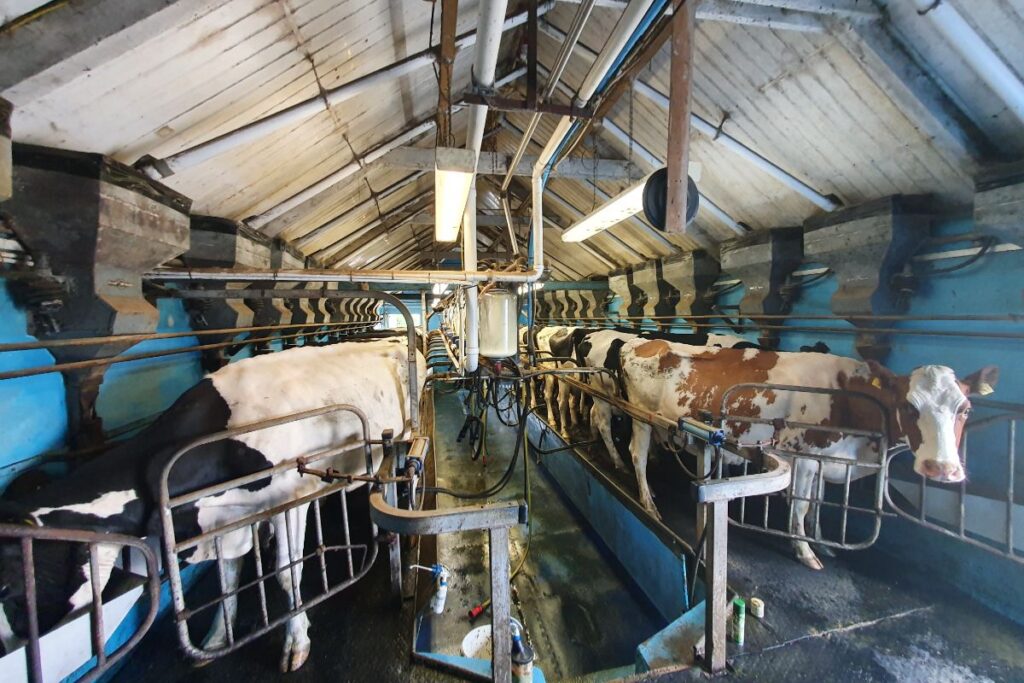
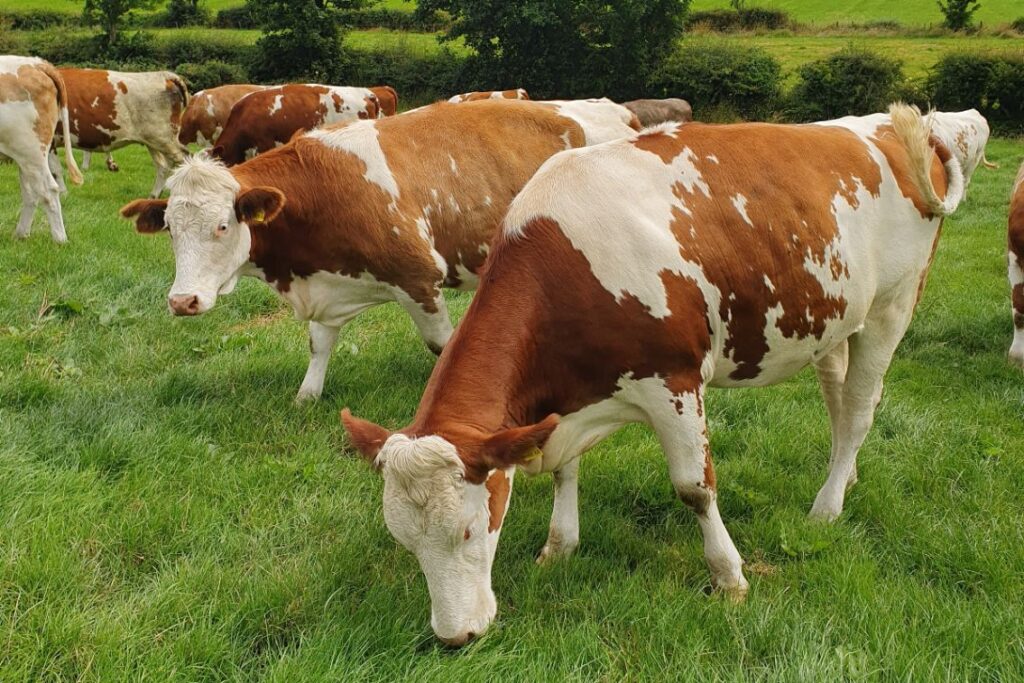
 As a growing number of dairy farmers turn to DNA testing to improve their herds, Canterbury’s Julie Bradshaw is already reaping the rewards of her investment.
 Brazil’s Minister of Agriculture, Livestock and Supply, Marco Montes, told this week’s National Dairy Forum that Brazil can be the world’s biggest supplier of dairy products, the way it currently is for soya, coffee and beef. His comments, carried in several Brazilian media outlets, referred to achieving this objective as the country has everything required to do so.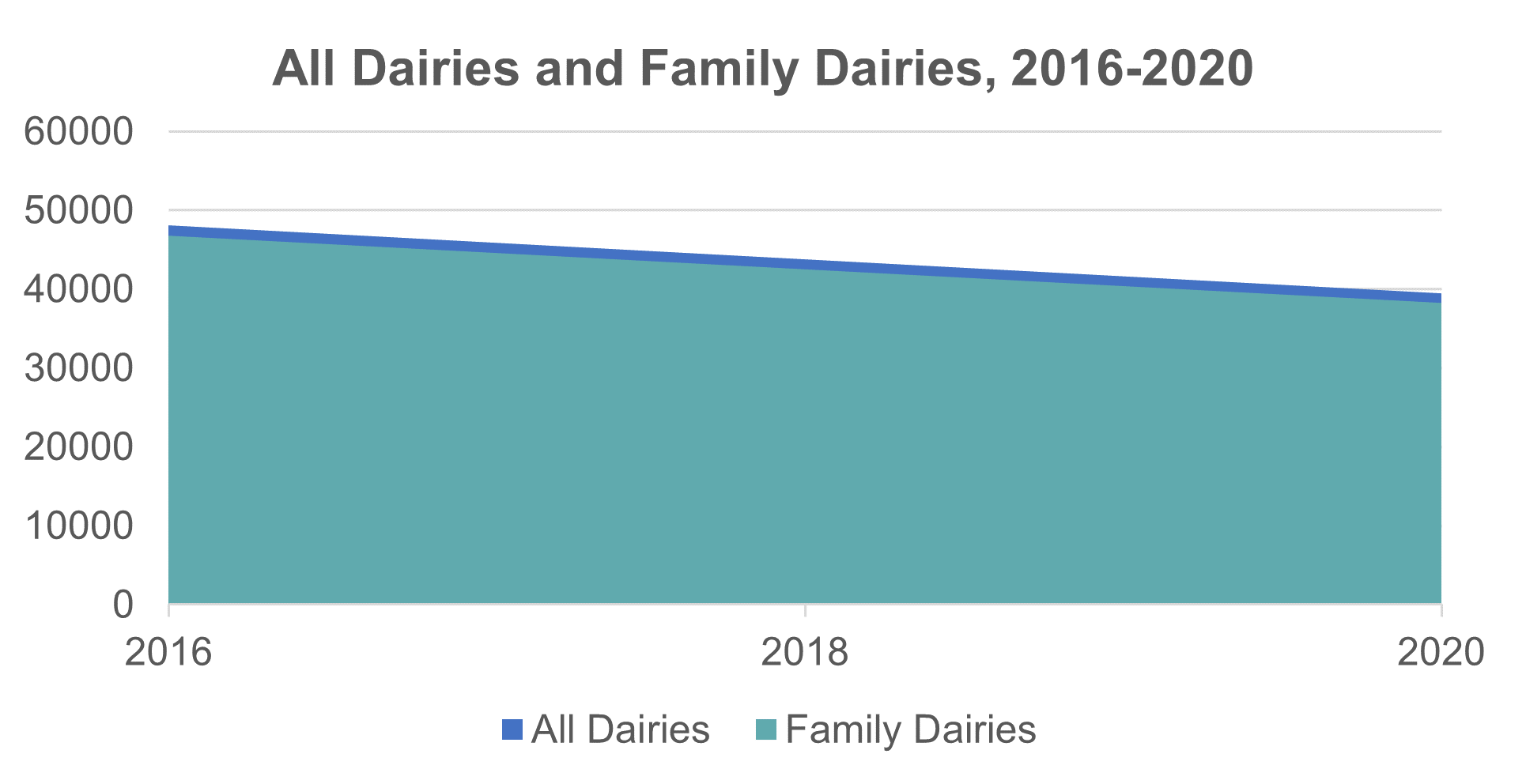
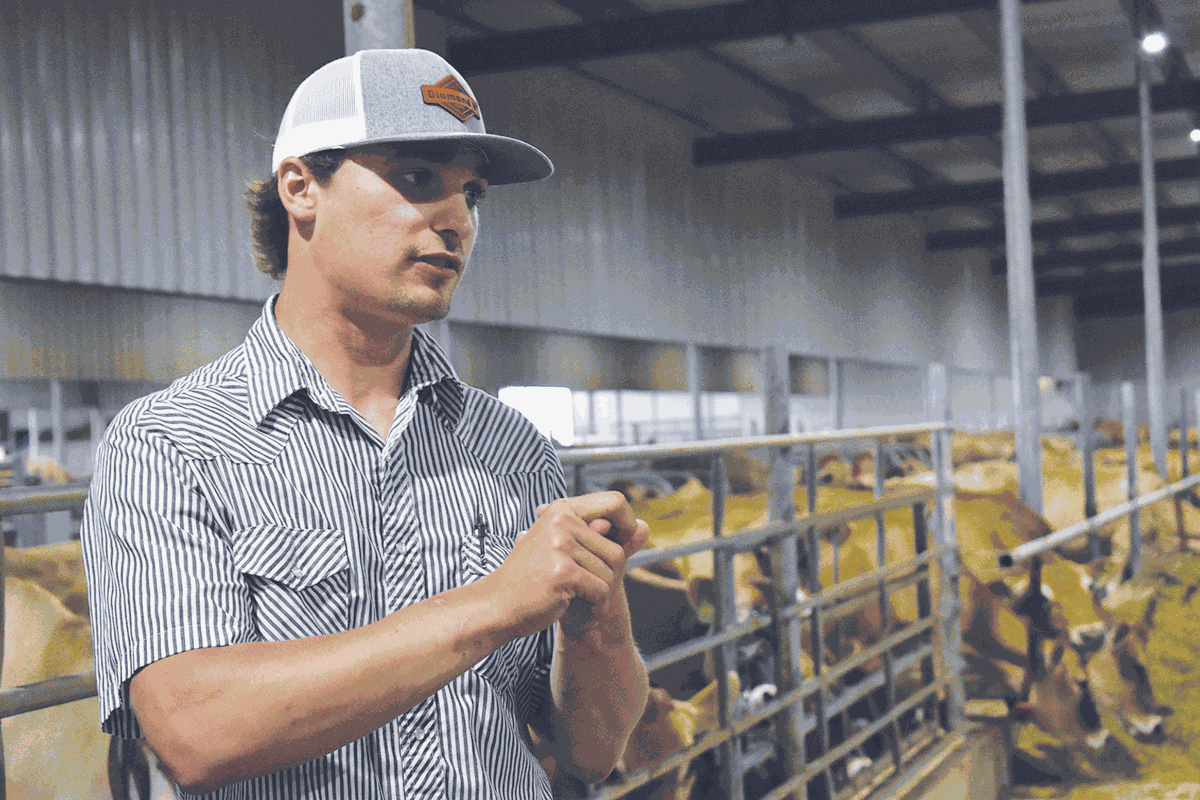
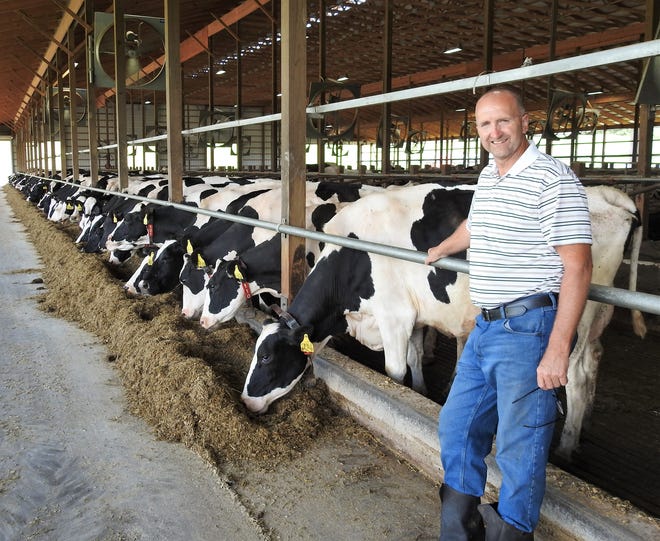 Bill Daugherty said milk prices have never been higher and Daugherty Farms in Fresno can’t produce enough to meet demands. However, inflation means everything that goes into running a dairy farm is also costlier than ever.
-Jul-07-2022-09-43-46-00-PM.jpg?width=544&name=Chart1%20(2)-Jul-07-2022-09-43-46-00-PM.jpg)
-Jul-07-2022-09-44-41-07-PM.jpg?width=554&name=Chart2%20(2)-Jul-07-2022-09-44-41-07-PM.jpg)
-Jul-07-2022-09-45-25-12-PM.jpg?width=554&name=Chart3%20(2)-Jul-07-2022-09-45-25-12-PM.jpg)