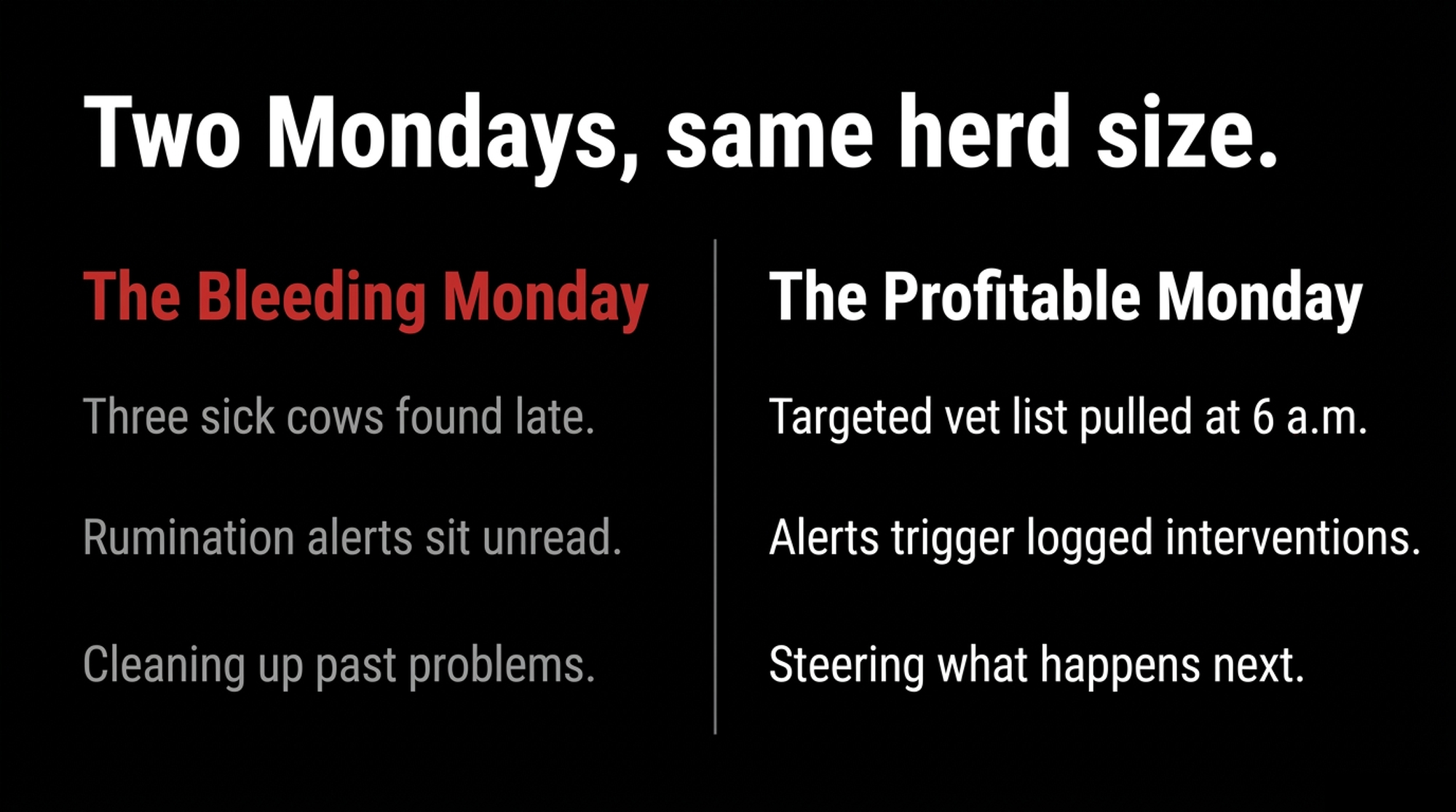
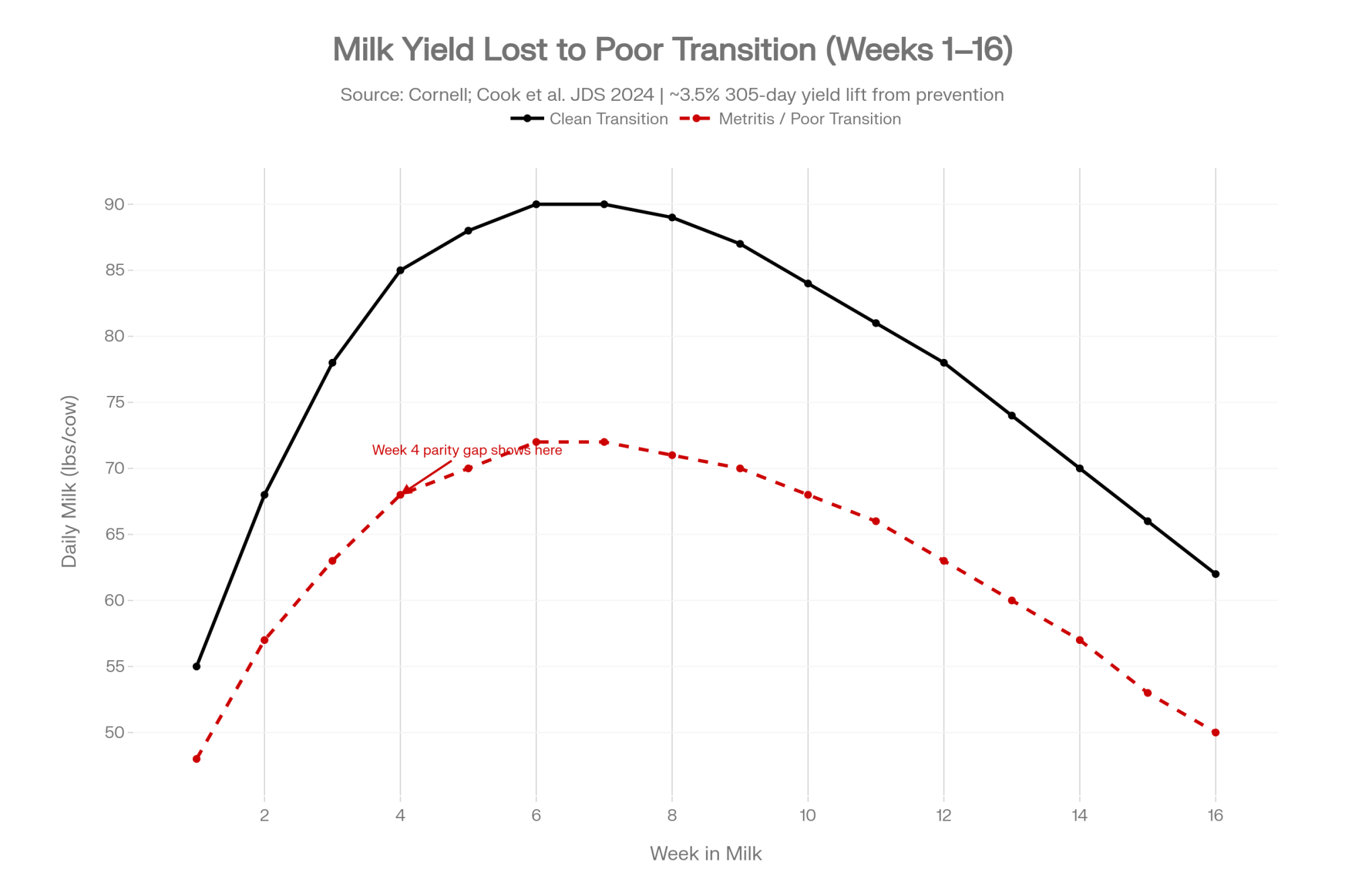
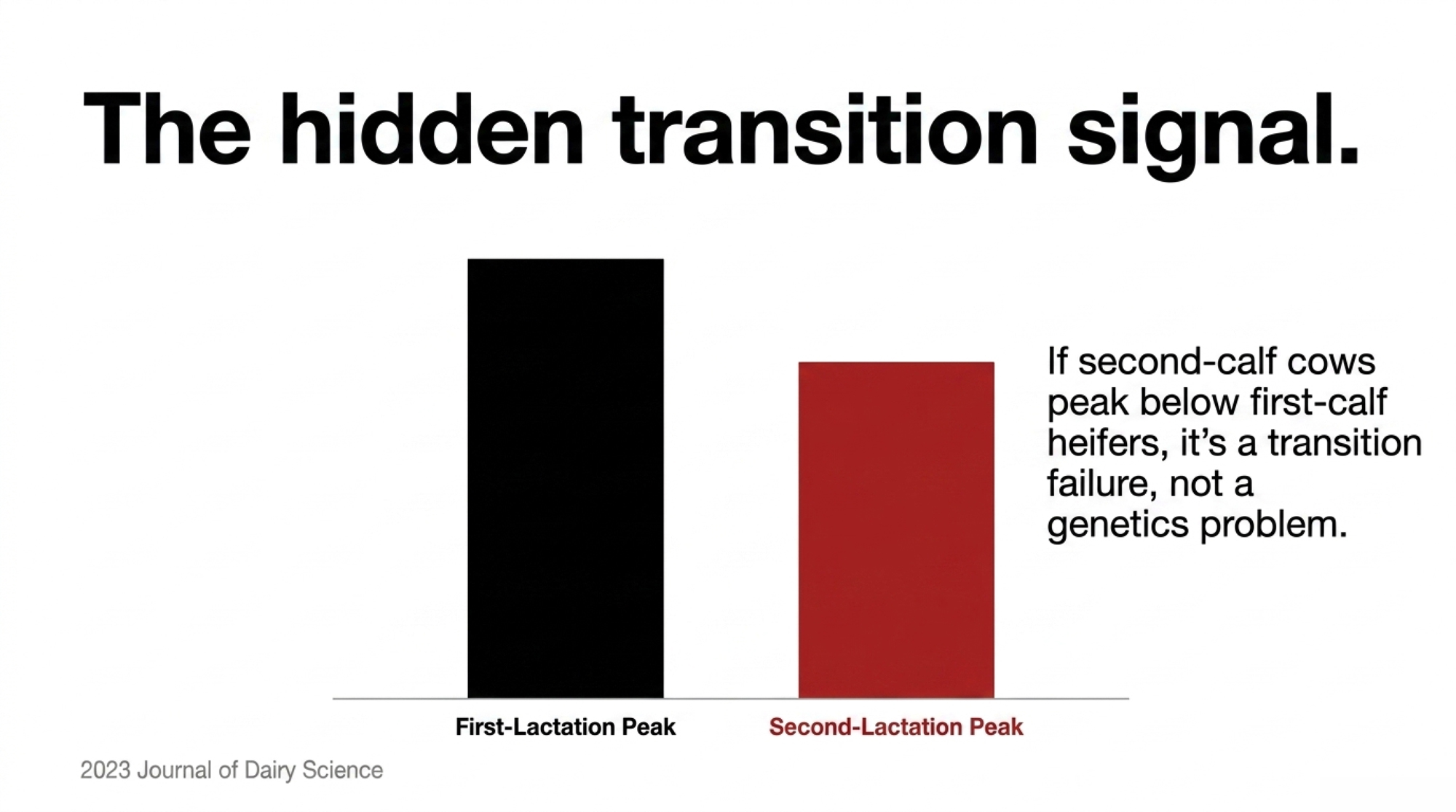
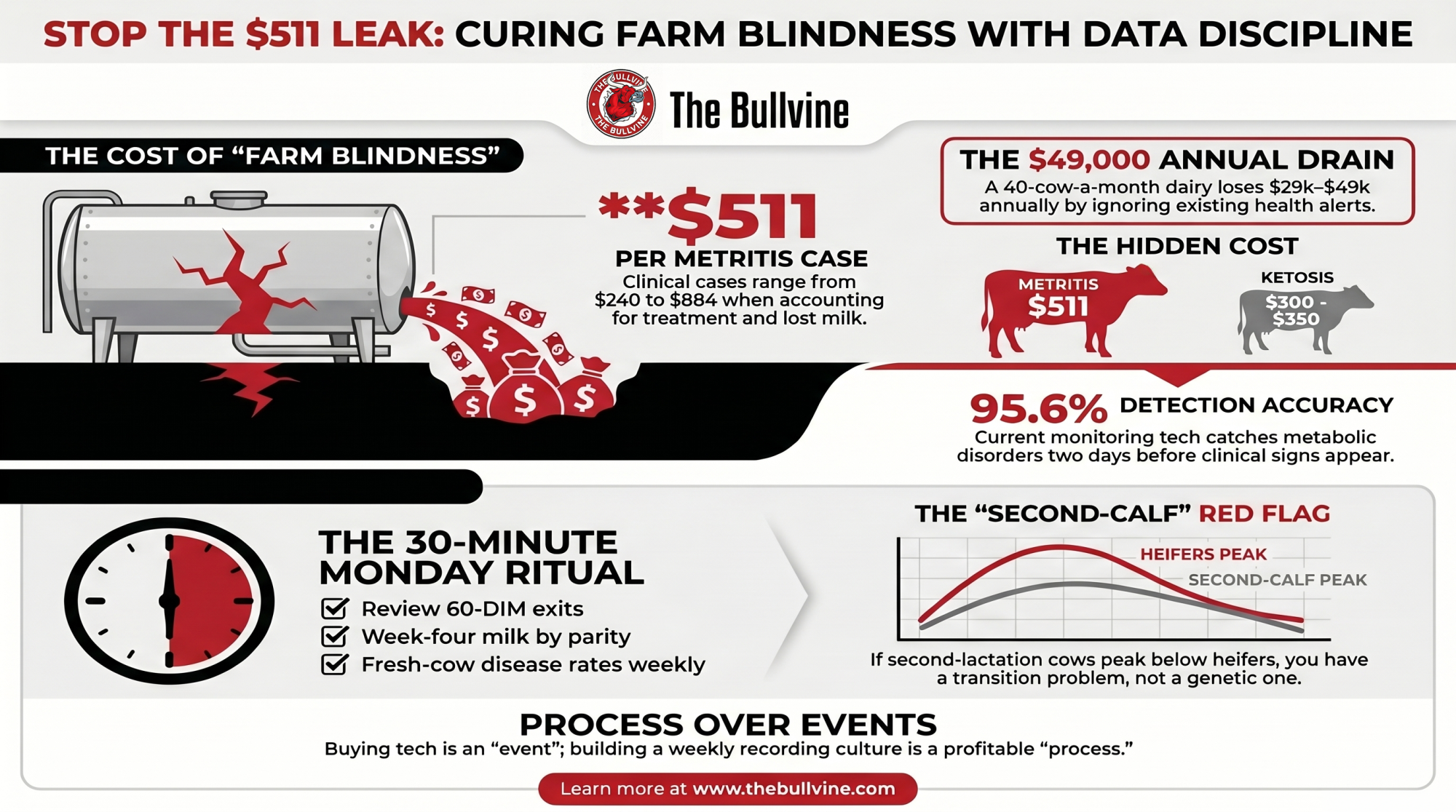
She’s a $511 metritis case waiting to happen, and she sat unflagged till Day 34. By then the cure window’s gone and you’re pricing a $3,130 replacement. Two new DRMS tools surface her first.
Executive Summary: A fresh cow goes wrong on Day 3, but your monthly DHI report doesn’t flag her until Day 34 — and by then the subclinical ketosis cure window has dropped from 75.6% at 1–9 DIM to 54.3% past three weeks. DRMS just shipped two HerdHQ tools, RapidReports and BovineBio, that let you build custom alert-driven reports and pull a cow’s full health, repro, and genetic history onto one screen, instead of printing the report and hunting it down with a highlighter. The real money’s in the cull call: that “open” cow you’re about to ship for a breeding failure may have just been sitting in the sick pen when the sync protocol came around, and at $3,130 a springer in May 2026, a wrong cull costs four figures. Run the metritis math on a 400-cow herd at $511 a case and 16–20% incidence and you’re staring at $31,000–$38,800 a year, some of it sitting inside a detection window you control. DRMS technical analyst Katie England frames both tools around one question: how fast can you get from the cow to the decision? HerdHQ comes at no added cost for herds already processing through DRMS, so the tool isn’t the line item — the decision is. Read the full piece for the three-question RapidReports checklist to run every week and the barn math behind it.
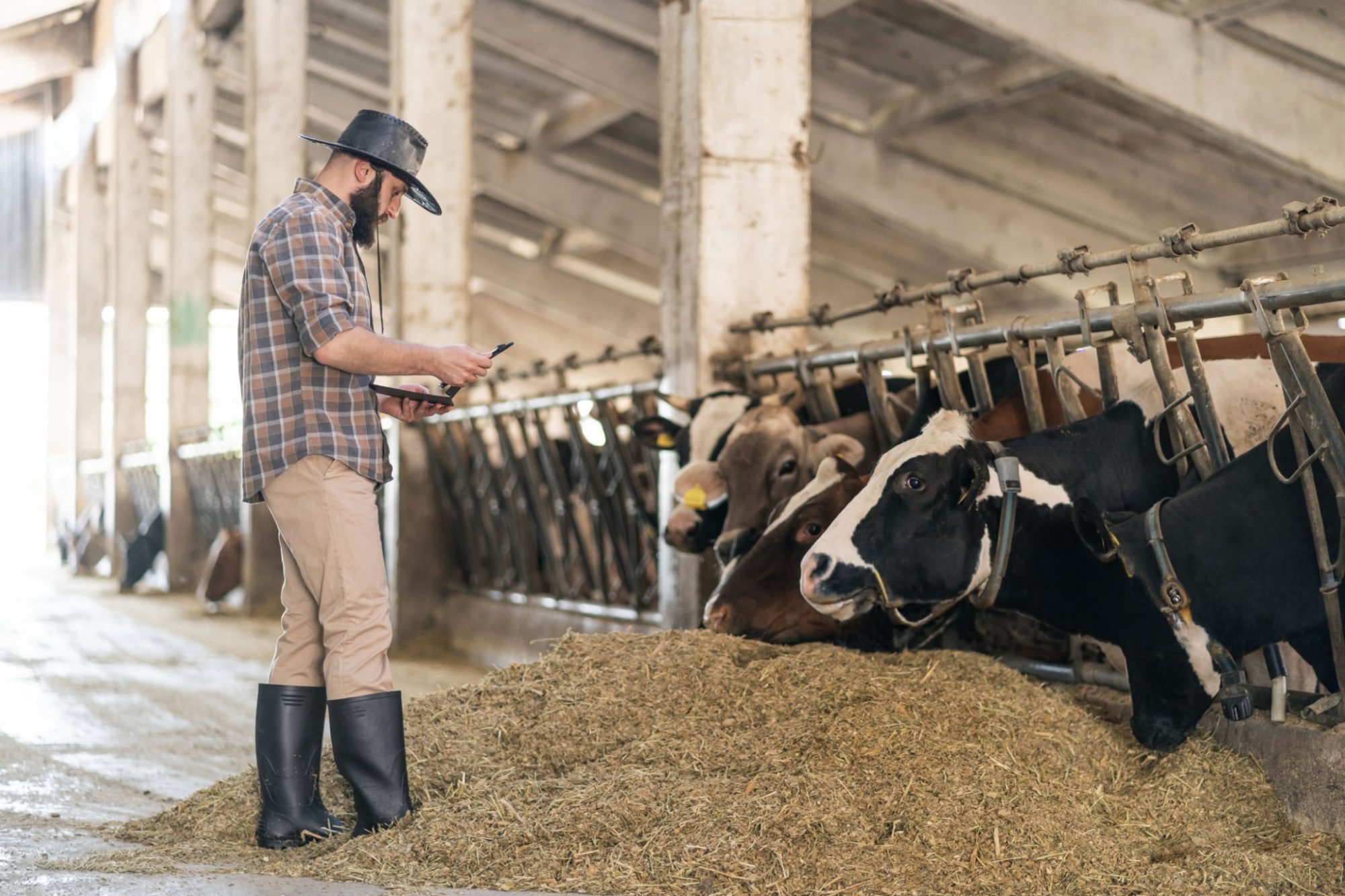
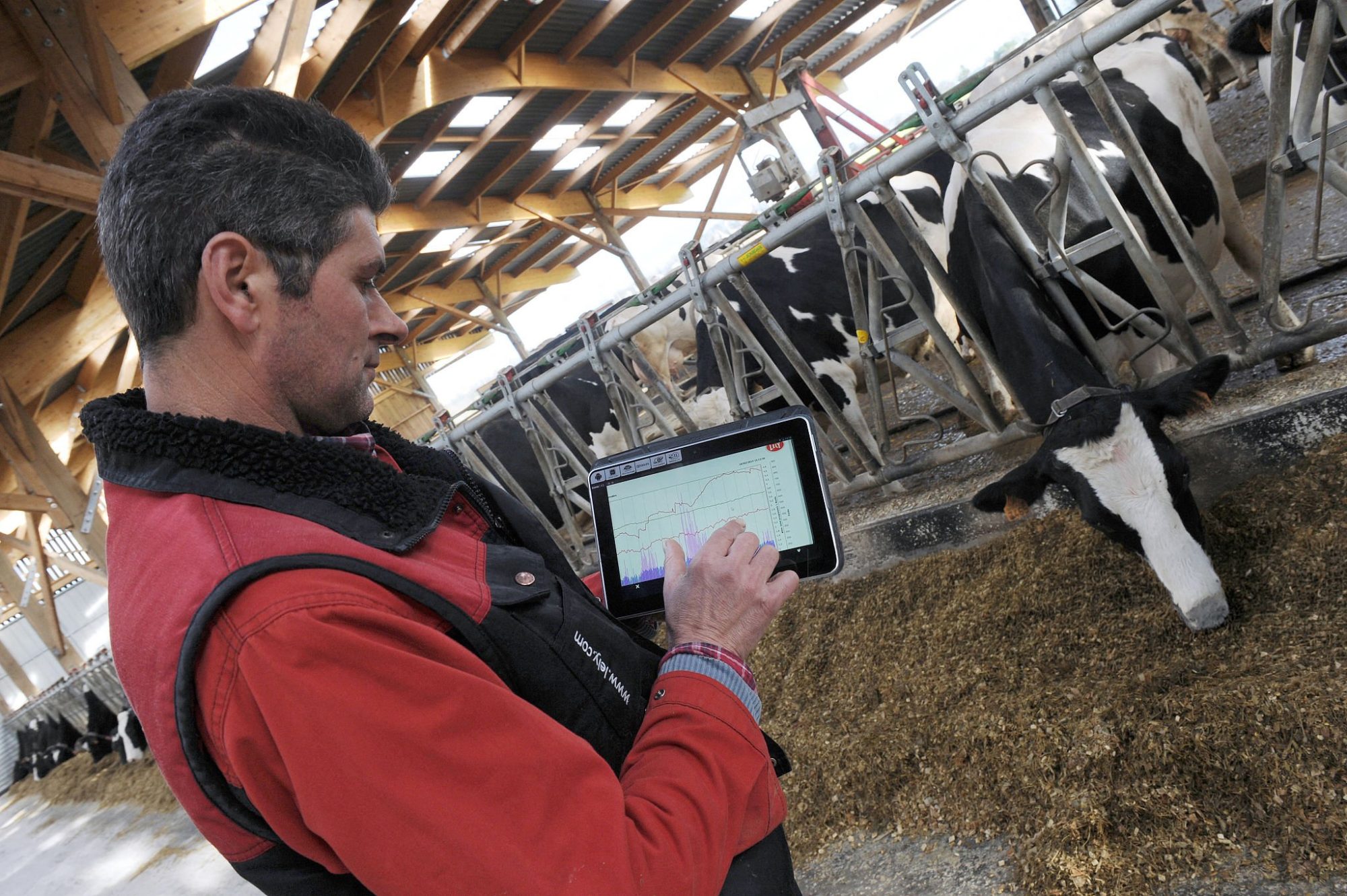
Katie England knows the old workflow because she’s described doing it herself: print the herd report, then sit there with a highlighter marking the cows that need attention before you can act on a single one. On the DairyVoice podcast this spring, that manual grind is exactly the problem she framed DRMS’s new tools as a solution to. You don’t lack the data, she points out. You lack a quick way to get to it before the cow who needs you slips past the window where help still matters.
That gap is the whole story. And on a fresh cow, it’s not a small one.
England is a Technical Support Analyst with DRMS — Dairy Records Management Systems, based in Ames, Iowa. This spring, she walked through two new tools inside the company’s HerdHQ platform, RapidReports and BovineBio, on the DairyVoice podcast with host Mike Opperman. The Bullvine doesn’t cover product launches. We cover decision tools — but only when a named professional can turn a feature into a specific management action with a dollar consequence attached. England can. So that’s the test this piece runs them through.
The Problem Nobody Names at the Coffee Shop
Here’s the tension every herd manager already carries, whether they’ve put a number on it or not. A cow freshens. Something goes sideways on Day 3 — she’s still eating, still moving, her milk’s a touch off, but she’s not waving a flag. There are 28 cows in that fresh pen, and three of them look worse. So she gets watched. Not treated.
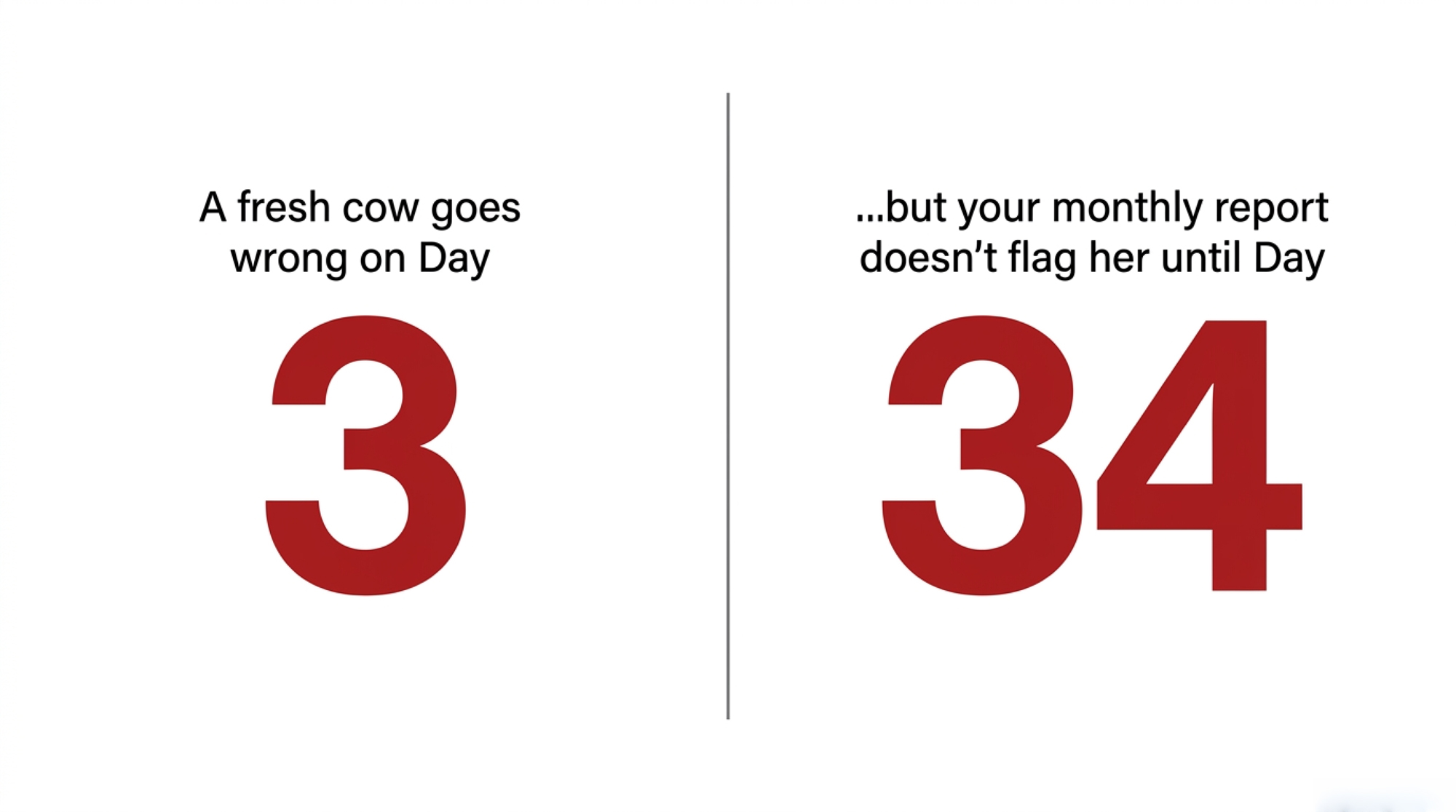
The monthly DHI report lands on Day 34 and confirms what the barn already learned the hard way.
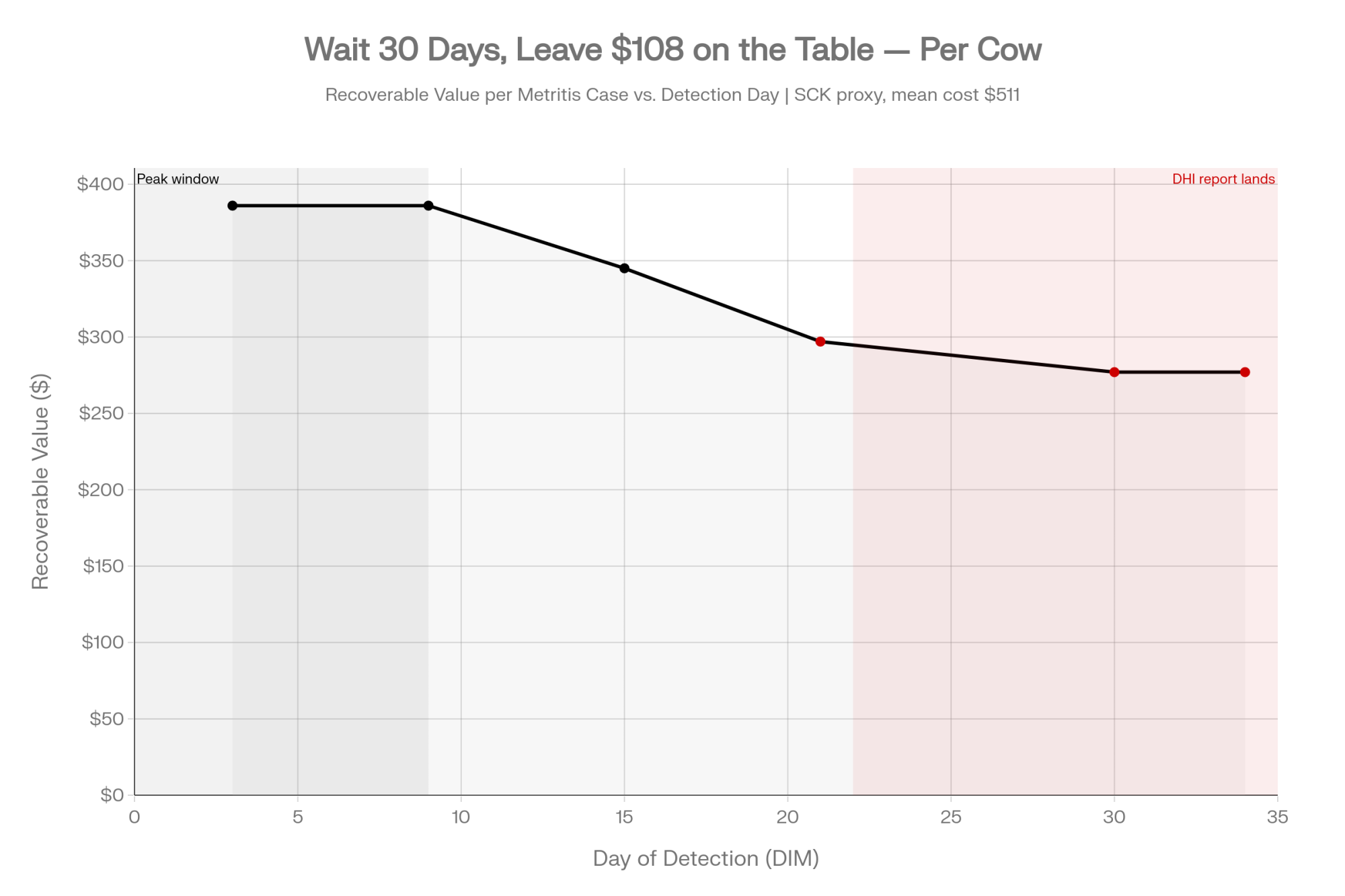
That lag isn’t a rounding error. The transition-disease research frames the stakes in two numbers:
- Roughly one in three fresh cows picks up at least one clinical disease in the first three weeks of lactation. [VERIFY: source for one-in-three fresh-cow disease rate]
- Nearly 25% of cows that leave the herd do so inside the first 60 days in milk. [VERIFY: source for 25%-leave-by-60-DIM]
The first 21 days decide a lot about whether a cow stays in your barn or leaves it early.
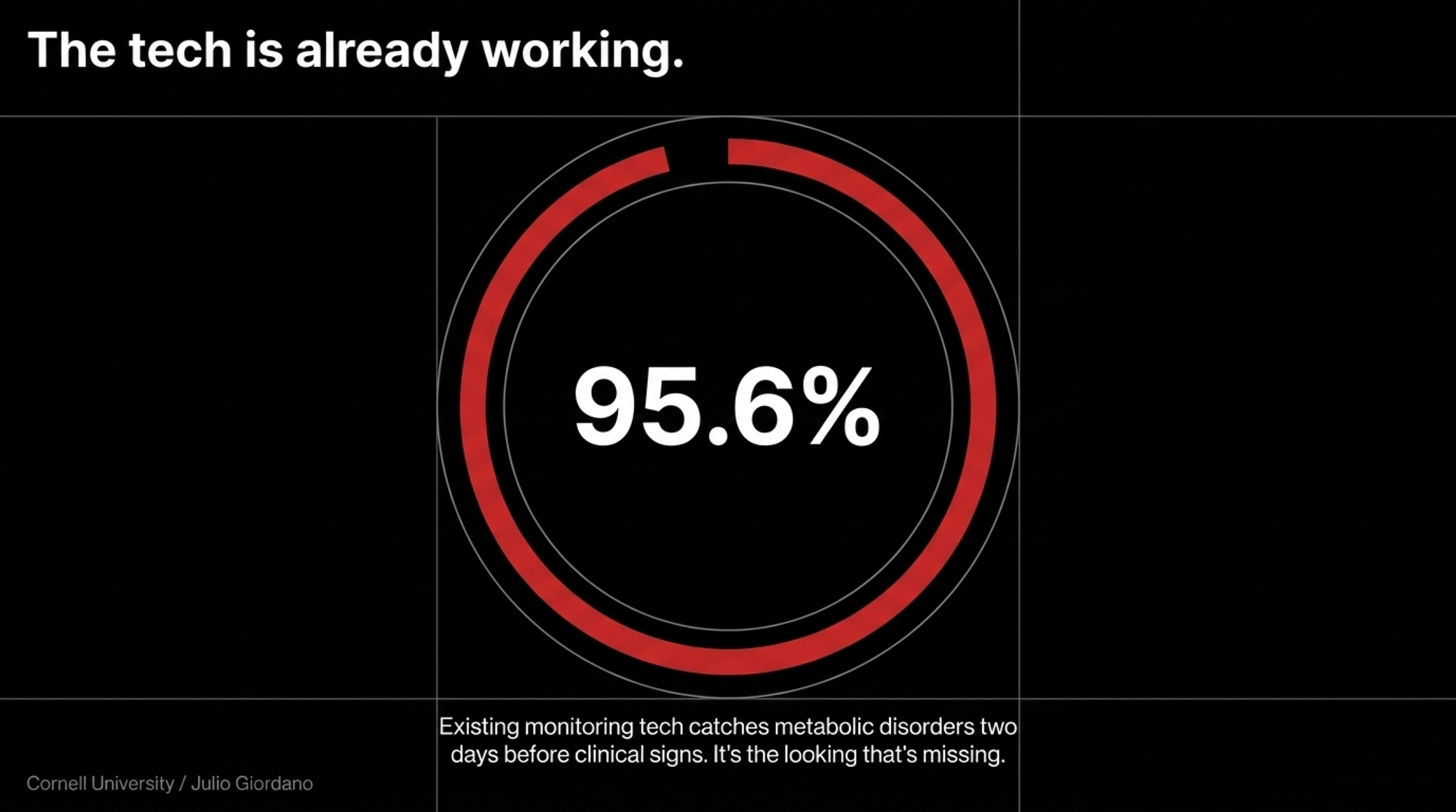
Treatment timing is where the money lives. A 2022 study in Frontiers in Veterinary Science put hard numbers on it for subclinical ketosis — same disease, same treatment, the only variable was how fast it got caught:
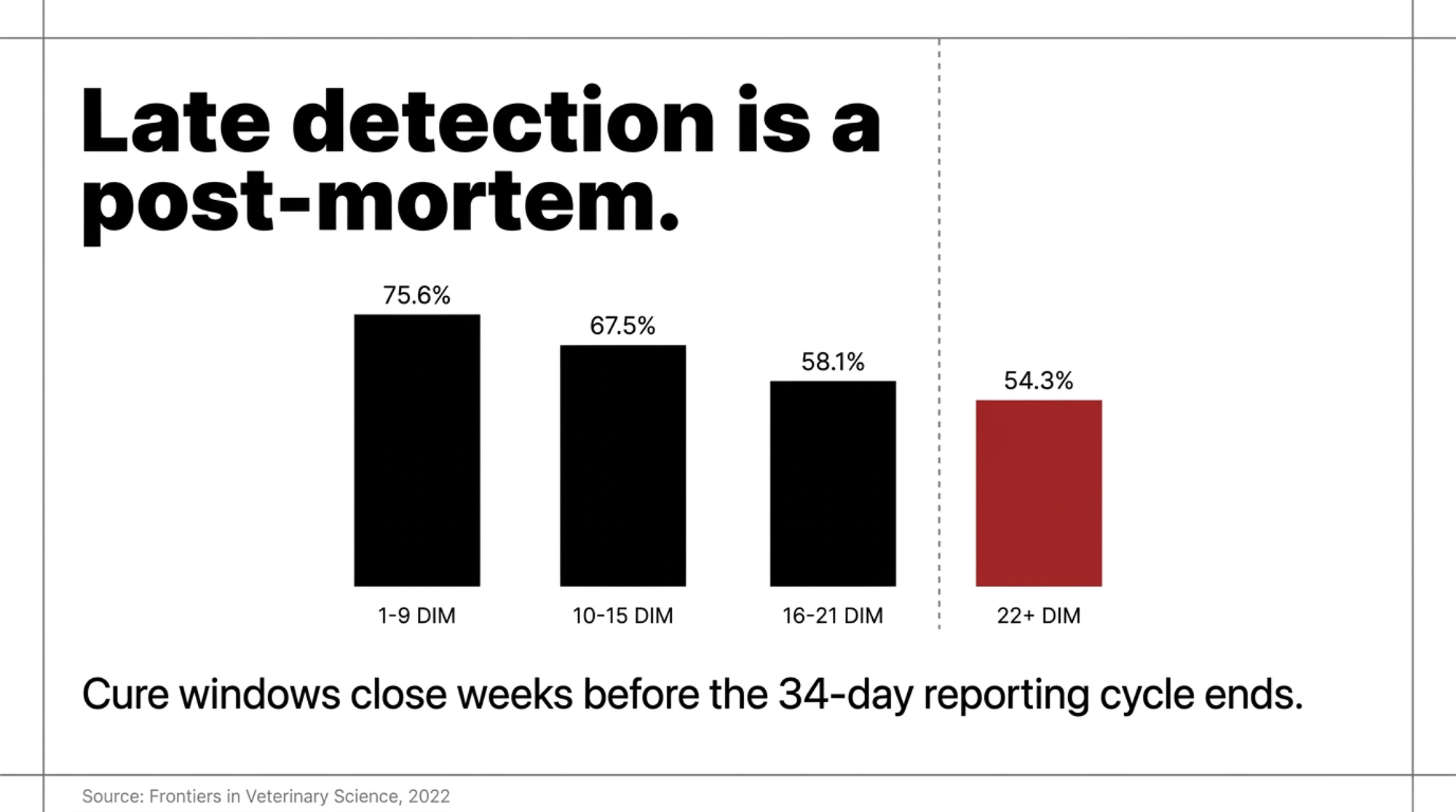
- 1–9 DIM: 75.6% cure
- 10–15 DIM: 67.5% cure
- 16–21 DIM: 58.1% cure
- 22+ DIM: 54.3% cure
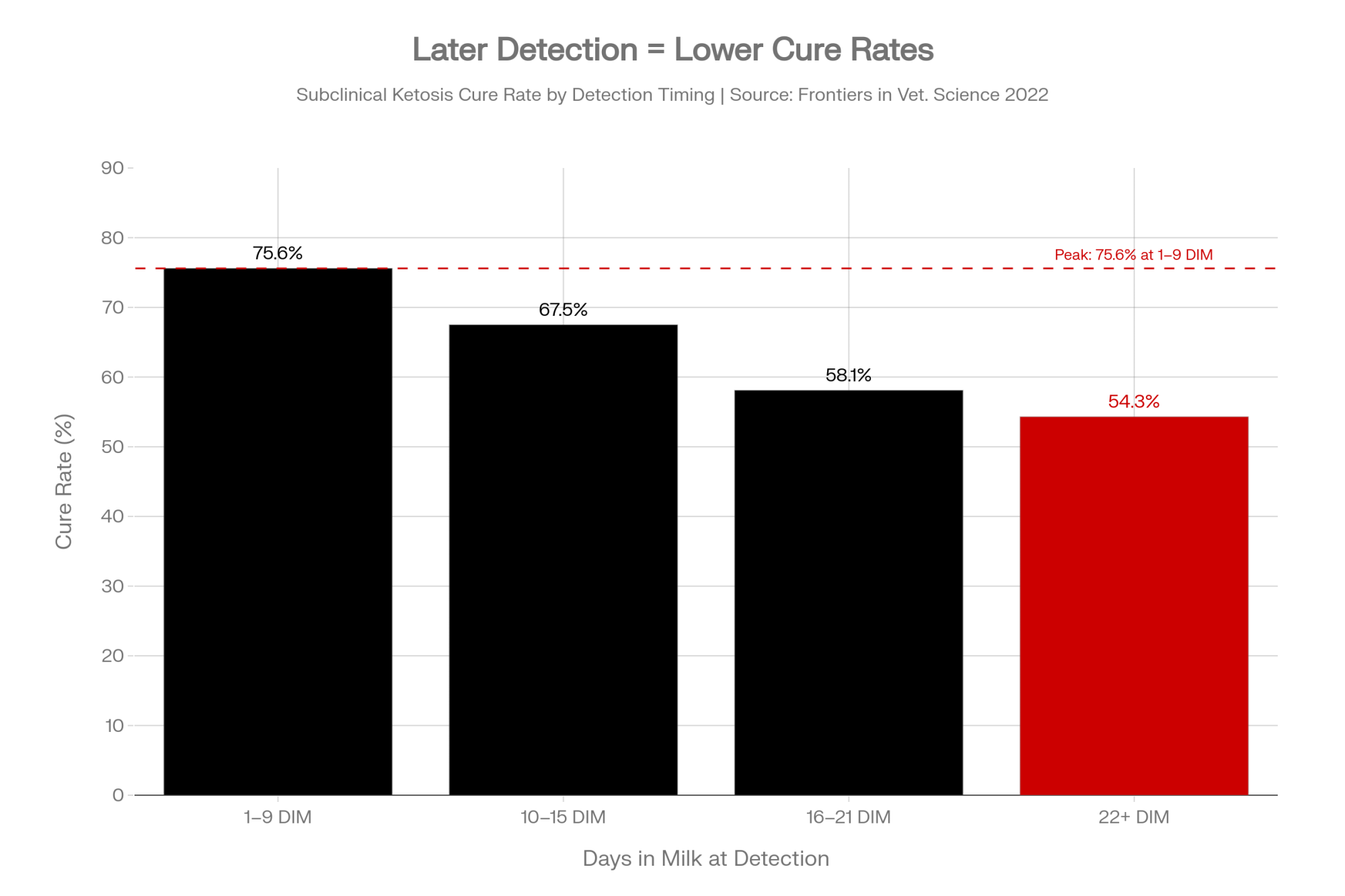
A reporting cycle that delivers on Day 34 isn’t early detection. It’s a post-mortem.
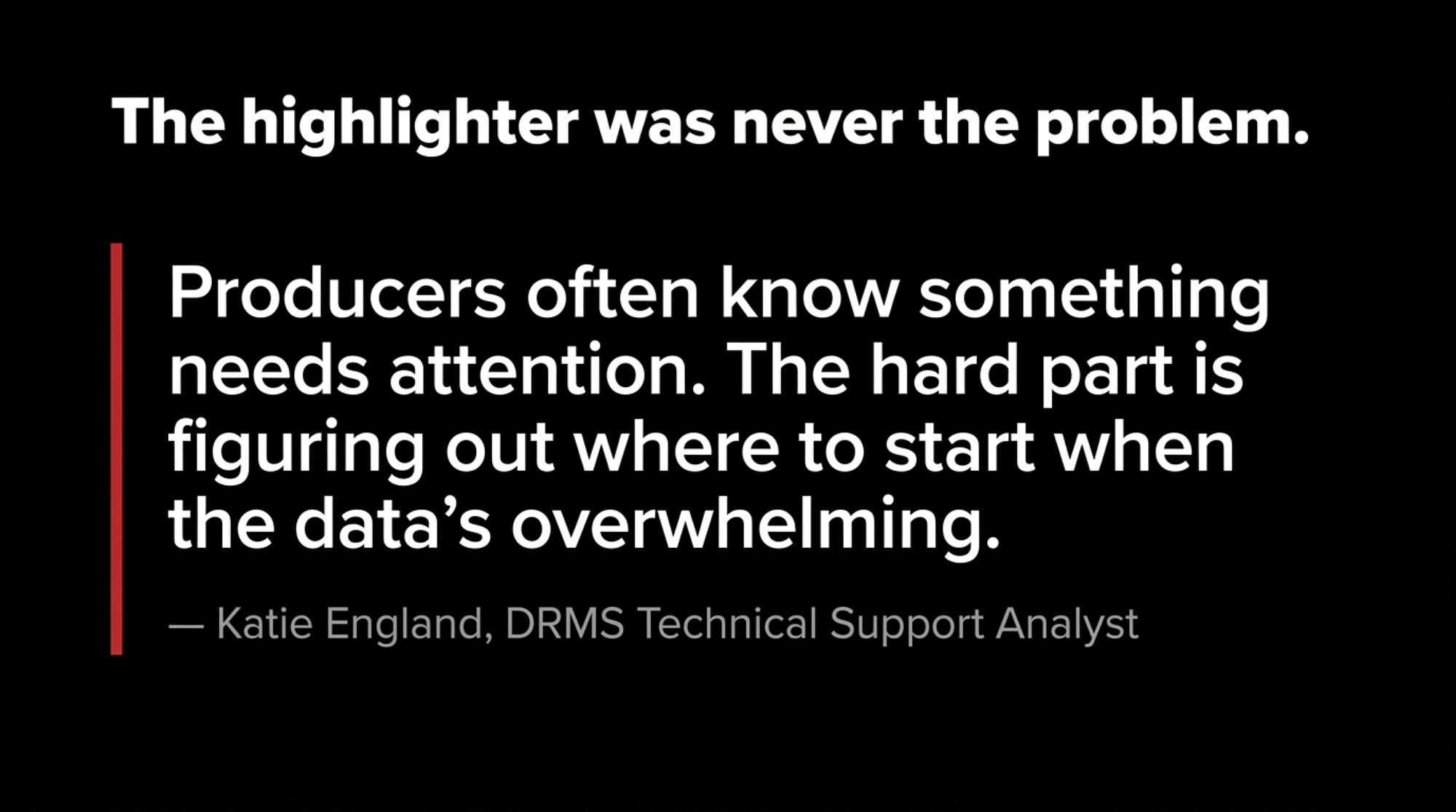
On DairyVoice, England put the human version of it plainly: producers often know something needs attention, she said — the hard part is figuring out where to start when the data’s overwhelming. If you run a fresh pen, you’ve lived that sentence. This one’s for you.
What Was the Highlighter Actually Doing?
Start with what each tool is, in DRMS’s own words, because the spec sheet matters before the story does.
RapidReports lets users build, edit, and export custom herd reports from any web browser using Test Day or DartSync data, with user-defined alerts. You sort, you filter, you set the thresholds that make a cow pop, and you drill straight into a single cow’s page from the list. No software to install. No waiting for the office computer to free up. DRMS frames the target user as the producer who rarely pauses for a break, much less for office time reviewing the latest Test Day results.
BovineBio is the other half of the same idea, aimed at the individual animal rather than the list. It’s a customizable, cow-level page with drag-and-drop tools that pulls one cow’s full record — health, reproduction, genetics, lifetime trends — onto a single screen. Note what it is and isn’t. Despite the name, it’s not a sire-selection or genomic-comparison engine. It’s a cow biography: her whole story, arranged the way you want to read it, instead of scattered across tabs and reports. More on why that distinction earns its keep in a minute.
England described RapidReports as the manual grind she used to do. She’d have the report printed out, she said on DairyVoice, then still be going through it, highlighting the information she needed. Pairing a visual alert with the report, in her telling, is what lets you stop digging through the data and have it surface on its own.
The highlighter was never the problem. The lag between the report printing and the highlighter finding the right cow — that was the problem. On a fresh cow, the time spent digging is real money walking out the door.
The Cow That Almost Got Shipped
This is the part that should make you set the phone down and walk out to the pen.
England walked through a scenario she’s watched play out. A cow doesn’t catch on her last round of Timed AI. The reflex is to read that as a fertility failure and start the cull conversation. But pull her full profile, and the story flips.
The tell, in England’s example, was group movement. The cow had been out of her normal pen and over in the sick pen, which is how she fell through the cracks on her breeding window in the first place. Spot that, England said, and you can get her back on track before her days in milk run out, and you’re staring at a culling decision instead of a calf on the ground.
Read it twice. The missed breeding wasn’t about her reproductive tract. It was a pen-management gap — she was in the hospital pen when the sync protocol came around, and nobody joined those two facts because they lived on different screens.
That’s the question BovineBio is built to answer, and it’s a different question than RapidReports asks:
| Feature | RapidReports | BovineBio |
|---|---|---|
| Primary question | Which cows need attention today? | Why is this cow underperforming? |
| View level | Herd list / group | Single animal |
| Key function | Custom alert-driven filtered reports | Full cow biography on one screen |
| Data sources | Test Day, DartSync | Health, reproduction, genetics, lifetime trends |
| User-defined thresholds | ✅ Yes | ✅ Yes (drag-and-drop layout) |
| Primary use case | Fresh cow flagging, SCC sweeps, cull audit | Pen-movement investigation, cull/breed decision |
| Requires software install | ❌ No — browser-based | ❌ No — browser-based |
| Added cost (DRMS herds) | $0 — included in HerdHQ | $0 — included in HerdHQ |
| Weekly check trigger | Every Monday before pen walk | Before any cow ships |
| Decision it prevents | Missing a treatable fresh cow | Culling a fixable cow for the wrong reason |
The sire summary on a bull tells you about his daughters in the aggregate. It can’t tell you that the open cow in your bottom third spent two weeks in the hospital pen during her breeding window. Only her own consolidated record does that.
Without the consolidated view, she goes down the road. With it, she’s back on a protocol, catches the next round, and there’s a calf on the ground in nine months instead of a hole in the string and an early replacement bill. That’s not a feature demo. That’s a cow who almost wasn’t there.
What Does the Detection Gap Actually Cost? Run the Math.
Let’s put a floor under it, assumptions showing, because a barn tool is only worth what you can pencil out from it.
Start with calvings and the right number. Every cow in the milking string has to calve to be in it, so a 400-cow herd runs close to 400 calvings a year — call it ~380 after you back out mortalities and abortions. Turnover doesn’t shrink that figure; it just decides how many of those calvings come from heifers versus cows. This is where a lot of back-of-the-napkin barn math goes wrong, and it understates the exposure badly.
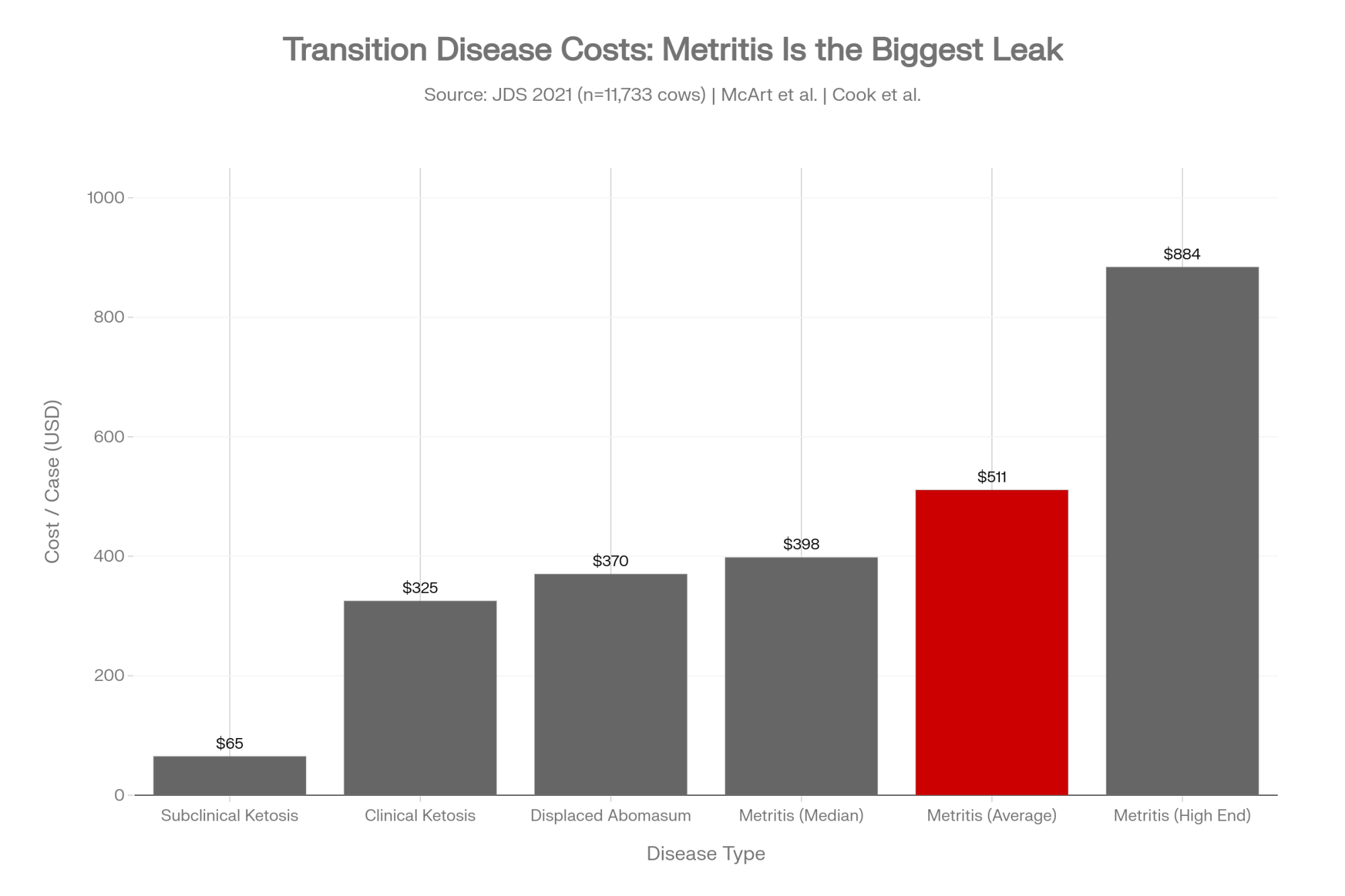
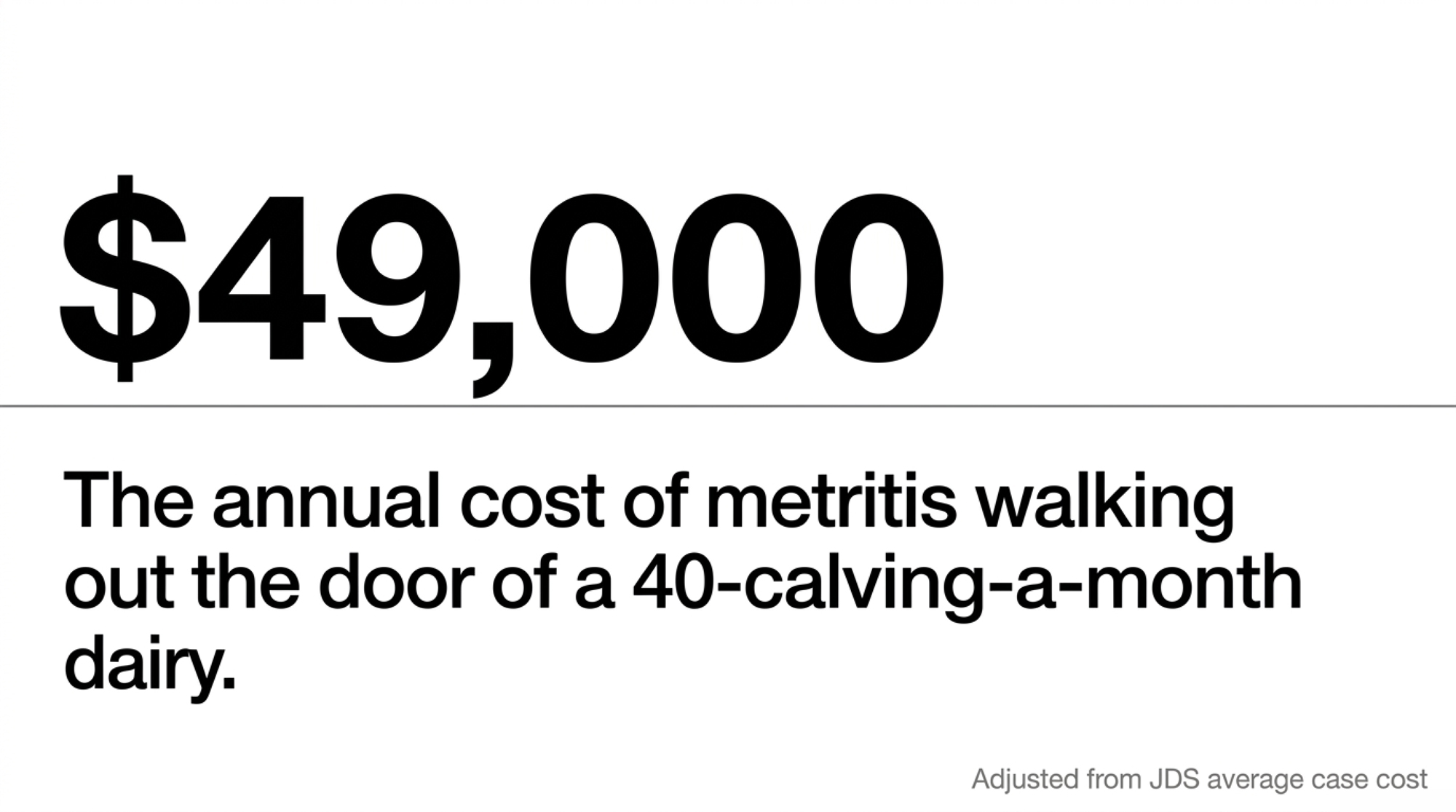
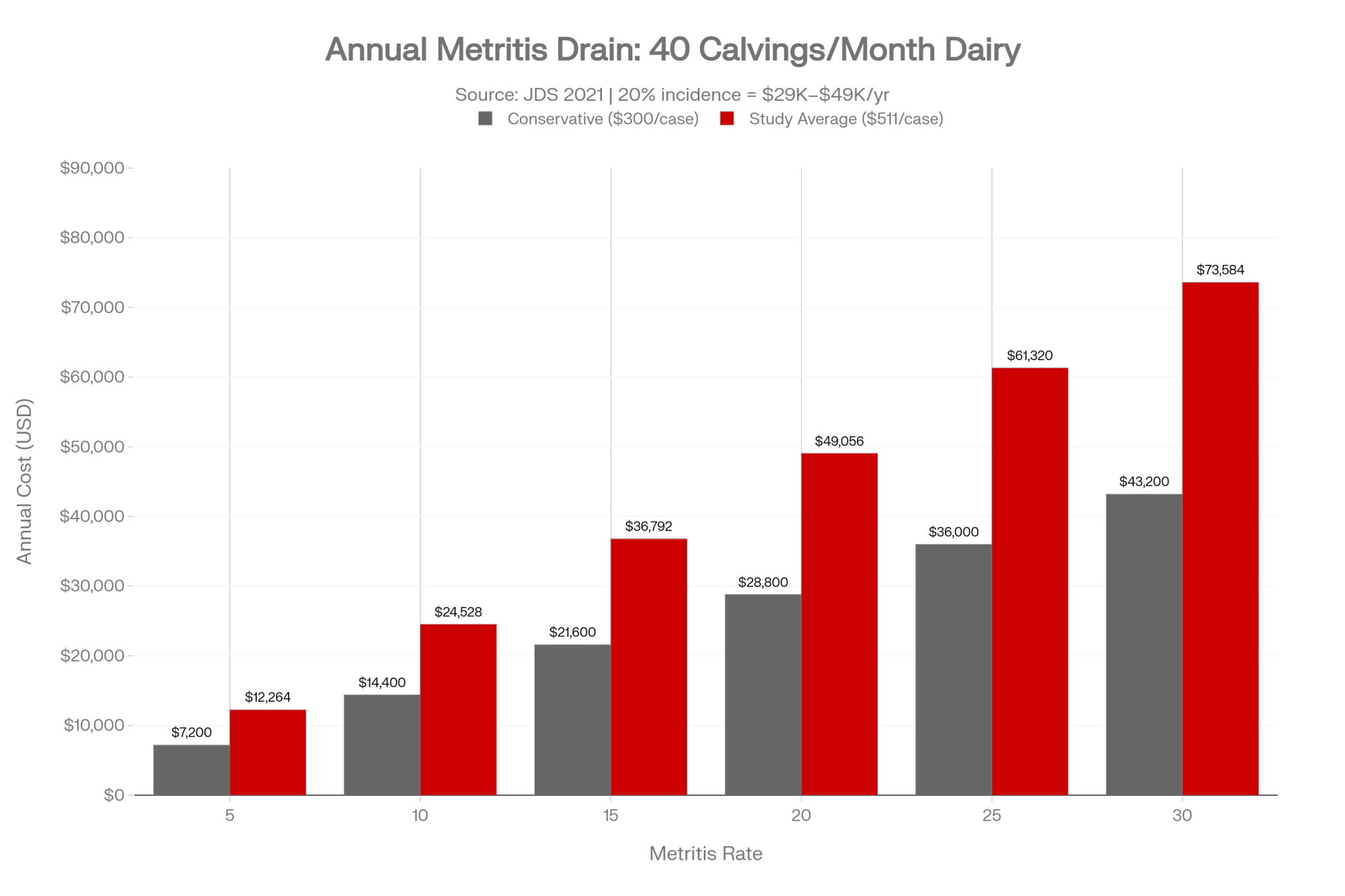
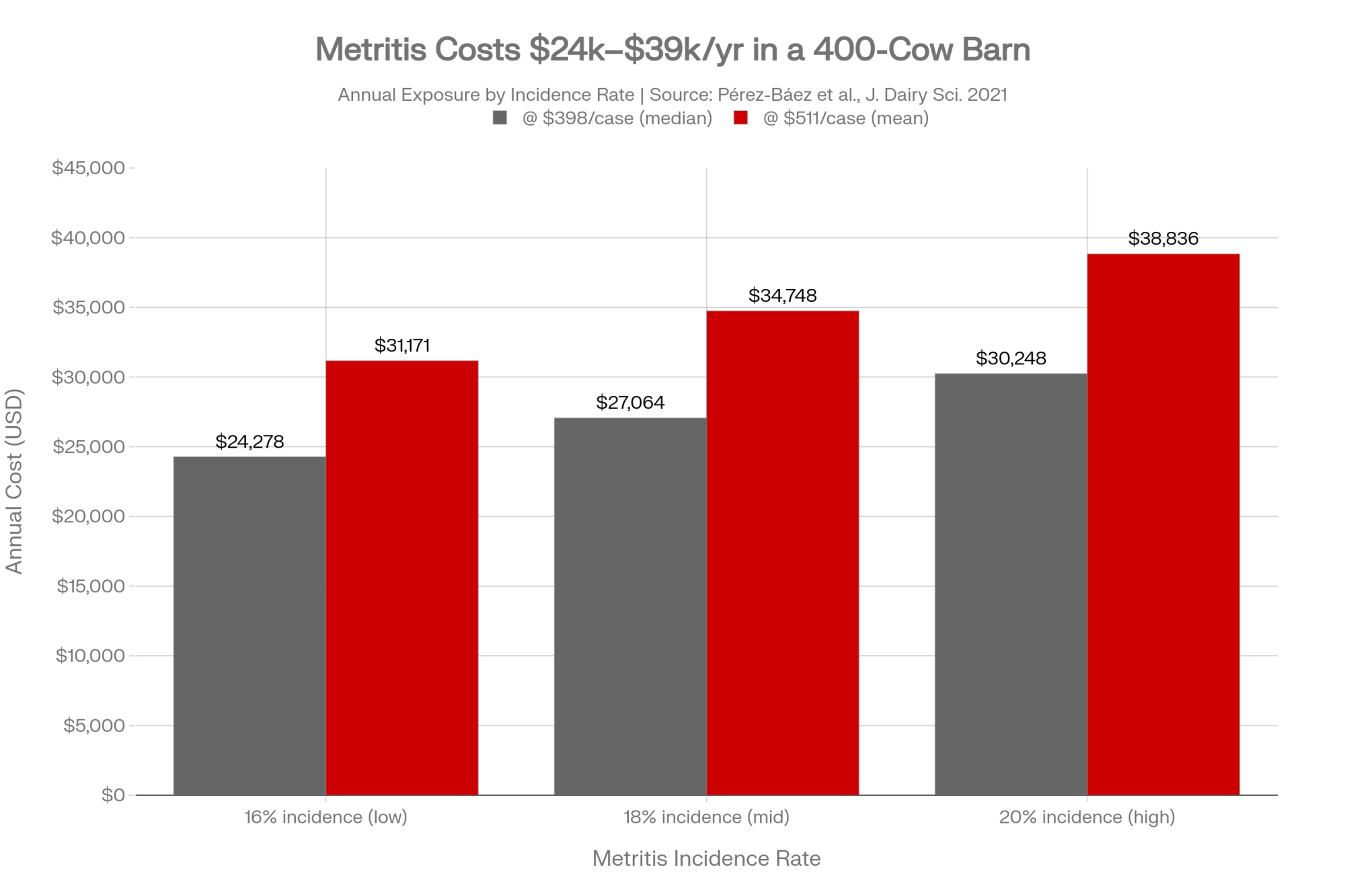
Now the disease rate. Metritis incidence across 20 U.S. herds averaged 16%, ranging from 4.2% to 29.2% farm to farm. MSU and University of Florida extension figures center closer to 20%, with some farms north of 40%. A 2021 study in the Journal of Dairy Science — 11,733 cows across 16 herds in four U.S. regions — pegged the mean cost of metritis at $511 per case, median $398, already accounting for lost milk, longer days open, and higher cull odds.
Put it together for a 400-cow herd:
Metritis Cost Exposure — 400-Cow Herd (Illustrative Model)
| Input | Figure | Source |
| Calvings per year (~400 minus ~5% loss) | ~380 | Herd size, not cull rate |
| Metritis incidence range | 16–20% | 20-herd study; MSU & UF extension |
| Estimated cases per year | 61–76 | Calculated |
| Mean cost per case | $511 (median $398) | Pérez-Báez et al., J. Dairy Sci.2021 |
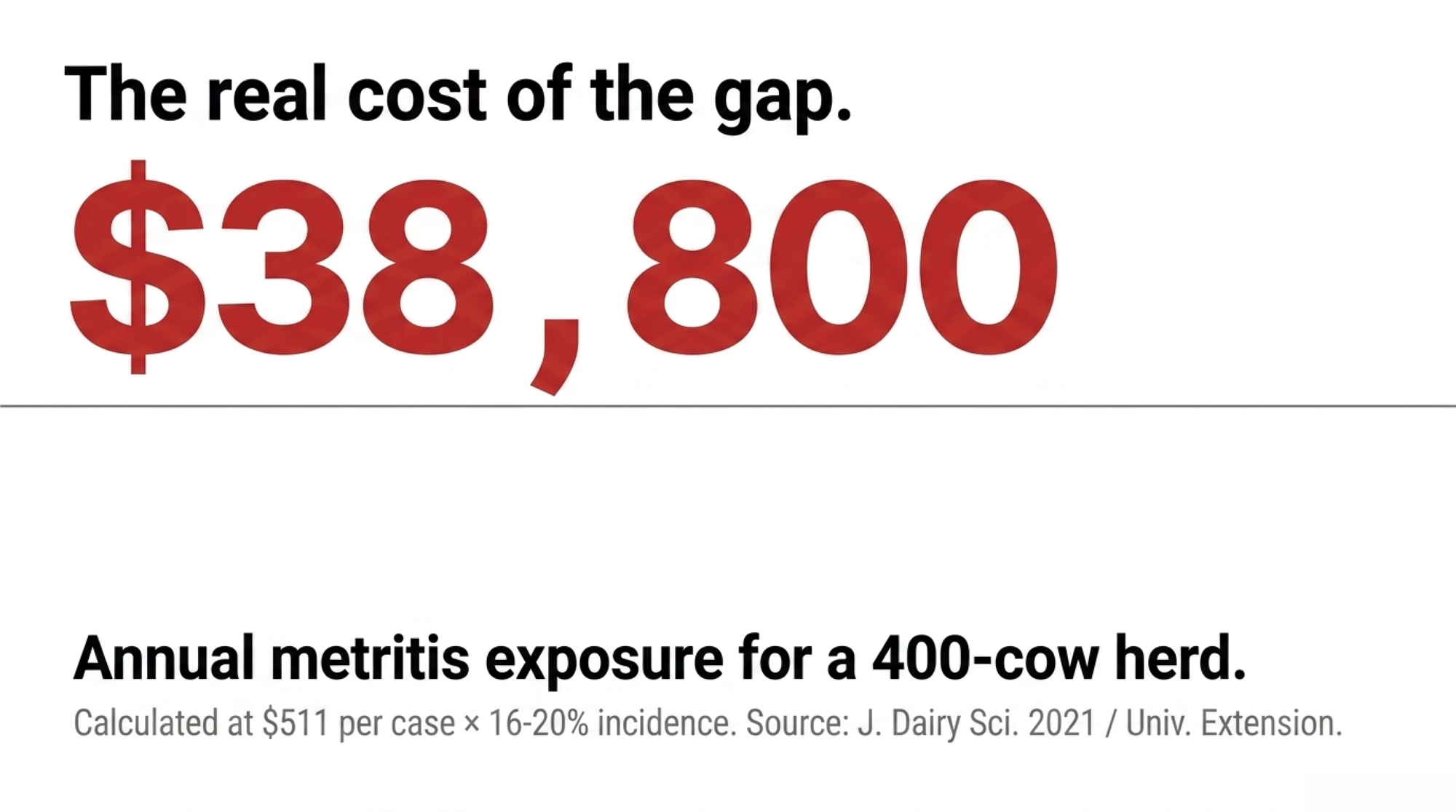
| Annual metritis exposure | ~$31,000–$38,800 | Calculated |
| Recoverable at 25% earlier detection | ~$7,800–$9,700/yr | Illustrative — not a DRMS outcome |
| Metritis only — before ketosis, mastitis, or DAs hiding in the same window. |
That’s three times the number you’d get if you were wrongly anchored to turnover rather than to herd size. The real exposure to one disease in one 400-cow barn is north of $30,000 a year.
Now, the honest caveat on that bottom row. The 25% is an illustration, not a measured RapidReports outcome — nobody’s run that trial, and DRMS hasn’t published one. RapidReports doesn’t treat cows; it surfaces them. So plug in whatever recovery rate your own fresh-cow protocol can actually defend, and treat the result as a target to test, not a promise to bank.
The Cull-or-Keep Call Is the Four-Figure One
Metritis is the recurring leak. The cull-versus-breed decision is the big single hit, and it’s where the detection gap gets expensive fast.
Ship a cow at 150-plus DIM you could’ve kept, and you don’t just lose her. You pull a replacement heifer up early to fill her stall, which drags your whole replacement schedule forward and ties up money you’d planned to spend next year. Raising that heifer from birth to first calving commonly runs $2,000–$2,800, per extension and Bullvine figures, and you’ve now spent it sooner than the budget said.
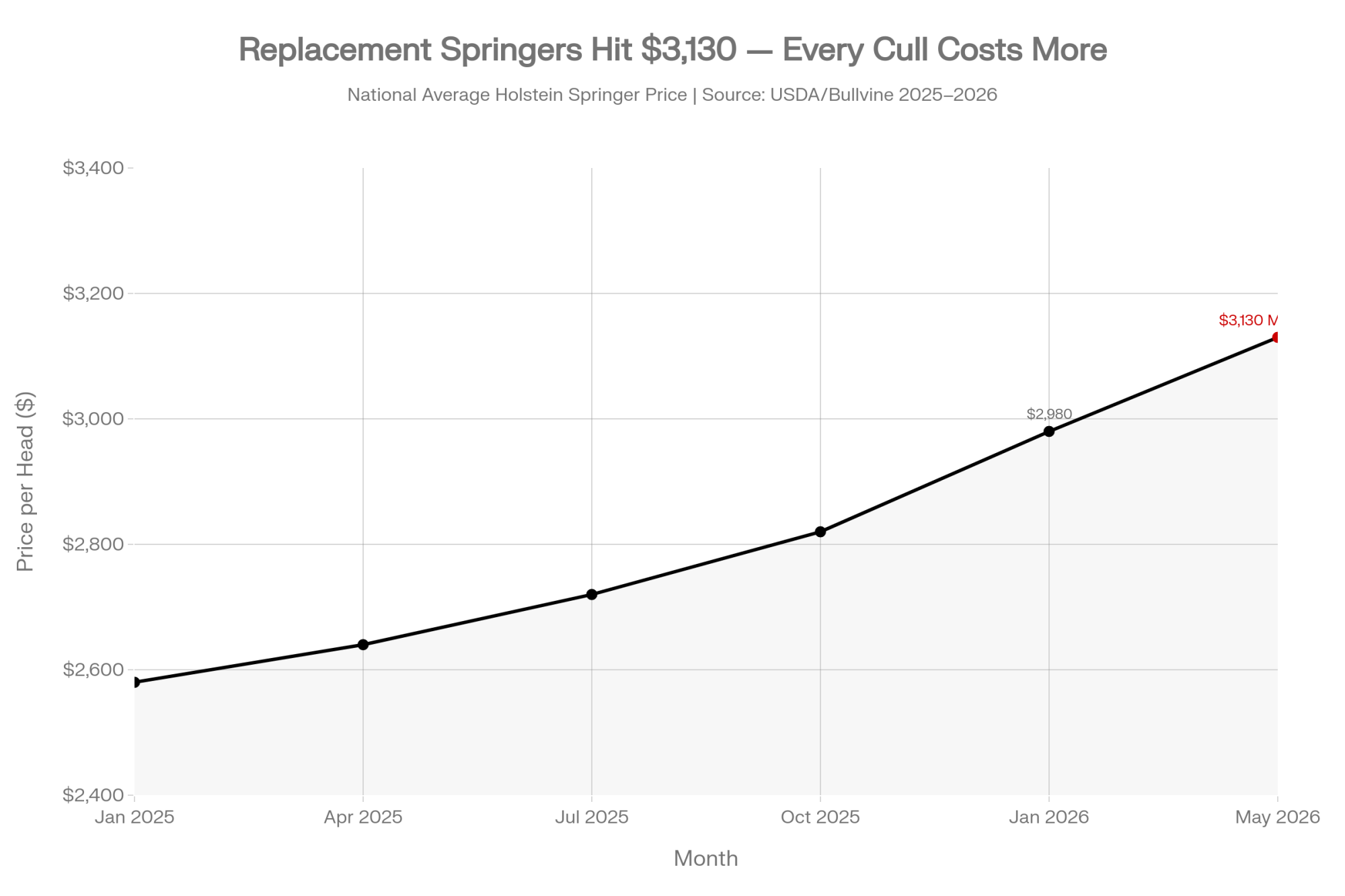
Buying instead of raising hurts worse right now. The national average for dairy-replacement milk cows hit $3,130 a head in May 2026, up from $2,980 in January, with top Holstein springers clearing $4,000 in tight regions. That’s not a soft market you can wait out — it’s a heifer shortage that turns every avoidable cull into a four-figure purchase at the worst possible time.
Run the two paths side by side on the cow from England’s example. Cull her, and you’re out a productive animal plus the early replacement cost — call it the heifer’s raised value or that $3,130 sticker if you’re buying. Catch the pen-movement story instead, get her bred back, and you keep the cow, keep the calf she’ll drop, and leave your replacement schedule where you planned it. The decision turns entirely on whether you saw her record before the cull list got built.
| Decision Pathway | Catch Early & Keep | Miss & Cull |
|---|---|---|
| Trigger scenario | Fresh cow flagged Days 1–9 via RapidReports alert | Cow reaches Day 34 unflagged; DHI report flags her |
| Subclinical ketosis cure rate | 75.6% (1–9 DIM) | 54.3% (22+ DIM) |
| Metritis cost if treated promptly | ~$250–$350 (treated early, lower milk loss) | $511 mean (Pérez-Báez et al., 2021) |
| Cull path — replacement cost | N/A — cow stays | $3,130 national avg springer, May 2026 |
| Cull path — heifer rearing cost | N/A | $2,000–$2,800 if raised (extension est.) |
| Calf on ground in 9 months | ✅ Yes | ❌ No |
| Replacement schedule impact | None | Pulls forward; budget disrupted |
| Information needed to decide | 1 screen — BovineBio pen history | Scattered across reports; easy to miss |
| Total 4-figure risk exposure | Contained | $3,130–$5,930+ (replace + lost production) |
| Tool that makes the difference | RapidReports (flag) → BovineBio (verify) | Monthly DHI report — arrives too late |
So the cow who “fell through the cracks” isn’t a $511 problem. She’s a four-figure decision riding on one question: did anyone connect her two weeks in the hospital pen to her open status before someone marked her to go?
England’s framing of the stakes, on DairyVoice: when it takes too long to get the information and sort through it, she said, opportunities get missed, or problems grow bigger before anyone catches them.
And the tool itself isn’t the line item. Per the DRMS pricing page, HerdHQ is included at no additional cost for all herds processing through DRMS, with a Large Herd Discount on processing fees and DHIA reports for herds over 500 cows, applied on a sliding scale. The decision is the line item.
Three Decisions to Run Through RapidReports This Week
Here’s the evergreen part — the reason to bookmark this. Three questions to put to RapidReports every week, each tied to a real decision and a dollar consequence. Build the filter once, run it weekly.
1. The fresh-cow flag check: Which cows that calved in the last 21 days have a test-day milk or component alert I haven’t acted on? This is the whole ballgame on early intervention — cure rates fall from 75.6% in the first nine days to 54.3% past three weeks. A fresh-cow alert sitting unreviewed for 30 days is a case you’ve already lost. Set a user-defined alert on fresh-pen cows and clear it every week without exception.
2. The SCC trend review: Which cows have logged two consecutive test-day SCC results above my threshold, and what pen are they in? Two strikes is the line between a blip and a chronic cow. Build a sorted, filtered list, export it, and hand it to your milkers or vet as an action sheet — not a spreadsheet someone has to rebuild. The pen column tells you whether you’ve got a cow problem or a parlor-and-bedding problem.
3. The reproduction-to-cull audit. Which eligible cows are past 150 DIM with no confirmed pregnancy — and before I cull any of them, what does each one’s full record say? This is where RapidReports hands off to BovineBio. The list flags the candidates; the cow page indicates whether the open status is a fertility story or a pen-movement story, as in England’s example. Don’t ship one until you’ve looked.
Print those three on a card by the office computer. That’s the tool working for you instead of you working the highlighter.
“I Already Have Too Many Alerts”
Here’s the objection sitting in your chest if you milk 400-plus: I don’t need more data. I’m already buried under three systems that all think they’re urgent. I need less noise, not more.
You’re right. And that’s the point.
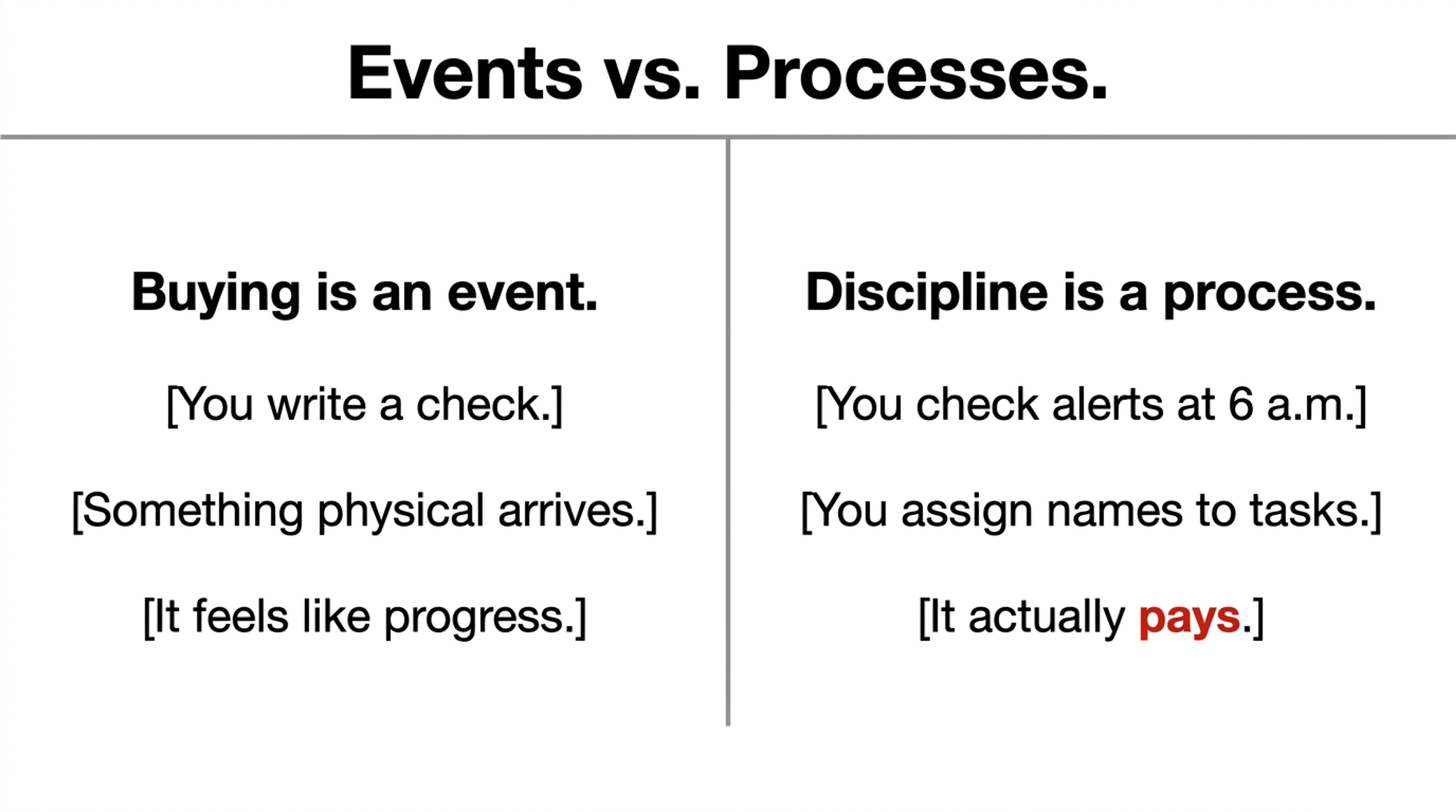
The alerts in RapidReports are the ones you define — you set the thresholds for what pops up. That’s a big part of why preset alerts start to feel like noise: the thresholds weren’t yours to begin with. When someone else decides what deserves a notification, you end up tuning out the whole stream. This one asks you to choose. The highlighter was yours. So is the threshold.
And here’s why we’re judging these tools on logic and math instead of trial data: they shipped this spring. There are no multi-year university outcome studies on RapidReports or BovineBio yet, and there won’t be for a while. That’s not a knock — it’s exactly why a working producer reasons from the decision science underneath the tool and from his own herd’s numbers, not from a journal that won’t weigh in for three lactations. Even the underlying science has live debate: the value of acting within the fresh-cow window is about as well-established as anything in transition management, but which treatments actually pay is still debated. A 2025 study published in PMC found that cows given oral propylene glycol for subclinical ketosis showed no measurable lift in milk yield or reproductive performance — a reminder that catching a cow early and treating every flagged case are two different propositions.
This isn’t theory for the producers already living it in public. Pennsylvania dairyman Steve Harnish, who runs roughly 200 cows and tracks his herd from his phone, walked through which software reports he actually leans on for daily calls on DairyVoice in April 2026. Matt Hendel of Hendel Farms did the same on the Progressive Dairy Podcast in May 2026, discussing how to turn daily data into cow-side decisions. Neither has tied a dollar figure to these two tools by name — so treat the barn math above as a framework for your own numbers, not a borrowed result. The logic stands on its own; the trials will catch up.
What This Means for Your Operation
The tools matter only if they change a decision this week. Three checks, framed as questions you can actually answer from your own records:
- Measure your detection lag. What’s the real gap between when a fresh cow goes wrong and when you catch her — Day 3, or Day 34? Few barns track it directly. Measure it for one month, and you’ve measured your exposure.
- Total your own metritis line. Run your herd’s actual incidence × $511. At 16–20% on a 400-cow string, that’s $31,000–$38,800 a year you may never have totaled — decide what even a partial recovery is worth before you discount it.
- Price your next avoidable cull at today’s market. With springers at $3,130 and climbing, a cow you keep instead of replace is a four-figure save, so the threshold for “is she worth one more look?” just moved.
- Audit who owns your report cadence. Is it you, or your consultant’s visit schedule? And does that match who’s standing in the fresh pen at 5:30 a.m.?
And one thing to actually do in the next 30 days: pick one borderline cull — a cow past 150 DIM and open — and pull her full record in BovineBio before she ships. See whether her story is fertility or pen movement. That single look is the whole argument for the tool, tested on one cow, for free.
Key Takeaways
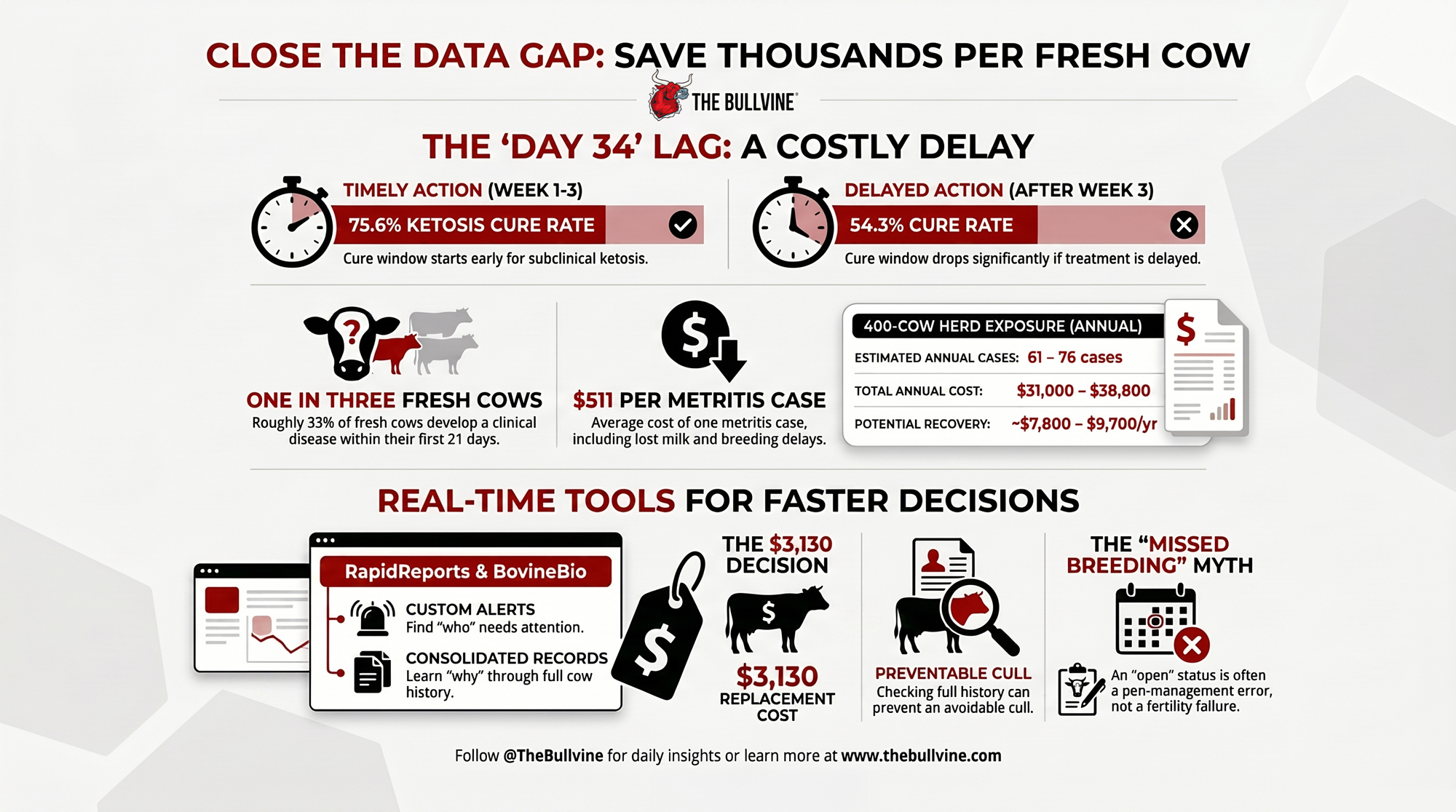
- If your detection window is longer than your treatment window, you’re paying for it whether you see the bill or not. SCK cure rates run 75.6% in the first nine days and fall to 54.3% past three weeks.
- If a borderline cull rests on a single repro miss, check her pen history before she ships. The miss may be a management gap, not a fertility one.
- If your metritis incidence runs near 16–20%, a 400-cow herd carries roughly $31,000–$38,800 a year in that one disease, and some of that sits within the detection window you control.
- If you’re replacing that cow instead of keeping her, you’re buying into a $3,130 national average, so the cull-versus-keep call is a four-figure decision, not a hunch.
- If you’re already drowning in alerts, the fix isn’t another system. It’s owning the thresholds on the one you’ve got.
On DairyVoice, England described the point of the tools as moving from reacting to problems toward staying ahead of them. That’s the right frame, but it hands the work back to you, not the software. The data’s been in your account. The principle that early beats late in the fresh pen is about as solid as transition-cow management gets. The only variable ever in play is how fast you get from the cow to the decision. So here’s the question to carry to the pen tomorrow morning: in your barn, how many cows are sitting in the gap right now — and would you even know?
The treatment window opens at calving and closes early. It doesn’t wait for the report.
Run Your Numbers
Herd Health ROI Calculator — Plug in your herd size, culling rate, mastitis incidence, and today’s $3,130 replacement cost. The calculator shows what premature culling and chronic mastitis are actually costing you per cow per year — before you decide the next one ships.
Complete references and supporting documentation are available upon request by contacting the editorial team at editor@thebullvine.com.
Learn More
- Metritis: $511 a Case, and Your Records Already Saw It Coming — Arms you with a 30-minute Monday morning dashboard protocol to crush transition-pen blind spots, utilizing your existing on-farm herd technology to intercept fresh cow health crashes 48 hours before they drop your bulk tank average.
- The $585‑Per‑Service Beef‑on‑Dairy Trap: What a 500‑Cow Herd Reveals About Your Replacement Pipeline— Exposes the real cost of chasing short-term beef calf premiums on animals that should be carrying your future milking herd, breaking down the massive expected-value gap eating away long-term operational margins.
- The $1700 Longevity Paradox: How One 1700-Cow Dairy Cut Udder Culls in Half — Delivers an unconventional operational blueprint that slashes forced replacements from 1-in-3 to 1-in-7 by altering clinical management, generating an extra $1,700 in lifetime profit per cow without requiring a single genetic change.
 The Sunday Read Dairy Professionals Don’t Skip.
 The Sunday Read Dairy Professionals Don’t Skip.
Every week, thousands of producers, breeders, and industry insiders open Bullvine Weekly for genetics insights, market shifts, and profit strategies they won’t find anywhere else. One email. Five minutes. Smarter decisions all week.