Despite adding thousands of cows, America’s dairies struggled to boost production. What’s really happening in your milk check?
EXECUTIVE SUMMARY: The USDA’s March 2025 Milk Production report reveals a dairy sector caught in transition, with national output rising just 0.9% year-over-year despite farmers adding 9,000 more cows between February and March. This modest volume growth masks a remarkable 2.7% surge in component-adjusted production as fat and protein levels significantly outpace fluid metrics. Regional performance varies dramatically – from Texas’s explosive 9.4% growth to California’s continued HPAI recovery (-2.1%) and Washington’s steep 4.3% decline amid low milk prices forcing farm exits. The persistent paradox of expanding herds (+72,000 head YoY) paired with stagnant productivity (just +0.2% per cow) signals deeper structural challenges that aren’t solved by simply milking more cows. Meanwhile, new HPAI cases in Idaho and emerging viral strains in Nevada and Arizona demonstrate the disease threat remains very real heading into summer.
KEY TAKEAWAYS
- Component value now trumps volume metrics – With component-adjusted production (2.7%) nearly tripling volume growth (0.9%), farms focusing solely on milk quantity are missing significant profit opportunities in butterfat ($2.62/lb) and protein ($2.46/lb).
- Geography determines your dairy’s destiny – The stark performance gap between states (Texas +9.4% vs. Washington -4.3%) shows local market conditions and disease pressures create fundamentally different operating environments that require region-specific strategies.
- Biosecurity isn’t a choice, it’s survival insurance – New HPAI cases in Idaho (9 in 30 days) and emerging viral strains prove this disease isn’t going away; operations with robust protocols gain resilience against both current and future biological threats.
- The productivity paradox demands fresh thinking – Despite adding 72,000 more cows (+0.8%) YoY, productivity per cow remains nearly flat (+0.2%), signaling deeply rooted efficiency challenges that expansion alone can’t solve.
- Strategic agility beats raw production capacity – In today’s complex market, success depends on your ability to adapt to contradictory signals and position your operation at the intersection of component optimization, disease prevention, and regional advantage.
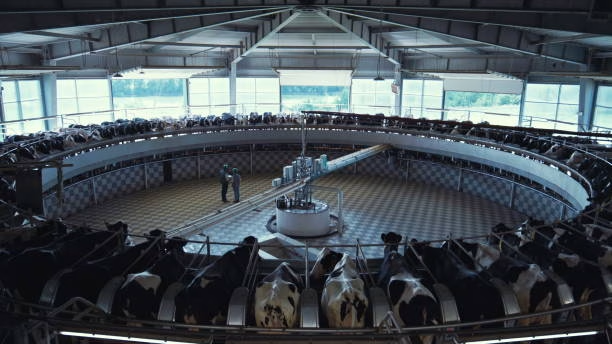
Let’s cut to the chase: USDA’s March 2025 milk production report reveals a growing sector but not exactly firing on all cylinders. Production is up 0.9% year-over-year, lagging the 1.2% analysts expected. So, what’s going on under the hood?
We’re Adding Cows, but Where’s The Milk?
You’ve heard the puzzle – more cows should mean more milk, right? Well, the March data tells a different story. Farmers added 9,000 cows between February and March, pushing the national herd up 72,000 head (+0.8%) from last year. But here’s the kicker: production per cow barely budged, climbing just 0.2% from March 2024.
What gives? Despite adding all these cows, we’re seeing production outside California grow only 1.5% – well below the 2.0% experts predicted. Haven’t we been taught that expanding herds drives production growth?
Let’s face it – something’s holding back these cows from reaching their potential. The lingering effects of HPAI certainly play a role, but there’s more to this story than just bird flu.
California’s Long Road Back
California’s still feeling the sting from HPAI, with production down 2.1% year-over-year. But don’t miss the silver lining – that’s better than February’s 2.7% decline. The Golden State’s recovery is happening, just not overnight.
Nearly 80% of California’s infected herds have been virus-free for at least 30 days, with only eight new infections in the past month. That’s progress you can’t ignore.
But have you noticed how dramatically different the story is across state lines? While California limps toward recovery, Texas is crushing it with a 9.4% production jump. They’re milking 25,000 more cows than last year! Meanwhile, Washington’s farmers are heading for the exits, with production plummeting 4.3% as rock-bottom milk checks force tough decisions.
Bird Flu: The Unwelcome Guest That Won’t Leave
Think we’ve seen the last of avian influenza? Think again. While we’re not seeing the explosive spread from last year, this virus isn’t done with us yet. New cases are popping up in Idaho – 9 in the previous month alone – and a new genotype called D1.1 has emerged in Nevada and Arizona.
When HPAI hits a herd, it’s not just a minor inconvenience. We’re talking milk production drops of 15-25% in affected cows. That’s a massive hit to your bottom line, not to mention the increased culling many operations face due to persistent issues post-infection.
Haven’t we learned enough about biosecurity in the past year? You’d think so, but this virus keeps finding ways to surprise us. The question isn’t if your operation will face a disease challenge – it’s when and how prepared you’ll be.
Component Values: The Hidden Goldmine
Here’s where things get interesting. While volume growth disappointed at just 1.0%, component-adjusted production surged by 2.7%. That’s not just good news – it’s a fundamental shift in measuring success in dairy.
Your cows aren’t just producing more milk solids and delivering substantially higher economic value. March butterfat prices hit $2.6242 per pound, with protein at $2.4606. Those aren’t just numbers – they’re profit opportunities for farms focusing on components.
Are you still chasing volume when you should be optimizing for components? Let’s face it: the gap between volume metrics and component value is widening, and smart producers are already shifting their strategies.
What’s Driving the Numbers?
Ever wonder why adding more cows doesn’t translate to proportional milk increases? Several factors are at play here. HPAI’s lingering effects are dragging down productivity in recovering herds. Meanwhile, tight replacement heifer supplies and sky-high costs force many of you to keep older, less productive cows in the herd longer than you’d like.
The result? Despite improved genetics, an aging national herd naturally produces less milk per cow. Add variable feed quality and cautious feeding strategies amid economic uncertainty, and you have a recipe for stalled productivity.
Isn’t it ironic that we’re simultaneously growing the herd while watching per-cow output struggle? This contradiction raises serious questions about future productivity if these older cows eventually leave without sufficient replacements in the pipeline.
Mixed Signals for Markets
The markets have been recovering recently, but don’t get too comfortable. This bounce has more to do with easing trade tensions than fundamental supply shifts.
Have you noticed how wildly the USDA’s forecasts have swung lately? In March, they slashed the 2025 all-milk price forecast by a whole dollar to $21.60/cwt. Then April’s reports cut it to .10/cwt while raising production forecasts! If the experts can’t decide, how are you supposed to plan?
We’re still in expansion mode, and year-over-year growth numbers should improve as the herd grows, and we lap last year’s bird flu outbreaks. But don’t miss the forest for the trees – this expansion faces significant headwinds that could limit its potential.
What This Means for Your Operation
If you’re still focusing solely on milk volume, you’re fighting yesterday’s battle. The real opportunity lies in components as the gap between volume and component-adjusted value widens. Isn’t it time to evaluate your genetic selection, nutrition programs, and management practices to enhance fat and protein production?
Biosecurity investments aren’t just expenses – they’re insurance. With HPAI showing remarkable persistence and evolving strains, robust disease protocols protect against current and future threats. Can you afford to cut corners here?
Don’t ignore the stark performance differences between states. Local market conditions, processing capacity, and disease pressure create varying operating environments. What works in Texas might sink you in Washington.
Let’s face it – the decisions you make today about culling, replacement, and genetic selection will shape your productivity potential for years to come. Are you considering the long-term implications of keeping that older cow versus bringing in fresh genetics?
The U.S. dairy sector is expanding, but the path forward isn’t straightforward. Those who understand the complex interplay of herd demographics, component values, regional dynamics, and disease pressures will navigate this landscape more successfully than those still operating by old rules.
In today’s environment, strategic agility trumps raw production capacity every time. The future belongs to producers who can adapt to these complex, sometimes contradictory signals and position their operations accordingly. Isn’t it time you took a fresh look at your strategy?
Learn more:
- U.S. Milk Production Report – February 2025: Strong Growth Amid Seasonal Flush
- HPAI Scare in California Dairy Farms
- Why Milk Components Trump Production in Unlocking Profits
Join the Revolution!
Join over 30,000 successful dairy professionals who rely on Bullvine Daily for their competitive edge. Delivered directly to your inbox each week, our exclusive industry insights help you make smarter decisions while saving precious hours every week. Never miss critical updates on milk production trends, breakthrough technologies, and profit-boosting strategies that top producers are already implementing. Subscribe now to transform your dairy operation’s efficiency and profitability—your future success is just one click away.

 Join the Revolution!