Archive for Calf Health

You’ll Spend $200K on a Robot But Not $100 on This – It’s Costing You 1,200 lbs of Milk

Your barn ‘smells fine’? At 8 ppm ammonia, you can’t detect it—but your calves’ lungs can. You’re not managing. You’re hoping. And it’s costing you.

Executive Summary: The dairy industry finances $200,000 robots without blinking but ignores $100 interventions that cost 1,200 pounds of milk per heifer over a lifetime. Research from UC Davis, UW-Madison, and Lactanet (2019-2025) shows lung damage begins at 4 ppm ammonia—a level humans can’t detect after regular barn exposure—while colostrum absorption crashes from 95% at hour one to 50% by hour six. One-quarter of colostrum samples fail quality thresholds, and visual assessment is unreliable: thick golden colostrum sometimes tests worse than thin watery batches. The fixes cost almost nothing: a Brix refractometer runs under $100, bedding every 2-3 days cuts diarrhea risk 57%, and tightening colostrum timing requires only protocol discipline. With multiple component pricing placing nearly 90% of milk check value on butterfat and protein, early-life calf health compounds directly into first-lactation revenue. The math is brutal: maternity pen protocols pay back in weeks while that robot takes seven years.
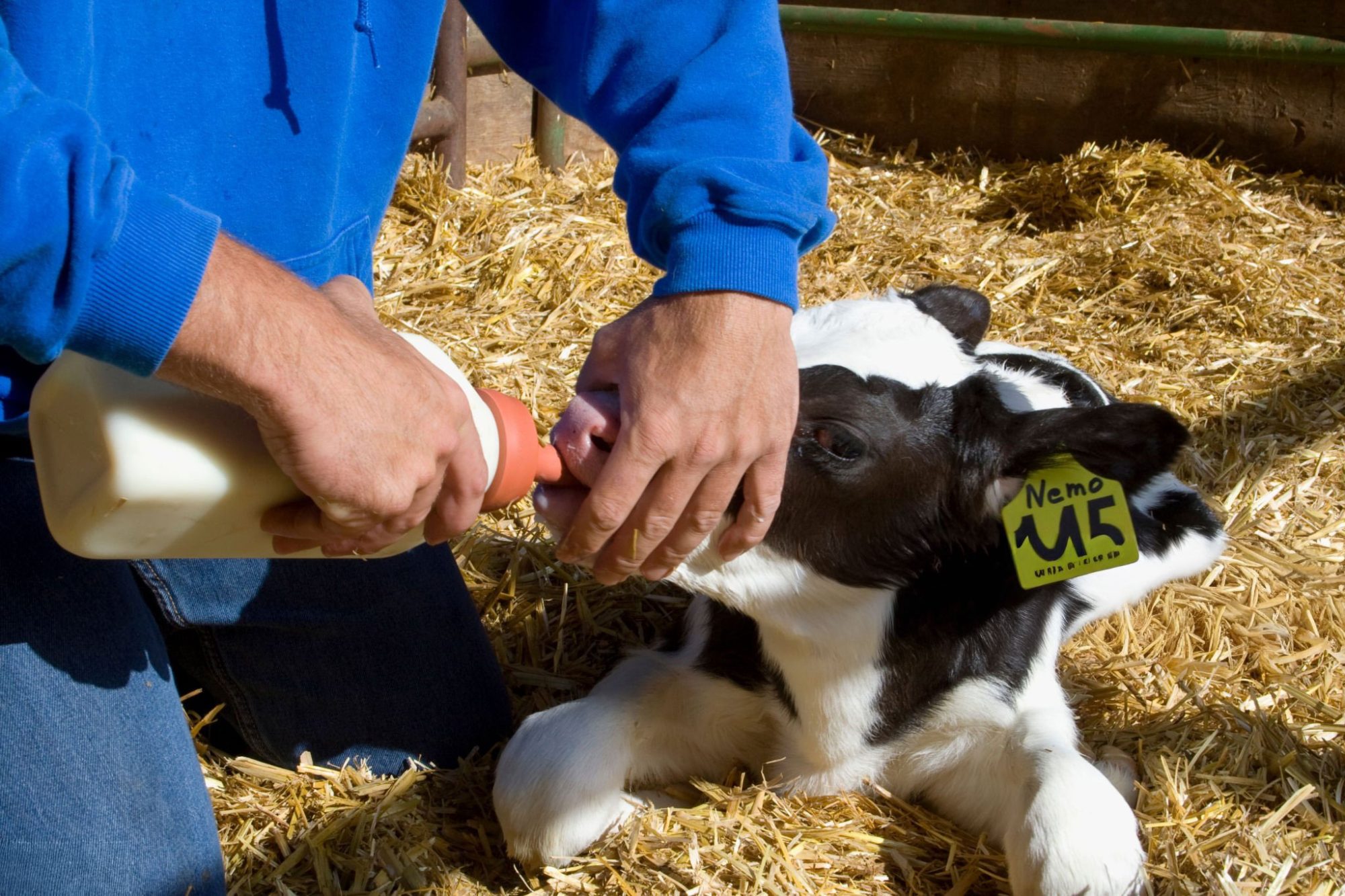
Maternity pen management

Walk into any progressive dairy operation these days, and you’ll find precision feeding systems calibrated to the gram, genomic testing that predicts lifetime production potential, and automated milking technology that would have seemed like science fiction a generation ago. According to USDA data and industry reports—a single robotic milking unit now runs $150,000-$230,000, and farms are installing them by the thousands. We’ve embraced data-driven decision-making in remarkable ways.

Investment DecisionUpfront CostAnnual Debt Service (7 years)Calf Health ImpactFirst-Use Payback
Robotic milking unit$150,000-$230,000$21,000-$33,000/yearNone7 years
Brix refractometer + protocol<$100$0Saves 1,200 lbs/heifer × heifers bornImmediate

But here’s what’s been catching my attention lately. A conversation has been building among veterinarians, extension specialists, and forward-thinking producers over the past few years. The question: What if the biggest opportunity for improvement isn’t in the milking string at all—but in the first 24 hours of a calf’s life?

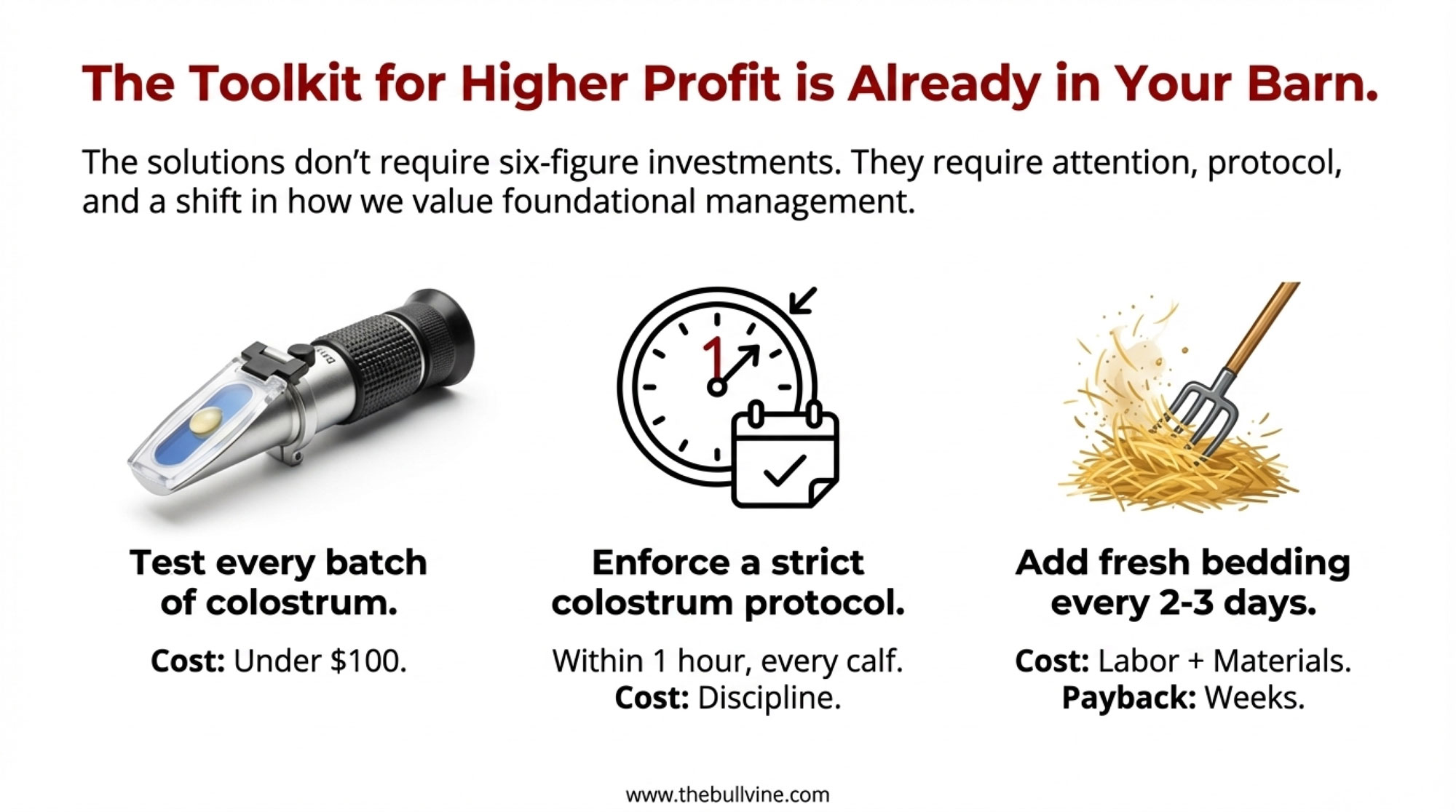
The emerging data from the University of California, the University of Wisconsin-Madison, and on-farm trials across North America reveals something worth considering. The maternity pen—often treated as a simple pass-through area where calves arrive and cows transition—may actually be one of the most underutilized profit centers on many farms. And the interventions that seem to move the needle most don’t require six-figure investments. They require attention, protocol, and a shift in how we think about foundational management.
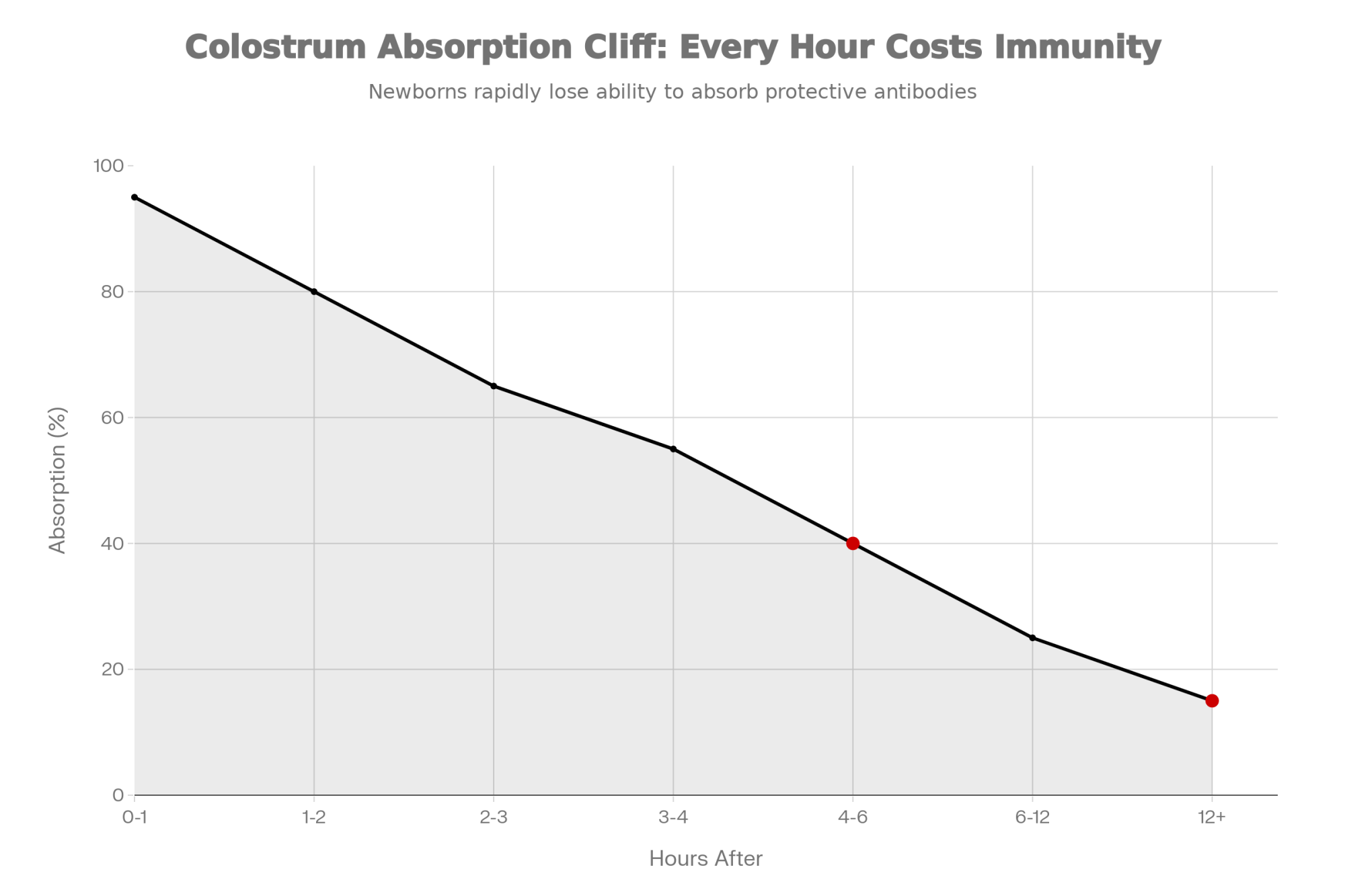
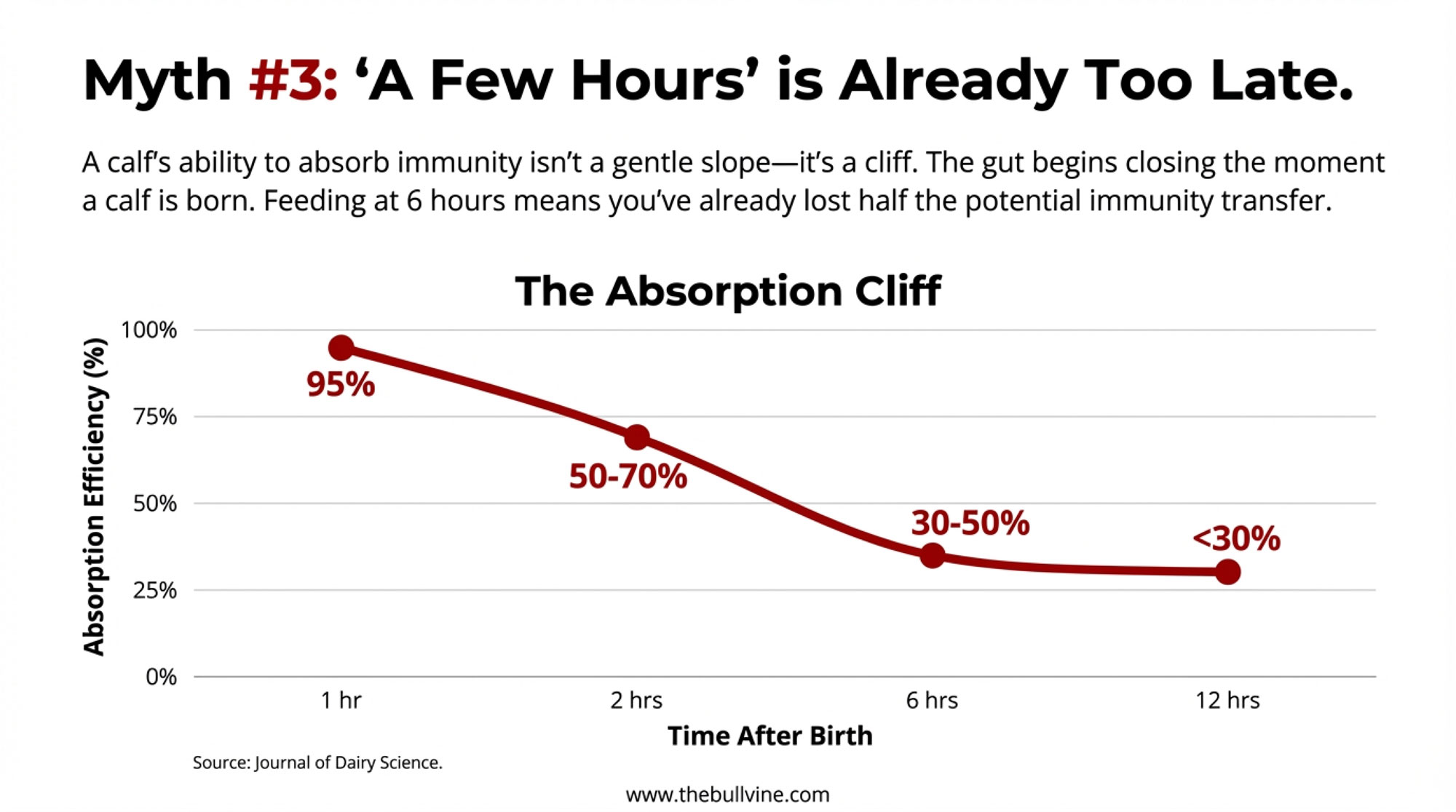
The Colostrum Absorption Cliff: Every Hour Costs You Immunity” – This line chart shows the dramatic decline in colostrum absorption efficiency after birth, illustrating why feeding within 1 hour achieves 95% efficiency while waiting 6 hours drops to just 25%

The Lifetime Value Calculation Worth Revisiting

When producers think about calf losses, they typically calculate the immediate cost: the value of a dead calf, maybe $150-200, depending on the market. But that calculation, it turns out, may significantly underestimate what’s really at stake.

Dr. Sheila McGuirk, Professor Emerita at the University of Wisconsin-Madison School of Veterinary Medicine, has spent decades researching calf health outcomes. Her work, along with research from UC Davis and other land-grant universities, points to a more complete economic picture that extends well beyond immediate mortality.

Consider a thought experiment with two genetically identical heifer calves born on the same farm, same day:

Calf A is born in a maternity pen with adequate but not optimal conditions—bedding changed weekly, moderate ammonia levels that nobody really notices, colostrum delivered within “a few hours” of birth.

Calf B is born in a well-managed environment—fresh bedding, clean air, and colostrum within 90 minutes of hitting the ground.

Both calves survive. Both eventually enter the milking string. But their lifetime trajectories can diverge in ways that compound over the years.

Research published in the Journal of Dairy Science and documented through USDA NAHMS surveys suggests that Calf A faces a series of potential disadvantages:

The growth consideration. Multiple studies show that calves with poor passive transfer or early respiratory disease tend to have lower average daily gain and reach breeding size later, adding weeks to the rearing period and increasing feed and housing costs. Penn State Extension’s 2023 summary of the research found clear links between passive transfer categories and growth outcomes—calves in lower categories simply don’t grow as efficiently.

The lung capacity question. This one particularly caught my attention. Research from Dr. Theresa Ollivett at UW-Madison using thoracic ultrasound has documented that calves with lung consolidation—even those never treated for clinical pneumonia—often produce less milk in their first lactation.
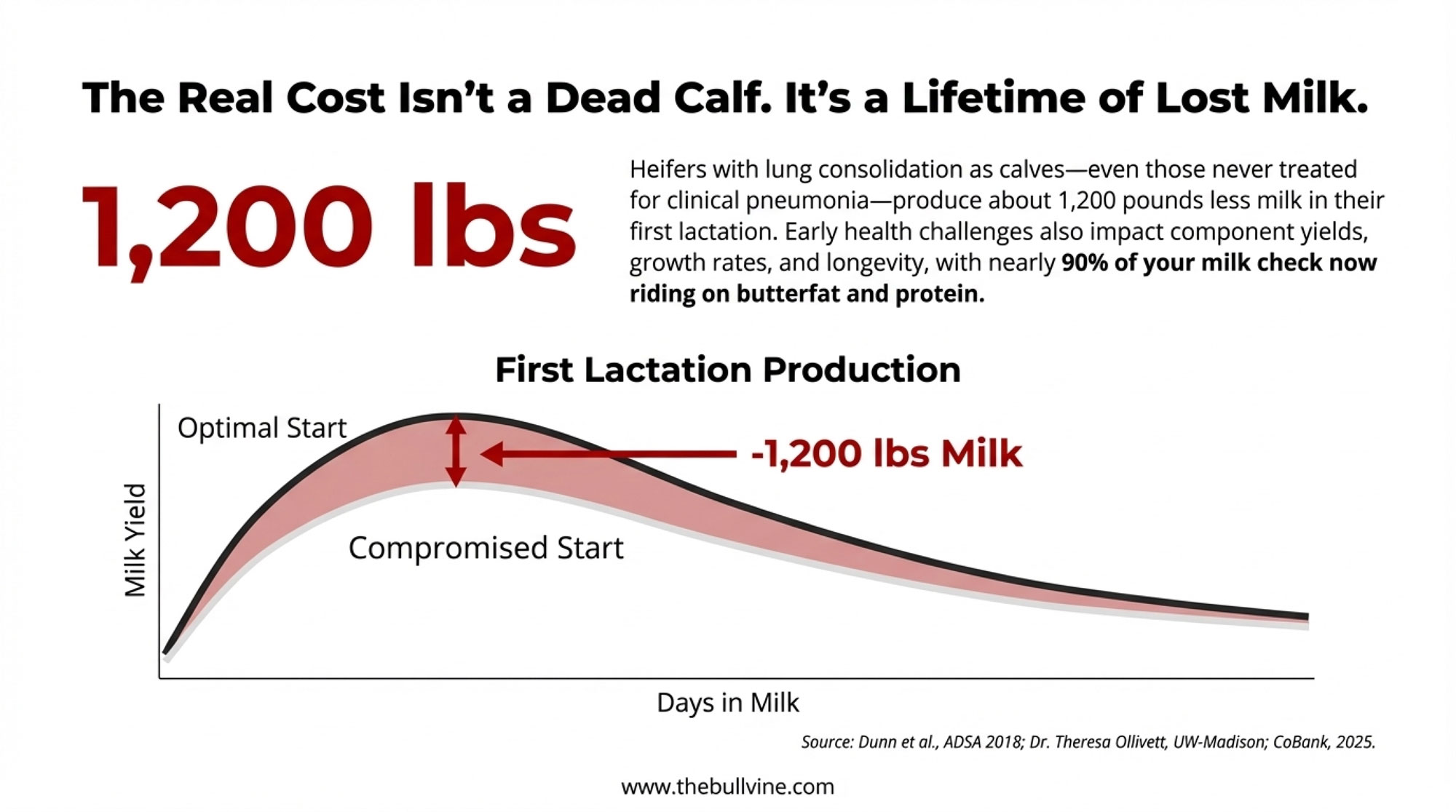
The Hidden Milk Loss

A 2018 cohort study by Dunn and colleagues presented at ADSA found that heifers with at least 3 cm of lung consolidation as calves produced about 525 kg (1,150 lbs) less milk in their first 305-day lactation. Dr. Ollivett has noted in extension presentations that any heifer calf with a history of pneumonia tends to produce about 1,200 pounds less milk in her first lactation.

The longevity factor. NAHMS data and follow-up studies indicate that calves experiencing early health challenges have a higher risk of leaving the herd before completing their second lactation. They may be more likely to struggle with metabolic issues at first calving and less likely to breed back efficiently.

The component connection. Here’s something that doesn’t get discussed enough in the calf barn: early-life nutrition and health also affect component production. A 2024 study published in BMC Veterinary Research, tracking 220 heifer calves from eight herds, found that colostrum management and preweaning health measures significantly impacted not only total milk yield but also protein and fat yields in first lactation. Penn State Extension’s review of calf feeding research found that calves fed higher planes of nutrition produced more fat and protein on a daily basis and had higher 3.5% fat-corrected milk in first lactation. With multiple component pricing placing nearly 90% of the milk check value on butterfat and protein, according to CoBank’s 2025 analysis, those early-life investments compound directly into revenue.

When you add these factors together—the extended rearing costs, the potential first-lactation milk loss, the component production impact, the increased culling probability—the lifetime economic impact can reach several hundred dollars per heifer, and in some scenarios more. A 2016 meta-analysis by Raboisson and colleagues, frequently cited by Dr. Sandra Godden at the University of Minnesota, estimated that failure of passive transfer alone costs at least $70 per calf in direct effects.
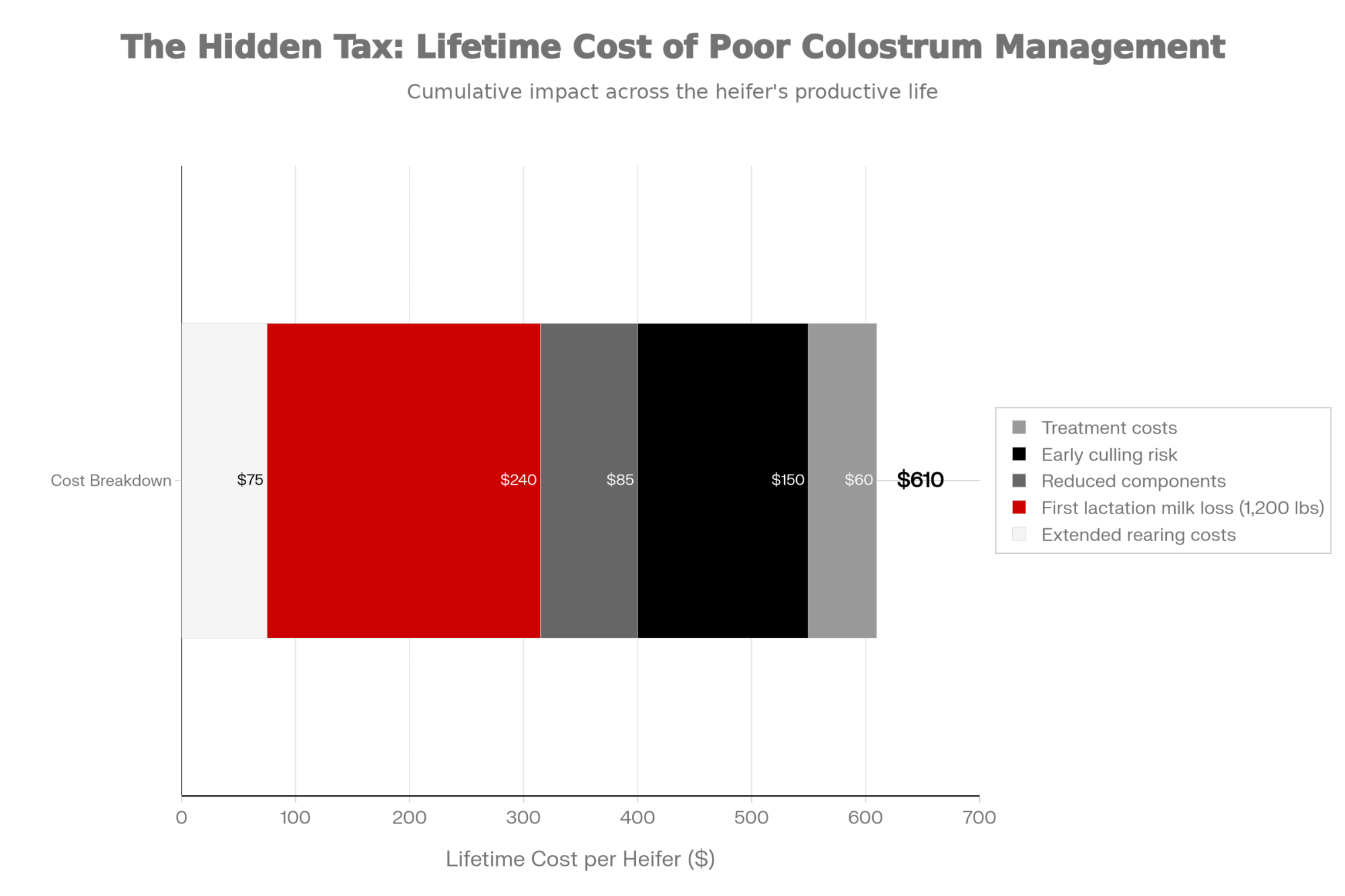
The Hidden Tax: Lifetime Cost of Poor Colostrum Management” – Every heifer with suboptimal passive transfer carries a $610 lifetime penalty. The red segment shows first-lactation milk loss alone costs $240—more than twice what you paid for that refractometer you don’t own 

Worth considering as you evaluate where to focus improvement efforts.

The Bedding Research That’s Getting Attention

Perhaps no finding has generated more discussion among dairy consultants than what’s emerged about bedding management in recent years.

The BRD 10K study, published in the Journal of Dairy Science in 2019 by Dubrovsky and colleagues at UC Davis—including epidemiologist Dr. Sharif Aly—tracked 11,470 calves across six California dairies over a full year. The study examined dozens of management variables to identify which practices correlated with respiratory disease outcomes. What they found reinforced something that’s been gaining traction in calf housing guidance: cleaner, drier environments appear to matter considerably.
The Bedding Frequency Finding

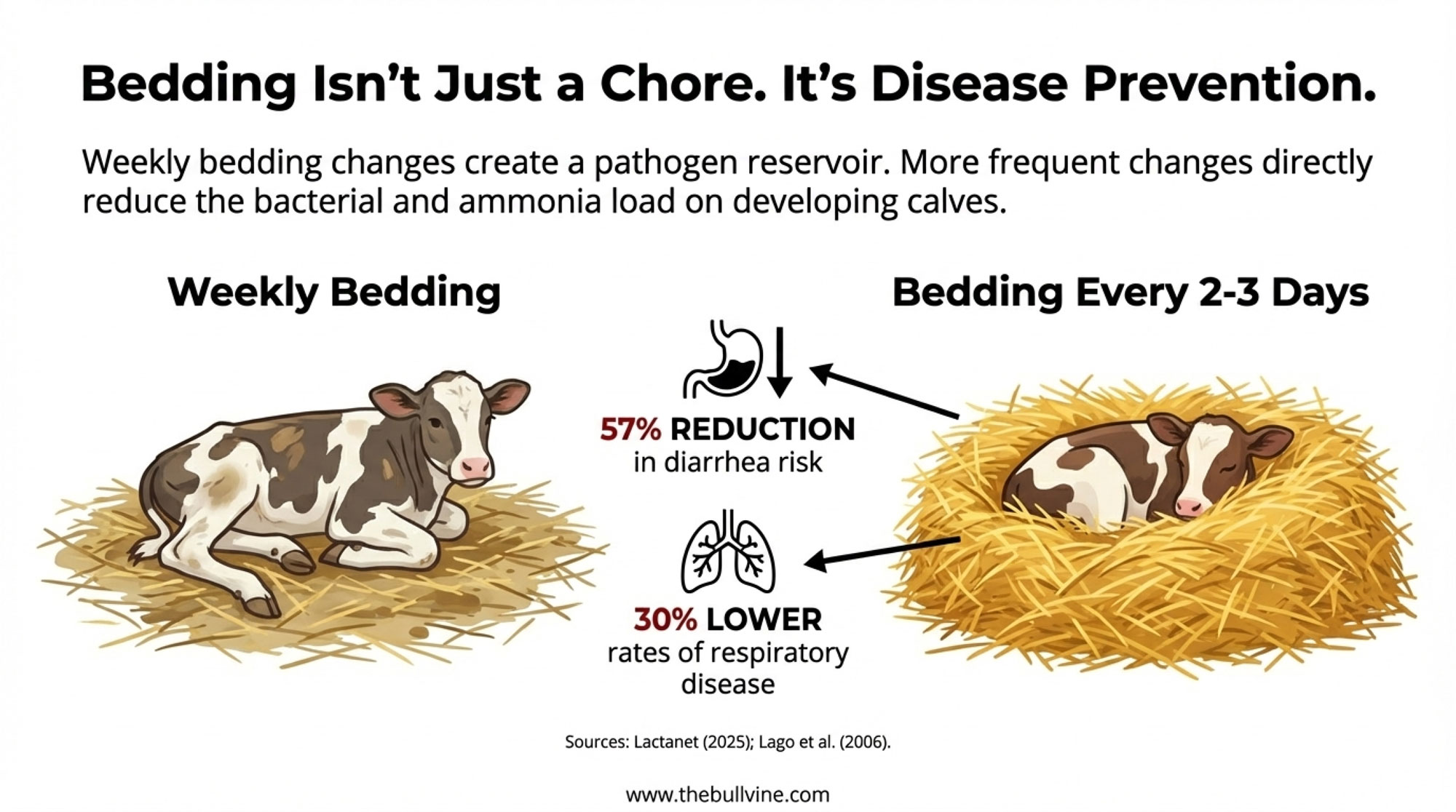
A February 2025 calf housing fact sheet from Lactanet, drawing on research by Medrano-Galarza and colleagues published in Journal of Dairy Science, found that adding fresh bedding every 2 to 3 days, compared with every 7 days or longer, was associated with a 57% reduction in diarrhea risk.

The same Lactanet summary, citing work by Lago and colleagues from 2006, found that calves fully nested in deep straw bedding had 30% lower rates of respiratory disease compared to those with legs visible while lying down.

More Straw, Less Scours: The Bedding Frequency Trade-off” – Bedding every 2-3 days cuts diarrhea risk by 57% and costs $4 per calf per week. Compare that to treating scours or losing 1,200 lbs of milk in first lactation

I recently spoke with a Wisconsin producer who implemented more frequent bedding changes last fall. His observation: the mindset shifted from reactive to preventive. They’re changing bedding before it becomes a problem rather than after noticing one. Within three weeks, he said, respiratory rates in his calf barn had dropped noticeably. Now, that’s one farm’s experience—but it aligns with what the research suggests.

The mechanism makes intuitive sense when you think about it. When bedding sits undisturbed for extended periods, bacterial populations grow in the moist environment. Ammonia accumulates from decomposing organic matter. By the end of a week, the bedding can become a pathogen reservoir—and every breath the calf takes delivers that load to developing lung tissue.

The economics vary by operation, of course. More frequent bedding changes mean more straw and more labor. Those aren’t trivial considerations, especially for operations already stretched thin. But on farms that have carefully tracked outcomes, the returns from reduced treatment costs, improved growth rates, and lower mortality have often exceeded the investment.

I want to be clear: these figures come from specific studies in specific contexts. Operations in the Upper Midwest face conditions different from those in California’s Central Valley or the humid Southeast. Pasture-based systems have their own considerations entirely. The principle seems sound—cleaner environments generally mean healthier calves—but the specific economics will vary based on your starting point, labor costs, and regional factors.
What the “Smell Test” Might Be Missing

Most dairy producers believe they can assess air quality by smell. If the barn doesn’t reek of ammonia, ventilation must be adequate. It’s a reasonable assumption, and I’ve relied on it myself over the years.

But the biology may tell a different story.

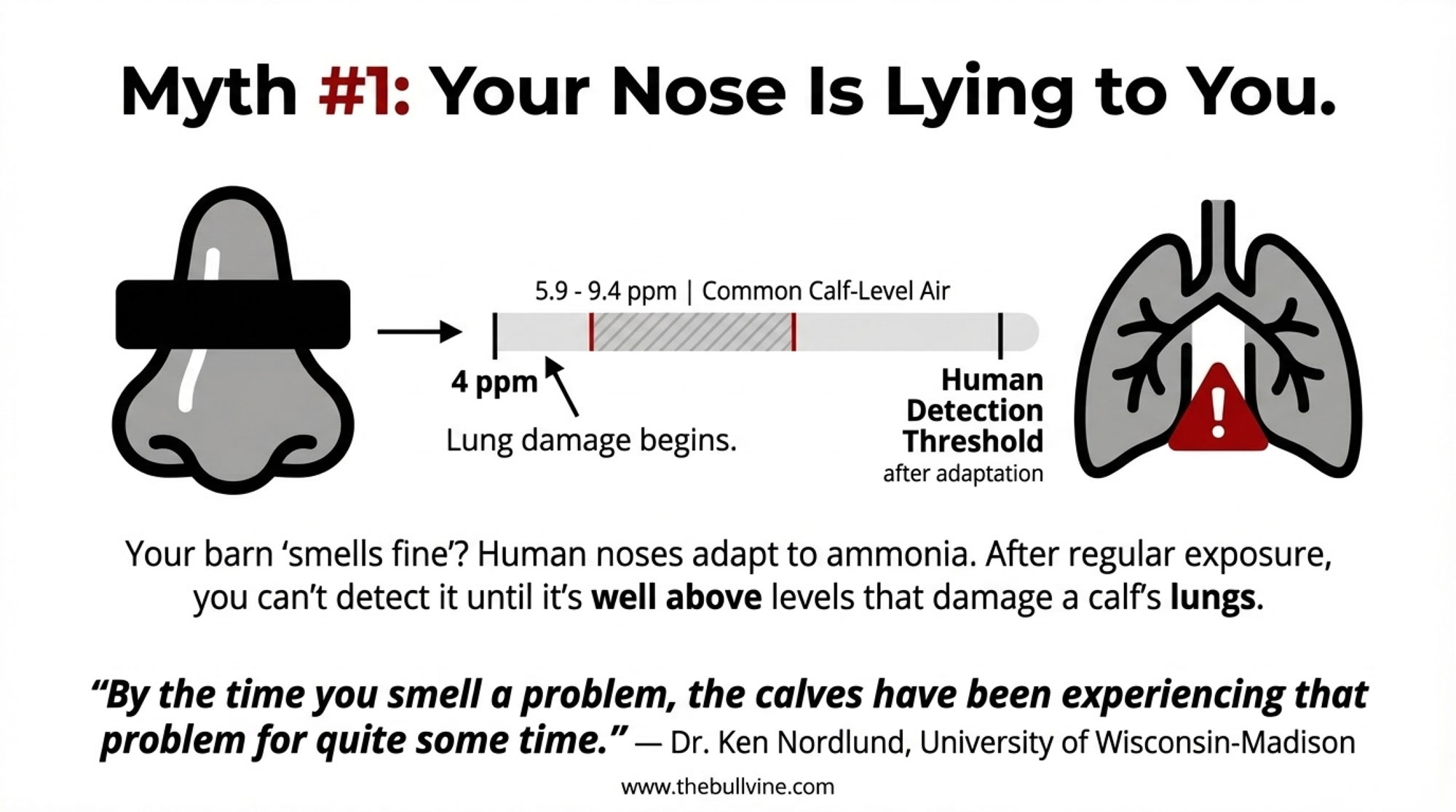
Research from Penn State Extension, corroborated by work at multiple land-grant universities, has documented that humans typically detect ammonia at fairly low concentrations—but here’s the thing: regular exposure creates what researchers call olfactory adaptation. Those of us who work in barns daily often don’t consciously register ammonia until concentrations are well above levels that may affect calves.

The four ppm Threshold

FindingSource
Ammonia exposure above four parts per million is significantly associated with lung consolidation (odds ratio 1.73)Van Leenen et al., 2020, Preventive Veterinary Medicine
Four-hour maximum ammonia levels are commonly 5.9-9.4 ppm at calf levelAnimals journal, 2024 (Swiss calf housing study)
Human nose adapts; calves’ lungs don’tMultiple land-grant university extension publications

Dr. Ken Nordlund, who co-authored foundational calf housing recommendations now used through the Dairyland Initiative at UW-Madison, put it plainly:

“By the time you smell a problem, the calves have been experiencing that problem for quite some time.”

— Dr. Ken Nordlund, DVM, University of Wisconsin-Madison
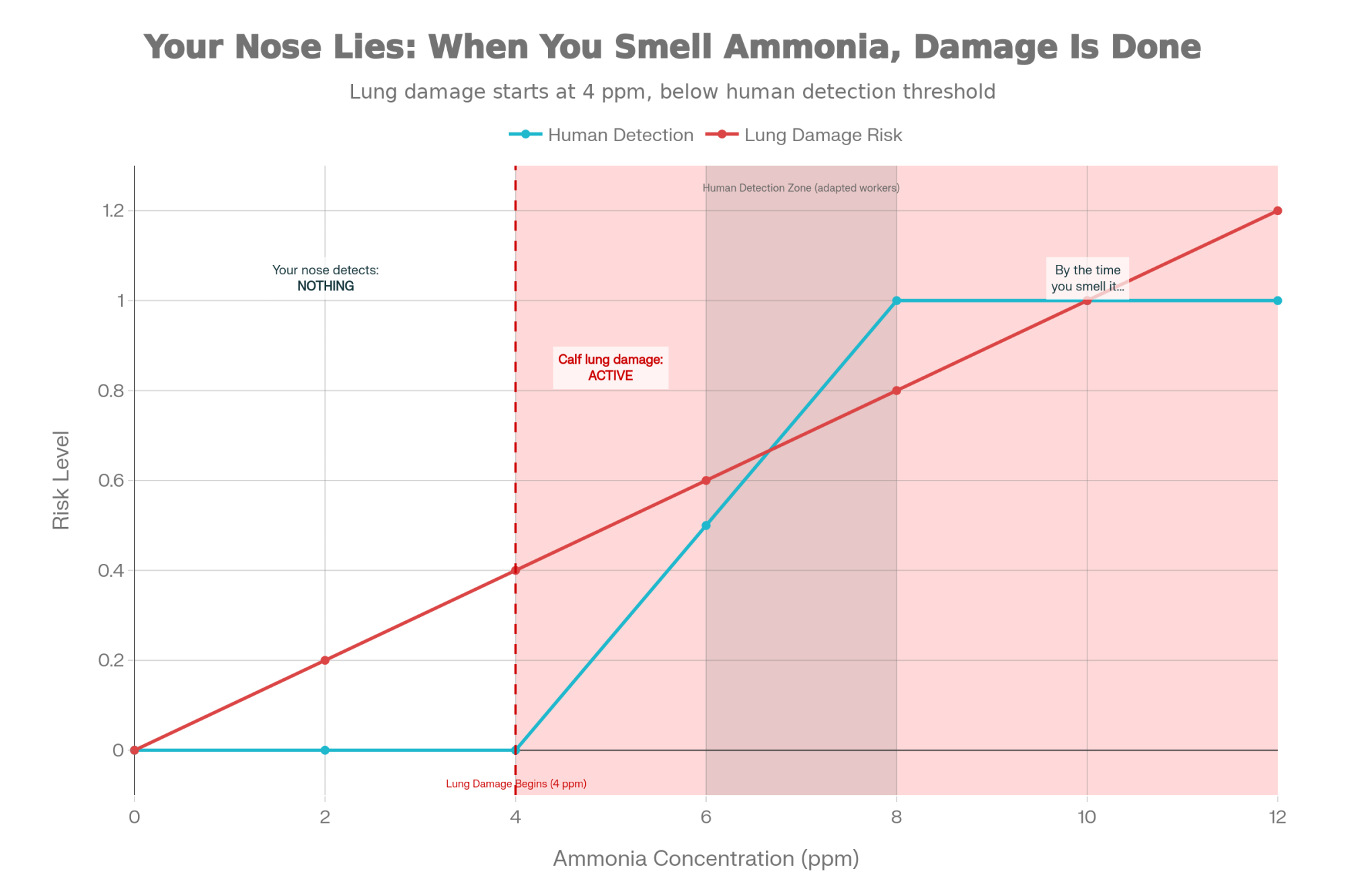
Your Nose Lies: When You Smell Ammonia, the Damage Is Already Done” – The critical 4 ppm threshold where lung damage begins is invisible to workers with adapted noses. By the time you smell ammonia, your calves have been breathing damage for weeks

That’s worth thinking about. We walk through and think everything is fine. The calves may be experiencing something different.

Visual Checks That Can Help

What some farmers are discovering is that while human noses adapt, visual and behavioral indicators don’t. Several zero-cost assessments can reveal ventilation concerns before they show up in treatment records:

  • The eye check. Fresh cows and young calves with visible tearing, red or watery eyes, are showing mucosal irritation—potentially from ammonia exposure. The eyes don’t adapt the way noses do.
  • The bedding moisture test. In winter, if bedding shows heavy condensation or frost at calf nose height in the early morning, moisture may not be adequately exhausted from the barn. That trapped moisture creates favorable conditions for both pathogen growth and ammonia accumulation.
  • The breathing observation. This one takes a little practice, but it’s useful. Healthy calves at rest breathe effortlessly from the belly—what veterinarians call diaphragmatic breathing—at 20-30 breaths per minute. If you’re seeing visible flank movement, shoulders working, or labored breathing in resting calves, that’s worth investigating.
  • The rafter inspection. Water droplets forming on the underside of the barn roof indicate moisture is condensing rather than being ventilated out.
  • The 5-degree rule. According to Cobb et al. (2016), cited in The Dairy Site’s ventilation guidance, when the temperature difference between inside a calf shelter and outside exceeds 5°F, that’s indicative of a ventilation problem—the barn is too closed up.

These assessments take minutes and require no equipment. Just attention and a willingness to look.

The Colostrum Conversation

If there’s one area where the gap between “doing something” and “doing it optimally” is most evident, it’s colostrum management. You probably know most of this already—but the details matter, and I’ve found the research worth revisiting.

Most dairy operations believe they’re handling colostrum adequately because they feed it “within a few hours” of birth. The intention is right. But research from multiple institutions reveals several common gaps that can undermine even well-meaning protocols.

Why Timing Matters More Than We Thought

The calf’s ability to absorb immunoglobulin G from colostrum begins declining immediately after birth. This is intestinal physiology documented extensively in peer-reviewed research. The gut epithelium that allows large antibody molecules to pass into the bloodstream begins closing from the moment the calf is born.
The Absorption Clock

Time After BirthAbsorption Efficiency
Less than 1 hour90-100%
1-2 hours70-90%
2-6 hours50-70%
6-12 hours30-50%
Beyond 12 hoursBelow 30%

Source: Journal of Dairy Science and multiple university extension summaries

What this means practically: every hour of delay has a cost. A farm that believes it’s feeding “within a few hours” but is actually reaching calves at 5-6 hours has already lost a substantial portion of potential immunity transfer.

Dr. Sandra Godden at the University of Minnesota has published extensively on colostrum management protocols. Her research suggests that “within a few hours” is too vague a target—specific timing protocols that ensure feeding within two hours, and ideally within one hour, tend to produce meaningfully different outcomes.

The Visual Assessment Question

One of the more interesting findings I’ve encountered comes from colostrum quality research conducted across multiple U.S. dairy operations.

When researchers asked farmers to visually rank colostrum quality—thick and golden versus thin and watery—and then tested with a Brix refractometer, the results challenged conventional wisdom. As Hanne Skovsgaard Pedersen demonstrated, the first three first-milking colostrum batches harvested the same morning showed surprising results:

  • The thick, bright golden yellow batch: Brix reading of 18 (below threshold)
  • The intermediate-appearing batch: Brix reading of 21
  • The thin, nearly white batch: Brix reading of 27 (excellent quality)

True quality was the direct inverse of perceived quality based on visual assessment alone.

Yet walk through most dairy operations, and you’ll find colostrum assessment still relies primarily on appearance. And here’s the challenge—summaries of NAHMS data and herd-level testing cited in Hoard’s Dairyman suggest that around one-quarter of colostrum samples fall below the commonly used 50 g/L IgG cutoff. That’s approximately 22% on a Brix refractometer, according to the Dairy Calf and Heifer Association Gold Standards. Without testing, farms have limited ways of knowing which batches might be setting calves up for challenges.
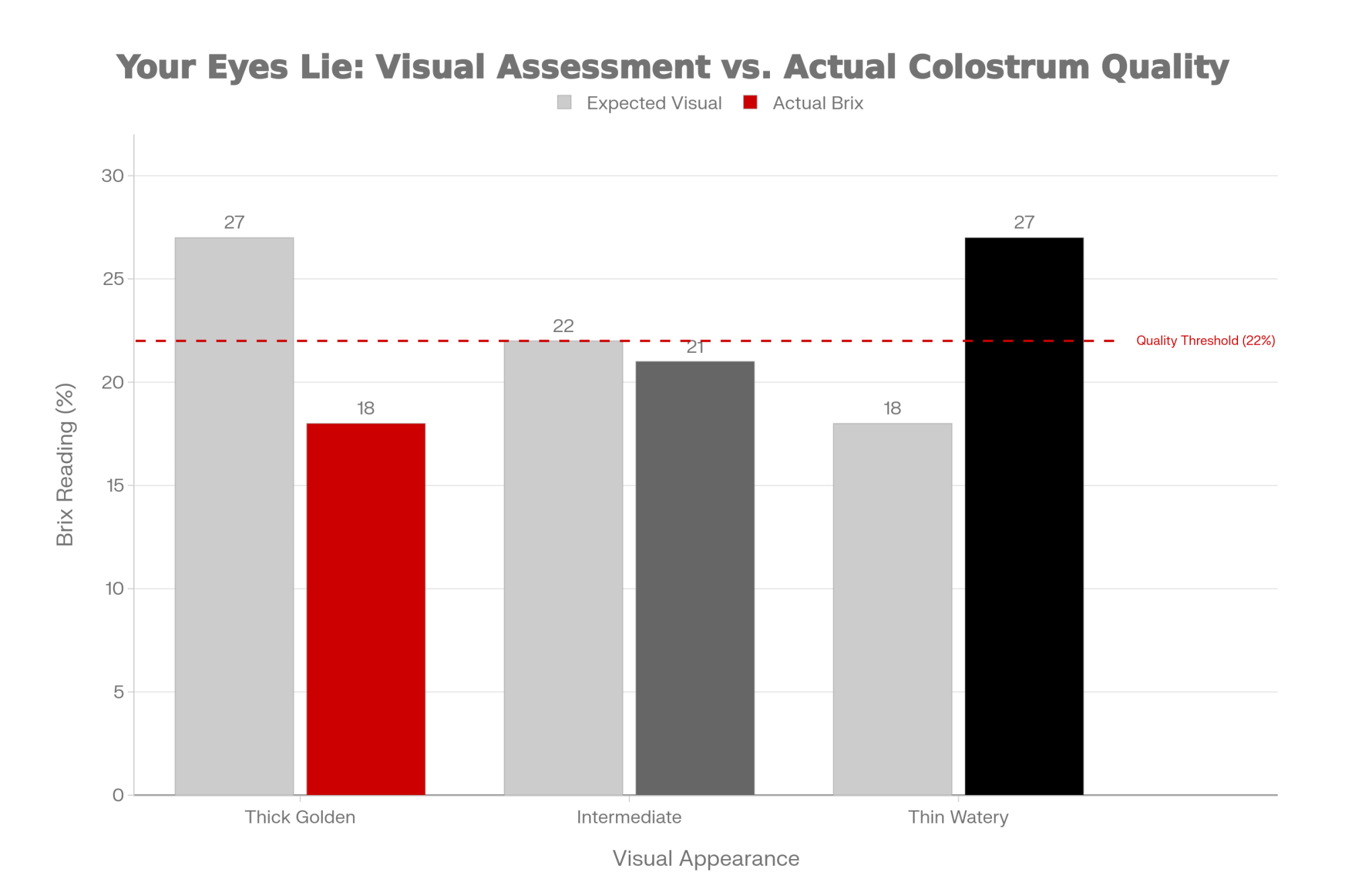
Your Eyes Lie: Visual Assessment vs. Actual Colostrum Quality” – This chart exposes the dangerous disconnect between what farmers see and reality. The thick golden batch failed at Brix 18, while the thin watery sample tested excellent at 27
Visual AppearanceWhat You ThinkActual Brix ReadingReality
Thick, bright golden yellow“Excellent quality”18FAILED (below 22% threshold)
Intermediate color“Probably OK”21Borderline
Thin, nearly white“Poor quality”27EXCELLENT

The Affordable Solution

Penn State Extension confirms that a Brix refractometer costs between $100 and several hundred dollars, with many farm-suitable options at the low end of that range. Takes 30 seconds per batch. Compare that to $150,000-$230,000 for a milking robot—and ask yourself which investment has the faster payback.

The Contamination Variable

Even high-quality colostrum can be undermined by bacterial contamination—something that doesn’t always get the attention it deserves.

Research published in the Journal of Dairy Science and reviewed in Canadian Veterinary Journal articles demonstrates that heavy bacterial loads in colostrum can interfere with IgG absorption. The mechanism involves bacterial binding to antibodies, thereby reducing the amount available for uptake. High pathogen exposure may also trigger accelerated gut closure.

The practical result: a calf can receive colostrum with excellent Brix readings and still experience suboptimal passive transfer because contamination compromised absorption.

Sources of contamination include dirty teats at harvest, inadequately cleaned collection equipment, storage in contaminated containers, and direct pathogen shedding from infected mammary glands.

Research on colostrum pasteurization, including work from the University of Minnesota, has found higher serum IgG concentrations and fewer bacterial contaminants in calves receiving pasteurized versus raw colostrum. The heat treatment eliminates pathogens while preserving antibody function.

For operations with persistent passive transfer challenges despite good Brix scores, pasteurization may be worth investigating.
Putting This in Context: When Does This Apply?

I want to address something directly, because useful analysis requires acknowledging that not every farm faces the same situation.

  • Operations are already achieving strong outcomes. If your calf mortality is consistently below 3%, your serum total protein testing shows excellent passive transfer rates, and respiratory disease is minimal—your current protocols are working well. The improvements discussed here offer diminishing returns when baseline performance is already strong. Your resources may be better invested elsewhere.
  • Pasture-based and seasonal calving systems. The bedding and ventilation research cited here comes primarily from confined housing systems. Operations calving on pasture face different challenges—weather exposure, predation risk, monitoring difficulty—but also different advantages in terms of air quality and pathogen load. The colostrum timing principles apply broadly, but housing-specific recommendations need thoughtful adaptation.
  • Small-scale operations. The labor economics of twice-weekly bedding changes look different on a 50-cow dairy than on a 500-cow operation. The principles remain valid, but the implementation needs to align with your operation’s labor availability and management capacity. Sometimes “better” is more achievable than “optimal.”
  • Regional and seasonal variation. A barn in Wisconsin during February faces different ventilation dynamics than one in California in July. Humidity, temperature extremes, and baseline pathogen pressure all affect how these recommendations translate to specific operations.
  • International considerations. For producers in Canada, Europe, Australia, New Zealand, and elsewhere—regulatory environments, housing norms, and climate conditions vary considerably. The biological principles apply broadly, but specific protocols and cost structures need local adaptation.

“The research provides direction. Local adaptation provides results.”

Regional Protocol Adjustments: What the Research Says

RegionPrimary ChallengeCritical AdjustmentTarget Metric
Upper Midwest (WI, MN, MI)Winter cold + moistureMinimum 4 air changes/hour even in winter<5°F temp difference inside vs outside
California / WesternSummer heat + dust40-60 air changes/hour in summerShade + evaporative cooling
Southeast (GA, FL, TX Gulf)High humidityMoisture control paramountDew point management

Because ventilation and environment management looks different depending on where you farm, here’s what the research suggests for key regions:

Upper Midwest (Wisconsin, Minnesota, Michigan) — Winter Focus

The challenge in cold-climate barns is balancing fresh air with avoiding drafts. According to Dairy Global and extension guidance:

  • Minimum four air changes per hour, even in winter—closing up the barn completely is worse than cold
  • Target barn temperature of 40-50°F (4-10°C) in heated facilities; use heat as a ventilation tool to dry air, not primarily for warmth
  • Calves are comfortable down to 50°F with adequate nutrition and deep bedding; below that, they start using energy for warmth instead of growth
  • Positive pressure ventilation tubes are particularly valuable in winter—a system for a 40×100-foot calf barn costs approximately $1,500-2,000 to install, according to extension estimates
  • Watch for the 5°F rule: if the inside temperature exceeds the outside by more than 5 degrees, ventilation is inadequate

California & Western Dry Lot Systems — Summer Focus

Heat stress and dust present different challenges:

  • 40-60 air changes per hour are needed in summer conditions
  • Shade and water access become critical; evaporative cooling, where feasible
  • Dry lot systems have natural ventilation advantages, but require careful attention to dust and bedding moisture management
  • Morning and evening feeding may help calves consume adequate nutrition during heat

Southeast (Georgia, Florida, Texas Gulf) — Humidity Focus

High humidity creates unique pathogen pressure:

  • Moisture control is paramount—humidity promotes bacterial and fungal growth in bedding
  • More frequent bedding changes may be necessary than in drier climates
  • Ventilation must address both temperature and humidity; dew point management matters
  • According to Dairy Herd Management, keeping dew points lower than external ambient temperature helps prevent condensation

What Getting Started Might Look Like

For farms considering improvements, the question of where to begin can feel daunting. Address bedding, ventilation, and colostrum simultaneously? That approach sometimes leads to implementation challenges—too many changes, unclear attribution of results, and staff feeling overwhelmed.

What seems to work better for many operations is a sequenced approach that builds confidence through visible progress.

PhaseActionTimelineExpected OutcomeCost
Phase 1Increase bedding frequency to every 2-3 daysWeeks 1-457% diarrhea reduction, visible calf health improvement$4/calf/week
Phase 2Add Brix testing to every colostrum batchWeeks 5-6Identify failing batches, improve protocol<$100 one-time
Phase 3Assess and upgrade ventilationMonths 3-6Reduced ammonia, better lung health$1,500-$2,000 for tube system
PaybackMeasure first-lactation milk from improved cohort24-30 months+1,200 lbs milk per heiferRevenue gain

Consider starting with the bedding protocol.

This isn’t necessarily the highest-impact intervention, but it’s often the most immediately visible. Move to more frequent bedding changes—every 2-3 days rather than weekly. Track two simple metrics: navel scores on a 1-3 scale and respiratory rates on a sample of 10 calves weekly.

Within a few weeks, many operations see measurable improvement. Navel scores drop. Respiratory rates normalize. The barn smells different. Staff notices calves seem healthier.

That visible progress builds confidence that change matters—and creates momentum for the next step.

Then consider adding colostrum testing.

Once bedding improvements show results, adding Brix testing feels like a natural progression. Invest in a refractometer. Test every batch for two weeks.

Many farms discover something uncomfortable: a meaningful percentage of batches fall below quality thresholds. This revelation typically triggers improvements to the protocol organically. Farmers want to address problems they can now see.

Then evaluate ventilation.

With foundational improvements in place, farms are better positioned to assess ventilation investments. Initial improvements—such as fan repositioning and curtain management adjustments—may be relatively modest. More substantial upgrades—such as positive-pressure tube systems and structural modifications—require a greater investment.

The timeline for seeing returns is longer here. But farms that have already experienced benefits from bedding and colostrum work are often more willing to make the investment and allow time for results.

The pattern I’ve observed: farms that sequence improvements tend to sustain them. Farms that attempt comprehensive change all at once sometimes abandon the effort when results are hard to attribute, and staff feels stretched.

The Bottom Line

Let’s be honest here.

Bedding calves every two to three days is a pain. It’s labor-intensive, and straw isn’t getting any cheaper. Testing every batch of colostrum adds another task to an already packed calving routine. And convincing your team that the barn “smells fine” isn’t actually fine? That’s a tough conversation.

InvestmentTypical CostPayback TimelineImpact on Milk Production
Robotic milking unit$150,000-$230,0005-7 yearsLong-term efficiency
Positive pressure tube system$1,500-$2,0001-2 seasonsRespiratory health
Brix refractometerUnder $100First use1,200 lbs saved per heifer
More frequent beddingLabor + materialsWeeks to months57% diarrhea reduction

But here’s what I keep coming back to:

If you’re ignoring the 1,200 lbs of milk you’re leaving on the table because you wanted to save an hour of labor on a Tuesday, you aren’t managing a dairy—you’re managing a decline.

We’ll finance a $200,000 robot over seven years without hesitation. We’ll invest in automated feeding because it saves labor. We’ll pay for genomic testing to find the cows with the best production potential.

But then we’ll feed those genetically superior animals compromised colostrum because we didn’t want to spend $100 on a refractometer. We’ll house them in bedding that’s growing bacteria for a week because changing it more often “costs too much.” We’ll let them breathe eight ppm ammonia because we can’t smell it anymore.

The math doesn’t lie. The research is clear. The interventions are cheap compared to almost everything else we invest in.

InvestmentTypical CostPayback Timeline
Robotic milking unit$150,000-$230,0005-7 years
Positive pressure tube system$1,500-$2,0001-2 seasons
Brix refractometerUnder $100 to several hundredFirst use
More frequent beddingLabor + materialsWeeks to months

The question isn’t whether you can afford to implement better maternity protocols. The question is whether you can afford not to.

Every calf born on your operation is either starting her career with a solid foundation—or starting it with a handicap she’ll carry to the bulk tank for years. The decisions you make in those first 24 hours echo through every lactation that follows.

This isn’t complicated. It’s not sexy. It won’t win you any awards at the equipment dealer’s open house.

But it might be the best return on investment you’ll make all year.

Quick Reference: The Three Thresholds That Matter

ParameterTargetWhy It Matters
Colostrum timingWithin 1 hour of birthAbsorption efficiency drops from 90-100% to below 70% after 2 hours
Colostrum qualityBrix ≥22% (50 g/L IgG)~25% of samples fail this threshold; visual assessment unreliable
Ammonia levelsBelow four ppmLung damage begins at levels humans can’t detect; your nose lies

Print this. Post it in the maternity area. Make it non-negotiable.

Key Takeaways:

  • $100 beats $200,000: A Brix refractometer (under $100) catches colostrum failures costing 1,200 lbs of milk per heifer. That robot takes seven years to pay back. This pays back on first use.
  • Your nose lies: Lung damage starts at 4 ppm ammonia—below human detection after regular barn exposure. By the time you smell it, your calves have been breathing damage for weeks.
  • Your eyes lie too: Thick golden colostrum: Brix 18, FAILED. Thin watery batch: Brix 27, EXCELLENT. 25% of samples fail thresholds you cannot see.
  • The absorption cliff: Hour 1 = 95%. Hour 6 = 50%. Hour 12 = 30%. Every hour you delay colostrum is immunity that never comes back—and milk that never hits the tank.
  • Cheap fixes, lifetime returns: Bedding every 2-3 days cuts diarrhea 57%. Colostrum within one hour costs only protocol discipline. With 90% of your milk check now riding on components, early-life health is first-lactation revenue.

For more information on maternity management protocols and calf health research, consult your herd veterinarian or regional extension dairy specialist. Resources are available through the Dairyland Initiative at the University of Wisconsin-Madison School of Veterinary Medicine, Cornell PRO-DAIRY, UC Davis Dairy Extension, and Lactanet in Canada.

Complete references and supporting documentation are available upon request by contacting the editorial team at editor@thebullvine.com.

Learn More

Join the Revolution!

Join over 30,000 successful dairy professionals who rely on Bullvine Weekly for their competitive edge. Delivered directly to your inbox each week, our exclusive industry insights help you make smarter decisions while saving precious hours every week. Never miss critical updates on milk production trends, breakthrough technologies, and profit-boosting strategies that top producers are already implementing. Subscribe now to transform your dairy operation’s efficiency and profitability—your future success is just one click away.

NewsSubscribe
First
Last
Consent

Cornell Study Proves Less Is More: Why Modern Colostrum Needs Just 2.5 Liters, not 4

Testing colostrum takes 30 seconds. Saves $20/calf immediately. Adds $350 lifetime. Why isn’t everyone doing this?

EXECUTIVE SUMMARY: For 20 years, we’ve been overfeeding colostrum without realizing it—and it’s been hurting both calves and profits. Modern dairy genetics have quietly doubled colostrum antibody concentration from 50 to 90 grams per liter, but we’re still feeding volumes designed for our grandparents’ cows. Cornell’s groundbreaking 2024 study shows that feeding just 2.5 liters of today’s high-quality colostrum works better than 4 liters, improving absorption efficiency by 24% while eliminating painful colic symptoms in calves. The economics are compelling: precision feeding saves $20 per calf immediately and adds $300-350 through increased first-lactation milk production. Implementation couldn’t be simpler—a $200 refractometer and 30-second test tells you exactly what each cow produces, letting you bank excess premium colostrum while optimizing calf health. Smart producers are already making the switch, treating colostrum like the liquid gold it’s become. The science is clear: less really is more when you’re feeding modern colostrum.

Precision colostrum feeding

You know how sometimes a piece of information hits you and suddenly everything makes sense? That’s exactly what happened to me at a University of Wisconsin extension meeting this fall. Dr. Donald Sockett—who’s been around calves longer than most of us have been farming—showed us data from the latest Cornell research that basically turned my understanding of colostrum feeding upside down.

What caught me off guard was this: we’re still feeding colostrum like it’s 2004, but our cows? They’re producing something completely different now. And some of the calves we thought were thriving… well, turns out they might actually be uncomfortable from what we’ve been doing to them.

The Quality Jump That Snuck Up on Us

The brutal truth about colostrum management: while dairy genetics quietly doubled antibody concentration from 50 to 90 g/L over four decades, we kept force-feeding calves volumes designed for cows that no longer exist. It’s like running premium fuel through a carburetor designed in 1980—wasteful, painful for calves, and economically stupid.

So I’ll admit it—I feel a bit foolish for not noticing this sooner. While we’ve all been focused on pushing production records, tracking genomic gains, watching butterfat levels climb… our cows have been quietly revolutionizing their colostrum quality right under our noses.

The numbers tell quite a story. Back when I started farming (and don’t ask me exactly when that was), average colostrum measured around 50 grams per liter of IgG. That’s what all the feeding guidelines were based on.

Today? Well, the data compiled by Wisconsin’s veterinary team, along with studies from Bielmann’s group and more recent work by Conneely, shows we’re routinely seeing 75 to 95 grams per liter.

Let that sink in for a minute. That’s nearly double the antibody concentration. Double.

Dr. Miriam Weber Nielsen from Michigan State put it perfectly when she told me that these modern cows aren’t just making more milk—they’re making fundamentally different colostrum. The whole biological system has upgraded.

What drove this change? A bunch of things came together, really.

You probably remember when genomic selection took off around 2009. The Council on Dairy Cattle Breeding’s data shows it basically doubled our rate of genetic gain. And what’s fascinating is that health traits improved right alongside production. Better udder health naturally means better antibody production. Makes sense when you think about it.

Then there’s dry period management. Remember when everyone was trying shortened dry periods or even continuous milking? Yeah, that didn’t work out so well. Canadian research confirmed what many of us learned the hard way—those traditional 50 to 60-day dry periods really do optimize antibody transfer. Most of us have gone back to standard dry periods, and wouldn’t you know it, colostrum quality improved.

Sandra Godden’s work has shown us something else, too—when you really dial in that dry cow nutrition, especially energy and protein balance, colostrum IgG concentration responds beautifully. Today’s TMR formulations have basically optimized this in ways we couldn’t achieve before.

And timing… oh boy, timing matters more than I realized. Research has documented that IgG concentration in colostrum can drop by about a third in the 14 hours after calving. Most of us now harvest within 2 to 6 hours. When I started, 12 to 24 hours was pretty normal. That change alone makes a huge difference.

When Cornell Proved We’ve Been Overdoing It

Alright, so the Cornell study—this is where things get really eye-opening. S.E. Frederick and Dr. Sabine Mann’s team fed 88 Holstein heifer calves colostrum at 6%, 8%, 10%, or 12% of their birth body weight. Really controlled conditions. And what they found in a recent Journal of Dairy Science paper (2024)? It challenges pretty much everything I was taught.

Cornell’s groundbreaking 2024 research reveals the shocking truth: feeding calves the traditional 4 liters (12% body weight) actually reduces IgG absorption efficiency by 24% compared to precision feeding at 6-8% body weight, while leaving more colostrum stuck in the stomach where it can’t be absorbed.

The calves getting 12% of body weight absorbed IgG at only 36.3% efficiency. The ones getting 6%? They hit 47.8% efficiency. So we’re literally getting less bang for our buck by feeding more.

But what really made me pay attention—and this is clever—they used acetaminophen as a marker to track how fast things moved through the gut. Eight hours after feeding, those high-volume calves still had 65.5% of that marker sitting in their abomasum. The lower-volume group? Only 50.4%.

That colostrum wasn’t even getting to the small intestine, where it needs to be absorbed.

And—this is the part that bothers me—those high-volume calves were clearly uncomfortable. The ones getting 10% and 12% of body weight showed abdominal kicking. Classic colic behavior. The 12% group kicked 40 times during observation. You know how many times the 6-8% groups kicked? Zero. Not once.

The hidden cost of “more is better”: Cornell researchers documented zero colic behavior in calves fed 6-8% of body weight, but calves force-fed the traditional 4 liters (12% BW) kicked 40 times in 12 hours—clear evidence of abdominal pain that’s been normalized for decades.

Dr. Ryan Breuer from Wisconsin explained it in a way that finally made it click for me: those intestinal cells that absorb IgG through pinocytosis? They’ve got limits. Feed more than they can handle, and you basically create a traffic jam in the gut. The IgG can’t get absorbed, the calf feels lousy, and you’ve wasted good colostrum.

Quality Wins Every Time

While Cornell was documenting the problems with overfeeding, the University of Montreal team was out there proving what actually works. Their 2021 study in the Canadian Journal of Animal Science followed 818 calves across 61 Quebec Holstein farms. Real farms, real conditions—not some pristine research facility.

Montreal researchers tracking 818 calves across 61 farms proved what we’ve been getting wrong: colostrum quality (easily measured with a $200 refractometer in 30 seconds) matters nearly twice as much as feeding more volume—yet most producers still focus on the wrong variable.

What they found was crystal clear: calves getting colostrum that tested at 24.5% Brix or higher were nearly three times more likely to achieve adequate passive transfer compared to calves getting lower-quality colostrum. Three times!

To put that in perspective, quality mattered more than anything else they looked at. Feeding more volume? That only gave you 2.6 times better odds. Earlier timing? 1.6 times. Bottle versus tube feeding? Just 1.4 times. Quality beat everything.

And this really made me think—those Quebec farms fed a median volume of just 2.8 liters at first feeding. That’s way less than the 4 liters we’ve been told to feed. Yet 68% of those calves achieved adequate passive transfer. Why? Because their median colostrum quality was 23.5% Brix, well above what we used to consider good enough.

A Producer’s Guide: Precision Colostrum Feeding

Stop feeding by tradition. Start feeding by science.

Calf Birth WtHigh Quality (≥25% Brix)Medium Quality (22-24% Brix)Traditional (outdated)
40 kg (88 lb)✓ 2.5 L (6.3% body wt)△ 3.4 L (8.5% body wt)✗ 4.0 L (10.0% body wt)
35 kg (77 lb)✓ 2.2 L (6.3% body wt)△ 3.0 L (8.6% body wt)✗ 4.0 L (11.4% body wt)
30 kg (66 lb)✓ 1.9 L (6.3% body wt)△ 2.6 L (8.7% body wt)✗ 4.0 L (13.3% body wt)

Banking Tips:

  • Freeze in 1-liter bags for easy thawing
  • Label with date and Brix score
  • Use within 6 months for best quality

Making This Work on Real Farms

So you’re probably thinking what I thought: “Okay, interesting research, but how do I actually do this?” Fair question. Let me share what I’ve learned from folks who’ve successfully made the switch.

First thing—you’ve got to know what you’re working with. Get yourself a Brix refractometer. They run about $200 from most dairy suppliers. The digital ones are nice if you want to splurge, but honestly, the optical ones work just fine. Takes maybe 30 seconds to test once you get the hang of it.

And that brings me to banking, which I think is one of the most underutilized tools we have. When you test a cow at 28% Brix and only need to feed 2.5 liters to her calf, you might have 2 to 3 liters of premium colostrum left over. Freeze it! That’s your insurance for when a heifer freshens with poor colostrum or you get surprise twins.

Now, I’ll be honest—not everyone sees immediate benefits. A neighbor of mine with 60 cows tried this for three months and said the extra testing time didn’t pencil out for him. Fair enough. But most operations I’ve talked with find the time investment pays off pretty quickly, especially once employees get into the routine.

This past spring calving season really drove it home for me. We had two heifers freshen the same night with colostrum testing at 18% Brix—way below what we needed. But because we’d been banking all winter, we had plenty of high-quality colostrum ready to go. Those calves got what they needed, and both are thriving now.

The Economics Make Sense

Here’s why every dairy should own a refractometer: that $200 device pays for itself with the very first calf tested, then delivers $370 in returns per calf through immediate health savings, reduced replacer waste, and a whopping 626kg more milk in first lactation. The breakeven isn’t measured in months—it’s measured in hours.

Let’s talk money, because that’s what it comes down to for most of us. Current colostrum replacer runs $35 to $45 per bag—and that makes about 3 liters. So every liter of high-quality colostrum you bank is worth $12 to $15. Start banking 1.5 liters from 40% of your fresh cows, and it adds up fast.

Then there’s growth. Calves with optimal colostrum gain an extra 0.24 pounds per day preweaning. Doesn’t sound like much? Over 60 days, that’s 14 pounds. At a typical feed conversion, that’s another $20 per calf.

And this is what really gets me—those same calves produce 626 kilograms more milk in their first lactation. At current prices of around $21 to $24 per hundredweight, we’re talking $300 to $350 in additional revenue per animal. From decisions you made in the first 12 hours of life.

Though I should mention, labor is a consideration. Training employees takes time, and if you’re dealing with high turnover, that’s a real cost. Some operations find that factor alone makes traditional protocols more practical for them.

Extended Feeding: The Next Frontier

What’s got me really interested lately is what happens when you keep feeding colostrum or transition milk beyond that first day. Most of us switch calves straight to milk replacer or whole milk, but there’s growing evidence that this is leaving gains on the table.

Michigan State published fascinating work in 2020. Calves fed transition milk for just three days after colostrum weighed 6.6 pounds more at weaning. The extra energy in transition milk accounted for only about 1.5 pounds of that. The rest? Enhanced gut development.

An Iranian-German team took it further, supplementing calves with 700 grams of colostrum daily for two full weeks. They saw significantly fewer days with diarrhea, less respiratory disease, and better feed efficiency throughout the preweaning period. Published in the Journal of Dairy Science in 2020, and it’s got a lot of us rethinking our protocols.

For operations with automated calf feeders, this gets interesting. You can program different feeding curves based on colostrum quality scores. Some larger dairies are already doing this, though the complexity of the setup means it’s not for everyone.

Different Regions, Different Challenges

Looking at how this plays out across the country, implementation varies quite a bit depending on where you farm. Many Upper Midwest producers I’ve talked with notice higher colostrum quality during fall and winter—probably because there’s less heat stress during the dry period. Southern producers often report the opposite pattern, especially during those brutal August dry periods.

Out in California’s Central Valley, those large-scale operations have had to get creative with banking systems. Smaller bags for faster thawing, dedicated freezers in climate-controlled rooms. Makes sense when you’re dealing with their volumes and temperatures.

The grazing operations in the Northeast face their own challenges. Pasture-based dry cow management can produce exceptional colostrum quality, but volume tends to be more variable. These folks really benefit from having robust banking systems to buffer that natural variation.

And smaller operations—those milking under 100 cows—might actually have some advantages here. You know your cows better, can track individual quality easier, and have more flexibility in your protocols. When you’re only calving a few cows a week, building and managing a colostrum bank is pretty straightforward.

That said, some small producers tell me the return on investment just isn’t there for them. When you’re already achieving decent passive transfer rates and labor is tight, sticking with what works makes sense.

Common Mistakes to Avoid

I’ve watched quite a few farms try to make this transition, and there are definitely some pitfalls to watch out for.

The biggest mistake? Testing colostrum but not actually changing anything. I know it sounds ridiculous, but I’ve seen it happen multiple times. Farms buy the refractometer, test every batch, write down the numbers… and then keep feeding 4 liters because that’s what feels safe. The data just piles up on clipboards without driving any decisions.

Consistency is crucial, too. If your weekend crew is still doing things the old way, you won’t see the benefits. Make it visual—post a laminated chart showing exactly how much to feed based on Brix reading and calf size. Take the guesswork out of it.

And don’t forget about those smaller calves. Jersey calves, twins, that occasional small Holstein heifer—they need proportionally less. A 30-kilogram calf getting 4 liters is receiving 13% of its body weight. No wonder some of these calves look uncomfortable after feeding.

The Organic Angle

This precision approach is especially valuable for organic producers. With a limited treatment toolbox, the prevention provided by excellent passive transfer is critical, and many organic farms report substantial reductions in calf health issues after making the switch.

Where This Is All Heading

Looking ahead, I think precision colostrum management will likely follow the same path as genomic testing. Five years ago, plenty of folks were skeptical. Today? It’s just how we do things on progressive farms.

The Council on Dairy Cattle Breeding recently announced genomic evaluations for calf wellness. The heritability for calf serum total protein (a measure of passive transfer) is around 0.17—that’s workable for genetic selection. Some farms are already starting to select for colostrum quality.

And extended feeding protocols? I think that’s the next big shift. Once producers see the growth and health benefits from feeding transition milk for 3 to 7 days, it’ll likely become more common. We’re just scratching the surface there.

What’s interesting is how this connects to everything else we’re doing. Better genetics leading to better colostrum. Better colostrum management leading to healthier calves. Healthier calves are becoming more productive cows. It’s all connected, and we’re finally starting to see the whole picture.

The Bottom Line

Look, I get that change is hard. Especially when what you’ve been doing seems to work okay. But the thing is—the colostrum our cows produce today is fundamentally different from what it was 20 years ago. We’ve improved the genetics, nutrition, and management… but not the feeding protocols.

The research from Cornell, Montreal, and Michigan State—it’s all pointing in the same direction. Quality matters more than quantity. Precision beats volume. And what worked for 50 g/L colostrum just doesn’t make sense for 90 g/L colostrum.

You don’t have to change everything overnight. Start by testing your colostrum for a week. See what you’re actually dealing with—I’ll bet you’ll be surprised. Then gradually adjust volumes based on quality. Bank the excess. Track your results.

The tools are simple—a $200 refractometer and a scale for calves. The protocol is straightforward. And the payoff? Healthier calves, better growth, improved lifetime production, and a freezer full of insurance for when you really need it.

This isn’t about being revolutionary. It’s about good management catching up with good genetics. The cows changed. The colostrum changed. Maybe it’s time our feeding protocols caught up too.

And honestly? Once you see those calves thriving on less volume of better-quality colostrum, with none of that post-feeding discomfort we used to think was normal… you’ll wonder why we didn’t figure this out sooner.

KEY TAKEAWAYS 

  • Modern colostrum is 2X stronger—Test quality with a Brix refractometer ($200, takes 30 seconds) to avoid overfeeding calves with volumes designed for 1990s genetics
  • Feed by quality, not tradition—High-quality colostrum (≥25% Brix): 2.5L | Medium (22-24% Brix): 3.3L | Low (<22% Brix): Don’t use for first feeding
  • Bank the surplus—When premium colostrum only needs 2.5L instead of 4L, freeze the excess as insurance for when heifers deliver poor-quality batches
  • The math is compelling—Precision feeding returns $20/calf immediately in health savings, plus $300-350 through 626kg more milk in first lactation
  • Implementation is simple—Most farms see ROI within 60 days using just a refractometer and a laminated feeding chart in the calf barn

Complete references and supporting documentation are available upon request by contacting the editorial team at editor@thebullvine.com.

Learn More:

Join the Revolution!

Join over 30,000 successful dairy professionals who rely on Bullvine Weekly for their competitive edge. Delivered directly to your inbox each week, our exclusive industry insights help you make smarter decisions while saving precious hours every week. Never miss critical updates on milk production trends, breakthrough technologies, and profit-boosting strategies that top producers are already implementing. Subscribe now to transform your dairy operation’s efficiency and profitability—your future success is just one click away.

NewsSubscribe
First
Last
Consent

17-26x ROI: Why Top Dairies Stopped Saving Calves and Started Preventing Loss

What if your best calves aren’t the ones you saved, but the ones that never got sick?

EXECUTIVE SUMMARY: Recent research from Cornell and Wisconsin reveals that operations achieving sub-3% calf mortality are generating 17 to 26 times return on prevention investments—roughly $800 more per calf than traditional treatment-focused farms. The 2024 Feedstuffs report confirms that national mortality remains stuck at 6%, costing producers through lost first-lactation milk (716-1,100 pounds per affected calf) and delayed breeding, which Penn State documents as a 2.9 times higher likelihood of calving after 30 months. What’s driving this shift is the intersection of biology and economics: veterinary research shows that intestinal damage from early disease permanently reduces nutrient absorption by 30-50%, even in “recovered” calves. Progressive operations are investing just $40-50 per calf in prevention protocols—Brix testing, rapid colostrum delivery, extended transition milk feeding—while traditional farms spend $850-1,050 per sick calf when factoring lifetime productivity losses. With replacement heifers commanding $2,500-3,500 and beef-on-dairy tightening supplies, the economics have never been clearer. The farms implementing these protocols aren’t abandoning treatment skills—they’re simply needing them 70% less often.

calf health economics

You know, I was sitting in the back row at the Professional Dairy Producers conference in Madison this past March—the one with the “Dialing It In” theme—and something clicked for me during a conversation about calf mortality economics. We’ve celebrated our treatment success rates for decades, and we should. But what the researchers from Cornell, Wisconsin, and other universities are telling us… well, it’s making me reconsider how we define success itself.

The Real Economics Behind “Saving” Calves

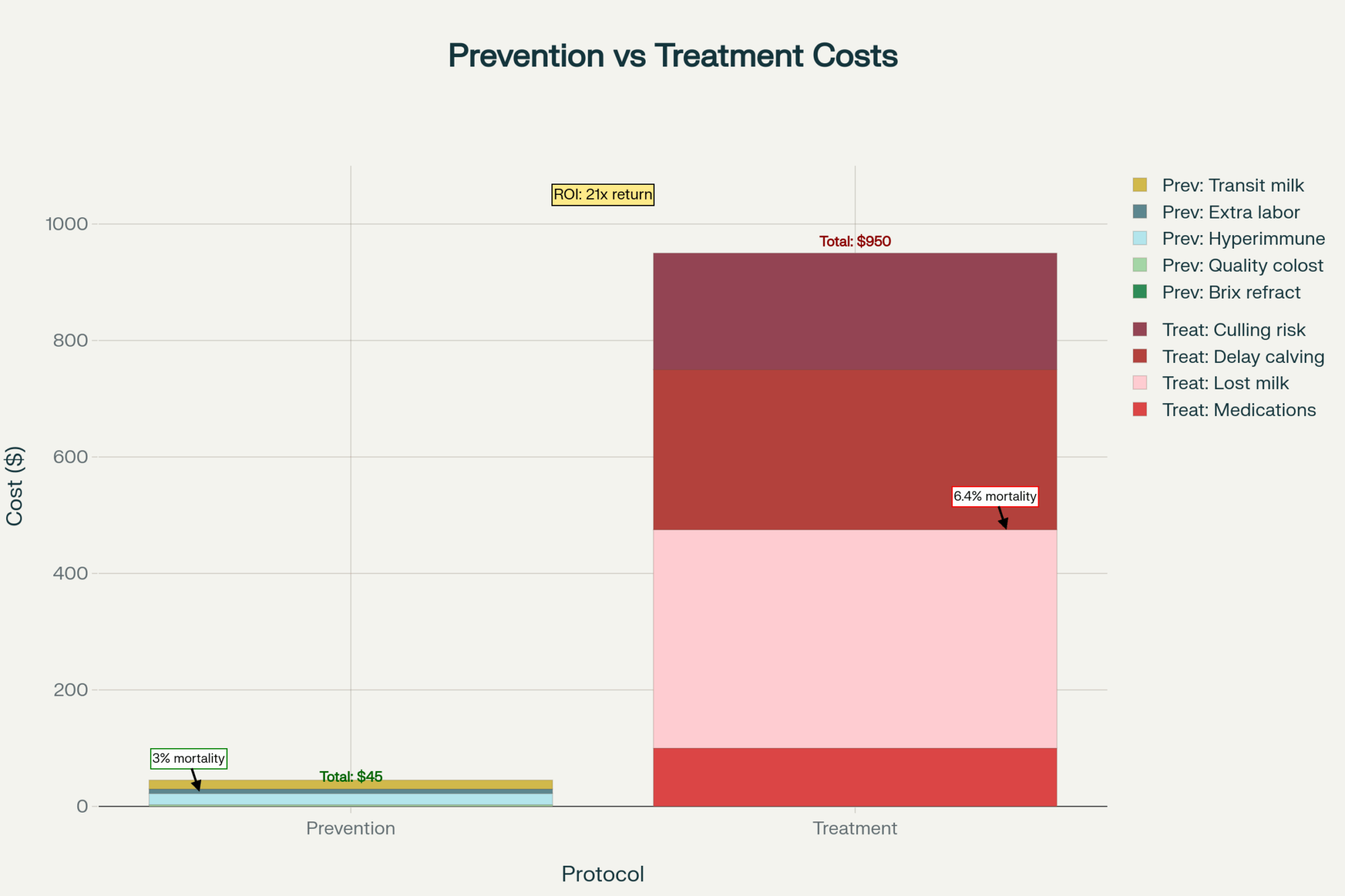
Forget what your vet told you – prevention isn’t just cheaper, it’s 21 times more profitable. While you’re spending $950 treating sick calves, smart operations invest $45 in prevention and pocket the difference.

Let me start with something that might surprise you. According to the latest NAHMS data from 2014, the national trend has improved, with pre-weaning mortality decreasing from 7.8% in 2007 to 6.4%. And yes, I know that’s over a decade old—we’re all waiting for updated national numbers. But the 2024 Feedstuffs report confirms mortality is still hovering around 6% across both the U.S. and Canada. So, it seems we’ve plateaued.

Meanwhile, the Dairy Calf and Heifer Association’s gold standard sits under 3%. I’m meeting more operations every year that consistently hit that mark.

What’s the difference between 6% and 3% worth? When you factor in everything—and I mean everything—we’re talking about $800 or more per calf.

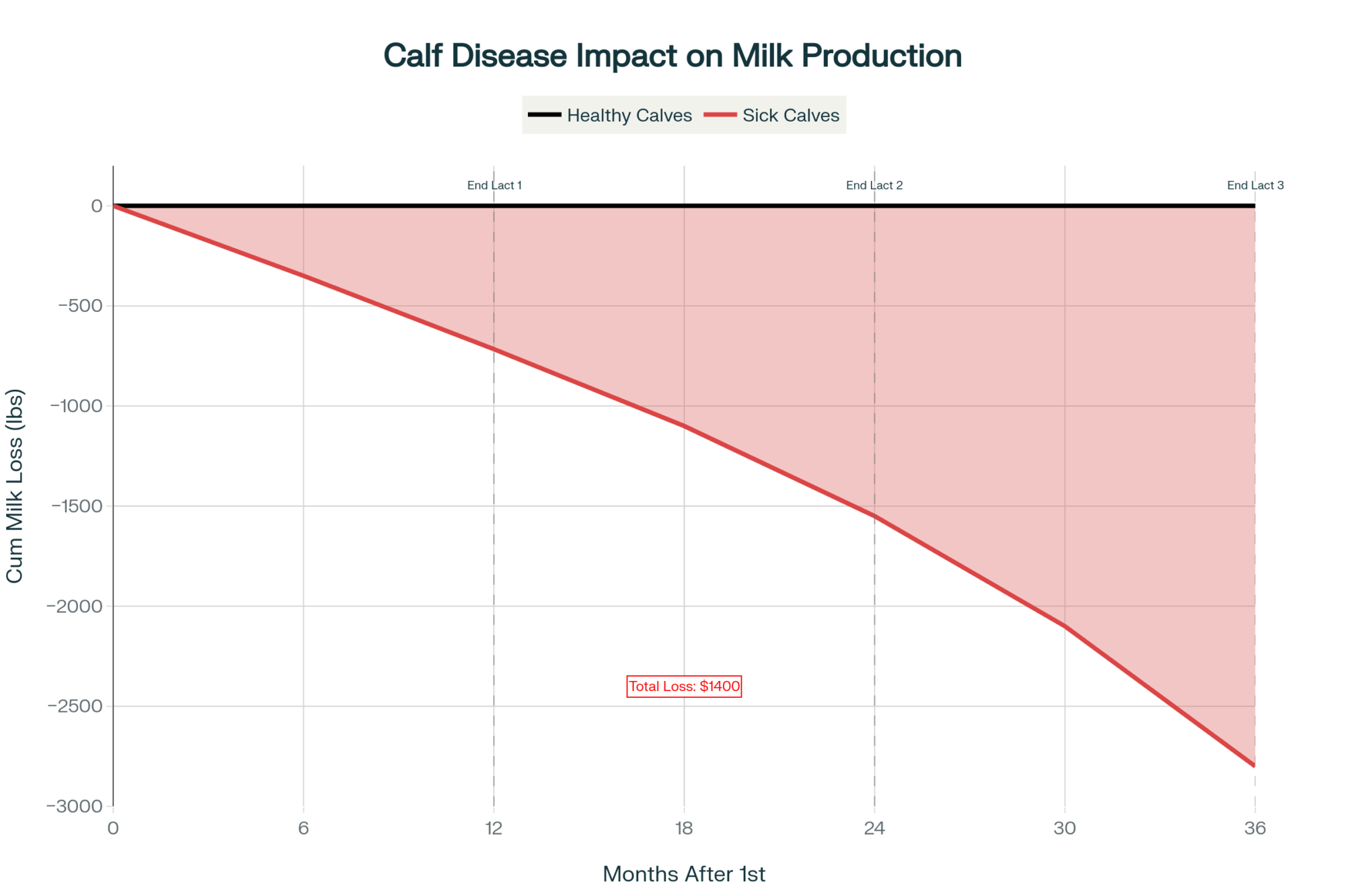
Research from the University of Guelph shows calves that get sick early but recover produce 716.5 pounds less milk in their first lactation. The Journal of Dairy Science has studies pushing that figure up near 1,100 pounds. Penn State Extension documented that these same “recovered” calves are 2.9 times more likely to calve after 30 months, rather than the ideal 22-to 24-month period.

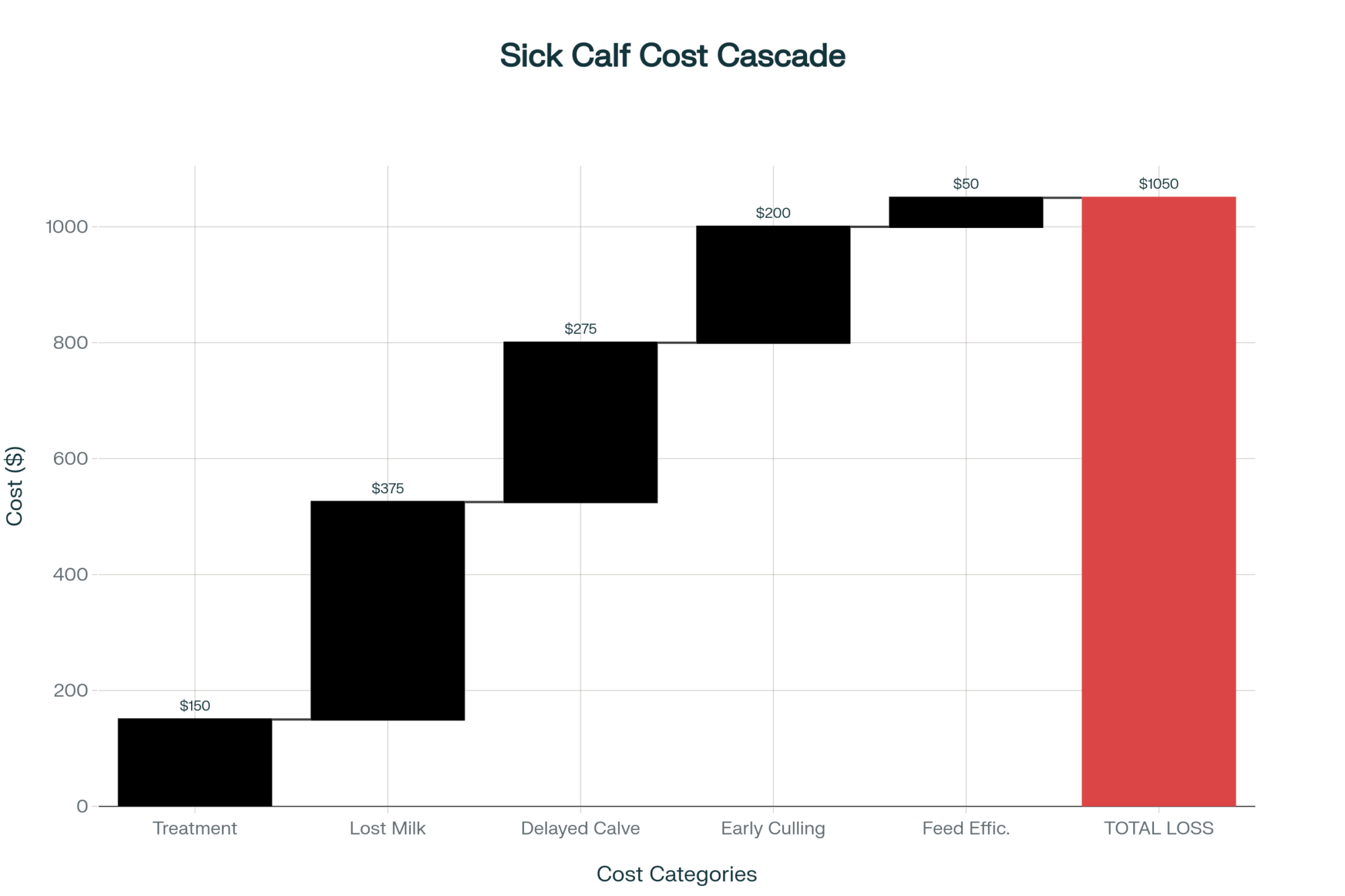
Let’s put some rough dollars to this. Feed costs for an extra six months? That’s easily $250-300, depending on your feed prices. Delayed income from milk production? Another $400-500. Higher replacement risk because these animals tend to leave the herd earlier? The numbers just keep climbing. And that’s before we even talk about the immediate treatment costs—NAHMS documented those ranging from $50 to over $150 per case.

“By the time we’re treating clinical mastitis, we’ve already lost the battle.”
— Dr. Paul Virkler, Cornell University Quality Milk Production Services

What Biology Teaches Us About Permanent Damage

That ‘recovered’ calf? She’ll cost you 2,800 pounds of milk over three lactations. Cornell proved it, Wisconsin confirmed it, but most vets still say ‘she’ll be fine.’ The math says otherwise.

Dr. Paul Virkler, who’s the Senior Extension Associate at Cornell’s Quality Milk Production Services, made that comment at a recent mastitis workshop. It really stuck with me.

Same principle applies to calves, doesn’t it? By the time we’re treating, the damage is often permanent.

I’ve been following Dr. Jennifer Van Os’s work at the University of Wisconsin—she’s their Extension Specialist in Animal Welfare. Her research on calf development is eye-opening. Those calves that battle scours or pneumonia early and survive? They carry that burden their entire lives.

The biology behind this is actually pretty straightforward once you understand it. Research published in veterinary journals shows that healthy intestinal villi—you know, those tiny finger-like projections that absorb nutrients—are permanently altered after disease. Even in fully “recovered” calves, the absorption capacity is compromised.

Think about it like running your combine with damaged sieves. Sure, it still harvests, but you’re leaving potential in the field. That’s essentially what these calves face for life.

Prevention vs. Treatment: The Real Numbers

When treating sick calves, your total costs include:

  • Medications and labor: $50-150
  • Lost milk production (first lactation): $350-400
  • Delayed calving (6+ extra months): $250-300
  • Increased culling risk: $200+
  • Total impact: $850-1,050 per affected calf

Prevention investment runs about:

  • Brix refractometer (one-time): $45 for thousands of tests
  • Quality colostrum management: $2-3 per calf
  • Hyperimmune products (high-risk periods): $15-25
  • Extra labor for protocols: $5-10
  • Extended transition milk: $15
  • Total prevention: $40-50 per calf

That’s a 17-26x return on investment

Watch $150 in treatment snowball into $1,050 in lifetime losses. Every. Single. Time. Meanwhile, $45 in prevention stops the avalanche before it starts.

Why Your Vet Might Not Want You Reading This

Let’s address the elephant in the barn. Some veterinarians generate substantial revenue streams by treating sick calves. I’m not saying they want calves to get sick—far from it. However, when your business model relies on treatment protocols, prevention can appear as a threat rather than a means of progress.

I had an interesting conversation with a vet at the Southwest Dairy Conference who admitted, “We’re having to rethink our service model completely. Prevention consulting doesn’t generate the same per-visit revenue as emergency treatments.”

Smart vets are adapting—charging for prevention protocols, monitoring programs, and health audits. But the transition isn’t easy for everyone.

The Prevention Protocols That Work

Only 12% of farms achieve excellent colostrum quality. The other 88%? They’re gambling with $1,000 per calf. A $45 refractometer could change everything, but tradition dies hard.
Protocol ComponentTraditional PracticeGold StandardCost DifferenceROI Multiple
Colostrum TestingVisual assessment onlyBrix ≥22% required$0.05/calf45×
First Feeding Timing4-6 hours after birthWithin 1-2 hours$5 labor/calf28×
Colostrum Volume2 liters × 2 feedings4 liters first feeding$8/calf35×
Transition Milk DaysSwitch to milk Day 2Feed 3-5 days$15/calf18×
Hyperimmune ProductsNoneDuring high-risk periods$15-25/calf12×
Housing ManagementIndividual until weaningConsider pair housingNeutral

Considering that operations consistently achieve sub-3% mortality rates, several practices continue to stand out. And these aren’t theoretical—they’re from working farms sharing results at conferences and through extension programs.

First, they meticulously test colostrum quality. The University of Wisconsin Extension’s guidelines specify a Brix refractometer reading of 22% or higher as the gold standard. What’s sobering is how much colostrum doesn’t meet this threshold—various studies suggest it could be 30% or more of what we assume is good quality.

Timing is absolutely critical. Four liters within two hours—using an esophageal feeder if necessary. The Journal of Dairy Science has published multiple studies showing calves fed within one hour have significantly higher immunoglobulin levels than those fed even just two hours later. Every minute counts here.

Extended colostrum feeding is something I’m seeing more farms adopt. Hoard’s Dairyman reported that feeding transition milk from milkings two through four can add 6.6 pounds to weaning weight and cut disease incidence by 50%. That’s not a marginal improvement—that’s transformational.

Many operations are also incorporating hyperimmunized antibody products during high-risk periods. While the peer-reviewed data is still developing, field trials presented at various conferences suggest meaningful reductions in scours incidence when used as part of comprehensive protocols.

Regional Realities Shape Implementation

What works in Wisconsin doesn’t automatically translate to Arizona. I’ve noticed successful operations adapt core principles to their specific challenges.

Up here in the Midwest, where winter temperatures can be brutal, calf jackets make a real difference. Research shows they can improve average daily gain in cold conditions—though the exact amount varies by study and conditions.

Down South? Heat stress management takes priority. Studies from warmer climates consistently demonstrate that shade and cooling reduce the incidence of respiratory disease. Same concept—environmental management—but completely different application.

Fall calving brings its own challenges. Cornell’s Pro-Dairy program documented that December colostrum from mature cows averages significantly lower Brix readings than spring colostrum. Some older cows produce very little quality colostrum in winter. That’s why I’m seeing more operations banking on high-quality spring colostrum as a form of insurance.

Dr. Van Os’s research on paired housing, published in the Journal of Dairy Science, demonstrates real benefits, including improved starter intake before weaning, enhanced cognitive development, and better stress resilience. The EU already requires group housing after the first week. However, and this is crucial, it only works with excellent hygiene and proper feeding management. Simply putting calves together without proper protocols? That’s a recipe for disaster.

Making It Work on Your Farm

If your mortality is above 3%, you’re in the red zone. That’s not opinion—that’s $375 per dead calf plus $1,050 per ‘recovered’ calf. Do the math on your last 100 calves.

I get the challenges we’re all facing. Good labor is nearly impossible to find. Milk prices… well, they do what they do. Nobody expects you to revolutionize everything overnight.

Start simple. A Brix refractometer runs about $45 from any dairy supplier. Testing typically takes around 30 seconds once you become comfortable with it. The University of Wisconsin’s Dairy Calf Care website offers free resources that guide you through the entire process.

For mid-sized operations—that 200 to 1,000 cow range—dedicated calf management often pays big dividends. Wisconsin’s Center for Dairy Profitability found that operations with dedicated calf staff generally have lower pre-weaning mortality than those using rotating staff. Consistency matters more than perfection.

Bigger operations can justify more sophisticated monitoring systems. But even they need the basics first. As someone said at World Dairy Expo: “Technology can’t fix bad protocols—it just documents failure faster.”

The Shifting Economic Landscape

Replacement heifer prices tell the story. We’re seeing prices in the $2,500-$ 3,500 range in many markets, with some high-quality animals going even higher. Meanwhile, beef-on-dairy programs have significantly tightened heifer supplies. Every calf matters more than ever.

Penn State Extension’s analysis, which shows that 73.2% of dairy culls are involuntary, really drives this home. Breaking that down—infertility, mastitis, lameness—many of these issues potentially trace back to compromised early calf development. Dr. Michael Overton at the University of Georgia has suggested that improving calf health could meaningfully reduce involuntary culling rates. Those aren’t just statistics—they’re future profit walking out your gate.

Banking relationships are also starting to reflect this. I’ve heard from multiple producers that operations with documented strong calf health metrics are getting better terms on operating loans. Banks recognize that healthy calves mean more predictable cash flow.

Finding Your Balance Point

Every farm faces unique constraints. What works for a large operation in New Mexico with dedicated facilities may not translate directly to a smaller, grass-based system in Vermont.

Have you considered which of your current practices might be holding you back? Some extension programs have found that operations focusing on just three core areas—colostrum quality, feeding timing, and housing hygiene—can see meaningful mortality reductions over a couple of years. Not perfection, but real progress.

Maybe you invest in basic colostrum management tools. Perhaps ventilation improvements would be more suitable for your situation. The University of Kentucky has developed economic calculators that can help estimate returns for different interventions based on your specific circumstances.

A Real-World Transformation

I recently spoke with a producer who shared their operation’s journey—they preferred to remain anonymous but gave permission to share the general story. They were experiencing fairly typical mortality rates for their region, accompanied by significant annual treatment costs.

They began with the basics: testing all colostrum, banking high-quality batches, and refining maternity pen protocols. Added esophageal feeding for any calf that wouldn’t voluntarily drink adequate colostrum quickly.

In year two, they invested in ventilation improvements and started using hyperimmune products during their high-risk winter months. They also shifted their calf manager’s incentives from treatment success to prevention metrics.

The results? Mortality dropped significantly, two-thirds of the herd was cut, and they had surplus heifers to sell in a strong market. The total investment was recouped many times over through reduced costs and additional sales. Plus, their lender took notice of the improved metrics.

The Path Forward

Good treatment protocols remain absolutely essential. Even the best prevention programs will see some morbidity—the American Association of Bovine Practitioners reminds us of this in their guidelines. We need those treatment skills.

However, here’s what encourages me: by adding prevention layers, we’re not replacing treatment—we’re reducing the frequency of when we need it. It’s both/and, not either/or.

I’m genuinely curious what you’re seeing on your operations. At various conferences recently, I’ve heard producers mention success with different approaches, including targeted electrolyte supplementation, specific vaccination timing, and various housing modifications. The diversity of approaches that work tells me we’re all still learning together.

What practices have made the biggest difference for you? What challenges are you facing that others may have already solved? The beauty of this industry has always been our willingness to share what works—and what doesn’t.

Maybe the real revolution isn’t about choosing prevention over treatment. It’s about having enough information to make the right decisions for our specific situations. And with heifer prices where they are, labor challenges what they are, consumer expectations evolving… these decisions matter more than ever.

The math is clear. The biology is proven. The only question is whether you’ll lead this change or follow it. Start with one thing—test your colostrum tomorrow. See what you discover.

Resources for Getting Started

Free Online Tools:

  • University of Wisconsin Dairy Calf Care: dysci.wisc.edu/calfcare
  • Penn State Extension Calf Health Resources: extension.psu.edu
  • University of Kentucky Economic Calculator: Contact your extension office

Key Equipment Investments:

  • Brix refractometer: $45-60
  • Esophageal feeders: $35-50
  • Calf jackets (cold climates): $25-35 each
  • Basic ventilation improvements: $15-30 per calf space

Educational Opportunities:

  • Professional Dairy Producers Conference (March annually in March, Madison)
  • World Dairy Expo seminars (October, Madison)
  • Regional extension workshops (check your land-grant university)

Questions to Ask Yourself:

  • What’s your current pre-weaning mortality rate?
  • How much are you spending annually on calf treatments?
  • What percentage of your colostrum meets quality standards?
  • How many heifers leave before completing their first lactation?

Drop me a line at The Bullvine—I’d love to hear what’s working on your farm. Because at the end of the day, we’re all trying to raise healthy, profitable animals. The methods might vary, but the goal remains the same.

KEY TAKEAWAYS

  • Immediate ROI opportunity: Prevention protocols costing $40-50 per calf deliver 17-26x returns versus $850-1,050 lifetime impact of treating sick calves—start with a $45 Brix refractometer tomorrow
  • Four critical hours, lifetime impact: Calves receiving 4 liters of 22%+ Brix colostrum within two hours show 50% lower disease incidence and gain 6.6 pounds more at weaning, according to Wisconsin Extension and Hoard’s Dairyman research
  • Regional adaptation matters: Midwest operations seeing success with calf jackets improving cold-weather ADG, while Southern farms reduce respiratory disease 15% through shade management—match protocols to your climate challenges
  • Dedicated staff pays dividends: Wisconsin’s Center for Dairy Profitability found operations with consistent calf managers achieve 4.2% lower mortality than rotating staff—consistency beats perfection in prevention protocols
  • Banking relationships improving: Multiple producers report 0.25% lower interest rates with documented calf health metrics as lenders recognize healthy calves mean predictable cash flow in tight heifer markets

Complete references and supporting documentation are available upon request by contacting the editorial team at editor@thebullvine.com.

Learn More:

  • Ensuring Calf Health: How to Gauge Your Dairy Farm’s Success through Key Tests – This practical guide provides a clear checklist of key performance indicators beyond mortality rates. It reveals how to use simple, on-farm tests—from blood serum to fecal scoring—to identify underlying health issues before they become expensive problems, giving you a powerful tool to track your prevention program’s effectiveness.
  • Why Dairy Farmers Are Seeing Double: Unpacking the Surge in Summer Heifer Prices – Get the strategic market context behind the “every calf matters” philosophy. This report analyzes why heifer and calf prices are at historic highs, revealing how factors like heat stress and the beef-on-dairy trend are tightening supply and creating a new economic reality for your replacement strategy.
  • Top 5 Must-Have Tools for Effective Calf Health and Performance – This article moves beyond the Brix refractometer to explore a range of innovative tools that can improve calf management. It introduces the ROI of technologies like ammonia monitors and growth-tracking scales, offering a forward-looking perspective on how to modernize your calf-raising protocols.

Join the Revolution!

Join over 30,000 successful dairy professionals who rely on Bullvine Weekly for their competitive edge. Delivered directly to your inbox each week, our exclusive industry insights help you make smarter decisions while saving precious hours every week. Never miss critical updates on milk production trends, breakthrough technologies, and profit-boosting strategies that top producers are already implementing. Subscribe now to transform your dairy operation’s efficiency and profitability—your future success is just one click away.

NewsSubscribe
First
Last
Consent

The Feed Tag Fine Print: 7 Nutrients That Actually Drive Calf Health

Research shows 7 nutrients can cut calf treatment costs up to 20% when fed in bioavailable forms versus cheap alternatives

Hey folks! Ever stood in the feed store staring at two calf starters with identical 18% protein on the bag, wondering why one keeps your calves thriving while the other has you calling the vet? I’ve been there, scratching my head over why some calves just don’t take off right. Here’s what I’ve learned: the real story’s hiding in the fine print.

Red Flags That Cost Real Money

Weeks 2-4 are when $400 in vet bills get made or saved. This immunity gap is why timing your nutrition strategy matters more than your neighbors realize—and why smart producers are investing in targeted supplementation during this critical window.

Before we dive into solutions, let’s talk about what you might already be seeing in your own herd. Watch your records for these warning signs:

  • More than 15% of calves are getting scours treatments (according to USDA NAHMS data)
  • Pneumonia clusters, especially in vaccinated groups
  • Post-weaning growth drops right after transition.
  • Dull, rough-coated calves that look “off” without obvious illness.
  • Slow recovery from illness, even with proper treatment

If any of these sound familiar, you could be facing hidden nutritional gaps that are draining your time and profits. A sick calf costs real money—not just vet bills but lost growth potential that never comes back.

Every Region Has Its Mineral Curveballs

Here’s the thing—soil and water conditions vary drastically from region to region, and these differences can make or break your calf nutrition program. Some areas battle selenium-poor soils, others deal with iron-rich dirt that contaminates silage during harvest. Then you’ve got sulfur showing up in well water, or molybdenum in forages that ties up the copper your calves desperately need.

One producer I know put it perfectly: “I used to wonder why my neighbor’s calves always looked healthier. Turns out it wasn’t about protein—it was about getting minerals that could actually work with our local soil and water conditions.”

Those pale rings around a calf’s eyes that make them look like they’re wearing glasses? This can be related to a copper deficiency, which is far more common than most of us realize, as copper deficiency is a widespread problem in many areas of the United States and Canada (NASEM, 2016).

The Seven Game-Changers That Actually Matter

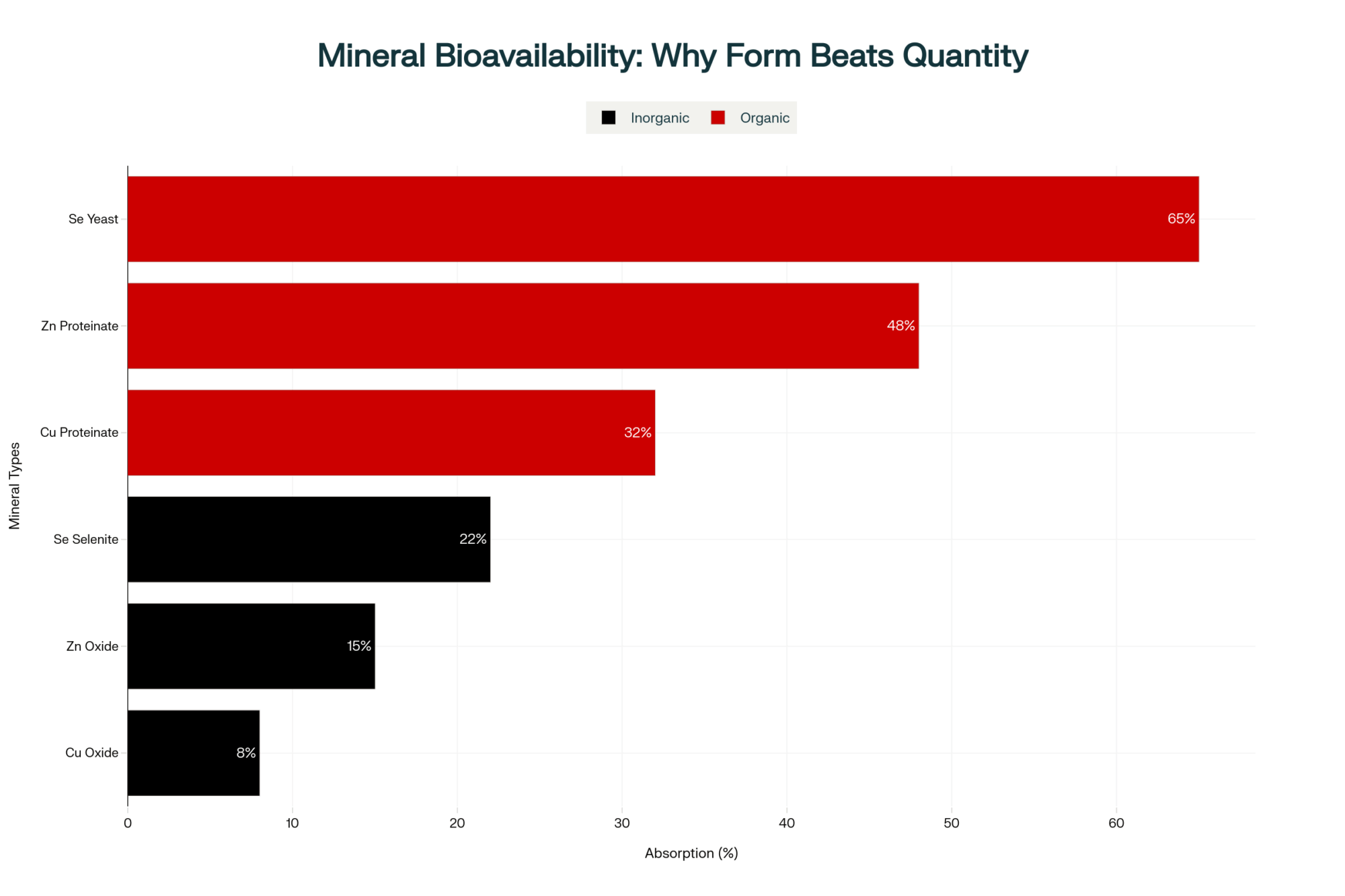
The absorption gap is staggering—organic selenium delivers 3x better uptake than cheap alternatives. When treatment costs average $85 per sick calf, spending an extra $30 on bioavailable minerals becomes the smartest investment you’ll make this year.

Forget chasing protein numbers alone. Research from Penn State, the University of Wisconsin, and extension services nationwide shows these seven nutrients make the real difference between calves that thrive and those that just survive:

Vitamin E: Your Antioxidant Shield

This is your calf’s protection against oxidative stress, especially during periods of stress, such as cold weather or transport. Research shows calves need 220-440 IU per kg of starter feed for real immune benefits—way above basic requirements.

Here’s the catch: Look for natural vitamin E (d-alpha-tocopherol), not the synthetic, cheaper version. Your calf’s body literally can’t use most of the synthetic forms.

Selenium: The Missing Piece

Many regions have selenium-poor soils, so you want feeds hitting the legal 0.3 ppm limit using a reliable source of selenium. Beware the cheap alternative: Inorganic selenium, such as sodium selenite, doesn’t build tissue stores and is instead flushed out. Organic selenium builds reserves that get mobilized during stress—that’s the difference between calves that crash and those that power through challenges.

Zinc: Your Gut Guardian

Strong gut integrity means fewer pathogens getting through. The new NASEM suggests using 75-100 ppm of zinc for stressed calves. Prefer to use more available sources, such as chelated or hydroxy minerals. Red flag alert: Avoid feeds listing zinc oxide—it’s cheap and poorly absorbed. Producers who switch to more bioavailable zinc sources often report improvement on animal performance.

Copper: Easy to Lose, Expensive to Replace

If your water runs high in sulfur or your forages contain high levels of molybdenum, you’re fighting an uphill battle. You need 10-15 ppm copper from chelated or hydroxy copper to overcome the antagonistic effects of these high sulfur/molybdenum minerals. Major warning: Copper oxide is essentially biologically unavailable and worthless—its presence on a feed tag is a major red flag.

Manganese: The Quiet Builder

Critical for bone development in growing heifers. Target 40 ppm from organic or hydroxy sources, especially since iron contamination in feeds can block uptake. High iron levels compete directly with manganese for absorption sites, so bioavailable organic/hydroxy forms help overcome this interference.

Glutamine: The Stress-Buster

This amino acid fuels gut lining cells during transport or weaning stress. Around 1-2% of dry matter intake as rumen-protected glutamine helps calves cope. Form matters: Free glutamine gets degraded in the rumen, so it must be rumen-protected to reach the small intestine where it’s needed.

Arginine: The Circulation Enhancer

Helps immune cells reach infection sites through better blood flow. Supplement at 0.25-0.5% dry matter with rumen-protected forms. Like glutamine, it needs protection from rumen microbes to be effective.

Sponsored Post

Your Feed Tag Cheat Sheet

What to Look For:

  • Protein: 18-22% is fine, but don’t obsess
  • Vitamin E: 220+ IU/kg from natural sources
  • Trace Minerals: Hydroxy or chelated minerals —avoid “oxide”
  • Gut Health Boosters: Probiotics, yeast culture, prebiotics.

Questions That Matter:

  • “Which specific forms of trace minerals do you use?”
  • “How do you account for regional mineral antagonists?”
  • “What’s your pellet durability score?”
  • “Got any performance data from farms in my area?”
Premium minerals cost $30 more per calf but save $140 in total expenses—that’s a 467% ROI that compounds across your entire calf crop. The math isn’t even close when you factor in treatment costs and lost growth potential.

The Bottom Line: Your Wallet Will Thank You

University extension analyses suggest significant returns from proper mineral supplementation, with benefits varying by operation and local conditions14.

Real example: One producer switched to a starter with organic minerals and higher vitamin E. Two years later, he reported his healthiest heifer crop yet—fewer vet calls and better weaning weights.

Impact AreaImprovement with Organic MineralsEconomic Value (per calf)Research Source
Treatment Cost Reduction20% reduction in scours treatments$25-40 savedMultiple university studies
Improved Pregnancy Rates3-5% increase in conception rates$150-250 valueCargill, NAHMS data
Weaning Weight Gains15-25 lbs additional weaning weight$30-50 additional revenueMultiple feeding trials
Reduced Mortality2-3% reduction in calf mortality$400-600 loss preventionUSDA mortality statistics
Feed Efficiency5-8% improvement in FCR$20-35 feed savingsFeed conversion studies
Mineral Supplement Cost$0.15/day per calf additional cost$11 annual cost increaseCommercial pricing
Net Economic Benefit$75-150 per calf net return$75-150 net profitCombined analysis

Your Action Plan

This Week:

  1. Pull your treatment records and look for patterns.
  2. Check your current feed tags for mineral sources.
  3. Call your nutritionist with the questions above.

This Month:

4. Test your water and soil for problematic minerals

5. Track starter intake and growth rates closely

6. Consider upgrading to feeds with proven hydroxy or chelated mineral packages

7. Track Results: Monitor intake, average daily gain, treatment rates, and weaning transitions. The numbers will tell the story.

The Hard Truth

No matter where you farm, calves face stress from weaning, weather changes, and the challenges of modern dairy production. Give them the nutritional tools they need—in forms they can actually use—and your bottom line will show the difference.

Don’t let hidden deficiencies steal your profits. Those seven nutrients, properly sourced and formulated for your local conditions, aren’t just nice-to-haves—they’re your competitive edge.

KEY TAKEAWAYS:

  • Bioavailability beats quantity: Organic forms of zinc (proteinate), selenium (yeast), and copper (amino acid complex) deliver 15-30% better absorption than cheaper sulfate or oxide forms, especially when antagonists like iron or sulfur are present in local water or forages.
  • Regional customization pays: Producers in high-sulfur water areas or iron-rich soil regions who switch to organic copper sources often see 20% reductions in scours treatments, as organic minerals bypass common antagonistic interactions that block absorption.
  • Target the immunity gap strategically: Calves face peak vulnerability between 2-3 weeks of age when maternal antibodies decline, but active immunity isn’t fully developed—optimal levels of vitamin E (220-440 IU/kg) and selenium (0.3 ppm from yeast) during this period strengthen immune response and vaccination effectiveness.
  • Form matters more than inclusion rates: Natural vitamin E shows 2-3x greater bioactivity than synthetic forms due to the body’s preferential transport proteins, making it worth the premium cost for operations focused on reducing treatment costs and improving weaning success rates.

EXECUTIVE SUMMARY:

What farmers are discovering is that traditional calf nutrition strategies, which focus on meeting minimum requirements, are leaving money on the table during the most critical growth period. Recent research from leading agricultural universities identifies seven nutrients—vitamin E, selenium, zinc, organic copper, manganese, glutamine, and arginine—that, when delivered in bioavailable forms, can significantly reduce treatment costs and improve weaning performance. The key finding revolves around bioavailability: organic, chelated forms of these nutrients consistently outperform cheaper inorganic alternatives by 15-30% in absorption rates, particularly when dietary antagonists like iron, sulfur, or molybdenum are present. Studies demonstrate that calves receiving optimal levels of these nutrients in bioavailable forms show 20% fewer scours treatments and smoother weaning transitions with less post-weaning growth slumps. Here’s what this means for your operation: by investing in scientifically formulated starters that prioritize nutrient form over just inclusion rates, producers can bridge the critical “immunity gap” between maternal protection and active immunity development. The future of calf nutrition lies in understanding the complex nutrient interactions and antagonisms that vary by region, creating opportunities for producers to tailor their approach to local soil and water conditions.

Complete references and supporting documentation are available upon request by contacting the editorial team at editor@thebullvine.com.

Sponsored Post

Learn More:

Join the Revolution!

Join over 30,000 successful dairy professionals who rely on Bullvine Weekly for their competitive edge. Delivered directly to your inbox each week, our exclusive industry insights help you make smarter decisions while saving precious hours every week. Never miss critical updates on milk production trends, breakthrough technologies, and profit-boosting strategies that top producers are already implementing. Subscribe now to transform your dairy operation’s efficiency and profitability—your future success is just one click away.

NewsSubscribe
First
Last
Consent

Boosting Colostrum Quality in Dairy Cows: Essential Nutritional and Management Tips for Farmers

Unlock vital strategies to enhance colostrum quality in dairy cows. Find out how fine-tuning nutrition and management can elevate your herd’s health and efficiency.

colostrum production, colostrum quality, dairy cows, dairy farmers, passive immunity, prepartum nutrition, cow metabolic status, calf health, high-quality colostrum, herd management, colostrum storage, colostrum harvesting, dairy farm efficiency, heat treatment colostrum, calf birth weight, prepartum environment, dry period length, dairy calves, dairy herd health, colostrum variability, commercial dairy producers, colostrum components, oxytocin administration, targeted nutrition, dairy farm profitability

Summary: Dairy producers play a crucial role in newborn calfs’ survival rates and herd health, as they rely on their mother’s first few sips of colostrum. Factors such as sex, cow parity, birth weight, and seasonal variations can impact colostrum quality. Stress management techniques, housing, and nutrition are essential at the herd level, and comprehensive prepartum nutrition programs can improve colostrum quality. Understanding individual animal factors on colostrum generation helps understand colostrum generation. Multiparous cows provide more colostrum with higher immunoglobulin levels than first-time calves, while male calves produce more due to hormonal changes and different fetal needs. Metabolic status plays a significant role in colostrum quality and yield, and dairy producers can increase production, promote passive immunity transmission, and raise farm output by monitoring and controlling these variables.

  • The variability in colostrum yield and composition underscores the need for consistent management practices.
  • Factors such as parity, sex of the calf, and calf birth weight significantly affect colostrum quality and production.
  • Prepartum nutrition, including energy, protein, vitamins, minerals, and feed additives, plays a pivotal role in colostrum yield and quality.
  • Environmental factors and the length of the dry period are influential in colostrum production.
  • Proper timing for colostrum harvest and effective storage strategies are essential to maintain its nutritional and immunological benefits.
  • Ongoing research is crucial to fill existing gaps in understanding colostrum production mechanisms and improving management practices.

As a dairy producer, you play a crucial role in the life of a newborn calf. Imagine a calf, only a few minutes old, depending totally on its mother’s first few sips of colostrum. This golden liquid, rich in nutrients and antibodies, is not just the calf’s first meal but also a necessary lifeline. Understanding and maximizing colostrum production are essential for effectively running your herd, directly impacting calf survival rates and general herd health. Ensuring excellent colostrum is not just a success for your dairy business but a great beginning for your calves. Many factors affect colostrum quantity and composition, from personal cow traits to prepartum diet. By exploring these factors, you can improve colostrum output, guaranteeing every calf has the robust start it is due.

Mastering Colostrum: Navigating Variability to Boost Calf Health and Dairy Farm Efficiency 

Boosting calf health and farm output depends on an awareness of colostrum variability. Crucially important are the calf’s sex, the cow’s parity, and birth weight. Older cows, for example, often produce more colostrum than first-time moms. Furthermore, differences in the calf’s sex and birth weight influence colostrum quality.

Another essential consideration is seasonal variations. Because of variations in environmental stresses and food, cows calving in cooler months frequently produce more vital colostrum than those calving in warmer seasons.

Stress management techniques, housing, and nutrition become essential at the herd level. Programs of comprehensive prepartum nutrition may improve colostrum quality. Furthermore, the general condition of the herd significantly affects colostrum output.

Maintaining a constant supply of premium colostrum might seem challenging, but it’s a goal worth pursuing. Variations in environmental circumstances and management may cause changes in colostrum quality. However, with continuous improvement in your techniques, you can guarantee every newborn calf has the best start, inspiring optimism and motivation in your dairy farming journey.

Recognizing the Impact of Individual Animal Factors on Colostrum Production and Quality

Realizing the influence of individual animal characteristics like parity, calf sex, birth weight, and the cow’s metabolic state helps one understand colostrum generation. These characteristics significantly affect colostrum’s quality and yield.

Parity: Thanks to their excellent expertise and physiological adjustments, multiparous cows often provide more colostrum with higher immunoglobulin levels than first-time calves.

Sex of the Calf: Due to hormonal changes and different fetal needs, cows with male calves produce more colostrum than those with female calves.

Calf Birth Weight: Better colostrum quantity and quality have been associated with heavier calves at delivery. These calves need extra nutrition during pregnancy, which drives colostrum production in the cow.

Metabolic Status: Cows in ideal metabolic conditions produce better-quality colostrum rich in immunoglobulins, proteins, and energy. Reduced-quality colostrum brought on by poor metabolic health compromises calf health.

By monitoring and controlling these variables, dairy producers may increase colostrum production, promote passive immunity transmission, and raise farm output.

Strategically Enhancing Colostrum Quality Through Targeted Prepartum Nutrition

Increasing colostrum output and quality in dairy cows depends on an appropriate prepartum diet. Late gestation metabolizable energy and protein consumption substantially influence nutrients and colostrum output. More colostrum produced by higher metabolizable energy levels in the meal before calving satisfies the dietary needs of the newborn calf.

Protein is more than numbers; it dramatically increases the immunoglobulin content of colostrum, which is vital for calf immunity. Although the optimal amino acid compositions are currently under research, focused supplements are promising.

Minerals and vitamins are still essential. While trace elements like selenium and zinc are vital for antioxidant defenses and general cow health, vitamins A, D, and E boost immunological activities. Equipped with balanced pre-calving levels of these nutrients, colostrum may become more affluent.

Feed additives, including rumen-protected lipids and yeast cultures, are becoming increasingly popular as they raise colostrum quality and increase metabolic efficiency.

Using these nutritional techniques guarantees a regular supply of premium colostrum, which results in excellent development rates, healthier calves, and higher herd production.

Optimizing Prepartum Conditions: The Key to Superior Colostrum Yield and Quality 

Colostrum production depends critically on the prepartum environment, which includes housing, stress levels, and cow comfort. Clean, pleasant, stress-free settings significantly improve colostrum quantity and quality. However, overcrowding, sudden food changes, and aggressive handling may lower colostrum output. Check bedding, ventilation, and space.

The duration of the dry spell is also rather significant. Both too long and too brief dry spells might affect colostrum production. Mammary gland healing and colostrum synthesis most benefit from a 60-day dry phase. While longer intervals may lower colostrum quality, shorter times may not enable enough recuperation. The prepartum environment, which includes housing, stress levels, and cow comfort, significantly influences colostrum quantity and quality. Clean, pleasant, stress-free settings are ideal for colostrum production, while overcrowding, sudden food changes, and aggressive handling may lower colostrum output.

Management also covers herd behaviors and nutrition. Meeting energy and protein needs—including feed additives, vitamins, and minerals—improve colostrum quantity and quality. Timely colostrum delivery and oxytocin usage after calving facilitate adequate harvest.

Two key aspects are heat treatment and correct colostrum storage. Though it doesn’t break down colostral components, heat treatment lowers bacteria, reducing the calf’s risk of infection. Good storage, like cooling and freezing, preserves the colostrum’s nutritional and immunological integrity, ensuring that the calf receives the full benefits of the colostrum.

Addressing the prepartum environment, fine-tuning the dry phase, and maximizing nutrition and management can significantly increase colostrum output, improve calf health, and increase dairy producers’ farm efficiency.

Ensuring Peak Colostrum Benefits: Essential Harvesting and Storage Techniques for Dairy Farmers 

Correct colostrum collecting and storage can help your newborn calves start the best. Harvest colostrum as soon as you can after calving—ideally two hours—because its quality declines rapidly with time. If the cow is anxious or hesitant to nurse, use oxytocin to guarantee a decent yield.

Refrigerate colostrum for temporary use. If you want long-term storage, freeze it in tiny containers for quick thawing and less waste. While pasteurizing colostrum can help destroy germs without compromising its quality, be careful to heat it between 140°F and 145°F (60°C and 63°C). If the cow is anxious or hesitant to nurse, oxytocin, a hormone that stimulates milk ejection, can guarantee a decent yield without harming the cow or the calf.

Use mild techniques, like a warm water bath, to defrost frozen colostrum and maintain its essential proteins and antibodies. These techniques will increase calf health and raise your farm’s efficiency.

Bridging the Knowledge Gaps: Unlocking the Future of Colostrum Production and Quality 

Though progress has been made, our knowledge of colostrum generation and quality in dairy cows still needs to be improved. More studies are required to find out how the prepartum diet affects colostrum. This covers researching many minerals, vitamins, and feed additives. The prepartum environment and dry period duration also require more investigation to understand their impact on cow physiology.  

We should research the time and technique of colostrum collecting, especially the function of oxytocin. Additionally, additional investigation is essential to understand how heat treatment and storage procedures affect colostrum. Understanding animal features like parity, calf birth weight, and metabolic state might assist in developing better management practices.  

Addressing these gaps may enhance our understanding and give practical recommendations for dairy producers, leading to healthier calves and more efficient farming operations. 

The Bottom Line

By significantly improving the health and immunity of your calves, optimizing colostrum output and quality will help your farm be more generally efficient. These are essential lessons and doable advice:

  • Monitor Individual Animal Factors: Track parity, calf birth weight, and cow metabolic state. Change your management plans to fit your herd’s particular demands.
  • Invest in Prepartum Nutrition: Throughout the prepartum period, ensure your cows have a balanced meal high in metabolizable energy, protein, vitamins, and minerals. Consider seeing a dietitian to maximize the feed schedule.
  • Create an Optimal Prepartum Environment: Keep the surroundings free of tension and adequately control the duration of the dry time. Enough relaxation and suitable surroundings help to improve colostrum output and quality.
  • Prioritize Timely Colostrum Harvesting: To optimize immunoglobulin content, harvest colostrum right after calving. During collecting, guarantee good technique and hygiene.
  • Focus on Proper Storage and Handling: Heat treatment techniques help retain colostrum’s beneficial elements. Store it suitably to avoid deterioration and spoiling.

Your proactive work will pay off; healthier calves and a more energetic herd result. Don’t stop here; keep being educated and modify your procedures constantly, depending on the most recent studies, to improve colostrum quality. Right now, act to ensure a better herd tomorrow!

Learn More:

Join the Revolution!

Bullvine Daily is your essential e-zine for staying ahead in the dairy industry. With over 30,000 subscribers, we bring you the week’s top news, helping you manage tasks efficiently. Stay informed about milk production, tech adoption, and more, so you can concentrate on your dairy operations. 

NewsSubscribe
First
Last
Consent

How Colostrum Quantity Impacts Dairy Calf Health: Findings from Holstein and Crossbred Calves

Find out how much colostrum impacts calf health. Are Holstein or crossbreds better off? See the surprising results that might change your farm practices.

Summary: This article explores the impacts of colostrum quantity on calf health and immune system development, comparing Holstein and Holstein × Angus breeds. The study used two different colostrum replacer treatments: a low quantity providing 2.5 g of IgG/kg and a high quantity providing 5.0 g of IgG/kg. While breed had no significant effect on overall health or lymphocyte populations, the amount of colostrum did influence immune cell profiles. HI calves showed tendencies for higher proportions of certain B cells, suggesting that increased colostrum intake in early life is beneficial for immune development. The article emphasizes the importance of colostrum management over breed differences for improving calf health.

  • Higher colostrum intake leads to better immune cell profiles in calves.
  • Breed differences (Holstein vs. Holstein × Angus) had no significant impact on overall calf health or lymphocyte populations.
  • HI calves had higher proportions of certain B cells, indicating enhanced immune development.
  • Effective colostrum management is crucial for improving calf health, regardless of breed.
  • The study highlights the importance of prioritizing colostrum quality and quantity over breed selection.
colostrum, first milk, mother cow, newborn calves, immunoglobulins, vital nutrients, growth factors, immune system, protein, fat, vitamins, minerals, energy boost, study, breed, colostrum quantity, health, lymphocyte profiles, Holstein, crossbred calves, rearing phase, IgM+ B lymphocytes, CD21, CD32, immunological response, colostrum replacer, LOW diet, immune system development, infections, lymphocyte composition, long-term health consequences, genetic predispositions, dietary therapies, colostrum quantity, calf health, immunity, genetic predispositions, dietary therapies, 12 hours, birth, individual calves, required amount, quality control, IgG concentration, health checks, manage issues early.

The initial few hours of a calf’s existence may influence its future health. It all starts with colostrum, the first milk the mother makes after giving birth. This nutrient-dense material is more than simply a meal; it is the primary defense for newborn calves, shielding them from many infections. Colostrum is like liquid gold for newborn calves. It contains immunoglobulins, vital nutrients, and growth factors necessary for developing a robust immune system. But how much colostrum is sufficient? Does the calf’s breed make a difference? These questions are essential for managing your dairy farm effectively. Subsequent research of these same concerns looked at how much colostrum and which breeds affected the health and lymphocyte profiles of Holstein and crossbred calves. The results may surprise you and provide fresh insights into improving the health of your herd.

Colostrum: The Supercharged First Meal Every Calf Needs 

Imagine colostrum as a newborn calf’s first and most important meal. Colostrum is a nutrient-dense, creamy material the mother cow produces before and after giving birth.

Think of it as a natural shield. When a calf is born, its immune system is like a blank slate, making it susceptible to infections and illnesses. Colostrum acts like a superhero, supplying crucial immunoglobulins—think of them as tiny warriors who protect the calf’s body immediately. IgG plays a vital role because it forms the majority of immunoglobulins and helps the calf fight against possible infections.

In addition, colostrum is high in protein, fat, vitamins, and minerals. It’s like giving the calf an immediate energy boost, a jumpstart on their existence. This nutritious foundation is critical to their growth and development. Without this initial injection of colostrum, calves are substantially more vulnerable to diseases and developmental setbacks, as if they were left without armor on a battlefield.

In summary, colostrum is more than simply a calf’s first meal; it is its lifeblood. Making sure kids receive enough of this precious nectar in their first few hours of existence is more than a chore; it’s a mission. It’s the finest foundation kids can have for a healthy and prosperous future, and it’s a duty we must all accept.

How Much Colostrum is Enough? A Deep Dive into Calf Health and Immunity

M. Kovacs*, H. McCarthy, T. Chaplain, L. R. Cangiano, D. L. Renaud, and M. A. Steele conducted the study “Effects of breed and colostrum quantity on health and lymphocyte populations in the blood of Holstein and crossbred calves” to investigate the impact of breed and colostrum quantity on the health and lymphocyte profiles in the blood of dairy calves during their rearing phase. The study focused on male Holstein and Holstein × Angus calves, separating them into groups receiving low or high amounts of colostrum replacer. The low amount gave 2.5g of IgG/kg body weight, while the large quantity provided 5.0g of IgG/kg body weight. The careful results of this research will help you better grasp calf health and immunology.

Researchers carefully tracked calf health using criteria such as fecal consistency and respiratory health ratings. Fecal consistency scores are a clear sign of gastrointestinal health. Diarrhea, for example, may cause dehydration, nutritional malabsorption, and poor overall development. Tracking feces twice daily allows researchers to immediately detect and treat abnormalities that may affect calf intestinal function and general health.

Respiratory health scores are another important measure. Calves are especially vulnerable to respiratory infections, which may impair development and raise death rates. Recording respiratory health scores enables early identification of symptoms, including coughing, nasal discharge, and difficulty breathing. Monitoring these signals allows farmers to respond quickly with treatments or management modifications to reduce the burden of respiratory infections and improve their animals’ long-term health and production.

Unlocking the Immune System: How Colostrum Shapes Calf Immunity 

Lymphocytes are essential to the immune system. These white blood cells serve as the body’s first line of defense against infection. They appear in various sorts, including B and T cells, each with a distinct immunological role. For example, B cells generate antibodies, but T cells target infected cells directly.

The outcomes of this research provided insight into how the amount of colostrum administered to calves affects their lymphocyte profiles. Calves given a larger quantity of colostrum replacer (HI) had a higher percentage of IgM+ B lymphocytes expressing critical markers such as CD21 and CD32. This indicates a more robust early immunological response than those on the reduced colostrum replacer (LOW) diet. Interestingly, the LOW group had a more significant percentage of γδ T cells expressing WC1.1, but breed differences did not substantially impact total lymphocyte profiles.

In layman’s words, giving calves more colostrum soon after birth might impact their immune system development, perhaps making them more resistant to infections in their early stages of life. The particular changes in lymphocyte composition highlight subtle ways in which early diet might influence long-term health consequences in dairy calves.

The Hidden Goldmine in Calf Health: Quality Over Breed 

As any experienced dairy farmer will tell you, every detail counts regarding your calves’ health. Our newest research found that the amount of colostrum received by the calf, rather than the breed (Holstein or Holstein × Angus), significantly impacted health indicators.

Given the historical arguments over breed performance, this may come as a surprise. Our findings indicated no significant breed differences in diarrhea or respiratory illness incidence. Calves that were given more colostrum replacer, on the other hand, had better immunological profiles. HI, calves receiving 5.0 g of IgG/kg body weight had more beneficial IgM+ B cells and fewer γδ T cells associated with health concerns.

So, how does this impact your dairy farm? Prioritizing high-quality, high-quantity colostrum consumption in the first 12 hours of life may result in healthier, more muscular calves, regardless of breed. This discovery suggests a change in emphasis from breed selection to early-life nutrition optimization, which might be a game-changing technique for boosting calf health and farm output.

Colostrum Quantity: The Real X-Factor in Calf Immunity and Health

  • High quantity (HI) of colostrum replacer (CR) increased the proportion of IgM+ B cells expressing CD21 and CD32 compared to the low quantity (LOW) group.
  • LOW calves showed a higher proportion of γδ T cells expressing WC1.1 than those in the HI group.
  • Breed did not significantly affect the proportion of days with diarrhea or respiratory disease.
  • No substantial impact of breed on lymphocyte profiles in blood was observed.
  • Overall health and lymphocyte populations in calves were influenced more by colostrum quantity than by breed.

Expert Insights: Translating Findings into Practice 

So, how do these results affect your dairy farm? The research unambiguously confirms the importance of colostrum quantity versus breed in determining calf health and immunity. This insight redirects our attention away from genetic predispositions and toward dietary therapies, which are more straightforward to regulate and improve.

First, consider the apparent evidence: calves fed more colostrum replacer (HI) had a more robust immunological profile, as seen by greater proportions of IgM+ B cells expressing CD21 and CD32. This shows that giving your calves a suitable amount of colostrum replacer during the first 12 hours of life might significantly improve their immunological health throughout the raising period.

So, how much colostrum should you aim for? The research used 5.0 g of IgG/kg body weight for the HI therapy. That is your gold standard. Ensure that every newborn calf receives this recommended amount to lower the risk of illnesses such as diarrhea and respiratory infections, which were observed but showed no significant changes in occurrence depending on quantity.

Given these insights, here’s some practical advice: 

  • Timely Colostrum Feeding: Colostrum should be administered within the first 12 hours of birth. This window is crucial for maximizing immunity.
  • Monitor Individual Calves: Not all calves will readily intake the required amount. Tube feeding ensures they receive the needed dosage.
  • Quality Control: Your focus shouldn’t just be on quantity but also the quality of colostrum. Aim for at least 50 g/L of IgG concentration [Mee, 2008].
  • Regular Health Checks: Though the study did not find breed differences, keeping a close watch on health metrics such as fecal consistency and respiratory scores can help early identification and management of issues.

Finally, while the study provides significant insights, larger sample sizes could reveal more detailed patterns. But for now, focusing on colostrum management offers a tangible way to improve calf health, giving them a strong start and eventually leading to a healthier, more productive herd. 

By incorporating these practices, you’re not just feeding calves but building a foundation for a healthier future herd. So, are you ready to make colostrum a top priority?

The Bottom Line

As previously discussed, colostrum’s function in calf health is not a hypothesis but a confirmed reality. The right amount of colostrum may significantly impact your calves’ early immunological development and general well-being, laying the groundwork for their future production. Breed may not be necessary, but the quantity of colostrum indeed is. Do you give your calves the most fantastic start in life? The evidence supports the necessity of colostrum in the early hours after birth, and your calves’ future—and perhaps your farm’s success—may rest on it.

Learn more: 

Individual, Group, and Pair Calf Housing: Discover the Pros and Cons

Uncover the pros and cons of individual and group calf housing. Which one enhances calf health and growth? Discover what works best for your dairy farm.

Summary: Are you still debating whether to stick with individual calf hutches or transition to group housing? This article dives deep into the pros and cons of both methods and introduces pair calf housing as a potential compromise. Individual hutches offer benefits like disease control and flexibility but present cons like social isolation and exposure to extreme temperatures. On the other hand, group housing provides increased work efficiency and better socialization with automated milk-feeding systems minimizing labor. Pair housing offers a middle ground with significant social interaction and growth advantages. To make informed decisions, evaluate your current system, research new methods, and consider factors like ventilation and colostrum management. The right choice can promote animal welfare and farm productivity.

  • Individual calf hutches help limit disease spread and offer management flexibility.
  • Challenges of individual hutches include social isolation and temperature extremes.
  • Group housing improves efficiency and calf socialization, with reduced labor due to automated systems.
  • Pair housing combines the benefits of both methods, enhancing social interaction and growth.
  • Key considerations: ventilation quality, colostrum management, and adaptability to new housing systems.
  • Evaluate your current practices and stay informed to boost animal welfare and farm productivity.
individual calf hutches, group housing, dairy farming, calf health, farm productivity, disease control, flexibility, reduced suckling, social isolation, delayed cognitive development, extreme temperatures, weather conditions, group calf housing, work efficiency, faster development, socialization, automated milk-feeding systems, labor time, social behavior, positive social contact, cognitive development, emotional development, weight gain, layout planning, ventilation systems, staff training, health monitoring, feeding strategies, record keeping, challenges, feedback, disease management, individual feeding, disease transmission, socialization issues, natural behavior, disease propagation, ventilation, health monitoring, pair housing, farm requirements, objectives, colostrum management, cleanliness, animal welfare, farm prosperity, calves, business

Have you ever pondered over the best housing strategy for your calves? The choice between individual calf hutches and group housing is more than just a matter of preference; it can impact everything from calf health to farm productivity. In the dynamic world of dairy farming, finding the most suitable housing approach for your calves is more crucial than ever. Do you know which strategy could be a game-changer for your farm?

Why Individual Calf Housing Stands the Test of Time 

Do you ever wonder why so many dairy producers continue to use individual calf housing? Despite various innovative ways, individual calf hutches remain the most popular technique. Let’s look at the historical context and present appeal of this technique.

Individual calf hutches a method that has stood the test of time since their inception in the 1960s, have been the preferred choice. They revolutionized cattle farming by significantly reducing disease transmission. Their simplicity and effectiveness have made them popular across the United States and Canada. For many years, hutches have been considered the gold standard in calf housing.

Consider the instance of Chris, a dairy farmer in Wisconsin. He has utilized individual hutches for more than 30 years. “I’ve tried various approaches,” he admits, “but I always return to hutches. They’re just more dependable in disease control.” With all these advantages and practical examples, it’s no surprise that individual calf hutches are popular among dairy producers. However, is this the most excellent solution for your farm? Only you can make the decision.

Pros of Individual Calf Housing

  • Disease Control: Individual calf hutches reduce the transmission of illnesses such as diarrhea and pneumonia, which may be severe in group settings. Research shows that calves raised in individual housing had a decreased frequency of these disorders.
  • Flexibility: Individual housing enables calves to be readily transported, and the system may be expanded as required. This flexibility is a significant advantage for many manufacturers that value the capacity to adjust fast. Hutches provide unparalleled flexibility, particularly for increasing operations.
  • Reduced Suckling Between Calves: Individual housing prevents calves from indulging in unwanted habits like sucking on each other’s ears or navels, which may cause infections and other health problems. According to behavioral research, solitude reduces risk and improves health outcomes.

Cons of Individual Calf Housing

  • Isolation: Calves reared in separate hutches experience social isolation, which affects their general well-being. Calves are naturally sociable creatures, and peer contact promotes natural behavior and social learning. Isolating calves might lead to poor social skills and difficulty adjusting to group situations later.
  • Delayed Cognitive Development: Being reared in seclusion may impede cognitive development. When exposed to new challenges and circumstances in a social context, calves tend to adapt better and learn faster. Research shows calves raised in pairs have better cognitive performance and adaptability.
  • Exposure to Extreme Temperatures: Individual hutches may expose calves to adverse weather conditions. These hutches may get very hot in the summer and uncomfortably chilly in the winter.
    • Summer: Ventilation, such as laying bricks beneath hutches or building windows and air vents, may help reduce heat accumulation. Offering cover in outdoor places may help shield calves from direct sunlight.
    • Winter: Hutches placed inside shelters can protect calves from severe winds and extreme cold. Proper bedding and insulation may also help keep the interior temperature steady.

Why Group Calf Housing is Gaining Momentum 

More dairy farms are moving to group calf housing, and this trend shows no signs of stopping. So, why is shared housing becoming so popular?

Cattle group living has numerous advantages, including increased work efficiency, faster development, and better socialization. Feeding and maintaining calves in groups may greatly minimize labor time, particularly with automated milk-feeding systems that enable calves to feed just when necessary, providing timely nourishment.

Calves kept in groups often exhibit robust development patterns. They grow weight more effectively and flourish in a social setting, with data revealing that they gain more weight daily than individuals living alone. Early social contact prepares calves for life in the herd, lowering stress levels later in development. When calves interact with their peers from an early age, they acquire the social skills required for group life.

Pros of Group Calf Housing

  • Labor Efficiency: Grouping calves may significantly minimize the work necessary to manage individual calves. Automated feeding systems help to simplify the procedure. Labor is decreased, and calves get milk when they are most in need of it.
  • Better Socialization: Calves in group housing demonstrate better social behavior, preparing them for group living later in life. The most prominent effect is increased social engagement. The calves play together and stimulate one another.
  • Automated Feeding Systems: These systems guarantee that calves get milk when required, reducing the need for human intervention and increasing efficiency. Thanks to automated milk-feeding devices that are now well-known and widely employed in the industry, feeding calves in groups has also become more accessible.
  • Strong Growth and Health Metrics: Calves in groups frequently have higher average daily growth and weaning weights. According to a University of Wisconsin-Madison research, group-housed calves outgrew individually-housed calves by a wide margin.

Cons of Group Calf Housing

  • Increased Disease Risk: When one calf becomes unwell, the illness swiftly spreads to others. This is a significant problem in group housing environments when contact is unavoidable.
  • Ventilation Challenges: Ensuring sufficient air quality is critical since poor ventilation may quickly spread respiratory problems. Calves lack the body heat to encourage adequate airflow, resulting in a stagnant environment prone to illness.
  • Temperature Control Issues: Without sufficient ventilation, stable temperatures are impossible to maintain, which has a severe influence on calf health, particularly during extreme weather conditions.

However, there are practical solutions to mitigate these issues: 

  • Positive Pressure Tubes: Positive pressure ventilation systems may provide fresh air into the house while preventing drafts. Fans attached to tubes offer a continual flow of clean air, which improves air quality.
  • Multiple Small Buildings: Housing calves in numerous smaller, narrower buildings improves disease control. This method encourages an all-in/all-out management attitude, making it more straightforward to control breakouts and maintain proper ventilation.

Pair Housing: The Perfect Balance Between Individual Hutches and Group Pens 

Pair housing is a practical compromise between individual calf hutches and group pens. This strategy has significant advantages over completely isolated or group-based systems. Farmers may encourage positive social contact in calves early on by placing them in pairs, which aids their cognitive and emotional development. This strategy enables the calves to interact with one another, which is vital for their well-being and social development.

Furthermore, findings show that calves housed in pairs had a higher average daily growth and weaning weight than their individually housed counterparts. This form of housing helps calves to consume more and gain weight more efficiently, better preparing them for the subsequent phases of development. Pairing calves may integrate effortlessly into current systems without requiring significant resource changes, making it a viable option for farmers.

Despite its benefits, pair dwelling has yet to reach widespread appeal. Producers may need to be made aware of the advantages of encouraging social behaviors or may still be concerned about calves suckling from one another despite evidence showing this is a minor problem when nutritional demands are addressed sufficiently. Pair housing as a feasible strategy might bridge the gap between the rigorous separation of individual housing and the complete management needs of group housing, resulting in a realistic and balanced approach to calf raising.

Let’s Talk Dollars and Cents: How Does Each Housing Method Stack Up Economically? 

Let’s talk dollars and cents. How does each housing method stack up economically? 

Initial Setup Costs 

  • Individual Housing: Individual hutches often need more materials and land area, resulting in greater starting expenses. An essential calf hutch may cost between $250 and $500.
  • Group Housing: Although the initial investment in infrastructure, such as positive pressure tubes and automated feeds, may be significant, group housing systems benefit from economies of scale. A barn for group living may cost $1,000 to $3,000 per calf area. Still, it may accommodate many calves under one roof.
  • Pair Housing: Pair housing falls halfway in the middle, splitting expenditures between individual and group settings. The initial cost comprises customized pens or dual-purpose hutches priced between $400 and $700.

Ongoing Maintenance 

  • Individual Housing: Maintenance expenditures here might quickly pile up. Each hutch must be cleaned and sanitized regularly, and the bedding should be replaced often. Individual feeding and care are labor-intensive, which might result in considerable labor expenditures.
  • Group Housing: Maintenance expenditures are often cheaper per calf. Automated feeding systems decrease labor, while centralized cleaning systems improve sanitation efficiency. However, modern ventilation systems may involve continuing running costs.
  • Pair Housing: Maintenance is often manageable. While it requires customized care, similar to hutches, having just two calves per unit allows for more efficient feeding and cleaning than individual setups.

Potential Financial Benefits and Drawbacks 

  • Individual Housing: The primary economic advantage is illness control, which saves major veterinary expenditures. However, excessive labor and maintenance costs might reduce profit margins.
  • Group Housing: Group housing provides significant financial advantages, including lower labor costs and the possibility for higher growth rates owing to improved socialization. However, the potential of disease transmission might result in significant losses if not controlled appropriately.
  • Pair Housing: This strategy creates a balance by lowering labor while promoting improved calf growth and social development. While not as cost-effective as group housing, it may still provide a good return on investment by boosting overall calf health and growth rates.

The Verdict: Which Calf Housing Method Wins?  

Housing MethodProsConsEconomics
Individual Calf HousingGood disease controlFlexibility in movementNo suckling between calvesIsolation delays cognitive developmentFeeding at specific timesExposure to extreme temperaturesLow initial setup costModerate ongoing maintenancePotential for lower vet bills due to reasonable disease control
Group Calf HousingLabor efficiencyStrong growth and socializationAutomated feeding systemsHigher risk of diseaseRequires good ventilationMore complex managementHigh initial setup costLower labor costsPotential for higher health costs
Pair HousingBetter social interactionIncreased daily gainImproved weaning weightRisk of sucklingNot as popularRequires proper managementModerate initial setup costImproved health outcomesPotential for slightly increased feed costs

Harnessing Technology to Revolutionize Calf Housing: A Game Changer for Dairy Farmers  

Technological improvements have considerably influenced calf housing in recent years, providing remedies to some of the conventional disadvantages of solo and group housing approaches. Let’s look at some of these technologies and how they may help your business.

Automated Feeding Systems 

  • Precision and Consistency: Automated milk feeders guarantee that calves get accurate quantities of milk regularly, lowering the danger of malnutrition or overfeeding. This is particularly useful in group living, where tracking individual consumption might be problematic.
  • Labor Efficiency: Automating the feeding process may save farmers substantial time and effort, enabling them to concentrate on other vital activities. This may be a game changer for both individual and group living situations.
  • Health Monitoring: Many automatic feeders have integrated health monitoring systems that follow the calf’s eating habits and inform farmers of any discrepancies that might suggest a health problem. Early diagnosis allows for quick treatment, minimizing illness transmission in group situations.

Advanced Ventilation Solutions 

  • Positive Pressure Ventilation: Positive pressure tube systems may bring fresh air into the dwelling area without causing drafts. This technique guarantees that air is circulated effectively, eliminating impurities and lowering the danger of respiratory disorders, which is critical in both individual hutches and group pens.
  • Climate Control: Advanced ventilation systems may be used with climate control technology to maintain ideal temperatures inside housing units. This is especially beneficial for managing high temperatures, typical in individual hutches exposed to the outside.
  • Air Quality Management: These devices can continually check air quality, ensuring that dangerous gasses like ammonia are preserved at acceptable levels, benefiting the calves’ general health and development rates.

Integrating these technology innovations into your calf housing systems may result in a more efficient, healthier, and productive environment for your livestock. Whether you choose individual hutches, group pens, or a mix, these technologies provide significant advantages that may improve your operations and calf care.

Ready to Make the Switch? Here’s How to Transition Smoothly to a New Calf Housing System 

  • Evaluate Your Current System: Carefully analyze your living arrangements before adjusting. Identify your talents and shortcomings. Are sickness rates greater than you would prefer? Is labor efficiency a concern? Create a list of what works and what does not.
  • Research the New Method: Obtain extensive information regarding the new housing technique you’re considering. Watch webinars, read case studies, and talk to other farmers. The Dairyland Initiative at the University of Wisconsin-Madison provides suitable materials.
  • Plan the Layout: Consider how you will arrange pens to maximize airflow if transitioning from individual hutches to group living. Also, consider feeding stations, a water supply, and space available for each calf.
  • Start Small: Initially, test the new procedure on a smaller number of calves. This allows you to discover and address any abnormalities without jeopardizing the health of your whole herd.
  • Upgrade Your Ventilation System: Ensuring enough ventilation can prevent illness transmission in group situations. Positive pressure ventilation systems are an affordable solution.
  • Staff Training: Educate your staff about the new system. Proper handling, feeding regimens, and disease monitoring must be revised to accommodate the new housing type.
  • Monitor Health Closely: Transitional phases are crucial. Watch calves for any symptoms of stress or disease and set up a thorough health monitoring system.
  • Adjust Feeding Strategies: Automated methods are often used for group feeding. You may need to purchase or update feeders to ensure optimum milk delivery.
  • Keep Records: Link calf growth rates to health incidents. These statistics will help you understand the implications of the new housing system and make educated choices.
  • Anticipate Challenges: Expect early hitches, such as more labor during the changeover or higher upfront expenditures for new equipment. Preparing for these difficulties may help to lessen their effect.
  • Solicit Feedback: Regularly solicit opinions from your employees. They are on the front lines and may give crucial feedback on what works and needs to be changed.

Switching housing techniques may be difficult, but proper planning and progressive stages can make it easier and more successful.

FAQs: Navigating Calf Housing Choices 

  1. What are the main benefits of individual calf housing? 
    Individual calf housing is ideal for disease management and individual feeding. It restricts calf-to-calf contact, decreasing disease transmission, and enables careful monitoring and control of each calf’s food and health.
  2. Are there any significant drawbacks to individual calf housing? 
    Yes, separate housing often causes delayed cognitive development and socialization concerns. Calves alone may struggle to adjust to new situations and experience stress during weaning and group integration.
  3. How does group calf housing benefit calves? 
    Group living encourages social connection and natural behavior, which may increase development rates. Because of greater exposure to mild diseases, calves acquire social signals and develop a stronger immune system.
  4. What are the risks associated with group calf housing? 
    Disease propagation is a significant worry in communal living. Proper ventilation and vigilant health monitoring are essential for preventing epidemics of respiratory infections and other disorders.
  5. Is pair housing a viable compromise between individual and group housing? 
    Absolutely. Pair housing provides the advantages of social connection while lowering illness risk compared to bigger groupings. Calves reared in pairs often exhibit increased development rates and social tendencies while avoiding the high illness risk of bigger groupings.
  6. How do initial setup costs and ongoing maintenance compare across these housing methods? 
    Individual and pair housing have cheaper initial setup costs than group housing since the infrastructure is simpler. However, continuing upkeep might vary, with group living potentially reducing labor via automated feeding systems but incurring greater healthcare expenditures.
  7. Can automated feeding systems work well with all housing methods? 
    Automated feeding systems may be tailored to solo, couple, and group habitation. These systems serve to maintain constant feeding and decrease labor requirements. Still, they need regular maintenance and monitoring of calf health.
  8. What should I consider when transitioning to a new calf housing system? 
    Consider your herd’s requirements, the architecture and setting of your facilities, and the resources available to teach employees. Gradual transitions and trial runs guarantee a seamless transition while reducing stress for calves and employees.

The Bottom Line

The issue of individual vs. group calf housing is multifaceted, combining tradition and innovation. Individual housing boasts a long history of disease control, while group living promotes efficiency and social connections. Pair housing strikes a balance, offering social benefits without overwhelming calves. Regardless of the chosen method, ventilation, colostrum management, and cleanliness must be prioritized. Ultimately, your decision should align with your farm’s needs, aiming to enhance calf health, growth, and operational efficiency. Consider which method, or combination, will best promote animal welfare and farm prosperity.

Are You Wasting Money on Yeast Supplements? Discover the Facts for Pregnant Cows and Calf Health

Can yeast supplements for pregnant cows boost calf health? Find out if you’re maximizing your herd’s potential with these surprising discoveries.

Summary:  The study evaluated whether Saccharomyces cerevisiae var. bouldarii CNCM I-1079 (SCB) supplementation in cows during late gestation affects the immune function of their calves. Analyzing factors like IgG concentration, oxidative burst, and phagocytic capacity, the study found no significant differences between the treatment and control groups. Yet, variations in T cell percentages indicated SCB’s potential influence on immune components in gender-specific responses. Female calves showed higher percentages in CD21 and CD32 markers, while B cell functions remained unchanged. These findings call for a deeper understanding of SCB’s role in calf health. Known for its probiotic properties, SCB improves gut health, milk yield, reduces stress, and enhances immunity in dairy cattle. The study involved 80 Holstein cows, with 40 receiving SCB supplementation and 40 as controls. Findings suggest that SCB may alter immune functions that are not fully understood. Dairy producers should consider SCB supplementation as part of a larger strategy to optimize herd health.

  • Research examined the impact of SCB supplementation in cows during late gestation on calf immune function.
  • No significant differences were found in IgG concentration, oxidative burst, and phagocytic capacity between SCB-supplemented and control groups.
  • Variations were observed in T cell percentages, indicating potential gender-specific immune responses influenced by SCB.
  • Female calves exhibited higher percentages in CD21 and CD32 markers compared to male calves.
  • No changes were detected in B cell functions between the two groups.
  • SCB is recognized for enhancing gut health, milk yield, stress reduction, and immunity in dairy cattle.
  • Further research is needed to understand SCB’s role fully in altering immune functions in dairy calves.
  • Dairy producers are encouraged to consider SCB supplementation as part of a broader herd health optimization strategy.
Maternal supplementation, Saccharomyces cerevisiae, dairy cows, calf health, immune function, late gestation, Holstein cows, colostrum replacer, IgG concentrations, oxidative burst, phagocytic capacity, blood mononuclear cells, B cell function, T cell function, dairy farming, probiotics, SCB supplementation, calf immunity, dairy research, calf development

Have you ever wondered whether there is a secret ingredient that might improve the health of your calves straight from birth? Dairy producers prioritize the health and vigor of their newborn calves. Muscular, healthy calves are the foundation of a successful dairy farm, yet obtaining them might seem like solving a complicated problem. One fascinating aspect of this puzzle might be yeast supplements. Recent research has examined the impact of Saccharomyces cerevisiae var. boulardii (SCB), a kind of yeast, on pregnant cows and their calves, yielding encouraging results.

Unlocking the Power of Probiotics

Yeast supplements, mainly Saccharomyces cerevisiae var. boulardii (SCB), have acquired popularity in dairy production. SCB is a yeast strain noted for its probiotic properties, which thrive in the gastrointestinal tracts of both people and animals, providing health benefits. SCB supplementation improves gut health and production in dairy cattle by stabilizing gut flora, improving nutrient absorption, and encouraging efficient digestion.

General Benefits of Yeast Supplements: 

  • Enhanced Immunity: Yeast supplements strengthen the animal’s immune system, making it less vulnerable to illnesses and infections.
  • Increased Milk Yield: Cows may produce more milk with better digestion and nutritional intake.
  • Stress Reduction: Healthy gut flora reduces stress and improves overall metabolic performance, resulting in calmer and more productive animals.
  • Better Nutrient Utilization: Improved digestion ensures that animals get the most out of their meal, potentially lowering total feed expenditures.

In summary, including SCB and other yeast supplements in the diet of dairy calves may result in healthier animals, increased output, and cheaper operating expenses. As many dairy producers have discovered, a slight change in dietary supplements may generate significant rewards.

Bouncing Immunity: How SCB Supplementation Transforms Calf Health 

The research sought to determine the effects of Saccharomyces cerevisiae var. boulardii CNCM I-1079 (SCB) supplementation during late gestation on the immunological function of the children. A total of 80 Holstein cows were split equally into two groups: 40 got SCB supplementation, and 40 acted as controls. Their immune function was then evaluated using various blood samples and immunological parameters.

To guarantee a thorough and fair evaluation, the cows in the research were carefully screened by numerous critical factors before being assigned to study groups. The factors included the preceding 305-day milk output, parity, body condition score, and body weight. By doing so, the researchers hoped to reduce any pre-existing differences that would distort the data, allowing any detected benefits to be ascribed to the SCB supplement.

Once the calves were delivered, their first feeding was closely monitored. Each calf received a colostrum replacer in a liquid volume comparable to 15% of its birth weight across two feedings. This was done to meet the goal of the level of immunoglobulin G (IgG), which is 300 grams. Colostrum is essential for the passive transmission of immunity, and by employing a high-quality replacer, the researchers hoped to standardize the calves’ early-life immunological state, allowing for a more accurate assessment of the maternal SCB supplementation.

Unraveling the Immune Puzzle: Surprising Discoveries in Calf Health 

This research provides a detailed look at the effect of Saccharomyces cerevisiae var. boulardii CNCM I-1079 supplementation during late gestation on offspring immunological function. The findings are fascinating and demand further investigation. There were no significant variations in IgG concentrations, oxidative burst capability, or phagocytic capacity across the therapy groups. This suggests that, on the surface, SCB supplementation does not seem to influence these features of the calves’ immunological response. But don’t be fooled; the narrative becomes more intriguing.

Things began to become attractive in the T cell and B cell activities, which revealed significant disparities. Calves in the control group exhibited a larger proportion of T cells expressing WC 1.1 (34.5% vs. 23.1%) and WC 1.2 (36.3% vs. 21.4%) markers than those in the SCB-supplemented group. Female calves had more significant percentages of CD21 (7.0% vs. 4.3%) and CD32 (8.14% vs. 5.1%) markers in B cells than males.

So, what are the practical implications of these variances for dairy producers like you? The findings show that, although SCB supplementation may not directly improve particular immunological parameters, it may alter other subtle elements of immune function that we do not entirely understand. Consider these discoveries one piece of a much more giant jigsaw. While SCB supplementation may not be a game changer for all immunological measures, it is not without value. As a result, even if you don’t plan to add SCB to your cows’ diet right now, keeping an eye on future studies in this area may help you make better-informed choices.

The Bottom Line

The research on SCB supplementation during late gestation in dairy cows yielded some fascinating results. Although the results did not show significant improvements in immune function metrics such as IgG concentration, oxidative burst capacity, or phagocytic capacity, the higher percentages of specific T cell markers in control calves and the significant differences in B cell marker percentages between female and male calves warrant further investigation. Dairy producers should evaluate the nuanced results of such research. While SCB may not be a game changer in raising calves’ immunity right away, it may have the potential for additional advantages and uses. As usual, ongoing study and adaption of tactics to your farming practices may aid in optimizing herd health.

Learn more: 

How Rumen Environments Impact Dairy Calf Health: Insights on Acidosis and Resilience

Explore the influence of rumen environments on the health of dairy calves. Can these young animals flourish even with low rumen pH and elevated VFA levels? Delve into their unexpected resilience.

The future productivity and sustainability of dairy herds hinge on the early stages of calf development. At birth, a calf’s rumen is non-functional, necessitating a liquid, milk-based diet. This reliance on milk delays the rumen’s necessary physical and metabolic growth, as well as the introduction of solid meals.

The long-term health and productivity of dairy calves may be influenced by our current feeding techniques and their impact on rumen development. Could our focus on rumen health be overlooking more complex issues? Might our current methods be affecting other crucial digestive system organs?

Find out how knowledge of the mechanics of the hindgut could transform the calf diet and enhance feeding techniques.

The Crucial Role of Rumen Development in Shaping Future Production Potential of Dairy Calves

Their rumen development is essential for calves’ future production potential on dairy farms. Because their rumen is non-functional at birth, calves eat a milk-based diet. As they mature, introducing solid feed like calf starter becomes crucial for rumen development.

Volatile fatty acids (VFAs) such as butyrate, which are vital for rumen papillae development, are produced by calves beginning fermentation in the rumen. This development improves rumen functioning generally and nutrition absorption specifically. More calf starting increases fermentation and VFA synthesis, hence hastening rumen growth.

Usually, a week after cutting the milk supply, the National Academies of Sciences, Engineering, and Medicine (NASEM) suggests weaning calves only when their calf starting intake exceeds 1.5 kg daily. This strategy increases metabolic growth, therefore guaranteeing improved production and wellness.

Rumen Acidosis: A Metabolic Disorder in Dairy Cows vs. Resilience in Calves 

Usually caused by too much carbohydrate fermentation, rumen acidosis in dairy cows results from a pH below 5.5 for prolonged durations. Reduced feed intake, lower milk output, poor fiber digestion, inflammation, liver abscesses, and laminitis from this disorder seriously compromise herd health and productivity.

Research has shown that dairy calves demonstrate remarkable resilience to low rumen pH values—down to 5.2—without any clinical discomfort or growth problems. This study revealed that despite increased VFAs or lower rumen pH, body temperature, respiration rate, and pulse rate remained constant. Furthermore, total tract nutrient digestibility remained steady, and a typical problem in adult cows, hindgut acidosis, did not show up. This resilience should give us confidence in their ability to adapt and thrive in various conditions.

These results show basic variations in the rumen health of calves and older cows. Although rumen acidosis causes severe effects on adult cows, calves may adapt and even flourish in comparable circumstances, indicating a need to rethink dietary plans for the best development and growth.

Uncharted Territory: Evaluating the Impact of Rumen Conditions on the Hindgut in Dairy Calves

Recent studies have shown that our strong emphasis on rumen growth has blinded us to the intestines, especially the hindgut (cecum and colon). This control ensures that any harmful consequences of low rumen pH on the hindgut would go unreported. Low rumen pH in older cows drives undigested starch to the hindgut, where fast fermentation may cause acidosis and barrier collapse.

Research on hindgut acidity is scant in calves, and the consequences of low rumen pH or high VFA concentration on the hindgut are unknown. Scientists investigated how varying pH and rumen VFA levels affect intestinal and calf health.

The research employed a controlled design, focusing on cannulated calves to investigate the effects of various rumen conditions. The researchers evaluated the impact of different rumen pH levels and VFA concentrations. Calves aged twenty-one, thirty-five, and forty-nine days had their rumens drained and supplemented with a physiological solution. The solutions varied in VFA concentrations (285 mM or 10 mM) and pH (6.2 or 5.2).

Four hours of maintenance for these circumstances followed the removal of the solutions and restoration of the natural rumen contents. This lets the researchers assess the effect of various rumen conditions on the calves by measuring growth, intake, clinical health indices, and digestive efficiency.

Resilience Redefined: Calves Thrive Amidst Low Rumen pH Challenges.

AnimalRumen pH (Post-Feeding)VFA Concentration (mM)Impact on Health
Young Calves5.2285No negative impact on growth or health
Mature Cows5.5 (or lower)VariesNegative effects on feed intake and health

The research finds that dairy calves have excellent tolerance to low rumen pH. Though rumen pH levels dropped significantly, no harmful effects on clinical health measures—body temperature, respiration rate, pulse rate, fecal scores—were noted. This suggests that raising calf starting intake for improved fermentation and rumen development does not compromise general calf health. Calves sustain development and health throughout many rumen settings, even under situations that would harm adult cows.

Dairy farmers may boldly raise calf starting intake to promote rumen growth without worrying about harmful impacts on health. According to the research, newborn calves—whose tolerance to reduced rumen pH levels is notable—have different issues with rumen acidosis in older cows than others. Emphasizing increased starting intake to support rumen fermentation helps to approach calf nutrition more proactively. Such feeding methods help promote better rumen development, supporting general metabolic development and future production capacity. This method also helps ease the transition from a milk-based diet, allowing quicker and more successful weaning without sacrificing health criteria.

Surprising Stability: Minimal Hindgut Acidosis Risk in Calves Under Varying Rumen Conditions 

The research shows that calf hindgut acidosis risk remains low even under different rumen conditions. Lower pH and higher ruminal VFA levels did not raise hindgut acidosis risk; instead, they appeared to promote hindgut stability. Critical fatty acids such as isobutyric and isovaleric remained steady and showed no notable effects on the hindgut.

Fascinatingly, calves with high ruminal VFA infusion had a higher hindgut pH. This result supports the theory that the hindgut may stay balanced despite variations in the rumen environment. These findings underline the robustness of dairy calves and imply that raising VFA levels in the rumen does not damage the hindgut, therefore supporting improving calf starting for improved rumen fermentation.

The Bottom Line

The research emphasizes how remarkably resistant dairy calves are to changes in the rumen environment. These deficient pH levels can endanger adult cattle. This flexibility lets us maximize rumen development feeding plans without compromising calf health. Future studies should find the reason for calves’ remarkable resilience, thereby allowing better feeding strategies that support balanced development and general digestive health, including the hindgut. Understanding the particular requirements of calves compared to older cows will help us to maximize their growth, health, and future output.

Key Takeaways:

  • High starter intake, while essential for rumen development, is often linked to acidosis, yet calves exhibit resilience to this condition.
  • Feeding larger volumes of milk before weaning delays rumen development due to reduced solid feed consumption.
  • NASEM recommends waiting to wean calves until their calf starter intake reaches 1.5 kilograms per day to maximize rumen metabolic development.
  • During the weaning transition, the rapid increase in calf starter intake can lead to lower rumen pH and potential acidosis, though calves are generally unaffected.
  • Scientific focus has predominantly been on the rumen, often neglecting the potential impacts on the hindgut.
  • Research shows that despite low rumen pH, calves’ overall health metrics such as body temperature, respiration rate, and fecal scores remain unaffected.
  • Even under conditions that would induce ruminal acidosis in adult cattle, calves continue to show good growth and nutrient digestibility.
  • High ruminal VFA concentration and low pH do not increase the risk of hindgut acidosis, contrasting with mature cows where this is a concern.
  • The study highlights the remarkable resilience of calves to changes in rumen environment, underscoring the need for different feeding approaches compared to adult cows.

Summary: 

Dairy herds’ future productivity and sustainability depend on the early stages of calf development. At birth, rumen is non-functional, necessitating a milk-based diet. As they mature, solid feed like calf starter becomes crucial for rumen development. Volatile fatty acids (VFAs) are produced by calves beginning fermentation in the rumen, improving rumen functioning and nutrition absorption. NASEM suggests weaning calves only when starting intake exceeds 1.5 kg daily to increase metabolic growth. Research shows dairy calves demonstrate remarkable resilience to low rumen pH values without clinical discomfort or growth problems. Future studies should explore the reasons for calves’ resilience, allowing better feeding strategies for balanced development and general digestive health.

Learn More:

For further insight into related topics that can enhance your dairy farm management strategies, check out the following articles: 

Simplify Scours Prevention: Effective Strategies for Calf Health and Management

Simplify scours prevention with focused strategies for calf health. Discover actionable tips to counter complex scours issues and boost your calf-care program.

Imagine the scenario: your calves, the cornerstone of your livestock operation, confront scours—a disruptive condition that can derail their health and growth. Preventing scours isn’t just about averting immediate illness; it’s crucial for the long-term vitality of your herd. 

Environmental and nutritional stressors like weather changes or feeding inconsistencies can trigger scours. Pair that with pathogens such as E. coli, coronavirus, and salmonella, and the challenge intensifies. Notably, rotavirus is present in about 75% of scours cases and makes calves more vulnerable to additional infections like cryptosporidium and respiratory issues. 

“Investing in scours prevention isn’t just a protective measure; it’s a strategic move to ensure your herd’s future. By focusing on targeted antibodies and proven management practices, you can mitigate scours’ risks and impacts.” 

Through dedicated efforts, leveraging advanced antibody technologies, and strict management protocols, calf raisers can master the complexities of scours. These strategies significantly reduce scours incidents, promoting healthier and more resilient calves.

Decoding Scours: Unraveling the Multifactorial Health Crisis in Calves 

By definition, scours is a complex clinical symptom associated with multifactorial diseases that prevent the intestine from absorbing fluids and nutrients. Environmental and nutritional stressors along with a number of scours pathogens can ignite a scours event. While there are a handful of scours pathogens that play a harmful role – including E. coli, coronavirus, and salmonella – rotavirus is present in about 75% of scours cases. 

Rotavirus exacerbates the situation by increasing the likelihood of secondary infections, such as cryptosporidium, and significantly heightens the probability of requiring respiratory treatments before group pen movement. Additionally, while rotavirus symptoms in calves typically last five to seven days, the calf can continue to shed the pathogen into the environment for up to 13 days post-infection, thereby amplifying the contagion risk to other animals. 

The impact of scours on calf health and growth is profound. During the course of an infection, calves experience severe dehydration and nutrient malabsorption, which leads to stunted growth and increased vulnerability to other diseases. This can result in long-term developmental delays and a weaker overall immune system. 

Common signs and symptoms of scours in calves include watery or loose stools, dehydration, lethargy, sunken eyes, dry mouth, and a decrease in the interest of feeding. These symptoms not only affect the immediate well-being of the calves but also have lasting impacts on their overall health and productivity as they mature.

Unpacking the Scourge: Understanding the Multifaceted Threat of Calf Scours

Scours, a common affliction among calves, is fundamentally a complex clinical symptom characterized by a multifactorial disease structure that hinders the intestine from efficiently absorbing fluids and nutrients. The causative factors of scours are diverse, stemming from a combination of environmental and nutritional stressors and a variety of pathogens. Chief among these pathogens are E. coli, coronavirus, salmonella, and notably, rotavirus, which is implicated in approximately 75% of scours cases. 

The repercussions of scours on calf health and growth are profound. Calves infected with scours experience a significant depletion in their ability to absorb essential nutrients and fluids, leading to dehydration, reduced growth rates, and in severe cases, a considerable increase in morbidity and mortality rates. Specifically, calves suffering from rotavirus-associated scours are doubly susceptible to cryptosporidium infections and are 17 times more likely to necessitate respiratory treatments within the early stages of their life. Such infections not only exacerbate the immediate health decline but also contribute to long-term developmental challenges due to potential permanent damage to intestinal tissues. This damage impairs nutrient absorption, thus stunting growth and overall development. 

Identifying scours in calves hinges on recognizing its common signs and symptoms. These typically include diarrhea, which presents itself in a watery and often foul-smelling form, general signs of dehydration (such as sunken eyes and dry, pale gums), as well as lethargy and a noticeable decrease in feeding enthusiasm. Additionally, calves may exhibit signs of abdominal pain, evidenced by hunching or kicking at the belly. The duration of symptoms varies, generally lasting between five to seven days for rotavirus, though the pathogen can be shed into the environment for up to 13 days post-infection, complicating containment efforts and necessitating vigilant management practices.

Strategic Nutrition: Essential Practices for Scours Prevention

Effective strategies for preventing scours often revolve around optimized nutrition and feeding practices. Let’s delve deeper into critical nutritional aspects that contribute to scours prevention: 

Importance of Colostrum Intake for Immunity  

Colostrum is the calf’s first shield against scours, rich in antibodies that strengthen the immune system. Ensuring timely and adequate colostrum intake is crucial. High-quality colostrum fed soon after birth can significantly mitigate scours risks. 

Proper Milk Replacer Formulation and Feeding Schedule  

A well-formulated milk replacer, mimicking cow’s milk’s nutritional profile, is essential. Consistent and spaced feedings stabilize digestion, reducing infection risks. Tailor feeding volumes to the calf’s weight and health to prevent overfeeding or undernutrition. 

Introduction of Solid Feed at the Right Time  

Introducing solid feed by the second week is vital. A gradual transition to a quality calf starter feed aids rumen development and overall health. Ensure the feed is palatable and easily digestible to support growth and disease resistance.

Maintaining Impeccable Hygiene and Optimal Environments: Cornerstones of Scours Prevention 

Maintaining hygiene and optimal environments is crucial in preventing scours. Clean and disinfect all feeding equipment and housing structures regularly to eliminate pathogens. This includes removing visible organic matter and using effective sanitizers to break down biofilms.  

Proper ventilation and drainage in calf housing are essential. Adequate airflow reduces humidity and airborne pathogens, while effective drainage prevents water stagnation. Design housing with sloped floors and well-placed drainage systems to swiftly remove liquids.  

Prevent cross-contamination by isolating sick calves and following strict hygiene protocols. Ensure all calf-care staff use gloves and boot disinfectants when moving between pens. By addressing these hygiene and environmental factors, you can build a robust defense against scours, promoting a healthier calf population.

Robust Vaccination Programs: The Bedrock of Preventing Scours

Vaccination is crucial in combating scours. Effective protocols significantly reduce this complex disease, protecting calves from pathogens like E. coli, coronavirus, and salmonella. By administering vaccines at the right times, calf raisers can strengthen calves’ immune systems, decreasing the risk of severe scours outbreaks. 

Regular health checks and vigilant monitoring are essential for early symptom detection and timely intervention. Routine assessments of weight, feed intake, and behavior should be performed, with any abnormalities documented and addressed immediately. 

Fast treatment of sick calves is vital to prevent infection spread. Isolate affected animals and follow strict treatment protocols to reduce stress and boost recovery. By swiftly tackling health issues, calf raisers can ensure herd health and productivity, striving for a pathogen-free environment.

Effective Monitoring and Evaluation: Pillars of a Successful Scours Prevention Strategy 

Effective monitoring and evaluation are critical for a successful scours prevention strategy. A structured approach to tracking, assessing, and adjusting your program ensures optimal results and adaptability. 

Establishing a Monitoring System for Scours Prevention Strategies 

Set up a monitoring system to record all aspects of calf care and scours prevention. Track colostrum administration, preformed antibodies, vaccinations, and other interventions. Use digital tools to streamline data collection and ensure accuracy. 

Regular Evaluation of Calf Health and Growth 

Evaluate calf health and growth through frequent checks and measurements. Monitor weight gain, feed intake, and stool consistency. Document these metrics to identify patterns and assess the effectiveness of your preventive measures

Making Necessary Adjustments to the Prevention Plan Based on Outcomes 

Make informed decisions to refine your scours prevention plan based on collected data. Adjust your approach if certain strategies are ineffective or new challenges arise. Continuous improvement is key.  

Diligent monitoring and evaluation create a dynamic, responsive program that effectively mitigates scours, ensuring healthier calves and more productive operations.

The Bottom Line

Preventing scours in calves is crucial for their health and development. Despite its complexity, a focused approach can significantly reduce its impact. Effective scours prevention not only improves growth rates and immunity in calves but also boosts the efficiency and profitability of calf-rearing operations.  

Key strategies for scours prevention: 

  • Administer quality colostrum immediately post-birth to boost immunity.
  • Maintain impeccable hygiene with rigorous sanitation and a dry, clean housing setup.
  • Adopt strategic nutrition practices, including proper milk replacer formulation and timely introduction of solid feed.
  • Utilize preformed antibodies to complement traditional vaccinations for immediate and targeted immunity.
  • Implement robust monitoring and evaluation systems to continuously assess and improve calf health and growth. 

With these strategies, calf raisers can simplify the complexities of scours prevention. Focus on these proven practices, tailor them to your needs, and see improvements in calf health and farm productivity.

Key takeaways:

  • Scours is a multifactorial disease with significant implications for calf health, often leading to severe dehydration, nutrient malabsorption, and increased vulnerability to other diseases.
  • Rotavirus is a major contributor to scours, present in approximately 75% of cases, complicating prevention and containment efforts.
  • Preformed antibodies can offer immediate immunity, bypassing the need for vaccine-induced antibody stimulation and targeting specific pathogens effectively.
  • The ratio of pathogen load to protective antibodies is critical in determining the severity of scours outbreaks; a higher antibody presence can avert infections.
  • Quality colostrum intake immediately post-birth is essential for providing passive immunity and should be administered under strict guidelines to ensure efficacy.
  • Maintaining impeccable hygiene, including thorough sanitation and utilizing natural disinfectants like sunlight, is crucial to reducing pathogen exposure.
  • Proper calf raising environments, including dry pens and cautious movement logistics, play a pivotal role in preventing disease transmission.
  • It’s important to use verified, high-quality antibodies in a prevention program, as unverified sources may not offer reliable protection and could increase long-term costs.
  • Despite the inherent challenges, implementing focused, scientifically-backed strategies can significantly mitigate the frequency and severity of scours outbreaks.

Summary: Scours is a disease that affects calf health and growth, leading to severe dehydration, nutrient malabsorption, stunted growth, increased vulnerability to other diseases, long-term developmental delays, and a weaker immune system. Common signs include watery or loose stools, dehydration, lethargy, sunken eyes, dry mouth, and decreased interest in feeding. Identifying scours involves recognizing common signs and symptoms, such as diarrhea, general signs of dehydration, lethargy, and a noticeable decrease in feeding enthusiasm. Symptoms can last between five to seven days for rotavirus, but can be shed into the environment for up to 13 days post-infection, complicating containment efforts. Effective strategies often revolve around optimized nutrition and feeding practices, including colonostrum intake, well-formulated milk replacers, consistent and spaced feedings, solid feed, maintaining impeccable hygiene, robust vaccination programs, regular health checks, and fast treatment of sick calves. Efficient monitoring and evaluation are critical for a successful scours prevention strategy, with a monitoring system to record all aspects of calf care and scours prevention using digital tools. Making necessary adjustments to the prevention plan based on outcomes is key to making informed decisions and continuously improving the program.

Let’s Examine Calf Health, Technology and Feeding at XPO 2014 with Markus Straub

Markus Straub was born and raised on a dairy farm in south Germany. Looking back he sees this as of key importance to his chosen career path. “That is a basic experience and very helpful for me to understand the needs of dairy farmers and their way of thinking.”

This is the background Markus brings when sharing his expertise on the high interest topic of automatic calf feeders.  Markus will share his presentation at the 2nd annual Canadian Dairy Xpo in Stratford, Ontario on Wednesday, February 5th.  If you’re looking for a “day off” this is the exact place to get recharged and revitalized for the year ahead.  Building on the resounding success of last year’s inaugural event, Canadian Dairy Xpo 2014 organizers have put together a tremendous diversity of products, experts and entertainment in one place at one time (Check out the full Canadian Dairy Expo program).

Förster-Technik – Products, Performance and Support.

Markus studied agriculture at the University of Nürtingen, Germany, and graduated in 1995. After his first work experience at an agricultural machinery department of a cooperative, he joined Förster-Technik in 1997 as a product and key account manager. In 2011 he became head of product management and sales at Förster-Technik which he explains is “the world market leader for automated calf feeding systems based in Engen, Germany.  Our sales span the globe, with sales of our products touching more than 40 countries. Förster-Technik products are sold in North America by Delaval, Lely and GEA. Moreover, we have a technical partnership with Grober Nutrition to support our sales partners and customers.” He outlines the products provided to dairy clients worldwide. “We are the developer and manufacturer of first-class, innovative automatic calf feeding systems and a wide range of accessories with which you can feed and monitor individually penned and group-housed calves from their first day of life.”

calf techChanging The Calf-Raising Mindset

With more North American dairy farms using automatic calf feeders, the interest has grown considerably and forward planning breeders will be at Xpo to share experiences, questions and concerns. “When Förster-Technik first started its business in North America in the 1990s, group housing and automatic calf feeding was fairly unknown and therefore farmers, veterinarians and researchers were very skeptical that this way of housing and feeding calves could work successfully. At that time bucket feeding in single hutches was the only way of feeding calves. The challenge was not just to place new equipment into a market place but also to convince the professionals that this new calf rearing concept based on group housing would also work under North American conditions. A great partner to promote this new concept has been and still is Grober Nutrition. As a team Förster-Technik and Grober Nutrition managed to introduce group housing systems with Förster-Technik calf feeders in North America and to make a success story out of them.”

calf techAdvantages of Automatic Calf Feeders

Markus is enthusiastic about ways that this technology can be an asset to modern dairy calf raising. “Our automatic calf feeders are equipped with animal identification and integrated management software to accurately and reliably control crucial parameters, such as e.g. drinking speed, feed intake, number of visits to the station etc. Our calf feeder in combination with the unique extension CalfRail, allows you to combine the feeding of calves in groups and single hutches. Due to the great flexibility of the system and the high performing components, our calf feeders are suitable for small, medium and large-size dairy farms.” No doubt experienced dairy men will seek input on how and why to incorporate this technology.

Global Demand Drives Growth. 40FIT Meets Needs.

Modern dairy operations are under constant pressure to be profitable in a changing marketplace.  On the bright side Markus points out that the consumer market is going to grow considerably. “The international demand for milk will grow, mainly driven by China.” That good news has to be looked at objectively from the North American perspective. “Farmers will more and more fight with the availability of resources like land and water. Therefore high production costs (including labor) will force the farmers in the future to achieve high labor productivity and to have efficient management tools available to make good and fast decisions. This will only be possible by introducing further automation as well as reliable and innovative concepts for production.” This is exactly the situation Förster-Technik is prepared to meet. “Our 40FIT concept perfectly fits to these needs. It offers a solution for rearing calves the most intensively. It combines the know-how of nutritionists, technical solutions from Förster-Technik like the special “40FIT-plan”, automatic calibration or temperature-controlled feeding. In addition, the 40FIT-concept offers tools for better monitoring and management of calves.  The aim of 40FIT is to assist the farmers to achieve optimum growth of their calves and to create a healthier and more efficient dairy cow.”

Healthy Calves Using Automatic Feeders and Group Housing

The main aim is to raise a healthier and stronger calf by using the automatic calf feeder in combination with group housing. Five areas that he will expand upon at Canadian Dairy Xpo are highlighted as follows.

  1. Get off to the Optimum start
    “Make sure that your calves have been optimally provided with colostrum during the first few hours in life!”
  2. Establish Good Management Feeding Practices
    Straub suggest that these five areas must be carefully considered and implemented.
    a-      Feed the calf intensively, i.e. more often a day with physiologically appropriate portions (e.g.  4 to 6 feedings a day). The 40FIT feeding plan gives the young calf the possibility to drink more often a day the amount of milk it needs.
    b-      Establish management routines for the daily work (check calves using the control unit and do not over babysit calves when getting them accustomed the calf feeder.
    c-      Spend part of your saved time just to observe your calves. Also check calves yourself because you need to know what is going on in the barn
    d-     Use the offered information of the management software of the calf feeder handheld terminal or CalfManager, like e.g. control tables showing the feed intake and drinking speed of the calf.
    e-      Drinking speed is a good indicator for health.
  3. Modern Dairy Calves Must Perform to Modern Dairy Requirements
    The decision to work with a new system always boils down to how it provides benefits over the system currently in place. Markus points out five potential advantages of automated feeding.
    1. Smooth controlled weaning supports the development into a ruminant.
    2. It is a safe process, always providing the right temperature, amount, mix and volume, according to an established feeding schedule.
    3. Labor saving (bucket feeding about 10 min / calf; Automatic feeder about 1 min / calf).
    4. Traceability. Supported by the management software the farmer has data available for any individual animal throughout the total rearing period.
    5. Informed decision making now and in the future (e.g. for breeding) because of data collected.
  4. Making Group Housing Work
    For many the change from individual hutches to group housing will be the most challenging transition.  Some studies have shown that group housing, as expected, works best, if you start out with healthy calves.  Markus points out that, although it is group housing, individual feeding, treatment and management must still be provided.  There are other important considerations.
    1. The calf group is established as a group from the outset. This supports the grouping process after weaning and reduces after-weaning stress.
    2. Future expansion is easily possible therefore making automated feeders suitable for different farm sizes
    3. The calves should be housed by age (group calves 0-4 weeks and 4-8 weeks) to reduce competition in the group. If you have enough calves to fill one group within one week you can use the all-in/all-out principle for this group.
    4. The housing in general must have a good ventilation, enough space (25-30 SQ/F), fresh water always available in addition to the feed.

The Bullvine Bottom Line

Markus Straub is a keen observer of how change is affecting the dairy industry. “Just a few years ago the main opinion was to raise calves with as little milk as possible and to gain body weight later via compensatory growth with concentrate feed. The latest research shows that intensive feeding in the first weeks after birth has a positive effect on the entire lifetime output.” Markus hopes you will bring your new ideas, visions and insight to Canadian Dairy Xpo 2014 and join the presentations on “heifer creation, health and development.”  It’s the perfect place to get leading edge feedback and encouragement about 21st Century tools that allow your calves to perform up to their potential. After checking in with Markus Straub at the Maizex Dairy Classroom, you could go home from your “day off” with a solution that`s “right on!”

Want to learn more about his? Markus Straub will be presenting at Canadian Dairy Expo on February 5th.

[related-posts-thumbnails]

Send this to a friend