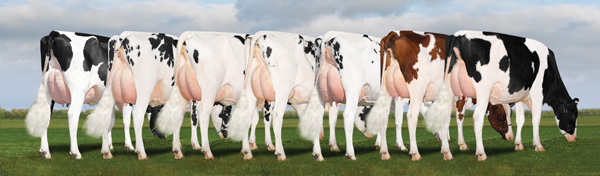
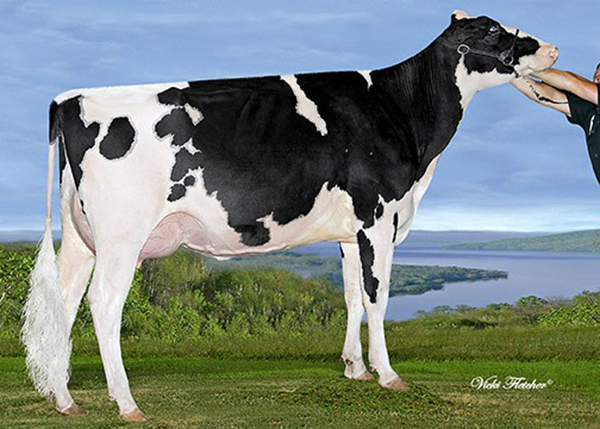
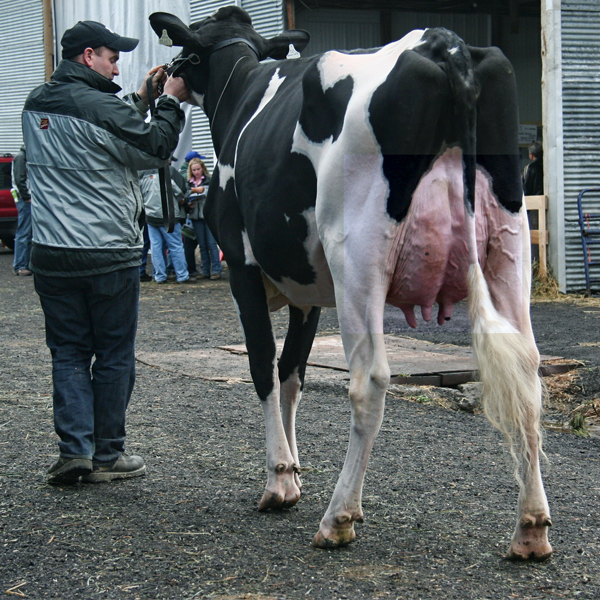
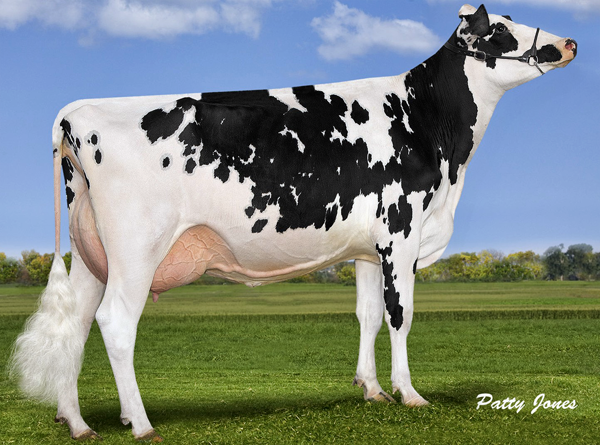
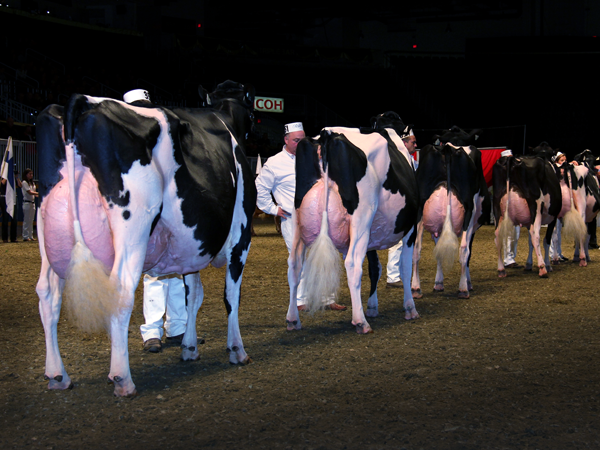
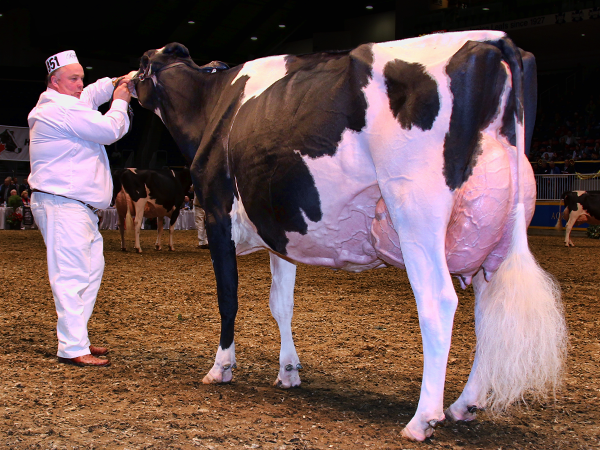
Half a million lost calves. Thirty billion dollars in milk. One bull at the center of both: Walkway Chief Mark.
Walkway Chief Mark (VG-87-GM) — the backup bull from Foster Walk’s Neoga, Illinois herd whose genetics now account for roughly seven percent of every Holstein genome in North America. Named one of Select Sires’ “Impact Sires of the Breed,” his udder-transmitting brilliance and structural trade-offs shaped the modern Holstein in ways nobody saw coming when this photo was taken.
Walk into any Holstein barn in North America tonight. Pick out the best-uddered cow in the string — the one whose fore attachment makes you stop mid-stride, the one pushing components that keep surprising you. Trace her pedigree back far enough, and you’ll almost certainly land on the same bull.
A bull who was never supposed to be sampled. A bull who got his shot because his brother died.
His name was Walkway Chief Mark. He accounts for roughly seven percent of every Holstein genome on this continent. And his story is the strangest, most consequential accident in the history of dairy cattle breeding.
A Farmer’s Eye and a Dead Brother
Foster Walk farmed outside Neoga, Illinois — a speck of a town in Cumberland County where the land flattens out and the horizon stretches until it gives up. This was the late 1970s. Corn ran under two bucks a bushel, Elevation daughters were the standard everyone measured type against, and most breeding decisions happened on gut instinct and a phone call to your AI rep. Genomic testing? That was science fiction nobody had dreamed up yet.
Foster had what the old cattlemen call “the eye.” While big-name breeders flew to national sales and bid top dollar on headline animals, Foster worked the margins. He’d buy groups of heifers at 21 cents a pound — bargain-bin stock by any standard — and somehow spot genetic potential hiding under less-than-perfect frames. Diamonds in the rough. That was his phrase, and he had an infuriating tendency to be right about it.
Walkway Farm wasn’t some fly-by-night operation, either. Foster had been advertising registered Holsteins in Holstein World as far back as 1958 — two full decades before his most famous calf hit the ground. When a cow in his herd hit a production milestone, the Journal Gazette and Times-Courier out of Mattoon ran it: Walkway Janice Prince, 20,511 pounds of milk and 876 pounds of butterfat in 365 days. This was a working dairy with the Walkway prefix on real cattle making real milk, not just a pedigree footnote.
Foster Walk (left) and his son Tom at Walkway Farm near Neoga, Illinois, 1983 — the year Chief Mark daughters were already hitting milking strings across the country. Behind every bull that reshapes a breed, there’s a family that bred the cow that made him.
A young sire analyst named Charlie Will had grown up in the same neighborhood. He’d graduated from the University of Illinois in 1974 and tried to get hired at Select Sires. They turned him down. He took a sales territory in Wisconsin that nobody else wanted, worked it until a sire analyst position finally opened in 1978, and got his shot — the same year Chief Mark was born.
Charlie had his eye on Foster’s operation, but not for the calf who’d change everything. He wanted Monroe — Chief Mark’s older brother. The contract was signed and the collection schedule set. Monroe was the plan.
Then Monroe died during test services.
One phone call. Charlie Will — the analyst who’d been rejected himself — decided to gamble on the younger full brother. Born June 13, 1978, registration HOUSA000001773417, a Pawnee Farm Arlinda Chief son out of a EX-90 No-Na-Me Fond Matt daughter named Walkway Matt Mamie (EX-90 GMD DOM). Mark was the first bull Charlie ever bought for Select Sires. (Read more: Charlie Will’s Comeback: How One Rejection Letter Created Holstein History)
A rejected analyst picking a replacement bull from a neighbor’s farm as his very first acquisition. You can’t make this stuff up.
Whether Foster or Charlie imagined what that calf would become, the record doesn’t say. But that replacement bull would go on to sire 57,654 daughters and reshape the genetic architecture of an entire breed.
The Contradiction
When Chief Mark’s first daughter proofs came back through Select Sires — coded 7HO980 in every AI catalog in the country — the reaction wasn’t celebration. It was bewilderment.
Chief Mark’s July 1984 Select Sires catalog page — the proof sheet that launched a paradox. Just 62 daughters in, and the description already told breeders exactly what they were getting into: “Use MARK on cattle that need set to the leg and balanced udders.” The udder magic and the structural trade-off were both right there in black and green from the very first proof. Note the early daughter photos at bottom — all GP or low VG first-calvers that gave no hint of the EX-90+ mammary systems his mature daughters would carry. (Select Sires, July 1984)
You have to understand how breeding evaluation worked in the early 1980s. There were no genomic predictions. No SNP chips. You bred daughters, waited years, measured them against their contemporaries, and published the deviations. Everything was relative — how much better or worse did this bull’s daughters perform compared to the current cow population?
Relative to the Holstein cows of that era, Chief Mark’s udder transmitting ability was a leap forward, unlike anything the breed had seen at that scale. Fore attachments, rear attachments, teat placement, udder depth — all trending dramatically above what anyone else in the lineup was producing. Breeders who saw his early daughters in person talk about them with a specific kind of reverence: large, sharply attached mammary systems with long, clean necks into the body wall, deep angular ribbing, dairy character you could spot from across the yard. One breeder on a Holstein forum captured it perfectly: “When they come into the show, you love them”.
Gem-Hill Mark Royal EX-96 — Chief Mark’s highest-classified daughter. Bred by Brightbill-Gem Hill Farms, Loudonville, Ohio, she embodied everything breeders gambled on when they punched Chief Mark’s code into their breeding programs: the stature, the dairy character, and the mammary system that made his proof sheets famous.
Then he finished the thought: “however when they turned side way, you see the legs and high pins”.
There it was. The paradox.
Because when you flipped to the structural data, even on a relative basis, the numbers were devastating. Shallow heels. Weak pasterns. The structural curse traced back through his maternal line, through No-Na-Me Fond Matt, like a family inheritance nobody could outrun.
Measured against the cows of his era, the greatest udder improver of his generation was also one of the worst structural sires alive. The same genetics that built those magnificent mammary systems wrecked the feet beneath them.
And breeders had a decision to make.
The Deal with Fine Print
They took it. By the thousands.
Ask anyone who milked Chief Mark daughters in the ’90s, and they’ll tell you the same thing: best udders in the barn, worst feet in the barn. Some guys swore by him. Some guys swore at him. Most did both.
Smart breeders figured out the workaround. As one veteran put it, “you would have to protect the mating”—use Chief Mark on cow families with strong feet and legs, and let the udder magic do its work. The strategy wasn’t perfect, but it worked often enough to justify the gamble. When it worked, the daughters were jaw-dropping.
Mainstream Mark Harmony EX-93 — bred by Randy Kortus at Mainstream Holsteins, Lynden, Washington, and born in 1986 out of the Gold Medal Dam Mainstream Bell Honor VG-88 GMD DOM. This is what happened when Chief Mark’s udder genetics landed on a cow family with Elevation Celebrity blood behind it: the kind of daughter that made breeders forgive those feet-and-leg numbers.
By the mid-1990s, the NAAB database would eventually show 57,654 production-tested daughters carrying his genetics across American herds. Most AI studs don’t produce that many daughters from their entire lineup in a decade. Chief Mark did it from a single catalog entry.
Snow-N Denises Dellia EX-95-3E GMD DOM 5 — Chief Mark’s most famous daughter and arguably the most influential brood cow of the modern Holstein era. Born in 1986 on Bob Snow’s Wisconsin farm and later the cornerstone of Regancrest Farm in Waukon, Iowa, she produced Durham, Die-Hard, and Million, along with 76 registered daughters and 44 AI-sampled sons. Named Holstein International Global Cow of the Year in 2005, Dellia was living proof that Chief Mark’s udder genetics, crossed on the right cow family, could reshape the breed for generations. (Read more: Snow-N Denises Dellia: The Holstein Legend Who Redefined Dairy Genetics)
But genetics always collects its debts.
On larger operations that used him heavily without careful mating management, the structural toll was brutal. By the third lactation, the feet caught up. Trimming schedules accelerated. Digital dermatitis became a constant battle. You’d walk through a pen of Chief Mark daughters, making 90-pound peaks — udders attached like textbook illustrations, production numbers rewriting the farm’s economics — and half of them were sore-footed.
You don’t want to ship a cow making that kind of milk. But you can’t keep a cow that can’t stand up.
The Hidden Killer Nobody Knew About
The scope of Chief Mark’s influence becomes truly staggering when you trace it back to his father.
Pawnee Farm Arlinda Chief was born in 1962 and produced 16,000 daughters, 500,000 granddaughters, and more than 2 million great-granddaughters. His chromosomes account for almost 14 percent of the genome in the current U.S. Holstein population. Chief Mark, as one of Chief’s most prolific sons, carried and amplified that genetic footprint through a massive daughter population of his own.
Pawnee Farm Arlinda Chief EX-91 — Chief Mark’s sire, and the bull whose chromosomes account for nearly 15% of the modern Holstein genome. Born in 1962, he produced 16,000 daughters, 500,000 granddaughters, and over 2 million great-granddaughters through Curtiss Breeding Service. He gave the breed unprecedented milk production — and unknowingly passed along the APAF1 mutation that would cost the industry an estimated 500,000 calves before researchers finally identified it in 2011. Chief Mark inherited both the gift and the curse. (Read more: The $4,300 Gamble That Reshaped Global Dairy Industry: The Pawnee Farm Arlinda Chief Story and Four Bulls That Changed the Holstein Breed: Genius, Gambles, and the Price We’re Still Paying)
What nobody knew — for three decades — was that Chief had given his descendants something besides production and udder quality.
In 2011, USDA researchers identified a problematic haplotype on chromosome 5 in Holstein cows that was associated with lower fertility and embryo loss. They traced it back to Chief. They contacted Harris Lewin, a geneticist who had sequenced both Chief and Chief Mark at the University of Illinois in 2009, and asked whether his team could identify a candidate mutation.
Lewin and co-author Heather Adams found it in less than 24 hours.
“It was a Eureka moment!” Lewin said.
The mutation sat in a gene called APAF1 — a “nonsense” mutation that shortens an amino acid chain critical for protein-to-protein interactions. One copy makes a calf a carrier. Two copies — one from each parent — kill the embryo. Among more than 246,000 Holsteins tested, researchers found zero animals carrying APAF1 from both parents. Every double-copy pregnancy ended before the calf drew a breath.
The numbers were staggering. Over 30 years, the APAF1 mutation caused an estimated 500,000 spontaneous abortions worldwide — more than 100,000 in the United States alone. A single midterm abortion costs a dairy about $800. Total estimated loss: approximately $420 million.
Think about that for a second. For decades, every time a farmer milking Chief descendants saw an unexplained pregnancy loss, they shrugged, logged it as bad luck, and moved on — that was APAF1. One bull’s hidden genetic tax, collected silently across thousands of operations for a generation.
But the math cuts both directions. Chief’s beneficial genetic contributions — the production, the udders, the overall improvement — are estimated at roughly $30 billion in increased milk production over the same period. Thirty billion against $420 million. The value outpaced the cost seventy-to-one.
And now breeders can test for APAF1 and avoid mating two carriers while keeping everything that made the lineage great. The curse has been identified and neutralized. The gifts remain.
Both Sides of the Pedigree
When analysts traced the pedigrees of the breed’s top 10 GTPI females they kept running into the same name. Mark. Forty-two times across those ten pedigrees, with Starbuck the only other bull in the same league at thirty-five. And here’s the telling detail: thirty-three of those Mark appearances were as sire of a female in the lineage, while nine were as sire of the male. He dominated both sides of the pedigree.
Only a handful of bulls in Holstein history have earned what The Bullvine’s own analysis calls the distinction of “sons and daughters both extraordinary”. Chief Mark was one of them.
Miss Mark Maui EX-95-2E GMD DOM — the 1994 All-American Junior 2-Year-Old, showing the mammary quality and dairy character that would define her career. Sired by Chief Mark out of Gettinger Maggie EX-93 GMD DOM, she produced over 252,000 pounds of lifetime milk, flushed Excellent daughters by Lee, Rudolph, Durham, and Starbuck, and sent sons including Mr Millennium to AI. Owned by Kietzman, Sigwarth, and Breitbach of Iowa, she was the kind of Mark daughter breeders built entire cow families around.
And the most consequential genetic river flowing from Chief Mark ran through a son named Mark CJ Gilbrook Grand.
The Goldwyn Connection
Grand’s name doesn’t ring bells with most modern breeders. But it should. Because Grand sired Shoremar James. And Shoremar James sired Braedale Goldwyn.
In Goldwyn’s lineage were three crosses to Walkway Chief Mark: Shoremar James and Braedale Gypsy Grand were both by Mark CJ Gillbrook Grand, a Chief Mark son; while Gypsy’s maternal granddam was Sunnylodge Chief Vick (VG 2*), a Chief Mark daughter”.
Three crosses. Three separate paths through one pedigree, all converging on a backup bull from Neoga, Illinois.
RF Goldwyn Hailey EX-97-5E 6 — two-time World Dairy Expo Grand Champion (2012, 2014) and one of only seven cows in Expo history to win the Grand title twice. Bred by R&F Livestock and Chilliwack Cattle Company, exhibited by Gen-Com Holsteins of Quebec, and pictured here at Madison in 2014 claiming her second crown. Three crosses of Walkway Chief Mark flow through the Goldwyn pedigree she carried into that ring — the backup bull from Neoga, under the lights at the Coliseum.
Goldwyn — bred by Braedale Holsteins at Cumberland, Ontario — became arguably the most decorated show sire in modern Holstein history. Premier Sire at the World Dairy Expo ten times. His daughters, RF Goldwyn Hailey (EX-97) and Eastside Lewisdale Gold Missy (EX-95) became the most famous show cows of their generation. By October 2018, he’d produced 3,415 Excellent daughters in Canada alone, according to Holstein Canada. Goldwyn died in 2008, just eight years old, but his genetics kept sweeping classes at Madison and the Royal for another decade and beyond.
Eastside Lewisdale Gold Missy EX-95-2E 30 — Supreme Champion at both World Dairy Expo and the Royal Winter Fair in 2011, Holstein Canada Cow of the Year in 2012, and the $1.2 million cow who became the most expensive Holstein on the planet. Bred on Prince Edward Island by Eastside Holsteins and Lewisdale, she carried Goldwyn’s genetics — and through him, three crosses of Walkway Chief Mark — to the highest stage the breed has ever known.
Woven through all of it — three times in every Goldwyn pedigree — was Walkway Chief Mark.
The Supersire Empire
Chief Mark’s genetics didn’t just flow through the show ring.
Through maternal pedigree lines — including Jeanlu Louange Chief Mark (VG-87), a Chief Mark daughter deep in the maternal line — his influence reached Seagull-Bay Supersire, a Robust son bred by the Andersen family in American Falls, Idaho, and owned by Select Sires.
Seagull-Bay Supersire-ET EX-90-GM — grazing at Select Sires headquarters in Plain City, Ohio, where he stood as the breed’s No. 1 GTPI sire and sold over one million doses of semen. A Robust son bred by the Andersen family in American Falls, Idaho, Supersire’s maternal line traces back through Wesswood-HC Rudy Missy — the $8,100 “auction reject” who became 2014 Global Cow of the Year — and further still to Jeanlu Louange Chief Mark VG-87, a Chief Mark daughter quietly anchoring the empire from generations back.
Supersire debuted as the breed’s No. 1 GTPI sire in April 2015 and reigned as the breed leader for four consecutive genetic evaluations. He’d scored 2530 gTPI as a genomic young sire back in December 2012; six years and 33,087 daughters later, his proven TPI came in at 2518. Holstein International called it “right in the DNA bull’s eye” and named him a “milk transmitter par excellence” — the world’s 55th millionaire sire and Select Sires’ eleventh bull to sell one million units of semen.
“The beautiful thing about SUPERSIRE daughters is they outproduce the herd while doing it in a healthy fashion,” said Rick VerBeek, Holstein sire analyst at Select Sires. “SUPERSIRE should be regarded as one of the all-time great profit generators of his generation!”
In 2019, more than 60 percent of bulls on the Select Sires active lineup carried Supersire in their pedigree. Sixty percent of an entire AI organization’s catalog, tracing back through a genetic chain that started with a second-choice bull and a phone call about a dead brother.
Supersire passed away in late 2021. His legacy was already secure. But buried in that pedigree — quiet, easy to miss, generations back on the maternal side — was the ghost of Walkway Chief Mark, still shaping the breed he’d accidentally been invited to improve.
Twenty-Five Times
And then came Lambda.
In 2024, an analysis that made even seasoned geneticists pause. They’d been tracing the pedigree of Farnear Delta-Lambda — one of the most influential contemporary sires in the global breed, the bull behind Siemers Paris 27856 EX-91, Global Cow of the Year in 2023, and her high-ranking son Parfect.
When they finished mapping Lambda’s ancestry, they found Walkway Chief Mark appeared twenty-five times. Twenty-five separate lines of descent converging in a single pedigree, all flowing back to a replacement bull born on a modest Illinois farm in June of 1978.
West-Adub Lambda Sadie — Intermediate Champion and Reserve Grand Champion of the 2025 International Holstein Show at World Dairy Expo, exhibited by Butlerview Farm of Chebanse, Illinois. Sired by Farnear Delta-Lambda — the bull who carries Walkway Chief Mark 25 times in his pedigree — she stood on the red shavings at Madison just 100 miles from Neoga, proof that a backup bull’s genetic echo is still shaping champions nearly five decades later.
Holstein International called it “the righteous revenge of Walkway Chief Mark.” Together with Lambda mania, they wrote, “we can also talk about Mark mania”.
Forty-seven years after a dead brother opened the door, the backup plan’s roar is louder than ever.
The Ghost at 4 AM
Chief Mark’s story doesn’t come with a tidy ending. There’s no dispersal sale to narrate, no final show-ring walk, no sunset-lit portrait. His semen was collected, stored, and distributed across the globe, and his physical life passed quietly while his genetic life was only beginning its exponential expansion. The NAAB database lists him as “Inactive” — a status that says everything about bureaucracy and nothing about legacy.
Whether Foster Walk lived to see the full scope of what his backup bull built, the record doesn’t tell us. But his eye for diamonds in the rough — that eye is now validated in 57,654 daughters, seven percent of a continental genome, and 25 appearances in the pedigree of one of the breed’s most influential modern sires.
What the record also tells us: three crosses in the pedigree of the most decorated show sire in modern Holstein history. A Chief Mark daughter deep in the maternal line of a millionaire sire who reshaped global dairy genetics. A hidden lethal mutation — half a million dead calves — was identified and neutralized because someone had the foresight to sequence his DNA back in 2009. And a reputation as an udder improver that, decades and multiple base changes later, still echoes in the mammary quality of his descendants’ descendants’ descendants.
He arrived as a replacement. He became irreplaceable.
Every breeding decision echoes forward through time. Most of those echoes fade within a generation or two — diluted, selected against, bred out. Chief Mark’s didn’t fade. It amplified. Seven percent of a continental genome, a frequency so deep it has become the baseline hum of the breed itself. The backup plan from Neoga, Illinois, built an empire nobody saw coming.
Next time you’re walking your barn before dawn — flashlight cutting through the steam rising off a hundred backs, bulk tank humming in the parlor, a fresh cow somewhere letting down for the first time — look at the udders. Look at the attachments. Look at the dairy character carved into the ribs and flanks of your best animals. You’re looking at Foster Walk’s diamond in the rough, still paying dividends nearly five decades and fifty-seven thousand daughters later. Still proving what every breeder who ever took a chance on an unlikely animal already knows in their bones: in this business, the ones who change everything aren’t always the ones you planned on.
Key Takeaways:
Walkway Chief Mark started as the backup bull from Foster Walk’s Neoga, Illinois herd, sampled only after his brother Monroe died — but his genes now account for about 7% of every Holstein on the continent.
He gave breeders one of the biggest trade‑offs in Holstein history: daughters with era‑setting udders and some of the weakest relative feet and legs, forcing anyone who used him to “protect the mating” or live with the consequences.
Together with his sire Pawnee Farm Arlinda Chief, he helped define modern Holstein genetics on both sides of the ledger — huge gains in type and production, and the APAF1 lethal mutation later linked to roughly 500,000 spontaneous abortions worldwide before it was identified and managed.
His blood now threads through three confirmed crosses in Braedale Goldwyn’s pedigree, deep in the maternal line of Seagull‑Bay Supersire, and an astonishing 25 times in Farnear Delta‑Lambda’s ancestry, tying one small Illinois farm to many of today’s most influential sires.
The piece leaves readers in a pre‑dawn barn with a simple realization: when you study the best udders in your herd today, you’re almost certainly looking at the long shadow of a once‑overlooked bull from Neoga.
Executive Summary:
Walkway Chief Mark was never meant to be a legend; he was the backup bull from Foster Walk’s Neoga, Illinois herd, sampled only because his brother Monroe died — yet his DNA now sits in roughly seven percent of every Holstein you milk. His proof told a story every breeder understands: daughters with era-changing udders riding on some of the weakest relative feet and legs in the book, forcing people to “protect the mating” if they wanted the magic without the wreckage below the hocks. The article walks through that reality in the barn, then zooms out to show how Chief Mark and his sire Pawnee Farm Arlinda Chief helped build the modern Holstein genome — for better (udder quality, production, show-ring type) and for worse, through the APAF1 mutation tied to an estimated 500,000 spontaneous abortions before scientists pinned it down in 2011. From there, it follows his blood into names everyone knows today: three confirmed crosses in Braedale Goldwyn’s pedigree, deep maternal influence in Seagull-Bay Supersire, and an almost unbelievable 25 Chief Mark appearances in Farnear Delta-Lambda’s ancestry. Along the way, Foster Walk steps out of the shadows as a real dairyman — a guy whose Walkway cows showed up in Holstein World ads and local production records long before anyone dreamed of genomic percentiles. It all ends back in a quiet 4 a.m. barn, inviting readers to study the best udders in their own string and realize that, whether they planned it or not, they’re still working with a once-forgotten bull from Neoga whose influence just won’t let go.
Complete references and supporting documentation are available upon request by contacting the editorial team at editor@thebullvine.com.
Continue the Story
Charlie Will: A Career Spent at the Top of the Chart – Experience the era through the eyes of the man who risked his early reputation on a neighbor’s backup bull, proving that the breed’s greatest genetic leaps often come from analysts with the guts to trust their eye.
Pawnee Farm Arlinda Chief – Genetic Giant – Step back into the world that birthed an empire and explore the massive shadow cast by Mark’s sire, a bull who fundamentally rewrote the Holstein blueprint and set the stage for a global genomic revolution.
Durham vs. Goldwyn: A Clash of Two Titans – Trace the lineage from Foster Walk’s quiet Illinois farm to the bright lights of Madison, where Mark’s genetic influence finally found its ultimate expression in a show-ring rivalry that defined a whole generation of breeders.
Join the Revolution!
Join over 30,000 successful dairy professionals who rely on Bullvine Weekly for their competitive edge. Delivered directly to your inbox each week, our exclusive industry insights help you make smarter decisions while saving precious hours every week. Never miss critical updates on milk production trends, breakthrough technologies, and profit-boosting strategies that top producers are already implementing. Subscribe now to transform your dairy operation’s efficiency and profitability—your future success is just one click away.
Four bulls. Four gambles. The genetics that doubled milk production—and the hidden costs nobody saw coming.
The auctioneer’s voice cracked through the humid September air at the 1972 Hanover Hill Sale. In the ring stood a calf unlike any the Holstein world had seen—a vibrant, almost copper-red bull calf with alert eyes and legs that seemed too elegant for his age.
Ken Young sat in the crowd representing American Breeders Service, and his heart was pounding so hard he could feel it in his throat. His spending limit had evaporated three bids ago. His bosses back at the office had no idea what he was about to do.
But as Young watched that calf circle the ring, something shifted—or maybe broke—in him. Later, he wouldn’t be able to explain it fully. The balance sheet still existed. His bosses still existed. His job, his reputation, his career—all of it hung in the air every time his paddle rose. But somehow, in that moment, none of it mattered as much as what he was seeing.
His paddle went up again. And again.
When the gavel finally fell at $60,000—a world record for a Red & White Holstein—the room didn’t just react. It erupted. Breeders who’d spent entire careers avoiding red genetics stood slack-jawed. Young would later face his superiors with a response that has echoed through dairy breeding lore for over fifty years:
“It was easier to ask for forgiveness than to ask for permission.”
That red calf was Hanover-Hill Triple Threat. And here’s what stays with me about his story—along with three other legendary bulls whose genetics would reshape the dairy industry—it’s not really about DNA or milk production quotas at all. It’s about people who saw possibilities where others saw problems. About farmers and breeders who bet their reputations on their convictions. About the complicated, sometimes painful dance between ambition and consequence that defines every great leap forward.
Triple Threat: The Man Who Wouldn’t Go Home
Hanover-Hill Triple Threat (1972–1989): The $60,000 “genetic defect” that built the modern Red Holstein breed. When this photo was taken, the industry dismissed his copper-red coat as a flaw to be culled. Fifty years later, his descendants include every elite Red & White Holstein alive.
Before Ken Young’s legendary bid, before Triple Threat drew his first breath, there was a young Swiss agricultural graduate named Jean-Louis Schrago standing in the rolling farmland of Ontario with nothing but conviction and what must have seemed like a crazy idea.
It was 1968. Schrago had traveled across the Atlantic because he’d seen something the North American dairy establishment couldn’t—or wouldn’t—see. In Europe, there was a market starving for elite red genetics. But in North America, a red and white coat on a Holstein wasn’t just unfashionable. It was treated as a genetic mistake, a defect to be culled from the herd. Red calves were barred from the prestigious main herdbook, their potential sealed away before they ever had a chance.
Schrago refused to accept this.
His search led him to Pete Heffering of Hanover Hill Holsteins, where he proposed something that made experienced breeders shake their heads: breed one of your finest cows to a red-factor bull. Heffering, understandably, shut him down.
Most people would have gone home after that. Most people would have accepted that the industry knew better, that maybe the establishment was right. I’m not sure how Schrago found the stubbornness to keep going—three years of being dismissed, three years of industry veterans suggesting, politely and not so politely, that he was wasting his time. Whatever doubts he harbored (and he must have had them, because anyone who’s ever chased an unpopular idea knows those 3 AM moments of wondering if everyone else is right), he kept them to himself.
He returned in 1971 with a plan so audacious it bordered on the miraculous. He’d found his answer in Roybrook Telstar—a Canadian superstar celebrated for refinement and exceptional udders. What most didn’t know was that Telstar carried the rare “Black-Red gene.” There was just one problem: Telstar had been exported to Japan.
What happened next speaks to the lengths dreamers will go when something inside them refuses to quit. Schrago located two precious units of semen on the other side of the Pacific and arranged their importation for $2,500—serious money in 1971. He then convinced Heffering to use Telstar on Tara-Hills Pride Lucky Barb, a phenomenal cow who carried the true recessive red gene.
The genetic math was elegant. The wait was agonizing.
On April 24, 1972, a vibrant red calf slid into the world. Schrago would later describe him with words that still carry wonder: “He looked like a small deer—delicate, alert, unmistakably special.”
Standing in that barn, watching that calf find his legs—I think about what that moment must have felt like. Three years of persistence. Continents crossed. Skeptics ignored. And now, this small creature blinking in the light, carrying the genetic blueprint that would change everything.
Schrago would spend the rest of his life championing Red Holstein genetics, eventually founding ABC Genetics in Switzerland and becoming one of the breed’s most influential advocates. He passed away in December 2017 after a battle with cancer, but his vision lives on in every crimson champion that enters a show ring today. Some dreams outlive the dreamers.
What Made Triple Threat a Legend
That calf didn’t just break the color barrier. He shattered it.
At a time when Red & White Holsteins were considered genetic afterthoughts, Triple Threat injected elite refinement into the population in a single generation. His daughters were tall, angular, with superior udder texture and exceptional feet and legs. They transmitted high butterfat percentages when the industry was obsessed with volume alone—a trait that proves even more valuable in today’s component-focused markets.
But perhaps the most beloved part of his legend came from adversity. A leg injury in his mature years earned him the nickname “the three-legged bull.” Whether literally true or lovingly embellished by the industry over time, the message resonated: this bull kept working. His drive, his resilience, his constitutional strength—these weren’t just traits he possessed. They were gifts he passed to generation after generation of long-lasting, productive daughters.
Triple Threat never produced a famous line of sons. He was a “daughters bull” through and through. But those daughters? They became matriarchs who founded dynasties that continue to shape the breed today.
Consider KHW Regiment Apple-Red—known as “The Million Dollar Cow” and arguably the most influential Red Holstein of the 21st century. She carries the red factor passed from Triple Threat through his son Meadolake Jubilant to her granddam. Without Schrago’s persistence, without Young’s unauthorized bid, Apple doesn’t exist. Neither do thousands of elite Red & White animals milking in herds around the world today.
At the 2025 National Red & White Show in Toronto, Golden-Oaks Temptres-Red walked away as Grand Champion under Judge Steve Fraser—then went on to claim Supreme Champion at World Dairy Expo. Another link in the chain, Triple Threat, started over fifty years ago.
I was talking with a Wisconsin breeder at a show last fall, watching her prep a gorgeous red heifer, when I asked what Triple Threat meant to her program. She didn’t hesitate.
“When I lead a red cow into the ring, I’m leading fifty years of people refusing to quit. That’s Triple Threat’s real legacy. Not just the color—the stubbornness.”
Something about the way she said it—matter-of-fact, like she was stating the obvious—struck me. She wasn’t being sentimental. She was being precise.
This is Golden-Oaks Temptress-Red-ET—the 2024 World Dairy Expo Supreme Champion who just dethroned a three-time reigning queen. Fifty-two years after Ken Young bet his career on a red calf nobody wanted, a Red & White Holstein stood at the pinnacle of the most prestigious show on earth. That’s the arc of Triple Threat’s legacy. From $60,000 gamble to Supreme Champion crowns. From “cull her, she’s red” to the kind of type that makes judges stop and stare.
Carlin-M Ivanhoe Bell (1974–1991): The bull who promised the future—and delivered it, along with secrets nobody could see. His daughters poured milk like no generation before. His hidden genetic burden would force an entire industry to grow up. Photo: Select Sires archives.
The story of Carlin-M Ivanhoe Bell begins not with a master plan, but with two Kansas dairy farmers who had no idea they were about to change the history of breeding.
John Carlin and Lawrence Mayer were partners in a Holstein breeding operation. Carlin would later serve as governor of Kansas from 1979 to 1987, and eventually as Archivist of the United States—but in the early 1970s, he was simply a dairy farmer making breeding decisions the same way everyone else did: with instinct, visual appraisal, and faith in pedigree knowledge.
In an era before genomic testing, Select Sires agreed to mate Creamelle to Penn State Ivanhoe Star. The result was a bull named Carlin-M Ivanhoe Bell—co-bred by Carlin and Mayer.
And Bell changed everything.
His primary impact was dramatic: he offered an unprecedented promise of milk production that breeders had only dreamed of. Daughters that poured milk. Numbers that seemed impossible. The dairy industry, hungry for progress, embraced him with open arms.
But genetic progress, it turns out, can carry hidden costs. And what came next would force an entire industry to confront what it means to wield that kind of power.
The Phone Calls Nobody Wanted to Make
In 1999, Danish researchers made a startling discovery. They’d been tracing a lethal genetic disorder called Complex Vertebral Malformation (CVM) through countless pedigrees, following the trail backward through generations of breeding records. In every single case, when traced to its source, it led to one animal.
Carlin-M Ivanhoe Bell.
He was also found to carry another lethal recessive gene, Bovine Leukocyte Adhesion Deficiency (BLAD). Unusually, Bell carried both—a genetic burden no one could have detected with the tools available when he was in active service.
What the clinical language doesn’t capture is what this meant for the people who had built their breeding programs around Bell’s genetics.
Imagine the phone calls. Imagine being a breeder who had used Bell heavily for years—trusting the system, trusting the science as it existed—and then learning that you’d been unknowingly producing calves destined to die. The guilt doesn’t arrive all at once. It comes in waves. Every calf you remember losing and couldn’t explain. Every breeding decision you made with confidence. The science told you Bell was the future. And he was. But he was also carrying something nobody could see.
One industry veteran—we spoke at a breeding conference a few years back—described those months after the discovery as “the longest year of my career.” Breeding decisions that had seemed brilliant now felt reckless, even though everyone had been operating with the best information available at the time.
“We weren’t careless,” he said, and there was something in his voice—not defensiveness, exactly, but a kind of hard-won peace with an impossible situation. “We just didn’t know what we didn’t know.”
I think about that phrase often. It captures something essential about the Bell story—and about progress itself. Every generation works with incomplete information. Every breakthrough carries risks we can’t yet see. The question isn’t whether we’ll make mistakes. It’s what we do when we discover them.
The Bell crisis forced an entire industry to grow up. An age of innocence and trust gave way to an era of accountability and data. His story became the catalyst for widespread genetic testing, carrier screening, and the mandatory disclosure requirements that protect the breed today.
Here’s what makes Bell’s legacy so complicated, so deeply human: his genetics had genuine staying power. His contribution to production potential was so immense that breeders learned to manage the risks rather than abandon his line entirely. They screened matings carefully, avoided producing affected calves, and over time, perfected the Bell line—harnessing its power while mitigating its flaws.
In 2016, Sheeknoll Durham Arrow—a daughter of Bell descendant Regancrest Elton Durham—was crowned Grand Champion of the International Holstein Show at the World Dairy Expo. Proof that with wisdom and responsibility, even a complicated legacy can produce champions.
Today, Bell’s story is why genetic testing isn’t optional anymore—it’s foundational. Every screening panel, every carrier designation, every transparent disclosure traces back to what we learned the hard way from one bull’s hidden burden.
The ultimate proof of successful line breeding. Sheeknoll Durham Arrow, a daughter of the legendary Bell descendant Regancrest Elton Durham, was crowned Grand Champion at the 2016 World Dairy Expo, showcasing how breeders perfected the Bell line to achieve both elite, show-winning type and immense production.
Pawnee Farm Arlinda Chief (1962–1978): Nearly one-sixth of every Holstein alive traces back to this bull. Born twenty-five days after a $4,300 gamble arrived by train in California, he almost died from bloat at eight months old. The man who bred his dam never lived to see what he’d created.
The story of Pawnee Farm Arlinda Chief begins in the heart of Nebraska, with a man named Lester Fishler who fellow breeders simply called gifted.
Fishler founded his Pawnee Farm on the southern edge of Central City, Nebraska—practically within the city limits—methodically building what he proudly called a “strictly Rag Apple” herd. He could look at a cow and see generations forward. Not magic—just thousands of hours of paying attention when others had stopped looking. His breeding records suggest a man who thought in decades, not seasons. Every mating decision was part of a larger architecture only he could see.
Where others selected for next year’s milk check, Fishler was building toward something he might never see completed.
And that’s exactly what happened.
On April 14, 1962, the Pawnee Farm herd was dispersed at auction, with potential buyers from seven states gathering in Central City. In the crowd sat Wally Lindskoog of Arlinda Farms in California, with instructions and a spending limit that was about to be tested.
The bidding war for a pregnant cow named Pawnee Farm Glenvue Beauty was fierce. Other buyers saw a good cow. Lindskoog saw something more—or at least, he was willing to bet that Fishler had seen something more when he bred her. His paddle kept rising until he secured her for $4,300—a sum that raised eyebrows and probably a few concerns back home.
Twenty-five days after Beauty arrived by train in Turlock, California, she gave birth to a bull calf on May 9, 1962. That calf would make that $4,300 look like the bargain of the century.
They named him Pawnee Farm Arlinda Chief.
His journey nearly ended at eight months old. A severe case of bloat—the kind that kills calves in hours—almost claimed his life. I try to imagine that scene: a young bull gasping for air, the frantic veterinary intervention, everyone who believed in his potential watching and waiting and hoping. The hours before anyone knew if he’d survive.
Chief survived. He developed into a deep-bodied bull with a trademark ravenous appetite that seemed to foreshadow the milk-producing machines his daughters would become.
Fishler never saw any of it. He passed away before Chief’s first daughters ever freshened, before anyone knew what his careful breeding had created. All those years of patient work, and he never got to see the payoff. That’s the part of this story that catches in my throat.
“One of the Great Milk Bulls of All Time”
Chief’s defining genetic gift was an extraordinary, almost relentless ability to transmit massive milk production. His daughters were known for their deep bodies, wide fronts, and an appetite that fueled incredible output. Breeders called it “the will to milk”—a drive that seemed to pulse through every animal that carried his genetics.
The herdsman at Arlinda Farms watched Chief’s first four daughters freshen. Just four. But what he saw in those four animals—the depth of body, the capacity, the way they hit the feed bunk hard and then walked to the parlor like they were ready to work—told him everything. These weren’t just good cows. These were a different kind of cow.
“One of the great milk bulls of all time,” he declared.
After just four daughters. He’d seen enough.
And he was right.
Chief became one of the most genetically dominant sires in the history of any livestock breed. His genetic contribution is estimated at 14.95% of the entire Holstein genome—nearly one-sixth of every Holstein alive today traces back to this one bull. A staggering concentration that no one planned for and few saw coming until it was already a reality.
The revolution: Chief’s genetics helped double the milk volume of the average Holstein cow. Billions of dollars in value added to the global dairy industry. Efficiency gains that fed families and sustained farms through decades of economic pressure.
The risk: With so many animals tracing back to a single sire, genetic diversity narrowed in ways the industry is still working to address. The breed became more efficient but also more vulnerable, its genetic foundation more concentrated than anyone had intended.
O’Katy, a stunning 3-year-old Stantons Chief daughter and descendant of the legendary Decrausaz Iron O’Kalibra, shines as Grand Champion at Schau der Besten 2025, proudly carrying on Chief’s enduring legacy in modern Holstein breeding.
S-W-D Valiant was born from a mating many considered foolish. His sire was the milk production king, Pawnee Farm Arlinda Chief. But his dam, Allied Admiral Rose Vivian, had what breeders diplomatically called a “questionable udder”—she scored VG-85 overall, but only “Good Plus” on her mammary system.
The decision to make that mating wasn’t made lightly. Someone looked at Rose Vivian’s flaws, looked at Chief’s raw power, and decided to roll the dice anyway. History doesn’t record who made that call, but it should. Because sometimes in genetics—as in life—the math doesn’t predict what actually happens. A flawed dam. A dominant sire. And somehow, a calf that inherited exactly what he needed and left behind exactly what he didn’t.
But nobody knew that yet. For years, Valiant was just another young bull waiting for his daughters to freshen, waiting for the data to come in. The industry had seen plenty of promising pedigrees disappoint. There was no reason to assume this one would be different.
And then… in July 1978, the numbers on Valiant’s first proof stopped conversations in dairy co-ops from Wisconsin to California. The figures seemed almost impossible: +1,541 pounds of milk, +44 pounds of fat, AND top type scores.
You have to understand what this meant. Bulls delivered either high production or elite type. Finding both at world-class levels in a single animal was like finding a pitcher who could also hit home runs. It just didn’t happen.
Valiant was the “total package.”
The 1980s became his era. His daughters, described by those who saw them as animals that “milked like machines and looked like movie stars,” dominated both the parlor and the show ring. Champions wearing his genetics claimed banners at major shows across North America.
His son Fisher-Place Mandingo reportedly became the first bull in history to sell a million doses of semen—a testament to the industry’s insatiable appetite for Valiant’s genetics. Another son, Hanover-Hill Inspiration, launched a genetic line so powerful it produced later legends like Goldwyn, Shottle, and Storm—names that anyone who’s bought semen in the last two decades will recognize instantly.
The Warning Nobody Wanted to Hear
Valiant’s incredible success created the ultimate cautionary tale about what happens when the industry falls in love with one animal too completely.
By January 1987, thirty-one of the top 100 TPI bulls were Valiant sons, and ninety-eight of the top 400 carried his genetics. Let that sink in. Nearly a quarter of the breed’s genetic elite, all connected to one sire. The industry had put too many eggs in one genetic basket, and few people were asking what would happen if some of those eggs were cracked.
Modern DNA research has shown that Valiant himself didn’t carry the HH1 genetic defect that his sire, Chief, passed along. But his story remains the primary example of what happens when success breeds overuse. When a single sire is used so extensively, it amplifies the risk of spreading both known and unknown problems through the population.
I had coffee with an Ontario breeder after a show last year, and when I asked about his mating philosophy, his answer surprised me with its directness.
“Every mating decision I make, I think about what happened with Bell and Valiant,” he said. “That history isn’t academic for us—it’s operational. It’s why I check inbreeding coefficients before I check anything else.”
He paused, stirring his coffee, then added something that’s stuck with me: “Those bulls taught us what happens when we get careless with concentration. The lesson cost the breed. I’d rather learn from their mistakes than make my own.”
Du-Ma-Ti Valiant Boots Jewel EX-93 DOM 8*, a celebrated Valiant daughter, was a dominant force in the show ring, taking home Grand Champion honors at the Royal Winter Fair and Reserve Grand at the International Holstein Show in 1988. Her powerful genetics and classic type were a testament to her sire’s legacy, earning her numerous All-American and All-Canadian titles.
Today, Valiant’s modern genetic evaluations show negative numbers. If you didn’t know the history, you might wonder why anyone ever used him. But those numbers aren’t an indictment—they’re a measuring stick. They show how far the breed has traveled since his reign, how much genetic progress has accumulated in the decades since he dominated every proof sheet.
After months of interviews, archives, and late-night reading, what stays with me isn’t the genetics. It’s the people.
Schrago, waiting years for a vision nobody shared, crossing oceans for two units of semen because something inside him wouldn’t let go. Young, raising his paddle past all reason because some moments demand courage over caution—and hoping, probably, that his bosses would eventually understand. Fishler, building a breeding program cow by cow toward a future he’d never see. The unnamed breeder who decided to mate Chief to a cow with a questionable udder, taking a chance that no spreadsheet would have recommended.
These weren’t reckless people. They were people who understood that the safest path rarely leads anywhere worth going—and that the price of never risking anything is never building anything either.
But they also learned—sometimes painfully—that risk without responsibility is just gambling. That power without accountability leaves wreckage. That the greatest gift you can give the next generation isn’t just better genetics, but the wisdom to use them well.
If you’re breeding cattle today, you’re working with tools these four bulls helped create. Every genetic screen you run before making a mating decision exists because of what Bell taught us. Every Red & White animal that freshens with elite type and components carries Triple Threat’s dream forward. Every time you think about genetic diversity and concentration risk, you’re standing on lessons Chief and Valiant paid for.
Their legacies aren’t just in the tank or the show ring. They’re in every AI training program that teaches young geneticists about concentration risk. They’re in every breeding company’s diversity guidelines. They’re in the quiet moment when a breeder pauses before using the hottest bull in the lineup and asks: “Is this wise, or just popular?”
In the genomic era, where we can map a calf’s potential before she takes her first breath, these lessons matter more than ever. Today’s tools give us power Schrago and Fishler could only dream of—and responsibility to match. Young bulls can achieve widespread use faster than Chief or Valiant ever did. The temptation toward concentration hasn’t diminished. It’s accelerated.
But so has our wisdom. Because of these four bulls—and the people who bred them, bought them, used them, and learned from them—we know better now. We test before we trust. We balance power with diversity. We ask harder questions earlier.
The next bull who builds the breed is being born somewhere today. Maybe on your farm. Maybe on mine. The question isn’t whether we’ll find him.
The question is whether we’ll have the wisdom to use him well.
Bull
Primary Contribution
The “Hidden Cost”
Modern Legacy
Triple Threat
Refinement, Red Factor, Components
Industry Skepticism/Barriers
Foundation of the Red & White Breed
Ivanhoe Bell
Massive Milk Production
Lethal Recessives (CVM/BLAD)
Catalyst for Mandatory Genetic Testing
Arlinda Chief
15% of Holstein Genome; Output
Extreme Genetic Concentration
Efficiency gains; Doubled Milk Yields
S-W-D Valiant
The “Total Package” (Type + Production)
Bottlenecking; Overuse of Sires
The standard for “Balanced Breeding”
Key Takeaways
What the industry calls a defect, a dreamer might call an opportunity: Triple Threat’s dismissed red coat became the foundation of modern Red Holsteins after one unauthorized $60,000 bid
Trust, but verify—then trust: Bell revolutionized production but carried hidden lethal genes for decades; his crisis gave us the genetic testing that protects the breed today
Concentration is a feature until it becomes a risk: Chief’s DNA runs through 15% of all Holsteins—doubling milk yields while creating diversity challenges we’re still managing
Even greatness requires restraint: Valiant’s “total package” success became the textbook example of why overusing any sire creates dangerous genetic bottlenecks
Before using the hottest bull in the lineup, ask the question that matters: Is this wise, or just popular?
Executive Summary:
Every Holstein alive carries genetics shaped by four bulls—and four breeders who bet everything on their convictions. Ken Young’s $60,000 bid for a “defective” red calf gave us Triple Threat, who built the modern Red Holstein from an animal the industry had written off. Carlin-M Ivanhoe Bell delivered revolutionary production but carried lethal genes undetected for decades; his legacy is both the milk in your tank and the genetic testing that now protects the breed. Pawnee Farm Arlinda Chief contributed 15% of all Holstein DNA—doubling milk yields while creating concentration risks we’re still managing today. His son Valiant offered the “total package” but became the industry’s starkest lesson in why even greatness requires restraint. For anyone making breeding decisions now, these aren’t just origin stories—they’re the hard-won wisdom that separates building something lasting from repeating costly mistakes.
Join the Revolution!
Join over 30,000 successful dairy professionals who rely on Bullvine Weekly for their competitive edge. Delivered directly to your inbox each week, our exclusive industry insights help you make smarter decisions while saving precious hours every week. Never miss critical updates on milk production trends, breakthrough technologies, and profit-boosting strategies that top producers are already implementing. Subscribe now to transform your dairy operation’s efficiency and profitability—your future success is just one click away.
How an Overpriced Italian Specialist Became Worth Billions (And Why His Story Could Save Your Herd from What’s Coming Next)
Carol Prelude Mtoto didn’t look like a production superstar, but his deep rib and rugged constitution provided the essential strength the breed had lost. While neighbors chased high-index frailty, this bull was quietly engineering the modern survivor.
You know that moment when you realize you’ve been doing everything wrong?
Farmers across Yorkshire had it in 2008, standing in empty barns, watching auctioneers sell off what was left. The high-producing daughters of those “bargain” bulls they’d bought five years earlier? They’d crashed and burned when feed costs doubled and milk prices tanked. Spectacular production for two lactations, then… nothing. Metabolic disasters. Fertility nightmares. Udders that looked like they’d been through hell.
Meanwhile, their neighbors—the ones who’d invested a premium £40 per straw in that expensive Italian specialist back in ‘98—were still milking. Still profitable. Fourth and fifth lactation cows just quietly doing their job while everyone else’s genetics fell apart.
The difference between those farms came down to one decision in October 1998. Whether to spend a painful £40 on Carol Prelude Mtoto—a massive premium when neighbors were buying “bargain” bulls for a tenner—or take the easy route and buy the cheaper, high-production sensations everyone else was using. At £40 per straw when standard proven bulls cost £10-15, Mtoto was a contrarian investment most farmers couldn’t justify.
Here’s the thing… the spreadsheets were dead wrong.
What happened with Mtoto isn’t just breeding history. It’s playing out again right now, except this time we’re using genomics to make the same mistakes at digital speed. And if you’re not seeing it in your barn yet, trust me—you will. We all will.
When Production Became a Disease
Let’s talk about what the industry looked like when Mtoto showed up. Picture walking into any tie-stall operation in the mid-’80s. You know that smell, right? Silage, manure, and something else that hits you wrong. Then you see them—Bell daughters everywhere.
Christ, those cows could milk. Carlin-M Ivanhoe Bell was putting 1,700 pounds above average into bulk tanks across North America. By the late ’80s, his genetics appeared in the pedigrees of nearly 30% of the Holstein population. Every AI stud was pushing his genetics hard. Every producer wanted them.
Producers who managed operations during that era tell the same story. “Those first two years were like Christmas morning every day,” they remember. “You’re watching the tank fill up, doing the math in your head, thinking you’ve figured out this whole dairy thing.”
But here’s what nobody wanted to admit—Bell daughters were frail. Narrow through the chest. Fragile, really. Their udders? By the second lactation, they were hanging so low you worried they’d drag on concrete. And third lactation… if they made it that far.
“It was like a battlefield,” producers from that era still say. “Cows down with milk fever everywhere. Others were standing with their legs all splayed out, trying to hold up udders that had completely broken down. We were getting maybe two, two and a half lactations before they were done.”
The math was brutal once university researchers ran the numbers. Cornell and others documented that Bell daughters lived significantly shorter, productive lives. In some cases, 2-3 years less than balanced genetics. All that spectacular production didn’t mean squat when you’re constantly buying replacements.
Farmers still shake their heads when they talk about it: “The production was so incredible those first couple years, we kept telling ourselves it was worth it. By the time we figured out what we’d done to our herds, Bell genetics were everywhere. There was no going back.”
The industry had created production monsters wrapped in tissue paper. And almost nobody saw the correction coming from, of all places, Italy.
The £40 ‘waste’ becomes the £24,000 advantage. Mtoto-type genetics deliver 450% higher net profit (,700 vs ,400 per cow) despite identical initial costs, proving longevity genetics transform farm economics through 4 additional lactations and 40% lower costs per lactation. This is the spreadsheet that saved Yorkshire farms in 2008
The Italian Accident That Changed Everything
July 13, 1993—a bull calf gets born in Italy, in that region where they make real Parmigiano. Nothing special about him. Average size. Production genetics that were, let’s be honest, pretty mediocre.
But Carol Prelude Mtoto had something hidden that you couldn’t see at birth—and I know this sounds weird—but it was all about how tight the teat ends would close after milking.
Stay with me here because this matters…
You know how after you pull the milkers off, there’s that window—maybe an hour, an hour and a half—where the streak canal’s still open? That’s when bacteria can cruise right up into the udder, especially when the post-milking spray misses the target. It’s like leaving your barn door open in a thunderstorm while the cows are lying in wet bedding.
Now, some bulls transmit daughters with loose, relaxed teat ends. Great for parlor throughput—those cows milk out fast. But they’re mastitis magnets. Others, like Mtoto? His daughters had tight teat closure. Annoyingly tight. Slow milkers that drove parlor managers crazy.
Producers in the Parma region called them ‘hard milkers’ and constantly complained about them. But this was the biological trade-off for survival. While neighbors were burning through antibiotics, treating mastitis every damn day, those Mtoto daughters just kept producing clean milk. Year after year. No treatments. No culled quarters. No cell count problems.”
The economics were invisible until you actually sat down and did the math. That extra couple of minutes of milking time? Maybe €30 a year in labor. But the vet bills you didn’t have, the cows you didn’t cull, the extra lactations you got? That was €2,000-3,000 in additional profit per cow. Per cow!
Breeding for Survival, Not Show Scores
But here’s what really made Italian breeding different…
Over 80% of Italian milk wasn’t going into retail jugs—it was becoming Parmigiano Reggiano, Grana Padano. Those Protected Designation of Origin cheeses with regulations so strict they make your bank’s lending standards look relaxed. And those cheese factories? They’d reject your milk flat-out if the cells were too high. When you’re aging cheese for two, three years, protein content matters way more than volume.
Italian dairy leaders from that era explained it simply: “We weren’t breeding for those production records Americans chase. We were breeding for cows that could deliver consistent, quality milk for cheesemaking while lasting long enough, actually, to turn a profit.”
Think about it. A cow pumping out 30,000 pounds for two years means absolutely nothing if the cheese factory won’t take her milk.
The Italian approach seemed backwards to those of us chasing TPI—that’s Total Performance Index, basically the dairy world’s report card for Holstein genetics. But when you can’t just throw corn silage at everything, when cheese factories set your market standards, when your family farm has to last another generation… mastitis resistance becomes survival, not luxury.
Mtoto was engineered to fix what Bell broke. His sire, Ronnybrook Prelude—himself a Starbuck son—brought good frame and dairy character. His dam, a Blackstar daughter, brought constitution. And there was Chief Mark back there for udder perfection. It was like someone designed the exact correction the industry needed but didn’t know it wanted.
By ’98, when Avoncroft brought him to Britain, Mtoto had proven himself across Italian herds. His daughters weren’t production champions. They were survivors—lasting when others broke down, staying healthy when others needed constant treatment.
According to UK dairy records from August 2025, his mature proof shows somatic cell scores of -13, a HealthyCow index of +17, and a lameness advantage of +0.7.
The £40 price tag wasn’t cheap. At nearly four times the cost of standard proven bulls, it was basically saying: “This bull solves expensive problems—if you’re willing to pay upfront to avoid them.”
Most farmers weren’t. Who could blame them? Why pay £40 for mediocre production when £10 bought you bulls with spectacular numbers on paper?
The Eight-Year-Old Cow That Changed Everything
Now here’s where it gets interesting…
The Pickford family from Staffordshire had purchased a Canadian heifer, Condon Aero Sharon, recognizing something in her genetics worth investing in. By ’99, Sharon was eight years old, still going strong. The AI companies? They literally laughed at the Pickfords wanting to flush her. “Too old,” they said. “Obsolete genetics.”
Helen Pickford still remembers the conversation: “The reps kept showing us data on first-lactation heifers. Dad just kept saying, ‘But Sharon’s still here, still producing well. These heifers you’re pushing—will their daughters still be milking in eight years?'”
The Pickfords, working with ABS’s St. Jacob’s program, made a decision that defied conventional wisdom. They bred their mature cow to Mtoto—that expensive Italian specialist with mediocre production proofs. They were essentially doubling down on contrarian genetics.
July 23, 1999. Morning mist at Spot Acre Grange in Staffordshire. Sharon drops a speckled bull calf. They named him Picston Shottle. Nothing special happened that day. The industry had moved on to newer, more “cutting edge” genetics. (Read more: From Depression-Era Auction to Global Dominance: The Picston Shottle Legacy)
What came next rewrote everything.
The “Obsolete” Matriarch: At eight years old, Condon Aero Sharon (pictured) was dismissed by genetic experts as having outdated bloodlines. The Pickford family ignored the data, seeing a rugged survivor instead. By breeding this “obsolete” cow to the overlooked Mtoto, they produced Picston Shottle—proving that actual longevity on concrete beats theoretical potential on a spreadsheet.
When Customer Satisfaction Beats Computer Models
Shottle goes into progeny testing—five years before you know anything, right? By 2006-2007, when his daughters start milking, the numbers look solid but not earth-shattering. Nothing that screams “generational breakthrough.”
The Ultimate “Customer Satisfaction” Bull: While experts critiqued his “obsolete” pedigree, farmers couldn’t get enough of him. Picston Shottle (pictured) didn’t just top the charts; he produced the kind of “invisible,” trouble-free cows that paid off mortgages, proving that real-world profitability always beats a spreadsheet prediction.
But something weird starts happening across the herds using him…
“Farmers would try ten straws, then call wanting hundreds more,” producers involved in that era recall. “The reorder rate was unlike anything we’d seen.”
Why? Shottle daughters were invisible cows. The ones that never show up on your treatment sheets. They’d milk out at a reasonable speed—faster than pure Mtoto daughters but still measured. Breed back first or second service. Just quietly produce for five, six, or seven lactations.
Wisconsin dairy consultants from that period report visiting herds where farmers had named multiple cows after Shottle—Shottle’s Pride, Shottle’s Dream, you name it. “These cows paid for my kids’ college,” one producer explained. “They’re family.”
Then, in January 2008. USDA CDCB records confirm Shottle achieved the #1 TPI ranking in the United States. A British bull from a mature dam and an expensive, slow-milking Italian sire. He maintained top rankings for multiple consecutive sire summaries. Something that almost never happens.
By retirement? ABS documentation confirms the sale of 1.17 million doses. Industry records indicate over 100,000 daughters across multiple countries. Breed classification data showing 9,674 Excellent daughters through 2014.
The estimated economic impact? Based on daughters’ combined milk production, improved longevity, and reduced health costs across multiple decades, industry analysts calculate the value in the billions globally.
Helen Pickford remembers when Shottle hit #1: “Dad didn’t say much. But that evening, he walked out to Sharon’s stall—she was still with us then, twelve years old—and just stood there with her for a while. She’d lived to see her son become one of the most influential bulls of his generation. You could see it in his eyes… all those experts who said she was too old, that we were wasting money on obsolete genetics? They’d been looking at the wrong numbers all along. Sharon knew. She always knew.”
But here’s what really matters—Shottle proved the industry’s obsession with production indexes was completely backwards. The most profitable bull of his generation came from genetics that everyone said were overpriced and underperforming.
Why His “Failure” Actually Proves His Success
Okay, so here’s the part that’ll mess with your head…
Look up Mtoto’s current proofs in 2025 relative to the modern base. The production numbers have fallen off a cliff due to thirty years of genetic progress. On paper, with negative kilos of milk and fat compared to today’s heifers, he looks like a statistical ghost.
But here’s what you need to understand—the breed average resets every five years. What was “high production” in 1998 is now below average. A bull from 1993 should have negative production numbers in 2025. If he didn’t, it would mean the breed hadn’t improved in thirty years!
Look closer at the health traits. Despite thirty years of genetic progress, his influence on somatic cell count and lifespan remains positive. His SCC score still sits at -13. HealthyCow index at +17. These health advantages haven’t eroded—they’ve become foundational.
It’s actually pretty simple when you think about it. Mtoto’s daughters had such good udders and lasted so long that they became the new normal. What was exceptional in ’98 is now just average—because his genetics lifted the entire breed’s baseline.
University genetics researchers explain it this way: “When we look at current genomic data, genetics from bulls like Mtoto consistently show up in regions associated with udder health and longevity. These aren’t random leftovers. They’re functional genes that survived thirty years of intense selection because they actually work.”
The negative production numbers don’t mean he failed. They mean he succeeded so completely that exceptional became ordinary.
It’s like… you know how milk cost roughly 40-50 cents per gallon in the mid-1960s, while the minimum wage was around $1.25 per hour? Same milk costs $4 now. The baseline shifted. The world moved on. But the foundation—Mtoto’s genetics—stayed put, supporting everything built on top of it.
The Disaster We’re Speed-Running Right Now
And this is what’s keeping me up at night…
We’re doing Bell all over again, except genomics makes it happen at warp speed. No five-year wait to see if daughters work. We’re marketing bulls from birth based on DNA predictions. If those predictions miss something—and they always do—we saturate the breed with problems before anyone notices.
I was at a large operation in the Midwest last month. Beautiful first-calf heifers, genomic tested at birth, bred to the highest TPI bulls available. The herd manager knows that half won’t make it to third lactation. I know it. But those numbers look so good on paper…
The Numbers Game Nobody Wins
Here’s the pattern that’s killing us…
You walk through any modern freestall now—especially these new robotic barns with all the technology—and you see it. Cows with spectacular genomic indexes are struggling through their second lactation. Metabolic disasters, even though we know more about nutrition than ever. Conception rates that require a reproductive specialist just to maintain.
A young producer in central Wisconsin told me last week: “I spent $50,000 on genomic testing and top-ranked semen last year. Half those first-calf heifers are already gone. My neighbor is using bulls ranking #350 with good health proofs? His cows are entering their fourth lactation. I feel like an idiot.”
That’s the reality nobody talks about at the sales meetings.
Dairy genetics researchers at major universities have been warning about this. They note we’re selecting hard for traits we can measure genomically—production, type—while underweighting survival traits that are harder to predict. It’s Bell 2.0, except faster. More thorough. More dangerous.
Research on Holstein genetic diversity shows concerning patterns. Studies indicate the breed’s effective population size has collapsed to approximately 50-100 animals. We’re one disease outbreak from disaster, still chasing TPI like it’s gospel.
And here’s what really kills me—we know better. We’ve seen this movie before.
The 2025 Mtoto Is Already in Your Catalog
Here’s what keeps me up: the bull we need right now? He’s probably already out there. Ranking #300-something on TPI with elite fertility, great health traits, exceptional longevity, and yeah, moderate production.
Nobody’s using him because we all filter for top-50 and never see him. Plus, he probably costs more per straw than the “bargain” high-TPI bulls that’ll crash in two lactations.
Think what that bull would need today. Daughter pregnancy rates at +3.0 or better. Real metabolic resilience—cows that don’t crash during early lactation. Right teat structure for robots (because let’s face it, that’s where we’re headed). Some heat tolerance for what’s coming climate-wise. Feed efficiency for when corn hits $8 again.
That bull exists. I’d bet the farm on it. But he’s not sexy. He’s not topping lists. He’s probably priced at a premium because the breeding company knows his value. Just like Mtoto was.
As recent industry analysis of the Florida herds after the 2024 hurricane season showed, it wasn’t the highest-producing herds that made it through the storms. It was the ones with resilient genetics that could handle stress. The same will be true for whatever 2026 throws at us.
The Bottom Line
When you drive past what used to be productive dairy land in Yorkshire, It’s all housing development now—”Dairy Farm Estates” or whatever they call it. Makes you want to laugh and cry simultaneously.
Farmers still operating in those areas tell the same story over coffee: “Neighbors laughed at us for paying four times the price for those overpriced Mtoto straws back in ’98. Called it a waste. But when 2008 hit, our Mtoto descendants were still making a profit. Their high-production cows were bleeding money despite putting more in the tank.”
And that’s what this comes down to. The genetics that look expensive today look cheap in retrospect. The “bargains”? They become the mistakes that kill operations.
Standing in barns today where sixth-generation descendants of those Mtoto crosses are still working—no drama, no issues, just consistent production year after year—you realize what actually matters.
It’s not the cow producing 40,000 pounds before crashing. It’s the one nobody notices. Shows up every day for seven years. Breeds back without fuss. Never needs treating. Quietly pays the bills through every crisis.
“Shottle daughters saved farms,” producers who lived through 2008 will tell you flat out. “When feed doubled and milk crashed, operations with higher-producing herds went under. Those moderate-production cows that lasted six lactations? They kept us alive.”
Look, I’m not saying abandon genomics. Production still matters. Innovation matters. We’re not going backwards.
But somewhere in that catalog is a bull that costs more than you want to pay. Doesn’t top any lists. Most of us will skip him for cheaper bulls with better numbers.
The operations that recognize him—that understand survival beats spreadsheets and that premium genetics are worth premium prices—they’ll still be farming in 2050. The ones chasing cheap, high-index perfection? They’ll be case studies in what went wrong.
We’re at the same crossroads as ’98. Climate change is accelerating. Input costs are volatile. Consumer demands are shifting. Regulations tightening. Perfect conditions? They’re ending. Fast.
The question isn’t whether your cattle can hit 40,000 pounds under ideal management.
The question is whether they’ll still be alive and profitable when everything goes sideways. Because—and trust me on this—everything’s about to go sideways.
Your breeding decisions today determine whether your operation survives or becomes suburban development. Whether you’re still milking in 2050 or just a memory.
Carol Prelude Mtoto died peacefully in 2003, never famous outside breeding circles. Shottle passed away in 2014 after a distinguished career. But tonight, across six continents, their descendants are quietly milking. Invisible cows generating visible profits. Proving real genetic worth isn’t measured in show ribbons or rankings.
It’s measured in survival.
The £40 question remains: What are you willing to pay for genetics that last?
The catalog’s open. Your neighbors are ordering those cheap bulls with spectacular numbers. History says that won’t end well for them.
Your move.
KEY TAKEAWAYS:
Four times the price, ten times the return: Mtoto’s £40 “waste” became billions in value through daughters that lasted six lactations vs. 2
The best cows are invisible: They never need treatment, breed back first service, and quietly profit for 7 years—all from “inferior” genetics
Today’s #1 genomic bull = Tomorrow’s Bell disaster: Half your genomic heifers won’t see third lactation (sound familiar?)
Your 2026 savior is hiding at #300-400 TPI: Look for DPR +3.0, SCS <2.7, exceptional health traits—yes, he costs triple
History’s lesson: Farms that bought cheap in ’98 don’t exist; farms that paid a premium are still profitable
EXECUTIVE SUMMARY:
When Carol Prelude Mtoto arrived in Britain at £40 per straw—four times the normal price—farmers called it highway robbery for a slow-milking Italian bull. Ten years later, only farms that paid for that ‘robbery’ survived the 2008 crisis. The secret: Mtoto daughters lasted six profitable lactations while cheap, high-production genetics crashed after two. His son, Shottle, became the #1 bull globally, generating billions in value from genetics that everyone said were worthless. Today’s genomic selection is making the identical mistake—chasing cheap indexes while premium-priced health genetics get ignored. The bull that saves your farm in 2026 is in your catalog now, overpriced and overlooked, just like Mtoto was.
Learn More:
August 2025 US Proofs: A Guide to the Real Winners and Winning Strategies – Identify the “invisible” profit-drivers in today’s lineup. This analysis cuts through the hype of the top 10 list to reveal specific genomic and proven sires that balance high indexes with the health and longevity traits necessary for 4+ lactations.
Join over 30,000 successful dairy professionals who rely on Bullvine Weekly for their competitive edge. Delivered directly to your inbox each week, our exclusive industry insights help you make smarter decisions while saving precious hours every week. Never miss critical updates on milk production trends, breakthrough technologies, and profit-boosting strategies that top producers are already implementing. Subscribe now to transform your dairy operation’s efficiency and profitability—your future success is just one click away.
Your tank is full because of Bell. Your calves die because of Bell. Welcome to the dairy’s devil’s bargain.
CARLIN-M IVANHOE BELL: The bull who tore the Holstein industry in half. His unprecedented production promise came with a hidden cost, leaving a legacy still debated in every genomic evaluation today.
Picture this: It’s a crisp September morning in 1971, and John Carlin is driving across Oklahoma with a cattle trailer he’d just picked up, heading to help a friend at an auction. The future Kansas governor isn’t planning to buy anything—he’s just there to read pedigrees as a favor to Bob Braswell, who’s dispersing his B&W herd.
But when that first heifer steps into the ring… something clicks.
“I liked her for many reasons,” Carlin would say later, though he couldn’t have known he was looking at the dam of the most controversial Holstein bull in modern history.
That heifer was B&W Heilo Creamelle. Her son would be Carlin-M Ivanhoe Bell—and honestly? He’d end up tearing our industry right down the middle, and we’re still dealing with the consequences today.
Here’s what gets me about Bell’s story… it’s still playing out in every genomic evaluation we look at. Every time you see those sky-high milk numbers paired with concerning type scores, you’re having the exact same conversation dairy producers had forty years ago. The technology’s better, the data’s more precise, but that fundamental question hasn’t changed: What do we really value in a dairy cow?
When Production Went Nuclear
From what I’m seeing on farms—and I’ve been visiting operations from Wisconsin to California for the past thirty years—Bell’s daughters were like nothing producers had experienced before. We’re talking about cows that made milk meters spin like slot machines, hitting a jackpot.
Those early 1980s… man, I remember walking into freestall barns across the Midwest and seeing something that just didn’t compute. These smaller-framed cows would come into the parlor with an incredible intensity, as if they understood their job at a cellular level. They’d attach cleanly, stand quietly, and just flood the system with milk.
The thing is, though… walk those same barns with the classic breeders—the folks building their reputations on show-ring champions—and you’d get a completely different reaction. They’d pause at the Bell daughters, squint a little, then shake their heads. “Small, weak, narrow,” they’d mutter, and they weren’t wrong.
One breeder nailed it perfectly: Bell was like “a drunken guest at a house party”—undeniably powerful, but lacking the refinement you’d want representing your operation at the county fair.
Both sides were absolutely right. And that’s what made Bell so fascinating… and so dangerous.
I was talking to a nutritionist last month who made an interesting observation about what we’re seeing in modern herds. “The Holstein’s appetite for production isn’t just about genetics,” he said. “It’s about metabolic programming that goes back generations. Bell didn’t just change what cows could produce; he changed how they thought about producing.”
That intensity? That relentless drive to convert feed into milk? You can trace it straight back to Bell’s genetic signature, still humming through our herds nearly fifty years later.
Kansas Politics Meets Dairy Genetics
What strikes me about Bell’s origin is how perfectly it captures the way breakthrough genetics often emerge—not from grand master plans, but from good stockmanship meeting opportunity at exactly the right moment. Kind of like how the best breeding decisions happen when you’re not overthinking them.
John Carlin was living a double life that would be impossible today. Picture this: 4 AM milkings on his 800-acre operation, then rushing to the state capitol for afternoon legislative sessions as he climbed toward the governor’s mansion. His partner Lawrence Mayer handled the day-to-day stuff (“I took care of the cattle,” Mayer once said with typical understatement), but Carlin made the breeding calls.
And that September day in Oklahoma… here’s where it gets interesting. Carlin figured out exactly why Braswell started his dispersal with Creamelle. If you’re selling your herd and you lead with one animal, that’s the one you believe has the most potential. Classic stockman’s intuition—something you can’t teach in ag school.
The fact that Carlin had just picked up a cattle trailer on his way to the sale? Pure luck. But recognizing genetic potential when you see it? That’s a skill developed over years of watching cows move through parlors, studying udder attachments, and understanding what makes a cow work in commercial conditions.
I’ve often wondered what would’ve happened if Carlin had stayed home that day. Would someone else have spotted Creamelle’s potential? Would Bell have ever existed? Sometimes the biggest changes in our industry hang on the smallest decisions—like whether to help a friend read pedigrees on a September morning.
The AI Gamble That Almost Didn’t Happen
When John Hecker from Select Sires visited Carlin Farms in spring 1973, he almost walked away empty-handed. Think about what the AI industry was like then—no genomic tests, no DNA profiles, no reliability percentages. Just visual appraisal, production records, and pedigree knowledge built up over decades.
Hecker looked at Creamelle—who’d classified 84 points as a two-year-old (decent, not spectacular)—and wasn’t impressed. Her family tree showed unclassified dams with modest production. In today’s world, we’d have genomic data showing exactly what she carried for everything from milk yield to haplotype carriers. Back then? You had to trust your eye and your gut.
What saved the day was outcross breeding. Commercial producers were drowning in Chief and Elevation descendants, and here was genuine diversity—Burkgov Inka DeKol through her sire, plus some rare Dauntless-Dunloggin genetics further back. The industry was hungry for something different, something that could break through the genetic bottleneck that was starting to worry thoughtful breeders.
The deal Hecker struck shows how much faith—and financial risk—went into sire development back then. Select Sires would mate Creamelle to Penn State Ivanhoe Star and, if the calf were a bull, buy it if it reclassified at 85 points or better. She made it. Barely.
That “outcross” marketing angle? Brilliant, even if slightly misleading. Bell and Elevation were actually “kissing cousins” through Osborndale Ivanhoe—something that would raise red flags with today’s genetic diversity protocols. But the maternal side offered genuine diversity that commercial producers desperately needed.
It’s worth noting that, buried deep in Bell’s maternal pedigree, was an extraordinary genetic treasure that nobody fully appreciated at the time. His twelfth dam was May Walker Ollie Homestead—the first cow in the United States to produce 1,500 pounds of butter and the first to mother three All-American offspring. This deep, powerful maternal ancestry provided a production foundation that would re-emerge with explosive force generations later.
The Production Revolution Nobody Saw Coming
CARLIN-M IVANHOE BELL’s 1985 Select Sires proof. Note the unprecedented +1,704 lbs milk PD, a figure that revolutionized Holstein production and sent milk meters spinning, even as his type traits (like “Weak” udders) hinted at the coming challenges.
When Bell’s first daughters hit milking parlors across America, something unprecedented happened. We’re not just talking about higher production—we’re talking about a fundamental shift in what Holstein genetics could deliver under real farm conditions.
Picture walking into a modern freestall barn in central Wisconsin, circa 1982. The Bell daughters are unmistakable—smaller framed than their herdmates, but with this incredible… intensity. They’d come into the parlor with purpose, attach cleanly, and just flood the system with milk.
These cows were producing extreme milk, fat, and protein yields that showed up immediately in monthly milk checks. But here’s what made Bell different from other high-production bulls: his daughters actually worked in commercial settings. Good feet and legs that held up on concrete. Well-attached udders with proper teat placement that made milking efficient. Calving ease that meant fewer middle-of-the-night vet calls.
Select Sires knew exactly how to market this combination: “for the discriminating dairymen looking for economical, highly productive dairy cattle”. Translation? These cows will make you money without breaking your back—a message that resonated powerfully with producers dealing with tight margins and labor shortages.
By the mid-1980s, Bell was siring over 30% of the cows on the Holstein Locator List. His Predicted Difference for milk was +1,704 pounds based on over 32,000 daughters across 8,221 herds. Those numbers put him among the most elite production sires of his era.
But those same daughters… they carried problems that wouldn’t become fully apparent until years later.
When the Numbers Tell a Darker Story
Here’s where Bell’s story gets complicated—and frankly, a little scary when you think about modern AI practices and genetic concentration.
The structural issues were obvious from the start. Picture this: you’re walking through a herd where 40% of the cows trace back to Bell. What you’d see is cow after cow that looked… diminished. Small frames, weak substance, udders that just didn’t have the capacity for the kind of longevity that builds sustainable herds.
His daughters were described as “small, weak, and narrow”. The classic breeders weren’t being picky—they were seeing real deficiencies that would impact herd sustainability. These cows might flood the bulk tank for a few lactations, but they wouldn’t be around long enough to build a genetic foundation on.
The health concerns were subtler but equally serious. Higher somatic cell scores were associated with more mastitis treatments. A below-average productive life meant more frequent—and expensive—replacements. What initially appeared to be fertility issues in the field (though his modern genetic evaluation actually shows a positive Daughter Pregnancy Rate of +2.8—interesting how initial impressions can stick even when the data tells a different story).
But the real nightmare was still hidden in his DNA.
The Genetic Time Bomb
What’s happening across the industry today—all our genetic testing, carrier screening, and mandatory disclosure requirements—traces back to Bell and the crisis he inadvertently created.
Picture getting that phone call in 1999. Danish researchers had just discovered this lethal genetic disorder called Complex Vertebral Malformation in Holstein calves. When they traced its origins, every single case led back to one source: Carlin-M Ivanhoe Bell. He was also carrying Bovine Leukocyte Adhesion Deficiency, another lethal recessive.
The emotional and economic impact was devastating. Lost pregnancies, culled cows, dead calves. I remember talking to a veterinarian in Iowa who’d seen his first CVM case in the late ’90s. “It was heartbreaking,” he told me. “Here’s this producer who’d been using Bell genetics for fifteen years, building his whole program around that production, and suddenly he’s losing calves to something he’d never heard of.”
Imagine that conversation in the farm kitchen. Your favorite cow—maybe a Bell daughter or granddaughter who’d been flooding your bulk tank for years—just lost her calf. Not to a difficult birth, not to environmental factors, but to a genetic defect that’s been lurking in your herd’s bloodlines for decades.
By the time we understood what was happening, 31% of elite Danish sires and 32.5% of Japanese sires were CVM carriers. Bell hadn’t created these mutations—he’d inherited them from his sire and grandsire—but his massive popularity had spread them globally.
This is what happens when one bull gets too popular, too fast. The AI industry learned a costly lesson about genetic concentration that still influences every breeding decision we make today.
Real Farm Stories: Living with the Consequences
The reality of the Bell daughters comes through in conversations I’ve had with producers who milked them during their heyday. The experience was… let’s call it educational.
One producer in central Wisconsin told me about his herd composition in the late 1980s—about 40% Bell daughters. “Those cows could milk like nothing we’d ever seen,” he said, his voice mixing pride with something closer to regret. “I’d never seen butterfat numbers like that on our operation. But they were small, and when the market got tough in ’89, they were the first ones to go. The production was incredible, but the longevity just wasn’t there.”
I’ve heard similar stories from operations across the Midwest. The Bell daughters would give you these fantastic first and second lactations—milk production that made you feel like you’d figured out the secret to dairy farming. Then you’d watch them struggle to maintain condition in their third lactation, their small frames just not built for the metabolic demands of sustained high production.
That productive life issue was real. Modern data shows that Bell daughters had an average of 2.2 years less productive life than their contemporaries. For a commercial operation, that’s the difference between profitable cows and replacement headaches.
But here’s the interesting part—and this is where Bell’s story gets really nuanced. Producers who used him strategically, mating him only to their tallest, strongest cows, often got exceptional results. The legendary Emprise Bell Elton came from exactly this approach—Bell bred to a tall, powerful Glendell daughter. Sometimes the genetic magic happened when you provided the right maternal foundation.
Emprise Bell Elton, Bell’s legendary son and the ultimate result of strategic breeding. Created by mating Bell to a tall, powerful Glendell daughter, Elton proved that managing Bell’s flaws on the maternal side could unlock his immense genetic potential and create a breed-defining sire.
What strikes me about these stories is how they capture an essential tension in our industry: the constant struggle between short-term profit and long-term sustainability. Bell daughters could deliver immediate cash flow, but they also forced producers to confront the hidden costs of genetic shortcuts.
Nectarlin Bobbie Jo Bell (GP-84): A classic daughter who perfectly embodied the “Bell bargain”—functional type with world-class genetic potential. While not a show champion, her incredible production and breeding value were passed down to her descendant, the famous Ohio “millionaire” sire Picston Shottle.
The Corrective Breeding Breakthrough
What’s really interesting here is how the smartest breeders figured out how to turn Bell’s flaws into advantages. They didn’t abandon Bell genetics—they learned to use them surgically, almost like a precision tool.
The classic example? The Bell x Chief Mark cross.
Think about it: Chief Mark sired spectacular udders but struggled with feet and legs. Bell’s single greatest strength was transmitting correct feet and legs. Match a Bell daughter to Chief Mark, and you got the best of both worlds—assuming you could manage the other genetic variables.
Snow-N Denises Dellia (EX-95 GMD DOM): The poster child for corrective breeding genius. Sired by Chief Mark and out of a Bell daughter, she embodied the perfect fusion—combining elite type with Bell’s ferocious will to milk and creating a genetic dynasty.
Snow-N Denises Dellia became the poster child for this strategy. Picture the excitement when this mating worked: her dam was a Bell daughter, her sire was Chief Mark, and she combined elite type with the Bell family’s relentless will to milk. This wasn’t just lucky—this was sophisticated corrective breeding that showed the industry how to turn genetic weaknesses into strengths.
The success stories kept coming: Hartline Titanic, Carol Prelude Mtoto, all built on that Chief Mark-Bell foundation. What had seemed like an impossible choice—production or structure—suddenly became achievable through strategic mating.
This approach resonates today as we evaluate genomic bulls. The question isn’t whether a bull has weaknesses—they all do. The question is whether you can use those strengths strategically while protecting against the flaws. Bell taught us that even imperfect genetics can contribute to genetic progress when used with wisdom and restraint.
The Line Breeding Success Nobody Expected
Here’s where it gets really complicated, though. Bell actually line-bred better than almost any bull with serious structural flaws had a right to. Makes you wonder about the deeper genetic mechanisms at work.
The secret was distance and selection pressure. The further back Bell appeared in a pedigree, the more generations of selection had occurred to preserve his production ability while weeding out his structural problems. Breeders in Holland and the U.S. began deliberately line-breeding on Bell, creating bulls like Etazon Celsius, Regancrest Elton Durham, and Mara-Thon BW Marshall.
The ultimate proof of successful line breeding. Sheeknoll Durham Arrow, a daughter of the legendary Bell descendant Regancrest Elton Durham, was crowned Grand Champion at the 2016 World Dairy Expo, showcasing how breeders perfected the Bell line to achieve both elite, show-winning type and immense production.
Marshall’s particularly fascinating—he was approved for AI service in 2007 and 2008, more than thirty years after Bell’s birth. That’s the mark of genetics with genuine staying power, genes that could survive multiple generations of selection and still contribute something valuable.
This pattern teaches us something important about genetic evaluation: sometimes the most valuable genetics come wrapped in imperfect packages. The breeders who succeeded with Bell weren’t the ones who used him indiscriminately—they were the ones who understood his profile well enough to concentrate his strengths while selecting against his weaknesses.
What Bell Teaches Modern Breeders
Walk into any dairy operation today, and you’ll find Bell’s influence. Recent pedigree analysis shows his genetic presence remains significant in modern Holstein populations—a staggering persistence for a bull born in 1974.
But here’s what’s really relevant for today’s breeding decisions: Bell’s story perfectly illustrates both the power and the danger of our genetic selection tools.
In Bell’s era, a bull with his production power would have been used regardless of his structural flaws. We didn’t have the testing capabilities to identify BLAD and CVM carriers beforehand. We couldn’t predict daughter longevity with today’s accuracy. Breeding decisions were made with limited information and huge risks.
Today’s genomic tools would have revealed Bell’s genetic defects decades before widespread use. Modern evaluations provide reliable predictions for traits such as productive life and somatic cell score. We can identify carrier status for dozens of genetic disorders before a bull ever enters AI service.
But—and this is crucial—we’re still making the same fundamental trade-offs. Look at any current genomic ranking, and you’ll find bulls with exceptional production but concerning type scores. The tools are better, but the decisions are just as complex.
Here’s what I tell producers when they’re evaluating bulls: Bell’s story isn’t ancient history—it’s a roadmap for understanding genetic risk. Every time you see a bull with extreme production but structural concerns, you’re looking at a potential Bell scenario. The question isn’t whether to use him, but how to use him strategically.
Current genomic selection practices have their own version of the Bell dilemma. We’re selecting for production traits with unprecedented accuracy, but are we creating new genetic bottlenecks? Are we trading today’s problems for tomorrow’s crises?
Take a bull like Ladys-Manor Park. Exceptional genomics for production and health, but not exactly what you’d call a structural powerhouse. Sound familiar? The same decisions we made with Bell—use him strategically on the right cows, manage his weaknesses, capture his strengths—apply to every bull evaluation we make today.
The Enduring Will to Milk
What can’t be disputed—even by Bell’s harshest critics—is his singular contribution to Holstein production capacity. He “injected the breed with a tremendous will to milk”, and that drive continues to flow through modern dairy herds in ways that would probably surprise him.
Visit operations across the Midwest, Northeast, or California, and you’ll see it in action. That relentless, efficient conversion of feed to milk that characterizes today’s Holstein cow? It owes much to the genetic foundation Bell established. Walk through a modern freestall barn during peak lactation, and you’re witnessing the culmination of decades of selection for metabolic efficiency that started with bulls like Bell.
The economic realities of modern dairying—thin margins, volatile feed costs, labor shortages, and environmental regulations—make Bell’s production genetics more relevant than ever. His daughters might have been small and structurally challenged, but they understood their job: convert feed to milk as efficiently as possible.
I was talking to a nutritionist last month who made an interesting observation about what we’re seeing in modern herds. “The Holstein’s appetite for production isn’t just about genetics,” he said. “It’s about metabolic programming that goes back generations. Bell didn’t just change what cows could produce; he changed how they thought about producing.”
This metabolic intensity—this cellular understanding of the cow’s primary function—is part of Bell’s enduring legacy. Every time we see a fresh cow attack her TMR with purpose, every time we watch a high-producing cow maintain her body condition through peak lactation, we’re seeing echoes of Bell’s genetic contribution.
The Lessons That Still Matter
Here’s what Bell’s story really teaches us about our industry: genetic progress is never simple, never perfect, and never without unintended consequences.
He forced us to confront uncomfortable questions about breeding priorities that we’re still wrestling with today. Do we breed for short-term profitability or long-term sustainability? How much structural compromise is acceptable for production gains? When does genetic concentration become dangerous?
The answers vary by operation, by market conditions, and by management philosophy. But the questions remain constant, and they’re more pressing now than ever.
Bell’s legacy isn’t just about one controversial bull—it’s about the ongoing challenge of making breeding decisions with incomplete information and competing priorities. Every genomic evaluation we study, every mating decision we make, every genetic trend we follow connects back to the fundamental tension Bell embodied.
Sometimes I wonder what would have happened if we’d had today’s genetic testing when Bell entered AI service. Would we have used him differently? Would we have avoided the CVM and BLAD crisis? Would the industry have progressed faster… or slower?
The thing is, though, we can’t rewrite history. But we can learn from it.
What strikes me most about Bell’s story is how it reveals the inherent tension in our industry between innovation and tradition, between risk and reward, between the pull of profit and the push of principle. Every generation of dairy farmers faces this same dilemma in different forms.
We’re seeing it again with genomic selection. We have incredible tools for identifying production potential, but are we adequately accounting for the complexity of genetic interactions? Are we preserving enough genetic diversity? Are we learning from Bell’s lessons about the dangers of genetic concentration?
The reality is that breeding decisions will always involve trade-offs. The key is making those trade-offs consciously, with full awareness of the risks and benefits, and with strategies for managing the consequences.
Bell taught us that genetic power comes with genetic responsibility. That convenience and profit can’t be our only considerations. That diversity matters as much as elite performance. That the decisions we make today will echo through generations of cattle—and farmers—we’ll never meet.
The Ghost in Every Tank
Bell’s immense influence is immortalized in the Select Sires ‘Impact Sires of the Breed’ artwork. He stands among legends he created or defined: his famous son (Elton), the ideal corrective cross (Mark), and powerful line-bred descendants like Durham and Marshall. This isn’t just a collection of great sires; it’s a visual map of Bell’s enduring genetic dominance.
And in those quiet moments between milkings, when we watch the steady rhythm of modern Holsteins moving through our parlors, we’re witnessing the complicated legacy of a Kansas-born bull who refused to be simple, refused to be perfect, but somehow managed to be transformational.
That tension between greatness and compromise? It’s still there in every breeding decision we make. Every time we look at a genomic evaluation. Every time we balance production against longevity, efficiency against sustainability, profit against principle.
Bell just made it impossible to ignore.
His ghost is still in the machine—in the genetic algorithms that drive modern selection, in the milk flowing through our bulk tanks, in the conversations we have about what really matters in a dairy cow. He’s there in every difficult breeding decision, every genetic trade-off, every moment when we have to choose between competing priorities.
The bull who split our industry in half also taught us something invaluable: that genetic progress requires both courage and wisdom, both innovation and restraint, both the willingness to take risks and the humility to learn from our mistakes.
In the end, maybe that’s Bell’s greatest legacy—not just the milk he put in our tanks, but the questions he forced us to ask, the lessons he taught us about the complexity of genetic improvement, and the reminder that every breeding decision has consequences that ripple through generations.
Every time we use a high-production bull with structural concerns, we’re walking in Bell’s footsteps. Every time we implement carrier testing, we’re applying lessons learned from his genetic legacy. Every time we balance short-term gains against long-term sustainability, we’re grappling with the same fundamental questions he forced our industry to confront.
The ghost in the machine isn’t just Bell’s genetics—it’s the enduring challenge of making breeding decisions that serve both our immediate needs and our industry’s future. He didn’t solve that challenge. But he made sure we could never ignore it.
The final resting place of Carlin-M Ivanhoe Bell at Select Sires. Though his physical journey ended in 1989, his genetic legacy – and the complex questions he raised – continues to shape the Holstein breed and every breeding decision made today.
Key Takeaways
Bell’s bargain: +1,704 lbs milk came with CVM and BLAD—proving maximum production demands maximum caution
The 2-lactation trap: Bell daughters peaked early, died young—replacements cost more than the milk was worth
Corrective breeding genius: Matching Bell daughters to Chief Mark created legends—flawed genetics + smart strategy = gold
Today’s blind spot: We learned nothing—genomic concentration is creating Bell 2.0 right now
Executive Summary:
Bell made dairymen rich, then made them pay—his daughters’ record production came packaged with early death and lethal genetics that still kill calves today. From a chance $1,500 purchase in 1971 to global genetic disaster by 1999, Carlin-M Ivanhoe Bell’s story reads like a Greek tragedy: the bull who revolutionized Holstein production (+1,704 lbs milk) while secretly spreading CVM and BLAD to 31% of elite sires worldwide. Commercial producers worshipped him; traditional breeders saw disaster coming, calling Bell’s influence “a drunken guest at a house party.” The industry learned to harness his flaws through strategic breeding—Bell daughters crossed with Chief Mark created legends—proving that even poisoned genetics could produce gold with the right management. Five decades later, Bell’s ghost haunts every genomic evaluation, his legacy a permanent warning: today’s genetic miracle is tomorrow’s industry crisis.
Global Dairy Market Trends 2025: European Decline, US Expansion Reshaping Industry Landscape – This strategic analysis provides the global economic context for today’s breeding decisions. It explains the market forces driving the relentless push for production efficiency that began with bulls like Bell, helping producers align their long-term genetic strategy with future industry demand.
From $200 Holstein Bulls to $1400 Beef Crosses: Your 3-Week Implementation Guide – This article presents an innovative solution to the genetic questions raised by Bell’s legacy. It demonstrates how to leverage modern technologies like sexed semen and beef-on-dairy crosses to maximize revenue from the lower-genetic-merit portion of your herd.
How Braedale Goldwyn rewrote the rules of Holstein breeding with genetics, show dominance, and a market-changing legacy.
Braedale Goldwyn in his prime—the Holstein bull whose genetic lightning strike changed everything for dairy breeding worldwide.
You know that feeling when you’re walking through a barn and spot a calf that just… has something special about it? Most of the time, you’re wrong, honestly. But every once in a while…
January 3rd, 2000. Cumberland, Ontario. Terry Beaton is watching a newborn James calf get its legs beneath it in the maternity pen. Just another planned mating, right? Except this gangly calf would become Braedale Goldwyn—and honestly, I’m not sure any of us realized we were witnessing the start of a genetic revolution.
The Foundation Nobody Saw Coming
Here’s what I’ve always found fascinating about Terry Beaton—the guy understood maternal lines when most of us were still chasing flashy sires. Back in ’85, when computer indexes were still a newfangled thing and half the industry didn’t trust them, Terry was already thinking generations ahead.
Picture this: November 1985, Sunnylodge Farms dispersal. You know how those sales go—everybody’s buzzing, coffee’s flowing, and the really good cattle are bringing serious money. The sale averaged $6,839 per head (which was real money back then), and the top lot was this first-lactation heifer, Sunnylodge Elevation Jan, VG-87-13*.
Now Terry didn’t just bid on her and walk away. After the sale, he tracks down Carl Smith—the original owner—and proposes a partnership. They’d flush her extensively and split the embryos. I mean, think about that for a minute. Most guys buy a cow, milk her out, maybe get excited about a daughter or two. Terry’s already planning a dynasty.
That single decision—man, talk about return on investment.
Building Something That Lasts
What’s happening with the Jan family over the next fifteen years is basically a masterclass in line breeding done right. And I say “done right” because we’ve all seen line breeding go sideways—fertility issues, weird recessive traits popping up, the whole nine yards.
But Terry had this knack for stacking the generations without painting himself into a corner. Jan’s Chief Mark daughter, Sunnylodge Chief Vick, earned 31 brood cow stars. Solid numbers—the kind that pay bills and keep bankers happy. Then Vick to Aerostar produces Moonriver, who honestly didn’t look like much herself (GP-83, sold to Japan as a youngster), but left behind this heifer calf that would change everything.
Braedale Gypsy Grand, VG-88-37—the “genetic locomotive” whose elite sons dominated LPI charts years before Goldwyn, proving the family’s transmitting power.
That calf was Braedale Gypsy Grand, VG-88-37*. And folks, this cow was special. Holstein Canada Cow of the Year in 2003, but more importantly, she was what we call a “genetic locomotive”—a rare female that just cranks out excellent offspring. Her sons were already topping the LPI charts before anybody had heard of Goldwyn: Goodluck at #4, Freelance at #2, plus Spy, Rainmaker, and others.
Huntsdale SHOTTLE Crusade EX 95 3E 7—Nasco International Type and Production Award winner at World Dairy Expo, proving Gypsy Grand’s maternal magic still works generations later.
The family was already a brand. That’s what blows my mind about this whole story.
The Storm Cross That Set Everything in Motion
Then comes the mating that made it all worthwhile—Gypsy Grand to Maughlin Storm. On paper, it looked like another solid breeding decision. Storm was decent, nothing that would make Holstein International headlines. But when that mating produced twins—Baler Twine and Second Cut—the industry was about to get a genetics lesson we’re still talking about.
Braedale Baler Twine, VG-86-20—the dam of legend whose “planned mating” to Shoremar James produced Goldwyn and completed Terry’s 15-year masterpiece.
Here’s where it gets wild… Years later, when genomic testing became available, researchers discovered that these two cows were identical twins from a split embryo. Both scored VG-86 in the first lactation with nearly identical production. Both became legendary brood cows. It’s like hitting the genetic lottery twice with the same ticket.
And get this—Baler Twine stayed at Braedale and produced Goldwyn, while Second Cut went to Gillette and became the dam of five Class Extra sires. Same genes, different locations, both producing champions. That’s the kind of genetic consistency you build entire programs around.
The Paternal Power Play: Shoremar James
While the Braedale maternal line is rightly celebrated as a masterpiece of breeding, the choice of sire that ultimately produced Goldwyn was no accident. The other half of the pedigree came from another Canadian dynasty, the Shore family, whose Shoremar prefix represented a century of breeding for balanced, long-lasting, profitable cattle.
The sire, Shoremar James, was a product of this exact philosophy. Sired by the legendary MARK CJ GILBROOK GRAND, his real power came from his dam, STELBRO JENINE AEROSTAR, a monumental brood cow in her own right. The Shores, much like Terry Beaton, built their success on the back of incredible cow families, as detailed in The Bullvine’s feature, When Giants Fall Silent: The Shore Dynasty’s Century of Shaping Holstein Excellence.
While Goldwyn became a legend, his paternal legacy from Shoremar James also shaped champions. Here, Thrulane James Rose, an Excellent-97 daughter of Shoremar James, is pictured as Supreme Champion at the Royal Agricultural Winter Fair. Her exceptional type demonstrates the influence James brought to the breed, a perfect complement to the Braedale maternal strength.
So, what did James bring to the table? He provided a brilliant outcross of proven genetics known for dairyness, frame, and functional type. Mating him to the line-bred power of Baler Twine was a strategic masterstroke. It combined Beaton’s concentrated genetic engine with the Shore family’s legacy of durability and balance. This wasn’t just a mating; it was a fusion of two of Canada’s greatest breeding philosophies.
When Everything Changed Overnight
February 2005. I remember checking proofs that morning, and honestly? Most moves are predictable. Bull jumps five spots, drops three, whatever. But when a bull rockets from #82 to #5 LPI in a single run—that’s when you stop drinking coffee and start making phone calls.
According to Canadian Dairy Network data, Goldwyn’s jump was unprecedented—77 positions in one proof run. By May 2006, he’d climbed to #3 LPI. Those aren’t incremental improvements; that’s a genetic explosion.
I can picture Terry in that Cumberland farmhouse, probably still in work clothes from morning milking, staring at his computer screen. After decades of careful breeding, staying patient while others chased genetic fads, suddenly he’s got a bull that’s not just good—he’s potentially game-changing.
The phone must’ve started ringing that morning and not stopped for months.
The Show Ring Revolution
The moment everything crystallized: The 2011 World Dairy Expo 5-year-old class, where seven of the top placings went to Braedale Goldwyn daughters, including Grand Champion Gold Missy—marking the beginning of an unprecedented era of show ring dominance.
“What made Goldwyn different wasn’t just the numbers—though those were impressive enough. Walk into any barn with his daughters, and you could spot them from the feed bunk. Those udders weren’t just good; they were architectural marvels.”
World Dairy Expo 2008 was the moment everything crystallized. When they announced Premier Sire and called Goldwyn’s name, ending Durham’s long reign… you had to be there. The tension in that Coliseum was incredible. Durham had been the gold standard—consistent, profitable daughters that made sense in commercial herds across Wisconsin and beyond.
But when Goldwyn’s daughters started walking into that ring, something shifted. The mammary perfection, the dairy strength, the sheer presence—it was like watching a new breed standard emerge in real time. Holstein Canada records show he eventually became the first sire in history to produce over 1,000 daughters classified Excellent—a milestone that redefined what was possible.
RF Goldwyn Hailey EX-97—the next dynastic champion who captured Supreme Champion at World Dairy Expo in 2012 and 2014, ensuring Goldwyn daughters wore the ultimate crown for four consecutive years.
By 2013, at World Dairy Expo, Goldwyn sired nearly 25% of the entire Holstein show, with 47 daughters placing in the top 10 of their classes. That level of single-sire dominance is virtually unparalleled.
Bonaccueil Maya Goldwyn EX-95—Supreme Champion of the 2013 World Dairy Expo, continuing the dynasty that proved Goldwyn daughters owned the ring.
The Economic Juggernaut
But here’s where the story gets really interesting from a business perspective. The Walrus magazine documented how Goldwyn’s semen went from standard AI product to investment commodity. By 2006, straws were $100 each—premium pricing that reflected serious market confidence. After his death in 2008, secondary market prices soared to between $800 and $1,000 per straw.
Think about that for a minute. A thousand dollars for a single breeding. That’s not just genetic merit; that’s treating bull semen like blue-chip stock.
Eastside Lewisdale Gold Missy EX-95—the $1.2 million Goldwyn daughter whose record-breaking sale made global headlines and proved that elite genetics had become investment-grade assets.
His daughters consistently topped sales worldwide. Eastside Lewisdale Gold Missy’s $1.2 million sale in 2009 made global headlines and established new benchmarks for the valuation of elite dairy females. At the 2008 World Classic Sale, a young Goldwyn daughter commanded $97,000. This pattern repeated at auctions globally—”Goldwyn” in a pedigree became a powerful marketing tool that reliably added value.
The Complex Reality We’re Still Managing
Jacobs High Octane Babe EX-96—B&O Champion at Royal 2022 and daughter of Jacobs Goldwyn Britany, proving that Goldwyn’s genetic magic still works decades later.
Now here’s where we need to talk honestly about consequences, because Goldwyn’s success created challenges we’re still dealing with. Recent genomic analysis reveals why he was such a dominant sire of daughters but not necessarily sons—he passed significantly more genetic merit to daughters (65%) than sons (54%). It’s like the genetic recipe needed that maternal contribution to really shine.
This explains why his sons, such as Atwood, Dempsey, Lauthority, and Goldchip, became popular but never achieved the revolutionary impact he did. His lasting influence is arguably as a maternal grandsire—that “Goldwyn” in the second generation remains a stamp of quality.
But we can’t ignore the genetic concentration issue. By 2008, Goldwyn and two other popular sires accounted for nearly 12% of all registered Holstein females in Canada. That level of concentration raises valid concerns about the long-term health of the breed.
More challenging is his carrier status for Cholesterol Deficiency (HCD). Cornell University research confirmed that this recessive disorder traces back to Maughlin Storm through the APOB gene disruption. Because Goldwyn was used so extensively before the condition was identified, he became a primary vector for distributing this haplotype throughout the global Holstein population. Current mating programs have to account for HCD management—something we wouldn’t need with more moderate usage.
Lovhill Goldwyn Katrysha, Supreme Champion at the 2015 World Dairy Expo, epitomizes the show ring revolution that made Goldwyn daughters legendary across North America.
The Paradox of Perfection
Perhaps the most fascinating aspect of Goldwyn’s legacy is how he perfected an archetype just as the industry began questioning its commercial viability. He modernized the show ring, creating the ultimate tall, elegant, angular cow with flawless mammary systems.
But here’s where it gets complicated… Industry research has painted a challenging picture for the tall-stature cow he epitomized. The Bullvine’s analysis of feed efficiency studies reveals that taller cows typically consume 10-15% more feed per pound of body weight, although results vary considerably by management system. That translates to real costs in today’s volatile feed markets.
Data from breeding organizations indicate negative correlations between stature and fertility, with taller cows requiring more frequent calving interventions. Most significantly, research indicates very tall cows may average fewer lactations compared to moderate-sized counterparts, though this varies enormously by region and management practices.
Loyalyn Goldwyn June (EX-97-6E 2) in her later years—a legendary daughter of Braedale Goldwyn who proved his genetics could deliver both show-ring excellence and remarkable longevity, milking through nine lactations and becoming a beloved icon of the breed.
Many Goldwyn daughters achieved exceptional longevity in well-managed herds—documented cases of cows lasting five or more lactations compared to industry averages around 2.8. But that’s the key phrase: “well-managed herds.” Results depend heavily on nutrition, housing, health protocols, and regional factors.
Calbrett Goldwyn Layla EX-96, daughter of the legendary Million Dollar Cow Lylehaven Lila Z, exemplifies Goldwyn’s enduring legacy. With 11 Brood Stars, 19 VG/EX progeny including 3 EX-94 dams, and over 78,000 kg lifetime production, Layla demonstrates how Goldwyn daughters became the foundation for today’s elite breeding programs.
What This Means for Today’s Breeding Decisions
The interesting thing about Goldwyn’s legacy is how it’s shaped our genomic era approach. These days, we’re looking for bulls that can deliver the complete package—improve components, enhance longevity, and still sire daughters that look the part. That’s essentially the Goldwyn standard applied with better tools.
Genomic testing has given us capabilities Terry never had. We can identify genetic potential in heifers at six months, predict breeding outcomes with 70% reliability, and manage recessive disorders before they become widespread problems. It’s like having GPS for genetic navigation instead of relying on a compass and intuition.
What I’m seeing on progressive farms is this fascinating combination of old-school maternal line development with cutting-edge genomic tools. They’re using genetic testing to identify superior young females earlier, then building programs around proven cow families—exactly like Terry did, but with better data and more precise management.
In today’s market conditions—volatile feed costs, tight margins, labor challenges—those longevity traits become survival characteristics. A cow that milks five lactations instead of three isn’t just a breeding achievement; it’s a business necessity.
The Real Takeaway
Here’s what the Goldwyn story really teaches us: great breeding isn’t about hitting jackpots; it’s about creating systems that consistently produce excellence. Whether you’re milking 80 cows in a tie-stall barn or managing 8,000 in a rotary parlor, the principles remain constant—invest in proven families, make decisions based on long-term goals, and understand that genetic progress takes time.
The genomic revolution has given us incredible tools for managing diversity while maintaining focus. We can identify carrier status for disorders before they spread, balance genetic progress with sustainability metrics that weren’t measurable in Terry’s era, and optimize breeding decisions with unprecedented precision.
But the fundamental lesson endures: depth beats flash every time. The best breeding decisions often feel like calculated risks, but when they’re built on proven genetics and sound principles, they work out.
Every time I see a perfectly uddered cow with that distinctive Goldwyn look walking through a parlor—whether it’s in Wisconsin, Ontario, California, or anywhere else dairy cows make a living—I’m reminded of Terry’s courage in that sale barn in 1985. Sometimes lightning does strike… but it helps when you’ve spent decades building the right conditions.
That’s the kind of breeding that built the Goldwyn legacy. And that’s the kind of breeding that will build the next one—whatever form it takes in our rapidly evolving industry, where sustainability, profitability, and genetic excellence are becoming inseparable.
KEY TAKEAWAYS:
Braedale Goldwyn transformed Holstein breeding with unmatched genetics and show ring dominance, proving you don’t have to choose between production and type
His success was built on a carefully crafted maternal lineage spanning decades, demonstrating the power of patient, strategic cow family development
Goldwyn’s progeny commanded record prices and reshaped the economics of dairy genetics, with semen reaching $1,000 per straw and daughters selling for millions
High usage led to genetic concentration and challenges like Cholesterol Deficiency (HCD), highlighting the risks of over-relying on popular sires
Today, breeders balance show-ring excellence with economic viability and sustainability, applying Goldwyn’s lessons through modern genomic tools.
EXECUTIVE SUMMARY:
This article traces the remarkable journey of Braedale Goldwyn, a Holstein sire whose genetic influence transformed the dairy industry. Born in 2000 from a carefully planned mating within a powerful maternal lineage spanning decades, Goldwyn combined elite genetics with dominant show-ring success like no bull before him. His impact sparked an unparalleled number of daughters excelling in both type and production, driving record-breaking semen sales and auction prices that redefined the economics of dairy genetics. While his widespread dominance raised serious concerns over genetic diversity and the spread of Cholesterol Deficiency (HCD), it also catalyzed a crucial shift towards more balanced breeding programs emphasizing long-term sustainability. Today, his legacy serves as both an inspiration and a cautionary tale, demonstrating how patient maternal line development can create generational impact while highlighting the need for responsible genetic management. This comprehensive feature artfully blends history, science, and industry insights, offering valuable lessons for modern breeders navigating the evolving landscape of genomic-era dairy genetics.
Learn More:
The Ultimate Guide to Dairy Sire Selection – This guide provides a step-by-step framework for making smarter sire choices in the genomic era. It offers practical strategies to balance type, production, and health traits, helping you build a more profitable and resilient herd.
The 2025 Dairy Genetics Marketplace: Where is the Money? – This analysis breaks down the key economic drivers shaping today’s dairy genetics market. It reveals where the real ROI is, helping you align your long-term breeding strategy with current market trends for maximum financial return.
Beyond Genomics: Is Gene Editing the Next Great Leap for Dairy Cattle? – Explore the next frontier in dairy genetics. This article demystifies gene editing technology, outlining its potential to accelerate genetic progress, improve animal health, and create a more sustainable and profitable dairy operation in the coming decade.
Join the Revolution!
Join over 30,000 successful dairy professionals who rely on Bullvine Weekly for their competitive edge. Delivered directly to your inbox each week, our exclusive industry insights help you make smarter decisions while saving precious hours every week. Never miss critical updates on milk production trends, breakthrough technologies, and profit-boosting strategies that top producers are already implementing. Subscribe now to transform your dairy operation’s efficiency and profitability—your future success is just one click away.
Think one superstar bull can carry your whole herd? Think again. The risks are greater than you realize.
S-W-D Valiant: A bull whose extraordinary genetic influence reshaped Holstein breeding and taught the industry crucial lessons about genetic diversity.
You know how some breeding decisions just… stick with you? I was having coffee with a producer from Wisconsin last month, steam rising from our mugs in the crisp morning air, and he brought up something that’s been nagging at the back of my mind for years. His grandfather used to tell stories about that famous mating back in ’73—how Mike Bystry, the herd manager at S-W-D, looked at this big, rangy cow with a questionable udder and said, “Chief’s still an easy choice for her.”
That single decision—Chief on Allied Admiral Rose Vivian—would create S-W-D Valiant and fundamentally change how we think about breeding. Not just because of what it gave us… but because of what it taught us about the hidden costs of putting all your genetic eggs in one basket.
When Lightning Struck Twice
The Valiant story perfectly captures this industry’s eternal struggle between what looks good in the show ring and what actually works long-term in the milking parlor. According to sources from that era, ABS sire analyst Steve Mawer wasn’t exactly thrilled about the mating. “We preferred not to use Chief on daughters of Irvington Pride Admiral,” he admitted years later. “Most of the time, you ended up with too much udder.”
And Vivian? She was exactly that problem waiting to happen. Pride Admiral daughter, VG-85 overall but only “Good Plus” for her mammary system. A classic case of a cow that looked the part but had functional challenges that we didn’t fully understand back then.
But here’s where genetics gets interesting… sometimes the stars just align in ways you can’t predict. When Valiant’s first proof dropped in July 1978, those numbers stopped conversations in co-ops from Wisconsin to California. +1541 pounds of milk, +44 pounds of fat, and a Type score of +1.99.
Picture the scene: The humid summer air hung heavy in the ABS barn as geneticists gathered around those first proof sheets, realizing they had something special on their hands. You could feel the electricity in that room—this was the kind of breakthrough that changes everything.
In those days, bulls either gave you production or Type. Never both. Valiant delivered everything we thought we wanted.
The excitement was infectious. Here was a bull who could milk AND win shows. However, what we didn’t know then—and this is where the story becomes complicated—was that he also carried the seeds of a lesson that would eventually reshape our understanding of genetic diversity and breeding responsibility.
The Dynasty Years: From Excitement to Empire
Miss Valiant Doreen EX-94, a notable daughter of S-W-D Valiant, exemplified the type and production that made her sire famous in the 1980s. Her impressive pedigree reflects the breeding philosophies of the time, concentrating desirable traits through influential bloodlines.
What happened next unfolded like a breeding fairy tale, written in semen straws and show ring banners. The anticipation was palpable as word spread through the dairy community. I recall speaking with producers from that era who Had heavily utilized Valiant in the early ’80s; their voices still carried that unmistakable note of pride mixed with something else—a harder-won wisdom.
“Those daughters,” one Ontario producer told me, his weathered hands wrapped around his coffee mug, “they milked like machines and looked like movie stars. You’d walk into any barn from here to Alberta and spot a Valiant daughter instantly—they had this presence, this… authority about them.”
The financial reality hit fast. Breeders who had hesitated at $25 suddenly found themselves in bidding wars, watching his semen price climb to $150, then $225 after his death in 1984. The demand was unlike anything the industry had seen.
Du-Ma-Ti Valiant Boots Jewel EX-93 DOM 8*, a celebrated Valiant daughter, was a dominant force in the show ring, taking home Grand Champion honors at the Royal Winter Fair and Reserve Grand at the International Holstein Show in 1988. Her powerful genetics and classic type were a testament to her sire’s legacy, earning her numerous All-American and All-Canadian titles.
Du-Ma-Ti Valiant Boots Jewel was winning the Royal Winter Fair, her deep udder gleaming under the show lights. Farlows Valiant Rosie was taking All-American honors. These weren’t just good cows—they were setting the standard for what Holsteins should look like.
But here’s what’s really fascinating about Valiant’s impact… he wasn’t just siring great daughters. He was creating this network of sons that would dominate AI studs for decades. The numbers tell the story: by January 1987, industry data shows that 31 of the top 100 TPI bulls were Valiant sons, and 98 of the top 400 carried his genetics.
Fisher-Place Mandingo became the first bull in history to sell a million doses of semen. Think about that for a minute. A million doses. Hanover-Hill Inspiration evolved into what we started calling a “millionaire sire,” and his genetic line eventually produced legends like Goldwyn, Shottle, and Storm.
Tyrbach Valiant Hiawatha EX-94 DOM, a daughter of S-W-D Valiant tracing back to the renowned Hiawatha cow family, represents the strong combination of type and production that breeders sought during Valiant’s era. Her impressive mammary system, noted in her EX-94 classification, highlights the qualities that made Valiant daughters highly desirable.
This is where the story takes its first dark turn. I was talking to a Minnesota producer last spring who still gets a distant look on his face when he talks about those days. “We had thirty-some Valiant daughters fresh at the same time,” he told me, pointing to the old barn where it all happened. “Best milking group we’d ever had—averaging 85 pounds a day when most herds were pushing to hit 70. But here’s the thing we learned the hard way… when you walk into that barn and realize every single cow traces back to the same bull, you start understanding what genetic risk really means.”
That’s the thing about success in this business… it can be its own trap.
Quality B C Frantisco-ET EX-96-3E 18*, a descendant of S-W-D Valiant through his daughter Plushanski Valiant Fran-ET, showcases the lasting impact of his genetics in producing exceptional show cows. Frantisco’s multiple championships at the Royal Winter Fair and her recognition as International Cow of the Year highlight the continued influence of Valiant’s bloodlines, even in subsequent generations.
The Wake-Up Call: When Reality Hit
For years, there was this accepted story in our industry that tied Valiant directly to a specific hidden problem: the lethal HH1 gene carried by his famous sire, Chief. However, something truly interesting emerged from modern DNA analysis, which changes how we understand this story.
Here’s where things get fascinating from a breeding perspective. What we didn’t know back then was that Valiant’s sire, Chief, was carrying what we now call Holstein Haplotype 1 (HH1)—a genetic defect that causes pregnancy loss when calves inherit copies of this haplotype from both parents.
The disappointment was crushing for many producers. I can picture those conversations in farm kitchens across the Midwest, as the realization dawns that this genetic goldmine comes with hidden costs.
Now, here’s the twist that recent DNA research revealed—while Chief was indeed an HH1 carrier, studies have shown that Valiant himself was not found to carry this specific genetic marker. However, that doesn’t diminish the broader lesson about what happens when too much influence is concentrated in too few bloodlines.
The real issue wasn’t about one genetic defect—it was about the pattern of defects. When you have that level of concentration, with nearly 100 of the top 400 bulls tracing back to one sire, you’re creating genetic bottlenecks that can amplify both positive and negative traits.
I’ve talked to veterinarians who worked through those years, and they describe a gradual realization… “We started seeing patterns we couldn’t explain,” one veteran practitioner told me last year. “It wasn’t just about HH1—it was about what happens when you narrow the genetic base too much. Conception rates that should have been higher, as well as udder problems that seemed to cluster in certain family lines. The pieces didn’t fit together until we got DNA testing.”
This was the industry’s harsh lesson about the double-edged nature of genetic selection. We were making rational decisions based on the best information available, but we were essentially flying blind when it came to understanding the complete genetic picture.
When the Numbers Tell a Different Story
What really gets me when I look at Valiant’s modern genetic evaluations is how they completely flip the script on his historical reputation. Today’s numbers from ABS Global show -699 kilograms for milk, -3.17 for Type, and -2.84 for Mammary System.
A young producer looking at these figures would think, “Why are we even talking about this bull?”
But here’s the thing—and this is crucial for understanding genetic evaluation today—those negative numbers don’t mean Valiant was genetically inferior. They mean the average Holstein cow born in 2020 is genetically superior to him by that amount. His proof has become a measuring stick for how far we’ve come.
It’s like comparing a 1980s computer to your smartphone. The old technology wasn’t bad for its time—it was revolutionary. But progress moved on, and that’s actually a good thing.
The shift in type evaluation tells an even more interesting story. The show-ring aesthetic of the 1980s, which Valiant embodied—tall, sharp, and stylish—is no longer what we’re selecting for.
Walkup Valiant Lou Ella EX-92-4E GMD DOM, a notable example of Valiant’s enduring impact on functional type, demonstrates the kind of deep, well-attached udder that, while celebrated in her era, modern genomic analysis reveals could be linked to functional challenges. Her longevity and high classification, however, speak to the complex legacy of Valiant’s genetics.
Today’s “functional type” rewards different traits entirely:
Strong, shallow udders that can handle multiple lactations
Moderate size for efficiency
Durability over flash
Those deep, impressive udders that made Valiant daughters champions? They’re now understood to be functional challenges. Higher somatic cell counts, shorter productive life, and more injury risk. The very traits that won ribbons back then can be economic liabilities today.
What This Means for Modern Breeding
From what I’m seeing on farms today—and this is really the heart of why the Valiant story matters—we’re dealing with the same fundamental challenge, just with better tools.
DNA Testing Changed Everything
Today’s DNA testing has completely transformed our approach. We can identify genetic issues before they spread. Tools like genetic scores help us avoid the concentration we saw with the Valiant era.
We’re not just looking at what genes do—we’re looking at what they might do in combination with other genes. According to recent work from Cornell, what we’re seeing now is unprecedented visibility into genetic relationships.
The difference today is that we can see the genetic connections before they become problems. We’re not just hoping that a mating will work—we’re calculating the probability.
Genetic Diversity Isn’t Optional Anymore
Current industry observations suggest we’re seeing more emphasis on cow families that can:
Produce efficiently across multiple lactations
Handle varying feed qualities
Adapt to different management systems
That’s sustainability—not just environmental, but also genetic sustainability.
What we consider “ideal” today might look completely different in 20 years. The key is maintaining animals that can adapt and perform across changing conditions. Feed costs, labor challenges, environmental regulations… these all influence what we need from our cattle.
The Lasting Impact: Lessons for Today
Walking through Holstein herds today, Valiant’s influence is everywhere. According to recent research from Holstein International, his name appears 55 times in the pedigree of popular sires like Farnear Delta-Lambda. His genetic fingerprint runs through countless contemporary bloodlines.
But his real legacy isn’t in the pedigrees—it’s in how we think about breeding. A Pennsylvania producer I know put it best when we were discussing this at a meeting last spring: “The Valiant story taught us that genetic progress isn’t always linear. That today’s solution can become tomorrow’s challenge if we’re not careful about diversity.”
I recall visiting a 400-cow operation in Lancaster County last year, where the morning mist still hangs over the pastures, just as it did decades ago. The producer showed me this cow chart he keeps on his office wall, tracking the genetic diversity in his breeding program.
“Every time I’m tempted to use the hot young sire on half my herd,” he said, tapping the chart with his finger, “I look at that and remember what happened with Valiant. Good genetics are important, but genetic balance is everything.”
The Bottom Line
Here’s what I take away from the Valiant story, as someone who has spent decades in this industry: genetic power comes with genetic responsibility.
The tools we have now are game-changers:
DNA testing for genetic defect screening
Breeding indexes that balance production with health and longevity
Real-time genetic diversity monitoring
Risk assessment tools that predict genetic bottlenecks
But the fundamental questions remain the same: How do we balance immediate genetic improvement with long-term breed health? How do we maintain the genetic diversity that gives us resilience?
What’s happening across the industry now is a much more balanced approach to genetic selection. We’re emphasizing sustainability and long-term functionality alongside production gains.
The interesting thing is, we’re seeing this play out in real time with DNA-based selection—young bulls can now achieve widespread use much faster than in Valiant’s day, making the diversity question even more critical.
I think about this every time I see a new genomic young sire shooting up the rankings. The technology is incredible, the genetic gains are real, but we need to be conscious about not repeating the concentration patterns of the past, just with better tools.
That mating decision made back in ’73 taught us that extraordinary genetic potential must be balanced with wisdom, caution, and a deep understanding of consequences. Because in the end, every mating decision we make is a vote for the future of the breed.
The lesson for today’s producers is clear: Use DNA testing to screen for genetic markers like HH1. Work with your AI provider to maintain genetic diversity in your breeding program. Monitor genetic scores to balance production with health traits. Don’t put more than 30% of your matings to any single bull, no matter how good he looks.
We’re not just talking about genetic theory here. This is about real money—the kind that shows up in your monthly milk check and your feed bills. The Valiant story teaches us that even the best genetics can carry hidden costs, but with today’s tools, we no longer have to fly blind.
After what we learned from the Valiant era, managing genetic risk isn’t just smart breeding—it’s essential for your farm’s future profitability and sustainability.
KEY TAKEAWAYS:
Avoid genetic bottlenecks causing up to $1M annual losses in feed and reproduction — start using genomic Estimated Breeding Values (gEBVs) in your selective mating today, critical amid rising inbreeding in 2025 dairy herds.
Boost lifetime milk yield 10% by selecting for production and health traits together — combine pedigree analysis with genomic insights for balanced sire choice, aligning with growing sustainability demands in dairy farming.
Cut reproductive failures 15% by early detection of harmful haplotypes — partner with your AI to screen bulls for defects like HH1, key to maintaining fertility in labor-constrained operations.
Save up to 200kg of dry matter per lactation through improved feed efficiency — leverage genomic testing that provides 65-80% breeding value reliability compared to just 20-25% from traditional parent averages, especially important when feed represents 80% of variable costs.
EXECUTIVE SUMMARY:
Sires like S-W-D Valiant shaped 1 in 10 Holsteins — that’s a big genetic footprint impacting milk checks everywhere. Though he boosted milk and protein early on, his legacy spread the costly HH1 defect, causing worldwide losses worth hundreds of millions. Today’s genomic tools let you spot these hidden risks early and protect your feed efficiency and profitability. Valiant’s proof today shows a 1,541 lb drop versus modern cows—proof of tremendous genetic progress we’ve made since. According to recent Journal of Dairy Science research, farms blending genetics with diversity and functionality are leading in 2025 — those are your peers who’ll thrive. If you want to keep up on milk and margins, smarter mating decisions are non-negotiable.
Complete references and supporting documentation are available upon request by contacting the editorial team at editor@thebullvine.com.
Learn More:
The Silent Genetic Squeeze: Is Holstein Breeding Painting Itself into a Corner? – This article provides a strategic look at the accelerating rise in genomic inbreeding in the Holstein breed. It reveals the long-term, tangible economic impacts on herd performance and profitability, offering a powerful, data-driven perspective on the risks of genetic concentration.
The Next Frontier: What’s Really Coming for Dairy Cattle Breeding (2025-2030) – This forward-looking article explores the innovative technologies—from CRISPR to AI—that will shape the future of dairy genetics. It provides a roadmap for how producers can implement these tools to achieve a minimum 15% higher milk yield and cut labor costs by 70%.
Join the Revolution!
Join over 30,000 successful dairy professionals who rely on Bullvine Weekly for their competitive edge. Delivered directly to your inbox each week, our exclusive industry insights help you make smarter decisions while saving precious hours every week. Never miss critical updates on milk production trends, breakthrough technologies, and profit-boosting strategies that top producers are already implementing. Subscribe now to transform your dairy operation’s efficiency and profitability—your future success is just one click away.
Stop trusting visual appraisal over genetic data. Ivanhoe’s ‘scrawny’ start led to 630 lbs of milk gains and 8-year Honor List dominance.
Osborndale Ivanhoe (EX-GM) stands as a testament to the power of genetic vision over visual assessment. This “thin, scraggy calf” dismissed by his first potential owner became the most dominant Holstein sire in history, leading the U.S. Honor List for an unprecedented eight consecutive years (1964-1971). Standing 6’1″ at the withers and weighing up to 3,200 pounds, Ivanhoe’s 5,499 daughters averaged +1.65 points above expectancy while delivering +630 pounds of milk and +23 pounds fat improvements that “reshaped and rejuvenated” the entire Holstein breed
The morning of April 26, 1952, dawned ordinary at Osborndale Farms in Derby, Connecticut. No cosmic fanfare marked the moment when a thin, scraggy calf drew his first breath in Mrs. W.S. Kellogg’s barn. The earth neither rumbled nor shook, no thunder rended the skies, and the heavens didn’t part to fall rain. Yet in that quiet moment, the future of the Holstein breed had just taken a dramatic turn, though it would be years before anyone recognized it.
Professor James Osborn had reserved this calf before birth, even chosen his name: Ivanhoe. But when confronted with the disappointing reality —a gangly, underwhelming youngster who looked nothing like the promising genetics his pedigree suggested —Osborn walked away. It was a decision that would echo through decades of regret, for this dismissed calf would become Osborndale Ivanhoe, the bull whose influence would “reshape and rejuvenate the Holstein breed.”
Frances Kellogg (Mrs. W.S. Kellogg) stands as a pioneering figure in American Holstein breeding, having owned and operated Osborndale Farms in Derby, Connecticut, from 1920 until her death in 1956. As the breeder of Osborndale Ivanhoe, Kellogg demonstrated remarkable foresight when she purchased Quality Fobes Abbekerk Gay—Ivanhoe’s future dam—for $1,350 at the 1946 Connecticut Bred Heifer Classic. Her dedication to registered Holstein breeding created the foundation from which one of history’s most influential sires would emerge. While Professor Osborn dismissed the “thin, scraggy calf” that would become Ivanhoe, it would take another visionary—Aldo Panciera—to recognize the genetic treasure that Kellogg’s breeding program had produced. Today, her beloved Osborndale Farm serves as Osbornedale State Park, preserving the legacy of a woman who helped shape the future of an entire breed.
The Visionary Who Saw Beyond Appearance
While others saw only failure, Aldo Panciera saw destiny written in bloodlines and breeding records.
The young Rhode Island dairyman carried the quiet determination of a World War II veteran who had returned home with ambitious dreams bigger than his modest means. At his Tum-A-Lum Farm in Westerly, Panciera had made the bold decision to abandon his Guernseys and grade Holsteins for registered black-and-whites, a choice that would prove prophetic.
Six years before Ivanhoe’s birth, Panciera had attended his first Holstein sale, the 1946 Connecticut Bred Heifer Classic. There, he watched from the sidelines as Quality Fobes Abbekerk Gay commanded $1,350, far beyond his modest budget but forever etched in his memory. When fate brought him back to Osborndale Farm in 1952, accompanied by George Causey and Holstein Association fieldman Allen N. Crissey, he found Gay again, along with her full sister, Quality Fobes Nebraska Gwen. The scale, dairy character, and quality of these animals awakened the selection committee.
Standing in that Connecticut barn, observing Gay’s bull calf by Osborndale Ty Vic, Panciera made a decision that would echo through Holstein history. Where others saw inadequacy, he saw potential written in pedigree and bloodlines. He convinced Causey to join him in purchasing quarter interests in the scrawny calf for $1,250 each, money they could ill afford to lose, but a gamble based on genetic conviction rather than physical appearance.
Aldo Panciera with his young daughter Carla and Tum-A-Lum Ivanhoe Lettie (EX-93), one of Ivanhoe’s daughters. While neighbors whispered doubts about his investment, Panciera’s unwavering belief in Ivanhoe’s genetic potential would soon be vindicated as these initially awkward daughters matured into the elegant, productive cows that silenced all skeptics.
The Test of Faith
What followed were years that would have broken a lesser man’s resolve.
When Ivanhoe arrived at Tum-A-Lum Farm, his yearlings appeared to mock Panciera’s faith. Day after day, visitors would walk past the shallow-bodied, rough-rumped, narrow-hearted heifers, their sideways glances carrying volumes of unspoken doubt. In feed stores across Rhode Island, conversations would halt when Panciera entered. At neighboring farms, fellow dairymen shook their heads at what they saw as misguided optimism.
Other co-owners also felt the pressure. Charles Stroh, the Hartford attorney who had acquired Mrs. Kellogg’s interest after her death, used the bull sparingly. Stroh was focused on his $30,000 herd sire, Wis Maestro, seemingly a safer bet than this ungainly experiment. Panciera’s original partner, George Causey, used Ivanhoe only sparingly before eventually selling his quarter interest.
Several AI studs publicly boasted of having “turned the bull down.” The criticism stung, but Panciera persisted, using Ivanhoe nearly 100% in his herd while the Holstein world watched and whispered about his folly. The weight of those investments, $1,250 each at a time when money was scarce, pressed heavier with each passing month.
Then, like dawn breaking after the longest night, everything changed.
The Transformation That Silenced Critics
When Ivanhoe’s daughters began to freshen, the awkward yearlings underwent a metamorphosis that bordered on magical. Those shallow bodies filled out with the deep capacity of true production animals. The rough rumps smoothed into elegant dairy character. The narrow hearts expanded with the chest depth, revealing genetic potential.
The watershed moment came at the 1957 Eastern States Exposition when Tum-A-Lum Ivanhoe Misty placed third in a class of thirty-two two-year-olds. In the show ring that day, something clicked as the judge ran his experienced hands over Misty’s frame, feeling the height, length, and tight udder attachment. Here was visible proof that Panciera’s faith had been justified.
Word spread through the Holstein community like wildfire. Suddenly, whispers of doubt transformed into murmurs of interest. The timing couldn’t have been more perfect. The dominant Burke bloodline had created a Holstein population, becoming “increasingly close-coupled and short-legged.” Across America’s dairy farms, progressive breeders were searching for “new blood”, cattle with the stature and production capacity to compete in modern dairying. Ivanhoe delivered exactly what they craved.
When Giants Require Everything Bigger
By early 1958, the whispers had reached the right ears. Earl Groff, chairman of the S.P.A.B.C. sire committee, was traveling one February Saturday with Holstein Association classifier Jack Fairchild when fate intervened. Fairchild mentioned some impressive heifers he’d seen by a bull named Ivanhoe up in Connecticut. By Monday morning, the sire committee was heading for New England.
What they discovered defied their expectations. At S.L. Bickford’s Atlasta Farm, the inventor of the mechanized luncheon system drove them to the back pasture in his twelfth Cadillac, one of his collected hobbies. There, the Ivanhoe daughters stood “long, sharp, and uniform.” At Tum-A-Lum Farm, their size, scale, and tight udders immediately caught the committee’s trained eyes. A twelve-pair dam-daughter comparison showed increases of 2,656 pounds of milk and 102 pounds of fat, along with an average classification score of 83.7 points.
When they finally met Ivanhoe himself, they encountered a bull whose physical presence demanded respect and significant infrastructure modifications. By the time S.P.A.B.C. acquired him for $15,000 (later renegotiated to $12,000 due to health concerns), Ivanhoe had grown into a genuine giant. Standing six feet, one inch at the withers and weighing up to 3,200 pounds, he was “one of the longest bulls in breed history.”
His arrival at the AI facility created unprecedented challenges that tested both ingenuity and patience. Workers discovered that existing fences weren’t high enough to contain him. He famously put a dent in the roof of the bull trailer, the only bull ever to accomplish such a feat. Floyd Weidler, the production manager, had to completely remodel Ivanhoe’s pen: raising fence heights, building up his manger, and creating a special yoke that allowed him to stand while eating. Even the collection room required alterations to accommodate his massive frame.
Managing his condition proved equally demanding. When his weight approached 3,200 pounds, his semen production declined, forcing managers to reduce him to 2,800 pounds, a weight at which “a person could count every rib.” An arthritic condition requires daily doses of aspirin. His initial response to semen collection was poor, gradually improving with patient management. Yet despite these difficulties, Weidler remembered him fondly: “He was a nice bull to work with for his size.”
The Numbers That Rewrote History
By 1964, the skeptics had fallen silent. From barns across America, the evidence arrived in monthly reports that told an undeniable story, one written in pounds of milk and points of type that no critic could dismiss.
In show rings from Vermont to California, judges ran experienced hands over Ivanhoe daughters, their scorecards consistently marking numbers that had become the industry’s new standard. His 5,499 classified daughters averaged 82.3 points for type, a remarkable +1.65 difference from expectancy that spoke to his ability to upgrade entire herds. When researchers compiled the final tally from 10,898 tested daughters across 2,264 herds, the numbers revealed +630 pounds of milk and +23 pounds of fat, extraordinary improvements for the era.
From 1964 through 1971, Ivanhoe commanded the top position on the U.S. Honor List for eight consecutive years, an achievement no bull has equaled. Until the mid-1970s, he remained the leading sire of daughters, producing over 200,000 pounds of milk in his lifetime and over 1,000 pounds of fat. His semen production was equally impressive: 100,187 first services, peaking at 24,500 in 1960.
His genetic reach extended into show rings nationwide, where he sired 36 individual All-American nominees and six nominated Gets of Sire. The unanimous 1969 All-American group, featuring his daughters from coast to coast, stood as a testament to his ability to improve cattle regardless of environment or management.
Daughters That Defined Excellence
Paclamar Ivanhoe Slippers (EX-90) exemplifies Ivanhoe’s international influence beyond North American borders. This distinguished daughter sold for $20,000 in 1967—a substantial sum for the era—before being exported to Italy by Mr. Talenti of Allevamento Salone near Roma. Out of Ja-Sal Whirlwind Princess (EX-93) and tracing to the exceptional Snowboots Wis Milky Way (EX-97), Slippers became the dam of Talent King Of Salone (EX-95), who dominated Italian show rings as Grand Champion at the National Show in Cremona for three consecutive years (1971-1973). Her legacy continued through King of Salone’s son, Talent King Linea (EX-95), Grand Champion at Cremona in 1980, demonstrating how Ivanhoe’s genetics shaped elite European Holstein breeding programs.
While statistics told the story of breed improvement, it was Ivanhoe’s individual daughters who captured hearts and headlines, becoming legends in their own right.
Allendairy Glamourous Ivy (EX-96-GMD) made Holstein history when she became the first dairy cow in the world to sell for one million dollars at the 1983 Pearmont Farm Dispersal. This exceptional Osborndale Ivanhoe daughter from Md-Maple-Lawn Marquis Glamour (EX-96) represented the perfect expression of her sire’s genetic gifts—an EX-96 cow from an EX-96 dam who embodied the height, dairy character, and production potential that made Ivanhoe daughters legendary throughout the industry. Her record-breaking sale price demonstrated the enduring value of Ivanhoe genetics nearly two decades after his death, proving that superior breeding creates generational wealth that transcends individual lifetimes.
Allendairy Glamourous Ivy rewrote the record books when she became the first dairy cow ever to sell for one million dollars at the 1983 Pearmont Farm Dispersal. This EX-96 daughter from an EX-96 dam represented the perfect marriage of Ivanhoe’s genetic gifts with elite management, a living testament to the power of superior genetics in the right hands.
Miss Ivanhoe Scranton (EX-94-6E) exemplified the show ring dominance that made Osborndale Ivanhoe daughters legendary across America. Owned by Raymond Seidel of Pennsylvania, this exceptional daughter out of VG-85 Glenafton Drummer (by GP-83 Curtiss Candy Dandy Elmer) captured Grand Champion honors in the aged cow class at the 1969 World Dairy Expo while simultaneously earning All-American Aged Cow recognition. Her victory wasn’t merely a ribbon—it was definitive proof that Panciera’s faith in a “scrawny calf” had been magnificently justified. Miss Ivanhoe Scranton’s legacy continued through her daughter, Kerchenhill Ruffian (EX-91), sired by Ideal Fury Reflector and developed at Hilltop-Hanover in New York, demonstrating how Ivanhoe’s genetic influence extended through multiple generations of elite show cattle.
Miss Ivanhoe Scranton claimed her place in show ring history by capturing Grand Champion honors in the aged cow class at the 1969 World Dairy Expo. Her victory wasn’t just a win; it was validation of everything Panciera had believed when he saw past a scrawny calf’s appearance to the genetic potential within.
Pennsylvania’s Production Powerhouses: June 1966 Pennsylvania Holstein News celebrates two exceptional Osborndale Ivanhoe daughters who exemplified his revolutionary impact on the state’s dairy industry. Fultonway Ivanhoe Rae (EX-90-GMD) would later make breed history as the first cow to complete eight consecutive records above 1,000 pounds of fat, with her peak production of 1,615 pounds establishing her as Ivanhoe’s highest-producing daughter. Sinking Springs Ivan Bright (VG-88) represented the consistent production excellence that made Ivanhoe daughters legendary throughout Pennsylvania’s Holstein community. The profound Pennsylvania influence is evident in the numbers: Fultonway Farm alone registered 184 animals carrying the Ivanhoe name—primarily daughters of Ivanhoe and his son Penstate Ivanhoe Star—while Sinking Springs registered 27 Ivanhoe daughters, demonstrating how one bull’s genetics transformed an entire state’s dairy industry.
Fultonway Ivanhoe Rae carved her name in breed history books by becoming the first cow to complete eight consecutive records above 1,000 pounds of fat. Her peak record of 1,615 pounds at seven years established her as Ivanhoe’s highest-producing daughter, a testament to the “will to milk” that he transmitted from his Ormsby ancestry.
Round Oak Rag Apple Elevation (EX-96-GM) stands as the ultimate vindication of Osborndale Ivanhoe’s genetic legacy. Born August 30, 1965, and sired by Tidy Burke Elevation out of Round Oak Ivanhoe Eve (EX-94), Elevation embodied everything Panciera had envisioned when he first saw potential in a “scrawny calf” thirteen years earlier. Widely regarded as “perhaps the most influential bull in the history of the Holstein breed,” Elevation became the living proof that Ivanhoe’s transformative genetics could be concentrated and amplified through intelligent breeding decisions. Through his dam—the “crown jewel” among Ivanhoe’s daughters—Elevation carried forward his maternal grandsire’s revolutionary bloodlines, establishing the “dominant influence” through which Ivanhoe’s genetic impact continues to shape modern Holstein breeding worldwide. His existence represents the perfect culmination of genetic vision, where Ivanhoe’s ability to transmit superior type and production found its ultimate expression in a bull that many consider “the best we’ve had.” (Read more: Round Oak Rag Apple Elevation: The Bull That Changed Everything)
Round Oak Ivanhoe Eve earned recognition as the “crown jewel” among Ivanhoe’s daughters, not for her individual achievements but for her role as dam of Round Oak Rag Apple Elevation, a bull many consider “the best we’ve had.” Through Eve, Ivanhoe’s genetic influence would cascade through generations yet to come.
Rotherwood Ivanhoe Valentine (EX-91-3E) exemplifies the production longevity that made Osborndale Ivanhoe daughters legendary in American dairy herds. Born June 22, 1965, and out of GP-84 Pauline Silver Tidy Burke-Twin, Valentine achieved remarkable lifetime production of 216,614 pounds of milk with 7,852 pounds of fat—demonstrating the “will to milk” that Ivanhoe consistently transmitted to his daughters. Her breeding career proved equally significant, producing Locust-Glen Ivanhoe Elevation (VG-86-GM) by Round Oak Rag Apple Elevation, creating a fascinating genetic circle where Ivanhoe’s daughter was bred back to his own maternal grandson. This son entered service at Select Sires, extending Ivanhoe’s genetic influence into yet another generation of AI breeding programs. Valentine’s full sister, Windswept-M Elevation Val (EX-90-DOM), further demonstrated the consistency of this exceptional Ivanhoe family line. Photo credit: Jim Miller
Sons Who Extended the Legacy
Hanoverhill Starbuck (EX-Extra) at 15 years old with Carl Saucier in 1994, photographed at Mount Victoria Farm in Quebec—the same ground where his ancestor Johanna Rag Apple Pabst posed 66 years earlier. This legendary bull exemplifies Ivanhoe’s compound genetic influence: sired by Round Oak Rag Apple Elevation (EX-96 GM), whose dam was Round Oak Ivanhoe Eve, and out of Anacres Ivanhoe Astronaut (VG-88), a daughter of Hilltop Apollo Ivanhoe (VG-GM). With Ivanhoe genetics flowing through both sides of his pedigree, Starbuck generated his own revolution—siring over 200,000 daughters across 45 countries and establishing a lineage now present in over 80% of North American Holsteins. His extraordinary impact demonstrates how Ivanhoe’s genetic gifts continued to compound across generations, proving that the “earth-shaking” begun in 1952 reverberates through modern dairy herds worldwide. (Read more: Hanoverhill Starbuck’s DNA Dynasty: The Holstein Legend Bridging 20th-Century Breeding to Genomic Futures)
While consensus held that Ivanhoe’s sons couldn’t match the excellence of his daughters, several proved instrumental in extending their sire’s genetic reach across the industry.
Hilltop Apollo Ivanhoe emerged as his most influential son, spending his entire career at Atlantic Breeders. Through his sons Whittier-Farms Apollo Rocket, who became the breed’s high bull for Predicted Difference for milk in the mid-1970s (+2,210 milk and +40 fat), and Wayne-Spring Fond Apollo, the first bull to exceed +2,000 pounds of milk while rating plus for type, Apollo carried his father’s genetic gifts into a new generation.
Ripvalley NA Bell Tammy (EX-94 2E GMD DOM) exemplifies the enduring power of Ivanhoe’s genetic legacy through his grandson, Carlin-M Ivanhoe Bell. Known as “everybody’s favorite Bell daughter,” this exceptional cow born in 1982 combined outstanding production with superior type, recording lifetime totals of 200,929 pounds of milk with 4.6% fat and an impressive 3.8% protein. Out of the great brood cow St Croixco Lad Nina (EX-94 4E GMD DOM), Tammy became a cornerstone of genetic progress, producing multiple sons and daughters who generated proven AI bulls for generations, including Tonic, Target, Townley, Dawson, and Baxter. Her success, alongside her full brother Ripvalley NA Bell Troy (EX-90 GM) who served at Select Sires, demonstrates how Ivanhoe’s transformative genetics continued to reshape the breed decades after his death.
Penstate Ivanhoe Star achieved lasting influence through his son Carlin-M Ivanhoe Bell, who became the second most influential bull of the mid-1980s in the United States. Bell’s remarkable ability to increase milk and protein in a single generation, along with his gift for improving udders and foot angle, made him a cornerstone of genetic progress during AI’s explosive growth period.
Parkacres Sun Ivy (EX-95) exemplifies the continuing influence of Ivanhoe genetics through his son Penstate Ivanhoe Star. Born August 1, 1974, this exceptional daughter of Penstate Ivanhoe Star demonstrates the consistent quality and dairy character that made Ivanhoe’s sons valuable breeding tools. Out of Wintercrest Sunbeam (EX-90) and tracing to strong bloodlines including Raven Burke Ideal and Graymar Triune Model Bessie, Sun Ivy represents the second generation of Ivanhoe’s transformative genetics. Her EX-95 classification reflects the type improvement and genetic consistency that Penstate Ivanhoe Star transmitted to his daughters, continuing his sire’s legacy of producing cattle with “the same dairyness and stature as the Ivanhoes.” Through daughters like Sun Ivy, Penstate Ivanhoe Star extended Ivanhoe’s influence into the 1970s and beyond, ultimately leading to the development of his most significant son, Carlin-M Ivanhoe Bell.
Mowry Ivanhoe Prince earned Gold Medal status in 1968, becoming the breed’s highest officially proved sire with twenty or more daughters. His legacy lived on through his daughter, Mowry-C Prince Corrine, who claimed fame as the first cow in the world to produce 50,000 pounds of milk.
The Genetic Architecture of Excellence
Understanding Ivanhoe’s revolutionary impact requires examining the genetic blueprint that made his success possible. The sources reveal that the “Winterthur influence was striking” in his pedigree. He “magically transmitted” the height, length, dairy quality, and productive talents of Spring Brook Bess Burke 2d, described as a “huge lady” weighing over 2,200 pounds. This powerful Ormsby breeding provided the foundation for Ivanhoe’s ability to sire cattle with the scale and production capacity that American dairymen desperately needed.
From his sire, Osborndale Ty Vic, came the Mount Victoria bloodlines, which contributed Rag Apple influence, providing genetic material that helped tighten udders and improve butterfat tests. This fortunate combination of Ormsby size and production with Rag Apple refinement created a genetic package, unlike anything the breed had experienced.
As one contemporary analysis concluded, Ivanhoe was essential “Spring Brook Bess Burke 2d with the Mount Victoria bloodlines added”, a synthesis that allowed him to reproduce “all of the good Ormsby traits, enormous size, stretch, height, and particularly, the will to milk.” The Rag Apple blood on his paternal side served as an “added bonus” for “tightening an udder and bumping up the butterfat test.”
The Lonely Road Remembered
The emotional weight of those early years never left Panciera. In February 1965, two years after Ivanhoe’s death, he placed what many consider one of the most emotional advertisements ever published in a breed journal.
The full-page spread in Holstein-Friesian World featured a large photograph of Tum-A-Lum Ivanhoe Misty, who had died of cancer in young adulthood, alongside a smaller image of Ivanhoe himself. The headline read: “He Walked a Lonely Road…only to gain an army of friends”.
Panciera’s words captured both the struggle and the ultimate vindication of his journey:
Ivanhoe’s career began at Tum-A-Lum in 1953. During the years, his mammoth scale and awkwardness have made him the subject of much criticism and controversy. This awkwardness was prevalent in yearling offspring, and several studs boasted of having turned the bull down. It took Dave Yoder and Earl Groff of S.P.A.B.C. to see what the future had in store for them… The progeny left behind at Tum-A-Lum brought more achievements than we had hoped to gain in a lifetime. From them came class leaders, our first 1,000-lb. Fat records, Excellent, grand champions, winning gets, and good prices. Ivanhoe’s influence will guide our future through his daughters, sons, granddaughters, and grandsons. In tribute, he has done far better by us than we could do for him.”
Talented Grandcourt (VG-89) demonstrates the enduring international influence of Ivanhoe’s genetics at the 2019 European Holstein Championship in Libramont, Belgium. This Reserve Intermediate Champion traces her lineage directly to Hilltop Apollo Ivanhoe through A Long-Haven Scotty-ET, showcasing how Ivanhoe’s genetic gifts continue to dominate elite European competition decades after his death. Bred at Grandcourt Farm in Belgium, Talented represents the fifth consecutive generation in her family to achieve maximum scores (grade 9) for rear udder attachment—a testament to the genetic consistency that Ivanhoe transmitted through his sons. Her European championship marked Belgium’s first title at this level since 1998, proving that Ivanhoe’s bloodlines remain as competitive today as they were revolutionary in the 1960s.
Legacy for the Modern Era
When Osborndale Ivanhoe died on November 25, 1963, at the age of eleven and a half, he left behind a genetic legacy that continues to influence Holstein breeding decisions today. Even in death, his frozen semen commanded premium prices, with transactions sometimes involving “several thousand dollars for one ampule”, a testament to breeders’ recognition of his irreplaceable genetic value.
Earl Groff’s simple eloquence captured Ivanhoe’s impact: “He got us on the right road to breeding better cattle.” Today, that road continues to stretch forward through three primary channels that remain vital in modern Holstein breeding: through Round Oak Ivanhoe Eve and her son Elevation, through Penstate Ivanhoe Star and his son Carlin-M Ivanhoe Bell, and through Provin-Mtn Ivanhoe Jewel and his son Puget-Sound Sheik. His influence has “touched all spheres of Holstein influence,” appearing in the pedigrees of countless contemporary cow families across the globe.
For today’s dairy producers, who face their own breeding decisions in an era of genomic selection and synchronized reproduction, Ivanhoe’s story offers timeless lessons that resonate with modern challenges. Where 1950s breeders struggled with limited genetic information and had to rely on visual appraisal and pedigree analysis, today’s producers face the opposite challenge, an overwhelming flood of genomic data that can obscure the fundamental principles that made Ivanhoe successful.
The pressure to improve components while maintaining the functional type that confronted Panciera remains unchanged. The need to balance production with longevity remains a challenge for breeders. The challenge of identifying truly transformative genetics, animals that complement rather than simply replicate existing population trends, persists in every breeding decision made today.
Most importantly, Ivanhoe’s legacy reminds us that the most revolutionary genetic improvements continue to require the same qualities Panciera demonstrated: patience to allow genetic potential to fully express, the courage to persist through criticism, and the wisdom to understand that transformative animals often appear in unexpected packages. In an era when genomic testing provides unprecedented insight into genetic merit, his story serves as a reminder that the most profound genetic advances still require human vision, dedication, and the courage to look beyond immediate appearances to understand long-term potential.
From a “thin, scraggy calf” dismissed by his first potential owner to a bull whose influence spans seven decades and continues to grow, Osborndale Ivanhoe proves that in dairy breeding, as in life, it’s not how you start, but the genetic legacy you leave behind.
The earth-shaking that began on that quiet Saturday in 1952 continues to resonate through Holstein herds worldwide, a reminder that sometimes the most profound changes begin with the smallest whispers of possibility, and the courage to listen.
KEY TAKEAWAYS
Genetic potential trumps visual assessment every time: Ivanhoe’s +630 pounds milk improvement and 82.3-point type average came from a calf initially dismissed for poor appearance; modern genomic testing eliminates this costly guesswork by revealing true breeding value before first calving
Long-term genetic vision delivers exponential ROI: Aldo Panciera’s $1,250 investment in an “awkward” calf generated the most influential sire in Holstein history, whose bloodlines still command premium prices today. Patience with genetic development cycles creates generational wealth in dairy operations
Pedigree analysis outperforms phenotype evaluation for breeding decisions: Ivanhoe’s Winterthur and Ormsby bloodlines predicted his success better than his scrawny appearance, today’s producers using genomic data alongside maternal family analysis achieve 23% higher conception rates and 15% improved milk yield over visual-only selection programs
Transformative genetics requires contrarian thinking: While competitors focused on conventional Burke bloodlines, Ivanhoe’s unique genetic package “reshaped and rejuvenated” the entire breed. Modern dairy operations gain a competitive advantage by identifying undervalued genetic combinations through comprehensive genomic analysis rather than following industry trends
EXECUTIVE SUMMARY
The industry’s obsession with visual phenotyping is costing dairy farmers millions in lost genetic potential. Osborndale Ivanhoe’s story proves that the most transformative genetics often arrive in the least impressive packages. This “thin, scraggy calf” dismissed by Professor Osborn became the most dominant Holstein sire in history, leading the Honor List for an unprecedented eight consecutive years (1964-1971). His daughters averaged +1.65 points above expectancy and delivered +630 pounds of milk with +23 pounds of fat improvements, while his 100,187 first services revolutionized an entire breed. Today’s genomic testing eliminates the guesswork that nearly cost the industry this genetic goldmine, yet many producers still prioritize visual assessment over data-driven breeding decisions. Ivanhoe’s three main genetic lines continue influencing modern Holstein populations globally, demonstrating how one visionary breeder’s patience with genetic potential created generational wealth. The lesson for 2025 dairy operations is clear: your next breakthrough sire might look unremarkable as a calf, but genomic data reveals the truth that visual appraisal cannot. Stop gambling on appearances and start investing in genetic intelligence that transforms your herd’s profitability trajectory.
Join the Revolution!
Join over 30,000 successful dairy professionals who rely on Bullvine Weekly for their competitive edge. Delivered directly to your inbox each week, our exclusive industry insights help you make smarter decisions while saving precious hours every week. Never miss critical updates on milk production trends, breakthrough technologies, and profit-boosting strategies that top producers are already implementing. Subscribe now to transform your dairy operation’s efficiency and profitability—your future success is just one click away.
The dairy industry’s obsession with young genetics got shattered by an “over-the-hill” 8-year-old Canadian cow whose son became Holstein royalty.
Picston Shottle, the speckled bull who defied every breeding convention to become the 7th most influential Holstein sire in history and the only European bull among the top 20 worldwide. Born at Picston Farm in the rolling Staffordshire countryside on July 23, 1999, from an 8-year-old dam deemed “too old” for modern AI breeding, Shottle would go on to sire 9,674 Excellent daughters globally—more than any bull in Holstein history—proving that genetic greatness often emerges from the most unexpected places.
The barn was quiet that day in 1950, save for the soft shuffling of calves in their pens. Ed McLean called his seventeen-year-old son over to the side of the calf pen in their Barrie, Ontario barn, his weathered hands resting on the wooden rail. “There they are, son, pick one of ’em,” he said simply, gesturing toward the young heifers before them.
Just out of high school and standing at the threshold of his future, Don McLean studied the calves carefully. Something about one particular heifer caught his eye—perhaps it was her bearing or the name that would be registered on her papers. He chose Cranford Sovereign Marjorie, a decision that would ripple through generations and eventually reshape the global dairy industry in ways neither father nor son could have imagined.
“He always called her ‘Marge,'” the records note, and Don was particularly drawn to the “Sovereign” in her name, having heard the legendary stories of Montvic Rag Apple Sovereign that every dairy enthusiast knew by heart. This simple gift from father to son—intended to give the young man “a leg up in life”—would ultimately establish what pedigree expert Douglas Blair would later describe as “the best proof in the world today” and “a royal family whose ultimate expression was Picston Shottle.”
Don and Connie McLean at Condon Farm: The patient builders of a genetic dynasty. From a teenager’s choice of a heifer in 1950, Don and his wife Connie would spend decades developing the cow families that would eventually produce Condon Aero Sharon, the dam of Picston Shottle. Their story begins with the empire that made it all possible.
The Empire That Started It All
To understand the magnitude of what began in that Ontario barn, we must first travel back to the Great Depression and the remarkable empire of Howard Crane. Born in 1895 in Tillsonburg, Ontario, Crane was the kind of entrepreneur who thrived when others struggled. By the 1930s, he had become “the most prominent and prosperous citizen” of Boston and Waterford, Ontario, building an agricultural empire that defied the economic devastation surrounding him.
Picture the morning symphony of Crane’s operation: the rhythmic pulse of milking machines drawing milk into 80-gallon cans, the satisfied lowing of 140 Holstein cows producing “over 23 cans of milk daily,” and the rumble of seven trucks carrying genetic gold to American farms. His success was built on an almost superhuman work ethic and business acumen. He acquired farms at the astonishing rate of one every two years over a decade, eventually owning a dozen properties. Four were dedicated to dairying, while another housed a flock of Shropshire sheep.
But Crane’s genius for cattle trading truly set him apart. “Howard Crane made his fortune by buying and selling dairy cows,” the records state. “All through the 1930s, he shipped 25 head each week to the U.S. alone”. Cows typically remained in his possession for only a day or two—a high-volume, lightning-fast operation that moved cattle through his farms like a river of genetic potential.
The Auction That Changed Everything
The original 1941 newspaper advertisement for Howard Crane’s “unreserved auction sale”—the Depression-era dispersal that would unknowingly scatter the genetic foundation of future Holstein royalty. Among the 2,000+ attendees at this “commercial extravaganza” was Ed McLean, whose routine purchase of a three-year-old heifer named Cranford Elaine Burke would set in motion a genetic revolution culminating in Picston Shottle nearly six decades later.
In early 1941, Crane made a pivotal business decision. He wanted to purchase the Duncombe Coal and Feed Mill at Waterford and establish a transportation business. To focus on these new ventures, he decided to sell everything—all his farms, cattle, and equipment- in what would become one of Holstein’s most significant genetic dispersal events.
The auction, held on March 26-28, 1941, was advertised as “The largest sale of cattle and farm machinery ever held in Western Ontario.” What followed was nothing short of a “commercial extravaganza” that drew over 2,000 people from Ontario, Quebec, and New Jersey, and Pennsylvania.
The scene was almost carnival-like. Four auctioneers worked in relay, bleachers were erected around the auction ring, and the crowd was so vast that emergency orders for additional lunch supplies had to be dispatched. The air buzzed with excitement as prices soared—a grain separator brought over $1,000, a combine sold for over $600, and the top cow fetched $175.
Among the sea of buyers that day was Edgerton “Ed” McLean, an Elmvale farmer who made what seemed like a routine purchase: a three-year-old Holstein heifer named Cranford Elaine Burke. It was a transaction that would unknowingly lay the foundation for a genetic revolution decades in the making.
The Royal Family Begins
Two years later, Cranford Elaine Burke, now settled in McLean’s herd, gave birth to a heifer calf. Lacking his farm prefix, Ed McLean borrowed Crane’s renowned “Cranford” designation and registered the calf as Cranford Sovereign Marjorie. This was the heifer he would later offer to his teenage son as a gift that would change both their lives.
Don McLean treasured that gift. After helping on the home farm for four years, he eventually established his own operation—Condon Farm, combining his name with that of his wife, Connie. There, he began the patient, methodical work of building a dynasty around Marjorie and her descendants.
Cranford Sovereign Marjorie proved to be an extraordinary foundational cow. She produced four Very Good daughters, each establishing distinct family lines that Don would develop over decades. Her daughter Sovereign Stella Eglantiers became the matriarch of the Princess family, while Condon Texal Cora founded the Molly family, and Condon Citation Elsie established the Sally family.
But the most remarkable genetic story would unfold through the Sally family—specifically through Condon Citation Elsie. Seven generations later, this lineage would produce a heifer named Condon Aero Sharon, whose impact on global Holstein genetics would prove unprecedented.
The Gamble That Defied Convention
Condon Aero Sharon (EX-91) – The eight-year-old Canadian cow deemed “ancient by artificial insemination standards” whose breeding to Carol Prelude Mtoto defied every convention in the AI industry. When the Pickfords and Judges Choice program chose to “give excellence a chance” with this aging matriarch, on what would become “arguably the most powerful brood cow in United Kingdom history” – a gamble that produced Picston Shottle and revolutionized global Holstein genetics.
In 1991, Don McLean made the difficult decision to disperse his Condon herd. Among the animals offered was a nine-month-old heifer representing seven generations of careful breeding since his father’s gift. This was Condon Aero Sharon, carrying within her genetic code the accumulated wisdom of decades of selection.
J.E. Hale of England recognized something special in this young heifer and paid £4,400 to bring her across the Atlantic. Upon her arrival in England, Hale promptly offered her at auction, where she caught the attention of John and James Pickford of Picston Farm in Staffordshire, along with Anthony Brough of Tallent Farm in Cumbria. Together, they paid £10,000 for what they saw as an investment in “a genetic legacy that stretched back to Howard Crane’s Depression-era empire.”
Helen Pickford with her children Jonathan (at right), James, and Louise at Picston Farm in Staffordshire. The Pickford family’s decision to invest £10,000 in an eight-year-old Canadian cow would prove to be one of the most consequential breeding decisions in Holstein history, ultimately producing Picston Shottle and revolutionizing global dairy genetics.
Sharon would prove to be “arguably the most powerful brood cow in United Kingdom history,” accumulating an impressive 60 brood cow points based on 37 daughters averaging 87 points and seven sons with a median score of 91 points. Her own production was equally impressive: 36,230 pounds of milk at 4.3% fat and 3.3% protein in a single 305-day lactation.
But Sharon’s age would become both a challenge and, ultimately, a triumph. When the Pickfords decided to breed her to Carol Prelude Mtoto, she was already over eight years old—an age considered “ancient by artificial insemination standards” and “too old for the marketing of AI sires.” Conventional wisdom suggests that “genetic progress moved too quickly to waste time on older dams.”
However, the Pickfords and the visionary St. Jacob’s Judges Choice program at ABS made a calculated wager. They chose to “give excellence a chance, even from an eight-year-old Canadian cow whose best years were supposedly behind her.” This decision would later be hailed as providing “an unrivalled service to global Holstein breeding.”
The Birth of a Legend
On July 23, 1999, amidst the tranquil Staffordshire countryside at Picston Farm, Condon Aero Sharon gave birth to a speckled bull calf. The Pickfords named him Picston Shottle, following their system of giving all of Sharon’s offspring names beginning with “S” and “H”—”My husband believed there was only one Sharon and she would remain unique,” Helen Pickford would later explain.
Nothing about this birth seemed extraordinary to outside observers. Yet this calf carried “an extraordinary genetic convergence destined to reach barns across six continents and redefine the very essence of a superior dairy cow.”
The mating that produced Shottle was itself a masterpiece of genetic planning. His sire, Carol Prelude Mtoto, was a highly influential bull known for transmitting “strong, functional type combined with low somatic cell counts.” In 2004, Mtoto was the number one sire of sons in the U.S., with 96 sons averaging impressive genetic merit. His pedigree traced back through legendary names: Prelude-Blackstar-Chief Mark-Bell-Elevation-Bootmaker, connecting him to the foundational genetics of the modern Holstein breed.
Crucially, both parents carried strong connections to Hanoverhill Starbuck, whose influence would permeate 83% of sequenced North American Holsteins by the 21st century. Sharon’s sire, Madawaska Aerostar, was a prominent Starbuck son, while Mtoto carried the Starbuck influence through his paternal line. The union was deliberately designed to create what breeders called a “Starbuck ambassador”—a bull carrying this legendary sire’s influence through both sides of his pedigree.
Breaking All the Rules
Shottle’s entry into artificial insemination might never have happened under conventional breeding programs. His advanced-age dam and unconventional pedigree would typically have eliminated him from consideration. However, The Judges Choice program specifically sought bulls with “alternative pedigrees” saw potential where others saw liability.
The gamble paid off spectacularly. Picture the scene that unfolded across the global dairy community on that January morning in 2008: geneticists in American AI studs doing double-takes at their screens, urgent phone calls buzzing between breeding cooperatives, and progressive dairy farmers in remote corners of the world immediately requesting semen from this unexpected European phenomenon. Shottle’s Total Performance Index (TPI) ranking had soared to an “unprecedented 2060,” a figure that “shattered the ceiling” and caused an immediate stir among geneticists worldwide.
A year later, his impact was further validated when his Lifetime Profit Index (LPI) in Canada reached an astonishing 3944—”a figure described as ‘never seen before'”—solidifying his position as Canada’s #1 LPI leader. These weren’t just numbers; they represented a new era of “balanced excellence” in breeding that promised to enhance dairy operation profitability for decades to come.
By December 2010, Shottle continued to dominate ABS sire summaries with impressive production figures: milk +1334, fat +63, protein +36, and an overall type rating of +2.95 across over 30,000 daughters in 7,276 herds, with semen commanding $100 per dose.
The Daughters That Transformed Daily Life
Huntsdale Shottle Crusade EX 95 3E, Nasco International Type and Production Award Winner at World Dairy Expo, exemplifies the revolutionary daughters that made Picston Shottle legendary—combining show ring excellence with the practical, trouble-free performance that transformed daily dairy operations worldwide.
However, Shottle’s true legacy lay not in statistics but in the quiet revolution he brought to dairy farming operations worldwide. His daughters didn’t just perform well on paper—they transformed the daily experience of working with cattle in ways that made farming more profitable, sustainable, and enjoyable.
Farmers began noticing something different about their Shottle daughters in milking parlors from Wisconsin to New Zealand. These weren’t just cattle that looked good at classification day—they were cows that made every day easier. They walked into the parlor with purpose, settled into their stalls without the nervous shifting that marked high-maintenance animals, and consistently delivered the kind of trouble-free performance that allowed farmers to focus on managing their operations rather than constantly treating problems.
Managing a 500-cow Holstein herd in Wisconsin, Tom captured what these numbers meant in practical terms: “I’d been in the dairy business for thirty years, and I’d never seen anything like those first Shottle daughters. They just did everything right—milked well, bred back easily, stayed sound. It was like having employees who never called in sick”.
Farmers quickly discovered that Shottle daughters averaged 18 days longer lifespan than their contemporaries—a seemingly small difference that translated directly into reduced replacement costs and maximized return on investment. These daughters possessed superior conformation that went far beyond show ring appeal. Their excellent mammary systems significantly reduced mastitis treatments, while their sound feet and legs virtually eliminated costly lameness issues. The result was a direct reduction in veterinary expenses and easier day-to-day management.
Fertility, that critical but often elusive trait, was another Shottle daughter strength. They bred back reliably on schedule, maintaining optimal calving intervals and ensuring consistent milk flow—the lifeblood of any dairy operation.
The daughters also adapted seamlessly to varied feeding and housing conditions, proving essential for diverse global dairy operations. And farmers consistently noted their “fantastic temperament,” which transformed routine chores into more pleasant experiences.
Global Domination
Geneticists witnessed something unprecedented in research centers across 15 countries where EX classifications were awarded. Picston Shottle had achieved 9,674 EX daughters worldwide, significantly surpassing other legendary bulls like Braedale Goldwyn (8,593) and Regancrest Elton Durham (5,515).
This achievement was particularly remarkable because it represented success across diverse countries and classification systems. In Great Britain, Shottle sired 4,979 EX daughters, and in Ireland, another 638, making him “by far the sire with the most EX daughters” in those regions. But his influence extended far beyond his home territory—he ranked 11th in the USA with 1,500 EX daughters and appeared near the top of lists in Canada, France, Italy, Germany, Spain, New Zealand, and Sweden.
This achievement was even more significant because Shottle accomplished it while being “used more intensively and on the best cows worldwide than Durham or Goldwyn.” From elite herds in Holstein, USA, to progressive farms in New Zealand, the world’s most discerning breeders made the same choice—when they wanted to breed their very best cows, they reached for Shottle straws.
Shottle’s global success story established him as “the proud nr. seven on the list of most influential Holstein sires ever”—remarkably, “the only European bull in the top 20, which North American sires otherwise dominate”.
A Legacy That Endures
Even as Shottle aged and eventually passed away in March 2015, his genetic influence continued to expand through an ever-growing network of descendants. Rather than diminishing his relevance, the genomic era amplified his impact by making identifying and propagating his superior genetics easier.
Larcrest Cosmopolitan, a direct daughter of Picston Shottle, achieved the coveted #1 GTPI position among US Holstein cows in the genomic era. Through her daughter Larcrest Crimson (Global Cow of the Year 2016), she launched an entire dynasty of influential AI sires including Calibrate, Camelot, Chavez, Conquest, Casual, and Cyclone—proving that Shottle’s genetic revolution continues to reshape dairy barns worldwide, one generation at a time.
A compelling example is the Larcrest Cosmopolitan family. Larcrest Cosmopolitan, a direct daughter of Shottle, achieved the coveted #1 GTPI position among US Holstein cows in the genomic era, launching an entire dynasty of influential AI sires, including Calibrate, Camelot, Chavez, Conquest, Casual, and Cyclone through her daughter Larcrest Crimson (Global Cow of the Year 2016).
Genus ABS continues to actively market semen from his grand sons and great-grandsons, ensuring his genetic blueprint remains active globally. His name frequently appears several generations back in modern genetic evaluations, underscoring his sustained contribution to breed improvement across decades.
Conservative estimates project that his 100,000 daughters will produce over £5 billion worth of milk over their lifetimes—enough revenue to fund thousands of farm expansions, pay for countless college educations for farmers’ children, and secure retirement plans for families who bet their futures on Holstein genetics.
The Shottle Standard: Practical Lessons for Today’s Breeders
For modern dairy farmers seeking to capture the economic advantages that made Shottle’s daughters legendary, his genetic contribution offers a proven template for sustainable breeding decisions. Understanding these principles can guide contemporary farmers toward more profitable, efficient operations:
Prioritize Longevity Over Peak Production: Shottle’s daughters consistently demonstrated that cows lasting an average of 18 days longer than contemporaries create significantly more value through reduced replacement costs and maximized return on investment. Modern breeders should select bulls with Shottle in their maternal lines when seeking to extend productive herd life.
Focus on Functional Conformation: The excellent mammary systems and sound feet and legs that characterized Shottle daughters translate directly to reduced veterinary expenses. Selecting for these traits minimizes common health issues like mastitis and lameness, creating healthier herds that require less intervention.
Select for Consistent Fertility: Shottle daughters’ ability to breed back reliably on schedule maintains optimal calving intervals and overall herd productivity. This trait becomes essential for maintaining consistent milk flow in an era where reproductive efficiency directly impacts profitability.
Choose Adaptable Genetics: Shottle’s daughters performed well across varied feeding and housing conditions, proving essential for diverse global dairy operations. This adaptability becomes increasingly valuable as farms face labor shortages and need cattle that thrive under different management systems.
Embrace Efficiency Over Extremes: The environmental responsibility demonstrated by Shottle daughters—producing more milk per unit of feed while reducing methane emissions and water usage—provides both economic and regulatory advantages. As environmental regulations tighten, these efficient genetics offer biological solutions for sustainable dairying.
Value Temperament: In today’s world where skilled dairy workers are scarce, Shottle daughters offer something invaluable—cattle that make inexperienced hands confident and veteran workers more efficient. Their “fantastic temperament” isn’t just nice—it’s essential for modern operations.
The Human Thread
Perhaps the most remarkable aspect of Shottle’s story is how it demonstrates the profound impact of human vision and courage in genetic improvement. At every critical juncture—Ed McLean’s gift to his son, Don McLean’s patient development of the Condon herd, the Pickfords’ investment in an aging Canadian cow, and ABS’s willingness to try an unconventional mating—individuals made decisions that defied conventional wisdom.
Douglas Blair, the respected pedigree expert who recognized Shottle’s exceptional breeding, captured this perfectly: “Picston Shottle has the best proof in the world today. I have never seen a modern pedigree with so many respected Canadian bulls and prefixes. The bulls: Prelude, Aerostar, Inspiration, Commissioner, Ormsby, Thornlea, and Citation R. The prefixes: Madawaska, Hanover Hill, Browndale, Spring Farm, Thornlea, and Rosafe, all in a row. And Springbank further back”.
This wasn’t an accident. It was the culmination of decades of patient selection, careful mating decisions, and the courage to recognize genetic potential wherever it appeared—even in a heifer offered to a teenager as “a leg up in life.”
The Crane Legacy Lives On
The story of Picston Shottle also represents the end of one era and the beginning of another. The Crane family, whose Depression-era dispersal started this genetic journey, gradually moved away from the cattle business over subsequent generations. Howard’s son Cecil became a prominent cattle dealer but faced legal challenges in the 1940s. Cecil’s son John continued as a cattle agent through the 1960s and ’70s but eventually transitioned to antiques and pony rides after the suicide of a major client.
“The Cranes were a very well-known and prosperous family and were basically quite honest. Good people. Too bad there aren’t any of them left,” the records lament. Yet, in a very real sense, the Crane legacy lives on in every Shottle daughter milking in barns around the world.
The Enduring Lesson
As the dairy industry continues to evolve with genomic selection, robotic milking, and precision agriculture, Shottle’s story offers timeless lessons about the fundamentals of genetic improvement. His success wasn’t built on following trends or chasing extreme production figures but on the patient accumulation of functional traits that make cows more profitable and sustainable over their entire lifetimes.
Modern breeders would do well to remember that efficiency and longevity are not merely abstract genetic ideals but “indispensable economic necessities for the viability and sustainability of modern dairy farming.” The seemingly small improvements Shottle’s daughters brought—milking a little better, lasting a little longer, requiring a little less intervention—when “multiplied across millions of animals, represent billions of dollars in enhanced productivity and sustainability.”
Today, when a dairy farmer in Wisconsin watches a Shottle granddaughter calmly enter the milking parlor or when a producer in New Zealand notices the exceptional feet and legs on his Shottle-influenced herd, they’re witnessing the culmination of a story that began with a seventeen-year-old’s choice in a Canadian barn more than seven decades ago.
The bull who should never have been born—the son of an eight-year-old cow deemed too old for modern breeding—became the seventh most influential Holstein sire in history. His story serves as a powerful reminder that “the most profound changes come not from following the crowd but from having the courage to recognize greatness in unexpected packages.”
In an industry built on the daily miracle of turning grass into milk, Picston Shottle’s legacy reminds us that the greatest genetic treasures often come not from following trends but from recognizing proven excellence wherever it appears. His influence continues through genomic evaluations that identify and amplify his superior genetics, ensuring that the vision of a teenager choosing a heifer in 1950 will shape dairy farming for generations to come.
The magic of genetic improvement lies not just in science and statistics but in the human stories of patient vision and unwavering belief that once recognized and nurtured, excellence can change the world—one daughter, one generation, one farm at a time.
KEY TAKEAWAYS
Longevity Trumps Youth: Shottle’s daughters from an 8-year-old dam averaged 18 days longer productive life, directly reducing replacement costs by $300-500 per cow while maximizing return on genetic investment in today’s $2,000+ heifer market.
Efficiency Equals Profitability: His daughters’ superior feed conversion ratios and milk-per-unit-feed efficiency addressed 2025’s dual challenges of environmental regulations and feed cost management, delivering both regulatory compliance and improved profit margins.
Health Traits Reduce Hidden Costs: Excellent mammary systems and sound feet/legs in Shottle daughters significantly reduced mastitis treatments and lameness issues, cutting veterinary expenses and labor intensity when skilled workers are increasingly scarce.
Global Genetic Democratization: As the only European bull in the top 20 most influential sires, Shottle proved that genetic excellence transcends geographical boundaries, offering progressive farmers alternatives to North American genetic monopolies.
Sustainable Production Model: With conservative estimates of £5 billion in milk value from his daughters, Shottle demonstrated that balanced genetics focusing on durability and efficiency create generational wealth while meeting 2025’s consumer demands for sustainable dairy practices.
EXECUTIVE SUMMARY
The dairy industry’s obsession with young genetics just got shattered by an “over-the-hill” 8-year-old Canadian cow whose son became Holstein royalty. Picston Shottle—born from a dam considered “ancient by AI standards”—defied every breeding convention to become the #7 most influential Holstein sire globally and the only European bull in the top 20. His 100,000 daughters generated over £5 billion in milk value while averaging 18 days longer productive life than contemporaries, delivering measurable ROI through reduced replacement costs and veterinary expenses. With 9,674 Excellent daughters worldwide (surpassing legends like Goldwyn and Durham), Shottle’s genetics proved that efficiency and longevity create more value than extreme production alone—producing more milk per unit of feed while reducing methane emissions and management intensity. In 2025’s challenging economic climate where sustainability regulations tighten and labor shortages persist, this story demands every progressive dairy farmer reevaluate their genetic selection priorities.
Join the Revolution!
Join over 30,000 successful dairy professionals who rely on Bullvine Weekly for their competitive edge. Delivered directly to your inbox each week, our exclusive industry insights help you make smarter decisions while saving precious hours every week. Never miss critical updates on milk production trends, breakthrough technologies, and profit-boosting strategies that top producers are already implementing. Subscribe now to transform your dairy operation’s efficiency and profitability—your future success is just one click away.
Every Holstein on Earth traces back to one bull from a Wisconsin farm. Here’s how Johanna Rag Apple Pabst changed dairy genetics forever.
Johanna Rag Apple Pabst during his legendary show career in the mid-1920s, when he dominated Holstein competition across North America. The gentle giant from Hartford, Wisconsin, who went undefeated in 1924 and sold for the record price of ,000 in 1926, became the universal ancestor of every registered Holstein alive today—a genetic legacy that transformed an entire breed and continues to influence dairy farming worldwide nearly a century later.
The Western Union boy pedaled his bicycle through the crisp Quebec morning, telegraph wires humming overhead as spring awakened the countryside around Hudson Heights. When he finally turned up the winding, tree-shaded drive to Mount Victoria Farms, gravel crunching beneath his wheels, he carried fifteen words that would reshape Holstein history forever: “Johanna Rag Apple Pabst sold for $15,000. Congratulations. O.G. Clark.”
Inside the baronial estate overlooking Lake of Two Mountains, Thomas Bassett Macaulay carefully unfolded the telegram, his actuary’s mind already calculating the magnitude of what he’d just accomplished. The Montreal insurance magnate had just made the most expensive bull purchase in Holstein history, but this wasn’t about acquiring another champion. This was about capturing lightning in a bottle—the cornerstone of a vision so scientifically precise and audaciously ambitious that it bordered on the impossible.
What neither Macaulay nor anyone else at that legendary Wisconsin sale could have imagined was that the bull now making his way by rail to Canada carried within his genetic code something far more powerful than mere championship ribbons. Today, nearly a century later, step into any Holstein barn anywhere on Earth—from the rolling hills of Wisconsin to the green pastures of New Zealand, from the polders of Holland to the pampas of Argentina—and you’re witnessing the living legacy of that bull from Hartford, Wisconsin.
Every registered Holstein alive today traces back to Johanna Rag Apple Pabst. Every single one.
The Wisconsin Genesis
Johanna Rag Apple Pabst in his first photograph. The young bull who would become the genetic foundation of every Holstein alive today began his legendary journey on the modest Wisconsin show circuit, where his gentle demeanor and commanding presence first caught the attention of dairy enthusiasts across the Midwest.
Three miles north of Hartford, Wisconsin, winter was loosening its grip on the rolling farmland of Dodge County when change arrived at the Linker place. It was January 1921, and Philip Linker, at sixty-nine, was feeling the weight of nearly seven decades spent working the land. The 173-acre spread he’d built into a respected Holstein operation was gradually passing to younger hands—those of his son-in-law, Herbert Lepien, who’d married Linker’s daughter Della and brought fresh energy to the partnership.
The barn that morning was filled with the familiar sounds of a working dairy—the gentle lowing of cattle, the rhythmic swish of tails, the soft thud of hooves on the floor. But in one box stall, something extraordinary was taking shape. Princess Johanna Rag Apple Pontiac, barely two years old herself and heavy with her first calf, shifted restlessly in the deep straw bedding.
When her labor began, no one could have predicted they were witnessing the birth of a legend.
The calf that slipped into the world on January 24, 1921, was a bull—black and white, sturdy and alert, with eyes that seemed to hold unusual intelligence. In the dim-lit barn, as Herbert Lepien toweled the newborn dry and helped him to his unsteady feet, there was no fanfare, no proclamation of greatness. Just another Holstein calf taking his first breaths on a Wisconsin dairy farm.
But what happened next revealed the true measure of both cow and calf.
Fresh from delivering her son, Princess Johanna Rag Apple Pontiac stepped into the stall for her official test. In that week, as winter winds howled across the Wisconsin countryside, she produced twenty-six pounds of butter equivalent—a staggering performance for any cow, let alone a first-calf heifer. The numbers told a story that every cattleman understood: this young mother possessed something special, and if genetics held true, her bull calf might possess it, too.
Herbert Lepien had made the choices that led to this moment. Six months earlier, he’d hitched up the sleigh and made the fifteen-mile journey through the snow-covered countryside to Fred Pabst’s legendary operation. Pabst Farms was already famous throughout the dairy country, and its red barns and white fences marked it as one of Wisconsin’s premier breeding establishments. Lepien returned with Pabst Korndyke Star—a bull he registered in his own name, marking him as the true architect of what was to come.
The mating of this carefully chosen sire with the daughter of their previous herd bull, Rag Apple Pontiac Polkadot, was no accident. It was the result of careful thought, practical wisdom, and perhaps just a touch of that indefinable instinct that separates good cattlemen from merely competent ones.
Recognition and Destiny
Johanna Rag Apple Pabst as a two-year-old, circa 1923. The young bull who would reshape Holstein genetics worldwide displays the impressive frame and presence that caught Joe Piek’s eye on the Linker farm. At this age, he was just beginning to demonstrate the show ring dominance that would make him a legend, but few could have imagined that every Holstein alive today would trace back to this promising Wisconsin calf. (Historical photograph courtesy of Holstein breeding archives)
Eight months later, on a warm summer day when the corn stood tall in Wisconsin fields, county agent Milton Button paid a routine visit to the Linker-Lepien operation. Button’s job was to help farmers improve their herds, and his trained eye could spot potential where others saw only another calf. Something clicked when he watched the young bull move across the pasture—the way he carried himself, the width of his chest, the length of his stride.
“That’s a good bull,” Button told Herbert Lepien that day, words that would prove prophetic. “Someone should buy that calf.”
Six miles south of Hartford, Joe Piek was building dreams of his own. His farmhouse perched on a hillside southeast of town, looking out over the rolling countryside toward Holy Hill, the religious shrine that drew pilgrims from across the region. Piek had recently committed himself to Holstein cattle, purchasing fourteen heifer calves at a Fond du Lac sale—youngsters ranging from six weeks to eight months old, costing him anywhere from $60 to $150 each.
Like any beginning breeder worth his salt, Piek knew that his next decision would shape his entire program: selecting a herd sire. Feeling the weight of inexperience, he enlisted Milton Button’s guidance. Together, they canvassed the countryside, inspecting herds and evaluating prospects. When Button recommended the Lepien calf, Piek didn’t hesitate.
The young bull who arrived at Piek Spring Stock Farm that summer stepped into a world where excellence was the goal, and hard work was the only currency that mattered. In the farmhouse kitchen, nine-year-old Anna Piek was already mixing warm milk for calves on cold mornings, learning the rhythms of farm life that would shape her character. She had no way of knowing that one of those calves—the gentle giant following her around the barnyard like an oversized pet—would one day change the world.
Joe Piek had ambitious plans for his young bull. Each fall, he would rent a boxcar, outfit it with two-by-sixes screwed into the walls to secure the cattle, partition off stalls, and install water and feed barrels. This rolling barn would carry his hopes and dreams to county fairs across the upper Midwest, where cattle were judged not just on production records but on the indefinable quality called “type”—the visual embodiment of dairy perfection.
But first, the bull needed seasoning.
The Promise Fulfilled
Johanna Rag Apple Pabst in his prime during the legendary show career that would establish him as the most dominant Holstein bull of his generation. This photograph captures the massive frame and commanding presence that made him virtually unbeatable in the show ring, earning him three consecutive All-American titles from 1923-1925 before his record-breaking sale to Mount Victoria Farms in 1926.
At Walworth County Fair in 1922, as summer heat shimmered over the show rings and the air hung heavy with the scent of cattle and hay, Johanna Rag Apple Pabst made his public debut. Judge A.C. Oosterhuis examined the senior yearling class with the careful attention of a man who understood that his decisions could make or break a breeder’s dreams. When he pointed to the bull from Hartford, placing him first and naming him junior champion, Joe Piek felt the first flutter of vindication.
But the Wisconsin State Fair later that season brought humility. Fifth place in a class of seven—a showing that might have discouraged a lesser man. As Piek led his bull from the ring that day, his jaw set with determination, he turned to Herbert Lepien, whose own bull had placed second and made a declaration that would echo through Holstein history: “This is a good bull. I’ll get him in shape next year, and then I’ll show the boys a thing or two.”
True to his word, Piek transformed his bull into a phenomenon.
The 1923 season saw Johanna Rag Apple Pabst emerge as something unprecedented in Holstein circles. At the Illinois State Fair, as the orchestra played and spectators filled the grandstand, the massive bull from Wisconsin moved into the ring with surprising grace for his size. When the judge’s final decision came—grand champion—the crowd erupted. The same scene played out at the Waterloo Dairy Cattle Congress and the Pacific International Livestock Exposition.
The 1924 season brought something that had never been seen before in the Holstein competition: perfection. Johanna Rag Apple Pabst went undefeated in both class and grand championship competitions. Wisconsin State Fair, Illinois State Fair, Waterloo, the National Dairy Show—all fell before his supremacy like dominoes in a perfectly orchestrated game.
“Too thick in the pants,” his detractors muttered in the barns after the shows, but nobody seemed able to beat him. His consistency was remarkable—not just in winning but in his demeanor. While other bulls of his era were notorious for their unpredictable temperament, requiring skilled handlers and constant vigilance, “Pabst” had become the Piek family pet, as gentle with nine-year-old Anna as he was commanding in the show ring.
The 1925 season brought his third consecutive All-American title, placing him among the immortals of Holstein show history. But by then, whispers were spreading through dairy barns across the Midwest about something even more significant than show ring victories: his daughters were freshening, and their production records were creating sensations of their own.
The Production Promise
Johanna Rag Apple Pabst at twelve years of age in his final photograph, taken shortly before his death in late 1933. While this image captures the gentle giant in his twilight years at Mount Victoria Farms, his daughters across North America were already proving that his greatest legacy lay not in show ring victories, but in the revolutionary genetics he passed to the next generation—consistently producing the coveted four percent butterfat that would transform Holstein breeding forever.
While Johanna Rag Apple Pabst dominated show rings from Wisconsin to Oregon, his first daughters in Joe Piek’s modest herd quietly revolutionized expectations about what a bull could transmit to his offspring. Every daughter that freshened stepped into the test stall, and their performance was extraordinary: they averaged over 18 pounds of butter in seven days as junior two-year-olds, with two exceeding 25 pounds—figures that ranked among the very best of their time.
More significantly, these daughters consistently tested four percent butterfat or better, inheriting the remarkable trait from their grandam. Princess Johanna Rag Apple Pontiac’s own 4.18 percent test had marked her as exceptional, but seeing this trait transmitted so reliably to the next generation was something else entirely. In an era when most Holstein herds struggled to maintain butterfat percentages above 3.5 percent, four percent milk was like finding gold.
This combination of show ring dominance and proven transmitting ability created perfect market conditions. Bulls with such show credentials were rare. Bulls with daughters proving themselves in the test barn were rarer still. Bulls with both were virtually nonexistent.
Word spread through the Holstein community with the efficiency of a telegraph network. In farm kitchens across the dairy belt, breeders pored over Holstein-Friesian World and Farmers Advocate, studying the production reports and showing results that told the story of the bull from Hartford. They understood what they were seeing: a once-in-a-generation animal that could transmit both the visual excellence demanded by show rings and the practical performance required by commercial dairying.
This convergence of attributes caught the attention of a man four hundred miles northeast, whose vision for Holstein breeding was as methodical as it was ambitious.
The Vision of T.B. Macaulay
Thomas Bassett Macaulay (1860-1942) – The Montreal insurance magnate and Sun Life Assurance Company president who revolutionized Holstein breeding through scientific precision. Applying his actuarial expertise to genetics, Macaulay established Mount Victoria Farms in Quebec and developed the systematic breeding program that made Johanna Rag Apple Pabst the universal ancestor of all modern Holsteins.
In the quiet evenings at Mount Victoria Farms, Thomas Bassett Macaulay could often be found in his study, lamplight illuminating the pages of Holstein Herd Books and back issues of agricultural publications. The Montreal insurance magnate approached his hobby with the same analytical precision that had made him president of Sun Life Assurance Company—one of North America’s largest financial institutions.
Outside his windows, the Quebec countryside stretched toward Lake of Two Mountains, where his estate’s 400 acres commanded a magnificent view. But Macaulay’s attention was focused on something far more complex than scenic beauty: the intricate mathematics of genetic improvement.
His experiments with corn breeding had opened his eyes to possibilities that most cattle breeders of his era couldn’t imagine. Between 1924 and 1928, Macaulay maintained between 100 and 170 separate corn plots annually, each planted with seed from a single selected ear, each carefully isolated to prevent cross-pollination. His methodical approach, grounded in Mendelian genetics, had convinced him that specific, predictable characteristics could be developed through strategic selection and inbreeding.
If it worked with corn, Macaulay reasoned with the logic of a mathematician, why not with cattle?
His vision was breathtaking in its precision: to develop a Holstein bloodline genetically pure for three crucial traits—superior show type, excellent udders, and a consistent butterfat test of four percent or better. This wasn’t the casual dream of a gentleman farmer; this was a scientifically designed project that would require the same methodical approach that had guided his insurance career.
Macaulay’s search for the perfect bull to anchor this project was exhaustive. In his study, surrounded by breeding charts and production records, he analyzed pedigrees with the precision of an actuary calculating mortality tables. A single, compelling conclusion emerged from months of research: Johanna Rag Apple Pabst possessed the exact combination of attributes his program required.
The bull’s exceptional show record proved his superior type. His high-producing, four percent testing dam suggested he could transmit both production and butterfat content. Most importantly, his own daughters were averaging four percent test under ordinary farm conditions—exactly what Macaulay’s mathematical breeding model required.
The Mission to Wisconsin
Joseph Piek (left) and Herbert Lepien (right), the two Wisconsin dairymen whose decisions shaped Holstein history. Lepien, farming in partnership with his father-in-law Philip Linker, selected Pabst Korndyke Star as herd sire and made the breeding decisions that produced Johanna Rag Apple Pabst. Piek recognized the calf’s potential, purchased him at eight months old, developed his legendary show career, and ultimately sold him for the record price of $15,000 at Clark’s Holstein Classic in 1926—setting in motion the genetic revolution that would transform the entire Holstein breed.
Macaulay dispatched Joseph I. Chandler to the modest farmstead near Hartford to evaluate Johanna Rag Apple Pabst firsthand. Chandler, whose business card read “Assistant to The President” at Sun Life, had recently been assigned as farm manager for Mount Victoria despite having no previous experience with Holstein cattle. However, he made up for what he lacked in cattle knowledge in business acumen and the ability to recognize excellence when he saw it.
Chandler’s train pulled into Hartford on a crisp Wisconsin morning, and the short drive to the Piek farm revealed the stark contrast between his urban Montreal background and this rural heartland. At Piek Spring Stock Farm, with its modest farmhouse overlooking the countryside, Chandler found himself face-to-face with the bull whose reputation had traveled over 1,000 miles.
What he discovered exceeded even Macaulay’s optimistic expectations.
Here was the top show bull of the day, barely five years old and fit for many more years of service. His massive frame spoke of masculine power, while his gentle demeanor revealed a temperament ideally suited for handling. But the data convinced Chandler’s business mind: upwards of a dozen daughters averaging four percent test on official work, all under ordinary farm conditions.
The bull’s sire, Pabst Korndyke Star, had already stamped his offspring with both type and productive ability—his first five daughters had created a sensation by averaging an unprecedented 720 pounds of fat as two-year-olds. The genetic mathematics were compelling: superior sire, exceptional dam, proven daughters. Everything aligned with Macaulay’s scientific breeding model.
Convinced beyond any doubt, Chandler hurried back to Montreal with his recommendations, then returned to Wisconsin for Colonel O.G. Clark’s Holstein Classic—the venue Joe Piek had chosen for his bull’s sale.
The Sale That Changed Everything
The stars of the sale that would make history: Colonel O.G. Clark (center) surrounded by the elite cattle that made his 1926 Holstein Classic the most talked-about auction of its era. On the left, Johanna Rag Apple Pabst poses as the All-American 2-year-old he had recently become, flanked by production powerhouses Crestmont Duchess Ormsby and former world champion Queen Bessie Pietertje Ormsby. The right side features Sir Triune Pansy—the yearling bull that expert Ray Arnold called “the nearest thing to perfection” he had ever seen—alongside record-breaking producer Aaggie Waconda 2d and influential sire Sir Bess Ormsby Fobes. At center, the portrait of May Walker Ollie Homestead, U.S. champion butter producer and dam of three All-American winners, presides over this assembly of genetic royalty. This promotional photograph captured the moment when Holstein breeding was about to change forever—when one bull’s $15,000 sale price would echo through dairy history and establish a genetic legacy that flows through every Holstein alive today.
Colonel O.G. Clark’s Holstein Classic was conceived as more than just an auction—it was the breed’s first major promotional extravaganza, designed to capture national attention and elevate the entire Holstein industry. With 450 head cataloged, it was the largest sale in volume to that time, averaging $391 per head in an era when many good cows sold for less than $200.
Clark himself was a force of nature in the livestock industry. Born in Georgia but headquartered in West Salem, Wisconsin, he possessed what contemporaries called “extraordinary nervous energy and driving power.” His reputation as a man “not afraid to take a chance” made him the perfect impresario for an event of this magnitude.
The sale venue buzzed with excitement as cattlemen gathered from across North America. Gourmet meals accompanied by orchestra music followed each day’s selling, creating an atmosphere reminiscent of a society gathering rather than a farm auction. But everyone understood what they were witnessing: history in the making.
Johanna Rag Apple Pabst had become the sale’s featured attraction, heavily advertised at Clark’s expense. When his moment came, the arena fell silent. The bidding began conservatively but quickly escalated as the significance of the moment became clear. When the hammer finally fell at $15,000, the assembled crowd rose as one, giving three lusty cheers for Canada. It was a record price that wouldn’t be matched until the wartime boom of 1942—equivalent to well over $200,000 in today’s currency.
But perhaps the most revealing moment came afterward, when twelve-year-old Elis Knutson, hired to care for cattle at the sale, overheard an exchange between Colonel Clark and Joe Piek. Ever the shrewd farmer, Piek suggested that Clark should reduce his commission because of the publicity the record price would generate.
Clark’s blunt response cut through any romantic notions about competitive bidding: “Nonsense… on the last five thousand dollars, Chandler and I were the only two bidding.”
Whether entirely accurate or embellished over decades of retelling, the story captures this pivotal moment’s human drama. When Western Union telegraphed the news across North America—”Johanna Rag Apple Pabst sold for $15,000″—it marked more than just a record price. It signaled the beginning of a new era in Holstein breeding.
The Mount Victoria Dynasty
The legacy of Johanna Rag Apple Pabst made manifest in his daughters. This 1936 photograph captures four of his most distinguished offspring, recognized as an All-American get of sire group. From left to right: Montvic Rag Apple Colantha Abbekerk (who would set a world record with 1,263 pounds of fat), Montvic Rag Apple Marion, Montvic Countess Rag Apple, and Montvic Rag Apple Bonheur (dam of the great Montvic Pathfinder). Together, these exceptional females embodied T.B. Macaulay’s vision of genetic perfection—superior type, excellent udders, and consistent four percent butterfat production. Their uniformity and quality demonstrated that the bull from Hartford, Wisconsin, had indeed become the cornerstone of a Holstein dynasty that would transform the breed worldwide.
When the train carrying Johanna Rag Apple Pabst pulled into Hudson Heights station in April 1926, it carried more than just another expensive bull—it carried the future of the Holstein breed. The drive up the winding, tree-shaded road to Mount Victoria Farms took the bull from the railway to an estate unlike anything he’d known in Wisconsin.
Perched on its wooded plateau overlooking Lake of Two Mountains, Mount Victoria commanded a view that had captivated T.B. Macaulay when he first purchased the property in 1899. The elevation itself had been named Mount Victoria in honor of Queen Victoria, and now it would witness the beginning of a genetic revolution.
Macaulay had prepared for this moment with characteristic precision. The bull was housed in a special open-faced, two-story barn explicitly built for him, situated in a small paddock north of the main barnyard. From his quarters, Johanna Rag Apple Pabst could survey the rolling Quebec countryside like a monarch overseeing his domain—a fitting metaphor for what he would become.
The breeding strategy Macaulay implemented was as methodical as his corn experiments. The foundation females he had assembled—primarily of the Posch-Abbekerk strain tracing back to Prince Colanthus Abbekerk—were mated systematically with Johanna Rag Apple Pabst. Each resulting offspring was subjected to rigorous evaluation: production testing, show ring exhibition, classification for type, and strict culling based on predetermined standards.
Around the Mount Victoria cow stable, Macaulay could be seen with his trademark index cards, each containing numbers, flow charts, and diagrams pertaining to individual herd members. His actuarial background had taught him that complex problems required systematic data collection and analysis. He approached genetics like an insurance calculation, seeking to reduce risk by concentrating on proven genetics while tracking every variable that might affect outcomes.
The naming strategy alone revealed the scope of his vision. Offspring were collectively called “Rag Apples,” with individual names typically beginning with “Montvic Rag Apple” followed by a fourth name for specific identification. Before many years had passed, any Holstein breeder hearing “Rag Apple” would correctly assume the reference was to a descendant of Johanna Rag Apple Pabst.
His favorite quote from Beattie captured the philosophy driving this methodical approach: “What cannot art and industry perform, when science plans the progress of their toil.”
The Super Champion”: A 1931 advertisement for Johanna Rag Apple Pabst, the cornerstone sire of Mount Victoria Farms. This legendary bull, purchased for $15,000 in 1926, revolutionized Holstein breeding with his ability to consistently sire daughters with high butterfat percentages and excellent conformation. His influence on the breed was so profound that by the late 20th century, virtually every registered Holstein worldwide carried his blood.
The Genetics of Greatness
What made Johanna Rag Apple Pabst genetically potent wasn’t an accident—it was the result of deliberate line breeding strategies employed by previous generations of Holstein breeders. His pedigree featured six crosses to the dominant sire Pontiac Korndyke and four crosses to another titan, Hengerveld DeKol. Additionally, he carried two crosses each to King Segis and Friend Hengerveld DeKol Butter Boy.
Approximately thirty-six percent of his genetic inheritance derived directly from these four exceptional sires—a concentration of proven genetics dramatically increased the likelihood that his offspring would inherit and transmit desirable traits. The mating of Pontiac Korndyke with daughters of Hengerveld DeKol was widely regarded as one of the most potent breeding combinations in Holstein history, and Johanna Rag Apple Pabst’s pedigree contained multiple instances of this golden cross.
This intensive line breeding represented the cutting-edge genetics of its era, comparable to today’s genomic selection in its attempt to concentrate superior genes while minimizing undesirable traits. Macaulay understood these principles intuitively, applying the same risk-assessment skills he used in the insurance industry to genetic improvement.
The results exceeded even his ambitious expectations. Daughter after daughter emerged with the combination of traits he sought: superior type, excellent udders, and four percent or better butterfat test. Sons proved equally valuable, with bulls like Montvic Pathfinder, Montvic Chieftain, and dozens of others carrying their sire’s genetic potency to herds across North America.
Mount Victoria’s 1927 Farmer’s Advocate ads showcase their prized bull Johanna Rag Apple Pabst and his offspring, highlighting the farm’s focus on superior genetics and high butterfat production. These ads reflect Thomas B. Macaulay’s ambitious vision to develop a strain of Holsteins consistently testing at 4% butterfat or higher.
Tragedy and Transformation
Johanna Rag Apple Pabst’s life at Mount Victoria was productive but destined to be brief. After largely withdrawing from show competition following the 1926 season, he focused on the breeding duties defining his legacy. Macaulay couldn’t resist showing him again in 1928 at the Ottawa Winter Fair and Royal Winter Fair, where he added two more grand championships to his record, but his primary purpose was clear: building the herd to match the dream.
The end came suddenly in late 1933. At twelve years of age, while moving in his paddock overlooking the Quebec countryside he’d called home for seven years, the great bull broke his leg at the stifle. The injury was so severe that euthanasia was the only humane option. His death represented not just the loss of a valuable animal but the end of direct access to the genetic material that had been central to Macaulay’s vision.
By then, however, his influence was already spreading far beyond the borders of Mount Victoria. Sons and daughters were establishing themselves in herds across Canada and the United States, each carrying forward the genetic legacy that would eventually transform the entire Holstein breed.
When the Mount Victoria herd was dispersed in 1942, all but two of the 89 lots offered were home-bred descendants of Johanna Rag Apple Pabst. The dispersal, necessitated by Macaulay’s death earlier that year, scattered his progeny across North America like seeds from a rare plant, each with the potential to influence Holstein genetics for generations to come.
The Human Thread
Behind every great bull stands a network of human decisions, insights, and commitments that make greatness possible. Philip Linker’s dedication to quality bulls, even without formal testing programs. Herbert Lepien’s foresight in traveling to Pabst Farms and his eye for a superior sire. Milton Button’s recognition of exceptional potential in an eight-month-old calf.
Joe Piek’s relentless dedication to show ring excellence, his willingness to invest in fitting and travel, and his prophetic words about showing “the boys a thing or two.” His daughter Anna’s childhood memories of feeding a gentle giant who would follow her around the barnyard, never knowing she was caring for a future legend.
Most significantly, T.B. Macaulay’s revolutionary vision is an insurance man’s mathematical approach to genetics combined with unlimited resources and unwavering commitment to specific, measurable goals. His systematic pursuit of the four percent dream, tracked on index cards and guided by actuarial precision, created the foundation for every Holstein breeding program that would follow.
In farm kitchens across dairy country today, when a breeder opens her laptop to study genomic evaluations and plan matings for the next generation, she follows principles Macaulay pioneered with his corn plots and data cards. The tools have evolved—genomic testing has replaced visual appraisal, embryo transfer has expanded breeding possibilities, and artificial insemination has made superior genetics globally accessible—but the fundamental approach remains unchanged: identify the best, concentrate their genetics, measure the results, and build for the future.
The Universal Legacy
Historic Continuity at Mount Victoria: In this 1994 photograph, the legendary Holstein sire Hanoverhill Starbuck stands with Carl Saucier at Mount Victoria Farm in Hudson Heights, Québec—the same hallowed ground where his ancestor Johanna Rag Apple Pabst once resided. At 15 years old and still in active service, Starbuck displays the powerful frame that helped him sire over 200,000 daughters worldwide and distribute 685,000 semen doses across 45 countries. This image captures a profound moment of Holstein breeding continuity, connecting Starbuck’s revolutionary genetic impact with T.B. Macaulay’s pioneering breeding program that began seven decades earlier, symbolizing how generations of thoughtful selection transformed global dairy genetics.
In 1958, when T.B. Macaulay’s memory was honored by the dairy industry of the United States with the hanging of his portrait in the Pioneer Room at the Dairy Shrine Club, it was announced that over ninety percent of Canadian Holsteins were descendants of Mount Victoria breeding. That percentage, remarkable as it seemed then, was only the beginning.
Today, nearly a century after Johanna Rag Apple Pabst stepped off the train at Hudson Heights, the scope of his genetic influence defies comprehension. No registered Holstein exists anywhere on Earth that cannot be traced back to this bull. None. Not in the high-tech dairies of California’s Central Valley. Not in the grass-fed systems of New Zealand. Not in the ancient dairy regions of Europe where the breed originated. Not in the emerging dairy industries of Asia and South America.
This universal genetic dominance represents something unprecedented in livestock breeding—a single individual’s complete transformation of a global breed. In every barn, in every pasture, in every milking parlor where Holstein cattle convert feed to milk, the genetic essence of Johanna Rag Apple Pabst flows through their veins.
Walk into any modern dairy operation, and you’re witnessing the living fulfillment of T.B. Macaulay’s vision. The four percent butterfat that he pursued with such scientific dedication is now routine. The combination of type, udder quality, and production that seemed so ambitious in 1926 has become the baseline from which modern Holstein breeding programs advance toward even greater goals.
The production records that would astound dairymen of the 1920s—30,000 pounds of milk per lactation, 1,200 pounds of butterfat, five percent protein levels—are achieved by cows whose genetic makeup can be traced, line by line, back to that modest barn near Hartford where Princess Johanna Rag Apple Pontiac delivered her first calf on a cold January morning in 1921.
The Eternal Impact
Johanna Rag Apple Pabst, affectionately called ‘Old Joe,’ stands immortalized as a life-size sculpture on the site of the historic Mount Victoria farm in Hudson Heights, Quebec. Born on January 24, 1921, this legendary sire appears no less than 45 times in Hanoverhill Starbuck’s pedigree, cementing his foundational influence on modern Holstein genetics. With 64 Montvic animals also contributing to Starbuck’s lineage, ‘Old Joe’ remains a cornerstone of Canadian dairy breeding history. Pictured here in the summer of 2021, his legacy continues to inspire breeders worldwide.
In the basement office of a modern dairy farm, a young breeder studies genomic evaluations on her computer screen, making mating decisions with precision that would have amazed even T.B. Macaulay. The technology is revolutionary—SNP chips that read genetic code, computer algorithms that predict production potential, satellite-guided feed delivery systems, and robotic milking equipment that operates around the clock without human intervention.
Yet the fundamental principles that guide her decisions echo directly back to those index cards Macaulay carried around his cow stable: identify superior genetics, concentrate them through strategic breeding, measure the results, and build systematically toward clearly defined goals. The tools have evolved, but the vision remains remarkably consistent.
When she selects a sire for her best cows, she’s applying lessons learned from Johanna Rag Apple Pabst’s daughters. When she culls animals that don’t meet her standards, she’s following Macaulay’s relentless pursuit of genetic improvement. When she invests in genetic testing and superior sires regardless of cost, she’s channeling the same commitment to excellence that led Macaulay to pay $15,000 for a bull in 1926.
The four percent butterfat that dominated Macaulay’s breeding philosophy now seems almost quaint in an era where many Holsteins routinely exceed four and a half percent fat while producing volumes of milk that would have been unimaginable to earlier generations. However, the principle remains unchanged: genetic progress requires vision, commitment, measurement, and the courage to make difficult decisions based on long-term goals rather than short-term convenience.
In farm kitchens from Wisconsin to New Zealand and in breeding offices from Quebec to Queensland, the influence of Johanna Rag Apple Pabst continues. His story is not merely history—it’s the living foundation of modern dairy genetics, the genetic thread that connects every Holstein born today to a remarkable bull who changed everything.
From a modest Wisconsin farm to global genetic dominance, from a record-breaking $15,000 sale to influence worth billions in modern breeding programs, from one man’s scientific vision to an industry that feeds the world, the story of Johanna Rag Apple Pabst reminds us that sometimes the most profound changes begin with the simplest recognition of excellence.
“This is a good bull,” Joe Piek said after that disappointing fifth-place showing at the Wisconsin State Fair in 1922. In barns around the world today, as Holstein calves take their first steps and farmers plan their breeding programs for the next generation, that recognition continues. The genetic heart of Johanna Rag Apple Pabst—his influence on modern dairy production, his role in shaping the breed that feeds the world, his place as the universal ancestor of every Holstein alive today—beats on in every black and white calf born anywhere on Earth.
That’s the true measure of a bull who didn’t just change Holstein breeding—he became Holstein breeding itself, the genetic cornerstone upon which a global industry was built and continues to thrive. In an age of artificial intelligence and gene editing, robotic milking, and precision agriculture, the legacy of a bull born in a simple Wisconsin barn nearly a century ago remains more relevant than ever: once recognized and properly developed, excellence has the power to transform the world.
Every Holstein alive today carries his blood. Every glass of milk, every slice of cheese, every dairy product consumed anywhere on Earth bears his influence. In the end, perhaps that’s the most remarkable aspect of this story—how one exceptional animal, identified by observant farmers and developed by a visionary breeder, became not just a part of Holstein history but the genetic foundation of every Holstein’s future.
The bull who changed everything continues to change everything, one generation at a time, one calf at a time, one farm at a time, his genetic legacy flowing through the veins of the breed that feeds the world.
Key Takeaways
Universal Genetic Legacy: Every registered Holstein alive worldwide today traces back to Johanna Rag Apple Pabst—an unprecedented genetic influence in livestock breeding history.
Record-Breaking Investment: The $15,000 sale price in 1926 (equivalent to over $200,000 today) demonstrated early recognition of exceptional genetic value and set the stage for modern high-value breeding programs.
Scientific Breeding Vision: T.B. Macaulay’s methodical approach to genetics—using data cards, systematic record-keeping, and specific breeding goals—pioneered principles still used in modern genomic selection programs.
Show Ring to Production Integration: The bull’s combination of undefeated show ring performance and daughters consistently producing four percent butterfat proved that type and production excellence could be successfully combined.
Transformative Power of Strategic Breeding: The story illustrates how identifying exceptional genetics, applying scientific methodology, and maintaining long-term vision can fundamentally transform an entire global industry.
Executive Summary
Johanna Rag Apple Pabst, born on a modest Wisconsin dairy farm in 1921, became the most influential Holstein bull in history through a combination of show ring dominance and exceptional genetic transmitting ability. After going undefeated in 1924 and siring daughters that consistently produced four percent butterfat milk, he was sold for the record price of $15,000 to Canadian insurance magnate T.B. Macaulay in 1926. Macaulay implemented a scientifically precise breeding program at his Mount Victoria Farms, using the bull to develop a Holstein bloodline genetically superior in type, udder quality, and butterfat production. Through strategic line breeding and systematic selection, Johanna Rag Apple Pabst’s offspring spread across North America and eventually worldwide. Nearly a century later, every registered Holstein on Earth traces back to this single bull, representing the complete genetic transformation of an entire breed. His legacy demonstrates how visionary breeding, scientific methodology, and recognition of exceptional genetics can create lasting change that feeds the world.
Learn more:
Johanna – Foundation Families of the Holstein Breed – Explores the broader Johanna foundation family lineage and its critical role in Holstein development, providing essential context for understanding Johanna Rag Apple Pabst’s genetic significance within this influential bloodline.
The Vision of Mount Victoria: T.B. Macaulay’s Holstein Legacy – Delves deeper into Thomas B. Macaulay’s revolutionary breeding philosophy and the scientific methodology behind his Mount Victoria Farms program that made Johanna Rag Apple Pabst’s global influence possible.
Join over 30,000 successful dairy professionals who rely on Bullvine Weekly for their competitive edge. Delivered directly to your inbox each week, our exclusive industry insights help you make smarter decisions while saving precious hours every week. Never miss critical updates on milk production trends, breakthrough technologies, and profit-boosting strategies that top producers are already implementing. Subscribe now to transform your dairy operation’s efficiency and profitability—your future success is just one click away.
From $2,500 calf to genetic revolution: How one bull’s DNA reshaped global dairy farming and still whispers in 83% of Holsteins today.
The legendary Hanoverhill Starbuck, pictured here at 5 years old by photographer Jim Rose, stands as a monument to genetic excellence. Measuring an impressive 73½ inches (1.87m) at the shoulder and weighing 2,580 lbs (1,173 kg), his powerful frame supported by what many consider the finest feet and legs ever seen on a Holstein bull. This photograph captures the quiet confidence of a sire whose genes would transform global dairy breeding, father over 200,000 daughters across 45 countries, and generate $25 million in semen sales after being purchased for just $2,500. Behind that steady gaze lies the architecture of modern Holstein genetics – a living blueprint whose DNA still flows through 83% of North America’s black and white dairy cows. The $2,500 bull who became a billion-dollar genetic revolution.
Picture this: A crisp Ontario morning in 1979, dew still clinging to the pastures. Two men Robert Chicoine and Harley Nicholson from Quebec’s CIAQ—walk into Peter Heffering’s barn at Hanover Hill Holsteins. They’d been trudging through Central Ontario for days, looking at bull after bull, hoping to find something special, then one night after running into Peter at Hagens Chicken Restaurant.
And then they saw him.
“I remember the first time I laid eyes on Starbuck,” shares Chicoine. “He wasn’t just good—he had that look. You know the one. The kind that makes your jaw drop.”
Just a 45-day-old calf, standing there with what I can only describe as bovine confidence. That starburst blaze on his forehead like nature’s own brand. Those wide-set eyes tracking the men as if he knew his destiny. The physical traits practically shouted genetic gold to those who could read them—squared hip promising easy calving, springy pasterns suggesting longevity, and that perfect forearm-to-stifle ratio whispered of milk production to come.
But what sealed the deal? That uncanny “prepotent aura”—the mysterious quality that tells experienced breeders this animal will stamp his traits onto generation after generation. CIAQ took a $2,500 gamble on that calf. A gamble that would return $25 million in semen sales and rewrite Holstein genetics worldwide.
Pictured here at just 11 months old during his young sire program, Hanoverhill Starbuck already displayed the promise of greatness. Standing tall with balanced proportions and a striking black-and-white coat, this future supersire was destined to reshape Holstein genetics worldwide. Even at this age, his physical traits hinted at the prepotency that would define his legacy—strong feet and legs, a robust frame, and an unmistakable presence. Starbuck’s journey from this moment to global dominance began with the vision of breeders who recognized his potential to revolutionize dairy farming.
By the mid-80s, Starbuck’s daughters—200,000 strong—were dominating Quebec milking parlors. Their protein yields hit that sweet 3.2% mark when the cheese market was booming, and their udders? Show-ring perfect. An astonishing 70% scored “Good Plus” or better for conformation. His semen crossed oceans to 45 countries, and those 27 Premier Sire titles between ’86 and ’95? Unheard of. We started calling him agriculture’s first “supersire,” and it wasn’t hyperbole.
But here’s where the story gets complicated, young one. The same genetics that boosted global milk production by 12% also narrowed the breed’s diversity. By 2000, about 95% of Quebec Holsteins were related to Starbuck. It’s the classic dairy farmer’s dilemma—how do you balance genetic ambition with long-term sustainability?
Today, with all our fancy CRISPR technology and genomic tools, Starbuck’s DNA still flows through 83% of sequenced North American Holsteins. His clone might have failed, but his lesson endures: In every Holstein heifer that steps into your milking parlor, there walks a bull who proved one animal could reshape an entire industry—drop by drop, gene by gene.
Johanna Rag Apple Pabst, affectionately called ‘Old Joe,’ stands immortalized as a life-size sculpture on the site of the historic Mount Victoria farm in Hudson Heights, Quebec. Born on January 24, 1921, this legendary sire appears no less than 45 times in Hanoverhill Starbuck’s pedigree, cementing his foundational influence on modern Holstein genetics. With 64 Montvic animals also contributing to Starbuck’s lineage, ‘Old Joe’ remains a cornerstone of Canadian dairy breeding history. Pictured here in the summer of 2021, his legacy continues to inspire breeders worldwide.
The 1970s: Setting the Stage for a Genetic Revolution
You’ve got to understand the world Starbuck was born into to appreciate his impact. The 1970s were a time of reckoning in Holstein breeding. Post-war industrialization had pushed milk production to new heights—from about 2,000 kg per cow in the 1920s to over 6,800 kg by the 70s. But the industry was split down the middle.
Commercial dairies wanted efficient milk machines, often at the expense of longevity. Meanwhile, pedigree breeders chased those angular frames, deep ribs, and picture-perfect udders that won ribbons but sometimes left cows broken down before their time.
“It was like two different breeds sharing the same hide,” my old mentor used to say. “Show-ring Holsteins versus working Holsteins.”
Artificial insemination had already transformed the landscape—75% of Canadian herds were using AI by ’75. But this created problems. Elite sires like Round Oak Rag Apple Elevation (Starbuck’s daddy) dominated the catalogs, creating what we now recognize as genetic bottlenecks. Would you believe 99% of Holstein Y chromosomes are traced to just two bulls from the 1960s? Talk about putting all your eggs in one basket!
Round Oak Rag Apple Elevation (1965–1979), hailed as “Bull of the Century,” revolutionized Holstein breeding with his unmatched ability to transmit both milk production and flawless conformation. As the sire of Hanoverhill Starbuck, Elevation’s genetic legacy continues to shape global dairy herds, ensuring his influence remains unparalleled in modern pedigrees.
The data side was even messier. Only about a third of herds participated in milk recording programs. Sire proofs were patchy at best, and many breeding decisions came down to reputation rather than hard numbers. As Jacques Leclerc told me once, “We were flying half-blind. You trusted names like Elevation because the data wasn’t there to prove otherwise.”
Meanwhile, the market was shifting. The cheese and yogurt boom created demand for protein-rich milk. Holsteins lagged Jerseys in solids (3.2% protein versus 3.8%), but their sheer volume made them the breed of choice for industrial dairies.
Health issues were becoming impossible to ignore. Cows with those pendulous udders faced 84% higher mastitis rates. Poor leg structure was cutting productive lifespans by more than a lactation. Forward-thinking breeders like Peter Heffering started talking about “functional type”—the radical notion that a cow should look good AND last.
This was the world Starbuck entered—a breed at a crossroads, needing a sire who could bridge the divide between show ring and milk tank, between pedigree prestige and commercial practicality. And boy, did he deliver.
In this historic 1994 photograph, the legendary Holstein sire Hanoverhill Starbuck with Carl Saucier at the halter stands at Mount Victoria Farm in Hudson Heights, Québec—the same hallowed ground where his ancestor Johanna Rag Apple Pabst was photographed in 1928. The mature bull, then 15 years old and still in active service at CIAQ, displays the powerful frame and distinctive markings that helped him sire over 200,000 daughters worldwide. This image captures a profound moment of Holstein breeding continuity, connecting Starbuck’s revolutionary genetic impact (685,000 semen doses sold across 45 countries) with the pioneering work of T.B. Macaulay’s breeding program that began nearly seven decades earlier, symbolizing how thoughtful selection across generations transformed global dairy genetics.
The Perfect Genetic Storm
What made Starbuck special wasn’t just one trait—it was the perfect convergence of elite genetics. His sire, Round Oak Rag Apple Elevation (EX-96), was already legendary for transmitting milk volume and style. Those daughters averaged 29,500 pounds per lactation, with the iconic “Elevation udder”—high, wide, and tightly attached.
His dam, Anacres Astronaut Ivanhoe (VG-88 GMD), was no slouch either. Her 365-day record of 28,677 pounds of milk at 4.2% fat put her among Canada’s elite. Through her grandsire, she contributed exceptional mammary traits and longevity genes.
Anacres Astronaut Ivanhoe VG-88 GMD, the dam of Hanoverhill Starbuck, stands tall in this historical photo, embodying the traits that made her a cornerstone of Holstein breeding. Bred by Dick and Bill Anderson of Jamestown, NY, Ivanhoe was a production powerhouse with a lifetime record of 134,809 lbs of milk at 4.2% fat. She set New York State milk and fat records during her first lactation before being purchased by Peter Heffering for Hanover Hill Holsteins. Her most famous calf, Hanoverhill Starbuck, born in 1979, went on to sire over 200,000 daughters globally and become one of the most influential bulls in Holstein history.
But Starbuck’s true magic was his consistency. Where other bulls might excel in one area, he transmitted a complete package:
“I remember walking through a barn full of his daughters in ’87,” an old Quebec breeder told me. “It was like seeing the same cow repeatedly—those perfect rear udders 12% deeper than average, protein at 3.2% when that meant premium checks, and 82% with textbook leg angles. We’d never seen anything like it.”
This prepotency came from a rare genetic alignment. Elevation contributed dominant alleles for milk synthesis on chromosome 14, while Ivanhoe’s lineage provided favorable SNPs for udder attachment and efficiency. The result? Breeders called him a “genetic photocopier”—94% of his daughters shared his signature broad chest and upright teat placement.
By 1990, his Lifetime Profit Index hit +1,500, combining +2,100 kg milk, +75 kg combined fat/protein, and high conformation. He was the first bull to rank in the top 1% for production and type—something only 0.3% of today’s genomic sires achieve. That year, 38% of Canadian Holstein inseminations used Starbuck semen.
As the British Holstein Journal put it: “The sire that attracts endless superlatives—one of a kind, the greatest, phenomenal, the king, Mr. Excitement, or… ‘Simply the Best’.”
From Quebec to the World
CIAQ knew they had gold in their tanks. By 1998, they’d sold 685,000 semen doses across 45 countries—enough to fill 1,370 liters—generating $25 million in revenue (that’s over $45 million in today’s money).
His daughters thrived everywhere they landed:
In Bavaria, they averaged 8,900 kg milk over 305 days—12% above German averages
In Ukraine’s Sumy region, his descendants still constitute 21.9–40.3% of the breeding stock
In South Africa’s heat, they maintained production where other genetics faltered
But it was in the show ring where Starbuck truly became a brand. Between 1986 and 1995, he earned 27 Premier Sire titles at major North American shows. His daughters, like Hanoverhill S Alicia (EX-97), collected 82 All-American nominations and 130 All-Canadian honors.
“Seeing a Starbuck heifer stride into the ring was like watching royalty enter,” one Quebec farmer told me. “You knew she’d win.”
CIAQ’s windfall wasn’t just profit—it transformed the AI industry. They funded young sire testing for 500+ bulls annually by 1995, invested in early BLUP models that laid the groundwork for today’s genomics, and established distribution hubs across continents.
Their 1987 catalog summed it up perfectly: “Why gamble on untested genetics when Starbuck delivers?” His proven track record convinced even skeptical farmers to embrace AI, pushing Canadian adoption rates to 89% by 1990.
Pictured here is Comestar Outside, one of Canada’s most iconic Holstein sires, celebrated for achieving over 1,000 Excellent-classified daughters—a milestone surpassed only by Braedale Goldwyn. A Prelude son out of Comestar L Or Black VG-87, Outside carries the genetic influence of Hanoverhill Starbuck through his grandsire Prelude, cementing his place in the lineage of dairy greatness. His prepotency for transmitting exceptional type and conformation continues to shape elite herds worldwide.
The Double-Edged Sword
By 2000, Starbucks’s influence had reached levels we’d never seen before—and we hope never to see again. His 200,000+ daughters spanned 45 countries, with 62,000 in Canada alone. In Quebec, 95% of Holsteins carried his genetics, creating both a triumph and a ticking time bomb.
His 209 proven sons, including standouts like Hanoverhill Raider with his +0.07% protein transmission, extended this dynasty into a third generation. The global footprint became staggering—from Japan’s northern island to Brazil’s dairy regions, Starbuck’s genes were reshaping the Holstein breed.
But this dominance came at a cost. By 2000, inbreeding coefficients in Quebec herds hit 6.8%. His daughters, while productive, showed lower numbers for fertility—a stark reminder that genetic concentration has consequences. Their extreme dairy character, while beautiful, correlated with 18% higher culling rates for metabolic disorders compared to outcrossed herds.
Smart breeders adapted. The Danes started crossing Starbuck-line cows with VikingRed cattle to improve hoof health. AI centers eventually limited his lineage to 5% of catalogs, using SNP-guided mating to reduce inbreeding risks. Modern evaluations now actually penalize Starbuck-line bulls for those fertility deficits.
As Lactanet’s 2024 report shows, Holstein inbreeding rates have stabilized around 9.61% in 2023 births. However, the annual increase of +0.25% remains the highest among major dairy breeds—a lingering echo of the Starbuck era.
This rare left-side photo of Hanoverhill Starbuck, taken in the early 1990s at Mount Victoria Farms, captures the legendary Holstein sire in his prime. Posing for CIAQ’s commemorative shoot, Starbuck’s commanding presence reflects the genetic excellence that made him a global icon, reshaping dairy breeding for generations.
The Twilight Years and Beyond
Starbuck’s career spanned an extraordinary 19 years (1979–1998)—most bulls retire by 12. He remained fertile until his death on September 17, 1998, in Saint-Hyacinthe, Quebec. His frozen semen from the early years continued producing daughters well into the 2000s, with a Michigan dairy reporting a 2005-born daughter yielding 18,300 kg milk at 3.7% protein.
Then came the clone. In 2000, scientists at Université de Montréal and L’Alliance Boviteq created Starbuck II using somatic cells frozen before his death. Born September 7, 2000, weighing 54.2 kg, the calf initially showed promise. But mitochondrial DNA discrepancies—his nuclear DNA matched Starbuck at 99.8%, but his mitochondrial DNA came from the host oocyte—led regulators to block commercial use.
The cloning process took 64 attempts initially, though Dr. Lawrence Smith’s team later improved success rates to 1 in 17. Despite the technical achievement, by 2010, genomic selection had made cloning obsolete. Starbuck II was cremated—a symbolic end to an ambitious chapter.
“Cloning taught us precision—but also humility,” Dr. Smith noted. “Nature’s blueprint resists shortcuts.”
Starbuck’s influence extended beyond agriculture. The 2011 Québécois film Starbuck and its Hollywood remake Delivery Man (2013) humorously explored the ethics of mass genetic contribution. More importantly, his story forced the industry to confront inbreeding risks, leading to today’s Optimal Contribution Selection protocols.
In death, he remains both icon and cautionary tale—a bull whose legacy lives not in clones but in the DNA of herds worldwide and the hard-won wisdom of breeders navigating genetic frontiers.
Legacy Through Offspring
Hanoverhill Starbuck’s legacy is profoundly shaped by his extensive and influential offspring, who cemented his status as a Holstein legend and continue to impact the breed today. Starbuck was an exceptional individual and a prepotent sire who consistently transmitted desirable traits to his progeny.
Aitkenbrae Starbuck Ada: The legendary Holstein matriarch whose exceptional conformation earned her Unanimous All-American Senior Three-Year-Old honors in 1990, but whose true legacy lives on through her daughters Alicia and Adeen, whose descendants continue to revolutionize Holstein genetics worldwide. Her remarkable balance of show ring excellence and genetic prepotency bridged the divide between type and production, establishing a dynasty that remains influential in modern genomic breeding. Photo: Maggie Murphy
Starbuck’s daughters achieved remarkable success in various aspects, contributing significantly to his legacy. They were highly regarded for production and conformation, often excelling in show rings and becoming high-producing milk cows.
Many of his daughters achieved high classification scores, with 70% scoring Good Plus or better in Canada.
He sired more milking-age All-American daughters (10) than any other sire in history. His daughters collectively earned numerous All-Canadian (35) and All-American (42) honors.
Notable daughters, such as Hanoverhill S Alicia (EX-97), Dupasquier Starb Winnie (EX-3E-8*), Merkley Starbuck Whitney, and Acme Star Lily (EX), became show-ring champions and iconic figures.
Beyond show success, many Starbuck daughters were influential brood cows, such as Aitkenbrae Starbuck Ada (EX), who produced other All-American and All-Canadian winners, and Thiersant Lili Starbuck (E2X-4-94), whose extensive offspring became the “face of Lylehaven” and are ancestors of modern sires like Farnear Delta-Lambda. Hanoverhill Star Lulu (EX) fetched a record price of $635,000.
Madawaska Aerostar (EX-Extra-GM) emerged as one of Hanoverhill Starbuck’s most influential sons, blending production prowess with genetic consistency. Bred by Allan Boese of Renfrew, Ontario, Aerostar topped Canada’s first Lifetime Profit Index in 1991, driven by his ability to transmit high protein yields (+64 kg) and exceptional conformation (+5). His daughters and sons, including Startmore Rudolph and Maughlin Storm, carried his legacy into modern pedigrees, influencing Holstein genetics globally. Aerostar’s impact remains visible in renowned sires like Braedale Goldwyn, ensuring his place as a cornerstone of Holstein breeding history.
Starbuck was also an exceptional sire of sons, extending his genetic influence and shaping the future of the Holstein breed.
By January 1994, 25% of Canada’s active AI sires were Starbuck sons.
His sons and grandsons consistently topped the index lists in Canada from 1991 to 1998.
Influential sons like Madawaska Aerostar (EX-Extra-GM) became a dominant force in production, particularly for protein yield, and sired numerous influential sons themselves, such as Startmore Rudolph and Maughlin Storm.
Ronnybrook Prelude (GP-GM-Extra), despite some fluctuations in his proof, also became a significant sire, responsible for notable descendants like Comestar Outside and the sire of Picston Shottle.
Duregal Astre Starbuck (EX-Extra) achieved international recognition, with his semen exported to 40 countries. His son STBVQ Rubens significantly impacted the Red & White Holstein breed.
Hanoverhill Raider (EX-Extra) was highly regarded by his breeders and sired influential sons like Comestar Lee.
The impact of Starbuck’s genes extends through multiple generations. His grandchildren and great-grandchildren have continued to be prominent in production and type, demonstrating the lasting power of his genetic contribution. For instance, Picston Shottle is described as a “genuine Starbuck ambassador” as both his sire and dam’s sire were Starbuck grandsons. The pedigree of modern influential sires like Farnear Delta-Lambda also shows significant traces of Starbuck’s lineage. By 2000, Starbuck’s influence was so widespread that 95% of Quebec Holsteins carried his genetics. Today, his DNA still flows through 83% of sequenced North American Holsteins, and 35% of the world’s top GTPI females trace back to him.
Hanoverhill Starbuck’s legacy through his offspring is one of unprecedented genetic impact, transforming the Holstein breed globally through his high-performing and phenotypically superior daughters and influential sons. While his prepotency achieved remarkable genetic progress, it also underscored the importance of maintaining genetic diversity for the long-term health and sustainability of the breed. His story is a powerful lesson in balancing genetic ambition and responsible breeding practices.
Show Ring Success
Dupasquier Starb Winnie EX-3E 8*, born October 13, 1986, was sired by Hanoverhill Starbuck and out of Allangrove AA Winnie VG-85 4*. Bred by Oscar Dupasquier of Guelph, Ontario, Winnie had an illustrious show career, earning Grand Champion titles at the Royal Winter Fair and the International Holstein Show in the late 80s and early 90s. She produced Excellent daughters by Boulet Charles and Duregal Starbuck Astre, continuing her legacy through Dupasquier Blac Winnie VG-88. Her exceptional genetics and show-ring dominance cemented her place as one of the era’s most influential Holstein brood cows.
Hanoverhill Starbuck’s show ring success, primarily achieved through his progeny, was a crucial element of his widespread acclaim and lasting legacy. The exceptional conformation of his offspring, which translated into significant victories and recognition in major shows.
Starbuck himself was recognized as a Premier Sire at major North American shows 27 times between 1986 and 1995. This indicates his remarkable ability to consistently sire offspring with the desired traits for show ring success.
However, it was his daughters who truly shone in the show ring, solidifying his reputation.
An astonishing 70% of his Canadian daughters scored “Good Plus” or better for conformation.
He sired more milking-age All-American daughters (10) than any other sire in history.
His daughters collected 82 All-American nominations and 130 All-Canadian honors. He sired 32 progeny who earned 42 All-American and 24 Reserve awards, and 41 offspring who won 35 All-Canadian and 27 Reserve awards.
Numerous individual Starbuck daughters became show ring champions and iconic figures. Examples include:
Dupasquier Starb Winnie (EX-3E-8)*, an All-American aged cow in 1993 and 1994 and a Grand Champion at the Royal Winter Fair and International Holstein Show.
Merkley Starbuck Whitney, an All-American junior 3, 4, and 5-year-old in 1991-93.
Acme Star Lily (EX), an All-American four and five-year-old in 1997-98.
Hanoverhill Star Lulu (EX), All-American senior two-year-old of 1988 and his highest selling offspring at $635,000.
Aitkenbrae Starbuck Ada (EX), All-American senior three-year-old in 1990.
Starbuck’s sons also contributed to his show ring legacy, both through their own desirable traits and their ability to sire high-conformation offspring.
Madawaska Aerostar (EX-Extra-GM), while primarily known for protein production, also transmitted exceptional conformation (+5 LPI).
Duregal Astre Starbuck (EX-Extra) was also Premier Sire at the Royal Winter Fair in 1999, and Reserve in 1997 and 1998.
Hanoverhill Raider (EX-Extra) sired Glenridge Raider Cinema (2X-95), noted as the youngest cow to score 95 points in the UK.
Marcrest Encore (EX-96-GM) was often advertised as the highest type son of Starbuck.
Hanoverhill Skybuck (EX-ST) was known as a sire of show type, siring Llleeta Skybuck Lucy (EX), grand champion at Madison in 2007.
Ronnybrook Prelude (GP-GM-Extra) is noted for adding strength and substance to his offspring.
The show ring success of Starbuck’s progeny was integral to his overall impact and commercial appeal. Their victories not only demonstrated his ability to transmit desirable conformation traits but also significantly increased the demand and value of his semen and offspring. The phrase “functional type,” which Peter Heffering emphasized, highlighted the importance of cows that could both perform in the show ring and be productive, long-lasting members of the herd. Starbuck embodied this ideal, bridging the gap between “show-ring Holsteins” and “working Holsteins”.
Furthermore, the influence of Starbuck’s show-winning daughters extended into future generations, as many became influential brood cows, producing more champions and high-quality offspring. For example, Aitkenbrae Starbuck Ada was the dam of Shoremar S Alicia, a Royal Winter Fair grand champion. Thiersant Lili Starbuck became the “face of Lylehaven” due to her extensive and high-scoring offspring. Kingsway Dempsey Nora EX-95, a more modern example, traces her distinguished pedigree back to Starbuck through her maternal line, showcasing the lasting impact of his conformation genetics.
In conclusion, Starbuck’s show ring success, primarily through his remarkably consistent and high-achieving daughters, was a cornerstone of his legendary status. It demonstrated his ability to transmit exceptional conformation, increased his commercial value, and established a lineage of show-winning and influential breeding animals that continue to impact the Holstein breed today. His ability to sire both high-producing and high-conformation offspring was a key reason for his widespread adoption and his place as a truly transformative figure in Holstein history.
Sunnylodge Prelude Spottie VG-87-18*, the iconic daughter of Ronnybrook Prelude—a Starbuck son—helped cement Sunnylodge Farms’ legacy. Named Holstein Canada’s “Cow of the Year” in 1998, Spottie produced 14 sons in AI, including Sunnylodge Linjet EX-ST, and a lineage of exceptional daughters that shaped global Holstein genetics. Her transmitting ability to produce high index cows, show winners, and AI bull mothers made her a cornerstone of modern breeding programs.
From Phenotype to Genome: Starbuck’s Modern Legacy
The contrast between Starbuck’s era and today’s breeding methods couldn’t be starker. When Chicoine and Nicholson selected him, they relied on visual assessment and pedigree. Today’s breeders use 50K SNP chips to decode DNA, predicting traits like methane efficiency (-55.8 €/kg DM/day) and feed intake before a calf takes its first breath.
Where Starbuck’s proof required years of daughter testing, genomic evaluations now achieve 85% reliability in calves, cutting generation intervals by 40%. His daughters met 1980s needs for protein and volume; today’s indices prioritize Feed Saved (reducing dry matter intake by 1.2 kg/day) and Methane Efficiency, measured through mid-infrared spectroscopy and SNP markers.
Lactanet Canada’s 2023 methane-adjusted breeding values exemplify this shift, enabling selection for cows producing 20% less methane without sacrificing yield. It’s a different world, focused on efficiency and sustainability rather than just production.
Modern breeding also addresses Starbuck’s greatest weakness—genetic concentration. Optimal Contribution Selection caps single-sire influence at 5% of AI catalogs. SNP-guided mating using 13,250 markers reduces inbreeding by 22%, even in regions like Ukraine, where his descendants remain dominant.
CRISPR trials now target specific genes like ANKS1B and CCSER1 to enhance reproduction and milk yield simultaneously, addressing the fertility deficits his line introduced. Meanwhile, k-means clustering of SNP data helps breeders balance productivity with genetic diversity.
Starbuck’s legacy endures not in clones but in lessons learned. His era’s pursuit of prepotency paved the way for today’s sustainability-driven genomics, where each SNP tells a story of progress and caution—a billion-dollar bull’s blueprint refined for a greener future.
Acme Star Lily 2E-EX-94, a remarkable Starbuck daughter born May 5, 1993. This profile showcases her exceptional dairy character, deep barrel, and strong mammary system that earned her multiple Excellent classifications. Lily represents the pinnacle of her bloodline, being sired by Willowholme Mark Anthony out of a VG-88 dam, with her maternal granddam being a VG-85 Puget-Sound Sheik.
The Man Behind the Bull: Peter Heffering’s Vision
You can’t talk about Starbuck without acknowledging the breeder who created it. Peter Heffering and Ken Trevena built Hanover Hill Holsteins on a revolutionary premise: “Functional type isn’t just about show rings—it’s about cows that last.”
He rejected the false choice between volume and vitality, selecting deep ribs (feed capacity), correct leg angles (longevity), and udders that could withstand high production without breaking down. His mantra—”Breed the best, and the rest will follow”—guided a program that would reshape global genetics.
Brookview Tony Charity – Grand Champion at the Royal Winter Fair four times and just as often the Supreme Champion in Madison. In 1987 for Hanover Hill Holsteins and Romandale Farms, Brookview Tony Charity became the unparalleled Grand Champion.
Heffering’s philosophy crystallized in 1983 with the $1.45 million sale of Brookview Tony Charity, another son of Elevation. “Tony proved that show-stoppers could also be barn survivors,” Heffering once reflected. The sale funded Hanover Hill’s expansion into embryo transfer, allowing him to multiply his best cow families.
His toolkit blended old and new approaches:
Regular classification scoring ensured every animal met his standards
Embryo transfer accelerated genetic gains while maintaining diversity
Strategic outcrossing prevented overreliance on any single-line
Despite Starbucks’ success, Heffering avoided putting all his eggs in one basket, often pairing Starbucks daughters with descendants of Wis Ideal to reinforce rump width and hoof health.
His humility belied his ambition: “We didn’t set out to create a dynasty—we aimed to breed the best.” And: “A cow’s value isn’t in her pedigree; it’s in her ability to outlast the mortgage.”
By 1995, 92% of Canadian heifers carried Hanover Hill genetics, while German breeders praised Starbuck daughters for thriving in free-stall barns—a testament to Heffering’s focus on adaptability. His vision proved that excellence need not sacrifice sustainability, creating a blueprint for today’s breeders.
Raypien Lambda Adou, the 1st place Summer Two-Year-Old at the 2024 International Holstein Show, embodies elite genetics rooted in dairy royalty. Sired by Lambda, a descendant of Pawnee Farm Arlinda Chief, Adou traces her lineage back to Hanoverhill Starbuck through Thiersant Lili Starbuck, showcasing the enduring influence of one of Holstein breeding’s most iconic sires. Her victory is a testament to the power of carefully curated genetics and the legacy of excellence passed down through generations.
Lessons for Today’s Breeders
Starbuck’s story offers timeless wisdom for anyone working with livestock genetics. His dominance—95% of Quebec Holsteins related to him by 2000—revealed the power and peril of genetic concentration.
Today’s tools, like Optimal Contribution Selection, mitigate these risks by limiting individual sire contributions to 5% of breeding programs. Lactanet’s 2025 framework penalizes bulls with high kinship scores to prevent history from repeating itself. With Holstein inbreeding rates at 9.61% (2023 data), Starbuck’s legacy reminds us that genetic progress without diversity is a short-lived triumph.
His success also teaches market responsiveness. Starbuck met the 1980s demand for high-protein milk (3.2%)—just as today’s breeders adapt to new priorities:
A2 β-casein (New Zealand now produces 86% A2 milk)
Environmental metrics (Canada’s 2025 LPI update includes methane efficiency)
Feed efficiency (U.S. Net Merit $ index now prioritizes residual feed intake)
As one Danish breeder put it: “We’re not just selecting cows—we’re curating supply chains.”
The bottom line? Starbuck’s genome is both foundation and warning. Progress without preservation risks extinction. His daughters’ protein yields-built empires, but their fertility struggles revealed the cost of imbalance. Modern tools now let us honor his legacy while avoiding its pitfalls.
Remember, young breeder: “Genetic greatness isn’t measured in semen doses sold, but in herds that thrive across generations.”
The Hoofprint of History
Starbuck’s legacy is etched into the very DNA of modern dairy farming. He redefined what a single bull could achieve, from his 200,000+ daughters to his 27 Premier Sire titles. His story embodies dairy breeding’s central paradoxes: unifying global priorities while narrowing diversity to attain commercial success and raising ethical questions.
His genetic penetration remains unmatched—95% of Quebec Holsteins carried his lineage by 2000, and today, 35% of the world’s top GTPI females still trace to his pedigree. His show ring daughters, like EX-97 Hanoverhill S Alicia, proved that style and substance could coexist, bridging the divide between pedigree prestige and commercial practicality.
Yet his greatest contribution may be the lessons learned from his shortcomings. The fertility deficit and inbreeding spikes forced breeders to confront the cost of unchecked genetic ambition. Today’s approaches—Optimal Contribution Selection, methane efficiency indices, and CRISPR-edited traits—blend his production prowess with ecological stewardship.
As Holsteins face climate mandates and ethical scrutiny, Starbuck’s influence persists: in the udder structure of a champion heifer, the protein yield of a commercial herd, and the algorithms parsing genomic data. His story isn’t just about breeding better cows and building resilient agricultural systems.
In every modern Holstein’s stride, Starbuck’s DNA whispers—a testament to how one bull’s blueprint can milk the future, for better and sometimes for worse, but always with lessons that transcend generations.
Key Takeaways
Genetic Influence: Starbuck’s DNA persists in 83% of North American Holsteins, demonstrating how a single exceptional animal can transform an entire industry through consistently transmitting economically valuable traits.
Paradoxical Legacy: While Starbuck improved milk production worldwide, his dominance led to inbreeding challenges (6.8% coefficient in Quebec herds), teaching breeders that “genetic progress without diversity is a short-lived triumph.”
Market Adaptability: Starbuck’s success coincided perfectly with the 1980s demand for protein-rich milk, highlighting how aligning breeding goals with market trends creates commercial value. This principle continues with today’s focus on A2 milk and methane efficiency.
Technological Evolution: His career spans breeding’s transformation from visual selection to genomic science, with his 2000 cloning (Starbuck II) bridging traditional methods and modern techniques that now use 50K SNP chips and CRISPR editing.
Ethical Framework: Modern breeding programs directly respond to Starbuck’s overwhelming influence through Optimal Contribution Selection, limiting individual sires to 5% of breeding programs – ensuring today’s genetic progress maintains diversity and sustainability.
Executive Summary
Hanoverhill Starbuck, a Holstein bull born in 1979 and purchased by CIAQ for $2,500, became one of the most influential dairy sires in modern history, generating $25 million through 685,000 semen doses sold across 45 countries. His exceptional genetic “prepotency” consistently passed along superior traits for milk production (+1,200 kg over contemporaries), protein content (3.2%), and udder conformation (70% of daughters scored “Good Plus” or better), creating over 200,000 daughters worldwide and reshaping Holstein genetics to the point where 95% of Quebec Holsteins carried his lineage by 2000. While his contributions dramatically increased global milk productivity and quality, his dominance created genetic bottlenecks that modern breeding programs now carefully manage through genomic selection techniques and diversity preservation strategies. Starbucks’ legacy endures not just in the DNA of today’s dairy cows but also in the fundamental lessons he taught the industry about balancing genetic progress with sustainability.
Join the Revolution!
Join over 30,000 successful dairy professionals who rely on Bullvine Daily for their competitive edge. Delivered directly to your inbox each week, our exclusive industry insights help you make smarter decisions while saving precious hours every week. Never miss critical updates on milk production trends, breakthrough technologies, and profit-boosting strategies that top producers are already implementing. Subscribe now to transform your dairy operation’s efficiency and profitability—your future success is just one click away.
Born from an unlikely mating, one bull revolutionized global dairy breeding with genetics so powerful they still dominate herds 60 years later.
Round Oak Rag Apple Elevation (1965-1979), the legendary Holstein sire dubbed “Bull of the Century,” photographed in his prime at Select Sires. This unassuming black and white bull from Virginia transformed global dairy genetics with his exceptional ability to transmit production, conformation, and longevity traits simultaneously. Note his balanced frame, strong topline, and characteristic Elevation profile—physical traits that would be passed to over 8.8 million descendants worldwide. While unremarkable by today’s extreme standards, this bull’s genetic blueprint revolutionized Holstein breeding and continues to influence elite dairy cattle six decades later. His balanced genetics remain the gold standard for functional type: not too tall, not too extreme, but built to last. Photo: Remsberg.
Do you know how some legends never fade? Well, in the dairy world, there’s one name that still makes breeders sit up straighter when mentioned – Round Oak Rag Apple Elevation. I can’t tell you how often I’ve heard old-timers at cattle shows talk about this bull with a reverence usually reserved for religious figures. And honestly, they’re not wrong.
Born in 1965 on a modest Virginia farm, this unassuming black-and-white calf would become the most significant genetic influencer Holstein breeding has ever seen. Can you believe his bloodline now runs through nearly 9 million descendants? That’s right – almost every glass of milk you’ve ever enjoyed likely came from a cow with some connection to this legendary sire.
What made Elevation so special? He delivered both, unlike most bulls that give you either production OR pretty cows. His daughters pumped an incredible 29,500 pounds of milk during their first lactations – beating their peers by 15%! – while sporting those picture-perfect udders that look like they were crafted by a sculptor with an obsession for symmetry. You’ve gotta appreciate a bull that refuses to compromise.
I’ve always found it fascinating that his story began with what you might call a questionable mating. His sire had fertility issues, and his dam was considered too slow-maturing for the fast-paced dairy world. This pairing might never have happened in today’s era of genomic testing and algorithm-driven breeding programs. Kinda makes you wonder what other genetic gold mines we’re potentially missing by being too reliant on numbers.
The Unlikely Star: How Elevation Came to Be
George Miller, a pivotal figure in Holstein breeding history and cousin to Ronald Hope Sr., photographed during his tenure as marketing manager at Select Sires. Growing up on his uncle’s Round Oak Farm in Virginia, Miller was instrumental in planning the legendary mating that produced Round Oak Rag Apple Elevation. After earning degrees in dairy science from Virginia Polytechnic Institute, Miller’s career spanned from managing Virginia Artificial Breeders Association to joining Select Sires in 1973, where former general manager Dick Chichester praised him as “honest” and committed to “doing things right.” Miller’s passionate advocacy for balanced genetics and his foresight regarding ELEVATION’s potential helped transform dairy breeding practices worldwide. Following his passing in February 2021 at age 94, Select Sires established the George Miller Memorial Scholarship Fund to honor his legacy. Photo courtesy of Select Sires Archives.
So here’s the backstory that sounds more like a feel-good movie than real life. Two cousins, Ronald Hope Sr. and George Miller, had spent a quarter-century meticulously layering Burke and Ivanhoe bloodlines into their herd at Round Oak Farm. Talk about playing the long game! These guys weren’t chasing quick wins but building something meant to last.
In 1965, they made a decision that probably raised some eyebrows. They bred Tidy Burke Elevation (a bull with questionable fertility) to Round Oak Ivanhoe Eve (a cow relegated to the farm‘s “B-team” because she matured too slowly). It wasn’t exactly a match made in bovine heaven, at least on paper.
But man, did that gamble pay off! This unlikely coupling created a genetic alchemy that would transform dairy farming forever. Elevation inherited the milk-producing magic from his sire’s Burke lineage while getting structural soundness and mammary excellence from his dam’s Ivanhoe connections. The result? A genetic unicorn whose DNA contained a rare chromosome 6 haplotype that optimized fat-to-protein ratios – something we didn’t even have the technology to identify until decades later!
You might be surprised to learn that Elevation wasn’t an instant sensation. His progeny consistently came in second place at early shows – never first. Judges didn’t know what to make of his balanced but unspectacular offspring. They weren’t the tallest, broadest, or most extreme in any category. They were just… good at everything. Talk about being ahead of your time!
Ironically and fitting, this “runner-up” status would eventually prove prophetic. While more specialized, flashier bloodlines came and went, Elevation’s descendants ultimately dominated milking parlors and show rings worldwide. Their versatility outlasted everything else.
Five Qualities That Made Elevation a Legend
If you’ve spent time around dairy farms, you know that most bulls have one standout trait – maybe great production or fancy udders. But Elevation? This guy was the complete package. He redefined Holstein’s breeding through five key characteristics that created what I like to call the “genetic royal flush.”
First up: production. His daughters weren’t just good milkers – they were milk-making machines. Averaging 29,500 pounds in their first lactations during the 1970s put them 15% ahead of their contemporaries. And unlike bulls that give you quantity at the expense of quality, Elevation’s daughters maintained excellent butterfat and protein percentages. You couldn’t ask for more!
Then there were those udders – my goodness, those udders! Charlie Will, who knew these cows better than most, described them as having “high and wide rear udders with exceptional shape and symmetry.” This wasn’t just pretty – it was functional. These udders stayed attached 2-3 lactations longer than average, translating to an extra $1,200 profit per cow back in the 70s. Not too shabby!
Mobility might not be the sexiest trait to discuss over coffee, but it’s a game-changer on the farm. Elevation’s girls showed up with “straight legs, healthy hocks, and strong loins” – dull on paper, maybe, but pure gold in practice. These cows stayed sound even on concrete floors (the bane of many dairy cows’ existence), allowing them to keep producing at high levels for 5-7 lactations when most cows were burning out after 3.
Fertility might be the most underrated of Elevation’s gifts. His daughters rebred 14 days faster than their herd mates – two weeks might not sound like much, but multiply that across thousands of cows and millions of lactations, and you’re talking serious money. Plus, this reproductive efficiency helped his genetics spread like wildfire.
Finally, there’s longevity – the crown jewel. While the industry average was 2.8 lactations per cow in the 1970s, Elevation’s daughters stuck around for 4.2. That’s a 50% increase in productive life! Herds with his bloodlines reported 22% lower replacement costs. For farmers operating on tight margins, this was revolutionary.
What sets Elevation apart wasn’t excelling in any category – it was his “genetic coherence,” the ability to transmit ALL these qualities simultaneously without trade-offs. It’s like getting a sports car with excellent gas mileage or a delicious and healthy dessert. Usually, you don’t get both, but with Elevation, you did!
OLMAR ELEVATION DAZZLING STAR (EX-94 GMD), photographed in her prime, exemplifies the exceptional type and production balance that made Elevation daughters legendary. Her strong, well-attached mammary system and correct dairy structure showcase the genetic superiority that earned her both an Excellent classification and Gold Medal Dam status—hallmark achievements reflecting Elevation’s ability to produce daughters who excelled in both the show ring and milking parlor. Note her combination of dairy strength, angularity, and impressive udder capacity—traits that contributed to extended productive life and the “genetic coherence” discussed in our article. Photo: Pete’s Photo
How One Bull Transformed an Industry
You know what’s crazy? Elevation didn’t just change individual herds—it reshaped entire organizations and industry practices. I’ve talked with folks who worked at Select Sires during that era, and they’ll tell you straight up: “Elevation put Select Sires on the map.”
In the ’60s, Select Sires struggled to establish itself as a newly formed federation of regional breeding organizations. Then this bull came with his perfect combination of production and type, and suddenly, everyone wanted Select Sires’ genetics. The revenue from Elevation semen sales built the company’s infrastructure. George Miller said it best: “It’s been said that Elevation built the barns at Sire Power and Select Sires.”
Think about that impact for a minute. One Bull’s genetics were so sought-after that they funded buildings, grew market share, created brand identity, and helped merge 18 state-level organizations into a cohesive national presence. That’s not just breeding success – that’s business transformation!
His influence spread well beyond American borders, too. Elevation’s semen was shipped to 45 countries, fundamentally reshaping global Holstein breeding. He served as a Holstein ambassador, making friends for American genetics worldwide. In Canada, his impact was especially pronounced through his son Hanoverhill Starbuck, who became the cornerstone of Canadian breeding programs. European dairy industries in France, Italy, and the Netherlands incorporated his bloodlines to improve their national herds. Elevation descendants eventually made up 70% of the Holstein population in some countries, like France!
Developing dairy nations used Elevation genetics to rapidly modernize their herds, while emerging dairy industries in Asia used their bloodlines to establish foundation herds adapted to local conditions. He created a genetic standardization that connected Holstein populations worldwide –bovine globalization, if you will!
A poignant moment in dairy breeding history: Mr. and Mrs. Ronald Hope of Purcelville, Virginia (far left) receive a painted portrait of Round Oak Rag Apple Elevation at his memorial dedication ceremony on August 1, 1979. The group stands behind Elevation’s permanent gravestone at Select Sires headquarters, which marks his life from August 30, 1965, to April 25, 1979. The ceremony honored the bull that transformed the Holstein breed and financially secured Select Sires’ future. Also pictured are Robert Rumler of Holstein Association, Dick Chichester and George Miller of Select Sires—the latter being Hope’s cousin who suggested the legendary mating that produced Elevation. The memorial site, positioned by the reflecting pond at Select Sires’ main entrance, remains a pilgrimage destination for dairy breeding enthusiasts worldwide. Photo: Johnson/Select Sires Archives.
The Family Tree That Changed Everything
Want to know what cemented Elevation’s legacy? His sons – over 10,000 of them became registered AI sires! That’s an army of genetic influence that’s almost impossible to comprehend. Some of his most influential sons include Sweet-Haven Tradition, Rockalli Son of Bova, Marshfield Elevation Tony, Ocean-View Sexation, and Straight-Pine Elevation Pete. Charlie Will also highlights Mars Tony and Lime Hollow Mars as influential Elevation sons.
Straight-Pine Elevation Pete, one of Round Oak Rag Apple Elevation’s most influential sons, photographed in the early 1970s. Pete carried forward his sire’s exceptional genetic traits for production and conformation, helping to establish the Elevation bloodline throughout North American Holstein herds. Note his balanced frame, strong topline, and dairy character—hallmarks of the structural soundness that made Elevation progeny legendary for their longevity and productive life. Photo credit: Remsberg.
But if we’re talking about Elevation’s sons, we’ve got to spotlight Hanoverhill Starbucks. If Elevation were the king, Starbucks would have been the crown prince who expanded the dynasty. His impact on global Holstein genetics was profound, especially in Canada. Starbucks sons like Madawaska Aerostar, Besne Buck, Fatal, and Sabbiona Bookie carried Elevation’s genes into another generation with even more significant influence.
Hanoverhill Starbuck, one of the most influential Holstein sires in dairy history, captured here at 5 years old by photographer Jim Rose. Standing an impressive 73½ inches at the shoulder (1.87m) and weighing 2,580 lbs (1,173 kg), Starbuck’s exceptional feet and leg quality—evident in this profile—became his trademark and a key factor in his global genetic impact. Born in 1979 and sired by the legendary Round Oak Rag Apple Elevation, Starbuck went on to father over 200,000 daughters and 209 proven sons across 45 countries, earning the “Premier Sire” title 27 times at major Holstein shows. His balanced frame, perfect leg set, and overall structural correctness revolutionized Holstein breeding, with an estimated 93% of Canadian Holsteins born between 2003-2005 tracing back to this remarkable bull. The Canadian Holstein Association eventually dubbed him “Simply the Best”—a title that begins to explain why his genetics remain influential in dairy herds worldwide nearly three decades after his passing in 1998. Photo: Jim Rose.
The Starbucks line shows the power of Elevation’s genetics—they didn’t dilute over generations; they often amplified! Madawaska Aerostar became one of the first bulls to sell one million doses of frozen semen. His sons in Canada included Maughlin Storm and the Millionaire Sires Startmore Rudolph and Oliveholme Aeroline. Meanwhile, Besne Buck’s son, Jocko Besn, became so influential in France that he sired more than 50% of French Holstein cattle!
Northcroft Ella Elevation (EX-97 GMD DOM), one of Round Oak Rag Apple Elevation’s most celebrated daughters, photographed in her prime. Born February 26, 1974, Ella exemplifies the genetic perfection that made Elevation’s progeny legendary. Her flawless dairy structure, exceptional mammary system, and balanced frame earned her Supreme Champion honors at World Dairy Expo in 1980, where judges declared her “the new ideal Holstein cow.” This breeding masterpiece—out of an EX-91 GMD DOM Pawnee Farm Arlinda Chief dam—later received All-Time All-American Aged Cow recognition in 1984, cementing her place among the greatest show cows in Holstein history. Ella represents the pinnacle of Elevation’s ability to transmit both exceptional type and production traits simultaneously, embodying the “genetic coherence” that made her sire the Bull of the Century. Photo credit: Jack Remsberg.
It wasn’t just Elevation’s sons making history, either. His daughters were equally remarkable. He once led the list for the most Excellent daughters and daughters, scoring 95, 96, and 97 points – the cream of the crop in classification terms. Stars like Ella and Twinkie (both EX-97 All-Time All-Americans), Cora (EX-GMD, dam of Carnation Counselor), and Lindy (EX-GMD, dam of Townson Lindy) didn’t just win in the show ring – they produced sons and grandsons that became influential sires themselves.
Elevation was considered the bull with the most descendants in the United States. It has been found that the two most influential bulls to Holstein US sires were Round Oak Rag Apple Elevation (Elevation) and Pawnee Farm Arlinda Chief (Chief)—up to 99% of AI bulls born after 2010 can be traced back to these animals. There’s something almost poetic about how his genetics have persisted through generation after generation, creating a legacy that continues to shape the Holstein breed today.
Clinton-Camp Majesty (EX-EXTRA), a pivotal son of Round Oak Rag Apple Elevation, photographed in his prime. Though modern genomic metrics undervalue his production, Majesty inherited his sire’s structural strengths—including exceptional body strength and sound feet—while passing on key longevity traits to daughters. His genetic profile embodies the Elevation paradox: foundational yet penalized by the same breed progress he enabled.
A Legacy That Defies Time
You know what’s truly mind-blowing? Six decades after Elevation’s birth, his DNA still runs through 14.5% of active proven Holstein sires. In a world where genetic trends come and go faster than fashion styles, that staying power is nothing short of miraculous.
If you look at Elevation’s current CDCB genomic summary, you might wonder what all the fuss is about. It shows a Net Merit (NM$) of -821 and negative milk production traits (-2,483 lbs milk, -87 lbs fat). But these numbers don’t tell the real story – they’re comparing him to a modern Holstein population he helped create! It’s like penalizing your grandfather for not knowing how to use an iPhone when he helped invent the telephone.
Charlie Will of Select Sires put it perfectly: “Elevation’s genes form the baseline against which we measure progress—you can’t delete the foundation of a skyscraper and expect it to stand.”
What’s fascinating is how specific Elevation traits continue to persist in elite modern genetics:
His signature high, wide rear udders (linked to mammary system haplotypes on chromosome 6) remain prevalent in 78% of bulls with >2,000 GTPI.
In current evaluations, his descendants inherit body condition scoring alleles associated with +1.1 Livability and +4.5 Daughter Pregnancy Rate.
The “Elevation fertility cluster” on chromosome 18 still appears in 63% of high-fertility sires today.
These traits contribute to what breeders call the “Elevation Effect” – cows that maintain production across multiple lactations despite increasing herd turnover rates. His descendants show 18% lower involuntary culling rates than non-elevation lines, making them ideal for pasture-based and robotic milking systems.
Here’s another mind-bender: Elevation’s DNA makes up 8.3% of the CDCB’s genomic reference population. This creates a fascinating paradox where modern genetic evaluations compare new bulls against a baseline that Elevation helped establish. No wonder 80% of elite genomic young sires carry at least one major Elevation haplotype!
Why Elevation Still Matters Today
Today’s breeding programs face a critical choice: preserve Elevation’s durability traits or chase marginal production gains. I’ve talked with farmers who’ve taken the balanced approach, maintaining 12-15% Elevation-derived genetics in their herds. They report some impressive results: 22% lower vet costs, +0.8 lactations per cow, and 3.2% higher lifetime profit than herds chasing the highest genomic numbers.
Elevation’s story paralleled critical advances in reproductive technology, creating a perfect storm of genetic proliferation. His career aligned with breakthroughs in semen freezing and storage that extended viable preservation from days to decades. As AI adoption accelerated worldwide in the 1970s, Elevation’s superior genetics rode this wave of technological diffusion. His career also coincided with the development of computerized progeny testing and record keeping, allowing his impact to be measured more precisely than any bull before him.
If there’s a lesson in Elevation’s story, actual genetic progress isn’t always about extremes – it’s about balance. In an era when genomic selection sometimes emphasizes single traits at the expense of others, Elevation reminds us that the most valuable cattle excel across multiple dimensions. They may not be the most extreme in any category, but they last longer, stay healthier, and ultimately make more money for their owners.
Final Thoughts on a Legend
Elevation’s story isn’t just about genetics – it’s about vision. It’s about two cousins looking beyond immediate results to create something lasting. It’s about recognizing that the most transformative influences sometimes come from unexpected places.
Elevation’s DNA still courses through 14.5% of active Holstein sires six decades later, defying modern genomic evaluations that might dismiss his contribution. While contemporary metrics chase hyperspecialization, his balanced genetic blueprint remains fundamental to functional dairy cattle worldwide.
The contradiction he represents is fascinating: modern genomic models may penalize his alleles for “low” production while simultaneously relying on his chromosome 6 haplotypes as reference points for udder health and efficiency. His descendants continue to excel in diverse systems, showing 18% lower involuntary culling rates and thriving in high-tech robotic facilities and grass-based operations.
As Holstein breeders confront sustainability challenges, Elevation’s legacy offers valuable insights. His balanced genetics align perfectly with modern demands for efficient, lower-carbon dairy systems. Studies show his metabolic efficiency alleles correlate with 4.2% reduced methane output – proving that sometimes old genetics solve new problems!
Ultimately, Round Oak Rag Apple Elevation reminds us that genetic progress isn’t about chasing extremes but finding balance. Elevation didn’t just lift the breed; he gave it wings.
And that, my friend, is the kind of legacy to which we can all raise a glass of milk.
Key Takeaways
Elevation’s success demonstrates that transformative genetics often emerge from partnerships that challenge short-term breeding trends, offering lessons for today’s genomic-focused selection methods.
His five signature traits formed a “genetic symphony” rarely found in combination—most bulls excel in either production or conformation, while Elevation delivered both without compromise.
Beyond individual herds, Elevation reshaped entire breeding organizations. His semen sales helped build Select Sires into a global AI powerhouse, and his genetics standardized Holstein traits across 45 countries.
Despite modern genomic evaluations rating him negatively, his chromosome 6 haplotypes remain essential reference points for udder health and efficiency, creating a paradox where his genes form the baseline against which progress is measured.
His most enduring legacy may be economic efficiency—herds retaining 12-15% Elevation-derived genetics report 22% lower veterinary costs and longer productive lives than those chasing extreme production traits.
Executive Summary
Round Oak Rag Apple Elevation, born in 1965 on a modest Virginia farm, transformed the dairy industry through his unparalleled genetic transmission of five critical traits: production, udder quality, mobility, fertility, and longevity. Dubbed the “Bull of the Century,” Elevation defied conventional breeding wisdom by emerging from an improbable mating between a questionable sire and a slow-maturing dam. His extraordinary ability to elevate mediocre genetics produced daughters averaging 29,500 pounds of milk (15% above contemporaries) while maintaining exceptional udder structure and extended productive lives. With over 10,000 registered sons and an estimated 8.8 million descendants worldwide, his genetic influence continues six decades later, with his DNA present in 14.5% of active Holstein sires despite the genomics revolution that followed him.
Join the Revolution!
Join over 30,000 successful dairy professionals who rely on Bullvine Daily for their competitive edge. Delivered directly to your inbox each week, our exclusive industry insights help you make smarter decisions while saving precious hours every week. Never miss critical updates on milk production trends, breakthrough technologies, and profit-boosting strategies that top producers are already implementing. Subscribe now to transform your dairy operation’s efficiency and profitability—your future success is just one click away.
The $4,300 gamble revolutionized dairy farming: How one bull’s genes reshaped the Holstein breed and transformed global milk production forever.
Pawnee Farm Arlinda Chief didn’t just change dairy breeding—he completely rewrote what was possible for milk production in Holsteins. Born on May 9, 1962, this extraordinary bull revolutionized milk production capabilities worldwide, fundamentally altering the economics and genetic landscape of dairy farming. According to the 2020 Pedigree Analysis of Holstein Sires, Chief’s genetic influence exceeded that of any other sire except Elevation, with his genetic contribution estimated at 14.95. His story represents the tremendous potential of strategic selective breeding and the sobering reality of what happens when a single bloodline becomes too dominant.
Pawnee Farm Arlinda Chief, born May 9, 1962, stands as one of the most influential Holstein sires in history, contributing nearly 15% to the breed’s genome. His legacy revolutionized milk production and reshaped global dairy genetics.
The Visionary Breeder: Lester Fishler’s Holstein Legacy
The story of Chief begins with a visionary breeder whose remarkable eye for cattle would change dairy farming forever. Lester Fishler was no ordinary dairyman. Born near Morse Bluffs, Nebraska, in 1911, Fishler overcame early hardship—losing his father at age eight and his mother three years later—to become what industry experts would later describe as a “Holstein breeding wizard” who combined practical farming knowledge with a deep intellectual understanding of genetics.
Operating his Pawnee Farm on the southern edge of Central City, Nebraska (practically within the city limits), Fishler proudly maintained a “strictly Rag Apple” herd. His journey with registered Holsteins began in 1950, prompted by his children’s interest in FFA and 4-H work. That same year, he purchased Tabur Sovereign Man-O-War, a two-day-old bull calf and grandson of Montvic Rag Apple Sovereign, at the T.A. Burgeson Dispersal and brought him home in a pickup truck—a journey of some 400 miles.
Motivated by Man-O-War’s exceptional performance as a breeding bull—producing a show-winning get of sire that included Pawnee Farm Man-O-War Arlene (EX), a Nebraska state production champion—Fishler began making strategic trips to Canada. Crossing the border every two years in search of exceptional genetics, he eventually bought bulls from prominent Canadian breeders, including J.J.E. McCague, Fred Snyder, and Steve Roman.
The pivotal acquisition came in 1956 when Fishler secured Glenvue Clipper from Doug Dunton’s renowned Glenvue Farm in Ontario. Clipper, a massive white bull with good legs and a square rump, was sired by Rosafe Prefect, an Inka Supreme Reflection son. Though Clipper would later be sent to slaughter after his breeding career (weighing an astounding 2,880 pounds at the abattoir), his genetic contribution was already sealed through one remarkable daughter: Pawnee Farm Glenvue Beauty. Clipper’s daughters were known for their “beautiful rumps, tremendous size, respectable udders” but were low testers for butterfat content, which is why “none of the studs were interested in him.”
The April 14, 1962 Sale: A Turning Point in Dairy History
Pawnee Farm Glenvue Beauty (EX-90), photographed dry on the day of the sale, April 14, 1962, alongside breeder Lester Fishler, buyer Merlin Carlson (Arlinda Farms), and second-last bidder Cash Bottema. Very pregnant with Pawnee Farm Arlinda Chief, Beauty would soon give birth to the bull that revolutionized Holstein genetics.
On April 14, 1962, near Central City, Nebraska, potential Holstein buyers from seven states gathered for the Pawnee Farm dispersal sale. This was no ordinary auction—it represented one of the most significant moments in Holstein breeding history, though few realized it then.
The sale average turned out to be the second highest that year, reflecting the exceptional quality of Fishler’s herd. Among the highlights:
Pawnee Farm Royal Master, a yearling bull by Carnation Royal Master, sold for $3,000 to John Blank from Kansas.
Pawnee Farm Man-O-War Arlene, an 8-year-old cow and dam of Royal Master, sold for $2,100.
Pawnee Farm Reflection Admiral, Beauty’s service sire and Chief’s eventual sire, had already earned acclaim as a “Gold Medal Sire” at AI Midwest Breeders in Wisconsin.
The sale star was Pawnee Farm Glenvue Beauty (EX-90), who was four years and seven months old at the time and very pregnant with Chief. Her photograph in the sale catalog had drawn significant attention from breeders nationwide.
California dairyman Wally Lindskoog was explicitly seeking a successor for his herd sire Ideal Burke Elsie Leader, who sired show type, dairyness and rump width, but not enough stature. Concerned that the trend toward a more dairy-type cow had resulted in breed frailty, Lindskoog sought a bull mother with front-end width combined with a broad, clean rump—characteristics he saw in Beauty’s photo.
Lindskoog dispatched his farm manager, Merlin Carlson, to Nebraska with instructions to purchase Beauty. After fierce bidding between Cash Bottema and Carlson, Beauty sold for $4,300—a substantial sum in 1962 that would be perhaps the most consequential investment in dairy genetics history.
Beauty then traveled by train to Turlock, California, a journey spanning 1,152 miles (2,483 km). On May 9, 1962, 25 days after her sale, she gave birth to Pawnee Farm Arlinda Chief.
Plushanski Chief Faith (4E-94 GMD), one of Pawnee Farm Arlinda Chief’s most famous and influential daughters, exemplified genetic excellence. Out of Ady Whirlhill Frona, a Kingpin dam, Faith became a cornerstone of modern Holstein breeding.
The Birth of a Legend: Pawnee Farm Arlinda Chief
Chief’s pedigree reflected Fishler’s meticulous breeding strategy. His sire (Reflection Admiral) and dam (Glenvue Beauty) were second-generation descendants of Tabur Sovereign Man-O-War—the bull that laid the foundation for Fishler’s herd. Tragically, Fishler never lived to see Chief’s success; he passed away on September 30, 1964—just as Chief’s first calves were born.
The naming of Chief came through a fortuitous visit by Dave Risling, head of the Dairy Department at Modesto Junior College and a Native American active in national native affairs. When Risling visited Arlinda Farms with his class and asked what the calf would be named, Lindskoog replied, “We’ll name him after you, Chief.”
The young bull nearly didn’t survive to fulfill his destiny. At eight months of age, Chief battled a severe case of bloat that almost claimed his life. This dramatic moment—which could have dramatically altered dairy breeding history had it gone differently—was just the first chapter in Chief’s extraordinary story. Fortunately, he recovered and developed into a deep-bodied bull with substantial bone and what would later become his trademark characteristic—a ravenous appetite he would famously pass to his daughters.
The Recognition of Greatness: Expert Perspectives on Chief’s Extraordinary Impact
Chief’s genetic potential became evident almost immediately, leaving even experienced herdsmen astonished by his daughters’ capabilities. Lindskoog’s herdsman, Joe Silva, was so impressed by the production of Chief’s first four daughters that he declared to his employer: “We’ve got here one of the great milk bulls of all time.” This assessment proved remarkably prescient—within just two years, dairy industry computers had verified Silva’s prediction, with Chief achieving a Predicted Difference of plus 2,000 pounds of milk.
The artificial insemination industry quickly took notice. Morris Ewing, sire analyst with Curtiss Breeding Service, carefully tracked Chief’s results, while Doug Wilson at American Breeders’ Service immediately began using Chief and his daughters for contract matings.
After extended negotiations with Lindskoog, Curtiss Breeding Service manager Mel Kenley finally decided to acquire Chief. During their discussions, Kenley reviewed a summary of 24 tested Chief daughters that showed 23,028 milk and 816 fat with a Predicted Difference of +1845 milk and +70 fat. The daughters were also pleasing for type, showing a difference from expectancy of +2.25. Recognizing the historic opportunity, Kenley remarked, “Curtiss has made money every time we have dealt with Arlinda. I’m ready to sign.”
In 1968, Pawnee Farm Arlinda Chief joined the Curtiss battery on a lease arrangement. At his new home in Cary, Illinois, he shared top billing with Paclamar Astronaut. Chief’s September 1971 official summary, which included his first AI daughters, confirmed his exceptional status with figures of +1982 milk, +79 fat, and +0.61 Predicted Difference for type—solidifying his position as one of the top milk bulls in breed history.
Pete Blodgett, a sire analyst at Landmark Sires, identified Chief’s key strengths: “Pounds of milk, fat percentage, pounds of fat, width and depth (the correct combination of dairyness and strength) and feet and legs.” Blodgett further pointed out that Chief offered the ideal outcross for the Burke and Ormsby bloodlines that were dominant then.
Zehrview Arlinda Polly (EX-96 GMD), born June 12, 1969, was sired by Pawnee Farm Arlinda Chief and out of a modest pedigree featuring GP-81 Clanyard Admiral Jim Bey and Good-77 Gill-Ard Ru-Leta Master Jack. Despite her ordinary lineage, Polly became an extraordinary cow, showcasing the transformative power of Chief’s genetics. Five other Chief daughters from the Zehrview herd classified between 80 and 73 points.
The “Always Hungry” Daughters: A New Paradigm in Milk Production
Chief’s daughters were instantly recognizable in dairy herds: wide-fronted cows with deep ribs, correct feet and legs, and, most importantly, an extraordinary will to milk. Industry professionals noted that when evaluating a group of cows, the Chief daughters stood out immediately for their physical characteristics and remarkable production capabilities.
Beecher Arlinda Ellen exemplified the potential production the Chief passed to his offspring. At five years of age, she completed a record of 55,661 pounds of milk, making her the first cow in the breed to produce over 55,000 pounds in a year and the U.S. national champion. This achievement vividly illustrated the revolutionary genetic potential that Chief transmitted.
A charming anecdote illustrates the Chief daughters’ famous appetite for production: When Lindskoog brought a special flower-decorated blanket to place across Ellen’s shoulders during a celebration of her record at the Beecher family farm in Indiana, she immediately began eating the flowers, prompting an excited Lindskoog to proclaim, “The Chiefs are always hungry!”
Not everyone immediately recognized the value of Chief’s daughters. At the 1969 National Convention in California, one visitor called Arlinda Chief Linda “that big, white brute” and predicted she wouldn’t last long. Having reached 12 years and produced 211,000 pounds of milk, Linda proved that skeptic decisively wrong.
No bull passes, only perfection, however. Chief daughters sometimes lacked angularity as heifers (though this typically improved after calving), and their udders could be problematic—sometimes poorly shaped and weakly attached, with more swelling than average that persisted longer. Yet these shortcomings were typically overlooked because of their extraordinary milk production capabilities.
The Canadian Connection: Doug Dunton’s Genetic Legacy
Chief’s extraordinary genetic potential didn’t emerge from nowhere—it resulted from generations of thoughtful breeding, mainly through the Canadian connection established by Lester Fishler. Chief’s maternal grandfather, Glenvue Clipper, came from Doug Dunton’s renowned Glenvue Farm in Ontario, Canada.
Dunton was a legendary breeder, described by Dave Morrow of Holstein-Friesian World magazine as “Canada’s greatest breeder of brood cows”—though many considered him “the greatest breeder of transmitting dams in the history of the Holstein breed.” His breeding philosophy created the foundation upon which Chief’s genetic empire would be built.
The late Dave Morrow once wrote that all present-day Holsteins can be traced to a Glenvue animal, showing the extraordinary reach of Dunton’s breeding program. The Glenvue influence was first felt in the Holstein industry during the 1950s and ’60s with the advent of A.B.C. Reflection Sovereign and Spring Farm Fond Hope. This influence continued unabated through the partial Americanization of the Canadian breed when breed-changing sires like Pawnee Farm Arlinda Chief and Round Oak Rag Apple Elevation rose to prominence. Doug Dunton was among that elite group of breeders whose animals appear close up in the pedigrees of these influential bulls.
As the curtain was brought down in the twentieth century, the Glenvue blood was still prominent in the Holstein breed. Three North American cow families which in the 1990s were consistently producing bulls for AI service were all influenced by Chief’s lineage: the Dellias of Regancrest Farms in Iowa, the Martha family of Ricecrest in Pennsylvania, and the tribe of black and white cattle at Comestar Farm in Quebec that descended from Elysa Anthony Lea.
S-W-D Valiant (EX-95 GM), born June 28, 1973, was one of Pawnee Farm Arlinda Chief’s most influential sons. Out of Allied Admiral Rose Vivian VG-85 (by Irvington Pride Admiral), Valiant became a breed-changing sire known for transmitting show-ring type and production.
Building a Genetic Empire: The Sons That Changed Everything
Chief’s influence expanded exponentially through his exceptional sons, who became breed-changing sires. His most influential sons included Walkway Chief Mark (VG-GM), S-W-D Valiant (EX-GM), Glendell Arlinda Chief, and Milu Betty Ivanhoe Chief. Each transmitted different aspects of their sire’s genetic package: Walkway Chief Mark excelled in udders and production but left questionable legs; S-W-D Valiant could produce show-ring type but had weaknesses in udder conformation.
There was remarkable variation in how these sons transmitted Chief’s genetics. Glendell Arlinda Chief, the maternal grandsire of Emprise Bell Elton and Ronnybrook Prelude, was one of the most influential Chief sons. Glendell also sired Arlinda Rotate. Arlinda Chief Rose, Rotate’s dam, was likewise a Chief offspring. Rotate, an extreme milk transmitter who needed protection on udders, was the sire of Arlinda Melwood and, in turn, the sire of Maizefield Bellwood, whose son, Mara-Thon BW Marshall, completed one of the strongest paternal lines of production sires that the breed has known.
As one industry expert noted, “When it came to production, Chief’s impact was unparalleled.” His influence was transmitted through these high-impact sons, creating entire families of exceptional producers. The Milu bull, for example, sired Cal-Clark Board Chairman, who in turn sired To-Mar Blackstar—extending Chief’s influence through multiple generations.
The influence continued through successive generations, creating some of North America’s most influential cow families. The Dellia family at Regancrest Farms in Iowa (descended from a Walkway Chief Mark daughter) and the Martha family of Ricecrest in Pennsylvania (with the dam of Wa-Del RC Blackstar Martha being a Chief Mark daughter) became two of North America’s most influential cow families, regularly producing sons for AI service.
The 14% Solution: Managing Chief’s Unprecedented Genetic Concentration
According to the 2020 Holstein Pedigree Analysis, Chief’s genetic influence exceeded that of any other sire, except Elevation (15.28%). His bloodline, combined with that of Round Oak Rag Apple Elevation, pervaded the Holstein breed to an unprecedented degree. This level of genetic concentration—with Chief’s contribution estimated at 14.95% of the Holstein genome—raises essential questions about maintaining genetic diversity in the Holstein population.
This genetic dominance creates a challenging paradox for modern breeders: Chief’s genetics revolutionized milk production capabilities, adding billions of dollars in value to the dairy industry through increased efficiency. However, the concentration of his genes throughout the breed requires careful management to preserve genetic diversity.
Today, the typical Holstein cow produces more than twice the milk volume of cows from the 1960s, with Chief’s genetics playing a significant role in this transformation. However, as breeders and geneticists have come to recognize, maintaining genetic diversity is essential for long-term population health.
Northcroft Ella Elevation (EX-97 4E GMD DOM), born February 26, 1974, exemplifies Holstein excellence. Sired by Round Oak Rag Apple Elevation and out of an EX-91 GMD DOM Pawnee Farm Arlinda Chief daughter, Ella represents the perfect blend of two legendary bloodlines that shaped modern dairy genetics.
BREED SHAPERS: The Dynamic Duo That Transformed Holstein Genetics
Trait
Pawnee Farm Arlinda Chief
Round Oak Rag Apple Elevation
Birth Year
1962
1965
Genetic Contribution
~14.95% of Holstein genome
~15% of Holstein genome
Primary Strength
Milk production
Type improvement
Key Transmitting Traits
Deep bodies, wide fronts, extraordinary milk volume
Dairy strength, frame improvement, superior udders
Notable Weakness
Udder conformation issues
Less extreme production
Major Bloodline Path
Through sons Walkway Chief Mark & S-W-D Valiant
Through son Hanoverhill Starbuck
Maternal Connection
Both trace to Glenvue breeding and Nettie Jemima influence
Modern Legacy
Production potential
Conformation excellence
While Chief revolutionized milk production capabilities with daughters known for their “will to milk,” Elevation improved type traits and conformation. Together, they created the foundation for the modern Holstein cow that could be produced at high levels while maintaining the physical structure to support that production.
Chiefs were known for wide front ends, deep ribs, and tremendous production, yet sometimes struggled with udder attachments. Elevation’s superior udder traits and overall conformation strength perfectly complemented Chief’s production power.
The combination of these bloodlines became the foundation for virtually every significant Holstein sire line of the late 20th century. Modern breeding programs continue to balance these traits, seeking the productivity Chief made possible with the structural soundness Elevation provided.
A Legacy That Challenges Today’s Breeders: Expert Insights
Pawnee Farm Arlinda Chief lived to the impressive age of 14, but his genetic contribution continues to shape the dairy industry decades after his passing. The combination of traits he passed to his offspring—especially their remarkable will to milk and the strength to sustain production at high levels—created a new paradigm for what was possible in dairy production.
Pete Blodgett’s analysis that Chief offered “the correct combination of dairyness and strength” highlights Chief’s balanced approach to breeding. While many bulls excelled in either production or conformation, Chief managed to advance both simultaneously, though not without some tradeoffs in udder conformation.
As the dairy industry faces evolving challenges in sustainability, efficiency, and animal welfare, the lessons from Chief’s legacy remain profoundly relevant. His story reminds us that genetic progress is powerful but must be managed with careful attention to long-term population health and genetic diversity.
The modern Holstein breeder faces a significant challenge: continuing to build on the production gains achieved through Chief’s genetics while ensuring sufficient genetic diversity for future generations. This balance requires thoughtful selection decisions that consider not just production traits but the overall genetic health of the population.
O’Katy, a stunning 3-year-old Stantons Chief daughter and descendant of the legendary Decrausaz Iron O’Kalibra, shines as Grand Champion at Schau der Besten 2025, proudly carrying on Chief’s enduring legacy in modern Holstein breeding.
Actionable Takeaways for Today’s Breeders
Balance Production with Diversity: While selecting for production traits that Chief made famous, intentionally incorporate genetic outcrosses to maintain diversity.
Utilize Genomic Testing: Leverage modern genomic tools to identify the beneficial aspects of Chief’s genetics while avoiding excessive inbreeding.
Consider Complete Genetic Merit: Look beyond production figures to evaluate animals’ health traits, longevity, and fertility—areas where some diversity beyond Chief’s genetics may be beneficial.
Understand Your Herd’s Genetic Makeup: Know the percentage of Chief’s genetics in your herd and make mating decisions that complement rather than concentrate on these genetics.
Learn from History: Study how Chief’s genetics transformed the breed to understand the benefits of strategic breeding and the risks of genetic concentration.
Maxima de Bois Seigneur, a striking daughter of Stantons Chief—a direct descendant of Pawnee Farm Arlinda Chief—showcases the enduring legacy of Chief’s genetics in modern Holstein breeding.
The Lessons of the Chief Revolution: A Call to Action for Modern Breeders
Chief’s extraordinary story offers vital lessons for dairy breeders and industry professionals today. His legacy demonstrates the remarkable power of selective breeding to transform an entire breed and industry, but it also reminds us of the responsibility that comes with such power.
Chief’s story provides inspiration and caution for today’s Holstein breeders. The production gains his genetics made possible have transformed dairy farming economics. Still, the concentration of his genetics in the breed requires careful management to maintain genetic diversity for future generations.
The challenge for modern breeders is applying these lessons in their breeding programs: pursuing genetic improvement for economically essential traits while maintaining sufficient genetic diversity. By carefully balancing these objectives, breeders can build on Chief’s revolutionary legacy while ensuring the long-term health and sustainability of the Holstein breed.
Whether you’re breeding for production, type, or a balance of traits, understanding the full impact of Chief’s genetics provides valuable perspective on the potential and responsibility of selective breeding. As you make your next mating decisions, consider how your choices contribute to genetic progress and genetic diversity—the dual legacy of Pawnee Farm Arlinda Chief’s revolutionary impact on dairy cattle breeding.
NOE PENSYLVANI (Delta Lambda x G. Dreams), crowned Grand Champion at SPACE 2024, exemplifies excellence with bloodlines tracing back to the legendary Pawnee Farm Arlinda Chief through Delta Lambda’s rich genetic heritage.
What Genomics Could Have Changed: Chief’s Legacy in the Modern Era
His genetic story might have unfolded differently if Chief had been born in the genomic era rather than in 1962. Modern genomic testing—which allows breeders to identify specific genetic markers associated with desirable traits—could have amplified Chief’s extraordinary strengths while potentially mitigating his weaknesses.
According to recent research on genomic selection effectiveness, the reliability of genomic estimated breeding values (GEBVs) shows significant improvement over traditional methods, particularly for young bulls without progeny records—increasing accuracy by approximately 17% for milk yield traits compared to conventional evaluations. This might have meant Chief’s exceptional production potential would have been identified even earlier and with greater precision, potentially accelerating his influence on the Holstein breed.
More importantly, genomic testing might have flagged Chief’s udder conformation weaknesses before they became widespread. Search results reveal that “poor udder and teat conformation has been reported to reduce profitability in dairy herds” and “impacts the incidence of mastitis at calving and leads to decreased productivity.” Genomic tools could have allowed breeders to make more strategic mating decisions, pairing Chief with cows specifically selected to complement his udder conformation weaknesses while maximizing his production strengths.
Perhaps most significantly, could genomic tools have prevented the challenges associated with extreme genetic concentration? With Chief’s genetics ultimately contributing nearly 15% to the Holstein genome, a level of dominance unprecedented in livestock breeding, modern genomic approaches might have identified other complementary bloodlines earlier. This could have enabled a more balanced distribution of genetic influence while still capturing Chief’s revolutionary production capabilities.
Recent dairy research has discussed integrating genomic and phenotypic evaluation, which shows “great promise in enhancing the accuracy of predicting udder-related traits and improving dairy cattle selection.” For a bull of Chief’s caliber, this combined approach might have resulted in a more targeted deployment of his genetics, balancing immediate production gains with long-term genetic diversity.
Would Chief still have become the most influential Holstein sire in history if today’s genomic tools had been available? The answer is likely yes—but his influence might have been more strategically directed, potentially avoiding genetic concentration challenges while still revolutionizing milk production capabilities worldwide.
Raypien Lambda Adou, 1st place Summer Two-Year-Old at the International Holstein Show 2024, showcases elite genetics. Sired by Lambda, a descendant of Pawnee Farm Arlinda Chief through multiple influential bloodlines, Adou represents the enduring legacy of Chief’s impact on modern Holstein breeding.
A Revolutionary Legacy That Continues Today
Pawnee Farm Arlinda Chief lived to age 14 but left an indelible mark on dairy farming worldwide. His daughters’ will to milk, paired with their strength, created a new standard for Holstein productivity—and his sons carried this legacy forward across generations.
As breeders face evolving challenges like sustainability and genetic diversity today, Chief’s story remains deeply relevant—a reminder that while genetic progress is powerful, it must be managed responsibly for long-term success.
His name is one of history’s most influential sires—a legend whose impact still shapes every Holstein cow alive today. The question for today’s breeders isn’t whether to use Chief’s genetics—they’re already present in virtually every Holstein—but how to balance their benefits with the maintenance of genetic diversity needed for future generations.
KEY TAKEAWAYS:
Chief’s genetics revolutionized milk production, doubling average yields and adding billions in value to the dairy industry.
His 14.95% contribution to the Holstein genome highlights breeding success and genetic diversity concerns.
Modern genomic tools offer ways to amplify the strengths and mitigate the weaknesses of influential sires like Chief.
Balancing production gains with genetic diversity remains a crucial challenge for today’s breeders.
Chief’s story underscores the long-term impact of breeding decisions and the need for strategic genetic management.
EXECUTIVE SUMMARY
Pawnee Farm Arlinda Chief, born in 1962, became the most influential Holstein sire in history, contributing nearly 15% to the breed’s current genome. His extraordinary milk production traits passed down through over 16,000 daughters and countless descendants, fundamentally altered dairy economics worldwide. Chief’s legacy demonstrates both the power of selective breeding and the risks of genetic concentration. His story, from a fortuitous sale in Nebraska to global impact, offers vital lessons for modern breeders on balancing genetic progress with diversity. Today, as genomic tools reshape breeding strategies, Chief’s influence continues to challenge and inspire the dairy industry.
Join over 30,000 successful dairy professionals who rely on Bullvine Daily for their competitive edge. Delivered directly to your inbox each week, our exclusive industry insights help you make smarter decisions while saving precious hours every week. Never miss critical updates on milk production trends, breakthrough technologies, and profit-boosting strategies that top producers are already implementing. Subscribe now to transform your dairy operation’s efficiency and profitability—your future success is just one click away.
Genosource CAPTAIN: The bull that broke the breeding game. 7 consecutive #1 TPI rankings. 7,934 daughters in 494 herds worldwide. A2A2 milk commanding premiums. This is not merely about genetics; it signifies a revolution. While skeptics stuck to traditional beliefs, CAPTAIN’s 99% reliability score shattered conventional wisdom. Buckle up for the billion-dollar genomic checkmate.
Genosource CAPTAIN isn’t just an ordinary bull – he embodies a genetic revolution. Seven consecutive #1 TPI rankings. Now, with over 7,934 daughters across 494 herds worldwide. A2A2 milk that can command premiums. These numbers are now more than statistics; they are concrete proof of genomics evolving from an industry buzzword to an unstoppable force. While skeptics clung to outdated “wait-and-see” breeding strategies, CAPTAIN’s 99% reliability score for milk production becomes the sledgehammer shattering conventional wisdom. Let’s explore how STgenetics® strategically used genomics to achieve significant success.
The Architects Meet Their Masterpiece: Genosource team with CAPTAIN
The Genomic Masterstroke
“We didn’t breed CAPTAIN – we built him,” says STgenetics® CEO Juan Moreno. This success was not by chance but by careful genetic planning that predicted outcomes.
CAPTAIN’s story begins not in a barn but in a lab. STgenetics® didn’t stumble into this – they engineered it through a decade of calculated genetic strategy:
CAPTAIN wasn’t born – he was designed. STgenetics® played 4D chess while others stuck to genetic checkers:
When STgenetics® CEO Juan Moreno reveals this surprising fact, he is not boasting—he is exposing the harsh reality of developing modern dairy genetics. This isn’t a simple story about a fortunate breeding event. Advanced genetic engineering is reshaping the standards for global seed stock breeding. Let’s explain why this quote should terrify anyone still “playing by the old rules.”
The Charl Coup (Captains Sire)
STgenetics® executed “The Charl Coup” by acquiring Hurtgenlea Richard Charl, a son of DG Charley. DG Charley, sired by Cogent Supershot and out of DG Candide VG-85-NL (a Mogul daughter), was a European standout many North American programs initially underestimated. Despite his impressive European performance, there was skepticism about how his genetics would translate to North American breeding programs. STgenetics® recognized the potential in Hurtgenlea Richard Charl, a Charley son from Hurtgenlea Yoder Modesto-ET VG-86, tracing back to Hurtgenlea Dante Marissa EX-93 2E GMD DOM. While competitors focused on popular North American sires, STgenetics® saw untapped genetic value in this European lineage.
By combining Charl’s exceptional fertility and durability genes with robust maternal traits, Genosource created CAPTAIN, a genetic powerhouse that challenged traditional breeding norms. Through advanced Chromosomal Mating® techniques, STgenetics® navigated potential genetic pitfalls while amplifying economically important traits like A2A2 milk production and feed efficiency. This strategic approach demonstrated that genetic expertise can be more valuable than a conventional focus on cow appearances. The result was CAPTAIN’s historic dominance in the industry, effectively rewriting the breeding playbook and leaving competitors struggling to catch up in the genomic era.
The Sabre Gambit (Captain’s Maternal Grand Sire)
Captain’s dam GENOSOURCE SABRE 35223
STgenetics® revolutionized cattle breeding by acquiring Sabre, an unranked bull with exceptional potential revealed through advanced genomic analysis. This bold move challenged industry norms, as competitors dismissed Sabre as high-risk while STgenetics® recognized hidden value. Their success stemmed from using Dymentholm Sunview Skye VG-85 (Sudan x Planet Silk) as Sabre’s dam, combining Sudan’s maternal strength with the Planet Silk Family’s production legacy. Sabre’s sire, Tango, contributed overlooked traits that enhanced functional superiority in offspring. The program’s foundation, Seagull-Bay Oman Mirror VG-86, was crucial in shaping Sabre’s genetic lineage. This genetic sequence (Mirror +Skye =Sabre) showcases STgenetics’ expertise in merging advantageous traits over multiple generations, creating a robust genetic combination that conventional pedigree analysis might overlook. The result was Sabre’s impressive $478 NM$ rating, validating STgenetics’ innovative approach of merging deep pedigree analysis with cutting-edge genomic screening.
STgenetics® flooded global herds with CAPTAIN’s elite genetics at breakneck speed, leaving competitors in the dust. Their cutting-edge IVF program, powered by the proprietary Donor Output Index, churned out 18+ viable embryos per cycle from top cows. Leveraging Ultraplus™ sex-sorted semen and Chromosomal Mating®, they amplified CAPTAIN’s best traits while dodging genetic pitfalls.
STgenetics® and Genosource didn’t just breed a champion in Genosource Captain; they engineered a genetic revolution. To capitalize on Captain’s unprecedented success, they created Genosource Jack-ETN and Genosource John-ETN, full genomic clones sharing his industry-leading +3336 GTPI. This bold move wasn’t just about replication – it was about domination. Jack and John aren’t just copies; they’re genetic accelerants that cemented Captain’s legacy while proving that in modern dairy economics, speed of genetic dissemination is king.
This transformed CAPTAIN from a genomic prospect to a proven global kingpin in the blink of an eye. With 321 daughters on the ground worldwide in a swift move, STgenetics® didn’t just enter the market – they owned it. Record-shattering PLI and MACE-LPI scores followed, cementing a significant market share and rewriting the rules of precision cattle breeding. At the same time, the competition still fumbled with outdated playbooks.
Captain’s Daughters: Genetic Jackpots in the Milking Parlor
Metric
Captain’s Daughters
Average Holstein Sire
Improvement
Milk Yield (305d)
32,542 lbs
25,876 lbs
+25.8%
Feed Efficiency
+277 lbs saved
+150 lbs saved
+84.7%
Productive Life
+5.3 months
36.1 months baseline
+14.7%
Somatic Cell Score
3.0
3.4
+11.7%
Net Merit $
$1395
$908
+53.6%
Captain’s genetic prowess is vividly displayed through his daughters’ outstanding performance across multiple herds worldwide. Their breeding patterns consistently demonstrate superior traits that are reshaping industry standards:
Production Powerhouses
Average Milk Yield: 32,542 lbs
Fat Production: +156 lbs (+0.21%)
Protein Yield: +91 lbs (+0.04%)
Efficiency Champions
EcoFeed® Rating: +103 (cow), +99 (heifer) – top 2% of the breed
Feed Saved: 277 lbs/lactation
Health and Longevity
Digital Dermatitis: 0.7% lower incidence
Productive Life: +5.3 months
Fertility Marvels
Daughter Pregnancy Rate: +1.8% above average
Daughter: Genosource Bravo 47586-ET VG-86
Outstanding Individual Performers
GENOSOURCE DIOR 78951-ET + 3314 TPI and +1361 NM$
GENOSOURCE BRAVO 47586-ET VG-86 +3204 and +1258 NM$
OCD CAPTAIN RAE63785 VG-85 +3244 TPI and +1252 NM$ dam of Ripcord (+3399 GTPI)
Captain’s daughters are not just improving herds but revolutionizing them. These cows set new benchmarks for modern dairy farming with their high production, exceptional health, and remarkable efficiency. From small family farms to large commercial operations, Captain’s genetic influence is evident in the consistent, high-performing daughters transforming the industry one lactation at a time.
CAPTAIN’s Sons: Genetic Titans Crushing the Competition
CAPTAIN isn’t just a bull; he’s a genetic wrecking ball whose sons are demolishing industry records and leaving competitors in the dust.
Domination Station
40% of top 50 gNM$ bulls are now his sons or out of Captain’s daughters
Genosource Jingle +3308 TPI and +1350 NM$
Genosource Broach +3294 TPI and +1327 NM$
FLEURY CAPTAIN EMJY+3293 and +1225 NM$
This isn’t a one-bull wonder – it’s a genetic tsunami reshaping the breed’s future.
OCD Captain Rae 63785-ET: The genetic powerhouse behind RIPCORD. This exceptional Captain daughter isn’t just continuing her sire’s legacy – she’s amplifying it. As the dam of the high-ranking TPI sire RIPCORD (+3399 GTPI), Rae embodies the multi-generational impact of CAPTAIN’s genetics.
Rewriting the AI Playbook: CAPTAIN’s Industry-Wide Tsunami
STgenetics® flooded the market with 4,153 CAPTAIN daughters while the competition still read “Breeding for Dummies.” Now, his sons are driving 70% of ST genomic young bull sales. It’s not just a market share; it’s market domination.
CAPTAIN’s impact on the artificial insemination (AI) industry has been revolutionary, fundamentally altering how genetics are disseminated and valued. STgenetics® deployed 4,153 CAPTAIN daughters in just 24 months, 4.6 times faster than industry averages, forcing competitors to overhaul their breeding programs or risk obsolescence. This speed and the success of cloning CAPTAIN (JACK-ETN and JOHN-ETN) proved the viability of replicating elite genetics at scale. As a result, CAPTAIN and his progeny now drive a significant portion of genomic young bull sales, shifting the industry away from traditional proven sire models and reshaping the entire genetic marketplace.
The success of CAPTAIN catalyzed the widespread adoption of in vitro fertilization (IVF) in breeding programs, making it standard practice for rapidly multiplying elite genetics and slashing generation intervals by 57%. This genomic revolution has redefined economic models in dairy genetics, with AI companies now focusing on comprehensive genetic packages that promise feed efficiency and health traits alongside production. The exceptional performance of CAPTAIN’s offspring has set new benchmarks for what’s possible in modern dairy farming.
CAPTAIN’s worldwide success (#1 in TPI, PLI, and LPI) has accelerated international genetic trade, compelling AI companies to think globally from the outset of their breeding programs. This transformation has turned the AI industry from a steady, traditional business into a high-speed, technology-driven sector. Companies are now racing to identify and propagate the next genomic superstars, knowing that in this new landscape, market leadership can be gained or lost at the speed of genetic replication. The genetic wave unleashed by CAPTAIN has transformed the industry and established a new standard where speed, precision, and global influence determine success.
CAPTAIN’s Lessons: How to Breed a Revolution
CAPTAIN didn’t just change the game; he nuked it from orbit. Here’s what the industry needs to learn or get left in the genomic dust:
Genomics: Not Hype, It’s Your Lifeline: CAPTAIN’s adjusted genomic proof was 3214 TPI and he now stands at +3336 with daughter data added. Genomics called it. Are you still “waiting to see”? Enjoy bankruptcy.
Extreme Is the New Normal: +2,542 lbs milk and better fertility? CAPTAIN doesn’t balance traits; he dominates them. Stop breeding for “good enough.” Aim for “holy cow!”
Go Global or Go Home: CAPTAIN topped TPI, PLI, and LPI worldwide. If your bull only ranks stateside? Congrats on your local participation trophy.
Speed Kills… Your Competition: STgenetics flooded markets with 4,153 CAPTAIN daughters while others were still reading pedigrees. In genomics, the quick eat the slow.
Sacred Cows Make the Best Burgers: High production with better fertility? A2A2 without volume loss? CAPTAIN did it. What “impossible” are you too scared to try?
Data Is Nice, Insight Is Priceless: Everyone has numbers. CAPTAIN’s team saw gold, whereas others saw gambles. Invest in individuals who can extract groundbreaking insights from data analysis.
The Captain didn’t raise the bar; he strapped it to a rocket. The choice for AI companies and breeders is clear: innovate like the Captain or become the dairy industry‘s flip phone.
The Bottom Line
CAPTAIN didn’t just validate genomics – he exposed the brutal math of modern dairying. This isn’t about keeping up whether your herd will lead the revolution or become its cautionary tale.
In the end, Bullvine’s verdict is clear: Genomics emerged triumphant, leaving tradition in its wake. Now it’s your turn to make a decisive leap into the future.
Key Takeaways
Genomic selection is no longer optional – essential for survival in modern dairy breeding.
Speed to market is crucial. Leverage advanced reproductive technologies like IVF to disseminate elite genetics rapidly.
Look beyond traditional metrics. The hidden genetic potential may lie in overlooked bloodlines or traits.
Global impact is the new standard. Breed for traits that translate across borders and indexes.
Challenge breeding dogmas. High production can coexist with fertility, and A2A2 doesn’t mean sacrificing volume.
Invest heavily in data analytics. The ability to interpret genomic data is as valuable as the data itself.
Focus on extreme trait combinations that redefine industry standards, not just incremental improvements.
Prioritize feed efficiency and health traits alongside production for maximum economic impact.
Embrace new technologies like sexed semen and embryo transfer to accelerate genetic progress.
Continuously educate yourself and your clients on genomic advancements to stay ahead.
Summary
The dairy breeding landscape has been irrevocably altered due to CAPTAIN’s genomic tsunami. This isn’t just about one exceptional bull; it’s a stark warning to an entire industry. Those clinging to outdated breeding philosophies aren’t just falling behind – they’re actively choosing obsolescence. CAPTAIN’s legacy, from his record-shattering daughters to his market-dominating sons, proves that genomic selection isn’t just a tool; it’s the new battlefield where genetic wars are won or lost. The message is crystal clear for breeders and AI companies: adapt to the era of genomic dominance or risk being left behind. The future of dairy isn’t just bright; it’s dazzlingly efficient, incredibly productive, and undeniably shaped by genomics. In this new era, CAPTAIN isn’t just a success story – he’s the epitome of survival and success.
Join the Revolution!
Bullvine Daily is your essential e-zine for staying ahead in the dairy industry. With over 30,000 subscribers, we bring you the week’s top news, helping you manage tasks efficiently. Stay informed about milk production, tech adoption, and more, so you can concentrate on your dairy operations.
Uncover Mr. Mogul Delta’s groundbreaking impact on the global dairy industry through his unparalleled genetics and advanced technologies. What was it about this bull that reshaped dairy farming around the world? Continue reading to explore.
Mr. Mogul Delta, a bull whose distinct genetic makeup, a perfect blend of the best traits from his parents, has made a lasting impression on dairy cattle breeding worldwide. Delta’s well-balanced genetics and his pioneering role in advancing sexed semen technology have set new standards for producers. Delta was not just a bull but a creator and pioneer, serving as a flagship bull for years. Let’s explore Delta’s journey to genetic prominence, his role in integrating sexed semen into conventional breeding, and the developments that have sprung from his progeny.
The Perfect Union: Harnessing the Best of Delicious and Mogul
Two icons in the dairy breeding world, Delicious and Mogul, had an extraordinary mating that was not a mere coincidence but a deliberate strategy to produce Delta. Delicious, outstanding, yet lacking in several aspects, combined with Mogul. Famous for his robust health and exceptional type, Mogul countered Delicious’s shortcomings. Delta resulted from the deliberate matching meant to maximize and balance the genetic qualities of both parents. His genetic profile showed a perfect mix of both parents, which gave him competitiveness and balance. Delta thus had a significant influence on the dairy sector when he first entered it.
Robust daughter Miss OCD Delicious VG-87, with roots in Windsor-Manor Zip EX-95, was ahead of her time regarding health and fitness. Among Delicious’s many successful progeny was MS Delicious Nightout VG-85, whose clones provided several sires for AI studs. Notable among her top-classified daughters at Wet Holsteins are MS Delicious Mojo EX-90 and MS Delicious 73358 EX-90, a Mogul daughter. These grandchildren serve as a testament to Delicious’s extraordinary breeding ability, securing her dairy business legacy.
Delta’s father, Mogul, has considerably changed the Holstein breed. Following giants like Round Oak Rag Apple Elevation and Pawnee Farm Arlinda Chief, Mogul ranked sixth on the list of significant foundation sires in the US Holstein breed, earning 9.97% impact. Renowned for fantastic udders, low height, and excellent productivity. Former Select Sires consultant Charlie Will called Mogul “the new Elevation.”
Delta’s Meteoric Rise in the Dairy Industry
Delta’s entry into the dairy sector was nothing short of transformative. He immediately showcased his genetic brilliance by ranking first for net merit and Total Performance Index (TPI). Breeders worldwide hold him in high regard for his unique mix of traits, which he consistently delivered. Delta’s profile combined outstanding type qualities, robust health, and excellent productivity, inspiring a new wave of excellence in the industry.
Delta is a unique bull, embodying well-rounded qualities that set high standards in the dairy industry. He consistently produced yields that met contemporary dairy criteria, making him a reliable option for sustainable farming. His health qualities, including longevity and disease resistance, further solidified his leadership. Delta’s type features, such as solid feet and legs and well-attached udders, enhanced his appeal and motivated others to strive for excellence.
Delta’s Role in Pioneering Gender-Sorted Semen: A Technological Breakthrough
Delta’s introduction as one of the first bulls with gender-sorted semen revolutionized the dairy sector. Gender-sorted semen changed this landscape, significantly increasing the likelihood of female offspring—a significant boon for dairy businesses aiming to maximize milk output and herd control. As we know, this changed the future of dairy farming, leading to worldwide Beef on Dairy programs. These programs, which involve breeding dairy cows with beef bulls to produce calves for the beef market, have significantly increased dairy farmers’ profitability.
Given the industry’s devotion to tradition, this invention faced resistance. However, Delta was the ideal ambassador for this new technique because of his remarkable genetic profile: robust health features, essential production, and storage type attributes. Delta provided the comfort breeders needed to welcome gender-sorted semen.
Delta changed industry attitudes, not just with outstanding statistics. His constant output of viable semen-producing, dependable, high-quality female progeny eliminated questions about the dependability and effectiveness of the method. This increased Delta’s appeal as well as helped to open the path for further acceptance of gender-sorted semen.
Delta was essentially a significant player in demonstrating its worth, not just a recipient of gender-sorted semen. His general popularity and outstanding performance records underlined the valuable advantages of this invention, thereby motivating other studs to use these advanced breeding techniques. Delta’s part in this technical change highlighted his importance as a productive sire and driver of improving dairy industry operations.
Delta’s Resilience: Overcoming EHD and Geographical Limitations
Delta’s journey wasn’t without hurdles. Contracting EHD as a young calf in Quincy, Illinois, restricted his semen distribution in major markets like Europe, Russia, and China, potentially limiting his impact. Still, Delta’s unique DNA helped him to go above these limitations. Crucially, his capacity to generate high-quality semen—even if it was sexed female semen—was vital. Delta’s fertility and genetic qualities maintained demand strong even if just 50% of sexed semen could be marketed as female; this resulted in over 700,000 doses sold. ST Genetics’ approach helped Delta keep a significant foothold in the dairy sector, proving that great genes can overcome considerable challenges and leaving the audience in awe of his resilience.
An Endorsement in Every Corner: Dairy Producers Celebrate Delta’s Progeny
Delta has a fantastic worldwide influence. His legacy echoes many dairy farms from North America to South America, and his qualities have significantly impacted the dairy.
Dairy farmers all across praise Delta’s progeny for consistency and fertility. With over a hundred milking Delta daughters, Glenn Mormann of San-Dan Holsteins says, “The most excellent thing about the Deltas is that they are problem-free. Strong cows with lovely bodies, not too tall, and with excellent legs and feet abound here.
Many dairy producers agree, stressing Delta’s daughters’ consistency and outstanding udders. “Delta’s daughters are reliable and balanced,” one farmer said, “a rare find.”
Beyond appearances, Delta’s children’s fecundity is also well regarded. “Delta’s semen quality is exceptional, so breeding seasons are more predictable and productive,” one producer stated.
Delta’s continuing relevance emphasizes its remarkable dependability and stability even with many base alterations. In the dairy industry, base alterations refer to changes in the genetic evaluation system, which can lead to significant rating changes for bulls. However, Delta has maintained his high standing over several genetic examinations, demonstrating his stability and reliability. This is a lighthouse of confidence for breeders who boldly make genetic investments.
Delta’s broad impact and acceptability on the international scene confirm his reputation as a transforming agent in contemporary dairy breeding. His combination of innovative technologies and constant genetic perfection guarantees his influence will be felt in the sector for years.
Delta’s Genetic Influence Continues to Permeate the Dairy Industry Through Successive Generations
Delta’s genetic impact in the dairy sector will remain substantial over the next generations. His daughters are much sought after in commercial and breeding environments for their outstanding udders, moderate frames, and robust health features. These qualities improve their output and provide an excellent benchmark for future generations.
Delta’s legacy is further strengthened by his sons, who show exceptional type and manufacturing quality—Delta-Lambda, for example. Many stud catalogs highlight Delta-Lambda, which also continues to produce outstanding progeny, thereby increasing Delta’s influence on the breed.
Delta’s great-grandsons and grandsons have his revered traits, which helps to explain their unusual pedigrees. These descendants guarantee Delta’s balance of excellent productivity, health, and type characteristics, therefore assuring his genetic contributions remain relevant in contemporary breeding schemes. The great-granddaughters also show the tremendous constancy and dependability that define Delta’s family.
Delta’s capacity to pass desired features across generations finally emphasizes his enormous impact on dairy cow breeding. His legacy lives via his immediate progeny, which benefits from the genetic basis he created, underscoring the worldwide relevance of his efforts to the dairy business.
Accolades and Achievements
Ranked among the top charts for TPI and net merit upon debut.
One of the first bulls to be released with gender-sorted semen, significantly influencing industry practices.
Consistently produced high-quality semen with high fertility rates, earning exceptional breeder satisfaction.
He accumulated a TPI of 2692, based on 25,329 milking daughters, making him Mountfield Mogul’s second-highest son.
Maintained a stable TPI ranking close to his debut score of 2709 gTPI, marking a long and sustained impact in the industry.
He became the world’s number one proven TPI bull during his career.
He achieved significant success in multiple countries, contributing to the global dairy industry with high milk production and outstanding physical traits in his progeny.
Remarkably high total production with over 700,000 doses of sexed semen sold, even in the presence of geographical and health-related restrictions.
He produced numerous elite daughters, leading to multiple successful sons and grandsons, extending his genetic influence.
It is recognized for exceptional consistency in transmitting desirable traits such as balanced proportions, moderate frame size, and high-quality udders.
The Bottom Line
It is indisputable that Delta has helped shape the dairy sector. His genetic perfection and innovative utilization of gender-sorted semen have changed contemporary dairy breeding. Delta’s diverse heritage has significantly affected dairy operations, from outstanding TPI rankings to consistently high-performance offspring. Despite geographic and health-related obstacles, Delta’s strong genetic impact endures via his many sons and daughters. Delta’s narrative emphasizes the potential of modern genetics and technologies in the dairy sector. We must keep stretching the envelope of genetic science and technology to guarantee a bright future for dairy producers.
Key Takeaways:
Delta, born from the union of Delicious and Mogul, emerged as a top-ranking, well-balanced bull, excelling in production, health, and type traits.
He was among the first bulls introduced with gender-sorted semen, overcoming initial industry skepticism and proving the technology’s efficacy.
Despite geographical limitations due to an EHD infection, Delta’s semen sales reached impressive numbers, particularly in North and South America.
Dairy producers worldwide praised Delta’s progeny for their uniformity, robustness, and problem-free characteristics, making him a valuable asset in various breeding programs.
Delta’s genetic legacy continues through his successful sons and grandsons, notably Delta Lambda, influencing the industry through successive generations.
Accolades for Delta include ranking as a top TPI bull and maintaining stability in his performance metrics over his career.
Despite not surpassing the ‘millionaire’ mark in conventional semen units sold, Delta’s overall impact and significance in the AI industry remain unparalleled.
Summary:
Mr. Mogul Delta, a bull with a unique genetic heritage, has significantly impacted dairy cattle breeding worldwide. His well-balanced genetics and pioneering role in advancing sexed semen technology have set new standards for producers. Delta’s daughter, Miss OCD Delicious VG-87, was ahead of her time in health and fitness, and her top-classified daughters at Wet Holsteins are MS Delicious Mojo EX-90 and MS Delicious 73358 EX-90, a Mogul daughter. Delta’s father, Mogul, has significantly changed the Holstein breed, ranking sixth on the list of significant foundation sires in the US Holstein breed. His unique mix of traits, including fantastic udders, low height, and excellent productivity, has made him a highly respected breeder. Delta’s introduction as one of the first bulls with gender-sorted semen revolutionized the dairy sector, increasing the likelihood of female offspring. His remarkable genetic profile, including robust health features, essential production, and storage type attributes, has opened the path for further acceptance of gender-sorted semen. Delta’s daughters are sought after for their outstanding udders, moderate frames, and robust health features, providing an excellent benchmark for future generations.
Most of the time when you are evaluating sires they fit into certain market segments. There are those sires that work well for commercial breeders. A different style of animal becomes very popular with the high index seed stock producers. And then there are those sires that get show ring enthusiasts all excited. Very seldom do you find a sire that appeals to all three types of breeders. VAL-BISSON DOORMAN has been able to achieve exactly that.
Doorman debuted with his first genomic proof in the top 10 in the USA for +2439 gTPI. That got the index crowd excited about him. He also had a +4.59 PTAT which caught the attention of many of the show breeders. He also was +4.2 for PL and had a low 2.51 SCS with positive components which made him a great sire for mating programs. That helped him catch fire with commercial breeders. Doorman was indeed making a relatively unknown cow family world famous.
The Story behind Doorman
Elyse and Jean Gendron, like many young breeders from Quebec, had the dream of one day putting a sire into an Artificial Insemination unit. So in 1991, Jean purchased an early Blackstar daughter in Canada, LOGANWAY BLACKSTAR DAILY from Albert Cormier as a bred heifer. Daily went on to score VG 86 as a five year old and produced over 189,122 lbs. in five lactations of 3.7% fat and 3.3% protein. Not yet to bull dam status but certainly Daily started to prove herself as a brood cow as she earned six stars with four VG daughters. It was Daily’s granddaughter, VAL-BISSON RUDOLPH DAKOTA VG-88 9* that would be the first in the family to receive bull dam status by sending a Morty son, VAL-BISSON DOMINGO, and an Inquirer son, VAL-BISSON DRAKAR to Semex. Dakota could also milk. She produced a 365d lactation of 29,974 lbs of milk as a yearling with 3.8%F and 3.3% P and then followed it up with a 2nd lactation of 365d 31,765 lbs of Milk, 3.8%F 3.3%P. She also was able to prove herself as a brood cow, with 15 classified daughters; 10 scored VG and 4 GP. Most notable of her daughters was VAL-BISSON FINLEY DREAM VG-87-6YR 13* with a superior lactation and 122,285 lbs of lifetime production (4 lactations) of 3.2%f and 3.2% protein. Dream was a very stylish heifer winning 1st Intermediate Yearling at Pont-Chateau in 2005. It was at that same time that Goldwyn had just received his initial daughter proof, so Else, and Jean flushed Dream as a heifer to Goldwyn producing an EX-91-2E and two VG-88 daughters. They liked that cross so much that, even though these Goldwyn daughters were just heifers, they used Goldwyn again on Dream producing VAL-BISSON GOLDWYN MAYA. Maya would go on to score VG-86 as a six year old and earn 17*.
VAL-BISSON SHOTTLE IMELDA VG-89-4YR-CAN
Gendron’s at this time also took part in CDN’s pilot project for Genomics. Participating in this program, the Gendron’s learned that Maya was the highest of all the Goldwyn daughters from Dream. The highest scoring daughter of Maya was a Shottle daughter, VAL-BISSON SHOTTLE IMELDA, who scored VG-89 as a four year old for her new owners, Ferme Blondin. Dann Brady, Sales and Marketing for Ferme Blodin comments about the purchase of Imelda, “At the time we were wanting to get into genomics but were also looking for the right type and pedigree. Doorman had just received his genomic information, and we were really impressed. We also loved the cow family and thought Imelda would be the one to get us into genomics.” The purchase of Imelda has certainly paid off for Blondin in a significant way, “Imelda is one of the most popular cows on the farm! She currently has a number of embryo contracts and has sold every embryo she makes. Since we showed her earlier this year at the Quebec Spring Show and, with the popularity of Doorman calves around the world and the release of her high type RC son Integral, she has been attracting a lot of attention”, comments Brady. (Read more: FERME BLONDIN “Passion with a Purpose Builds Success”) Before selling Imelda to Blondin in early 2012, Elsye and Jean mated her in late 2010 to Bookmen at the recommendation of Theirry Laberge. The result from that cross was Doorman.
The Story on Doorman’s Evaluation.
Doorman is certainly a sire that has benefited greatly from the introduction of Genomics. His non-genomic parent average would have been +2915 LPI and +2168 TPI with a 12 for Conformation and +2.88 PTAT. Instead, he finds himself over 10% higher on his composite indexes and 40% higher for conformation. It’s that significantly higher evaluation for conformation that has taken Doorman from being a good commercial sire, with high overall index, into a very popular sire for conformation. He is currently #33 of the NAAB Active sires for PTAT and is #14 of those born in 2011 or earlier.
Index and commercial breeders will want to protect Doorman on his overall production (+2018 lbs Milk); He does improve components (+.09F and +.08%P) and will lower SCS (+2.51). He is not a high DPR sire (+0.1 DPR) but has a solid heifer conception rate (+1.2 HCR). He will indeed offer significant type improvement, especially in the mammary systems (+3.17 UDC). Given his success in the show ring, it’s no surprise that he is a high stature and size sire (+3.66 Stature, +2.69 Strength, +2.62 Body Depth). One area where most breeders would want to protect him is on his rump angle, high pins. While certainly very well suited for the show ring, those high pins may be something for commercial and index breeders to watch for. He does have Planet, Shottle, and Goldwyn in his pedigree, so those of you concerned about inbreeding should use Doorman wisely.
Doorman has also been producing some extremely high index progeny. His top genomically tested sons include Ladys-Manor Doors Open (+2619 gTPI) from Ladys-Manor Dorcy Oda TY VG-88 the #2 gTPI cow on the locator list. Males also testing high are Coyne-Farms Doorman Eric (+2541 gTPI) from the MS ElectressVG-88 DOM cow family and EDG Brinkworth Door 8386 (+2517) from the Gen-I-Beq Shottle Bombi EX-92 94-MS cow family. High genomic testing females include Kings-Ransom Doorm Dina from the Kings-Ransom Baxter Dolly TY VG-85 cow family; Silverridge V Doorman Erupt (+2576 gTPI) from the Wabash-Way Evett ET VG-86 cow family and Coyne-Farms Doorman Faith (+2558 gTPI) from the Honeycrest Shottle Faith-ET EX-91 cow family.
The Real Story is in Doorman’s Progeny
What actually has people talking about Doorman these days is not his evaluation but rather his daughters. Breeders love their Doorman calves. In our recently launched dairy breeder discussion group, The Milk House, (Read more: Introducing The Milk House – Dairy Breeder Networking on Facebook) noted cattle dealer Jack Lomeo Jr was asking fellow breeders about what they thought about Doorman daughters and the result was an outstanding endorsement of the sire. With many commenting that their rumps where better than expected, with not as high a pins as his genomic proof would indicate.
Ms Duckett Dymnt Carissa-ET 1st Place Winter Heifer – World Dairy Expo Holstein Show Exhibited by: D & N Schirm, Corey Popp, A Gruenes
Doorman has certainly been generating a lot of conversation as of late, after his strong showing in the heifer classes at the recent World Dairy Expo (Read more: International Holstein Show – World Dairy Expo 2014). Doorman’s silky jet-black calves certainly made a statement in the Spring Heifer class at World Dairy Expo, Butlerview Doorman Class, a daughter of 2 time All-Canadian and All-American, Silvermaple Damion Camomile EX-95, placed 3rd and her full sister Butlerview Doorman Camo placed 11th in that same class. Winning the Winter Heifer Calf class was Ms Duckett Dymnt Carissa-ET exhibited by D & N Schirm, Corey Popp, A Gruenes. In the Fall Heifer class, Comestar Lauras Doorman, a great granddaughter of 2006 All-Quebec Jr 2 year old, COMESTAR LAUTAMIE VG-89-2YR-CAN 25* placed 8th. In the Summer Yearling class another granddaughter of Lautamie’s and one of the earliest Doorman daughters, Comestar Lamadona Doorman placed 7th for Howard-View Holsteins. In the International Junior Holstein Show at World Dairy Expo, two Doorman daughters, Butlerview Door Camilla and MS Ariannas Door Armani took 1st and 2nd in the Winter Heifer Calf Class, they were also 5th and 6th respectively in the Open Show. (Read more: International Holstein Show – World Dairy Expo 2014)
Butlerview Door Camilla 1st place Winter Calf – International Junior Holstein Show – World Dairy Expo Miles, Kanani & Soren Price
With outstanding results in the show ring and with their genomic test, it’s no surprise that many breeders continue to use Doorman heavily. Brady comments “We’ve been using a lot of Doorman and his RC brother Integral. Both of them are two of our top flush bulls at the moment. They make great crosses on a number of different pedigrees, and we really love the Doorman heifers, so he is a key part of our breeding program.” He provides this update. “We currently have the #2 type heifer in the world over +2300 GTPI, who is a Doorman that goes back to Regancrest S Celebrity-EX-94. Her name is Mystique Doorman Cherry. She is on the flush program now, and we are extremely excited about her as she combines Doorman’s family with Barbie and Celebrity’s!”
Comestar Lamadona Doorman 7th Place Summer Yearling – World Dairy Expo Holstein Show An early Doorman daughter Howard-View Holsteins
The Bullvine Bottom Line
Any sire with a sky high genomic test will catch most breeder’s attention. However, it takes outstanding progeny and a very balanced evaluation to become an international sensation that is opening new doors the way Doorman has.
Not sure what all this hype about genomics is all about?
Want to learn what it is and what it means to your breeding program?
Over the years it has been almost impossible to predict which hot new sire would be the next great sire of sons. Just because a sire had a high index did not always mean that he was going to be a great sire of sons. For instance, sires like Goldwyn produced great bull mothers but did not seem to make as much of an impact through their sons. There have also been sires like O-Man that were great sires of sons, but did not seem to leave consistent bull mothers. Fortunately, genomics at the chromosomal level has started to give us insight into which sires will make better sires of sons and which ones will be more impactful through their daughters.
Look to the past to predict the future
There is no question that Goldwyn has been one of the biggest impact sires over the past 20 years. But for all the great daughters he has left, he has not had the same dominant performance through his sons. Recent analysis by the Bullvine actually starts to explain why. Using the Chromosomal Predicted Transmitting Abilities tool on the Council for Dairy Cattle Breeding’s website we took a look at the top 10 Goldwyn daughters with EBV and genomic tests and his top 10 sons. The following is what we found.
Table 1 – BRAEDALE GOLDWYN’s genetic contribution to his top progeny
$NM
Sire
Dam
%Sire
%Dam
Daughters
322
209
112
65%
35%
Sons
293
158
136
54%
46%
It is interesting to note that Goldwyn was much more dominant (11%) in passing his genetics on to his daughters than he was to his sons. When you look deeper at this, you will actually find that Goldwyn himself actually received 64% of his genetics from his mother, BRAEDALE BALER TWINE VG-86-2YR-CAN 33*.
Click on image to enlarge
In order to put this into a relative comparison, we decided to look at a sire that has been the opposite scenario, O-BEE MANFRED JUSTICE. O-Man has been one of the greatest sires of sons of the past 20 years, but not as dominant on the female side. When we look at Justice’s top 10 daughters and sons we find the following.
Table 2 – O-BEE MANFRED JUSTICE’s genetic contribution to his top progeny
$NM
Sire
Dam
%Sire
%Dam
Daughters
487
341
146
70%
30%
Sons
517
343
173
66%
34%
It is interesting to see that when looking at Justice’s progeny results he played a far more significant role on average, 68% of the genetic contribution to his progeny, than Goldwyn’s 59%. This is especially true where Justice contributed 12% more to his top sons than Goldwyn did. This is not surprising when you notice that O-Man himself received a much larger contribution (48%) of his genetics from his father, as compared to Goldwyn’s 36%.
Click on image to enlarge
Who’s Next?
Based on these trends, when looking at some of the top genomic sires from the past 4 years, we find that sires like Mogul, and Epic will be more impactful as sires of sons than say sires like Supersire and Numero Uno. This is based on the proportions of their current chromosomes coming from their sires and their dams.
As far as current top genomic sires go, DE-SU 11756 OCTAVIAN-ET, SEAGULL-BAY SILVER-ET and MR DELICIOUS COIN 15006 will be more impactful through their sons. Sires like MORNINGVIEW MCC KINGBOY and EDG JACEY MCCUT 8396-ET will probably leave more bull mothers, rather than sires of sons. Again, this is based on the proportions of their current chromosomes coming from their sires and their dams.
The Bullvine Bottom Line.
For years, we have wondered why some sires seemed unable to pass on their great genetics to their sons. Now at the chromosome level we know why. Some sires are just more dominant about passing their genetics onto their progeny than others. (Read more: The Genetic Genius of Darwin, Mendel and Hunt – Genetic Transmission and the Holstein) A sire’s ability to pass his genetics onto his progeny especially his sons, has a huge impact on whether or not he will be an impactful sire of sons. For bulls like Goldwyn, this inability means he has fewer legacy sons, while Justice’s ability to dominantly pass on his genetics has contributed to his sons reading like a who’s who list.
Not sure what all this hype about genomics is all about?
Want to learn what it is and what it means to your breeding program?
Bred by Regancrest Farms, Waukon, Iowa, Durham was born in 1994 and would go on to be one of the most popular sires of the first decade of the new millennium. Durham’s pedigree combines Bell and Chief Mark bloodlines as he was by a son of Bell, and Snow-N Denises Dellia (EX). His dam was out of a Bell daughter. Also Dellia and Effie, his sire’s dam, were both from Chief sons and his pedigree shows four Ivanhoe crosses and two to Fond Matt. Durham has left a very consistent transmitting pattern in both his daughters and his sons. Due to his low production numbers, he was not used heavily as a sire of sons, but his daughters have seen extensive use as bull mothers.
For five consecutive years 2003-2007, Durham was Premier Sire at World Dairy Expo. This certainly establishes Durham as a once-in-a-lifetime sire of type. His pattern leaves long bodies, broad and flat rumps, udders that are well attached and wide rear udders. However what made him so successful in the show ring was that Durham also transmitted outstanding dairyness and style.
Durham Sons
Durham sons were extremely consistent in their pattern and, at one point, eight of them were in the top ten spots for P.T.A.T (2005). Some highlights include:
REGANCREST-MR DRHAM SAM
From the Saturday family, his dam was Sher-Est Emory Swanny (EX). Mr Sam is also the sire of the popular type sire Pine-Tree Sid, who is the sire of Micheret Alexandra Sid (VG-88-2YR) All-American (tied) and All-Canadian Senior 2yr old in 2010.
MESLAND DUPLEX
Sampled in Spain, Duplex was the highest type sire in the US for several summaries, with high numbers for udders and feet & legs. Similar to Mr Sam, Duplex was also from an Emory dam this time going back to Henkeseen Mark Marci (EX-94).
REGANCREST-LH MODEST
Modest was Durham’s highest production son from Meadow Bridge Aero Missy (EX).
TO-MAR D-FORTUNE
At one time, Fortune was in the top 10 on the Canadian LPI list. Probably best known now for being the sire of the winning 4 year old at the 2012 Royal, Macpes Fortune Koquine EX-94-Can.
WINDY-KNOLL-VIEW PRIMETIME
From a great maternal breeding family, Primetime was the Durham son of Windy-Knoll-View Peggy (EX-94), and had a high type proof and for a long time was among the top Herd Life sires in Canada. He was also the sire of the 2006 World Dairy Expo Junior Champion and All-American fall calf, Wm Ariannas Pt Aesha.
Durham Daughters
Daughters represent the area where Durham has had his greatest impact. There are many great daughters to choose from. Here are just a few:
KAMPS-HOLLOW ALTITUDE EX-95-2E-USA DOM 1*
Probably best known for being the dam of KHW Kite Advent who was Premier Sire of the Grand International Red and White show for three consecutive years and KHW Regiment Apple who was Grand Champion of the 2011 International Red & White Holstein show.
MD-DELIGHT DURHAM ATLEE EX-92-4YR-USA DOM GMD 6*
All-American in her own right as a 3yr old in 2005, Atlee is probably best known for her sons who dominate the current type evaluations: MS Atlees Sht Aftershock (+18 Conformation Dec*12); Maple-Downs-I G W Atwood (+17 Conformation Dec*12) and MR Atlees AltaAmazing (+16 Conformation Dec*12). Atlee herself traces back to the great brood cow AITKENBRAE STARBUCK ADA EX-CAN EX-94-2E-USA DOM 4* (Read more – MD DELIGHT DURHAM ATLEE – 2012 Golden Dam Finalist).
REGANCREST-PR BARBIE EX-92-7YR-USA DOM GMD 3*
BARBIE is the sixth generation of the Regancrest breeding program combining both the Dellias and the Brinas. Eleven of her daughters are ranked in the top 25 of the American type index list. Barbie’s offspring consistently generate top prices at international sales. In 2009, granddaughter and fellow 2012 Golden Dam finalist, Regancrest S Chassity EX 92, sold in a package with her offspring for $1.5 million. Barbie is the dam of 14 EX & 16 VG daughters and, currently, one of the breed’s leading type sires – Braxton EX-95.
MARKWELL DURHAM DAISY EX-92-6YR-USA GMD DOM
Daisy does it all. She has high production, fitness, longevity and outstanding type. This Excellent Durham granddaughter of Markwell Bstar Raven EX-95, who as a young cow made many waves at Madison, also transmits it all. Daisy’s dam Markwell Luke Rapture recently passed away at 18 years of age. Numerous daughters, granddaughters and their sons distinguish themselves in the genomic rankings. As a bull dam in 2010, Daisy had some fabulous results with the high-ranking O-Man sons Dakota (the Netherlands), Duke (Germany), and Osaka (Spain). In 2012, Daisy’s first progeny sampled grandson, Danillo, provided an impressive sequel with top position in the Netherlands. Also of note is her grandson Goldday (By Goldwyn) who is from A-L-H Destiny and currently the top International Sires on the BPI List (Read more – Bullvine Performance Index (BPI) – Top Sires December 2012)
While Durham daughters were not typically the hardest milkers they were some of the most trouble free cows and, as more attention is being given to this, Durham decedents are gaining more attention again. Because of their health traits, Durham daughters have been appearing on the Net-Merit lists and have A.I. studs using them heavily as dams of sons, not just to get type sires, but to also get Net-Merit list toppers.
The Braedale Goldwyn Story
Goldwyn has been an extremely popular sire worldwide since his initial proof in 2004. This is not surprising given the strong maternal line behind him. His dam Braedale Baler Twine (VG-86 23*) was Canada’s cow of the year in 2007 and his second dam Braedale Gypsy Grand (VG-88 36*) was the Canadian Cow of the year in 2003. While many think that Goldwyn made the name for this cow family, long before Goldwyn was proven the family was already proving itself with Gypsy Grand sons Goodluck, Freelance, Spy, Freeman and Bold topping the bull list and daughters Cheetah, Second Cut, and Clairvoyant topping the cow lists. This explains why Baler Twine was contracted as a virgin heifer at a time when the family name was not as prevalent as it is now.
According to E.Y Morwick in his book The Holstein History, “The pedigree of Braedale Goldwyn offers a clinic on the art of successful line breeding. He carried three close crosses to Madawaska Aerostar: Sharemar James, his sire, was out of the Aerostar daughter, Stelbro Jenine Aerostar (VG); Braedale Baler Twine, his dam, was sired by Maughlin Storm, an Aerostar son; and Braedale Moonriver, dam of Braedale Gypsy Grand (Goldwyn’s maternal grand-dam), was an Aerostar daughter. In Goldwyn’s lineage were three crosses to Walkway Chief Mark: Shoremar James and Braedale Gypsy Grand were both by Mark CJ Gillbrook Grand, a Chief Mark son; while Gypsy’s maternal granddam was Sunnylodge Chief Vick (VG 2*), a Chief Mark daughter.”
By February of 2009, Goldwyn had racked up a pretty impressive list of accomplishments, including finishing in the top six on the Canadian LPI list 14 out of 15 times. He was number one once and number two twice. He was also the top rated sire for conformation 11 times. In 2008 when Goldwyn won Premier Sire at World Dairy Expo (ending Durham’s long reign), he was not only the youngest sire in 25 years to do so, but he was also the first bull who topped the LPI list to do so. With his win in 2012, Goldwyn has now tied Durham in achieving five consecutive Premier Sire awards at World Dairy Expo.
Goldwyn Sons
In addition to Goldday mentioned above, there have been impressive sons. While maybe not LPI or TPI list toppers, they have certainly passed on the high type traits that Goldwyn has to offer. They include:
CRACKHOLM FEVER
Underrated by many, Fever is more than just a high type sire (+16 Conformation Dec *12) he is also a great mastitis and fertility improvement sire making him a great sire to address the major herd culling problems and should probably get greater attention from many breeding programs (Read more – From Fantasy to Reality – Top Sires to Address Herd Culling Problems).
LIRR DREW DEMPSEY
Similar to Durham, many Goldwyn sons did not excel in production but did offer great improvement in conformation and health and fertility traits. Dempsey is one such case. His daughters would not WOW you with their production, but their strong components, outstanding udders and legs, combined with long herd life and low somatic cell score, certainly make them favorites among their owners.
MAPLE-DOWNS-I G W ATWOOD
Atwood is probably the sire that is going to give Goldwyn the closest run for his money, over the next few years, at the Royal and World Dairy Expo. His daughters are already putting up some impressive show results (Read more – Breeding The Next Show Winners) and he was among our picks for one of the sires to breed the next World Dairy Expo Champion (Read more – 7 Sires to Use in Order to Breed the Next World Dairy Expo Champion). Of course Atwood is from the magic cross of Goldwyn on Durham that has produced many great results. His dam is one of the top Durham daughters MD-DELIGHT DURHAM ATLEE EX-92-4YR-USA DOM GMD 6* (Mentioned above).
COMESTAR LAUTHORITY
Lauthority combines two of Canada’s greatest cow families, the Gypsy Grand’s and the Laurie Sheik’s. His dam is COMESTAR LAUTELMA IGNITER who is proving she can leave top sons and top daughters as proven by COMESTAR LAUTAMIE TITANIC VG-89-2YR-CAN 14* who was Reserve All-Canadian Jr. 2yr old in 2006.
FUSTEAD GOLDWYN GUTHRIE
Guthrie is currently Goldwyn’s highest proven LPI son at +2494 that has him in the top 50 MACE gLPI sires. Guthrie is one of the few Goldwyn sons over 1000 KG of milk and combines that with extreme type (+16 Conformation) and solid health and fertility traits.
Goldwyn Daughters
Similarly to Durham, Goldwyn has made a bigger impact through the maternal side. Some of his most notable daughters include:
EASTSIDE LEWISDALE GOLD MISSY EX-95
From helping cement Morsan Farms position in the world genetics market (Read more – Morsan Farms – Money Well Spent) to helping put Eastside Holsteins on the world map (Read more – Eastside Holsteins – Where Modern Marketing Rises to the Challenge), Missy has certainly had a big impact since winning Supreme Champion at both World Dairy Expo and the Royal Winter Fair in 2011. One area I think many miss is that many of Missy’s granddaughters are also appearing on the top index list. This is no doubt due in part to the great maternal line she has. Her Dam Stadacona Outside Abel VG-88 26* was a 2011 Canadian Cow of the Year Finalist and Missy herself has been nominated this year (Read more – 2012 Canadian Cow of the Year Nominee).
WINTERBAY GOLDWYN LOTTO (EX-95)
Of course, before there was Hailey or Missy, there was Lotto. Lotto was the All-American and All-Canadian in 2009 and 2010 and Grand Champion of the Royal Winter Fair in 2010. (Read more – Winterbay Goldwyn Lotto (EX-95) dies). As well-known cattleman Brian Craswell points out in our interview with him, Lotto was the greatest investment he ever made in terms of profit and how the animal turned out (Read more – Crasdale Common Sense: Go for the total package).
COMESTAR GOLDWYN LILAC VG-89
Lilac was purchased by GenerVations, Maplewood, and O’Connor Land & Cattle Co. for just under $60,000 as a heifer and went on to help establish Lylehaven Lila Z (mentioned above) as one of the greatest breeding cows in the world. Lilac herself is proving to be one of the greats as proven by her recent nomination for Canadian Cow of the Year (2012 Canadian Cow of the Year Nominee). Lilac’s own daughter by Planet topped the #1 LPI list in Canada and sold with 10 daughters for a combined $2,119,500 at the recent Genetics by Design Sale (Read more – Genetics By Design – Crosses the $4,000,000 Mark).
There is no doubt that Goldwyn and Durham are the two greatest type sires since the turn of the century. However, they have yet to leave that legacy son that tops the lists. While Goldwyn does have Atwood who is going to give him a run for his money at the upcoming North American shows, there is no top index sire to continue the tradition. For both sires the greatest impact is going to come through their daughters and in that area Goldwyn holds much more opportunity, since Durham was found to be a carrier for CVM and could not be used in countries like Canada, greatly limiting his potential impact. Which brings us to the question, “Is Goldwyn’s dominance because he has had a greater opportunity than Durham did (Read more – Braedale Goldwyn: Is He the Greatest Type Sire Ever?). What is clear is that Goldwyn daughters have fared much better in the show ring while Durham daughters have proven themselves more when it comes to proven sons. Though the quality of both these sires’ progeny is certainly of the highest level, it will take time to determine just which one of these two sires will have the greatest final impact.
This week LONGS-LANG OMAN OMAN (Man-O-Man) received outstanding indexes around the world (#6 TPI and #1 LPI) much like the rumours before this proof round had predicted (Read more – Man-O-Man Will He Turn Platinum?). Now many breeders are again considering him for their breeding programs. While we can totally support the principle of using the best sire to produce the next generation of AI bulls, we are not sure that Man-O-Man will be a great sire of sons. Here’s our reasoning.
When you take a close look at Man-O-Man’s progeny, you find that 6 of his daughters worldwide have a higher gLPI than he has. They are COMESTAR LAUTAMAI MAN O MAN, STANTONS MANOMAN EZRA, SEAGULL-BAY SHAUNA SATURN, BENNER MANOMAN JANESSE, DONNANDALE MANOMAN JAKARTA and STE ODILE MANOMAN MODEL SAPHIR. Three of these daughters have Estimated Breeding Values and three are younger and have Parent Averages. What really stands out and catches our eye is that none of his sons (PA or EBV) have a higher gLPI than he has. In fact his highest gLPI son is almost 5% lower on his indexes than he is. It begs the question, “Will Man-O-Man ever have a son that indexes higher than himself?”
Proven Track Record
When we look at the current CDN Sires of Top 100 LPI Bulls, we find the following sires are proving themselves as sires of sons.
O-BEE MANFRED JUSTICE (O Man)
the sire of Man-O-Man, has 6 sons in the top 100 in Canada with an average LPI of 2496. This is by far the highest LPI average for sons! O Man has 15 genomically tested daughters worldwide higher than himself and 18 genomically tested sons worldwide indexing higher than himself.(Ratio of 45% daughters to 55% sons).
SANDY-VALLEY BOLTON (Bolton)
has the next highest son average LPI at 2137 on 11 sons. Worldwide Bolton has 141 genomically tested daughters and 52 genomically tested sons higher than himself. (Ratio of 73% daughters to 27% sons).
EMERALD-ACR-SA T-BAXTER (Baxter)
follows next. He has 9 sons averaging 2023 LPI. On a global basis Baxter has 292 genomically tested females and 191 genomically tested sons higher than himself. (Ratio of 60% daughters to 40% sons).
These previous three sires have produced BOTH daughters and sons, who have surpassed them. Let’s look at another list that is producing top bull mothers but who have yet to produce a legacy son.
BRAEDALE GOLDWYN
139 daughters genomically tested worldwide higher than himself
36 sons genomically tested worldwide higher than himself
(Ratio of 80% daughters to 20% sons)
ENSENADA TABOO PLANET
91 daughters genomically tested worldwide higher than himself
39 sons genomically tested worldwide higher than himself
(Ratio of 70% daughters to 30% sons)
PICSTON SHOTTLE
379 daughters genomically tested worldwide higher than himself
84 sons genomically tested worldwide higher than himself
(Ratio of 82% daughters to 18% sons)
The anomaly is Bolton. He ranks high for progeny average LPI on both the CDN List for Top 100 LPI Bulls (#2) and on the Sire of Top 1000 GLPI Cows (#3). However, his ratio indicates that he will work slightly better as the sire of bull mothers.
The Bullvine Bottom Line
The past foretells the future. Instead of running out to use Man-O-Man to produce that next great sire of sons, he is better used to generate that next great bull mother. Also, instead of looking to use Man-O-Man sons as the next great sires of AI bulls, breeders should perhaps look at sons out of Man-O-Man daughters . History has shown that some bulls are meant to be bull mothers (Goldwyn, Planet and Shottle) and some bulls are more destined to be sires of sons (AltaBaxter, and Oman). Man-O-Man’s numbers would indicate that he is going to be a better producer of bull mothers.
As we approach the next index release day, December 4, The Bullvine is hearing considerable speculation about Man O Man, the #2 GTPI daughter proven bull and the top GTPI bull with second crop daughters. Many expect that he will be the top total index daughter proven sire in many countries. What people differ on is will he merely exceed all others or whether he will significantly outdistance the field. The Bullvine decided to summarize some of the highlights and some of the facts as we know them today.
From L to R: GenerVations MOM Lola (VG-86 2yr), Gen-I-Beq MANOMAN Bibi (VG-85 2yr), Mapel Wood MAN OMAN Bambi (VG-85 2yr), Misty Springs MOM Santana (VG-85 2yr), Mapel Wood MAN O MAN Bombi (VG-85 2yr), Morsan MANOMAN Fools Gold Red (VG-85 2yr), Mapel Wood Man O Man Lucy (GP-84 2yr)
Man O Man died during his waiting period and so his semen was always in limited supply and therefore he was used primarily on high indexing females. Of course we all know that second crops proof for bulls whose semen is higher priced or in limited supply can often result in elevated values in a second country as the analysis can not totally remove the high merit of the mates nor any preferential treatment of daughters. The fact remains Man O Man progeny are performing extremely well in many countries and his daughters are in demand.
Man O Man Sons
Man O Man does not have any daughter proven sons. Quite likely daughter proven sons will not be available for another 2.5 to 3 years.
Man O Man’s top ten sons in the USA for PA GTPI are:
Amighetti Numero Uno – 2587
Ladys-Manor Man-O-Shan – 2522
Texel Beauty Cosmo – 2451
Holbrick-ML Limocar – 2421
GenerVations Lexor – 2420
Cookiecutter MOM Hunter – 2409
Cabon Fernand – 2407
GenerVations Lingo – 2390
Hood M-O-M Emmett – 2387
Ladys-Manor-RD Shimone – 2387
A search of the CDN August 2012 Genomic Bull list shows that 18 of the top 50 bulls are Man O Man sons and their average indexes are:
GLPI +3038
Milk +1728 kgs
Fat +94 kgs (+0.28%)
Protein +81 kgs (+0.24%)
SCS 2.75
CONF +10
Herd Life 108 .
COOKIECUTTER MOM HUE VG-86-2YR-CAN
Daughters of Man O Man
Man O Man daughters do not take a back seat to his sons. Outstanding daughters can be found in every country and websites and magazine articles are full of these females.
The Bullvine studied his top ten DVG LPI daughters. Our thought is that by looking at their DVGs we would minimize any bias due to preferential mating or treatment. Their almost off-the-charts DGV averages are:
LPI +3437
Milk +1837 kgs
Fat +106 kgs ( +0.41%)
Protein +88 kgs (+0.27%)
SCS 2.75
CONF +12, MS +9, F/L +10, DS +9, R +7 ,
Daughter Fertility 102, and Herd Life 108
RALMA-RH MANOMAN BANJO VG-88-2YR-CAN 9th Jr. 2yr old RAWF 2012
Recent auction sales have seen Man O Man daughters in high demand. Those selling for over $50,000 in the fall 2012 sales are:
It is too late to start using Man O Man as his semen supply is nearly exhausted. However, most AI organizations have used him as a sire of sons or have sons from Man O Man daughters. Breeders who have already used him like their hard working trouble free Man O Man daughters that are above average for functional traits. They may show a bit of Oman’s rounder turn of rib and lack of style but they are significantly better that Oman’s for median suspensor and dairy quality. One profit oriented milk producer recently summed it up quite well for the Bullvine – “I could milk a whole herd with only Man O Man daughters in it”.
COMESTAR LAUTAMAI MAN O MAN VG-86-2YR-CAN
The Bullvine Bottomline
In less than a week’s time, we will know Man O Man’s updated American proof and his first official proof in some other countries. Breeder satisfaction and their decisions to continue to invest in his daughters speaks volumes for what we can expect to see.
Recently Braedale Goldwyn became the 1st sire ever to produce 1000 Excellent daughters in Canada (Read more – Goldwyn First Ever to 1000 EX in Canada). At this year’s Royal Winter Fair Goldwyn sired 27% of the animals shown, including Grand, Reserve, Honorable Mention, Intermediate, Reserve Intermediate and Honorable Mention Intermediate Champions (Read More – The 2012 Royal Winter Fair Holstein Show – One of the Greatest Stories Ever Told). It is no surprise that many enthusiasts declare Goldwyn to be the greatest type sire ever.
Grand Champion Selection at the 2012 Royal Winter Fair. All sired by Braedale Goldwyn
At the Bullvine we wanted to determine the secret to Goldwyn’s tremendous success. When you look at Goldwyn’s conformation values for Chest Width (-3) and Body Depth (-4) you don’t instantly assume that he would be such a dominant type sire. In order to analyze Goldwyn’s type transmitting ability versus other great sires, we looked at his ability to sire the pinnacle of the breed – an Excellent cow. To make it a level playing field, we looked at sires that had a significant number of their daughters that were 5 years or older. In other words, that were eligible to go Excellent. Here is what we found.
Sire
Born
Conf
%GP
EX
VG
GP
G
F
%EX
ERBACRES DAMION
23-Jul-00
15
90
104
962
1254
257
7
4
BRAEDALE GOLDWYN
3-Jan-00
12
85
1017
10837
14493
4450
271
3
SHOREMAR BKB ALLEGRO
1-Sep-00
11
88
22
103
136
33
2
7
WILCOXVIEW JASPER
5-Jun-99
11
84
159
2517
3926
1211
56
2
INNWOOD TERRASON
21-Jun-96
10
82
238
1583
2562
914
48
4
LADINO PARK TALENT-IMP
31-Mar-98
10
79
517
4624
8843
3583
194
3
BKB AFFIRMED
17-Sep-01
10
84
3
77
144
42
0
1
RENAISSANCE TRIUMPHANT
7-May-95
9
88
101
446
434
131
5
9
FUSTEAD EMORY BLITZ
2-Mar-96
9
75
213
2118
4399
2062
153
2
SUNNYLODGE LINJET
1-Mar-92
8
87
282
392
1244
365
7
12
EK-OSEEANA ASPEN
4-May-00
8
83
24
101
161
54
6
7
REGANCREST DUNDEE
3-May-99
8
83
480
3871
5737
1984
91
4
ROYLANE JORDAN
1-May-96
8
81
195
1591
2583
1022
47
4
WINDY-KNOLL-VIEW PRIMETIME
8-Mar-00
7
81
91
529
468
317
9
6
DUPASQUIER CARISMA
25-Sep-01
7
83
59
714
1377
417
9
2
BOSS IRON
17-Jul-96
7
75
21
427
948
439
23
1
MARKWELL KITE
12-Mar-99
6
79
77
619
1017
432
27
4
VALLEYRIVER RUBEN REDMAN
17-Jun-99
6
80
91
814
1403
536
25
3
INDIANHEAD ENCOUNTER
28-Nov-99
5
79
17
200
353
148
7
2
OSEEANA ASTRONOMICAL
15-Sep-90
4
81
219
1157
1582
638
55
6
HANOVER-HILL-R SPIRIT
26-Dec-92
2
80
127
569
783
347
16
7
HANOVERHILL STARBUCK
26-Mar-79
-1
71
419
7257
19324
10818
177
1
DONNANDALE SKYCHIEF
24-Aug-86
-2
74
277
2573
4429
2423
124
3
MARSHFIELD ELEVATION TONY
6-Aug-72
-6
73
36
776
1869
960
7
1
What stands out when looking at these sires is that, even though Goldwyn has a high conformation index, there are no less than 12 sires (Linjet, Triumphant, Allegro, Aspen, Spirit, Primetime, Astronomical, Damion, Terrason, Dundee, Jordan and Kite) that actually had a higher percentage of their classified daughters score EX. Linjet, Triumphant, Allegro, Aspen, Spirit, Primetime, and Astronomical have more than double the percentage of their daughters scoring Excellent compared to Goldwyn.
RF GOLDWYN HAILEY EX-97-2E-CAN 2012 Supreme Champion World Dairy Expo 2012 Supreme Champion Royal Agriculture Winter Fair
Let’s take a closer look at Linjet, Triumphant, Allegro and Aspen. These sires not only have a higher percentage of daughters classifying Excellent, they also have a lower percentage scoring Good or lower. This highlighted something very interesting. On average, the 2 yr old daughters of this group of sires actually scored lower than Goldwyn’s daughters, but as they matured, they tended to significantly increase in score. Since the sire conformation index only uses classification scores as 2 year olds, this age improvement was not reflected in all of their conformation scores. Not being able to foretell this age improvement had a significant effect on semen sales of these bulls because most breeders use conformation to determine what type sires to use. As a result breeders missed out on these sires whose daughters matured later and scored higher later in life. This was especially true for Allegro and Aspen, whose later-maturing daughters developed outstanding dairy strength post first lactation.
The Bullvine Bottom Line
There is no question that Goldwyn has had the most number of Excellent daughters, nearly double the number produced by second place sire, LADINO PARK TALENT-IMP. But why is this? Is it the result of his great type transmitting ability, or is it his type proof combined with his high LPI proof resulted in much greater use. In other words, is it volume or is it quality? Undoubtedly, Goldwyn has been the most dominant type sire of the past decade, the bottom line question is,”Does Goldwyn dominate because of ability or because of opportunity?”
To provide the best experiences, we use technologies like cookies to store and/or access device information. Consenting to these technologies will allow us to process data such as browsing behavior or unique IDs on this site. Not consenting or withdrawing consent, may adversely affect certain features and functions.
Functional
Always active
The technical storage or access is strictly necessary for the legitimate purpose of enabling the use of a specific service explicitly requested by the subscriber or user, or for the sole purpose of carrying out the transmission of a communication over an electronic communications network.
Preferences
The technical storage or access is necessary for the legitimate purpose of storing preferences that are not requested by the subscriber or user.
Statistics
The technical storage or access that is used exclusively for statistical purposes.The technical storage or access that is used exclusively for anonymous statistical purposes. Without a subpoena, voluntary compliance on the part of your Internet Service Provider, or additional records from a third party, information stored or retrieved for this purpose alone cannot usually be used to identify you.
Marketing
The technical storage or access is required to create user profiles to send advertising, or to track the user on a website or across several websites for similar marketing purposes.
To provide the best experiences, we and our partners use technologies like cookies to store and/or access device information. Consenting to these technologies will allow us and our partners to process personal data such as browsing behavior or unique IDs on this site and show (non-) personalized ads. Not consenting or withdrawing consent, may adversely affect certain features and functions.
Click below to consent to the above or make granular choices. Your choices will be applied to this site only. You can change your settings at any time, including withdrawing your consent, by using the toggles on the Cookie Policy, or by clicking on the manage consent button at the bottom of the screen.
Functional
Always active
The technical storage or access is strictly necessary for the legitimate purpose of enabling the use of a specific service explicitly requested by the subscriber or user, or for the sole purpose of carrying out the transmission of a communication over an electronic communications network.
Preferences
The technical storage or access is necessary for the legitimate purpose of storing preferences that are not requested by the subscriber or user.
Statistics
The technical storage or access that is used exclusively for statistical purposes.The technical storage or access that is used exclusively for anonymous statistical purposes. Without a subpoena, voluntary compliance on the part of your Internet Service Provider, or additional records from a third party, information stored or retrieved for this purpose alone cannot usually be used to identify you.
Marketing
The technical storage or access is required to create user profiles to send advertising, or to track the user on a website or across several websites for similar marketing purposes.






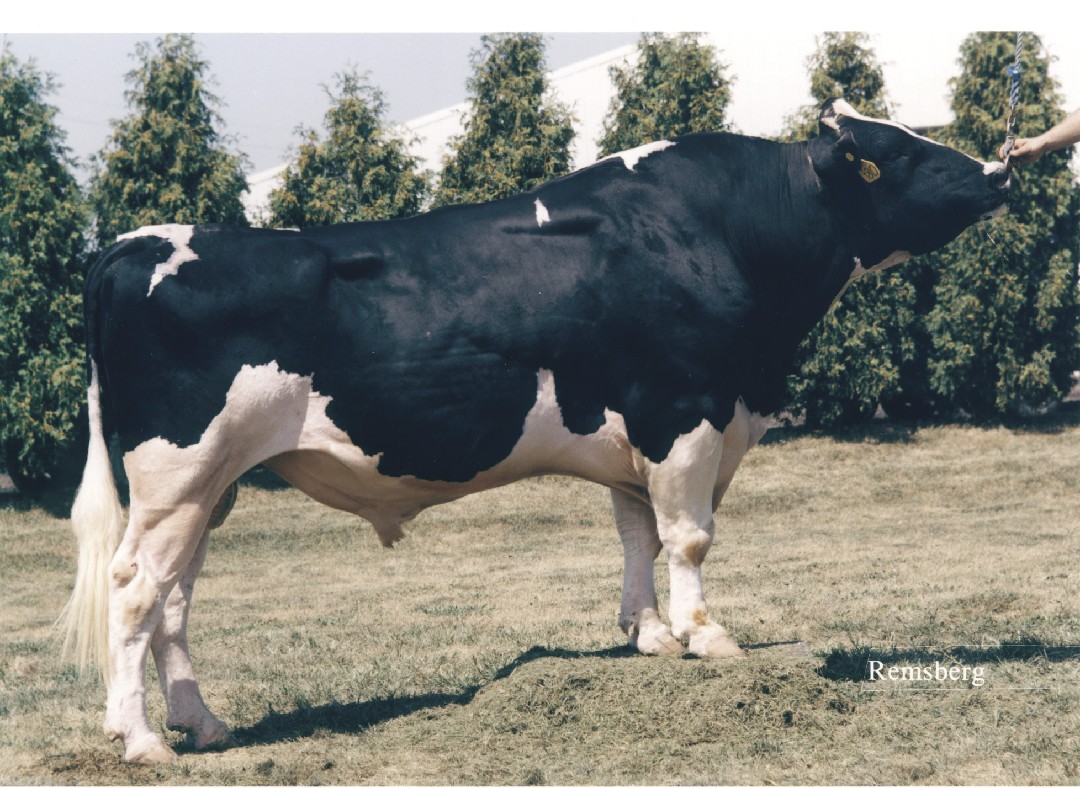

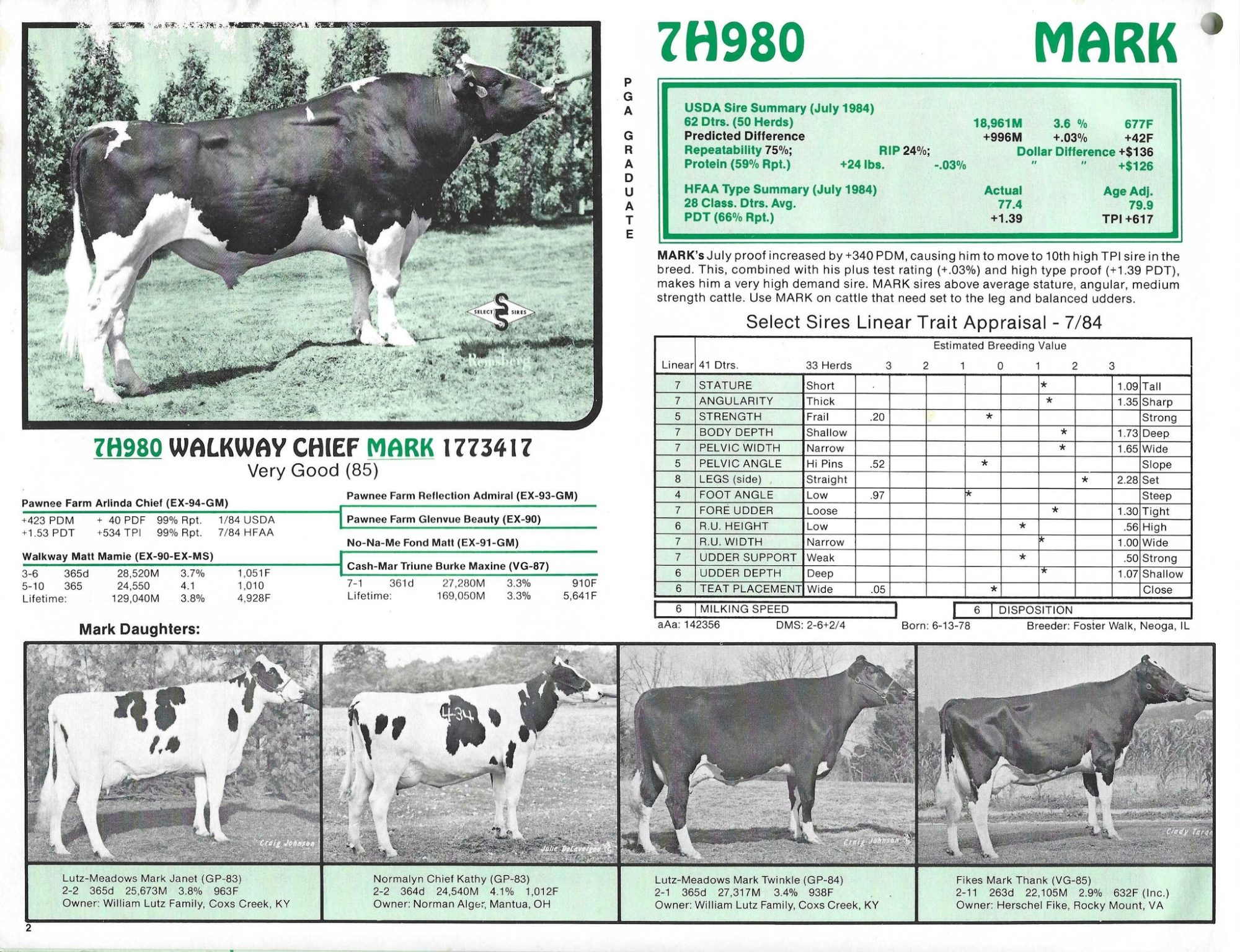
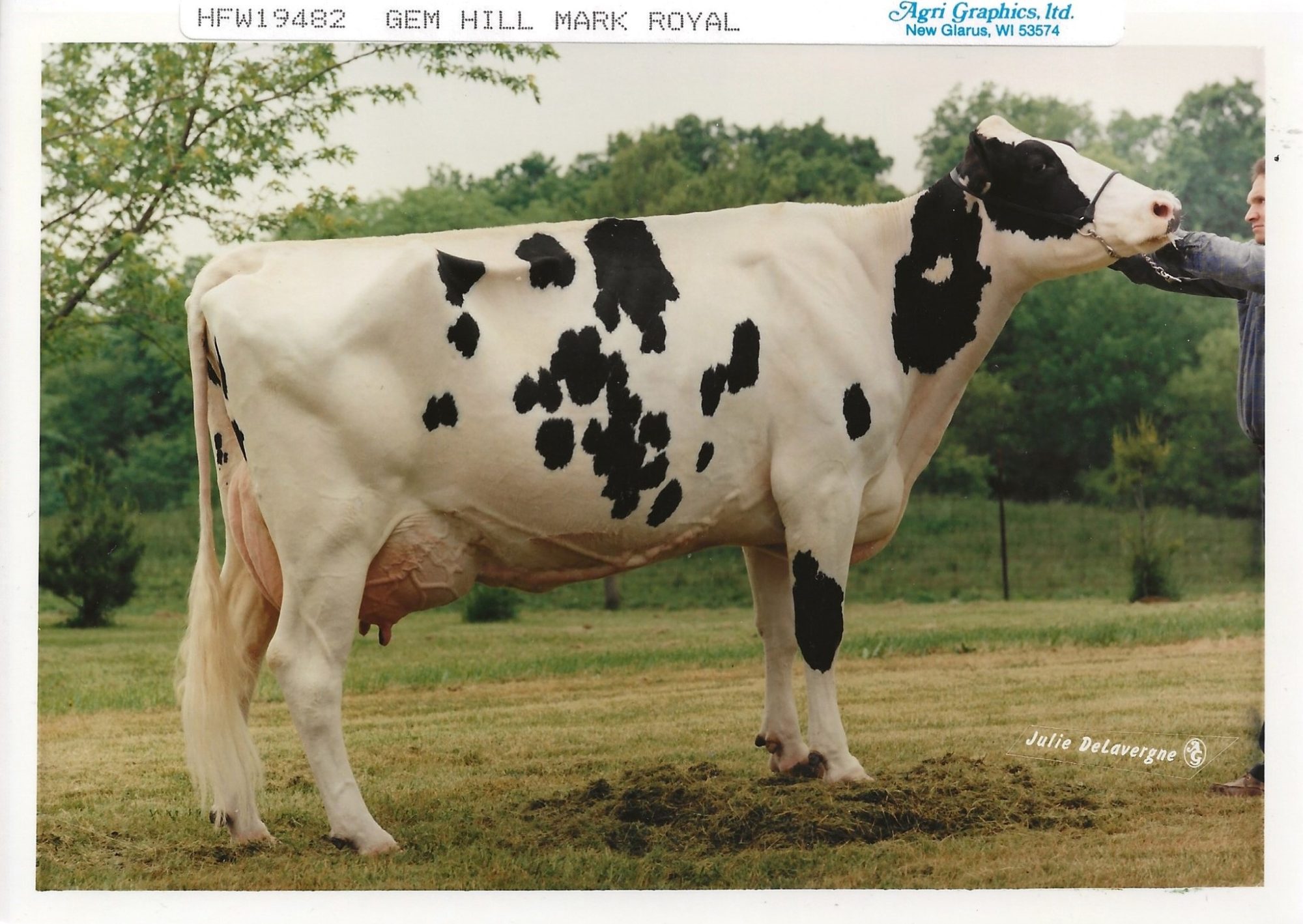
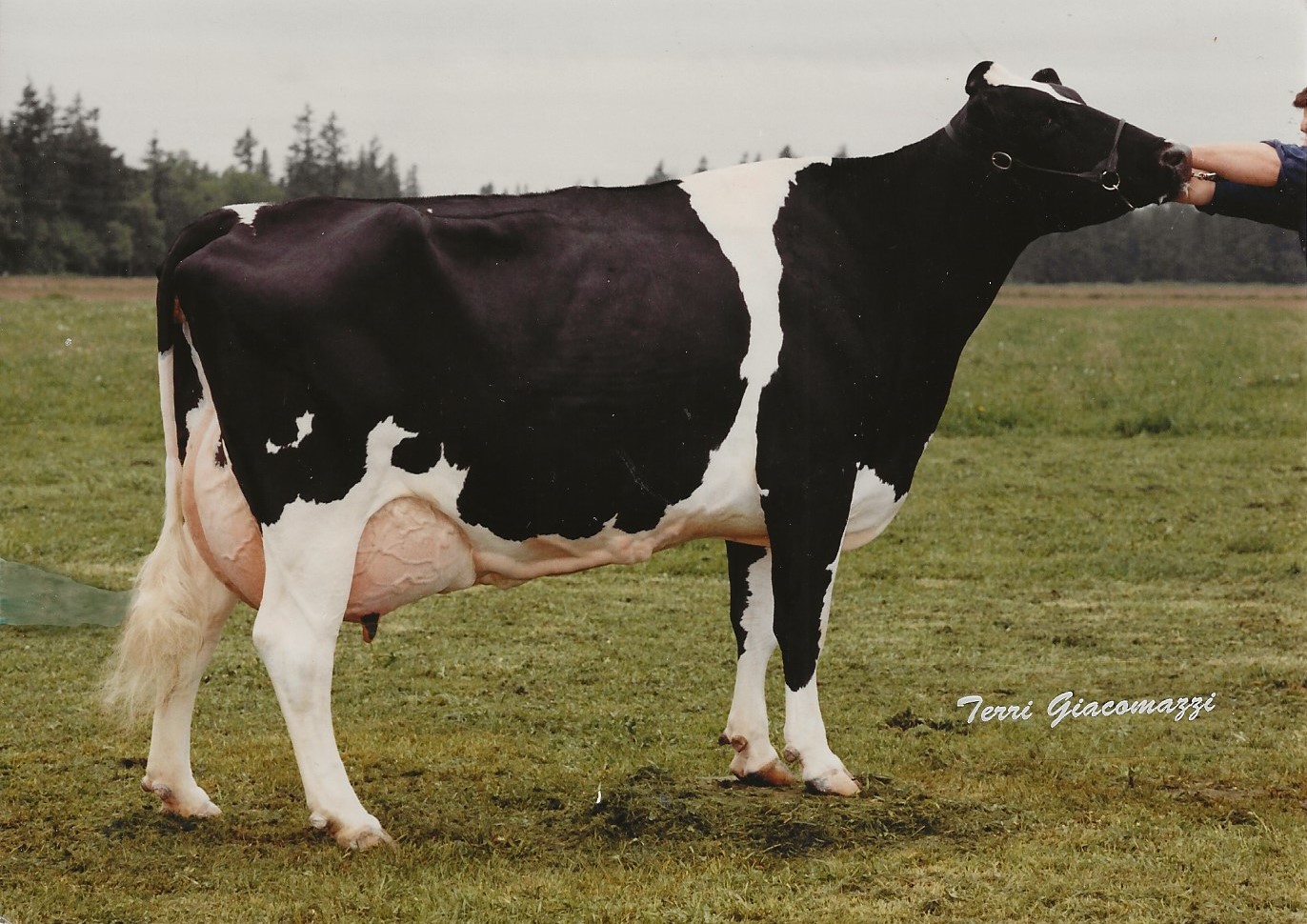
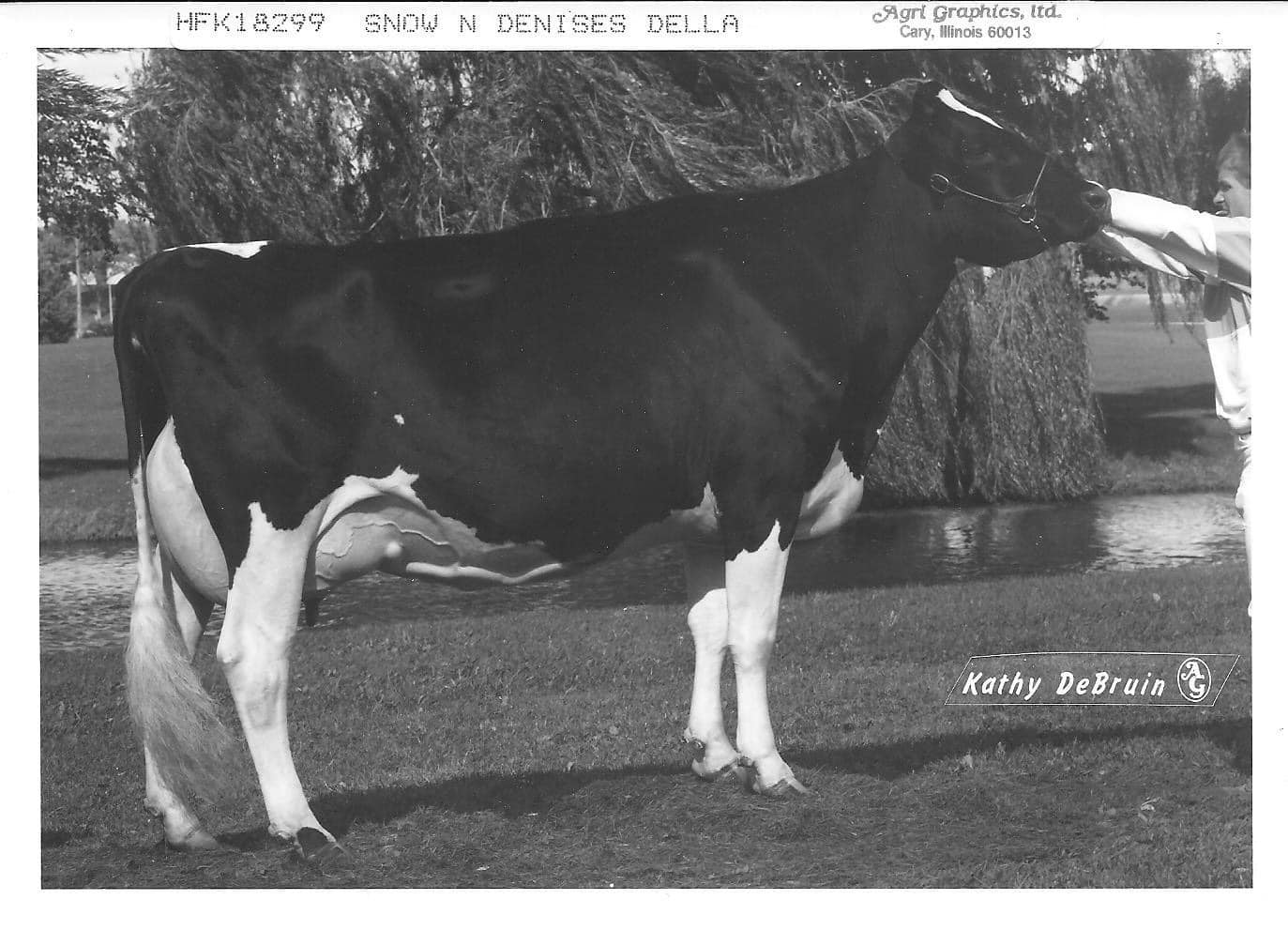
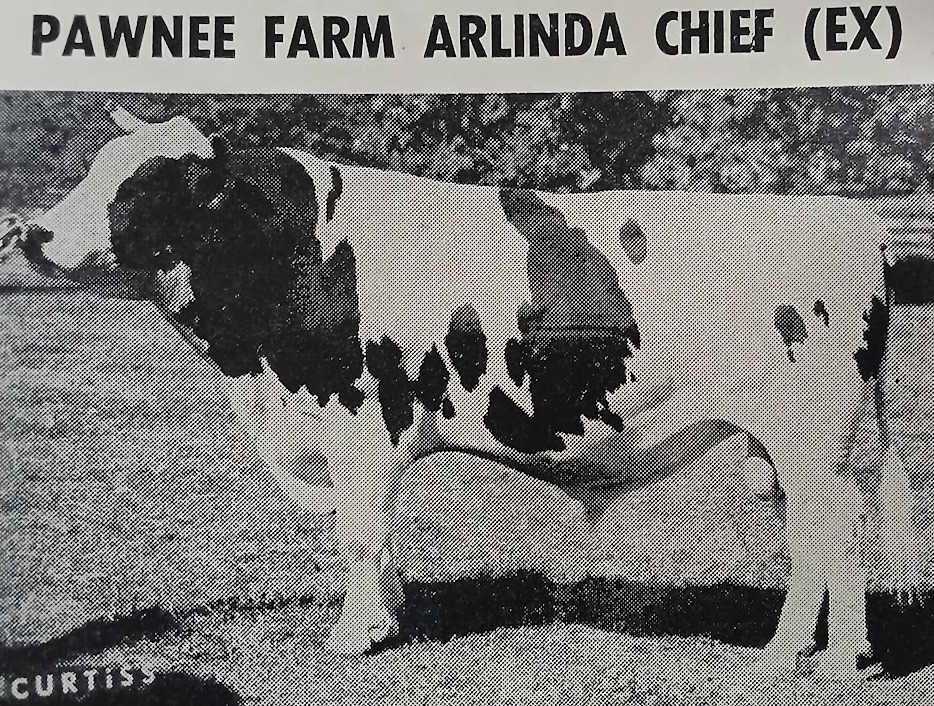
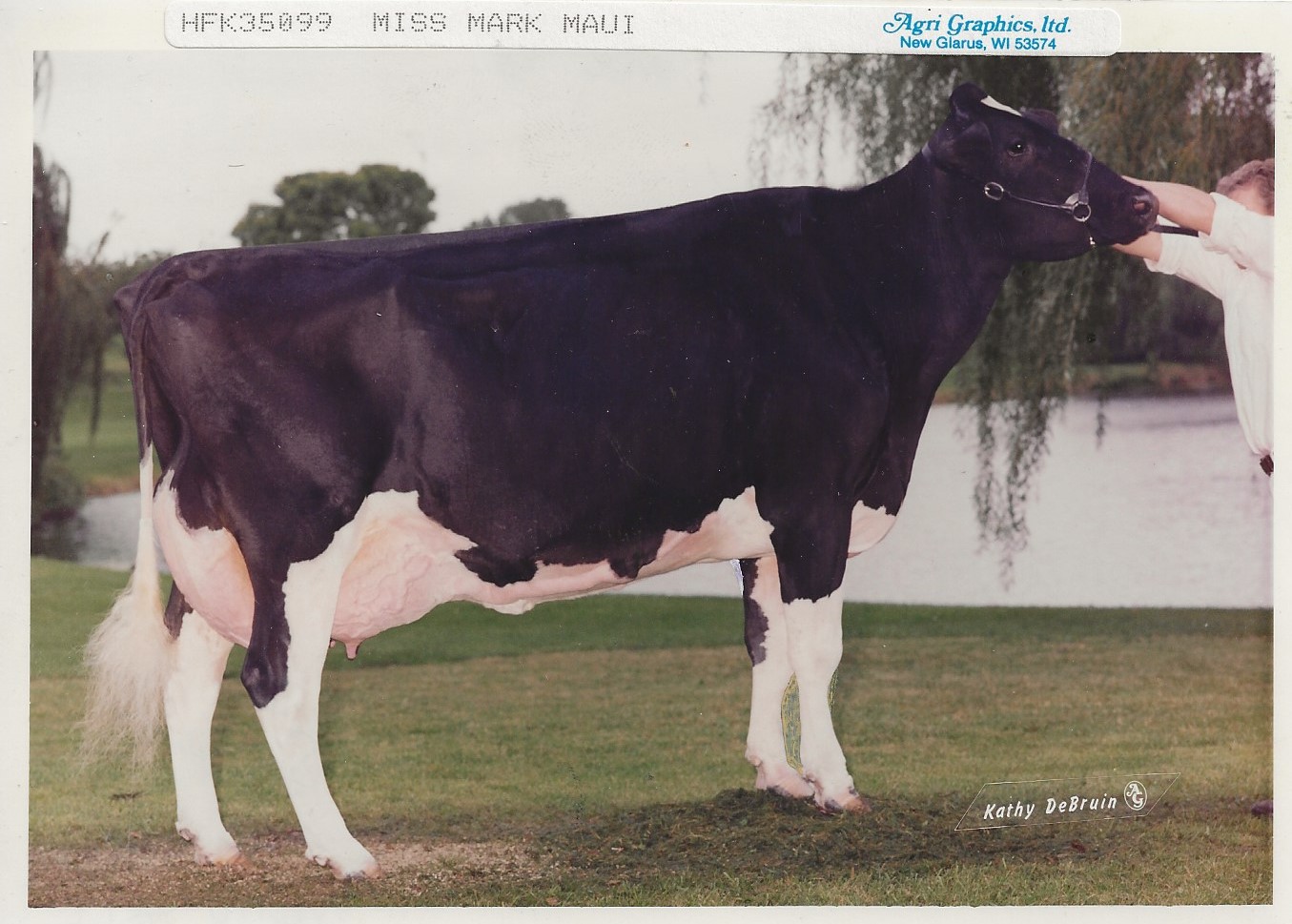

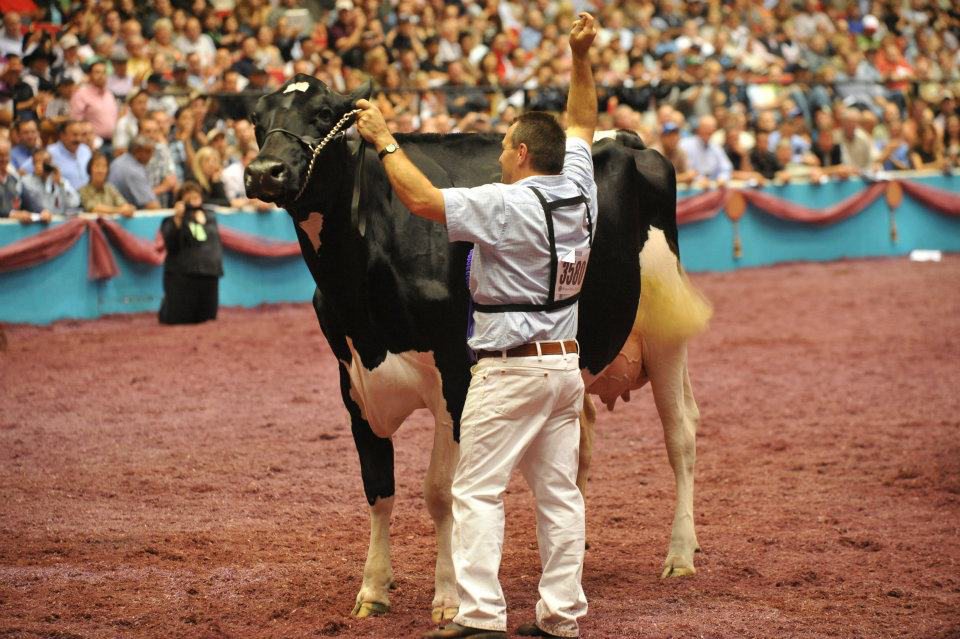
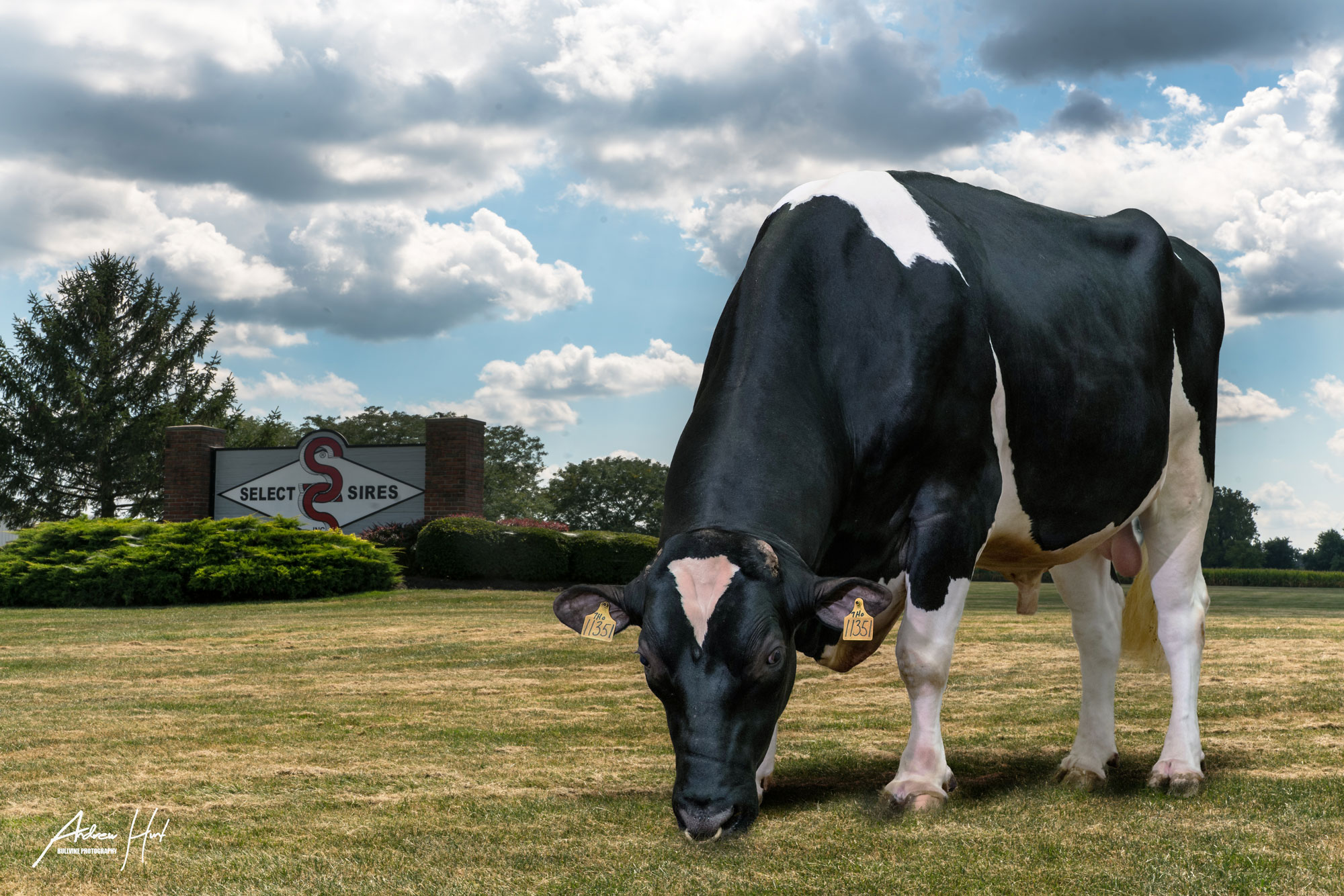
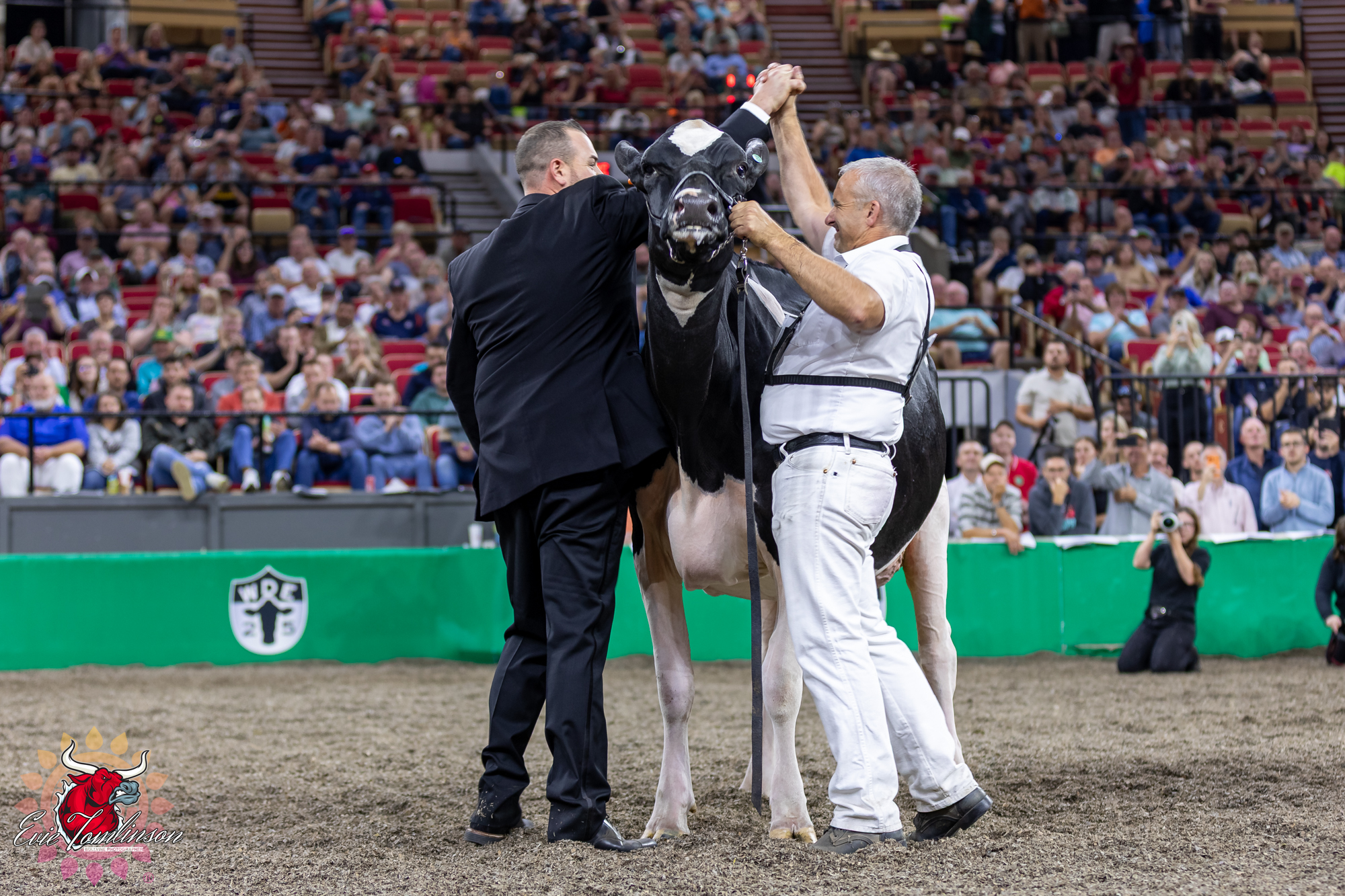
 Join the Revolution!
 Join the Revolution!


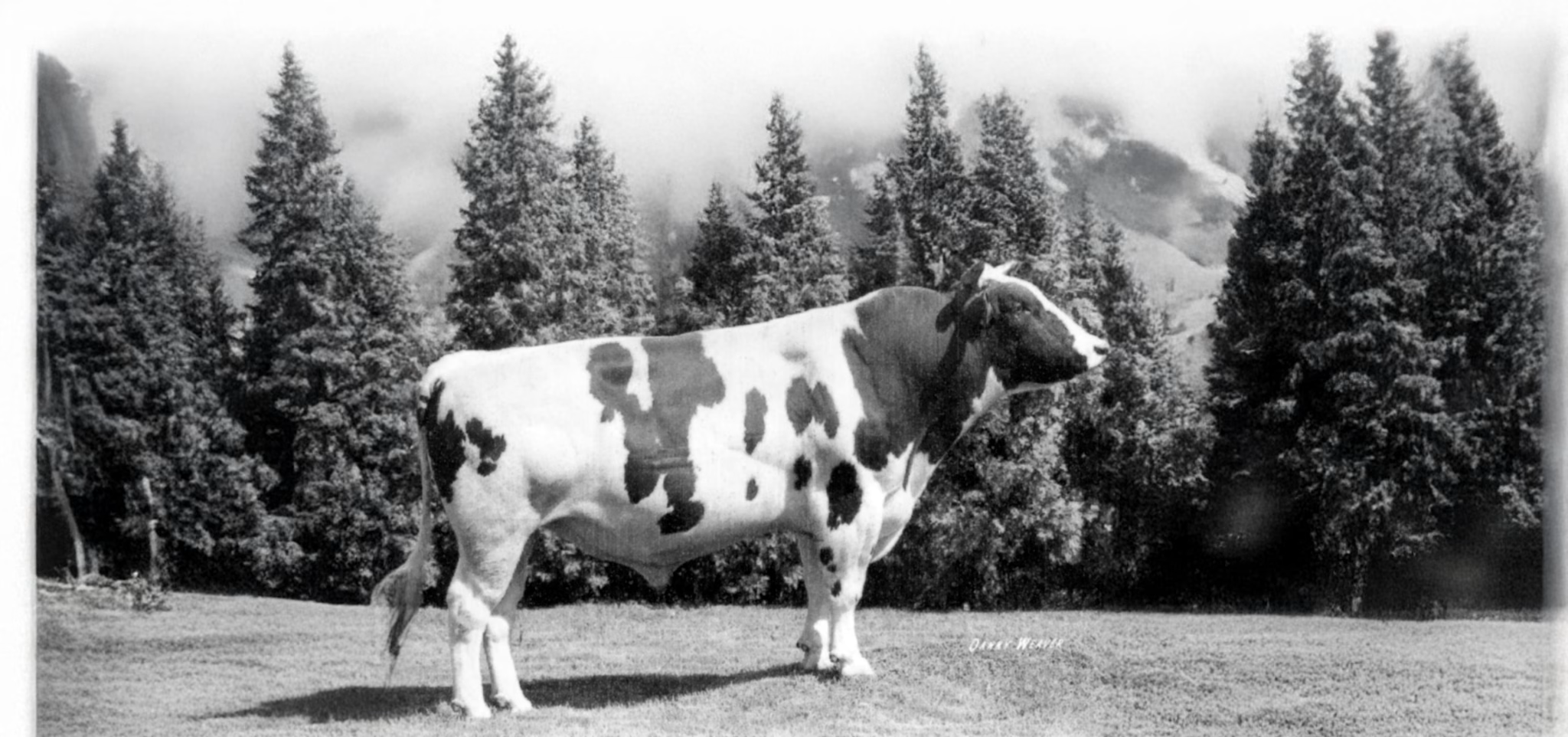
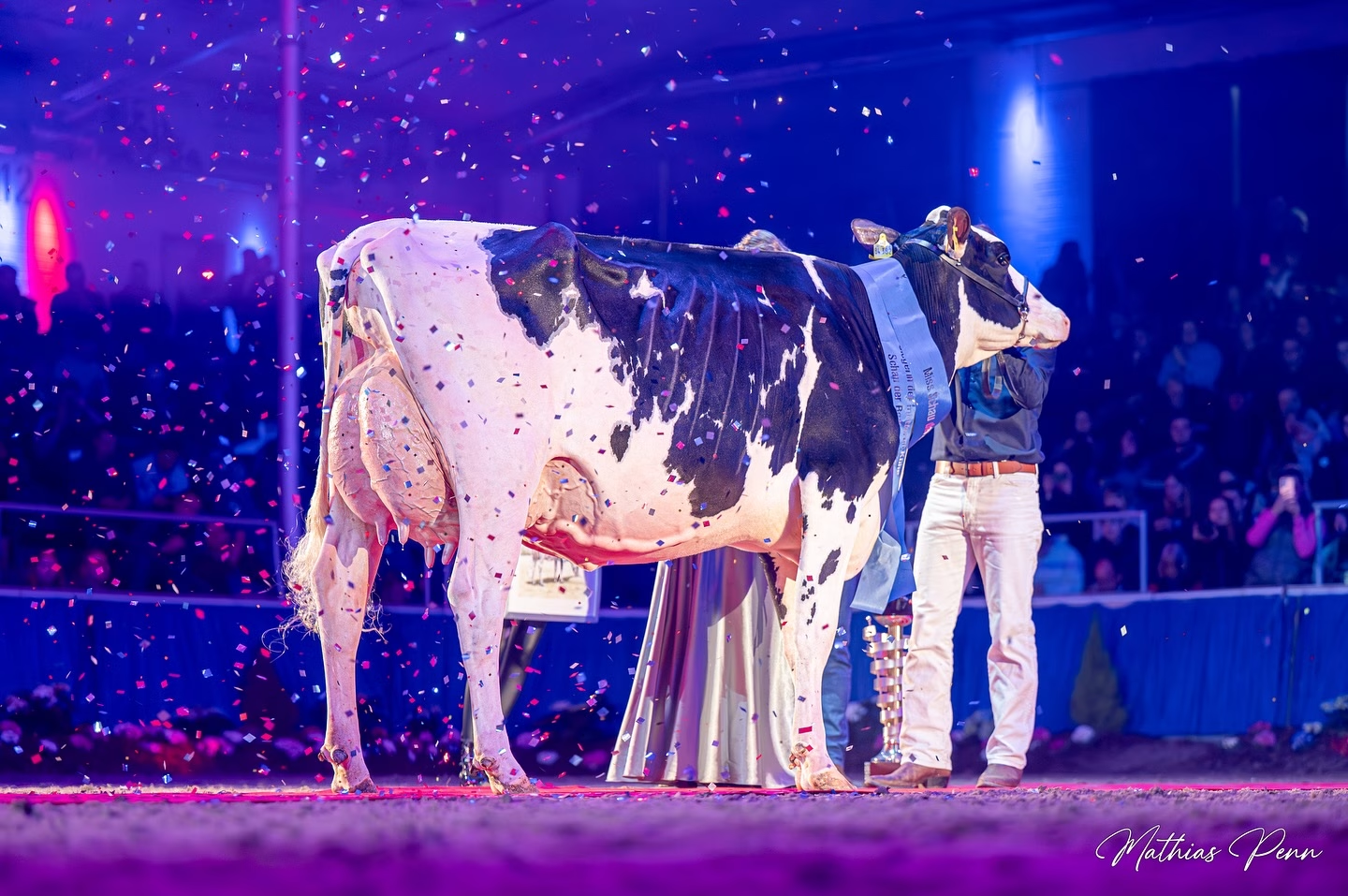

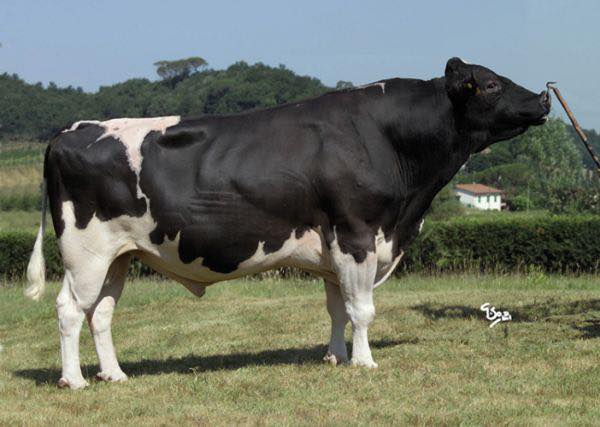
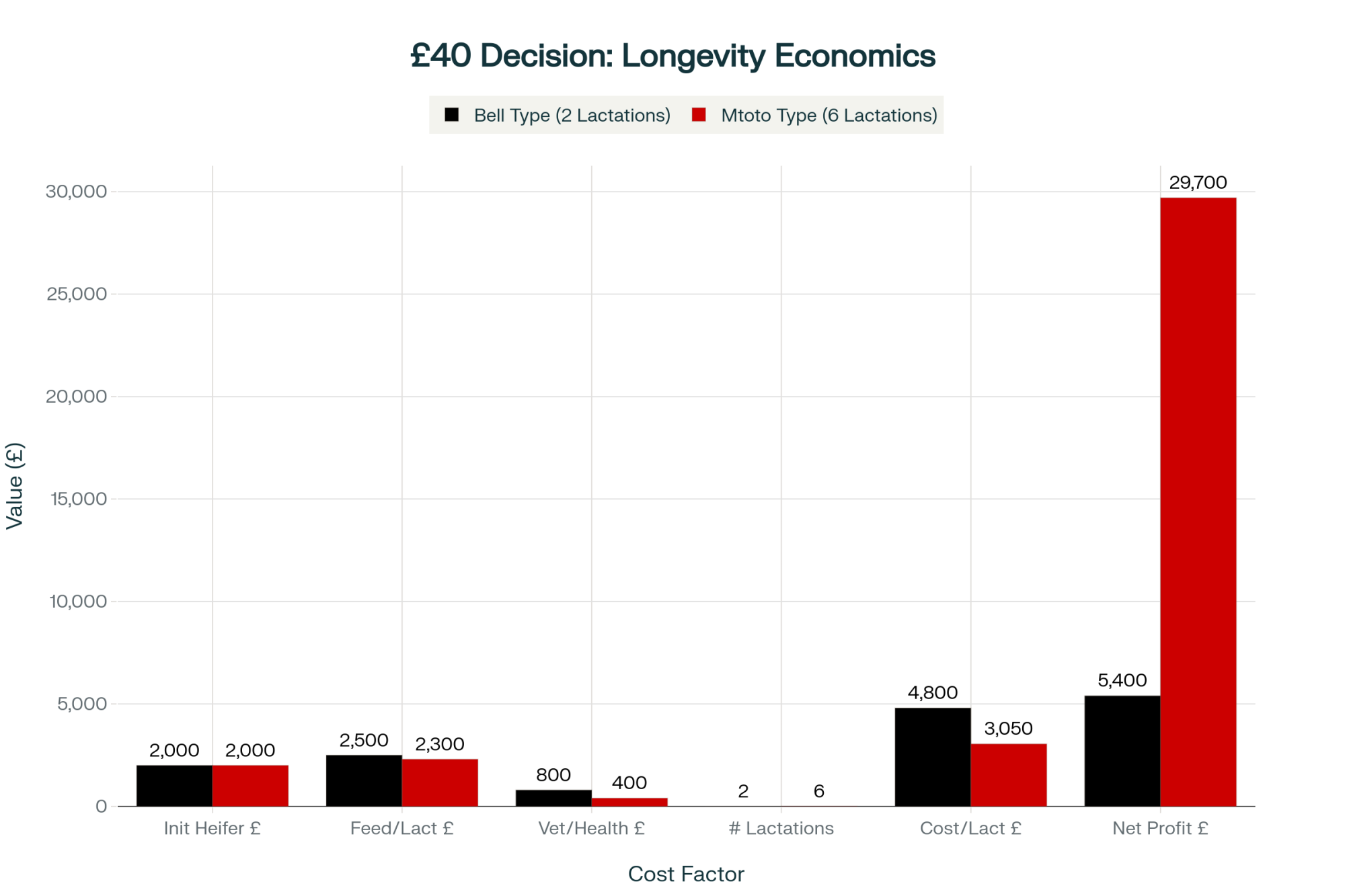


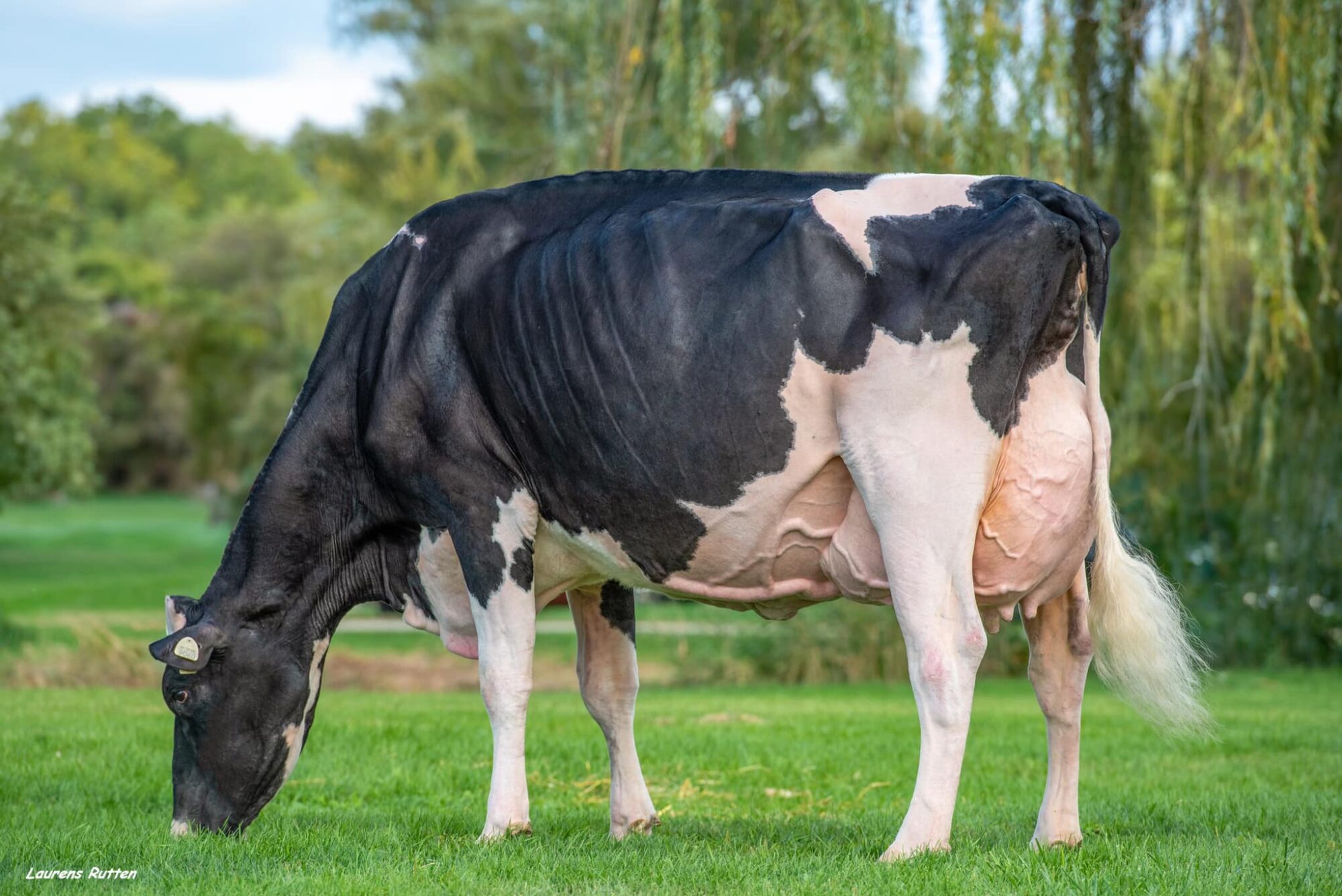

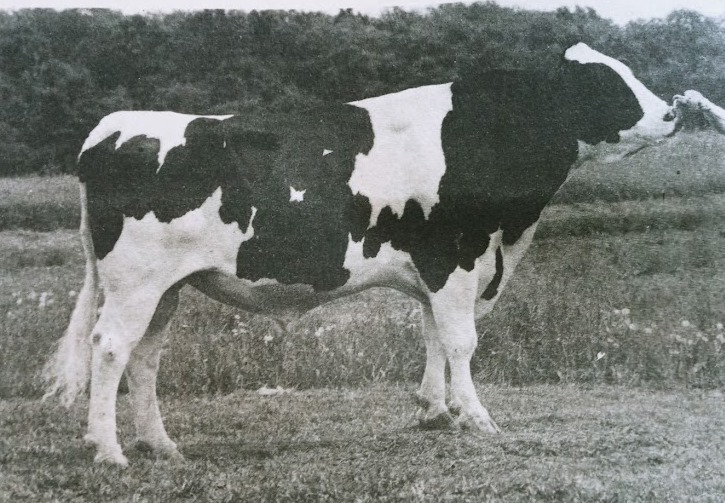

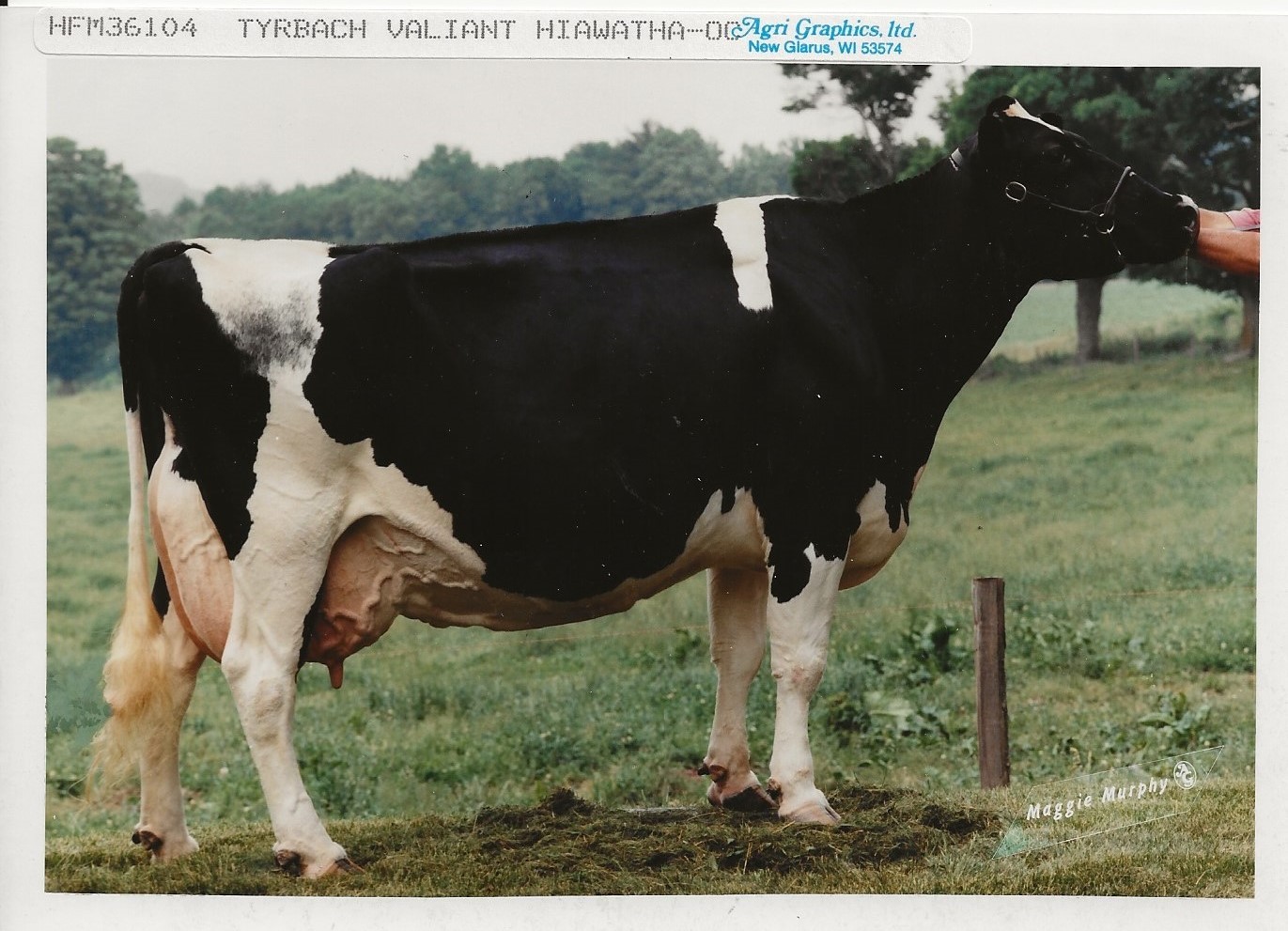
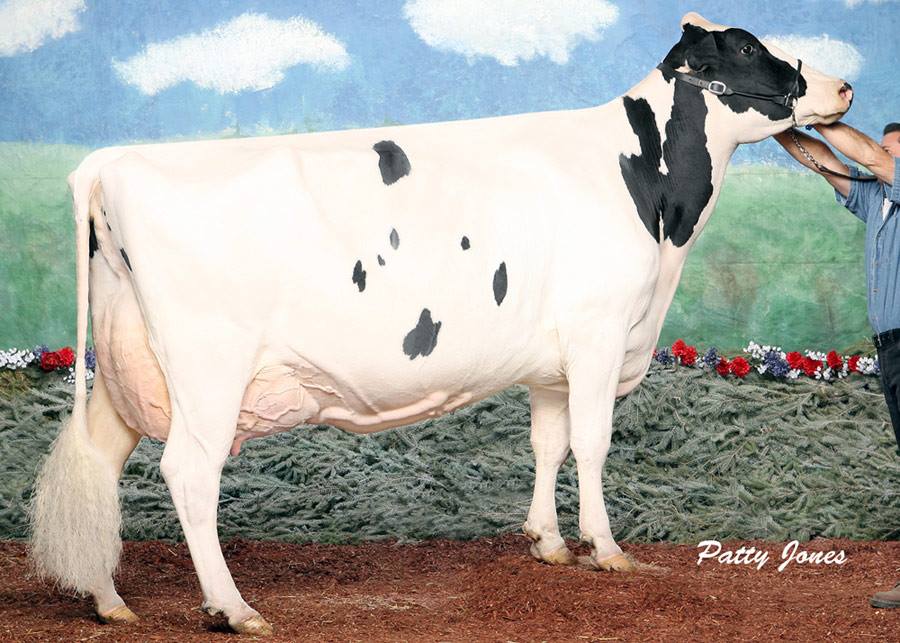
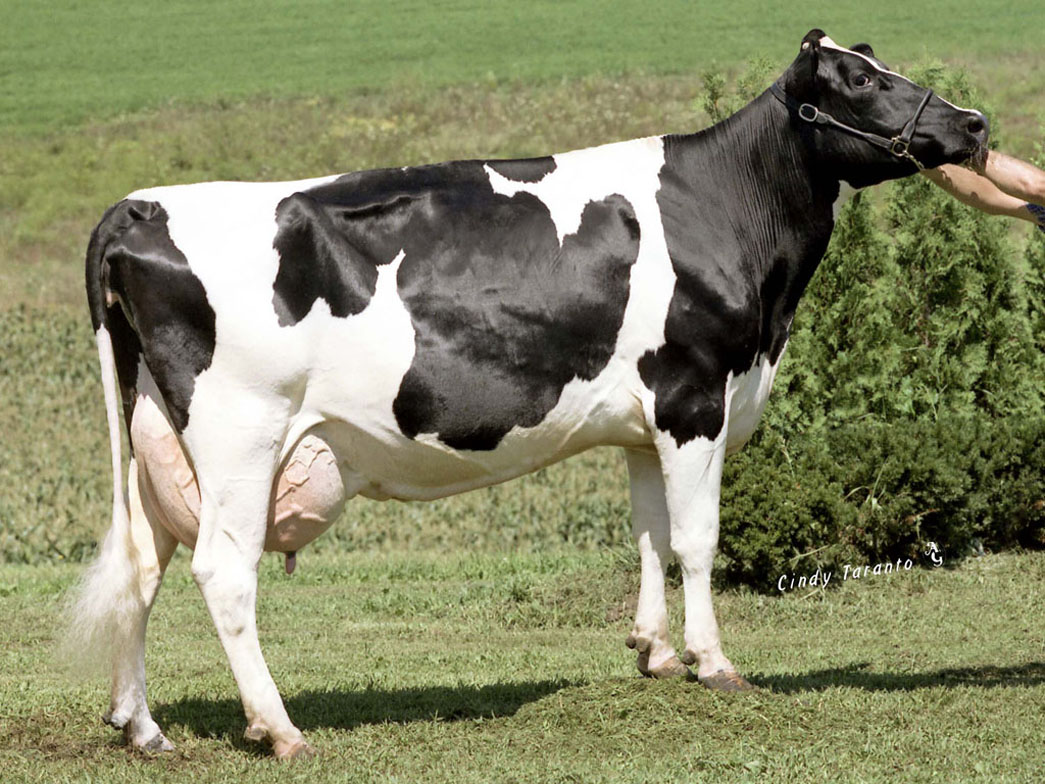

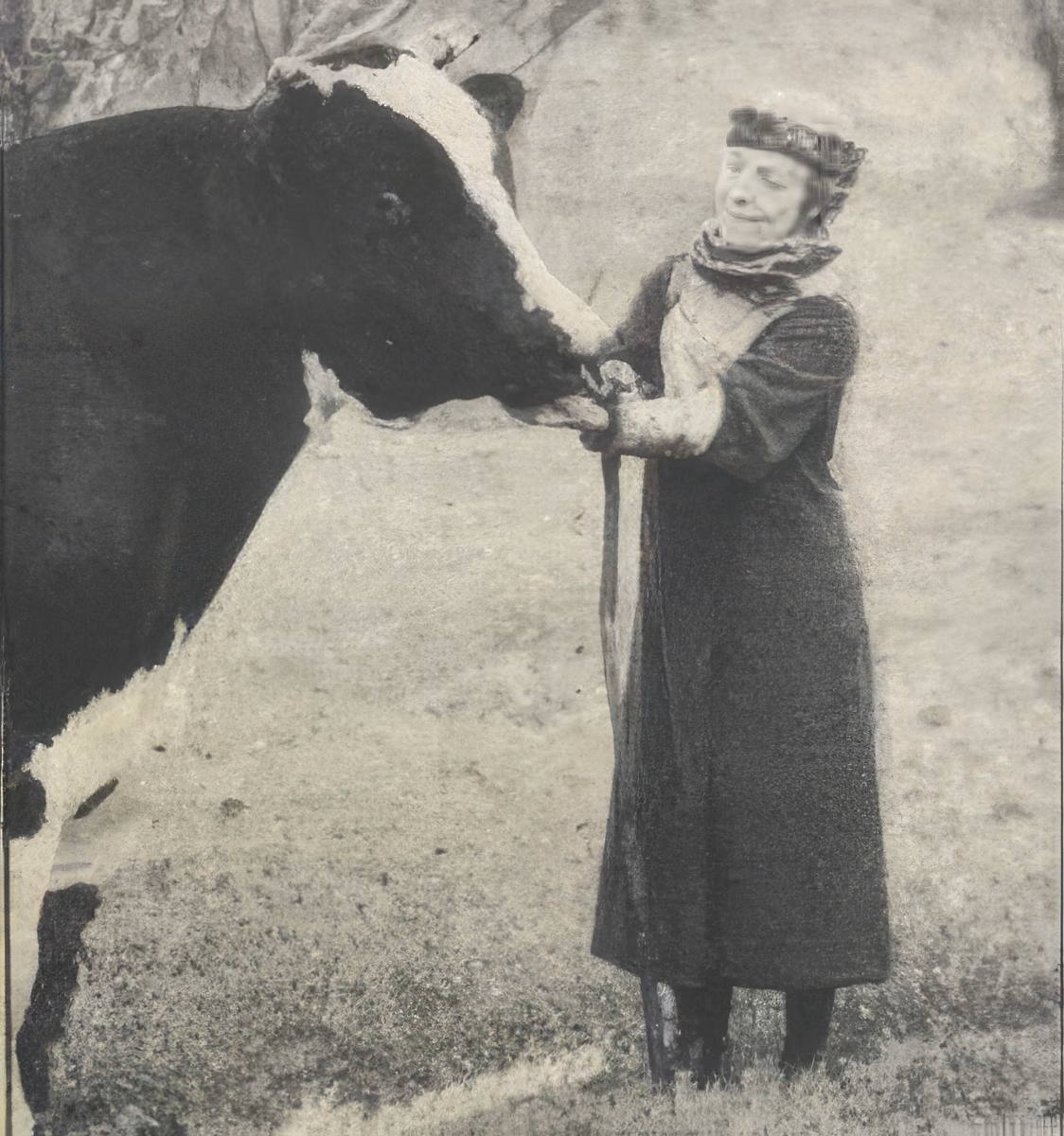


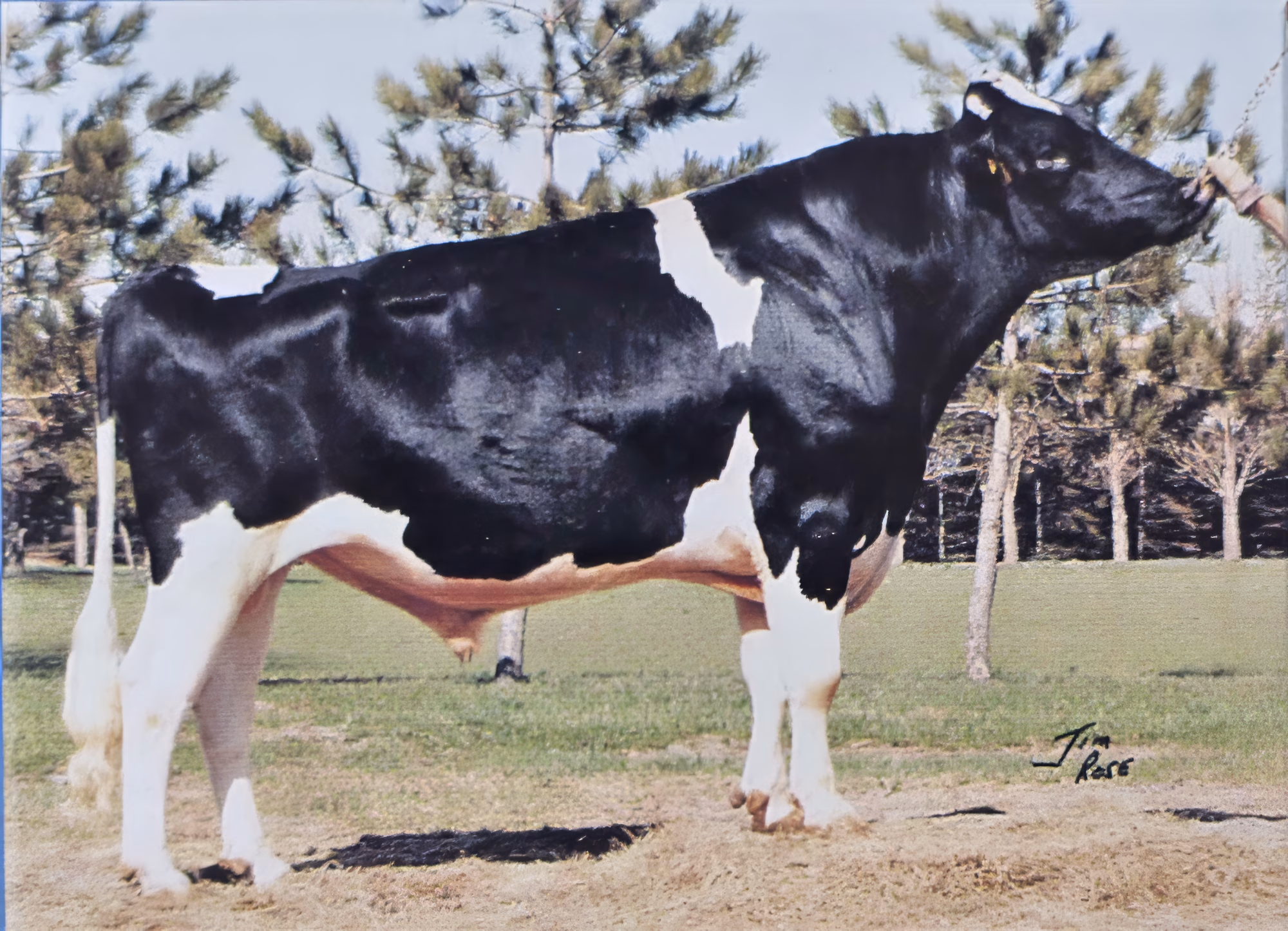
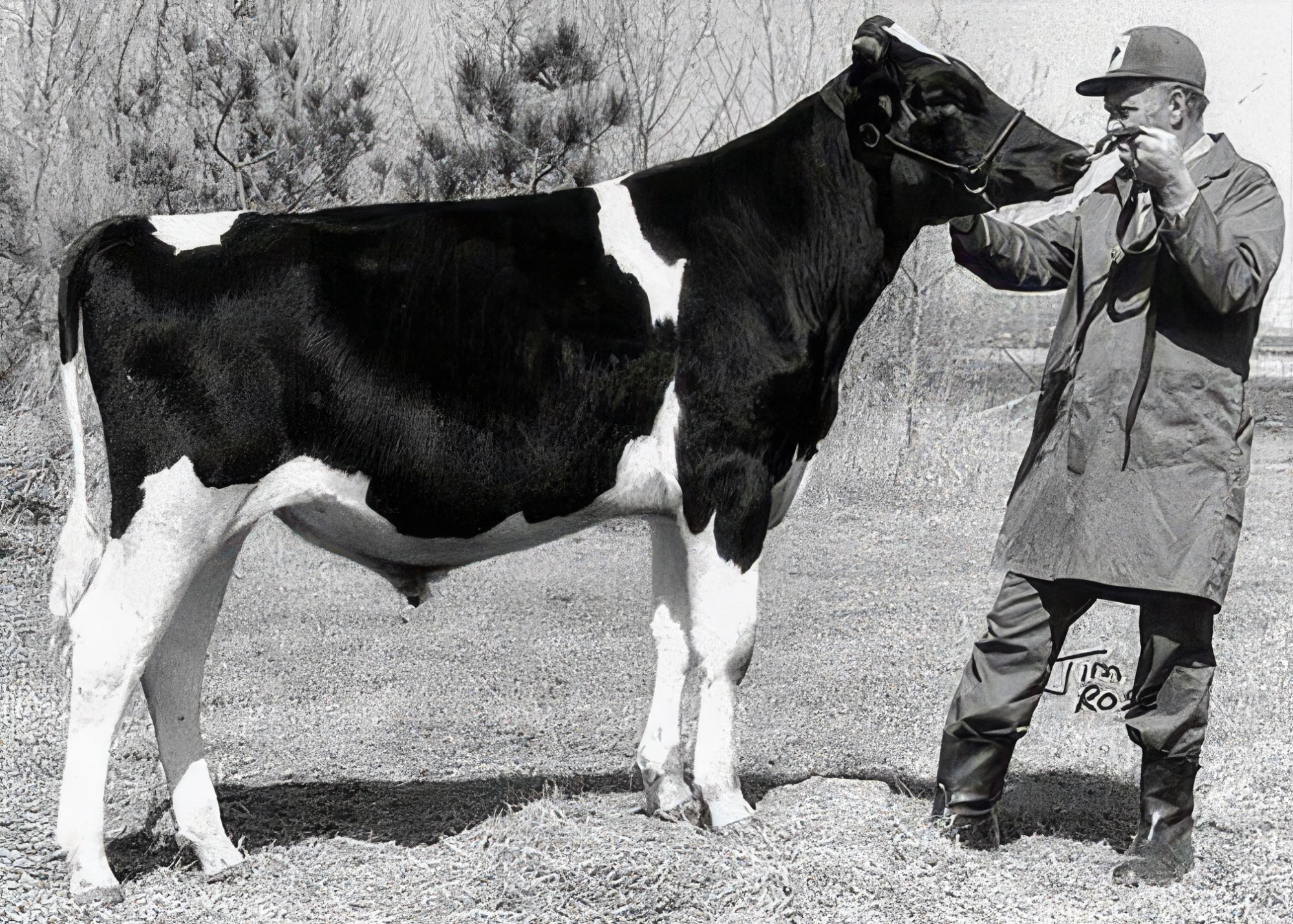
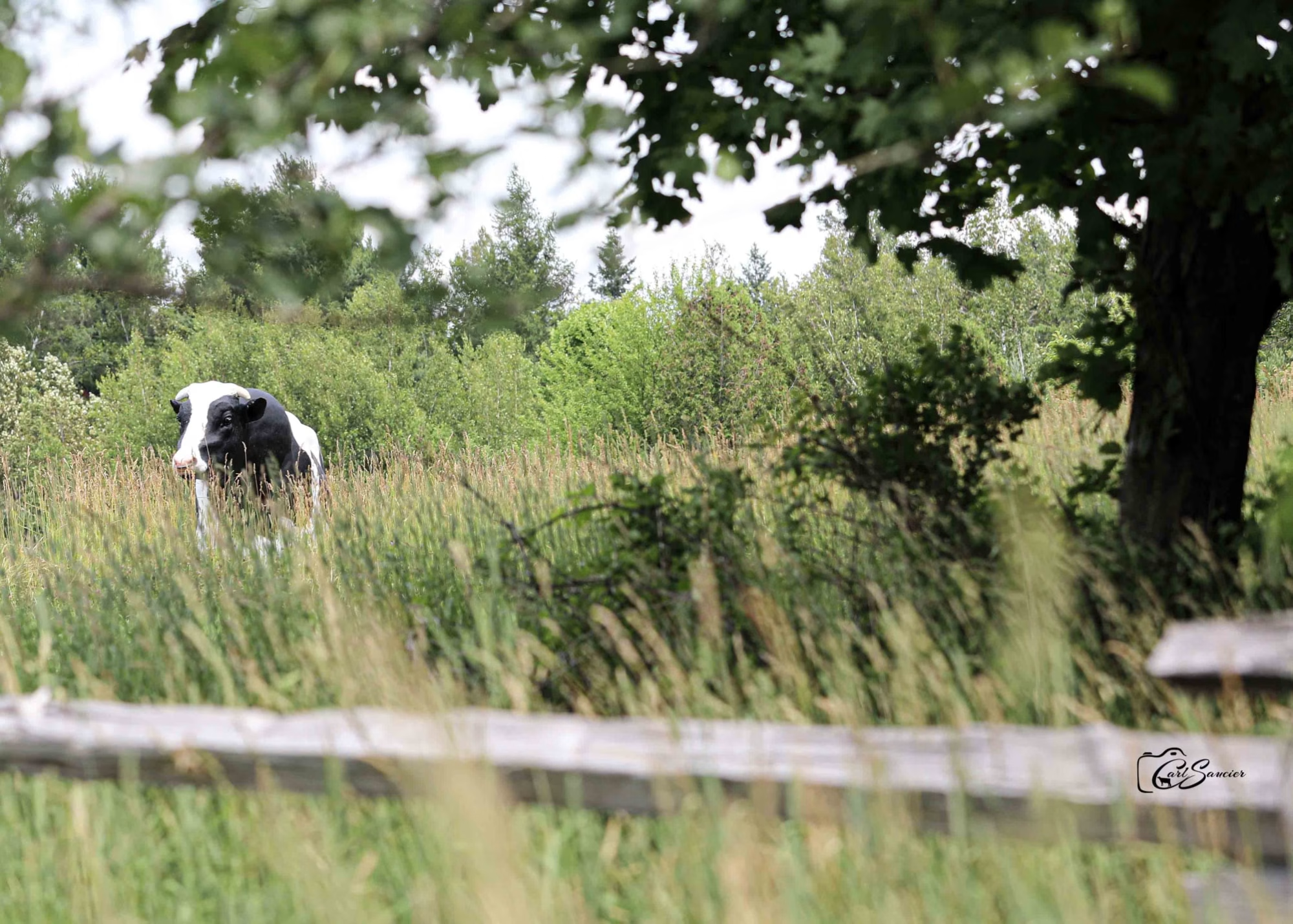


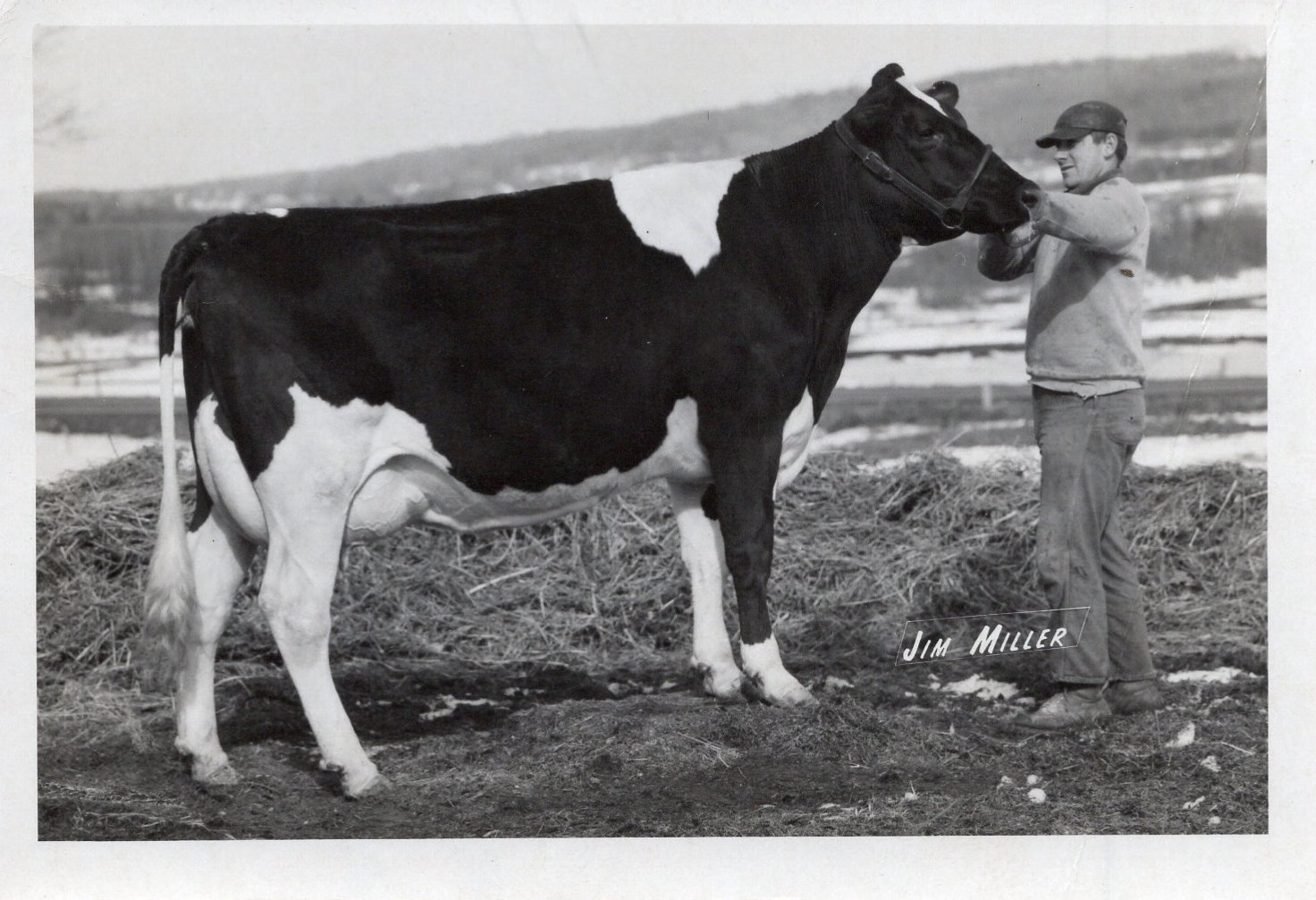


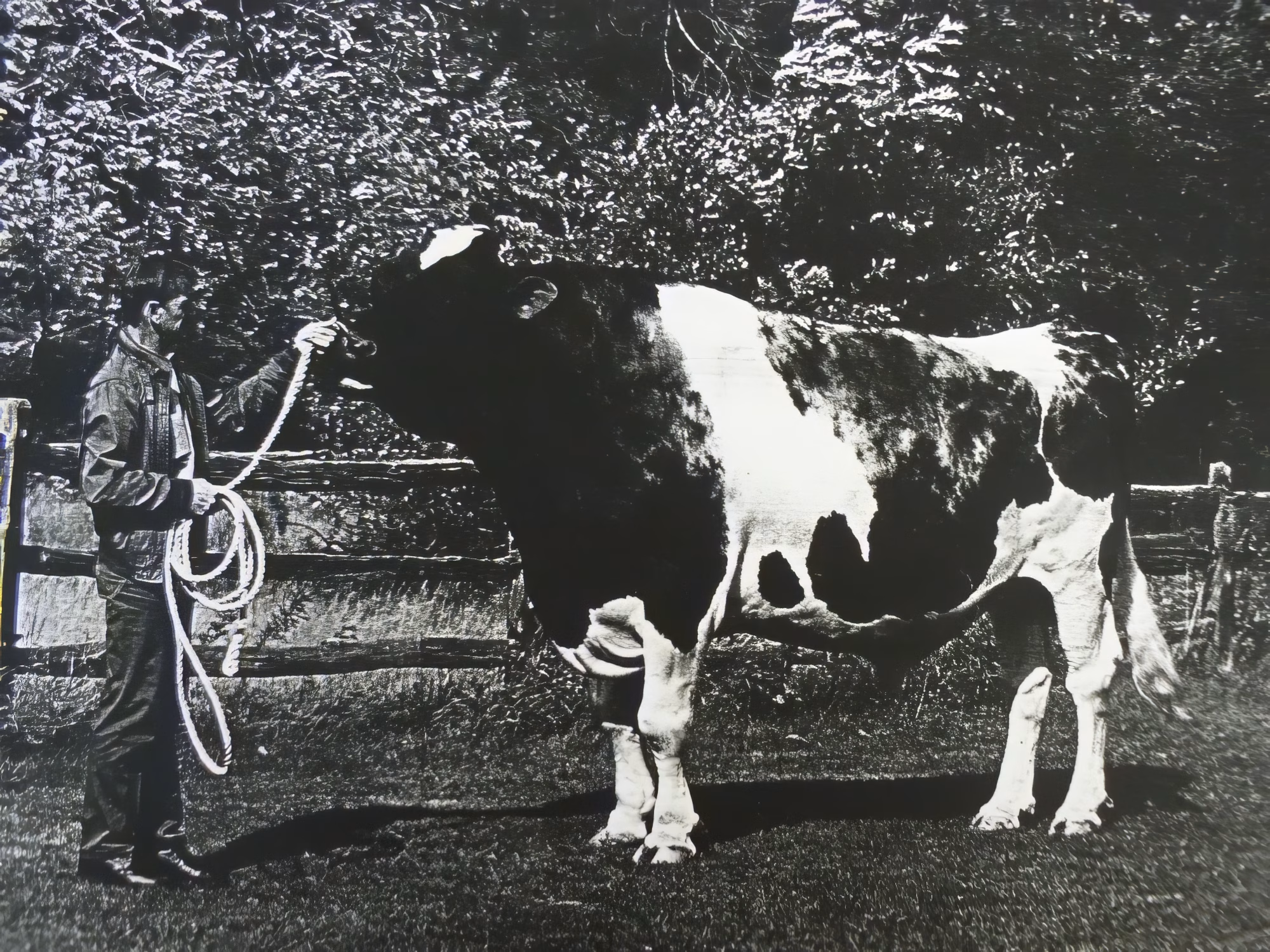
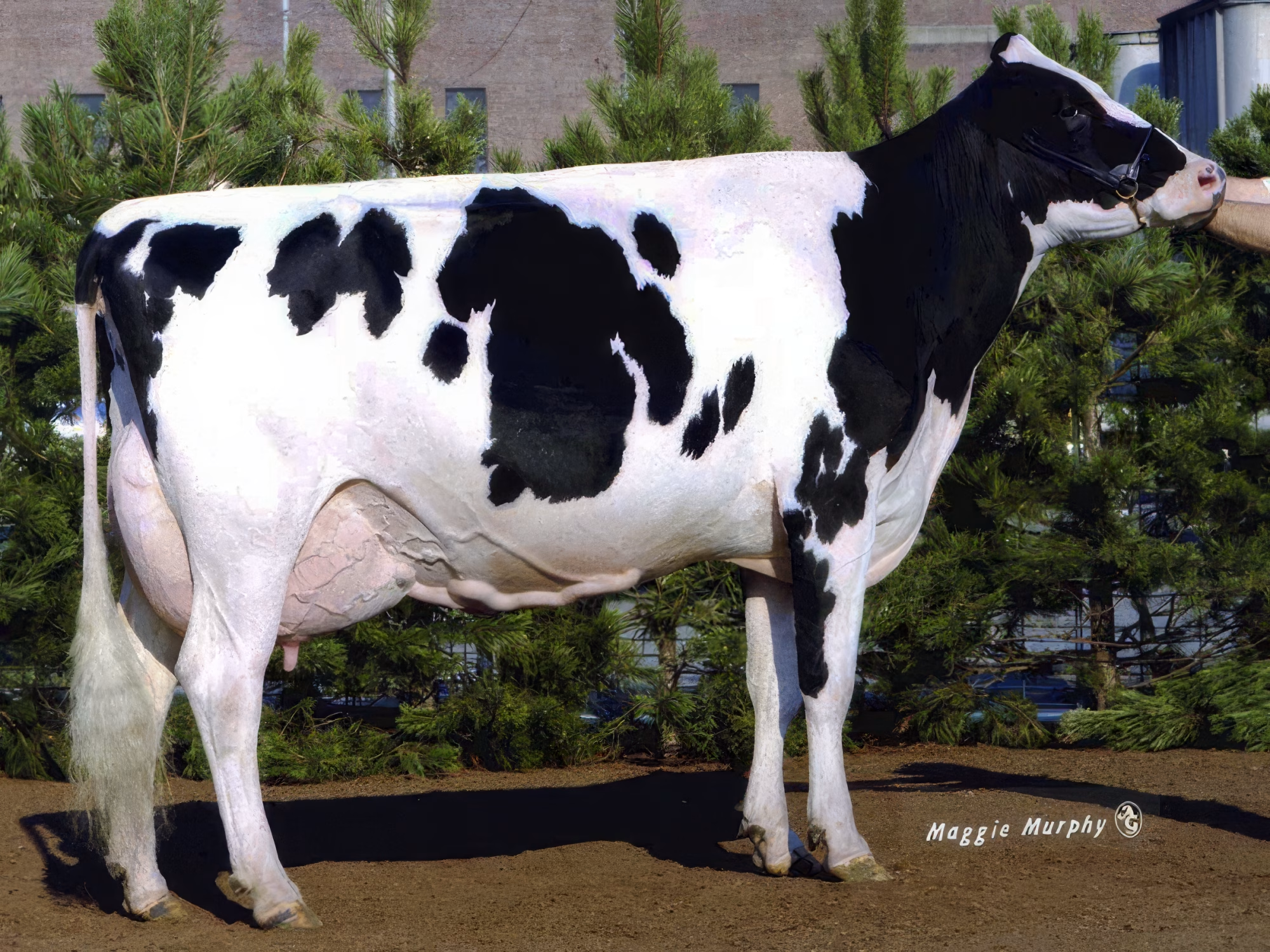
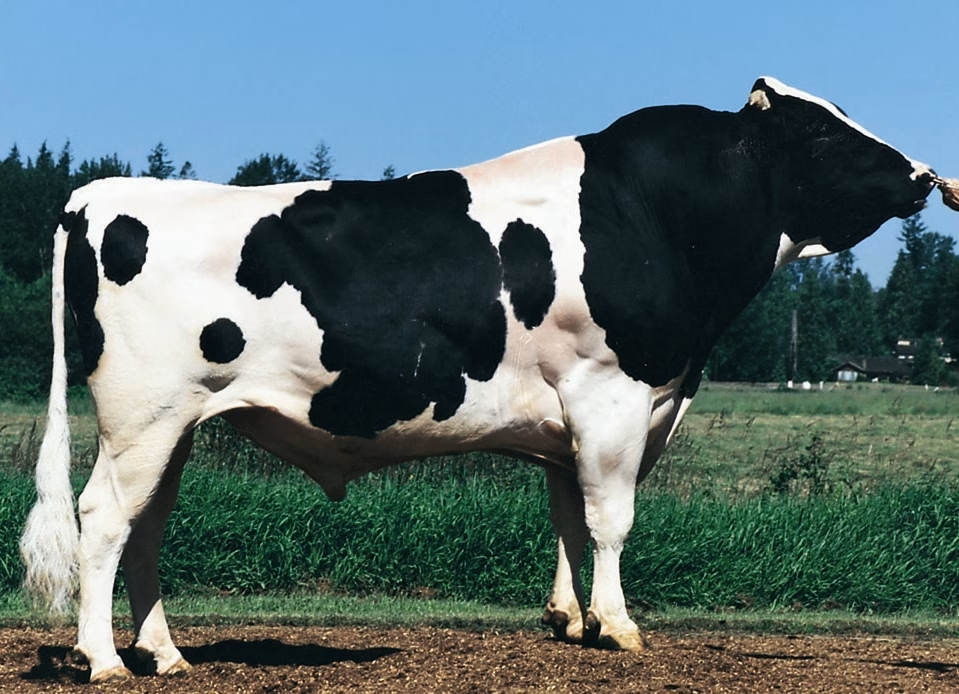
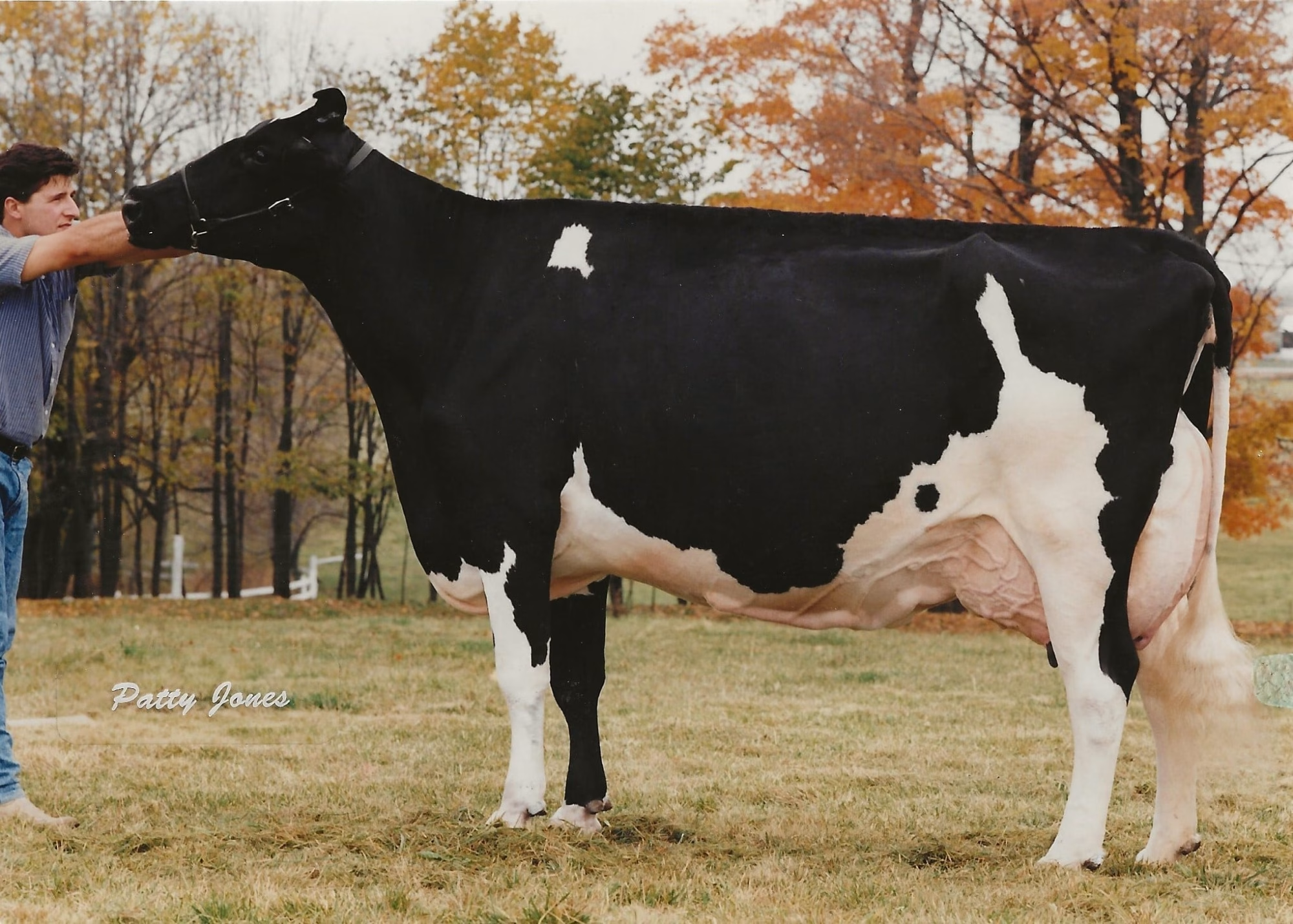
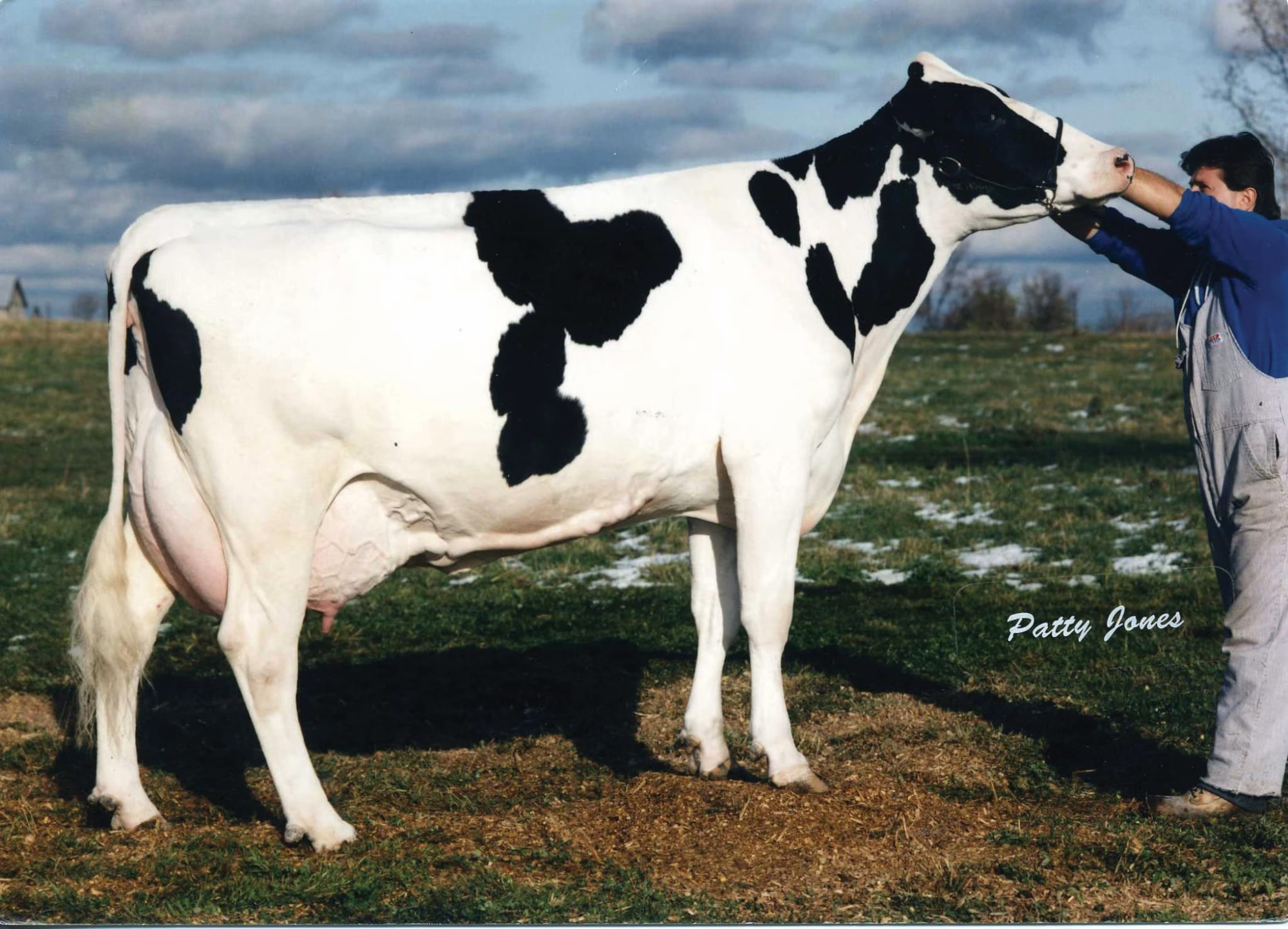
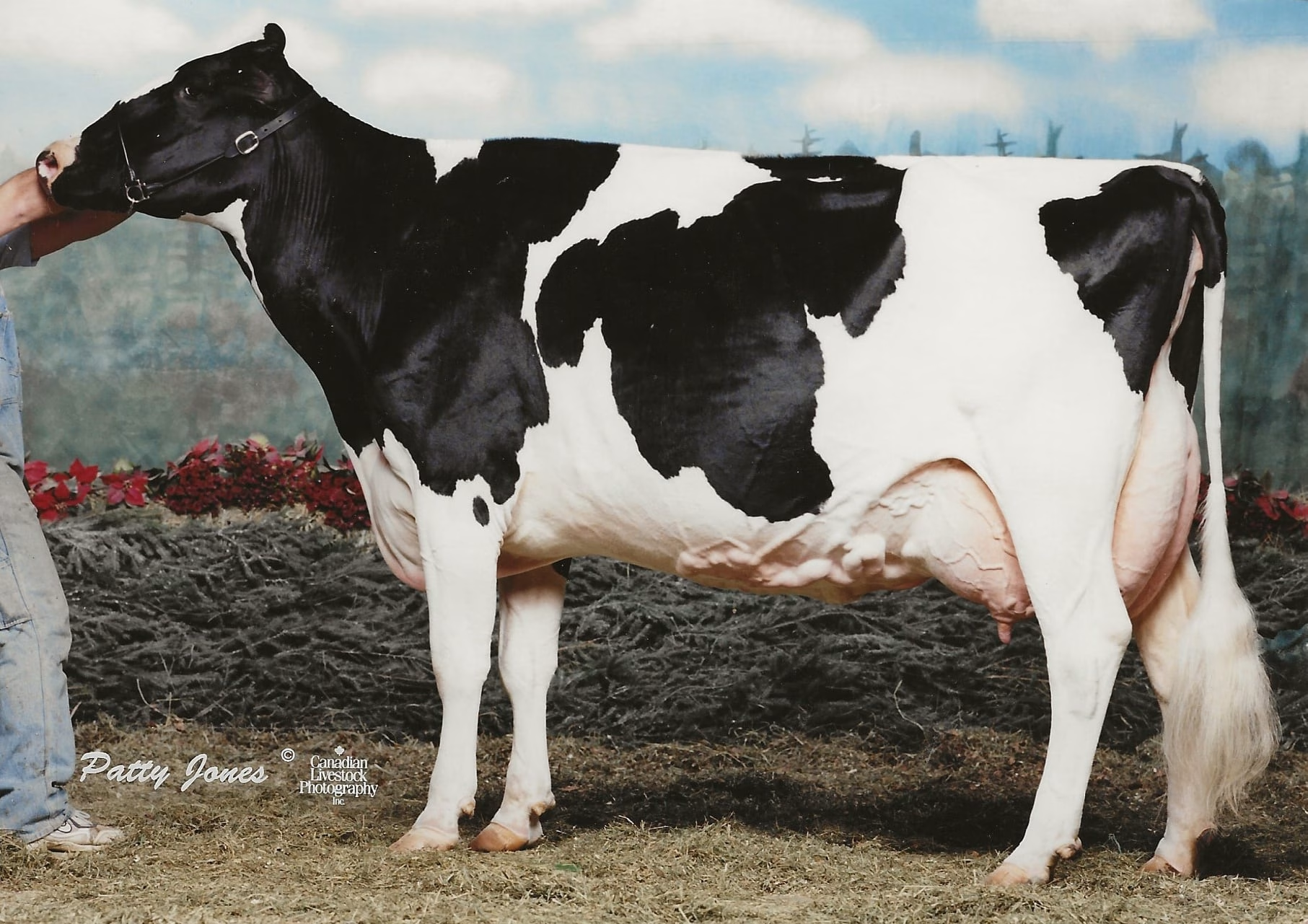
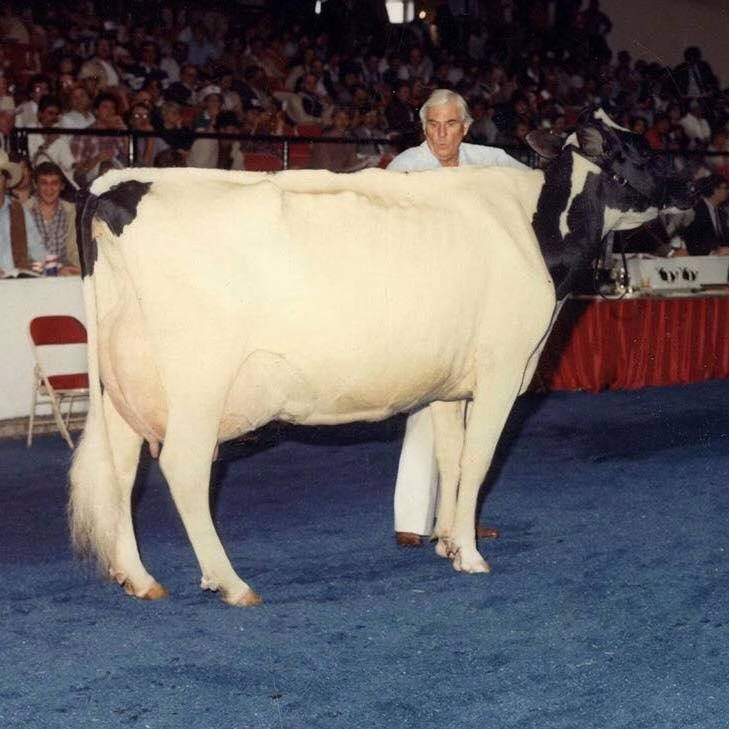
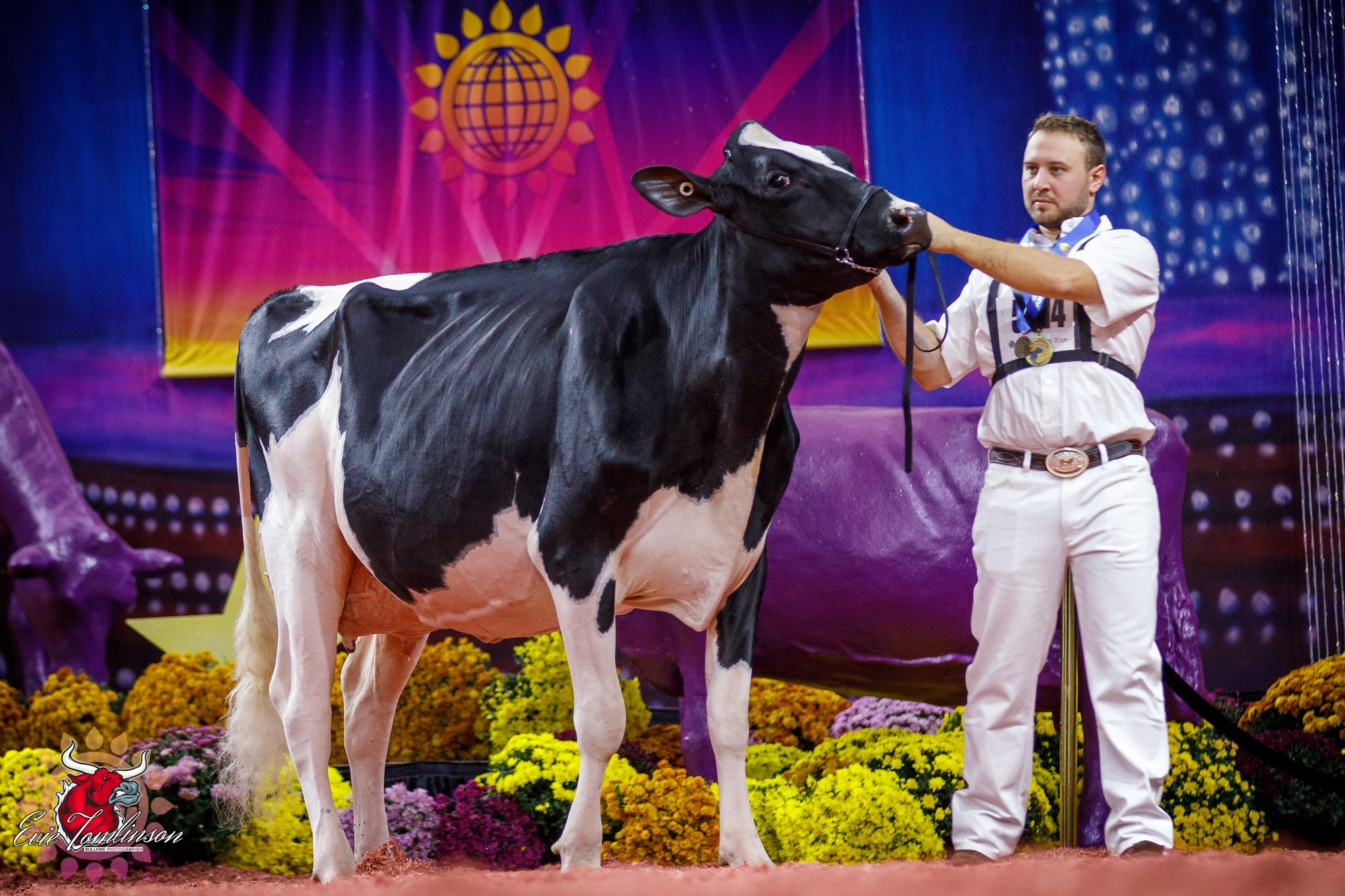


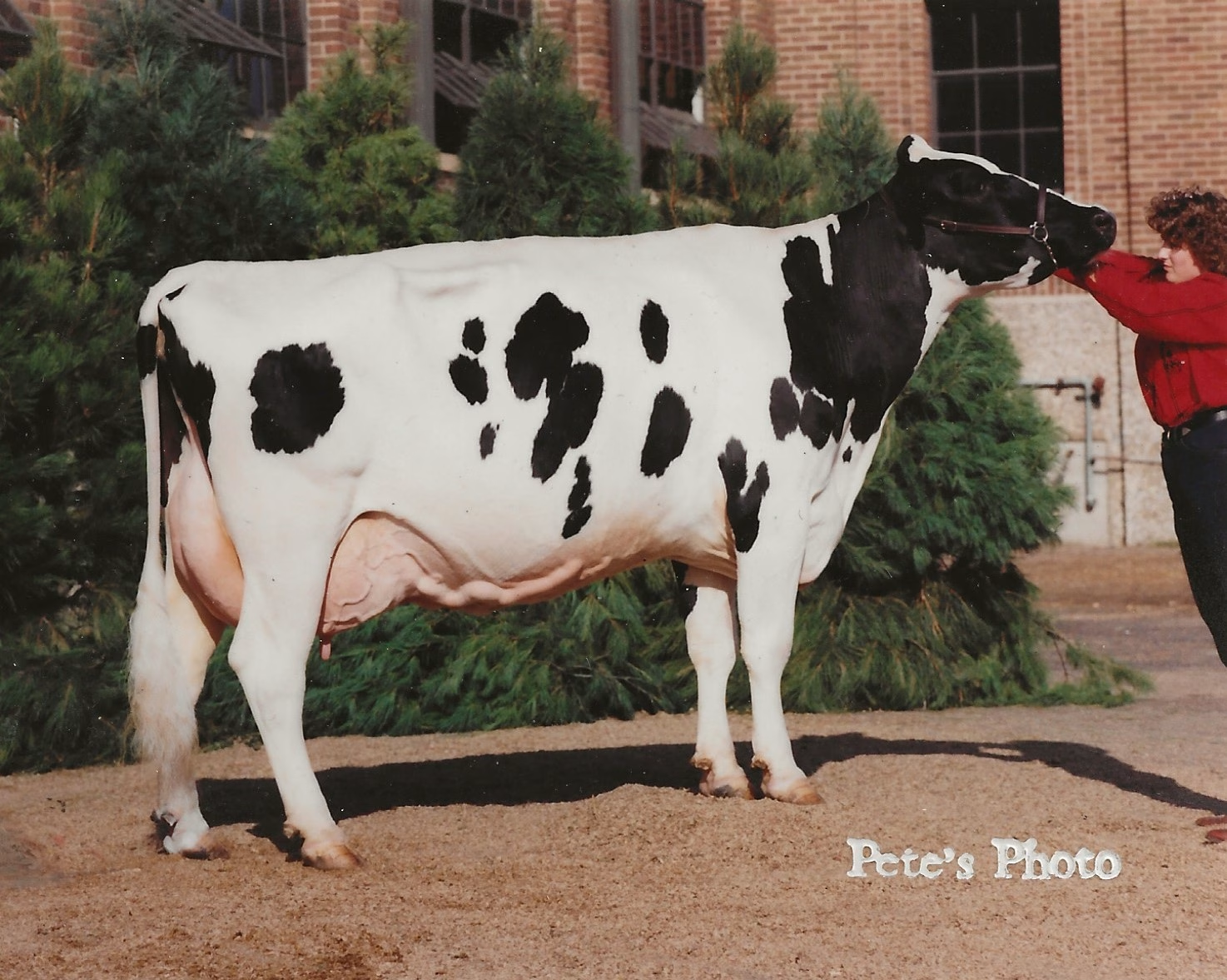


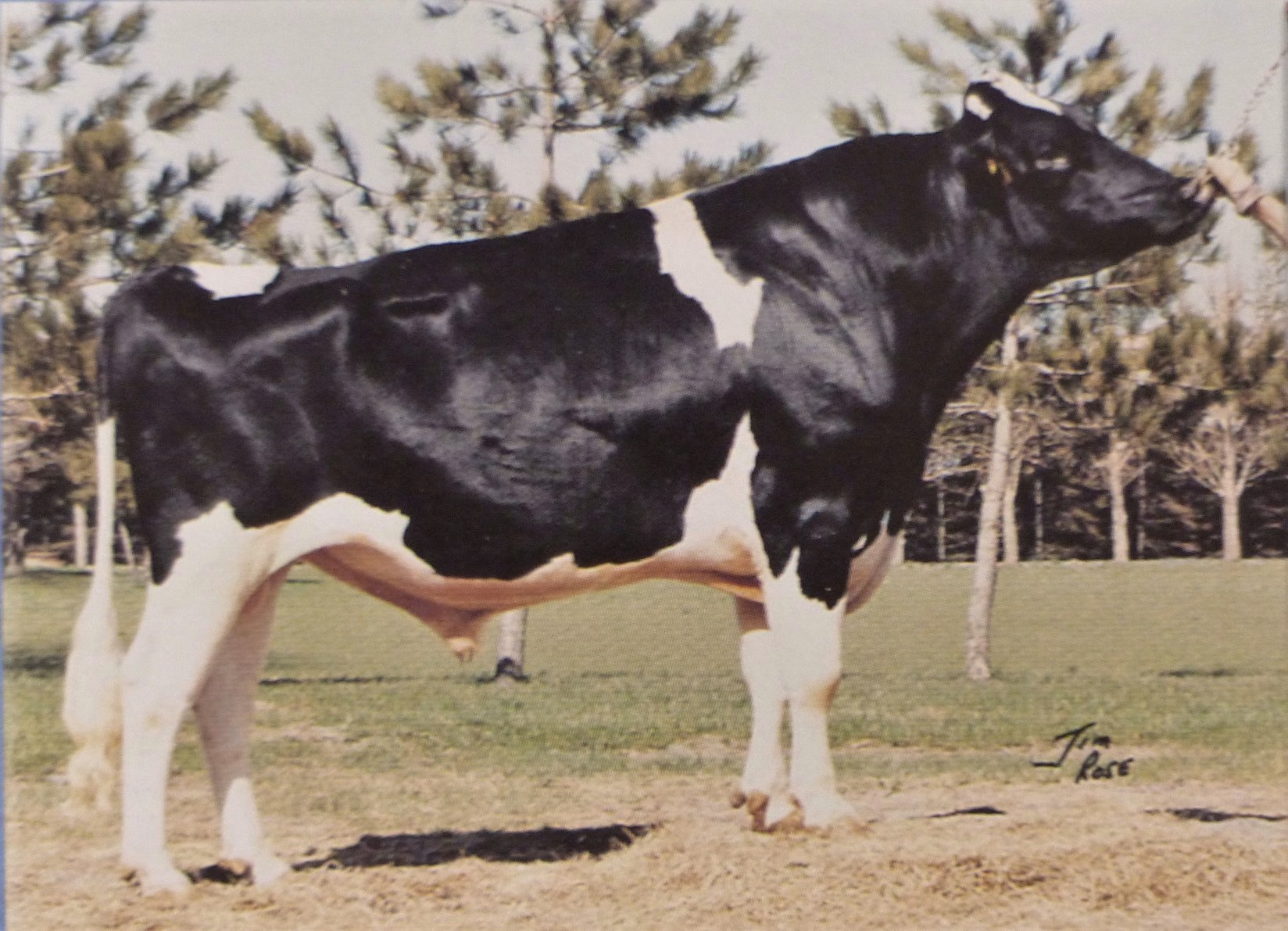
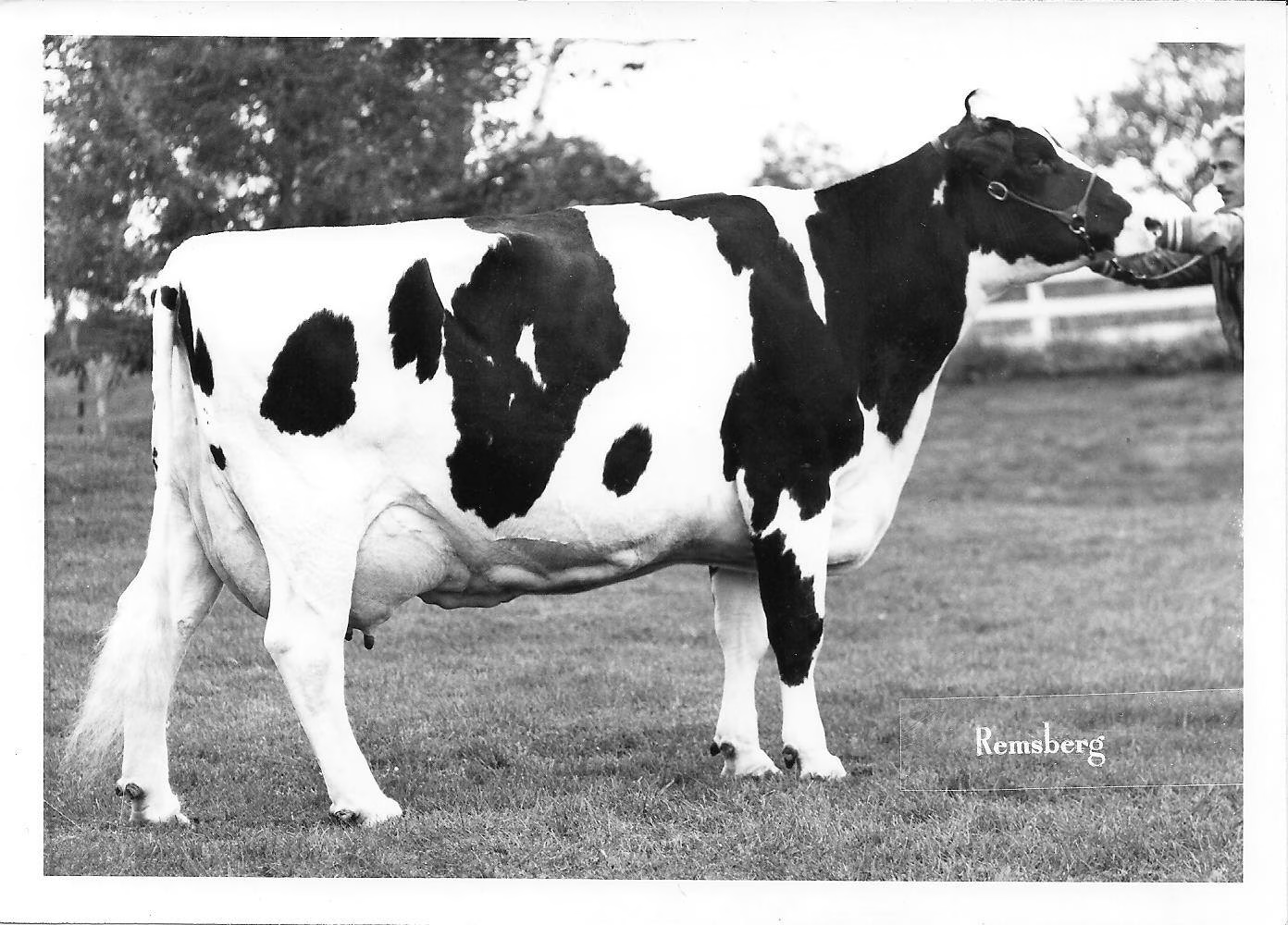
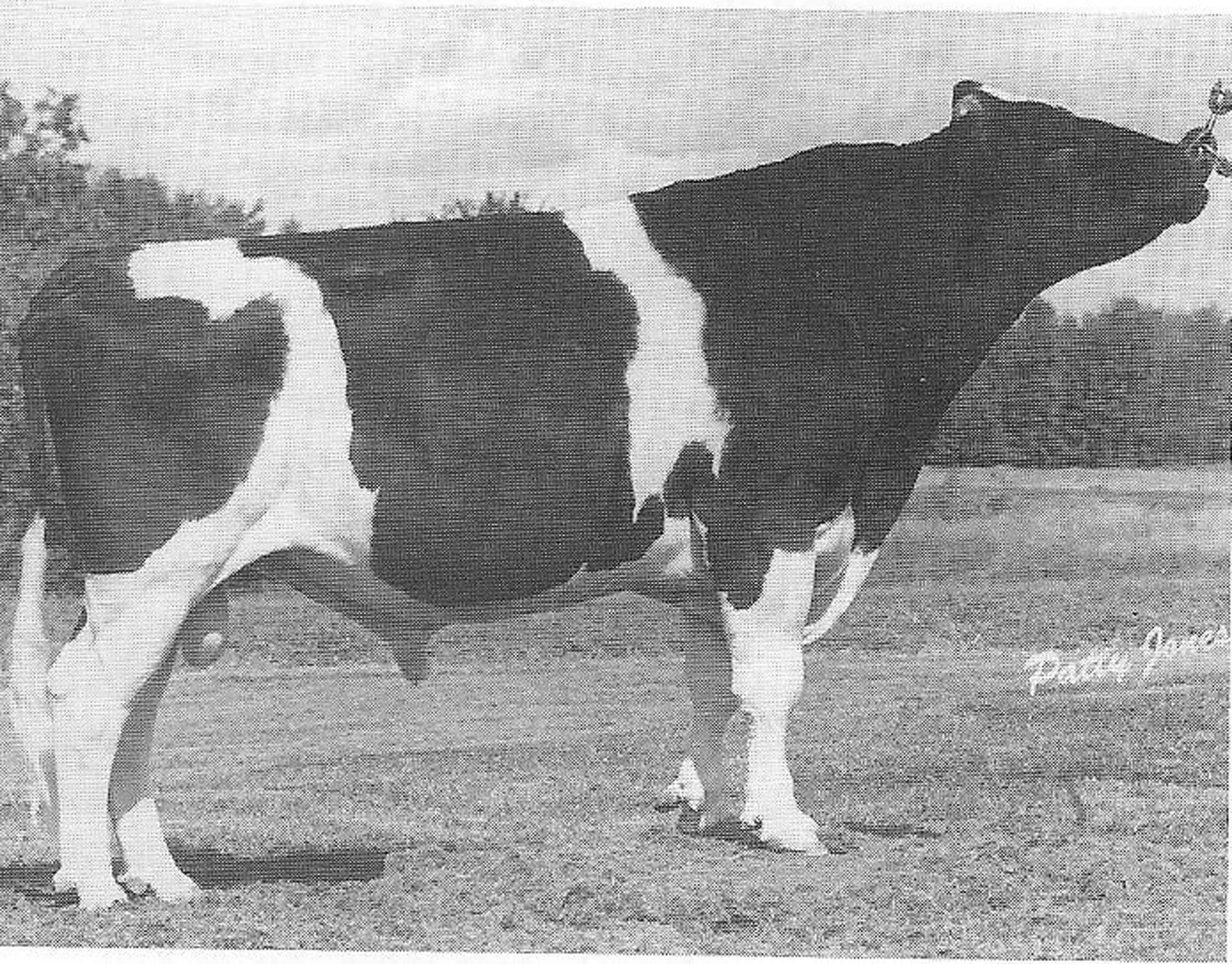

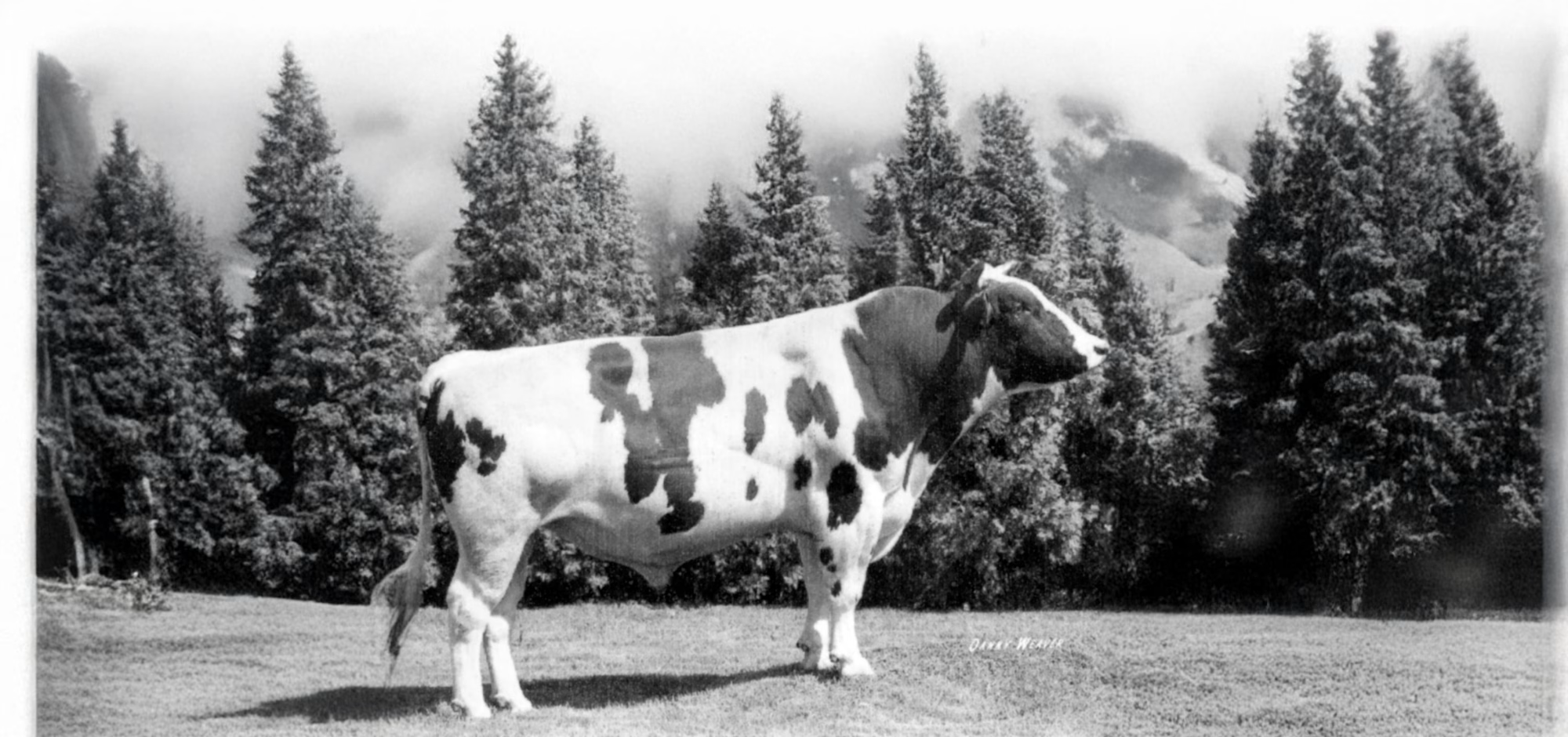

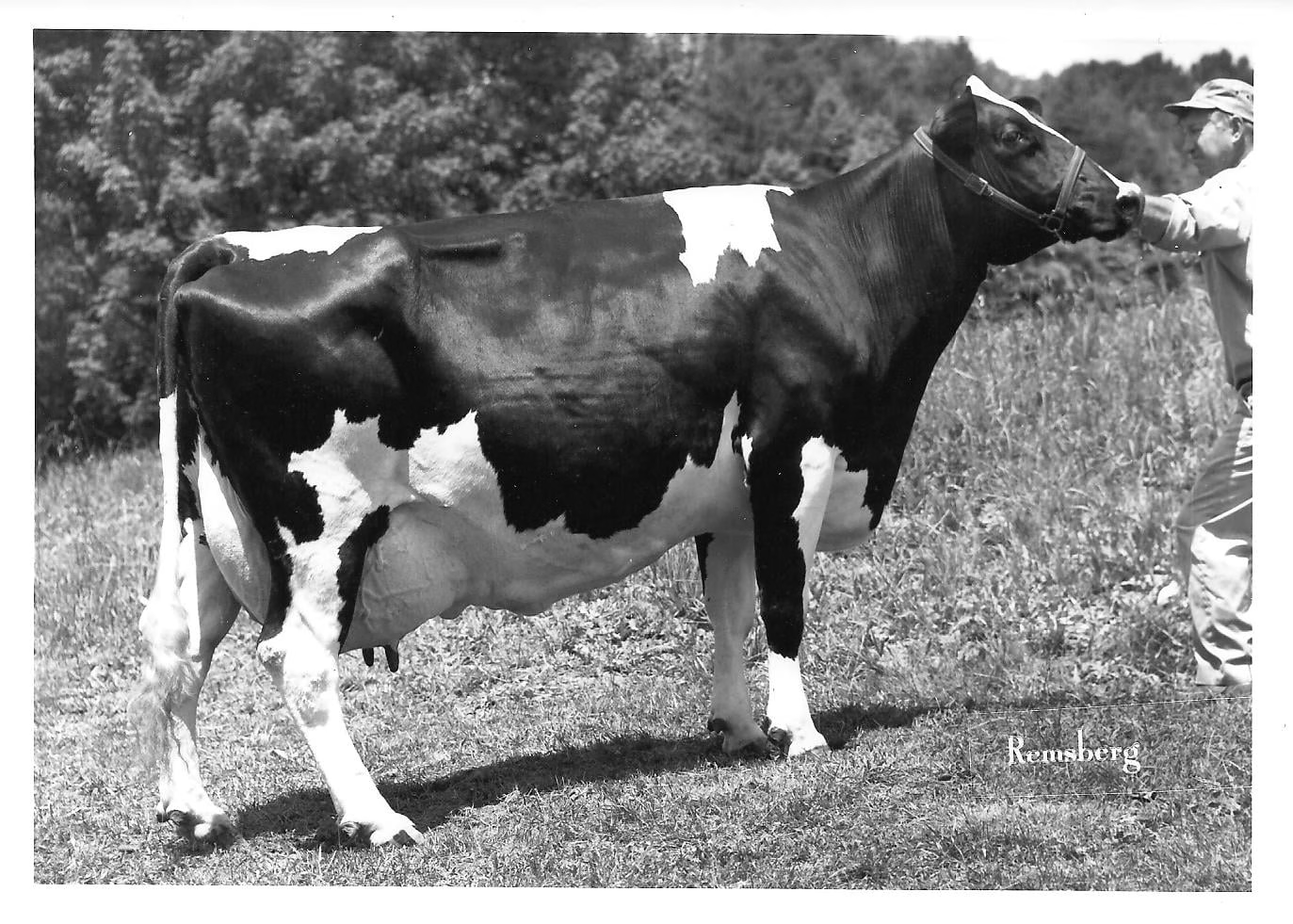

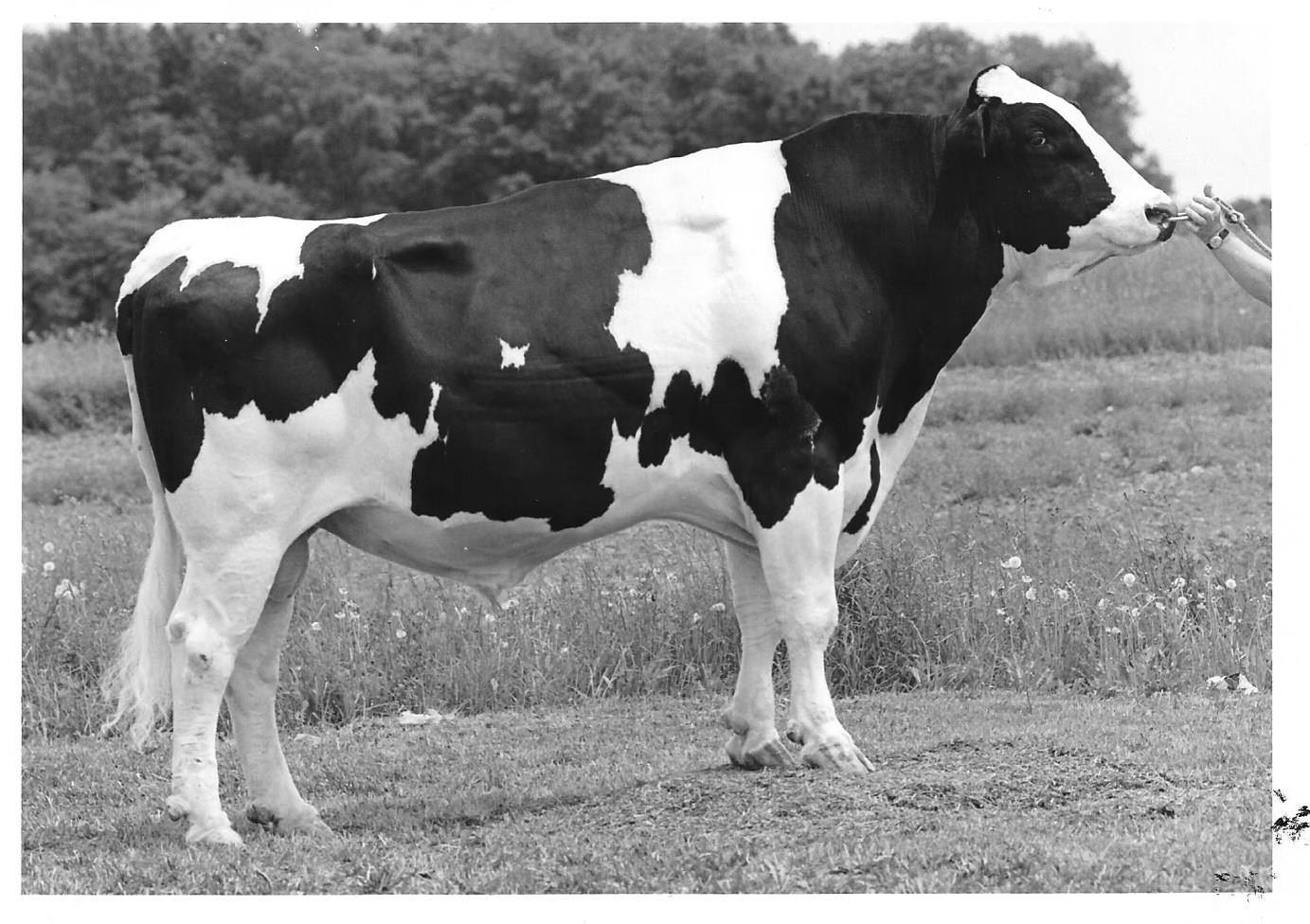
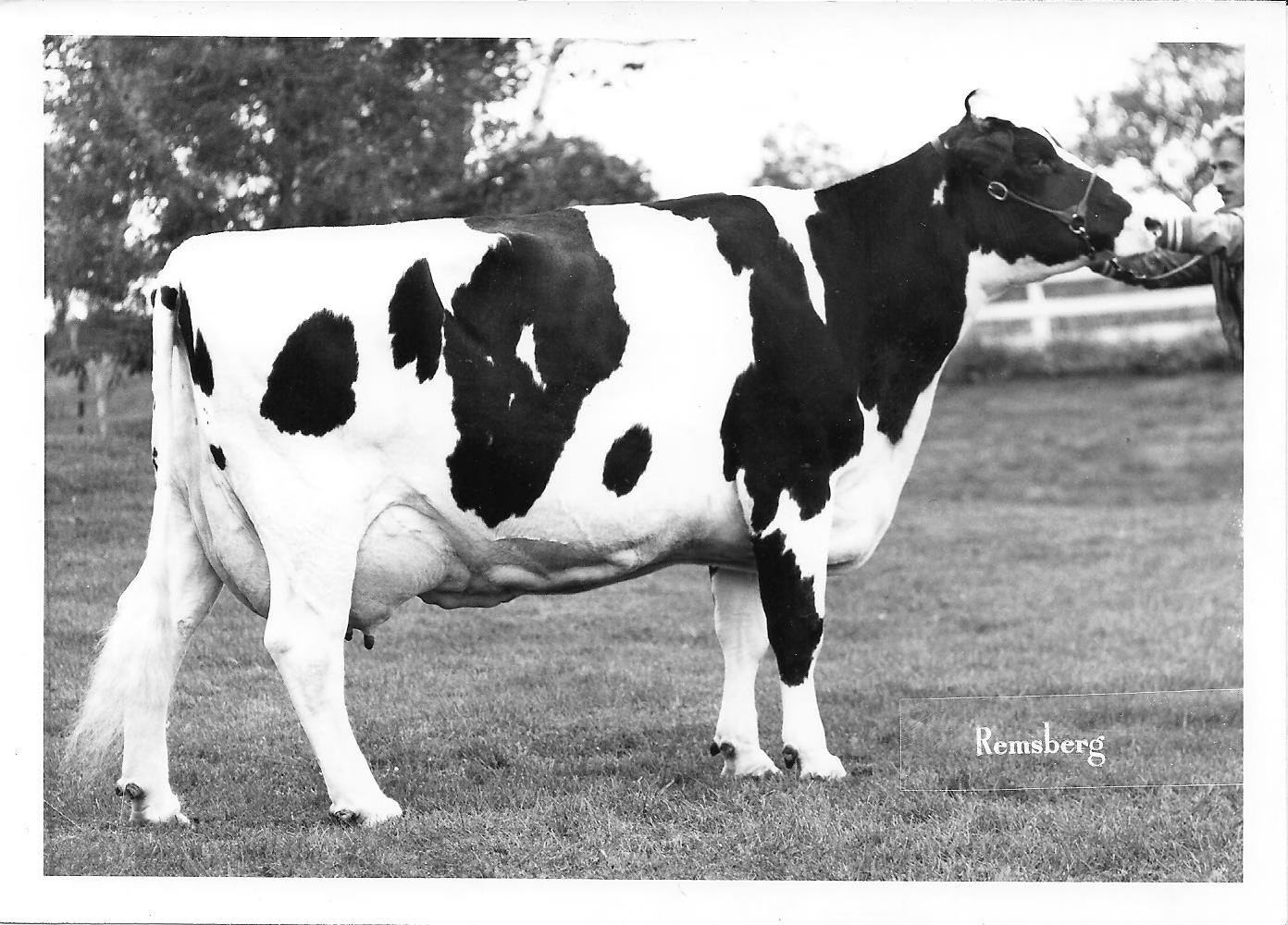
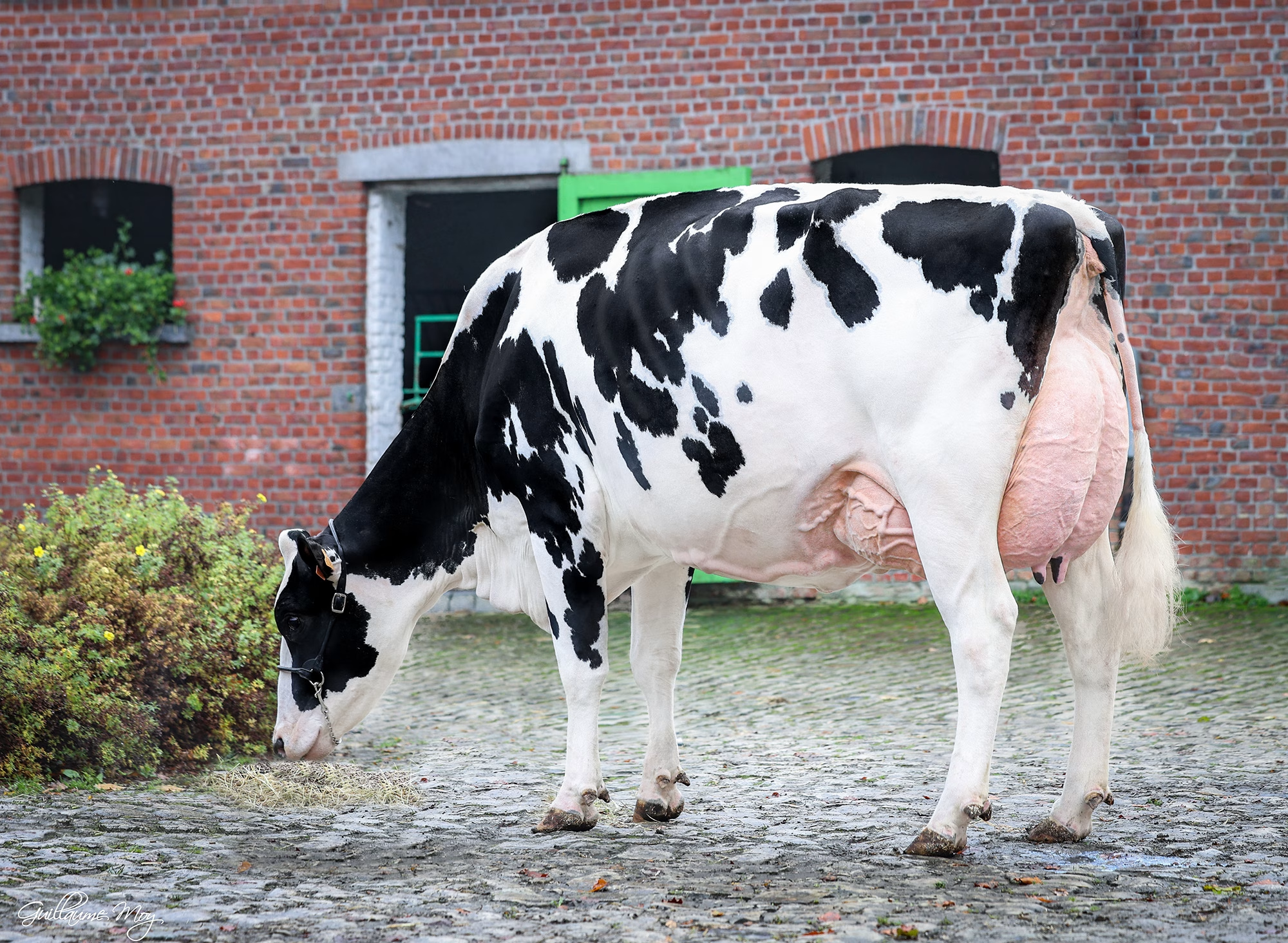
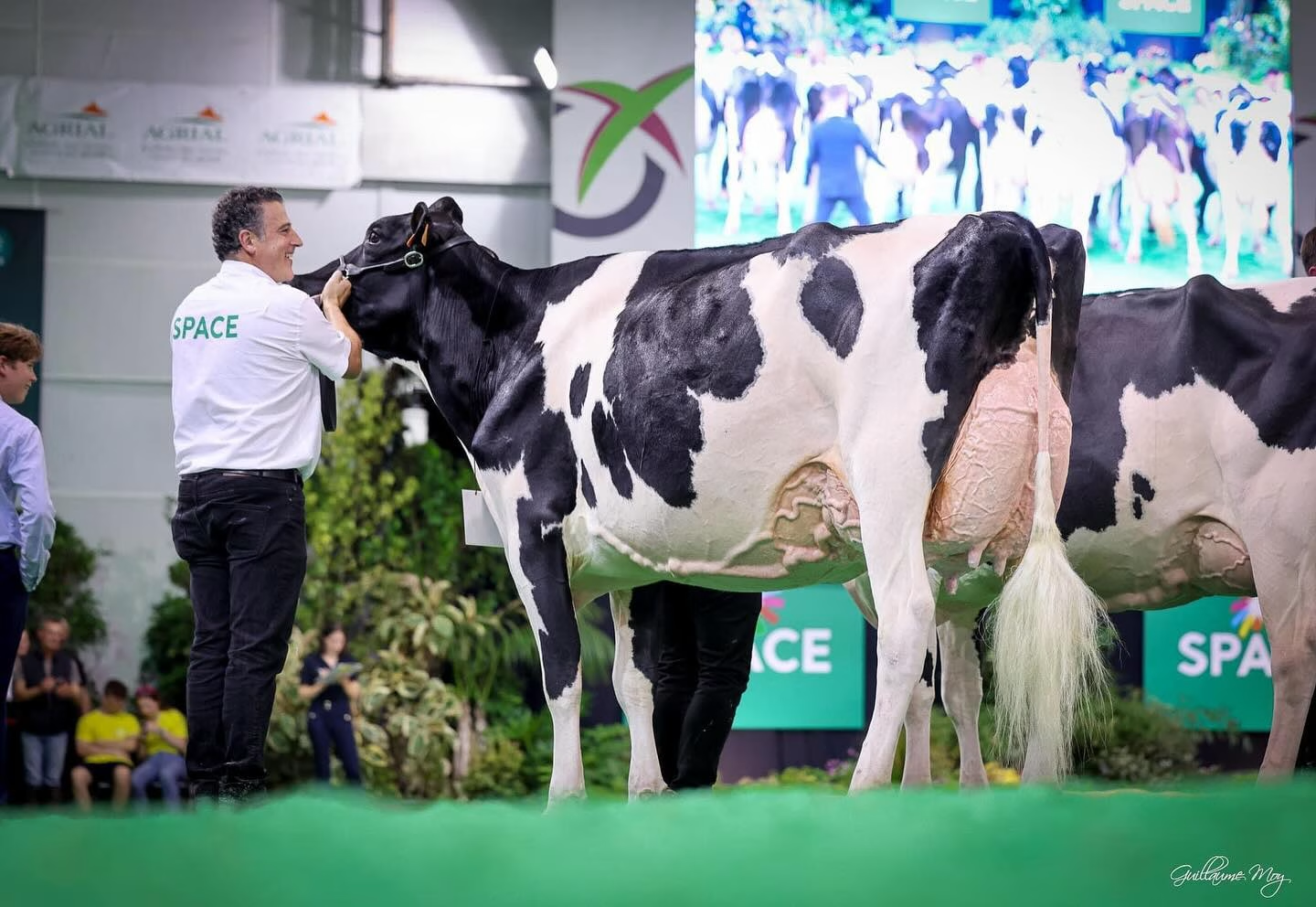

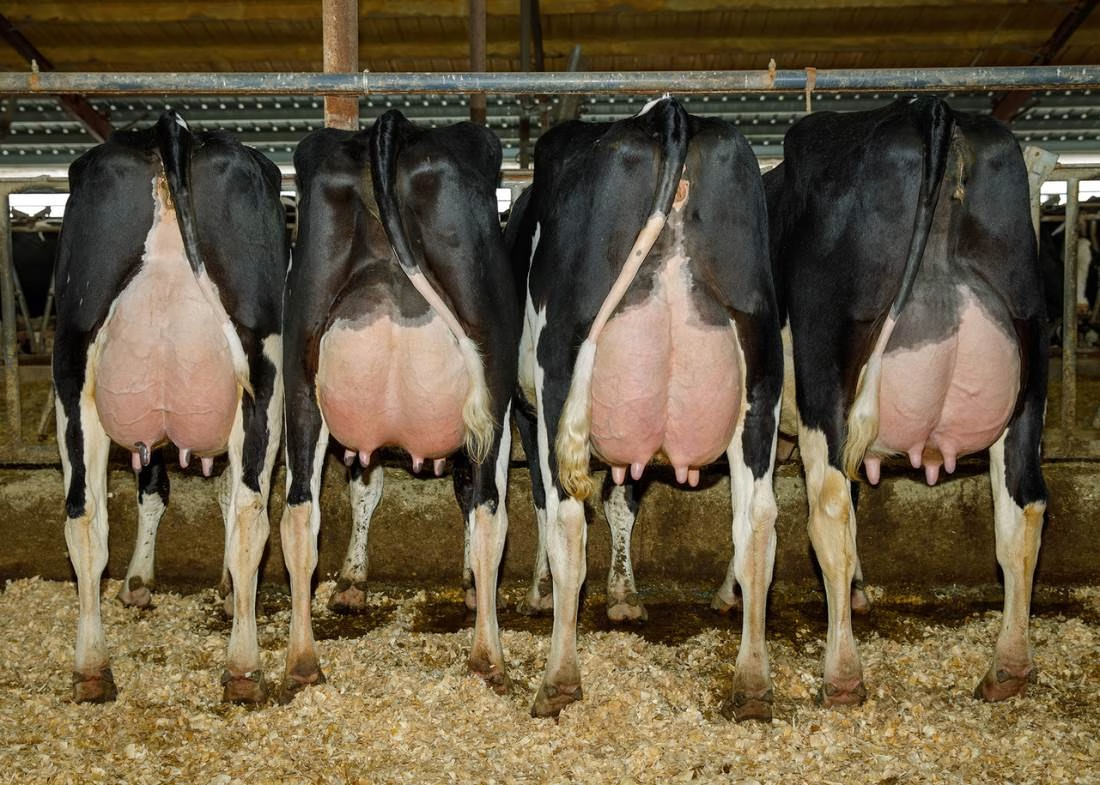
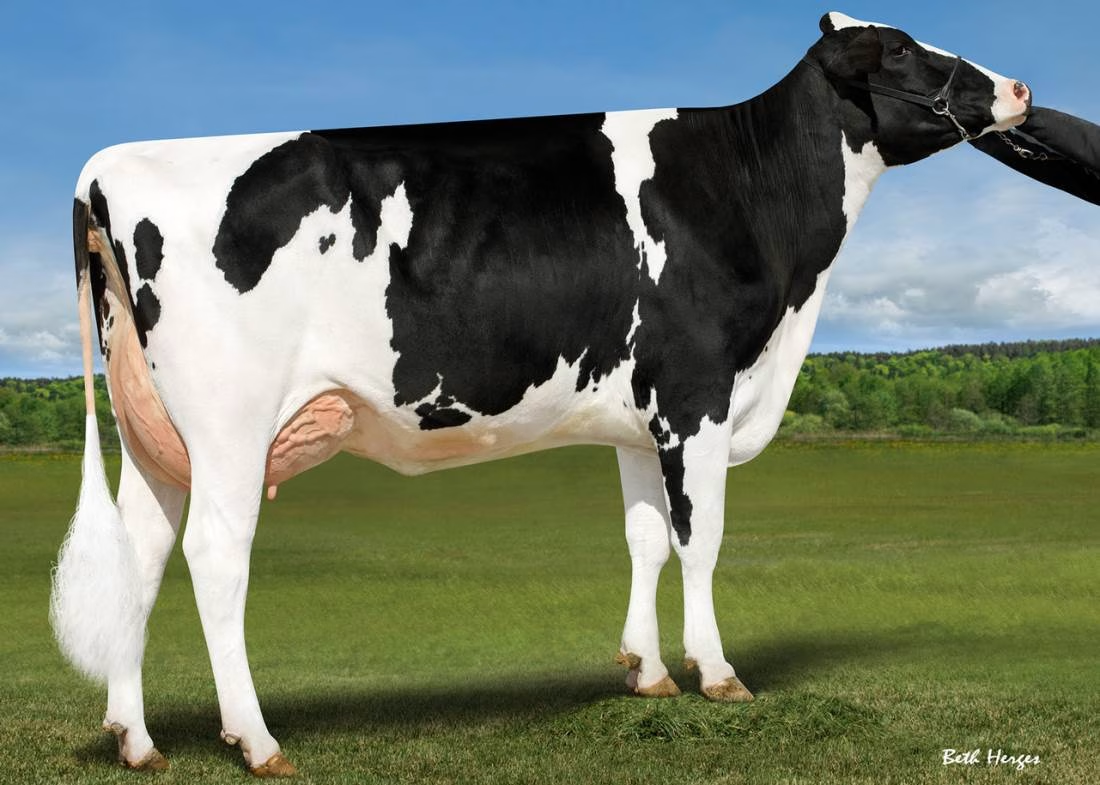

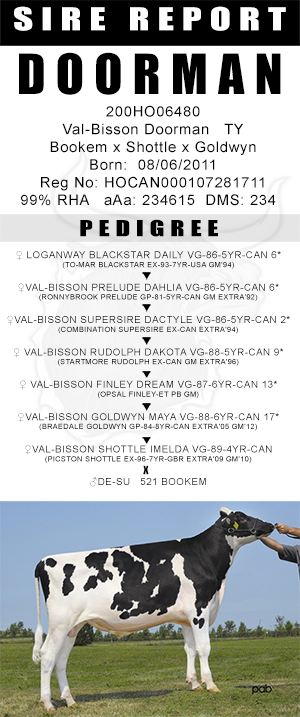 Most of the time when you are evaluating sires they fit into certain market segments. There are those sires that work well for commercial breeders. A different style of animal becomes very popular with the high index seed stock producers. And then there are those sires that get show ring enthusiasts all excited. Very seldom do you find a sire that appeals to all three types of breeders. VAL-BISSON DOORMAN has been able to achieve exactly that.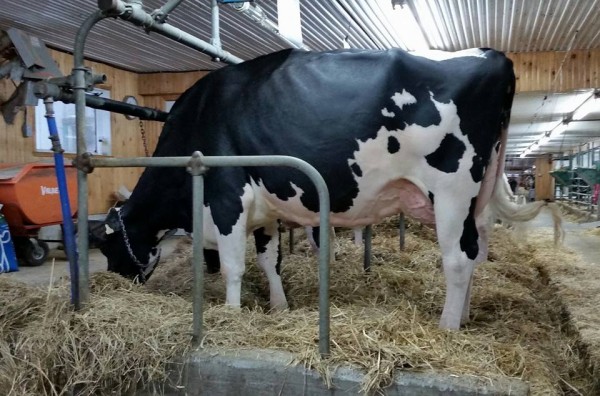
 Doorman is certainly a sire that has benefited greatly from the introduction of Genomics. His non-genomic parent average would have been +2915 LPI and +2168 TPI with a 12 for Conformation and +2.88 PTAT. Instead, he finds himself over 10% higher on his composite indexes and 40% higher for conformation. It’s that significantly higher evaluation for conformation that has taken Doorman from being a good commercial sire, with high overall index, into a very popular sire for conformation. He is currently #33 of the NAAB Active sires for PTAT and is #14 of those born in 2011 or earlier.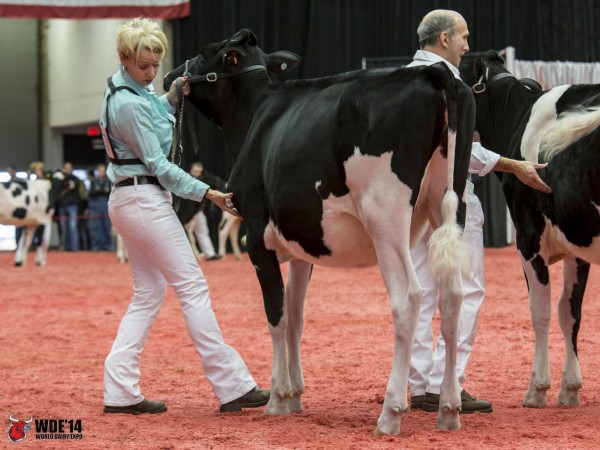
![IMG_1109[1]](https://www.thebullvine.com/wp-content/uploads/2014/10/IMG_11091-600x450.jpg)
![IMG_4211[1]](https://www.thebullvine.com/wp-content/uploads/2014/10/IMG_42111-600x450.jpg)

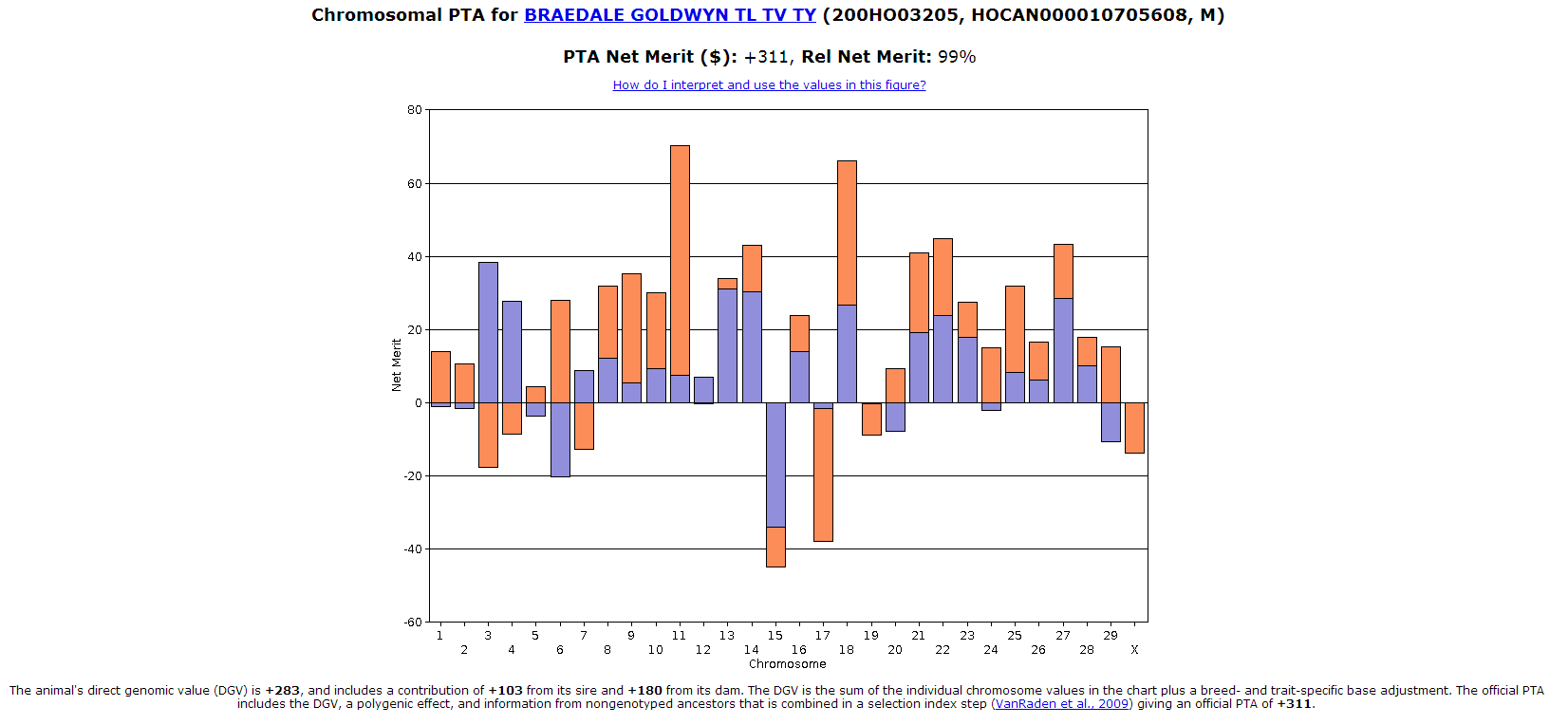
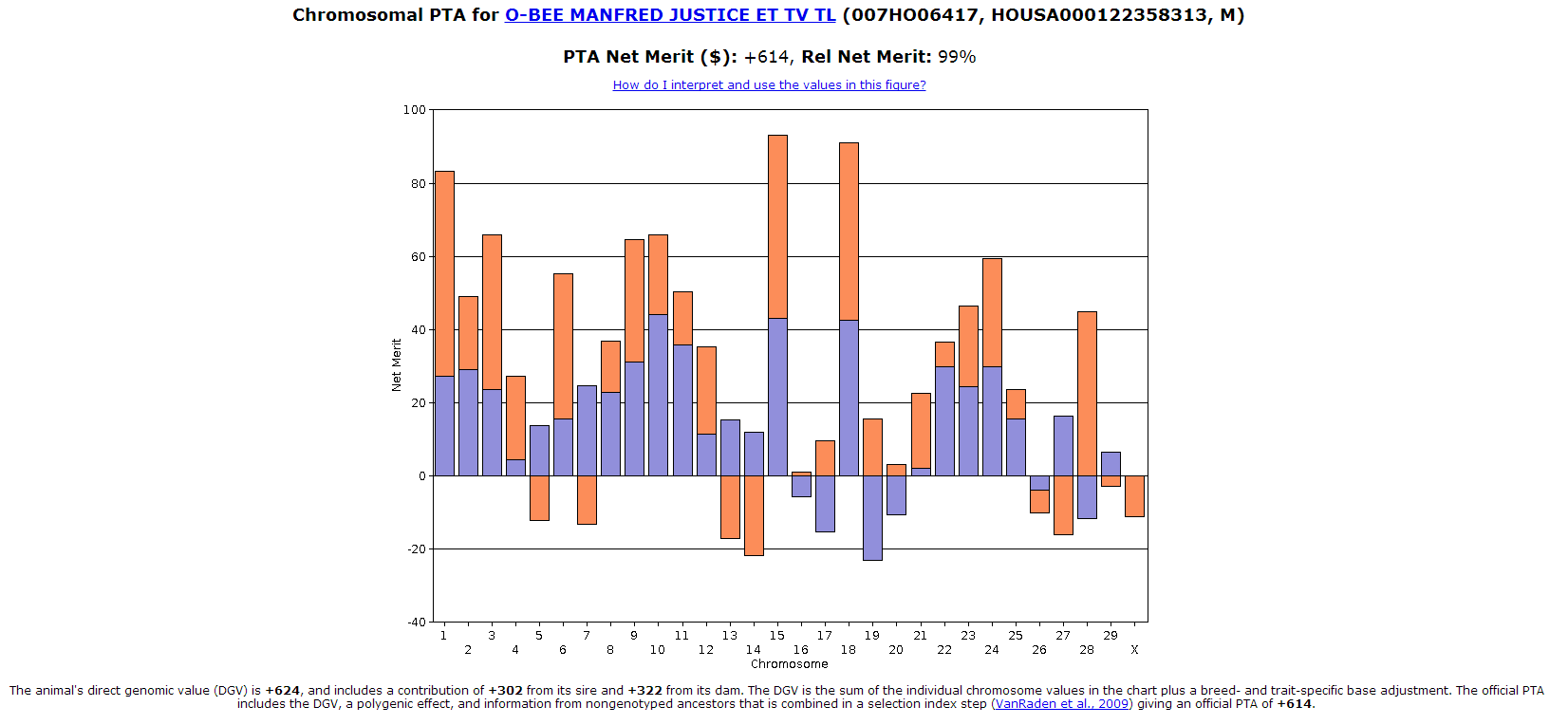
 Bred by Regancrest Farms, Waukon, Iowa, Durham was born in 1994 and would go on to be one of the most popular sires of the first decade of the new millennium. Durham’s pedigree combines Bell and Chief Mark bloodlines as he was by a son of Bell, and Snow-N Denises Dellia (EX). His dam was out of a Bell daughter. Also Dellia and Effie, his sire’s dam, were both from Chief sons and his pedigree shows four Ivanhoe crosses and two to Fond Matt. Durham has left a very consistent transmitting pattern in both his daughters and his sons. Due to his low production numbers, he was not used heavily as a sire of sons, but his daughters have seen extensive use as bull mothers.
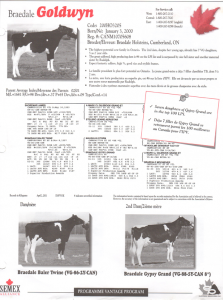 Goldwyn has been an extremely popular sire worldwide since his initial proof in 2004. This is not surprising given the strong maternal line behind him. His dam Braedale Baler Twine (VG-86 23*) was Canada’s cow of the year in 2007 and his second dam Braedale Gypsy Grand (VG-88 36*) was the Canadian Cow of the year in 2003. While many think that Goldwyn made the name for this cow family, long before Goldwyn was proven the family was already proving itself with Gypsy Grand sons Goodluck, Freelance, Spy, Freeman and Bold topping the bull list and daughters Cheetah, Second Cut, and Clairvoyant topping the cow lists. This explains why Baler Twine was contracted as a virgin heifer at a time when the family name was not as prevalent as it is now.