At the Chicago Mercantile Exchange, dairy markets were lower Thursday. Class Three June milk was down $.09 to $15.57. July was down $.11 to $16.38. August was down $.06 to $16.87. September was down $.04 to $17.01. The milk futures from October through next May ranged from one to nine cents lower.
Grade AA Butter was down $.0350 at $2.39 per pound. Fourteen carloads sold from $2.39 to $2.4150. Barrels were down $.0125 at $1.5450 per pound. Twelve carloads sold from $1.5450 to $1.5550. Forty-pound blocks were unchanged at $1.6075 per pound. No sales were recorded. Nonfat dry milk was down $.0150 at $.8250 per pound. One carload sold at that price. Dry whey was up $.0125 at $.39 cents per pound. Two carloads sold at $.3875 and $.39.
At the Chicago Mercantile Exchange, dairy markets were mostly lower except for butter and cheese barrels Wednesday. Class Three May milk was unchanged at $15.17 a hundredweight. June was down $.10 to $15.66. July was down $.02 to $16.49. August was up $.01 to $16.93. The milk futures from September through next April ranged from six cents lower to two cents higher.
Grade AA Butter was up $.0075 at $2.4250 per pound. Fourteen carloads sold from $2.4150 to $2.4250. Barrels were up $.0025 at $1.5575 per pound. Nine carloads sold from $1.5525 to $1.5575. Forty-pound blocks were down $.0125 to $1.6075 per pound. One carload sold at that price. Nonfat dry milk was down $.0050 at $.84 per pound. One carload sold at that price. Dry whey was unchanged at $.3775 cents per pound. Five carloads sold from $.3750 to $.3775.
At the Chicago Mercantile Exchange, dairy markets were higher Tuesday. Class Three May milk was unchanged at $15.17 a hundredweight. June was up $.09 to $15.76. July was up $.16 to $16.51. August was up $.17 to $16.92. The milk futures from September through next April ranged from three to thirteen cents higher.
Grade AA Butter was up $.0025 at $2.4175 per pound. Five carloads sold from $2.4175 to $2.42. Barrels were up $.01 at $1.5550 per pound. Five carloads sold from $1.5450 to $1.5550. Forty-pound blocks were up $.01 to $1.62 per pound. One carload sold at that price. Nonfat dry milk was up $.0025 at $.8450 per pound. Four carloads sold from $.84 to $.8450. Dry whey was up $.0050 to $.3775 cents per pound. One carload sold at that price.
Cooperatives Working Together (CWT) member cooperatives accepted offers of export assistance from CWT that helped them capture contracts to sell 381,400 pounds (173 metric tons) of Cheddar cheese, 104,720 pounds (48 metric tons) of butter and 6.614 million pounds (3,000 metric tons) of whole milk powder, to customers in Asia, Central America, and Europe. The product has been contracted for delivery in the period from June through October 2018.
CWT-assisted member cooperative 2018 export sales total 35.157 million pounds of American-type cheeses, 10.698 million pounds of butter (82% milkfat) and 7.538 million pounds of whole milk powder to 25 countries on five continents. These sales are the equivalent of 620.228 million pounds of milk on a milkfat basis.
This activity reflects CWT management beginning the process of implementing the strategic plan reviewed by the CWT Committee in March. The changes will enhance the effectiveness of the program and facilitate member export opportunities.
Assisting CWT members through the Export Assistance program in the long term helps member cooperatives gain and maintain market share, thus expanding the demand for U.S. dairy products and the U.S. farm milk that produces them. This, in turn, positively affects all U.S. dairy farmers by strengthening and maintaining the value of dairy products that directly impact their milk price.
The amounts of dairy products and related milk volumes reflect current contracts for delivery, not completed export volumes. CWT will pay export assistance to the bidders only when export and delivery of the product is verified by the submission of the required documentation.
At the Chicago Mercantile Exchange, Class III milk futures closed mixed Thursday supported slightly by strong international markets and export demand. The USDA reports bi-weekly whole and skim milk powder, cheddar cheese and butter prices are improving in both Western Europe and Oceania regions. May milk closed down a nickel at $15.19. June milk was a penny higher at $15.76. July milk down $0.03 at $16.42. August closed down a penny at $16.79. September through next April contracts closed four cents lower to unchanged.
Grade AA Butter closed up $0.0175 at $2.4025. Eight loads sold ranging from $2.3850 to $2.4025. Blocks were down $0.0050 at $1.6210. Barrels were unchanged at $1.55. Seven trades were made ranging from $1.5475 to $1.55. Nonfat dry milk closed up $0.0025 at $0.8425. Five trades were made ranging from $0.8375 to $0.8450. Dry whey was a penny higher at $0.37.
Fonterra’s chief executive Theo Spierings and chairman John Wilson say financial results did not go to plan in the third quarter.
Fonterra has announced an opening forecast price to its farmers of $7 per kilogram of milksolids for the 2018-19 season, and increased its 2017-18 forecast farmgate price by 20c cents to $6.75 per kgMS.
It also announced its third quarter financial results, which it described as “not the results it had planned”.
Although higher prices lifted its revenue to $14.8 billion for the first nine months of 2017-18, up seven per cent on the same period last year, its total milk volumes had fallen 5 per cent to 16 billion liquid milk equivalents.
This resulted in its gross margins declining to 16 per cent from 18 per cent for the first nine months of the year, compared to the same period last year.
While it will not announce its forecast earnings per share for the 2018-19 season forecast until July, Fonterra has revised its forecast normalised earnings per share guidance range for the 2017-18 season down to 25-30c per share and its forecast dividend range for the full year down to 15-20 cents per share.
Fonterra’s 2018-19 opening price forecast for farmers is ahead of last season’s closing price by 25c.
Chairman John Wilson said the revised earnings forecast for 2017-18 was disappointing for shareholders and unitholders.
“However, the total forecast cash payout for farmers increases to $6.90-$6.95 per kgMS which is the third highest payout this decade.”
Chief executive Theo Spierings said the co-operative had expected a more successful second half of the year but this had not happened because of a rapid rise in input costs late in the season into its value-add business.
“With the increase in the price of milk fats we have also seen continued demand towards products with a lower fat composition, sustained competition in Greater China’s foodservice market and further constraints in some Asian markets limiting our ability to pass through costs.”
The payment of damages to Danone of $183 million, and the write down of its Beingmate investment by $405m meant Fonterra’s gearing ratio was expected to be above its target 40-45 per cent range.
“While the strong milk price is good for our farmers, it does make the remainder of the year challenging for the business. We remain committed to maximising the total payout for our farmers and value for our unitholders by delivering the best possible earnings,” Spierings said.
Federated Farmers dairy chairman Chris Lewis said farmers would be in a position to do more environment work, continue to catch up on deferred maintenance from previous low payouts and look at possible pay increases for staff.
He said the payout increase could be credited partly to the devaluation of the dollar by four cents to as low as 68c against the United States currency the past month and commodity prices turning around. The baseline commodity of whole milk powder was at about US$3200 a tonne from US$2700-$3200 a year ago.
Milk powder demand is up around the world with a resurgence of butter and cream prices.
Lewis said the rise of televised cooking programmes such as My Kitchen Rules was promoting cooking at home with healthy, raw ingredients and dairy farmers would benefit from this.
A higher payout would be little consolation for farmers feeling the “pain” of Mycoplasma bovis cattle disease, he said.
“They haven’t the animals to milk and this is just adding to their frustration of moving away from future profits. It’s very sad and they are taking one for the team.”
Farmers received compensation for lost earnings until a farm was re-stocked, but that could take many months and there were still bills to pay.
“They have families to feed and how good is your credit line? But I think today is a celebration and this is positive news.”
Higher commodity prices would make it harder to increase share earnings as ingredients would cost more, but this was a good tension for Fonterra to improve value-added business, he said
With global milk output growing at much slower rates (just over 1% for March, the level analysts believe is required to rebalance markets), intervention SMP stock shifting more readily, and international commodity price indices on the up, it looks like we may have seen the last of the (base) milk price cuts for 2018.
Source: USDEC
EU dairy commodity prices as reported by the EU MMO have continued to firm. Butter prices have gone up by over €1000/t since January, while SMP has lifted €120/t in the last month (see graph based on EU MMO reports below).
SMP stocks moving at last
SMP prices seem set to recover – though slowly – as intervention stocks are starting to move in earnest at long last.
In the most recent tender, which closed 15th May and was adjudicated yesterday, the EU Commission received bids for 124,360t, with prices offered ranging from €500/t to €1277/t. The minimum price selected by the EU Commission for adjudication was €1155 – €100 above the April tender – which resulted in 41,598t of SMP being sold between the €1155 and the top price bid. In fact, the bids exceeded the amount of product available by around 5,000t (there was insufficient stock of the right age in certain countries relative to the bids within the eligible price range).
This means that, since December 2016, over 76,000t of SMP has been sold out of intervention – of which around 65,000t in the last 2 tenders alone.
The EU Commission is expected to increase the quantities available for the June 19th tender to around 149,000t. It will do so by bringing forward the eligibility date for the stock from product purchased before 1st May 2016 to before 1st June 2016.
Buyers are clearly engaging more with the scheme, and willing to pay more as the fresh market picks up. This is very positive and holds the prospect that a substantial volume of SMP in intervention could be disposed of before year end.
In recent weeks, traders had been pointing out that the EU intervention stock had become largely irrelevant to the fresh market – and this was showing as SMP prices started firming slowly.
There’s a long way to go, though. With EU average prices (13th May) averaging at €1440 and latest spot quotes (16th May) at €1490, only this week’s GDT price at US$ 2047 (€1734) exceeds the intervention reference price.
Returns inching up
The returns for the Irish product mix, based on EU MMO reported average EU prices, have lifted half a cent per litre in the last week alone. This is largely driven by increases in butter, SMP and whey powder prices.
Based on EU MMO Data
An analysis of the most recent EU average returns, EU average spots from Germany, the Netherlands and France and the latest GDT auction earlier this week, show that these commodity prices would justify stronger milk prices than what is currently being paid by most co-ops (even allowing for the much-appreciated support top ups paid by most).
]The April Ornua PPI, unchanged from March at 100.4 points (equivalent to 29.6c/l incl VAT), shows that returns available to Irish co-ops have at least bottomed out. Many contracts will have been signed forward some weeks/months ago at prices lower than the current spots or market averages.
We would reasonably expect to see some PPI improvements in the months ahead, reflecting fresh contracts being signed at higher prices.
The PPI provided its hedging effect last autumn/winter, when it returned more than average EU prices, and this lag effect is operating the other way – at least for the moment.
At the Chicago Mercantile Exchange, dairy markets were down Wednesday. Class Three May milk was unchanged at $15.24 a hundredweight. June was down $.09 to $15.75. July was down $.01 to $16.45. August was down $.03 to $16.80. The milk futures from September through next April ranged from zero to eleven cents lower.
Grade AA Butter was down $.0650 at $2.3850 per pound. Seven carloads sold from $2.3850 to $2.40. Barrels were down $.0150 at $1.55 per pound. Seven carloads of barrels sold at $1.54 and $1.55. 40-pound blocks were down $.0025 to $1.6375 per pound. Eight carloads sold from $1.58 to $1.63. Nonfat dry milk was down $.0150 to $.84 per pound. Five carloads sold from $.8350 to $.8450. Dry whey was down $.0125 to $.36 cents per pound. One carload sold at that price.
The outlook for milk prices continues to improve. May is experiencing increases in dairy product prices. If these dairy product prices can hold, average May prices compared to April on the CME could average about 4 cents per pound higher for butter, about 14 cents for cheddar barrels, 4 cents for 40-pound cheddar blocks, 8 cents for nonfat dry milk, and 3 cents dry whey. As a result the May Class III price would be near $15.25 compared to $14.47 in April the low of $13.40 back in February. The May Class IV price would be near $14.45 compared to $13.48 in April and the low of $12.87 back in February.
Good domestic sales and dairy exports have improved the dairy stock situation and adding strength to the dairy product prices. Compared to a year earlier March 31st stocks of butter was just 0.4% higher with American cheese slightly lower at 0.4%, but other than American cheese stocks were 14.2% higher bringing total cheese stocks 5.2% higher. The strength in nonfat dry milk prices is surprising since stocks were still 20.9% higher than a year ago. Dry whey stocks which have been relatively high were 3.5% lower than a year ago.
The price of butter, cheese, nonfat dry milk and dry whey remain lower than and competitive with world market prices. U.S. dairy exports set a record high in March on a total volume basis surpassing the previous record high set in March 2014. Compared to March a year ago butterfat exports were 180% higher, cheese 9% higher, nonfat dry milk/skim milk powder 38% higher and dry whey 19% higher. March exports as a percent of milk production on a total solids basis was 17.3% compared to 14.1% a year ago. The outlook for dairy exports appears positive for the immediate months ahead.
Milk prices will continue to strengthen and possibility topping out in October or November. The degree of strength will continue to depend upon the level of milk production and dairy exports. The summer weather, quality of forages harvested and the condition of the corn and soybean crop that will impact feed costs will have a bearing on milk production this summer, fall and into winter.
USDA’s report for April milk production was positive for milk prices. Compared to April a year ago milk production was just 0.6% higher. Milk cow numbers declined slightly, down 2,000 head from March, the second consecutive monthly decline. April milk cow numbers were just 8,000 head or 0.1% higher than a year ago. The April increase in milk per cow continues to increase much less than the normal trend being just 0.5% higher.
April milk production was lower than a year ago in major dairy states. Decreases were: New York -2.4%, Pennsylvania -1.7%, Michigan -1.4%, Minnesota -2.2% and Wisconsin -0.6%. There was relatively small increases in California +0.4%, Arizona +1.1%, Iowa +1.6% and South Dakota +1.8%. Relatively strong increases occurred in Idaho +3.5%, Texas +7.0%, Colorado +9.9%, Kansas +5.1% and Utah +5.5%.
It now looks like the Class III price could reach near $16 in June and the mid to high $16’s by July and for the remainder of the year. The average for the year could end up near $15.60 compared to $16.17 last year. The Class IV price could be in the low $15’s in June and then in the mid to high $15’s the remainder of the year even reaching $16 by October averaging near $14.70 compared to $15.16 last year. Dairy margins (returns over feed cost) will improve but the improvement is now being dampen some by higher feed prices.
At the Chicago Mercantile Exchange, dairy markets were mixed Tuesday. Class Three May milk was up $.02 at $15.24 a hundredweight. June was down $.06 to $15.84. July was up $.01 to $16.46. August was up $.03 to $16.83. The milk futures from September through next April ranged from two cents lower to six cents higher.
Grade AA Butter was up $.0150 at $2.45 per pound. Six carloads sold at that price. Barrels were down $.0050 at $1.5650 per pound. Two carloads of barrels sold at $1.5650 and $1.5675. 40-pound blocks were down $.0025 to $1.6375 per pound. No sales were recorded. Nonfat dry milk was unchanged at $.8550 per pound. Six carloads sold from $.8525 to $.8575. Dry whey was up $.0025 to $.3725 cents per pound. No sales were recorded.
Butter prices are spiking higher as a global shortage becomes acute and record highs are expected over the winter months.
In a note after this week’s GlobalDairyTrade auction, ASB senior rural economist Nathan Penny said butter prices had spiked by about 30% so far this year and were only 4% below the record levels of September last year.
The final GDT event for the 2017-18 production season saw overall dairy prices lift 1.9%.
Anhydrous milk fat prices jumped 5.8% and butter prices rose 2.4%.
Rabobank dairy analyst Emma Higgins said Europe was short on fats with a delay in spring production so low volume was helpful for Oceania price support.
It was moving into the quieter months for New Zealand production and therefore fresh product for the auction platform.
Any major price movements would be influenced by the urgency of buyers looking to obtain product prior to the new season, Ms Higgins said.
Mr Penny said there was clear potential for the bank’s milk price forecasts to move higher.
While the sharp drop in the NZ dollar could reverse, the bank was more confident that butter prices would rise further and potentially take other key dairy prices like whole milk powder with it.
Fonterra was due to announce its opening 2018-19 milk price forecast next week and ASB expected it to front foot the new season with a healthy forecast of $6.50 or better.
With the 2017-18 season coming to a close at the end of May, Westpac senior economist Anne Boniface said Fonterra’s $6.55 forecast for that season was unlikely to change signifcantly in the final wash-up. A feature of the season had been the remarkable stability in dairy prices.
At the Chicago Mercantile Exchange, the dairy markets were mostly higher Monday. Class Three May milk was down $.01 at $15.22 a hundredweight. June was up $.24 to $15.90. July was up $.20 to $16.45. August was up $.19 to $16.80. The milk futures from September through next April ranged from one to fourteen cents higher.
Grade AA Butter was up $.05 at $2.4350 per pound. Seven carloads sold from $2.4250 to $2.4350. Barrels were up $.0375 at $1.57 per pound. Twenty carloads of barrels sold with prices from $1.5425 to $1.5575. Forty-pound blocks were up $.0575 to $1.64 per pound. No sales were recorded. Nonfat dry milk was up $0025 at $.8550 per pound. No sales were recorded. Dry whey was unchanged at $.37 cents per pound. No sales were recorded.
At the Chicago Mercantile Exchange, dairy markets were mostly lower Thursday. Class Three May milk was down $.02 at $15.23 a hundredweight. June was down $.25 to $15.77. July was down $.15 to $16.17. August was down $.12 to $16.54. The milk futures from September through next April ranged from eight to fifteen cents lower.
Grade AA Butter was up $.0050 at $2.3850 per pound. Seventeen carloads sold from $2.38 to $2.39. Barrels were down $.0450 at $1.5350 per pound. Fourteen carloads of barrels sold with prices from $1.5350 to $1.58. 40-pound blocks were down $.0175 to $1.5825 per pound. Two carloads sold from $1.5825 to $1.5850. Nonfat dry milk was up $0075 at $.8550 per pound. Eleven carloads sold from $.8475 to $.86. Dry whey was up $.0275 to $.3675 cents per pound. Three carloads sold from $.3475 to $.3650.
Global dairy prices rose to a nine-month high at a fortnightly auction held early on Wednesday but prices for the key product, whole milk powder, were largely flat.
The Global Dairy Trade (GDT) Price Index climbed 1.9 percent to an average selling price of $3,637 per tonne in the auction held in the early hours of the morning.
That suggested a 1.1 percent drop at the previous sale was a temporary dip and the gradual recovery in prices was back on track.
Gains were led by anhydrous milk fat, which rose 5.8 percent, while skim milk powder jumped 3 percent.
“Skim milk powder (SMP) was also stronger than expected,” said Amy Castleton, dairy analyst at AgriHQ. “SMP likely found some support from less product being available.”
However, whole milk powder, the most-traded item, was only up a touch at 0.2 percent.
The auction results can affect the New Zealand dollar as the dairy sector generates more than 7 percent of the nation’s gross domestic product.
But the tepid result for whole milk powder, the country’s main goods export, and a rally in the U.S. dollar meant investors largely ignored the auction and the currency dropped to a six-month low of $0.6862.
A total of 18,161 tonnes was sold at the latest auction, falling 6.9 percent from the previous one, the auction platform said.
GDT Events, which runs the auction, is owned by New Zealand’s Fonterra Co-operative Group Ltd , but operates independently from the dairy giant.
U.S.-listed CRA International Inc is the trading manager for the twice-monthly Global Dairy Trade auction.
A number of companies, including Dairy America and Murray Goulburn, use the platform to sell milk powder and other dairy products.
At the Chicago Mercantile Exchange, dairy markets were lower Wednesday. Class Three May milk was unchanged at $15.25 a hundredweight. June was down $.10 to $16.02. July was down $.04 to $16.32. August was down $.03 to $16.66. The milk futures from September through next April ranged from zero to thirteen cents higher.
Grade AA Butter was down $.0025 at $2.38 per pound. No sales were recorded. Barrels were down $.02 at $1.58 per pound. Nine carloads of barrels sold with prices from $1.58 to $1.60. 40-pound blocks were down $.04 to $1.60 per pound. Four carloads sold from $1.59 to $1.6150. Nonfat dry milk was unchanged at $.8475 per pound. No sales were recorded. Dry whey was up $.01 to $.34 cents per pound. No sales were recorded.
At the Chicago Mercantile Exchange, Class III milk futures closed higher Tuesday supported by strong international markets and export demand. May milk closed a penny higher at $15.25. June milk was up $0.03 at $16.10. July milk up $0.09 at $16.36. August closed a dime higher at $16.69. September through next April contracts closed six to 15 cents higher.
Grade AA Butter closed up $0.0425 at $2.3825. Twenty-four loads sold ranging from $2.3725 to $2.3825. Barrels were unchanged at $1.60. 40 pound blocks were unchanged at $1.64. Nonfat dry milk closed unchanged at $0.8475. Three trades were made, two at $0.8450 and one at $0.8475. Dry whey was unchanged at $0.33.
Cooperatives Working Together (CWT) has accepted 13 requests for export assistance from cooperatives that have contracts to sell 1.07 million pounds (483 metric tons) of Cheddar and Monterey Jack cheeses, and 330,693 pounds (150 metric tons) of butter to customers in Asia and Europe. The product has been contracted for delivery in the period from May-October 2018.
Total CWT-assisted export sales for 2018 are 34.07 million pounds of American-type cheeses, 10.15 million pounds of butter (82% milkfat) and 923,737 pounds of whole milk powder to 25 countries on five continents. These sales are the equivalent of 549.60 million pounds of milk on a milkfat basis.
This activity reflects CWT beginning the process of implementing the strategic plan approved by the CWT Committee in March. The changes will enhance the effectiveness of the program and facilitate member export opportunities.
Assisting CWT members through the Export Assistance program in the long term helps member cooperatives gain and maintain market share, thus expanding the demand for U.S. dairy products and the U.S. farm milk that produces them. This, in turn, positively affects all U.S. dairy farmers by strengthening and maintaining the value of dairy products that directly impact their milk price.
The amounts of dairy products and related milk volumes reflect current contracts for delivery, not completed export volumes. CWT will pay export assistance to the bidders only when export and delivery of the product is verified by the submission of the required documentation.
At the Chicago Mercantile Exchange, Milk futures were higher and the cash dairy markets were mixed Monday. Class Three May milk was up $.01 at $15.24 a hundredweight. June was up $.23 to $16.09. July was up $.21 to $16.27. August was up $.21 to $16.59. The milk futures from September through next April ranged from nine to nineteen cents higher.
Grade AA Butter was up $.0050 at $2.34 per pound. Seventeen carloads sold from $2.3375 to $2.3425. Barrels were down $.02 at $1.60 per pound. Nine carloads of barrels sold at that price. Forty-pound blocks were up $.0075 to $1.64 per pound. One carload sold at that price. Nonfat dry milk was down $.0025 at $.8475 per pound. No sales were recorded. Dry whey was up $.0050 to $.33 cents per pound. One carload sold at that price.
New Zealand dairy farmers look set to enjoy what may become the third year in a row of $6-plus milk prices in the coming season, economists say.
Fonterra has a milk price forecast of $6.55/kg of milksolids for the season, which ends on May 30.
That’s up from $6.12/kg in 2016/17.
Another strong milk price will allow farmers to further repair damage to their balance sheets incurred when it dropped to $4.40/kg in 2014/15 and $3.90/kg in 2015/16, down from a record high of $8.40/kg in 2013/14.
Fonterra is expected to issue its opening forecast for the coming 2018/19 season later this month.
All the major bank economists expect to see a $6-plus milk price, and some expect to see a small upward revision to the current forecast for 2017/18, thanks in part to recent weakness in the NZ dollar.
Rural lending specialist Rabobank said the season could get off to a “shaky” start but that it expected a strong finish, ending with a milk price of $6.40/kg.
The bank’s dairy analyst Emma Higgins said the 2018/19 season should be profitable for most New Zealand dairy farmers, despite greater uncertainty surrounding their operating environment.
One of the global risks looming in the near term is the peak period of milk production in the northern hemisphere, she said.
“The northern hemisphere flush will be an influential pressure point for commodity prices at the start of the 2018/19 season and we anticipate that supply will outstrip global demand in the coming months,” Higgins said.
“However, as the second half of the 2018/19 season develops, Rabobank anticipates commodity prices will improve as production growth from key exporting regions decreases and a robust import programme by Chinese buyers supports commodity prices across this period,” she said in a report.
ANZ rural economist Con Williams said conditions for farm-gate returns in the dairy sector remained favourable.
“Broadly, we see global milk supply growing at, or slightly below, trend with a number of country-specific limitations and the marginal cost of production lifting,” he said.
“With whole milk powder is holding in a broad US$2800 to US$3300/tonne range, New Zealand skim milk powder continuing to attract a premium versus other suppliers, and milkfat prices set to follow a similar pattern to 2017/18, this gives a farm gate milk price range of mid-to-high $6/kg,” he said.
ANZ is picking an opening milk price of $6.75/kg.
ASB Bank rural economist Nathan Penny said a slight upgrade to the current season’s milk price was possible. He expects a 2018/19 forecast of around $6.50, with the potential to go higher.
“We have been optimistic that [dairy] markets have been quite balanced,” he said. “At $6.00-plus, most farmers will be in the black,” he said.
“The majority will be able to pay down debt that they may have incurred over the downturn.”
Westpac economist Anne Boniface agreed that repairing balance sheets after the downturn would be high on farmers’ agendas.
But commodity fluctuations are not the only challenge that farmers are facing, she said, citing environmental constraints and regulatory changes, and cattle disease Mycoplasma bovis.
Whole milk powder prices – which have the greatest bearing on Fonterra’s milk price forecasts – have been comfortably above US$3000 a tonne for most of this year.
Futures market pricing suggests prices at this Wednesday’s GlobalDairyTrade auction will be flat.
OM Financial’s director of financial markets, Nigel Brunel, said notoriously volatile dairy markets had shown signs of stabilising over the last 12 to 18 months, and with the all-important whole milk powder trading in a 10 per cent range.
Meanwhile, the milk price futures contract is pointing towards a $6.60/kg milk price for 2018/19, he said.
Fonterra Australia set its Fixed Base Milk Price for the 2018-19 season as $5.90 per kilogram of milk solids on Friday, the same day Saputo announced a farmgate price increase for all its 2017-18 suppliers.
Dairy farmers who supply Fonterra can lock in up to 70 per cent of their season’s milk at a fixed rice under the scheme, Fonterra Farm Source general manager Matt Watt said.
“Certainty can be particularly important for farmers at times when they are considering business investments such as expansion or undertaking a new conversion,” Mr Watt said.
Fonterra used a tender allocation process to determine volumes and prices for milk solids.
Saputo’s increased payments of five cents per kilogram for butterfat and 11 cents for protein brings the average farmgate price to $5.68 per kilogram of milk solids.
This price is up from $5.60 per kilogram of milk solids, a Saputo spokesman said.
“We are focused on building milk supply in Victoria and Tasmania as a priority,” he said.
New dairy season to “hit a six” – with shaky start possible for but strong finish anticipated
The 2018/19 dairy season is expected to “hit a six”, with a shaky start possible, but a strong finish anticipated, resulting in a third season with a “milk price starting with a six”, according to a new industry report.
In its recently-released dairy seasonal updateA hit for six in 2018/19– New Zealand dairy farmers face a triple treat, agribusiness banking specialist Rabobank says New Zealand dairy farmers have enjoyed a period of profitability with milk prices above breakeven – and the upcoming season will see this run continue.
Rabobank forecasts a farmgate milk price of NZD 6.40/kgMS for the 2018/19 season.
Report author, dairy analyst Emma Higgins, says the 2018/19 season should be profitable for most New Zealand dairy farmers, despite greater uncertainty surrounding the operating environment than would usually be the case.
At the Chicago Mercantile Exchange, the dairy markets were mostly down Thursday. Class Three May milk was down $.03 at $15.24 a hundredweight. June was down $.20 to $15.83. July was down $.20 to $16.06. August was down $.24 to $16.40. The milk futures from September through next April ranged from three to eighteen cents lower.
Grade AA Butter was down $.0050 at $2.34 per pound. Three carloads sold at $2.34 and $2.3450. Barrels were unchanged at $1.65 per pound. Five carloads sold at that price. 40-pound blocks were down $.0375 to $1.6650 per pound. One carload sold at $1.6675. Nonfat dry milk was up $.02 at $.85 per pound. Twenty carloads sold with prices between $.82 and $.85. Dry whey was up $.0025 to $.3225 cents per pound. No sales were recorded.
At the Chicago Mercantile Exchange, Wednesday, Class III milk futures were firm to higher, with traders squaring up positions ahead of Thursday’s USDA supply and demand numbers. May was up $.02 at $15.27, June jumped $.17 to $16.03, July gained $.08 at $16.26, and August was $.12 higher at $16.64.
Cash cheese blocks were unchanged at $1.7025, with the last uncovered offer for one load at $1.725, and barrels held at $1.65, with the last uncovered offer for one load at $1.655. Nonfat dry milk was $.03 lower at $83. Three loads were sold, including one at $.83. The last unfilled bid was on one load at $.825, while the last uncovered offer was for one load at $.8325. Butter was $.0425 higher at $2.345. A total of 12 loads were sold, including two at the closing price. The last unfilled bid was on one load at $2.3425 and the last uncovered offer was for one load at $2.355. Dry whey was steady at $.32. The last unfilled bid was on one load at $.32 and the last uncovered offer was for one load at $.33.
At the Chicago Mercantile Exchange dairy markets were mixed Tuesday. Class Three May milk was down $.03 at $15.25 a hundredweight. June was up $.09 to $15.86. July was up $.04 to $16.18. August was up $.06 to $16.52. The milk futures from September through next April ranged from one to five cents higher.
Grade AA Butter was down $.0225 at $2.3025 per pound. Twenty carloads sold with prices ranging from $2.3025 to $2.3250. Barrels were down $.0025 to $1.65 per pound. Sixteen carloads sold at $1.65 and $1.6525. 40-pound blocks were up $.01 to $1.7025 per pound. Two carloads sold at $1.6875 and $1.6950. Nonfat dry milk was unchanged at $.86 per pound. No sales were recorded. Dry whey was unchanged at $.32 cents per pound. No sales were recorded.
At the Chicago Mercantile Exchange, dairy markets were mostly up Monday. Class Three May milk was up $.17 at $15.28 a hundredweight. June was up $.21 to $15.77. July was up $.16 to $16.14. August was up $.14 to $16.46. The milk futures from September through next April ranged from zero to fourteen cents higher.
Grade AA Butter was down $.0275 at $2.3250 per pound. No sales were recorded. Barrels were up $.0525 to $1.6525 per pound. Three carloads sold at $1.60 and $1.6525. 40-pound blocks were up $.0275 to $1.6925 per pound. One carload sold at $1.70. Nonfat dry milk was up $.0175 to $.86 per pound. Six carloads sold with prices from $.8575 to $.8625. Dry whey was up $.0025 to $.33 cents per pound. One carload sold at that price.
At the Chicago Mercantile Exchange, butter and nonfat dry milk were up, but most other dairy markets were down Thursday.
Class Three May milk was down $.11 at $15.12 a hundredweight. June was down $.09 to $15.59. July was down $.10 to $15.96. August was down $.08 to $16.30. The milk futures from September through next April ranged from four to nine cents lower.
Grade AA Butter was up $.0050 at $2.3525 per pound. Twenty-four carloads sold with prices from $2.3425 to $2.3550. Barrels were unchanged at $1.6025 per pound. No sales were recorded. 40-pound blocks were unchanged at $1.6650 per pound. No sales were recorded. Nonfat dry milk was up $.0175 to $.8375 per pound. Three carloads sold with prices from $.8350 to $.84. Dry whey was up $.0025 to $.3175 cents per pound. No sales were recorded.
Dairy margins improved slightly over the last half of April as increased milk prices more than offset the impact of rising feed costs. While margins are still only about average from a historical perspective, with the exception of spot Q2, they are projected positive into early 2019. Milk prices are drawing support from a delayed spring flush following unseasonably cold weather in the Upper Midwest while a recent surge in NDM prices has lifted Class IV Milk futures on the CME. USDA reported March Milk Production at 18.987 billion pounds, up 1.3% from last year, with the milking herd estimated at 9.406 million head, down 2,000 from February but 23,000 higher than March, 2017. Production per cow averaged 1,954 lbs. in March, up 1.1% from last year. Meanwhile, USDA Cold Storage data reflected more modest builds in dairy inventories than would seasonally be expected. Butter stocks in cold storage at the end of March totaled 273.6 million pounds, up 2.9% from February and 0.4% higher than last year. The February to March build in supply slightly trailed the 3.8% average based on the past ten years. Total cheese in cold storage on March 31 was 1.328 billion pounds, up 0.8% from February compared to the average build of 1.6% between February and March over the past ten years. Total cheese stocks were also up 5.2% from March, 2017. Feed costs have continued to advance on strong demand amidst ongoing planting delays. USDA reported corn planting progress for the week ending April 29 at 17% complete compared to 32% last year and 30% on average for the end of April over the past 10 years. Soybean planting progress was reported at 5% complete versus 9% last year and 6% on average for this point in the season. Our clients have been mainly focused on strategic adjustments to existing positions, including allocation of milk hedges between Class III and Class IV, and adding flexibility to feed hedges.
The Dairy Margin calculation assumes, using a feed price correlation model, that for a typical dairy 62.4 lbs of corn (or equivalent) and 7.34 lbs of meal (or equivalent) are required to produce 100 lbs of milk (includes dry cows, excludes heifers not yet fresh). Additional assumed costs include $0.90/cwt for other, non-correlating feeds, $2.65/cwt for corn and meal basis, and $8.00/cwt for non-feed expenses. Milk basis is $0.75/cwt and non-milk revenue is $1.00/cwt.
Dairy cow replacement prices took a hit last quarter, tumbling $160 per head from the previous quarter and are the lowest value since 2011 according to USDA-NASS’s Agricultural Prices report, according to Steiner Consulting Group, DLR Division, Inc.
Ample supplies of replacements and low milk prices have contributed to the lower replacement prices. The first quarter of 2018 was also the first quarter the national replacement value has edged below $1400 per head since 2013.
Dairy cow milk replacement values are determined by the lower bound in the price of beef and upper bound in the price of milk. The typical weight of a cutter cow is close to 1400 pounds, making the relative value a dairy replacement cow being valued under $1 per pound on a live basis.
Comparatively, the cutter cow values, over that same quarter were $0.59 per cwt on a live basis. Dairy cow slaughter tends to move higher when the replacement value and beef value of these animals compress.
Dairy quarterly replacement values are only reported quarterly, while the nationally there is a USDA-AMS reports a weekly cow and bull price. The current gap between these two relative prices was still relatively large in 2017, but in the first quarter of 2018, that number shrunk by nearly $0.20 per cwt, a nearly 30 per cent reduction in the gap.
Dairy cow slaughter was up double digits in the most recent data from the same week a year ago, up 14 per cent. All year the weekly slaughter numbers have been above a year ago and are up 5.5 per cent year to date. About 70 per cent of the cutter cow carcass is 90s ground beef.
These culled dairy cows are primarily going into 90s ground product which has held strong with last year. That price may show some additional downward momentum if dairy cow slaughter remains. Beef cow slaughter is also up on a weekly basis.
Slaughter cow imports from Canada have been down which means the ground market is more reliant on US dairy cows and lean import products to mix ground beef. Given cow slaughter levels, it is surprising the 90s have not slipped more compared to year ago prices.
There are a lot of moving parts here, but the dairy beef side of beef production system looks to have taken a turn, with milk prices being below breakeven costs on a national basis for quite some time. The gap between how these animals are valued may be small enough that dairies adapt and contribute more animals to the beef sector.
At the Chicago Mercantile Exchange, Dairy prices were mixed Wednesday. Class Three May milk was unchanged at $15.23 a hundredweight. June was down $.01 to $15.68. July was up $.01 to $16.06. August was down $.01 to $16.38. The milk futures from September through next April ranged from zero to $.07 higher.
Grade AA Butter was down $.0125 at $2.3475 per pound. Sixteen carloads sold with prices from $2.34 to $2.36. Barrels were unchanged at $1.6025 per pound. Nine carloads sold at that price. 40-pound blocks were up $.0050 at $1.6650 per pound. One carload of blocks sold at that price. Nonfat dry milk was down $.0050 to $.82 per pound. Two carloads sold at $.82 and $.83. Dry whey was up $.0050 to $.3150 cents per pound. No sales were recorded.
The world’s top dairy exporter, New Zealand’s Fonterra Co-operative Group Ltd, said on Tuesday that milk production in its home market fell 1 percent in March, pointing to support for global dairy prices.
The fall in production came despite an improvement in weather conditions.
In March, Fonterra said its New Zealand milk collection fell 3 percent to 143 million kilograms of milk solids.
Milk collection in its smaller Australian operations jumped 26 percent to 11 million kilograms of milk solids from March last season due to favorable conditions, the dairy exporter said in a statement.
March’s production figures could affect New Zealand’s fortnightly milk auction, due to take place at midnight local time.
In the last auction on April 18, prices snapped four straight falls, hinting at ramped up global demand and further price rises.
At the Chicago Mercantile Exchange, Dairy prices were mostly down except for cheese Tuesday. Class Three May milk was up $.05 at $15.23 a hundredweight. June was unchanged at $15.69. July was down $.04 to $16.05. August was down $.02 to $16.39. The milk futures from September through next April ranged from $.01 higher to $.07 lower.
Grade AA Butter was down $.01 at $2.36 per pound. Two carloads sold at that price. Barrels were up $.1150 at $1.6025 per pound. Five carloads sold from $1.4875 to $1.51. 40-pound blocks were up $.03 at $1.66 per pound. Two carloads of blocks sold at $.65 and $1.66. Nonfat dry milk was down $.03 to $.8250 per pound. Three carloads sold with prices between $.82 and $.84. Dry whey was unchanged at $.31 cents per pound. No sales were recorded.
Cooperatives Working Together (CWT) has accepted nine requests for export assistance from Dairy Farmers of America, Michigan Milk Producers Association, Northwest Dairy Association (Darigold) and United Dairymen of Arizona. These cooperatives have contracts to sell 1.04 million pounds (473 metric tons) of Cheddar cheese, 262,350 pounds (119 metric tons) of butter and 923,737 pounds (419 metric tons) of whole milk powder to customers in Asia and North Africa. The product has been contracted for delivery from May-October 2018.
Total 2018 export sales from CWT-assisted member cooperative include 33.77 million pounds of American-type cheeses, 9.82 million pounds of butter (82% milkfat) and 923,737 pounds of whole milk powder to 25 countries on five continents. These sales are the equivalent of 539.45 million pounds of milk on a milkfat basis.
This activity reflects CWT management beginning the process of implementing the strategic plan approved by the CWT Committee in March. The changes will enhance the effectiveness of the program and facilitate member export opportunities. The revisions to the program’s operating procedures, effective April 18, 2018, include:
extending eligibility to whole milk powder and blends of natural cheeses (e.g. Colby/Jack);
establishing eligible volumes of butter and whole milk powder at a maximum of 150 MT;
establishing eligible volumes of cheese at a maximum of 300 MT;
extending the delivery period for cheese to 180 days;
allowing exceptions to the volume and delivery periods for butter and whole milk powder, if merited.
These provisions are the first in a series of anticipated changes to the operating procedures. CWT management is currently evaluating the possibility of adding items to the list of eligible products. More information concerning these additions will be released as appropriate.
Both now and in the years ahead, a thriving dairy export sector will be critical to the growth and viability of dairy farmers across the country. Whether a cooperative is actively engaged in exporting cheese, butter or whole milk powder, the domestic market cannot absorb the current level of domestic milk production. CWT provides a way to move domestic dairy products to overseas markets by helping to overcome certain disadvantages, such as the domestic/global price gap and shipping costs.
The amounts of dairy products and related milk volumes reflect current contracts for delivery, not completed export volumes. CWT will pay export assistance to the bidders only when export and delivery of the product is verified by the submission of the required documentation.
At the Chicago Mercantile Exchange, Dairy prices were mostly up Monday. Class Three April milk was down $.01 at $14.50 a hundredweight. May was up $.11 at $15.18. June was up $.14 to 15.69. July was up $.08 to $16.09. The milk futures from August through next March ranged from zero to eight cents higher.
Grade AA Butter was up $.01 at $2.37 per pound. Eleven carloads traded with prices between $2.36 and $2.37. Barrels were unchanged at $1.4875 per pound. Four carloads sold at that price. 40-pound blocks were up $.01 at $1.63 per pound. No sales were recorded. Nonfat dry milk was up $.0125 to $.8550 per pound. Eight carloads sold with prices between $.84 and $.86. Dry whey was unchanged at $.31 cents per pound. No sales were recorded.
Cooperatives Working Together (CWT) has accepted 12 requests for export assistance from Dairy Farmers of America, Foremost Farms, Land O’Lakes, Maryland & Virginia Milk Producers Cooperative Association, Northwest Dairy Association (Darigold), and United Dairymen of Arizona. These cooperatives have contracts to sell 881,849 pounds (400 metric tons) of Cheddar and Monterey Jack cheese, and 2.547 million pounds (1,156 metric tons) of butter to customers in Asia, Europe, and the Middle East. The product has been contracted for delivery in the period from May through October 2018.
CWT-assisted member cooperative 2018 export sales total 32.730 million pounds of American-type cheeses and 9.556 million pounds of butter (82% milkfat) to 25 countries on five continents. These sales are the equivalent of 517.179 million pounds of milk on a milkfat basis.
Assisting CWT members through the Export Assistance program in the long term helps member cooperatives gain and maintain market share, thus expanding the demand for U.S. dairy products and the U.S. farm milk that produces them. This, in turn, positively affects all U.S. dairy farmers by strengthening and maintaining the value of dairy products that directly impact their milk price.
The amounts of dairy products and related milk volumes reflect current contracts for delivery, not completed export volumes. CWT will pay export assistance to the bidders only when export and delivery of the product is verified by the submission of the required documentation.
At the Chicago Mercantile Exchange, Dairy prices were mixed Thursday Class Three April milk was down $.02 at $14.51 a hundredweight. May was down $.04 at $14.98. June was down $.06 to 15.44. July was down $.02 to $15.94. The milk futures from August through next March ranged from zero to six cents higher.
Grade AA Butter was up $.0050 at $2.38 per pound. Twenty carloads traded with prices between $2.3750 and $2.3875. Barrels were unchanged at $1.4825 per pound. No sales were recorded. 40-pound blocks were unchanged at $1.61 per pound. No sales were recorded. Nonfat dry milk was up $.0150 to $.8350 per pound. Fourteen carloads sold with prices between $.8250 and $.8350. Dry whey was up $.0025 at $.31 cents per pound. No sales were recorded.
At the Chicago Mercantile Exchange, Dairy prices were mostly down Wednesday. Class Three April milk was up $.01 at $14.53 a hundredweight. May was down $.11 at $15.02. June was down $.05 to 15.50. July was down $.03 to $15.96. The milk futures from August through next March ranged from zero to three cents lower.
Grade AA Butter was unchanged at $2.3750 per pound. Fourteen carloads traded with prices between $2.3750 and $2.38. Barrels were down $.0050 to $1.4825 per pound. Nine carloads sold with prices between $1.4825 and $1.4875. 40-pound blocks were down $0175 to $1.61 per pound. One carload sold at $1.5850. Nonfat dry milk was unchanged at $.82 per pound. Twenty-seven carloads sold at that price. Dry whey was down $.0075 at $.3075 cents per pound. No sales were recorded.
At the Chicago Mercantile Exchange dairy prices were mixed Tuesday. Class Three April milk was unchanged at $14.52 a hundredweight. May was up $.04 at $15.13. June was up $.06 to 15.55. July was up $.06 to $15.99. The milk futures from August through next March ranged from one to nine cents higher.
Grade AA Butter was up $.0550 to $2.3750 per pound. Twenty-three carloads traded with prices between $2.33 and $2.3750. Barrels were down $.0025 to $1.4875 per pound. Eight carloads sold with prices between $1.4875 and $1.49. 40-pound blocks were down $0025 to $1.6275 per pound. One carload sold at that price. Nonfat dry milk was down $.0125 at $.82 per pound. Thirteen carloads sold at $.8175 and $.82. Dry whey was unchanged at $.3150 cents per pound. No sales were recorded.
At the Chicago Mercantile Exchange dairy prices were mostly up Monday. Class Three April milk was unchanged at $14.52 a hundredweight. May was up $.19 at $15.09. June was up $.19 to 15.49. July was up $.17 to $15.93. The milk futures from August through next March ranged from seven to fourteen cents higher.
Grade AA Butter was up $.0050 to $2.32 per pound. Ten carloads traded with prices between $2.3150 and $2.32. Barrels were down $.01 to $1.49 per pound. Seventeen carloads sold with prices between $1.49 and $1.50. 40-pound blocks were up $0275 to $1.63 per pound. Two carloads sold at $1.5350 and $1.63. Nonfat dry milk was up $.0275 at $.8325 per pound. Two carloads sold at $.8325 and $.8375. Dry whey was unchanged at $.3150 cents per pound. No sales were recorded.
At the Chicago Mercantile Exchange Thursday, Dairy prices were mostly up. Class Three April milk was up $.02 at $14.51 a hundredweight. May was up $.05 to $15.00. June was up $.07 to 15.39. July was up $.03 to $15.85. The milk futures from August through next March ranged from three to seven cents higher.
Grade AA Butter was unchanged at $2.3075 per pound. Two carloads traded at that price. Barrels were up $.0075 to $1.4875 per pound. Fourteen carloads sold between $1.48 and $1.4875. 40-pound blocks were up $0050 to $1.6350 per pound. No sales were recorded. Nonfat dry milk was up $.0150 at $.79 per pound. Twenty-one carloads sold with prices ranging from $.78 to $.7950. Dry whey was unchanged at $.3075 cents per pound. No sales were recorded
Dairy product prices rose at the Global Dairy Trade auction, gaining for the first time in five events, amid strong demand.
The GDT price index increased 2.7 percent from the previous auction two weeks ago. The average price was US$3,587 a tonne. Some 19,262 tonnes of product was sold, up from 17,222 tonnes two weeks ago.
Whole milk powder rose 0.6 percent to US$3,311 a tonne.
“Fonterra did lift its whole milk powder offer volumes ahead of this event; however solid demand seems to be absorbing anything New Zealand has to offer at the moment,” Amy Castleton, AgriHQ dairy analyst, said in a note.
There was 31 percent more whole milk powder sold at this auction compared to the one two weeks ago, with buyers taking nearly everything that was available, according to Castleton.
At the latest GDT auction, lactose rallied 14.8 percent to US$687 a tonne, while anhydrous milk fat climbed 5.3 percent to US$6,120 a tonne.
Cheddar rose 4.6 percent to US$3,855 a tonne, while skim milk powder advanced 3.6 percent to US$1,913 a tonne.
Rennet casein gained 3.1 percent to US$5,792 a tonne, while butter added 2.9 percent to US$5,654 a tonne.
Buttermilk powder was not offered at this event.
The New Zealand dollar last traded at 73.42 US cents as of 1.04pm in New York, compared with 73.63 US cents at the previous close in Wellington.
There were 102 winning bidders out of 182 participating at the 16-round auction. The number of registered bidders rose to 518, up from 514 at the previous auction.
To provide the best experiences, we use technologies like cookies to store and/or access device information. Consenting to these technologies will allow us to process data such as browsing behavior or unique IDs on this site. Not consenting or withdrawing consent, may adversely affect certain features and functions.
Functional
Always active
The technical storage or access is strictly necessary for the legitimate purpose of enabling the use of a specific service explicitly requested by the subscriber or user, or for the sole purpose of carrying out the transmission of a communication over an electronic communications network.
Preferences
The technical storage or access is necessary for the legitimate purpose of storing preferences that are not requested by the subscriber or user.
Statistics
The technical storage or access that is used exclusively for statistical purposes.The technical storage or access that is used exclusively for anonymous statistical purposes. Without a subpoena, voluntary compliance on the part of your Internet Service Provider, or additional records from a third party, information stored or retrieved for this purpose alone cannot usually be used to identify you.
Marketing
The technical storage or access is required to create user profiles to send advertising, or to track the user on a website or across several websites for similar marketing purposes.
To provide the best experiences, we and our partners use technologies like cookies to store and/or access device information. Consenting to these technologies will allow us and our partners to process personal data such as browsing behavior or unique IDs on this site and show (non-) personalized ads. Not consenting or withdrawing consent, may adversely affect certain features and functions.
Click below to consent to the above or make granular choices. Your choices will be applied to this site only. You can change your settings at any time, including withdrawing your consent, by using the toggles on the Cookie Policy, or by clicking on the manage consent button at the bottom of the screen.
Functional
Always active
The technical storage or access is strictly necessary for the legitimate purpose of enabling the use of a specific service explicitly requested by the subscriber or user, or for the sole purpose of carrying out the transmission of a communication over an electronic communications network.
Preferences
The technical storage or access is necessary for the legitimate purpose of storing preferences that are not requested by the subscriber or user.
Statistics
The technical storage or access that is used exclusively for statistical purposes.The technical storage or access that is used exclusively for anonymous statistical purposes. Without a subpoena, voluntary compliance on the part of your Internet Service Provider, or additional records from a third party, information stored or retrieved for this purpose alone cannot usually be used to identify you.
Marketing
The technical storage or access is required to create user profiles to send advertising, or to track the user on a website or across several websites for similar marketing purposes.













 Butter prices are spiking higher as a global shortage becomes acute and record highs are expected over the winter months.
/arc-anglerfish-syd-prod-nzme.s3.amazonaws.com/public/QUVPFYT4ZRCOBO2H2JTXNSI7ZY.jpg) New Zealand dairy farmers look set to enjoy what may become the third year in a row of $6-plus milk prices in the coming season, economists say.
New Zealand dairy farmers look set to enjoy what may become the third year in a row of $6-plus milk prices in the coming season, economists say. Fonterra Australia set its Fixed Base Milk Price for the 2018-19 season as $5.90 per kilogram of milk solids on Friday, the same day Saputo announced a farmgate price increase for all its 2017-18 suppliers.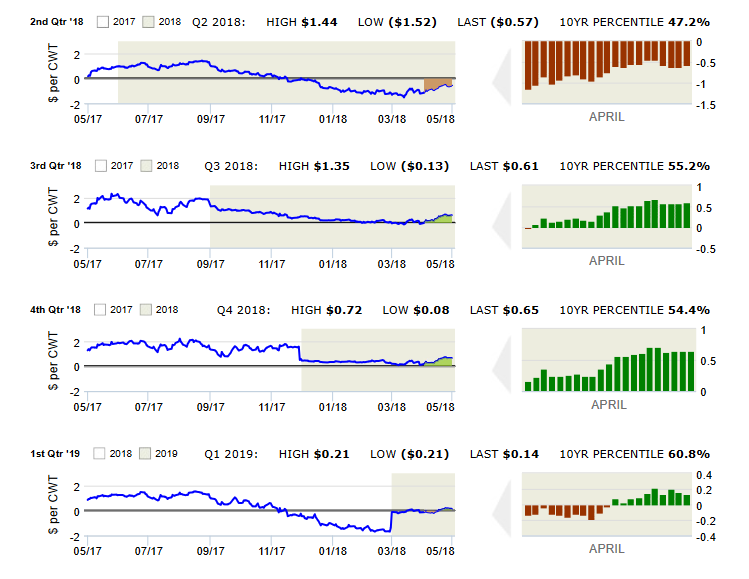


 The world’s top dairy exporter, New Zealand’s Fonterra Co-operative Group Ltd, said on Tuesday that milk production in its home market fell 1 percent in March, pointing to support for global dairy prices.
 Dairy product prices rose at the Global Dairy Trade auction, gaining for the first time in five events, amid strong demand.



