







Charlie Garrison
The 62nd annual meeting of National All-Jersey Inc. (NAJ), will be held virtually at 2:00 p.m (EDT) on Friday, June 26, 2020. Members will elect a Director from District #5, receive reports of the officers and General Manager and consider any other business that may properly come before the meeting.
The latest on national dairy policy, the USDA Coronavirus Food Assistance Program, prospects for additional federal assistance legislation, trade policy and agreements and the agriculture workforce modernization legislation will be discussed by Charlie Garrison, founder and president of The Garrison Group LLC, during the NAJ annual meeting.
Founded in 1997, The Garrison Group is a Washington, D.C.-based public affairs firm specializing in food, agriculture and energy policy and communications. Garrison provides regular briefings on legislative affairs to the NAJ Board of Directors and coordinated the three Congressional fly-ins organized for NAJ and AJCA members since 2014.
Garrison was raised on a central Indiana dairy and row crop farm and earned a B.S. in Animal Science from Purdue University. After 10 years as a partner in the family farm, he accepted a staff position in Chicago with the Beef Industry Council, the checkoff¬ funded promotion and research arm of the beef industry that is now part of the National Cattlemen’s Beef Association. While in Chicago he studied at the Kellogg Graduate School of Management at Northwestern University. In 1992, Garrison moved to Washington, D.C. to create the position of Director of Industry Relations for the National Dairy Promotion and Research Board. He remained in that role during and after the merger of the National Dairy Board staff and programs into Dairy Management Inc. (DMI).
To view the complete agenda of the virtual meeting, click here.
For a list of sponsors and information to join the meeting, click here.
National All-Jersey Inc. (NAJ) was formed December 9, 1957 by the American Jersey Cattle Association, the oldest dairy breed registry organization in the United States. NAJ’s mission is two-fold: to increase the value of and demand for Jersey milk and to promote equity in milk pricing. It is the only organization that represents milk marketing concerns for owners of a single dairy breed. It functions cooperatively with the AJCA by sharing several Directors, Officers, and staff personnel, and occupies joint headquarters offices in Reynoldsburg, Ohio.
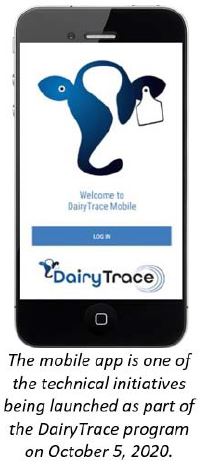 “Providing protection and peace of mind to consumers is vital, and when it is fully implemented, DairyTrace will provide a high-quality, national dairy cattle traceability system that takes our industry’s efforts to the next level,” says Gert Schrijver, dairy producer and Chairman of Lactanet’s DairyTrace Advisory Committee. “The launch of DairyTrace will be a pivotal milestone for dairy producers, as it will provide the data management infrastructure needed to provide – for the first time – a true, pan-Canadian picture of the movements of dairy cattle.”
.JPG)
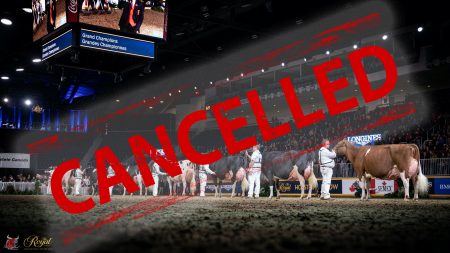 Due to our ongoing concern regarding the COVID-19 pandemic, the excitement of The Royal will have to wait for another year. The Royal’s Board of Directors today made the heart-wrenching but unanimous decision to cancel the 2020 Royal Agricultural Winter Fair, originally scheduled for November 6th to 15th at Exhibition Place, Toronto. This treasured annual tradition will return better than ever in 2021.
 A Chippewa County woman has been crowned as Wisconsin’s 73rd Alice in Dairyland. Julia Nunes, 23, from Tilden was selected for the title Saturday night during a Facebook Live event from Walworth County.
 New legislation introduced Monday in


 The company said the addition of new farms is an important tipping point as this year the milking flock maintained by external suppliers will exceed that of Spring Sheep’s own farms. These additional milking ewes will help grow the company’s product lines into new markets.
 The a2 Milk Company (A2MC) has fuelled speculation that it is in the running to buy the $NZ400m (A$375m) Mataura Valley Milk company in New Zealand, with the release of a statement on Monday saying it is in “discussions with a number of parties”.
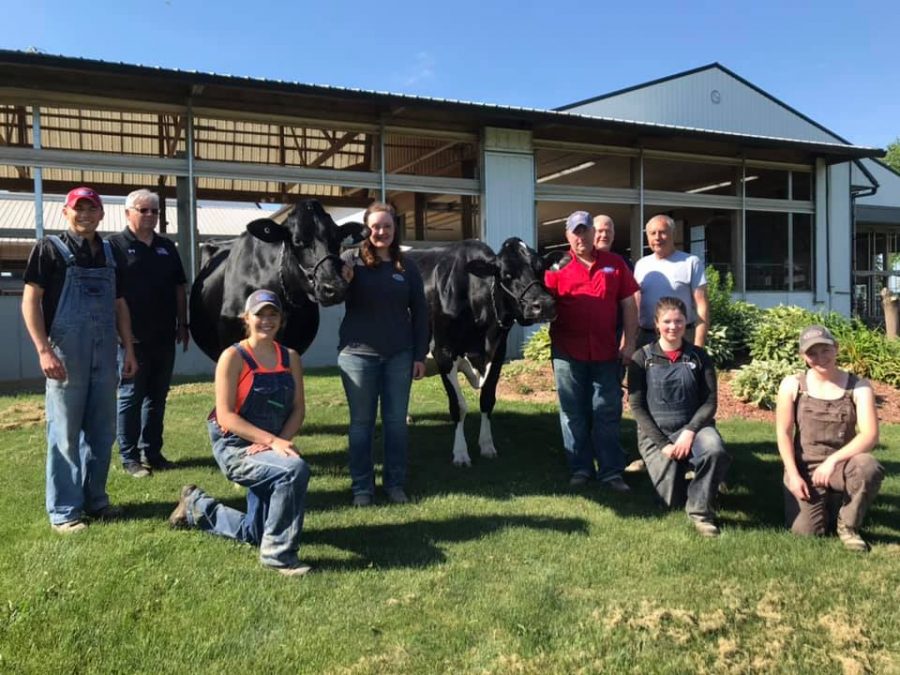
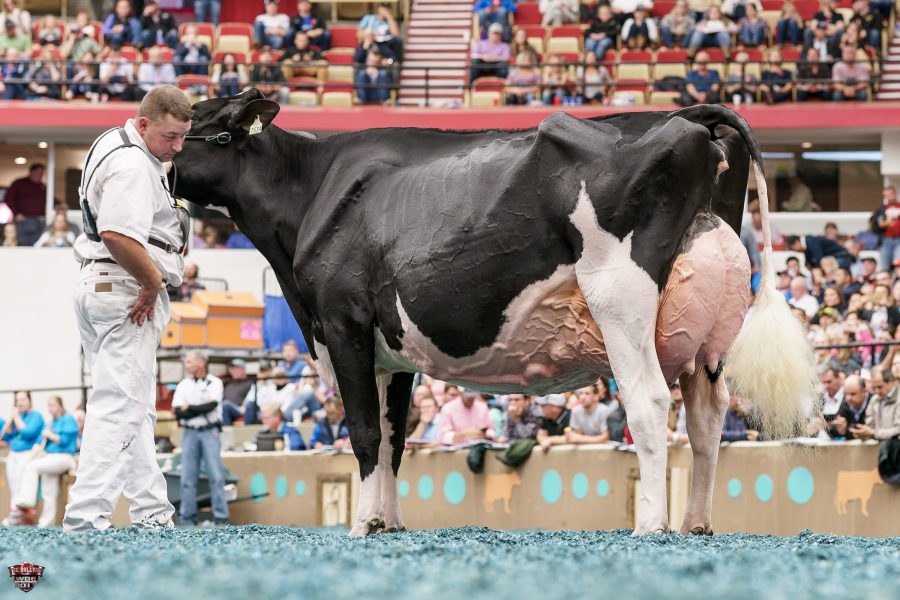
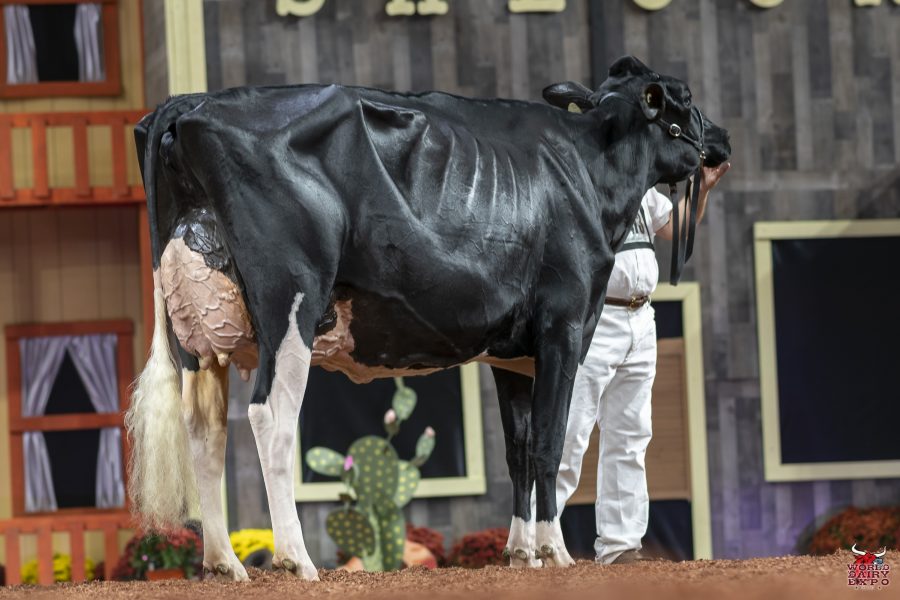 Congratulations to all of the owners!
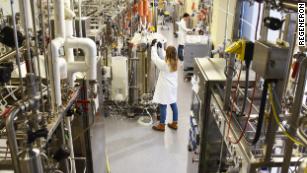 A South Dakota company expects to start human trials next month for a Covid-19 antibody treatment derived from the plasma of cows.
 Boutique dairy, Lewis Road Creamery, says sales of its premium butter in the US have skyrocketed during the COVID-19 pandemic.
 Dairy farmers are partnering with local food pantries as they look to help each other out through a supply management program created as a result of the pandemic.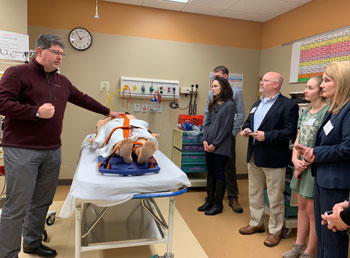
/cloudfront-ap-southeast-2.images.arcpublishing.com/nzme/6KIFPKGF7ZCQNCOX4DKEIDV4CI.jpg) Whanganui dairy farmer Chris Davison has more of a sparkle in his step, after being awarded a rare green diamond ring from DairyNZ.
Whanganui dairy farmer Chris Davison has more of a sparkle in his step, after being awarded a rare green diamond ring from DairyNZ. This was the scene on Porter Road in Troy on Thursday night of last week. Fire crews responded to a large barn fire in Bradford County. It took crews around two hours to put out the flames.
 STgenetics® has always been proud to support our dairy youth and this year is no different. In the month of June, STgenetics® has donated $1 for every unit of semen sold to each dairy breed’s junior associations.

 Union blames it on Aavin for refusing to procure milk.
 Under the terms of the proposed transaction, Beston will receive all milk from the farms, currently around 17m liters per annum, over a ten-year period. Aurora is expected to continue to grow production from these farms in the future.




