Archive for reproductive efficiency

The Six-Figure Execution Leak Happening on Most Dairies: Broken Protocols, Heifer Costs, and Dairy‑Beef Checks

If your best employee can’t hit the protocol, your farm has a six‑figure problem — not a training issue.

Executive Summary: In a heifer‑short, dairy‑beef market where it costs US$2,094–2,607 to raise a replacement, and day‑old beef‑on‑dairy calves can bring about US$1,400, sloppy execution has turned into a six‑figure problem for many dairies. This article uses McCarty Family Farm’s “top half only” genomic rule to show what happens when breeding, colostrum, and culling decisions actually match the math instead of the emotion. Data from MSU, Taiwanese sire‑checks, and large‑herd audits make the leak obvious: only 36% of farms hit FTPI targets, 27.78% of recorded sires are wrong, and even small timing errors in Double‑Ovsynch leave roughly a quarter of cows off‑protocol. From there, you get four concrete paths — harder genomic cutoffs with heifer‑inventory guardrails, redesigning impossible protocols instead of retraining, tracking results by person, and treating consistency as infrastructure — plus the trade‑offs on each. The summary farm‑level math on RPO, stall value, STP, and calf checks gives you simple “run your own numbers” thresholds so you can decide when to breed dairy, breed beef, or ship a cow based on what that stall can really earn over the next 12–24 months.

dairy herd management protocols

The most expensive execution gap on your dairy isn’t your semen bill, your ration, or even the latest heifer price spike. It’s the distance between what your protocols say and what actually happens when someone is standing in front of a cow with the wrong straw in his hand. In a heifer‑short, dairy‑beef world where total raising cost runs US$2,094–US$2,607 per heifer on many U.S. farms and can approach US$2,900 in higher‑cost systems, while top dairy‑beef calves in strong programs are bringing around US$1,400 per head, that gap adds up fast. 
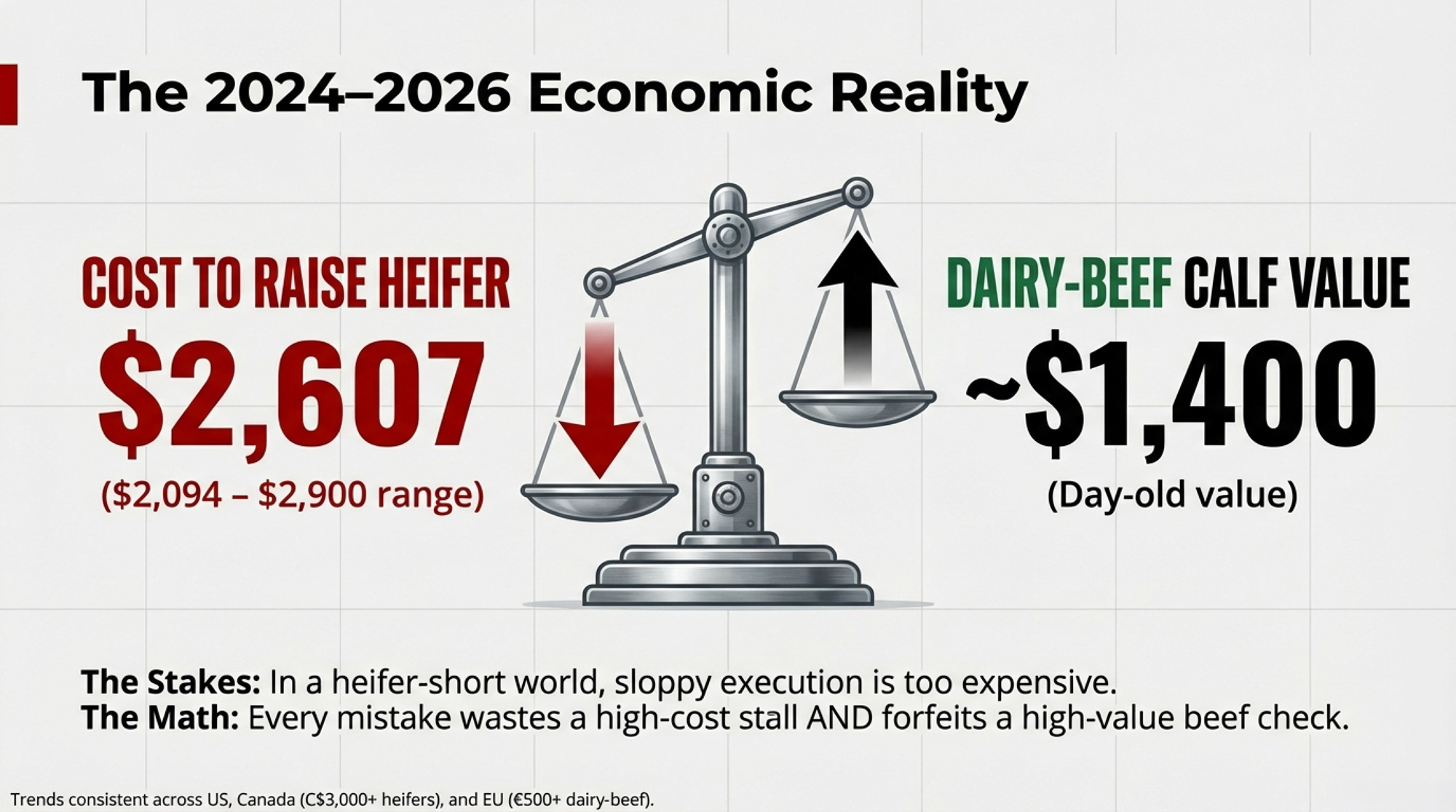
McCarty Family Farm in Kansas reports, based on its own records, that it has genomically tested more than 75,000 females since 2018. Their rule is brutally simple: the top half of the breeding herd creates the next generation, the bottom half goes to beef — regardless of age or stage. Applied consistently across breeding, colostrum, and culling, that kind of discipline can drive a six‑figure annual swing in profitability for larger herds compared to “raise every heifer” systems once you factor in stall value, heifer cost, and dairy‑beef calf prices. 

If you’re running genomics, dairy‑beef, or both, this isn’t theory. This is your milk cheque, your replacement pipeline, and your risk exposure for 2024–2026. 

Only 36% of Farms Hit Their Colostrum Targets

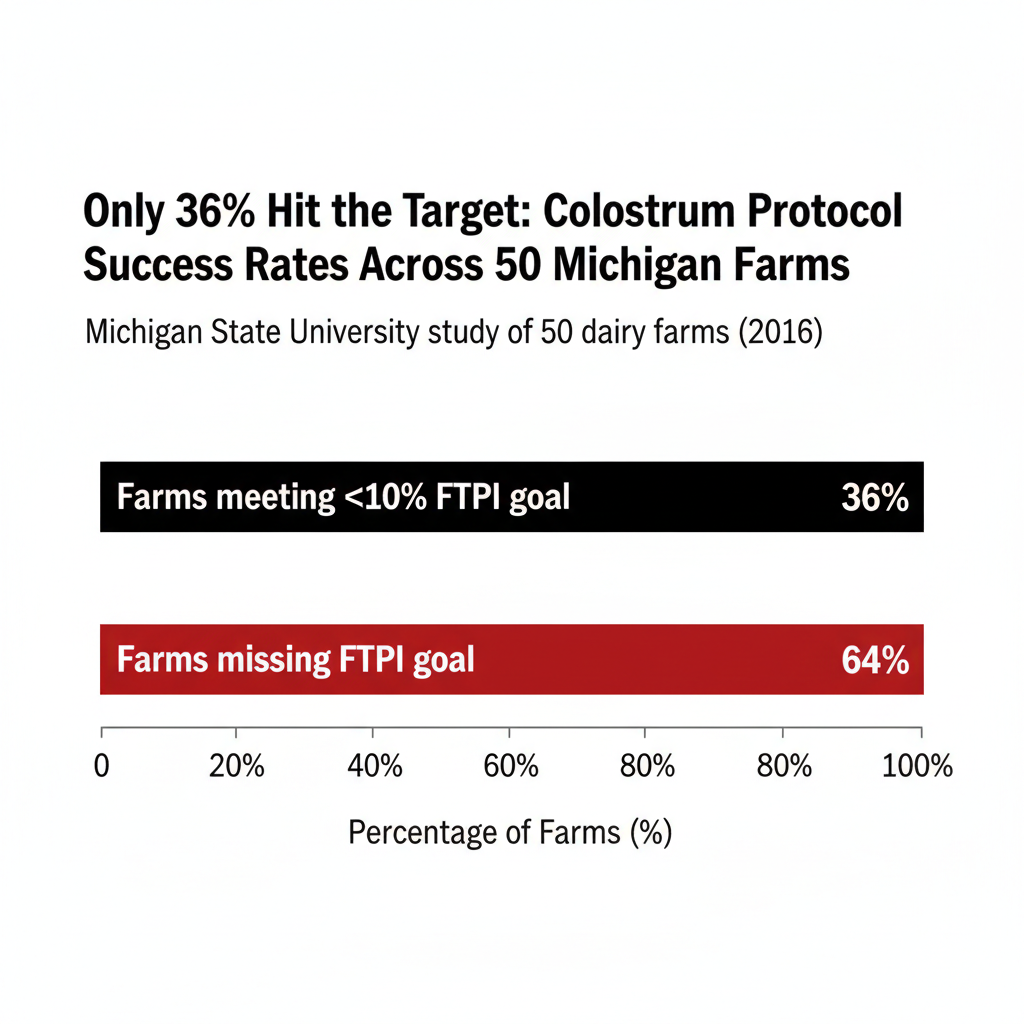
Back in 2016, Michigan State University Extension and collaborators looked at the failure of passive transfer (FTPI) and colostrum management on 50 Michigan dairy farms. Only 18 of those 50 farms (36%) hit the industry goal of less than 10% FTPI, meaning at least 90% of calves achieved successful passive transfer. That left 32 farms missing the target, and on six of those herds, half or more of the calves failed. These weren’t wrecks. They were farms that thought their colostrum program worked. 
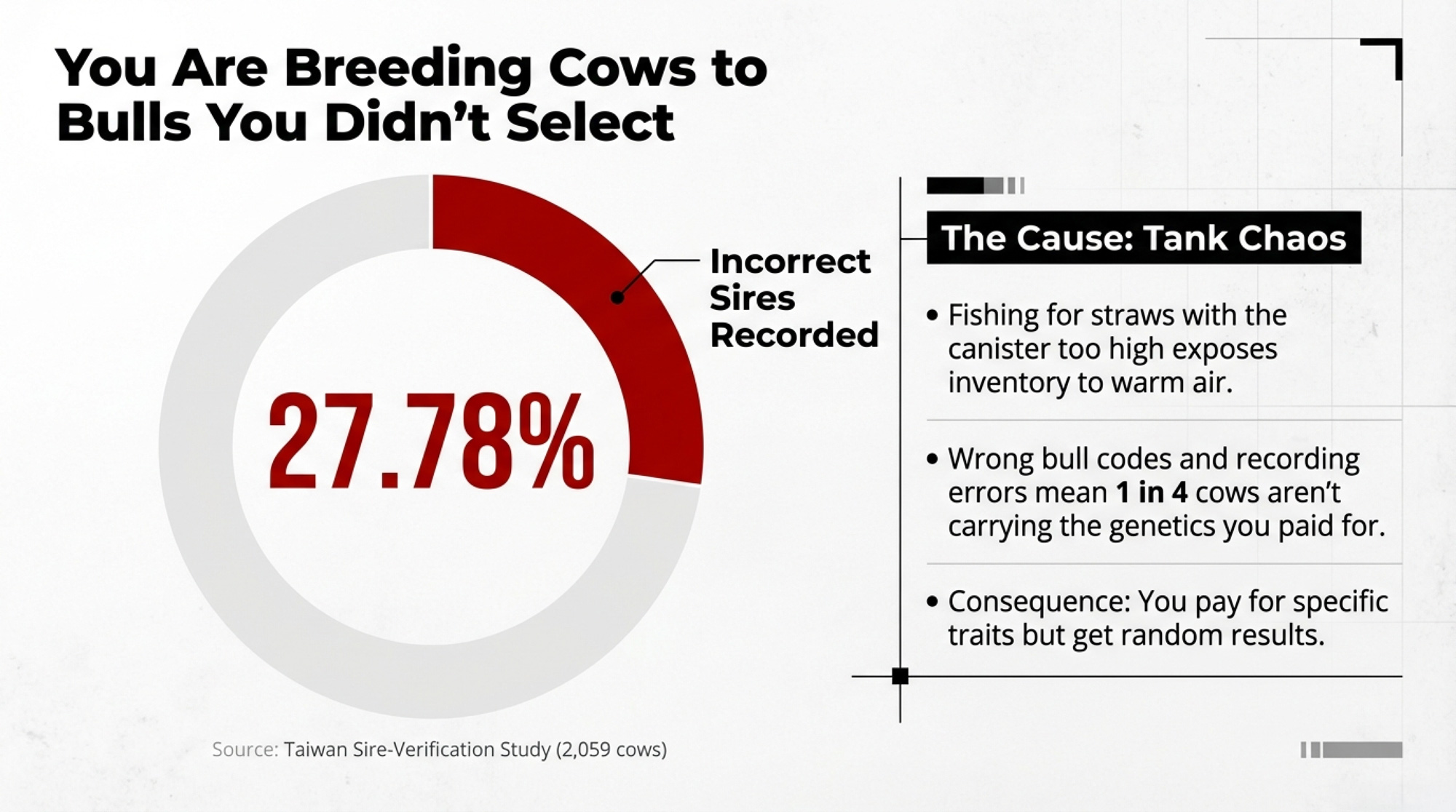
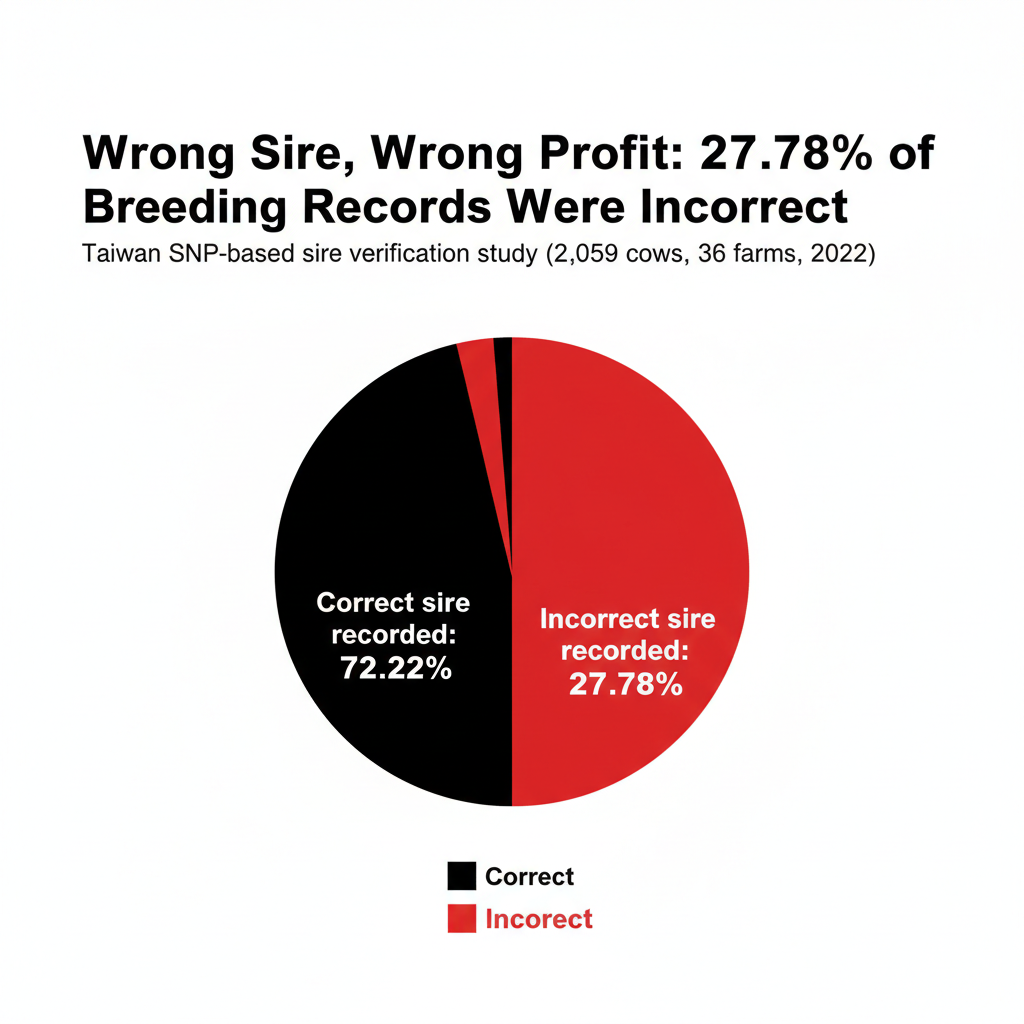
You see the same pattern in breeding records. A 2022 SNP‑based sire‑verification study from Taiwan checked 2,059 cows on 36 dairy farms and found that 27.78% of recorded sires were incorrect — wrong bull codes, wrong storage location, or recording errors. In other words, more than one in four matings went to a different bull than the records claimed. 

Semen handling has its own quiet leak. Extension and A.I. handling guidelines generally recommend that sexed semen be deposited within about 10 minutes of thawing to protect fertility. On a busy timed‑AI morning with 40–80 cows, that window gets stretched more often than anyone likes to admit. 

Feed isn’t immune. Nutritionists will tell you there are three rations on every dairy: the ration on paper, the ration delivered, and the ration cows actually consume. Forage dry matter swings, over‑mixing that chews up effective fiber, and real intakes drifting several percentage points from the estimate are common. A lot of the math you use on feed cost and income over feed cost still assumes a ration that your cows never really eat. 

This isn’t a “people don’t care” problem. It’s a “protocols don’t fit reality” problem. 
The Retraining Fallacy

Here’s the default move that quietly costs you: a protocol misses its target, so you schedule more training. Another meeting. Another sign. 

But when the same protocol keeps failing after you’ve retrained more than twice, you’re almost never looking at a knowledge problem. You’re looking at work that simply can’t be done the way it’s written. 

MSU’s colostrum work shares a good example from the maternity pen. Feeders in one herd were expected to check calving progress every 30 minutes, in addition to cleaning stalls, processing newborns, and treating sick cows. On paper, that looks like “best practice.” On a rough day, it’s physically impossible. 

There’s a sharper question than “Who screwed up?” Ask this instead: Does your best employee also struggle with this protocol? If the person you trust most can’t hit it consistently, the protocol is broken—not them. At that point, more training isn’t a solution. It’s self‑deception. 

And if you’ve watched a good A.I. tech or feeder drowning in a pile of “must‑do” tasks, you’ve seen exactly how that plays out. 

“If your best employee can’t hit the protocol, the protocol — not the person — is broken.” 

The 13% Colostrum Gap You Don’t See Until You Measure It
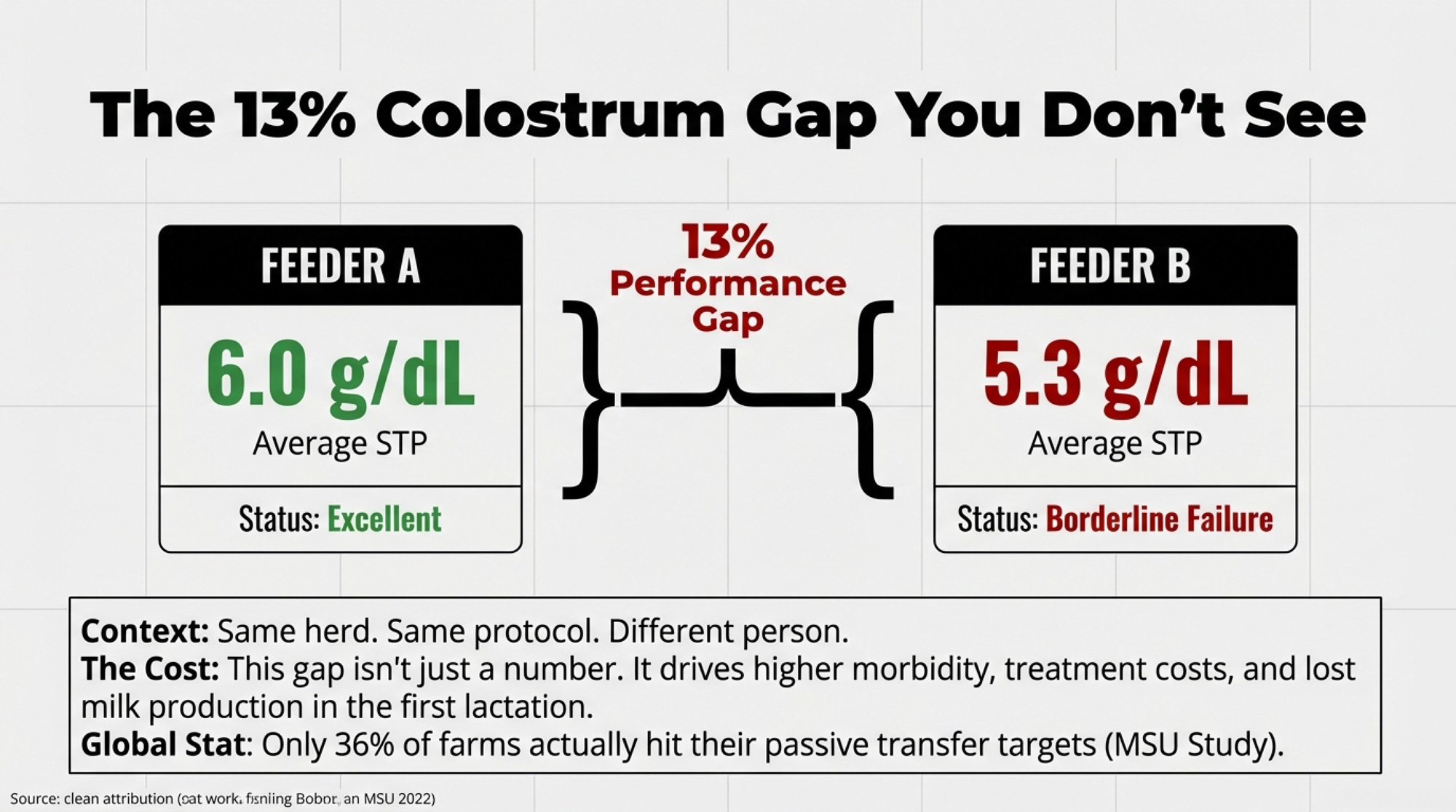
At one large U.S. dairy, a retrospective review of colostrum results showed that an employee measured serum total protein (STP) using a simple refractometer. Same herd, same colostrum, same written protocol — just different people doing the work. 

  • One feeder averaged 6.0 g/dL STP.
  • Another averaged 5.3 g/dL STP. 

On that farm, that’s roughly a 13% performance gap between 6.0 g/dL “excellent” results and 5.3 g/dL borderline passive transfer. The only real difference was who mixed and fed the colostrum.

Economically, FTPI is a slow bleed. Calves with FTPI have higher morbidity and mortality, weaker pre‑weaning growth, and higher treatment costs. Some never reach first calving. Others enter the milking string and never deliver the production their genetics suggest they can. Spread that 13% gap over a few hundred calves, and you’re looking at a five‑figure cost that never shows up as a separate line on the milk cheque. 

Now layer in dairy‑beef. A 2025 Purina/CattleFax analysis put average day‑old dairy‑beef calves around US$1,400, up from roughly US$650 three years earlier — more than double in a short window. Hoard’s Dairyman has been blunt that dairy‑beef calf prices are “breaking records” at many U.S. sales. A calf that ships at three days old with poor passive transfer is more likely to get sick, die, or need heavy treatment, and those problems pull down the prices buyers are willing to pay. 

Colostrum research from MSU, Wisconsin, and others all point the same way: what you did with colostrum this morning is one of the main predictors of that heifer’s health and productivity down the road. If you haven’t pulled STP by employee lately, you’re relying on a farm average that might be hiding your weakest link. 

Where Good Breeding Programs Quietly Go Sideways

On paper, your breeding plan might be elite. Genomics. Customized matings. Sexed semen on your best heifers. Beef semen on the bottom half. 

But if the wrong semen ends up in the cow, or the right straw gets mishandled, the whole thing quietly falls apart. 

The Taiwanese SNP‑based sire‑verification study puts hard numbers to that risk: 27.78% of recorded sires were wrong across 36 herds and 2,059 cows. That’s not a rounding error. That’s more than one in four cows with a different sire than your records say. 
Here’s where the leaks show up on‑farm:

  • Tank chaos. Straws from multiple bulls share a goblet. The breeder fishes for the right code with the canister too high in the neck, exposing every straw they aren’t using to warm air. Semen‑handling guides warn that when liquid nitrogen depth drops below about 6 inches, the temperature in the neck can rise sharply; straws left above the frost line quickly take damage. Late nights, cramped spaces, and tanks tucked into corners all make it easier to stay above the frost line longer than you should. 
  • Service‑number blind spots. Your plan says: sexed dairy for first and second service, beef from third service on. But if service numbers aren’t updated promptly, the person with the gun can’t follow the plan, no matter how good the spreadsheet looks. 
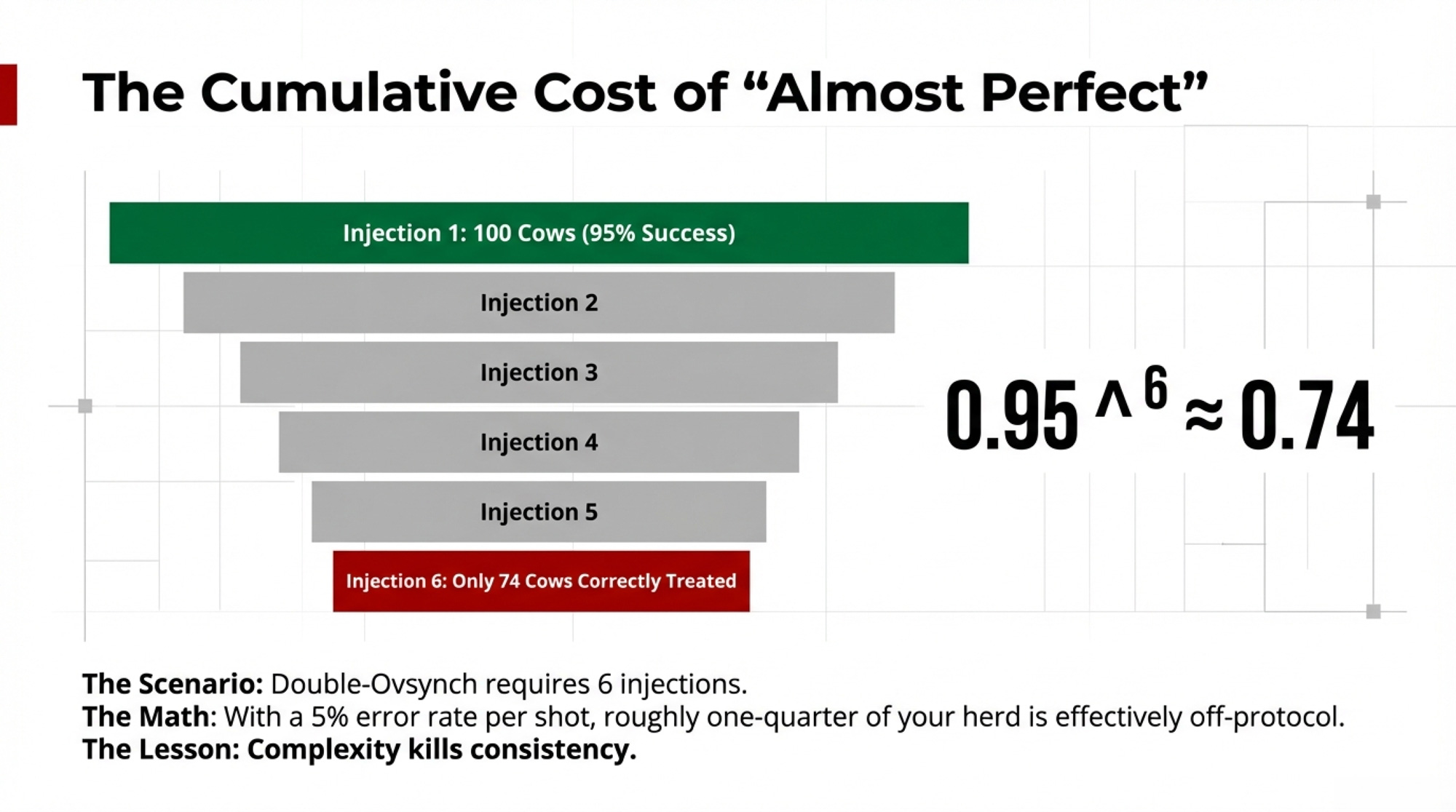
  • Synchronization drift. Double‑Ovsynch is powerful — six injections, tight timing, strong conception when done right. Do the math: at just a 5% error rate per shot, the chance of a cow receiving all six injections correctly is about 74%, because 0.95 6 ≈ 0.735. That means roughly a quarter of your herd is on some other version of the protocol than you think. 
The herds that consistently post top‑end reproduction numbers almost always share one habit: the same person both breeds and records, backed by a setup that makes the right straw easy and the wrong straw hard. Every handoff — between people, between shifts, between paper and software — is another leak you have to pay for. 

Why That 95‑Pound Cow Is Still Standing in Your Barn

McCarty’s “top half only” rule sounds ruthless until you stand in front of a cow who’s right on the bubble. 
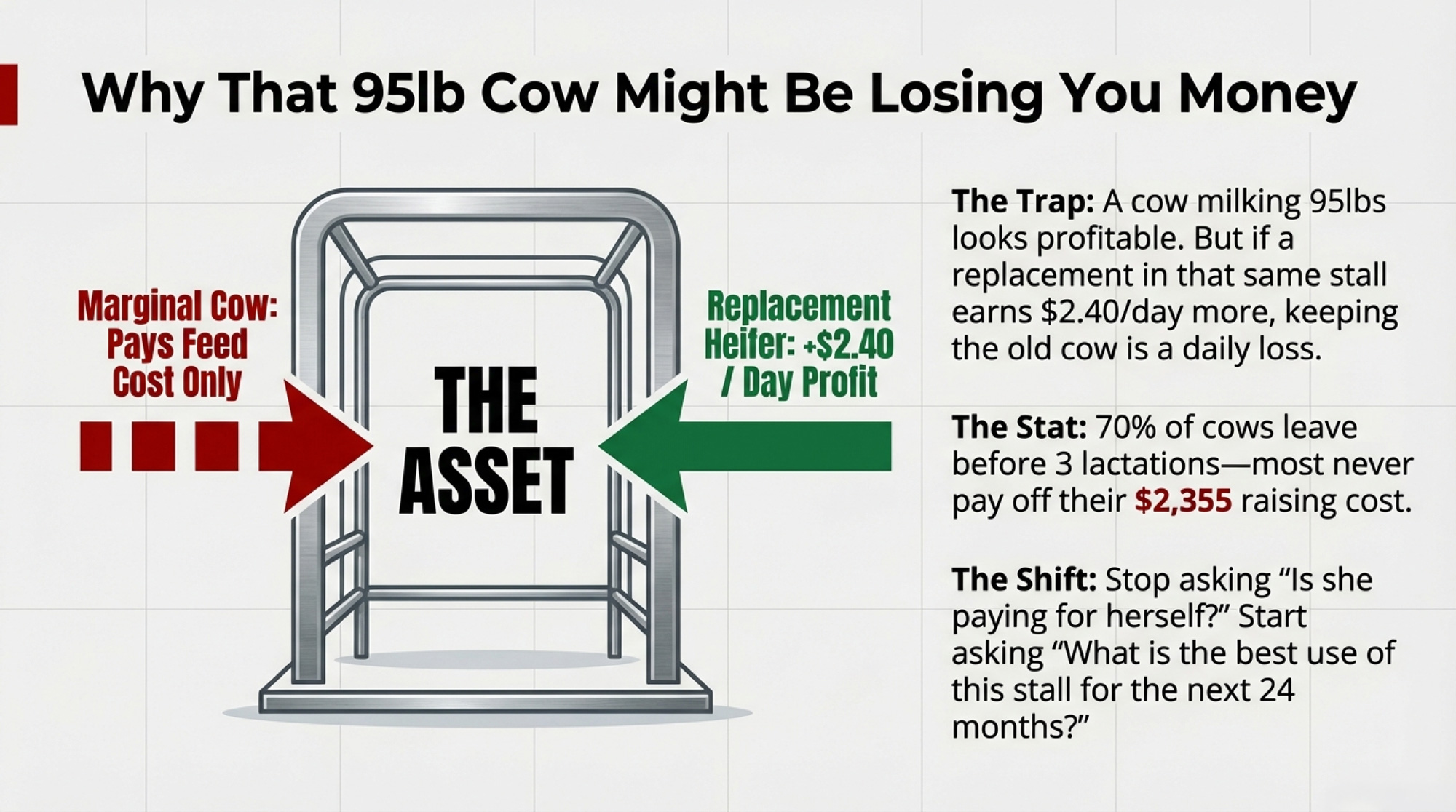
Picture a second‑lactation cow giving 95 pounds, sitting in your bottom‑third genomically. On your genetic ranking, she’s an easy cull. In the parlor, she looks like money. Human brains are wired to value today’s visible rewards — that full unit of milk — more than abstract, future gains like a higher‑merit daughter calving in three years. 

Culling work backs this up. Dairy Herd Management’s 2024 review of USDA/NAHMS data shows that about 70% of cows leave the herd within their first three lactations, and the average productive life is just 2.7 lactations. That same piece notes it takes more than three lactations to recoup roughly US$2,000 in raising cost. In other words, the “she hasn’t paid herself off yet” argument doesn’t hold up for most cows — they’re likely to leave before that point anyway. 

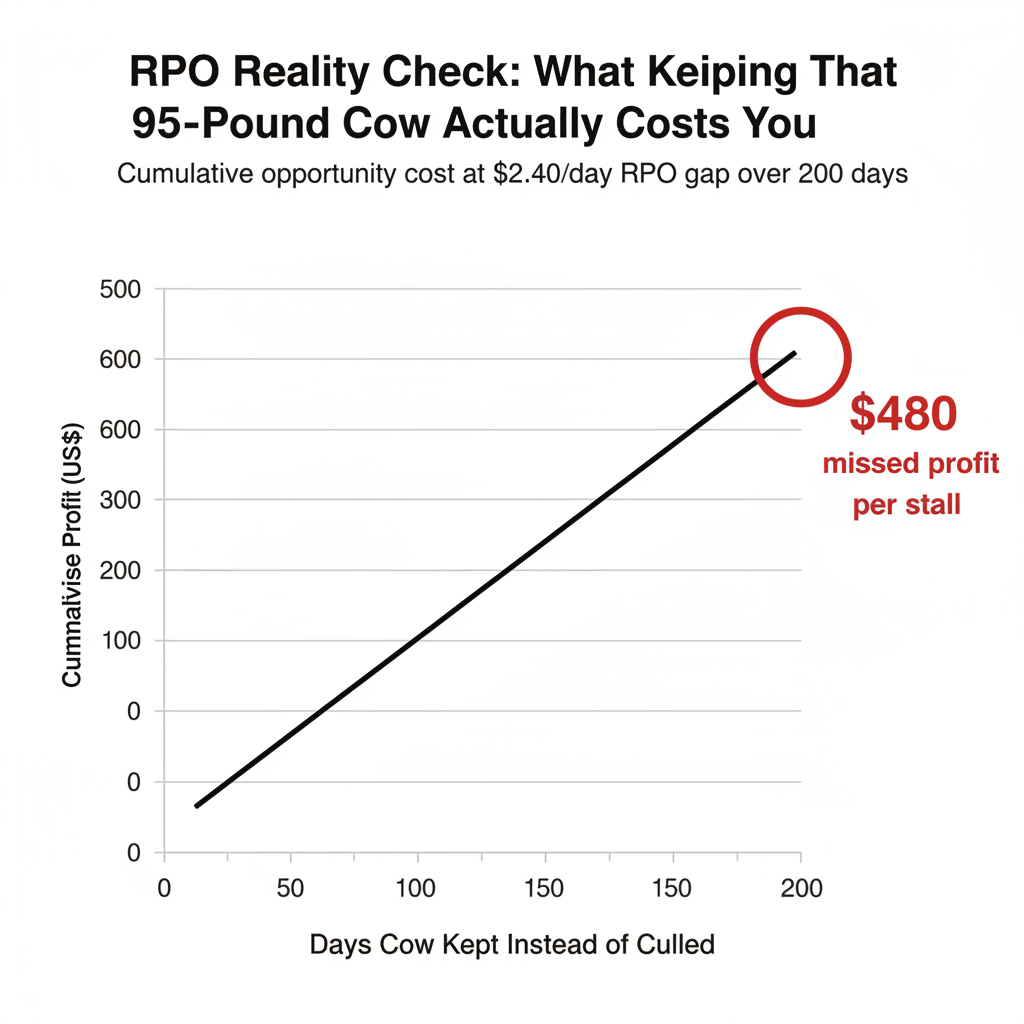
This is where Retention Pay‑Off (RPO) earns its keep. RPO is the expected profit difference between keeping a cow versus replacing her in that stall. That 95‑pound cow might be cash‑positive day to day. But if a replacement would generate US$2.40/day more in the same stall, you’re effectively giving up US$2.40/day by keeping her. Over 200 days, that’s US$480 in missed profit per stall. The cow isn’t necessarily losing money — she’s just blocking a more profitable animal from using that space. 
Recent reports show that average U.S. raising cost at US$2,355 per head, with most farms between US$2,094 and US$2,607. Other cost‑of‑raising work shows some systems pushing near US$2,900 per heifer. With those numbers and a 2.7‑lactation average productive life, hanging onto every decent cow just because she’s milking OK is usually the more expensive choice, not the safer one. 

So the real money question isn’t “Is she still paying for herself?” It’s: “What’s the best use of this stall over the next 12–24 months?”

Four Practical Paths to Close the Execution Gap — and Protect Profit

You don’t close this gap with a nicer poster or one more meeting. You close it by picking an approach that fits your people and facilities, then building systems that still hold together on the worst days. 
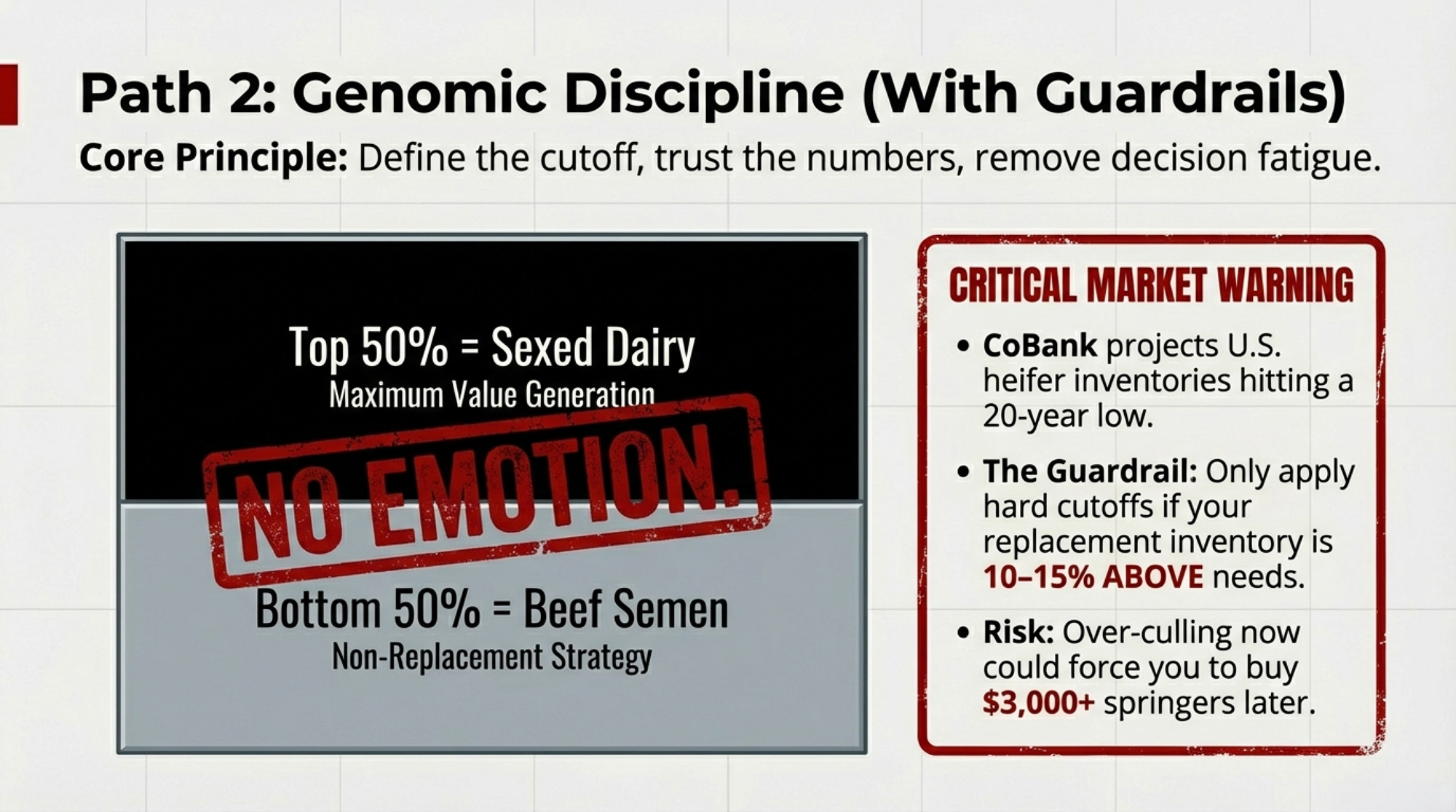
Path 1: Genomic Ranking With Hard Cutoffs

When it fits.
You’re already genomic‑testing, you’ve got more heifers than you absolutely need, and you’re willing to let numbers overrule emotion when it comes to who gets dairy semen versus beef. 

What it takes.

  • Genomic tests running roughly US$40–US$50 per head in many programs. 
  • Software and discipline to rank animals, keep that list current, and get it in front of whoever is breeding. 
  • A clear rule: top 40–60% by index get dairy semen, the rest get beef. No exceptions. 

Where it bites back.
CoBank’s August 2025 analysis — echoed by Hoard’s Dairyman and other outlets — projects U.S. replacement heifer inventories hitting a 20‑year low, dropping by roughly 800,000 head before they start rebounding in 2027. Fresh heifer prices “vaulted far into record territory” in spring 2025, with baseline pregnant heifers averaging about US$2,870 and premium groups fetching “upward of US$4,000” per head. Over‑culling in that environment can easily push you into US$3,000–US$4,000 heifer purchases just to refill stalls. If your replacement inventory isn’t at least 10–15% aboveminimum needs, going full “top half only” overnight is asking for trouble. 

Phone‑friendly takeaway: Use genomics to steer dairy vs. beef, but only go harsh on the bottom half if you’ve clearly got a 10–15% replacement surplus and you’re truly comfortable buying heifers at US$3,000+ if you mis‑judge it. 
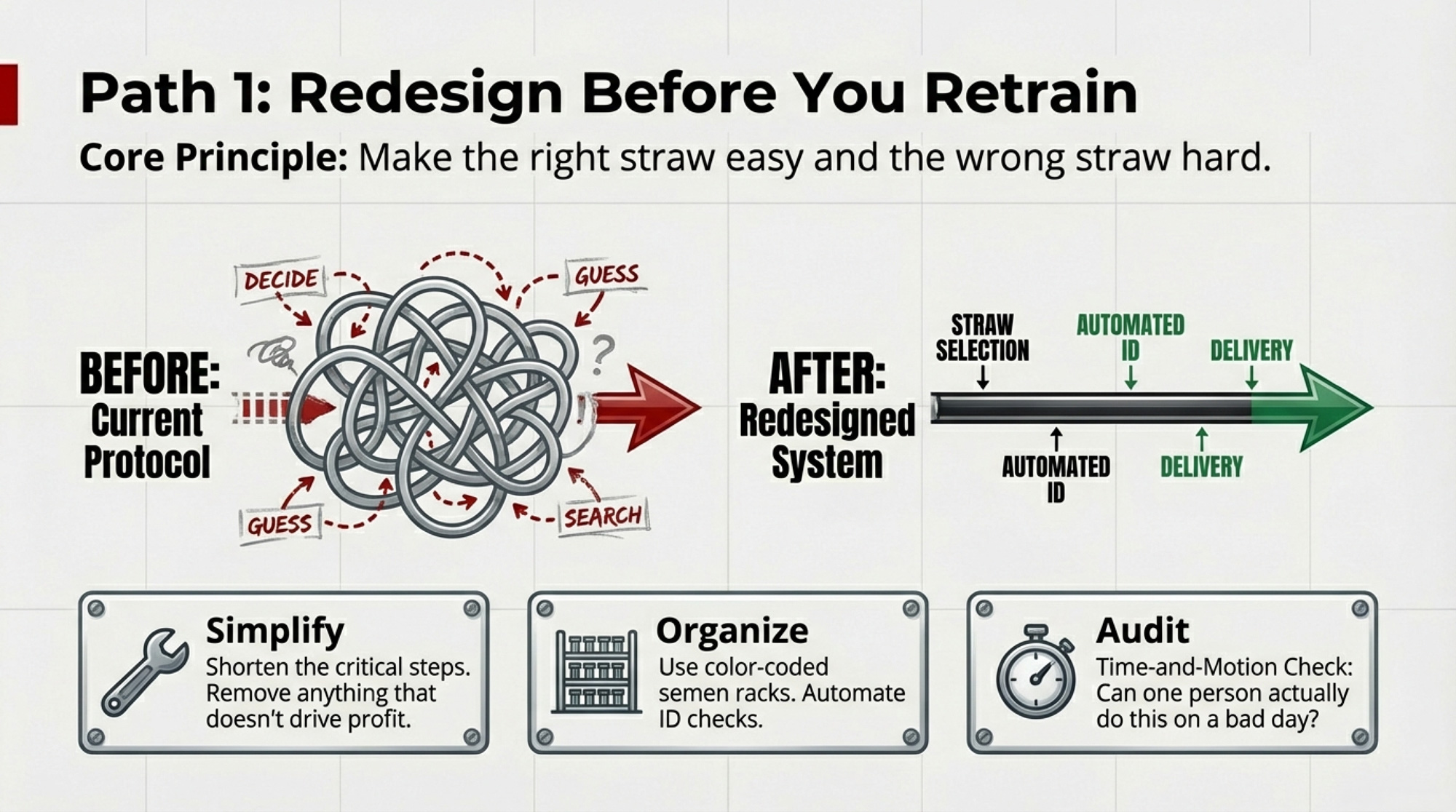
Path 2: Redesign the System Before You Rewrite the Protocol

When it fits.
You’ve already retrained a protocol two or three times, and you’re still not seeing the results move. Your best employees are missing steps or improvising on the fly. 

What it takes.

  • A blunt look at time and motion: can one person actually do what you’re asking on a bad day?
  • A shorter list of critical steps that really move the needle (for colostrum, that usually means timing, volume, and quality at the first and second feeds). 
  • Tools that remove choices: organized semen racks, simple color‑coding, auto‑ID checks, and checklists that must be signed off. 

Where it bites back.
You can absolutely overcorrect and strip out tasks that genuinely pay — like a documented second colostrum feeding — in the name of simplicity. The sweet spot is the simplest protocol that still pays, given your milk price, calf value, and labor cost. 

Phone‑friendly takeaway: If your best person can’t hit the protocol, shorten it until they can. Then, only add back steps that clearly improve profit. 
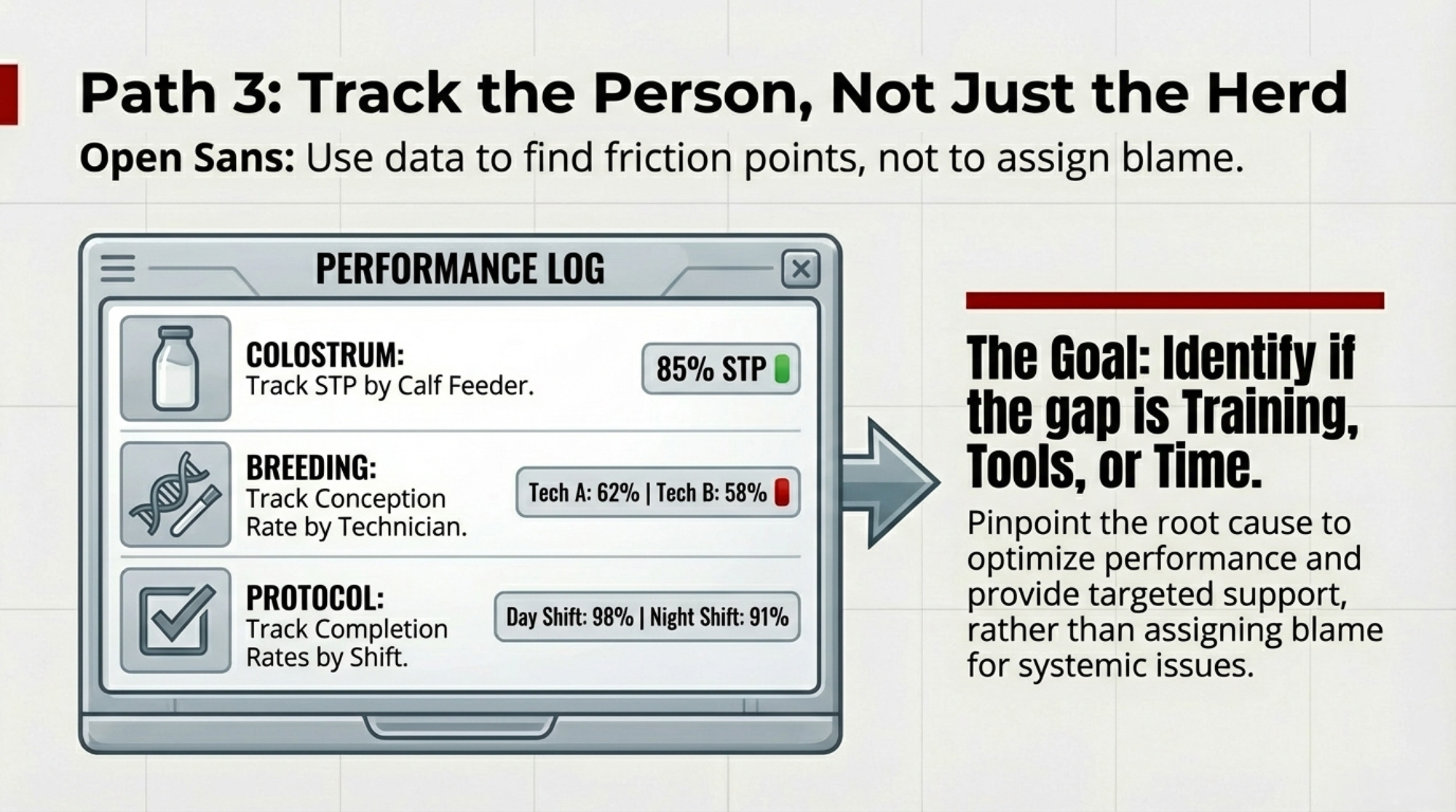
Path 3: Track Results by Person, Not Just Herd

When it fits.
You know there are good days and bad days, but you’re not sure where the swings are coming from. 

What it takes.

  • STP by calf feeder for the next 30–60 days. 
  • Conception rate and pregnancy risk by A.I. technician and by protocol (e.g., Double‑Ovsynch vs. natural heats). 
  • Protocol completion rates by shift for things like second colostrum feeds, vaccines, and synchronization shots. 

The Michigan colostrum work and that large‑herd STP example both show it: the gap between “excellent” and “fair” passive transfer can sit almost entirely in who mixes and feeds colostrum. 

Where it bites back.
If you jump straight from data to blame, you’ll destroy trust. The order has to be:

  1. Check whether they had the time, tools, and information.
  2. Fix those gaps.
  3. Then, coach, reassign, or change staffing if you still see the same pattern. 

Phone‑friendly takeaway: Use the numbers to identify friction points and training needs—not to pin everything on one person. 

Path 4: Treat Consistency as Infrastructure

When it fits.
Every operation, regardless of size or system. 

What it takes.

  • Written, non‑negotiable checklists for key jobs (colostrum, transition cows, breeding, semen tank handling). 
  • Documented second colostrum feeding where your disease risk and calf value justify the extra pass. 
  • Scheduled mixer‑wagon calibrations and forage dry‑matter checks so your ration on paper stays close to the ration in the bunk. 
  • Feeding times that stay within a tight window day after day to smooth out intakes. 

Where it bites back.
Consistency without review can lock you into executing a plan that no longer fits 2024–2026 economics. Feed prices, calf values, and heifer costs have all moved since 2020. Consistency has to be paired with regular “does this still make money?” checks. 

Phone‑friendly takeaway: Lock in consistency for the handful of jobs that really drive calf health, conception, and stall value — then put a date on the calendar to re‑run the math. 

Running the Numbers: Dairy‑Beef Calves vs. Raising Replacements

ScenarioRaise as Dairy ReplacementSell as Dairy‑Beef Calf
Raising costUS$2,094–US$2,607 per heifer on typical U.S. farms; some systems near US$2,900≈US$50–US$75 in first‑week costs
Forgone dairy‑beef sale≈US$1,400/calf (recent U.S. average in strong programs)N/A
Total exposure per headRoughly US$3,250–US$4,350 (raising cost + forgone calf sale)≈US$75
ReturnDepends on genetics, health, and reaching 3+ lactations; average life ≈2.7 lactations≈US$1,400 day‑old income in active programs
Break‑even requiresMore than 3 lactations to recoup the raising costEssentially week one

Exact numbers depend on your region and marketing channel. Recent U.S. commentary shows day‑old dairy‑beef calves averaging around US$1,400, with some lots higher and some lower, while straight Holstein bull calves still trail by several hundred dollars. 

This isn’t a blanket order to stop raising heifers. It’s a reminder that every “just in case” heifer carries a real opportunity cost in a heifer‑short, dairy‑beef world. 

Regional Sidebar: Calf and Heifer Prices Outside the U.S.

If you’re reading this from outside the U.S., the exact dollar or euro values look different. But the pattern is starting to feel very familiar. 

  • Canada.
    Manitoba and national beef‑market reviews for 2024–2025 point to stronger calf prices lifted by tighter beef cow inventories. At the dairy end, Ontario auction reports show fresh milk cows and bred heifers trading in the C$3,000–C$4,400 range at selected sales, with individual top cows over C$5,000 and quality springers frequently around C$3,000–C$3,800, while open heifers often fall in the C$1,500–C$2,250 band. That’s not a national average, but it’s a clear signal that replacements aren’t cheap. 
  • European Union (example: Ireland and Denmark).
    In June 2025, the Irish Farmers Journal reported that Friesian bull calf averages jumped to €209, nearly three times the roughly €67 average a year earlier, while Angus and Hereford dairy‑beef calves were regularly trading in the mid‑€200s to mid‑€300s. Teagasc’s mid‑2025 update noted that €500–€700 for very strong dairy‑beef calves had become “the new normal” for the top of the trade in some rings. In Denmark, there is a national calf‑pricing scheme where a 60 kg Holstein x beef calf earns about €100, plus bonuses that can add another €100 for the best male calves. 

The exact dollar or euro values are different, but the pattern is similar: stronger beef prices and constrained replacement supplies are lifting both dairy‑beef calf values and in‑calf heifer prices in Canada and parts of Europe. The stall‑value and opportunity‑cost questions in this article still apply — you just need to plug in your local calf and heifer prices. 

The Execution Cost in One Table

Leak PointStatistical FrequencyEconomic Impact (per event)
Incorrect sire recording27.78% of cows had a wrong recorded sire in one Taiwanese datasetLoss of expected genetic gain; weaker matings; less reliable proofs 
Colostrum execution (STP)13% performance gap between 6.0 g/dL and 5.3 g/dL by an employee on one large herdHigher morbidity and mortality, more treatments, and lost milk in the first lactation 
Timed‑AI protocol errors5% error per shot ≈ , 26% of cows missing at least one of six Double‑Ovsynch injectionsMore open cows, longer calving intervals, fewer high‑value dairy pregnancies 
Culling delay (RPO)N/A (herd‑specific)Example: ≈US$480 missed profit per stall over 200 days at US$2.40/day lost opportunity 

Signals to Watch Over the Next 24–36 Months

Your own execution data.

If you want to know where your biggest leaks are:

  • Pull STP distributions by feeder for the next 30–60 days. 
  • Track conception and pregnancy risk by technician and by protocol type. 
  • Audit how many cows actually complete full synchronization protocols and second colostrum feeds. 

Until you see those numbers by person and protocol, you’re guessing where your execution gap really sits. 

Replacement pipeline stress.

CoBank’s August 2025 report predicts that: U.S. replacement heifers are expected to hit a 20‑year low, with an ~800,000‑head reduction before inventories start to rebuild in 2027. Heifer prices have already “vaulted far into record territory,” with baseline bred heifers near US$2,870 and premium groups “upward of US$4,000.” Any aggressive culling or dairy‑beef plan has to start with an honest count of how many replacements you have and how many you really need. 

Dairy‑beef premium durability.

Dairy‑beef calves are benefiting from tight beef supplies and expanded fed‑beef capacity. CoBank’s outlook suggests 2027 as a likely turning point in the heifer cycle, and broader beef‑market work points to eventual easing of the tightest supply conditions. That doesn’t mean the bottom falls out, but it does mean the easiest premiums can narrow. Herds with consistently low FTPI and strong calf health should stay at the top of the dairy‑beef market even when everyone else starts catching up. 

What This Means for Your Operation

  • If your best person can’t hit a protocol, stop retraining and start redesigning. Before the next “training session,” audit the time, tools, and information they actually have. If the protocol doesn’t fit reality, fix the protocol—not the person. 
  • Audit colostrum by person, not just herd average. If STP by employee shows a spread of 0.5–1.0 g/dL, you’ve got an execution gap that will come back at you in treatment costs, death loss, and weak first‑lactation cows. 
  • Run RPO, not emotions, on your bottom third. When a cow’s projected daily profit is clearly below what a replacement could do in that stall — and your heifer inventory is solid — it’s time to let her go, even if her current milk looks good. 
  • Use genomic ranks to control who gets dairy semen, but only as aggressive as your replacement math allows. If your replacement count isn’t at least 10–15% above minimum needs, phase in hard cutoffs instead of flipping the switch to “top half only” overnight. 
  • Treat dairy‑beef as a serious margin tool, not a fad. It only really pays if your colostrum and calf care are strong enough to deliver high‑value calves consistently. If FTPI is shaky, fix that first before you chase top‑tier calf checks. 
  • Spend time in the parlor and by the tank. Watch how IDs are read, how long the canister stays in the neck, and how often people hunt for the right straw above the frost line. The cheapest fixes usually hide in daily habits, not in new technology. 

Key Takeaways

  • Execution gaps — not genetics or feed alone — may be one of the biggest hidden costs on modern dairies, once you line up the FTPI data, sire‑error rates, and heifer economics against what you thought your protocols were delivering. 
  • Only 36% of the 50 Michigan farms in a major colostrum project actually met passive transfer goals, even though most believed their routines were solid. Until you track STP by person, you honestly don’t know where your farm sits. 
  • When you’ve retrained a protocol twice, and results haven’t moved, the problem is almost always the system — not the people. Redesign the work, remove failure points, and then retrain with a protocol that fits real‑world conditions. 
  • Retention Pay‑Off and stall opportunity cost matter more than whether a cow is “still paying for herself” on paper, especially when 70% of cows leave before three lactations and the average heifer raising cost sits around US$2,355 per head. 
  • Tight heifer inventories and record dairy‑beef calf values make poor execution more expensive than ever.In 2024–2026, every protocol miss has the potential to waste a historically valuable calf and a historically valuable stall. 

The Bottom Line

The herds that win over the next few years won’t be the ones with the fanciest protocols in a binder. They’ll be the ones that build simple, durable systems their people can hit on the worst days, not just the best. 

If you pulled your numbers tomorrow, which protocol would look the worst — and what’s your plan to rebuild it before it costs you another year? 

Complete references and supporting documentation are available upon request by contacting the editorial team at editor@thebullvine.com.

Learn More

Join the Revolution!

Join over 30,000 successful dairy professionals who rely on Bullvine Weekly for their competitive edge. Delivered directly to your inbox each week, our exclusive industry insights help you make smarter decisions while saving precious hours every week. Never miss critical updates on milk production trends, breakthrough technologies, and profit-boosting strategies that top producers are already implementing. Subscribe now to transform your dairy operation’s efficiency and profitability—your future success is just one click away.
NewsSubscribe
First
Last
Consent

Is Your Fresh Pen Costing You $90,000? The 90-Day Transition Fix for Pregnancy Rate

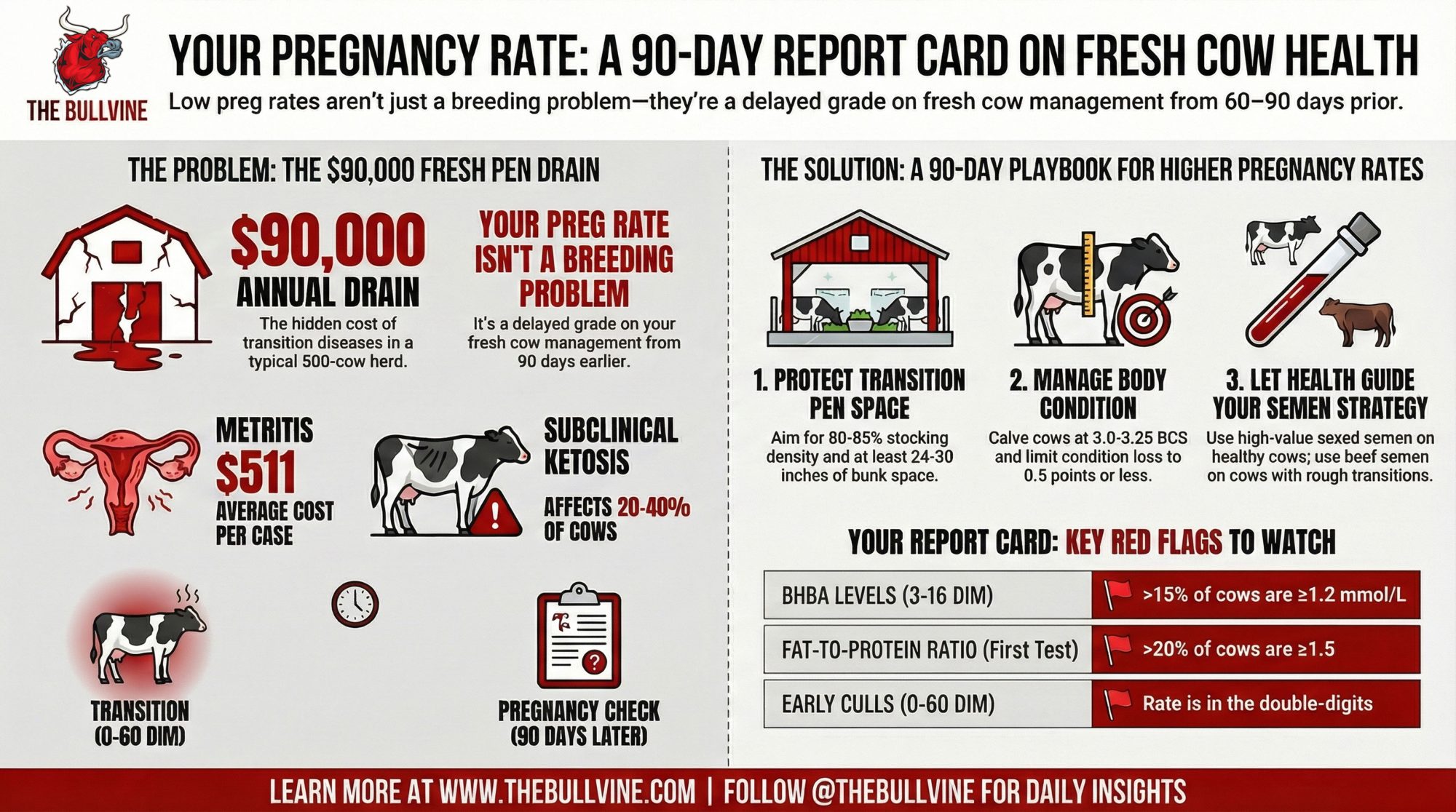
Metritis + SCK can quietly drain US$90,000 from a 500‑cow herd. The fix starts 90 days before you ever thaw a straw.

Executive Summary: Most of us still reach for semen, protocols, or the AI tech when pregnancy rate flattens, but what’s interesting is how often the real damage was done 60–90 days earlier in the fresh pen. A 2023 study on 15,041 Holsteins bred on Double‑Ovsynch found that cows with transition diseases in the first 30 DIM had clearly lower pregnancy per AI and more pregnancies lost by 60 days, even under excellent repro management. At the same time, economic work shows metritis averaging about US$511 per case and subclinical ketosis hitting 20–40% of cows in many herds, together easily stripping around US$90,000 a year from a 500‑cow operation once milk loss, disease, extra days open, and early culls are added up. This article treats pregnancy rate as a “90‑day transition report card” and walks through simple tools—NEFA/BHBA thresholds, fat‑to‑protein ratios, peak curves, and early‑lactation culls—that make that connection visible in your own data. From there, it lays out a clear playbook: a BHBA testing routine you can run on Mondays, realistic stocking and bunk space targets, BCS and F:P benchmarks, and a health‑based plan for where to use sexed dairy semen versus beef‑on‑dairy. Whether you’re in a Wisconsin freestall, a Western dry lot system, a Canadian quota barn, or a seasonal grazing herd, the goal is the same—tighten up fresh cow management so the next three preg checks feel a lot less like a guessing game and a lot more like a controlled business decision.            

When a herd’s pregnancy rate gets stuck in the low‑to‑mid‑20s, the conversation still usually starts in the breeding pen. You know how it goes: semen choices, heat detection, synchronization tweaks, maybe a quiet question about the AI tech. That’s where the problem shows up in your software, so that’s where everyone looks first.

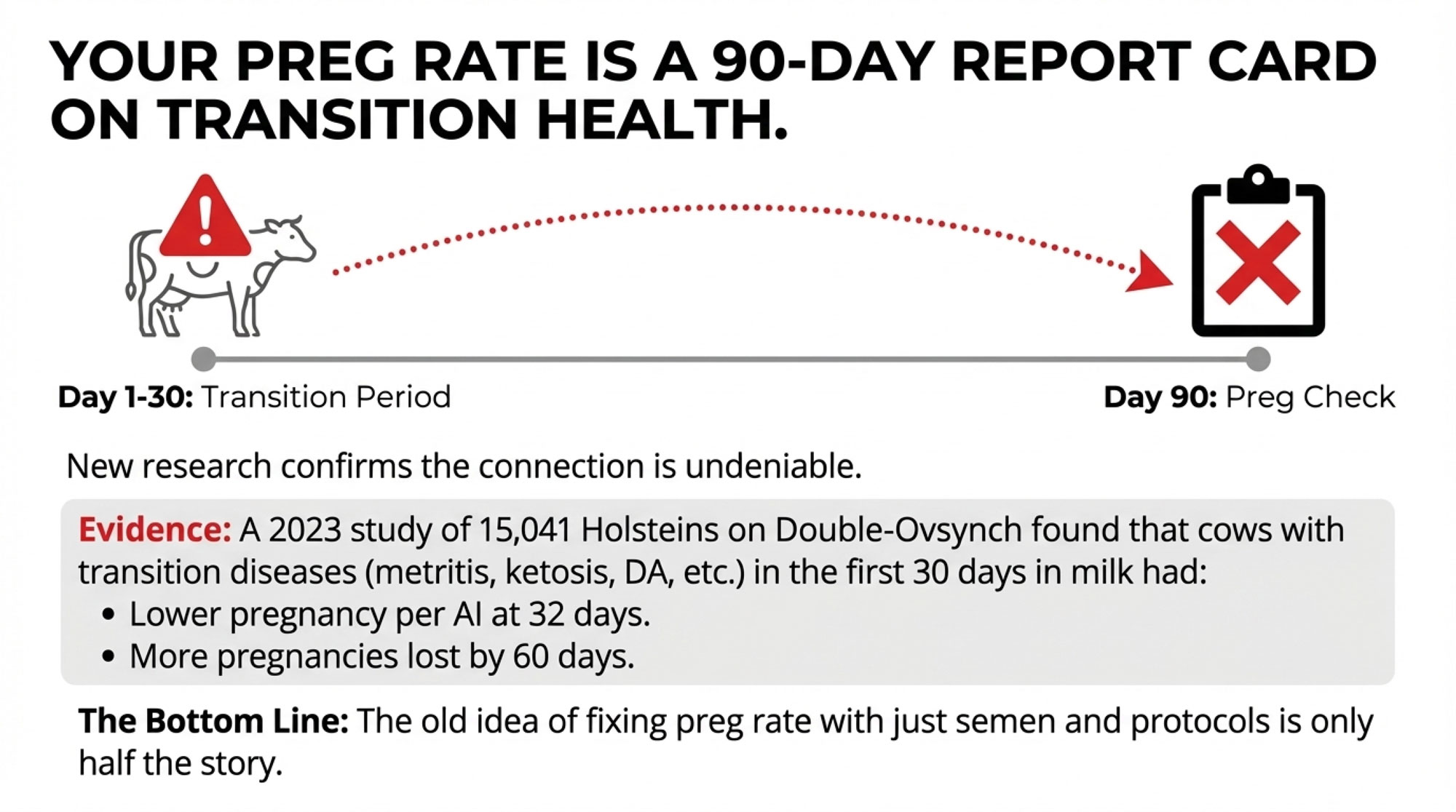
What’s interesting now is that newer work is making a pretty strong case that your pregnancy rate is really grading your fresh cow management from 60 to 90 days earlier, not just what happened on breeding day. A 2023 study in JDS Communications followed 15,041 Holstein cows in a high‑producing German herd where every first service was done on a Double‑Ovsynch program. Cows that had transition problems—milk fever, retained fetal membranes, metritis, ketosis, left displaced abomasum, or mastitis—in the first 30 days in milk had lower pregnancy per AI at 32 days and, in several of those categories, more pregnancies lost by 60 days than cows that stayed healthy, even though they all followed the same repro protocol.

So the old idea that “I’ll fix my preg rate with better semen and tighter protocols” is really only half the story. The other half is, “What were these cows living through in those first few weeks fresh?”

Looking at This Trend: Biology Keeps Pointing Back 90 Days

Let’s walk through the biology the way we’d talk it through over coffee. Once you see the timing inside the cow, this 90‑day connection stops feeling like a theory and starts looking like common sense.

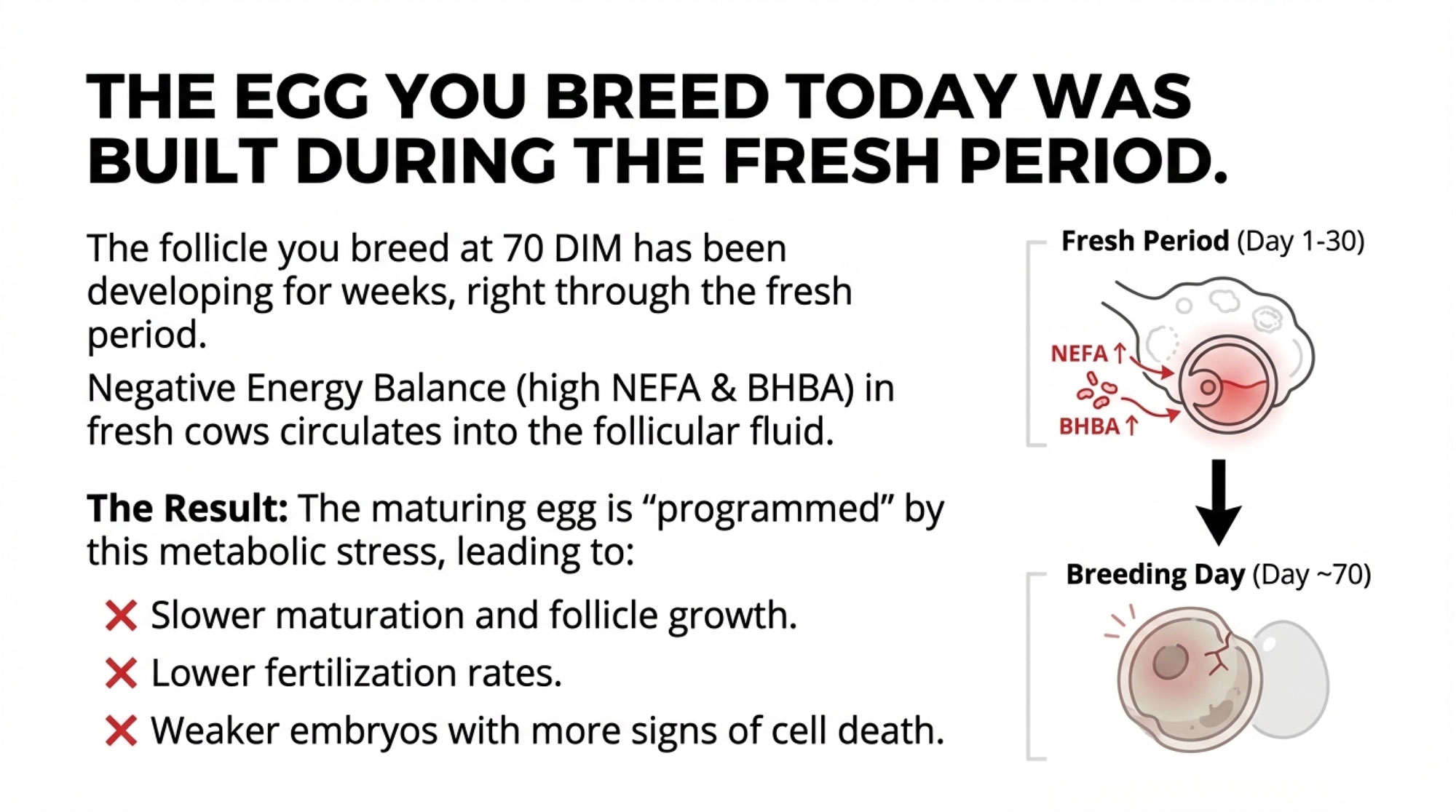
The Egg You Breed Was Built During the Fresh Period

You probably know this already, but we all forget it sometimes: the follicle you breed at 60–80 days in milk didn’t show up last week. It’s been developing for weeks in the ovary. The “high fertility cycle” idea, outlined in a 2020 review, showed that cows that become pregnant around 130 DIM tend to lose less body condition after calving, experience fewer health events, have better fertility at first insemination, and have lower pregnancy loss. That pattern tells us fertility is strongly tied to what happened during the dry period and the early fresh period.

During that stretch, most cows slide into negative energy balance. Milk is ramping up, but dry matter intake hasn’t caught up yet. So the cow pulls more energy from body fat, which pushes non‑esterified fatty acids (NEFA) up in the blood and, if the liver gets overloaded, beta‑hydroxybutyrate (BHBA) as well. Cornell work and follow‑up studies have shown that when too many cows run with high NEFA and BHBA around calving, the herd sees more transition disease and weaker reproductive performance.

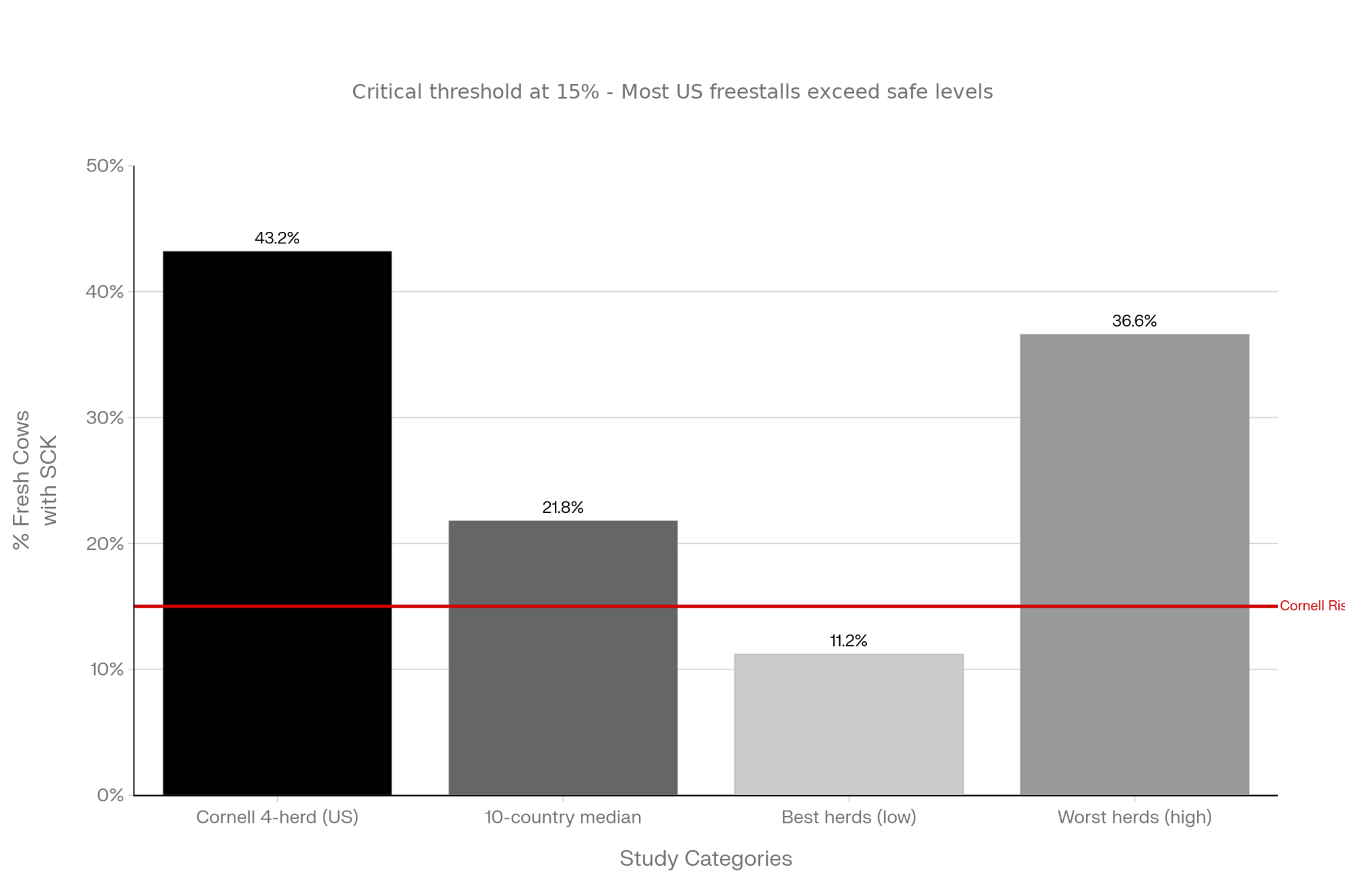
In an epidemiology study many of you will have heard about by now, Jessica McArt, DVM, PhD (Cornell University), and colleagues followed 1,717 cows in four New York and Wisconsin freestall herds. They tested blood BHBA between 3 and 16 days in milk and used 1.2 mmol/L as the cutoff for subclinical ketosis (SCK). In that dataset, 43.2% of cows had at least one BHBA reading at or above 1.2 mmol/L, with risk peaking around day five fresh. A larger study in 10 countries found a median SCK prevalence of 21.8% between 2 and 15 DIM at the same cut point, with herds ranging from 11.2% to 36.6%.

So in many herds, somewhere between one in five and almost half of the fresh cows are running with elevated ketones in that first couple of weeks. That’s a lot of cows quietly working too hard metabolically before we ever talk about breeding.

Now, here’s where it gets uncomfortable biologically. Several studies on negative energy balance and reproduction have shown that elevated NEFA and BHBA don’t just circulate in the blood—they show up in follicular fluid, right where the next oocytes are maturing. Under those conditions, oocytes tend to mature more slowly, fertilization rates are lower, and the embryos that do develop have fewer cells and more signs of stress and cell death in culture. Work examining genetically divergent fertility lines has also shown that cows in deeper negative energy balance after calving can exhibit slower follicle growth and altered ovarian activity compared with cows in better energy status.

In other words, the egg you’re hoping to get pregnant at 70 DIM has already been “programmed” by whatever energy and health storms the cow went through in those first three or four weeks fresh. If she was deep in negative energy balance and battling disease, that egg is starting behind.

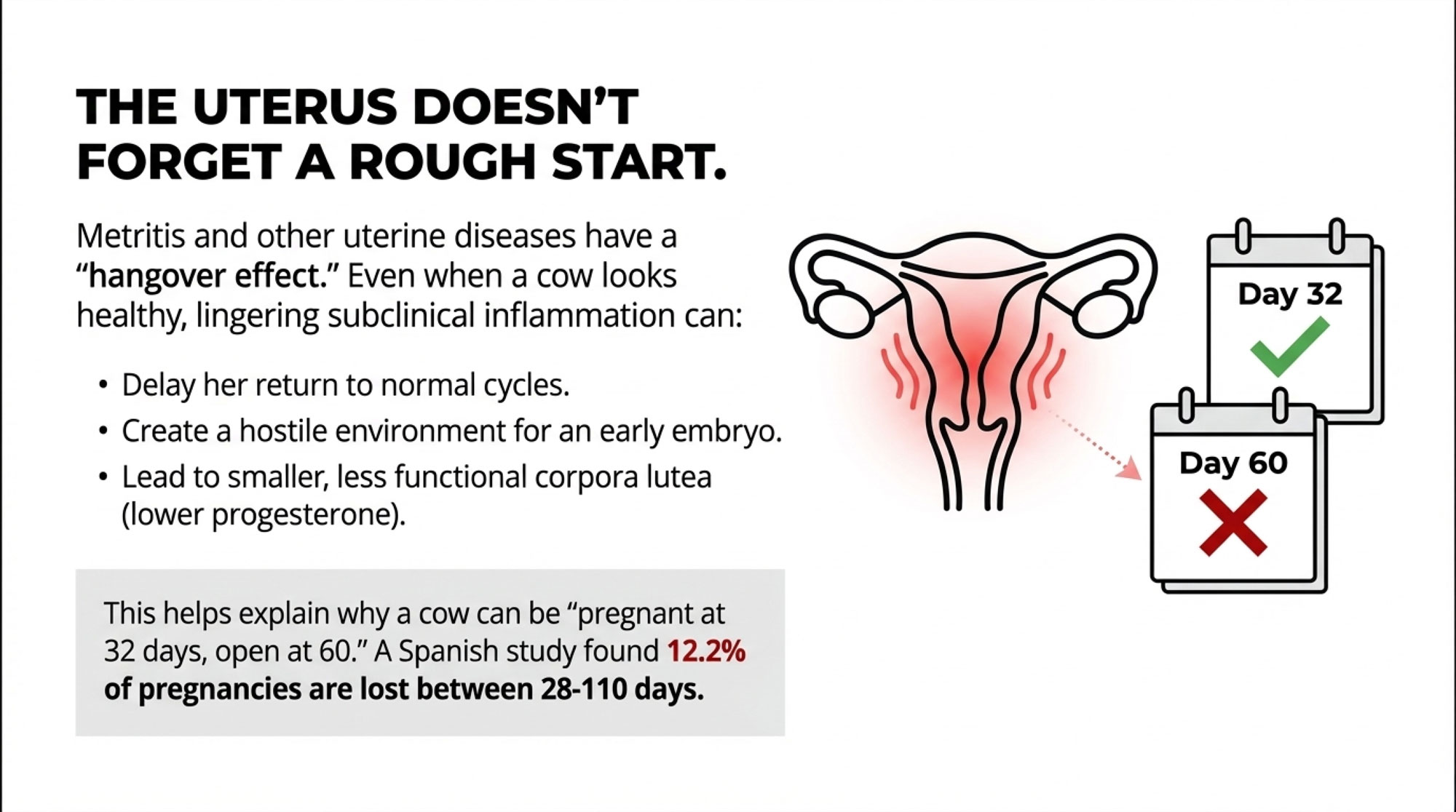
The Uterus Doesn’t Forget a Rough Start

Then there’s the uterus, which is often harder to see from the alley. A metritis cow can look “fixed” pretty quickly: smell is gone, discharge looks cleaner, she’s eating again. It’s easy to mentally tick that box and move on.

But research and field experience say the uterus remembers that rough start longer than we’d like. A Hoard’s Dairyman article that drew on transition cow research described a “hangover effect” of uterine disease—cows that had metritis or retained fetal membranes early on often had slower uterine involution or subclinical inflammation later, even when they looked normal from a distance. That lingering inflammation can delay the return to normal cycles and make it harder for early pregnancies to survive.

The 2023 Double‑Ovsynch study we started with backs up what a lot of vets see in practice. Cows that had transition health events—retained fetal membranes, metritis, mastitis, ketosis, left displaced abomasum—in the first 30 DIM had lower pregnancy per AI and more pregnancies lost between 32 and 60 days, across first‑, second‑, and older‑lactation cows, despite a very standardized repro program.

Transition Health StatusPregnancy/AI at 32dPregnancy Loss by 60dNet Impact
Healthy (no disease)42.3%8.2%Baseline
Metritis36.1%11.8%-6.2% P/AI, +3.6% loss
Retained placenta37.4%10.9%-4.9% P/AI, +2.7% loss
Ketosis (clinical)34.8%12.4%-7.5% P/AI, +4.2% loss
Displaced abomasum31.2%14.1%-11.1% P/AI, +5.9% loss
Mastitis (0-30 DIM)38.9%9.7%-3.4% P/AI, +1.5% loss

On top of that, work on postpartum inflammatory conditions has shown that cows dealing with disease during this period can develop smaller or less functional corpora lutea and produce less progesterone, which is not the kind of environment a young embryo wants to live in.

A large retrospective study in intensive Holstein herds in Spain estimated that about 12.2% of pregnancies were lost between 28 and 110 days of gestation. Put that next to the transition‑health and hormone data, and it’s not hard to see how a cow can be “pregnant at 32 days, open at 60,” without anything obvious happening in between.

So, between eggs that were built in a high‑NEFA, high‑BHBA environment and a uterus that may still be recovering from a transition “hangover,” biology keeps pointing back to what happens in those first 30 days fresh.

The Big Dollars: Metritis, SCK, and the Quiet Six‑Figure Drag

The biology matters, but at the end of the month, you’re still staring at a milk cheque, a vet bill, and a loan statement. So let’s put some realistic dollars to these transition issues.

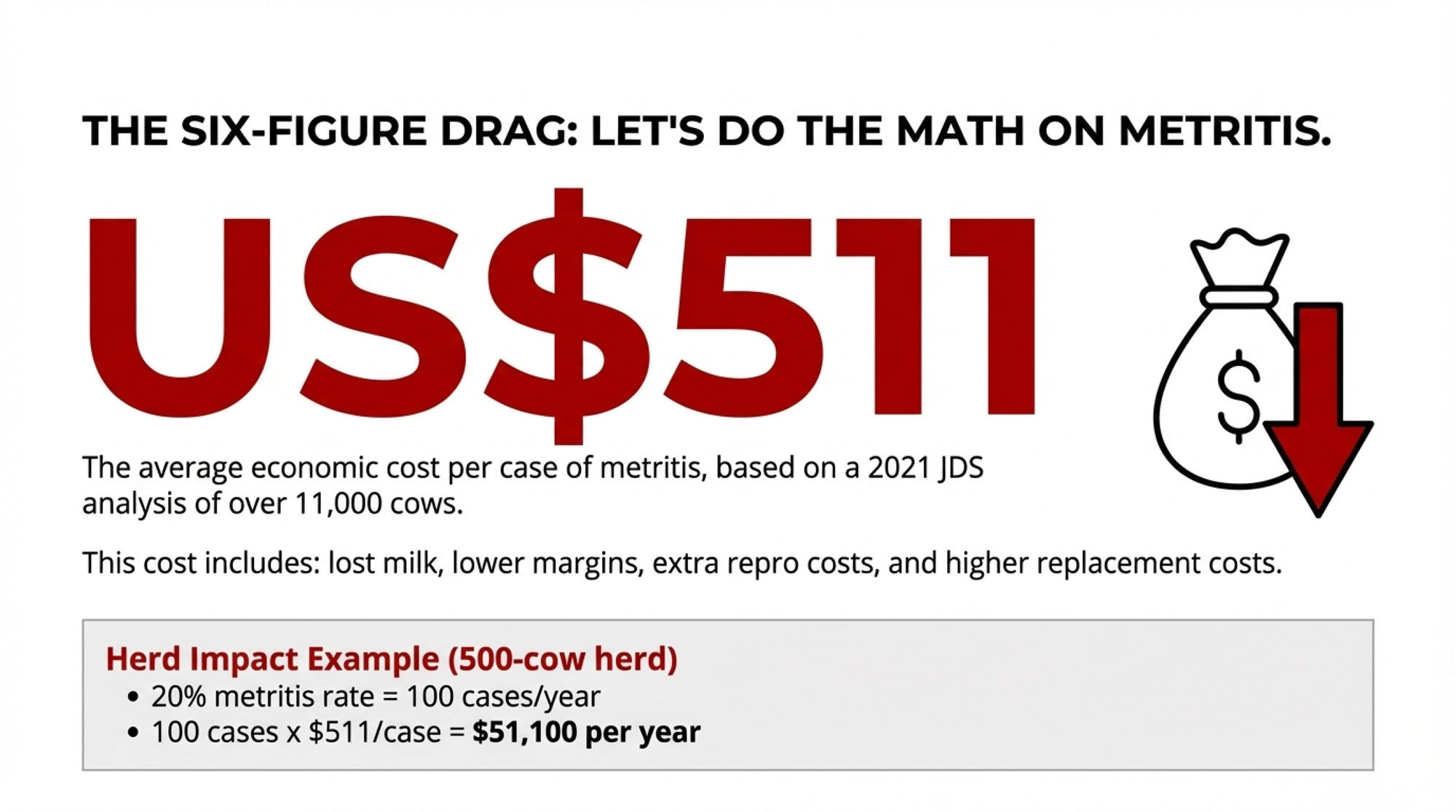
Metritis: A US$511 Per‑Cow Problem

A 2021 paper in the Journal of Dairy Science analyzed 11,733 cows in 16 herds across four U.S. regions and estimated the full economic cost of metritis. Using farm records and simulation, the authors found:

  • Mean cost per case: US$511
  • Median: US$398
  • Simulated mean: US$513, with 95% of scenarios between roughly US$240 and US$884

Those dollars include lost 305‑day milk, lower gross margin per cow, extra reproductive costs, and higher replacement costs because affected cows left the herd sooner. Hoard’s Dairyman, using herd‑level modeling on a large U.S. dairy, landed on metritis costs in the mid‑US$300 range for that specific scenario, which falls within the general range and shows how market conditions and farm structure can tweak the final number.

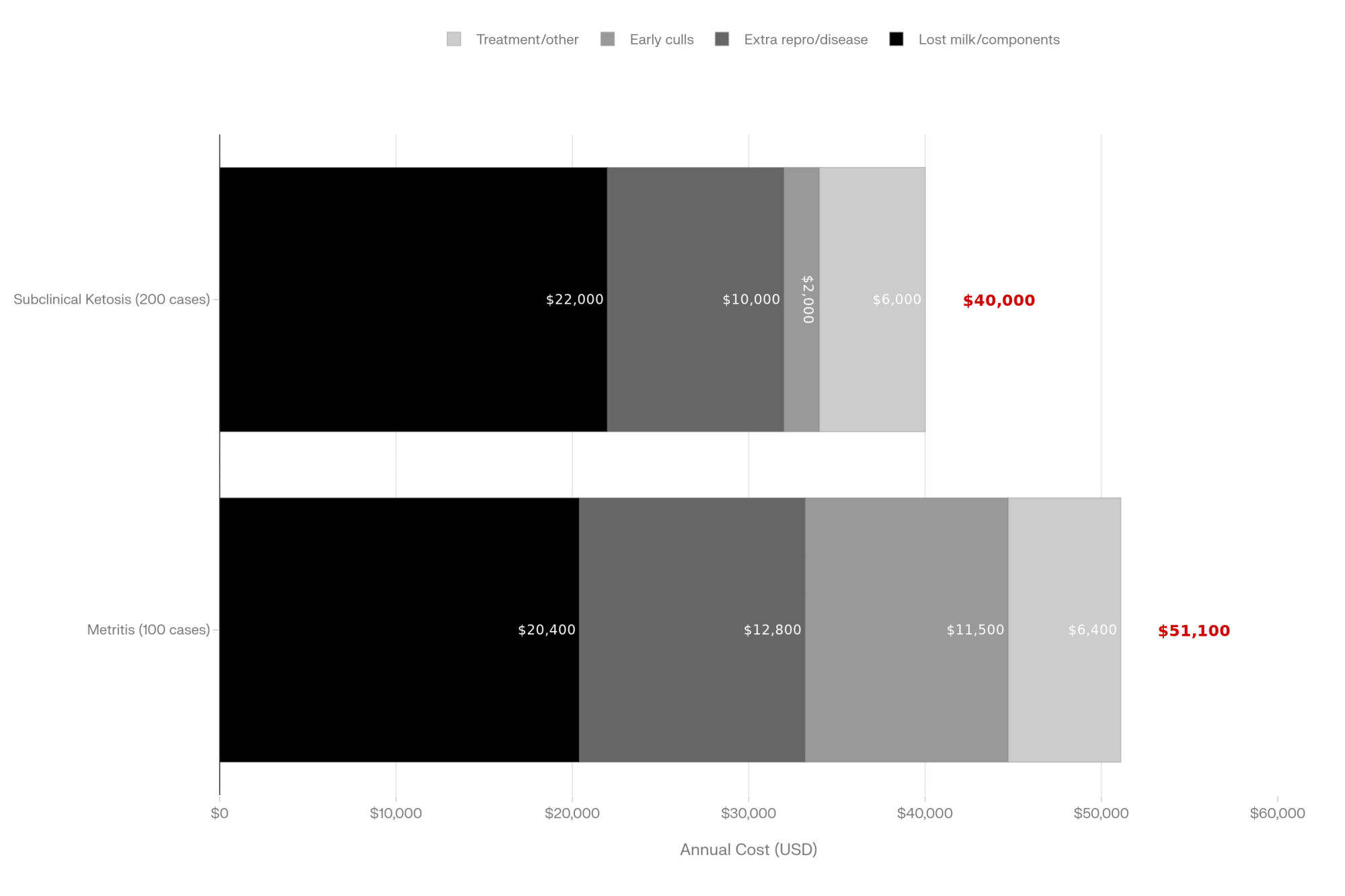
Now take a 500‑cow herd with a 20% metritis rate among fresh cows—a number that wouldn’t shock many vets in freestall herds. That’s roughly 100 cases of metritis per year. At US$511 per case, you’re into about US$51,000 in metritis‑related costs per year. That’s not just one bad month; that’s a steady leak.

Those costs don’t just sit in the “vet” column, either. A sizable chunk of that US$511 is hidden in longer days open, more services per pregnancy, lower milk, and cows that drift out of the herd earlier than they should.

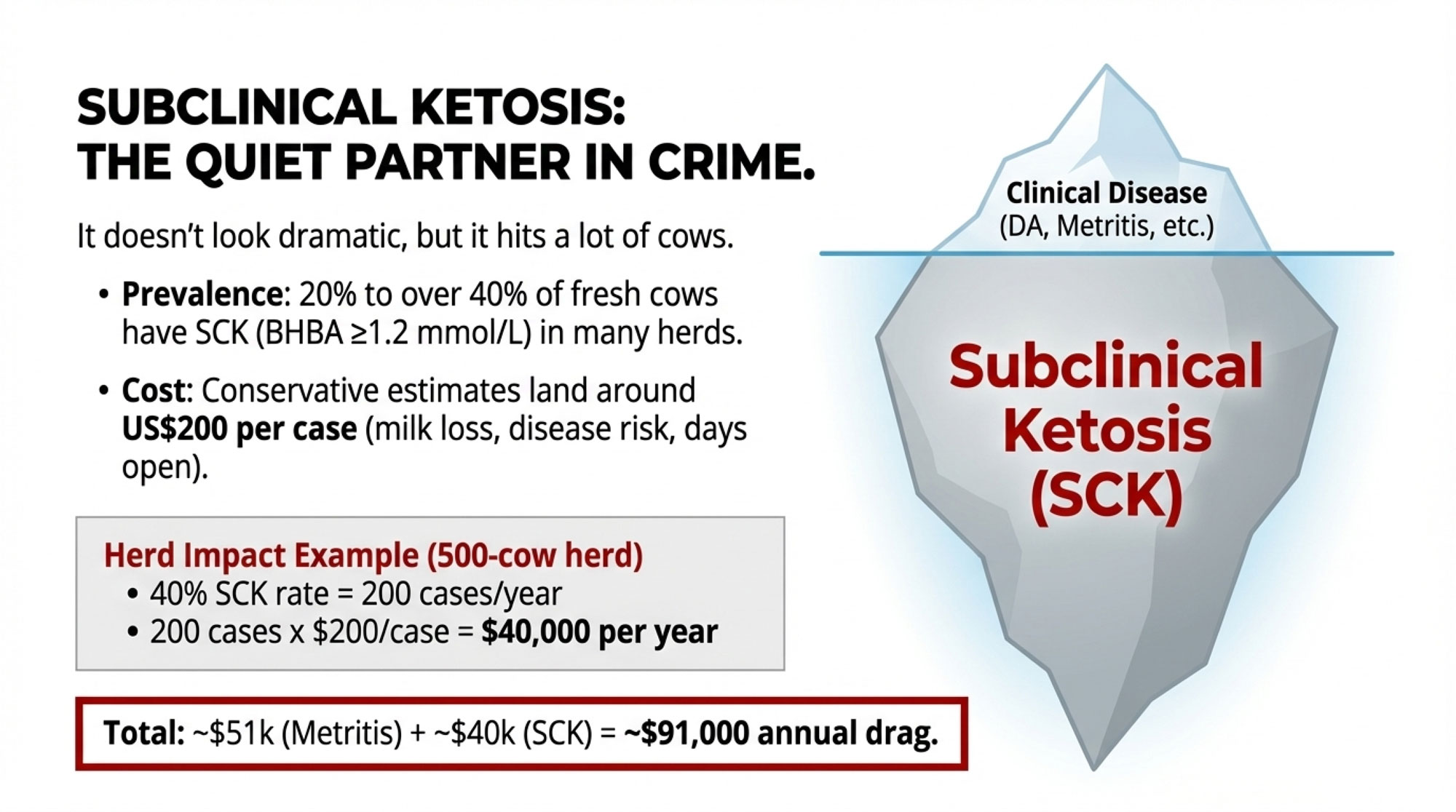
Subclinical Ketosis: Common, Quiet, Costly

Subclinical ketosis doesn’t show up like a twisted stomach or a downer cow, but it quietly hits a lot more animals.

In McArt’s four‑herd study, 43.2% of cows hit SCK—BHBA ≥1.2 mmol/L—at least once between 3 and 16 DIM. In the 10‑country data set, the median herd‑level SCK prevalence was 21.8% between 2 and 15 DIM at the same cut point, with a broad range across herds. Cows with high BHBA were more likely to develop displaced abomasum, clinical ketosis, and metritis, and were more likely to leave the herd earlier.

The Subclinical Ketosis Reality: Between 1 in 5 and nearly half of fresh cows run dangerously high ketones. Cornell’s four-herd study found 43.2% SCK prevalence, while even the 10-country median (21.8%) sits well above the 15% risk threshold where reproductive and health problems accelerate

Economic analyses that bundle milk loss, disease risk, extra days open, and culling generally land in the low‑to‑mid hundreds of dollars per SCK case. The exact number depends on milk prices, feed costs, and replacement values, but it’s not pocket change.

So if around 40% of a 500‑cow herd—about 200 cows—experience SCK in early lactation, even a conservative estimate of US$200 per case means you’re looking at about US$40,000 per year in lost opportunity tied to SCK alone. When you stack that next to the metritis math, it’s easy to see how transition disease can quietly push the total into serious money for a 500‑cow operation.

The Hidden $90,000 Drain: How Transition Disease Costs Stack Up in a 500-Cow Herd. Metritis and subclinical ketosis together strip over $91,000 annually from a typical herd—with most costs hidden in lost milk, reproduction failures, and early culls rather than visible vet bills 

In Canadian quota systems, there’s another angle. Canadian Dairy Commission figures show that average butterfat tests on Canadian farms have been creeping up—around 4.3% in 2024—helping reduce structural surplus and improve returns per litre. When fresh cows crash, both milk yield and butterfat performance in early lactation tend to suffer. That means quota isn’t being used as efficiently, and you may be under‑delivering butterfat against the quota you paid a lot of money for. Dairy Global has reported that producers in Eastern Canada continue to battle for relatively small amounts of new quota at high butterfat prices per kilogram, reinforcing how valuable every kilogram of component really is. A fresh cow crash is a component crash—and in a quota system, components are your currency.

So these early diseases aren’t just a health story; they’re a transition‑to‑cheque story.

What Farmers Are Finding: NEFA, BHBA, and That Post‑Calving Crash

So how do you tell whether NEB and transition problems are really a big driver on your farm, beyond the feeling that you’re treating too many fresh cows?

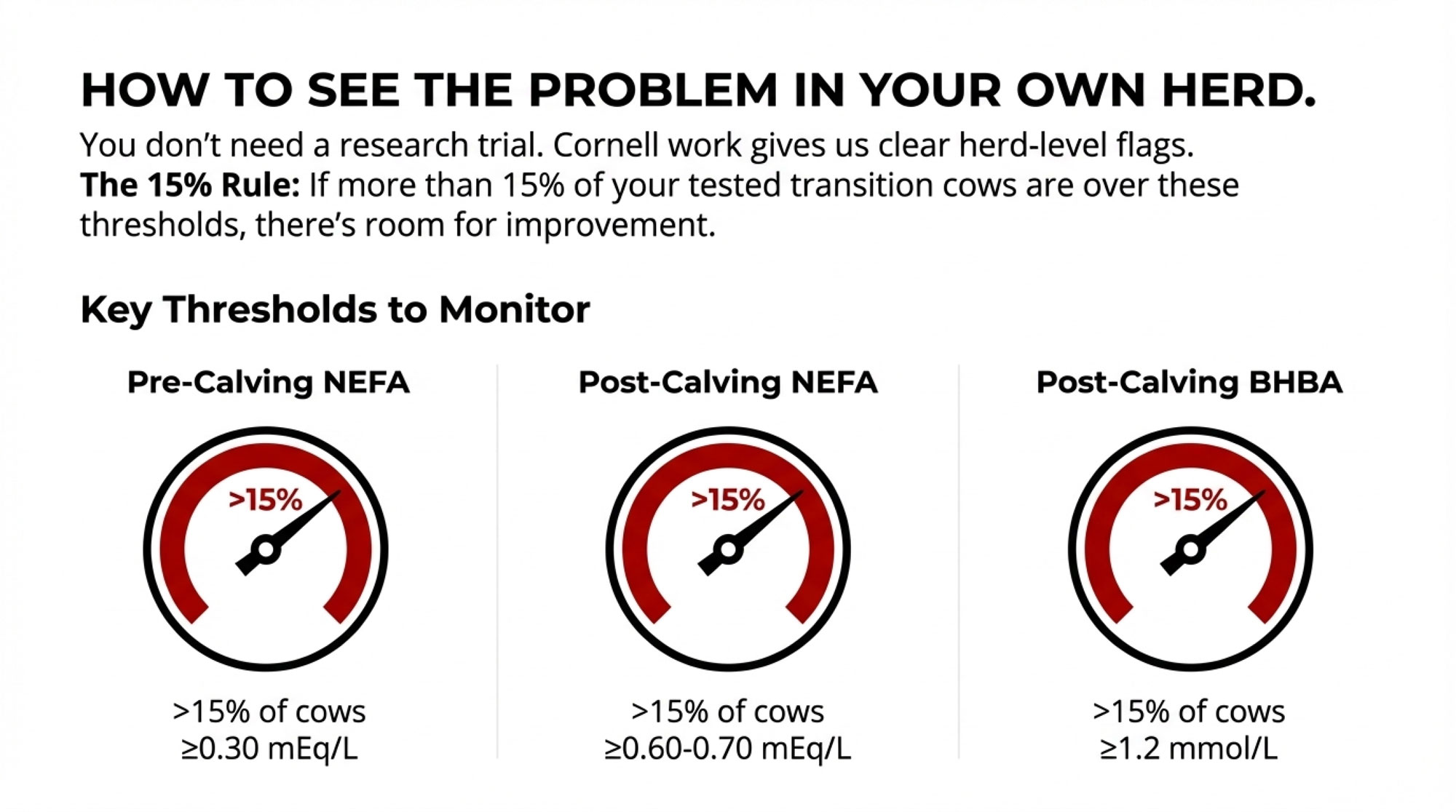
Cornell work has given us some very practical markers. In a series of projects summarized by Tom Overton, PhD (Cornell University), and detailed in work by Ospina and colleagues, three key thresholds emerged when predicting disease and performance:

  • Pre‑calving NEFA: When more than about 15% of close‑up cows tested ≥0.30 mEq/L NEFA in the week before calving, the herd saw a higher risk of displaced abomasum, retained placenta, metritis, and poorer reproduction after calving.
  • Post‑calving NEFA: When more than about 15% of fresh cows had NEFA ≥0.60–0.70 mEq/L in the first two weeks after calving, early‑lactation disease risks and performance losses increased.
  • Post‑calving BHBA: When more than about 15% of cows had BHBA ≥10–12 mg/dL (≈1.0–1.2 mmol/L) in the first couple of weeks, the herd had more DAs, clinical disease, and lower 305‑day mature‑equivalent milk.

Overton and others have translated this into a simple herd‑level rule of thumb: if more than 15% of sampled cows are over those NEFA or BHBA thresholds, there’s likely “room for improvement” in transition energy balance and management.

So, a practical way to use NEFA/BHBA looks like this:

  • A few times a year, pull blood on 12–15 close‑up cows and 12–15 fresh cows with your vet.
  • See what percentage of each group is over those 0.30 / 0.60–0.70 NEFA levels and ~1.0–1.2 mmol/L BHBA equivalents.
  • If that percentage is under about 15%, you’re probably in decent shape. If it’s above 15–20% consistently, it’s a strong signal your transition program is leaving money and pregnancies on the table.

You don’t have to turn your herd into a research trial. A small, well‑chosen sample, taken a few times a year, gives you a pretty honest “weather report” on how tough that transition window really is for your cows.

What Farmers Are Doing: Three Management Levers That Actually Move the Needle

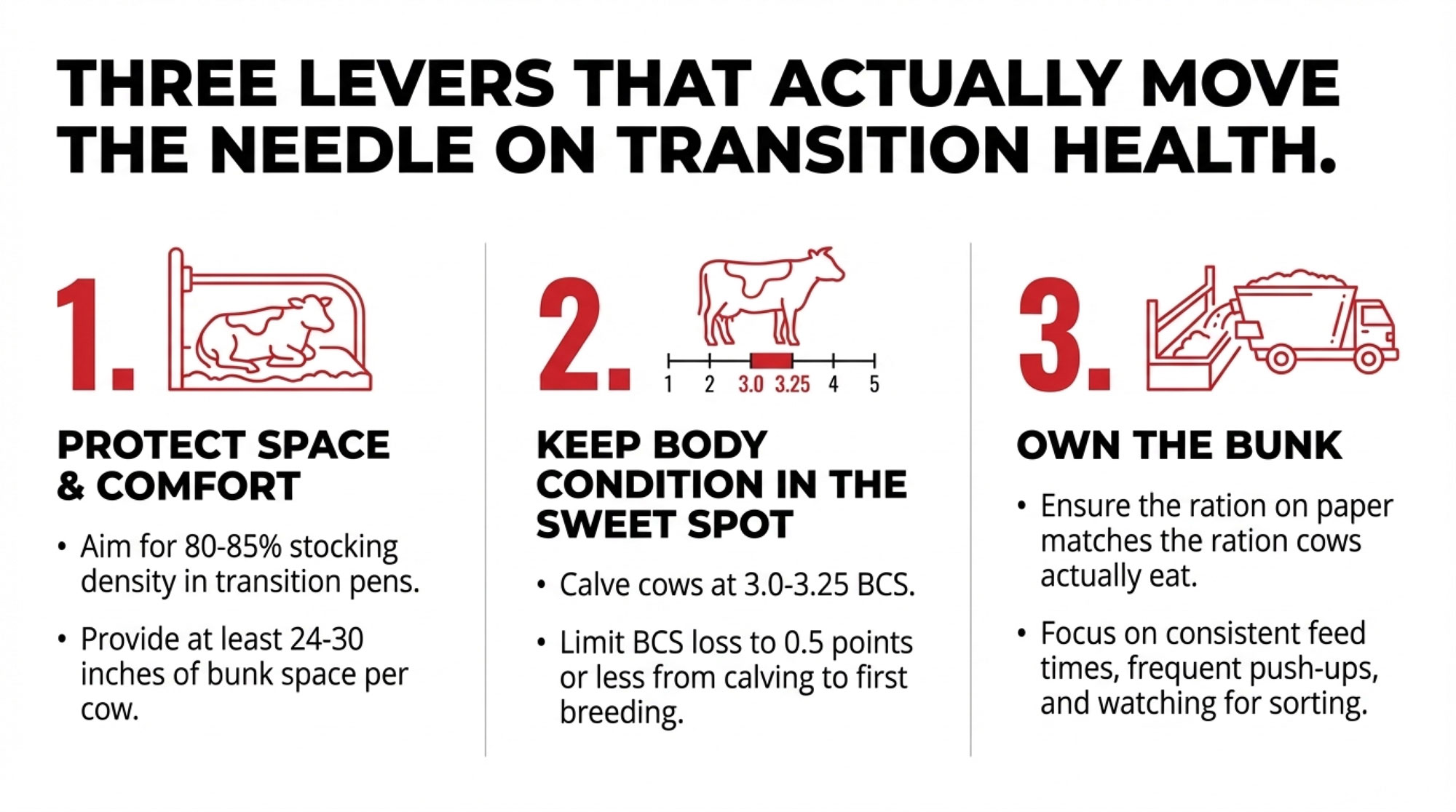
So, where are the herds that are doing well on this 90‑day connection, actually putting their time and money? Across extension meetings, Dairyland Initiative resources, and producer discussions, three levers keep coming up.

1. Protecting Space and Comfort in Transition Pens

Looking at this trend across herds, the first word that comes up is space. The University of Wisconsin’s Dairyland Initiative has been very clear: overstocking freestall pens increases competition at the bunk, reduces lying time, keeps cows on concrete longer, and leads to more lameness and lower milk yield. Those effects are especially problematic in close‑up and fresh pens.

Their recommendations—and those of other researchers—generally look like this:

  • Aim for about 80–85% stocking density in close‑up and fresh pens, not 100–120%.
  • Give at least 24–30 inches of bunk space per cow in these pens to reduce bunk competition.

Penn State Extension has also emphasized that overstocking at the bunk raises risk for SCK, displaced abomasum, and hypocalcemia because lower‑ranking cows end up eating less of the intended ration and at less‑ideal times.

In Wisconsin freestall herds, I’ve noticed that when producers finally protect those transition groups—sometimes at the cost of a tighter late‑lactation pen—fresh cow problems start to ease. Fewer DAs, fewer metritis cases, fewer slow‑starting cows. In Western dry lot systems in California or Idaho, the details change—shade, mud, and feedlane design matter more than stalls—but the principle is the same: if transition cows can’t eat and rest without fighting for it, you’ll pay for it in the breeding pen.

2. Keeping Body Condition in the Sweet Spot

Body condition management isn’t new, but the research has sharpened the targets.

The high fertility cycle paper and postpartum BCS studies suggest that Holsteins do best for health and fertility when they calve around 3.0–3.25 on a 5‑point scale. Cows calving at 3.5 or higher have a higher risk of metabolic problems—SCK, DA, metritis—and more reproductive trouble. On top of that, cows that lose more than about 0.5 BCS points between calving and first breeding tend to have poorer reproductive performance than cows that hold condition or lose only a little.

So a realistic set of targets looks something like:

  • Calve the bulk of the herd at 3.0–3.25 BCS.
  • Keep BCS loss from calving to first breeding to 0.5 points or less whenever possible.

In a lot of Midwest freestall herds, the big improvements came not from exotic feed additives but from tightening late‑lactation diets, grouping over‑conditioned cows more thoughtfully, and making sure transition rations support steady intakes before and after calving.

In Canadian quota herds, it has a direct butterfat angle as well. When fresh cows calve too heavy and crash in condition, you often see depressed butterfat performance right when you’re trying to maximize component yield against quota, this is critical to improving farm margins in a supply‑managed environment.

3. Making Sure the Ration on Paper Matches the Ration at the Bunk

The third lever is deceptively simple: cows don’t eat the ration in the nutritionist’s software, they eat what’s in front of them.

Penn State and other extension teams keep coming back to a few basics that are easy to slip on when days get long:

  • Feed at consistent times so cows know when to expect feed.
  • Push up often enough that there’s always feed in reach, especially for timid cows.
  • Watch refusals and particle size so you catch sorting before it becomes a habit.

Overstocking the feed bunk makes all three much harder, and that’s a big reason why crowded transition pens and higher SCK/DA/metritis risk so often travel together.

In the herds that really excel at fresh cow management, someone clearly “owns the bunk.” That person is watching how the ration looks in the wagon, how it looks in front of the cows, how cows are eating it, and how much is left—and they’re talking regularly with the feeder and nutritionist about what they see.

What I’ve noticed is that when this bunk piece is tight, you feel it everywhere: smoother fresh cow management, more consistent butterfat performance, fewer surprise DAs, and fewer cows that arrive at first service already behind.

Simple Data Tools That Make the 90‑Day Connection Visible

You don’t need a new monitoring system or a consultant parked at your farm to start connecting transition and reproduction. Three data points most herds already have—or can get easily—can take you a long way: early fat‑to‑protein ratio, peak milk patterns, and early cull rates.

Fat‑to‑Protein Ratio: A Metabolic Weather Report

A 2021 paper revisiting the link between fat‑to‑protein ratio (F:P) and energy balance found that early‑lactation F:P ratios of 1.5 or higher tended to reflect deeper negative energy balance—more body weight loss, higher NEFA, and more metabolic strain. That’s consistent with what a lot of nutritionists already treat as a warning sign.

So, practically:

  • If only a small slice of early‑lactation cows have an F:P ≥1.5 on the first test after calving, you’re likely okay.
  • If 20% or more of those cows have F:P ≥1.5 on that first test, it’s a good reason to dig into energy balance and SCK risk.

It won’t diagnose the problem for you, but it tells you there’s likely a problem to solve.

Peak Milk Curves: How Fast and How High

In well‑managed Holstein herds on TMR, mature cows often peak around 60–75 DIM, depending on genetics and ration strategy. When transition disease is common, those peaks tend to be lower and show up later in lactation.

Several studies and field analyses have shown that cows with clean transitions tend to have faster‑rising, higher peaks, while cows that battled SCK, metritis, or DA have flatter, delayed peaks and lower overall production. If your software will let you, plotting separate curves for “healthy through 30 DIM” cows and “at least one transition disease” cows can be an eye‑opening exercise in a herd meeting. In many herds, seeing those two curves side‑by‑side does more to justify investing in transition than any lecture.

Early‑Lactation Culls: When Do Cows Leave?

Most herds track the total cull rate. Fewer herds break out 0–60 DIM removals in a way that gets discussed regularly.

Disease‑costing and herd analyses repeatedly show that early culls are among the most expensive, because you’ve carried that cow through a previous lactation and the dry period and then gotten very little milk out of the current one. Herds with strong transition programs often keep early removals in the low single digits as a percentage of calvings, while herds where transition disease is a bigger issue can see early culls drift into double‑digit percentages.

Once you start tagging early culls with clear reasons and comparing them against fresh cow records and BHBA/NEFA test results, a pattern usually emerges: many of those cows never really recovered from the transition period. It’s a tough conversation, but it’s one of the most useful ones you can have.

What Farmers Are Doing: A BHBA Routine That Fits Real Herds

Subclinical ketosis is one of those areas where a simple routine can give you a lot of control without turning your farm into a research station.

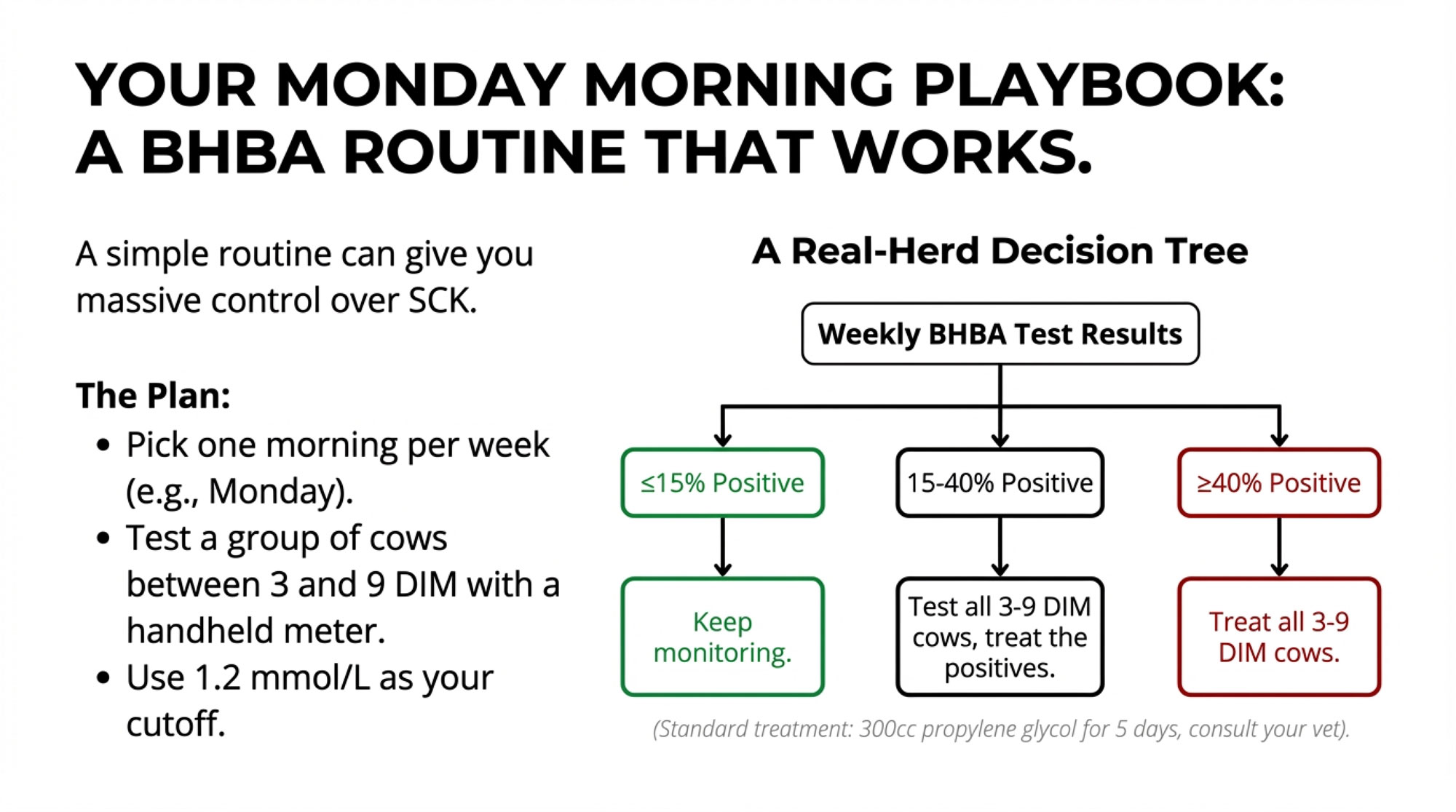
Building on McArt’s SCK work and field protocols shared by practitioners like Jerry Gaska, DVM (Wisconsin), the routine many herds are adopting looks like this:

  • Pick one or two mornings each week.
  • On those days, test a group of cows between 3 and 9 DIM using a validated handheld BHBA meter.
  • Use 1.2 mmol/L as the cutoff for subclinical ketosis—the same line used in Cornell’s epidemiology work and in many extension programs.

Gaska described a Wisconsin farm where they treat their BHBA results like a herd‑level dashboard:

  • If ≤15% of tested cows are at or above 1.2 mmol/L, they just keep monitoring.
  • If 15–40% are positive, they test all cows 3–9 DIM and treat the positives.
  • If ≥40% are positive, they treat every fresh cow in that DIM range.
The Monday-Morning BHBA Dashboard: Turn your weekly testing into a transition health report card. When more than 15% of fresh cows test above 1.2 mmol/L BHBA, Cornell research shows you’ll see more disease, lower milk, and weaker reproduction 60 days later. This simple metric predicts your pregnancy rate before you ever pull the breeding gun

Their standard treatment is 300 cc of propylene glycol once daily for 5 days, which is consistent with recommendations from many vets and extension resources. The goal isn’t to drive SCK to zero—it’s to keep the percentage reasonable and to use that weekly number as an early warning system for when transition is slipping.

If you imagine a 500‑cow herd trimming SCK prevalence from 40% down toward 20% over a season or two, using this type of monitoring and better transition management, and you assume each SCK case costs in the low hundreds of dollars, the potential savings add up quickly. And what farmers are finding is that when that BHBA dashboard number improves, DA numbers, metritis cases, and repro results tend to look better a few months later.

What Farmers Are Finding: Letting Transition Health Steer Semen Use

Now let’s talk about where this transition health story meets some of the hottest decisions on many farms: how to use sexed dairy semen, conventional semen, and beef‑on‑dairy.

Beef‑on‑dairy has moved from “interesting idea” to everyday practice on a lot of operations. Industry reporting and national evaluation data show more herds using sexed dairy semen on a limited top tier and beef semen on lower‑priority cows to capture calf value. At the same time, reproduction leaders like Paul Fricke, PhD (University of Wisconsin–Madison), have been talking about a “reproduction revolution” centered on precision timed‑AI, early pregnancy diagnosis, and targeted use of sexed and beef semen.

What’s encouraging is that more producers are folding transition health into that conversation, not just parity and genetic index.

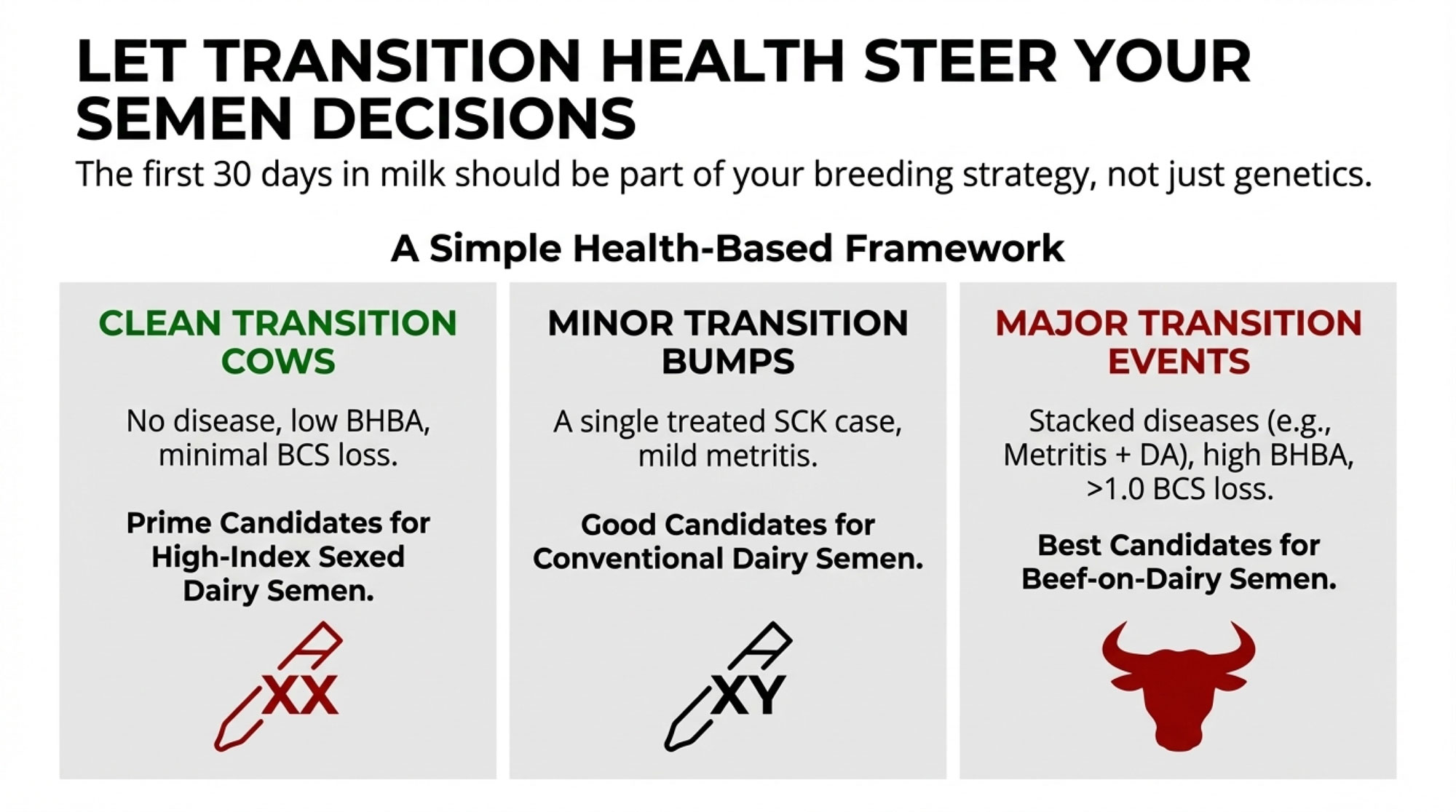
A Simple Health‑Based Semen Strategy You Can Actually Use

Here’s one way to structure it that fits real herds:

1. Clean Transition Cows

These cows:

  • Had no recorded transition disease in the first 30 DIM (no milk fever, metritis, DA, clinical ketosis, retained fetal membranes).
  • Stayed below 1.2 mmol/L BHBA on any early‑lactation testing, if you test.
  • Lost 0.5 BCS points or less from calving to first breeding.
  • Showed a first‑test F:P ratio comfortably under 1.5.

They’re prime candidates for high‑index sexed dairy semen, especially if their genetic merit fits your replacement goals. That’s where you want to invest in future daughters.

2. Minor Transition Bumps

These cows might have:

  • A single BHBA reading just over 1.2 mmol/L that responded to propylene glycol.
  • A mild metritis case that resolved quickly.
  • Slightly more BCS loss than ideal, but nothing dramatic.

They’re often solid cows, just not quite in the “best bets” class. Many herds here lean toward conventional dairy semen, reserving sexed semen for cows that are both genetically strong and biologically set up for success.

3. Major Transition Events

These cows tend to be the ones that:

  • Had metritis and a DA or stacked multiple transition diseases.
  • Showed consistently high BHBA readings or obvious SCK that lingered.
  • Dropped more than a full BCS point between calving and breeding.

A growing number of herds put these cows in the beef‑on‑dairy or “do not breed” category, depending on age, production, and pregnancy status. In Western dry lot systems where beef‑cross calves often have a ready market and good value, managers talk about this as a way to turn a cow with higher reproductive risk into a short‑term calf revenue opportunity instead of betting your future replacements on her.

In Canadian quota herds, where quota additions can be limited and expensive, many producers are using a similar idea: they focus sexed dairy semen on cows that are most likely to be long‑term, high‑component producers under their system, and use beef on cows where the odds of a trouble‑free, high‑butterfat lifetime are lower.

The big shift is that the first 30 days in milk are now part of the semen decision, not just age, production, or genomic index. That’s a very “2020s” way of thinking about reproduction that lines up biology, genetics, and cash flow.

Transition Health TierHealth Markers (0-30 DIM)Semen StrategyWhy This WorksExpected Outcome
Tier 1: Clean Transition– No disease events
– BHBA <1.2 mmol/L
– BCS loss ≤0.5 points
– F:P <1.5
High-index sexed dairy semenHealthy metabolism during follicle development; strong oocyte quality; optimal uterine environmentHigh P/AI (40%+); low preg loss; valuable replacement heifers
Tier 2: Minor Bumps– Single mild SCK event (responded to treatment)
– Mild metritis (quick resolution)
– BCS loss 0.5-0.75 points
Conventional dairy semenModerate metabolic challenge; good recovery; acceptable but not optimal fertilityModerate P/AI (30-38%); acceptable preg loss; solid replacements
Tier 3: Major Events– Metritis + DA
– Multiple disease events
– Persistent high BHBA
– BCS loss >1.0 point
Beef-on-dairy or Do Not BreedSevere metabolic/uterine damage; compromised oocyte quality; high preg loss risk; poor lifetime potentialCapture calf value; avoid wasting high-value dairy genetics on low-fertility cow

Nuances That Matter: Heifers, Pregnancy Loss, and Seasonal Herds

There are a few wrinkles worth mentioning, because not every group of cows—or every system—behaves the same.

One nuance that came out of the Cornell NEFA/BHBA work, and was highlighted in Hoard’s Dairyman, is that heifers and older cows don’t always show the same performance patterns at similar NEFA and BHBA levels. In those data, heifers with higher postpartum NEFA (≥0.60 mEq/L) and BHBA (≥9 mg/dL) sometimes produced more milk than heifers with lower levels, while multiparous cows with NEFA ≥0.70 mEq/L and BHBA ≥10 mg/dL produced less and had more disease. That doesn’t mean high ketones are ever “good,” but it does suggest that if time and budget are tight, focusing your most intensive monitoring on older cows may give you more bang for your buck.

On pregnancy loss, the Spanish Holstein work put numbers around something many of us feel: about 12.2% of pregnancies were lost between 28 and 110 days of gestation in intensive systems. Articles in Hoard’s Dairyman and Dairy Global have described pregnancy loss as a major ongoing puzzle in modern dairies, with uterine health and metabolic stress as key suspects. That’s one more reminder that “pregnant at 32 days” isn’t mission accomplished if the transition period was rough.

Seasonal and block‑calving herds—whether in New Zealand, Ireland, or pasture‑based pockets of North America—live and die by this 90‑day connection even more. Research on grazing herds with different fertility breeding values has shown that cows with better transition metabolism and shorter postpartum anestrus intervals are far more likely to conceive in the first 3–6 weeks of mating, which pushes up six‑week in‑calf rates and tightens the calving spread. When transition management has holes, those herds feel it almost immediately in more late‑calvers and a stretched season. When they improve energy balance, BCS management, and fresh cow monitoring, many see their fertility and calving patterns tighten within a couple of seasons.

The biology doesn’t care if you’re on pasture or TMR, quota or open market—the transition pen is still writing a big chunk of the repro story.

Bringing It Home: Benchmarks and Monday‑Morning Moves

If you’re thinking, “This all makes sense, but where do we start without turning the place upside‑down?”, here are some concrete benchmarks and a realistic plan.

Benchmarks to Check Your Own Herd Against

From the work and examples we’ve talked about, here are some practical “sanity check” targets:

  • BHBA in early lactation:
    If more than 15–20% of sampled cows 3–16 DIM test at or above 1.2 mmol/L, your transition energy balance likely needs work.
  • NEFA pre‑ and postpartum:
    If more than about 15% of close‑up cows have NEFA ≥0.30 mEq/L, or more than 15% of early‑lactation cows have NEFA ≥0.60–0.70 mEq/L postpartum, you’re in a higher‑risk zone for disease and weaker repro.
  • Body condition:
    Calving most Holsteins with BCS 3.0–3.25 and keeping BCS loss from calving to first breeding at ≤0.5 pointssupports better health and fertility.
  • Fat‑to‑protein ratio:
    If roughly 20% or more of early‑lactation cows have an F:P ≥1.5 on their first test after calving, it’s a good sign you should dig into energy balance and SCK.
  • 0–60 DIM culls:
    If early‑lactation culls are creeping into double‑digit percentages of calvings, transition disease is almost certainly playing a major role.

You don’t have to fix every metric at once. The power is in watching them over time and seeing whether changes in your transition program move those numbers in the right direction.

MetricTarget (Green Zone)Acceptable (Yellow Zone)Fix This Now (Red Zone)
BHBA Prevalence (3-16 DIM, ≥1.2 mmol/L)<15% of tested cows15-20% of tested cows>20% of tested cows
Postpartum NEFA (0-14 DIM, ≥0.60 mEq/L)<15% of tested cows15-20% of tested cows>20% of tested cows
Calving BCS & LossCalve at 3.0-3.25; lose ≤0.5 points to 1st breedingCalve at 3.25-3.5; lose 0.5-0.75 pointsCalve at >3.5 or lose >0.75 points
Fat-to-Protein Ratio (1st test postpartum)<20% of cows with F:P ≥1.520-30% of cows with F:P ≥1.5>30% of cows with F:P ≥1.5
Transition Pen Stocking(close-up & fresh)75-85% stocking; 24-30″ bunk/cow85-95% stocking; 22-24″ bunk/cow>95% stocking or <22″ bunk/cow
Early Culls (0-60 DIM)<5% of calvings5-8% of calvings>8% of calvings

A Realistic Plan for the Next Six Months

If you want to put this 90‑day lens to work without overwhelming the team, a simple roadmap could look like this:

  1. Start a BHBA Snapshot.
    Once or twice a week, test a small group of cows 3–9 DIM (maybe 6–8 cows in a 100‑cow herd, 10–15 in a 500‑cow herd) using a handheld meter. Track the percentage at or above 1.2 mmol/L, treat positives with a propylene glycol protocol that your vet is comfortable with, and write that weekly percentage where everyone can see it.
  2. Walk Your Transition Pens with a Tape Measure.
    Count stalls, count cows, and measure bunk space in your close‑up and fresh pens. If you’re regularly at or above 100% stocking or bunk space is under 24 inches per cow, sit down with your nutritionist and vet to talk through options for regrouping, overflow pens, or small facility tweaks that protect those high‑risk groups.
  3. Bring Transition Health Into the Semen Discussion.
    At your next breeding strategy meeting, take along a simple list of fresh cow diseases and BHBA results by cow, plus BCS scores on cows coming up for first service. Sort cows into “clean,” “minor bump,” and “rough transition,” and make deliberate decisions about where sexed dairy semen, conventional semen, and beef‑on‑dairy semen really belong.

The Bottom Line

If there’s one big idea to tuck in your pocket, it’s this: your pregnancy rate isn’t just a breeding‑pen number. It’s a delayed grade on your fresh cow management. The more we treat those first 30 days in milk as the front end of our repro program, not a separate chapter, the more room we give ourselves to improve both the biology and the bottom line.

What’s encouraging is that you don’t need a brand‑new barn or a shiny gadget to get started. Same cows, same buildings, same people—just looked at through a 90‑day lens that connects what happens in the transition pen to what shows up at preg check and, ultimately, on your milk statement. 

Key Takeaways:

  • Pregnancy rate is really a 90‑day transition report card. Cows with metritis, SCK, or DA in the first 30 DIM have lower pregnancy per AI and more pregnancy loss—even on excellent timed‑AI programs. ​
  • The math adds up fast. Metritis costs about US$511/case; SCK hits 20–40% of fresh cows. Together, they can quietly drain around US$90,000 a year from a 500‑cow herd. ​
  • Simple flags make it visible. BHBA ≥1.2 mmol/L in >15–20% of fresh cows, F:P ≥1.5 in >20% on first test, or 0–60 DIM culls in double digits all signal transition trouble. ​
  • Three levers matter most. Protect stocking (80–85%) and bunk space (24–30″) in transition pens; calve cows at BCS 3.0–3.25 and limit loss to ≤0.5 points; make sure the ration at the bunk matches the ration on paper. ​
  • Use transition health to guide semen decisions. Clean‑transition cows are prime for sexed dairy semen; cows with rough transitions often belong in the beef‑on‑dairy column.

Complete references and supporting documentation are available upon request by contacting the editorial team at editor@thebullvine.com.

Learn More

Join the Revolution!

Join over 30,000 successful dairy professionals who rely on Bullvine Weekly for their competitive edge. Delivered directly to your inbox each week, our exclusive industry insights help you make smarter decisions while saving precious hours every week. Never miss critical updates on milk production trends, breakthrough technologies, and profit-boosting strategies that top producers are already implementing. Subscribe now to transform your dairy operation’s efficiency and profitability—your future success is just one click away.

NewsSubscribe
First
Last
Consent

The Science of Dairy Cow Reproduction: Unlocking the Secrets to Improve Fertility and Productivity

Decode dairy cow fertility. Explore groundbreaking research to increase your herd’s productivity. Ready to elevate your success?

Summary:

The intricate landscape of dairy cow reproduction encompasses technological advancements, nutrition, health, and the influences of environmental and genetic factors. As the demand for sustainable food sources rises, enhancing cow fertility becomes paramount. According to Dr. Emily Grant, integrating precision management and genetic evaluation could elevate fertility rates and increase herd longevity. Understanding the reproductive cycle aids farmers in optimizing herd management, which in turn enhances efficiency and milk yield. Innovations such as artificial insemination, embryo transfer, and genomic selection have significantly improved productivity. Farmers must also consider body condition, management practices, and preventive healthcare. Balancing these technological advances with ethical responsibilities is crucial for fostering a harmonious blend of innovation and care within the industry.

Key Takeaways:

  • Dairy cow reproduction is a complex interplay of genetic, environmental, and nutritional factors that requires careful management and understanding.
  • Technological advancements, such as automated monitoring systems, have revolutionized fertility management, leading to better reproductive outcomes.
  • Ethical considerations and animal welfare are increasingly integral to reproductive strategies in the dairy industry, prompting innovations that prioritize humane practices.
  • Nutrition directly impacts fertility, highlighting the necessity for balanced diets and health management to optimize reproductive success in dairy cows.
  • Understanding the genetic and environmental influences on fertility can help make informed breeding decisions that improve herd sustainability.
  • Striking a balance between technological interventions and ethical farming practices is crucial for future dairy reproduction industry standards.
  • Farm productivity and profitability are closely linked to effective reproductive management, emphasizing the need for continuous improvement and innovation.
dairy cow reproduction, sustainable farming practices, cow fertility improvement, genetic selection in dairy cows, reproductive efficiency, artificial insemination technology, embryo transfer advancements, dairy herd management, nutrition and health in dairy cows, ethical farming innovations

In farms and modern barns, dairy cow reproduction plays a crucial role in agriculture, impacting the economy and the environment. Fertility is essential for farmers and the entire industry’s success. As the demand for sustainable food grows, improving cow fertility becomes essential. Minor improvements can increase farm profits and lower environmental impact [ScienceDirect]. This article explores new advancements in dairy cow reproduction, examining how these innovations can boost cow fertility and productivity, leading to more sustainable farming practices. 

The Fertility Puzzle: Decoding Dairy Cow Reproduction 

As a dairy farmer, your role in managing cow reproduction has become even more critical. Fertility rates are all over the map, and we must maximize productivity. This can be tricky, as it requires balancing genetic selection, management practices, and environmental pressures. As dairy farms expand worldwide, nutrition and disease add layers of complexity. Your role in the industry is pivotal. 

Fertility rates have dropped because we’ve been selecting cows for their milk production. This genetic selection has increased milk output but also led to about a 20% decline in fertility over recent decades (ScienceDirect, 2022). This drop has hefty economic impacts, with yearly losses of over $200 per cow due to reproductive issues (Journal of Dairy Science). Improving fertility is crucial. Dr. Emily Grant, a veterinary science expert, recommends blending precision management with genetic evaluation to turn around declining fertility and boost herd longevity (Frontiers in Veterinary Science, 2023). 

These reproductive challenges increase production costs and often lead to animal culling. We need a new approach encouraging farmers to balance productivity and substantial reproduction. As the dairy industry strives for sustainability, dealing with these reproductive challenges using innovative strategies and teamwork is crucial for long-term success.

The Dance of Life: Navigating Dairy Cow Reproduction 

The life cycle of a dairy cow centers around reproduction. The key part is estrus when a cow is ready to conceive. This happens about every 21 days. During estrus, cows become restless and loud as ovulation nears—when an egg is released and needs to meet sperm for conception. Timing is crucial here. 

If fertilization is successful after ovulation, the cow is pregnant for about nine months, similar to humans. The cow’s body significantly changes during this time to nurture the growing calf. Hormones like estrogen and progesterone control estrus and pregnancy, so managing these hormones is essential for fertility. Stress, poor nutrition, or health issues can upset these hormones and cause fertility problems, which is a big worry for dairy farms. 

Knowing the reproductive cycle helps farmers manage their herds better, improving reproductive efficiency and milk production. By optimizing each phase of estrus, ovulation, and pregnancy, farmers can keep cows healthier and more productive.

Revolutionizing Dairy: The Technological Advancements in Cow Reproduction

The integration of reproductive technologies into dairy farming has significantly boosted productivity. Artificial insemination is a crucial method that involves collecting semen from a bull and introducing it into a cow’s reproductive tract. This approach enhances dairy cow fertility and herd productivity. It improves herd quality by allowing precise breeding control [Frontiersin, source]. This technique reduces time and costs while increasing pregnancies, enabling the use of semen from top-quality bulls to improve herd genetics. 

Embryo transfer is another method for quickly boosting genetic lines. By transferring high-value embryos to recipient cows, offspring from elite dairy cows can be increased without the stress of repeated pregnancies. This accelerates genetic progress beyond traditional breeding [ScienceDirect, source]. 

Genomic selection uses genomic data to predict breeding value. It revolutionizes breeding by focusing on genetic potential, not appearance. The result is better herd management and a significant return on investment. Genomic selection reduces generation intervals and increases genetic gain, thus boosting milk production [PLOS ONE, source]. 

Case studies show the successful use of these technologies. One dairy farm used genomic selection to increase milk yield and improve herd health. These outcomes underscore the advantages of advanced technologies for dairy farmers

These innovations provide dairy farmers with essential tools for enhancing productivity and meeting global food demands. They pave the way for greater efficiency and promise further innovation and progress.  

Nurturing Fertility: Harmonizing Nutrition and Health in Dairy Cows 

The reproduction of dairy cows involves much more than just breeding. It includes a mix of nutrition, health, and management practices. Getting nutrition and health right is key to fertility. Good nutrition is crucial for dairy cow fertility. Balanced diets support both life and reproduction. Cows need the proper nutrients, like energy, protein, vitamins, and minerals, for a healthy reproductive system [1]. If not balanced, cows might have delayed estrus and poor conception rates. 

It’s crucial to manage body condition. Cows that are too thin or too fat face reproductive challenges. Poor nutrition can affect ovulation, while excess weight can lead to metabolic disorders, making pregnancy difficult. Farmers should watch body conditions and adjust their management practices [2]. Preventing disease is essential, too. Diseases affecting the reproductive tract or metabolism can reduce fertility. Herd management should include preventive healthcare like vaccinations and health screenings. Biosecurity protocols help minimize disease outbreaks, improve herd health, and boost reproduction. 

Farmers should regularly check nutrition and adjust feed for cows based on their life stages and needs to improve healthand fertility. Technology, like metabolic profiling and precision feeding, helps refine these practices. Routine veterinary checks can detect diseases early and allow timely intervention, boosting health and fertility [3]. 

In summary, ensuring fertility in dairy cows requires balancing nutrition, body condition, and disease preventionWith proper management and care, dairy farmers can unlock their herds’ reproductive potential, leading to successful and thriving herds.

Beyond the Barn: Navigating Environmental and Genetic Influences on Dairy Cow Fertility

Environmental and genetic factors play a significant role in dairy cow reproduction. Recent studies show these have a substantial effect on fertility in dairy herds. Changes in temperature and humidity can upset dairy cows’ hormonal cycles, lowering fertility rates. For exampleheat stress is linked to reduced pregnancy success because it harms egg quality and embryo growth [J. Dairy Sci., 2023]. Reproduction efficiency often decreases when it’s hotter [1], so adjusting how farms are managed during these times is key. Handling these environmental factors well is critical for keeping fertility rates high in dairy herds. 

On the genetic front, new genomic tools help with selective breeding for better fertility traits. Choosing cows with traits like shorter calving intervals and higher conception rates builds more substantial herds. Combining genetic markers with traditional methods is promising in finding cows with better reproductive abilities [PLOS ONE, 2017]. Traits like better heat tolerance and disease resistance are added to dairy genetics, offering better fertility and overall animal health[J. Reprod. Dev., 2021]. Selecting these traits is a smart financial and scientific strategy that boosts milk production efficiency and profitability. Studies suggest a balanced approach combining environmental control and genetic enhancements to improve dairy farming standards [2].

Walking the Tightrope: Ethical Challenges in Dairy Cow Reproduction 

As we examine dairy cow reproduction, we must consider challenges and ethical issues. The drive for more productivity often pushes the limits between innovation and ethics. One big challenge is animal welfare. Methods aimed at increasing milk production raise concerns about cow well-being. Overbreeding can cause health problems, affecting both the physical and mental state of cows. 

Genetic diversity is also essential. Focusing on traits like high milk production can reduce genetic variation, making herds less resilient and prone to disease. Balancing selective breeding with maintaining genetic diversity is challenging. 

Can we balance productivity with ethical responsibility? This question pushes the industry to make smart innovations. Are current practices sustainable, or are we reaching an ethical limit? As we move forward, discussions must stress the planet’s health, animals, and human needs. We need to consider the effects of every technological and breeding advancement carefully.

The Bottom Line

The complex issue of dairy cow reproduction requires a mix of traditional methods and new ideas. We’ve examined how environmental and genetic factors affect a cow’s reproduction ability. Technological advances, like precision farming and genetic selection, offer ways to improve reproductive performance. However, every step forward brings ethical questions that we must carefully consider. Good nutrition and health are vital for ensuring fertility, highlighting their importance for successful reproduction. 

In this rapidly changing field, ongoing research is helpful and necessary. Understanding and improving dairy cow reproduction is key to keeping our farms sustainable and efficient. As we move forward to create a future where innovation and care work together, we should consider balancing new technology with ethical responsibilities.

Learn more:

Join the Revolution!

Bullvine Daily is your essential e-zine for staying ahead in the dairy industry. With over 30,000 subscribers, we bring you the week’s top news, helping you manage tasks efficiently. Stay informed about milk production, tech adoption, and more, so you can concentrate on your dairy operations. 

NewsSubscribe
First
Last
Consent

How Beef Semen is Revolutionizing Dairy Farming: Boosting Profitability and Genetics

Is beef semen boosting your dairy herd’s genetics and profits?

The dairy aisle is getting a shake-up, but it’s not coming from the cartons you see on the shelves; it starts in the herd. Around the world, dairy farmers are tapping into a powerful tool that’s reshaping their herds, and this year’s buzzword? Beef semen. It’s revolutionizing breeding strategies not just for diversification but because it holds the key to an era of calculated genetic enhancement and profitability that few saw coming. This shift marries the science of genomics with strategic breeding decisions, optimizing reproductive efficiency and the market value of hybrid calves. Beef semen use isn’t just a trend; it’s a movement driving a reevaluation of profitable and efficient dairy farming in today’s competitive landscape. The advantages are clear: a breeding portfolio that maximizes returns. “By 2025, we envisage 50% of conventional dairy inseminations switching to beef, transforming herd genetics as we know them,” shared Dairy Industry Report. As we delve deeper into this transformative strategy, explore how beef semen options can unlock doors to increased revenues and showcase the industry’s shift towards purposeful genetic selection.

A Strategic Shift: From Novelty to Necessity in Dairy Farming 

Incorporating beef semen in dairy farming is no longer a simple novelty or fleeting experiment. Many dairy producers make it a strategic choice to improve efficiency, profitability, and herd genetics. Historically, the use of beef semen in dairy herds was minimal, often seen as a specialized or situational alternative rather than a primary choice. However, this perspective has shifted dramatically over recent years. 

In the early 2000s, the application of beef semen in dairy herds was uncommon and largely experimental. During the past decade, however, this practice has gained significant traction. As of 2022, reports indicate that approximately 60% of dairy producers have introduced beef bulls into their breeding programs—a figure that has doubled since 2000. This marked increase is a testament to its growing acceptance as a viable method for optimizing dairy operations. 

Statistics illustrate a compelling rise in the use of beef semen across significant dairy breeds. For instance, in Canada, 39% of Ayrshire, 29% of Holstein, and 25% of Jersey females were inseminated with beef semen by 2023. The rise in these figures indicates the economic and genetic motivations driving this choice. 

The shift towards beef semen in dairy herds is primarily driven by its clear economic benefits. The beef market offers higher sale prices for crossbred calves, significantly boosting a producer’s income compared to selling surplus dairy bull calves. This economic incentive and genetic advantages make beef semen a strategic choice for dairy operations, promising increased profitability and improved herd performance. 

Furthermore, beef semen bypasses specific challenges associated with dairy genetics, such as lower calving ease and varied birth weights. Bulls like Angus present shortened gestation periods and favorable birth conditions, making them attractive options for dairy operations looking to balance breeding schedules and ensure ease in calving. 

In conclusion, the rise of beef semen in dairy herds is underpinned by robust economic benefits and strategic genetic improvements. As the dairy industry continues to evolve, this crossbreeding strategy appears poised to become an integral component of modern dairy management, supporting improved herd performance and increased profitability. 

Genomic Innovations and Strategic Breeding: Revolutionizing Dairy Production

Advancements in genomics and the application of sexed semen have significantly reshaped the breeding landscape within the dairy industry. These technological breakthroughs provide a robust foundation for assessing the genetic potential of dairy herds with remarkable precision, enabling more informed and strategic breeding decisions. By leveraging genomics, dairy producers can identify and select high-potential females earlier and more accurately. This precision helps ensure that only the top-tier performers in a herd are bred, thus maximizing future generations’ genetic advancement and productivity. 

Sexed semen, in particular, is crucial to this strategy. It increases farmers’ likelihood of birthing female calves, which isvital for future milk production and herd continuation. By predominantly breeding high-performing females with sexed semen, farmers guarantee that their best genetics are passed on, optimizing subsequent generations’ quality and performance. 

In this carefully orchestrated breeding ecosystem, beef semen complements genomics and sexed semen by offering a pragmatic solution for managing lower-tier females. When cows do not meet the selection criteria for dairy replacement heifers, beef semen produces calves intended for beef markets, effectively monetizing these animals. This strategy enhances the economic viability of dairy operations and aids in maintaining a leaner, more efficient herd focused on milk production excellence.

Financial Savvy Breeding: Unleashing Cost Efficiency with Beef Semen 

  • Cost Reduction in Replacement Heifers: Using beef semen significantly reduces the financial burden of purchasing replacement heifers. This approach reduces reliance on external heifer sources, slashing associated costs and health risks. A study by Lactanet highlights that farms utilizing beef semen recorded a 35% reduction in annual replacement costs compared to traditional practices, demonstrating the potential for significant financial savings.Minimized Disease Risk: By decreasing external heifer purchases, farms drastically lower the risk of introducing infectious diseases into the herd. Diseases can devastate a herd financially and health-wise, leading to enormous financial losses. With nearly 60% of dairy farms embracing at least one beef bull by 2022, the dairy industry is reaping benefits from this safer breeding alternative.
  • Increased Sale Value of Crossbred Calves: Crossbred calves from beef semen tend to hold better market value. They are often sought after for superior beef quality traits. According to an Agriculture North 2023 report, farms witnessed an average 25% increase in revenue from crossbred calves. These results contribute to enhanced profitability and open new revenue streams.

The swift adoption of beef semen in dairy herds underscores a change driven by economic pragmatism and genetic strategy. It demonstrates the industry’s ability to adapt, harnessing genetics for sustainability and heightened profitability.

Strategic Semen Selection: Balancing Genetics and Economics in Dairy Herds

The decision to utilize dairy or beef semen in a herd is significantly influenced by the age and reproductive history of the cows, namely the number of lactations and inseminations each animal has undergone. Younger cows, typically those experiencing their first lactation, are often inseminated with dairy semen. This strategic choice enhances genetic traits and secures high-quality replacement heifers. As lactation numbers increase, however, the strategic advantage shifts, prompting a rise in the use of beef semen for older or less genetically elite animals. 

Economically, this decision hinges on several financial factors. Dairy semen, with its higher cost due to genomic advancements, demands a judicious application to minimize expenses while maximizing returns through improved herd genetics. Conversely, beef semen presents a cost-effective alternative, especially for older cows with a lower likelihood of producing superior progeny. By redirecting investment from high-cost dairy semen, producers can capitalize on the beef market, tapping into additional revenue streams without significant genetic loss. 

Thus, optimizing breeding strategies involves a nuanced approach wherein producers assess herd dynamics and market conditions to guide semen choice. Embracing data-driven decisions, informed by genetic evaluations and economic forecasts, allows for the harmonization of dairy and beef production within a single operation. Ultimately, this balanced approach enhances herd profitability and prepares producers to navigate the evolving landscape of dairy farming adeptly.

Choosing Your Champion: Selecting the Perfect Beef Bull for Dairy Herd Success 

Choosing the right beef bull for your dairy herd goes beyond simply picking a popular breed; it involves careful consideration of your herd’s objectives and the specific traits that will help you achieve them. Angus bulls remain a favored choice, primarily due to their short gestation period, which averages 279 days when crossed with Holstein cows. They offer attributes like low birth weight, good marbling, and high carcass weight that align with efficient production and marketability objectives. However, the benefits of other breeds should not be overlooked. 

For instance, the Limousin breed is noteworthy for its excellence in feed efficiency and the quality of sirloin cuts, making it a viable option for herds aiming to boost carcass grading. Meanwhile, Simmental cattle provide a generous ribeye surface area, typically resulting in smaller calves with an average gestation length of 281 days. Their 84% rate of unassisted births in crossbreeding scenarios also ensures smoother calving operations. Each beef breed presents unique strengths that can be strategically matched with dairy herd goals. 

Genetic evaluations and Expected Progeny Differences (EPDs) are equally crucial to breed selection to make data-driven sire decisions. EPDs offer projections of a bull’s progeny’s potential performance relative to others based on specific characteristics like ribeye area. When available, incorporating Enhanced Genomic EPDs (EG-EPDs) further sharpens accuracy, empowering you to make selections that enhance conception rates, calving ease, and birth weight management. 

Ultimately, aligning the choice of a beef bull with the objective traits desired for your terminal progeny—be it carcass quality or efficiency—can significantly impact profitability and herd performance. As dairy producers increasingly pivot towards beef crosses to capitalize on a thriving beef-dairy calf market, informed and strategic sire selection becomes an invaluable tool for maximizing gains.

Dairy’s Digital Revolution: Pioneering Tools and Collaborative Innovation

As the dairy sector evolves, so do the tools available to producers, shaping a future where innovation drives decision-making. Among these advancements is the introduction of the “Beef to Milk Search” tool, a groundbreaking collaboration between Lactanet, Angus Genetics Inc (AGI), and the Canadian Angus Association. This tool aims to empower dairy farmers with the capability to utilize sophisticated data for breeding decisions. Producers can precisely refine their selection of beef sires by providing access to the extensive genetic evaluations and Expected Progeny Differences (EPDs) conducted by AGI. These evaluations go beyond the standard, incorporating Enhanced Genomic EPDs (EG-EPDs) to improve accuracy for essential traits such as calving ease and carcass quality. 

The role of organizations like Angus Genetics Inc. cannot be overstated. As pioneers in the field, AGI calculates and publishes EPDs for North America and globally, ensuring producers have unparalleled resources. The Canadian Angus Association complements this by contributing vital insights specific to the Canadian dairy context, enhancing these tools’ cultural relevance and applicability. Together, their contributions form the backbone of a data-driven approach to breeding that addresses both the rigors of dairy production and the demands of the beef market. 

The “Beef to Milk Search” tool is a testament to this progress, poised to revolutionize how dairy farmers approach sire selection. With its impending release, it promises to streamline the integration of beef traits into dairy herds, ultimately leading to improved economic outcomes. As the industry embraces these innovations, the decision-making processes become more sophisticated and more lucrative, adapting seamlessly to the ever-changing landscape of dairy farming.

The Bottom Line

Integrating beef semen into dairy herds signifies a pivotal shift in the dairy industry, reshaping herd management and enhancing economic sustainability. This strategic incorporation, underpinned by genomic advancements, allows producers to optimize genetic outcomes and improve profitability efficiently. As beef-dairy calves gain market prominence, choosing the right beef bull becomes critical in ensuring success. By harnessing cutting-edge tools like Enhanced Genomic EPDs and collaborative initiatives, dairy farmers can make informed breeding decisions that align with market demands. The future of dairy farming lies in the seamless fusion of beef-dairy genetics, driving innovation and growth. How will you adapt to these transformative shifts in the agricultural landscape to remain competitive?

Key Takeaways:

  • The utilization of beef semen in dairy breeding has significantly transformed genetic strategies in the dairy industry.
  • Increasing usage of sexed semen optimizes the genetic quality of replacements, while beef semen boosts calf sale value.
  • Angus bulls dominate beef inseminations due to favorable traits such as shorter gestation and superior meat quality.
  • Diverse beef breeds offer unique strengths, providing opportunities to optimize herd performance and cater to market demands.
  • The development of advanced genomic tools enhances breeding decisions, allowing for tailored genetic and economic outcomes.

Summary:

Integrating beef semen into dairy breeding programs has ushered in a transformative era for the dairy industry, challenging conventional breeding practices. Driven by genomics and the rising costs of dairy semen, this strategic choice is more than a decision—it’s a catalyst for enhanced herd performance. Angus beef semen, favored for its advantages in gestation periods and carcass quality, is a popular choice among producers. Collaborations, such as those between Lactanet and genetic organizations, are developing tools that support precision breeding, ensuring that herds align with both performance and economic goals. As beef-dairy calf markets expand, leveraging genetic solutions becomes essential. With the dual forces of genomics and sexed semen, producers can make informed breeding choices that optimize reproductive efficiency and the market value of crossbred calves. By 2025, projections show that 50% of conventional dairy inseminations may convert to beef, revolutionizing herd genetics while yielding economic benefits like higher crossbred calf sale prices. Such advancements are critical as they provide opportunities to maximize genetic progress and reduce the financial burden associated with purchasing replacement heifers.


Download “The Ultimate Dairy Breeders Guide to Beef on Dairy Integration” Now!

Are you eager to discover the benefits of integrating beef genetics into your dairy herd? “The Ultimate Dairy Breeders Guide to Beef on Dairy Integration” is your key to enhancing productivity and profitability. This guide is explicitly designed for progressive dairy breeders, from choosing the best beef breeds for dairy integration to advanced genetic selection tips. Get practical management practices to elevate your breeding program. Understand the use of proven beef sires, from selection to offspring performance. Gain actionable insights through expert advice and real-world case studies. Learn about marketing, financial planning, and market assessment to maximize profitability. Dive into the world of beef-on-dairy integration. Leverage the latest genetic tools and technologies to enhance your livestock quality. By the end of this guide, you’ll make informed decisions, boost farm efficiency, and effectively diversify your business. Embark on this journey with us and unlock the full potential of your dairy herd with beef-on-dairy integration. Get Started!

Learn more:

Bull Fertility in Dairy Production: Why Genetic Evaluations Matter More Than Ever

Explore how enhancing bull fertility with genetic evaluations can elevate dairy production efficiency. Can improved semen quality and genomic tools revolutionize your herd?

Summary:

Assessing bull fertility is paramount to enhancing the efficiency of dairy production systems. This involves shifting the focus from traditional female-centric genetic evaluations to include male fertility traits. Key metrics such as scrotal circumference, semen quality, and sperm characteristics are essential indicators. Genetic and genomic evaluations provide powerful tools for identifying and culling young bulls with undesirable fertility traits, thereby boosting the herd’s reproductive success and economic viability. With advances in technology like computer-assisted semen analysis, the precision of these assessments has improved significantly. Currently, the industry relies heavily on scrotal circumference for fertility measurements, but incorporating additional markers like sperm volume, concentration, and motility can further enhance reproductive efficiency. Ongoing research continues to uncover vital genetic markers linked to male fertility, offering hope for future advancements in breeding programs. Ultimately, optimizing bull fertility improves conception rates and offspring performance and enhances the overall profitability of dairy operations.

Key Takeaways:

  • Accurate bull fertility assessment is crucial for enhancing the efficiency of dairy production systems.
  • Current US dairy industry genetic evaluations primarily focus on female fertility traits, limiting potential genetic gains from male fertility improvements.
  • Scrotal circumference is the primary phenotype used in genetic evaluations of bull fertility but is insufficient.
  • Advancements in technology, such as computer-assisted semen analysis, offer more objective and precise measures of semen quality.
  • Genetic factors, including single nucleotide polymorphisms associated with male fertility traits, play a significant role in evaluating bull fertility.
  • Selection for traits like scrotal circumference can positively impact fertility, such as calving interval and daughter pregnancy rates.
  • Accurate fertility evaluations require considering factors like age, nutrition, temperature, and semen collection methods.
  • Incorporating genomic predictions can significantly enhance the predictive power of bull fertility assessments.
  • Improving bull fertility can lead to increased conception rates, better offspring performance, and reduced costs per pregnancy for dairy producers.
bull fertility, dairy production, genetic advancement, reproductive efficiency, artificial intelligence in breeding, semen quality assessment, genetic prediction in bulls, conception rates, dairy farm profitability, improving bull genetics

Understanding the pivotal role of bull fertility in dairy production is crucial, as it directly impacts genetic advancement and economic outcomes. Traditionally, genetic evaluations in the US dairy industry have primarily focused on females, overlooking the significance of young bulls. To enhance efficiency, it’s essential to evaluate young bulls for sperm abnormalities and semen quality. Bull fertility is not just an economic necessity; it’s the cornerstone of genetic development and agricultural earnings. Neglecting it could lead to severe consequences. Improving bull fertility benefits dairy producers by boosting conception rates, enhancing offspring performance, and reducing pregnancy costs. Currently, the industry’s reliance on scrotal circumference as a measure of fertility overlooks vital markers such as sperm volume, concentration, and motility.

Join us in advocating for the integration of genetic and genomic studies of bull fertility into breeding operations. This holistic approach is key to improving reproductive efficiency, increasing genetic gain, and promoting profitability for dairy farms.

Bull Fertility: The Driving Force Behind Successful Conception and Genetic Advancement 

Bull fertility is a driving force behind successful conception and genetic advancement. It improves conception rates, leading to more successful pregnancies and increased herd reproductive efficiency, thereby facilitating a smooth cycle of production and growth.

Bull fertility affects progeny qualities. Choosing high-fertility bulls promotes good genetic features, including improved milk production and illness resistance, ultimately improving herd performance.

High fertility rates lead to lower pregnancy costs. Producers save on insemination expenses and reduce resources spent on futile efforts, resulting in more lucrative operations. This potential for increased profitability is a promising aspect of the future of dairy production.

Individual bull care and artificial insemination are vital for achieving genetic advances. A.I. enables the widespread spread of better bull genetics, accelerating genetic progress. Individual bull service allows for more regulated breeding, which improves genetic results. Both strategies are crucial for optimizing bull fertility, achieving genetic gains, and assuring sustainable dairy production.

Reevaluating Bull Fertility: Beyond Scrotal Circumference in Genetic Evaluations

Bull fertility assessment has traditionally centered on scrotal circumference measurements in the United States dairy business. This restricted method reveals a more significant difficulty in genetic tests, which mainly focus on female reproductive features. Scrotal circumference gives crucial information about a bull’s reproductive potential.

Selecting for a larger scrotal circumference has shown substantial advantages. Bulls with bigger scrotal circumferences often have shorter calving intervals, which improves reproductive efficiency. This feature has also been associated with increased pregnancy rates in their daughters, indicating hereditary benefits beyond immediate reproductive results. Incorporating scrotal circumference into genetic assessments may improve production and genetic gain in dairy cows.

Challenges in Accurate Bull Fertility Assessment: Navigating Subjectivity and External Influences

Despite breakthroughs in genetic and genomic studies, precisely determining bull fertility remains difficult. The subjective aspect of semen quality features such as motility, shape, and concentration might result in inconclusive assessments and skewed genetic predictions. These problems highlight the need for more objective evaluation approaches, such as computer-assisted sperm analysis (CASA).

External influences confound genetic assessments. Age is significant, with younger bulls potentially lacking mature semen production and older bulls displaying decreased fertility. Nutrition is critical; well-nourished bulls produce superior semen. Extreme temperatures may have a harmful influence on semen quality and production rates.

The timing and manner of collecting sperm impact sperm characteristics. The collector’s experience, collection frequency, and even tiny differences in the method all contribute to diversity. Technologies such as computer-assisted sperm analysis (CASA) provide more objective results. However, widespread adoption is required to handle these difficulties effectively.

Technological Advancements: Ushering in a New Era of Precision in Bull Fertility Assessment 

Recent scientific developments have not only improved but revolutionized how we measure bull fertility, ushering in a new age of accuracy and impartiality. Computer-assisted semen analysis (CASA) offers trustworthy data for dairy farmers and geneticists, improving genetic assessments. This reassures us that the future of dairy production is in good hands.

These technologies allow for improved selection in breeding operations by measuring semen qualities directly related to fertility and quantifying sperm motility and morphology, which aids in identifying genetic markers for enhanced fertility, allowing for more informed breeding choices and faster genetic gains. Incorporating CASA into breeding operations also improves assessment efficiency. It reduces labor requirements, enabling geneticists to examine more enormous datasets quickly and precisely.

Integrating scientific developments into bull fertility tests helps dairy producers optimize herd genetics, enhance conception rates, and minimize expenditures per pregnancy, leading to increased production and profitability.

Understanding the Intricacies of Semen Production and Quality Traits in Bull Fertility: A Key to Informed Decision MakingSemen output and quality qualities are critical factors in predicting bull fertility. Scrotal circumference, readily measured by wrapping a tape around the broadest section of the scrotum, measures the bull’s sperm production capability and influences female reproductive features. A bigger scrotal circumference correlates with shorter calving intervals and higher pregnancy rates in daughters, making it an important selection factor.

Post-collection, semen volume is the overall amount of ejaculate from a single collection. In contrast, concentration represents the sperm density within it. High quantities and concentrations improve insemination success. Volume is measured using calibrated containers, while a spectrophotometer often determines concentration.

Computer-assisted semen analysis (CASA) devices quantify motility, or the capacity of sperm to move. These technologies provide exact, unbiased estimates of the motile sperm fraction and velocity. High motility is required for fertilization since sperm must reach and fertilize the ovum.

The percentage of abnormalities is the fraction of malformed sperm detected by microscopic inspection. A high number of anomalies typically indicates diminished fertility. Accurate evaluations aid in identifying bulls with superior genetic quality and reproductive potential.

These qualities are crucial for successful genetic selection and better reproductive outcomes. Advanced technology in semen analysis improves accuracy, allowing dairy farmers to make more educated breeding selections that increase genetic gain, fertility, and production efficiency.

Leveraging Genetic Correlations in Bull Fertility: An Indirect Approach to Maximizing Reproductive Success

Genetic connections are an essential topic in bull fertility. They demonstrate how multiple qualities share genetic components, implying that picking one feature may enhance another related trait. In bull fertility, these connections are critical for indirect selection tactics, which include improving visible attributes to increase harder-to-measure traits, resulting in better reproductive success.

For example, choosing bulls with bigger scrotal diameters may improve reproductive attributes. Research indicates that having a larger scrotal diameter leads to shorter calving intervals, higher daughter pregnancy rates, and more significant average daily gain. Focusing on quantitative features such as scrotal diameter might indirectly improve complex attributes required for success.

Additionally, sperm motility often corresponds with sperm concentration. Producers may also increase sperm concentration by selecting for greater sperm motility, which can be measured via modern semen analysis. This comprehensive method improves bull fertility, which drives genetic advancement in dairy herds.

Harnessing the Power of Genomic Prediction: Transforming Bull Fertility Evaluation

Genomic prediction is a novel technique that uses an individual’s genome to assess bull fertility. Researchers sequence the bull’s DNA to find single nucleotide polymorphisms (SNPs), minor genetic differences affecting fertility. Advanced computer algorithms then use this data to anticipate the bull’s breeding potential precisely.

This strategy enables early and precise selection of bulls with superior genetic features. It accelerates genetic growth in dairy cows while improving overall reproductive efficiency and production.

The genes NYD-SP5 and PIAS1 on chromosome 1 play a vital role in sperm formation and are associated with male fertility. The genes TMEM119 on chromosome 17 and PIWIL3 are crucial for sperm production and function. COX7A2L on chromosome 11 and SLC25A31 also affect sperm motility by regulating energy metabolism. CDH18 promotes cell-to-cell adhesion and sperm motility, whereas KCNU1 regulates sperm shape and movement.

Dairy farmers may improve breeding efficiency by incorporating genetic information into their selections. Genomic studies’ predictive capacity drives breakthroughs in herd genetics, assuring dairy production’s long-term sustainability and profitability.

Maximizing Economic Gains Through Enhanced Bull Fertility: A Pivotal Strategy for Dairy Farmers

The economic relevance of bull fertility for dairy production cannot be overstated. Improved bull fertility corresponds with higher conception rates, increasing herd production and milk output. A viable bull ensures that more inseminations result in successful conceptions, optimizing the herd’s reproductive cycle. This leads to less energy wasted on unsuccessful mating attempts and a more efficient lactation cycle, crucial for optimal milk production.

Furthermore, increasing bull fertility leads to better herd health. Bulls with good sperm quality and genetic traits are more likely to produce healthy calves. This amounts to lower veterinary expenses and fewer disease outbreaks, which might result in significant economic losses. Healthier cows are more productive, increasing milk yield and herd efficiency.

Improved bull fecundity benefits profitability and return on investment (ROI). Better fertility rates lower the cost per pregnancy, an essential metric for dairy farmers. Farmers may transfer resources to other vital areas of their company by getting pregnancies more efficiently, enhancing overall production and profitability. Furthermore, genetic advancement generated by choosing high-fertility bulls may improve the overall quality of the herd, resulting in long-term gains in milk production and cattle quality.

Bull fertility, economic efficiency, and ROI convergence are crucial to long-term dairy production. Dairy farmers may utilize strategic selection and breeding programs to promote bull fertility, resulting in immediate increases in conception rates and milk outputs and long-term benefits in herd health and profitability. The economic ripple effect shows that investing in genetic and genomic evaluations of bull fertility is vital for improving dairy sector profitability.

Global Practices in Bull Fertility and Genetic Evaluations: Integrating Innovation and Tradition 

Globally, bull fertility and genetic assessments in dairy production systems demonstrate various techniques that reflect common ideas and distinct approaches. In the United States, genetic examination focuses mainly on the female population, with minimal use of male fertility characteristics such as scrotal diameter. Although helpful to some degree, this strategy may overlook crucial genetic features in bulls that impact total herd fertility.

Countries such as Canada and certain European nations, notably the Netherlands and Germany, use comprehensive genetic screening procedures that include both male and female reproductive features. These nations often include substantial data from male fertility characteristics, such as semen quality attributes and sperm motility, in their genetic analyses. Notably, these areas prioritize research and technological innovation, introducing advanced technologies like computer-assisted sperm analysis (CASA) sooner and more extensively than their American equivalents.

In New Zealand and Australia, the focus on bull fertility corresponds closely to pasture-based dairy systems. Genetic assessments often concentrate on features that improve fertility and adaptation to specific environmental situations. Integrating genomic data is critical, focusing on discovering single nucleotide polymorphisms (SNPs) related to reproductive features across various climatic situations, guaranteeing robust and resilient dairy production.

These worldwide techniques are similar in that they all aim to improve reproductive efficiency and genetic gain. All major dairy-producing nations acknowledge the importance of genetic and genomic techniques in increasing reproductive qualities but with varied degrees of focus on male vs. female assessments. Furthermore, the convergence in using technology improvements to acquire more objective assessments of reproductive features demonstrates a shared path toward precision dairy production.

However, the variances are also significant. The United States remains relatively unusual in its female-centric genetic examination technique. At the same time, other major dairy countries use a more balanced approach, which may provide a broader tapestry of genetic insights. This emphasizes the significance of a more integrated assessment approach that captures various reproductive parameters and fully utilizes genetic technology to promote future dairy production efficiency.

The Bottom Line

The significance of increasing bull fertility in dairy production cannot be understated. Genetic and genomic assessments provide critical insights into sperm quality and reproductive features, influencing conception rates and herd genetic gain. Using scrotal circumference as the only male fertility indicator suggests the possibility for an increase via detailed trait assessments.

Subjectivity and factors such as age, diet, and temperature challenge traditional sperm quality measurements—sophisticated technology, such as computer-assisted sperm analysis, results in more objective assessments. Genetic relationships among fertility parameters help guide indirect selection approaches for improving reproductive success.

Genomic discoveries have found gene markers related to male fertility, highlighting the potential for precision breeding programs. To optimize these advances, a matching emphasis on dairy cow reproductive characteristic phenotypes is required. This comprehensive strategy will improve reproductive efficiency and profitability, securing the future of dairy production in a competitive agricultural market.

Learn more:

Join the Revolution!

Bullvine Daily is your essential e-zine for staying ahead in the dairy industry. With over 30,000 subscribers, we bring you the week’s top news, helping you manage tasks efficiently. Stay informed about milk production, tech adoption, and more, so you can concentrate on your dairy operations. 

NewsSubscribe
First
Last
Consent

How to Master Hormonal Changes with Automated Reproduction Tools for Higher Conception Rates

Boost your dairy herd’s success by mastering hormonal changes and timing insemination. Discover how automated tools can enhance your herd’s conception rates. Ready to optimize?

Summary:  Are you ready to revolutionize your dairy farm‘s reproduction rates? You can unlock extraordinary conception rates by mastering your cow’s hormonal changes and timing insemination correctly. Understanding the hormonal cycles of estrogen and progesterone is crucial for optimizing dairy cow reproduction. Traditional fertility monitoring can be time-consuming and labor-intensive, often resulting in reduced fertility. Automated systems, including activity monitors and hormone testing kits, generate real-time data, empowering you to make educated decisions and focus on other vital farm activities. Embracing automation lays the groundwork for future success. Scalable and user-friendly technologies, like mobile apps with real-time updates, are essential. Continuous monitoring and quick adjustments ensure high conception rates, leading to unprecedented reproductive success.

  • Mastering hormonal changes and timing insemination correctly is crucial for high conception rates.
  • Traditional fertility monitoring methods can be time-consuming and less effective.
  • Automated systems provide real-time data to make informed reproductive decisions.
  • Embracing automation helps focus on other vital farm activities.
  • Scalable and user-friendly technologies, like mobile apps, are essential for success.
  • Continuous monitoring and quick adjustments lead to sustained high conception rates.
studio opnamen portret fam buijs

Do you want to improve your dairy herd’s reproductive success dramatically? The key is understanding and managing your cows’ hormonal shifts and determining the best times for insemination. Timing insemination exactly with these hormonal signals improves your chances of successful conception. Automated reproduction systems are meant to monitor and understand your cows’ hormonal signals, directing you to the optimal time for insemination. These technologies allow you to make educated choices based on real-time data, boosting your herd’s reproductive performance.

Understanding Hormonal Changes 

While challenging, understanding the complexities of hormonal cycles in dairy cows is crucial for optimizing reproduction. Let’s break it down into estrogen and progesterone, as this knowledge can significantly improve your herd’s reproductive success.

Estrogen: As a cow’s estrus cycle starts, her estrogen levels increase, indicating ovulation. When estrogen levels are elevated, cows exhibit heat-related behaviors such as mounting, increased activity, and vocalization.

Progesterone levels rise after ovulation. This hormone prepares the uterine lining for pregnancy and suppresses following estrus cycles, enabling embryos to implant and thrive.

Understanding these cycles is just the beginning. Timing insemination with these hormonal shifts is critical for achieving high conception rates, and missing this window results in reduced fertility and longer calving intervals, which affects your bottom line.

Automated systems are crucial in timing insemination to coincide with a cow’s peak fertility, typically 12 to 24 hours after estrus begins. This significantly boosts reproductive efficiency, and these technologies can assist in accurately detecting these instances.

Adopting technology such as heat detection devices and hormone tracking eliminates guessing, putting you ahead of the competition. This technology alters reproductive management.

Traditional Methods for Monitoring Cow Fertility Come with a Host of Challenges 

Traditional techniques for assessing cow fertility can bring a plethora of complications. Manual observation and record-keeping may be very time-consuming. Walking the pastures, looking for indications of heat, and methodically taking notes is challenging, particularly when you have a large herd to manage.

This method is not only labor-intensive but also very susceptible to human mistakes. A little moment of attention or an ignored signal might result in missing the cow’s most productive phase. The accuracy needed to detect minute changes in behavior or physical signs is difficult to maintain consistently, resulting in lost chances for optimum insemination. The relief from this manual labor that automated systems provide can make you feel liberated and less burdened.

Traditional monitoring systems’ inefficiencies and inconsistencies can be frustrating and costly. However, adopting modern, automated solutions can make a significant impact. They provide sharper insights and help you achieve the ideal insemination time with significantly less trouble. This is a game-changer for reproductive management.

Dive into the Future of Herd Reproduction: Embrace Automation and Boost Your Conception Rates! 

Automated reproduction techniques provide a new opportunity for dairy farmers looking to improve herd fertility and output. These technological marvels generate abundant data, allowing you to make educated choices based on real-time insights and trends.

Activity monitors are one of the cornerstone technologies. These gadgets are often connected to cows to monitor their movements. Increased activity usually indicates the start of estrus, providing a reliable predictor for insemination.

Then we have rumination collars. These gadgets monitor cows’ chewing behavior, another helpful indicator of their reproductive state. Changes in rumination habits may indicate hormonal alterations, allowing for more exact timing of insemination.

Finally, hormone testing kits can detect particular hormone levels in body fluids, allowing for a direct and reliable evaluation of reproductive health. These tools may determine the most effective insemination time when paired with activity and rumination data.

Implementing these automated methods eliminates most of the guessing. It improves your potential to achieve higher conception rates, increasing herd growth and production.

No More Guessing Games: Automate Your Herd’s Fertility Monitoring! 

Consider this: no more guessing games about your herd’s fertility. Automated reproduction technologies provide real-time data from your barn, constantly updating you on each cow’s hormonal fluctuations. This technology does more than save you time; it completely alters your organization.

What’s the key benefit? Immediate insights. Imagine getting notified the minute a cow reaches peak fertility. Automated systems use accurate sensors and algorithms, significantly reducing the number of humans necessary for monitoring. This lets you concentrate on other essential parts of your dairy farm while ensuring your cows are inseminated at the optimal time.

These tools provide unparalleled precision. Traditional techniques often allow for errors, while automated systems record and evaluate every data point methodically. This degree of precision translates directly into increased conception rates, which are critical for any profitable dairy farm. The precision of these automated systems can make you feel reassured and confident in your herd’s reproductive management.

Take the example of a 400-head dairy in Wisconsin. After using automated monitoring techniques, they recorded a 15% rise in their herd’s conception rates within the first year. This was not a coincidence; their real-time data enabled them to make fast, educated choices regarding insemination.

Another great example comes from a 2000-head dairy in Idaho, where integrating this technology decreased labor expenses by 20%. The time formerly spent on manual monitoring is now being used to improve other production areas, making the farm more productive.

Embracing automation in reproductive monitoring is about more than simply keeping up with the trends; it’s about laying the groundwork for your farm’s future success. You are preparing your herd for unprecedented reproductive success using real-time data and accuracy. The potential for increased profitability can make you feel optimistic and motivated about the future of your dairy farm.

Ready to Bring Your Dairy Farm into the 21st Century? 

Ready to move your dairy farm into the twenty-first Century? Integrating automated reproduction techniques may dramatically improve your herd’s fertility management, but you must approach it carefully.

First, examine the expense. While the first expenditure may seem high, consider the long-term advantages of improved conception rates and lower labor expenses. Look for scalable technologies enabling you to begin small and grow as you succeed.

Another important consideration is the simplicity of usage. Choose products with user-friendly interfaces that your employees can rapidly learn and utilize. Some systems have mobile applications which provide real-time updates and notifications to your phone or tablet. This streamlines operations and keeps you updated even when you’re not on the farm.

Ensure compatibility with your current farm management systems. The new tools should work smoothly with your herd management software, removing the need for manual data input and lowering mistake rates. Look for systems with APIs or other integration possibilities.

When deciding on the correct instruments, talk with experts and study evaluations from other dairy producers. Attend industry conferences and webinars to see the tools used and ask questions about their performance and dependability. Choosing a provider with outstanding customer service and training resources is also critical.

Speaking of training, ensure your employees are adequately trained to utilize these technologies efficiently. Provide hands-on training and build user-friendly reference manuals. Encourage an open discussion where employees may ask questions and exchange opinions, ensuring everyone feels secure using the new technology.

By carefully integrating automated reproduction techniques, you may improve your herd’s fertility management and produce a more efficient and productive dairy enterprise.

Unlocking High Conception Rates: The Art of Decoding Automated Reproduction Data 

Maximizing conception rates requires a rigorous approach to comprehending and using data from automated reproduction equipment. The challenge is deciphering the data supplied by these technologies and converting raw data into meaningful insights.

First, acquaint yourself with the various sorts of data acquired. Automated instruments collect data on a cow’s activity level, body temperature, and hormone variations, all contributing to the mystery of her reproductive state. Look for increases in activity and temperature, which are generally suggestive of estrus. Hormone-monitoring instruments, including progesterone sensors, immediately indicate that a cow has entered heat.

Strategies to Interpret Data: 

  • Identify Patterns: Review activity and temperature graphs regularly. Patterns or sudden changes often indicate cows entering estrus.
  • Use Thresholds: Set specific thresholds for activity and temperature that, when crossed, trigger alerts for potential estrus.
  • Correlate Data Points: Combine hormonal data with activity and temperature to confirm a cow’s reproductive status.

Once you’ve spotted a cow in heat, you must act quickly. Proper insemination timing increases the odds of conception. According to research, insemination should occur between 12 and 24 hours following the first indications of estrus.

Continuous Monitoring and Adjustments: 

To sustain high conception rates, continuous monitoring and changes are required. Thresholds are continuously updated depending on herd performance data. If conception rates fall, reconsider data interpretations and adapt your efforts. Automated tools benefit from real-time monitoring, allowing quick reactions to changes.

Automated reproduction technologies may significantly improve your breeding program. By successfully evaluating the data and making educated choices, you may increase conception rates and, as a result, the herd’s productivity.

Common Misconceptions About Automated Reproduction Tools 

Many farmers need to be more suspicious about the efficacy and dependability of automated reproduction methods. They typically hear complaints like “These systems are too complicated” or “Automation can’t replace years of hands-on experience.” Let us confront these misunderstandings straight on.

Myth 1: Automation is complicated to implement.

Unlike common assumptions, new automated reproduction technologies are intended to be user-friendly. Lvendahl and Chagunda (2010) found that these technologies help ease monitoring by providing intuitive interfaces and actionable findings. Manufacturers provide training and assistance to help you and your team use these technologies effectively, minimizing learning curves.

Myth 2: Automation cannot match the subtleties of human observation.

While conventional approaches need a sharp eye and years of training, automated solutions use potent algorithms and data analytics to identify minor hormone changes and behavioral indicators. Madureira et al. (2015) found that automated fertility monitoring technologies provide more accurate results than manual techniques.

Myth 3: Automated Systems are not reliable.

Reliability is a significant problem, yet evidence indicates otherwise. According to Denis-Robichaud et al. (2016), automated reproduction farms have much higher conception rates owing to real-time data warnings. These devices reduce human error and guarantee that insemination takes place at the appropriate period.

Myth 4: The technology must be more expensive to justify the investment.

The initial investment prices may seem hefty, but evaluating the long-term advantages and savings is critical. According to Santos et al. (2009), farms using this technology saw decreased labor expenses, fewer veterinary treatments, and improved herd fertility, eventually covering the original investment.

Evidence-Based Benefits

The evidence speaks for itself. Studies have frequently shown the benefits of automated reproduction techniques. Burnett et al. (2015) found that farms adopting these techniques had better overall herd health and output. Aungier et al. (2012) also found that real-time monitoring dramatically minimizes lost heat and open days, increasing farm profitability.

Implementing automated reproduction technology may transform how you manage your herd’s fertility, resulting in increased efficiency, accuracy, and peace of mind. Step into the future of dairy farming and enjoy the benefits of improved reproductive management!

Unlock the Hidden Goldmine: How Higher Conception Rates Secure Your Dairy Farm’s Financial Future 

Higher fertility is more than simply keeping your herd healthy; it also ensures the financial viability of your dairy enterprise. Improved conception rates may significantly boost your farm’s profitability. Here’s how

  1. Increased Milk Production: Cows that conceive more efficiently and at the right time are often healthier and more productive—a timely calving cycle results in more consistent milk yields. Over time, this may significantly increase total milk output, resulting in a more steady and profitable revenue stream.
  2. Better Herd Genetics: Enhancing reproductive performance increases calves’ quantity and your herd’s genetic quality. High conception rates enable you to selectively breed for desired characteristics such as increased milk output, illness resistance, and general health. This genetic improvement improves the long-term sustainability and efficiency of your herd.
  3. Increased Profitability: Having more excellent conception rates in your cows lowers the expenditures associated with repeated inseminations, extended calving intervals, and the upkeep of nonproductive cows. Automating reproductive equipment reduces personnel expenses and time spent on fertility monitoring. These cost reductions and more excellent milk output result in better farm profitability.

Higher conception rates are essential for a successful dairy farm. Innovative automated reproduction techniques can keep your herd fertile and economically thriving.

The Bottom Line

Bringing your dairy farm to optimum reproductive efficiency requires more than just hard labor; it also requires thinking more strategically about the resources at your disposal. You may transform your herd’s reproductive performance by intensely studying your cow’s hormonal changes and carefully scheduling inseminations, along with cutting-edge automated monitoring technology. Embracing these adjustments might be the difference between a failing and flourishing organization. So, what are your next steps in upgrading your farm? Will you leap into the future and allow technology to lead you to improved reproductive outcomes?

Learn more:

Top Strategies for Successful Dairy Cattle Breeding: Expert Tips and Insights

Discover top strategies for successful dairy cattle breeding. Want expert tips and insights to boost your herd’s productivity? Read on to learn more.

Strategic dairy cow breeding is critical to dairy farming, and you, as dairy farmers and breeders, play an essential part in this shift. Your efforts may transform mediocre cows into top-tier milk producers, dramatically increasing farm profitability. Modern dairy breeding prioritizes milk quality, herd health, and longevity, and your commitment provides a long-term and successful enterprise that fulfills market and environmental demands. This article dives into the fundamentals of dairy cow breeding, such as genetic selection, health management, and the most recent developments. It enables you to improve your breeding plans for healthier herds, larger milk production, and more profitability, reaffirming your value and relevance in the business.

Understanding the Basics of Dairy Cattle Genetics 

Understanding the fundamentals of dairy cow genetics is critical for breeders, whether seasoned or new to the industry. Genotype, phenotype, and heritability are all core concepts. The genotype is the animal’s genetic material inherited from its parents, which determines prospective qualities. The phenotype is the observable manifestation of these qualities, modified by genetics and the environment. For example, a cow with the potential for great milk output may produce differently depending on diet and health.

Heritability determines how much of a characteristic’s variation is related to genetics, suggesting the possibility of the feature being handed down. Because of its high heritability, selective breeding may successfully improve qualities critical to breeding programs.

TraitHeritability Estimate
Milk Yield0.30
Fat Percentage0.20
Protein Percentage0.25
Udder Health (Somatic Cell Count)0.15
Fertility0.10
Longevity0.10

Genetic variety provides resistance to illnesses and environmental changes, preserving herd health and production. Selecting breeding qualities must be consistent with program objectives, such as increasing milk supply, improving disease resistance, or improving reproductive efficiency. This requires a combination of scientific knowledge and good observation.

Successful dairy cow breeding integrates genetic principles, genetic variety, and purposeful trait selection, resulting in a strong and productive dairy herd. This foundation promotes future advances in dairy farming.

Critical Criteria for Selecting Superior Breeding Stock 

Numerous critical variables must be carefully analyzed to produce the finest breeding stock. First and foremost, health is not negotiable. Animals should be disease-free and have robust immune systems, with regular veterinarian check-ups to ensure good health. Consistent high milk producers, as shown across numerous lactation cycles, are typically preferred. Examine the volume and milk composition records, including butterfat and protein percentages.

Genetic testing refines selection by discovering hidden predispositions that may affect future production. Testing for inherited disorders and desirable features guarantees that only the finest genes are passed on. An in-depth pedigree study focuses on ancestry and past performance in milk output and health. Physical features are also important. Conformation features like the mammary system, feet and legs, body capacity, and structural soundness all impact the animal’s ability to produce effectively while being healthy.

AspectGenomic Tested AnimalsNon-Tested Animals
Genetic Merit Reliability75-85%35-45%
Inherited Disorder DetectionHighLow
Pedigree AccuracyHighModerate
Predictive Accuracy of Future ProductivityHighLow
Risk of Undetected DefectsLowHigh

Testicular size and form are important reproductive markers for bulls. A thorough selection of breeding stock, including health examinations, milk production records, genetic testing, and physical and pedigree assessments, leads to a robust, high-yield dairy herd that maintains productivity and profitability throughout time.

Harnessing Technology and Advanced Techniques in Dairy Cattle Breeding 

Modern procedures and cutting-edge technology in dairy cow breeding may considerably increase production and genetic quality. Artificial insemination is one of the most commonly used ways. This strategy allows better genetics from geographically remote or otherwise unreachable bulls. AI can enhance genetic features, regulate diseases, and optimize genetic resources. Smaller breeders have logistical and financial hurdles due to the need for specialized staff, appropriate semen management, and timing of the female’s estrus cycle.

TechniqueDescriptionEffects
Artificial Insemination (AI)Introduction of semen into the reproductive tract of a female animal by methods other than natural mating.Enhances genetic diversity, regulates diseases, and optimizes genetic resources, though it requires specialized staff and precise timing.
Embryo Transfer (ET)Harvesting of fertilized embryos from a donor cow and implanting them into recipient cows.Accelerates genetic improvement, allows multiple offspring from superior cows, and increases reproductive rates.
Genomic SelectionUsing DNA markers to predict the genetic merit of animals accurately.Improves selection accuracy, reduces generation interval, and increases genetic gain.
Sexed SemenSemen processed to increase the likelihood of producing either male or female offspring.Enables targeted breeding for desired gender, enhancing herd productivity and economic efficiency.
Precision FeedingUtilization of technology to tailor feed rations to the individual needs of each cow.Enhances milk production, optimizes feed efficiency, and minimizes waste, leading to cost savings and better animal health.
Automated Milking Systems (AMS)Robotic systems that allow cows to be milked on demand without human intervention.Increases milking frequency, improves milk yield and quality, and reduces labor costs.

Ensuring Optimal Nutritional Management for Breeding Success  

FactorContribution to Production (%)
Genetics40%
Nutrition30%
Management30%

Optimal dietary management is critical to the breeding success of dairy cattle. The nutritional needs for breeding cattle include appropriate energy levels, protein, vitamins, and minerals essential for reproductive health. Adequate energy intake impacts bodily condition and metabolic balance, which are necessary for pregnancy maintenance. Protein promotes reproductive tissue and fetal development, while vitamins A, D, and E and minerals such as calcium and phosphorus avoid deficits that might lead to reproductive difficulties. Proper nutrition directly impacts fertility, gestation, and calves’ health. Deficiencies may cause estrus to be delayed, ovulation to be impaired, and conception rates to decrease. A balanced diet during gestation promotes fetal growth and lowers the chance of miscarriage. A nutritionally nourished cow quickly initiates lactation after calving, providing high-quality colostrum critical for the calf’s immunity.

Furthermore, adapting diets to seasonal variations and forage quality, as advised by specialists, aids in maintaining stable nutritional levels. Regular monitoring is critical to avoiding imbalances. Overall, a proactive nutritional strategy is essential to breeding success and the health of cattle and progeny.

Maintaining Herd Health to Ensure Sustained Productivity and Welfare 

Health IssueImpact on Herd
MastitisReduces milk production, increases veterinary costs, and can result in culling of affected cows.
Foot and Mouth DiseaseLeads to severe productivity losses, necessitates quarantine and movement restrictions, and can devastate herd health.
Bovine Viral Diarrhea (BVD)Causes reproductive failures, weak calves, and increases susceptibility to other diseases.
Parasitic InfestationsResults in weight loss, decreased feed efficiency, and overall poor health of the herd.
Respiratory InfectionsLeads to reduced growth rates, diminished milk yield, and increased treatment costs.
Metabolic DisordersAffects lactation performance, reproductive success, and can result in long-term health complications.

Maintaining the health of a dairy herd is critical for long-term production and welfare. Regular veterinarian checkups are required to detect problems and perform preventative actions. Vaccines increase the herd’s immunity to common illnesses, lowering morbidity and death rates.

Disease prevention is a comprehensive approach that focuses on environmental management and direct health treatments. A strong health management strategy requires adequate ventilation, sanitary standards, and freshwater access.

Common health problems, such as mastitis, lameness, and bovine respiratory disease (BRD), need particular approaches. Mastitis requires immediate treatment and better milking techniques. Regular hoof trimming and appropriate diets may help reduce lameness caused by poor health or nutrition. Proactive interventions against BRD include immunization, early illness detection, and stress reduction.

Effective health management improves herd performance, increasing milk output while lowering disease-related expenditures. Investing in health measures is an ethical and financially prudent option for dairy farms.

The Indispensable Role of Detailed Record-Keeping in Dairy Cattle Breeding 

In dairy cow breeding, rigorous record-keeping is essential. Breeders build a database of breeding performance, health condition, and productivity measures, which is critical for data-driven choices. Detailed records monitor individual animals’ genetic advancement, reproductive performance, milk supply, and general health, showing trends and abnormalities. Breeders use performance data to find cattle with exceptional qualities, which helps to enhance genetics and herd production.

Data analysis also reveals how environmental conditions and managerial approaches influence performance. Correlating health data with production results helps to connect diet, environmental factors, and animal well-being. This allows breeders to optimize plans for a healthier, more productive herd, maintaining the dairy industry’s long-term viability and profitability.

Embracing Sustainable and Ethical Practices in Dairy Cattle Breeding 

Today’s dairy cow breeding scenario requires sustainable techniques to ensure business profitability and ethical integrity. Environmental management supports ecosystem health, which benefits both cattle and the community. This involves decreasing the carbon footprint by improving feed efficiency to minimize methane emissions and using manure management measures to prevent soil and water contamination.

Ethical breeding procedures are critical to dairy cow wellbeing. Prioritizing animal health and welfare above production entails choosing genetic characteristics that improve disease resistance and lifespan. Proper living circumstances, such as ventilation, clean water (10% of their body weight each day), and cleanliness, are crucial.

Long-term herd management is essential for sustained breeding. Detailed records aid in tracking animal health and performance, allowing for more informed choices and timely health treatments. Rotational grazing systems are sustainable methods that enhance pasture quality, biodiversity, and soil health. Furthermore, varied business methods, such as joint efforts and product diversity, improve economic resilience and lessen dependency on a single revenue source.

The Bottom Line

Achieving greatness in dairy cow breeding demands a thorough grasp of genetics, precise selection, and new technology, all while assuring optimum nutrition and herd health. This holistic method increases milk production while improving overall herd productivity, resilience, and well-being. We’ve discussed essential genetic findings, crucial selection features, and cutting-edge breeding approaches. Furthermore, we have stressed the need for accurate nutrition, health management, comprehensive record-keeping, and sustainable methods. To achieve long-term sustainability and profitability, breeders must embrace strategic techniques and a forward-thinking attitude that prioritizes continual learning. Breeders may transform obstacles into opportunities for progress by being aware and proactive and setting new standards for dairy farming excellence.

Key Takeaways:

  • Dairy cattle genetics play a foundational role in determining the potential productivity and health of a herd.
  • Selective breeding, focusing on superior genetic traits, is essential for improving dairy output and overall herd quality.
  • Modern technology and advanced methodologies, such as artificial insemination and genetic testing, are revolutionizing dairy cattle breeding practices.
  • Proper nutritional management is crucial for reproductive success and overall cattle health.
  • Maintaining comprehensive health protocols and regular veterinary care ensures sustained productivity and animal welfare.
  • Detailed record-keeping is vital for tracking genetic lineage, health data, and production metrics, aiding in informed breeding decisions.
  • Embracing sustainable and ethical breeding practices not only meets current production needs but also ensures long-term viability and environmental responsibility.

Summary:

Dairy cow breeding is a vital aspect of dairy farming, aiming to improve milk quality, herd health, and longevity. Understanding genetics, such as genotype, phenotype, and heritability, is crucial for breeders. Genetic variety provides resistance to illnesses and environmental changes, preserving herd health and production. Selecting breeding qualities must align with program objectives, such as increasing milk supply, improving disease resistance, or improving reproductive efficiency. Successful breeding integrates genetic principles, genetic variety, and purposeful trait selection, resulting in a strong and productive dairy herd. Critical criteria for selecting superior breeding stock include health, physical features, and specific traits like size and form. Advanced technology and techniques, like artificial insemination, can increase production and genetic quality. However, smaller breeders face logistical and financial challenges. Detailed record-keeping is essential for breeding performance, health condition, and productivity measures. Ethical breeding procedures prioritize animal health and welfare over production, choosing genetic characteristics that improve disease resistance and lifespan.

Learn more:

How Genetic Innovations Have Reversed Declining Fertility in U.S. Holstein Cows

Discover how genetic innovations have reversed declining fertility in U.S. Holstein cows. Can improved breeding and management boost both productivity and sustainability?

For years leading up to 2000, U.S. Holsteins grappled with a critical issue. As milk production surged, fertility rates saw a discernible decline. This concerning trend stemmed from the inherently negative correlation between production and fertility in dairy cows. The genetic traits that facilitated increased milk yields also predisposed these cows to diminished reproductive efficiency. As milk production soared, reproductive performance faltered—a biological trade-off rooted in dairy cattle genetics.

The Year 2000 Marked a Significant Turning Point for U.S. Holstein Fertility 

The turn of the millennium initiated a pivotal shift in breeding strategies, pivoting towards a more holistic approach emphasizing long-term health and productivity beyond mere milk yields. Previously caught in a downward spiral due to an exclusive focus on production, dairy cow fertility began to experience a much-needed resurgence. 

What catalyzed this change? The cornerstone was the broadening of genetic ambitions. Until the turn of the century, breeding initiatives were singularly geared toward maximizing milk production, often at the expense of crucial traits such as fertility. However, starting in the late 1990s, the industry began recognizing the importance of herd longevity and overall fitness. 

In particular, 1994 marked a watershed moment by including the ‘Productive Life’ trait in the Net Merit index. This move indirectly promoted better fertility rates through extended productive lifespans. By integrating longevity and its beneficial link to fertility, breeders indirectly enhanced fertility within herds. 

The early 2000s heralded the advent of direct fertility metrics in selection indexes. With the introduction of the Daughter Pregnancy Rate (DPR) in 2003, the dynamics of dairy genetics underwent a transformative change. For the first time, dairy producers could target fertility directly without compromising milk production. 

These strategic adjustments fostered a balanced approach to genetic selection, resulting in favorable milk yield and fertility trends. This dual focus arrested the decline in fertility and spurred ongoing improvements. It exemplifies the synergistic power of cutting-edge genetic tools and strategic breeding objectives.

DPR Introduction (2003): Impact of Directly Selecting for Cow Fertility 

Introducing the Daughter Pregnancy Rate (DPR) into the Net Merit Index 2003 catalyzed a paradigm shift in dairy breeding strategies. By directly targeting cow fertility, dairy producers gained a valuable tool to enhance reproductive performance with precision. This strategic emphasis on fertility bolstered pregnancy rates and significantly advanced herd health and sustainability.  

Before DPR’s inclusion, fertility was frequently marginalized in dairy cow breeding, overshadowed by the relentless focus on milk yield. The incorporation of DPR empowered breeders to select bulls whose daughters exhibited superior reproductive efficiency, thereby directly confronting fertility challenges. This resulted in marked gains in pregnancy rates and decreased inseminations required per conception.  

Moreover, selecting for DPR extends well beyond fertility improvement; it enhances herd longevity. Cows with higher conception rates typically experience fewer health issues, leading to extended productive lifespans. This improves animal welfare and translates into substantial economic advantages for dairy producers, such as decreased veterinary expenses, reduced involuntary culling rates, and streamlined herd management.  

Environmental gains are also significant. Increased fertility and prolonged productive lifespans of cows mean fewer resources are needed to sustain the herd, thereby decreasing the environmental footprint of dairy farming. Enhanced pregnancy rates are critical in lowering greenhouse gas (GHG) emissions, leading to more sustainable dairy production practices.  

Integrating the Daughter Pregnancy Rate within the Net Merit index has redefined the dairy cattle breeding landscape. Dairy producers have successfully pursued holistic and sustainable genetic progress by balancing fertility with production traits. This strategic evolution highlights the essential nature of a comprehensive breeding approach—one that equally prioritizes production efficiency, animal health, and environmental responsibility.

National Database Contributions: Establishment of Sire, Cow, and Heifer Conception Rates (2006 and 2009) 

When the Council on Dairy Cattle Breeding (CDCB) introduced the national cooperator database, it marked a seminal development in dairy genetic evaluation. Initiated between 2006 and 2009, this comprehensive database encompassed vital traits such as Sire Conception Rate, Cow Conception Rate, and Heifer Conception Rate. By leveraging millions of phenotypic records, the database enabled more nuanced and precise genetic evaluations, refining the selection process for enhanced fertility. This pivotal innovation empowered dairy producers to manage their herds with unprecedented precision, ultimately propelling productivity and sustainability to new heights. 

The emphasis on phenotypic data facilitated an exceptional breadth of analysis, unearthing insights previously beyond reach. This treasure trove of data has informed more sophisticated decision-making and laid the groundwork for continuous improvement. Through the evaluation of observed data from millions of dairy cows, breeders have been able to discern patterns and correlations that are instrumental in shaping future breeding strategies. The granularity of these genetic evaluations has translated into tangible, on-farm benefits, optimizing herd performance and driving real-time improvements. 

Integrating traits such as Sire Conception RateCow Conception Rate, and Heifer Conception Rate has profound implications. These metrics serve as critical indicators of reproductive efficiency, highlighting areas where improvements are needed and celebrating successes. By monitoring these traits closely, producers can implement targeted management practices to overcome specific bottlenecks in reproduction, thereby enhancing the overall health and productivity of the herd. 

The national cooperator database also spotlighted the efficacy of collaborative efforts. With contributions from dairy producers, geneticists, veterinarians, and advisors, the database has evolved into a formidable knowledge repository, driving the evolution of breeding strategies. This collective approach expanded the genetic tools available to producers. It propagated best practices across the industry, ensuring that advancements were comprehensive and widely adopted. 

The ripple effects of this initiative are far-reaching. These extensive datasets have facilitated enhanced accuracy in genetic evaluations, leading to the development of more effective breeding programs. Dairy producers are now equipped to breed cows that are not only more productive but also exhibit greater resilience, improved health, and better adaptability to modern dairy farm conditions. 

The national cooperator database has been a transformative force in U.S. dairy cattle breeding. It has provided a vital infrastructure supporting ongoing genetic advancements, resulting in higher fertility rates and enhanced overall productivity for cows. This progress is not merely theoretical; it manifests in improvements in dairy operation efficiency, economic profitability, and environmental sustainability. The integration of fertility traits within this framework has set the stage for a future where genetic and management practices coalesce to produce more robust and productive dairy herds.

Evolution of Selection Indexes: How Selection Indexes Define Breeding Goals 

Selection indexes have long been integral to cattle breeding by summarizing multiple traits into a single numerical value. This composite score drives genetic progress, ranks animals, and simplifies management decisions for producers. Each trait in the index is weighted according to its genetic contribution toward farm profitability

  • Weighting of Fertility Traits in Net Merit Formula
  • In the modern Net Merit formula, fertility traits have been given significant importance. For example, the daughter’s Pregnancy Rate (DPR) is weighted at 5%. Additionally, Cow and Heifer Conception Rates collectively account for 1.7%. These weightings ensure a balanced selection approach that prioritizes both productivity and reproductive efficiency.
  • Incorporation of More Health and Fitness Traits
  • Over the years, the Net Merit index has evolved to include an array of health and fitness traits beyond fertility. Including traits like cow and heifer livability, disease resistance, and feed efficiency has resulted in a more holistic and sustainable breeding strategy. This balanced approach recognizes that a cow’s overall health and lifespan directly impact her contribution to the farm’s profitability.

Genetics and Management Synergy: Improvement in Dairy Management Practices Alongside Genetic Progress 

While genetic tools are the foundation for enhancing cow fertility, the critical influence of progressive dairy management practices cannot be understated. By refining reproduction protocols, adjusting rations, optimizing cow housing, and improving environmental conditions, dairy producers have cultivated an environment conducive to realizing the full potential of genetic improvements. 

A tangible testament to this synergy between genetics and management is the notable reduction of insemination attempts required for successful pregnancies. Among U.S. Holsteins, the average number of inseminations per conception has decreased from 2.5 in 2010 to 2.0 in 2020. This trend is similarly reflected in U.S. Jerseys, where breedings per conception have declined from 2.2 to 1.9 during the same timeframe. 

This decreased need for insemination underscores dairy operations’ financial savings and efficiency gains, emphasizing the necessity of a comprehensive strategy that integrates advanced genetic insights with meticulous management practices.

Fertility and Stewardship: Impact on Dairy Operation Efficiency and Profitability 

Dairy producers are keenly aware of the benefits of improved reproductive practices—fewer days open, quicker return to calving, reduced involuntary culling, and substantial savings in insemination, veterinary care, and other operational expenses. These advances are vital for enhancing operational efficiency. Furthermore, shorter calving intervals and improved reproductive efficiency expedite genetic improvements, leading to permanent and cumulative gains.

Often overlooked, however, are the profound sustainability benefits. Today’s consumers demand responsible production practices, particularly concerning animal welfare and environmental impact. Healthier cows with better fertility exhibit a longer productive life—a critical factor in sustainable dairy operations.

Enhanced reproductive efficiency reduces the need for replacements and lessens resource consumption to maintain herd size, subsequently lowering emissions. For example, improving pregnancy rates significantly diminishes the U.S. dairy greenhouse gas (GHG) footprint; a 10% reduction in herd methane equates to a $49 per cow per year profit increase.

Additionally, reducing the age at first calving in heifers by two months (when bred at optimal weight) cuts the heifer’s carbon footprint by 30%, translating to a $150 saving per heifer.

Sustainability encompasses three crucial dimensions: social, economic, and environmental. Socially, healthier cows mean reduced hormone use and less involuntary culling. Economically, better reproduction results in animal-specific savings and increased profitability. Environmentally, fewer replacements and inputs are necessary, which reduces emissions.

Dairy geneticists, producers, veterinarians, and other industry experts have united to enhance U.S. dairy cow fertility. A persistent focus on improved reproduction is evidently beneficial—it promotes animal welfare, advances dairy farm profitability, and ensures sustainability.

Sustainability Aspects: Social Benefits of Animal Health and Reduced Hormone Usage, Economic Savings and Profitability Enhancements, Environmental Improvements Through Reduced Resources and Emissions 

Examining the broader spectrum, enhancing cow fertility is pivotal for sustainability across multiple dimensions. Socially, healthier cows necessitate fewer interventions, minimizing stress and reducing hormone usage. Consequently, the rates of involuntary culling drop significantly. This benefit is advantageous for the cows and enhances herd dynamics, alleviating ethical and practical challenges associated with animal health management

Economically, the advantages are equally profound. Improved reproductive efficiency translates into cost savings by lowering insemination, veterinary care, and feed expenses. Shorter calving intervals further drive genetic progress, significantly bolstering long-term profitability for dairy operations. Every phase of a fertile cow’s lifecycle is fine-tuned to deliver maximal returns in milk production and breeding outcomes. 

Perhaps the most compelling argument for prioritizing fertility improvement lies in its environmental impact. Fertile cows are more resource-efficient, requiring less feed and water to maintain herd size, thus leading to reduced emissions. Enhanced pregnancy rates can markedly decrease U.S. dairy farms’ greenhouse gas (GHG) footprint. For example, boosting pregnancy rates can significantly cut methane emissions, benefiting the environment. Additionally, reducing the age at first calving decreases the environmental footprint associated with heifer rearing. 

Advancing fertility in dairy cows yields extensive social, economic, and environmental benefits. By concentrating on these facets, you not only enhance your profitability but also contribute to a more sustainable and ethically responsible dairy industry.

The Bottom Line

It is manifest that the once-prevailing narrative of declining fertility in U.S. Holsteins has been fundamentally altered. Dairy producers have successfully reversed this trend through deliberate modifications in genetic selection protocols and an integrated strategy that merges advanced data analytics with enhanced management methodologies. Presently, the industry witnesses tangible benefits in elevated pregnancy rates and diminished insemination attempts, coupled with significant advancements in sustainability and profitability. This comprehensive emphasis on genetic advancement and bovine welfare delineates an optimistic outlook for dairy farming, evidencing that enhanced production and bolstered fertility are compatible objectives.

Key Takeaways:

  • Strategic changes in genetic selection have reversed the decline in U.S. Holstein fertility.
  • Advanced data tracking and improved management practices play crucial roles in this positive trend.
  • Improved pregnancy rates and fewer insemination attempts reflect the success of these efforts.
  • Enhanced fertility in dairy cows contributes significantly to sustainability and farm profitability.
  • Holistic genetic progress that includes cow welfare heralds a promising future for dairy farming.
  • Increased milk production and improved fertility can coexist successfully.

As you navigate the path toward achieving optimal dairy cow fertility, staying informed about the latest genetic and management advancements is crucial. Implement these strategic changes in your breeding program to improve your herd’s reproductive efficiency and boost profitability and sustainability. Take the step today: consult with your veterinarian or a dairy geneticist to explore how you can incorporate these tools and practices into your operation. Your herd’s future productivity and health depend on it.

Summary: 

In the past, U.S. Holsteins experienced a decline in fertility rates while milk production soared due to a negative correlation between production and fertility in dairy cows. Genetic traits that enabled cows to produce more milk but predisposed them to lower reproductive efficiency led to this decline. In 1994, the Net Merit index was expanded to include traits beyond just production, such as Productive Life and Somatic Cell Score, laying the groundwork for a more holistic approach to dairy cow breeding. The introduction of the Daughter Pregnancy Rate (DPR) in 2003 marked a turning point in dairy breeding strategies, enabling more accurate and effective selection for cow fertility. The Council on Dairy Cattle Breeding (CDCB) introduced the national cooperator database between 2006 and 2009, enabling comprehensive genetic evaluations and refining selection for fertility. Selection indexes have long been integral to cattle breeding by summarizing multiple traits into a single numerical value, driving genetic progress, ranking animals, and simplifying management decisions for producers. Modern Net Merit formulas have evolved to include health and fitness traits beyond fertility, such as cow and heifer livability, disease resistance, and feed efficiency.

Learn More:

Unlocking the Secrets of the Uterine Microbiome: How It Affects Metritis and Pregnancy in Dairy Cows

Discover how shifts in the uterine microbiome impact metritis recovery and pregnancy outcomes in dairy cows. Can understanding these changes improve fertility management?

Maintaining the health of your cows in dairy farming is not just a matter of animal welfare; it also directly affects your profitability. The uterine microbiome—a concoction of bacteria in the cow’s uterus—is one area of cow health that is often disregarded.    The uterine microbiome—a concoction of bacteria in the cow’s uterus—is one area of cow health that is often disregarded.     Particularly about pregnancy and metritis—a common uterine infection with symptoms including reddish-brownish, watery, and bad-smelling discharge—this little world may make a huge impact.

Why might metritis be of concern? It’s not just about treating an illness; it’s about keeping your dairy running effectively and profitably. Metritis could produce:

  • Reduced milk output
  • More veterinary expenses
  • Lessened pregnancies
  • More cows are leaving the herd.

A dairy farm that is both lucrative and sustainable depends on healthy cows. Knowing the connection between the uterine microbiota and these results will let you create better treatment plans. This information may raise your herd’s output and general condition. Interested? Keep reading to learn how changes in this sensitive ecology impact your cows and what this implies for the future of your dairy farm.

A Delicate Balance: The Essential Role of the Uterine Microbiome in Dairy Cow

Dairy cows’ reproductive health depends critically on the bacteria in their uterus, known as their uterine microbiome. This microbial population promotes the immune system and fertility, so its balance is crucial for avoiding illnesses.

Often a postpartum infection, metritis causes reddish-brown, watery, foul-smelling vaginal discharge. Usually happening in the initial weeks after calving, it influences milk output, health, and fertility. Maintaining the production and reproduction of dairy cows depends on good management.

Unraveling the Uterine Microbiome: A Key to Clinical Cure and Pregnancy Outcomes in Dairy Cows with Metritis

The main goal of this work was to investigate how differences in the uterine microbiota link with clinical cure and pregnancy outcomes in dairy cows treated for metritis. Examining microbial communities many times—upon diagnosis, during antibiotic treatment, and forty days postpartum—the research sought to find if changes in the microbiome would signal recovery and successful reproduction.

The research approached things methodically. Based on parity and days postpartum, healthy cows matched dairy cows with metritis. At diagnosis, five days after therapy, and forty days postpartum, uterine contents were collected by a transcervical lavage. Sequencing the samples for the V4 region of the 16S rRNA gene gave a thorough understanding of the variety and quantity of bacterial communities. This approach made it possible to investigate the interaction among the uterine microbiota, clinical cure, and pregnancy results in great detail.

Unveiling Crucial Insights: Microbial Dynamics and Their Limited Predictive Power 

In this work, crucial uterine microbiota in dairy cows with metritis was exposed:

  • Beta-Diversification Notable differences in beta diversity were found between cows with and without metritis, continuing despite five days of antibiotic treatment.
  • Cows with metritis had more Porphyromonas, Bacteroides, and Veillonella, while cows without metritis had more Streptococcus, Sphingomonas, and Ureaplasma.

However, These bacterial alterations did not directly correlate with clinical cure rates or pregnancy outcomes, suggesting additional elements may be necessary for fertility and recovery.

The Paradox of Microbial Influence: Exploring the Uterine Microbiome’s Impact on Recovery and Fertility

This research reveals, among other important facts, the surprising discrepancy between the uterine microbiota and clinical cure and pregnancy outcomes in dairy cows treated for metritis. Against expectations, the bacterial ecosystems in the uterus did not forecast the remission of metritis or the pregnant status of the cows.

The research underlines the value of alpha diversity and richness in the uterine microbiota, mainly 40 days postpartum. Metritis and pregnancy were associated with alpha diversity, which gauges the variety and quantity of bacterial species and richness. This implies that these elements affect reproductive health as well as recovery. Still, the findings show that clinical recovery in impacted cows and fertility outcomes depend on additional elements beyond variations in the bacterial population.

Comprehensive Health: Beyond Microbes—A Multi-Faceted Approach to Dairy Cow Fertility

These research results provide crucial information for dairy production, especially in terms of controlling fertility and health in cows with metritis. Though important, the uterine microbiota is not the primary determinant of clinical cure and fertility. This calls for a multifarious strategy to enhance healing and lower fertility loss.

Farmers should use thorough health monitoring methods outside of bacterial tests. Crucially, these are regular health checks, thorough medical histories, and tracking of postpartum recovery markers. Technologies monitoring body temperature, milk supply, and blood markers may benefit early problem diagnosis and quick treatments.

Furthermore, the research emphasizes additional physiological and environmental elements that are necessary for recovery and fertility. Crucially important are adequate living circumstances, stress reduction, and effective dietary control. Balanced foods supporting immunological function, pleasant housing, and stress minimization may improve general herd welfare and fertility.

Furthermore, the deliberate use of antibiotics and other therapies tailored to each cow’s particular requirements may help control metritis and provide better clinical results.

A whole management strategy is very vital. Dealing with reproductive loss and attaining clinical cures in cows with metritis requires weighing several elements. Using this multi-dimensional approach will enable farmers to guarantee the health and production of their herds, therefore supporting environmentally friendly dairy operations.

The Bottom Line

The interaction between dairy cow health and the uterine microbiota is multifarious. Our results reveal that whereas cows with metritis exhibit apparent alterations in their microbiome, these changes do not precisely forecast clinical cure or reproductive results. Increased levels of bacteria such as Porphyromonas and Bacteroides point to a microbial imbalance in afflicted cows; this does not directly correspond with fertility, so additional elements must be involved.

Further complicating our knowledge is the persistence of microbial diversity variations postpartum. The absence of a strong relationship between microbiome composition and good pregnancy outcomes implies that elements other than bacteria—such as immunological responses, metabolic pathways, or environmental influences—might be vital for recovery and fertility.

These realizations emphasize the importance of constant study. Improving treatment plans and raising reproductive efficiency in dairy cows depend on an awareness of the complexity of the uterine surroundings. Dairy producers should work with veterinarians and researchers to maximize herd health and output, follow evidence-based guidelines, and keep current on fresh data.

By working together and with knowledge, we can lower the metritis’s financial effect and raise dairy herd’s fertility. The road is long; advancement depends on the dairy community’s active participation.

Key Takeaways:

  • Significant shifts in the uterine microbiome are associated with metritis but not directly with clinical cure or pregnancy outcomes.
  • Cows with metritis showed a higher prevalence of Porphyromonas, Bacteroides, and Veillonella even after antibiotic treatment.
  • Cows without metritis had higher levels of Streptococcus, Sphingomonas, and Ureaplasma.
  • Alpha diversity and microbial richness at 40 days postpartum were linked to reproductive health, although not to immediate fertility outcomes.
  • Beta-diversity differences persisted after treatment, indicating stable microbial alterations.
  • Additional factors beyond uterine microbial changes likely influence fertility loss and clinical cure in metritis-affected cows.
  • Ongoing research is essential to refine therapeutic strategies and enhance reproductive efficiency in dairy herds.

Summary: The uterine microbiome, a collection of bacteria in the cow’s uterus, is crucial for their reproductive health. Metritis, a common uterine infection, can lead to reduced milk output, increased veterinary expenses, reduced pregnancies, and more cows leaving the herd. Understanding the connection between the uterine microbiota and these results can help create better treatment plans and improve the herd’s output and general condition. A study examined the relationship between differences in beta diversity and clinical cure and pregnancy outcomes in dairy cows treated for metritis. Despite five days of antibiotic treatment, cows with metritis had more Porphyromonas, Bacteroides, and Veillonella, while cows without metritis had more Streptococcus, Sphingomonas, and Ureaplasma. However, these bacterial alterations did not directly correlate with clinical cure rates or pregnancy outcomes, suggesting additional elements may be necessary for fertility and recovery. The study also highlighted the importance of alpha diversity and richness in the uterine microbiota, which affects reproductive health and recovery. Constant study is essential for improving treatment plans and raising reproductive efficiency in dairy cows.

How Montbéliarde and Viking Red Crossbreds Stack Up Against Holsteins in High-Performance Herds

Explore the advantages of Montbéliarde and Viking Red crossbreds over Holsteins in dairy production. Could crossbreeding be the secret to elevating your herd’s performance?

Ever wonder what makes one breed of dairy cow stand out more in milk production? In commercial dairies, understanding the lactation curves of different breeds can be crucial. This post focuses on Montbéliarde × Holstein and Viking Red × Holstein crossbred cows, comparing them to pure Holsteins. We analyze data from seven high-performance herds to see which crossbreds perform better. 

Comparing these crossbreds to Holsteins isn’t just academic—it’s vital for dairy farmers aiming to boost productivity. Montbéliarde crossbreds are known for their muscular build and high fat and protein yields. At the same time, Viking Reds are praised for their health and fertility. By examining these traits, we offer insights for better herd management

We will analyze the lactation curves of Montbéliarde and Viking Red crossbreds vs. Holsteins across multiple lactation periods. Key metrics like 305-day production, peak production, and milk, fat, and protein yield persistency will be explored. Our findings could reveal significant advantages of crossbred cows over Holsteins, reshaping dairy farming strategies.

Introduction to Dairy Crossbreeding: Montbéliarde and Viking Red vs. Holstein

Diving into dairy crossbreeding involves understanding specific breeds. The Montbéliarde and Viking Red cattle are critical players in this field, each offering unique strengths when crossed with Holsteins. 

Overview of Montbéliarde Cattle Breed  

Montbéliarde cattle, originating in France, are known for their robust health and longevity in dairy operations. Their red pied coat, strong legs, and excellent udder quality are distinctive. They were developed from local breeds and Simmental cattle in the late 19th century. 

Advantages of Using Montbéliarde: These cattle have a more significant body condition, shorter stature, and less body depth during early lactation than pure Holsteins. They excel in fertility, leading to higher conception rates and producing more live calves. Their udder conformation supports better milk production with lower somatic cell counts. 

Overview of Viking Red Crossbreds  

Viking Red cattle are valued for adaptability, robust health, high fertility rates, and efficient milk production. With a medium frame and red coat, they have strong udders suitable for high-performance dairies. This breed results from breeding programs in Denmark, Sweden, and Finland. 

Viking Red crossbreds return to peak production faster after calving and show more excellent persistency in milk production across lactations. They have superior fertility and conception rates, enhancing reproductive efficiency and profitability. While they may produce slightly less fluid milk than pure Holsteins, they often yield higher fat. 

Comparison of Montbéliarde and Viking Red Crossbreds to Holsteins

CharacteristicMontbéliarde × Holstein (MO × HO)Viking Red × Holstein (VR × HO)Holstein (HO)
Average Milk YieldSimilar to HOLess than HOHigher
Fat ContentHigherHigherLower
Protein ContentHigherHigherLower
Milk PersistencyHigherSimilarLower
Health and FertilityBetterBetterPoorer
Feed EfficiencyHigherHigherLower
Overall ProfitabilityHigherHigherLower
Body ConditionGreaterGreaterLesser
Reproduction RatesHigherHigherLower
Calving EaseBetterBetterLower

Analyzing Lactation Performance and Milk Yield 

Lactation Curve CharacteristicsMO × HO 2-Breed CrossbredsVR × HO 2-Breed CrossbredsHO Herdmates
305-d Production (kg)Not differentLess fluid milkStandard
Peak Production (kg)SimilarLowerStandard
Peak Day of ProductionSimilarEarlierStandard
Persistency of ProductionHigherSimilarLower
4 to 103 DIM (kg)SimilarLess fluid milkStandard
104 to 205 DIM (kg)HigherLess fluid milkStandard
206 to 305 DIM (kg)HigherLess fluid milkStandard
Fat Production (kg)Higher (2nd & 3rd lactations)Higher (2nd & 3rd lactations)Standard
Protein Production (kg)HigherSimilarStandard

Holsteins often lead to milk yield, especially in the first lactation. They produce more fluid milk compared to Montbéliarde and Viking Red crossbreds. However, Montbéliarde × Holstein crossbreds excel in persistency, maintaining stable milk production throughout the lactation period. 

The fat and protein content in milk is higher in crossbred cows. Montbéliarde × Holstein and Viking Red × Holstein crossbreds offer richer milk than pure Holsteins. This advantage holds in first and later lactations, showcasing the benefits of crossbreeding on milk composition. 

Overall, the milk quality and components from crossbreds are superior. The enhanced persistency in crossbreds like Montbéliarde and Viking Red leads to consistent, high-quality milk production. This boosts milk pricing and improves dairy farm profitability, making crossbreeding an intelligent choice for modern dairy farms.

Comparing Health and Fertility 

TraitMontbéliarde × HolsteinViking Red × HolsteinHolstein
Fertility (Conception Rate, %)656758
Calving Interval (Days)380370400
Days Open120110150
Incidence of Mastitis (%)151220
Body Condition Score3.03.12.8
Longevity (Years)5.56.04.5

Crossbred cows generally have better health than their Holstein herd mates. Montbéliarde and Viking Red crossbreds show more resistance to diseases common in dairy herds. This better health leads to longer and more productive lives. 

Fertility is another strong point for Montbéliarde and Viking Red crossbreds. They have higher conception rates and better overall fertility than Holsteins. This means more efficient breeding and lower costs for artificial insemination and calving intervals. 

Montbéliarde and Viking Red crossbreds also have easier calving and strong maternal instincts. These traits lead to higher calf survival rates and less labor for calving management. Better calving performance is crucial for overall herd health and efficiency.

Feed Efficiency and Overall Profitability 

Breed/CrossbreedFeed Conversion Rate (lbs of milk/lb of feed)Cost of Production ($/lb of milk)Overall Profitability ($/lactation)
Holstein1.50.18800
MO × HO (2-breed)1.60.17875
VR × HO (2-breed)1.40.19760
MO × VR/HO (3-breed)1.550.175820
VR × MO/HO (3-breed)1.50.18805

Crossbred cows like Montbéliarde and Viking Red typically show better feed efficiency than pure Holsteins, needing less feed per unit of milk. This leads to cost savings and improved profits for dairy farms. 

Montbéliarde and Viking Red crossbreds also have lower production costs, which is vital for any dairy farm. Their higher disease resistance, better fertility rates, and enhanced feed efficiency reduce veterinary and feed expenses, making them more economical. 

These crossbreds often live longer than Holsteins, especially in high-performance herds. Their robust health, increased fertility, and easier calving improve their lifespan and ensure a higher return on investment for farmers.

Why Crossbreeding Could Be the Future of High-Performance Dairy Herds

Crossbreeding can enhance high-performance dairy herds by improving lactation performance and milk yield. Over the past decade, Montbéliarde (MO) and Viking Red (VR) crossbreds have shown better milk persistency than Holsteins (HO), leading to stable milk production and healthier cows. 

Crossbred cows also show higher fertility rates and better reproductive traits. They have fewer stillbirths and return to peak production faster after calving. For instance, 3-breed crossbred calves have a 4.5% stillbirth rate compared to 9% in purebred Holsteins. 

Economically, crossbreeding is beneficial. Crossbred cows produce more milk solids and are more feed-efficient, reducing feed costs and increasing profitability. Their improved fertility leads to frequent calving and efficient herd replacement. 

The health benefits of crossbreeding include a more robust immune system and better resistance to common ailments, leading to lower veterinary costs. 

Overall, crossbreeding combines the best traits of each breed, resulting in cows that excel in milk production, health, fertility, and profitability. It offers a pathway to a more sustainable and resilient dairy industry.

Real-World Insights: Data from Seven High-Performance Herds

Based on data from 2010 to 2017, the study analyzed cows from seven top-performing herds. This included Montbéliarde (MO) × Holstein (HO), Viking Red (VR) × HO 2-breed crossbreds, MO × VR/HO, VR × MO/HO 3-breed crossbreds, and their pure Holstein herd mates. The research aimed to compare their lactation performance. 

Using random regression (RR) and the Legendre polynomial method, the lactation curves showed vital differences. MO × HO 2-breed crossbreds produced similar fluid milk as Holsteins but had better persistency in milk, fat, and protein. The VR × HO 2-breed crossbreds had lower fluid milk production but higher fat and protein yields in later lactations. MO × VR/HO 3-breed crossbreds also showed better milk production persistency than Holsteins. 

The main takeaway is that crossbred cows, especially those with Montbéliarde genetics, tend to outperform Holsteins in certain traits over time. This improved persistency can lead to greater efficiency and profitability, suggesting crossbreeding as a valuable strategy for high-performance dairy herds.

The Bottom Line

The research on dairy crossbreeding compared Montbéliarde and Viking Red crossbreds with Holstein cows, focusing on performance and profitability. This study used data from seven high-performance herds to analyze lactation yields, health, fertility rates, and feed efficiency. 

Pros and Cons of Montbéliarde and Viking Red Crossbreds: Montbéliarde (MO) and Viking Red (VR) crossbreds offer better body condition, higher fertility, and more consistent lactation. MO × HO crossbreds had higher protein production across all lactation stages, and both MO and VR crossbreds showed better fat production in later lactations than Holsteins. These traits can lead to greater profitability due to stable and high-quality milk solids.

However, VR × HO crossbreds generally produced less fluid milk in the first lactation than Holsteins. While other factors may balance this out, it’s something to consider for dairies focused on initial higher fluid milk outputs. 

Overall, crossbreeding offers a future path for sustainable dairy farming. Breeds like Montbéliarde and Viking Red provide resilience, better fertility, and strong milk solid production. They can be vital to creating more sustainable, efficient, and profitable dairy operations as the industry faces climate and market challenges. 

Key Takeaways

  • Breed Performance: Montbéliarde × Holstein crossbreds showed no significant difference in fluid milk production compared to Holsteins, except for increased milk persistency.
  • Enhanced Persistency: Montbéliarde × Holstein crossbred cows demonstrated superior persistence in milk, fat, and protein production during their first lactation.
  • Higher Fat Production: Both Montbéliarde × Holstein and Viking Red × Holstein crossbreds exhibited higher fat production during their second and third lactations than Holstein cows.
  • Improved Protein Production: Montbéliarde × Holstein crossbreds outperformed Holsteins in protein production across all lactation periods.
  • Crossbreeding Advantages: Crossbred cows potentially offer better persistency and production traits compared to pure Holsteins, particularly in high-performance herds.


Summary: This post analyzes the lactation curves of Montbéliarde × Holstein and Viking Red × Holstein crossbred cows compared to pure Holsteins. The analysis of data from seven high-performance herds reveals which crossbreds perform better. Montbéliarde cattle are known for their robust health, longevity, and fertility, leading to higher conception rates and more live calves. Viking Red crossbreds, originating from Denmark, Sweden, and Finland, are known for their adaptability, robust health, high fertility rates, and efficient milk production. They return to peak production faster after calving and show excellent persistency in milk production across lactations. Montbéliarde × Holstein crossbreds have superior milk quality and components, resulting in consistent, high-quality milk production throughout the lactation period. They also exhibit superior feed efficiency, leading to cost savings and improved profits for dairy farms.

Send this to a friend