Would your cash flow survive 70% of your cows dropping in production for two months straight?
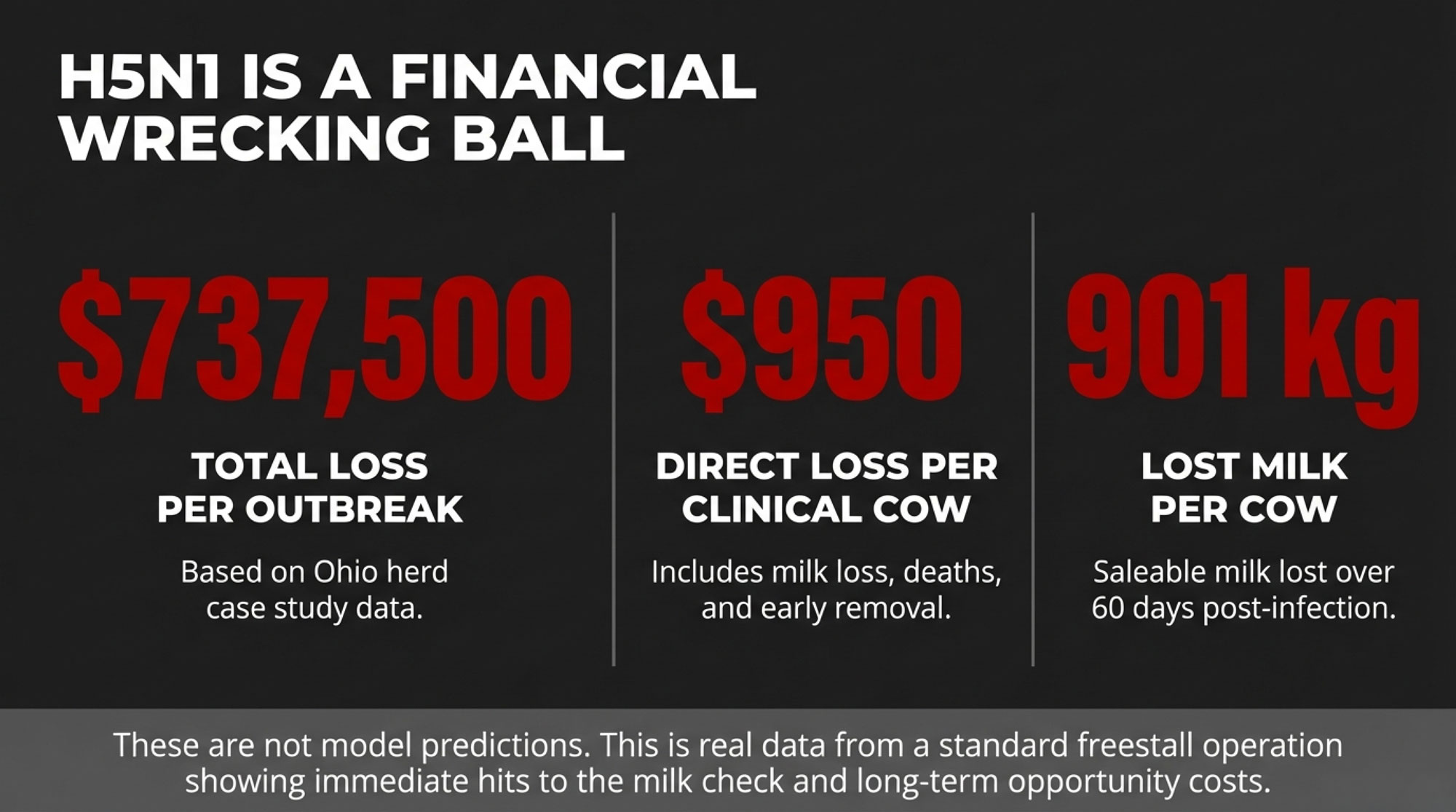
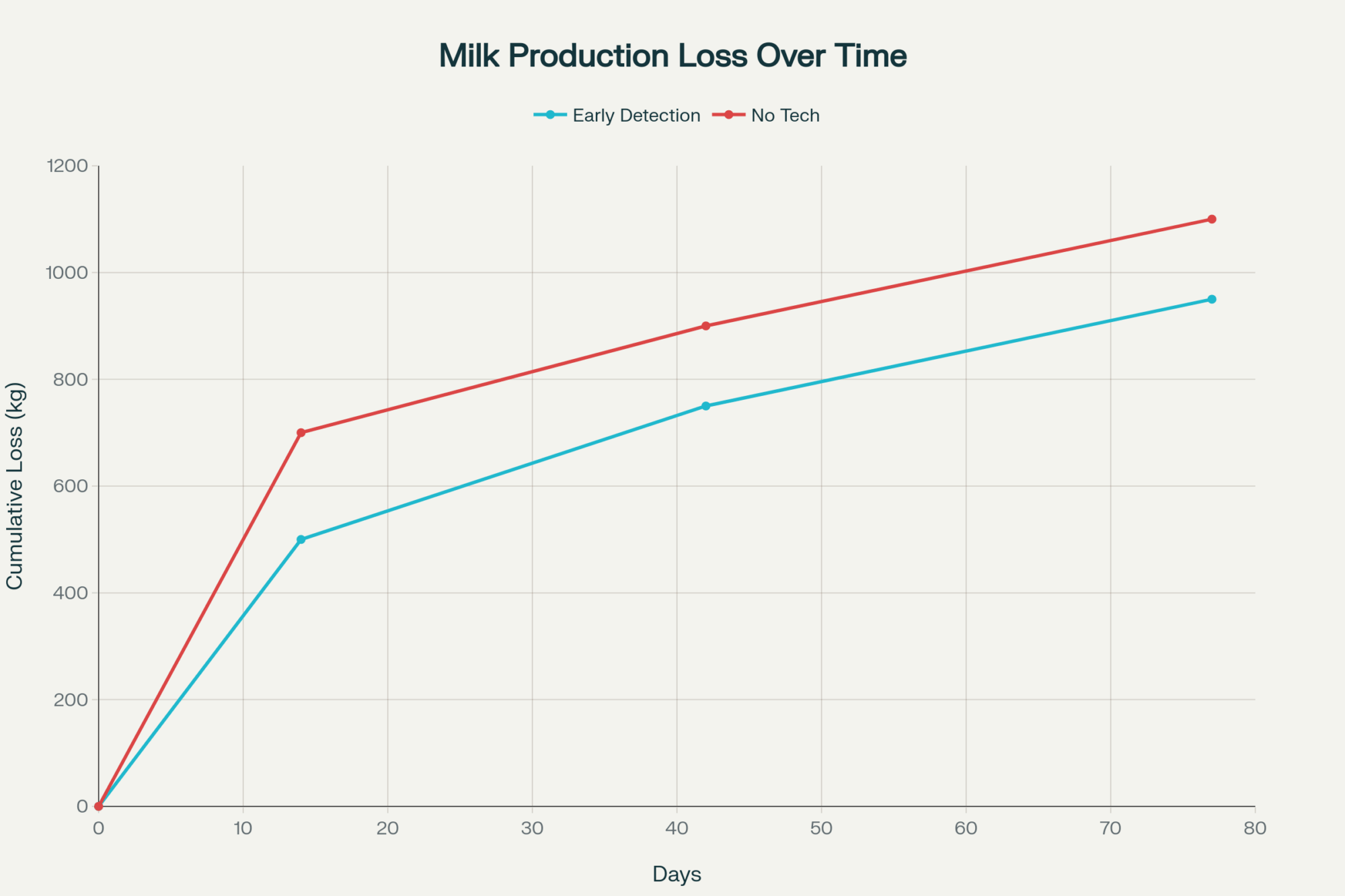
EXECUTIVE SUMMARY: We’re going to be blunt: the H5N1 outbreak is costing progressive dairies far more than industry talking heads admit. Recent USDA data suggests the per-cow hit is $950 or more, with average losses of 945kg of milk over 67 days after infection (Cornell 2025). That isn’t just hurting margins; it’s gutting cash flow, especially in regions slow to roll out surveillance or invest in rapid detection. Our analysis shows states like Texas posting milk gains upward of 10% while parts of the Midwest and East watch output stall—even as federal disaster relief (ELAP) covers only a sliver of the true long-term pain. Here’s the twist: dairies leaning hard into sensor tech and proactive sanitation—think smart cluster checks and real-time rumen alerts—are shortening losses, cutting mortality risk, and heading off future disruptions. Industry-wide, the guys treating ELAP and tech grants as upgrade capital rather than handouts are building the next-generation playbook. Forward-thinking herds? They’ll see a competitive boost long after this flu is old news. Let’s turn H5N1’s chaos into a new operational edge—starting now.
KEY TAKEAWAYS:
Rapid H5N1 detection using smart sensors (like CowManager) cuts “clinical lag” by 4-5 days, giving you a head start on isolating fresh cows and minimizing spread.
Proactive cluster sanitation between every cow reduces milking-based transmission—Kansas State found viral loads may top 10⁸·⁸ per ml in parlors, highlighting sanitation as a non-negotiable.
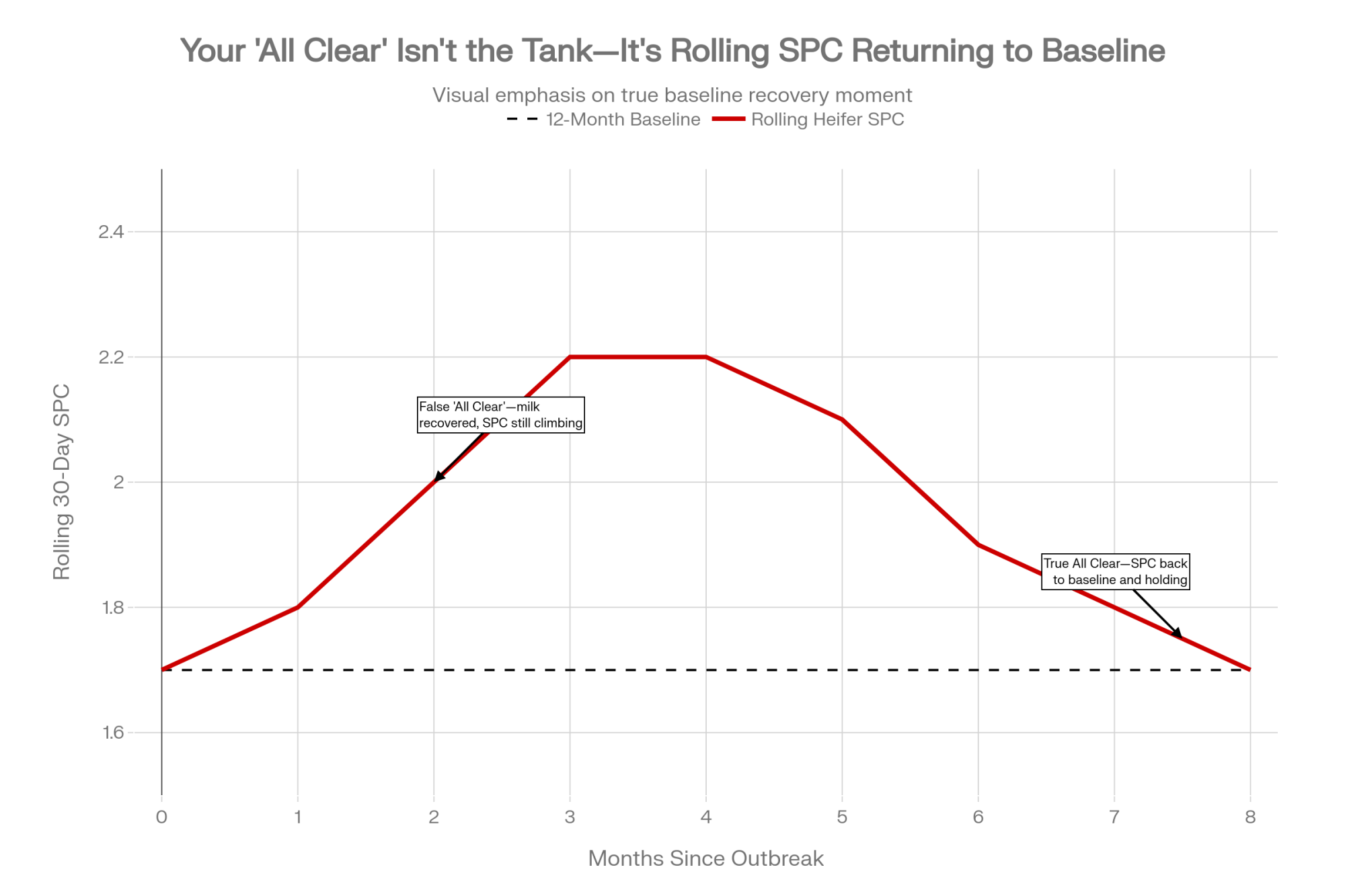
While USDA’s ELAP covers up to 90% of milk loss for 28 days, true production recovery takes 2-3 times longer; budgeting for the “long tail” of losses matters more than ever.
Herds in states with earlier adoption of national milk testing or monitoring tech are seeing less financial damage and faster market rebound—think Texas’ 10.6% output jump versus stagnant old-guard regions.
Invest ELAP payouts, tech grants, or co-op incentives into resilience upgrades—real-world data says that’s what’s separating survivors from sellers in 2025’s market.
Let’s get right to it—if you’re milking cows anywhere from Tulare to Monroe County, Wisconsin, and you’re still treating H5N1 as just another line item on your biosecurity checklist, it’s time for a real talk. This isn’t a seasonal headache. It’s hitting producers right between the butterfat numbers and the bank account, and no, it’s not easing up after a couple of milking rotations.
According to recent university research—check out the Cornell numbers—the average infected cow in this outbreak is leaving a $950-sized hole in farm finances. And that’s just the direct costs. What’s wild is these losses aren’t short-lived. Cows are still lagging on production more than 77 days after clinical recovery. So, that old route where you pencil losses as a monthly blip? It doesn’t wash anymore.
What’s Actually Spreading This?
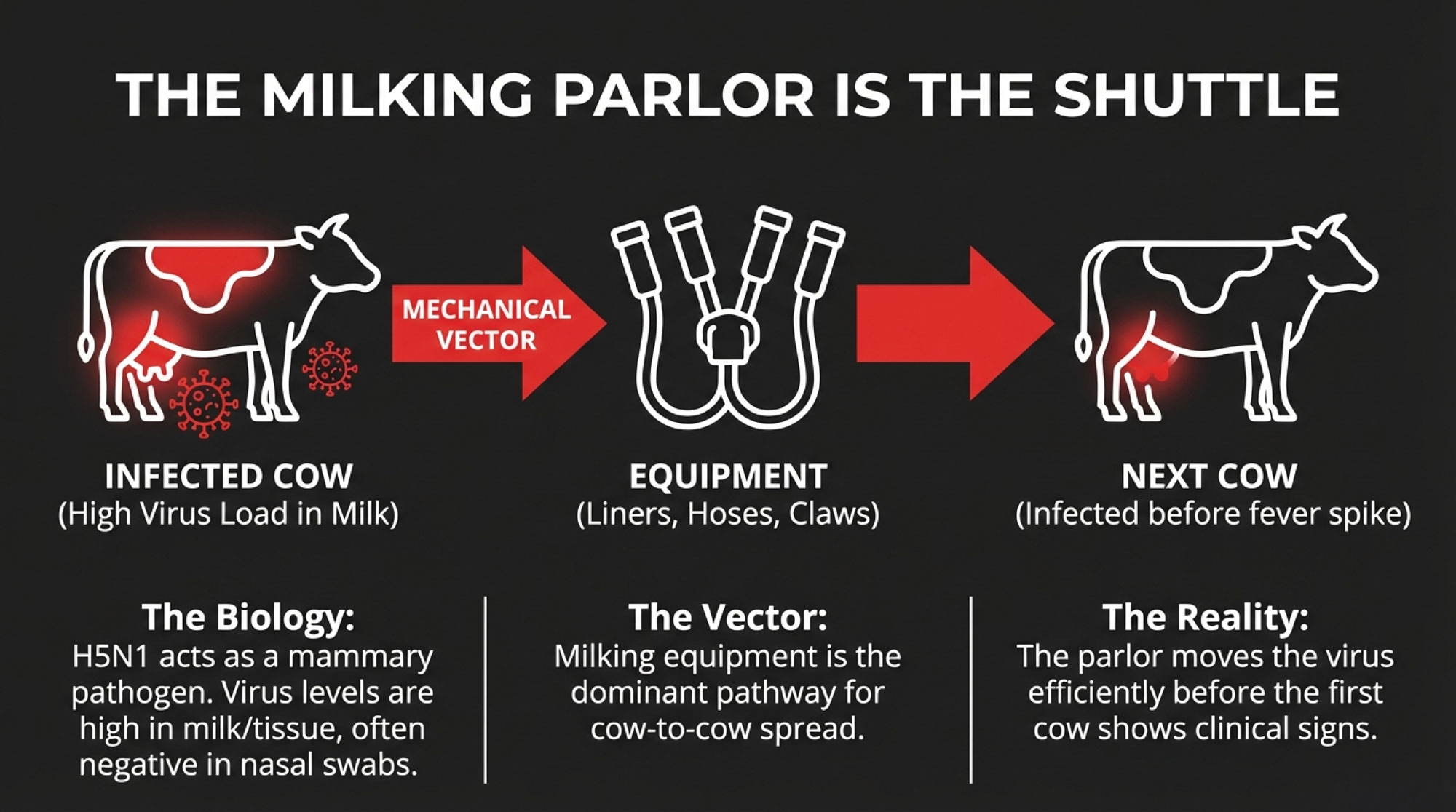
Here’s the thing, though… everyone loves talking about geese flying over feed lanes, but cutting-edge studies from Kansas State show that the main problem is how the virus is moving through milking equipment. The viral load in an infected Holstein’s bulk tank sample? Up to 10⁸·⁸ per milliliter. That’s billions—yes, billions—of particles getting a free ride through lines and clusters every single turn through the parlor.
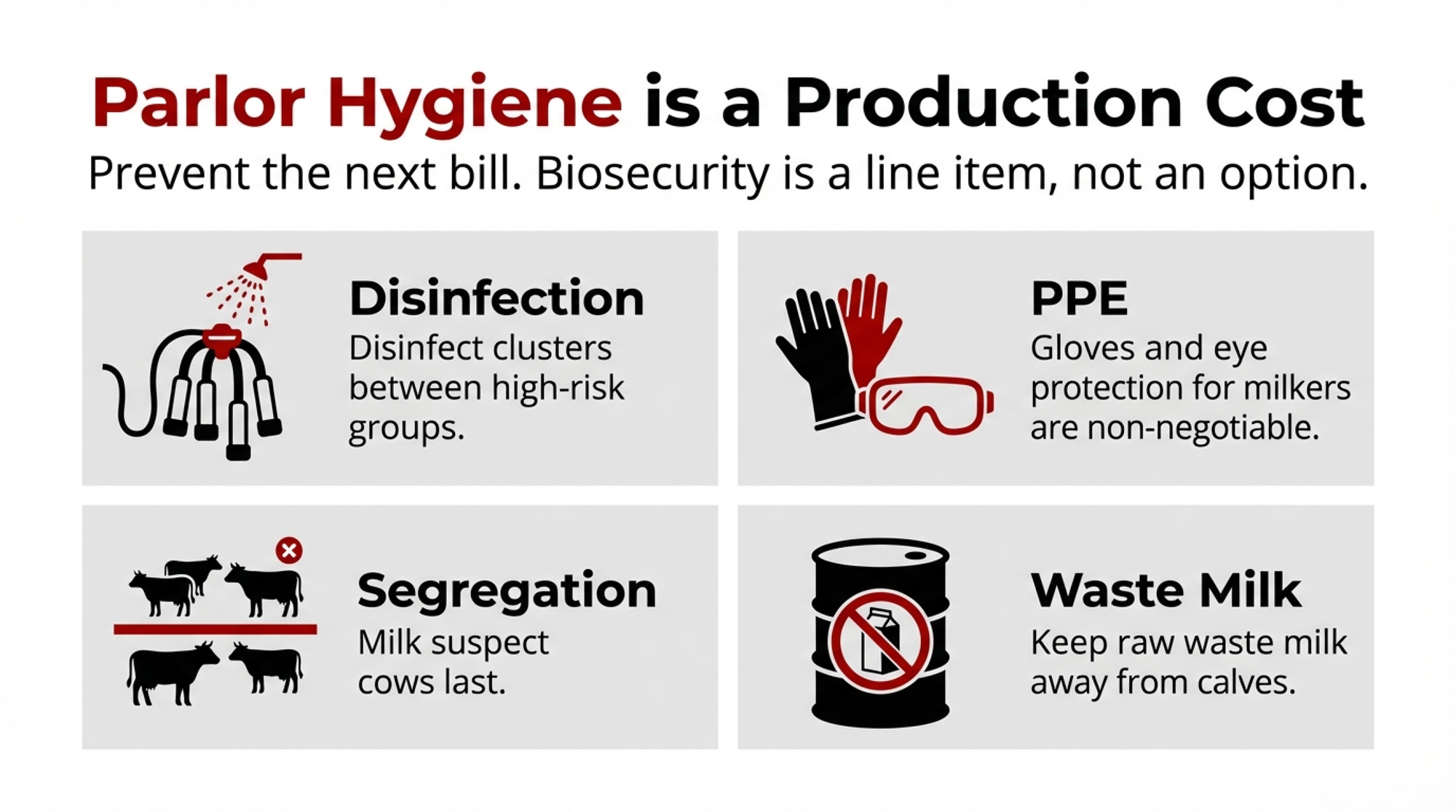
So whether you’re milking in a double-30 rotary or scrubbing up your tie stall for winter, don’t let anybody tell you fence netting is the best defense. The state testing teams in California found actual virus in parlor air—and even the breath coming out of fresh cows. For folks stressing labor hours, that means proactively scheduling cluster sanitization and paying attention to those little moments between cows is damn near as important as the weekly herd test.
The Slow Burn: Milk That Never Comes Back
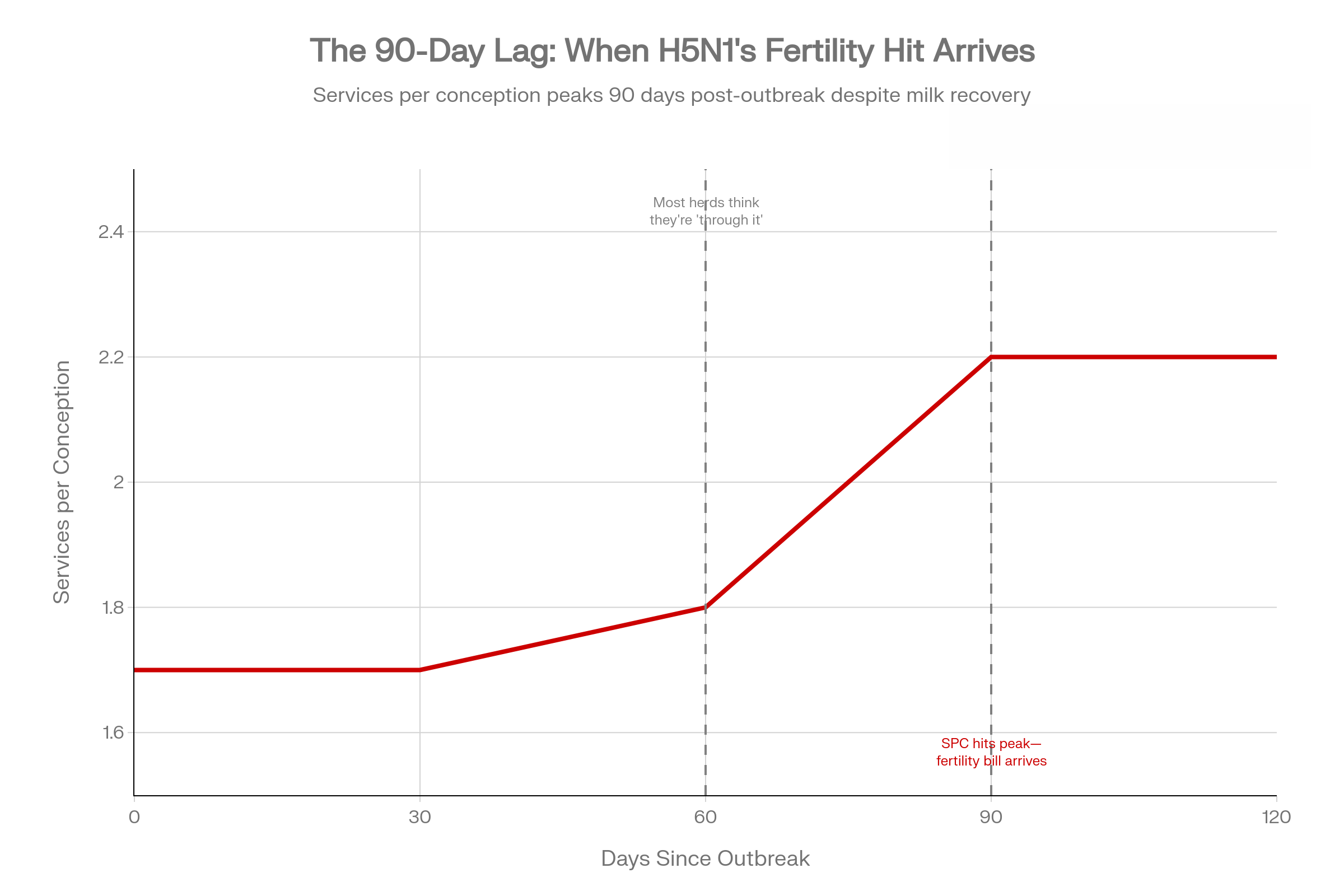
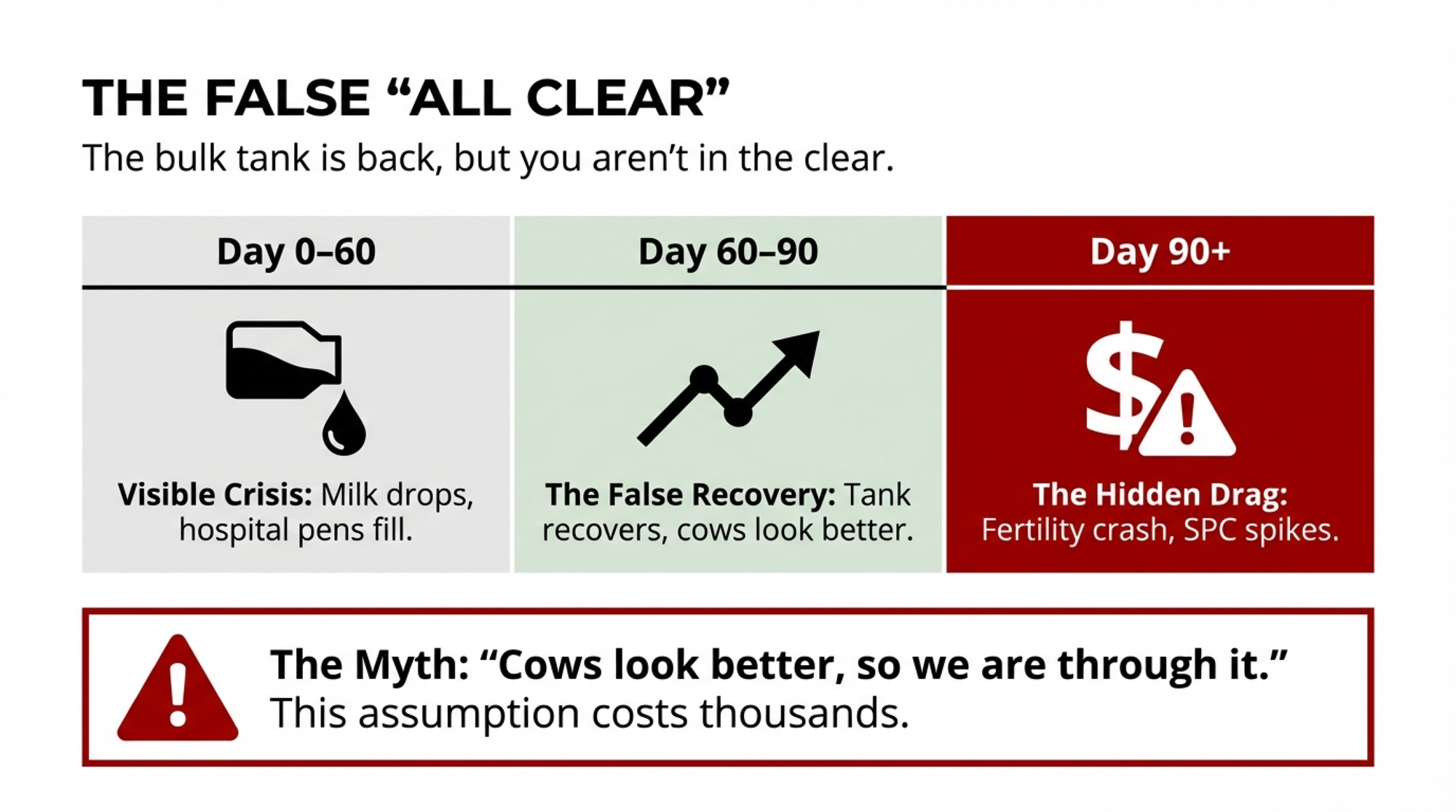
The story on production losses isn’t pretty. Cornell’s multi-region study tracked 945 kg lost per cow over 67 days. And what’s interesting is that the real pain kicks in two phases. First, there’s that 70% crash in milk yield in the first two weeks. But even after herd health “looks good,” cows are still coming up short by 30-40% for months after. This isn’t a quick strep or summer mastitis—it’s the kind of hit that chokes off farm liquidity way past the acute stage.
You might hope for federal backup… but ELAP only covers 90% of the first 28 days’ losses. If you’ve ever stared down an operating loan after an outbreak, you know how much that leaves exposed. Wisconsin’s central-sands dairies, in particular, feel the pinch.
Surveillance: The Holes in the Net
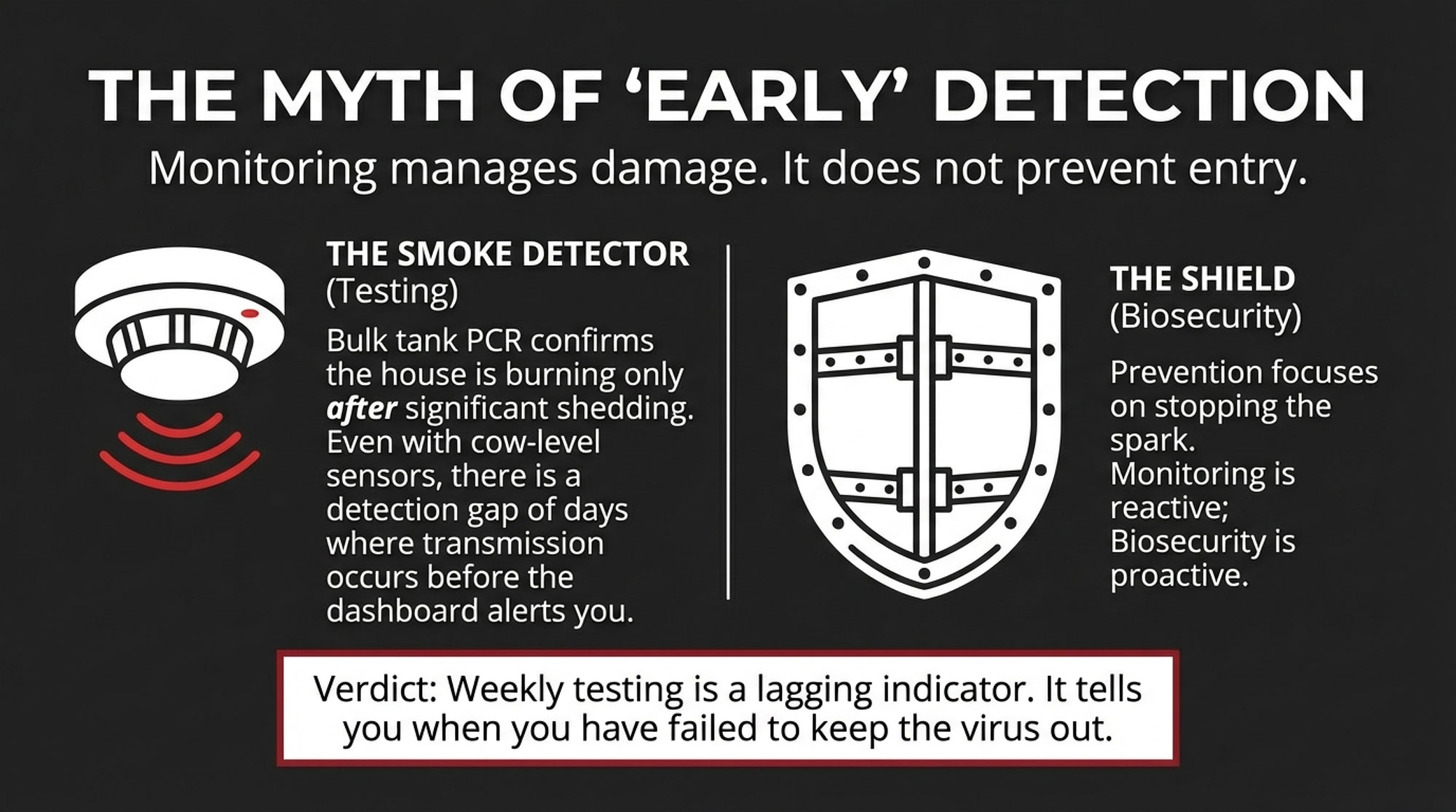
Now, let’s talk testing. Everyone’s writing press releases about “national” surveillance, but the nuts and bolts tell another story. USDA extended its National Milk Testing Strategy to over 36 states, but big players—Wisconsin, Arizona—weren’t onboard until well into 2025. And according to disease modeling, the virus is usually ahead of the reports… with outbreaks predicted long before sampling confirms anything.
Seen the Q2 numbers in Texas? Milk output’s up more than 10% year-on-year. Meanwhile, parts of the Midwest and Mid-Atlantic dairies are just holding steady at best. It’s a real game of herd movement vs. reporting lag.
Tech: Not Just for DIY Tinkerers Anymore
Here’s a bright spot. Sensor technology—CowManager’s ear module is making waves—gives managers a 4-5 day lead detecting sick cows before they go off feed. One health manager I talked to swears by catching changes in rumination and temp before the vet even gets there (and let’s be honest, sometimes that’s your margin when it comes to saving fresh cows).
But let’s stay grounded—while published performance data is promising, industry consensus is that claims of zero mortality need more multi-site validation before anyone calls it a silver bullet.
The Vaccine Tightrope
Vaccines—especially Medgene’s H5N1 shot—were released with promising trial numbers, indicating efficacy rates of around 100% efficacy. But the rub? The whole U.S. dairy sector needs close to 28 million doses for full initial coverage and annual boosters… and only about 10 million are available so far.
So, what’s happening right now is a scramble; allocations depend on politics, state relationships, and maybe a bit of dealer influence more than pure risk. It means that some herds get protected, while many are left waiting. That’s not just frustrating—it’s a structural disadvantage.
Trade Games: When Economics Masks as Safety
If you’re still hoping for global fairness, keep an eye on trade flows. Turkey put the kibosh on importing U.S. live cattle but quietly ramped up egg exports to fill our supply gaps, cashing in on $26 million worth of U.S. demand. Colombia pulled a similar move, banning beef imports without confirmed cases in beef herds—messing up U.S. sales for months.
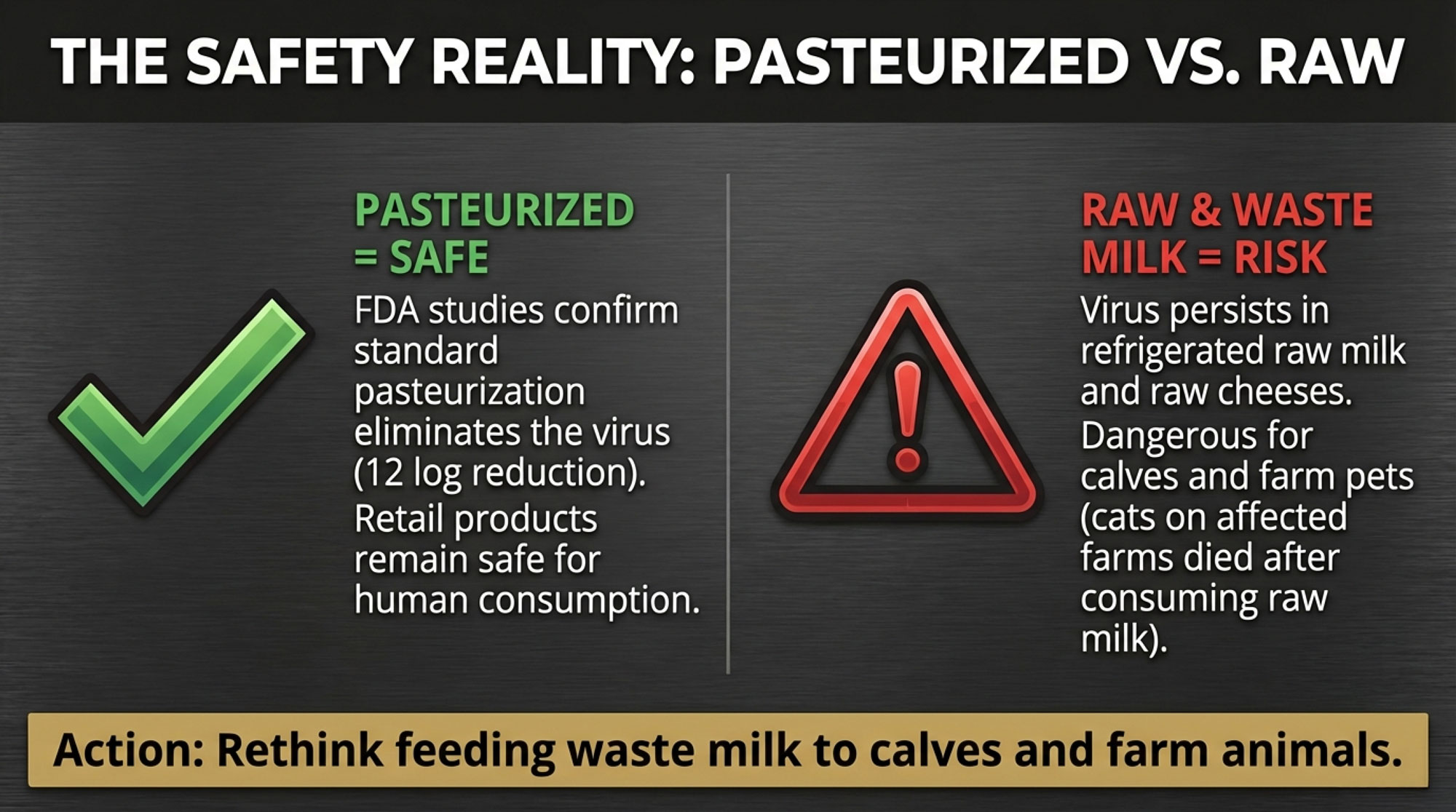
Here’s the kicker… decades of FDA data back this up: pasteurization wipes out the H5N1 virus in milk completely. Real-world tests found zero viable virus after proper thermal processing. Yet, those trade barriers? Still standing.
Pivoting the Crisis: Who’s Really Winning?
Now, I’m seeing more producers treat ELAP payouts and USDA grants as more than just “get by” money—it’s investment capital for upgrades. There’s a wave of partnerships, like Foremost Farms working with Ginkgo Bioworks to turn whey and lactose (the stuff we all usually pay to haul away) into high-value industrial inputs, with big promises on carbon footprint reduction and revenue. If you get the right biosecurity in play, you don’t just fight the bug—you lower your risk and win with sustainability. Smart, right?
Canadian reports echo the same: data shows stricter biosecurity slashes losses across more than just this flu.
How Does This Reshape U.S. Dairy?
So here’s what it all boils down to… H5N1 is forcing us to finally act on tech, early intervention, and resilient supply chains. Producers with their arms around sensor data, scalable biosecurity, and vaccine access—especially in proactive regions like Texas and Arizona—are poised to scoop up market share. Processors are tightening up contracts and will pay premiums for uptime assurance.
The days of skating by on historical margins are over—and, in a way, that’s not all bad. The crisis is exposing weaknesses but also carving out space for those who innovate, invest, and treat biosecurity as a competitive edge.
If anything, what strikes me most is how fast the playbook is changing. So, the real winners? They’re not the ones just hoping for weather breaks or vintage milk prices—they’re the ones thinking three moves ahead, bringing science and new tech right into the heart of daily farm management.
We’re not here to scold or sugarcoat—just to cut to what moves the needle. The playbook is changing. Smart risk management, not wishful thinking, builds the new bottom line.
Complete references and supporting documentation are available upon request by contacting the editorial team at editor@thebullvine.com.
Learn More:
Battle Plan: How to Protect Your Dairy Herd from HPAI – This article provides a tactical, step-by-step guide on managing an H5N1 outbreak. It offers concrete strategies for early detection, supportive care, and protecting farm workers, enabling producers to implement an immediate, actionable response and minimize losses.
Join over 30,000 successful dairy professionals who rely on Bullvine Weekly for their competitive edge. Delivered directly to your inbox each week, our exclusive industry insights help you make smarter decisions while saving precious hours every week. Never miss critical updates on milk production trends, breakthrough technologies, and profit-boosting strategies that top producers are already implementing. Subscribe now to transform your dairy operation’s efficiency and profitability—your future success is just one click away.
Cornell just proved H5N1 costs $950 per infected cow—while most producers still think it’s just a bird problem.
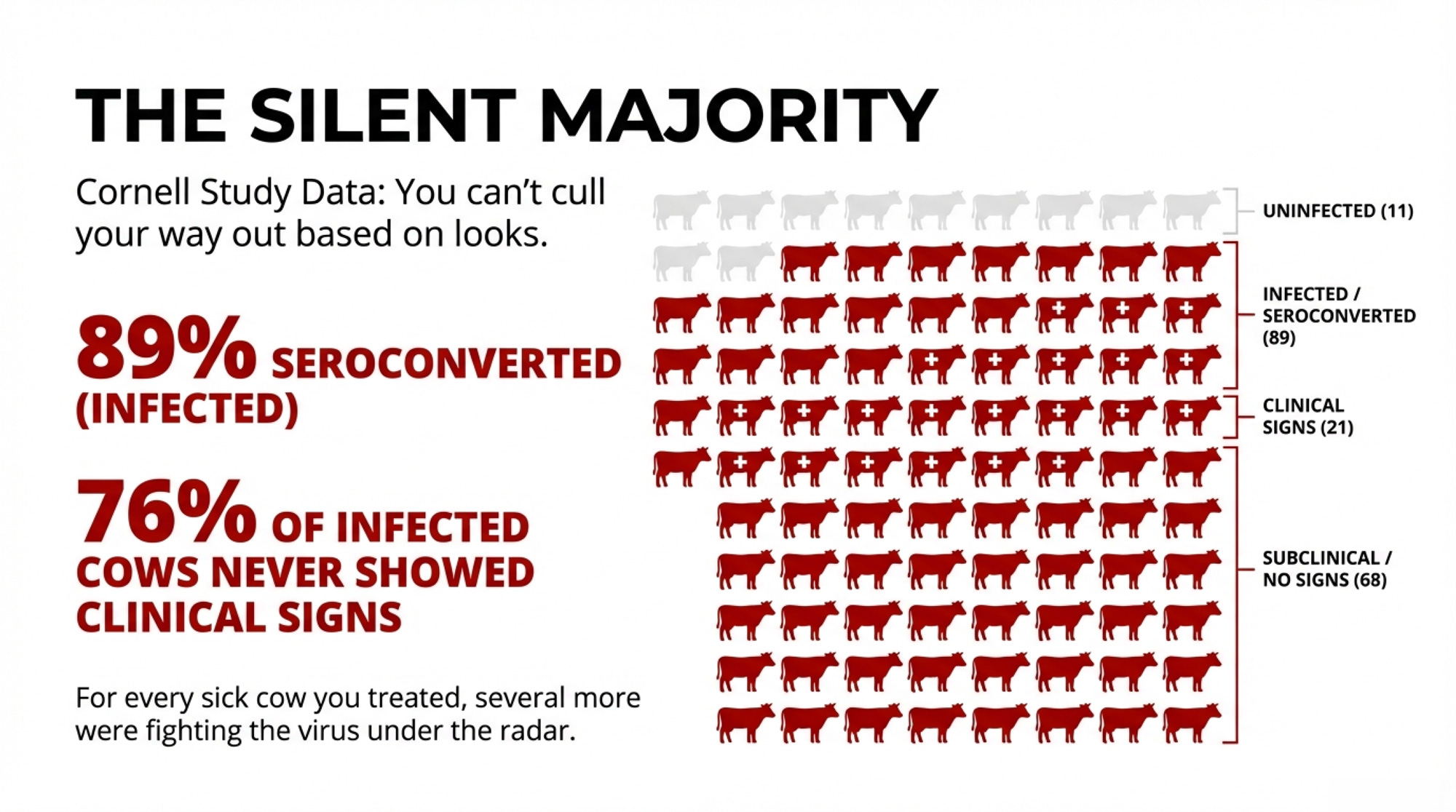
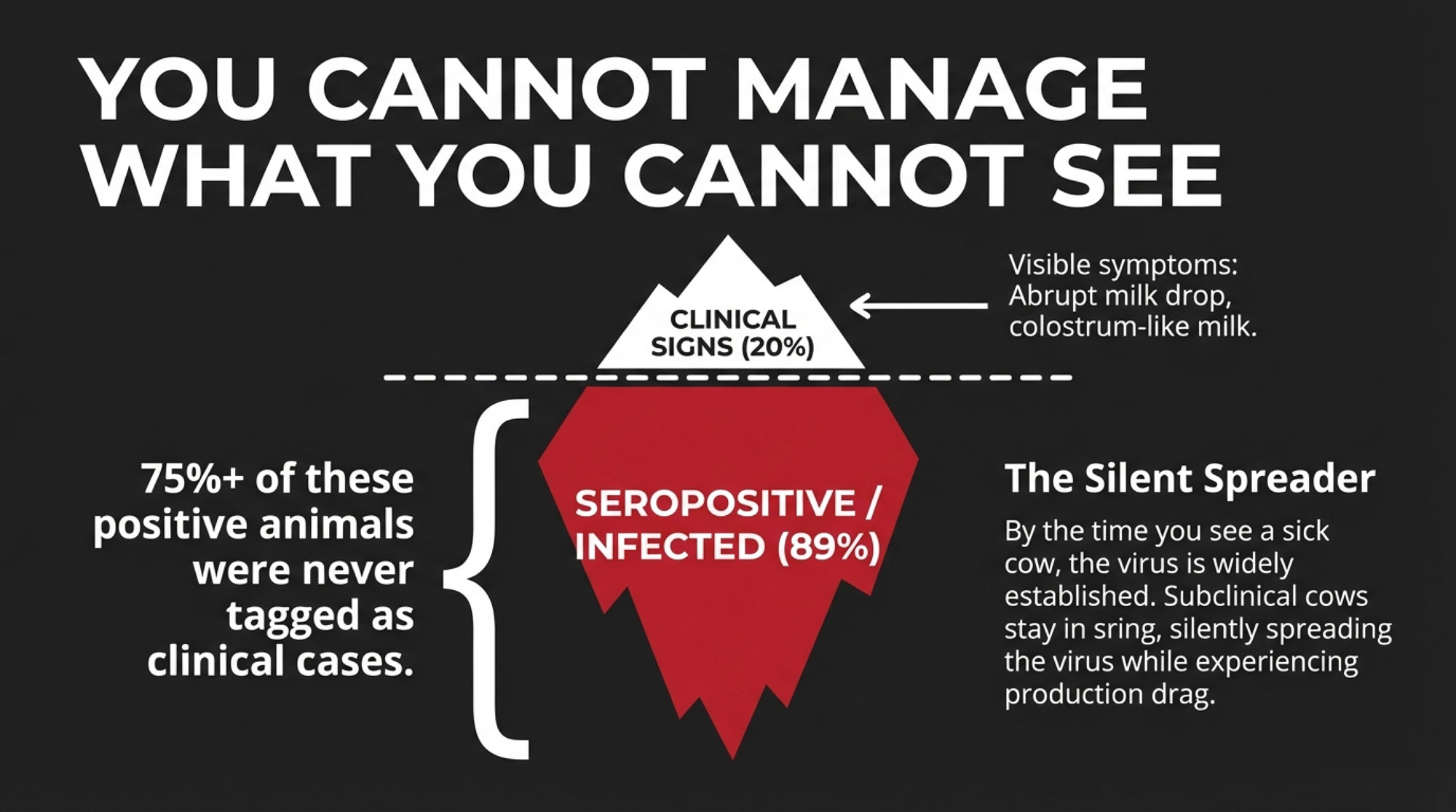
EXECUTIVE SUMMARY: Look, I’ve been digging through Cornell’s latest H5N1 study, and honestly? Most producers are sleepwalking into a financial disaster. The real kicker isn’t that H5N1 costs $950 per infected cow—it’s that 76% of infected animals show zero symptoms while silently wrecking your operation. California just proved this with their 6.8% production drop in December 2024, forcing Governor Newsom to declare a state emergency after 645 dairies got hit. The math is brutal: a 500-cow operation looking at potential losses of $475,000 if this thing spreads through your herd. What’s happening globally right now is a shift from reactive crisis management to proactive biosecurity—and the producers getting ahead of this are positioning themselves for serious competitive advantages. You need to start treating your milking parlor like a controlled environment this week, not when H5N1 shows up at your neighbor’s place.
KEY TAKEAWAYS
Milking parlor biosecurity cuts transmission by 90% – Start with between-milking disinfection protocols using accelerated hydrogen peroxide systems, focus on stainless steel surfaces where the virus survives 72 hours, and you’ll prevent the $950 per cow losses that are crushing unprepared operations in 2025’s volatile market.
Silent carriers are destroying operations invisibly – Implement daily bulk tank RT-PCR testing to catch infections 24-48 hours before clinical symptoms appear, because Cornell’s data shows most infected cows never show visible signs while shedding virus for three weeks straight.
Pennsylvania’s proactive approach beats California’s reactive crisis – Invest in mandatory surveillance systems now (60-90 days before fall migration peaks) to maintain virus-free status and capture market premiums that are running $1.20+ per hundredweight above affected regions.
Technology ROI justifies investment for 1,000+ cow operations – Real-time milk RNA monitoring systems detect infections immediately, enabling rapid isolation protocols that prevent bulk tank contamination and the catastrophic herd-wide spread that’s devastating California’s Central Valley.
Fall migration window demands immediate action – July through September is your critical preparation period before seasonal wild bird movement increases transmission risk, so get your enhanced biosecurity protocols operational before the virus finds your operation instead of you finding it first.
You know what’s been keeping me up at night since I got my hands on Cornell’s latest economic impact study? The numbers are… well, let’s just say if you’re not taking H5N1 seriously yet, you’re about to.
I’ve spent the last few weeks digging through the real data—not the rumors floating around at co-op meetings or the half-baked speculation in farm forums—but the actual peer-reviewed research and verified government reports. What I found is both more alarming and more manageable than most of the chatter suggests.
Here’s the thing, though: we need to stop treating H5N1 like it’s some distant threat that only affects “those other farms.” It’s here, it’s spreading faster than anyone predicted, and if you’re not prepared… well, let’s just say the math isn’t pretty.
The Cornell Numbers That Should Terrify Every Producer
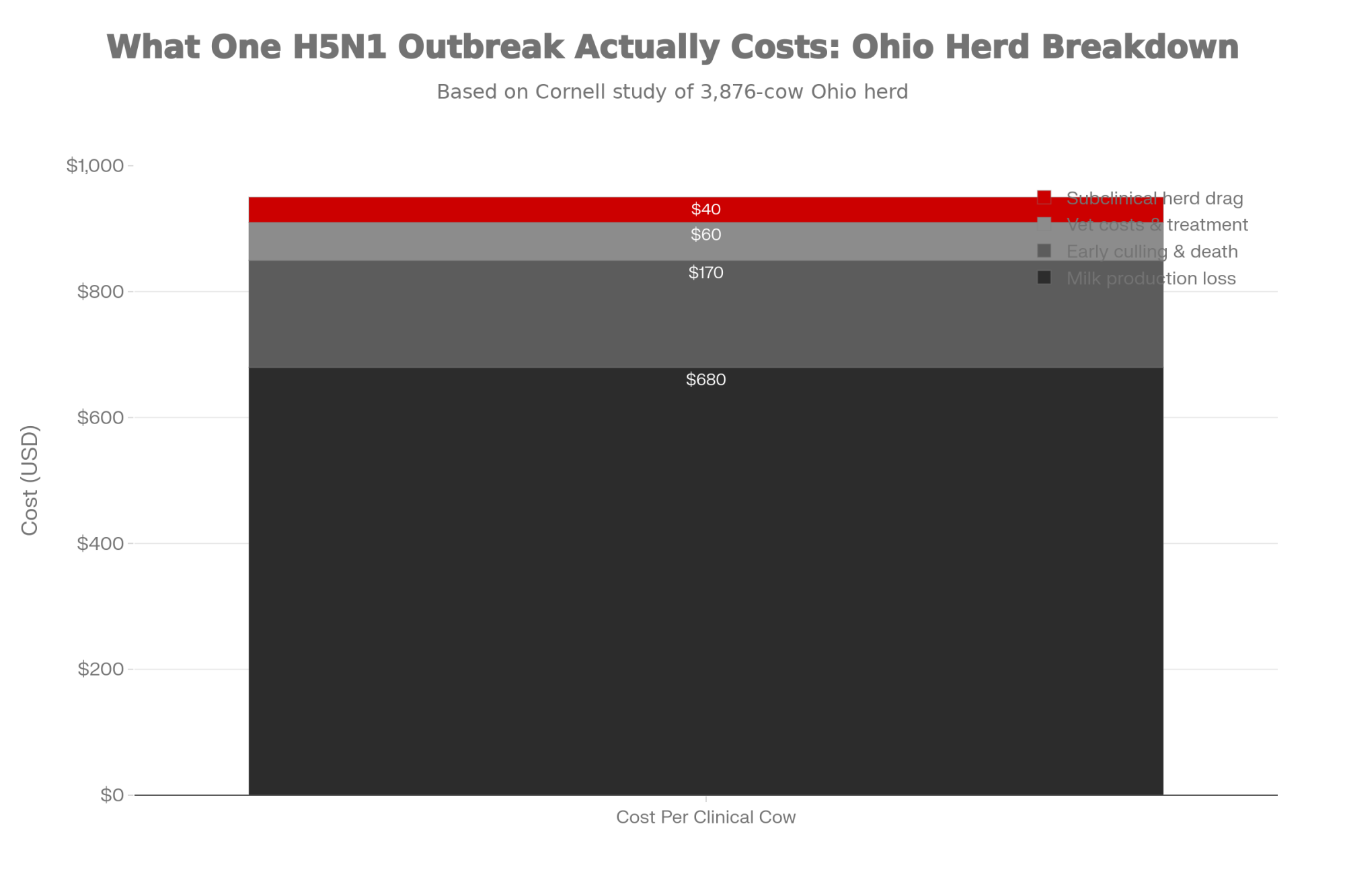
Dr. Daryl Nydam’s team at Cornell just dropped their comprehensive economic analysis, and the headline figure is absolutely brutal: $950 per clinically affected cow in direct economic losses. Not the $504 figure that’s been floating around some industry circles—$950. Per cow.
According to recent work from Cornell’s veterinary college, that’s based on tracking a 3,900-cow operation in Ohio through 67 days of what can only be described as H5N1 hell. But here’s what really gets me… that’s just the tip of the iceberg.
The infected cows lost approximately 900kg of milk over 60 days following the outbreak. But—and this is the kicker that’s got me genuinely concerned—significant production drops persisted well beyond clinical recovery. Some producers I’ve been talking to in the Central Valley are calling them “zombie cows.” Animals that technically survive but never get back to their genetic potential.
Think about that for a second. You’re not just dealing with acute losses during the outbreak—you’re looking at long-term impacts on herd productivity that extend far beyond what most insurance programs cover. This development is fascinating from a scientific perspective, but terrifying from a business standpoint.
California’s Reality Check (The Numbers That Actually Matter)
Let’s talk about California because that’s where this thing really hit home for a lot of us. According to official USDA data, California’s December 2024 milk production dropped 6.8% compared to the previous year. That’s 3,213 million pounds versus what we saw in December 2023.
Governor Newsom declared a state of emergency on December 18, 2024, after H5N1 was detected in 645 dairies across the state. What strikes me about this timeline is that almost half of those infections occurred in just the previous 30 days. That’s exponential spread—the kind of thing that keeps risk managers awake at night.
The emergency declaration was real, and it was necessary. As Newsom put it in the official proclamation: “This proclamation is a targeted action to ensure government agencies have the resources and flexibility they need to respond quickly to this outbreak.”
Here’s what’s particularly noteworthy about California’s experience: it wasn’t just the production losses that created the crisis—it was the concentration of affected operations in the Central Valley. When you lose that much production capacity in one region, especially during peak holiday demand, it destabilizes supply chains nationwide.
What’s happening in California right now is essentially a preview of what could happen in Wisconsin, Pennsylvania, or any other high-density dairy region. The seasonal timing made it worse—December is already challenging for cash flow, and then you add a 6.8% production drop on top of it.
The Silent Spreader Problem We’re All Facing
What’s particularly fascinating—and honestly, terrifying—about this H5N1 strain is how it spreads without announcing itself. The Cornell research suggests that a significant portion of infected animals show no clinical symptoms while still shedding virus in their milk.
This trend suggests we’re dealing with a completely different animal than traditional dairy health challenges. Visual monitoring during morning chores? Pretty much useless for early detection. That changes everything about how we think about herd health surveillance.
The virus demonstrates high replication in mammary glands, with infected cows shedding large quantities of virus in milk for up to three weeks, even without clinical signs. What’s interesting is that transmission within farms is primarily driven by contaminated milk and milking procedures, not the wild bird transmission pathway we initially focused on.
Here’s the thing, though… most of us built our biosecurity programs around preventing wild bird contact. Feed storage, water source protection, and perimeter fencing. All important, but we missed the real transmission vector hiding in plain sight: the milking parlor.
The Nevada Breakthrough That’s Got Scientists Buzzing
Here’s where things get really interesting from a technical standpoint. On January 31, 2025, USDA APHIS confirmed something that made researchers across the country sit up and take notice: the first detection of H5N1 genotype D1.1 in dairy cattle, specifically in Nevada.
This wasn’t just another positive test—this was confirmed by whole genome sequencing at the National Veterinary Services Laboratories. What makes this important is that all previous detections in dairy cattle had been genotype B3.13. The D1.1 genotype represents what has been the predominant strain in North American bird flyways.
Both Nevada operators reported large numbers of wild bird deaths near their facilities prior to the outbreak, which suggests the direct transmission pathway from wild birds to cattle that researchers have been tracking. But here’s what’s got epidemiologists concerned: D1.1 appears to spread differently than B3.13.
What’s fascinating is how this discovery happened through the National Milk Testing Strategy. The virus was first detected through routine silo testing, which led to tracing that identified the affected herds. It’s actually a good example of how surveillance systems work when they’re properly funded and staffed—something we can’t take for granted with budget pressures.
The Human Cost That’s Changing Our Workforce
As someone who’s been following this closely, we need to talk about the human health component because it’s genuinely affecting how our workers think about their jobs. The CDC now reports 70 confirmed human cases of H5N1 since early 2024, with 67 having direct exposure to infected animals.
That’s not just a statistic—that’s 70 people who went to work on dairy farms and ended up dealing with health consequences. Nevada confirmed its first human case in February 2025—a dairy worker in Churchill County who developed conjunctivitis and recovered, but still.
The CDC’s guidance emphasizes that while the current public health risk to the general public remains low, people who work with dairy cattle are at significantly higher risk. This is why enhanced monitoring and PPE requirements for dairy workers have become so important.
But here’s what’s really concerning me: I’m hearing from producers that good milkers are getting spooked. Some are asking for hazard pay, others are just walking away. Labor shortages were already challenging before H5N1—now we’re adding disease risk to the mix.
What’s Actually Working (And What’s Failing Miserably)
The thing about biosecurity measures is that you hear a lot of recommendations, but what’s actually proving effective in real-world conditions? Based on current surveillance data and feedback from producers I’ve been talking to, milking parlor management is emerging as the critical control point.
Here’s what’s interesting: the virus survives on stainless steel surfaces for up to 72 hours, which means your parlor equipment becomes a primary transmission vector. That’s why producers who are successfully managing this challenge focus on between-milking disinfection protocols rather than just perimeter biosecurity.
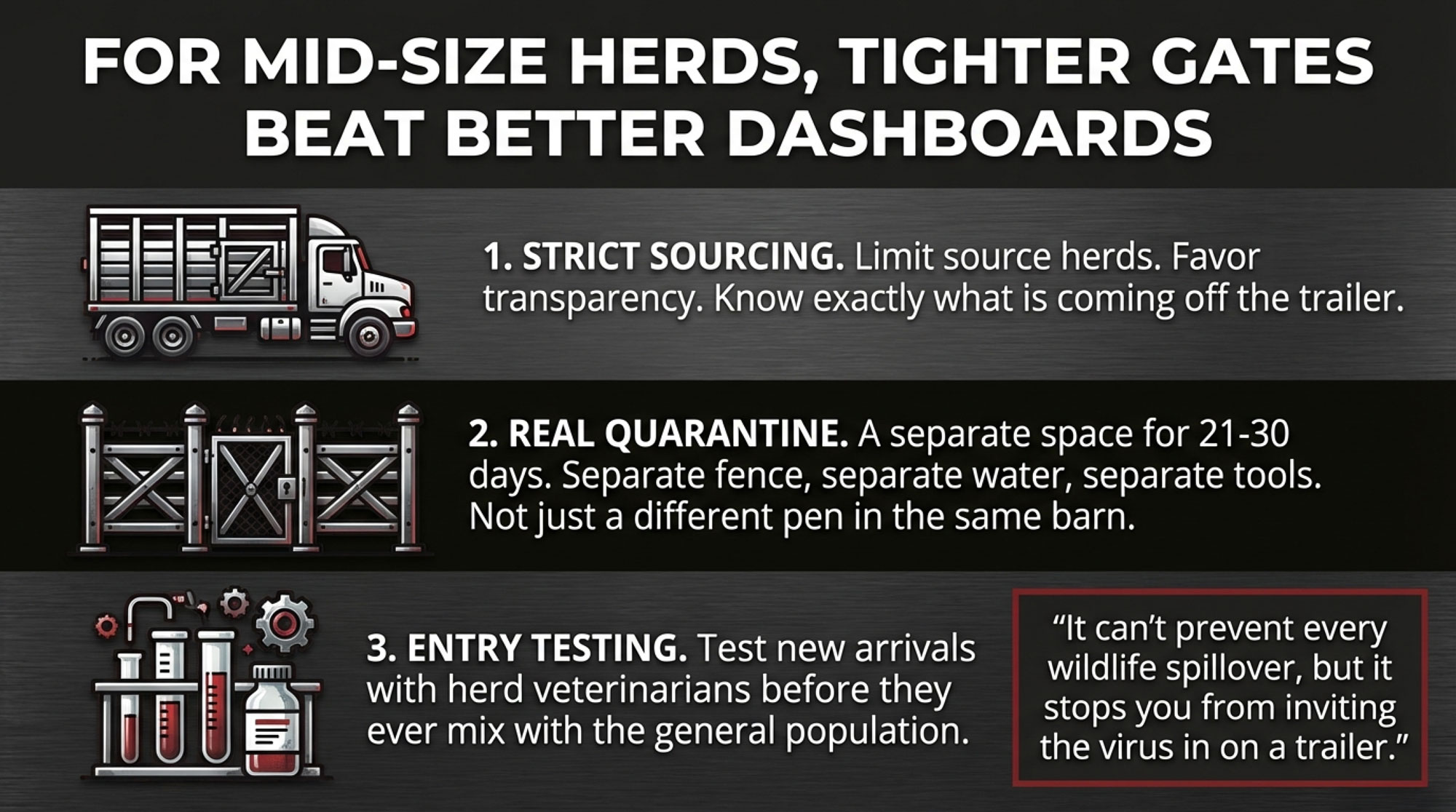
Pennsylvania’s experience is particularly noteworthy. They’ve maintained their virus-free status through a combination of proactive surveillance and enhanced monitoring systems. While I can’t pin down exact cost figures—they vary significantly by operation size and existing infrastructure—the investment in prevention is consistently proving more cost-effective than reactive response.
Wisconsin’s approach has been different but equally effective in scattered cases. They’ve focused on rapid response protocols rather than blanket prevention, which works better for their more dispersed farm geography.
The Technology Solutions That Are Actually Getting Adopted
I’ve been talking to equipment dealers and farm consultants about what technologies are actually getting adopted versus what gets discussed at conferences. There’s a big difference, as you might expect.
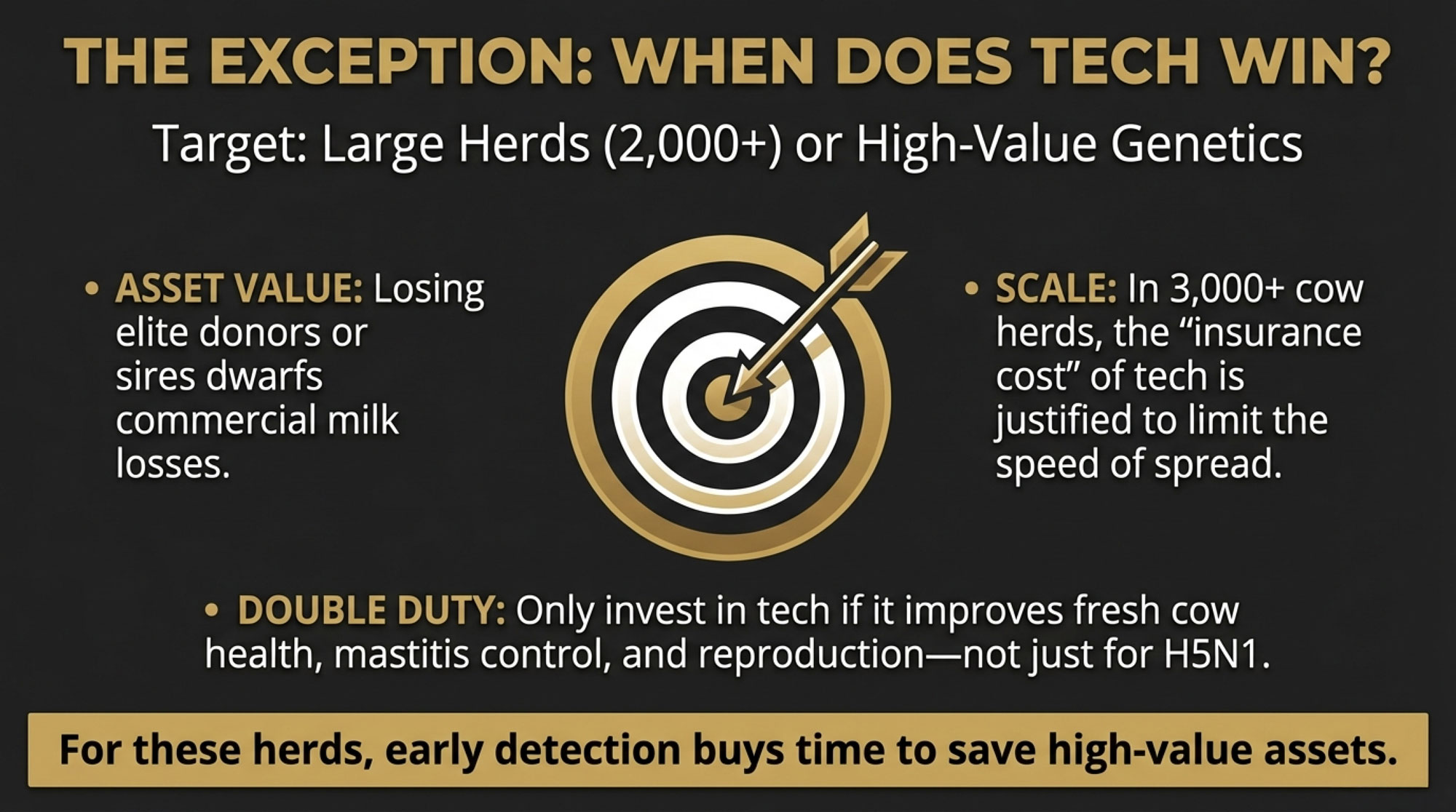
Larger operations are implementing real-time milk RNA monitoring systems, though the investment requirements make them primarily viable for operations over 1,000 head. What’s particularly noteworthy is that these systems are catching infections 24-48 hours before clinical symptoms appear, which is crucial for containment.
The most successful containment strategies combine automated detection with milk acidification systems using citric acid to pH 4.1-4.2. This approach neutralizes viral particles in waste milk while maintaining calf feeding programs. It’s one of those solutions that actually works in the real world, not just in the lab.
But here’s where it gets complicated: the technology that works on a 2,000-cow operation in California doesn’t necessarily scale down to a 200-cow farm in Vermont. Feed costs, labor availability, infrastructure—it all matters.
Regional Differences That Tell the Real Story
What’s becoming clear is that this isn’t playing out the same way across different dairy regions. California’s concentrated dairy areas in the Central Valley created perfect conditions for rapid spread, while more dispersed operations in states like Pennsylvania and Vermont have maintained better containment.
Wisconsin’s experience has been particularly interesting to watch. They’ve had scattered cases, but nothing like the concentrated outbreak patterns we saw in California. A lot of that comes down to farm density, shared infrastructure, and even shared labor pools.
The seasonal patterns are also worth noting. Most major outbreaks occurred during fall migration periods when wild bird populations were moving through dairy regions. Current trends suggest we might see similar patterns this fall, which means now—July through September—is the critical window for enhanced surveillance preparation.
Here’s what’s got me thinking: Michigan and New York are probably the most vulnerable right now, given their farm density and upcoming fall migration patterns. But honestly, any region with concentrated dairy production should be concerned.
Implementation Timeline That Actually Makes Sense
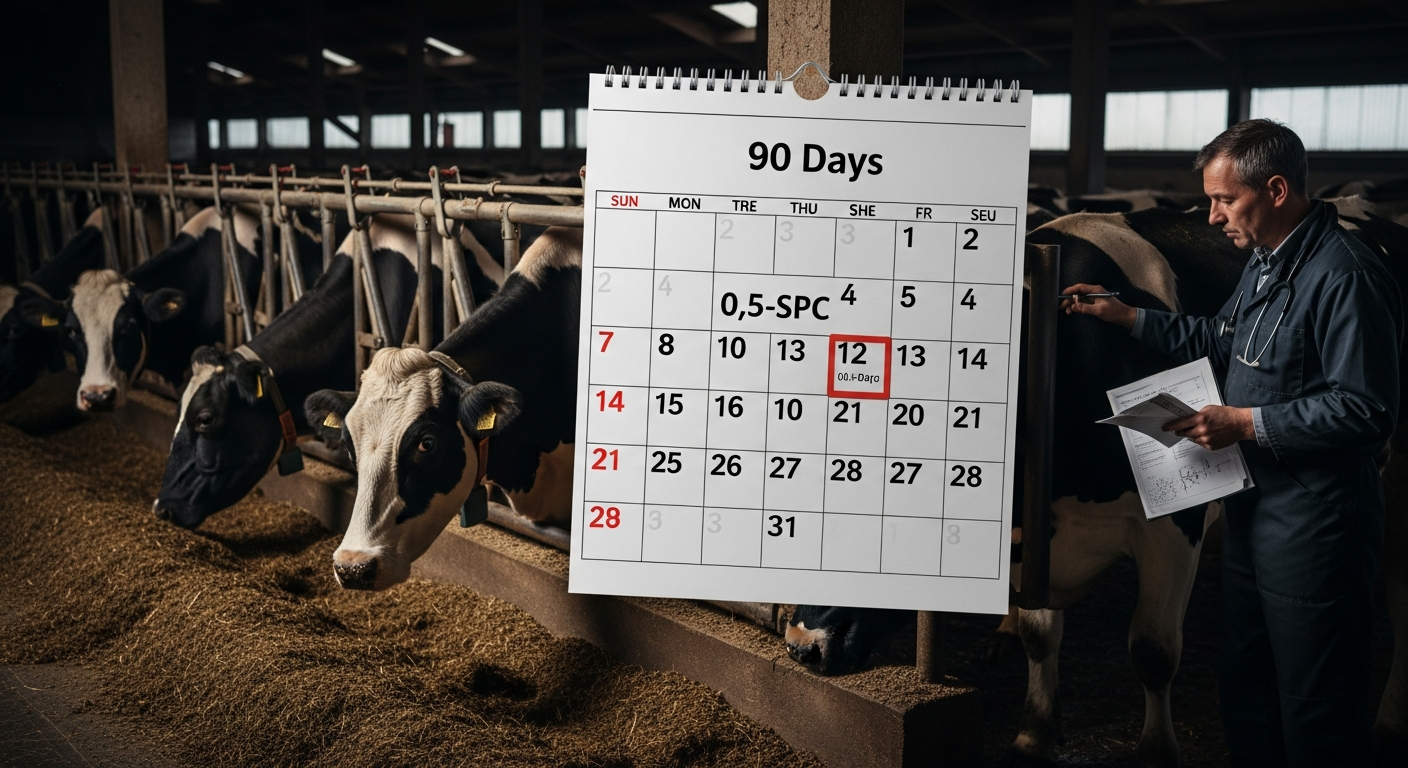
Here’s where I want to get practical for a minute. Based on what I’m seeing work across different regions, there’s a logical 90-day implementation timeline that makes sense:
Days 1-30: Critical Foundation Get your milking parlor biosecurity protocols in place. This means between-milking disinfection, dedicated equipment that never leaves the parlor, and basic PPE compliance. Don’t overthink it—just start with the basics that work.
Days 31-60: Surveillance Systems Implement bulk tank testing protocols. Whether that’s daily RT-PCR testing or weekly surveillance depends on your risk level and budget, but you need some form of early detection system in place before fall migration.
Days 61-90: Advanced Protocols This is where you add the sophisticated stuff—automated monitoring systems, milk acidification protocols, and advanced worker protection measures. But only after you’ve got the basics down.
What strikes me about this timeline is that it’s achievable for most operations without breaking the bank. The key is not trying to do everything at once.
The Economics That Are Driving Real Decisions
Let’s talk money because that’s what ultimately drives decisions on most farms. The Cornell study’s $950 per affected cow figure is based on a large Ohio operation, but the economics scale differently depending on your situation.
For a 200-cow operation, you’re looking at potential losses of $190,000 if your entire herd gets infected. For a 1,000-cow operation, that’s $950,000. When you put it in those terms, the investment in prevention starts making sense pretty quickly.
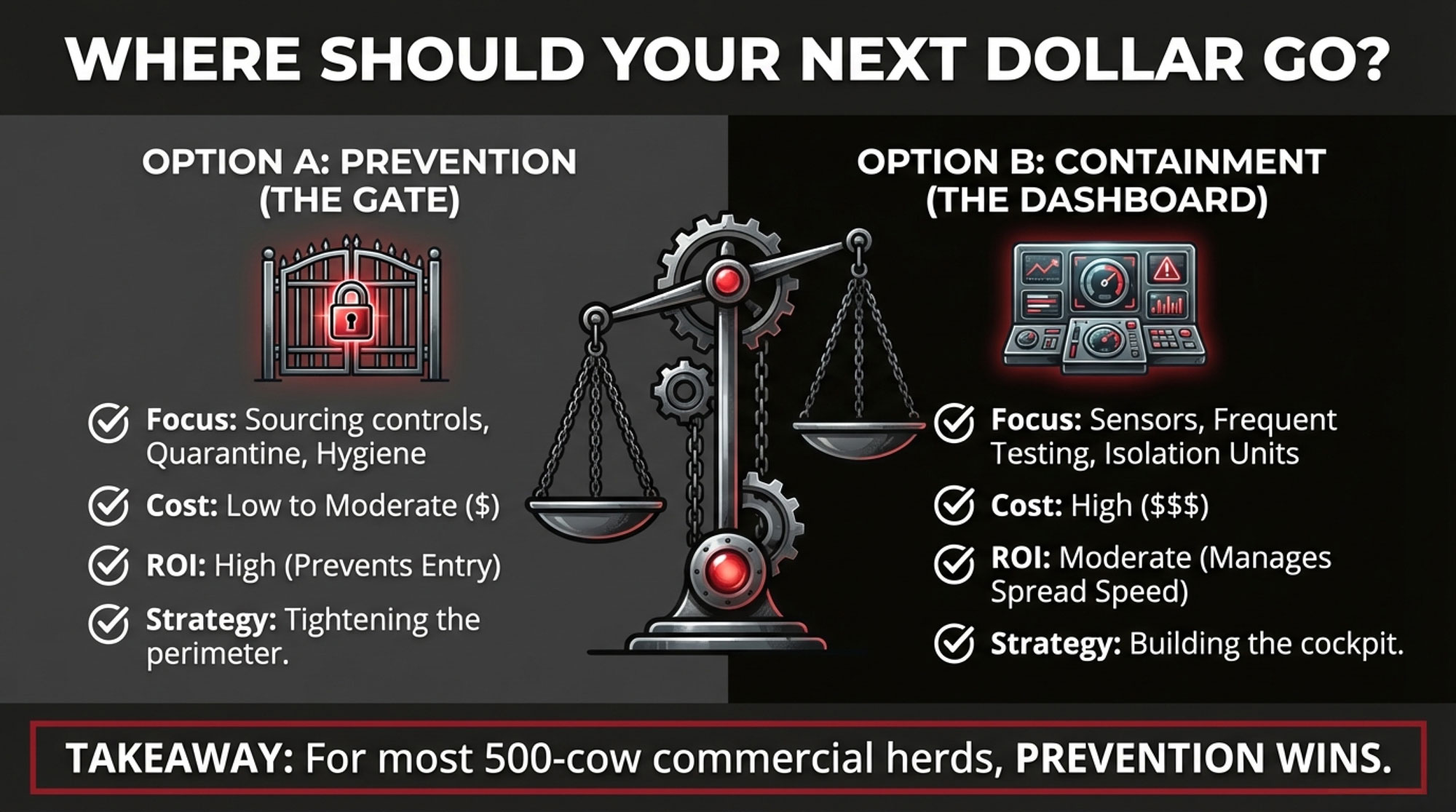
But here’s what’s really interesting: the economics favor different strategies depending on your scale. Smaller operations might be better off focusing on basic biosecurity and rapid response, while larger operations can justify automated monitoring systems and advanced protocols.
The evidence points to prevention being more cost-effective than reaction across all operation sizes, but the optimal prevention strategy varies significantly based on your specific situation.
The Research Questions That Keep Me Up at Night
Here’s what’s got me genuinely concerned: there’s still so much we don’t know about this virus. Current research suggests that cattle develop virus-specific antibodies within 7-10 days of infection, but we’re still learning about the duration and effectiveness of this immunity.
What’s particularly noteworthy is that some recent studies suggest natural immunity might play a role in long-term management strategies, but we’re probably 12-18 months away from having solid data on that front.
The genetic evolution of this virus is also fascinating and concerning. The detection of the D1.1 genotype in Nevada suggests that the virus continues to adapt, which means our current protocols may need updating as we learn more.
From industry observations, this uncertainty is making planning difficult. How do you invest in long-term biosecurity when the science is still evolving? It’s a challenge that’s affecting decision-making across the industry.
Where We Go from Here (And Why I’m Cautiously Optimistic)
The thing about this industry is that we’ve faced challenges before, and we’ve always found ways to adapt. H5N1 is serious—probably more serious than most producers realize—but it’s not insurmountable.
What gives me hope is seeing how quickly effective protocols have been developed and adopted. The Nevada D1.1 genotype detection shows that our surveillance systems are sophisticated enough to catch viral evolution early. That’s actually pretty impressive when you think about it.
Current research suggests that most infected cattle do recover, and mortality rates are relatively low. The economic impact is significant, but it’s manageable with proper preparation.
Here’s what’s interesting, though: this crisis is forcing improvements in biosecurity that will benefit the industry long-term. Better surveillance systems, improved milking parlor management, enhanced worker protection—these are all things that make sense beyond H5N1.
The key is basing decisions on verified data rather than speculation, investing in proven prevention strategies, and maintaining the kind of professional vigilance that’s always been the hallmark of successful dairy operations.
The Bottom Line (What You Need to Do This Week)
Look, I’m not going to sugarcoat this: H5N1 represents a permanent shift in dairy risk management. The $950 per affected cow figure from Cornell isn’t just a statistic—it’s a reminder that preparation pays, and reaction costs more than most operations can afford.
If you’re not already implementing enhanced biosecurity measures, start with your milking parlor this week. Get your disinfection protocols in place, ensure your workers have proper PPE, and establish some form of surveillance system.
The seasonal timing is critical. Fall migration is coming, and that’s when we historically see the most transmission events. You’ve got about 60-90 days to get your protocols in place before the risk increases significantly.
What’s clear from industry observations is that producers who implement comprehensive biosecurity measures now are positioning themselves for both immediate protection and long-term competitive advantage. The question isn’t whether you can afford to implement these measures—it’s whether you can afford not to.
Because at the end of the day, this industry has always been about managing risk and adapting to challenges. H5N1 is just the latest challenge we need to face head-on, with the same professionalism and determination that’s gotten us through everything else.
Complete references and supporting documentation are available upon request by contacting the editorial team at editor@thebullvine.com.
Learn More:
Silent Killer: Managing Asymptomatic H5N1 in Dairy Herds – Reveals practical strategies for detecting and managing the 76% of infected cows showing no symptoms, with specific protocols for milk handling, traffic control, and real-time monitoring systems that prevent $950 per cow losses.
Join over 30,000 successful dairy professionals who rely on Bullvine Weekly for their competitive edge. Delivered directly to your inbox each week, our exclusive industry insights help you make smarter decisions while saving precious hours every week. Never miss critical updates on milk production trends, breakthrough technologies, and profit-boosting strategies that top producers are already implementing. Subscribe now to transform your dairy operation’s efficiency and profitability—your future success is just one click away.
Heat stress is bleeding your operation dry to the tune of $1.2-1.5 billion annually across the U.S. dairy industry—and it’s getting worse.
Executive Summary
The dairy industry’s biggest lie? That heat stress is just a seasonal inconvenience you can cool your way out of. New comprehensive research reveals that climate stress is already bleeding $1.2-1.5 billion annually from U.S. dairy operations, with smaller farms losing 1.6% of annual yield compared to larger operations’ ability to limit losses through superior cooling infrastructure. Every single unit increase in Temperature-Humidity Index above 68 triggers a devastating 3.25% drop in energy-corrected milk yield while reproductive performance crashes from 83% to 37% fertilization rates in heat-stressed cows. Global analysis shows that even the most sophisticated cooling systems hit a critical “adaptation gap,” offsetting at best 40-50% of production losses when they’re needed most during extreme heat events. The farms that will dominate the next decade won’t be those with the highest peak production potential—they’ll be the ones with the most consistent performance despite volatile climate conditions.Stop betting your farm’s future on fans and sprinklers alone, and start implementing the integrated three-pillar adaptation framework that’s already protecting progressive operations worldwide.
Key Takeaways
Challenge conventional cooling wisdom with economic precision: Traditional reactive cooling strategies demonstrate sharply diminishing returns during severe heat events, with effectiveness dropping below 40% when THI exceeds critical thresholds. Smart producers are prioritizing holding pen cooling systems that deliver 2-3 year payback periods through targeted intervention at the most dangerous heat stress environment on most dairies.
Unlock transgenerational profit protection through dry cow cooling: The industry’s most overlooked ROI opportunity lies in cooling close-up dry cows, as daughters from heat-stressed dams produce significantly less milk across multiple lactations. This transgenerational damage creates a compounding economic liability that progressive operations are preventing through moderate cooling investments that protect multi-year productivity.
Integrate heat tolerance genomics into your breeding program immediately:Holstein and Jersey sires now carry genomic breeding values for heat stress performance, allowing producers to incorporate thermotolerance into existing AI programs without additional service costs. The SLICK gene offers targeted genetic enhancement for natural heat dissipation, positioning herds for sustained competitive advantage as climate conditions intensify.
Implement precision summer nutrition for immediate DMI recovery:Heat stress triggers a 4.13% drop in dry matter intake per THI unit increase, but strategic ration reformulation with rumen-protected fats and electrolyte supplementation can offset production losses while maintaining optimal milk components during peak stress periods.
Execute strategic investment prioritization for maximum climate ROI:Current market fundamentals support climate adaptation investments with immediate interventions like water system optimization and feeding time adjustments providing measurable production benefits, while long-term genetic selection and advanced ventilation systems position operations for sustained competitiveness as projected 30% increases in heat stress losses materialize by 2050.
You walk into your barn on what should be a routine July morning. Your top-producing Holsteins are already panting, clustered around water troughs, avoiding the feed bunk. By evening, your milk tank tells the brutal truth: another day of lost production, compromised reproduction, and vanishing profits.
This isn’t just a bad weather story. This is your new reality.
The modern dairy cow is a biological paradox—genetically engineered for extraordinary milk production, yet metabolically programmed to be vulnerable to heat stress. Every unit of Temperature-Humidity Index (THI) above 68 triggers a cascade of losses: energy-corrected milk yield drops 3.25%, and dry matter intake plummets 4.13%. These aren’t temporary setbacks—the damage lingers 7-12 days after conditions normalize.
But here’s what most producers miss: the reproductive carnage is where the real money disappears. Fertilization rates crash from 83% in comfortable cows to a devastating 37% in heat-stressed animals. At $35-40 per AI service, that’s not just a fertility problem—it’s a financial hemorrhage.
The Economic Reality Nobody Talks About
Let’s cut through the industry pleasantries and discuss the numbers that matter to your survival. The U.S. dairy sector is losing $1.2 billion to $1.5 billion annually due to the impacts of heat stress. That’s not some distant projection—that’s money vanishing from farm accounts right now.
For your operation specifically, A 500-cow herd averaging 80 pounds per cow daily faces approximately $270 in daily revenue loss for every THI unit increase during heat stress events. Multiply that across extended summer periods, and you’re looking at tens of thousands in lost income.
The biological assault is systematic and merciless. Modern high-producing dairy cows operate within a thermoneutral zone of just 5°C to 20°C. Step outside that narrow comfort range, and you’re watching your investment deteriorate in real-time.
Here’s the part that should terrify every producer: Heat stress doesn’t just steal today’s milk—it sabotages tomorrow’s production. When pregnant cows overheat during late gestation, their daughters suffer reduced lifetime productivity across multiple lactations. Their granddaughters also show decreased yields. You’re not just losing current production; you’re mortgaging your herd’s genetic future.
Why Your Current Strategy Is Failing
Most producers treat heat stress like a facility’s problem. Install larger fans, add more sprinklers, and increase ventilation. This approach is fundamentally flawed.
Even the most sophisticated cooling systems demonstrate a critical “adaptation gap”—they can offset about 50% of losses during moderate heat, but their effectiveness drops below 40% during severe stress events. When you need them most, they’re throwing in the towel.
The physics are unforgiving: Your high-producing cows are biological furnaces generating massive internal heat loads. A Holstein producing 100 pounds daily creates enough metabolic heat to warm a small house. External cooling can only do so much against that internal inferno.
Common cooling mistakes bleeding your budget:
Continuous sprinkling instead of cycling — Creates humidity without cooling; cycle 2 minutes wet, 13 minutes off
Ignoring water access — Heat-stressed cows increase consumption by 50% or more; you need at least 2 inches of linear trough space per cow
Neglecting the holding pen — The most dangerous heat stress environment on most dairies due to stocking density
Forgetting dry cows — The most expensive oversight, damaging unborn calves for life
The Integrated Adaptation Framework That Actually Works
Smart producers have moved beyond reactive cooling to proactive adaptation. The winning strategy demands three synchronized pillars: facility optimization, genetic selection, and precision management.
Pillar 1: Strategic Facility Investment
Start with the highest-return targets:
Prioritize your holding pen. This is the epicenter of heat stress intensity. High-capacity fans, combined with soaker systems in the parlor holding area, deliver the most immediate production protection per dollar invested.
Master the fan-and-soaker combination. In North America’s humid climates, this combination outperforms every other cooling method. Install high-velocity circulation fans over freestalls and feed bunks, coupled with low-pressure soakers operating on precise cycles.
Optimize water access religiously. Provide abundant, clean water with high flow rates. Inadequate water access during heat stress is like trying to fight a fire with a garden hose—futile and expensive.
Pillar 2: Genetic Selection for Climate Reality
The dairy industry has bred itself into a corner. Decades of selecting cows purely for milk yield have created animals with extremely high metabolic rates, which generate more internal heat. We accidentally selected against heat tolerance.
Actionable genetic strategies:
Incorporate heat tolerance genomic evaluations. Holstein and Jersey sires now carry breeding values for heat stress performance. Start integrating these into your AI decisions immediately.
Consider the SLICK gene. This naturally occurring mutation creates a short, sleek hair coat that enhances heat dissipation. SLICK Holsteins maintain lower body temperatures and higher milk production under heat stress.
Understand the trade-off. Heat tolerance has a negative genetic correlation with milk production parameters. Selecting for high production actively works against heat tolerance. As heat stress intensifies, this trade-off increasingly favors resilience over raw production potential.
Pillar 3: Precision Management Revolution
Summer nutrition requires sophisticated reformulation. The goal is to increase energy density to offset lower dry matter intake without triggering acidosis. Add rumen-protected fats, ensure adequate effective fiber, and supplement critical electrolytes lost through increased sweating.
Timing is everything. Shift main feeding times to cooler evening and early morning hours. Increase feed push-up frequency to ensure fresh availability and discourage slug-like feeding patterns that increase the risk of acidosis.
Reduce stocking density strategically. Overcrowding increases heat load through animal-to-animal radiant heat transfer. Target high-risk pens housing fresh cows and top producers.
Investment Priorities That Maximize Returns
Not all adaptations deliver equal returns. Here’s your strategic investment hierarchy:
Immediate (High ROI, Universal Application):
Holding pen cooling — Addresses the most intense heat stress environment
Water system optimization — Supports increased consumption at minimal cost
Feeding time adjustments — Management change with zero capital requirement
Medium-term (Moderate Cost, High Impact):
Fan-and-soaker systems over feed bunks and freestalls
Summer ration reformulation with qualified nutritionist support
Long-term (High Cost, Strategic Value):
Heat tolerance genetic integration — Fundamental herd improvement
Advanced ventilation systems — For severe climate regions
Crossbreeding evaluation — In consistently hot climates
The Bottom Line: Your Competitive Advantage Depends on Climate Readiness
The harsh reality: Heat stress losses are projected to increase approximately 30% by 2050 under current climate models. The farms that will dominate the next decade won’t necessarily have the highest peak production potential—they’ll have the most consistent performance despite volatile environmental conditions.
Your strategic action plan:
Assess current vulnerability using THI monitoring and production tracking during heat events
Implement immediate adaptations, starting with holding pen cooling and water optimization
Develop a long-term resilience strategy integrating facility improvements, genetic selection, and precision management
The economics are crystal clear: Current heat stress costs the industry $1.2 to $ 1.5 billion annually. Proactive adaptation costs less than reactive crisis management. The operations that invest in climate resilience today will capture market share from those that wait.
Start your climate adaptation assessment immediately. Calculate your THI exposure, evaluate the effectiveness of your cooling infrastructure, and identify your highest-risk areas. The data proves that proactive adaptation isn’t just about animal comfort—it’s about securing your farm’s competitive future.
The question isn’t whether climate stress will affect your operation. The question is whether you’ll be positioned to profit while others struggle. Your next milk check depends on the decisions you make right now.
Complete references and supporting documentation are available upon request by contacting the editorial team at editor@thebullvine.com.
Join over 30,000 successful dairy professionals who rely on Bullvine Weekly for their competitive edge. Delivered directly to your inbox each week, our exclusive industry insights help you make smarter decisions while saving precious hours every week. Never miss critical updates on milk production trends, breakthrough technologies, and profit-boosting strategies that top producers are already implementing. Subscribe now to transform your dairy operation’s efficiency and profitability—your future success is just one click away.
EU heat crisis exposes cooling tech myth: 40% effectiveness at 24°C drops further as temps rise. Time to rethink heat stress management strategies
EXECUTIVE SUMMARY: The dairy industry’s reliance on cooling technology as a heat stress “silver bullet” is fundamentally flawed, and the 2025 European heatwave just proved it catastrophically. While farms invested millions in sprinkler systems and fans believing they’d solved heat stress, research shows these technologies only offset 40% of production losses at moderate 24°C temperatures – with effectiveness plummeting as mercury rises. The numbers don’t lie: EU milk production forecasts crashed from a manageable -0.2% decline to a devastating -0.8% to -1.5% contraction – that’s up to seven times worse than projected. Meanwhile, competitors capitalized on this vulnerability: UK milk volumes surged to a record 12.83 billion litres (+3.1% growth) while US butter maintained a crushing 60% price advantage at $2.33/lb versus EU’s $3.71/lb. The brutal reality is that heat stress begins at just 22°C with 50% humidity for Holstein-Friesians, and each unit increase above critical thresholds costs up to 0.249 kg of milk per cow daily – losses that even advanced cooling can’t fully prevent. It’s time to stop treating climate adaptation as a technology problem and start building genuine operational resilience through genetic selection, strategic planning, and integrated heat management systems.
KEY TAKEAWAYS
Genetic Selection Trumps Technology: Heat-tolerant genetics deliver consistent performance while cooling systems fail at extreme temperatures. Breeding programs incorporating heat tolerance traits can maintain milk yields above 4.5 kg daily losses seen in severe stress conditions, providing measurable ROI when cooling effectiveness drops to 30-40% at peak temperatures.
Temperature-Humidity Index (THI) Monitoring Creates Competitive Advantage: Smart operators tracking THI levels can predict milk yield reductions and adjust feeding strategies before losses occur. With severe heat stress costing over 4.5 kg (10 lbs) per cow daily, proactive THI management can protect $15-20 per cow per day in milk revenue.
Feed Quality Management Multiplies Heat Stress Impact: The 2025 heatwave degraded forage quality while new EU tariffs increased feed costs by 50% on Russian/Belarusian imports. Farmers securing alternative feed sources now can avoid the double hit of reduced milk production and inflated input costs that’s squeezing margins across Europe.
Market Positioning Strategy Separates Winners from Losers: While EU processors pivot to cheese production (+0.6% growth despite milk shortages), butter and powder production crashes (-1.0% to -5.0%). Operations positioned in stable climates like the UK are capturing export opportunities, with record milk volumes reaching 12.83 billion litres and 3.1% growth.
Milk Component Quality Demands Integrated Approach: Heat stress doesn’t just reduce volume – it destroys milk fat and protein percentages critical for cheese yields. Operations maintaining component quality through comprehensive heat management can command premium prices while competitors struggle with degraded milk composition and reduced processing efficiency.
Ever wonder what happens when Europe’s massive dairy industry gets blindsided by the worst heat crisis in decades? The reality is hitting farmers hard right now. Europe’s 2025 heatwave didn’t just make cows uncomfortable – it completely shattered production forecasts, turning what should have been a manageable 0.2% decline into a devastating 0.8% to 1.5% drop. That’s not just a bad season. That’s a fundamental shift that’s reshaping how we think about dairy production in a changing climate.
If you’re still treating heat stress like it’s just another summer challenge, you’re about to get a harsh wake-up call. While you’re hoping things return to normal, your competitors are already investing in the infrastructure that’ll determine who survives the next heat dome.
This isn’t just about this summer’s losses. The June-July 2025 European heatwave has completely reshuffled the global dairy deck, and the producers who adapt fastest will capture market share from those still hoping for “normal” weather to return.
The Perfect Storm Nobody Saw Coming
The European dairy sector was already walking a tightrope before the heat hit. EU milk deliveries were forecast at just 149.4 million metric tonnes in 2025 – already down 0.2% before anyone felt the first sweltering day.
But three things came together to create something much worse than anyone expected.
First, environmental regulations were squeezing farmers out left and right. The EU Green Deal and Farm to Fork Strategy weren’t just policy papers – they were imposing real costs that smaller operations simply couldn’t absorb. By November 2023, EU milk production had already hit the lowest levels since 2018, with collections down 2.5% year-over-year.
Disease pressure made everything worse. Bluetongue virus was already hammering yields across northern France, Germany, and the Netherlands. Then Lumpy Skin Disease appeared in France in June 2025, adding another layer of biosecurity headaches just when farmers needed it the least.
The economics were brutal, too. After hitting relative highs in 2022, farm-gate milk prices had been sliding through 2023, leaving producers with razor-thin margins when input costs for energy, fertilizer, and labor stayed stubbornly high.
Then the heat dome arrived.
When Mother Nature Goes Nuclear
The June-July 2025 heatwave wasn’t your typical summer scorcher. This was a systematic assault on dairy productivity across every major milk-producing region in Europe.
Here’s what makes this so devastating: heat stress kicks in at surprisingly low temperatures. For the high-producing Holstein-Friesians that dominate European herds, mild heat stress starts at just 22°C with 50% humidity. Once you reach 25-26°C, you can expect significant production losses.
The 2025 heatwave absolutely demolished those thresholds. Germany experienced peak daily temperatures averaging 35°C, with local spikes exceeding 40°C. France endured similar punishment, with some regions reaching temperatures of 40-43°C. Even Poland, sitting further east, averaged 30°C – more than enough to stress high-yielding cows.
The financial hit was immediate and brutal. Research shows that each degree increase above critical thresholds can result in cows losing up to 0.249 kg of milk per day. Severe heat stress can slash daily production by over 4.5 kg per cow. When you’re talking about millions of animals across Europe’s dairy heartland, that adds up to massive losses fast.
However, here’s the part that really stings: heat stress doesn’t just reduce volume; it also destroys milk quality. The metabolic strain cuts milk fat and protein percentages, which directly impacts cheese yields, just as EU processors were doubling down on high-value cheese production.
The Winners and Losers Emerge
While European producers scrambled to manage heat damage, competitors positioned themselves to grab abandoned market share.
The UK dairy sector is absolutely crushing it right now. Milk volumes for 2025/26 are forecast to reach 12.83 billion litres, a new record representing 3.1% growth. In May 2025, UK volumes increased by 5.7% year-over-year, with market analysts specifically citing “tighter milk supplies on the continent” as a key driver.
The US maintains a massive cost advantage. While EU butter was trading at $3.71 per pound in early 2025, US butter was priced around $2.33 per pound – a 60% cost advantage. The US entered 2025 with favorable feed prices and a slightly expanding herd, setting up steady growth projections.
New Zealand is poised for record export revenue of NZ$27 billion, up 16%. As the EU withdraws from global commodity markets to meet domestic needs, Oceania producers are well-positioned to fill the supply gap.
The Technology Reality Check
Here’s the uncomfortable truth most heat stress discussions avoid: even the most advanced cooling technologies only offset about half the production losses on moderately hot days. Studies from Israel show that cooling strategies offset 40% of losses at 24°C, but their effectiveness drops substantially at higher temperatures.
The three technologies that actually deliver measurable results are evaporative cooling systems, enhanced ventilation, and strategic shade structures. However, what separates successful operations from struggling ones is the most effective approach, which combines all three technologies with genetic selection for heat tolerance, even if it means accepting some trade-offs in maximum yield potential.
Market Dynamics You Can’t Ignore
The 2025 heatwave triggered a fundamental shift in dairy economics that’s reshaping competitive dynamics for years to come.
European processors faced impossible choices. With smaller and more expensive milk supplies, the strategic pivot toward cheese production intensified. Cheese production is forecast to increase 0.6% even as overall milk production declines, coming directly at the expense of butter (-1.0%), skim milk powder (-4.0%), and whole milk powder (-5.0%).
This created immediate price volatility. EU butter prices remained firm at elevated levels, such as €739/100kg, while the FAO noted in June 2025 that global butter prices reached new records, driven primarily by “persistent supply tightness in the European Union”.
The policy shock made everything worse. On July 1, 2025, the EU imposed a 50% tariff on agricultural imports from Russia and Belarus, which directly affected fertilizers and feed components. Russia alone had supplied 6.2 million tonnes of fertilizer to the EU in 2024, representing 25% of total imports.
This created a brutal cycle where heat-damaged forage quality increased farmers’ need for purchased feed, just as new tariffs drove those feed costs through the roof.
What This Means for Your Operation
The 2025 European heatwave isn’t a one-off crisis – it’s a preview of the new normal. Climate projections indicate that heatwaves in Europe will intensify in both frequency and severity.
The operators who get this right will capture market share from those who don’t. Here’s your roadmap:
Next 30 days: Audit your current heat-abatement infrastructure. Calculate the cost per cow of upgrading to industry-standard cooling systems versus the cost of lost production. Review your genetic selection criteria and start incorporating heat tolerance as a key breeding trait.
Next 60-90 days: Implement comprehensive cooling systems as essential infrastructure, not optional additions. Develop contingency plans for extreme weather events. Evaluate your market positioning relative to global competitors.
The Bottom Line
Remember that question about what happens when Europe’s dairy industry gets blindsided by extreme heat? The answer is that climate volatility has become as important as feed costs and trade policy in determining who wins and who loses.
The 2025 heatwave taught us that technology offers partial solutions but isn’t a silver bullet. Global competitive dynamics are permanently shifting toward climate-resilient regions. The operators who invest in adaptation now will outcompete those waiting for “normal” weather to return.
The European dairy crisis isn’t just about weather – it’s about the fundamental shift in global dairy competitiveness that will reshape trade flows, pricing dynamics, and production strategies for years to come.
Your next move: Schedule a heat stress audit of your operation within the next week. Calculate the exact cost of upgrading your cooling infrastructure versus documented production losses from heat stress. Because while you’re deciding whether to adapt, your competitors are already implementing the systems that will define industry leadership in the climate-changed dairy sector.
The choice is yours. But remember – in the new dairy reality, resilience isn’t just about surviving the next heatwave. It’s about building the operational advantage that lets you thrive while others merely survive.
Complete references and supporting documentation are available upon request by contacting the editorial team at editor@thebullvine.com.
5 Technologies That Will Make or Break Your Dairy Farm in 2025 – Explores game-changing innovations including smart calf sensors, robotic milkers, and AI analytics that can slash mortality 40% and boost yields 20% while future-proofing operations against climate challenges.
Join the Revolution!
Join over 30,000 successful dairy professionals who rely on Bullvine Weekly for their competitive edge. Delivered directly to your inbox each week, our exclusive industry insights help you make smarter decisions while saving precious hours every week. Never miss critical updates on milk production trends, breakthrough technologies, and profit-boosting strategies that top producers are already implementing. Subscribe now to transform your dairy operation’s efficiency and profitability—your future success is just one click away.
Stop trusting visual feed inspection. 86% of dairy feeds hide mycotoxins costing you $300/cow annually while binders fail 80% of the time.
EXECUTIVE SUMMARY: The dairy industry’s billion-dollar mycotoxin blind spot is systematically destroying your genetic investments while feed companies profit from your ignorance.New research reveals that 86% of dairy feed samples contain mycotoxins, with individual samples harboring 21-116 different toxins simultaneously, creating toxic cocktails that render traditional “safe level” guidelines completely obsolete. Your high-producing cows aren’t protected by rumen detoxification—their 90-pound genetics actually overwhelm natural defense systems, making them more vulnerable than ever to contamination costing $100-$300 per cow annually. The industry’s dangerous reliance on visual inspection creates false confidence while climate change predictions show up to 50% increases in mycotoxin contamination by 2030. Most shocking: conventional mycotoxin binders that cost thousands annually provide only 18% protection against DON while achieving 86% reduction for aflatoxins—meaning your “comprehensive” program is failing against the majority of threats. The operations building multi-layered defense systems now will dominate market share as contamination pressure intensifies and regulations catch up to reality. This week, demand comprehensive multi-mycotoxin testing from every feed supplier—if they can’t provide documentation covering 15+ toxins, you’ve identified a critical vulnerability bleeding your profits dry.
KEY TAKEAWAYS
Challenge the Visual Inspection Myth: Research proves “very little correlation” between visible mold and mycotoxin contamination, yet 94% of operations still rely on sight and smell for feed safety decisions—costing the industry billions in undiagnosed losses while creating dangerous false confidence in contaminated feeds.
Expose the Binder Efficacy Deception: Your expensive mycotoxin binder program achieves 86% reduction for aflatoxins but only 18% protection against DON and zearalenone—the toxins found in 82% and 94% of samples respectively—meaning you’re paying premium prices for partial protection against minority threats.
Leverage Climate Change Intelligence for Competitive Advantage: Forward-thinking operations are implementing predictive sourcing strategies based on weather patterns in supplier regions, as climate research predicts fundamental shifts in contamination patterns that will separate prepared operations from those clinging to outdated risk assessments.
Implement Multi-Toxin Testing Protocols for ROI Protection: Comprehensive mycotoxin management costs $30-$80 per cow annually but prevents $100-$300 losses, delivering 1.25:1 to 10:1 returns while protecting your genetic investments—the operations demanding 15+ mycotoxin analysis from suppliers will capture market share as regulatory standards tighten.
Build Physiological Resilience Beyond Binding: Advanced operations are supporting cow detoxification capacity through targeted antioxidant programs and hepatoprotective strategies, recognizing that modern high-producing genetics overwhelm natural rumen protection systems that historical feeding guidelines assumed would provide adequate defense.
The Industry’s Billion-Dollar Blind Spot That’s Destroying Your Investments
Here’s the uncomfortable truth your feed supplier won’t tell you: while you’ve invested millions in precision agriculture and genetic improvements, the dairy industry is fighting mycotoxins with strategies that became obsolete when your grandfather was milking cows. Mycotoxins cause “very basic damage in animal physiology or biochemistry that are really difficult to target as with specific symptoms”, creating the perfect cover for systematic profit destruction.
The Visual Inspection Scam That’s Bleeding You Dry
Let’s destroy the industry’s most expensive myth: relying on visual feed inspection for mycotoxin assessment. Research consistently demonstrates “very little correlation between those two events” because molds produce mycotoxins primarily when “stressed”, not during normal growth. Your “clean-looking” feed could be harboring toxin levels that systematically destroy performance while you congratulate yourself on superior feed quality.
The High-Production Vulnerability Your Genetics Created
Here’s the industry’s most dangerous delusion: believing ruminants are naturally protected from mycotoxins. Research reveals that “increased rumen passage rates of today’s high production dairy cattle likely overwhelm the ability of the rumen to completely denature the toxins”. Your investment in 90-pound producers isn’t protecting you—it’s making your operation more vulnerable than ever.
The Six Invisible Profit Killers Sabotaging Modern Dairy
Why Your Expensive Mycotoxin Program Is Actually Making Things Worse
Here’s the industry secret feed companies don’t want you to know: mycotoxin binder efficacy varies dramatically depending on toxin type, yet most operations rely on single-product approaches while feeding multi-toxin contaminated rations.
This means your “comprehensive” binder program protects against one toxin while leaving you defenseless against others—exactly why operations continue experiencing mycotoxin-related problems despite expensive mitigation investments.
Layer 1: Intelligence-Based Sourcing Revolution Develop supplier intelligence networks providing real-time contamination risk assessment rather than relying on outdated certificates of analysis that were designed to protect sellers, not buyers.
Layer 2: Advanced Mitigation Beyond Snake Oil Binders Research demonstrates that multi-action products combining adsorption with biotransformation provide superior broad-spectrum protection compared to conventional clay-based binders that fail against most toxins.
Layer 3: Physiological Resilience Support Mycotoxins induce “oxidative stress” and target the liver as a primary organ, requiring targeted antioxidant and hepatoprotective support strategies that actually address the physiological damage.
Implementation Action Plan
Week 1: Crisis Assessment
Demand comprehensive testing covering the 15+ mycotoxins that standard analysis ignores
Calculate current losses using production data correlation with feed testing results
Audit your current binder’s actual effectiveness against your contamination profile
Month 1-3: System Overhaul
Implement climate-adaptive sourcing strategies accounting for shifting contamination patterns
Develop alternative supplier networks for contamination crisis management
Establish early warning systems based on weather patterns in supplier regions
Ongoing: Competitive Advantage Building
Track ROI improvements and document productivity gains for competitive positioning
Monitor regulatory developments to anticipate tightening standards
Build industry reputation as a forward-thinking operation prepared for future challenges
The Bottom Line: Your Operation’s Survival Strategy
That statistic we opened with—86% of dairy feed samples contaminated with mycotoxins—isn’t just data. It’s a declaration of war on your profitability that most operations are losing because they’re fighting with weapons designed to protect feed companies, not dairy producers.
Your immediate strategic action: This week, demand documentation proving your feed suppliers test for the 15+ mycotoxins that standard analysis misses, with specific focus on multi-toxin interactions rather than individual limits designed to protect sellers. If they can’t provide comprehensive contamination profiles showing actual synergistic risk assessment, you’ve identified a critical vulnerability potentially costing $300 per cow annually.
Why this matters now: The operations building comprehensive mycotoxin defense systems today will dominate market share as contamination pressure intensifies and regulations catch up to reality. Climate research predicts fundamental shifts in mycotoxin patterns that will separate prepared operations from those clinging to industry myths designed to protect everyone except dairy producers.
The choice is stark: continue operating with dangerous industry myths while invisible toxins systematically destroy every genetic, technological, and management investment you’ve made, or implement the evidence-based defense strategy that will protect your operation’s future. Your competitors who understand this threat are already building mycotoxin-resilient systems while the majority remains trapped in an industry protection racket disguised as food safety.
The invisible thieves are in your feed bunk right now, working with mathematical precision to destroy your profitability. The question isn’t whether you can afford comprehensive mycotoxin management—it’s whether you can afford to let an industry conspiracy of silence continue stealing your future while protecting everyone except the people actually producing the milk.
Complete references and supporting documentation are available upon request by contacting the editorial team at editor@thebullvine.com.
Beyond Clay Binders: Multi-Modal Protection Strategies – Explores innovative mitigation technologies that move beyond traditional binding approaches, featuring biotransformation enzymes and immune support systems that provide comprehensive protection against multi-mycotoxin contamination scenarios.
Join the Revolution!
Join over 30,000 successful dairy professionals who rely on Bullvine Weekly for their competitive edge. Delivered directly to your inbox each week, our exclusive industry insights help you make smarter decisions while saving precious hours every week. Never miss critical updates on milk production trends, breakthrough technologies, and profit-boosting strategies that top producers are already implementing. Subscribe now to transform your dairy operation’s efficiency and profitability—your future success is just one click away.
Stop activating cooling at THI 72. New research proves heat damage starts at 68—costing you thousands in hidden feed losses. Time to rethink everything.
EXECUTIVE SUMMARY: Your highest-producing cows are genetically programmed to fail when temperatures rise, and it’s costing the global dairy industry $30 billion annually. Groundbreaking research analyzing 388,629 daily feed intake records from 6,333 Holstein cows reveals that heat stress impacts begin at THI 68—not the industry-standard 72-80 thresholds most producers still use. For each unit increase in THI above critical levels, dry matter intake plummets by 4.13% and energy-corrected milk drops by 3.25%, with multiparous cows suffering disproportionately higher losses than first-lactation animals. The most devastating discovery: negative genetic correlations (-0.06 to -0.48) between high production potential and heat tolerance mean decades of breeding for milk yield has inadvertently engineered thermal vulnerability into every Holstein. Analysis of 56 million production records documented cumulative losses of 1.4 billion pounds of milk worth $245 million between 2012-2016, while precision cooling infrastructure demonstrates 3:1 ROI when activated at research-proven thresholds.Italian dairy research confirms that feed efficiency averages just 1.38 kg FPCM per kg DMI, with half of all milk production dependent on purchased feeds—making thermal resilience critical for maintaining profitability as climate pressures intensify.It’s time to abandon comfort-based cooling assumptions and implement evidence-based thermal management that protects both immediate profits and long-term genetic investments.
KEY TAKEAWAYS
Precision Threshold Activation Delivers 3:1 ROI: Activate cooling systems at THI 68 instead of traditional 72-80 thresholds to prevent 4.13% DMI losses and 3.25% energy-corrected milk reductions, with documented returns of $3-6 for every dollar invested in strategic fan placement and sprinkler cycling protocols.
Your Best Genetics Are Your Biggest Heat Risk: Negative genetic correlations (-0.06 to -0.48) between high milk production and heat tolerance mean multiparous cows—your highest producers—suffer disproportionate thermal damage, requiring targeted cooling strategies for the most valuable segment of your herd.
Feed Efficiency Crisis Hidden in Plain Sight: With feed efficiency averaging only 1.38 kg FPCM per kg DMI and 50% of milk production linked to purchased feeds, heat stress compounds the largest operational expense while compromising the foundation of dairy profitability—making thermal resilience essential for competitive advantage.
Generational Wealth Destruction from Heat-Stressed Dry Cows: Heat stress during pregnancy produces daughters with 4.9 lb/day lower lifetime milk production, creating multi-generational losses that compound across lactations—making dry cow cooling a critical long-term genetic investment, not seasonal comfort.
Global Climate Reality Demands Immediate Action: With 2023 recorded as 1.36°C warmer than pre-industrial levels and climate projections showing 100-300 annual heat stress days by 2050, operations implementing research-based cooling strategies gain sustainable competitive advantages over those clinging to outdated assumptions.
What if your highest-producing cows are genetically programmed to fail when temperatures rise? New research in The Journal of Dairy Science, analyzing 388,629 daily feed intake records from 6,333 Holstein cows across Wisconsin, Michigan, and Iowa, has uncovered a troubling reality: the genetic traits that make your Holsteins exceptional milk producers are the same ones making them vulnerable to heat stress. And it’s hitting your operation where it hurts most – feed efficiency and dry matter intake.
This isn’t just an academic distinction. The economic carnage is staggering: for each unit increase in the Temperature-Humidity Index (THI), dry matter intake (DMI) decreases by 4.13%, and energy-corrected milk (ECM) drops by 3.25% in mid-lactation cows. Analysis of 56 million production records from 18,000 US farms between 2012-2016 documented cumulative losses of 1.4 billion pounds of milk, translating to $245 million in lost revenue. But here’s what most producers don’t realize – the feed efficiency losses may be even costlier than the milk losses.
The most insidious discovery from the University of Wisconsin-Madison research is the negative genetic correlation between high production potential and heat tolerance, ranging from -0.06 to -0.48. Translation? The genetic selection that created your high-producing, feed-hungry Holsteins also engineered thermal vulnerability into every animal.
With 2023 recorded as 1.36°C warmer than the pre-industrial era, the question isn’t whether heat stress will impact your operation – it’s whether you’ll abandon outdated assumptions before they bankrupt your farm.
The Hidden Genetic Crisis in Your Herd
Why your best producers are your biggest risk
Here’s the counterintuitive reality reshaping dairy genetics: cows genetically predisposed to higher dry matter intake and lower feed efficiency are inherently more susceptible to heat stress.
The University of Wisconsin research found that heritability estimates for thermotolerance were higher (0.16-0.50) than general heritability estimates (0.16-0.33) for DMI and residual feed intake. This means genetic differences in heat tolerance become more apparent precisely when producers think their cows are still “comfortable.”
Think of it like breeding racehorses for speed without considering endurance – you get impressive performance under ideal conditions, but when the track gets challenging, your best performers struggle the most.
The Lactation Reality Check
Multiparous cows – your highest producers and most valuable animals – show significantly greater susceptibility to heat stress than first-lactation animals. The research demonstrates that thermotolerance genetic variance increases with lactation, meaning your most experienced, highest-producing cows need the most aggressive heat abatement strategies.
When THI rises above critical thresholds, homeothermic animals like dairy cows actively reduce their metabolic rate to minimize endogenous heat production. This includes reduced gut motility and rumination, leading to reduced feed intake due to gut fill. Additionally, excessive heat directly impacts the appetite-regulating center in the hypothalamus, with research indicating damage to hypothalamus neurons and reduced gene expression of neuropeptides associated with appetite regulation.
Heat stress isn’t uniform across dairy regions. Consider these documented impacts based on recent research:
United States: The livestock industry faces annual losses of $2.3 billion per year from heat stress, with dairy accounting for over 50% of these costs. Analysis of 56 million production records from 18,000 US farms (2012-2016) documented cumulative losses of 1.4 billion pounds of milk, translating to $245 million in lost revenue.
European Union: In Galicia, Spain, critical THI thresholds for milk yield occur at 72, but lower thresholds of 64 for protein and 63 for fat indicate that milk quality deteriorates before quantity. Above these thresholds, losses reach 0.249 kg of milk, 0.008 kg of protein, and 0.006 kg of fat per day per THI unit increase.
China: Researchers have identified “heat-stressed milk protein decrease syndrome” (HS-MPD), where heat stress significantly decreases milk protein content without corresponding reductions in DMI or overall milk yield, revealing hidden metabolic disruptions that traditional monitoring misses.
India: Heat stress contributed to a reduction of 0.73 million liters of milk in 2020. Research on Thai-Holstein cattle identified THI 76 as the critical threshold, with milk yield declining by 0.218 kg at THI 80 for high Holstein genetics.
Your Evidence-Based Recovery Strategy
Precision solutions that protect profits and genetics
Research demonstrates that strategic implementation based on verified thermal thresholds provides substantial return on investment, with documented returns of $3-6 for every dollar invested in cooling systems. But success depends on precision, not comfort-based guesswork.
Strategic Activation at THI 68: Based on the University of Wisconsin research, cooling systems must activate at THI 68, not traditional thresholds of 72-80. Calculate THI using the verified formula: THI = (1.8 × T°C + 32) − (0.55 − 0.0055 × rh%) × (1.8 × T°C − 26).
Precision Fan Placement: Industry specifications call for 36-inch fans spaced a maximum of 30 feet apart, 48-inch fans within 40 feet, installed 7.5-8 feet above stalls, angled for continuous airflow delivering minimum 200 FPM at cow level. Critical detail: Fans should run continuously at 65°F, not just when it “feels hot” to humans.
Smart Sprinkler Cycling: In controlled studies, low-pressure coarse droplets (1.8-2.8 liters per minute) in 1.5-minute cycles every 15 minutes have shown documented milk yield improvements. The key is the off-period – allowing skin to dry with fan assistance prevents heat retention.
Tier 2: Nutritional Support and Genetic Integration
Metabolic Support: Heat stress fundamentally alters nutrient metabolism. Recent research on transition dairy cows shows that strategic nutritional interventions during periods of metabolic stress can significantly impact performance outcomes. Strategic feeding times, energy density optimization, and specific additives, including electrolytes, rumen modifiers, antioxidants, and osmolytes, can combat metabolic disruptions.
Feed Efficiency Considerations: Contemporary research demonstrates that while heat stress impacts both DMI and energy-corrected milk production, the relationship between feed efficiency metrics requires careful evaluation. Studies show that DMI reduction occurs through both physiological adaptation (reduced gut motility) and neurological pathways (hypothalamic appetite regulation).
Thermotolerance Selection: With heritability estimates of 0.16-0.50 for heat tolerance traits, genetic selection offers permanent, cumulative gains. The research shows that genetic merit for DMI and RFI is more evident when cows are exposed to heat-stress conditions, suggesting that direct selection can lead to genetic improvement in thermotolerance.
Real-World Implementation: Learning from Research
Evidence from multiple research stations
The University of Wisconsin research provides compelling evidence from real dairy operations. Data collection across six research stations in Wisconsin, Michigan, and Iowa from 2007 to 2024 represents diverse management systems and environmental conditions.
Research Station Insights: The study encompassed operations at the University of Wisconsin-Madison (multiple locations), USDA-ARS Dairy Forage Research Center, Michigan State University, and Iowa State University. This geographic diversity ensures applicability across major dairy regions.
Feed Efficiency Reality: Recent research on dairy cow nutrition demonstrates that feed efficiency responses to environmental stressors involve complex interactions between rumen microbial populations, metabolic pathways, and genetic factors. Studies show that targeted nutritional interventions can help maintain performance during challenging conditions.
Practical Applications: The research methodology used in these studies – including esophageal tubing for rumen fluid collection, real-time monitoring of environmental conditions, and comprehensive metabolic profiling – provides validated protocols that progressive operations can adapt for their own monitoring systems.
Implementation Timeline for Different Farm Scales
For Operations Under 200 Cows
Month 1-2: THI monitoring implementation using the verified calculation formula and basic fan installation
Month 3-4: Low-pressure sprinkler integration with strategic cycling protocols
Month 5-6: Shade structure completion and feeding schedule optimization
Expected outcome: Protection of highest-producing animals during critical thermal stress periods
For Operations Over 500 Cows
Comprehensive precision cooling: Automated systems with THI-based activation at verified thresholds
Advanced monitoring integration: Real-time THI and animal behavior sensors to predict heat stress before clinical signs
Genetic selection integration: Active incorporation of thermotolerance traits into breeding programs
Research-Based Monitoring: Implementation of validated physiological monitoring protocols based on university research methodologies
Current Industry Research Trends
Emerging nutritional strategies
Recent studies in the Journal of Dairy Science demonstrate the potential for targeted nutritional interventions to support cows during environmental stress. Research on direct-fed microbials shows promise for supporting rumen function during challenging conditions, while studies on dietary fat supplementation reveal complex interactions between nutrition and environmental adaptation.
Feed efficiency research developments: Contemporary research continues to refine our understanding of feed efficiency metrics under varying environmental conditions. Studies examining the relationship between DMI, energy-corrected milk production, and environmental factors provide insights for optimizing management strategies.
Genetic selection advances: University research programs are developing more sophisticated tools for genetic selection that incorporate environmental resilience alongside traditional production traits. The heritability estimates documented in the Wisconsin study provide the foundation for these breeding advances.
The Bottom Line: Your Immediate Action Plan
The research is unambiguous: heat stress impacts begin at THI 68, documented through analysis of 388,629 daily feed intake records from 6,333 Holstein cows. This threshold represents the point where your highest-genetic-merit animals begin suffering metabolic damage that compounds across generations.
Your immediate priority is to install THI monitoring at the cow level and activate cooling at 68 THI using the verified calculation formula. The research demonstrates that moderate heritability estimates, especially under thermal-stress conditions, indicate that direct selection can lead to genetic improvement in thermotolerance for DMI and residual feed intake.
Week 1-2: Implement real-time THI monitoring using the research-verified calculation. Install basic shade and optimize water access within 50 feet of feed areas.
Week 3-4: Evaluate current fan placement against industry specifications. Upgrade systems to activate at research-proven thresholds rather than comfort-based assumptions.
Month 2: Integrate strategic sprinkler systems with documented cycling protocols that maximize cooling effectiveness while preventing heat retention.
Month 3: Begin genetic evaluation for thermotolerance in breeding decisions. With heritability estimates of 0.16-0.50 documented in the research, genetic selection provides permanent, cumulative protection against escalating climate challenges.
The competitive reality: Operations implementing precision cooling strategies based on verified research thresholds gain sustainable advantages over those clinging to outdated assumptions. The research clearly demonstrates that both DMI and residual feed intake are traits susceptible to heat stress, making thermal resilience essential for maintaining feed efficiency and profitability.
Your choice is clear: Continue operating under dangerous threshold fallacies while your best genetics suffer documented metabolic damage, or implement evidence-based cooling strategies that protect both immediate profitability and long-term herd resilience.
The research has quantified the problem and provided the solutions. The question is whether you’ll implement them before your competitors do.
Complete references and supporting documentation are available upon request by contacting the editorial team at editor@thebullvine.com.
Learn More:
Heat Stress 2.0: Why Your Current Cooling Strategy Is Costing You Big Money – Discover advanced cooling technologies including intelligent soaking systems, smart sensors that detect stress 24 hours before symptoms, and integrated facility designs that deliver 3-year paybacks while slashing water usage by 70%.
Join over 30,000 successful dairy professionals who rely on Bullvine Weekly for their competitive edge. Delivered directly to your inbox each week, our exclusive industry insights help you make smarter decisions while saving precious hours every week. Never miss critical updates on milk production trends, breakthrough technologies, and profit-boosting strategies that top producers are already implementing. Subscribe now to transform your dairy operation’s efficiency and profitability—your future success is just one click away.
Government ‘balance’ destroys 270M litres of milk production. Australian water policy shows why your operation needs anti-fragile strategies now.
EXECUTIVE SUMMARY: Stop believing that government environmental policy protects agricultural viability – Australia’s water buyback disaster proves this “balanced approach” mythology is systematically destroying dairy operations worldwide. Independent Ricardo modeling reveals Australian dairy faces 60-270 million litres of annual production loss, with some farms experiencing catastrophic 535% financial losses exceeding $430,000 yearly, while processors risk $545 million in revenue hits. Water allocation costs are exploding from $180/ML to $840/ML during drought stress, creating artificial scarcity that’s more devastating than natural disasters. Since 2012, dairy farm numbers have plummeted 47% while milk production dropped 35% – that’s not market evolution, that’s policy-driven industry elimination. This isn’t just an Australian problem: as water competition intensifies globally, regions embracing “voluntary” buyback programs are gambling with food security while survivors gain massive competitive advantages. Smart operators are already building anti-fragile systems with alternative water sources, precision monitoring, and diversified feed strategies to thrive when competitors exit. Evaluate your water vulnerability now – if you’re not stress-testing your operation against artificial scarcity scenarios, you’re accepting whatever outcomes policymakers choose for you.
KEY TAKEAWAYS
Water Security = Competitive Advantage: Australian data shows operations with secure water access gain 15-20% production stability while competitors face $430,000+ annual losses – invest $75,000-$200,000 in groundwater development and precision monitoring systems before scarcity premiums emerge in your region.
Policy Risk Management Beats Market Risk: Government buybacks create 17-40% water cost increases during dry years, proving artificial scarcity is more dangerous than drought – diversify operations across multiple regulatory jurisdictions and develop alternative feed strategies to reduce water-intensive local dependence.
Anti-Fragile Farm Design Delivers ROI: Automated monitoring systems require $25,000-$50,000 investment but reduce feed waste 8-12% while providing resilience against policy-induced supply disruptions – focus on technologies that strengthen operations under stress rather than just improving efficiency.
Geographic Concentration = Systematic Vulnerability: Northern Victoria’s 80% share of Basin dairy output shows how policy targeting concentrated production regions creates disproportionate national impact – analyze your region’s production concentration and develop contingency plans for processing facility consolidation.
First-Mover Advantage in Crisis Markets: Australia’s 800 million litres of displaced production over one decade creates global market share opportunities for water-secure producers – position your operation to capture demand displaced by policy-constrained competitors while building long-term resilience infrastructure.
Australia’s Murray-Darling Basin water buyback program is systematically dismantling the nation’s dairy heartland, with independent modeling revealing potential annual milk production losses of 60-270 million litres – enough to supply 540,000 households. Some dairy operations face catastrophic financial losses exceeding $430,000 annually while processing facilities risk revenue hits of $545 million as government policy transforms from agricultural support to agricultural elimination.
This isn’t drought, disease, or market forces destroying Australian dairy – it’s deliberate policy choices prioritizing environmental water flows over food security, creating artificial scarcity that could force Australia from dairy exporter to dairy importer within a decade.
Let’s cut through the political rhetoric and examine what’s really happening when government becomes the biggest threat to the industry it’s supposed to support. The Ricardo report commissioned by Dairy Australia delivers the most comprehensive assessment yet of how water buyback policies are systematically destroying Australia’s dairy capacity – and the numbers should terrify anyone who cares about food security.
The Economics of Government-Induced Industry Collapse
The Geographic Concentration That Amplifies Crisis
Northern Victoria produces 1.476 billion litres annually – representing 80% of the Murray-Darling Basin’s total dairy output. This isn’t just statistical trivia; it’s the key to understanding why water buybacks create disproportionate national impact.
When you systematically strip water from this concentrated production zone, you’re not gradually adjusting agriculture – you’re pulling the foundation out from under an entire supply network.
Industry analysts won’t tell you that processing facility closures create permanent capacity destruction that can’t be quickly restored even if water policies reverse. Once specialized equipment gets scrapped and skilled workers relocate, rebuilding takes years and massive capital investment.
Why This Matters for Your Operation: Real-World Impact Assessment
Immediate Risk Scenarios for Different Farm Types:
High Water Entitlement Farms: Even operations with strong water security face increased costs as market prices rise 17-40%. Budget an additional $72 per megalitre annually just from buyback pressure, according to ABARES analysis.
When government agencies admit their analysis is flawed but continue destructive policies anyway, you know this isn’t about science but ideology.
The Innovation Paradox: Technology Can’t Replace Policy Failure
Australian dairy farmers aren’t sitting passively while government policy destroys their industry. Progressive operators invest in precision irrigation, alternative water sources, and efficiency technologies. But here’s the brutal reality: you can’t innovate around artificial water scarcity.
Even the most sophisticated precision monitoring systems require adequate drinking, cooling, and cleaning water. Automated milking systems can optimize labor efficiency but can’t milk data when cows lack water access.
Diversification: Multiple revenue streams and production systems
Redundancy: Alternative water sources and flexible infrastructure
Strategic Positioning: Capability to expand when competitors exit
Investment in resilience infrastructure requires $75,000-$200,000 for groundwater access but provides 15-20% production stability. Automated monitoring systems cost $25,000-$50,000 but reduce feed waste by 8-12%.
What happens to Australian food security when the nation can’t produce its own milk?
This question transcends dairy industry concerns. It challenges fundamental assumptions about national self-sufficiency and strategic autonomy in essential food production.
The Bottom Line: Strategic Choices in Crisis
Australian dairy faces a manufactured crisis where government policy poses greater threats than drought, disease, or market forces. The Ricardo report’s findings provide irrefutable evidence that current water buyback approaches threaten to dismantle a vital agricultural sector without achieving optimal environmental outcomes.
For Dairy Producers:
Water Security Audit: Evaluate your operation’s vulnerability using Australia’s experience as a stress test. Model scenarios where water costs increase 40-300%, and availability drops 7-16%. Document specific operational changes for different scarcity levels before crisis forces panic decisions.
Risk Mitigation Strategy: Develop alternative water sources, efficiency systems, and drought-resistant infrastructure. Calculate returns based on scarcity premiums, not just current input costs.
Alternative Investment: Redirect focus toward infrastructure that achieves environmental goals while preserving productive capacity. Stop accepting false choices between environmental protection and agricultural viability.
The next 24 months will determine whether Australia maintains viable dairy production or becomes a cautionary tale about policy-driven industry destruction. Current trends toward systematic capacity elimination create vulnerabilities that extend far beyond rural communities to national food security and strategic autonomy.
Smart money recognizes that water security, combined with sensible policy, drives competitive advantage in global dairy markets. Australian producers demonstrate remarkable innovation and resilience when policy supports rather than sabotages their efforts. The question isn’t whether Australian agriculture can adapt to environmental challenges – it’s whether Australian policy will allow that adaptation to occur.
The clock is ticking, and the water is literally running out. It’s time for leadership to understand the difference between environmental stewardship and economic vandalism. Our rural communities, food security, and national competitiveness depend on getting this balance right – before it’s too late to matter.
Join over 30,000 successful dairy professionals who rely on Bullvine Weekly for their competitive edge. Delivered directly to your inbox each week, our exclusive industry insights help you make smarter decisions while saving precious hours every week. Never miss critical updates on milk production trends, breakthrough technologies, and profit-boosting strategies that top producers are already implementing. Subscribe now to transform your dairy operation’s efficiency and profitability—your future success is just one click away.
Are weeds silently draining your milk profits? Discover the chess-like strategy that top dairy producers use to outmaneuver these costly invaders.
The battle against weeds on your dairy operation isn’t just another chore—it’s a high-stakes chess match where the wrong moves can cost you thousands in lost milk production and forage quality. While many producers continue fighting yesterday’s battles with outdated tactics, the weeds themselves have evolved, developing resistance and adapting to our predictable patterns. It’s time to revolutionize how we think about weed management on dairy farms.
The Hidden Milk Thief: How Weeds Are Stealing Your Profits
Direct competition with your desirable forages for water, nutrients, light, and physical space leads to significant yield reductions. But the damage goes far beyond simple quantity issues. Weeds typically contain substantially lower levels of crude protein and digestible energy while carrying higher levels of less digestible fiber (higher NDF and ADF values) compared to your carefully selected forage grasses and legumes. This quality dilution translates directly to reduced milk output—every percentage point increase in weed content in your TMR is like pouring milk down the drain.
The economic impact compounds further when considering that certain common weeds pose acute threats to animal health. Species like pigweeds, nightshades, cocklebur, and hoary alyssum can be directly poisonous or accumulate dangerous levels of nitrates under specific conditions. Ingestion can lead to sickness, reduced dry matter intake, or even death in severe cases. Others, including wild celery, Mexican tea, and various mustard species, impart undesirable off-flavors to milk, potentially affecting your milk check through quality deductions.
Let’s be brutally honest here: Are you really calculating the true cost of weeds on your operation? Most producers focus only on the visible costs of control—herbicides, equipment, labor—while completely overlooking the invisible costs of reduced milk production, lower component percentages, and compromised herd health.
Dairy Forage Weed Toxicity Quick Reference
Weed
Toxicity Risk
Critical Growth Stage
Milk Taint Risk
Hoary Alyssum
Lameness in horses
Flowering
Yes
Nightshade
Neurological symptoms
Berry formation
Yes
Buttercup
Oral irritation, bloat
Early vegetative
No
Bracken Fern
Thiamine deficiency (cattle)
Mature fronds
No
Why Your Weed Control Program Is Probably Failing
If you’re like most dairy producers, your approach to weed management likely falls into one of these problematic categories:
The Chemical Dependency Trap: Relying almost exclusively on herbicides, often the same products year after year, creating perfect conditions for resistance development—like using the same teat dip on mastitis pathogens for decades
The Reactive Firefighter: Waiting until weeds are already established and competing with your crops before taking action—similar to treating clinical mastitis instead of preventing it
The One-Size-Fits-All Applicator: Using the same control methods across all fields regardless of specific weed species, soil conditions, or crop rotations—akin to feeding all your cows the same TMR regardless of production level or stage of lactation
The Border Ignorer: Focusing exclusively on field interiors while neglecting fence rows, ditches, and field margins that serve as weed reservoirs—like cleaning your parlor but ignoring the holding area
These approaches might have worked decades ago, but today’s weed challenges demand more sophisticated strategies. The evolution of herbicide-resistant weeds, increased regulatory restrictions, consumer demand for reduced chemical inputs, and the need to balance weed control with soil conservation goals have fundamentally changed the game.
Are you still playing checkers while your weeds are playing chess?
Think Like a Weed: Understanding Your Enemy’s Playbook
To defeat your opponent, you must understand how they think. Weeds have evolved remarkable survival strategies that make them formidable adversaries:
The Seed Bank: Your Farm’s Weed “Savings Account”
One of the most useful ways to conceptualize weed persistence is viewing the soil’s reservoir of weed seeds—the seed bank—as a financial account. Weed seed production represents “deposits” into this account, while germination of seeds (followed by death or control of the seedlings) represents “withdrawals.” Your goal should be to maximize withdrawals while minimizing deposits—essentially driving the account toward insolvency.
The scale of this challenge becomes clear when considering the reproductive capacity of common weeds. Dandelion can generate upwards of 15,000 seeds per plant, curly dock can yield over 60,000, and aggressive species like Palmer amaranth may produce over 100,000 seeds from a single female plant. This prolific output is how weeds maintain their stranglehold on your fields.
Research from Nebraska dramatically illustrates what’s possible with consistent management: When weeds were prevented from producing seeds over a five-year period, the seed bank density was reduced to just 5% of its original level. However—and this is crucial—in the sixth year, when weeds were allowed to reproduce, the seed bank density rebounded to 90% of the original level. This demonstrates both the potential for effective seed bank reduction through consistent prevention of seed production and how quickly progress can be reversed if vigilance lapses.
The industry’s dirty little secret? Most weed control programs focus exclusively on visible weeds while completely ignoring the invisible seed bank that ensures future problems.
Environmental Triggers: How Weeds Time Their Attacks
Seeds are fundamentally “beholden to their environment” for germination signals. Each weed species has evolved specific responses to environmental cues:
Temperature represents the most critical factor affecting both seed dormancy and germination. Each weed species has an optimal temperature range for germination and minimum threshold temperatures. For many summer annual weeds like foxtails, significant germination begins as soil temperatures warm to 50–59°F. Some weed seeds require fluctuating daily temperatures rather than constant temperatures to break dormancy—not unlike how temperature fluctuations in your bulk tank can affect milk quality.
Moisture is an absolute requirement for germination to proceed. Importantly, temperature and moisture interact synergistically—optimal temperatures are ineffective without sufficient soil moisture, and vice versa. This is why rainfall events frequently trigger synchronized flushes of weed emergence in the field, much like how a combination of heat stress and high humidity can trigger a mastitis outbreak in your herd.
Light requirements vary significantly among weed species. Some seeds require light exposure for germination, an adaptation often found in small-seeded species that lack the reserves to emerge from deep burial (e.g., Canada thistle, curly dock, Palmer amaranth). For these species, tillage or other soil disturbances that bring seeds to the surface can stimulate germination—similar to how agitating your bulk tank can bring butterfat to the surface.
Understanding these triggers provides opportunities for manipulating weed emergence to favor control. For example, knowing that certain weed species require light for germination suggests that practices that minimize soil disturbance after control efforts might reduce subsequent emergence.
The Multiple Flush Challenge: Why One Control Pass Is Never Enough
One of the most frustrating aspects of weed management is the tendency for multiple “flushes” of seedlings to appear over time, sometimes even following a single significant rainfall event. This phenomenon results from several interacting factors:
Seed depth variation: Weed seeds are distributed at varying depths within the soil profile, creating slightly different microenvironments. Seeds closer to the surface may experience more rapid moisture uptake and temperature fluctuations compared to seeds buried deeper, leading to different timing of germination even after a single precipitation event.
Seed characteristics: The physical characteristics of seeds influence their ability to emerge from different soil depths. Grass seedlings, with their protective coleoptile, may emerge from greater depths compared to broadleaf seedlings, which must push their cotyledons to the surface. Small-seeded species like Palmer amaranth and waterhemp are typically restricted to emerging from the top half-inch of soil—not unlike how Jersey calves typically have less vigor at birth than Holstein calves.
Dormancy variability: Even within a single species or from a single parent plant, seeds can exhibit varying levels of dormancy. This intrinsic variability distributes germination over time, serving as a survival strategy that prevents all seeds from germinating simultaneously in response to a single favorable event—similar to how your heifers don’t all come into heat on the same day despite synchronized protocols.
This complexity explains why single weed control events—whether tillage or herbicide application—rarely provide complete season-long control. Multiple control tactics, often implemented sequentially, are typically necessary to address successive flushes of weed emergence.
The Dairy Farm Difference: How Your Management Practices Shape Weed Populations
Dairy operations create unique weed management challenges and opportunities that crop-only farms don’t face:
Grazing Systems: Double-Edged Sword for Weed Control
The way you manage grazing profoundly affects weed populations. Systems characterized by continuous stocking, long grazing periods, or overgrazing often lead to increased weed pressure. This occurs because livestock selectively graze the most palatable forage species, leaving less desirable or unpalatable weeds to thrive and reproduce with reduced competition. Overgrazing weakens the competitive ability of desirable forages, opening up space for weed establishment—much like how overstocking your freestalls leads to increased lameness and reduced lying time.
Conversely, managed grazing systems, particularly rotational grazing involving high stock densities for short durations, can be employed as an effective weed management tool. By concentrating animals in smaller paddocks, you can force livestock to consume less preferred weed species along with the desirable forage, preventing selective grazing. The timing of rotation is critical; grazing weeds when they are most palatable or at their physiologically weakest stage (e.g., Canada thistle at the bud stage before flowering) maximizes the control effect.
Here’s what the grazing consultants won’t tell you: Research reveals an interesting dynamic: high grazing intensity might be more effective at controlling existing weed biomass through forced consumption, while lower grazing intensity appears superior for preventing new weed establishment and reducing seed bank inputs over the long term, likely by maintaining a more competitive forage canopy that suppresses weed germination and growth.
As New Zealand researchers studying buttercup infestations in dairy pastures have found, “Poor persistence of perennial pastures, particularly perennial ryegrass-based pasture, is a major problem for the dairy industry.” Their studies show that proper grazing management is critical for maintaining competitive pastures that resist weed invasion.
Are you using your cows as weed control agents, or are you letting them become weed promoters through poor grazing management?
Manure Management: Are You Spreading Weeds Across Your Farm?
Dairy manure is a valuable resource, but it simultaneously serves as a significant vehicle for the dispersal of viable weed seeds across your farm. Fresh manure can harbor tens of thousands of weed seeds per ton, originating primarily from seeds present in the consumed feed.
While digestion kills many seeds, a notable fraction, especially hard-coated seeds, survives passage through the ruminant digestive system. Manure from dry cows often contains significantly more viable weed seeds than manure from lactating cows, likely reflecting differences in feed quality provided to these groups—similar to how your high-producing cows get the premium TMR while your dry cows might get lower-quality forages.
The uncomfortable truth about composting: Proper composting, characterized by achieving and maintaining high temperatures (140°F/60°C for at least 3 days) and adequate moisture (minimum 35%), effectively destroys the vast majority of weed seeds. However, achieving these conditions consistently throughout the entire compost pile can be challenging, and survival of some seeds, particularly tough species like velvetleaf or bindweed, is possible.
Simple aging or stockpiling of manure without active management to promote heating is largely ineffective at killing weed seeds. Given the potential for seed survival even after digestion and composting, vigilance through field scouting after manure application remains a necessary component of an integrated management plan.
Is your manure management program solving problems or creating them?
Manure Management: Weed Seed Survival Rates
Method
Temp/Duration
Velvetleaf Survival
Pigweed Survival
Canada Thistle Survival
Passive Stockpiling
Ambient/6 months
78%
65%
92%
Basic Composting
130°F/3 days
12%
8%
34%
Hot Composting
160°F/7 days
0.5%
0.1%
3%
The Forage Quality Dilemma: Balancing Nutrition and Weed Management
Decisions regarding forage harvest—specifically the timing relative to plant maturity, the frequency of cutting throughout the season, and the height at which the forage is cut—are primarily driven by the need to achieve target nutritional quality for dairy rations. However, these decisions profoundly influence weed dynamics and the long-term persistence of the forage stand.
Harvesting alfalfa and other forages frequently and at immature stages (e.g., pre-bud or early bud) yields the highest nutritional quality, characterized by high protein and digestibility, which is demanded for high-producing dairy cows. However, this intensive cutting regime comes at a cost to the forage plants themselves. Frequent harvesting prevents perennial forages like alfalfa from fully replenishing carbohydrate reserves stored in their roots, leading to reduced plant vigor, slower regrowth, increased susceptibility to stress, shortened stand life, and greater vulnerability to weed invasion.
This dynamic highlights the critical importance of integrating management practices that support stand vigor—such as maintaining optimal soil fertility, controlling insect pests and diseases, and potentially allowing longer regrowth intervals for certain cuttings—alongside direct weed control measures to ensure the long-term productivity and weed resistance of dairy forage stands.
Are you sacrificing long-term stand health and weed resistance for short-term quality gains?
The Tillage Question: Is Strategic Disruption the Answer to Herbicide Resistance?
The widespread adoption of no-till and reduced tillage systems has delivered significant benefits for soil conservation, including reduced erosion, improved soil structure, increased organic matter, enhanced water infiltration, and reduced fuel and labor costs. However, these systems have simultaneously increased reliance on herbicides for weed control, creating intense selection pressure for herbicide resistance.
The no-till dogma has created a crisis that few are willing to acknowledge. In long-term no-till systems, several factors contribute to herbicide resistance development:
Increased Herbicide Dependence: The absence of mechanical weed control increases reliance on chemical options.
Surface Seed Accumulation: Weed seeds tend to accumulate near the soil surface in no-till systems, rather than being distributed throughout the soil profile as in tilled systems. This concentration creates a dense population of potentially resistant individuals in the germination zone.
As herbicide-resistant weed populations have increased, interest has grown in employing occasional, strategic tillage within otherwise no-till systems. Strategic tillage is defined as “a one-time tillage operation in an otherwise no-till cropping system to manage challenges of long-term no-till”, such as herbicide-resistant weeds or nutrient stratification issues.
Research from Missouri found that inverting the soil with a moldboard plow reduced pigweed densities five- to eight-fold compared with conventional tillage, minimum tillage, or no tillage. By burying surface-accumulated weed seeds below their emergence depth, a single tillage event can potentially provide several years of relief from severe herbicide-resistant weed pressure.
The type of tillage employed significantly influences its effectiveness for weed control and its impact on soil health. There may be advantages to “inversion tillage” (completely flipping the soil with implements like a moldboard plow) over “mixing tillage” (stirring the soil with implements like a disk or field cultivator) in certain situations.
Inversion tillage more effectively buries surface-accumulated weed seeds below their maximum emergence depth, potentially providing multiple years of reduced emergence. In contrast, mixing tillage redistributes seeds throughout the tilled layer, which may actually stimulate more germination of certain species—much like how stirring up a slurry pit brings solids to the surface.
The soil health purists won’t like this, but it’s time for a reality check: While tillage generally has negative impacts on soil structure and organic matter, studies suggest that these effects may be temporary if the tillage is followed by practices that rebuild soil health. Research in Pennsylvania found that “most of the negative effects of strategic tillage on soil health indicators (soil carbon at 0–5 cm, water stable aggregates and bulk density) were mitigated in no-till annual and perennial cropping systems after 3 years’ growth of annuals and cover crops and 2 years of perennial forages”.
The decision to employ strategic tillage remains a complex calculation of risks and benefits, weighing the severity of the immediate weed problem against potential short-term setbacks in soil health indicators, direct operational costs, and the potential for long-term recovery through complementary soil-building practices.
Is your commitment to no-till creating a herbicide-resistant nightmare? Sometimes you need to take one step back to move two steps forward.
Weed Seed Bank Reset: Tillage vs. No-Till
Factor
Continuous No-Till
Strategic Tillage (Every 5 Years)
Conventional Tillage
Surface Seed Density
High
Moderate
Low
Herbicide Dependency
Extreme
Reduced
Moderate
Soil Carbon (0-5 cm)
3.2%
2.9% (recovers in 3 years)
2.1%
Pigweed Control
40% Efficacy
85% Efficacy
70% Efficacy
Beyond the Field: Why Your Fence Rows Matter More Than You Think
Effective weed management on your dairy farm cannot be confined solely to pastures and cultivated fields. Non-crop areas, including fence rows, ditches, laneways, field edges, and around buildings, often serve as significant, yet frequently overlooked, reservoirs for weed populations.
These peripheral areas typically receive less management attention than production fields, allowing weeds to establish, thrive, and reproduce with minimal competition or control. They can harbor large populations of annual, biennial, and perennial weeds, including many of the same problematic species found in adjacent fields, as well as woody brush.
These uncontrolled populations produce vast quantities of seeds that readily disperse via wind, water, animals, or machinery into neighboring pastures and crop fields, acting as a constant source of re-infestation. Failure to manage weeds in these non-crop zones significantly undermines the effectiveness and cost-efficiency of in-field control measures. As one expert bluntly put it: “If you want a really clean field it does matter what your neighbor’s doing what’s happening in the ditch what you’re doing to your side roads.”
The industry’s blind spot: A sustainable approach to managing non-crop areas often involves shifting away from strategies that aim for complete bare-ground maintenance, particularly those relying solely on repeated non-selective herbicide applications or soil sterilants. These approaches can be counterproductive in the long run by creating ideal conditions for erosion and the establishment of new, often problematic, weed species.
Instead, a more resilient strategy focuses on establishing and actively managing a competitive stand of desirable perennial vegetation (usually grasses) using a combination of timely mowing and selective herbicide applications as needed. This requires proactive planning and integration into the overall farm weed management program, rather than treating these areas as an afterthought.
As the Northern Ireland Department of Agriculture, Environment and Rural Affairs (DAERA) notes, “The presence of broadleaved weeds in grassland will limit grass yield and quality. Docks and chickweed are nutrient loving weeds, thriving in more intensively managed swards.” They emphasize that controlling weeds in grassland is crucial as “they compete for nutrients and space, reduce quantity and quality of the grass and hinder silage fermentation.”
Are your fence rows and field edges undoing all your in-field weed control efforts?
The Regulatory Minefield: Navigating Herbicide Rules in Dairy Systems
The rules governing pesticide use, particularly herbicides in forage systems accessible to livestock, differ markedly between the United States and Canada, and also vary significantly at the state and provincial level. This regulatory fragmentation adds considerable complexity for dairy producers operating across or near borders, or for advisors providing recommendations.
Key areas of regulatory importance include:
Maximum Residue Limits (MRLs): These define the maximum legally permissible concentration of a pesticide residue in or on food or feed commodities. Canada places particular emphasis on MRLs for feed items, including grazed forage and hay. Herbicides applied to areas where livestock may graze must have established MRLs or an exemption from tolerance under PMRA regulations. Applying a product without the necessary MRLs to grazed land is a violation of the label and can result in the adulteration of animal products (milk, meat), rendering them unsalable.
Grazing and Harvesting Restrictions (PHI): Herbicide labels contain legally binding instructions specifying the minimum time interval required between application and when livestock can graze the treated area or when the forage can be harvested for hay or silage. These Pre-Harvest Intervals (PHIs) or grazing restrictions are crucial for preventing illegal residues and ensuring animal safety. Intervals can range from zero days to several weeks or months, or even restrict grazing until the following season, depending on the herbicide, application rate, forage type, and animal class (lactating dairy animals often face the strictest limitations).
For instance, Canadian regulations may impose a 7-day grazing restriction for lactating dairy animals after 2,4-D application on tolerant crops, but explicitly prohibit feeding forage from stands terminated with 2,4-D. Triclopyr labels in Canada mandate restricting lactating dairy grazing until the next growing season. Glyphosate is often the only registered option for pre-harvest termination if the forage is intended for feed.
Herbicide Grazing Restrictions: US vs Canada
Herbicide
US Lactating Dairy Grazing Restriction
Canada Lactating Dairy Grazing Restriction
Notes
2,4-D
7 days
7 days (forage termination prohibited)
Canada bans feeding terminated stands
Triclopyr
14 days
Next growing season
Quebec requires 30m buffers
Glyphosate
0 days (pre-harvest only)
Only option for forage termination in CA
The regulatory reality that could cost you your milk check: Navigating this intricate web of regulations represents a significant operational challenge for North American dairy farmers. The differences in MRL requirements, grazing/harvesting restrictions, and specific state/provincial mandates mean that herbicide choices and application practices must be carefully vetted for local compliance. Assuming that a product or practice approved in one jurisdiction is acceptable in another can lead to illegal applications, residue violations, and potential economic consequences.
Are you absolutely certain that every herbicide application on your farm is fully compliant with current regulations?
Your 7-Step Integrated Weed Management Blueprint
Achieving resilient and sustainable weed management requires moving beyond reactive, single-tactic approaches. Here’s a comprehensive framework tailored for dairy operations:
1. Prevention: Build Your First Line of Defense
Use certified weed-free crop and forage seed
Thoroughly clean tillage, planting, and harvesting equipment, especially when moving between fields with differing weed pressures
Actively manage weeds in non-crop areas like fence lines and ditches to prevent seed production and spread
Control weed escapes within fields before they set viable seed
Implement proper manure composting techniques to reduce weed seed viability
2. Enhance Crop Competitiveness: Let Your Forages Fight For You
Select well-adapted and disease/pest-resistant forage varieties
Optimize seeding rates, ensure proper seeding depth for quick emergence, and prepare a firm seedbed
Utilize narrow row spacing where feasible to hasten canopy closure
Maintain optimal soil fertility based on soil tests (correcting pH, ensuring adequate P and K)
Manage irrigation effectively to avoid water stress or waterlogging
Control other pests (insects, diseases) that can weaken the forage stand
3. Diversify Your Rotation: Break the Weed Cycle
Include perennial forages like alfalfa, clovers, or grass mixtures in the rotation
Consider annual forages, such as small grains (oats, triticale) or sorghum-sudangrass, to provide different planting and harvest windows
Ensure effective termination of perennial forages to prevent them from becoming weeds in subsequent crops
4. Implement Strategic Grazing: Turn Your Cows Into Weed Fighters
Consider rotational grazing with high stock densities for short durations to force consumption of less palatable weeds
Time grazing to target weeds at their most vulnerable growth stages
Maintain appropriate grazing intensity to prevent selective grazing while preserving competitive forage growth
As noted by organic dairy experts, “Proper grazing management, along with optimal soil fertility, is the prevention, and often can be the cure, for weed concerns.” They add that “cows can be trained to eat weeds, which can then decrease the weed’s ability to overtake a pasture. Managing weeds in this manner provides nutritious forages, reduces weed pressure, can avoid the use of costly inputs or chemicals, and can be an economical way of managing weeds in pastures.”
5. Deploy Mechanical Controls Strategically
Time mowing to prevent seed production in annual and biennial weeds
Consider strategic tillage for severe herbicide resistance problems, but follow with soil-building practices
Hand-remove isolated patches of particularly problematic weeds before they spread
6. Use Chemical Controls Judiciously
Select herbicides based on accurate weed identification, crop safety, and known resistance issues
Apply at optimal timing—when weeds are small and actively growing
Use multiple effective modes of action to prevent resistance development
Strictly adhere to label instructions regarding rates, timing, and grazing/harvesting restrictions
7. Monitor, Adapt, and Refine
Scout fields regularly to identify emerging problems early
Keep detailed records of weed populations, control measures, and results
Adjust strategies based on observed outcomes and changing conditions
Cost-Benefit: Weed Escapes vs. Prevention
Scenario
5-Year Cost/Acre
Milk Loss (lbs/year)
Stand Longevity Impact
Uncontrolled Pigweed
$1,220
1,450 lbs
-3 years
Managed Seed Bank
$380
0 lbs
+2 years
Herbicide Resistance
$2,100
2,800 lbs
Total reseed
The Bottom Line: Weed Management Is a Long-Term Investment
Effective weed control on dairy farms isn’t achieved through a single season’s efforts or by relying on a silver-bullet solution. It requires a strategic, integrated approach that addresses the biological realities of weed persistence while working within the practical constraints of dairy production systems.
By viewing weed management as a long-term investment rather than a yearly expense, you can progressively reduce weed pressure, enhance forage quality, and ultimately improve your bottom line. The most successful dairy producers understand that managing the weed seed bank is like managing a financial portfolio—consistent, diversified investments over time yield the greatest returns.
The challenges are real: herbicide resistance is spreading, regulatory restrictions are increasing, and consumer expectations are evolving. But by adopting an integrated approach based on sound biological principles, you can stay ahead of these challenges and maintain productive, profitable forage systems that support your dairy operation for years to come.
It’s time to take a hard look at your weed management program. Are you still using outdated approaches that are costing you milk production and profits? Are you creating herbicide-resistant superweeds through overreliance on the same chemicals? Are you ignoring the critical role of prevention and seed bank management?
The dairy producers who think several moves ahead will always have the advantage in the chess match against weeds. Just as you wouldn’t make breeding decisions without considering genetic merit, or nutrition decisions without forage testing, weed management requires the same level of strategic thinking and attention to detail. Your milk check depends on it.
Key Takeaways
Weeds cost dairy farms far more than just control expenses—they reduce milk production by diluting forage quality (higher NDF/ADF, lower protein and energy) and can cause health issues or milk tainting, with uncontrolled pigweed potentially causing 1,450 lbs of milk loss per acre annually.
The seed bank concept is crucial—viewing weed seeds as “deposits” and germination as “withdrawals” explains why prevention of seed production is vital, as demonstrated by Nebraska research showing 95% reduction in seed bank over five years of consistent management.
Dairy operations face unique weed challenges through grazing management, manure spreading (which can distribute viable weed seeds), and forage harvest timing decisions that balance immediate nutritional quality against long-term stand health and weed resistance.
Strategic tillage may be necessary in long-term no-till systems facing herbicide resistance, with research showing 85% pigweed control efficacy from occasional inversion tillage compared to just 40% in continuous no-till systems.
Effective weed management requires an integrated approach combining prevention, competitive forages, diverse rotations, strategic grazing, mechanical controls, judicious chemical use, and consistent monitoring—potentially reducing 5-year costs from $2,100 to $380 per acre.
Executive Summary
This comprehensive article frames weed management as a strategic chess match that directly impacts dairy farm profitability through reduced forage quality, milk production losses, and increased costs. It challenges conventional approaches by exposing four common management failures while offering a detailed 7-step integrated weed management blueprint tailored specifically for dairy operations. The article emphasizes understanding weed biology—particularly seed bank dynamics and germination triggers—as the foundation for effective control, and presents compelling economic data showing that properly managed weed control can save $840/acre over five years while extending stand longevity by two years. By advocating for a long-term investment mindset rather than reactive tactics, the article provides dairy producers with practical strategies to prevent herbicide resistance, maximize forage quality, and ultimately protect their milk check through strategic weed management.
Enhancing Forage Quality for Improved Dairy Cow Nutrition – Discusses key factors affecting forage quality including plant species selection, harvest timing, and storage conditions – all critical elements in managing weeds for optimal forage production.
Join over 30,000 successful dairy professionals who rely on Bullvine Daily for their competitive edge. Delivered directly to your inbox each week, our exclusive industry insights help you make smarter decisions while saving precious hours every week. Never miss critical updates on milk production trends, breakthrough technologies, and profit-boosting strategies that top producers are already implementing. Subscribe now to transform your dairy operation’s efficiency and profitability—your future success is just one click away.
Silent Killer: 76% of cows spread H5N1 without symptoms. Protect your herd & profits now!
EXECUTIVE SUMMARY: H5N1 poses a unique threat to dairy herds: 76% of infected cows show no symptoms while shedding the virus, driving silent transmission and economic devastation. Affected cows lose 901.2 kg of milk over 60 days, costing $950 per cow. Early detection via PCR testing and real-time monitoring systems like CowManager can flag infections 5 days before symptoms appear. Federal programs offer up to $28,000 for biosecurity upgrades, while proactive protocols (movement restrictions, milk handling safeguards) are critical. With outbreaks already costing farms millions, immediate action is essential to protect herds and livelihoods.
KEY TAKEAWAYS:
Silent spread: 76% of H5N1-infected cows show no symptoms but shed virus-laden milk.
Economic carnage: $950/cow losses from milk production drops; outbreaks can exceed $700k/herd.
Tech edge: Sensors detect infections 5 days pre-symptoms via rumination/temperature changes.
Biosecurity non-negotiables: Isolate new cattle 30 days, milk sick cows last, and heat-treat waste milk.
Federal aid: USDA offers $28,000/farm for prevention; ELAP covers milk loss compensation.
The silent spread of bird flu through dairy herds is changing how we think about herd health management. With 76% of infected cows showing zero symptoms while still spreading the virus, traditional “wait until they look sick” approaches don’t cut it anymore. The hit to your bottom line is brutal – affected cows drop milk production by 901.2 kg over two months, costing you roughly 0 per animal. That’s not even counting the genetic losses when you’re forced to cull outstanding breeding stock.
This report cuts through the noise to give you practical strategies for catching H5N1 before it wrecks your operation. We’re talking early detection tricks that spot infections 5 days before visual symptoms, battle-tested biosecurity protocols, and financial tools to protect your investment.
Understanding the Silent Threat: Why Bird Flu Isn’t Like Other Dairy Diseases
Why This Matters
Let’s face it – dairy farmers are used to sick cows. But H5N1 plays by different rules. When three-quarters of your infected animals show no symptoms yet keep pumping out virus-laden milk, you have a recipe for disaster.
Just ask the Ohio producer who watched H5N1 tear through his 3,900-cow dairy, eventually costing him $737,500 in losses. One asymptomatic cow from Texas was all it took to bring his operation to its knees. In California, affected herds saw milk yields plummet by 6-10% for months after infection. For your average 200-cow dairy, even a 20% infection rate means kissing goodbye to $20,000 over 60 days.
Worse yet, your high-performing cows face the toughest fight. Research shows clinically affected animals are 6 times more likely to die and 3.6 times more likely to need culling. That’s not just lost milk – years of genetic progress down the drain.
Detection Revolution: Catching What Your Eyes Can’t See
Early Detection Techniques
Skip the guesswork. Digital PCR testing is catching infections days earlier than traditional methods, giving you precious time to isolate carriers before they infect your whole barn. Cornell University researchers found that dPCR picks up lower viral loads than regular qPCR, meaning you’ll catch infections sooner.
Your best defense? Technology that never sleeps. CowManager ear tags have saved countless California dairies by flagging suspicious rumination and activity patterns before visible symptoms appear:
Rumination drops typically show up 1-2 days before cows look sick
Temperature spikes happen 24-48 hours before clinical signs
Activity level crashes can give you a 3-day head start on treatment
One California dairyman bluntly said, “The sensors caught what my best herdsmen missed. We isolated five suspect cows based on rumination alerts, and four tested positive two days later – before they showed a single symptom.”
Biosecurity Battleplan: Your Defense Against the Invisible Threat
Core Biosecurity Measures
Lockdown Your Cattle Movement: The April 2024 federal order requiring pre-movement testing isn’t just red tape – it’s your lifeline. Any new cattle or show animals returning to your farm need 30 days of isolation, with no exceptions.
Control Traffic Flow: Keep milk trucks and feed deliveries on dedicated routes that never cross cow lanes. Power wash and disinfect any equipment moving between clean and dirty areas.
Visitor Protocols: If they don’t need to be near your cows, they don’t get near them. Period.
Milk Handling Protocols
You know the drill – sick cows get milked last. But with H5N1, you need to go further. Use separate equipment for suspect animals if possible, and never feed waste milk to calves unless it’s been properly heat-treated.
Recent University of Wisconsin research found H5N1 surviving in refrigerated raw milk for five weeks. Over a month of infection risk sitting in your bulk tank if you’re not testing regularly.
The Bottom Line: Financial Implications and Preventative Investments
Economic Impact Assessment
Impact Category
Estimated Value
Notes
Milk Production Loss
901.2 kg/cow over 60 days
No recovery was observed after this period
Financial Impact per Cow
$950
Direct revenue loss
Total Outbreak Cost
$737,500
Ohio herd study (3,900 cows)
Biosecurity Upgrades
$500-$5,000+
Depends on your current setup
Real-Time Monitoring Systems
$50-$200/cow
It pays for itself by preventing one outbreak
As the American Association of Bovine Practitioners plainly states, H5N1 costs $100-$200 per cow in the short term, with potentially much steeper losses down the road.
Federal Support Programs
Don’t leave money on the table. The USDA offers up to $28,000 per farm for biosecurity upgrades through the Secure Milk Supply Plan. With nearly $2 billion in federal funding committed to fighting this outbreak, innovative producers are tapping into these resources to upgrade monitoring systems, improve sick pens, and train personnel.
Navigating an Outbreak: Recovery Strategies That Work
Immediate Response Protocols
When H5N1 hits, don’t panic – but don’t drag your feet. Your first 48 hours will make or break your recovery. Isolate suspicious animals immediately, call your vet, and implement your biosecurity plan.
The good news? Contrary to early fears, most infected dairy cows do recover. A key USDA report states, “While dairy cows infected with H5N1 generally recover well, it does dramatically limit milk production.” Your outbreak typically peaks around days 4-6, with most animals recovering within 30-45 days.
Worker Safety Measures
Don’t cut corners on worker protection. A 2024 survey of dairy farms with confirmed H5N1 found that only 26% of workers used proper N95 respirators when handling sick cows. After detection, PPE use jumped by 28% – but why wait for a crisis? Protect your people now.
Conclusion: Your Action Plan Starts Today
H5N1 isn’t just another dairy disease – it’s a silent profit-killer that demands a new approach to herd health. With 76% of carriers showing no symptoms while shedding the virus, traditional visual checking isn’t enough anymore.
The choice is simple: invest in prevention now or watch your margins disappear later. Early detection technology, enhanced biosecurity protocols, and worker protection measures aren’t just nice-to-haves – they’re essential insurance policies against a threat that’s already cost U.S. dairies millions.
The tools exist. The funding is available. It’s time to deploy them before H5N1 silently infiltrates your herd.
How Canada Keeps Its Dairy Cows Free from Bird Flu Learn how Canada’s proactive biosecurity measures and surveillance systems have successfully kept H5N1 out of its dairy herds, offering valuable lessons for U.S. producers.
Join over 30,000 successful dairy professionals who rely on Bullvine Daily for their competitive edge. Delivered directly to your inbox each week, our exclusive industry insights help you make smarter decisions while saving precious hours every week. Never miss critical updates on milk production trends, breakthrough technologies, and profit-boosting strategies that top producers are already implementing. Subscribe now to transform your dairy operation’s efficiency and profitability—your future success is just one click away.
Foot-and-mouth disease resurges in Europe—discover how dairy farms worldwide are racing to overhaul biosecurity or face ruin.
EXECUTIVE SUMMARY: Recent foot-and-mouth disease (FMD) outbreaks in Slovakia and Germany—the first in decades—signal a critical threat to global dairy operations. The article reveals how FMD’s return demands urgent biosecurity upgrades, including enhanced farm access controls, vaccination programs, and staff training. With case studies from Kenya to Thailand showing 20–35% milk yield losses during outbreaks, the piece emphasizes proactive measures like the FARM Program’s protocols. A cost-benefit analysis demonstrates that biosecurity investments pale against potential catastrophe, while expert quotes and global data underscore the need for immediate action to protect dairy trade and herd health.
KEY TAKEAWAYS:
Europe’s FMD wake-up call: Slovakia’s first outbreak since 1973 threatens EU dairy trade, requiring farms to adopt wartime-level biosecurity.
20–30% milk losses: Infected herds face irreversible productivity drops, with Kenyan studies showing parity ≥4 cows losing 688kg milk/lactation.
FARM Program protocols work: Combine everyday practices (visitor logs) with enhanced measures (30-day quarantines) to mitigate risks.
$5K prevention vs. $500K losses: Vaccination and fencing costs are negligible compared to outbreak-related culling and export bans.
Global vulnerability: Both industrial EU operations and smallholder farms face existential threats without rapid protocol upgrades.
The global dairy industry faces a critical inflection point as foot-and-mouth disease (FMD) resurfaces in Europe after decades of absence. With Slovakia confirming its first outbreak since 1973 and Germany detecting cases in January 2025, dairy producers worldwide must urgently reassess their biosecurity measures or risk devastating economic consequences. This isn’t just about preventing disease—it’s about ensuring your farm’s survival in an increasingly vulnerable global dairy landscape.
THE EUROPEAN FMD RESURGENCE: A WAKE-UP CALL
The dairy world was shocked on March 7, 2025, when Slovakia confirmed its first foot-and-mouth disease outbreak in over 50 years on a 1,400-strong cattle farm near the Hungarian border. This follows Germany’s January confirmation of FMD in water buffalo—their first case since 1988. These aren’t isolated incidents but warning signals of potentially more significant biosecurity failures across Europe’s dairy sector.
The Slovakian outbreak shows classic FMD symptoms, prompting immediate farm closure and strict movement restrictions. What makes this particularly alarming is the disease’s reappearance after such a long absence, suggesting either evolving transmission pathways or deteriorating biosecurity protocols across the continent.
“The confirmation of foot-and-mouth disease in cattle in Slovakia comes less than two months after the virus was found in water buffalo in Germany,” notes the Swine Health Information Center, highlighting that despite the 475-mile separation between outbreaks, the disease has managed to establish multiple footholds in a region previously considered FMD-free.
WHY THIS MATTERS TO YOUR OPERATION
FMD isn’t just another disease—it’s potentially catastrophic for dairy producers. The highly contagious virus affects all cloven-hoofed animals, causing fever, painful blisters, dramatically reduced milk production, and 15–30% long-term milk yield losses in recovered cows[5][6]. While it doesn’t pose direct health risks to humans, people can act as mechanical carriers via contaminated clothing, shoes, or equipment.
The stakes couldn’t be higher. A single FMD case in the United States would trigger an immediate 72-hour nationwide standstill on livestock movement, halting $80 billion in annual dairy exports. To put this in perspective:
Australia estimates a $80 billion economic impact over 10 years from a large FMD outbreak
Thailand’s 2015–2016 outbreaks caused USD 56 losses per dairy animal due to milk production drops
BIOSECURITY: YOUR FARM’S FIRST AND LAST LINE OF DEFENSE
The dairy industry has traditionally lagged behind poultry and swine sectors in implementing robust biosecurity measures. This gap must close—and fast.
Dr. Keith Poulsen from the University of Wisconsin Veterinary Diagnostic Center emphasizes practical steps: “Limit traffic on and off the farm to one or two critical control points where you can have a line of separation”. This approach aligns with National Milk Producers Federation guidelines and resources available through Secure Milk and Secure Beef websites.
The National Dairy Farmers Assuring Responsible Management (FARM) Program offers two complementary biosecurity approaches:
Everyday Biosecurity
It focuses on preventing common diseases like contagious mastitis, respiratory infections, and scours. It builds on existing good husbandry practices and provides resources for protecting both cattle and employee health.
Enhanced Biosecurity
Control farm access points – Single entry/exit with disinfection stations
Visitor protocols – Mandatory clean boots, sanitized clothing, and movement logs
New animal quarantine – 30-day isolation with testing before integration
Vaccination programs – Align with regional FMD strain risks
GLOBAL IMPACTS: FROM KENYA TO THAILAND
While Europe’s outbreaks dominate headlines, developing dairy regions face even steeper challenges:
Kenya: A 2015 FMD outbreak reduced milk yields by 35% in high-producing cows, with parity ≥ four animals losing 688kg milk/lactation
Thailand: 94% of FMD-affected dairy farms reported milk production losses averaging 20–30% during outbreaks
Dr. James Wabacha, lead author of the Kenyan study, warns: “Smallholder farms using European genetics face disproportionate risks. A single outbreak can erase years of productivity gains.”
THE COST-BENEFIT EQUATION: INVESTMENT VS. CATASTROPHE
Let’s be blunt: Implementing robust biosecurity measures isn’t cheap. Dr. Poulsen acknowledges this reality: “It’s expensive. It’s hard to do There isn’t an immediate return on investment.”
However, this perspective changes dramatically when considering the alternative. Use this comparison to justify costs:
Biosecurity Measure
Annual Cost (500-cow herd)
Potential Outbreak Loss
Vaccination Program
$2,500–$5,000
$150,000+ in milk losses
Perimeter Fencing
$10,000
$500,000+ in culling
Employee Training
$1,200
$50,000+ in vet costs
Data synthesized from USDA, ABARES, and Frontiers in Veterinary Science
THE BOTTOM LINE
After decades of absence, the reemergence of foot-and-mouth disease in Europe sends a clear message to dairy producers worldwide: Complacency is no longer an option. The Slovakian and German outbreaks demonstrate that even regions with strong veterinary infrastructure remain vulnerable to devastating animal diseases.
Innovative dairy producers will use this European wake-up call to:
Audit existing biosecurity protocols using FARM Program guidelines
Implement enhanced movement controls and visitor logs
Train staff on early FMD symptom recognition
The choice is clear: Proactive protection or reactive crisis management. With global dairy trade hanging in the balance, which path will your operation take?
Join over 30,000 successful dairy professionals who rely on Bullvine Daily for their competitive edge. Delivered directly to your inbox each week, our exclusive industry insights help you make smarter decisions while saving precious hours every week. Never miss critical updates on milk production trends, breakthrough technologies, and profit-boosting strategies that top producers are already implementing. Subscribe now to transform your dairy operation’s efficiency and profitability—your future success is just one click away.
Learn how leaky gut makes heat stress worse for dairy cows, affecting their health and productivity. Find out effective ways to manage and reduce these effects.
Imagine a sweltering summer day—now imagine being coated in fur without escape. For many dairy cows throughout the globe, this is their reality. Not only is heat stress unpleasant, it seriously compromises health and output. Given the increasing frequency of harsh weather, controlling heat stress in cattle is vital. Reduced feed intake only explains 20–50% of milk production reduction during heat stress; however, other elements are essential. Economic survival and animal welfare in agriculture depend on an awareness of and a solution to this problem. Let’s explore how heat stress affects dairy cows, with an eye on “leaky gut syndrome” and how it affects metabolism and milk output.
High-Producing Dairy Cows: Navigating the Perils of Heat Stress
High-Producing Dairy Cows: Navigating the Perils of Heat Stress Due to their high metabolic rates and the significant heat generated during milk production, high-producing dairy cows are particularly vulnerable to heat stress. Unlike lower-producing cows, these animals must dissipate tremendous heat to maintain an average core temperature. When ambient temperatures and humidity rise, their ability to shed this heat decreases, leading to various physiological stresses.
A key metric for managing heat stress in dairy cows is the Temperature-Humidity Index (THI). This index combines temperature and humidity to reflect the environmental stress on the animal. As THI increases, so does heat stress, negatively impacting health and performance. Higher THI values correlate with reduced feed intake and drops in milk production. Elevated THI also exacerbates metabolic disturbances and impairs gut health, compromising milk yield and cow well-being. Farmers can implement timely interventions to mitigate heat stress and protect their herd’s productivity and health by monitoring THI.
Beyond Feed Intake: Unraveling the Complexities of Milk Production Loss During Heat Stress
But early 2000s studies by Drs. Lance Baumgard, a renowned animal scientist, and Rob Rhoads, a respected veterinarian, disproved this presumption. They found that about 20% to 50% of the milk production reduction could be ascribed to lower feed intake under heat stress. This suggests other intricate systems are also in action.
Dr. Baumgard and Dr. Rhoads have described how heat stress causes surprising metabolic alterations in dairy cows. Most famously, it boosts glucose use and lowers fat oxidation. This is not the typical metabolic reaction; lower feed intake lowers glucose consumption and promotes fat breakdown. Understanding these complex metabolic changes is crucial for developing effective strategies to combat heat stress.
These metabolic changes significantly affect the general production and use of nutrients. Higher glucose consumption, using sugar for energy, points to energy diverted to functions including immunological responses and core body temperature maintenance, limiting glucose available for milk synthesis and decreasing milk production. The decrease in fat oxidation, the process of breaking down fats for energy, exacerbates the energy shortfall, so cows cannot effectively utilize their fat stores to offset lowered glucose.
This two-fold metabolic disturbance compromises food partitioning and energy balance, causing production losses. Developing sensible plans to reduce the negative impacts of heat stress on dairy farming depends on an awareness of this interaction between heat stress and metabolic health in dairy cows.
Heat-Induced Leaky Gut Syndrome: A Silent Thief of Dairy Efficiency
One crucial metabolic problem related to heat stress is leaky gut syndrome. This condition is considered a ‘leaky’ or compromised intestinal barrier, lowers dairy output, and impairs the intestinal barrier. It’s intimately associated with cows’ physiological reaction to heat. Cows must disperse more body heat via vasodilation, or widening blood vessels close to the skin, to effectively remove heat as temperatures increase. Still, this adaptation has expenses.
Vasodilation at the skin surface requires vasoconstriction in the gastrointestinal (GI) tract to sustain blood pressure, lowering blood flow to the enterocytes and the gut lining cells. This limitation results in hypoxia and nutritional deficits, which deplete energy and induce oxidative stress that compromises the gut lining. Crucially, compromised tight connections between enterocytes increase intestinal permeability, which is crucial for leaky gut syndrome.
Because bacterial components and endotoxins may enter the circulation via this compromised gut barrier, local gut inflammation and, perhaps, systemic inflammation are set off. Energy-intensive, the immune response takes essential nutrients away from milk output. Under heat stress, the systemic inflammatory state fits metabolic alterations such as higher glucose consumption and lower fat oxidation, tying leaky gut syndrome to GI problems and worse dairy efficiency.
Heat Stress and Gastrointestinal Compromise: From Vasoconstriction to Systemic Inflammation
Beginning with lower blood supply to the enterocytes, heat stress sets off a sequence of destructive consequences in the gastrointestinal system. Essential for preserving blood pressure elsewhere, this vasoconstriction unintentionally limits nutrients and oxygen in these vital cells. The outcome is oxidative stress and cellular energy loss, compromising the gut’s structural integrity. Tight connections between enterocytes break down, increasing intestinal permeability and enabling bacterial endotoxins to enter.
As the immune system responds to these increased permeability breaches, intestinal inflammation results. Unchecked, this localized inflammation might expand systemically and exhaust the animal’s metabolic reserves. These alterations compromise the intestinal barrier, endangering animal health and output under heat stress.
Inflammatory Cascade: The Energy Drain that Diminishes Dairy Productivity During Heat Stress
Heat stress weakens the intestinal barrier, letting bacterial chemicals and endotoxins like lipopolysaccharides (LPS) flood into the circulation. This breach causes local gut inflammation and, if unchecked, may cause systemic inflammation, triggering the whole body’s immunological response.
This inflammatory cascade has significant effects. Inflation transfers resources and energy from milk production to support the immune response. Reflecting a metabolic change that maintains inflammation but lowers energy available for breastfeeding, activated immune cells consume more glucose and less fat, lowering milk supply.
Mitigating Heat Stress in Dairy Cows: Advanced Strategies for Complex Challenges
Controlling heat stress is crucial for maintaining dairy cow production and health. Heat stress affects intestinal integrity and energy metabolism, posing complex problems without straightforward answers. Although not characteristic of a lower feed intake, it produces notable metabolic changes, including increased glucose consumption, decreased fat oxidation, and feed intake reduction.
Leaky gut conditions add even more complications. They compromise intestinal walls, causing this disorder, wherein bacterial chemicals and endotoxins may enter and cause inflammation. This inflammatory reaction causes further production losses by redirecting essential nutrients and energy toward immunological processes rather than milk production.
First, one must be thoroughly aware of heat stress and its subdued indicators. Beyond conventional approaches, mitigating efforts must combine modern management techniques, improved feed formulas, genetic selection, and creative feed additives. The urgency of this integrated approach is underscored by the need to enhance dairy cow resilience and well-being in the face of changing global temperatures and erratic precipitation.
Integrated Approaches to Combat Heat Stress: From Barn Design to Genetic Selection
Dealing with the complex problem of heat stress in dairy cows calls for targeted mixed approaches. Good management, like maximizing barn ventilation with fans and misters, may significantly lower ambient temperatures and cut the heat burden. Especially outdoors, where direct sunlight aggravates heat stress, strategic shade, and water-sprinkling devices are crucial.
Still, other essential components are feeding and formulation techniques. Changing diets to include more energy feeds without increasing dry matter consumption helps to preserve milk output. Specific feed additives showing the potential to reverse the metabolic consequences of heat stress include antioxidants, electrolytes, and yeast cultures. These supplements may improve immunity and digestive health, therefore boosting output.
Breaching for heat tolerance helps genetic selection provide a long-term fix. Deliberate breeding programs may make dairy cows more resistant to heat stress, preserving production even as world temperatures increase.
The Bottom Line
Beyond just lower feed intake and milk output, heat stress negatively affects dairy cows, including complicated metabolic changes and gastrointestinal problems, including leaky gut syndrome. Maintaining daily operations worldwide depends on addressing these issues, particularly given the changing climatic tendencies toward hotter climates. Heat stress alters the usage of nutrients, therefore influencing health and output. When intestinal integrity breaks down in leaky gut syndrome, systemic inflammation, and additional metabolic burden are caused. Under heat, vasoconstriction in the gastrointestinal system aggravates these disturbances. The dairy sector has to take a combined strategy to fight heat stress. Through improved management and creative solution investments, we can safeguard the health and output of our dairy cows, minimize financial losses, and improve animal welfare. Acting now will help to protect dairy farming’s future against the growing danger of global heat stress.
Key Takeaways:
Heat stress significantly impacts the productivity, well-being, and overall health of livestock, especially high-producing dairy cows.
The reduction in feed intake during heat stress accounts for only a portion of the milk production loss, suggesting other factors are at play.
Heat stress induces metabolic changes such as increased glucose utilization and decreased fat oxidation, which are atypical for animals consuming less feed.
The leaky gut syndrome, triggered by compromised blood flow to the gastrointestinal tract, can lead to inflammation and further disrupt nutrient absorption and utilization.
Endotoxins from Gram-negative bacteria can penetrate the intestinal lining, causing local and potentially systemic inflammation, which competes for energy that would otherwise go towards milk production.
Current management strategies must be enhanced to address both the visible and less visible signs of heat stress to maintain dairy cow productivity and health.
A multi-faceted approach, including improved feeding strategies, environmental modifications, and genetic selection, is key to mitigating the adverse effects of heat stress.
Summary:
Heat stress is a major concern for dairy cows worldwide, particularly high-producing ones, due to their high metabolic rates and heat generated during milk production. The Temperature-Humidity Index (THI) is a crucial metric for managing heat stress, combining temperature and humidity. Higher THI values lead to reduced feed intake, decreased milk production, metabolic disturbances, and gut health issues, compromising milk yield and cow well-being. Researchers have found that 20% to 50% of milk production reduction can be attributed to lower feed intake under heat stress, compromising food partitioning and energy balance. Heat-induced leaky gut syndrome affects dairy cows, leading to lower output and compromised intestinal barrier. Controlling heat stress is essential for maintaining dairy cow production and health, and modern management techniques, improved feed formulas, genetic selection, and creative feed additives are necessary to combat heat stress.
Explore how heat stress affects dairy cattle in more ways than just reducing milk production. Understand its impact on unborn calves and the overall health of the farm. How can we reduce these risks?
Heat stress has long-term effects that are more severe as temperatures increase. Heat stress is more than just a nuisance in the dairy business; it also seriously affects other aspects of operations beyond milk production. In the United States, annual losses from heat-stressed dry cows top $1.5 billion; the broader consequences damage immunological function, reproductive health, and fetal development, jeopardizing the viability of dairy businesses.
Although heat stress affects milk output, its effect on fetal growth compromises future resilience and output. Not just financially but also ethically, reducing heat stress during the dry months guarantees the health and sustainability of successive generations of dairy cows.
The Multifaceted Economic Toll of Heat Stress in Dairy Farming
Category
Economic Impact (Annual)
Milk Production Loss
$900 million
Reproductive Health
$320 million
Fetal Development
$190 million
Immune Function
$100 million
Other Related Losses
$50 million
Total Economic Impact
$1.56 billion
Heat stress’s financial effects on the dairy sector go well beyond the acute drop in milk output. Although the startling $1.5 billion yearly loss in the United States resulting from dry cows is noteworthy, it only addresses dairy farmers’ more general financial difficulties. Heat stress reduces reproductive efficiency, which lowers conception rates and increases calving intervals, therefore lowering the herd’s total production and profitability. Furthermore, decreased fetal development produces smaller calves with reduced birth weights, which increases veterinarian expenses and raises death rates.
Furthermore, heat-stressed cows’ compromised immune systems increase their vulnerability to illnesses such as mastitis, which calls for more frequent medical visits and increases treatment expenses. These health problems cause immediate costs and shorten the afflicted animals’ lifetime and output, therefore aggravating the economic load. The reduced capacity of heat-stressed cows to realize their genetic potential results in a long-term financial load as farmers have to spend more on maintaining herd health and performance.
Moreover, heat stress’s knock-on effects might upset the whole supply chain. Reduced milk supply reduces dairy products’ availability, influencing market stability and possibly pushing up costs. The combined influence of these elements emphasizes the crucial need to implement sensible heat-reducing techniques. Farmers may protect their financial interests by prioritizing their herd’s well-being, guaranteeing their activities’ continued profitability and sustainability.
Heat Stress in Dairy Cattle: Undermining Reproductive Health and Fetal Development
Heat stress disrupts endocrine processes and compromises reproductive cycles, seriously affecting the reproductive health of dairy cows. Increased temperatures disrupt hormonal signals vital for ovulation, lowering conception rates and compromising effective fertilization and embryo implantation.
Heat stress also reduces udder growth, therefore reducing milk output and quality. Excessive heat changes blood flow and nutritional availability to udder tissues, reducing milk output and aggravating the financial losses experienced by dairy companies.
Heat stress also affects prenatal development; stressed cows often have smaller calves with compromised organ development. These long-term effects emphasize how urgently efficient heat-reducing techniques are needed to guarantee the health and survival of future generations within the herd.
Insidious Impacts of Heat Stress During Late Gestation: A Threat to Future Herd Productivity
Heat stress badly affects fetal growth in the latter trimester of pregnancy. This period is absolutely necessary for fast development and essential organ development. Reduced uteroplacental blood flow during mother heat stress causes smaller nutrition and oxygen availability, which lowers birth weights and organs. These shortcomings affect development long-term.
Less functioning and smaller immune organs, such as the thymus and spleen, increase the calf’s illness susceptibility. Besides, poor thermoregulation causes the calf to struggle with temperature fluctuations throughout its life. These problems stop the calf from realizing its full genetic potential by hindering its development and output.
Every incidence of slowed-down fetal development influences the future output of the herd. Over time, this results in lower milk output, more veterinary expenses, and higher morbidity and death rates. Therefore, farm sustainability is in jeopardy as the residual effects of heat stress progressively compromise the economic viability of dairy enterprises.
Maternal Heat Stress: A Silent Saboteur of Calf Immunity and Long-Term Viability
Maternal heat stress during pregnancy has far-reaching effects, especially on the immune system of unborn calves. Higher prenatal temperatures impair the growing immune system, increasing susceptibility throughout life. The first significant checkpoint for a newborn’s immune system is the absorption of antibodies from colostrum, the first milk post-parturition. Heat-stressed moms generate infants with a much-reduced capacity to absorb these essential antibodies, which compromises start and raises vulnerability to illnesses. Reduced functioning from the beginning and weakened immune organs like the thymus and spleen aggravate the young animal’s difficulty in building strong immunological responses. These early difficulties constantly hinder reaching full genetic potential and contribute to farm success by endangering immediate survival and interfering with long-term health and output.
A Detrimental Cascade: Heat Stress and its Consequences on Fetal Growth and Immunological Development
Heat stress seriously alters the fetal nutrition supply, which results in undeveloped organs and reduced birthweights. Restricted blood flow to the uterus and placenta reduces the fetus’s supply of nutrients and oxygen. This deficiency reduces fetal development, producing smaller babies with reduced organ function.
The effect on immunological organs such as the thymus and spleen is particularly worrying. Crucially part of the immune system, these organs are sometimes smaller in calves born from heat-stressed cows. Important for T-cell generation, the thymus, and the spleen—key for blood filtration and building immunological responses—are compromised, reducing the calf’s lifetime capacity to fight infections. This compromised immune system increases disease sensitivity and reduces long-term health and productivity.
The Vicious Cycle of Heat Stress: Impaired Thermoregulation and its Lifelong Consequences
A calf’s capacity to control its body temperature is seriously disrupted by maternal heat stress, a result of which embryonic development of the hypothalamic-pituitary-adrenal (HPA) axis suffers. Rising prenatal temperatures impede this vital mechanism, which causes lifetime thermoregulation problems. Born from heat-stressed moms, calves often suffer from chronic conditions, including overheating, poor feed intake, and slowed development rates. As these animals lose their ability to control environmental stresses, their immediate survival post-birth and long-term production is threatened, jeopardizing their general health and farm performance.
From Economic Strategy to Moral Imperative: Addressing Heat Stress During the Dry Period in Dairy Farming
Dealing with heat stress during dry times goes beyond just financial need; it is a great moral and financial need for the dairy business. Heat stress disrupts more than instantaneous milk production deficits. Among them are problems with reproductive health, poor fetal development, and decreased immune system—a whole costly load cascade. Ignoring these problems compromises not just present profitability but also sustainable dairy production.
Our obligations go beyond money. We must ensure dairy cattle are healthy, well-adjusted, and future-productive as their caregivers. During vital times like gestation and the dry phase, heat stress compromises the potential of future generations. It increases their susceptibility to ongoing health problems and lowers viability. By giving techniques to fight heat stress first priority, we protect our financial interests and maintain moral standards, thus assuring that dairy cattle flourish for the next generations.
The need—moral as much as financial—to reduce heat stress drives us to put strong plans into action. These steps may guarantee the lifetime, output, and resilience of dairy herds, thereby fostering sustainability and moral responsibility for future generations.
The Bottom Line
Deeply affecting dairy cows, heat stress affects not only milk output but also the immune system, reproductive health, and foetus development. These consequences compromise the herd’s future output and the financial feasibility of dairy farms. Reducing heat stress, particularly during the dry months, is crucial for protecting fetus health and guaranteeing the resilience of dairy farming businesses.
The long-term success of a farm depends on investments in calf health. Meeting Youngstock’s requirements will help them resist heat stress, avoid immunological problems, and increase the farm’s profitability and sustainability. Our moral and financial obligations are to give the wellbeing well-being of the next generation the first priority.
Dairy producers must implement sensible heat stress-reducing plans. These include maximizing barn conditions, guaranteeing enough water, and using technology to lower heat exposure. These actions will help us preserve our herds, increase output, and advance environmentally friendly dairy production for future generations.
Key Takeaways:
Heat stress disrupts normal udder development, impeding milk production directly.
Economic losses from heat stress exceed $1.5 billion annually for dry cows in the U.S.
Reproductive health and fetal growth are significantly compromised due to heat stress during gestation.
Maternal heat stress affects the calf’s ability to absorb antibodies from colostrum, weakening its immune system from birth.
Reduced fetal nutrient supply leads to lower birthweights and smaller immunological organs.
Heat-stressed calves struggle with body temperature regulation throughout their lives.
Addressing heat stress is not just an economic necessity but also a moral obligation for sustainable dairy farming.
Summary:
Heat stress is a major issue in dairy farming, causing annual losses of $1.5 billion in the US. It affects milk production, reproductive health, fetal development, and immune function, threatening dairy businesses’ viability. Heat stress results in milk production losses of $900 million, reproductive health losses of $320 million, fetal development losses of $190 million, and immune function losses of $100 million. This reduces reproductive efficiency, increases fetal development, and increases medical costs. Heat-stressed cows’ compromised immune systems increase their vulnerability to illnesses like mastitis. The knock-on effects of heat stress can disrupt the entire supply chain, affecting market stability and potentially increasing costs.
Learn More:
For a comprehensive insight into the long-term consequences and effective prevention strategies, explore the following resources:
To provide the best experiences, we use technologies like cookies to store and/or access device information. Consenting to these technologies will allow us to process data such as browsing behavior or unique IDs on this site. Not consenting or withdrawing consent, may adversely affect certain features and functions.
Functional
Always active
The technical storage or access is strictly necessary for the legitimate purpose of enabling the use of a specific service explicitly requested by the subscriber or user, or for the sole purpose of carrying out the transmission of a communication over an electronic communications network.
Preferences
The technical storage or access is necessary for the legitimate purpose of storing preferences that are not requested by the subscriber or user.
Statistics
The technical storage or access that is used exclusively for statistical purposes.The technical storage or access that is used exclusively for anonymous statistical purposes. Without a subpoena, voluntary compliance on the part of your Internet Service Provider, or additional records from a third party, information stored or retrieved for this purpose alone cannot usually be used to identify you.
Marketing
The technical storage or access is required to create user profiles to send advertising, or to track the user on a website or across several websites for similar marketing purposes.
To provide the best experiences, we and our partners use technologies like cookies to store and/or access device information. Consenting to these technologies will allow us and our partners to process personal data such as browsing behavior or unique IDs on this site and show (non-) personalized ads. Not consenting or withdrawing consent, may adversely affect certain features and functions.
Click below to consent to the above or make granular choices. Your choices will be applied to this site only. You can change your settings at any time, including withdrawing your consent, by using the toggles on the Cookie Policy, or by clicking on the manage consent button at the bottom of the screen.
Functional
Always active
The technical storage or access is strictly necessary for the legitimate purpose of enabling the use of a specific service explicitly requested by the subscriber or user, or for the sole purpose of carrying out the transmission of a communication over an electronic communications network.
Preferences
The technical storage or access is necessary for the legitimate purpose of storing preferences that are not requested by the subscriber or user.
Statistics
The technical storage or access that is used exclusively for statistical purposes.The technical storage or access that is used exclusively for anonymous statistical purposes. Without a subpoena, voluntary compliance on the part of your Internet Service Provider, or additional records from a third party, information stored or retrieved for this purpose alone cannot usually be used to identify you.
Marketing
The technical storage or access is required to create user profiles to send advertising, or to track the user on a website or across several websites for similar marketing purposes.