Archive for cost of production

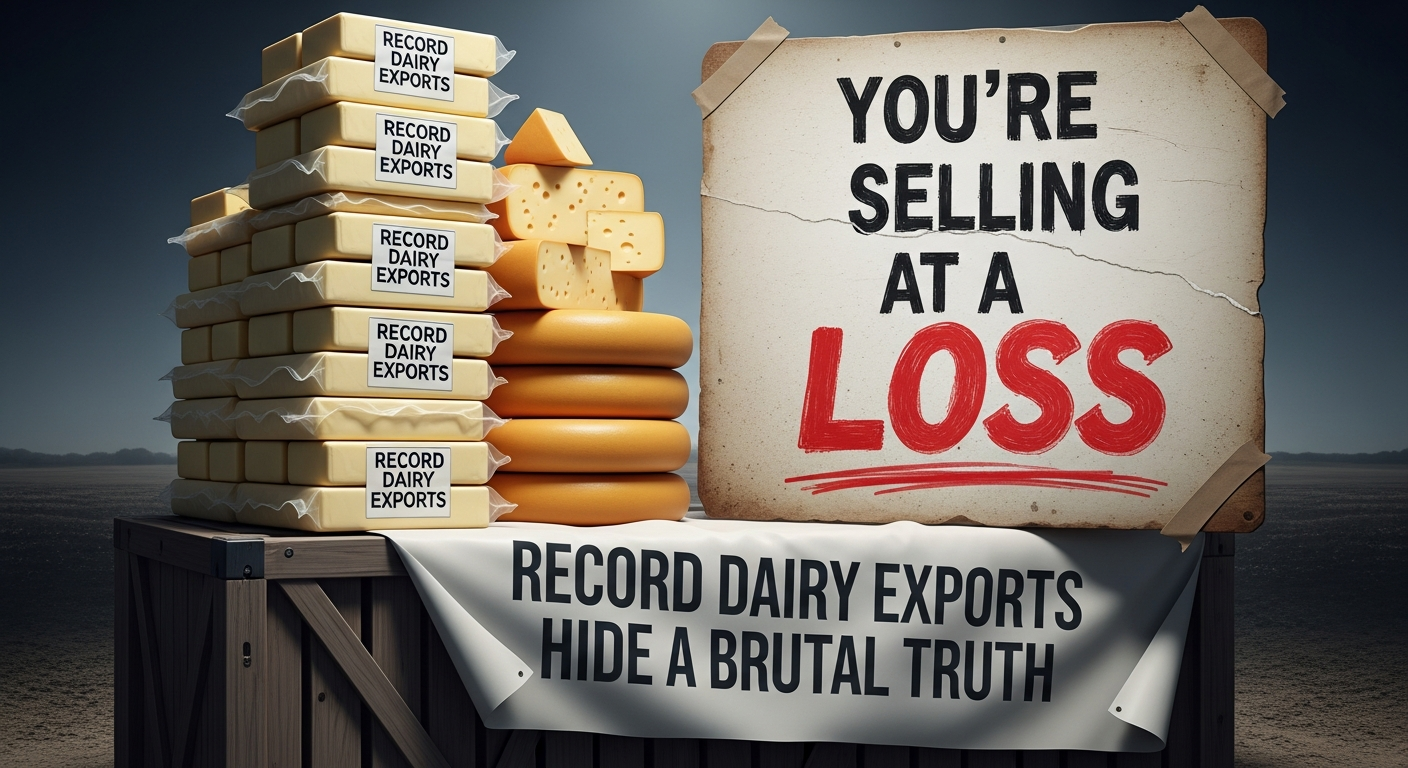
Record Dairy Exports Hide a Brutal Truth: You’re Selling at a Loss

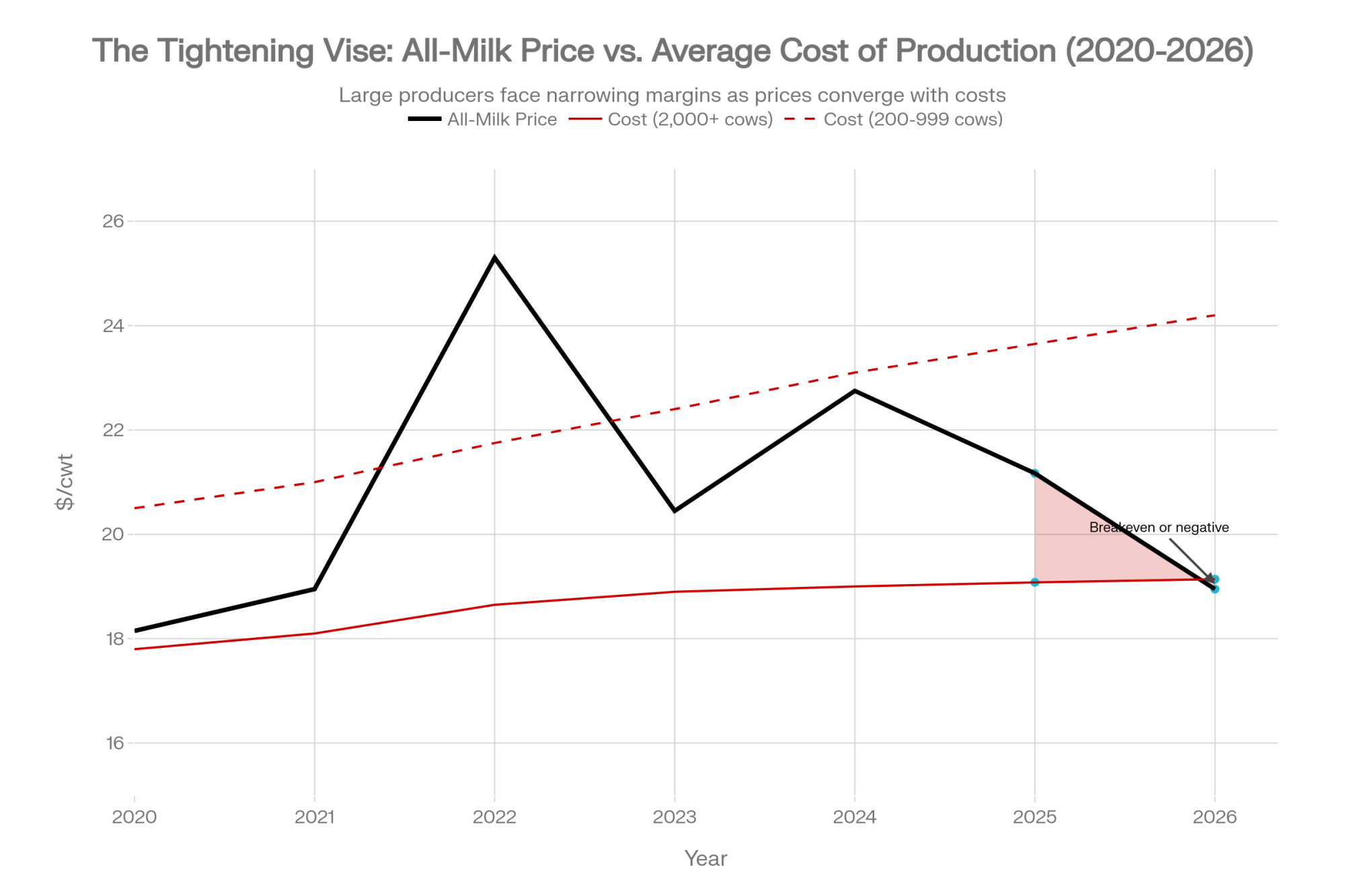
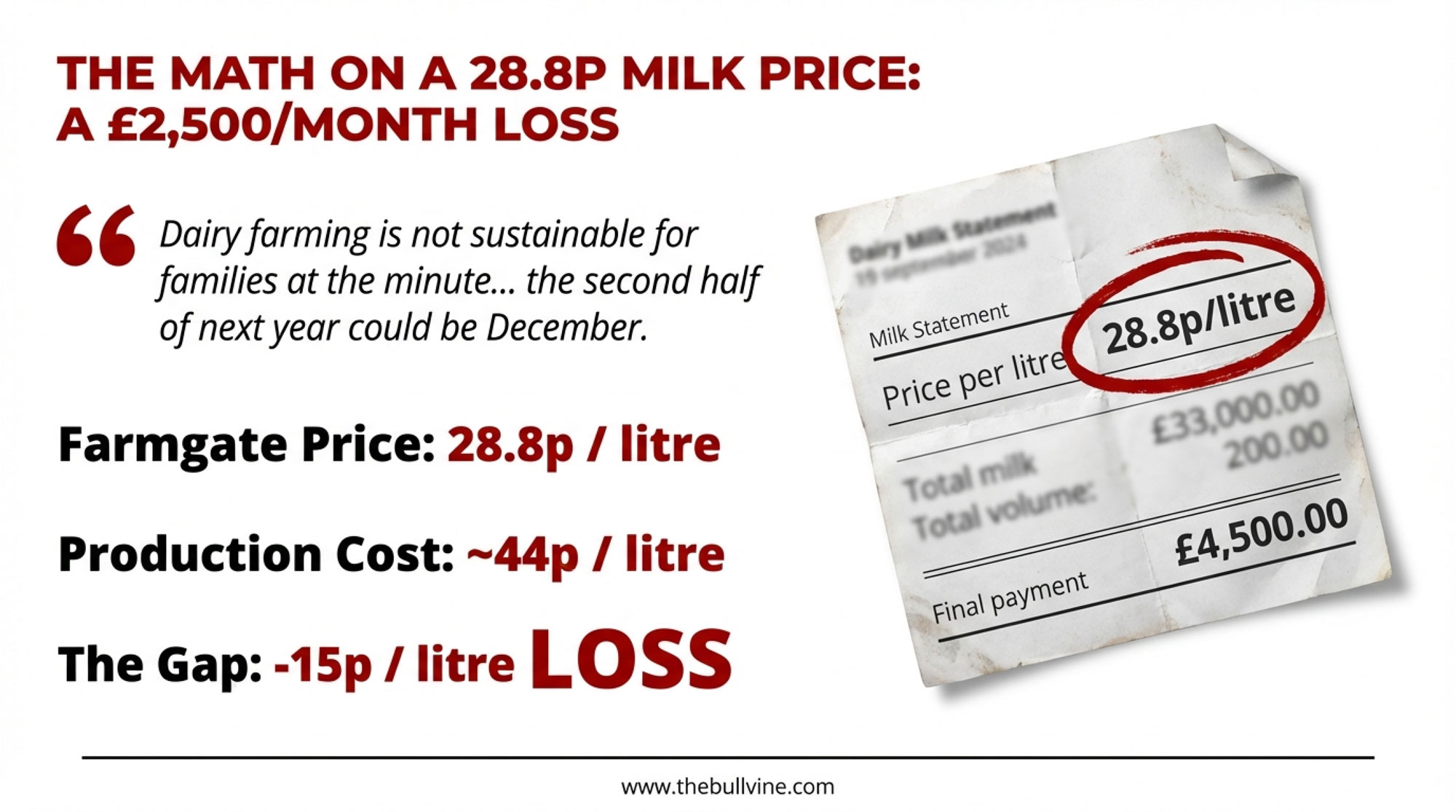
Your co-op newsletter: ‘RECORD EXPORTS!’ Your milk check: -$2/cwt. Your banker: ‘We need to talk.’ The disconnect has never been wider.

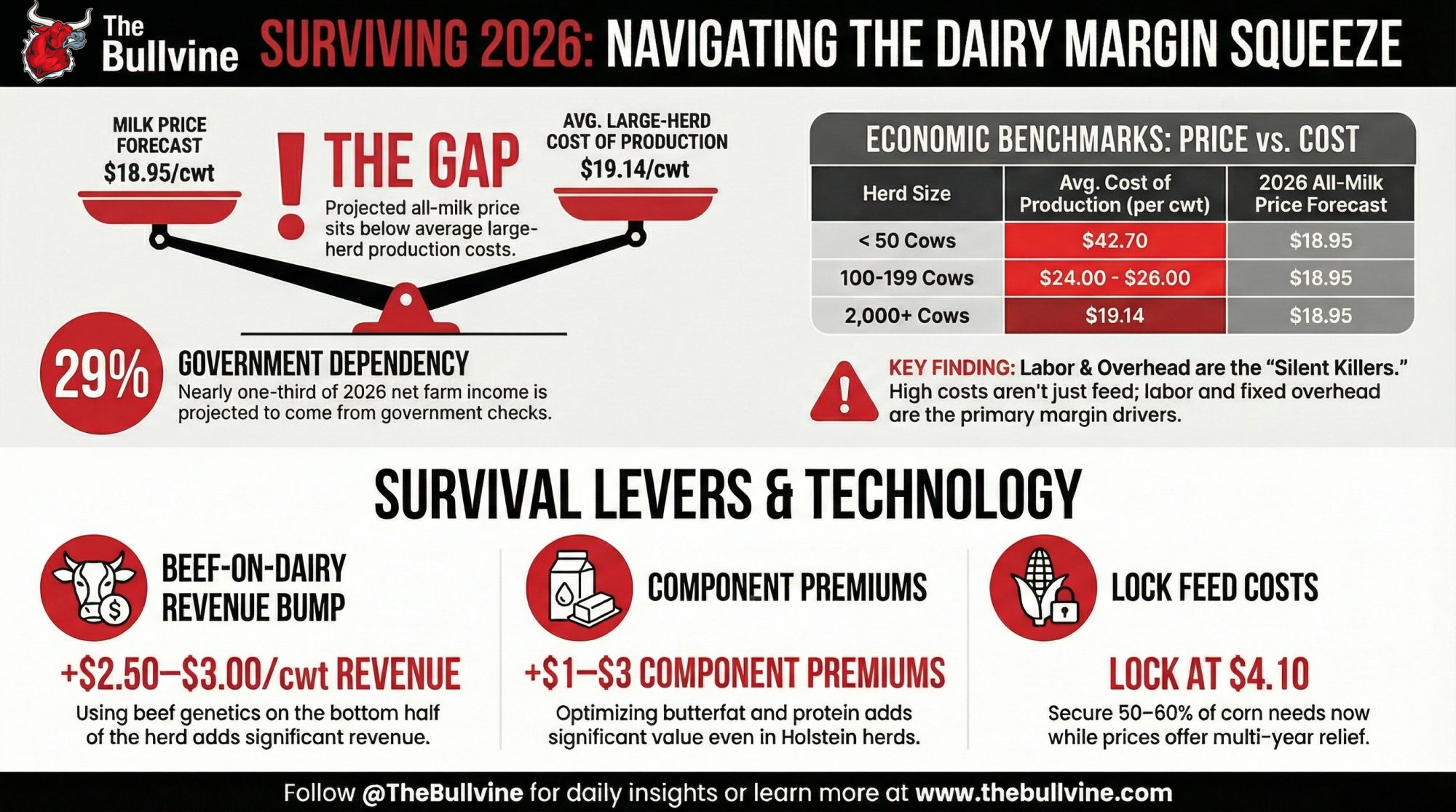
EXECUTIVE SUMMARY: The U.S. dairy industry’s record cheese exports are actually distress sales, with producers losing $2/cwt as milk prices sit at $16.91 against $19 production costs. Mexico—buying 29% of our exports—is spending $4.1 billion to become self-sufficient, while China’s 125% tariffs have already destroyed our powder markets. The Class III-IV price spread has exploded to $4.06/cwt, the widest since 2011, forcing all production toward cheese that’s selling below profitability. Mid-size farms (500-1,500 cows) face extinction-level losses of $400,000+ annually, with survival limited to mega-dairies with 50% or less debt or premium operations near cities. Producers have 90 days to make irreversible decisions: scale massively, find niche markets, or exit before equity evaporates. The 800,000-head heifer shortage guarantees milk production will contract 3-5% through forced exits, but recovery won’t arrive until mid-2027—and only for the operations structured to survive.

dairy farm profitability 2025

On the surface, the numbers look fantastic. We exported 119.3 million pounds of cheese in August 2025—up 28% from last year, according to the Dairy Export Council. Butter exports nearly tripled. Processing plants are announcing $11 billion in new investments.

But check your bank account. The milk checks aren’t matching the celebration. The headlines say “Record Exports,” but the market reality says “Distress Sale.”

I’ve been talking with producers from Wisconsin down to Texas, and what I’m hearing doesn’t line up with these export headlines. Understanding this disconnect could be the difference between successfully navigating the next 18 months or becoming another casualty of industry restructuring.

The “record export” headlines your co-op newsletter celebrates tell only half the story. Yes, August 2025 cheese exports jumped 28% to 119.3 million pounds—but prices collapsed 13% to $1.82/lb. This is classic distress sale economics: moving volume at any price to avoid even bigger losses. When production costs sit at $18-19/cwt and you’re selling below $2/lb equivalent, every shipment deepens the red ink.

When Being the Cheapest Isn’t Actually Winning

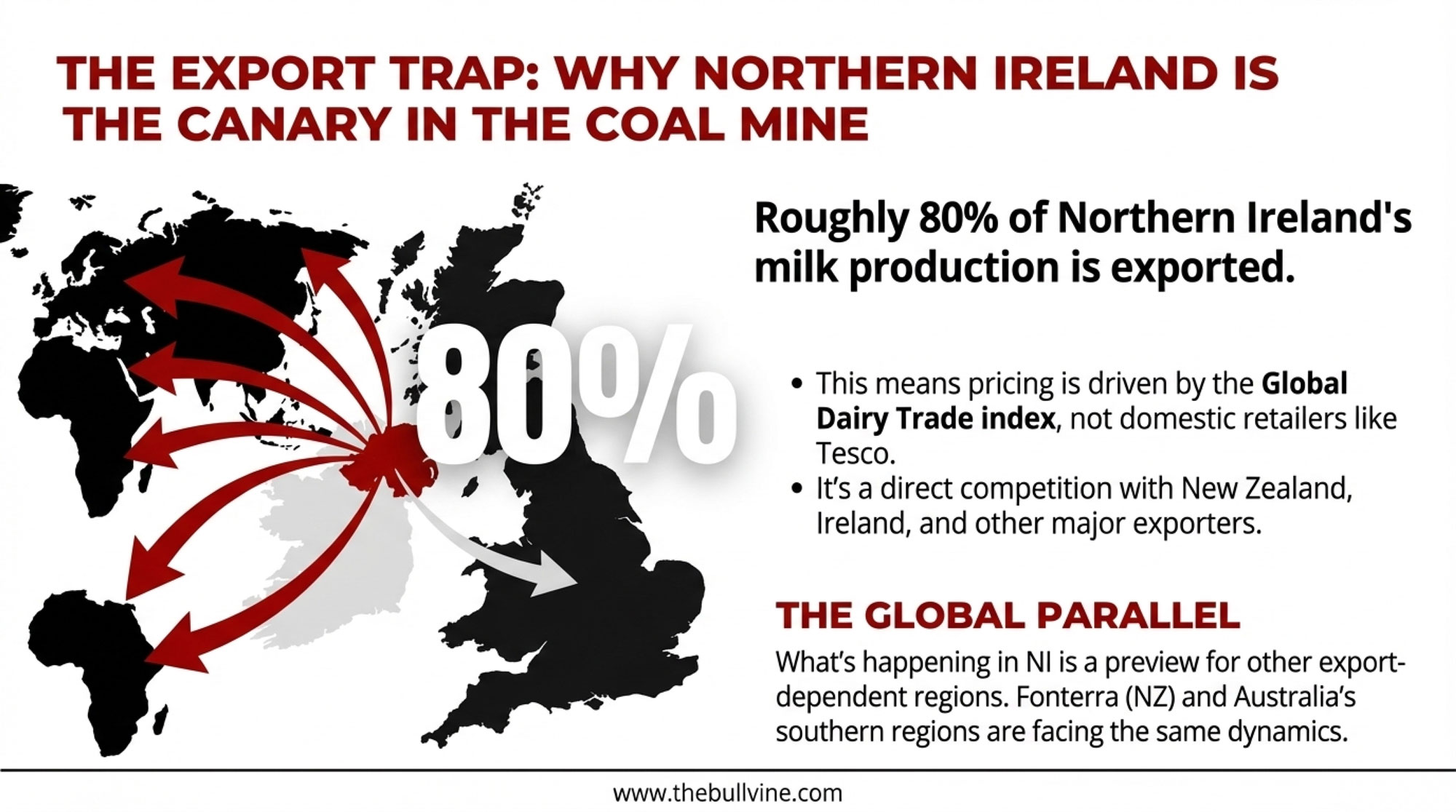
The US dairy industry’s “record exports” mask a brutal reality: American cheese trades at $1.82/lb while European producers command $2.35/lb—a 45-60 cent disadvantage that signals desperation rather than competitive strength. When you’re underselling New Zealand butter by a full dollar per pound, you’re not winning global markets; you’re liquidating inventory below cost.

Here’s what’s bothering me about these export records. Global Dairy Trade auction results from November show American butter trading at $1.57 a pound. New Zealand? They’re getting $2.57. Our cheese is moving at $1.82 while Europeans fetch $2.27 to $2.42.

That 45 to 60 cent spread on cheese isn’t a competitive advantage. It’s desperation.

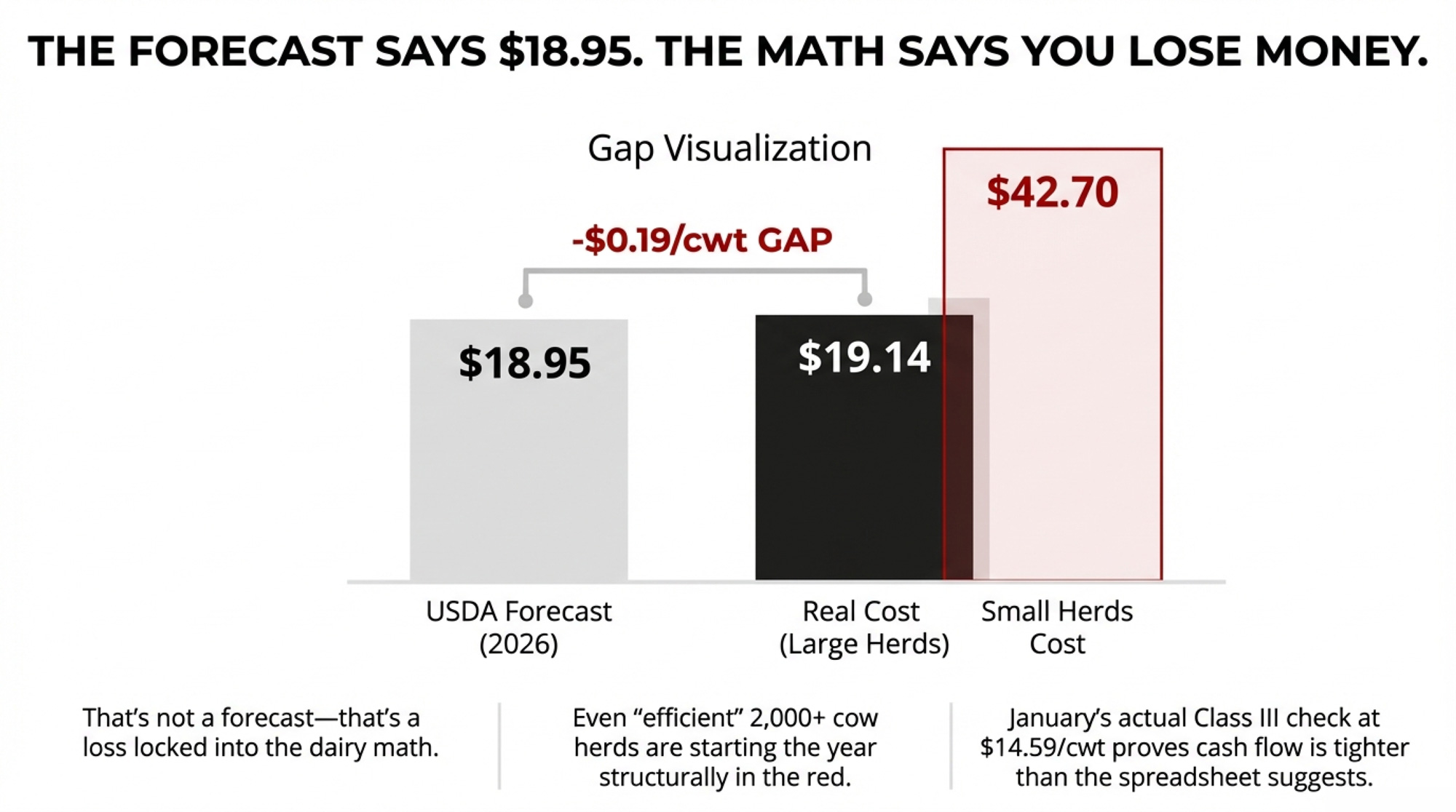
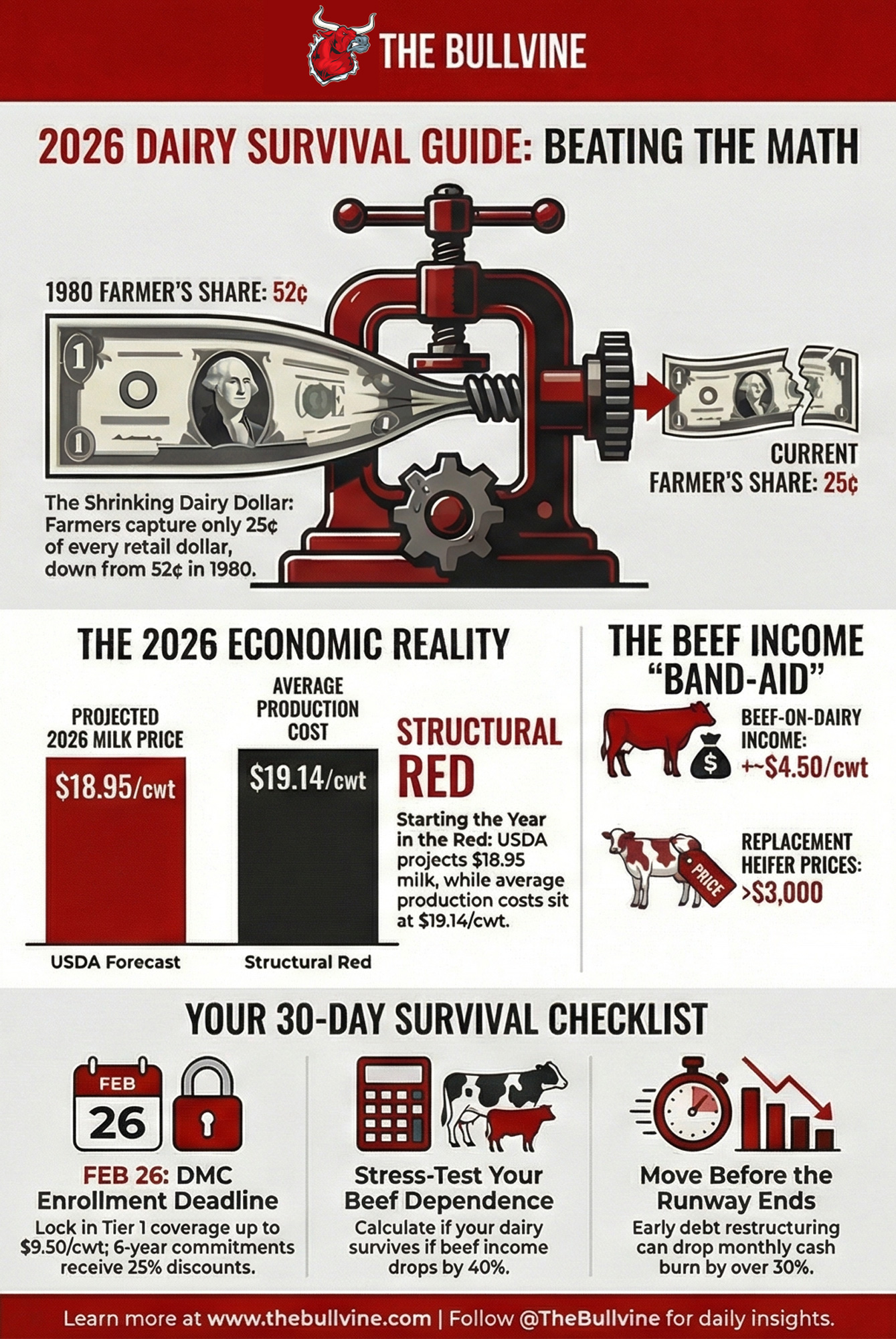
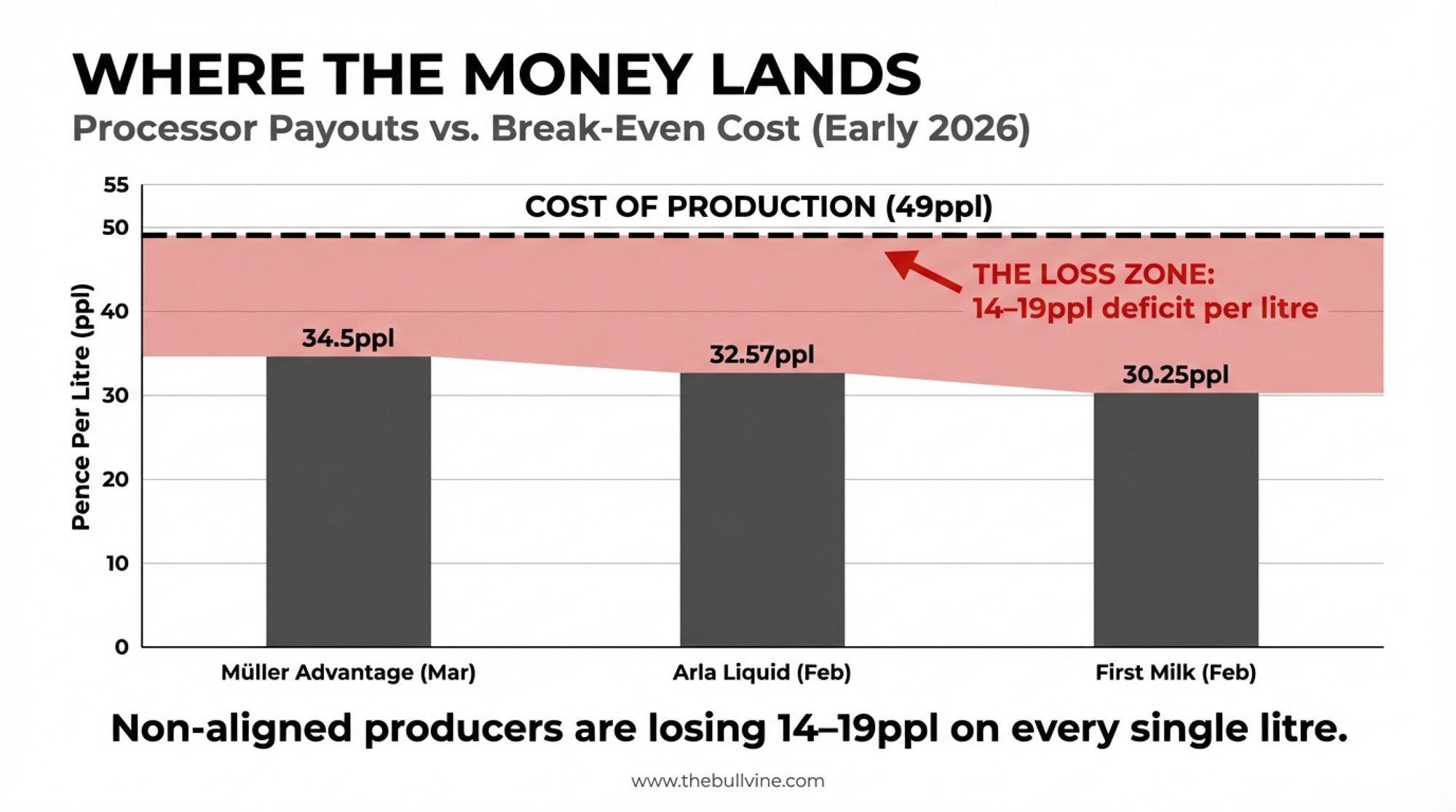
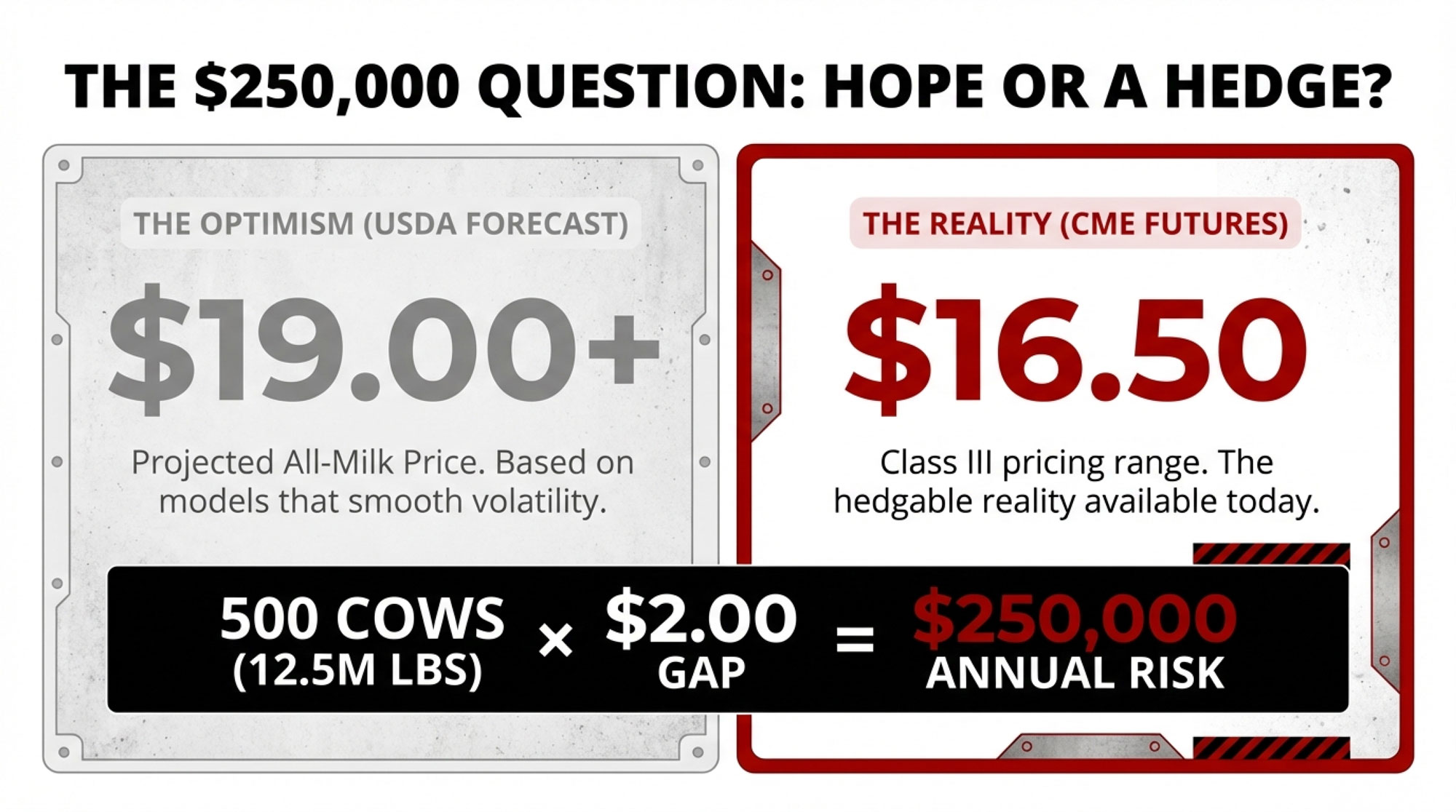
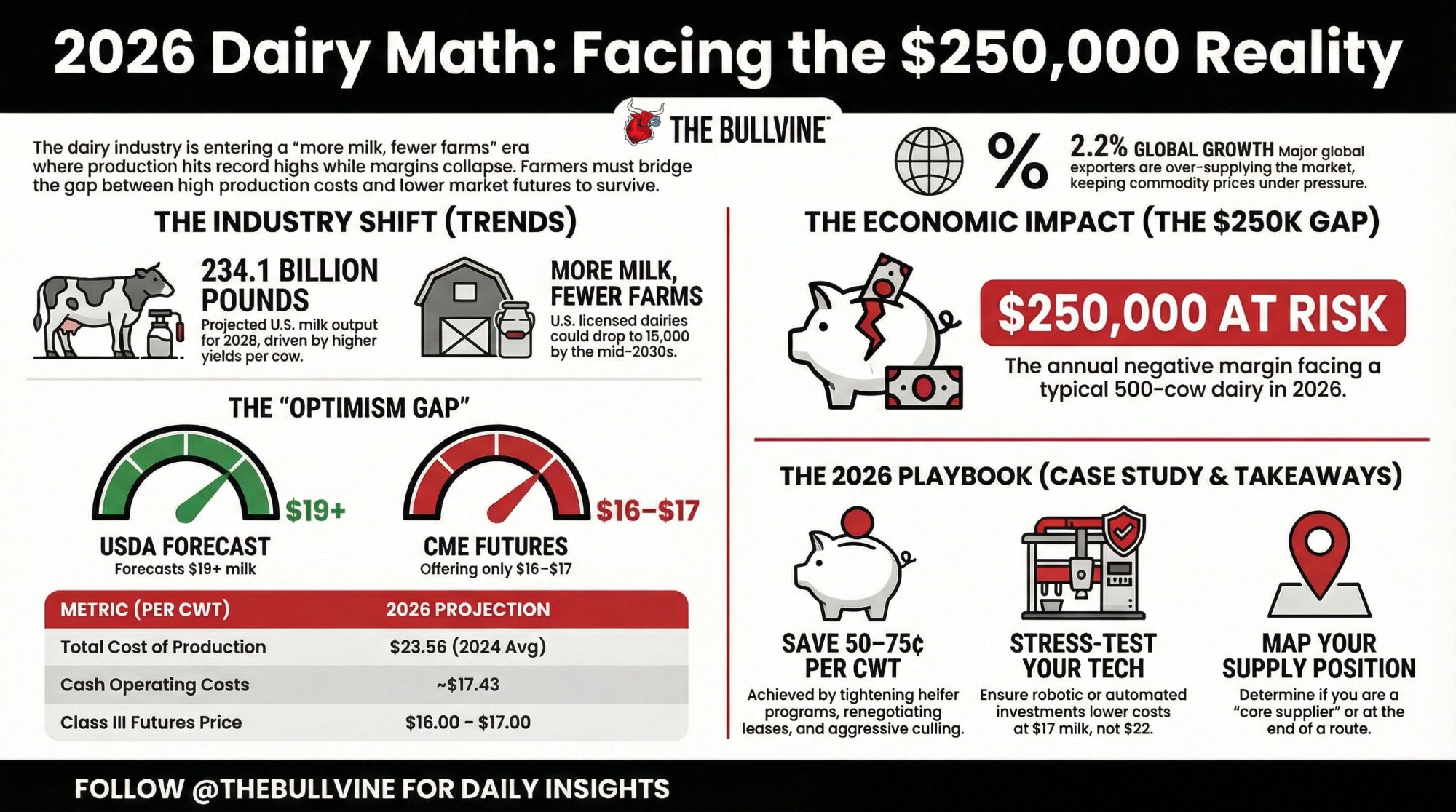
Penn State Extension’s 2025 dairy outlook shows that a typical 500-cow operation in Wisconsin or Minnesota has production costs running $18 to $19 per hundredweight. But milk prices? We’re at $16.91 for Class III according to CME October data. That’s annual losses of $32,000 to $62,000 for operations that size.

These record exports everyone’s celebrating are happening because we’re willing to sell at prices that don’t cover our costs. South Korean and Japanese buyers see cheap American dairy, and they’re stocking up. Can’t blame them. But volume at a loss isn’t success.

The Time Lag Trap We’re All Stuck In

The breeding decisions you made two years ago—when milk was over $20 per hundredweight—those heifers are just entering the milking herd now.

According to USDA’s latest milk production reports, we’ve added 200,000 cows to U.S. herds over the past 18 months. Every one of those additions made sense when the decision was made. But September production jumped 4.2% year-over-year, and we’re producing 18.3 billion pounds of milk at exactly the moment when global markets are saturated.

Your operation has maybe $300,000 to $500,000 in annual fixed costs—infrastructure doesn’t get cheaper just because milk prices drop. Equipment auction data from Machinery Pete shows you’re looking at 30 to 50% discounts from what things were worth two years ago if you try to sell now.

So we keep producing. We try to spread those fixed costs over more volume. It’s rational for each of us individually, but when everyone does it, oversupply drives prices even lower.

The Mexico Situation Nobody Wants to Talk About

While you’re focused on tariff headlines, Mexico is spending $4.1 billion to eliminate $1+ billion in US dairy imports by 2030. They’re not negotiating—they’re building processing plants in Campeche and Michoacán with 600,000-liter daily capacity and importing Holstein heifers from Australia. Mexico takes 29% of US dairy exports; losing even half that market erases profits for thousands of farms overnight.

While we’re celebrating that Mexico takes 29% of our dairy exports according to USDA Foreign Ag Service data, they announced last July that they’re spending $4.1 billion to become 80% self-sufficient in dairy by 2030.

They’re building processing facilities in Campeche and Michoacán that’ll handle 600,000 liters a day. They’ve imported 8,000 Holstein heifers from Australia—Dairy Australia confirmed that shipment. The Mexican government is guaranteeing their producers 12 pesos per liter.

Mexico buys 51.5% of all our nonfat dry milk exports, according to Export Council trade data. If they achieve even half their plan, we’re talking about losing a billion dollars or more in annual exports. This isn’t a trade dispute that’ll blow over. They’re building the infrastructure right now.

Why Powder Is Collapsing While Cheese Keeps Moving

Class III-IV pricing spread explodes to $4.06/cwt—matching 2011’s record gap and exposing dairy’s new geography of pain. Same cows, same work, but if your milk goes to butter and powder plants instead of cheese, you’re losing $15,000 monthly on a 500-cow operation. This isn’t market volatility; it’s structural divergence that’s rewriting the profitability map.

August export data shows cheese exports up 28%, but powder exports down 17.6%—the lowest August volume since 2019.

The October CME Spread tells the story:

  • Class III (Cheese): $17.81/cwt
  • Class IV (Powder/Butter): $13.75/cwt
  • Spread: $4.06/cwt—widest since 2011

For a 500-cow dairy, that’s a $50,000 swing in annual income depending purely on which plant takes your milk.

China put 125% tariffs on our dairy products back in March. We used to send them 70-85% of our whey exports. That market disappeared overnight. Processors are pushing every pound they can toward cheese because at least there’s still some margin there. Powder production? They’re running the minimum.

Different Operations, Different Realities

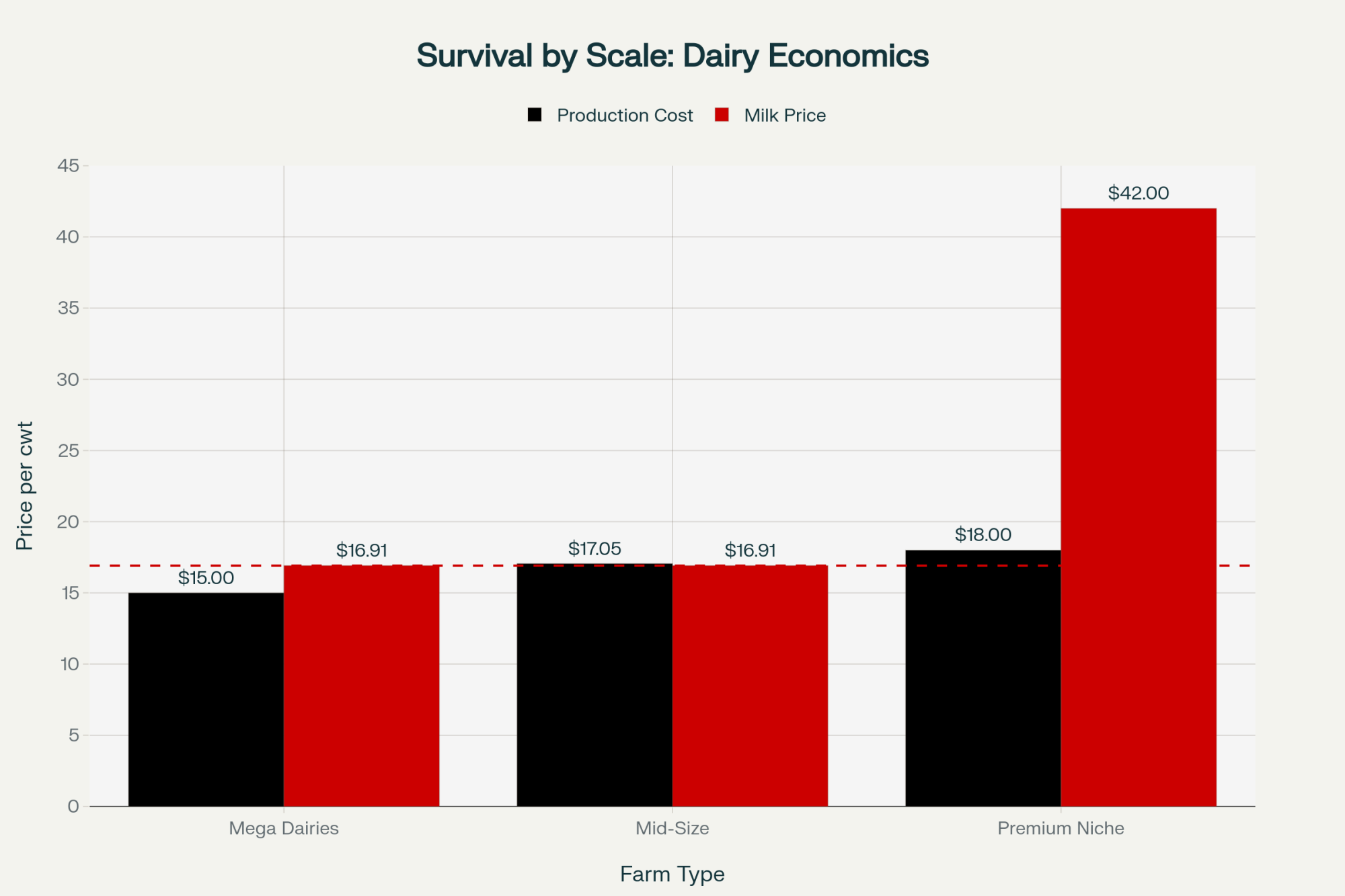
The dairy industry’s brutal bifurcation in one chart: mega-dairies break even at scale, mid-size operations hemorrhage $62K annually, while premium niche players bank $120K. If you’re running 500-1,500 conventional cows, you’re in the kill zone—producing milk at $17.05/cwt and selling it at $16.91. The math doesn’t work, and hoping for better prices won’t save you.

Based on the Center for Dairy Profitability at Madison and the Farm Credit System data:

Mega-dairies (3,500+ cows): Costs around $14.20 to $15.80/cwt thanks to automation and efficiency, according to Michigan State’s benchmarking study. If debt’s under 50% of equity, they can weather this storm. Some are buying out struggling neighbors at 30 to 50 cents on the dollar.

Mid-size operations (500-1,500 cows): The toughest spot. Production costs $16.30 to $17.80 based on Kansas State farm management data. With current milk prices, annual losses could exceed $400,000. Without a path to massive scale or premium markets, options are limited.

Premium niche (organic/grass-fed): Capturing $36 to $50/cwt through outfits like CROPP Cooperative are doing okay. But you need established customers near a city. Operations that went organic without premium market access are worse off than conventional farms due to higher feed costs.

Decision Time: The Next 90 Days Matter


Decision Path
Capital RequiredTimelineEquity RetainedSuccess RateKey Requirements
Exit Now (Controlled)$090-120 days85-95%95% (preserve wealth)Act before March 2026
Scale to Mega (3500+ cows)$8-15 million18-36 months20-40% (high debt)60% (if debt <50%)Low debt + expansion capital
Pivot to Premium Niche$500K-1.2M36 months (organic)70-85%70% (w/ city proximity)Within 50-100mi of major city
Status Quo / Wait & Hope$0Indefinite bleeding0-50% (forced exit by 2027)15-20% (statistically)Hope for market recovery

Based on Purdue’s Commercial Ag projections and USDA’s long-term outlook, you’ve got critical decisions to make in the next three to six months.

Considering expansion? Interest rates are 7.5 to 9% according to the Fed, ag credit conditions. Kansas State data shows that expanding when prices are falling rarely works. Maybe pay down debt instead.

Considering exit? Asset values today versus 18 months from now could be the difference between keeping most of your equity or losing it all. Equipment markets have declined for 25 straight months, according to Equipment Manufacturers data.

Considering organic/grass-fed? It’s a three-year conversion with negative cash flow. You need to be within 50 to 100 miles of a major city, based on consumer research. Penn State Extension says you need off-farm income during transition.

The Heifer Shortage Silver Lining

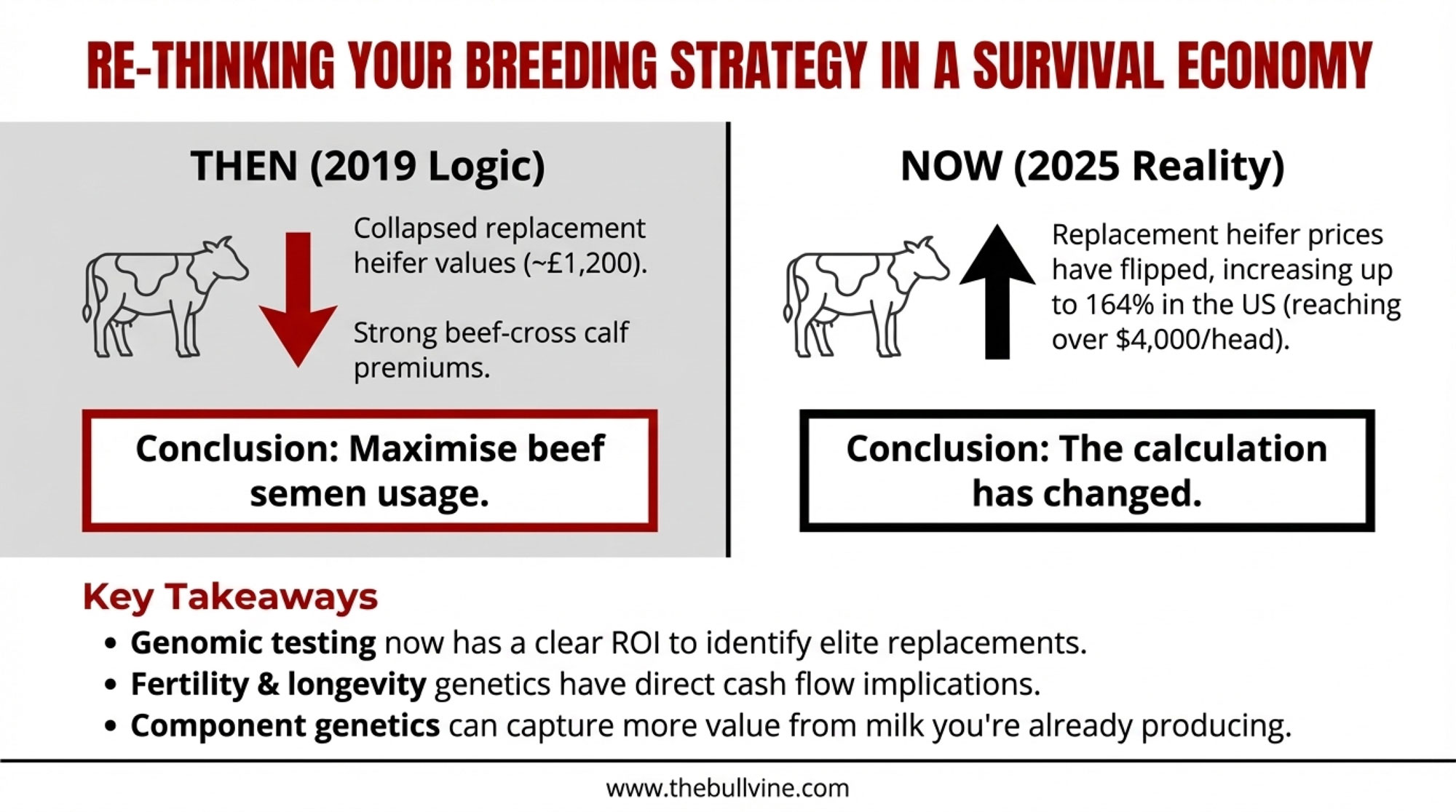
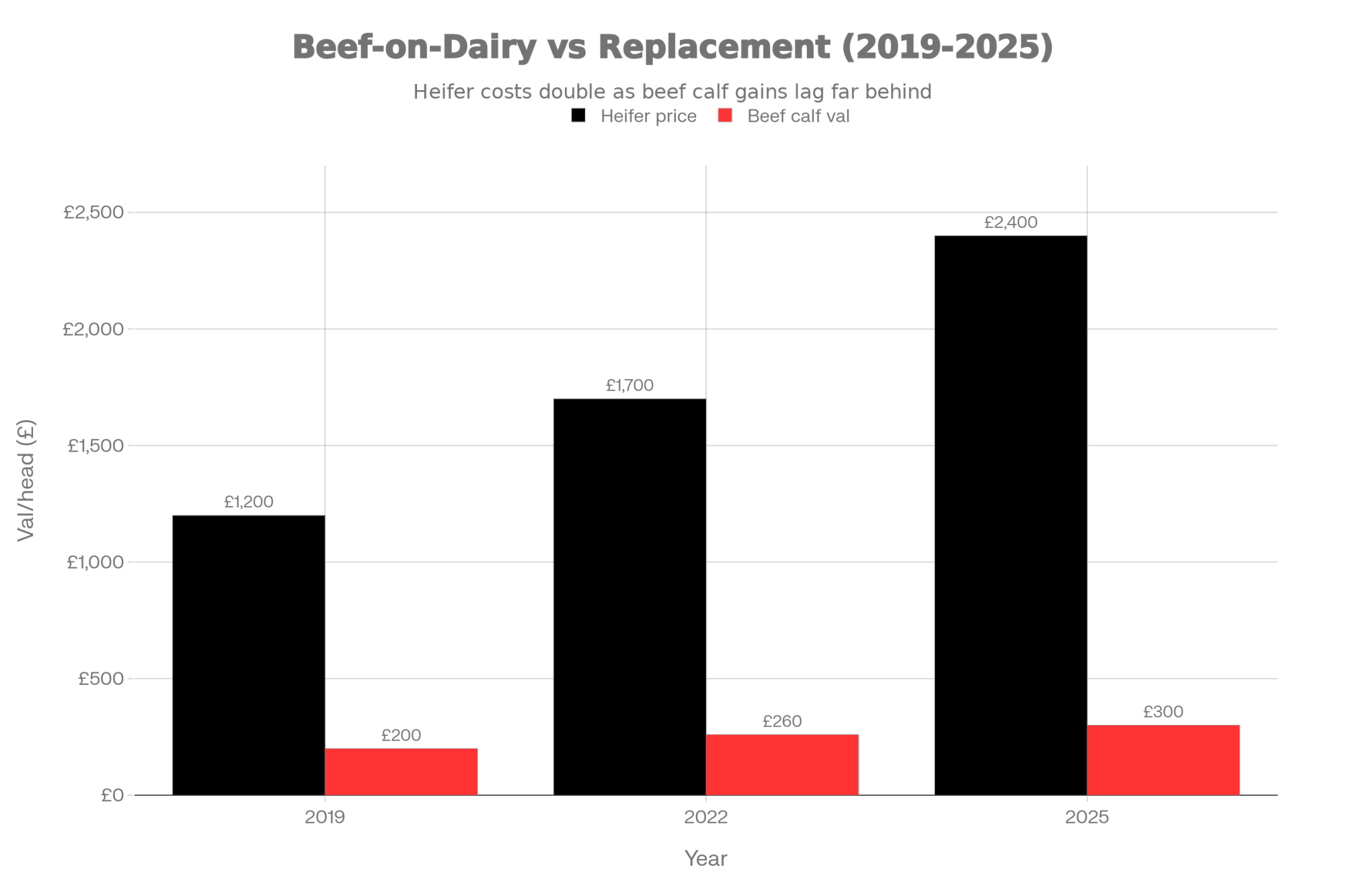
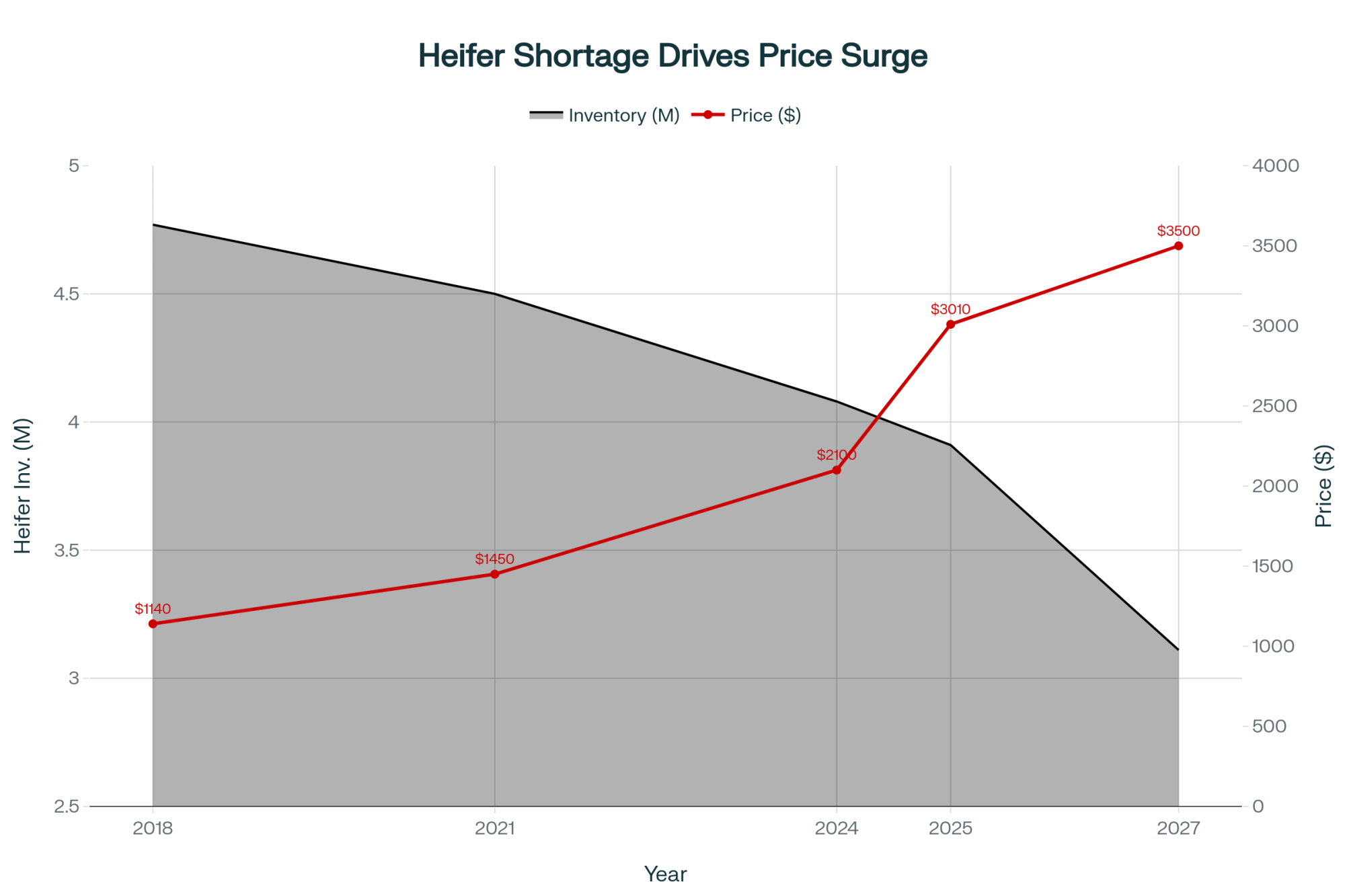
Here’s your silver lining in a crisis: an 800,000-head heifer shortage over two years mathematically guarantees milk production will contract 3-5% by 2027. Replacement inventory sits at 20-year lows while heifer prices exploded from $1,140 to $3,010—a 164% jump that makes expansion impossible. This forced contraction is exactly what balances supply-demand and triggers recovery. The question: will you survive to see it?

CoBank’s latest report shows we’re at 20-year lows for dairy replacement heifers. We’re short about 800,000 replacements over the next two years.

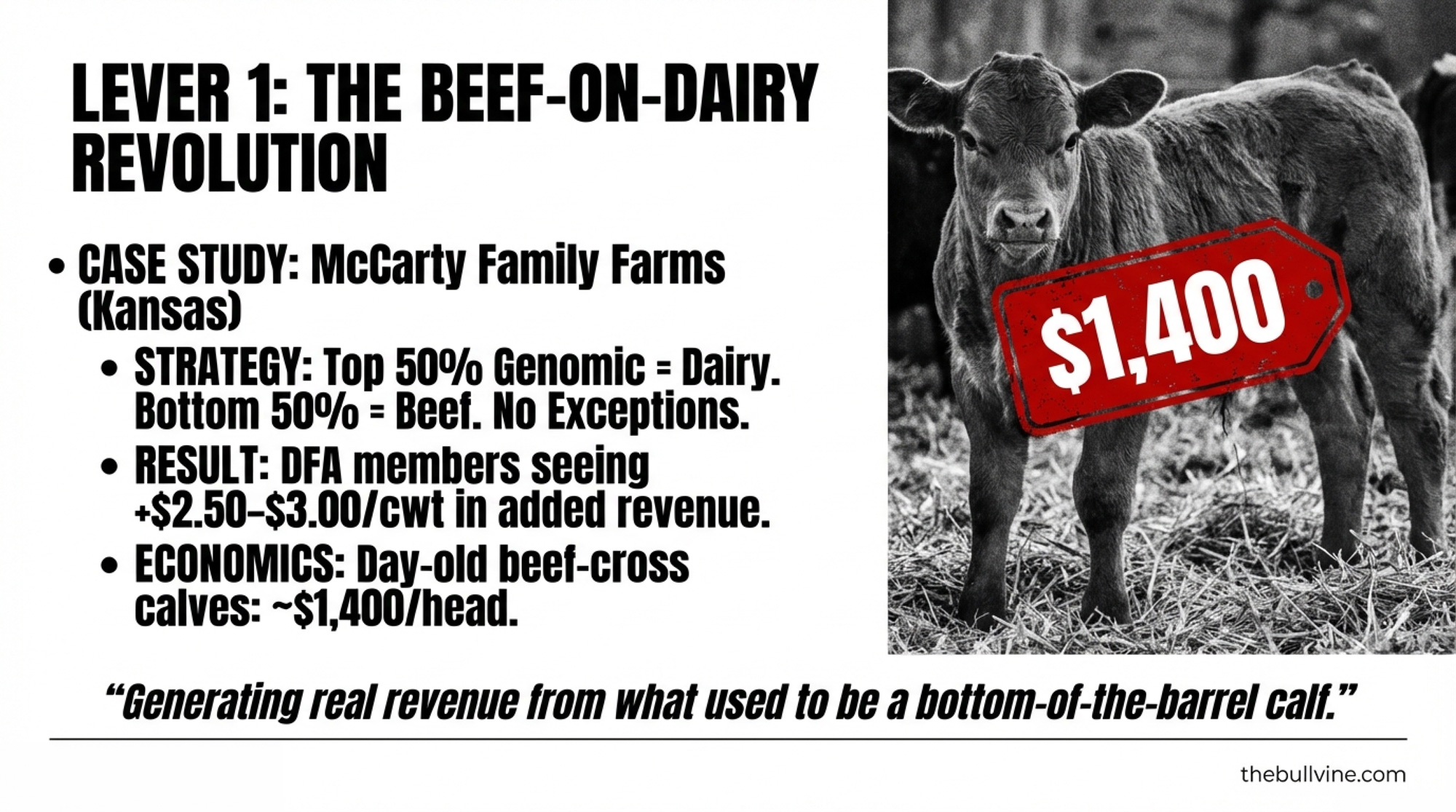
When you can get $3,500 to $4,500 for a beef-cross calf versus keeping a dairy heifer worth $800 to $1,200 in this market, the math is obvious. Progressive Dairy’s breeding survey shows most producers are making that same decision.

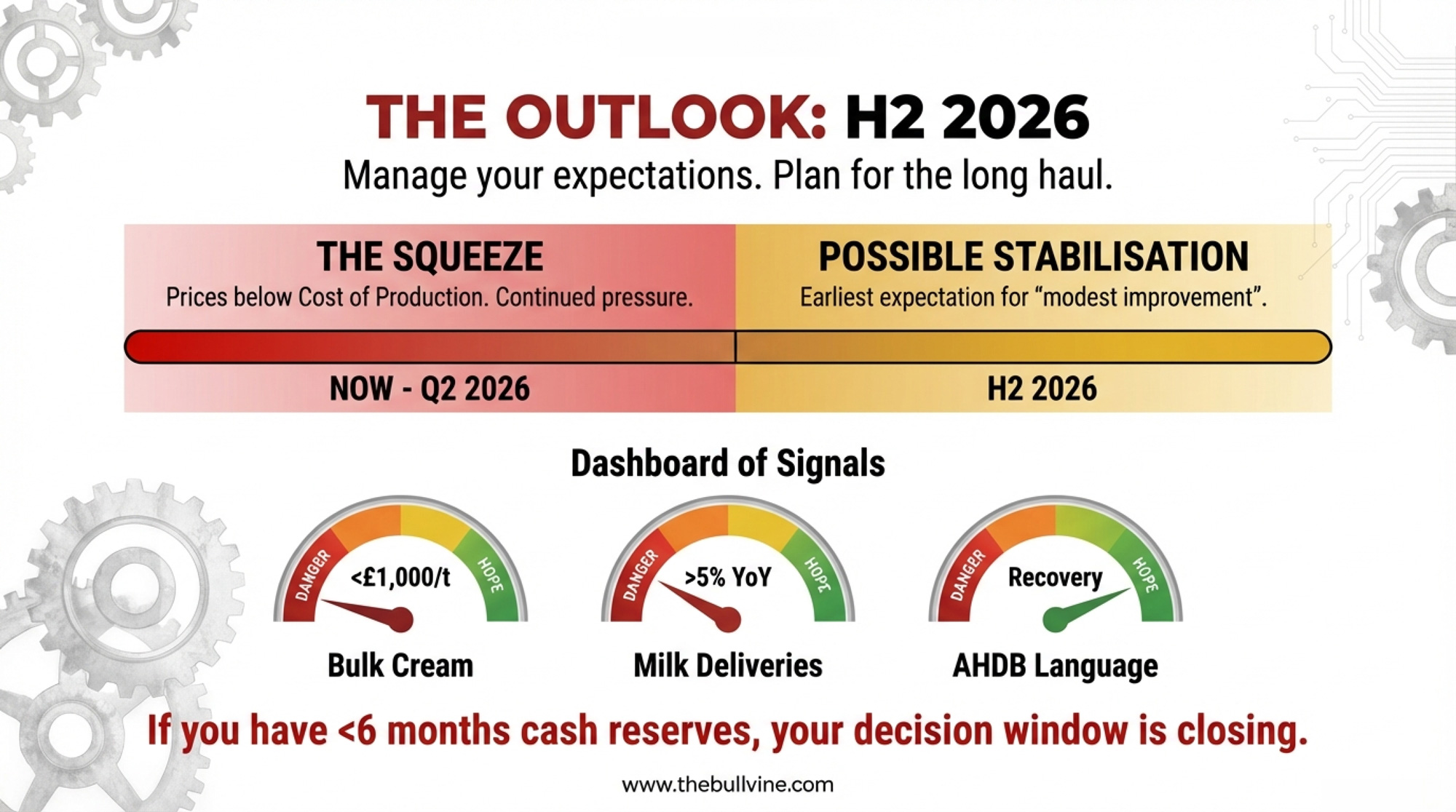
The dairy herd has to shrink—probably 3 to 5% by 2027, according to USDA projections. That might balance supply and demand. Rabobank and CoBank project stabilization by mid-2027, with gradual improvement into 2028.

How Geography Changes Everything

California’s Central Valley faces water costs up 40% according to UC Davis Cost Studies. Meanwhile, South Dakota State University Extension’s 2025 Feed Cost Analysis shows operations there seeing feed costs $1.50 to $2.00/cwtbelow the national average.

Texas added 50,000 cows while Wisconsin stayed flat. That’s economics playing out in real time.

What This All Means for You

Those record export numbers? They don’t mean what the headlines suggest. Moving volume at a loss is a distress sale on a national scale.

The decisions you make in the next 90 days are more important than what you do over the next year. By March 2026, many options available today won’t exist.

Mexico’s self-sufficiency plan is real. We need to plan for our biggest customer becoming a competitor. The Export Council knows it, but I’m not seeing contingency planning at the farm level.

Scale alone won’t save anyone. I’ve seen big operations with too much debt go under, and small operations with good positioning thrive. It’s about your total situation—debt levels, geographic location, market access.

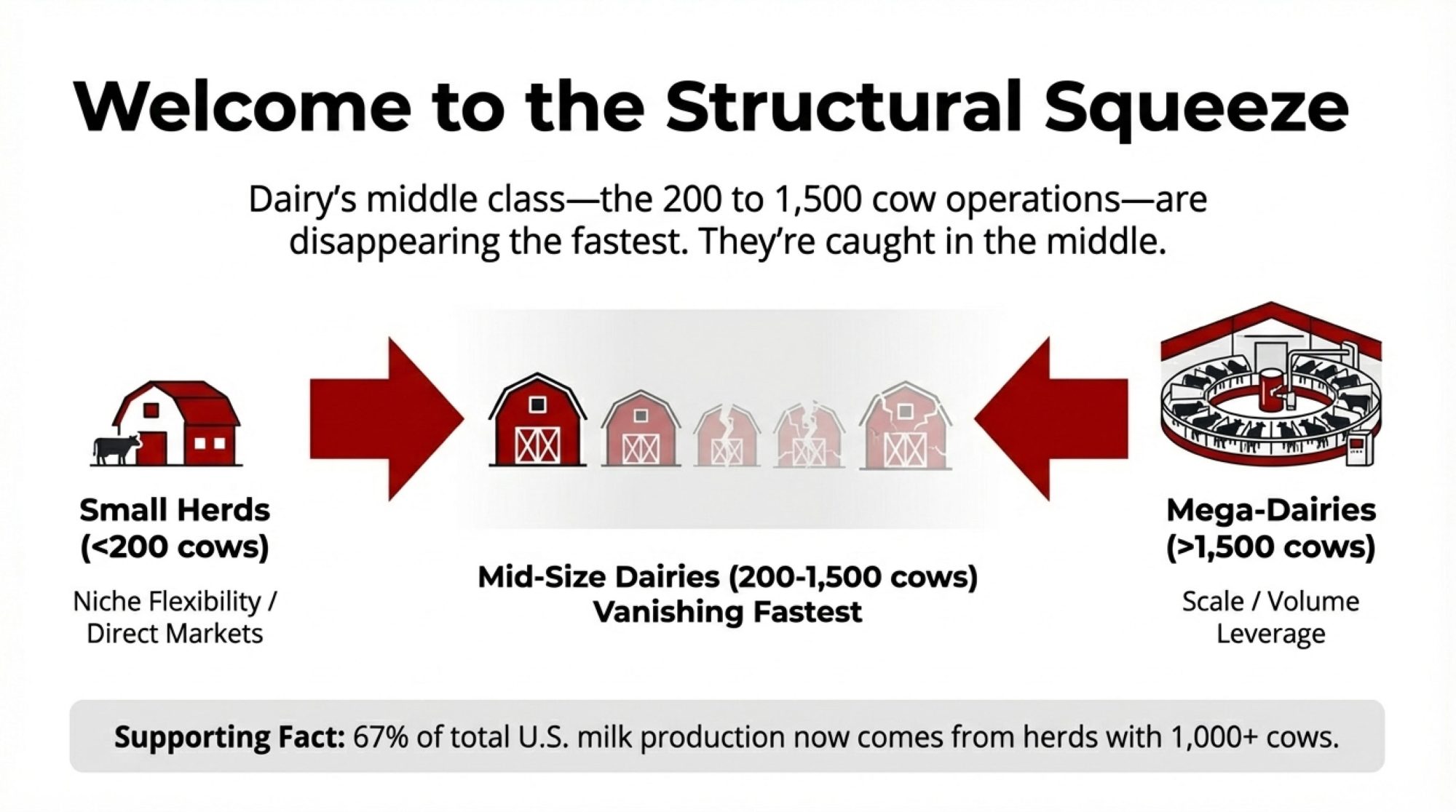
The bifurcation—where you’re either huge or niche—is accelerating. If you’re in that middle range, especially 200 to 1,000 conventional cows, you need to decide which direction you’re heading.

Recovery is coming through contraction. The heifer shortage guarantees that. The question is whether you’ll be around to see it.

Looking Down the Road

By 2028, based on projections from Texas A&M and Cornell, we’ll have fewer, larger operations handling commodity production and smaller, specialized operations serving premium markets. That middle ground where many of us operated for generations is disappearing.

This isn’t random volatility. It’s industry restructuring in response to global competition, changing consumer preferences, as the Innovation Center for U.S. Dairy has tracked, and the reality of 2025 production costs.

When you see export headlines in your co-op newsletter and wonder why your milk check keeps shrinking, remember—it’s not about volume. It’s about margins. The difference between acting strategically now versus hoping things improve could be the difference between preserving or losing your family’s equity.

The herd is heading off a cliff. The record exports are just the dust they’re kicking up. Don’t follow the volume—follow the margin. The next 90 days will decide if you’re a casualty of the restructuring or one of the few left standing to see the recovery.

KEY TAKEAWAYS

  • Your daily reality: At current prices, a 500-cow dairy loses $175/day ($62,000/year). The Class III-IV spread of $4.06/cwt means the same milk yields $50,000 in different income based purely on plant destination.
  • The export trap: Record volumes are happening BECAUSE we’re desperate—selling cheese at $1.82/lb while New Zealand gets $2.42/lb isn’t winning, it’s liquidation.
  • 90-day decision window: By March 2026, you must choose—scale to 3,500+ cows, secure premium markets at $36+/cwt, or exit, preserving 85% equity (vs 0-40% if forced out later).
  • Geographic survival map: Texas/South Dakota operations save $1.50-2.00/cwt on feed. California faces +40% water costs. Location now determines viability as much as management.
  • The guarantee: 800,000-heifer shortage forces 3-5% production cut by 2027, ensuring recovery for survivors—but 40-50% of current operations won’t make it.

Complete references and supporting documentation are available upon request by contacting the editorial team at editor@thebullvine.com.

Learn More:

Join the Revolution!

Join over 30,000 successful dairy professionals who rely on Bullvine Weekly for their competitive edge. Delivered directly to your inbox each week, our exclusive industry insights help you make smarter decisions while saving precious hours every week. Never miss critical updates on milk production trends, breakthrough technologies, and profit-boosting strategies that top producers are already implementing. Subscribe now to transform your dairy operation’s efficiency and profitability—your future success is just one click away.
NewsSubscribe
First
Last
Consent

The Hidden Contract Clause That Could Cost Your Dairy $55,000 in 2026

WARNING: Your 2026 dairy contract has unlimited liability clauses. 500-cow farms face $55K in new costs. Check these three things before signing →

EXECUTIVE SUMMARY: Dairy farmers signing 2026 contracts now are discovering unlimited liability clauses that hold them responsible for allergen incidents—even those that occur at the processor. These new terms, triggered by California’s July 2026 allergen law, could cost a typical 500-cow operation between $15,000 and $55,000 annually in testing, infrastructure, and insurance. That’s up to 44% of net profit gone. With December 31 deadlines approaching, farmers face three paths: scale up to 1,500+ cows for efficiency, pivot to premium markets with $5-10/cwt premiums, or exit strategically while preserving wealth. The harsh reality is that 500-cow commodity dairies are becoming economically obsolete—caught between mega-farms operating at $3/cwt lower costs and premium producers capturing higher margins. Your decision in the next 90 days isn’t just about a contract; it’s about whether your farm exists in 2030.

Dairy Contract Risk

You know, I’ve been talking with a lot of dairy farmers lately—folks running anywhere from 300 to 800 head—and the same topic keeps coming up over coffee.

These new contracts are landing on kitchen tables across the country right now? They’re different.

And I don’t mean different like when they tweaked the somatic cell premiums a few years back. I mean, fundamentally different.

One Wisconsin producer I know pretty well—let’s call him Tom to keep things simple—he runs about 500 Holsteins outside Eau Claire. Last Tuesday, he opens his December 2025 contract renewal expecting the usual adjustments. Maybe a change in butterfat differential or a new hauling schedule.

Instead, he finds himself staring at 15 extra pages of allergen management requirements. Language about “unlimited liability.” Clauses saying he has to defend his processor against claims he didn’t even cause.

“The efficiency gains are real—our cost per hundredweight dropped by nearly three dollars. But this wasn’t just about surviving allergen costs. We saw where the industry was heading and decided to get ahead of it.”
— A Wisconsin dairy producer who expanded from 600 to 1,800 cows last year

And here’s what’s interesting—Tom’s not alone. From the Texas Panhandle to Vermont’s Northeast Kingdom, down through the Georgia dairy belt and out to Idaho’s Magic Valley, producers are discovering their 2026 contracts contain terms nobody’s ever seen before.

Now, California’s allergen labeling law takes effect on July 1, 2026—that’s the official reason. But what I’ve found is that processors are using this regulatory change as the mechanism for something much bigger.

They’re fundamentally restructuring how risk flows through the dairy supply chain.

Let me walk you through what’s actually happening, because once you understand the pieces, the decisions you need to make become a lot clearer.

What Is California’s Allergen Law?

Starting July 1, 2026, California requires restaurant chains with 20+ locations nationwide to label major food allergens on menus. While this sounds limited to restaurants, processors are using it to justify comprehensive supply chain allergen controls—pushing liability and costs upstream to dairy farms through new contract requirements.

Why These Contract Changes Hit Different

I’ve been looking at dairy contracts for going on two decades now, and what’s landing on farm desks this quarter is genuinely unprecedented.

You probably saw the FDA’s recent data from their Reportable Food Registry—dairy products accounted for nearly 30% of all food recalls in the first quarter of 2025. That’s almost 400 recalls from our industry alone.

And when you dig into those numbers, undeclared allergens are driving a huge chunk of them, with milk proteins topping the list.

The Grocery Manufacturers Association conducted research in 2022 that showed food recalls average around $10 million in direct costs. And that’s just pulling product, investigating, notifying regulators.

Doesn’t even touch brand damage, lost sales, or legal fees. You’re looking at exposure that could bankrupt a mid-sized processor, which is why they’re scrambling to push that risk elsewhere.

What’s the target? Your farm.

What I’m hearing from agricultural attorneys who specialize in dairy contracts—and there aren’t that many of them, as you probably know—is that processors aren’t just updating compliance language.

They’re fundamentally restructuring who bears risk when something goes wrong. California’s July 1, 2026, deadline? It’s the perfect justification.

Here’s the really clever part, or concerning part, depending on where you sit. Most dairy contracts run calendar year, right? So farms need to sign their 2026 agreements right now, in Q4 2025.

By the time California’s law kicks in and everyone understands what these terms really mean, you’ll already be locked into a 12-month commitment.

Timing’s not an accident.

What Your Contract Might Look Like Now

Here’s what producers from Pennsylvania to Idaho to the Florida Panhandle—even down in Mississippi, where my cousin runs 400 head—are finding buried in their contracts:

  • Testing requirements where the processor decides frequency, but farmers pay 100% of costs—we’re talking $55 to $80 per sample for standard allergen tests, based on what companies like Neogen are charging these days.
  • Infrastructure modifications requiring capital investments of $50,000 to $250,000. Cornell Extension’s been helping farmers price this out, and those are real numbers.
  • Insurance minimums are jumping from your typical $2 million general liability to $5-10 million specifically for allergen incidents. I’ve talked to insurance agents we work with—Nationwide, American National, some of the bigger ag insurers—and they’re all saying premiums are up 30 to 50 percent for this coverage.
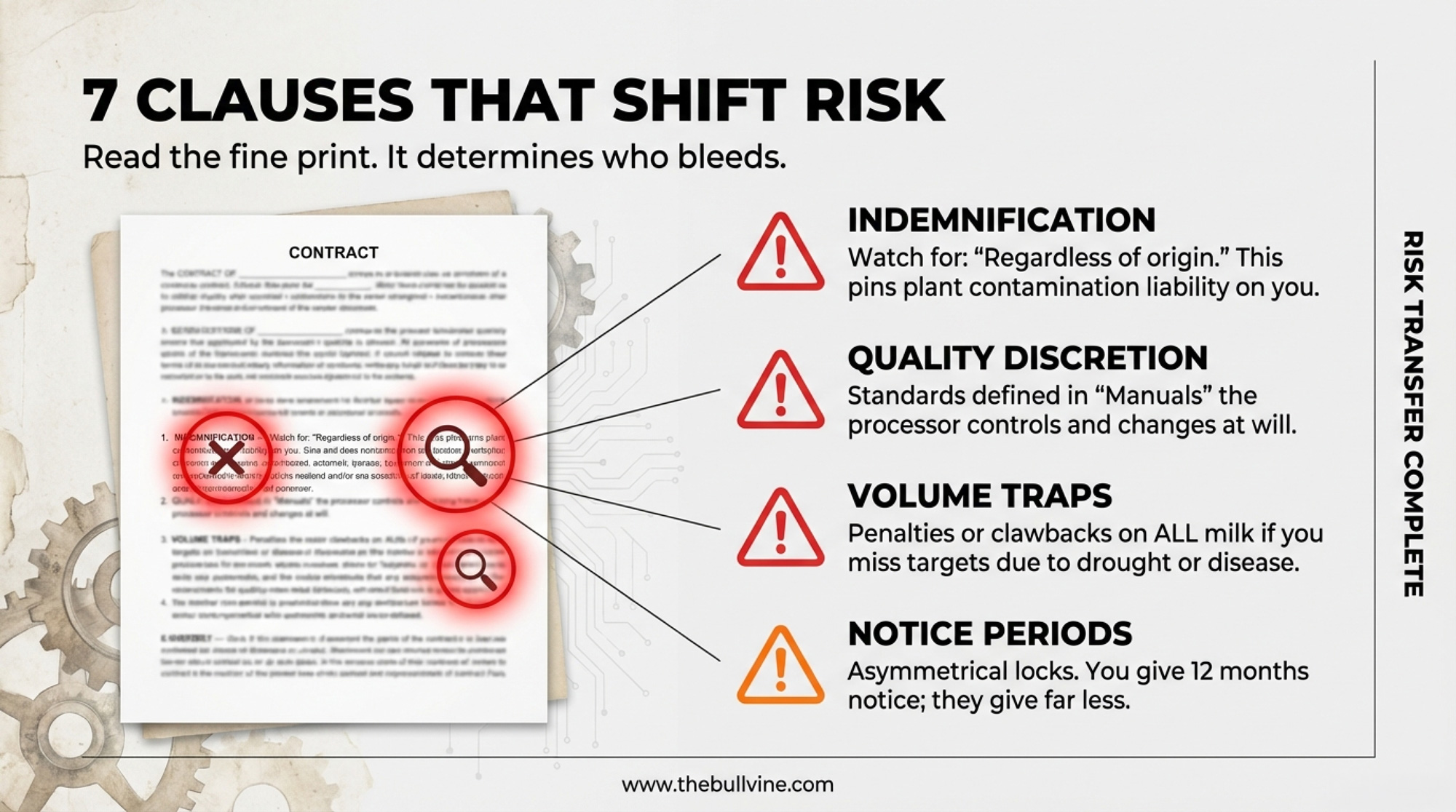
  • And then there’s the real kicker: unlimited indemnification clauses that make farmers liable for downstream incidents “regardless of origin.” Think about that. Even if contamination happens at the processor, you could be on the hook.

The Real Numbers for Your Operation

Let’s talk specifics for a typical 500-cow dairy producing around 10 million pounds annually—that describes a lot of operations in the Upper Midwest and down through Oklahoma and Arkansas.

I’ve been running these numbers with farm financial consultants, and here’s what the math looks like.

Compliance LevelAnnual TestingInfrastructureInsurance IncreaseDocumentation/TrainingTotal New CostsProfit Impact
Minimal(2¢/cwt)$1,700$5,000$4,000$2,500$15,00012%
Mid-Level(8¢/cwt)$7,000$10,000$8,000$9,500$34,00028%
High (15¢/cwt)$13,000$15,000$12,000$15,500$55,00044%

That’s a 12% hit to your bottom line if you’re running decent margins on the minimal path. Not great, but manageable for efficient operations.

Mid-level? That’s 28% of your profit gone. The difference between paying bills on time and stretching payables, as many of us know all too well.

At the high end? 44% of the net income was lost. For a lot of 500-cow operations, that’s the difference between viable and not.

The Cost Gap That’s Already There

What makes this particularly challenging is the existing cost structure gap. USDA’s Economic Research Service published their cost of production data in March 2024, and here’s the reality:

Farm SizeAverage Cost per cwt
2,000+ cows$17
100-500 cows$20+

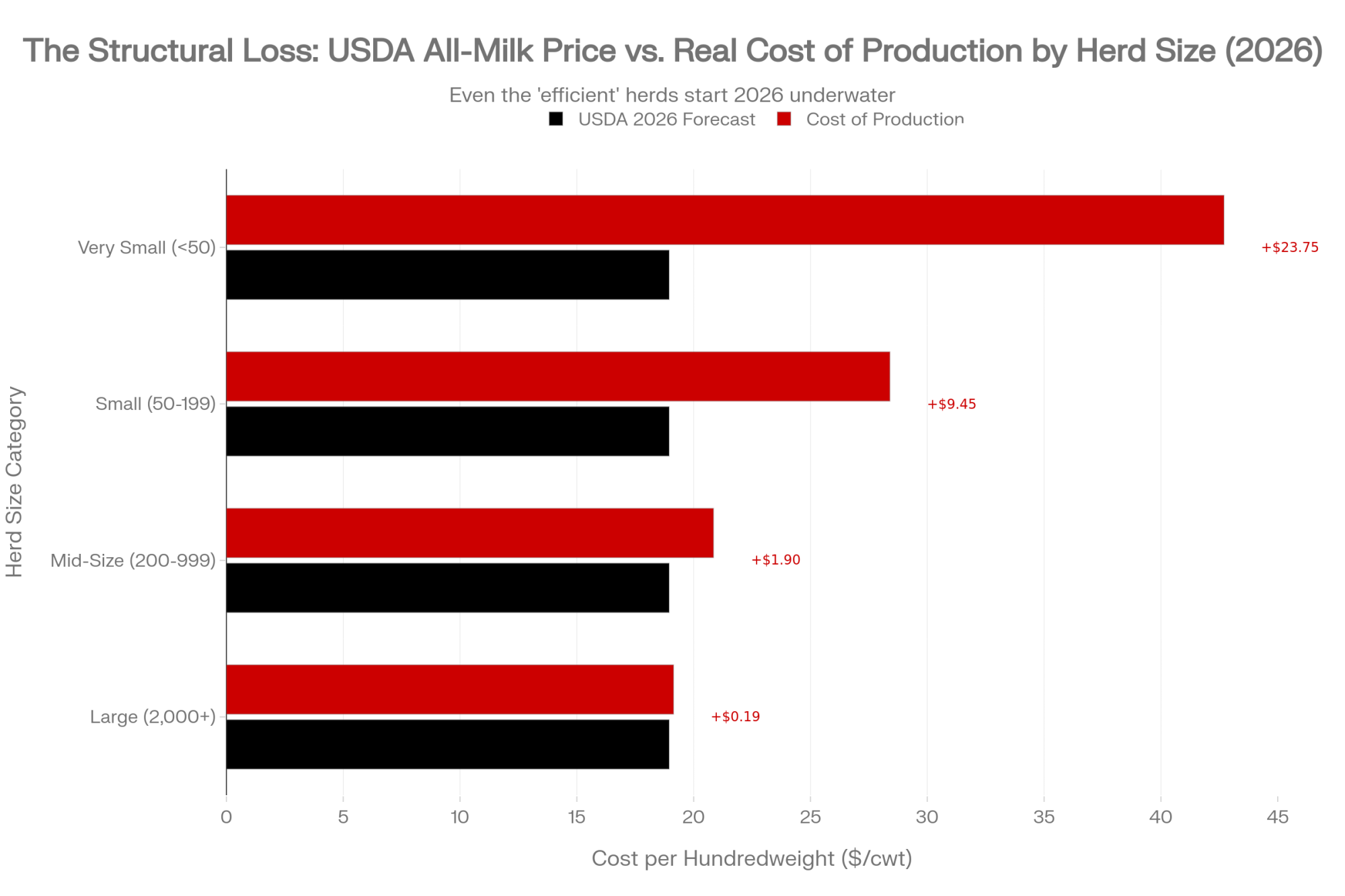
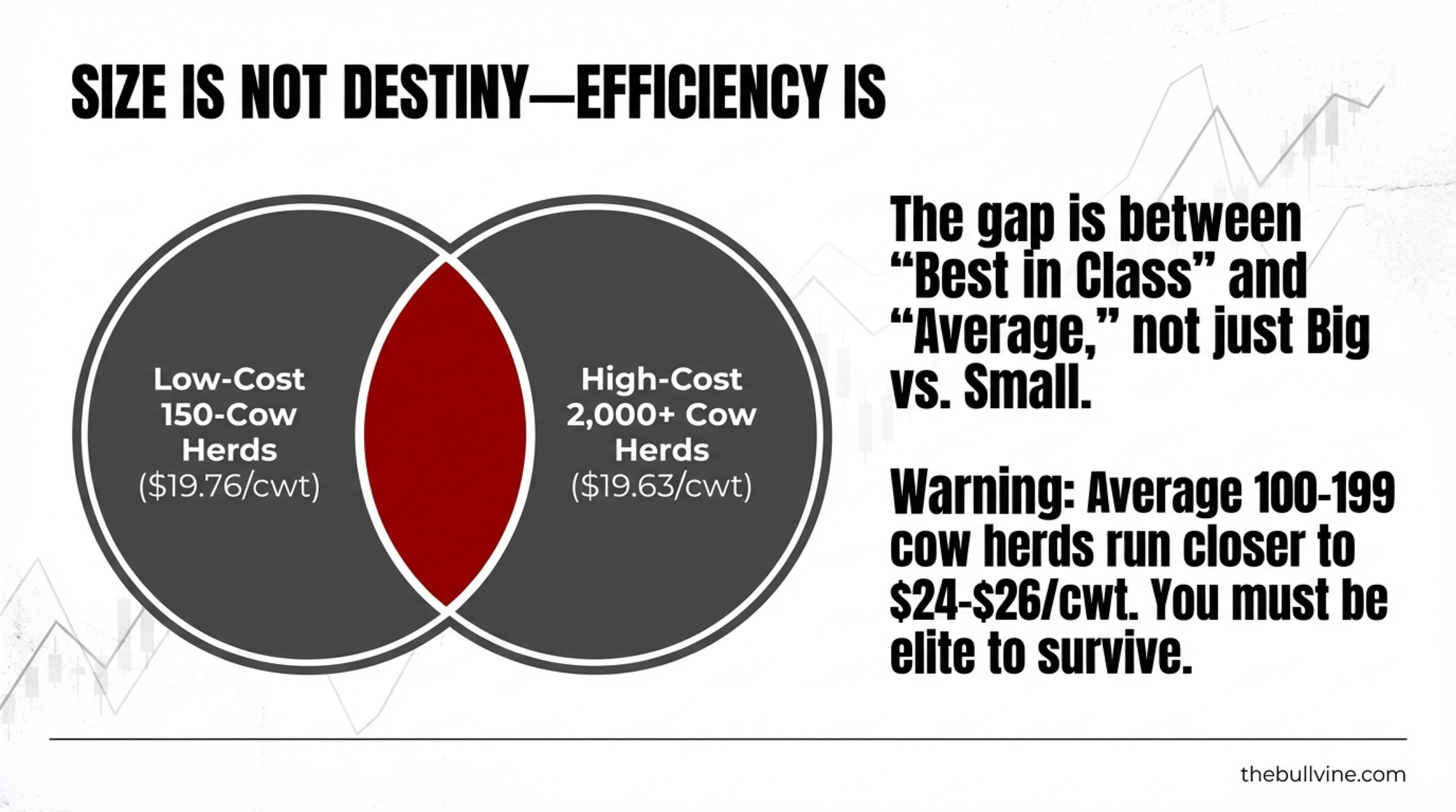
That’s more than a three-dollar disadvantage before you add a penny of allergen compliance costs.

Already Behind Before Allergen Costs: 500-cow dairies face $3.37/cwt higher costs than 1000-cow operations and $8.48/cwt higher than mega-dairies—BEFORE adding $0.02-0.15/cwt allergen compliance. On 10 million lbs annually, that’s $337,000-$848,000 structural disadvantage you can’t manage away

Understanding the Bigger Picture

Here’s where things get really interesting—and by interesting, I mean concerning if you’re a mid-sized dairy like most of us.

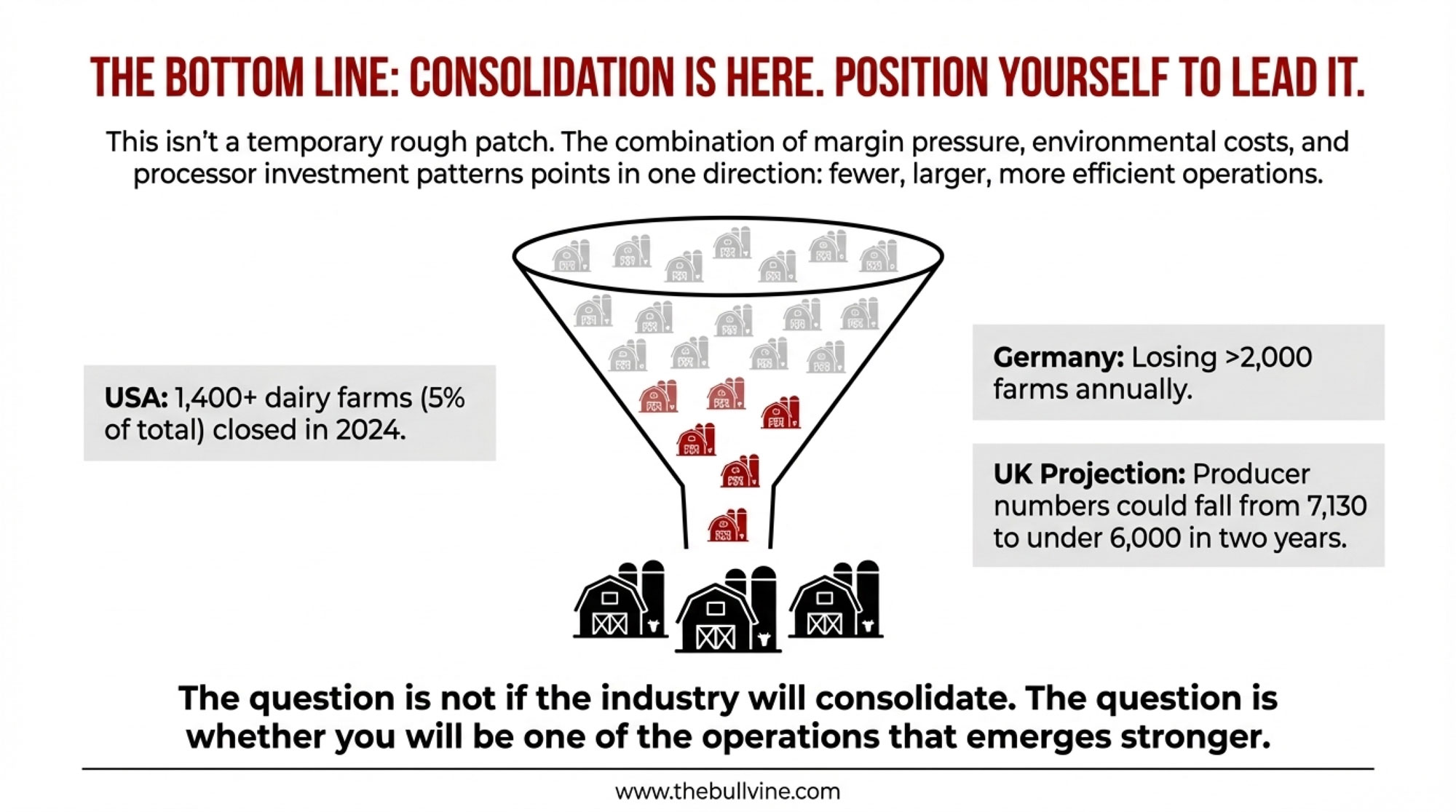
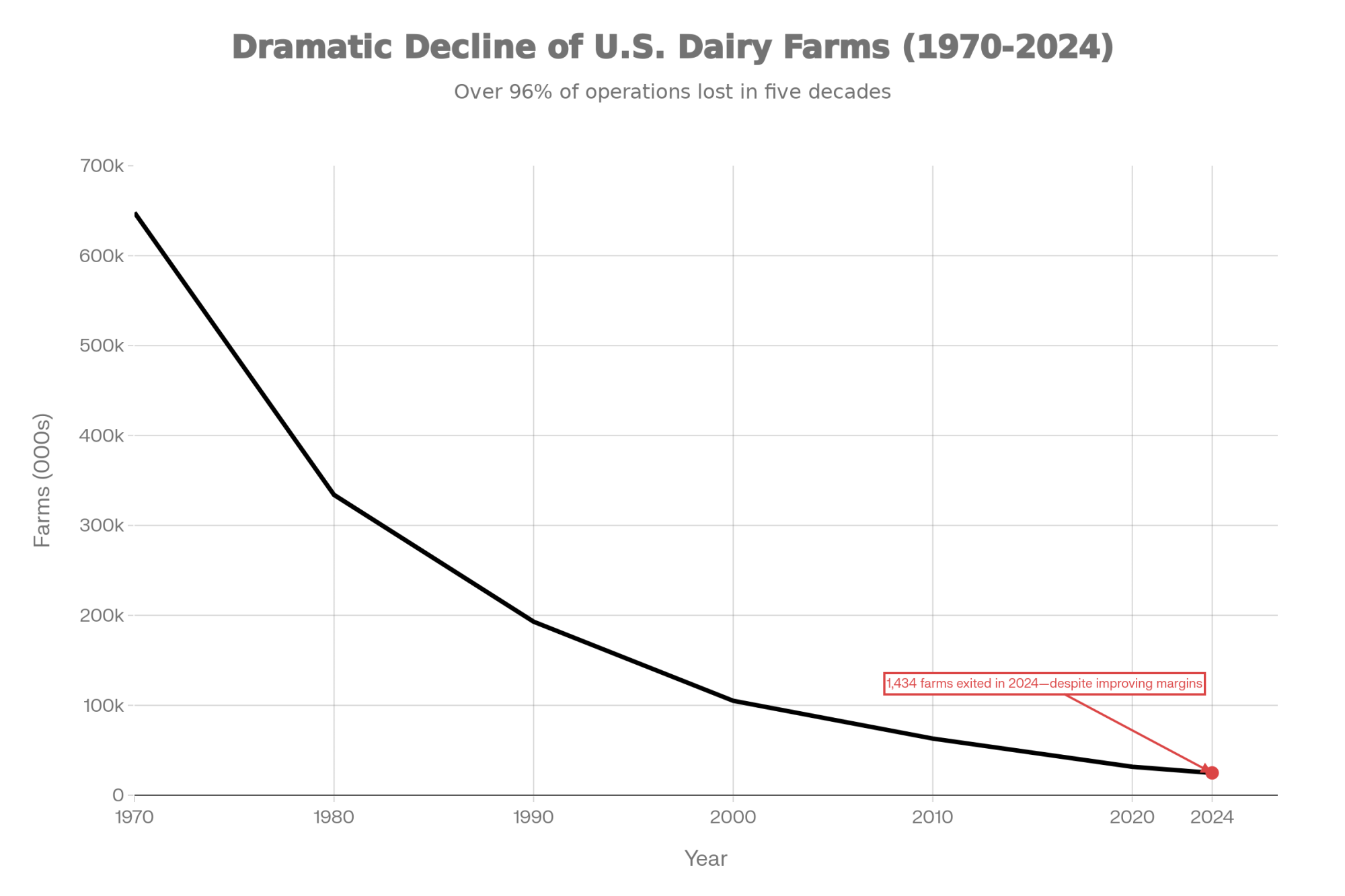
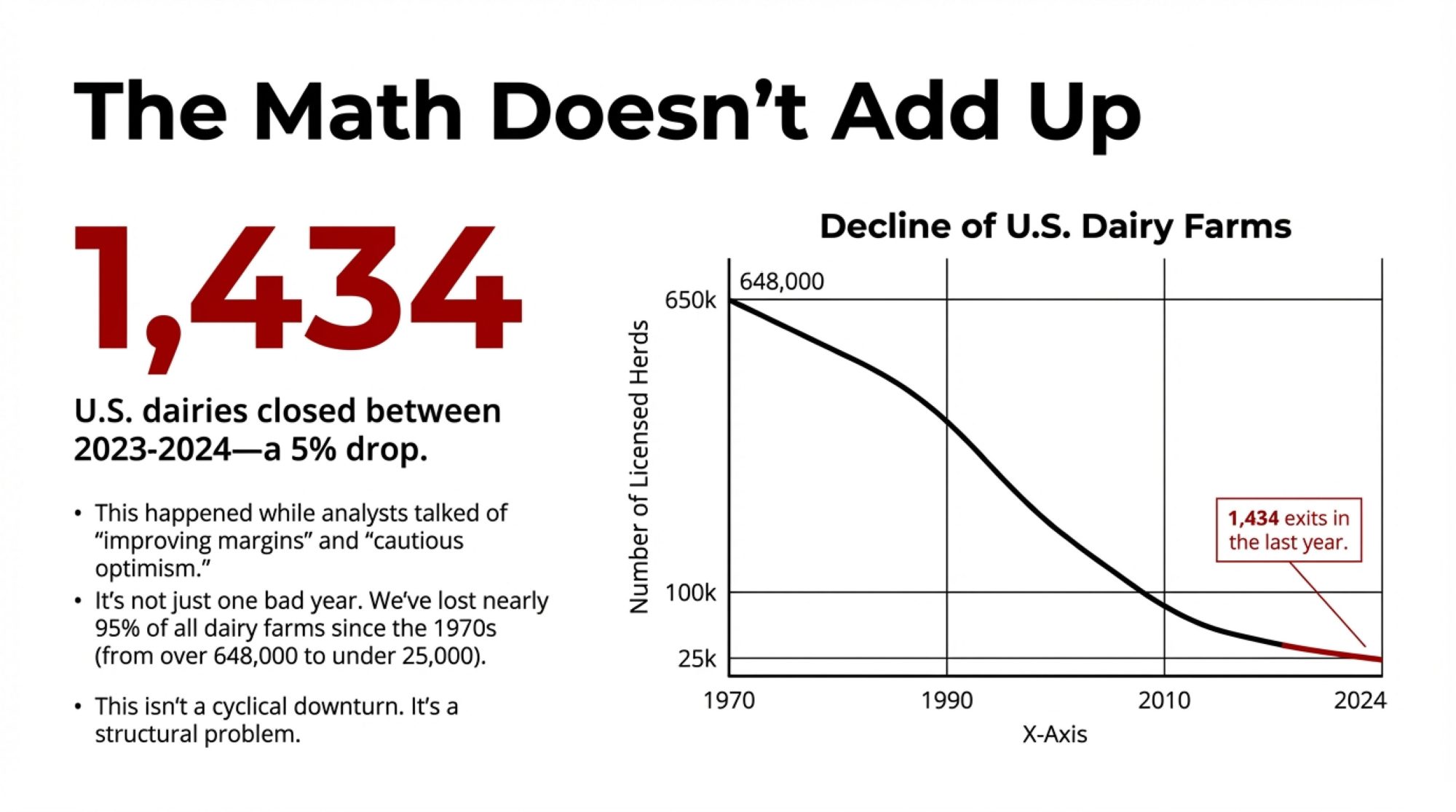
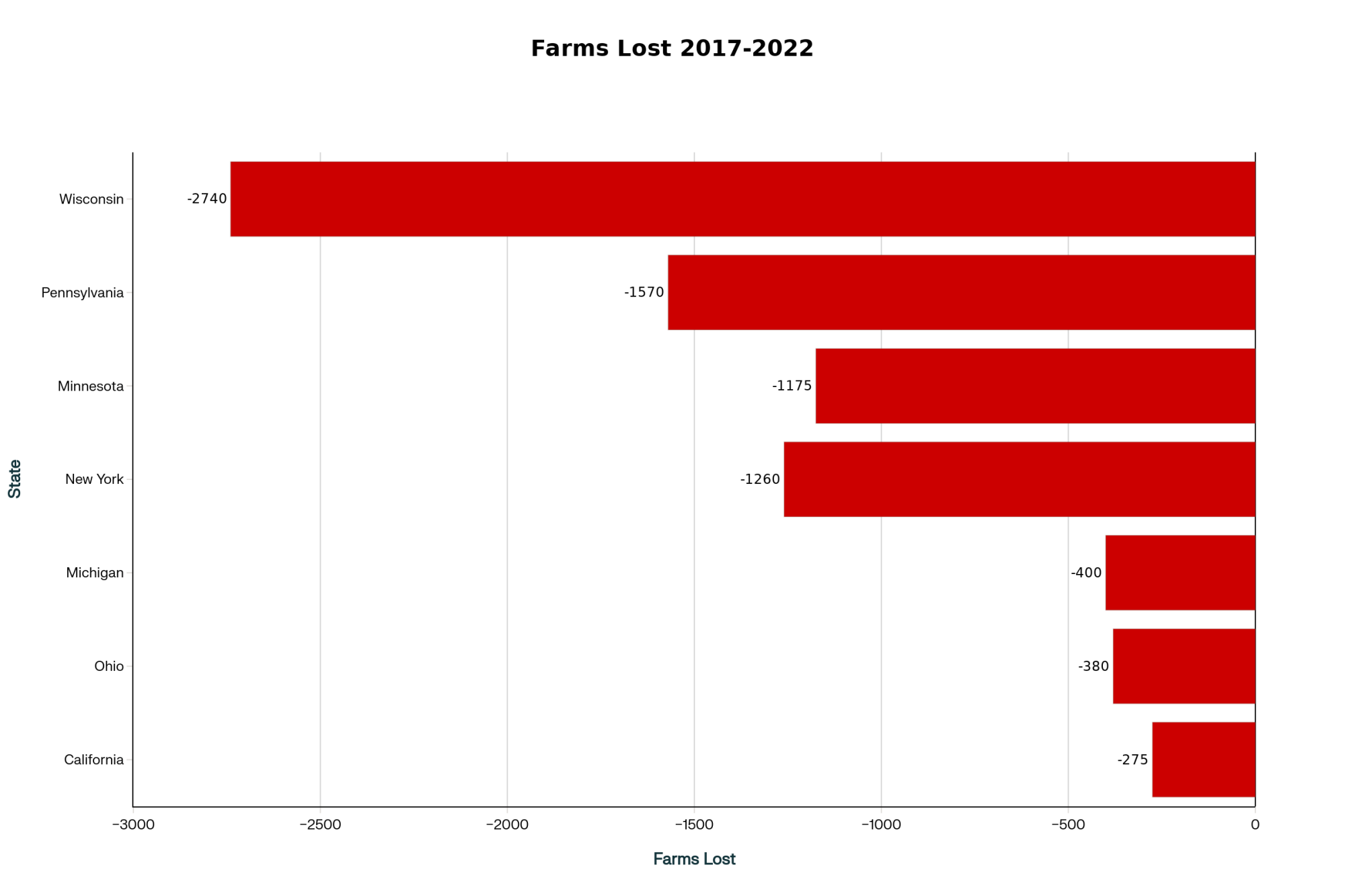
The consolidation trends were already stark before these contract changes. The 2022 Census of Agriculture, released in February 2024, shows that we lost 39% of U.S. dairy farms between 2017 and 2022.

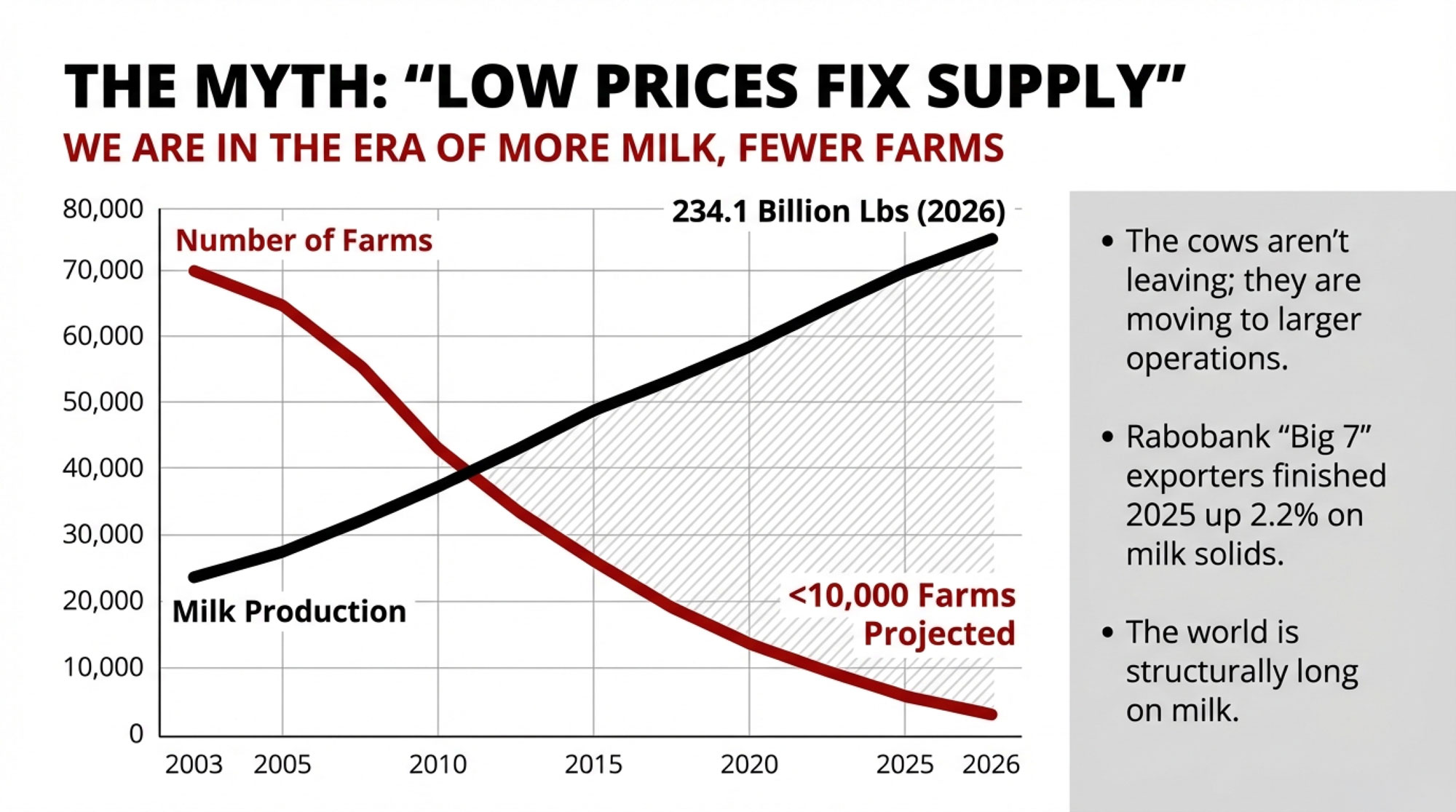
Dropped from over 39,000 to about 24,000 operations. Yet—and here’s the kicker—milk production actually increased 5% over that same period according to the USDA’s National Agricultural Statistics Service.

Think about that for a minute. Fewer farms, more milk. The math only works one way, doesn’t it?

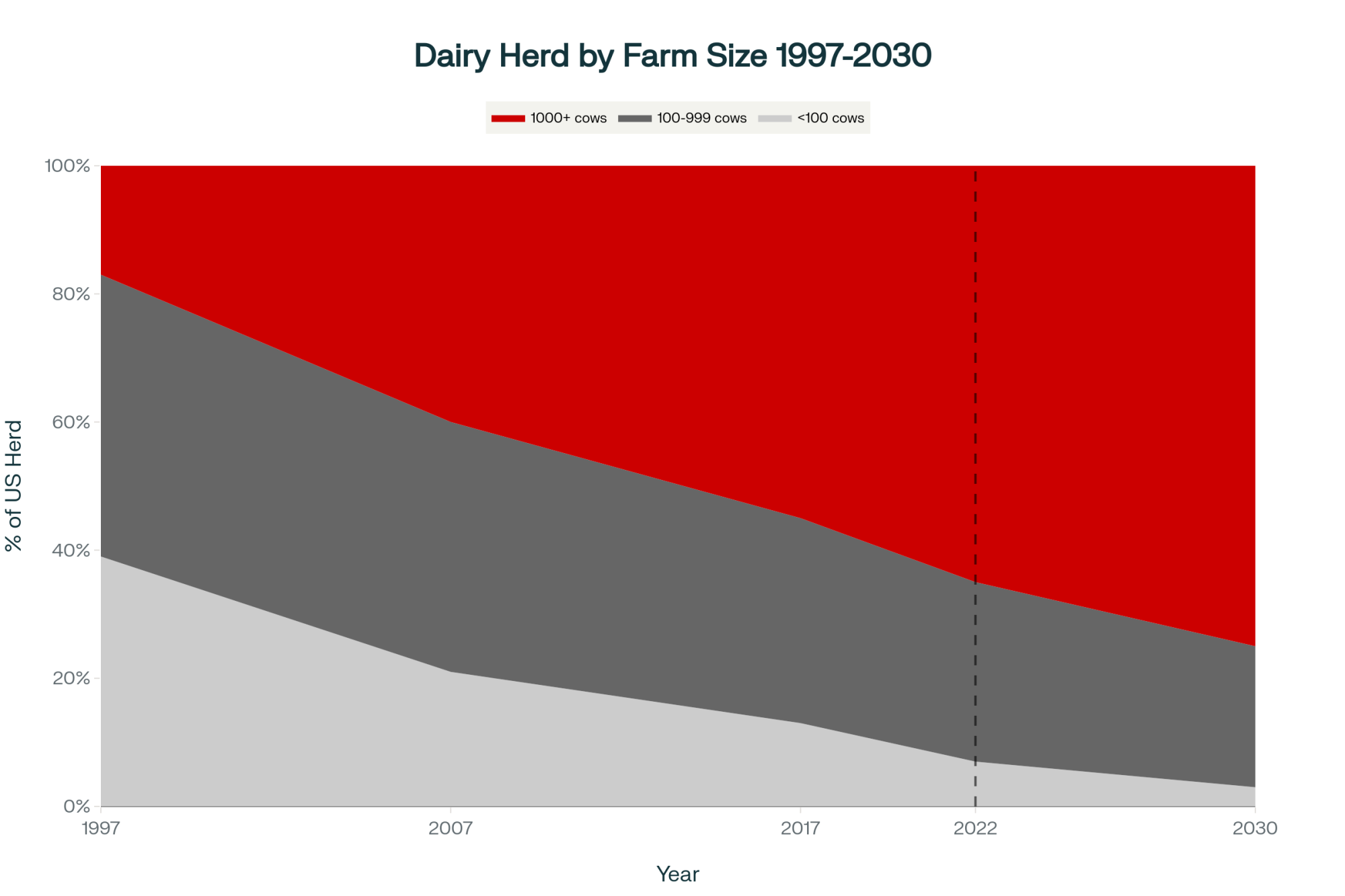
Today, according to the same Census, 65% of the U.S. dairy herd lives on farms with 1,000 or more cows. The 834 largest dairies—those with 2,500 or more head—they control 46% of production by value.

These aren’t future projections, folks. This is where we are right now.

I was talking with a senior ag lender recently—manages a portfolio north of $400 million in dairy loans—and he was remarkably candid about it.

“We’re not trying to prevent consolidation. We’re positioning our portfolio to be on the right side of it. Managing 50 medium-sized dairy loans requires far more oversight than five large ones with professional CFOs and management teams.”
— Senior agricultural lender with $400M+ dairy portfolio

The September 2025 lending data from agricultural finance institutions shows that smaller ag lenders—those under $500 million in loans—they absorbed 75% of the increase in farm lending during 2024.

Meanwhile, the big players with over a billion in ag loans? They contributed just 10% to that increase.

The sophisticated lenders they’re already pulling back from medium-sized operations. Makes you think, doesn’t it?

The Numbers Don’t Lie: Since 2017, America lost 15,000 dairy farms (39%) while milk production INCREASED 5%. By 2030, another 7,000 operations will disappear. This isn’t a downturn—it’s systematic elimination of mid-size dairies. Where does YOUR farm fit?

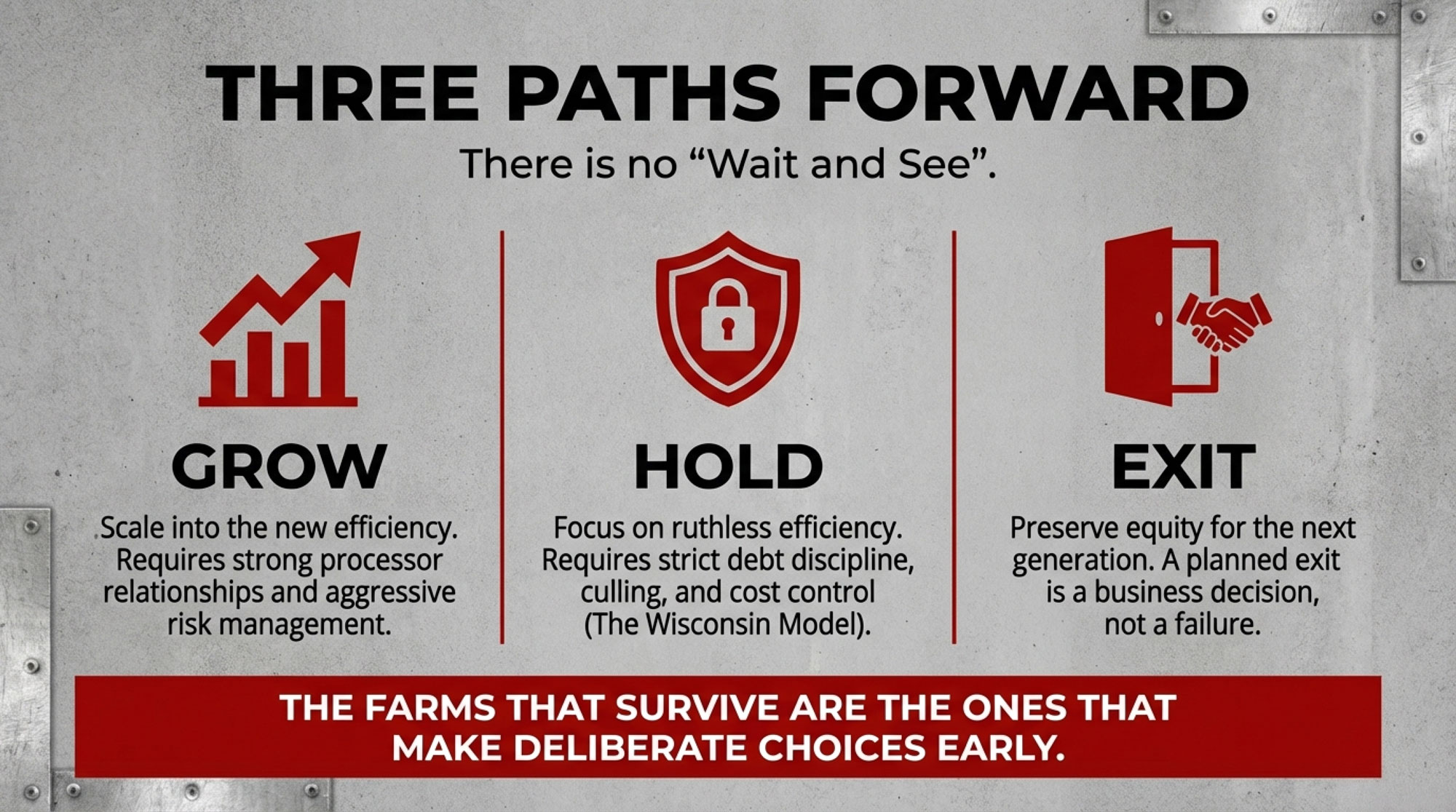
Three Paths Forward (And Why You Need to Choose Now)

After talking with dozens of farmers facing these decisions and running scenarios with financial advisors, I’m seeing three viable strategies emerge.

The key is picking the right one for your specific situation—not what worked for your neighbor, not what your grandfather would’ve done.

Path 1: Scale Up to Survive

Who should consider this path? Well, if you’re under 45 with kids who genuinely want to farm—and I mean really want it, not just feel obligated—this might be your route.

You need a debt-to-equity ratio under 2.0, preferably lower. You should already be in the top 25% for efficiency, meaning your cost of production is under $19 per hundredweight.

You’ve got to have the land base or be able to acquire it. And honestly? You need to actually enjoy the business side of dairy, not just working with the cows.

What’s it take? University of Wisconsin Extension’s been helping folks price out expansions, and you’re looking at $3.5 to $5 million in capital investment.

That’s an 18 to 24-month timeline just for permits and construction. You’ll be managing employees, not just family labor. And you need the stomach for significant debt and risk.

The payoff? Production costs drop two to three dollars per hundredweight at scale—USDA data’s pretty clear on this—which more than covers new allergen compliance costs.

You become the type of operation processors want to work with long-term. But it’s a big leap, no doubt about it.

Path 2: Exit Commodity, Enter Premium

What’s encouraging is that producers from North Carolina to Kansas to New Mexico are finding similar success with premium markets.

This path works if you’re within 60 miles of a decent-sized population center—100,000 people or more. You or your spouse actually has to enjoy marketing and talking to customers. Can’t stress that enough.

You’ll be working farmers markets, doing farm tours, and managing social media. As you’ve probably experienced yourself, it’s exhausting but can be rewarding.

Your location needs affluent consumers who value local food. And you’ve got to handle the three-year organic transition financially—that’s no small feat.

What’s it take? Organic certification under the USDA’s National Organic Program is a 36-month process, as you probably know.

If you’re adding processing, budget $150,000 to $300,000 for a small facility—USDA Rural Development has some grant programs that can help with this.

Plan on 15 to 20 hours per week just on marketing. It’s a completely different mindset about what you’re selling.

The payoff? Premium markets can deliver five to ten dollars per hundredweight above commodity prices—USDA tracks these premiums pretty consistently.

“We realized we couldn’t compete with mega-dairies on cost. But we could compete on story, quality, and customer connection. Our milk price went from $21 to $28 per hundredweight, and our yogurt adds another eight to ten dollars per hundredweight equivalent.”
— Vermont dairy family who transitioned to organic with on-farm processing

But more importantly, you’re building direct relationships that give you control over your price. You’re not just waiting for the monthly milk check to see what you got.

Path 3: Strategic Exit While You Can

This is the path nobody wants to talk about, but research on farm transitions suggests that strategic exits can preserve significantly more wealth than distressed sales.

Sometimes 25 to 40 percent more.

Who should consider this? If you’re over 55 without a successor who’s passionate about dairy—and I mean passionate, not just willing—this might be your reality.

If your debt-to-equity exceeds 2.5, if your cost of production is over $21 per hundredweight, if you’re emotionally exhausted from the volatility… well, it’s worth considering.

Especially if you have other interests or opportunities.

What’s it take? Good transition planning, starting 12 to 18 months out. Realistic asset valuations—don’t kid yourself about what things are worth.

Emotional readiness to close this chapter. And a clear plan for what comes next.

The payoff? Preserving capital while land values remain strong—and they won’t forever, we all know that.

Avoiding slow wealth erosion. Maybe transitioning to less-stressful agricultural enterprises, such as cash crops or custom work.

It’s not giving up; it’s making a strategic business decision.

The Supply Chain Dynamics You Need to Understand

To negotiate effectively, you need to understand what’s driving processor behavior. From their perspective, this isn’t about hurting family farms—it’s about survival in a world where one allergen incident can trigger catastrophic losses.

RaboResearch’s food industry analysis from this past summer suggests processors face an impossible situation. Their insurance companies are demanding comprehensive allergen controls.

Regulators are increasing scrutiny. Consumer lawsuits are proliferating. They’re pushing liability upstream because they genuinely don’t see another option.

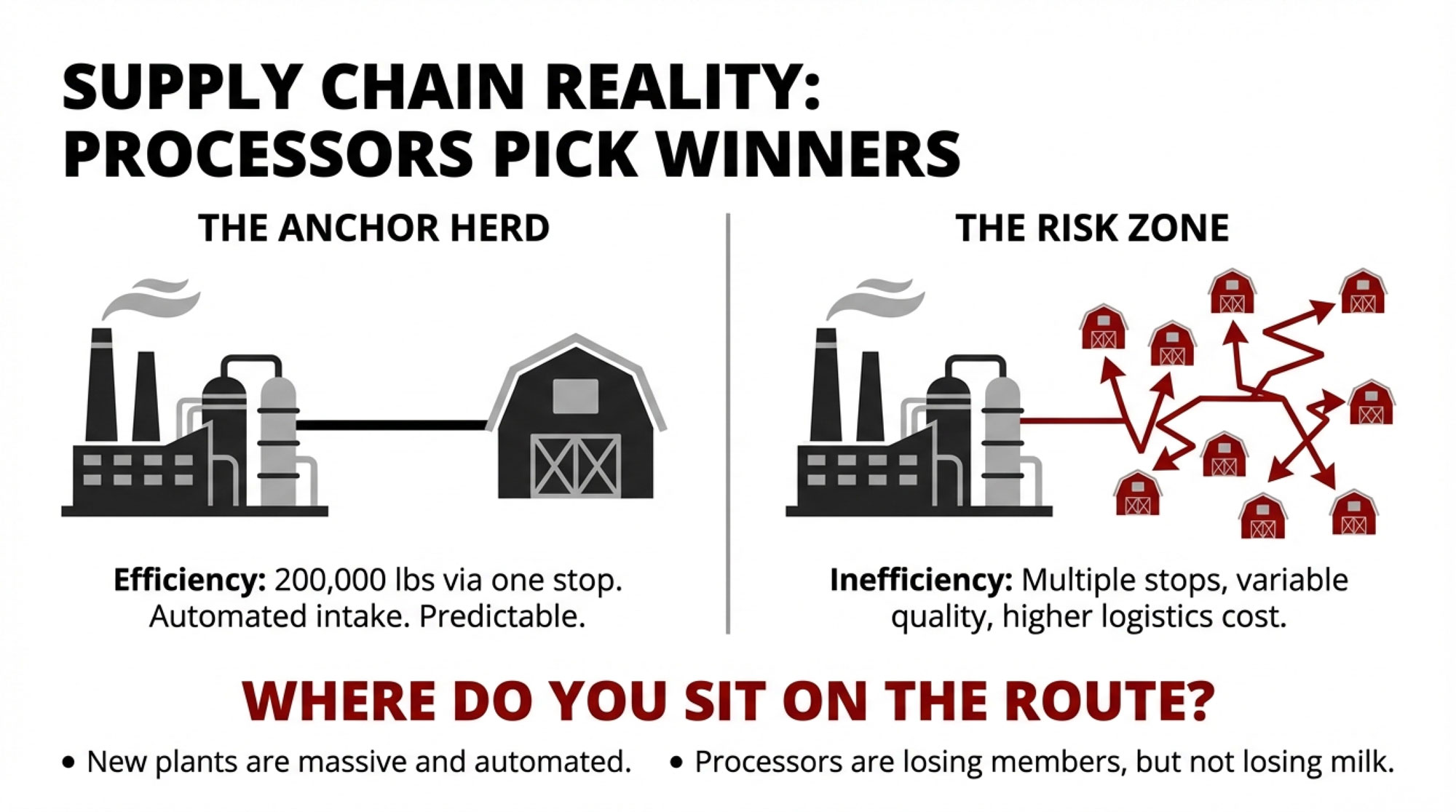
What’s particularly telling is that processors actually prefer consolidation. Think about it from their shoes: Managing 200 large suppliers instead of 2,000 small ones.

Professional management teams they can work with. Sophisticated quality systems and documentation. Resources to implement new requirements properly. Lower transaction costs across the board.

This isn’t a conspiracy—it’s economics. And understanding these dynamics helps you negotiate more effectively because you know what processors actually value.

Worth noting, too, that some processors are working with their farmers through this transition. A couple of the smaller regional processors in Ohio and Pennsylvania have offered 40-60% cost-sharing arrangements with phased implementation schedules over 18 months.

They’re the exception, not the rule, but it shows there’s some recognition of the burden these changes create.

Regional Factors That Change Everything

Geography’s becoming destiny in dairy. What I’m seeing is a real divergence driven by water availability and the regulatory environment.

Water-secure regions—the Upper Midwest, Northeast, and parts of the Southeast, like northern Georgia—are seeing renewed interest from both expanding local operations and relocating Western dairies.

Dairy site selection consultants tell me they’ve never been busier. Every conversation starts with “Where can we find reliable water for the next 30 years?”

Water-stressed areas—the Southwest, parts of California—that’s a different story. University of Arizona research on aquifer depletion shows that some dairy-intensive areas are experiencing annual water-table drops of several feet. Water costs in these regions have doubled or tripled in the past decade.

That’s not sustainable, and everyone knows it. These operations face a double whammy—new allergen costs plus rising water expenses.

This Isn’t Happening Everywhere Equally: Wisconsin hemorrhaged 2,740 farms—more than the next three states combined. Pennsylvania, Minnesota, and New York each lost 1,000+ operations. Meanwhile, California (the largest dairy state) lost just 275. Geography matters, but the trend is universal

Negotiation Strategies That Actually Work

After watching dozens of these negotiations, here’s what’s actually effective:

  • Form an informal buying group. You don’t need a formal cooperative structure—just five to ten neighbors agreeing to push for the same contract terms. When six farms representing 3,000 cows approach a processor together, they listen differently than when you come alone.
  • Use professional help strategically. Yes, agricultural attorneys cost money. But spending $5,000 on contract review could save you $50,000 annually in bad terms. Frame it as the bad cop: “I’d love to sign this, but my attorney insists on liability caps…”
  • Offer trades, not just demands. “I’ll implement comprehensive testing protocols if you’ll split the costs 50/50 and cap my liability at one year’s gross revenue.” Processors respond better to negotiation than ultimatums.
  • Know your walkaway point. If you have alternative buyers—even if they’re 50 miles further—that knowledge changes how you negotiate. Do the math beforehand: What’s the worst deal you can accept and still stay viable?

Technology as a Survival Tool

The farms that are successfully adapting aren’t doing so through willpower alone. They’re leveraging technology to make compliance manageable.

What’s encouraging is that agricultural technology providers report dairy operations implementing digital documentation systems are seeing significant reductions in administrative burden.

Automated testing protocols are lowering sampling costs. Real-time environmental monitoring can prevent contamination incidents before they become recalls.

For example, farms using systems like DairyComp 305’s newer modules or Valley Ag Software’s compliance-tracking are finding the documentation requirements much more manageable than those trying to handle them with spreadsheets.

The upfront cost—usually $5,000 to $15,000 for implementation—pays for itself in reduced labor and avoided compliance violations. One Kansas operation told me they cut documentation time by 60% after implementing digital tracking, saving nearly $20,000 annually in labor costs alone.

Technology isn’t optional anymore. What is the difference between farms crushing under compliance costs and those managing them? Usually comes down to whether they’ve invested in the right systems.

What Dairy Looks Like in 2030

Based on everything I’m seeing, here’s my best projection for where we’re heading:

We’ll probably have 15,000 to 20,000 dairy farms by 2030, down from today’s 24,000. But—and this is important—they won’t all be mega-dairies.

I’m expecting maybe 12,000 to 15,000 large-scale commodity operations, another 3,000 to 5,000 premium or specialty farms serving local and niche markets, and 2,000 to 3,000 transitional operations finding unique market positions.

Agricultural economists analyzing dairy consolidation trends suggest we’re not witnessing the death of dairy farming. We’re seeing differentiation.

The 500-cow commodity model is becoming obsolete, yes. But opportunities are emerging for farms willing to adapt strategically.

The 25-Year Transformation: In 1997, just 17% of dairy cows lived on 1,000+ cow farms. Today? 65%. By 2030? Projected 75%. Meanwhile, farms under 100 cows dropped from 39% to 7% and are heading toward extinction. This isn’t gradual change—it’s systematic restructuring

Making Your Decision: A Practical Framework

So what should you actually do? Here’s the framework I’m suggesting to farmers facing these contracts:

Your 30-Day Action Plan

  • Calculate your true cost of production—don’t guess, know it
  • Review your current contract for existing allergen language
  • Get insurance quotes for the new liability levels
  • Talk honestly with family about succession plans
  • Research premium market opportunities in your area

Key Decision Factors

  • If you’re under 45 with strong succession and sub-$19 per hundredweight costs, consider scaling. The economics work if you can handle the risk.
  • If you have marketing skills and you’re near population centers, explore premium markets. The margins are there for those who can sell.
  • If you’re over 55 and without succession, and your costs exceed $21 per hundredweight, plan your exit. Preserving wealth beats slow erosion.
  • If you’re in between? You’ve got 90 days to figure out which direction you’re heading. Drifting is the only wrong answer.

The Reality We Need to Discuss

Here’s what I think a lot of folks know but aren’t saying out loud: The 500-cow commodity dairy is structurally obsolete in the emerging market environment.

Not because farmers aren’t working hard enough. Not because they’re bad at what they do. But because the economics have shifted in ways that make that scale unviable for commodity production.

Dairy transition specialists tell me that every farmer they work with wishes they’d made their decision 2 years earlier.

Whether that’s expanding, transitioning to premium, or exiting—acting decisively preserves more wealth and creates more options than hoping things improve.

Final Thoughts

The 2026 allergen requirements are real, and they’re going to hurt. But they’re also just accelerating changes that were already underway.

The farms that recognize this—that see these contracts as a catalyst for strategic decision-making rather than just another compliance burden—are the ones that’ll still be farming successfully in 2030.

The dairy industry has weathered countless storms over the generations. This one’s different, not in its severity, but in its permanence.

The sooner we accept that and act accordingly, the better positioned we’ll be for whatever comes next.

You know, at the end of the day, it’s not about whether to sign or not sign a contract. It’s about what kind of dairy farmer you want to be—or whether you want to be one at all—in the industry that’s emerging.

And that’s a decision only you can make for your operation.

KEY TAKEAWAYS:

  •  Immediate action required: Review your contract for unlimited liability clauses before December 31—signing locks you into potentially business-ending terms through 2026
  • Real costs revealed: $15,000 (minimal) to $55,000 (high compliance) in new annual expenses = 12-44% of typical 500-cow dairy profits gone
  • Only three viable paths: Scale to 1,500+ cows for efficiency ($3/cwt savings), pivot to premium markets ($5-10/cwt premiums), or exit strategically, preserving 25-40% more wealth than distressed sales
  • Negotiation leverage exists: Form buying groups with neighbors, demand 50/50 cost sharing, cap liability at one year’s revenue—processors need milk and will negotiate
  • The uncomfortable truth: The 500-cow commodity dairy is structurally obsolete—not because you’re failing, but because the economics permanently shifted against mid-size operations

Complete references and supporting documentation are available upon request by contacting the editorial team at editor@thebullvine.com.

Learn More:

Join the Revolution!

Join over 30,000 successful dairy professionals who rely on Bullvine Weekly for their competitive edge. Delivered directly to your inbox each week, our exclusive industry insights help you make smarter decisions while saving precious hours every week. Never miss critical updates on milk production trends, breakthrough technologies, and profit-boosting strategies that top producers are already implementing. Subscribe now to transform your dairy operation’s efficiency and profitability—your future success is just one click away.
NewsSubscribe
First
Last
Consent

How a Virtual Farm Model Can Save You Thousands on Feed Costs

Learn how a virtual farm model can save you thousands on feed costs. Ready to boost your dairy farm’s profits and sustainability?

Have you ever considered how much you might save if you streamlined your feed costs? For dairy producers, feed expenditures are the most major expense. Effective cost management may differ between a prosperous and a struggling organization. This is where creative solutions, such as virtual farm models, come into play. This research looked at two agricultural rotations: injected manure with reduced herbicide (IMRH) and broadcast manure with standard herbicide (BMSH). Producing crops rather than buying them might result in significant savings and better efficiency. IMRH had an average production cost of $17.80 per cwt.

On the other hand, BMSH had an average of $16.26 per cwt, leading to significantly reduced feed expenses per cow. In this comparison, the use of virtual farm models vividly demonstrated the potential for substantial cost reductions and enhanced efficiency, offering a promising path to improving your farm’s financial health. Farmers can employ these strategies to cut feed costs and improve farm sustainability and profitability, instilling a sense of optimism for the future.

Slashing Feed Costs: The Secret to Dairy Farm Survival? 

Feed costs are unquestionably the most paramount concern for dairy producers, accounting for many total expenditures. Have you examined how far these expenses reduce your profitability? It’s surprising but true: mismanaging feed costs may make or ruin your dairy business. So, how do you manage your feed costs?

Imagine maintaining a delicate equilibrium where every crop and feeding strategy choice directly influences your bottom line. When feed prices spiral out of hand, it affects your pocketbook and your farm’s long-term viability. That’s why fine-tuning every part of your feeding program, including virtual farm models, may help you save money while keeping your farm competitive. Proper management guarantees cost savings and is consistent with the farm’s overall financial health and efficiency.

Long-term survival depends on adequately managing these expenses across the agricultural system. Every method, whether cultivating forages or using novel agricultural rotations, helps to make your farm more sustainable and lucrative. In the long term, those who monitor and optimize their feed regimens may survive and prosper in a competitive dairy market. How do you intend to manage your feed expenses today?

Farming in the Digital Age: How Virtual Models are Revolutionizing Dairy Farms

A virtual farm model is simply a sophisticated computer simulation tool that enables farmers to test various agricultural practices without risking their livelihood. Consider it an advanced agricultural video game but with accurate data and repercussions. This unique technology allows farmers to assess the possible effects of their actions on anything from crop production to financial results. Using actual data from their farms, they can test numerous scenarios and make educated decisions that significantly improve their sustainability and profitability.

Manure Injection vs. Broadcast: Which Crop Rotation Wins for Sustainable Profits?

MetricInjected Manure with Reduced Herbicide (IMRH)Broadcast Manure with Standard Herbicide (BMSH)
Cost of Production (per cwt)$17.80 ± 1.663$16.26 ± 1.850
Total Feed Cost (per cow)$1,908 ± 286.270$1,779 ± 191.228
Average Crop Sales (over six years)$51,657$65,614
t-statistic (Crop Sales)1.22791.2279
P-value (Crop Sales)0.24690.2469
t-statistic (Cost of Production)-0.42224-0.42224
P-value (Cost of Production)0.68030.6803

The research examined how two crop rotations affected dairy farm sustainability. First, the Injected Manure with Reduced Herbicide (IMRH) approach includes injecting manure directly into the soil using as few herbicides as possible. This strategy seeks to improve soil health, minimize chemical use, and increase forage quality. On the other hand, the Broadcast Manure with Conventional Herbicide (BMSH) approach involves spreading manure over the soil surface and using conventional herbicide procedures to suppress weeds. While this strategy is more traditional, it may increase crop production due to more comprehensive weed control.

Comparing these two strategies is crucial as it helps us understand their financial and environmental implications. IMRH emphasizes sustainability by reducing chemical inputs and enhancing soil and crop health. Meanwhile, BMSH prioritizes agricultural output, potentially increasing immediate income. The study aims to explore how dairy producers can strike a balance between profitability and sustainability. The results of these comparisons provide valuable insights to guide feed management decisions and ensure long-term farm profitability, offering reassurance about the soundness of their management decisions.

Decoding Dairy Farm Profitability: Inside a 6-Year Virtual Farming Experiment

The research used a virtual farm model to evaluate the sustainability of different cropping and feeding practices. Researchers tested two different 6-year no-till crop rotations on a simulated farm of 240 acres with a 65-milking cow herd. They gathered extensive crop and feed quality data, financial parameters, and thorough records for lactating and dry cows and young animals. The critical criteria were production costs, feed expenses per cow, and crop sales income. This technique allowed for a comprehensive assessment of agricultural efficiency and profitability.

Revealing Critical Insights: Key Findings from the Sustainability Study 

The study revealed several key findings essential for dairy farmers aiming for sustainability: 

  • Average cost of production per hundredweight (cwt) for BMSH was $16.26 + 1.850, while IMRH was $17.80 + 1.663.
  • Total feed cost per cow was $1,779 + 191.228 for BMSH and $1,908 + 286.270 for IMRH.
  • BMSH demonstrated a financial advantage due to increased revenue from crop sales, averaging $65,614 in sales compared to $51,657 for IMRH over six years.

Farm-Grown Feeds: The Game-Changer for Your Dairy’s Bottom Line 

MetricBMSHIMAGE
Cost of Production/cwt$16.26 ± 1.850$17.80 ± 1.663
Total Feed Cost per Cow$1,779 ± 191.228$1,908 ± 286.270
Average Crop Sales Over 6 Years$65,614$51,657

Consider minimizing one of your most significant expenses—feed costs—by producing your own forages and corn grain instead of purchasing them. That is precisely what a recent research discovered. Farms utilizing the BMSH cycle had an average output cost per hundredweight (cwt) of $16.26, whereas the IMRH rotation cost $17.80. What does this mean to you?

Feeding your cows with local forages and grains might help you save money while possibly increasing milk output. BMSH farms had a total feed cost per cow of $1,779, much lower than the $1,908 for IMRH farms. This is more than simply an agricultural ideal; it’s also a sensible business decision.

Furthermore, selling extra feed resulted in additional profit. Crop sales on BMSH farms averaged $65,614, while IMRH farmers earned $51,657. This additional income has the potential to boost your total profitability significantly. Tailoring your cropping plan to the demands of your herd is not only environmentally responsible but also an intelligent business decision, motivating dairy producers to optimize their feed management.

Breaking it down, the BMSH cycle saved farmers an average of $1,779 per cow in feed expenses, compared to $1,908 for IMRH, a $129 savings per cow. On a 65-cow farm, it equates to around $8,385 in yearly savings. Over six years, these savings add up dramatically. Furthermore, BMSH farmers earned an additional $13,957 annually from selling surplus feed.

Aligning your crop and herd demands is not just healthy for the environment; it’s also a wise decision for long-term profitability.

Crunching Numbers: What Does the Data Say About Crop Rotation and Profitability? 

The research used extensive statistical analysis to assess the performance of two cropping rotations: broadcast manure with standard herbicide (BMSH) and injected manure with reduced herbicide (IMRH). Specifically, t-tests were used to compare the two cycles’ crop sales data and production costs. The t-test on crop sales data produced a t-statistic of 1.2279 and a P-value of 0.2469, showing no significant difference in means between BMSH and IMRH. The t-test on production costs revealed a t-statistic of -0.42224 and a P-value of 0.6803, showing no significant difference between treatments. According to statistical analysis, crop rotations had comparable sales and production costs despite differences in feed cost reductions and crop sales income.

Navigating the Study’s Implications: Actionable Strategies for Dairy Farmers 

The implications of this study for dairy farmers are significant and achievable. Let’s break down some actionable strategies: 

  1. Monitor Feed Costs: Feed is the most significant dairy expenditure. The research emphasizes the necessity of cultivating fodder and maize grain, which may result in substantial savings. For example, the overall feed cost per cow was much lower on farms that used broadcast manure with standard herbicide (BMSH) rotation.
  2. Employ No-Till Crop Rotations: Adopting a no-till technique with the suggested crop rotations may improve sustainability and profitability. No-till farming promotes soil health, reduces erosion, and saves time and effort. Consider establishing a six-year no-till crop rotation strategy like the one used in the research.
  3. Match Acreage to Herd Size: Make sure your farm’s agricultural acreage matches your herd size. This alignment enables the optimal production of both forage and maize grain. According to the research, small farms may become profitable by balancing crop acreage and cow numbers.
  4. Evaluate Manure Management: Experiment with several management approaches, such as IMRH and BMSH, to see which best fits your farm. While the research found no substantial difference in crop sales, each technique may offer distinct advantages in various settings.
  5. Leverage Financial Data: Use precise financial records to monitor the effectiveness of your cropping and feeding programs. The virtual farm model employed in the research was mainly based on reliable economic data. Use comparable tools or software to assess your farm’s performance and make smarter decisions.

You may increase your dairy farm’s sustainability and profitability using these measures. Remember, using data-driven insights, the goal is to monitor, adjust, and steer your agricultural techniques carefully.

Frequently Asked Questions 

How much does a virtual farm model cost? 

The costs vary greatly depending on the complexity of the model and the particular data inputs needed. However, several institutions and agricultural extension programs provide free or low-cost access to essential virtual farm modeling software. Professional software for more powerful models might cost between a few hundred and several thousand dollars annually.

How accurate are these simulations? 

Virtual farm models employ real-world data and have been proven to be very accurate in forecasting results. Studies such as the one presented in this article evaluate the accuracy of these models by comparing simulation results to accurate farm data over long periods. For example, our six-year research found that the virtual farm model could accurately anticipate financial and agricultural output results (Lund et al., 2021).

Can smaller farms benefit from using virtual farm models? 

Absolutely. Virtual farm models may be tailored to the needs and scope of smaller organizations. They assist small farms in optimizing feed costs, crop rotations, and general farm management, making them an invaluable resource for any dairy farmer striving for sustainability.

What are the main benefits of using a virtual farm model? 

The primary advantages include excellent decision-making help, cost reductions, and enhanced agricultural management. Farmers may reduce risk and increase revenue by modeling numerous situations before executing them in the real world.

The Bottom Line

The research emphasizes the enormous potential of using virtual farm models to reduce feed costs and increase farm sustainability. Analyzing two different crop cycles made it clear that strategic choices about manure application and pesticide usage might influence the bottom line. For dairy producers, embracing technological improvements is more than just a pipe dream; it’s a realistic way to secure long-term sustainability and financial stability. The virtual farm experiment proved that rigorous feed production management and data-driven insights may assist small farms in achieving profitability despite the hurdles they encounter. As the agricultural environment changes, it’s worth considering using such new models to help manage the complexity of contemporary farming. Could this be the secret to making your dairy farm more sustainable and lucrative?

Key Takeaways:

  • Feed cost is the most significant expense in dairy farming, making its management crucial for long-term viability.
  • A virtual farm model tested two cropping and feeding strategies over six years.
  • The study showed significant savings in feed costs when growing all forages and corn grain on the farm.
  • Two crop rotations were compared: IMRH (injected manure with reduced herbicide) and BMSH (broadcast manure with standard herbicide).
  • The BMSH rotation had a lower average cost of production and higher revenue from crop sales compared to IMRH.
  • No significant difference was found between IMRH and BMSH in terms of crop sales and cost of production, statistically speaking.
  • Small farms can achieve profitability by closely monitoring milk production and feed costs.
  • Aligning crop acreage with cow numbers is essential for effectively growing both forages and corn grain.

Summary:

Curious about how you can ensure the long-term sustainability of your dairy farm? This article delves into a groundbreaking study that evaluated cropping and feeding strategies using a virtual farm model. Over six years, the study compared two crop rotation methods—manure injection with reduced herbicide (IMRH) and broadcast manure with standard herbicide (BMSH). Findings reveal that growing your forages and corn grain can dramatically slash feed costs and boost your farm’s profitability. For a simulated 65-milking cow herd, BMSH had an average cost of production per hundredweight (cwt) of $16.26, while IMRH had a cost of $17.80. The total feed cost per cow was $1,779 for BMSH and $1,908 for IMRH. The study emphasizes that small farms can achieve profitability through effective cost management, particularly in feed costs, by focusing on sustainable practices and using virtual farm models to balance profitability and sustainability.

Learn more: 

Join the Revolution!

Bullvine Daily is your essential e-zine for staying ahead in the dairy industry. With over 30,000 subscribers, we bring you the week’s top news, helping you manage tasks efficiently. Stay informed about milk production, tech adoption, and more, so you can concentrate on your dairy operations. 

NewsSubscribe
First
Last
Consent
Send this to a friend