Archive for component pricing

Weekly Global Dairy Market Recap: Monday, November 3, 2025: European Cheese Crashes 37% as Class Spread Hits Historic High

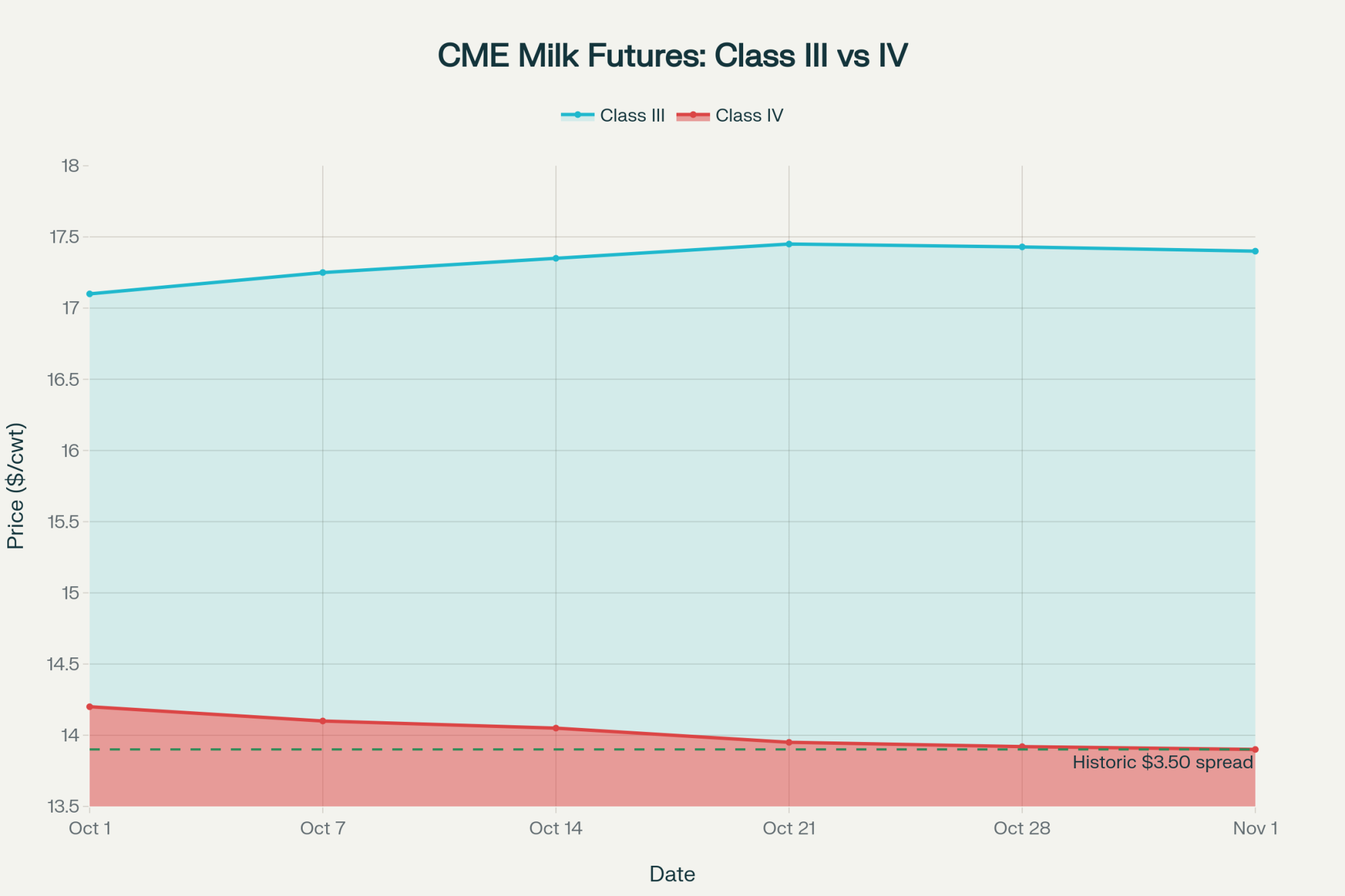
European cheese crashed 37% year-over-year, and the Class III-IV spread reached a farm-killing $3.50/cwt.

Executive Summary: Global dairy markets are in freefall. European cheese crashed 37% year-over-year, GDT auctions fell for the fifth straight week, and the Class III-IV spread exploded to a farm-killing $3.50/cwt—your Class III neighbor is now making $3,800 more per month than you. Milk production is surging everywhere (New Zealand +2.8%, UK +7.5%, U.S. herd at 32-year high) while demand craters, with only whey (+2.2%) and China’s premium dairy pivot offering hope. The Trump-Xi deal promises 25 million tonnes of annual soybean purchases to ease feed costs, but it won’t save commodity producers. Bottom line: If you’re shipping Class IV at $13.90 while others get $17.40 for Class III, you’re losing $45,000 annually. The farms that survive will be those that act now to lock in Class III, optimize components, and abandon the volume-at-any-cost mentality that’s driving this market into the ground.

Global Dairy Markets

Global dairy markets delivered another week of painful reality checks. European cheese posted annual declines of more than 30%. The fifth straight GDT auction decline confirmed what you already know—there’s too much milk chasing too few buyers. Meanwhile, the Class III-IV spread hit $3.50/cwt, meaning your neighbor shipping Class III milk is making $3,800 more per month than you are if you’re stuck in Class IV.

European Futures: Butter Holds, Everything Else Slides

Key Takeaway: European traders moved 2,620 tonnes last week, but the real story is powder weakness (-1.3%) while whey bucked the trend (+2.2%)—a clear signal that protein derivatives are the only bright spot.

EEX recorded 524 lots of trading activity, with Tuesday’s 925-tonne session marking the week’s peak. The breakdown tells you everything about market sentiment:

  • Butter futures only dropped 2.0% to €5,093/tonne
  • SMP futures weakened 1.3% to €2,161/tonne
  • Whey futures climbed 2.2% to €1,007/tonne

That whey strength? It’s your lifeline. Strong protein derivative demand for feed and nutrition applications is keeping values supported while everything else crumbles.

Singapore Exchange: New Zealand’s Spring Flush Hits Hard

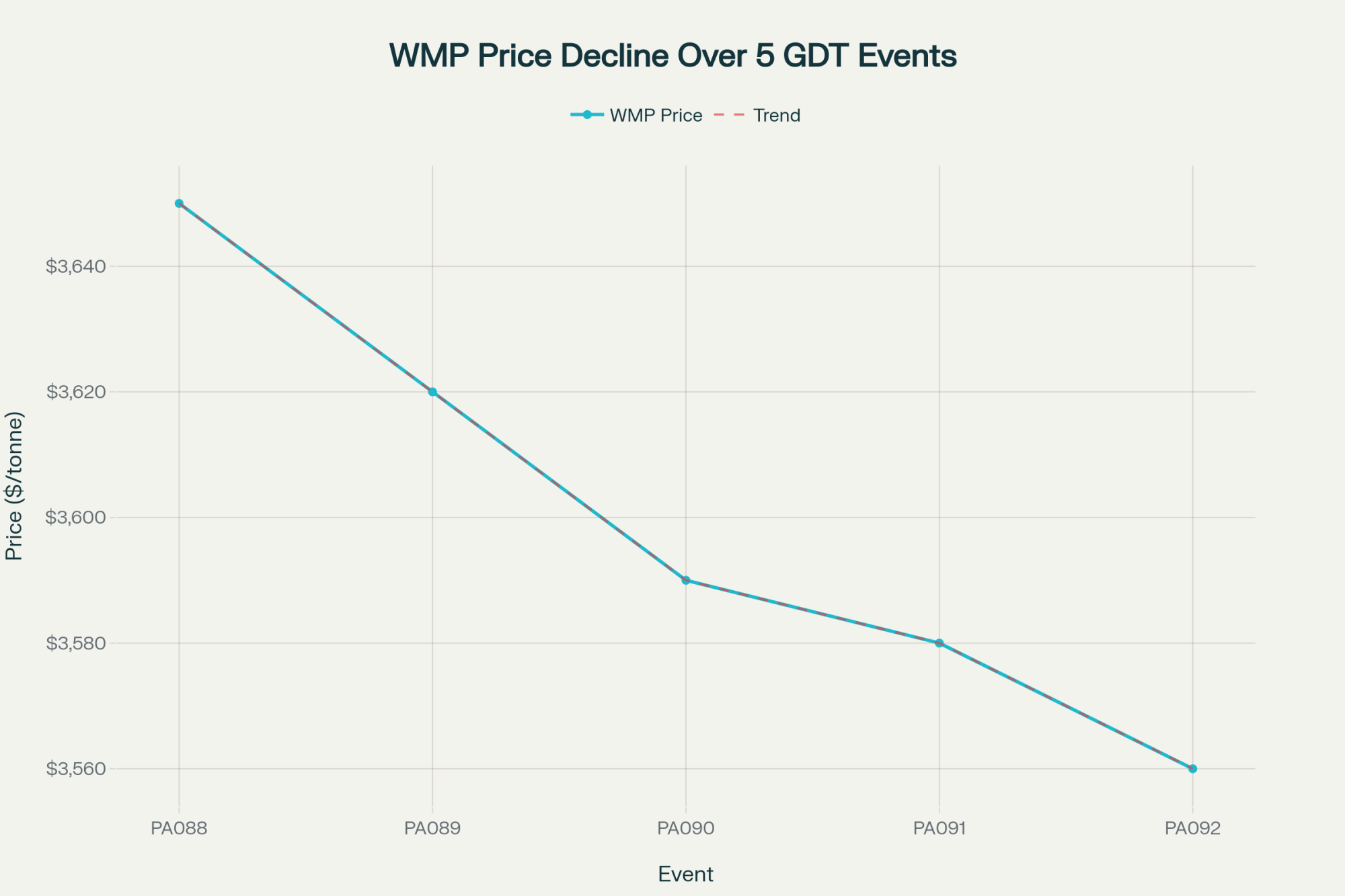
Key Takeaway: SGX traders moved 17,020 tonnes, but WMP prices fell for the fifth straight week to $3,523/tonne—Fonterra’s 2.8% production increase is flooding the market.

The numbers paint a clear oversupply picture:

  • WMP: Down 0.7% to $3,523/tonne
  • SMP: Flat at $2,591/tonne
  • AMF: Up 0.2% to $6,677/tonne
  • Butter: Down 1.3% to $6,339/tonne

Here’s what matters for your operation: Fonterra’s September collections hit 179 million kgMS (+2.8% YoY), with season-to-date volumes running 3.0% ahead. When New Zealand pumps out milk like this, global prices have nowhere to go but down.

European Cheese Collapse: The 30% Massacre

European Cheese Markets in Historic Freefall

Key Takeaway: European cheese prices aren’t just weak—they’re in historic freefall. Every major variety is down 30%+ year-over-year, and buyers know more pain is coming.* The weekly damage was brutal:

  • Cheddar Curd: Crashed €113 to €3,388 (-33.6% YoY)
  • Mild Cheddar: Plunged €206 to €3,430 (-33.3% YoY)
  • Young Gouda: Trading at €2,909 (-37.2% YoY)
  • Mozzarella: Down €105 to €2,823 (-36.2% YoY)

Why should you care? Because European processors are bleeding cash—paying €520/tonne for milk while selling Gouda at €400/tonne. That math doesn’t work. Something’s got to give.

GDT Auction: Fifth Straight Decline Says It All

Fifth Consecutive GDT Decline Confirms Bearish Reality

Key Takeaway: *The GDT Pulse auction delivered another gut punch—WMP at $3,560 and SMP at $2,530 represent 13-month lows. Buyers have zero urgency. The PA092 results confirmed what everyone fears:

  • WMP: $3,560/tonne (down $90 from two weeks ago)
  • SMP: $2,530/tonne (down $55 from prior pulse)
  • Total volume: Only 2,612 tonnes with 41 bidders

That’s five consecutive declines. The message? Global buyers are sitting on their hands, waiting for even lower prices.

Global Production: Everyone’s Making More Milk

Key Takeaway: From New Zealand (+2.8%) to Poland (+5.7%) to the UK (+7.5%), milk is flowing everywhere except where you need it—into buyer demand.

Southern Hemisphere Springs Forward

  • New Zealand: 316.3 million kgMS season-to-date (+3.0%)
  • Australia (Fonterra): 23.4 million kgMS YTD (+3.0%)
  • Argentina: September production surged 9.9% YoY

Northern Hemisphere Piles On

  • UK: September hit 1.28 million tonnes (+7.5% YoY)
  • Poland: 1.11 million tonnes in September (+5.7% YoY)
  • Ireland: November 2024 exploded 34% higher
  • USA: Herd at 9.52 million cows—highest since 1993

CME Markets: The Class Spread That’s Killing Farms

Historic Class III-IV Spread Creates $3,800 Monthly Winners and Losers

Key Takeaway: The $3.50/cwt Class III-IV spread isn’t just a number—it’s the difference between profit and loss for thousands of dairy farms.*Here’s your Friday closing reality check:

Winners:

  • Cheddar Barrels: $1.8050 (+3.5¢)
  • Dry Whey: $0.7100 (+2¢)—nine-month high
  • Class III November: $17.40/cwt

Losers:

  • NDM: $1.1325 (-2.75¢)
  • Butter: $1.6100 (barely holding)
  • Class IV November: $13.90/cwt

Do the math: If you’re shipping 3 million pounds monthly, that $3.50 spread means $3,800 less in your milk check compared to your Class III neighbor. That’s a new pickup truck disappearing every year.

Feed Markets: China Deal Sparks Soybean Rally

Key Takeaway: Soybeans hit $11/bushel on China’s promise to buy 12 million tonnes immediately plus 25 million tonnes annually—but will they follow through?

The Trump-Xi meeting delivered feed market fireworks:

  • Soybeans: Surged 60¢ to $11.00/bushel (15-month high)
  • Soybean Meal: Jumped $27 to $321.40/ton
  • Corn: Up 8¢ to $4.31/bushel

Treasury Secretary Bessent’s announcement sounds impressive, but here’s the reality: Those Chinese purchase commitments are still below pre-trade war levels. Don’t count your feed savings yet.

Trade Breakthroughs: Southeast Asia Opens Doors

Key Takeaway: New agreements with Malaysia, Cambodia, Thailand, and Vietnam eliminate dairy tariffs—finally giving U.S. exports a fighting chance against New Zealand and Australia.

President Trump’s Asian tour delivered real results:

  • Malaysia: Eliminates all dairy tariffs, recognizes U.S. standards
  • Cambodia: Zero tariffs on all U.S. dairy products
  • Thailand: Framework covers 99% of goods (dairy included)
  • Vietnam: Preferential access for substantially all dairy

Why this matters: Vietnam imported $668 million in dairy through August 2025, but U.S. suppliers captured only $22 million due to tariff disadvantages. These deals level the playing field.

China’s Premium Pivot: The $150,000 Opportunity

Key Takeaway: China’s 18% surge in premium dairy imports versus 12% declines in commodity products isn’t a blip—it’s a structural shift that rewards quality over quantity.

The numbers tell the story:

  • Cheese imports: +13.5% YoY
  • Butter imports: +72.6% YoY
  • Skim milk powder: Significant retreat

For a 500-cow operation optimized for components and premium channels, this shift could mean $150,000+ in additional annual revenue. The question is: Are you positioned to capture it?

The Bottom Line: Survival Mode Until Spring

Here’s your reality: Global milk production is overwhelming demand, and it’s not stopping. The Class III-IV spread is creating massive inequities between farms. European cheese markets are in freefall with no floor in sight. Your only bright spots? Whey strength and potential Chinese premium demand.

Three moves to make this week:

  1. Lock in Class III if you can—that $3.50 spread won’t last forever
  2. Review your component optimization—premium markets are your escape route
  3. Don’t forward contract cheese—European prices prove there’s more pain coming

The market’s sending clear signals: Commodity dairy is dead money. Premium products and value-added channels are your survival strategy. The farms that adapt to this reality will still be here in 2027. The ones that don’t? They’ll be someone else’s expansion.

What’s your move? The clock’s ticking, and every month at $13.90, Class IV is another month closer to the edge. 

Complete references and supporting documentation are available upon request by contacting the editorial team at editor@thebullvine.com.

Learn More:

Join the Revolution!

Join over 30,000 successful dairy professionals who rely on Bullvine Weekly for their competitive edge. Delivered directly to your inbox each week, our exclusive industry insights help you make smarter decisions while saving precious hours every week. Never miss critical updates on milk production trends, breakthrough technologies, and profit-boosting strategies that top producers are already implementing. Subscribe now to transform your dairy operation’s efficiency and profitability—your future success is just one click away.

NewsSubscribe
First
Last
Consent

The $11 Billion Gap: Where Processing Investment Meets Producer Reality

Processing capacity explodes while producer equity stays locked for decades—who really benefits from co-op investments?

EXECUTIVE SUMMARY: What farmers are discovering through recent IDFA data is a fundamental disconnect between processing prosperity and producer profitability—$11 billion in new dairy processing investments across 19 states through 2028, yet milk checks continue facing downward pressure from increased make allowances that took effect June 1. The numbers tell the story: New York leads with $2.8 billion in processing investment, Texas adds $1.5 billion, and Wisconsin contributes another $1.1 billion, while the new FMMO makes allowances that reduce farm milk prices by $0.2519 per pound of cheese and similar amounts across other products. Here’s what this means for your operation: December 1 brings new skim milk composition factors that jump protein baselines from 3.1% to 3.3% and other solids from 5.9% to 6.0%—farms below these levels face penalties while those exceeding them capture premiums worth $8,640 annually for a typical 200-cow herd. Recent research from the National Milk Producers Federation indicates that coordinated producer action has achieved meaningful FMMO reform; however, participation in cooperative governance remains critically low, limiting producer influence over billion-dollar investment decisions funded by member equity. Looking ahead, farms that optimize components before December, understand their complete economic picture, including equity positions, and actively engage with their marketing organizations will be best positioned to navigate this widening gap between processing investment and producer returns.

dairy profitability guide

When the International Dairy Foods Association announced its plans for $11 billion in dairy processing investments across 19 states on October 1st, it sparked conversations from coast to coast. Producers are grappling with a fundamental disconnect—massive capital is flowing into processing facilities, while milk checks remain under pressure.

Looking at the numbers from IDFA, we’re talking about more than 50 individual building projects between now and early 2028. New York leads with $2.8 billion, Texas follows at $1.5 billion, and Wisconsin adds another $1.1 billion in processing capacity. That’s real investment—the kind that should signal opportunity. Yet many of us are dealing with prices that tell a different story entirely.

Quick Reference: Key Dates & Numbers

December 1, 2025: New FMMO skim milk composition factors take effect

  • Protein baseline increases: 3.1% → 3.3%
  • Other solids baseline increases: 5.9% → 6.0%

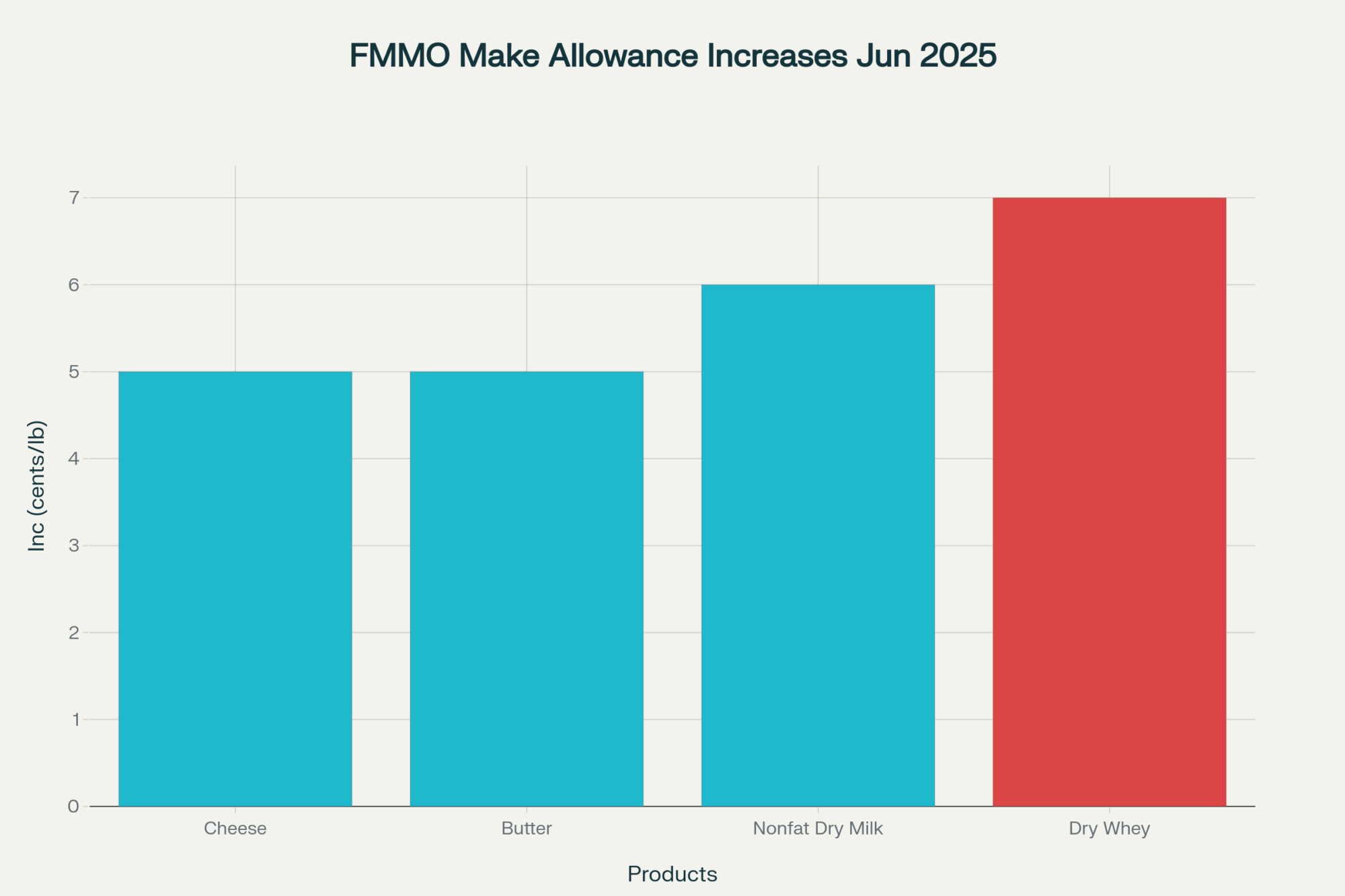
June 1, 2025: FMMO makes allowance changes implemented

  • Cheese: $0.2519/lb
  • Dry whey: $0.2668/lb
  • Butter: $0.2272/lb
  • Nonfat dry milk: $0.2393/lb

Processing Investment by State:

  • New York: $2.8 billion
  • Texas: $1.5 billion
  • Wisconsin: $1.1 billion
  • Idaho: $720 million

Understanding the Processing Boom

Michael Dykes, IDFA President and CEO, shared in their October announcement that the industry expects U.S. milk production to grow by 15 billion pounds by 2030. That’s what’s driving this expansion—cheese plants alone account for $3.2 billion of the investment, with milk and cream facilities adding another $2.97 billion.

The $11 Billion Processing Investment Wave reveals where dairy capital is flowing—and why your milk’s destination matters more than ever for pricing power.

What’s particularly interesting is how this investment concentrates geographically. When New York sees $2.8 billion in processing investment, that fundamentally reshapes milk movement patterns for the entire Northeast. Producers in Pennsylvania and Vermont will feel those ripples. Texas, with its $1.5 billion investment, creates new dynamics in a region that has been expanding dairy production for years—from the Panhandle down to Central Texas. Idaho’s receiving $720 million, which affects not just Idaho producers but also those in Eastern Oregon and Northern Utah.

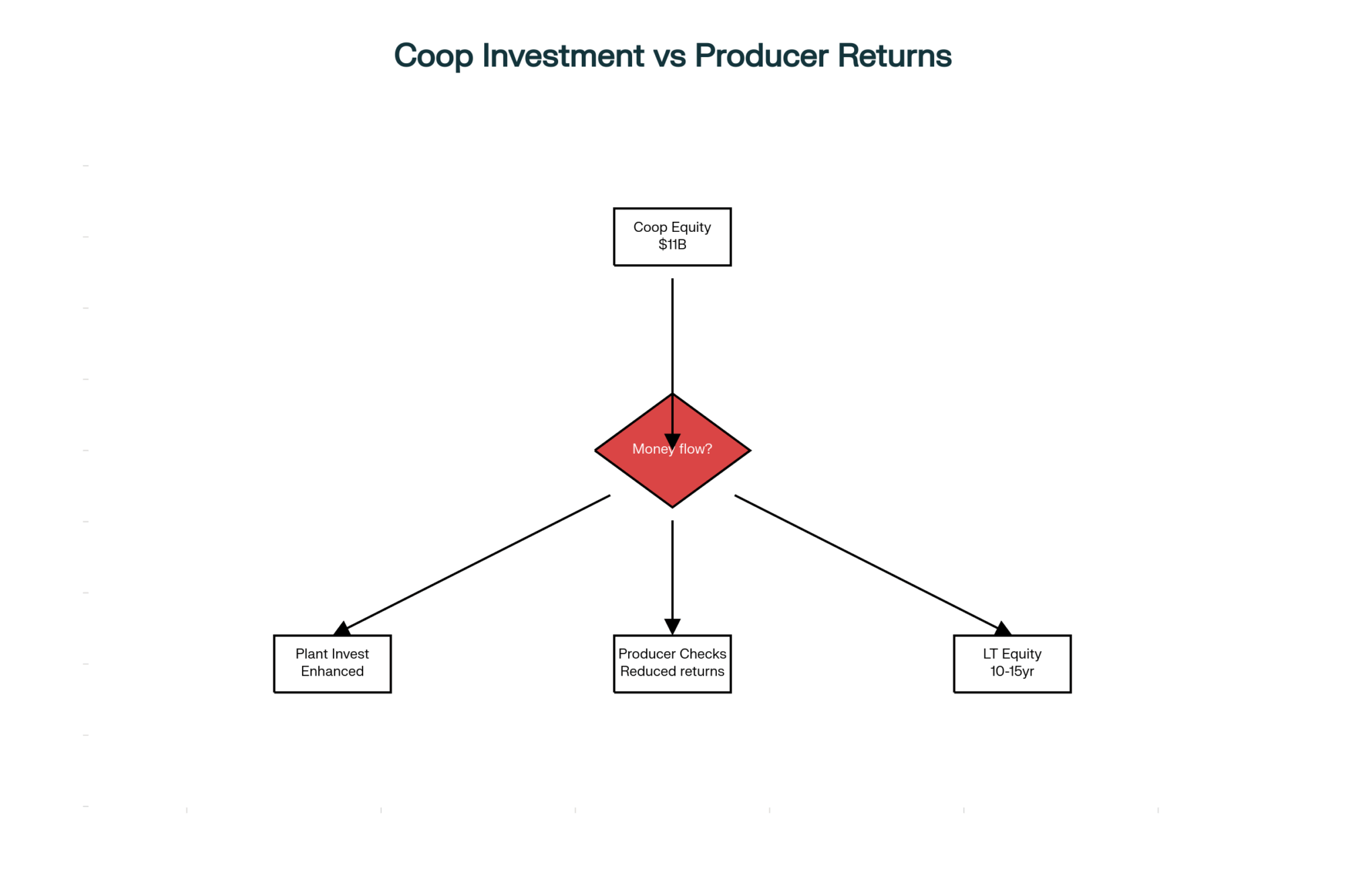
Here’s what gets me thinking: when cooperatives build these facilities, that capital comes from somewhere—typically retained earnings and member equity. We’re essentially wearing two hats, as milk suppliers and infrastructure investors. But the returns on that investment? They often take forms that don’t help today’s cash flow. It’s our money working in the system, but not necessarily working for us in the short term.

The Make Allowance Reality Check

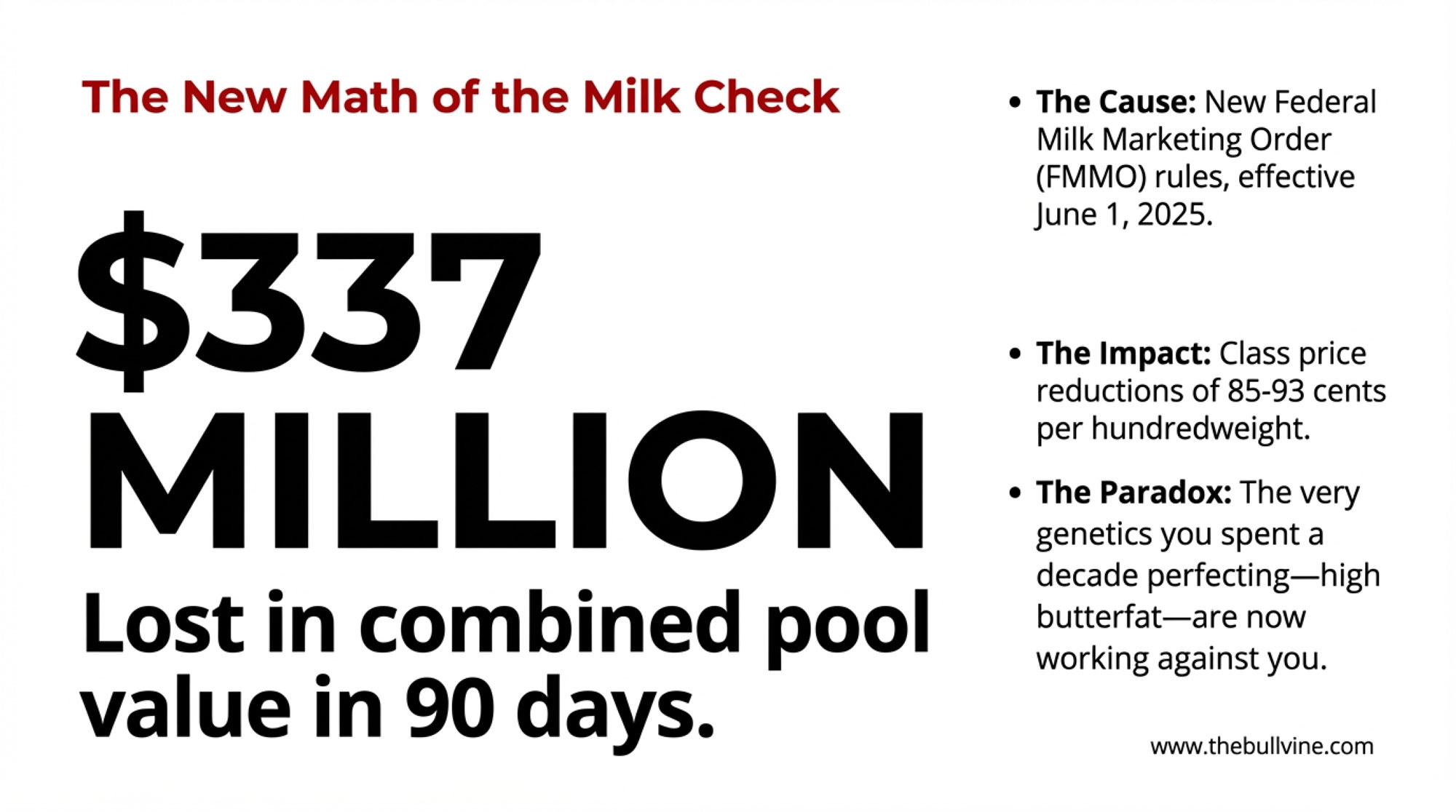
Make Allowance Reality: June 2025 increases transfer $337 million from producer pools to processor margins—every cent per pound comes directly from your milk check.

The new Federal Milk Marketing Order reforms, which took effect on June 1, 2025, represent the most comprehensive overhaul in over two decades. According to the USDA’s announcement and as confirmed by the National Milk Producers Federation, these changes include significant updates to make allowances—those deductions from commodity prices that guarantee processor margins before calculating what producers receive.

Here’s how the math works: USDA takes the commodity price—say cheese—then subtracts the make allowance before determining our milk price. The new rates, which took effect on June 1, increased to $0.2519 for cheese (up from previous levels), $0.2668 for dry whey, $0.2272 for butter, and $0.2393 for nonfat dry milk. When these allowances increase, our prices decrease, regardless of the strength of the commodity market.

Gregg Doud, NMPF President and CEO, acknowledged after the reforms passed that “this final plan will provide a firmer footing and fairer milk pricing.” However, he also noted that NMPF continues to push for mandatory plant-cost studies to inform future better make allowance discussions. Why? Because the current process relies on voluntary cost surveys from processing plants, and participation varies considerably.

These aren’t just numbers on paper—they directly impact cash flow on every farm shipping milk. For producers managing volatile feed costs and labor challenges, understanding these deductions becomes essential for financial planning. The Difference between what consumers pay for dairy products and what we receive for milk keeps widening, and make allowances are a key part of that equation.

The Component Revolution Nobody’s Talking About

Now here’s where things get really interesting for those of us focused on milk quality. The USDA’s final FMMO rule includes new skim milk composition factors, which take effect on December 1, 2025. The baseline assumptions jump from 3.1% protein to 3.3%, and other solids increase from 5.9% to 6.0%.

Let me walk through what this means with real numbers—and trust me, this matters more than you might think.

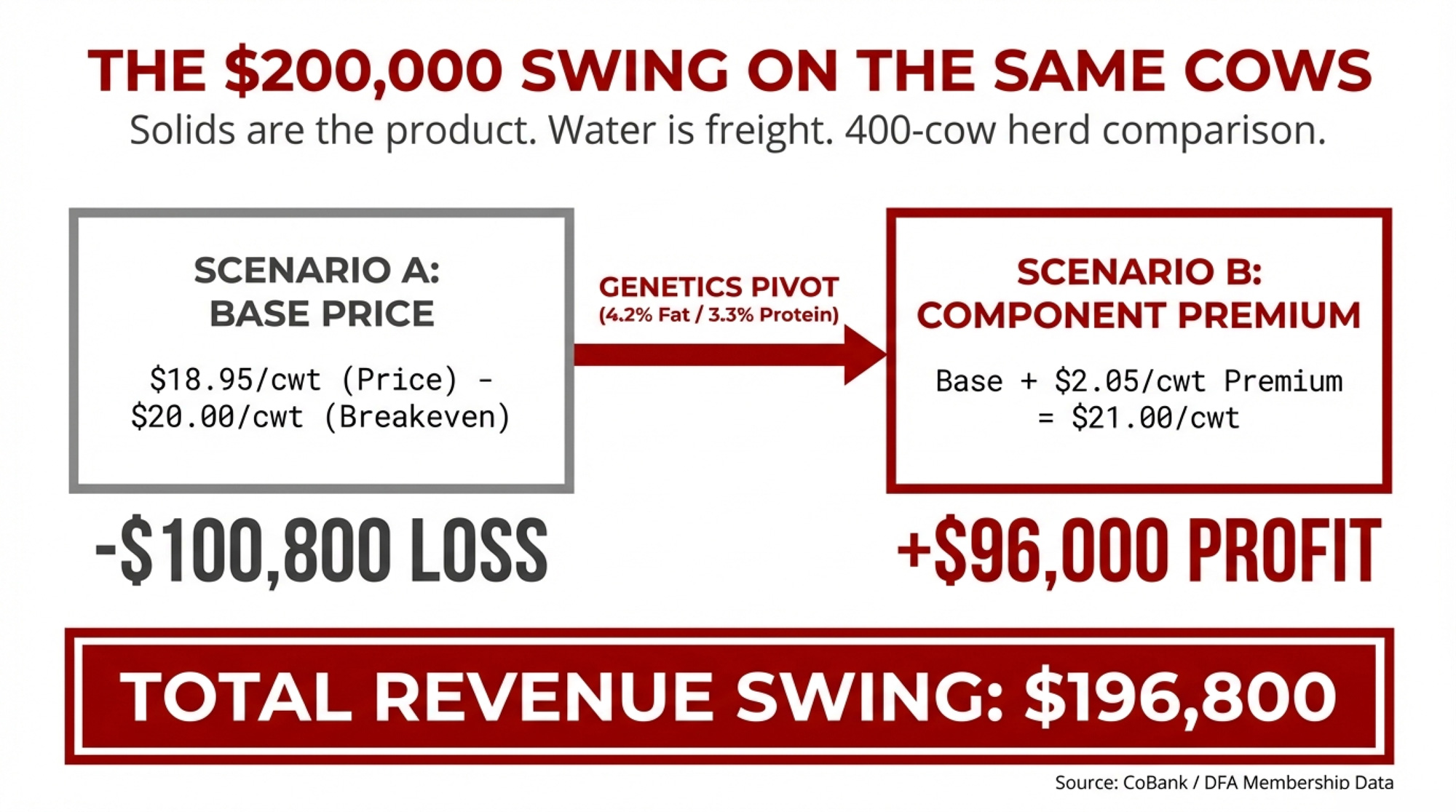
The Component Revolution shows how genetic improvements are reshaping dairy economics—farmers optimizing for 4.2%+ butterfat and 3.3%+ protein capture December’s FMMO premium opportunities.

Component Payment Scenarios: Before and After December 1

Milk Quality LevelCurrent System PaymentAfter December 1 PaymentAnnual Difference (200-cow herd)
Below Average (3.0% protein, 5.8% other solids)Baseline-$0.15/cwt penalty-$7,500
Average (3.1% protein, 5.9% other solids)Baseline-$0.08/cwt penalty-$4,000
Above Average (3.4% protein, 6.2% other solids)+$0.12/cwt premium+$0.28/cwt premium+$8,000

On 100,000 pounds of milk monthly, moving from 3.1% to 3.4% protein means an extra 300 pounds of protein. With CME Class III futures for October 2025 trading around $18.81 per hundredweight, and protein contributing roughly $2.40 per pound to that value, we’re talking about $720 more per month—$8,640 annually—just from that protein improvement.

What’s encouraging is that many operations have already been moving in this direction. Through focused breeding programs that select for specific components, optimized nutrition management, and improved cow comfort, farms across the country are consistently achieving these higher levels of performance. The December changes will reward those investments.

Regional Dynamics: How This Plays Out Across the Country

The economics of hauling milk have undergone significant shifts over the past few years. With diesel prices volatile and the American Trucking Association reporting ongoing driver shortages, geography matters more than ever.

In the Upper Midwest (Wisconsin, Minnesota, Northern Iowa), where multiple processors compete for milk, we’re seeing different dynamics than in regions dominated by a single plant. Competition can create premium opportunities—but only if you’re positioned to take advantage. Smaller operations near county lines where two co-ops overlap have leverage. Those in the middle of a single co-op’s territory? Not so much.

The Southwest (Texas, New Mexico, Arizona) presents a different picture entirely. That $1.5 billion Texas investment creates new capacity in a region where dairies are larger on average—many over 2,000 cows. These operations have different leverage points than a 150-cow farm in Vermont. Scale matters, and we need to be honest about it.

The Southeast (Georgia, Florida, South Carolina) faces unique challenges. Limited processing options, longer haul distances, and heat stress affecting components all factor in. A producer in South Georgia might be 200 miles from the nearest plant—that changes everything about their economics.

California and the West continue their own evolution. With environmental regulations, water concerns, and some of the nation’s largest herds, the dynamics there don’t translate easily to other regions. What works for a 5,000-cow operation in the Central Valley won’t work for most of us.

Cooperative Governance: The Participation Problem

The Cooperative Capital Flow reveals why your $11 billion investment benefits processors immediately while your equity sits locked for decades—understanding this changes everything

Michael Dykes from IDFA has noted the ongoing consolidation across the industry. That consolidation affects how cooperatives operate and how producer voices get heard in decision-making.

The democratic principles underlying cooperatives assume active member participation. But reality often looks different. Financial presentations can be dense—I’ve sat through three-hour annual meetings where the financials took 20 minutes to present and nobody had time to digest them. Meeting locations might require significant travel. Timing often conflicts with critical farm operations.

This participation gap has real consequences. When only a fraction of members actively engage, investment decisions involving millions of dollars in member equity may be approved by a small percentage of those whose capital is at stake.

The National Milk Producers Federation has been working to address these challenges through their modernization efforts. After more than 200 meetings to formulate their FMMO proposals, they’ve shown what coordinated producer action can achieve. However, that level of engagement remains the exception rather than the rule at the individual cooperative level.

Some cooperatives are experimenting with digital participation options and regional listening sessions. Land O’Lakes started streaming their annual meeting. DFA holds regional forums. These are positive steps, though changing institutional culture takes time. The question is whether traditional governance structures can evolve fast enough to maintain relevance for modern dairy operations.

Component Improvement Checklist

Before December 1:

  • Test current butterfat, protein, and other solids levels
  • Calculate the potential impact of new baselines on your milk check
  • Review genetics—are you selecting for components?
  • Evaluate the ration with a nutritionist for component optimization

Ongoing Management:

  • Monitor individual cow components through DHIA testing
  • Focus on transition cow management (affects entire lactation)
  • Maintain consistent feed quality and delivery
  • Optimize cow comfort (stressed cows produce lower components)
  • Consider breed composition (Jersey influence can boost components)

Alternative Strategies Emerging

What’s encouraging is the diversity of approaches producers are exploring. Direct relationships with processors can offer customized pricing structures, provided they are accompanied by consistent volume and quality. Several operations I know have negotiated premiums ranging from modest to substantial per hundredweight above standard cooperative prices.

The organic market continues showing strength despite its challenges. USDA data from February 2025 shows Mexico and Canada imported a record $3.61 billion in U.S. dairy products in 2024, with organic products capturing premium positions in these markets. For operations that can manage the three-year transition and meet certification requirements, the economics can work—but it’s about more than just the premium. It requires finding reliable buyers and adapting your entire management system.

Value-added processing represents another path. Small-scale cheese operations, bottling facilities, even yogurt production—the margins can be compelling for artisan products. However, it requires capital, regulatory expertise, and market development skills that extend far beyond traditional dairy farming. The folks succeeding here often started small, learned the market, then scaled based on actual demand rather than hoped-for sales.

The International Trade Wild Card

Here’s something that could change everything: trade relationships. According to IDFA’s February 2025 data, Mexico and Canada account for more than 40% of U.S. dairy exports, with Mexico importing a record $2.47 billion and Canada importing $1.14 billion in 2024. China and other Asian markets continue growing, too.

Matt Herrick, IDFA’s Executive Vice President and Chief Impact Officer, emphasized that industry growth “depends on strong trade relationships and access to essential ingredients, finished goods, packaging, and equipment.” With exports needing to absorb more production growth in the coming years, any disruption to these relationships could fundamentally alter supply-demand dynamics.

Export Market Reality: 40% of US dairy exports flow to Mexico and Canada—any trade disruption could fundamentally shift supply-demand dynamics for your milk.

The current political climate adds uncertainty. Trade policy shifts could impact everything from cheese exports to whey protein concentrate markets. Producers need to consider these risks in their long-term planning. A cooperative heavily invested in export facilities might face different pressures than one focused on domestic markets. Understanding your milk buyer’s exposure to trade risks becomes part of evaluating your own risk profile.

Practical Steps for Today’s Environment

Given all this complexity, what should producers actually do?

First, calculate your complete economic picture before the December component changes take effect. Know your current component levels, understand how the new factors will affect your payments, and identify opportunities for improvement. The University of Wisconsin’s Center for Dairy Profitability, along with similar extension services, offers tools to assist with these calculations. Cornell’s PRO-DAIRY program has excellent resources. Penn State Extension runs workshops on this topic.

Second, build market intelligence even if you’re satisfied with current arrangements. Understand what others in your region are receiving. Know what alternative markets require. CME futures can give you insights into price trends—Class III futures for late 2025 are trading in the $18-19 range, suggesting some market stability ahead. But futures only tell part of the story.

Third, focus relentlessly on controllables. Component quality, especially with the new FMMO factors coming into effect on December 1, means that every tenth of a percent improvement in protein or other solids translates directly to revenue. Feed management, genetics, cow comfort—these fundamentals matter more than ever. That might sound basic, but I keep seeing operations leave money on the table by not optimizing what they can control.

Fourth, engage with your cooperative or marketing organization. The FMMO modernization process showed what coordinated producer action can achieve. Ask specific questions about how processing investments benefits members. Push for transparency about capital allocation. Your voice matters, but only when used. And if you can’t make meetings, find someone you trust who can represent your interests.

Resources for Immediate Action

Component Optimization:

  • University of Wisconsin Center for Dairy Profitability: cdp.wisc.edu
  • Cornell PRO-DAIRY: prodairy.cornell.edu
  • Penn State Extension Dairy Team: extension.psu.edu/dairy

Market Intelligence:

  • CME Group Dairy Futures: cmegroup.com/dairy
  • USDA Agricultural Marketing Service: ams.usda.gov
  • National Milk Producers Federation: nmpf.org

FMMO Information:

  • USDA Final Rule Details: ams.usda.gov/fmmo
  • NMPF FMMO Resources: nmpf.org/fmmo-modernization

The Path Forward

The disconnect between $11 billion in processing investment and producer returns reflects structural challenges in how our industry captures and distributes value. It’s not about villains and heroes—it’s about understanding economic dynamics and positioning ourselves accordingly.

According to USDA data released in December 2024, per capita dairy consumption reached 661 pounds in 2023, up 7 pounds from the previous year. Cheese consumption hit a record 42.3 pounds per person, and butter reached 6.5 pounds—the highest since 1965. Consumer demand is strong. The processors investing billions see opportunity.

Our challenge is ensuring producers capture fair value from that demand growth. Based on what I’m seeing—producers asking harder questions, exploring alternatives, demanding transparency—there’s reason for cautious optimism. The challenges are real. But so is the resilience I see across dairy farming communities every day.

The FMMO modernization victory demonstrates what’s possible when producers collaborate. As Gregg Doud noted, “Dairy farmers and cooperatives have done what they do best—lead their industry for the benefit of all.” That leadership needs to continue as we navigate these changes.

Because at the end of the day, all that processing capacity means nothing without the milk we produce. And that gives us more leverage than we sometimes realize. The key is using it wisely, strategically, and together.

The December 1st component changes are coming whether you’re ready or not. The processing investments will reshape regional markets regardless of your participation. Trade policies will shift with the political winds. But your response to these changes—that’s entirely within your control. Make it count.

KEY TAKEAWAYS

  • Component optimization delivers immediate returns: Moving from 3.1% to 3.4% protein generates $720 monthly ($8,640 annually) per 100,000 pounds of milk—achievable through focused genetics, nutrition management, and transition cow care before December 1st changes take effect
  • Regional dynamics create different opportunities: Upper Midwest producers near multiple plants can leverage competition for premiums, while Southeast operations facing 200-mile hauls need superior components or specialty markets to offset transportation disadvantages—know your regional leverage points
  • Cooperative equity redemption stretches 10-15 years on Average: That $11 billion in processing investment comes from producer capital that’s locked up for decades—calculate your true net per hundredweight, including all equity obligations, not just your mailbox price
  • Trade relationships determine future stability: With Mexico and Canada representing 40% of U.S. dairy exports ($3.61 billion in 2024), any disruption could shift supply-demand fundamentally—understand your milk buyer’s export exposure as part of your risk assessment
  • Active governance participation matters more than ever: NMPF’s successful FMMO modernization after 200+ meetings shows what coordinated action achieves—if you can’t attend cooperative meetings, designate a trusted representative to ensure your interests are heard in billion-dollar investment decisions

Complete references and supporting documentation are available upon request by contacting the editorial team at editor@thebullvine.com.

Learn More:

Join the Revolution!

Join over 30,000 successful dairy professionals who rely on Bullvine Weekly for their competitive edge. Delivered directly to your inbox each week, our exclusive industry insights help you make smarter decisions while saving precious hours every week. Never miss critical updates on milk production trends, breakthrough technologies, and profit-boosting strategies that top producers are already implementing. Subscribe now to transform your dairy operation’s efficiency and profitability—your future success is just one click away.

NewsSubscribe
First
Last
Consent

The 82% Problem: Why America’s Butterfat Isn’t Raising Your Milk Check

Why isn’t your extra butterfat paying off? Let’s talk about the bottleneck blocking your profits.

EXECUTIVE SUMMARY: It’s a strange scene – butter exports hit record highs and inventories tighten, yet prices remain stuck near 2021 lows around $2.23/lb (CME, Aug 2025). The U.S. butter market trades at a sizeable discount—about $1 less than Oceania and $1.45 less than Europe— even as top herds push milk fat to 4.4% (CDCB). The kicker? Most U.S. plants can’t handle the 82% fat, unsalted butter that global buyers demand (ADPI). That mismatch caps producer pay, even with component premiums of up to 22¢/lb—worth $265 extra per cow on a 4.2% butterfat performer. The smart move is to align genetics and feeding with your processor’s actual capacity—and lock in export contracts—to get paid what you deserve finally.

KEY TAKEAWAYS:

  • Push your herd to 4.4%+ butterfat to capture up to $265 more per cow annually (CDCB).
  • Use bulls like Cookiecutter and Jedi for proven 0.10–0.15% butterfat gains in two generations.
  • Dial in rations for 4.1–4.3% fat and add 30–40 mg biotin per cow daily to boost fat yield.
  • Understand your processor’s limits—upgrading for 82% unsalted butter demands major capital and carries risk.
  • Plan for the long haul—processing bottlenecks likely persist into 2026; start co-op discussions on capacity now.
butterfat production, dairy profitability, component pricing, dairy processing bottleneck, dairy genetics

The thing about the American butter market? It’s a real puzzle right now. Exports are surging and inventories are tightening, yet butter prices are slipping to lows not seen since 2021. What strikes me is that this disconnect reveals a serious bottleneck that’s capping the value farmers can earn from all this extra fat.

Why Export Demand Beats Domestic Buyers

Consider this: CME spot butter averaged $2.23 per pound during the week ending August 22—a level not seen in years, according to CME Group data. Normally, prices firm up heading into fall baking, but this year it’s different. The issue is that U.S. butter is largely made with 80% fat and salt, whereas export buyers want 82% fat unsalted. This product mismatch leaves high-value export demand mostly unmet.

Digging deeper, USDA Dairy News reports that U.S. butter trades roughly $1 per pound less than Oceania’s and around $1.45 less than Europe’s—a gap steady throughout 2025. For context, the Global Dairy Trade auction saw European butter fetch over $7,992 per ton, while U.S. prices hovered near $2.50 per pound.

 CME spot U.S. butter prices versus European butter prices at Global Dairy Trade auction across 2025 months, highlighting the persistent price gap

Your Butterfat Payoff: Component Pricing Math

If you’re breeding for higher fat, here’s good news: many component pricing programs offer premiums between 15 and 22 cents per pound of butterfat. On a cow producing 23,000 lb of milk at 4.2% fat, that translates to an additional $180–$265 annually.

Where the Bottleneck Lives: Processing Upgrades

Here’s the snag. A plant manager said,
“It’s not a quick flip—upgrading processors to handle export specs means investing in new packing lines and planning new shipping routes. It costs millions and carries significant risk without firm contracts.”

Meanwhile, New Zealand processors retrofit their plants with flexible lines that switch between salted and unsalted butter to meet various specifications—a nimbleness that U.S. plants need to capture export premiums.

Projected decline in processing bottleneck impact from 2023 to 2027 as new investments expand capacity

Closing the Gap: Genetics & Nutrition Tips

Our milk’s changing fast, too. The Council on Dairy Breeding reports that the U.S. average butterfat is above 4.2%, with some herds pushing past 4.4%—levels not seen in decades. An extension expert from the University of Wisconsin bluntly noted,
“Milk composition is evolving faster than plants can handle, causing a surplus of cream.”

On the breeding front, genomic selection now delivers 0.10–0.15 percentage-point gains in butterfat within a few lactations, with bulls like Cookiecutter and Jedi leading the charge. Nutritionists recommend targeting 4.1–4.3% fat in rations and supplementing with 30–40 mg of biotin per cow daily to maximize fat synthesis.

Industry watchers—including Sarah Thompson at Dairy Futures Group—forecast this processing squeeze will last into 2026 or later, until new capacity comes online.

The immediate strategy for producers is to align herd genetics and feeding practices with what processors can realistically handle today. Discuss with your cooperative to secure export contracts—and adjust your operation to capitalize on the opportunity.

Complete references and supporting documentation are available upon request by contacting the editorial team at editor@thebullvine.com.

Learn More:

Join the Revolution!

Join over 30,000 successful dairy professionals who rely on Bullvine Weekly for their competitive edge. Delivered directly to your inbox each week, our exclusive industry insights help you make smarter decisions while saving precious hours every week. Never miss critical updates on milk production trends, breakthrough technologies, and profit-boosting strategies that top producers are already implementing. Subscribe now to transform your dairy operation’s efficiency and profitability—your future success is just one click away.

NewsSubscribe
First
Last
Consent

Beat The Summer Component Blues: Why Your Competitors Are Banking Bigger Milk Checks While You’re Watching Profits Melt Away

Don’t let summer heat drain your milk check! While your competitors accept seasonal component drops, science reveals they’re preventable-and costing you thousands.

milk component optimization, heat stress dairy, summer butterfat production, component pricing, nutritional strategies for milk fat

Stop accepting summer component losses as “normal.” The hard truth? While you’re waiting for cooler weather to restore your butterfat and protein levels, progressive producers are maintaining peak components year-round and laughing all the way to the bank. The difference between their approach and yours isn’t luck or genetics’ strategy. And it’s costing you thousands in lost premiums every summer.

According to research published by the University of Florida, heat stress is costing the U.S. dairy industry a staggering $1.5 billion annually. A significant portion of these losses comes from depressed milk components. In Federal Milk Marketing Orders, where multiple component pricing is the norm, these seasonal dips in butterfat and true protein content directly impact your mailbox price. What’s particularly frustrating is that component depression often begins before visible signs of heat stress appear in your herd – your components can be tanking. In contrast, your cows seem to be ruminating normally at the headlocks.

But here’s the truth that will challenge conventional wisdom: summer component depression isn’t inevitable. The latest research shows that with a strategic approach to nutrition and management, you can maintain milk components even through the dog days of summer. This isn’t theoretical – progressive producers nationwide are already implementing these techniques with impressive results, maintaining fat tests above 4.0% and protein above 3.2% year-round.

The Hidden Science Behind Your Summer Component Crash

Most dairy farmers understand that heat stress reduces milk production, but fewer understand how early and dramatically it impacts components. The science reveals some surprising insights about what’s happening inside your cows when temperatures climb.

It Starts Earlier Than You Think

While milk yield typically begins declining when the temperature-humidity index (THI) exceeds 72, research shows that fat and protein yields start dropping at much lower THI values – fat yield begins declining at a THI of just 57. In contrast, protein yield starts decreasing at a THI around 60. This means your components are tanking before you see other apparent signs of heat stress.

A comprehensive analysis of milk produced by 1.67 million cows published in the Journal of Dairy Science confirmed that fat and protein content decreased significantly with increased THI values. For each unit increase in THI above threshold values, protein and fat yield decreased by approximately 0.008 kg and 0.006 kg per cow per day, respectively.

Are you still waiting for panting cows to signal it’s time to implement your heat stress strategy? By then, you’ve already lost weeks of premium components.

What’s Happening Inside Your Cows

When cows experience heat stress, their bodies undergo complex physiological and metabolic changes that specifically impact component synthesis:

  1. Reduced dry matter intake (DMI) – This is the obvious one. Cows eat less and have less raw material to make milk components. However, reduced DMI only accounts for about 50% of the production loss.
  2. Energy diversion for cooling – Panting alone can increase a cow’s maintenance energy requirement by 7% to 25%. This energy could otherwise be used for milk and component production. It’s like running your barn’s cooling system at maximum while trying to operate your milking equipment on half power – something must give.
  3. Altered insulin dynamics – Heat stress increases insulin activity, which has an anti-lipolytic effect. This suppresses the breakdown of body fat reserves that normally release fatty acids used for milk fat synthesis in the mammary gland.
  4. Reduced rumen motility – Heat stress slows rumen contractions and cud chewing, altering the acetate-to-propionate ratio and reducing the volatile fatty acids (VFAs) precursors for milk fat synthesis. For a cow’s rumen to function properly, it needs consistent conditions, just like your forage harvester needs consistent crop flow for optimal performance.

Understanding these mechanisms is crucial because simply addressing cow comfort isn’t enough – you need targeted nutritional strategies to overcome these specific metabolic challenges.

Nutrition Strategies That Work

Conventional wisdom might tell you there’s not much you can do about summer component depression besides wait for cooler weather. That’s dead wrong. Research published in the Journal of Dairy Science confirms that strategic nutritional interventions can significantly mitigate the negative effects of heat stress on milk components.

Rethinking Energy Density

When DMI drops during heat stress, the obvious solution is to increase the energy density of the ration. But there’s a right way and a wrong way to do this.

The wrong way? Simply dumping more grain in the ration. This approach often backfires by creating acidosis risk, which further depresses components and creates health problems. Instead, focus on higher-quality, highly digestible forages that generate less metabolic heat during digestion.

Brown midrib (BMR) corn silage, with its higher NDF digestibility, is a prime example of a “cool” energy source that won’t add to your cows’ heat load. One study found that switching to BMR corn silage during summer maintained an average of 0.15 percentage points higher milk fat than conventional corn silage. That might not sound like much, but on a 70-pound tank average, that’s over 6 cents per hundredweight in your milk check.

Why are you still feeding the same TMR formulation in July that worked in January?

The Power of Protected Fats

Research from multiple sources, including studies published in the Journal of Dairy Science, demonstrates that adding fat to summer rations is particularly effective because:

  • Fats have 2.25 times the energy value of carbohydrates
  • Fats produce less metabolic heat during digestion (lower heat increment)
  • Fats don’t add to the acid load in the rumen like fermentable carbohydrates do
  • Rumen-protected fats provide a direct source of fatty acids for milk fat synthesis

As All About Feed notes, “optimising rumen function could help maintain milk fat content and production efficiency of dairy cows under heat stress.” Awe-inspiring are the results from rumen-protected fats high in palmitic acid (C16:0). Research shows they can increase milk fat percentage by 0.15-0.35 percentage points, with the effect being most pronounced under heat stress conditions.

Are you still trying to increase energy density with starch while your competitors use “cool” fat energy to maintain components?

The Feed Additive Arsenal

Progressive producers are using a strategic combination of additives to combat heat stress effects on components:

Live yeast cultures stabilize rumen pH by stimulating lactate-utilizing bacteria and enhance fiber digestion. Multiple studies have shown they can help lower core body temperature and maintain milk fat during heat stress. One study found a 0.1-0.2% increase in milk fat when properly supplemented.

Buffers like sodium bicarbonate compensate for reduced bicarbonate from panting and maintain rumen pH. Research shows they can prevent milk fat depression by 0.1-0.3% by neutralizing VFAs and lactate. During heat stress, respiratory alkalosis reduces the bicarbonate available for rumen buffering, making supplementation crucial.

Electrolytes replace minerals lost through sweating and altered excretion. According to research cited by Jaylor, heat stress increases the loss of potassium (K) and sodium (Na). Recommendations suggest increasing dietary K to 1.5-1.6% of dry matter and sodium to 0.4-0.6%, significantly higher than standard rations.

When did you last adjust your buffer levels based on temperature forecasts rather than just maintaining the same year-round formulation?

Feeding Management That Makes a Difference

Beyond what you feed, when and how you deliver it can significantly impact summer component preservation.

Research shows that adjusting feeding times to cooler parts of the day (early morning, late evening) can increase feed intake by 5-10% during hot weather. One study found that shifting 60% of feed delivery to between 8 PM and 8 AM resulted in a 3.5% increase in fat-corrected milk without any ration changes.

Increasing feeding frequency maintains freshness, prevents heating, and stimulates more consistent daily intake patterns. For every hour TMR sits in the feed bunk during 90°F weather, its temperature can increase by 3-4°F, dramatically reducing palatability and intake.

Beat The Heat Before It Beats Your Components

Most cooling systems are designed to kick in when cows show visible signs of heat stress. By then, you’re already losing components. Research from the University of Florida has demonstrated that fat and protein production begin declining at much lower THI values than previously thought.

The Cooling Sweet Spot: Earlier Than You Think

The traditional threshold of THI 72 for activating cooling systems comes way too late for protecting components. Consider this alternative approach that leading producers are implementing:

  1. Set up your cooling systems to activate at lower THI thresholds (65-68 rather than 72)
  2. Focus on cooling during critical periods like immediately after milking and before feeding
  3. Use continuous cooling in holding areas where heat stress can be most intense
  4. Don’t forget dry cows – heat stress during the dry period has been shown to reduce components in the subsequent lactation

Does your cooling system come on when your cows need it, or is it too late?

Frequency Matters More Than Intensity

One of the most eye-opening studies in recent heat stress research found that cows cooled eight times daily had significantly higher components than those cooled three times daily, despite similar milk yields.

The study demonstrated that the eight-times-daily cooling group exhibited much lower respiratory rates (60.2 breaths/min) than the three-times-daily group (73.1 breaths/min). This more consistent cooling prevented the metabolic shifts that specifically impair component synthesis.

It’s not just about how much you cool your cows, but how consistently you keep them in their comfort zone throughout the day. Think of it like maintaining your bulk tank temperature – occasional refrigeration isn’t enough; consistent cooling is what preserves quality.

Real-Time Data: The Component Game-Changer

One of the biggest barriers to maintaining summer components has been the delay in feedback. When monthly component tests reveal a problem, you lose significant income. That’s changing with new technology.

In-Line Milk Analysis: Know Today, Not Next Month

Systems like the BROLIS in-line milk analyzer use laser technology to provide real-time data for each cow during milking, measuring fat, protein, lactose, and other parameters without requiring additional reagents or manually taken samples.

These technologies enable you to see the immediate effects of dietary changes or management interventions, allowing quicker optimization of strategies to maintain components during heat stress.

“The ability to see component changes in real-time has completely transformed how we manage summer nutrition,” says Tom Jenkins, a progressive dairy producer from Wisconsin. “We can make a feeding change and know within 24 hours if it’s working for components, rather than waiting for the monthly test. It’s like having a daily bulk tank culture instead of waiting for the monthly SCC report.”

How many days of depressed components can you afford to lose while waiting for your monthly test results? The most profitable dairies aren’t waiting- they monitor and adapt in real-time.

BATTLE-TESTED: Your Summer Component Preservation Checklist

Early Warning System: Monitor THI daily and track early component indicators
Cooling Activation: Set cooling systems to activate at THI 65, not 72
Feed Timing: Deliver 60% of daily feed between 8 PM and 8 AM
Buffer Boost: Increase sodium bicarbonate to 0.8-1.0% of ration DM during hot periods
Protected Fats: Add C16-rich rumen-protected fats at 1-2% of diet DM
Electrolyte Balance: Increase K to 1.5-1.6% and Na to 0.4-0.6% of diet DM
Microbial Support: Include live yeast to stabilize rumen pH and enhance fiber digestion
Water Quality: Clean water troughs daily and ensure unlimited access
Component Monitoring: Check component trends at least weekly
Economics: Calculate your component efficiency (lbs fat + lbs protein ÷ DMI × 100)

The Economics: Making Smart Investments

With tight margins in today’s dairy industry, any investment needs solid economic justification. Look at the numbers behind component preservation strategies in Federal Order pricing.

Quantifying Heat Stress Losses

Heat stress imposes substantial economic burdens on dairy farms through various channels:

  • Direct milk component losses: For every unit increase in THI above critical thresholds, cows can lose approximately 0.008 kg of protein and 0.006 kg of fat per cow daily.
  • Reproductive impacts: Heat stress extends days open and reduces conception rates
  • Health costs: Increased incidence of mastitis, metabolic disorders, and lameness
  • Long-term impacts: Heat stress during the dry period affects the subsequent lactation

Research published by Cornell University’s College of Agriculture and Life Sciences confirms that “even two degrees of warming can make all the difference” in dairy productivity, contributing to the $1.5 billion annual industry loss.

ROI on Component Preservation Strategies

Let’s break down the economics of three common approaches to maintaining summer components:

  1. Nutritional interventions (protected fats, buffers, yeast):
    1. Cost: $0.15-$0.30/cow/day
    1. Potential benefit: 0.1-0.3% increase in fat, 0.05-0.15% increase in protein
    1. For a 100-cow dairy shipping 70 lbs/cow/day with $3.00 butterfat and $2.70 protein:
      1. Additional revenue: $0.45-$1.00/cow/day
      1. ROI: 1.5:1 to 3.3:1
  2. Enhanced cooling systems (additional fans, controllers, sprinklers):
    1. Initial investment: $8,000-$15,000 for a 100-cow facility
    1. Annual operating cost: $2,000-$3,000 (electricity, water, maintenance)
    1. Potential benefit: 0.1-0.25% increase in fat and protein, plus yield preservation
    1. Additional annual revenue: $15,000-$30,000
    1. ROI: 50-100% annually after initial investment

Are you still hesitating to invest in heat stress mitigation because of the upfront costs? Look at these ROI figures again. When properly implemented, these strategies often pay for themselves within months, not years.

Component Efficiency: The New Production Metric

Progressive producers are shifting their focus from just component percentages to “component efficiency” – how efficiently cows convert feed into valuable components. This metric is calculated as:

Component Efficiency = (Pounds of Fat + Pounds of Protein) ÷ Dry Matter Intake × 100

This approach recognizes that the most profitable strategy isn’t always maximizing percentages but component production relative to feed costs. It’s like measuring feed conversion in your replacement heifers – what matters isn’t just how much they grow, but how efficiently they convert feed into valuable growth.

Which would you rather have: 4.0% fat at 70 pounds of milk, or 3.8% fat at 80 pounds? The component efficiency metric gives you a clear answer to these economic questions.

Don’t Wait Until It’s Too Late: Plan Your Summer Strategy Now

Most farms make the critical mistake of waiting until components drop before acting. By then, you’re already playing catch-up. Instead, consider this proactive timeline:

April – Preparation Phase

  • Review the previous summer’s component trends
  • Evaluate cooling system functionality and clean fans
  • Begin introducing heat stress ration adjustments gradually
  • Ensure water systems can meet increased summer demands

May – Early Implementation

  • Implement a complete heat stress ration before the first major heat event
  • Begin using lower THI thresholds for activating cooling systems
  • Increase buffer inclusion in rations
  • Introduce initial rumen-protected fat strategies

June through August – Full Summer Strategy

  • Maximum implementation of all nutritional interventions
  • Regular monitoring of components (ideally daily or weekly)
  • Adjust feeding times to cooler periods
  • Maximize cooling system utilization
  • Regular assessment of water quality and availability

Is your nutrition program reactive or proactive when it comes to seasonal changes? The difference could be worth tens of thousands in your milk check.

The Bottom Line

Summer heat doesn’t have to mean watching your valuable milk components – and your profitability – melt away. The science is clear that component depression during hot weather is a metabolic challenge that can be overcome with the right approach. While your competitors accept seasonal declines as inevitable, you can maintain a competitive advantage by preserving your components year-round.

The most successful dairy operations are already implementing these strategies with impressive results. They’ve recognized that waiting until components crash before action is too late. Instead, they take a proactive, science-based approach that maintains components through even the hottest summer months.

Ask yourself: Are you still managing heat stress reactively instead of proactively? Are you still accepting summer component depression as “just the way it is”? If so, you’re leaving serious money on the table.

The economic benefits are clear: with Federal Order pricing increasingly rewarding components, the farms that maintain fat and protein levels during summer will capture significant premiums over those that don’t. When you consider that heat stress is becoming more frequent and intense with climate change, developing effective component preservation strategies isn’t just about this summer’s milk check – it’s about long-term farm sustainability.

It’s time to challenge the industry norm of accepting seasonal component losses. Start by assessing your current summer component trends, implementing targeted nutritional strategies, optimizing your cooling systems, and considering technologies that provide real-time feedback. The upfront investment will pay dividends in preserved component premiums, improved cow health, and enhanced reproductive performance.

The bottom line? Stop accepting summer component depression as inevitable. Research from leading institutions like Cornell and the University of Florida confirms that the tools and strategies to maintain profitable components year-round are available now. The only question is whether you’ll continue to watch your milk check shrink every summer or join the progressive producers who are banking bigger premiums regardless of the season.

Key Takeaways

  • Components decline before visible heat stress: Fat yield begins decreasing at THI 57 and protein at THI 60-much earlier than the traditional THI 72 threshold for activating cooling systems.
  • Strategic nutrition maintains components: Rumen-protected fats, increased buffers (0.8-1.0% sodium bicarbonate), adjusted electrolytes, and shifting 60% of feeding to cooler hours can significantly preserve components.
  • Cooling frequency trumps intensity: Research shows cows cooled eight times daily maintained significantly higher components than those cooled just three times daily, highlighting the importance of consistent temperature regulation.
  • Real-time monitoring enables rapid response: Modern in-line milk analyzers provide immediate feedback on component changes, allowing for timely intervention before significant losses occur.
  • Component efficiency should replace simple percentages: Progressive producers now track (Pounds Fat + Pounds Protein) ÷ DMI × 100 as a more comprehensive metric of productive efficiency during heat stress.

Executive Summary

Summer heat stress costs U.S. dairy farmers up to $1.5 billion annually, with a significant portion stemming from depressed milk fat and protein levels that directly impact component-based pricing. The scientific research reveals that components begin declining at surprisingly low temperature-humidity index values-well before visible signs of heat stress appear in cows. Through strategic nutritional interventions (protected fats, buffers, adjusted feeding times), environmental management (optimized cooling systems), and real-time component monitoring, producers can maintain premium-worthy components year-round. Economic modeling confirms these interventions typically deliver positive ROI within months, offering a clear competitive advantage to producers willing to challenge the conventional acceptance of seasonal component depression.

Complete references and supporting documentation are available upon request by contacting the editorial team at editor@thebullvine.com.

Learn more:

Join the Revolution!

Join over 30,000 successful dairy professionals who rely on Bullvine Weekly for their competitive edge. Delivered directly to your inbox each week, our exclusive industry insights help you make smarter decisions while saving precious hours every week. Never miss critical updates on milk production trends, breakthrough technologies, and profit-boosting strategies that top producers are already implementing. Subscribe now to transform your dairy operation’s efficiency and profitability—your future success is just one click away.

NewsSubscribe
First
Last
Consent

Protect Your Dairy Operations from America’s 1,000-Fold Subsidy Advantage

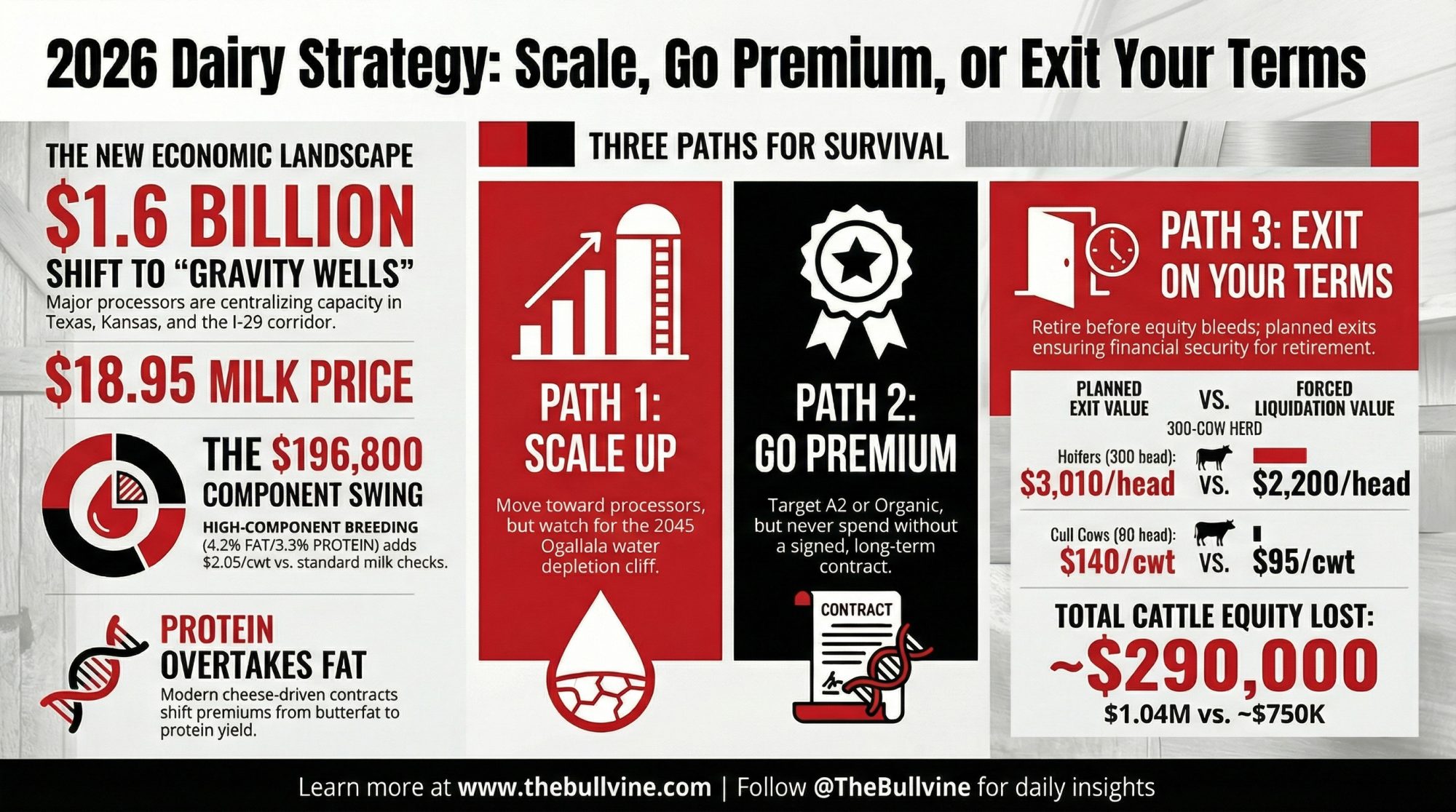
Stop chasing milk volume. Smart operators target 4.2% butterfat + 3.3% protein for 30% higher component premiums. The subsidy war demands precision.

EXECUTIVE SUMMARY: While American dairy farmers collect $66,355 in annual subsidies and you get $69, the real competitive advantage isn’t government handouts – it’s component optimization that makes volume-thinking obsolete. US producers have engineered a 30.2% increase in butterfat and 23.6% protein content since 2011, while milk volume grew just 15.9%, proving that smart operators compete on quality, not quantity. With processors paying 90% of milk value based on butterfat and protein content, operations still measuring success by tank volume are essentially selling commodities that subsidized imports can easily undercut. Over 10 million cattle have undergone genomic testing in North America, creating systematic genetic advantages that traditional breeding methods simply cannot match. Feed efficiency gaps between 1.3:1 and 2.0:1 mean the difference between survival and profit when feed represents 60-70% of variable costs. The brutal reality: component premiums and feed efficiency create defensible competitive positions that no subsidy disparity can eliminate. Stop measuring tanks – start measuring components, genomic progress, and feed conversion ratios before your operation becomes another casualty of the subsidy war.

KEY TAKEAWAYS

  • Component Revolution Delivers Real ROI: Target 4.2% butterfat and 3.3% protein content – operations achieving these levels generate $15,000-20,000 additional annual revenue per 100-cow herd through premium pricing that shields against commodity price volatility
  • Feed Efficiency Trumps Subsidies: Optimize feed conversion to 1.75:1 ratio or better – this represents $25,000-50,000 annual cost savings on 100-cow operations and creates competitive advantages that neutralize subsidy disparities through operational excellence
  • Genomic Testing Beats Traditional Breeding: Invest in systematic genetic evaluation using DNA analysis rather than visual assessment – genomic-enabled operations achieve component gains that compound over generations while traditional methods stagnate
  • Technology Integration Strategy: Implement individual cow monitoring for health and reproductive management before considering expensive automation – data generation and interpretation capabilities create lasting competitive advantages that manual systems cannot match
  • Anti-Fragile Market Positioning: Develop direct-market capabilities and value-added processing to capture premium segments – create revenue streams that subsidized commodity imports cannot easily penetrate through quality differentiation rather than volume competition
dairy competitive advantage, component pricing, feed efficiency, genomic testing dairy, precision agriculture

What happens when your biggest competitor receives $66,355 in government support while you get $69? You’re about to discover how this massive gap could reshape global dairy markets faster than you can say “component pricing.”

Here’s a number that’ll make your morning coffee taste bitter: American dairy farmers participating in the Dairy Margin Coverage program averaged $66,355 per operation in 2023 payouts, while you – if you’re farming in India – receive just ₹6,000 ($69) annually through the PM-Kisan scheme. That’s not a typo. That’s a 965-fold difference in just one subsidy program that could fundamentally alter the competitive landscape of global dairy.

Think of it this way: It’s like competing in a lactation contest where your opponent’s cows get premium TMR while yours graze on roadside grass. The outcome is predetermined before the first milking.

If you’re a strategic planner in the dairy industry, this subsidy gap isn’t just a statistic – it’s the loaded gun pointed at your operation’s future profitability. Keep reading, and you’ll discover exactly how this battle will reshape your strategic planning – and what you can do about it.

Why America’s Component Revolution Should Keep You Awake at Night

Let’s challenge one of dairy’s most sacred assumptions: that more milk always equals more profit. This conventional wisdom is not just wrong – it’s dangerously obsolete.

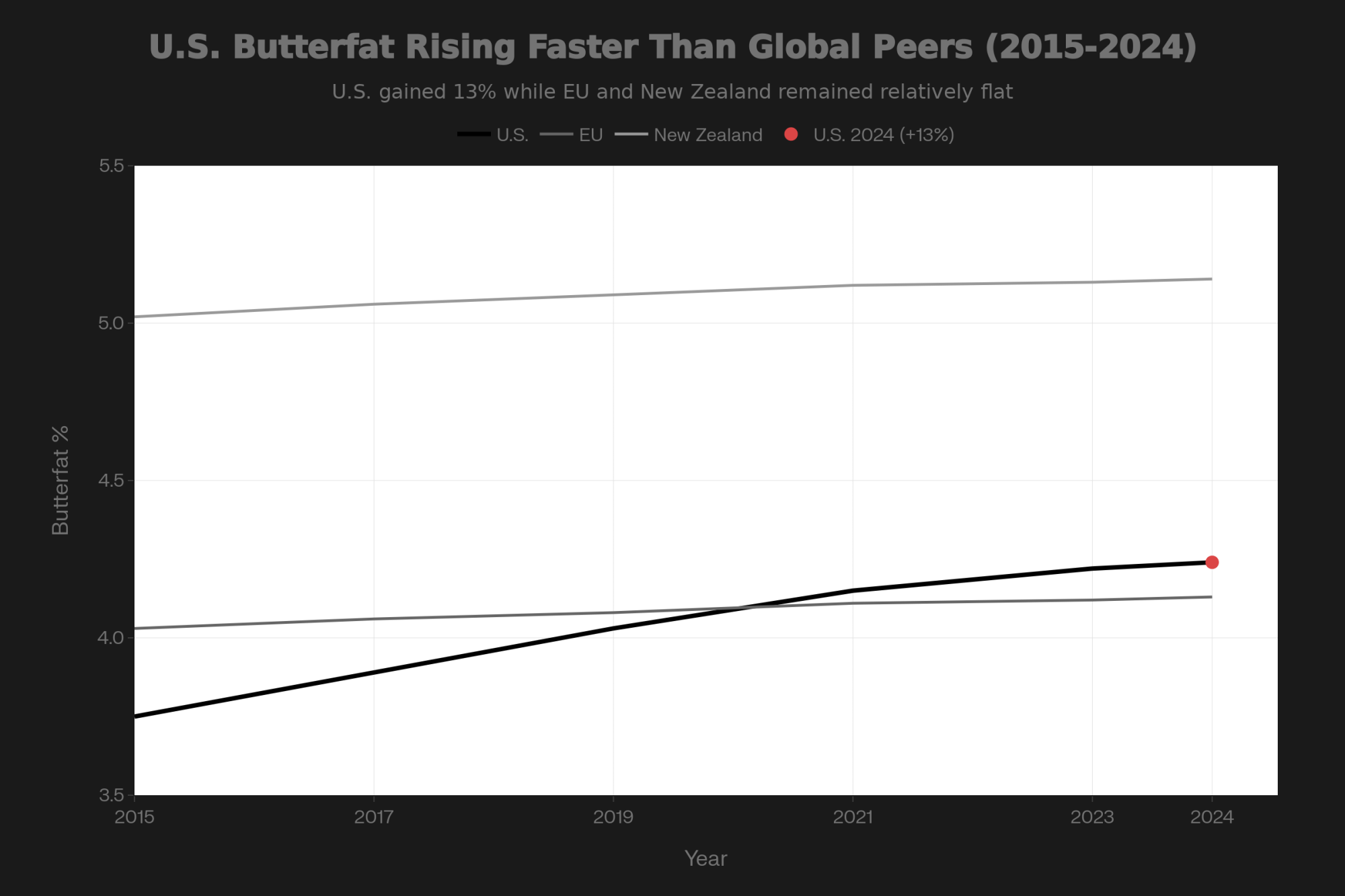
The numbers from USDA’s National Agricultural Statistics Service reveal a shocking truth. While US milk production increased a modest 15.9% from 2011 to 2024, protein content climbed 23.6%, and butterfat increased a staggering 30.2%. In 2024, US butterfat levels averaged 4.23% nationally, with protein content reaching 3.29% – both consecutive yearly records.

The component advantage creates what economists call a “quality premium trap.” When processors pay multiple component pricing that places nearly 90% of the milk check value on butterfat and protein content, high-component producers operate entirely in a different market.

Why This Matters for Your Operation

Component optimization isn’t just an American advantage – it’s becoming the global standard. When international buyers increasingly demand specific fat and protein ratios for specialized products, operations stuck in volume-thinking become commodity suppliers competing solely on price.

The Genomic Acceleration That’s Reshaping Competitive Advantage

Here’s where the story gets more concerning for traditional operations: The component revolution isn’t slowing down – it’s accelerating through genomic technology that creates compounding advantages.

Over 10 million dairy cattle have undergone genomic testing in North America, creating a massive genetic database that drives systematic improvements in Total Performance Index scores and component production. The predictive power of genomic testing comes from comparing an individual animal’s DNA sample to the overall population, enabling producers to evaluate animals and make breeding decisions based on a variety of production and health traits.

But here’s the controversial truth: While American operations systematically improve genetics through data-driven selection, most global operations still rely on traditional breeding methods that can’t compete with genomic precision.

Why Traditional Breeding Approaches Are Failing

Most dairy operations worldwide still evaluate breeding decisions based on visual assessment and basic production records. Meanwhile, genomic-enabled operations make breeding choices based on DNA analysis that predicts performance across dozens of traits before animals even enter production. The gap isn’t just technological – it’s methodological and widens every generation.

Feed Efficiency: The Great Divider

Feed efficiency represents the foundation of competitive dairy operations, with research showing efficiency can vary dramatically among operations. Top-performing US herds achieve feed conversion efficiency above 1.75:1 (Energy Corrected Milk to Dry Matter Intake ratio).

The average Holstein cow produces 75 pounds of milk and consumes 53 pounds of dry matter daily. Feed represents approximately 60-70% of variable costs in milk production, making efficiency improvements critical for competitive positioning.

Technology Integration Reality Check

Automated milking systems (AMS) show 8% of current adoption among US farmers, with 18% considering implementation. These systems can increase milk production by up to 12% and decrease labor by as much as 30%. More importantly, AMS operations generate continuous data streams about individual cow health, fertility, and production that enable optimization that is impossible with conventional systems.

But here’s what most analyses miss: The technology gap isn’t just about equipment – it’s about data interpretation and decision-making capabilities that compound over time.

India’s Production Reality vs. American Efficiency

India’s position as the world’s largest milk producer (239.3 million tonnes annually in 2023-24)  masks significant efficiency challenges. With per capita availability at 471 grams per day, the system achieves scale through numbers rather than per-animal productivity.

The productivity gap is staggering: Research shows Indian crossbred cows average 8-14 kg milk per animal per day, with studies indicating crossbred productivity at 9.23 litres daily, buffalo at 6.09 litres, and local cows at 4.98 litres daily. Compare this to US Holstein averages of 75 pounds (34 kg) daily.

The Infrastructure Challenge

India has developed indigenous genomic technologies, including specialized ‘Gau chips’ for cattle and ‘Mahish chips’ for buffaloes. However, the scale and adoption remain far behind genomic leaders, creating persistent productivity gaps that subsidies and protection can mitigate but not eliminate.

Strategic Defense: Your Implementation Framework

Phase 1: Component Focus (Months 1-6)

  • Target 4.2% butterfat and 3.3% protein content through selective breeding
  • Implement monthly component testing protocols
  • Negotiate component-based pricing with processors
  • Expected ROI: 0.2% component improvement generates $15,000-20,000 additional annual revenue on 100-cow operation

Phase 2: Feed Efficiency Enhancement (Months 6-12)

  • Optimize feed conversion to achieve a 1.6:1 ratio or better
  • Implement precision nutrition with regular ration balancing
  • Monitor dry matter intake optimization by production stage
  • Expected Performance: 5-10% feed conversion improvement represents $25,000-50,000 annual cost savings on 100-cow operation

Phase 3: Technology Integration (Months 12-24)

  • Evaluate individual cow monitoring for health/reproductive management
  • Consider AMS investment only after demonstrating precision management success
  • Focus on data generation and interpretation capabilities
  • Investment Range: AMS systems cost $150,000-275,000 per unit

Building Anti-Fragile Operations

Smart dairy strategists don’t just react to technological threats – they build systems that become stronger under stress. When high-tech systems require expensive infrastructure and constant connectivity, knowledge-intensive systems with superior operational fundamentals can capture markets that value reliability and local adaptation.

Market Diversification: Beyond Commodity Competition

The strategic insight from global markets is clear: Countries focusing on value-added dairy products maintain pricing power despite trade pressures. Premium positioning through quality metrics, direct-to-consumer channels, and specialized processing creates defensible market positions that subsidized imports cannot easily penetrate.

Component-based pricing isn’t coming – it’s already the dominant reality for competitive operations. Operations still competing on milk volume are essentially selling a commodity that buyers can source from anywhere, while operations selling specific component profiles provide manufacturing inputs that can’t be easily substituted.

The Bottom Line: Your Strategic Response Plan

Remember that 965-fold subsidy disadvantage we opened with? It’s not going away, but your response will determine whether your dairy operations thrive or survive in this new competitive environment.

Here’s what we’ve uncovered that changes everything: While American operations enjoy massive subsidy advantages ($66,355 vs. $69 annually)  and deploy genomic technologies that create systematic competitive improvements, the real opportunity lies in building efficient systems that compete on operational excellence rather than government support.

The component revolution demonstrates that competing on volume is economic suicide when processors pay 90% of milk value for butterfat and protein content. The genomic gap shows that data-driven breeding decisions create permanent advantages that traditional methods cannot match. The feed efficiency differential reveals that precision management can create cost advantages that help neutralize subsidy disparities through superior operational performance.

The opportunity hiding inside this crisis is massive: While large industrial operations struggle to adapt complex systems, well-positioned operations can implement targeted improvements faster, optimize individual animal performance more effectively, and capture premium market segments that value quality over commodity pricing.

Here’s your immediate action step: Before you finish reading this article, calculate your current feed conversion efficiency (Energy Corrected Milk ÷ Dry Matter Intake) and component yields (butterfat % + protein %) for your highest-producing animals. If your feed conversion is below 1.5:1 or your combined components are under 7%, you’ve identified your biggest strategic vulnerability – and your most important improvement opportunity for the next six months.

Your second strategic priority: Audit your operation’s competitive positioning by identifying what percentage of your success depends on volume versus component quality. If you’re still measuring success primarily by tank volume rather than component yield and quality premiums, you’re competing with yesterday’s business model against tomorrow’s technology.

The dairy industry’s future belongs to operations that build measurable competitive advantages through operational excellence, not those that hope for favorable trade policies or subsidy programs. The choice – and the competitive advantage – is yours.

Learn More:

Join the Revolution!

Join over 30,000 successful dairy professionals who rely on Bullvine Weekly for their competitive edge. Delivered directly to your inbox each week, our exclusive industry insights help you make smarter decisions while saving precious hours every week. Never miss critical updates on milk production trends, breakthrough technologies, and profit-boosting strategies that top producers are already implementing. Subscribe now to transform your dairy operation’s efficiency and profitability—your future success is just one click away.


NewsSubscribe
First
Last
Consent

Lactalis Unleashes $2.1 Billion Dairy Domination Strategy: How Global Consolidation Reshapes Your Market Position

Stop accepting commodity milk pricing. Lactalis’ $2.1B yogurt play reveals how smart farmers capture $75K premiums through strategic positioning.

EXECUTIVE SUMMARY: The $2.1 billion Lactalis-General Mills yogurt deal isn’t just corporate news—it’s a wake-up call for dairy farmers still thinking like commodity producers instead of strategic suppliers. While General Mills walked away from 15-20% yogurt margins to chase 30% pet food returns, smart farmers are learning the same lesson: average performance in consolidating markets means shrinking opportunities. Our analysis reveals that a 500-cow operation optimizing protein content from 3.6% to 3.8% can capture $50,000-75,000 annually in premium pricing—but only if they’re positioned with processors who understand component value. With major consolidation accelerating (Lactalis now controls yogurt aisle architecture from farm gate to retail shelf), the gap between strategic and reactive farmers is widening rapidly. The uncomfortable truth: farms accepting commodity pricing while processors like Lactalis build global supply chain control are essentially subsidizing their competitors’ growth. International data shows European production constraints creating global opportunities, but only for operations positioned beyond local commodity markets. Every day you delay strategic positioning analysis is money left on the table—and market position you’ll never recover.

KEY TAKEAWAYS

  • Component Optimization ROI: Genomic testing investment of $25,000 to improve protein percentage by 0.1% across a 300-cow herd generates $15,000 annually in additional revenue—that’s a 60% annual return while competitors settle for commodity rates
  • Technology Scale Economics: Robotic milking systems cost $1,333-1,667 per cow on 150-cow operations versus $667-833 per cow on 300-cow operations—successful farms are thinking scale optimization, not just technology adoption
  • Market Intelligence Premium: Farms building relationships with globally-minded processors like Lactalis capture component premiums while local commodity suppliers face margin compression—the $2.1B deal proves scale and specialization drive future pricing power
  • Strategic Positioning Urgency: With feed costs projected to decrease 10.1% in 2025 while milk production grows 0.5% to 226.9 billion pounds, the window for optimizing processor relationships and capturing premiums is closing as consolidation accelerates
  • Global Market Leverage: EU production constraints due to environmental regulations create export opportunities worth tracking—farms positioned for international markets through strategic processor relationships access premium pricing unavailable to local commodity suppliers
dairy consolidation, processor relationships, component pricing, farm strategic planning, dairy market trends

The world’s largest dairy giant just executed the most strategic yogurt acquisition in industry history, and the ripple effects will transform how every dairy operation competes for the next decade. While General Mills walks away with $2+ billion to fuel pet food expansion, Lactalis now controls yogurt market architecture from farm gate to retail shelf, fundamentally altering milk pricing power and processor relationships across North America. This isn’t just another corporate deal for strategic dairy planners – it’s a blueprint for how scale, specialization, and supply chain control will determine winners and losers in the new dairy economy.

The dust has settled on what analysts call the “elephant deal” of 2025, and the implications stretch far beyond corporate boardrooms. When the U.S. Department of Justice gave final approval in early June for Lactalis to complete its acquisition of General Mills’ U.S. yogurt business (General Mills and Lactalis Receive Regulatory Clearance), they didn’t just greenlight a transaction – they validated a new paradigm for global dairy competition that every producer needs to understand.

Why Did America’s Food Giant Exit a $1.5 Billion Yogurt Empire?

What might surprise dairy producers is that General Mills wasn’t failing at yogurt. They were walking away from a business that contributed approximately $1.5 billion to their fiscal 2024 net sales and held respected brands like Yoplait, Go-Gurt, and Oui. So why would they exit a market where U.S. yogurt consumption hit record levels in 2024?

The margin mathematics tells the real story. General Mills’ yogurt division generated operating margins of 15-20% – respectable numbers until you compare them to their “gem brands” like Blue Buffalo pet food, which delivers approximately 30% EBIT margins. In today’s dairy landscape, this margin differential represents the difference between surviving and thriving.

Think of it like comparing a 20,000-pound lactation average to a 30,000-pound herd. Both are productive, but one creates dramatically more profit per unit of investment. But here’s where conventional wisdom gets challenged: Is chasing higher margins always the right strategy for dairy operations, or does it create dangerous vulnerabilities?

The secular headwinds facing traditional yogurt mirror challenges across dairy. Consumer preferences are fragmenting rapidly, while Hispanic-focused brands like LaLa, El Mexicano, and La Ricura collectively control 31% of total yogurt sales, demonstrating how quickly traditional market leaders can lose ground to specialized competitors.

General Mills’ CEO Jeff Harmening has been executing their “Accelerate” strategy since 2020, transforming nearly 30% of their net sales base through strategic acquisitions and divestitures. This isn’t incremental change – it’s complete portfolio reconstruction based on margin optimization and growth potential.

But here’s the critical question for dairy farmers: If a major food company with massive scale and marketing power can only generate 15-20% margins in yogurt, what does that tell you about the competitive intensity? More importantly, are you positioning your operation for the processors who understand margin optimization, or are you still thinking like it’s 2015?

The financial engineering behind this exit reveals sophisticated thinking. General Mills expects net proceeds exceeding $2 billion from U.S. transactions, primarily for share repurchases. This strategy has already reduced their shares outstanding by 9% since 2019 and boosted EPS by approximately 20%.

How Lactalis Plans to Cement North American Dairy Control

While General Mills retreats strategically, Lactalis advances with calculated aggression. This French family business isn’t just large – with €30 billion in revenue for 2024, up 2.8% over fiscal 2023, they’re demonstrating how global scale translates into market control. But their strategy goes far beyond size.

The brand consolidation creates unprecedented market architecture. Lactalis already owned Stonyfield Organic, siggi’s, Brown Cow, Lactaid, and Green Mountain Creamery in the U.S. Adding Yoplait, Go-Gurt, Oui, Mountain High, and :ratio doesn’t just expand their portfolio – it creates yogurt aisle domination that fundamentally shifts retailer relationships.

Consider the parallel in dairy farming: when a large operation controls multiple farms in a region, they gain negotiating leverage with feed suppliers, veterinarians, and milk buyers that smaller operations simply can’t match. Lactalis now wields similar power with grocery chains, creating efficiency synergies and cross-promotion opportunities that smaller yogurt brands cannot replicate.

But here’s where the conventional consolidation narrative gets complicated: While Lactalis reduced their debt load from €6.45 billion to €5.03 billion during 2024 and increased operating income by 4.3%, they’re also creating potential systemic risks. What happens when one player controls too much of the supply chain? Are we creating efficiency or fragility?

Lactalis’ global expansion continues beyond North America. They’re actively pursuing Fonterra’s NZ$4.9 billion consumer business to strengthen their presence in Asia and Oceania, having already applied for informal merger clearance from Australia’s competition regulator. Recent acquisitions of South African coffee creamer brand Cremora and Portuguese cheese maker Queijos Tavares demonstrate systematic global market building.

Here’s the critical insight most dairy producers are missing: This isn’t just about yogurt or even dairy – it’s about supply chain architecture. Are you building relationships with processors who think like Lactalis, or are you still dealing with companies that think small?

What This Means for Your Dairy Operation’s Strategic Position

The implications for dairy producers are multifaceted and immediate. When major processors consolidate and gain market power, individual farms face opportunities and risks requiring strategic responses.

Component optimization becomes even more critical in this environment. With Lactalis focusing on premium yogurt brands emphasizing protein content and functionality, producers who consistently deliver high-quality milk with optimal protein and butterfat levels will capture premium pricing. The concentration risk requires careful monitoring. When fewer, larger processors control more market share, individual farmers have reduced leverage in price negotiations.

Market intelligence becomes essential for strategic positioning. Understanding where your milk flows and what drives pricing in different market segments helps optimize production and investment decisions. The yogurt boom creates opportunities, but only for producers who understand how to position themselves for premium channels.

Here’s a scenario to consider: A 500-cow operation in Wisconsin produces 24,000 pounds per cow annually with 3.6% protein and 3.8% butterfat. Under traditional pricing, they’re receiving commodity rates. However, if they optimize genetics and nutrition to consistently achieve 3.8% protein and 4.0% butterfat, they could capture premiums worth $50,000-75,000 annually in the current market. Are you tracking these specific metrics, or still managing by gut feeling?

Technology Integration and Practical Implementation

The consolidation creates new imperatives for technology adoption and innovation. Large, globally connected processors like Lactalis demand consistency, quality, and data transparency that smaller operations may not require. This creates both challenges and opportunities for dairy producers.

Data management becomes table stakes for premium processor relationships. Modern dairy operations need systems that track component quality, animal health metrics, and production consistency with the precision that large processors require for their global supply chains.

Consider this technological reality check: A robotic milking system costs $200,000-250,000 per robot. On a 150-cow operation, that’s $1,333-1,667 per cow. On a 300-cow operation using two robots, it’s $667-833 per cow. Are you thinking about technology investment at a sufficient scale, or are you making decisions that doom you to higher per-unit costs?

Here’s the innovation challenge most producers miss: It’s not about adopting the latest technology – it’s about adopting the right technology at the right scale for your specific market position. What data are you collecting that processors like Lactalis actually value versus data you think they should want?

Financial Implications and Strategic Assessment Framework

The financial mathematics of this deal offer insights for dairy farm strategic planning. General Mills’ ability to generate $2+ billion from asset divestiture and redeploy that capital for higher returns demonstrates sophisticated portfolio management that dairy operations can adapt.

Here’s a financial reality most farmers don’t calculate: If you’re carrying debt at 7% interest while passing up investments that could return 15%, you’re actually losing 8% annually on every dollar that could be redeployed. When did you last conduct a comprehensive ROI analysis of your current asset allocation?

Practical example: A $25,000 investment in genomic testing and selective breeding to improve protein percentage by 0.1% across a 300-cow herd generates approximately $15,000 annually in additional revenue at current premiums. That’s a 60% annual return on investment. Are you making these calculations, or still managing by tradition?

The Bottom Line: Your Strategic Assessment Framework

This $2.1 billion transaction represents far more than corporate restructuring – it’s a master class in strategic portfolio optimization and global market positioning that every dairy operation should study. General Mills demonstrated that even successful businesses should be divested if they don’t align with your core competencies and margin requirements. Lactalis showed how systematic global expansion and market consolidation can justify premium acquisition prices when executed with financial discipline and strategic vision.

Here are the specific questions you need to answer about your operation:

  1. Component optimization: Are you consistently achieving protein and butterfat levels that qualify for premium pricing or accepting commodity rates for average performance?
  2. Technology integration: What data are you collecting that processors actually value, and how are you using it to optimize production decisions?
  3. Market positioning: Are you building relationships with processors who think globally and invest in growth or staying comfortable with local relationships that may not survive consolidation?
  4. Financial discipline: When did you last calculate the ROI of your current asset allocation versus alternative investments in genetics, technology, or market positioning?
  5. Scale optimization: Are you operating at a sufficient scale to justify technology investments and capture efficiency gains, or trapped in a sub-optimal size that limits your options?

The $2.1 billion question for every dairy operation: Are you positioning for the market that’s emerging or clinging to strategies designed for the market that’s disappearing? The companies that thrive in this new environment will be those who adapt quickly, execute consistently, and never stop learning about where their markets are heading.

Your next move: Conduct a comprehensive strategic assessment of your operation using this deal’s framework. Are you building a business that could attract a premium from acquirers like Lactalis or just maintaining a lifestyle that’s becoming less viable each year? The answer to that question will determine whether you thrive or merely survive in the new dairy economy.

The dairy industry just became significantly more interesting – and more competitive. The producers who study this transaction’s strategic lessons and apply them to their own operations will find opportunities that others miss. Those who don’t may find themselves competing for an increasingly smaller share of an increasingly consolidated market.

Learn More:

Join the Revolution!

Join over 30,000 successful dairy professionals who rely on Bullvine Weekly for their competitive edge. Delivered directly to your inbox each week, our exclusive industry insights help you make smarter decisions while saving precious hours every week. Never miss critical updates on milk production trends, breakthrough technologies, and profit-boosting strategies that top producers are already implementing. Subscribe now to transform your dairy operation’s efficiency and profitability—your future success is just one click away.

NewsSubscribe
First
Last
Consent
Send this to a friend