Judge calls it: Juniors dominated to the extent that the open show was ‘unsuspenseful.’ The pros never stood a chance.
EXECUTIVE SUMMARY: On September 29, at World Dairy Expo, juniors stopped preparing for dairy’s future and started owning it. Judge Mark Rueth watched teenagers crush seasoned professionals in the open shows, calling the outcome “unsuspenseful”—these kids brought cattle with the structural excellence and genomic superiority that veterans couldn’t match. With replacement heifers at $3,010 and climbing, the youth displaying “width to the chest floor” genetics that extend productive life aren’t just showing cattle—they’re demonstrating economic survival skills most established operations lack. Minnesota’s third consecutive collegiate judging victory and SUNY Cobleskill’s Post-Secondary sweep confirm that this isn’t just youth development—it’s industry succession happening in real-time. The brutal truth from Madison: farms partnering with these genomic-native juniors will thrive, while those still referring to them as “kids” are managing their own obsolescence.
MADISON, WIS — Let me tell you what happened on September 29 at World Dairy Expo, because if you weren’t standing ringside, you missed watching the dairy industry’s power structure flip on its head.
Judge Mark Rueth from Oxford, Wisconsin, stepped into those colored shavings Monday morning to evaluate the International Guernsey Show, and by the time he was done, everyone knew we’d witnessed something special. But it wasn’t just the cattle quality that had folks talking — it was who was winning.
When the Kids Beat the Pros at Their Own Game
Here’s what’s got me and every other industry watcher scratching our heads: the juniors didn’t just compete well — they dominated the open show so thoroughly that Judge Rueth actually called the outcome “a little unsuspenseful”.
Now I’ve been around long enough to remember when junior shows were about learning the ropes. You’d bring your decent heifer, gain some experience, and maybe place in the middle of the pack if you worked hard. Not anymore. These kids are bringing cattle that would’ve been grand champions five years ago, and they’re beating professionals who’ve been breeding cattle longer than these juniors have been alive.
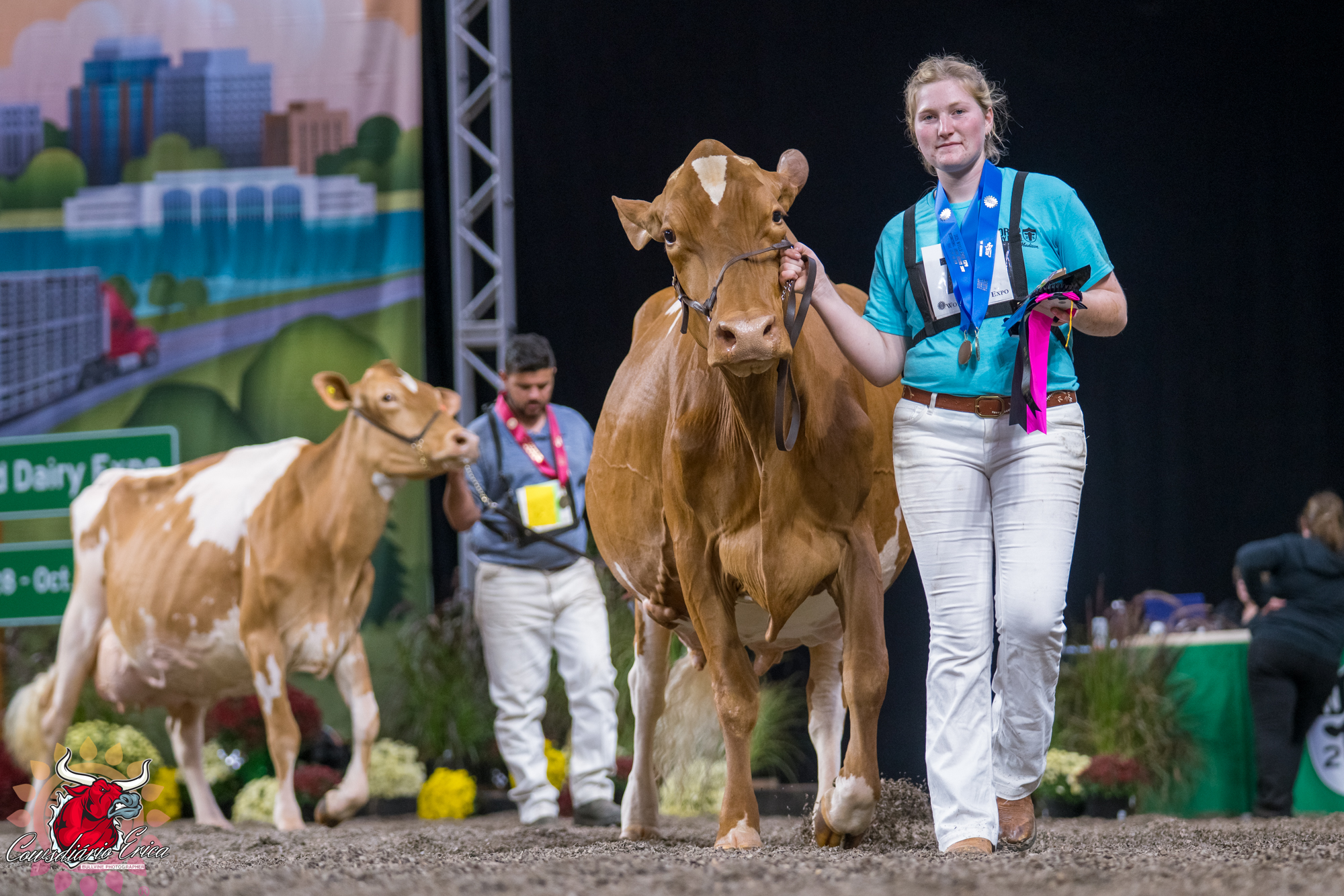
Take Donnybrook Ammo Stevie, owned by Brittany Taylor and Laylaa Schuler from New Glarus. This cow didn’t just win the Junior Show — she took Reserve Grand in the open competition. When teenagers are placing ahead of operations that have been perfecting genetics for generations, something fundamental has shifted.
The Guernsey Show: Where Excellence Met Economics
The Grand Champion that wrapped things up Monday afternoon tells you everything about where this industry’s headed. Kadence Fames Lovely, owned by Kadence Farm, swept the whole show — Grand Champion, Best Bred and Owned, Best Udder, Total Performance Winner. That’s what we call a clean sweep, and it doesn’t happen by accident.
What really caught my attention was what Rueth was looking for. He kept talking about “power and some front end” and specifically “width to the chest floor”. Now, for those of you milking cows every day, you know what that means — these are cows built to last. With replacement heifers selling for $3,010 per head, according to the USDA’s July numbers, and some markets reaching $4,000 for springers, every extra lactation is money in the bank.
Valley Gem Farm from Cumberland, Wisconsin, took Premier Breeder while Springhill from Big Prairie, Ohio, grabbed Premier Exhibitor. But here’s the kicker — Springhill James Dean was Premier Sire for the heifer show, showing how AI has leveled the playing field. When everyone has access to the same genetics, it’s management and cow care that makes the difference.
Jersey and Ayrshire: California Meets the Midwest
The Jersey heifer show started at 7 a.m. sharp on Monday, and California came to play. Kash-In Video Stop and Stare-ET, owned by Kamryn Kasbergen and Ivy Hebgen from Tulare, took both open and junior division Junior Champion titles. That’s West Coast genetics making a statement.
But don’t count out the Midwest. The Millers Joel King Majesty, owned by the partnership of Keightley-Core, Millers Jerseys, and junior members Rhea and Brycen Miller from Oldenburg, Indiana, didn’t just take Reserve — they earned the Junior Champion Bred & Owned award. That’s homegrown genetics saying, “we can compete with anybody.”
The Ayrshire show on Monday afternoon was the Bricker Farms show, as plain and simple as that. Their Reynolds daughter, Bricker-Farms R Cadillac-ET, swept Junior Champion honors in both divisions. When you’ve got Todd and Lynsey working with their kids, Allison, Lacey, and Kinslee, plus partners like Carli Binckley and Wyatt Schlauch, that’s three generations of knowledge in one cow.
The Judging Contests: Tomorrow’s Leaders Today
While the cattle shows grab headlines, what happened in the judging pavilion on Sunday might be even more important. The University of Minnesota just three-peated the National Intercollegiate contest with a score of 2,505. That’s not luck — that’s a program.
Brady Gille, Alexis Hoefs, and Keenan Thygesen didn’t just pick the right cattle; they explained why, taking top honors for oral reasons with 821 points. When you can articulate why one cow beats another under pressure, you’re developing skills worth real money. These are the folks who’ll be making million-dollar genetic decisions in five years.
SUNY Cobleskill’s performance in the Post-Secondary division was even more dominant — they swept everything. Connor MacNeil’s 769-point individual score demonstrates what happens when farm kids take education seriously. Coach Carrie Edsall has these students thinking like they already own the farm.
The 4-H contest? Five points separated Minnesota and Wisconsin — 2,058 to 2,053. Campbell Booth from Wisconsin had the high individual at 708, but Minnesota’s depth carried the day. These aren’t just kids learning to show — these are future herd managers, nutritionists, and geneticists cutting their teeth.
What Monday’s Shows Mean for Your Operation
Looking at what went down on September 29, a few things jump out at me.
First, if you’re not investing in youth programs, you’re missing the boat. When Rueth talks about the Guernsey breed’s “family-oriented” and “welcoming” culture, which fosters this success, he’s onto something. The farms bringing juniors to Madison aren’t doing charity work — they’re building their future. With 6 million kids in 4-H and another million in FFA, we are witnessing the largest agricultural education movement in history unfold right now.
Second, cow longevity has just became your most important profit center. With replacement costs where they are — Wisconsin seeing a 69% spike year-over-year to $2,850 per head — keeping cows healthy for that fourth and fifth lactation isn’t optional anymore. Research shows extending productive life by just one lactation can reduce replacement needs by 25%. At current prices, that’s serious money.
Third, the genomic revolution has democratized excellence. When Judge Rueth praised these “milkier” Guernseys with exceptional “strength” and “balance,” he was describing genetic progress that would’ve taken decades before the advent of genomics. The 2025 genetic base change indicates that we’ve made significant progress in five years, requiring us to recalibrate the scale.
The Real Story from the Colored Shavings
Standing there on Monday, watching these young exhibitors parade cattle that made seasoned breeders take notice, I kept thinking about what this meant for the dairy industry’s future.
See, it’s not just that the kids are good — it’s that they’re approaching cattle breeding differently. They grew up with genomics as a given. They’ve never known a world without EPDs and PTAs. While some of us learned to evaluate cattle with our eyes first and data second, these juniors learned both simultaneously.
The economics support them as well. CoBank’s research indicates that heifer inventories could decline by another 800,000 head before recovering in 2027. With processing capacity expanding — we’re talking $10 billion in new facilities coming online — the producers who can navigate this shortage while maintaining quality will write their own ticket.
Monday’s Bottom Line
September 29, 2025, won’t go down as just another day at World Dairy Expo. It’ll be remembered as the day we saw the future take the halter and lead.
When juniors consistently beat open competition, when genomic data matters as much as visual appraisal, and when cow longevity becomes the difference between profit and loss, you’re not watching gradual change — you’re watching revolution.
The message from Madison is clear: The next generation isn’t preparing to enter the industry. They’re already here, they’re already winning, and they’re already changing the rules. The question isn’t whether you’ll adapt to their way of doing things — it’s how quickly you can learn from what they’re already doing better.
For those of us who’ve been in this industry awhile, Monday was either a wake-up call or validation, depending on how much we’ve invested in bringing young people along. For the juniors? It was just Monday — another day of doing what they’ve been trained to do since they could walk: evaluate, select, compete, and win.
The colored shavings have witnessed a great deal of history over the years. But mark my words — September 29, 2025, will be remembered as the day dairy’s future became its present.
Learn More:
Canada’s Young Breeders Take Europe by Storm – Discover how North American youth programs are creating international champions, with tactical insights on training methods and mentorship structures that produce juniors who dominate against 13 countries’ best talent.
Why Raising Your Heifers Just Became Profitable Again – With replacement heifers hitting $3,010 nationally, this analysis reveals why raising your own is now 54% cheaper than buying, including genomic selection strategies that cut heifer losses by 40% and deliver $2,810 more lifetime revenue.
Component Gold Rush: Are You Still Breeding for Volume While Your Neighbors Cash In? – Learn how genomics doubled genetic progress rates since 2009, why butterfat at 4.23% changes your breeding priorities, and specific sire selection criteria that progressive farms use to mine component profits while others chase outdated volume metrics.
Join the Revolution!
Join over 30,000 successful dairy professionals who rely on Bullvine Weekly for their competitive edge. Delivered directly to your inbox each week, our exclusive industry insights help you make smarter decisions while saving precious hours every week. Never miss critical updates on milk production trends, breakthrough technologies, and profit-boosting strategies that top producers are already implementing. Subscribe now to transform your dairy operation’s efficiency and profitability—your future success is just one click away.
Stop believing mega-dairy efficiency myths. India’s 2-3 cow cooperatives deliver 6% growth while Western operations stagnate at 0.7%.
While Western dairy celebrates technological superiority on World Milk Day 2025, India has quietly captured 31% of global milk production through grassroots cooperatives that return 70-80% of consumer prices to farmers—compared to the Western average of just 33%. Your assumptions about scale, efficiency, and competitive advantage are about to get uncomfortable.
The numbers tell a story that should fundamentally reshape how you think about dairy success. India’s sustained high growth rate isn’t just outpacing global averages—it’s demonstrating that distributed networks of small producers can outperform consolidated mega-operations in both growth and resilience. While European family farm incomes face severe pressure and U.S. milk prices show modest forecasts, Indian farmers are seeing unprecedented prosperity through a model prioritizing collective strength over individual scale.
Think of it this way: if Western dairy is like a Formula 1 race car – high-performance, expensive to maintain, and vulnerable to catastrophic failure—India’s model is like a fleet of reliable pickup trucks that collectively haul more freight while adapting to any terrain. This isn’t about romantic notions of small farming—it’s about a systematically superior approach to dairy development that Western operations ignore at their competitive peril.
Why Is India Outproducing Everyone While You’re Struggling to Hit 24,000 Pounds Per Cow?
Here’s the uncomfortable question that should keep every Western dairy executive awake at night: How did a country with millions of 2-3 cow operations become the world’s largest milk producer while your mega-dairies struggle with stagnation?
Let’s start with the uncomfortable reality: while you’ve been optimizing robotic milkers to achieve 95-pound daily yields and chasing component percentages that boost your milk check by pennies, India has built the world’s largest dairy economy using principles that directly contradict Western assumptions about efficiency.
The Production Reality Check
India’s milk production reached 239.3 million tonnes in 2023-24, with an annual growth rate that has averaged between 3.78% to 6% over recent years (Milk production annual growth rate slips further to 3.78% in FY24). Even at the lower end of this range, India significantly outpaces Western markets that face stagnation or decline.
To put this in perspective using metrics, you understand that while the average U.S. dairy cow produces substantial milk annually, India’s 80 million farmers with an average of 2-3 cows each collectively outproduces entire Western regions. The United States managed only modest projected growth while dealing with dairy replacement heifers hitting concerning low levels (2025 Dairy Market Reality Check)—a statistic that should terrify anyone planning herd expansion.
Challenge to Conventional Wisdom: The “Bigger Is Better” Myth
Here’s where your fundamental assumptions about economies of scale completely fall apart. The Western dairy industry has spent decades consolidating farms, chasing the illusion that bigger always means more efficient. But India proves this assumption catastrophically wrong.
India’s dominance comes from distributing production across 80 million farmers with an average of just 2-3 cows each, yet collectively, they’ve created the world’s largest dairy economy (Dairy and Products Annual). This distributed model provides something your 5,000-head mega-dairies can’t: antifragile resilience that actually grows stronger under pressure.
When disease outbreaks hit large Western operations, they can devastate massive volumes faster than you can say “quarantine protocol.” In contrast, India’s distributed system demonstrates remarkable resilience because the risk is spread across millions of small units rather than concentrated in vulnerable mega-operations.
Think of it like this: losing one 5,000-cow dairy to disease is like losing your entire starter herd in one catastrophic event. Losing 500 individual 10-cow operations to the same disease barely registers in national production statistics. The math is ruthless—resilience trumps individual efficiency when building sustainable dairy economies.
How Do 185,903 Village Cooperatives Deliver Better Milk Checks Than Corporate Processors?
If India’s growth statistics challenge Western assumptions, the cooperative model behind them demolishes them entirely. This isn’t about nostalgic farming—it’s about a business structure that delivers better financial outcomes for producers than the corporate agriculture model that’s been squeezing your margins for decades.
The Anand Pattern: Farmer Ownership That Actually Pays
Forget everything you’ve been told about needing corporate scale to compete. India’s success runs on the Anand Pattern, a three-tiered cooperative system born from protest against middleman exploitation in 1946 (How AMUL’s Cooperative Model Changed India’s Dairy Sector). This model operates through a structure that puts farmers in control rather than at the mercy of processor margins:
Village Level: 185,903 village dairy cooperative societies handle milk collection, quality control, and essential services like veterinary care and feed supply (India’s Dairy Cooperative Sector)
District Level: 222 District Cooperative Milk Unions manage processing and marketing for wider regions
State Level: 28 State Marketing Federations ensure widespread distribution and branding
The genius lies in the governance structure that flips the traditional power dynamic. Farmers own the dairy, elected representatives manage operations, and professionals handle technical execution. This ensures cooperatives remain “sensitive to the needs of farmers and responsive to their demands”—something Western corporate structures consistently fail to achieve.
The Milk Check Revolution That Should Make You Question Everything
Here’s the number that should make every Western dairy farmer question their processor relationships: Indian cooperatives return 70-80% of consumer prices directly to farmers (Cooperative university to power dairy sector), compared to the global average of just 33%. When Western farmers complain about being price-takers rather than price-makers, they’re experiencing the inevitable result of corporate-controlled supply chains where value concentrates at the top.
But here’s what makes this even more infuriating: The cooperative model delivers these returns while maintaining quality standards and achieving massive scale. The economic impact is undeniable—over 122,000 ‘Lakhpati Didis’ (women earning over $1,200 annually) have emerged through these organizations (India’s Dairy Cooperative Sector), creating lasting socio-economic transformation across rural India.
Research on Farmer Producer Organizations in Tamil Nadu confirms the effectiveness of cooperative structures. A comprehensive study of 120 FPO members found that education, farming experience, group cohesiveness, and decision-making behavior showed a significant positive correlation with FPO performance, with these variables explaining 61.9% of performance variation (Boosting Cooperative Success: Evaluating the Performance of Farmer Producer Organizations). This evidence-based validation demonstrates that cooperative success isn’t accidental—it’s systematically achievable through proper structure and management.
Why Is India’s AI Program More Democratic Than Your $200K Robotic Milker?
Western dairy prides itself on technological advancement, but when it comes to widespread access and impact, India is playing a completely different game—one that’s more democratic, more accessible, and arguably more effective at achieving genetic progress across entire populations.
Doorstep Innovation Delivery vs. Capital-Intensive Barriers
While Western farmers face $200,000 price tags for robotic milking systems, India has democratized genetic improvement through the Nationwide Artificial Insemination Programme. This program delivers free AI services directly to farmers’ doorsteps across 605 districts (India Bovine Artificial Insemination Market Report).
The scale comparison reveals the fundamental flaw in Western technology adoption: In 2023-2024, India produced over 10 million doses of sex-sorted semen, with farmers receiving subsidies of INR 750 (approximately USD 8.9) or 50% of the cost (New Technologies Launch Under RGM Scheme). The program has established Multipurpose AI Technicians in Rural India (MAITRIs) who deliver breeding inputs at farmers’ doorsteps, with equipment grants of INR 50,000 (USD 575.31) per technician (India Bovine Artificial Insemination Market Report).
Component Revolution Validates Genetic Investment
The timing of India’s genetic democratization coincides with a fundamental shift in how Western farmers get paid. Despite overall U.S. milk production declining 0.35% year-to-date, milk solids production jumped 1.65% through March 2025 (2025 Dairy Market Reality Check).
Component performance has shifted dramatically—average butterfat increased from 3.95% in 2020 to 4.36% in 2025, while protein rose from 3.181% to 3.38% (2025 Dairy Market Reality Check)).
70-80% of consumer prices returned; 122,000+ women earning >$1,200 annually
Squeezed margins with processing plant cost overruns, reducing farmer payments
Production Growth
3.78-6% annual growth sustained over multiple years
Modest growth projections with replacement heifer shortages
What Does India’s Success Mean for Your 2025 Strategic Planning?
The uncomfortable truth is that Western dairy’s assumptions about efficiency, technology, and scale have created vulnerabilities that India’s model systematically avoids. While you’ve been optimizing individual farm productivity metrics like pounds per cow per day, India has optimized systemic resilience and farmer empowerment to deliver superior aggregate outcomes.
The Vulnerability Assessment: Where Your Model Creates Risk
Your mega-dairy model creates single points of failure that India’s distributed system avoids through basic risk management principles. Current market conditions validate this vulnerability: With ongoing challenges in replacement heifer availability and rising costs, the industry faces supply pressures that distributed systems handle more gracefully.
Consider the financial mathematics: When feed costs spike or energy costs double, leveraged mega-operations face existential threats that cooperative members sharing collective infrastructure can better withstand.
Implementation Roadmap for Western Adoption
Immediate Strategic Actions (0-6 months):
Form Producer Cooperatives for Cost Management: Begin with collective purchasing groups for feed, veterinary supplies, and energy contracts. Research shows that approximately 80% of dairy industry leaders expect volume growth greater than 3%, but cost management remains their top priority in 2025 (Dairy industry executives are pressured but optimistic for 2025). Even modest cooperation can yield 5-10% cost savings on inputs while building relationships for deeper collaboration.
Pilot Shared Technology Access: Instead of individual expensive investments, explore community-owned mobile testing equipment or shared AI services. Research indicates that factors influencing AI adoption include education, awareness, distance from service centers, and cost (These Are the Keys to Promoting Artificial Insemination for Livestock). A cooperative could provide advanced genetics access for a fraction of individual farm costs.
Capitalize on Component Revolution: Current market analysis shows domestic consumption of natural cheese and butter grew 1.5% and 5.8%, respectively, from 2023 to 2024, while yogurt and cottage cheese increased by 6% and 12% (Dairy industry executives are pressured but optimistic for 2025). Focus on genetics and nutrition that boost components rather than just volume.
Why This Matters for Your Operation
The U.S. dairy industry has over $8 billion in processing infrastructure investment happening right now (2025 Dairy Market Reality Check), creating demand that will compete for your milk. Much of this new capacity focuses on cheese production, increasing Class III utilization.
But here’s the strategic opportunity most farmers miss: These processors need component-rich milk, not just volume. With butterfat levels jumping to 4.36% and protein to 3.38%, farmers investing in component-focused genetics and nutrition will capture premiums while volume-focused operations subsidize their success.
ROI Projections for Cooperative Adoption
Based on verified data from Indian cooperative performance and current Western cost structures:
10-15% increase in farmgate prices through collective marketing (supported by 70-80% vs. 33% value return differential documented in cooperative research)
5-10% reduction in input costs through group purchasing (validated by precision farming research showing feed cost reductions)
Significant reduction in individual capital requirements for technology adoption (cooperative ownership vs. individual $200K+ investments)
Enhanced resilience against market volatility evidenced by India’s sustained growth during global uncertainty
How Is This Reshaping Global Dairy Power in Your Favor?
India’s dairy revolution represents more than agricultural innovation—it’s reshaping global power structures that create new opportunities for Western operations willing to challenge their assumptions about what makes dairy successful.
Strategic Food Security vs. Export Vulnerability
India’s domestic focus provides strategic advantages that export-oriented Western systems can learn from. With massive production aimed at food security rather than trade, India can implement protective policies. This demonstrates how domestic strength can translate to negotiating power and market stability.
The lesson for Western dairy: Are you building antifragile domestic markets or remaining vulnerable to trade policy shifts? With potential trade uncertainties affecting dairy exports, domestic market strength becomes crucial for operational stability.
Create strategic processor partnerships emphasizing component quality over volume
Establish cooperative processing to control more of the value chain
Research confirms this approach: Indian dairy technology transformation shows that automation systems enhance efficiency and reduce labor costs, while precision farming using sensors and data analytics optimizes feed usage and increases yield (India’s Dairy Industry: Embracing Technological Transformations).
The Bottom Line: Your Strategic Response Plan for 2025 and Beyond
Western dairy’s comfortable assumptions about scale, technology, and efficiency are being systematically challenged by a model prioritizing resilience, empowerment, and democratic access to innovation. The verified data proves India’s approach isn’t just viable—it’s demonstrably superior for aggregate industry performance and farmer prosperity.
Three Immediate Strategic Actions with Verified Impact:
Start Cooperative Development Today: Form local purchasing cooperatives for feed, veterinary supplies, and equipment sharing. With cost management as the top priority for 80% of dairy leaders in 2025 (Dairy industry executives are pressured but optimistic for 2025), even modest collaboration can yield immediate cost savings while building relationships for deeper cooperation.
Optimize for Components, Not Just Volume: With butterfat levels increasing to 4.36% and protein to 3.38% (2025 Dairy Market Reality Check), focus genetics and nutrition investments on component yield rather than volume production. Updated Federal Milk Marketing Order composition factors will reward this approach financially.
Build Strategic Processor Relationships: With over $8 billion in processing infrastructure investment creating new demand (2025 Dairy Market Reality Check), position yourself as a strategic supplier of component-rich milk rather than a replaceable commodity provider.
Two Medium-Term Strategic Shifts:
Invest in Cooperative Processing: Build farmer-owned facilities to capture a larger share of consumer dollars. With domestic demand for yogurt and cottage cheese increasing by 6% and 12%, respectively (Dairy industry executives are pressured but optimistic for 2025), cooperative processing can capture value-added margins.
Advocate for Democratic Technology Access: Support government programs providing subsidized AI services, precision equipment access, and data management systems. India’s model proves advanced technology can be delivered as public infrastructure rather than exclusive corporate products.
One Industry-Wide Change for Global Competitiveness:
Redefine Efficiency Beyond Individual Farm Metrics: Western dairy must embrace systemic resilience, broad-based prosperity, and democratic innovation access as core competitive advantages. The future belongs to systems that can adapt, absorb shocks, and maintain stability while empowering wide participation—exactly what India has achieved through cooperative structure and distributed production.
Your Critical Self-Assessment Questions:
Are you optimizing for volume or components, given the new payment structures?
Could cooperative purchasing reduce your input costs by 5-10% immediately?
What would happen to your operation if current market pressures continue escalating?
Are you building relationships with the $8 billion in new processing capacity or waiting to be contacted?
By World Milk Day 2026, the question won’t be whether Western dairy can match India’s sustained growth but whether it can adapt fast enough to remain relevant in a world where the largest dairy economy runs on principles you’ve spent decades rejecting. The blueprint for resilient, equitable, and competitive dairy is already written—not in your boardrooms, but in the villages of India.
Your strategic choice is clear: continue defending an increasingly vulnerable status quo that concentrates risk and squeezes farmer margins, or learn from a revolution already reshaping global dairy through cooperative strength and democratic innovation access. Your operation’s future competitiveness depends on making the right call—and making it before your competitors do.
The verified data doesn’t lie. The model works. The question is: Will you have the courage to challenge your assumptions before market forces do it for you?
KEY TAKEAWAYS
Cooperative Economics Destroy Margin Myths: Indian cooperatives return 70-80% of consumer prices to farmers versus Western’s 33% average, proving distributed ownership can deliver superior ROI compared to corporate processors cutting payments by 20-25% to fund plant overruns.
Democratic Technology Beats Capital Barriers: India’s free doorstep AI program covers 88.7 million animals with sex-sorted semen subsidies at $9/dose versus Western farmers paying $35-$50 per unit, demonstrating how collective technology access can democratize genetic improvement without individual $200K investments.
Distributed Production Provides Antifragile Resilience: While European mega-dairies face 20-30% yield losses from Bluetongue virus, India’s distributed system absorbed Lumpy Skin Disease impact with minimal national disruption, proving that millions of small operations create superior shock absorption than concentrated mega-facilities.
Component Focus Validates Cooperative Genetics: With U.S. butterfat rising from 3.95% to 4.36% and protein from 3.181% to 3.38%, India’s accessible breeding programs position farmers to capture FMMO composition premiums while Western operations struggle with replacement heifer shortages at 47-year lows.
Strategic Implementation Roadmap Available Now: Western farmers can immediately reduce input costs 5-10% through cooperative purchasing, pilot shared technology access for fraction of individual investment, and build producer-owned processing to capture value-chain margins—with ROI projections showing 10-15% farmgate price increases through collective marketing.
EXECUTIVE SUMMARY
While Western dairy celebrates technological superiority and economies of scale, India’s grassroots cooperative revolution has quietly captured 31% of global milk production through a distributed model that returns 70-80% of consumer prices directly to farmers—compared to the Western average of just 33%. With 185,903 village cooperatives supporting 80 million farmers averaging just 2-3 cows each, India demonstrates that antifragile resilience trumps individual farm efficiency, achieving sustained 6% annual growth while European operations face 0.2% decline and U.S. replacement heifer numbers hit 47-year lows. This isn’t just about production volume—it’s about systematic superiority in farmer empowerment, with democratic technology access delivering free doorstep AI services to 88.7 million animals while Western farmers face $200,000 robotic milker investments that create barriers rather than opportunities. The cooperative model proves that distributed networks absorb market shocks and disease outbreaks more effectively than vulnerable mega-dairies, where single points of failure can devastate massive production volumes. As global dairy power shifts eastward and domestic markets strengthen over export dependence, Western operations must abandon their complacent assumptions about scale and efficiency before market forces expose their systemic vulnerabilities. Your strategic choice is clear: continue defending an increasingly fragile status quo or learn from a revolution that’s already reshaping global dairy through cooperative strength and democratic innovation access.
5 Technologies That Will Make or Break Your Dairy Farm in 2025 – Demonstrates practical pathways for democratizing advanced dairy technology through shared investments and cooperative ownership, mirroring India’s accessible AI delivery model that covers 88.7 million animals cost-effectively.
Strategic Changes to Boost Cash Flow and Cut Costs for Dairy Farmers – Provides actionable implementation strategies for collaborative purchasing and shared resources that Western farmers can use immediately to capture the 5-10% cost savings Indian cooperatives achieve through collective bargaining.
Uncover new paths: How feed efficiency and metabolic flexibility can boost farm resilience. Discover strategies for enduring success.
Summary:
In the dynamic realm of dairy farming, feed efficiency and metabolic flexibility are defining factors for the industry’s progression. Feed efficiency focuses on maximizing output from minimal feed, while metabolic flexibility allows livestock to efficiently switch energy sources under varying conditions. Dairy farmers must navigate the delicate balance of enhancing feed efficiency without sacrificing metabolic adaptability, crucial for herd resilience. This equilibrium ensures that livestock thrive amidst modern challenges, optimizing performance while building resilience. High feed efficiency boosts profits and sustainability, whereas metabolic flexibility enhances milk and meat production efficiency. However, an overemphasis on efficiency can compromise health and resource allocation, underscoring the importance of innovation and strategic foresight to ensure long-term success.
Key Takeaways:
Genetic improvements in livestock have focused on converting feed to products efficiently, though this comes with potential trade-offs in animal resilience.
While improving feed efficiency, it’s crucial to ensure metabolic flexibility to avoid compromising vital maintenance functions.
Resource allocation theory suggests that focusing purely on productivity can leave animals less adaptable to unexpected challenges.
Selective breeding for feed efficiency may not reduce metabolic capacity if paired with increased metabolic flexibility and energy-saving strategies.
Metabolic flexibility plays a vital role in livestock’s ability to adapt to stress, disease, and other environmental factors, thus impacting feed efficiency.
Improvements in metabolic processes, such as substrate metabolism, can enhance overall feed efficiency without narrowing metabolic capabilities.
Can the future of dairy farming use technology to reach new levels of efficiency and strength? Today, when every drop of milk and every piece of feed is essential, feed efficiency and metabolic flexibility are key to the dairy industry’s future. Understanding these ideas could lead to more production and better handling of new challenges from nature and the market.
Feed efficiency in livestock means turning feed into milk. This process is essential for dairy farms to make money. But it’s not just about making more. Metabolic flexibility, which is how animals can switch easily between energy sources, is also essential. This flexibility is crucial, not just nice to have, for creating substantial dairy farms that can handle changes in the environment and other stresses.
Rising feed prices and unpredictable weather have put the dairy industry at a crucial point. The risks are high, but the potential rewards for those who can succeed in this tricky situation are even higher, offering a beacon of hope in these challenging times.
The dairy sector faces many problems, such as increasing feed costs, the effects of climate change, and the need for sustainable practices. However, these problems also offer numerous opportunities to improve and streamline operations, inspiring a sense of optimism and growth potential in the industry.
Unraveling the Hidden Potential: Feed Efficiency as the Bedrock of Modern Dairy Farming
Feed efficiency is vital in dairy farming, but not everyone fully understands it. It measures how well animals turn their feed into products like milk. Feed efficiency affects the cost and sustainability of dairy farms. When feed efficiency is high, farms use fewer resources to create the same products, leading to better profits and less environmental harm.
Better feed efficiency means farmers spend less to produce more milk, which increases their profits. A thriving dairy farm boosts the farmer’s income and the overall industry. Environmentally, good feed efficiency reduces waste and the farm’s carbon footprint. It also reduces the use of resources like water and land, making agriculture more sustainable.
Breeding livestock has focused on improving feed efficiency, aiming for traits that reduce feed use. By choosing animals that naturally do this, the industry has made herds more productive and adaptable to changes without needing more resources.
As farmers continue to adopt these improvements, the dairy industry is working towards a future where efficiency supports profit and environmental health, instilling a sense of optimism and motivation for the potential success of the industry.
Fueling Success: The Power of Metabolic Flexibility in Dairy Livestock
Metabolic flexibility is the ability of an animal to change its energy sources based on what is available. This means it can switch between using carbohydrates, fats, and proteins for energy. This flexibility is essential for livestock, especially in dairy farming, because it helps animals turn food into milk and meat more efficiently, which is essential for profit.
Improving feed efficiency through metabolic flexibility is like tuning a high-performance engine. It allows animals to use a variety of nutrients without stressing their bodies. This prevents them from depending too much on one type of fuel, which can cause health problems. Using different energy sources, livestock can stay healthy and produce a lot.
The science behind metabolic flexibility involves complex body processes, such as breaking down sugars and fats. For example, when animals are active, their muscles use more sugars because they are quickly available for energy. But when they rest or do not eat, they burn more fat to save their sugar stores. Hormones and enzymes in the animal’s body control these changes.
Metabolic flexibility helps animals handle stress better, such as extreme weather or infections. Allowing animals to adjust their energy use quickly can save energy during stressful times. This helps them fight off illnesses and stay calm, improving their health and reducing production losses, making a strong herd more successful.
Striking a Delicate Balance: Navigating Feed Efficiency and Metabolic Flexibility
Dairy farmers try to improve the efficiency with which cows turn feed into milk while keeping animals healthy and able to handle different conditions. How well they manage this balance affects the health and performance of their livestock, leading to questions about possible downsides.
Possible Downsides of Focusing on Feed Efficiency
Improving feed efficiency saves money, but focusing on making more milk might hurt cows’ health. If too much energy is spent on milk production, essential body functions might be affected. Though not making money, these functions help animals deal with changes or stress. Improving feed efficiency might change how well livestock can survive, risking the balance needed for good health.
Cutting Down on Animals’ Needed Resources
Limiting animals’ resources might mean they have less energy for other things like fighting off sickness or staying warm. This could help productivity initially but might make them prone to health issues like illness or extreme weather [1A, 3B]. Focusing only on making milk or meat can weaken an animal’s resilience, leading to health and productivity issues.
Problems from Focusing Too Much on Feed Efficiency
Focusing too much on feed efficiency has caused problems in some cases. For example, cows may have lower fertility as more energy goes into making milk than reproduction. Similarly, pigs bred to grow leaner can have weaker immune systems, making them more prone to infections [2A]. These cases show the risk of ignoring the whole animal’s welfare for short-term advantages, pointing out the need for balanced breeding and care.
Metabolic Flexibility: Helping Avoid Downsides
Metabolic flexibility can help with these downsides. By helping animals easily switch between different energy sources, farmers can maintain productivity without sacrificing essential functions. This flexibility allows animals to use alternative energy sources, such as fats or proteins, during stress or when nutrients are limited [4D, 6C]. Thus, supporting breeding and management practices that boost metabolic flexibility allows efficiency and resilience to go hand in hand.
While making feed use more efficient is key in today’s livestock management, keeping metabolic flexibility is essential. This approach improves productivity and ensures animals stay healthy and adaptable, aligning economic aims with the long-term sustainability of dairy farming.
Pioneering Pathways: Enhancing Dairy Farm Resilience Through Strategic Innovation
Dairy farmers aim to make their farms more efficient while keeping their cows healthy. Improving feed efficiency and metabolic flexibility is key. By focusing on nutrition, farm management, and choosing the right genetics, farmers can make their farms more sustainable and profitable.
Smart Nutrition Plans
Good nutrition is crucial for better feed efficiency. Farmers can create meal plans that meet cows’ needs, cut waste, and increase production. High-quality forage and balanced meals with the right vitamins and minerals help cows digest better, increasing their output and health. Supplements like enzymes or probiotics can further aid digestion and help cows deal with stress [source].
Improved Management Practices
Good management is also key. Regular health checks, stress reduction, and good living conditions help cows stay metabolically flexible. Avoiding extreme temperatures and keeping consistent routines lower stress, boosting feed efficiency. Observing cow behavior and using tech like wearable sensors gives real-time data, helping improve management practices quickly [source].
Leveraging Genetic Potential
Choosing the right genetics benefits feed efficiency and resilience in the long term. Selecting animals with good metabolic flexibility produces calves that perform well in various settings. Working with genetic experts and using tests helps farmers identify and develop valuable traits over generations [source].
Embracing New Technologies and Research
Sustainable dairy farming has spurred technological and research developments. Farmers use automated feeding systems, employ machine learning to gauge cows’ needs and explore genomics to better understand feed efficiency and adaptability. These innovations aid livestock management and open up new ways to enhance farm efficiency [source].
Putting Knowledge into Action
Applying these methods takes careful planning and openness to fresh ideas. Review current feeding and management practices, spot inefficiencies, and focus on high-impact changes. Engage with industry experts and other farms to share insights and experiences. Remember, minor tweaks can lead to significant gains over time. Farmers enhance future success and resilience by boosting feed efficiency and metabolic flexibility.
Charting a Course: The Future Impacts of Enhanced Feed Efficiency and Metabolic Flexibility in Dairy Farming
What could be the result of improving feed efficiency and metabolic flexibility in dairy farming as we aim for more substantial farms? The future looks bright but also complex. Improving these areas might make farming more sustainable and resilient.
Imagine dairy cows using better genetics and nutrition to be highly feed efficient. This could mean lower feed costs, a minor environmental impact, and healthier animals. But we must ask ourselves: how will this change traditional farming, and what might it cost us?
Metabolic flexibility allows cows to adapt quickly to environmental changes, adding resilience we never thought possible. Picture a herd that is less affected by climate changes or diseases. Would this lead to more consistent milk production? And what new problems might come from this flexibility when dealing with livestock’s natural behavior and health?
As we move forward, we must be careful and think ahead. Are the economic benefits real and lasting, or are there hidden costs? Could pushing for higher production affect animal welfare or cause unexpected health issues? Dairy farmers and industry professionals must ask these critical questions as they balance short-term efficiency with long-term success.
Ultimately, moving towards a resilient dairy future requires both innovation and caution. Success depends not just on new technologies but also on understanding how these changes affect the whole farm. What role will new technologies play, and how can dairy professionals use them with traditional practices? Addressing these questions will help create a strong and sustainable future for the dairy industry.
The Bottom Line
As we’ve explored the broad topics of feed efficiency and metabolic flexibility, it’s clear these are vital to today’s dairy farming. Feed efficiency is key for dairy success, but there’s growing awareness about the importance of metabolic flexibility in helping animals do well even in challenging times. Balancing these two things isn’t just an option; it’s needed for any farm that wants to succeed in today’s market.
Think about this: could focusing on metabolic flexibility be the secret to reaching new heights of productivity and strength on your farm? This isn’t just about controlling costs but about changing what efficiency and adaptability mean for dairy farming.
We encourage you to learn more about these ideas, check out the latest research, and try new methods on your farm. The future of dairy farming is up to us, and there’s a lot on the line. Let’s take action, find new resources, and talk with experts who can lead us to more sustainable practices. The journey to building a stronger and better herd starts now.
Bullvine Daily is your essential e-zine for staying ahead in the dairy industry. With over 30,000 subscribers, we bring you the week’s top news, helping you manage tasks efficiently. Stay informed about milk production, tech adoption, and more, so you can concentrate on your dairy operations.
Are you facing farm debt? Learn practical tips to manage it and keep your dairy farm financially healthy. Ready to take charge?
Debt in dairy production can be both a lifeline and a collapse. However, with proper debt management, it can be a catalyst for growth and innovation. For modern dairy producers, strategic planning, monitoring, and prudent loan repayment are not just tasks but opportunities to increase productivity and profitability. This effective debt management can boost growth, innovation, and economic resilience, allowing for investments in technology and herd expansion. It’s a path to a brighter future, where the potential of the dairy industry is not just sustained but enhanced.
Understanding the Financial Landscape of Dairy Farming
Economic Indicator
Value
Trend
Milk Prices (per gallon)
$3.27
Stable
Feed Costs (per ton)
$210
Rising
Operating Expenses
$85,000
Increasing
Net Profit Margin
4%
Balancing
Interest Rates
5.25%
Rising
Liquidity Ratio
1.30
Stable
Dairy farming’s financial environment is dynamic, driven by shifting market prices, borrowing rates, and operational expenses. Dairy producers endure annual fluctuations in milk prices, complicating financial planning. Experts emphasize the need for specialized financial strategies such as risk management through futures contracts, cost control through budgeting, and revenue enhancement through product diversification for long-term profitability and stability.
Effective financial management in dairy farming involves managing working capital and seeking cost savings beyond basic accounting. Innovative debt management is critical, particularly given the high-interest economy of 2024. This covers techniques like loan refinancing, debt consolidation, and cash flow optimization. Strategic marketing and effective debt management are critical for achieving financial resiliency.
Aligning spending with income and retaining liquidity is critical for overcoming financial difficulties. Foundational strategies include loan refinancing, debt consolidation, and cash flow optimization. Selling non-core assets and using government funds might also give significant assistance.
The economic picture for dairy farms will improve in early 2025 but remains challenging. Rising interest rates and financial constraints require a proactive strategy, which includes routinely analyzing and altering financial policies in response to market circumstances. Dairy producers may negotiate complexity and position themselves for future success by implementing specialized finance strategies.
The Pros and Cons of Using Debt in Dairy Farming
Pros
Cons
Access to capital for expansion and equipment upgrades
Increased financial risk and potential for insolvency
Potential for increased productivity and profitability
Obligation to repay loans regardless of farm income
Ability to leverage government grants and subsidies
Vulnerability to fluctuating interest rates
Opportunity to diversify farm operations
Possibility of over-leveraging, leading to cash flow issues
Borrowing may be a lifeline for dairy producers who must meet ongoing operating expenditures and capital projects. Access to loans enables farmers to fund urgent needs such as feed, labor, and equipment upkeep, ensuring their businesses function smoothly. Furthermore, debt-financed capital may fund large expenditures such as purchasing new equipment or expanding facilities, increasing efficiency and output. This financial flexibility also allows farmers to capitalize on market possibilities that need an immediate cash infusion, such as increasing output due to increased milk prices or diversifying product lines to suit customer demand. Finally, leveraging debt may result in significant growth and development, setting the farm for long-term success.
However, borrowing has risks that might undermine a dairy farm’s financial viability. High-interest expenses and debt service payments may impact cash flow, especially during economic downturns or shifting milk prices. Farmers must carefully assess the implications of their financial responsibilities since excessive interest rates may significantly restrict profitability and operational viability. Furthermore, dairy farming is an industry inextricably linked to market conditions and weather patterns, leaving it susceptible to unanticipated events such as rapid reductions in milk prices or droughts that disrupt feed availability. Such variables might jeopardize financial planning and worsen debt loads. Furthermore, excessive borrowing may harm a farm’s creditworthiness, making it more difficult to get favorable loan conditions and jeopardizing the operation’s long-term financial viability.
Innovative Borrowing Strategies for Dairy Farmers
Mastering debt management in dairy farming necessitates the implementation of several pivotal strategies:
Assess Your Farm’s Debt Capacity
Assessing your farm’s debt capability entails thoroughly assessing internal and external financial factors. This word refers to the maximum debt your farm may carry without jeopardizing its financial viability. It’s a crucial step in debt management as it helps you understand how much extra debt your farm can bear without jeopardizing financial stability.
However, financial statements alone are insufficient. Market circumstances and economic projections must also be evaluated since they influence revenue streams and cost structures. Fluctuations in milk prices, feed costs, and interest rates may considerably affect repayment ability. Consulting with financial consultants in agriculture may give valuable insights, allowing you to evaluate numerous scenarios and plan for the best and worst market situations.
Next, determine the liquidity of your assets. Dairy farming’s high capital expenses make liquidity a top need. Liquid assets are critical for preserving operational flexibility and a cushion during difficult financial times. Consider selling non-core assets to boost liquidity ratios and generate a better debt servicing position.
Additionally, do a sensitivity analysis to see how changes in income and spending affect your debt management. Create stress tests that imitate unfavorable situations such as falling milk prices or rising feed expenses. These scenarios assist in establishing realistic debt limits and developing contingency strategies.
Maintaining a solid credit history is critical. Your credit history impacts loan conditions and your reputation with lenders. Regularly monitoring your credit score and swiftly correcting any anomalies, together with proactive communication about your financial situation and borrowing intentions, establish a positive lending relationship. This may provide dairy producers with support and confidence, resulting in improved terms and financing availability when necessary.
Refinancing may be a game changer for dairy producers, as it involves renegotiating current loans to obtain better conditions. Farmers may achieve lower interest rates or longer payback terms, reducing their immediate financial burden and aligning payments with dairy farming’s unpredictable income cycles.
Debt consolidation combines many high-interest obligations into a single, more affordable loan. This simplifies budgets and reduces total interest payments. For example, combining many short-term loans into a longer-term loan with a reduced interest rate might free up cash flow for necessary costs and investments.
Both tactics need a comprehensive evaluation of financial health and future profitability. Consulting with financial consultants and having open contact with lenders may result in improved terms and a successful debt management strategy. This technique boosts liquidity and ensures the farm’s long-term sustainability despite escalating expenses and market volatility.
Diversification of financing sources is critical. Using just conventional loans is dangerous in a high-interest climate. Farmers should consider alternatives such as agricultural cooperatives, government incentives, and private investors. By diversifying their sources of risk, dairy producers improve their financial stability.
Creating a Sustainable Debt Repayment Plan
Effective debt management in dairy farming begins with a long-term repayment strategy. This includes examining all financial commitments and determining the farm’s cash flow. A successful strategy must be resilient to fluctuating dairy prices and production costs and responsive to market and climatic changes.
Farm operators should review their current loans, including interest rates, maturity dates, and monthly responsibilities. Organizing this information enables an intelligent strategy to prioritize payments, particularly for high-interest loans that might strain budgets.
Refinancing current debts is critical. Negotiating for lower interest rates or extended repayment periods may relieve financial stress, resulting in more affordable monthly payments. Debt consolidation may reduce several loans to a single payment, generally at a lower interest rate, freeing up valuable operating capital for reinvestment.
Optimal cash flow management is critical. Income and spending are meticulously tracked to ensure enough money to pay debt commitments. Adopting sophisticated cash flow management techniques and practices, such as precise budgeting and forecasting, may help you predict and prepare for low-income times.
Selling non-core assets, such as disused equipment or land, may help to pay down debt. Reducing debt may lead to lower maintenance and operating expenses.
Government grants and subsidies may also provide substantial financial assistance. Various initiatives help farmers cope with economic challenges without sacrificing output.
A sustainable debt repayment strategy compromises between sustaining operating liquidity and systematically reducing debt. Dairy producers may strengthen their financial framework via strategies such as refinancing, consolidation, cash flow optimization, asset disposal, and government assistance to ensure survival and future development.
Maximizing Cash Flow for Dairy Farm Sustainability
Optimizing cash flow management in dairy farming is more than cost reduction; it is also about strategically aligning spending with income. In a dynamic agricultural environment, careful financial management is essential. Implementing precision agricultural methods, such as feed optimization and energy reduction, may reduce costs and increase efficiency. Increasing income via bespoke work and market inventory sales may help improve cash flow.
Debt management is critical, particularly with high interest rates. Financial consultants emphasize the need for intelligent borrowing, managing liquidity, and matching spending to income. Understanding the farm’s debt capacity enables intelligent borrowing, which promotes long-term sustainability while maintaining financial stability.
Regular financial evaluations and debt restructuring, if necessary, are essential. Loan agreements may be updated, and repayment plans tailored to meet cash flow patterns, reducing debt pressure and preventing liquidity emergencies. Integrating cost-saving technology and simplifying processes ensures that borrowed money is spent efficiently, increasing the farm’s economic resilience.
Divesting Non-Essential Assets for Financial Health
Selling non-core assets may assist dairy producers in dealing with financial hardship by increasing cash while maintaining key activities. Excess property and equipment are unnecessary for everyday dairy production. Offloading them produces immediate income to help manage debts and finance critical initiatives.
However, it is critical to examine the long-term implications. Immediate financial relief is beneficial, but losing future income from these assets may be expensive. Farmers should ensure that sales do not limit future expansion or operational flexibility.
Market circumstances and timing are critical. A well-timed sale generates higher prices, but a hasty sale in a weak market may not. Thorough market research and financial guidance may help guide these selections.
Innovative sales approaches, such as online auctions or cooperative networks, may also boost results. Bulk selling via local cooperatives may attract more consumers and provide better pricing. Exploring trade-in opportunities for modern gear might result in financial savings and technical advancements.
Finally, selling non-core assets should be part of a larger debt management plan, weighing current financial advantages against future productivity and profitability.
Harnessing Government Support for Financial Stability in Dairy Farming
Farmers should consider government programs to help them navigate the uncertain dairy sector. For example, the USDA’s Dairy Margin Coverage (DMC) program helps safeguard against income swings by ensuring that the difference between milk sales and feed expenses does not fall below a specific threshold.
State agricultural grants also play an essential role, providing cash for operational improvements, technological upgrades, and environmental initiatives. These funds promote long-term economic and environmental sustainability.
Low-interest loans are another kind of government assistance that provides better conditions than traditional loans. These loans help fund necessary equipment, herd growth, or operating deficits, making agricultural debt more manageable.
Effective implementation of these initiatives requires proactive contact with financial institutions and government bodies. Open conversations regarding debt restructuring may result in solutions suited to individual farms’ specific financial circumstances, particularly during high interest rates.
Collaboration between government agencies, financial institutions, and industry groups is also vital. Creating a support network among farmers may help them address shifting pricing, market demands, and legislative changes. This joint strategy assures immediate and long-term steps to preserve the dairy farming business.
Dairy producers must effectively use government programs and subsidies. These tools may help stabilize operations and ensure a long-term future in the changing dairy business.
Embracing Precision Agriculture for Enhanced Efficiency
Precision agriculture also improves animal management using equipment such as RFID tagging and automated milking systems. These devices provide real-time insights into animal health, feed intake, and milk production. This strategy assists farmers in maximizing feed utilization, significantly lowering costs, and increasing efficiency when feed prices vary.
Remote sensing and drones can monitor crop health and soil conditions. Early diagnosis of insect infestations or nutritional deficits may avert significant losses and provide a consistent supply of high-quality feed.
However, implementing precision agriculture entails significant upfront investments in equipment and training. Farmers must measure these expenditures against long-term efficiency and production advantages. Collaborating with professionals and participating in training programs may maximize these technologies’ advantages.
Precision agriculture improves efficiency and lowers expenses, providing a long-term solution to debt management. Embracing these advances boosts farmers’ resilience in the dynamic dairy farming environment.
Enhancing Feed Efficiency and Slashing Energy Costs
Effective feed management is critical for budgeting and increasing profitability. Understanding animal nutrition and monitoring herd health is crucial for using cost-effective feed components without losing nutritional quality. Using waste from different agricultural areas helps save expenses. Technology may assist in improving feed formulations and delivery, ensuring that every dollar goes towards milk output and herd health.
Energy consumption is a substantial cost in dairy farming operations. Energy savings may be achieved by updating to energy-efficient lighting, improving refrigeration, and investing in renewable energy sources such as solar panels. Automated milking systems reduce labor expenses and energy use, increasing efficiency.
Comparing your farm’s energy consumption to industry norms might identify inefficiencies. Regular energy audits help identify high-consumption regions and recommend cost-cutting strategies. Precision agricultural methods improve feed efficiency and minimize energy use.
Diversifying income via renewable energy initiatives, such as turning garbage into biogas, provides financial security while promoting environmental responsibility. Dairy producers may improve debt management and assure long-term viability by controlling feed prices and optimizing energy use.
Maintaining Open Communication with Lenders
Regular contact with lenders is essential for dairy producers managing debt. Developing a strong connection with your banking institution may significantly impact your farm’s economic health. When lenders understand your problems, such as shifting milk costs and unanticipated needs, they are more likely to provide flexible solutions, such as revised loan terms or interim payment deferrals.
Starting conversations about your financial condition might help you negotiate lower interest rates or repayment plans. Suppose you anticipate challenges due to low yields or market volatility. In that case, contacting your lender early might lead to collaborative problem solutions. This proactive approach demonstrates your commitment to financial stability and promotes a relationship rather than a transaction.
Using digital tools for financial management and reporting helps improve communication with lenders. Accurate financial reports provide a clear picture of your farm’s situation, allowing lenders to make educated judgments regarding your loan agreements. Updating them on strategic changes or investments might impact your capacity to service debt.
Finally, formalizing these conversations is critical. Regular meetings, quarterly evaluations, and thorough progress reports will help you develop a strong line of credit tailored to your farm’s requirements. Such procedures build confidence and professionalism, motivating lenders to help you achieve your long-term financial objectives.
The Bottom Line
Borrowing may be both advantageous and risky for dairy producers. While it may support development and renovations, it also carries the burden of repayment, which becomes problematic with volatile markets and rising prices.
To address this, farmers should prioritize effective debt management. It is critical that they assess their financial capacity, borrow wisely, and devise repayment strategies. Improving cash flow and selling non-essential assets may help to increase financial stability. Precision agriculture may increase operational efficiency.
Dairy producers must prioritize financial health today. They may develop a plan to deal with market shifts by maintaining open contact with lenders and relying on government help. Keeping up with market trends and preparation helps boost success. Use these tactics to ensure a prosperous future for your farm.
Key Takeaways:
Effective debt management is crucial for dairy farmers to navigate the industry’s opportunities and financial pressures.
Assessing the farm’s debt capacity critically aids in avoiding over-leverage and ensuring sustainable borrowing practices.
Revamping loan structures can help soften debt pressure, allowing for more flexible financial management during economic fluctuations.
Creating a sustainable debt repayment plan is vital for long-term financial stability and resilience against market volatility.
Maximizing cash flow and divesting non-essential assets contribute to maintaining the financial health of the dairy farm.
Government support programs and open communication with lenders facilitate better debt management strategies.
Embracing precision agriculture and enhancing feed efficiency offer pathways to reduce operational costs and improve profitability.
Summary:
Dairy farming in today’s financial landscape presents opportunities and challenges, particularly when managing debt. While borrowing can provide the necessary capital for expansion and modernization, it also carries the risk of financial strain if not appropriately managed. This article aims to equip dairy farmers with practical advice on navigating the complexities of debt management, including strategies such as refinancing, debt consolidation, optimizing cash flow, selling non-core assets, and leveraging government support like the USDA’s Dairy Margin Coverage program. Effective working capital management, strategic marketing, and adopting innovative agricultural practices are essential to maintain financial health and ensure long-term sustainability amid rising interest rates and fluctuating milk prices.
Bullvine Daily is your essential e-zine for staying ahead in the dairy industry. With over 30,000 subscribers, we bring you the week’s top news, helping you manage tasks efficiently. Stay informed about milk production, tech adoption, and more, so you can concentrate on your dairy operations.
Explore how Trump and Harris’s agricultural policies could shape the future of dairy farming. Which candidate best supports your farm’s success? Read our expert analysis now.
Summary:
With the U.S. presidential election looming, understanding the agricultural platforms of leading candidates is crucial for farmers and agricultural professionals. This article delves into the farm policies of former President Donald Trump and Vice President Kamala Harris across trade, regulatory reforms, tax policies, and sustainability. By examining their positions on the Farm Bill, labor, and environmental policies, dairy farmers and industry stakeholders can better gauge which candidate aligns with their needs and priorities. As Ambassador Kip Tom and Rod Snyder outline the agricultural visions of their respective candidates, readers will find detailed insights and practical implications for the future of American farming. This comparative analysis is designed to inform and equip industry professionals with the knowledge needed to make an educated vote, exploring distinct approaches that will shape the landscape of American agriculture over the next four years.
Key Takeaways:
Former President Donald Trump prioritizes reducing regulatory burdens, enhancing trade deals, and supporting market expansion to bolster the agricultural economy.
Trump’s platform emphasizes the importance of innovation and modern agricultural techniques to ensure productivity and global competitiveness.
Vice President Kamala Harris advocates for sustainable agriculture, environmental stewardship, and strengthening rural communities through investments in infrastructure and clean energy.
The Harris-Walz administration aims to balance support for market access with labor reforms and climate-smart agricultural practices.
Both Trump and Harris recognize the critical role of the Farm Bill and crop insurance in providing stability and risk management for farmers.
Immigration and labor policies remain a contentious issue, with differing approaches on how to secure a reliable agricultural workforce.
Trade policies are a major point of divergence, with Trump focusing on tariffs and renegotiating deals, while Harris emphasizes diplomatic solutions and market diversification.
Environmental and climate policies present stark contrasts, with Trump favoring deregulation and Harris pushing for enhanced sustainability measures.
The forum highlighted the essential need for strong agricultural policies to support the industry’s growth and address challenges faced by American farmers.
Have you ever considered how agricultural policy affects your dairy farm’s milk pricing or feed availability? With the crucial upcoming presidential election, dairy producers understand that the stakes are more significant than ever. The policies of people running for the nation’s highest office significantly impact the future of American agriculture. Former President Donald Trump and Vice President Kamala Harris have two contrasting views on agriculture, and the discrepancies might significantly impact dairy producers. This essay will present a detailed assessment of these two candidates’ agricultural agendas, emphasizing what dairy producers should know. We’ll examine each candidate’s approach, from trade policies to environmental laws, to see how they may affect your everyday operations and long-term plans.
Behind the Headlines: Why Agricultural Policies Matter More Than Ever This Election
Agricultural policies may not often make headlines in presidential elections, but they are critical for farmers and other agricultural stakeholders. They directly influence the agricultural community’s economic stability, market access, and environmental practices. Every four years, presidential candidates outline their agricultural agendas, outlining how they want to help this critical industry that feeds the country and fuels rural economies.
The September Farm Foundation® Forum is an integral part of this conversation. Held at the National Press Club, it offers an opportunity for a thorough assessment of presidential contenders’ agriculture policies. This nonpartisan event aims to educate voters, particularly those in the agriculture sector, on the possible effects of these policies.
Ambassador Kip Tom represented former President Donald Trump at this year’s Forum, while Rod Snyder represented Vice President Kamala Harris. Ambassador Tom, an eighth-generation Indiana farmer and former US Ambassador to the United Nations Agencies for Food and Agriculture, has extensive practical farming knowledge and a global perspective on agricultural challenges. Rod Snyder, a former senior counselor for agriculture at the EPA and an experienced agricultural policy specialist, discusses the Democratic platform, emphasizing sustainability and rural investments. Their opposing viewpoints provide a thorough picture of what either administration may signify for the future of American agriculture.
Trump’s Roadmap for a Robust Agricultural Future
Ambassador Kip Tom, representing former President Donald Trump, presented a comprehensive vision for Trump’s agricultural agenda, emphasizing the importance of strengthening rural America through strategic trade policies, regulatory reforms, tax policies, and unwavering support for agricultural innovation.
Trade Policies
Trade played a significant role in Trump’s strategy to boost the agricultural economy. Ambassador Tom emphasized Trump’s unwavering determination to secure advantageous trade agreements. He cited vital trade agreements signed during Trump’s prior administration, including those with China, Mexico, Canada, and Japan. These agreements, While beneficial for the overall agricultural economy, might have specific implications for dairy producers. For instance, the trade war with China led to an increase in trade of $26 to $38 billion after the phase-one accord, which could have positively impacted dairy exports. “Trump wants to do what’s best for Americans,” Tom said, meaning that Trump’s trade policies aim to establish stable foundations for American farmers in global markets, including dairy producers.
Regulatory Reforms
Regulatory constraints are another vital aspect of Trump’s campaign. Ambassador Tom chastised the Biden administration for imposing $1.67 trillion in new regulations, which he argues directly contribute to rising food costs. He compared this with Trump’s program of lowering federal regulations, which included requiring two be removed for each new rule proposed. These regulatory reforms, while beneficial for the overall agricultural industry, might have specific implications for dairy producers. Tom said this helped farmers reduce administrative and financial constraints, creating a more favorable agricultural output and innovation climate, which could have positively impacted dairy operations.
Tax Policies
Tom stressed Trump’s tax cuts as the foundation of his agriculture policies. He mentioned the increase of the estate tax exemption from $11 million per couple to roughly $25 million as a critical step toward maintaining the financial survival of family farms. Trump’s proposal also includes lower corporate tax rates intended to benefit agribusinesses, including dairy producers. Ambassador Tom voiced significant worry about the Biden-Harris administration’s planned tax policies, claiming they might be terrible for farmers. He emphasized the need to maintain tax measures that reduce the financial burden on farmers, enabling them to reinvest in their enterprises, which could have a direct positive impact on dairy producers’ financial situation.
Support for Innovation
Trump’s agriculture policy includes a strong emphasis on innovation. Ambassador Tom saw the eightfold increase in production on his farm since his father’s time as a tribute to the strength of technical advancements and new agricultural methods. According to Tom, Trump’s administration aggressively supported freeing innovation from regulatory limitations, thinking innovation is critical to maintaining America’s agricultural superiority. “We need to untether that innovation once again,” Tom emphasized, emphasizing his commitment to advancing agricultural genetics, digital agriculture, and automation.
Ambassador Tom’s presentation of Trump’s agricultural program outlines a comprehensive, farmer-focused strategy to maintain and strengthen American agriculture’s competitive advantage internationally. Trump’s plan aims to develop a healthy and thriving agriculture industry via policies that promote trade, eliminate regulatory burdens, provide tax relief, and encourage innovation.
Kamala Harris’s Vision for Sustainable and Community-Focused Agriculture
Rod Snyder thoroughly summarized Vice President Kamala Harris’ agricultural policy, which emphasized a balanced approach to trade, strong environmental protections, support for rural communities, and investments in sustainable agriculture.
Trade Policies
Vice President Harris intends to promote trade by diversifying export markets and avoiding punitive tariffs that might lead to retaliation. Snyder stressed Harris’ goal of ensuring that “farmers make their living from markets, not subsidies or checks from the government.” He attacked Trump’s planned 10-20% across-the-board tariffs, saying they would “make the 1980s farm crisis look like a picnic.” Instead, Harris’ method includes negotiating new trade agreements and eliminating non-science-based restrictions, such as Mexico’s GMO maize prohibition.
Environmental Policies
Harris’ program expands on the Biden administration’s support for voluntary, farmer-led environmental efforts. Snyder pointed out: “Vice President Harris will ensure we’re at the table for climate-smart agriculture.” He praised the Climate Smart Commodities initiative, which received 1,500 ideas but could only support 140, demonstrating substantial farmer interest in sustainable approaches. Harris hopes that by concentrating on these measures, US agriculture can position itself as a leader in the low-carbon economy.
Support for Rural Communities
Snyder noted that the program focuses on rebuilding rural infrastructure and preserving the sustainability of small communities, something Harris takes very personally. He said: “Over the past four years, through the American Rescue Plan, the Bipartisan Infrastructure Law, and the Inflation Reduction Act, President Biden and Vice President Harris have made unprecedented investments in these places.” These expenditures include around $10 billion for rural power cooperatives and $50 billion to improve water infrastructure. Snyder emphasized the necessity of high-speed internet via the USDA’s ReConnect initiative.
Investment in Sustainable Agriculture
Harris backs voluntary conservation projects that boost production while tackling climate change. Snyder lauded USDA programs such as CSP and EQIP, citing increased participation due to the Inflation Reduction Act’s extra $20 billion. Harris’s commitment to these projects seeks to strengthen long-term agricultural resilience in the United States while creating new market options for farmers.
Overall, the Harris-Walz ticket seeks to provide a stable and forward-thinking agricultural policy framework instead of the uncertainty and turmoil that Snyder attributes to Trump’s ideas. Snyder concluded that Vice President Harris and Governor Walz “represent a team ready to fight for farmers, ranchers, and rural communities from day one.”
Critical Debates on the Farm Bill and Crop Insurance: Trump vs. Harris-Walz
Both candidates acknowledged the necessity of the impending Farm Bill discussions and the stability crop insurance gives farmers, although with different emphasis areas and techniques.
Former President Donald Trump emphasized bipartisanship and speed. Ambassador Kip Tom expressed confidence that the House, headed by GT Thompson, had prepared a bipartisan Farm Bill that could be brought ahead. According to Tom, the hold-up is in the Senate, which requires leadership to move it forward. Trump’s administration was the first to pass a Farm Bill on time since 1993, demonstrating a history of decisive action. Their goals include updating reference pricing and base acreage to reflect contemporary reality and modifying the SNAP program to reduce fraud and maintain financial efficiency, notwithstanding its critical role in alleviating food hunger.
Trump’s approach to crop insurance involves strengthening and improving current programs. Kip Tom emphasized the need to strengthen crop insurance, a critical risk management instrument. Farmers can use bank loans and investments to keep their enterprises running during agricultural instability.
Vice President Kamala Harris and her running companion, Governor Tim Walz, have somewhat different perspectives. Rod Snyder emphasized preserving the historic alliance between agricultural productivity and nutrition programs as a prerequisite for passing an agricultural Bill. Harris’ administration will most likely press Congress to accelerate the Farm Bill to give farmers much-needed confidence. Snyder slammed the House Agriculture Committee’s measure for significantly weakening SNAP and underlined the need to negotiate to safeguard the program.
Both Snyder and Kip Tom emphasized the need for crop insurance as a cornerstone of agricultural stability. Snyder did, however, caution against measures in Project 2025 that may eviscerate the Farm Safety Net, including crop insurance.
Senator John Hoeven’s crop insurance measure, which several significant commodities organizations endorse, seeks to improve and make crop insurance more accessible at higher levels. This legislative drive resonates with both parties, underscoring bipartisan support for maintaining and improving the crop insurance system as a critical tool for farmers.
Differences in Trade Policies Between Trump and Harris
Former President Donald Trump and Vice President Kamala Harris’ trade policies have dramatically different approaches and intended consequences for the American agriculture sector. These discrepancies, especially in tariff management and market access policies, have the potential to have a considerable influence on American farmers and the economy as a whole.
Trump’s Trade Policies and Proposed Tariffs
Former President Trump’s trade policies have generally been centered on raising tariffs to safeguard American industry and minimize trade imbalances. During his presidency, Trump launched a trade war with China, resulting in taxes on billions of dollars in Chinese imports. This move resulted in hefty retaliatory tariffs from China on American agricultural items such as soybeans, maize, and pork.
The Trump administration stated that steps were essential to combat China’s unfair trade practices and achieve better terms for American manufacturers. However, the economic consequences were significant. According to the American Farm Bureau Federation, the trade war cost American farmers $29 billion in export losses between 2018 and 2019. Furthermore, the USDA had to provide $23 billion in market facilitation payments to farmers harmed by retaliatory tariffs (American Farm Bureau Federation).
Trump’s new plan to impose a universal tax of 10 to 20% on all imported goods, with tariffs on Chinese imports possibly exceeding 60%, raises further worries. Experts believe such broad tariffs would raise prices for imported items, raising operating expenses for American farmers who depend on imported inputs like fertilizers and equipment. Economic specialists have cautioned that this strategy might result in more severe retaliatory actions, limiting global market access for US agriculture and perhaps worsening agricultural debt problems similar to the 1980s farm crisis.
Harris’s Approach to Expanding Market Access Without Trade Wars
In contrast, Vice President Kamala Harris advocates a policy that extends market access via diplomatic and economic contacts rather than harsh tariffs. Her strategy focuses on strengthening bilateral connections and using multilateral trade agreements to expand new markets for American agricultural goods.
The Harris strategy entails increasing America’s competitiveness by reducing non-tariff obstacles and resolving concerns like intellectual property theft and unjust subsidies without resorting to large-scale tariffs. This policy seeks to support American farmers by averting market shocks and developing long-term trading connections. For example, under the Biden-Harris administration, attempts were made to enhance ethanol shipments to Japan and eliminate India’s retaliatory tariffs on specialty crops, demonstrating the practical use of this less confrontational strategy (USDA).
Furthermore, Harris supports inclusive trade policies that benefit all farmers by focusing on diverse markets in Latin America, Africa, and Southeast Asia, minimizing dependence on a few major trading partners. The USDA’s establishment of the Regional Agricultural Promotion Program, which set aside $1.2 billion for market development, demonstrates a commitment to diversified trade diversification.
Potential Impacts and Expert Opinions
Experts provide a balanced view of the likely consequences of these various trade policies. On the one hand, Trump’s tariffs are seen as a direct method to address trade imbalances, which may temporarily benefit domestic businesses but also result in severe market instability and increased production prices. On the other hand, Harris’ diplomatic and inclusive policies create a more steady and durable market development, even though they may not have the immediate effect of tariffs.
Dr. Joseph Glauber, Senior Research Fellow at the International Food Policy Research Institute, observes that tariffs may give short-term relief for specific industries. Still, the long-term consequences include disrupted trade connections and increased consumer costs. While it takes longer to negotiate and execute market access agreements, they often offer more stable and predictable circumstances for farmers” (IFPRI).
Ultimately, the decision between these trade policies will significantly influence the future of American agriculture. Trump’s tariffs may provide temporary relief but risk escalating trade tensions and economic instability. Meanwhile, Harris’ market development initiatives might assure long-term growth and diverse market access, albeit they may take longer to reap total rewards. Balancing these techniques to meet the changing requirements of American farmers is critical to the agriculture sector’s long-term success.
Environmental and Climate Policies
The differences between Trump’s and Harris’ views on environmental and climate policy could not be more apparent. Donald Trump has repeatedly emphasized cutting regulatory burdens on the agriculture industry. This deregulation agenda attempts to increase farmer freedom while lowering compliance costs.
Many dairy producers benefit immediately from Trump’s promises since lowering environmental rules may reduce operating expenses. However, this strategy may have long-term hazards. Less regulation might lead to environmental deterioration, reducing agricultural production and sustainability. For example, uncontrolled agricultural runoff might pollute water sources, harming not just dairy businesses but also the larger community and ecology.
On the other side, Kamala Harris highlights the importance of sustainability and climate-smart agriculture. Her approach closely aligns with the current Biden administration goals, which advocate for investments in renewable energy, soil health, and conservation initiatives [source]. Climate-Smart Commodities initiatives, for example, aim to assist farmers in adopting techniques that minimize greenhouse gas emissions and increase adaptability to climate change.
Harris’ ideas provide dairy farmers with fresh financing and technologies to help them continue their businesses. Programs concentrating on methane collection from manure management might convert a potential pollutant into a sustainable energy source, giving farmers an extra cash stream. However, transitioning to these more sustainable methods requires considerable time and financial commitments, which may be prohibitive for some smaller enterprises.
Furthermore, Harris’ focus on environmental control is intended to ensure long-term agricultural sustainability. Initiatives to improve water and air quality may result in healthier cattle and higher-quality feed, increasing dairy output and profitability. On the other hand, Trump’s rollbacks may provide short-term economic assistance but risk jeopardizing the industry’s long-term viability due to environmental concerns.
Trump’s regulation cuts generate immediate economic advantages but may compromise long-term viability. Harris’ climate-smart efforts, on the other hand, require upfront expenditures while promising long-term environmental and economic benefits to dairy producers.
The Importance of Labor and Immigration Policies in Agriculture
As any dairy farmer will tell you, labor is the foundation of agricultural operations. Without trained and dependable personnel, our farms grind to a standstill. Understanding each candidate’s position on labor and immigration regulations is critical for predicting this industry’s future.
Trump’s Approach to Immigration and Labor
The Trump administration prioritized immigration enforcement and border security. Former President Trump has often highlighted the significance of protecting the United States’ border to combat illegal immigration. One of his arguments is to ensure that jobs go to Americans before illegal immigrants get them.
However, Trump’s policy of mass deportation and stricter immigration rules has the potential to destabilize the agricultural economy dramatically. According to estimates, approximately 70% of agricultural laborers in the United States are foreign-born, with almost half of them illegal. Without these critical people, farms would experience severe labor shortages.
However, Trump appreciates the need for foreign worker programs. His government was recognized for strengthening programs such as H-2A, which permits American firms to hire foreign workers for temporary agricultural labor. The Trump team vows to lobby for faster and better H-2A procedures, ensuring American farmers can access their needed workers.
Harris’s Vision for a Balanced Immigration Policy
Vice President Kamala Harris has a different perspective. While highlighting the significance of border security, Harris pushes for a more inclusive strategy that centers on comprehensive immigration reform. She recognizes the need for foreign labor to support the agriculture industry and advocates for citizenship options for illegal immigrants critical to the farm economy.
Harris’ administration is expected to investigate making the H-2A program more efficient and less costly for corporations. Furthermore, Harris hopes to stabilize the agricultural workforce and provide producers with a consistent labor supply by providing a road to legalization for illegal workers.
Impact on Labor Availability in Agriculture
Guest worker programs such as H-2A are critical for addressing labor shortages in the agriculture industry. Without them, a stressed labor market may collapse, with severe economic consequences. Trump’s tighter immigration plans may offer issues, mainly if mass deportations are carried out without regard for agricultural labor demands. Harris’ emphasis on comprehensive immigration reform and labor stability, on the other hand, represents a more balanced approach, although it confronts parliamentary challenges.
Finally, the availability of agricultural labor is heavily influenced by the government in power. These policies are essential drivers of farmers’ livelihoods and the future of the sector, not merely political talking points.
The Bottom Line
Former President Donald Trump and Vice President Kamala Harris’ agricultural agendas provide contrasting views for the future. Trump’s plans stress deregulation, market-driven solutions, and strong trade agreements to revitalize the agriculture industry via innovation and free market principles. On the other hand, Harris’s plan emphasizes sustainability, environmental stewardship, and complete assistance for rural areas, pushing for a balanced approach that combines economic development with ecological responsibility.
The stakes are enormous for dairy producers and the whole agriculture sector. The candidates’ approaches to trade, environmental regulation, immigration, and rural investment will substantially influence day-to-day operations and long-term survival. The approaching election’s policy orientation might impact the future of the dairy sector, which faces shifting markets and environmental issues.
Consider which policies best correspond with your beliefs, business requirements, and vision for the future of American agriculture before casting your vote. Will an emphasis on deregulation and free markets generate the innovation and development required for your farm, or does a sustainable, community-centered strategy provide a more secure future?
Finally, the issue remains: which agricultural vision would best sustain your farm and the agricultural ecology for future generations?
Bullvine Daily is your essential e-zine for staying ahead in the dairy industry. With over 30,000 subscribers, we bring you the week’s top news, helping you manage tasks efficiently. Stay informed about milk production, tech adoption, and more, so you can concentrate on your dairy operations.
Explore what Kamala Harris as President could mean for US dairy farmers. How will her background and stance on agriculture impact the dairy industry? Find out now.
The political landscape in the United States is about to change radically as President Biden steps down and Vice President Kamala Harris becomes the Democratic candidate. This revelation has ramifications for the nation’s dairy producers. To understand Harris’ possible influence on the dairy business, it’s necessary to look at her history, agricultural attitude, and particular measures she may support. Dairy producers are already dealing with market volatility and environmental requirements. Now, they face the extra uncertainty of a prospective new government. Understanding Harris’ agriculture policy is critical to planning for these possible changes.
From Civil Rights to the Senate: The Formative Journey of Kamala Harris
Kamala Harris was born in Oakland, California, on October 20, 1964. She grew up with a solid connection to the civil rights movement, inspired by her mother, Shyamala Gopalan, an Indian cancer researcher, and her father, Donald Harris, a Jamaican economist. She graduated from Howard University with a bachelor’s degree in political science and economics before receiving her J.D. at the University of California, Hastings College of the Law.
Harris started her career as a deputy district attorney in Alameda County, where she handled cases including sexual assault, burglary, and murder. Her creative approach led her to become San Francisco’s District Attorney in 2004, where she prioritized minimizing recidivism and combating crime with a combination of severity and compassion.
Harris made history in 2010 by becoming the first woman and person of color elected as California Attorney General. She addressed topics such as the mortgage crisis, which resulted in a $20 billion settlement for homeowners. She fought for criminal justice reforms, including prisoner release programs. In 2016, she was elected to the United States Senate, where she sat on critical committees such as the Judiciary, Intelligence, and Homeland Security, demonstrating her prosecutorial abilities and dedication to progressive issues.
In 2021, Harris became the United States’ first female, Black, and South Asian Vice President, adding to her impressive record of accomplishments.
Kamala Harris: A Legacy of Progressivism, Equity, and Inclusive Leadership
Notable accomplishments and a commitment to progressive ideas mark Kamala Harris’ political career. From 2011 to 2017, she served as California’s Attorney General, advocating for criminal justice reform, particularly the “Open Justice” data effort to increase openness. Harris has been a strong supporter of healthcare reform in the United States Senate, co-sponsoring Medicare for All while simultaneously addressing systematic racism, notably in police. Harris has often emphasized the significance of climate change, co-sponsoring the Green New Deal, which promotes sustainable development and environmental justice.
Harris campaigns for economic justice, accessible education, and the protection of underprivileged people. She ardently advocates women’s rights, equal pay, and reproductive rights. Her legislative work includes the Maternity CARE Act, which addresses maternity health inequities, particularly among Black women. She also supports comprehensive immigration reform, calling for compassionate treatment and avenues to citizenship.
Harris’s political career has included several progressive proposals emphasizing justice and sustainability. Her campaigning and legislative achievements reflect a leader dedicated to making society more open and egalitarian.
Kamala Harris’s Stance on Agricultural Issues Reflects a Commitment to Sustainability, Equity, and Innovation
Kamala Harris’s approach to agricultural problems demonstrates her dedication to sustainability, equality, and innovation. Her Senate voting record shows support for climate change legislation, which indirectly assists agriculture by encouraging sustainable agricultural techniques. She has supported measures to limit carbon emissions and promote renewable energy, critical to agriculture’s long-term survival.
Harris has stressed the preservation of small farms and the proper treatment of agricultural workers, fighting for fair salaries, safe working conditions, and immigration options for illegal workers. She co-sponsored the Climate Equity Act, which provides resources to underserved rural agricultural communities confronting environmental deterioration. She backed the Agriculture Resilience Act, which provides government assistance for small processing facilities and improves market access and resilience.
Her proactive strategy includes forming a strike team to expedite access to agricultural programs and eliminate bureaucratic bottlenecks. Thus, Harris’ initiatives position her as an advocate of sustainable, egalitarian, and creative agriculture policy.
For Dairy Farmers, Kamala Harris Offers a Blueprint for Sustainable Transition
Vice President Kamala Harris has yet to be particularly outspoken on dairy-related problems. Still, her agriculture policies imply a balanced approach emphasizing sustainability and economic viability. Harris’s emphasis on environmental care may cause issues for dairy producers, notably methane emissions and water consumption. However, her support for innovation and technical developments provides an opportunity to modernize dairy methods, inspiring a new era of sustainable dairy production.
Harris has called for stringent climate action, impacting behaviors such as methane emissions from livestock. During her Senate career, she supported sustainable agricultural policies that indirectly affected the dairy business. Her support shows her commitment to animal welfare and farm sustainability for legislation that reduces the environmental effect of large-scale animal farming, as well as financial incentives for environmentally friendly methods.
Harris’ approach promotes sustainable dairy production practices. This proposes a transition time during which eco-friendly actions may be encouraged rather than imposed. Dairy producers may benefit from funding programs that promote agricultural innovation, alleviating the financial burden of the changeover and providing reassurance about the economic viability of the industry.
Potential Policies Under a Harris Administration: Aligning Economic Viability with Environmental Responsibility
Kamala Harris has always championed measures that balance economic viability and environmental sustainability. Her presidency might bring about significant changes for dairy producers.
Subsidies: Harris may argue for reformed agricultural subsidies to benefit small and medium-sized farmers, including dairy producers. These incentives would promote environmentally friendly techniques that cut greenhouse gas emissions from dairy farms, potentially reducing costs and increasing profitability for these producers.
Environmentalrules: Given her strong position on climate change, she may impose harsher rules on methane emissions and water consumption in the dairy industry, promoting environmentally friendly technology like methane digesters.
Trade: Harris favors fair trade procedures to protect American farmers from unfair foreign competition. He may advocate for trade deals that improve market access for U.S. dairy while assuring higher import requirements.
Labor: As an advocate for workers’ rights, Harris may concentrate on improving conditions in the dairy industry, which depends mainly on foreign labor. This might involve establishing routes to citizenship, increasing pay and working conditions, solving labor shortages, and making agriculture a more viable career option.
A Harris administration might use these measures to steer the dairy sector toward sustainability and justice, addressing both environmental and economic concerns while increasing the well-being of workers and small farms. This could potentially lead to a more prosperous and equitable dairy industry.
Anticipating Kamala Harris’s Impact on Dairy Farming: A Multifaceted Approach to Economic, Environmental, and Social Reform
Kamala Harris’ attitude on agricultural concerns, which focuses on sustainability and equality, foreshadows prospective changes for U.S. dairy producers, including economic, environmental, and social considerations. Economically, her campaign for sustainable practices may need significant investment in eco-friendly technology and adherence to stringent standards among dairy producers. While these measures may incur extra expenses, they may also provide long-term economic gains by accessing new markets and winning government incentives.
Environmentally, Harris’ proposals may force changes in agricultural techniques to decrease greenhouse gas emissions and encourage sustainable energy. Dairy producers may need to utilize regenerative practices, better waste management, and more renewable energy. While initially tricky, these modifications may help reduce the environmental effects of dairy production and prevent climate change.
Socially, Harris’ dedication to fairness may result in better labor standards in the dairy business, as he advocates for better working conditions, fair salaries, and greater farm worker rights. Although these enhancements may raise labor costs, they may improve livelihoods.
The Harris administration might also provide dairy producers incentives and subsidies to help them shift to more sustainable techniques. Dairy producers could benefit from financial aid like the $32 million granted to meat and poultry processing plants.
A Harris presidency might improve U.S. dairy production by reconciling environmental stewardship with economic and social justice. Though these improvements may initially be costly, they offer a more sustainable, egalitarian, and resilient agriculture economy.
Uniting Behind Harris: Support from United Farm Wookers
United Farm Workers President Teresa Romero endorsed Vice President Kamala Harris as the ideal leader to continue the transformative work of the Biden-Harris administration. Romero highlighted the administration’s efforts to strengthen farm workers’ right to unionize, ensure undocumented essential workers received COVID vaccines and relief, raise wages, and propose federal standards to protect farm workers from extreme temperatures. Romero praised President Biden for his lifelong service and dedication to working Americans.
The Bottom Line
As Kamala Harris prepares to take office, the consequences for the U.S. dairy farming sector are significant. Harris’s experience and progressive agricultural attitudes indicate transformational possibilities. Her persistent dedication to sustainability and economic viability heralds a new age in dairy farming, offering a more equal and sustainable future. Dairy producers may expect additional financial assistance, better working conditions, and intense climate change policies under a Harris government. Harris’ agricultural reform strategy is broad and forward-thinking, emphasizing crucial problems, including COVID-19, racial fairness, and economic resiliency. He prioritizes scientific evidence.
Key Takeaways:
A Legacy of Advocacy: Harris has a background rooted in civil rights and progressive leadership, promising a focus on equity and inclusion.
Environmental Commitment: Harris emphasizes sustainability and innovation in her stance on agricultural issues, which could impact dairy farming practices.
Economic Viability: She aims to align economic policies with environmental responsibilities, potentially offering support for sustainable farming transitions.
Government Support: Potential policies under her administration could provide new pathways for economic support, focusing on both profitability and environmental stewardship.
Industry-Specific Strategies: For dairy farmers, this might mean a shift towards more sustainable practices, possibly accompanied by federal incentives and support programs.
Summary:
Kamala Harris, the incoming U.S. Vice President, is a civil rights activist and political figure with a strong background in politics. Born in Oakland, California, in 1964, she graduated from Howard University with a bachelor’s degree in political science and economics before receiving her J.D. at the University of California, Hastings College of the Law. Harris became the first woman and person of color elected as California Attorney General in 2010, addressing issues like the mortgage crisis and criminal justice reforms. She was elected to the United States Senate in 2016, where she served on critical committees. In 2021, she became the first female, Black, and South Asian Vice President. Harris’s political career has focused on justice and sustainability, particularly in agriculture. She supports climate change legislation, renewable energy, and fair treatment of agricultural workers. Harris co-sponsored the Climate Equity Act and the Agriculture Resilience Act, providing resources to underserved rural agricultural communities. She also promotes sustainable dairy production practices, proposing a transition time for eco-friendly actions.
To provide the best experiences, we use technologies like cookies to store and/or access device information. Consenting to these technologies will allow us to process data such as browsing behavior or unique IDs on this site. Not consenting or withdrawing consent, may adversely affect certain features and functions.
Functional
Always active
The technical storage or access is strictly necessary for the legitimate purpose of enabling the use of a specific service explicitly requested by the subscriber or user, or for the sole purpose of carrying out the transmission of a communication over an electronic communications network.
Preferences
The technical storage or access is necessary for the legitimate purpose of storing preferences that are not requested by the subscriber or user.
Statistics
The technical storage or access that is used exclusively for statistical purposes.The technical storage or access that is used exclusively for anonymous statistical purposes. Without a subpoena, voluntary compliance on the part of your Internet Service Provider, or additional records from a third party, information stored or retrieved for this purpose alone cannot usually be used to identify you.
Marketing
The technical storage or access is required to create user profiles to send advertising, or to track the user on a website or across several websites for similar marketing purposes.
To provide the best experiences, we and our partners use technologies like cookies to store and/or access device information. Consenting to these technologies will allow us and our partners to process personal data such as browsing behavior or unique IDs on this site and show (non-) personalized ads. Not consenting or withdrawing consent, may adversely affect certain features and functions.
Click below to consent to the above or make granular choices. Your choices will be applied to this site only. You can change your settings at any time, including withdrawing your consent, by using the toggles on the Cookie Policy, or by clicking on the manage consent button at the bottom of the screen.
Functional
Always active
The technical storage or access is strictly necessary for the legitimate purpose of enabling the use of a specific service explicitly requested by the subscriber or user, or for the sole purpose of carrying out the transmission of a communication over an electronic communications network.
Preferences
The technical storage or access is necessary for the legitimate purpose of storing preferences that are not requested by the subscriber or user.
Statistics
The technical storage or access that is used exclusively for statistical purposes.The technical storage or access that is used exclusively for anonymous statistical purposes. Without a subpoena, voluntary compliance on the part of your Internet Service Provider, or additional records from a third party, information stored or retrieved for this purpose alone cannot usually be used to identify you.
Marketing
The technical storage or access is required to create user profiles to send advertising, or to track the user on a website or across several websites for similar marketing purposes.