








Half-cent DHA costs processors $0.01, but you pay $2 extra. Midland Farms just proved why that math no longer works.
EXECUTIVE SUMMARY: What farmers are discovering through the Midland Farms case is that functional milk pricing has been more about market positioning than production necessity. This 23-year-old family processor in upstate New York has just proven that they can deliver Cornell award-winning omega-3 fortified milk at conventional prices while maintaining profitability—something that challenges everything we’ve assumed about dairy economics. Recent Bureau of Labor Statistics data and industry cost analyses reveal that paid-off facilities enjoy advantages of 40 to 80 cents per hundredweight over newer operations, which explains how processors like Midland can fortify milk for half a penny per half-gallon, while others charge consumers premiums of $1.50 to $2.00. Extension specialists across Wisconsin, California, and other major dairy-producing states report that processors are quietly evaluating similar accessible-pricing strategies, with regional pilots likely to emerge by spring 2026. Here’s what this means for your operation: the 18- to 24-month window before major retailers launch functional private label at conventional prices represents both opportunity and urgency—opportunity if you’re positioned with the right processor relationships, and urgency if you’re still relying on premium pricing for basic fortification. The trajectory seems clear, but farmers who recognize these dynamics early and adapt their strategies—whether through volume optimization, true differentiation, or cooperative models—will maintain options while others scramble to adjust.
A family-owned processor in upstate New York just proved that omega-3 fortified milk can win quality awards AND sell at conventional prices—what this means for operations like yours
You know how sometimes a single piece of news makes you rethink everything you thought you understood about your market? That’s what happened to me when I heard about Midland Farms taking home Silver at this year’s New York State Dairy Products Contest.
I’ve been tracking dairy economics for over two decades, observing how processors price functional products and how these decisions impact farm-level decisions. But this Midland story? It challenges assumptions I’ve held for years about the relationship between product innovation and pricing.
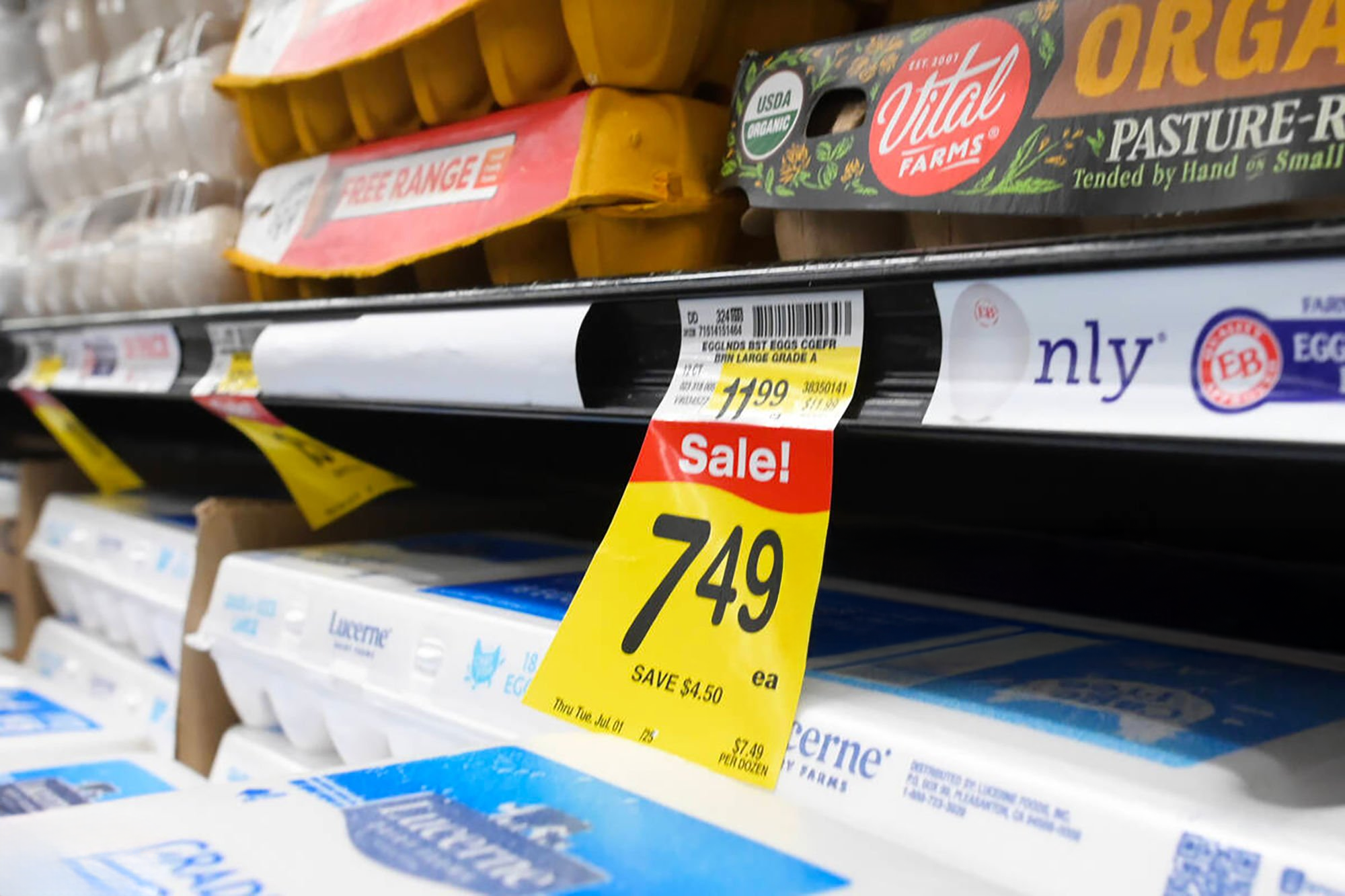
Here’s what’s got everyone talking: Their Thr5ve milk—fortified with marine-sourced DHA omega-3s, enhanced vitamins A and D, plus improved mouthfeel from skim powder—is selling at the exact same price as regular milk. Not a penny more. On the same shelf, with the same price tag, but offering all those functional benefits, we’ve been told to command premium pricing.
Hugo Andrade, who runs operations at Midland, credits their “excellent milk supply, great farmers and co-ops” for making this work. And you know, that relationship between processor and producer definitely matters. However, what I’ve been learning from extension specialists and economists across the country suggests that there’s something bigger happening here—something about how the economics of processing might be shifting beneath our feet.

The Processing Side of the Story
So here’s what’s interesting about processor economics—and I know this isn’t the usual coffee shop conversation, but bear with me because it affects all of us. Midland’s been running that facility since 2002. Twenty-three years. Their equipment’s paid for, they’re not servicing massive debt, and they don’t have investors demanding quarterly growth.
Compare that to what we’re seeing with the mega-facilities going up. Hundreds of millions in investment. All that capital has to get paid back somehow, right? And we all know who ultimately ends up covering those costs.
The Cost Structure Reality
Facility Depreciation Impact on Processing Costs:
| Facility Age | Depreciation as % of Total Costs | Cost per Hundredweight |
| New Facility (0-5 years) | 15-25% | $2.40-$4.00 |
| Mid-Age Facility (10-15 years) | 8-12% | $1.28-$1.92 |
| Paid-Off Facility (20+ years) | 3-5% | $0.48-$0.80 |
Based on industry cost analyses and extension program data
That difference—we’re talking 40 to 80 cents per hundredweight—that’s real money when you’re competing on price.
Labor’s another piece of this puzzle. Bureau of Labor Statistics data from May 2024 show that food manufacturing workers in the Albany-Schenectady-Troy metropolitan area earn median wages of around $19 to $21 per hour. Now, if you’re running a facility near a bigger city, or you’ve got union contracts, those numbers jump considerably. Could be another 30 to 80 cents per hundredweight difference right there.
But here’s the part that really made me think…
The Real Cost of DHA Fortification
Breaking down the premium myth:
- Actual DHA cost per half-gallon: $0.005 – $0.015
- Typical retail premium charged: $1.50 – $2.00
- Markup: 100-400x the ingredient cost
Based on standard fortification levels—those 32 to 50 milligrams of DHA per serving—and wholesale ingredient pricing when buying in bulk, the actual cost to fortify comes out to roughly half a penny to maybe a penny and a half per half-gallon.
Half a penny to a penny and a half. Yet walk into any store and that omega-3 milk costs an extra buck-fifty, sometimes two bucks more. Makes you wonder, doesn’t it?

Why That Cornell Award Matters
What’s particularly noteworthy about Midland winning that Silver is how Cornell runs these competitions. The judges don’t know if they’re tasting a premium brand or a store label. It’s all blind evaluation—they’re running polymerase chain reaction tests for bacterial counts, using trained sensory panels, measuring shelf stability with accelerated aging protocols.
They’re examining the butterfat consistency to the hundredth of a percentage point, evaluating mouthfeel, and testing for off-flavors. Real science, not marketing.
“Quality is quality. The testing doesn’t care about your marketing budget or price point. It measures what’s actually in the bottle.”
— Dairy science professor involved in Cornell competitions
So when a family processor makes private-label brands—Midland does Derle Farms, Cherry Valley, Farm Fresh, several others—when they prove their fortified milk matches or beats products charging twice the price… well, that tells you quality isn’t necessarily tied to price point the way we’ve been led to believe.
The Ingredient Supply Question

Now, you might be thinking what I initially thought—sure, one processor can do this, but if everyone starts fortifying with DHA, won’t the ingredient market go crazy?
Here’s what’s interesting about that. Current estimates put global algal DHA production capacity somewhere between 25,000 and 35,000 metric tons annually. That’s based on the disclosed capacities from major producers—DSM has its Veramaris operation, which it established in collaboration with Evonik in 2019, as well as Lonza, Cellana, and others.
DHA Supply vs. Dairy Demand
The scale perspective:
- Global DHA production capacity: 25,000-35,000 metric tons/year
- U.S. fluid milk DHA requirement (if all fortified): 1.5-2.0 metric tons/year
- Percentage of global capacity needed: <0.01%
For context: Infant formula accounts for approximately half of global algal DHA production
Let me put this in perspective. If we fortified all the fluid milk sold through major U.S. retail channels—using those standard fortification levels—we’d need approximately 1.5 to 2.0 metric tons of pure DHA annually. That’s less than 0.01 percent of global capacity.
And pricing varies significantly with volume. Small purchasers pay substantially more per kilogram than industrial buyers who negotiate annual contracts. We’re talking prices that can drop by half or more when you move from small-batch to industrial-scale purchasing. Additionally, the fermentation technology continues to improve, driving down production costs year over year.
What Other States Are Doing
The extension folks I talk with in Wisconsin and California are watching this Midland situation pretty closely. Wisconsin has increased funding for its Dairy Processor Grant Program. Since 2014, they’ve funded 135 projects, and the Center for Dairy Research at Madison reports that they’re receiving more questions about functional milk formulation than they’ve seen in years.
Out in California, it’s a slightly different angle. Some Central Valley operations I’ve visited recently are exploring what they call “climate-smart nutrition”—tying functional benefits to sustainability messaging. Between the technical support from UC Davis and modernization grants through the Cal State system, they’ve got the infrastructure to experiment.
Of course, this plays differently in the Southeast, where co-op structures vary, or in Mountain states where processor density is lower, but the fundamental dynamics remain pretty consistent. Even in Texas, where rapid growth in dairy has created different relationships between processors and producers, the same questions are being asked. In Florida, where heat stress challenges are unique, processors are exploring functional products as a means to differentiate themselves in a competitive market.
What strikes me is how many processors are quietly running the numbers right now. Not all of them will move forward—some lack operational flexibility, while others are constrained by capital—but the conversations are happening. And that’s new.
What This Means for Your Operation
Let’s get practical here, because that’s what matters. Whether you’re milking 50 cows or 500, this shift is going to affect your milk marketing decisions.
If you’re currently shipping to a processor making premium functional products, it might be time for some frank conversations. The economics we’re seeing—based on what Clayton Christensen documented in his research on disruption—suggest that if processors can deliver quality, functional milk at conventional prices while maintaining margins, then perhaps those claims about needing premium milk but not being able to pay premium prices deserve another look.
Extension specialists report that component premiums in major dairy states commonly range from 40 to 85 cents per hundredweight—varying with butterfat levels, protein content, and somatic cell counts. These aren’t charity payments. They’re processors recognizing they need exceptional raw materials to compete.
Recent analyses from agricultural lenders, as documented in their quarterly reports, consistently show that success concentrates at either end—either cost-efficient commodity production or genuinely differentiated, premium products. The middle ground, where you’re sort of premium at sort of premium prices, is getting squeezed out.
Key Questions to Ask Your Processor
- What’s the age of your processing facility and debt structure?
- Are you planning any functional product launches in the next 18 months?
- How do you calculate component premiums, and will those change?
- What’s your strategy if major retailers launch a functional private label?
You have a strategic decision coming up. Either optimize for volume—maximizing components, keeping those somatic cell counts low, delivering consistent quality day in and day out—or pursue genuine differentiation through organic, grass-fed, regenerative practices that command real premiums.
The Timeline We’re Looking At
Based on how disruption typically plays out in food categories—Clayton Christensen’s work extensively documented this pattern, and we saw it with Greek yogurt capturing over one-third of the yogurt category within five years—here’s what I think we might see.
The Disruption Timeline
Phase 1 (Now – Spring 2026): Regional pilots in Wisconsin, California
- Consumer testing of accessible-price functional milk
- Industry dismisses as “regional quirk”
Phase 2 (Summer-Fall 2026): Regional retailer adoption
- Wegmans, Meijer, and H-E-B evaluate category opportunity
- Sales data shows 3-5x velocity vs. premium brands
Phase 3 (Late 2026 – Early 2027): National rollout discussions
- Major chains commit to functional private label
- Category of economics shift fundamentally
Historical precedent: Greek yogurt captured over one-third of the yogurt category within five years of mainstream adoption
By late 2026 or early 2027, when a major chain commits to a functional private label at conventional pricing, based on historical patterns, that tends to reshape the entire category pretty quickly.
How Premium Evolves, Not Disappears
What’s encouraging is that premium dairy won’t just vanish—it’ll evolve into something that actually makes sense.
Regenerative production with legitimate third-party certification—programs like Regenerative Organic Certified or Land to Market—creates real constraints that justify premiums. These require fundamental changes to how you farm, taking years to implement. We’re talking verified soil carbon sequestration, biodiversity improvements, the whole nine yards.
What I’m hearing from producers across different regions is that recent transitions to regenerative practices typically involve three-year conversion periods, significant upfront investment, and result in premiums ranging from $1.00 to $1.50 per hundredweight through contractual guarantees. The economics work when you have the right land base and a commitment to see it through.
Ultra-local transparency is another path. Single-farm or micro-regional milk with complete traceability. Some operations are already using blockchain so consumers can see exactly which cows contributed to their milk, when it was processed, and the works. That doesn’t scale to national distribution, which is exactly what protects its value.
Technical innovation continues, too. Ultrafiltration, A2 genetics, and precision fermentation, which require years of careful development and precision fermentation to create novel compounds, necessitate significant capital or proprietary knowledge, creating real barriers.
What probably won’t survive as a premium? Basic fortification. Adding DHA, protein, vitamins—that’s becoming baseline. Like homogenization or pasteurization. Nobody thinks of those as premium features anymore.
Research from Cornell’s Dyson School shows that willingness to pay premiums for basic fortification drops significantly when identical nutrition is available at conventional prices. Maintaining quality consistency across a distributed network won’t be simple, but the economics suggest it’s worth tackling those challenges.
Real Considerations for Real Farms
| Strategy | Investment Required | Time to ROI | Premium Potential | Risk Level | Key Advantages |
| Volume Optimization | Low ($5K-$15K) | 6-12 months | $0.40-$0.85/cwt | Low | Quick returns, proven model |
| True Differentiation | High ($30K-$250K) | 3+ years | $1.00-$1.50/cwt | High | Defensible margins, brand control |
| Cooperative Renaissance | Medium ($50K-$150K) | 18-36 months | $0.60-$1.20/cwt | Medium | Shared risk, processor margins |
I’ve been talking with producers across different regions about how they’re thinking through this shift. What’s emerging are a few distinct strategies that seem to make sense depending on your situation.
Three Strategic Paths Forward
1. Volume Optimization
- Focus on maximizing components (butterfat 4.0%+, protein 3.3%+)
- Keep somatic cell counts consistently under 150,000
- Build relationships with multiple regional processors
- Target efficiency and consistency over differentiation
2. True Differentiation
- Invest in regenerative certification (3-year transition, $30-50K investment)
- Develop on-farm processing capabilities ($150-250K for small-scale)
- Pursue ultra-local/blockchain transparency models
- Accept lower volume for guaranteed premiums
3. Cooperative Renaissance
- Join or form producer-owned processing ventures
- Capture functional dairy margins at the processor level
- Share capital requirements and risk across members
- Maintain control over pricing and market positioning
Some folks are focusing on strengthening relationships with regional processors who are pursuing volume strategies. These processors need a reliable, high-quality supply and often pay meaningful premiums for exceptional components and low somatic cell counts. The math works when you’re optimized for efficiency and consistency.
Others are investing in differentiation that can’t be easily replicated. What I’m hearing from these producers is that they see it as a long-term investment in market position. Yes, it requires time and capital—we’re talking about significant investments in small-scale processing equipment—but it creates lasting value.
There’s also renewed interest in cooperative models. When producers see the margins available in functional dairy, naturally, they start asking why processors should capture all that value. The cooperative tradition runs deep in dairy—maybe this is what brings it back.
Where We Go from Here
What Midland’s shown with their Cornell Silver award isn’t just about one processor’s pricing strategy. They’ve demonstrated that the premium pricing structure for basic nutritional enhancement might be more about market positioning than production necessity.
That’s not meant as criticism—it’s recognition that things are changing. Processors with the right cost structure can profitably deliver enhanced nutrition at accessible prices. Those with different structures need to adapt or find new ways to create value. Both paths can work with the right approach.
For dairy farmers, this creates both opportunity and urgency. Opportunity because processors competing on volume and quality need exceptional milk supplies. Urgency because your current processor relationships might shift significantly as markets evolve.
Building relationships with multiple potential outlets makes sense. Understanding their strategies, cost structures, and market approaches—these conversations matter more than ever. Inquire about facility investments, debt levels, and the company’s strategic direction. This isn’t being nosy; it’s being smart about your business.
The trajectory seems fairly clear: accessible nutrition is on its way to dairy. When major retailers launch functional milk at conventional prices—likely within 18 to 24 months based on historical patterns—the category economics shift fundamentally. The question isn’t whether this happens, but how your operation is positioned for it.
Processors who understand these dynamics are already planning. Farmers who recognize them early maintain options. Those who wait… well, they get what’s left.
What are you seeing in your area? Are processors discussing functional products differently? How are you thinking about positioning as things evolve? I’m genuinely curious about what you’re observing, because these conversations help all of us navigate what’s coming.
While we’re focused on U.S. markets here, it’s worth noting that similar dynamics are emerging in European and Oceanic dairy markets too. Dutch processors are experimenting with accessible-price functional dairy, while New Zealand cooperatives are reevaluating their premium positioning strategies. This isn’t just a regional shift—it’s a global phenomenon.
KEY TAKEAWAYS:
- Your milk check could increase 40-85¢/cwt by targeting processors pursuing volume strategies who need exceptional components (4.0%+ butterfat, 3.3%+ protein) and consistently low somatic cell counts—these processors recognize that quality raw materials matter more than ever as competition shifts from brand positioning to actual product quality
- The real DHA fortification cost is $0.005-$0.015 per half-gallon, not the $1.50-$2.00 premium you see at retail—with global algal DHA production at 25,000-35,000 metric tons annually and U.S. dairy needing just 1.5-2.0 tons if fully fortified, ingredient scarcity isn’t the issue processors claim it is
- Three strategic paths make sense for different operations: Volume optimization for efficiency-focused farms, regenerative certification ($30-50K investment, 3-year transition) for those seeking defensible premiums of $1.00-$1.50/cwt, or cooperative processing ventures ($150-250K small-scale) to capture margins currently going to processors
- Timeline matters—you’ve got 18-24 months before major retailers likely launch functional private label at conventional prices, based on historical disruption patterns like Greek yogurt’s capture of one-third market share in five years
- Ask your processor four critical questions now: What’s their facility age and debt structure? Are they planning functional launches? How will component premiums change? What’s their strategy when Walmart launches accessible-price omega-3 milk?
Complete references and supporting documentation are available upon request by contacting the editorial team at editor@thebullvine.com.
Learn More:
- From $200 Holstein Bulls to $1400 Beef Crosses: Your 3-Week Implementation Guide – This actionable guide reveals a simple, high-impact strategy to generate an extra $25,000-$40,000 in annual revenue from terminal breeding. It provides a clear roadmap to capture the lucrative beef-on-dairy market.
- 2025 Dairy Market Reality Check: Why Everything You Think You Know About This Year’s Outlook is Wrong– This piece provides a strategic overview of the “Component Revolution,” demonstrating how a fundamental shift in milk solids production is creating new profit opportunities. It helps producers understand how to position for success as markets evolve.
- The Next Frontier: What’s Really Coming for Dairy Cattle Breeding (2025-2030) – This forward-looking roadmap explores how emerging technologies like genomic testing and AI can optimize replacement strategies and drive efficiency. It provides a practical timeline for implementing these tools to cut costs and boost profitability.
The Sunday Read Dairy Professionals Don’t Skip.

Every week, thousands of producers, breeders, and industry insiders open Bullvine Weekly for genetics insights, market shifts, and profit strategies they won’t find anywhere else. One email. Five minutes. Smarter decisions all week.




